
A concrete-and-grass driveway can soften a large paved area while giving the front yard a cleaner, greener look. The best designs place durable concrete beneath vehicle tires and use living grass or artificial turf in carefully planned joints, grids, or center strips. These planted gaps can also reduce the visual weight of concrete and allow some rainwater to soak into the ground, provided the base and drainage system are designed correctly. () From simple ribbon driveways to geometric concrete slabs, the right layout should suit your house, climate, maintenance routine, and parking needs. Use these practical and attractive 20 concrete driveway with grass in between ideas to plan a complete driveway that works beautifully with your home and landscape.

1. Concrete Ribbon Driveway With Grass Center
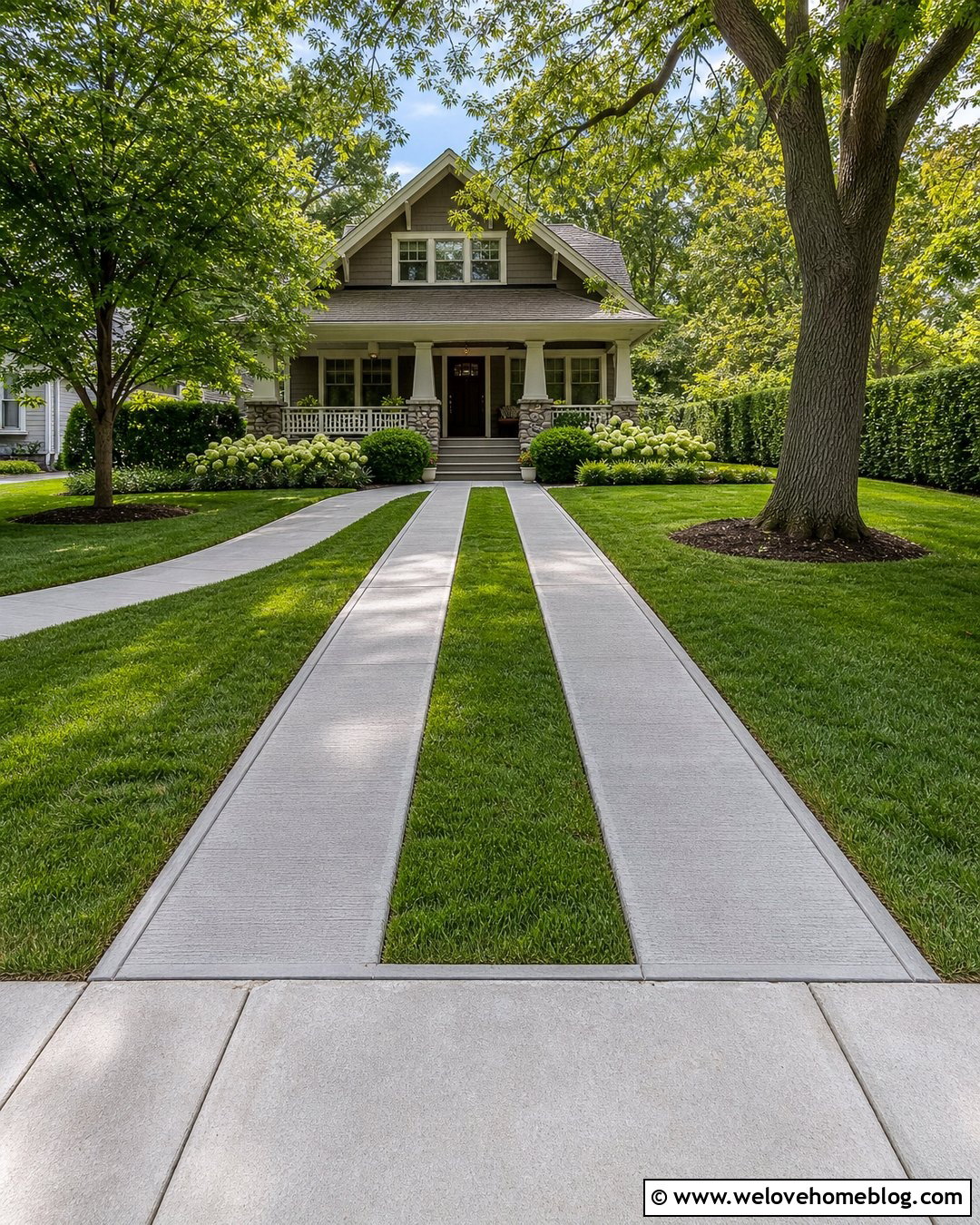
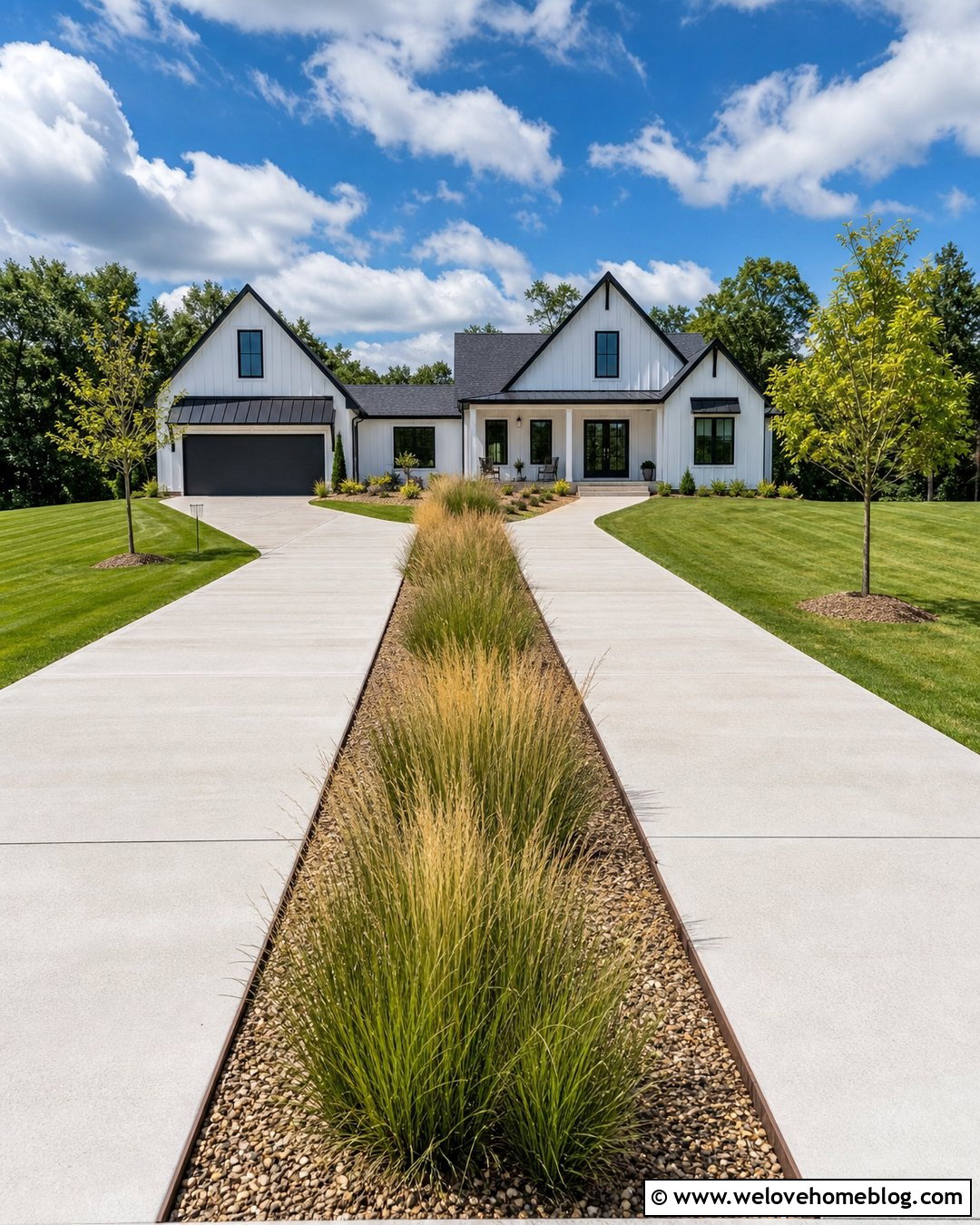
A traditional ribbon driveway uses two parallel concrete tracks with a continuous grass strip running through the center. It is one of the simplest ways to reduce the amount of visible paving without sacrificing a firm driving surface. Keep the tracks wide enough for your vehicle tires, and make the green center slightly lower than the concrete so water does not collect along the edges. This layout looks especially natural in front of a Craftsman bungalow, cottage, or older suburban home. Extend the lawn to both sides for a seamless effect, then frame the entrance with low shrubs or matching planting beds. Because the design works best on a fairly straight approach, careful measurements are essential before the concrete forms are built. ()
2. Square Concrete Driveway With Grass Grid
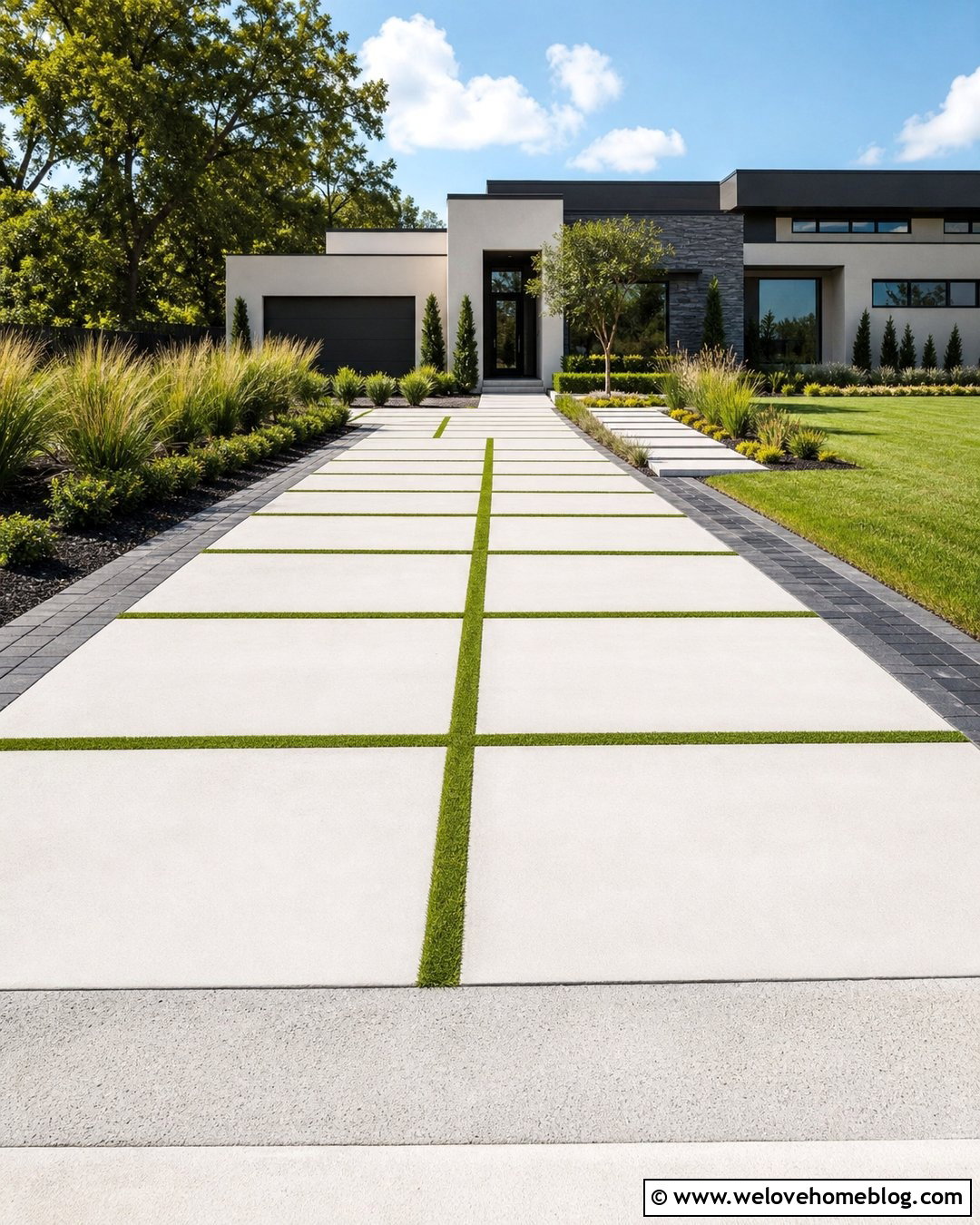
Large square concrete slabs separated by narrow grass joints create a crisp grid that complements modern architecture. Choose evenly sized slabs and maintain consistent spacing so the pattern looks intentional from the street. Light gray broom-finished concrete creates a strong contrast with green grass, while charcoal concrete produces a more dramatic appearance. The grid can cover the entire driveway or become more open near the front yard, visually connecting the paved area to the lawn. Use a reinforced base below every slab to prevent uneven settlement under vehicle weight. Low ornamental grasses, clipped shrubs, and a straight concrete walkway can repeat the clean geometry. Artificial turf is worth considering where narrow joints would be difficult to mow or where tires regularly cross the grass. ()
3. Rectangular Concrete Driveway With Turf Strips
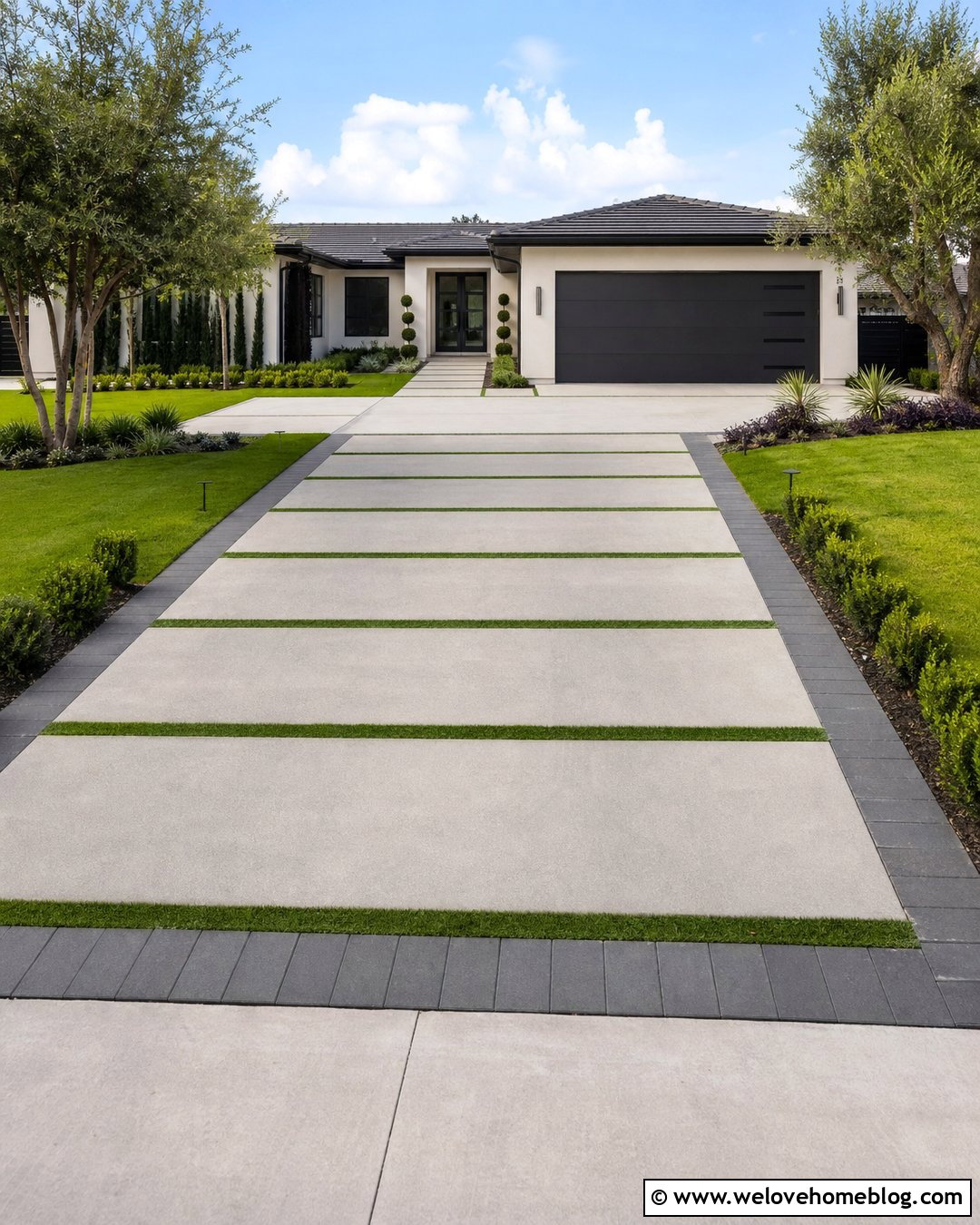
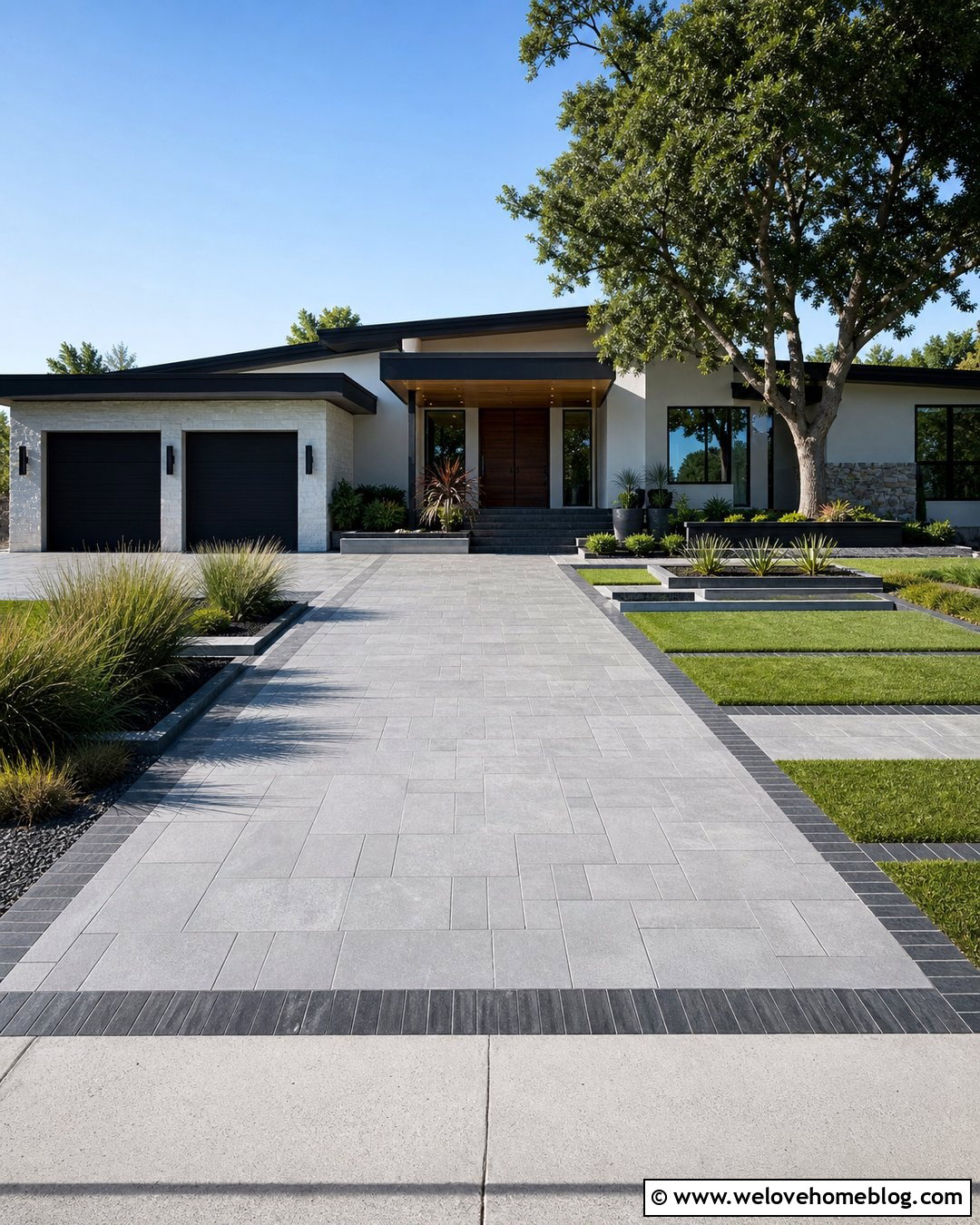
Long rectangular concrete panels can make a short driveway appear deeper and more streamlined. Arrange the panels across the driveway with slim artificial turf strips separating each row. The repeated horizontal lines slow down the visual length, while turf running along the sides creates a polished connection with the front lawn. This layout works particularly well with a low modern ranch house or a contemporary home with a wide garage. Select turf with short, dense blades so the joints remain neat and do not look shaggy. A charcoal paver border can provide a strong outer frame and protect the turf edges. Complete the look with rectangular planting beds, sculptural shrubs, and a walkway that aligns precisely with one of the concrete panels.
4. Large Concrete Slabs With Wide Grass Joints
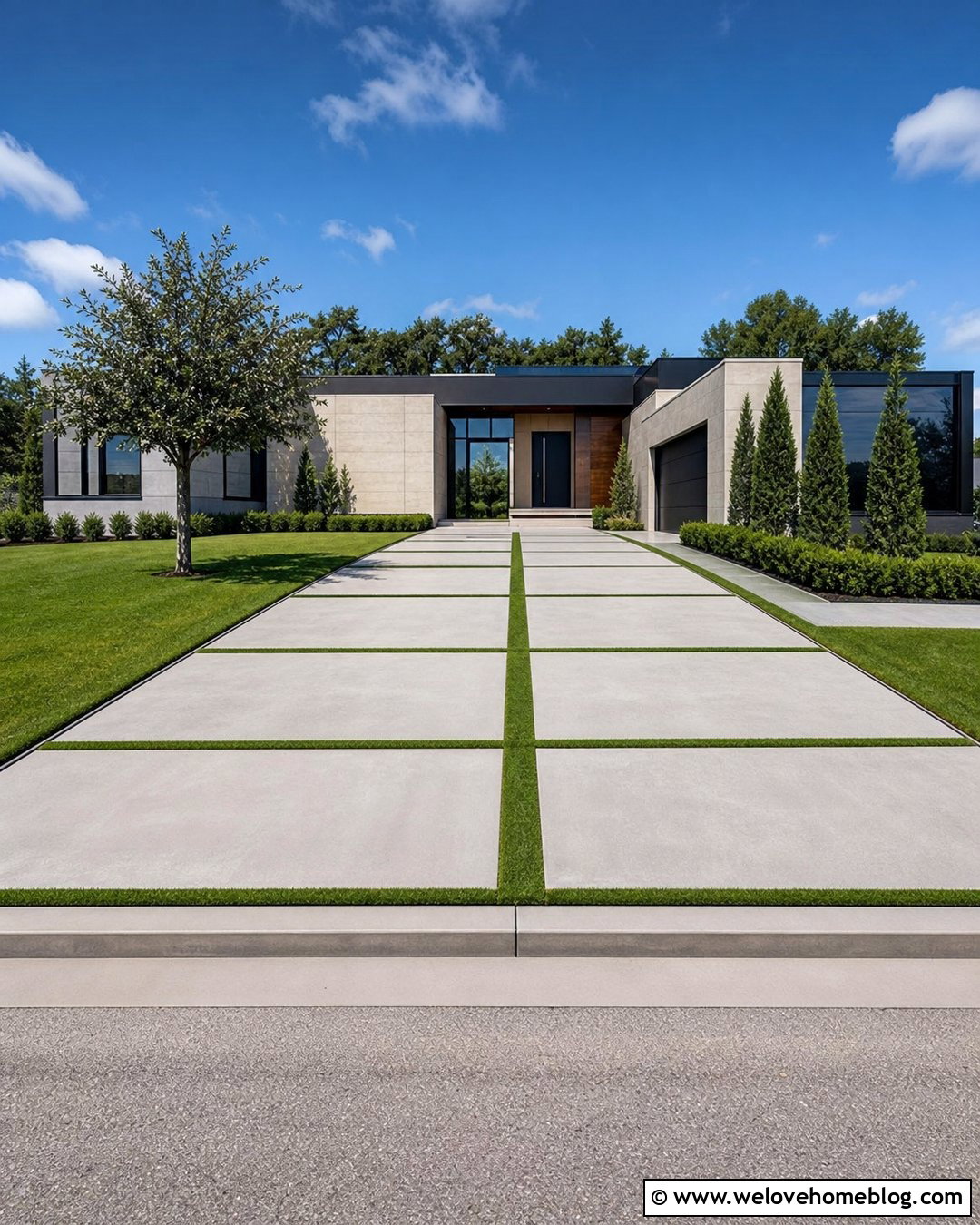
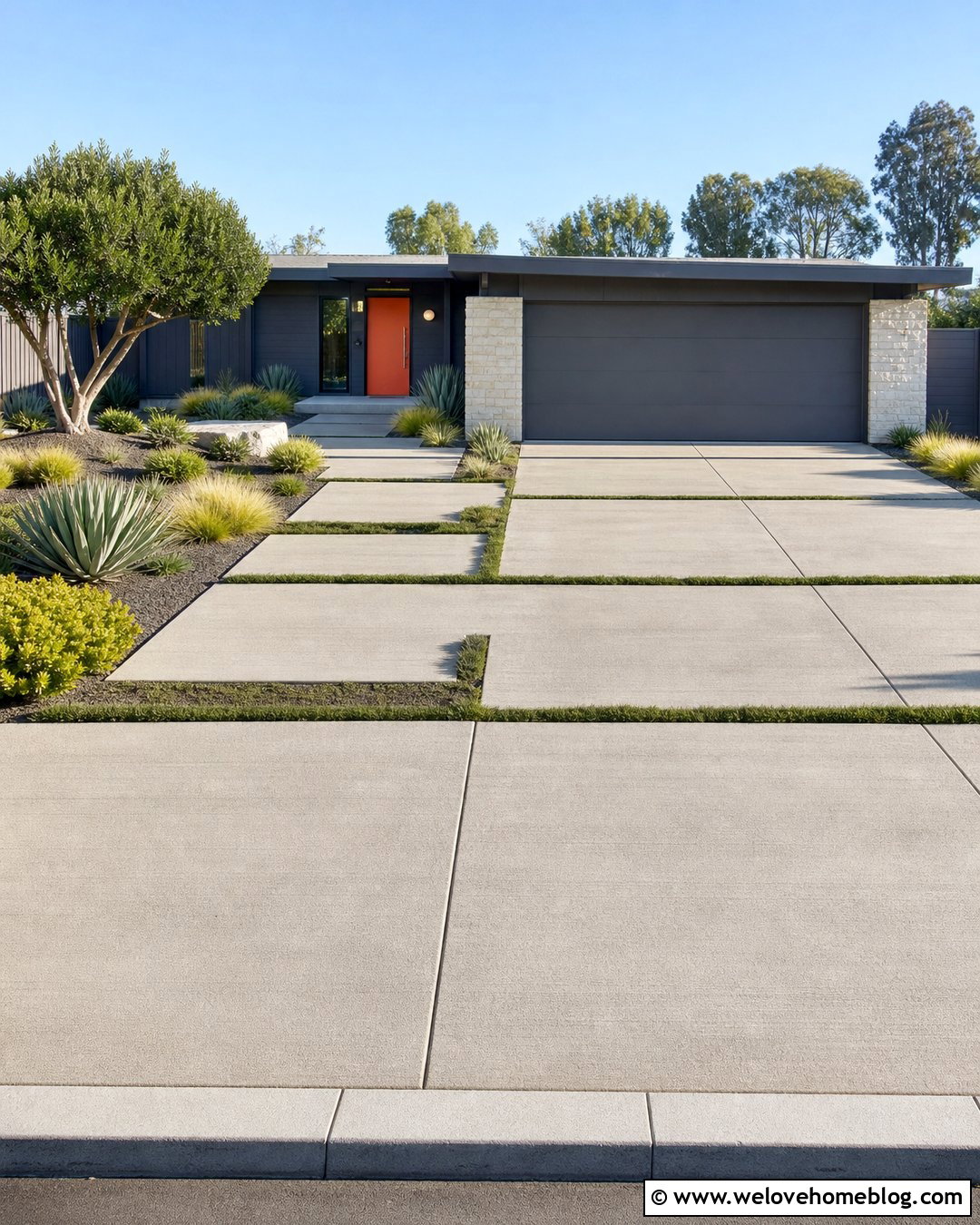
Wide grass joints make oversized concrete slabs feel like individual stepping stones placed across the landscape. This look suits a broad driveway where generous spacing will not interfere with tire placement. Use large poured concrete rectangles with a smooth or lightly textured finish, leaving green bands between the slabs and along the outside edges. Real grass creates the most natural transition into an established lawn, but it will require trimming, irrigation, and dependable sunlight. Keep the soil level below the concrete surface to limit mud and protect slab edges. A flat-roof modern home provides an ideal backdrop, especially when the same concrete dimensions continue into the front walkway. Simple foundation plantings allow the bold driveway pattern to remain the main feature.
5. Concrete Driveway With Narrow Grass Lines
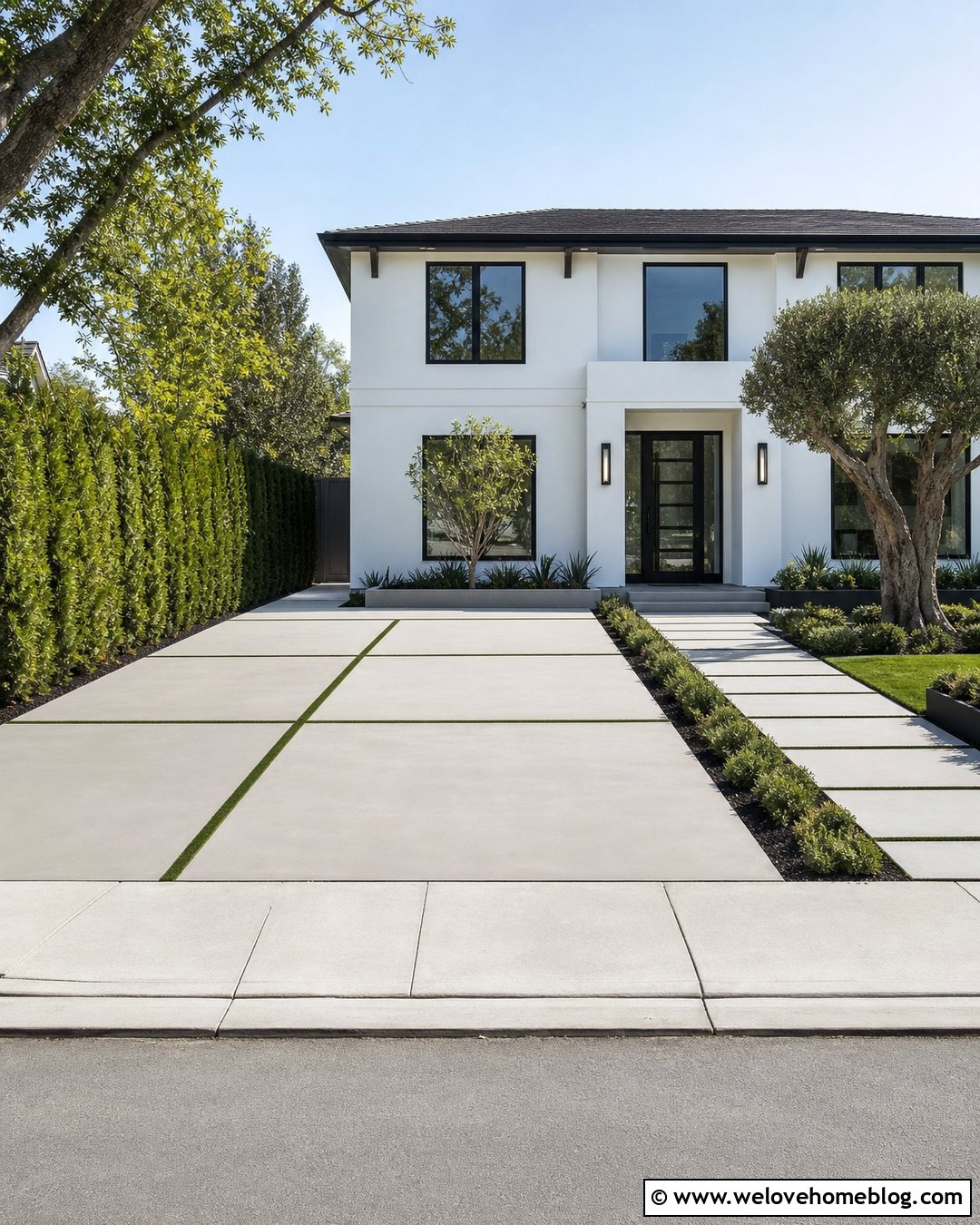
Not every concrete-and-grass driveway needs large green spaces. Thin grass lines between broad poured concrete sections offer a more understated result. The narrow joints can replace some conventional visual scoring while introducing small ribbons of color across the surface. Use artificial turf when maintaining living grass in joints only a few inches wide would be impractical. A straight driveway with pale gray concrete, dark metal edging, and precisely clipped turf feels especially appropriate for a minimalist house. Match the joint lines to the garage doors, front steps, or facade panels to strengthen the architectural connection. Finish the design with restrained landscaping, such as evergreen hedges and a single ornamental tree. The result feels green and detailed without making the driveway look fragmented or overly decorative.
6. Curved Concrete Driveway With Grass Bands
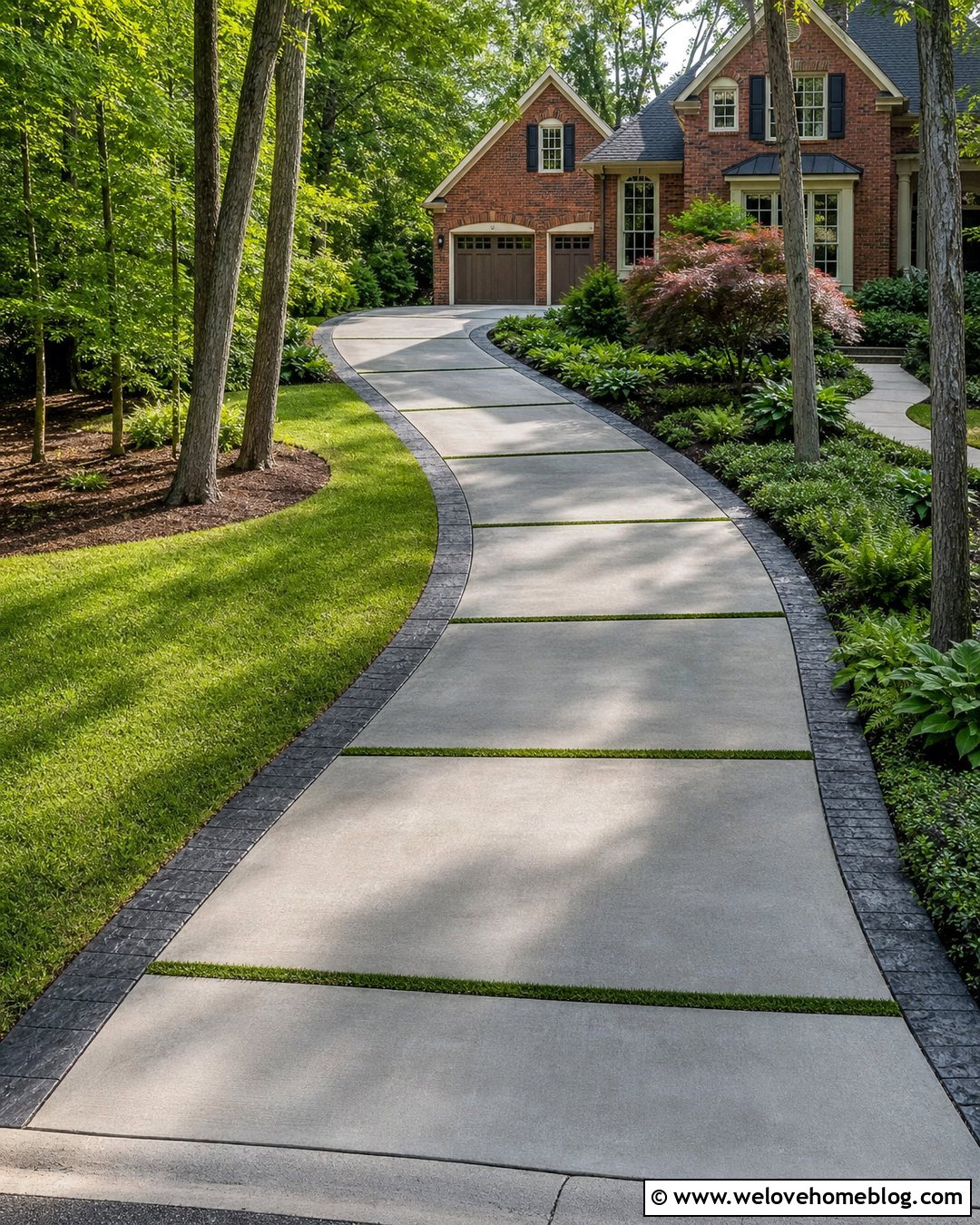
A curved driveway can use grass bands to emphasize its movement from the street to the garage. Divide the surface into gently tapered concrete panels rather than forcing standard rectangles around the bend. Narrow grass joints between those panels will follow the curve and create a smooth, flowing pattern. A border of darker concrete or natural stone can define the outer edge and prevent the surrounding lawn from spreading into the driving area. This complete look works well with a traditional brick home, wooded lot, or landscaped suburban yard. Add layered shrubs and shade-tolerant ground covers along the inside curve, where planting beds naturally attract attention. The grade and drainage should be professionally planned so water crosses the bands safely instead of washing soil onto the concrete.
7. Circular Concrete Driveway With Grass Sections
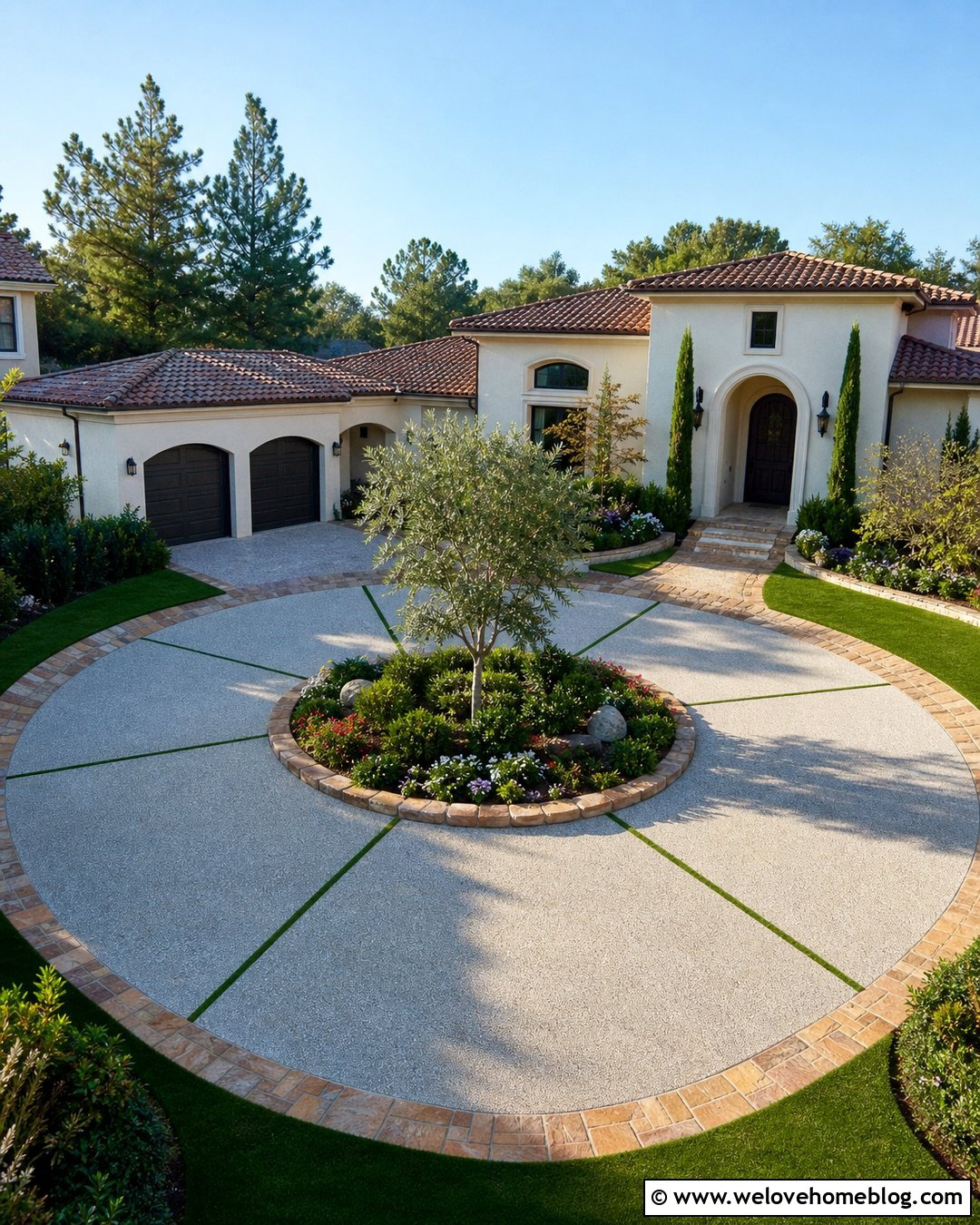
A circular concrete driveway becomes less visually overwhelming when grass is incorporated between large paved sections. Create an outer concrete driving loop and divide selected portions with radial turf joints that point toward a landscaped center island. The lines should follow the circular geometry rather than appearing like unrelated cuts. In the middle, use a small ornamental tree, low shrubs, and seasonal flowers that will not block the driver’s view. Light exposed-aggregate concrete offers more texture than a plain slab and works beautifully with traditional, Mediterranean, or contemporary homes. A brick or stone border can outline the circle and coordinate with the facade. Leave comfortable turning space, and keep turf joints away from areas where tires repeatedly pivot, since that movement can damage grass edges.
8. Concrete Driveway With Diamond Grass Pattern
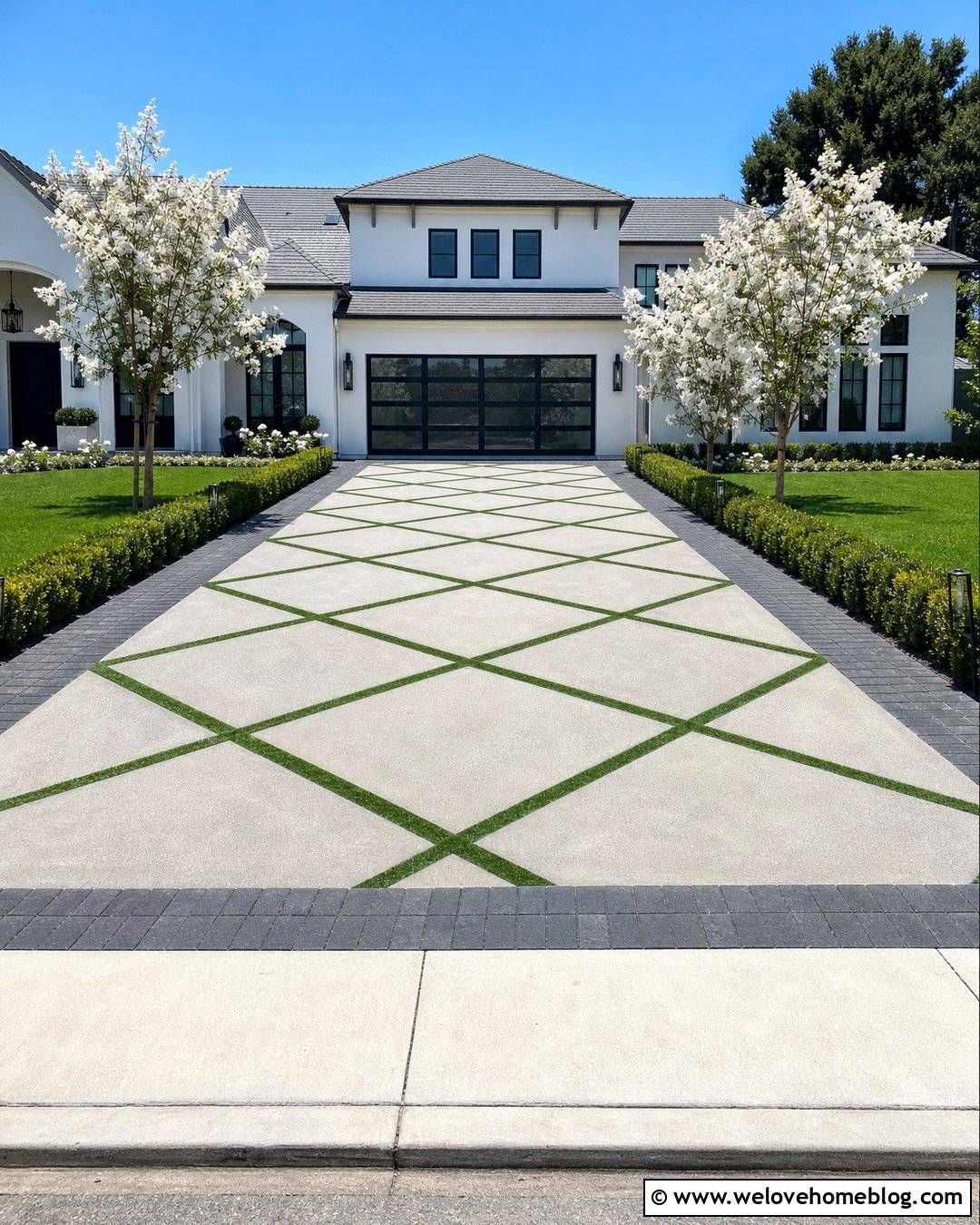
A diamond pattern gives a concrete driveway more detail while maintaining a balanced, formal appearance. Create the design with square concrete slabs rotated diagonally and separated by consistent strips of grass or synthetic turf. The strongest results come from aligning the diamonds with the center of the garage and trimming partial slabs neatly at the borders. Use medium-gray concrete for practical stain resistance, then add a dark soldier-course paver edge to contain the pattern. This distinctive driveway can complement a Spanish-style, transitional, or modern home, depending on the concrete color and surrounding plants. Keep the landscaping simple with structured hedges, small flowering trees, and broad lawn panels. The repeated diagonal lines already provide plenty of movement, so an overly complicated border may make the entrance feel busy.
9. Concrete Driveway With Checkerboard Grass
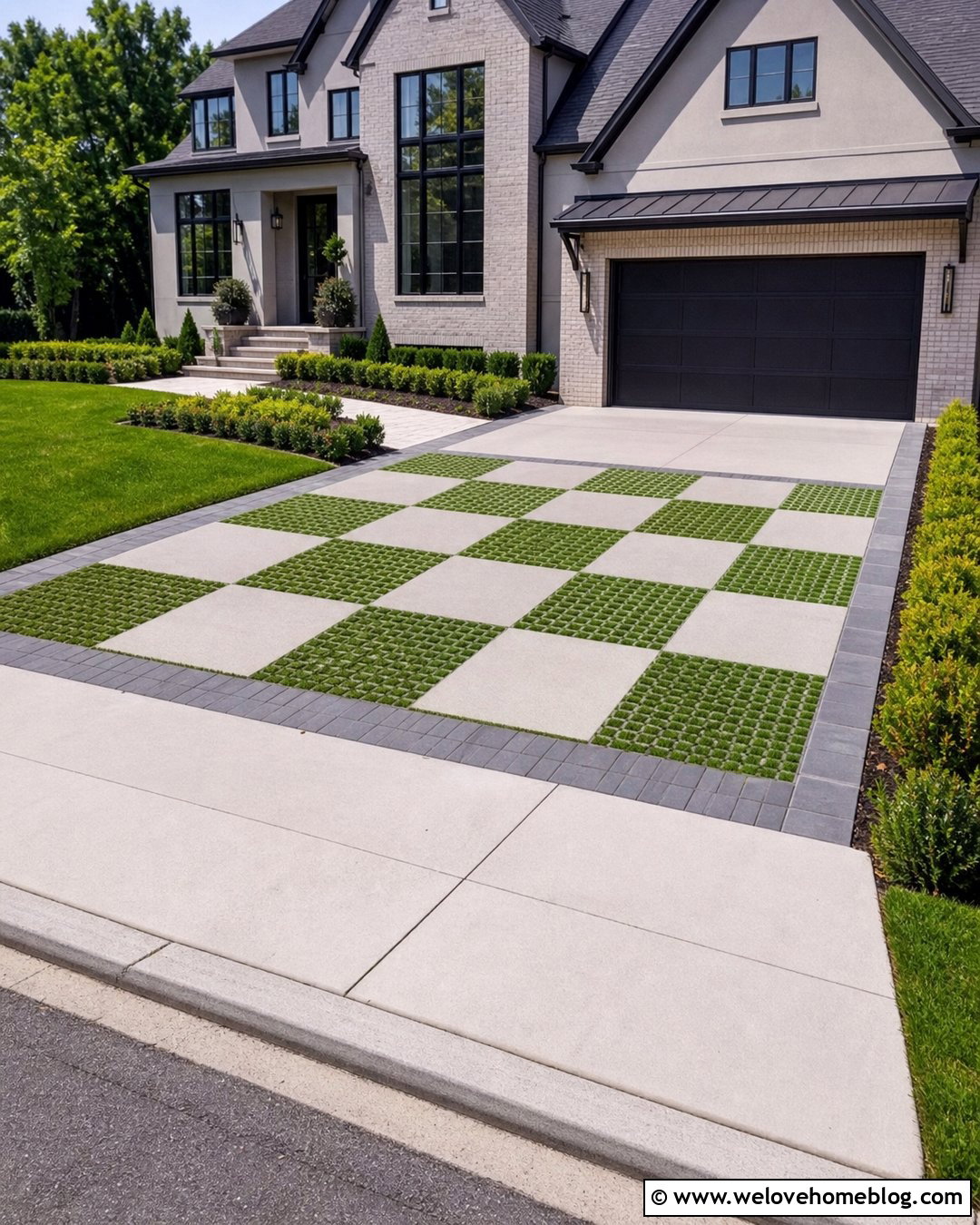
Alternating concrete squares and green sections create a bold checkerboard driveway with a garden-like appearance. Because some green squares may receive direct tire pressure, use reinforced turf, a structural grass grid, or vehicle-rated artificial grass rather than unsupported lawn. The base must be designed for drainage and loads across both the concrete and planted sections. This layout is most suitable for occasional parking areas, broad entrance courts, and low-traffic residential driveways. Soft gray concrete squares prevent the pattern from becoming too harsh, while a continuous concrete apron near the street and garage provides smoother transitions. Surround the driveway with simple lawn and clipped hedges to avoid competing patterns. Against a white stucco or contemporary brick house, the checkerboard surface becomes an impressive curb-appeal feature.
10. Concrete Driveway With Artificial Grass Ribbons
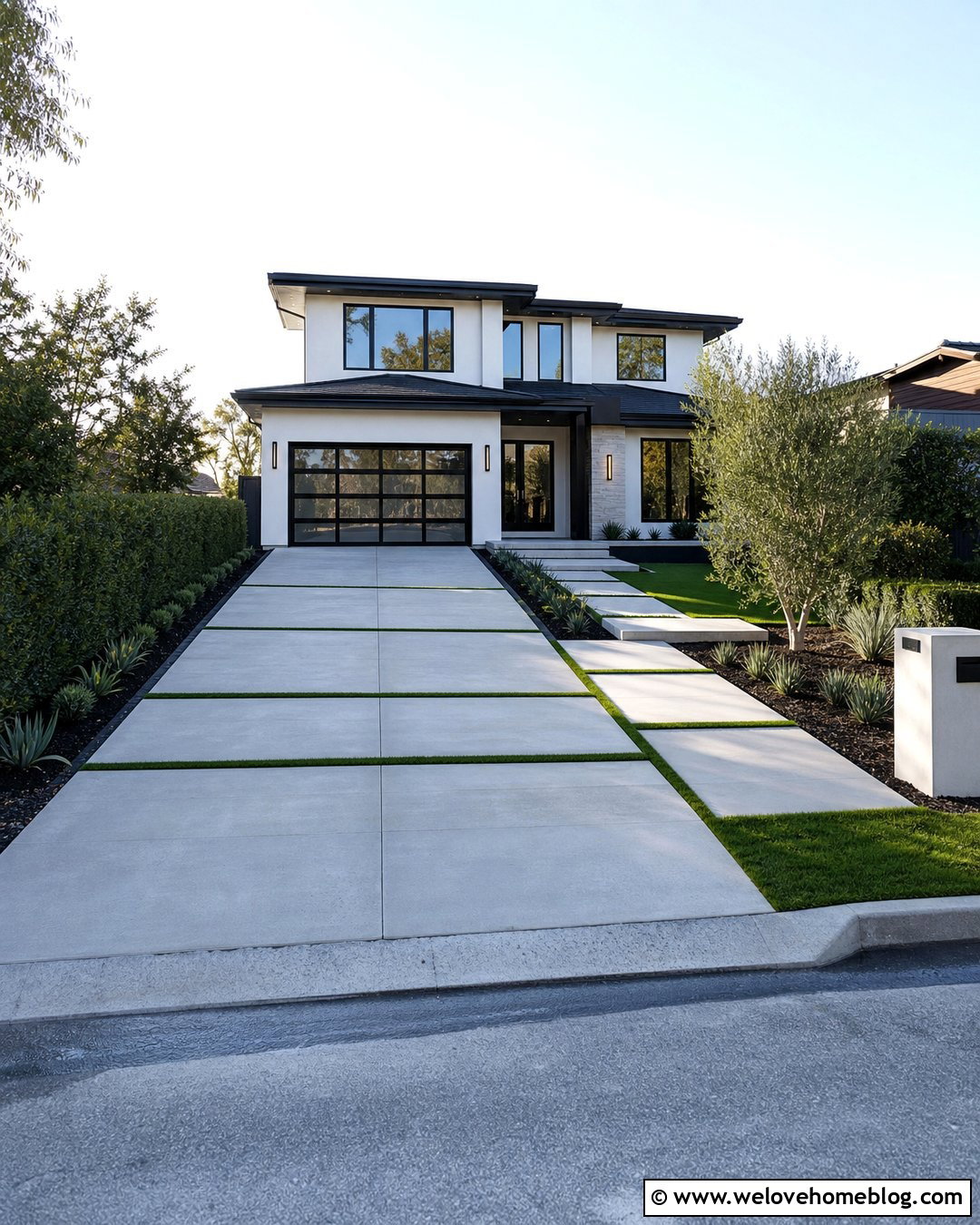
Artificial grass ribbons provide consistent color where living turf would struggle with shade, heat, or difficult mowing access. Divide a poured concrete driveway into large rectangular panels, then install narrow synthetic turf bands between them. Select a permeable, vehicle-suitable turf system and have the installer prepare a stable, well-draining base. The concrete edges should be smooth and securely contained so the turf does not lift or separate. This design works particularly well beside a contemporary two-story house with clean facade lines and dark-framed windows. Continue the artificial turf into small side panels or a front walkway border to unify the yard. Add simple evergreen planting beds and black metal landscape edging. Regular brushing and debris removal will help the turf joints retain an even, tailored appearance.
11. Broom Finish Concrete Driveway With Natural Grass
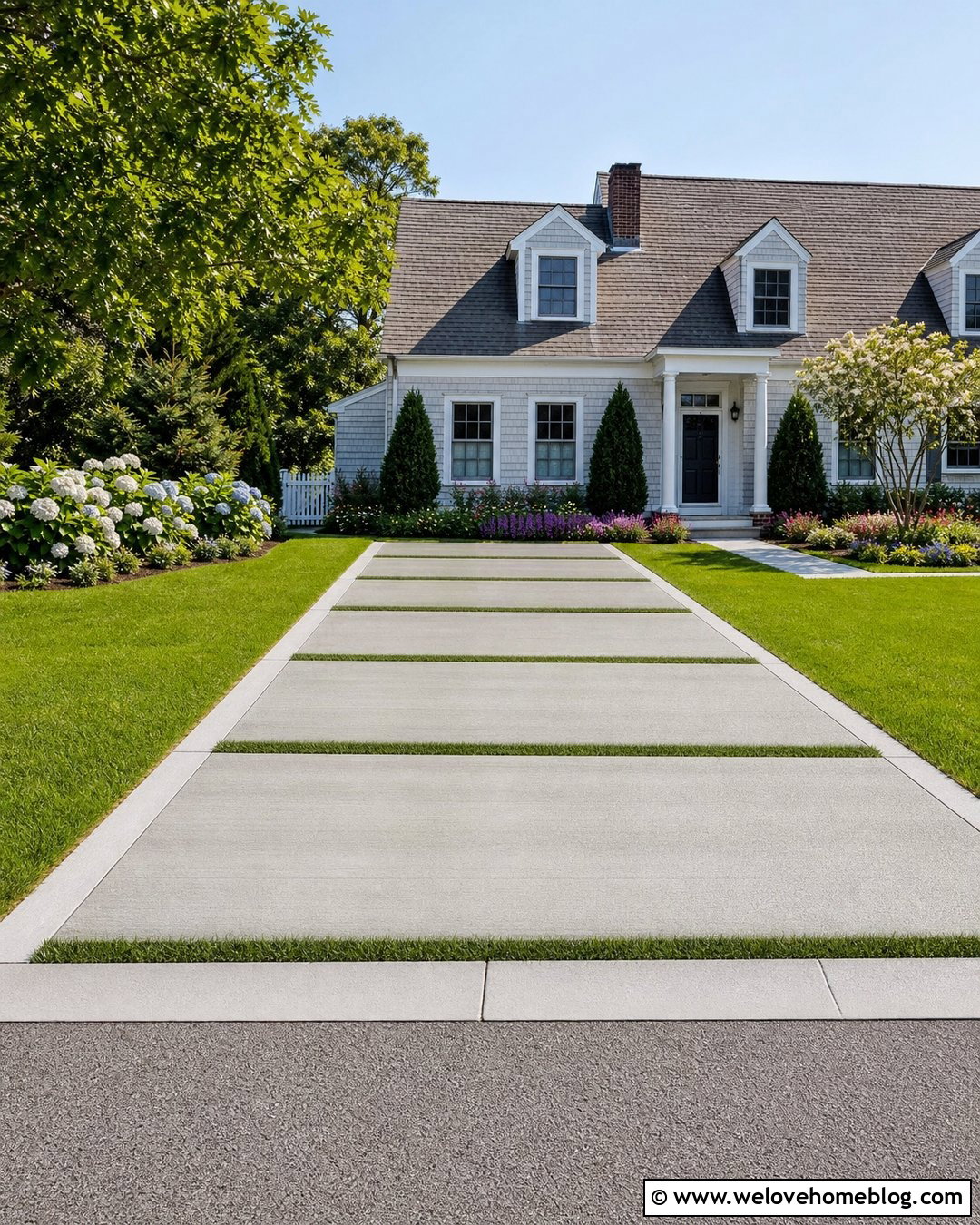
Broom-finished concrete offers practical traction and a simple texture that fits almost any residential exterior. Break the driveway into wide, rectangular sections with living grass between them, keeping the green joints large enough to receive sunlight and routine care. A cool gray concrete tone pairs naturally with a deep green lawn and does not distract from a colorful front garden. This complete driveway look suits a classic ranch, Cape Cod, or modest suburban home. Use flush concrete curbs along the outer edges to keep the lawn from creeping across the surface. Nearby planting beds can include hydrangeas, compact evergreens, and flowering perennials. Plan an irrigation method that waters the grass without constantly soaking the driveway, and choose turf suited to the property’s local sun exposure and growing conditions.
12. Exposed Aggregate Driveway With Grass Strips
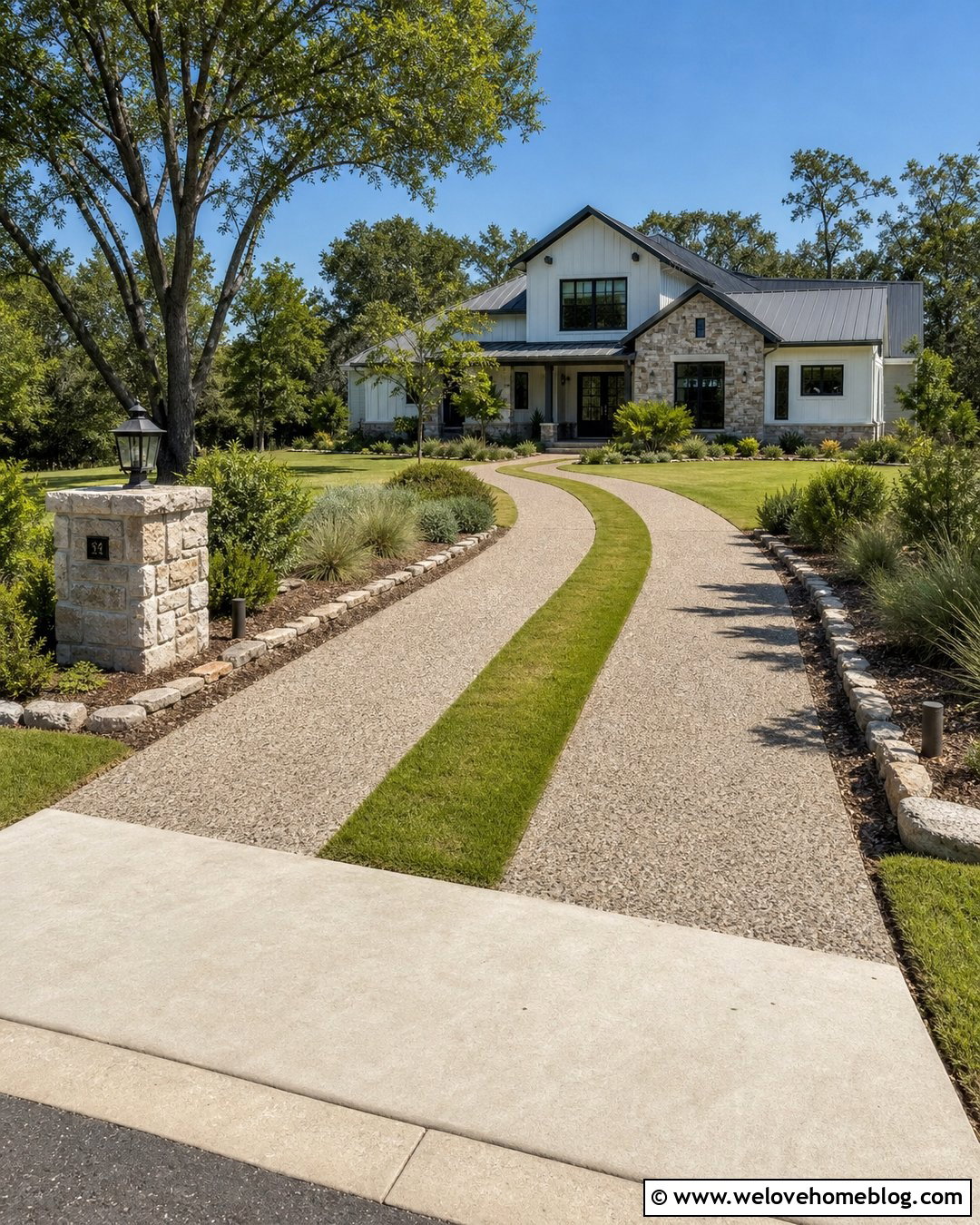
Exposed-aggregate concrete brings small stones and natural color into the surface, helping the driveway blend with informal landscaping. Use broad aggregate panels divided by straight grass strips, or install two textured wheel tracks around a wide green center. Warm tan and gray aggregates coordinate well with stone veneer, wood siding, and earth-toned brick. A narrow smooth-concrete border can create a comfortable transition at the sidewalk and garage while giving the textured material a finished frame. Plant drought-tolerant shrubs, ornamental grasses, and a small shade tree beside the driveway for a relaxed yet organized setting. Because exposed aggregate already has strong visual texture, keep the grass pattern uncomplicated. Sealing the concrete as recommended by the installer can help preserve its color and make routine cleaning more manageable.
13. White Concrete Driveway With Green Turf Grid
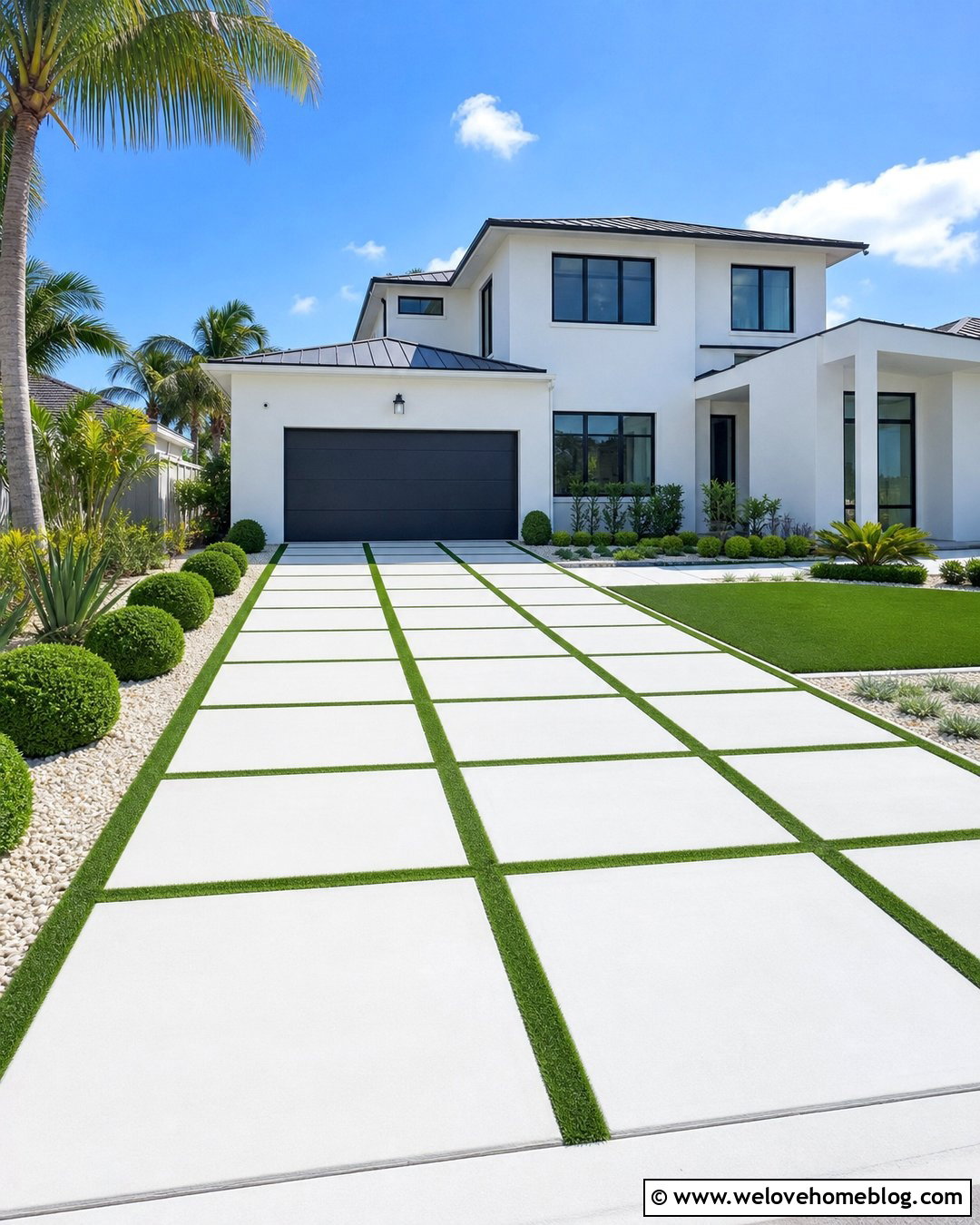
Bright white or very pale concrete creates a fresh contrast with green turf, making the driveway look light and spacious. Arrange large square slabs in a regular grid and use short-bladed artificial grass in the joints for a consistently neat finish. This combination is especially effective in warm climates and beside white stucco, coastal contemporary, or midcentury modern homes. To keep the surface from feeling stark, soften the edges with palms, rounded shrubs, and drought-tolerant planting beds. A light gravel strip can separate the turf grid from the garden while supporting drainage. Consider how tire marks, leaves, and soil will show against the pale surface before selecting the exact color. A high-quality sealer and accessible cleaning plan can make this striking driveway much easier to maintain.
14. Dark Concrete Driveway With Grass Joints
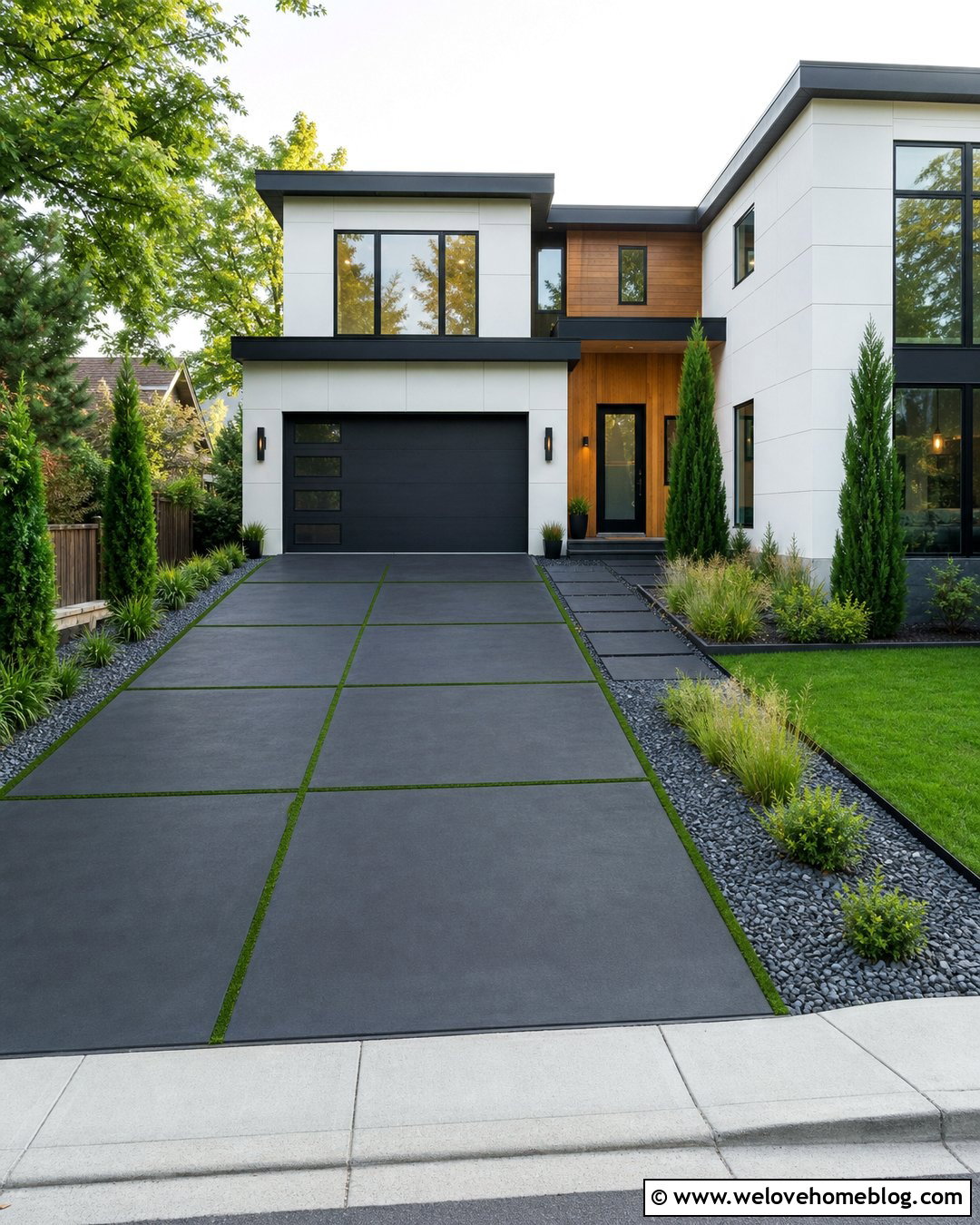
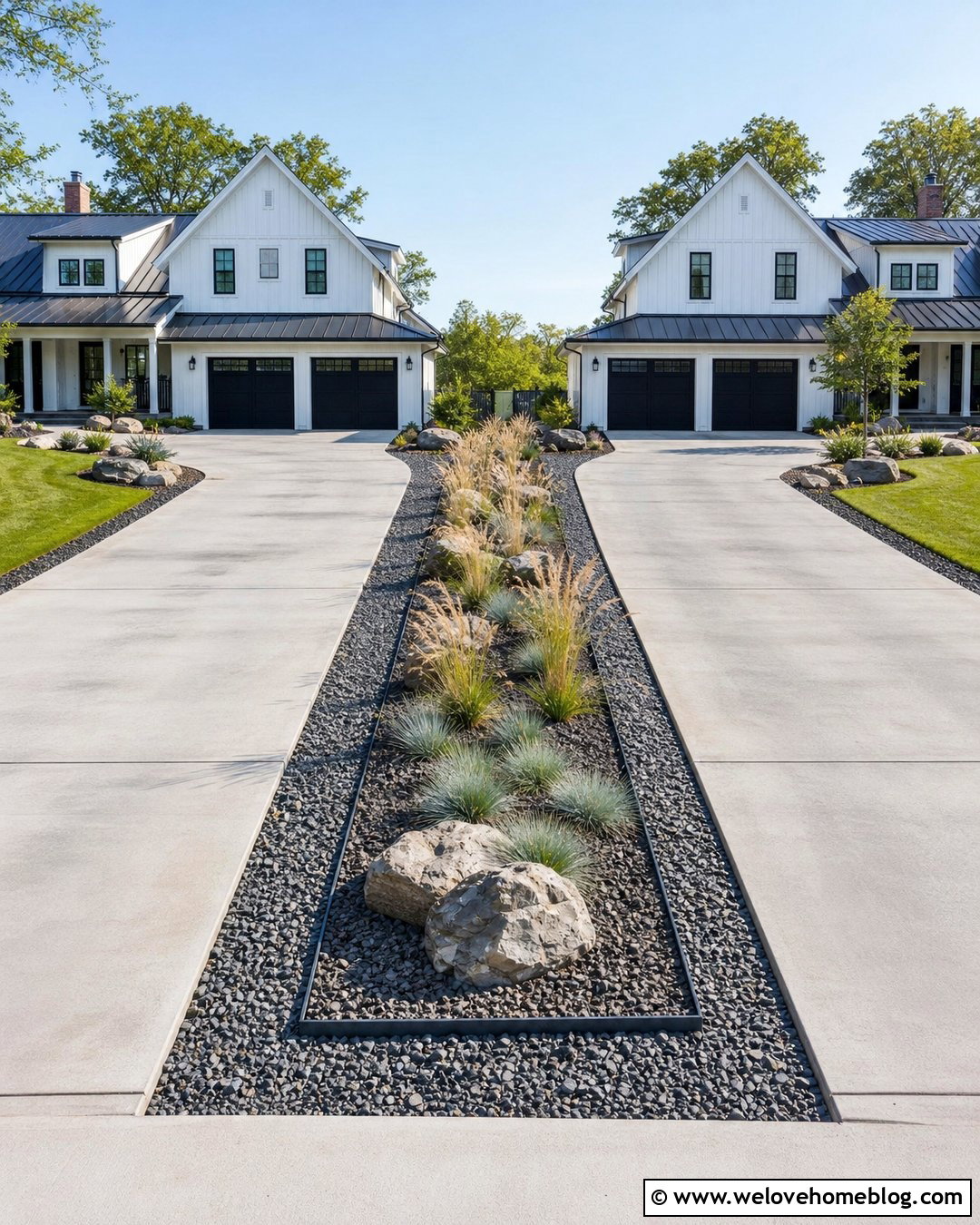
Charcoal-colored concrete gives grass joints a vivid, graphic appearance. Use large rectangular panels with narrow green strips, arranging the pattern to match a modern home’s strong horizontal or vertical lines. Integral color generally creates a more consistent appearance than a thin surface treatment, but samples should be reviewed outdoors because sunlight changes how dark concrete looks. Black metal edging, gravel planting beds, and architectural evergreens can continue the contemporary palette without adding clutter. Keep the house facade lighter so the driveway does not make the entire frontage feel heavy. In hot, sunny regions, consider whether a very dark surface will become uncomfortable or fade unevenly. A medium charcoal may provide the desired contrast while remaining easier to integrate with the surrounding walkway, lawn, and street apron.
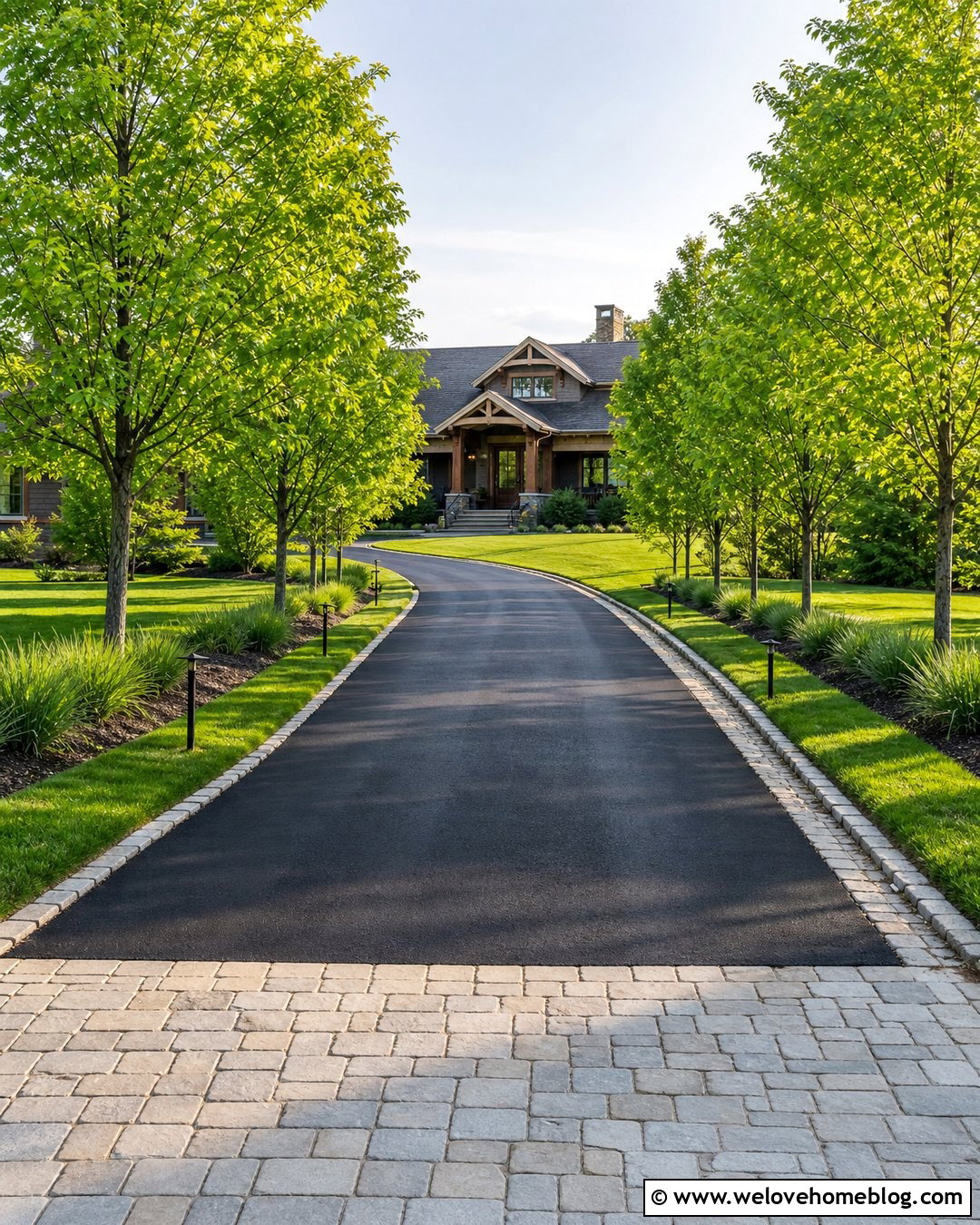


15. Stamped Concrete Driveway With Grass Borders
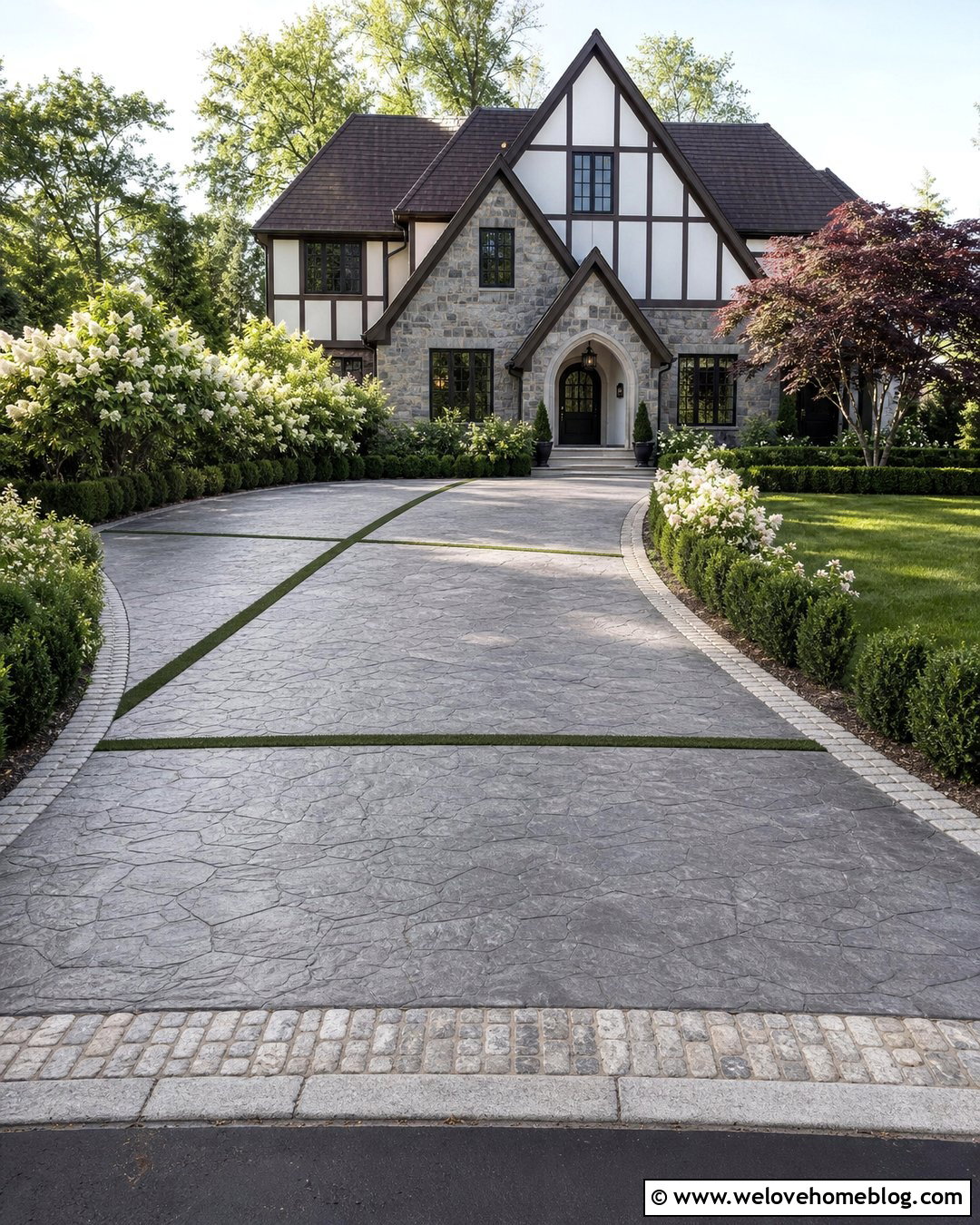
Stamped concrete can introduce a stone-like surface while grass strips keep the driveway from appearing too solid. Choose a seamless stone texture or a restrained large-format pattern rather than a small, busy stamp. Divide the driveway into broad panels and use grass bands at selected intervals, then repeat the greenery along both outer edges. Warm gray or muted taupe concrete complements farmhouse, Tudor, and traditional stone homes. A cobblestone-style border can define the entrance, but its color should remain close to the stamped surface for a unified finish. Surrounding beds may include boxwoods, flowering shrubs, and small ornamental trees. Make sure the grass joints align with the overall stamped layout so the two treatments look intentionally designed together rather than added at separate stages.
16. Concrete Driveway With Grass And Brick Border
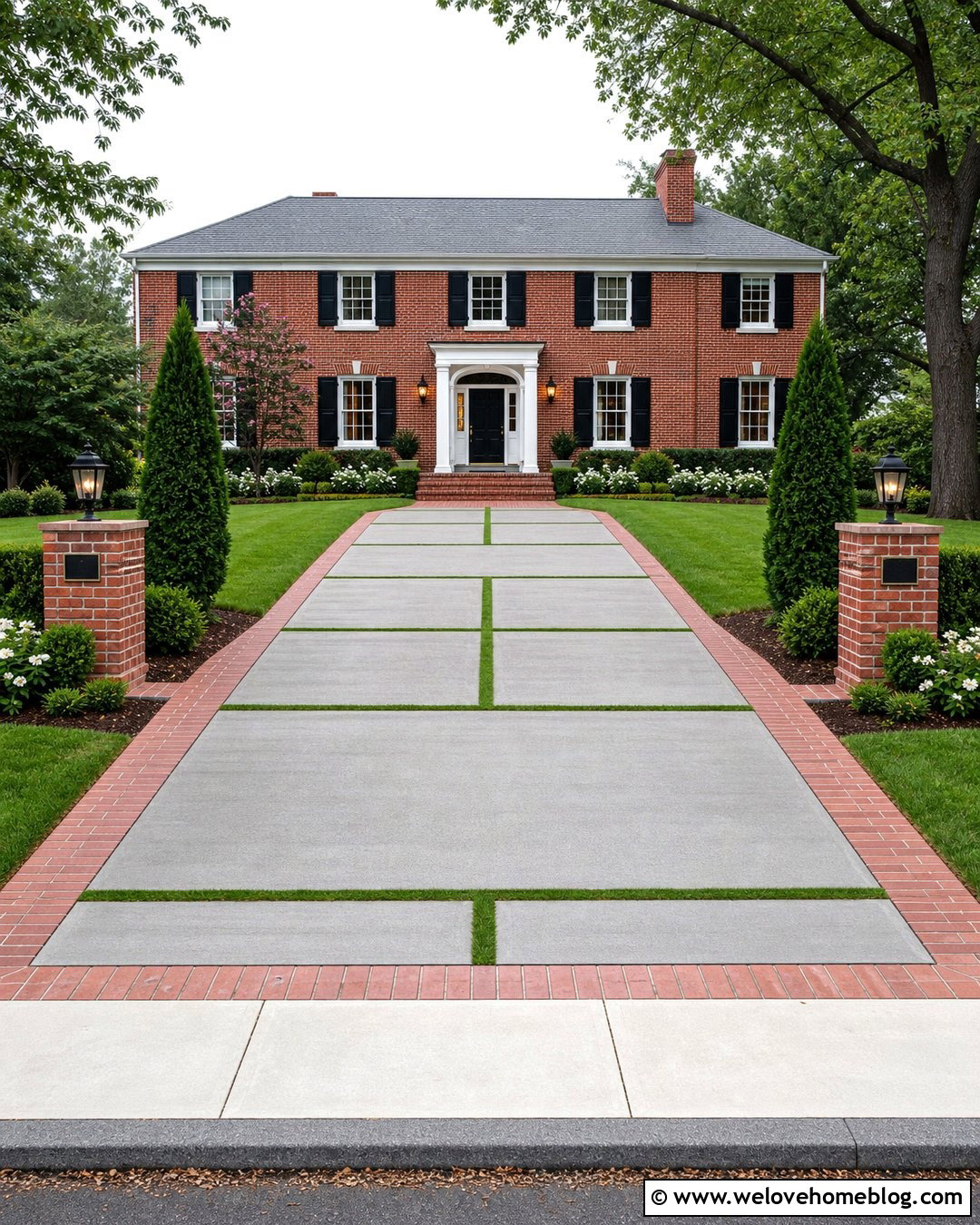
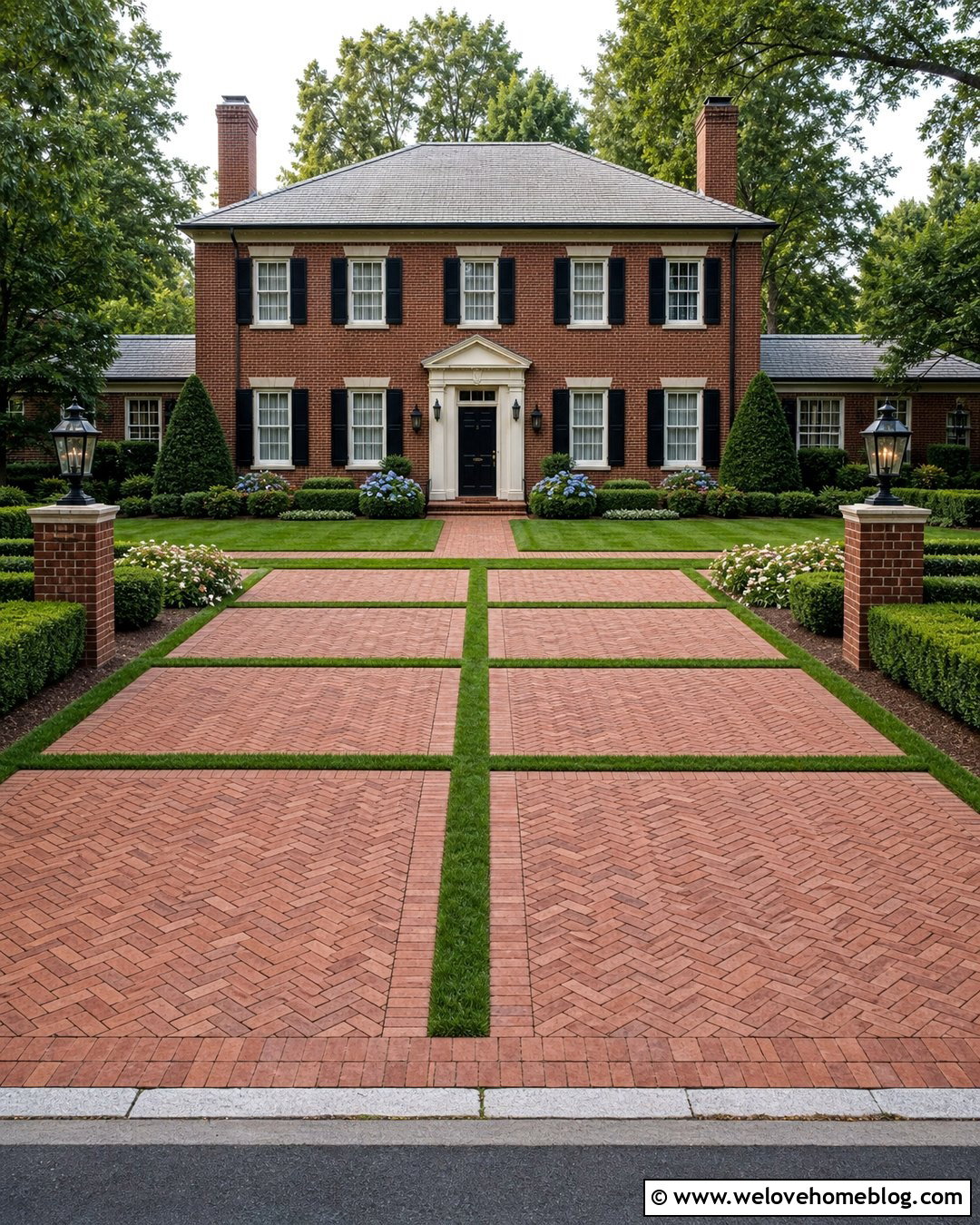
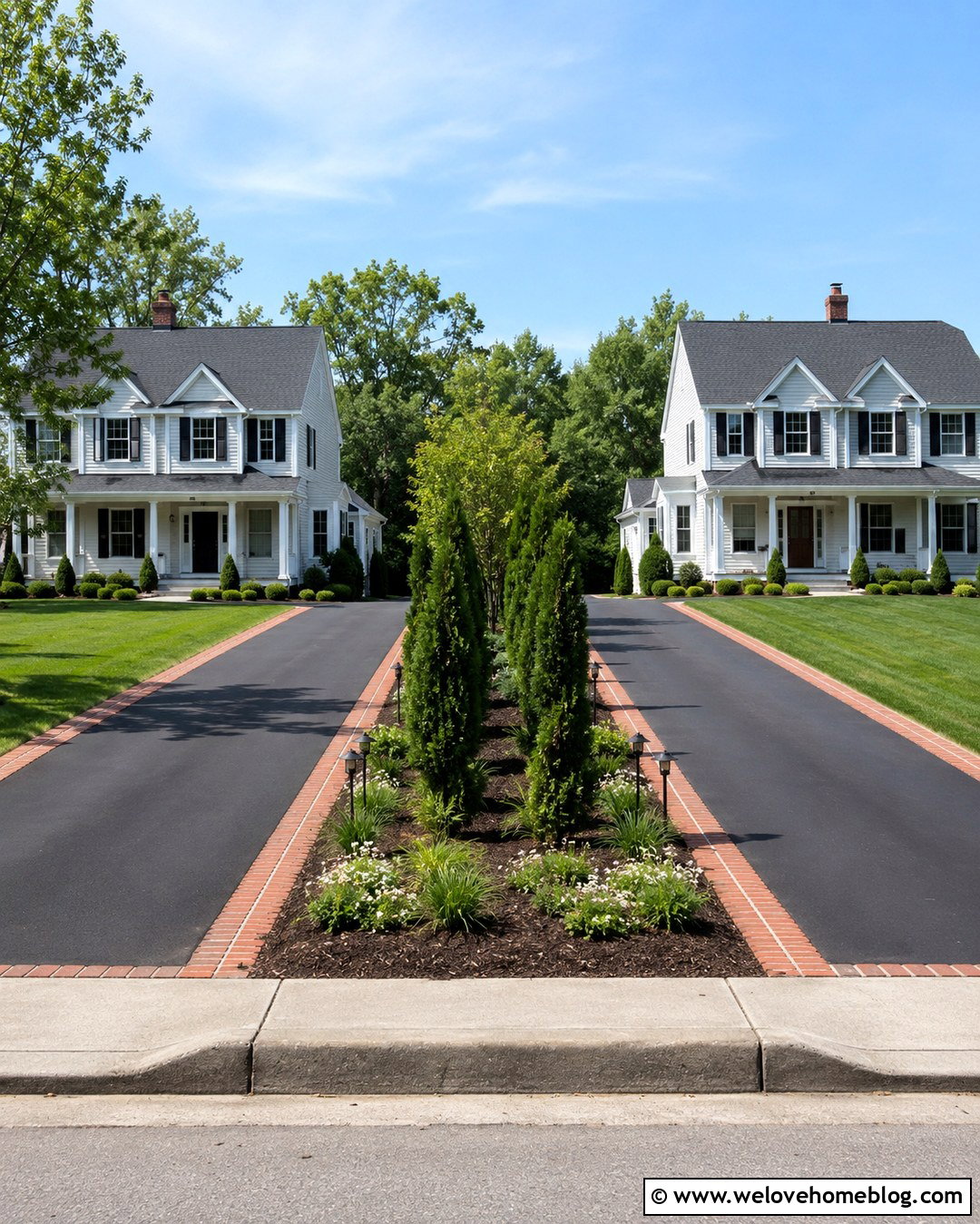
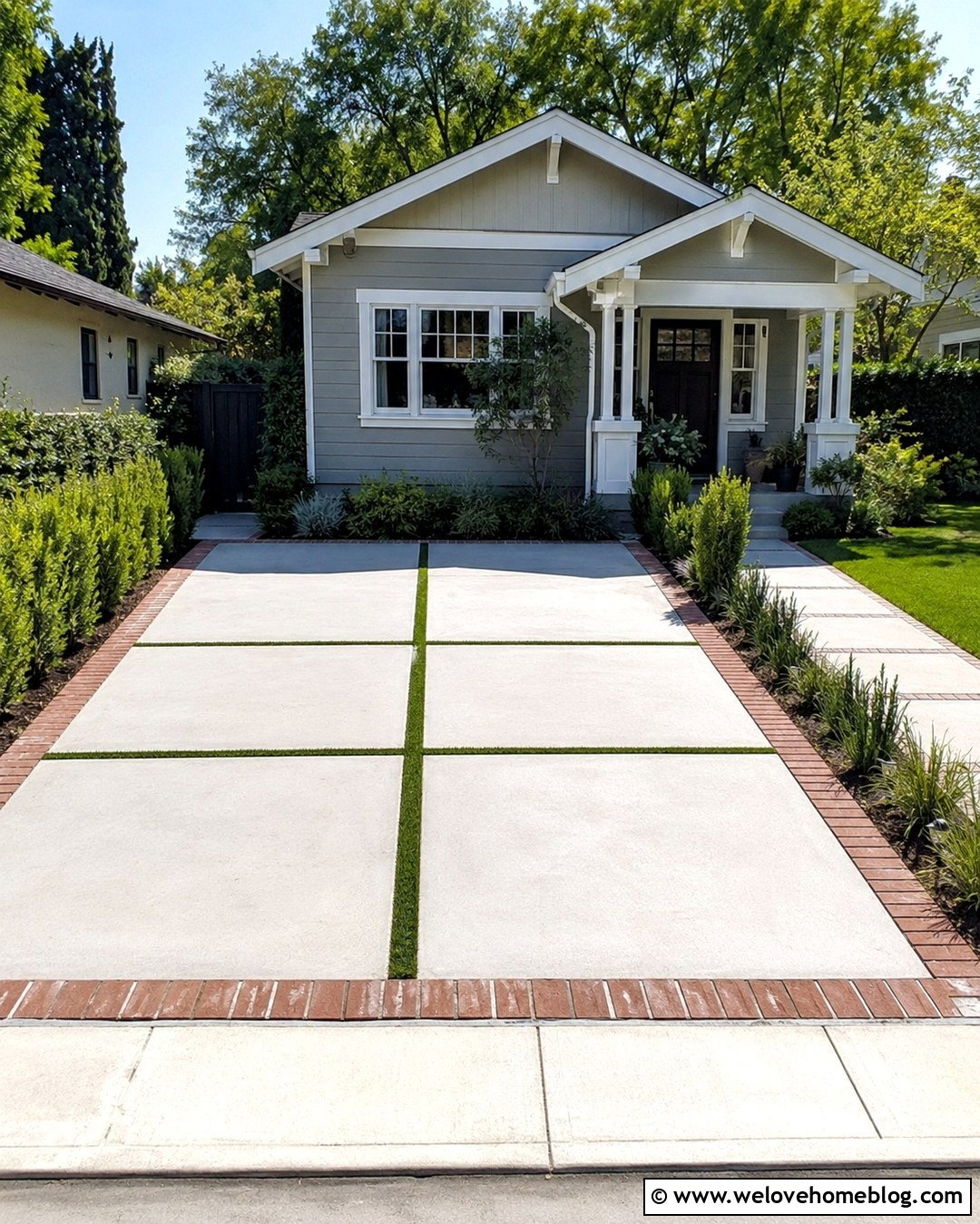
A red or brown brick border adds warmth to cool concrete and helps a grass-jointed driveway connect with a traditional house. Use broom-finished concrete rectangles separated by narrow grass bands, then outline the entire driveway with clay brick pavers laid in a soldier course. The brick edge provides a clear mowing boundary and creates a durable transition beside planting beds. Repeat the same brick around the walkway or front steps for continuity. This look is particularly well suited to colonial, Georgian, and red-brick homes with symmetrical landscaping. Keep the grass joints straight and evenly spaced to support the formal character. Paired foundation shrubs, a centered walkway, and matching entrance lights can reinforce the balanced design. Choose brick colors already present in the facade rather than introducing an unrelated shade.
17. Concrete Driveway With Grass And Stone Edging
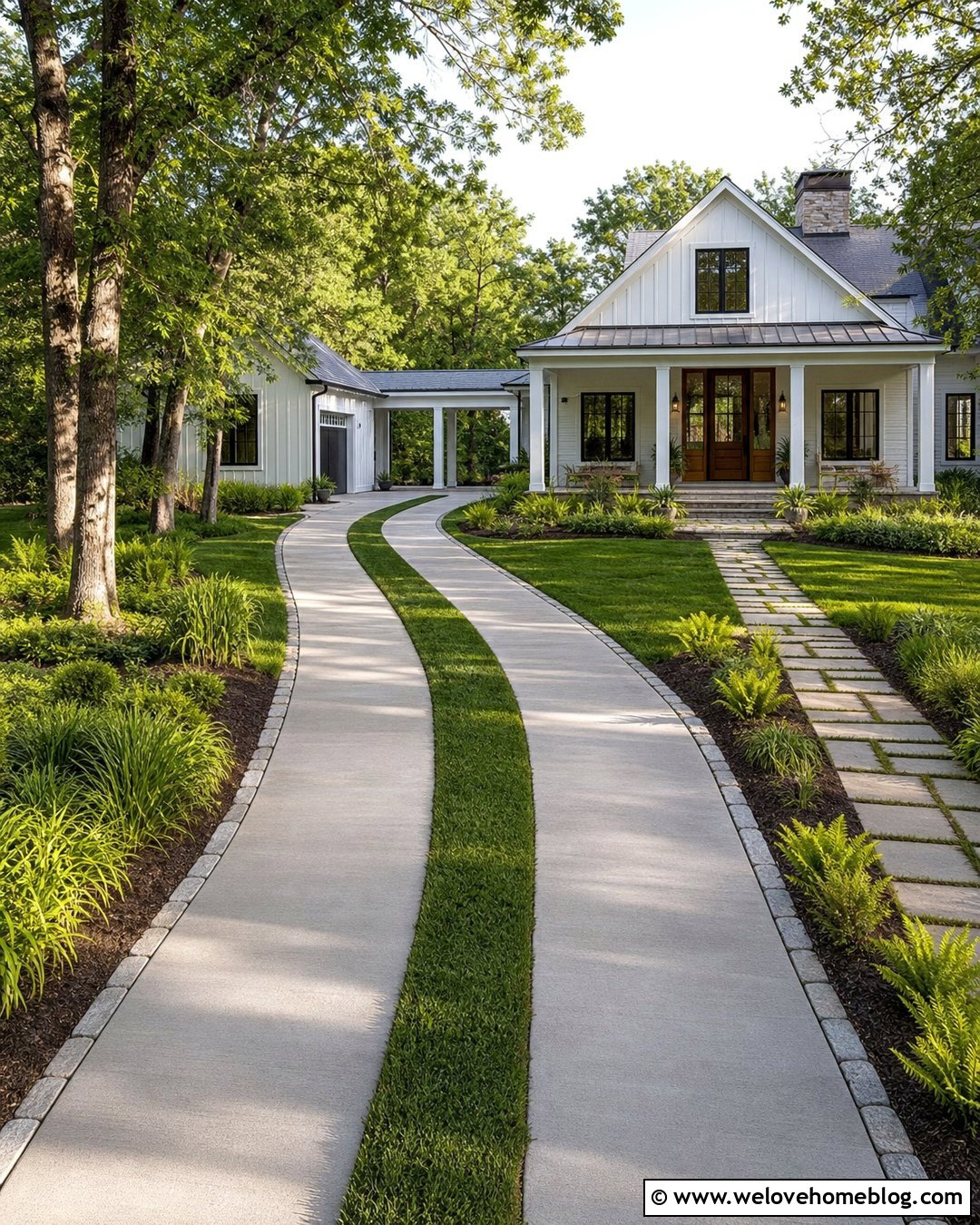
Natural stone edging can make a concrete-and-grass driveway feel more connected to a wooded or country landscape. Install wide concrete wheel tracks or individual rectangular slabs with a living grass center, then frame the outside edges with granite setts, fieldstone, or locally appropriate stone. The border should be securely installed and nearly flush with the driving surface to avoid creating a tire hazard. Let the neighboring planting beds have softer shapes, using ferns, native shrubs, ornamental grasses, and shade trees. A Craftsman, cottage, or modern farmhouse provides an appealing backdrop for this combination. Choose concrete with a subtle warm-gray tone so it harmonizes with the stone. A matching stepping-stone walkway can link the driveway to the porch without turning the entire front yard into continuous pavement.
18. Sloped Concrete Driveway With Turf Joints
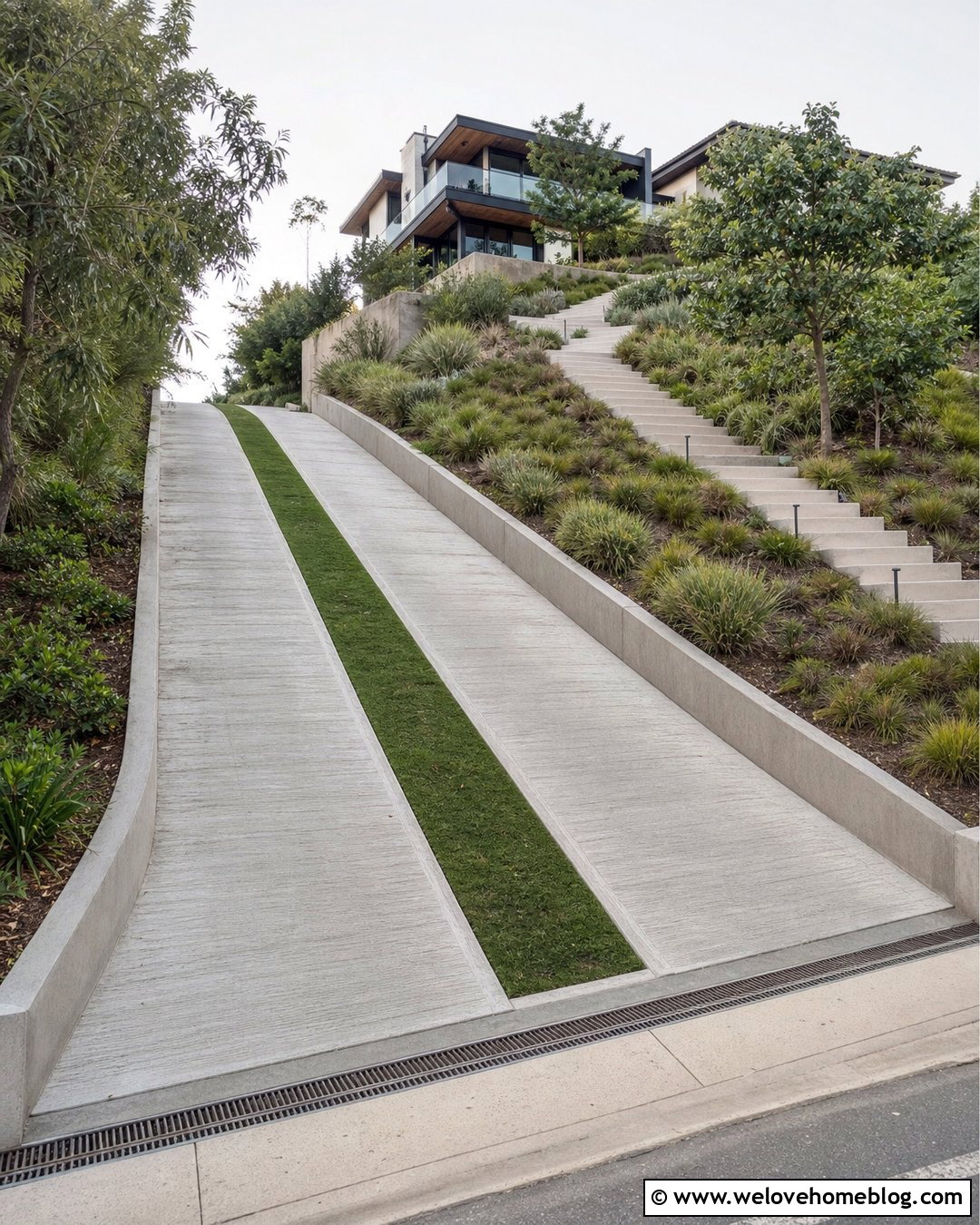
Grass can be included on a sloped driveway, but the layout requires careful drainage and erosion planning. Use textured concrete wheel tracks with a narrow artificial turf center, keeping tires on the most stable paved areas. Crosswise grass joints may allow soil or water to wash downhill, so long strips that follow the direction of travel are often easier to manage. Add concrete curbs along the sides to contain planting beds and direct runoff toward an approved drainage point. Deep-rooted shrubs and ground covers on the bordering slope can stabilize the surrounding soil while softening the hardscape. A stepped walkway beside the driveway gives pedestrians a safer route to the house. Because slope limits and stormwater rules vary, have the design checked by qualified local contractors and permitting authorities before construction. ()
19. Concrete Driveway With Grass Parking Pads
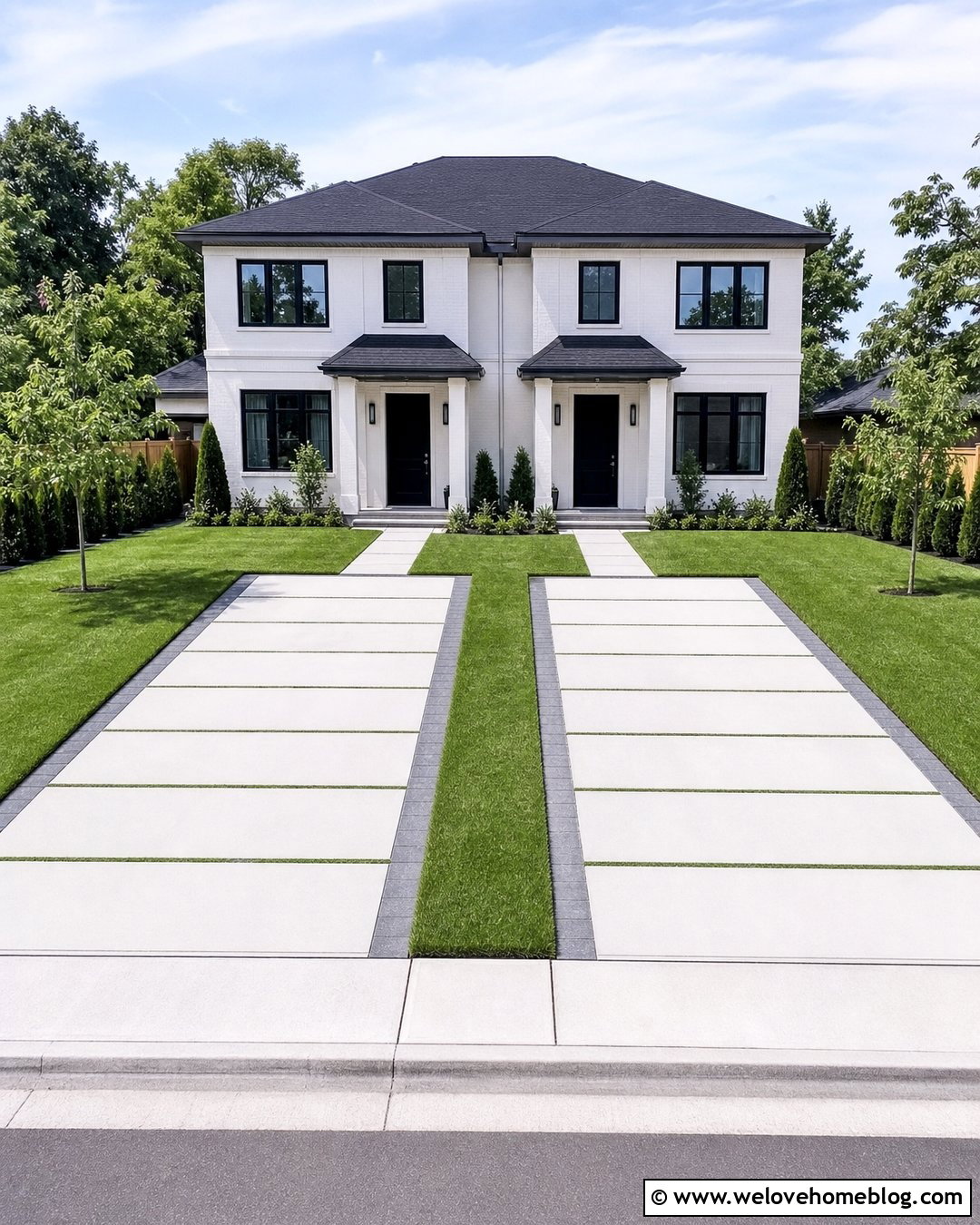
Separate concrete parking pads divided by grass can make a wide front yard feel less like a paved parking lot. Create individual rectangular slabs for each vehicle, leaving generous turf bands between the spaces and around their outer edges. Connect the pads to the street with a narrower concrete approach so the layout remains easy to navigate. Real grass is suitable where tires stay on the slabs and the spaces receive enough sun. Otherwise, use reinforced or artificial turf in the joints. A low paver border can protect the edges and distinguish parking areas from the surrounding lawn. This approach suits duplexes, multigenerational homes, and properties that need occasional guest parking. Add a clear concrete walkway so visitors never have to cross wet grass to reach the front entrance.




20. Concrete Driveway With Grass And Landscape Lighting
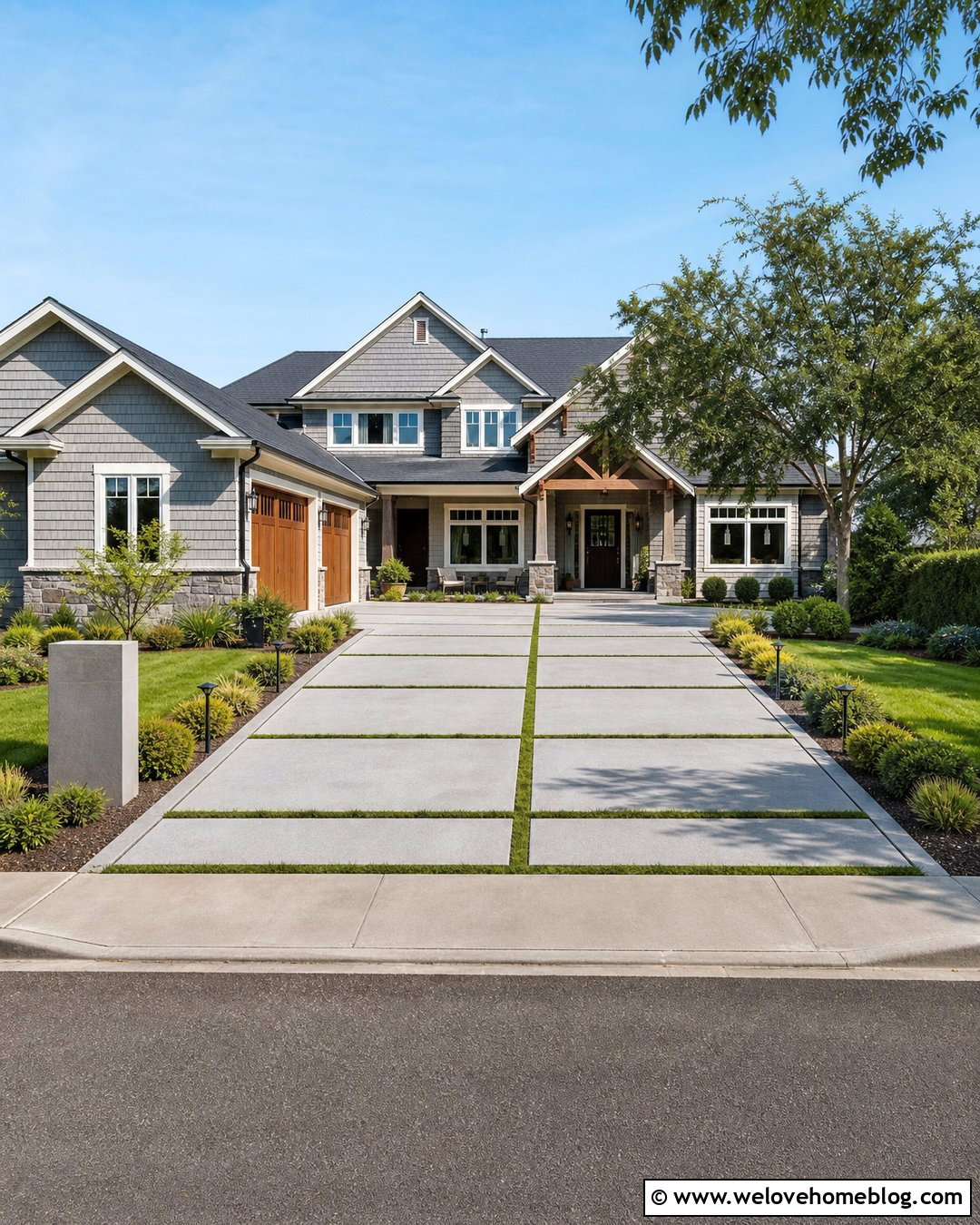
Low-profile landscape lighting can define a concrete-and-grass driveway after dark without cluttering its daytime appearance. During the day, large poured concrete panels and narrow grass joints provide a clean geometric foundation. Place compact path lights in the outer planting beds rather than directly inside the turf strips, where fixtures could interfere with tires or mowing. Recessed markers may be installed along concrete edges if they are rated for the location and positioned by a professional. Use matching fixtures near the walkway, address sign, and front steps to create a coordinated entrance. The surrounding landscape can combine clipped shrubs, ornamental grasses, and one statement tree. For the strongest curb appeal, maintain a bright, orderly daytime design while treating lighting as a practical layer rather than the driveway’s only decorative feature.
Conclusion:
These 20 concrete driveway with grass in between ideas show how greenery can transform a practical driving surface into an attractive part of the front landscape. A simple ribbon layout suits narrow and traditional properties, while slab grids, diamonds, checkerboards, and turf ribbons complement contemporary homes. Choose living grass where there is enough sunlight, water, soil, and maintenance access. Artificial turf can be more practical inside narrow joints or heavily shaded areas. Most importantly, concrete dimensions, structural bases, slopes, drainage, and vehicle paths should be planned before appearance alone. By coordinating the driveway pattern with its borders, planting beds, walkway, and house facade, you can create an entrance that feels intentional, welcoming, and easy to use.

Related posts:
Leave a Reply