
Grass and concrete create a driveway that feels structured without looking like one large, plain slab. The combination works with modern homes, traditional properties, compact front yards, and spacious entrances. Concrete provides clear driving and parking zones, while living grass or artificial turf softens the hardscape with fresh color and texture. Popular layouts include oversized rectangular slabs, checkerboard grids, wheel-track ribbons, and concrete pavers separated by narrow green joints. These patterns can also visually connect the driveway to the surrounding lawn and planting beds. Successful designs require practical spacing, stable foundations, clean edging, and grass suited to local conditions. Below, these 20 grass and concrete driveway ideas explore complete looks for different homes, lot sizes, maintenance needs, and curb appeal goals. ()

1. Modern Concrete Slab Driveway With Grass Strips
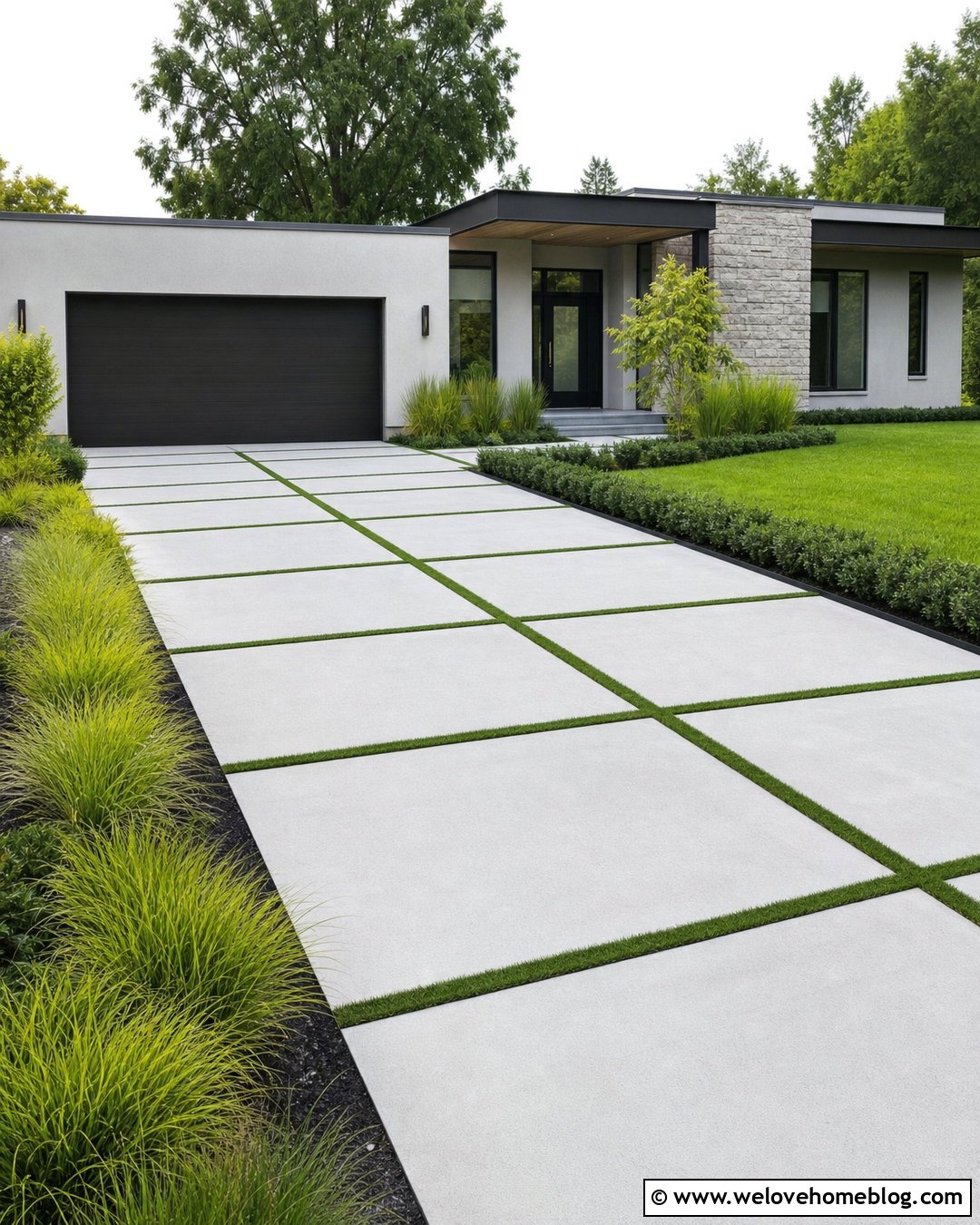
Oversized rectangular slabs give a grass and concrete driveway a clean, architectural appearance. Choose smooth or lightly broom-finished gray concrete and separate each slab with narrow, evenly spaced grass channels. A straight layout looks especially sharp in front of a boxy modern house with horizontal siding and simple garage doors. Keep the surrounding landscaping restrained with clipped ornamental grasses, low evergreen shrubs, and one sculptural tree. Dark steel edging can separate the driveway from planting beds without adding visual clutter. Real turf provides a soft, natural finish, while artificial turf may be easier where vehicle traffic, heat, or shade makes grass difficult to maintain. Continue the slab pattern into the front walkway so the entire entrance feels intentional and connected.
2. Concrete Ribbon Driveway With Grass Center
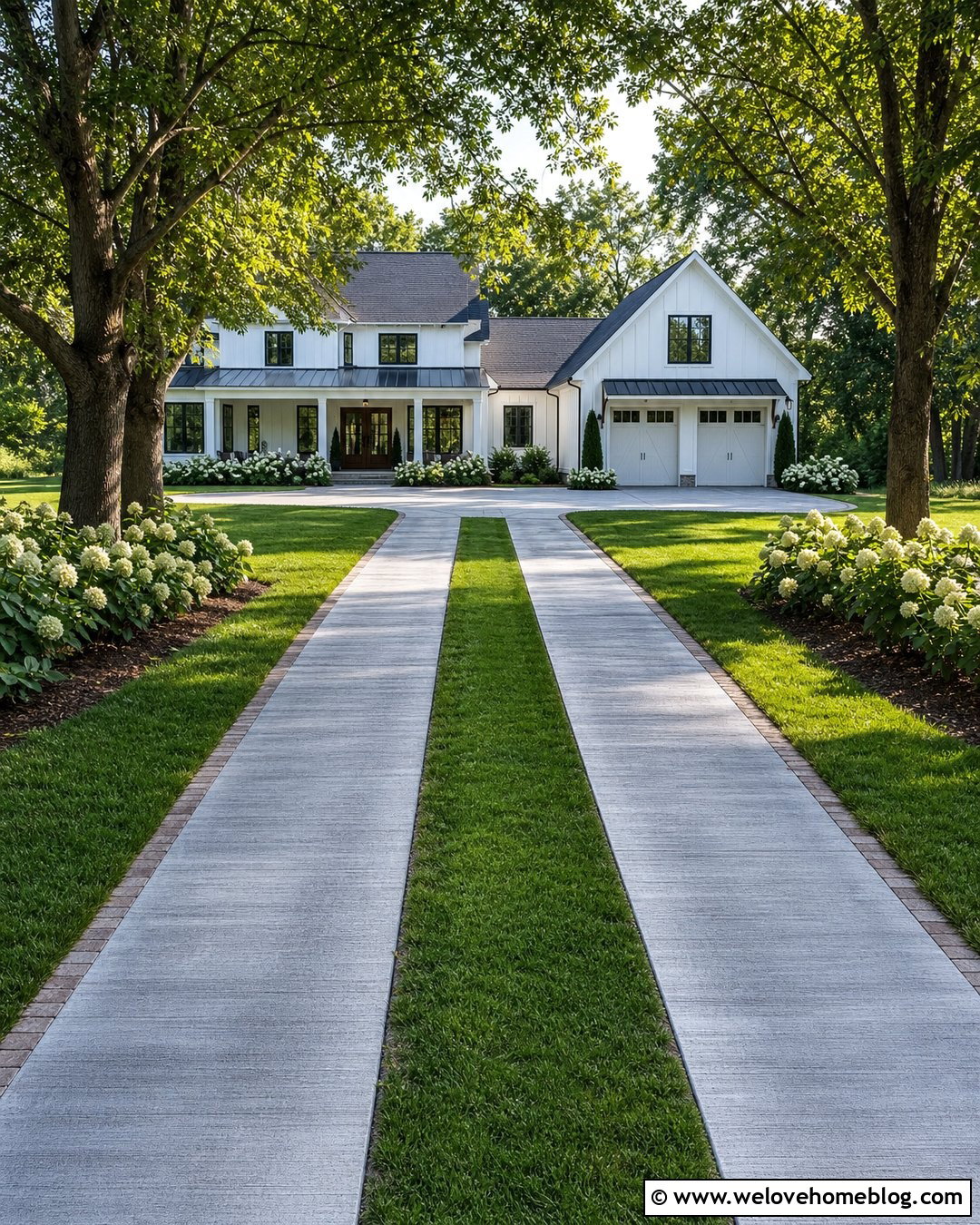
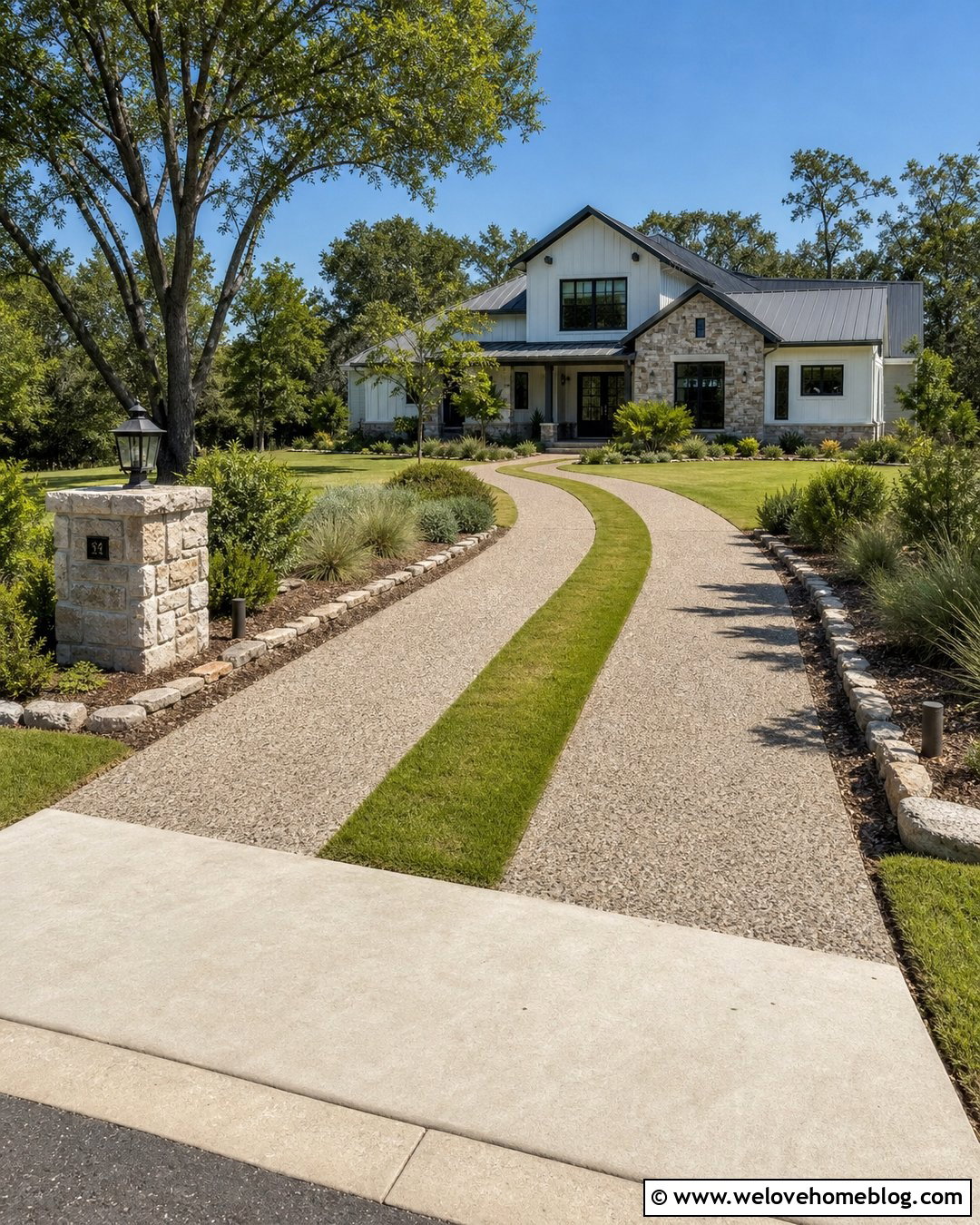
A concrete ribbon driveway uses two parallel wheel tracks with a continuous strip of grass between them. This classic arrangement limits the amount of visible paving and works beautifully with cottages, Craftsman homes, and traditional farmhouses. Match the track spacing carefully to the vehicles that regularly use the driveway. A generous grassy center feels more relaxed, while narrow ribbons create a tidier suburban look. Frame the outer edges with lawn for a seamless transition, or add brick borders for stronger definition. Near the garage, widen the concrete into a complete parking pad so opening doors and turning around remain convenient. The historic ribbon layout developed from vehicle tracks and remains attractive because it combines practical driving surfaces with additional greenery. ()
3. Checkerboard Concrete Driveway With Artificial Grass
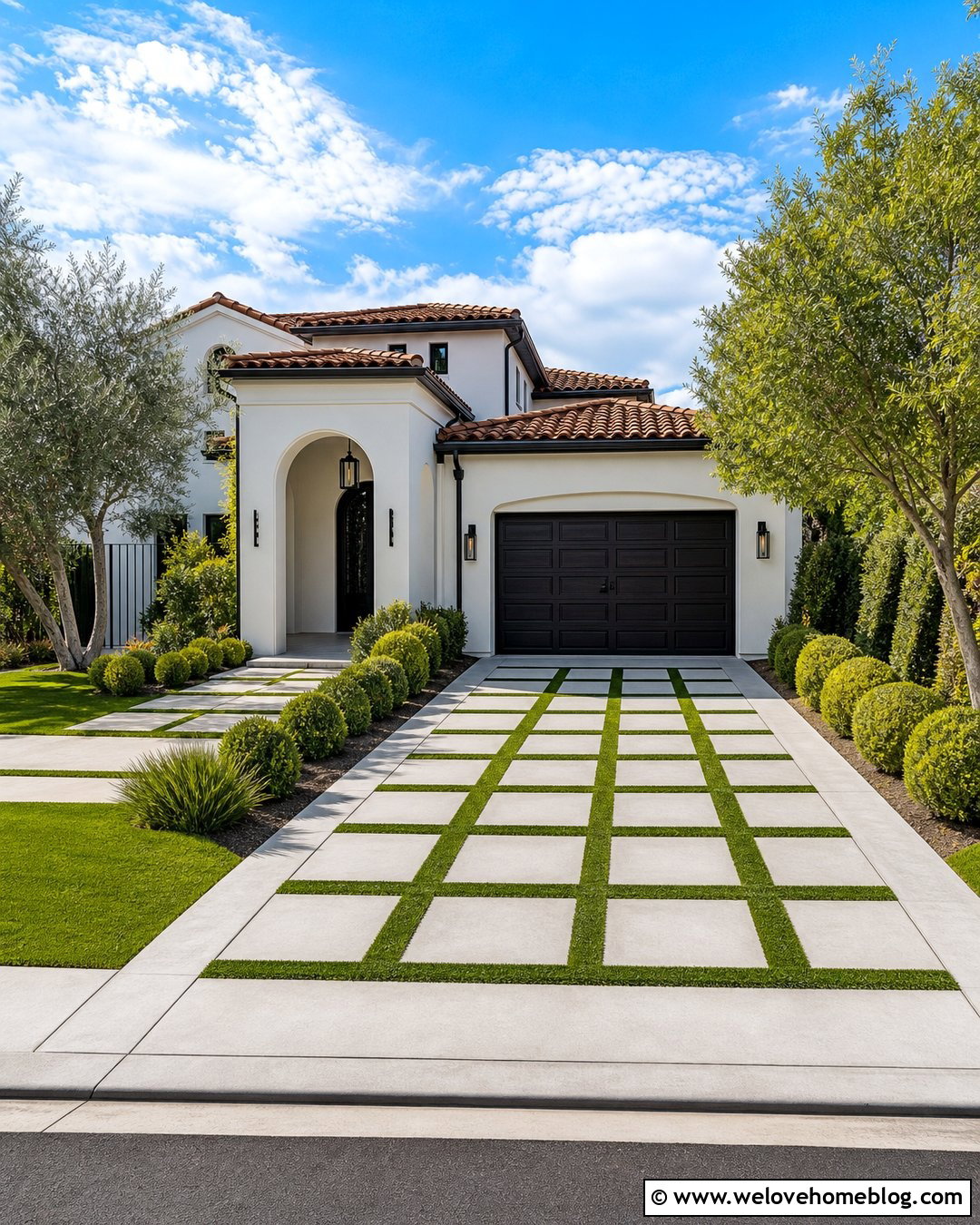
Alternating concrete squares and artificial grass creates a bold checkerboard pattern that immediately catches the eye. This design suits modern, contemporary, and Mediterranean homes with clean exterior lines. Use large square concrete pavers in a pale gray or warm cream tone, keeping every joint consistent. High-quality artificial turf delivers reliable color without requiring mowing inside numerous small spaces. A simple concrete border around the full driveway helps lock the composition together and creates a clean transition at the curb. Keep nearby planting beds simple so they do not compete with the geometric surface. Rounded shrubs, a few upright grasses, and a smooth lawn are enough. For a more spacious effect, carry the checkerboard pattern across both the driveway and adjoining front path.
4. Concrete Wheel Track Driveway With Wide Grass Bands
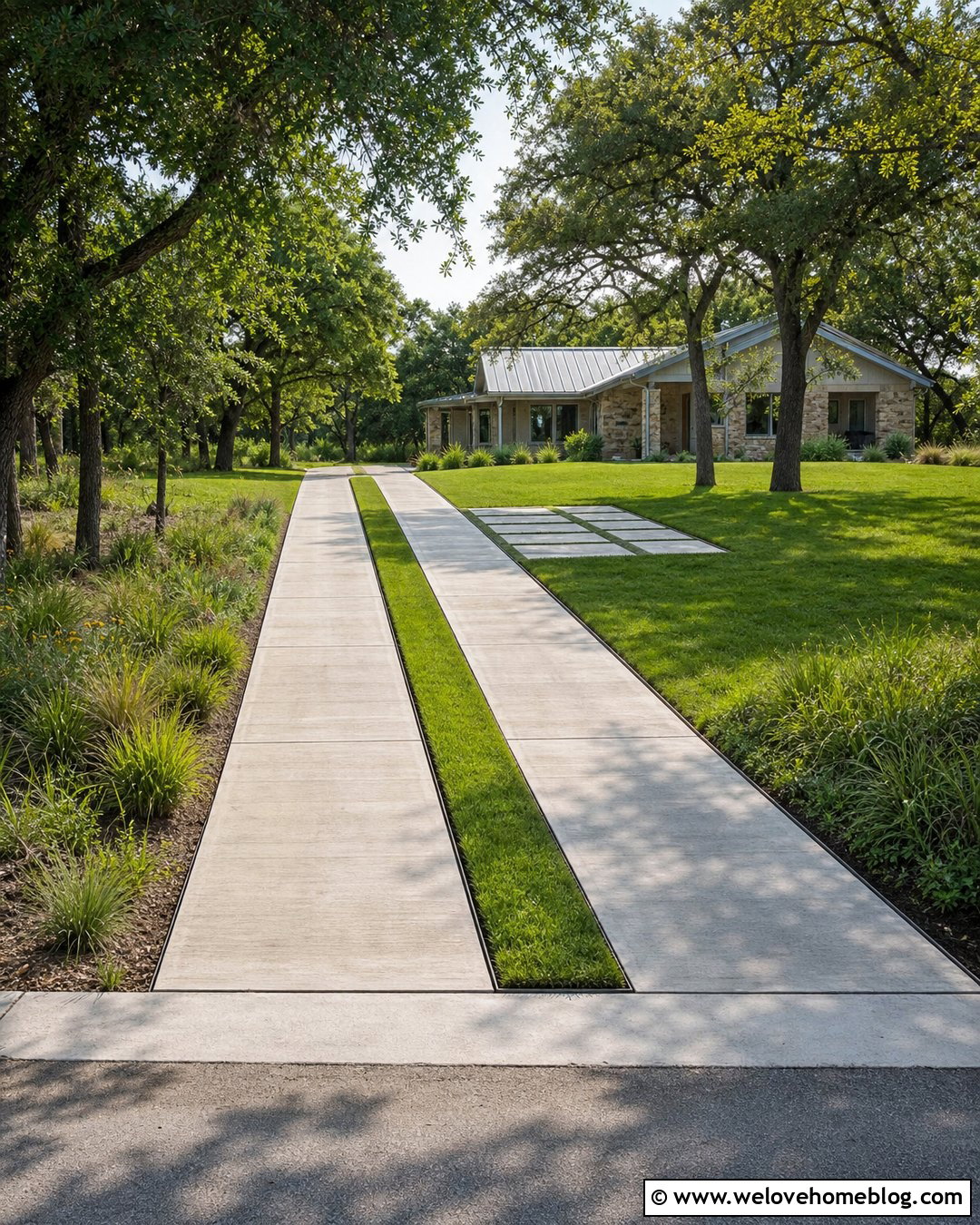
For a softer variation on the ribbon layout, install broad concrete wheel tracks with generous grass bands along the center and both sides. This design makes a long driveway appear more integrated with a large front lawn. Light broom-finished concrete provides subtle texture, while thick green turf keeps the entrance from feeling overly paved. Use flush steel edging where grass meets concrete to maintain crisp lines and simplify trimming. At the house, transition the tracks into a rectangular parking area with grass joints that repeat the same proportions. Shade trees placed well away from the driving surface can frame the approach without creating root problems near the slabs. The completed look feels especially appropriate for ranch homes, country properties, and understated modern farmhouses.
5. Curved Concrete Driveway With Grass Joints
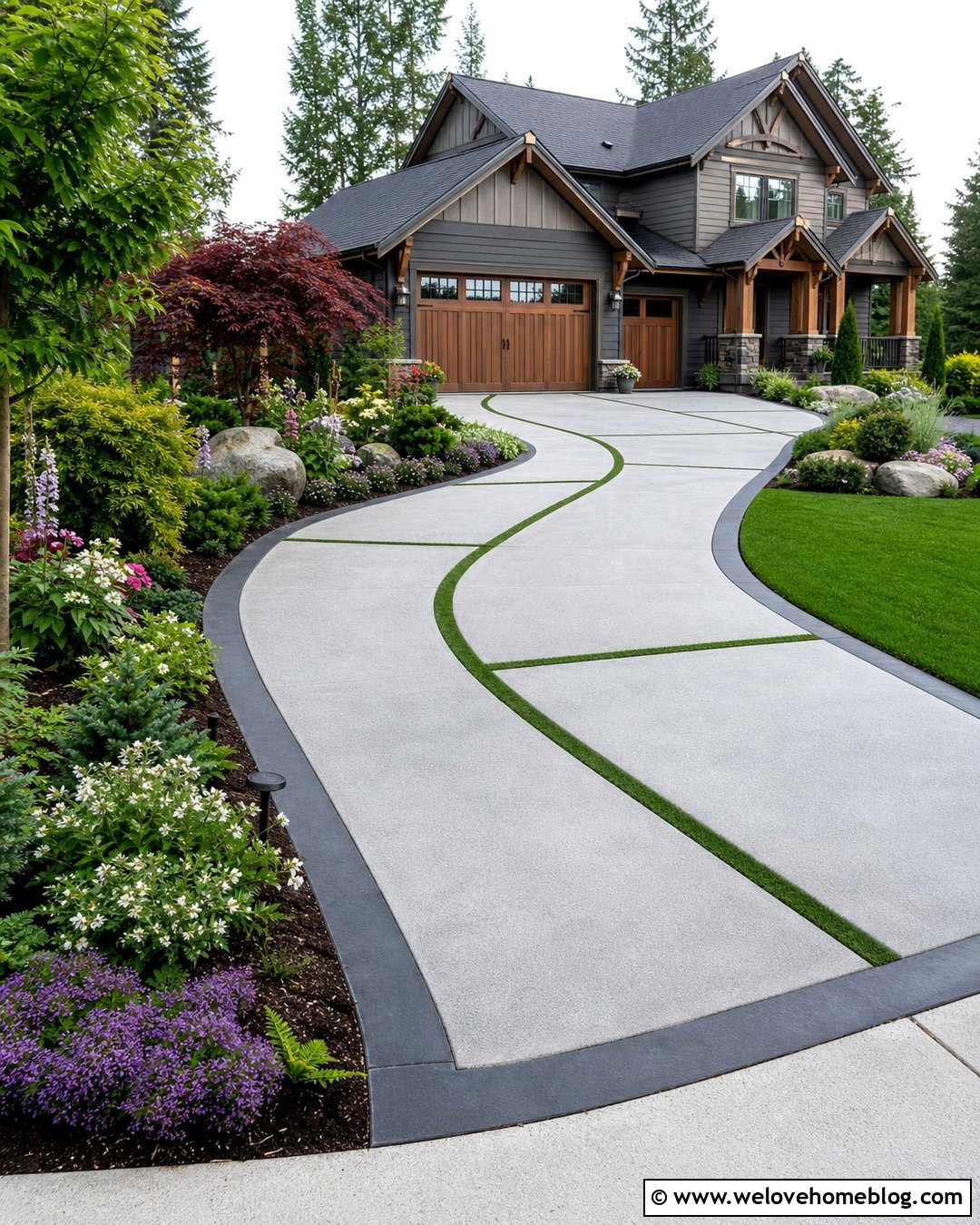
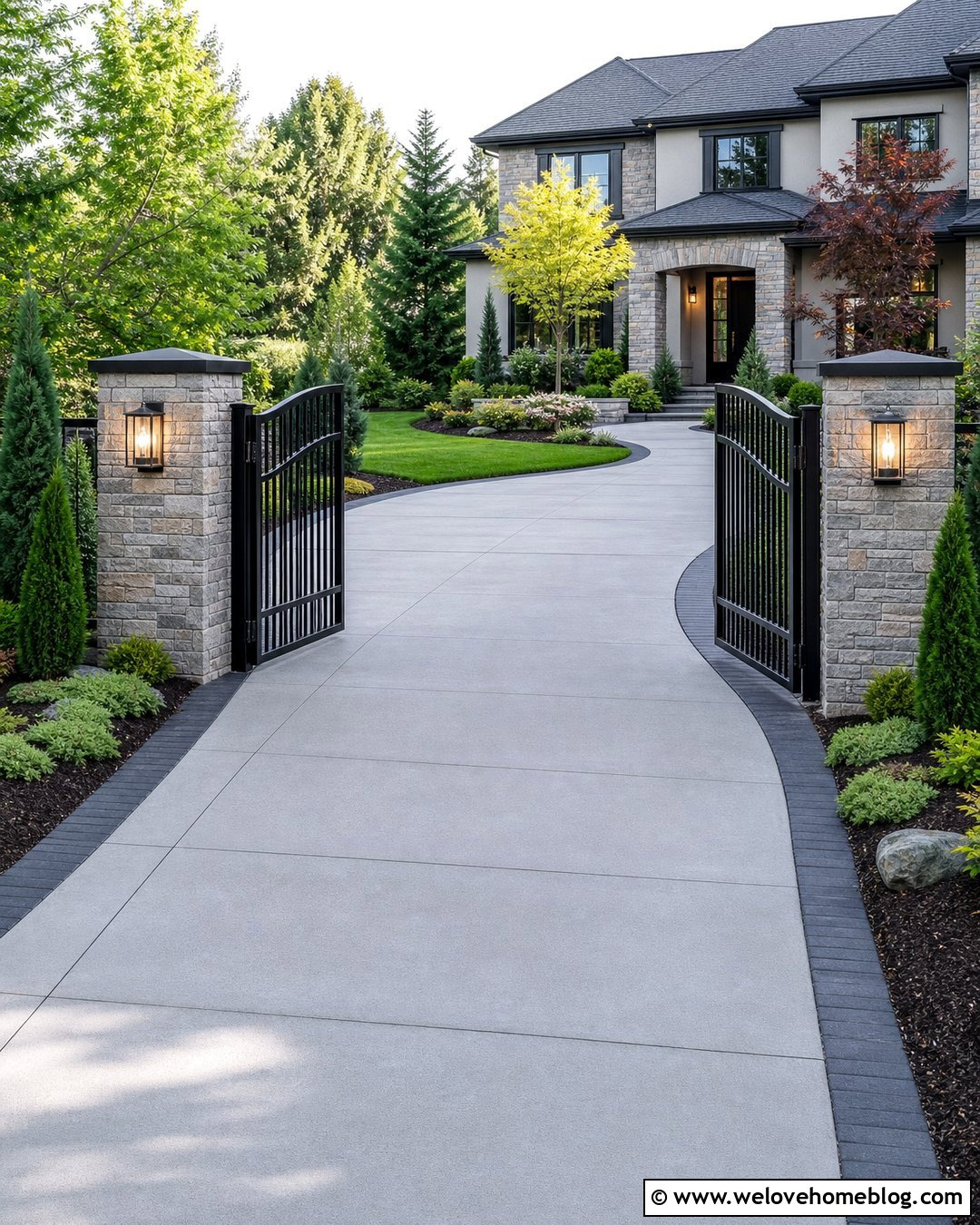
A gentle curve can make a grass and concrete driveway feel more natural while revealing the house gradually. Form the surface with wide poured-concrete sections separated by narrow grass joints that follow the curve. Consistent joint widths are important because uneven bands can make the layout look accidental. A dark charcoal concrete border can emphasize the sweeping shape and protect vulnerable turf edges from turning tires. Use layered landscaping on the outer curve, including low shrubs, flowering perennials, and one or two small ornamental trees. Keep planting lower on the inside curve to preserve visibility. This complete design suits Craftsman, transitional, and contemporary homes. It also helps a driveway flow around an established tree, sloping lawn, or prominent front garden without appearing forced.
6. Circular Concrete Driveway With Grass Center Island
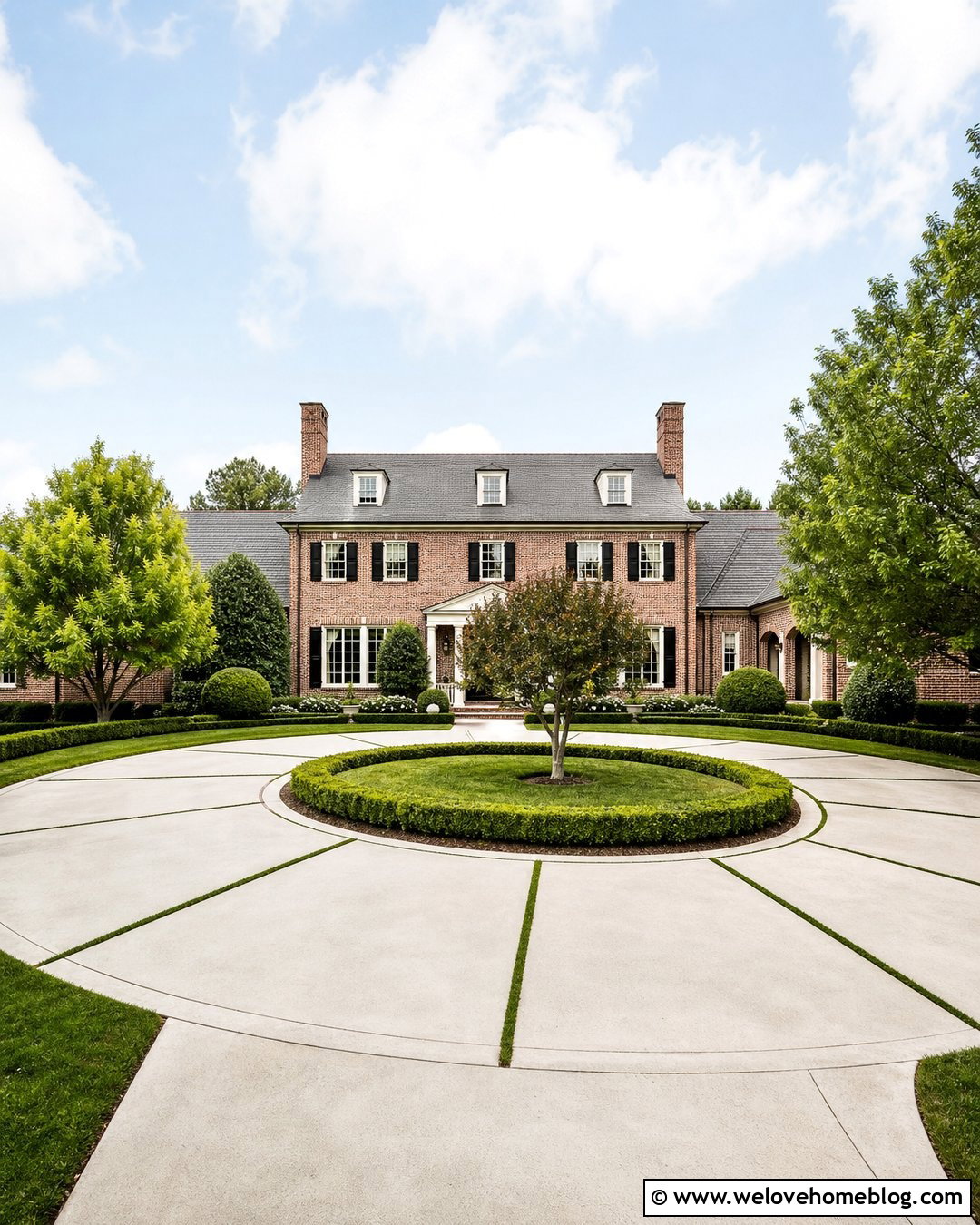
A circular concrete driveway becomes much greener when the hardscape is divided into large segments with grass joints. Arrange pale concrete slabs around a broad central lawn island, allowing the green center to become the main focal point. A small ornamental tree, clipped hedge ring, or layered perennial bed can anchor the island without blocking views of the house. Use a smooth concrete curb around the island to protect the grass from tires and make mowing easier. At the outer edge, connect the drive to a matching walkway leading directly to the front door. This layout works best on wider properties where turning space can be planned comfortably. Colonial, Southern, Mediterranean, and large modern homes can all benefit from its balanced, welcoming appearance.
7. Exposed Aggregate Concrete Driveway With Grass Channels
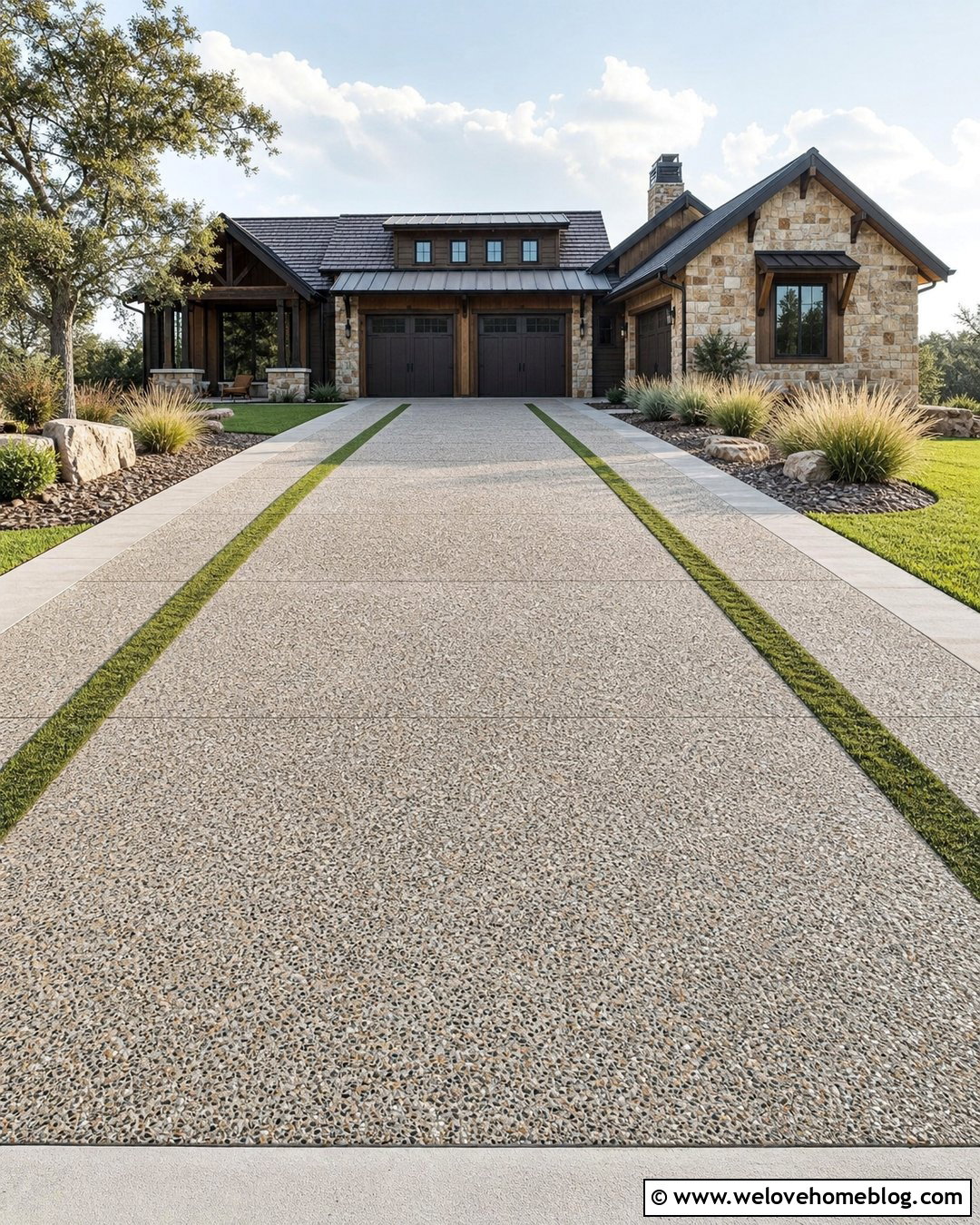
Exposed aggregate concrete adds natural texture while grass channels bring softness and color. Select an aggregate blend with gray, tan, and muted brown stones that complements the home’s roof, masonry, or siding. Divide the driveway into large rectangular panels rather than many small sections, preventing the textured surface from becoming visually busy. Green joints can run across the width, along the center, or in a simple grid. Grass strips may help receive some surface runoff, but the driveway still needs properly planned grading and drainage. () Add a smooth concrete perimeter band to create a refined contrast with the exposed stone finish. Native shrubs, ornamental grasses, and natural stone planting beds complete this relaxed look for ranch, rustic-modern, or mountain-inspired homes.
8. White Concrete Driveway With Artificial Turf Lines
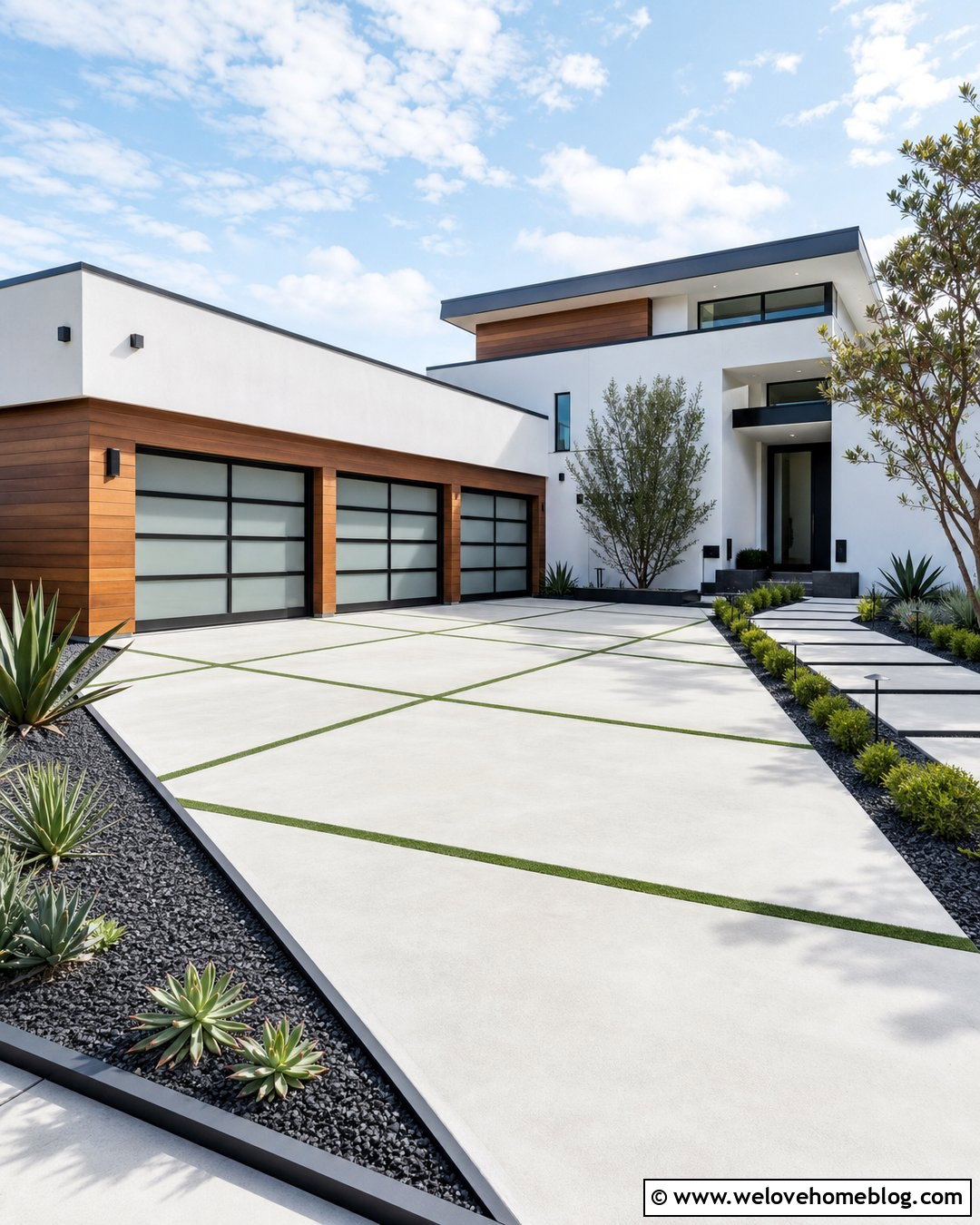
Bright white or very pale concrete paired with rich artificial turf produces a crisp, high-contrast entrance. Use large rectangular slabs arranged in a straight grid, with slim turf lines running both lengthwise and crosswise. The pale surface works especially well with white stucco, light brick, or warm wood cladding. Because dirt and stains show readily on light concrete, choose a practical finish and establish a regular cleaning routine. Frame the driveway with dark gravel beds, sculptural succulents, and low evergreen planting to reinforce the contemporary character. Black metal edging can add definition without overwhelming the design. Continue one row of slabs toward the front door as a matching walkway. This creates a unified composition rather than treating the driveway and entrance path as unrelated surfaces.
9. Charcoal Concrete Driveway With Green Grass Grid
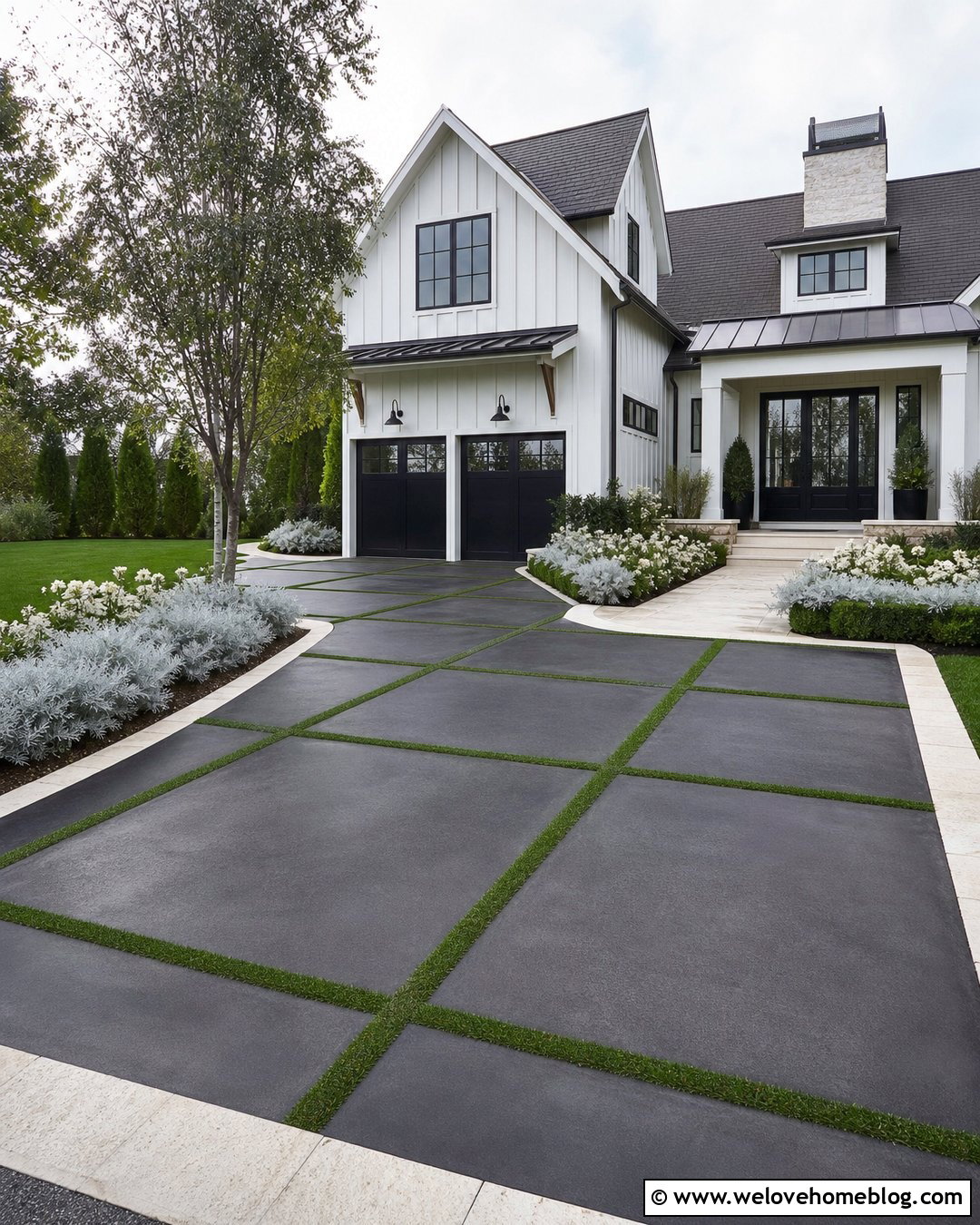
Dark charcoal concrete creates a dramatic background for vivid grass joints. The contrast is strongest when the driveway uses large square slabs with a precise green grid between them. Choose an integral concrete color or professionally applied finish that coordinates with dark window frames, garage doors, or roof details. A pale stone border can prevent the overall entrance from appearing too heavy. Around the driveway, use light gravel, silvery foliage, and restrained flowering plants to balance the deep concrete tone. Grass joints should remain flush enough to avoid awkward bumps while sitting low enough to reduce damage from tires. This grass and concrete driveway looks particularly polished in front of contemporary homes, modern farmhouses, and renovated midcentury properties with strong black-and-white exterior palettes.

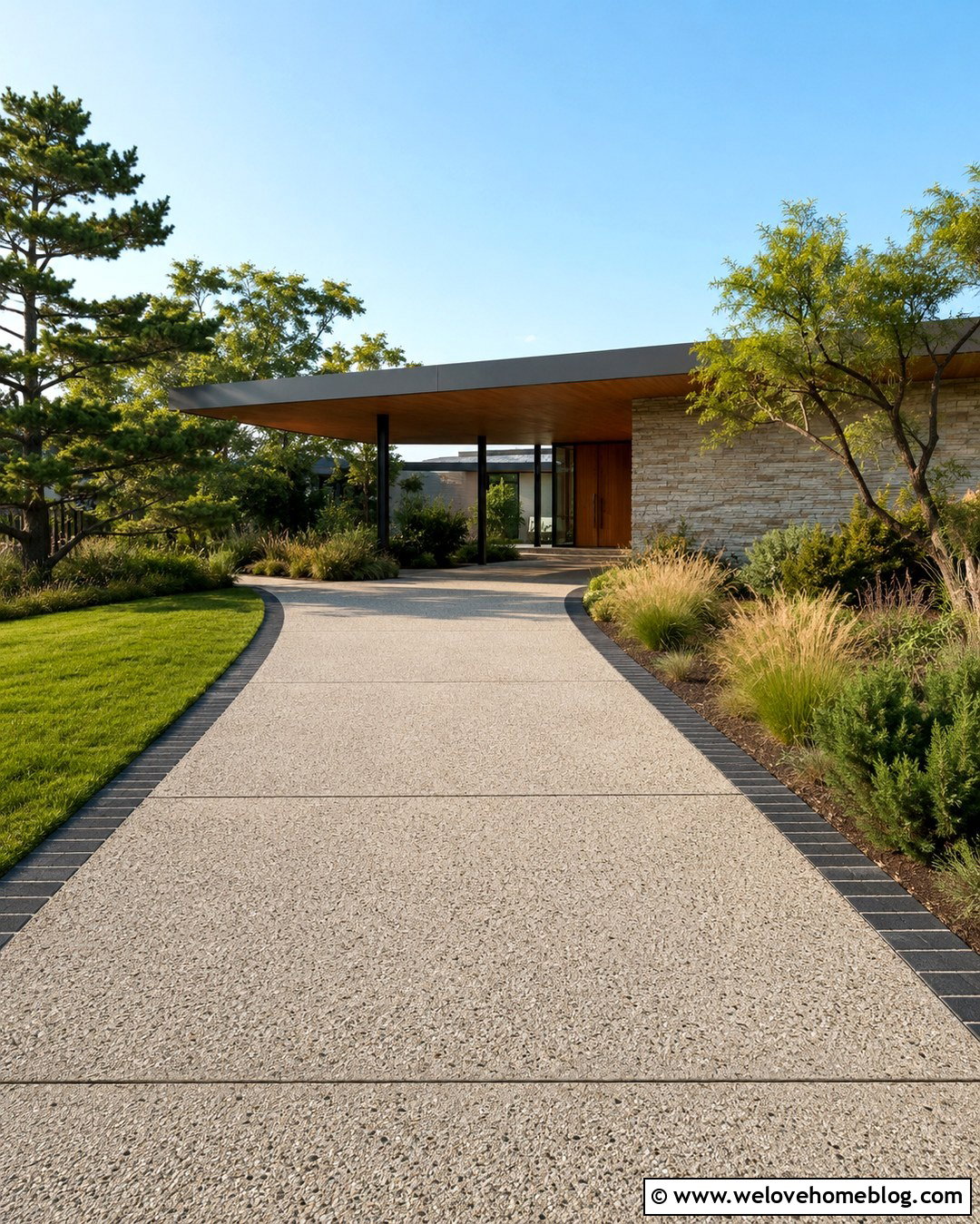
10. Broom Finish Concrete Driveway With Lawn Borders
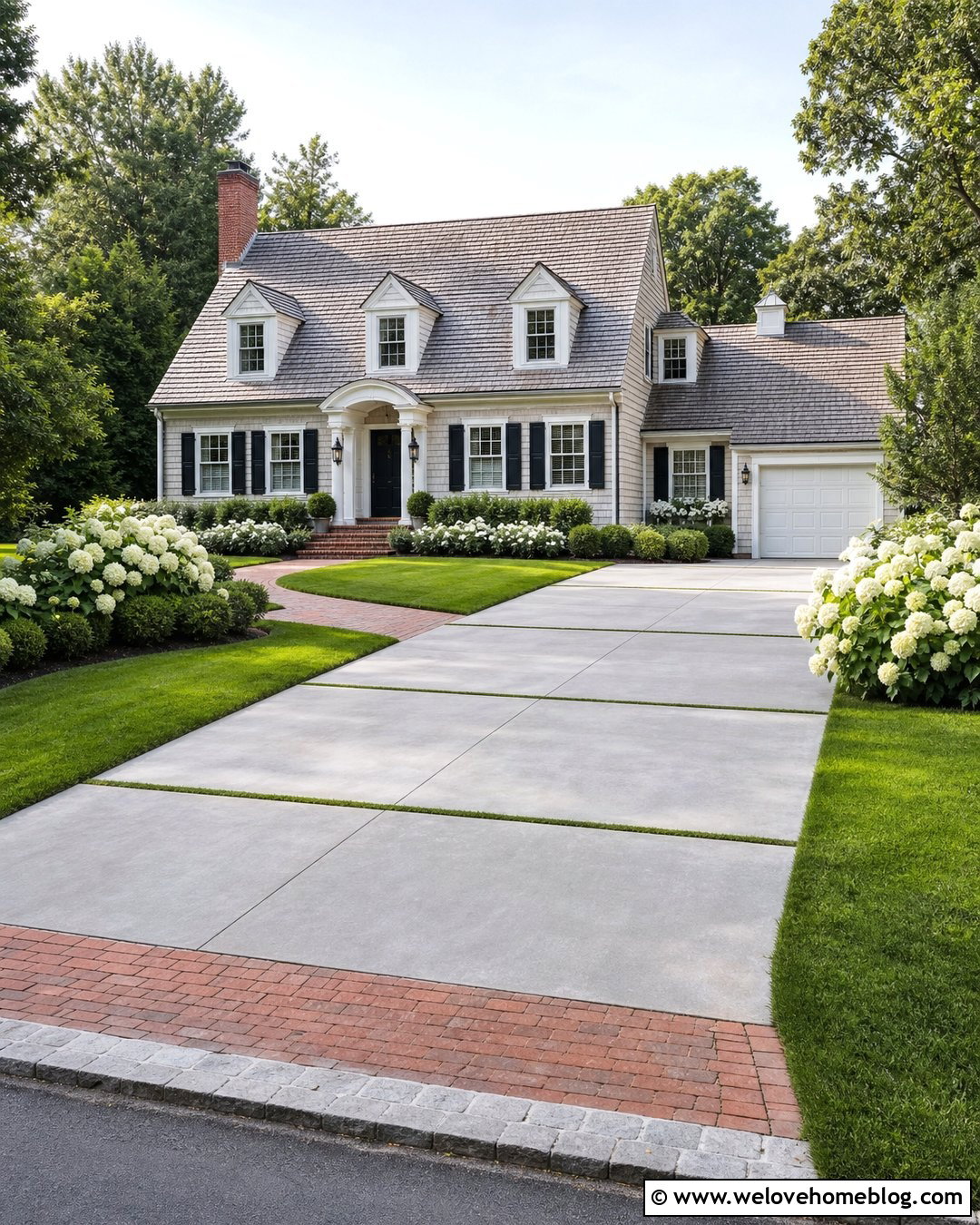
Sometimes the simplest layout creates the most welcoming result. Install broad broom-finished concrete slabs with a narrow grass line between sections, then allow the surrounding lawn to meet both outer edges. The subtle concrete texture improves visual depth without competing with a traditional home. Use straight sections for a formal colonial property or a gentle curve for a Cape Cod or cottage. A brick apron at the curb and matching brick walkway can introduce warmth. Keep lawn borders sharply trimmed and add foundation beds with hydrangeas, boxwoods, or regionally appropriate flowering shrubs. Rather than covering the driveway with a complicated grid, use grass only at selected joints. The completed design feels green and connected to the yard while remaining calm, practical, and easy to understand visually.
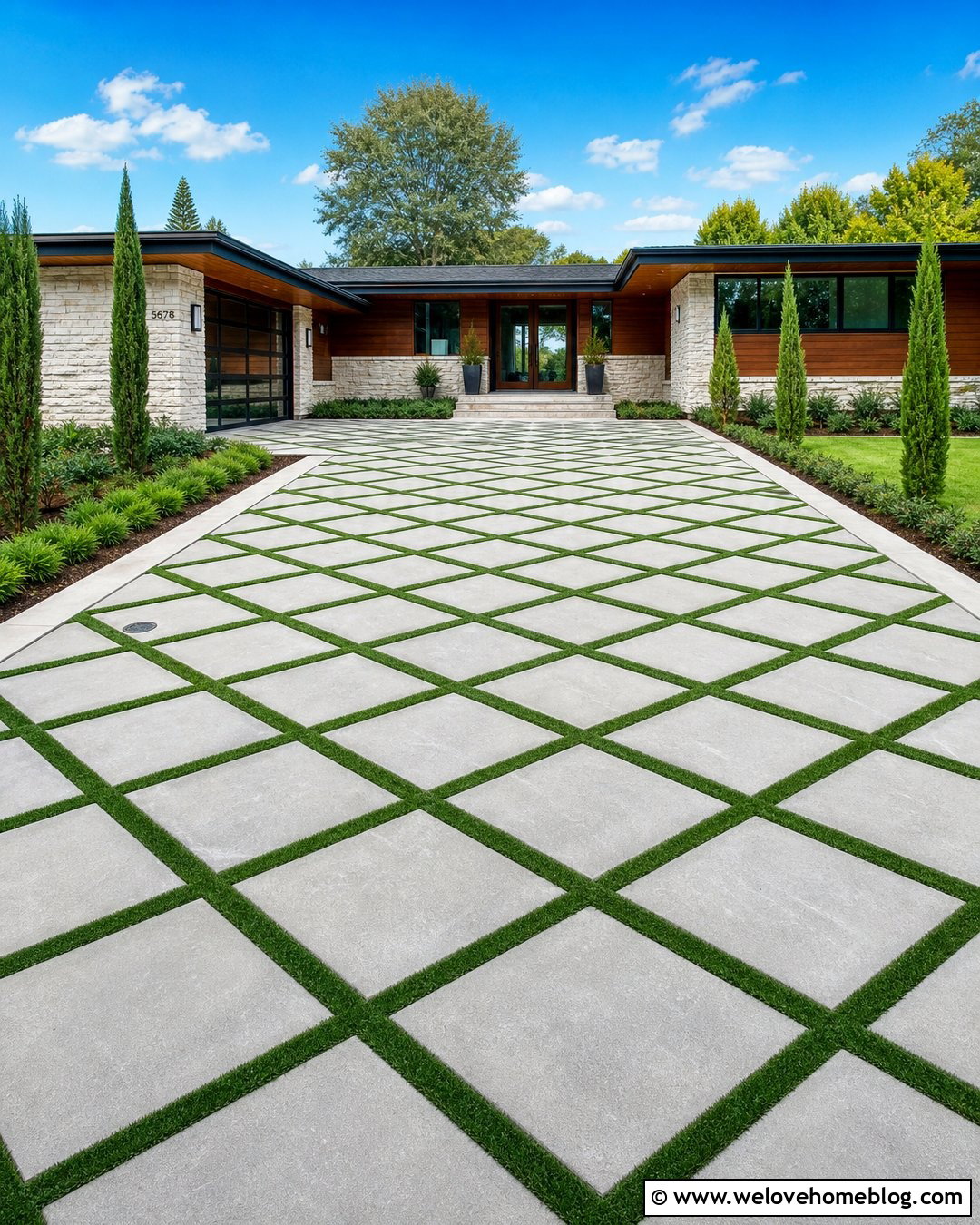
11. Diamond Concrete Paver Driveway With Grass Joints
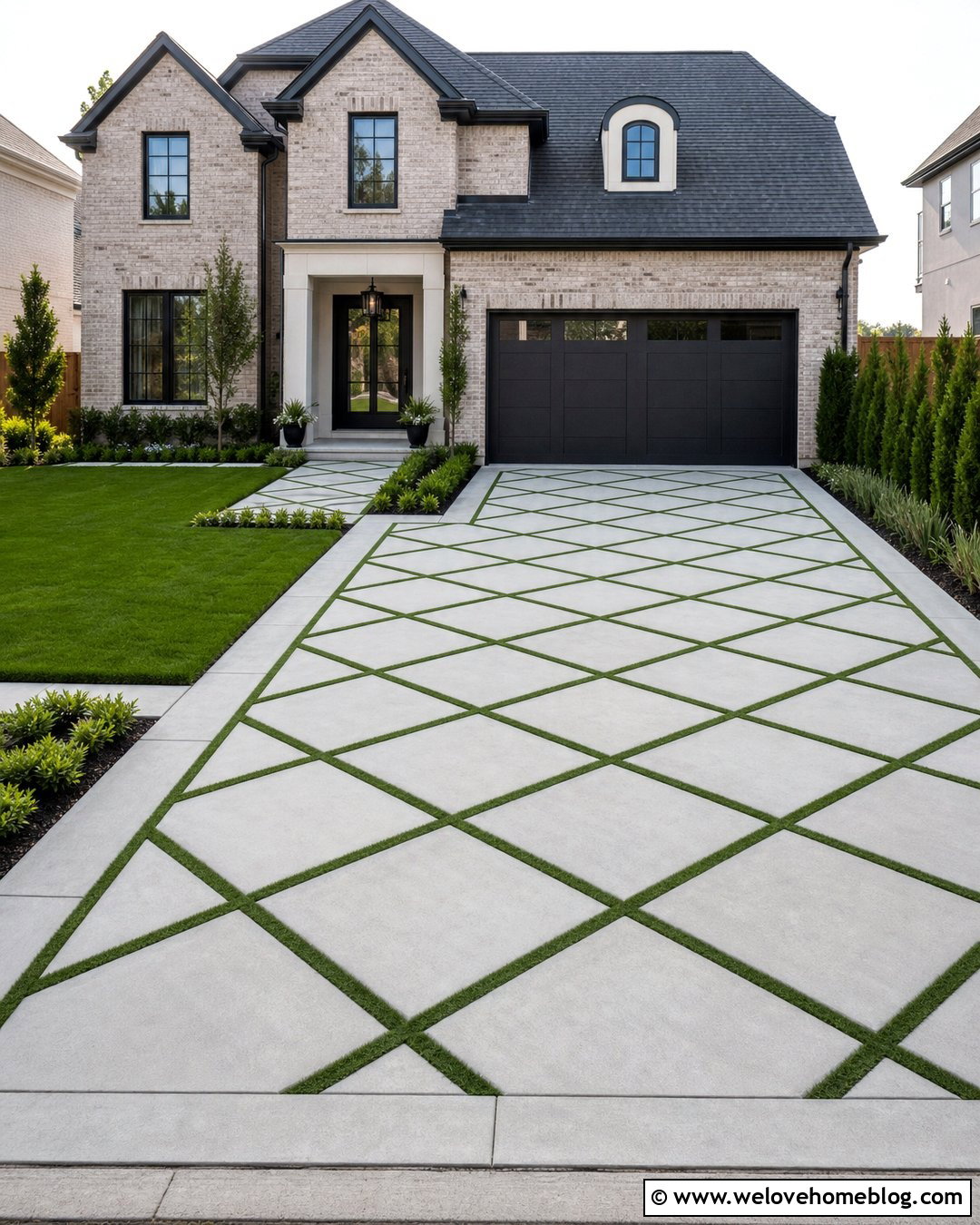
Turn large square concrete pavers diagonally to create a diamond pattern across the driveway. Fill the spaces between them with narrow grass strips or realistic artificial turf. The angled layout adds movement and can make a short driveway appear wider. It works best when the pavers are carefully aligned with the garage, curb, or front facade. A straight poured-concrete perimeter band keeps the diagonal pieces contained and provides a stable edge where vehicles enter. Repeat the diamond geometry in a small front walkway or entry landing for a coordinated result. Simple lawn panels and low planting beds prevent the pattern from becoming overwhelming. This complete driveway look complements modern stucco homes, contemporary brick houses, and transitional properties needing stronger visual interest at the front entrance.
12. Concrete Grass Grid Driveway For Extra Green Coverage
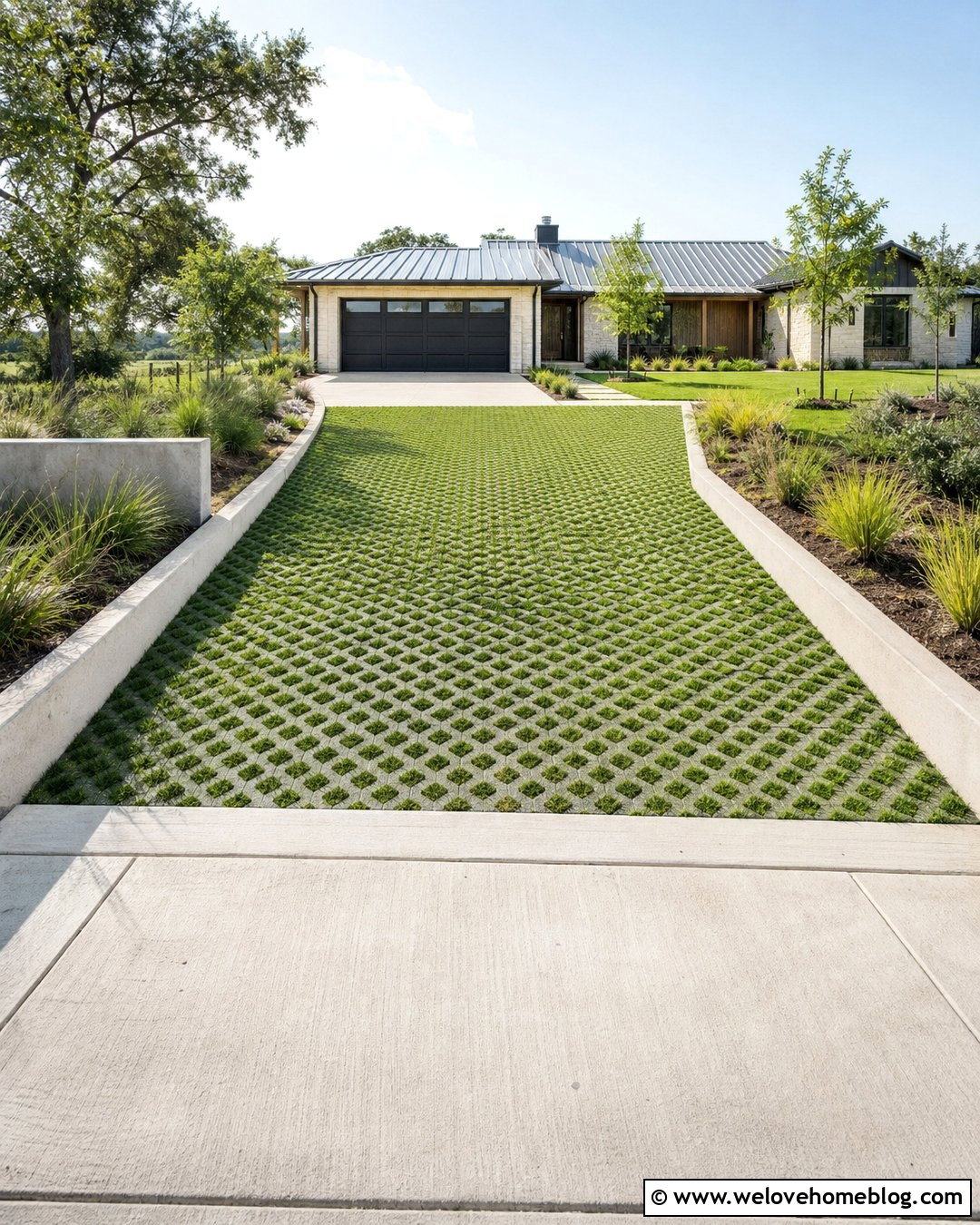
Open-cell concrete grass pavers create a reinforced driveway that reads more like lawn than a solid paved surface. The concrete grid supports the driving area while grass grows within the openings, producing a textured green field. This option can work well for secondary parking, lightly used side drives, or homes where minimizing the appearance of hardscape is important. Grass paving systems are available in different patterns, so the exact product, base, soil mixture, and installation method should suit the expected vehicle load. () Define the driveway with a solid concrete apron at the curb and a neat border around the garage. Surround it with native planting beds and open lawn for a cohesive, environmentally conscious appearance.
13. Concrete Driveway With Low-Mow Grass Joints
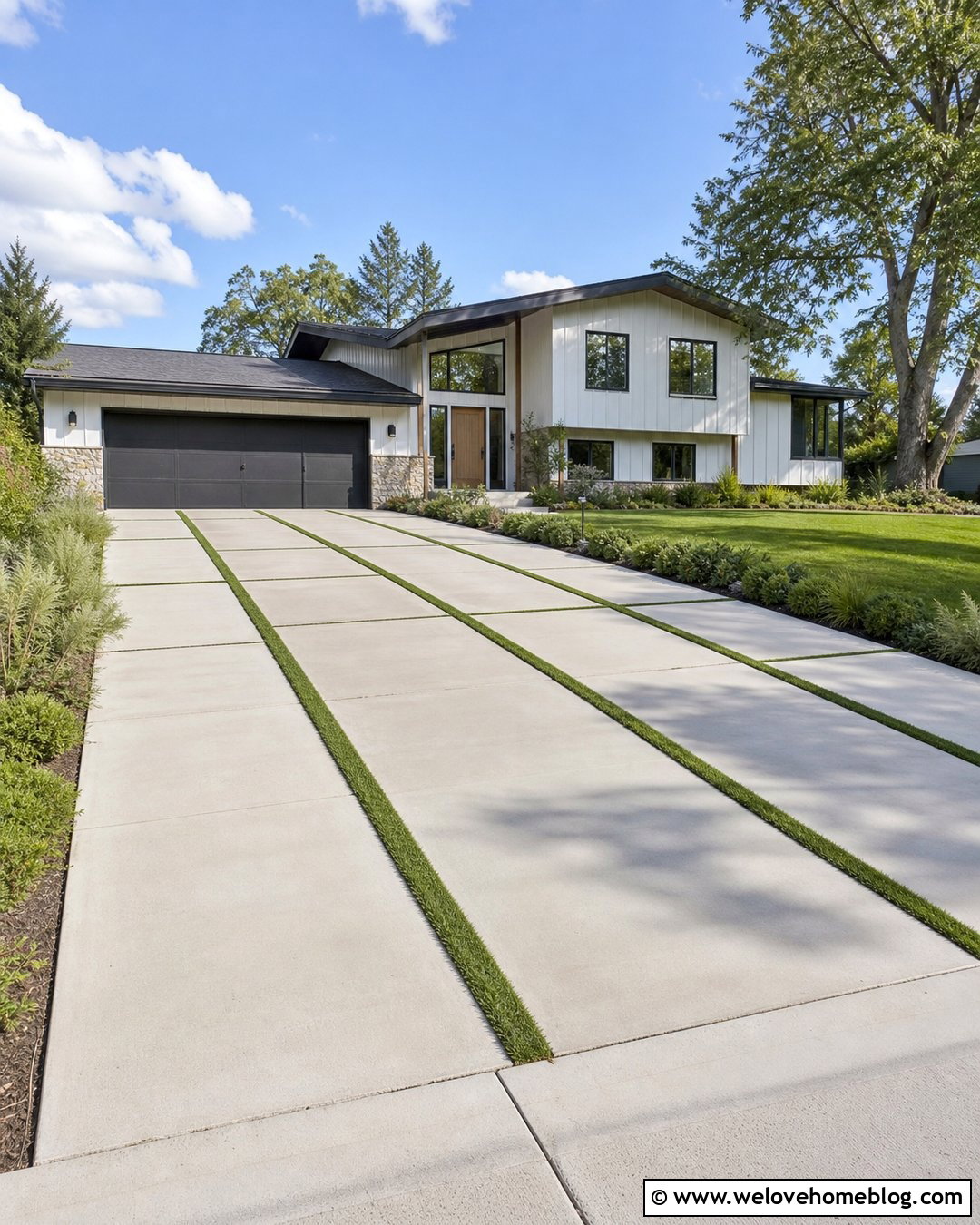
Would you like real greenery without constantly trimming narrow driveway strips? Use large concrete panels separated by wider joints planted with a low-growing, locally suitable turf variety. A simple grid makes mowing and edging more manageable than an intricate checkerboard. Light gray concrete reflects a clean, understated character, while the green bands connect naturally to nearby lawn. Keep the grass slightly below the slab surface so soil and clippings are less likely to spread across the concrete. Consider sun exposure, irrigation access, heat, and vehicle placement before choosing living turf. Complete the design with broad planting beds containing durable shrubs and ground covers. This practical look suits suburban ranch homes, updated split-level houses, and casual contemporary properties where natural landscaping matters more than perfect formality.
14. Midcentury Concrete Driveway With Staggered Grass Strips
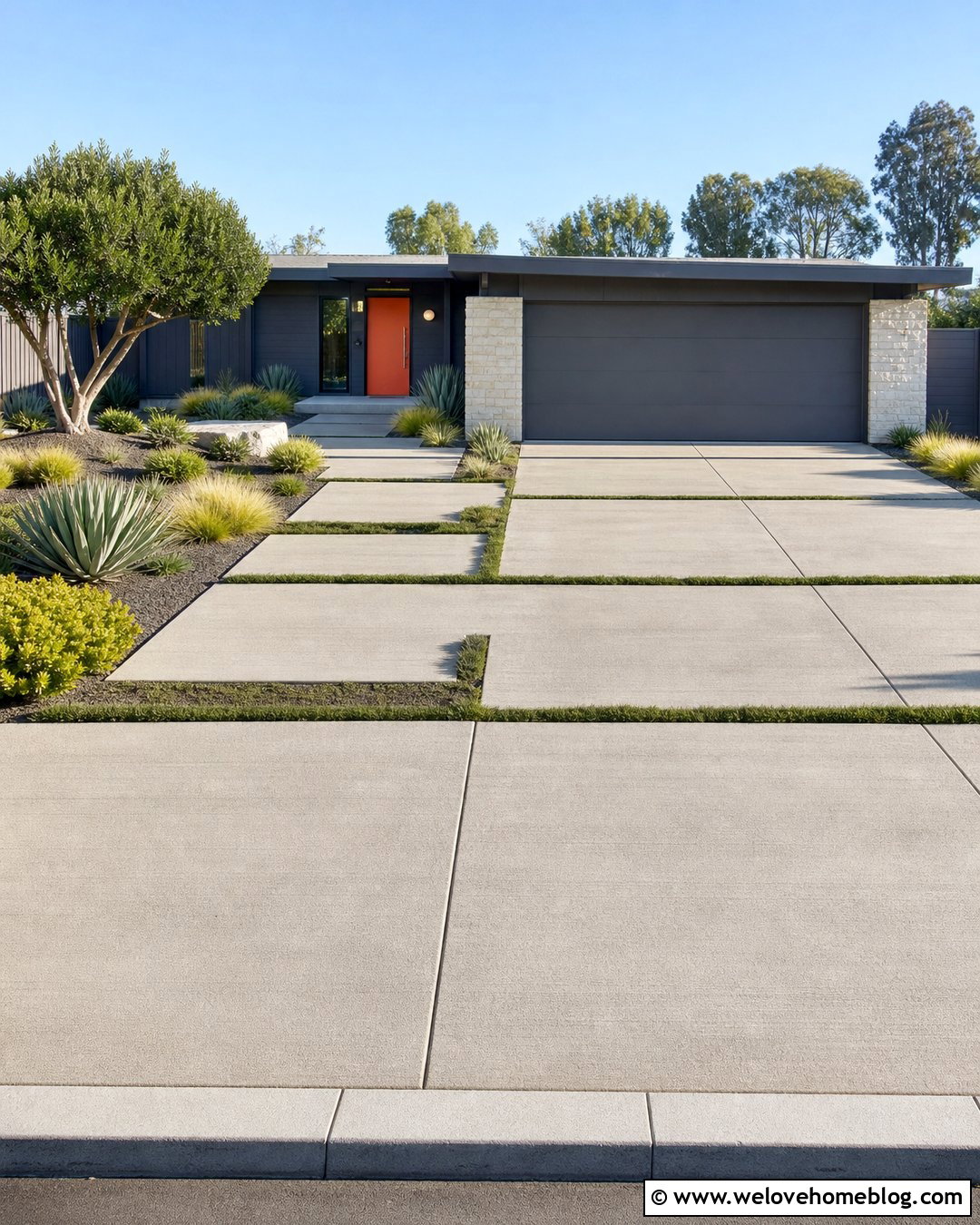
Staggered rectangular concrete slabs fit naturally with midcentury architecture. Instead of lining up every joint, offset selected panels to create an asymmetrical rhythm. Narrow grass strips fill the spaces and extend into small planting pockets near the walkway. Use warm gray concrete with a smooth or fine broom finish, then frame the entrance with ornamental grasses, low mounded shrubs, and a single sculptural tree. The garage approach should remain direct and uncluttered, even when the visual pattern is playful. A concrete walkway can branch from one offset slab and lead toward a brightly colored front door. Avoid decorative borders that feel too traditional. With clean edges, restrained plants, and repeating horizontal lines, the driveway becomes part of the home’s original architectural language rather than a separate feature.
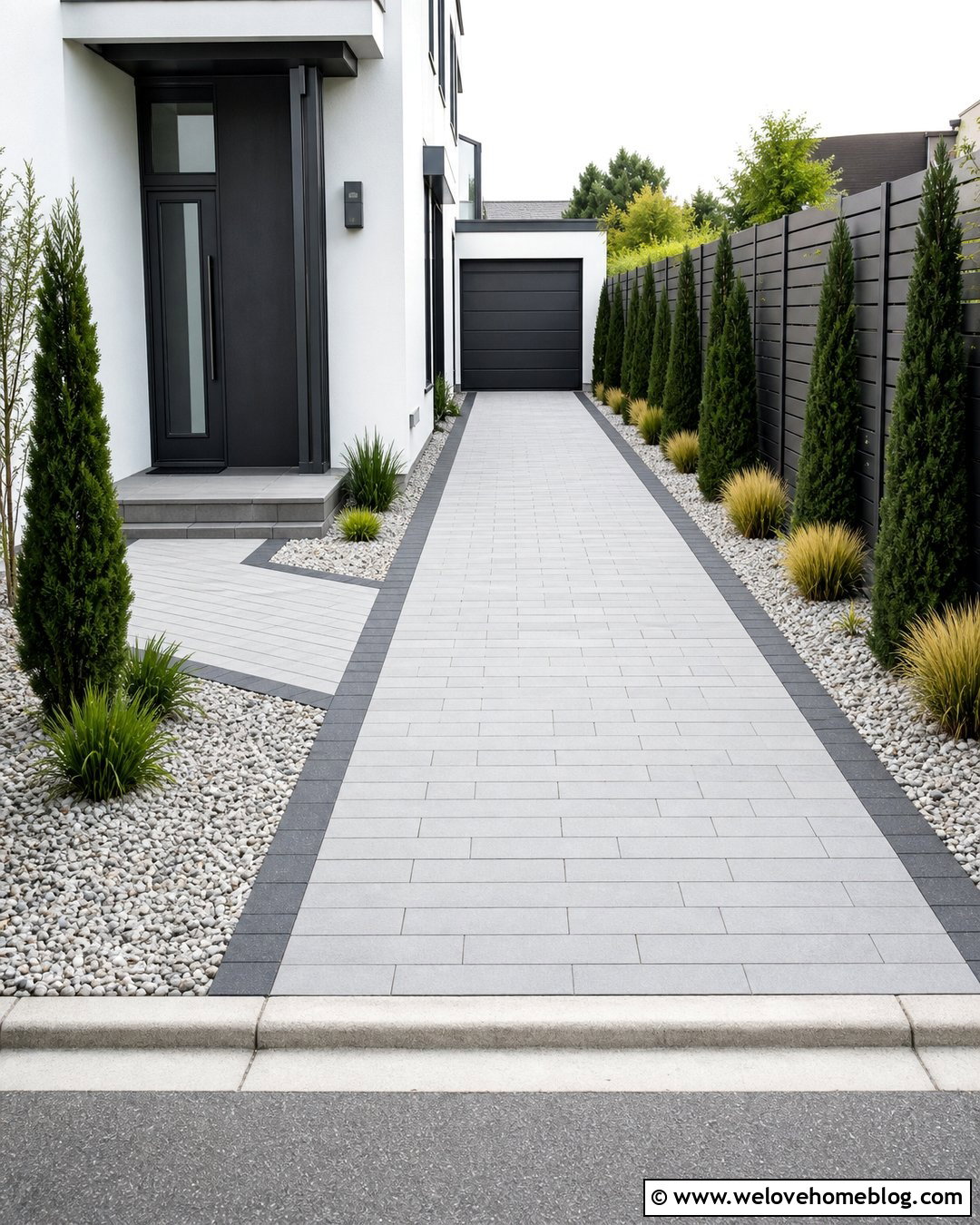
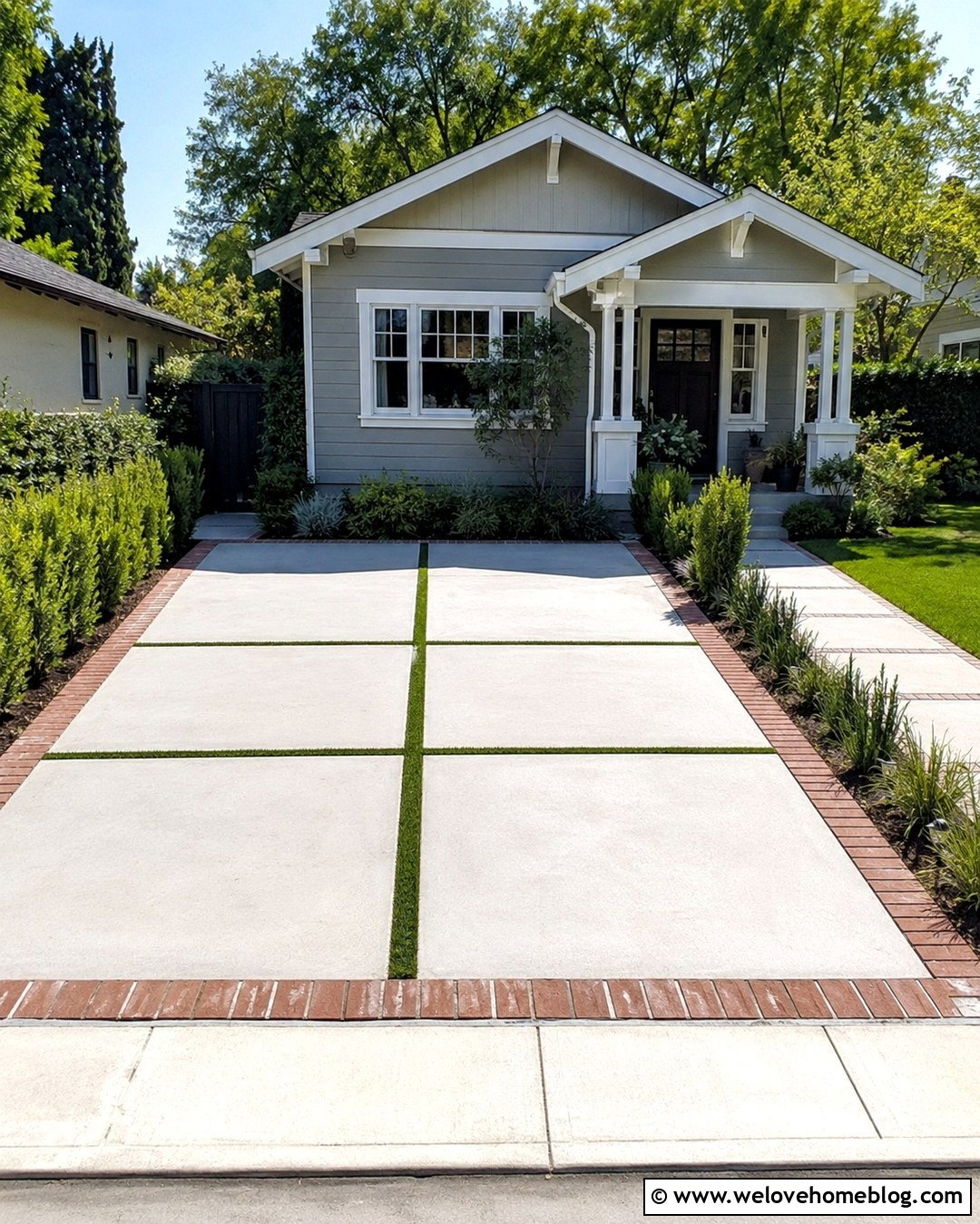
15. Concrete And Grass Driveway With Brick Border
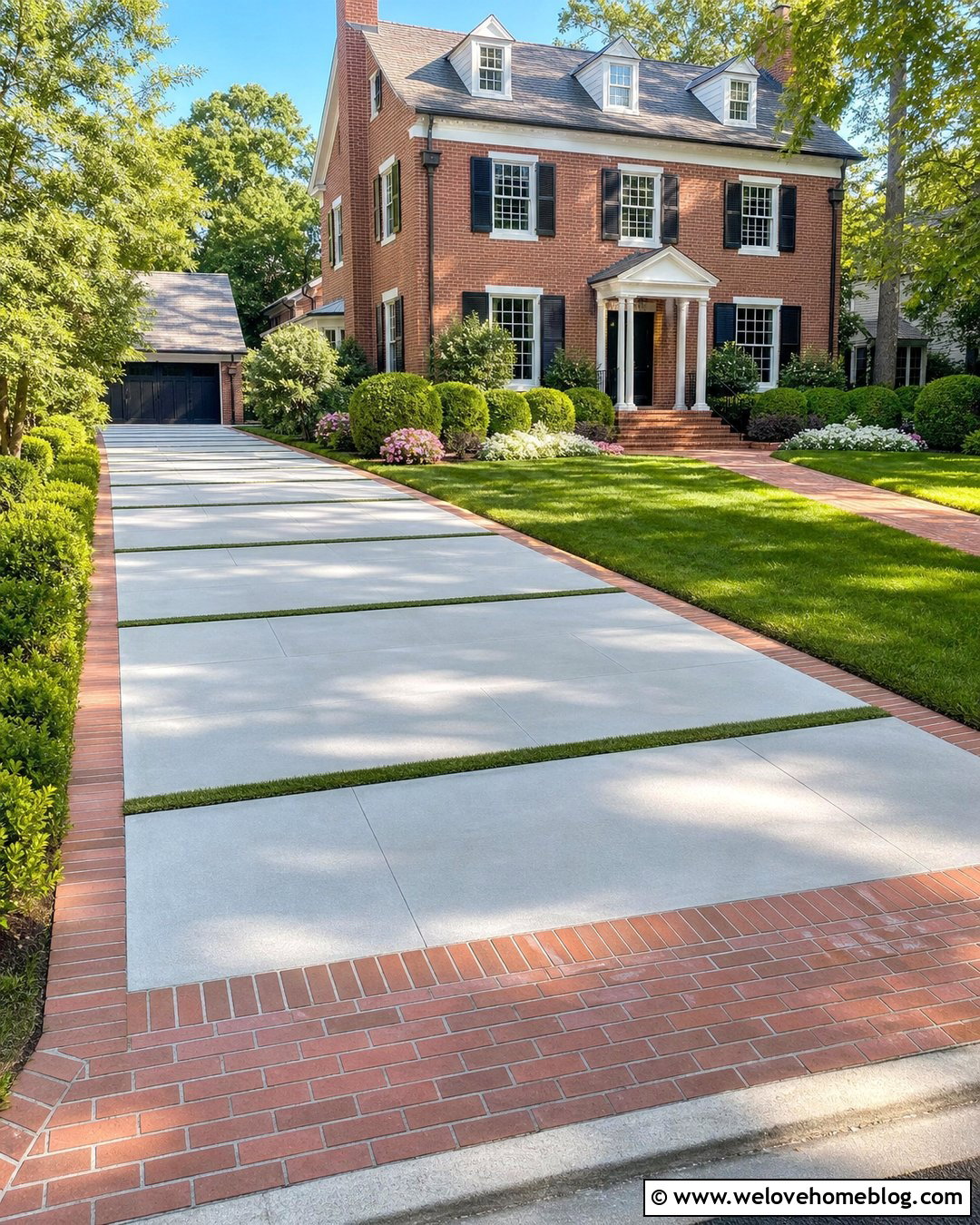
A red or brown brick border adds traditional warmth to cool gray concrete and green grass. Start with large poured-concrete panels separated by simple lawn strips, then outline the entire driveway with clay brick pavers. Lay the bricks in a soldier-course pattern for a clean frame, or use a double row near the curb for stronger emphasis. Repeat the same brick around planting beds and along the front walkway. This consistent material palette helps the driveway relate to a brick Colonial, Craftsman bungalow, or traditional suburban home. Choose grass joints wide enough to look intentional but narrow enough to preserve convenient parking. Foundation shrubs, a shade tree, and seasonal flowers complete the familiar residential setting without making the driveway itself feel overly decorative.
16. Concrete Driveway With Cobblestone Edging And Grass Bands
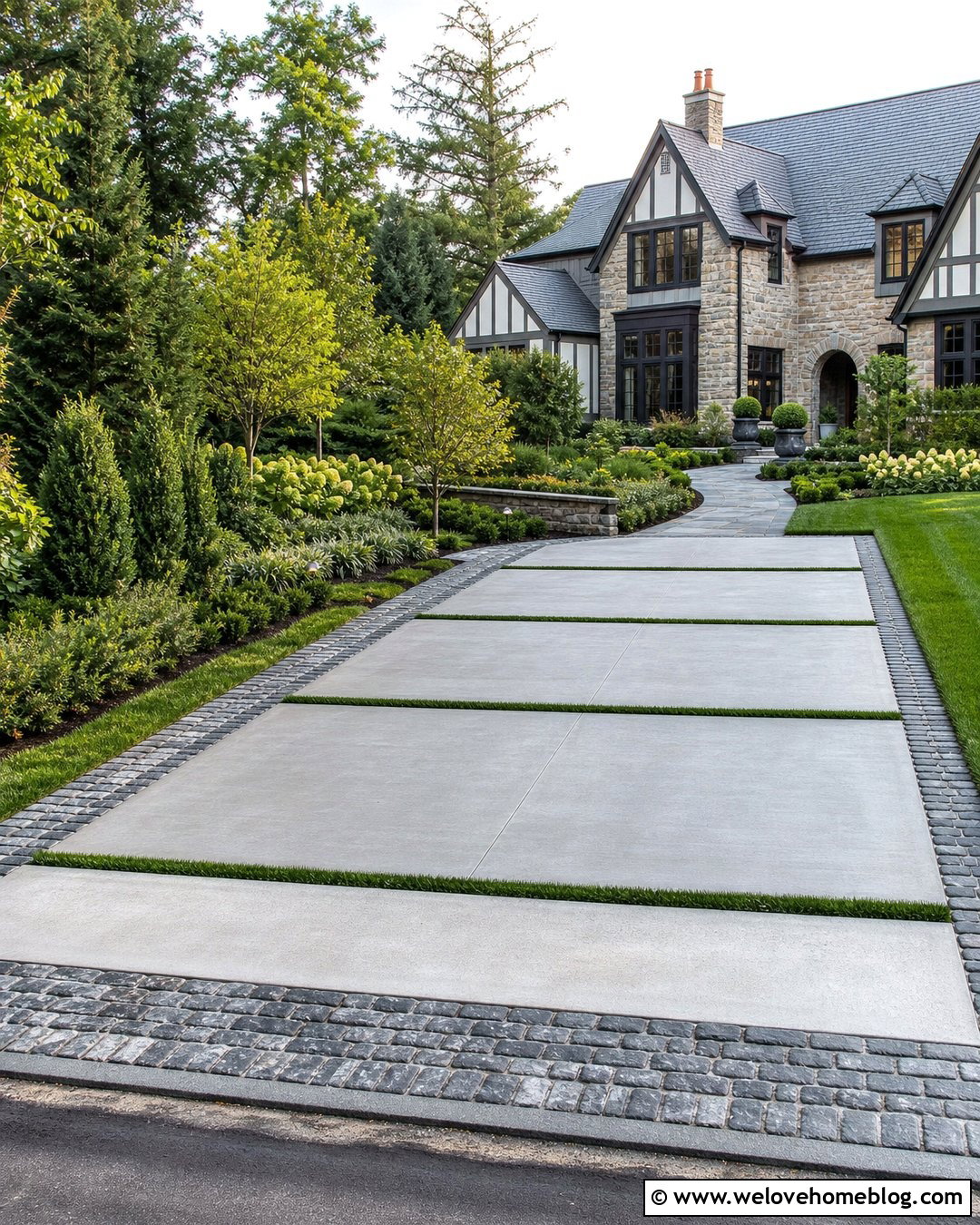
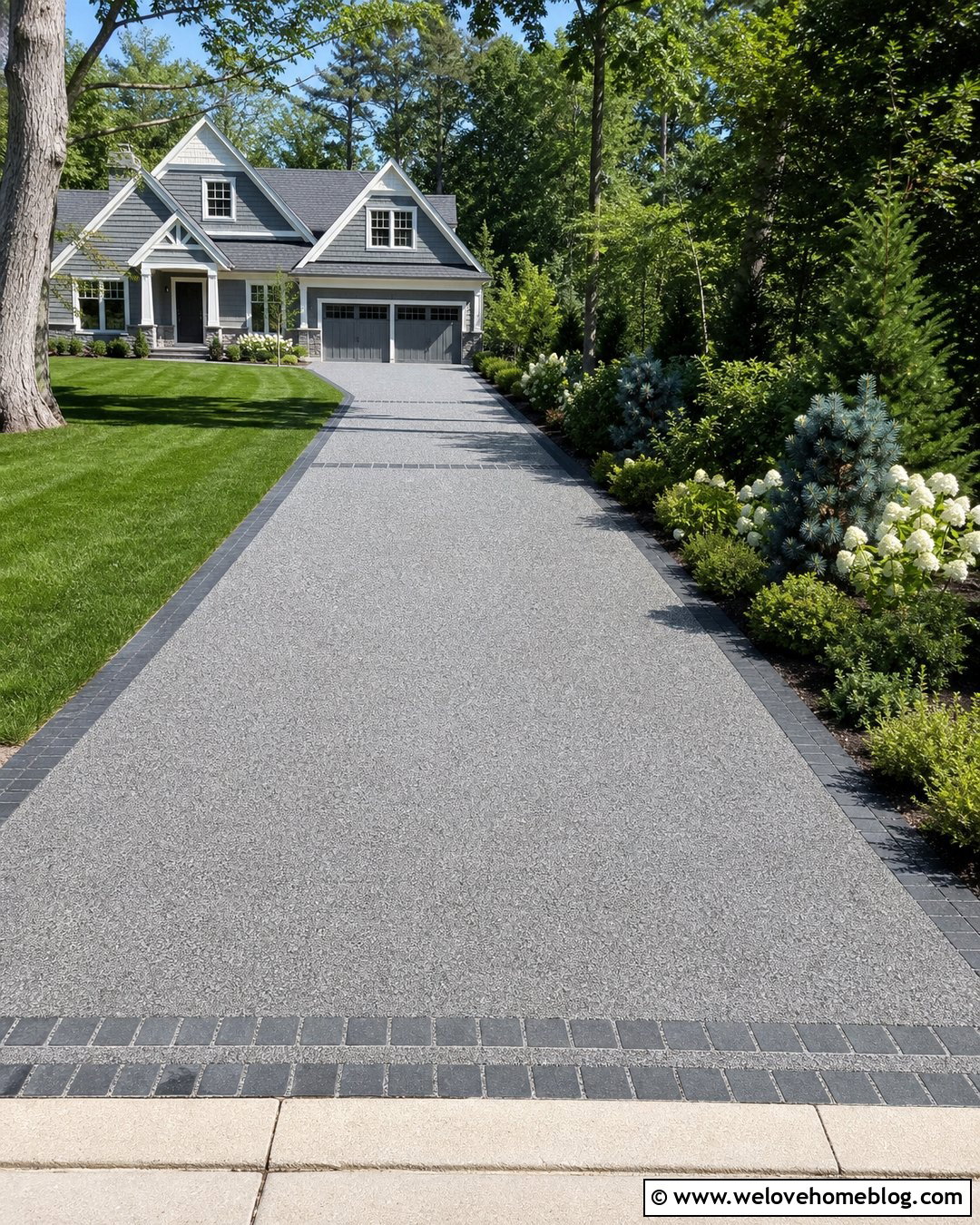
Cobblestone edging can give a grass and concrete driveway a more established, high-end appearance. Use smooth light-gray concrete slabs for the main surface, separated by broad green bands that cross the driveway at regular intervals. Border both sides with dark granite cobblestones to create a durable visual frame. A matching cobblestone apron at the street strengthens the entrance and marks the transition from public road to private drive. Plant layered evergreen shrubs, flowering perennials, and small trees behind the stone edging. The contrast among smooth concrete, rough cobblestone, and soft grass supplies plenty of texture, so keep the overall layout orderly. This design complements Tudor, European-inspired, traditional stone, and upscale transitional homes while still feeling fresh and approachable.
17. Small Concrete Driveway With Narrow Grass Strips
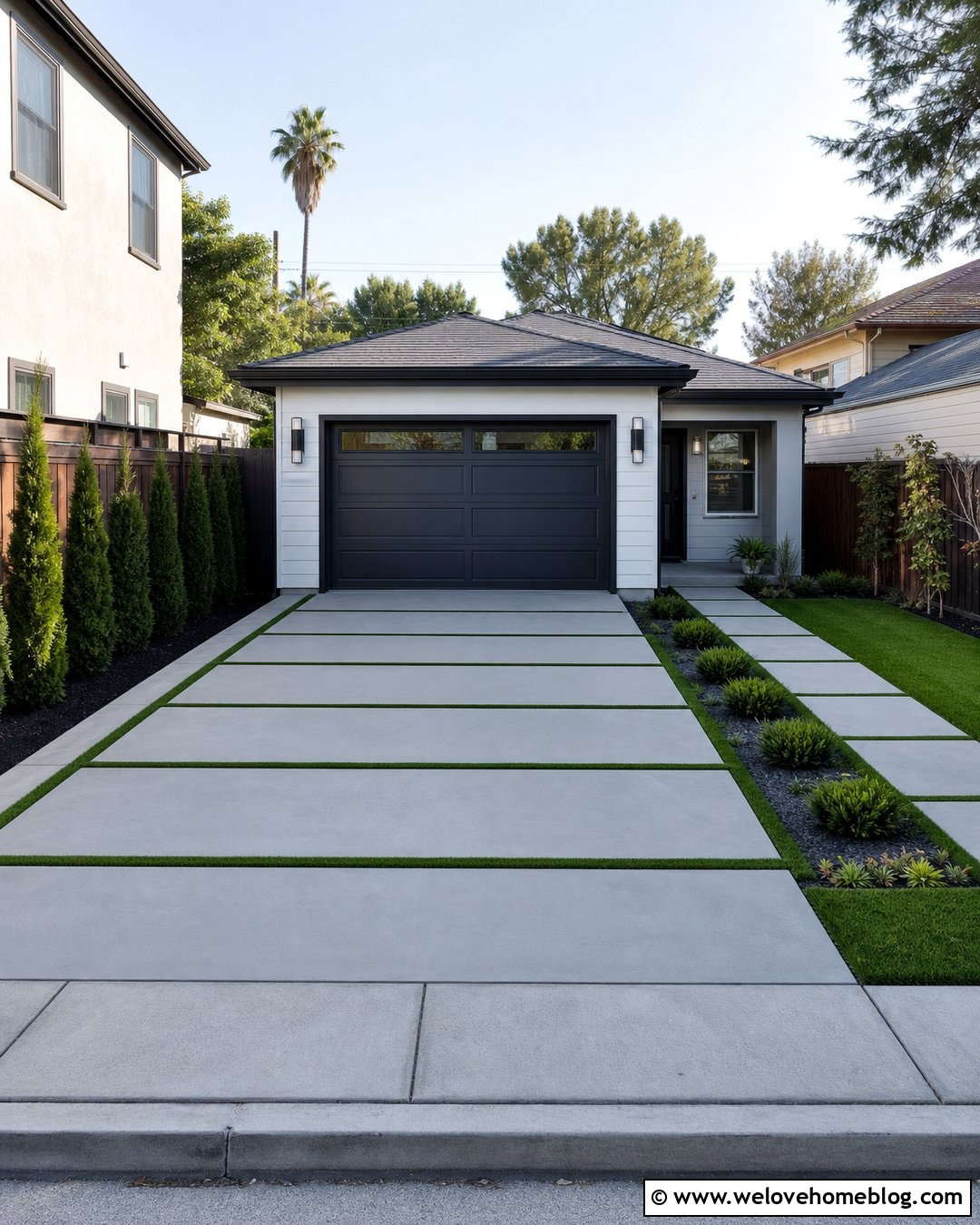
A compact front yard can still support a stylish concrete-and-grass layout. Use long rectangular concrete slabs running toward the garage, separated by narrow lengthwise grass strips. The directional lines make the driveway feel longer and reduce the visual width of the paved area. Keep the perimeter simple with flush concrete edging and small planting beds near the house. Choose low shrubs that will not spill into parking space or interfere with doors. If sunlight is limited or a vehicle remains parked for long periods, artificial turf may provide a more consistent result than living grass. Connect the driveway to a narrow slab walkway using the same concrete finish. The matching surfaces create continuity and help a modest bungalow, townhouse, or narrow-lot home feel thoughtfully organized.
18. Wide Concrete Driveway With Three Grass Strips
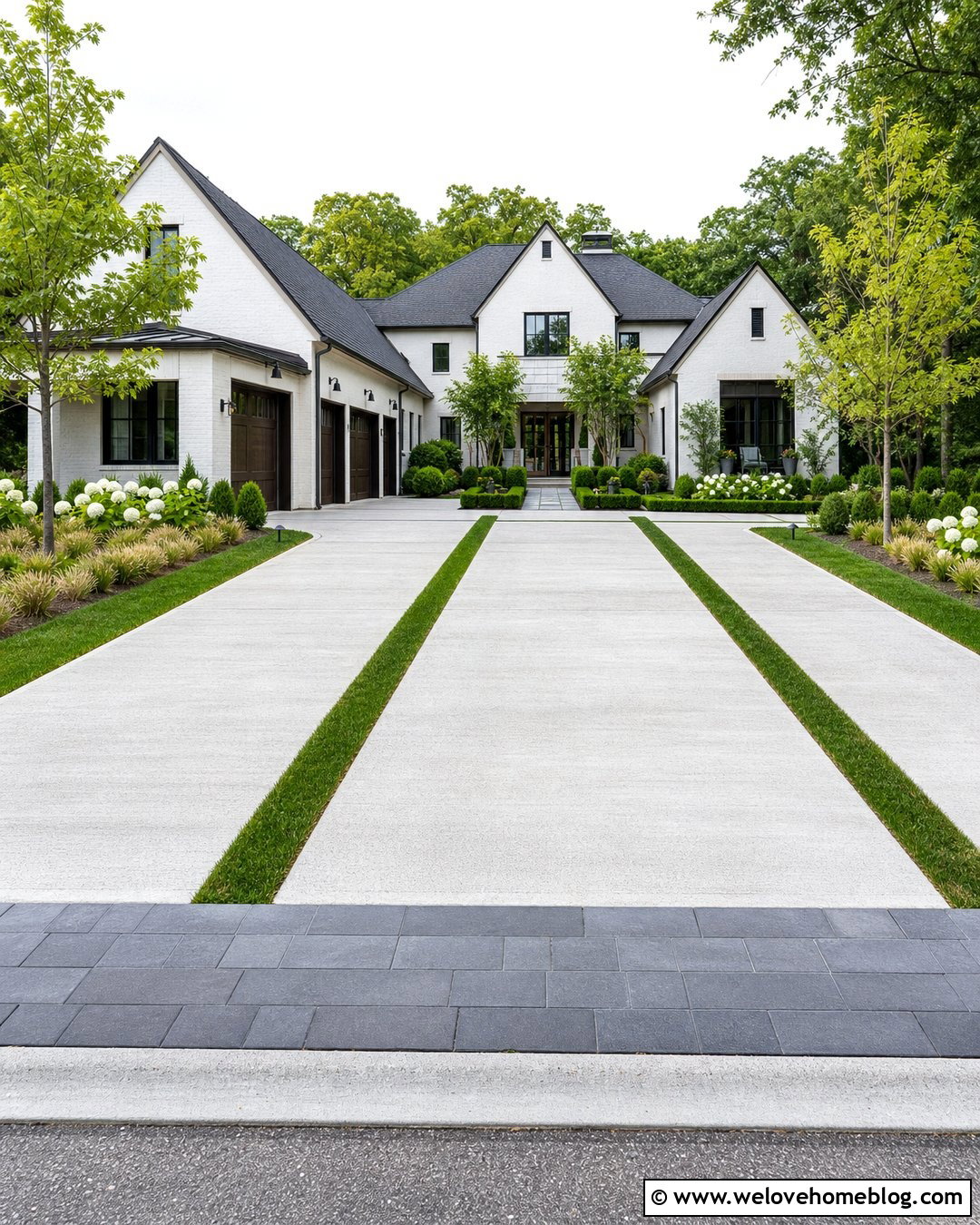
Wide two-car and three-car driveways often look like large paved rectangles. Break up that expanse with three long grass strips running from the curb toward the garage. Position the green bands between primary parking lanes rather than beneath the most frequent tire paths. Large broom-finished concrete panels provide a straightforward driving surface, while the grass creates symmetry and visual relief. Add a contrasting paver apron across the curb entrance to tie all lanes together. On both sides, use matching planting beds with small trees, evergreen shrubs, and ornamental grasses. A central walkway can align with one green strip before turning toward the front door. This balanced arrangement works well with wide ranch houses, modern farmhouses, and symmetrical suburban homes with multiple garage bays.
19. Sloped Concrete Driveway With Artificial Grass Bands
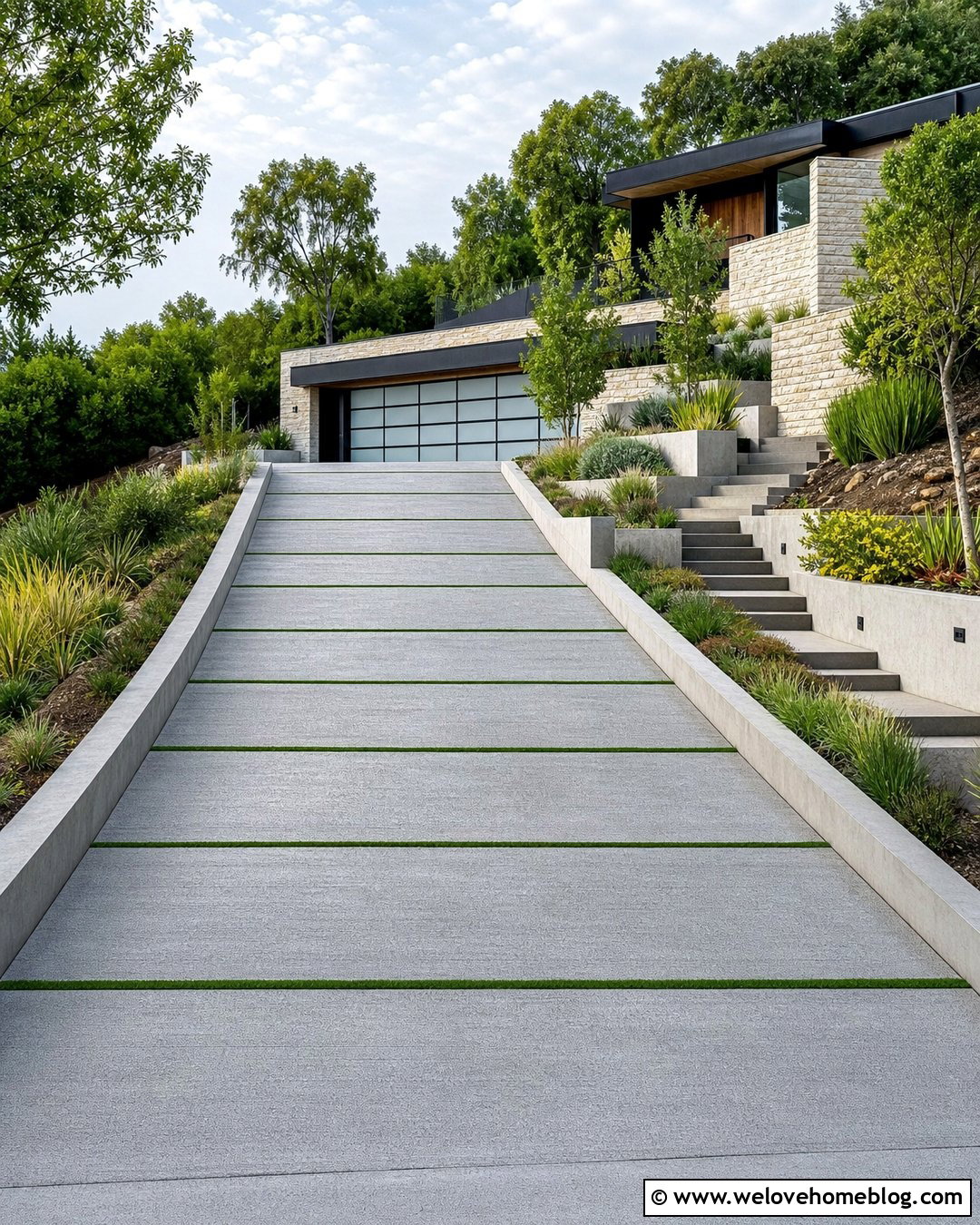
Sloping driveways need a clear, stable driving path, but they can still feature green accents. Divide textured concrete into broad horizontal sections and place narrow artificial grass bands between them. The repeated lines visually soften the incline while avoiding the mowing and erosion challenges that living grass may face on steep joints. Use a broom or lightly textured concrete finish instead of a highly polished surface. Solid concrete borders along both sides help contain the composition and direct attention toward the house. Low retaining walls, tiered planting beds, and compact shrubs can manage the visual transition between the driveway and raised yard. The green bands should remain decorative accents rather than drainage channels unless a qualified professional has designed the grading and water-management system.
20. Horseshoe Concrete Driveway With Grass Courtyard
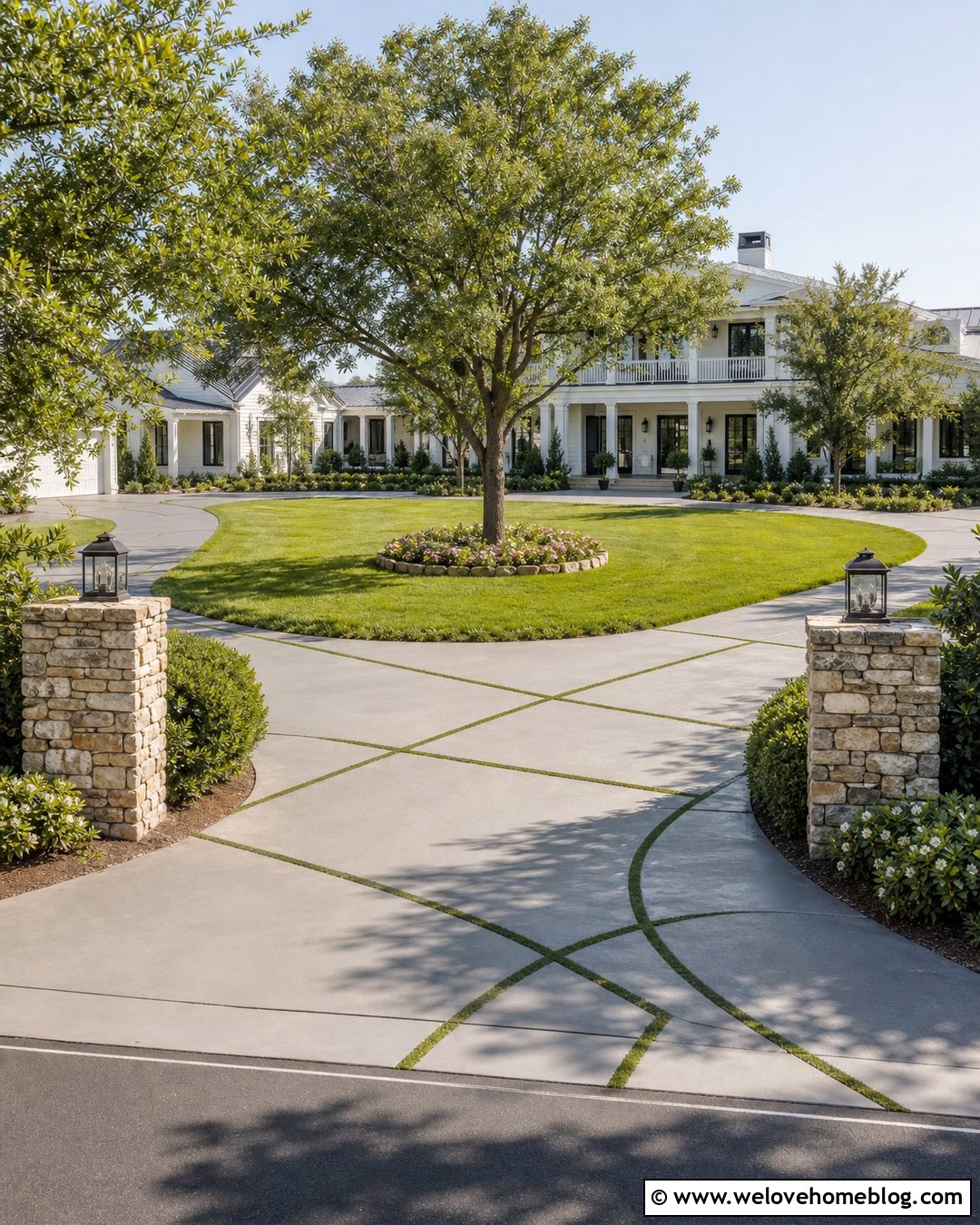
A horseshoe driveway creates an impressive approach without requiring vehicles to back into the street. Use broad sections of warm-gray concrete divided by grass joints that follow the sweeping curve. Inside the horseshoe, maintain a large lawn courtyard with a specimen tree, circular planting bed, or simple fountain surrounded by greenery. Brick or natural stone edging can emphasize the driveway’s shape and connect it with entrance pillars. Keep the planting near both curb openings low enough to preserve sightlines. At the house, widen the concrete into a convenient drop-off and parking area while continuing a few grass bands for consistency. This complete arrangement works particularly well for expansive Colonial, Southern, Mediterranean, and modern farmhouse properties with broad front yards.
Conclusion:
The best grass and concrete driveway ideas balance attractive patterns with comfortable everyday use. Large slabs and narrow green joints create modern structure, while ribbon tracks and lawn-centered layouts offer a softer, more traditional appearance. Artificial turf can provide dependable color in difficult locations, but healthy living grass creates the most natural connection to the yard. Before choosing a layout, consider vehicle paths, parking habits, sunlight, drainage, trimming access, and the architecture of the house. Keep materials consistent across borders, walkways, aprons, and entrance features. Whether you prefer a compact linear design or a spacious circular approach, these 20 grass and concrete driveway ideas can help you create a greener, more distinctive entrance.

Related posts:
Leave a Reply