
A resin bound driveway combines natural aggregate with clear resin to create a smooth, cohesive surface that still shows the texture and color of stone. Unlike loose gravel, the aggregate stays in place, making the driveway easier to walk across and maintain. A correctly designed resin-bound system can also allow water to pass through when installed over a suitable permeable base. () Color choices range from warm gold and natural beige to silver gray, charcoal, and mixed stone. Borders, curves, planting, and entrance details can further connect the surface to your home. The complete looks below offer practical inspiration for different properties, budgets, and front yards. Explore these **20 resin bound driveway ideas** to find a design that suits your home.
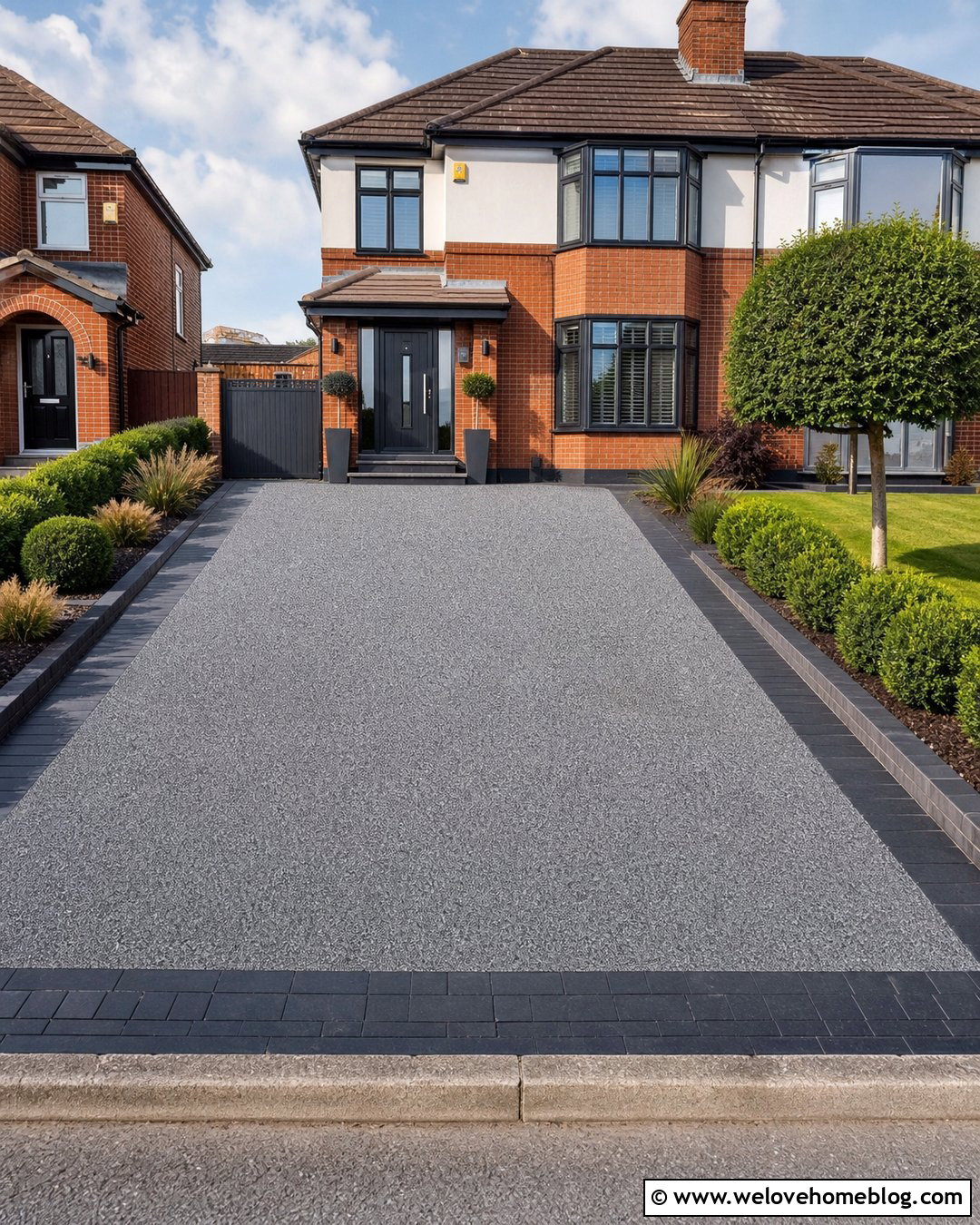
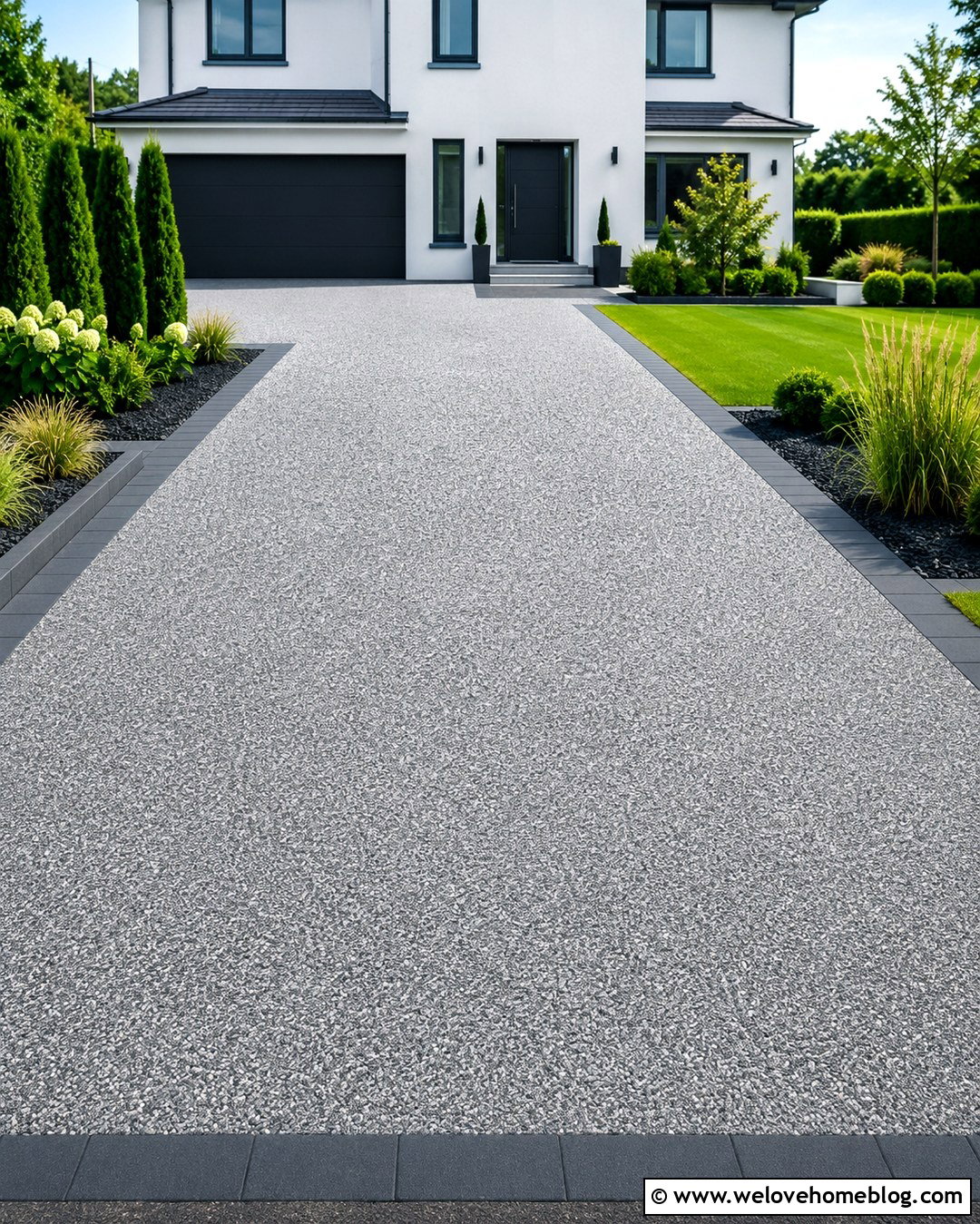
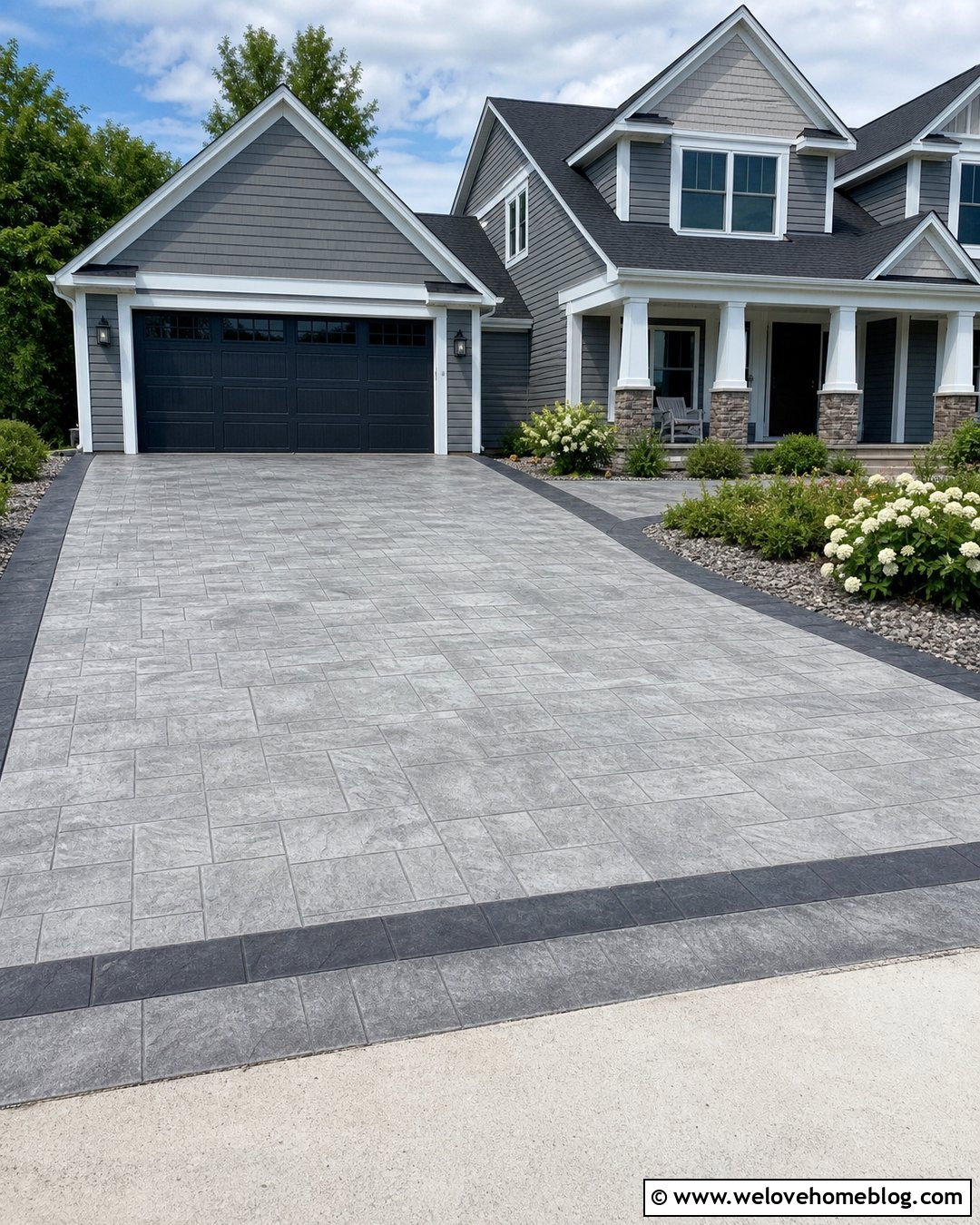
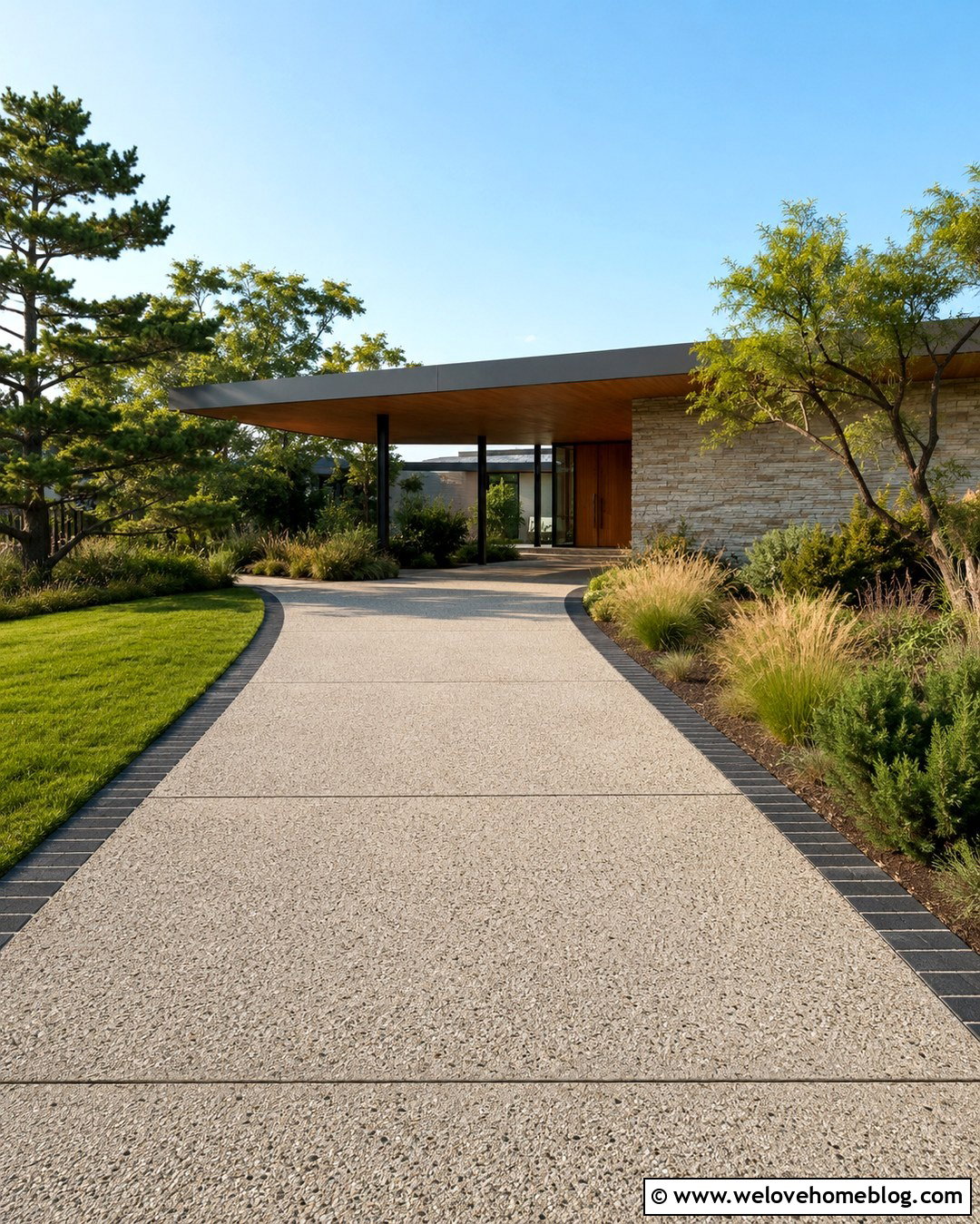
1. Silver Gray Resin Bound Driveway With Black Edging
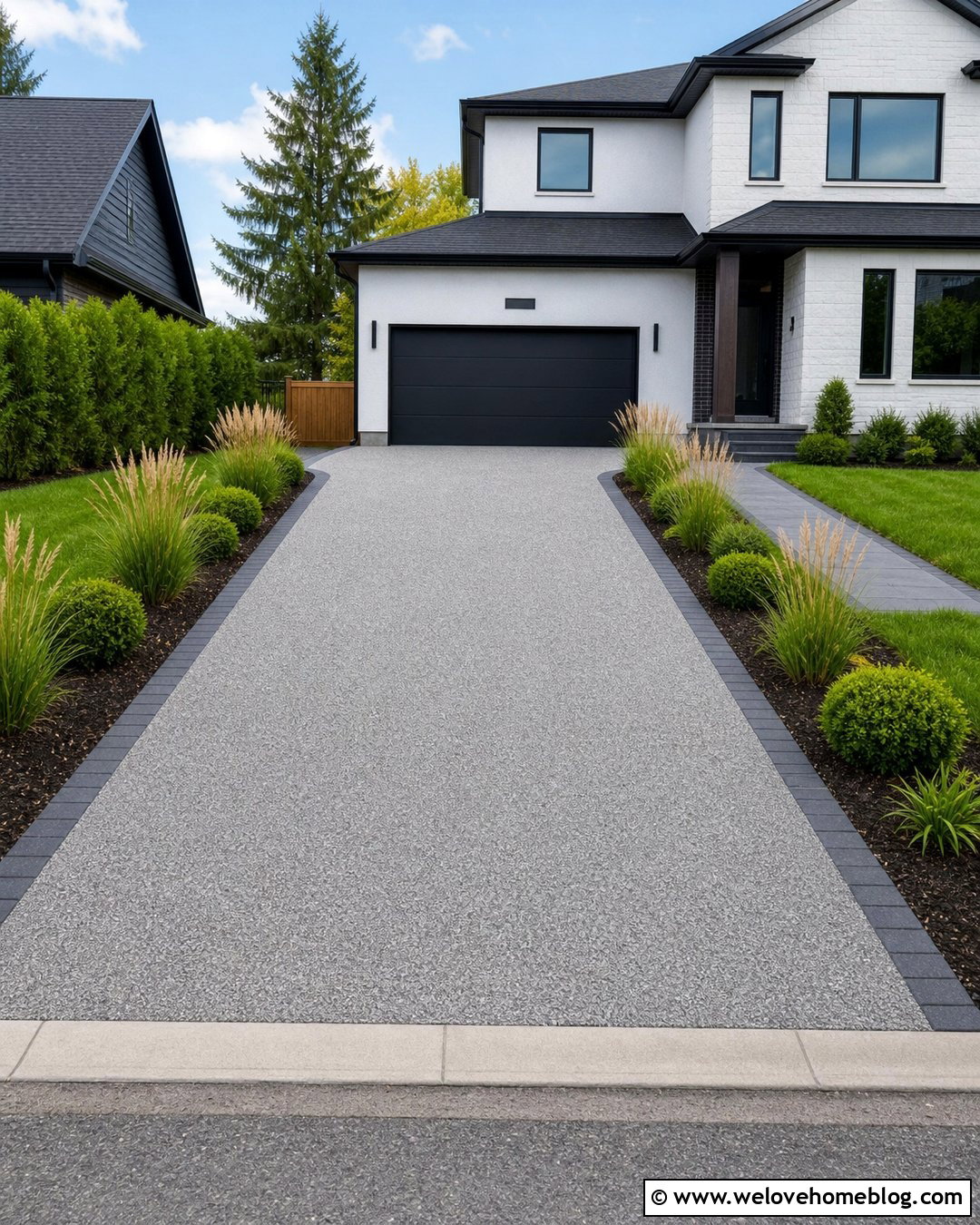
Silver gray aggregate creates a clean driveway that works especially well with contemporary homes. Use a straight layout to reinforce the architecture, then define the edges with narrow charcoal block pavers. The darker border keeps the pale resin surface visually contained and makes the entrance easy to identify from the street. Add simple planting beds with ornamental grasses, clipped shrubs, and dark landscape mulch. A matching gray walkway can branch from the driveway toward the front door without making the yard look divided. For greater visual depth, choose a silver blend containing several shades rather than a completely uniform aggregate. Black garage doors, window frames, lighting fixtures, and address numbers will connect the whole exterior and give this resin bound driveway a balanced modern appearance.
2. Golden Resin Bound Driveway With Brick Border
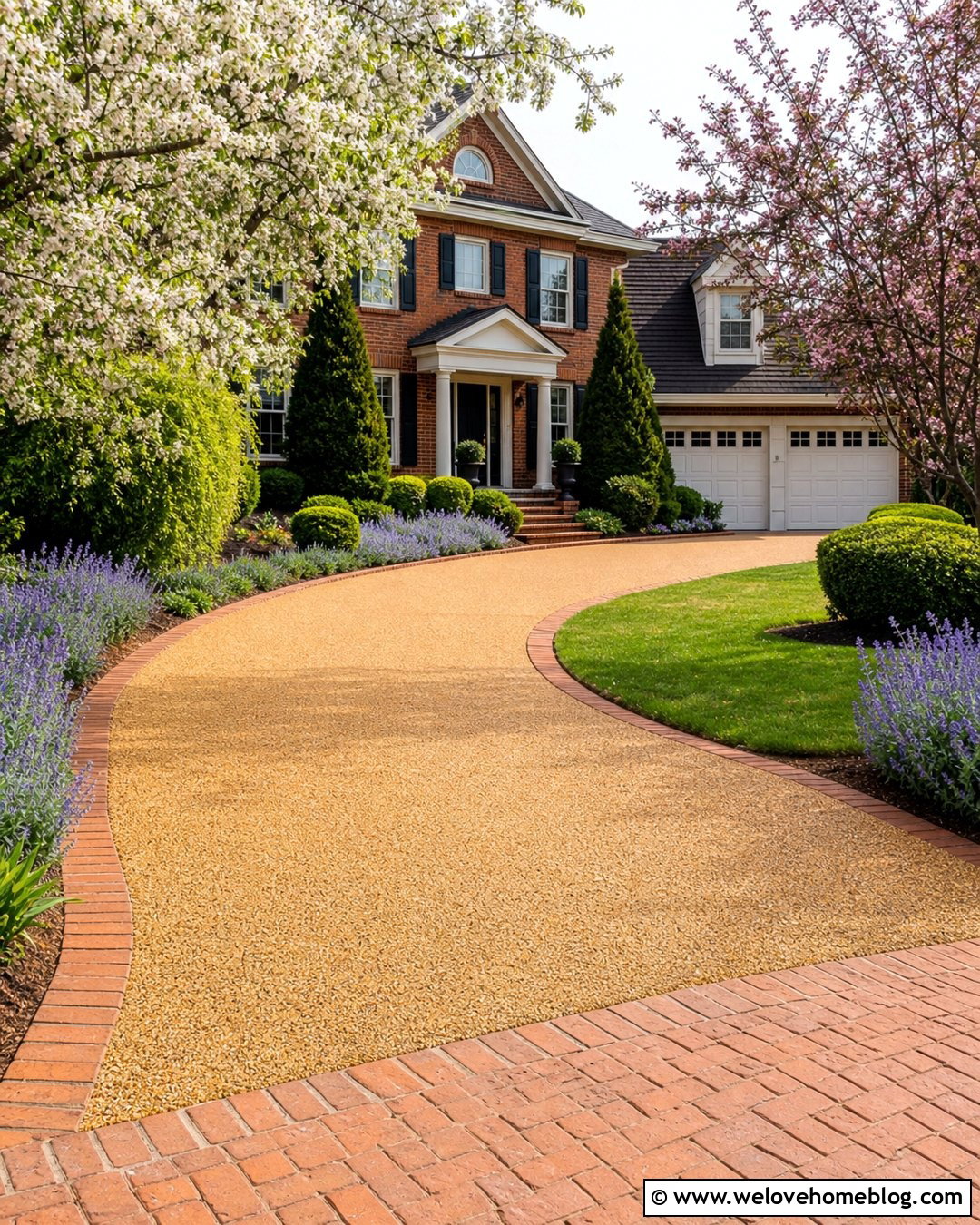
Warm golden aggregate can soften the appearance of a traditional brick home while creating a bright and welcoming approach. A gently curved driveway feels more natural than a rigid straight run, particularly when the front yard has mature trees or informal planting. Frame the resin-bound surface with red or brown clay brick pavers that relate directly to the house facade. The border could follow the outer edges and continue across the entrance as a decorative threshold. Plant lavender, catmint, low evergreen shrubs, and small flowering trees beside the curve. Their softer forms balance the strong brick detailing. Choose a golden aggregate blend with cream, honey, and light brown stones so dust is less visually distracting. The finished driveway should feel established rather than overly new or disconnected.
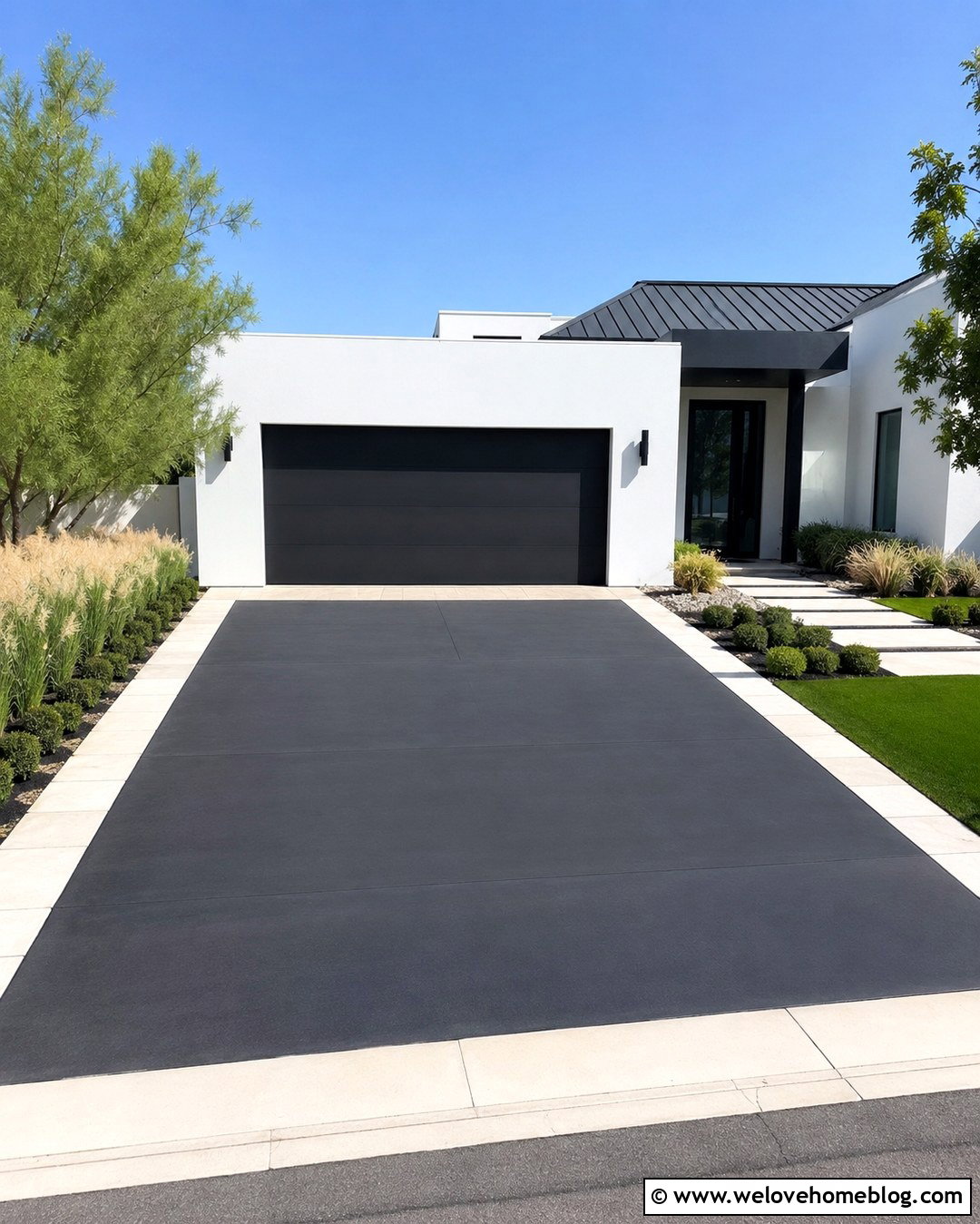
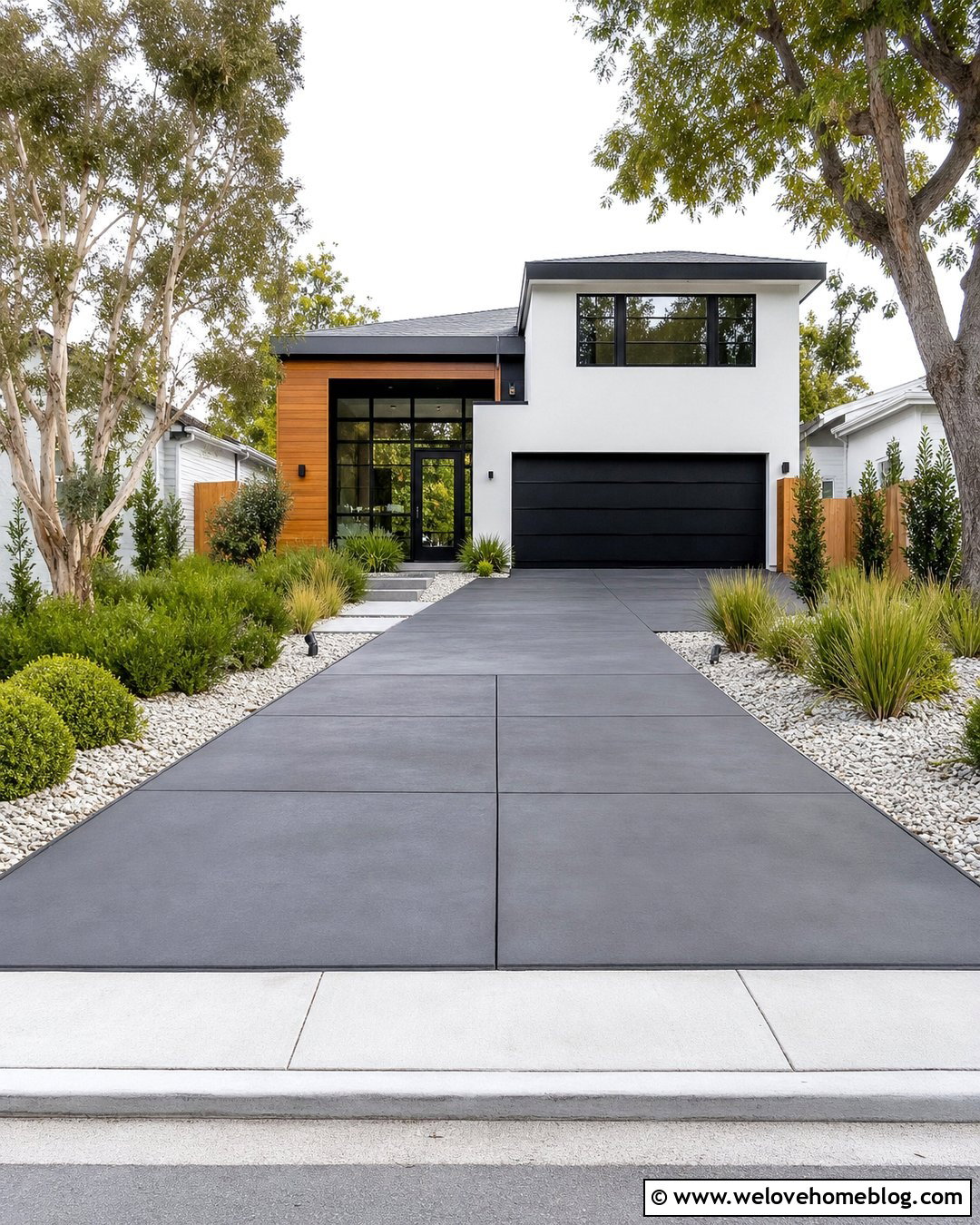
3. Charcoal Resin Bound Driveway With White House
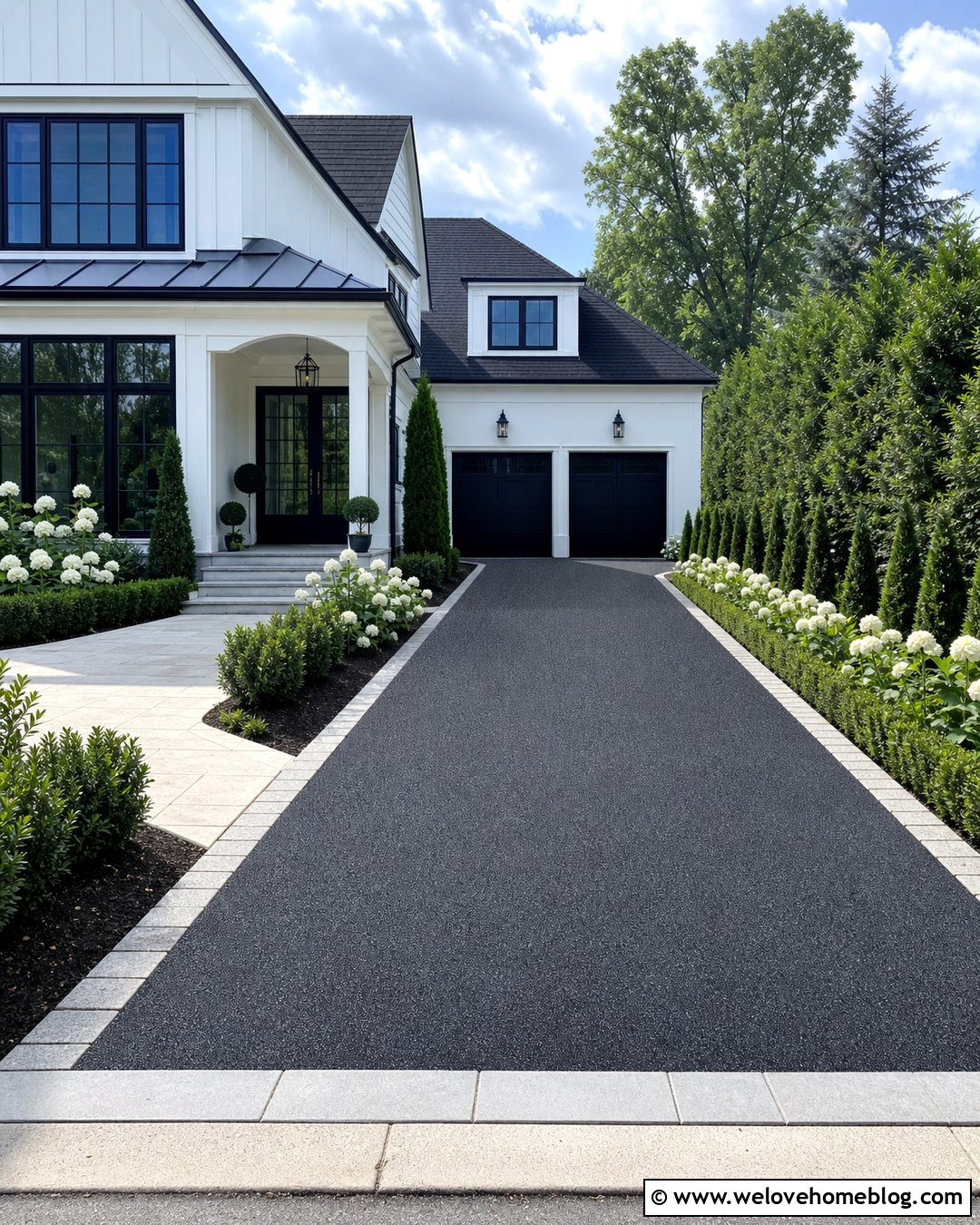
Against a white house, charcoal resin-bound gravel produces a bold contrast without relying on complicated patterns. Keep the driveway broad and straight, with a subtle flare near the street to make vehicle access more comfortable. Light granite setts or pale concrete pavers can form a narrow perimeter that separates the dark surface from the lawn. Repeat those lighter tones in the front steps and walkway for a coordinated exterior. Landscaping should remain simple, using green hedges, white flowers, and architectural evergreens rather than too many competing colors. Because very dark surfaces can reveal pale dust and debris, consider a charcoal blend with medium-gray flecks instead of solid black. The variation provides a more forgiving finish while maintaining the crisp, high-contrast look that suits modern and transitional homes.
4. Beige Resin Bound Driveway With Stone Edging
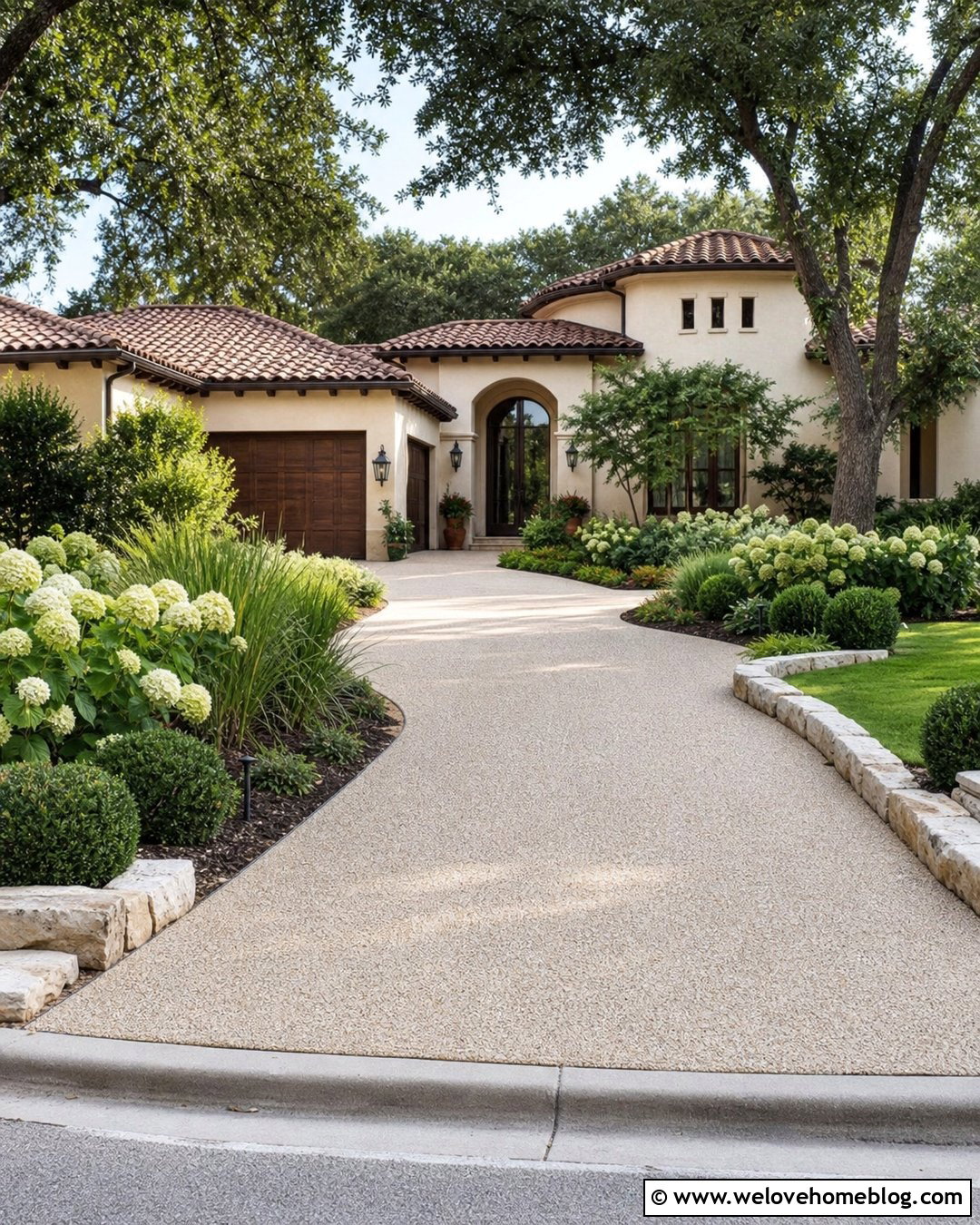
Soft beige resin-bound aggregate looks natural beside limestone, stucco, and warm painted siding. It is an approachable option when gray feels too urban and gold appears too yellow. Shape the driveway with a relaxed curve leading toward the garage, and use rough-cut limestone or tumbled concrete setts around the perimeter. The textured edging gives the smooth resin surface a more grounded, substantial appearance. Create generous planting beds along the outside curve with hydrangeas, boxwood, ornamental grasses, and seasonal flowers. A stepping-stone or matching resin walkway can connect the parking area to the entrance. Choose an aggregate mixture containing sand, cream, and subtle gray tones. This broader color range helps the driveway coordinate with changing light, nearby stonework, and the natural colors found throughout the surrounding landscape.
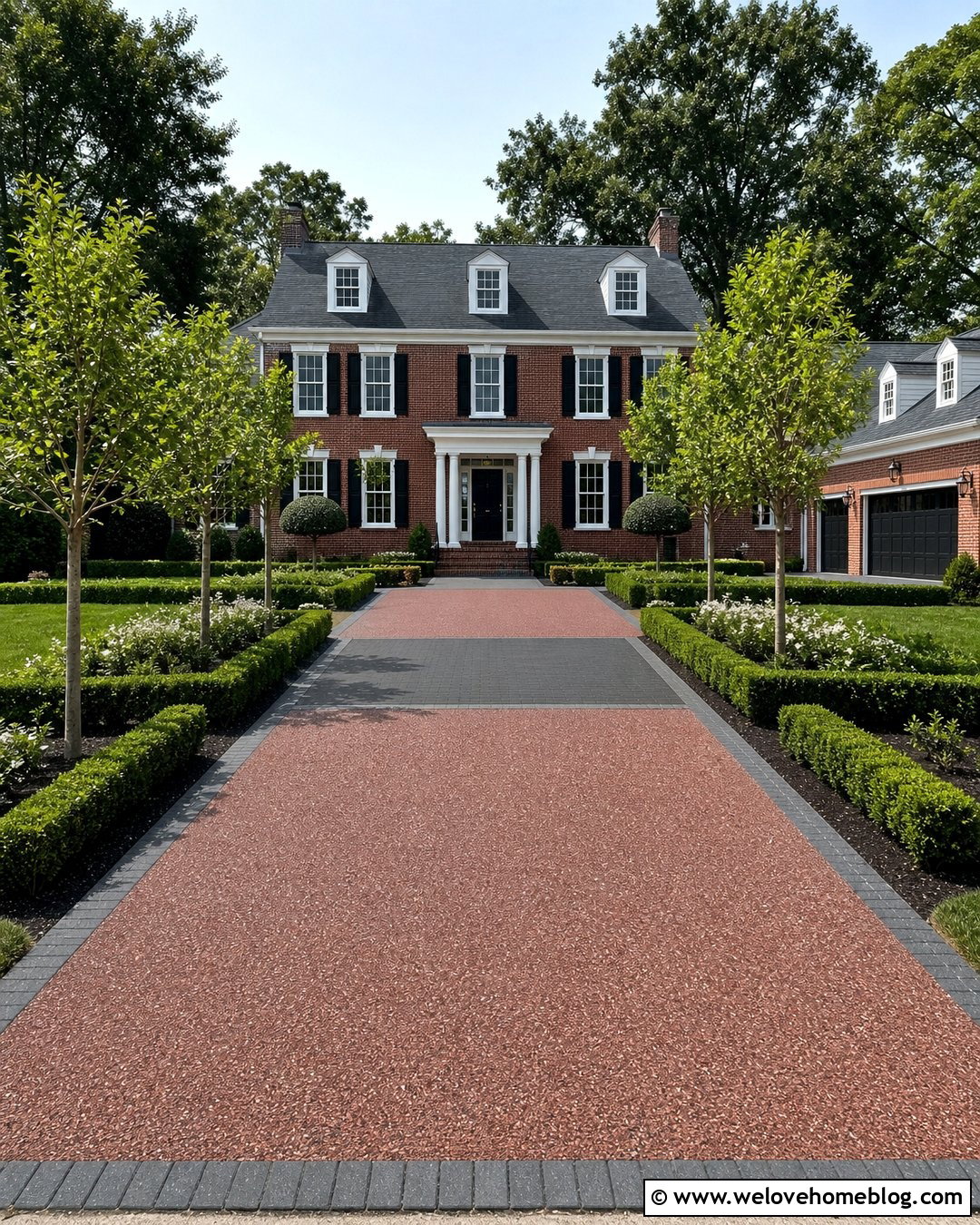
5. Resin Bound Driveway With Cobblestone Apron
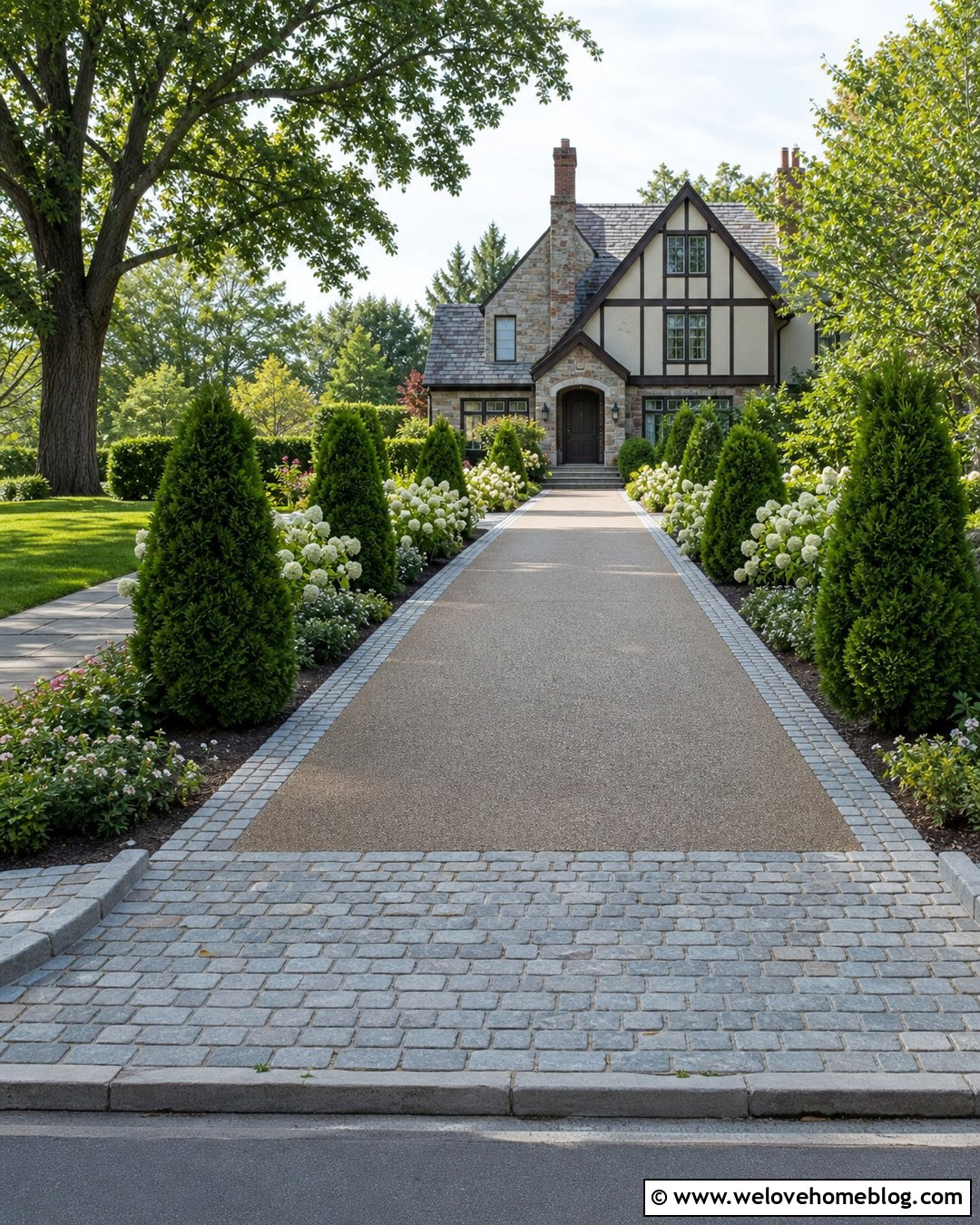
A cobblestone apron adds traditional character at the street while the resin-bound surface provides a visually calm main driveway. This combination suits Colonial, Tudor, and European-inspired homes, where natural texture is an important part of the architecture. Use rectangular granite cobbles across the full entrance, then continue them as slim borders along both sides. Fill the center with a medium-gray or warm taupe resin-bound aggregate that complements the stone without copying it exactly. A straight driveway will feel formal, while a subtle curve creates a softer country-house effect. Add symmetrical evergreen shrubs near the entrance and layered planting closer to the house. The cobblestone threshold should be deep enough to look intentional rather than like a narrow stripe. It can also visually mark the transition from public street to private property.
6. Curved Resin Bound Driveway With Lavender Borders
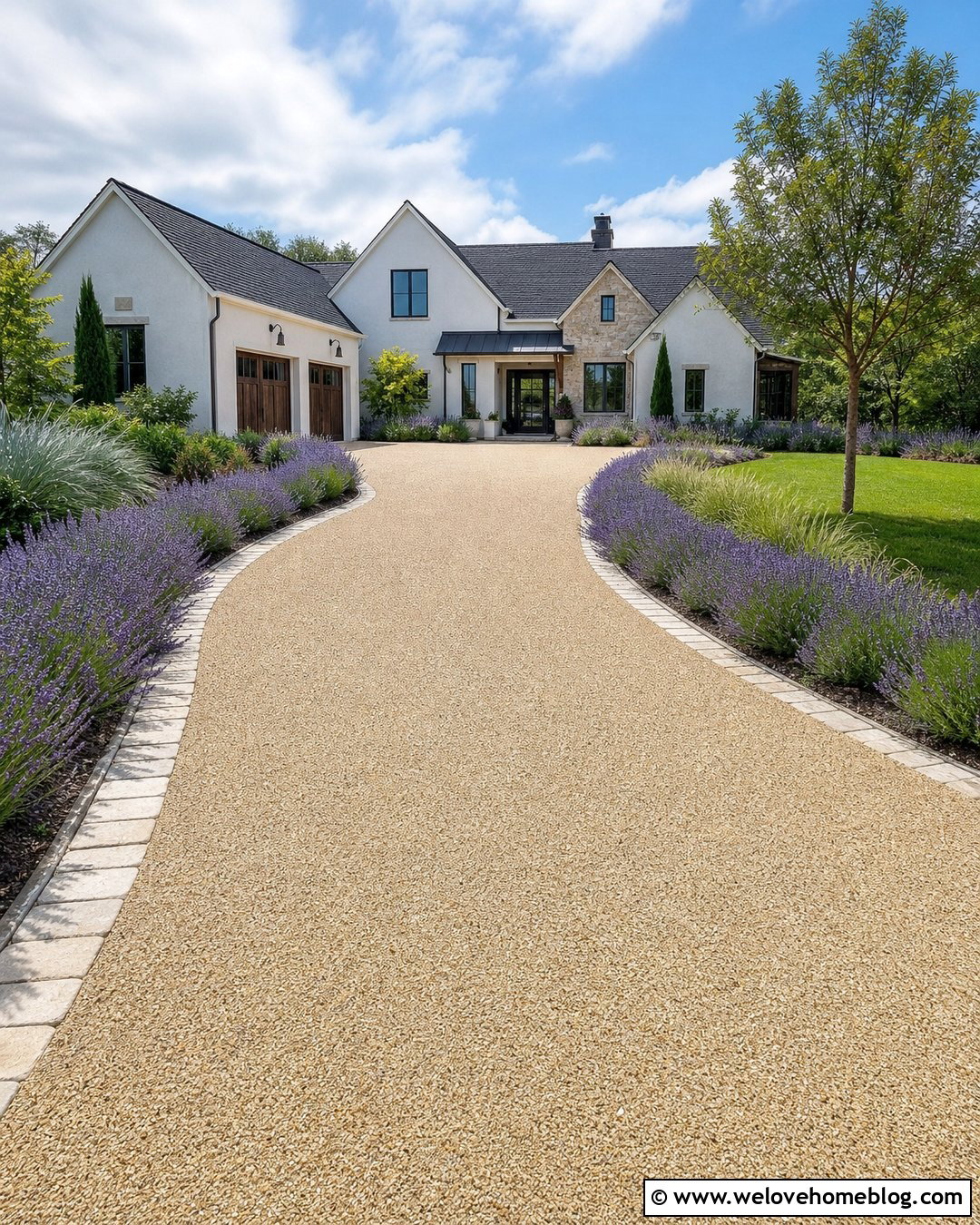
A sweeping resin bound driveway can guide the eye through a wide front yard and make the approach feel more inviting. Choose a warm cream or honey-colored aggregate to complement the purple and silvery-green tones of lavender. A slim border of tumbled stone pavers will protect the planted edges while maintaining an informal appearance. Plant lavender in repeated groups along the outer curve, leaving enough space for mature growth and routine driveway access. Mix in upright ornamental grasses and compact evergreen shrubs to provide structure after flowering ends. The inside curve can hold a simple lawn or one small ornamental tree rather than another busy flower bed. This layout works particularly well with cottage, farmhouse, and Mediterranean-style homes. The coordinated curves make the driveway and landscaping appear planned as one continuous design.
7. Circular Resin Bound Driveway With Center Garden
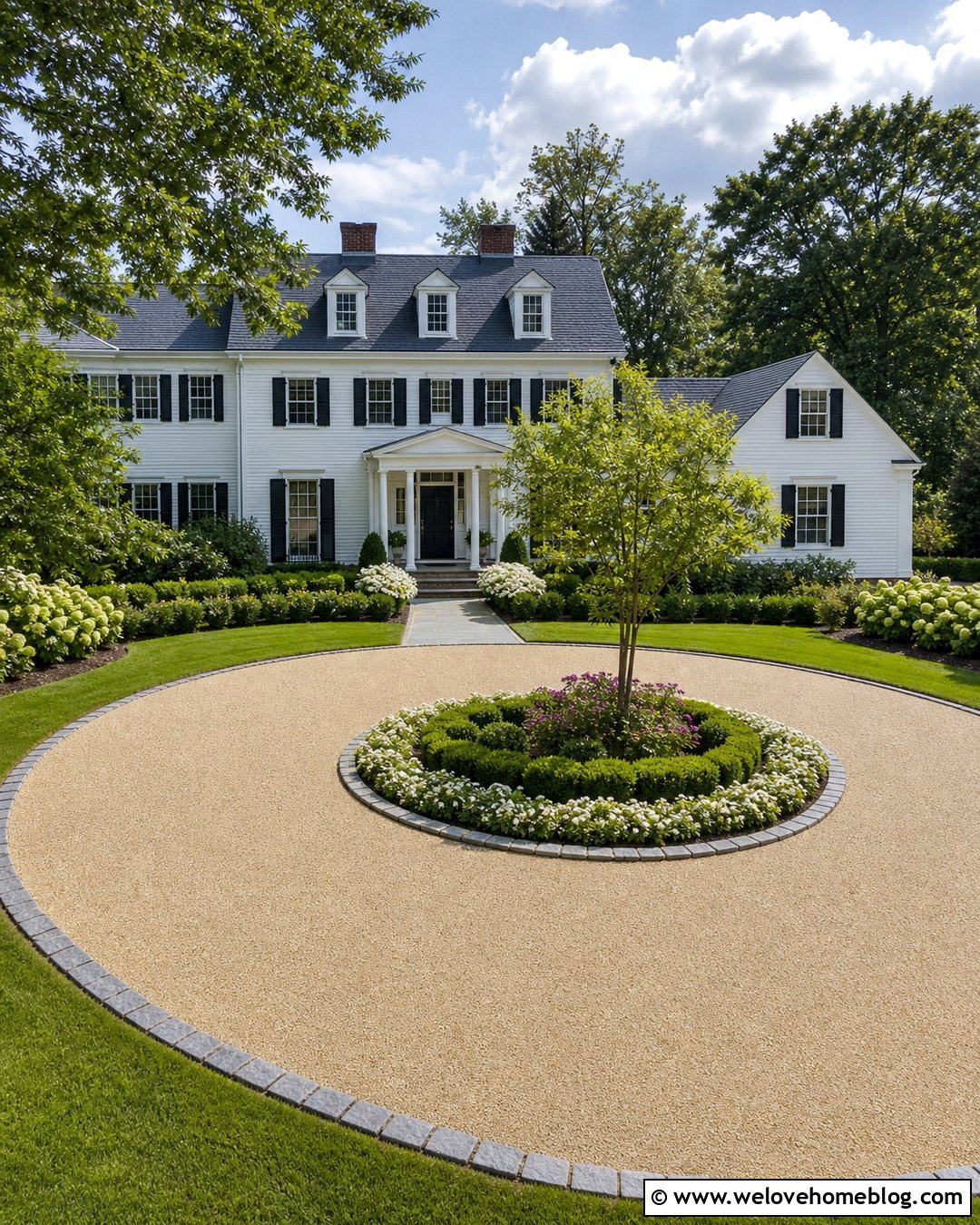
A circular layout turns a large resin-bound driveway into a practical arrival space while creating an impressive view from the street. Select a light brown, beige, or silver-gray aggregate that does not overwhelm the broad paved area. Define the center island with granite setts, clay brick, or natural stone that matches details on the house. Inside the island, combine one focal tree with low shrubs and ground cover so drivers can see clearly across the circle. The outer driveway border can repeat the same edging for consistency. Connect the circle to the front entrance with a defined walkway, avoiding awkward paths across parking areas. Subtle changes in aggregate color can mark the main driving lane or entrance apron. Keep patterns restrained, since the circular shape already provides a strong and recognizable visual feature.
8. Resin Bound Driveway With Brick Ribbon Pattern
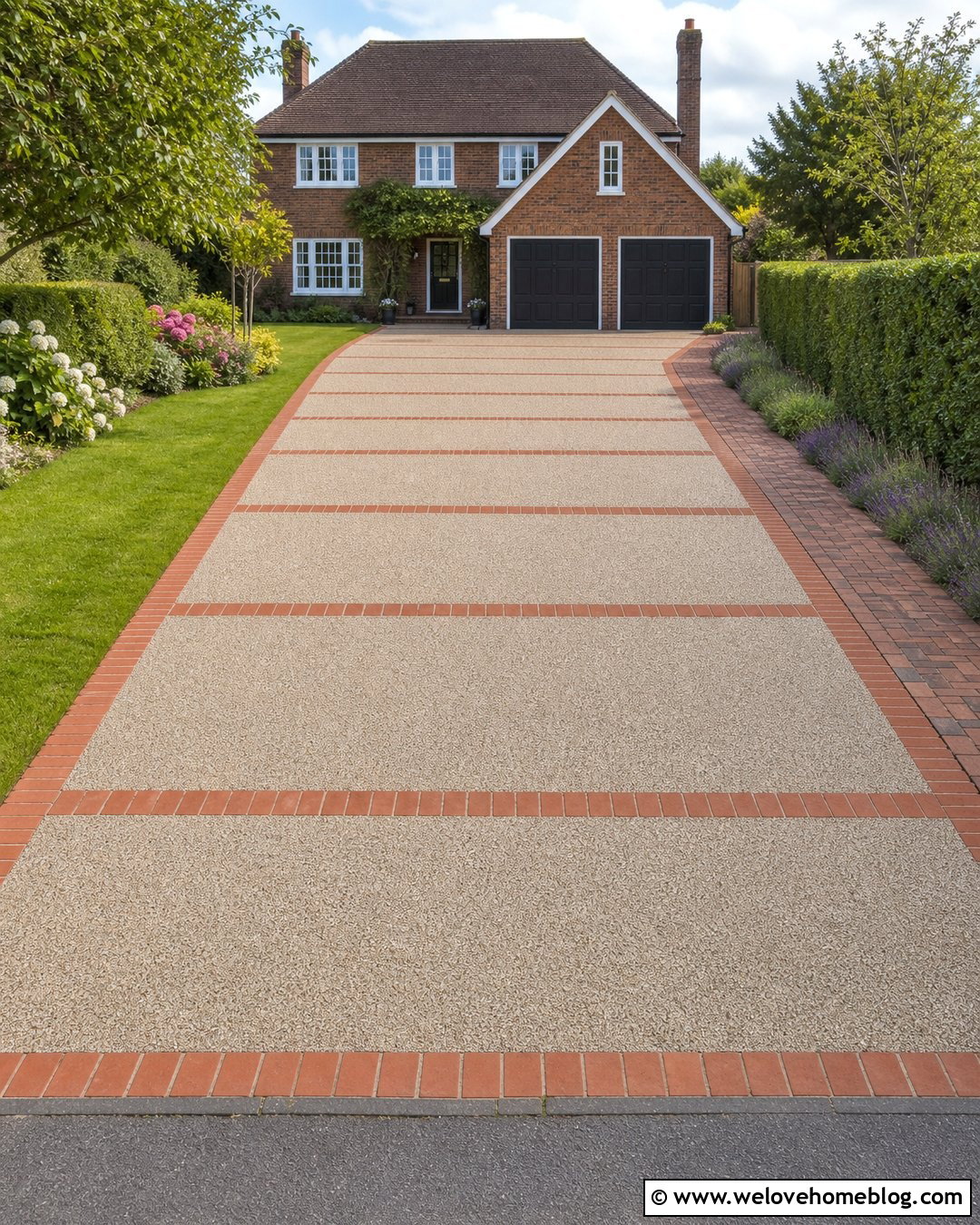
Brick ribbons can divide a large resin-bound surface into smaller visual sections without introducing multiple paving materials across the entire driveway. Begin with a neutral beige, taupe, or gray aggregate, then place clay brick lines across the width at measured intervals. The ribbons may align with garage doors, architectural columns, or changes in the driveway’s slope. Continue the same brick around the outside edges to make the pattern feel complete. This approach is especially effective for wide driveways in front of traditional suburban homes. Keep the lines straight and evenly spaced rather than adding too many decorative shapes. Nearby landscaping can include clipped hedges, flowering shrubs, and a neat lawn. Matching brick steps or walkway borders will further connect the driveway to the house and prevent the contrasting ribbons from appearing randomly applied.
9. Resin Bound Driveway With Granite Sett Border
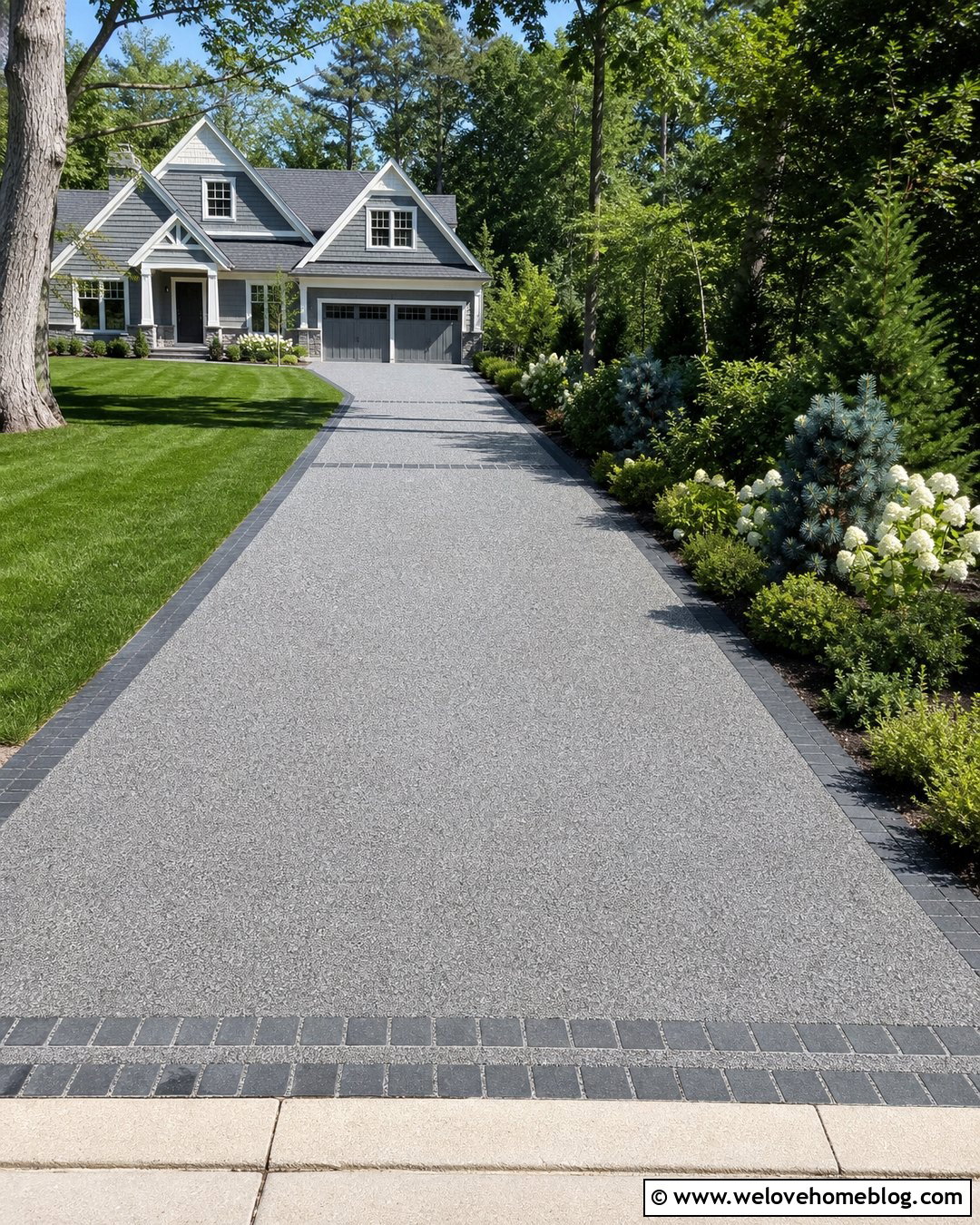
Granite setts offer a durable-looking frame that gives resin-bound aggregate greater definition. For a classic combination, use medium-gray resin with charcoal granite setts. A warmer home can instead pair beige resin with mixed tan and gray stone. Run the setts around the full driveway and use a double row near the street to create a stronger entrance. On a long straight layout, an additional granite band near the garage can visually shorten the surface. Border the driveway with lawn on one side and a deep planting bed on the other to avoid an overly symmetrical result. Evergreen shrubs, white flowers, and small trees will suit the restrained stone palette. Granite can also outline utility covers or drainage details, helping necessary features appear more integrated with the overall driveway rather than interrupting the resin finish.
10. Resin Bound Driveway With Grass Strip
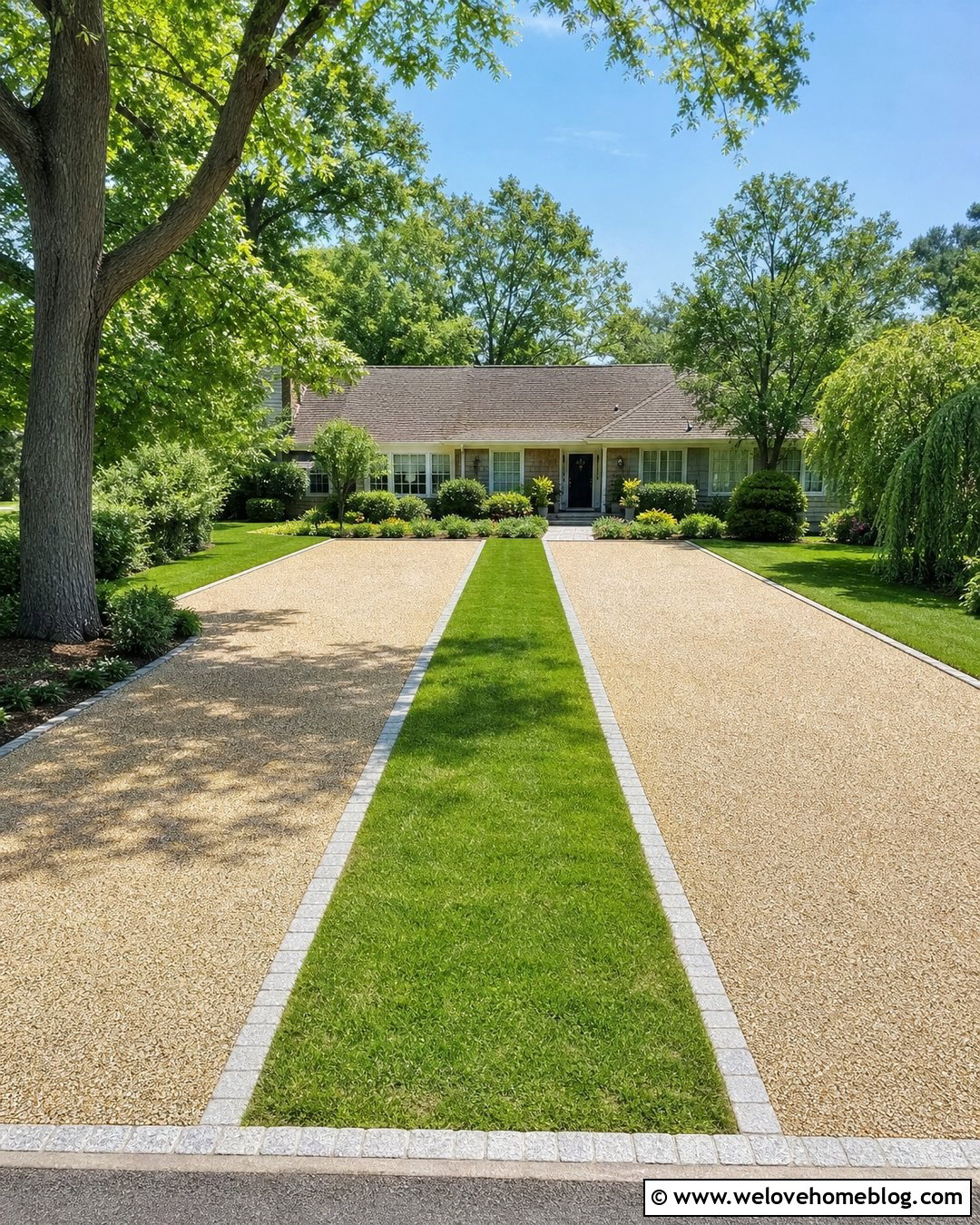
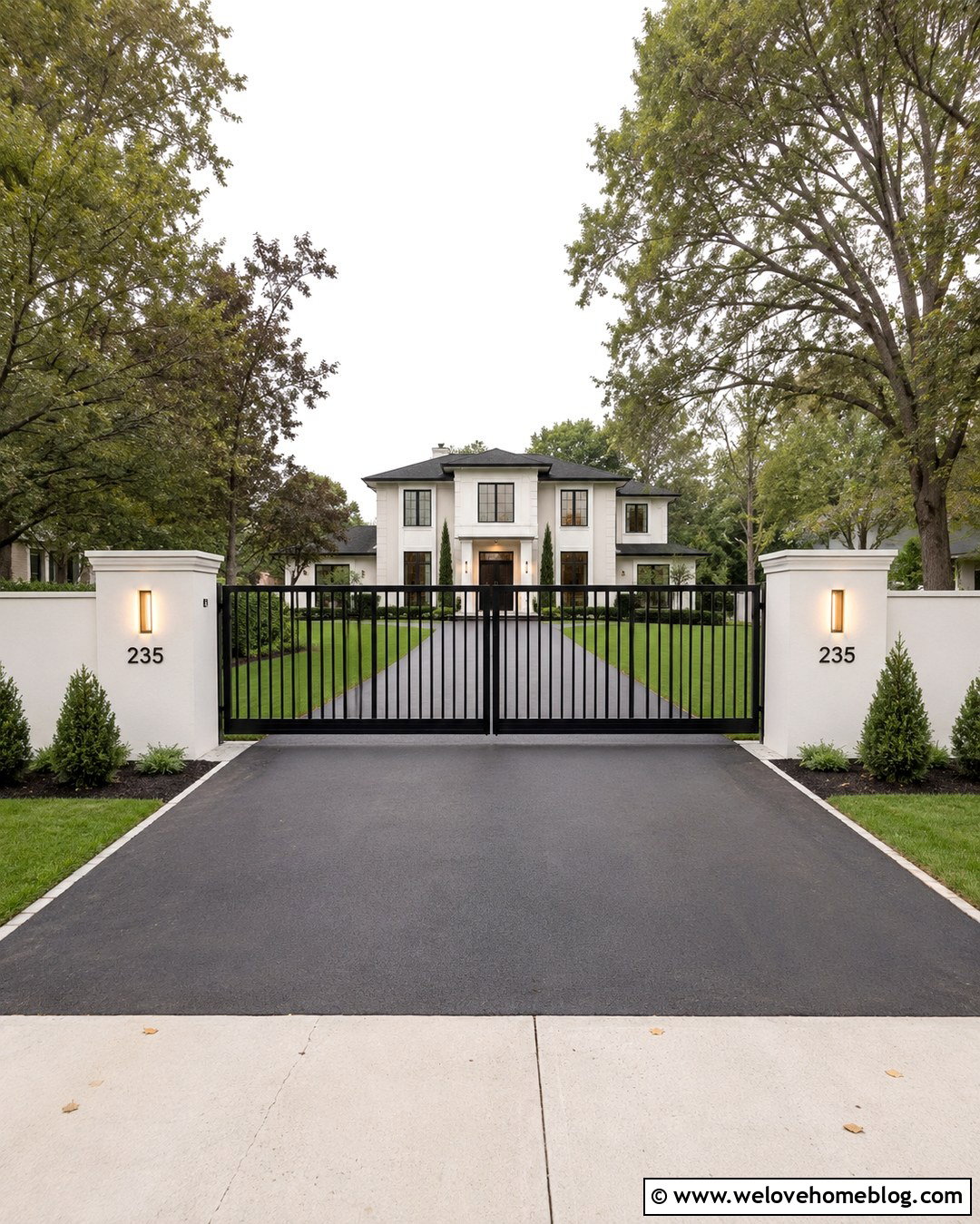
Introducing a central grass strip can reduce the visual scale of a broad resin-bound driveway and bring more greenery toward the house. Use two resin-bound wheel lanes or create a wider central strip within a fully edged driveway. A soft silver or natural beige aggregate will keep the layout relaxed. Border the grass with flush granite setts or concrete pavers so lawn maintenance remains manageable and tires are less likely to damage the edges. This arrangement works best on a straight driveway where vehicle movements are predictable. Continue the lawn into the surrounding front yard, adding low beds near the house rather than along the narrow driving lanes. An automatic irrigation plan may be helpful in dry climates. The completed design combines a structured parking surface with the softer appearance of a garden-focused residential entrance.
11. Resin Bound Driveway With Matching Front Walkway
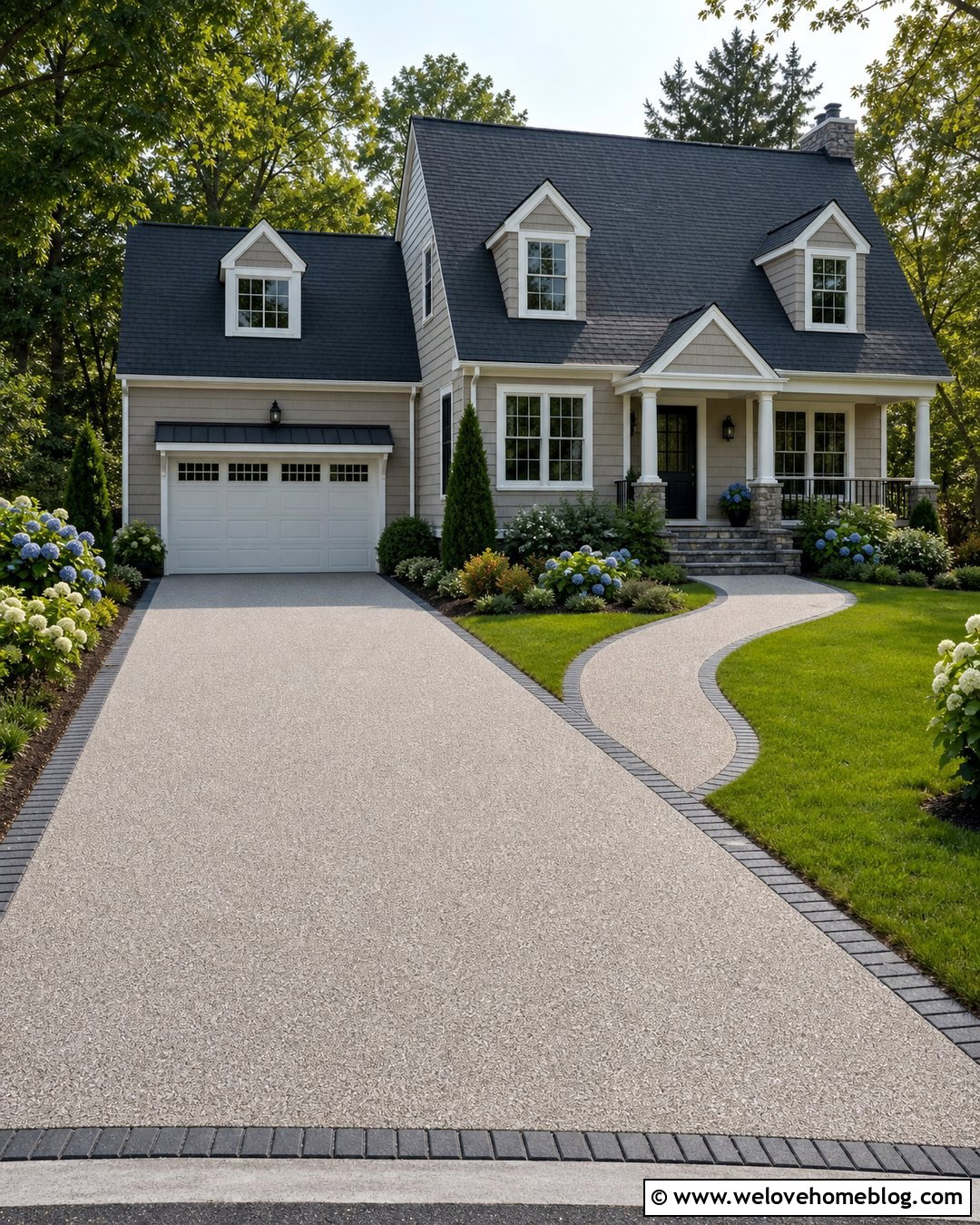
Using the same resin-bound aggregate for the driveway and front walkway creates a seamless exterior, especially around smaller homes. Separate the two areas with shape rather than color. The driveway might remain straight while the walkway curves gently through a planting bed toward the front steps. A shared border of dark brick, granite, or concrete pavers will visually connect both surfaces. Choose a color that complements the roof and facade, such as silver gray for a modern home or warm beige for brick and siding. Near the walkway, use layered planting that stays low enough to keep the entrance visible. Add stepping pads or a contrasting threshold at the front door for definition. The consistent surface reduces visual clutter, while the clear layout prevents pedestrians from feeling as though they must walk through the vehicle parking area.
12. Two Tone Resin Bound Driveway
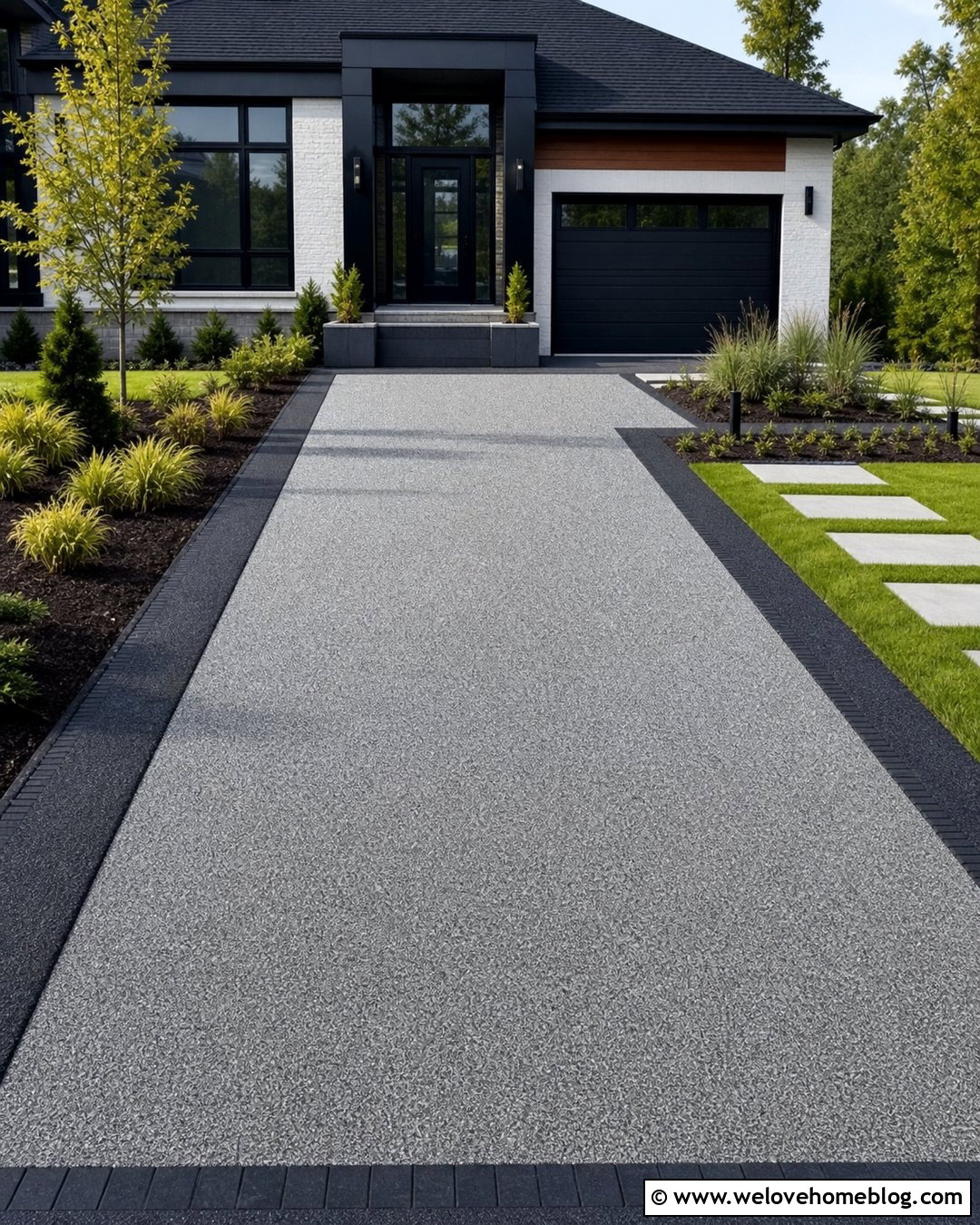
A two-tone resin bound driveway can highlight its shape, but the color difference should be controlled. Use a lighter aggregate for the main field and a darker resin-bound band around the perimeter. Alternatively, mark a central parking bay in taupe while keeping the outer driving lane silver gray. The two aggregates should share at least one undertone so the result feels connected rather than sharply divided. Straight lines suit modern homes, while broad curved bands complement traditional architecture. Use block pavers between colors when a crisp separation is needed. Landscaping can then repeat both tones through stone mulch, planters, walls, or front steps. Avoid combining several patterns with two strong colors. One clear contrast is usually enough to give the driveway depth, organize a large parking area, and reinforce the route toward the garage.
13. Resin Bound Driveway With Geometric Border
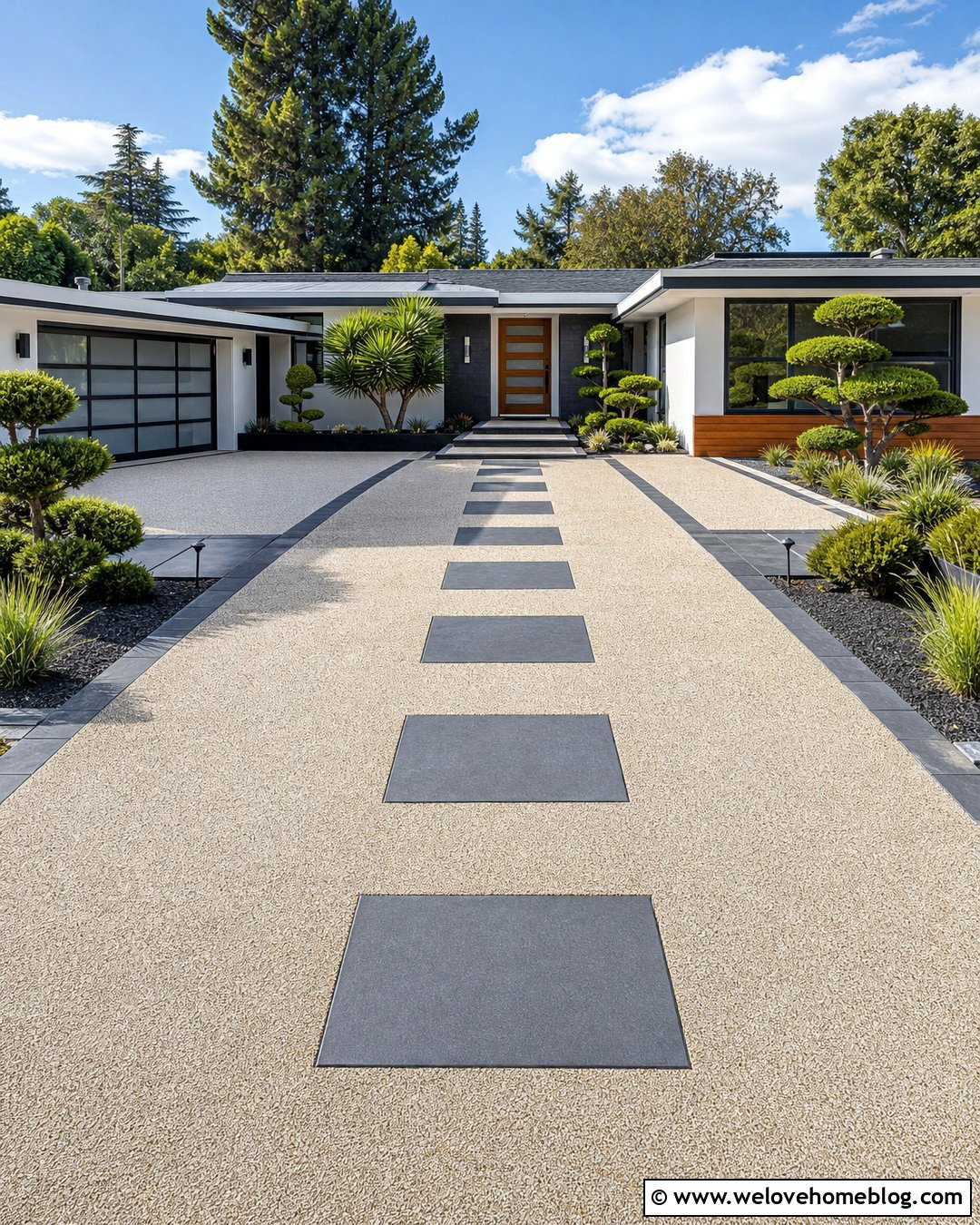
A geometric border brings structure to a resin-bound driveway outside a contemporary or midcentury home. Begin with a pale gray or sand-colored aggregate and frame it with charcoal pavers arranged in clean rectangles. Wider paved blocks near the entrance can form a repeating pattern, while narrow lines guide vehicles toward the garage. Keep the resin field largely uninterrupted so the composition remains practical and easy to understand. Square planting beds can echo the geometry beside the driveway, filled with ornamental grasses, compact shrubs, or sculptural evergreens. Large concrete stepping pads may connect the driveway to the front door. Align border lines with windows, garage openings, or roof edges whenever possible. This creates a stronger relationship between the paving and architecture, making the pattern appear intentional rather than added simply as surface decoration.
14. Resin Bound Driveway With Timber Edging
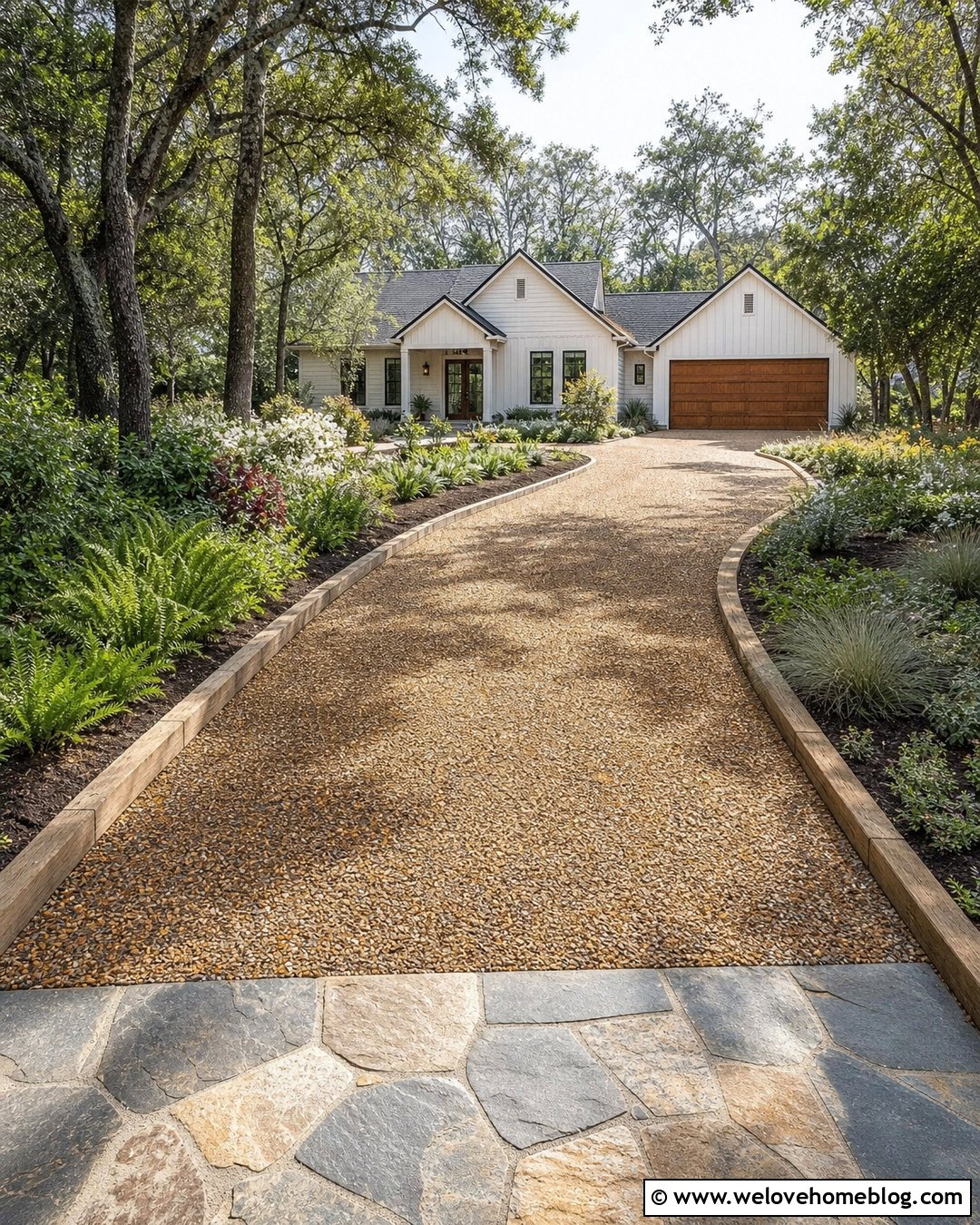
Timber edging gives a resin-bound driveway a softer, rustic finish that suits wooded lots, ranch homes, and modern farmhouses. Select warm brown or natural golden aggregate to reinforce the organic palette. The driveway can curve around existing trees or follow the natural contour of the front yard. Use substantial treated timbers or durable landscape sleepers installed flush with the surface rather than thin decorative boards. On the garden side, plant ferns, ornamental grasses, flowering shrubs, and native ground cover in relaxed groups. A gravel-filled transition or stone threshold at the street can protect the timber from frequent turning movements. Repeat the wood tone in the garage door, porch posts, or entrance gate. The result should combine the neat, stable appearance of resin-bound gravel with the informal character of a countryside landscape.
15. Resin Bound Driveway With Modern Gate
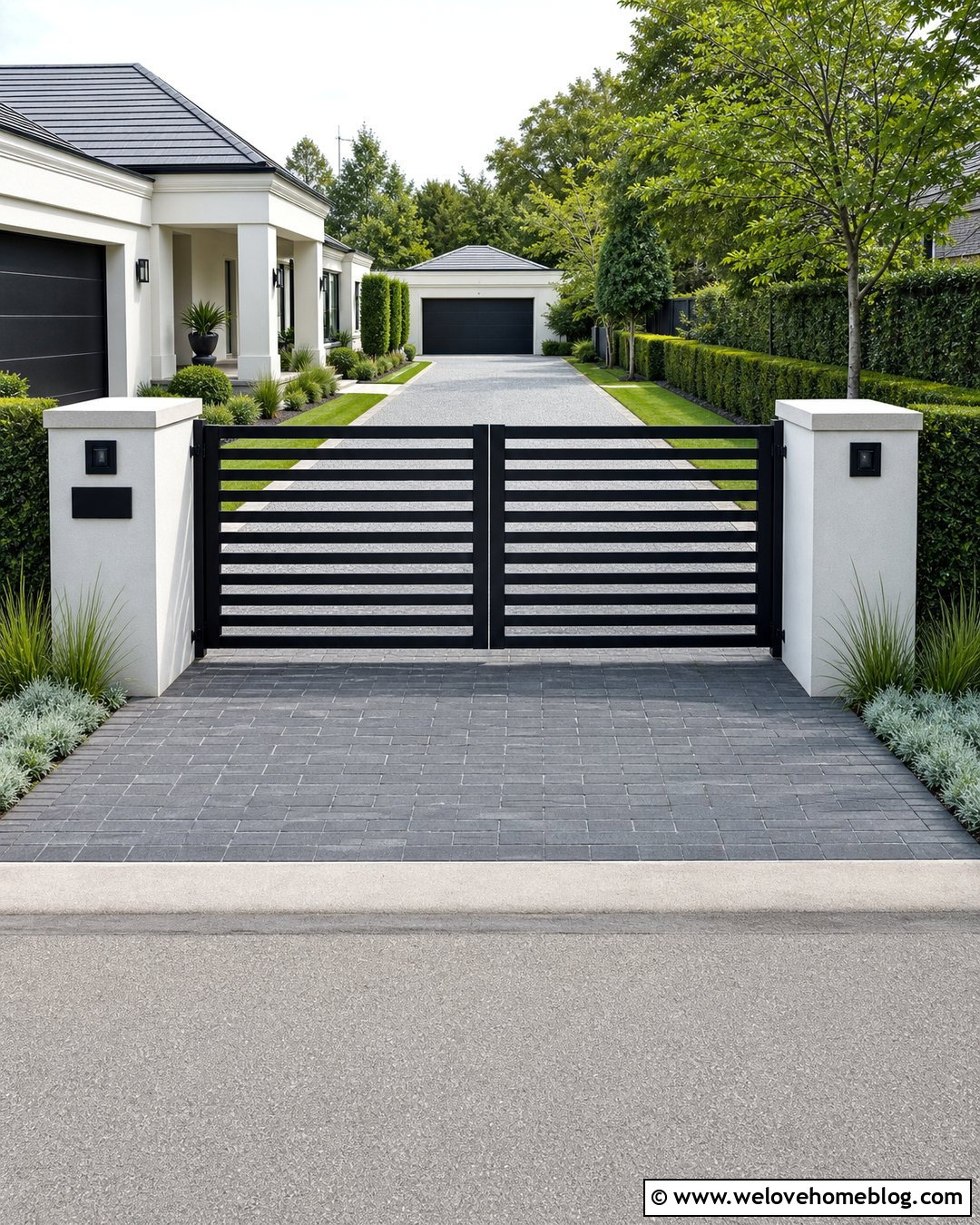
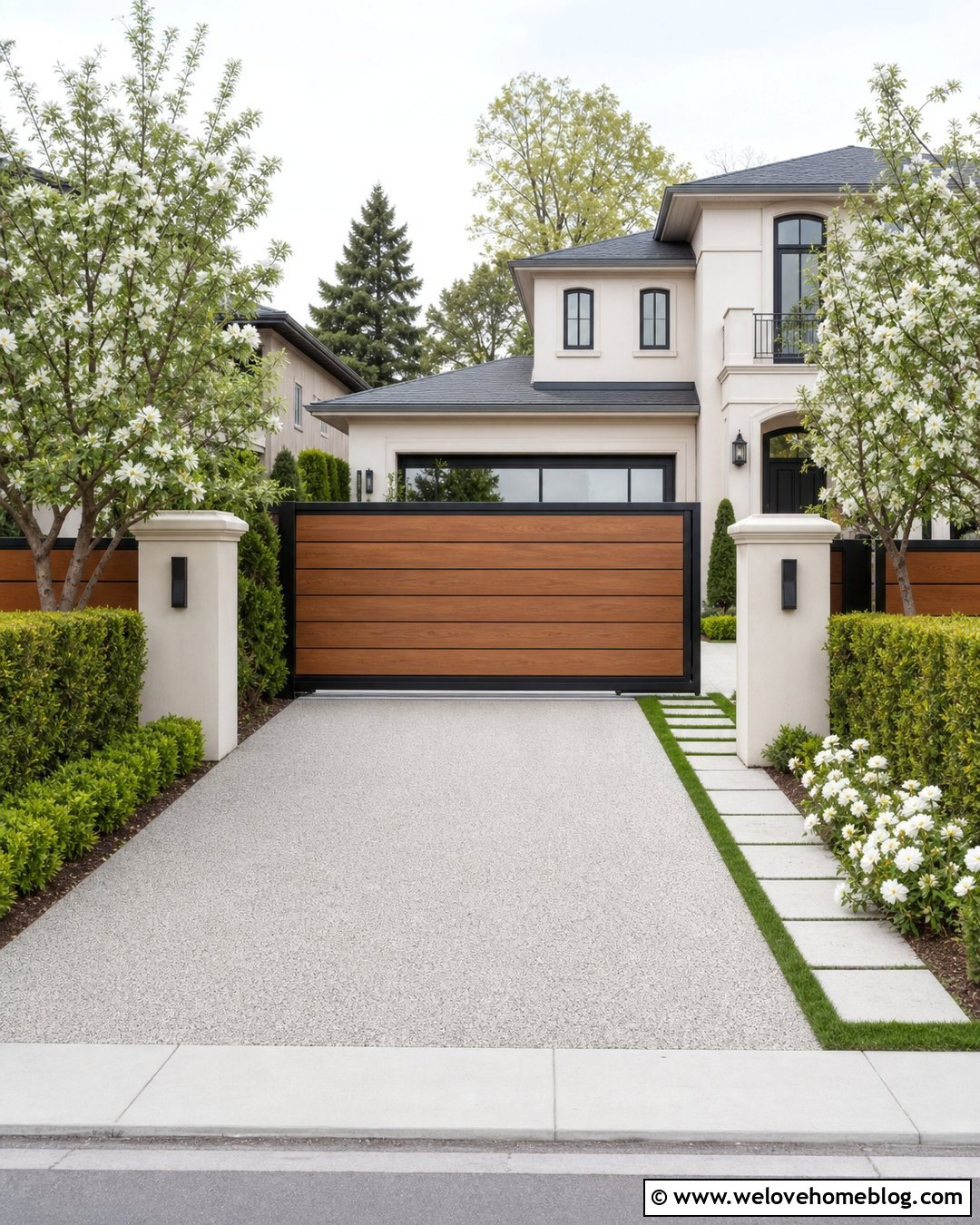
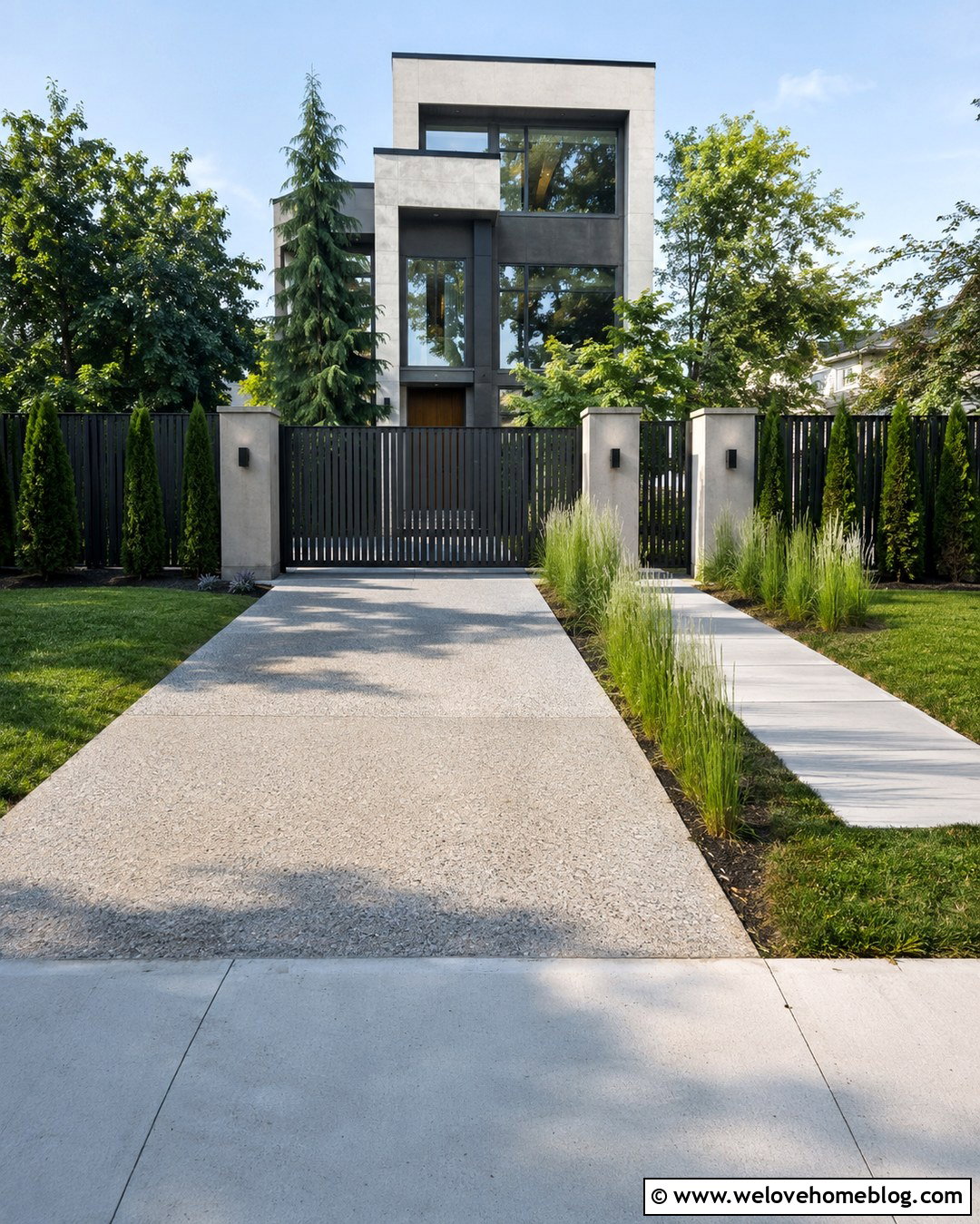
A gated resin bound driveway looks most cohesive when the surfacing, entrance posts, and gate share a restrained color palette. Pair silver-gray aggregate with a simple black horizontal-slat gate and smooth rendered pillars. Widen the driveway near the entrance so vehicles have adequate space to approach the gate without dominating the landscaping. A dark paver apron can emphasize the gateway, while matching edging continues toward the house. Use clipped hedges, upright grasses, and low ground cover around the pillars to soften the hard materials without hiding them. Integrate the address plaque and entry controls into one pillar for a clutter-free appearance. Beyond the gate, the resin-bound surface can follow a straight or gently curved route. Coordinated black lighting, windows, and garage doors will complete the modern exterior and strengthen its curb appeal.
16. Resin Bound Driveway With Stone Pillars
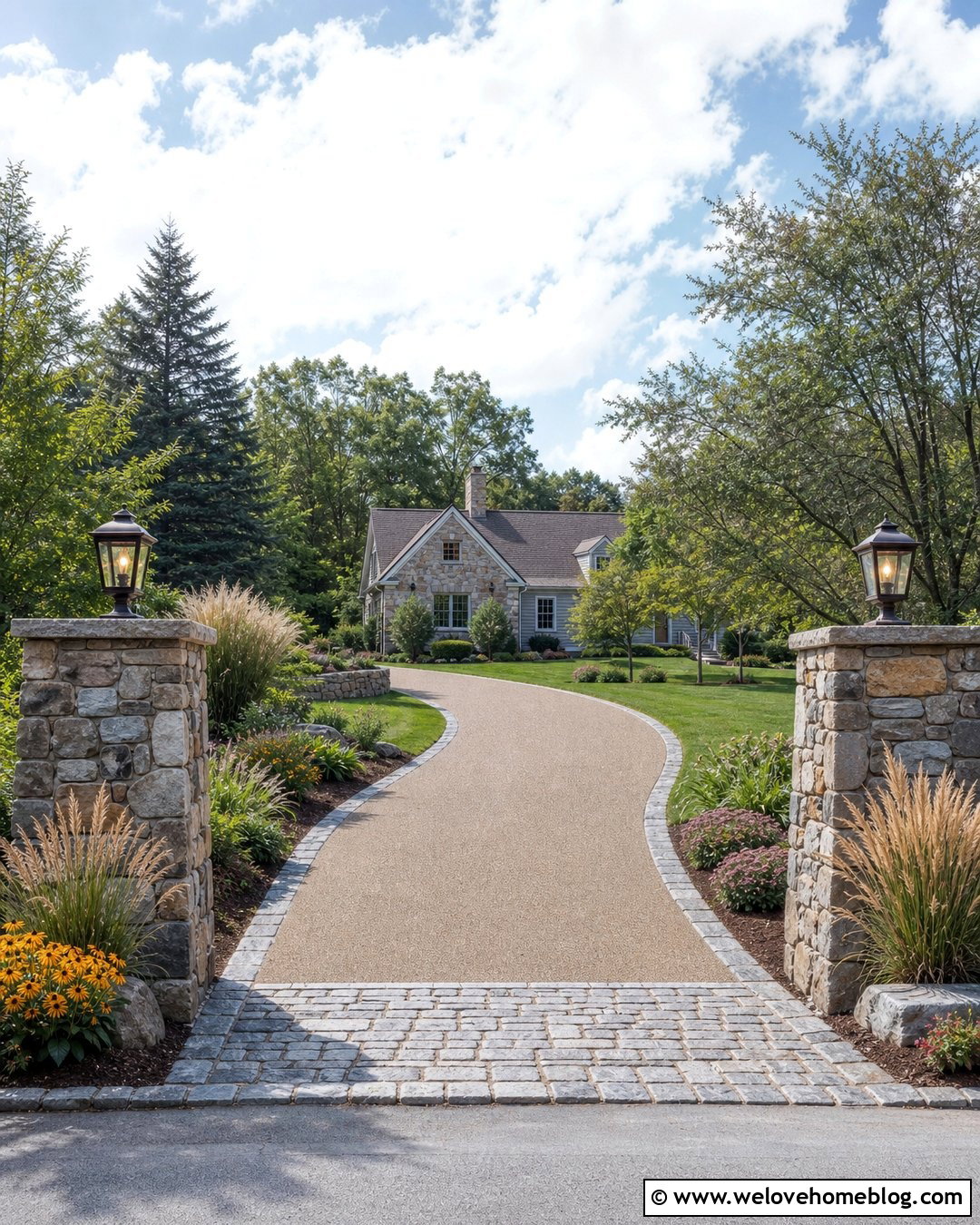
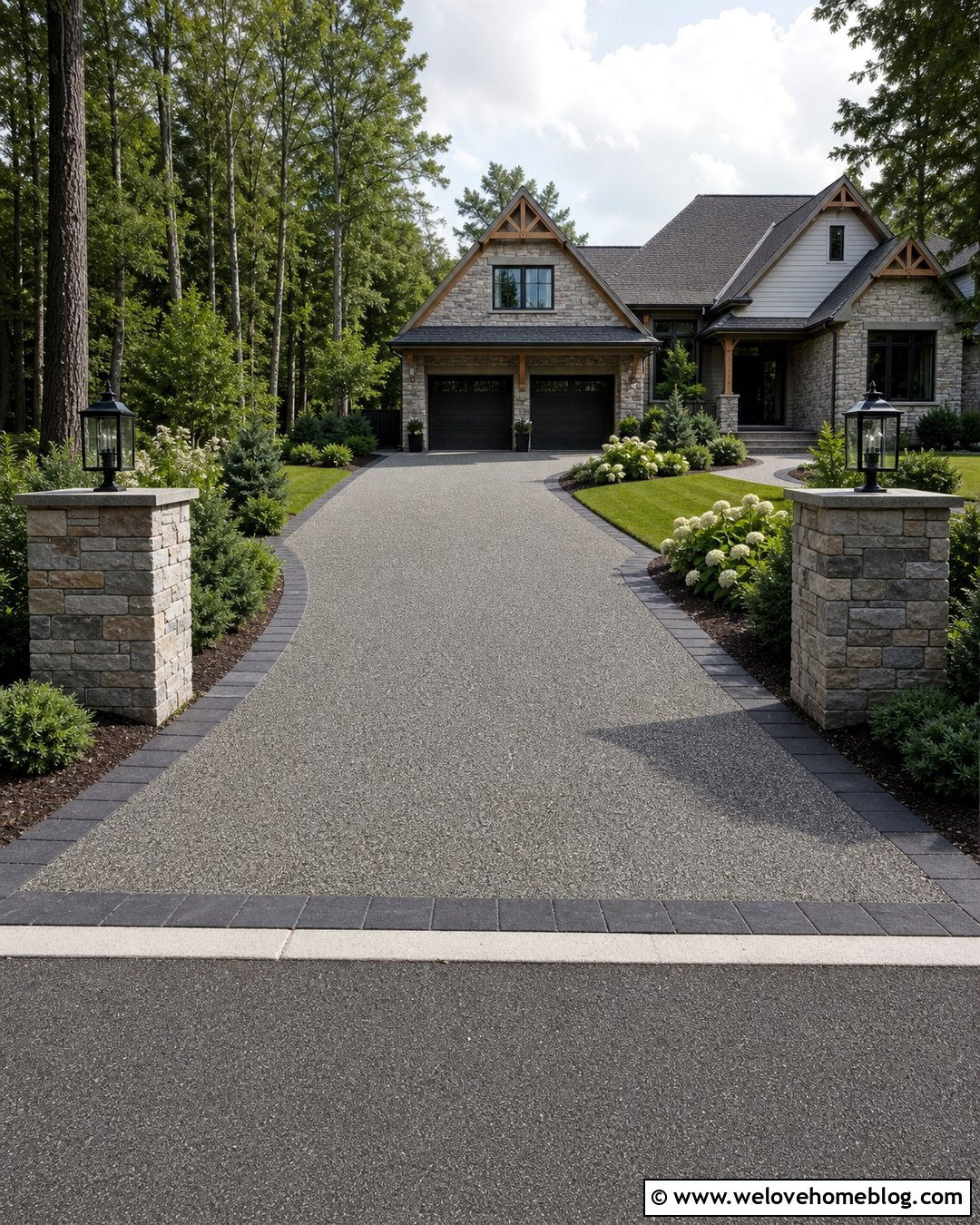
Stone pillars can transform a simple resin-bound driveway into a clearly defined home entrance. Choose aggregate that picks up one of the quieter colors within the masonry. A fieldstone pillar with gray, tan, and brown pieces, for example, works well with taupe resin-bound gravel. Place a cobblestone or granite apron between the pillars, then continue a narrower version of that material along the driveway edges. Low planting around the entrance should frame the masonry without reducing visibility. Consider spreading shrubs, ornamental grasses, and seasonal flowers rather than tall hedges immediately beside the street. Lantern-style fixtures can sit on the pillars, while matching wall lights appear on the house. A gently curved approach often complements traditional stonework, particularly when it reveals the home gradually through a spacious, landscaped front yard.
17. Resin Bound Driveway With Tree Lined Entrance
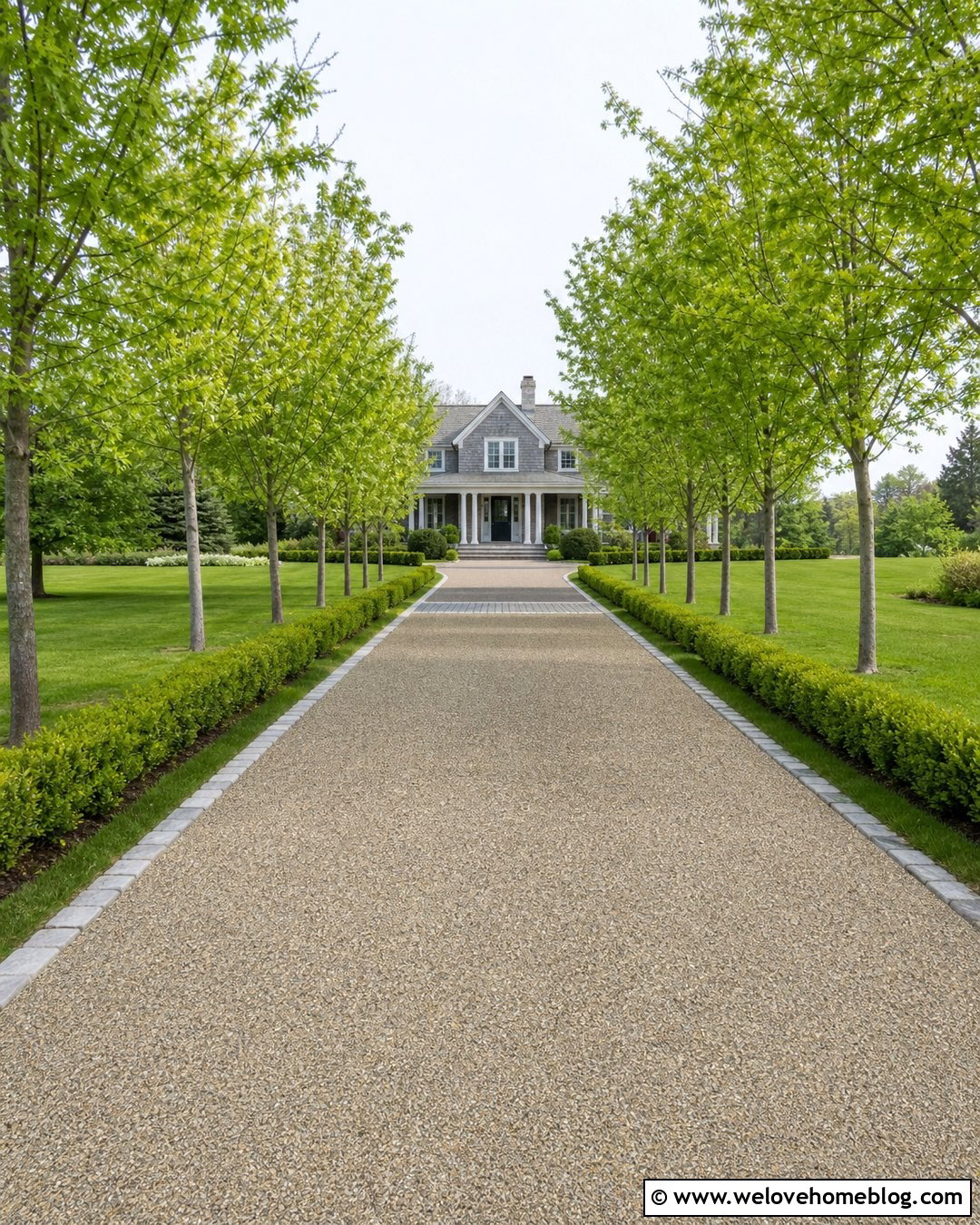
A long resin bound driveway becomes more memorable when evenly spaced trees create a strong sense of arrival. Use a neutral aggregate such as warm gray, muted gold, or sandy beige so the surface sits quietly beneath the planting. A straight layout produces a formal view, while a gentle curve feels more natural on a country property. Edge both sides with stone setts to protect the resin and create a clean division from planting beds. Select trees with growth habits appropriate for the available width, overhead space, climate, and distance from paving. Beneath them, use grass, low ground cover, or a repeated hedge rather than dense mixed planting. The tree rows should lead the eye toward the house, where a wider parking court or subtle paver band can mark the end of the approach.
18. Small Resin Bound Driveway With Raised Beds
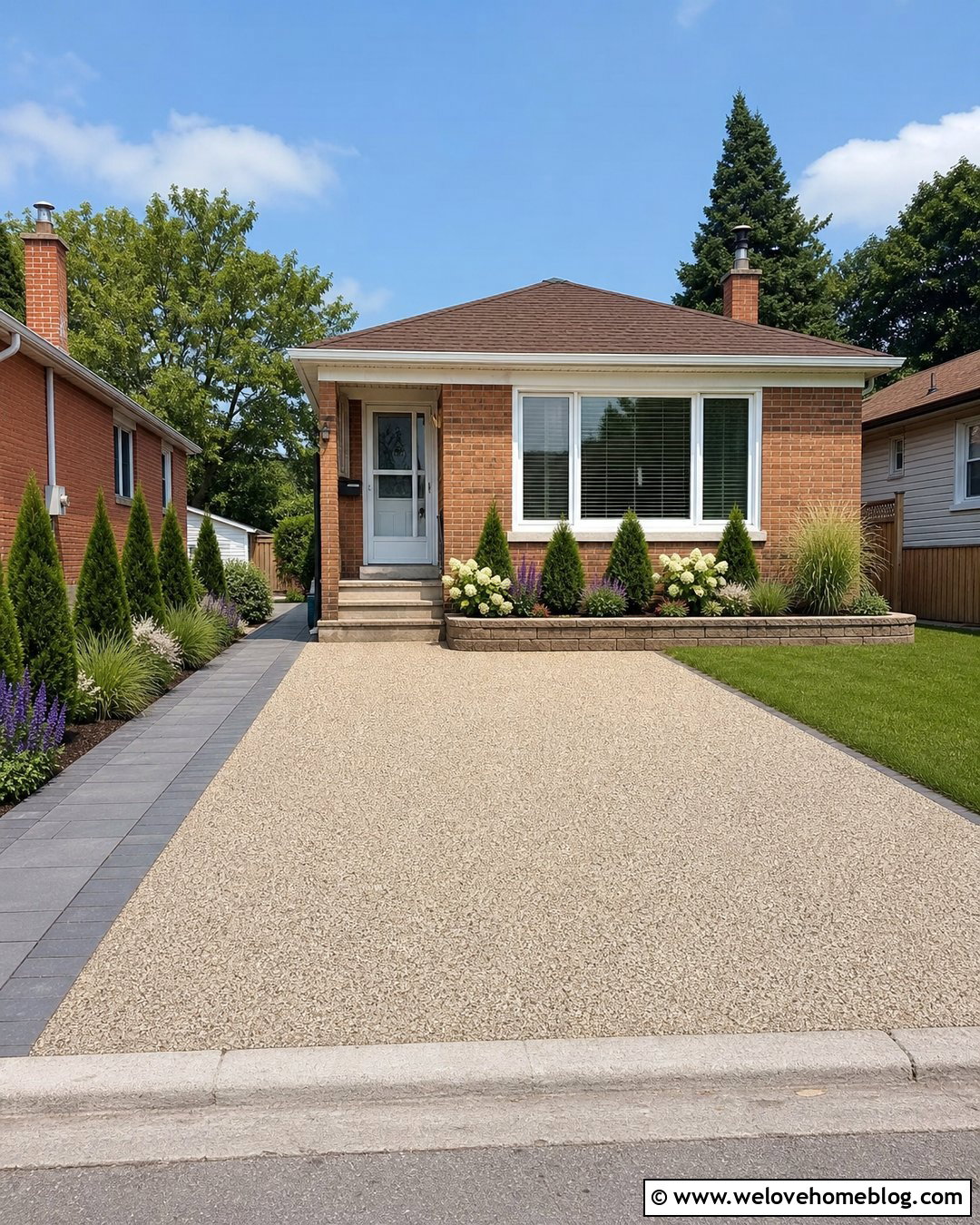
Limited frontage can still support an attractive resin-bound driveway when every edge serves a purpose. Use a light aggregate to keep the space visually open, then frame one side with a narrow raised planting bed. Build the bed from brick, rendered block, or natural stone that coordinates with the house. Keep its wall low enough to preserve door clearance and comfortable vehicle access. Compact evergreens, ornamental grasses, and upright flowers provide texture without spreading across the parking area. On the opposite side, a flush paver border can separate the driveway from a slim walkway. A straight layout usually uses space most efficiently, but a slightly angled parking bay may work on an irregular lot. Limit the design to two or three materials so the small driveway looks organized, practical, and spacious.
19. Permeable Resin Bound Driveway With Rain Garden
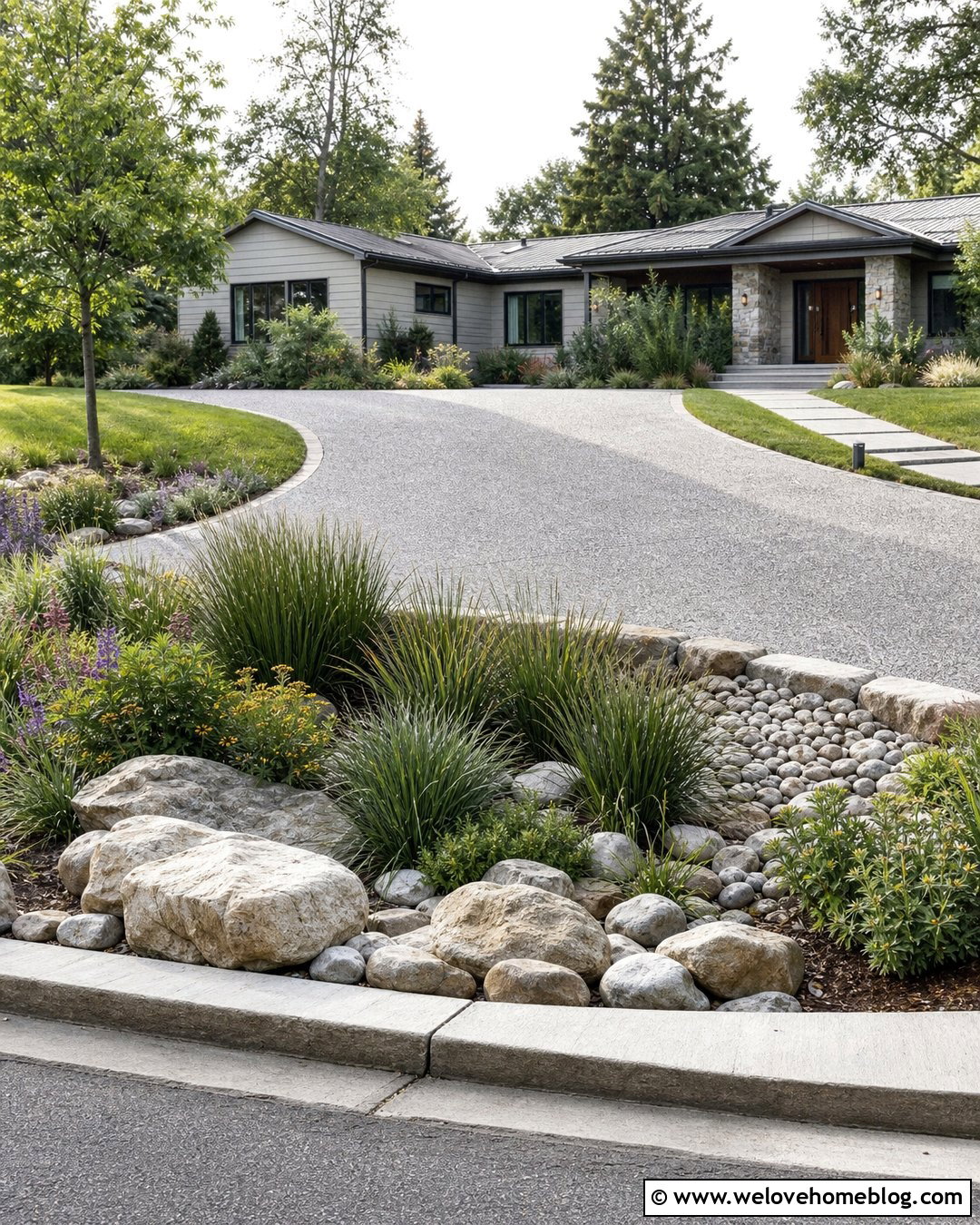
A rain garden can complement the drainage-focused design of a resin-bound driveway while giving runoff a planted destination. Resin-bound surfacing is designed to let water move through its connected voids, but overall performance depends on a suitable installation system and base. () Place a shallow planted basin along the lower side of a sloped driveway, using stone edging to define the transition. Choose native or climate-appropriate plants that tolerate both wet and dry periods. A silver-gray or mixed natural aggregate will pair easily with river rock, grasses, and flowering perennials. Keep the rain garden away from areas needed for vehicle doors and turning. Have drainage, grading, soil conditions, local requirements, and the proposed driveway base evaluated before construction rather than assuming the decorative resin surface alone will manage every water issue.


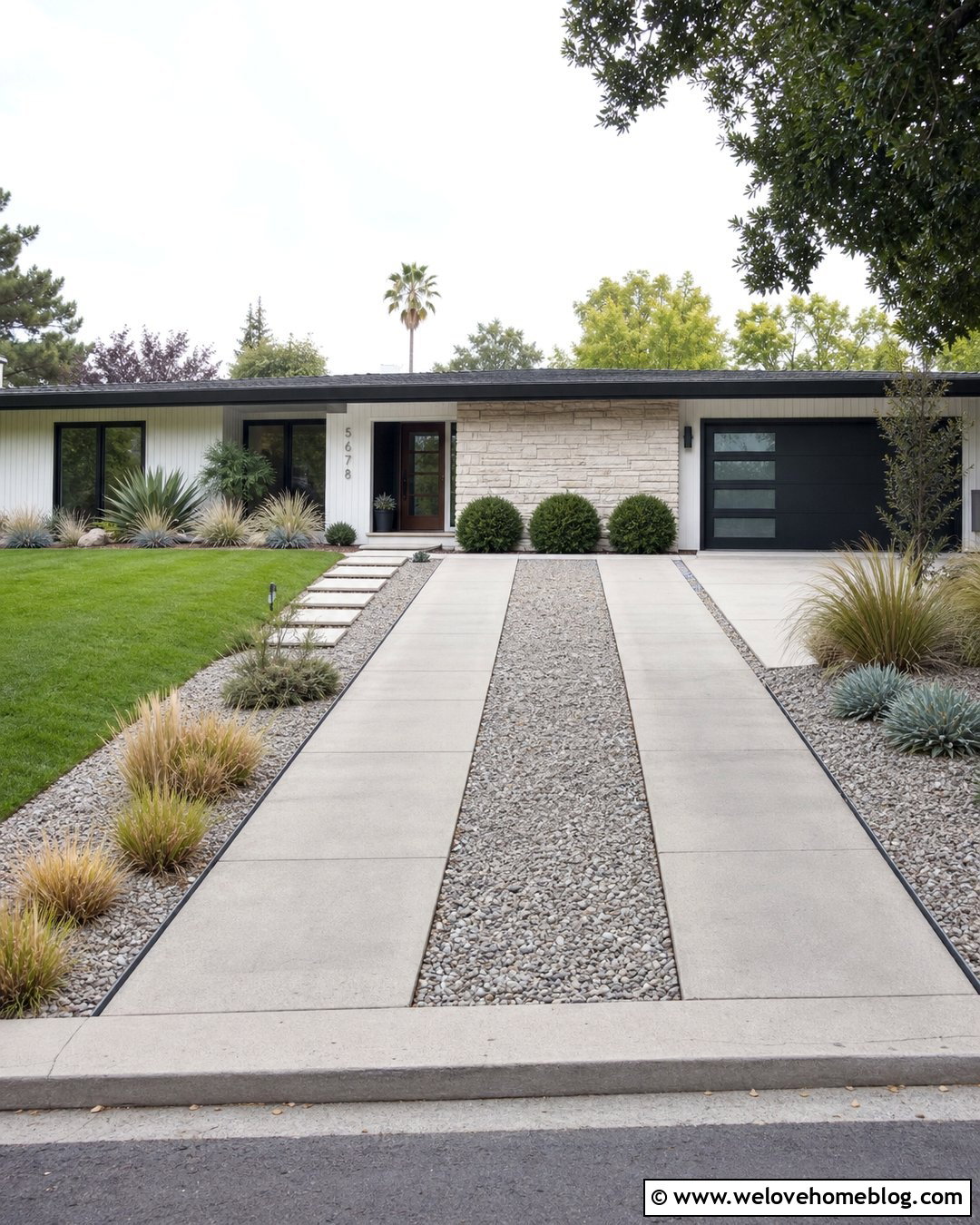
20. Resin Bound Driveway With Low Voltage Lighting
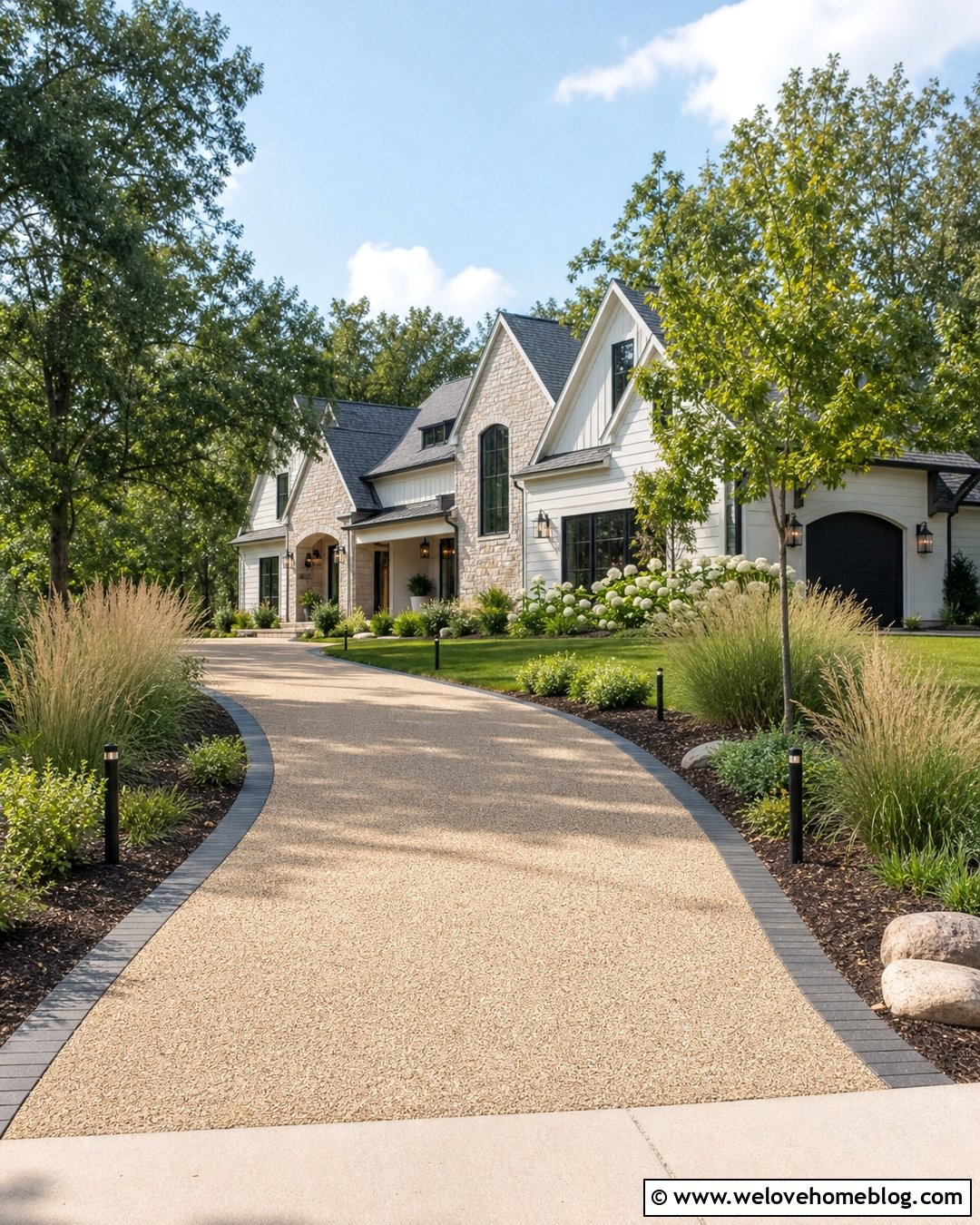
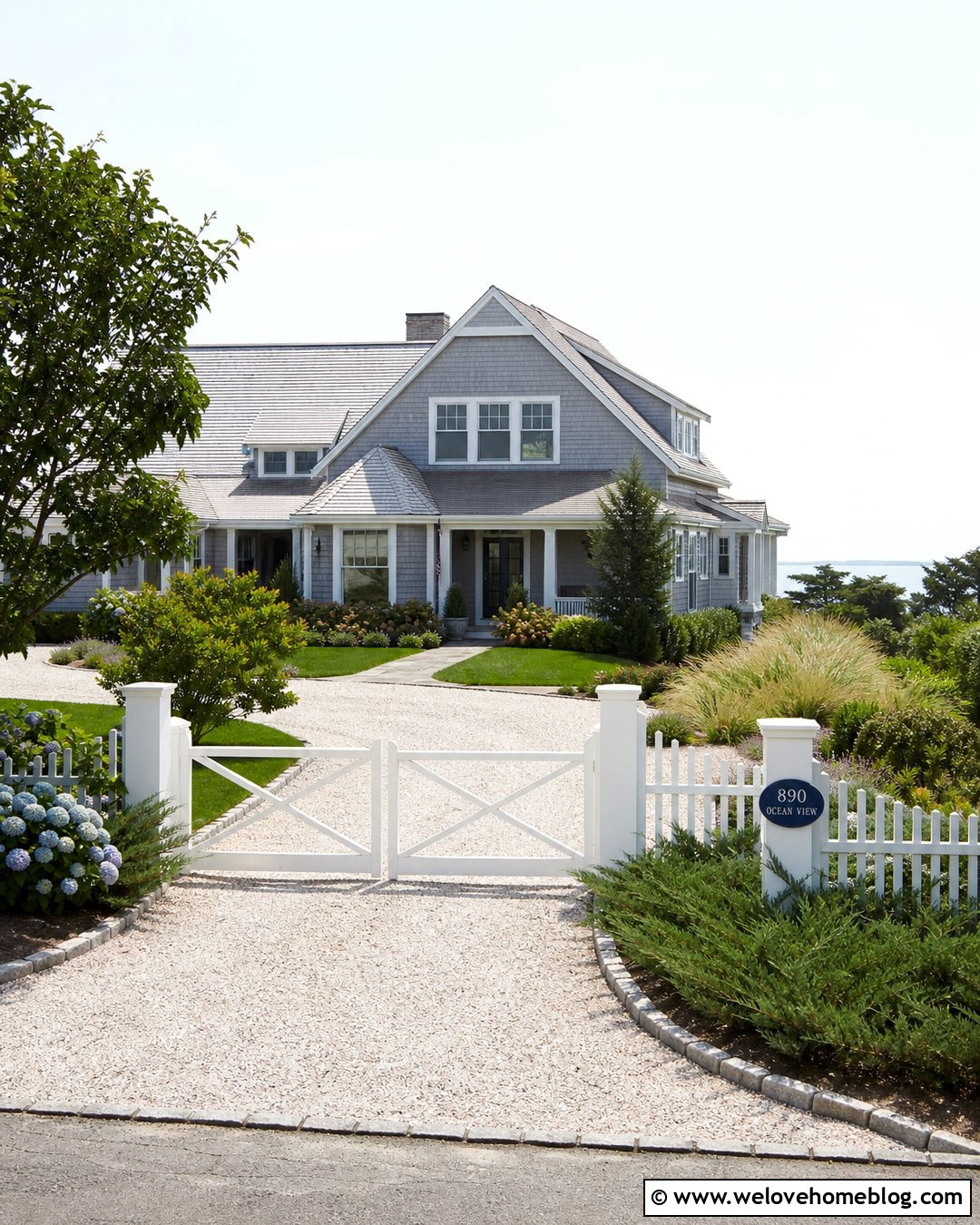
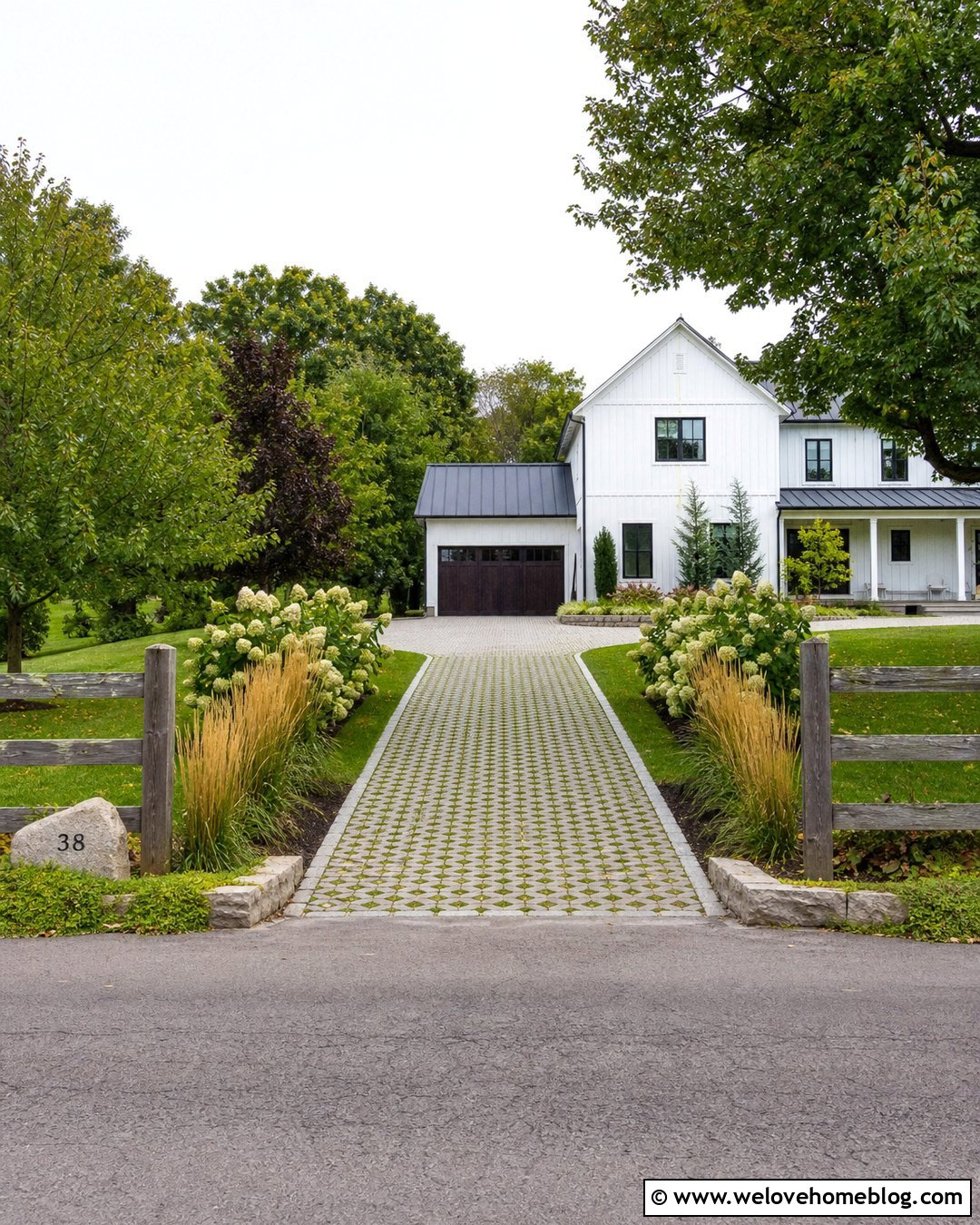
Driveway lighting should reveal the route and borders without turning the front yard into an overly bright commercial space. Begin with a warm beige, silver-gray, or charcoal resin-bound surface and define it with a contrasting paver edge. Place low-voltage fixtures in the planting beds rather than within vehicle paths. Short bollards can mark a long approach, while recessed-looking edge fixtures suit a compact modern driveway. Space lights consistently along curves, changes in width, and the walkway connection. Trees near the entrance may receive subtle uplighting, but the house should remain the main visual destination. During daylight, grasses and low shrubs can conceal some hardware and soften the borders. Select fixture finishes that match the gate, garage door, or exterior lights. The coordinated design will remain attractive even when the lighting is not operating.
Conclusion:
The best resin-bound driveway designs consider much more than aggregate color. Shape, edging, landscaping, walkways, gates, and the home’s architecture should work together as one complete composition. Silver gray offers a crisp modern effect, while golden and beige blends complement traditional brick, stone, and farmhouse exteriors. Borders made from granite, clay brick, cobblestone, or contrasting resin can define the layout and protect planted edges. Before installation, review the base, grading, drainage, turning space, and maintenance needs with an experienced local contractor. Samples should also be viewed outdoors beside the house. With careful planning, these **20 resin bound driveway ideas** can inspire a practical entrance that feels cohesive, welcoming, and tailored to your property.

Related posts:
Leave a Reply