
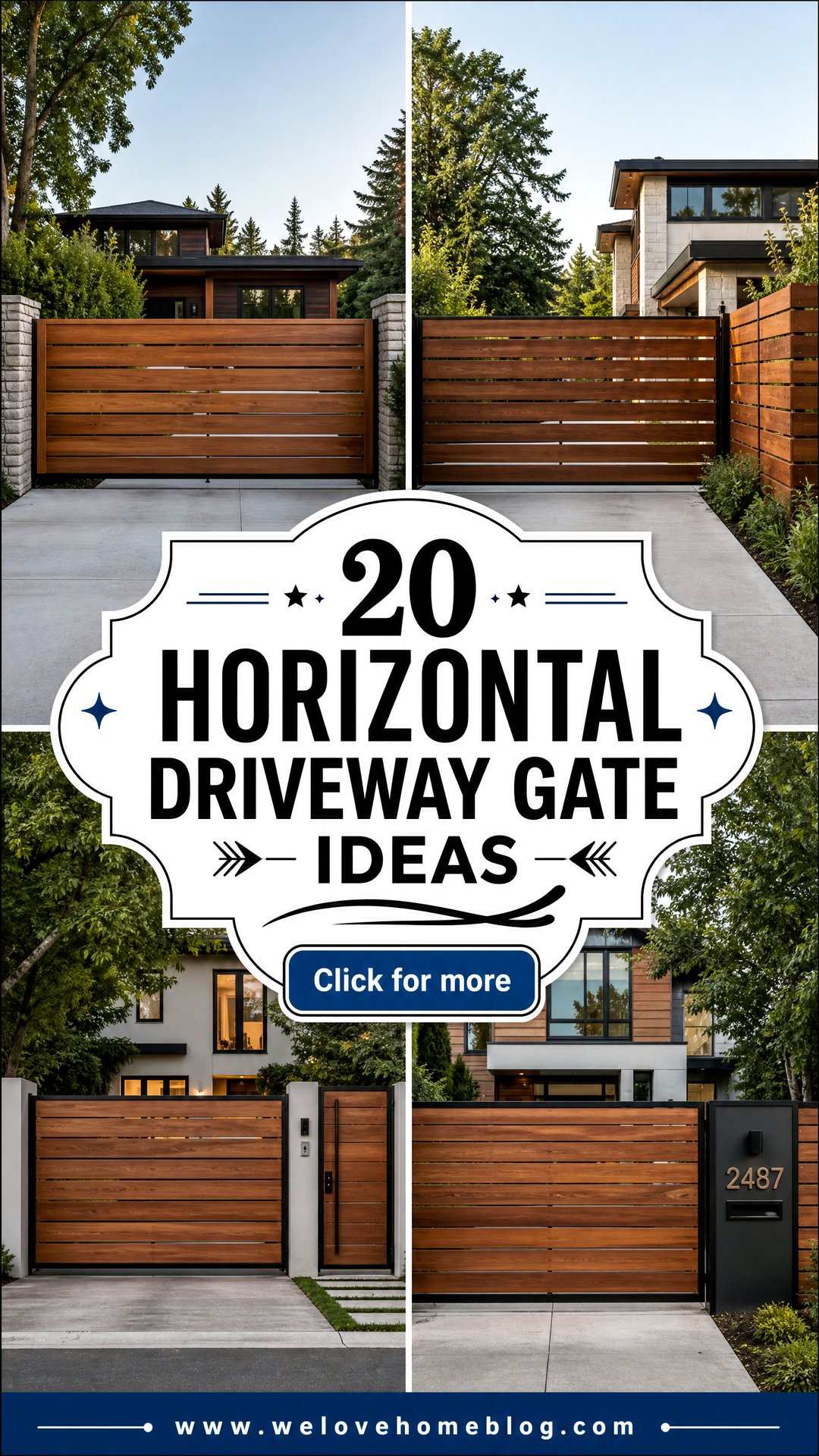
A horizontal driveway gate can make a home entrance feel wider, cleaner, and more intentional. Straight slats suit many properties because spacing, color, material, and opening style can be adjusted for privacy and curb appeal. Current gate designs commonly combine powder-coated metal frames with wood, aluminum, or steel infill, while sliding and swing configurations remain the primary operating choices. () The best result also considers the complete approach, including the driveway surface, pillars, fencing, landscaping, lighting, and home exterior. From warm cedar gates beside gravel drives to black aluminum gates across modern concrete entrances, these complete looks offer practical inspiration for different settings. Explore the following **20 horizontal driveway gate ideas**.
1. Black Aluminum Horizontal Driveway Gate
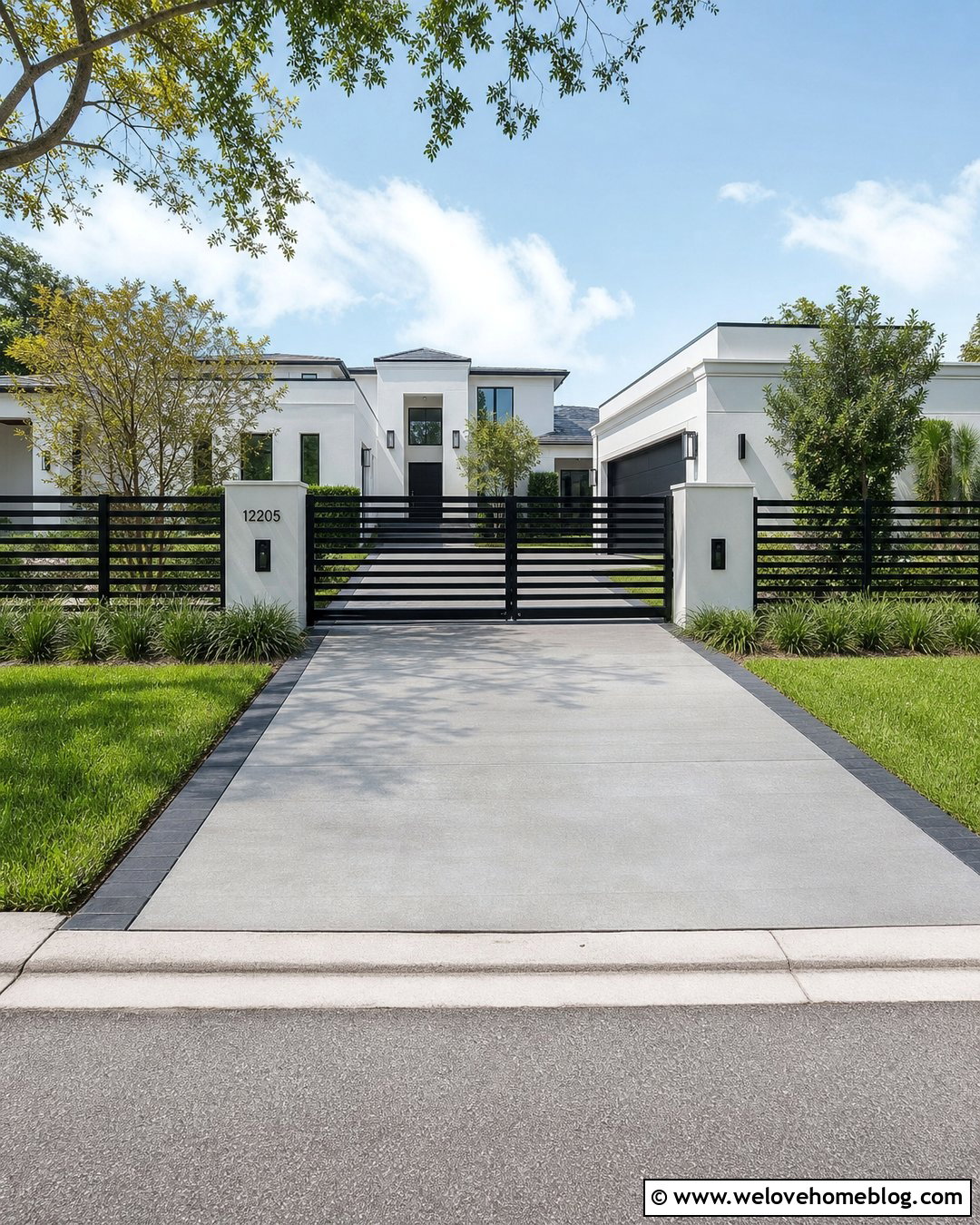
A matte black aluminum gate creates a crisp entrance without making the property look overly decorative. Use narrow horizontal slats with small, consistent gaps to provide privacy while preserving airflow and filtered views. A sliding configuration works especially well beside a straight concrete driveway because it keeps the approach open and uncluttered. Continue the black slat pattern along the boundary fence for a seamless appearance. Smooth concrete pillars, ornamental grasses, and rectangular planting beds will soften the gate’s strong lines. This combination looks especially balanced in front of a modern house with white stucco, dark windows, and a flat or low-pitched roof. Concealed hardware and a low-profile automation system maintain the clean, minimalist finish.
2. Cedar Horizontal Driveway Gate
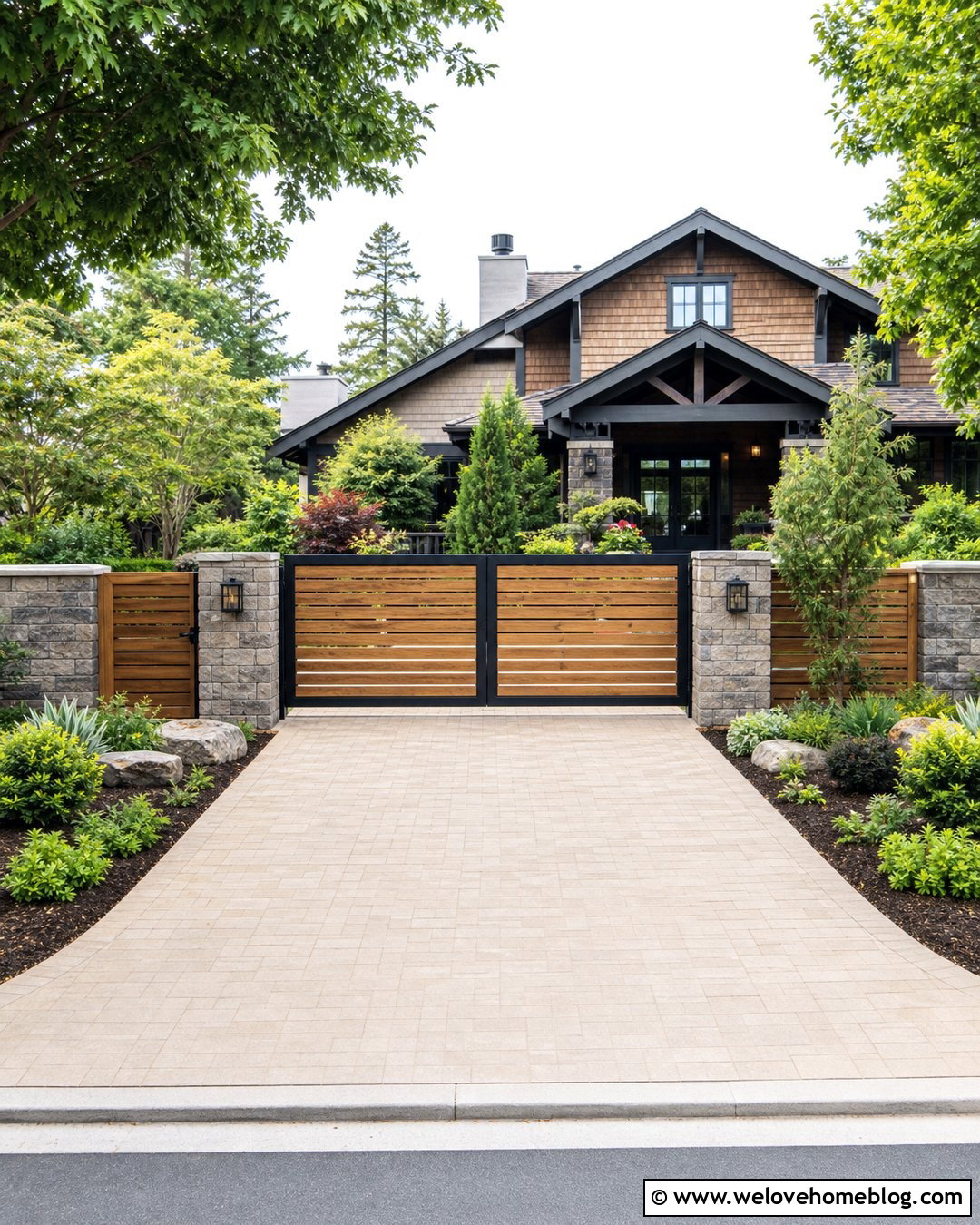
Warm cedar boards can keep a contemporary gate from appearing cold or industrial. Mount evenly spaced horizontal cedar slats inside a slim, powder-coated black steel frame. A double-swing layout creates a welcoming center opening and suits a broad paver driveway with enough level space for both leaves. Natural stone pillars and layered evergreen beds help connect the timber to the landscape. Choose a medium stain that highlights the grain without introducing strong orange tones. For a unified entrance, repeat the cedar on a nearby pedestrian gate, mailbox enclosure, or front porch accent. This complete design works beautifully with Craftsman homes, modern farmhouses, and wooded properties where natural materials already shape the exterior palette.
3. Wood Effect Aluminum Horizontal Driveway Gate
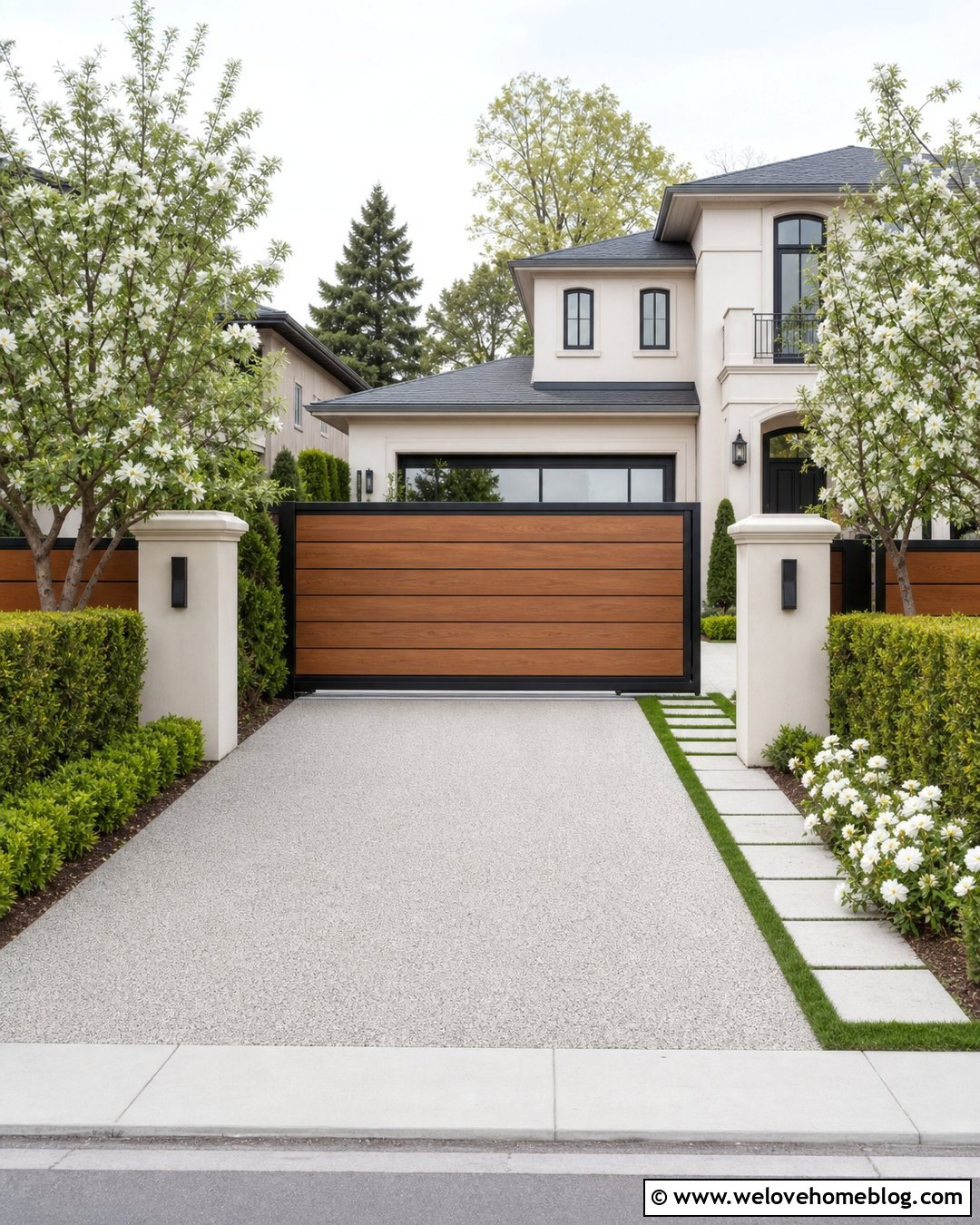
Do you like the warmth of timber but want a more uniform finish? Wood-effect aluminum offers the appearance of horizontal boards with the straight edges and consistent coloring associated with fabricated metal gates. Pair golden-brown aluminum slats with a charcoal frame and a smooth sliding mechanism. A light gray resin-bound gravel driveway provides subtle texture without competing with the gate. Cream stucco pillars, clipped hedges, and small flowering trees can make the entrance feel polished but approachable. This material combination works well for transitional homes that blend traditional rooflines with modern windows and doors. Carry the wood-tone finish onto the pedestrian entrance or address panel so the gate reads as part of a coordinated frontage rather than an isolated feature.
4. Steel Frame Horizontal Wood Driveway Gate
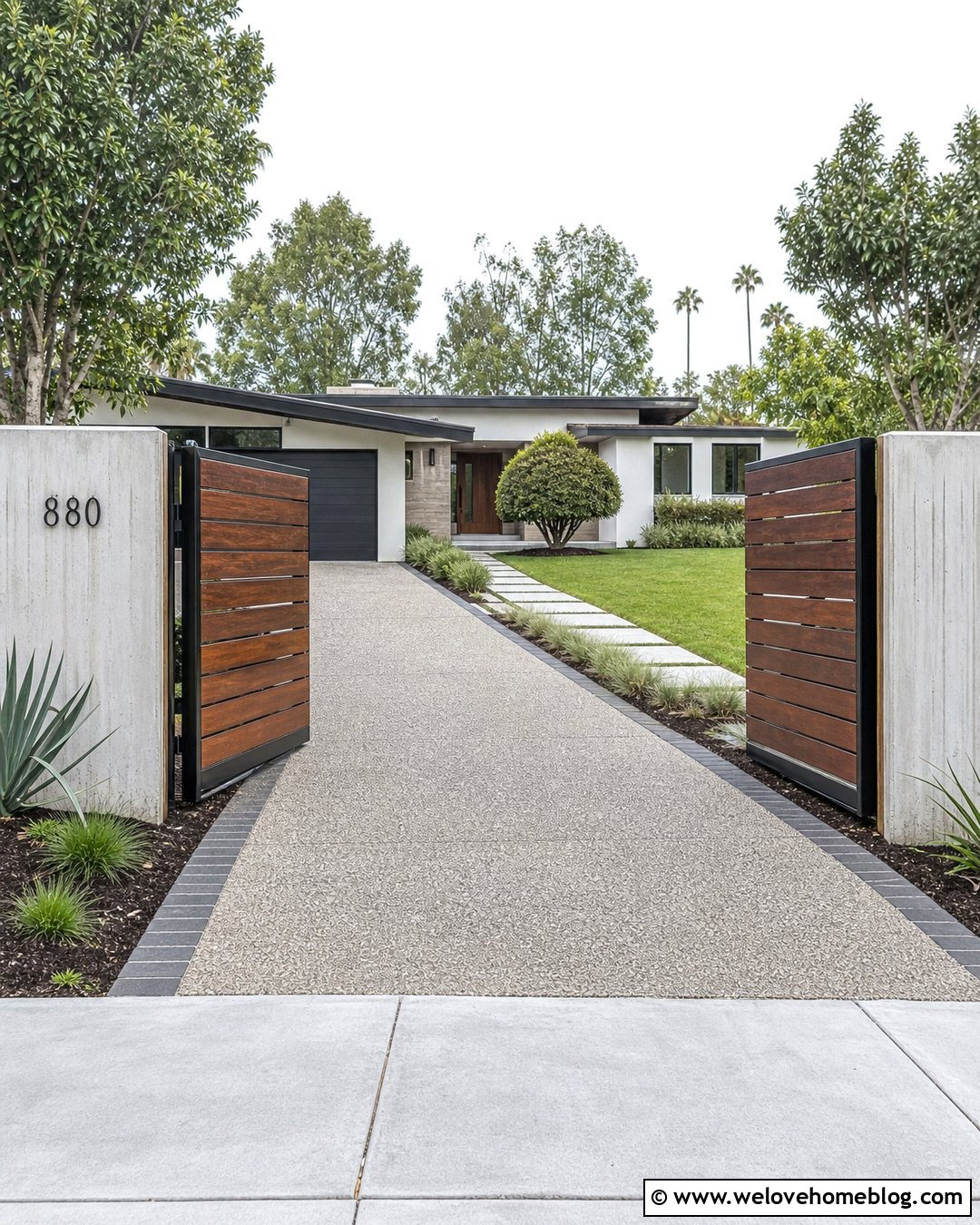
A steel frame gives horizontal wood infill a sharp outline and visually anchors a wide entrance. Select straight hardwood or thermally modified wood boards in a rich brown finish, then mount them within a black rectangular frame. Closely spaced slats create privacy, while a narrow opening between selected rows prevents the gate from feeling completely solid. Add matching steel posts or place the gate between substantial concrete pillars. An exposed aggregate driveway complements this mixed-material design because its natural texture bridges the contrast between wood and metal. Low grasses, sculptural shrubs, and a simple concrete walkway complete the approach. The result suits a contemporary ranch or mid-century home with broad rooflines, natural siding, and dark architectural accents.
5. White Horizontal Aluminum Driveway Gate
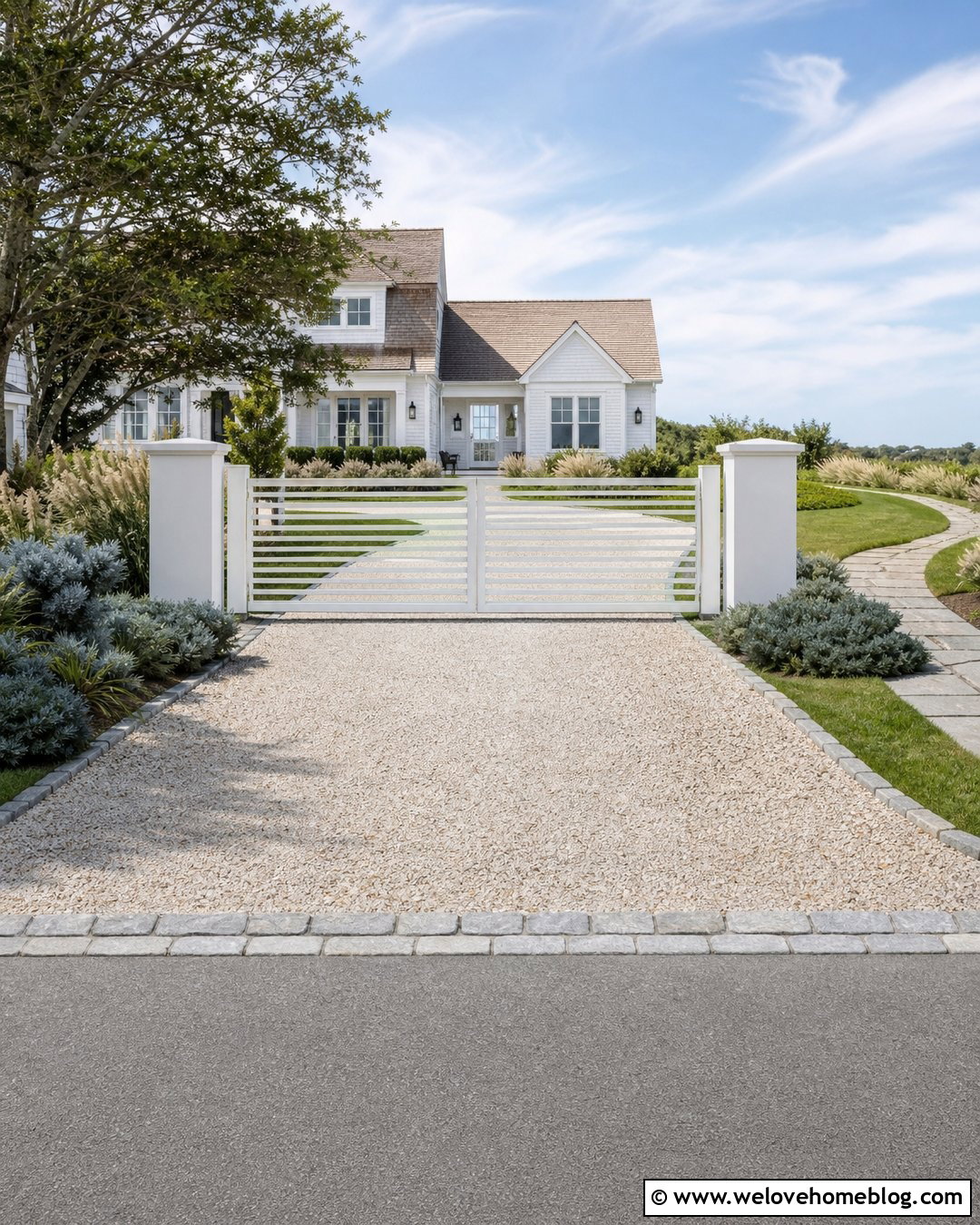
Bright white horizontal slats can give a driveway entrance a light, coastal character. Choose a double-swing aluminum gate with medium-width boards, restrained gaps, and an uncomplicated rectangular frame. Install it across a pale shell or beige gravel driveway bordered by limestone curbing. White stucco pillars, sea-tolerant grasses, blue-green shrubs, and a curved walkway reinforce the relaxed palette. The gate should coordinate with the home’s trim rather than introduce a noticeably different white. This design fits Cape Cod, coastal cottage, and Florida-inspired houses, especially when the facade includes pale siding or soft stucco. Simple hardware keeps the composition fresh, while a matching horizontal fence provides enough enclosure without visually overpowering a smaller front yard.
6. Charcoal Horizontal Driveway Gate With Concrete Pillars
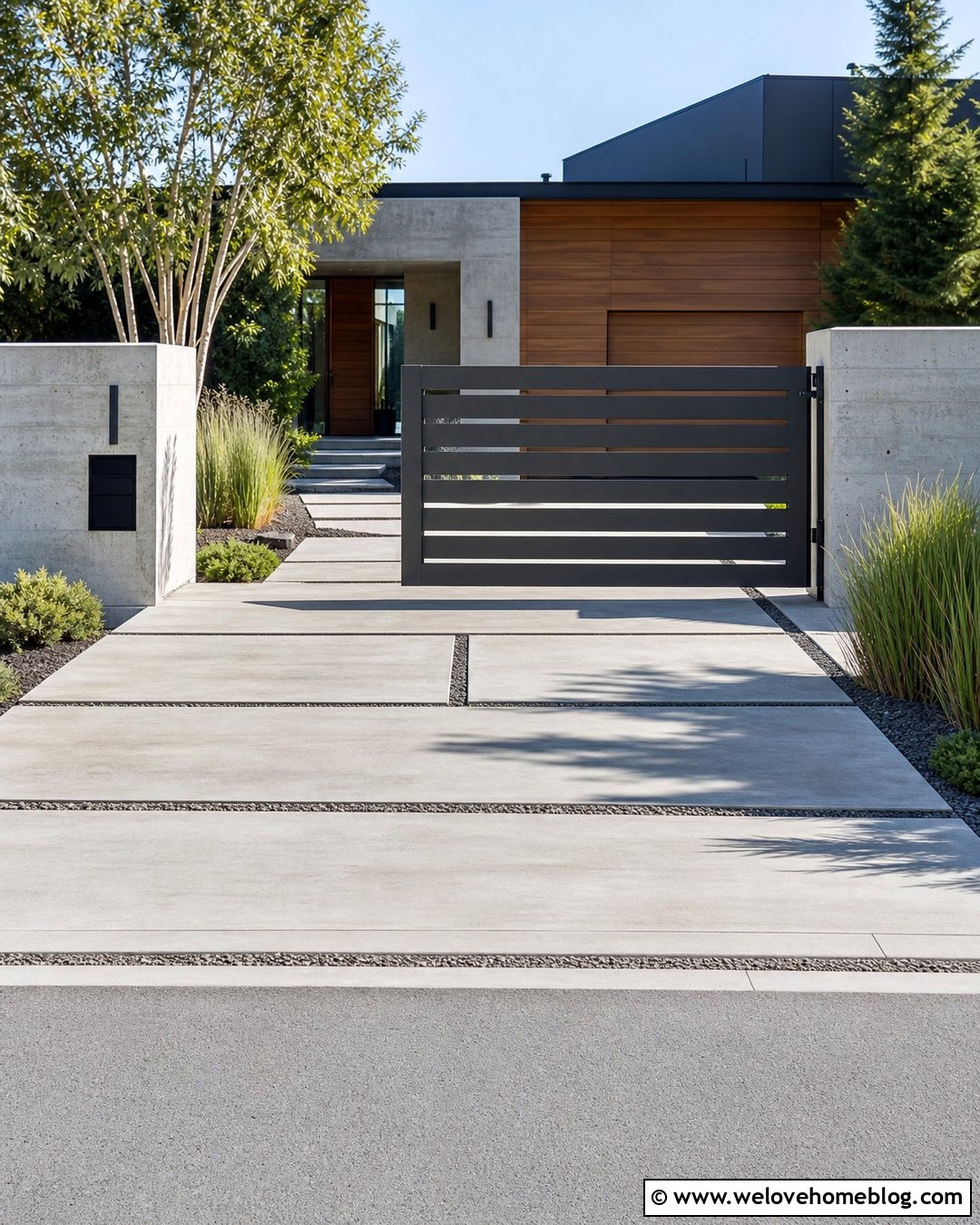
Cool charcoal slats look particularly refined between smooth poured-concrete pillars. Keep the gate and pillars at similar heights to create a strong horizontal entrance that feels proportional rather than imposing. A cantilever sliding layout eliminates a visible ground track and complements the streamlined appearance. Continue the material palette with large-format gray concrete driveway slabs separated by narrow gravel joints. Upright grasses, compact evergreens, and a single multi-stem tree add movement around the rigid architecture. Recess an address plaque into one pillar and place the intercom on the other for visual balance. This complete look is a natural match for modern homes featuring board-formed concrete, gray brick, black-framed windows, or warm wood siding used as a contrasting accent.
7. Horizontal Driveway Gate With Stone Pillars
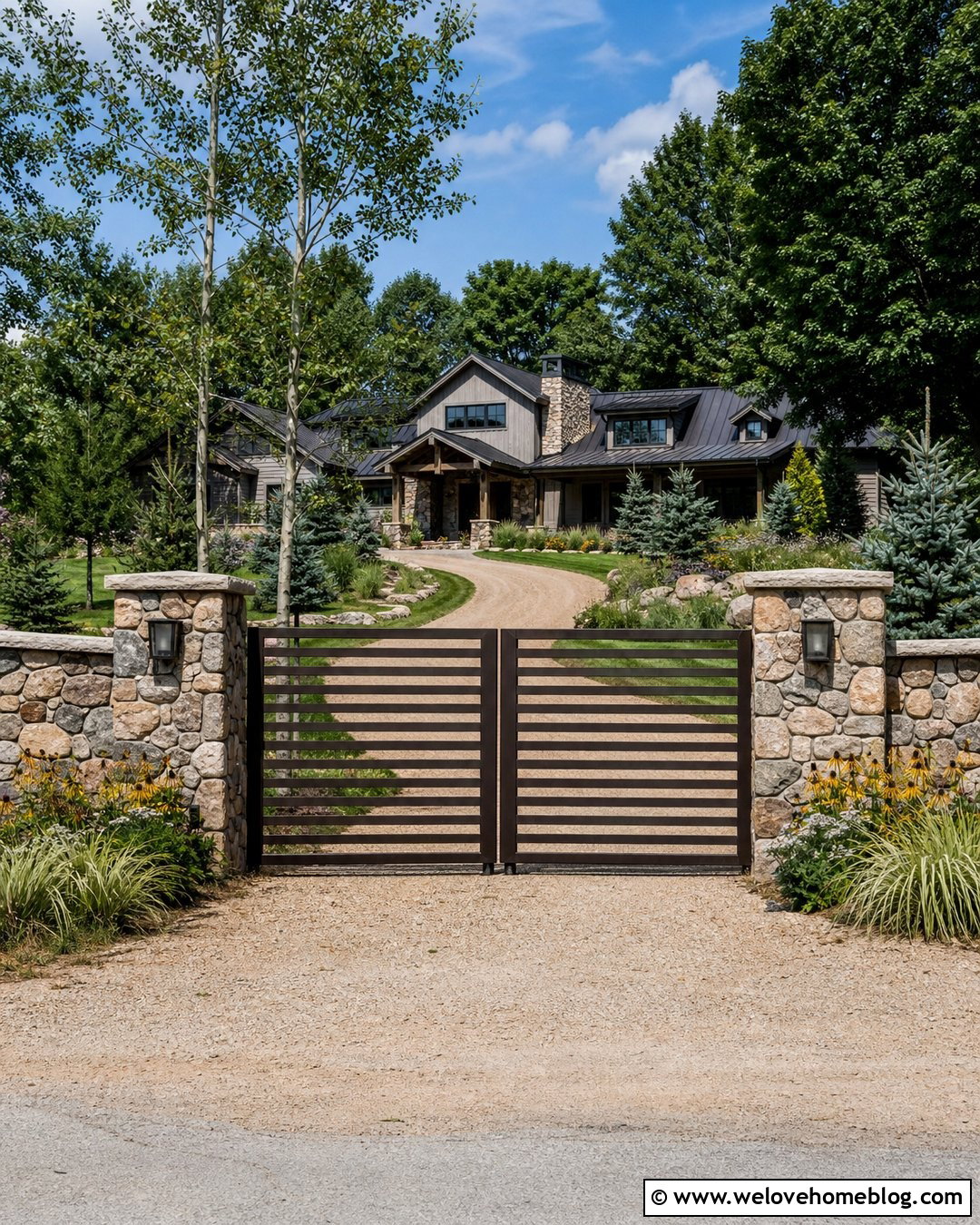
Stone pillars can give a modern slat gate enough visual weight for a country or mountain property. Use dark bronze aluminum slats to complement the brown, gray, and tan tones found in natural fieldstone. A double-swing gate feels appropriate on a long, gently curved gravel driveway because it creates a clear central arrival point. Extend low stone walls from the pillars, then soften them with native grasses, evergreen shrubs, and informal flowering plants. Lantern-style fixtures may be added in a simple dark finish, but avoid overly ornate details that compete with the horizontal pattern. This entrance works well with rustic contemporary, lodge, and Craftsman homes. The mix of clean metal lines and irregular masonry creates a balanced transition from the road to the house.
8. Privacy Horizontal Driveway Gate
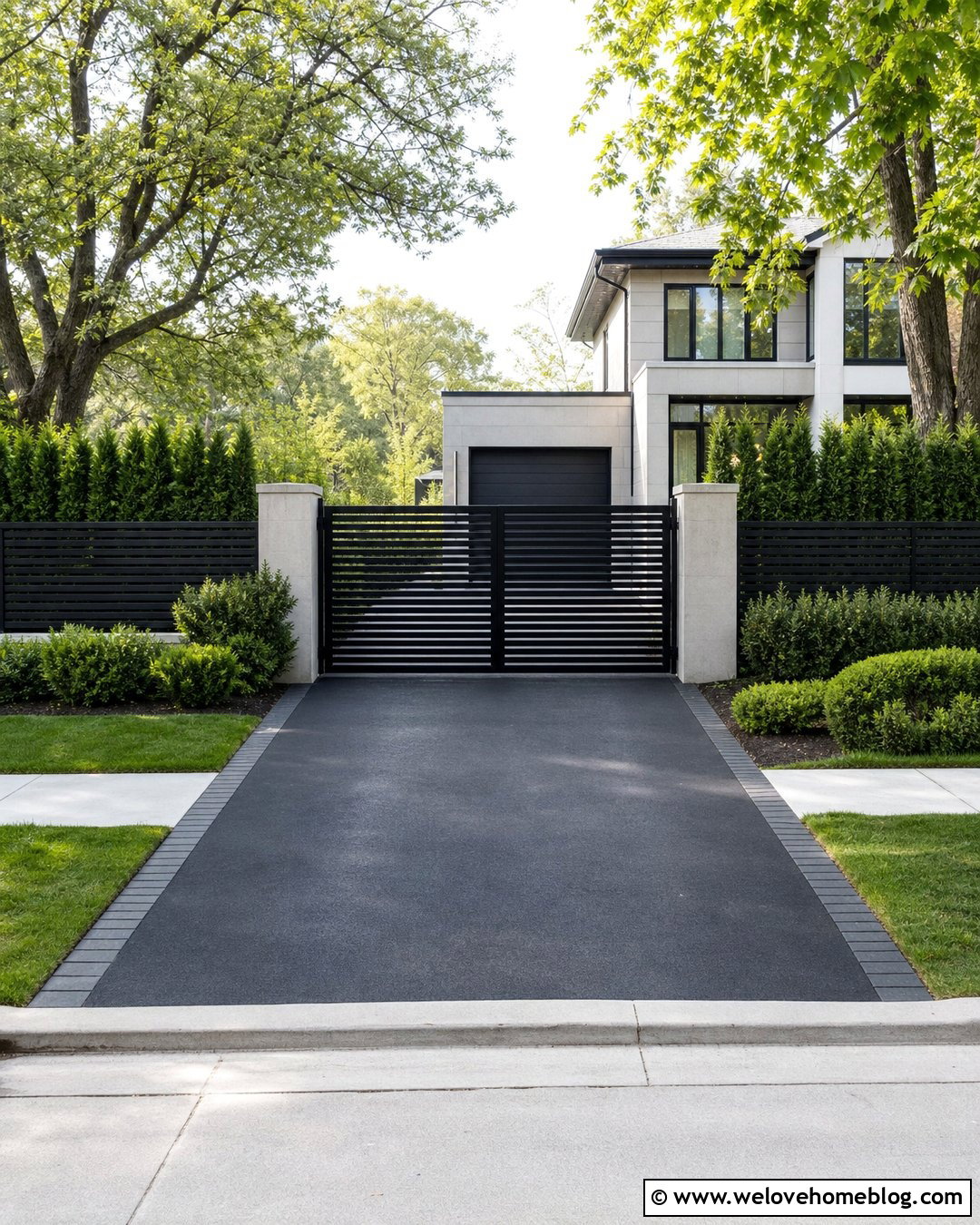
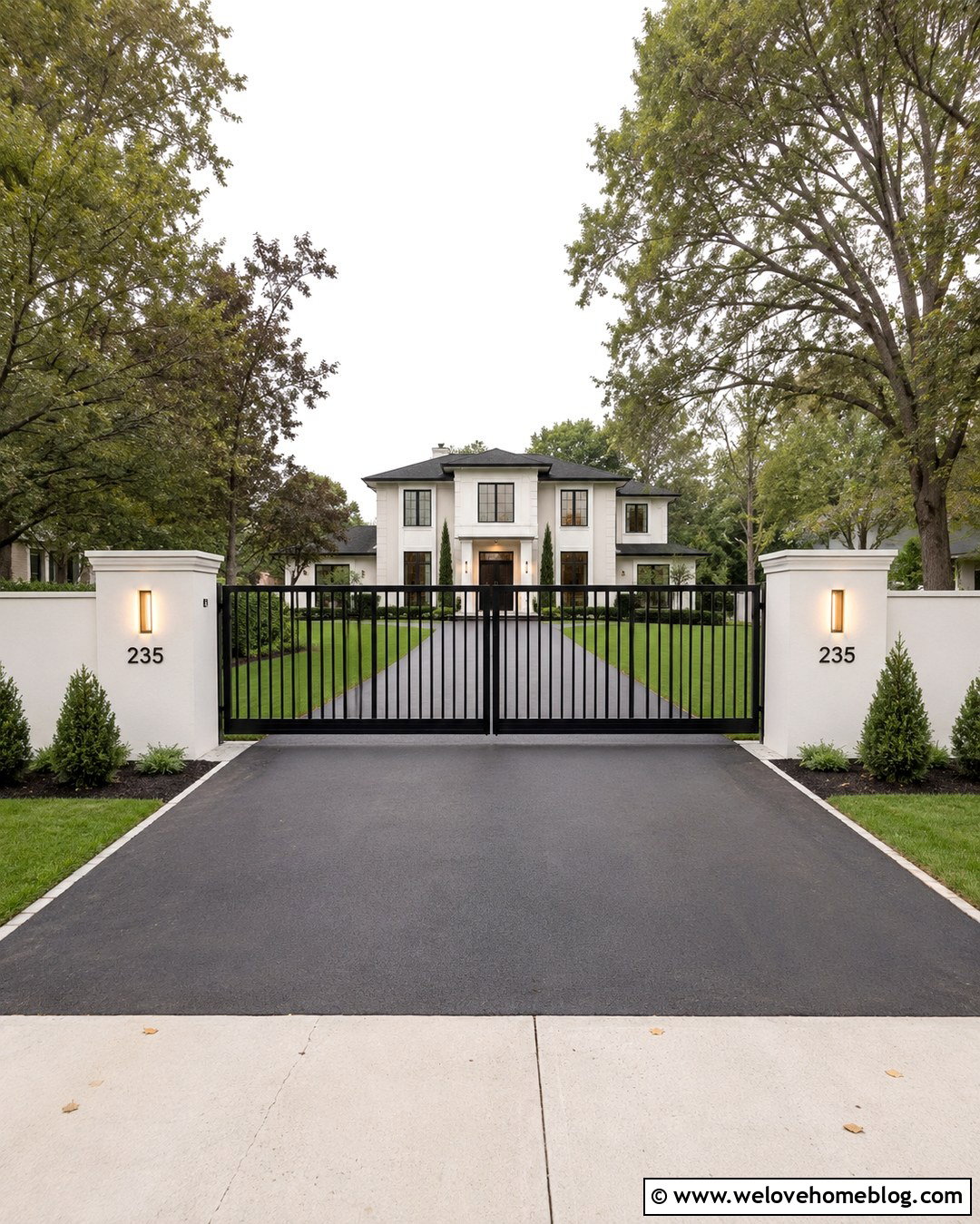
When the front yard is exposed to a busy street, closely spaced horizontal slats can create a stronger visual screen. A tall gate with thin shadow gaps feels lighter than one completely solid panel while still limiting direct views. Choose powder-coated steel or aluminum in a dark neutral shade, and use a sliding configuration where swing clearance is limited. Pair it with a black asphalt driveway edged by flush charcoal pavers for a neat transition. Dense evergreen hedges, layered shrubs, and small canopy trees strengthen privacy without crowding the gate mechanism. Match the gate height and slat spacing to the adjoining fence so the boundary appears continuous. This approach suits urban homes, corner properties, and compact lots where privacy must work alongside contemporary curb appeal.
9. Open Horizontal Slat Driveway Gate
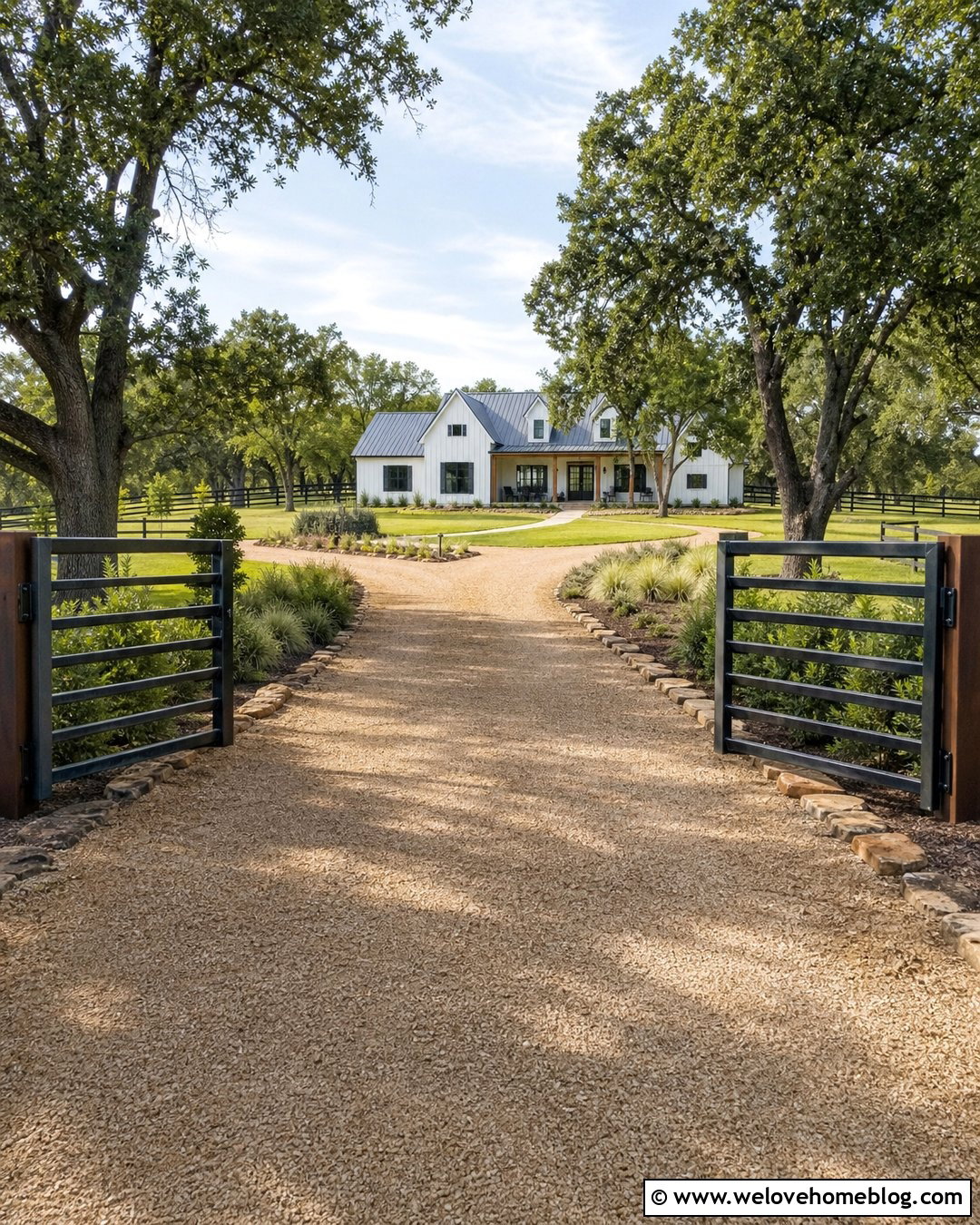
Wide spacing between horizontal rails provides boundary definition without hiding the home or front landscape. This open design is especially useful on rural and suburban properties where visibility feels more appropriate than a solid privacy barrier. Use dark galvanized steel rails within a simple double-swing frame, keeping the lower opening safely proportioned for the site. A tan gravel driveway, timber-and-stone edging, and broad native planting beds create an informal approach. Place low shrubs near the gate and taller trees farther back to preserve clear sightlines at the road. The streamlined gate pairs naturally with a modern farmhouse, updated ranch, or barn-inspired residence. Its open construction also lets the driveway curve and surrounding landscape remain visible as part of the entrance composition.
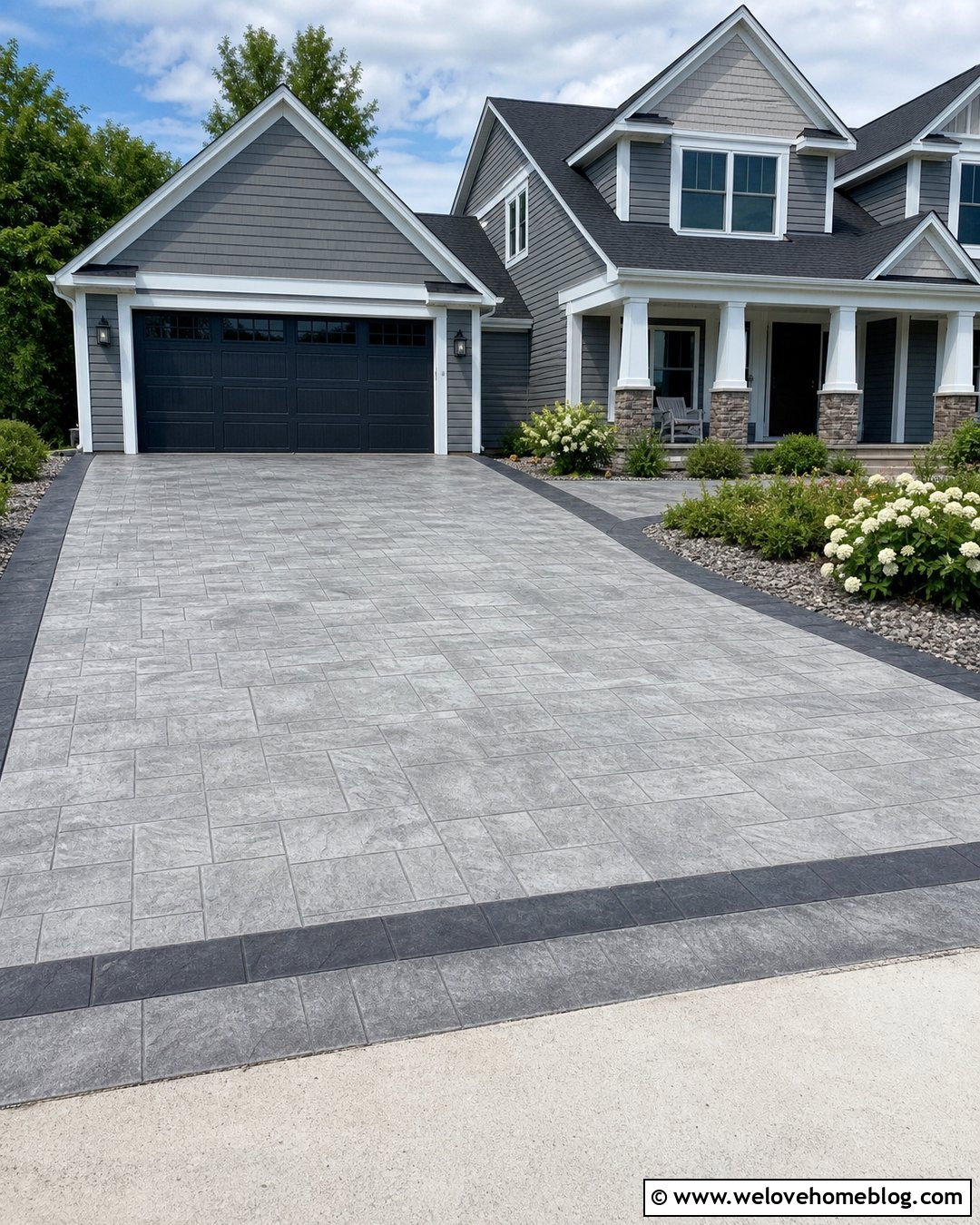
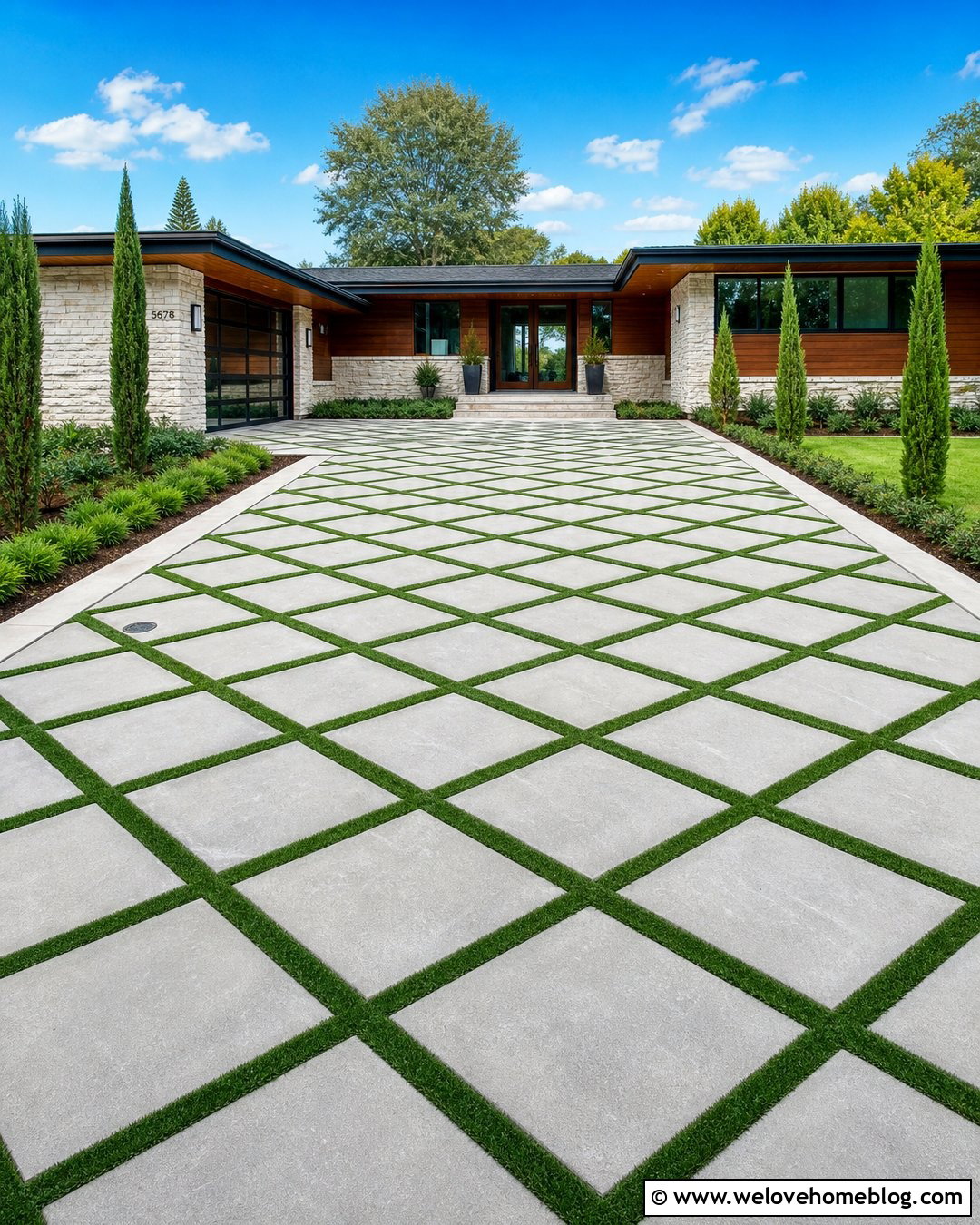
10. Cantilever Horizontal Sliding Driveway Gate
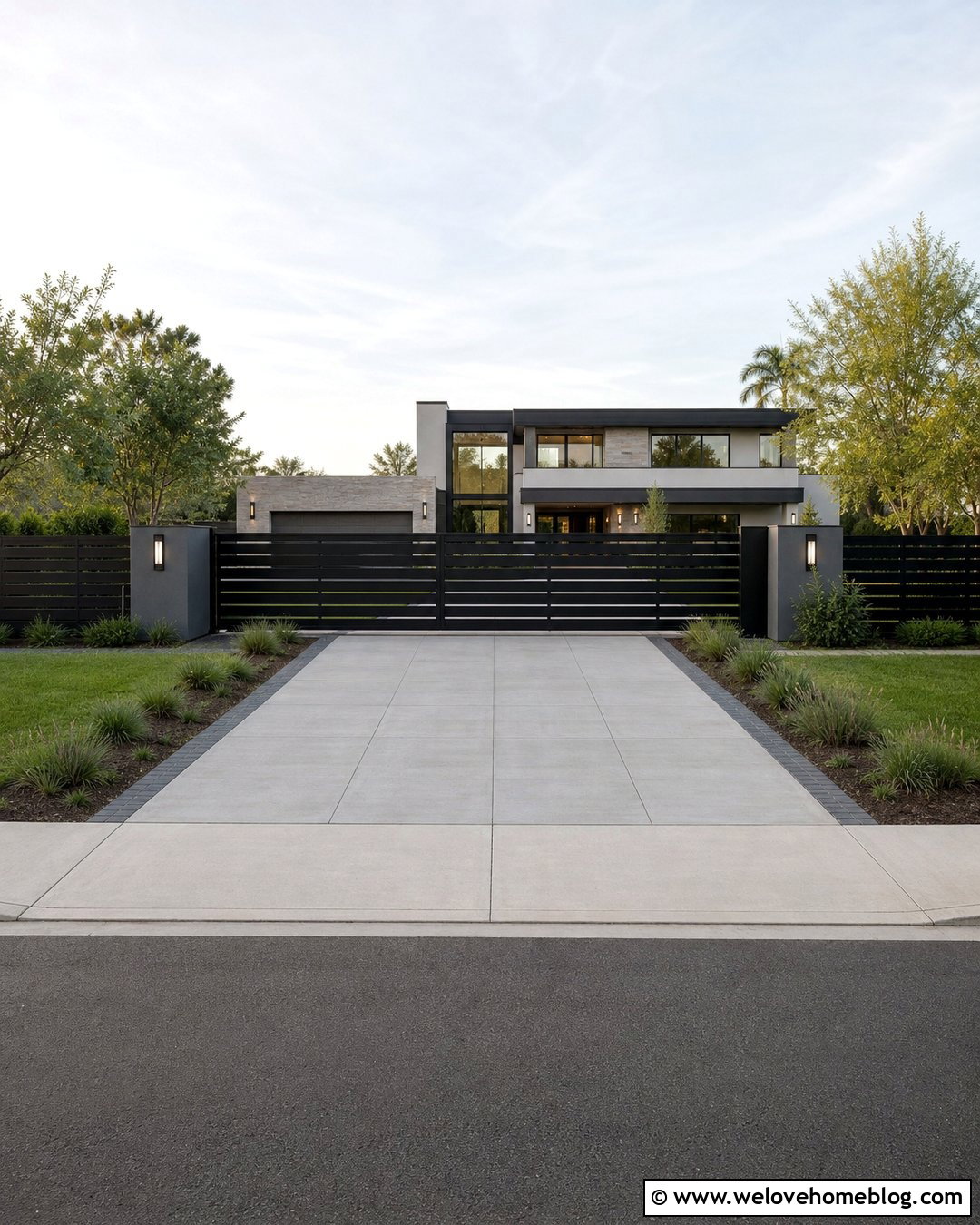
A cantilever gate appears to glide across the entrance without relying on a track directly across the driveway opening. That clean movement is well suited to horizontal slats, which emphasize the long, uninterrupted form. Choose black powder-coated aluminum boards with modest spacing and a reinforced frame designed for the full opening. Provide adequate space beside the driveway for the gate leaf and supporting counterbalance section. A straight poured-concrete drive, flush paver border, and matching slat fence will make the installation feel integrated. Use low landscaping near the operating area so branches and loose material do not interfere with movement. This complete layout works particularly well for wide modern homes, sloping roadside entrances, and properties where a visible ground track would disrupt the finished surface.
11. Bifold Horizontal Driveway Gate
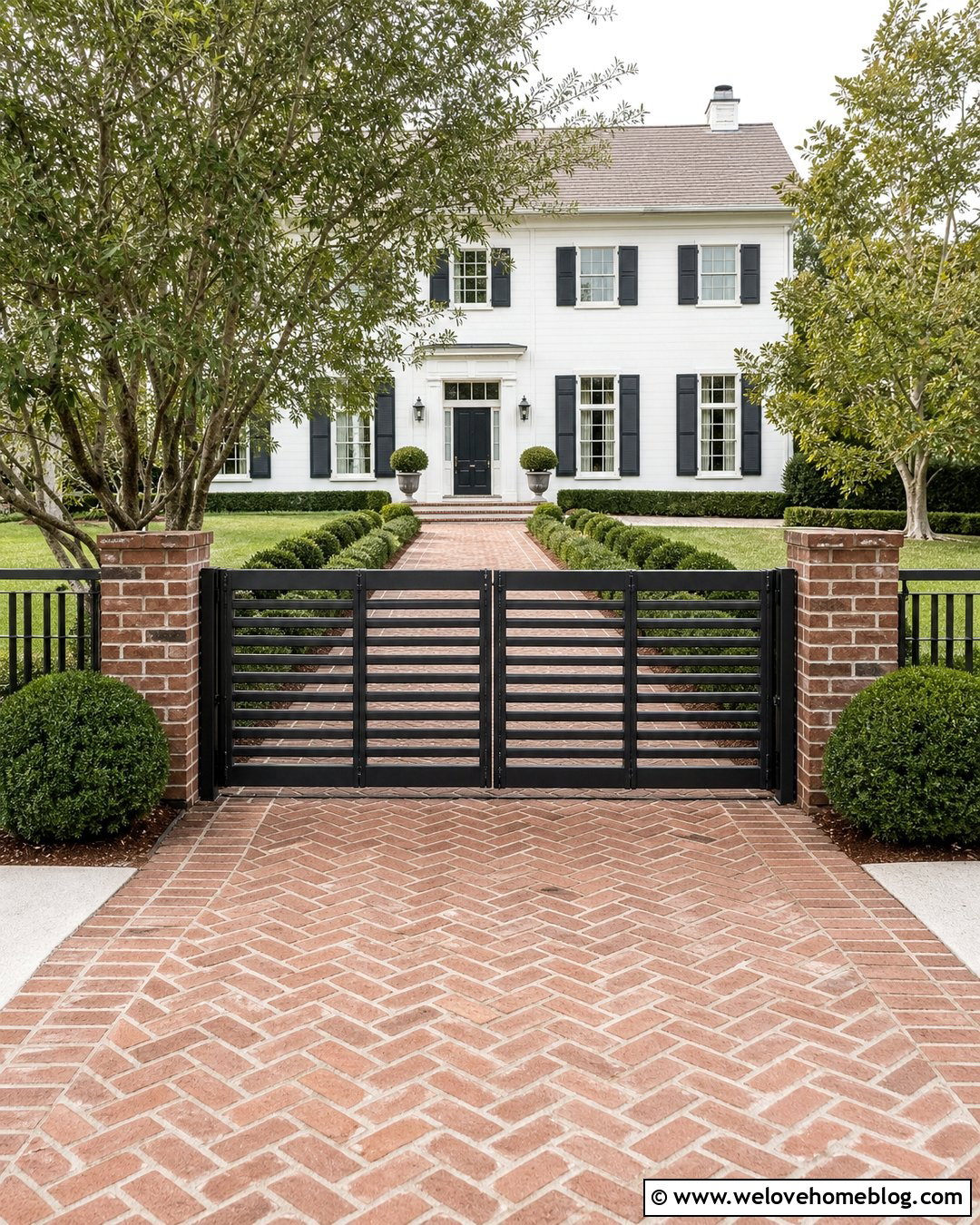
A bifold gate divides each side into hinged panels that fold as the entrance opens. This can reduce the depth needed for traditional swing leaves, making it useful for shorter driveways or homes positioned close to the street. Horizontal aluminum slats in a medium bronze or charcoal finish keep the folding sections visually connected. Frame the entrance with slim brick pillars and continue the same metal finish along a low boundary fence. Clay brick pavers laid in herringbone give the driveway a traditional texture that balances the gate’s modern geometry. Compact boxwood beds, ornamental trees, and a straight front walkway complete the space. The mixed look suits renovated Colonials, transitional houses, and town properties where an efficient opening system must still feel residential.
12. Horizontal Driveway Gate For A Sloped Entrance
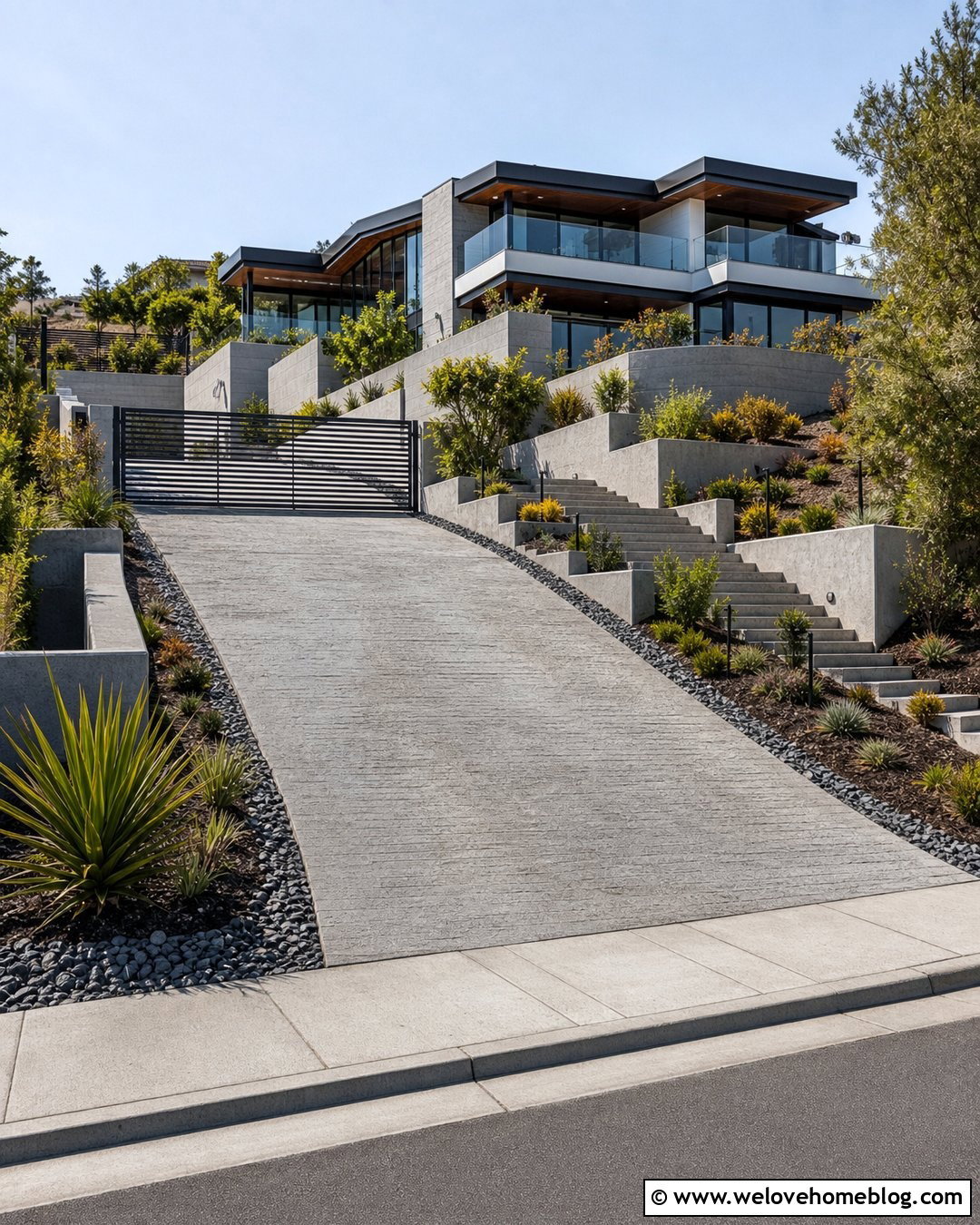
A sloped driveway requires more planning than a flat entrance because swinging panels need adequate ground clearance throughout their path. A sliding horizontal gate can avoid many of those clearance conflicts when sufficient side space is available. Use medium-gray aluminum slats and align the top of the gate with the adjoining stepped boundary wall. Pair it with a textured concrete driveway that offers a clean, practical surface up the incline. Tiered planting beds, retaining walls, and drought-tolerant shrubs can visually absorb changes in elevation. Keep trees and deep-rooted plants away from the operating equipment and structural posts. With careful grading and professional engineering, the entire entrance can look intentional instead of adjusted afterward. This layout complements hillside modern homes and elevated ranch properties.
13. Horizontal Driveway Gate For A Curved Driveway
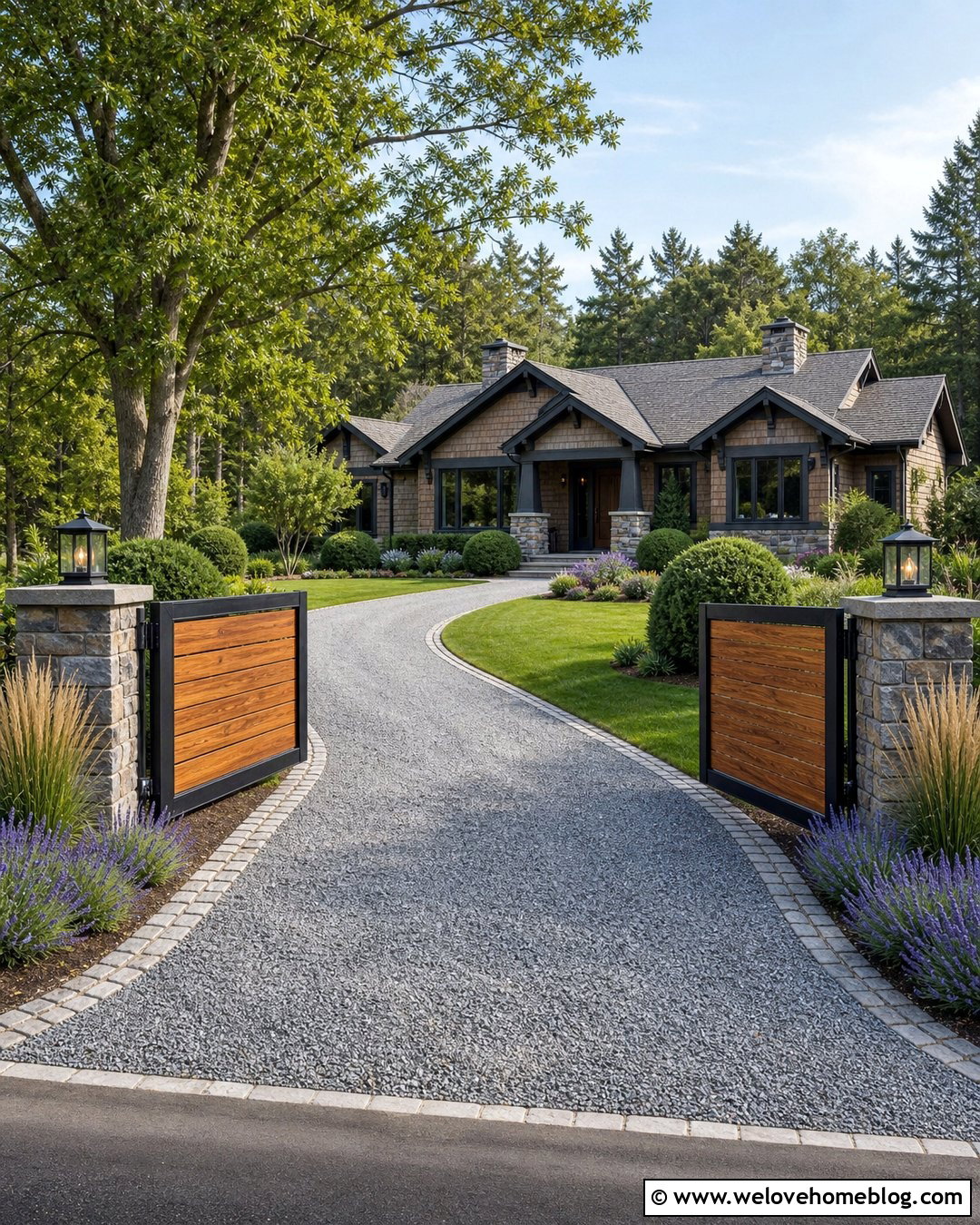
A curved driveway creates a softer arrival, so the gate should provide a clear visual starting point without fighting the landscape. Position a double-swing horizontal wood gate on a level entrance apron before the driveway begins its bend. Use warm redwood slats in a dark steel frame, supported by low stone pillars. Continue the curve with compacted gray gravel edged in cobblestone. Layer lavender, ornamental grasses, and rounded evergreen shrubs along the outside edge, leaving generous visibility near the road. A walkway can branch from the driveway and follow a gentler route toward the front door. This composition works beautifully for Craftsman, cottage, and country homes because the straight slat pattern provides structure while the driveway and landscaping introduce natural movement.
14. Horizontal Driveway Gate With Matching Fence
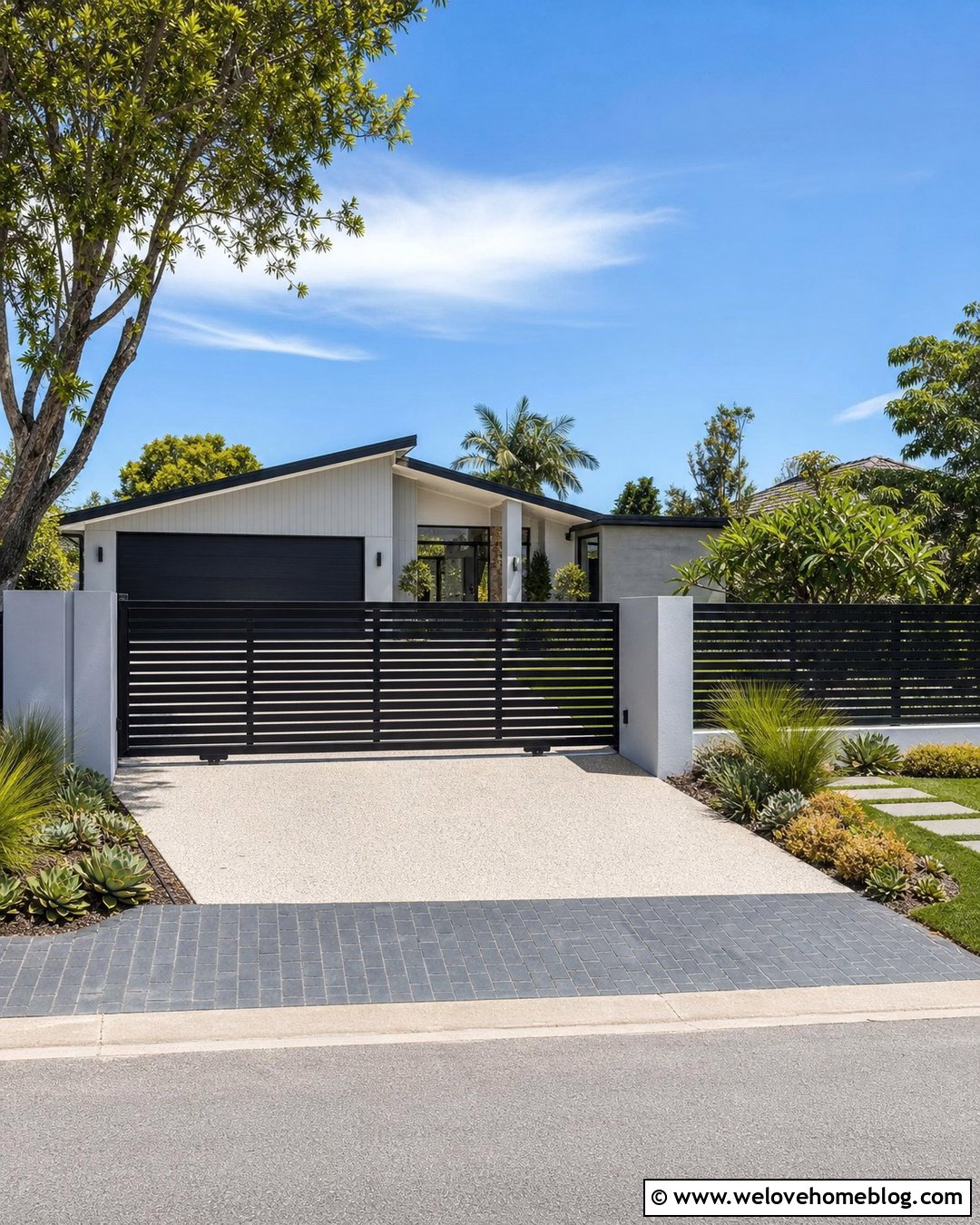
Repeating the gate’s horizontal pattern along the front fence makes a property look wider and more organized. Choose black aluminum slats for both elements, but consider slightly wider spacing in the fence to prevent the full boundary from feeling too enclosed. A sliding gate keeps the pattern intact when closed and disappears parallel to the fence when opened. Pair the installation with a light exposed-aggregate driveway and a narrow charcoal paver apron at the street. Planting pockets filled with grasses, succulents, and compact shrubs can interrupt long fence runs and add depth. Use matching posts, caps, and finishes throughout the frontage. This coordinated treatment is ideal for modern suburban homes where the gate, fence, landscape, and facade are all visible within one curbside view.


15. Horizontal Driveway Gate With Pedestrian Gate
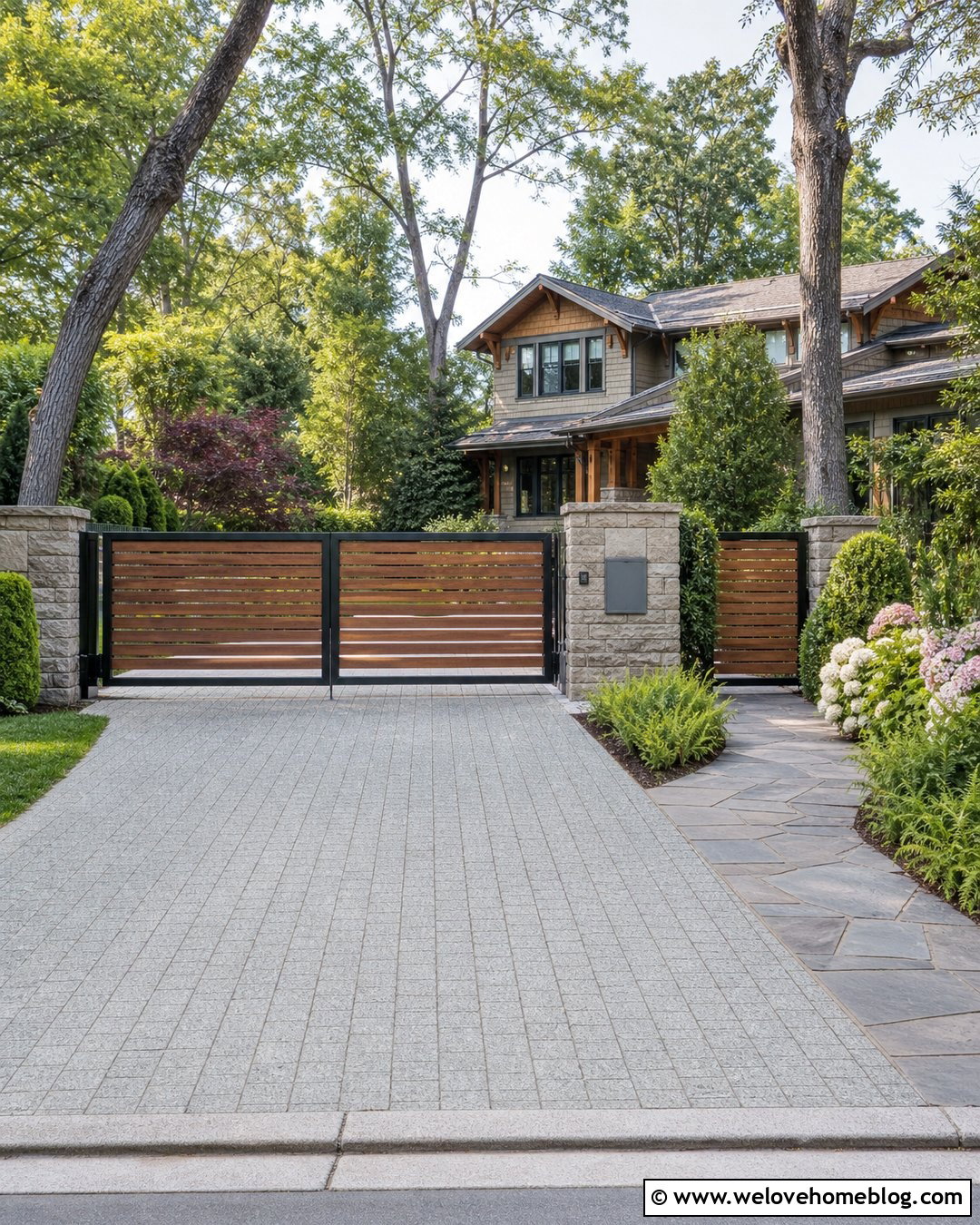
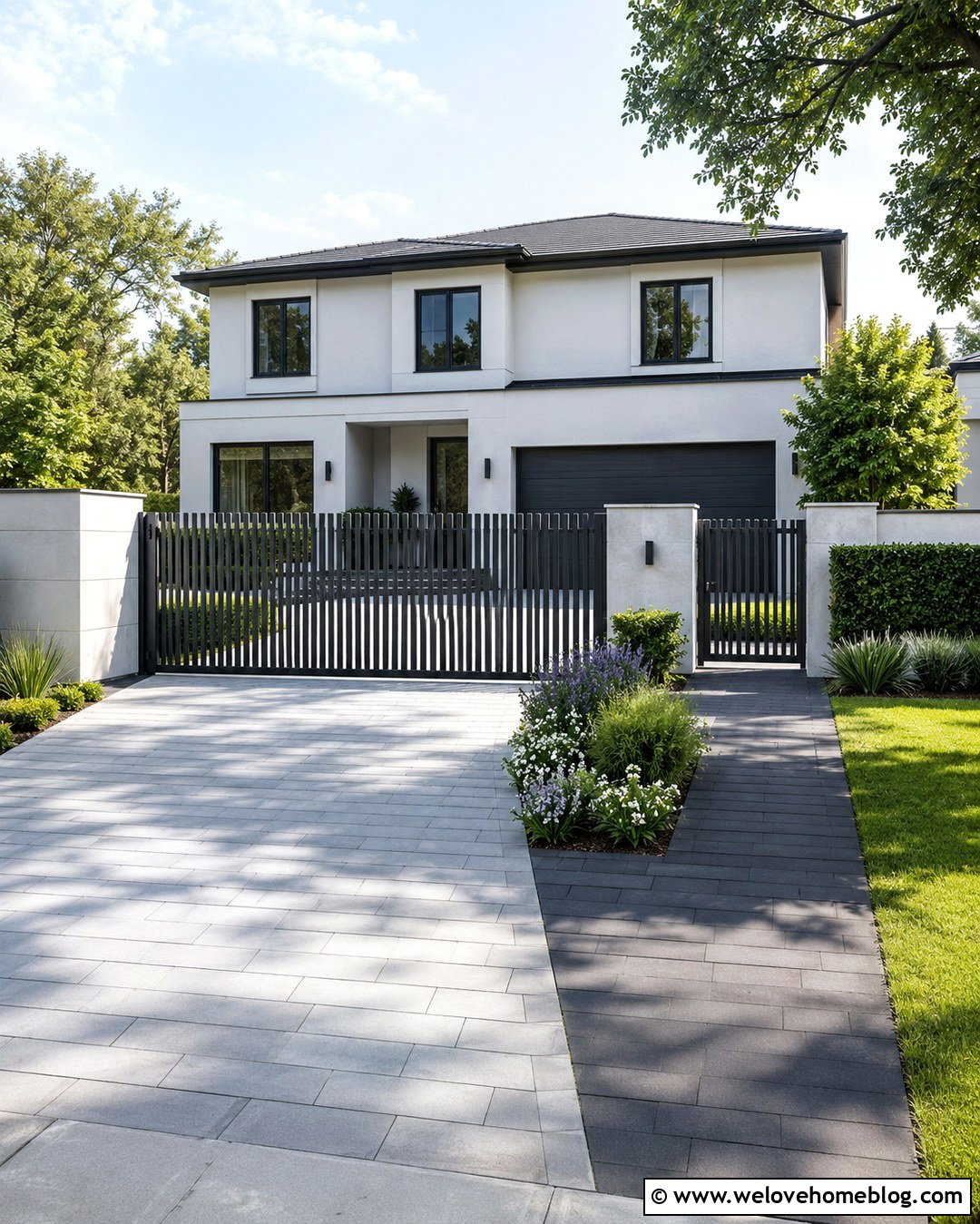
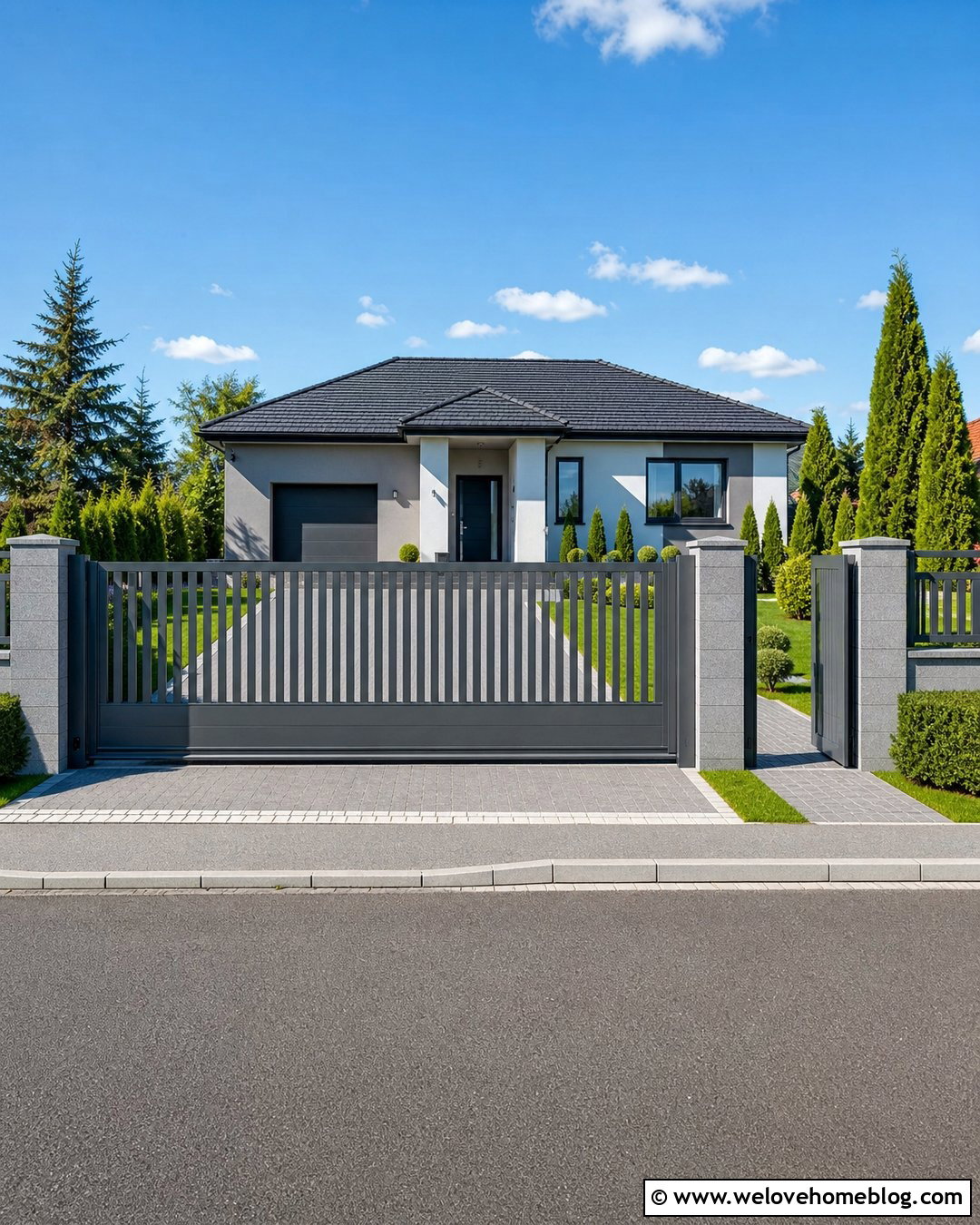
Including a separate pedestrian entrance prevents the main driveway gate from opening whenever someone walks to the house. Use matching horizontal cedar slats and black steel frames on both gates, aligning every board so the frontage reads as one continuous design. Place the pedestrian gate beside a broad masonry pillar that holds the address, intercom, and package box. A permeable paver driveway can lead to the garage, while a distinct stone walkway guides visitors toward the front door. Ferns, flowering shrubs, and clipped evergreens should frame the walkway without concealing access controls. This layout works especially well with contemporary Craftsman and modern farmhouse homes. Matching materials create unity, while separate vehicle and foot traffic routes improve the clarity and everyday function of the entrance.
16. Horizontal Driveway Gate With Address Panel
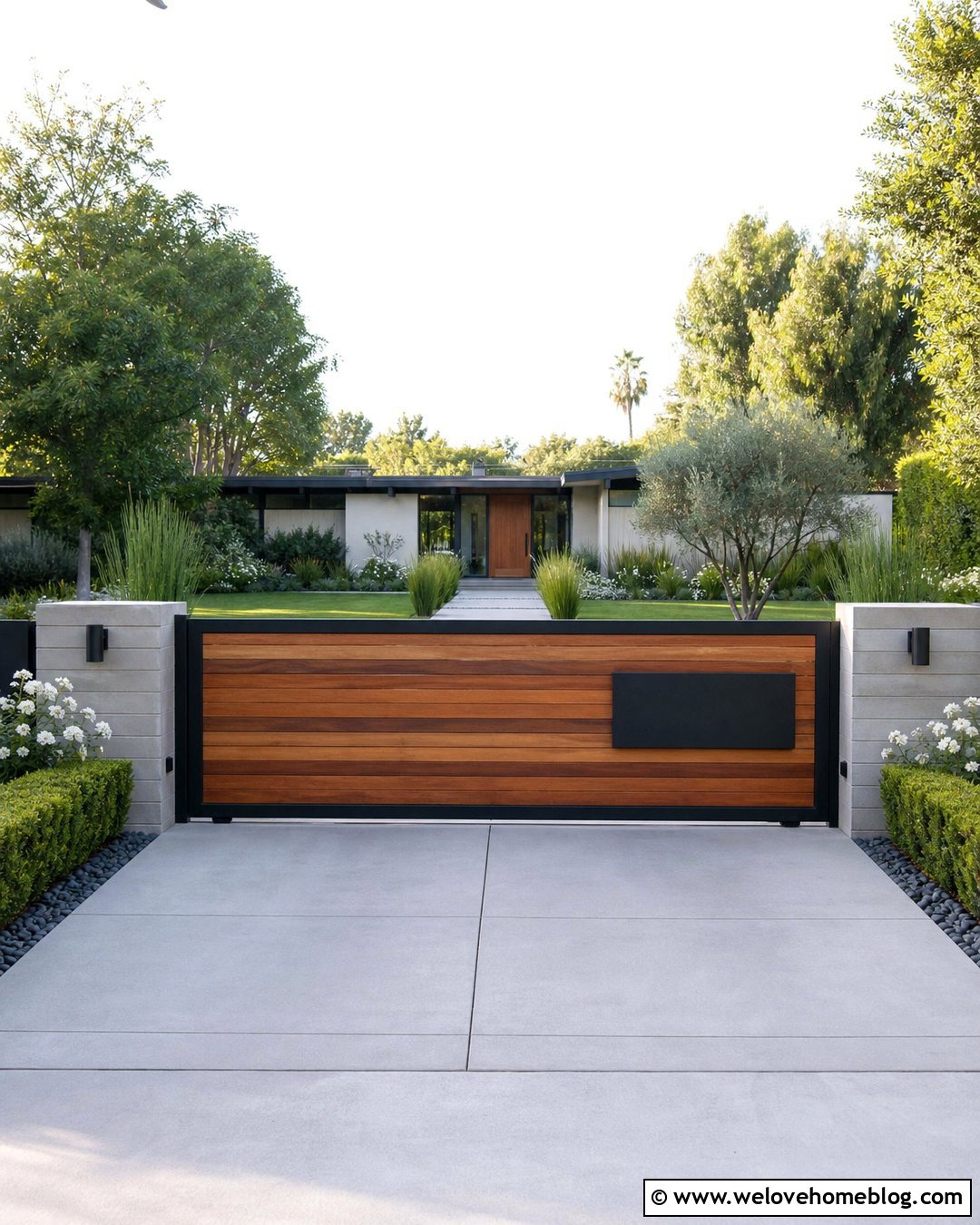
A built-in address panel can add identity to a horizontal gate without introducing unnecessary ornament. Choose medium-brown wood slats inside a matte black steel frame, then replace a short section of boards with a vertical black metal panel. Keep the address treatment simple and easy to distinguish from the street, subject to local requirements. Concrete pillars and a smooth gray driveway provide a neutral setting that lets the wood remain the main visual feature. Add a low hedge, white flowering plants, and upright ornamental grasses for a polished border. The asymmetrical panel brings subtle variation to the repeating slats while still maintaining a minimalist appearance. This complete gate design suits mid-century modern homes, renovated ranch houses, and contemporary facades with mixed wood and masonry finishes.
17. Horizontal Driveway Gate With Vertical Accent
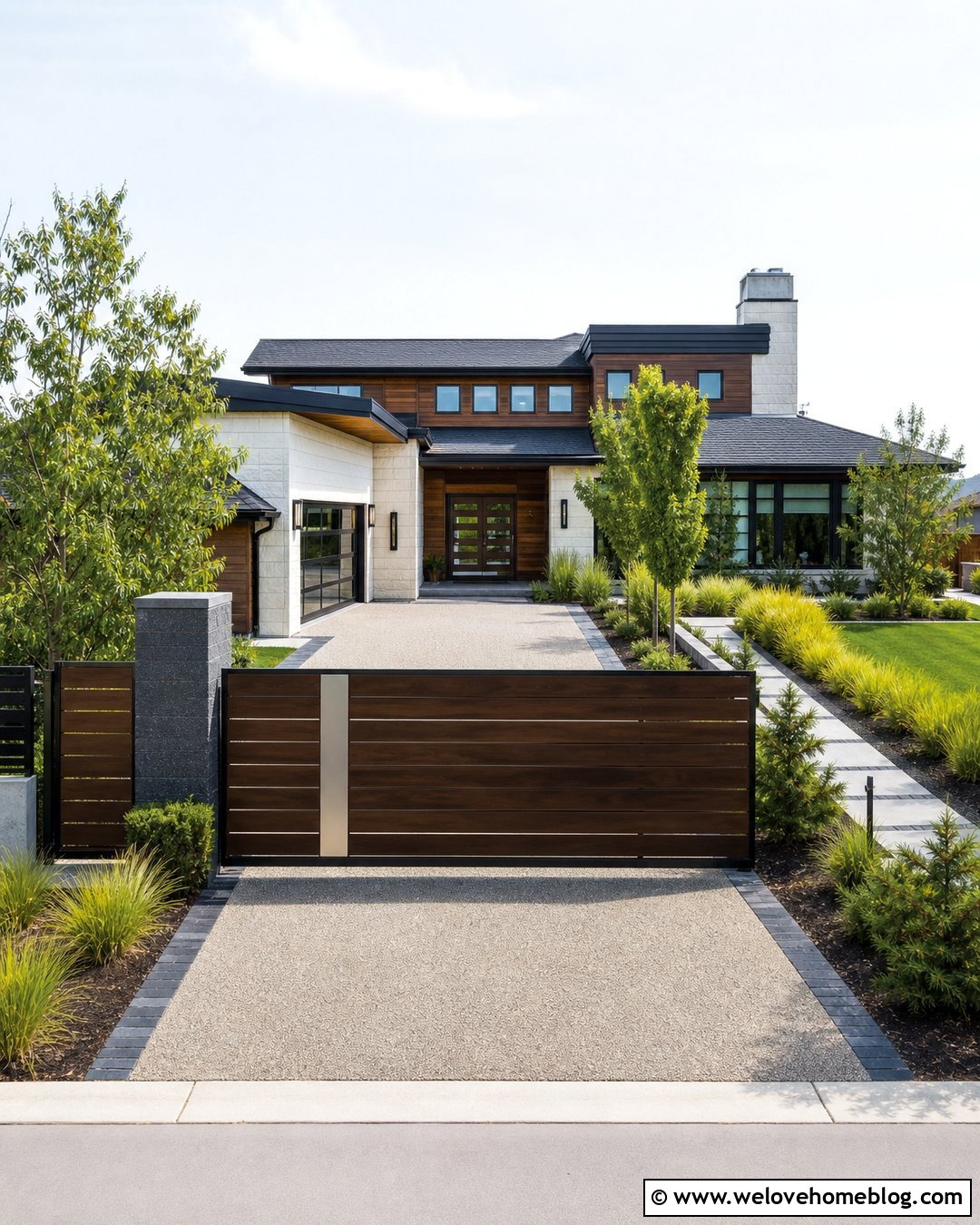
One vertical accent can break up a wide field of horizontal slats and help conceal a latch, joint, or operating component. Use dark-stained hardwood boards across a steel-framed sliding gate, then add an off-center strip of brushed metal or blackened steel. Echo that vertical line through a tall entry pillar or narrow architectural window on the house. A straight resin-bound gravel driveway in a warm gray tone creates a smooth, understated approach. Border it with dark stone setts, layered grasses, and compact trees with upright forms. The contrast between long boards and one slim vertical feature gives the entrance a custom appearance without becoming busy. It works particularly well with modern homes that already combine horizontal siding, vertical panels, and strong geometric proportions.
18. Mixed Width Horizontal Driveway Gate
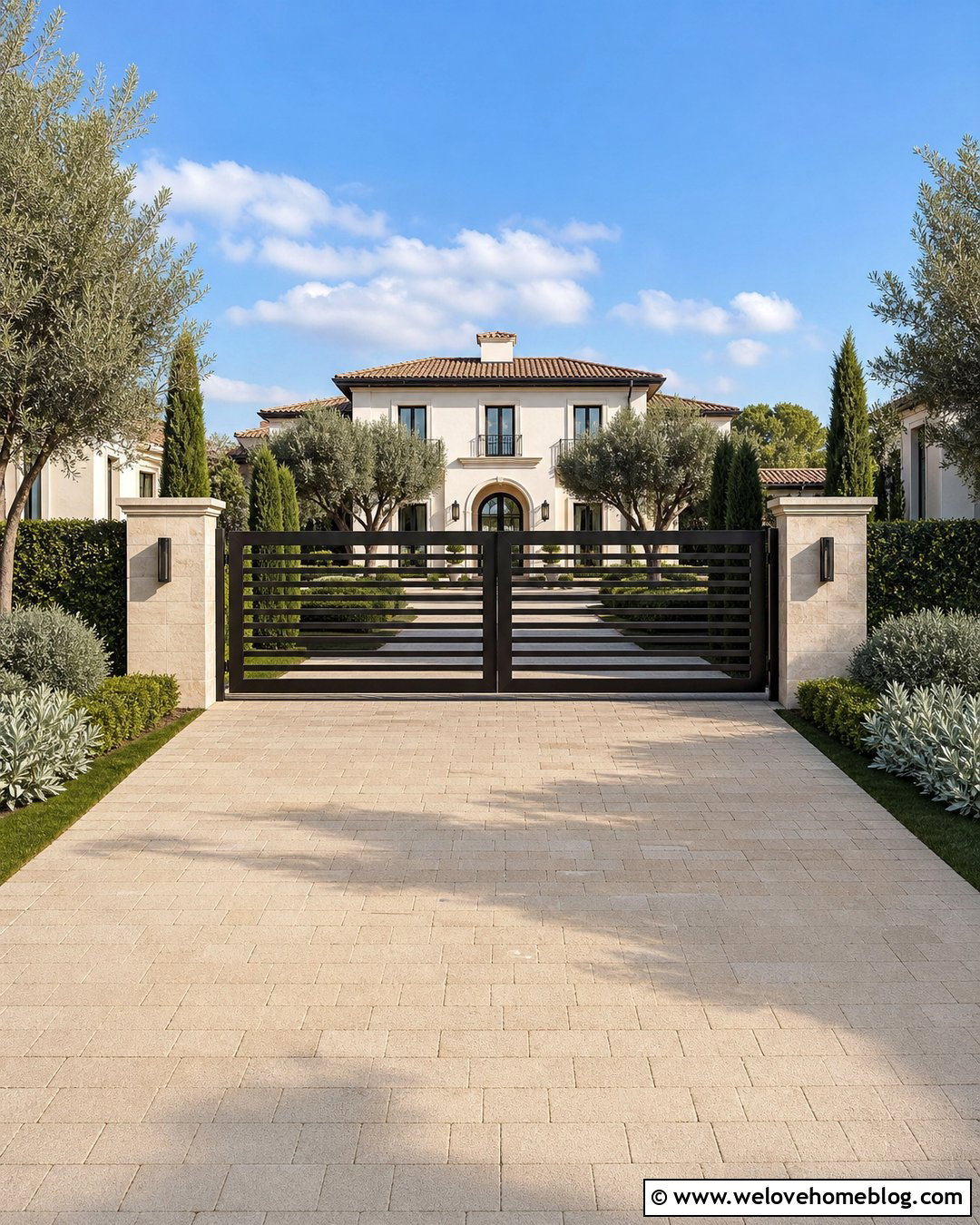
Horizontal slats do not need to be identical. Combining two or three board widths can create a subtle rhythm while preserving the clean direction of the design. Keep the spacing consistent and repeat the sequence across both leaves of a double-swing gate. A dark bronze aluminum finish offers warmth, while light limestone pillars and beige concrete pavers keep the entrance bright. Surround the drive with clipped shrubs, silvery foliage, and a small ornamental tree on each side. Mixed-width slats can look especially effective on a broad gate because they prevent the surface from resembling a basic fence panel. Use the same sequence on a short boundary section or pedestrian gate. This refined composition complements Mediterranean-modern, desert contemporary, and transitional homes with restrained exterior detailing.
19. Low Horizontal Ranch Driveway Gate
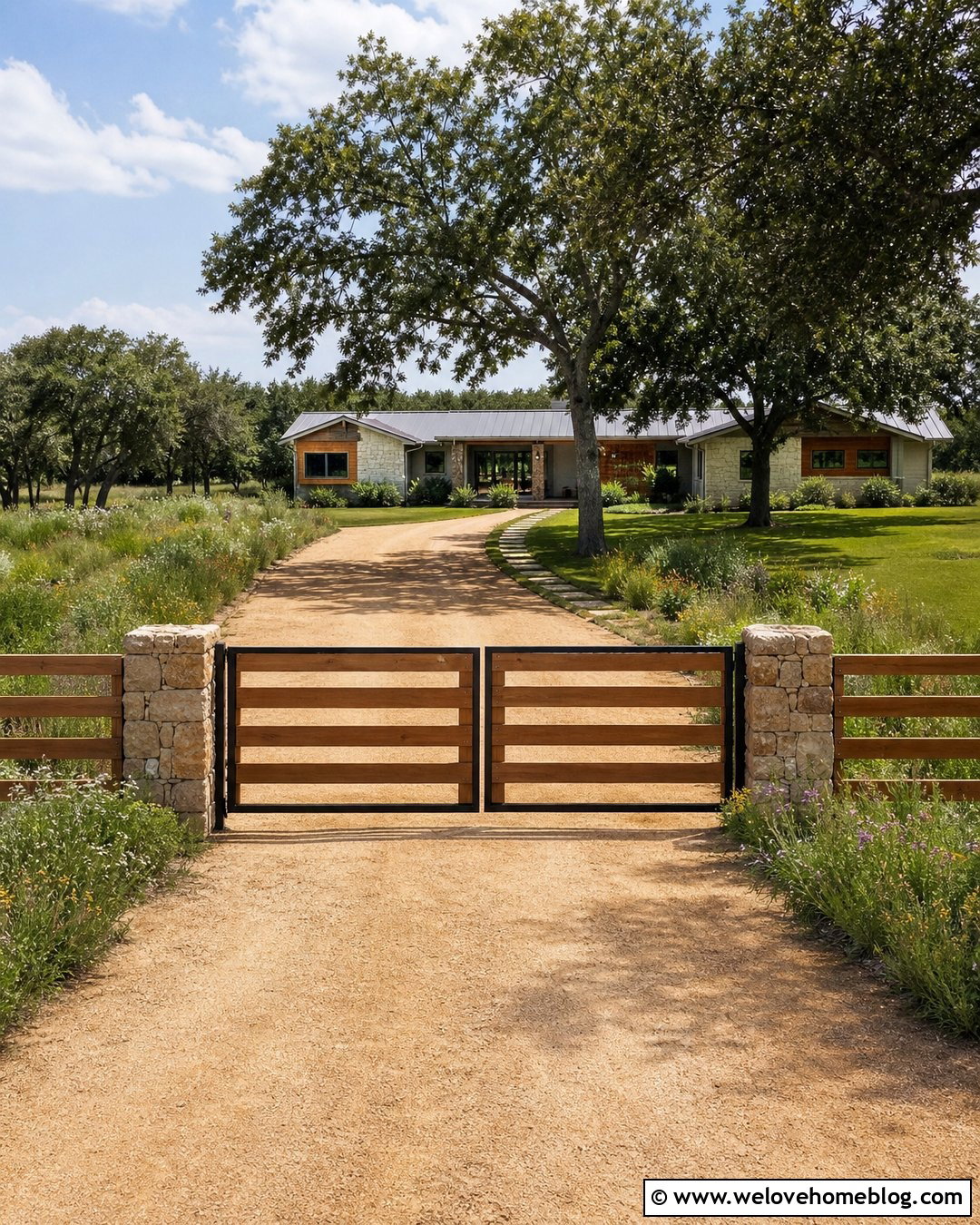
A low gate can mark a property entrance while keeping fields, mature trees, and the house visible. Choose three or four substantial horizontal cedar rails held within a dark steel frame. A double-swing configuration suits a long decomposed-granite driveway that leads toward an updated ranch home. Anchor each side with modest stone posts rather than tall pillars, then connect them to split-rail or horizontal ranch fencing. Native grasses, wildflower beds, and shade trees maintain an open, natural character. The gate should appear sturdy but not formal, with straightforward hinges and minimal ornament. This design works best where full privacy is unnecessary and the landscape is an important part of the curb view. It offers a cleaner alternative to a traditional farm gate without losing rural simplicity.
20. Automatic Horizontal Driveway Gate With Lighting
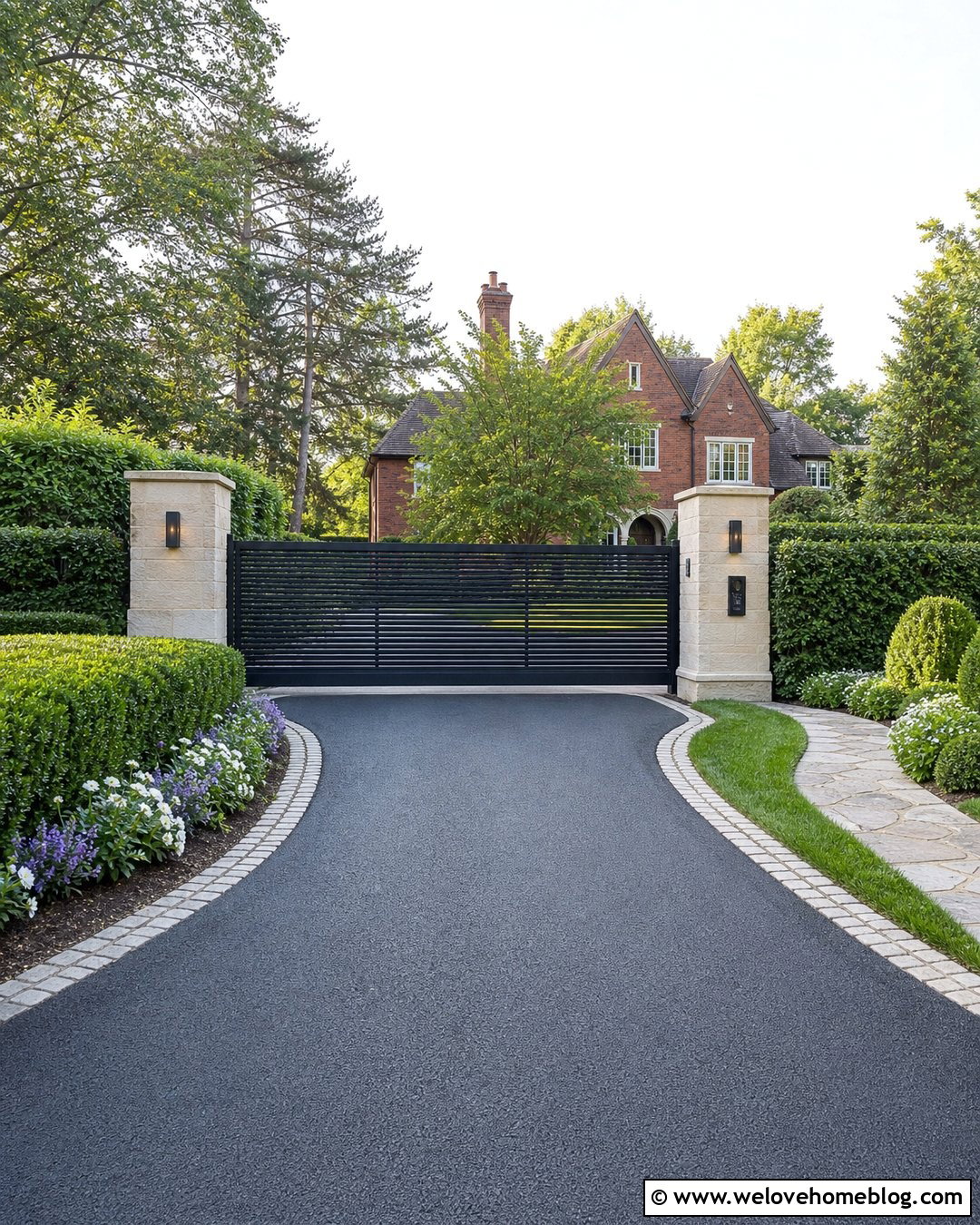
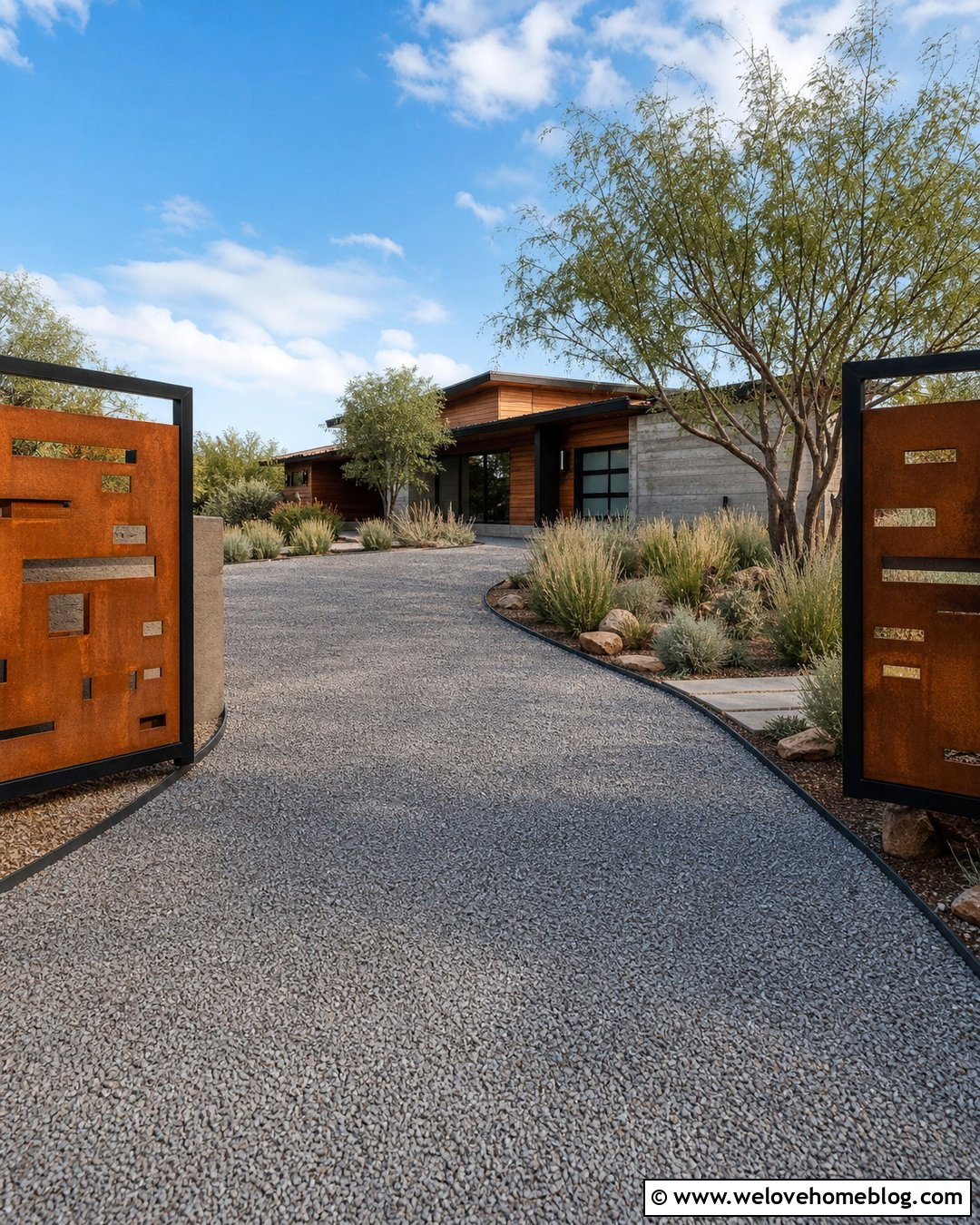
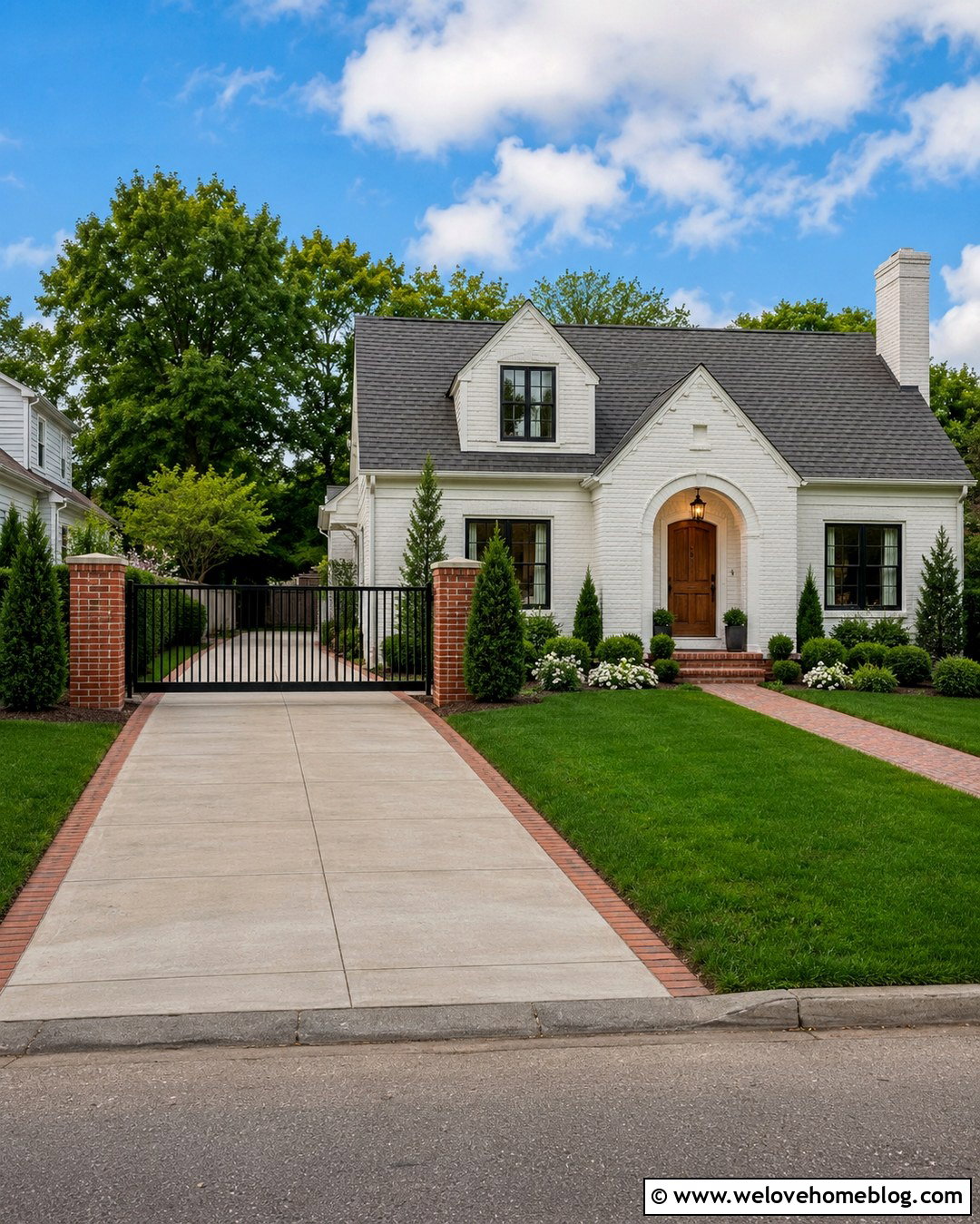
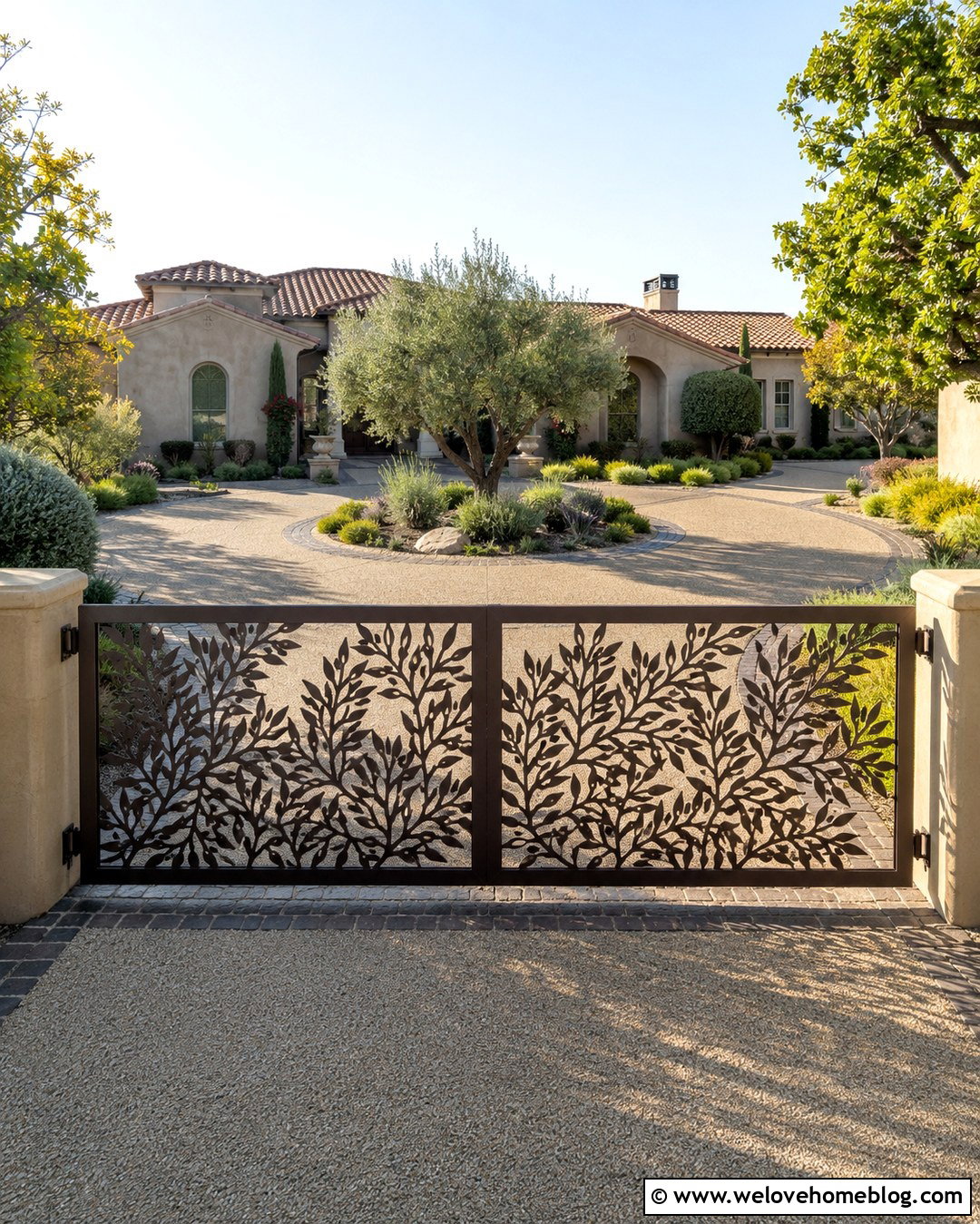
An automated gate feels most complete when access controls and lighting are planned as part of the overall entrance. Use a charcoal horizontal aluminum sliding gate between warm limestone pillars, with the motor and guide components visually screened from the street. Integrate a video intercom and keypad into one pillar at a comfortable approach point. Place simple downlights beneath the pillar caps, while keeping the landscape lighting directed away from drivers’ eyes. A curved cobblestone-edged asphalt driveway can lead toward a traditional brick home, creating an appealing contrast between modern metal and classic architecture. Formal hedges, layered trees, and a separate pedestrian path finish the composition. Professional design and installation are important for safe operation, structural support, and compliant access. ()
Conclusion:
The strongest horizontal gate designs connect the entrance to everything behind it. Material, slat spacing, opening method, pillars, driveway surface, fencing, and landscaping should feel like parts of one plan. Aluminum provides a crisp, consistent appearance, while cedar and hardwood add natural warmth. Sliding gates can suit entrances with limited swing clearance, whereas double-swing gates create a balanced central opening. Privacy can also be adjusted through the width and spacing of the slats. Before choosing a design, measure the entrance, consider grade and operating space, and consult qualified gate professionals about structure, automation, and local requirements. Use these **20 horizontal driveway gate ideas** to build a practical entrance with lasting curb appeal.

Related posts:

Leave a Reply