
Resin-bound surfacing can make a British front garden feel cleaner, brighter, and more coordinated without losing the natural texture of stone. Current UK designs favor warm beige, amber, silver, and mid-gray aggregates, often paired with simple block, brick, or granite borders. () The best result depends on more than color. Driveway shape, parking space, drainage, edging, planting, and the home’s exterior should work together. In England, front-garden surfaces over five square meters generally need to be permeable or direct runoff into a suitable permeable area to qualify as permitted development. () Always confirm local requirements and choose an experienced installer. Use the complete looks below as your guide to 35 Resin Driveway Uk Ideas.
1. Gray Resin Driveway With Charcoal Border
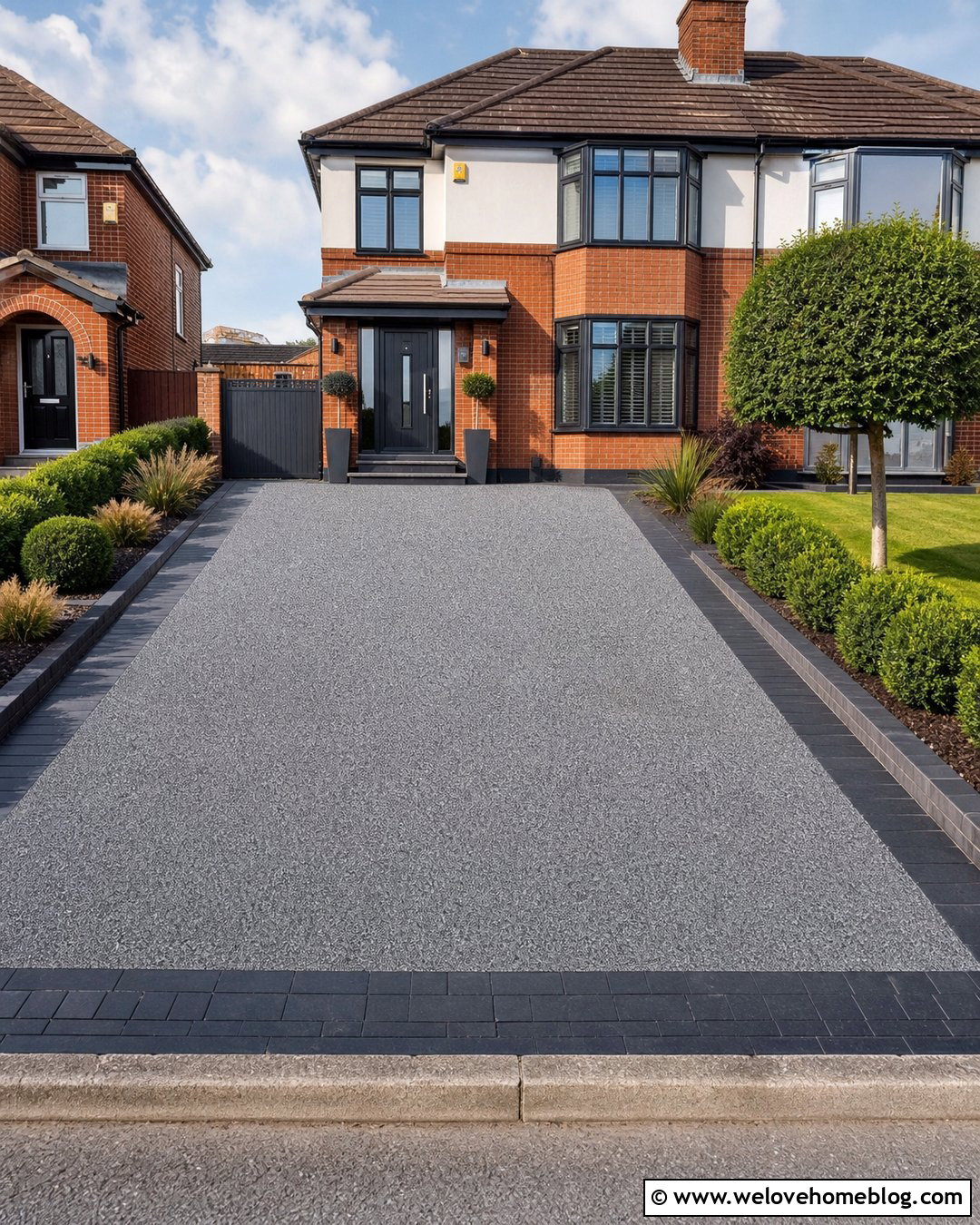
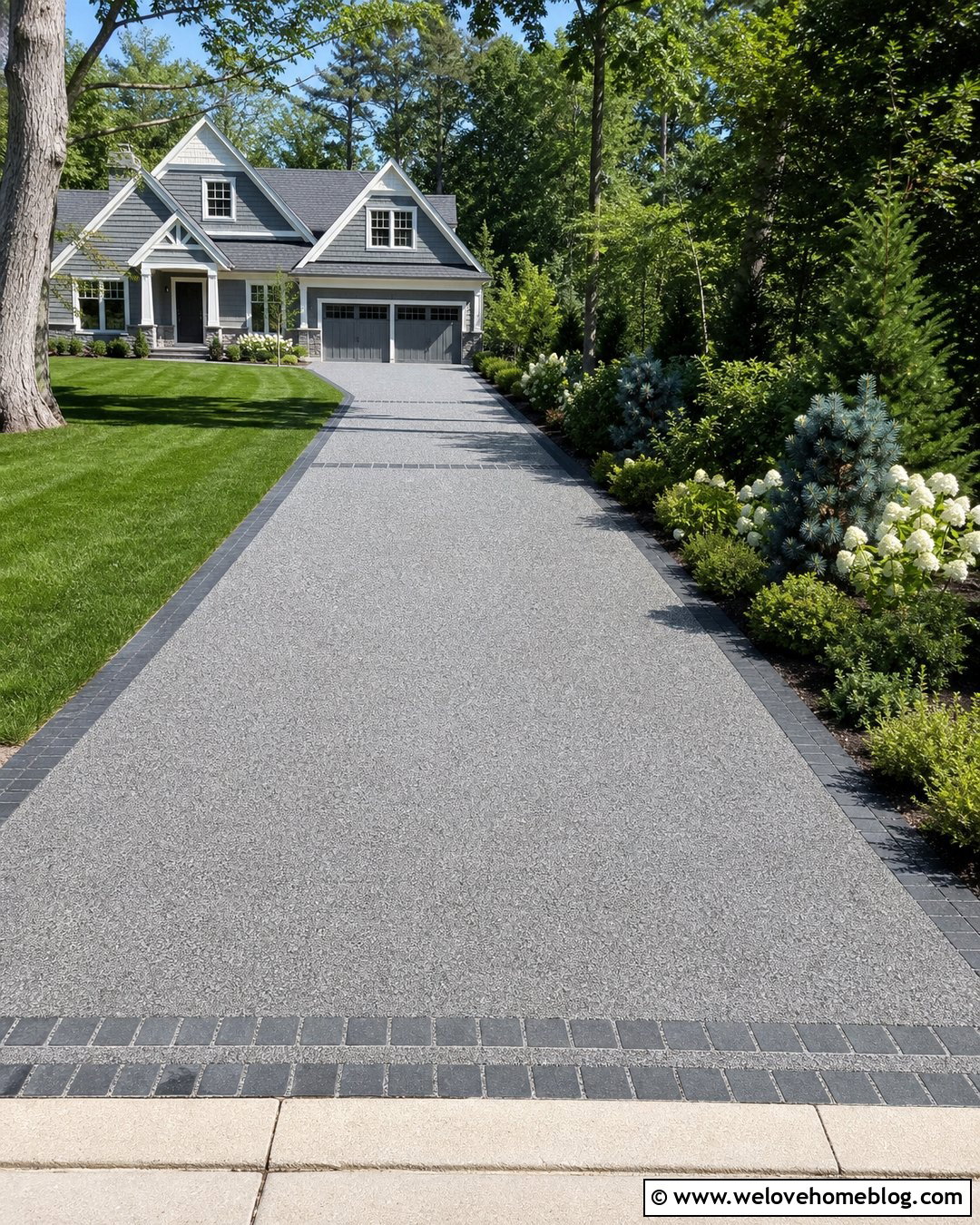
A mid-gray resin-bound driveway creates a versatile base for many UK house styles. Frame the surface with charcoal block pavers to sharpen the edges and define the parking area. A straight layout works especially well outside a semi-detached home because it uses the available frontage efficiently. Keep the planting simple with clipped evergreen shrubs, ornamental grasses, and one compact tree near the pavement. A matching charcoal entrance apron can hide tire marks where the driveway meets the road. Continue the border beside a short path to the front door for a connected appearance. This balanced combination looks contemporary without feeling too cold, while the darker frame gives the pale gray aggregate a neat and intentional finish.
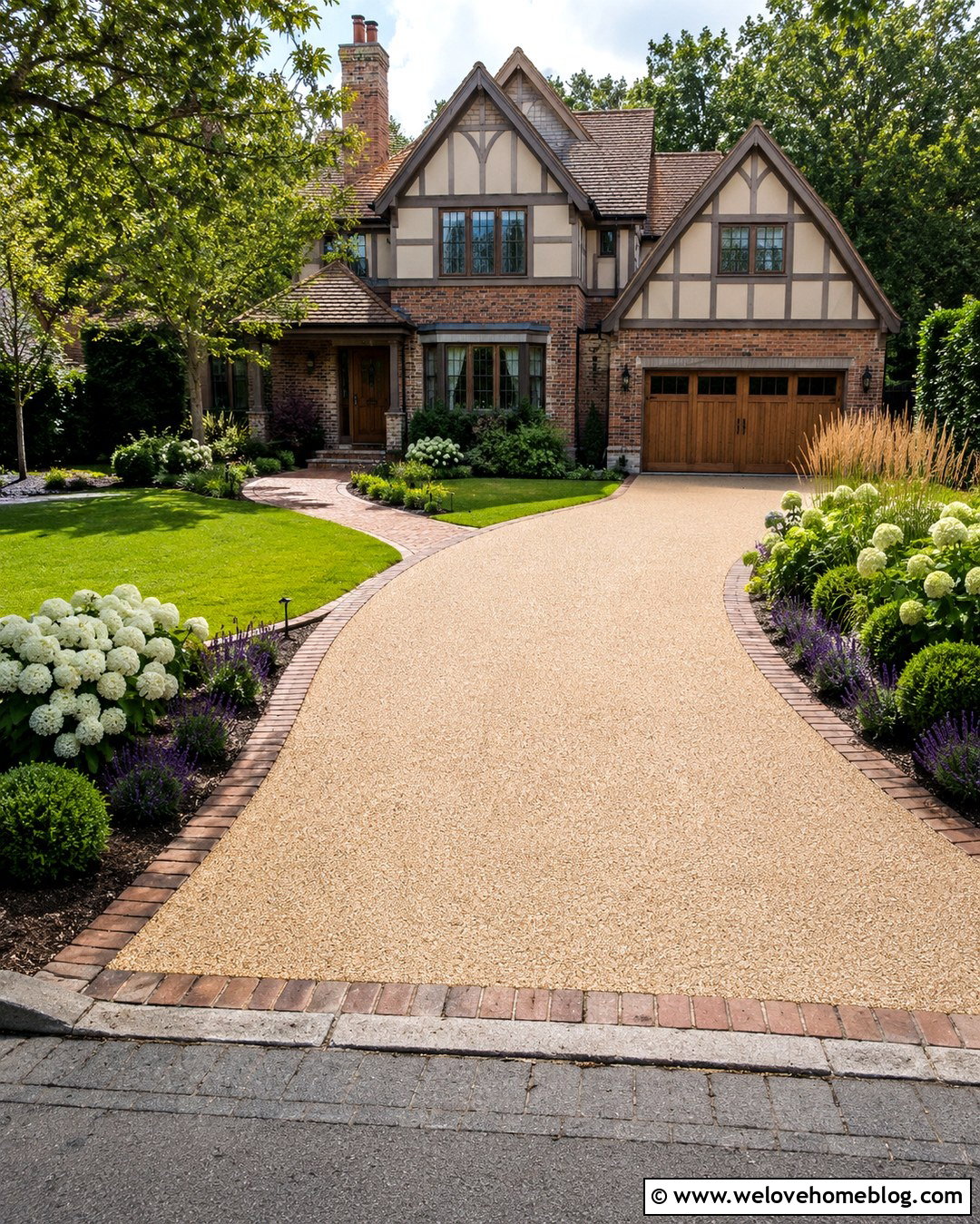
2. Golden Resin Driveway With Brick Edging
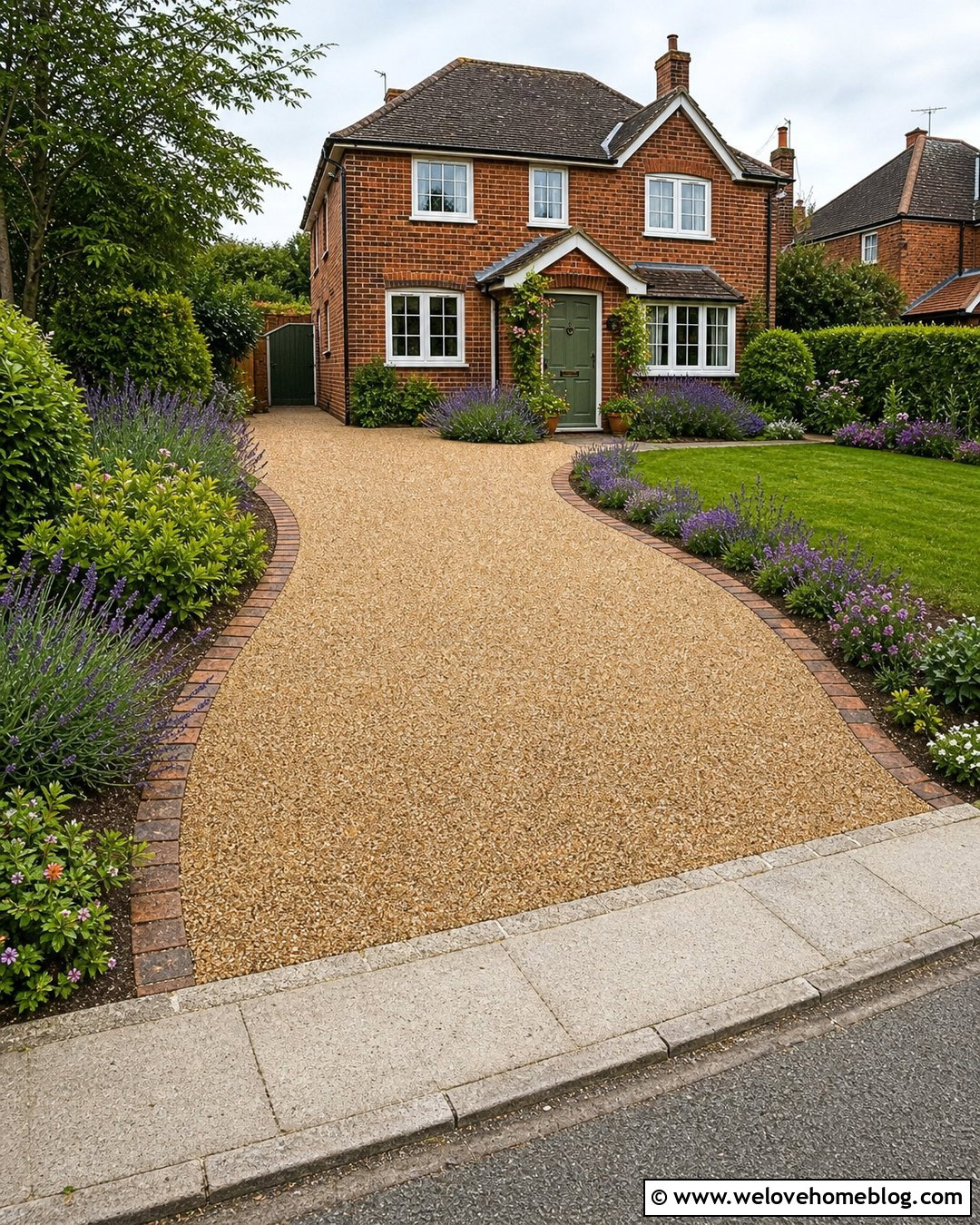
Golden resin-bound aggregate brings warmth to a traditional red brick property. The mix can include honey, buff, and soft brown stones, creating the appearance of fine natural gravel without loose material spreading onto the pavement. Use reclaimed-look brick edging to connect the driveway visually with the house facade. A gently curved planting bed filled with lavender, small hebes, and seasonal flowers will soften one side without reducing too much parking space. Keep the other edge straight for bins, pedestrian access, or a side gate. This layout feels particularly comfortable outside a detached suburban home. Choose bricks that echo the building rather than matching it exactly, since a small color variation usually produces a more natural and established result.
3. Beige Resin Driveway With Granite Setts
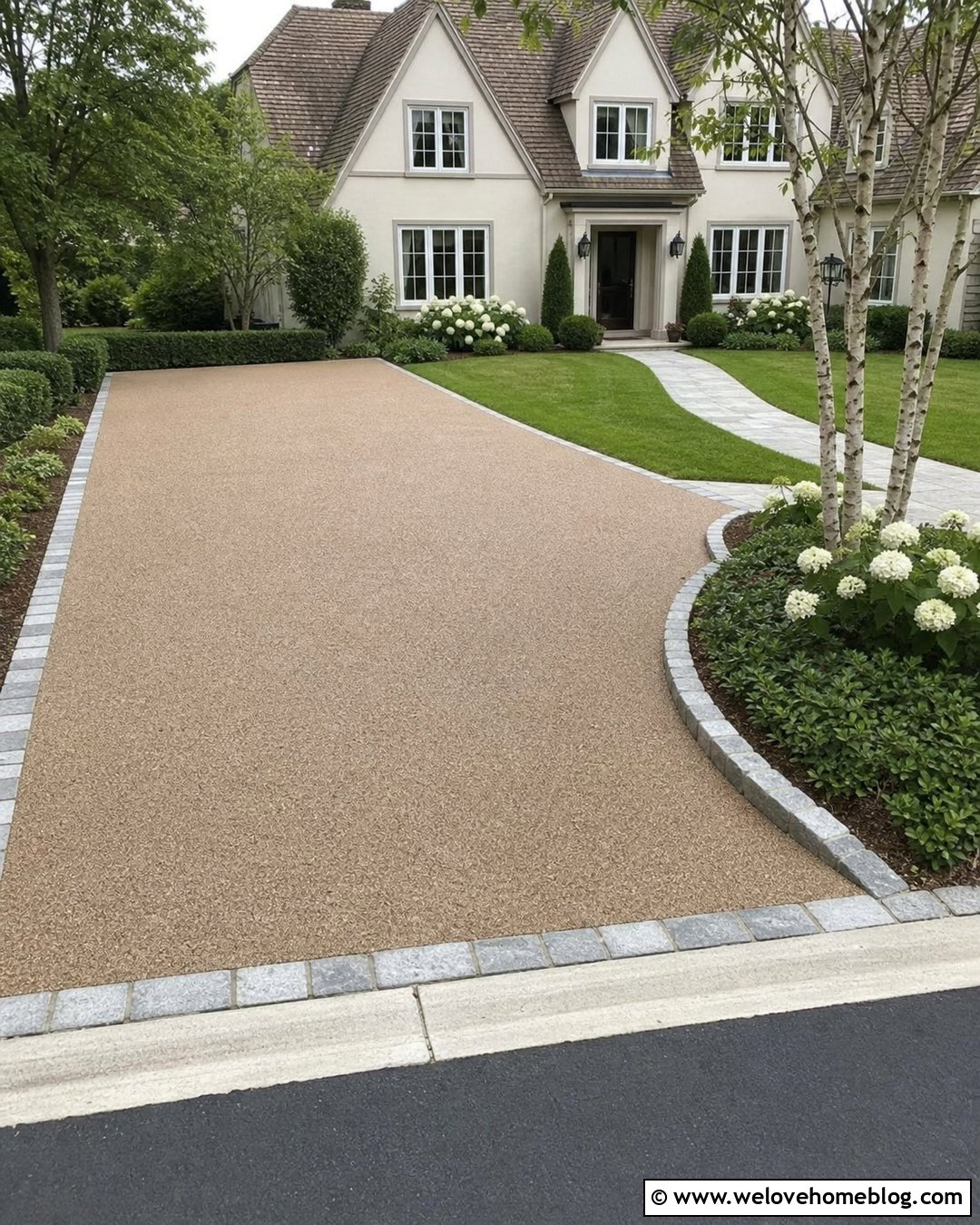
Soft beige resin-bound gravel can brighten a shaded front garden and complement pale render, limestone, or buff brick. Add a single row of gray granite setts around the perimeter for a strong, durable-looking outline. A broad rectangular driveway provides room for two vehicles, while a curved corner bed prevents the layout from appearing overly rigid. Plant the bed with a multi-stem birch, white hydrangeas, and low evergreen ground cover. Granite setts can also form a narrow dividing line between the vehicle area and the route to the front door. The cool stone border balances the warmer resin surface, giving the whole entrance a refined appearance. This combination is understated enough for traditional architecture but clean enough for an updated exterior.
4. Black Resin Driveway With Light Border
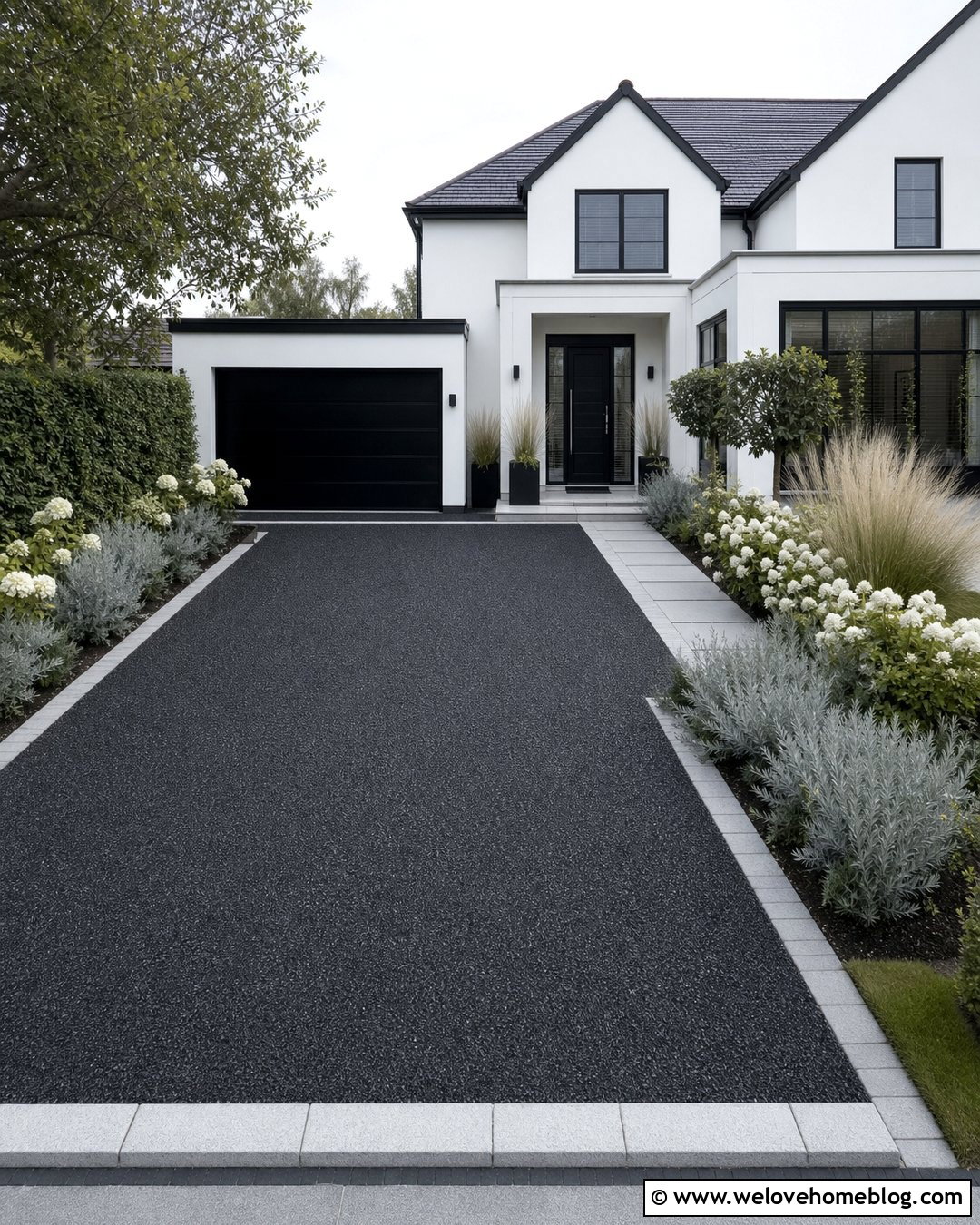
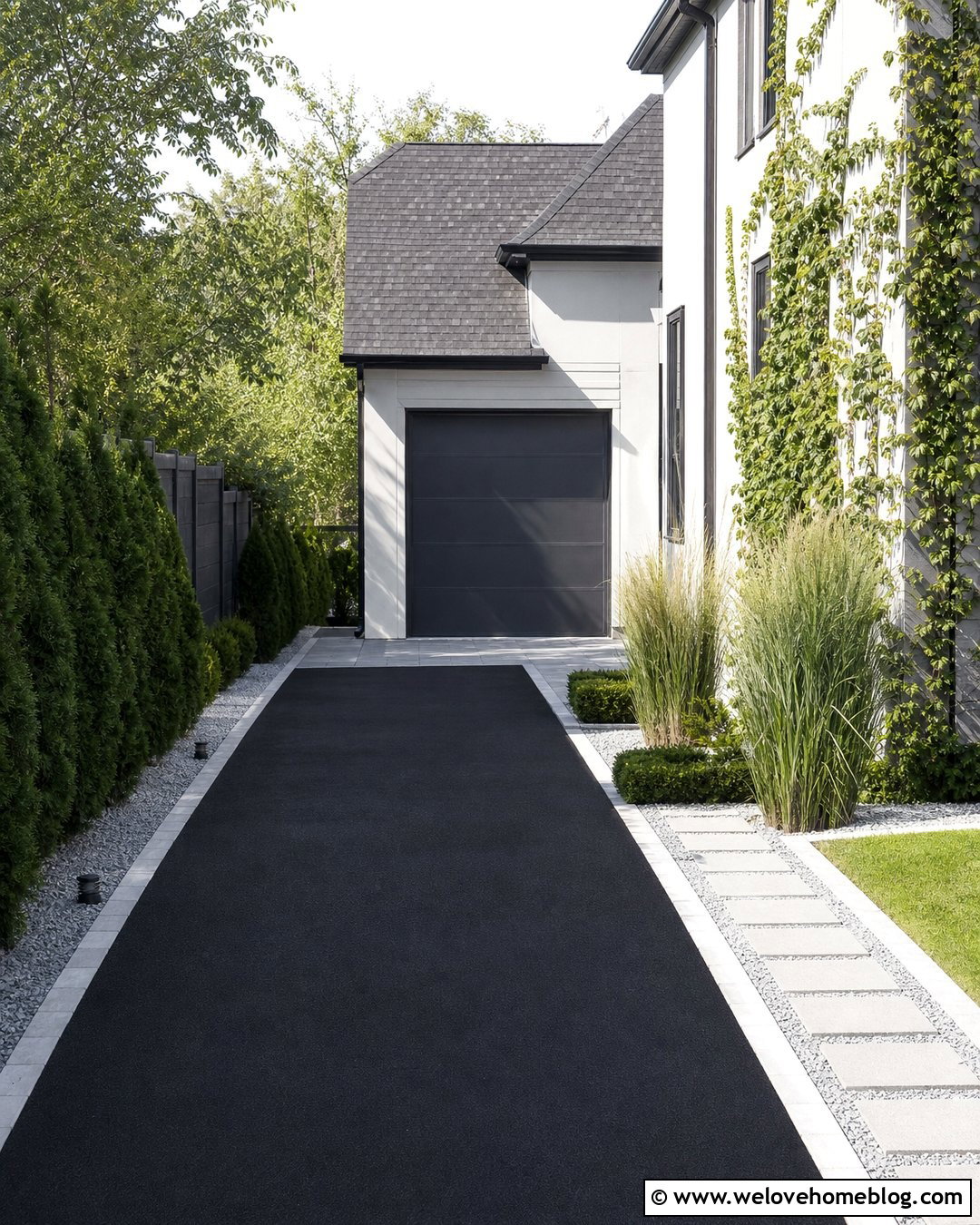
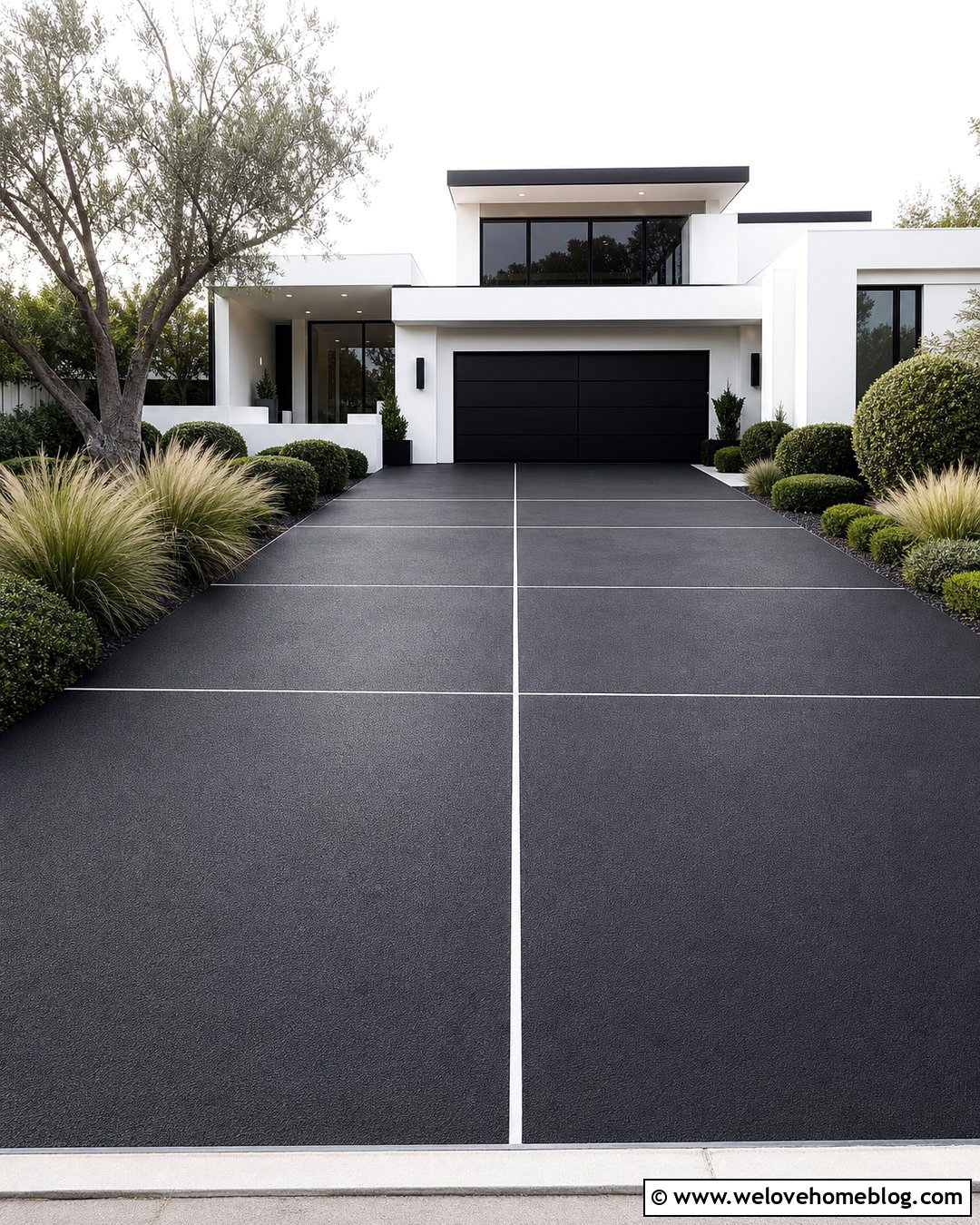
A black or deep charcoal resin driveway delivers bold contrast outside a white rendered house. Prevent the surface from feeling too heavy by framing it with pale gray blocks or light granite setts. The lighter border should follow the complete outline, including the pavement entrance and garage threshold. Add narrow beds containing silver-leaved plants, white flowers, and upright ornamental grasses to continue the monochrome palette. A straight driveway with squared corners supports the strong architectural look, especially when paired with black window frames and a matching garage door. Dark aggregate can show dust or pale debris more readily, so allow room for easy sweeping and routine cleaning. The finished entrance feels crisp, graphic, and carefully connected to the property.
5. Silver Resin Driveway For Modern House
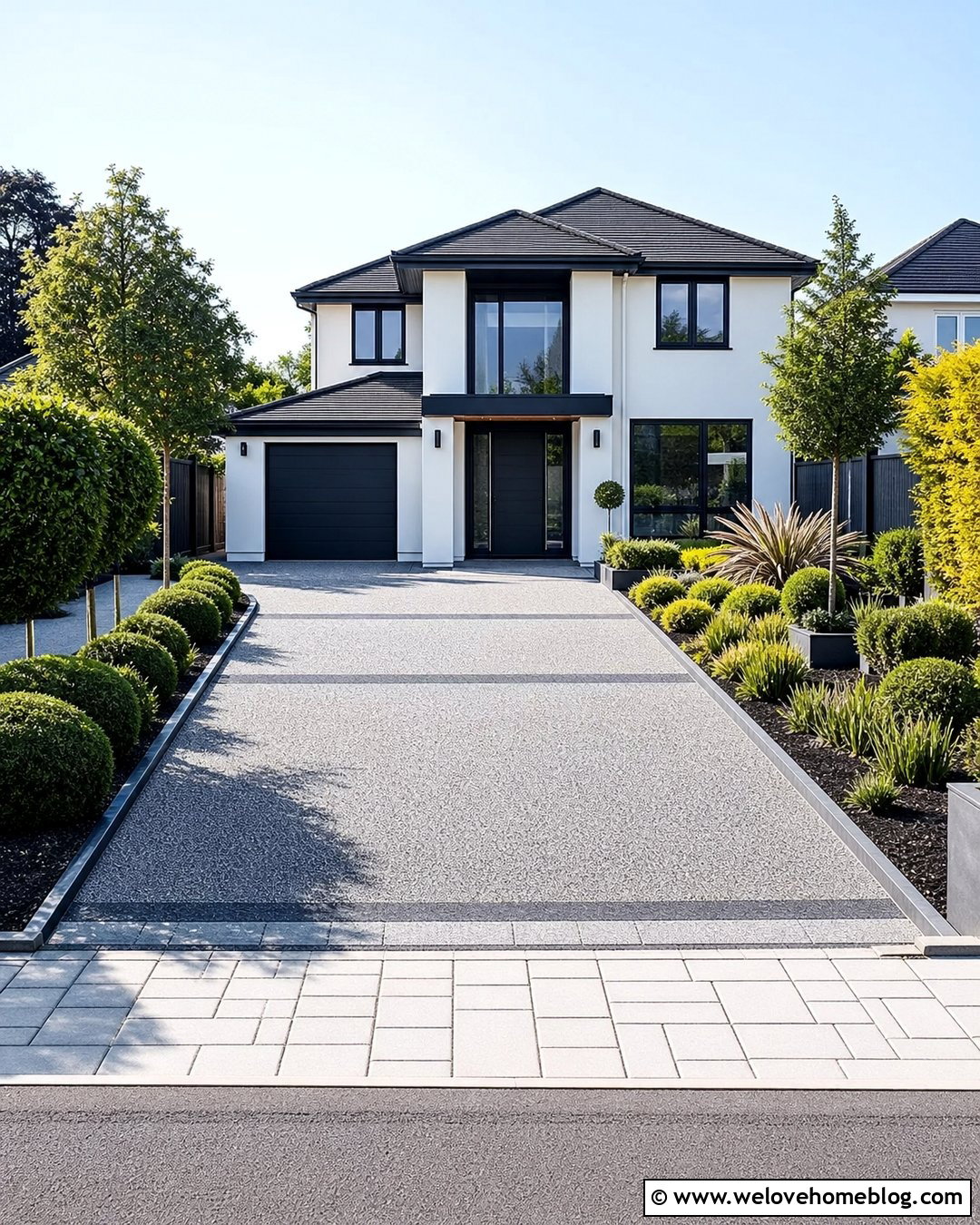
Silver-gray resin-bound aggregate suits a modern home with large windows, dark cladding, or smooth white render. Use a wide, straight driveway divided by subtle charcoal bands that organize individual parking bays without creating a complicated pattern. Slim steel or dark concrete edging can maintain the minimalist finish around the perimeter. Beside the driveway, combine architectural grasses, clipped spheres, and a small feature tree in geometric planting beds. A large-format paved walkway can cross the resin surface and lead directly to the entrance. Keep color changes limited so the layout remains calm and spacious. This design works best when every transition is aligned with the house, garage, and front door, allowing the driveway to feel like an extension of the architecture rather than a separate feature.
6. Brown Resin Driveway For Red Brick House
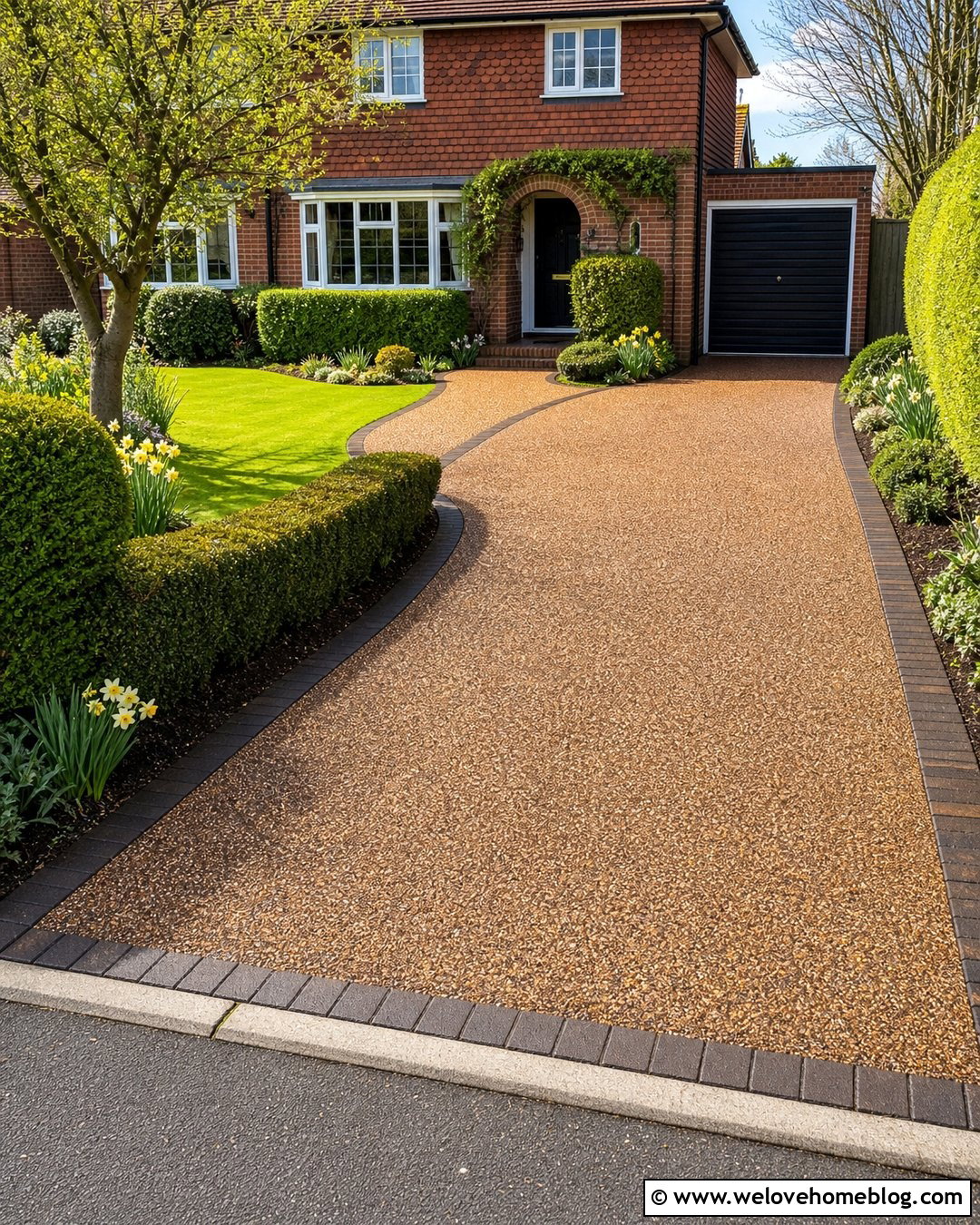
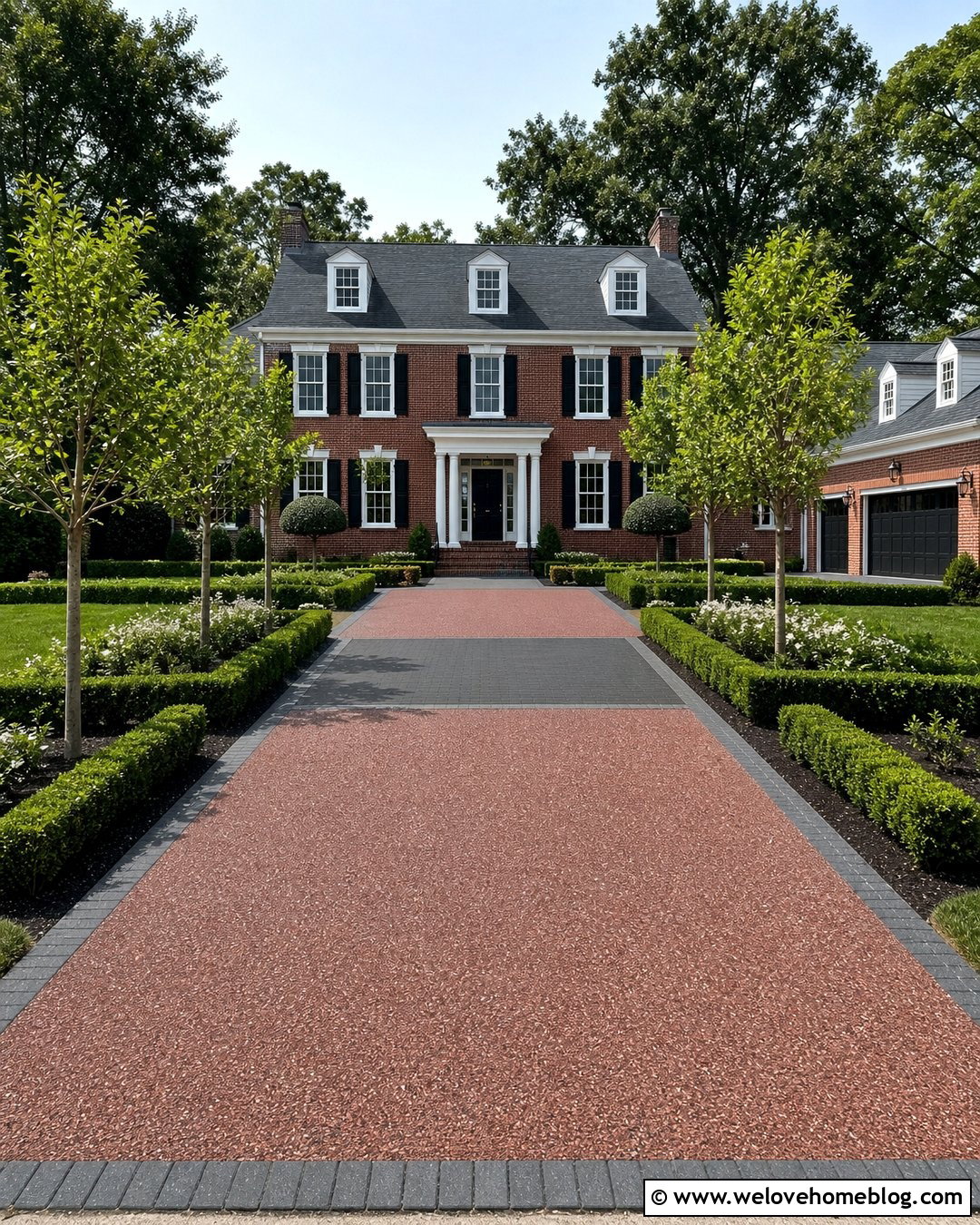
A warm brown resin-bound driveway can settle naturally beside a classic red brick home. Choose an aggregate containing chestnut, tan, bronze, and occasional cream stones rather than one flat brown shade. Dark brown block edging will define the shape while maintaining a softer appearance than black. A gently widening layout can provide a welcoming road entrance and a practical turning or parking area near the house. Frame the drive with green hedging, a small lawn, and deep planting beds filled with shrubs and spring bulbs. A matching resin path to the front door completes the arrangement. By drawing colors from both the brickwork and surrounding garden, the driveway looks established, coordinated, and appropriate for a traditional British suburban setting.
7. Cream Resin Driveway For Country Cottage
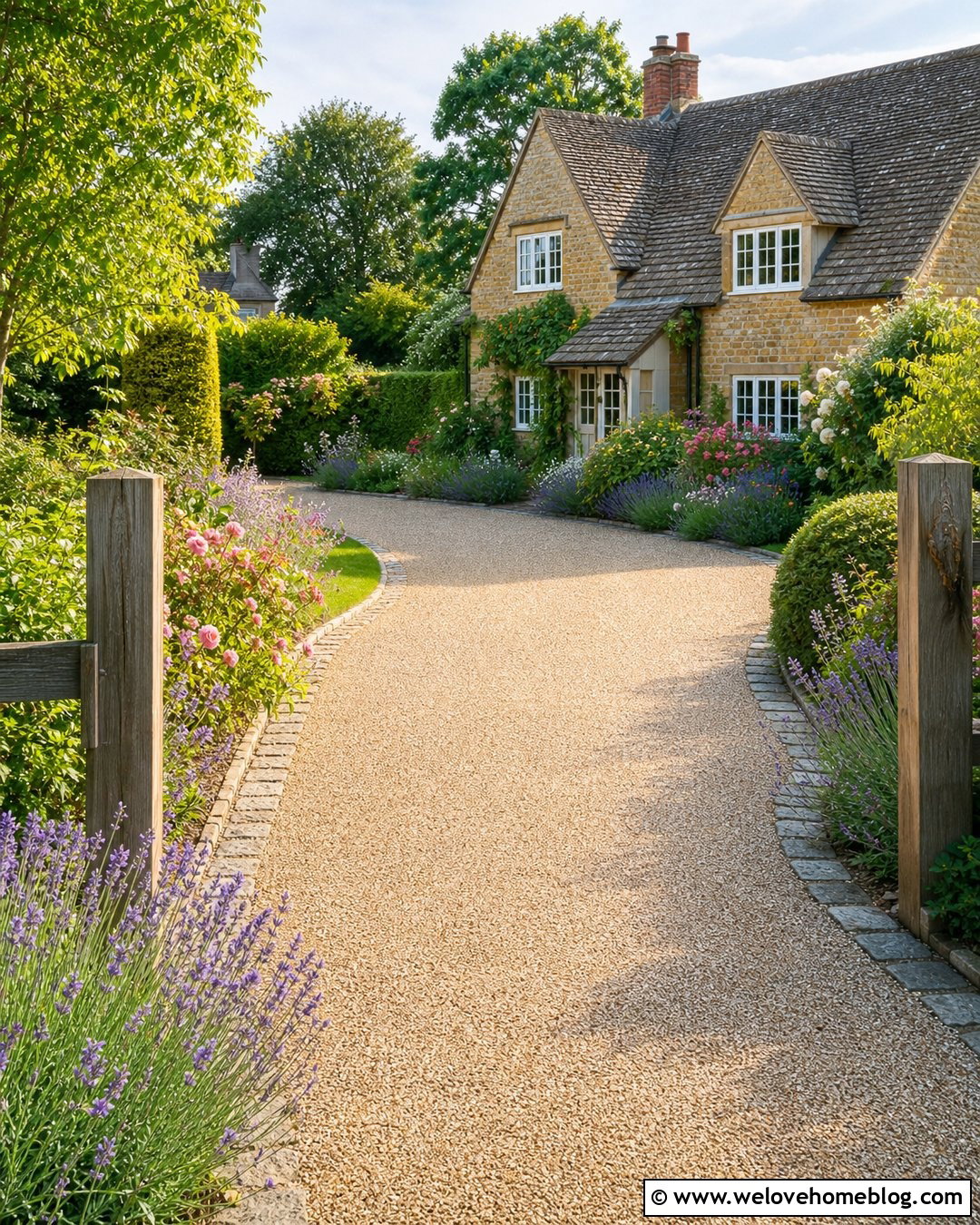
Cream and pale honey resin-bound gravel can recreate the relaxed character of a cottage drive while providing a smoother, more contained surface than loose stone. Use weathered sandstone setts along the edges and shape the driveway with gentle curves instead of sharp corners. Allow generous planting beds to wrap around the parking space, using lavender, catmint, roses, and compact flowering shrubs. Near the entrance, simple timber posts or a low native hedge will preserve the rural mood. The light surface looks particularly attractive beside stone walls, painted timber windows, and a soft neutral facade. Avoid ornate patterns that could compete with the cottage architecture. A restrained material palette and abundant planting make the complete entrance feel informal, welcoming, and comfortably connected to its surroundings.
8. Two Tone Resin Driveway
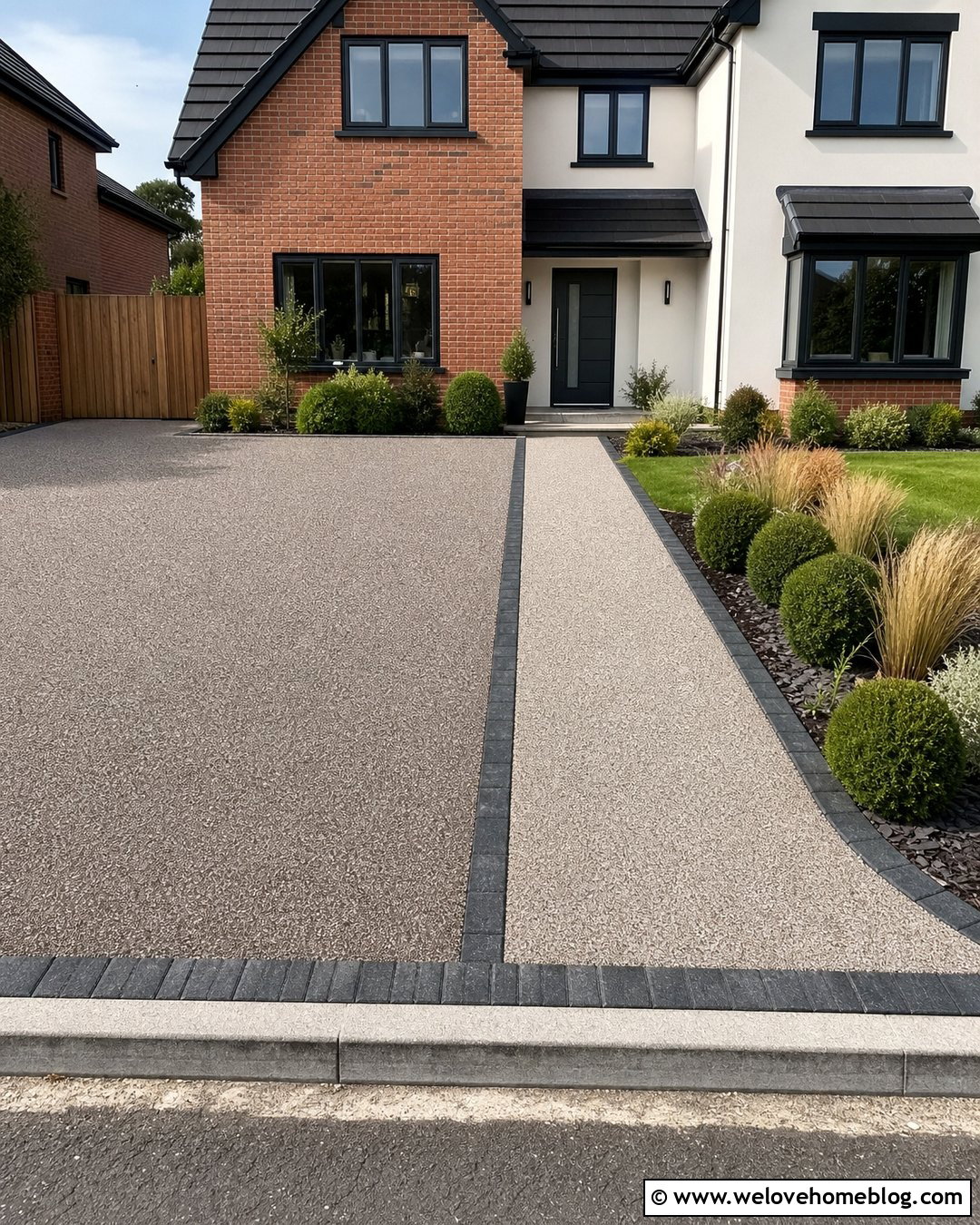
A two-tone resin driveway can separate functions without relying on raised curbs or several unrelated materials. Use a warm gray resin-bound blend for the main parking area and a lighter silver or beige blend for the pedestrian route. A narrow charcoal block line between the colors will produce a precise transition and help the layout remain readable. Keep the driveway rectangular, then introduce softer planting along the outer boundaries with rounded shrubs and ornamental grasses. The lighter strip can continue from the pavement to the front door, making the entrance easier for visitors to understand. Limit the design to two compatible resin colors and one border material. Too many contrasting bands may make a modest UK front garden appear smaller, busier, and harder to maintain visually.
9. Resin Driveway With Block Paving Border
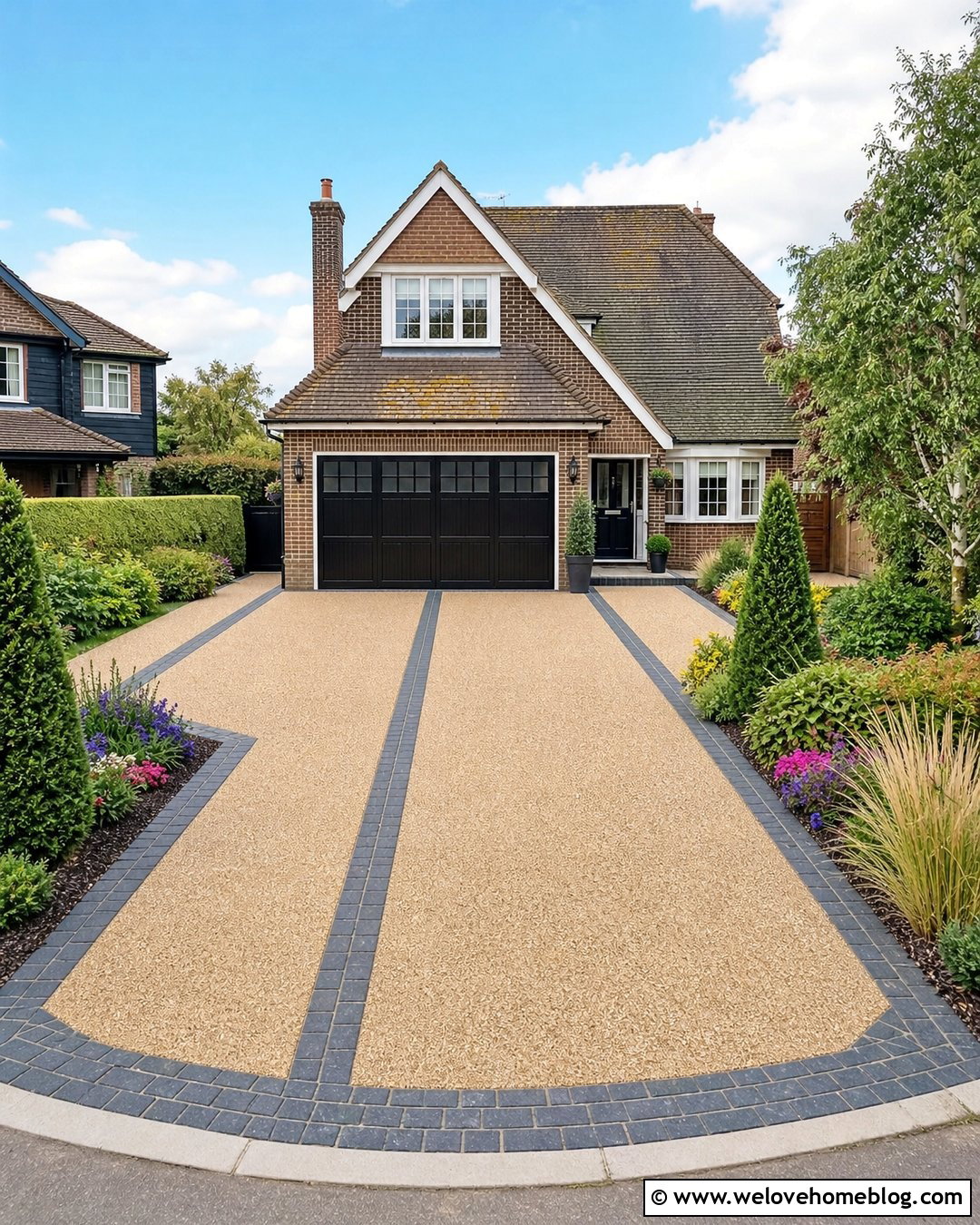
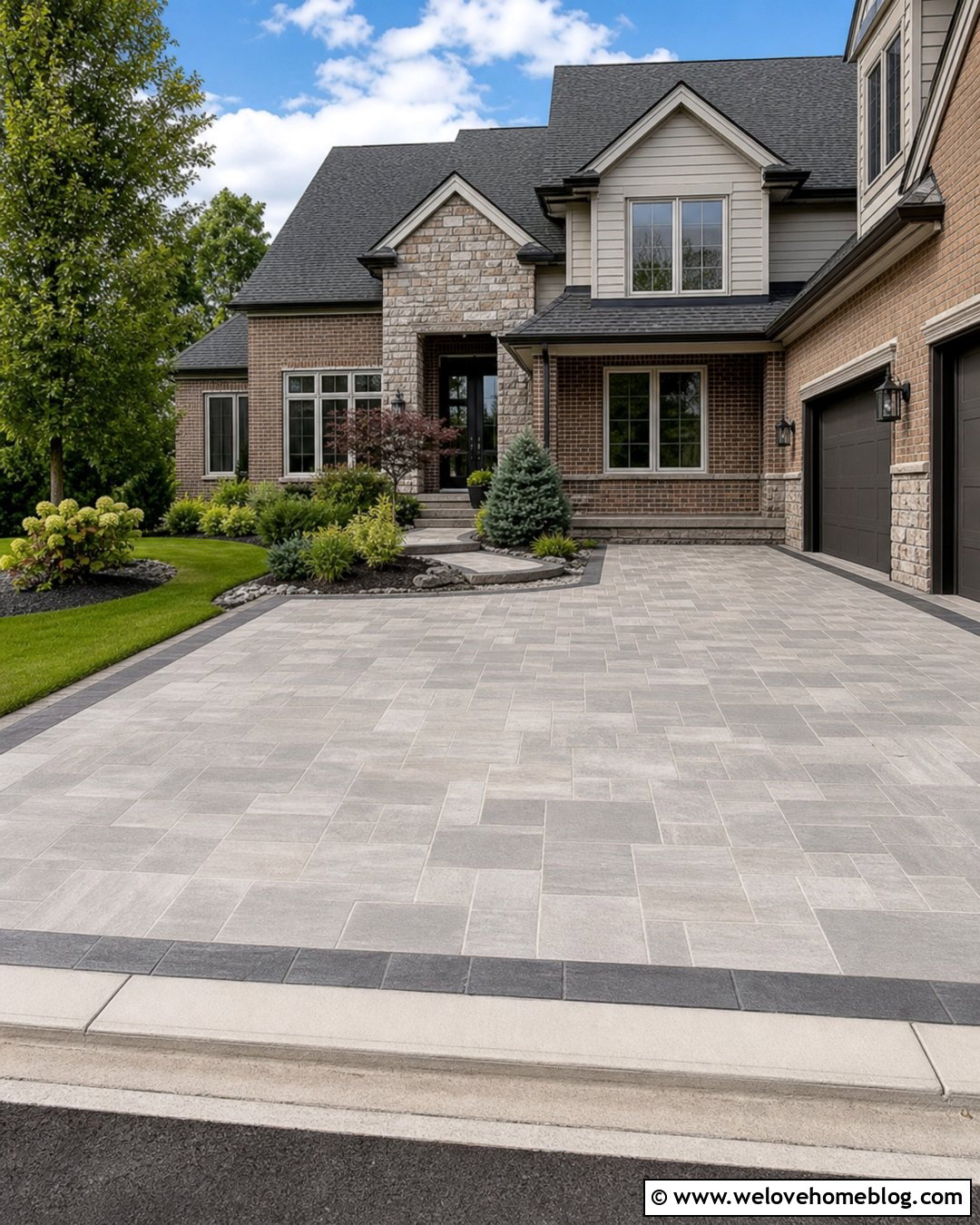
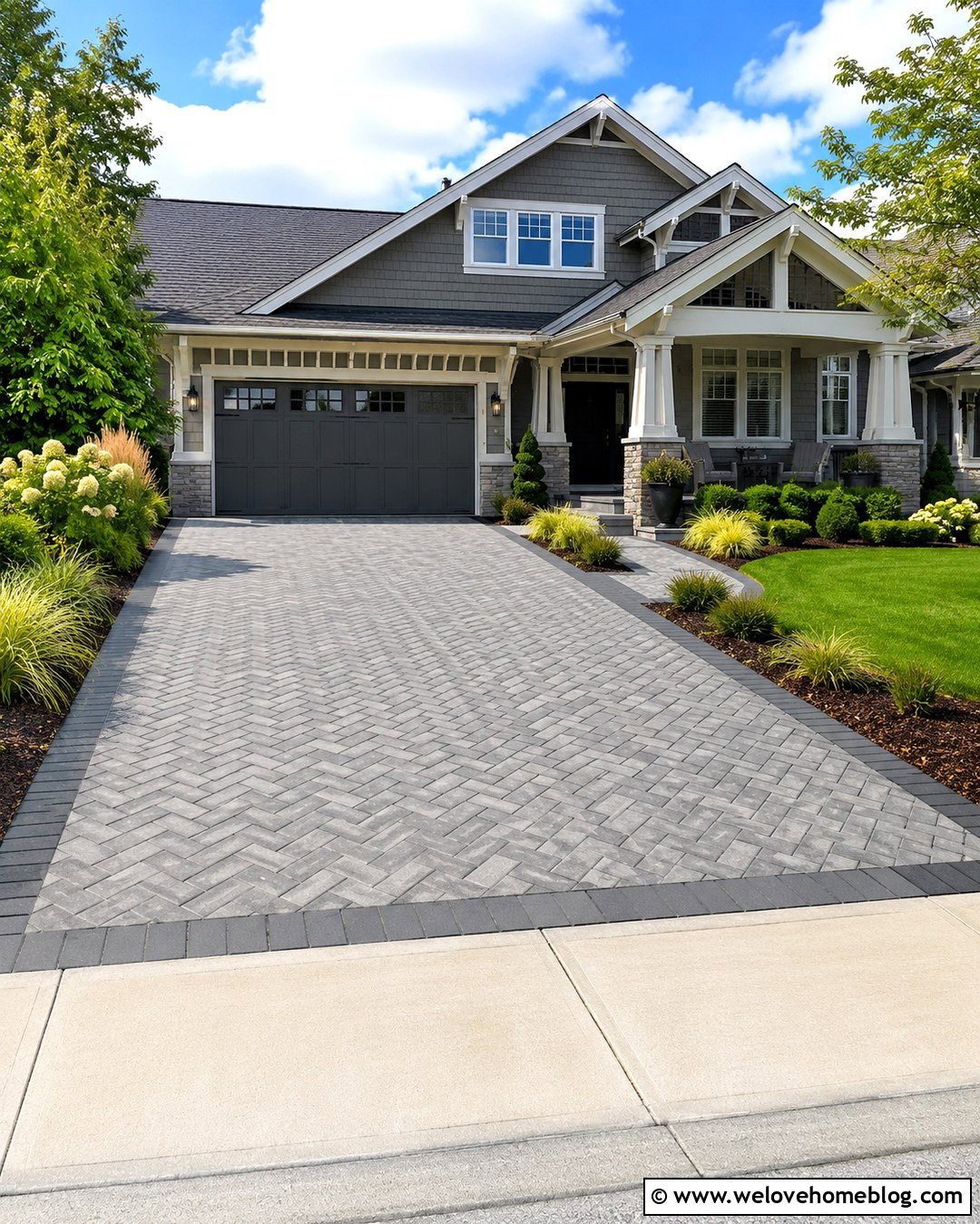
A block paving border gives a resin-bound driveway a structured frame and creates a practical transition around walls, lawns, and pavement edges. Select blocks that relate to the house, such as charcoal for a modern property or brindle blocks for traditional brickwork. A double-width driveway can use the same blocks to form a central dividing ribbon, helping two parking spaces feel organized. Add low planting beds at the front corners so the hard surface does not occupy the entire view. Evergreen shrubs, grasses, and seasonal flowers provide year-round balance. Continue the block border around a matching resin path to create one complete layout. The border should feel proportional; one or two simple rows generally look cleaner than a broad, highly patterned block frame.
10. Resin Driveway With Cobblestone Edging
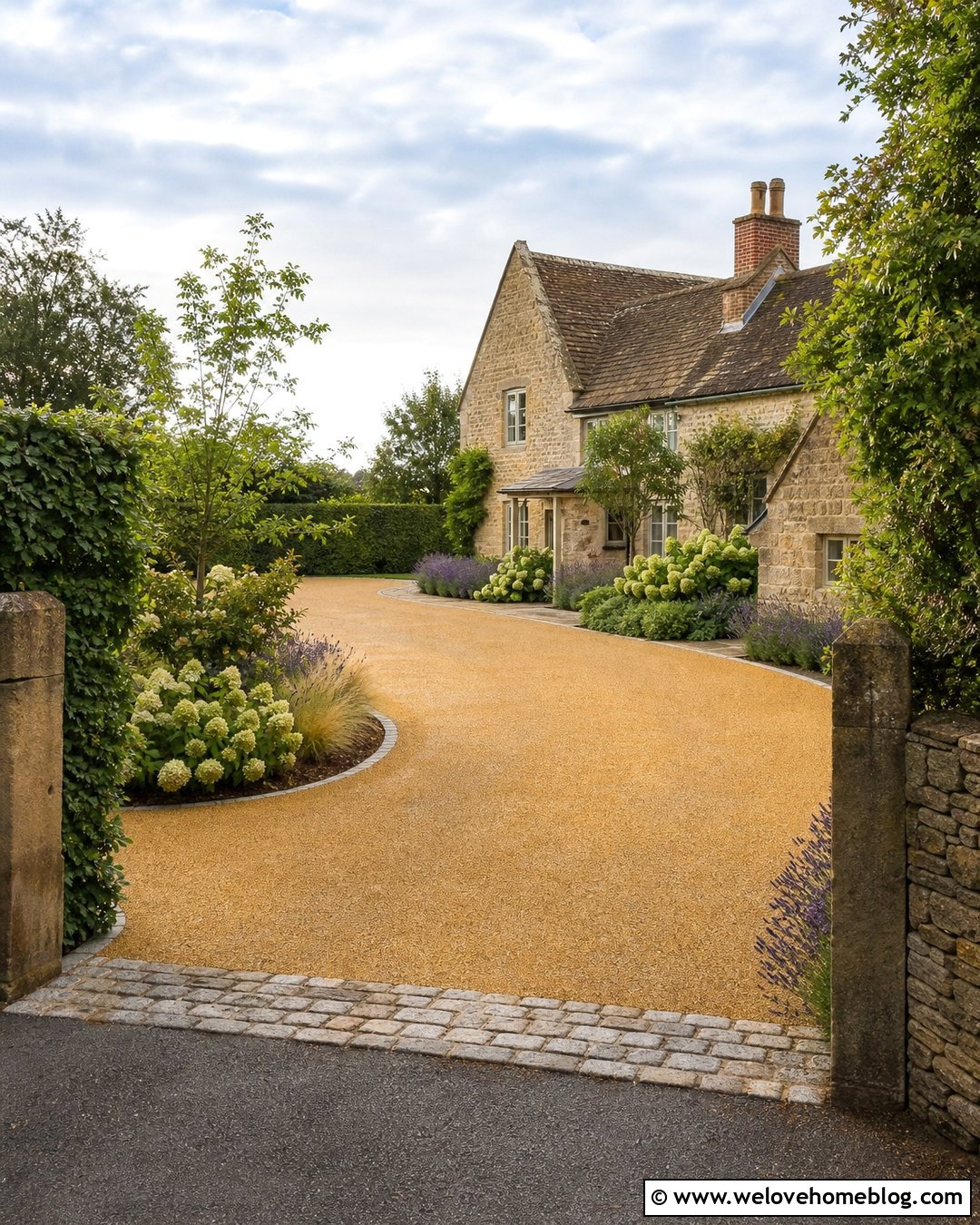
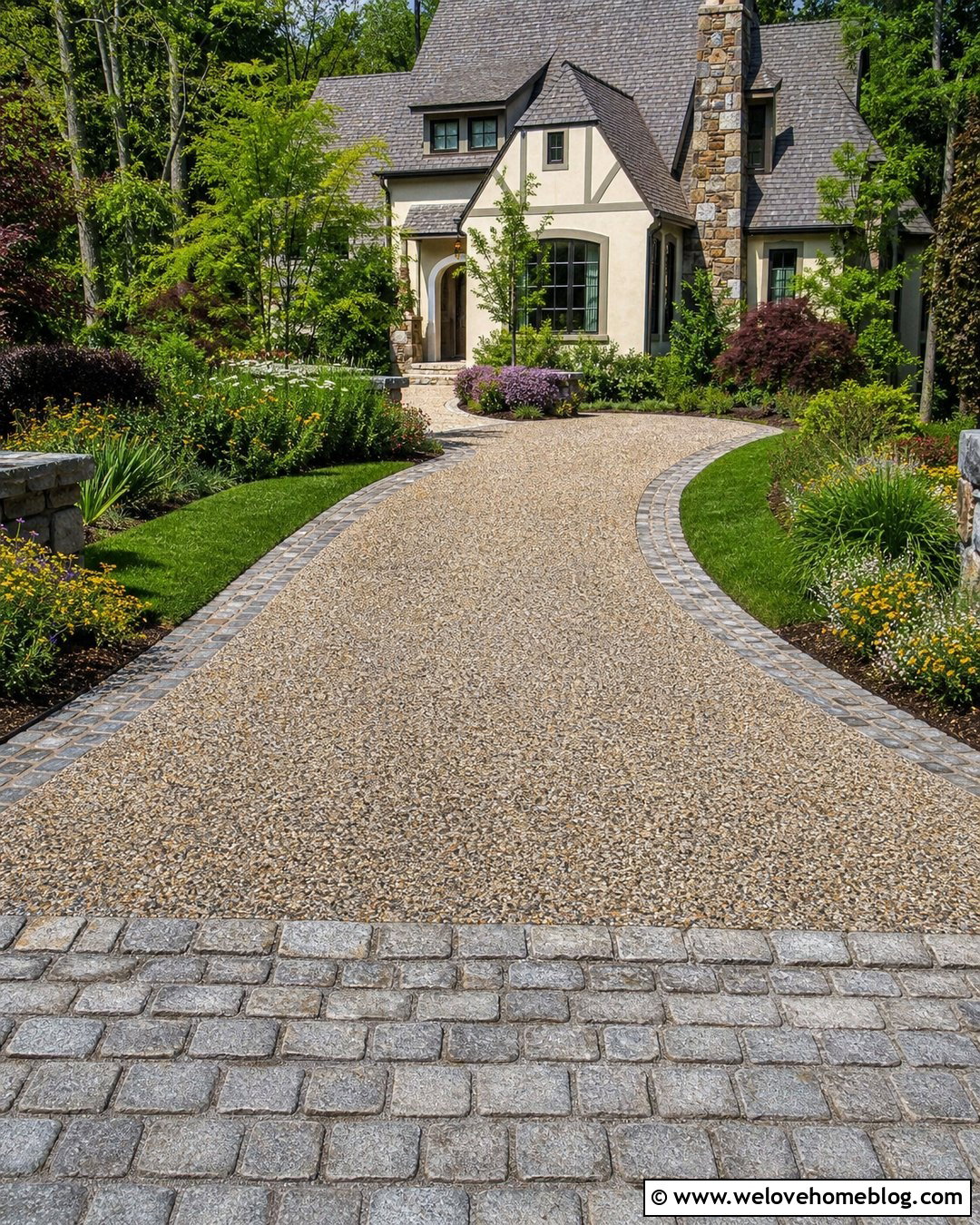
Cobblestone edging adds texture and historic character to a smooth resin-bound driveway. It works especially well with warm buff or golden aggregate outside a period cottage, converted barn, or older stone property. Follow a softly curved driveway shape and use cobbles around the full perimeter, including the road entrance and planting islands. A few larger cobbled areas near gateposts can make the entrance appear more substantial. Surround the drive with informal hedging, lavender, hydrangeas, and a small ornamental tree. Keep the resin color quiet so the uneven cobblestone texture remains the main decorative detail. This pairing creates the charm of a traditional gravel or stone entrance while retaining a visually consistent vehicle surface that connects the road, parking area, and house.
11. Resin Driveway With Brick Ribbon
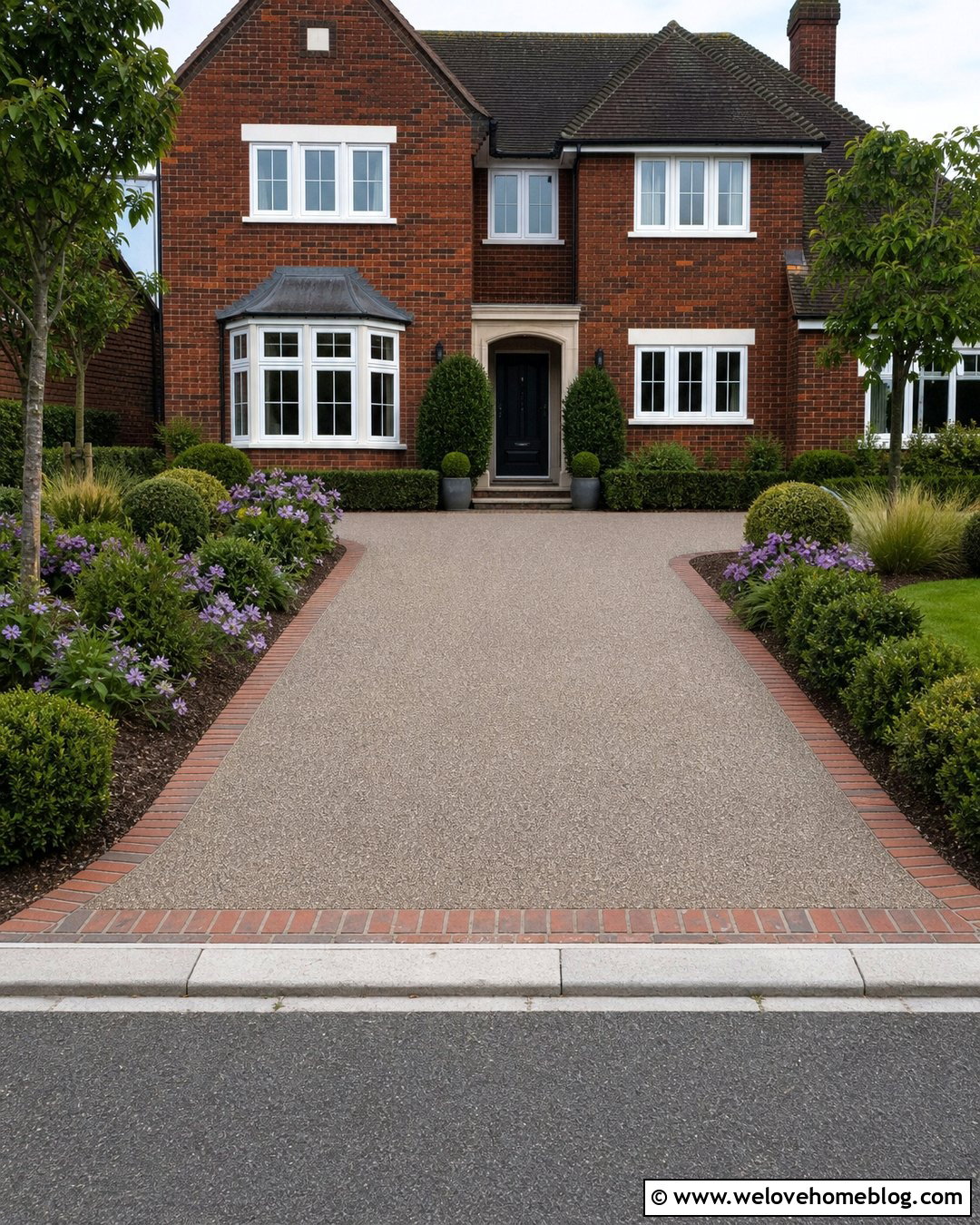
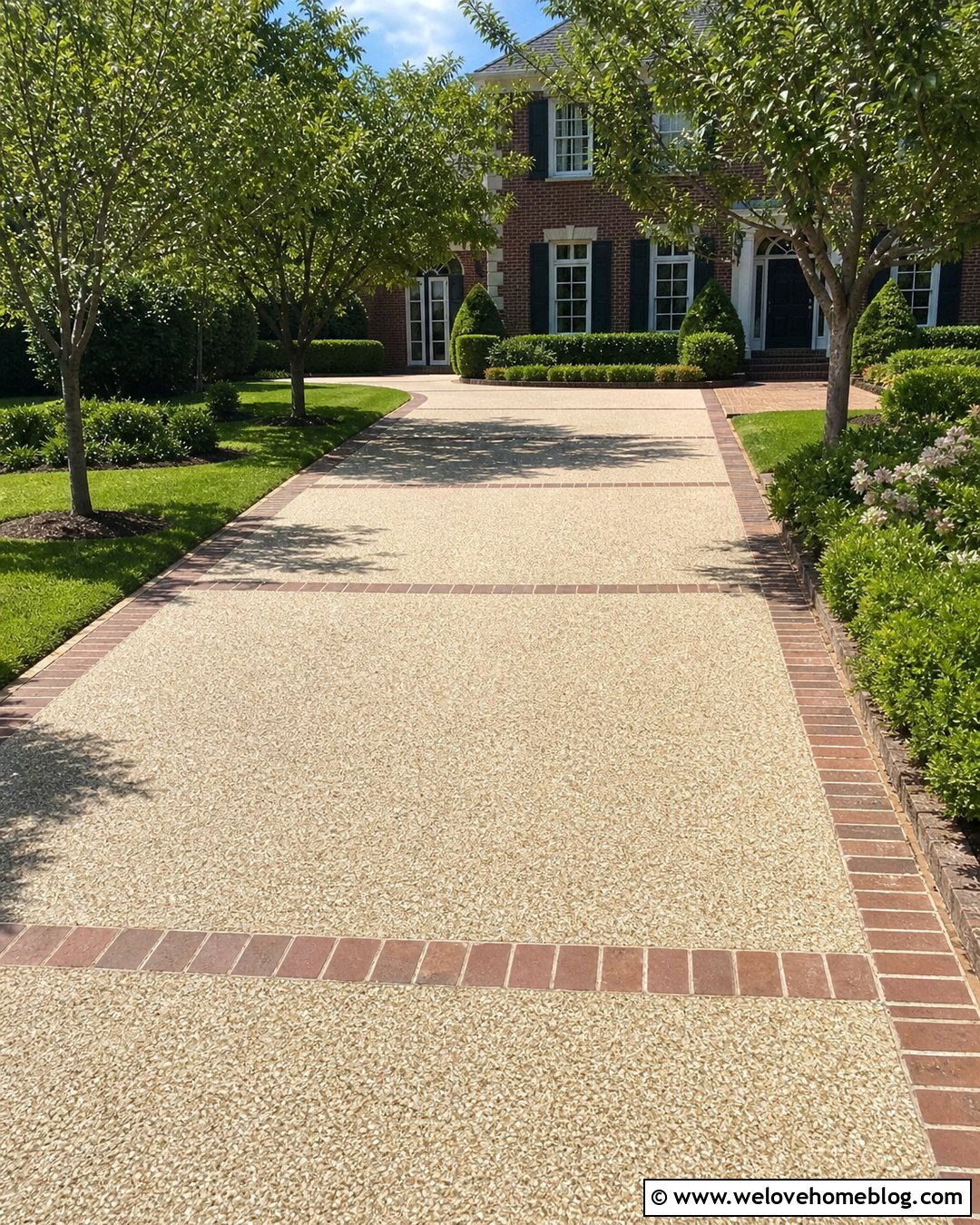
A brick ribbon can introduce detail across a resin driveway without creating an elaborate centerpiece. Start with a neutral beige or warm gray resin-bound surface, then place a single line of clay bricks across the entrance and around the parking zone. Another brick line can define the walkway to the front door. Choose bricks that coordinate with the house facade but remain dark enough to stand out against the aggregate. A straight driveway with gently rounded planting corners keeps the composition practical and approachable. Low box alternatives, hardy geraniums, and ornamental grasses can soften the edges. The ribbon works best when it follows meaningful divisions rather than forming random decoration. It should guide movement, define boundaries, and connect the surface with the architecture.
12. Resin Driveway With Granite Entrance Apron
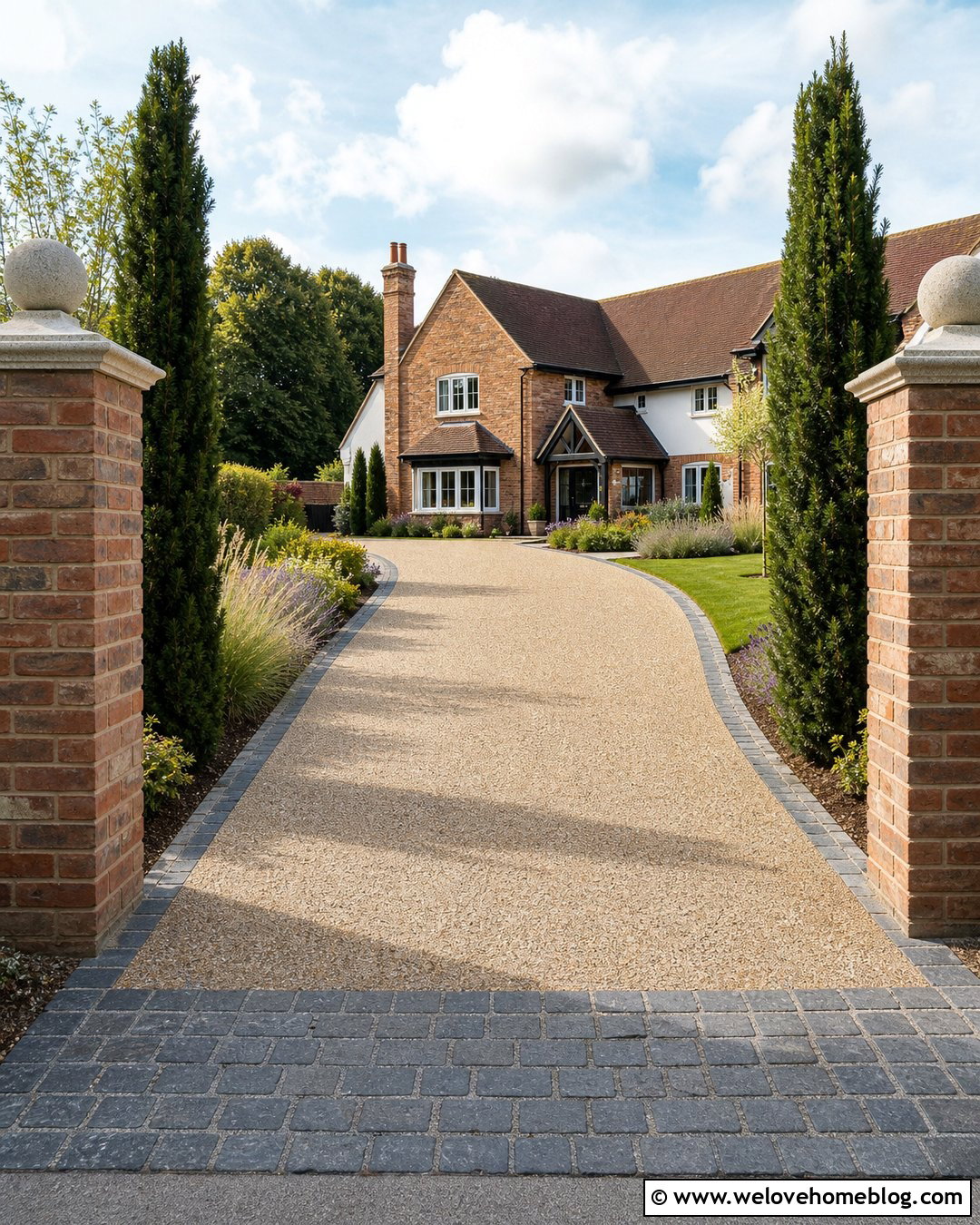
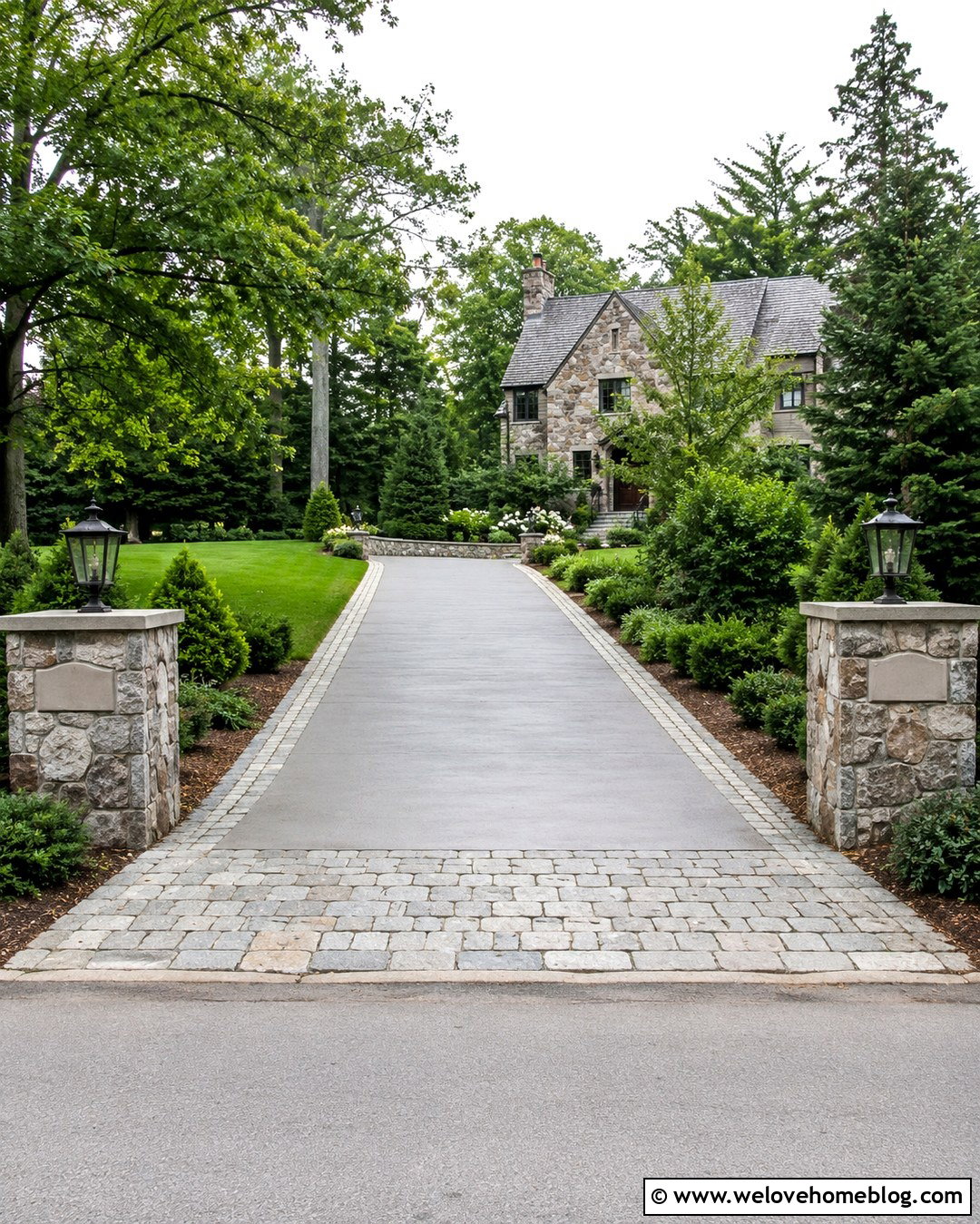
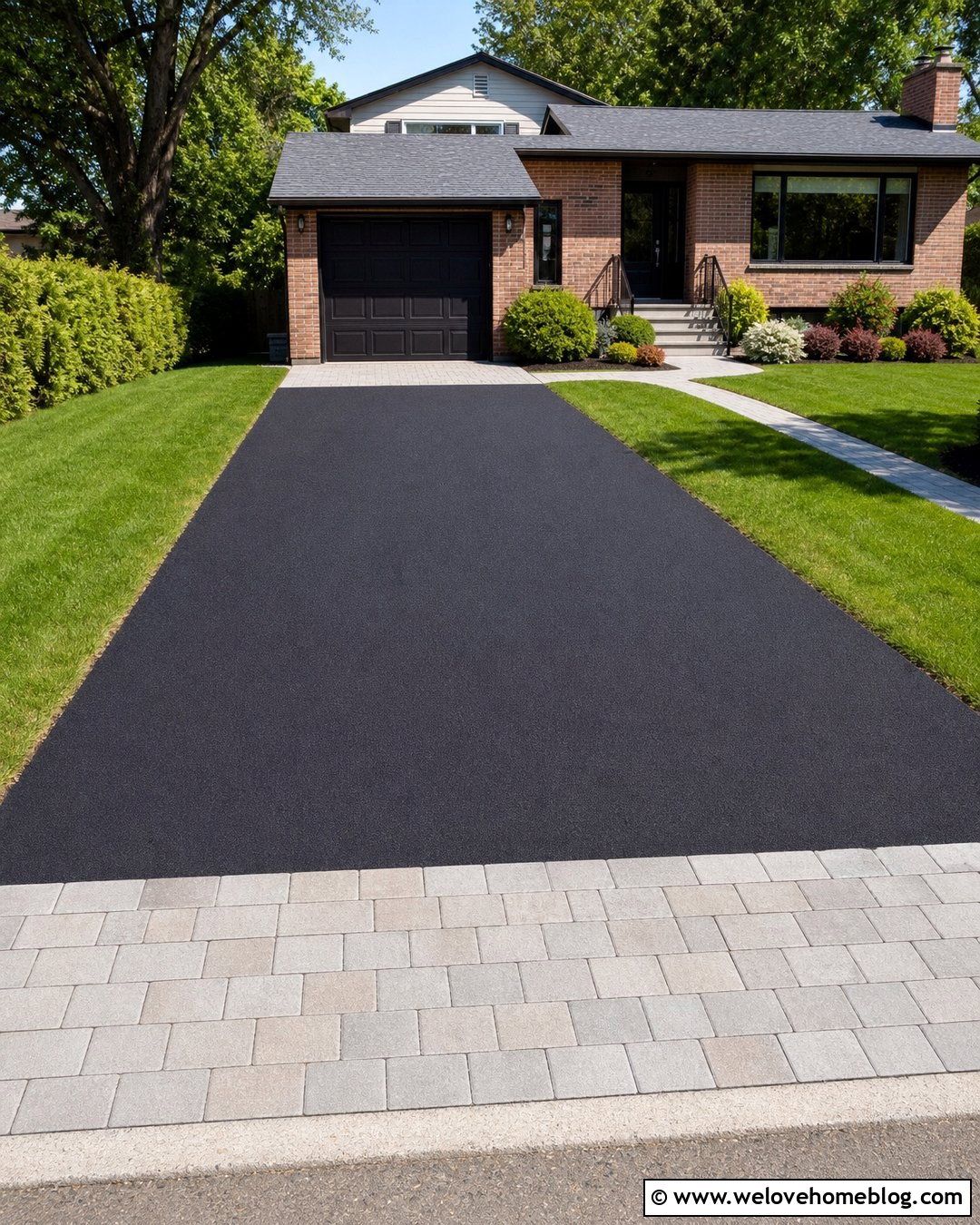
A granite entrance apron gives a resin-bound driveway a strong and attractive connection to the road. Use dark gray setts across the first section of the drive, then transition into a silver, beige, or golden resin surface. The harder-looking apron visually protects the busiest edge and provides a defined stopping point for the main aggregate. Repeat the same granite in a narrow perimeter border and around any gate pillars. Behind the apron, a gently curved driveway can lead toward a detached house or garage. Plant both sides of the entrance with symmetrical evergreen shrubs, then use looser grasses and flowering plants closer to the home. The result feels formal at the pavement but gradually becomes softer and more residential as the driveway approaches the house.
13. Curved Resin Driveway
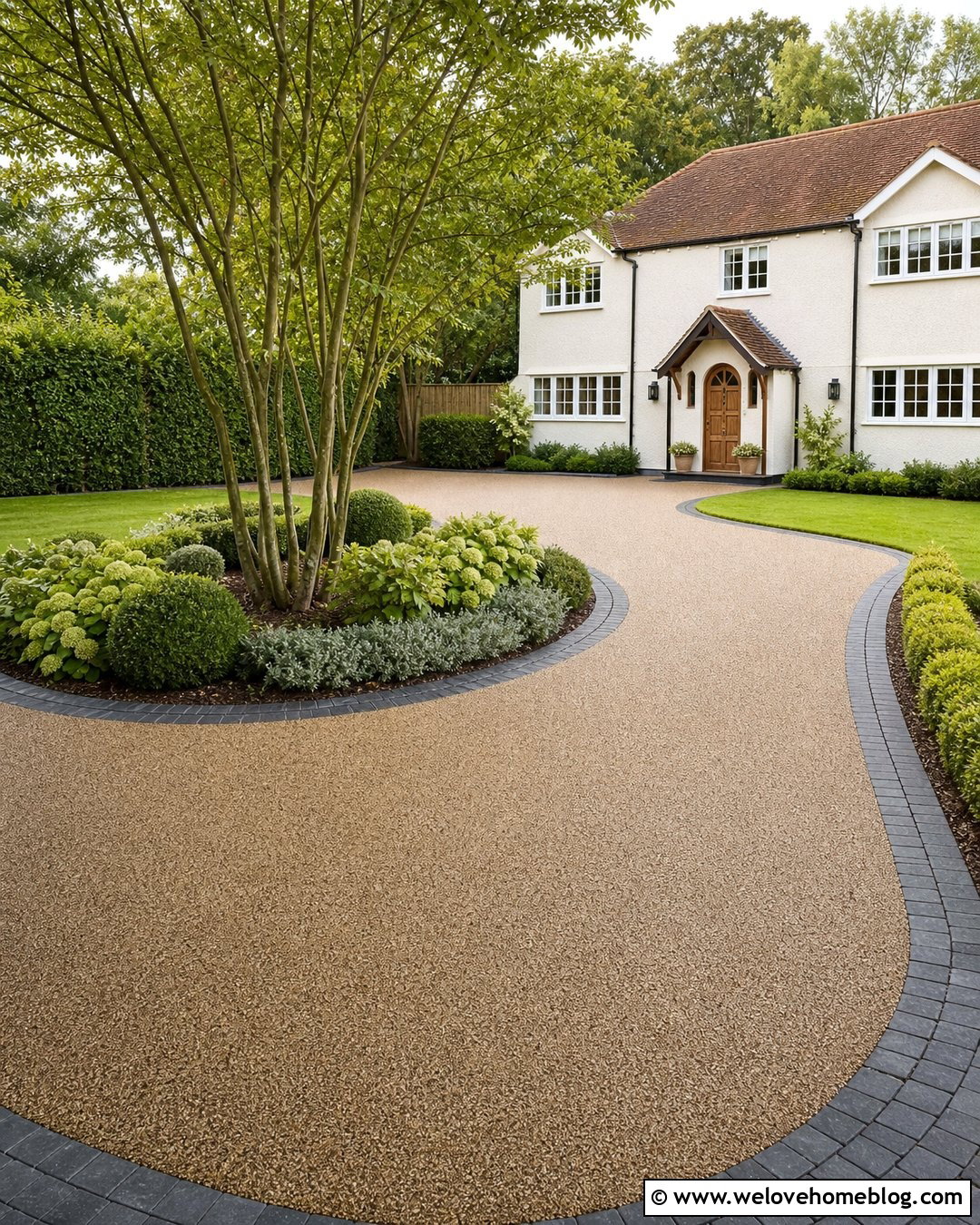
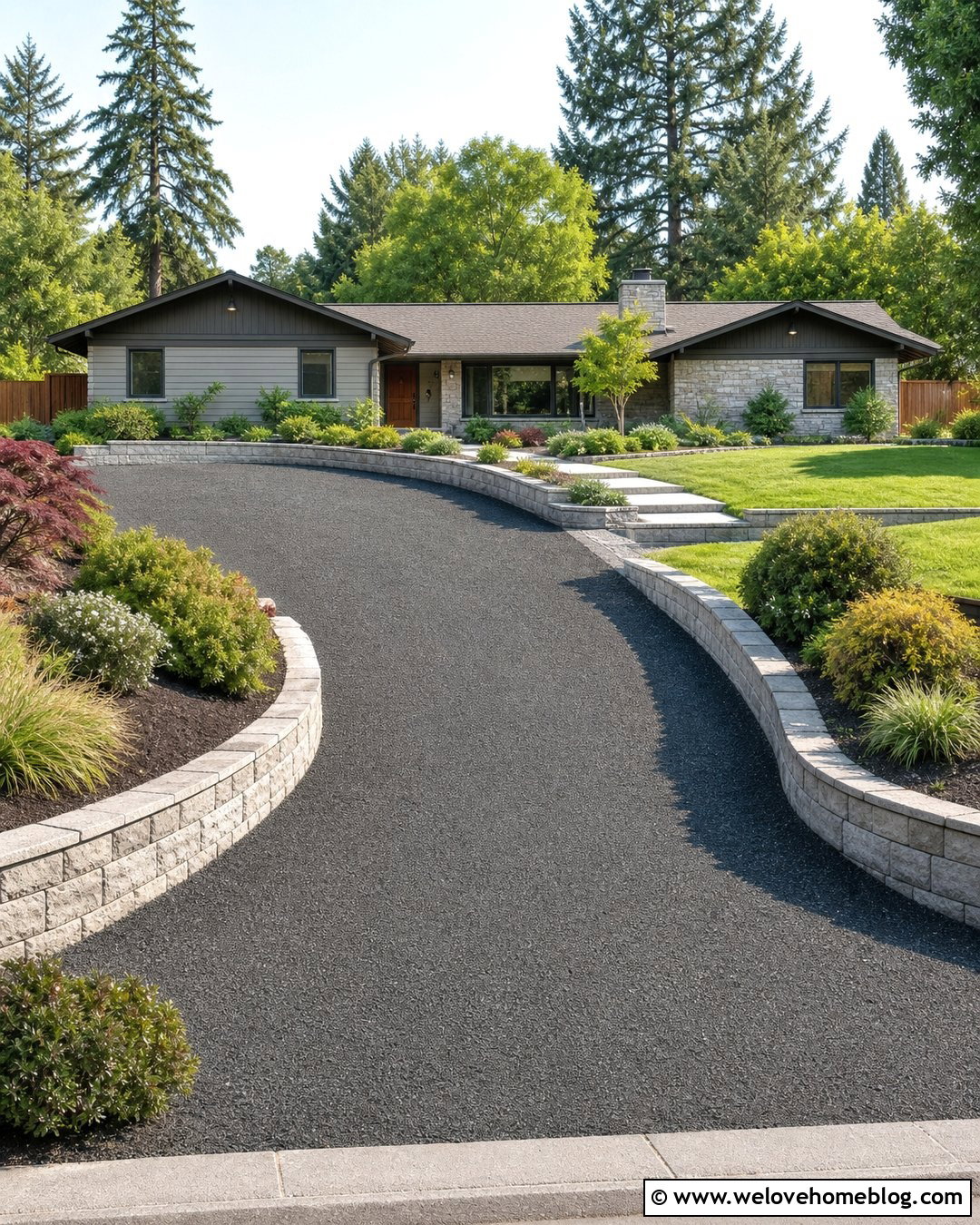
A curved resin driveway can make a wide front garden feel more natural while creating an appealing view toward the house. Choose a warm neutral resin-bound aggregate and emphasize the flowing shape with a dark block or granite border. The inside curve can hold a deep planting bed with a feature tree, layered shrubs, and low ground cover. Keep the outside edge simpler with lawn or a clipped hedge so vehicles have a clear route. The bend should be broad enough for comfortable access rather than added purely as decoration. A matching curved path can branch toward the front door before the driveway reaches the garage. This arrangement combines movement, greenery, and practical parking in one design, making the approach feel longer and more thoughtfully landscaped.
14. Circular Resin Driveway
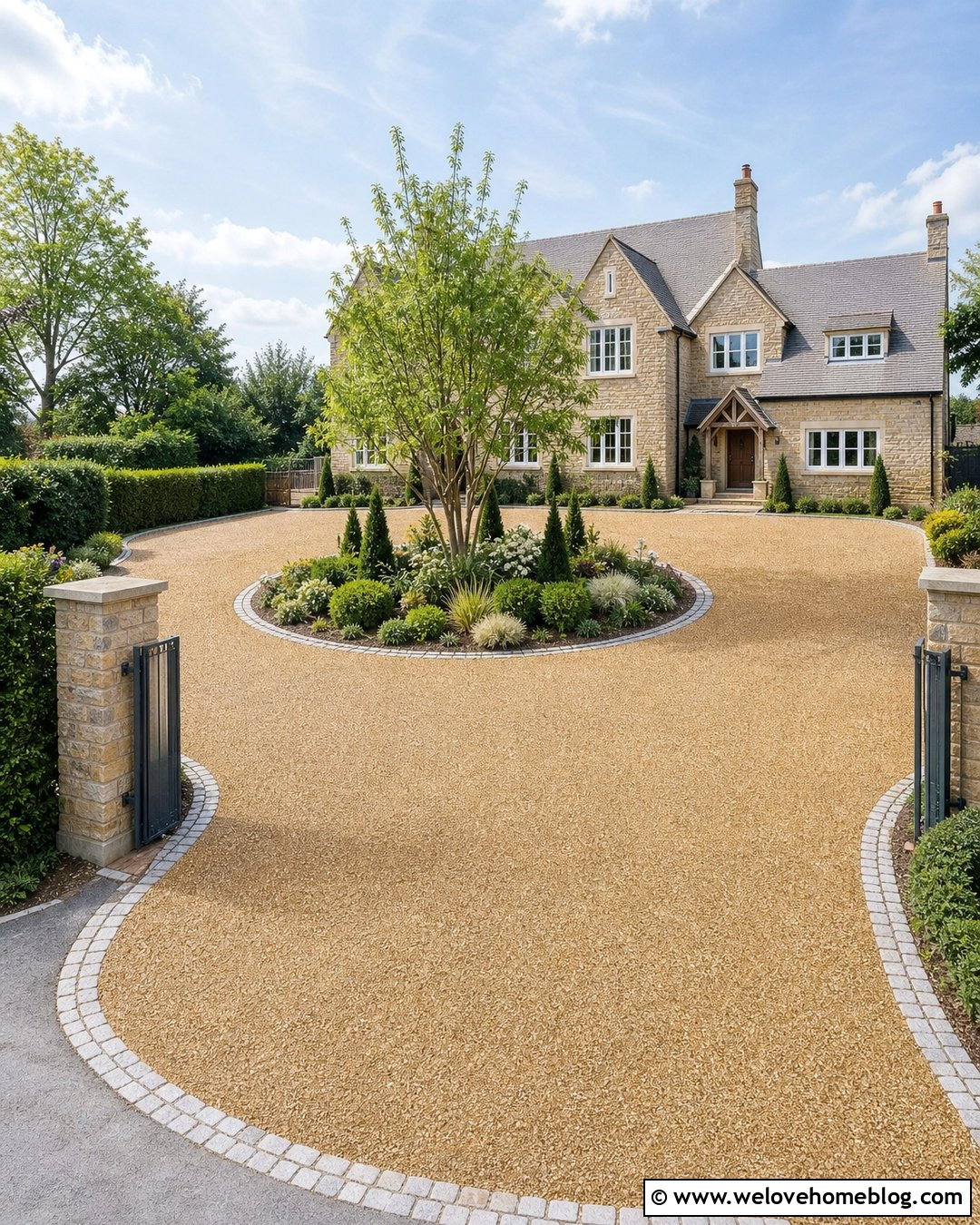
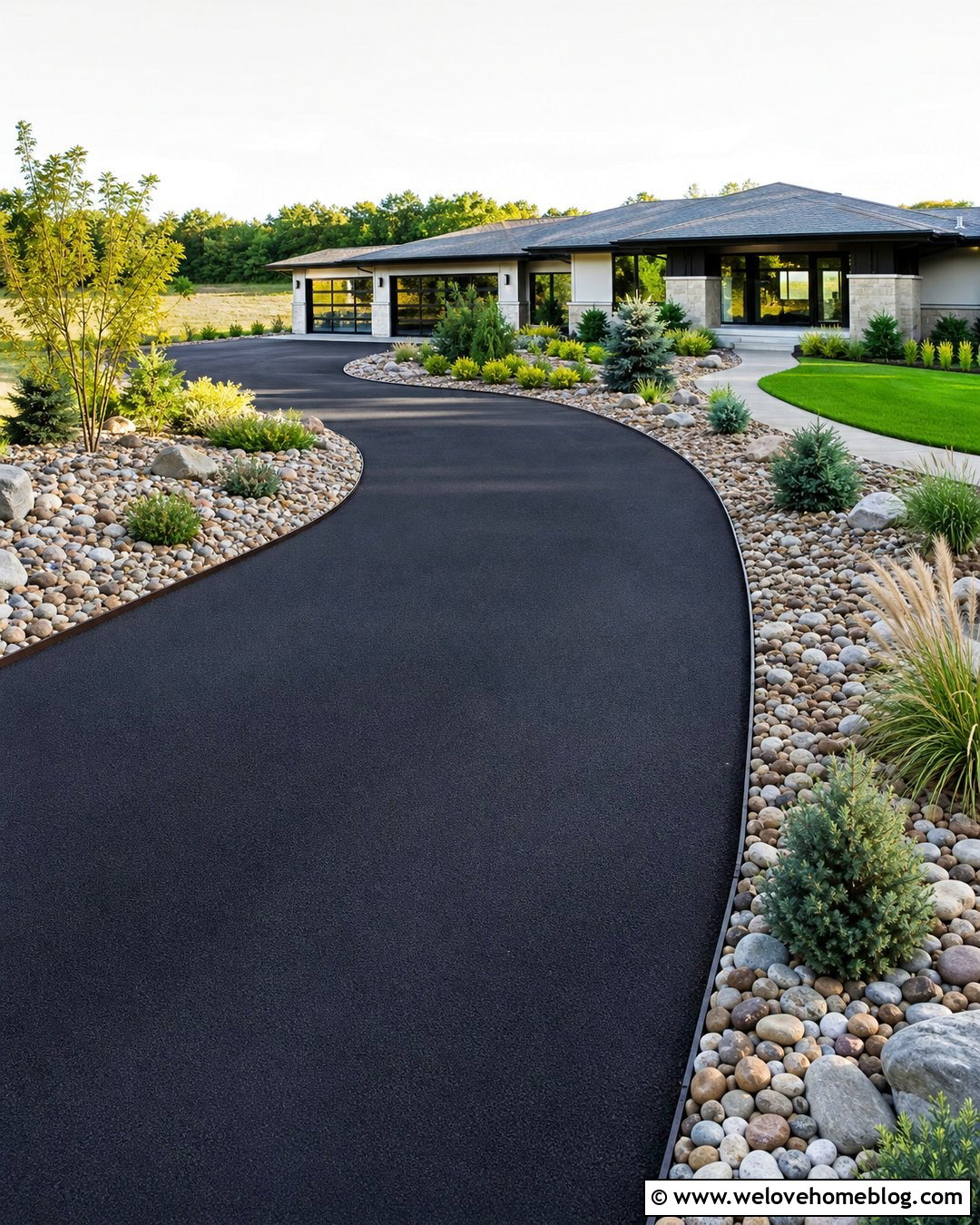
A circular resin-bound driveway provides convenient arrival and departure space around a central landscaped island. Use a natural golden or mid-gray aggregate, depending on the house facade, and frame both edges with contrasting granite setts. The center can feature a small multi-stem tree surrounded by evergreen shrubs, ornamental grasses, and seasonal bulbs. Keep plants low near the driveway entrance to protect visibility. The resin surface should form a clear, generous loop with enough width for comfortable turning. At the house, widen one portion to create practical parking without interrupting the circular flow. Repeating the same edging around the island, entrance, and front path unifies the scheme. This complete layout suits a broad frontage and gives a substantial detached home a balanced, welcoming approach.

15. Horseshoe Resin Driveway
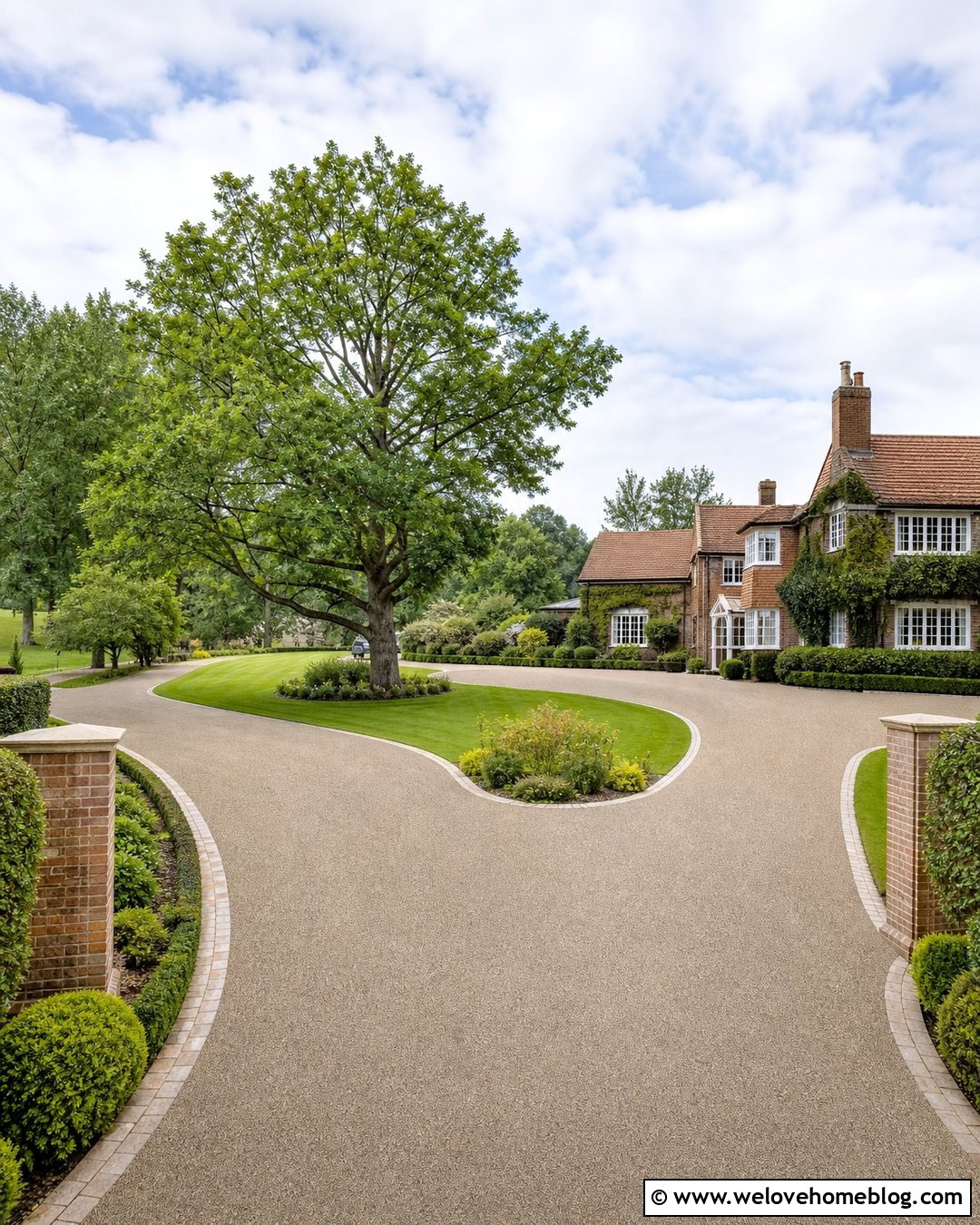
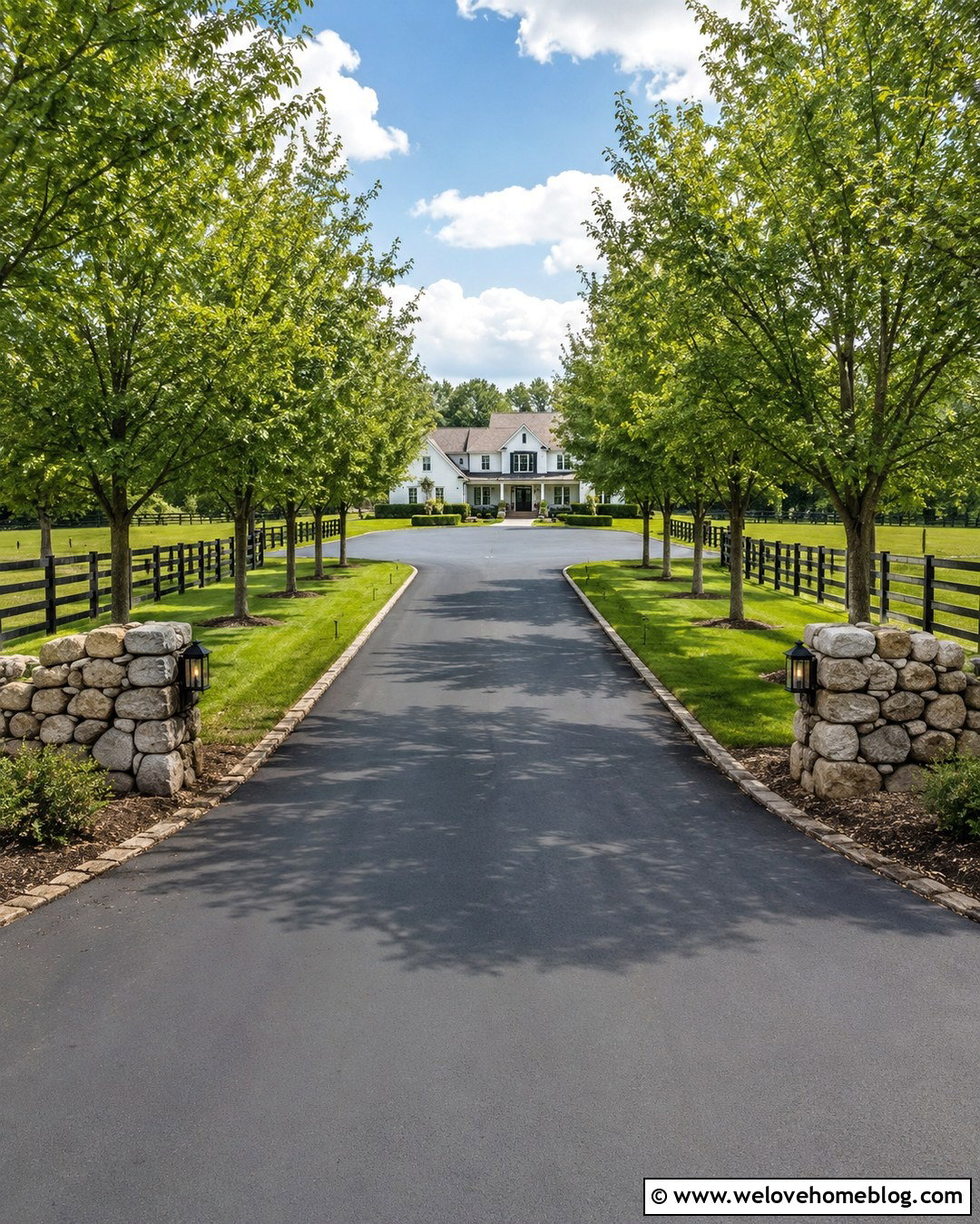
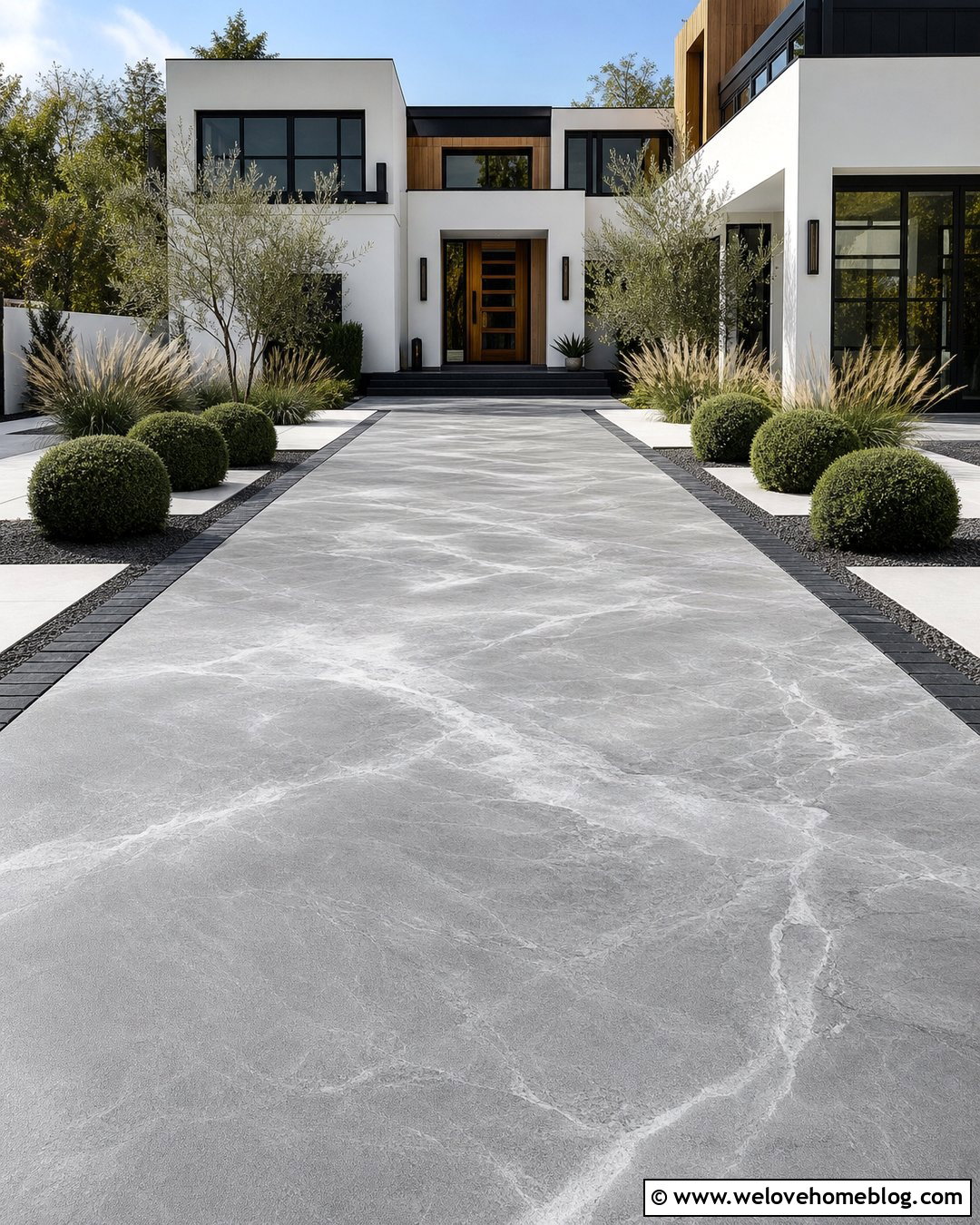
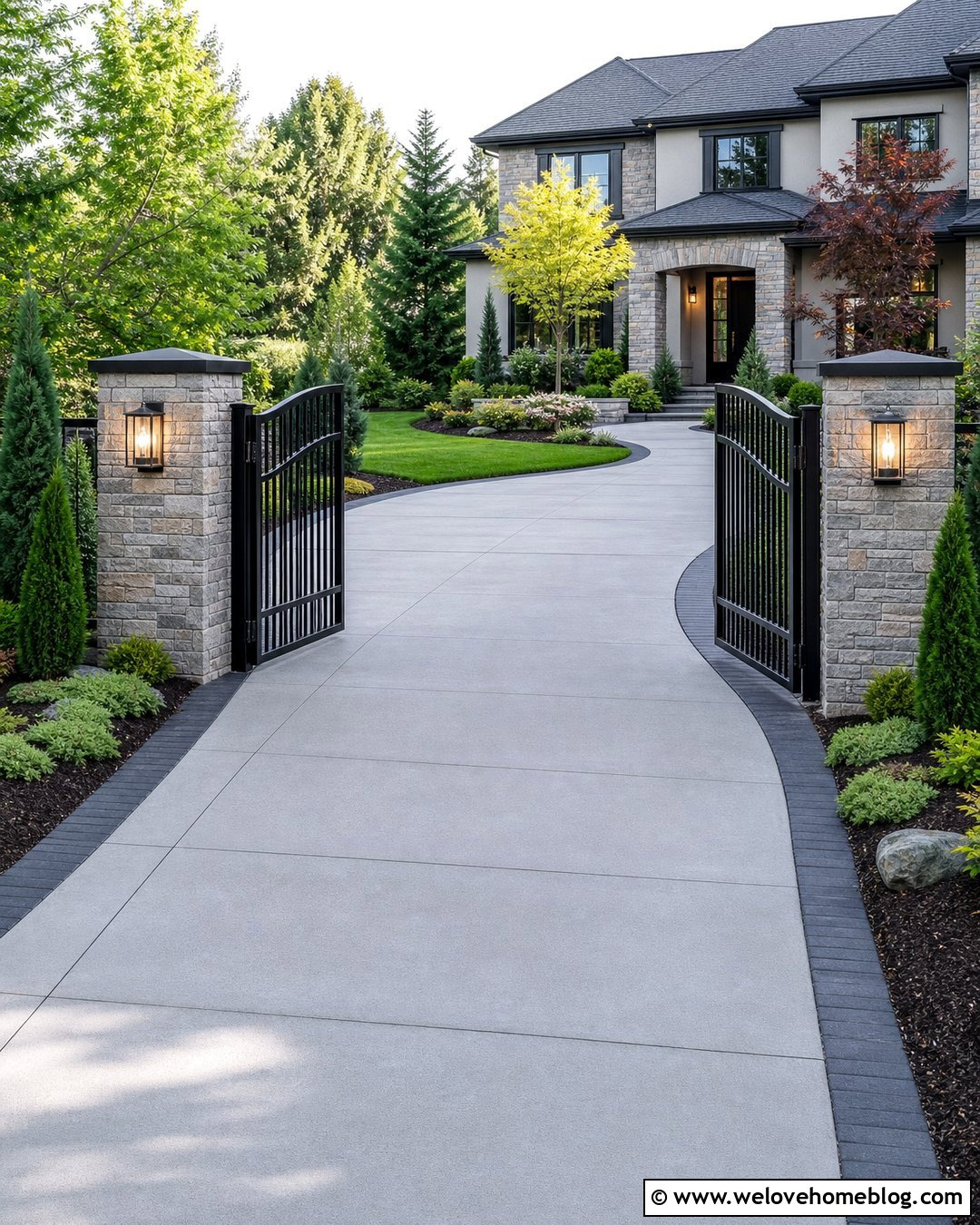
A horseshoe resin driveway creates two separate pavement connections while preserving a green center in the front garden. A warm gray resin-bound surface offers a neutral foundation, while brick or stone setts can mark both entrances and frame the curved edges. Place lawn, a feature tree, and layered planting inside the central area so the layout feels like a garden rather than a large parking court. Near the house, widen the curve for parking and access to the garage. Matching gate pillars at both ends can add symmetry without requiring closed gates. Keep the turning route simple and avoid narrow bends. This design is most successful on a wide plot where the full U-shaped driveway, central landscaping, and house facade can be viewed together from the street.
16. Small Resin Driveway
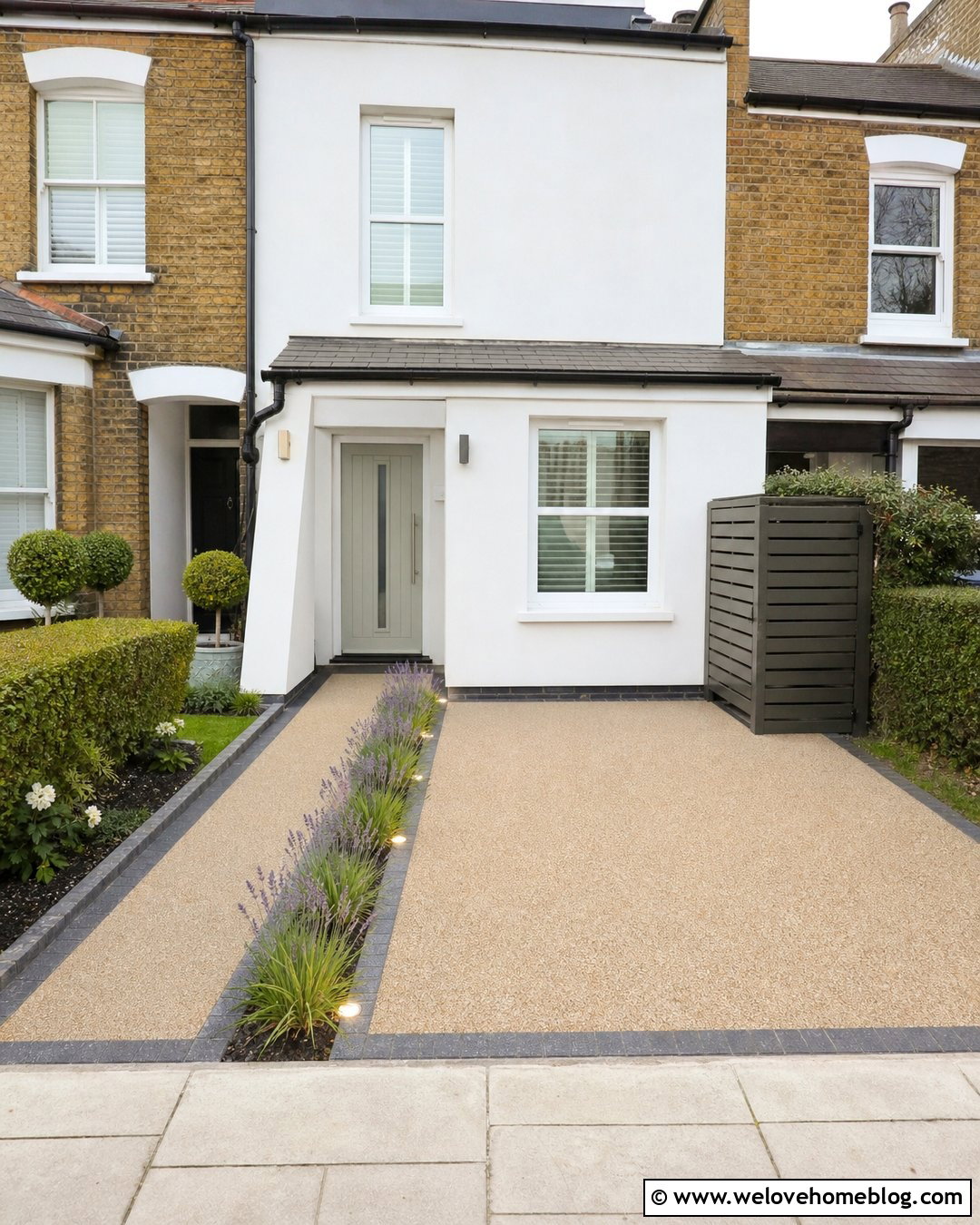
A small resin-bound driveway needs clear boundaries and a restrained material palette. Choose a light gray or beige aggregate to keep the frontage visually open, then use one narrow row of charcoal blocks along the edges. A straight parking bay can fit beside a compact walkway made from the same resin, separated by a subtle block ribbon. Replace bulky planting beds with slim borders containing upright grasses, lavender, or neatly clipped shrubs. Wall-mounted or recessed lighting will save more room than large freestanding posts. If bins must remain in the front garden, position a screened storage area beside the house rather than at the pavement. Every feature should have a purpose. This approach creates practical parking while preserving an attractive and easy-to-understand route to the door.
17. Narrow Resin Driveway
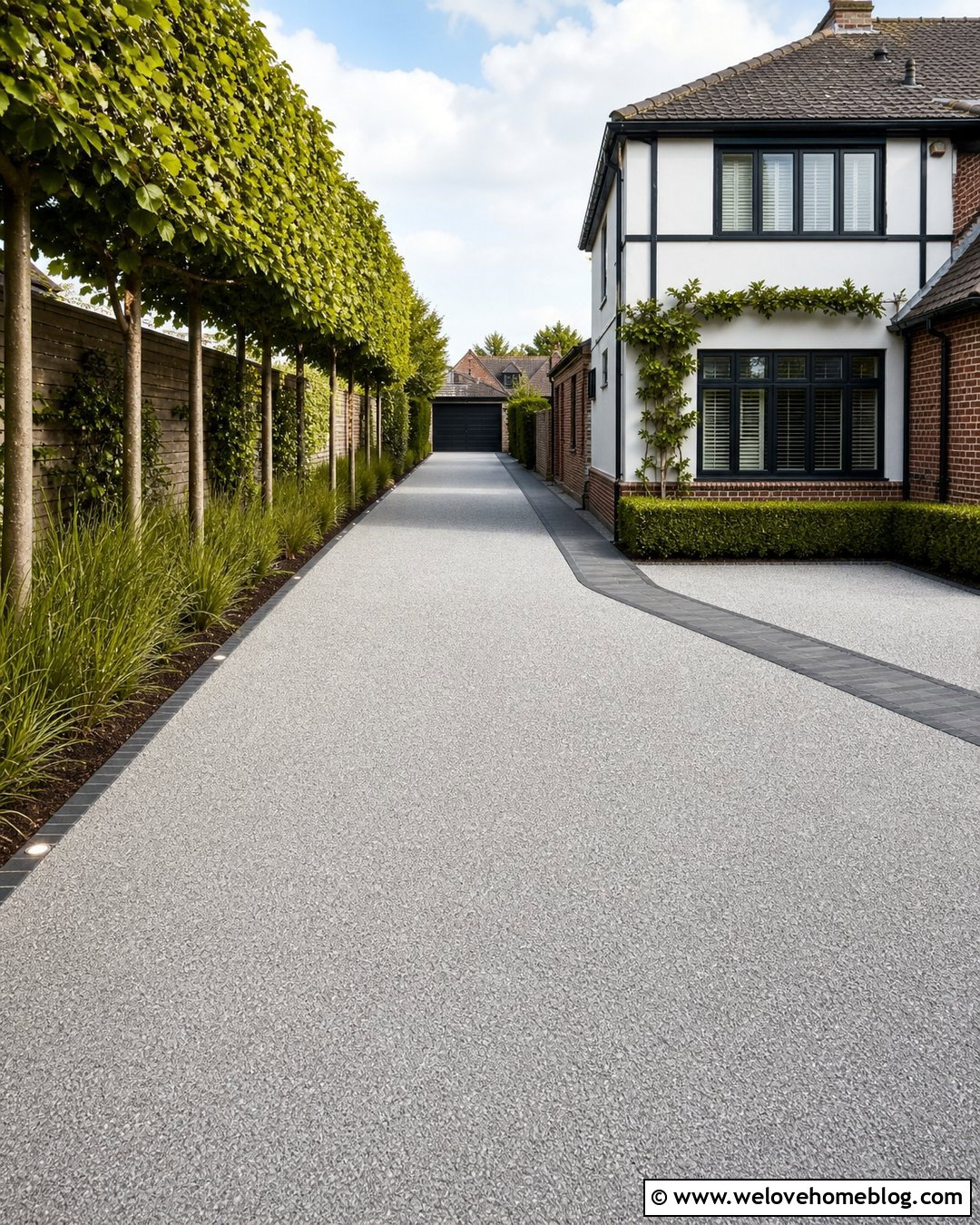
A long, narrow resin driveway can appear wider when the surface, border, and planting are carefully controlled. Use a pale silver-gray resin-bound aggregate with slim dark edging to create clean parallel lines. Avoid broad patterned borders, which may reduce the apparent driving width. A narrow pedestrian strip in a slightly different resin tone can run beside the house, provided the remaining vehicle route stays comfortable. Add vertical planting rather than wide beds, using pleached trees, clipped hedging, wall-trained greenery, or upright grasses. Small recessed lights along one edge can improve definition without cluttering the space. At the far end, widen the resin surface near the garage or parking area. This gives the driveway a useful destination and prevents the long approach from resembling a plain corridor.
18. Sloped Resin Driveway
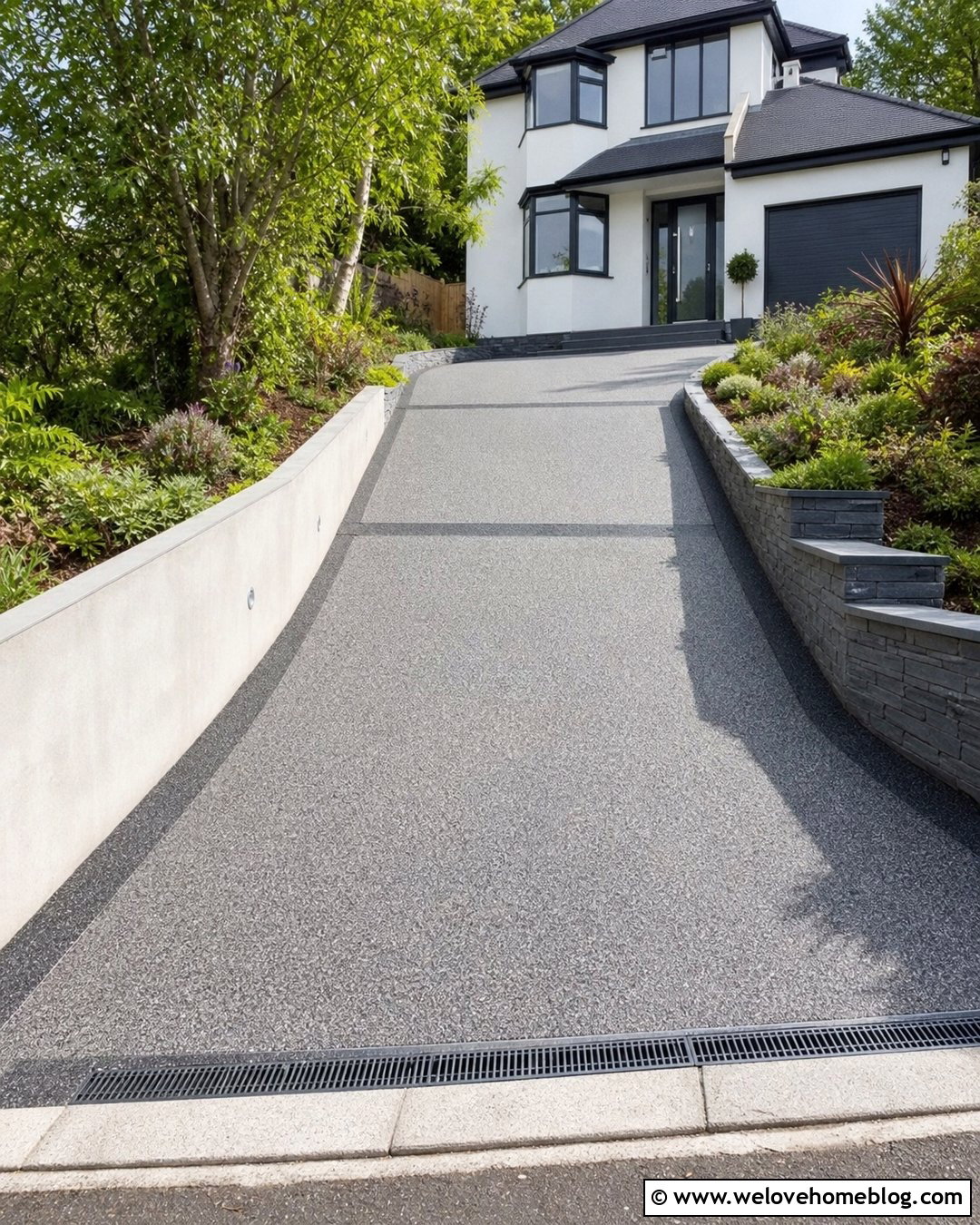
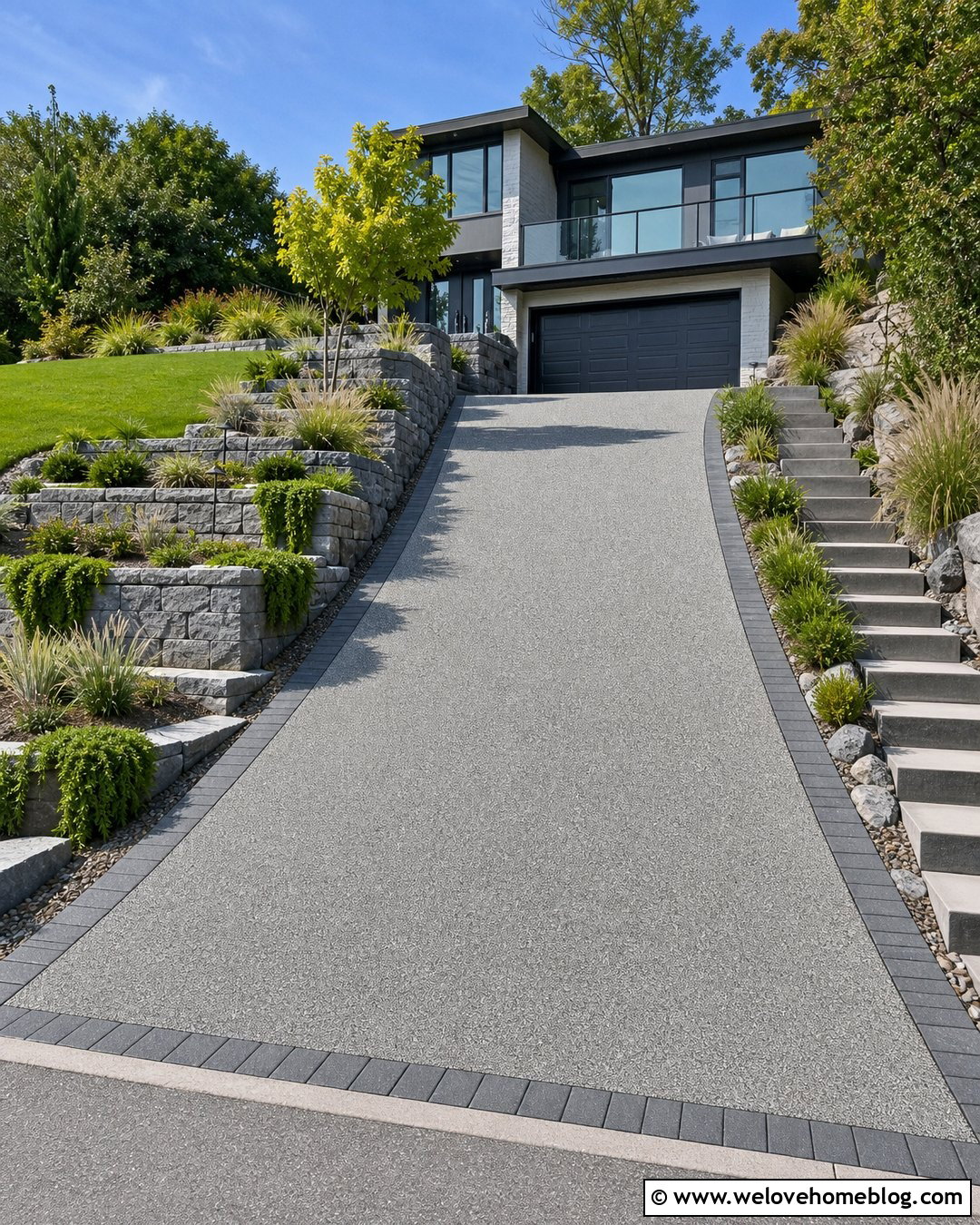
A sloped resin driveway should look attractive while responding carefully to levels, water movement, and vehicle access. Use a mid-tone resin-bound aggregate that will not create excessive visual contrast when the surface rises toward the house. Dark granite setts can define the sides and create level transition bands where appropriate. Plant the higher boundary with retaining beds, low shrubs, and ground cover, while keeping the lower edge open and visible. Channel drainage or another suitable system may still be needed around thresholds and other vulnerable areas, depending on the site design. Avoid highly polished-looking details and abrupt curves on a steep approach. A simple straight or gently angled layout, professionally designed for the gradient, will usually feel safer, cleaner, and better integrated with the property.
19. Resin Driveway With Grass Strips
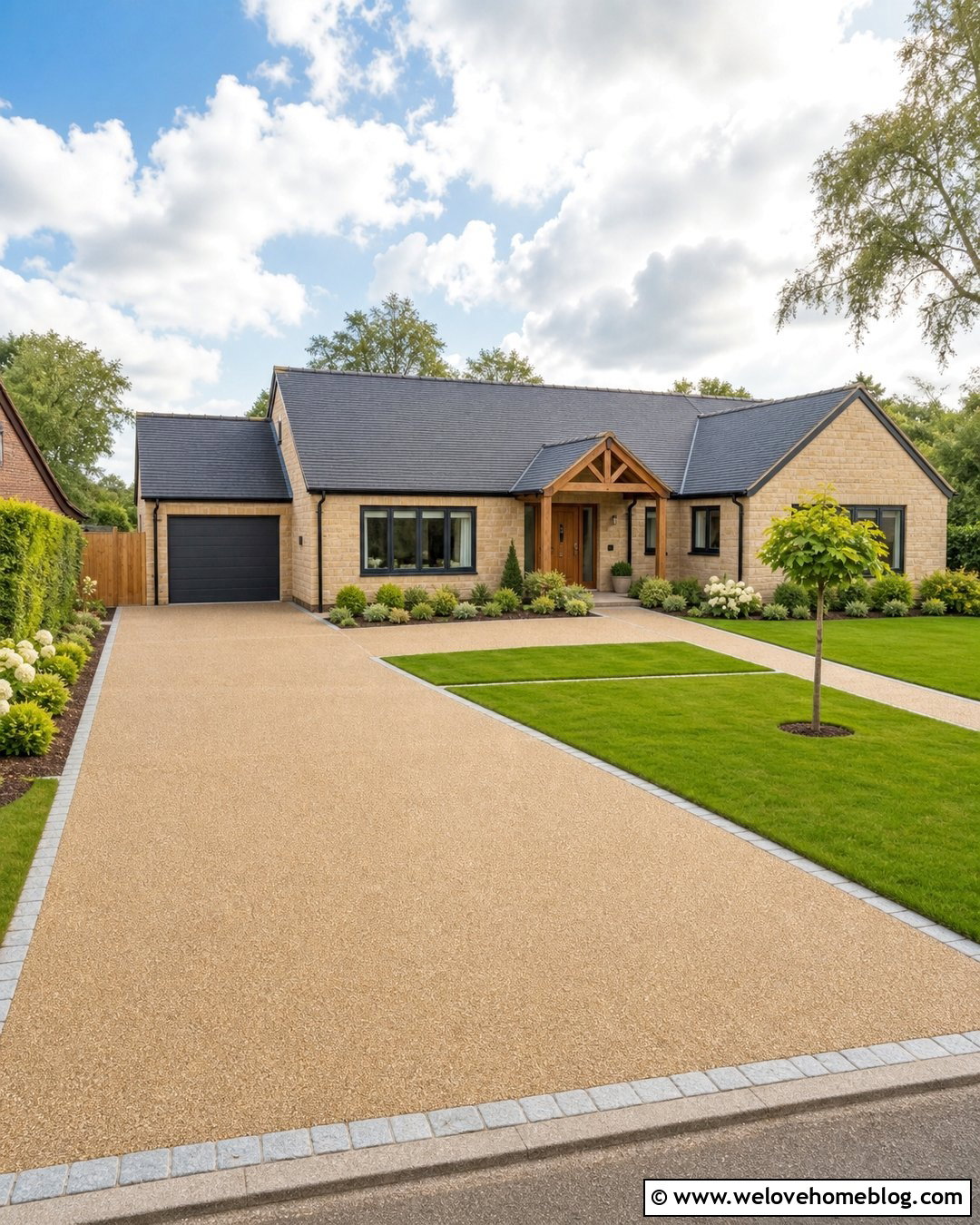
Grass strips can reduce the hard appearance of a broad resin driveway when they are positioned outside the main tire paths. Use warm beige resin-bound gravel for the parking surface and separate it from the lawn with flush steel or granite edging. A central grass strip may look attractive on a single-car drive, but it requires accurate sizing and regular trimming. For easier maintenance, place wider grass panels along the sides or between separate parking bays. Add a small tree and a simple planted border near the house to continue the green framework. The resin should remain the dominant vehicle surface, creating a smooth route from pavement to garage. This combination feels fresh and garden-focused, particularly outside a bungalow, contemporary home, or modest suburban property with a wide frontage.
20. Resin Driveway With Lavender Border
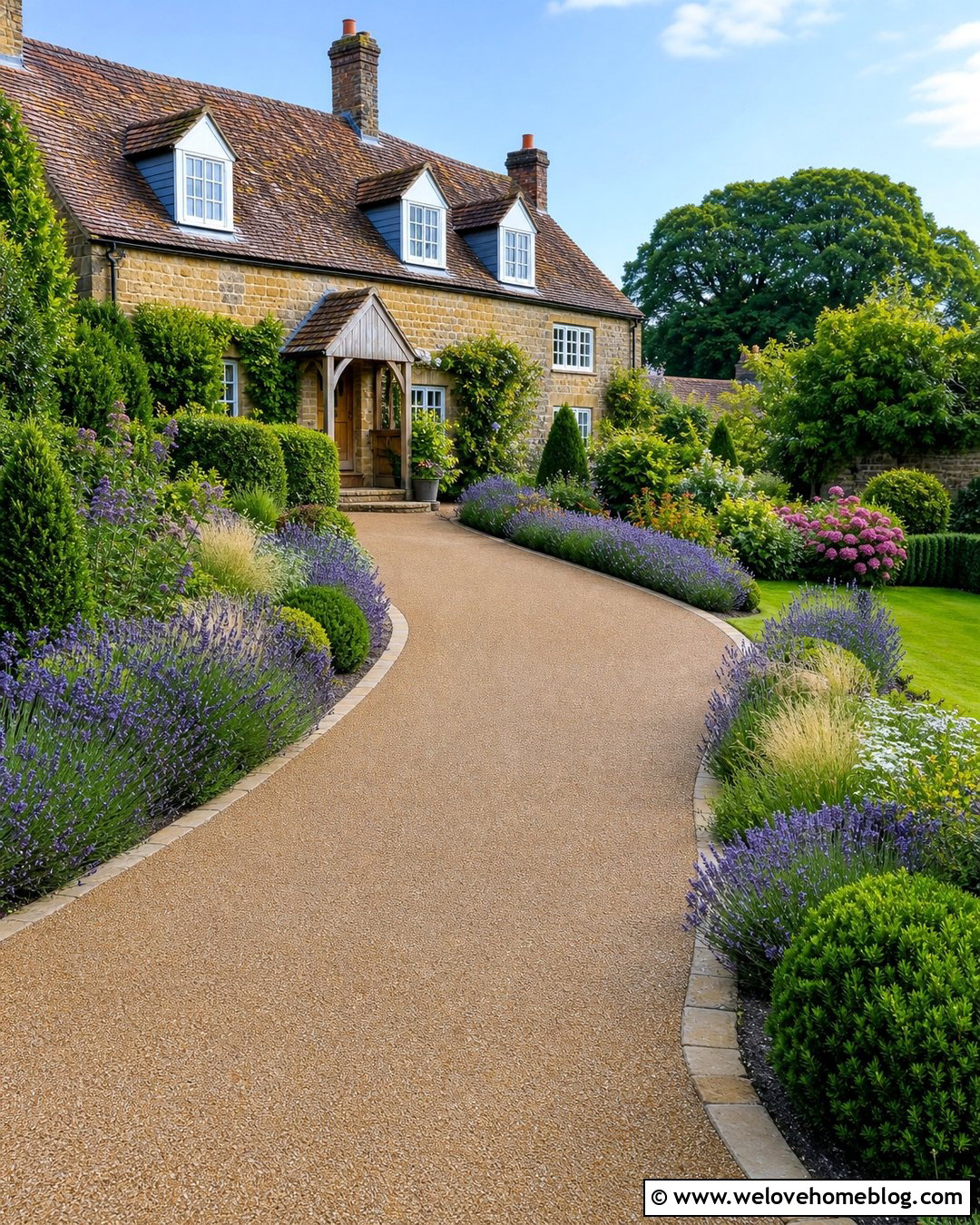
Lavender provides color, fragrance, and a soft edge beside a warm resin-bound driveway. Choose a honey, buff, or light beige aggregate that complements the plant’s gray-green foliage and purple flowers. Shape the driveway with a shallow curve, then run a generous lavender border along the outside edge. A low brick or sandstone edging strip will prevent soil from spilling onto the resin and make maintenance easier. Mix the lavender with compact evergreen shrubs and ornamental grasses so the bed retains structure outside the flowering season. Leave sufficient clearance near parking doors and keep plants lower at the road entrance. This complete look suits cottages, rendered homes, and red brick houses, bringing together a natural stone-colored surface, traditional planting, and a welcoming route to the front door.
21. Resin Driveway With Low Maintenance Planting
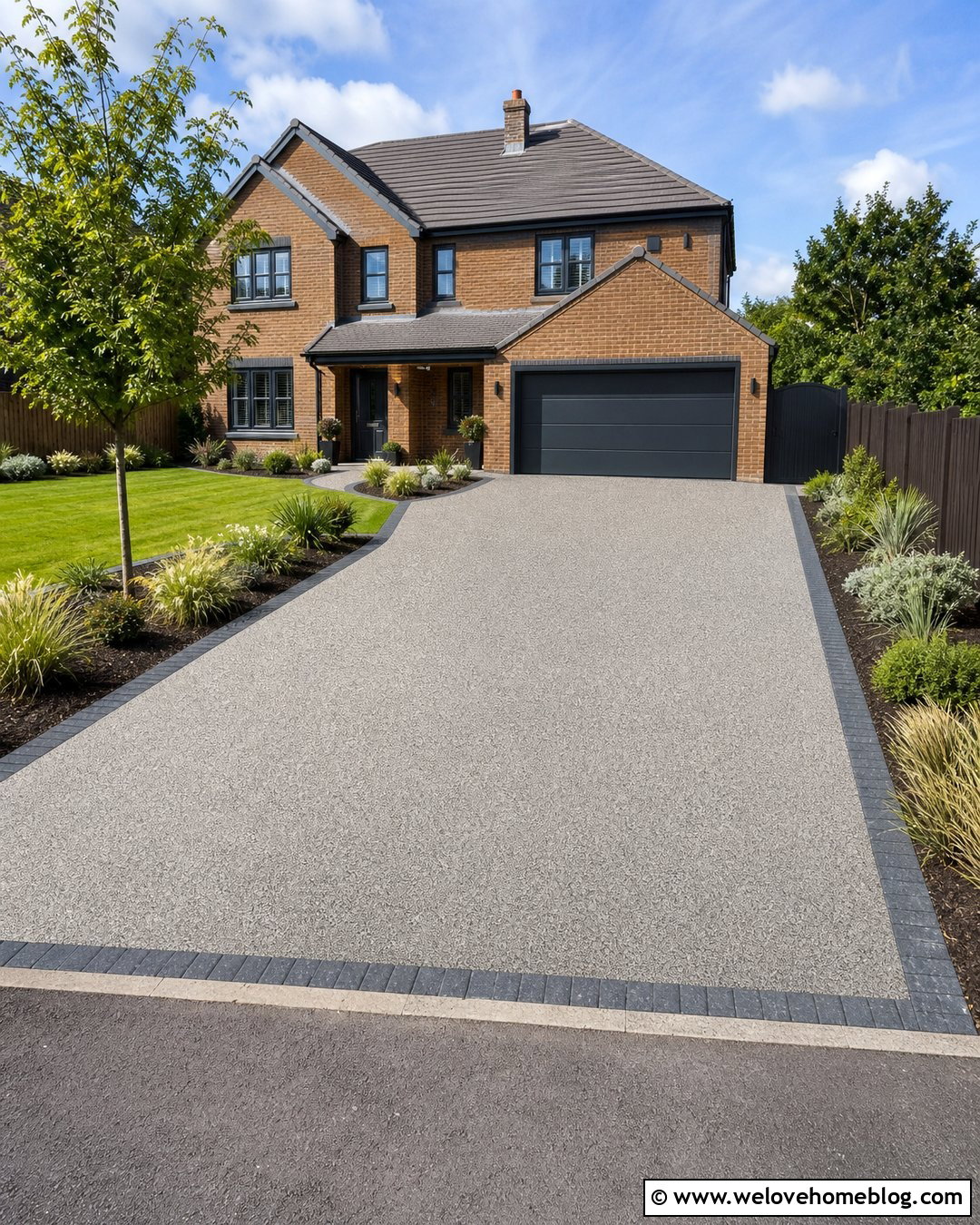
Low-maintenance landscaping can soften a resin-bound driveway without creating constant trimming, watering, or cleanup. Pair a neutral gray aggregate with broad planting beds containing evergreen shrubs, hardy grasses, ground-cover plants, and one compact tree. Use granite or dark block edging to separate soil and mulch from the driving surface. A rectangular two-car layout provides practical parking, while curved bed corners reduce the amount of uninterrupted paving. Choose plants suited to the garden’s light, soil, and exposure rather than relying only on appearance. Avoid large trees with dense surface roots immediately beside the driveway. Repeating a limited selection of plants across both sides will make the scheme feel organized. The resulting entrance remains green and inviting while retaining the clean simplicity associated with resin surfacing.
22. Resin Driveway With Raised Planters
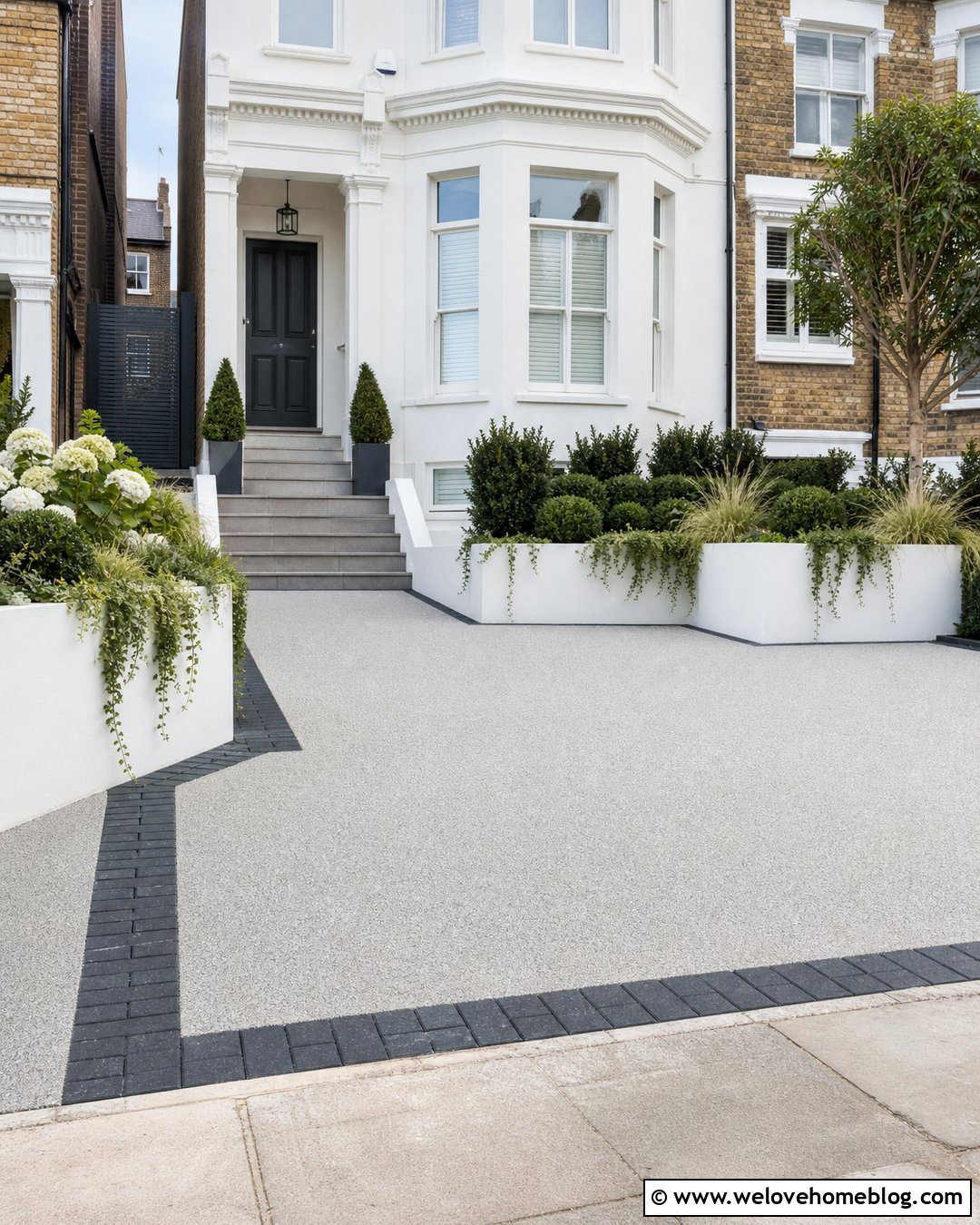
Raised planters bring greenery to a resin driveway where ground-level beds are difficult to create. A pale gray resin-bound surface paired with charcoal block borders provides a modern base for rendered planters in white or soft gray. Position the planters beside the front door, at a broad corner, or between parking and pedestrian zones. They should not restrict vehicle doors, visibility, or turning space. Fill them with compact grasses, trailing greenery, and small evergreen shrubs rather than plants that quickly outgrow the frontage. Continue the resin around the planters to maintain a smooth, connected layout, and use matching paving for the entrance step. This approach works particularly well in small urban front gardens, where the raised structures can also help organize changes in level and define the arrival area.
23. Resin Driveway With Rain Garden
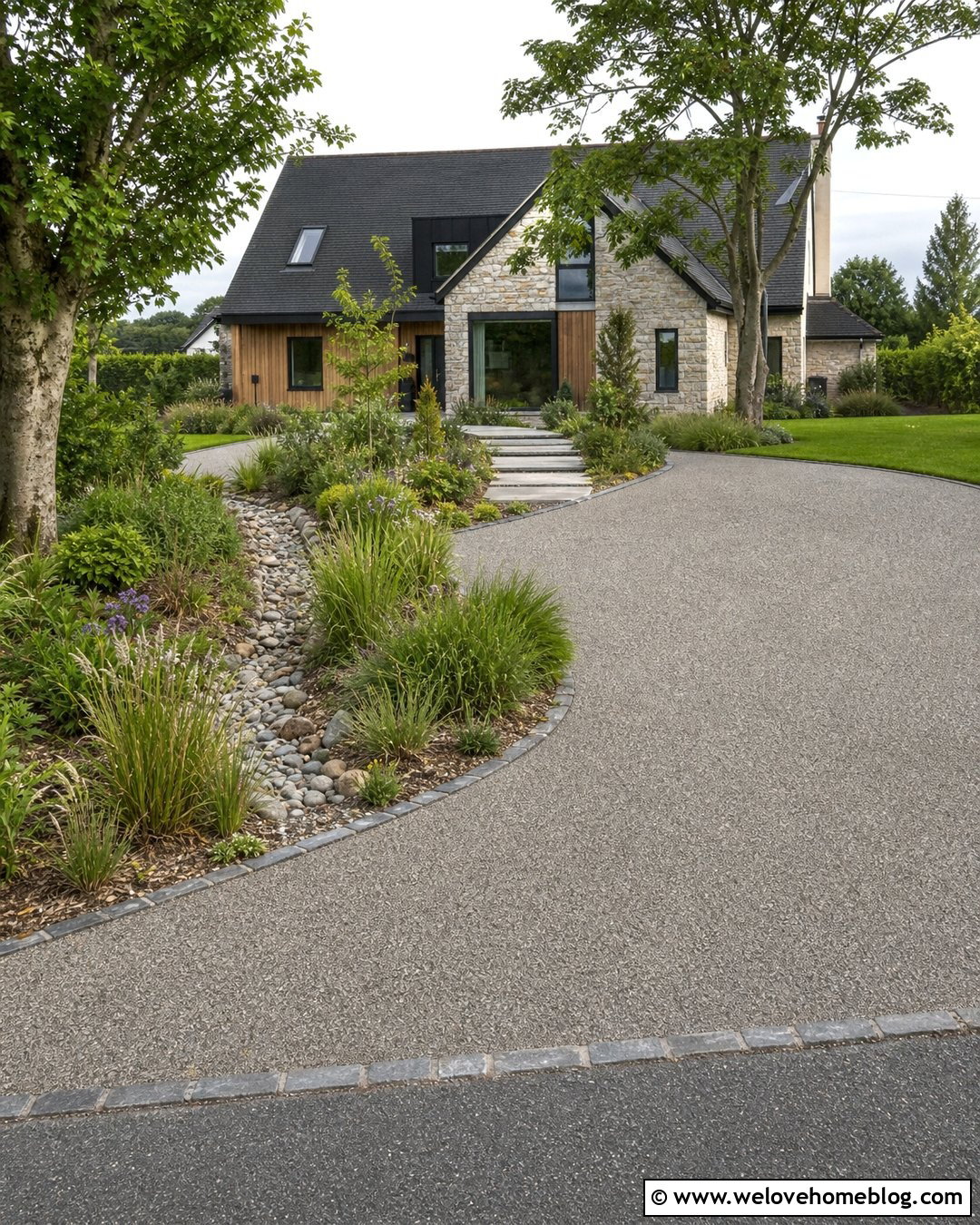
A rain garden can turn the edge of a resin-bound driveway into an attractive planted drainage feature. Use a warm gray or natural buff aggregate and shape the driveway so the landscaping forms a broad, shallow bed along the lower side of the site. Stone edging, a planted channel, or a carefully designed opening can visually connect the driveway with the rain garden. Fill the depression with moisture-tolerant grasses, flowering perennials, and shrubs selected for local conditions. Add a small bridge-like path or large stepping slabs where pedestrian access crosses the bed. The full layout should be designed around site levels and professional drainage advice, not appearance alone. When planned correctly, the resin surface, planted basin, and home entrance can form one practical and garden-rich composition.
24. Resin Driveway With Hedge Borders
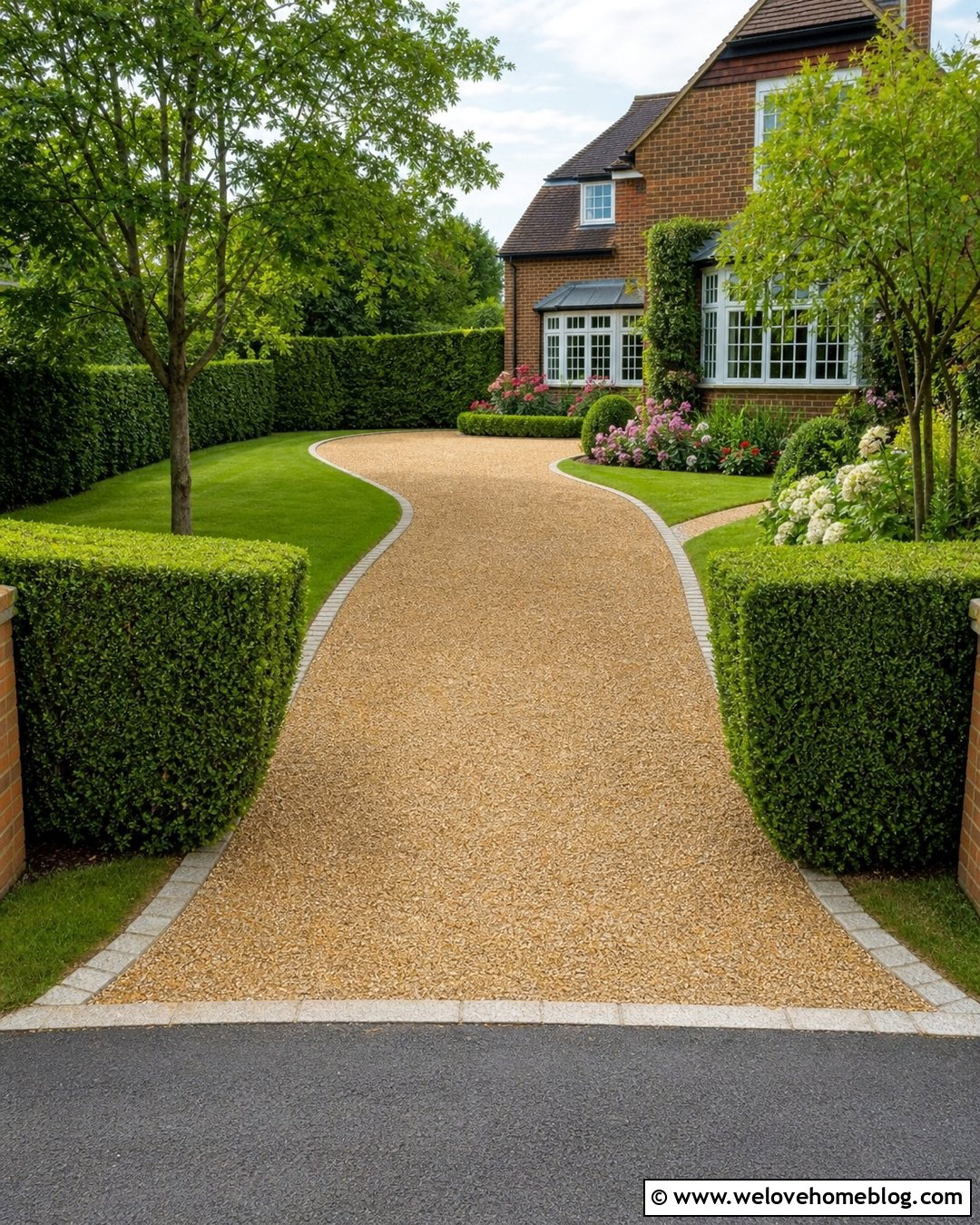
Hedge borders give a resin-bound driveway privacy, greenery, and a strong sense of direction. Select a warm golden aggregate for a traditional home or a silver-gray blend for contemporary architecture. Low clipped hedges can frame a small frontage without blocking windows, while taller hedging may suit the outer boundaries of a long rural drive. Set the plants behind brick, granite, or steel edging so soil stays away from the resin surface. Widen the hedge opening at the pavement to preserve visibility and make entry comfortable. Near the house, break the continuous green line with a path, gate, or flowering bed. Regular repetition creates a calm formal appearance, while a few looser shrubs prevent the entrance from feeling severe. The complete design remains simple, green, and clearly structured.
25. Resin Driveway With Gates And Brick Pillars
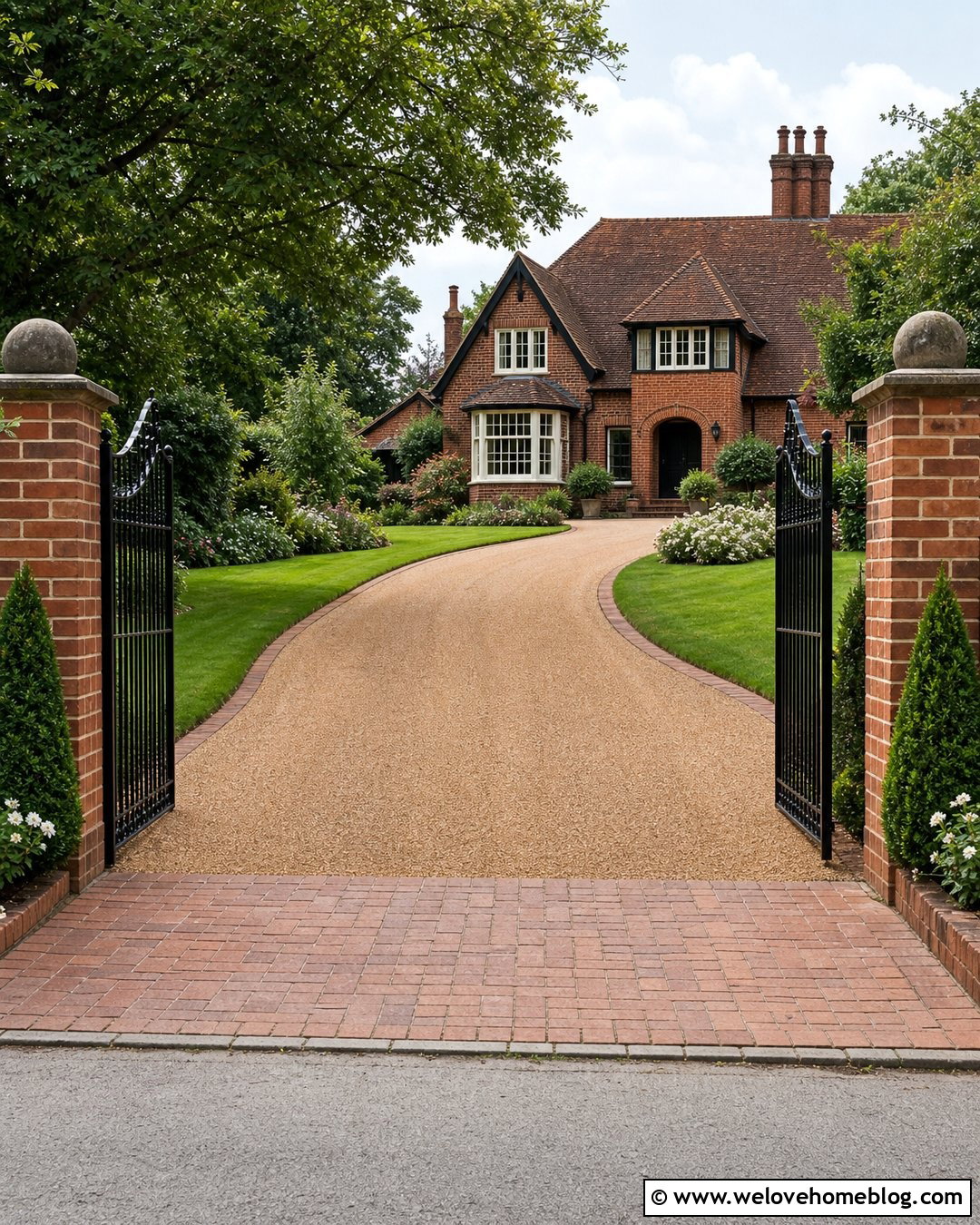
Brick pillars and metal gates can give a resin driveway a defined entrance that feels connected to a traditional British home. Use a warm brown or golden resin-bound aggregate and edge it with bricks matching or complementing the pillars. A broad granite or brick apron beneath the gate line can create a clear threshold before the resin surface begins. Beyond the gates, curve the driveway gently toward the house and place symmetrical evergreen planting around the entrance. Leave enough setback so a vehicle can wait safely without obstructing the pavement or road, subject to local requirements. Keep the gate design relatively open if the frontage is compact. Coordinated brickwork, aggregate color, landscaping, and driveway shape will make the entrance appear planned as one complete feature rather than assembled from unrelated additions.
26. Resin Driveway With Timber Gate And Stone Pillars
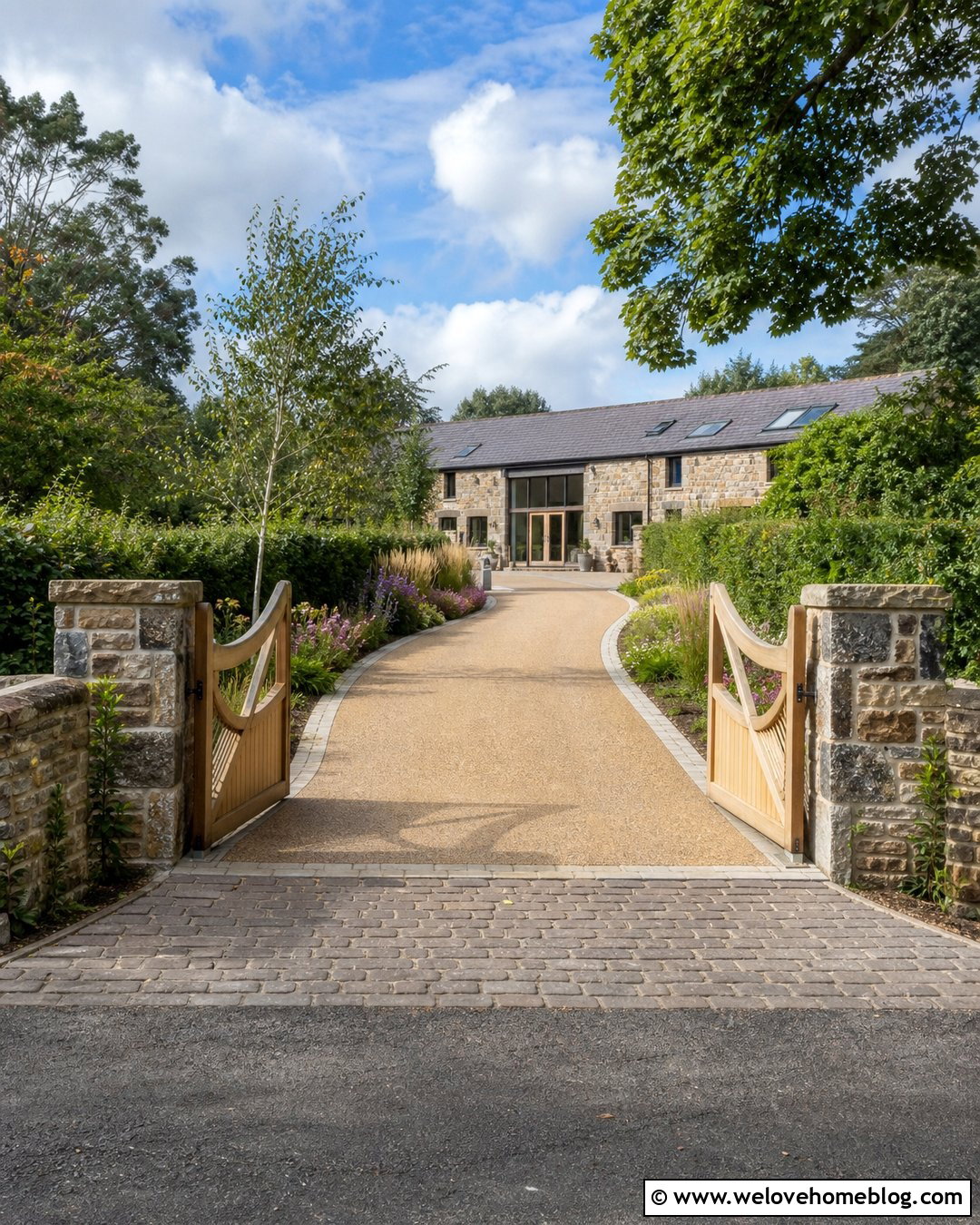
A timber gate paired with stone pillars creates a softer rural entrance for a resin-bound driveway. Choose cream, buff, or golden aggregate that resembles natural country gravel, then add sandstone or granite setts along the edges. The driveway can curve gently from the gate toward a cottage, barn conversion, or country house. Plant native hedging and informal flowering borders around the pillars, keeping the immediate entrance low and clear. A cobbled or stone-sett apron under the gate will visually strengthen the transition from road to resin. Use a simple timber gate with a natural or muted finish rather than an ornate design. Together, the warm surface, traditional masonry, curved approach, and relaxed landscaping produce a welcoming driveway that fits comfortably into a village or countryside setting.
27. Resin Driveway With Bollard Lighting
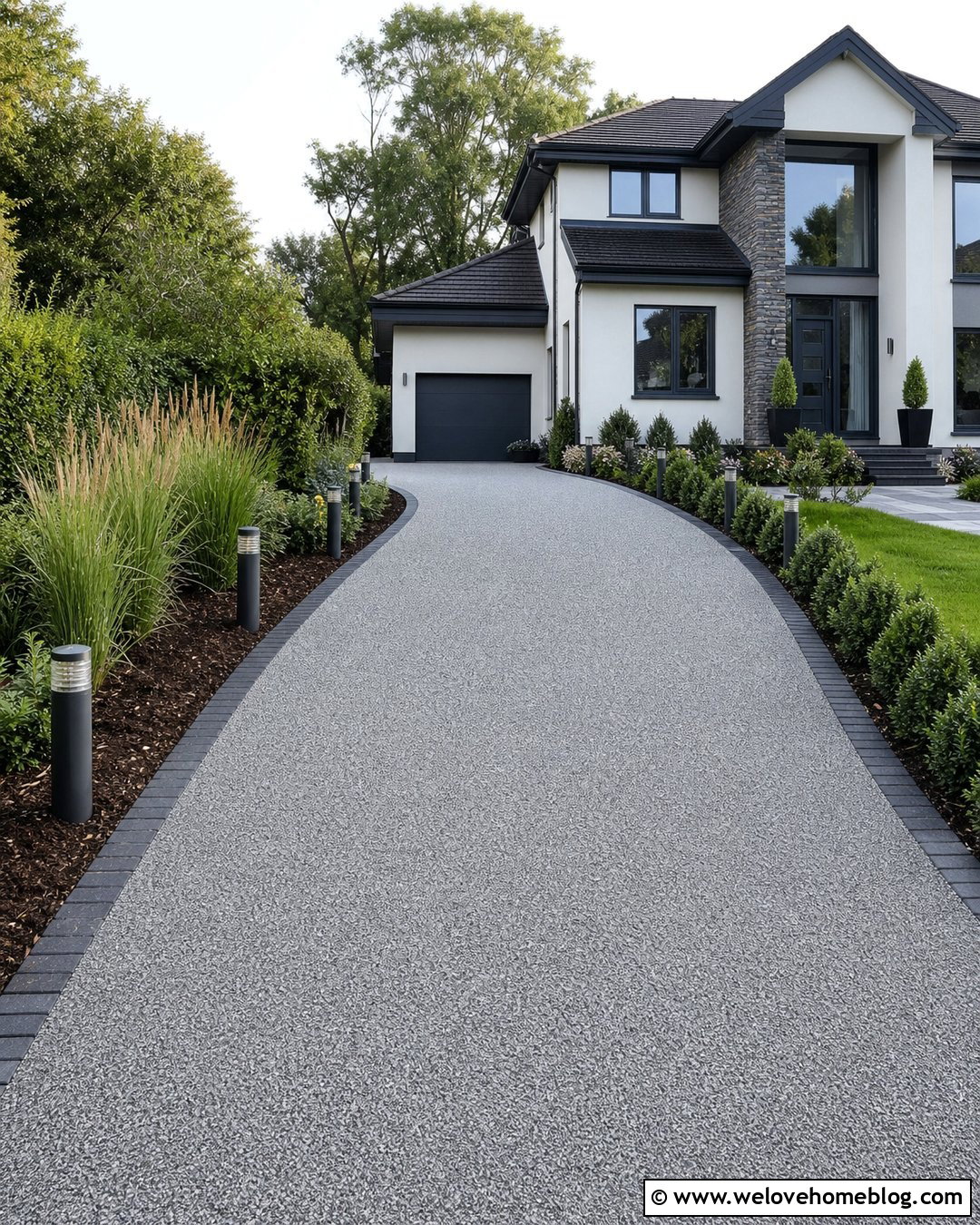
Slim bollard lighting can define a resin-bound driveway while keeping the daytime design clean. Start with a medium-gray aggregate and dark granite edging, then place evenly spaced fixtures along one side rather than surrounding the entire surface. The driveway may be straight or gently curved, but the lights should follow its geometry and leave vehicle clearance. During daylight, black or graphite fixtures coordinate well with contemporary windows, garage doors, and edging. Add soft grasses and low evergreen shrubs behind the lights so the hardware sits within the landscaping instead of appearing isolated. At the entrance, one fixture near each side can reinforce the approach. Although the lighting is functional after dark, the overall driveway should still be designed and photographed in bright daylight to reveal its material, shape, and borders clearly.
28. Resin Driveway With House Number Sign
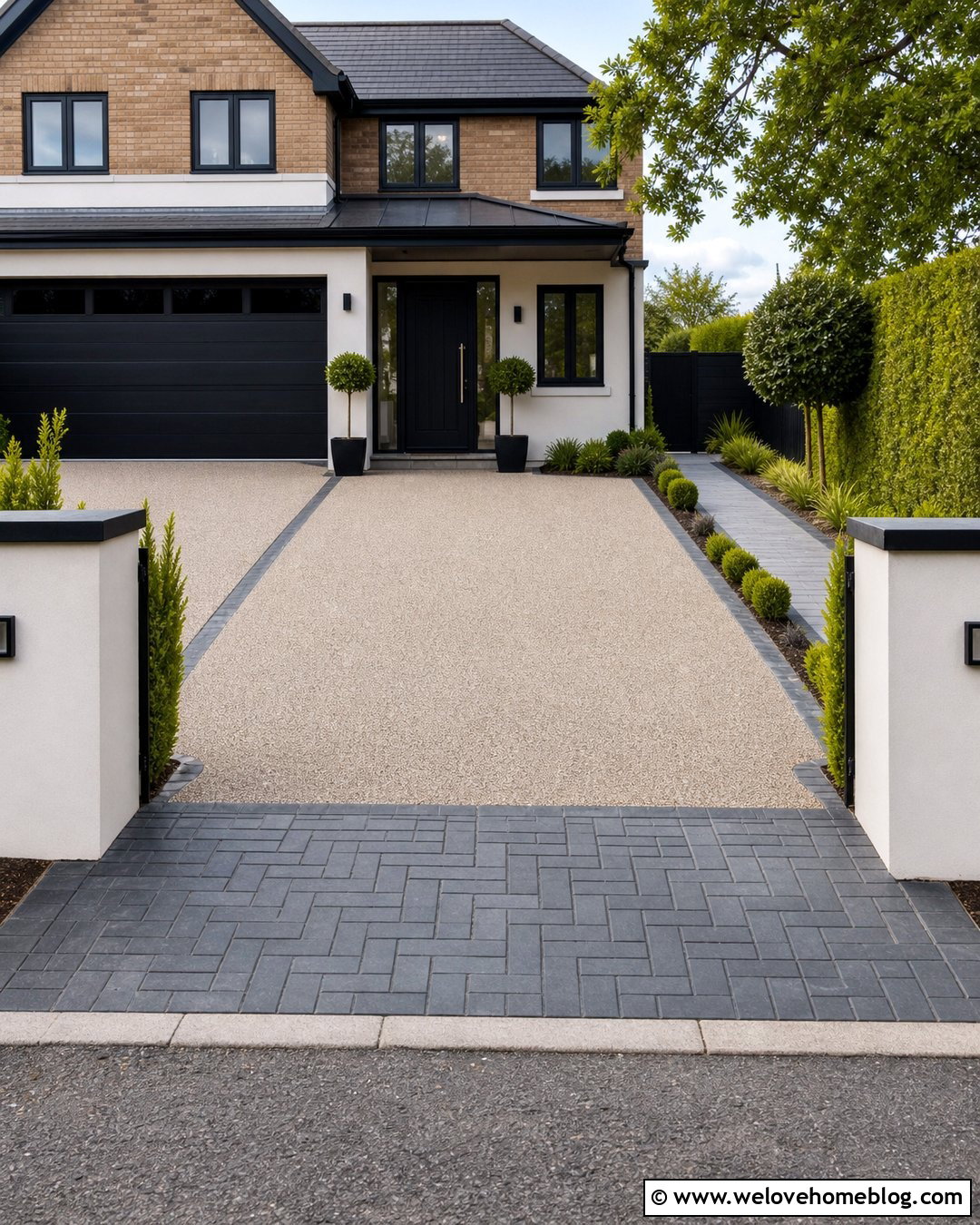
A house number sign can become part of the complete resin driveway entrance rather than a last-minute fixture. Use a silver-gray resin-bound surface with a charcoal block apron, then place a simple number panel on a low brick, stone, or rendered wall near the pavement. Match the sign support to the house facade and keep planting low enough that the number remains visible. A straight driveway with a clearly separated front path makes the entrance easy for visitors to understand. Repeat the sign’s dark finish in the edging, mailbox, lighting, or front door for visual consistency. Avoid oversized structures that dominate a small garden. The best arrangement combines clear identification, safe visibility, tidy landscaping, and a driveway color that supports the home’s overall exterior palette.
29. Resin Driveway With Matching Resin Path
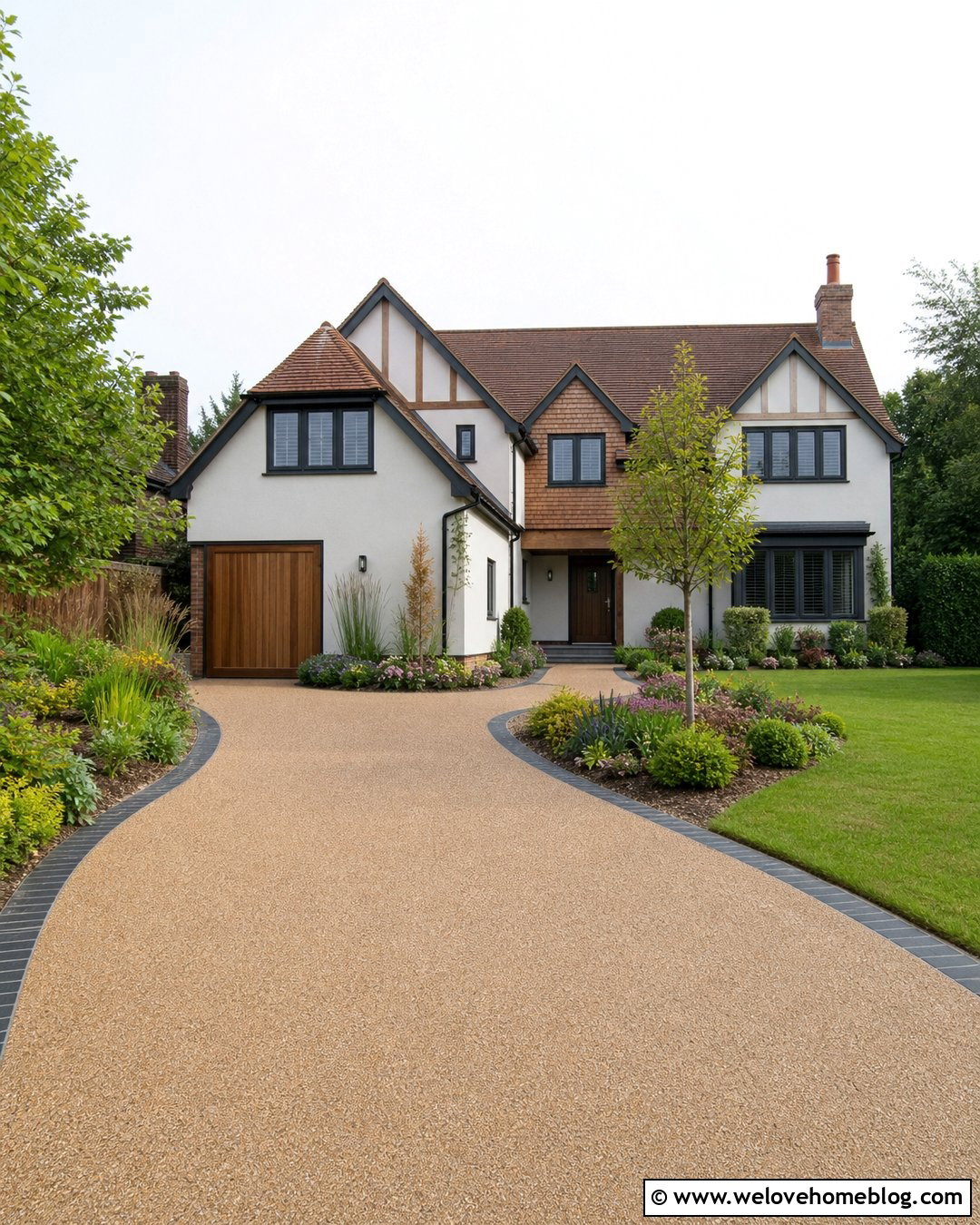
Using the same resin-bound aggregate for the driveway and front path can make an irregular frontage feel unified. Choose a warm beige or soft gray blend, then define the pedestrian route with a narrow contrasting block border. The driveway can remain wide and direct, while the path curves through planting toward the front door. This subtle difference in shape distinguishes walking space without introducing another major surface material. Add a small tree where the path branches from the driveway and surround it with low shrubs, ornamental grasses, or seasonal bulbs. Continue the edging around both surfaces to tie the composition together. A matching resin path is especially useful when the entrance sits away from the garage, creating an obvious, accessible-looking route through the complete front garden design.
30. Resin Driveway With Porcelain Walkway
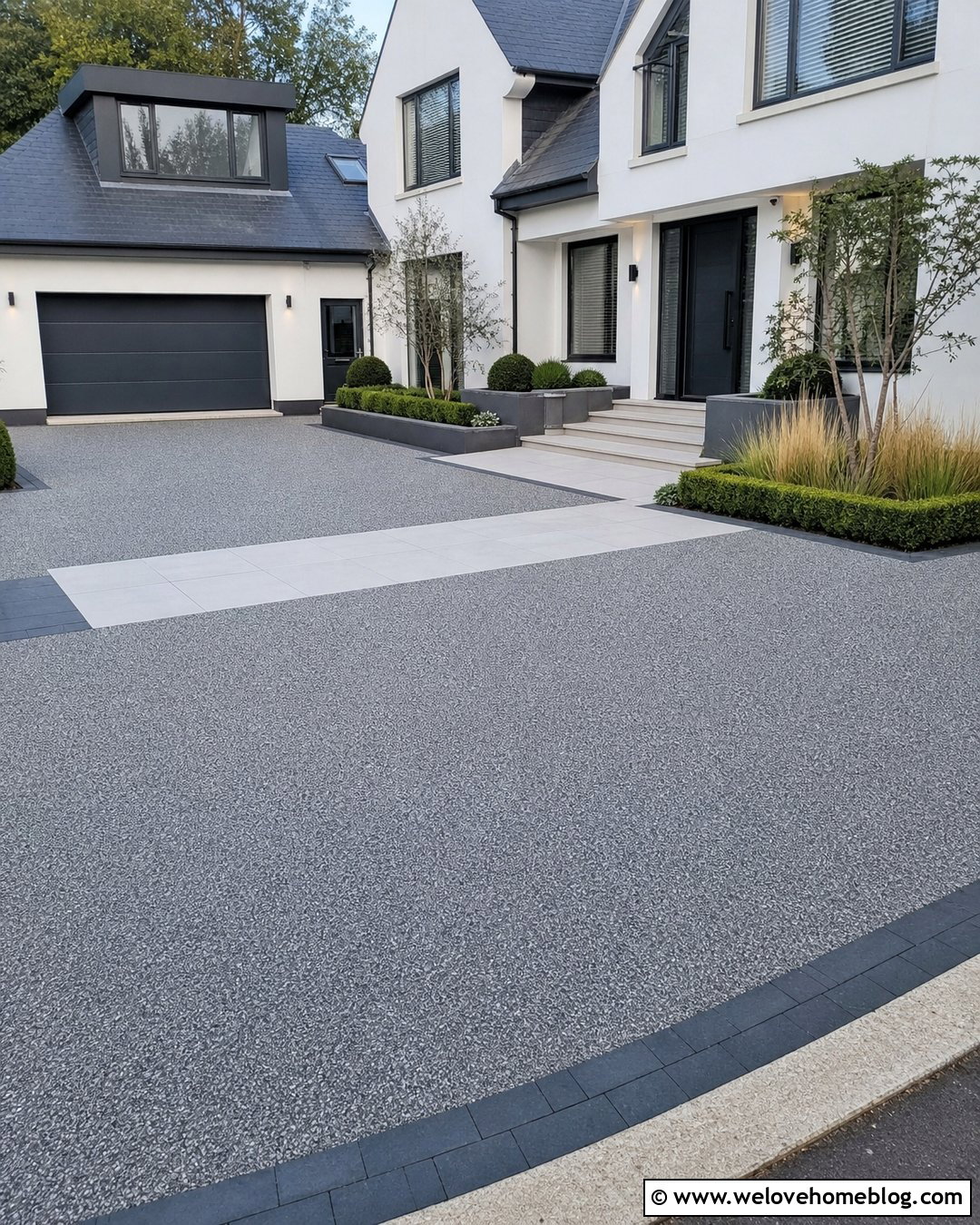
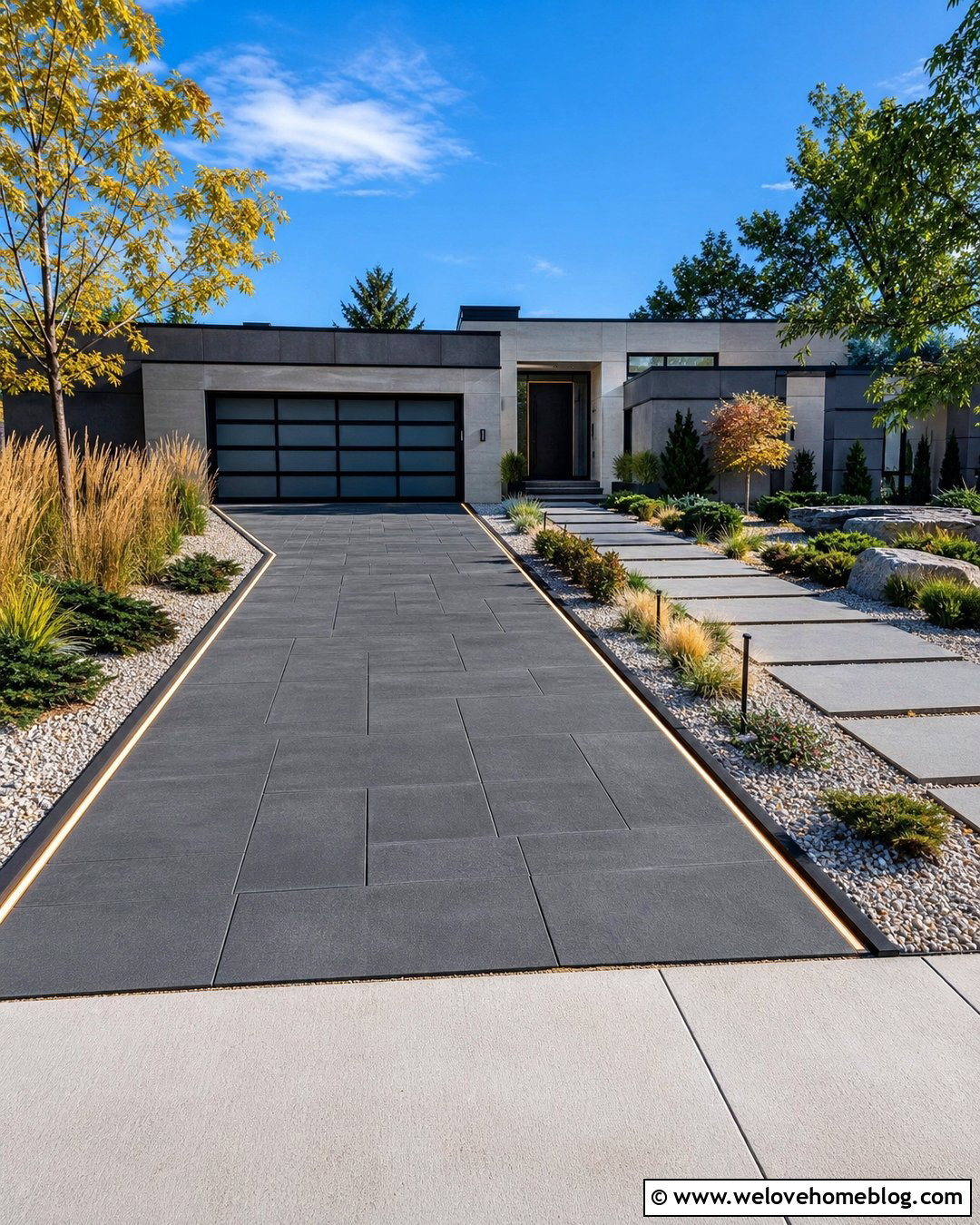
A porcelain walkway can add a crisp architectural contrast to a finely textured resin-bound driveway. Use mid-gray resin for the parking area and large pale porcelain slabs for a direct path to the entrance. Frame both surfaces with charcoal edging so the transition looks deliberate. The walkway can cross the driveway as a broad band, visually connecting the pavement, front door, and side garden. Keep the slab pattern simple and align joints with architectural features such as porch posts or window edges. Raised planters, clipped shrubs, and upright grasses will reinforce the clean geometry. Because surface performance varies, select exterior materials suitable for the specific application and have all junctions professionally detailed. This combination creates a modern, layered frontage without relying on decorative resin patterns or several competing colors.
31. Resin Driveway With Garage Forecourt
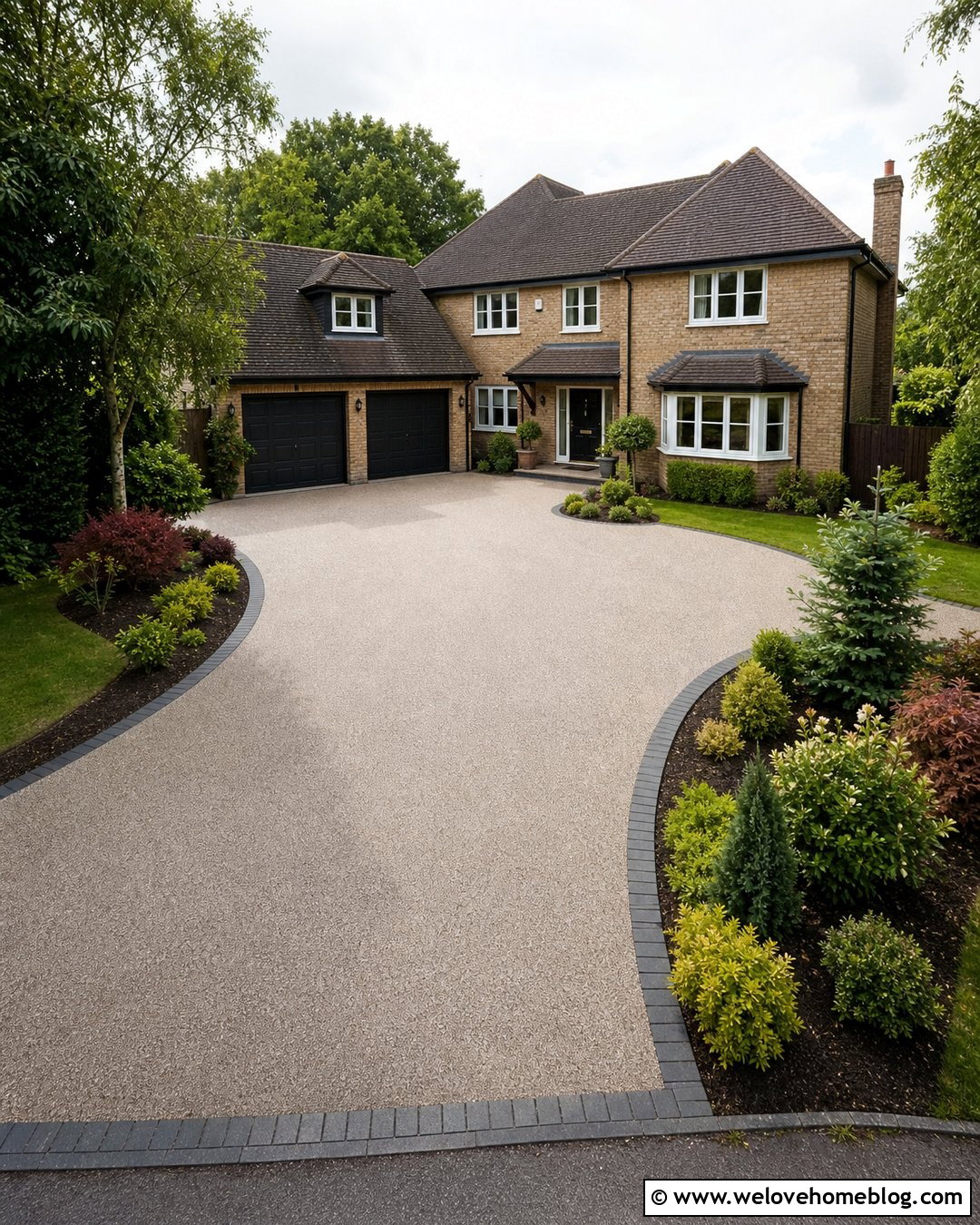
A resin-bound garage forecourt should provide comfortable maneuvering space while still looking like part of the front garden. Choose a mid-tone natural aggregate that will disguise everyday dust better than an extremely pale or dark finish. Use charcoal blocks to outline the broad parking area and mark the garage threshold. A curved entrance can open into a wider rectangular forecourt, allowing the layout to transition naturally from arrival to parking. Add generous planting beds along the outer corners, where they will soften the expanse without interfering with vehicle movement. A matching path can lead from the forecourt to the front door. Keep decorative bands limited to key boundaries. Strong proportions, useful turning space, coordinated borders, and substantial landscaping will prevent the area from resembling an empty paved yard.
32. Resin Driveway For Victorian House
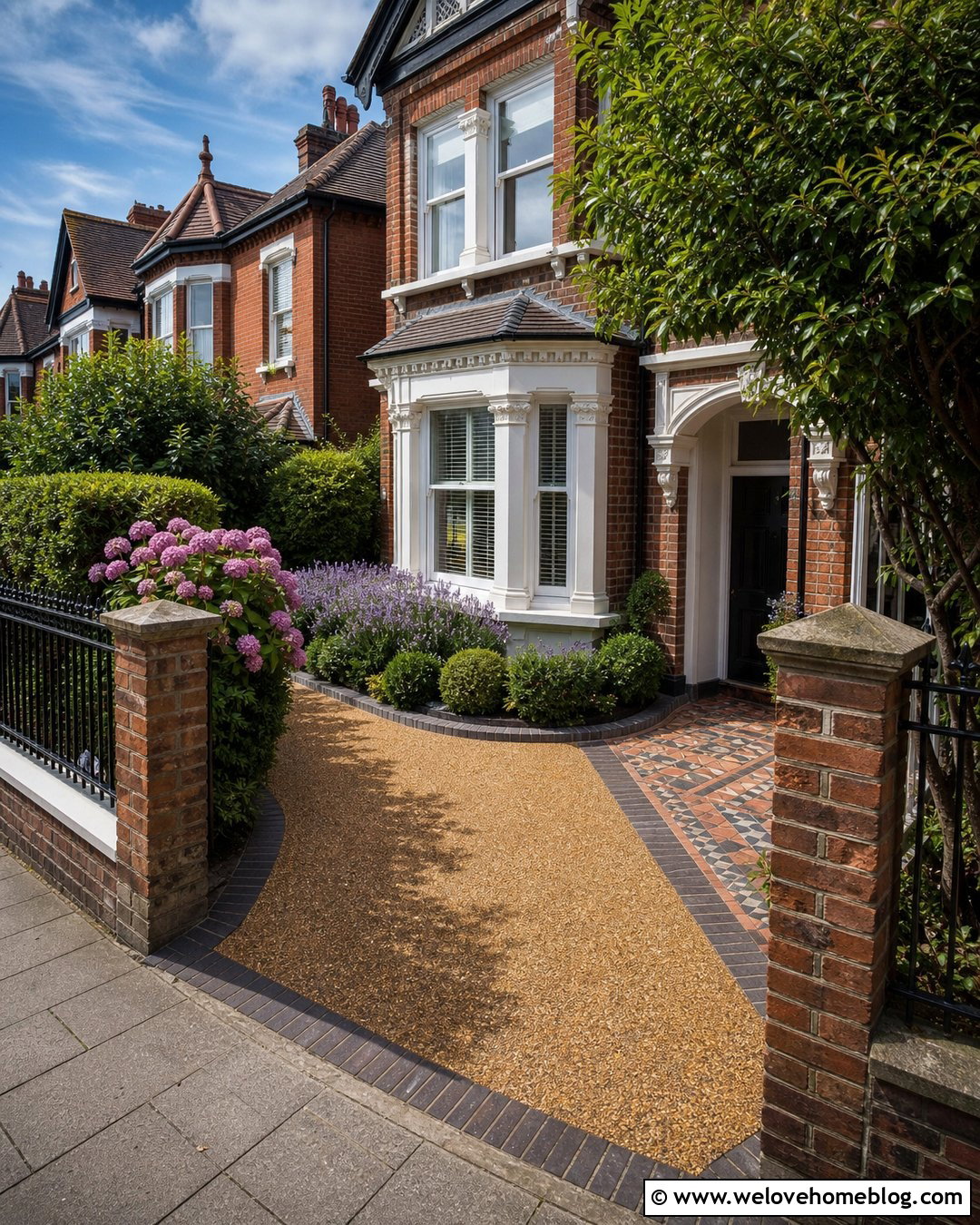
A Victorian house benefits from a resin driveway that respects its brickwork, bay windows, and traditional boundary details. Select a warm golden, chestnut, or buff resin-bound blend and surround it with red or dark clay brick edging. A straight driveway may be necessary on a narrow urban plot, but a curved planting bed can soften the area beside the bay window. Use black metal railings, a brick entrance pier, and a tiled or brick path to reinforce the period character. Plant lavender, clipped shrubs, hydrangeas, or a compact ornamental tree where space permits. Avoid bright synthetic-looking colors and oversized geometric motifs. A restrained resin surface allows the architectural details to remain prominent while providing a clean connection between the street, parking area, and front entrance.
33. Resin Driveway For Bungalow
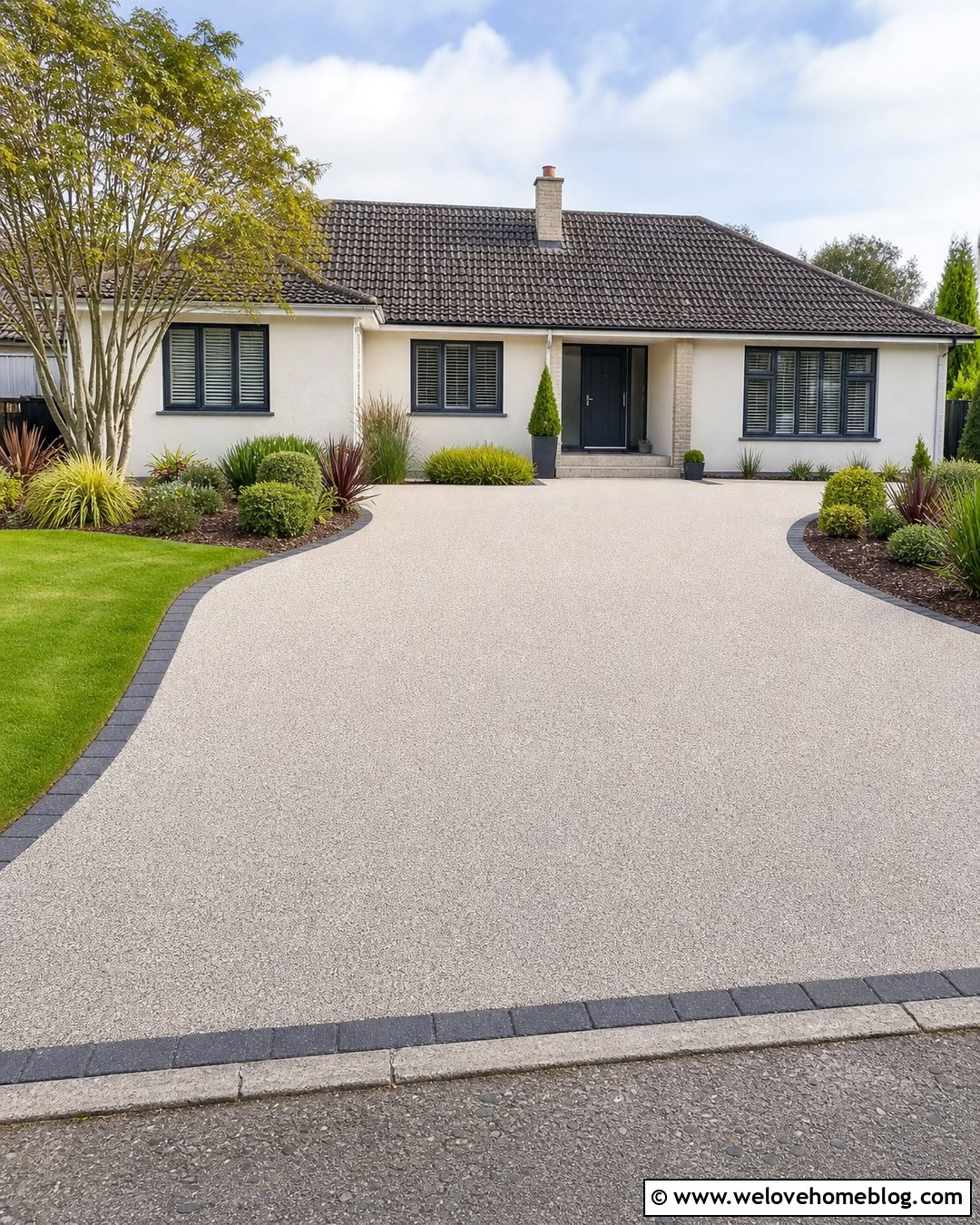
A bungalow’s broad, low facade pairs well with a resin-bound driveway that includes strong horizontal lines and generous landscaping. Choose a light beige or warm gray aggregate, then frame it with a single dark block border. A wide driveway can serve two parking spaces, but curved beds at the corners will keep the front garden from appearing completely paved. Use compact shrubs, grasses, and a multi-stem tree that will not overwhelm the windows or roofline. A level-looking matching path can lead directly to the covered entrance, while a block ribbon separates pedestrian and vehicle zones. Repeat one aggregate tone found in the roof, brick, or render. This creates a coordinated frontage that feels spacious, accessible, and balanced rather than dominated by a large rectangular parking surface.
34. Resin Driveway For New Build House
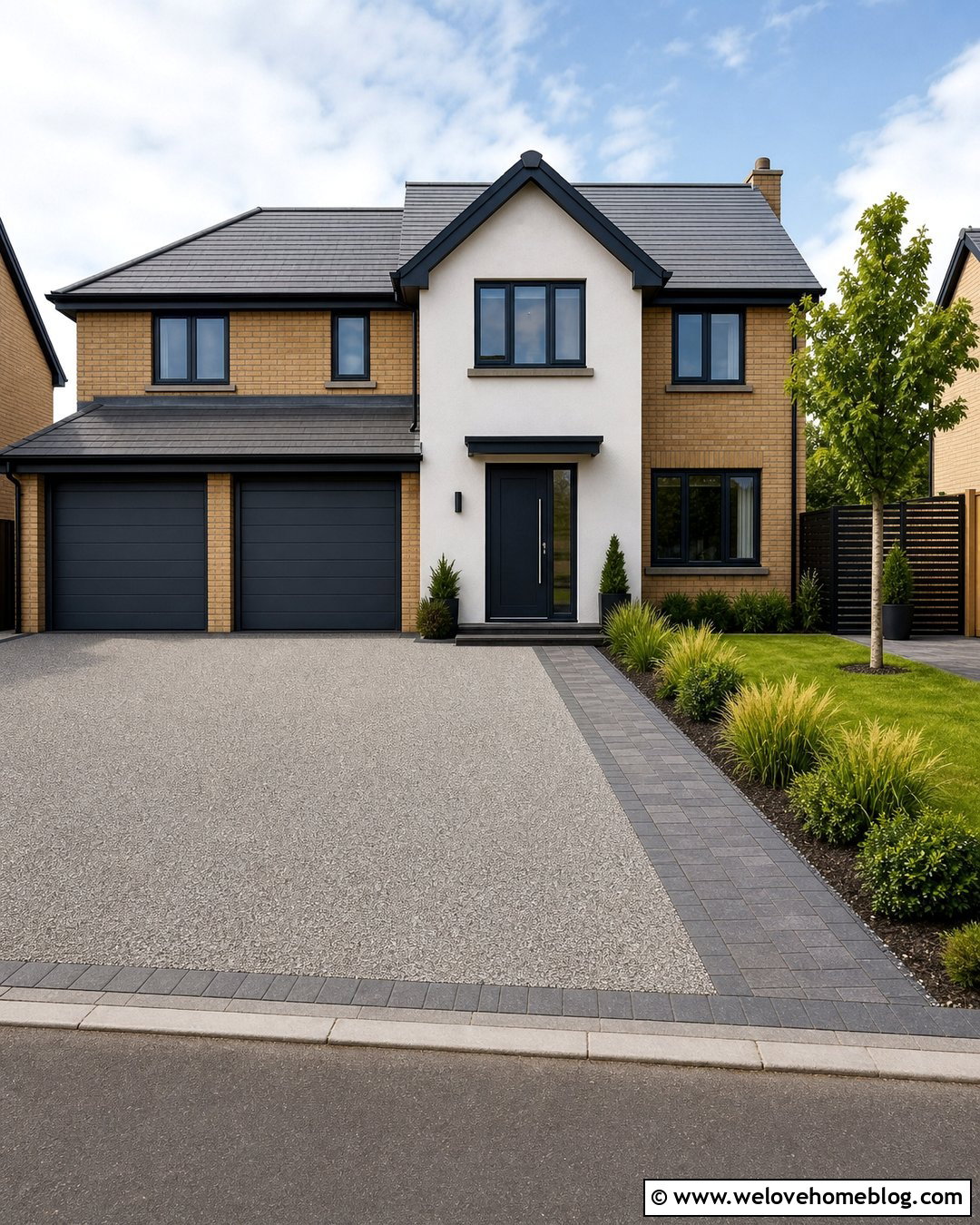
A new-build home often suits a clean resin driveway with subtle contrast and efficient use of limited frontage. Mid-gray resin-bound aggregate provides a practical neutral base, while charcoal pavers can frame the parking bays and connect with dark windows or roof tiles. Use a straight layout with one clearly defined walkway to the door. Narrow planting beds containing grasses, evergreen shrubs, and a compact tree will soften brick or render without reducing essential parking space. If neighboring homes have similar exteriors, introduce individuality through a carefully chosen aggregate blend and coordinated front-door color rather than a complicated surface pattern. Conceal bins behind a slatted screen and keep utilities accessible. The finished frontage should appear orderly, welcoming, and consistent with the simple lines of the development.
35. Resin Driveway For Coastal House
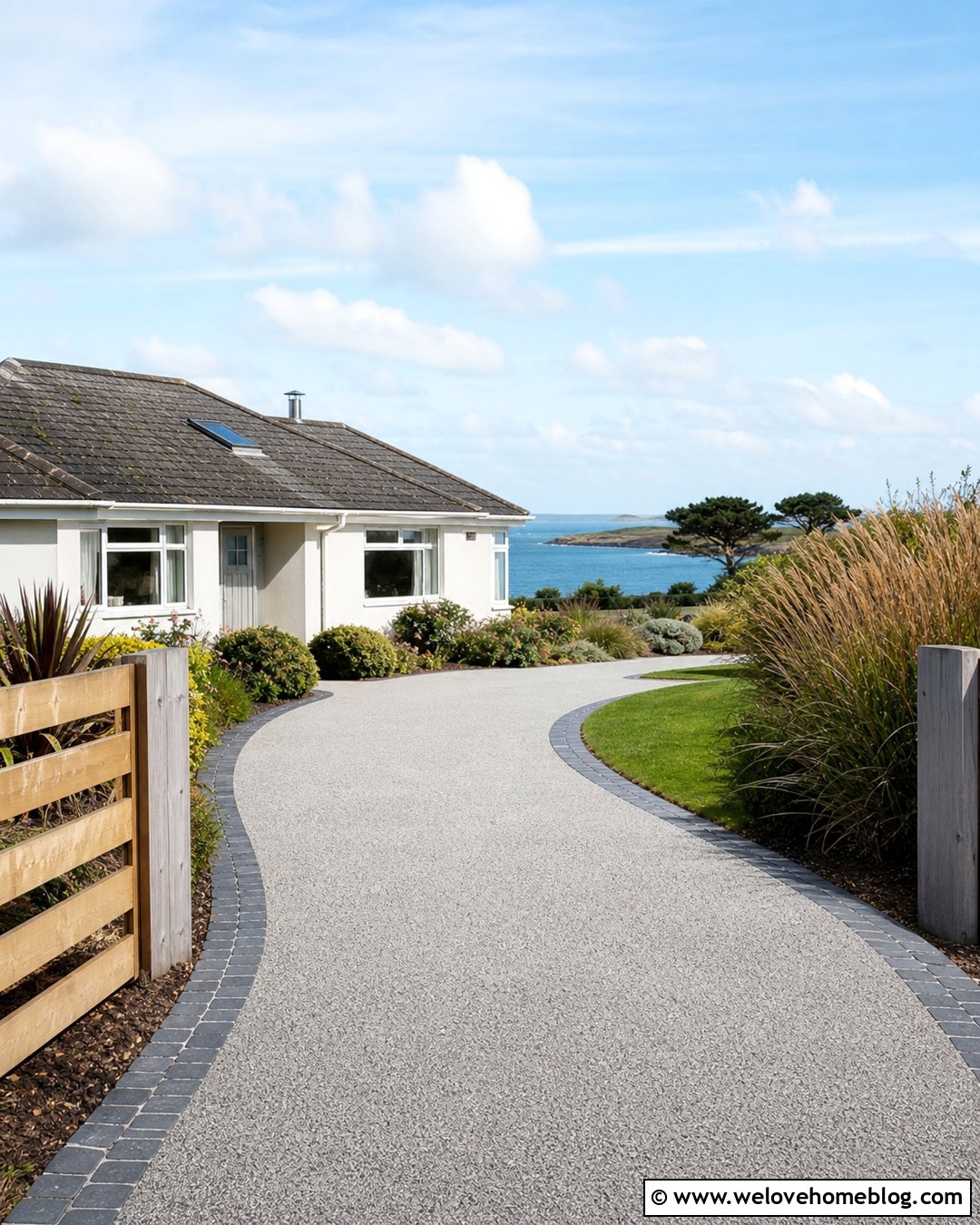
A coastal resin driveway can use cool stone colors and resilient-looking landscaping to complement a breezy seaside setting. Choose a silver, pale gray, or softly speckled resin-bound aggregate rather than an intensely white finish. Edge the surface with charcoal granite setts to create definition against light render or weathered brick. A gently curved driveway can lead toward a coastal cottage, bungalow, or modern rendered house. Plant wind-tolerant grasses, compact evergreen shrubs, and other species suited to local exposure, keeping the palette relaxed and uncluttered. A slatted timber gate or low wall can frame the pavement entrance without blocking the view. The combination of cool aggregate, dark stone edging, flowing planting, and a bright facade produces a fresh driveway that feels connected to its location.
Conclusion:
The strongest 35 Resin Driveway Uk Ideas treat the driveway as a complete front garden rather than a single colored surface. Start by choosing resin-bound aggregate that complements the house facade, roof, windows, and local setting. Then consider the shape, parking needs, pedestrian route, borders, planting, entrance, and drainage together. Simple combinations are often the most effective: one resin color, one contrasting edging material, and a focused planting palette. Curves can soften wide plots, while straight layouts maximize compact spaces. Before installation, confirm local planning, access, and drainage requirements and obtain detailed specifications from experienced contractors. Careful groundwork and coordinated design will help create a practical entrance with lasting curb appeal.

Related posts:
Leave a Reply