
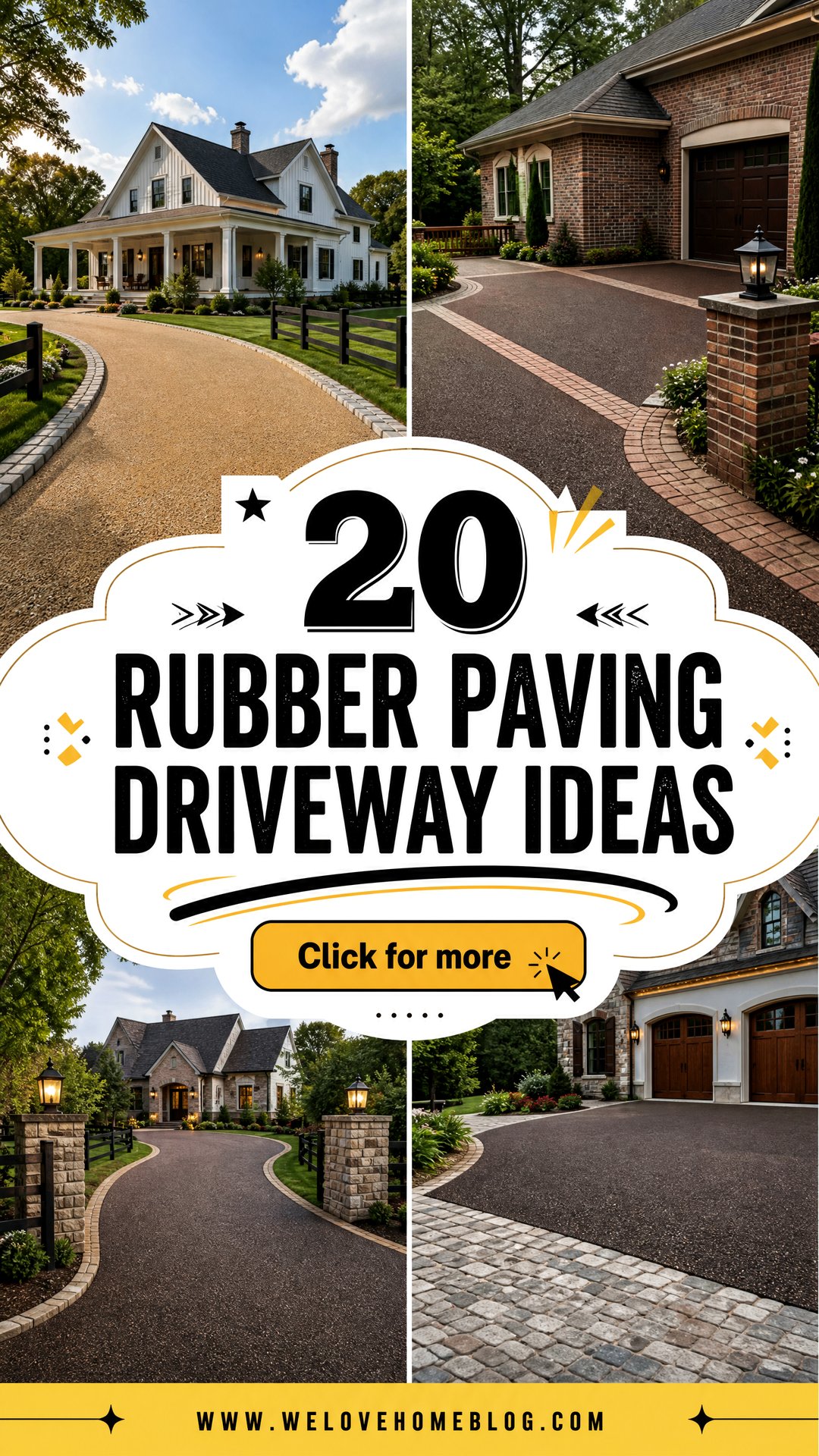
Rubber paving offers a fresh way to update a worn driveway without settling for the standard look of asphalt or plain concrete. Available as poured-in-place recycled rubber surfacing or interlocking rubber pavers, it can create smooth transitions, defined borders, custom color blends, and permeable layouts. Some systems can also resurface suitable existing concrete or asphalt, reducing the need for complete removal. () The best design still depends on proper base preparation, drainage, vehicle loads, climate, and manufacturer requirements. From understated charcoal finishes to warm earth tones and bold two-color patterns, these surfaces can complement many American house styles. The complete looks below combine practical layouts, attractive edging, and thoughtful landscaping in 20 Rubber Paving Driveway Ideas.
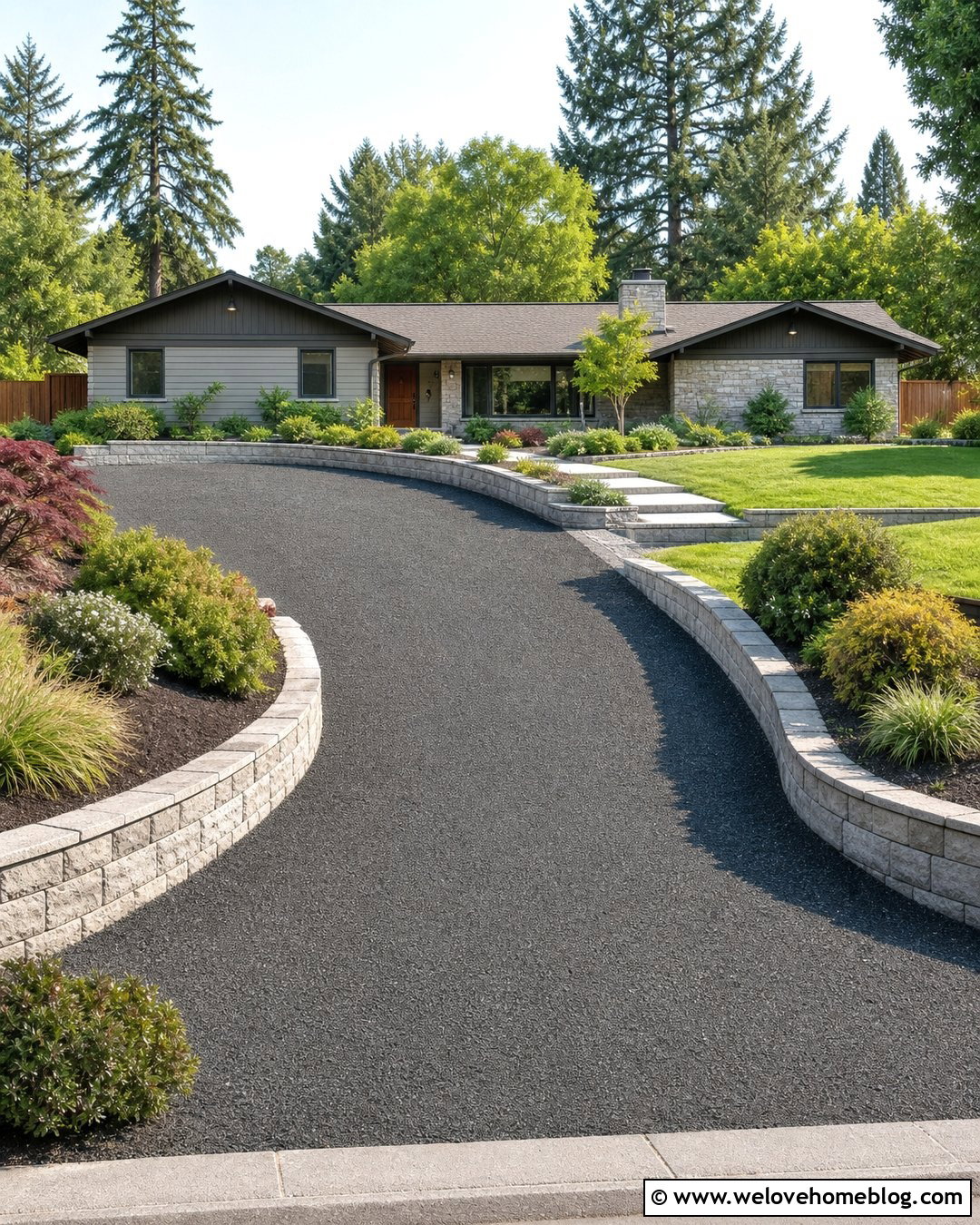
1. Black Rubber Paving Driveway With Stone Edging
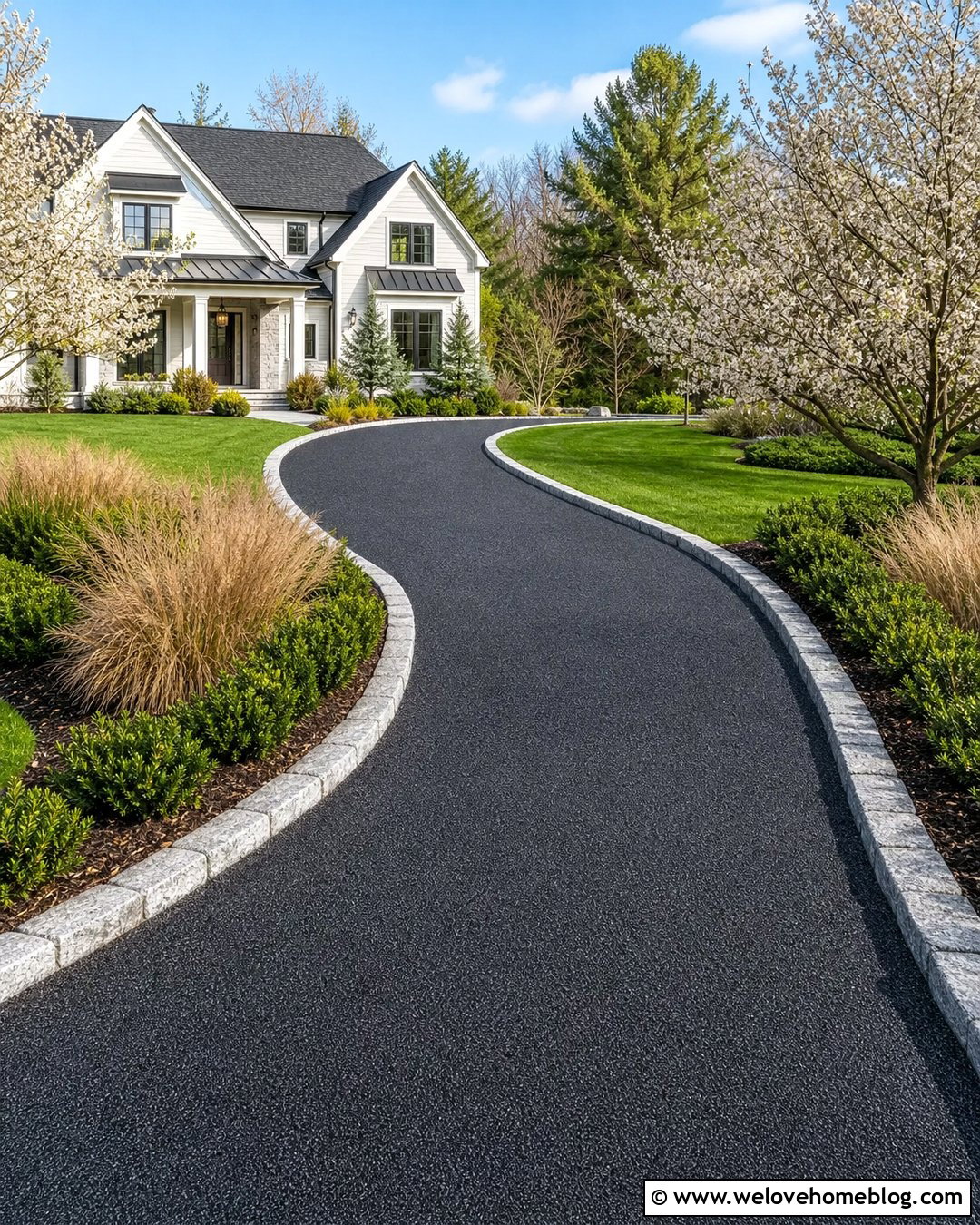
A black rubber paving driveway creates a clean, grounded look that works especially well with light siding, red brick, or natural stone. Use a gently curved layout to soften the dark surface and guide the eye toward the garage. Thick granite or limestone edging provides a crisp boundary and helps the driveway feel permanently integrated into the landscape. Keep the planting simple with ornamental grasses, low evergreen shrubs, and one or two small flowering trees. A pale concrete walkway can branch from the driveway without competing with it. Because black surfaces can appear visually heavy, generous green lawn and bright planting beds provide useful contrast. Ask the installer for a consistent fine-grain finish so repaired or resurfaced areas do not look patchy.
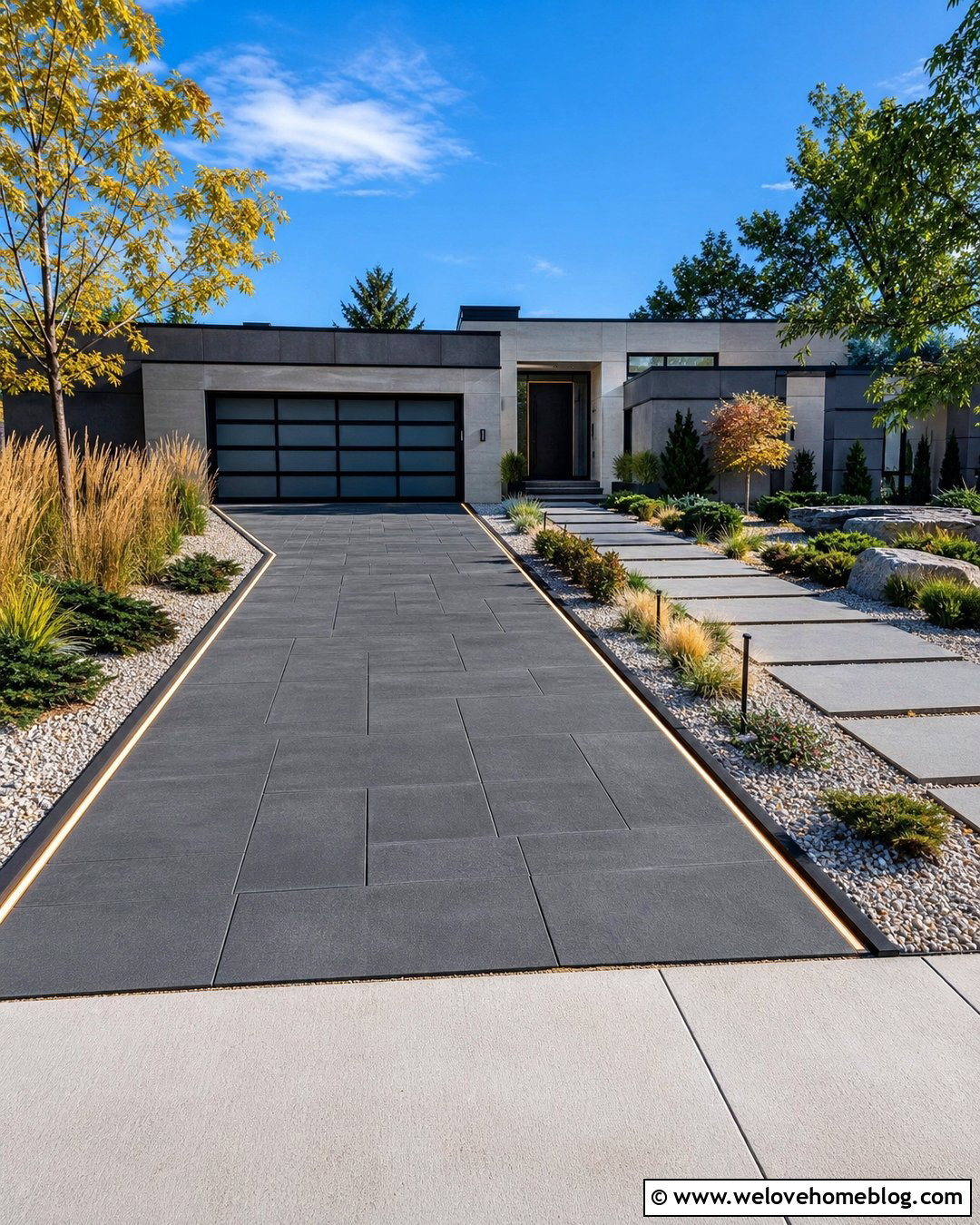
2. Charcoal Rubber Paving Driveway For A Modern House
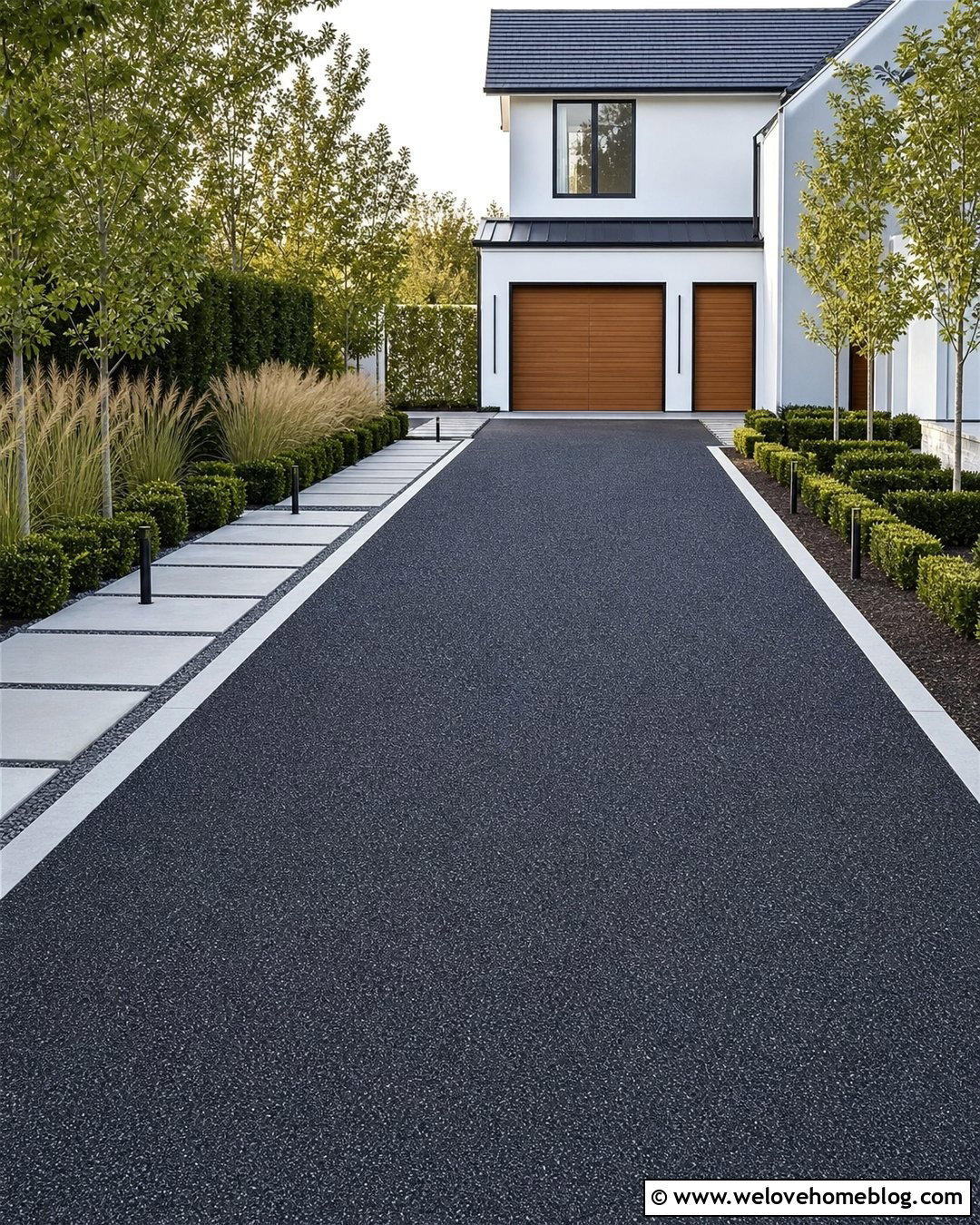
Could a driveway make a modern home look even sharper? A charcoal recycled rubber surface can echo dark window frames, metal roofing, and contemporary garage doors without becoming completely black. Choose a wide, straight layout with squared edges and a flush transition to the sidewalk. Narrow concrete strips along both sides introduce a tailored architectural frame. Complete the design with rectangular planting beds, clipped boxwoods, feather reed grass, and a simple slab walkway. Avoid overly colorful landscaping that could distract from the streamlined facade. Instead, repeat silver-green plants and dark mulch for a controlled palette. Recessed markers or low bollard lights can define the approach after sunset, although the driveway should remain visually uncluttered during the day.
3. Gray Rubber Paving Driveway With Paver Borders
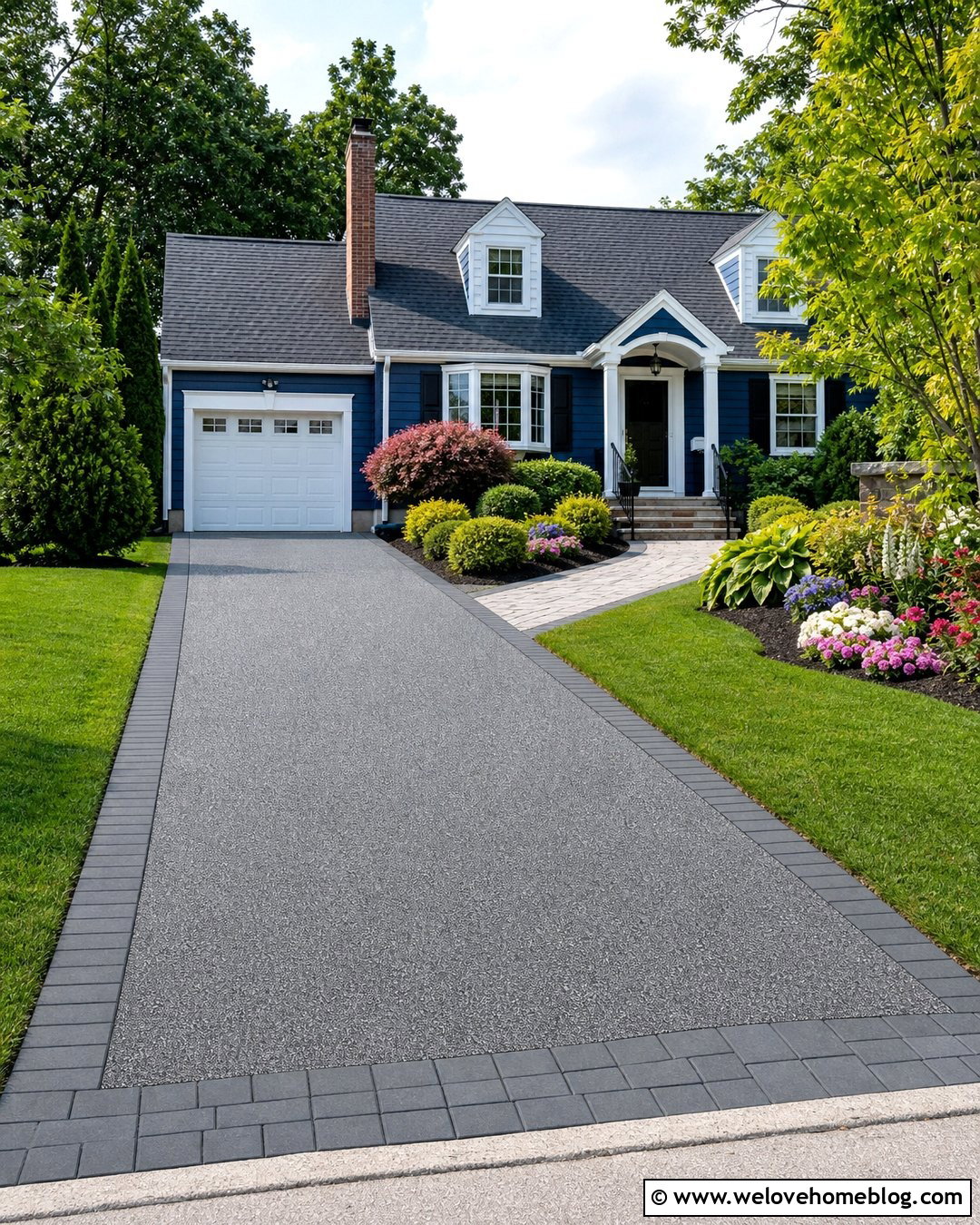
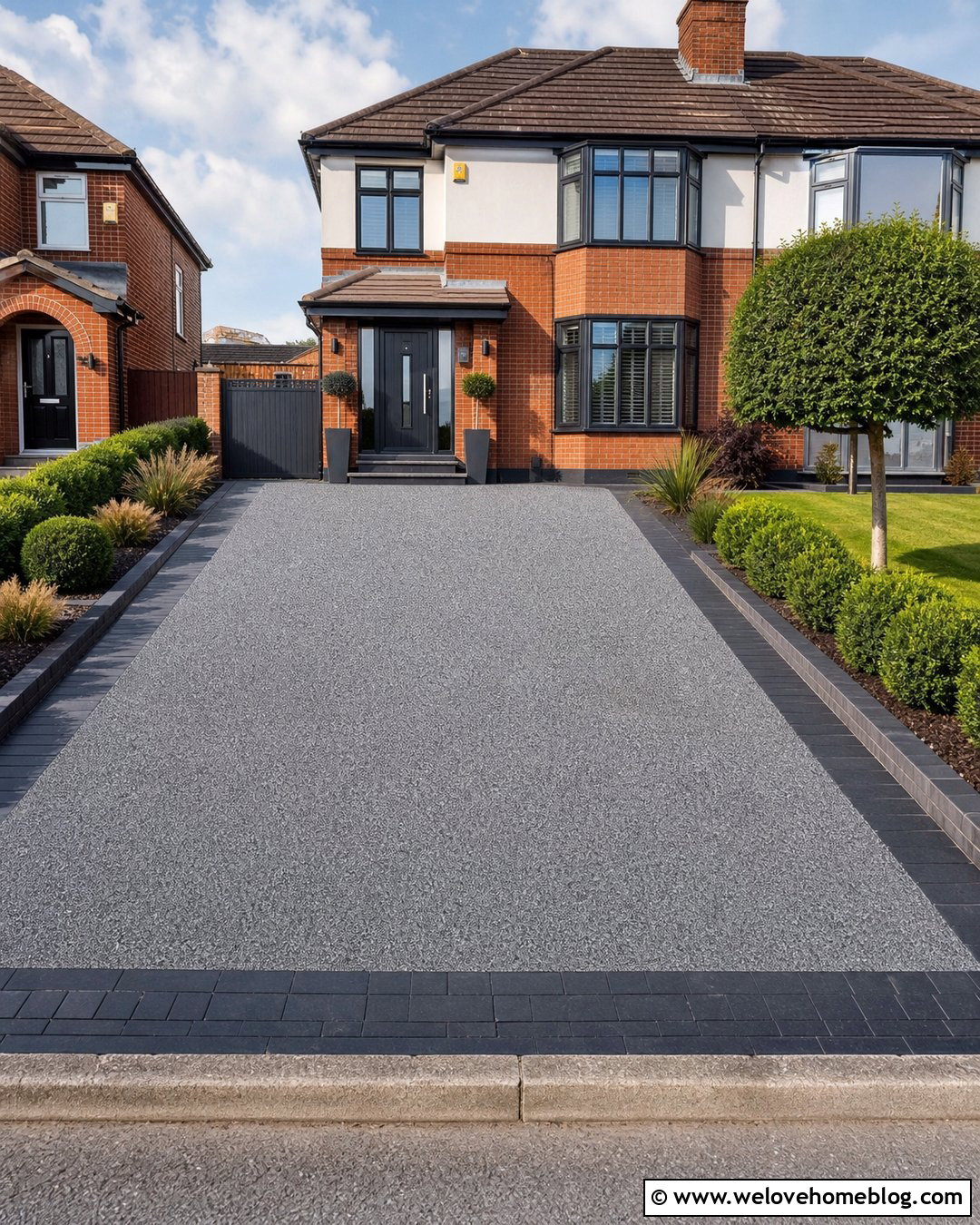
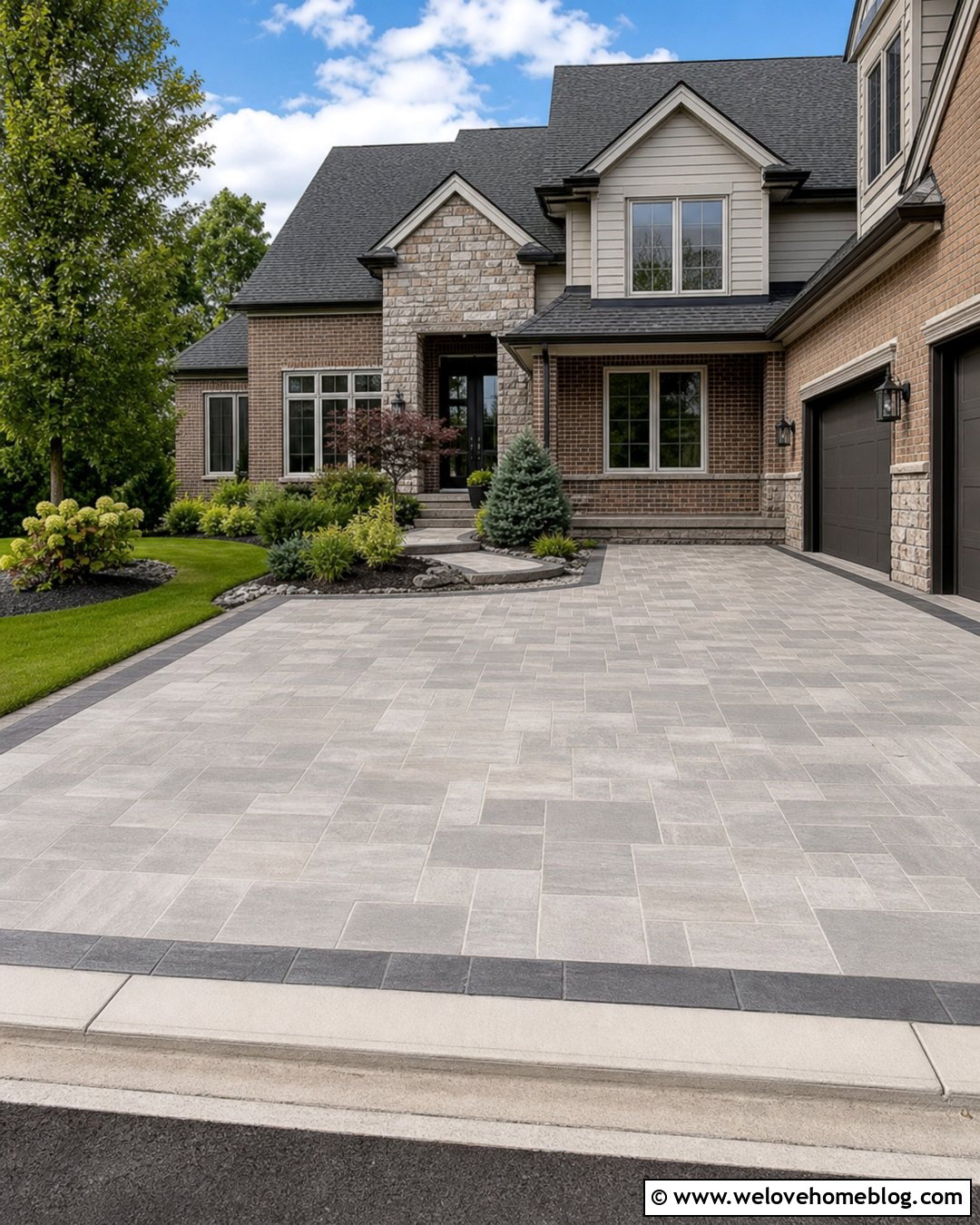
Soft gray rubber paving is an adaptable choice for suburban homes because it resembles familiar masonry while offering a more distinctive texture. Frame a straight or slightly flared driveway with charcoal concrete pavers to make the lighter center surface look deliberate. A matching paver apron at the curb strengthens the entrance and creates a durable-looking visual transition. Along the sides, use layered planting beds with rounded shrubs, hostas, and seasonal flowers. This combination suits a Cape Cod, colonial, or transitional home with white trim. Keep the rubber blend cool rather than beige if the house has blue or gray siding. Before installation, compare samples outdoors in direct sun and shade because granule colors can appear noticeably different under changing light.
4. Tan Rubber Paving Driveway For A Farmhouse
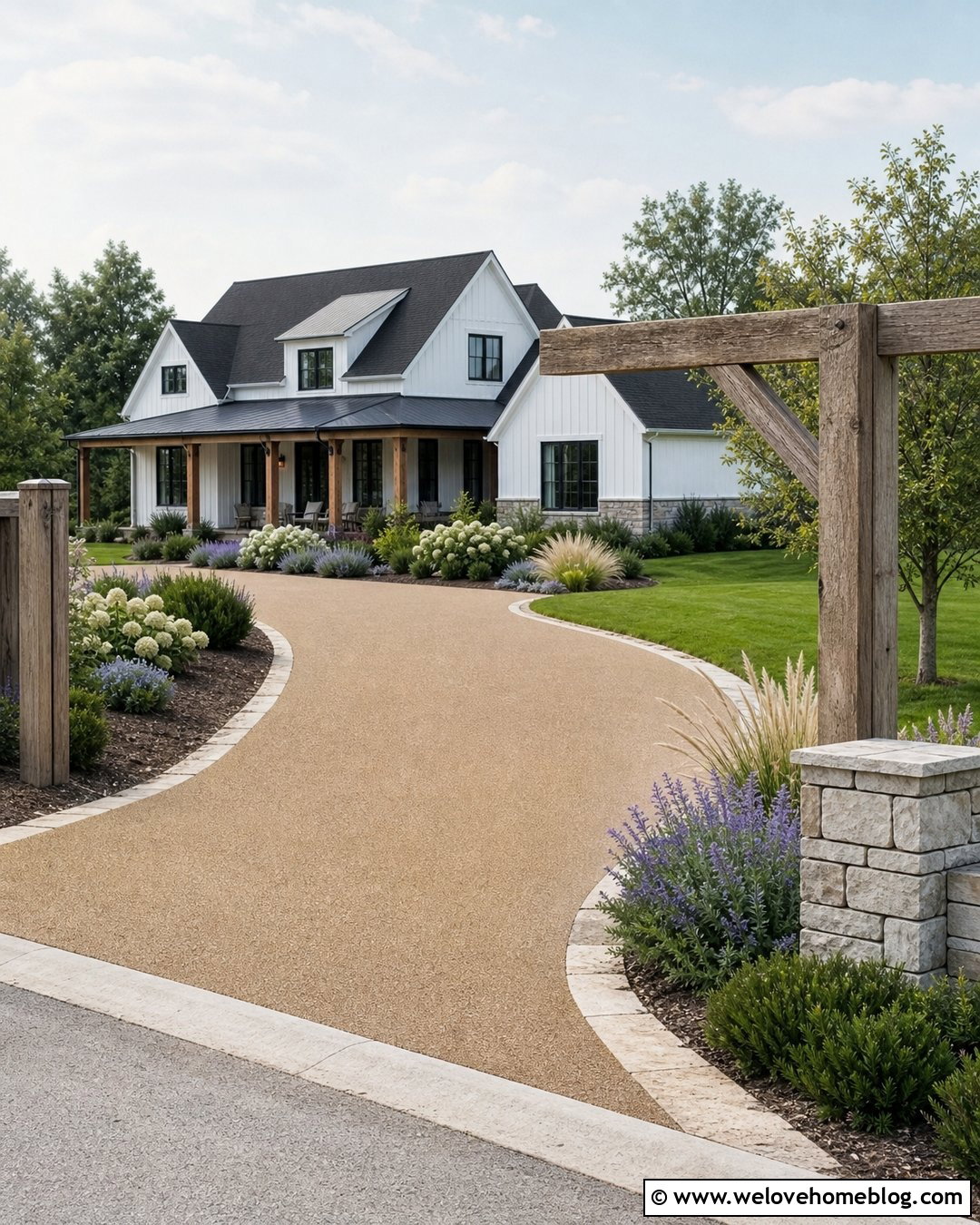
Warm tan rubber paving can give a farmhouse driveway the relaxed appearance of fine gravel without creating a loose, scattered surface. A broad curved layout works beautifully beside a white modern farmhouse with black windows and a covered porch. Define the edges with weathered limestone blocks or pale concrete curbing. Add lavender, catmint, hydrangeas, and ornamental grasses in informal beds that follow the driveway’s curve. Near the road, simple timber posts and a low address marker can establish a welcoming country entrance without blocking the view. Select a tan blend containing several subtle brown and cream tones rather than one flat color. The variation helps disguise everyday dust while connecting the driveway to natural wood, stone, and surrounding fields.
5. Brown Rubber Paving Driveway With Brick Accents
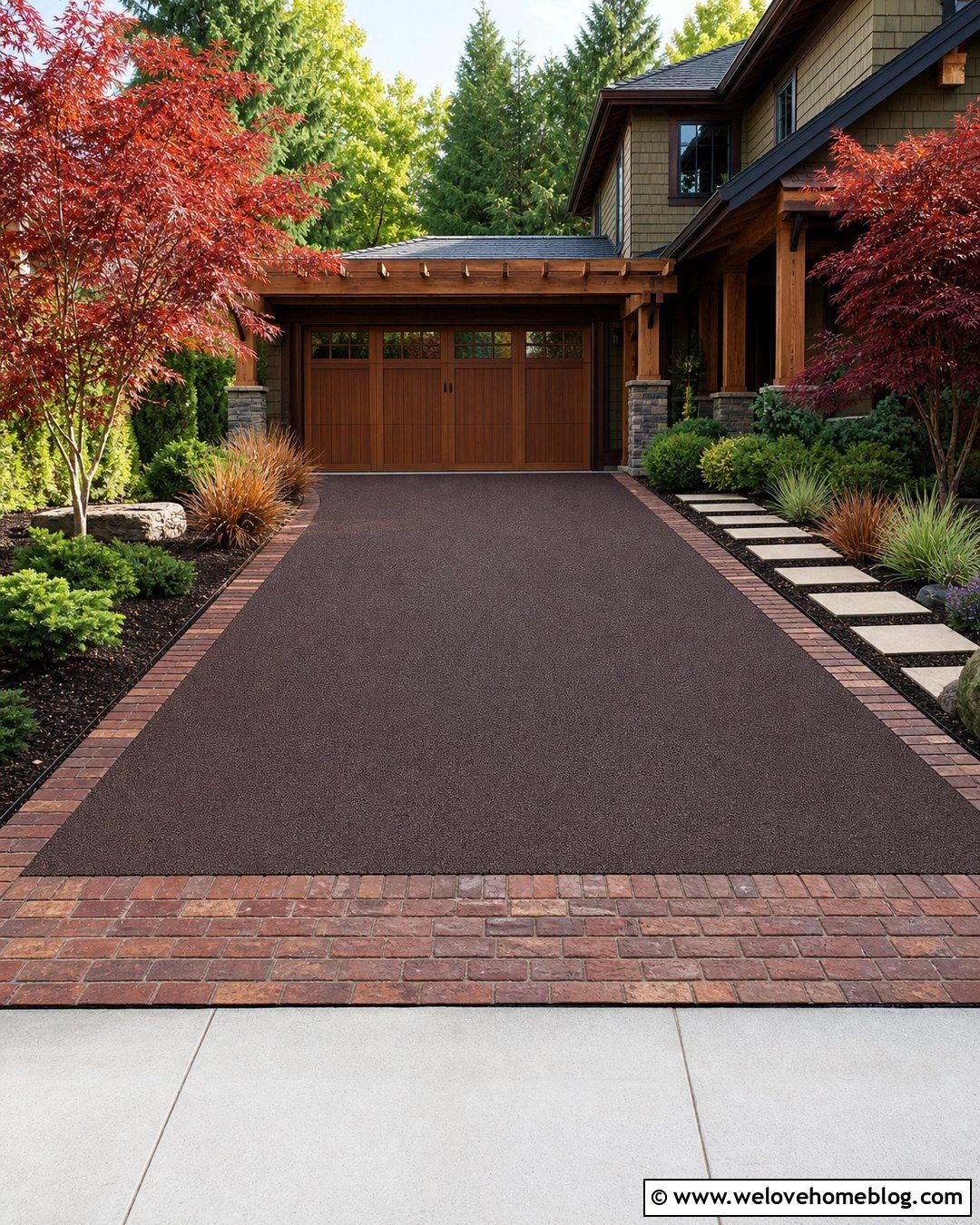
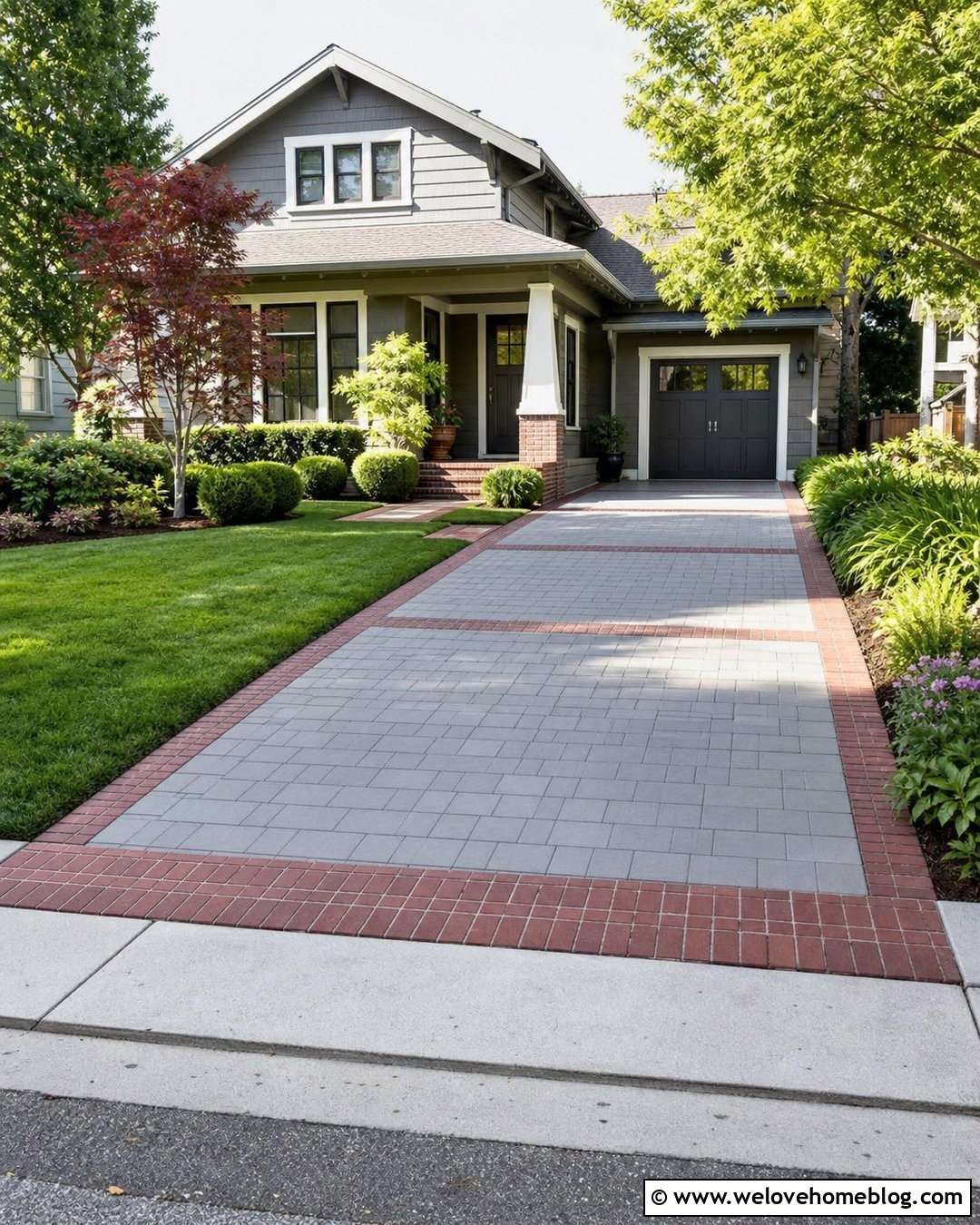
Rich brown rubber paving feels especially comfortable beside a craftsman house with timber details, tapered columns, and earthy exterior colors. Use a straight driveway that widens slightly near the garage, then add a clay brick ribbon along each side. A brick band across the entrance can repeat the facade and visually separate the driveway from the street. Plant Japanese maples, compact evergreens, and rust-colored ornamental grasses nearby to reinforce the warm palette. Cream stepping stones can form a clear walkway to the porch. Choose a rubber blend with black and tan flecks so the surface has depth rather than looking like a solid painted coating. Keep the brick accents limited and consistent, allowing the rubber paving to remain the main driveway material.
6. Red Rubber Paving Driveway With Colonial Landscaping
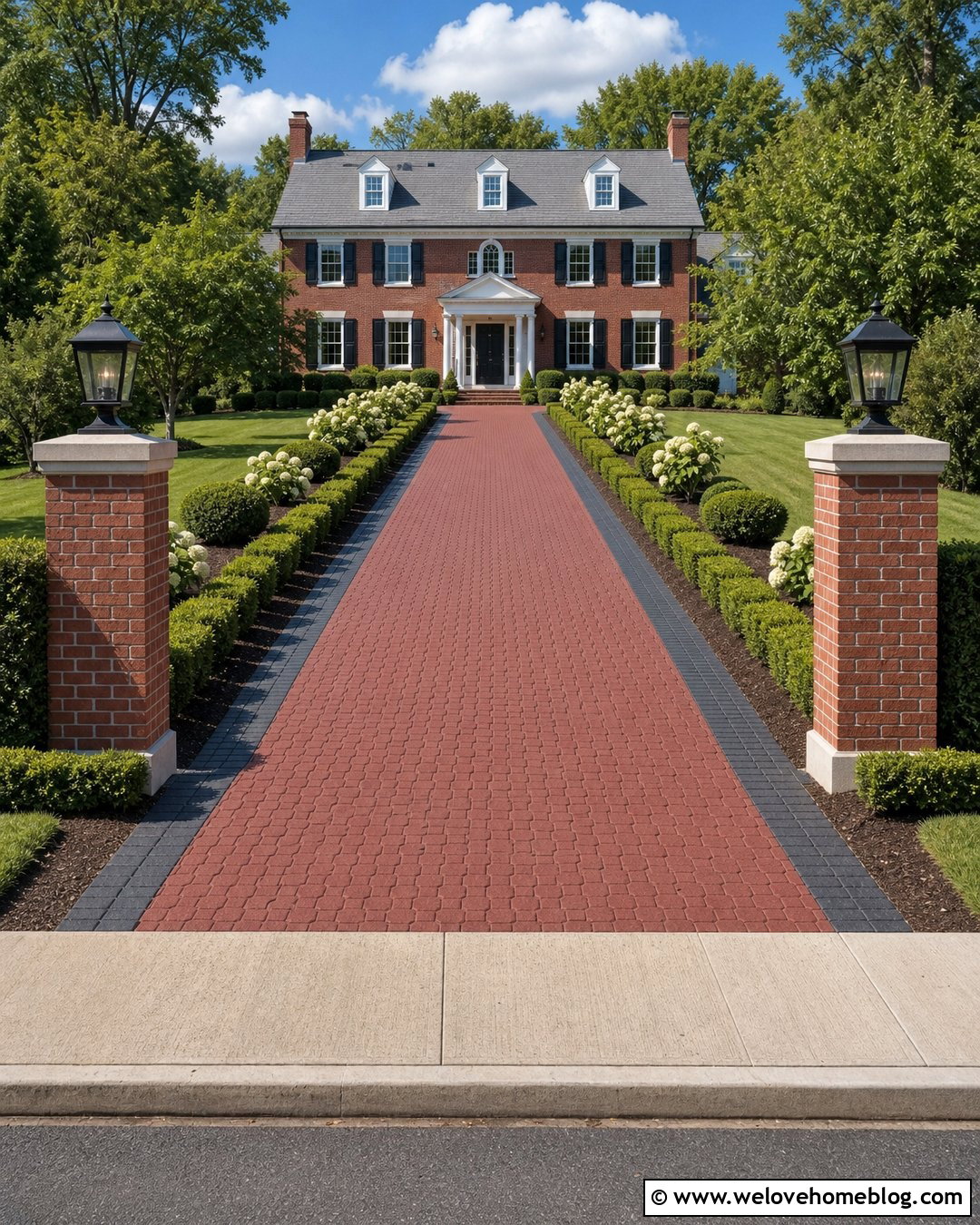
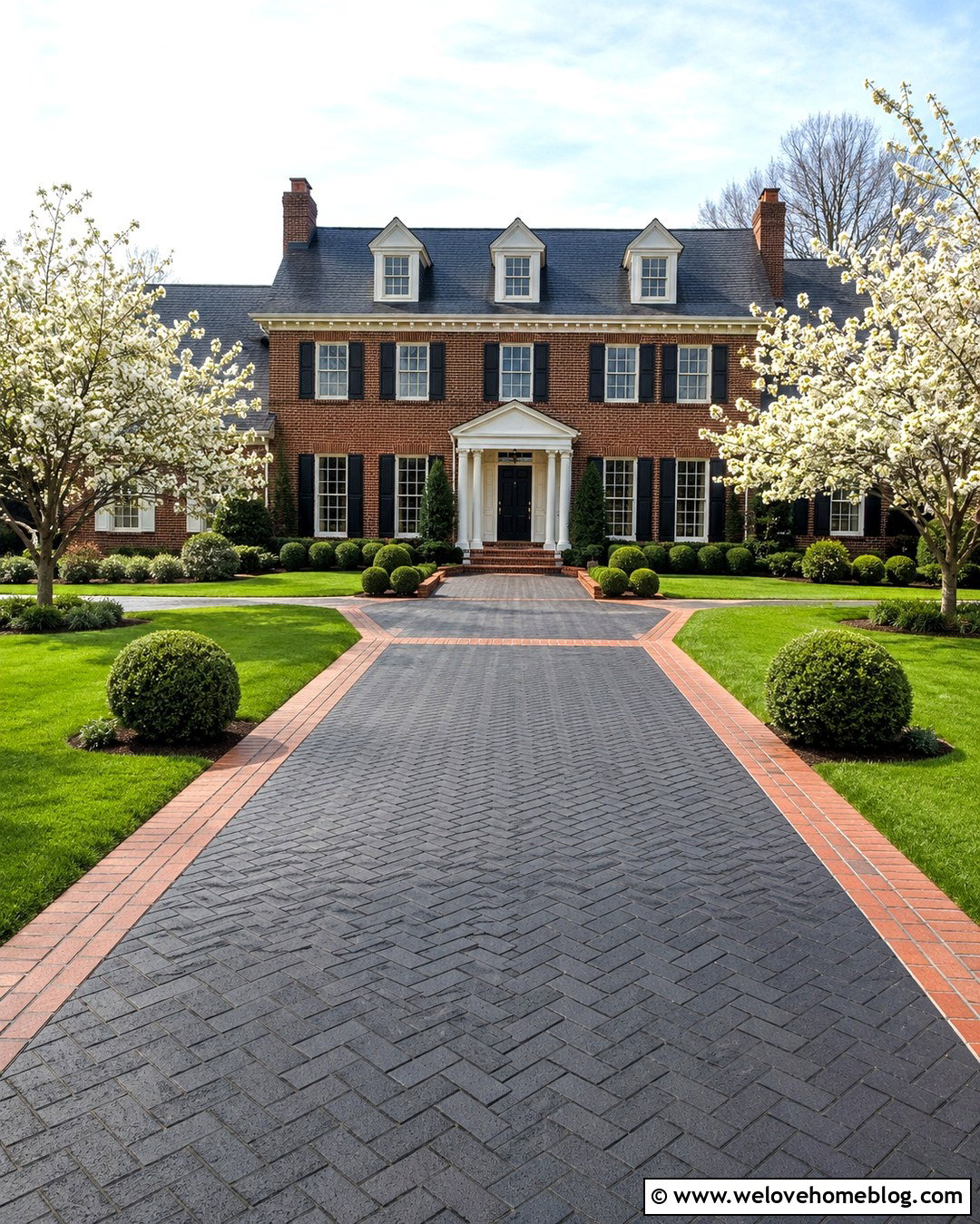
A muted red rubber paving driveway can complement a traditional colonial home when the color resembles aged brick rather than a bright playground surface. Lay out the driveway in a symmetrical straight line leading toward a centered garage or side parking area. Dark charcoal rubber borders can outline the red center and prevent the design from feeling overly uniform. On both sides, use clipped hedges, rounded boxwoods, and evenly spaced flowering shrubs. Brick entrance pillars can connect the driveway to the home, while a black metal lantern on each pillar adds classic detail. Match the red blend to the house carefully. If the facade already contains red brick, select a slightly darker or browner driveway tone so the surfaces coordinate without appearing artificially identical.
7. Permeable Rubber Paver Driveway With Gravel Joints
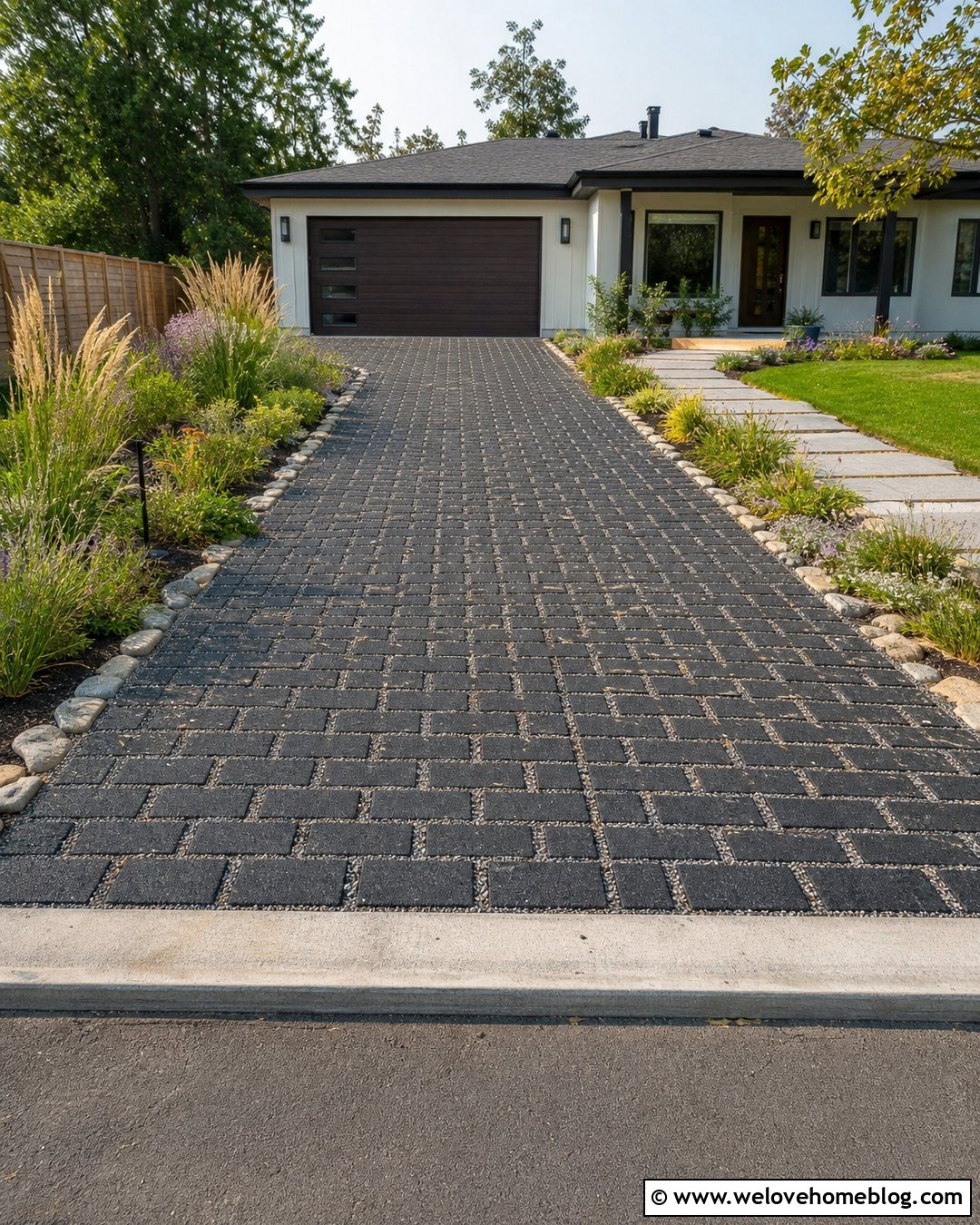
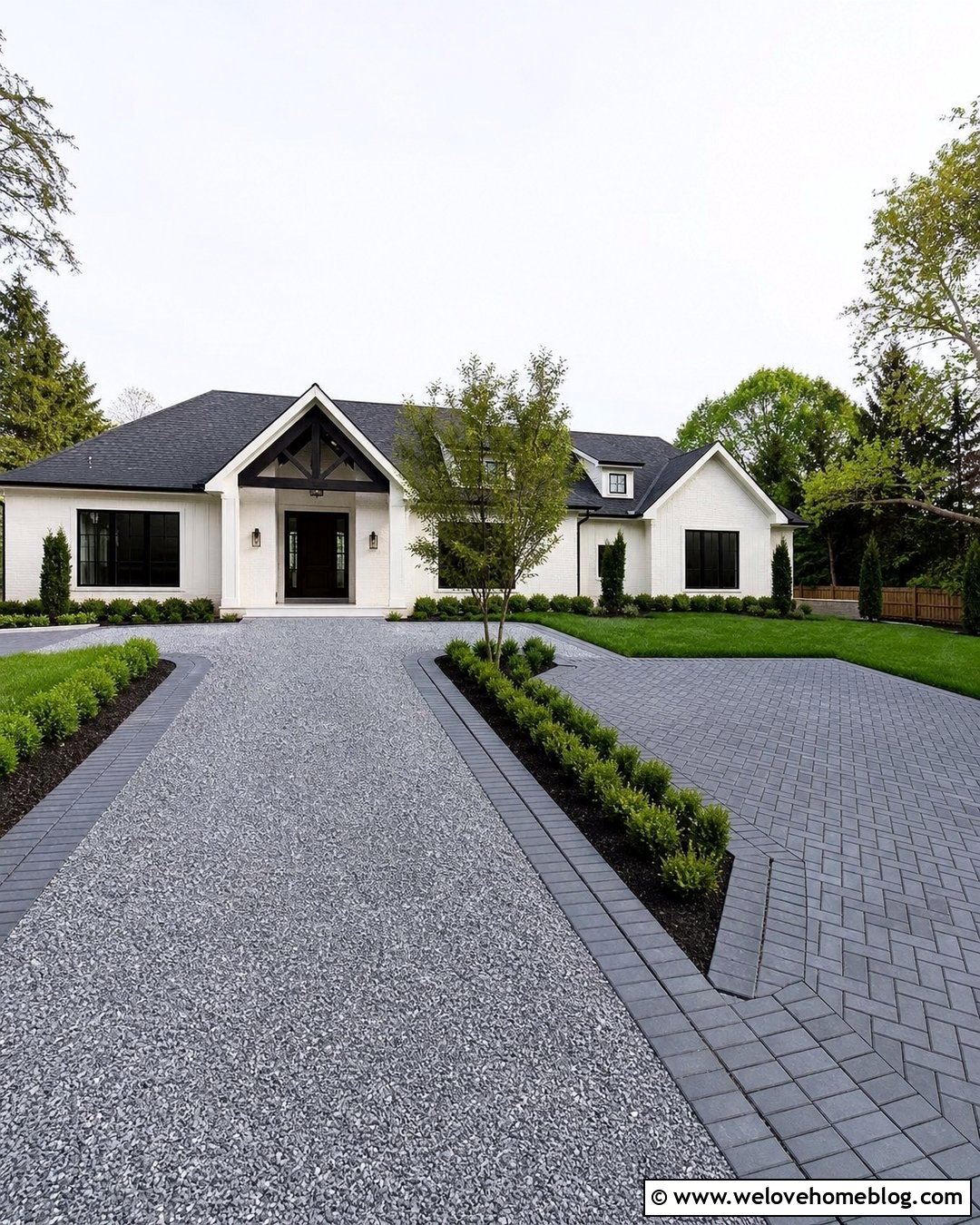
Interlocking rubber pavers installed within a compatible permeable grid can create a structured driveway with visible joints and effective visual texture. A straight layout is easiest to organize, although a modest curve can work with careful cutting. Fill designated open joints with clean angular gravel that contrasts with dark recycled rubber pavers. Beneath the finished surface, the approved base and drainage design are essential to the system’s performance. Permeable rubber paver installations have been used for residential driveways to help water move into a prepared stone base rather than immediately running across the surface. () Frame the complete look with native grasses, a rain-friendly planting bed, and stone edging. Always confirm that the selected pavers, grid, base, and installation method are rated for residential vehicle traffic.
8. Circular Rubber Paving Driveway With A Center Island
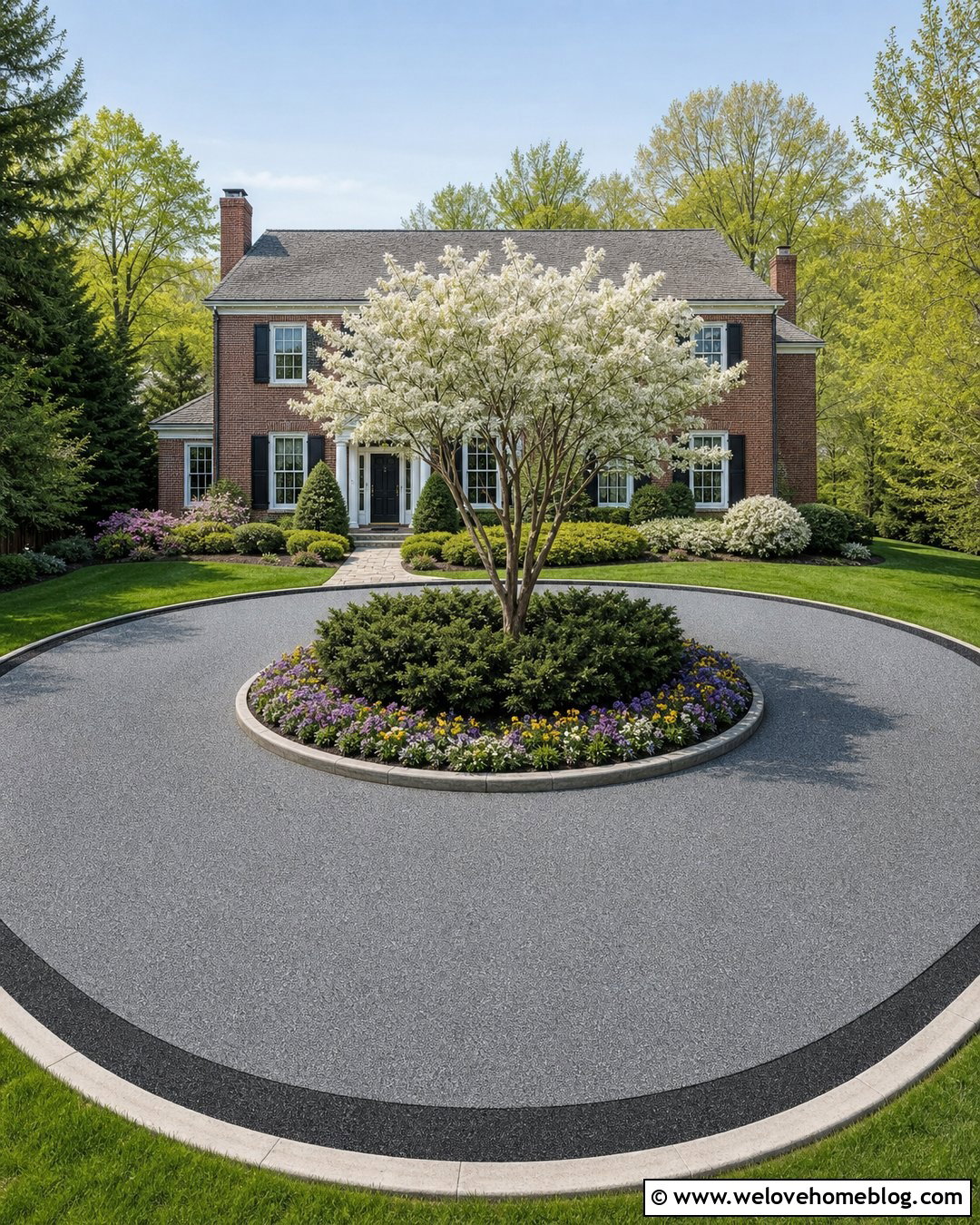
A circular rubber paving driveway gives a larger front yard an elegant traffic flow while reducing the need for complicated reversing. Use a medium-gray poured rubber surface around a generously sized center island. A dark rubber border or contrasting concrete curb will clarify the circle and keep the layout visually organized. Fill the island with one sculptural tree, low evergreen shrubs, and a ring of seasonal flowers that will not block sightlines. Continue the same planting palette near the house so the island does not look disconnected. For a balanced approach, align the entrance and exit with existing road access and allow enough turning space for expected vehicles. A colonial, ranch, or traditional brick house can all suit this design when the colors remain restrained.
9. Horseshoe Rubber Paving Driveway With Entry Pillars
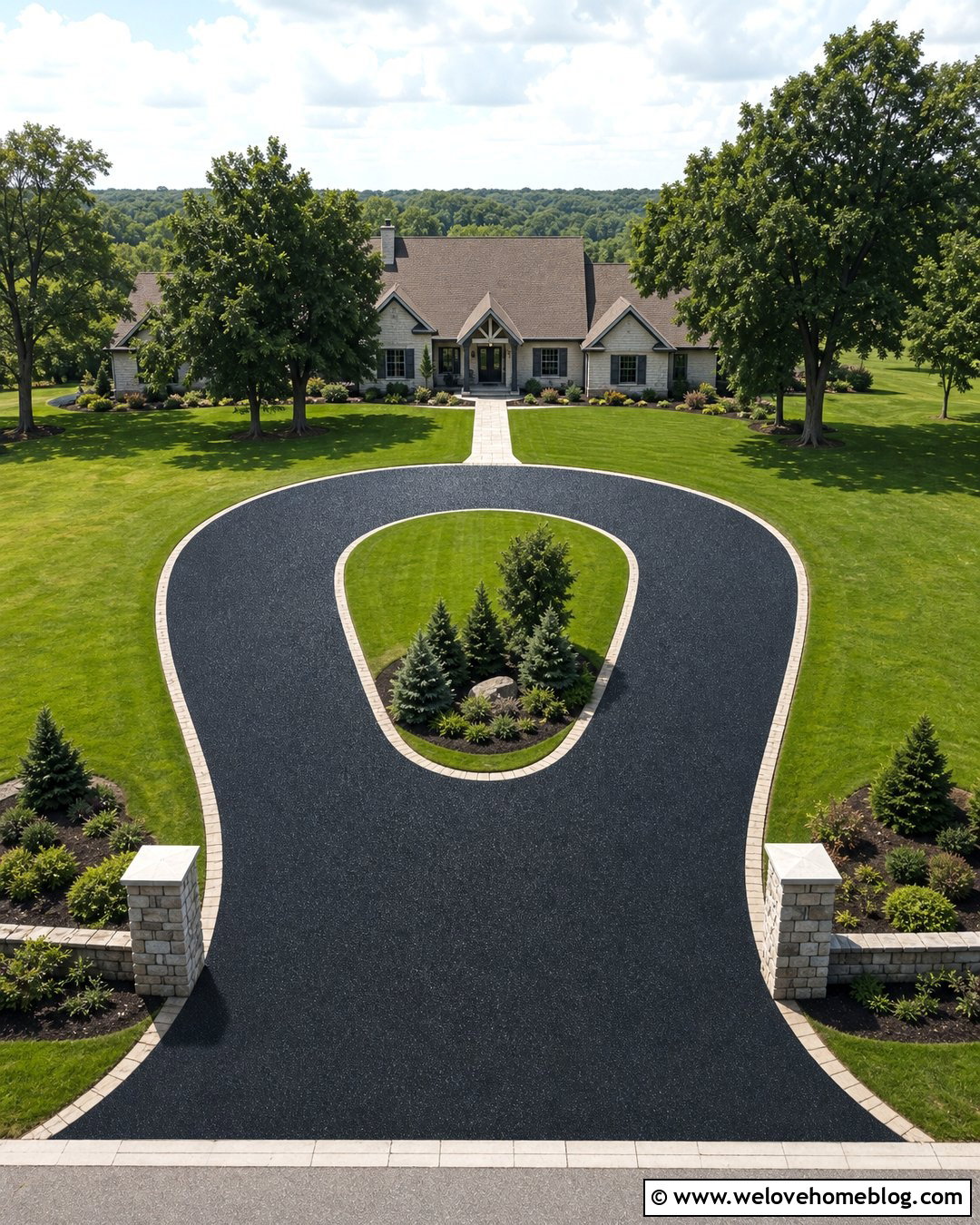
For a wide property, a horseshoe rubber paving driveway can create a formal entrance without making the front yard feel entirely paved. Choose a dark brown or charcoal rubber surface with two clearly separated openings at the road. Low stone pillars can mark each opening, while curved masonry edging follows the full sweep toward the house. Place broad lawn panels inside and outside the horseshoe to balance the hardscape. Near the facade, add layered evergreen beds and a direct walkway to the front door. The driveway should remain wide enough through every curve, especially where delivery vehicles turn. Keep gates optional unless there is sufficient setback from the street. This complete arrangement suits country homes, ranch houses, and understated estate-style properties.
10. Narrow Rubber Paving Driveway With Grass Borders
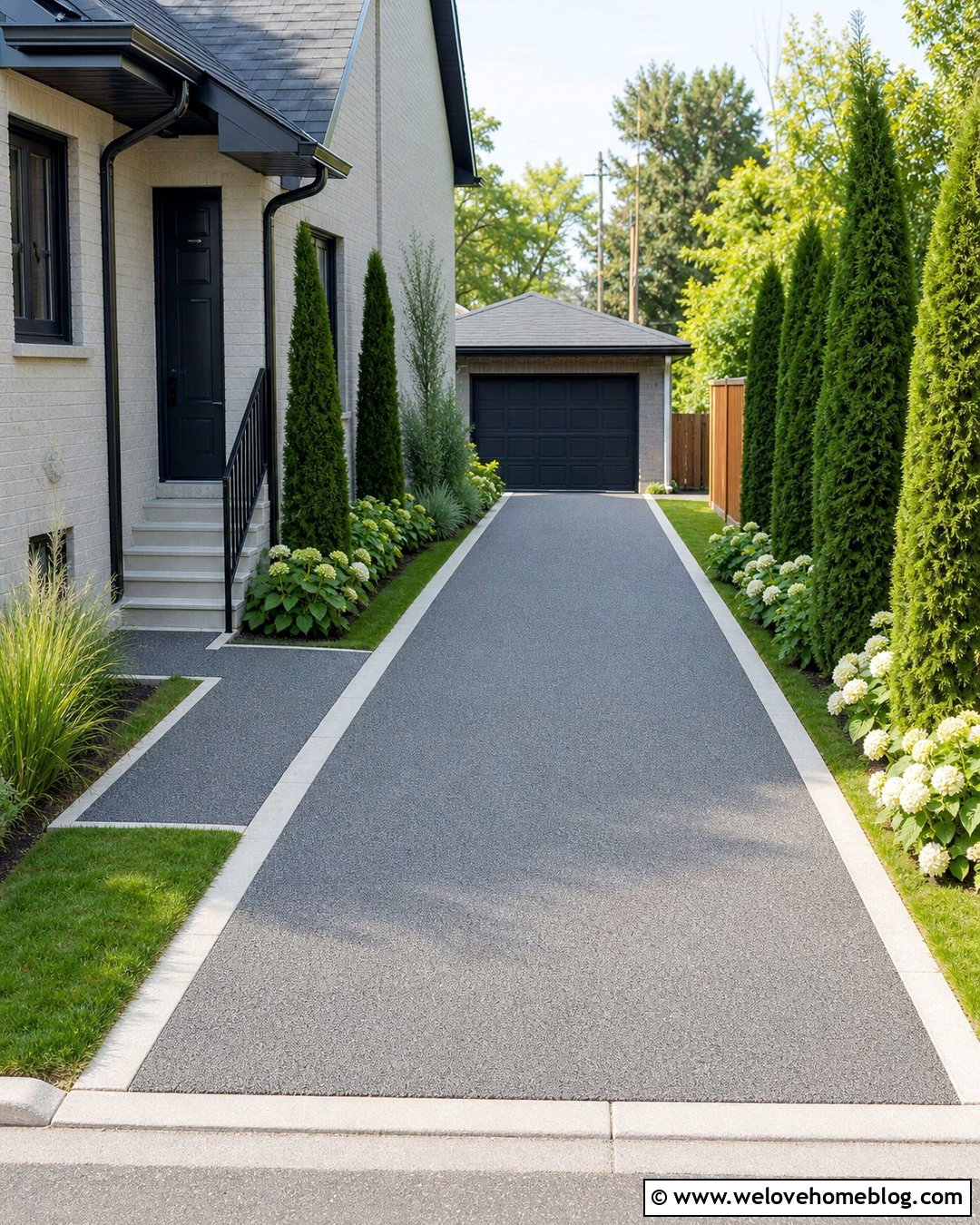
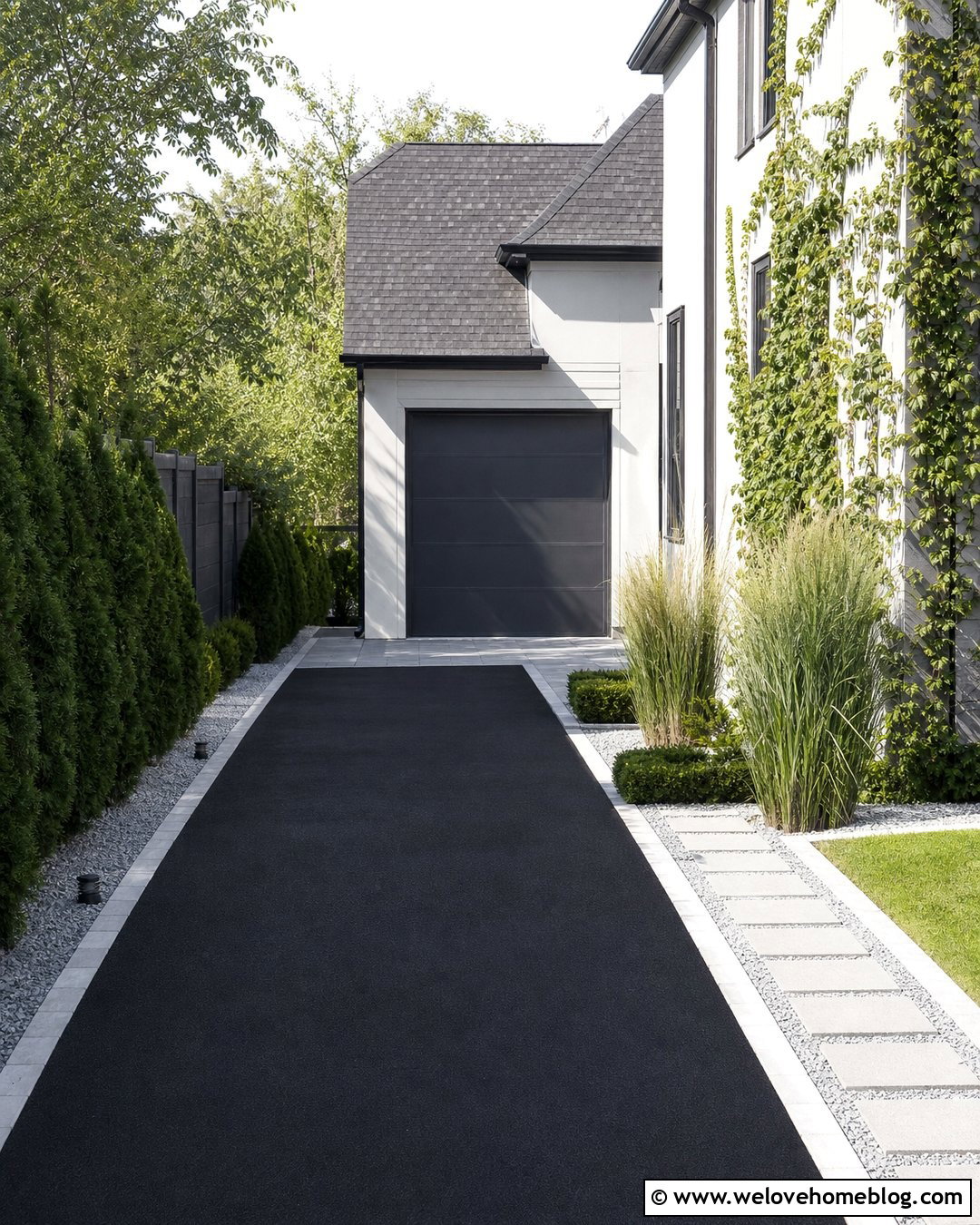
A narrow side driveway can still feel intentional when its proportions are reinforced by clean materials. Use medium-gray rubber paving in a straight layout leading to a detached garage or rear parking space. Install slim concrete edging on both sides, then leave narrow grass strips between the driveway and surrounding planting beds where space permits. Columnar evergreens, compact hydrangeas, and upright ornamental grasses add greenery without crowding vehicle doors. A matching rubber walkway can branch toward the side entrance, creating a smooth connection between surfaces. Avoid thick borders that unnecessarily reduce usable width. Light-colored edging can also improve the visual definition of the driveway. Before finalizing the plan, check clearance at downspouts, fences, air-conditioning equipment, steps, and roof overhangs.
11. Rubber Driveway Overlay With A Contrasting Apron
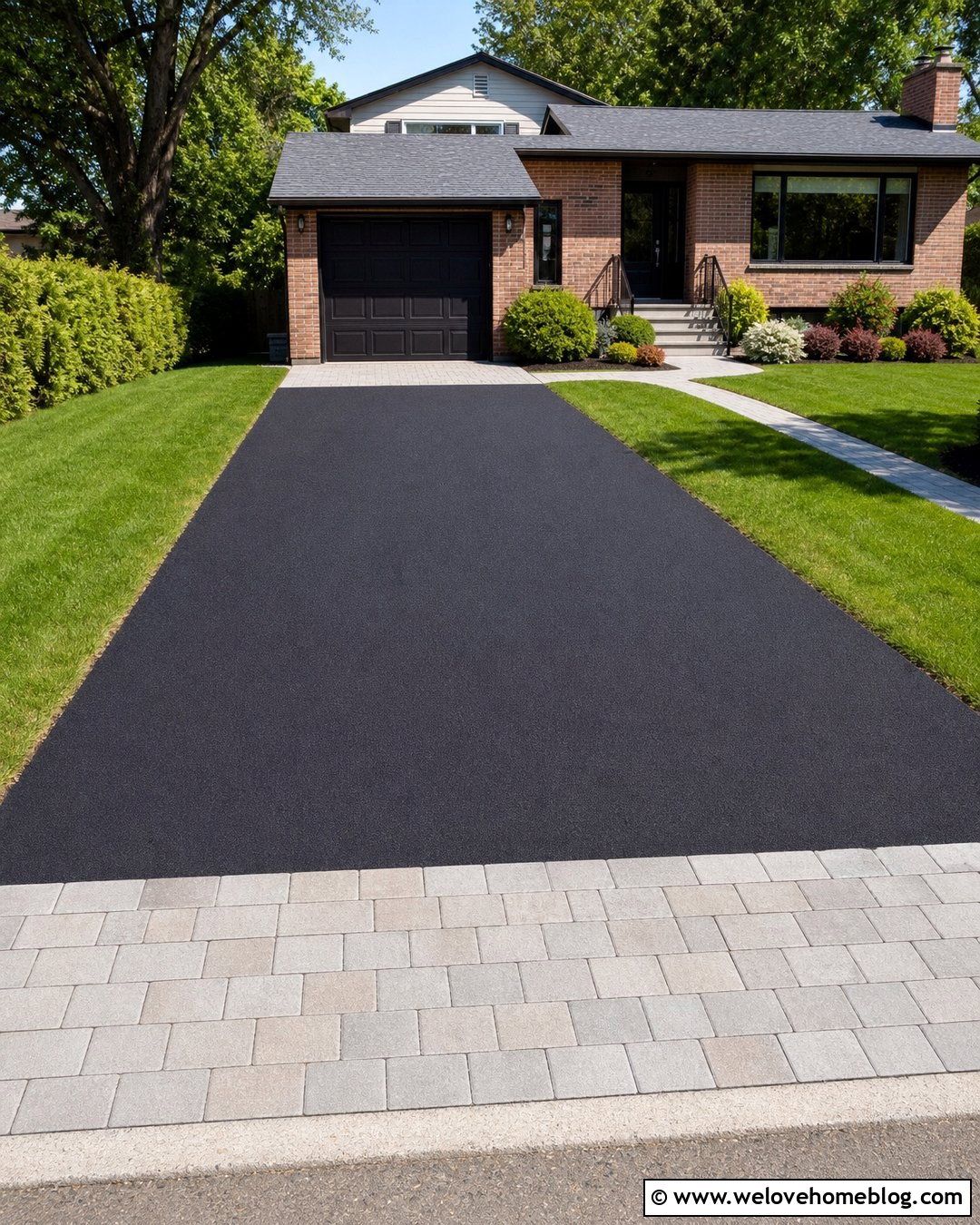
When an existing hard driveway is suitable for resurfacing, a recycled rubber overlay can give it a more polished appearance without changing the established layout. Rubber surfacing is commonly promoted for application over prepared concrete or asphalt, but the underlying condition and installer’s specifications must be evaluated first. () Choose a charcoal overlay for the main area and introduce a light-gray paver apron at the curb. The apron creates a strong entrance, while matching paver bands near the garage make the combination look planned. Repair drainage problems and unstable sections before covering the surface. Complete the setting with fresh lawn edges, simple foundation shrubs, and a walkway that repeats the apron material. This practical look can refresh an ordinary ranch or split-level home.
12. Two Tone Rubber Paving Driveway With A Wide Border
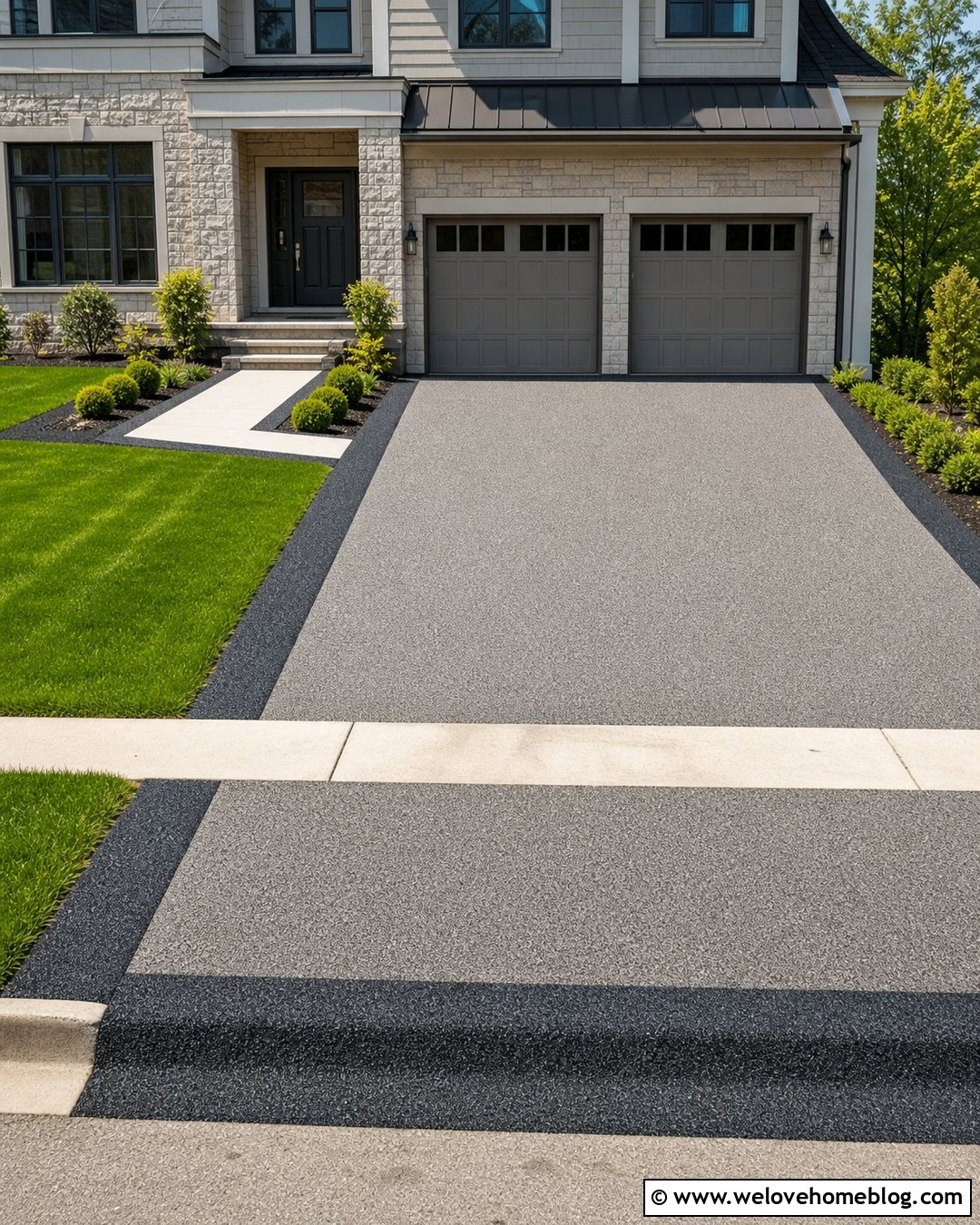
Two-tone rubber paving can add definition without relying on elaborate patterns. Use a warm gray surface through the center of a straight driveway, then surround it with a wide charcoal rubber border. Continue the dark tone across the curb entrance and garage threshold so the frame appears complete. This approach works well for a transitional home with mixed stone and siding because it connects several exterior colors. Keep the border width consistent, including around gentle curves or widened parking areas. Landscaped beds should follow the same strong geometry, using rounded shrubs to soften the straight lines. A pale concrete walkway can cross the border and meet the center surface cleanly. Request physical samples of both colors together because a small contrast often looks more refined than an extreme one.
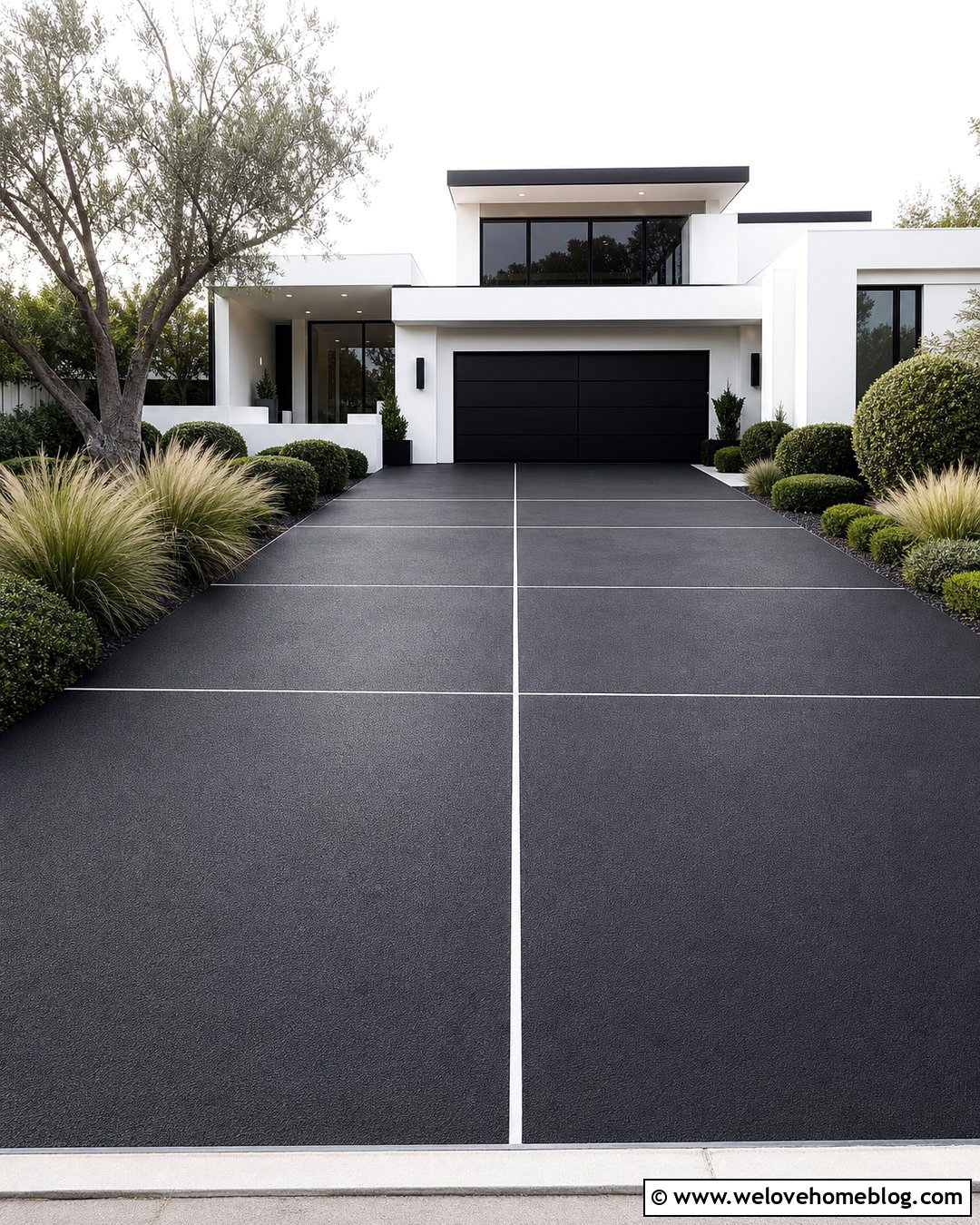
13. Rubber Paving Driveway With Geometric Bands
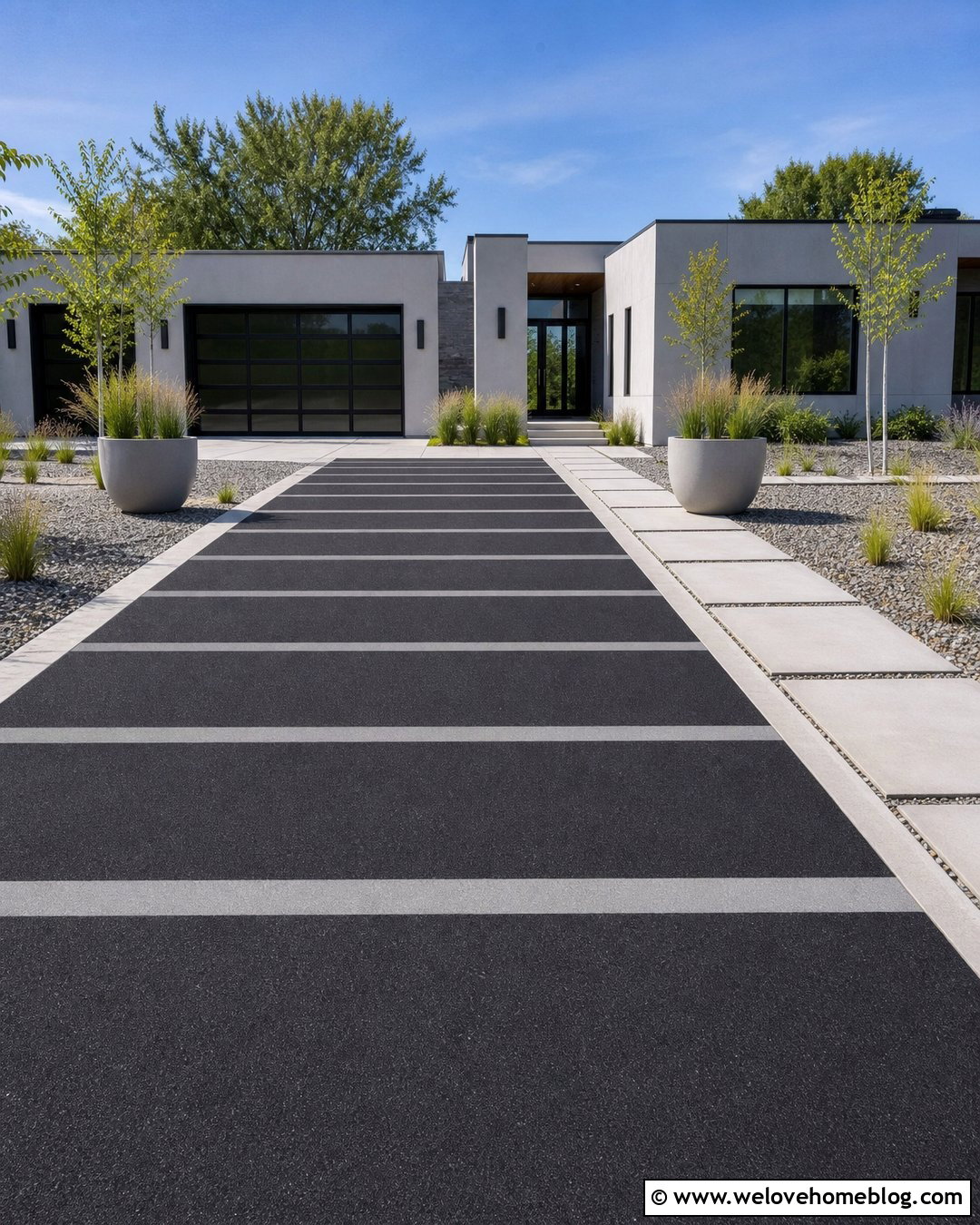
Geometric bands can transform a broad rubber paving driveway into a more architectural feature. Begin with a smooth black recycled rubber surface, then place narrow light-gray bands across it at evenly measured intervals. The bands can be rubber in a contrasting color or traffic-rated paver inlays approved for the installation. A straight driveway is best for this treatment because the repeated lines emphasize width and direction. Pair the design with a flat-roof modern home, large concrete planters, and restrained ornamental grasses. Continue one band into the front walkway to connect the driveway to the entrance. Limit the number of materials elsewhere; too many patterns will weaken the clean effect. Accurate spacing and crisp installation are important because uneven bands will be noticeable from the street.
14. Rubber Paving Driveway With A Cobblestone Apron
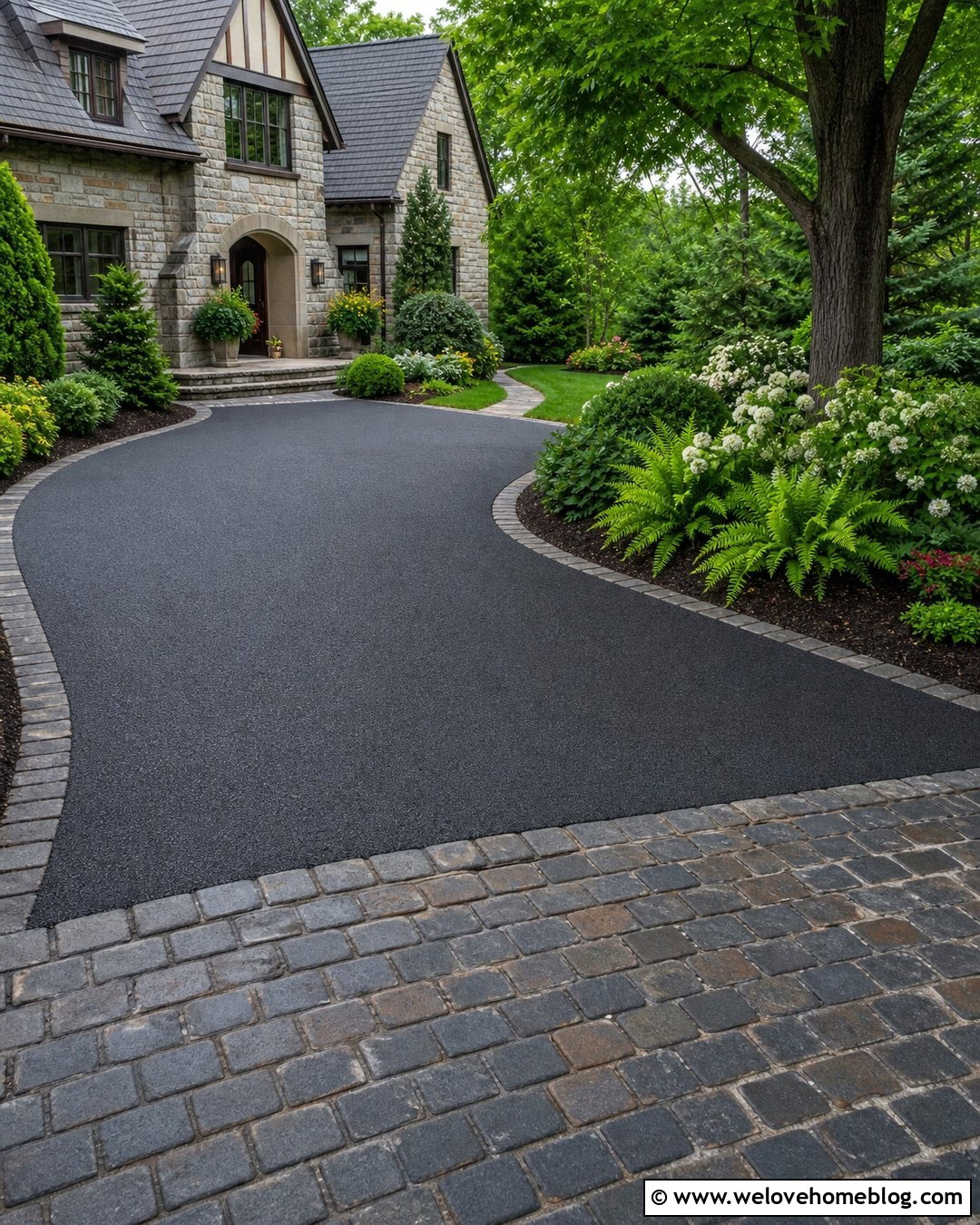
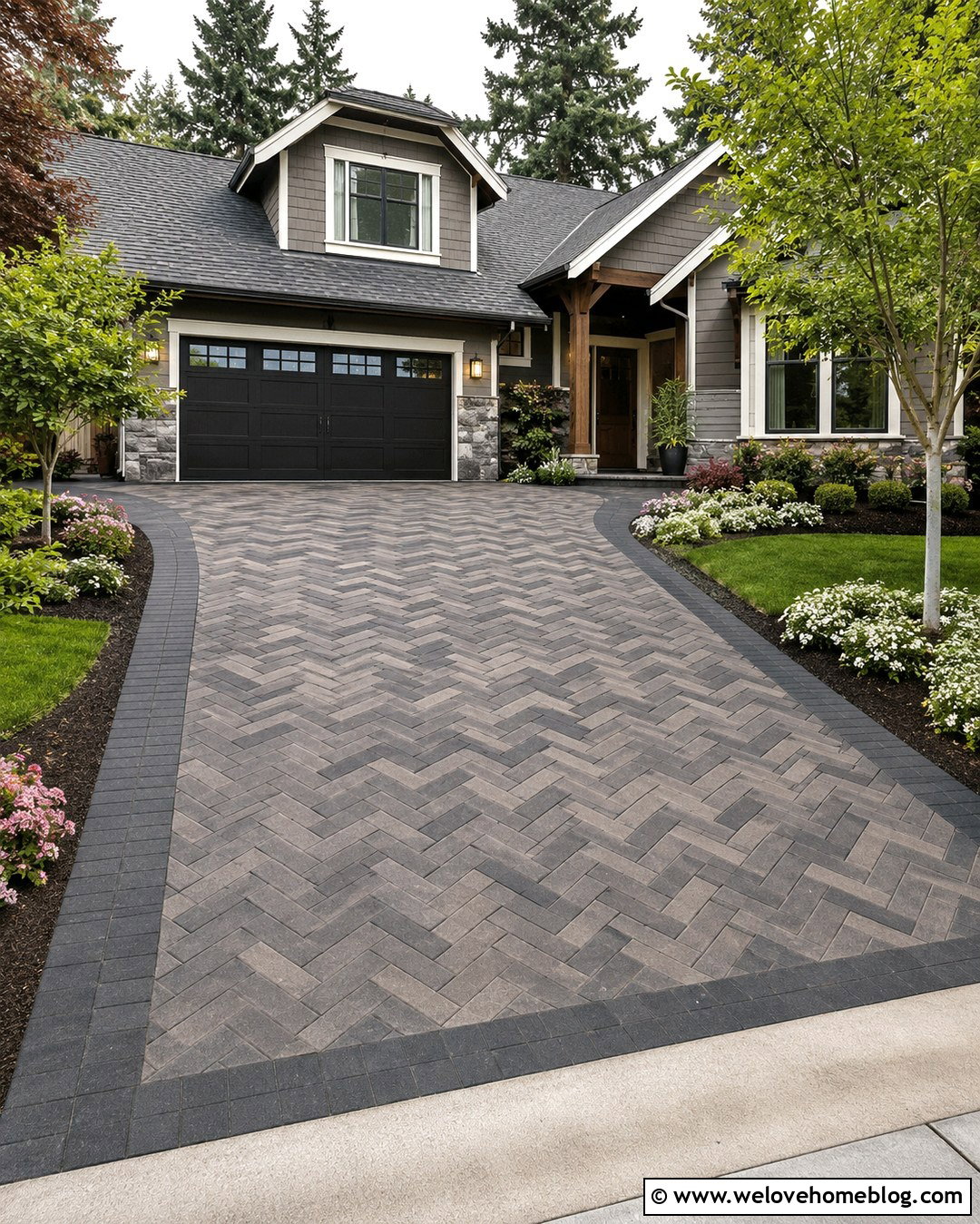
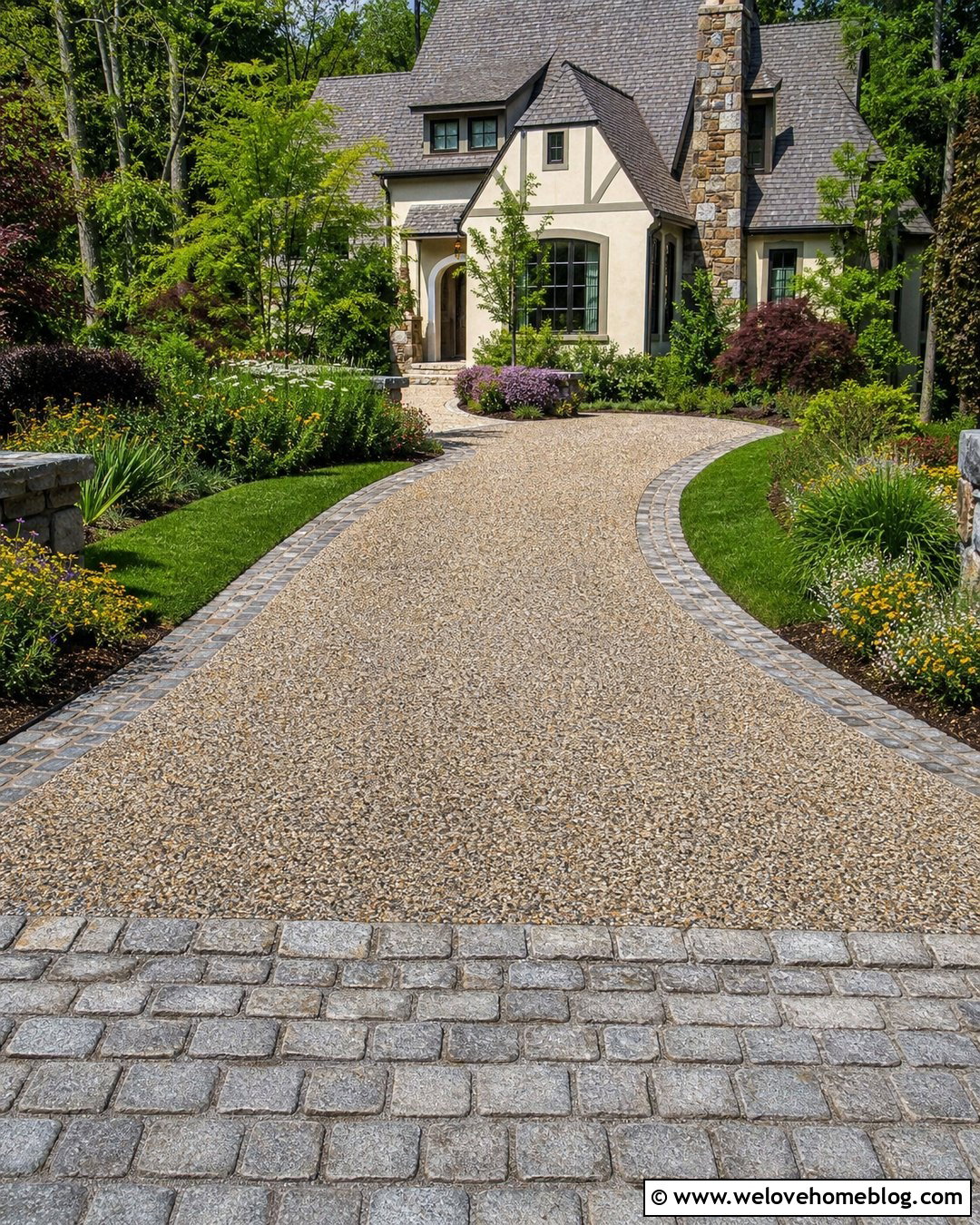
A cobblestone apron can bring traditional character to an otherwise simple rubber paving driveway. Use a finely textured charcoal rubber surface for the main curved approach, then install a deep cobblestone band at the street entrance. Narrow cobblestone edging can continue along the sides, tying the apron into the full layout. This combination looks at home beside a Tudor, stone cottage, or traditional brick house. Surround the driveway with layered evergreens, ferns, flowering shrubs, and a mature shade tree where space allows. Choose cobblestones with gray and brown variation so they bridge the dark rubber and warmer facade. The transition between materials should be smooth and well supported. Repeat the cobblestone near the walkway or porch steps for a unified front-yard design.

15. Long Rubber Paving Driveway With Tree Lined Landscaping
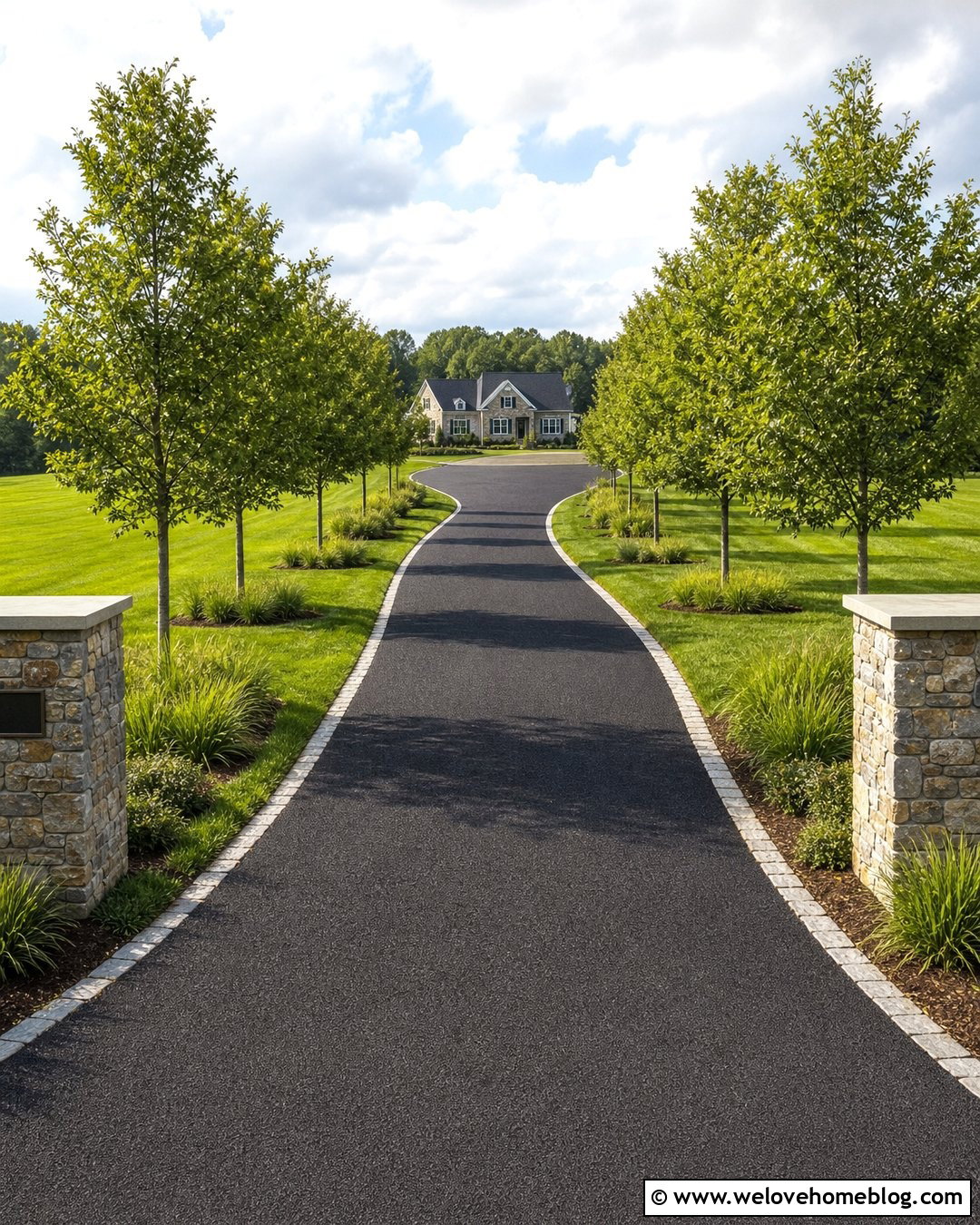
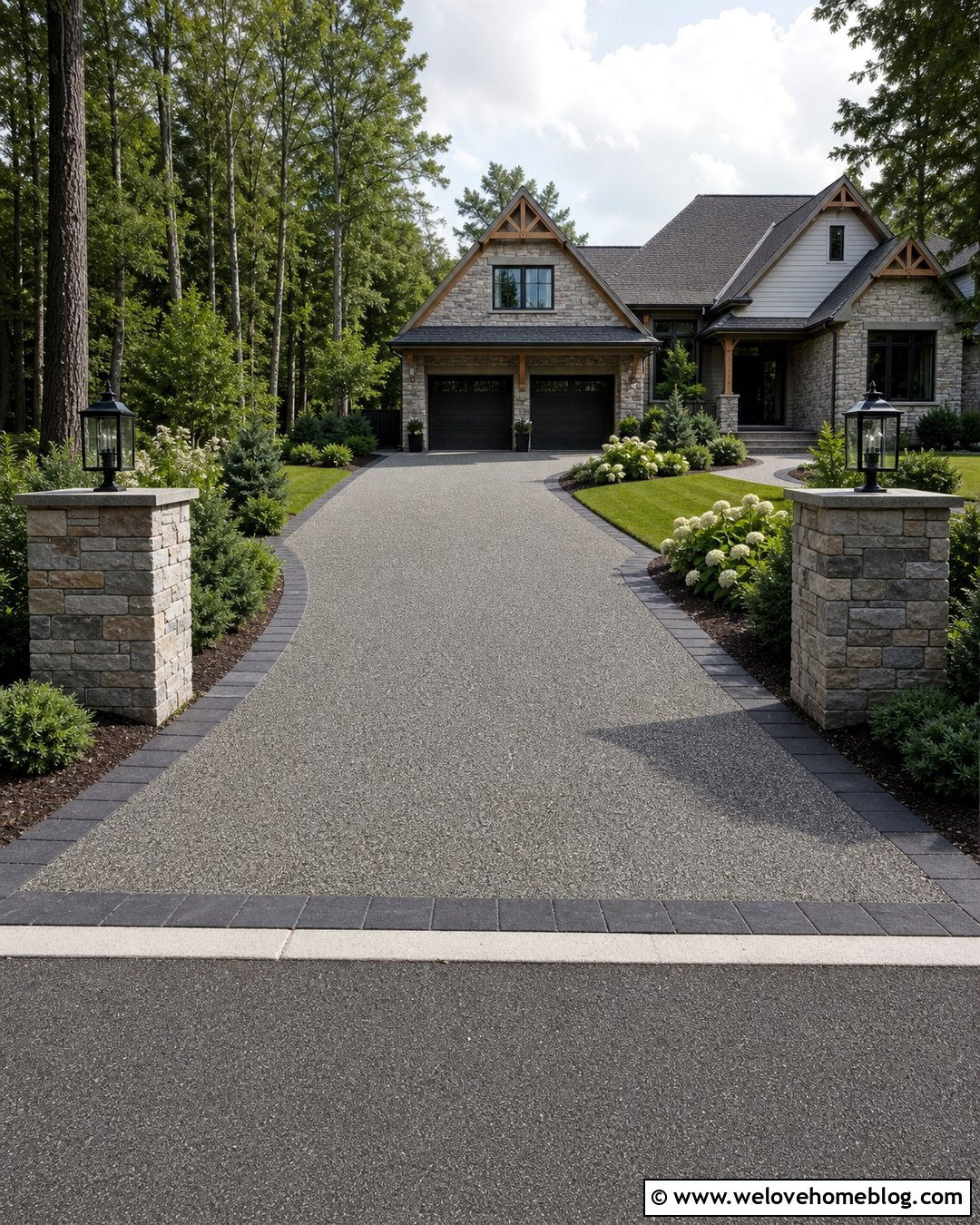
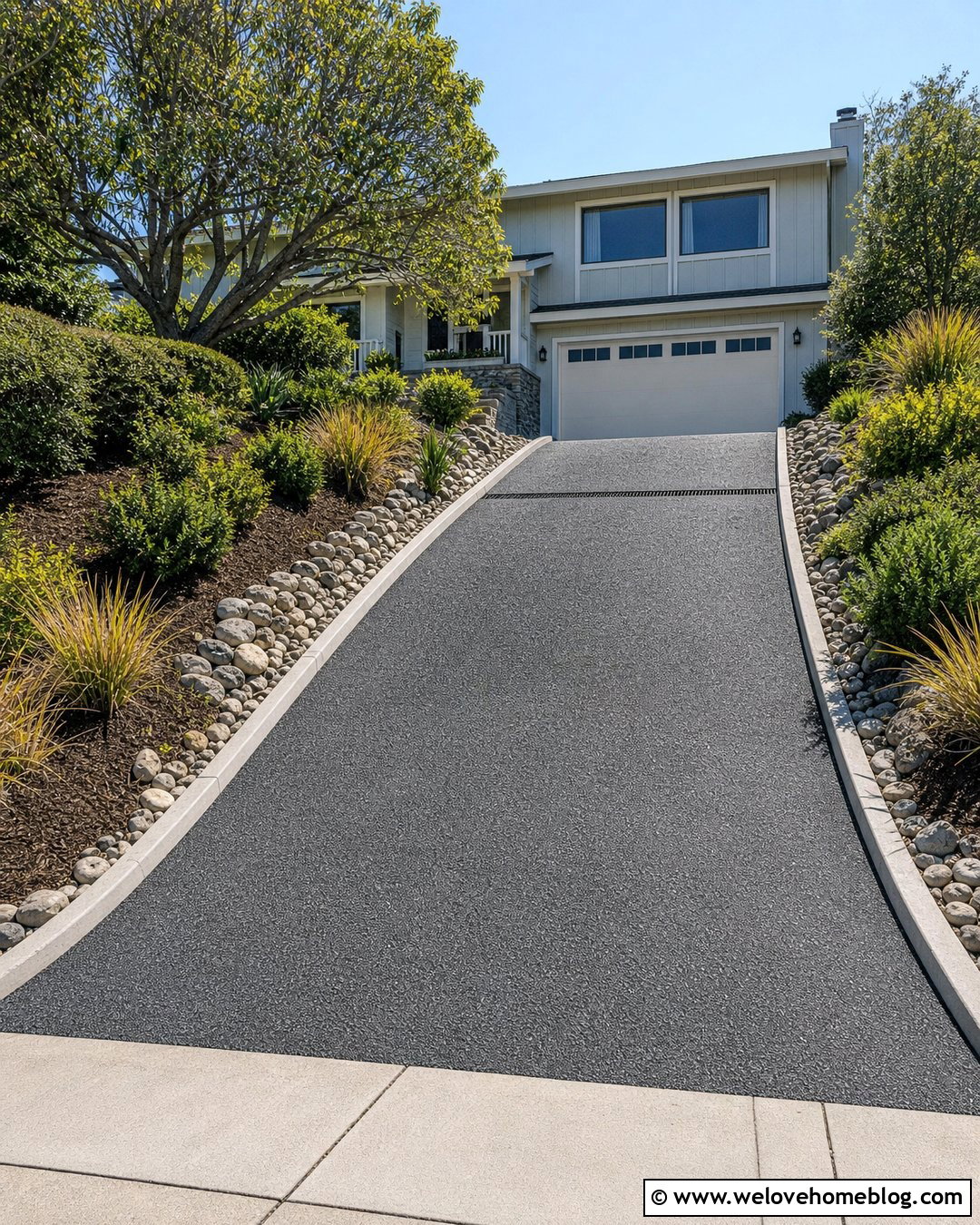
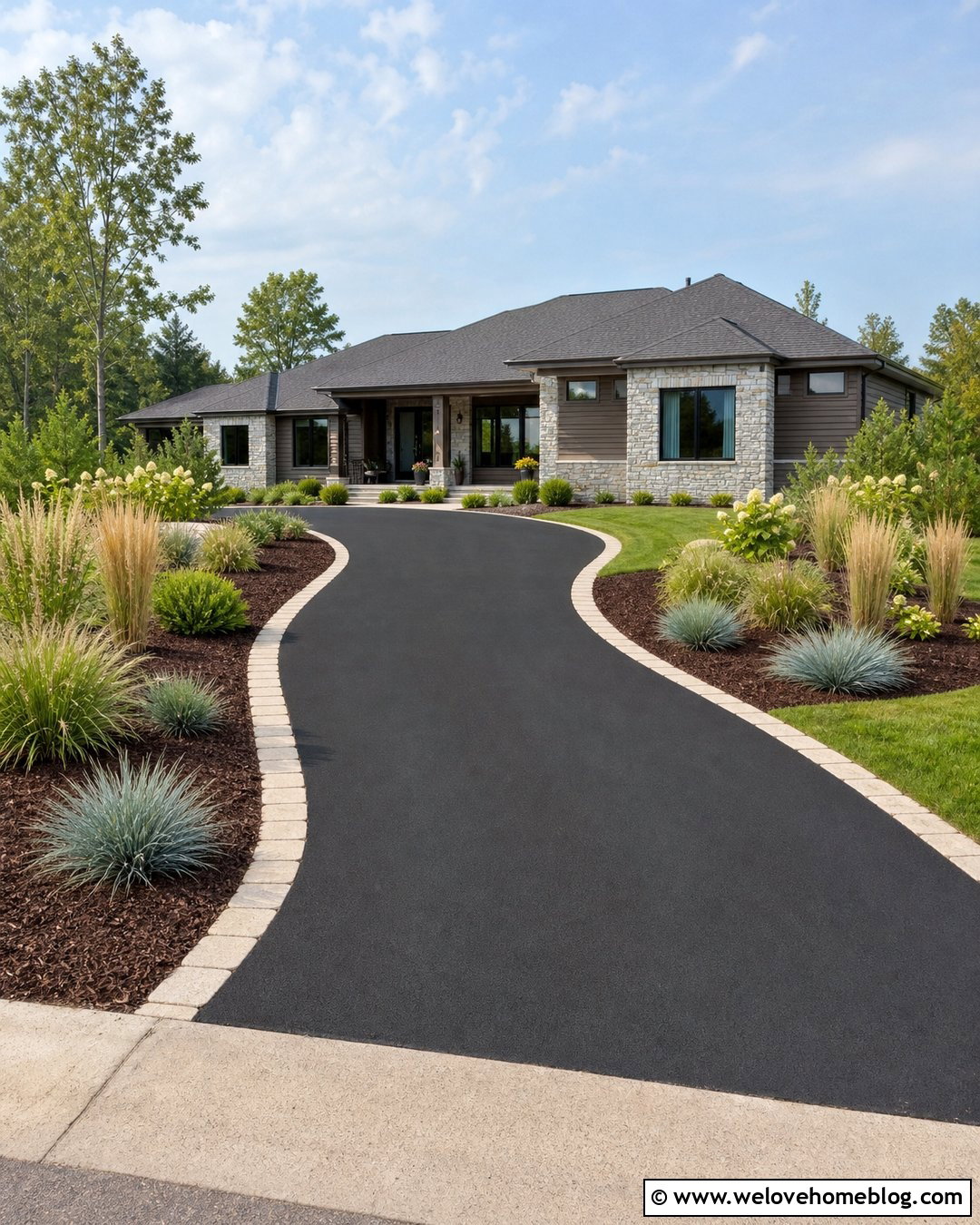
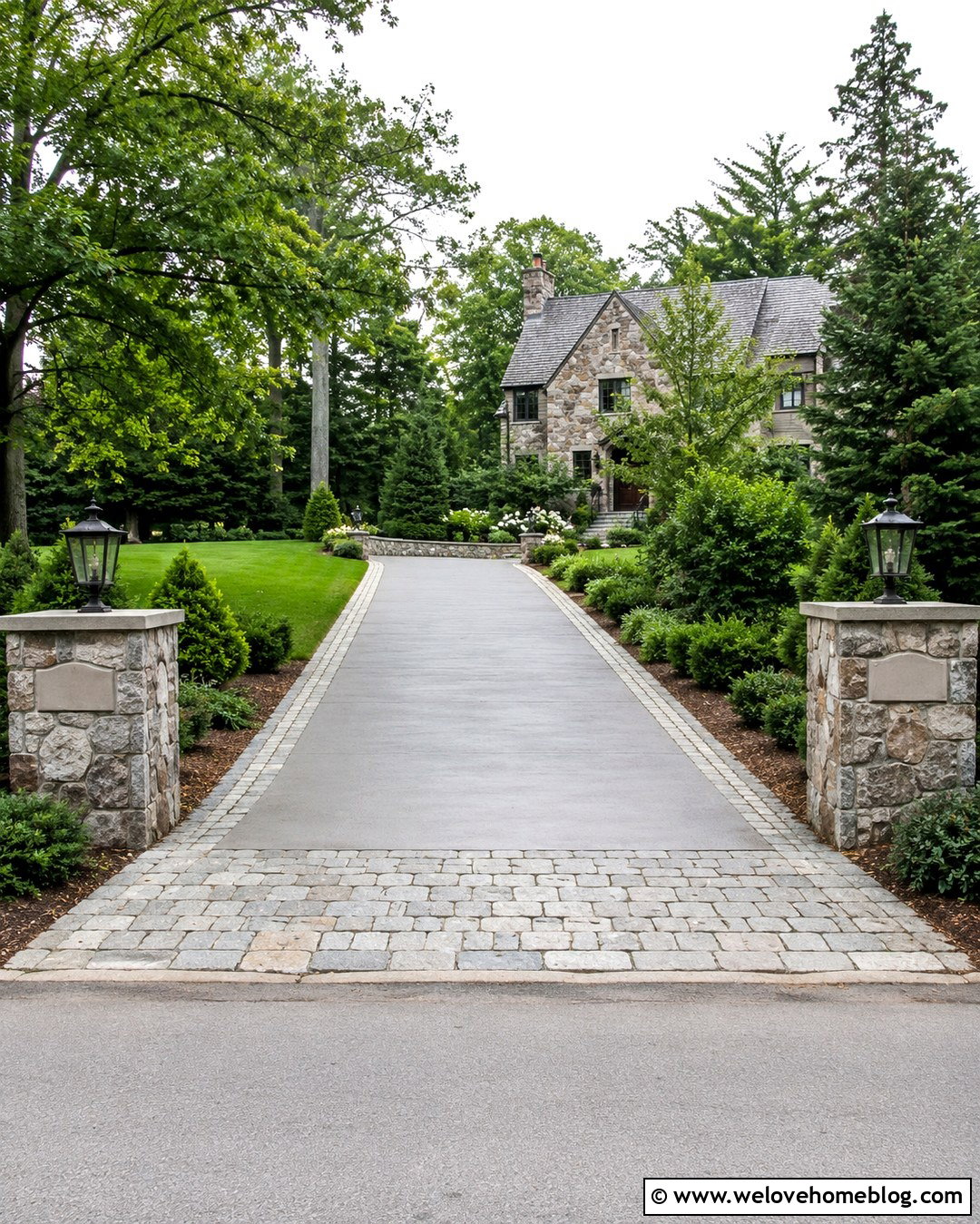
A long driveway needs more than an attractive surface; it needs a clear visual rhythm from the road to the house. Choose a dark gray rubber paving finish for a gently curving approach through a larger lawn. Edge it with flush natural stone so mowers can work close to the surface. Plant evenly spaced deciduous trees beyond the driveway edge, leaving enough room for mature trunks, roots, and canopies. Low native grasses can fill the gaps without making the route feel enclosed. At the entrance, stone pillars and a simple address sign establish a clear arrival point. Near the house, widen the driveway into a practical parking or turning area. Repeating the same stone around nearby planting beds will connect the long approach to the home.
16. Rubber Paving Driveway With Xeriscape Landscaping
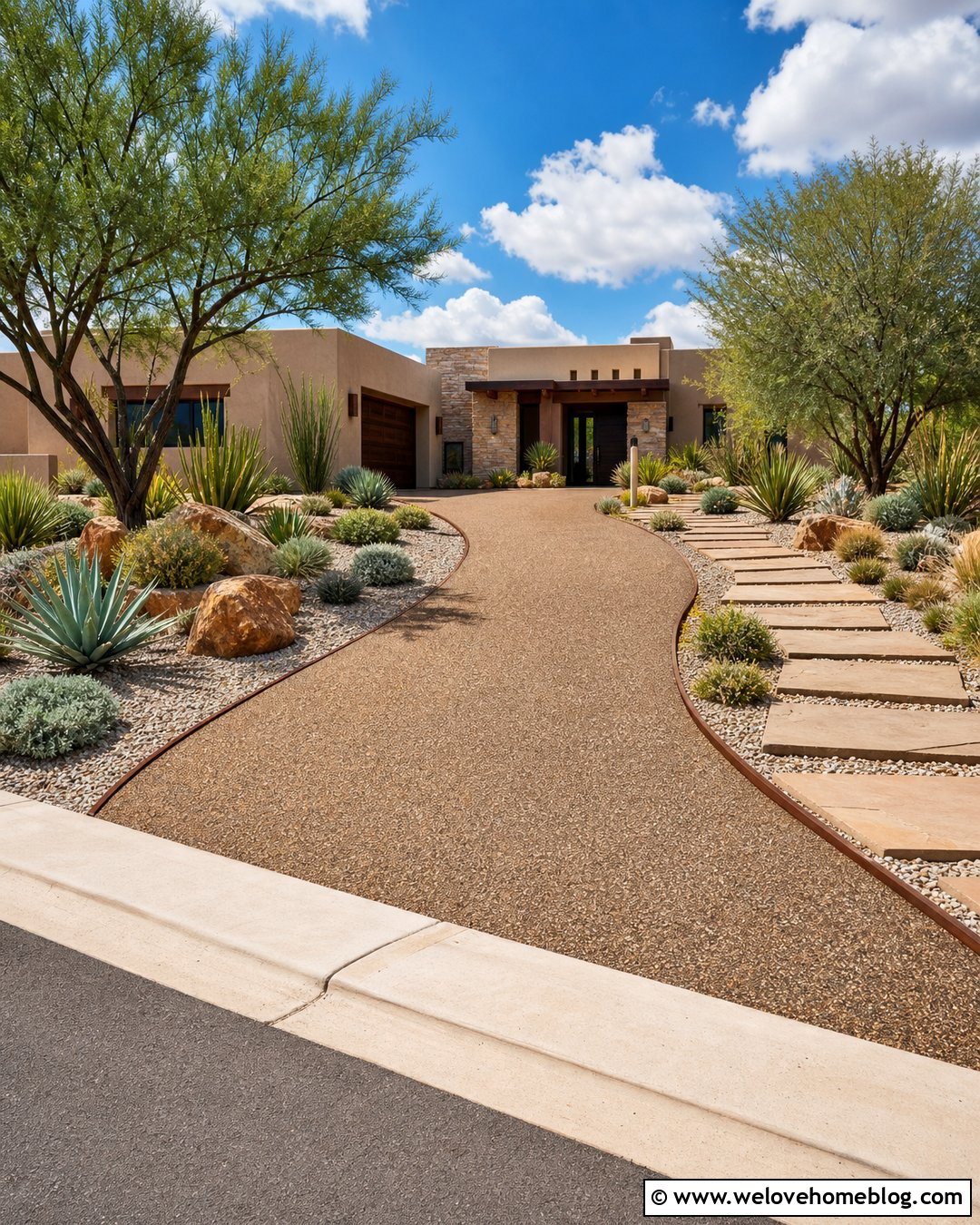
In a dry-climate yard, tan or brown rubber paving can sit naturally among gravel beds and drought-tolerant planting. Use a curved driveway with a warm, speckled finish that complements desert stone without attempting to imitate it exactly. Corten steel or dark concrete edging creates a clean separation between the rubber surface and decorative gravel. Arrange agave, yucca, sage, ornamental grasses, and sculptural boulders in broad groups rather than scattered single plants. A stepping-stone walkway can cross the xeriscape and connect the driveway to a stucco ranch or Southwestern-style home. Preserve open sightlines near the curb and avoid sharp plants beside passenger doors. Drip irrigation and correctly placed drainage channels can keep water focused on plants instead of washing loose gravel onto the driveway.
17. Rubber Paving Driveway With A Rain Garden
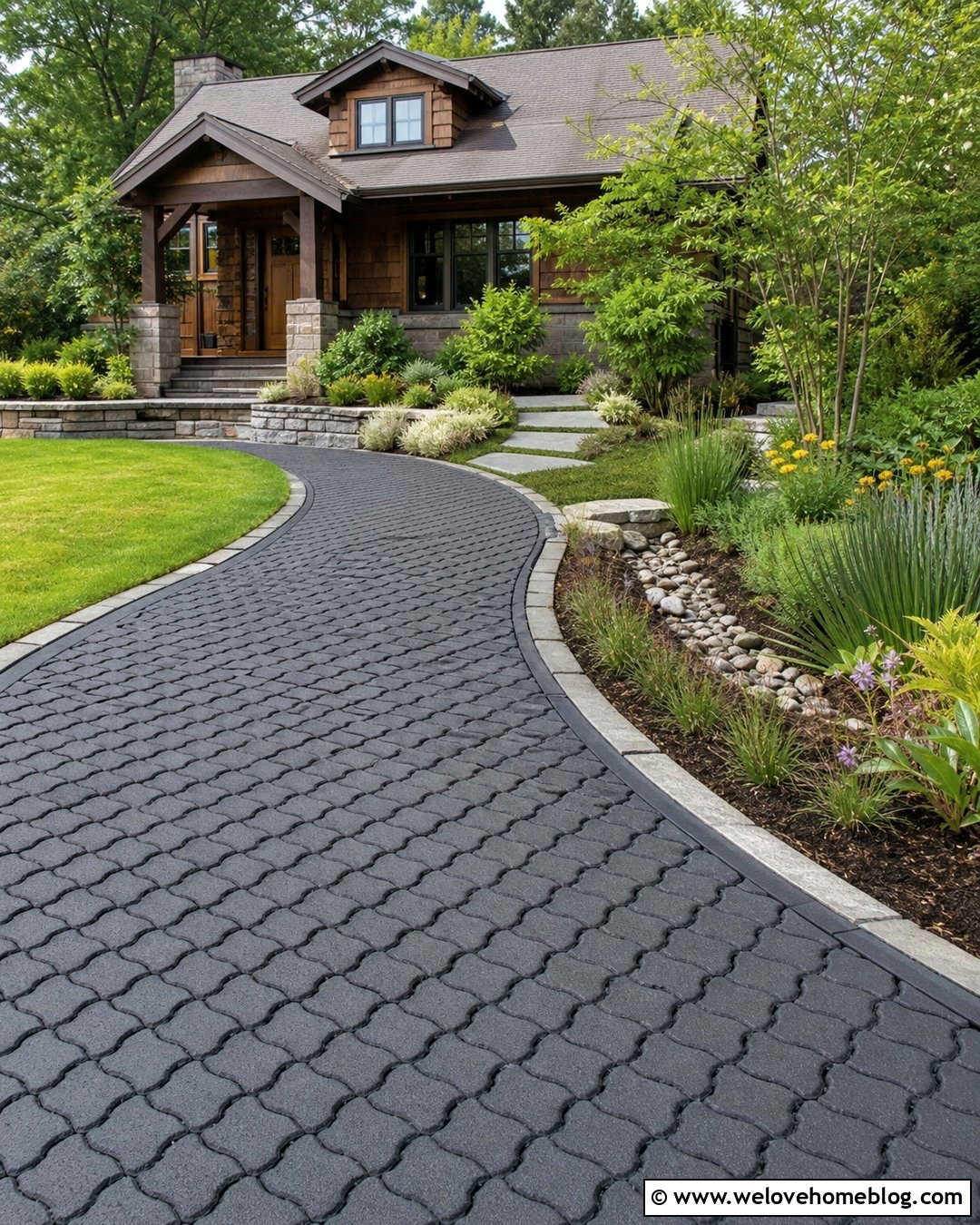
A driveway beside a rain garden can make stormwater management part of the curb appeal. Select a permeable rubber paver system or another rubber paving assembly specifically designed for the site’s drainage plan. Shape the driveway with a gentle curve and direct approved surface flow toward a shallow planted basin rather than the house foundation. Edge the rain garden with flat stone and fill it with region-appropriate sedges, rushes, flowering perennials, and moisture-tolerant shrubs. Keep a maintained buffer between the plants and vehicle area so stems do not spill across the paving. A small footbridge-style walkway or large stepping slabs can lead toward the porch. Because soil, slopes, rainfall, and local rules differ, have the drainage layout reviewed before deciding the basin’s depth, overflow route, and location.
18. Accessible Rubber Paving Driveway With A Smooth Walkway
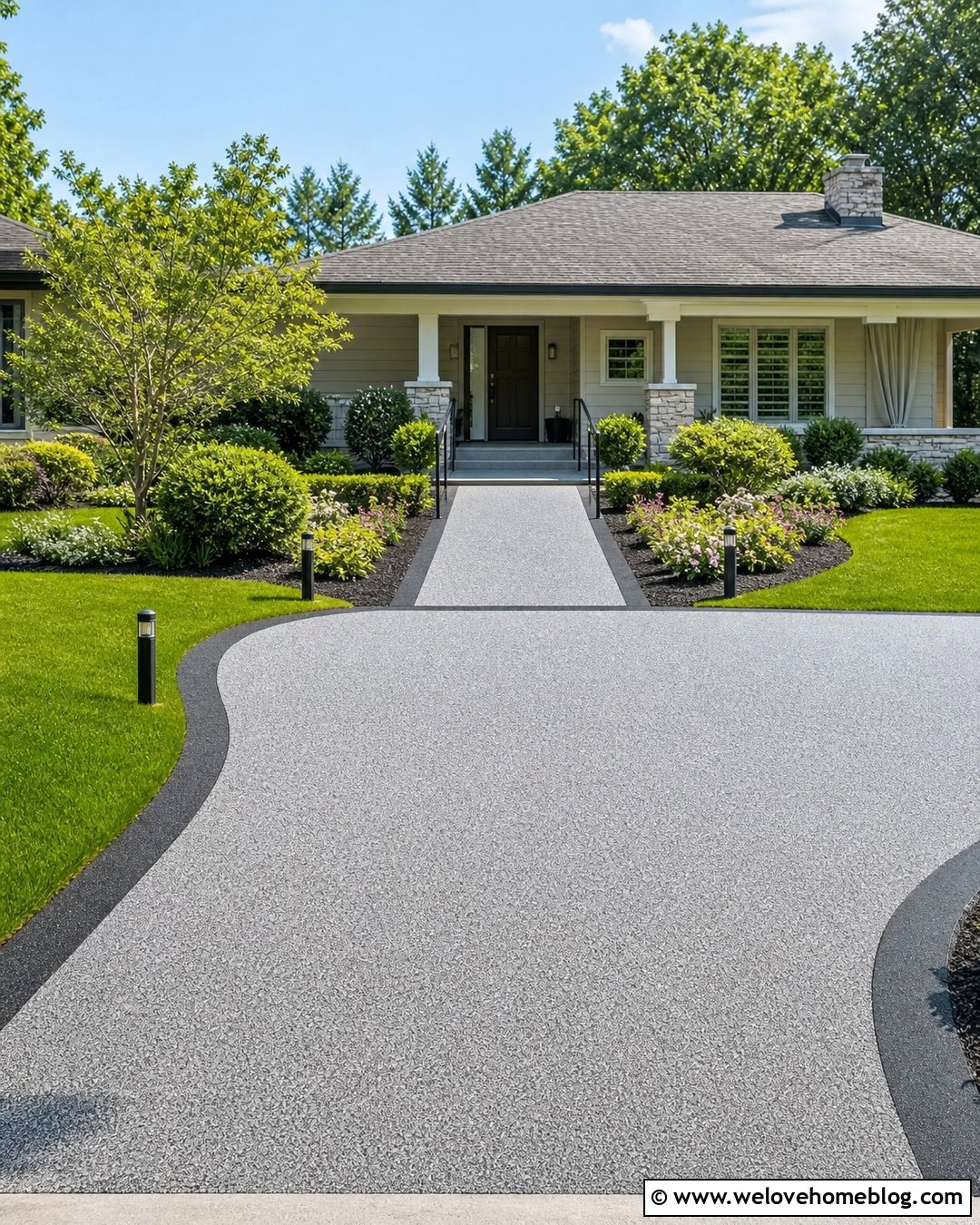
A smooth driveway-to-walkway connection can make a front entrance easier and more comfortable to use. Choose a fine-grain gray rubber paving surface with a straight driveway and a broad adjoining route to the porch. Keep transitions flush, slopes gradual, and turning spaces open. Use contrasting dark edging to make surface boundaries easier to recognize without adding raised trip points. Plant compact shrubs and low flowers away from the clear travel path. A covered entrance, sturdy handrail where required, and evenly distributed lighting can strengthen the overall design. The walkway should look like an intentional part of the driveway rather than a narrow afterthought. Dimensions, slopes, drainage, and surface specifications should follow applicable codes and professional recommendations, especially when the project is intended to address a specific mobility need.
19. Rubber Paving Driveway For A Snowy Climate
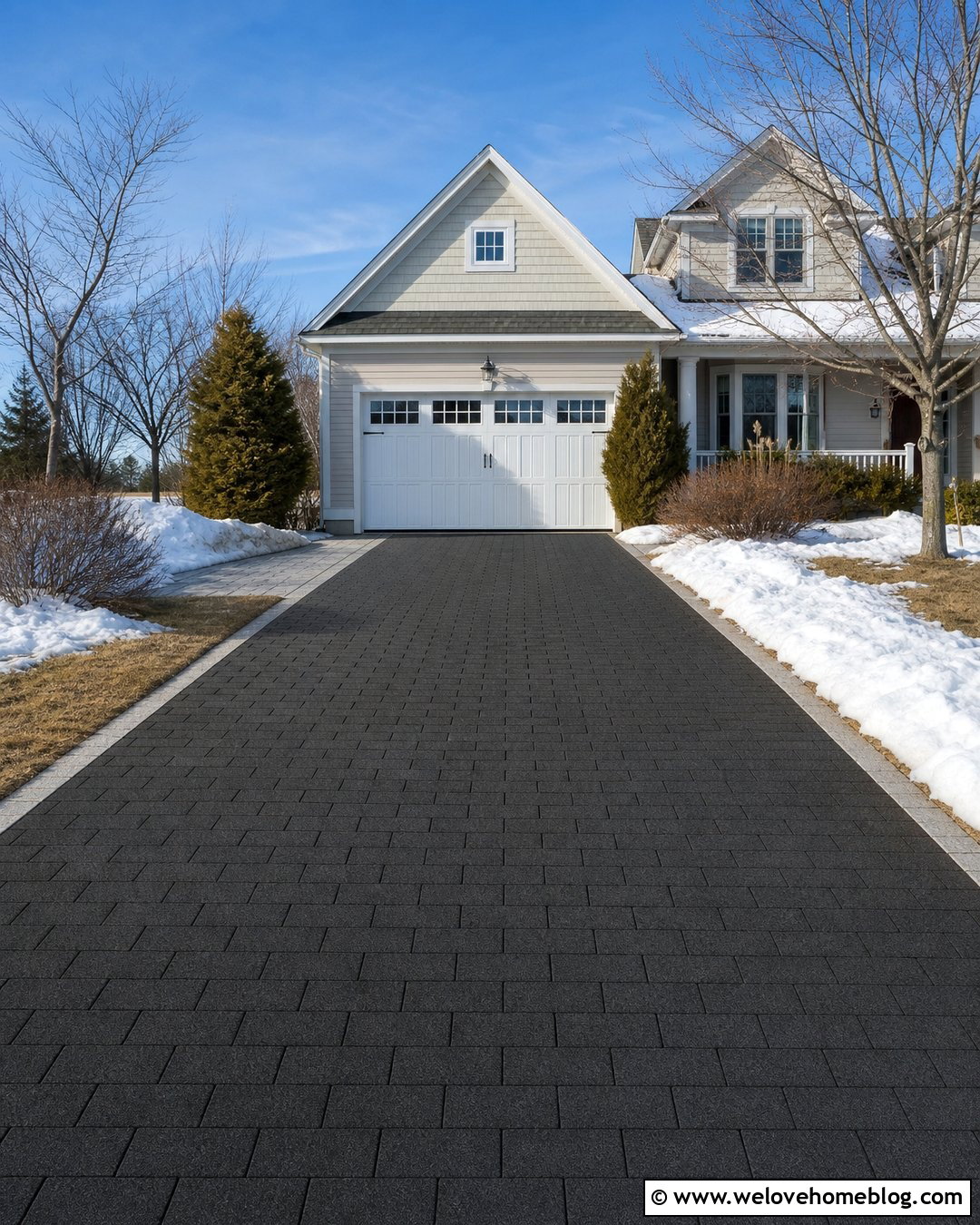
A cold-climate driveway can look welcoming while still keeping winter maintenance in mind. Use a charcoal recycled rubber surface in a straightforward layout with light granite edging that remains visible when snow begins to cover the ground. Avoid intricate raised inlays that could interfere with clearing equipment. Set planting beds back from the pavement and choose salt-tolerant evergreens or sturdy deciduous shrubs where deicing spray may occur. A paved landing beside the garage provides a convenient place for bins or snow storage without narrowing the driving lane. Ask the product manufacturer and installer about freeze-thaw suitability, approved deicers, snowblower use, and plow-blade requirements. A simple design with protected edges is generally easier to maintain than a driveway filled with small decorative transitions and tight corners.
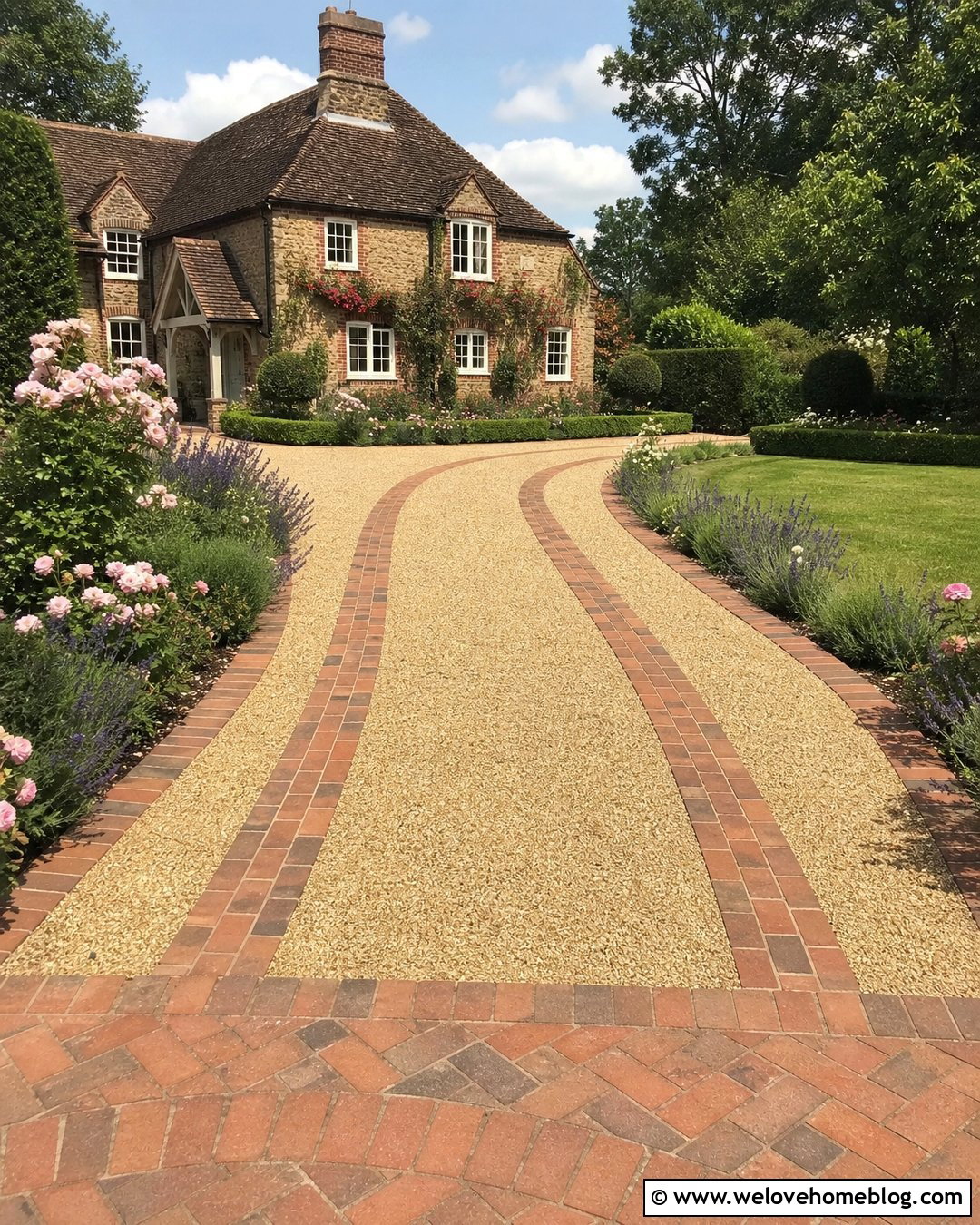
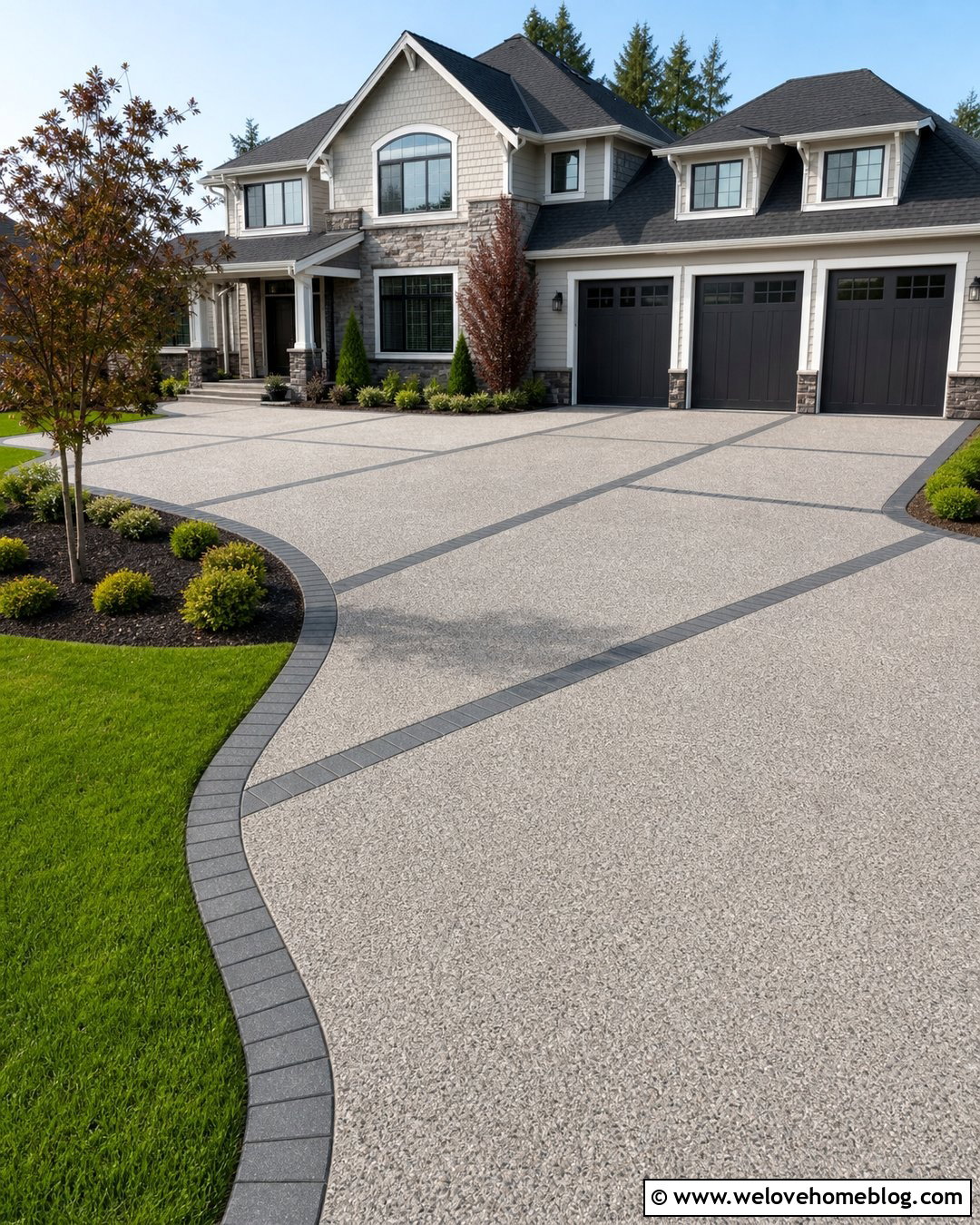
20. Small Rubber Paving Driveway With A Parking Pad
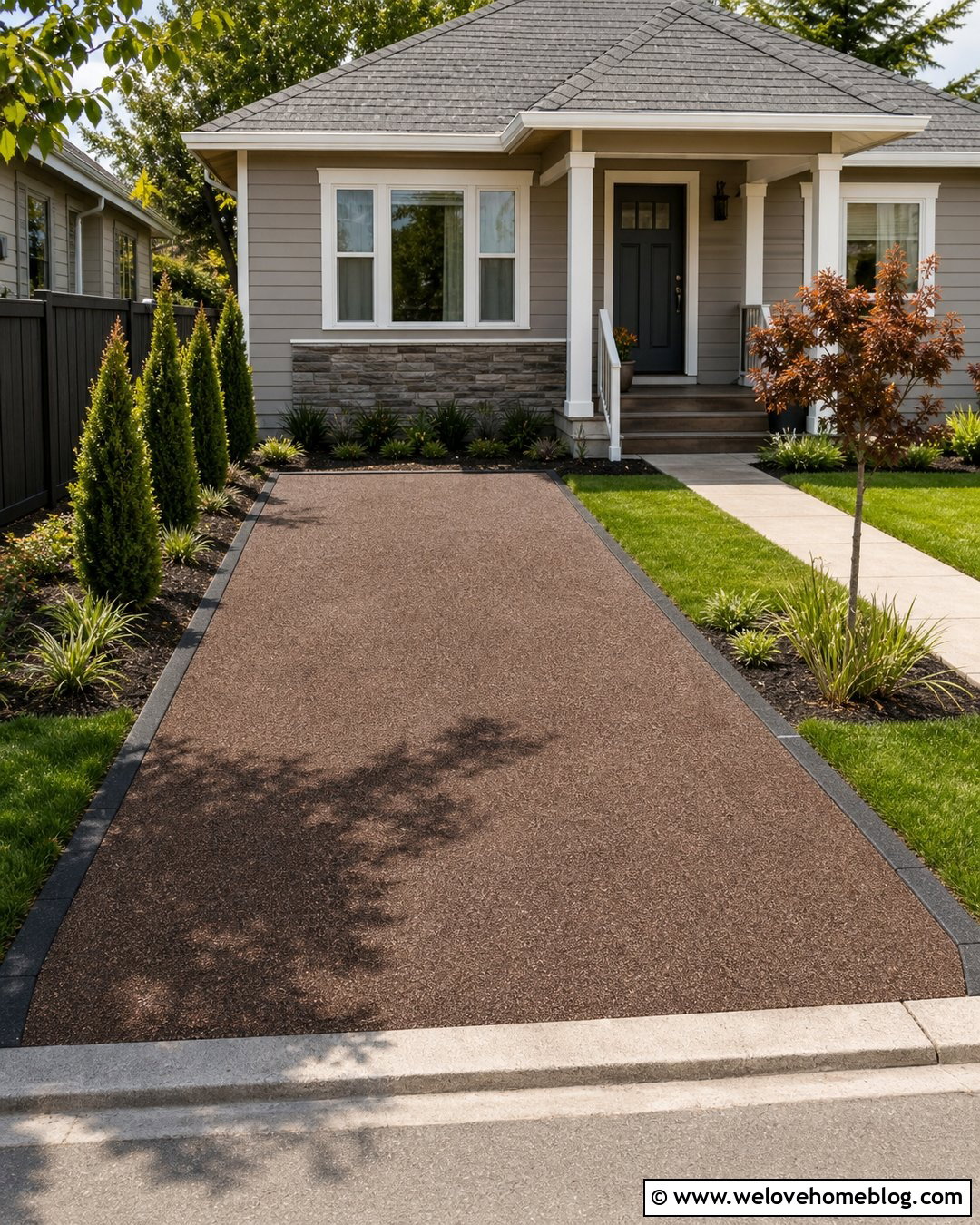
A compact front yard benefits from a driveway that uses every square foot carefully. Cover a short, straight parking pad with medium-brown rubber paving, then frame it with a narrow dark border to create a finished outline. A slightly flared entrance makes alignment easier without paving the entire yard. Place a slim planting bed along one side with columnar shrubs, low grasses, and a compact ornamental tree. On the opposite side, use a direct walkway to the porch with a flush connection to the parking area. Keep bins, utility boxes, and downspouts screened but accessible. A bungalow, small ranch, or cottage can suit this balanced layout. Confirm local setback, parking, curb-cut, and impermeable-area requirements before enlarging or changing the existing driveway footprint.
Conclusion:
These 20 Rubber Paving Driveway Ideas show how one adaptable surface can support modern, traditional, rustic, accessible, and environmentally focused front yards. The most successful design combines the rubber color and texture with an appropriate driveway shape, stable edging, useful transitions, and landscaping that suits the house. Dark blends provide crisp definition, while tan, brown, red, and speckled gray finishes offer softer alternatives. Poured overlays and interlocking pavers also create different visual results, so compare complete installed projects before choosing. Most importantly, work with a qualified installer who understands base preparation, drainage, vehicle loads, climate conditions, and product limitations. Thoughtful planning will help the finished driveway look cohesive from the curb to the garage.

Related posts:
Leave a Reply