
A well-planned driveway can improve parking, drainage, daily access, and the entire appearance of your home. These 30 Driveway Installation Ideas explore complete designs rather than focusing on surface materials alone. Each option combines the driveway finish with a practical layout, secure edging, attractive landscaping, and a house style that suits the overall look. Before installation, consider your soil, climate, driveway slope, turning space, local permit requirements, and long-term maintenance preferences. Proper excavation, a stable compacted base, edge restraint, and controlled water flow are essential because surface quality depends heavily on the structure underneath. () From affordable gravel to decorative pavers and modern concrete, you can find a complete approach for nearly any property in these 30 Driveway Installation Ideas.

1. Broom Finish Concrete Driveway
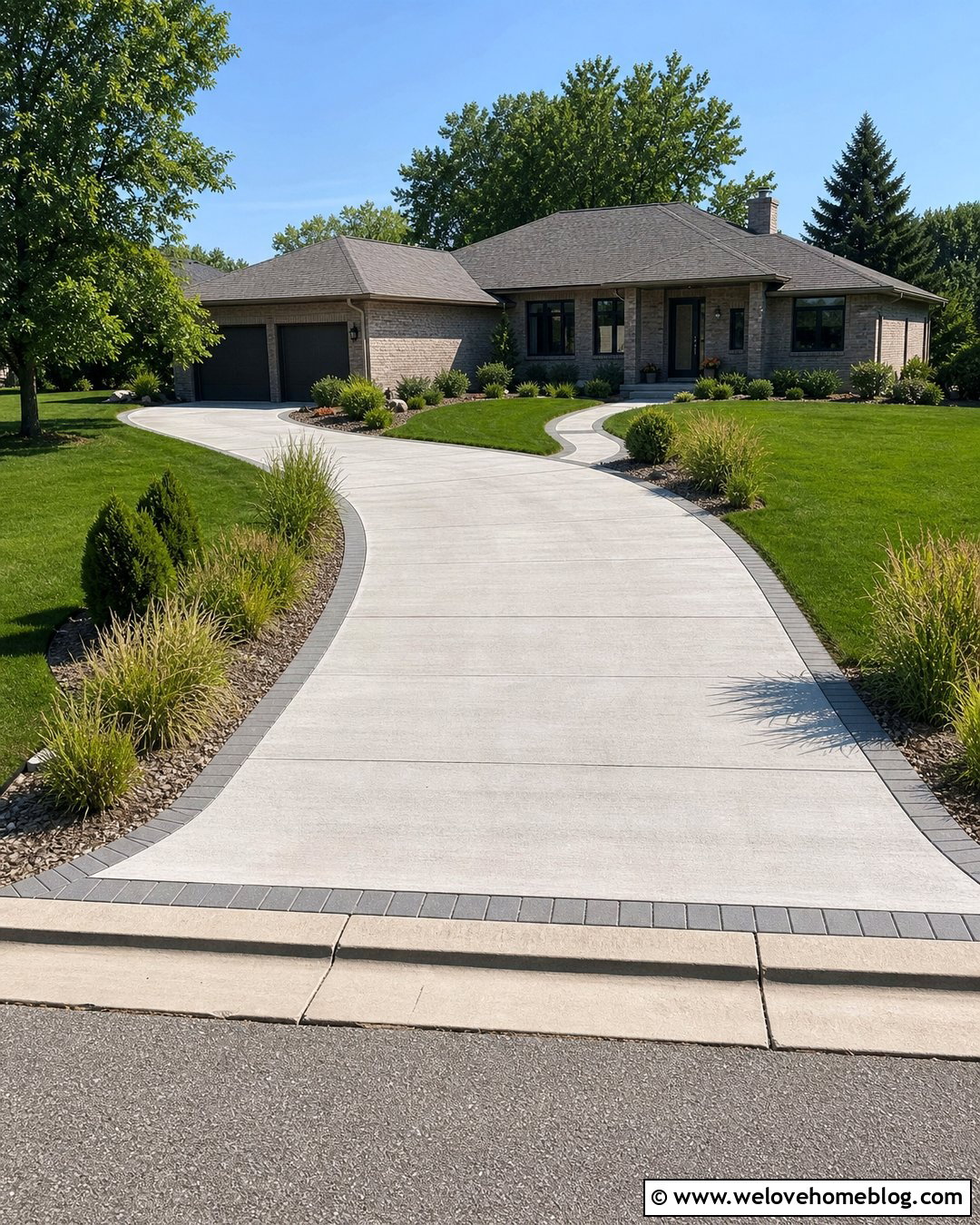
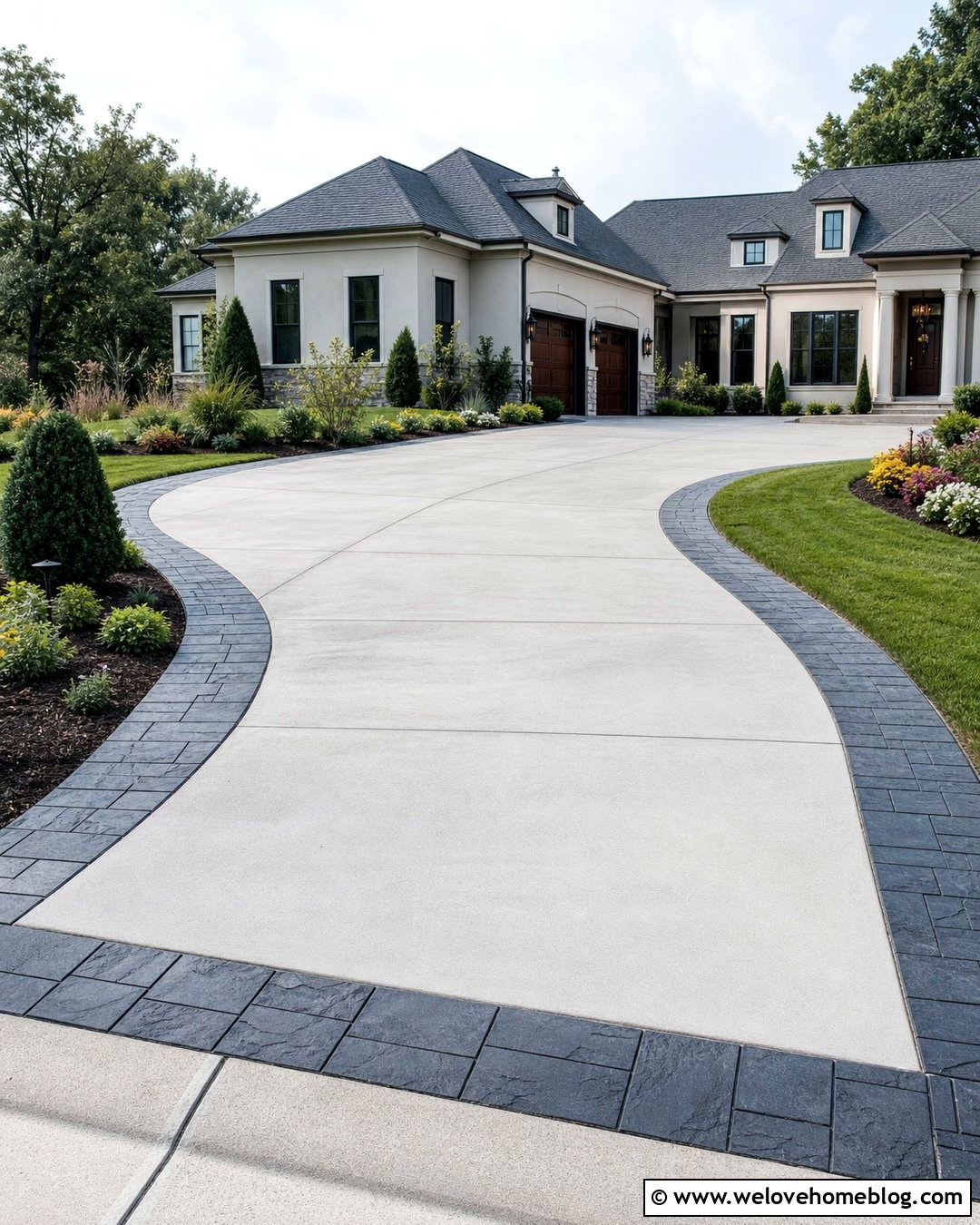
A broom finish concrete driveway offers a clean, practical surface that works especially well with ranch and suburban homes. Install the driveway in wide rectangular sections, using properly placed control joints to create an orderly layout. A gentle curve near the street can make the entrance feel softer and more welcoming. Frame both sides with charcoal concrete pavers, then add low planting beds filled with ornamental grasses and compact evergreen shrubs. The textured finish gives tires and shoes more grip than highly polished concrete. Choose a light gray tone that reflects the house trim without looking overly bright. A matching concrete walkway can branch toward the front door, helping the driveway and entrance feel like one organized exterior design.
2. Exposed Aggregate Driveway With Brick Border
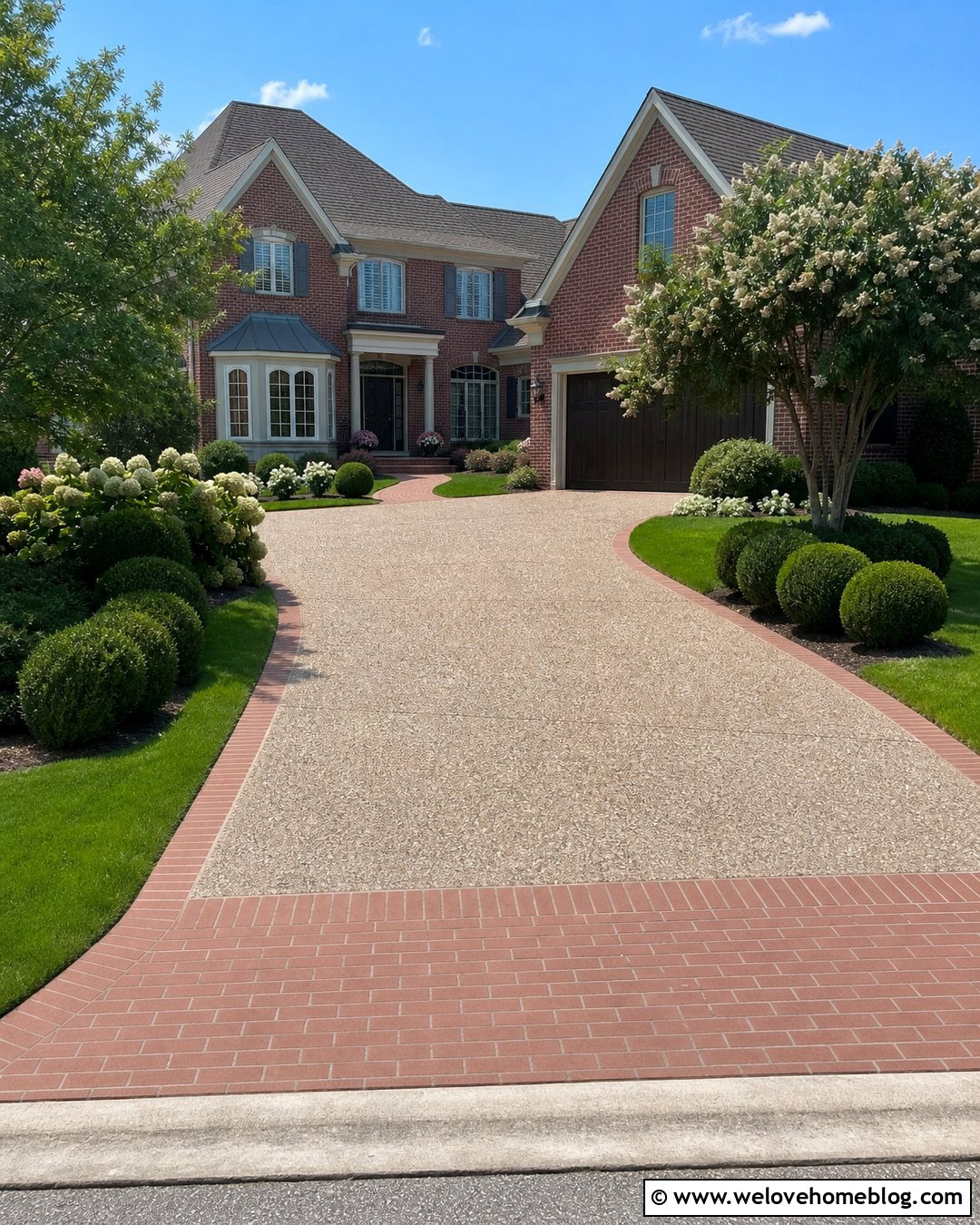
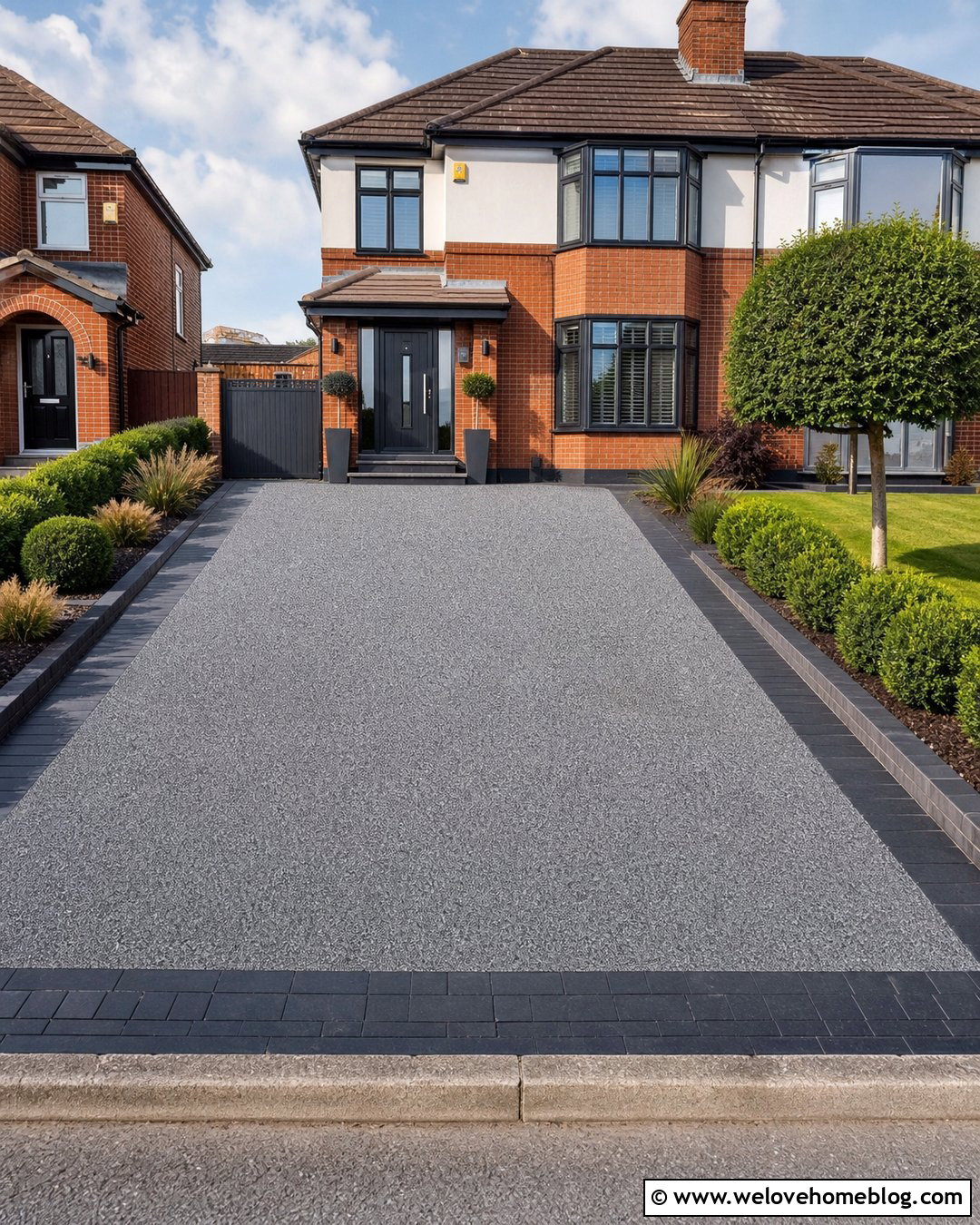
Exposed aggregate brings visible stone texture and warmer color variation to a poured concrete driveway. This installation works beautifully with a traditional brick house because the aggregate surface feels natural while remaining structured. Use a straight driveway layout with a wider parking and turning pad near the garage. Install a red clay brick soldier-course border along both sides and repeat the brick across the driveway apron. That repeated detail connects the driveway to the home’s facade. Soft lawn edges, rounded boxwood shrubs, and a small flowering tree can frame the approach without narrowing it. Select aggregate containing tan, cream, and gray stones for a balanced finish. Seal the surface as recommended for the installation and local conditions.
3. Stamped Concrete Driveway With Stone Edging
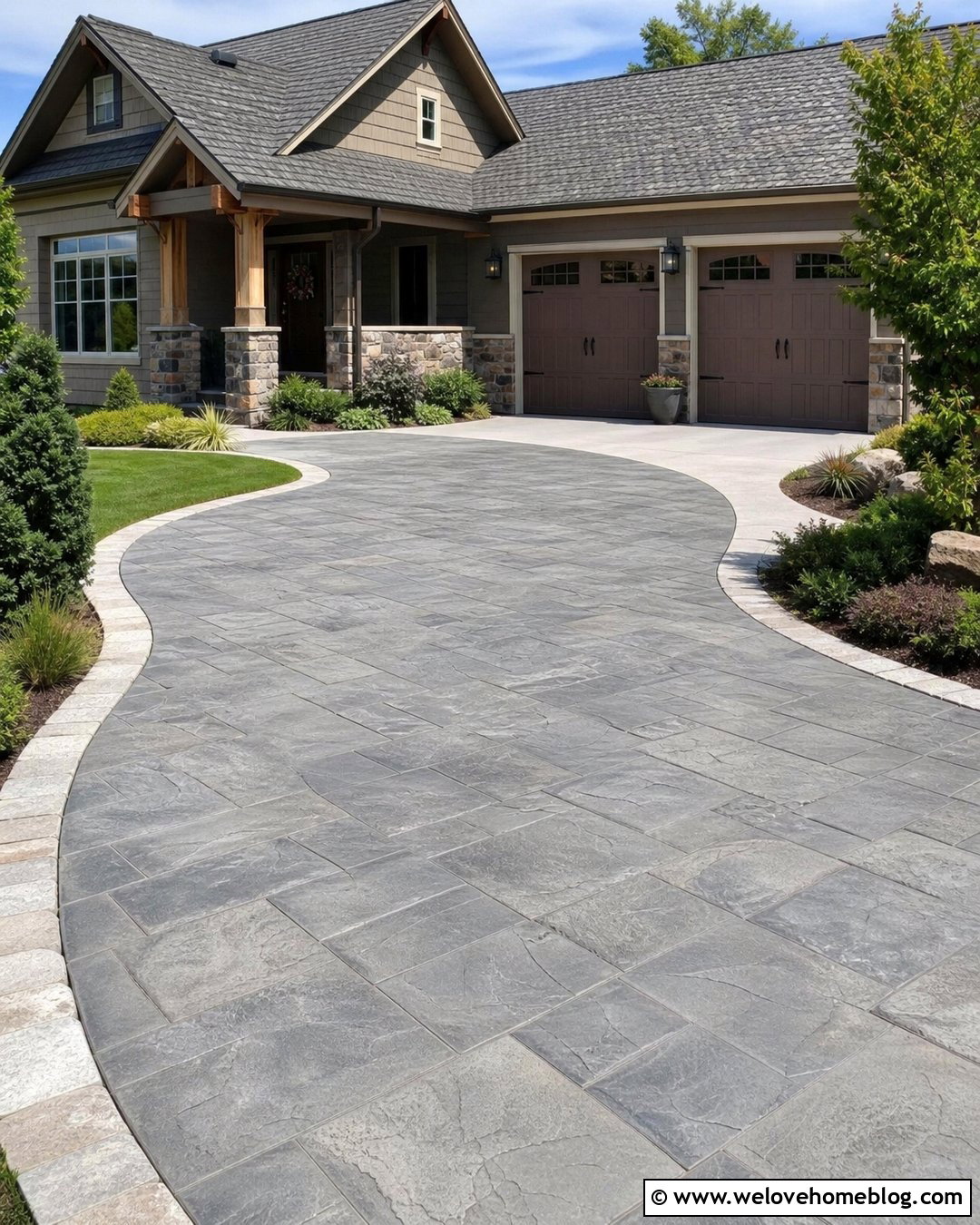
Stamped concrete can create the appearance of individual stone units while maintaining a continuous poured surface. For a welcoming craftsman home, choose a large ashlar slate pattern in soft gray and taupe tones. A gently curved driveway will make the repeated pattern feel less rigid. Use natural limestone blocks as substantial edging, especially where the driveway meets planting beds. Place evergreen shrubs, spreading ground cover, and native grasses behind the stone to soften the hardscape. Keep the stamped pattern large enough to avoid a visually busy entrance. A smooth concrete apron at the garage can provide a neat transition. Carefully planned control joints should be incorporated into the pattern so they look intentional instead of interrupting the finished design.
4. Modern Concrete Slab Driveway With Gravel Joints

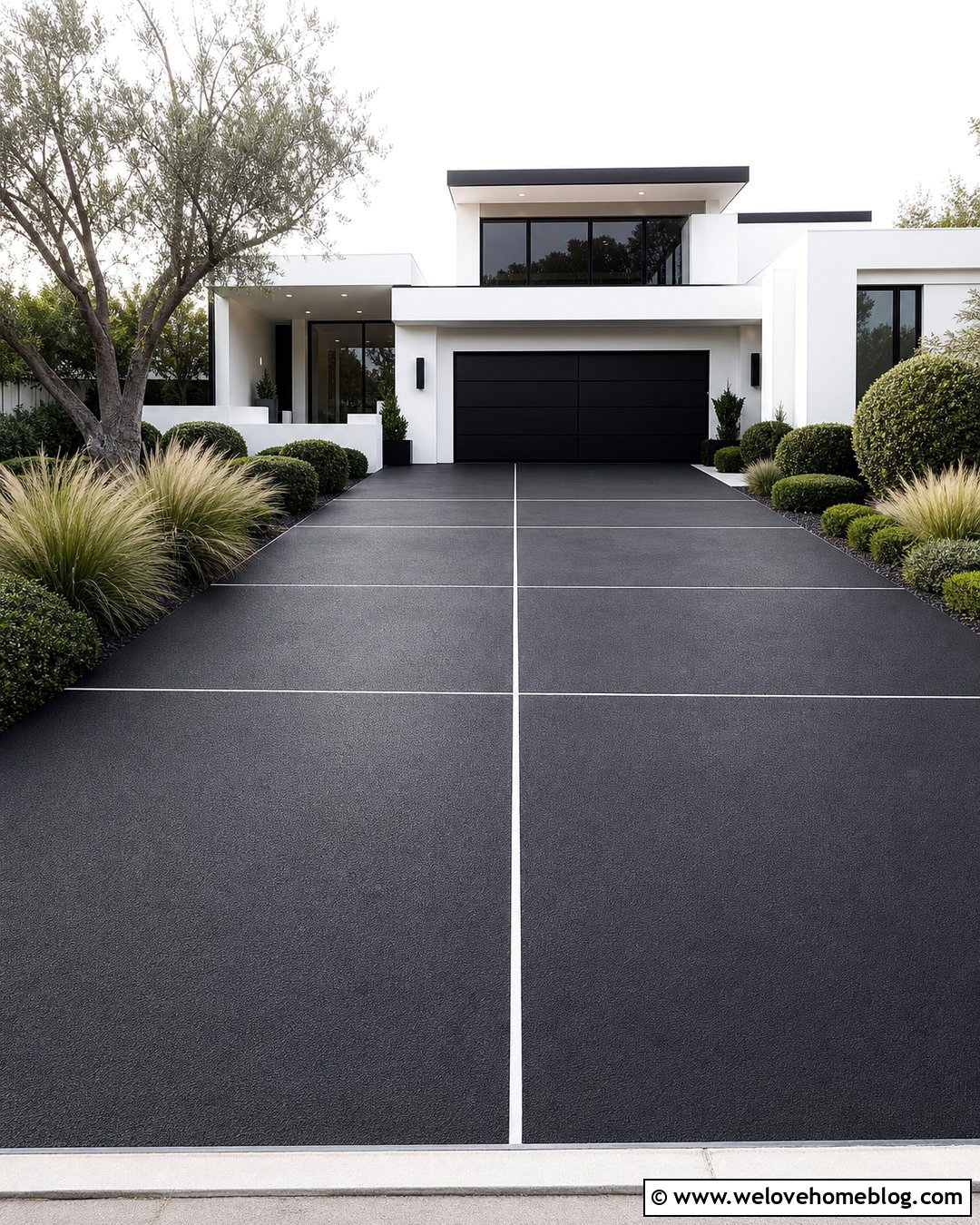
Large concrete slabs separated by narrow gravel joints create a strong geometric entrance for a modern house. Install smooth, light gray poured concrete panels in a straight or slightly offset layout leading to the garage. Fill the spaces with dark crushed granite rather than loose rounded stones, and use concealed edge restraints to keep the joints defined. Black steel edging along the outside boundaries will reinforce the clean lines. Surround the driveway with architectural grasses, clipped shrubs, and one or two sculptural trees. A matching slab walkway can run beside the driveway with the same joint spacing. This design looks simple, but accurate measurements and a properly compacted foundation are especially important because uneven slabs or inconsistent gaps will be highly visible.
5. Permeable Paver Driveway With Rain Garden
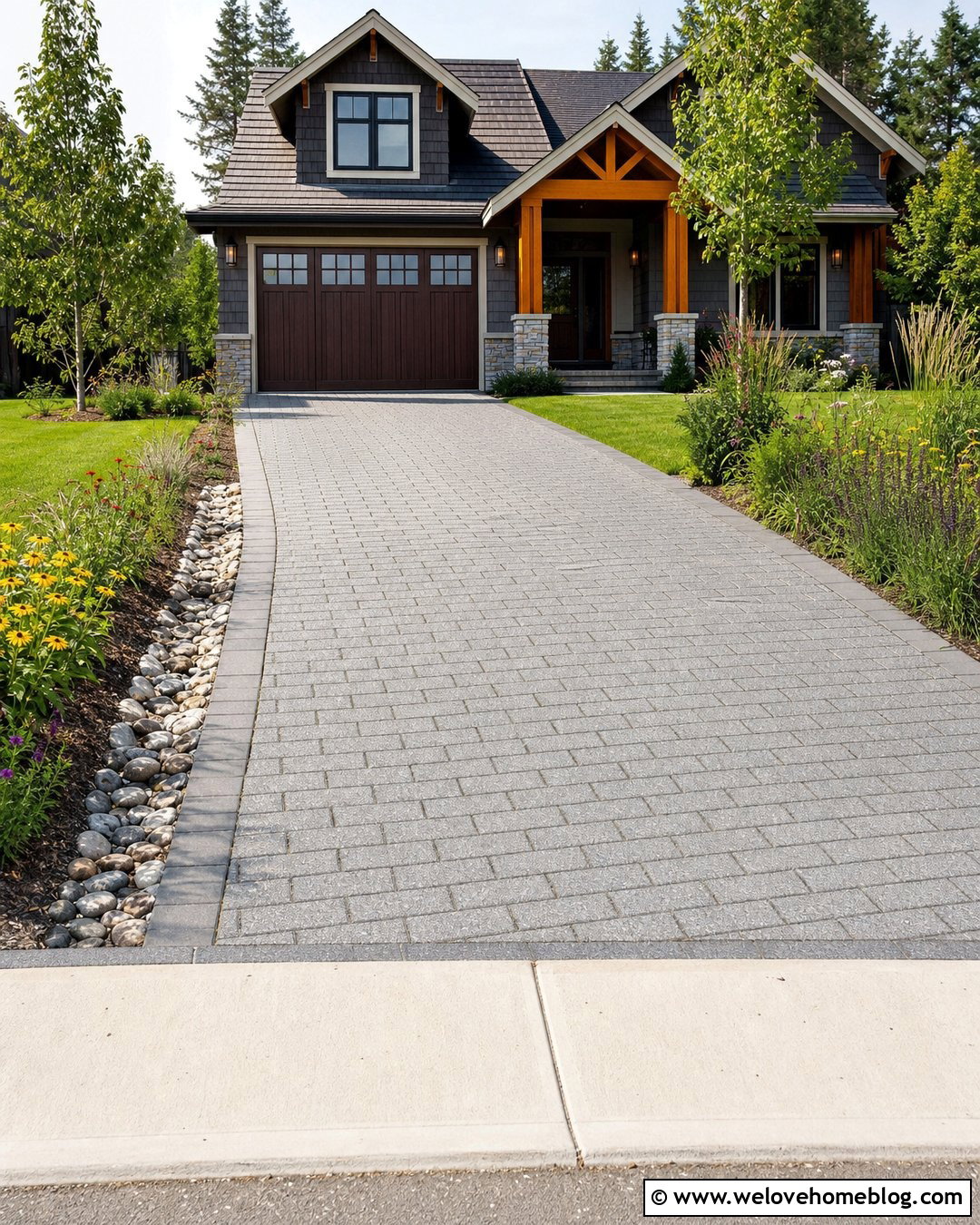
Could your driveway manage stormwater while improving the front yard? Permeable concrete pavers can direct water through wider aggregate-filled joints into an engineered stone base below. Install them in a straightforward running-bond pattern on a driveway that slopes gently away from the house. Along the lower side, create a shallow rain garden planted with moisture-tolerant grasses, sedges, and flowering native perennials. Use rigid edge restraints to prevent the paver field from spreading under vehicle traffic. Permeable systems depend on carefully selected base materials, open joints, and correct site preparation, so professional evaluation is valuable where soil drains slowly or rainfall is heavy. () A stone-lined overflow channel can complete the functional landscape without making the driveway look industrial.
6. Herringbone Paver Driveway With Contrasting Border
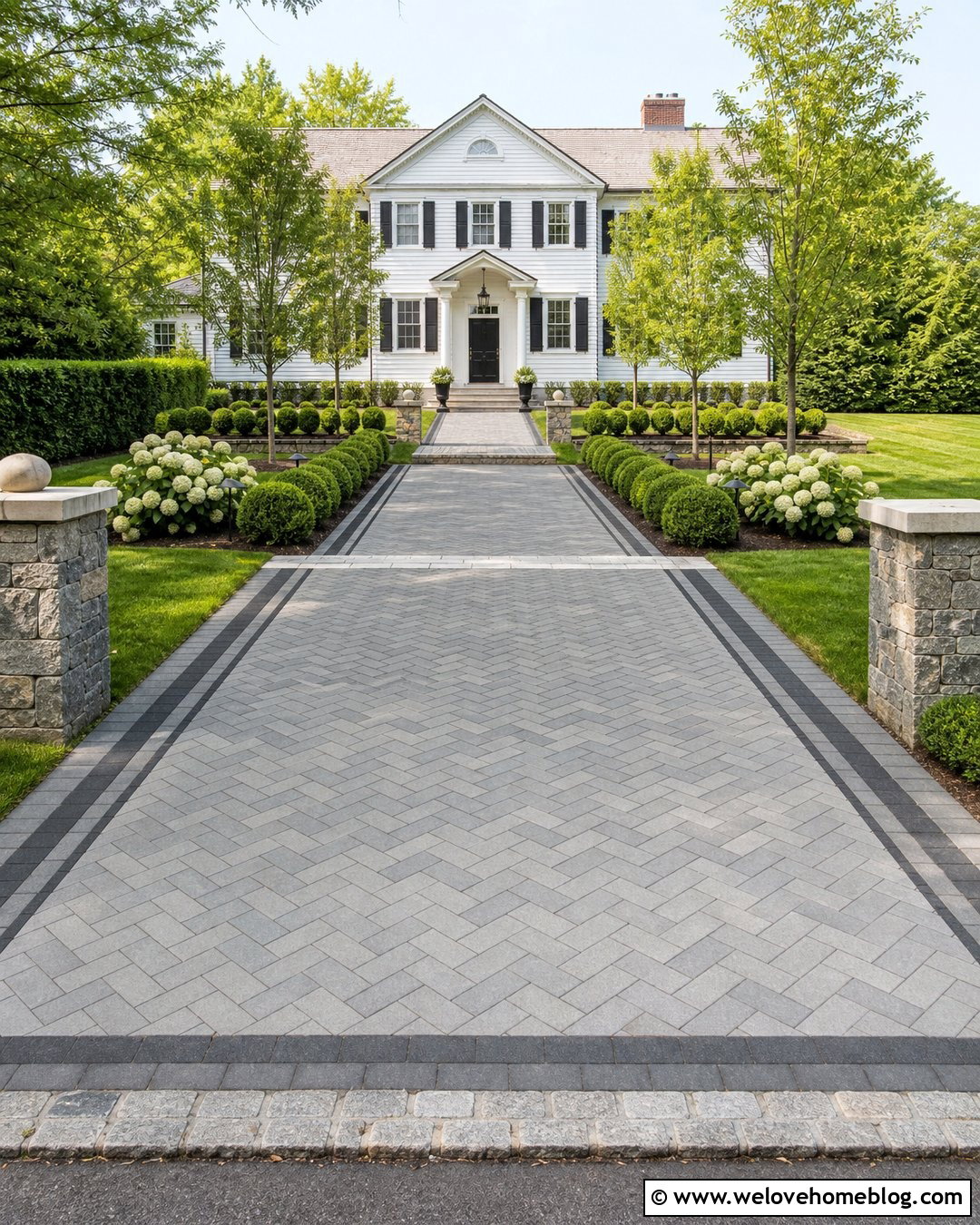
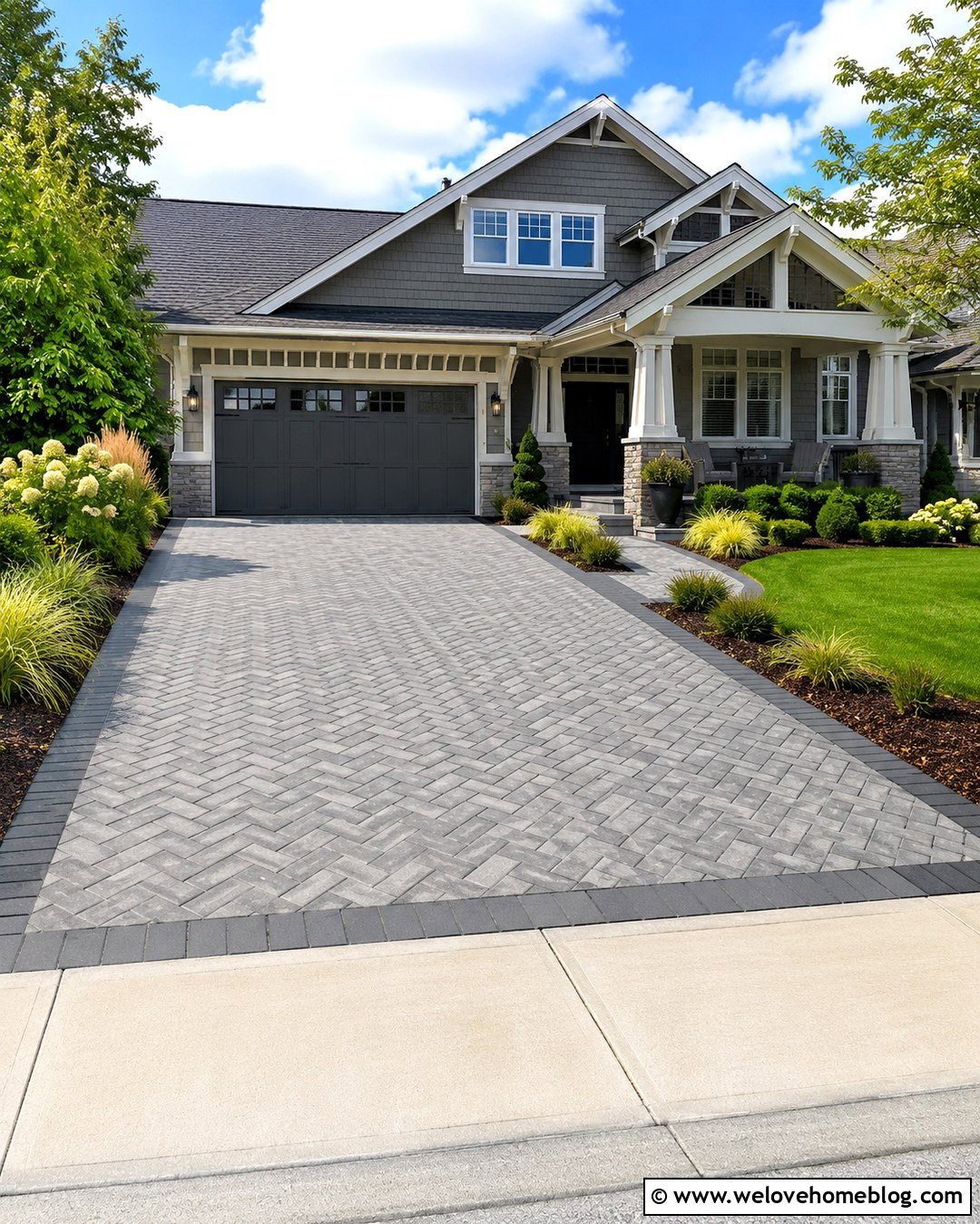
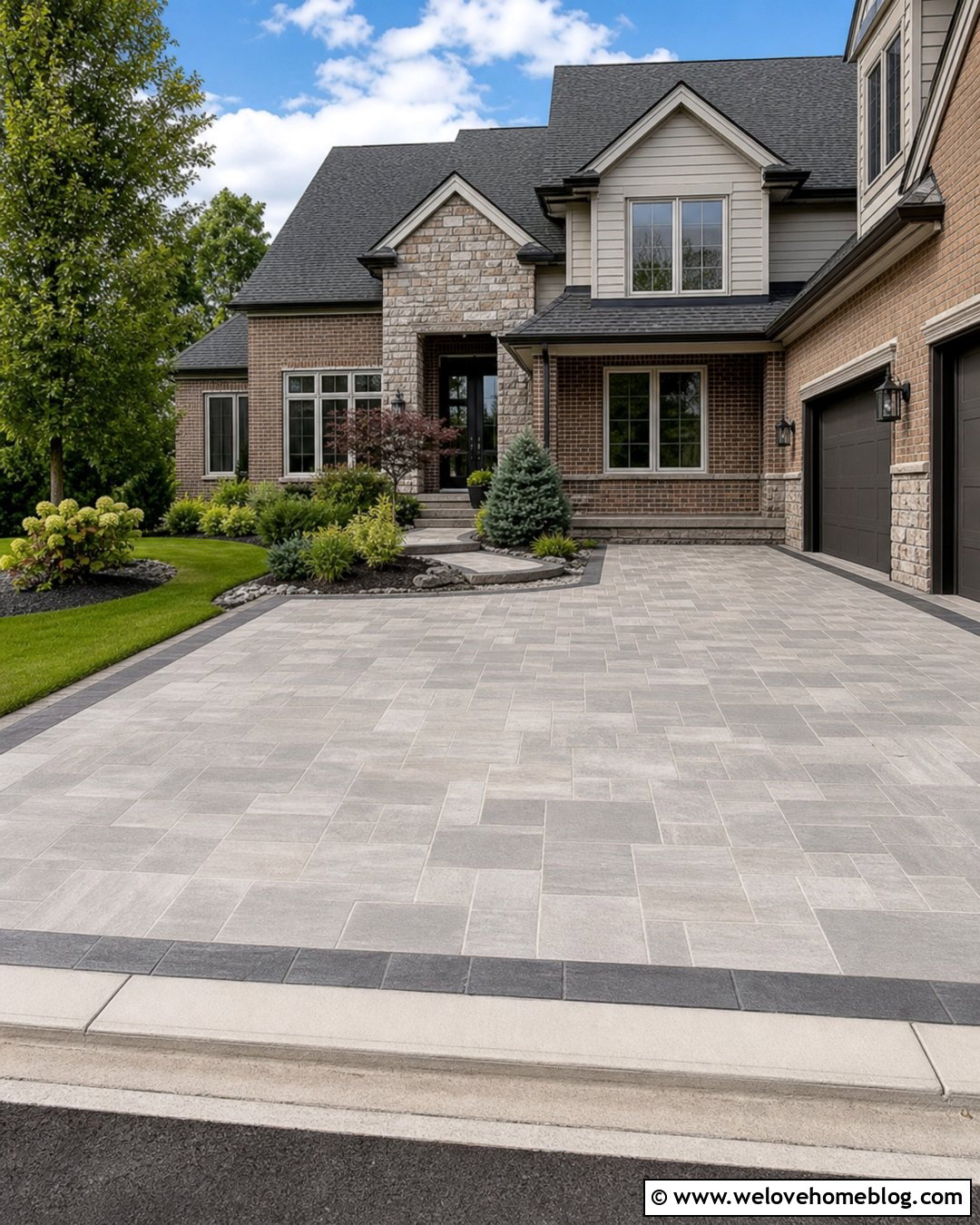
A herringbone pattern gives a paver driveway a traditional appearance with plenty of visual movement. Choose medium-gray concrete pavers and install them at a 45-degree angle across a straight driveway. Define the perimeter with darker charcoal pavers laid in a double soldier course. This strong border frames the pattern and creates a finished transition to the lawn. Near a colonial home, add symmetrical planting beds with boxwoods, hydrangeas, and two small ornamental trees. Carry the dark border across the apron and around a coordinating walkway to unify the entrance. Paver driveways need dependable edge restraints and a properly prepared base to keep the pattern from shifting. () Select paver colors that complement the roof and masonry instead of matching only the siding.
7. Large Format Paver Driveway With Grass Strips
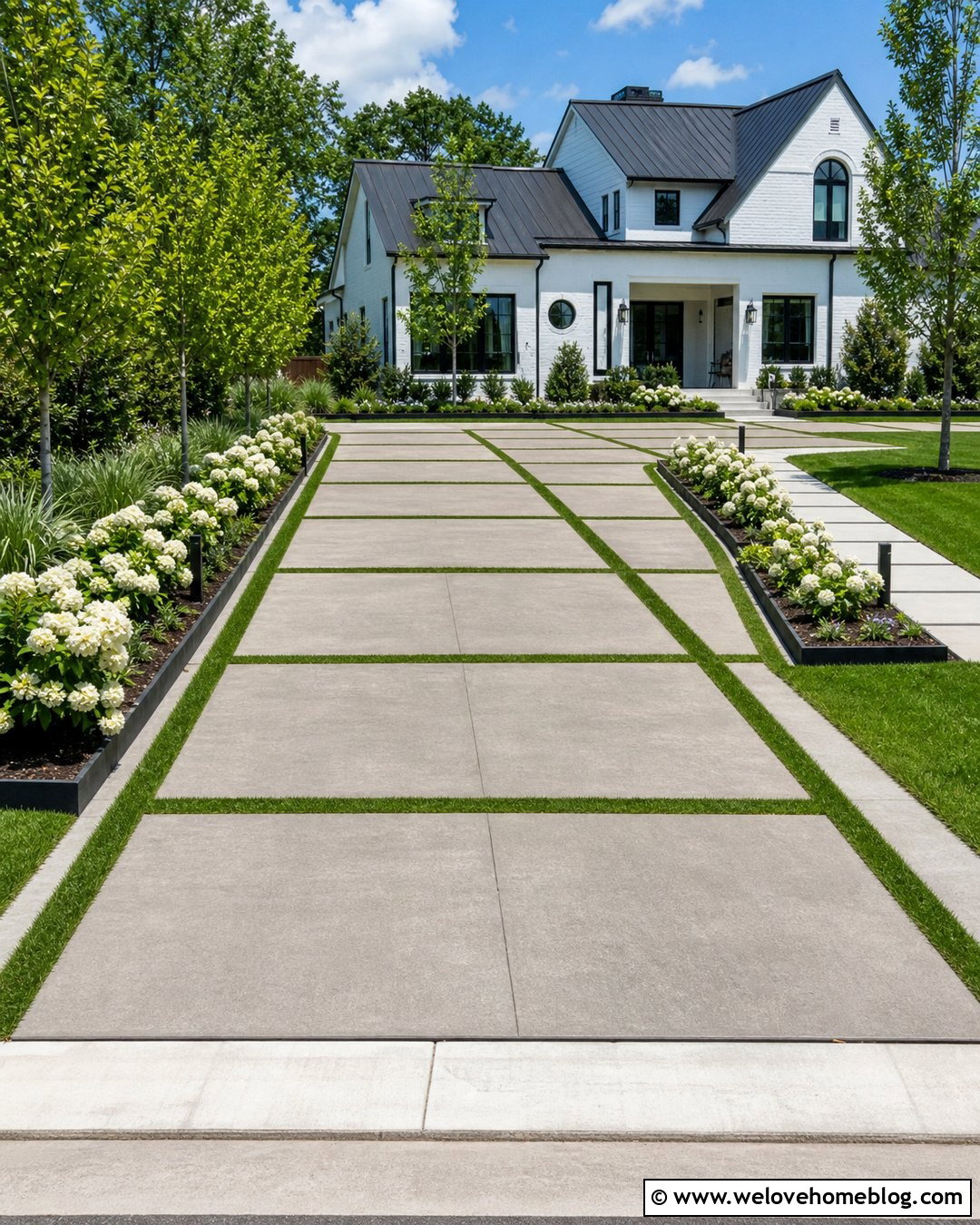
Large rectangular pavers can give a wide driveway a lighter, more landscaped appearance when narrow grass strips divide the surface. Use durable concrete pavers rated for vehicle traffic, arranged in two broad driving lanes with additional paved space near the garage. Install reinforced turf or low-growing ground cover only in areas designed to handle tires and routine maintenance. A modern farmhouse makes a natural backdrop for this balanced combination of crisp paving and greenery. Frame the outside edges with black metal restraint and simple beds of white flowering shrubs, ornamental grasses, and young shade trees. The green joints need suitable soil, irrigation, and sunlight to remain healthy. In hot or dry regions, gravel-filled joints may be a more dependable alternative with a similar linear effect.
8. Clay Brick Driveway With Herringbone Pattern
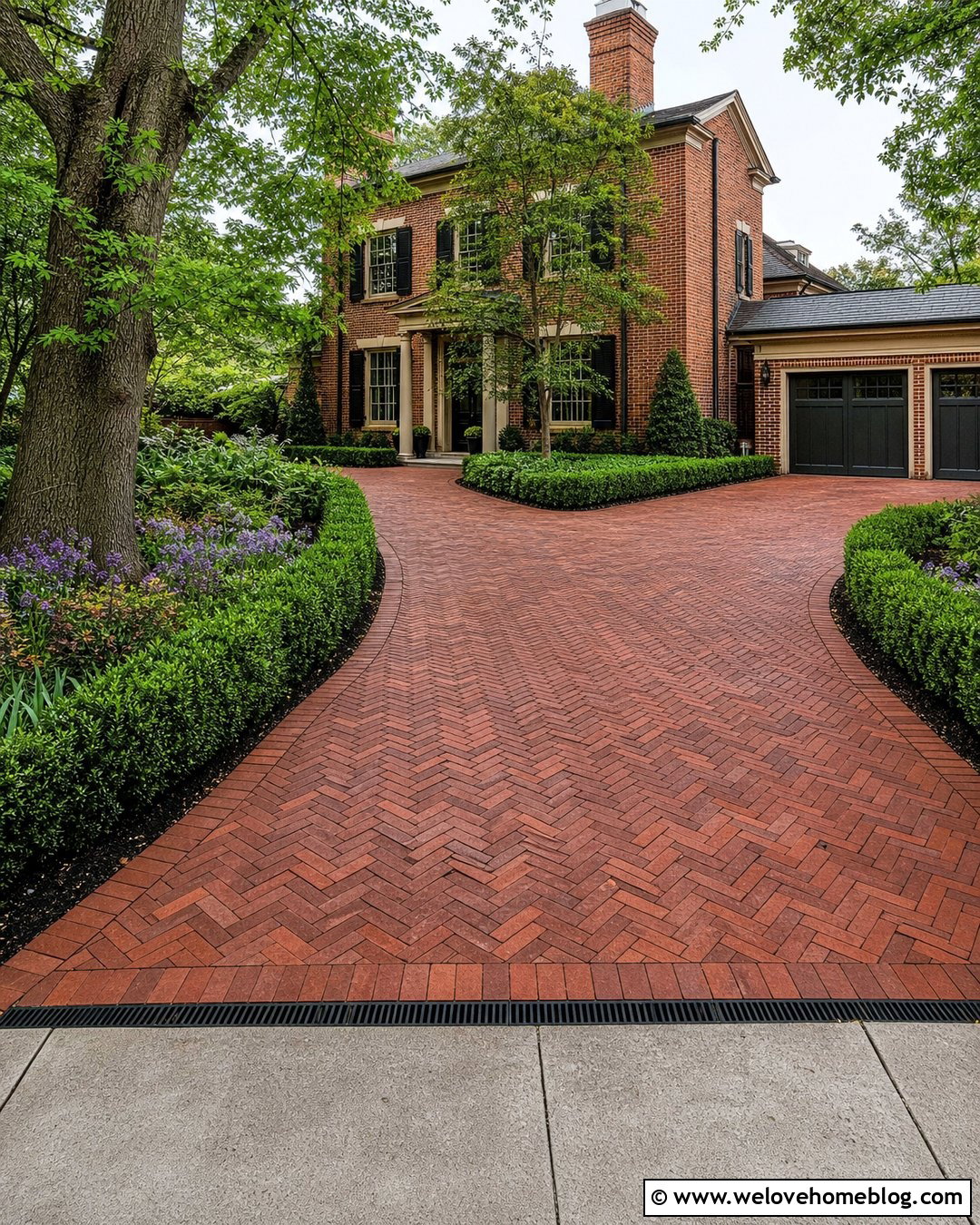
Rich red clay brick can make the driveway feel like a natural extension of a historic or traditional home. Install the bricks in a herringbone field to create texture, then use a straight soldier-course border around the perimeter. A gently curved approach keeps the design inviting and provides enough space for established front-yard trees. Add low hedges and restrained perennial beds so the landscaping complements rather than competes with the brick pattern. Blend several related brick tones for an aged appearance that hides minor stains better than a single uniform color. Near the garage, include a narrow drainage channel in a finish that blends with the paving. The brick walkway to the porch should repeat the driveway pattern or border, creating a continuous and carefully coordinated arrival.
9. Cobblestone Driveway With Formal Landscaping
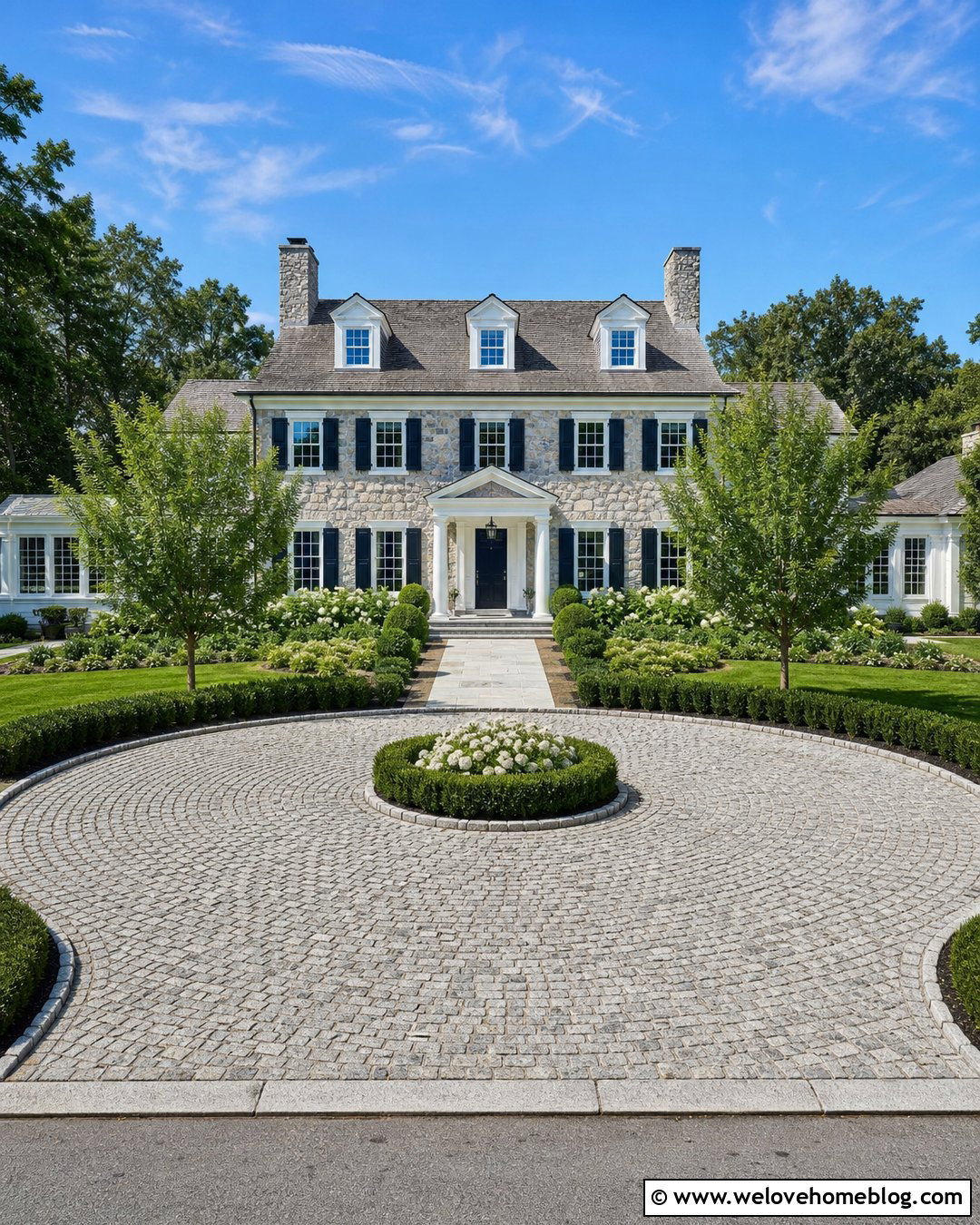
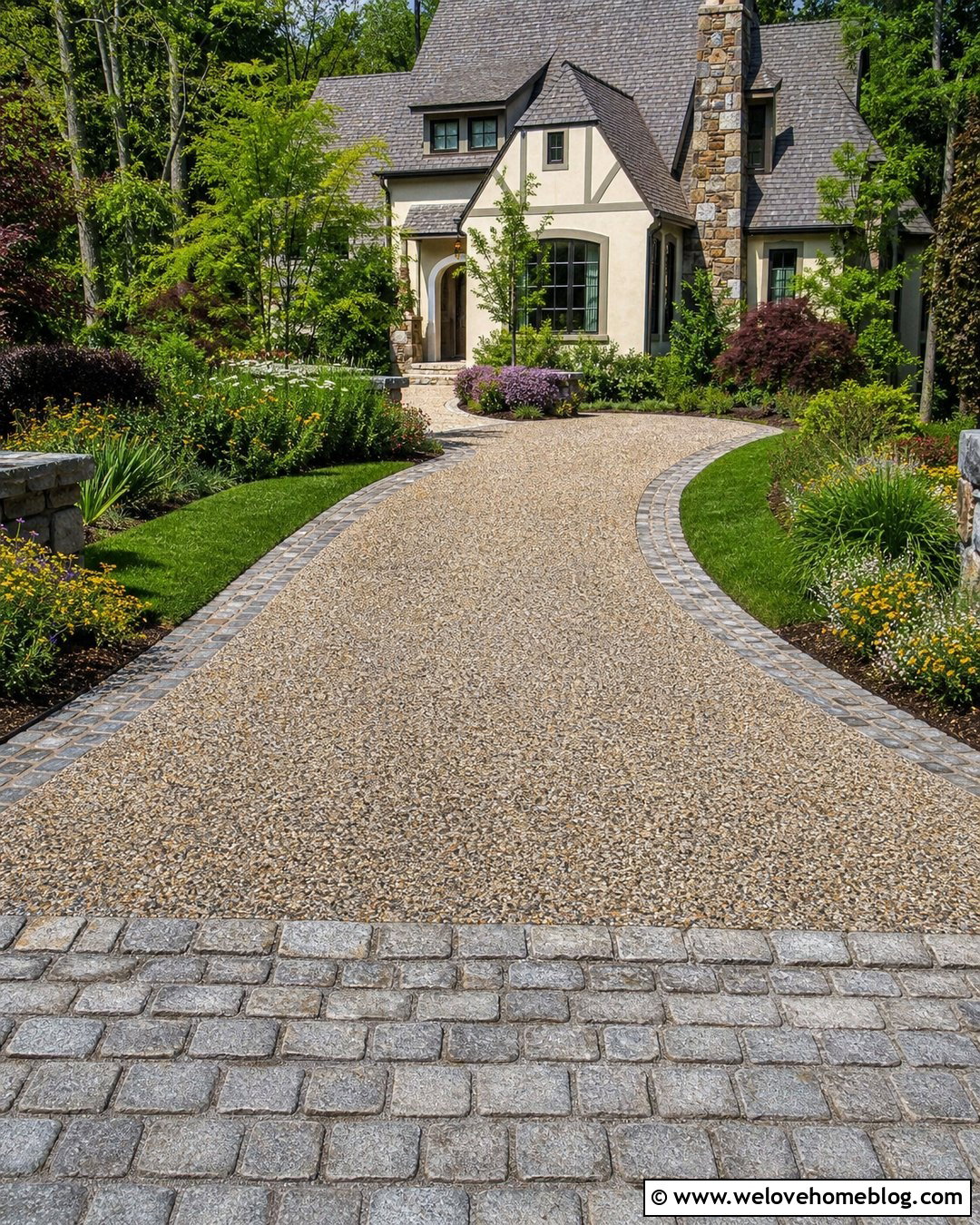
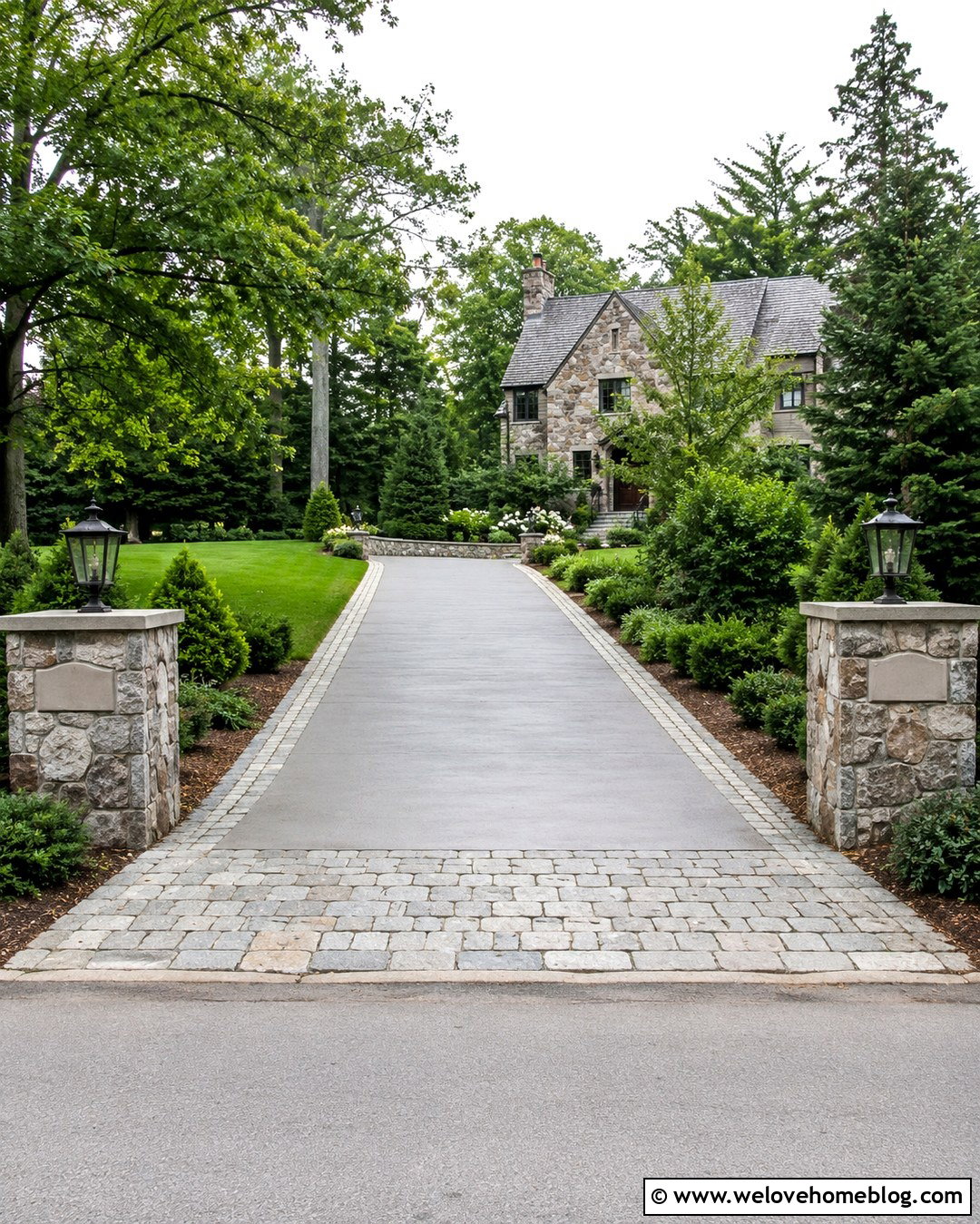
Cobblestone creates a substantial, highly textured driveway suited to a stone house, European-inspired residence, or large colonial property. Use granite cobbles in mixed gray tones for a curved or circular installation. A fan pattern at the entrance can add detail, while straighter rows near the garage make the surface feel calmer. Border the driveway with larger granite setts placed flush with the driving surface. Formal landscaping should reinforce the shape through clipped hedges, paired trees, and symmetrical planting beds. Include a smooth stone walkway so guests have a comfortable route to the door. Since cobbles have natural surface variation, careful setting and joint filling are important for a stable, walkable result. Subtle differences in stone color will add depth without overwhelming the architecture.
10. Crushed Stone Driveway With Timber Edging
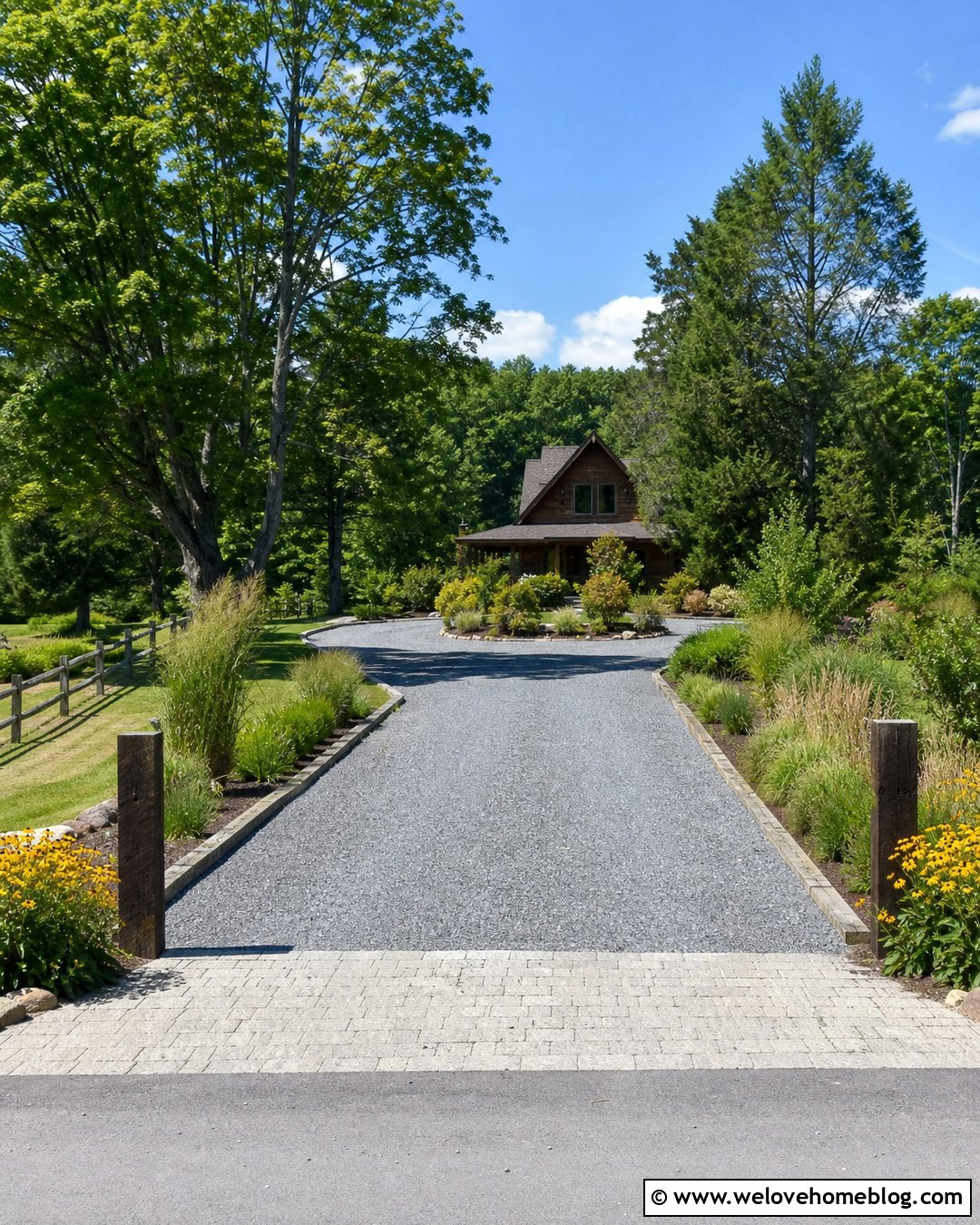
A crushed stone driveway is an approachable choice for country homes, cabins, and casual farmhouse properties. Use angular gray or buff crushed stone because its irregular pieces compact more effectively than smooth decorative pebbles. Install a straight driveway with a generous turnaround near the house. Pressure-treated landscape timbers can form a defined outer edge, provided they are securely anchored and appropriate for the site. Create broad planting strips with native grasses, black-eyed Susans, and hardy shrubs beyond the timber. A compacted stone apron at the street will help establish a clear entrance. Loose aggregate requires periodic raking and replenishment, while strong edging reduces migration into the lawn. () Keep the driveway crown and surrounding drainage routes functional rather than making the surface completely flat.
11. Pea Gravel Driveway With Cobblestone Border
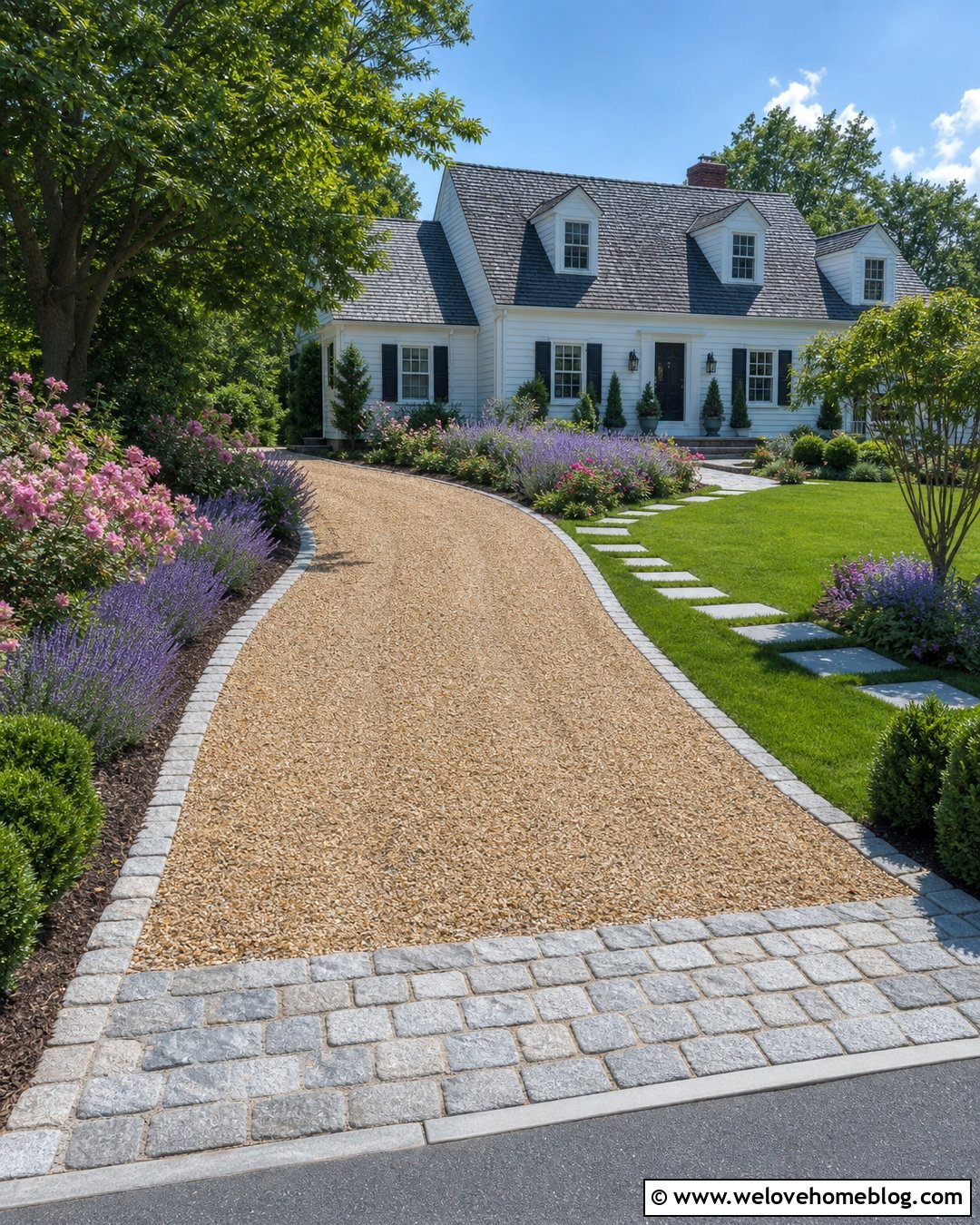
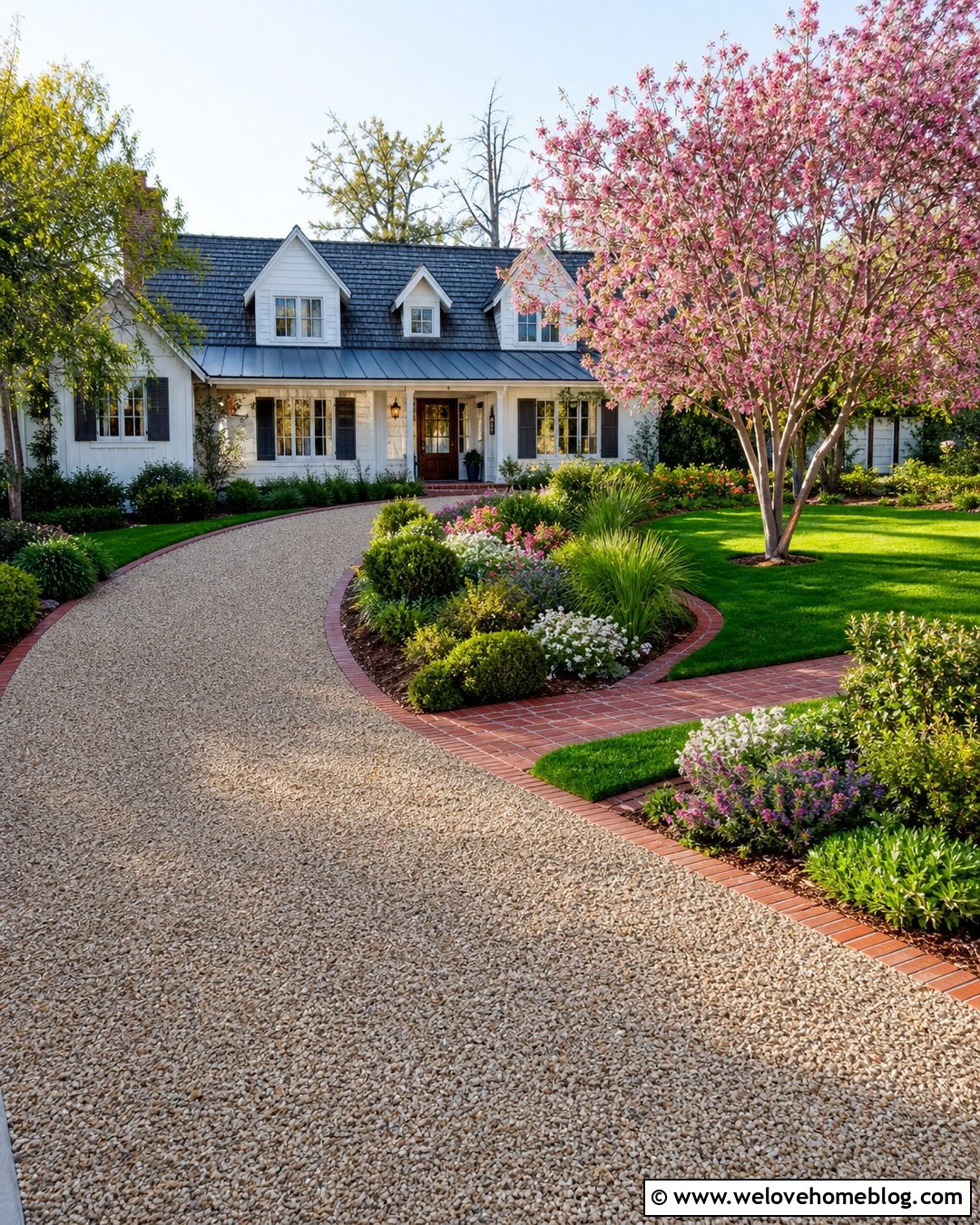
Golden pea gravel creates a softer, more decorative entrance when paired with a durable cobblestone border. Use it on a short, level driveway where loose rounded gravel can be contained effectively. Install a stable compacted base first, then add the finished gravel layer at the appropriate depth for the system. Set gray granite cobbles along both sides and across the driveway apron to reduce spreading into the road and lawn. A curved layout can lead naturally toward a cottage or Cape Cod home. Plant lavender, catmint, compact roses, and low evergreens behind the cobblestone. Because pea gravel shifts more readily than angular crushed stone, it may not suit every slope or snow-removal routine. A coordinated stepping-stone walkway can provide a firmer pedestrian route to the porch.
12. Decomposed Granite Driveway With Steel Edging
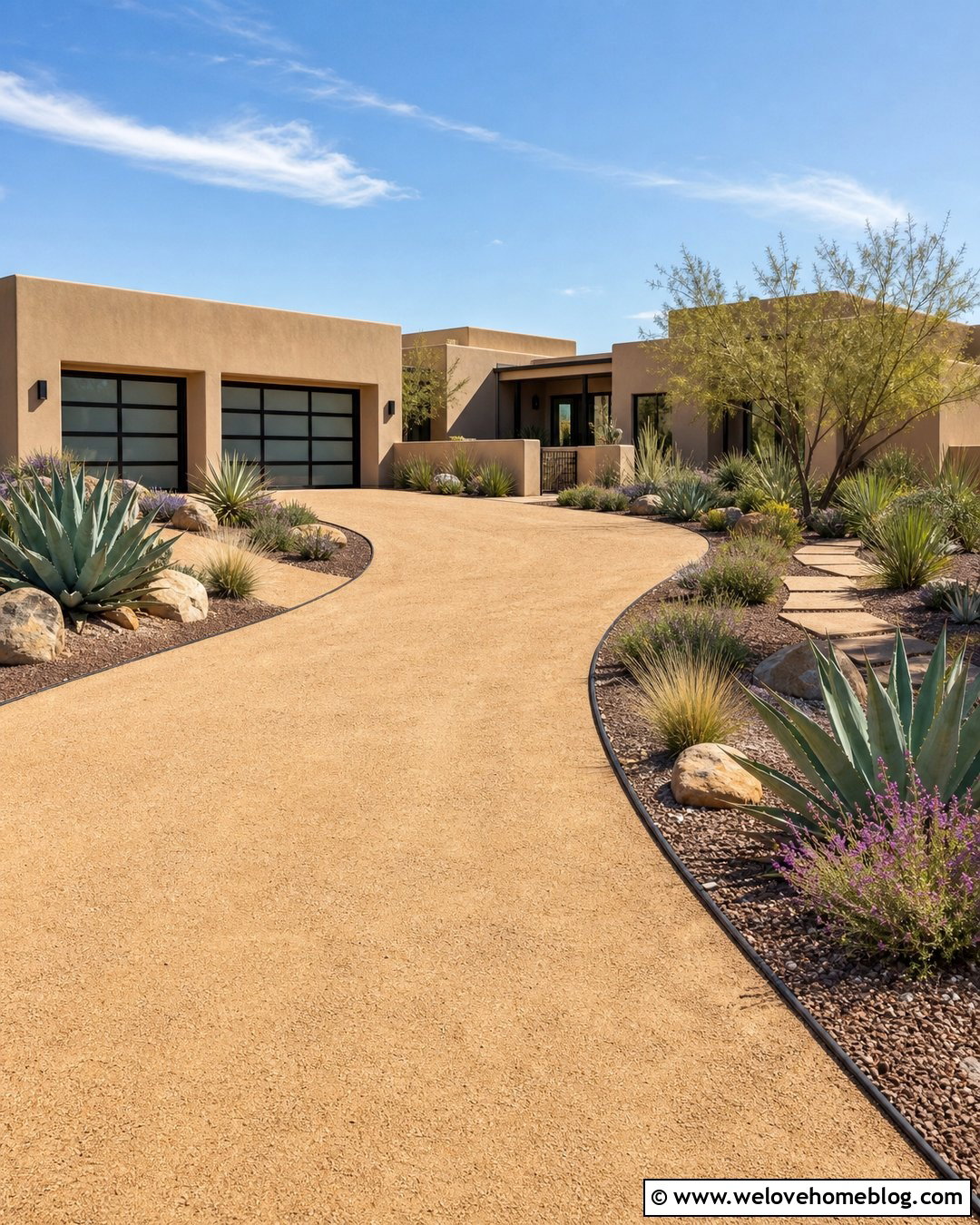
Decomposed granite delivers an earthy, compacted surface that blends easily with drought-tolerant landscaping. Choose a warm tan or muted gold color for a Southwestern, California ranch, or contemporary stucco home. Install the driveway in a broad curved layout and contain it with dark steel edging positioned flush enough to avoid becoming a trip hazard. Add beds of agave, yucca, ornamental grasses, flowering sage, and decorative boulders. A stabilized decomposed granite product may produce a firmer finish than loose material, depending on climate and installation method. Continue the same color into the walkway while changing the border treatment to distinguish pedestrian space. Strong base preparation and planned drainage will help reduce rutting, erosion, and material loss during intense rain or repeated vehicle use.
13. Black Asphalt Driveway With Belgian Block Edging
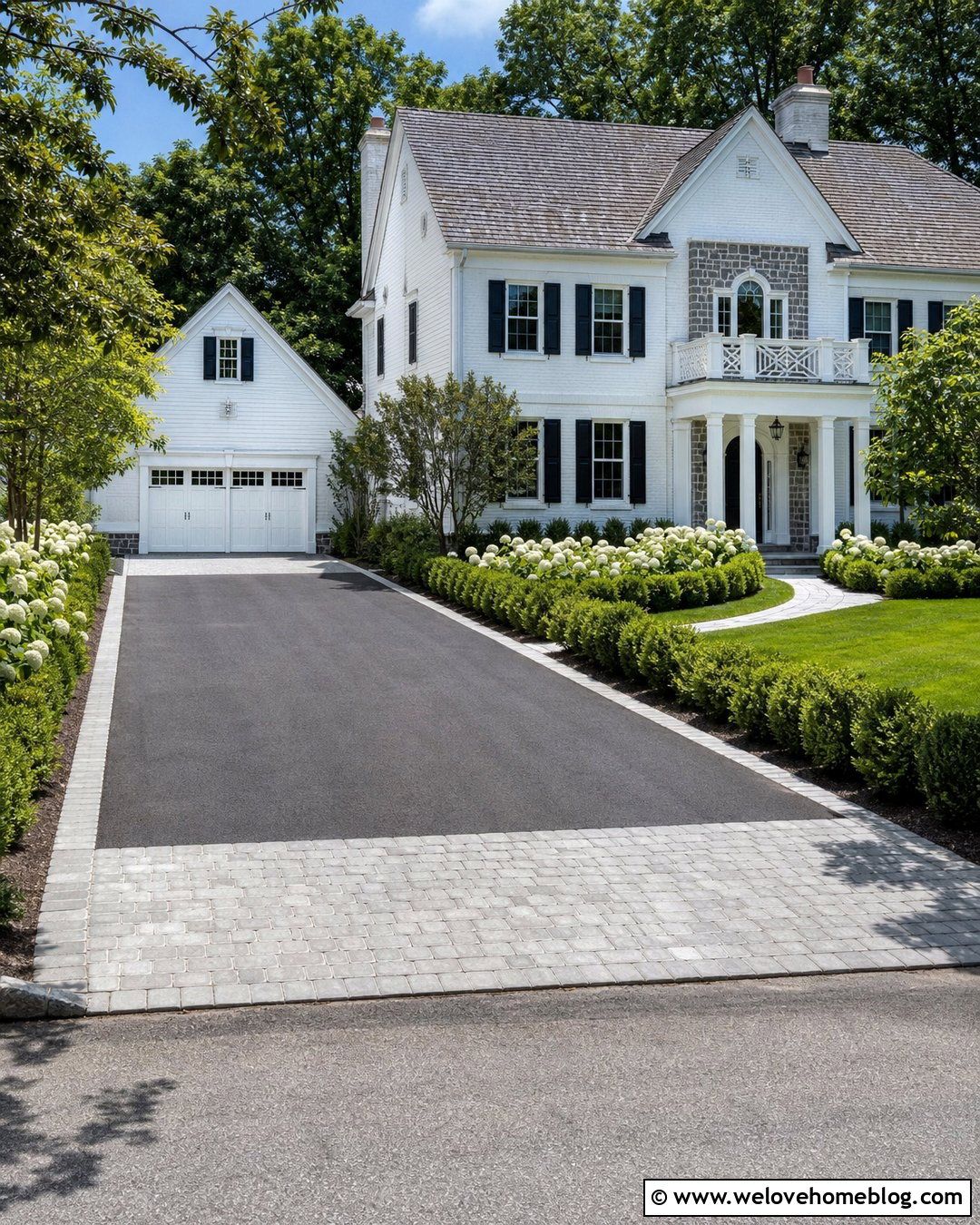
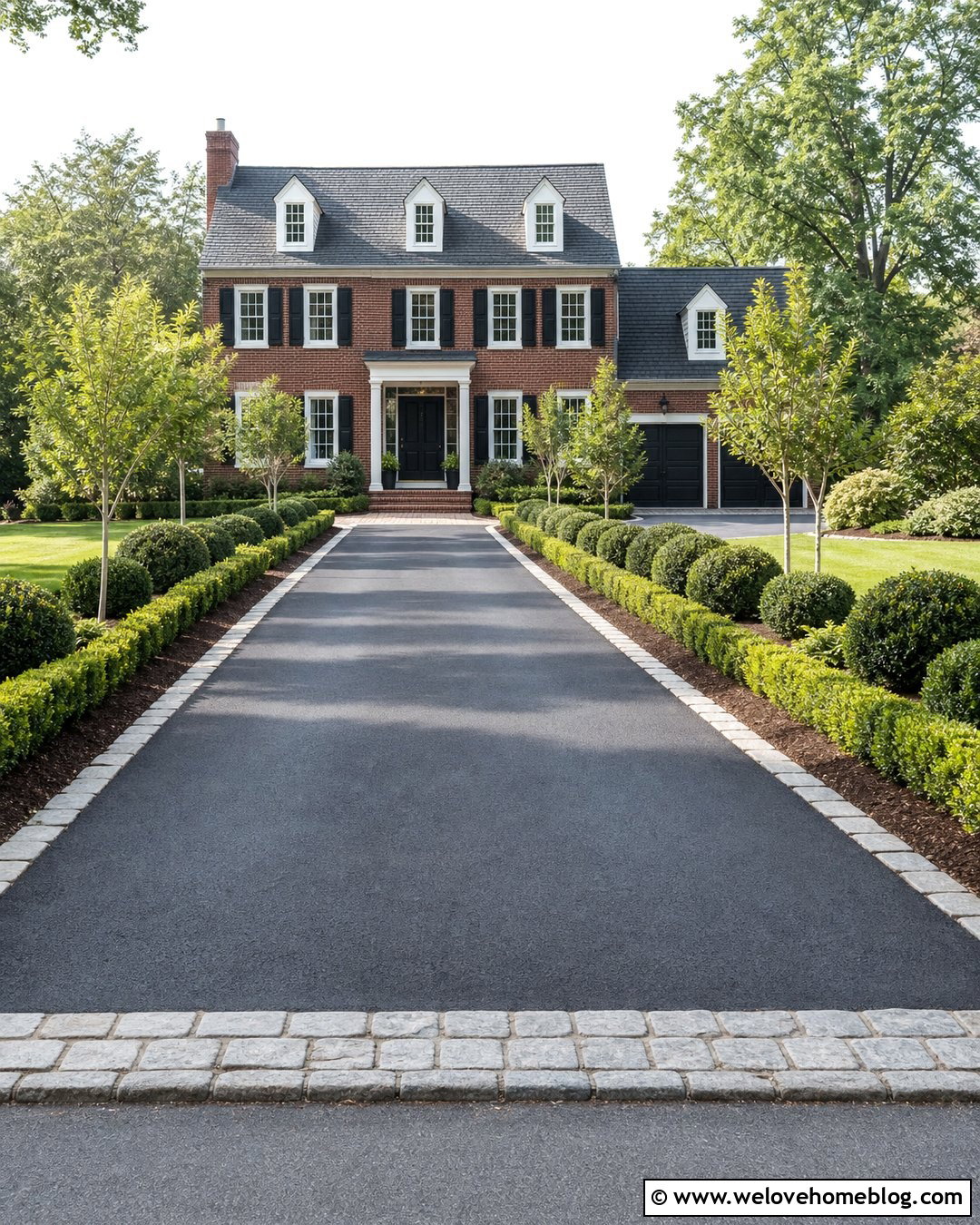
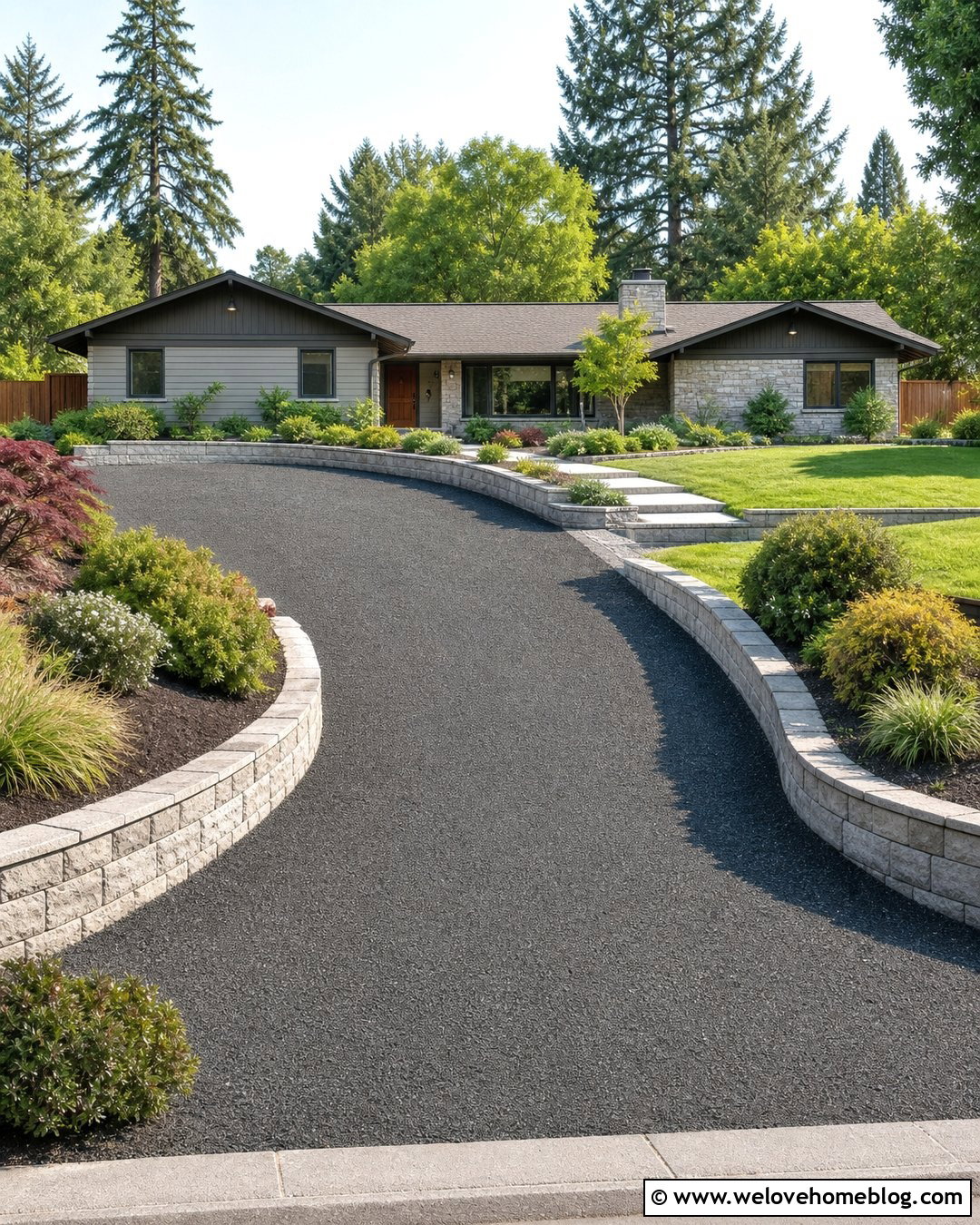
Fresh black asphalt creates a smooth, understated surface that pairs especially well with gray stone and white siding. Give a basic straight driveway more presence by installing Belgian block along both sides and across the street apron. The chunky stone border supports the visual edge while introducing texture and natural color. Near a traditional two-story home, use curved planting beds with boxwoods, panicle hydrangeas, and a neatly maintained lawn. Widen the upper portion into a practical parking pad so vehicles can turn without driving over the border. Asphalt needs a solid base, controlled drainage, and stable shoulders because unsupported edges can become vulnerable. The stone should be planned as part of the installation rather than added without considering elevation, foundation, and the final asphalt height.
14. Asphalt Driveway With Brick Paver Apron
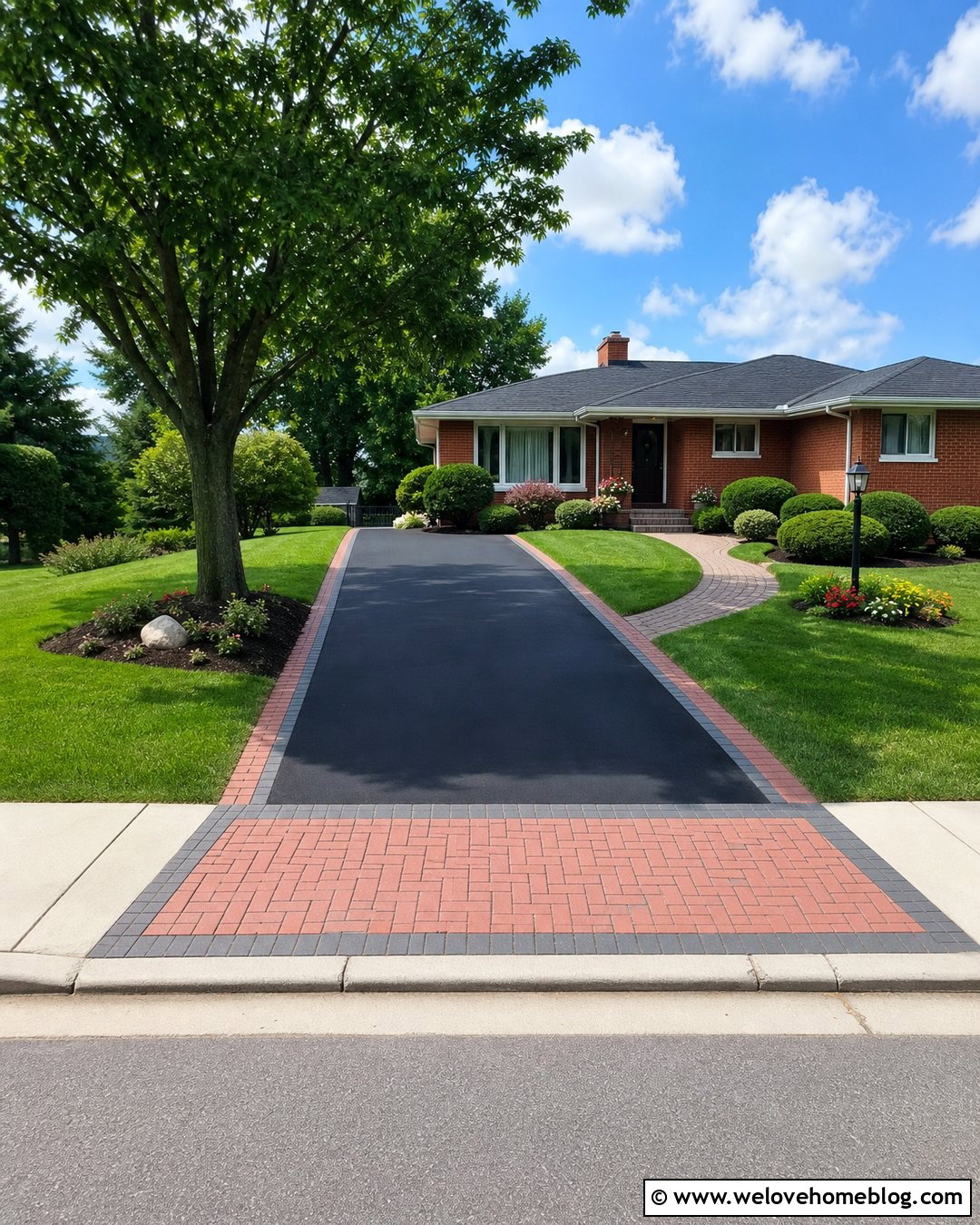
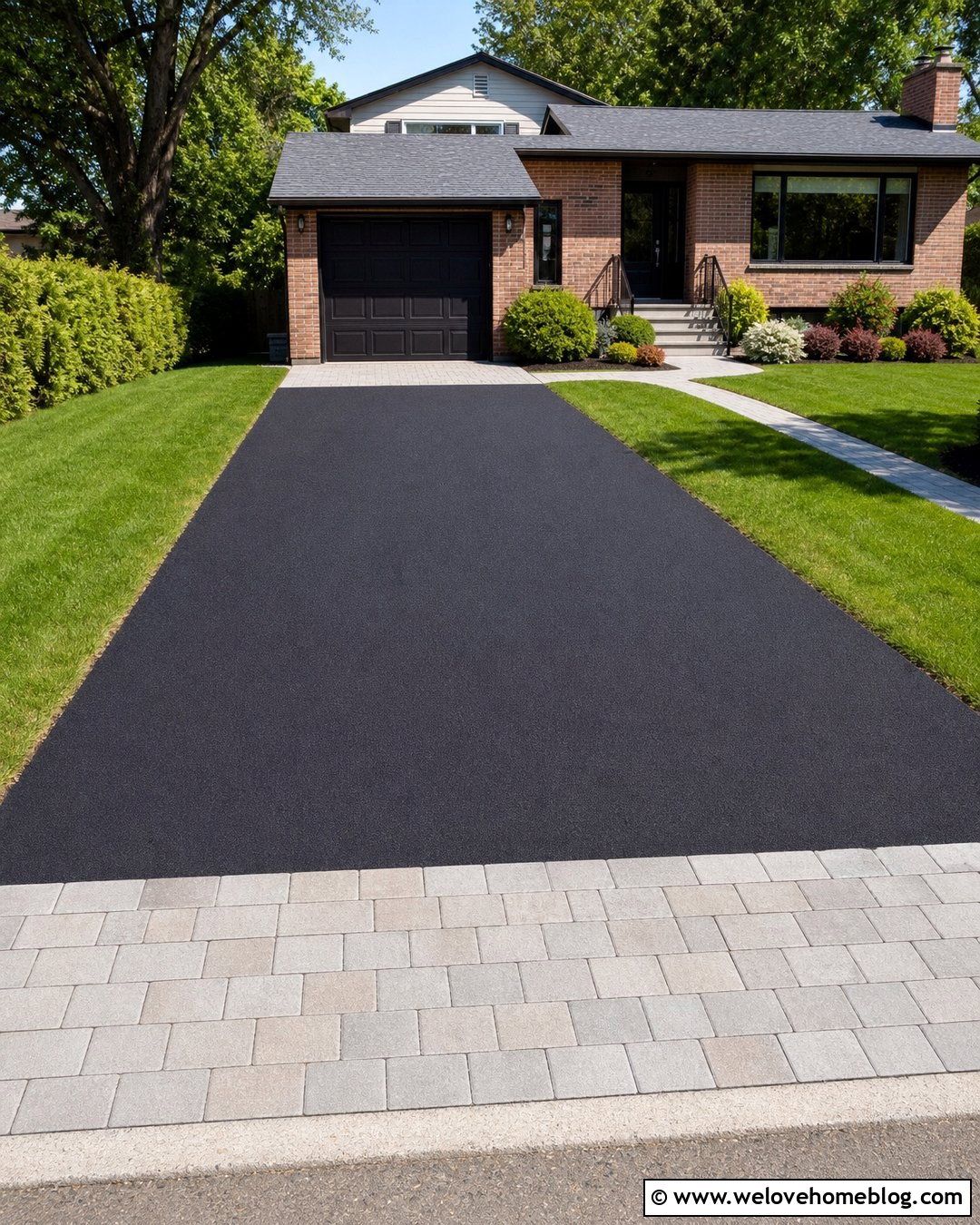
An asphalt driveway does not have to look plain from the street. Add a clay brick or concrete brick-style paver apron where the driveway meets the curb, using colors that coordinate with the home’s masonry. Continue a single paver course along the driveway edges for a polished connection between materials. This look suits a suburban brick ranch or transitional home with a straight, medium-width driveway. Add low evergreen shrubs, seasonal flowers, and one shade tree to frame the entrance without blocking visibility. Make sure the apron and asphalt meet at a smooth, stable transition that will not catch tires or snow-removal equipment. Repeating the same pavers around the front walkway will make the contrasting apron feel intentional rather than like a separate decorative patch.
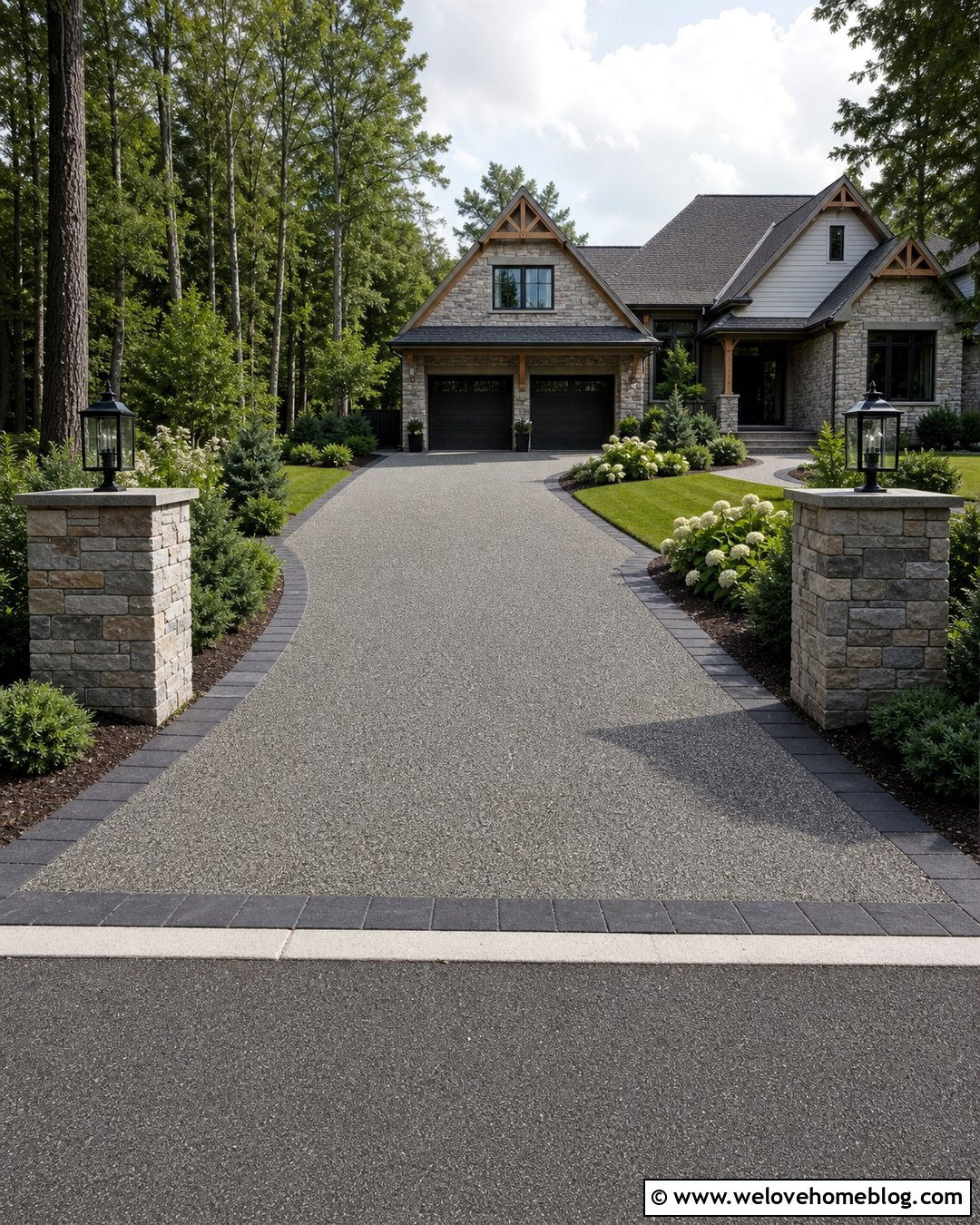

15. Porous Asphalt Driveway With Native Planting
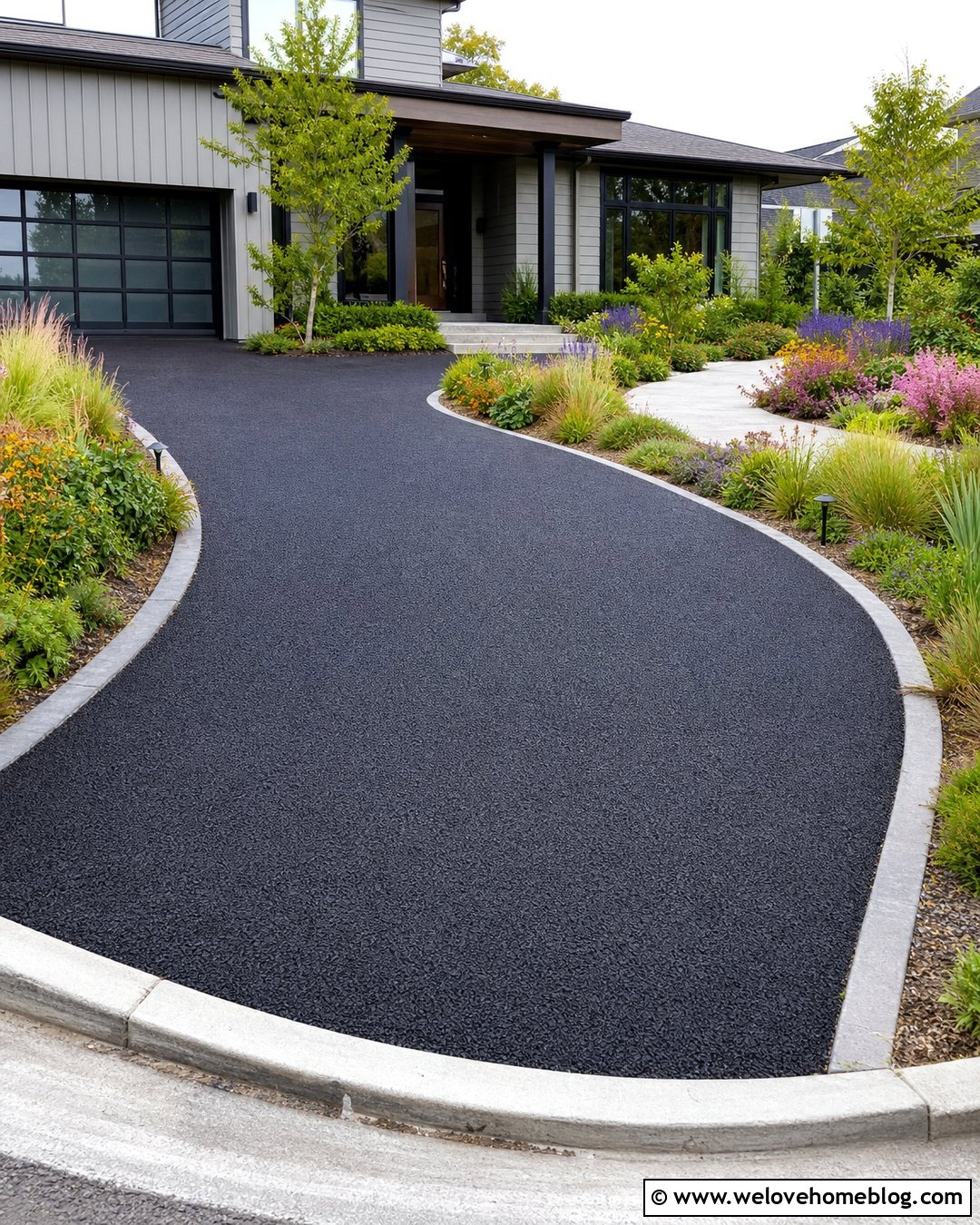
Porous asphalt offers the familiar dark appearance of asphalt while allowing water to move through the pavement into an open-graded base. This system can suit a contemporary home where the owner wants a simple surface and an integrated drainage strategy. Use a slightly curved driveway with a restrained concrete curb only where necessary for support. Along the lower edge, create a native planting bed that can accept or direct overflow during heavy rainfall. Switchgrass, sedges, compact shrubs, and flowering perennials can provide year-round texture. Porous pavement performance depends on appropriate soil conditions, correctly designed sublayers, and ongoing surface care, so it should be treated as an engineered installation. () A light concrete walkway can provide an attractive contrast beside the black surface.
16. Resin-Bound Gravel Driveway With Stone Border
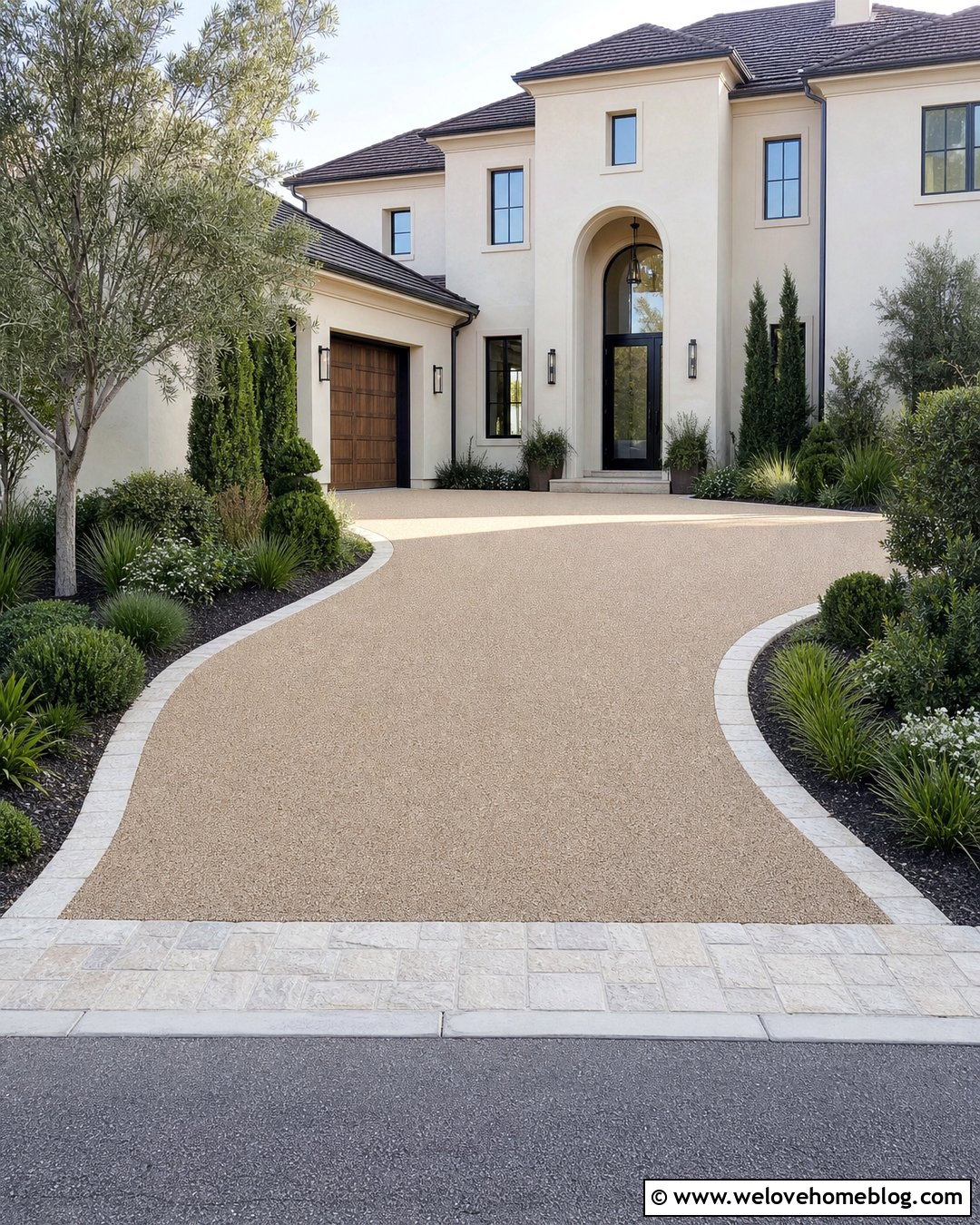
Resin-bound gravel creates a smooth, contemporary surface while retaining the appearance of small natural stones. Choose a warm beige aggregate mix for a cream stucco house or modern limestone facade. A sweeping curved driveway will display the seamless finish and make the entrance feel generous. Use cut limestone as the edge restraint and repeat it around the planting beds. Olive-toned shrubs, ornamental grasses, and neatly clipped evergreens will enhance the restrained color palette. Install a coordinating stone apron near the street and a matching resin-bound path toward the front door. The surface, base, and edging should be designed as a complete system, especially where drainage requirements apply. Avoid unnecessary color changes so the natural aggregate remains the main visual feature of the driveway.
17. Circular Paver Driveway With Center Garden
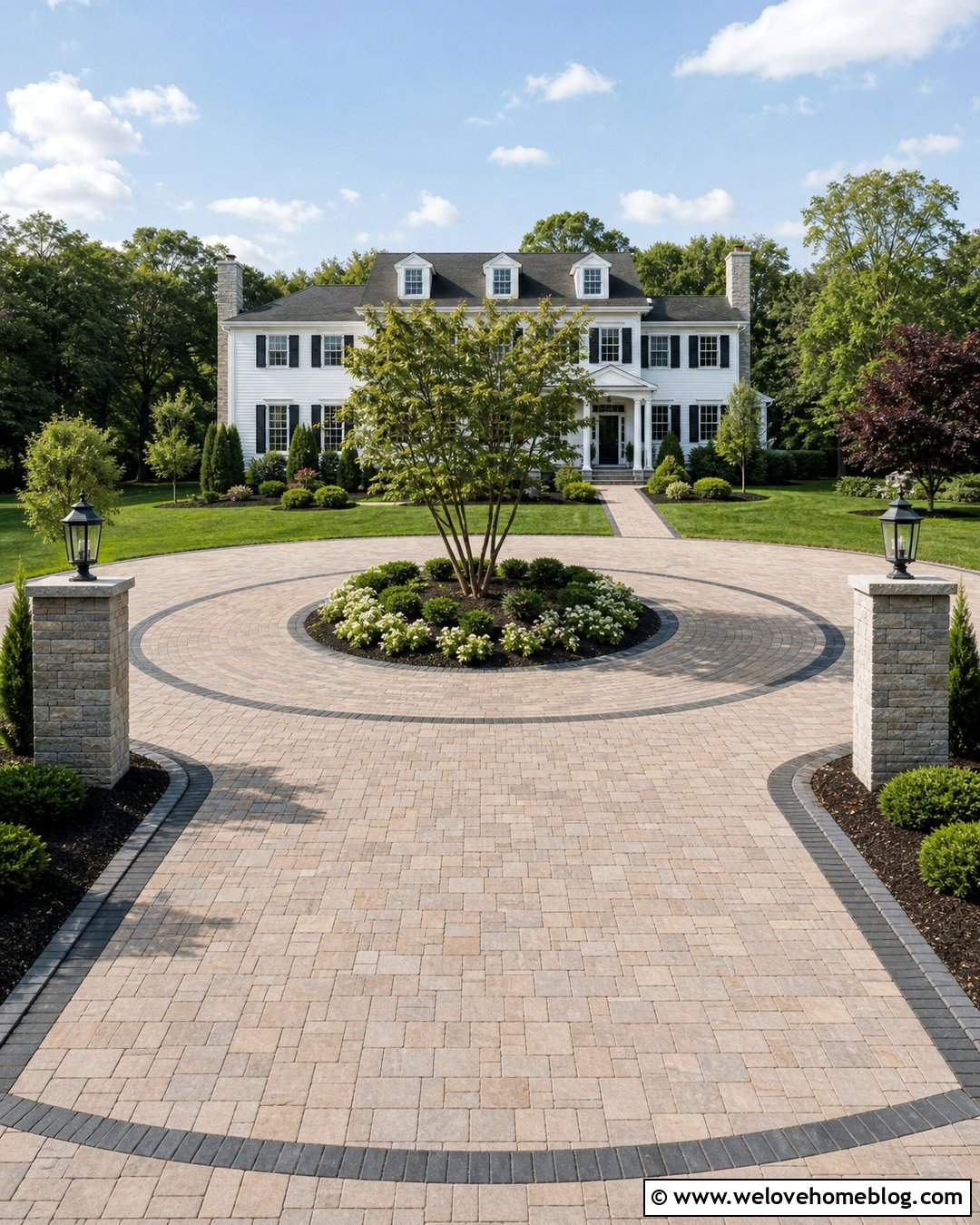
A circular driveway can improve vehicle movement while giving a wide front yard a clear focal point. Install tumbled concrete pavers in blended tan and gray tones around a central oval or circular garden. Use darker pavers to mark the inner and outer borders, helping drivers understand the route. In the center, plant a multi-stem ornamental tree surrounded by low shrubs and ground cover that will not obstruct views. A large colonial, French country, or traditional home will provide a balanced backdrop. Connect both driveway entrances with matching stone pillars or simple masonry markers. Keep the planting island proportional so the driving lane remains comfortable. The paving pattern can change subtly at the entrance apron, but repeating the same colors will maintain a unified, upscale appearance.
18. Horseshoe Gravel Driveway With Brick Entrance
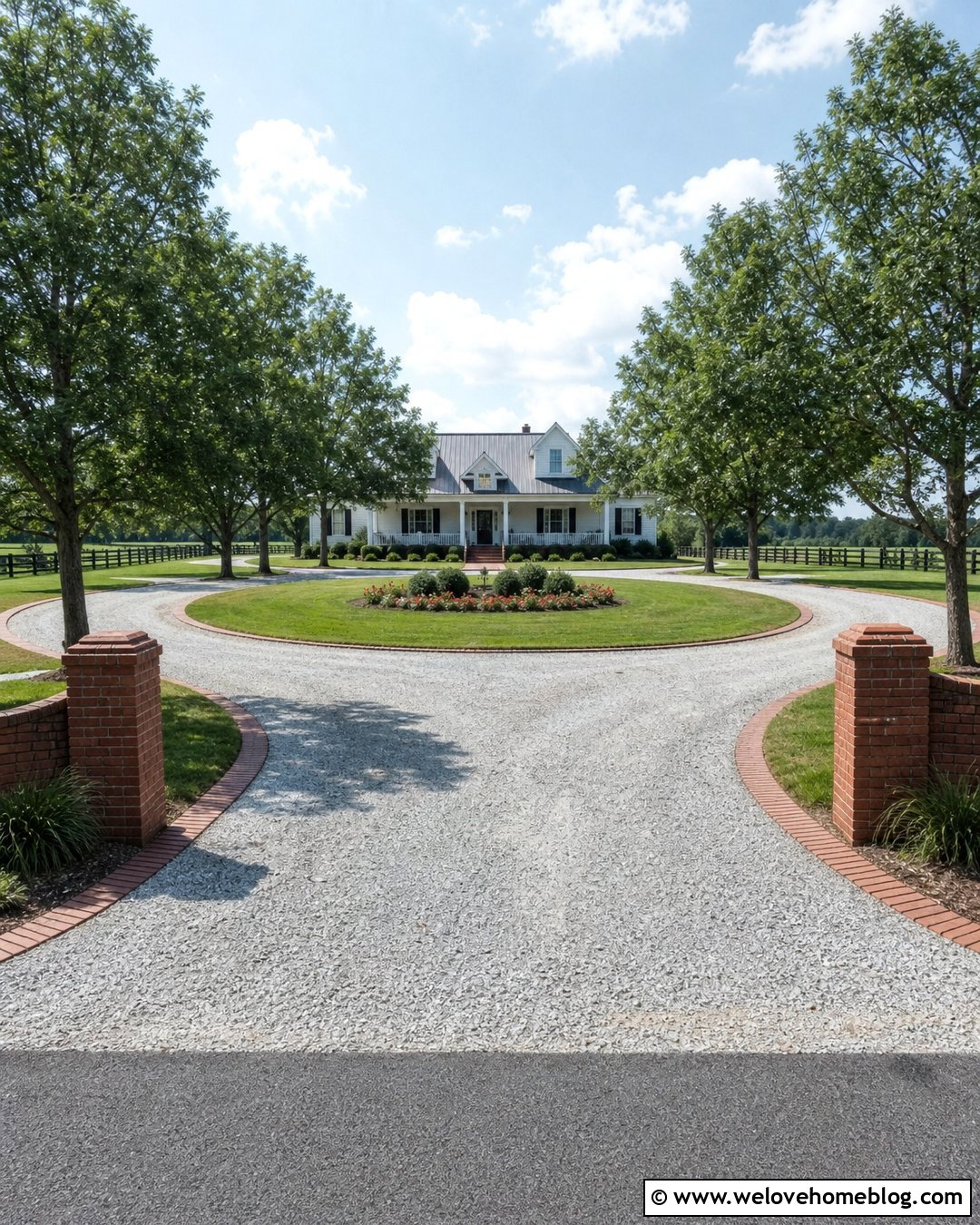
For a broad country property, a horseshoe gravel driveway creates separate entry and exit points without requiring an oversized paved area. Use compacted gray crushed limestone for the main surface and frame both entrances with low brick pillars. A red brick ribbon along the inner curve will define the shape and keep the layout connected to a traditional farmhouse or colonial facade. Plant shade trees at measured intervals along the outer edge, leaving enough room for mature canopies and safe sightlines. The center lawn can hold a simple flower bed or a single ornamental tree. Place a firm paved walkway between the nearest parking point and front porch. Proper grading is particularly important across the long curve so stormwater does not cut channels through the gravel.
19. Curved Concrete Driveway With Landscape Islands
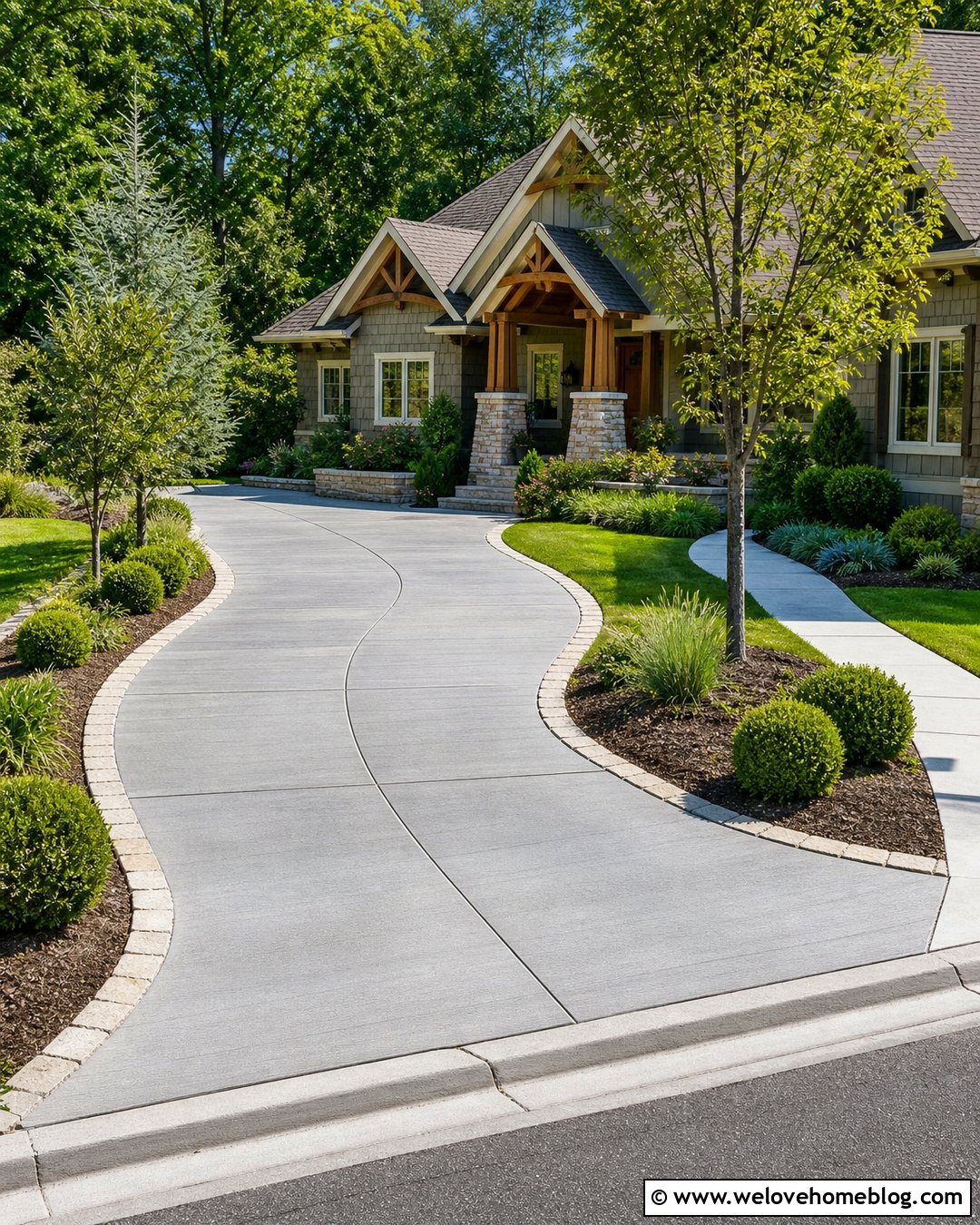
A curved driveway can make a deep front yard feel more natural and reduce the visual effect of a long strip of pavement. Use medium-gray broom-finished concrete divided into large panels that follow the curve. Add landscape islands at selected bends rather than lining every inch with plants. Each island can contain a small tree, rounded evergreen shrubs, grasses, and low ground cover. Buff stone curbing will separate soil from the concrete and echo a craftsman home’s stone porch columns. Keep plants low near the street entrance and inside curves to preserve visibility. If the driveway slopes, integrate drainage into the low edge before planting. A walkway branching from the final curve can lead visitors toward the porch without requiring them to cross the primary parking area.

20. Split Driveway With Concrete And Pavers
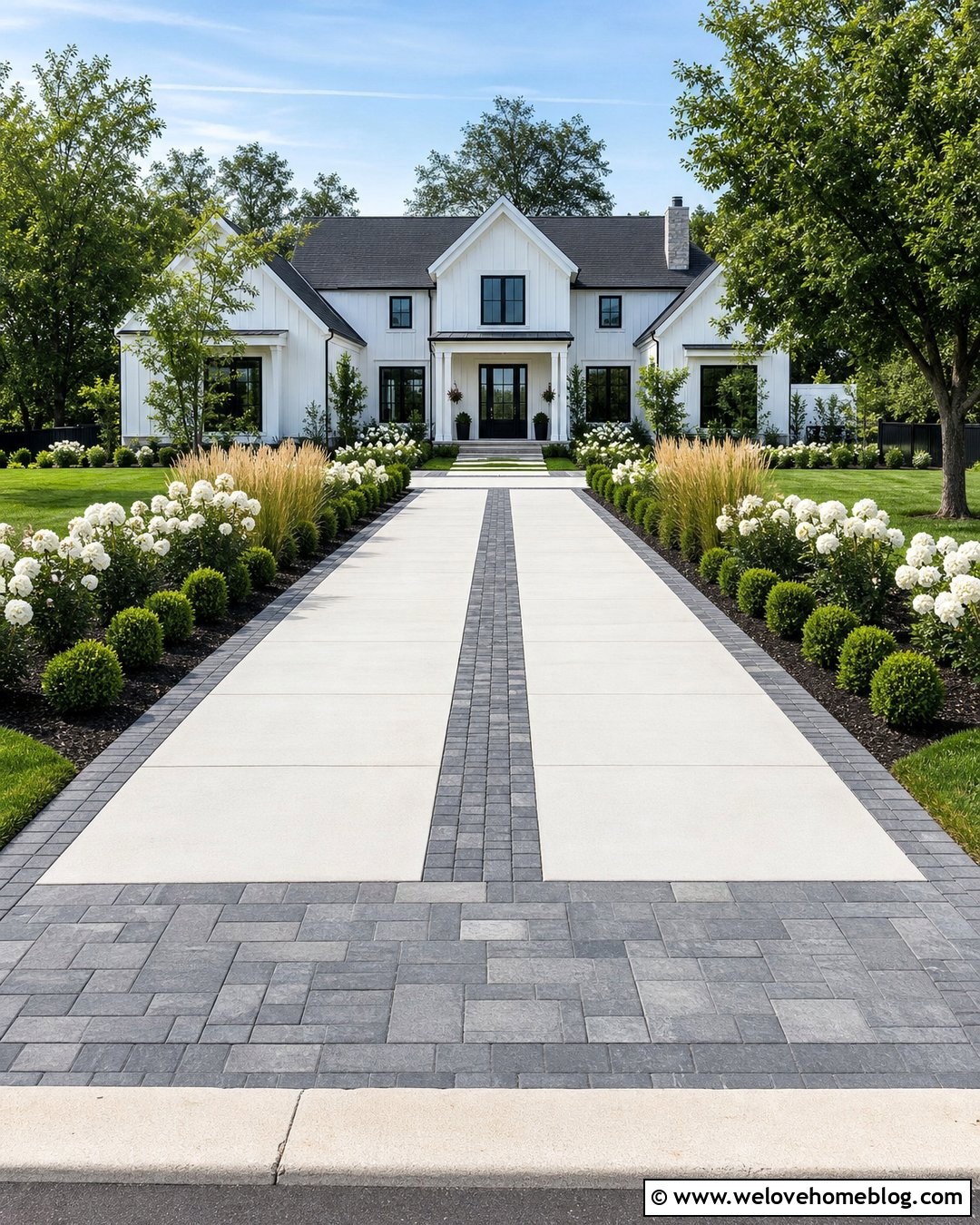
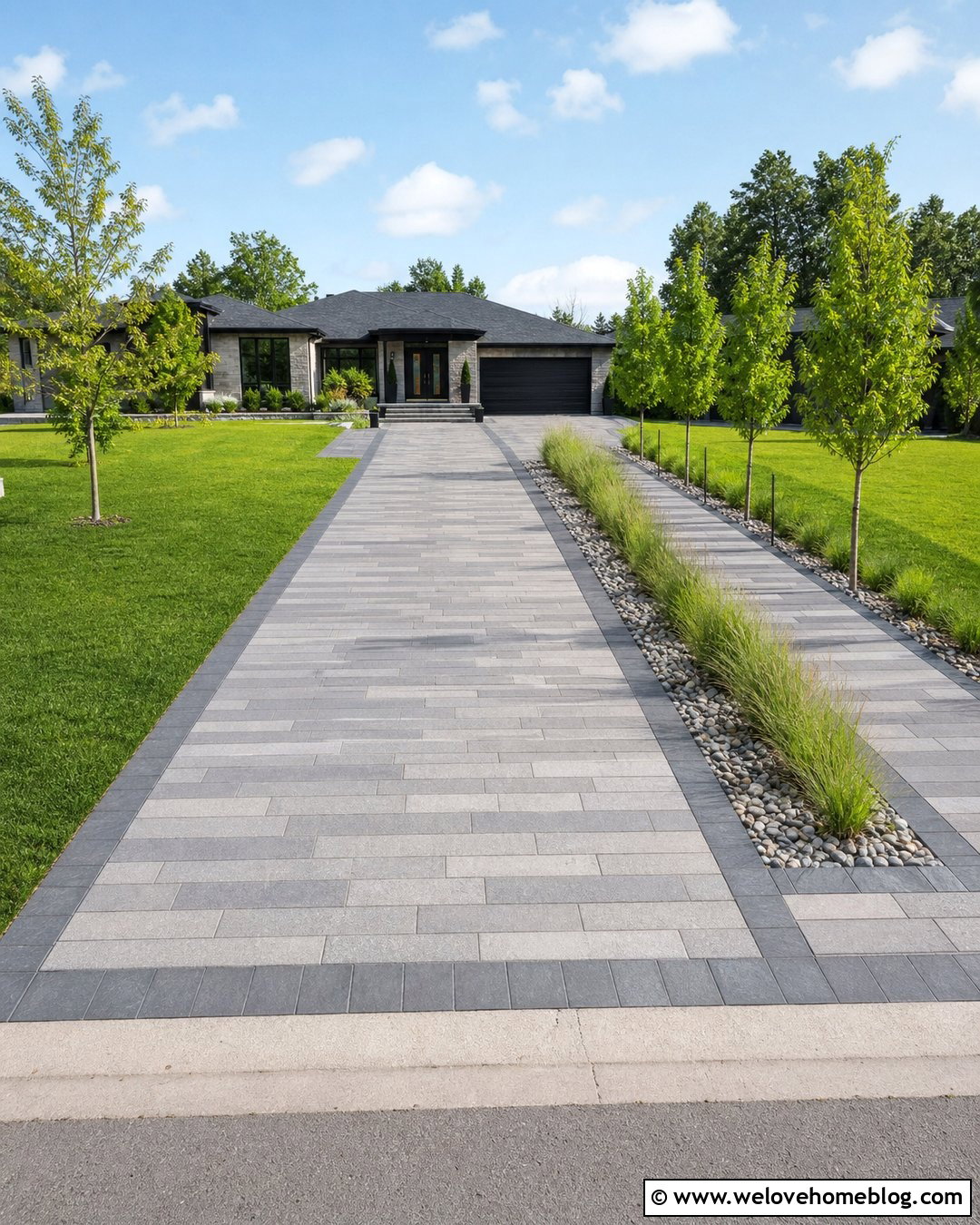
Combining poured concrete with pavers can add decorative detail without covering the entire driveway in premium material. Install two broad light-gray concrete driving lanes separated by a charcoal paver strip. Continue the same pavers along both edges and across the entrance apron. Near the garage, widen the concrete into a full parking pad so tires are not forced onto narrow borders. This crisp layout suits a modern farmhouse or transitional home with black windows and simple landscaping. Frame it with clipped shrubs, white flowers, ornamental grasses, and a straight concrete walkway. The paver bands should have a load-bearing base and proper restraint rather than being treated as shallow decoration. Consistent elevations between materials will create a smoother drive and a cleaner finished appearance.
21. Concrete Ribbon Driveway With Grass Center
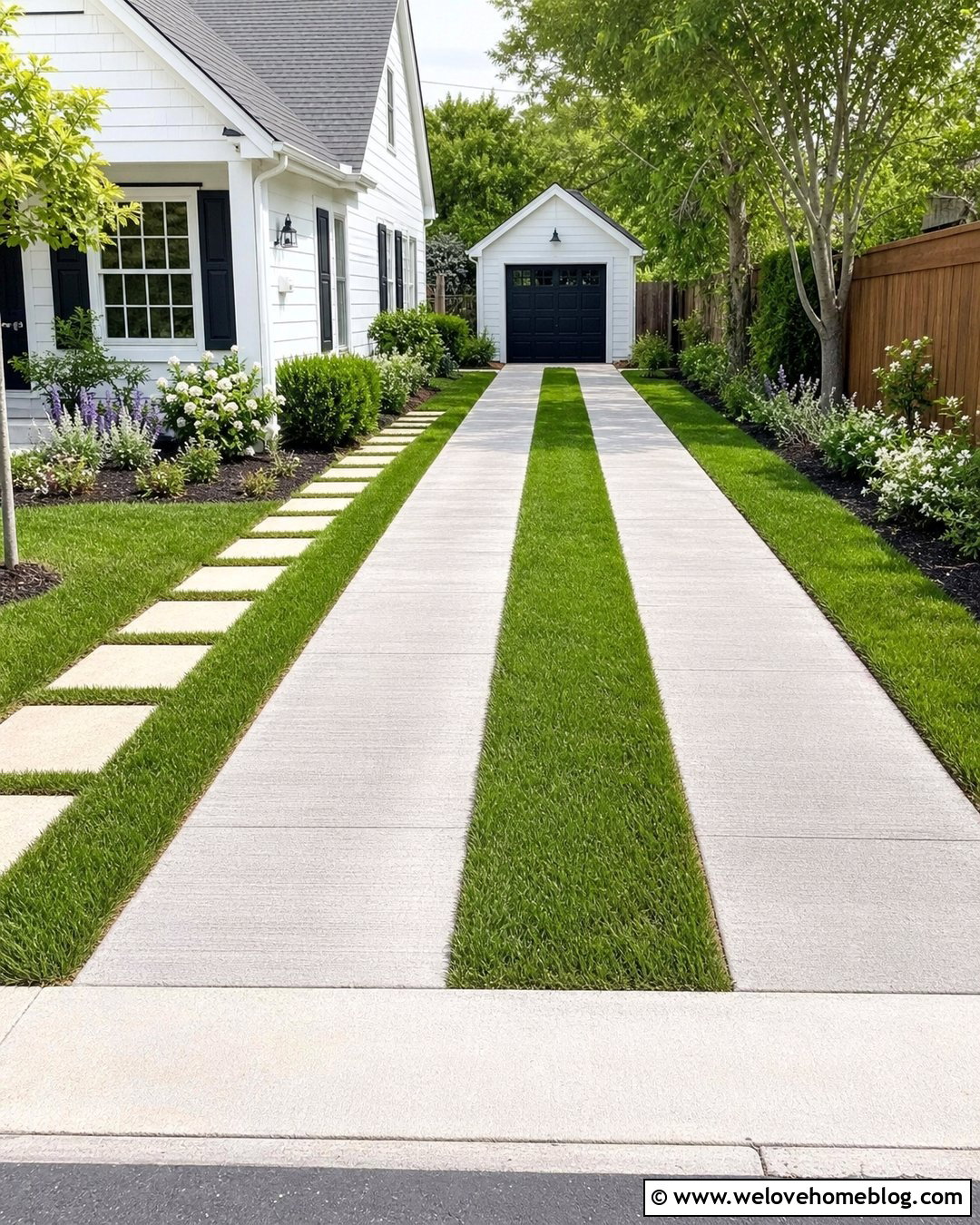
A concrete ribbon driveway uses two durable wheel paths while leaving a planted strip through the middle. This can reduce the visual amount of paving on a short, straight driveway leading to a cottage, detached garage, or accessory building. Install broom-finished concrete ribbons wide enough for normal vehicle tires, then use reinforced turf in the center and beside the outer edges. Add low flowering borders near the house, but keep the entrance open and easy to navigate. A stepping-stone walkway can run parallel to the driveway so guests do not need to walk on the grass strip. This layout works best when dimensions are based on actual vehicles and site conditions. The center planting also needs enough sunlight, drainage, and maintenance access to remain attractive.
22. Grass Paver Driveway With Modern Landscaping
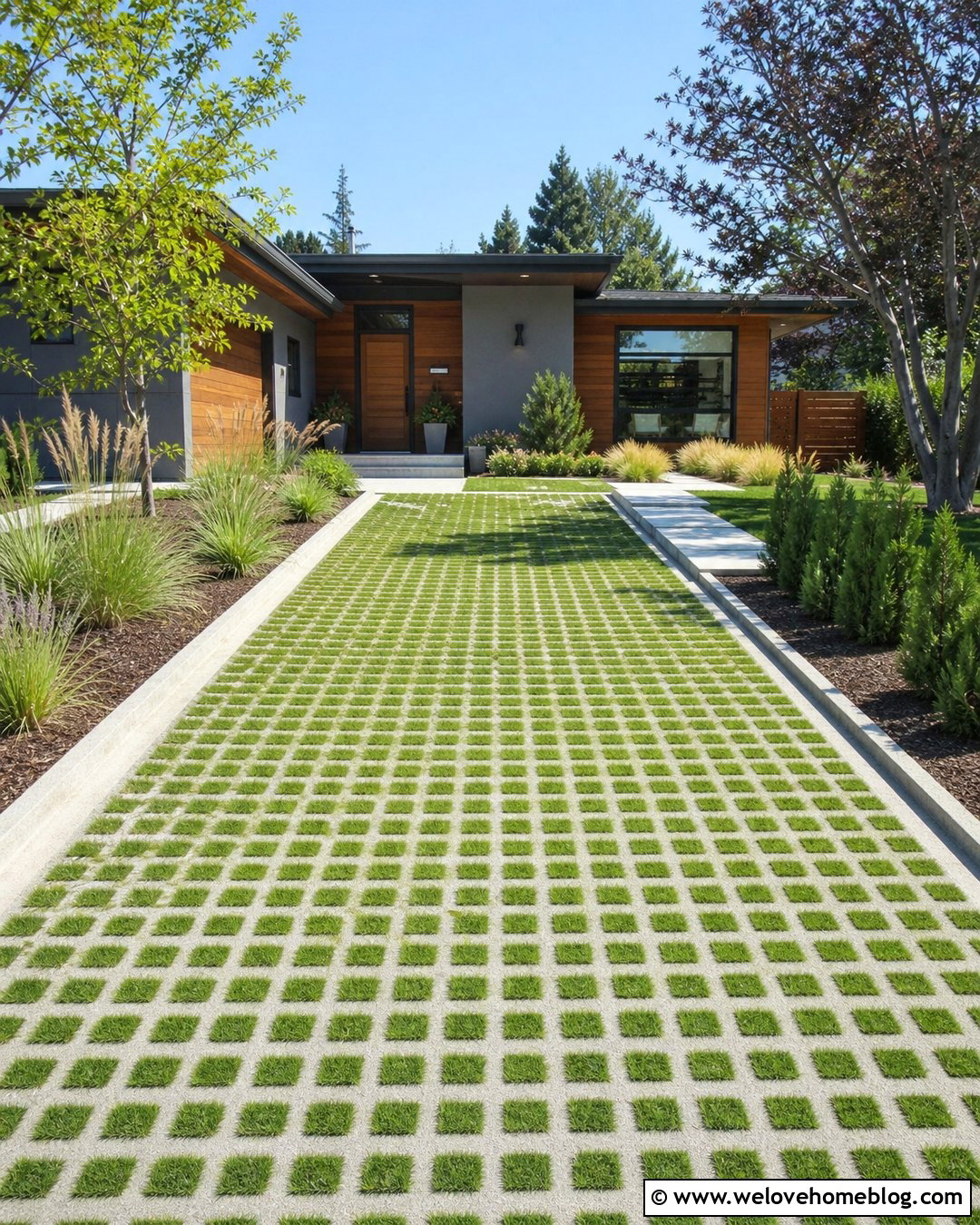
Grass pavers create a reinforced driving surface that appears greener than conventional pavement. Install concrete or heavy-duty grid units over an engineered base, then fill the openings with suitable soil and durable turf. Use the system across a straight driveway leading to a low modern home with broad windows and natural wood accents. Outline the perimeter with flush concrete curbs for a precise edge. Plant structural grasses, compact evergreen masses, and a few small trees in rectangular beds. Where vehicles regularly stop or turn, consider gravel-filled grid cells to reduce wear on the grass. Irrigation and mowing access should be included in the plan. A solid concrete walkway beside the driveway will provide a comfortable year-round pedestrian surface while preserving the green appearance of the main approach.
23. Limestone Driveway With Cottage Landscaping
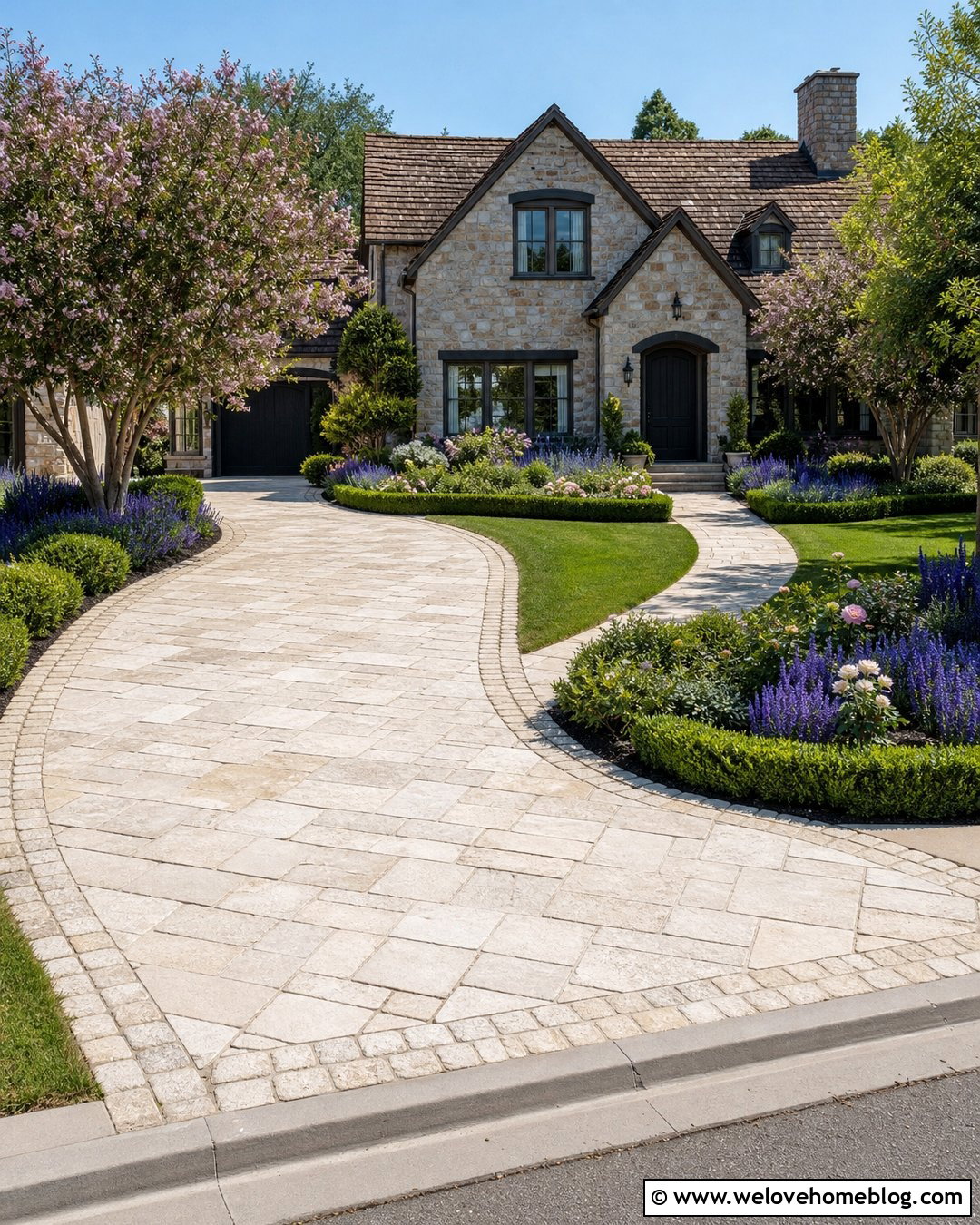
Pale limestone paving can brighten the entrance to a cottage, stone house, or light-colored traditional home. Choose dense stone rated for exterior vehicle use and install it in mixed rectangular sizes for a relaxed pattern. A gentle curve will make the driveway feel established rather than overly formal. Use smaller limestone setts as an outer border and transition to a matching garden path near the front door. Fill the surrounding beds with lavender, salvia, roses, low hedges, and flowering trees. The light stone should coordinate with the facade without blending into it completely. Consider local climate, stone porosity, freeze-thaw conditions, and recommended sealing before installation. A concealed or color-matched drainage channel near the garage can manage runoff without interrupting the soft cottage appearance.
24. Bluestone Driveway With Granite Border
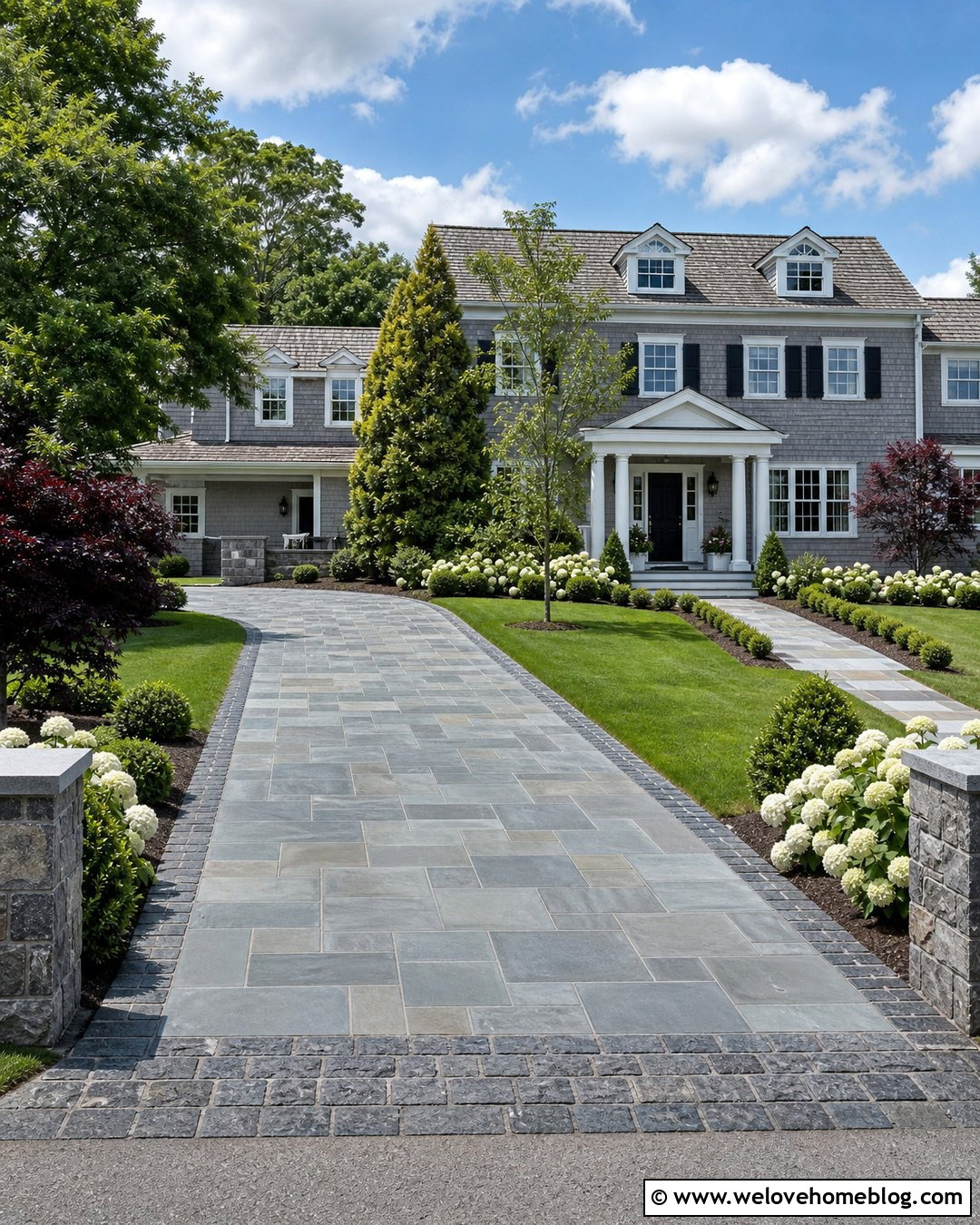
Blue-gray natural stone creates a refined entrance when its cool tones are balanced with warm landscaping. Use thick bluestone or stone-look vehicle-rated pavers in an ashlar pattern across a straight driveway. Frame the field with darker granite setts and repeat them across the apron. This combination works well with a cedar-shingle, gray colonial, or stone-front home. Add broad lawn panels, white hydrangeas, evergreen shrubs, and burgundy foliage for contrast. Keep the driveway walkway in the same bluestone family but use smaller pieces to distinguish it from the vehicle surface. Natural stone can vary in thickness, texture, and color, so skilled installation is important for an even finish. Plan snow removal, drainage, and surface treatment around the stone selected for the local climate.
25. Travertine Paver Driveway With Mediterranean Landscaping
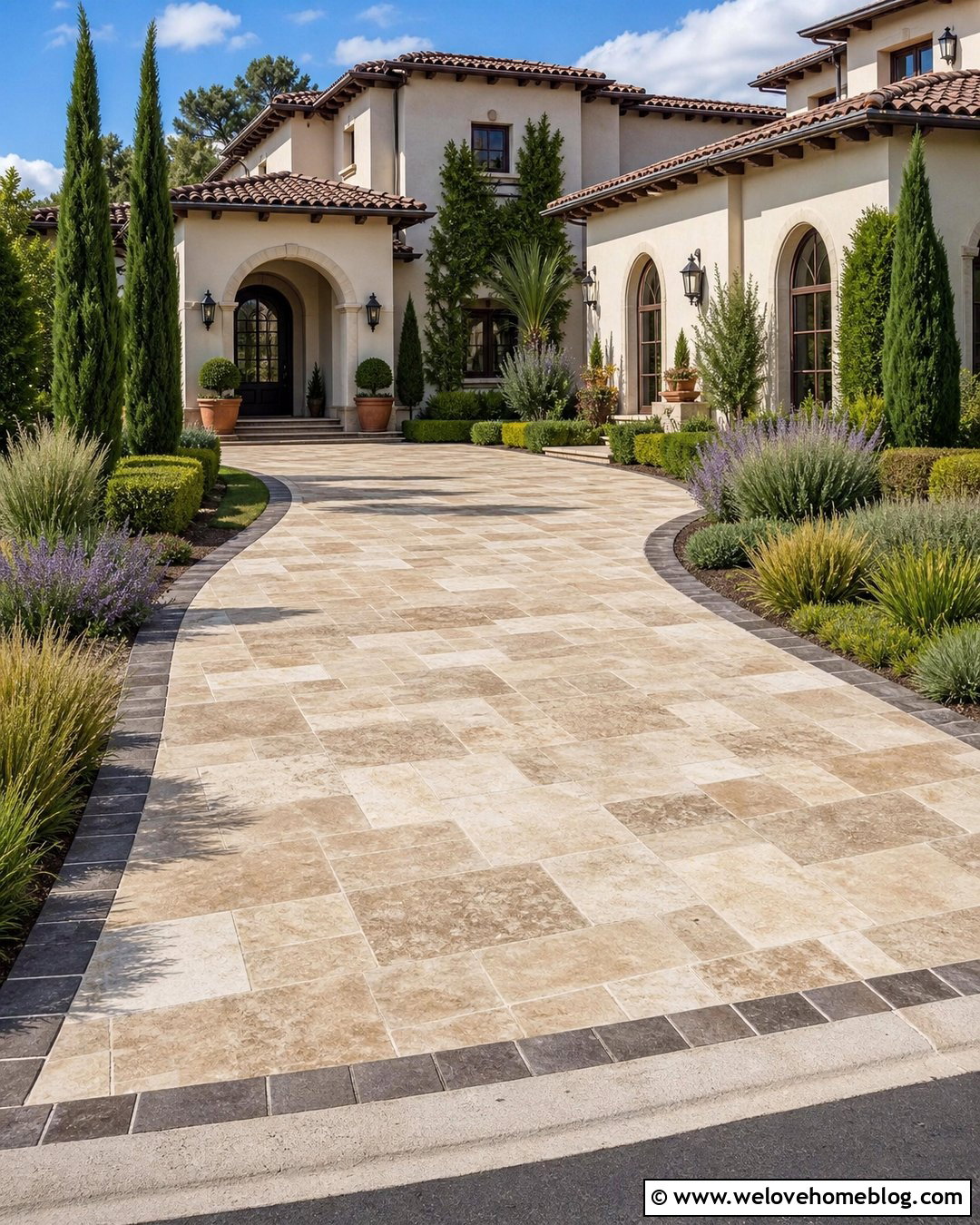
Warm travertine pavers can produce a bright, elegant driveway for a Mediterranean, Spanish, or stucco residence. Choose tumbled vehicle-rated pavers in cream, beige, and light walnut tones. Install them in a French pattern across a wide curved driveway, then add a darker stone border to sharpen the perimeter. Use drought-tolerant landscaping with upright evergreens, flowering sage, ornamental grasses, and sculptural shrubs. Terracotta-colored pots can sit near the entrance without narrowing the driving path. Repeat the pavers on the walkway and front steps for a coordinated approach. Because stone suitability varies, confirm that the selected product, thickness, finish, and base system can handle vehicles and local weather. Light-colored joint material will preserve the warm, continuous appearance of the finished paving.
26. Driveway With Channel Drain And Paver Border
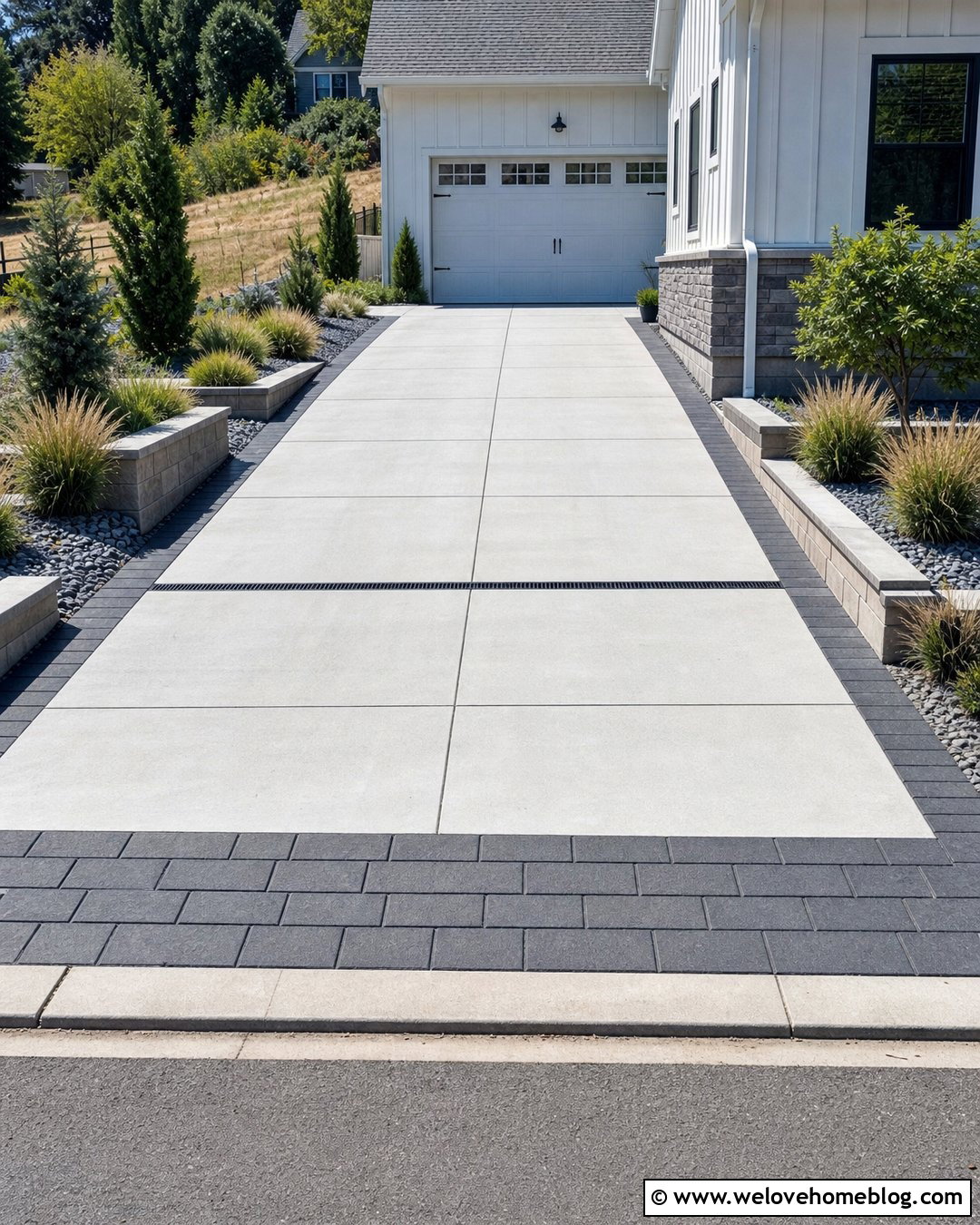
When a driveway slopes toward the garage, drainage should become part of the visible design rather than an afterthought. Install a gray poured concrete driveway with charcoal paver borders and position a load-rated channel drain across the surface before the garage threshold. Select a drain grate that coordinates with the paver color so it looks integrated. Use a straight layout with a slight cross-slope directing water toward the drainage system. On both sides, add raised planting beds with evergreen shrubs, grasses, and stone mulch to control soil movement. A matching paver apron at the street will complete the design. The drain needs a suitable discharge destination and professional sizing for the property. Water should be directed away from buildings and handled according to local requirements.
27. Sloped Driveway With Retaining Wall
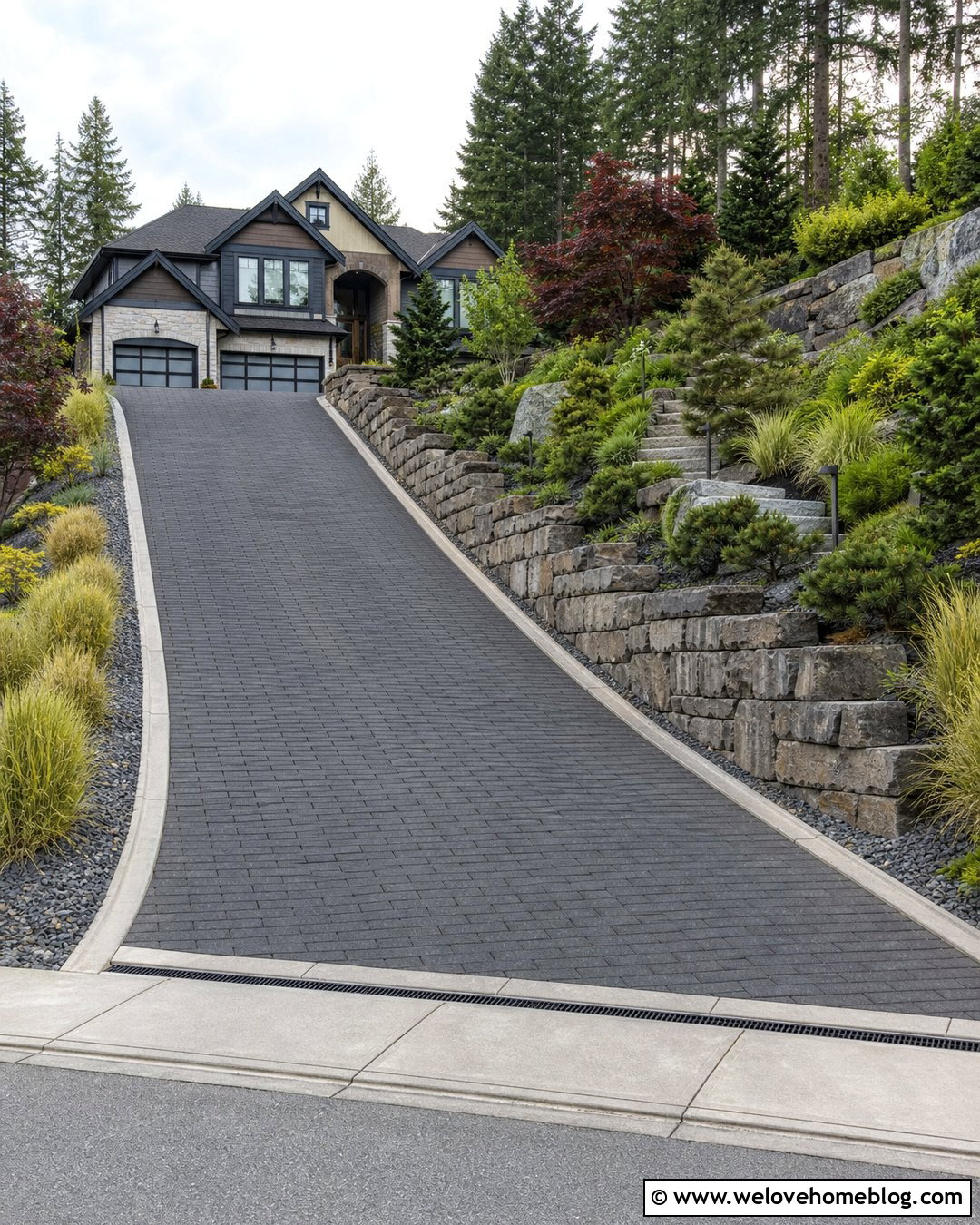
A steep or cross-sloped lot may need a retaining wall to create a safe, clearly defined driveway. Use textured charcoal concrete pavers in a running-bond pattern for traction and install a substantial base designed for the slope. Along the higher side, build a natural stone retaining wall with drainage behind it. Step the wall gradually with the grade rather than creating one tall, visually heavy barrier. Plant creeping ground cover, compact shrubs, and ornamental grasses above the wall to soften its outline. Use a low curb on the downhill side and keep the street entrance wide and visible. A separate stair and walkway can provide safer pedestrian access to the house. Consult qualified professionals because slope stability, retaining structures, drainage, and vehicle clearance require coordinated planning.
28. Narrow Driveway With Light Concrete Pavers
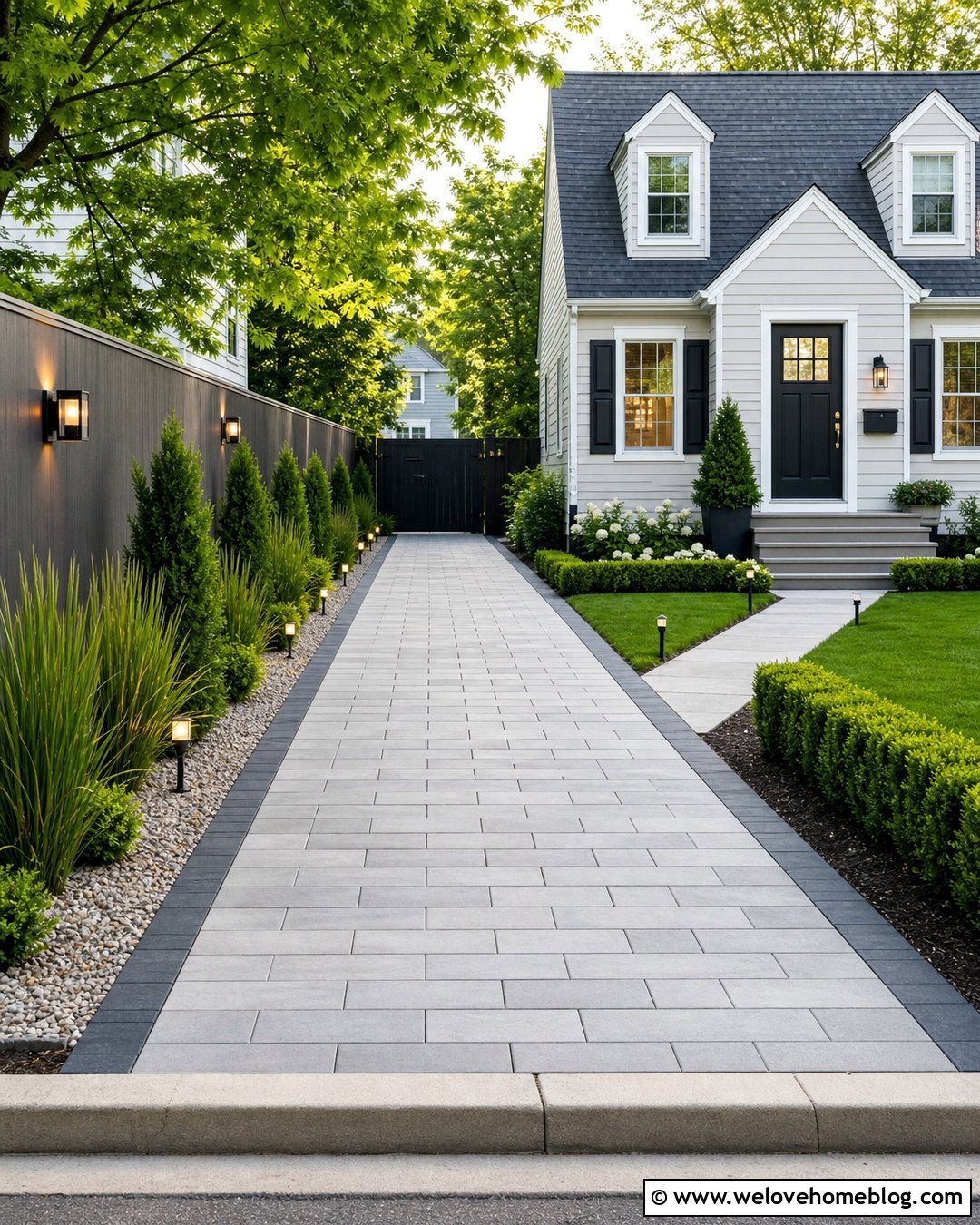
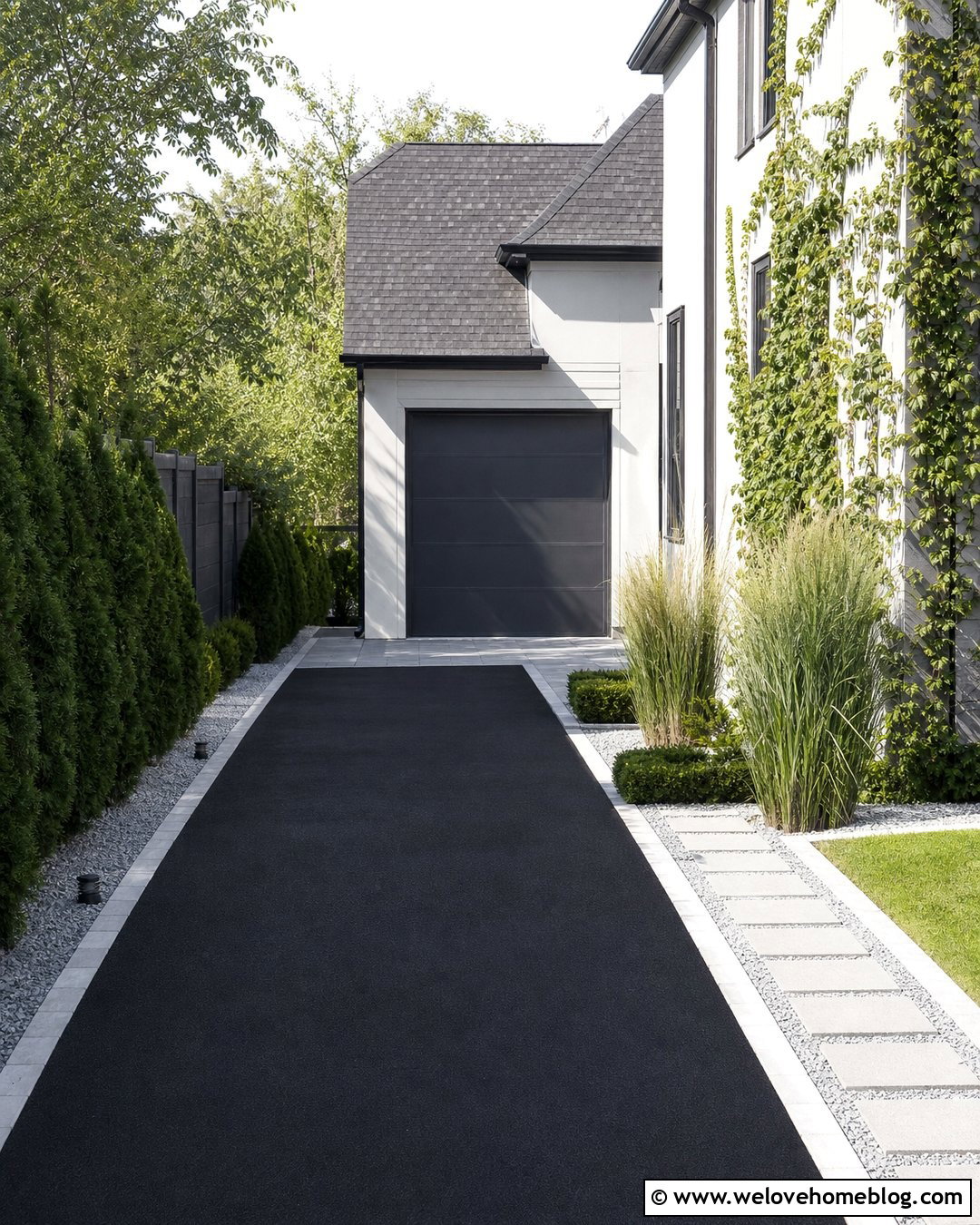
A narrow side-yard driveway benefits from a simple surface and restrained border treatment. Choose light-gray rectangular concrete pavers and install them lengthwise to visually extend the space. Use a single charcoal paver course along each edge rather than a wide decorative band. On the house side, include a slim channel drain or gravel drainage strip where needed. On the opposite side, plant upright grasses, compact evergreens, or a clipped hedge that will not spill into the driving lane. This design suits a small Cape Cod, bungalow, or urban infill home. Keep the pedestrian path visually connected by using the same paver family near the entrance. Wall-mounted lighting, reflective address markers, and carefully maintained planting can improve usability without consuming valuable driveway width.
29. Farmhouse Gravel Driveway With Stone Pillars
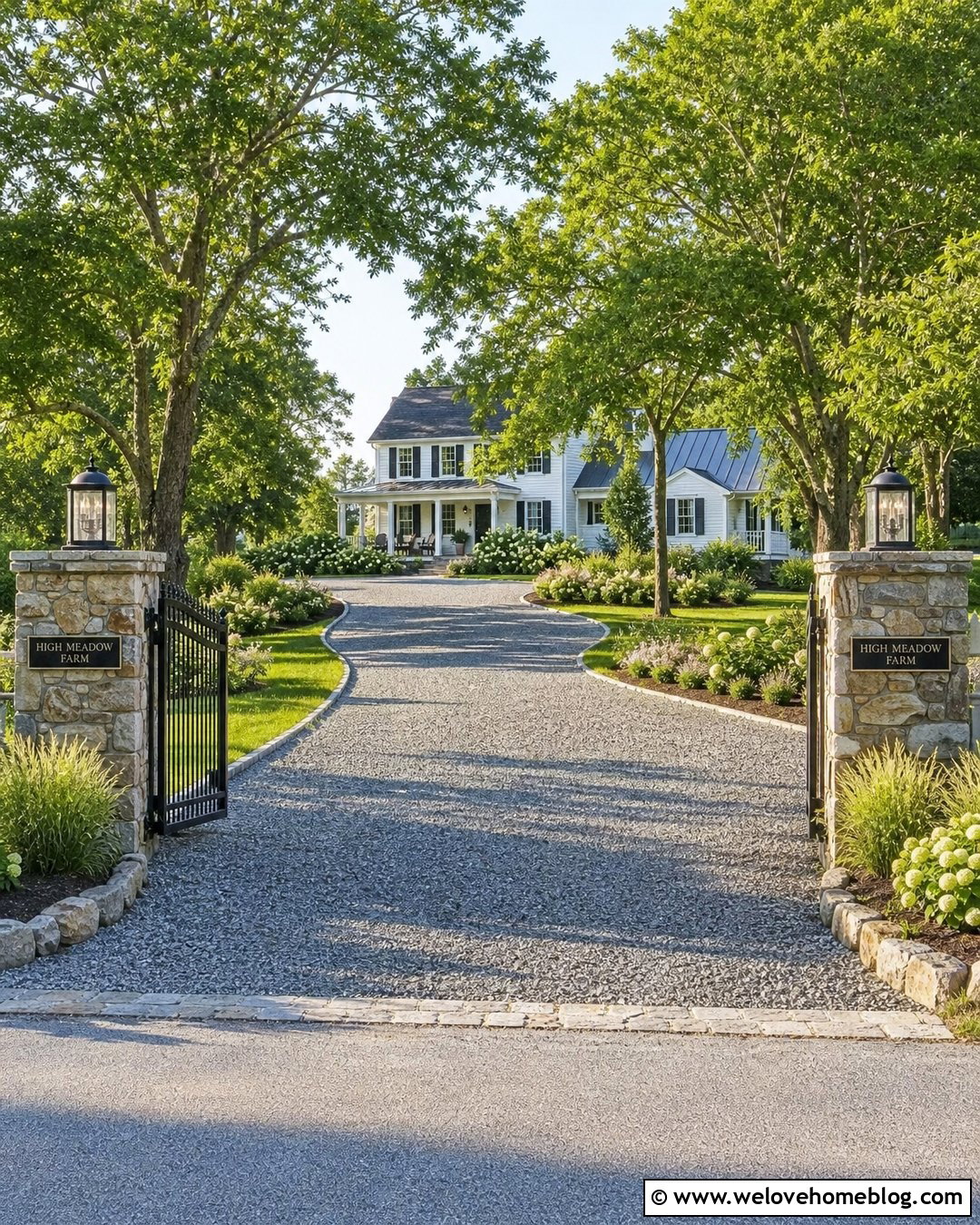
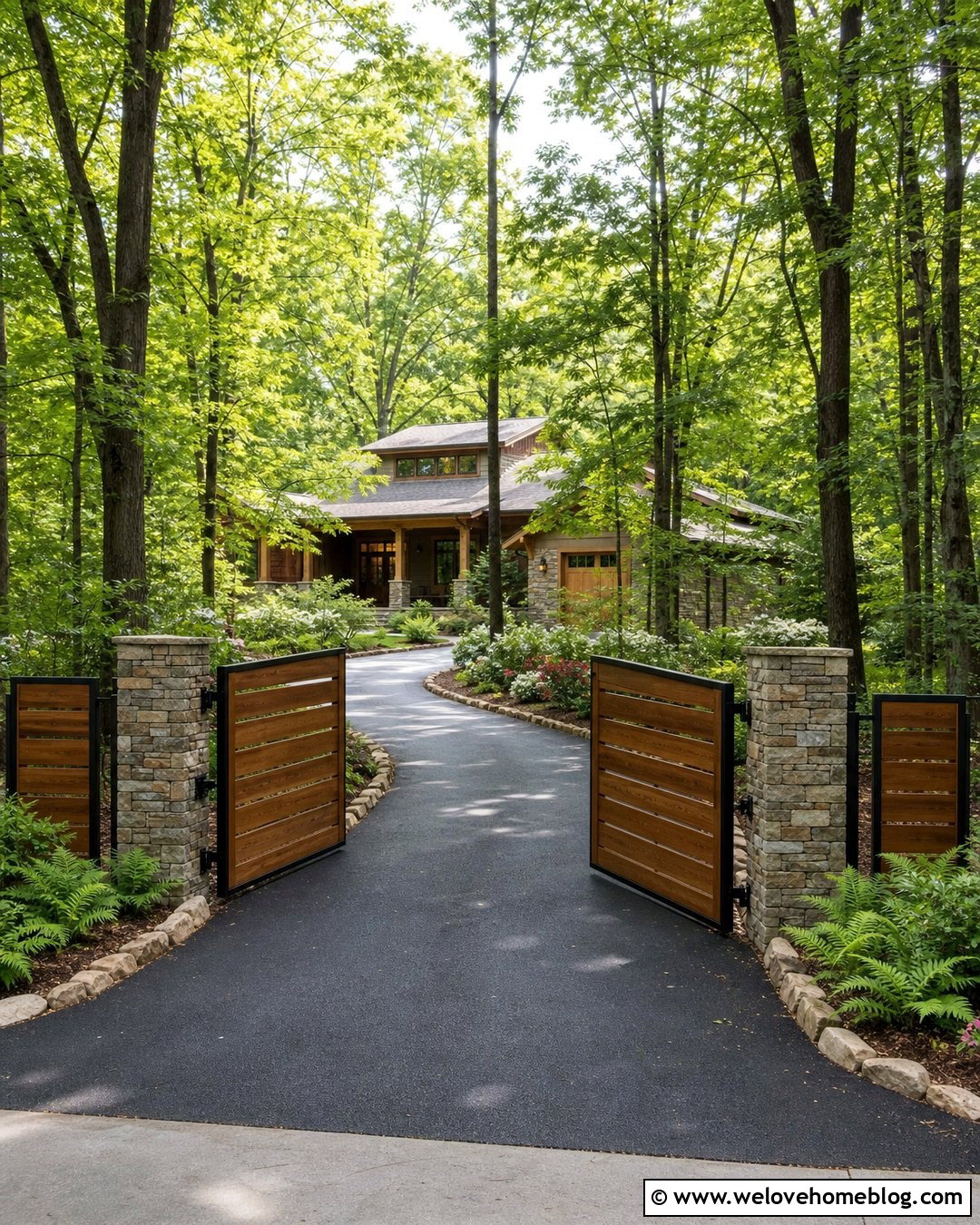
Imagine approaching a white farmhouse along a broad lane of warm gray crushed stone. Install the driveway with a slight curve so the house appears gradually, then define the entrance with simple fieldstone pillars. Use heavy natural stone edging near the pillars and lower metal edging farther along the drive to contain gravel without making the entire route feel formal. Plant native shade trees, hydrangeas, ornamental grasses, and drifts of flowering perennials on both sides. A timber or simple black metal gate can sit between the pillars if property access requires one. Near the house, widen the driveway into an organized parking and turnaround area. Continue with a stone walkway to the porch so visitors have a stable, clearly marked route through the relaxed landscape.
30. Modern Driveway With Integrated Lighting
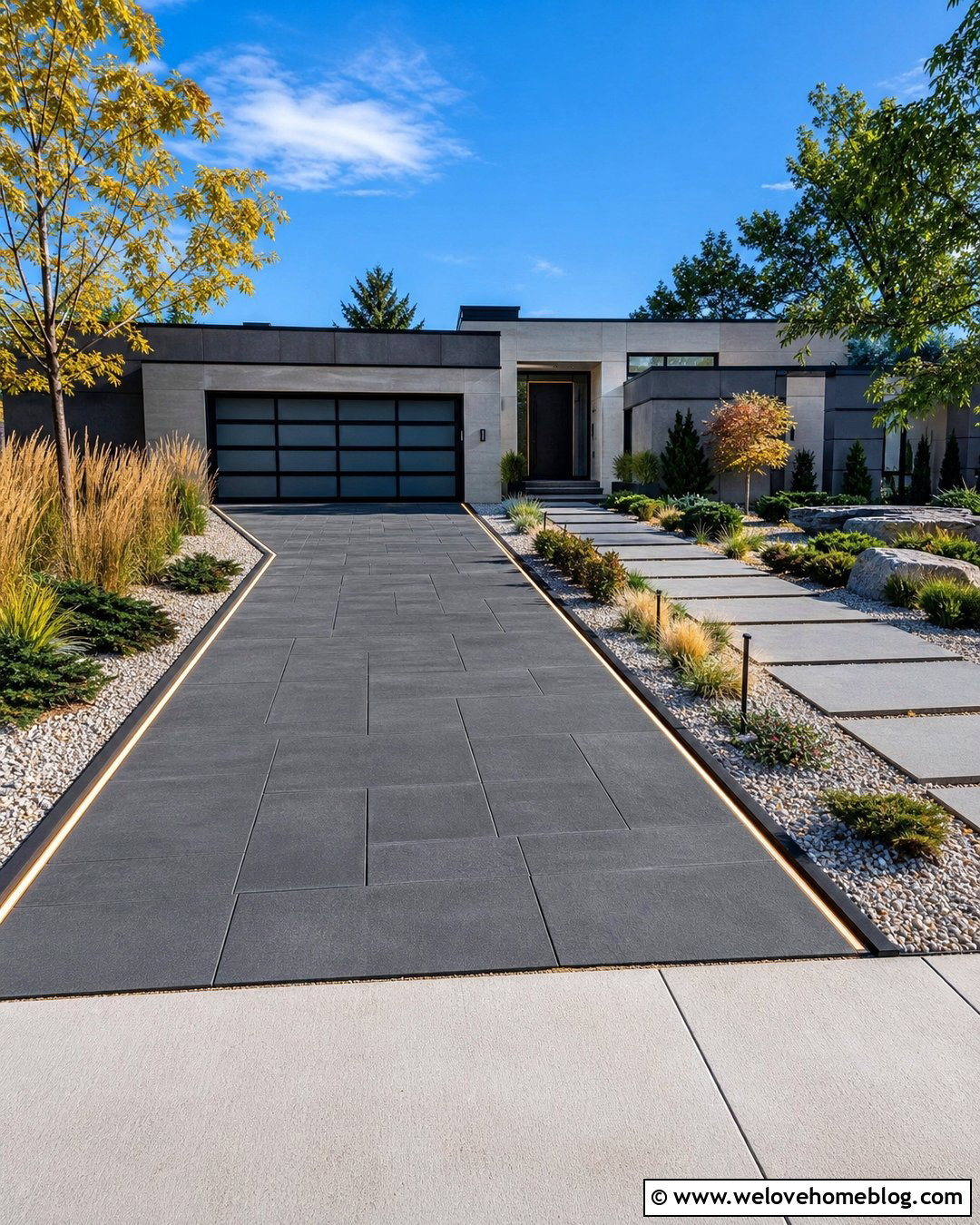
Integrated lighting can make a modern driveway easier to navigate while strengthening its geometry. Use large-format charcoal concrete pavers in a straight layout leading to a flat-roof or minimalist two-story home. Install slim recessed marker lights along the outer border rather than placing fixtures within vehicle paths. During the day, the lighting housings should remain subtle against black steel edging. Frame the driveway with pale gravel beds, architectural grasses, low evergreens, and a few sculptural trees. Add a concrete walkway separated from the driveway by a narrow planted strip. Lighting should be planned during the driveway installation so conduits, transformers, fixture locations, and drainage do not require later excavation. Select shielded fixtures that direct light downward and avoid unnecessary glare toward neighboring properties.
Conclusion:
The best driveway is more than a durable place to park. It should match the home, support comfortable vehicle movement, manage water, and create an attractive transition from the street to the front door. These 30 Driveway Installation Ideas show how concrete, asphalt, gravel, brick, natural stone, resin-bound gravel, and permeable pavers can become complete exterior designs. Compare each option with your climate, soil, slope, budget, and maintenance expectations. Then discuss base preparation, drainage, edging, load requirements, and material suitability with experienced local professionals. When every layer and detail is planned together, the finished driveway can provide lasting function while giving the entire property a more polished and welcoming appearance.

Related posts:
Leave a Reply