
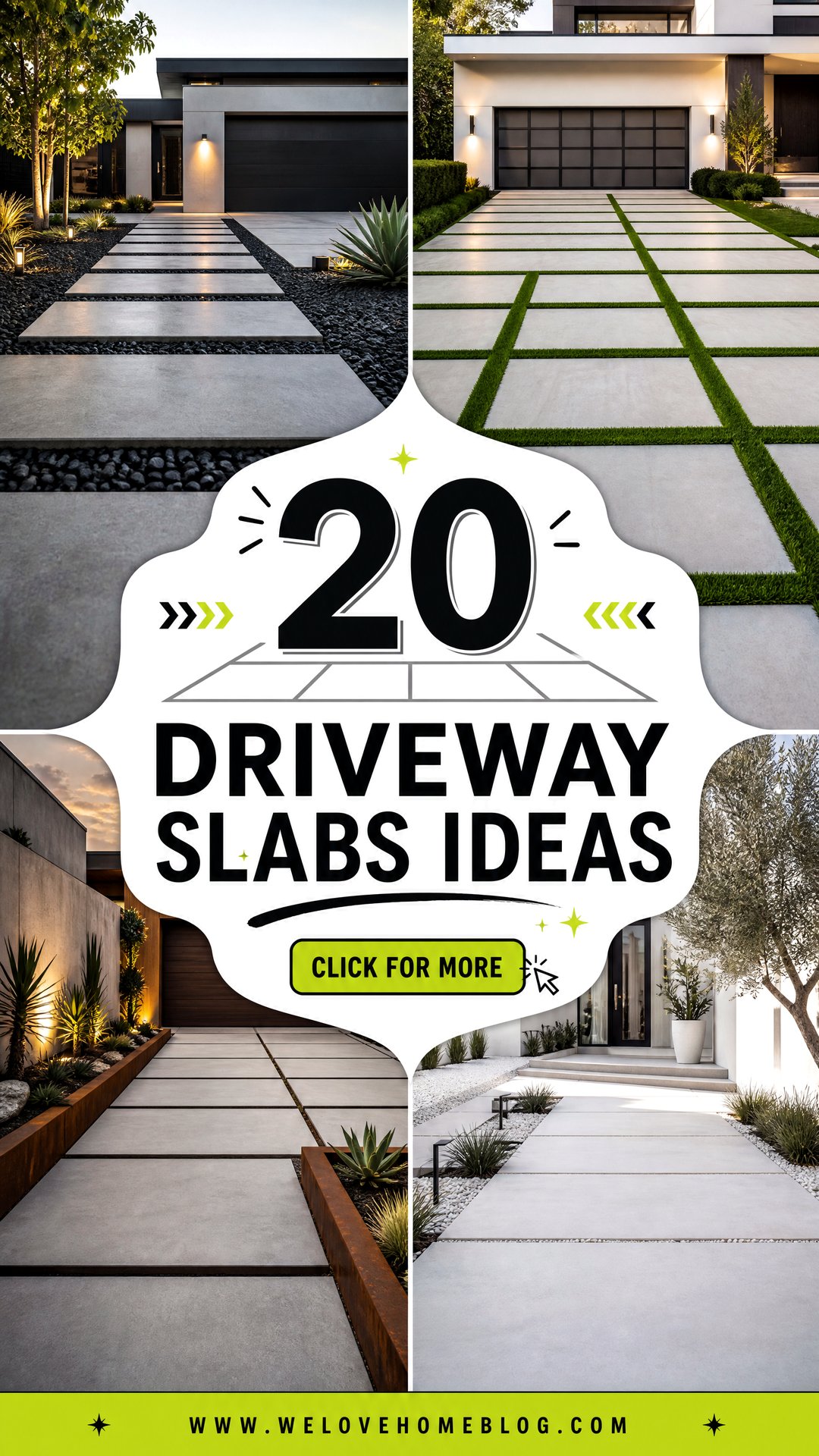
Driveway slabs can create a clean, durable entrance while giving you far more design flexibility than one continuous paved surface. Large concrete panels suit modern homes, while textured stone, porcelain, and cobblestone-look slabs can complement traditional architecture. The joints also contribute to the finished look. They may be narrow and subtle or filled with gravel, grass, or dark decorative stone for stronger contrast. Before choosing any product, confirm that it is rated for vehicle traffic and suitable for your climate. A stable, professionally prepared base is equally important because heavy cars can cause poorly supported slabs to shift or crack. The complete designs below combine materials, layouts, borders, drainage, and landscaping to help you explore **20 Driveway Slabs Ideas**.
1. Large Concrete Driveway Slabs With Grass Joints
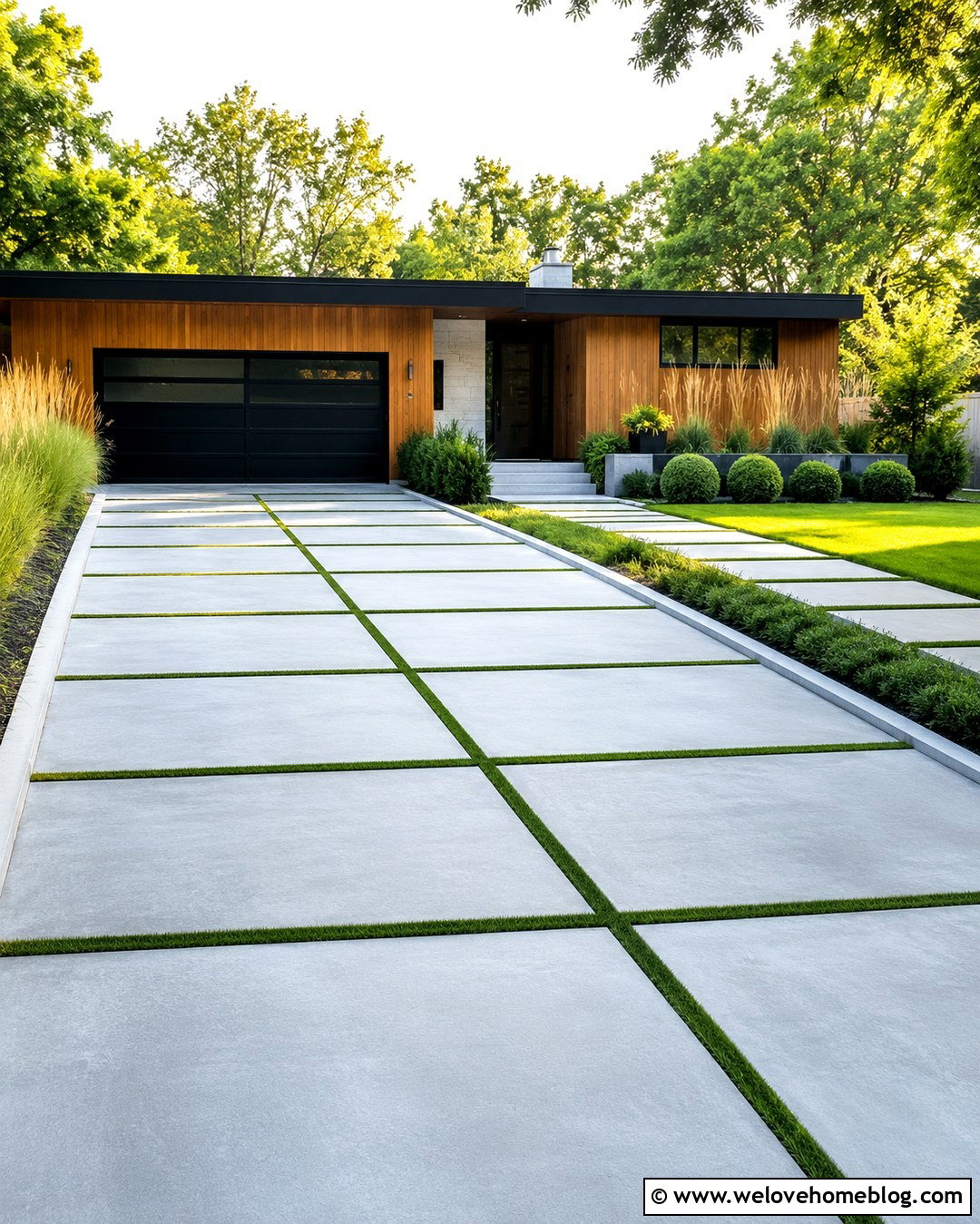
Large gray concrete slabs separated by narrow grass joints create a fresh, geometric entrance. This arrangement works especially well with a modern or midcentury home because the repeated green lines soften the concrete without hiding its strong pattern. Keep the slabs rectangular and align them with the garage doors for an orderly appearance. A matching concrete walkway can branch toward the front door, creating one connected landscape. Low ornamental grasses, rounded shrubs, and a simple lawn prevent the surroundings from competing with the slab pattern. Use durable turf suited to local conditions and position it slightly below the concrete surface. Proper drainage and a reinforced base are essential because unsupported corners and overly wide planted joints may become vulnerable under regular vehicle traffic.
2. Floating Concrete Driveway Slabs With Black Gravel
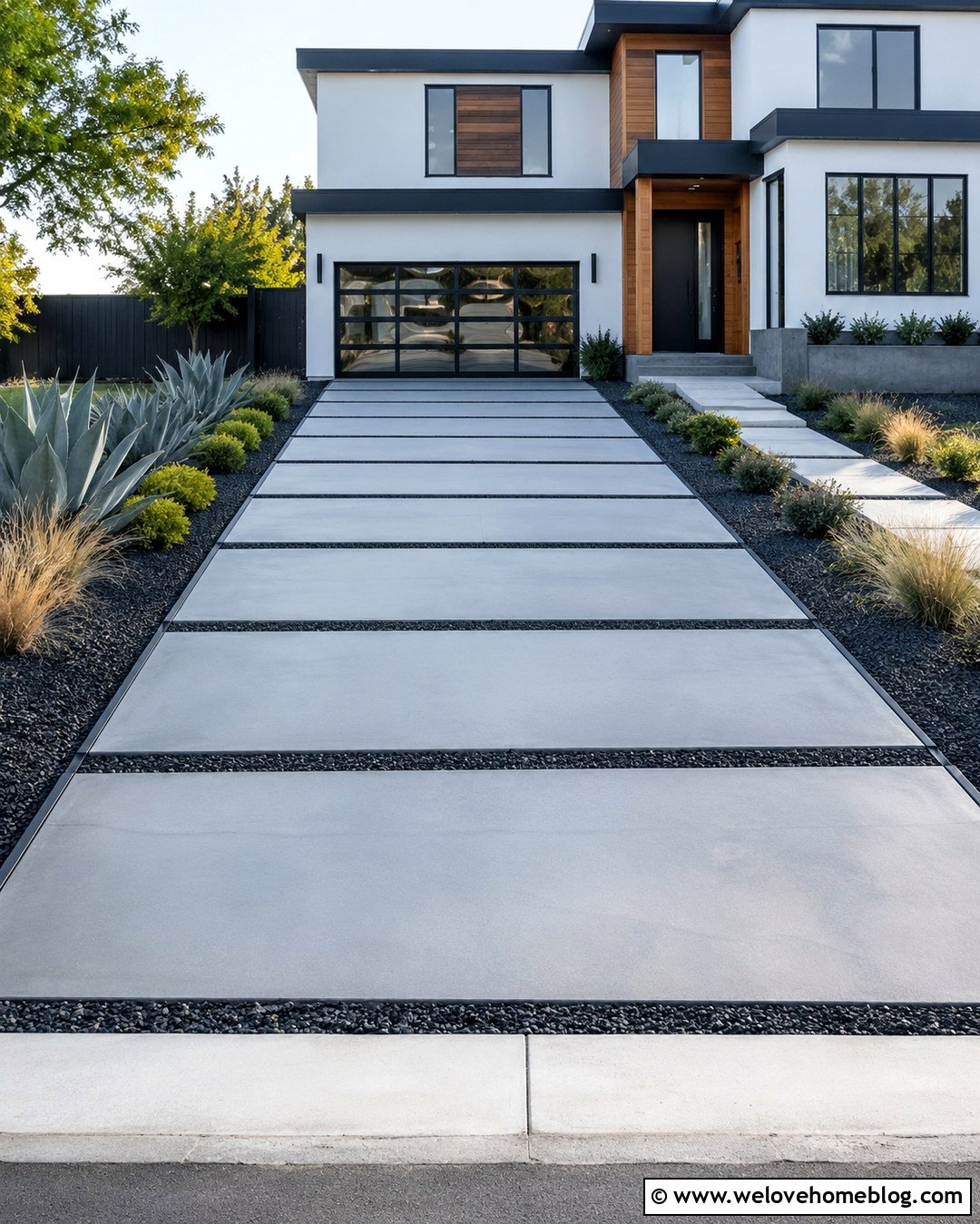
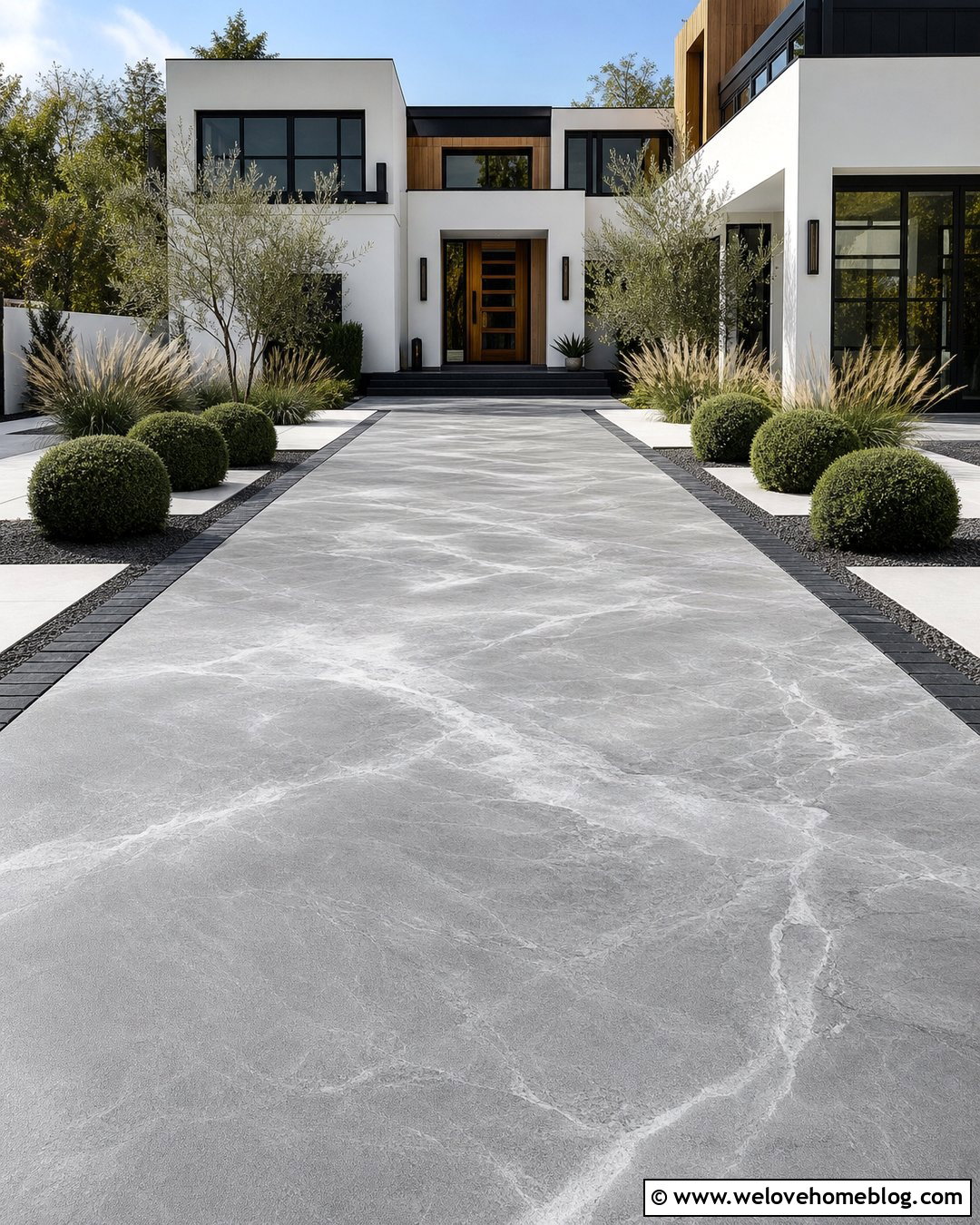
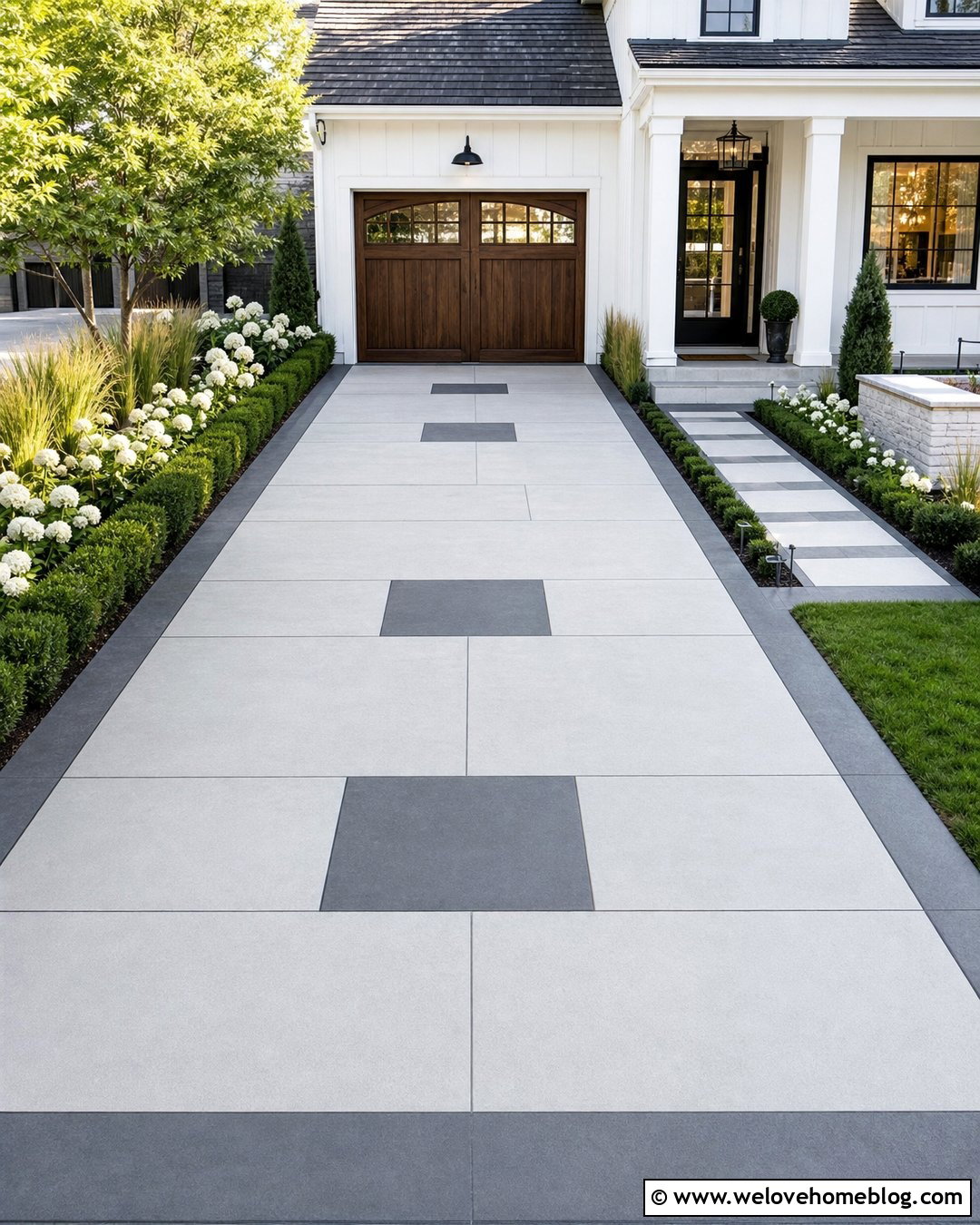
Would you like a dramatic driveway without using bold colors? Light gray floating concrete slabs surrounded by black gravel provide clear contrast while keeping the design sophisticated. Rectangular panels can run in a straight line from the curb to a modern garage, with narrow gravel gaps forming a crisp grid. Continue the dark stone along both sides as a border to make the driveway feel wider and more intentional. Drought-tolerant grasses, compact agaves, or softly shaped evergreen shrubs complement the low-maintenance surface. The gravel should sit in stable joints that will not scatter across the slabs or roadway. Metal edging can separate the driveway from planting beds. This complete look works particularly well with white, charcoal, or natural wood home exteriors.
3. Square Driveway Slabs With Pea Gravel Joints
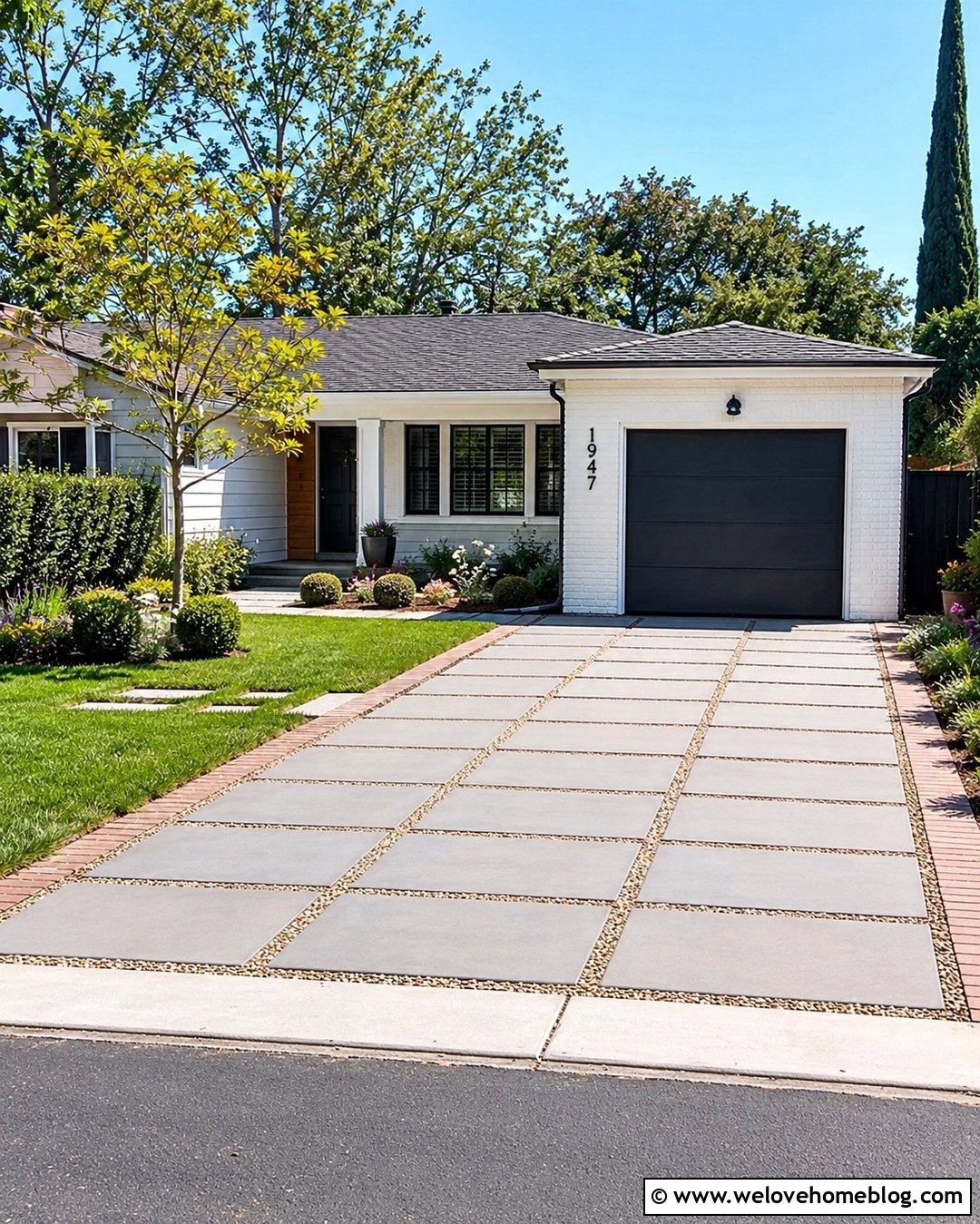
A grid of square concrete driveway slabs brings order to a small front yard while pea gravel adds warmer texture between the panels. Choose smooth or lightly brushed concrete in a medium gray tone, then use tan pea gravel to define each square. A straight layout makes parking simple and can visually lengthen the approach to a compact ranch or bungalow. Add a narrow brick or steel border to keep the loose gravel contained. Along the outer edges, use clipped shrubs, flowering perennials, and a short path leading toward the porch. The gravel joints can help break up the visual weight of the paved area, but they still need proper preparation and containment. Select vehicle-rated slabs and have the base designed for local soil and drainage conditions.
4. Rectangular Driveway Slabs With Stone Borders
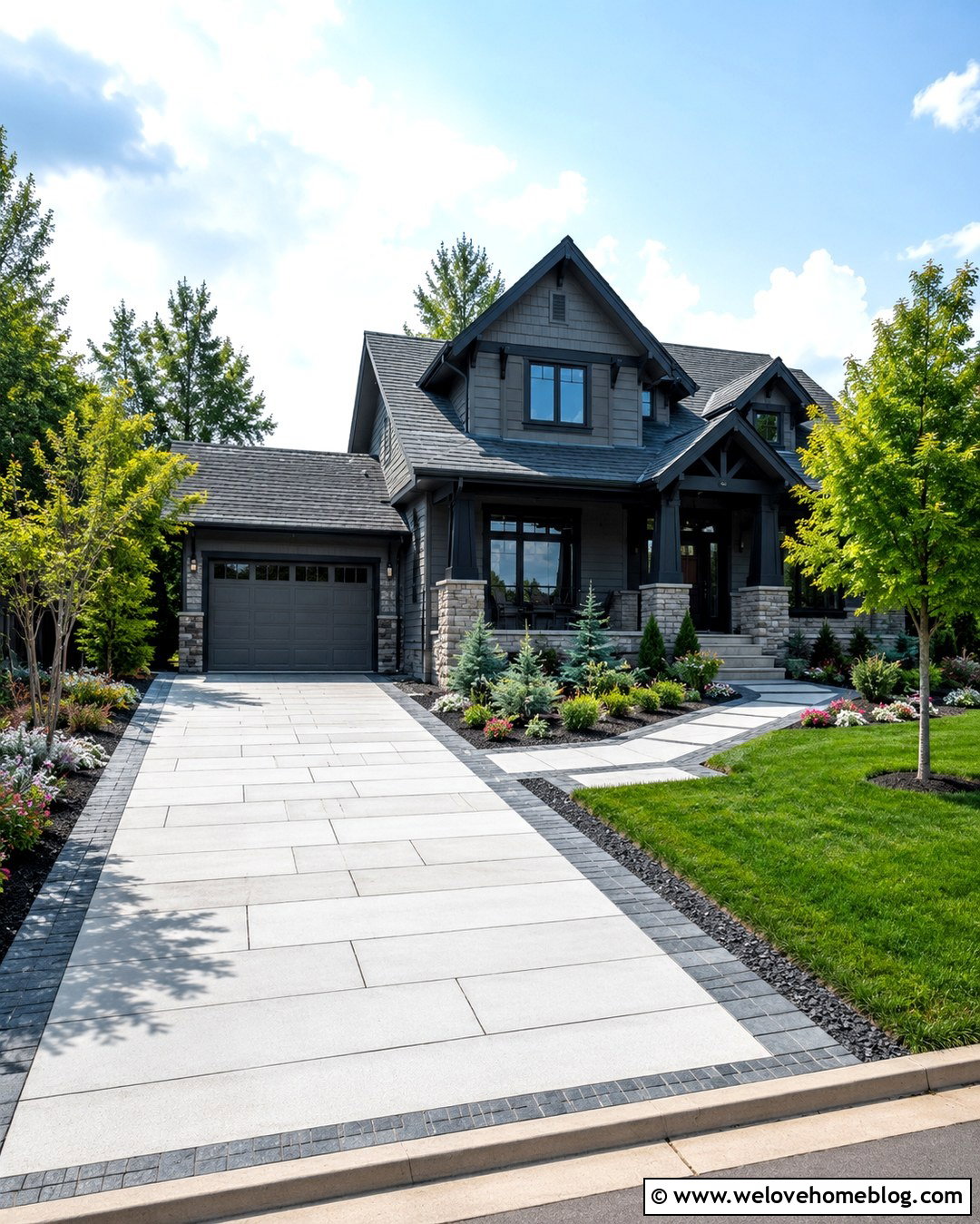
Long rectangular slabs can visually stretch a driveway and guide attention toward the house. Use pale concrete panels in a running pattern, then frame the complete surface with charcoal granite setts or textured stone pavers. The darker border creates a defined edge that protects nearby lawn from tire wear and makes the concrete appear brighter. This combination suits contemporary Craftsman homes, transitional houses, and renovated ranch properties. Repeat the border material around an adjoining walkway or front planting bed for a coordinated finish. Layer evergreen shrubs with seasonal flowers along one side, leaving the other side more open for comfortable vehicle access. Slight variations in slab length can make the layout interesting, but consistent spacing will preserve the clean, structured appearance.
5. Curved Concrete Driveway Slabs With Gravel Edging
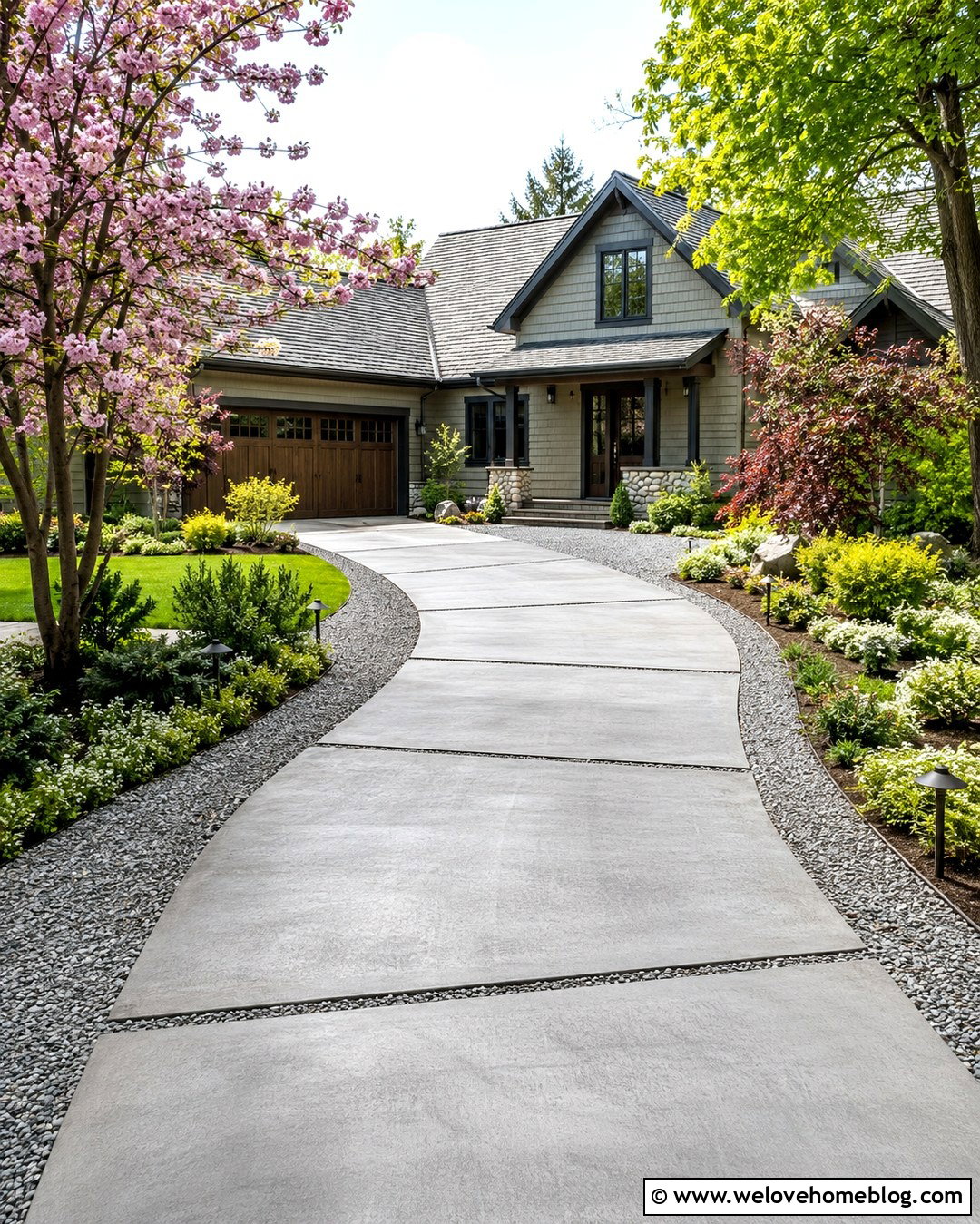
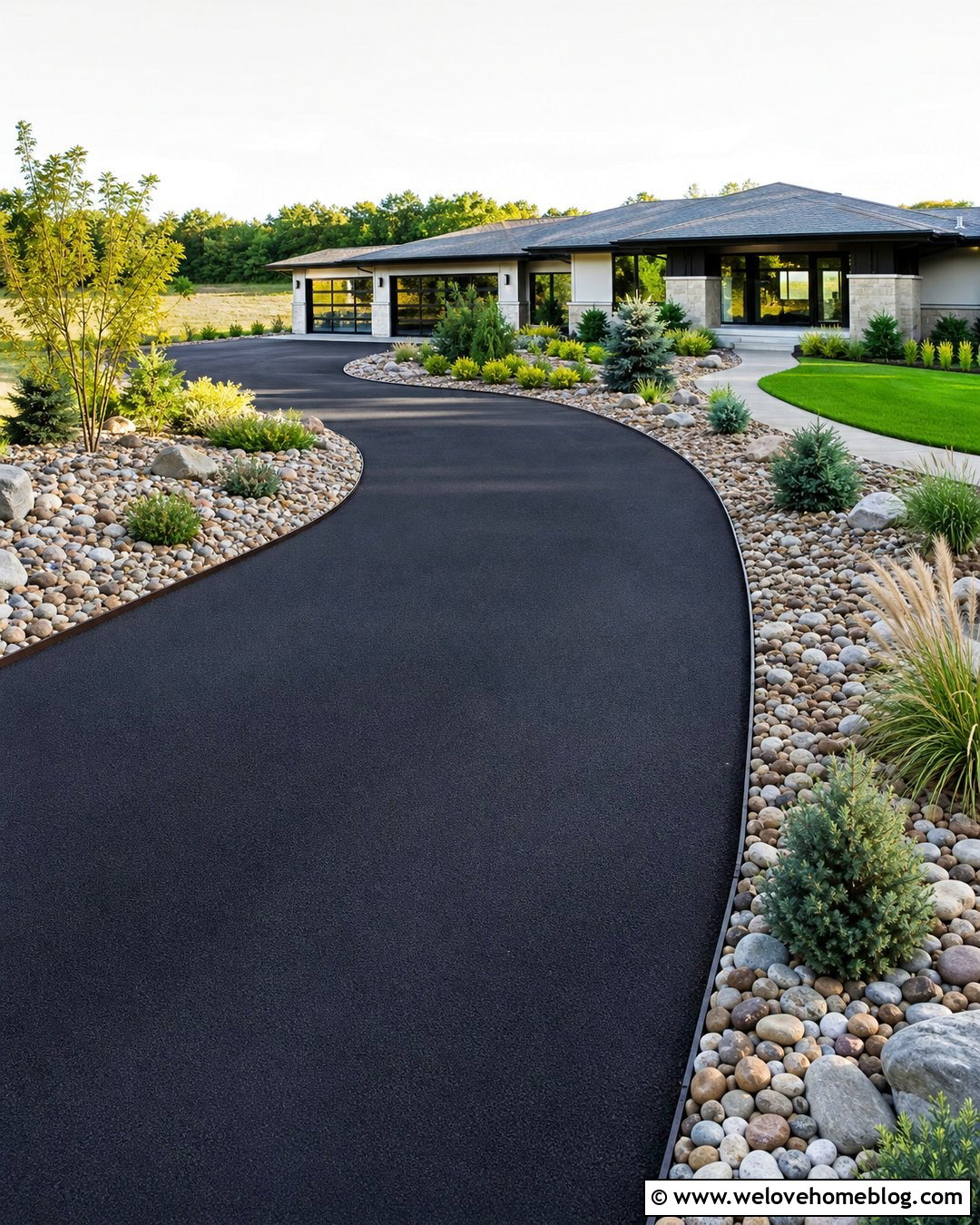
Straight lines are not the only option for a slab driveway. A gentle curve can make the approach feel softer and reveal the front of the house gradually. Use broad, custom-shaped poured concrete slabs that follow the bend without creating awkward triangular gaps. Narrow joints filled with small gray gravel will emphasize the segmented layout while maintaining a unified surface. A wider gravel shoulder on the outside of the curve can support drainage and provide extra visual breathing room. Frame the entrance with small flowering trees, layered shrubs, and ground cover rather than tall plants that block visibility. This driveway works beautifully with a cottage, farmhouse, or wooded contemporary home. Subtle path lighting can follow the curve without overpowering the landscaping during daylight.
6. Concrete Driveway Slabs With Brick Ribbons
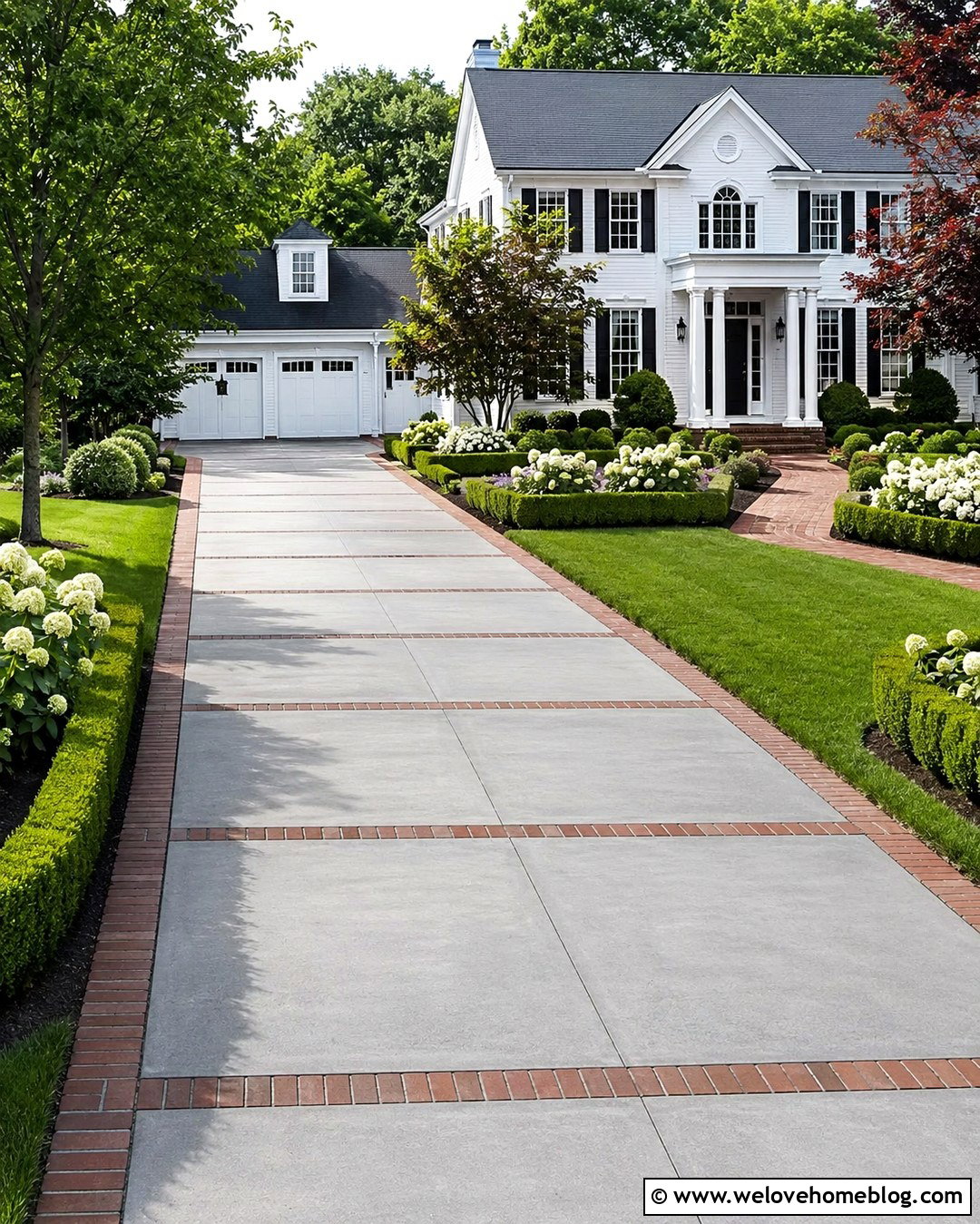
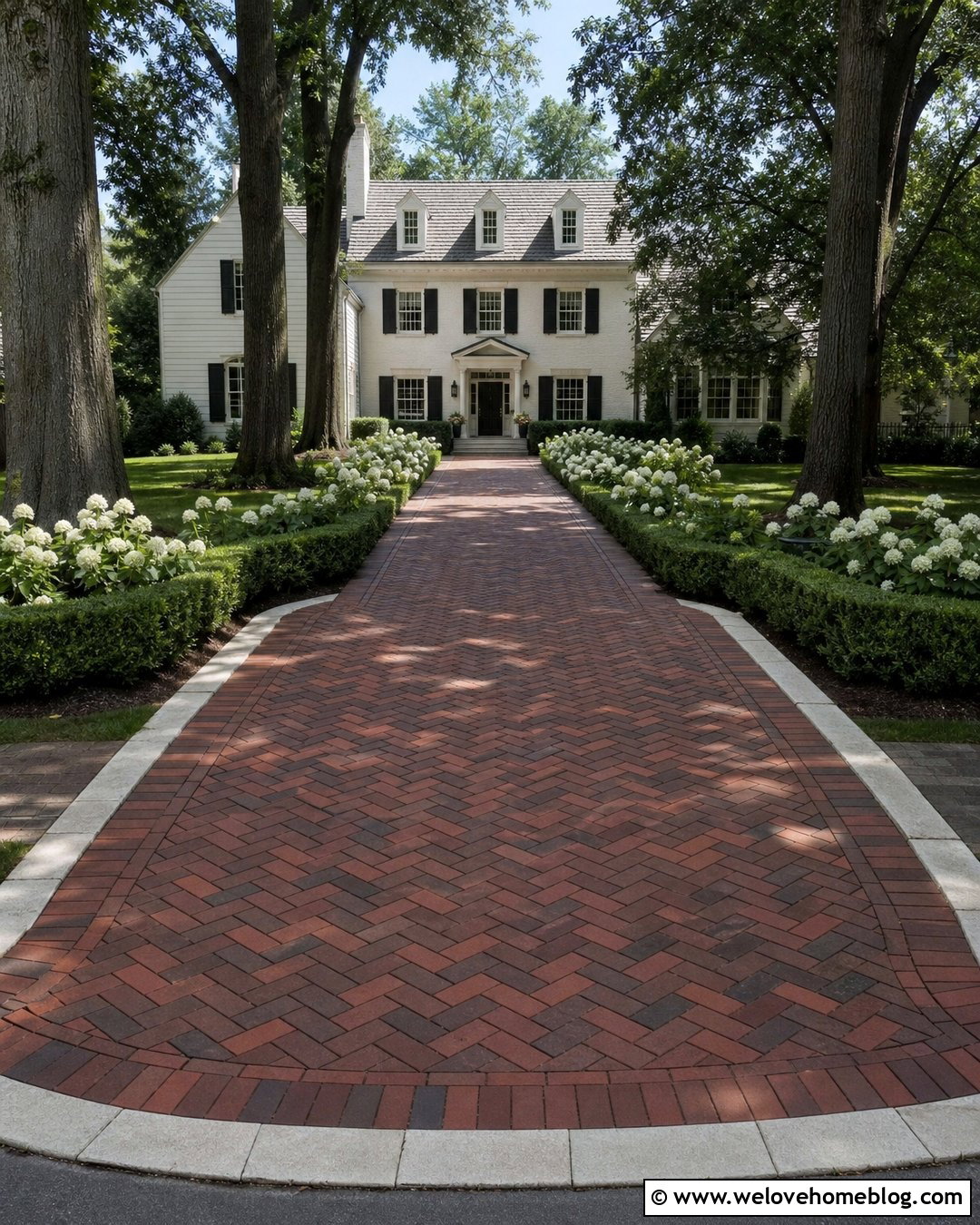
Warm clay brick ribbons can give practical concrete slabs a more traditional character. Divide a brushed gray concrete driveway into large rectangular sections, placing red or brown brick across the width at measured intervals. Continue the brick around the perimeter to create a finished frame. This pattern suits Colonial, Cape Cod, Tudor, and traditional brick homes because it connects the driveway with familiar facade materials. A brick walkway leading to the entrance strengthens that relationship. Keep nearby landscaping balanced with clipped boxwood, hydrangeas, lawn, and one or two small ornamental trees. Select bricks manufactured for paving and vehicle exposure rather than standard wall bricks. The foundation beneath both materials must be properly constructed so the brick ribbons and concrete panels remain level with each other.
7. Exposed Aggregate Driveway Slabs With Concrete Borders

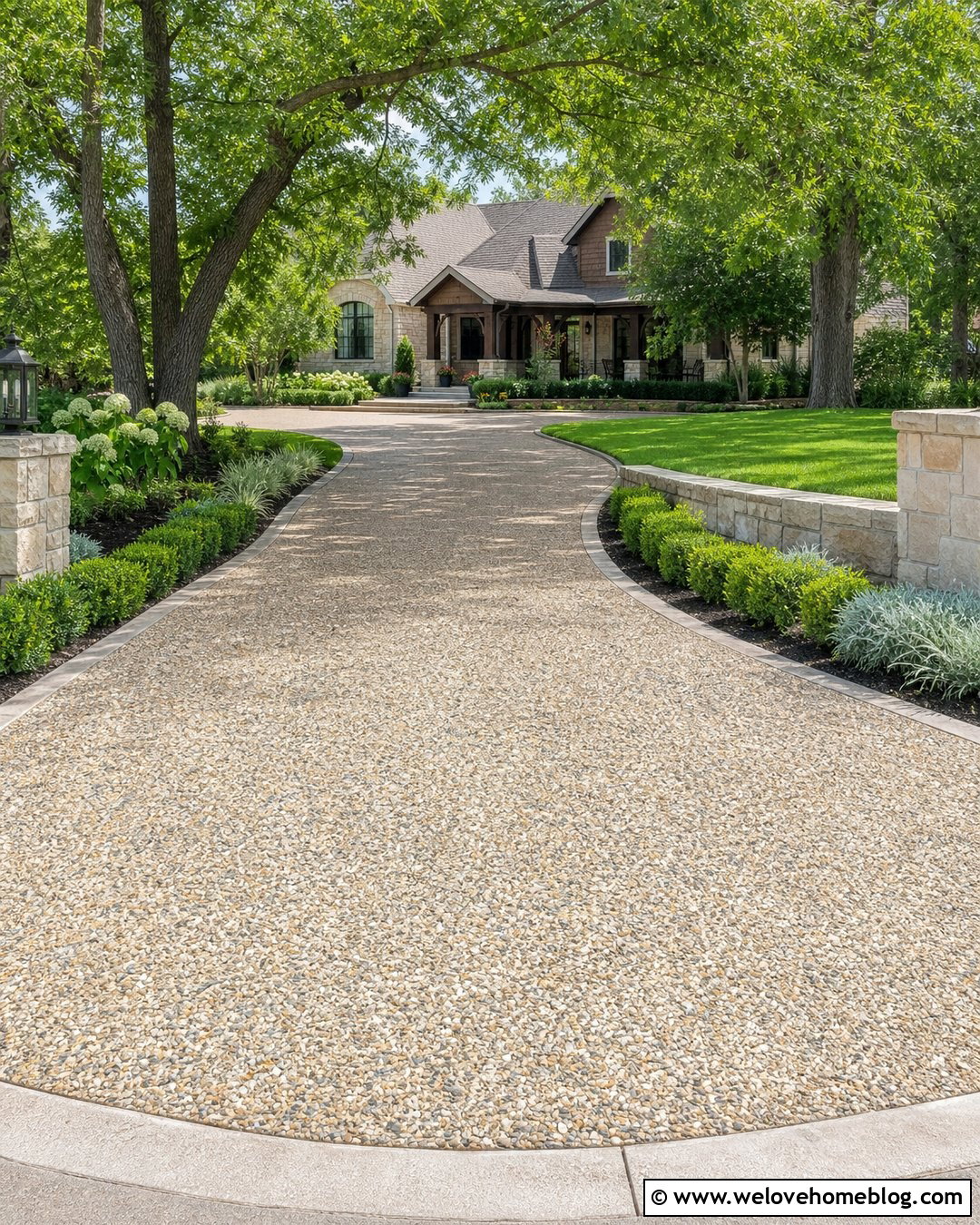
Exposed aggregate slabs offer more texture than plain concrete while retaining a neat, contemporary shape. Their visible stones add natural color and can disguise light dirt between cleanings. Arrange large rectangular panels along a straight driveway, separating them with narrow saw-cut or gravel-filled joints. A smooth concrete border in a coordinating tone creates a useful contrast between the textured center and the crisp outer frame. This design looks at home beside a modern farmhouse, a remodeled suburban property, or a house with stone veneer. Repeat some of the aggregate colors in nearby river-rock beds and walkway details. Soft grasses, lavender, and compact evergreen shrubs keep the entrance welcoming. Ask for a sample because aggregate color and exposure level can noticeably affect the finished appearance.
8. Sandstone Driveway Slabs With Cottage Landscaping
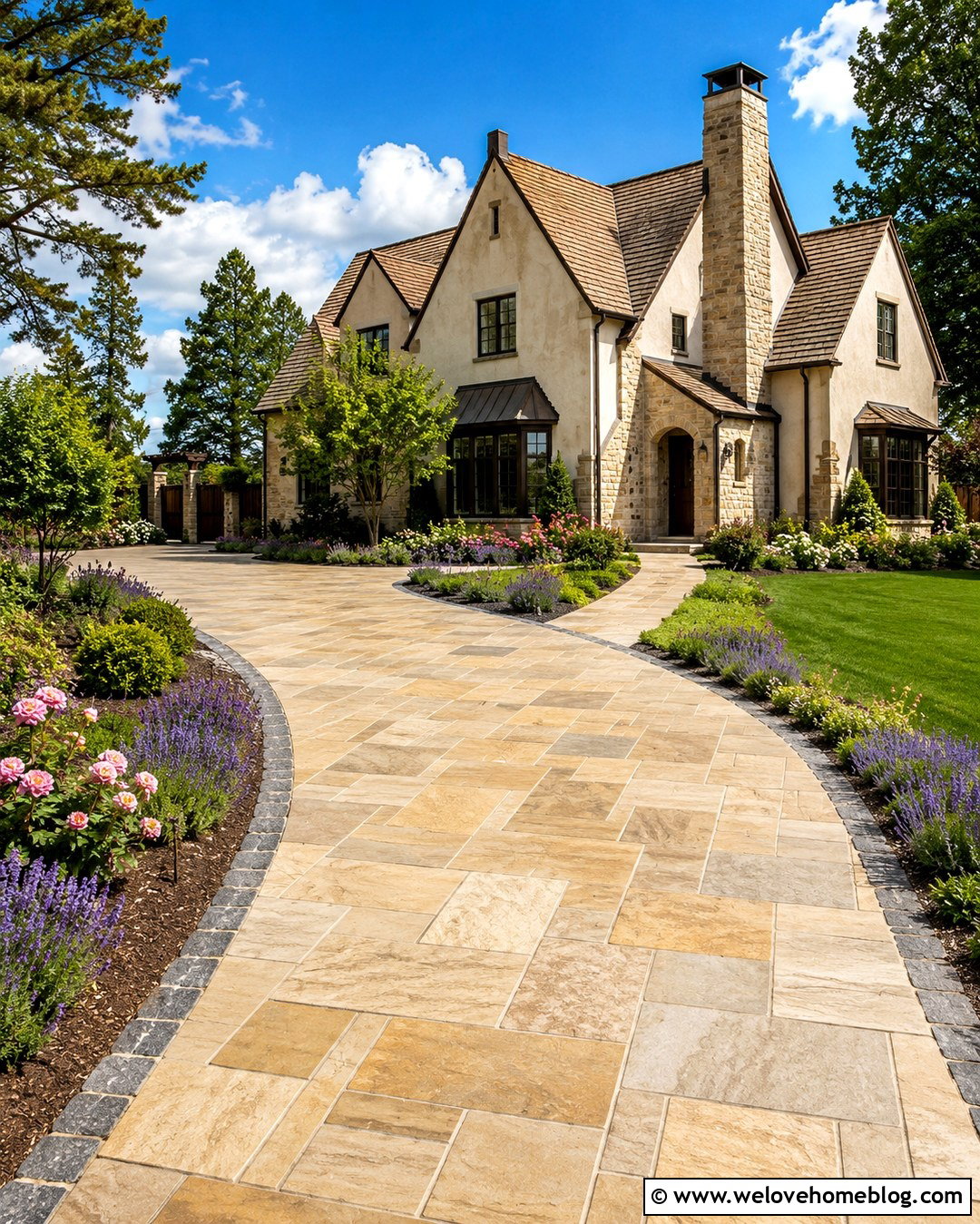
Sandstone slabs can create a warm, relaxed entrance when the selected product is specifically rated for driveway use. Blend rectangular slabs in beige, buff, and muted brown tones for a surface that feels naturally varied rather than perfectly uniform. A slightly curved layout complements cottage architecture and allows planting beds to wrap gently around the driveway. Use darker stone setts around the perimeter to hold the composition together and protect the softer edges. Lavender, catmint, roses, and low evergreen shrubs can spill naturally beside the border without covering the driving area. Connect the driveway to the front door with a matching sandstone walkway. Because natural stone properties vary, use suitable thickness, jointing, sealing, and base specifications recommended for your climate and expected vehicle load.
9. Limestone Driveway Slabs With Dark Stone Edging
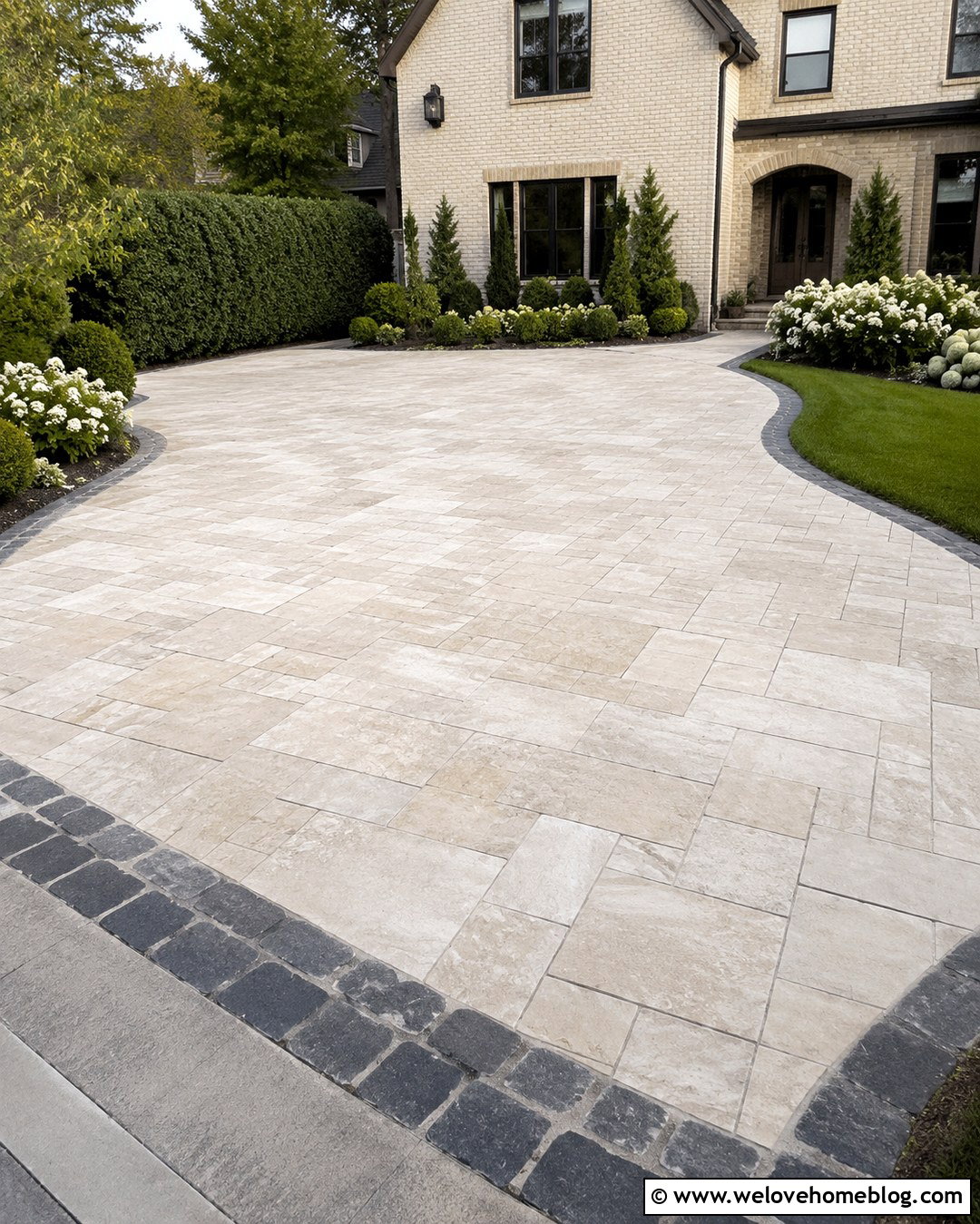
Pale limestone driveway slabs can brighten a shaded entrance and coordinate beautifully with cream, tan, or light brick facades. Choose a textured, slip-resistant finish and arrange the slabs in a mixed rectangular pattern. Charcoal stone setts around the perimeter will outline the lighter paving and make the layout easier to read from the street. A straight driveway with gently widened parking space near the garage offers a practical arrangement for a suburban home. Keep the planting restrained with deep green hedges, white flowers, and a neatly edged lawn. Limestone can differ in density, porosity, and weather resistance, so not every slab is appropriate for cars or freeze-thaw conditions. Confirm its driveway rating and maintenance needs before purchase, then use an installer familiar with natural stone paving.
10. Porcelain Driveway Slabs With Gravel Gaps
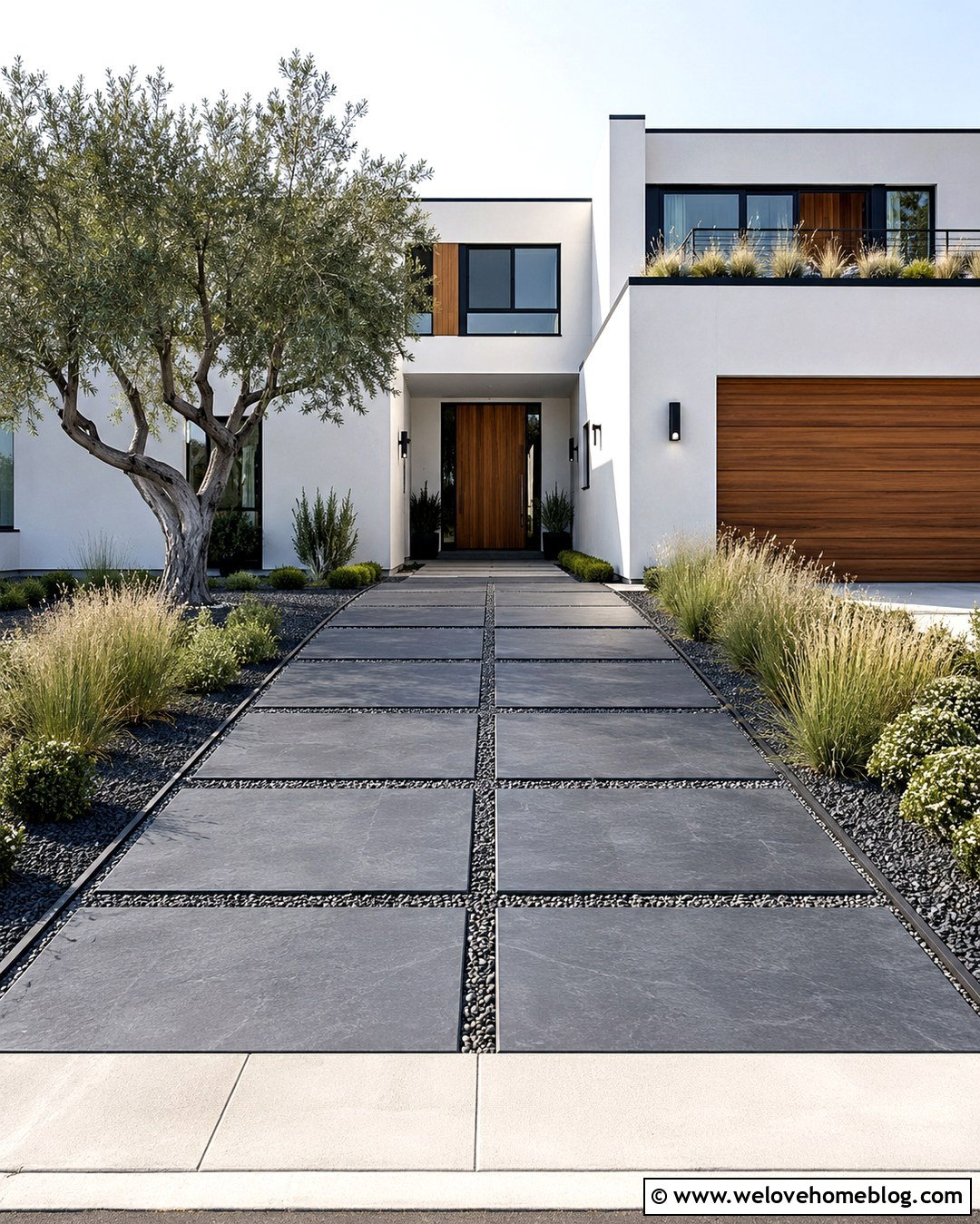
Porcelain slabs bring consistent color and sharp lines to a modern driveway, but the chosen units must be engineered and rated for vehicular applications. Large charcoal or stone-look porcelain panels can be arranged in a straight grid with narrow gray gravel gaps. Continue the gravel into low-maintenance planting beds to create a smooth visual transition between paving and landscaping. A modern house with white stucco, black windows, and warm wood accents provides an ideal background. Use structural shrubs, ornamental grasses, and one sculptural tree to frame the approach. A flush concrete apron at the street can create a strong transition into the slab layout. Accurate installation matters because large units require even support, suitable edge restraint, and a base system designed for their specific dimensions and expected loads.
11. Granite Driveway Slabs With Cobblestone Edging
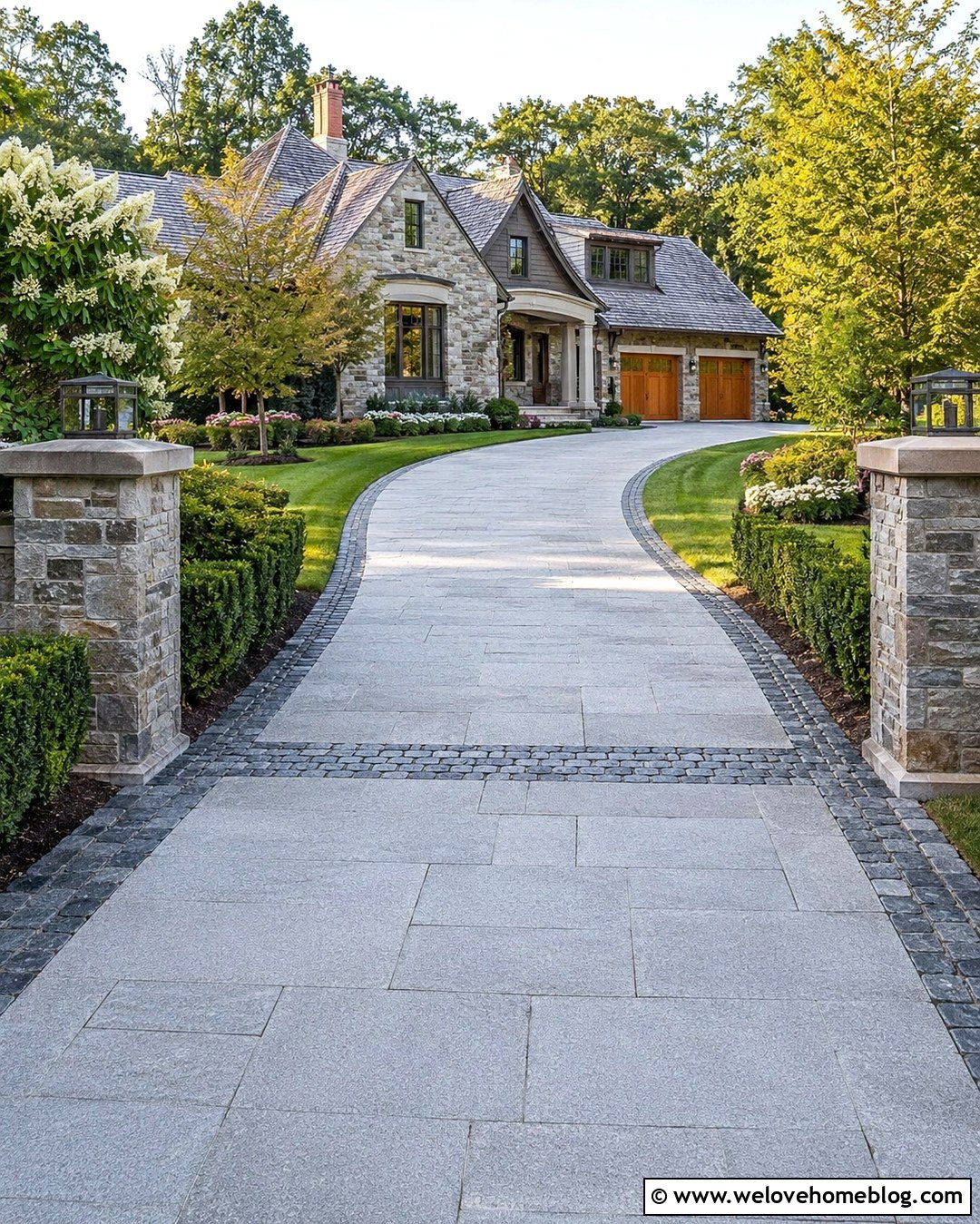
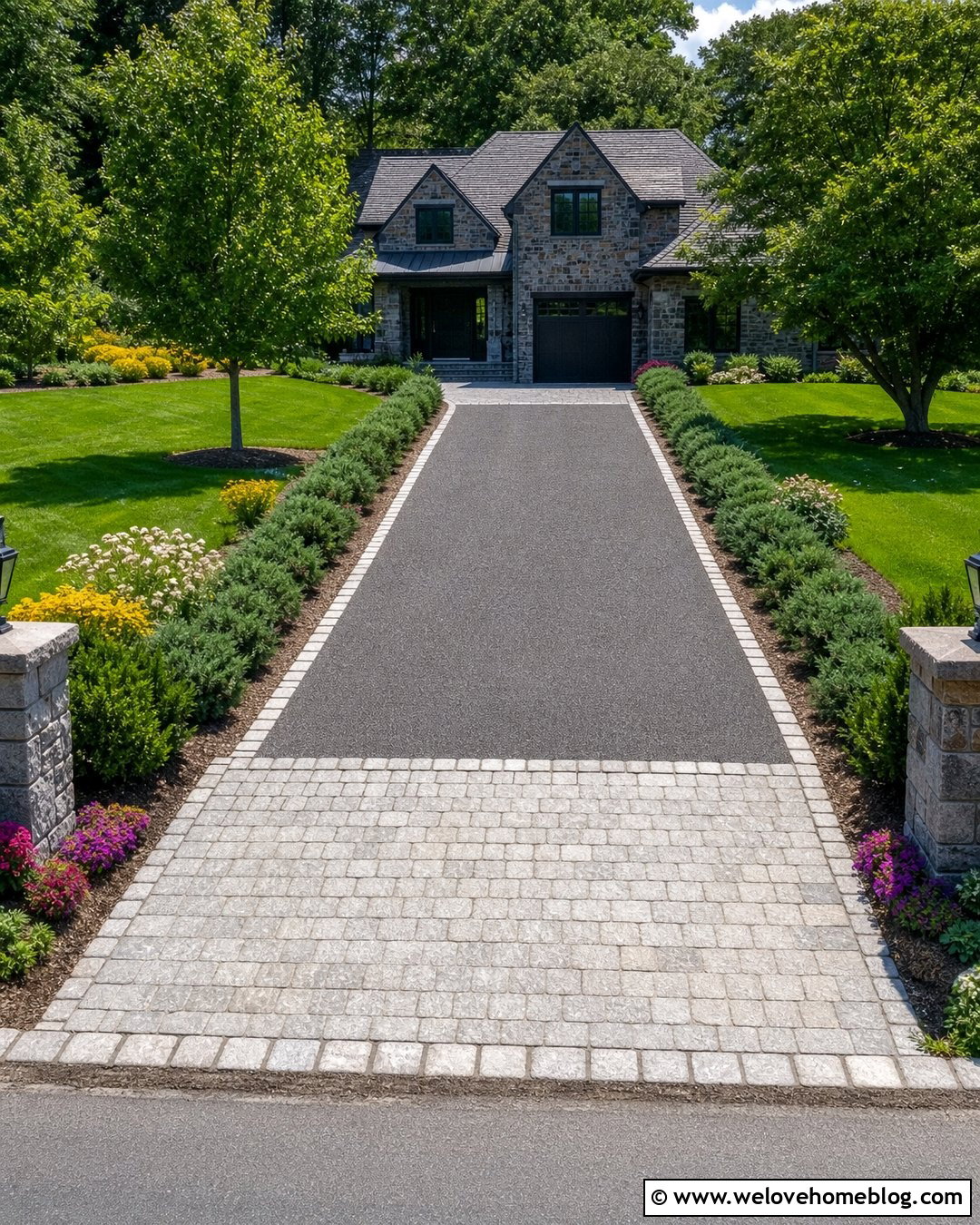
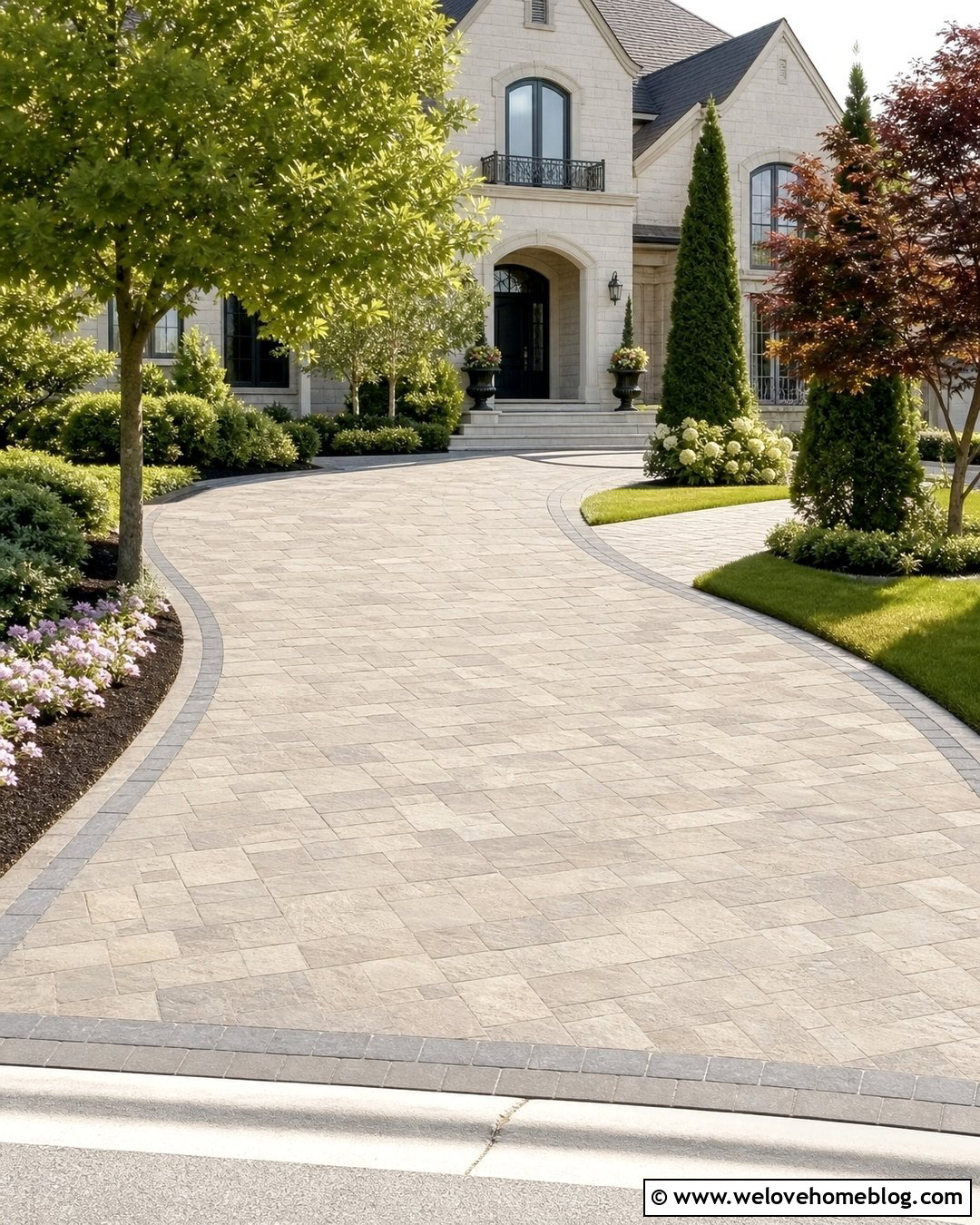
Granite slabs deliver substantial texture and a refined natural appearance. Use broad flamed-finish granite panels in soft gray, then surround them with smaller charcoal granite cobblestones. The combination creates a layered surface while keeping the color palette controlled. A gently curved or fan-shaped entrance can introduce a formal feeling without making the driveway difficult to navigate. This complete design pairs well with stone houses, traditional estates, and upscale Craftsman homes. Reinforce the entrance with stone pillars, low hedges, and symmetrical planting beds. Near the garage, continue the cobblestone border across the driveway as a decorative band. Granite is durable, but large slabs still require correct thickness and continuous support. Careful grading will also prevent water from collecting in the joints or near the garage.
12. Slate-Look Driveway Slabs With Modern Landscaping
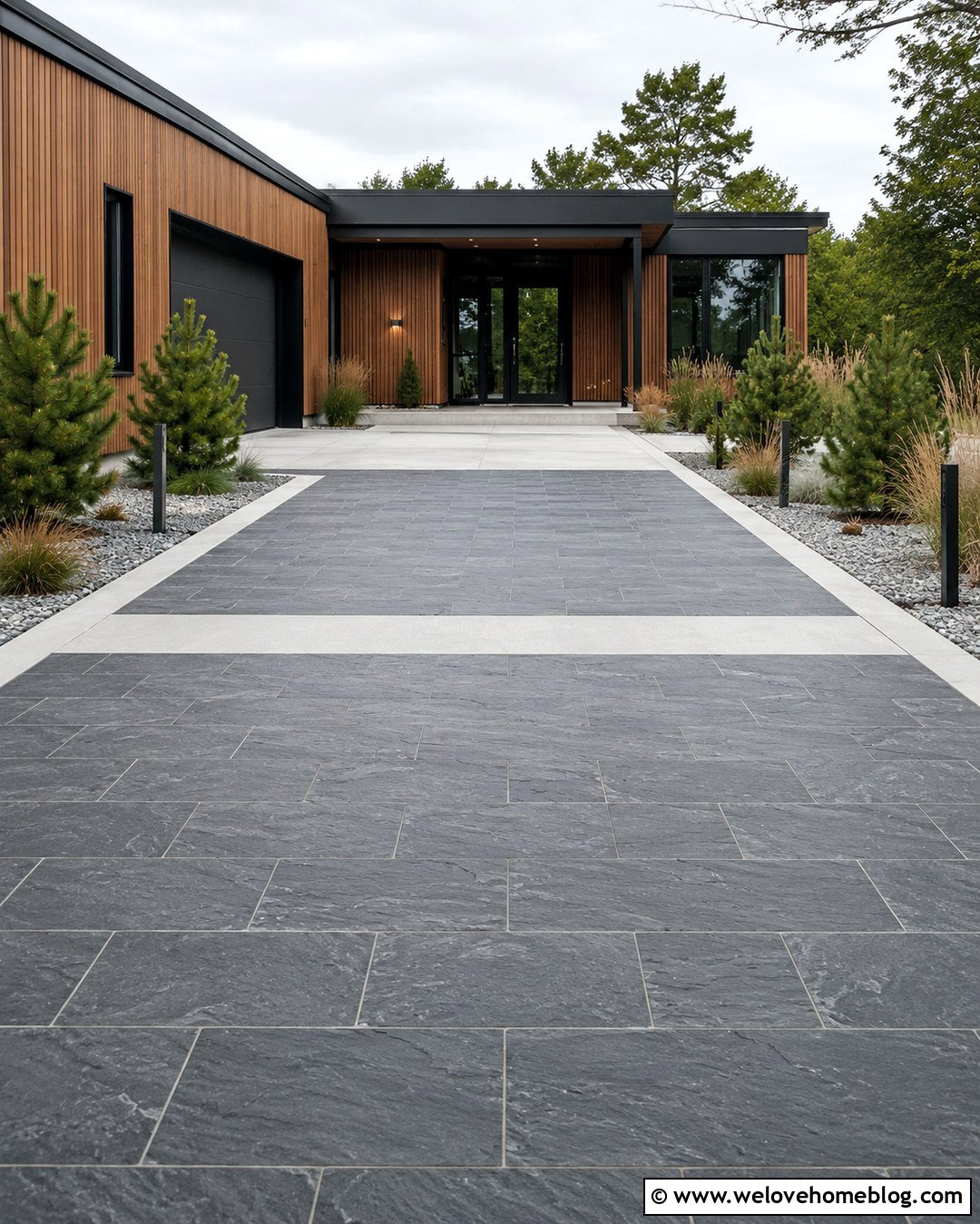
Real slate can vary in suitability, so vehicle-rated concrete or porcelain slabs with a slate-look finish may offer a more predictable driveway surface. Select dark gray rectangular panels with subtle layered texture, then install them in an offset pattern to avoid an overly rigid grid. Light gray stone joints and a pale concrete curb will keep the dark paving from making the entrance feel heavy. This combination complements a contemporary home with flat rooflines, black trim, or vertical wood siding. Add airy ornamental grasses, compact pines, and gravel mulch along both sides. A wide concrete walkway can cross the driveway and connect directly to the entrance. Keep all transitions flush and visible so the various surfaces function as one safe, connected front-yard design.
13. Stamped Concrete Driveway Slabs With Stone Patterns
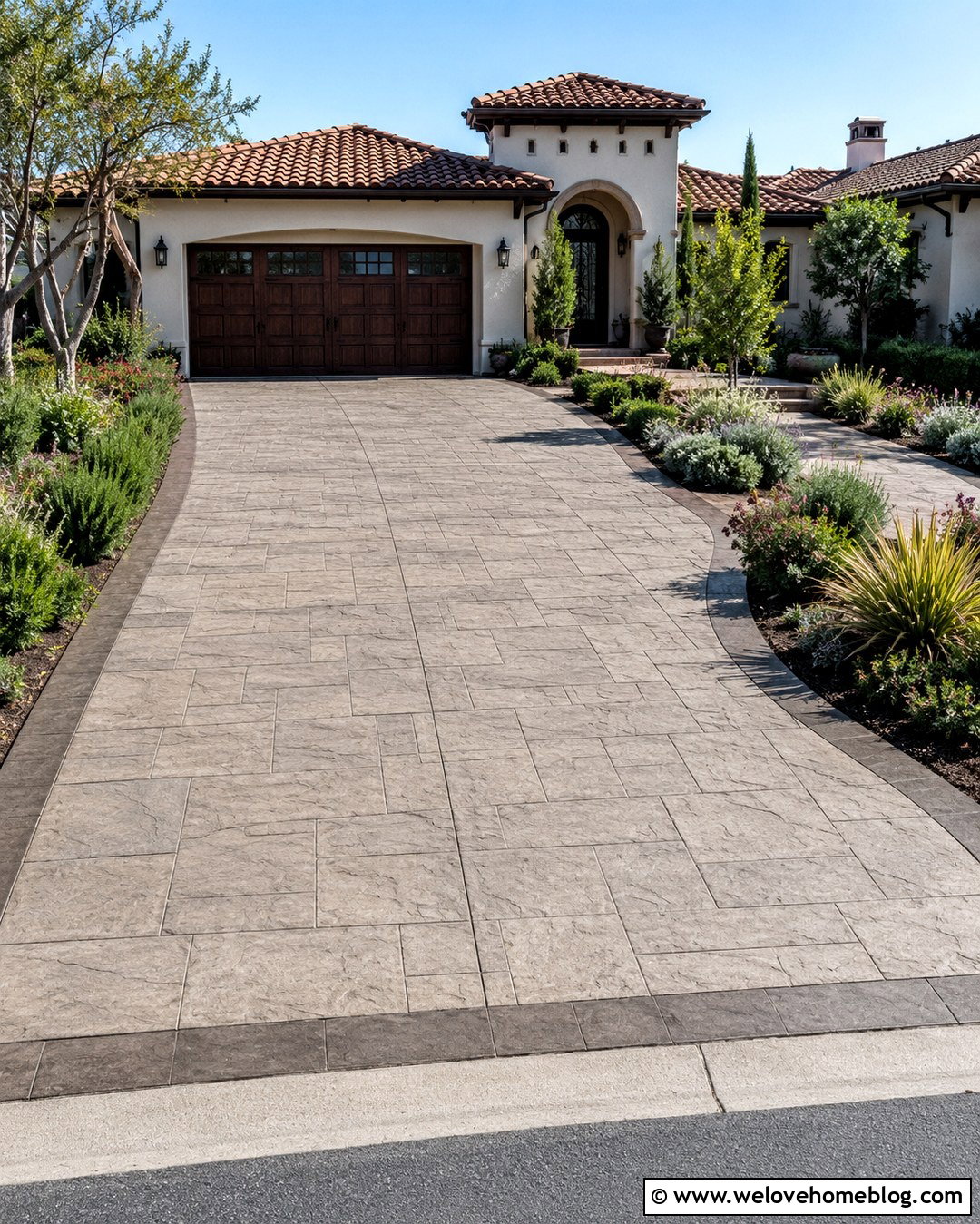
Stamped concrete can create the appearance of separate stone slabs while functioning as a carefully jointed concrete driveway. Choose a large ashlar pattern in warm gray or taupe, then place control joints where they support both the design and the concrete layout. A darker integral border can frame the driveway and distinguish it from the front walkway. This look fits Mediterranean, traditional, and transitional homes that need more texture than plain concrete provides. Use curved planting beds with rosemary, flowering shrubs, and small trees to soften the patterned surface. Avoid combining too many stamp shapes or colors, since excessive detail can make a large driveway look busy. A restrained palette and natural variation usually produce a more convincing stone-inspired appearance with stronger long-term curb appeal.
14. Two-Track Driveway Slabs With Grass Center
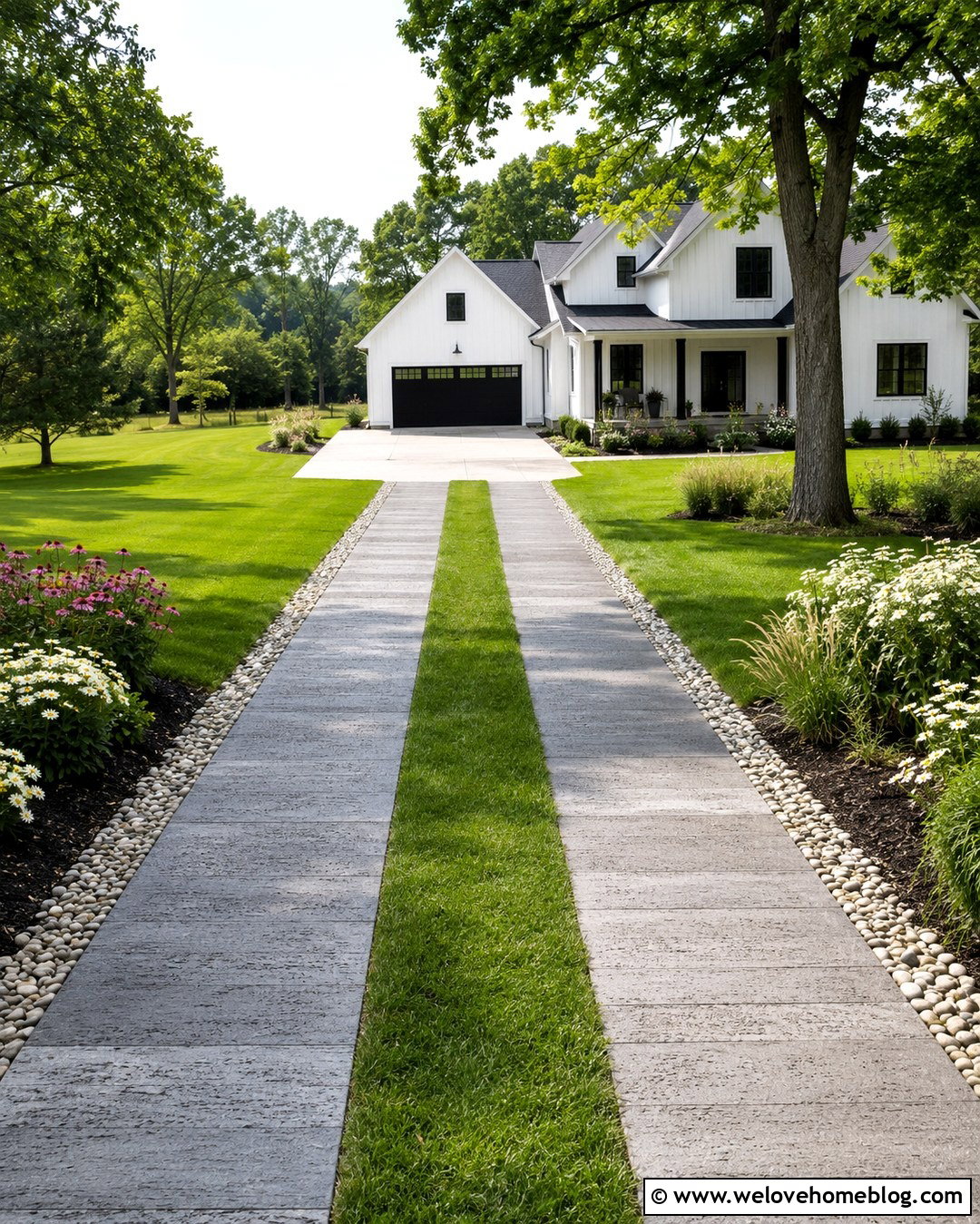
For a narrow residential approach, two continuous rows of concrete slabs can create clear tire tracks while preserving a green strip through the center. This ribbon layout reduces the visual dominance of paving and suits cottages, rural homes, and modern farmhouses. Use textured rectangular concrete panels with small, consistent joints, then frame the outer edges with steel, brick, or stone restraint. Keep the center grass slightly below the driving surface and choose a durable turf for the local climate. Low meadow-style planting or simple lawn can continue beyond the driveway to make the tracks feel integrated into the yard. Accurate spacing is critical because the slab rows must accommodate the vehicles using the property. A wider paved parking area near the garage may also be necessary for turning.

15. Driveway Slabs With Artificial Grass Joints
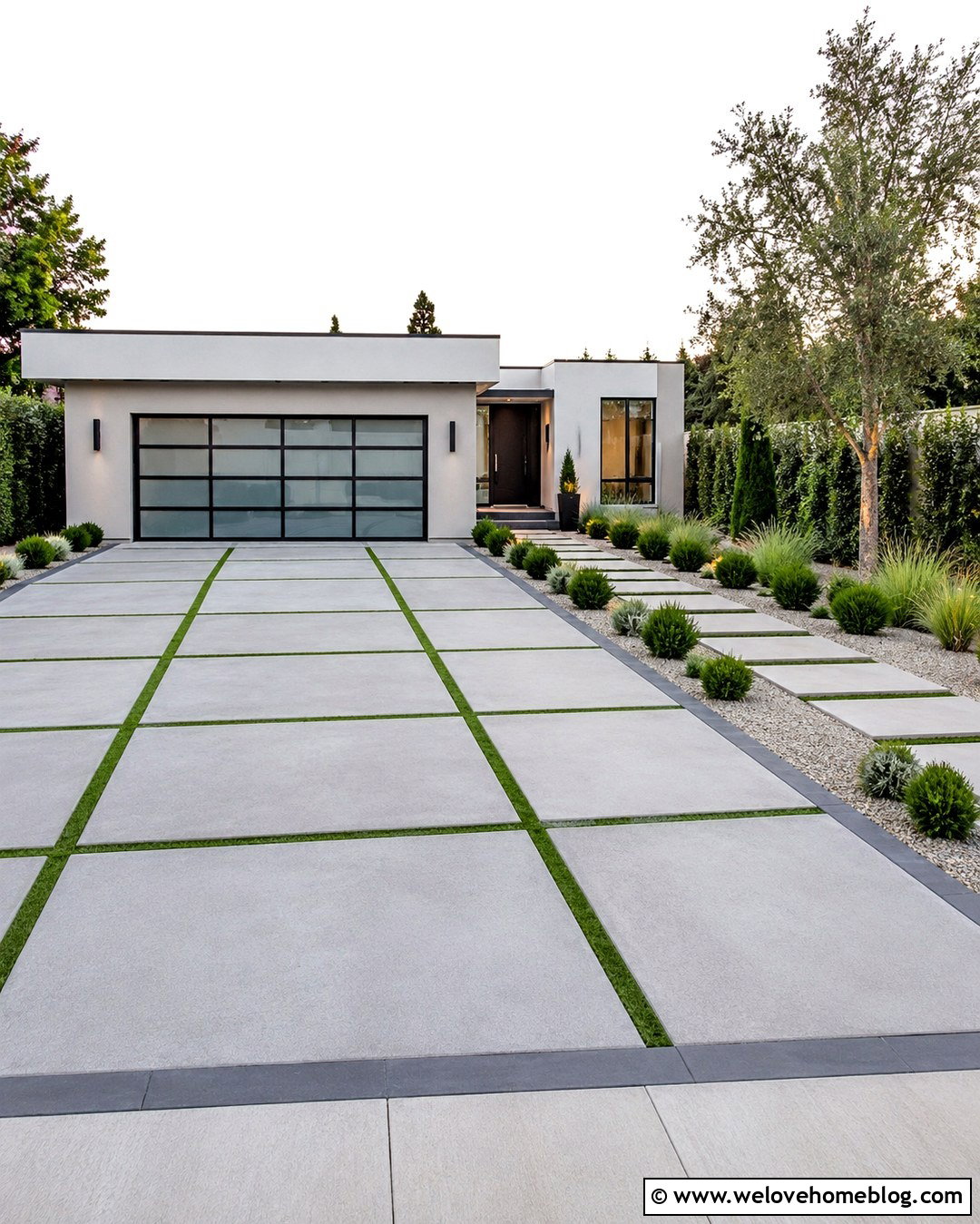
Artificial turf joints give concrete driveway slabs a consistently green outline without routine mowing. Large square or rectangular panels can be separated by narrow strips of high-quality outdoor turf, creating a crisp checkerboard effect. The design works best with a straight driveway leading to a modern house, especially when the joint pattern aligns with windows, garage doors, and walkways. Keep the surrounding landscaping simple with evergreen shrubs, gravel mulch, and architectural grasses. Artificial turf should be installed over a correctly prepared, draining system rather than used to hide unstable gaps. It also needs secure edges so traffic and cleaning equipment do not lift the material. Choose a realistic blade color and avoid excessively wide strips, which may make the driveway appear fragmented instead of polished.
16. Driveway Slabs With River Rock Joints
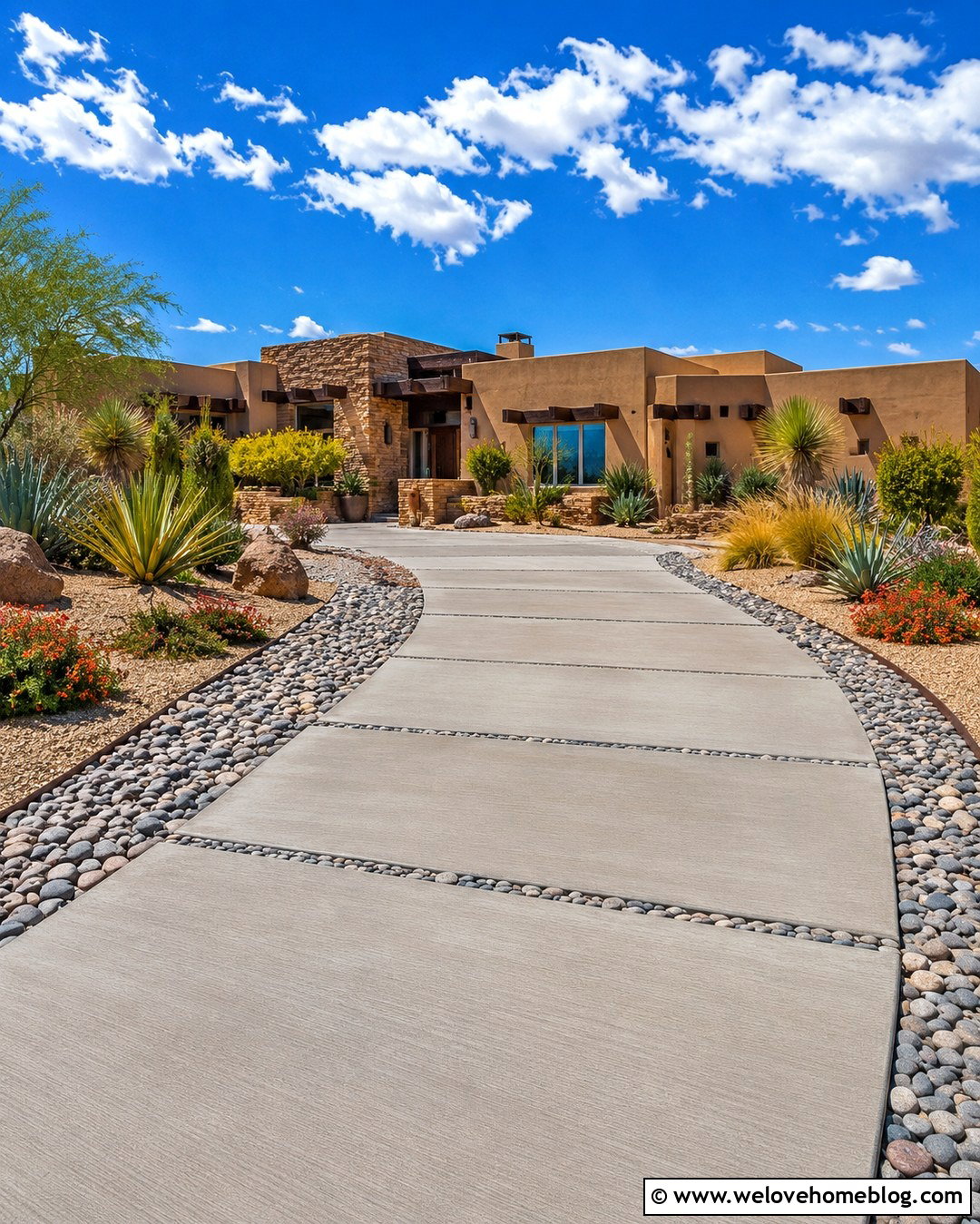
Smooth river rock can turn the gaps between concrete slabs into a visible landscape feature. Choose broad, warm-gray panels and fill the joints with rounded stones in mixed gray, cream, and charcoal tones. Repeat the same rock in drainage beds along the driveway edges to make the design feel connected. A slightly curved layout works well beside a desert contemporary, Southwestern, or California ranch home. Drought-tolerant planting such as yucca, agave, ornamental grass, and compact flowering shrubs can complete the low-water setting. River rock must be contained so it does not roll onto the driving surface or street. Use properly sized joints, hidden stabilization, and firm edge restraints. The slabs should remain the primary load-bearing surface, with vehicle tires following a comfortable and clearly planned path.
17. Driveway Slabs With Corten Steel Edging
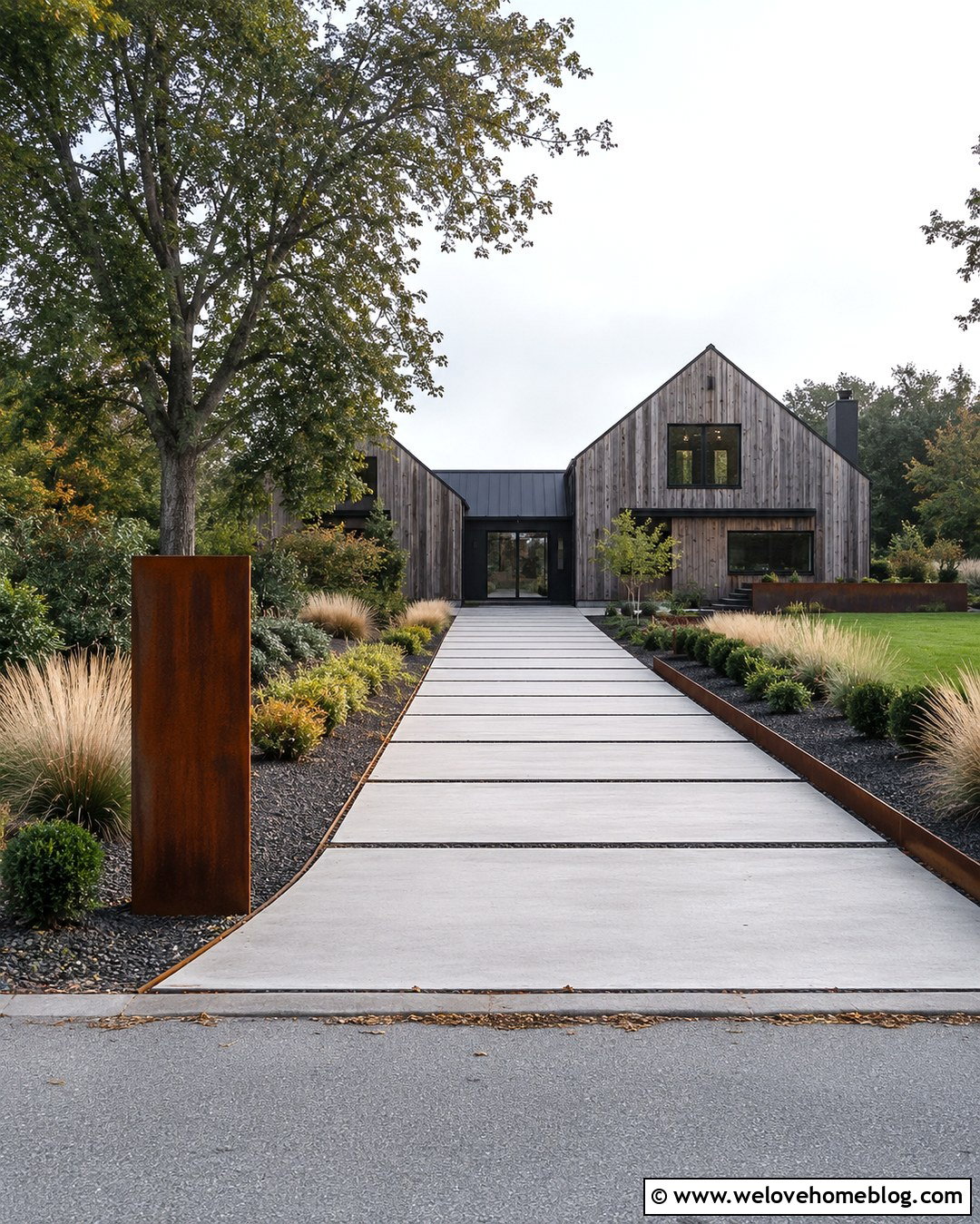
Thin Corten steel edging gives concrete driveway slabs a sharp border and introduces a warm rust color into a neutral landscape. Use smooth, pale gray rectangular panels in a staggered arrangement, then place the metal along the outer edges and beside selected gravel joints. The steel looks particularly effective near black gravel, ornamental grasses, and weathered wood accents. This driveway suits modern homes, contemporary ranches, and minimalist farmhouses. Add a matching steel address feature near the entrance, but keep it outside sightline and clearance areas. The edging should be installed flush or safely positioned so it does not create a tire hazard. As the metal develops its weathered finish, consider nearby paving and drainage conditions because runoff may temporarily transfer color to surrounding surfaces.
18. Circular Driveway Slabs With Central Landscaping
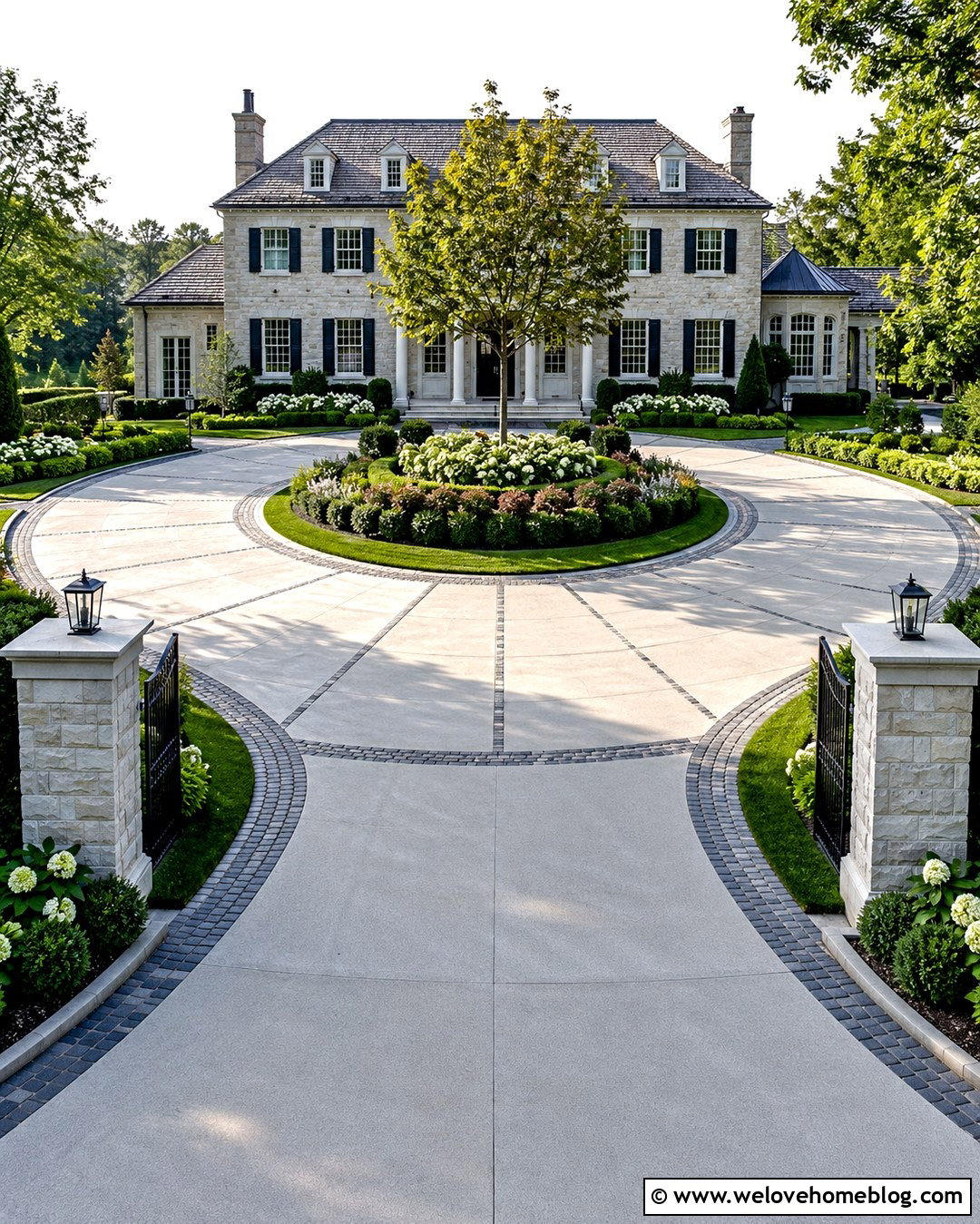
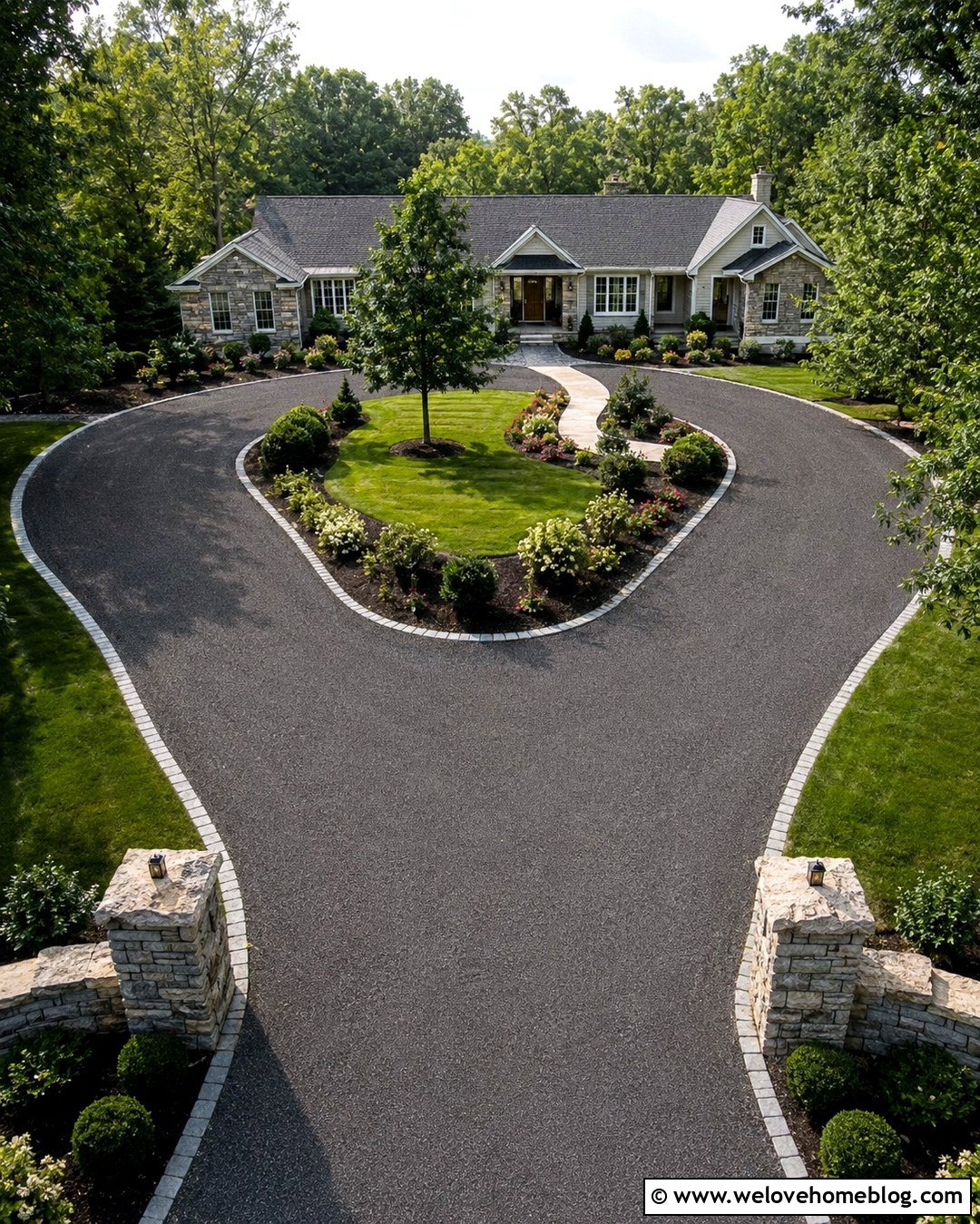
A circular driveway built from large slabs can make a broad front yard more functional while creating space for a striking central garden. Use wedge-shaped or carefully cut concrete panels that follow the curve rather than forcing standard rectangles into uneven gaps. Narrow stone joints and a dark cobblestone border will define the circular route. In the center, plant a small ornamental tree with layered shrubs, flowers, and low ground cover that will not block visibility. This arrangement complements Colonial, Georgian, Mediterranean, and large modern farmhouse properties. Mark the entrance and exit with matching stone pillars or low planting beds. The turning radius, drainage, and slab layout should be professionally planned so vehicles can move comfortably without repeatedly crossing borders or damaging the central landscaping.
19. White Concrete Driveway Slabs With Minimal Planting
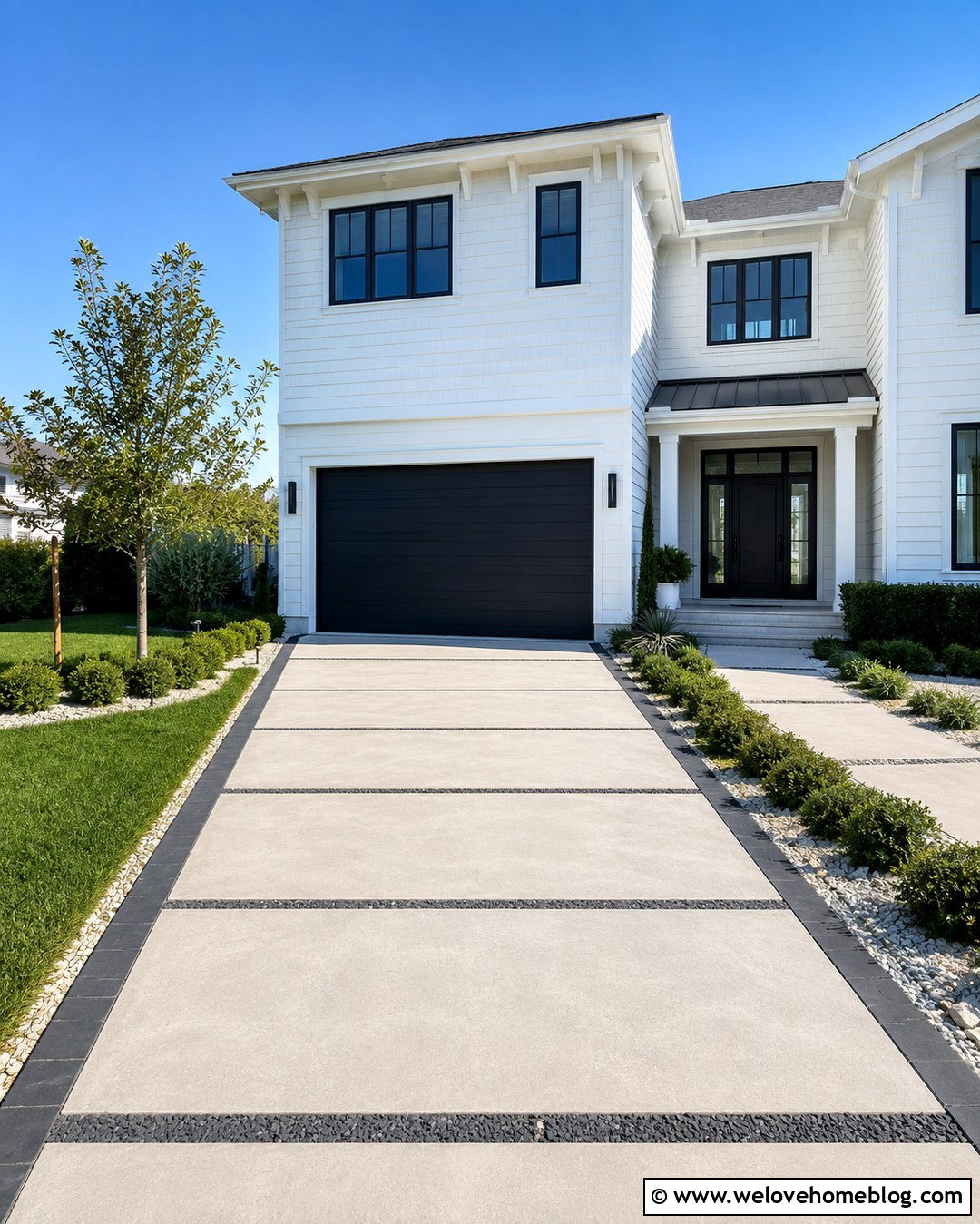
Bright off-white concrete slabs can make a compact front yard appear cleaner and more spacious. Arrange large rectangular panels in a simple straight grid, using narrow charcoal gravel joints to prevent the pale surface from looking flat. A flush black paver border can tie the driveway to dark window frames and garage doors. Limit the landscaping to clipped evergreen shrubs, a small feature tree, and broad areas of green lawn or pale gravel. This restrained approach works especially well with modern, coastal, and minimalist homes. Pure white may show stains and tire marks quickly, so a softer ivory or light natural concrete tone can be more practical. Consider the local sunlight and glare, then choose an exterior finish that provides texture, traction, and manageable maintenance.


20. Mixed-Size Driveway Slabs With Matching Walkway
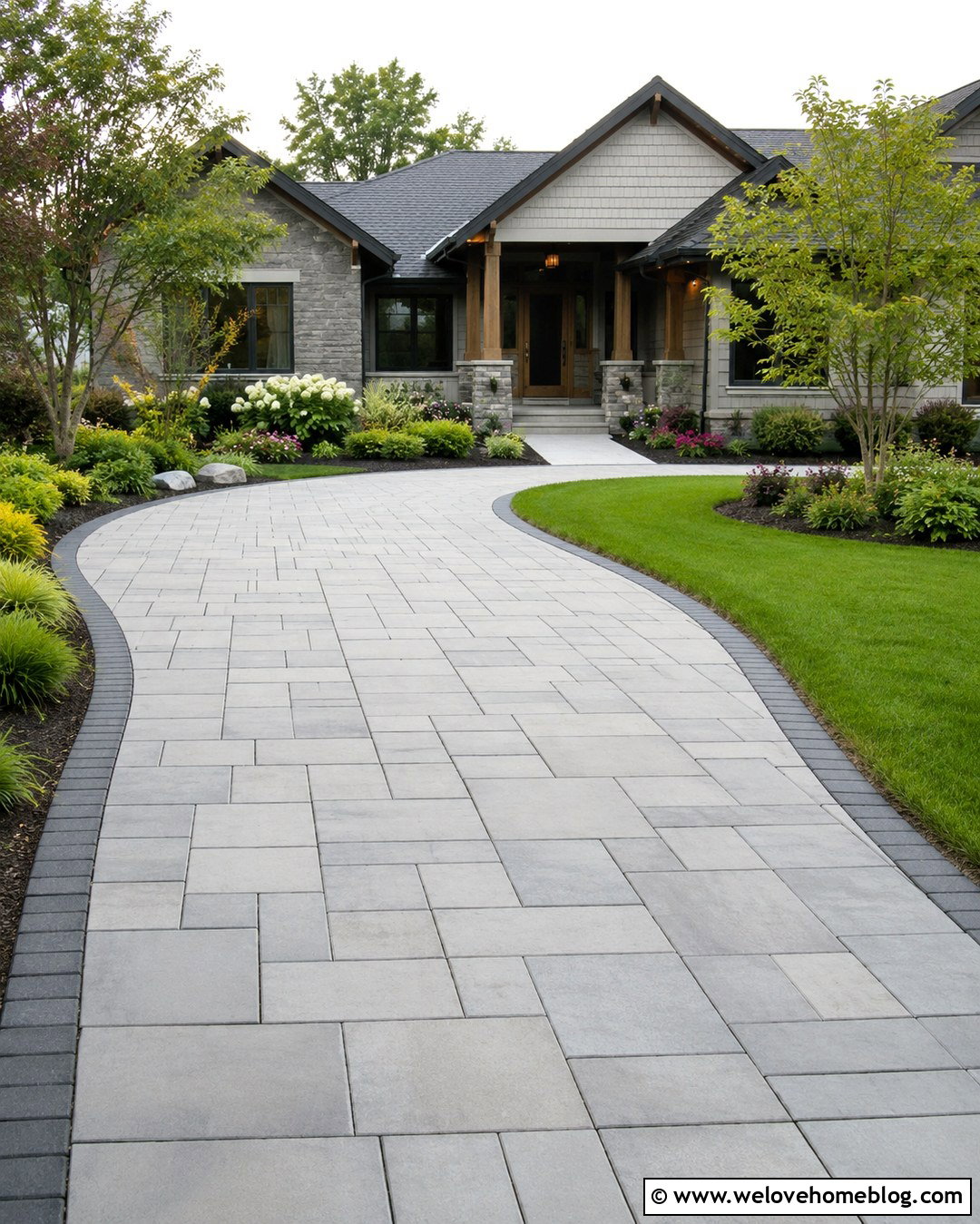
Mixing several slab sizes creates movement without requiring strong color contrasts. Combine large squares, medium rectangles, and narrow concrete units in one coordinated gray palette. Arrange the pieces in a modular pattern across a straight or gently curved driveway, then continue selected sizes into the front walkway. A consistent charcoal paver border will keep the varied layout organized. This design works with nearly any home, from a Craftsman bungalow to a contemporary suburban property. Plant layered shrubs, ornamental grasses, and seasonal flowers near the walkway while leaving the vehicle edges open. Before finalizing the pattern, map wheel paths and avoid placing small cuts where cars repeatedly turn. All selected slabs should have compatible thicknesses, finishes, and vehicle ratings to create a stable, unified installation.
Conclusion:
The best slab driveway balances visual appeal with vehicle access, drainage, climate, and long-term maintenance. Large concrete panels create a modern foundation, while natural stone, porcelain, exposed aggregate, and stamped finishes offer different colors and textures. Borders and joints can completely change the result. Grass softens geometric layouts, gravel increases contrast, and brick or cobblestone gives the surface a traditional frame. Whatever look you prefer, confirm that every slab is vehicle-rated and install it over a professionally prepared base. Thoughtful planting will then connect the driveway to the house and surrounding yard. Use these **20 Driveway Slabs Ideas** to plan a complete entrance rather than treating the surface as an isolated feature.

Related posts:

Leave a Reply