
A luxury cobblestone driveway gives a home an immediate sense of craftsmanship, permanence, and high-end curb appeal. Natural color variation and small stone units can make straight, curved, and circular layouts feel more detailed than a plain poured surface. Cobblestone also works with many architectural settings, from historic colonials and European-inspired estates to clean modern homes. Current designs often combine structured laying patterns, contrasting borders, planted islands, stone pillars, and discreet drainage features to create a complete arrival experience. Herringbone layouts are especially useful where vehicles turn because their interlocking arrangement helps manage movement across the surface. () Below, you will find 20 luxury cobblestone driveway ideas for creating a distinctive and practical entrance.

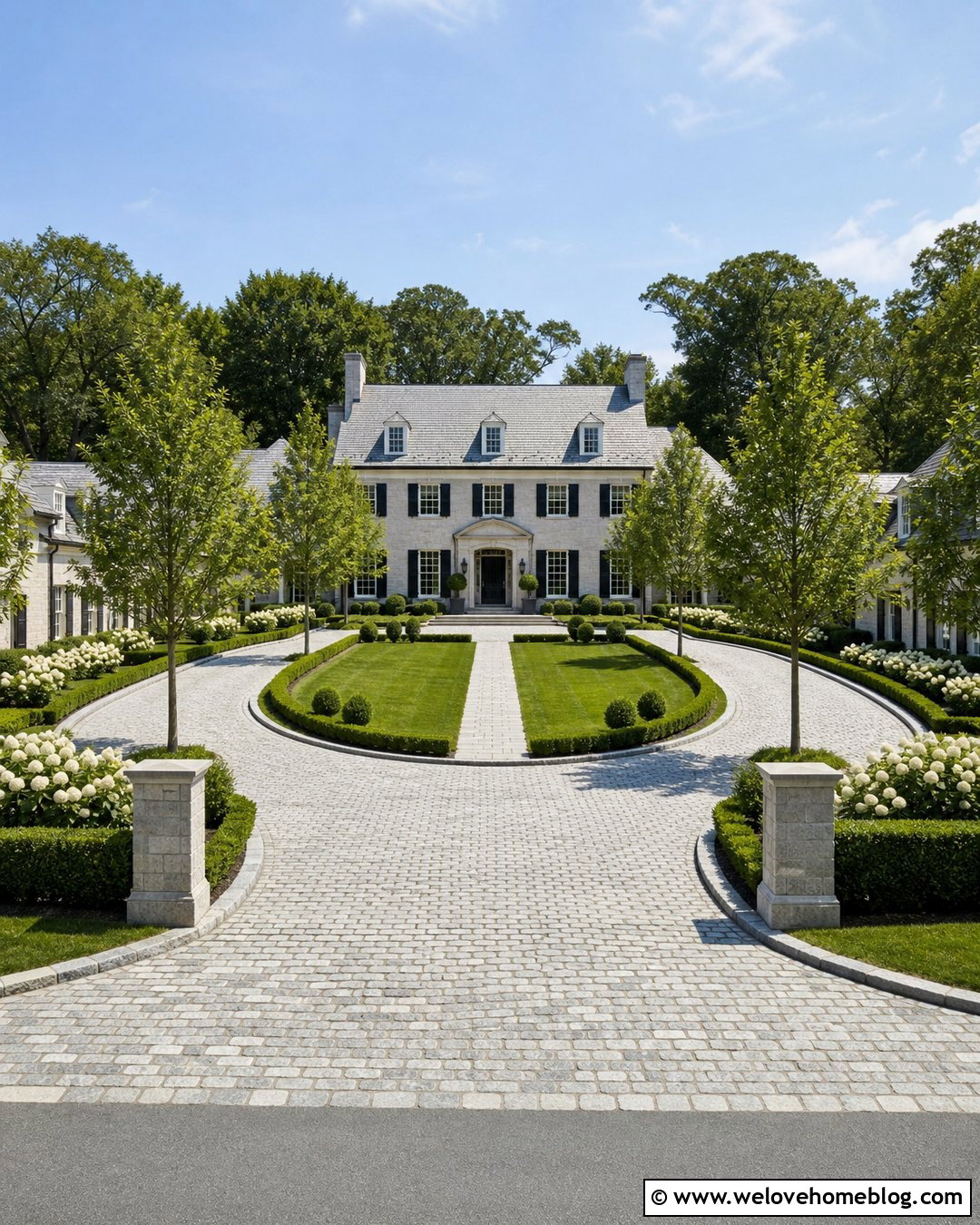
1. Circular Cobblestone Driveway With a Central Garden
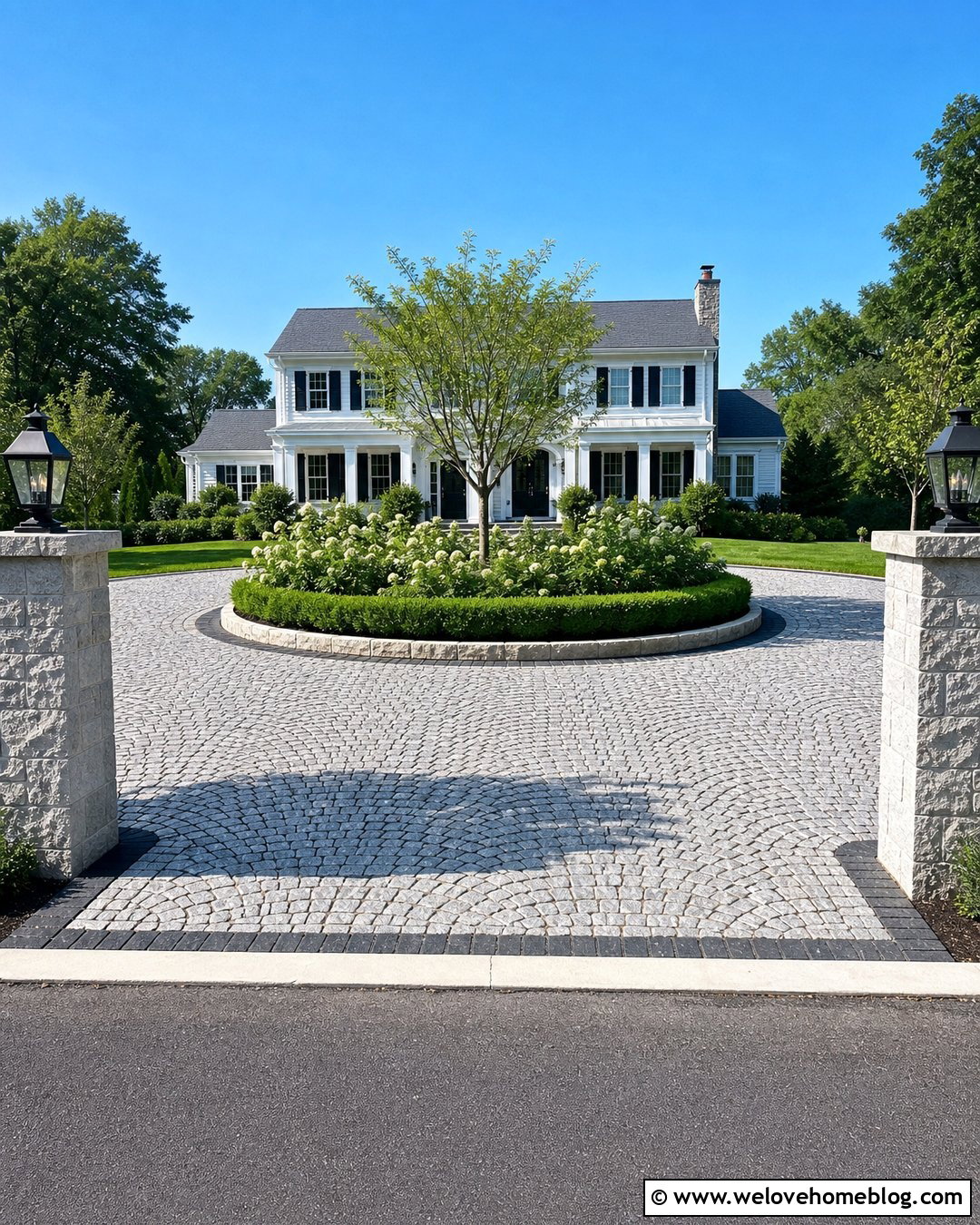
A circular cobblestone driveway creates a graceful arrival while keeping vehicles moving without complicated reversing. Lay gray granite cobblestones in a radiating fan pattern so the surface naturally follows the curve. At the center, use a raised limestone border to contain a manicured garden of boxwood, white hydrangeas, and one sculptural ornamental tree. A slightly darker cobblestone band around the island strengthens its shape and adds visual depth. Match the driveway entrance with low stone pillars and simple lanterns for balanced curb appeal. This complete layout suits a colonial, Georgian, or French country home with a symmetrical facade. Keep plants near the inner curve neatly trimmed so sightlines remain clear and the circular driveway stays easy to navigate.
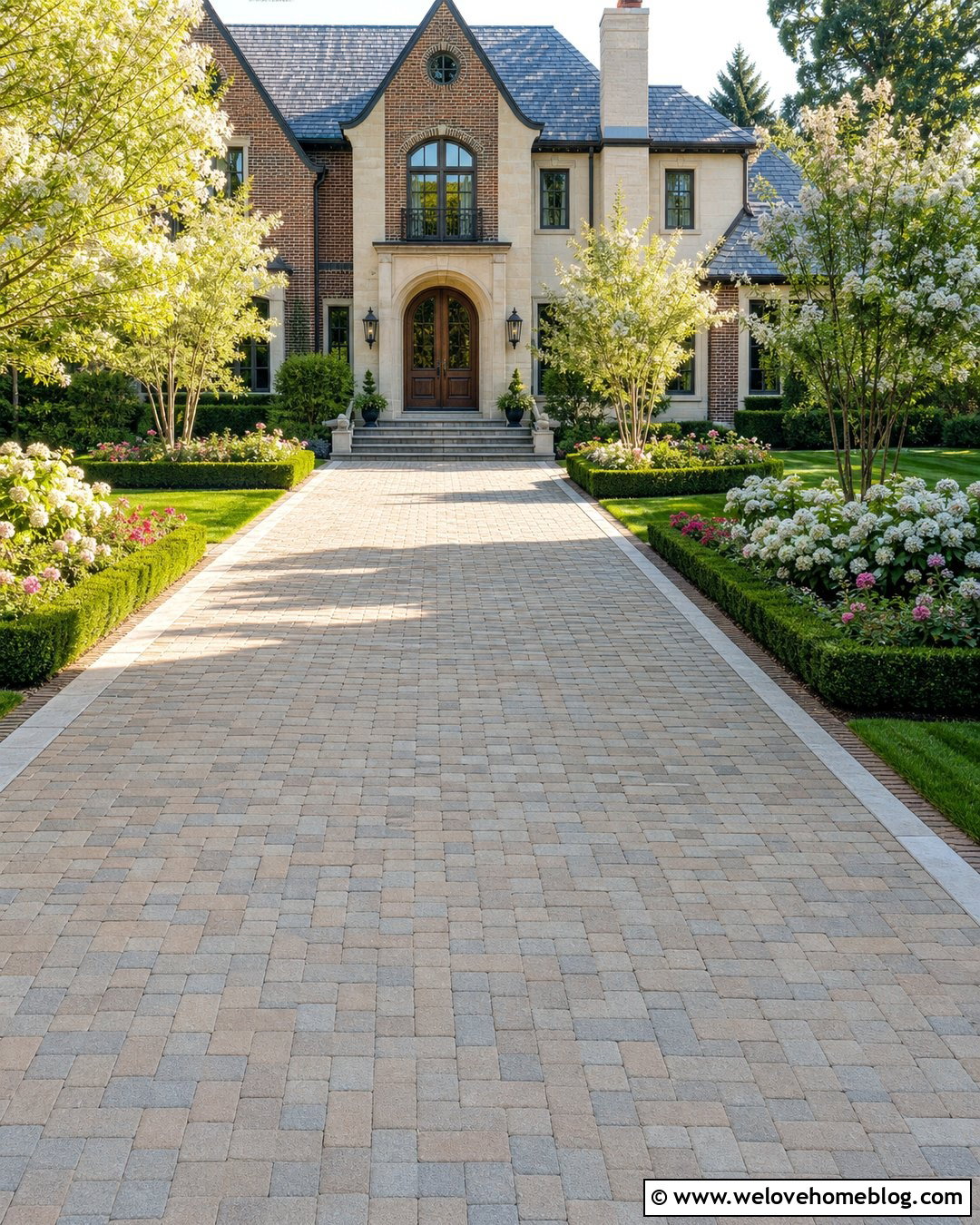
2. Herringbone Cobblestone Driveway With Limestone Edging
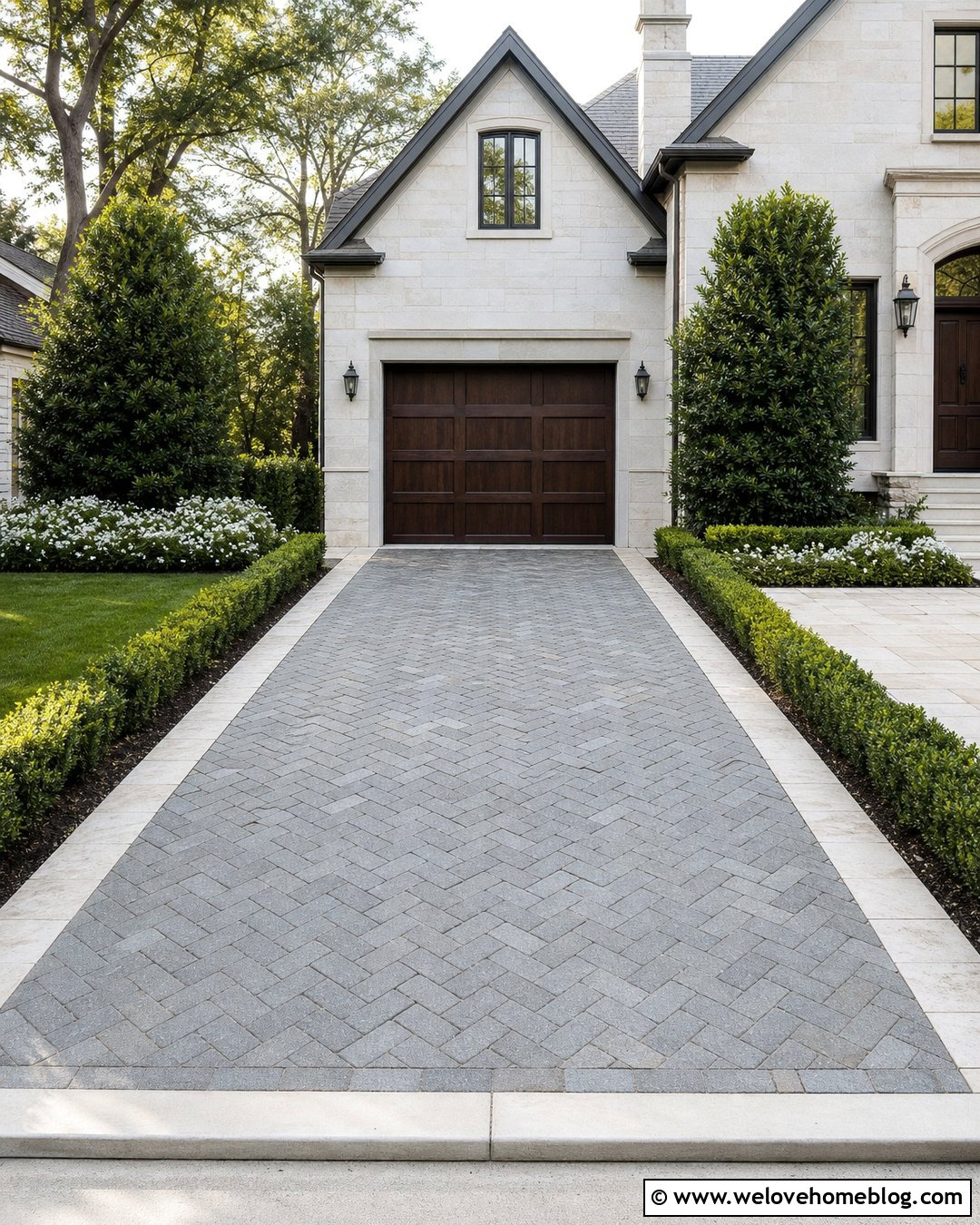
Could a traditional laying pattern make a cobblestone entrance feel more polished? A 45-degree herringbone layout gives rectangular granite setts a tailored appearance while helping the stones resist shifting under turning tires. () Choose warm gray cobblestones and frame them with broad cream limestone edging. The pale border brightens the driveway, defines nearby planting beds, and creates a refined connection to a light stone house. A straight layout works well here because the angled pattern supplies enough movement. Add clipped evergreen shrubs, low white flowers, and a matching limestone walkway leading toward the front door. For a seamless result, continue the border across the garage threshold. The finished driveway feels formal without becoming overly decorative, making it suitable for both traditional and transitional homes.
3. Reclaimed Cobblestone Driveway With Brick Borders
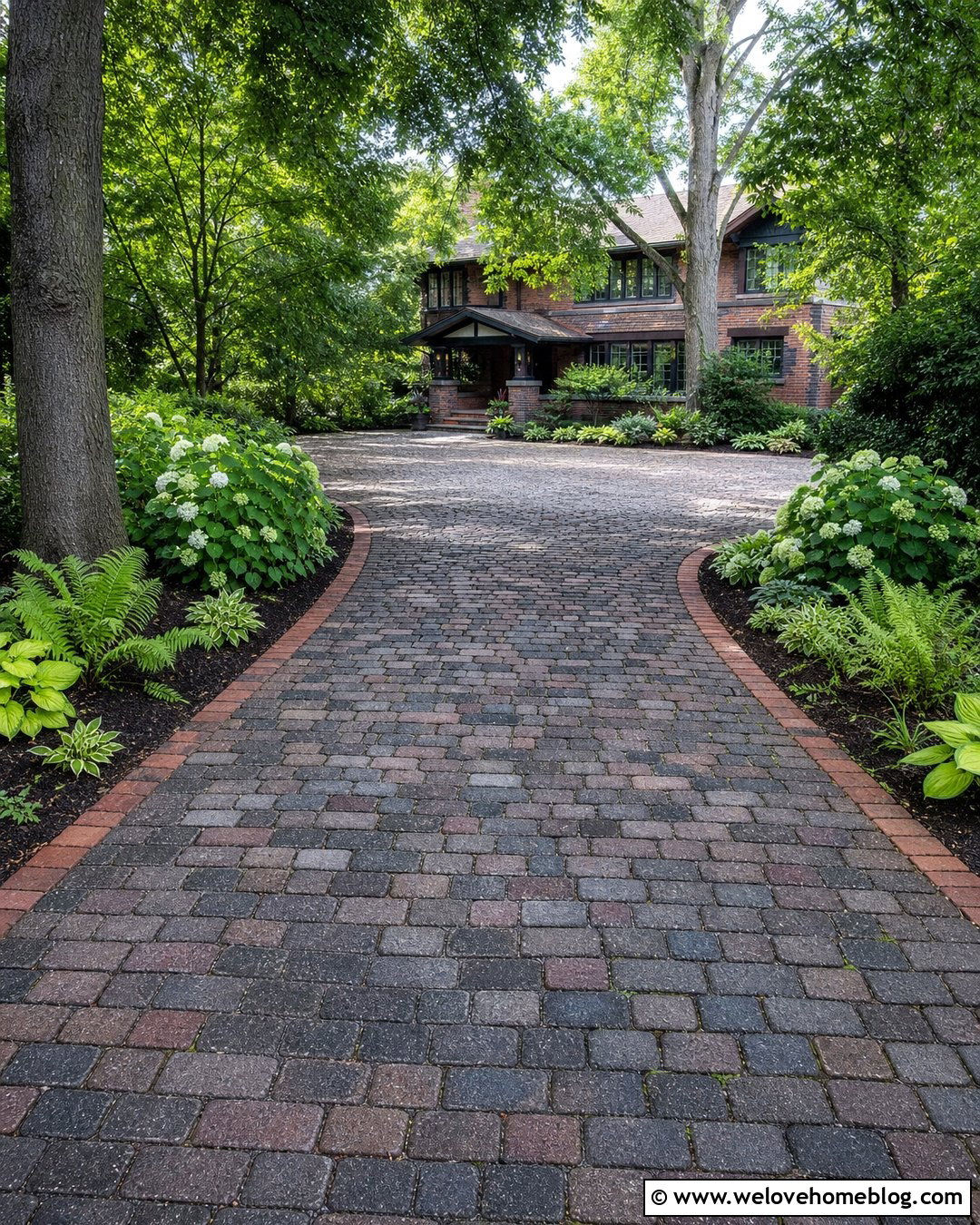
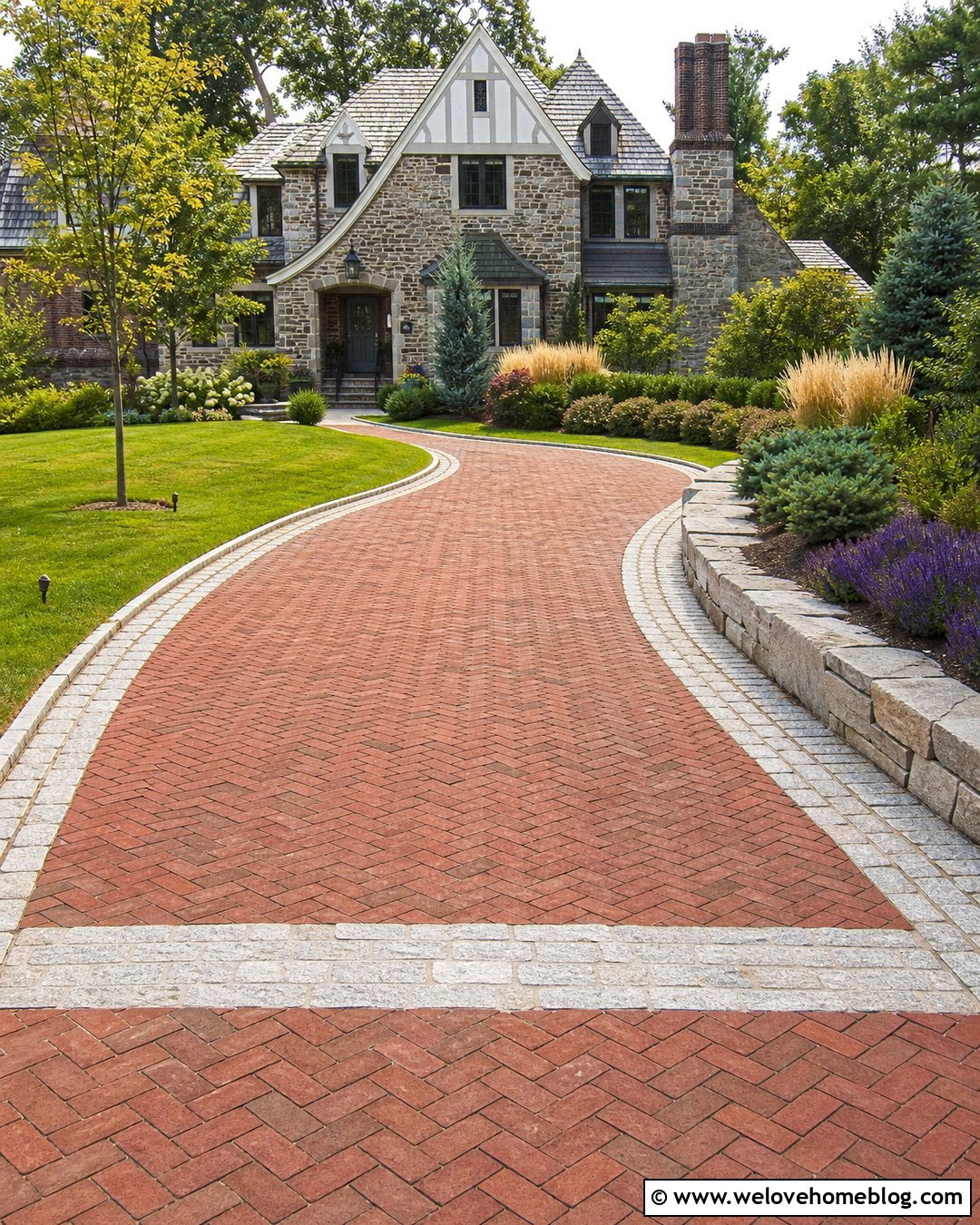
Weathered stone brings warmth that newly manufactured surfaces cannot easily copy. Build the driveway with reclaimed granite or Belgian porphyry cobblestones in mixed charcoal, brown, and muted plum tones. A simple running bond keeps the varied stones visually organized. Narrow red brick borders can connect the driveway to an older brick facade, chimney, or garden wall without competing with the cobblestone surface. Use a gently curved layout that passes mature shade trees and informal planting beds filled with ferns, hostas, and hydrangeas. At the house, widen the drive into a small parking court edged by the same brick. Reclaimed cobblestones are naturally irregular, so careful sorting and professional installation are valuable. The final look feels established, elegant, and particularly appropriate for historic homes.
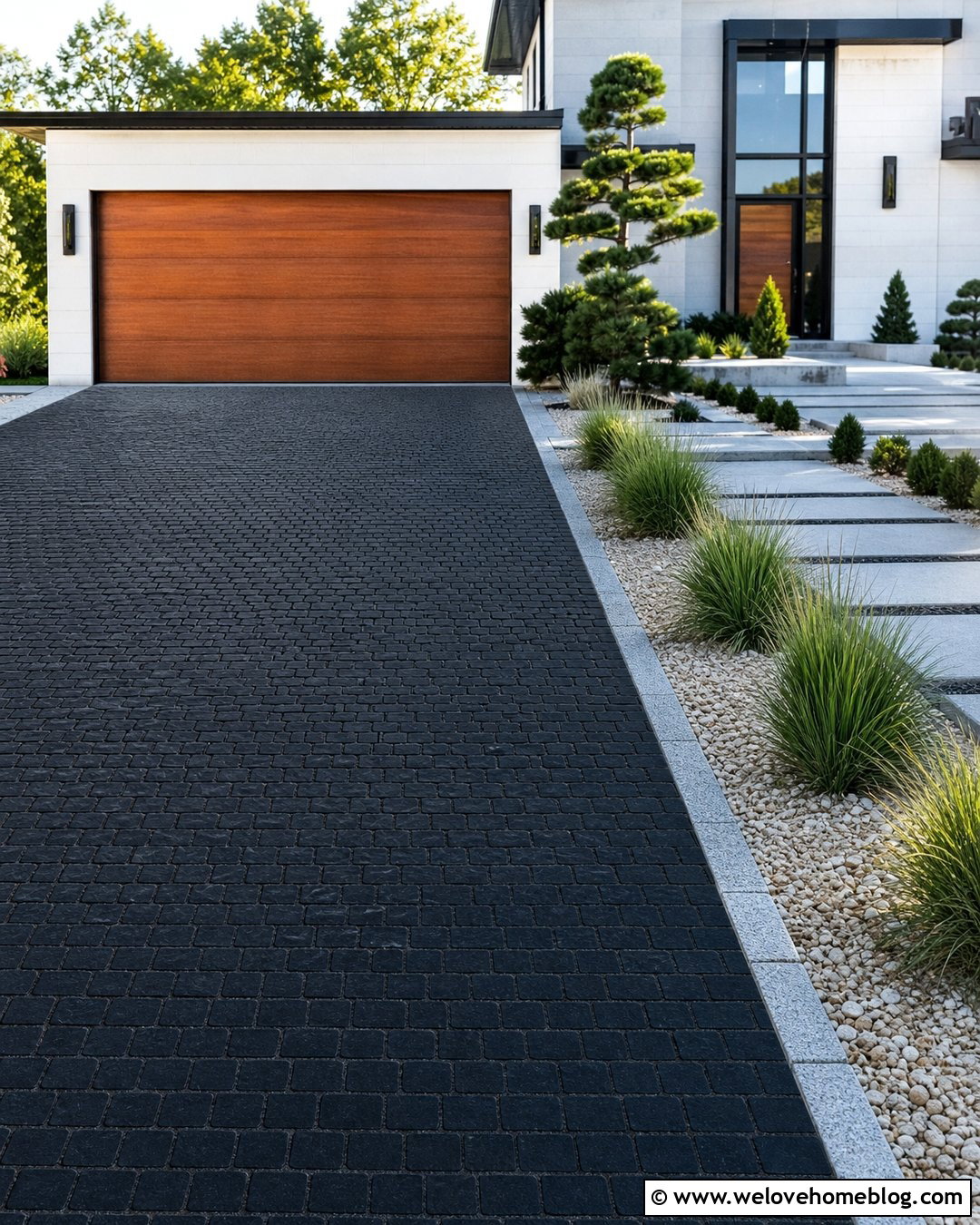
4. Black Cobblestone Driveway With Modern Landscaping
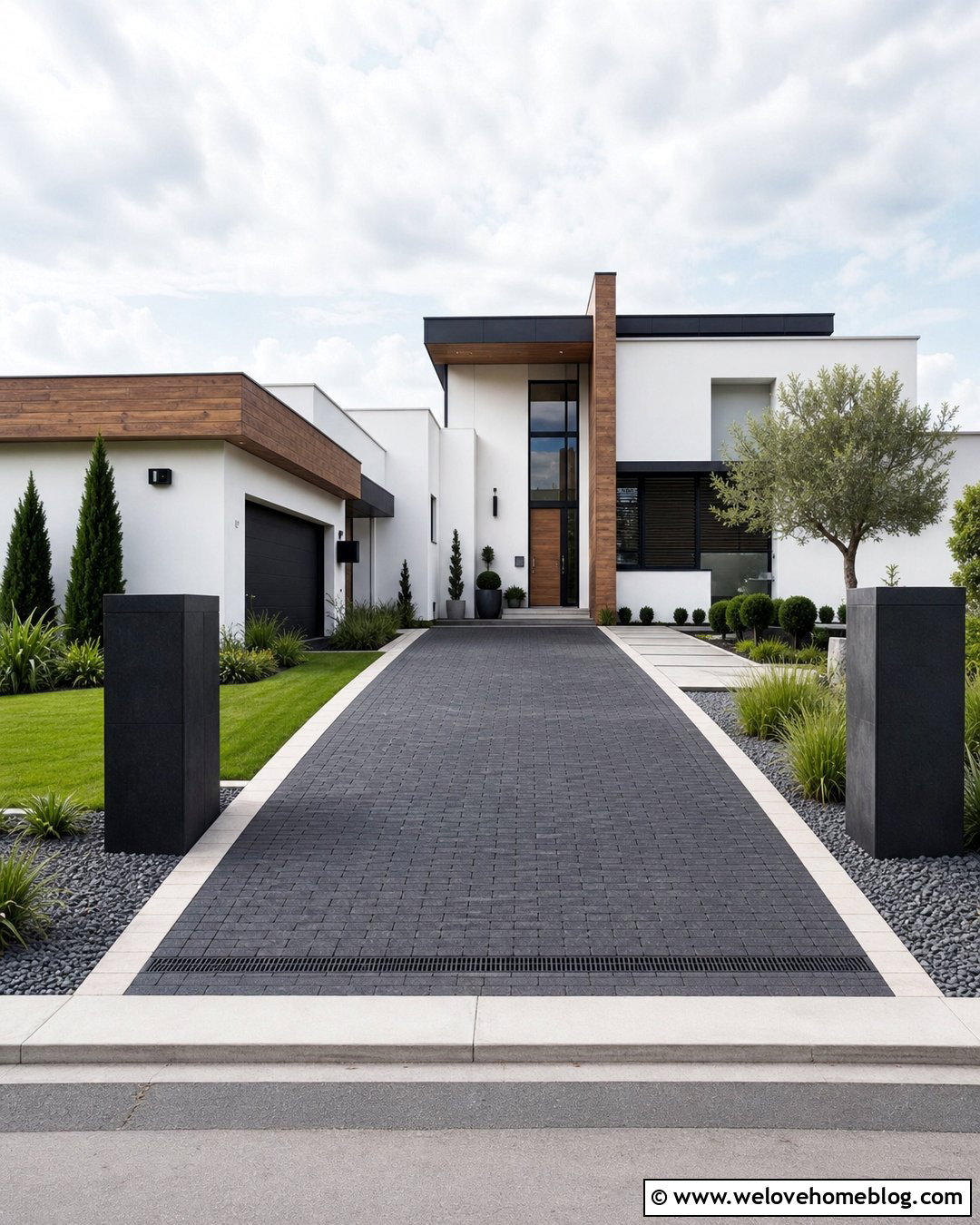
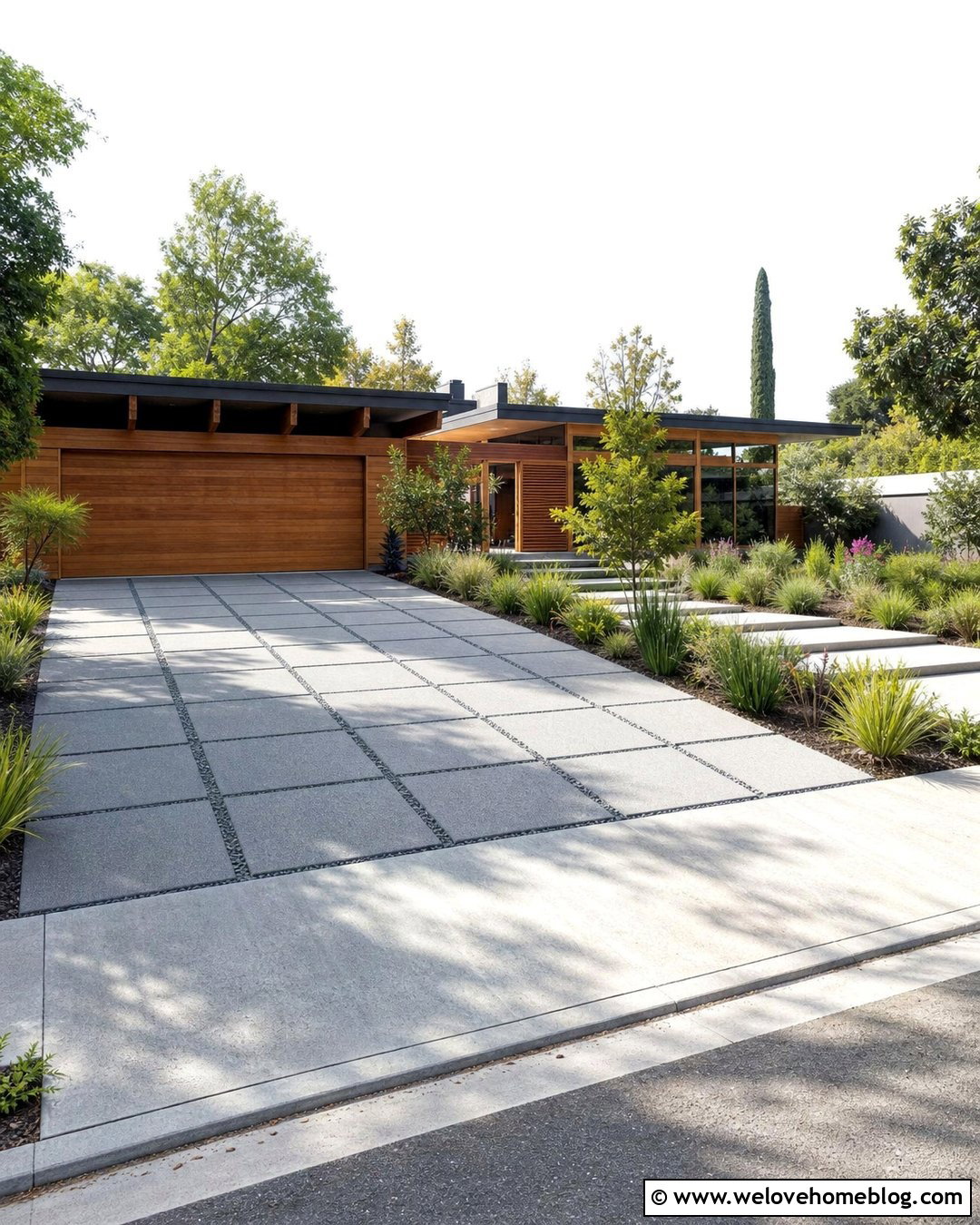
Deep charcoal cobblestones can give a modern home a bold yet natural-looking entrance. Select dark basalt or granite cobblestones with a lightly textured finish, then install them in straight stacked rows for clean visual order. Frame the surface with narrow bands of pale concrete or light limestone to sharpen the contrast. A wide, straight driveway works best with this minimalist treatment. Along both sides, combine architectural grasses, clipped evergreens, and gravel mulch in restrained planting beds. Linear drainage channels can sit neatly across the garage entrance without interrupting the design. Complete the approach with black metal address pillars and low-profile landscape lighting. Against a white, gray, or warm wood facade, the dark cobblestone becomes an elegant grounding feature while its natural variation prevents the driveway from looking flat or industrial.
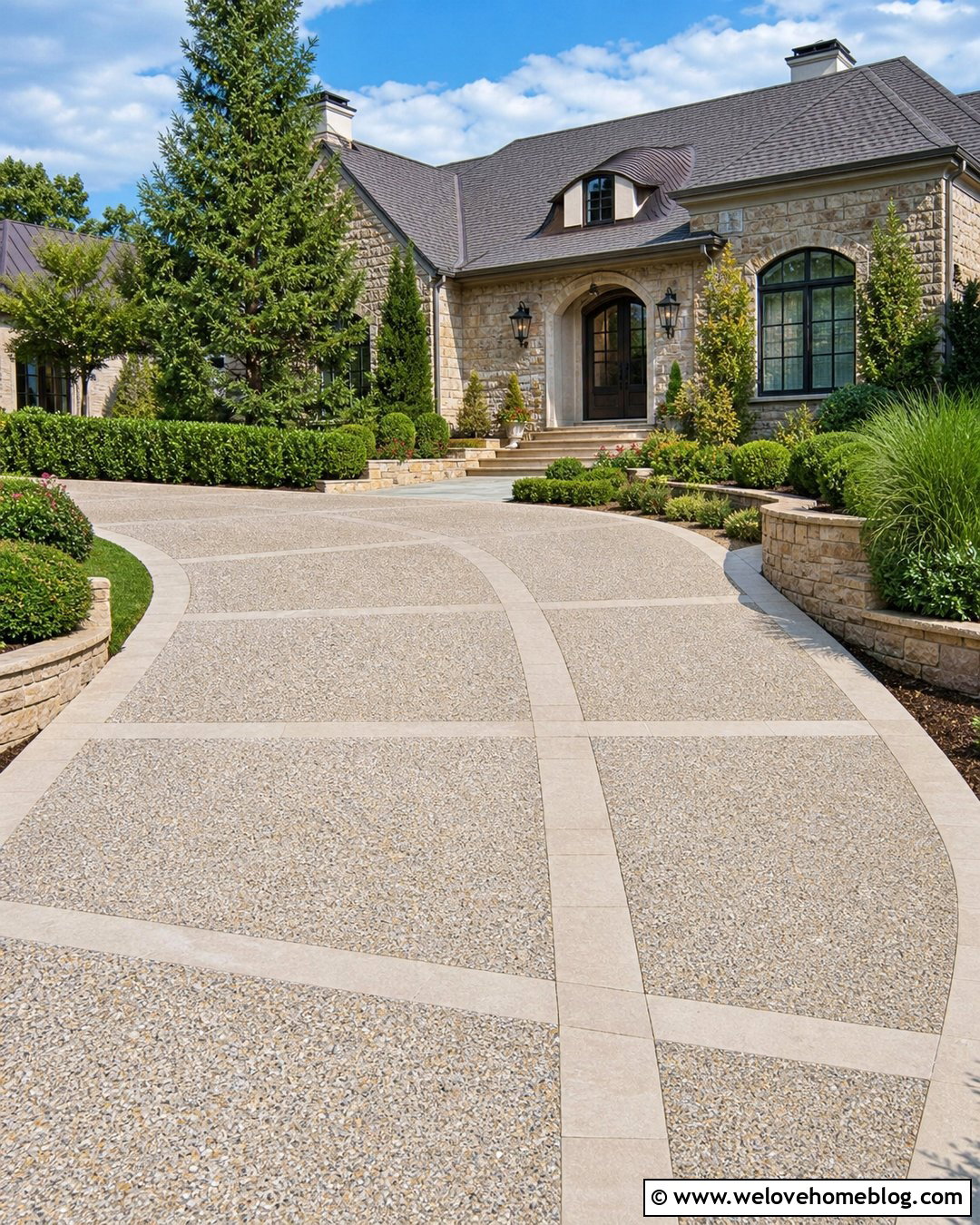
5. Fan Pattern Cobblestone Driveway With Stone Pillars
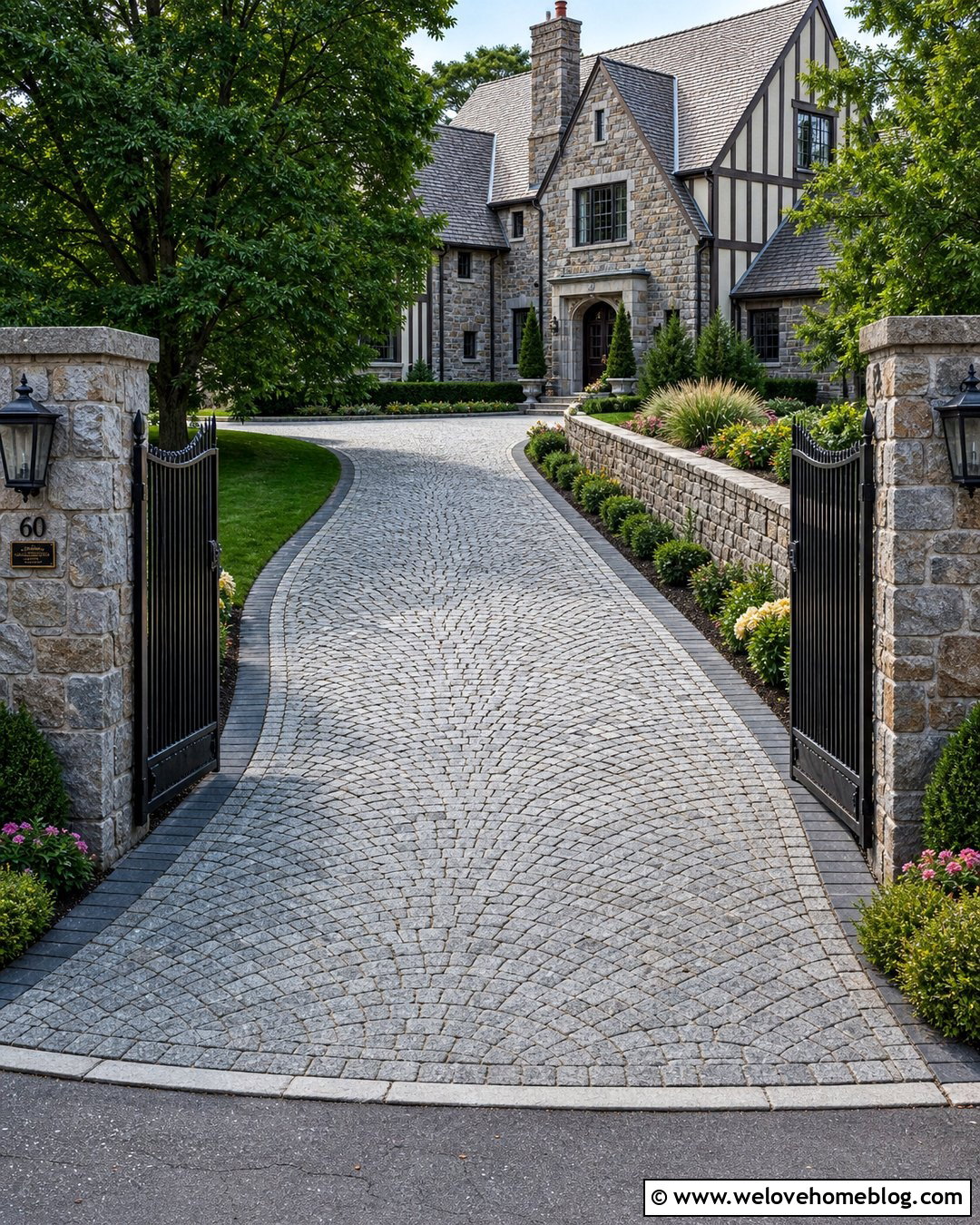
Sweeping fan patterns turn a large cobblestone surface into a visible piece of craftsmanship. Use medium-gray granite cobblestones arranged in overlapping arcs that open toward the house. A contrasting charcoal border can outline the driveway and keep the decorative pattern contained. At the street, introduce substantial fieldstone pillars with simple black lanterns and understated metal gates. Continue the stonework along low curved walls that transition into layered beds of boxwood, roses, and ornamental grasses. This design works especially well on a broad, gently curving driveway leading to a Tudor, château-inspired, or stone-clad residence. Keep each fan consistent in scale so the surface feels organized. The repeating curves soften the visual weight of the stone and make the entire approach appear wider, more welcoming, and carefully planned.
6. Cobblestone Driveway With a Granite Entrance Apron
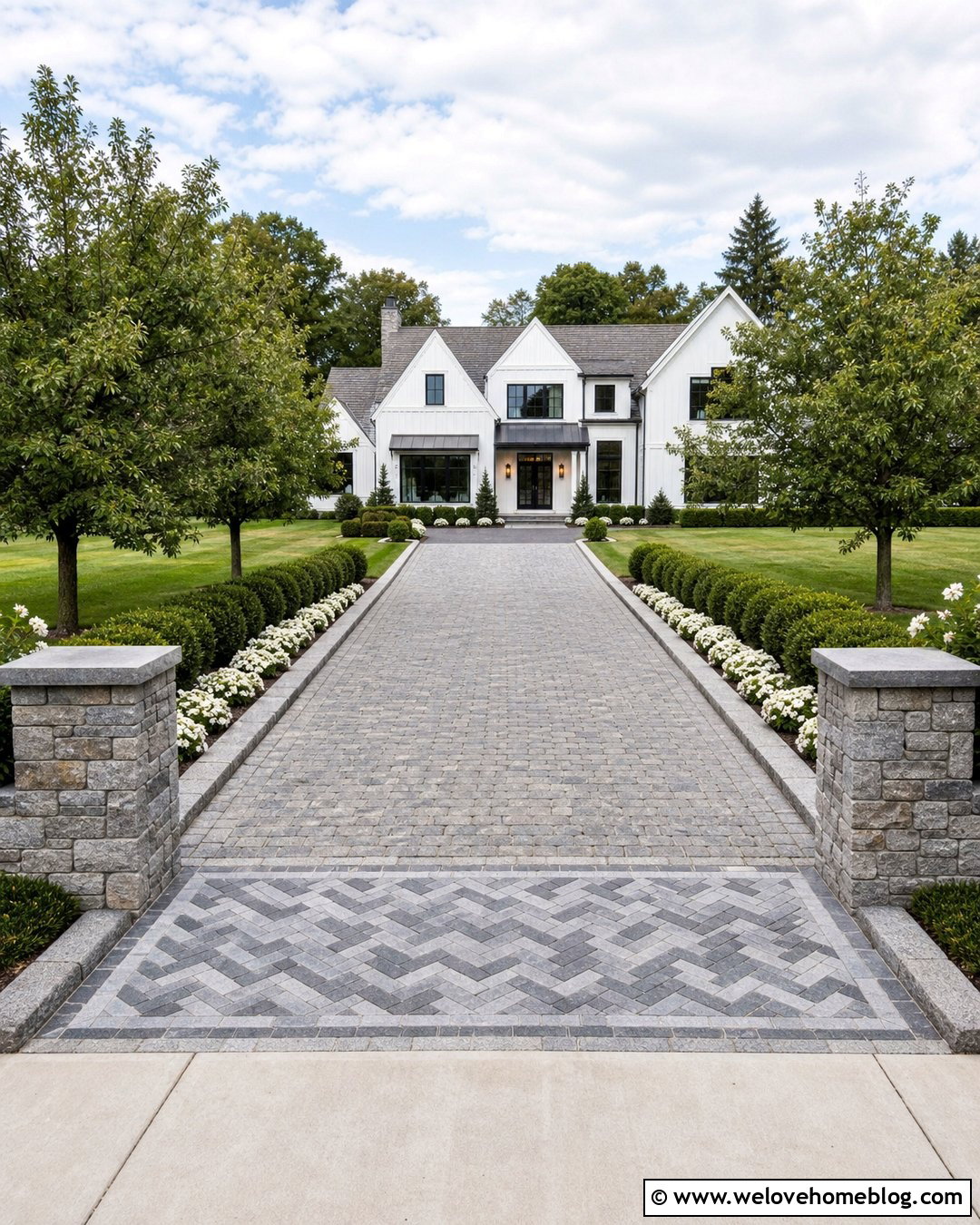
A defined entrance apron can make a long driveway feel impressive from the curb. Begin with a broad rectangle of silver and charcoal granite cobblestones laid in a fan or herringbone pattern. Use oversized granite curbing along the street edge, then continue the main driveway in smaller warm-gray cobblestones arranged in running bond. This subtle change in scale identifies the entrance without introducing an unrelated material. Flank the apron with square masonry pillars, clipped hedges, and symmetrical beds of white flowers. Farther along, allow the straight driveway to narrow slightly as it approaches a modern farmhouse or stately country home. Proper grading should direct water away from the road and nearby structures. The apron becomes both a durable transition zone and a sophisticated preview of the full driveway design.
7. Curved Cobblestone Driveway With Tree-Lined Landscaping
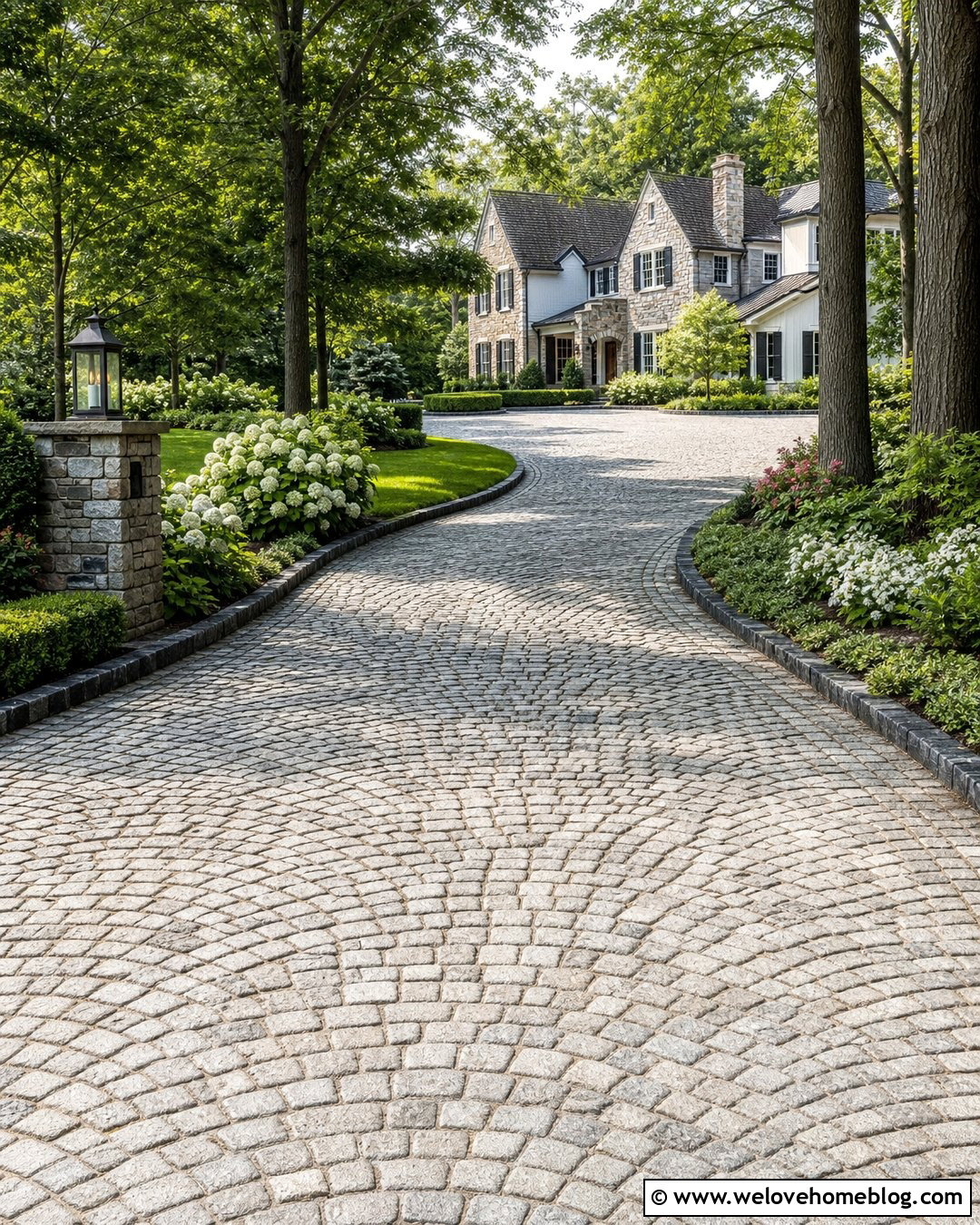
A curving driveway becomes more memorable when its paving and landscaping guide the eye together. Lay warm-gray granite cobblestones in gentle running rows that bend naturally with the route. Define both sides with dark Belgian block edging, leaving enough width for comfortable vehicle movement. A sequence of evenly spaced ornamental trees can create rhythm without forming a heavy wall. Beneath them, use broad sweeps of hydrangeas, evergreen ground cover, and seasonal flowers. The driveway should reveal the house gradually rather than exposing the entire facade from the street. At the final curve, widen the surface into a generous arrival court near the front entrance. This complete composition suits large suburban lots and country properties, delivering privacy, visual movement, and a strong sense of anticipation as guests approach the home.
8. Light Cobblestone Driveway With Mediterranean Planting
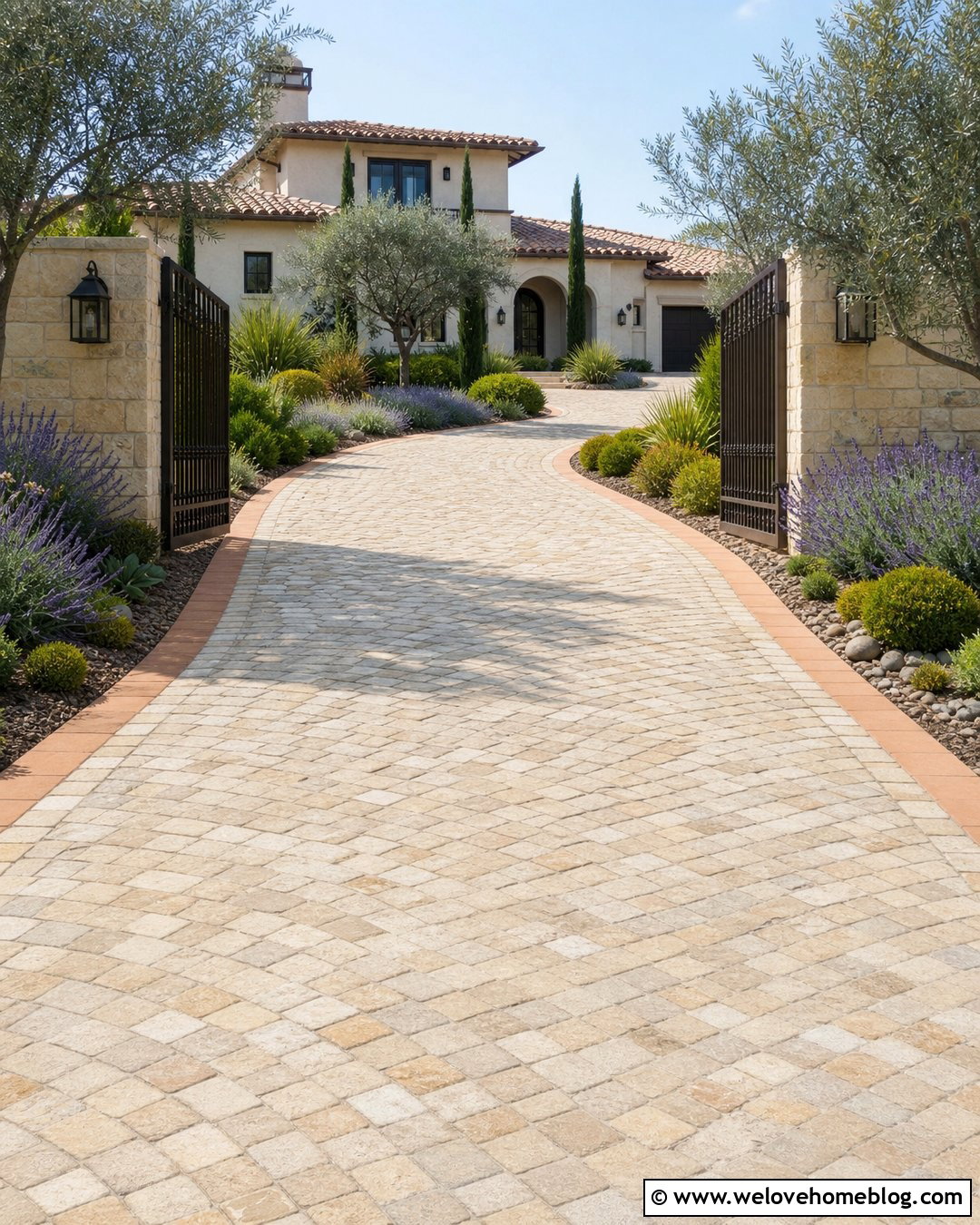
Sun-washed cobblestones pair beautifully with Mediterranean-inspired architecture and drought-tolerant landscaping. Choose pale beige limestone or light granite cobblestones with soft cream and sand-colored variation. Install them in a relaxed running bond across a curved driveway that leads to a stucco house with a tile roof. Use a warm terracotta paver ribbon at the perimeter to echo the roof color and define the pale surface. Olive trees, lavender, rosemary, ornamental grasses, and low evergreen shrubs can frame the approach without hiding the stonework. Add limestone entrance pillars and dark metal gates for structure. Gravel mulch within the planting beds supports the dry, refined appearance. The combination feels bright and luxurious, while the gently varied cobblestones prevent the expansive driveway from appearing overly uniform or stark.
9. Cobblestone Courtyard Driveway With a Fountain
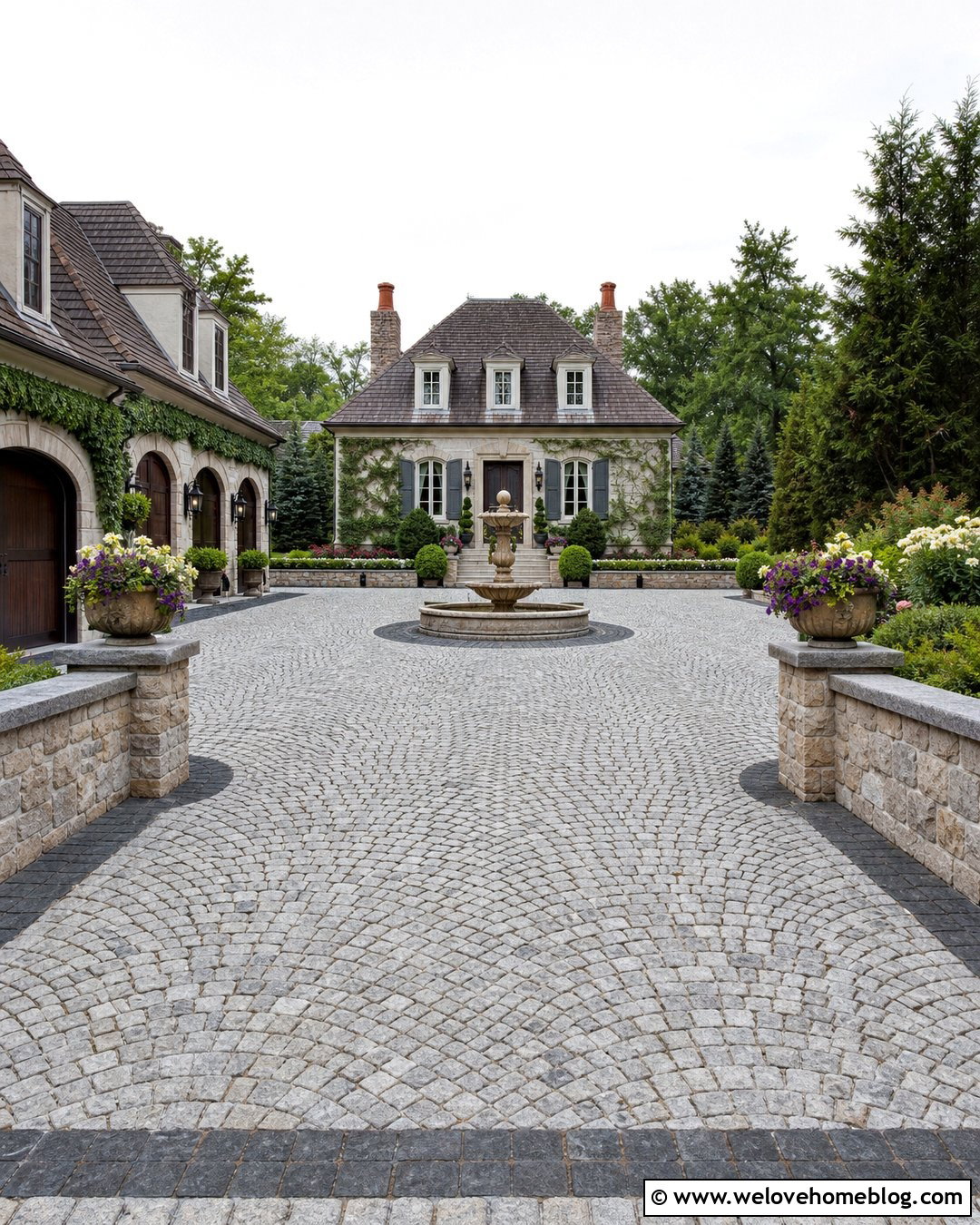
Imagine entering a private courtyard where the driveway becomes part of the home’s outdoor architecture. Use reclaimed gray granite cobblestones across a wide rectangular motor court, arranging them in fan patterns around a central stone fountain. A circular border of darker basalt cobblestones can separate the fountain island from the driving lane. Enclose portions of the courtyard with low masonry walls, evergreen hedges, and layered planting beds, while keeping turning areas open. The cobblestone should continue toward the garage bays and front steps to unify the entire space. This layout complements Spanish Revival, French country, and European-style residences particularly well. Choose a fountain scaled to the courtyard so it remains an elegant focal point rather than an obstacle. Balanced symmetry will give the large paved area a calm, intentional appearance.
10. Gray Cobblestone Driveway With Grass Joints
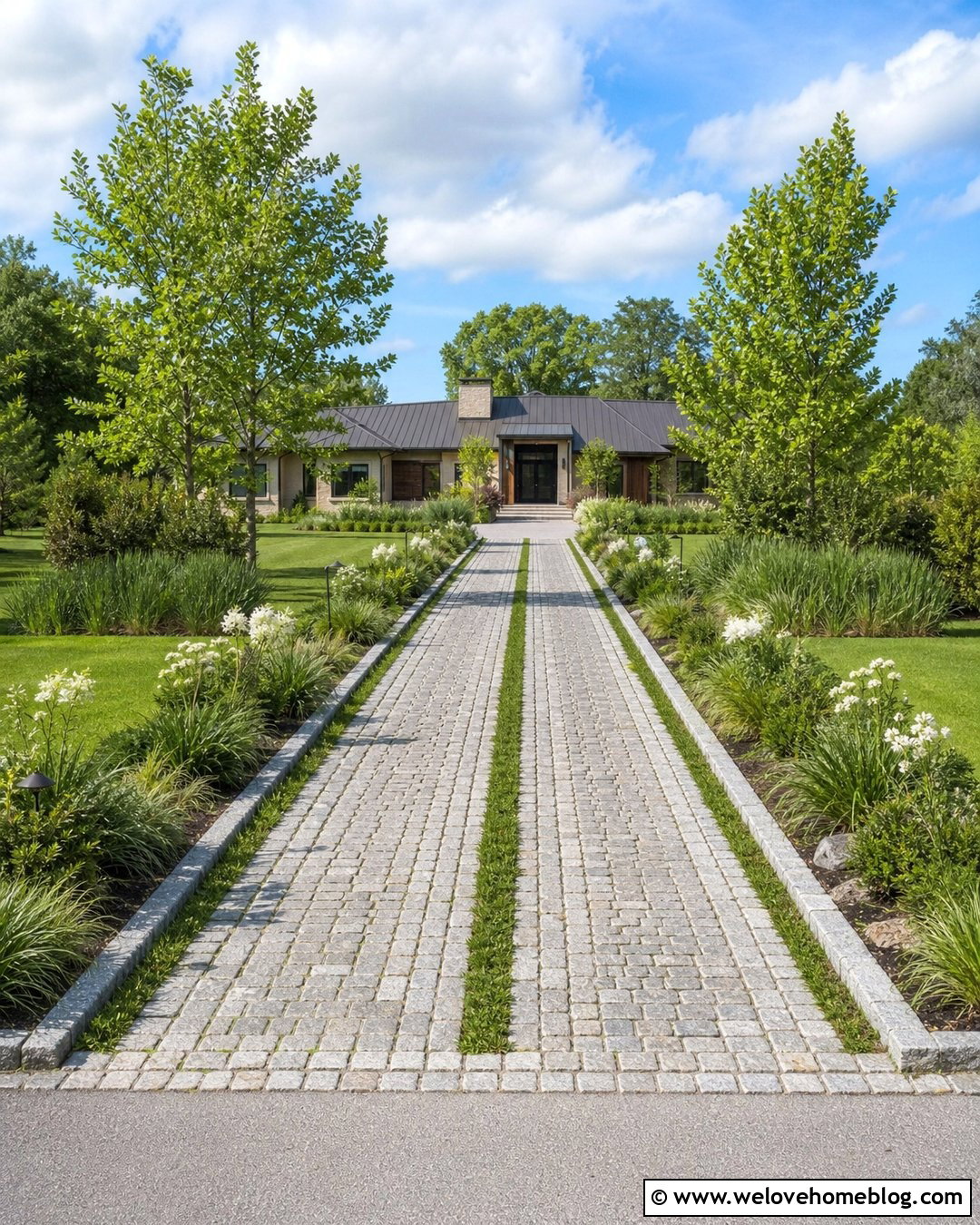
Thin grass joints introduce softness into a formal cobblestone surface. Choose medium-gray granite cobblestones and arrange them in straight bands with narrow planted gaps between selected rows. Keep the primary tire paths more tightly jointed to create a practical driving surface, while grass strips appear near the edges or through a lightly used center zone. Frame the driveway with flush granite curbing for a crisp transition to the lawn. Simple beds of ornamental grasses, white flowering perennials, and compact evergreens complement the linear design. This treatment looks especially effective in front of a contemporary ranch or modern farmhouse, where natural texture can soften simple architecture. Grass-jointed paving requires suitable drainage, sun, and maintenance, so place planted joints thoughtfully rather than covering every part of the driveway with greenery.
11. Cobblestone Driveway With a Double Border

A layered border gives a cobblestone driveway the tailored finish of a custom hardscape. Start with blue-gray granite cobblestones laid in running bond across a straight or gently flared driveway. Surround them with a narrow band of charcoal basalt setts, followed by a wider outer border of pale limestone. The dark line provides definition, while the light stone creates a smooth transition to green lawns and planting beds. Repeat the double border around a connected front walkway and small parking court for visual consistency. Formal yew hedges, white roses, and balanced specimen trees reinforce the orderly layout. This design works with brick colonials, limestone houses, and updated traditional homes. Limit the main surface to a restrained color range, allowing the contrasting border to provide detail without making the driveway look busy.
12. Cobblestone Driveway With Brick Ribbon Accents
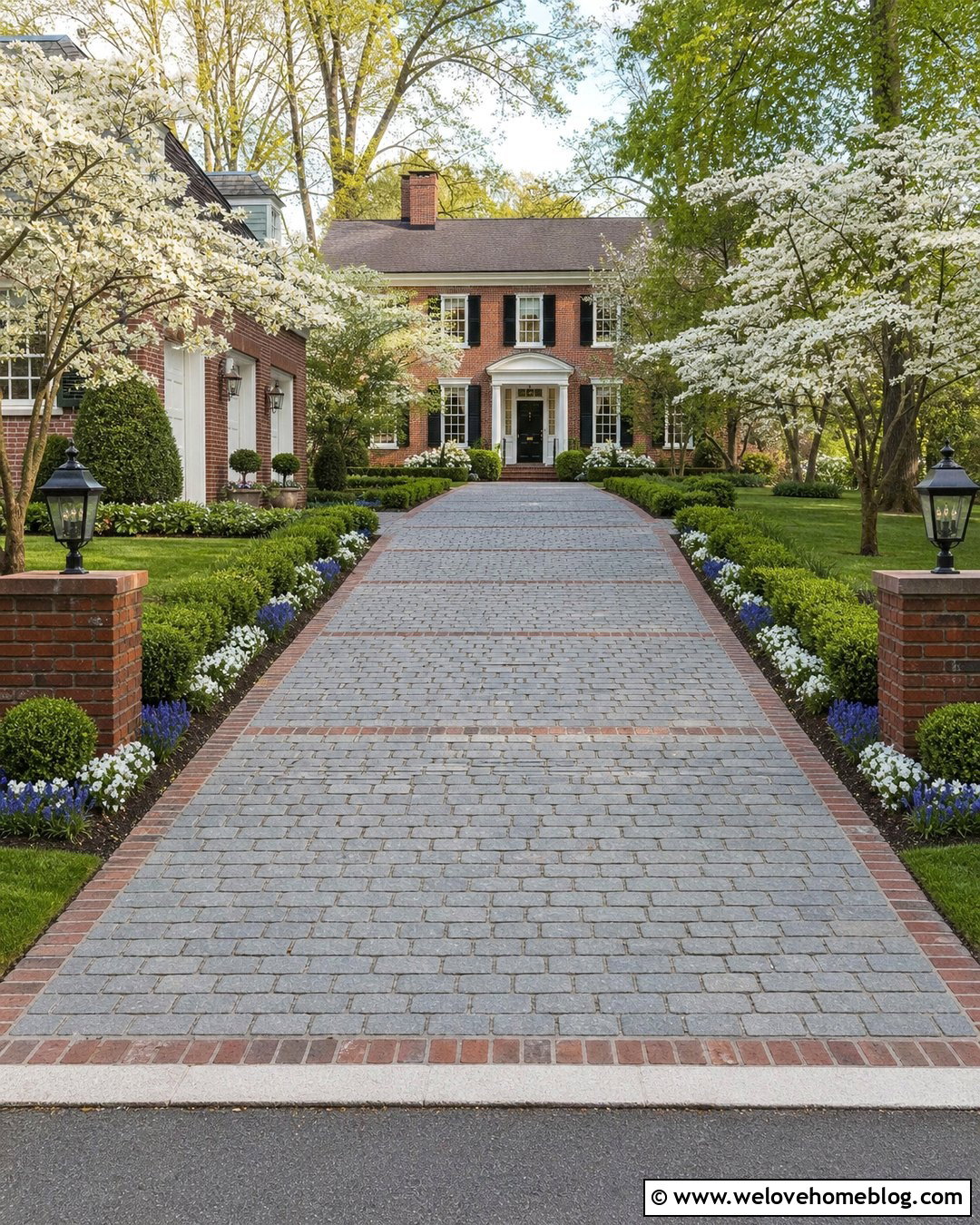
Brick ribbon accents can connect a stone driveway to a red or brown brick home in a subtle way. Use tumbled gray cobblestones for the main surface, laid in broad running rows along a straight driveway. Insert thin clay brick ribbons across the width at regular intervals, creating organized sections and breaking up the long approach. Continue the brick along the driveway perimeter and front walkway for a unified finish. Landscaping can include clipped boxwood, flowering dogwoods, and layered beds with white and blue blooms. Near the garage, repeat one brick ribbon across each threshold to create a deliberate transition. The brick should relate closely to the house facade rather than introduce a bright new color. This complete look feels traditional, warm, and detailed without distracting from the natural character of the cobblestone.
13. Split Cobblestone Driveway With a Landscaped Median
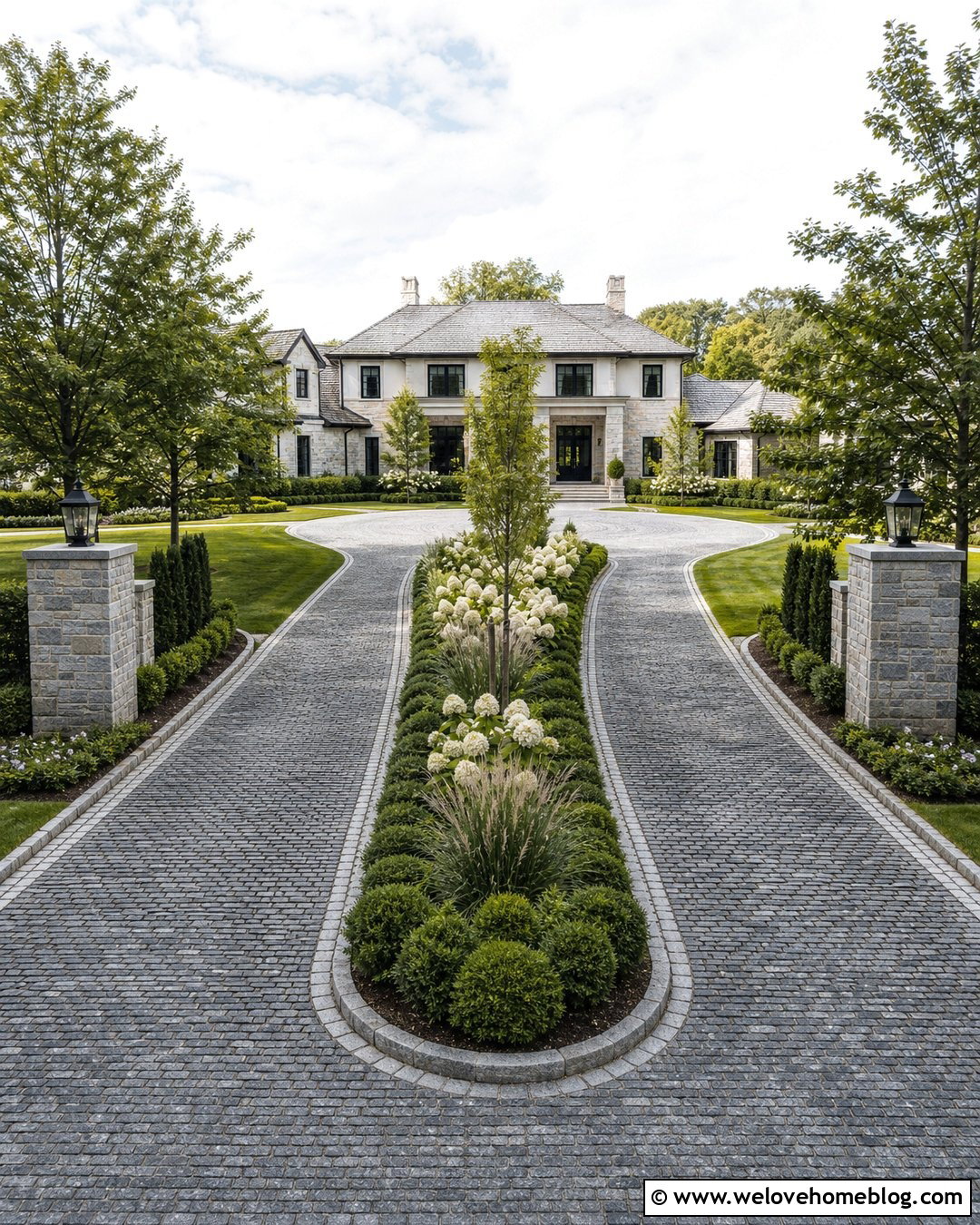
A split driveway can turn a wide front yard into an organized and impressive entrance. Create two curved lanes using charcoal and silver granite cobblestones laid in sweeping rows. Between the lanes, build a long landscaped median edged with matching granite blocks. Fill it with low boxwood, white hydrangeas, ornamental grasses, and one or two upright trees that will not block visibility. The lanes can reconnect near a central motor court or lead separately toward the garage and front entrance. Matching stone pillars at each opening establish symmetry from the street. This layout is practical for larger homes because it separates arriving and departing traffic while adding substantial greenery to the hardscape. Keep the median narrow enough for comfortable turning, and use low plantings near intersections to preserve clear sightlines.
14. Cobblestone Driveway With Heated Snow-Melt Design
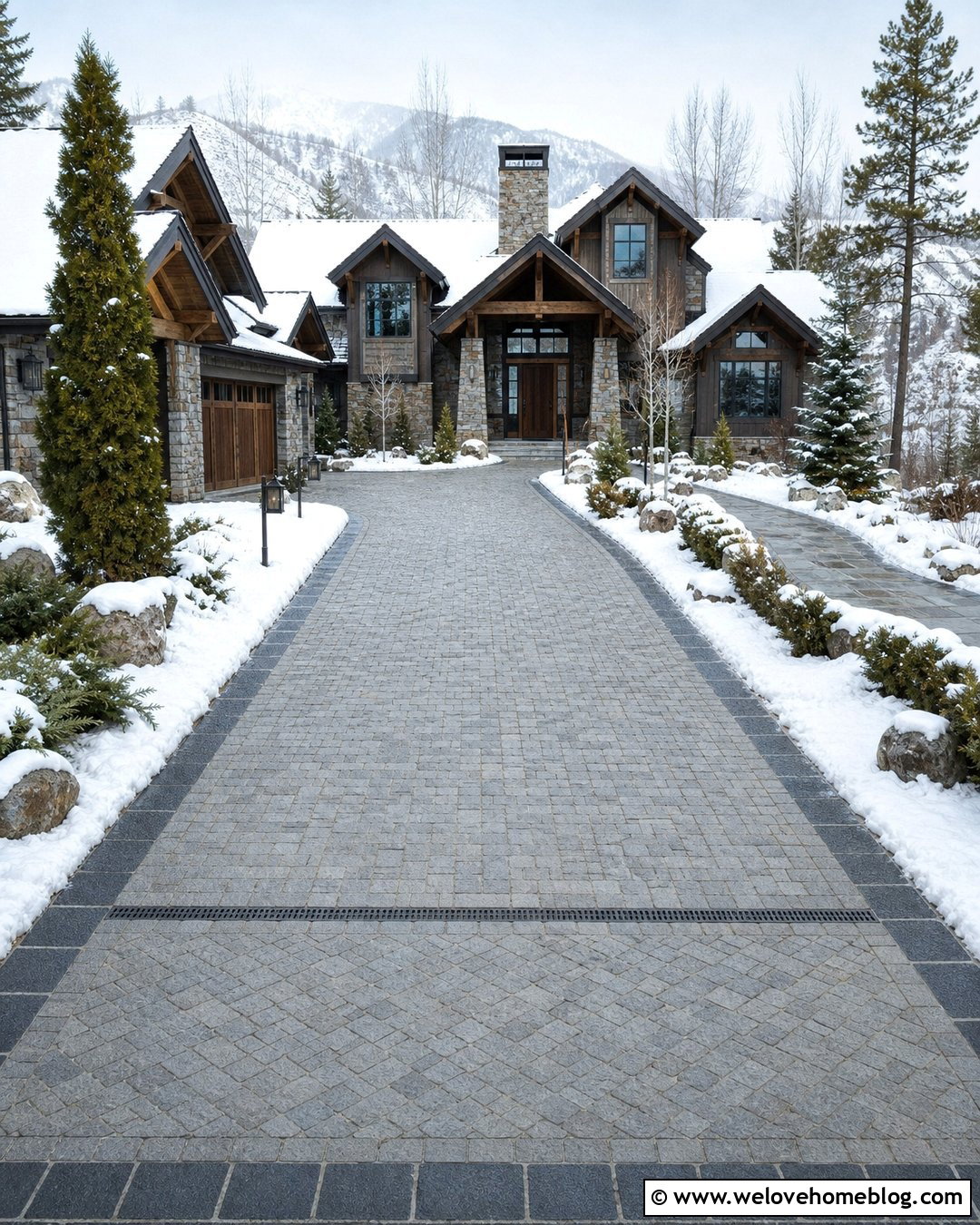
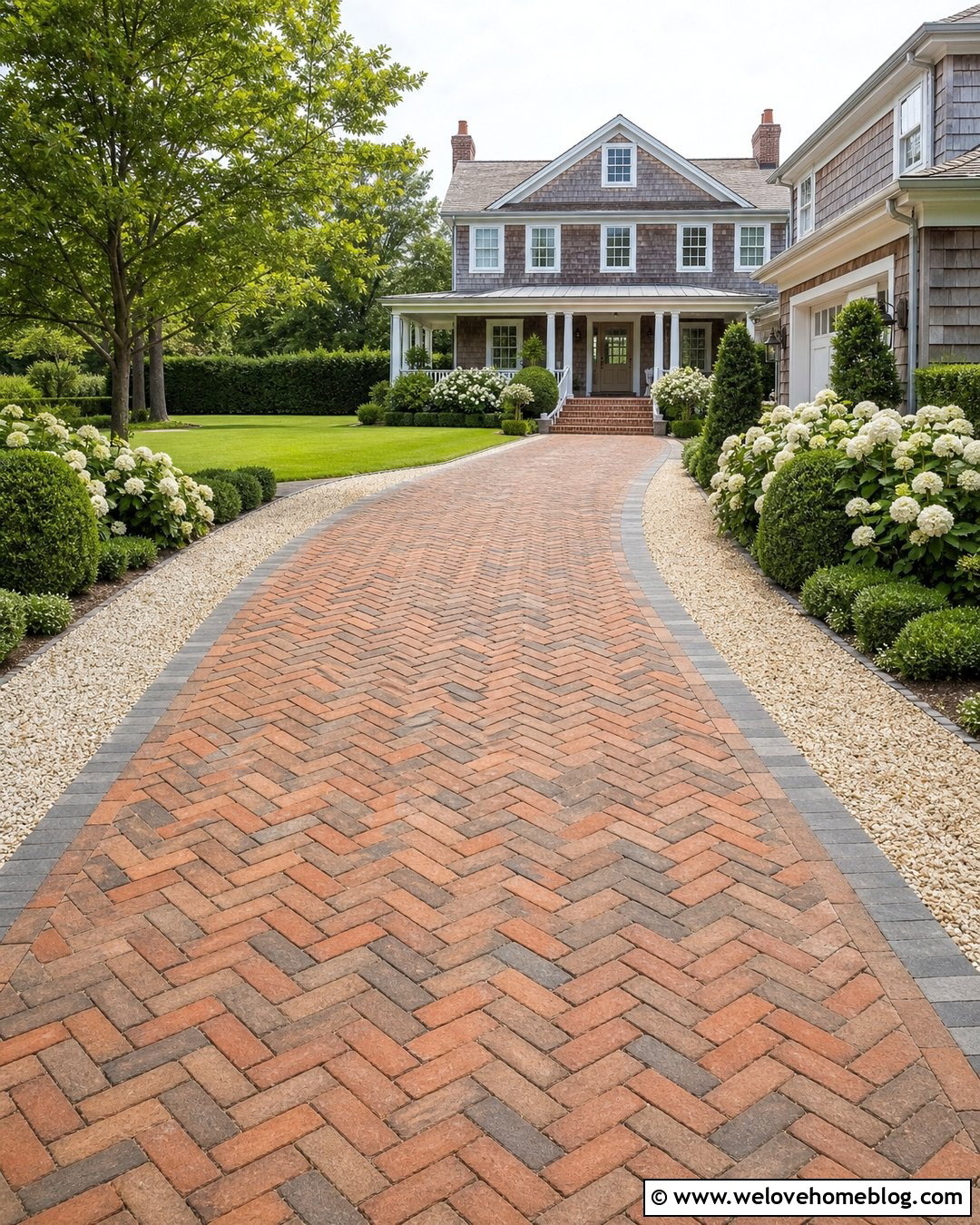
In a cold climate, luxury can also mean stepping outside without facing a heavily snow-covered driveway. Install durable granite cobblestones over a professionally engineered hydronic or electric snow-melt system. Choose tightly fitted rectangular setts in medium-gray tones and use a herringbone pattern in turning zones. Dark granite borders help frame the heated area and distinguish it from adjoining walkways. A straight or gently sloped driveway leading to a mountain-style, craftsman, or contemporary home suits this practical upgrade. Surround it with evergreen planting beds, natural boulders, and winter-hardy shrubs. The system and paving base must be designed together so heat transfers effectively and the stone remains stable. Clearly planned drainage is also essential because melted snow needs a safe route away from the driveway and garage.
15. Cobblestone Driveway With Low Landscape Lighting
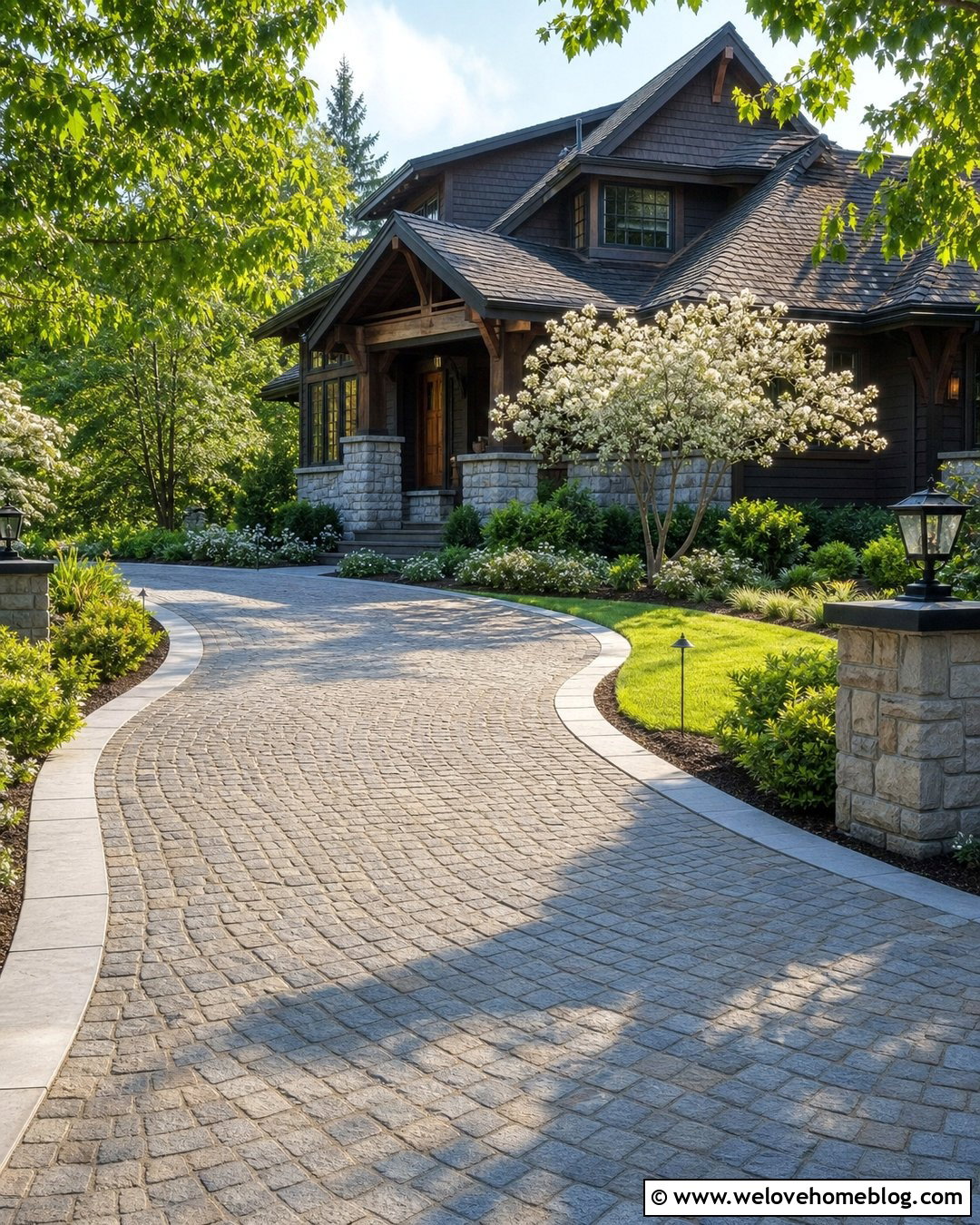
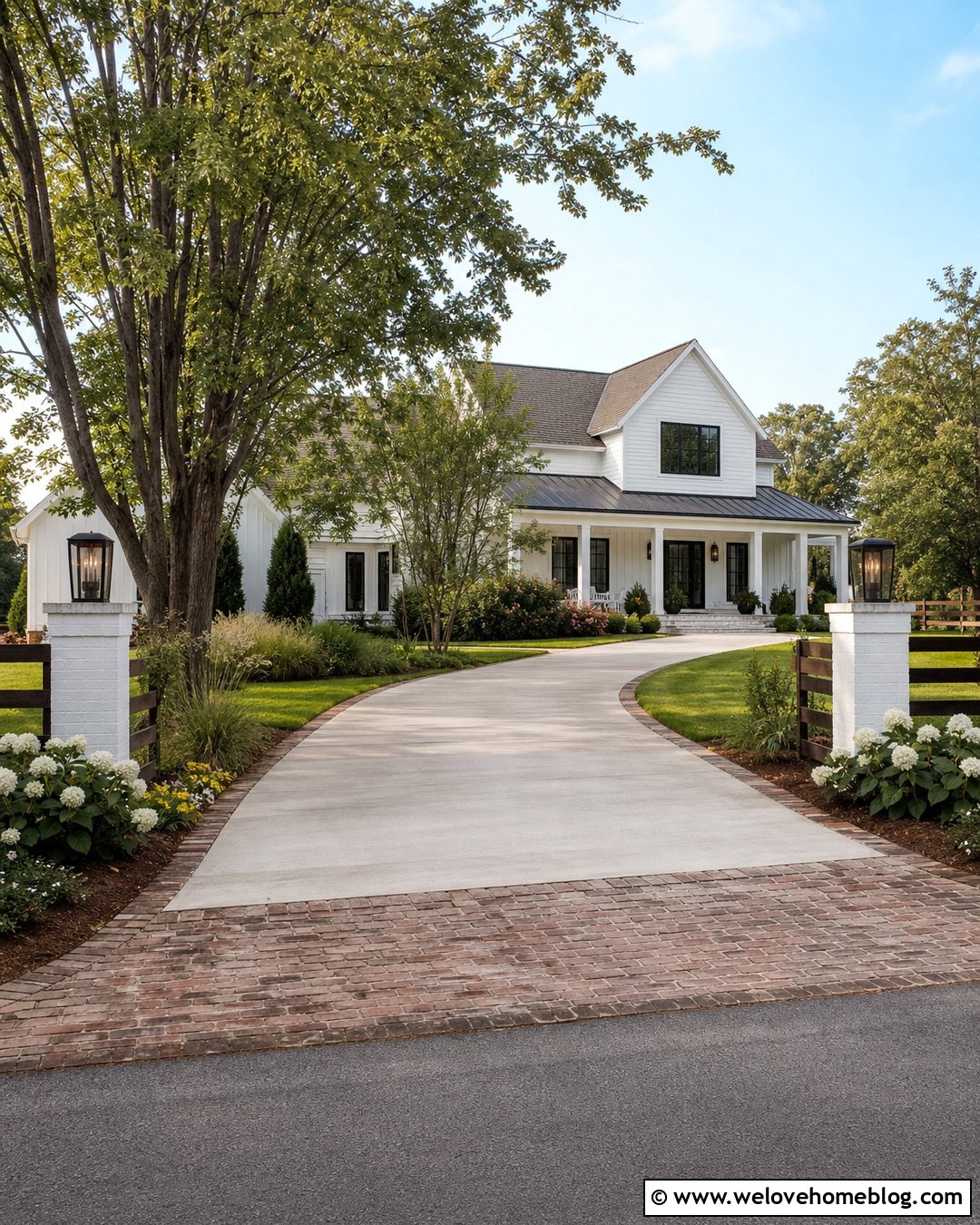
Discreet lighting can highlight cobblestone texture without covering the driveway with visible fixtures. Use warm-gray granite cobblestones in a curved layout bordered by smooth limestone blocks. Place low shielded lights within adjacent planting beds rather than in the main driving surface. Space them to reveal the driveway edge, entrance pillars, key curves, and the route toward the garage. During daylight, layered shrubs, small flowering trees, and ornamental grasses give the approach a polished garden setting. Choose fixtures with simple dark finishes that disappear against mulch and foliage. The full design works well with craftsman, transitional, and contemporary homes. Lighting should support safe navigation while keeping glare away from drivers and neighboring properties. A carefully illuminated border allows the natural pattern of the cobblestone to remain the main visual feature.
16. Cobblestone Driveway With White Hydrangea Borders
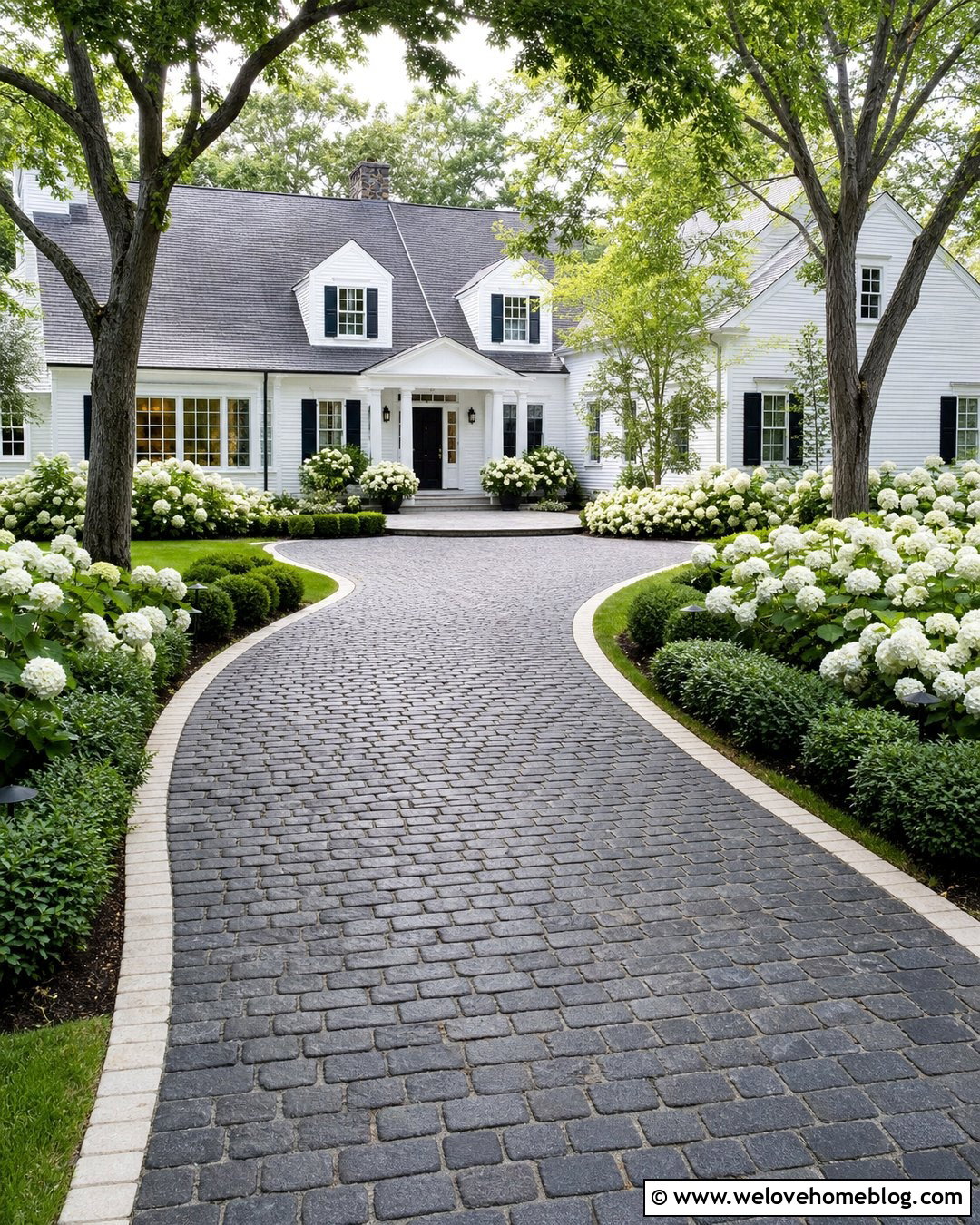
Billowing white hydrangeas bring a soft garden character to the strength and texture of natural stone. Build a gently curving driveway from charcoal-gray granite cobblestones laid in an informal running bond. Add a narrow cream limestone edge to separate the dark paving from deep planting beds. Mass hydrangeas behind low evergreen shrubs so seasonal flowers appear full and generous without spilling into the driving area. Mature shade trees and a neatly maintained lawn can frame the outer edges of the composition. At the house, expand the driveway into a small arrival court and connect it to a matching cobblestone walkway. This combination looks especially polished beside a Cape Cod, shingle-style, or white colonial home. Leave sufficient planting space because mature hydrangeas need airflow, pruning access, and room to develop their natural shape.
17. Cobblestone Driveway With a Modern Steel Gate
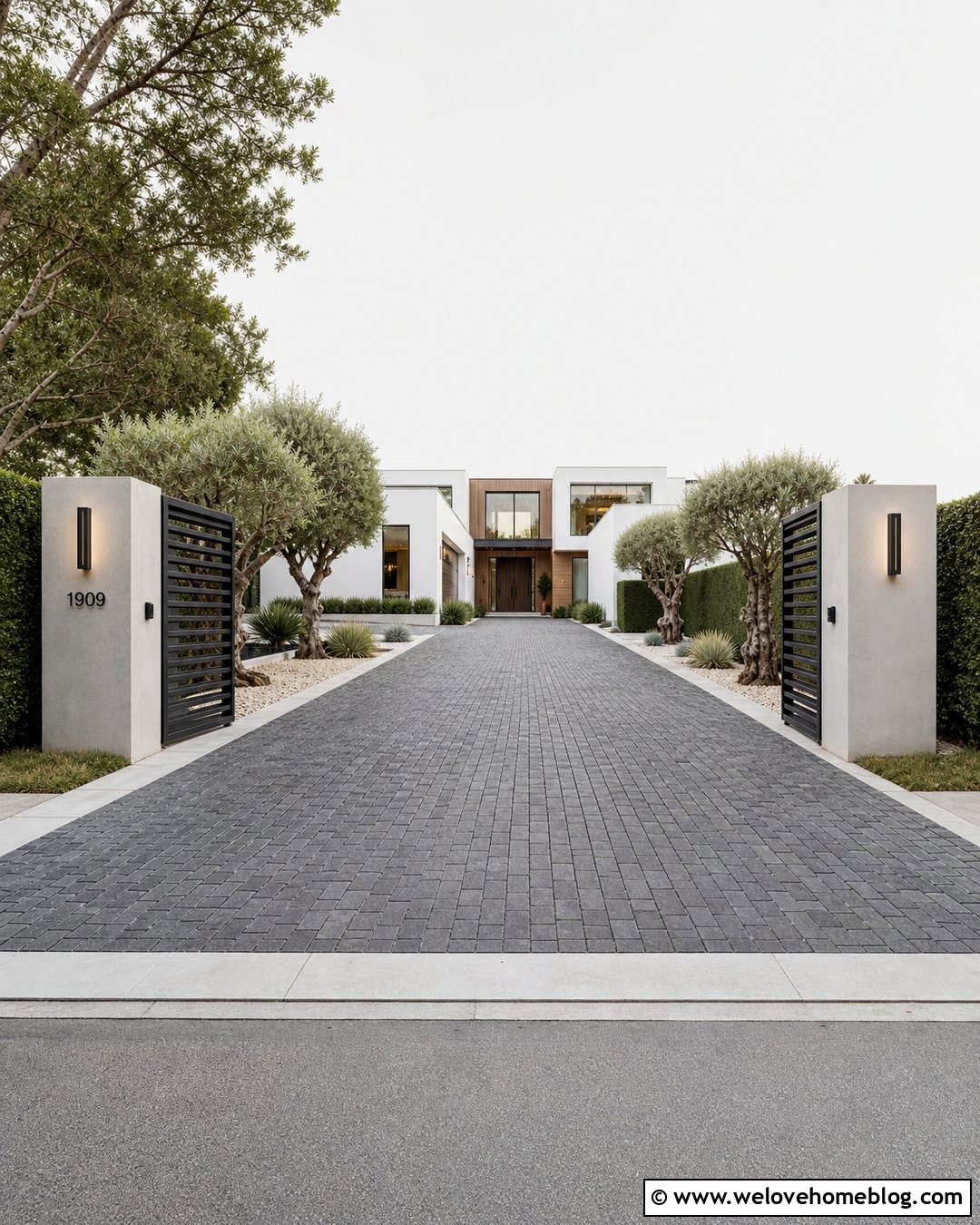
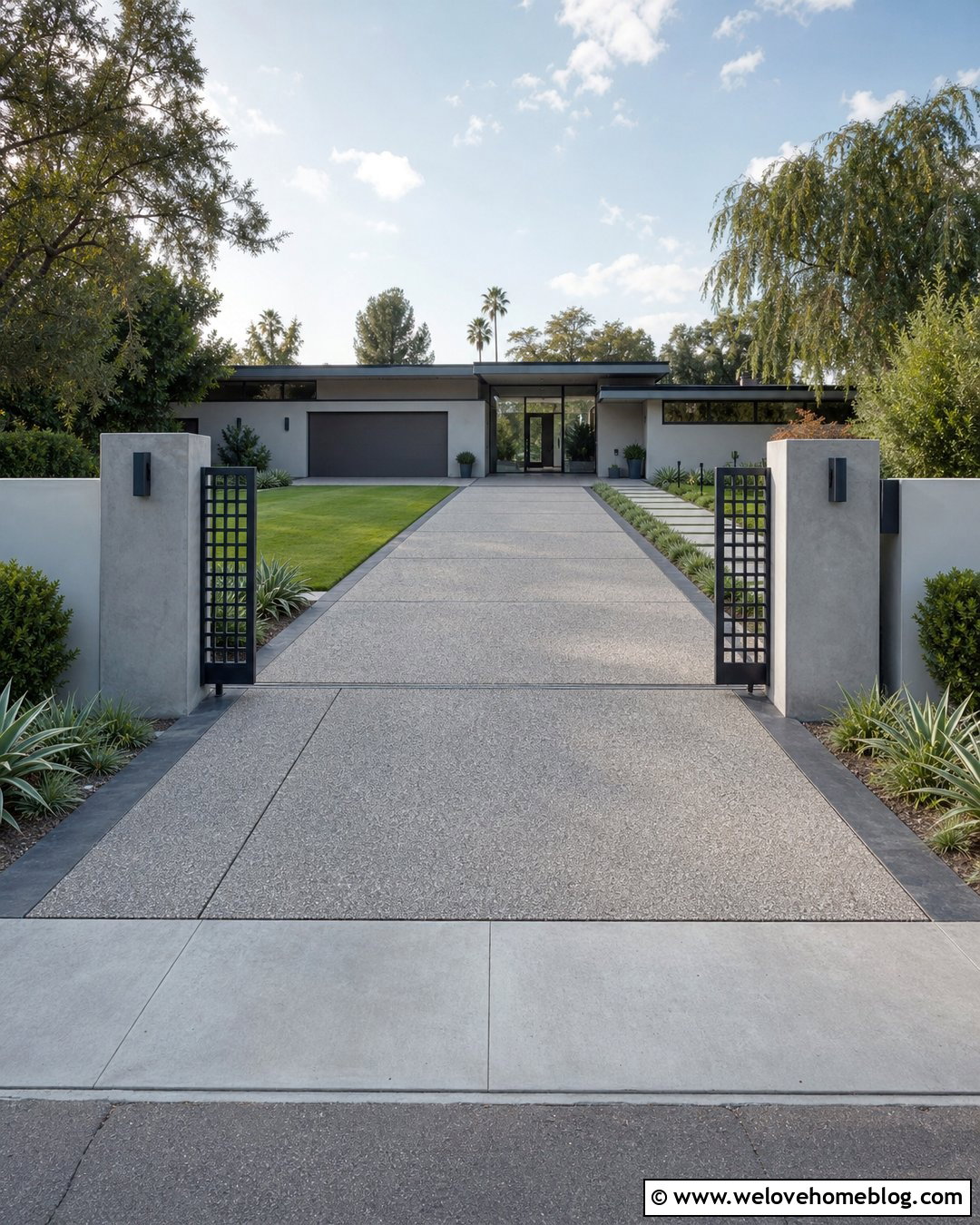
Natural cobblestone and streamlined metal can create a balanced modern entrance. Lay dark-gray basalt cobblestones in a precise linear pattern across a straight driveway. Use large-format limestone curbs on both sides to establish clean boundaries and protect adjacent planting areas. At the entrance, install a simple black steel sliding or swing gate between smooth stone pillars. Avoid ornate scrollwork; vertical bars or solid geometric panels will better suit contemporary architecture. Continue the structured look with clipped hedges, sculptural trees, and beds of pale gravel and ornamental grasses. The gate mechanism, drainage, and driveway slope should be planned together before paving begins. Against a modern house with white stucco, glass, and warm wood siding, the textured cobblestone keeps the entrance from feeling cold while the gate provides privacy and clear architectural definition.
18. Mixed-Tone Cobblestone Driveway With a Parking Court
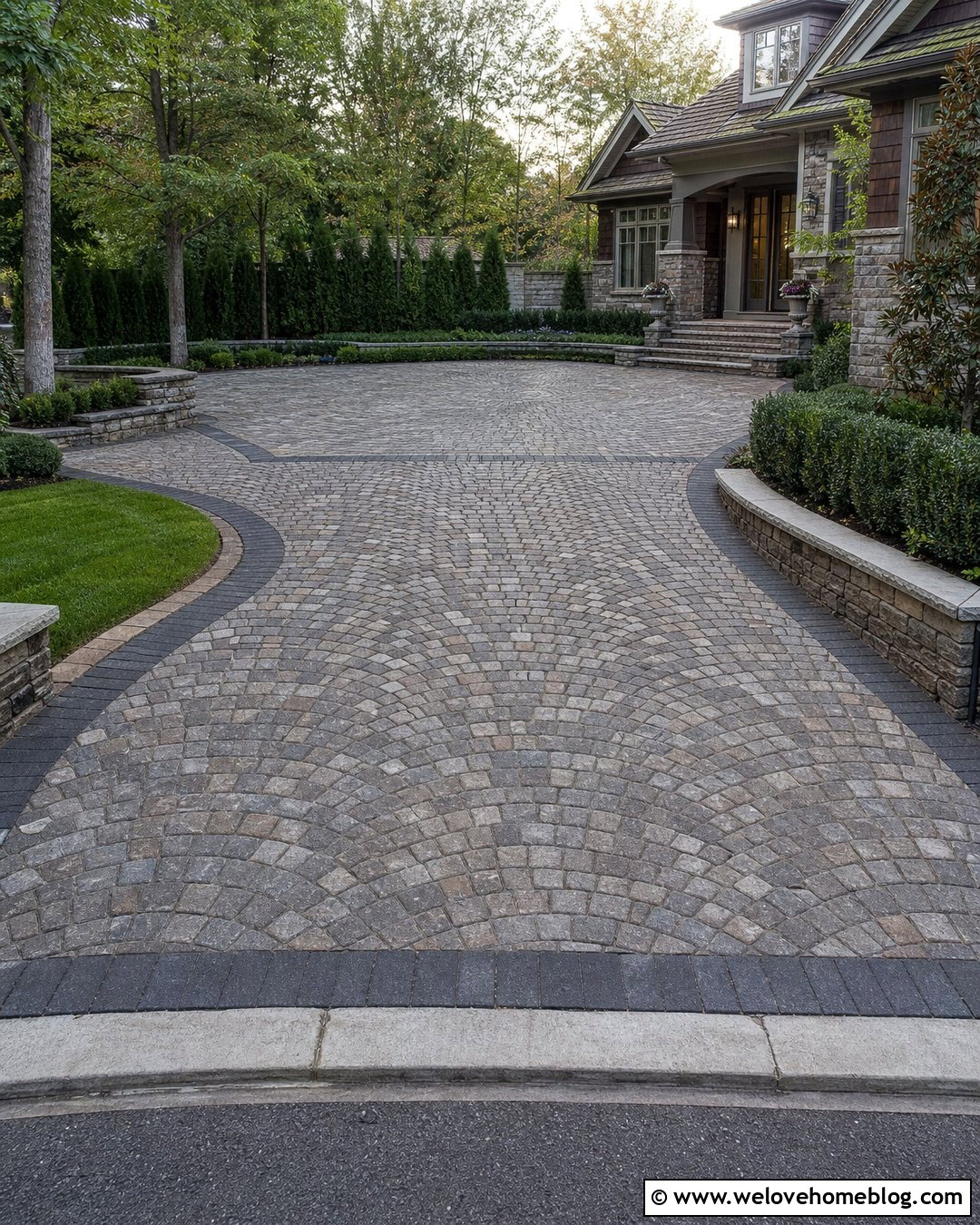
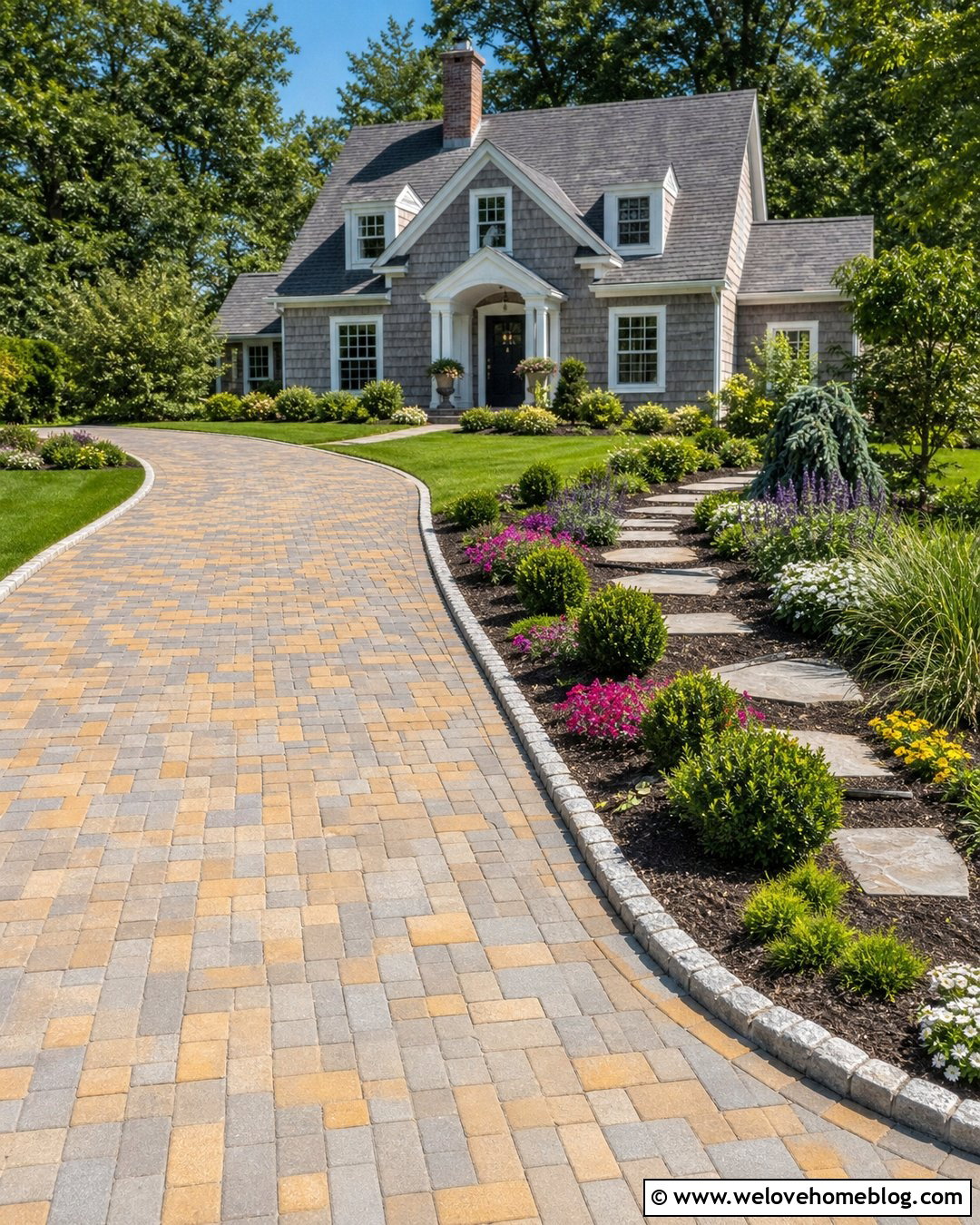
Mixed stone colors can add depth to a large driveway and parking area without requiring elaborate ornament. Select granite cobblestones in coordinated shades of gray, taupe, charcoal, and muted brown. Blend them evenly rather than creating random patches, then lay the stones in a subtle fan pattern. A broad curved driveway can open into a rectangular parking court near the garage, with darker cobblestones outlining each zone. Use raised stone planters, clipped evergreen hedges, and specimen trees to reduce the visual scale of the paved surface. Connect the front door with a wide walkway made from the same stone blend. This approach is ideal for a sizable craftsman, country estate, or transitional home. Repeating colors from the roof and facade will make the varied cobblestones feel purposeful and architecturally connected.
19. Cobblestone Driveway With Formal Boxwood Landscaping
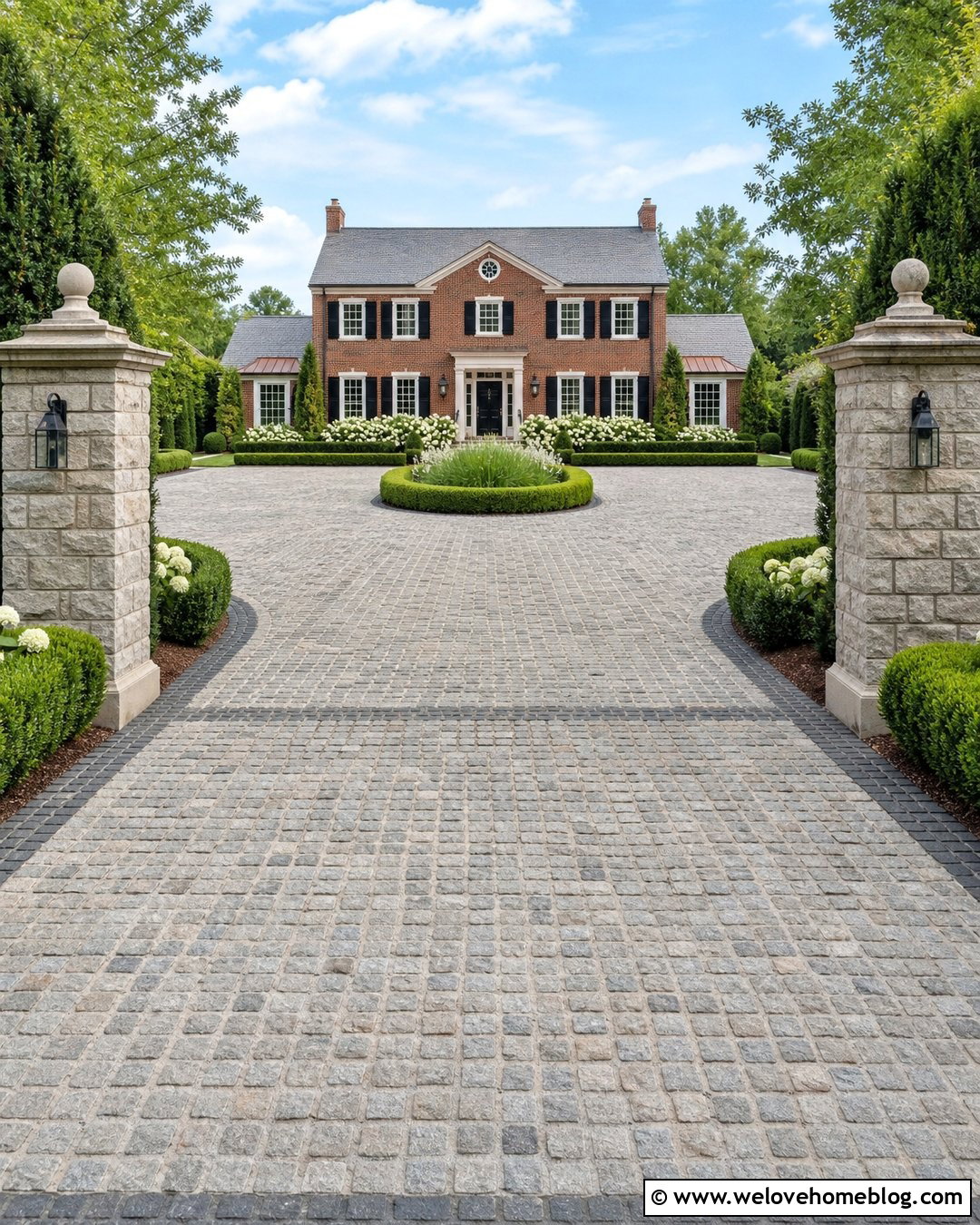
Crisp boxwood lines can give an irregular cobblestone surface a sense of order. Use reclaimed gray granite cobblestones in a gently flared driveway leading toward a symmetrical brick or stone residence. Frame the paving with flush charcoal cobblestone borders, followed by low boxwood hedges trimmed into clean continuous lines. Behind them, add structured beds of white roses, hydrangeas, and upright evergreens. At the street, matching masonry pillars can mark the entrance without requiring a gate. Near the house, carry the cobblestone into a balanced motor court and use a central planting island to manage the large surface. The contrast between weathered stone and precise greenery creates understated luxury. Maintain enough clearance between hedges and vehicles so branches are protected and the driveway remains comfortable to use.
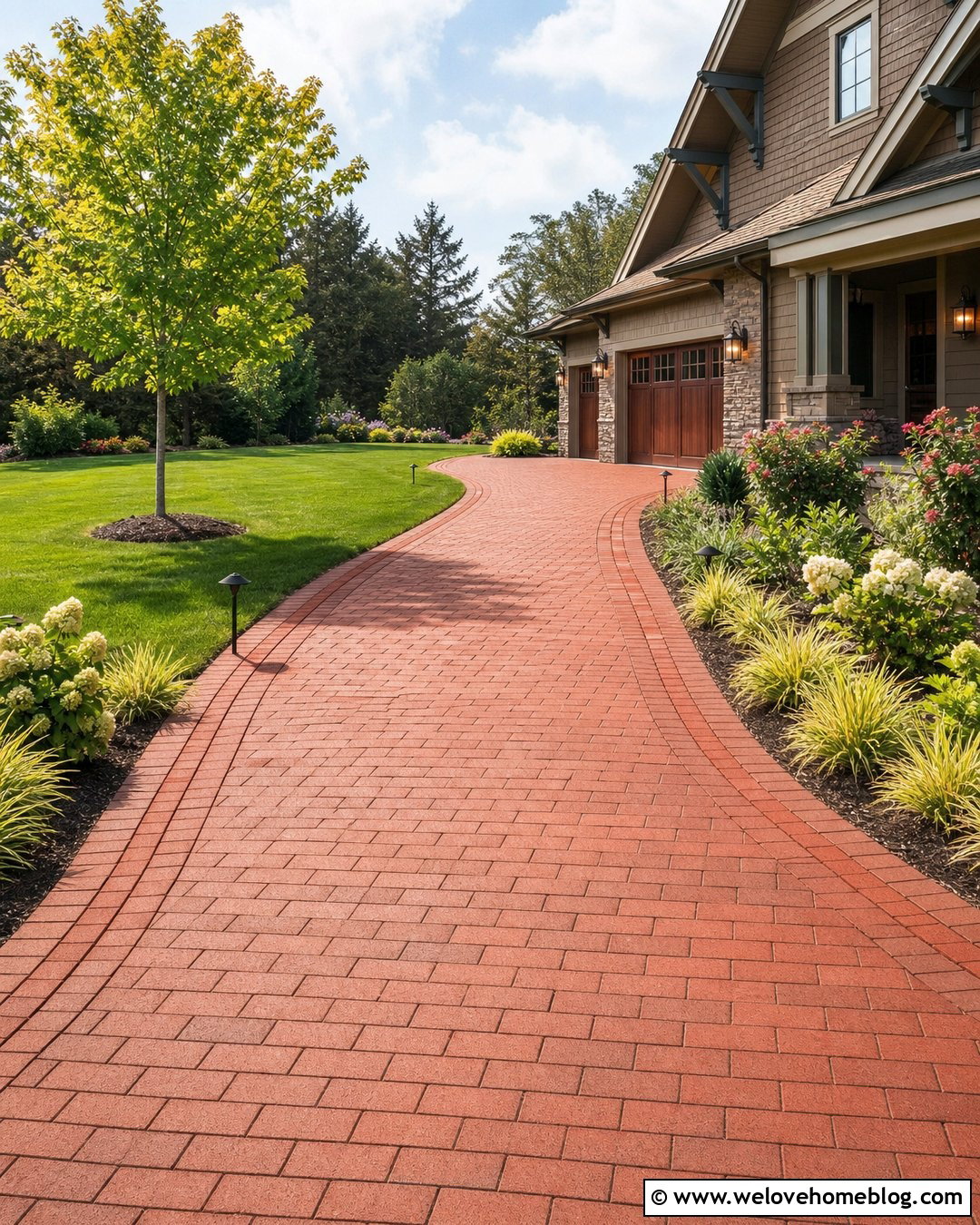
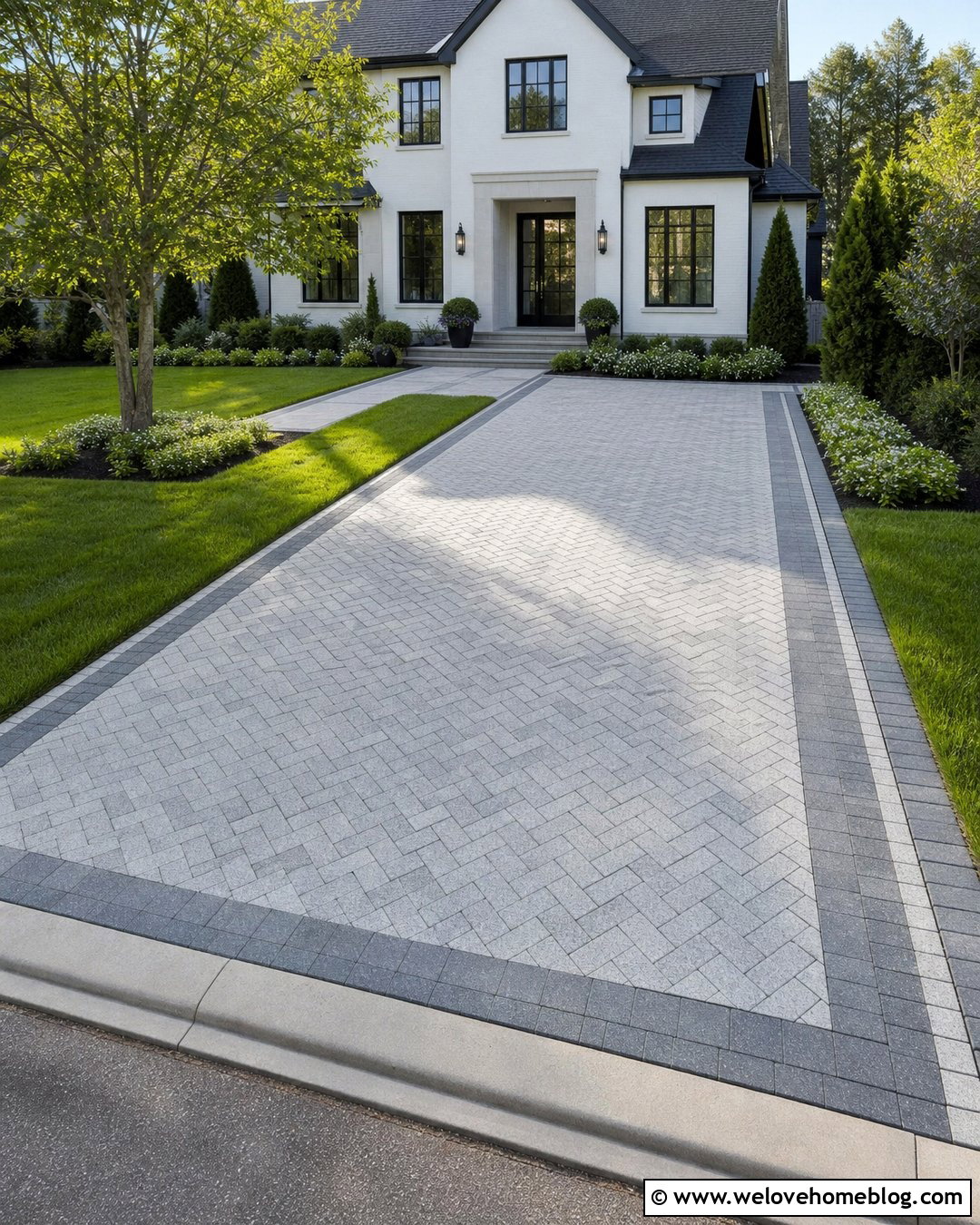
20. Horseshoe Cobblestone Driveway With Grand Entrance Pillars
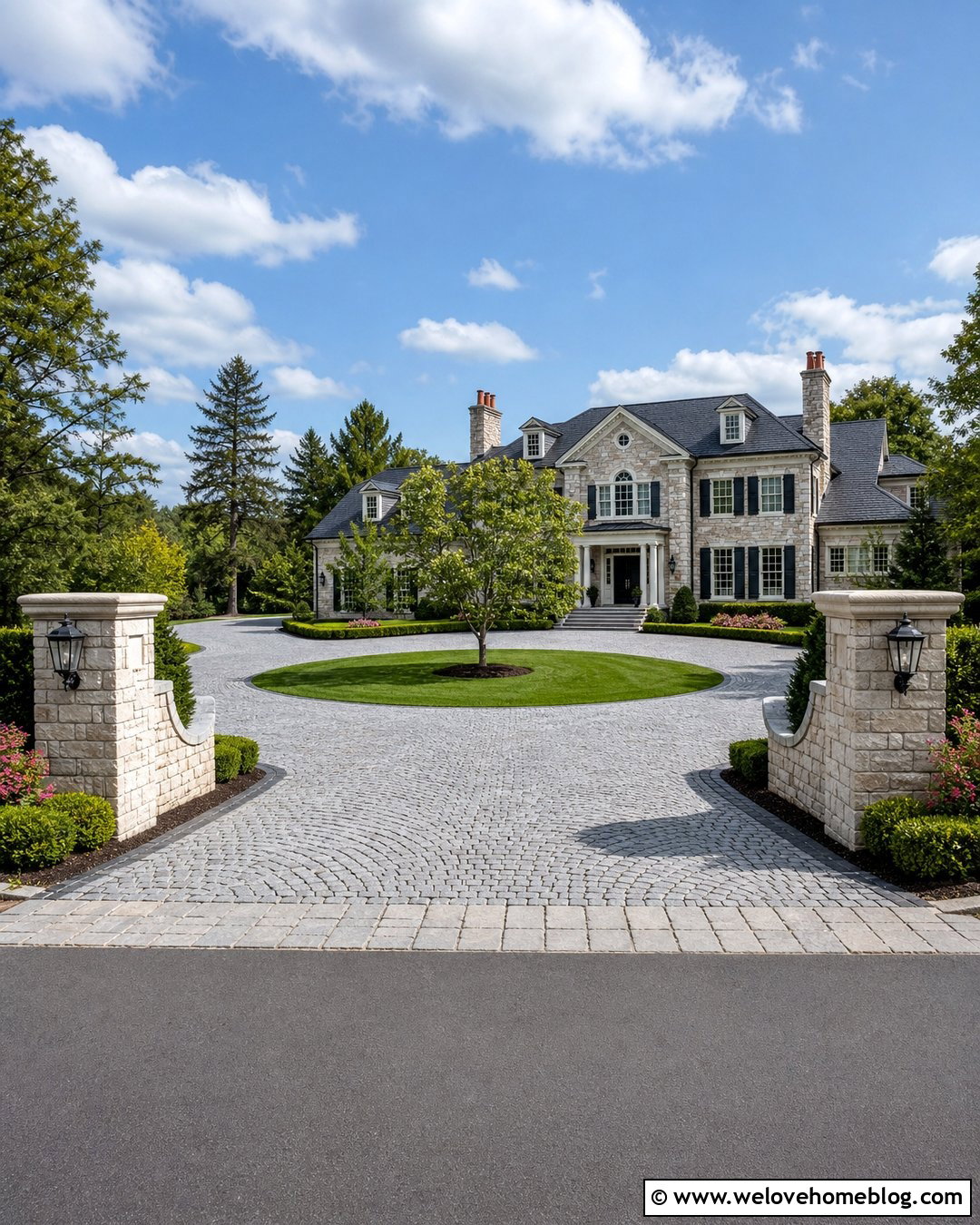
A horseshoe driveway offers the ceremony of a circular approach while leaving the center lawn open and spacious. Pave both curved arms with silver-gray granite cobblestones in a radiating pattern that follows each bend. Use dark Belgian block edging to emphasize the outline and contain the stone surface. Place substantial limestone pillars at both street entrances, topped with restrained lanterns and connected to short curved walls. Within the central lawn, create a layered landscape of one specimen tree, clipped shrubs, and broad seasonal flower beds. Near the house, widen the driveway into an arrival area beside the front steps. This layout complements Georgian, colonial, and large traditional residences. Consistent paving and matching entrance details make the two openings read as one complete, luxurious driveway design rather than separate access points.
Conclusion:
The best luxury cobblestone driveway ideas combine beautiful stone with a layout that supports everyday driving, drainage, landscaping, and the architecture of the home. A fan-pattern courtyard may suit a European-inspired estate, while straight dark cobblestones can complement a modern facade. Curved drives, formal borders, planted medians, entrance pillars, and mixed-tone surfaces offer additional ways to personalize the approach. Before selecting a design, consider vehicle turning space, local weather, site grading, joint material, and the strength of the prepared base. Professional planning is especially valuable for gates, heated surfaces, complex patterns, and large motor courts. With thoughtful installation, a cobblestone driveway can become a lasting part of the home’s identity.

Related posts:
Leave a Reply