
A well-planned driveway can do more than provide parking. It can also become a welcoming outdoor space for morning coffee, casual conversations, or watching children play. These 20 Driveway Sitting Area Ideas combine comfortable seating with practical surfaces, attractive borders, and front yard landscaping. The key is to place the seating outside vehicle paths while visually connecting it to the driveway and home. A defined patio surface, low planting, shade, and a clear walkway can make even a compact area feel intentional. Whether your driveway is concrete, gravel, asphalt, brick, or pavers, there is a layout that can suit your space and budget. Explore the complete designs below to find practical and inviting 20 Driveway Sitting Area Ideas.

1. Small Paver Driveway Sitting Area
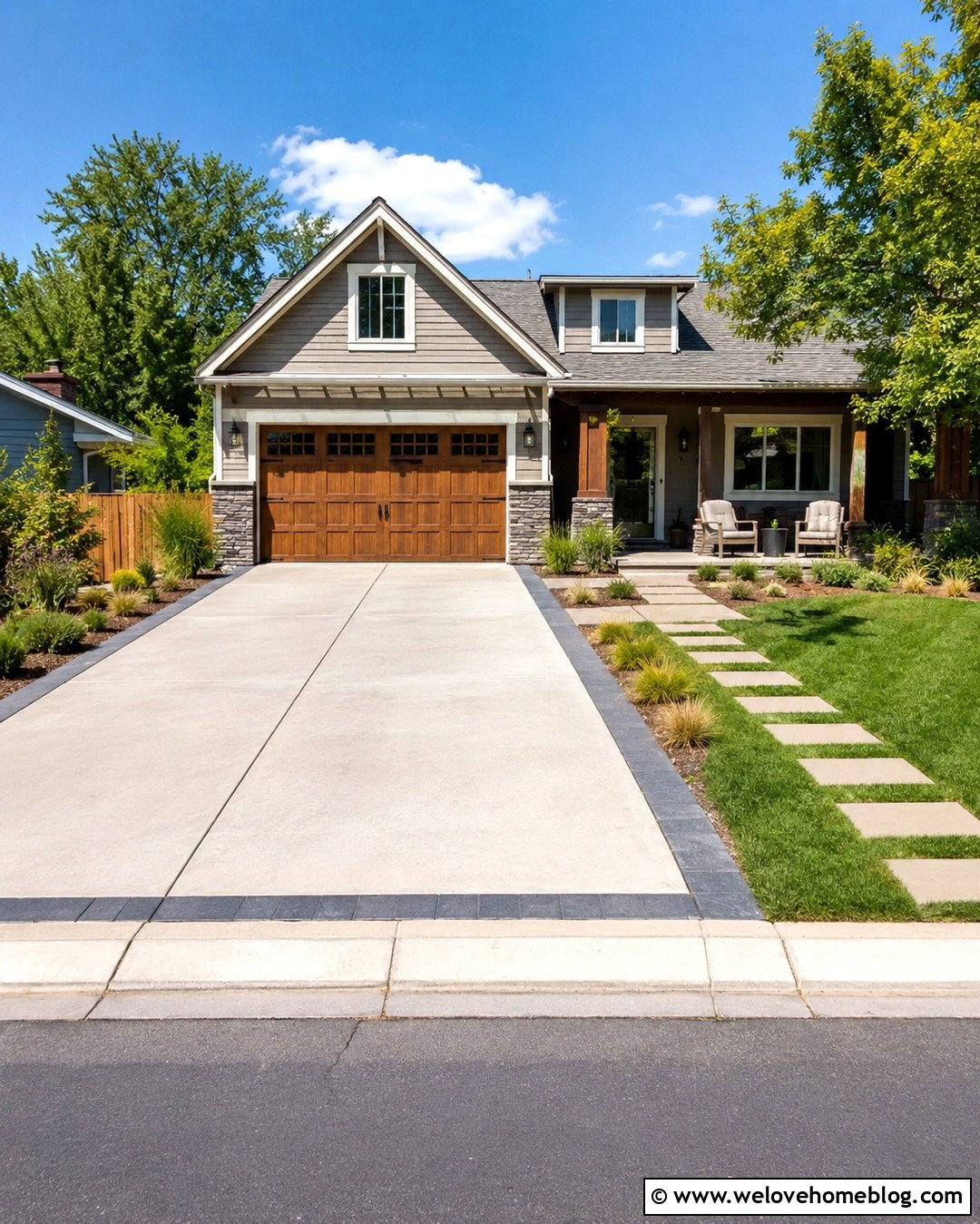
A compact paver patio beside the driveway can turn an unused strip of lawn into a comfortable outdoor nook. Choose concrete pavers that complement the driveway without matching it exactly. This creates a clear visual boundary between parking and sitting. A straight concrete driveway looks especially polished with a small square patio, a paver ribbon border, and two weather-resistant chairs. Add low ornamental grasses behind the seating for gentle screening without blocking views of approaching vehicles. A stepping-stone path can connect the patio to the front door. Keep furniture fully outside the door-swing and backing zones. This complete layout works well for smaller suburban yards because it adds usable space while keeping the driveway open, organized, and easy to navigate.
2. Gravel Driveway Sitting Area With Adirondack Chairs
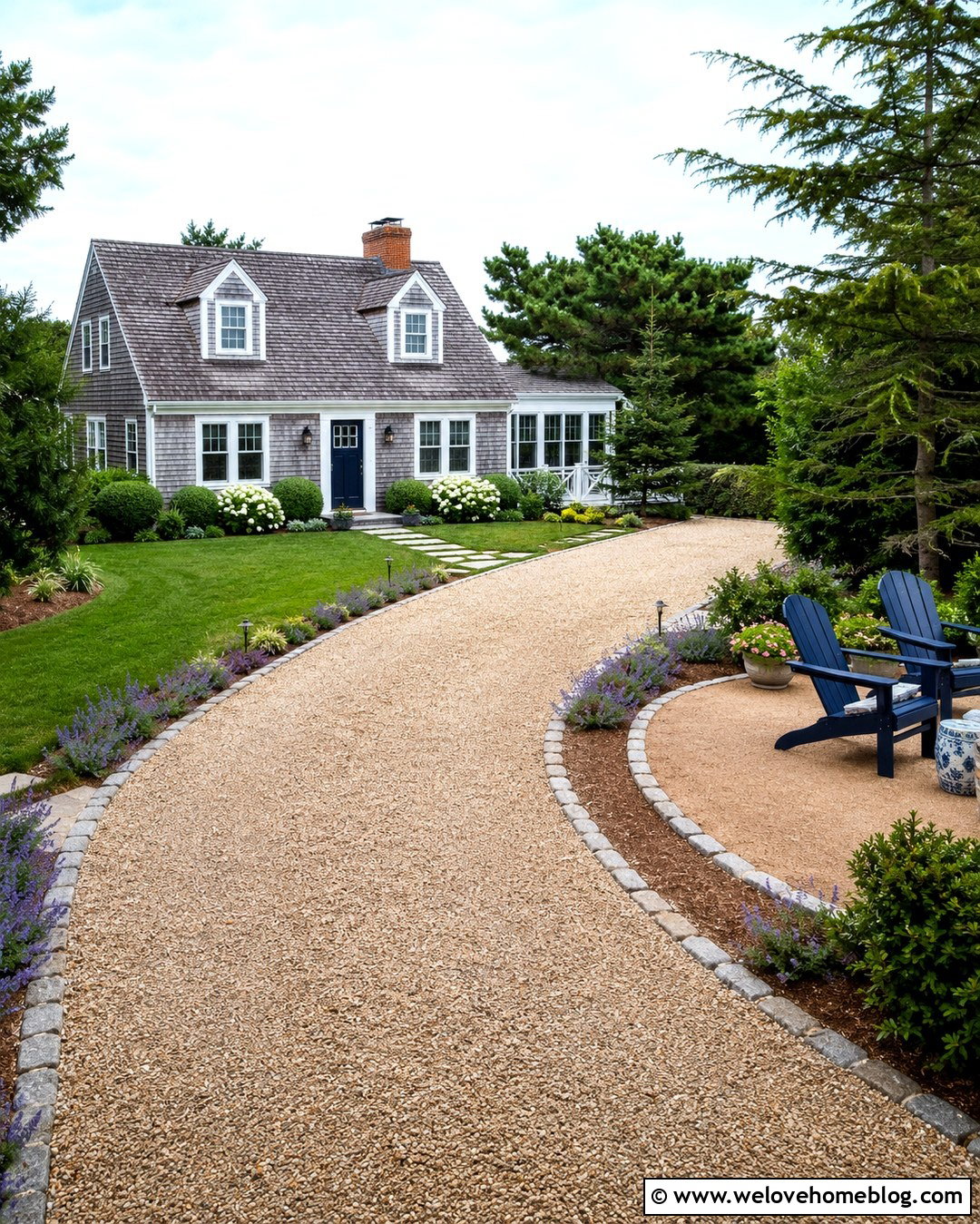
The soft crunch of gravel creates a relaxed setting that pairs naturally with Adirondack chairs and casual landscaping. Start with a curved pea gravel driveway edged in cobblestone. Beside the widest section, create a separate circular sitting pad using compacted decomposed granite or matching gravel held firmly inside steel edging. Two or three Adirondack chairs can face the front garden instead of the parked vehicles. Surround the patio with lavender, catmint, dwarf evergreens, or other plants suited to your local conditions. A few large stepping stones will provide stable footing between the driveway and chairs. This design feels informal but finished, especially beside a cottage or country home. Use a stabilizing grid beneath loose material if chair legs sink or gravel regularly shifts underfoot.
3. Concrete Driveway Sitting Area Near The Garage
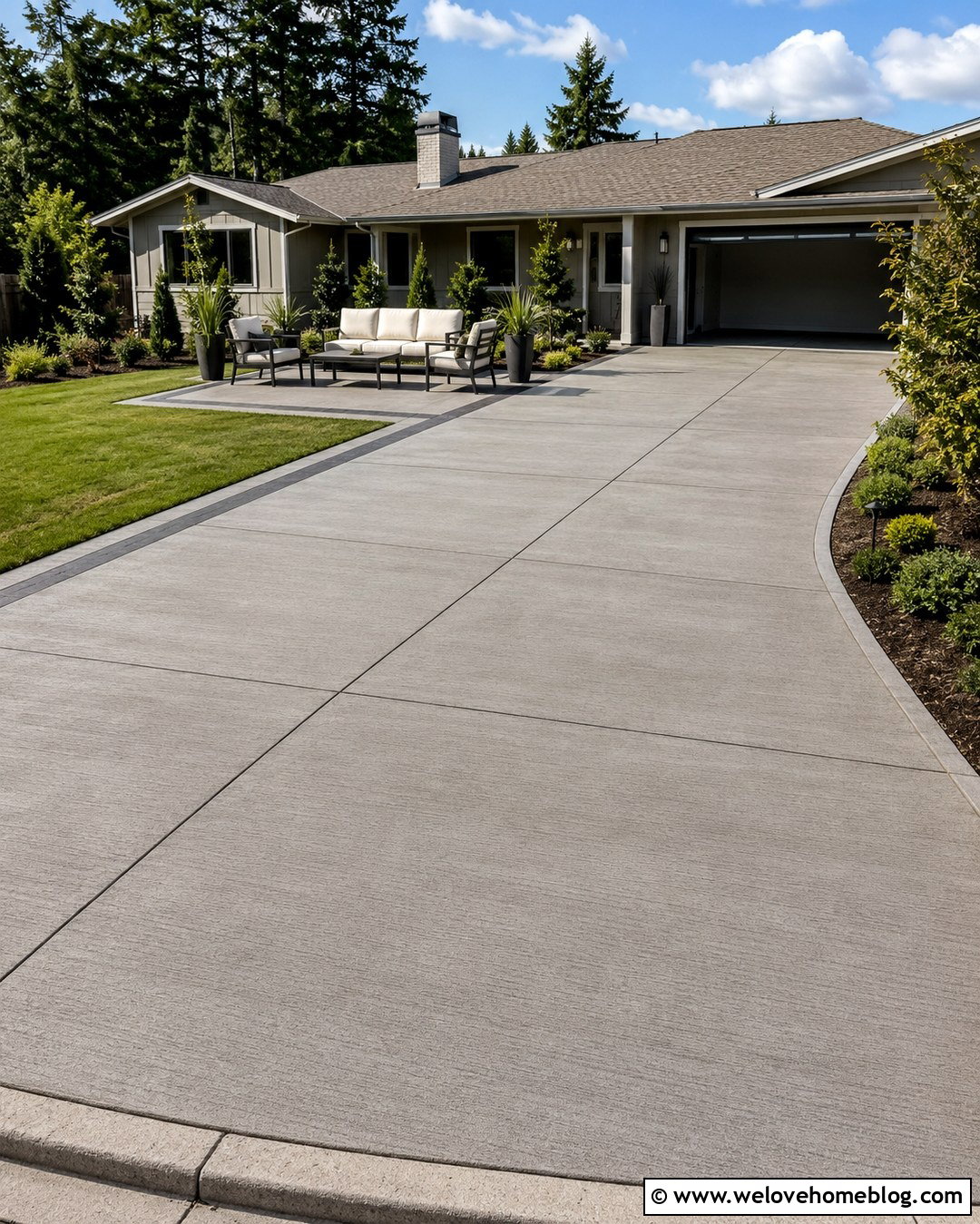
An extra-wide concrete driveway can accommodate a sitting area near the garage when the zones are clearly separated. Use saw-cut lines or a contrasting paver band to mark a rectangular patio along the outer edge. Place a small outdoor sofa and two chairs against the house, leaving generous clearance around garage doors and parked vehicles. Large planters can soften the transition while helping the sitting space feel protected. For a cohesive finish, repeat colors from the home’s siding, garage door, or trim in the furniture and containers. A nearby wall-mounted light makes the area useful without placing fixtures where cars could strike them. This arrangement is practical for households that enjoy chatting with neighbors, supervising outdoor activities, or using the driveway as flexible gathering space.
4. Brick Driveway Sitting Area With Built-In Bench
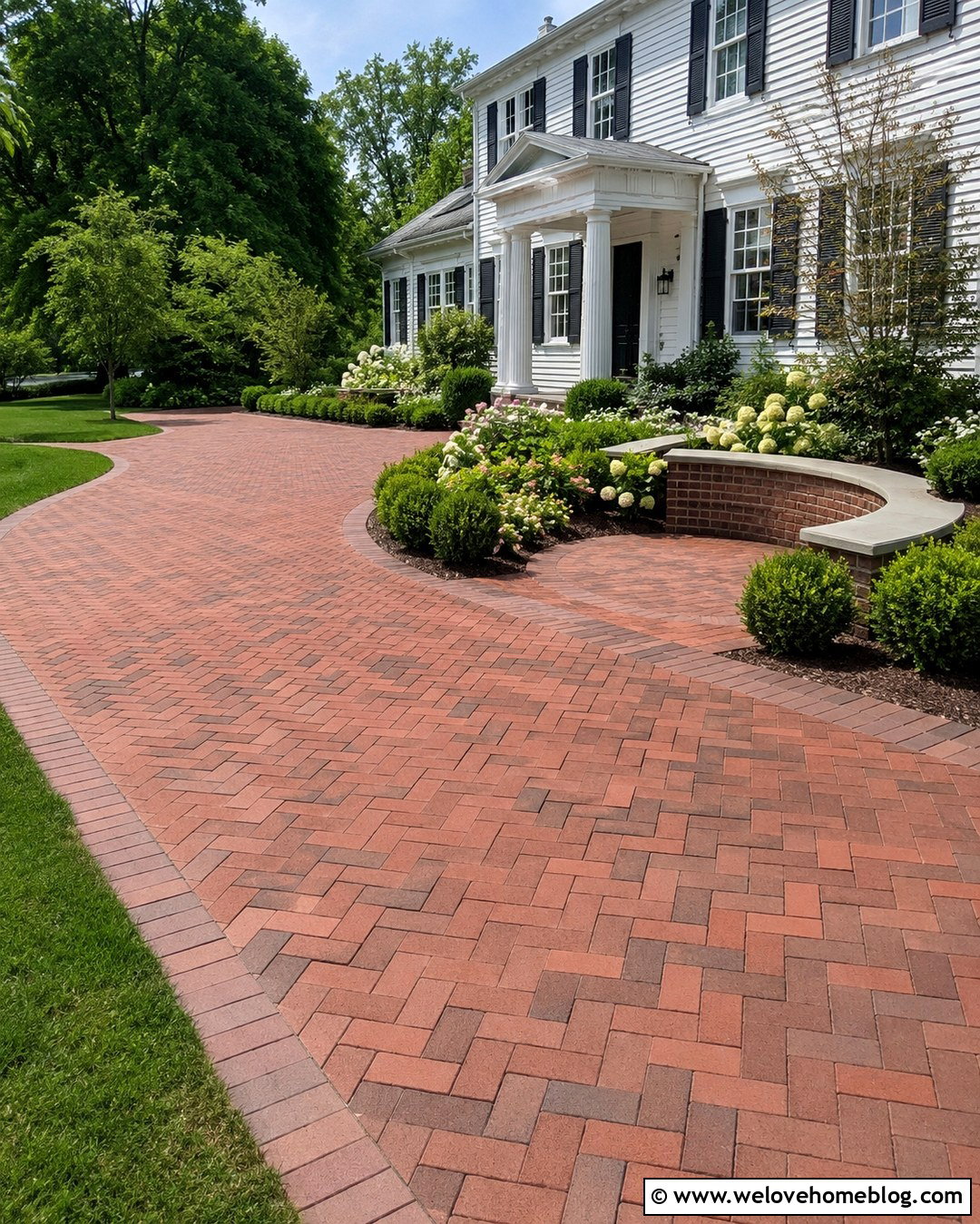
Warm brick creates a traditional foundation for a sitting area that feels connected to an established home. Lay the driveway in clay brick pavers using a herringbone pattern, then widen one side into a semicircular patio. A low masonry wall around the outer curve can provide built-in seating while also protecting the area from the lawn. Cap the wall with smooth stone for a comfortable, durable surface. Add loose cushions when the space is in use and store them indoors afterward. Layer hydrangeas, boxwood, and flowering perennials behind the wall to create a garden backdrop. A contrasting soldier-course border can define the driveway’s vehicle zone. This complete look suits Colonial, Georgian, and traditional brick houses while keeping furniture from spreading into the driving path.
5. Driveway Sitting Area Under A Pergola
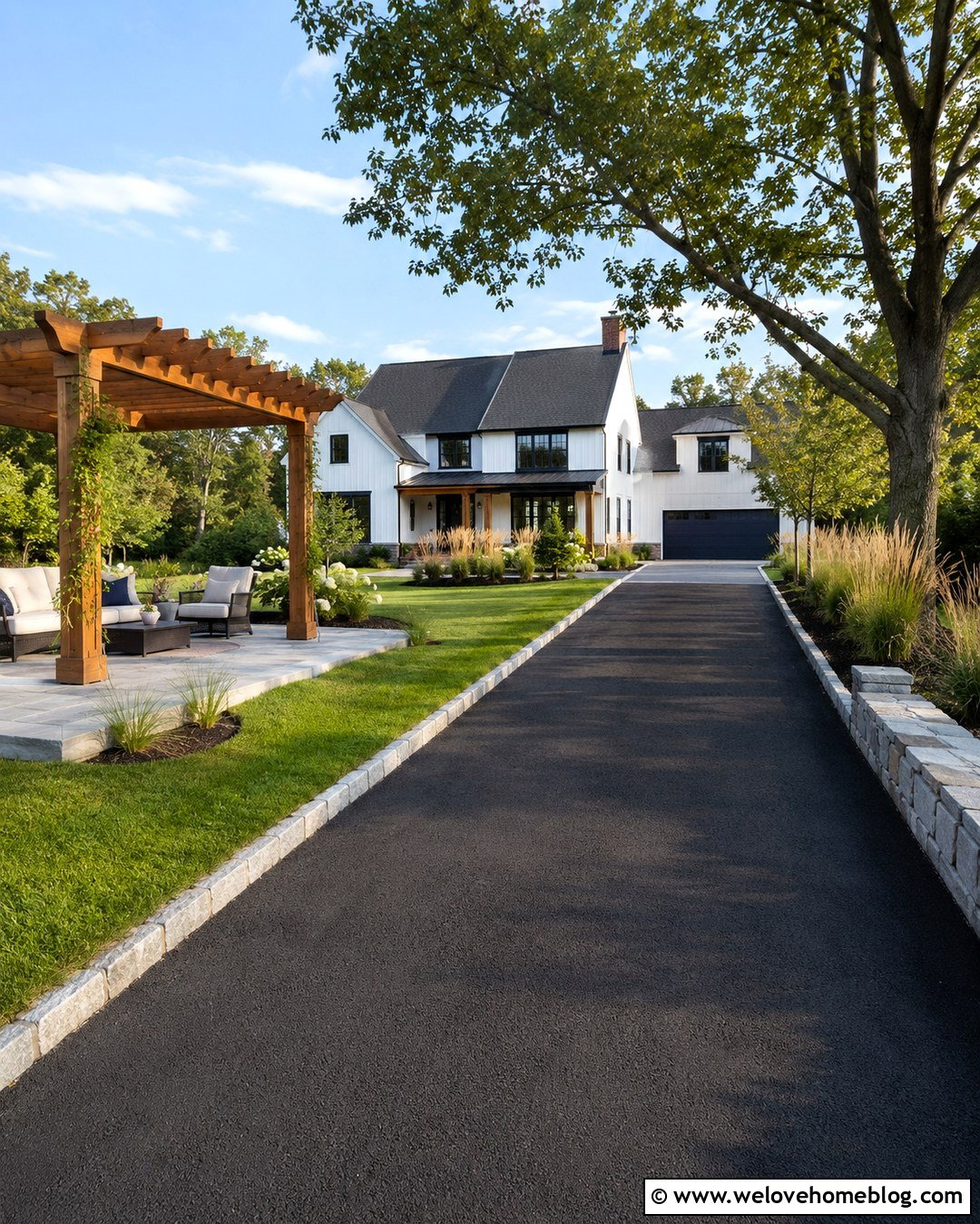
A pergola can transform an exposed spot beside the driveway into a defined outdoor room. Pair a straight asphalt driveway with a rectangular concrete paver patio positioned near the front or side of the house. A simple wood pergola overhead gives the seating area architectural structure and filtered shade. Place a loveseat, two chairs, and a low table beneath it while keeping the posts safely outside vehicle clearance areas. Use a stone curb or planted border to separate the patio from the asphalt. Climbing vines can soften the pergola, although they should be selected for local growing conditions and manageable maintenance. Repeat the wood tone on the front door or garage accents. The result is a welcoming driveway sitting area that feels intentional rather than temporarily furnished.
6. Circular Driveway Sitting Area In The Center Island
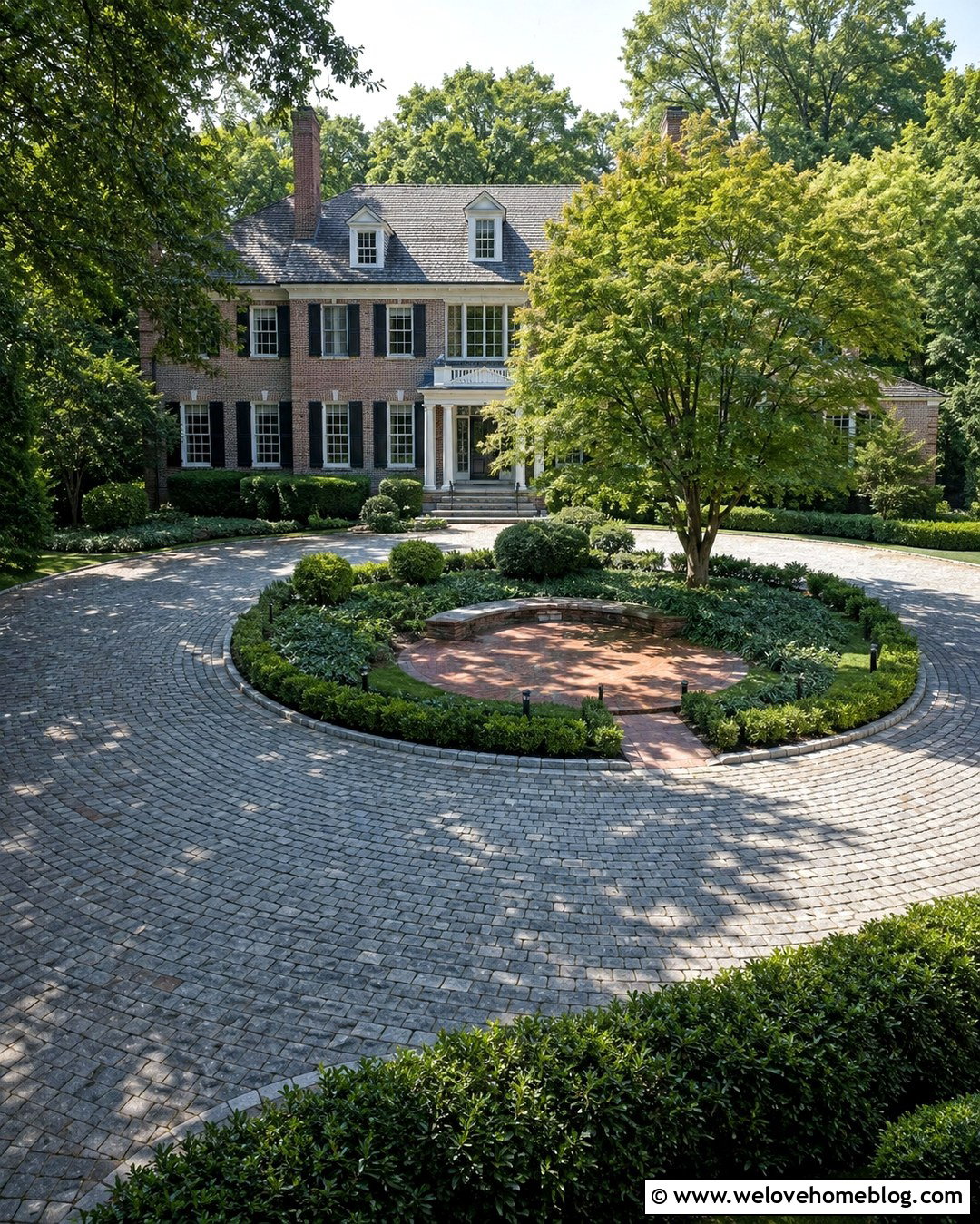
A landscaped center island can become the focal point of a circular driveway while providing a peaceful place to sit. Surround the island with a cobblestone driveway and create a level brick paver patio inside the planting area. Position a curved bench beneath a small ornamental tree so visitors can enjoy shade and views toward the house. Low shrubs and ground cover should frame the seating without hiding people from drivers using the loop. Connect the patio to the house with a clearly marked walkway that crosses the driveway at the safest, most visible point. Bollard-style lighting can emphasize the crossing and island edge. This formal arrangement works best on larger properties where the center island is wide enough to preserve comfortable separation between seating, landscaping, and moving vehicles.
7. Driveway Sitting Area With A Fire Pit
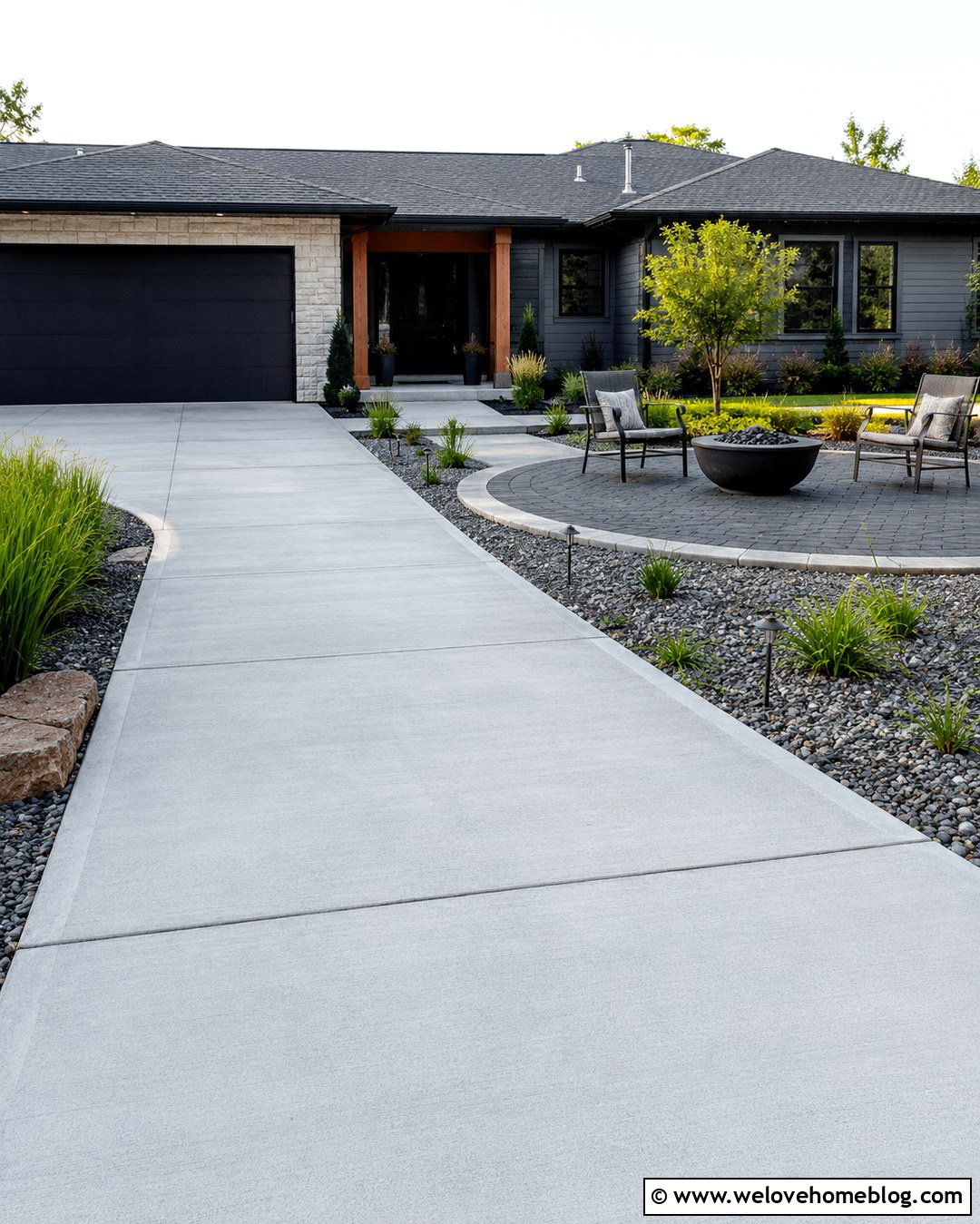
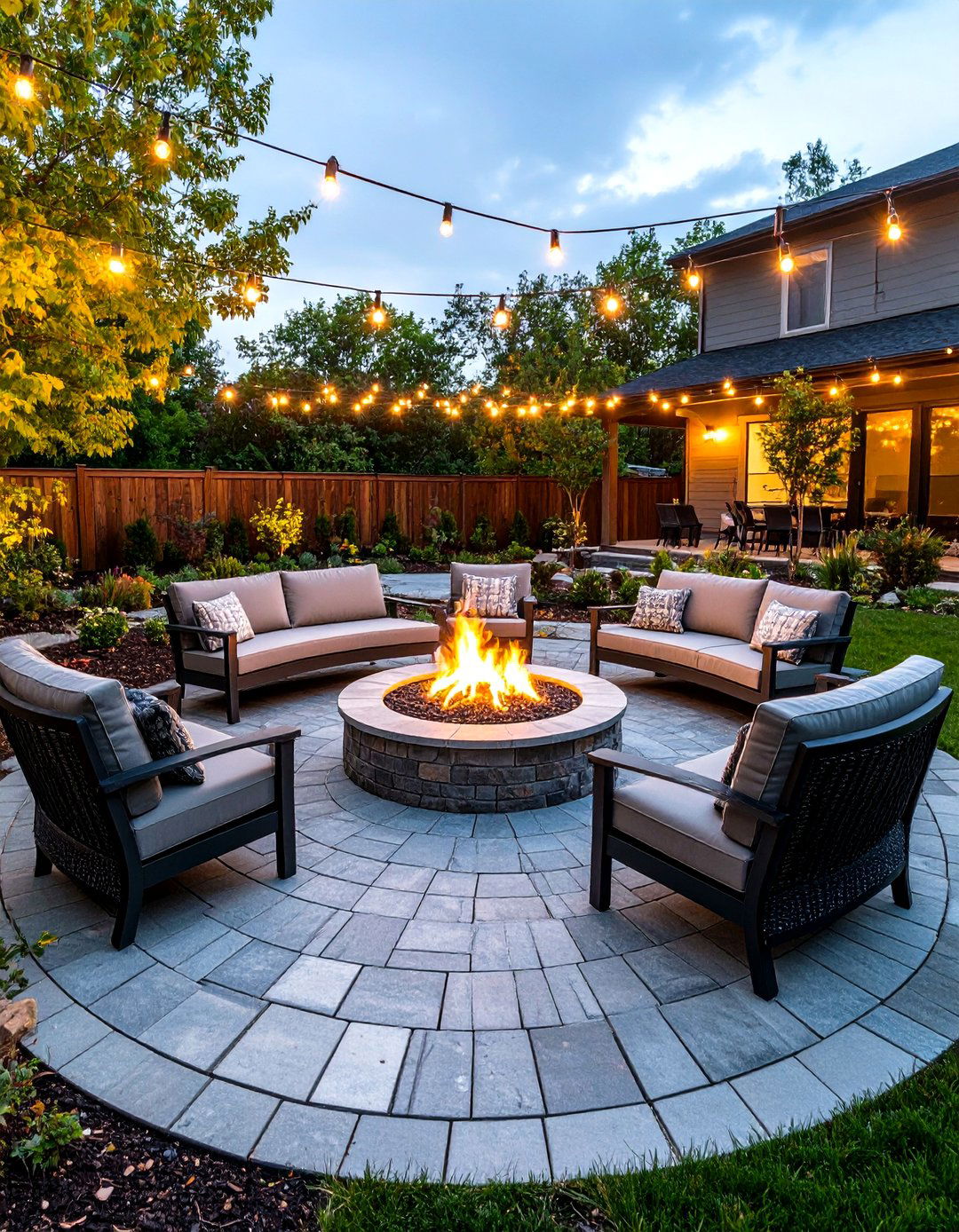
A fire pit can make a driveway-side seating area more inviting, but it belongs on a dedicated level patio rather than in an active parking zone. Place a circular concrete paver pad beside a gray poured-concrete driveway and define it with a contrasting charcoal border. Arrange movable metal chairs around an approved fire feature while preserving suitable clearance from vehicles, structures, branches, and combustible materials. Check local fire rules and manufacturer requirements before choosing its location. Gravel beds and low, moisture-tolerant plants can create a neat transition around the patio. A direct walkway to the house prevents guests from wandering through parking spaces. By visually and physically separating the fire pit patio from the driveway, the complete design feels comfortable, organized, and safer for everyday outdoor gatherings.
8. Modern Driveway Sitting Area With Privacy Screen
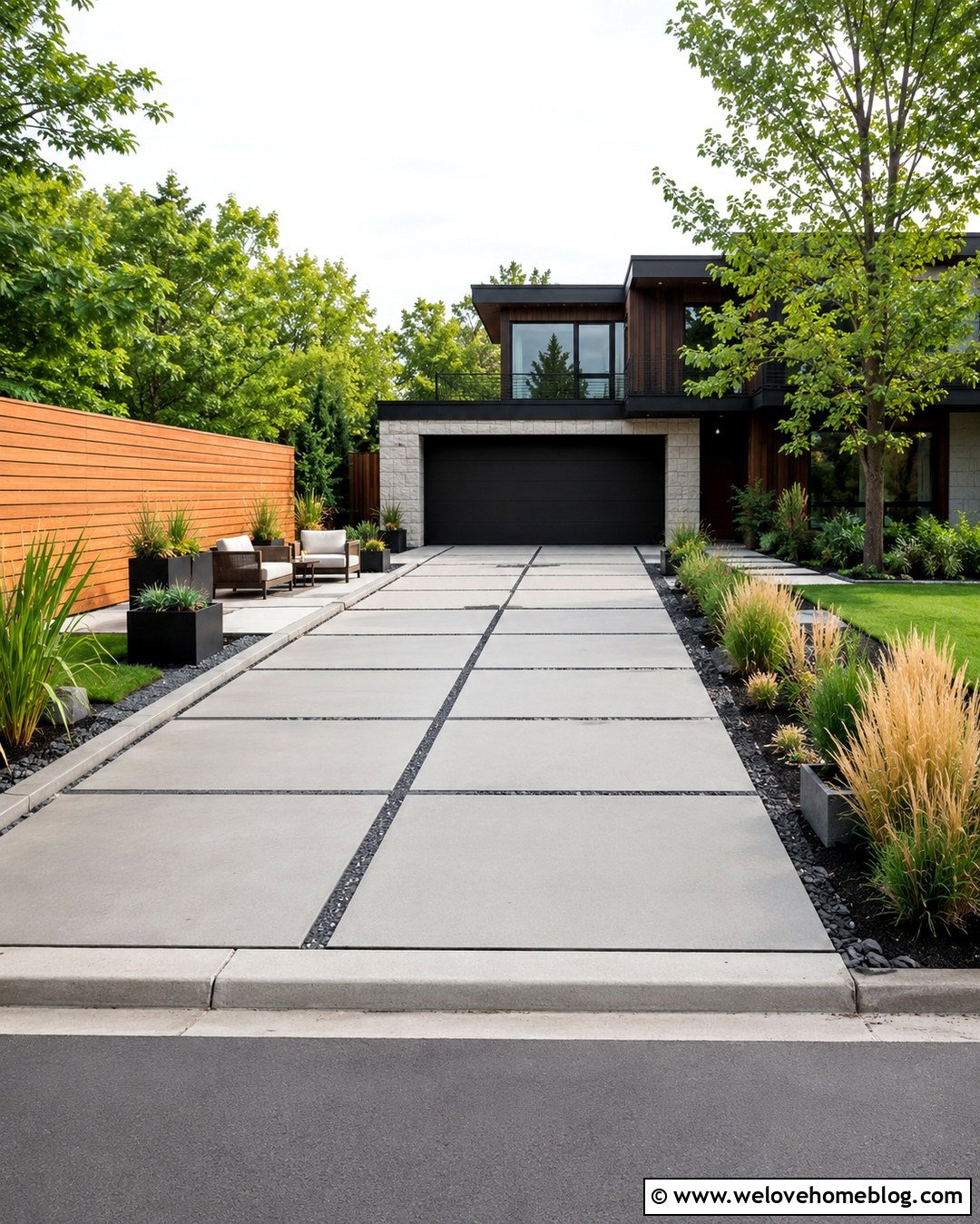
Clean lines and limited materials give a modern driveway sitting area a calm, uncluttered appearance. Use large-format concrete slabs for a straight driveway, separated by narrow gravel joints. Extend the same slabs into a compact patio beside the house, but change their direction to distinguish the sitting zone. A horizontal cedar or powder-coated metal screen can provide privacy from the street without enclosing the entire front yard. Add low-profile lounge chairs, a simple side table, and rectangular planters filled with ornamental grasses. Dark metal edging will create a crisp boundary between the driveway, patio, and planting beds. Keep the screen low enough near the street to maintain clear sightlines. This coordinated design works particularly well with modern homes featuring flat roofs, mixed siding, and oversized garage doors.
9. Driveway Sitting Area With A Garden Border
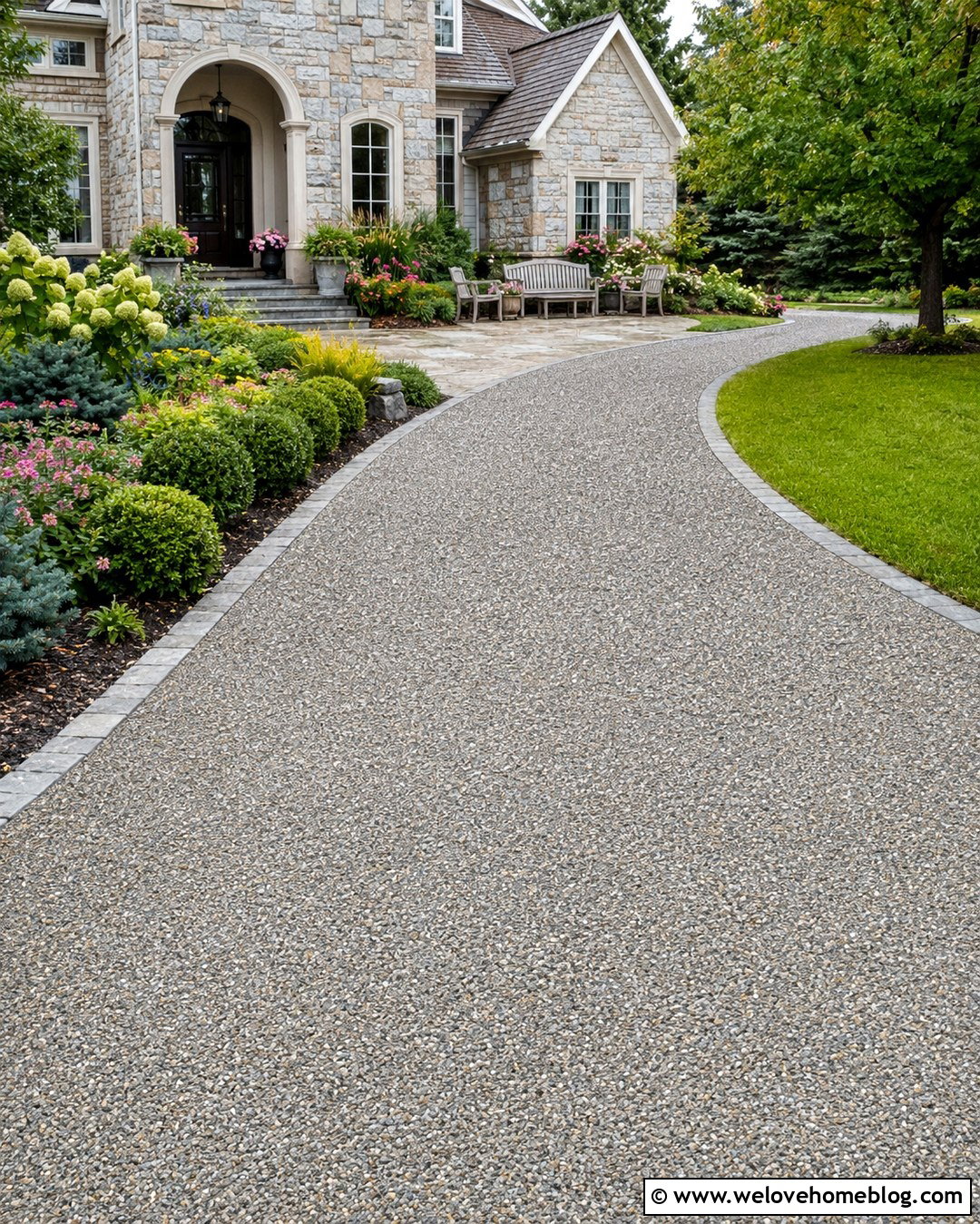
Colorful planting can make a driveway sitting area feel like part of the front garden rather than an extension of the parking surface. Begin with an exposed aggregate driveway and add a small bluestone patio along its outer curve. Place a bench and two compact chairs where they face the flower beds and house. A layered border of low perennials, medium shrubs, and one small tree can create enclosure without overwhelming the seating. Keep the plants closest to the driveway short so car doors can open and passengers can step out comfortably. A narrow stone mowing strip will produce a clean edge and simplify upkeep. This complete look changes through the seasons and suits homeowners who want a front yard retreat with softer lines, natural texture, and noticeable curb appeal.

10. Covered Driveway Sitting Area
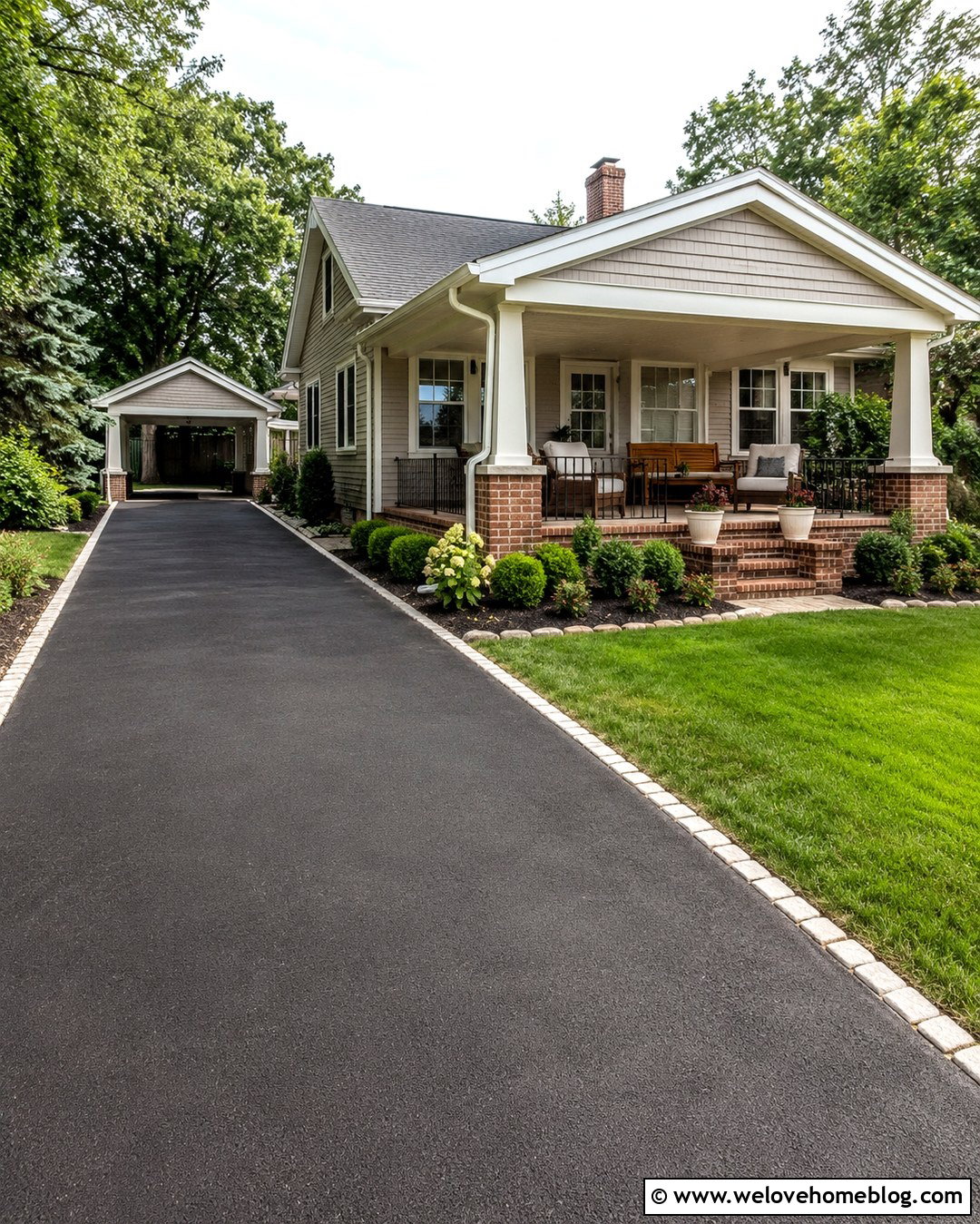
A roofed sitting area beside the driveway offers dependable shade and protection from light rain. It can be created by extending a porch roof, adding a freestanding pavilion, or using an existing covered side entrance. Pair a black asphalt driveway with a raised brick paver patio so the sitting space has a distinct surface and clear edge. Add outdoor armchairs, a bench, and a small table beneath the cover. Gutters should direct roof runoff away from both the patio and driveway. Low foundation shrubs can soften the house wall, while a short railing or planter line separates the seating from parked vehicles. Match the roof, columns, and trim to the home’s architecture. This approach gives the driveway area the comfort of a porch without requiring a large backyard renovation.
11. Driveway Sitting Area On A Wide Apron
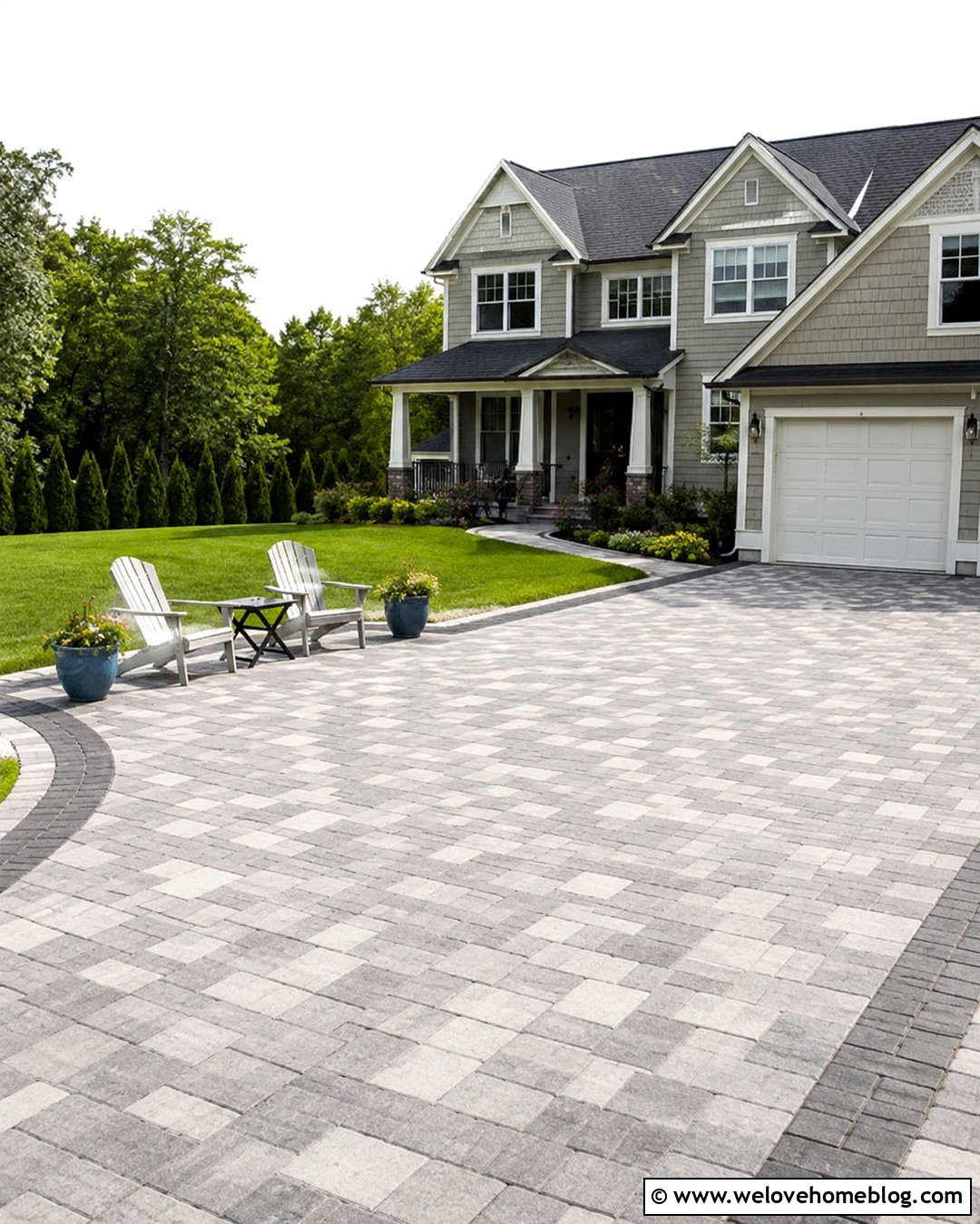
A wide driveway apron near the house can support flexible seating when parking needs change throughout the day. Use permeable concrete pavers across the driveway and define one outer corner with a contrasting border. Lightweight chairs, a bench, and a folding table can be arranged there when the parking space is not needed, then moved into a nearby storage area. Large planters at the rear of the zone provide visual structure without creating permanent obstacles. Keep the central vehicle route completely open and avoid placing furniture near the street. A matching paver walkway can connect the apron to the front porch. This layout is useful for casual gatherings, yard sales, and neighborhood conversations. It offers versatility while maintaining a cohesive driveway design when the furniture is removed.
12. Driveway Sitting Area Beside A Side-Entry Garage
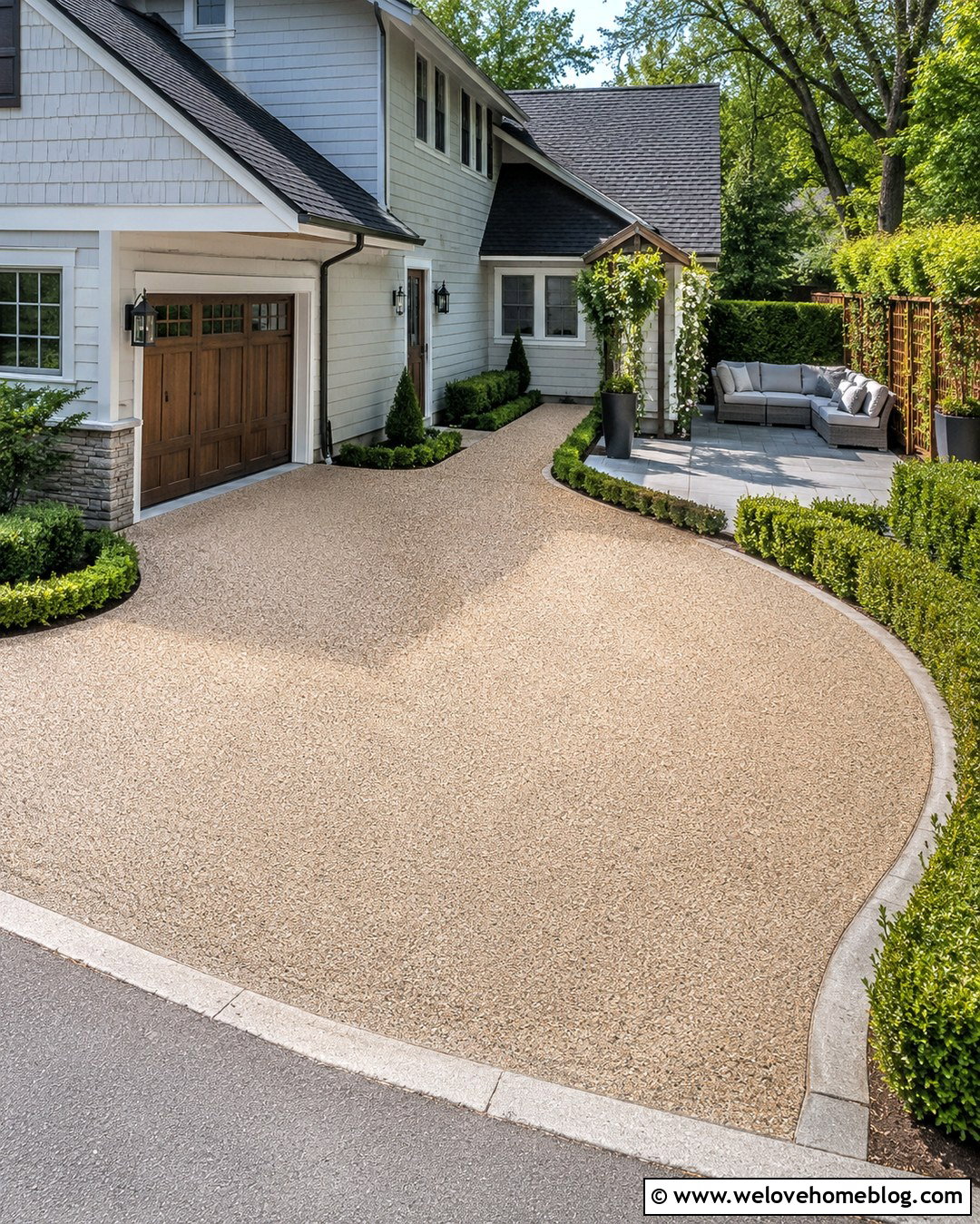
The space beside a side-entry garage often feels private enough for a comfortable sitting area. A curved resin-bound gravel driveway can lead around the house while a separate square patio occupies the protected inside corner. Use textured porcelain pavers on the patio to contrast with the fine gravel surface. Arrange a small sectional facing the garden rather than the garage wall. Tall planters, a trellis, or a clipped hedge can conceal utility features and soften the building. Add a clear walkway between the seating, side door, and backyard gate. Wall lights provide illumination without taking up floor space. Because vehicles turn near side-entry garages, the patio should sit beyond the established maneuvering area. This design creates an appealing transition between the driveway, house, and backyard.
13. Driveway Sitting Area With A Retaining Wall Bench
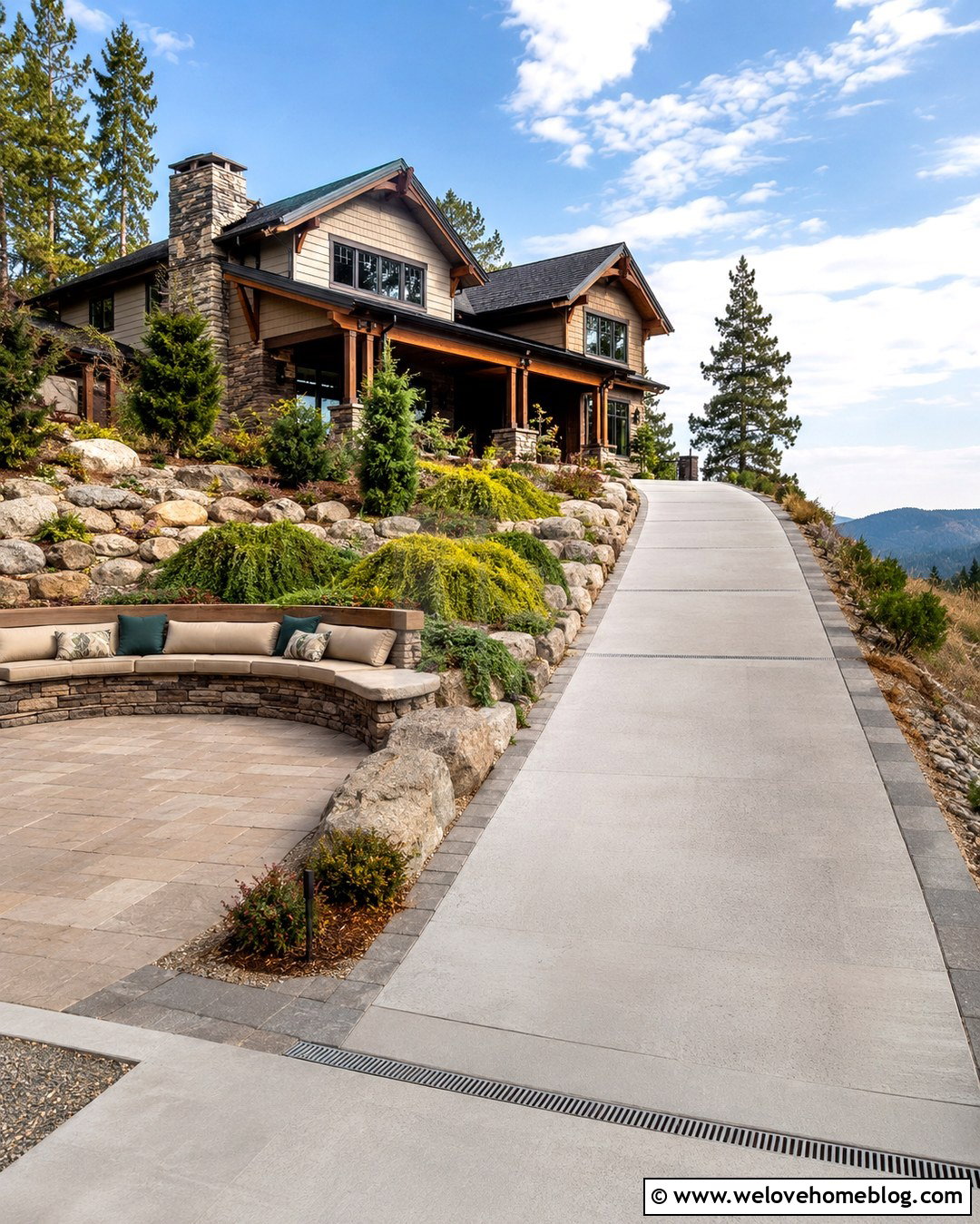
A driveway beside a slope can gain seating through a carefully designed retaining wall. Build a level paver patio along the uphill edge of a straight concrete driveway, then use the retaining wall as the back of a built-in bench. A smooth capstone creates a usable seat, while fitted cushions add comfort. Plant cascading ground covers and compact shrubs above the wall to soften the hardscape. Install a guard or higher back where the elevation change requires additional protection. A trench drain or properly graded channel can help keep runoff from crossing the patio. Choose wall stone that relates to the home’s foundation or facade. This integrated layout makes productive use of a grade change while maintaining a strong boundary between the sitting area and active driveway.
14. Narrow Driveway Sitting Area
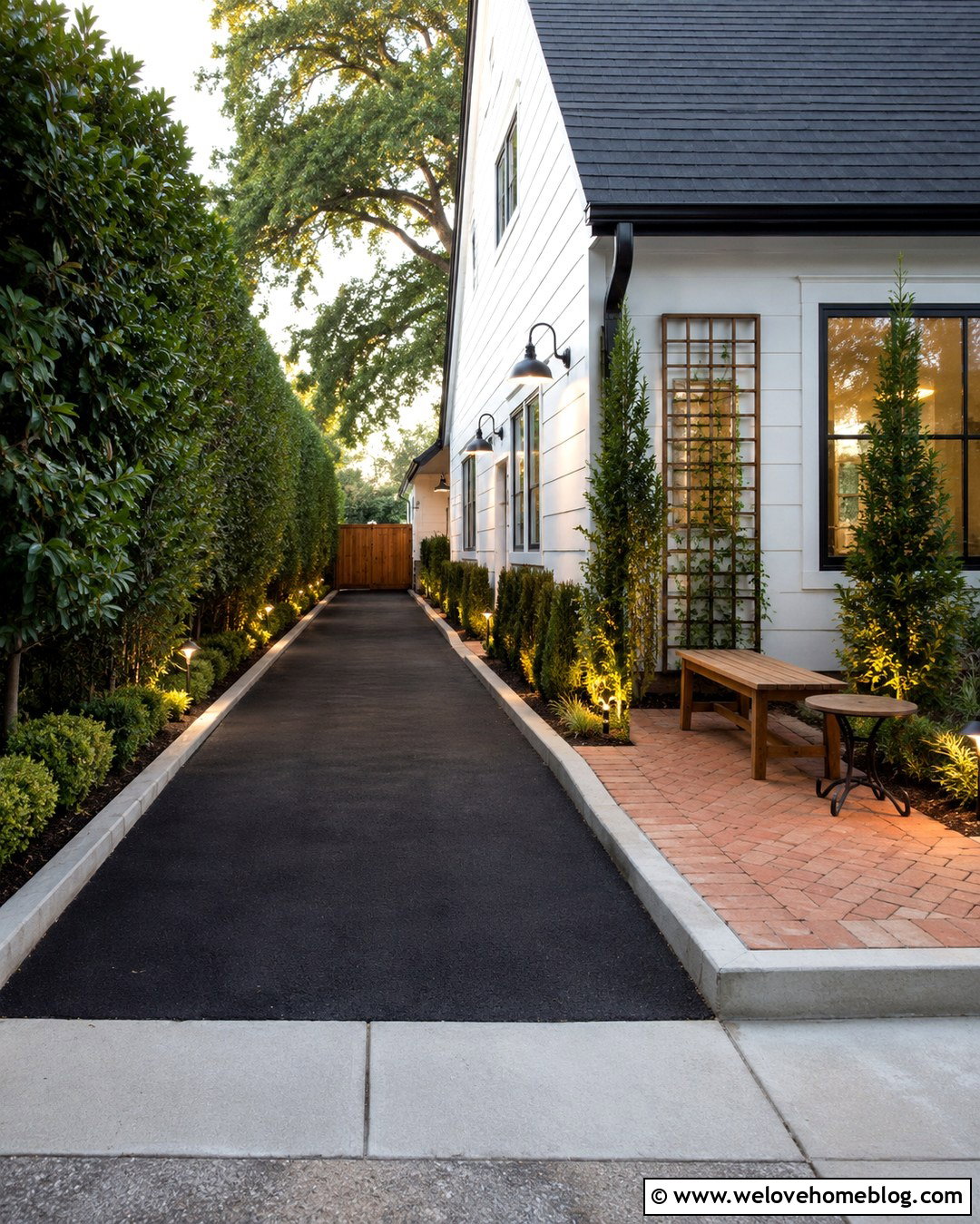
Can a narrow side yard still hold a useful sitting spot? A slim bench patio may be all that is needed. Along a single-lane black asphalt driveway, install a narrow strip of clay brick pavers against the house or fence. Use a backless bench and one compact side table so furniture does not project into the vehicle path. A vertical trellis with climbing greenery adds interest without consuming valuable floor space. Keep planting beds shallow and choose upright plants rather than wide shrubs. A contrasting concrete curb will protect the patio edge and prevent asphalt from visually blending into the seating. Wall-mounted lighting and folding furniture can make the arrangement even more efficient. This solution adds function to a tight property without making the driveway difficult to use.


15. Farmhouse Driveway Sitting Area
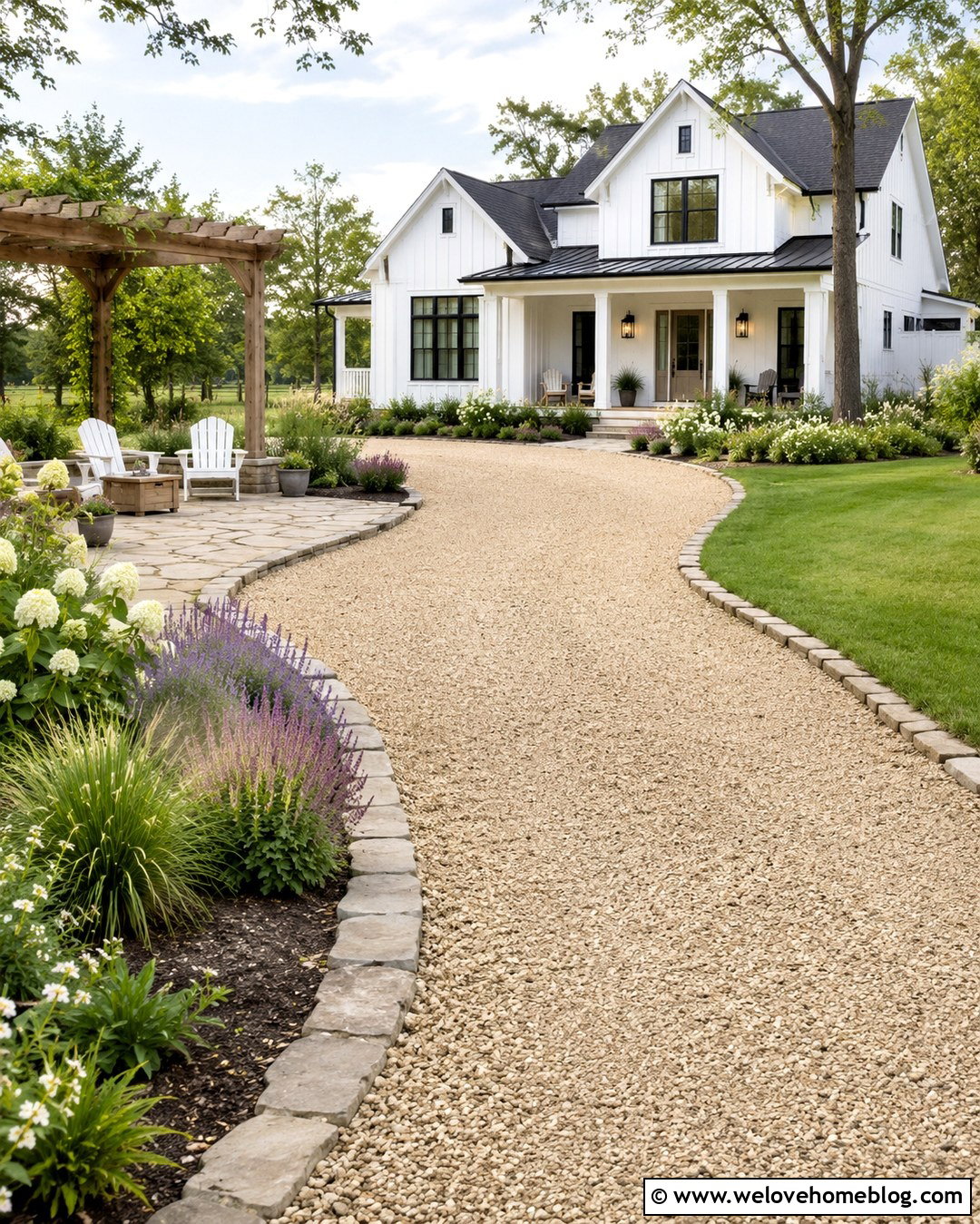
A farmhouse driveway sitting area should feel comfortable, practical, and connected to the surrounding landscape. Use warm-toned crushed stone for a gently curved driveway with timber or fieldstone edging. Near the front porch, create a rectangular flagstone patio with four Adirondack chairs and a sturdy wooden table. A simple open pergola or mature shade tree can define the space without making it formal. Frame the patio with hydrangeas, ornamental grasses, and flowering perennials in relaxed planting beds. Galvanized metal planters can repeat classic farmhouse materials in a controlled way. Keep the gravel parking surface separate from the level flagstone so chairs remain steady. The combination of natural stone, wood, loose planting, and a broad lawn creates a welcoming sitting area that suits rural and suburban farmhouse homes.
16. Driveway Sitting Area Under A Shade Tree
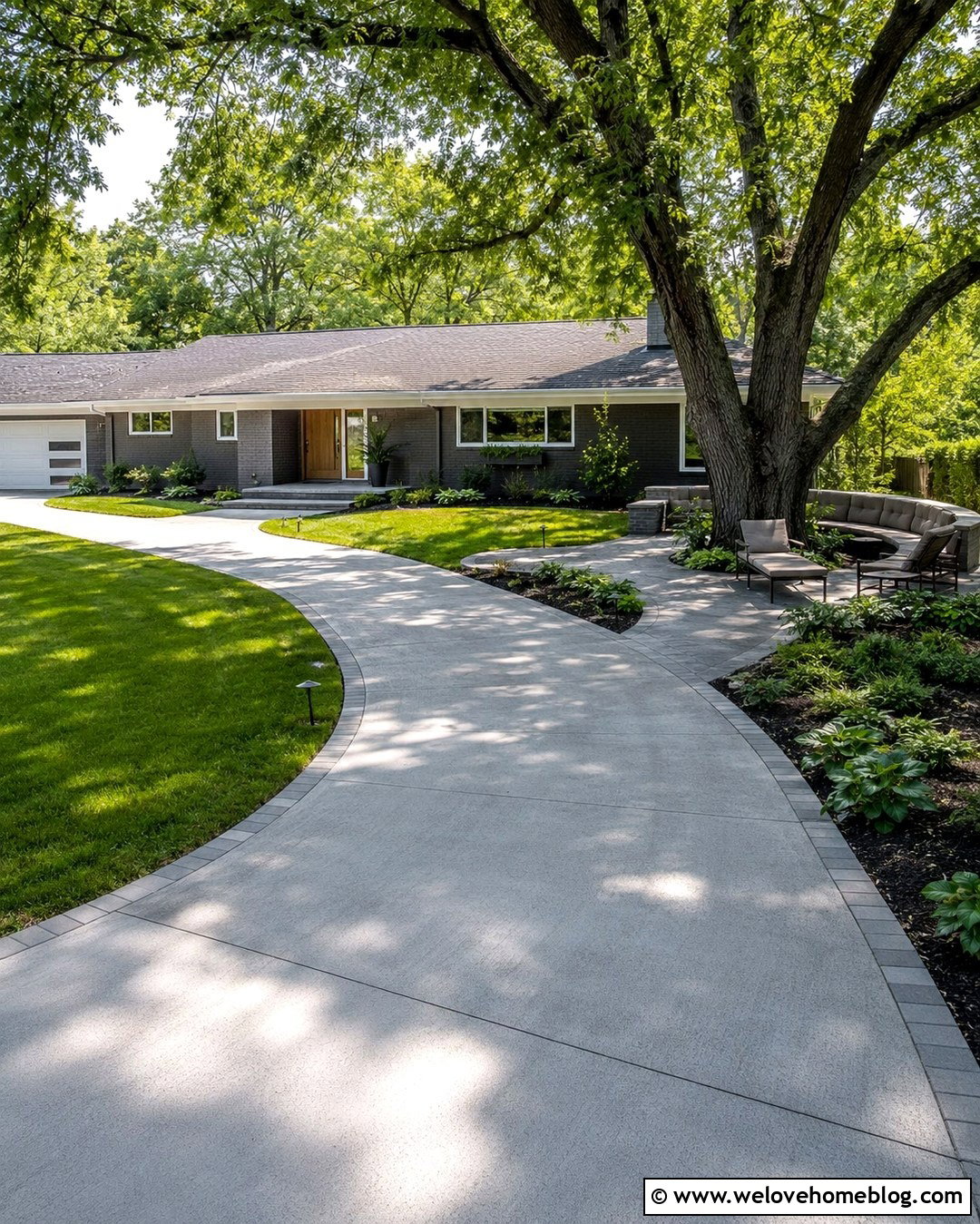
A mature tree can provide a natural ceiling for a peaceful sitting area beside the driveway. Position a curved permeable paver patio outside the tree’s primary trunk area while minimizing disturbance to established roots. Pair it with a light-gray concrete driveway edged in matching pavers. A curved bench or two lounge chairs can face the house, garden, or street. Use mulch and shade-tolerant ground cover around the patio instead of forcing grass to grow beneath the canopy. Low path lights can mark the edge without shining directly into nearby windows. Avoid raising soil deeply around the trunk or attaching fixtures that could damage the tree. When designed thoughtfully, the driveway, patio, and tree canopy work together to create a naturally shaded front yard destination.
17. Driveway Sitting Area With Raised Planters
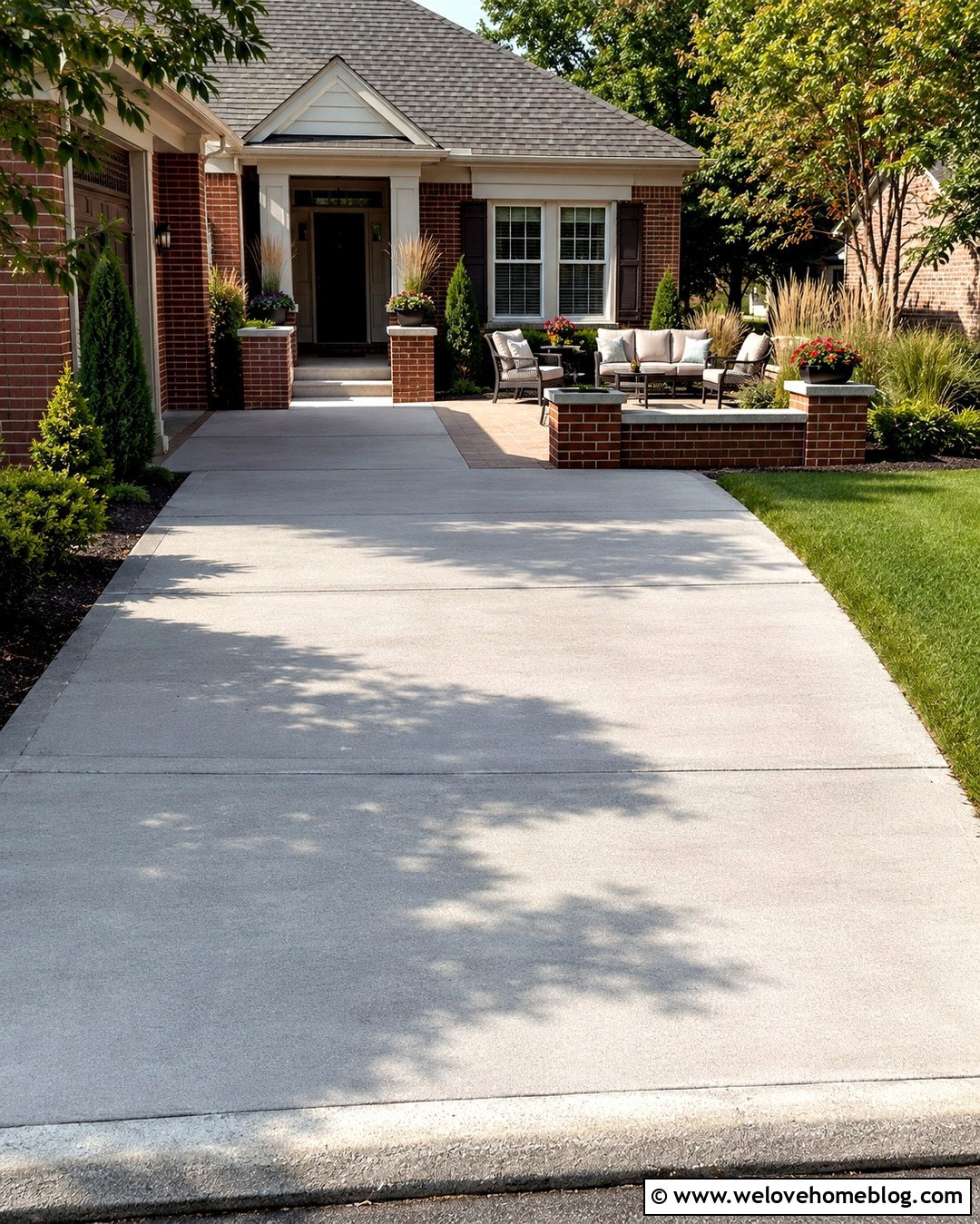
Raised planters provide attractive separation between a driveway sitting area and parked vehicles. Next to a straight broom-finished concrete driveway, build a small patio from tan concrete pavers. Place two chairs and a loveseat on the patio, then install waist-high masonry planters along the driveway-facing edge. Fill them with grasses, compact evergreens, and seasonal flowers for layered color. Leave an open entrance toward the front walkway so the planters do not trap people inside the space. Their caps can provide convenient spots for lanterns or small pots, but they should not narrow the driveway. Match the planter material to the home’s brick or foundation stone. This complete design adds screening, structure, and greenery while giving a simple driveway-side patio the feeling of a defined outdoor room.
18. Sloped Driveway Sitting Area With A Level Patio
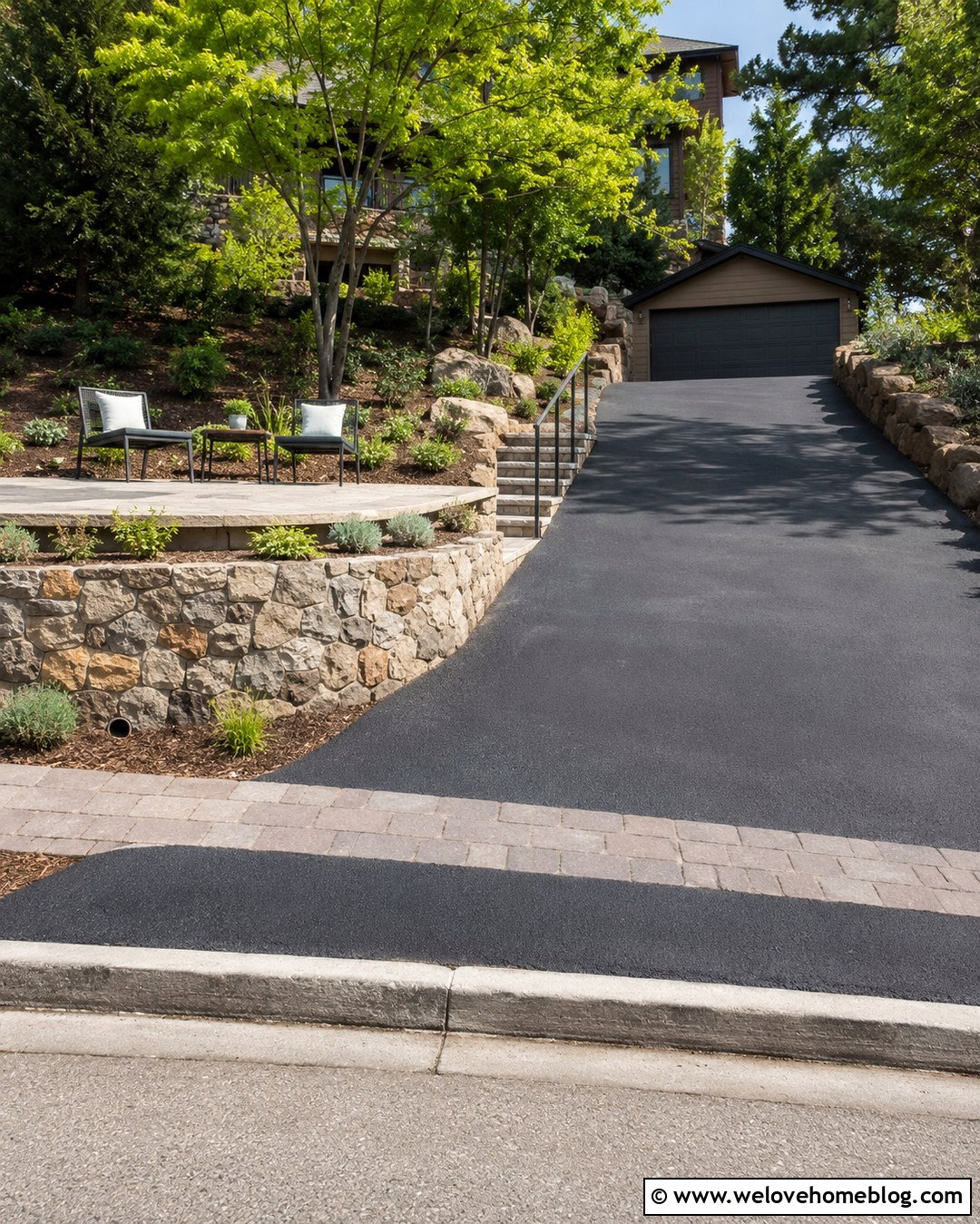
Furniture should never be balanced directly on a steep driveway. Instead, create a separate level terrace beside the slope. A dark asphalt driveway can climb toward the garage while a small concrete paver patio sits behind a low retaining wall on the lower side. Steps from the driveway should lead to the terrace, with a handrail added where appropriate. Arrange compact chairs around a table and use low shrubs to soften the wall without blocking views. Surface water should be directed away from the seating, steps, and house. A contrasting paver band along the asphalt makes the edge easier to recognize. This approach solves the comfort problem of a sloping site while producing a complete landscape feature that looks integrated with the driveway and front yard.
19. Budget Driveway Sitting Area
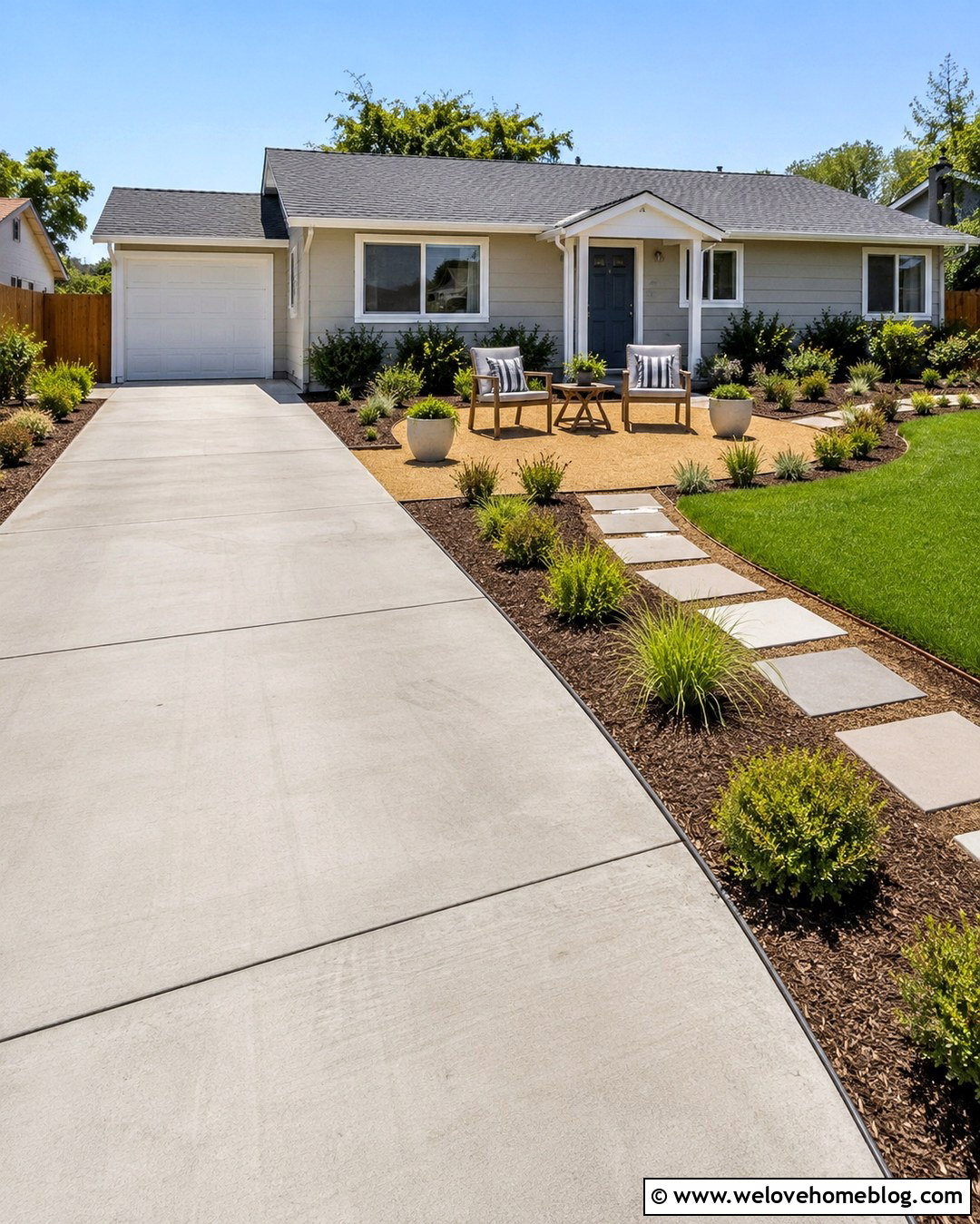
An affordable driveway sitting area can still look polished when the surface and boundaries are clearly defined. Beside an existing poured-concrete driveway, remove a small section of lawn and install a compacted decomposed granite patio. Flexible metal edging keeps the material contained, while large concrete stepping stones create a stable route to the front door. Add two durable chairs, a small table, and several matching planters rather than investing in built-in construction. Mulch beds planted with easy-care shrubs can frame the patio and reduce the amount of lawn to maintain. Repeating one accent color across the furniture, pots, and front door gives the design cohesion. This simple project provides a useful place to sit without resurfacing the driveway or undertaking a large hardscape renovation.

20. Driveway Sitting Area With Outdoor Dining
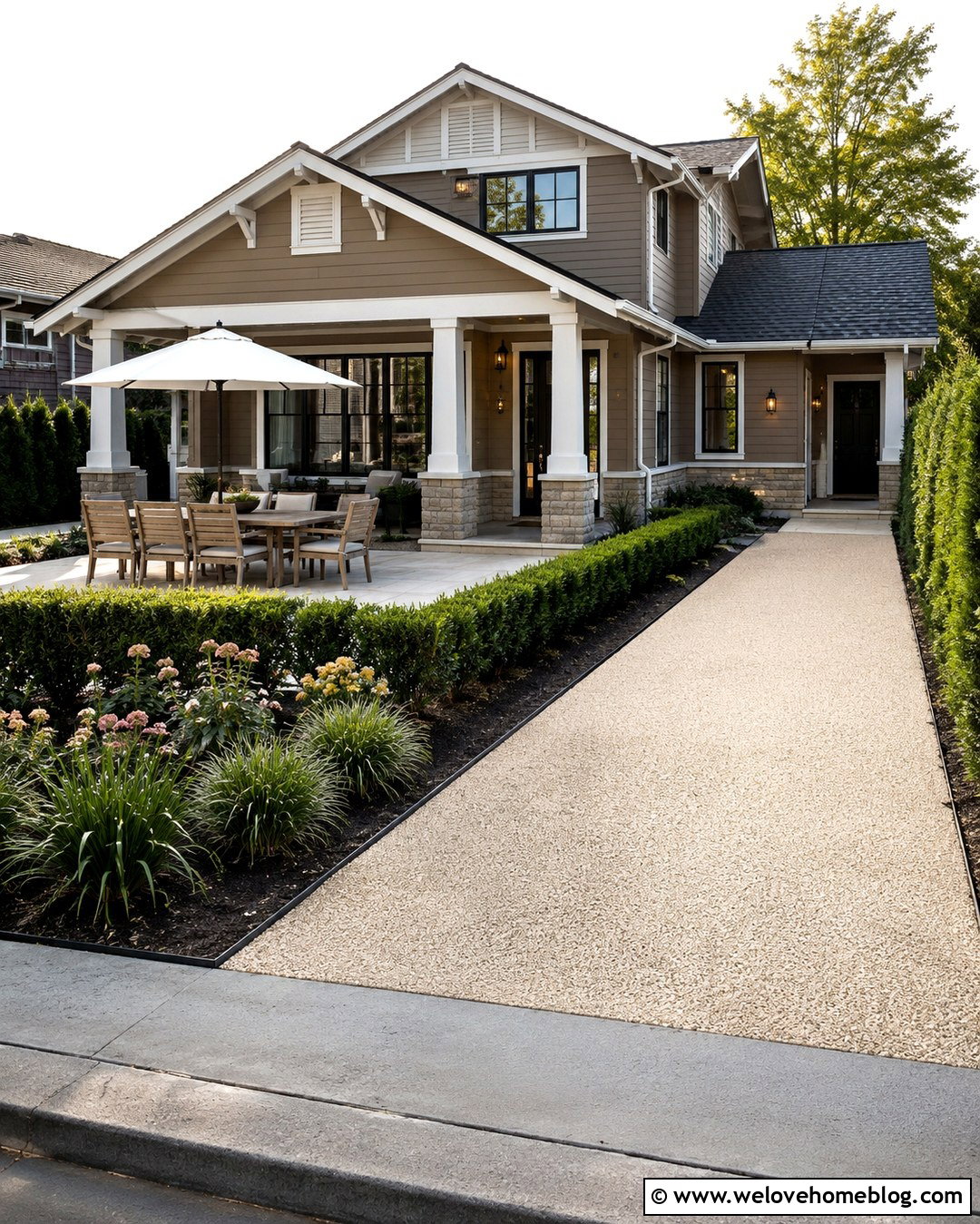
A wider driveway-side patio can support outdoor dining as well as everyday relaxation. Pair a straight resin-bound gravel driveway with a rectangular porcelain paver terrace near the kitchen or side entrance. A six-seat dining table should sit completely outside parking and turning areas, with enough room to move chairs comfortably. Use a low hedge and broad planting bed to soften views of vehicles while preserving visibility toward the street. A freestanding umbrella provides flexible shade, and wall-mounted lighting keeps the patio surface uncluttered. Connect the dining area to the house with a direct, slip-resistant walkway. The driveway’s neat edging, the patio’s contrasting material, and the surrounding greenery should read as one coordinated composition. This layout is ideal for homeowners who enjoy hosting in the front or side yard.
Conclusion:
The most successful driveway sitting areas balance comfort, appearance, and everyday vehicle access. A clearly defined patio surface makes the space feel permanent, while edging, planting, shade, and lighting connect it to the wider landscape. Furniture should remain outside parking, reversing, and door-opening zones, even when the driveway is rarely full. Materials can either complement the driveway or create a deliberate contrast that separates the two functions. Before building, consider drainage, property boundaries, utility locations, local requirements, and the path guests will take to the house. From compact benches to covered dining patios, these 20 Driveway Sitting Area Ideas offer practical ways to create a more welcoming and useful front yard.

Related posts:



Leave a Reply