
Driveway construction ideas should balance curb appeal, daily use, drainage, climate, and long-term maintenance. The surface is only part of the project. A dependable driveway also needs a properly prepared subgrade, a stable aggregate base, effective water management, strong edge restraint, and enough room for vehicles to move comfortably. Material choices range from economical crushed stone and asphalt to decorative brick, concrete pavers, resin-bound gravel, and natural cobblestone. Permeable construction is also increasingly useful where homeowners want rainwater to filter into the ground rather than flow toward the street. () The complete looks below combine practical surfaces, thoughtful layouts, durable borders, and attractive landscaping, giving you 20 driveway construction ideas.

1. Poured Concrete Driveway With Saw-Cut Joints

A poured concrete driveway creates a clean, dependable approach that works with ranch, colonial, and contemporary homes. Use a straight or gently widening layout to make parking and garage access feel uncomplicated. Planned saw-cut control joints divide the slab into balanced rectangular sections and help manage normal movement. A compacted aggregate base, suitable slab design, and carefully graded subgrade are essential parts of the construction. Finish the concrete with a light broom texture for practical traction rather than an overly smooth surface. Dark brick or charcoal paver borders can define the edges and protect nearby planting beds. Complete the look with simple lawn panels, low shrubs, and a matching concrete walkway. Drainage should move water away from the garage, foundation, and neighboring property. ()
2. Concrete Driveway With Brick Border
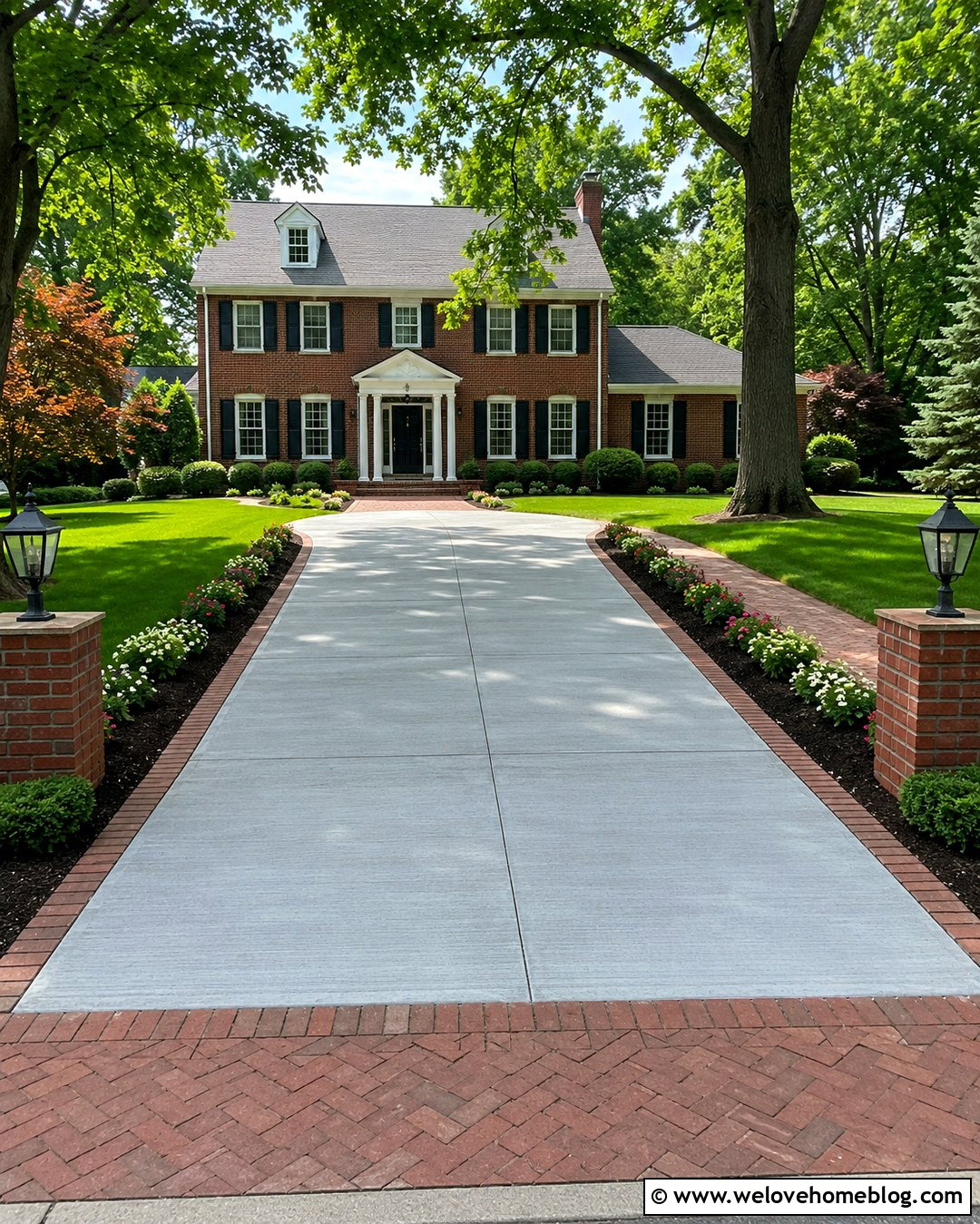
Warm brick borders can make an ordinary gray concrete driveway look more intentional without covering the entire surface in expensive masonry. Construct a broom-finished concrete center with clay brick pavers running along both sides and across the entrance as an apron. The contrast works especially well with traditional brick houses, Cape Cod homes, and white colonials. Install the brick on a stable base with reliable edge restraints so individual units do not spread under vehicle loads. Match the brick color to the house facade, front steps, or walkway for continuity. A straight driveway can feel softer when narrow planting beds follow the border. Use compact shrubs, ornamental grasses, and seasonal flowers that will not obstruct sightlines. Keep irrigation away from pavement edges to reduce unnecessary water exposure.
3. Stamped Concrete Driveway With Stone Edging
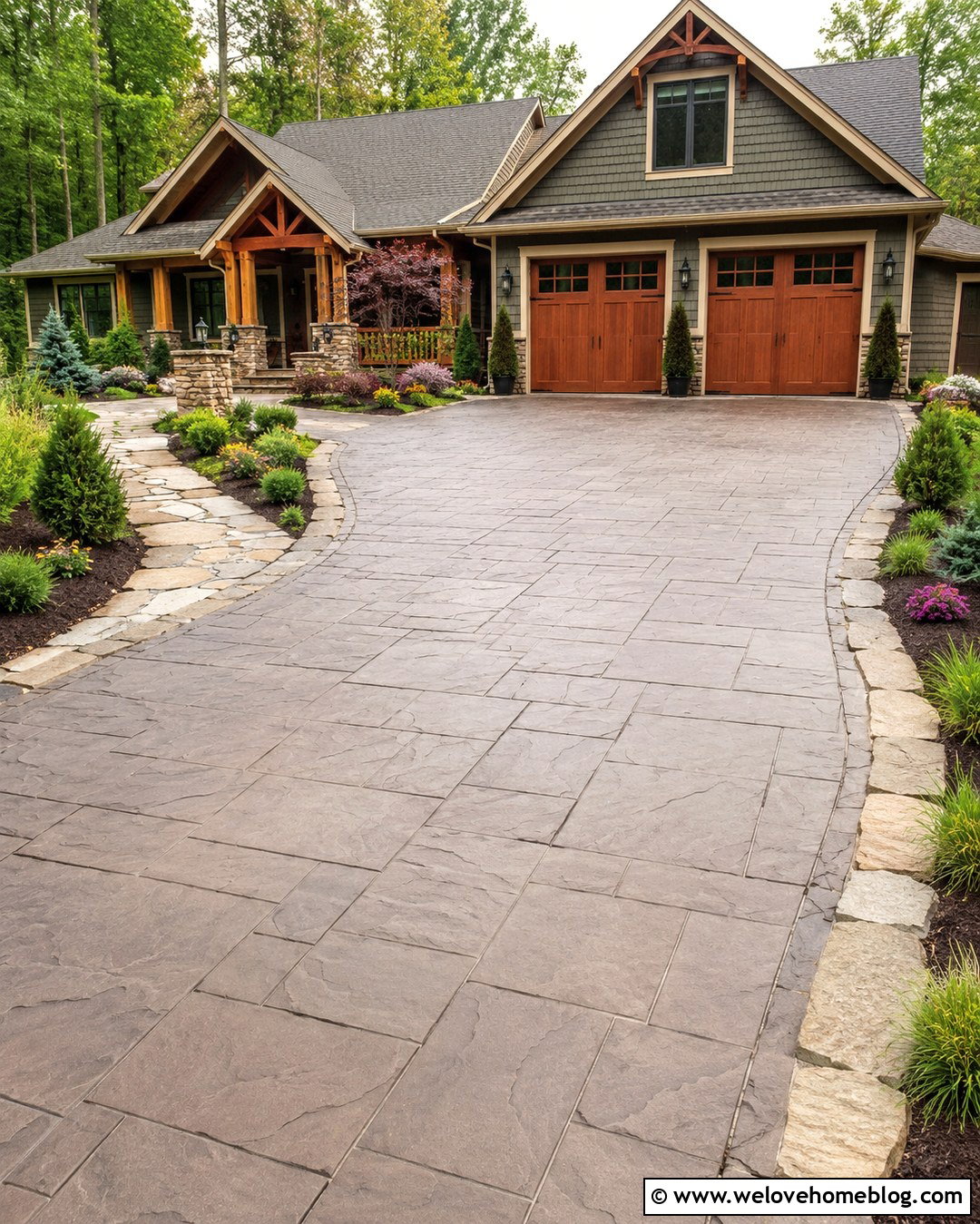
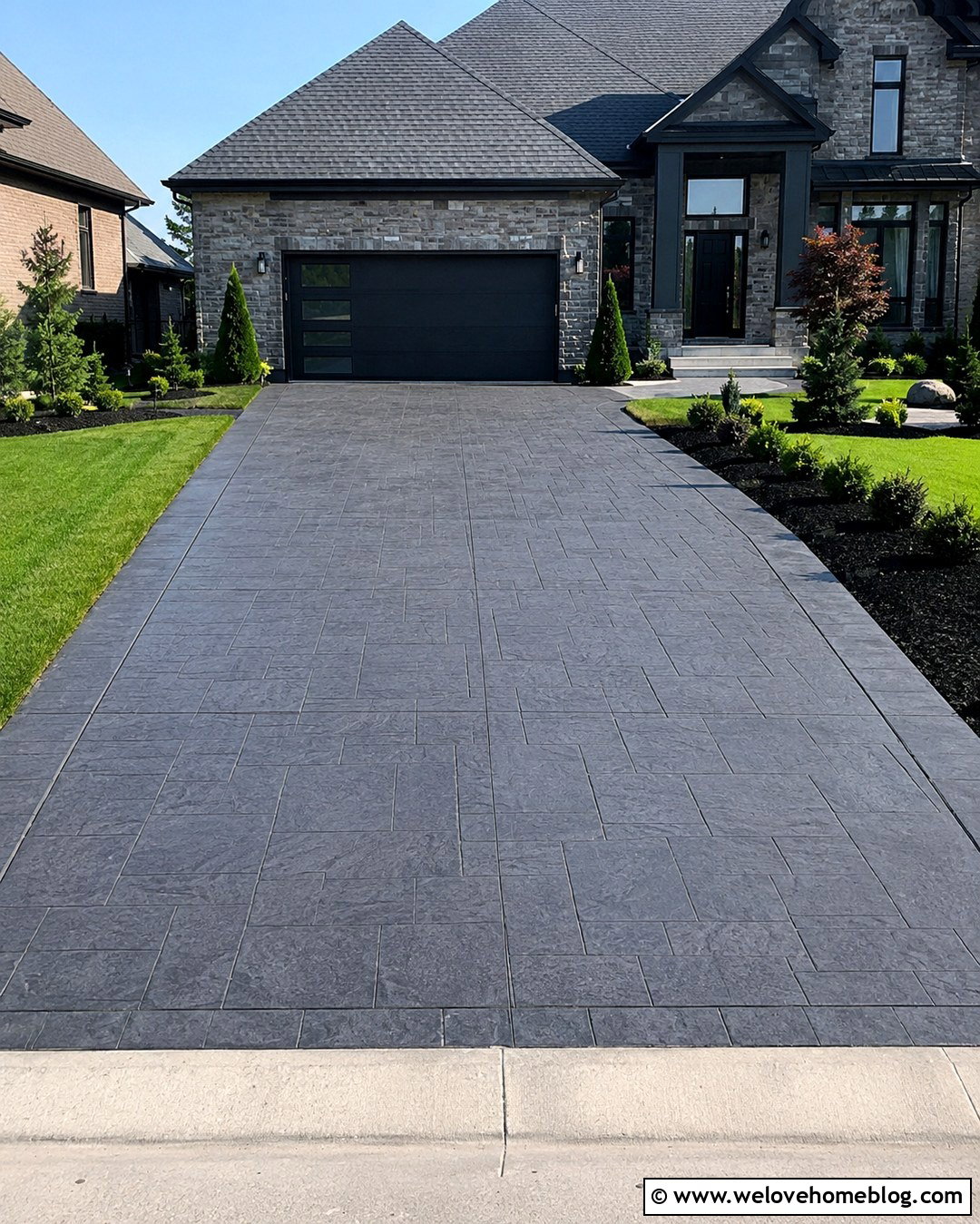
Stamped concrete delivers the appearance of individual stone pieces while maintaining a continuous poured surface. Choose a large ashlar slate or random flagstone pattern in soft gray, taupe, or muted brown. A curved driveway layout prevents the repeated pattern from looking too rigid and creates a more welcoming approach to the house. Natural stone edging gives the stamped surface a convincing frame and separates it from lawn or mulch. During construction, select a restrained color combination that complements the facade rather than competing with it. Texture is important, but deeply stamped patterns may create uneven transitions for walking, shoveling, or wheeled equipment. Add low evergreen shrubs and broad planting beds around the curve. Proper base preparation, drainage, control joints, curing, and sealing remain important even when the surface is decorative. ()
4. Exposed Aggregate Curved Driveway
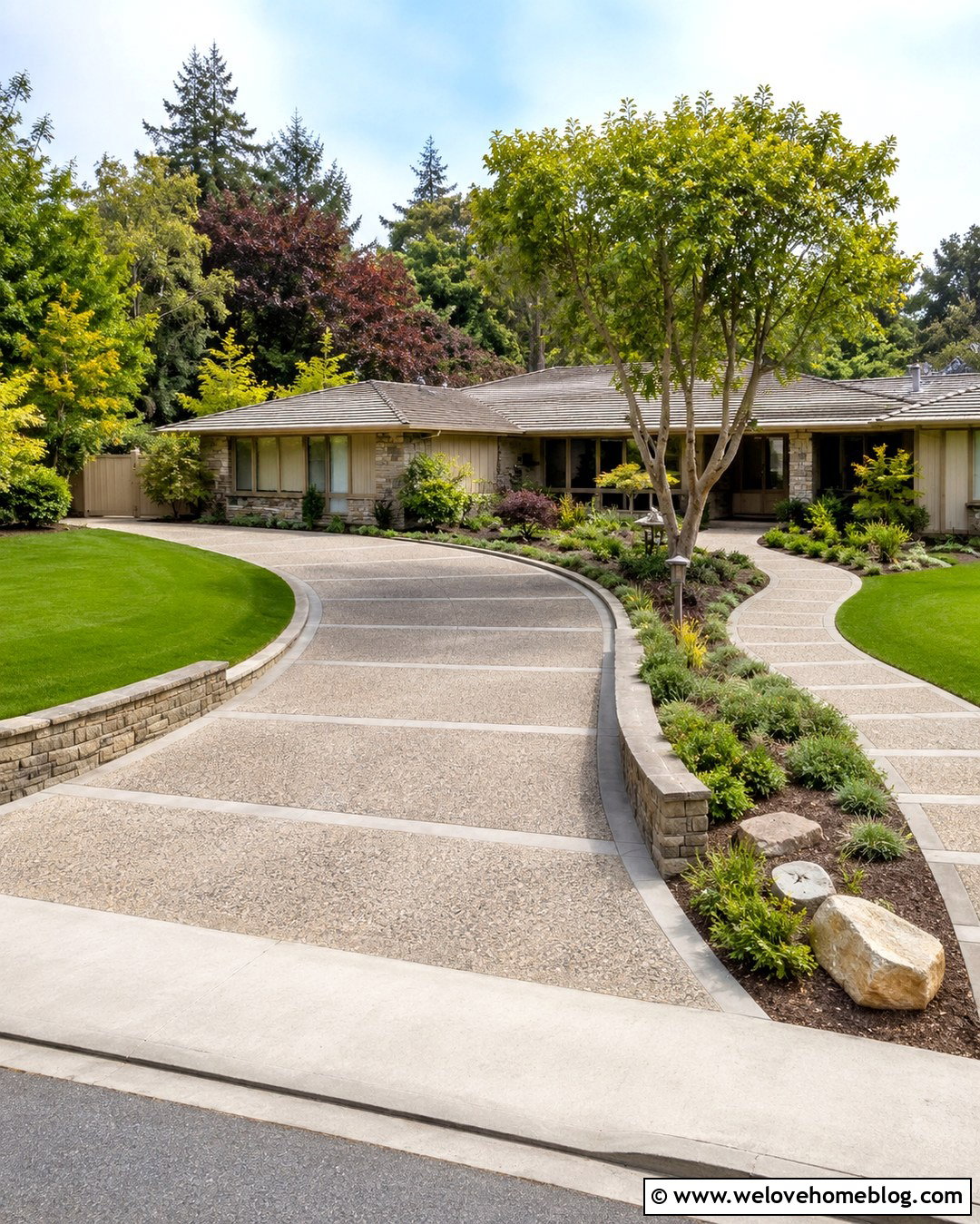
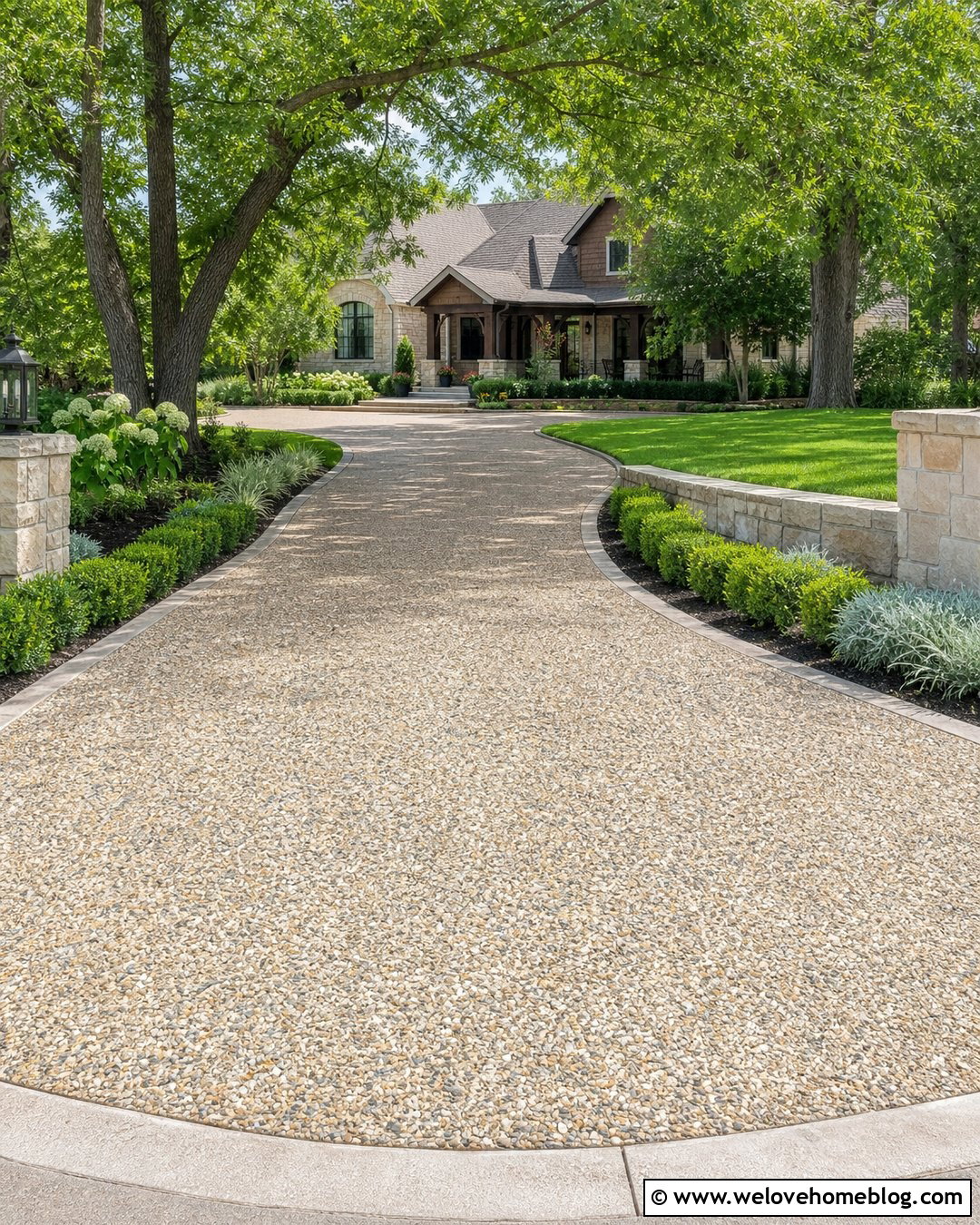
An exposed aggregate driveway reveals decorative stone within the concrete, creating texture and natural color across a durable surface. A broad curved layout is particularly effective because it follows the landscape and softens the approach to a front-facing garage. Select aggregate colors that repeat tones found in the house, retaining walls, or nearby garden stone. Cream, tan, gray, and charcoal blends are versatile choices. Smooth concrete bands can frame the driveway and form clear transitions at the sidewalk, garage, and front walkway. Gentle grading should direct runoff toward an approved landscape or drainage area instead of allowing water to collect inside the curve. Finish the complete design with layered shrubs, ornamental trees, and ground covers set safely behind the border. Use a compatible sealer when appropriate to support color and simplify surface care.
5. Black Asphalt Driveway With Paver Apron
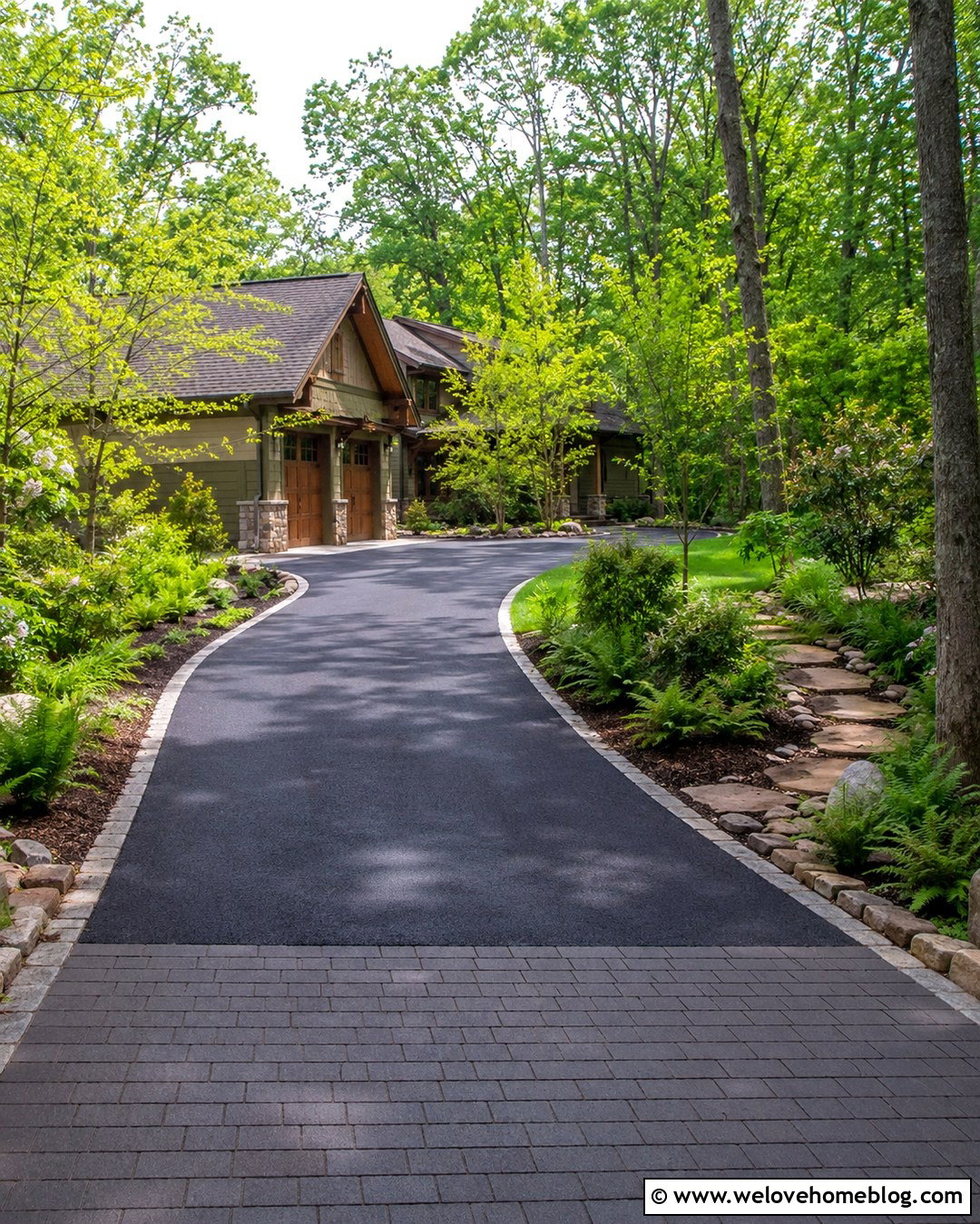
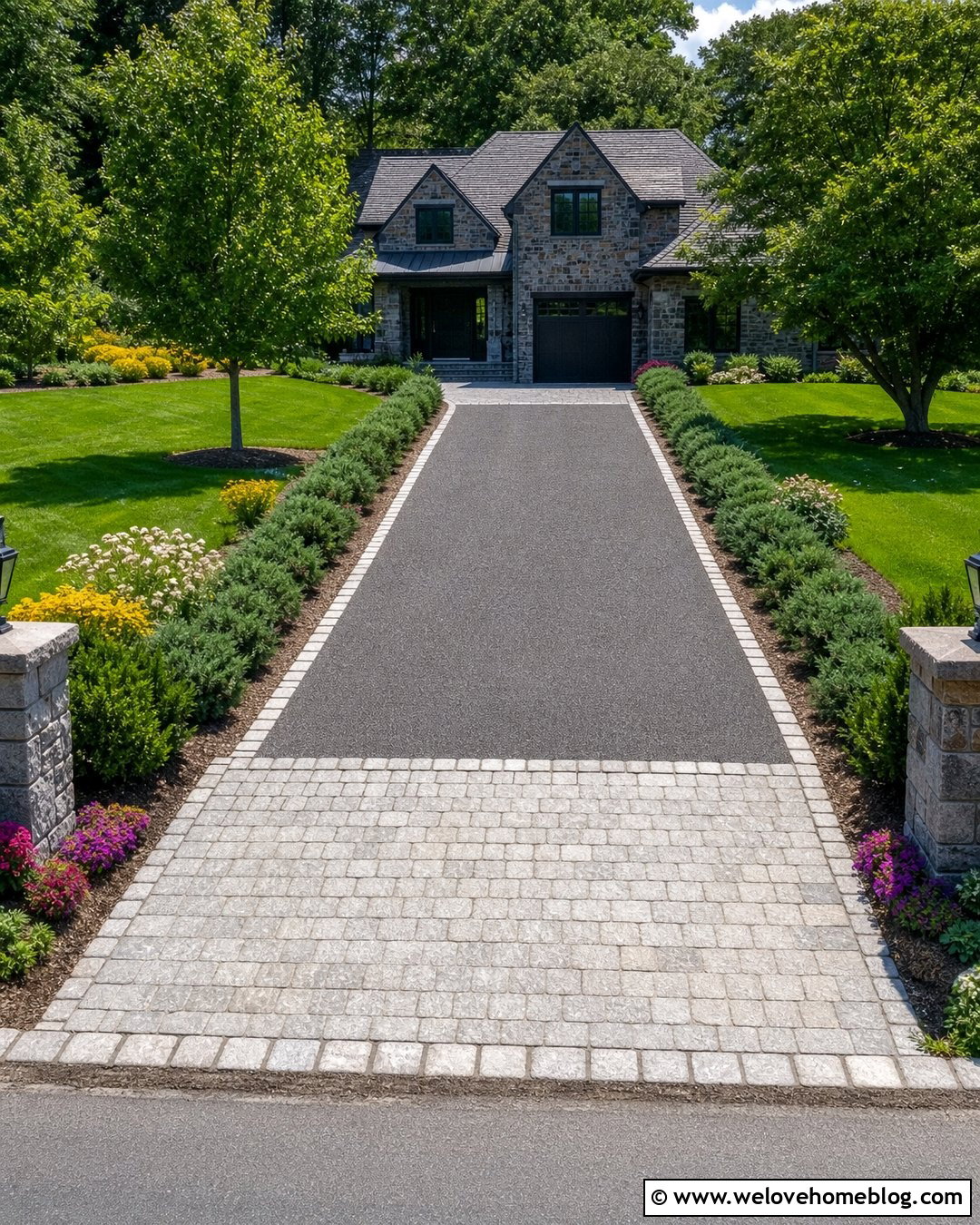
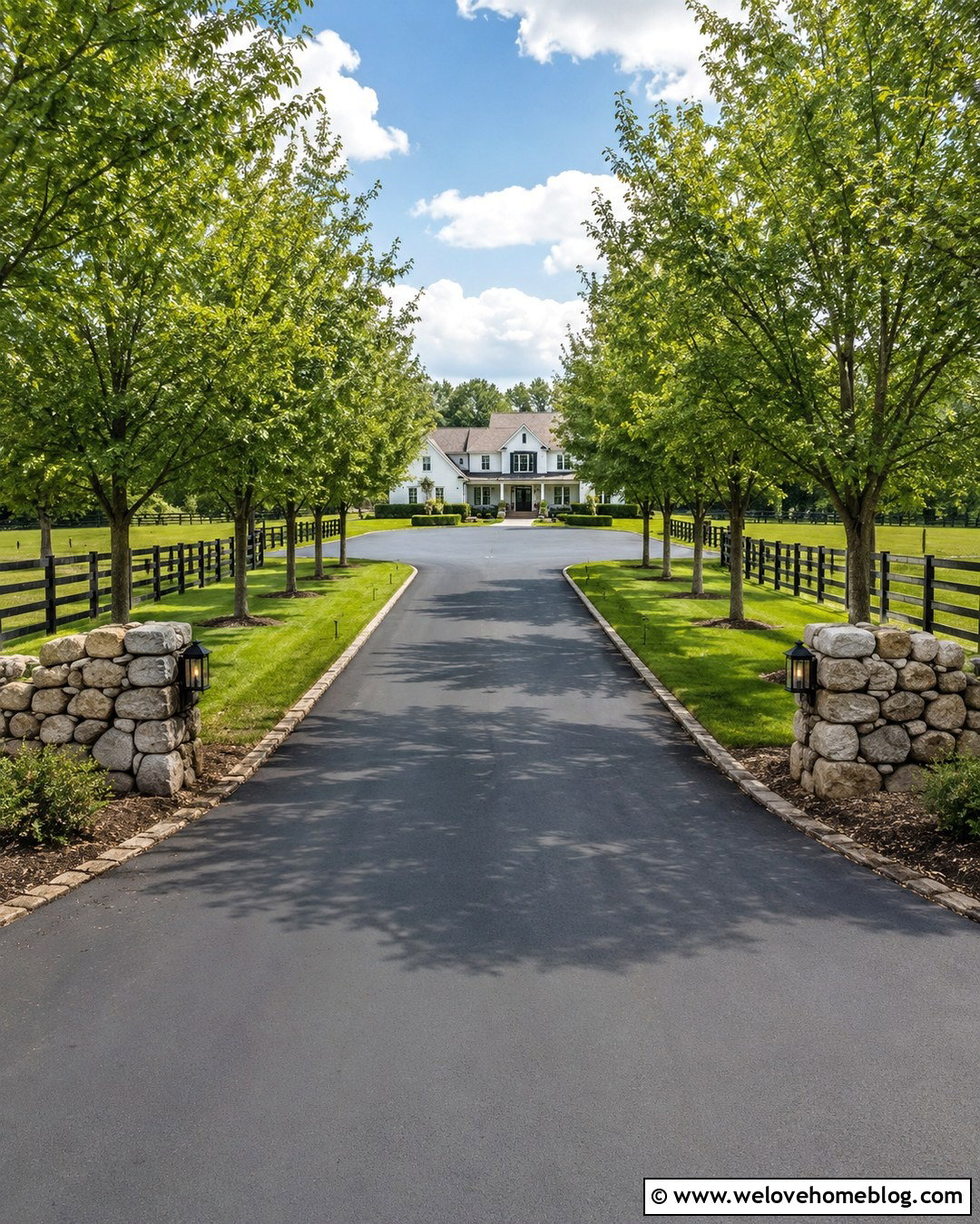
Fresh black asphalt gives a property a neat, understated entrance and is practical for long driveways where installing decorative material across the entire area may be unrealistic. A contrasting paver apron at the street adds character at the most visible point. Repeat the same pavers beside the garage doors or along the walkway to make the combination look planned. Curved asphalt edges can follow wooded or irregular lots, while a solid aggregate base supports the paved surface. The asphalt should be graded so rainwater does not settle near the house or collect along low borders. Gray concrete pavers, weathered clay brick, or tumbled stone pavers can all create an attractive apron. Native shrubs and shade-tolerant ground covers complete this driveway without creating excessive landscaping maintenance. ()
6. Asphalt Driveway With Concrete Edging
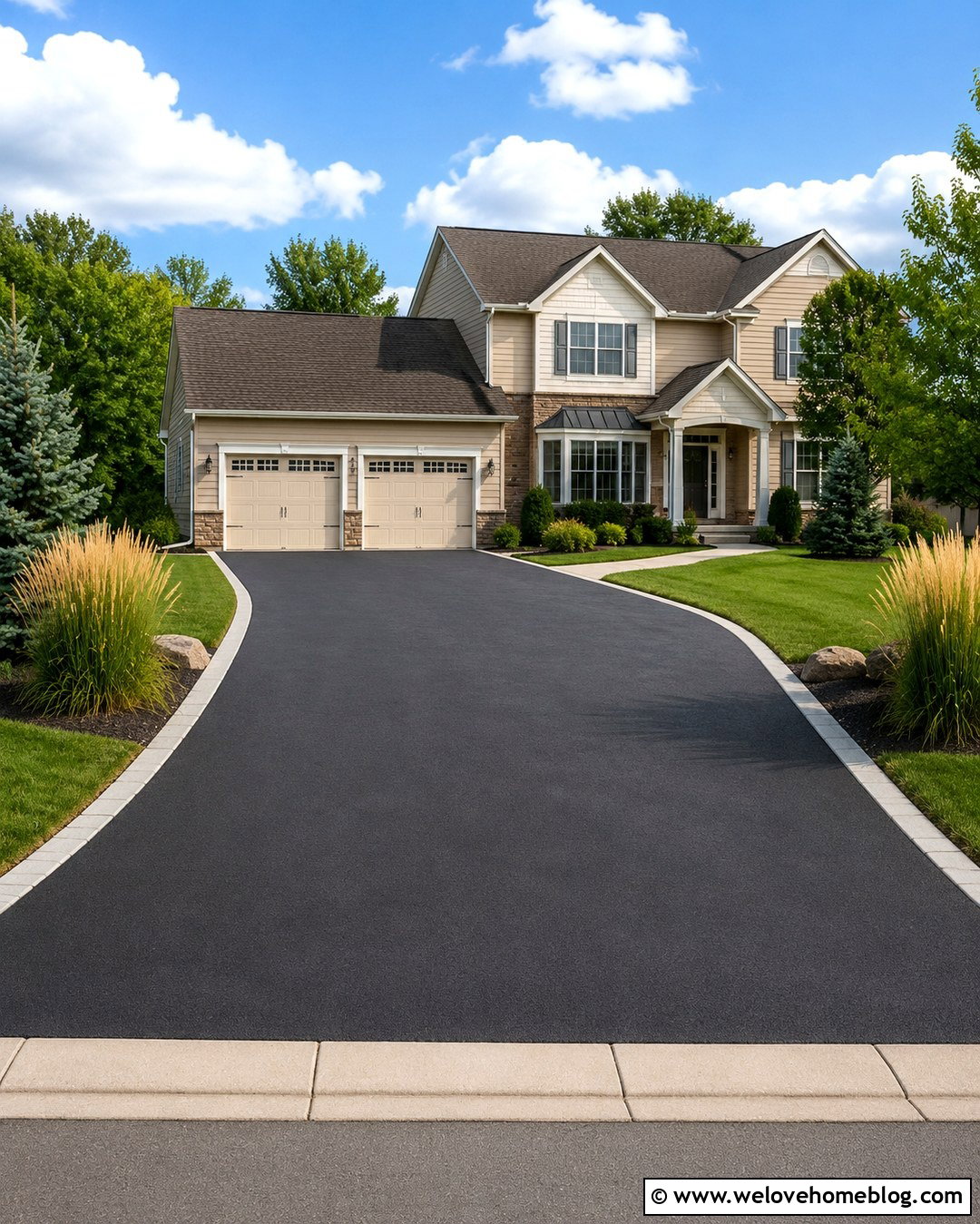
Concrete edging gives asphalt a crisp outline and helps create an orderly connection between the driveway, lawn, and planting beds. This combination suits suburban homes that need a straightforward, durable surface with a slightly upgraded appearance. Construct a smooth black asphalt center within light-gray concrete curbs or flush bands. A gentle flare near the road makes entry easier, while a wider parking section near the garage provides useful turning or guest space. Flush edging is easier to cross with lawn equipment, whereas raised curbing offers stronger visual separation. The best option depends on how water must leave the driveway. Add narrow beds of hardy grasses, compact evergreens, and low flowering plants behind the concrete. Keep the final design simple so the contrasting black and light-gray materials remain the main feature.
7. Pea Gravel Driveway With Cobblestone Edging
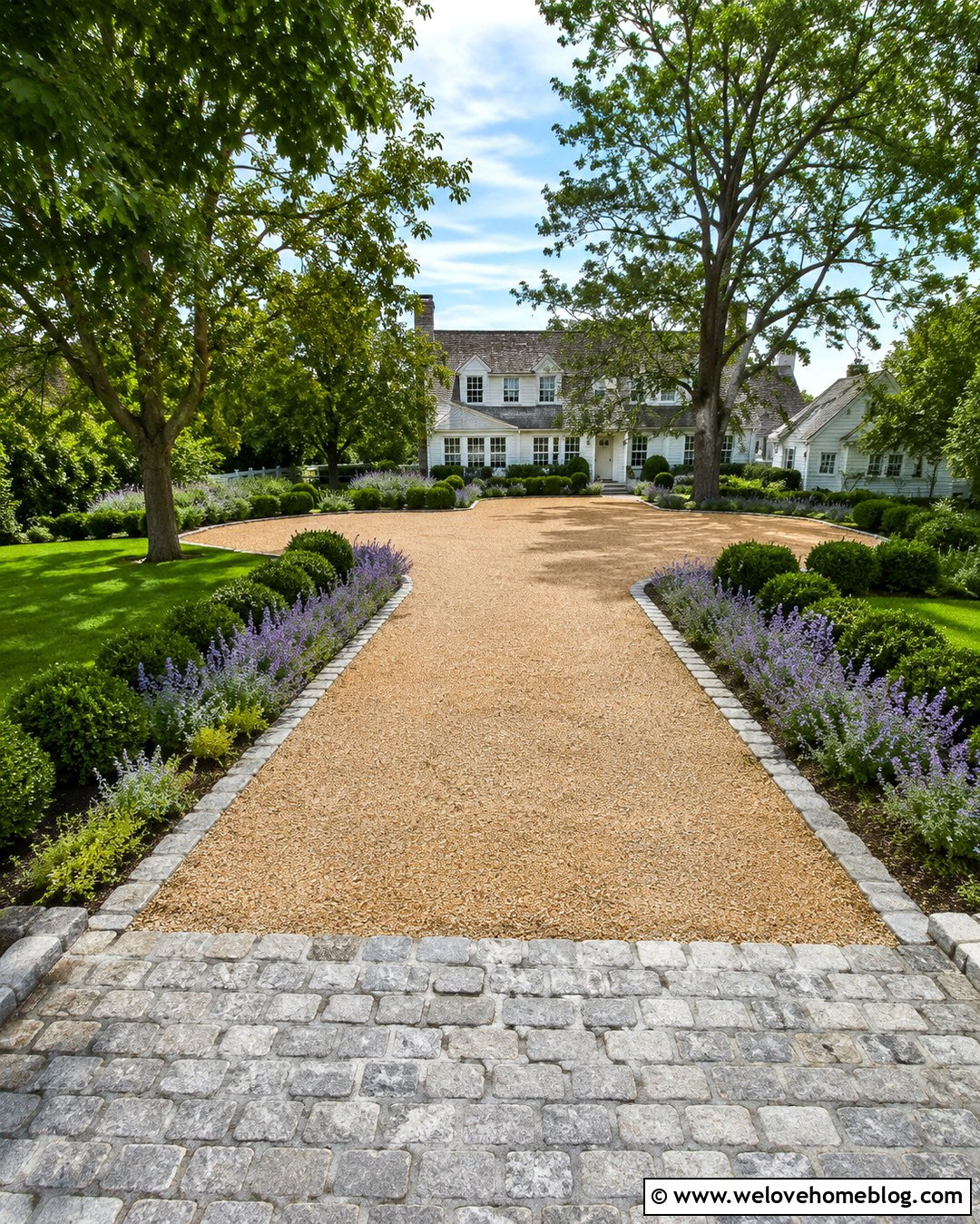
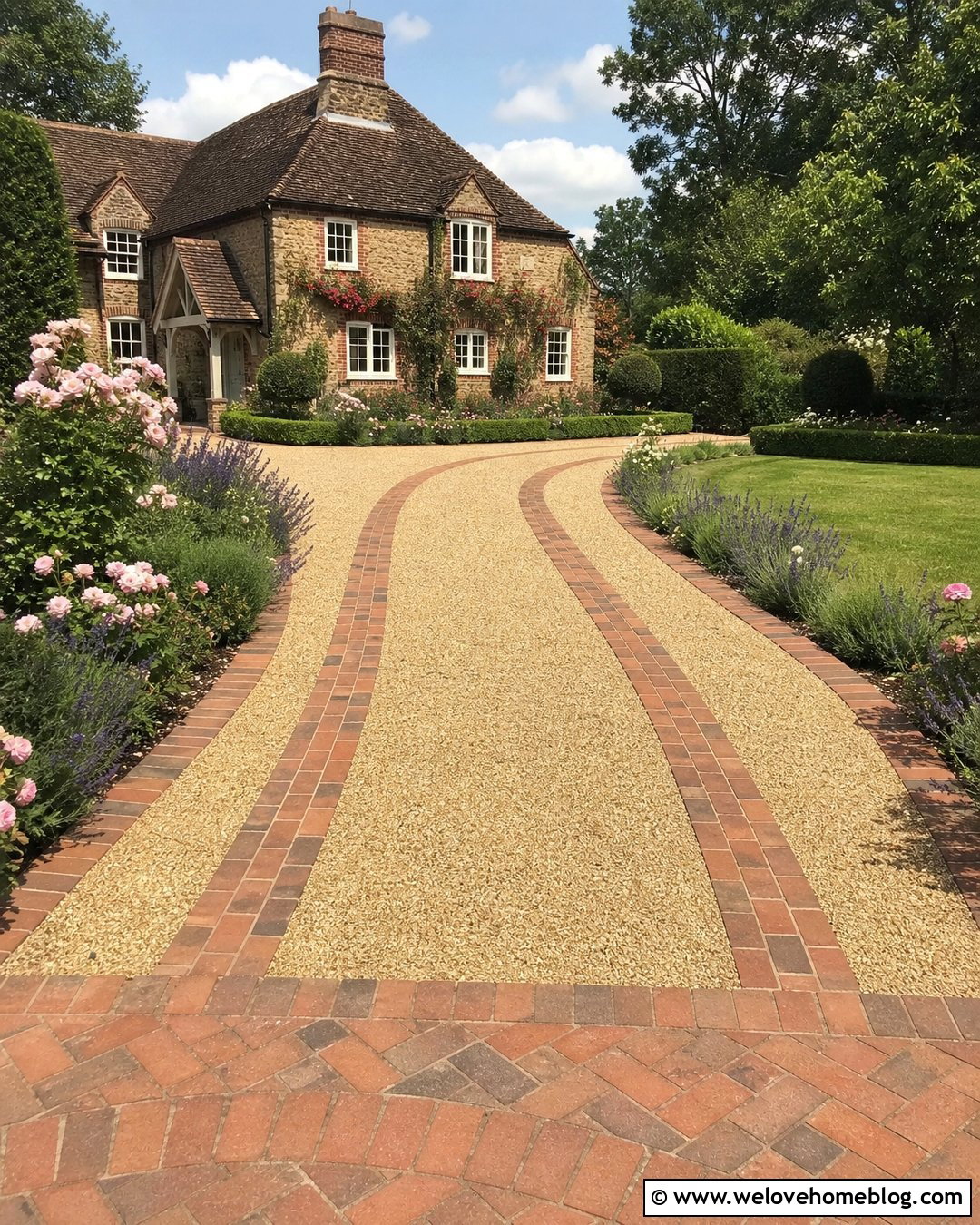
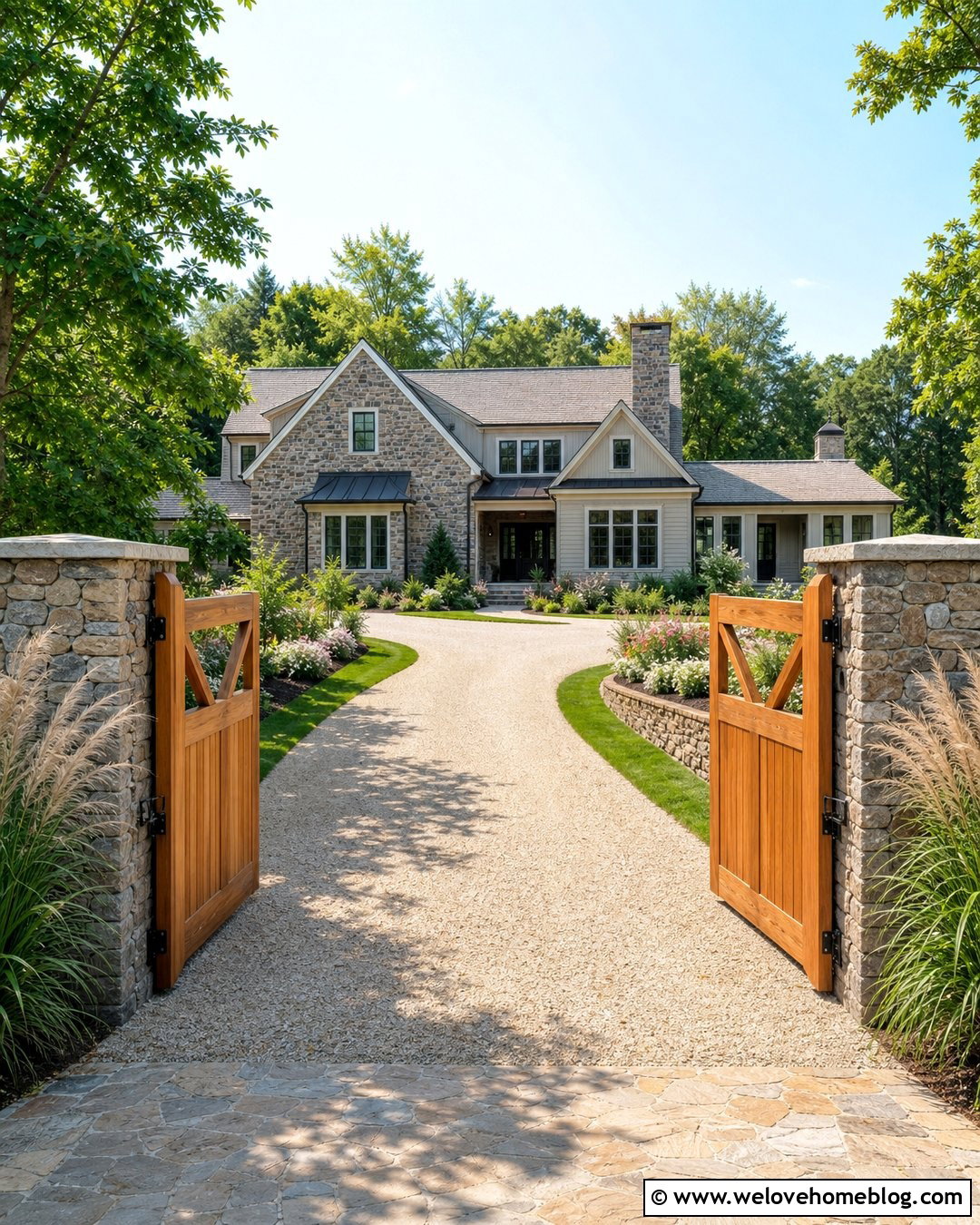
A pea gravel driveway can create a relaxed country-house entrance when it is supported by a stable base and contained with strong cobblestone edges. Use warm tan or mixed natural pea gravel on a straight driveway that gently widens into a parking court. The cobblestones should form continuous borders and a substantial entrance apron, reducing the amount of loose stone that travels into the lawn or street. Because rounded pea gravel can shift, consider a suitable stabilization grid beneath high-use areas. A compacted base and careful grading remain necessary even though the top surface appears informal. Frame the driveway with lavender, catmint, ornamental grasses, and clipped shrubs. The result works beautifully with cottages, farmhouses, and traditional homes, while the defined border keeps the overall construction looking polished. ()
8. Crushed Stone Driveway With Steel Edging
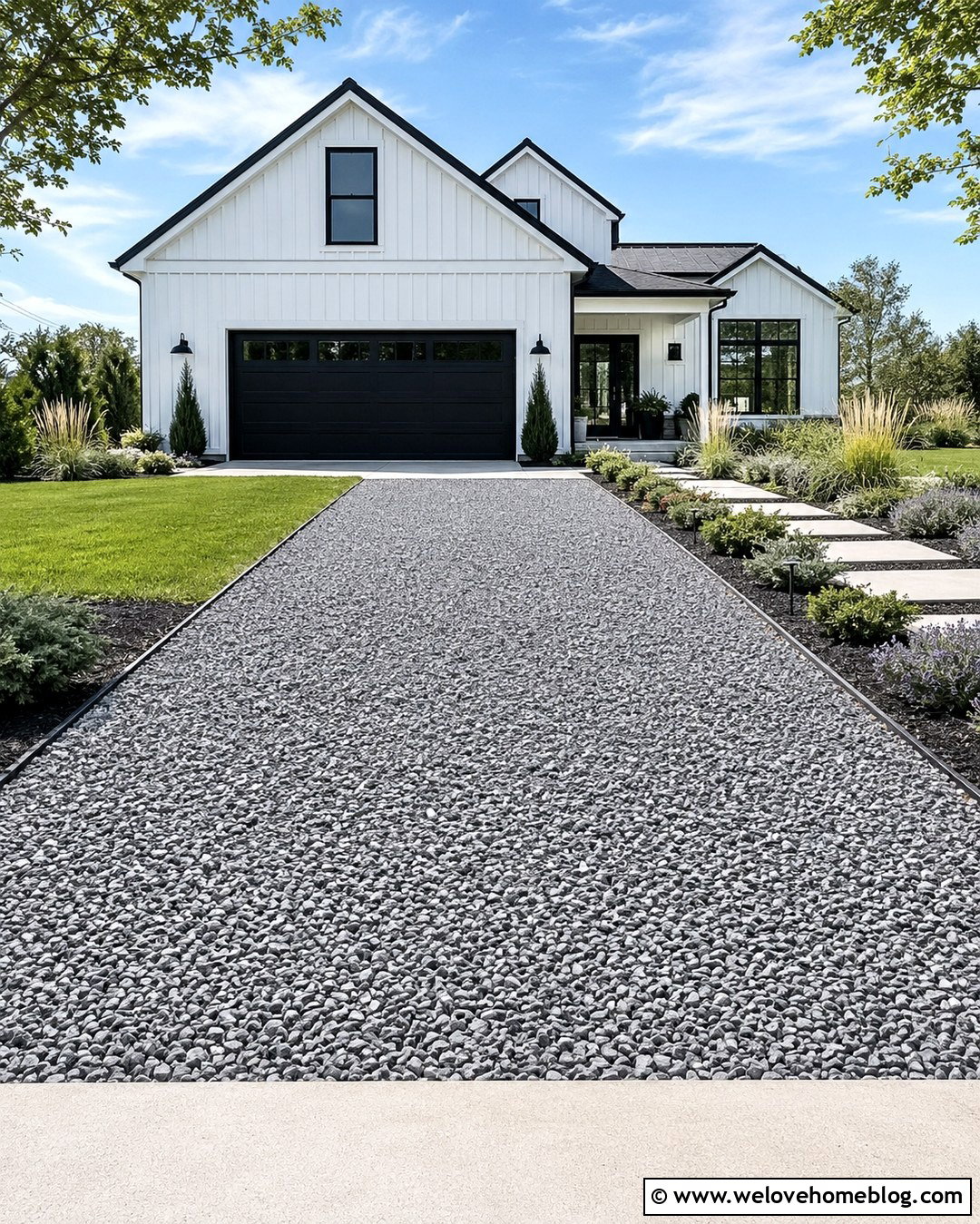
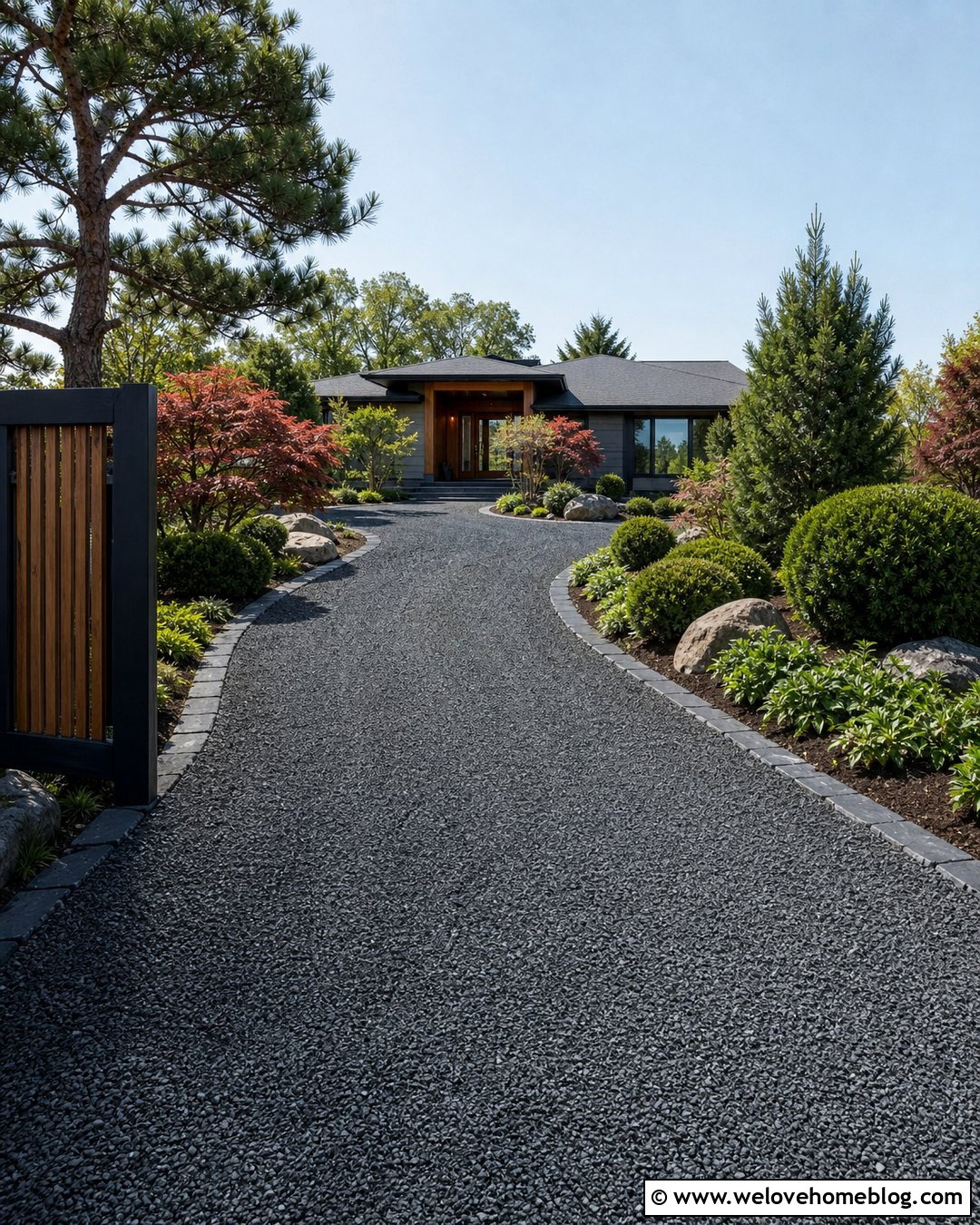
Angular crushed stone interlocks more readily than rounded gravel, making it useful for a firm-looking rural or transitional driveway. Choose gray crushed limestone or granite and compact it in layers over a prepared aggregate base. Slim black steel edging gives the surface a sharp modern outline without adding a bulky border. A straight driveway with a rectangular parking pad suits a modern farmhouse or simple contemporary home. For visual softness, place ornamental grasses, low junipers, and drought-tolerant perennials outside the steel edge. A paver threshold at the garage can reduce scattered stones near the doors and create a smoother transition. Crown or slope the finished surface according to site drainage needs. Periodic raking, weed control, and additional stone will help maintain the clean, even appearance over time.
9. Stabilized Gravel Driveway With Grid Base
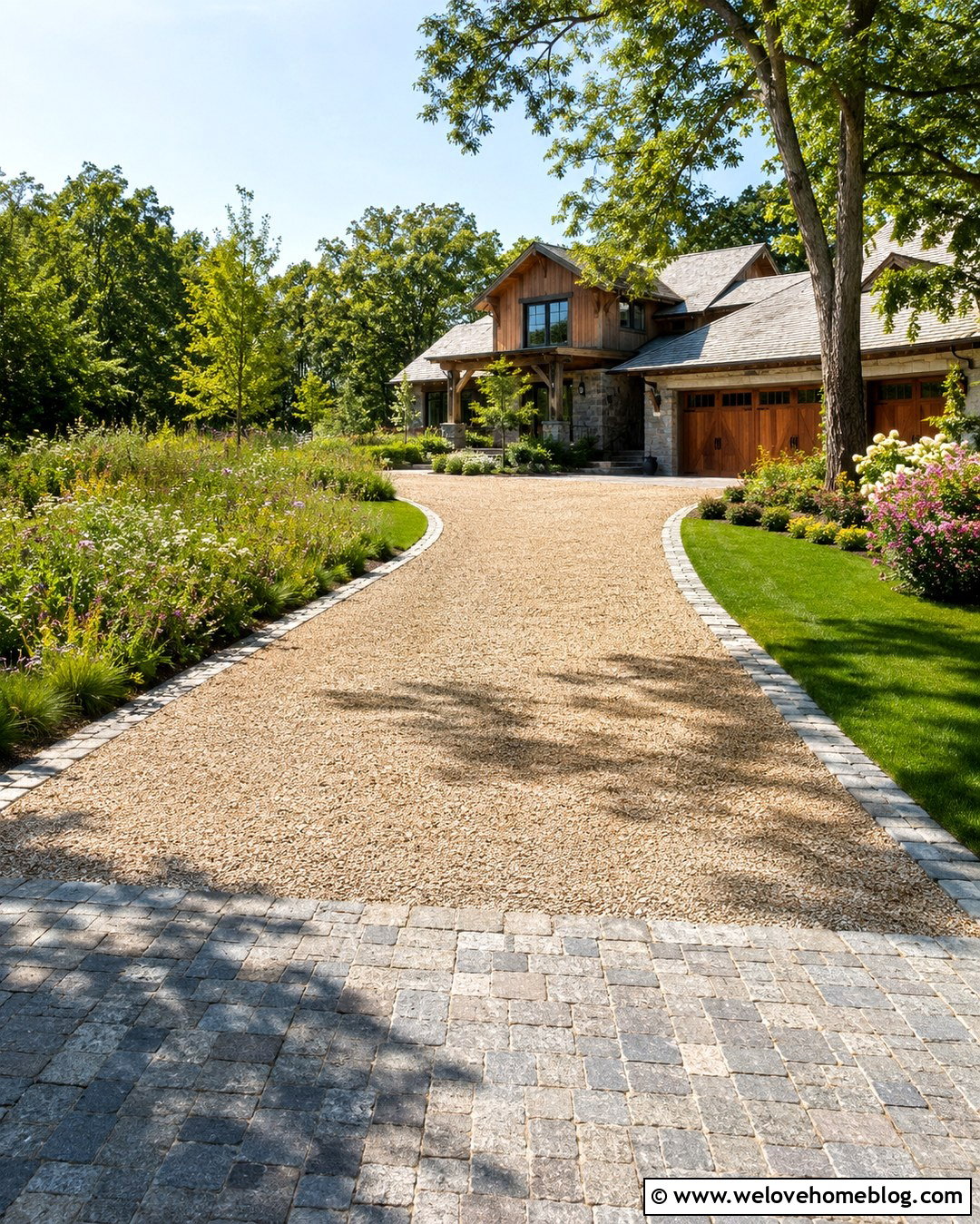
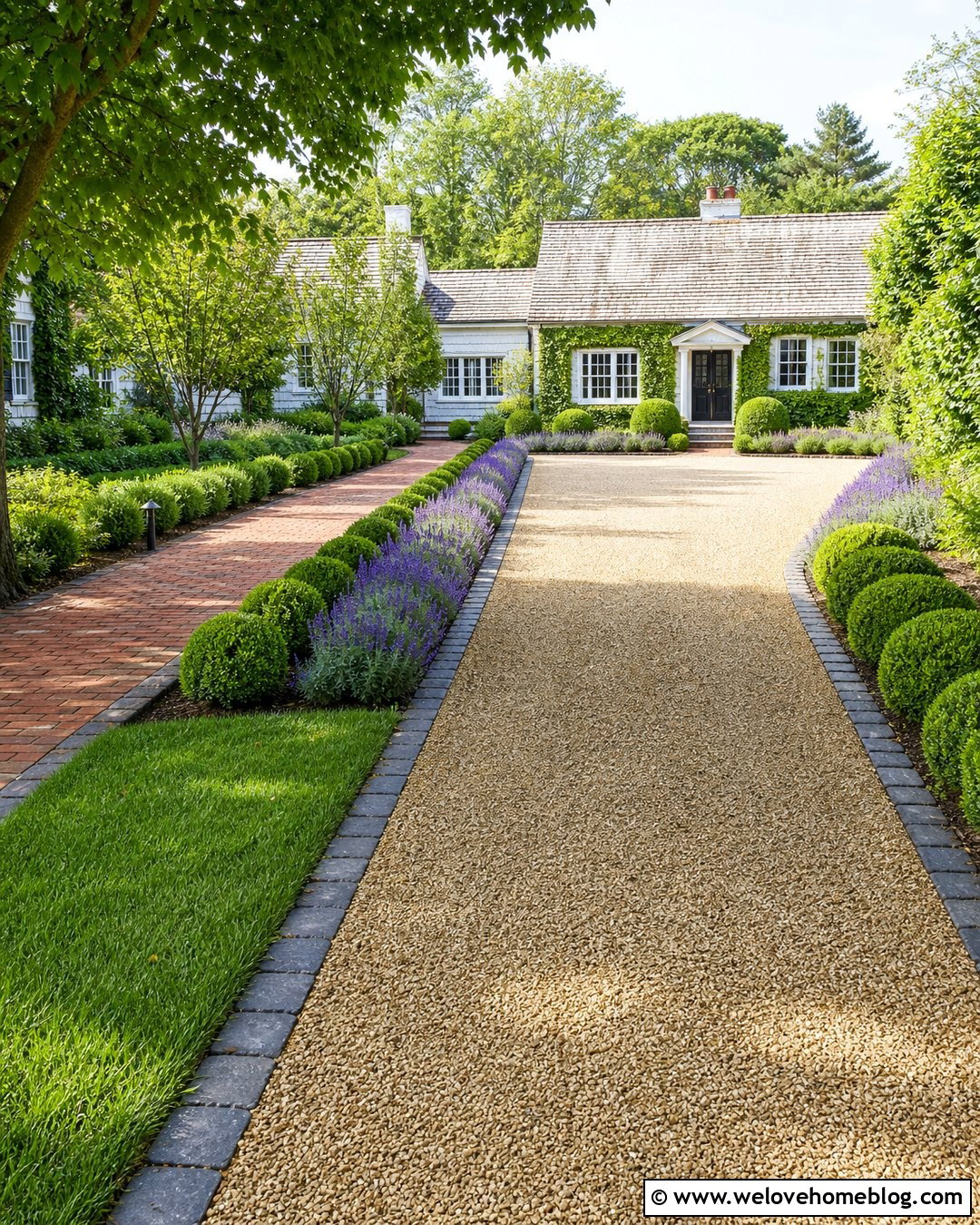
A gravel stabilization grid creates a more controlled surface while preserving the natural appearance and permeability associated with loose stone. This construction works well for long driveways, secondary parking areas, and properties where runoff control is important. Install a vehicle-rated grid system over correctly prepared base layers, then fill it with angular gravel that suits the grid specifications. A gently curved layout can follow the land and reduce unnecessary excavation. Use stone setts at the entrance and garage to contain the gravel and create durable transition points. Surround the driveway with meadow planting, native shrubs, and a mown lawn edge for an informal but maintained look. The complete system must be selected for soil, slope, expected vehicle loads, drainage, and local requirements rather than appearance alone. ()
10. Concrete Paver Driveway In Herringbone
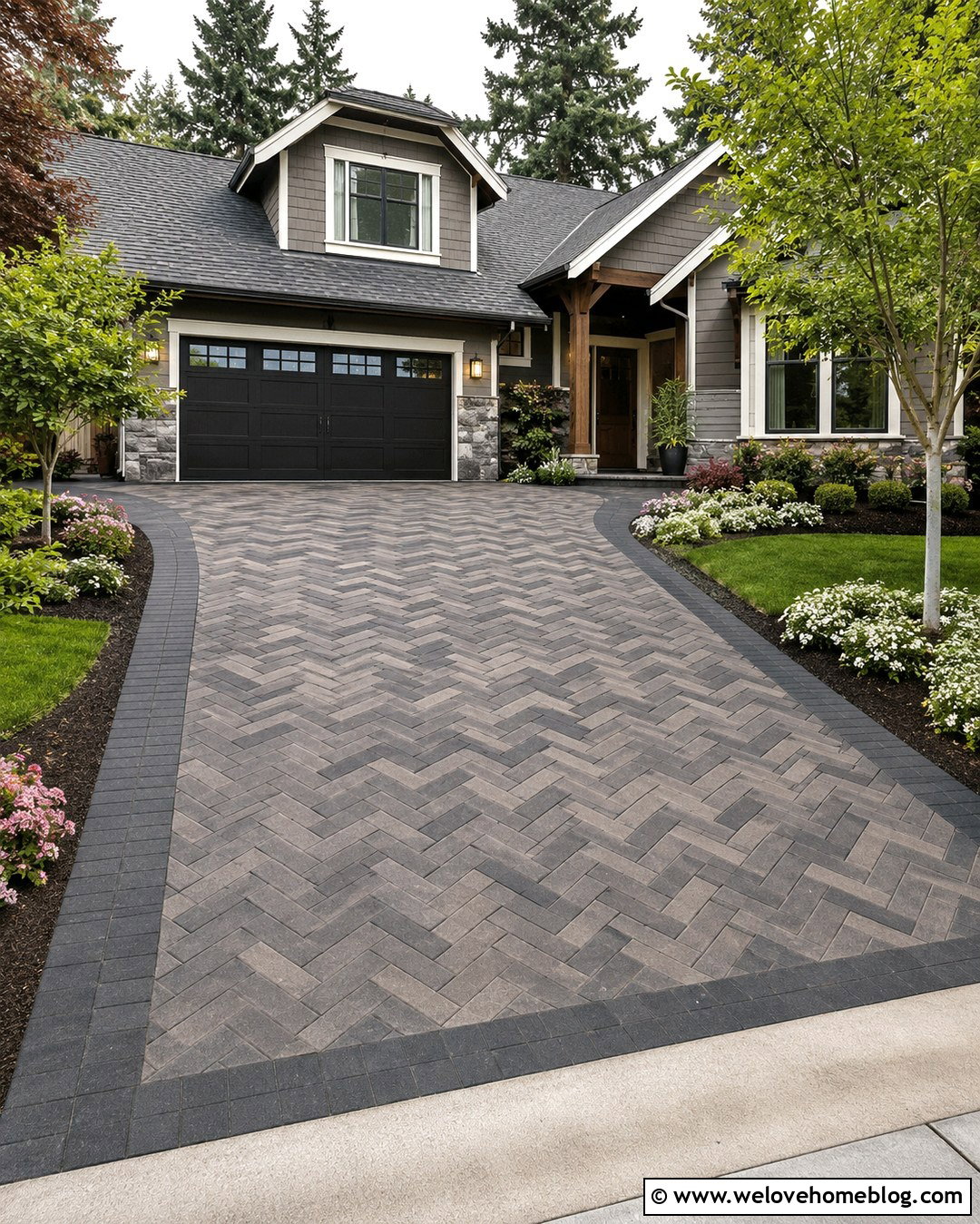
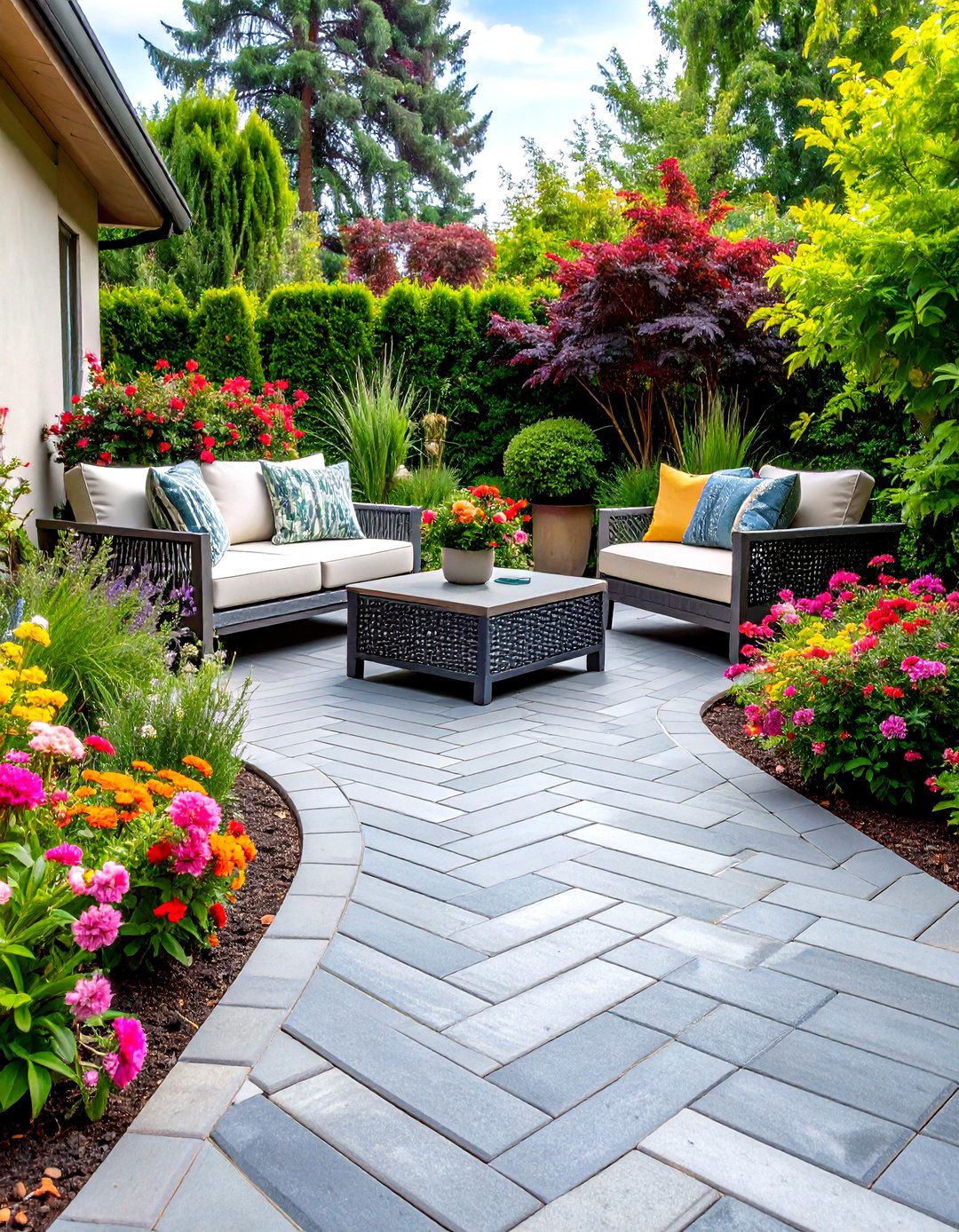
A herringbone concrete paver driveway has strong visual movement and can complement homes ranging from craftsman to contemporary. Choose charcoal, greige, or warm sandstone pavers, then frame them with a contrasting soldier-course border. A straight layout keeps the pattern orderly, while a slightly flared entrance makes the driveway feel more generous. Construction quality beneath the pavers is crucial. The excavated area, aggregate base, bedding material, edge restraints, joint fill, and final compaction must work as one system. Continue the pavers into the front walkway or a small parking court for a unified approach. Plant low boxwood alternatives, flowering perennials, and small ornamental trees along the sides. Individual units can be lifted when access or localized correction is required, which is a practical advantage of modular paving. ()
11. Permeable Paver Driveway With Gravel Joints
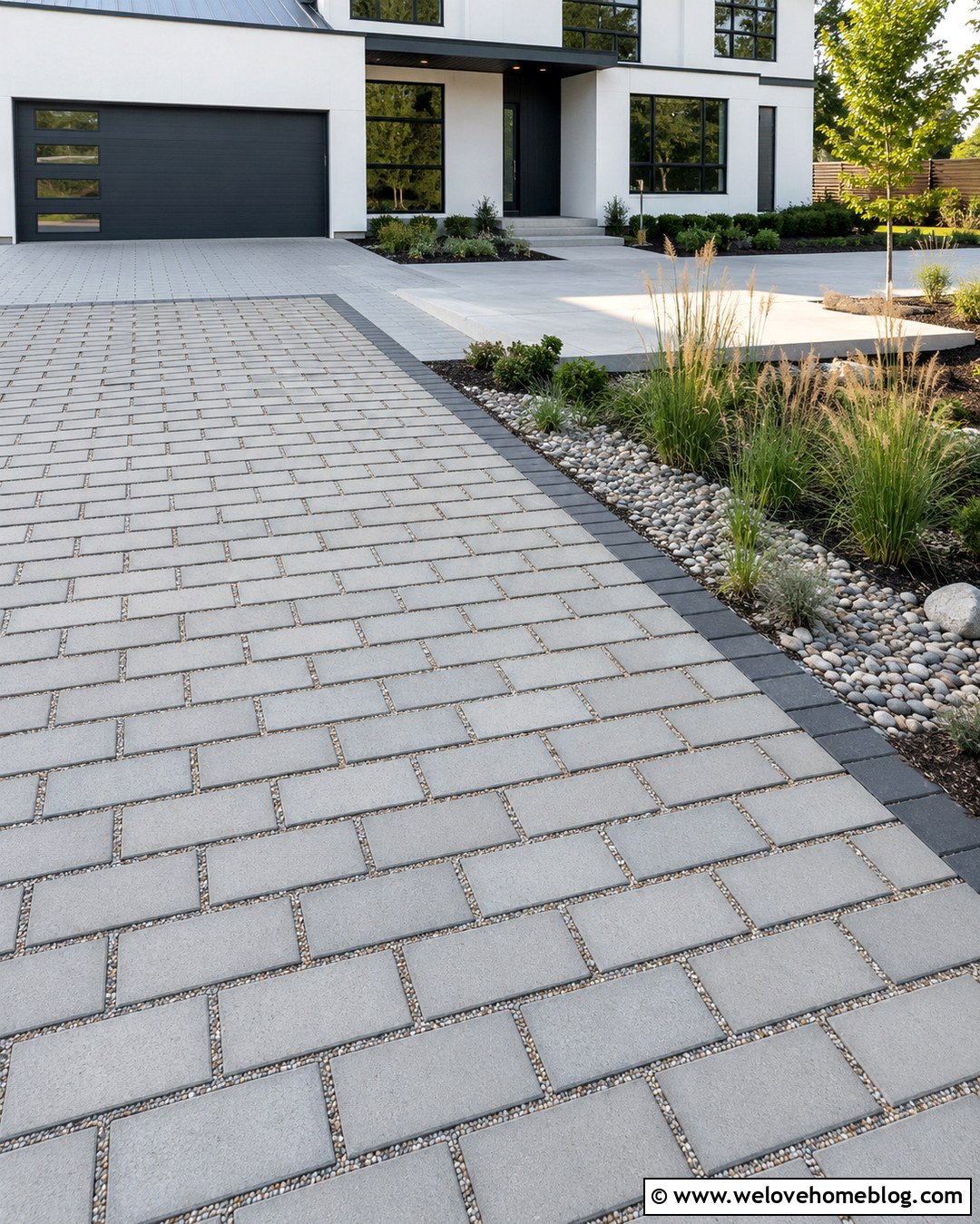
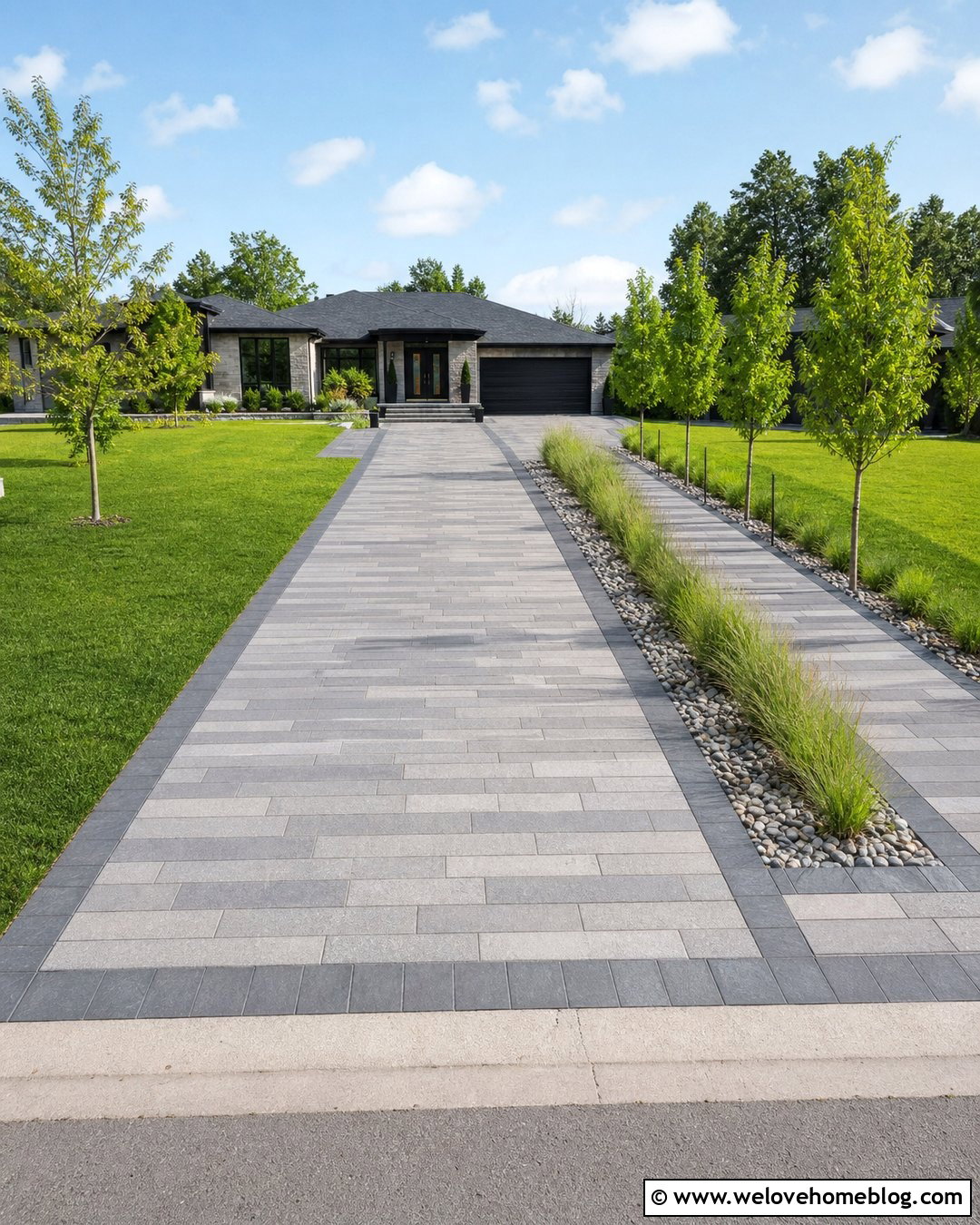
Permeable concrete pavers combine a structured paved appearance with wider joints that allow water to enter an open-graded stone system below. Use large rectangular gray pavers in a straight or offset pattern for a clean modern driveway. Fill the joints with the specified small aggregate rather than ordinary sand. Dark paver borders can outline the parking area while rain gardens and low planting beds receive or complement the site’s drainage strategy. The underlying stone reservoir, soil conditions, slope, overflow route, and vehicle loading require careful planning. Permeable pavement is a complete construction system, not simply standard pavers with larger gaps. Regular removal of sediment helps preserve infiltration. Pair the driveway with a modern house, broad concrete walkway, ornamental grasses, and restrained foundation planting. ()
12. Clay Brick Driveway In Herringbone
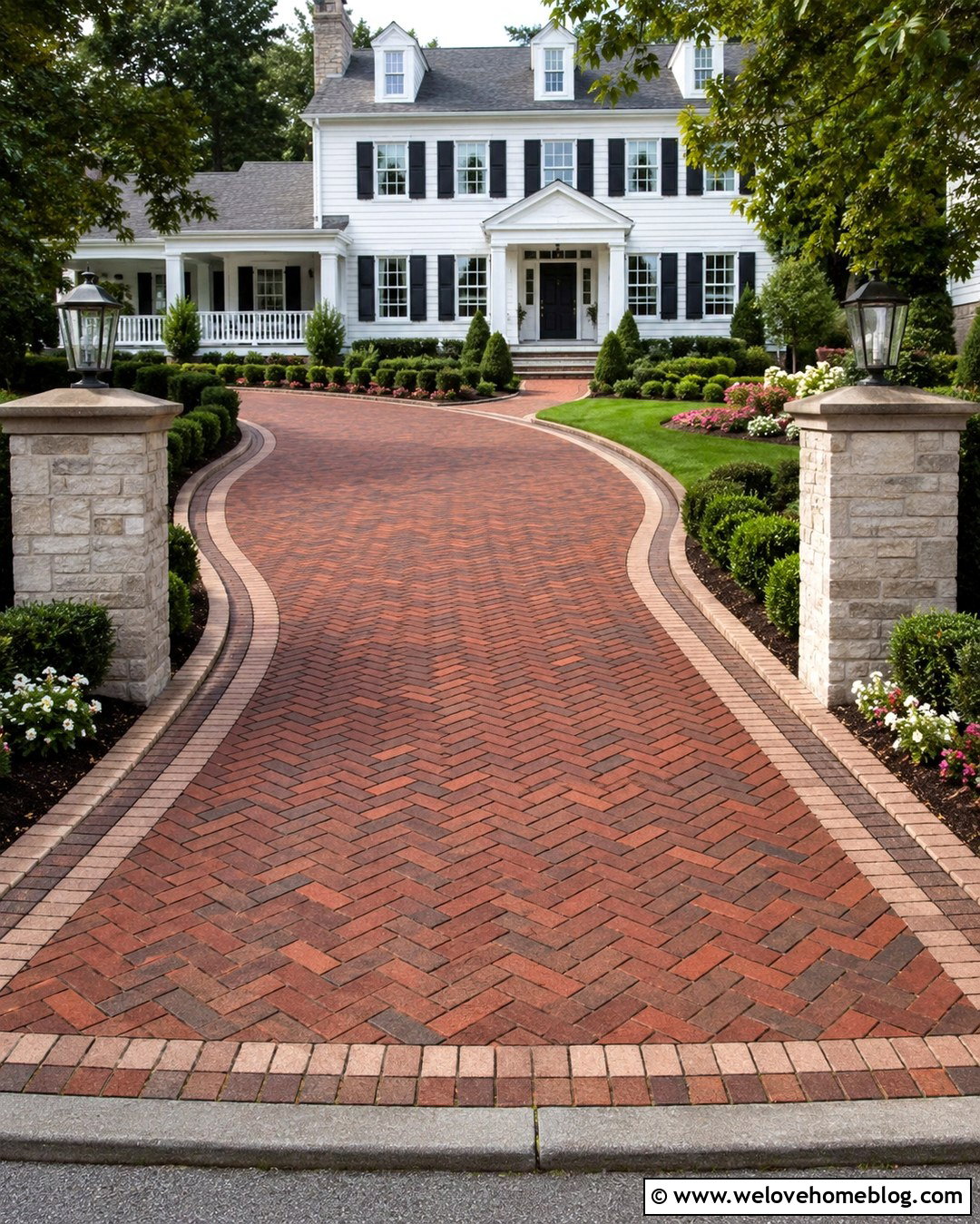
Clay brick pavers bring rich color and traditional character to a driveway leading toward a colonial, Tudor, or cottage-style house. A herringbone field provides an interlocking visual pattern, while a double brick border clearly defines the shape. Use deep red, brown, or variegated brick that coordinates with the facade and front steps. A softly curved layout can make the entrance feel established rather than overly formal. Build the driveway over a properly designed base and use pavers rated for vehicular applications. Strong perimeter restraint is necessary to hold the pattern together. Cream stone gate pillars, clipped hedges, flowering borders, and a brick walkway complete the setting. Since masonry colors and dimensions vary, review physical samples outdoors before ordering the full quantity. Reserve additional matching bricks for future localized replacement.
13. Cobblestone Driveway With Formal Landscaping
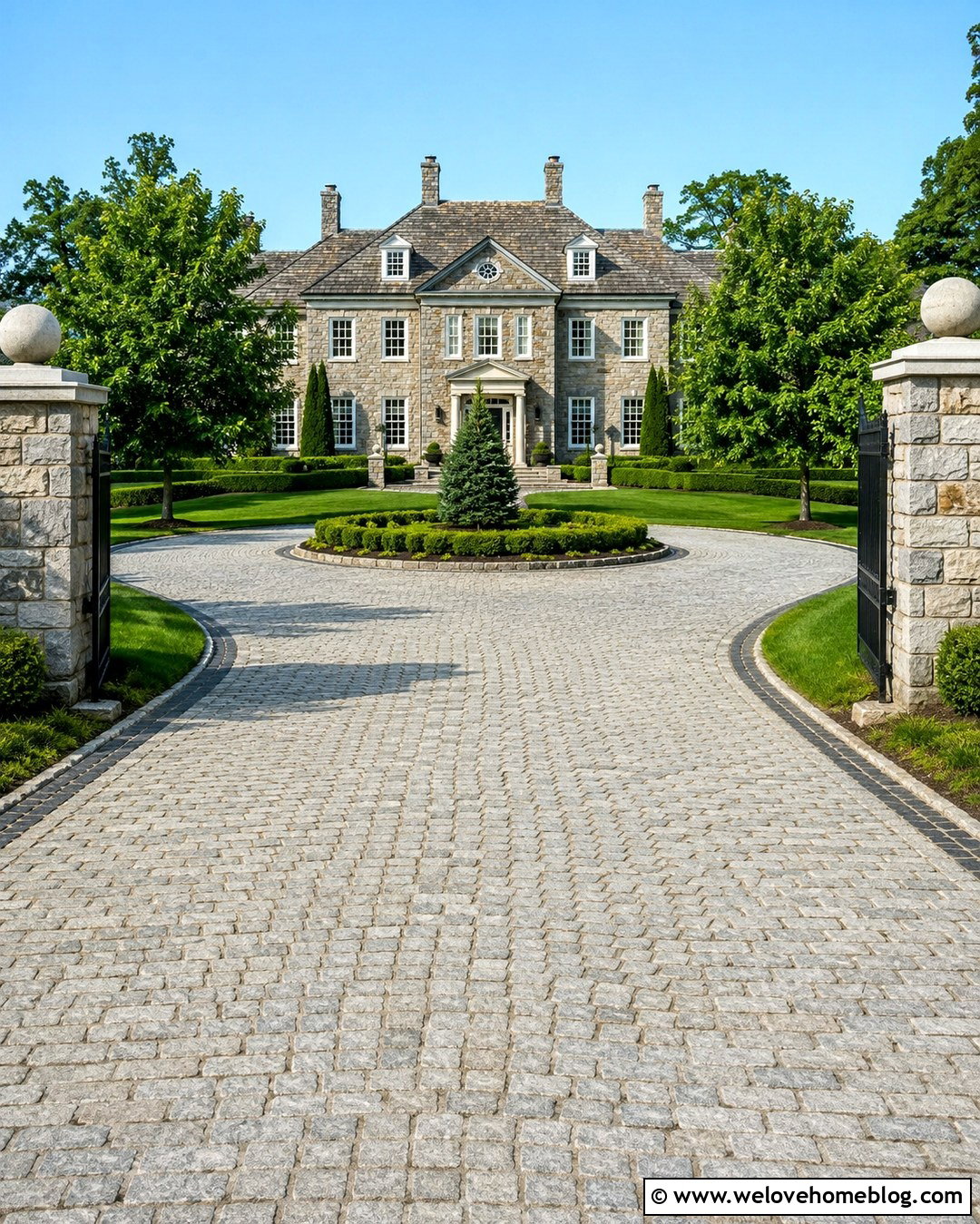
A full cobblestone driveway creates a substantial, historic appearance that suits stone houses, Georgian homes, and upscale traditional properties. Use granite cobbles in mixed charcoal and silver tones across a curved or circular layout. A darker cobblestone border can define the perimeter and establish a clear walkway crossing. Because natural cobbles vary in shape and thickness, experienced installation and careful base construction are particularly important. The finished surface should remain usable without losing its handcrafted character. Balance the visually active paving with simple landscaping, such as clipped hedges, symmetrical evergreens, broad lawn areas, and a pair of ornamental trees near the entrance. Stone pillars can repeat the house masonry without making the approach feel crowded. Consider using cobblestone only on aprons and borders if a complete installation exceeds the available budget.
14. Resin-Bound Gravel Driveway With Stone Border
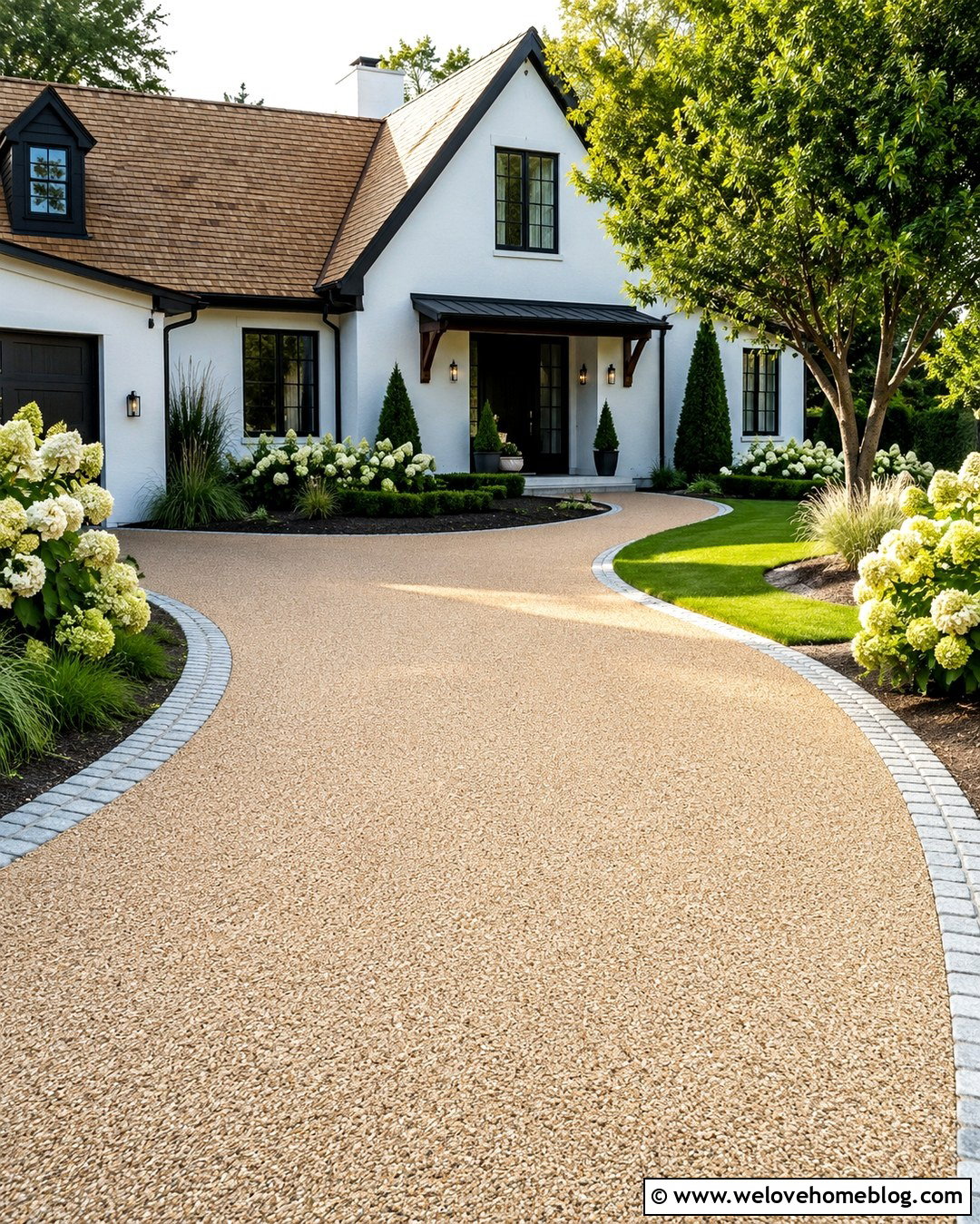
Resin-bound gravel produces a smooth-looking surface made from decorative aggregate mixed with a compatible resin. It can provide the visual warmth of gravel without the same loose-stone movement. Choose golden, beige, gray, or mixed natural aggregate for a gently curved driveway leading to a contemporary cottage or remodeled ranch. A flush granite-sett border creates a durable edge and adds definition at the entrance. Construction requirements depend on the chosen system, existing surface, site drainage, climate, and manufacturer specifications, so professional assessment is sensible. Use sweeping planting beds with grasses, hydrangeas, compact shrubs, and a small specimen tree to reinforce the curve. A matching path can branch toward the front door. Clearly distinguish resin-bound construction from resin-bonded surfacing when comparing products, performance, and installation proposals.
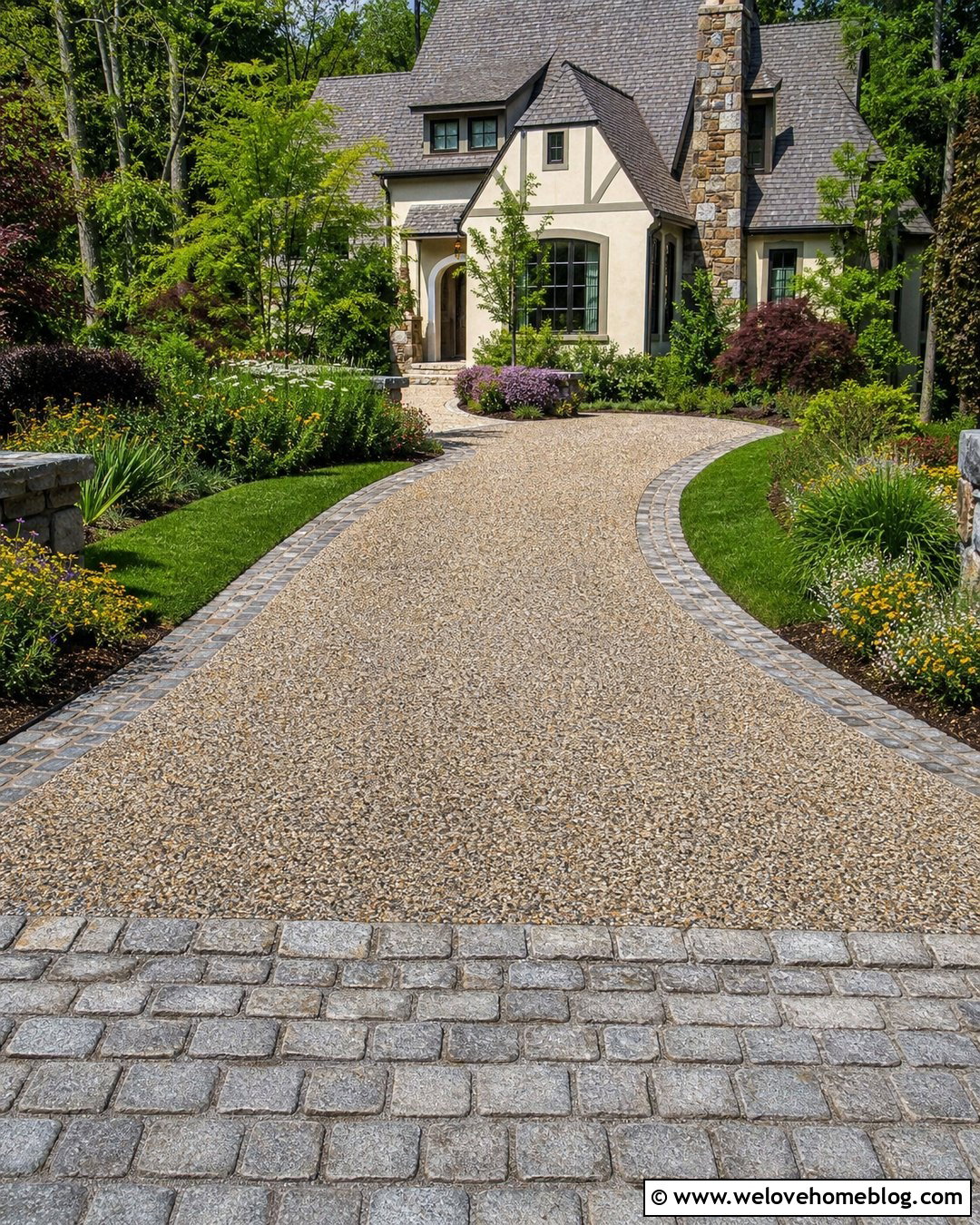

15. Decomposed Granite Driveway With Timber Edging
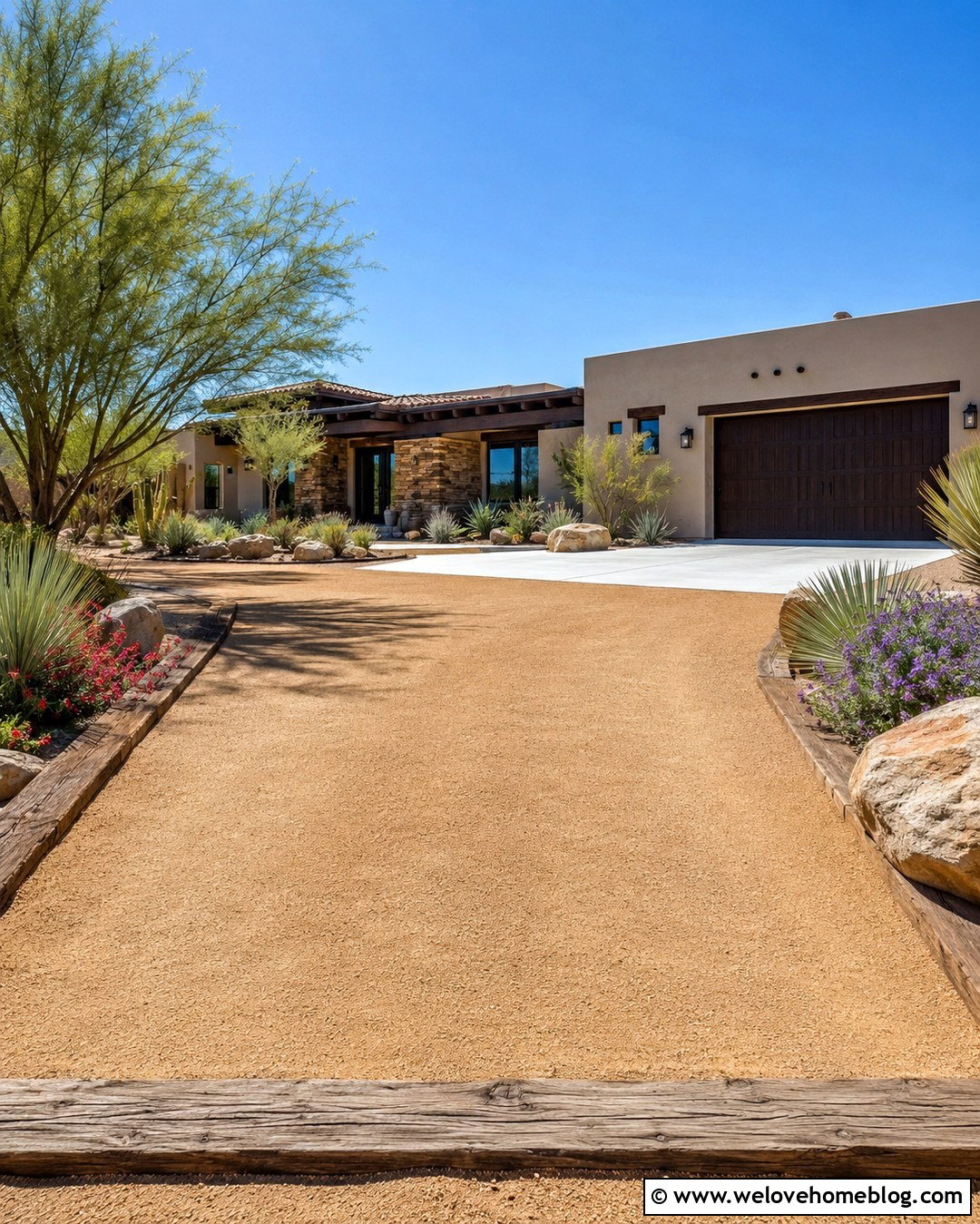
Decomposed granite gives a driveway a warm, earthy surface that fits Southwestern, rustic ranch, and casual country homes. Select a stabilized product suitable for vehicle use and local weather conditions rather than assuming every loose landscape aggregate will perform the same way. A straight driveway with a broad parking pad keeps construction simple. Heavy timber edging or weathered steel can contain the material and define adjacent planting beds. Use a stone or concrete apron at the garage to reduce tracked particles and protect the most heavily used transition. Desert-adapted grasses, agaves where climate-appropriate, flowering sage, and scattered boulders can create a low-water landscape around the driveway. Careful compaction, drainage, and routine surface maintenance are important. Avoid placing this material where significant runoff could wash fines toward the street or foundation.
16. Grass Grid Driveway With Paver Tracks
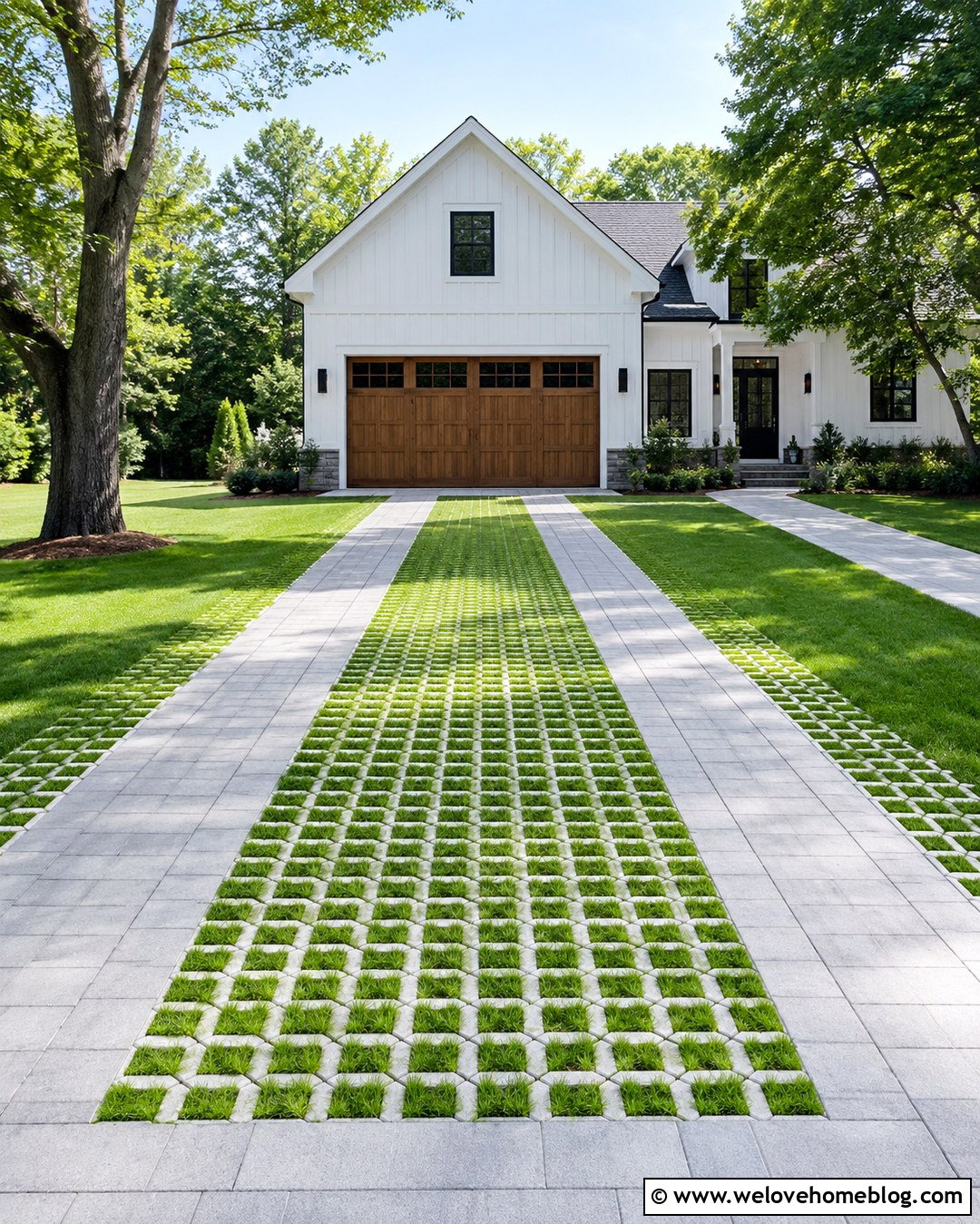
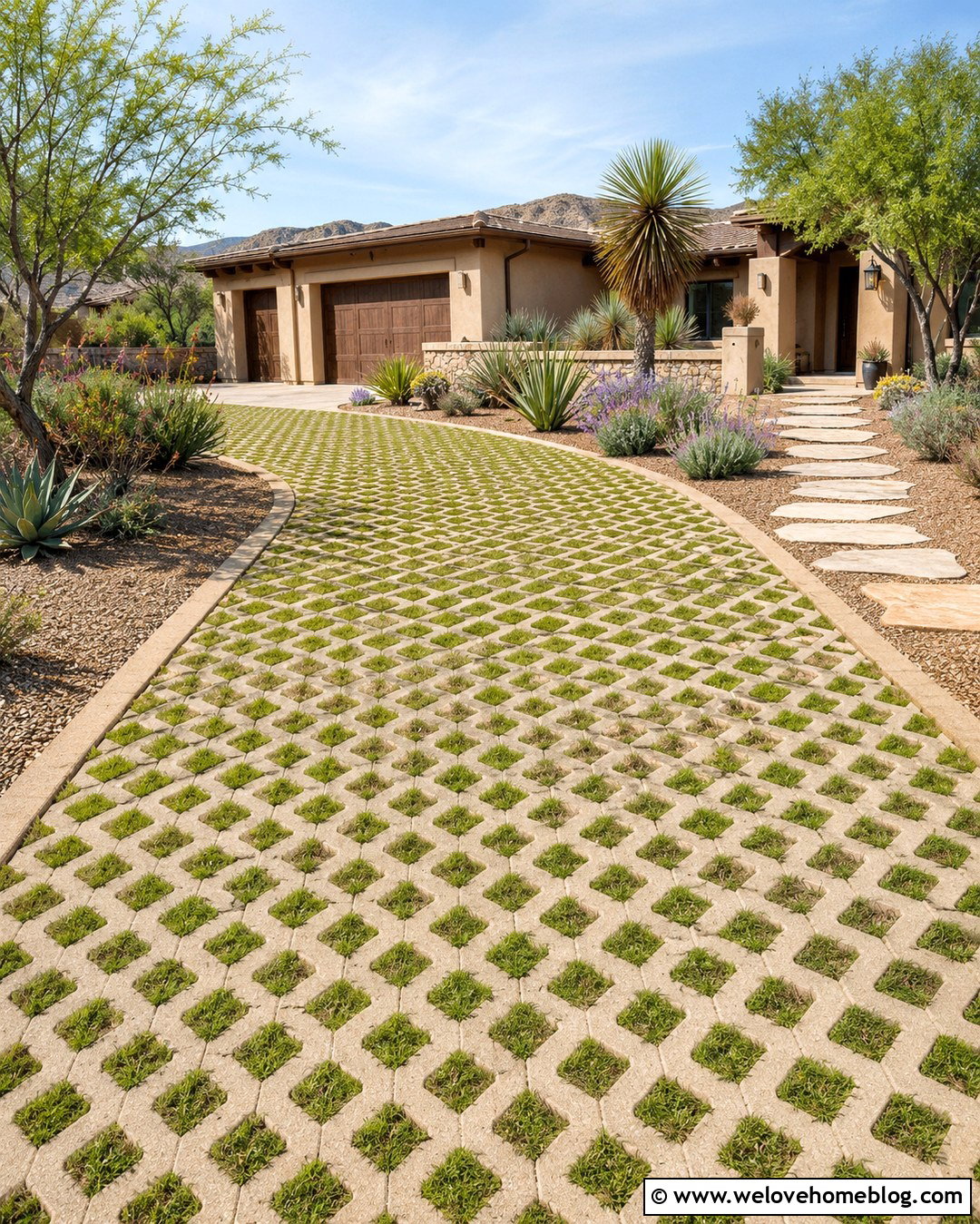
Grass grid construction reduces the visual width of a driveway by combining reinforced planted cells with firm paver wheel tracks. This look works well for occasional parking, side-yard access, and residential approaches where a full expanse of paving would dominate the front yard. Install a load-rated grid system over a base designed for the expected use, soil, and drainage. Two concrete paver tracks provide clear driving lines, while reinforced grass fills the center and outer strips. A straight layout suits a modern farmhouse or compact suburban home. Keep planting simple with lawn, shade trees, and narrow foundation beds. Grass selection, irrigation, sunlight, traffic frequency, and maintenance will influence how green the surface remains. Confirm that the proposed system meets local driveway, emergency-access, and parking requirements before construction. ()
17. Concrete Ribbon Driveway With Gravel Center
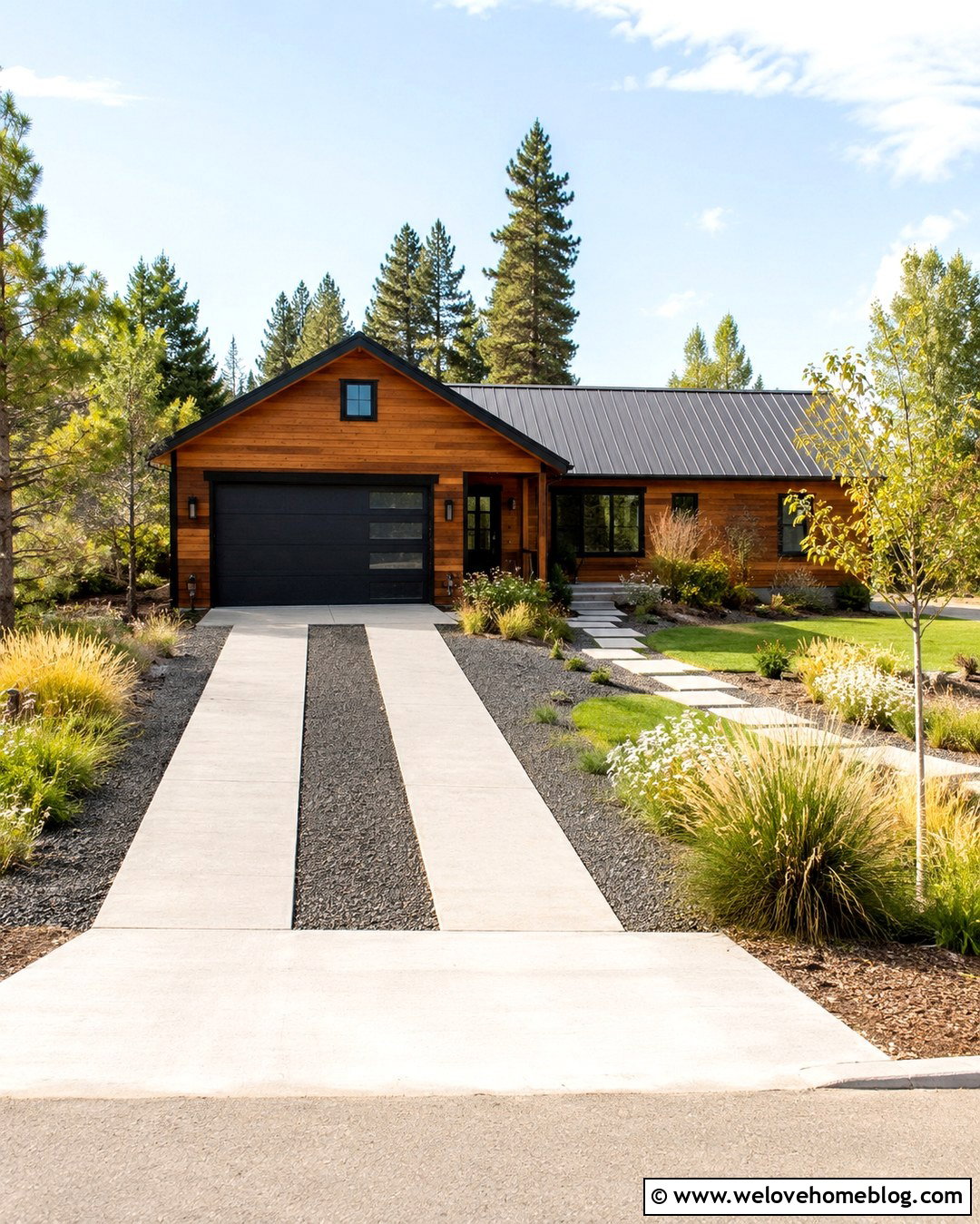
A concrete ribbon driveway uses two reinforced driving strips instead of one uninterrupted slab, leaving gravel or low planting between them. The reduced hardscape can feel lighter and more appropriate for cottages, accessory garages, and low-traffic rural homes. Construct the wheel ribbons at a spacing that matches normal vehicle use while allowing safe entry and turning. Fill the center with compacted gray gravel contained below the concrete edges. A full-width concrete apron at the street and garage creates smoother transitions and visually anchors the design. Surround the driveway with meadow grasses, low shrubs, and an informal stepping-stone walkway. Drainage, soil conditions, snow removal, and vehicle types should be reviewed before choosing this layout. In frequently used areas, a reinforced center strip may be more practical than loose planting.
18. Mixed Concrete And Paver Driveway
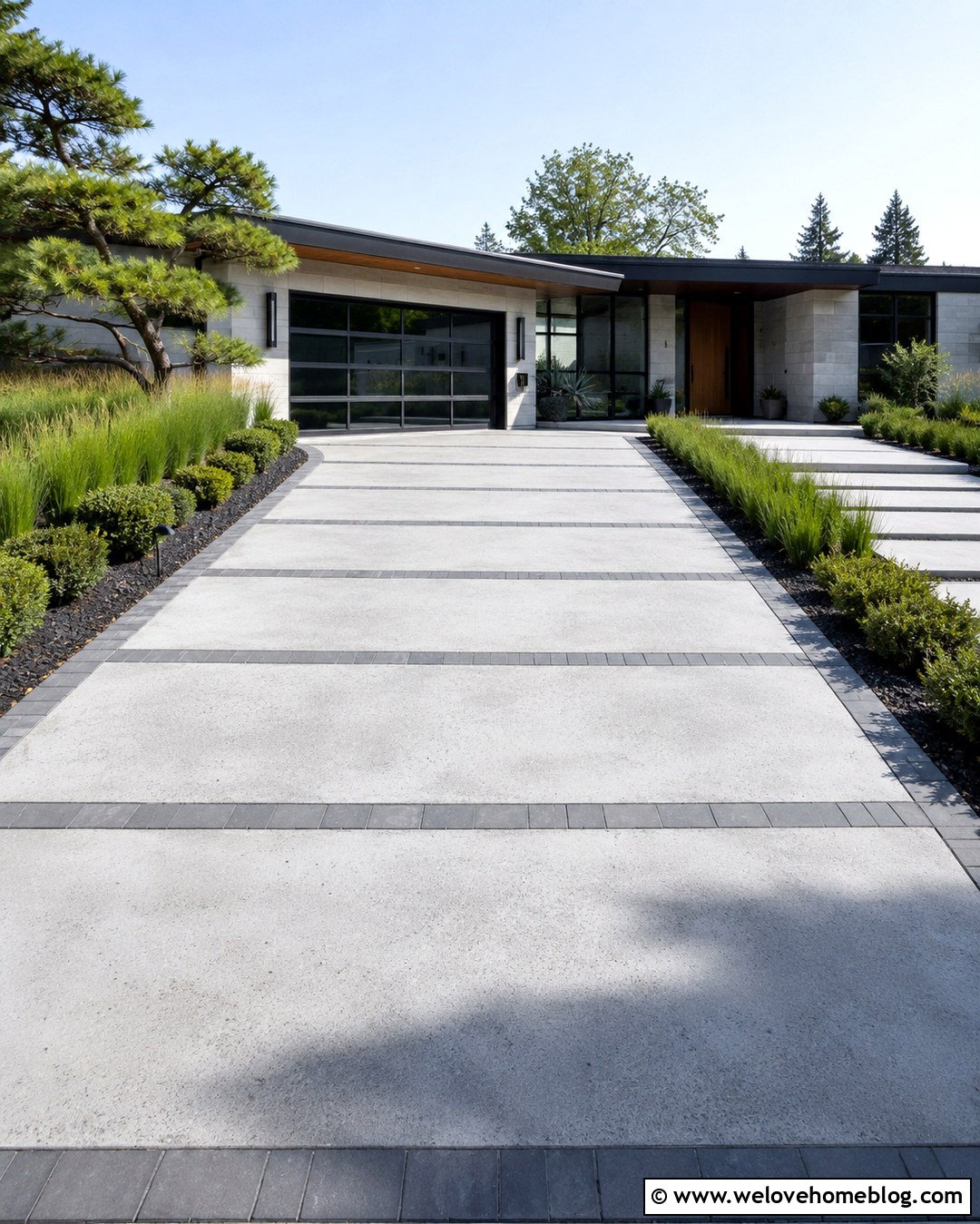
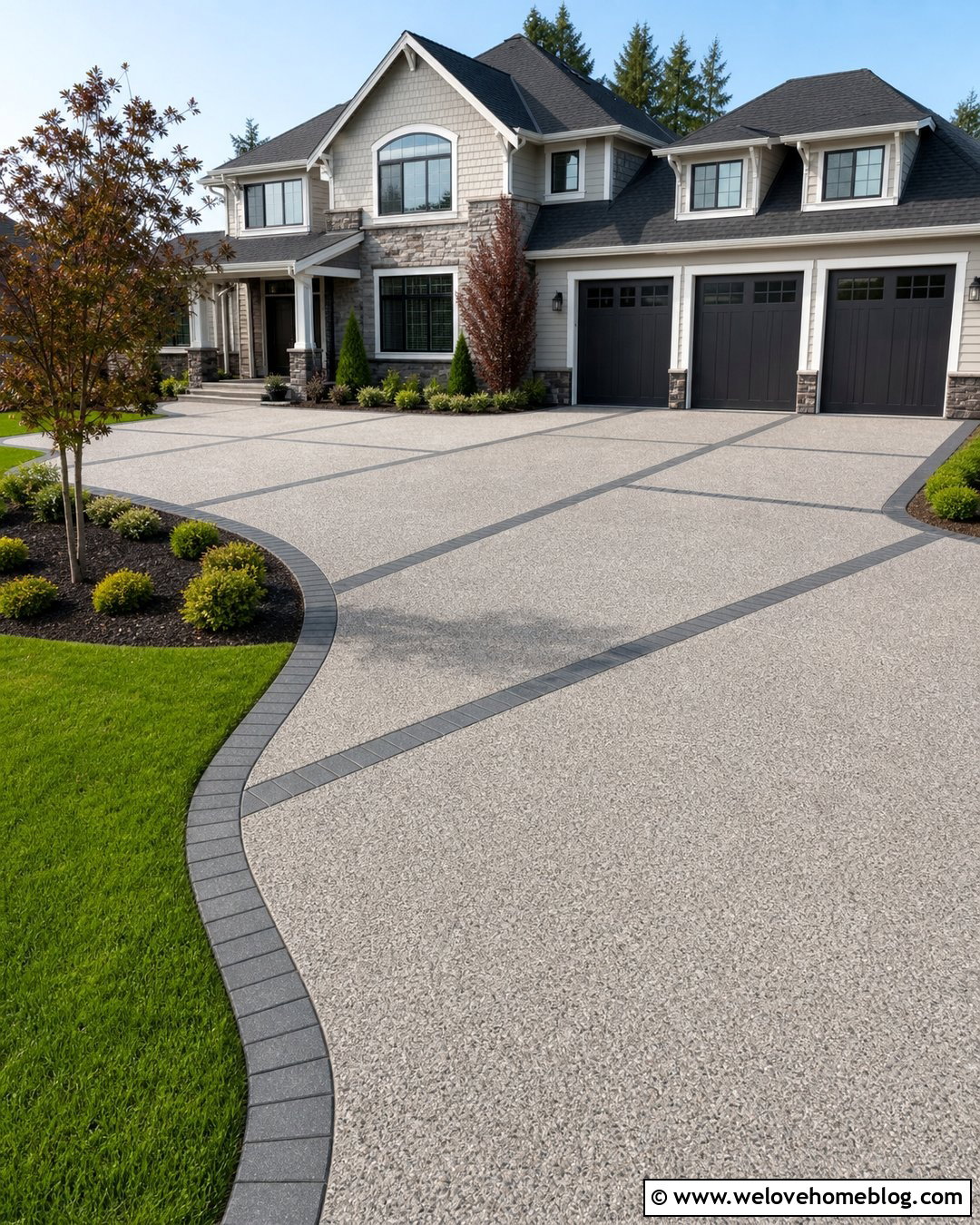
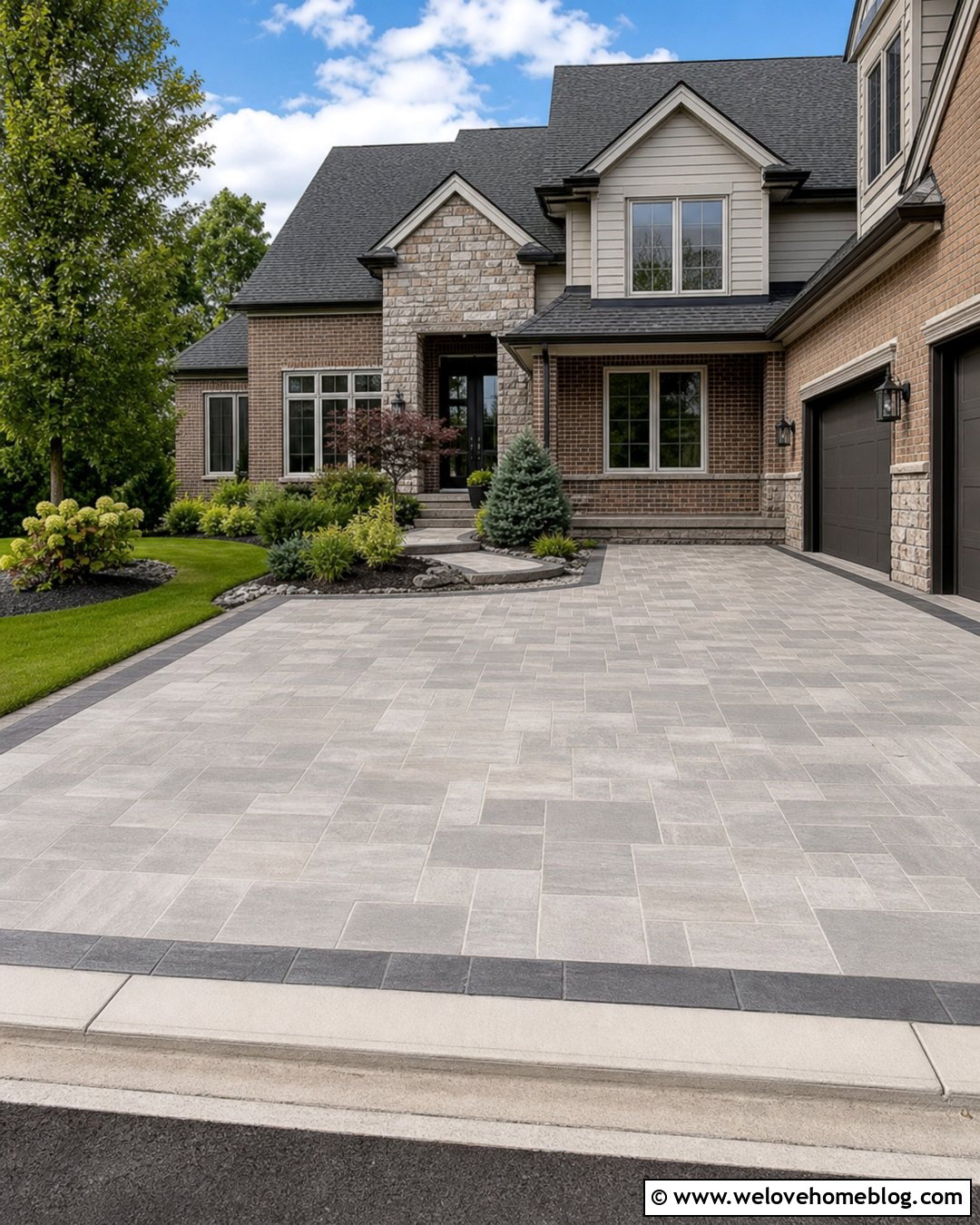
Combining concrete and pavers can add detail without requiring premium paving across the entire driveway. Pour large light-gray concrete panels and separate them with charcoal paver bands. The bands can align with garage doors, architectural columns, or walkway joints, making the layout feel connected to the house. Use pavers around the perimeter and entrance apron to provide a strong visual frame. A wide straight driveway works well with modern, midcentury, and transitional homes. Accurate planning is necessary because the different materials must meet cleanly and respond appropriately to loads, drainage, and movement. Finish the curb view with linear planting beds, ornamental grasses, low evergreen shrubs, and one sculptural tree. Keep the color palette limited so the driveway remains sophisticated rather than becoming a collection of competing patterns.
19. Circular Paver Driveway With Center Garden
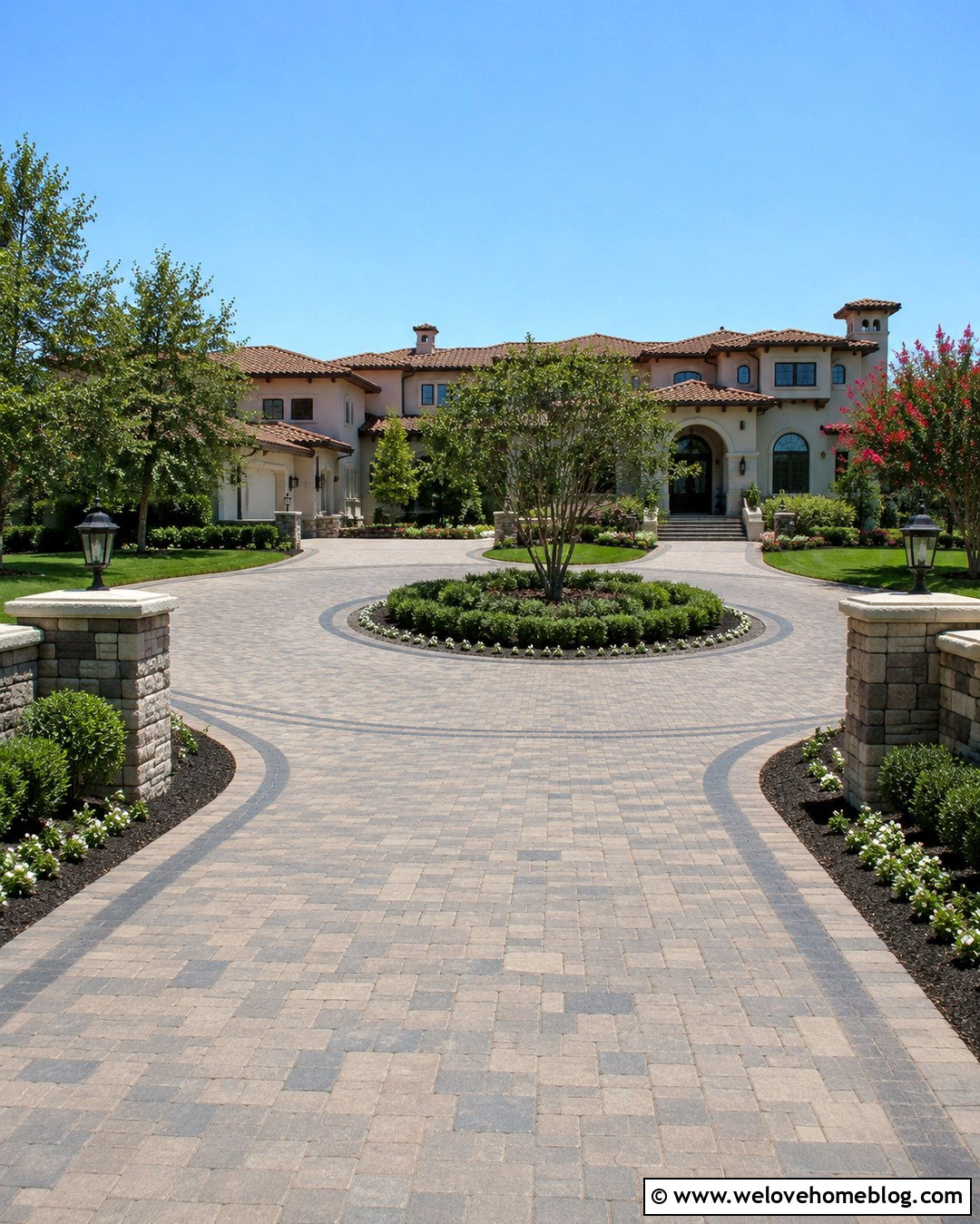
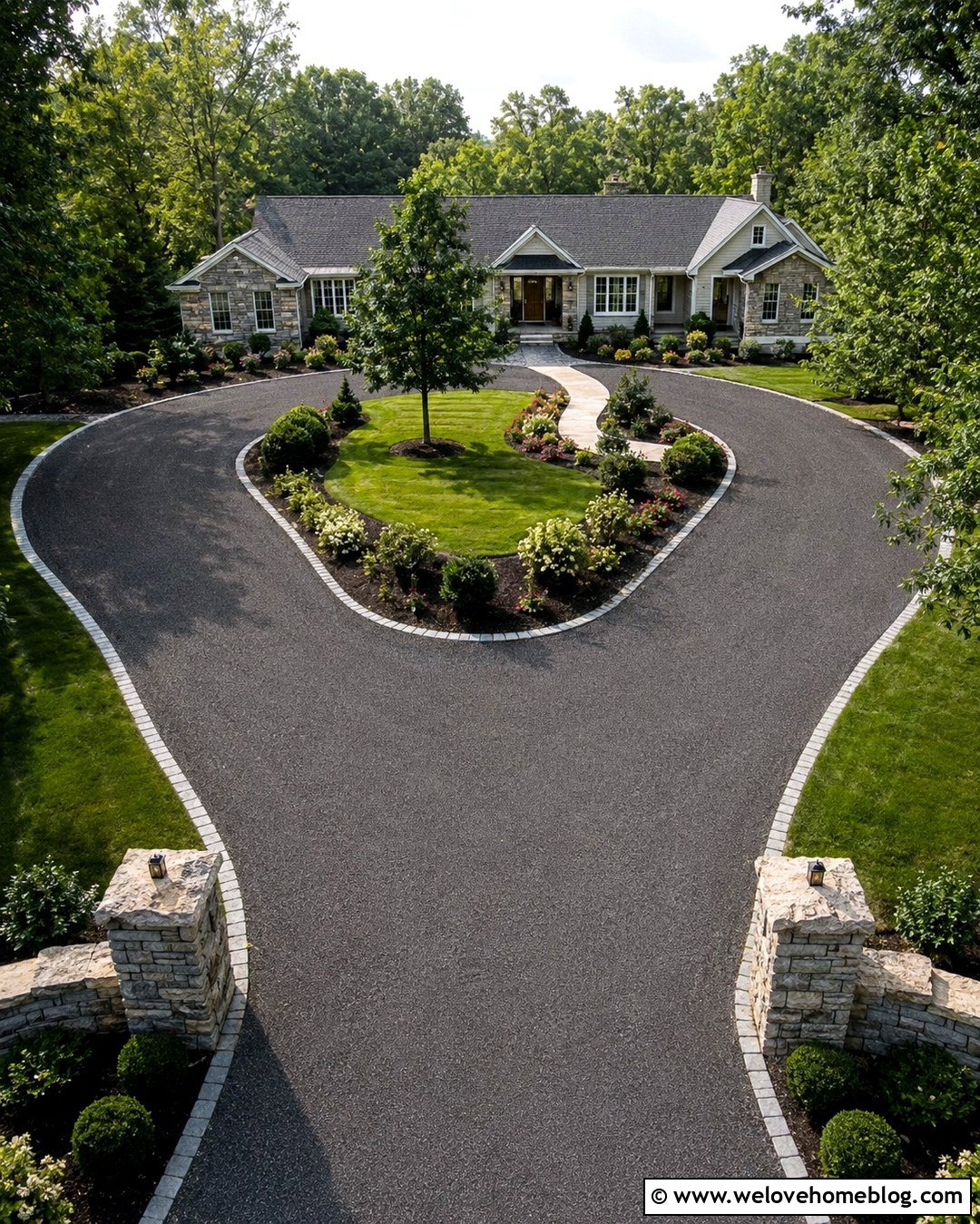
A circular driveway creates convenient arrival and departure flow when the lot has enough width and local access rules permit two entrance points. Construct the surface with warm gray concrete pavers laid in a fan, running-bond, or modular pattern. A contrasting paver border should follow both the outer curve and the center island. Inside the circle, build a low-maintenance garden with one ornamental tree, ground covers, and compact shrubs that preserve visibility. The driveway width, turning radius, entrance spacing, drainage, and connection to the garage should be resolved before landscaping begins. Stone pillars can mark both openings without narrowing the usable path. This complete arrangement works with large ranch, colonial, Mediterranean, and traditional homes. Avoid an oversized center feature that blocks views or makes routine vehicle movement difficult.

20. Heated Concrete Driveway With Drainage Channel
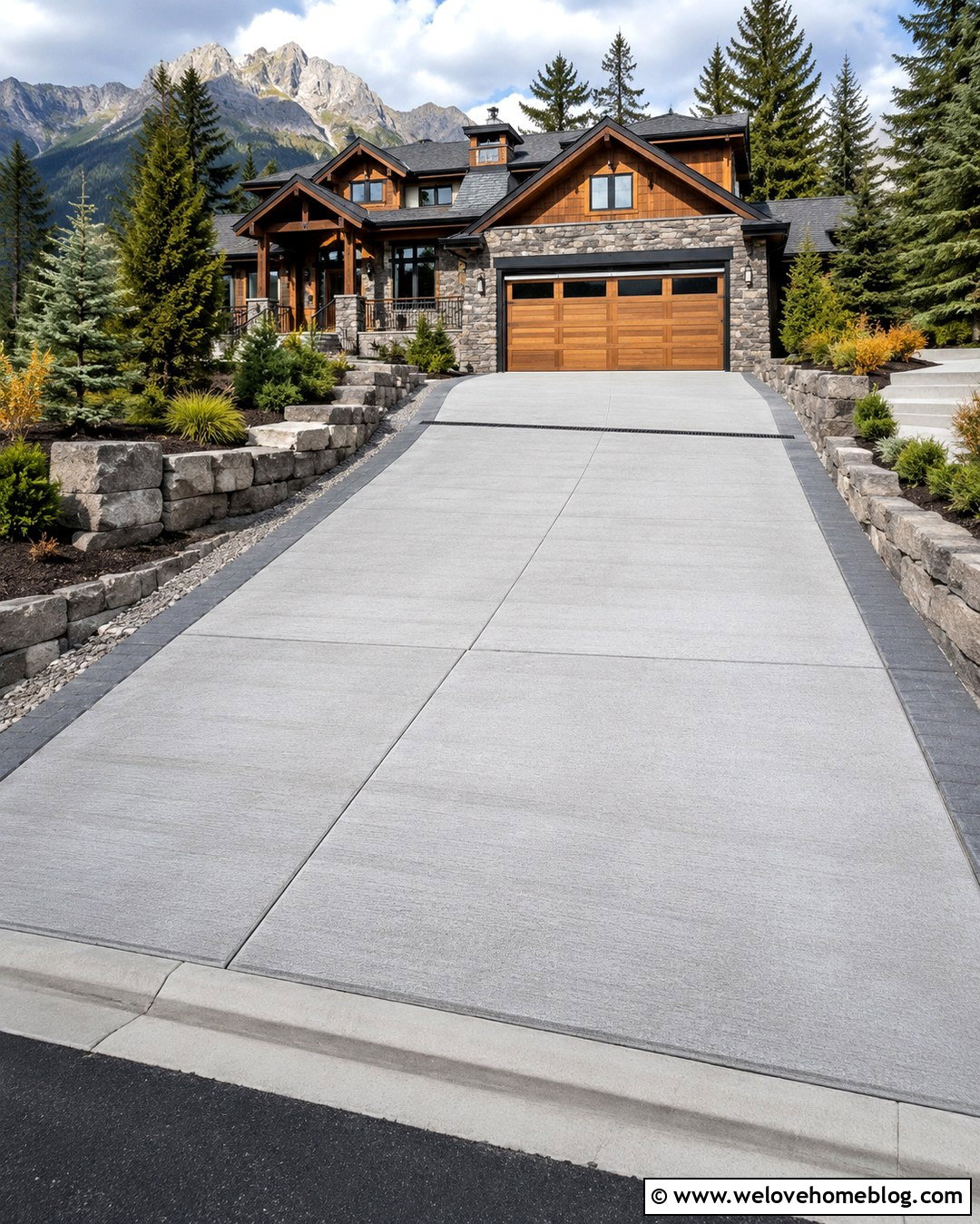
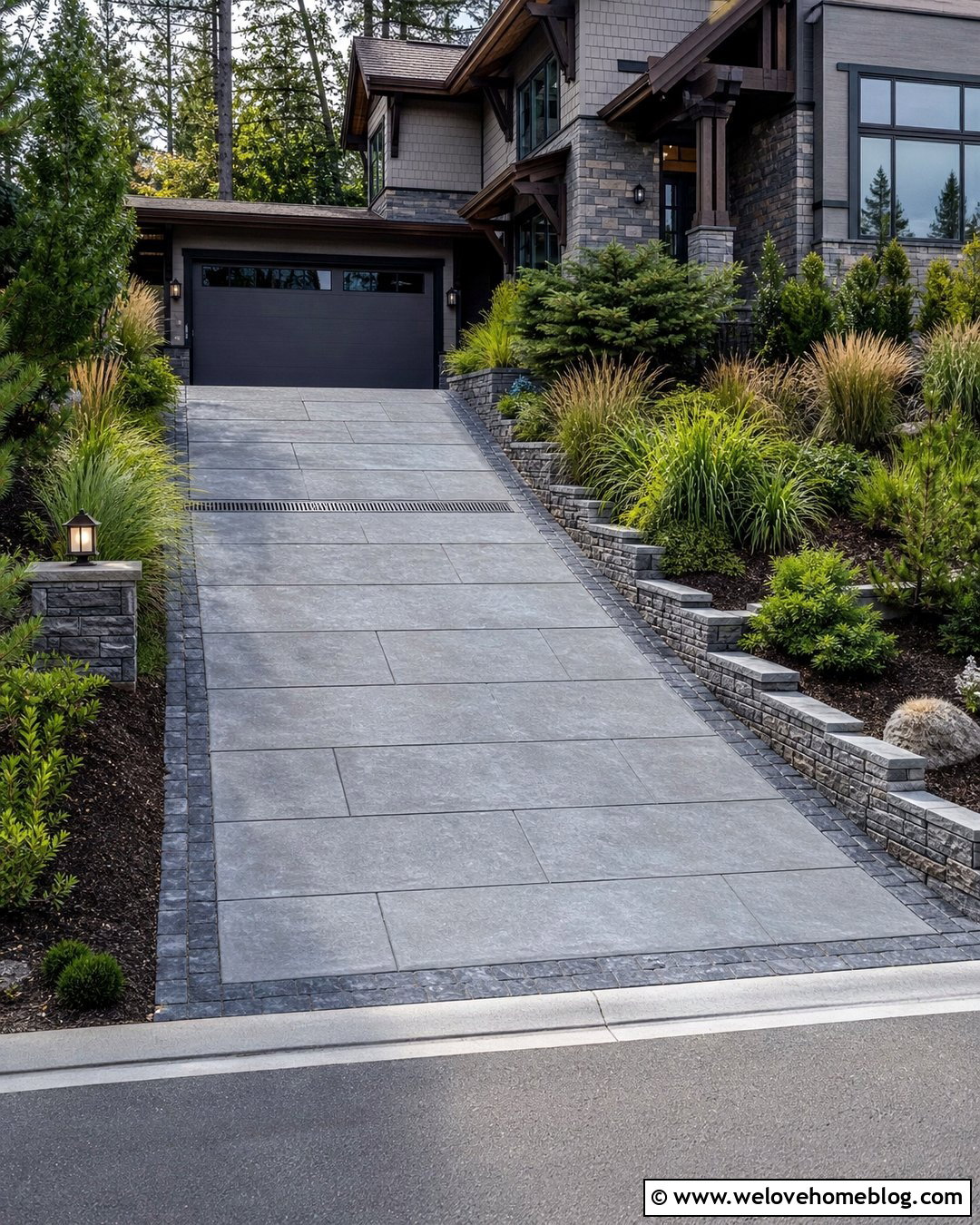
A heated concrete driveway can be considered for snowy climates, steep approaches, or areas where ice regularly complicates access. The system may use electric heating elements or hydronic tubing installed as part of a professionally designed driveway assembly. Choose a broom-finished concrete surface with simple saw-cut panels and dark paver borders. A straight, moderately sloped layout should include a planned drainage route because melted snow still needs somewhere safe to go. A channel drain near the garage may be appropriate when coordinated with grading and an approved discharge point. Snow-melting coverage can focus on critical driving and walking zones instead of every paved area. Pair the driveway with hardy evergreen planting, stone retaining walls, and a clear front walkway. Review operating costs, controls, climate, and repair access before construction.
Conclusion:
The best driveway starts with more than an attractive surface. It needs a design suited to the property, reliable base preparation, controlled drainage, durable edges, and materials selected for the local climate and expected vehicle use. Concrete and asphalt offer familiar performance, while pavers, brick, cobblestone, gravel, and resin-bound surfaces create more distinctive curb appeal. Permeable pavers, stabilized gravel, and grass grids can also support a broader stormwater plan when site conditions allow. Before building, check local permits, utility locations, driveway access rules, and runoff requirements. Then compare installation and maintenance needs with your budget. Use these 20 driveway construction ideas to create an entrance that is attractive, practical, and connected to the house.

Related posts:
Leave a Reply