
A concrete driveway can be practical without looking plain or unfinished. The best designs coordinate the surface color, finish, layout, borders, and landscaping with the architecture of the home. These 25 Driveway Concrete Ideas cover options for modern, traditional, farmhouse, coastal, and compact suburban properties. You will find affordable broom finishes, textured exposed aggregate, decorative stamped patterns, geometric slabs, contrasting borders, and greener layouts with planted joints. Before choosing a look, consider drainage, traction, climate, maintenance, and how control joints can fit naturally into the pattern. Decorative treatments can be used across the entire surface or reserved for high-impact areas to manage costs. Explore the complete driveway looks below with these **25 Driveway Concrete Ideas**. ()

1. Broom Finish Concrete Driveway With Brick Border
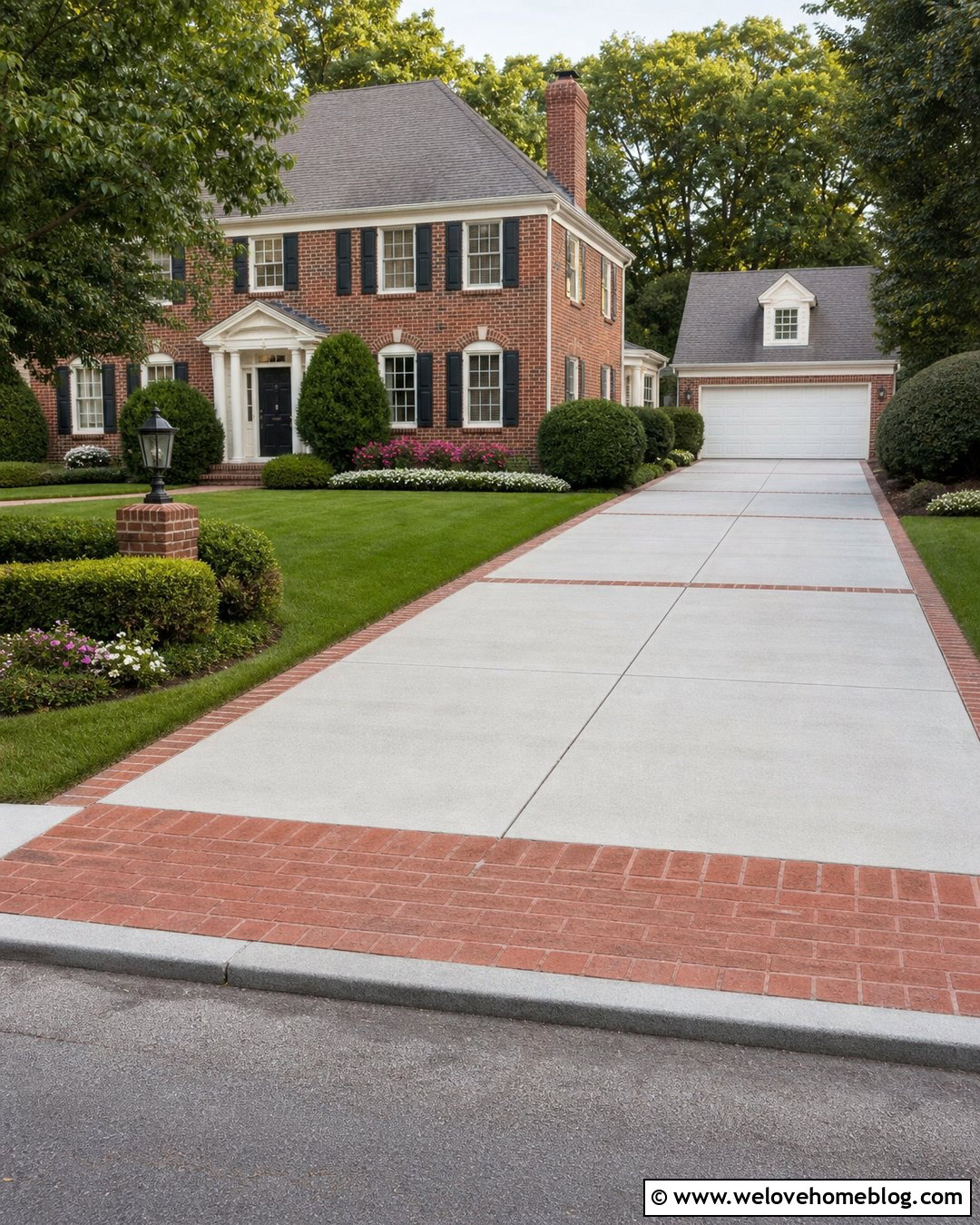
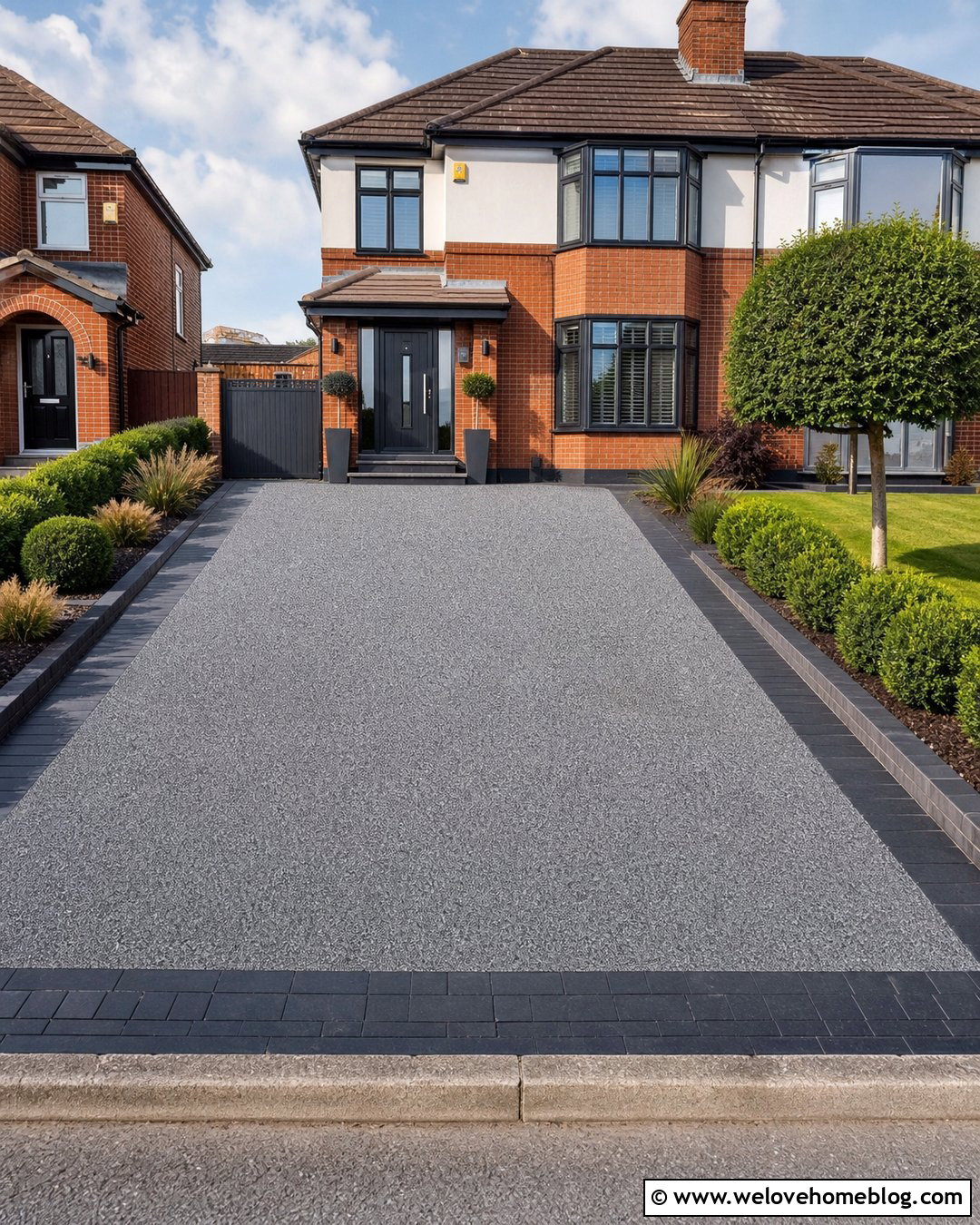
A broom finish gives a concrete driveway subtle texture while keeping the overall appearance simple and clean. Pair the light gray concrete field with a red or charcoal brick border to create a defined edge that complements a traditional home. A straight layout works especially well for suburban lots because it makes parking and access easy. Continue the brick across the entrance as an apron for a more complete look. Low evergreen shrubs, a narrow lawn strip, and a matching brick walkway can connect the driveway to the front door. Ask the contractor to organize control joints into balanced rectangular sections so they appear intentional instead of interrupting the design. ()
2. Modern Concrete Driveway With Grass Strips

Large concrete slabs separated by narrow grass strips create a lighter, greener approach to a modern home. Use smooth, pale gray concrete in oversized rectangular sections, keeping the lines aligned with the garage, windows, or facade panels. The driveway may be straight, gently angled, or divided into two parking tracks. Steel edging can keep the grass joints neat and prevent soil from spreading onto the concrete. Repeat the grass strips in the front walkway to unite the entire entrance. Ornamental grasses, clipped shrubs, and one architectural tree complete the landscaping without hiding the geometric layout. This design needs careful grading and regular trimming to maintain its crisp appearance. ()
3. Exposed Aggregate Concrete Driveway With Stone Edging
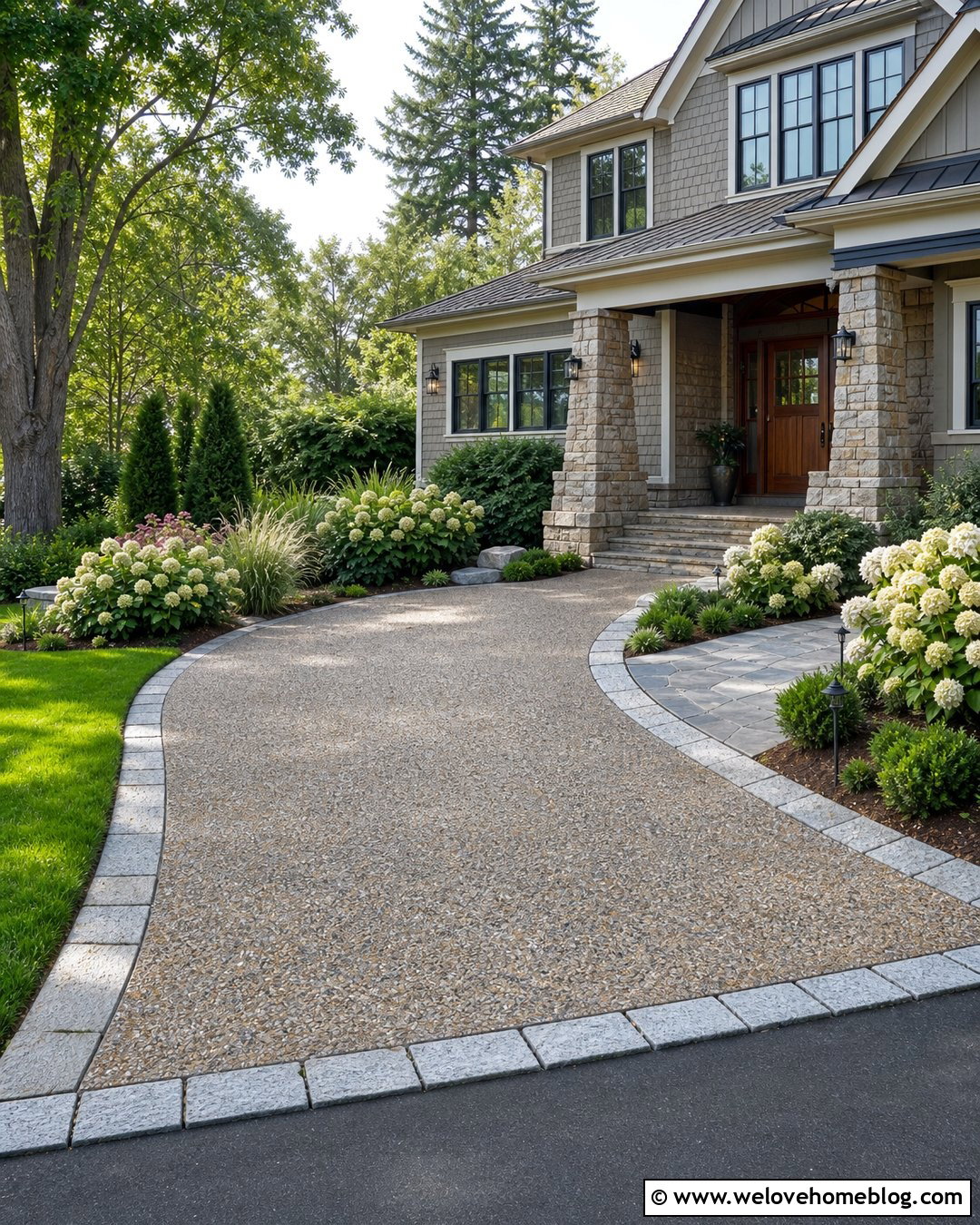
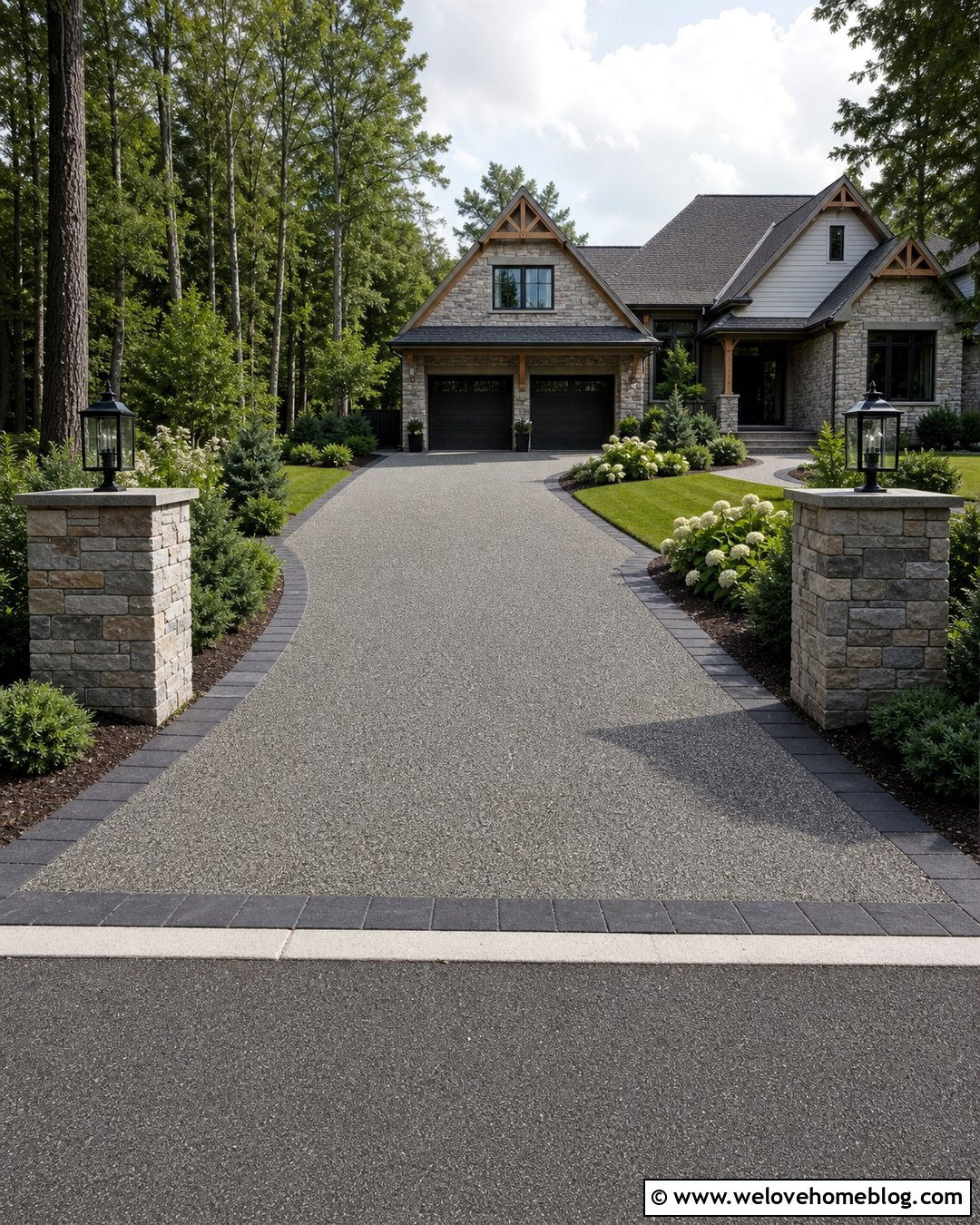
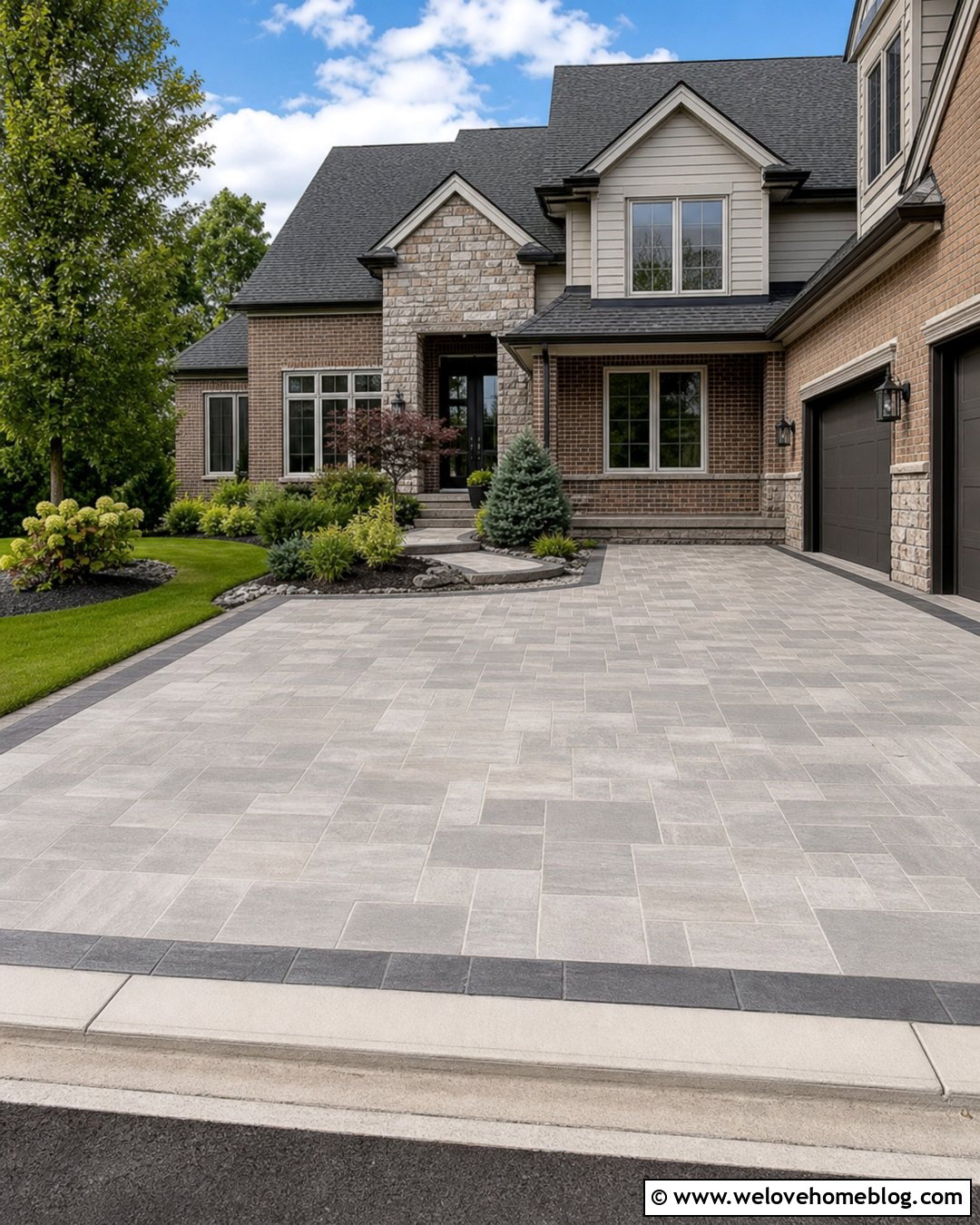
Exposed aggregate brings natural color and visible texture to a driveway without requiring an elaborate stamped pattern. Choose a blend of tan, cream, brown, and charcoal stones that coordinates with the home’s siding or masonry. A gently curved driveway makes the pebbled finish feel even more organic. Frame it with larger limestone or granite setts to contain the edge and create a polished transition into the lawn. Deep planting beds filled with ornamental grasses, hydrangeas, and spreading evergreens can soften the curve. Because the surface texture and stone blend influence both appearance and comfort, review a finished sample under outdoor light before approving the final aggregate selection. ()
4. Stamped Concrete Driveway With Cobblestone Pattern
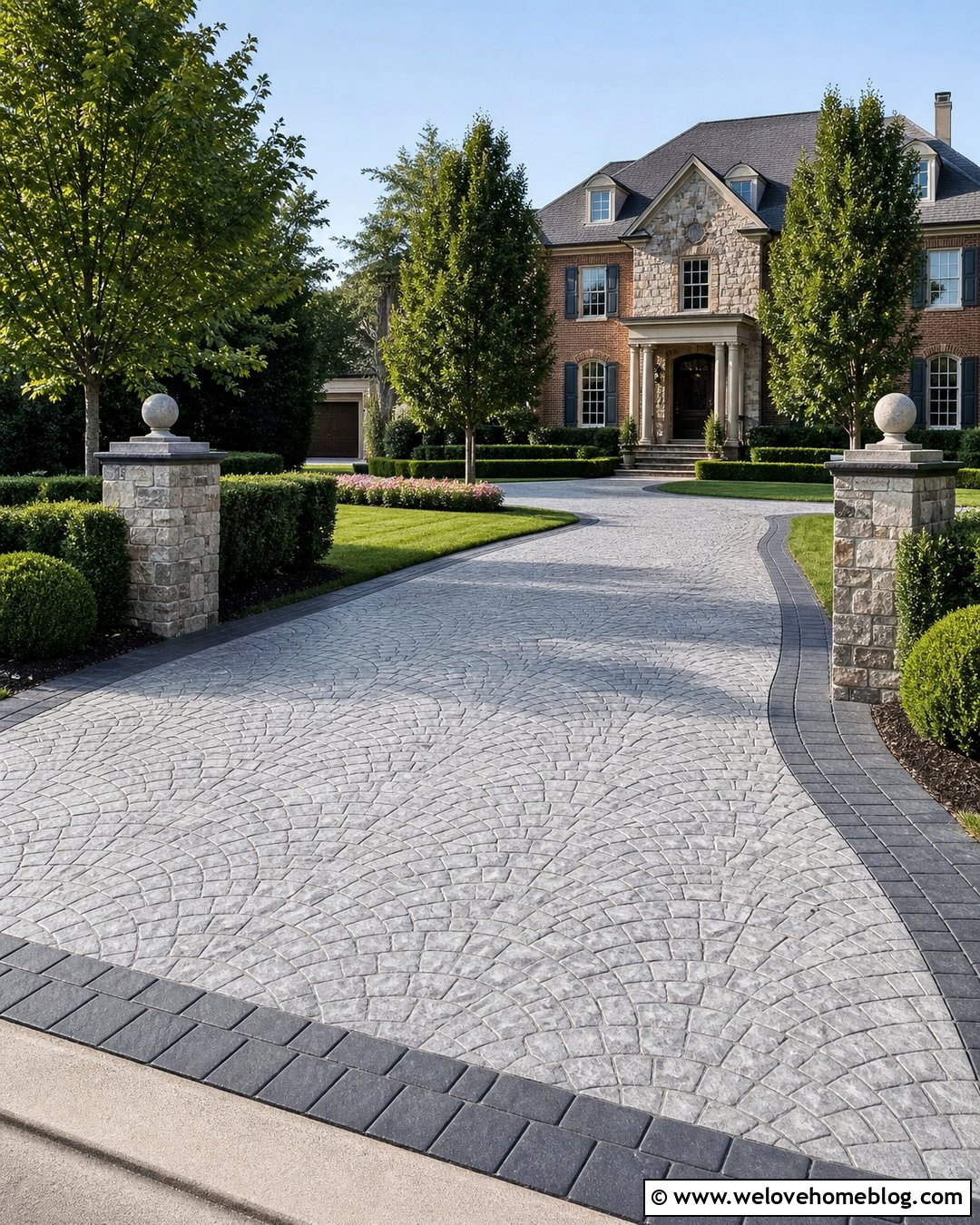
Stamped concrete can produce the character of cobblestone while maintaining a continuous concrete base. A medium gray field with charcoal accents suits Colonial, European-inspired, and traditional brick homes. Use a fan, running bond, or irregular cobblestone pattern across a curved driveway, then add a darker stamped border for definition. Matching pillars at the entrance can make the approach feel established and balanced. Keep the landscaping structured with clipped boxwood, symmetrical trees, and restrained flower beds. Since deeply textured surfaces and glossy sealers may affect traction, discuss stamp depth, sealer choice, and slip-resistant additives with an experienced decorative concrete contractor before installation. ()
5. White Concrete Driveway With Black Paver Border
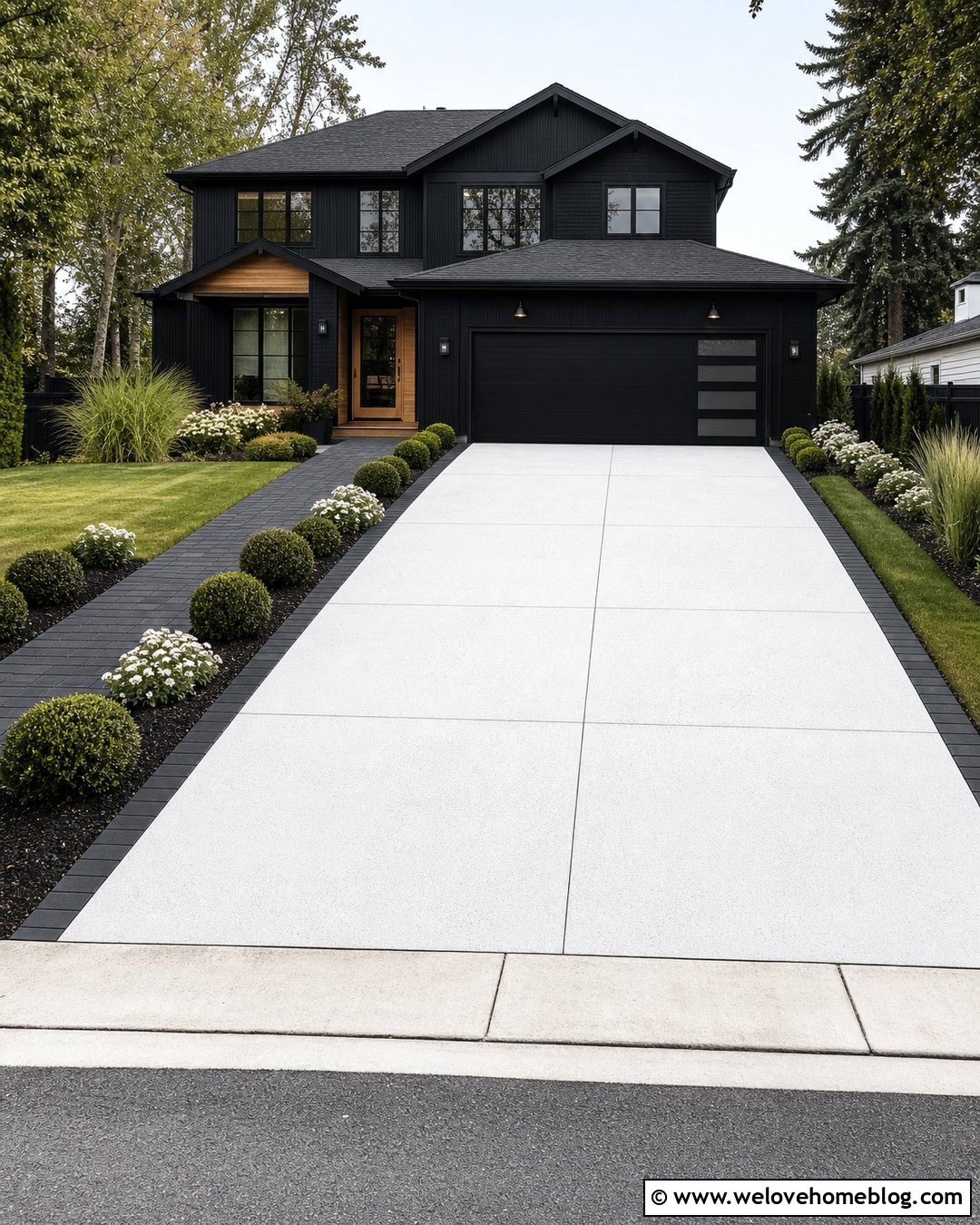
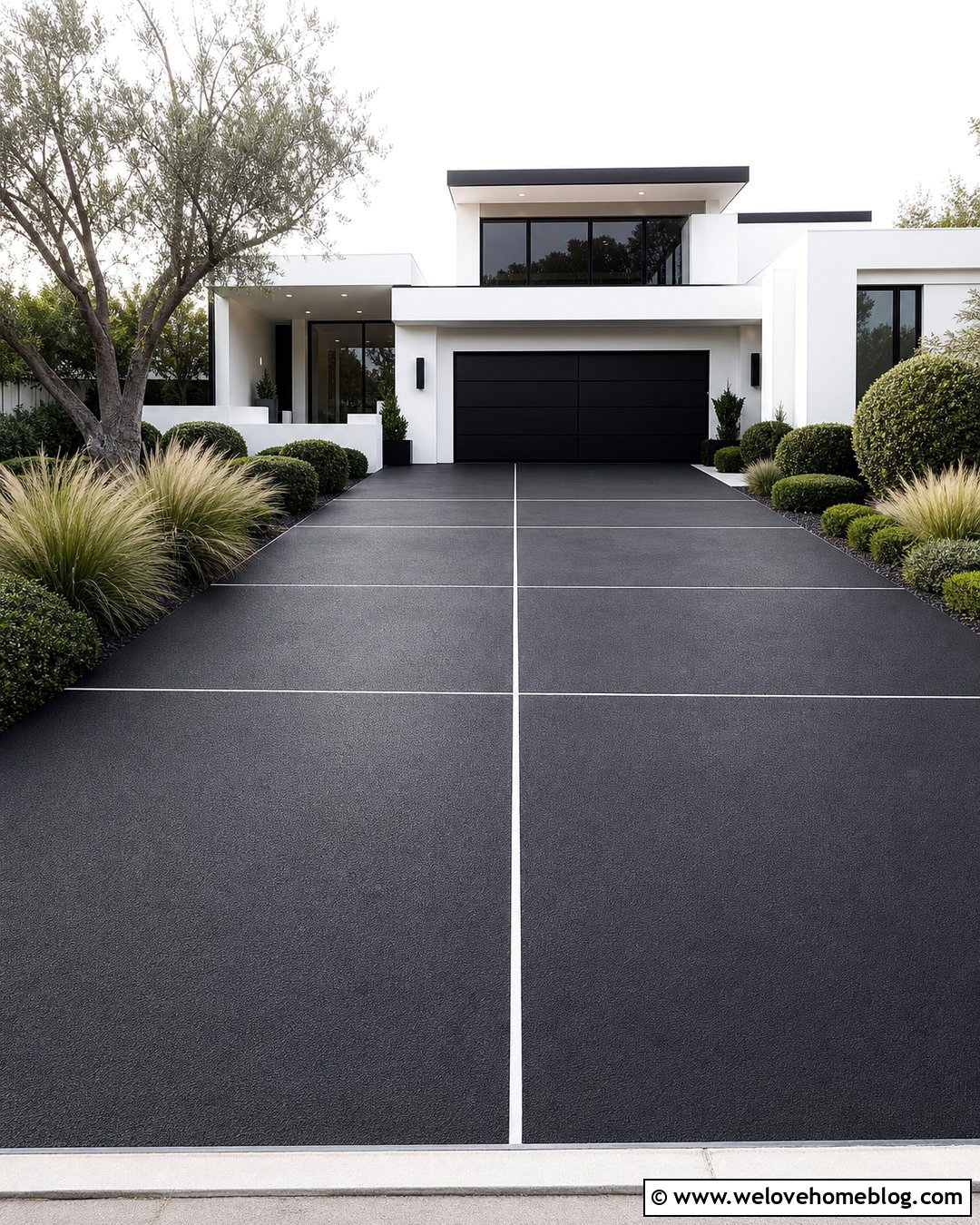
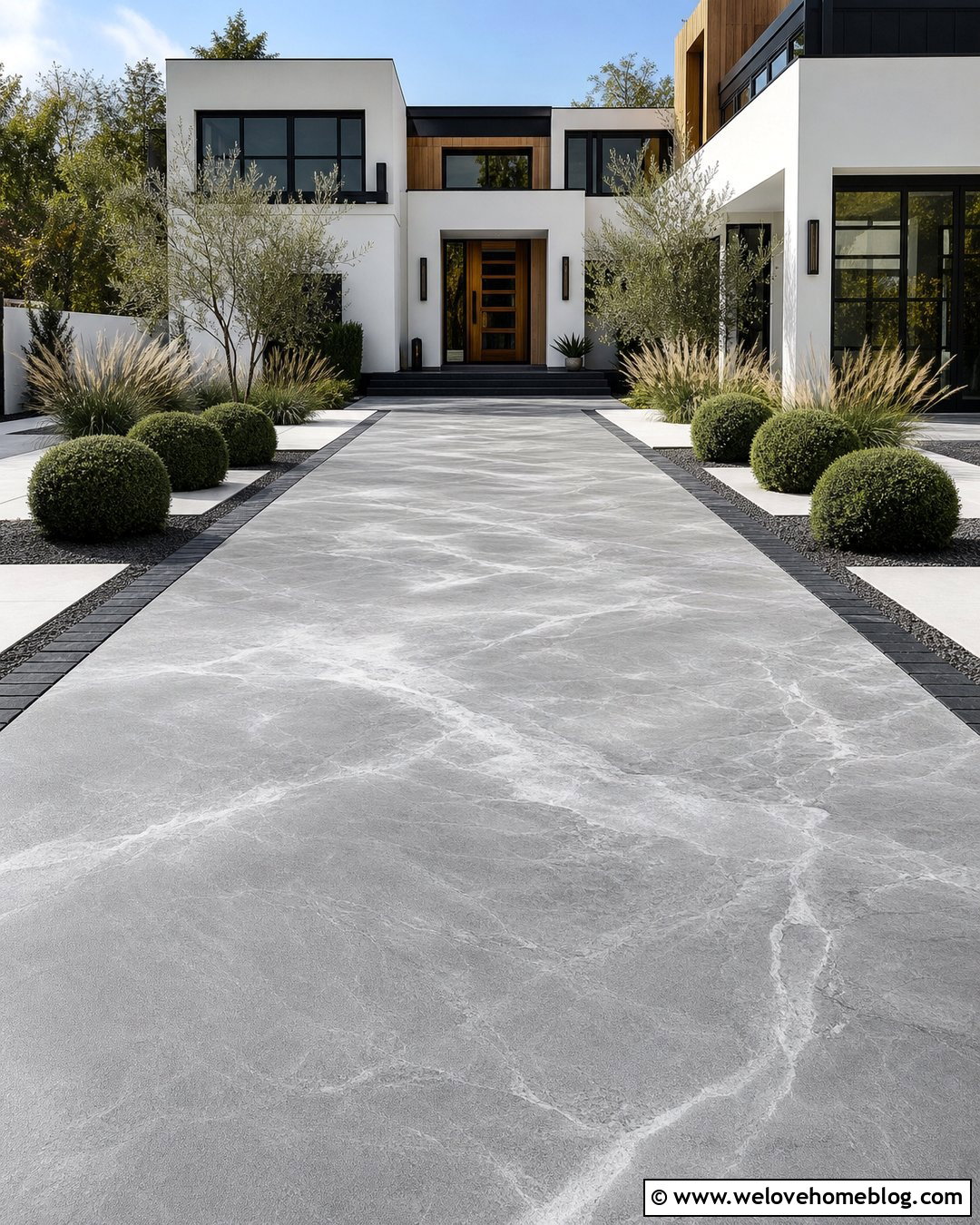
Bright white or very light concrete creates a sharp contrast against a dark contemporary house. Break a straight driveway into broad rectangular panels with precise saw-cut lines, then frame the surface with a narrow black concrete paver border. The dark edging can continue around the walkway and planting beds, giving the entire front yard a consistent visual outline. Use simple landscaping such as green lawn, rounded shrubs, white flowers, and upright ornamental grasses. Avoid overcrowding the entrance with too many materials. A matte or lightly textured finish usually supports the clean appearance better than a highly decorative pattern. Discuss staining, local soil conditions, and maintenance expectations before choosing an especially pale surface.
6. Concrete Driveway With Red Brick Ribbons
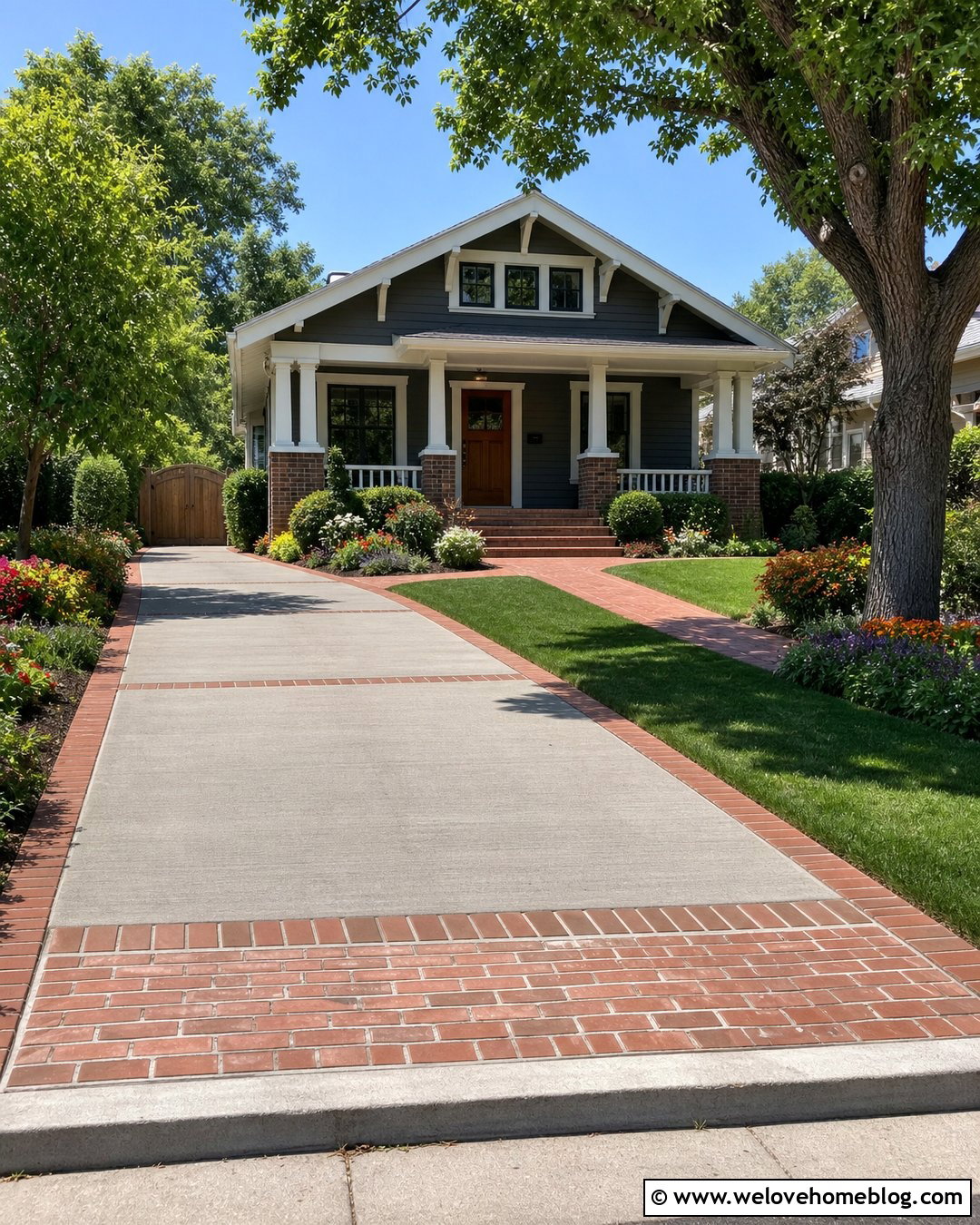
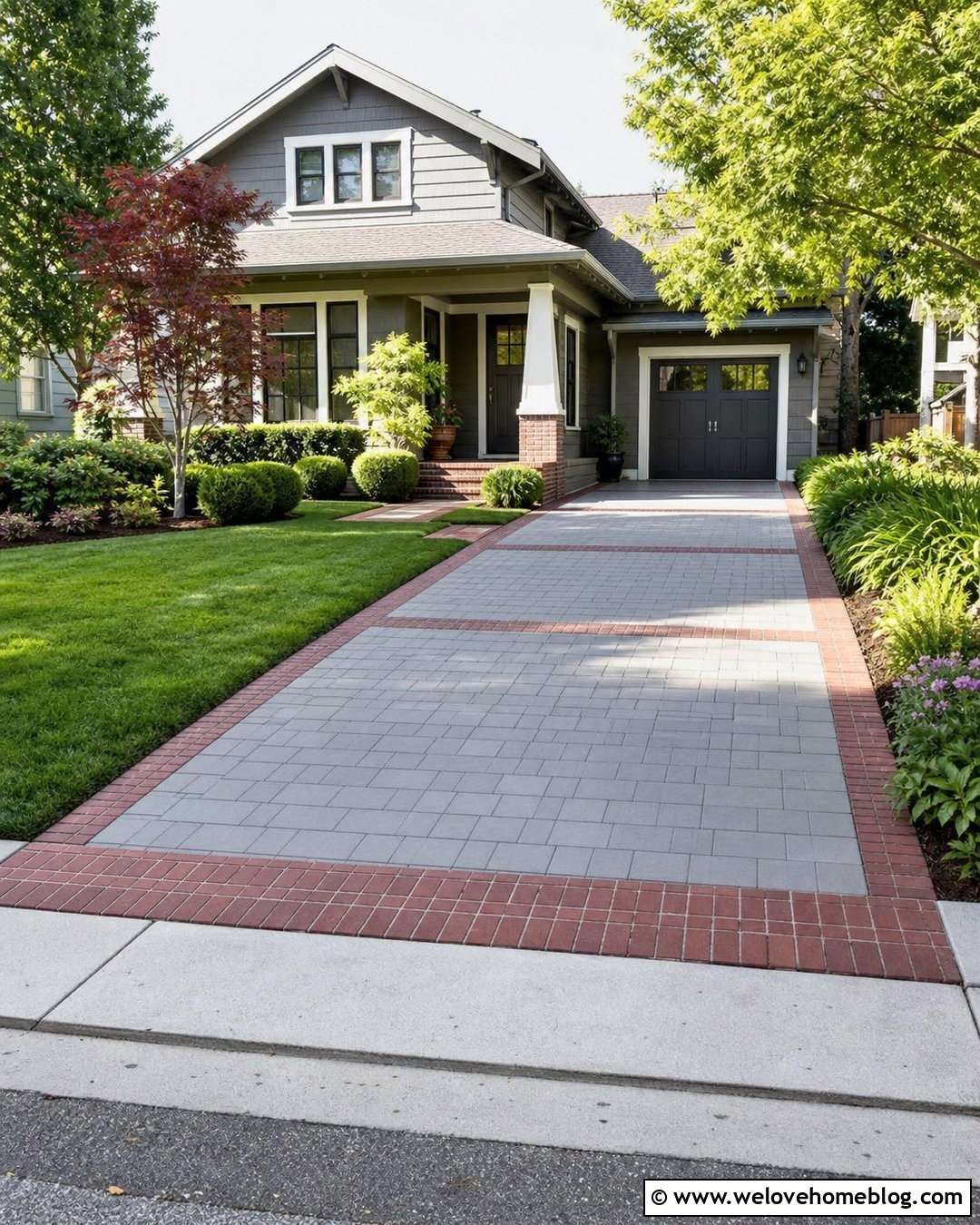
Brick ribbons are an effective way to divide a wide concrete driveway into smaller, more attractive sections. Begin with warm gray broom-finished concrete, then place red clay brick bands along selected control joints and around the perimeter. A cross band near the garage can create a deliberate transition, while a brick apron at the street strengthens the entrance. This combination works particularly well with Craftsman homes, red brick houses, and traditional ranch properties. Plant compact shrubs and flowering perennials beside the driveway, leaving enough clearance for open vehicle doors. Repeating the same brick on the walkway, porch steps, or mailbox base prevents the accent from looking disconnected. ()
7. Curved Concrete Driveway With Landscaped Island
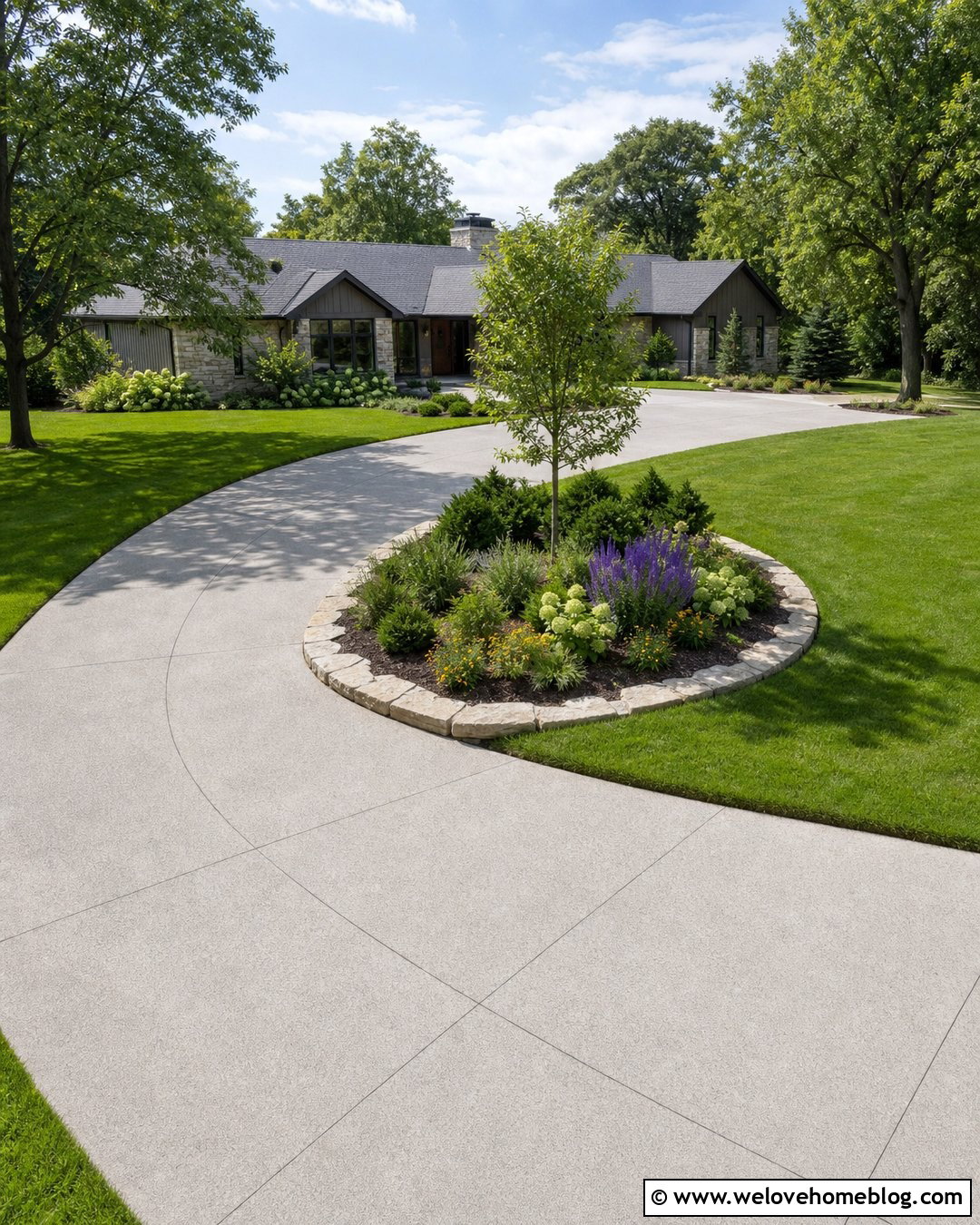
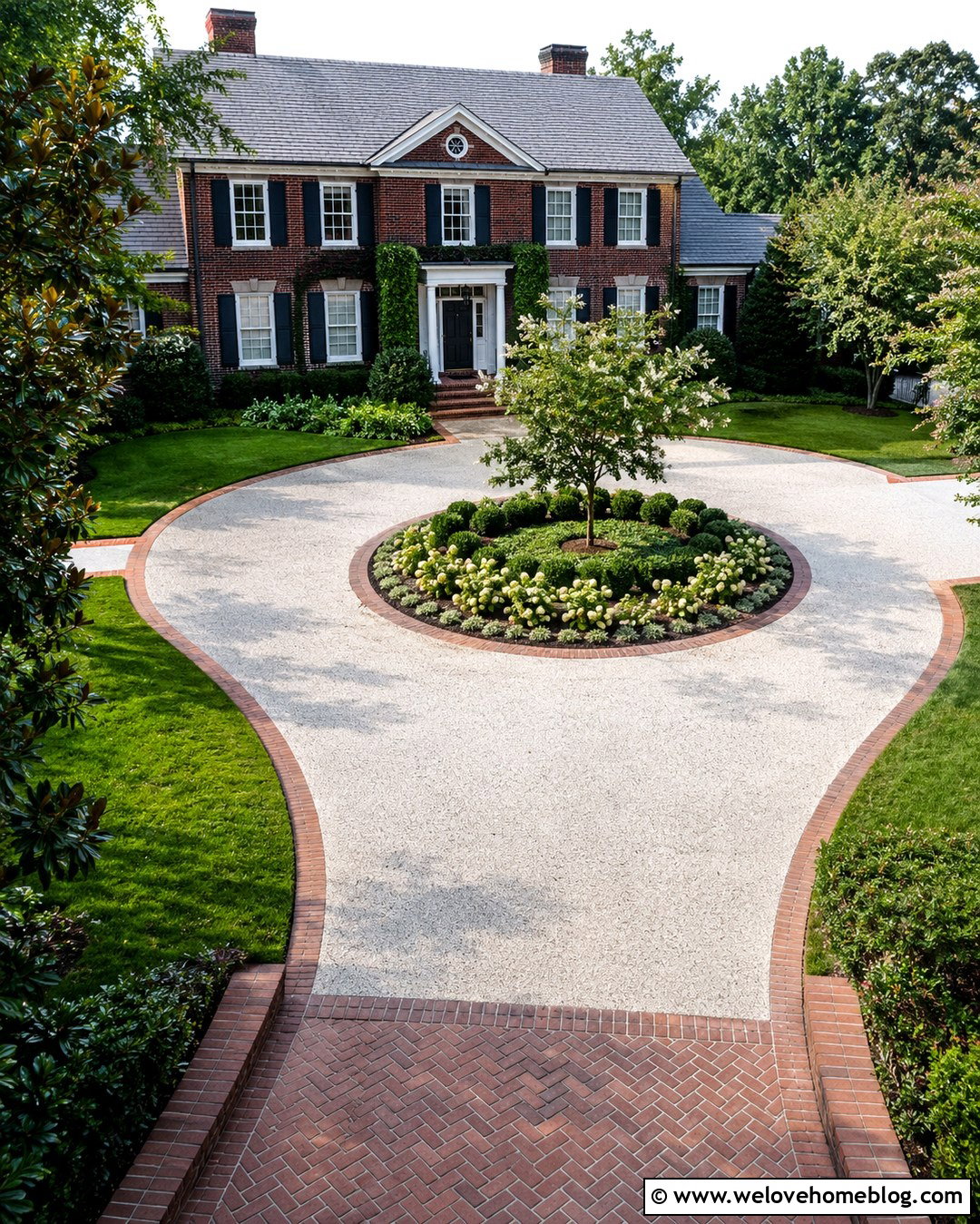
A curved concrete driveway can make a deep front yard feel more inviting while revealing the house gradually. Use light gray concrete with a fine broom or subtle sand finish, and form a broad curve around a central landscaped island. The island might contain a small ornamental tree, low evergreen shrubs, decorative grasses, and seasonal flowers that remain below important sightlines. A natural stone border can protect the planting bed and echo stone used on the facade. On the outer edge, lawn and larger shade trees help frame the approach. Plan the turning radius, driveway width, drainage, and planting clearance together so the graceful shape remains comfortable for daily use.
8. Circular Concrete Driveway With Center Garden
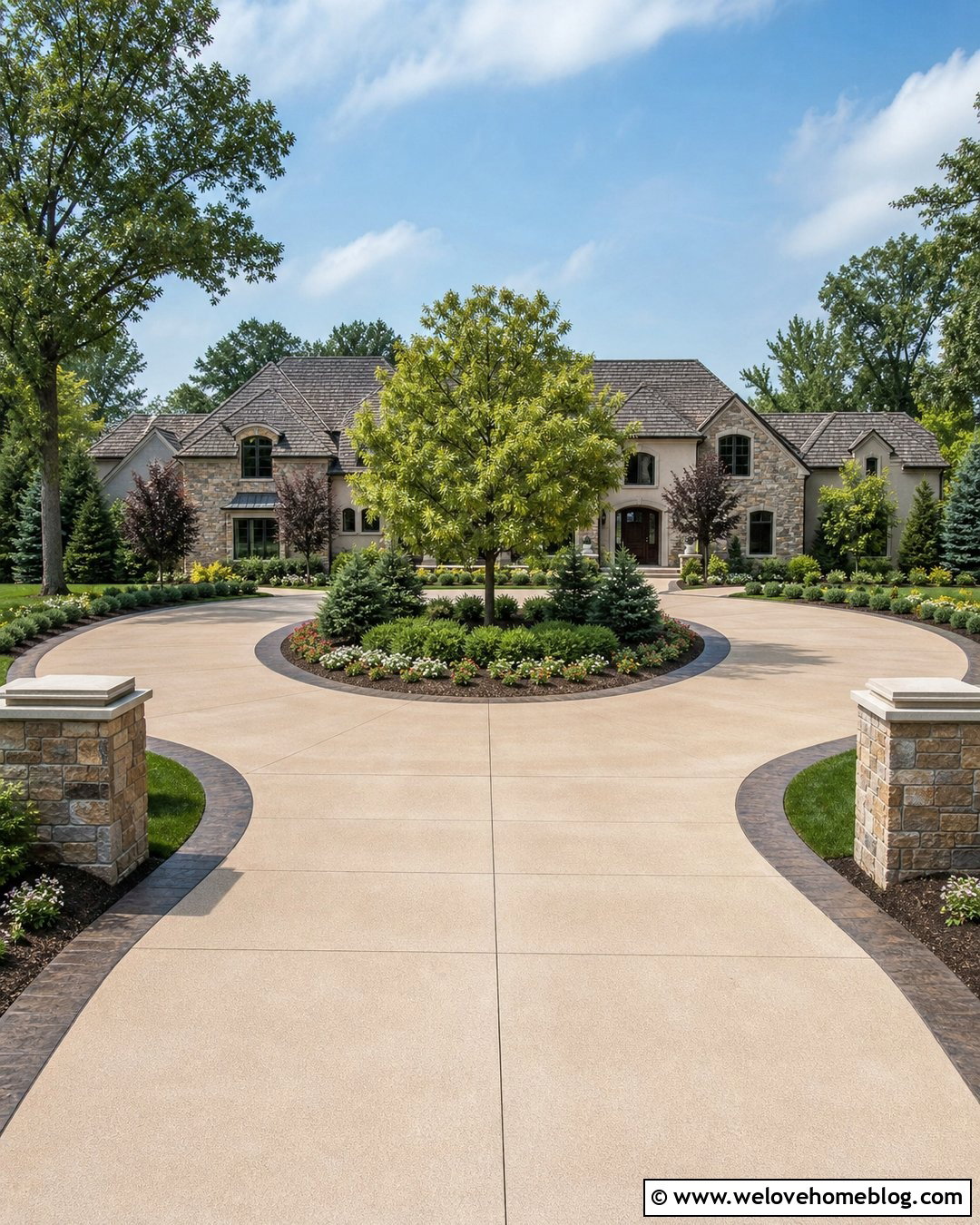
For a large front yard, a circular concrete driveway offers an impressive layout and convenient movement around the property. A warm beige concrete surface can complement stone, stucco, or traditional brick exteriors. Define the inner circle with a contrasting stamped-concrete band, then fill the center with layered evergreen shrubs, one feature tree, and low flowering plants. Keep taller landscaping away from the driveway entrance so drivers can see approaching traffic. A walkway crossing the center island can provide a direct route to the front door. Coordinate scoring lines with the circular geometry, allowing construction joints to become part of the design rather than random lines across the finished surface.
9. Concrete Driveway With Flagstone Stamped Border
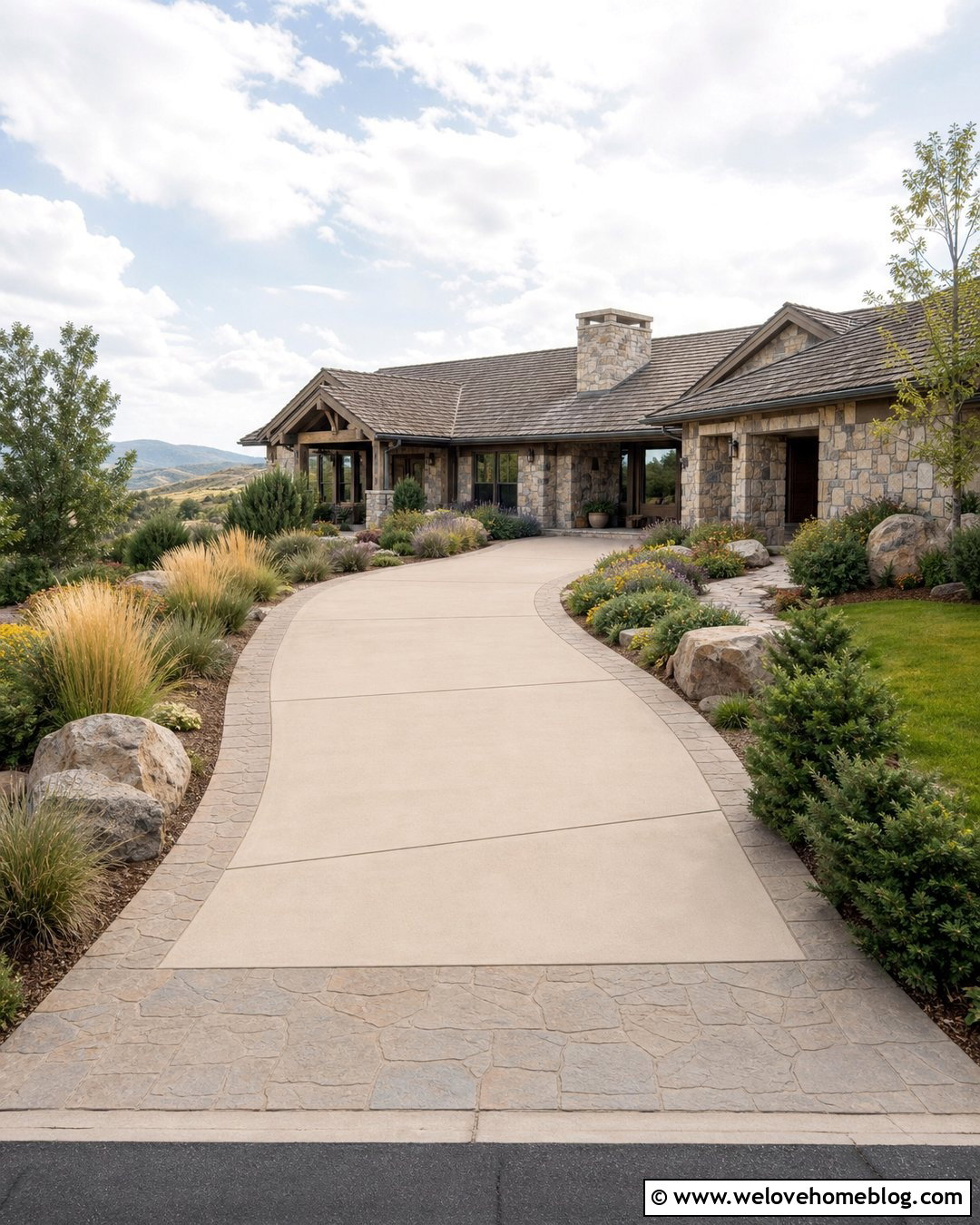
A flagstone stamped border introduces a natural-looking frame without covering the entire driveway in a busy pattern. Use plain buff or light brown concrete through the center and apply an irregular flagstone stamp in a deeper taupe around the edges. The combination looks especially appropriate beside a stone ranch, mountain home, or rustic modern farmhouse. Follow the driveway’s gentle curve with native grasses, low junipers, and drought-tolerant flowering plants. A wider stamped apron near the street can make the entrance more visible. Carefully blended colors are important because excessive contrast may make the border appear artificial. A matte sealer can help maintain a more understated stone-like appearance. ()
10. Two Tone Concrete Driveway With Geometric Scoring
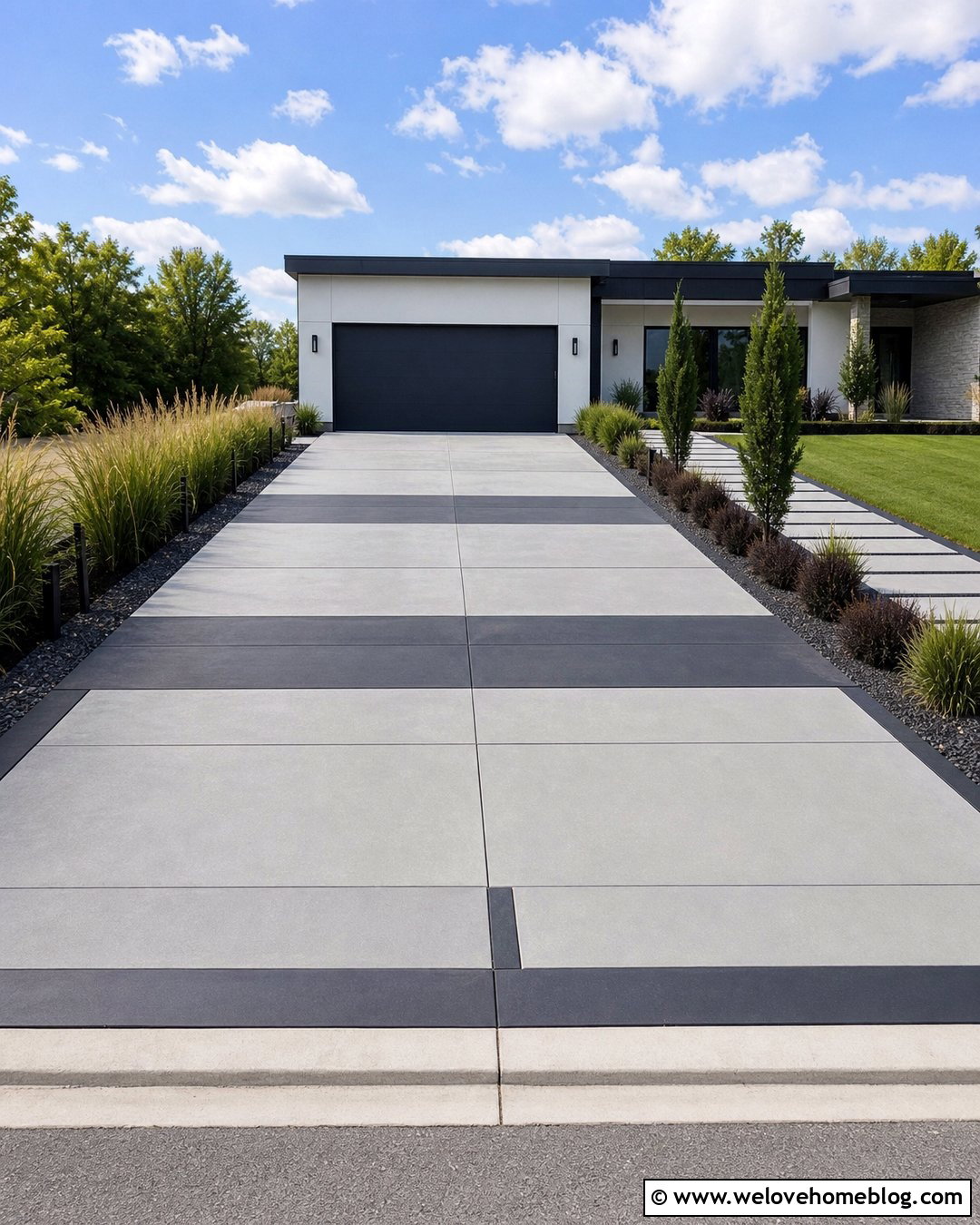
Two coordinated concrete colors can transform a basic surface into a modern geometric driveway. Start with a pale gray base and use charcoal stain or integrally colored concrete in selected rectangular sections. Position the darker areas near the entrance, walkway connection, or garage doors rather than scattering them randomly. Straight saw-cut lines should follow the home’s architecture and help divide the driveway into balanced panels. Black steel edging, linear planting beds, and upright grasses strengthen the contemporary appearance. Keep the color difference noticeable but controlled. Before work begins, request a sample showing the actual finish and sealer because outdoor light, curing conditions, and surrounding colors can affect the final appearance. ()
11. Concrete Driveway With Pea Gravel Joints
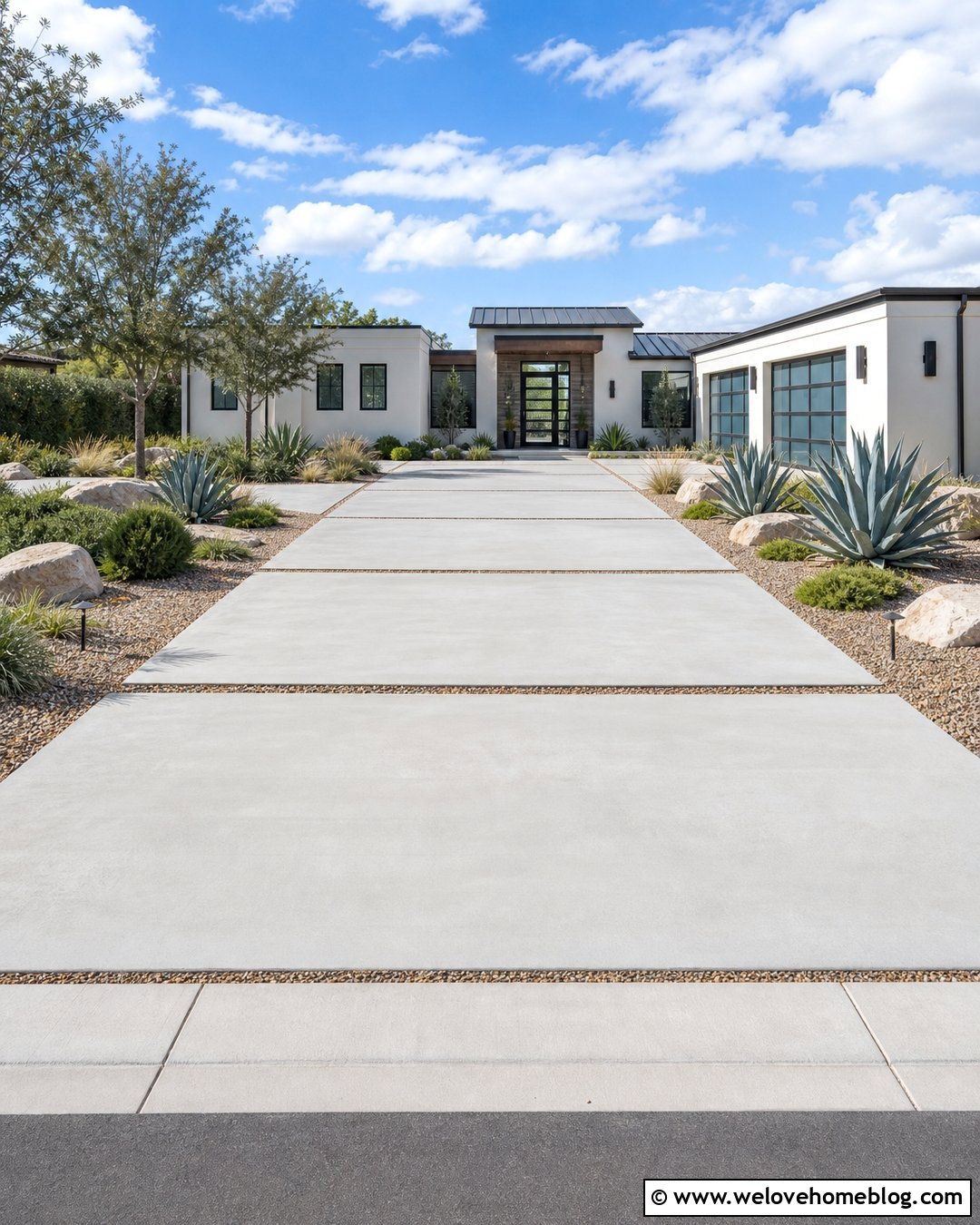
Wide concrete panels with pea gravel joints offer a practical alternative to living grass strips. Use smooth light gray concrete in large rectangles and separate them with narrow bands of washed tan or gray pea gravel. Metal or rigid paver edging helps keep the gravel from spreading across the slabs. This combination suits modern ranch homes, desert properties, and low-maintenance landscapes. Surround the driveway with sculptural agaves, native grasses, boulders, or compact evergreens chosen for the local climate. The gravel bands can visually reduce the scale of a broad driveway while coordinating with nearby garden paths. Proper base preparation and drainage are necessary to keep the joints level and tidy.
12. Salt Finish Concrete Driveway With Dark Border
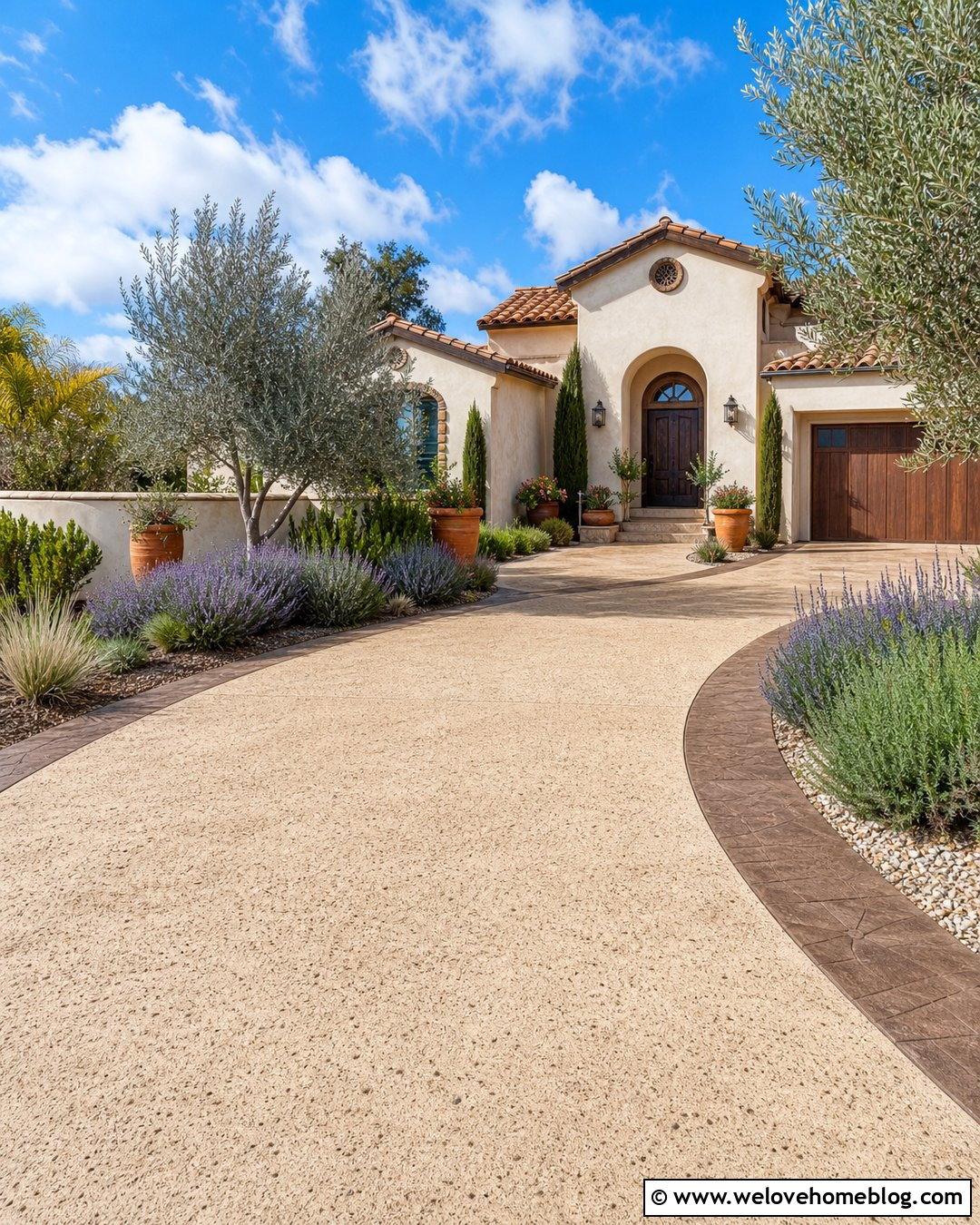
A salt finish creates small, irregular indentations that give concrete a lightly weathered surface. Choose a warm sand-colored concrete field and surround it with a dark brown or charcoal stamped border. The contrast works well with Mediterranean, Spanish, and stucco homes, especially when the driveway follows a soft curve. Terracotta planters, drought-tolerant shrubs, lavender, and small olive-like trees can reinforce the warm palette without overwhelming the driveway. Repeat the border color on the walkway or front steps for continuity. Because the texture should remain subtle, inspect a contractor’s previous work or request a sample. Overly deep impressions may make the surface harder to clean. ()
13. Concrete Driveway With Wood Plank Stamped Edging
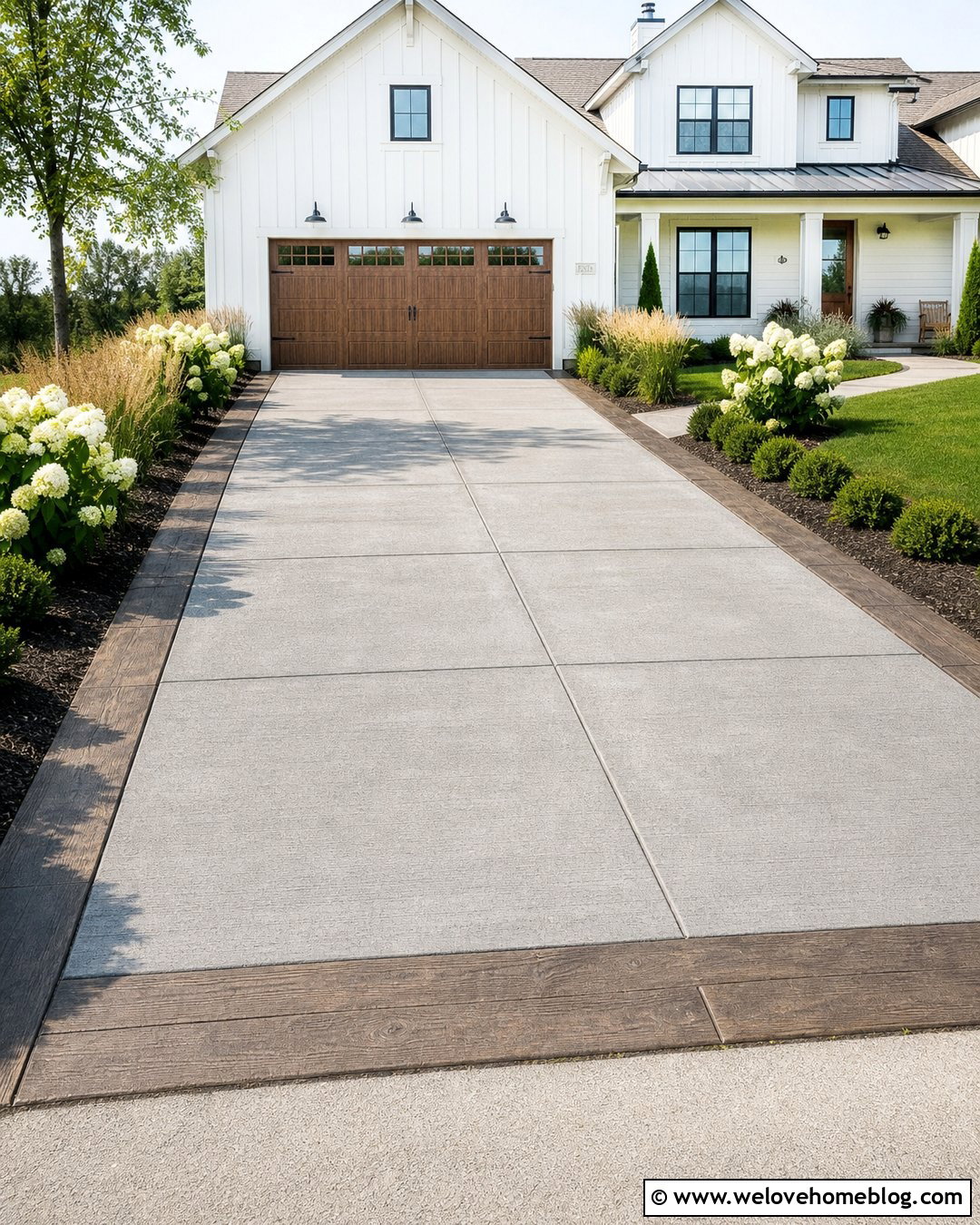
Wood-plank stamped concrete edging combines a clean driveway field with the warmth of a timber-like border. Use medium gray broom-finished concrete in the center and select a brown plank pattern along both sides and across the entrance. This complete look fits modern farmhouses, rustic ranch homes, and contemporary cabins. The stamped border can match wood garage doors, porch posts, or exterior shutters. Add soft landscaping with feather reed grass, white hydrangeas, and low evergreen mounds. A straight driveway keeps the plank lines orderly, while evenly spaced concrete panels provide a balanced rhythm. Choose restrained brown tones and visible grain rather than strong orange coloring for a more convincing finish. ()
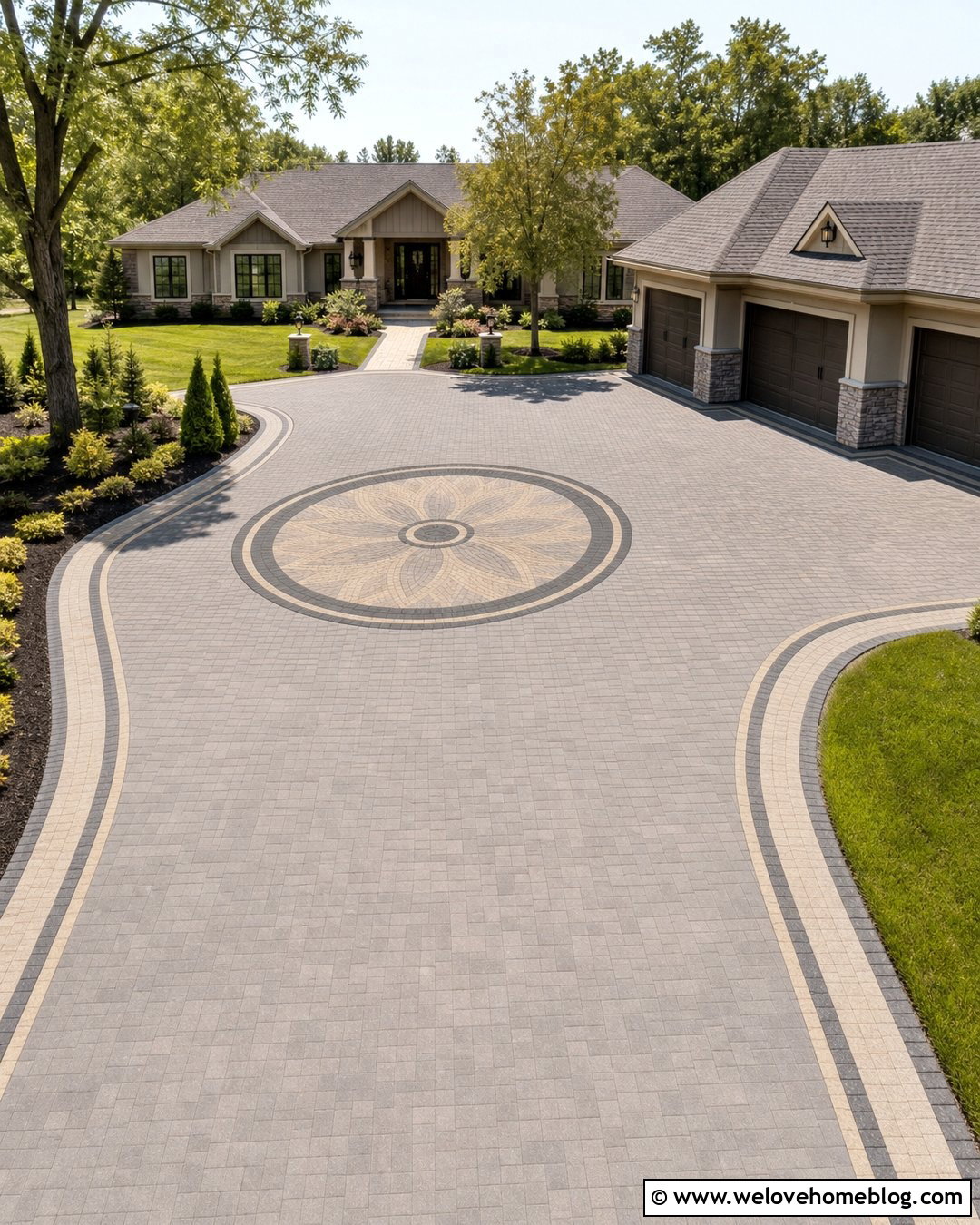
14. Concrete Driveway With Paver Parking Court
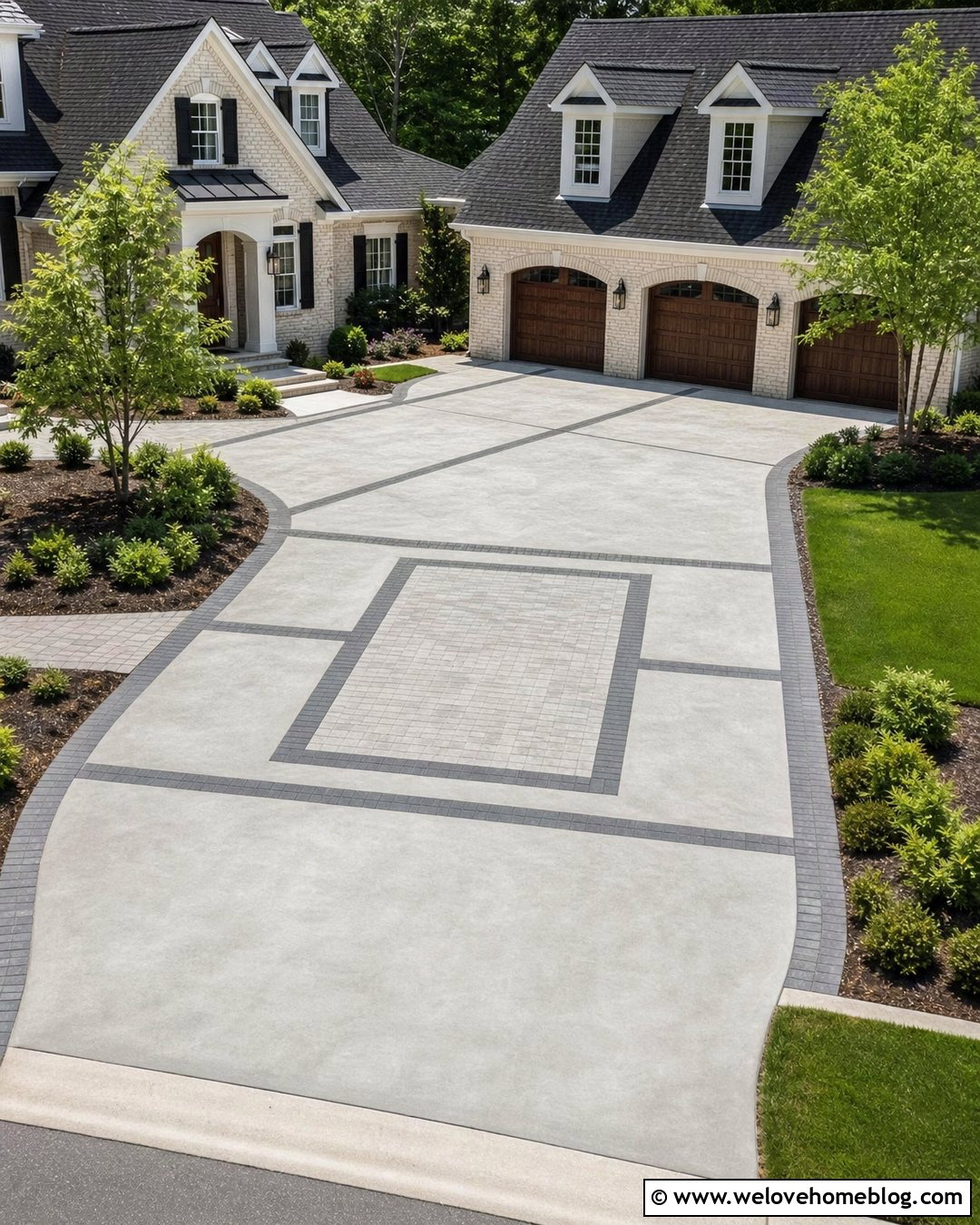
A poured concrete driveway can open into a wider parking court without becoming a featureless slab. Use lightly textured gray concrete for the main travel lane and parking areas, then add charcoal paver ribbons to organize individual spaces. A central paver medallion or broad rectangular inset can establish a focal point near the garage. Frame the court with low shrubs, small shade trees, and generous planting beds rather than lawn alone. This arrangement is useful for homes with multiple garage bays or frequent visitors. Keep decorative insets away from locations where awkward cuts could weaken the visual pattern. The concrete and paver colors should relate to the roof, facade, and entry walkway. ()
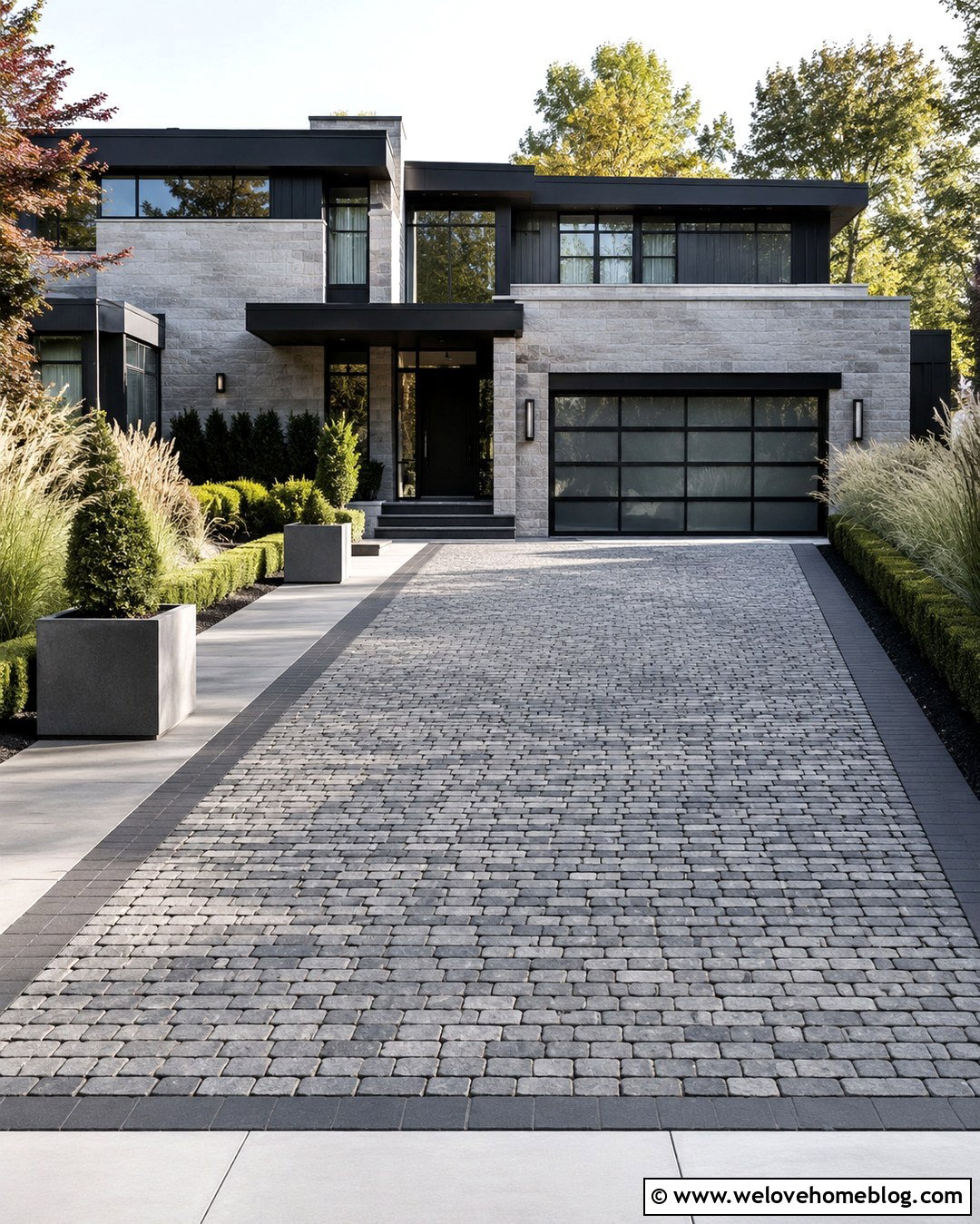
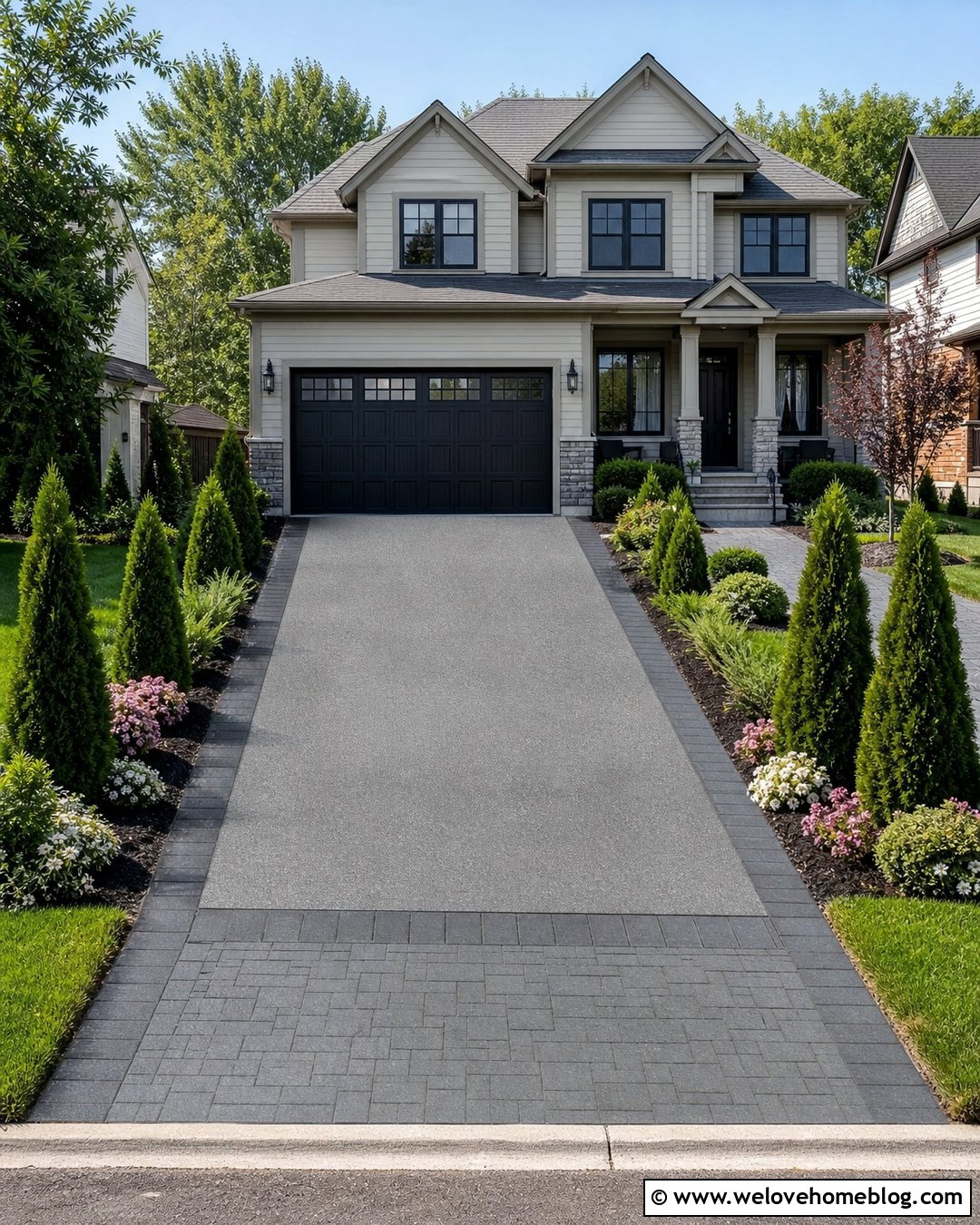
15. Narrow Concrete Driveway With Planting Borders
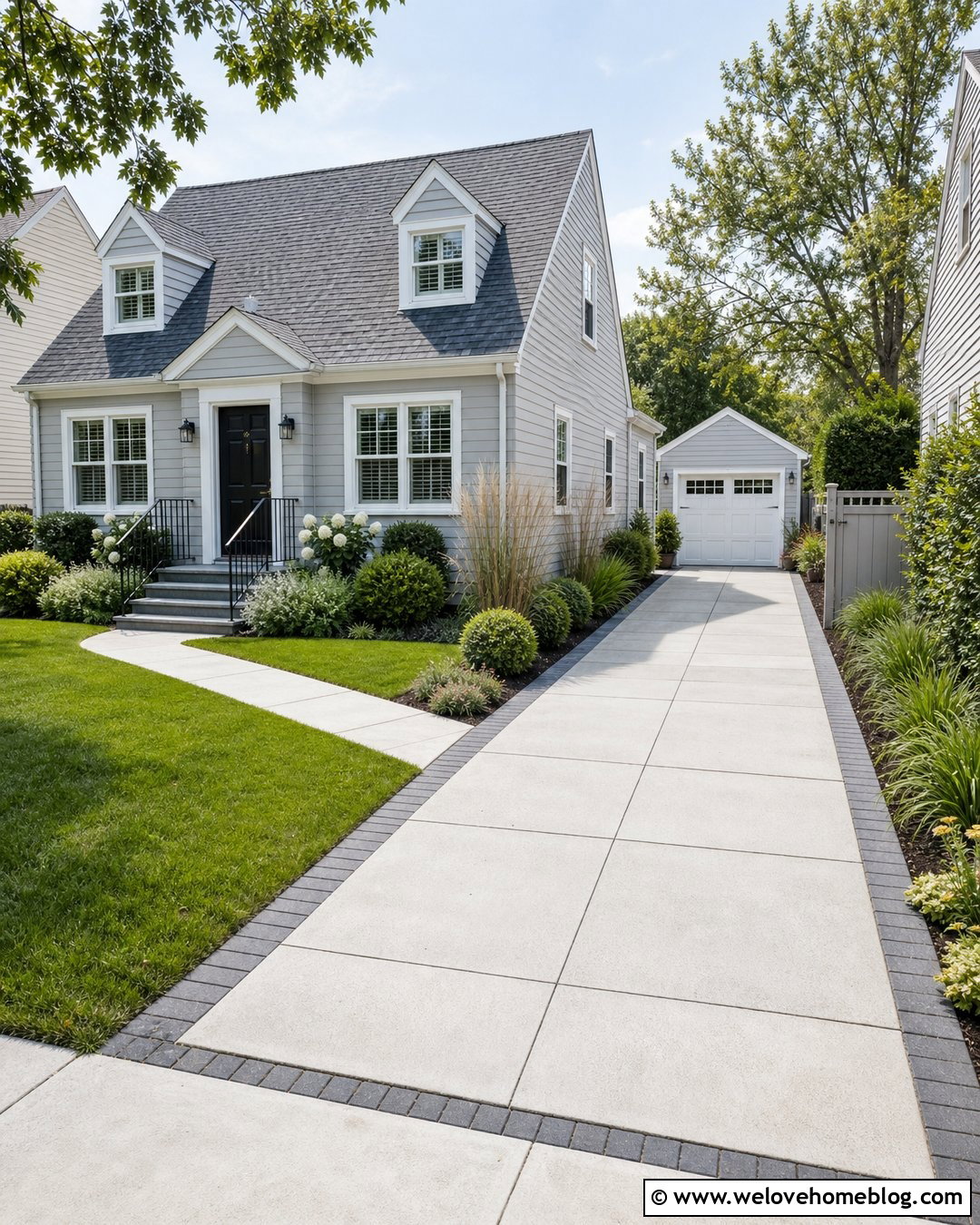
A narrow side driveway can feel more attractive when the concrete surface and landscaping are planned as one composition. Pour light gray concrete in long rectangular panels to visually extend the space. Add a slim charcoal paver edge on the house side and a narrow planting bed along the lawn side. Choose upright grasses, compact shrubs, and ground covers that will not spill into the driving area. A small matching walkway can branch toward the front porch without interrupting parking. Light-colored walls, a simple gate, and limited materials will help the area feel open. Confirm the usable width after accounting for borders, plants, drainage features, and comfortable access around parked vehicles.
16. Concrete Ribbon Driveway With Grass Center
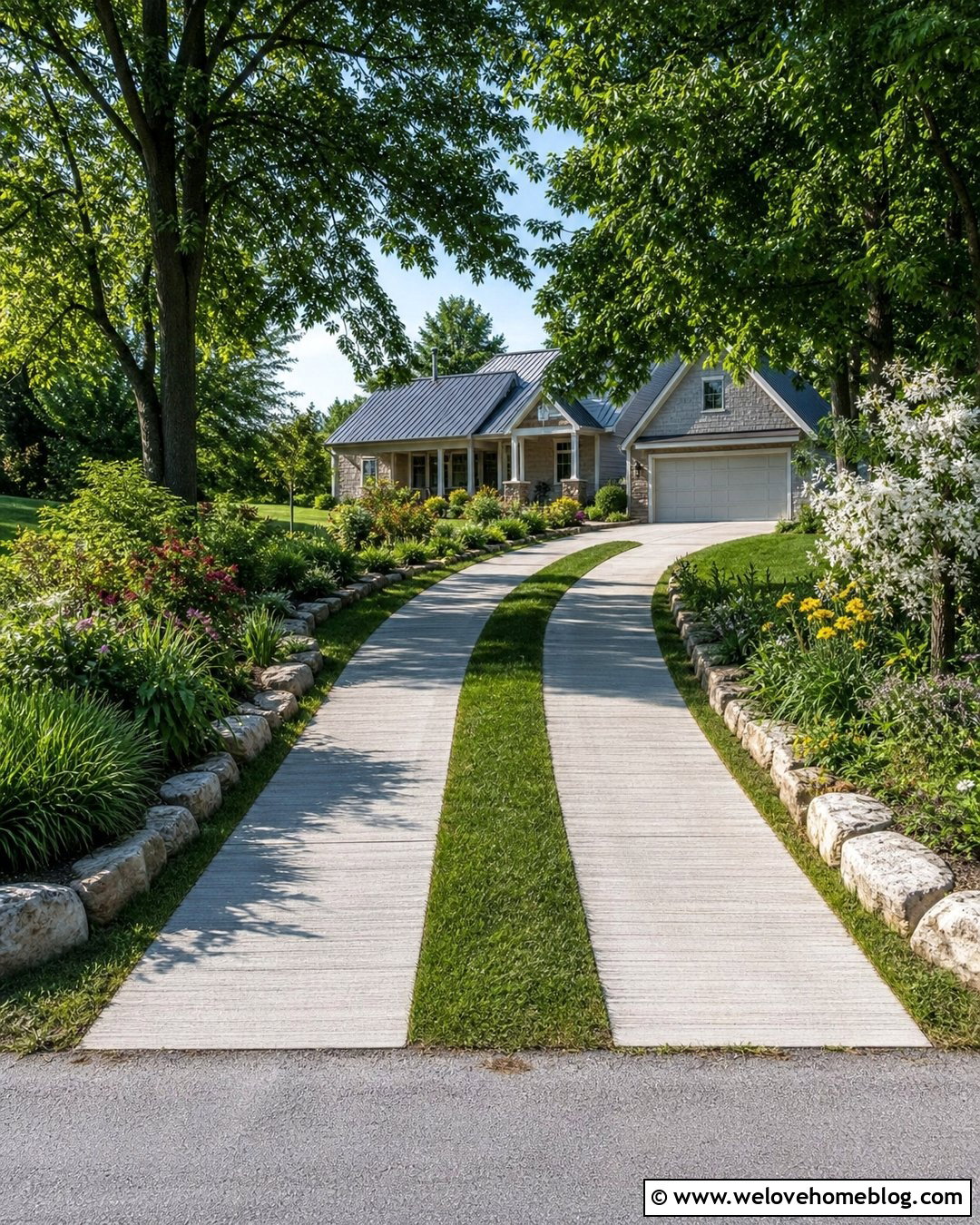
A concrete ribbon driveway uses two durable wheel tracks instead of covering the entire approach with hardscape. Between the light gray concrete strips, maintain a broad band of lawn or a tough low-growing ground cover. This look works beautifully with cottages, country homes, and relaxed ranch properties where traffic is relatively predictable. Stone edging along the outer sides can separate the concrete from garden beds filled with flowering shrubs and native perennials. Keep the ribbons wide enough for normal vehicle movement, and consider a full concrete parking pad near the garage. Accurate layout is essential because turning areas and frequent delivery traffic may require more continuous paving than the narrow tracks provide.
17. Charcoal Concrete Driveway With Light Stone Border
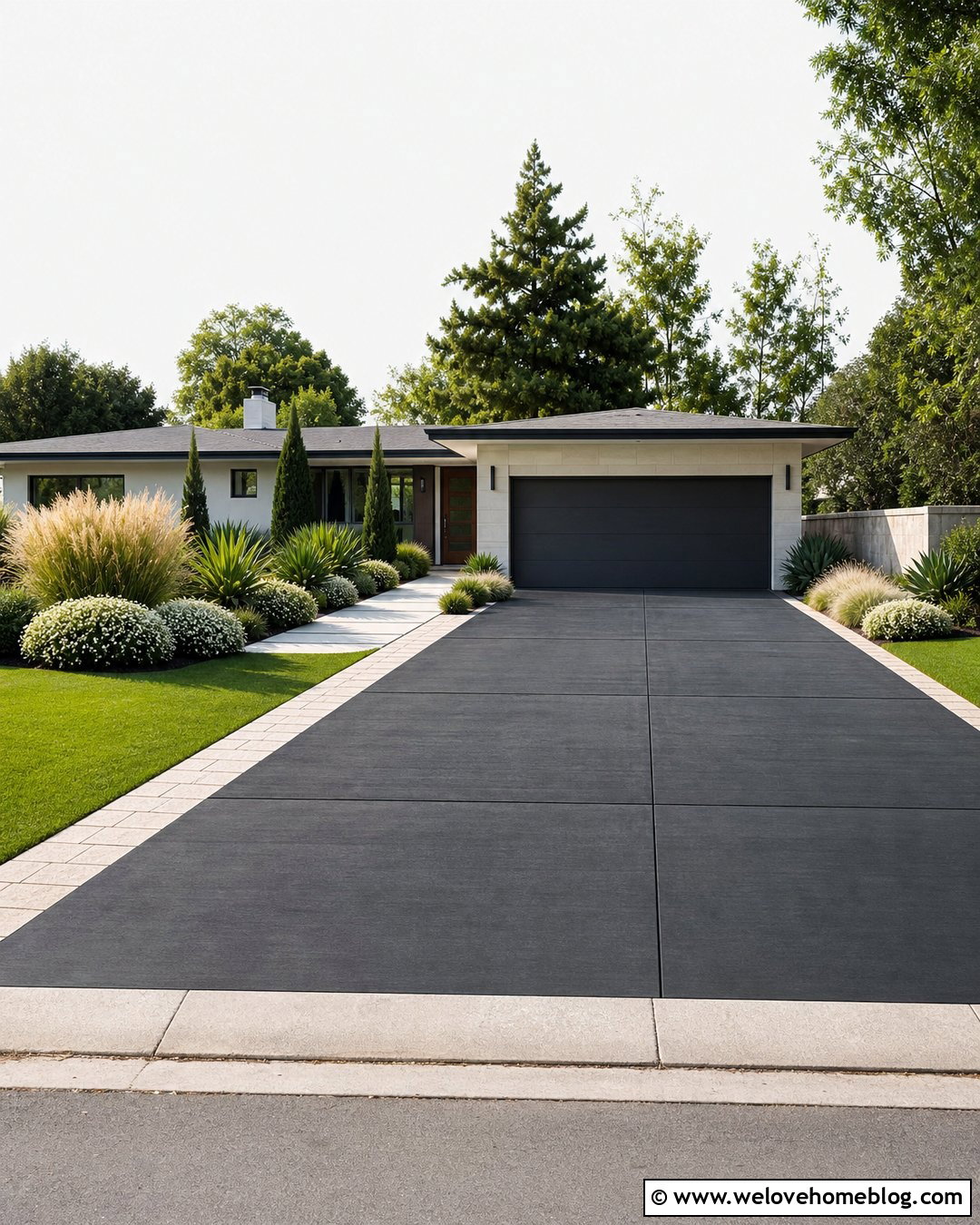
Dark charcoal concrete can anchor the entrance of a pale contemporary or midcentury home. Use a fine broom finish or subtle exposed texture to prevent the large surface from looking flat. A border of cream limestone setts creates a crisp frame and connects the driveway to light-colored facade details. Arrange the concrete in large rectangular sections with straight control joints that align with the garage bays. Bright green lawn, airy ornamental grasses, and white flowering shrubs will stand out against the darker surface. Because dark concrete can show dust, mineral deposits, and uneven color differently than standard gray, review maintenance expectations and a cured color sample before making the final selection.
18. Stained Concrete Driveway With Stone Pattern
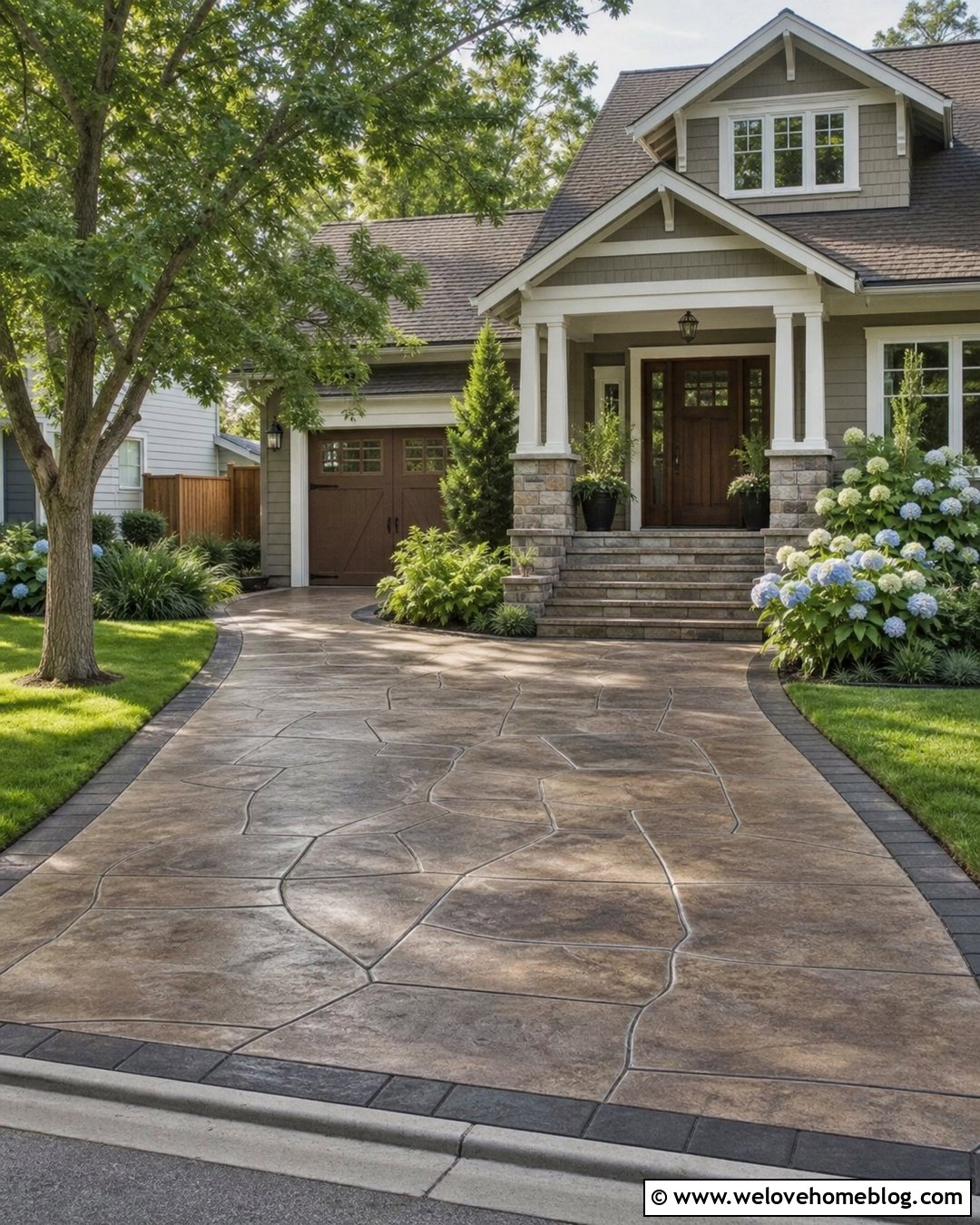
Scoring and staining can give an existing sound concrete driveway the appearance of large natural stone slabs. Cut an irregular ashlar or random stone pattern into the surface, then apply blended taupe, gray, and muted brown tones. A narrow dark border helps contain the pattern and creates a finished edge beside the lawn. This driveway look suits Craftsman, Tudor, and traditional stone homes. Plant ferns, hydrangeas, small evergreens, and a shade tree nearby to reinforce the established character. Avoid using too many unrelated stain colors. Subtle variation usually feels more realistic. Existing cracks, repairs, moisture conditions, and surface contamination should be assessed before choosing a decorative resurfacing or staining system. ()
19. Concrete Driveway With Arched Paver Apron
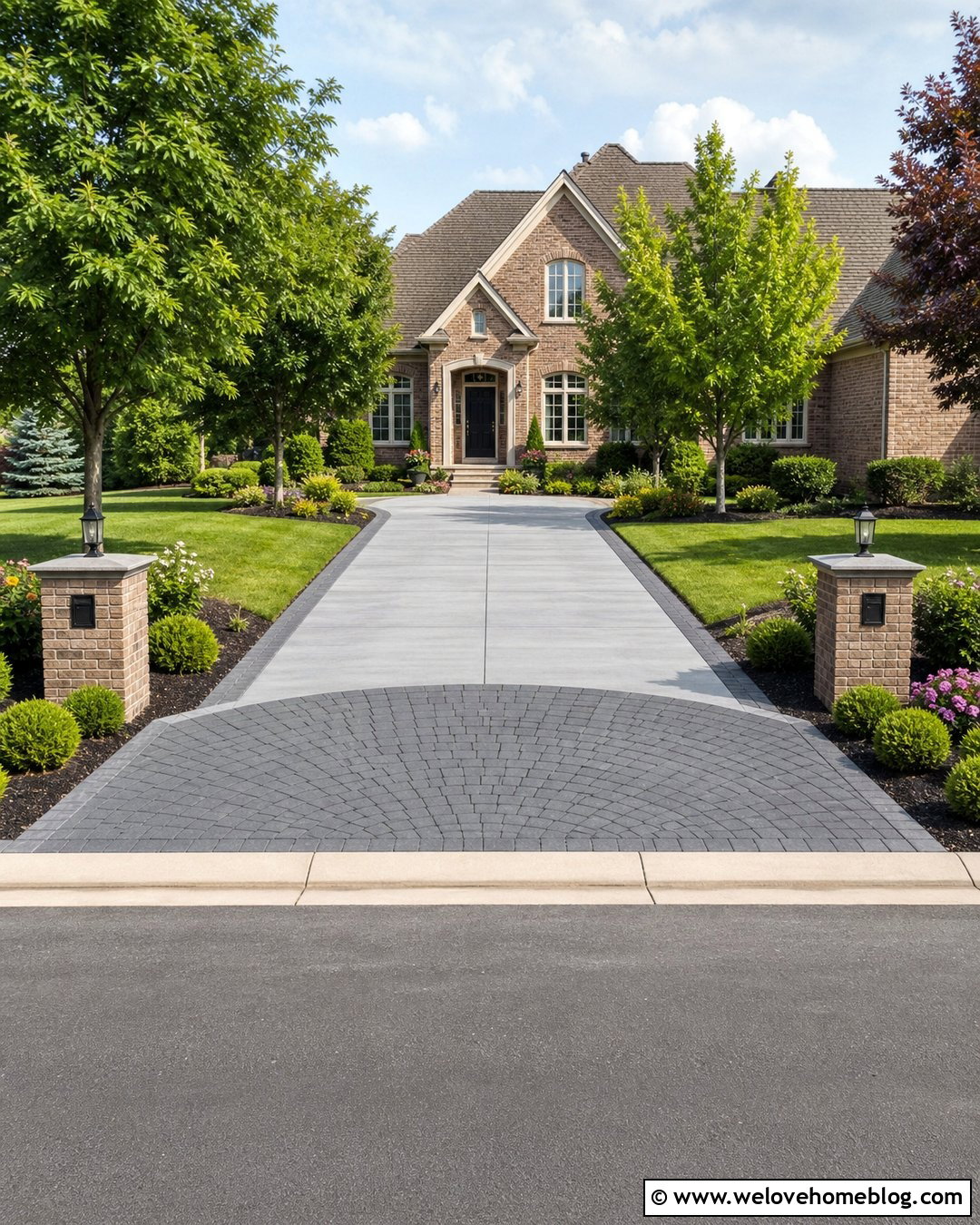
An arched paver apron can make a simple concrete driveway entrance feel intentional and welcoming. Use standard light gray broom-finished concrete for the main straight drive, then install a broad fan-shaped apron with charcoal or red brick pavers where it meets the street. Continue a narrow paver border along the sides to connect the entrance with the rest of the design. Matching masonry mailbox pillars can provide another coordinated detail. Frame the approach with clipped shrubs, flowering perennials, and small ornamental trees while preserving clear views toward the road. This strategy concentrates the more decorative material in a visible location, giving the driveway character without adding pattern across the entire concrete field. ()

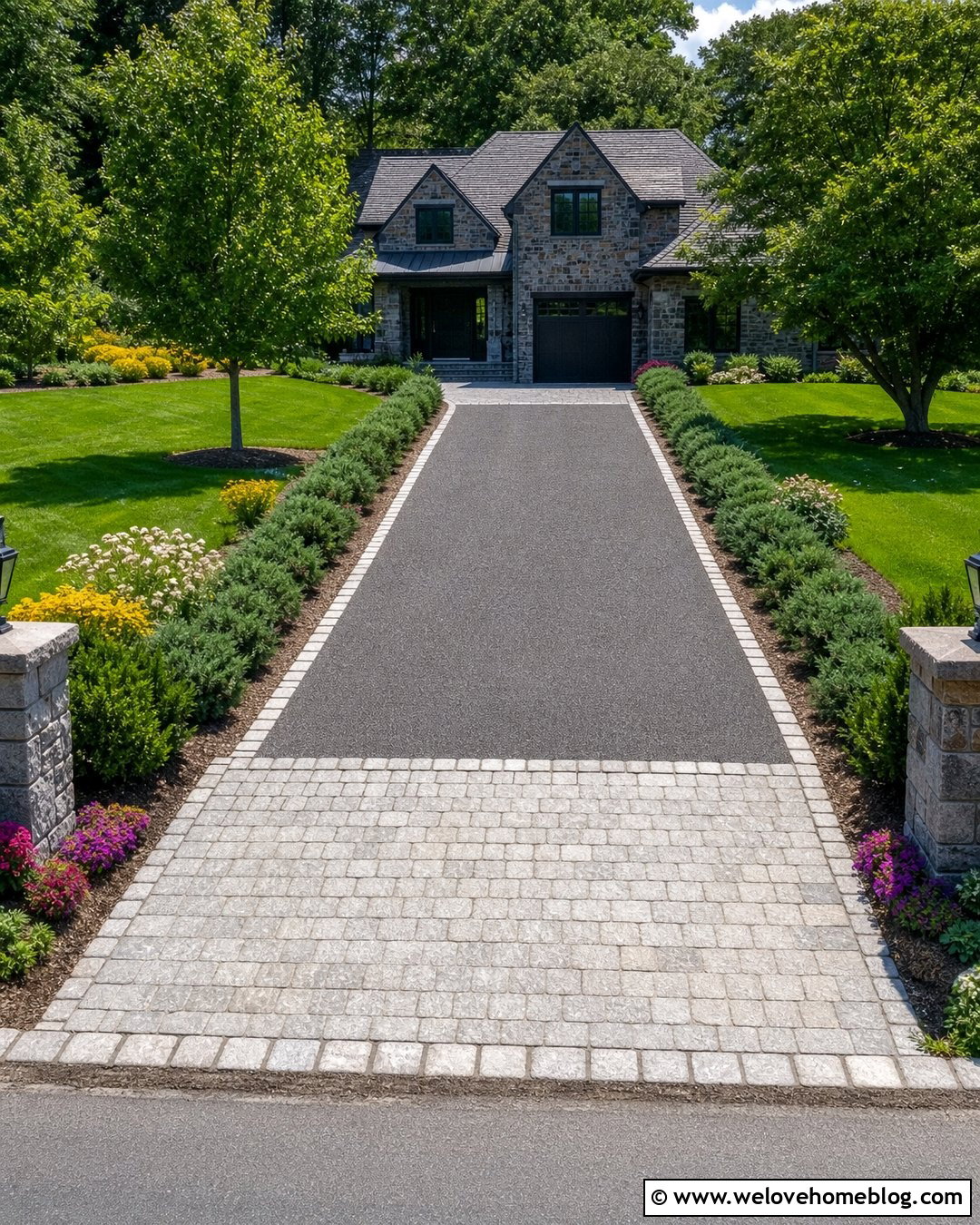
20. Farmhouse Concrete Driveway With Gravel Border
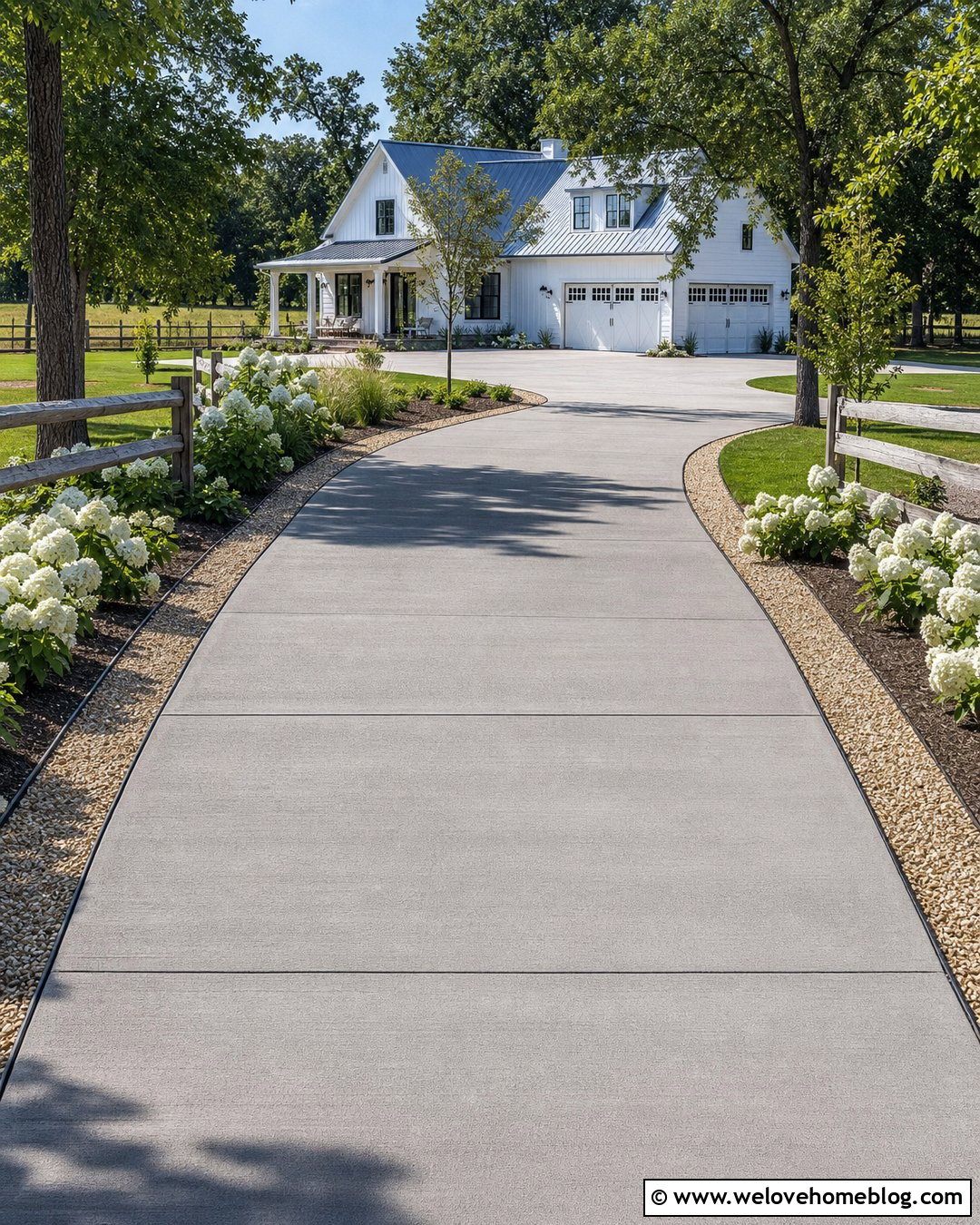
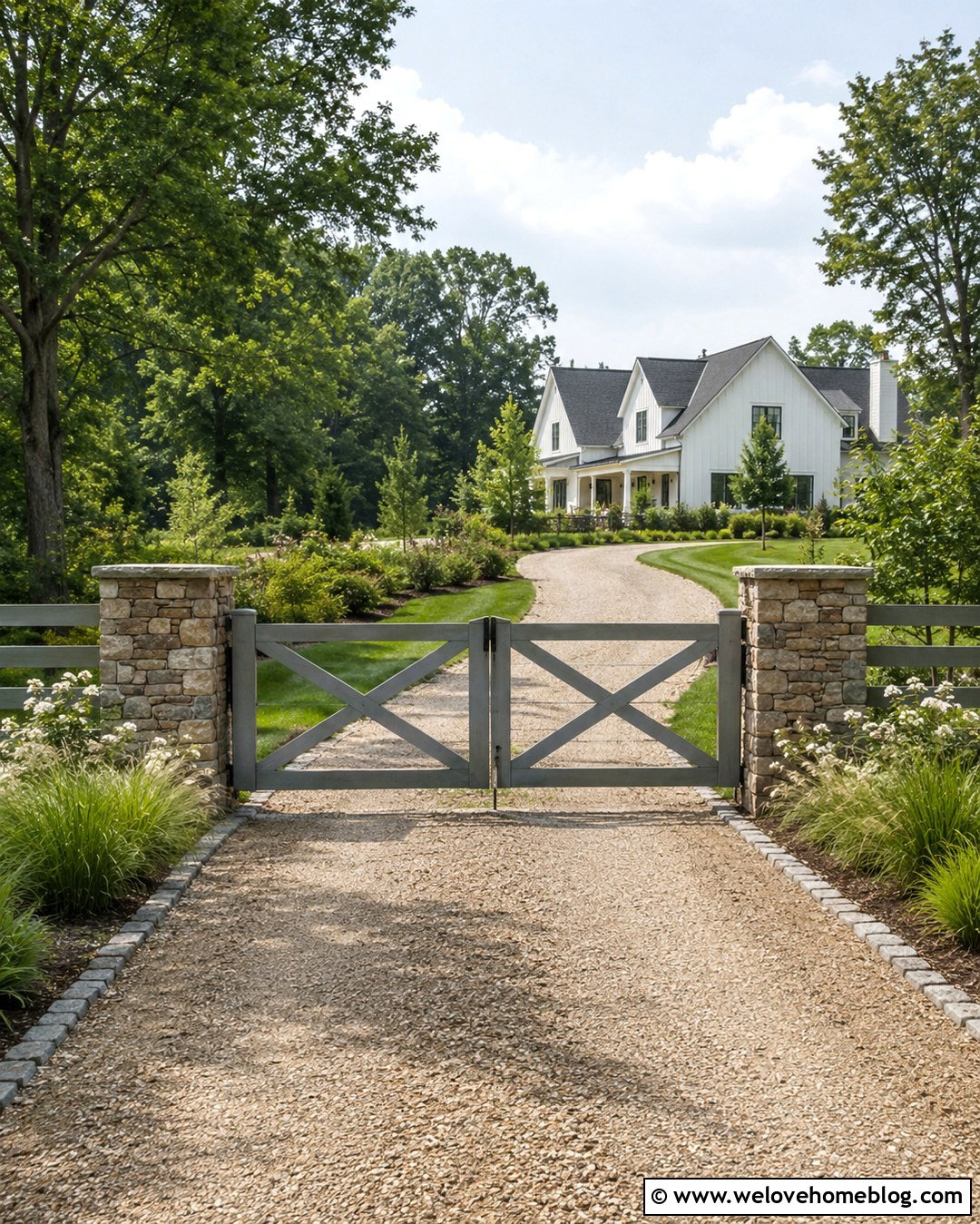
Warm gray concrete paired with a loose gravel border creates a relaxed entrance for a farmhouse or country property. Keep the driveway broad and gently curved, using a broom finish that feels simple rather than highly polished. Add two narrow bands of compacted tan gravel between the concrete and landscaped edges. Steel edging can help separate the gravel from lawn and planting beds. White hydrangeas, ornamental grasses, split-rail fencing, and a few shade trees complete the rural setting. Near the house, transition into a wider concrete parking pad with clean rectangular joints. Select gravel that coordinates with the home’s stonework and is large enough to remain more stable along the driveway edges.
21. Concrete Driveway With Permeable Paver Bands
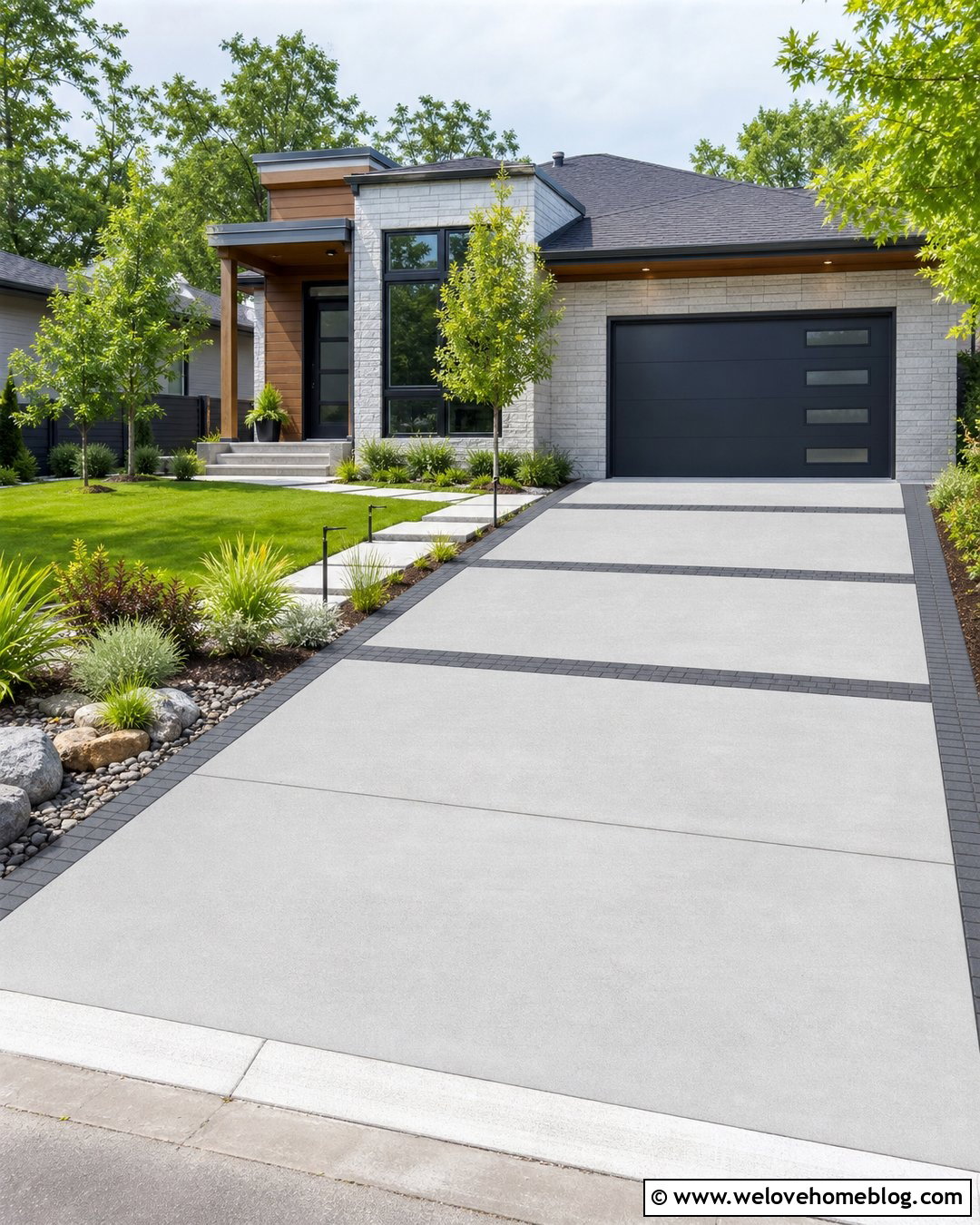
Concrete and permeable paver bands can work together to visually divide a large driveway and create designated drainage areas where appropriate. Use pale broom-finished concrete for the main driving surface and insert wide charcoal permeable paver bands across selected sections. Continue the pavers along one edge toward a planted rain garden filled with moisture-tolerant grasses and shrubs. This complete layout suits contemporary suburban homes and properties with broad parking areas. The bands should align with the concrete joint plan and surrounding architecture. Because drainage performance depends on soil, slope, base construction, and local requirements, have the system designed for the site rather than treating decorative paver strips as an automatic drainage solution.
22. Sand Finish Concrete Driveway With Coastal Landscaping
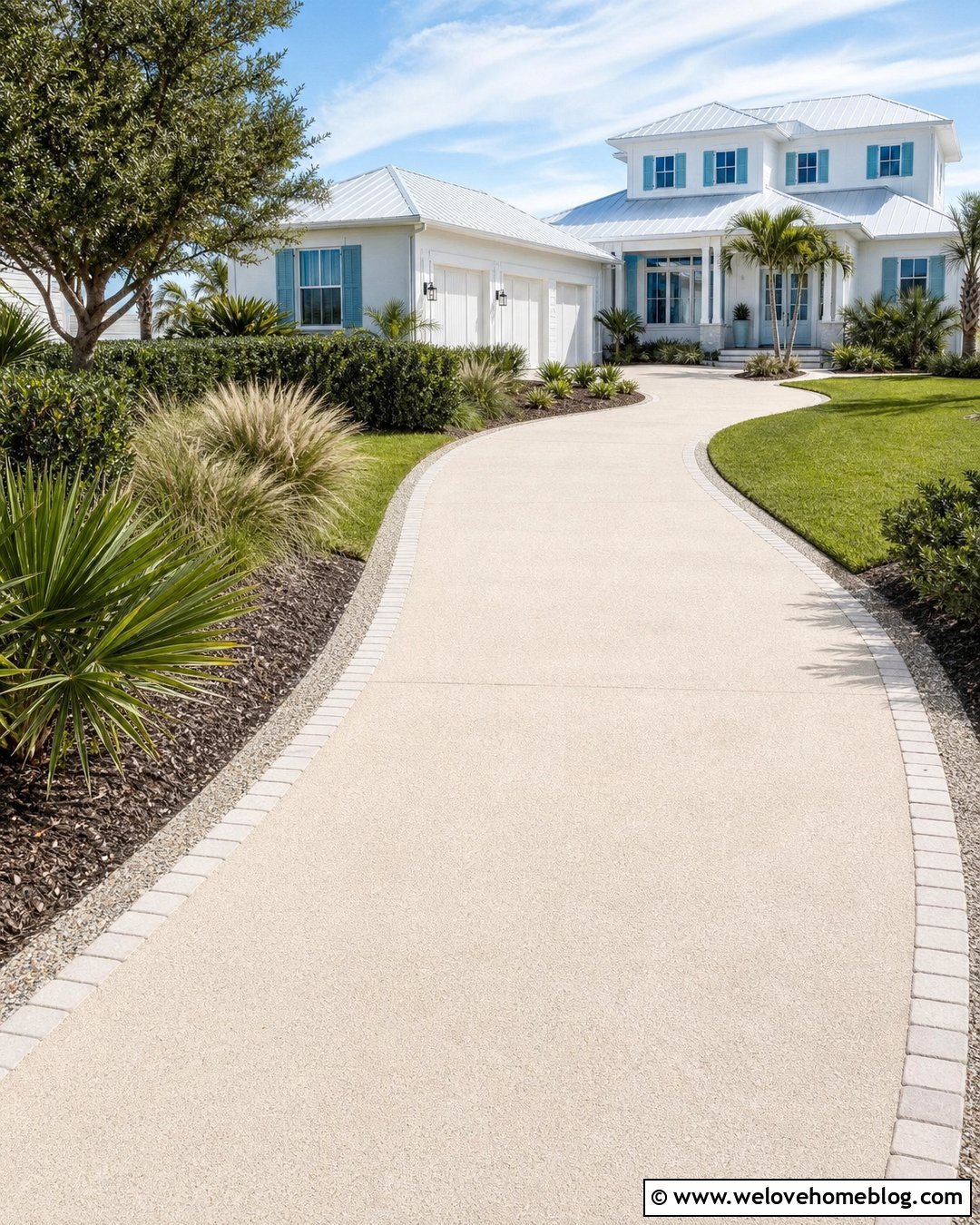
A sand finish provides a fine, understated texture that pairs naturally with a coastal-inspired home. Choose pale beige or soft gray concrete and use a gently curved layout leading toward a white or light blue facade. Frame the driveway with shell-colored pavers or a narrow exposed-aggregate border. Salt-tolerant ornamental grasses, compact shrubs, and sculptural coastal plants can soften the edges while preserving an airy appearance. Keep the planting palette green and restrained so the light driveway remains the main visual link to the house. A matching sand-finished walkway can sweep toward the porch. Confirm that the selected surface texture provides suitable traction for the property’s slope, weather, and expected use.
23. Concrete Driveway With Decorative Center Medallion
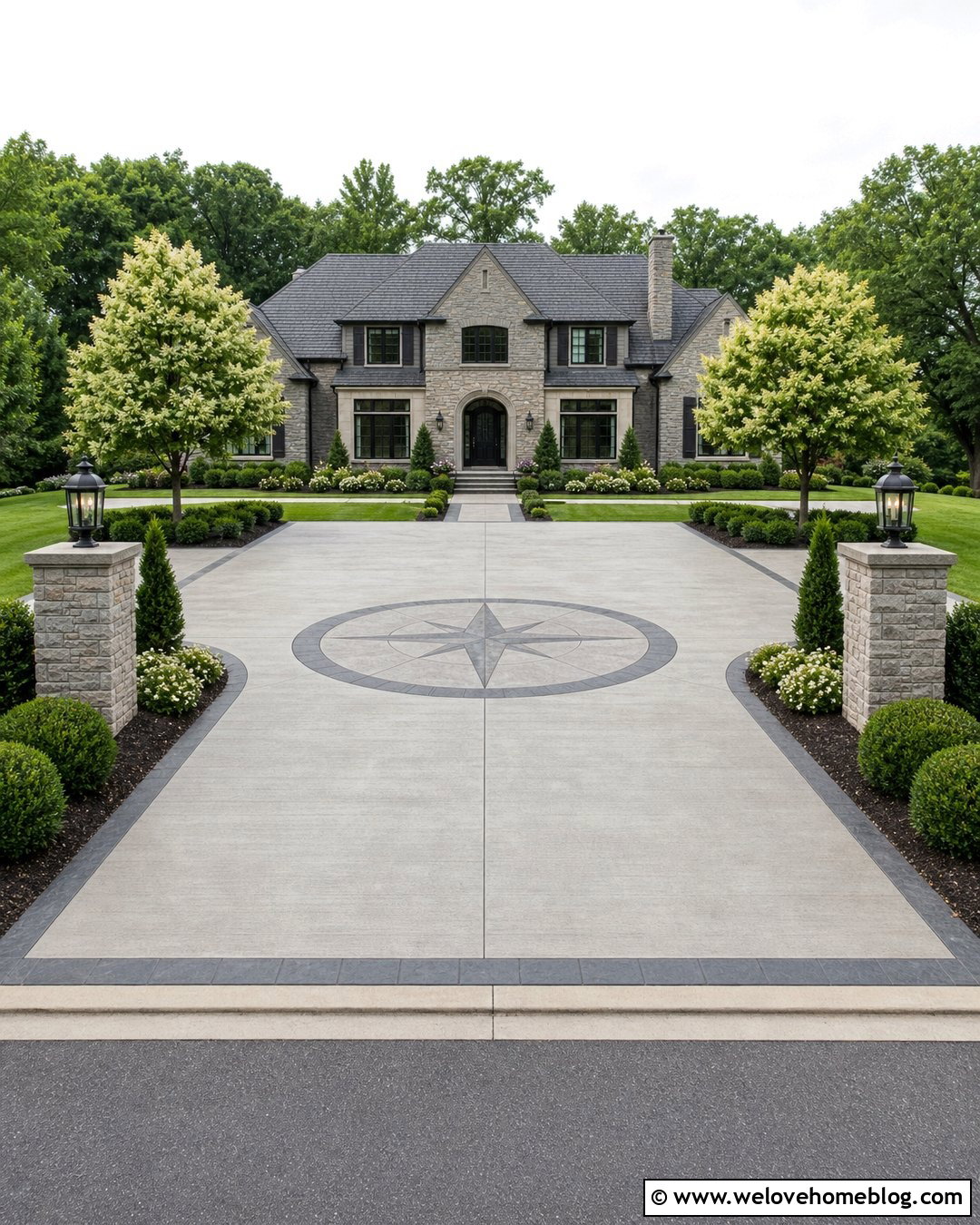
A decorative medallion creates a clear focal point in a wide concrete driveway or parking court. Use warm gray concrete with a restrained broom finish, then place a circular stamped compass, star, or geometric motif where the driveway branches or approaches the front entry. Surround the medallion with a contrasting band that connects to the outer border. Symmetrical landscaping, masonry pillars, and a centered walkway can reinforce the formal layout. Keep the design large and simple enough to read from the curb. Multiple small motifs may make the surface feel crowded. Colors taken from the brick, stone, or roof will help the decorative feature appear integrated with the property. ()
24. Concrete Driveway With Black Metal Gate
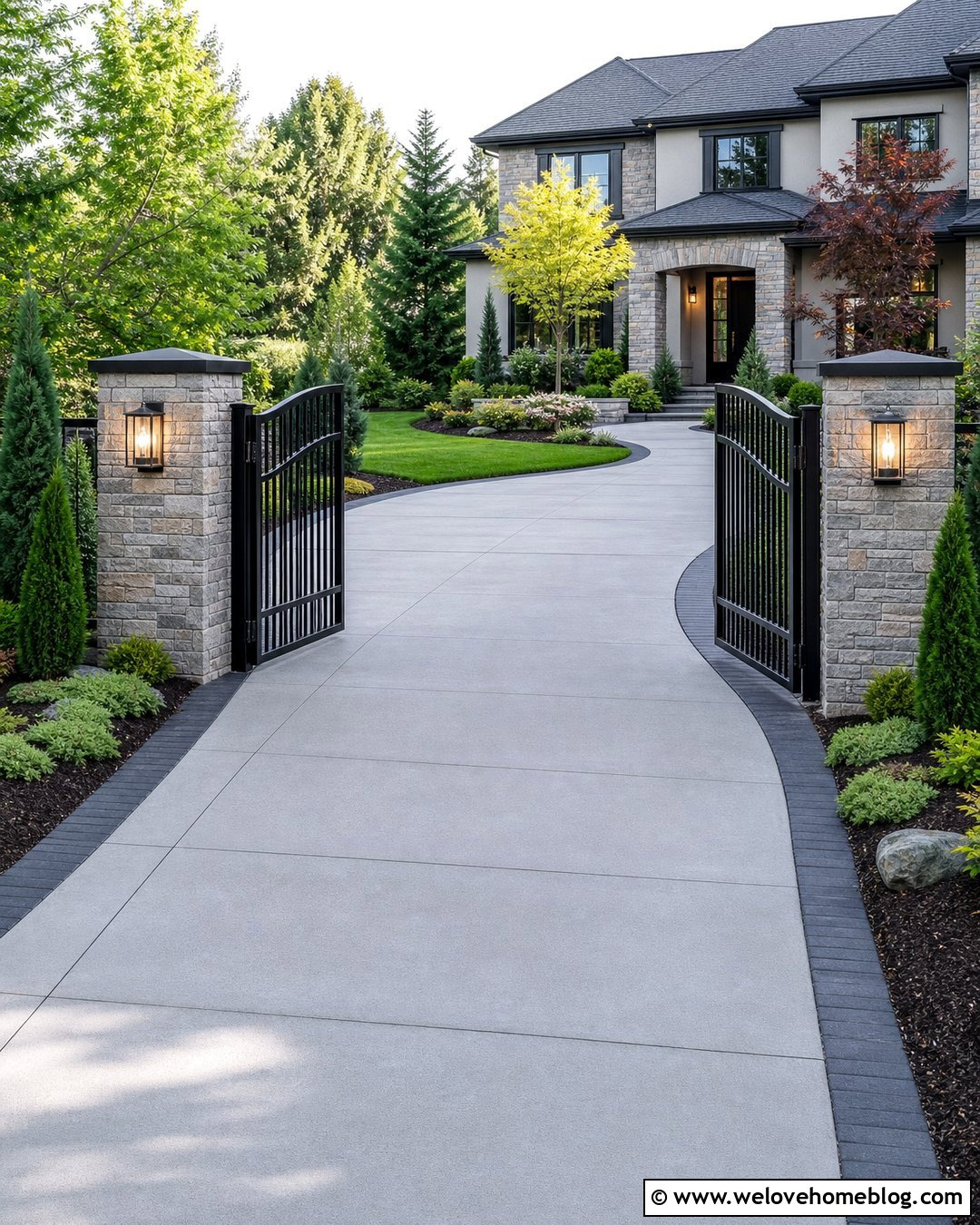
A gated driveway looks most cohesive when the concrete, pillars, lighting, and landscaping share a consistent design. Choose smooth medium gray concrete with straight scoring lines and a charcoal border. At the entrance, install a simple black metal sliding or swinging gate between stone or brick pillars that match the home. Continue the driveway in a gentle curve so the house becomes visible beyond the gate. Layer evergreen shrubs, small trees, and low ground covers along both sides without narrowing the driving area. Daytime landscape lighting fixtures can be incorporated beside the pillars and walkway. Allow enough level space for vehicles to wait safely while the gate operates, subject to site and local requirements.
25. Heated Concrete Driveway With Simple Scoring
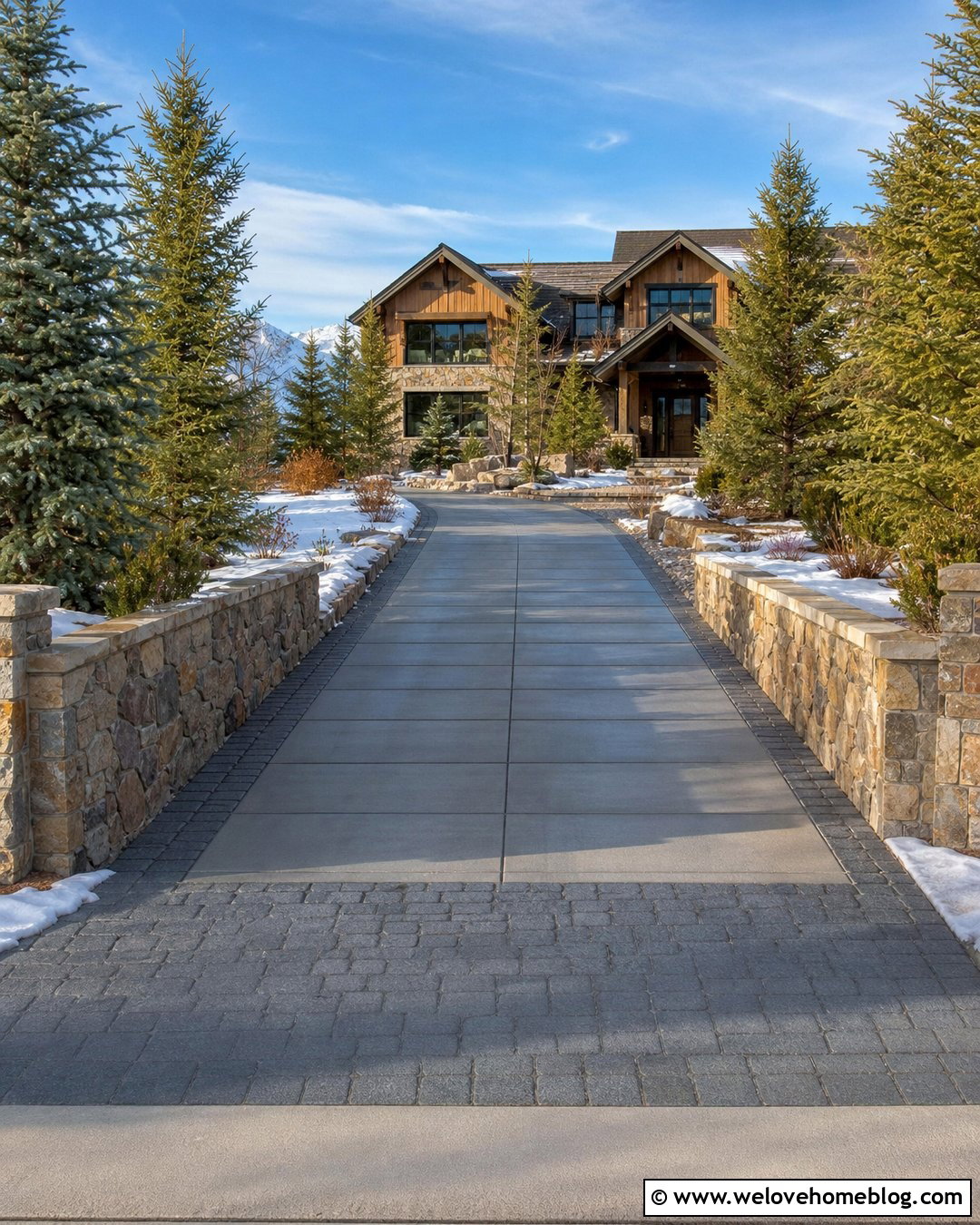
In a snowy climate, a heated concrete driveway can combine winter convenience with a clean residential design. Use medium gray concrete divided into large rectangular panels with straight, carefully planned scoring. A dark granite or concrete paver border gives the surface a finished edge without creating an overly complicated pattern. Keep the driveway straight or gently sloped toward a modern Craftsman or mountain home. Evergreen trees, stone retaining walls, and low shrubs can frame the approach while leaving room for snow management. Radiant snow-melting systems require coordinated structural, electrical or hydronic, drainage, control, and operating-cost planning. Discuss the complete assembly with qualified local professionals before the concrete design is finalized.
Conclusion:
The most successful concrete driveway feels connected to the entire property rather than treated as a separate slab. Match its color and pattern to the house, shape the layout around comfortable vehicle movement, and use borders or landscaping to soften exposed edges. Simple broom-finished concrete can look polished with brick ribbons, while stamped, stained, exposed-aggregate, and geometric surfaces create a stronger decorative statement. Always plan grading, drainage, traction, joints, and maintenance before concentrating on appearance. Samples viewed outdoors can also make material and color decisions easier. Whether your yard is compact, wide, formal, or relaxed, these **25 Driveway Concrete Ideas** provide practical starting points for creating a durable and attractive entrance.

Related posts:
Leave a Reply