
Landscaping the narrow strip separating two driveways can improve curb appeal, define property boundaries, and reduce awkward areas of patchy grass. The best design depends on available width, sunlight, drainage, vehicle clearance, and how much maintenance both households want. Low ground covers work well in tight spaces, while wider dividers can support shrubs, ornamental grasses, small trees, or stepping-stone paths. Durable edging is also important because tires, runoff, road salt, and reflected heat can damage delicate planting beds. Whether you prefer a colorful garden, a modern rock strip, or a practical privacy screen, the complete layout should complement both driveways and nearby homes. Explore these practical and attractive 20 landscaping between driveways ideas.

1. Low-Maintenance Landscaping Between Concrete Driveways
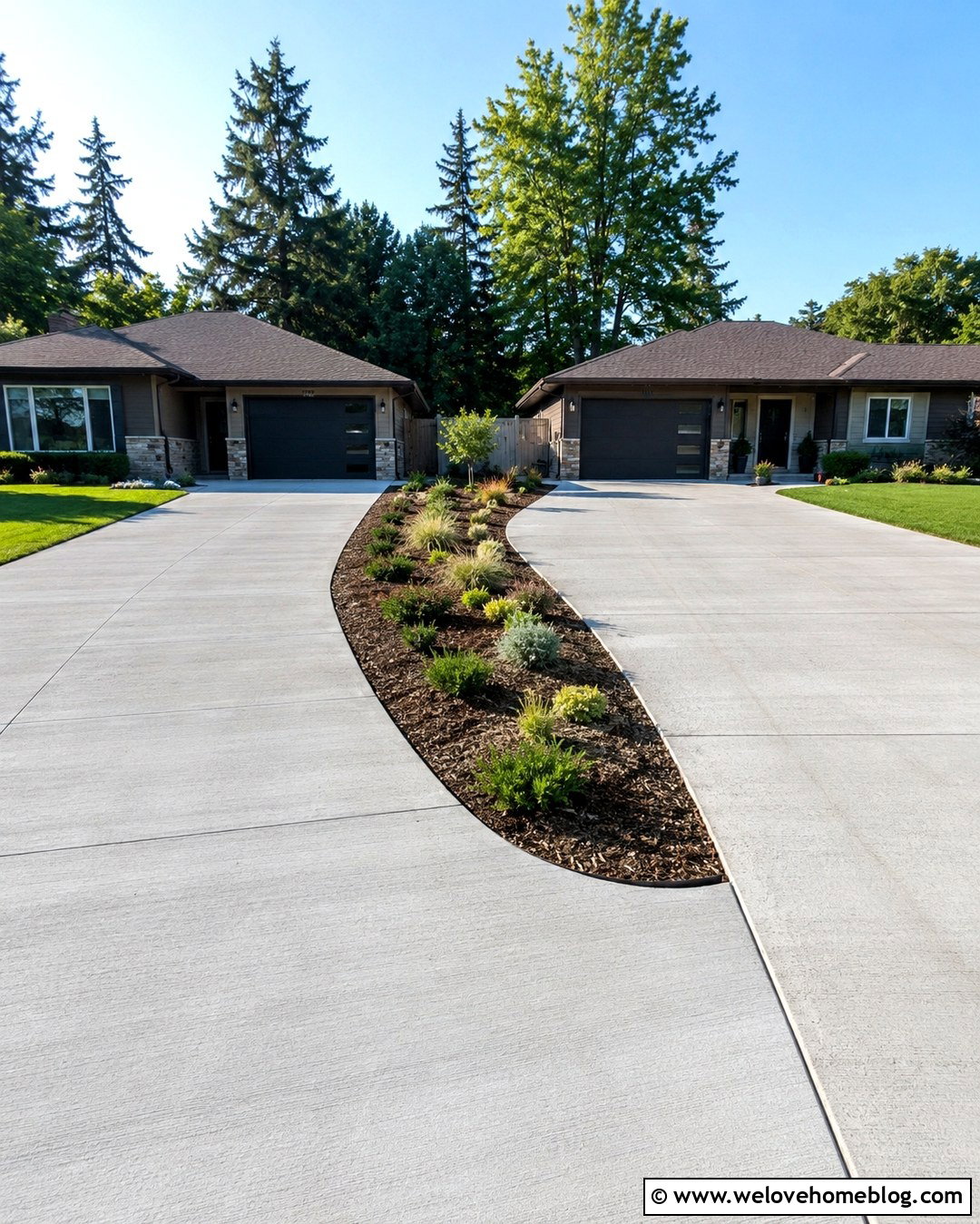
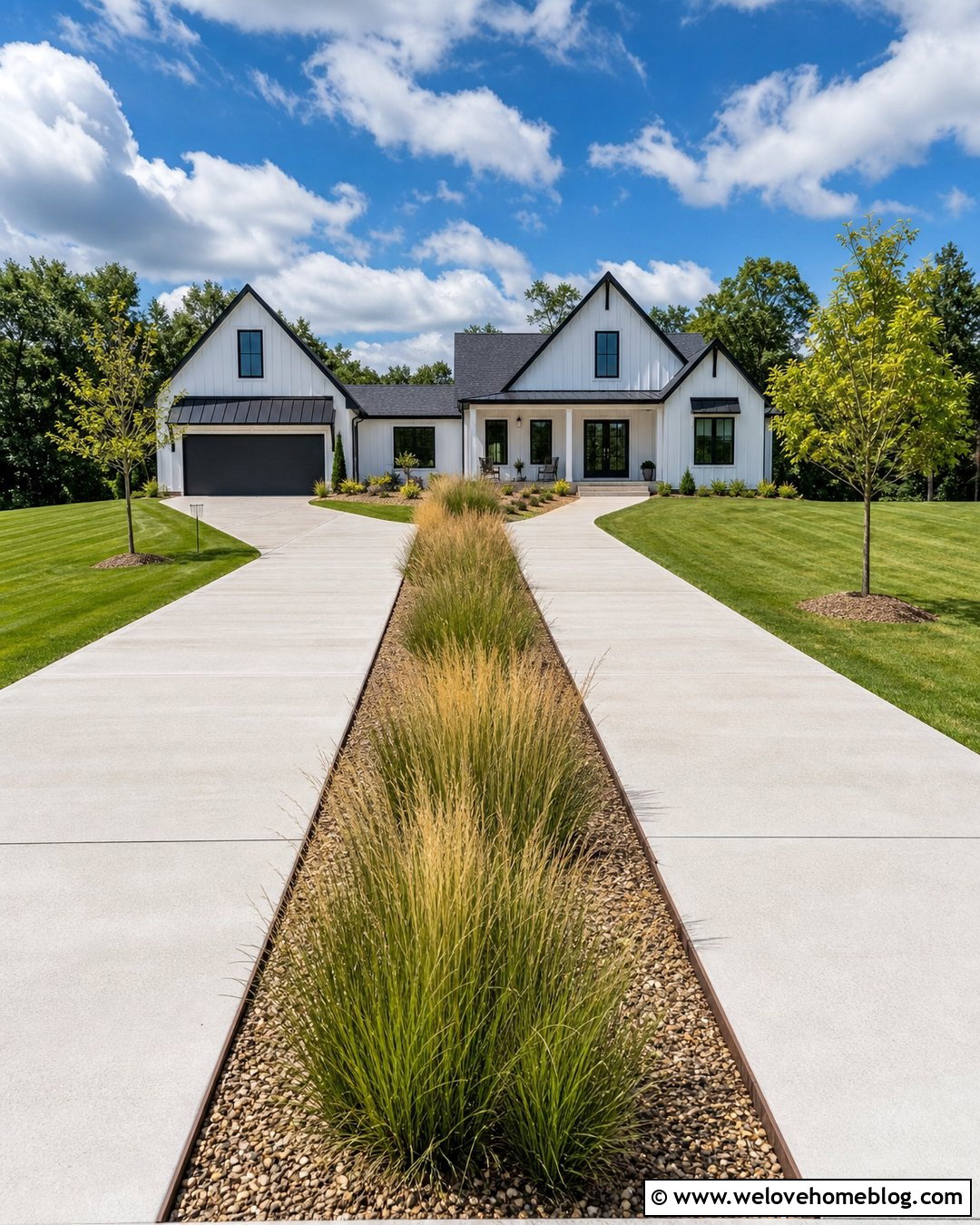
A simple planting strip can soften two large concrete surfaces without creating demanding weekend work. Keep both driveways straight and clean-lined, then install a gently curved bed between them to reduce the rigid appearance. Steel or dark concrete edging gives the divider a neat boundary and helps prevent mulch from spilling onto either driveway. Fill the center with compact evergreen shrubs, dwarf ornamental grasses, and spreading sedum suited to local conditions. Use shredded bark in wetter regions or small gravel in dry climates. Keep plants low near the street so drivers can see pedestrians and approaching traffic. Repeating the same three or four plants creates a coordinated look that complements neighboring homes, even when their architecture or exterior colors differ.
2. Gravel Landscaping Between Asphalt Driveways
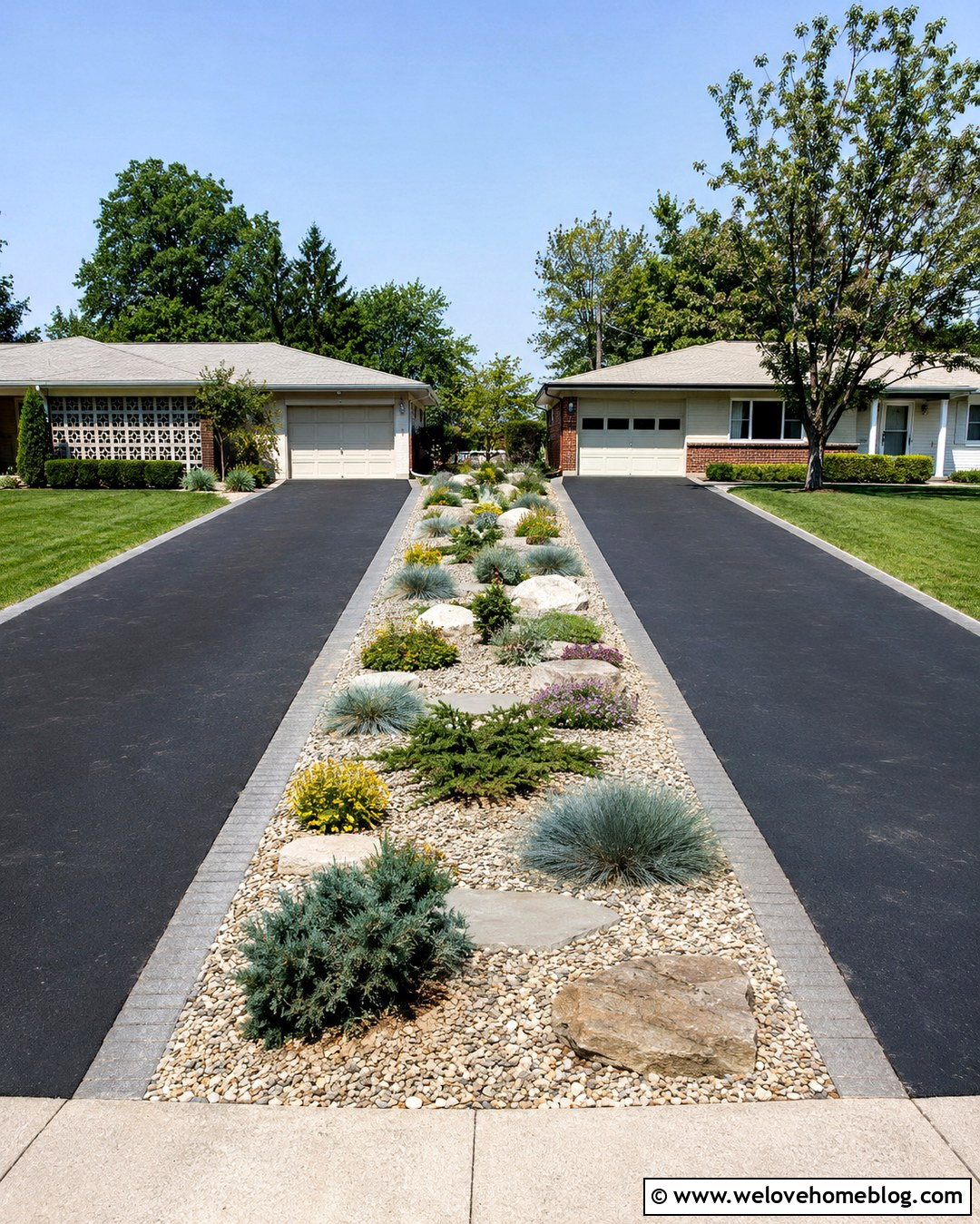
Black asphalt can make a narrow dividing strip feel especially hot and visually heavy. A pale gravel garden creates contrast while remaining easy to maintain. Edge both driveways with rectangular charcoal pavers, then fill the space with tan pea gravel or light gray crushed stone. Arrange clusters of blue fescue, compact juniper, and drought-tolerant flowering perennials throughout the divider. Larger accent rocks can add height without blocking visibility. A few flat stepping stones provide access for weeding, utility maintenance, or moving trash cans. Install permeable landscape fabric beneath the gravel where appropriate, but leave generous openings around plants. This complete design suits ranch, contemporary, and midcentury homes while reducing mowing in a difficult strip between two paved surfaces.
3. Native Plant Landscaping Between Driveways
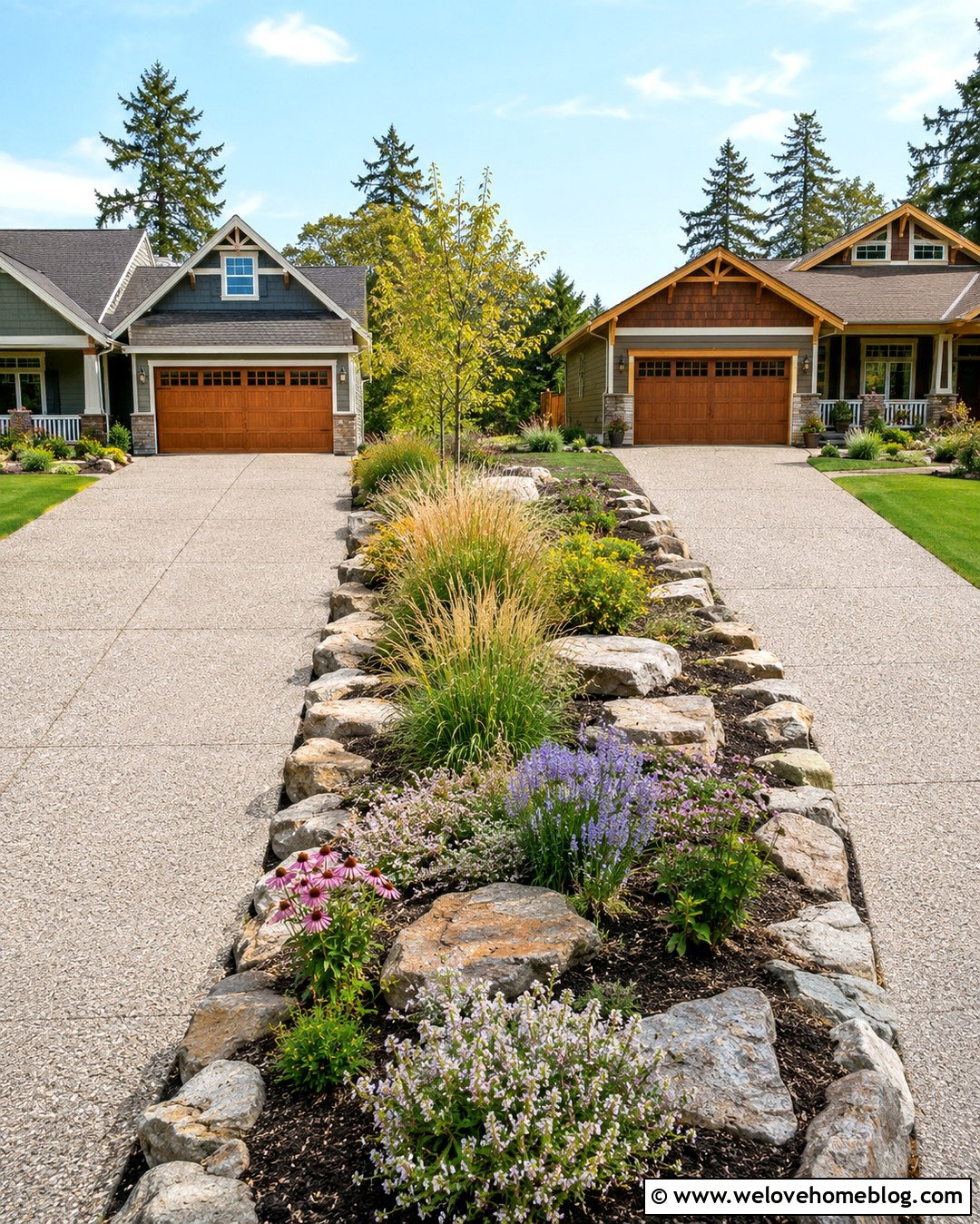
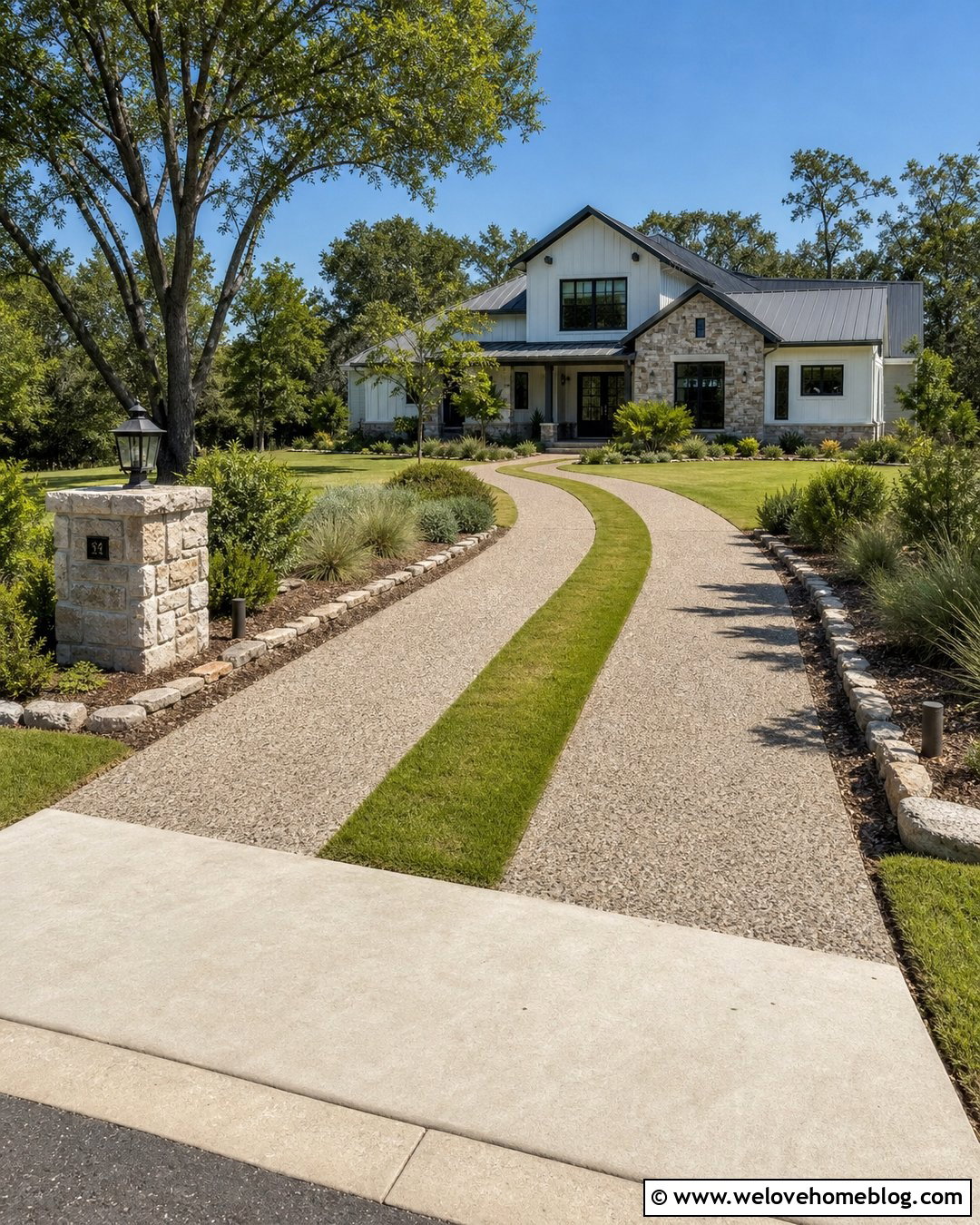
Would you like the divider to look colorful without depending on thirsty lawn grass? Create a native planting bed between two exposed aggregate driveways, using plants adapted to your region’s rainfall, soil, and seasonal temperatures. A natural stone border can protect the bed while coordinating with the textured driveway finish. Combine low native grasses with flowering perennials in repeating groups rather than scattering individual plants. Place the shortest varieties near the sidewalk and taller selections farther back. Add two or three flat boulders to give the strip structure during winter or dormancy. A layer of locally suitable mulch helps unify the bed. The result feels natural but organized, attracts beneficial wildlife, and connects both driveways to the surrounding front-yard landscape.
4. River Rock Landscaping Between Driveways
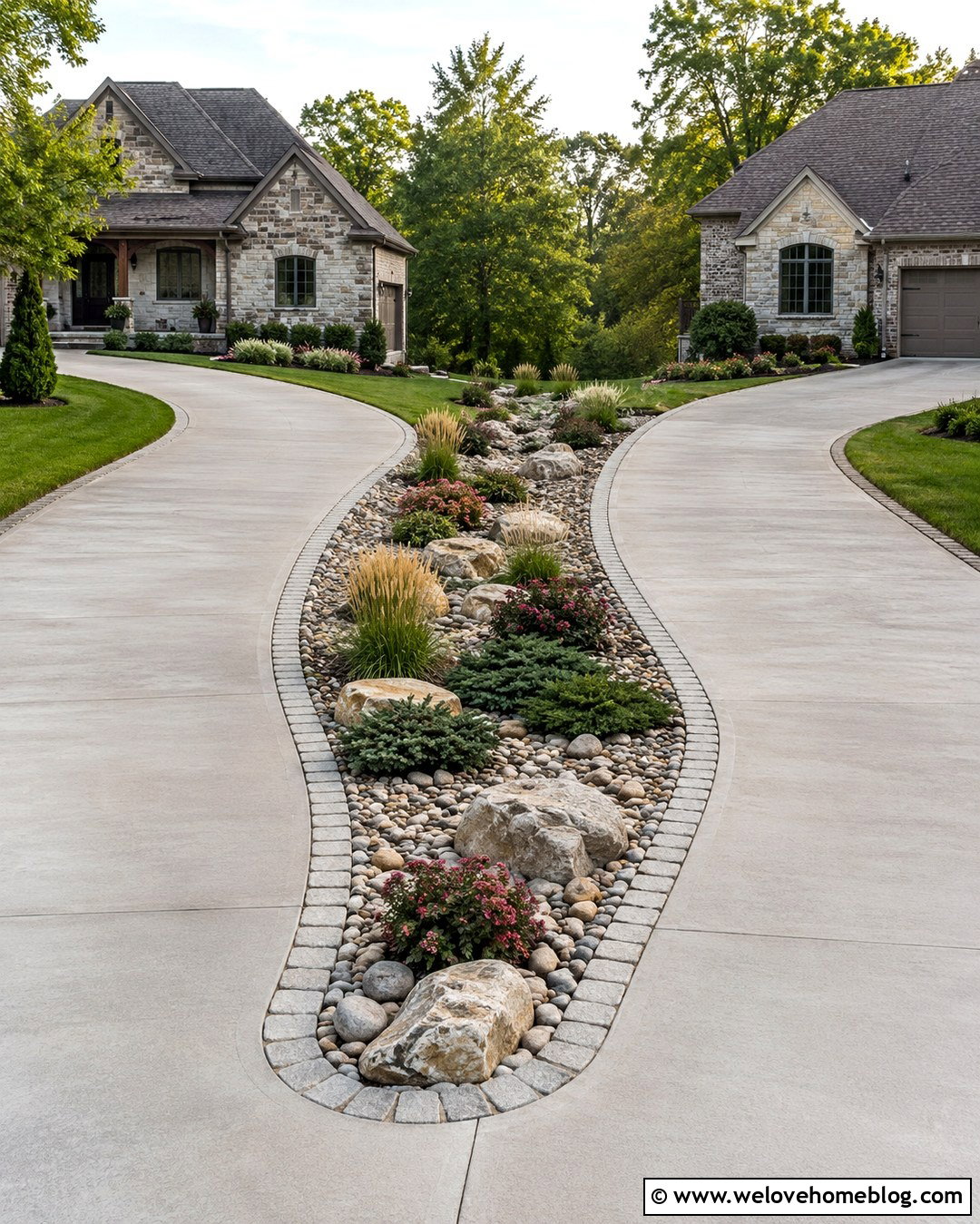
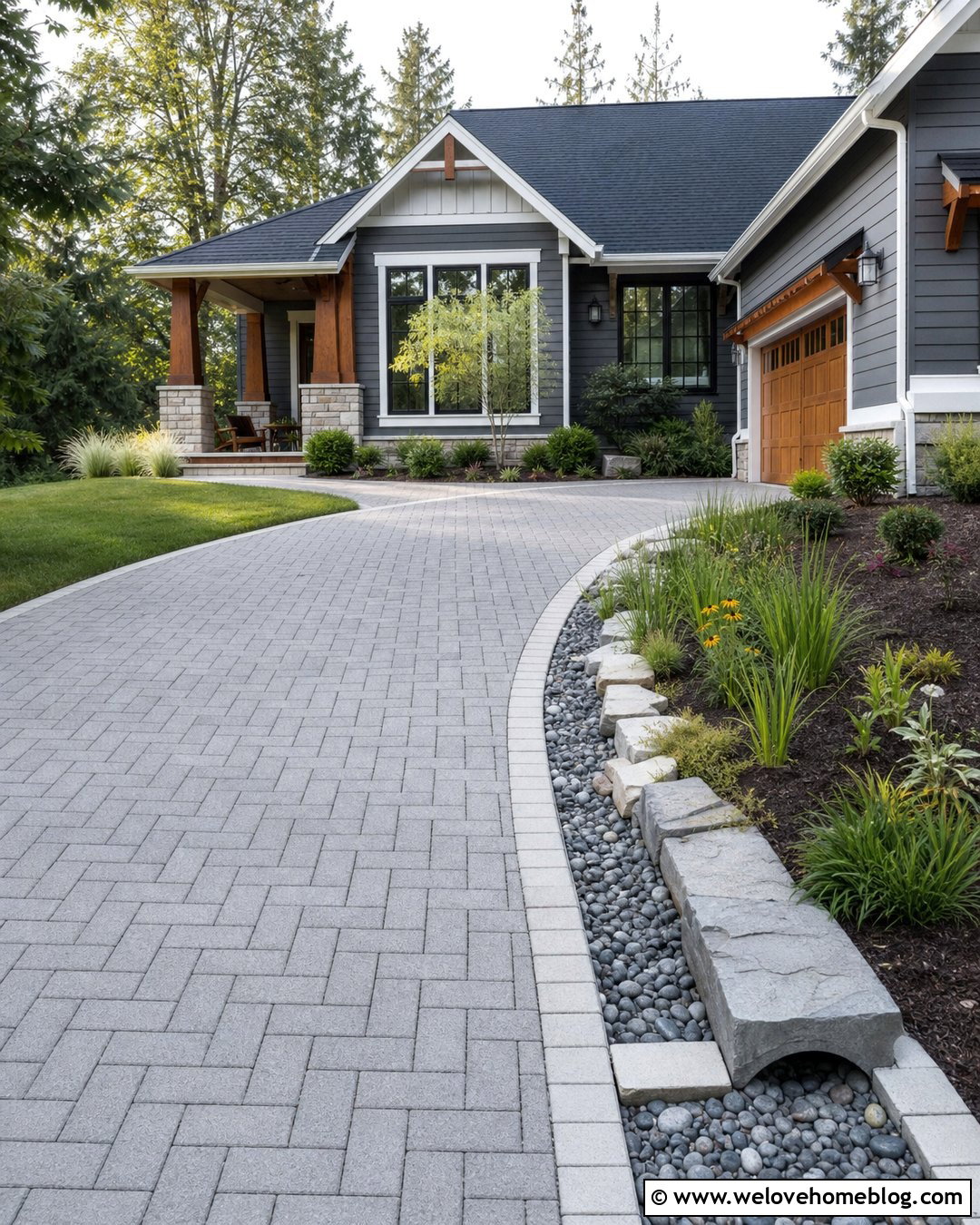
River rock offers a polished solution for a divider where grass struggles or water regularly flows. Frame a slightly recessed bed between two gray poured concrete driveways with a sturdy cobblestone edge. Fill it with mixed river stones in gray, cream, and muted brown tones, arranging the stones to suggest a dry creek. Add clumps of tough ornamental grass, spreading juniper, or compact flowering shrubs along the outer curves. A concealed drainage channel may be incorporated where site conditions require runoff management. Use larger stones at turns and smaller pebbles through the center for a natural transition. This design looks especially balanced beside Craftsman or stone-front homes and remains attractive even when the plants are not flowering.
5. Privacy Landscaping Between Shared Driveways
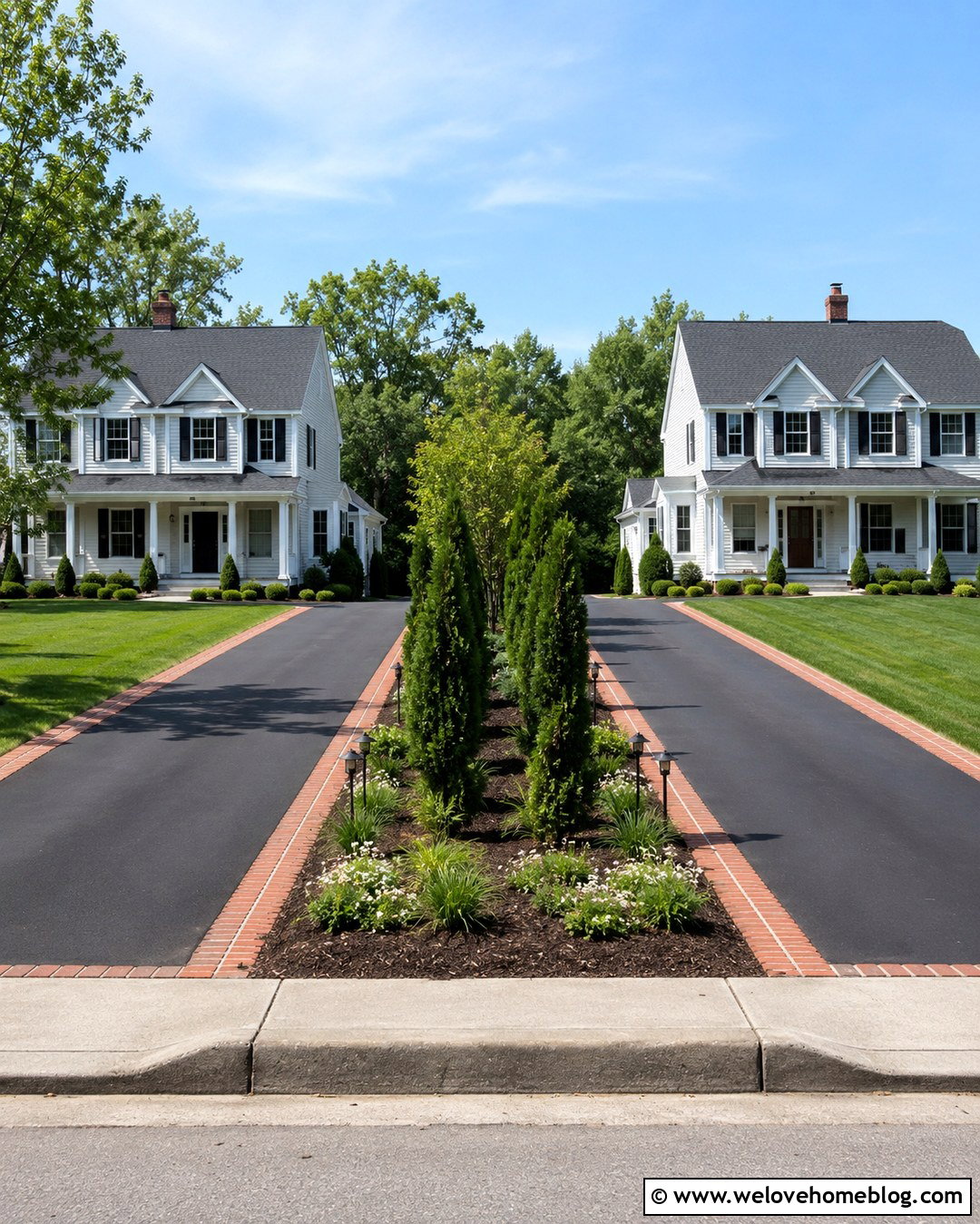
When neighboring driveways sit close together, a green divider can create gentle separation without appearing unfriendly. Use narrow brick paver ribbons along both asphalt driveway edges, then establish a long planting bed with upright evergreen shrubs. Choose naturally narrow plants that will not spread into vehicle doors or reduce usable parking space. Alternate them with lower ornamental grasses and flowering ground covers so the divider does not resemble a solid wall. Keep the street end open and low for clear sight lines. Farther toward the homes, slightly taller shrubs can screen patios, side entrances, or garage activity. Matching mulch and evenly spaced low-voltage lights complete the design. Confirm boundaries and maintenance responsibilities with the neighboring property owner before installation.
6. Flower Bed Landscaping Between Driveways
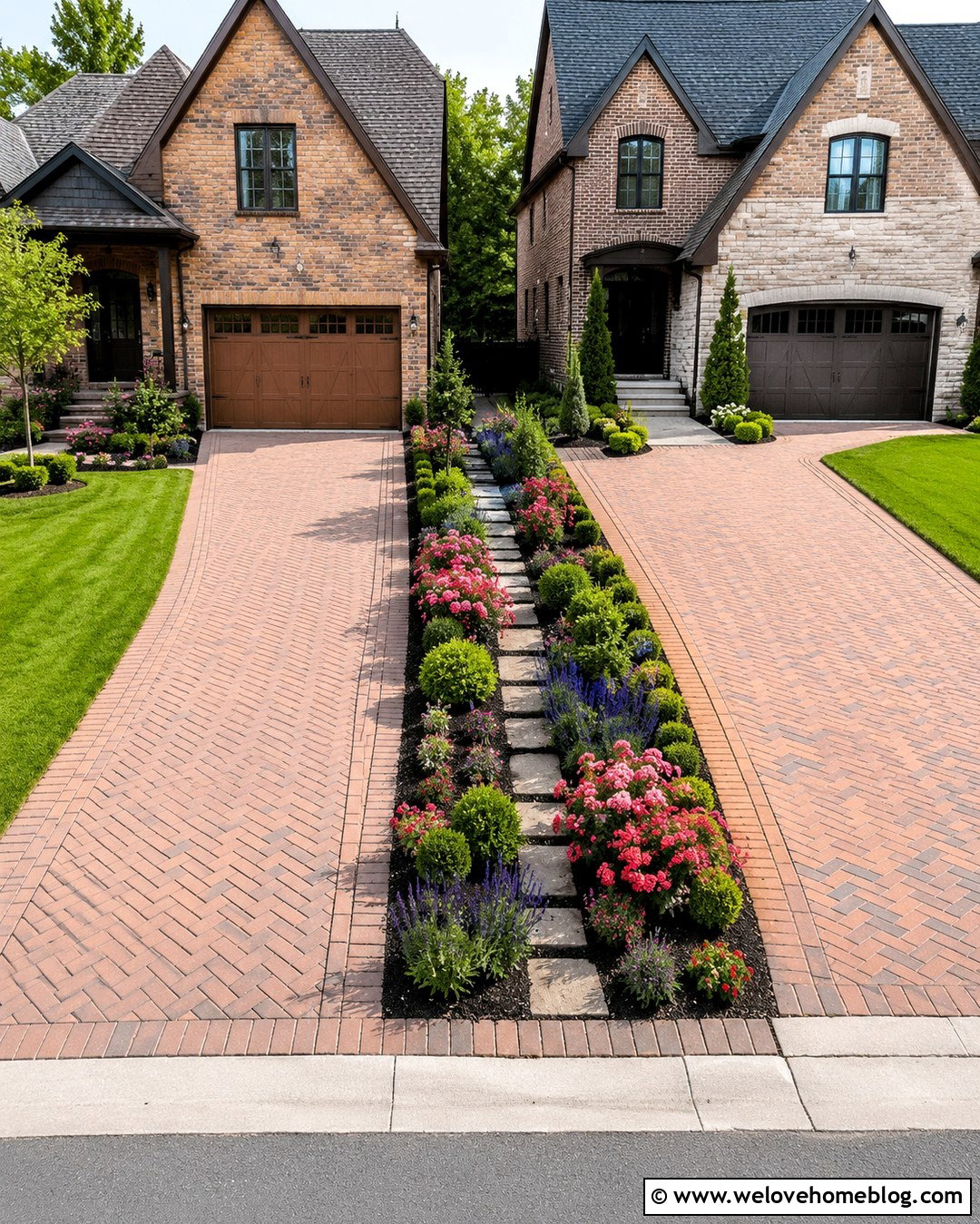
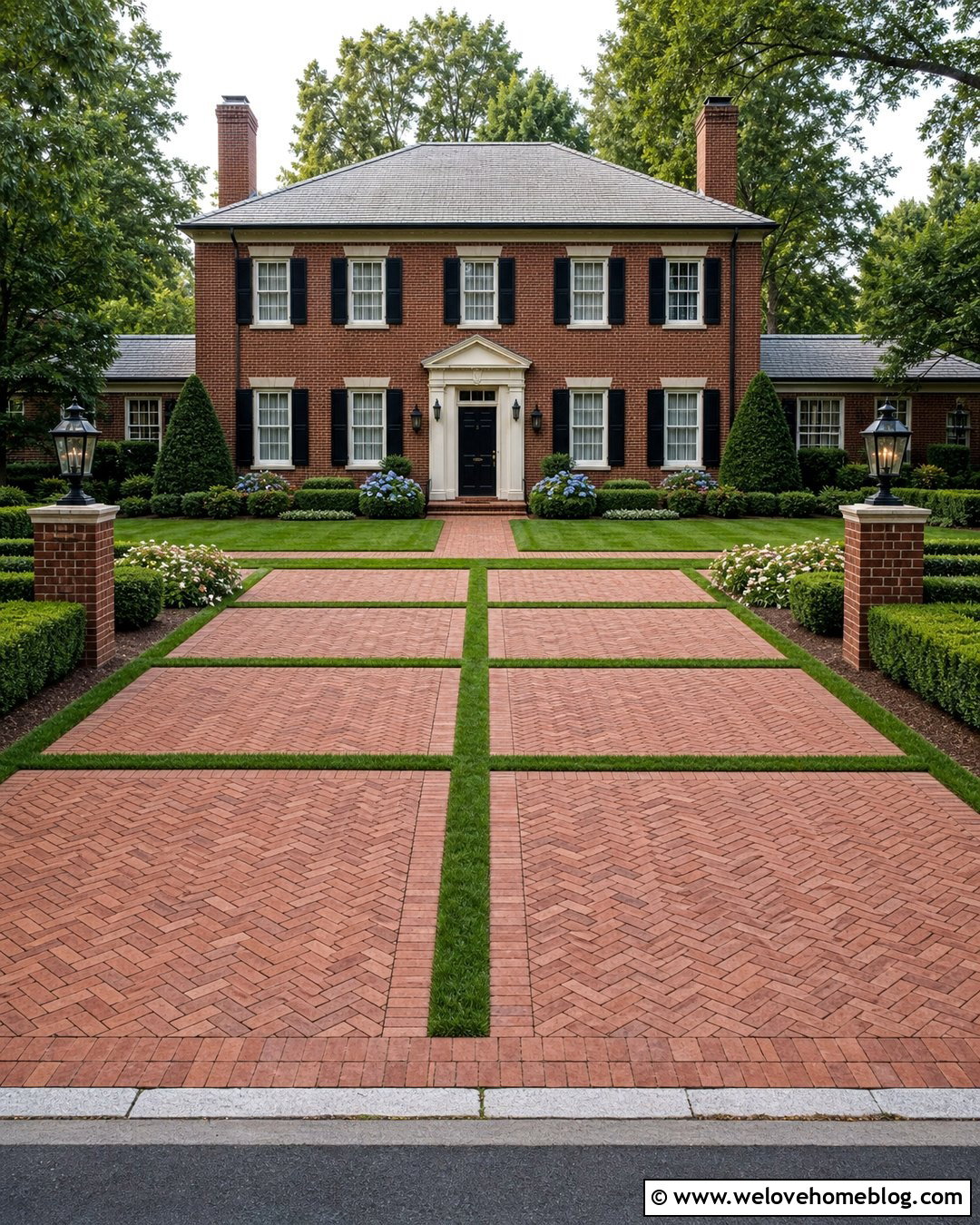
Seasonal color can turn an ordinary gap into a shared front-yard feature. Between two straight clay brick driveways, create a broad flower bed with matching brick edging laid flush enough to avoid becoming a tripping hazard. Use compact evergreen shrubs as permanent anchors, then layer long-blooming perennials and annual color around them. Arrange plants in wide repeating drifts for a calmer appearance and easier maintenance. Select varieties that tolerate reflected heat from the driveway surfaces and occasional splashing during storms. A narrow stepping-stone route through the center makes deadheading and watering more convenient. Finish the bed with dark mulch for strong contrast. Coordinating flower colors with both house facades helps the separate properties feel visually connected without making them look identical.
7. Ornamental Grass Landscaping Between Driveways
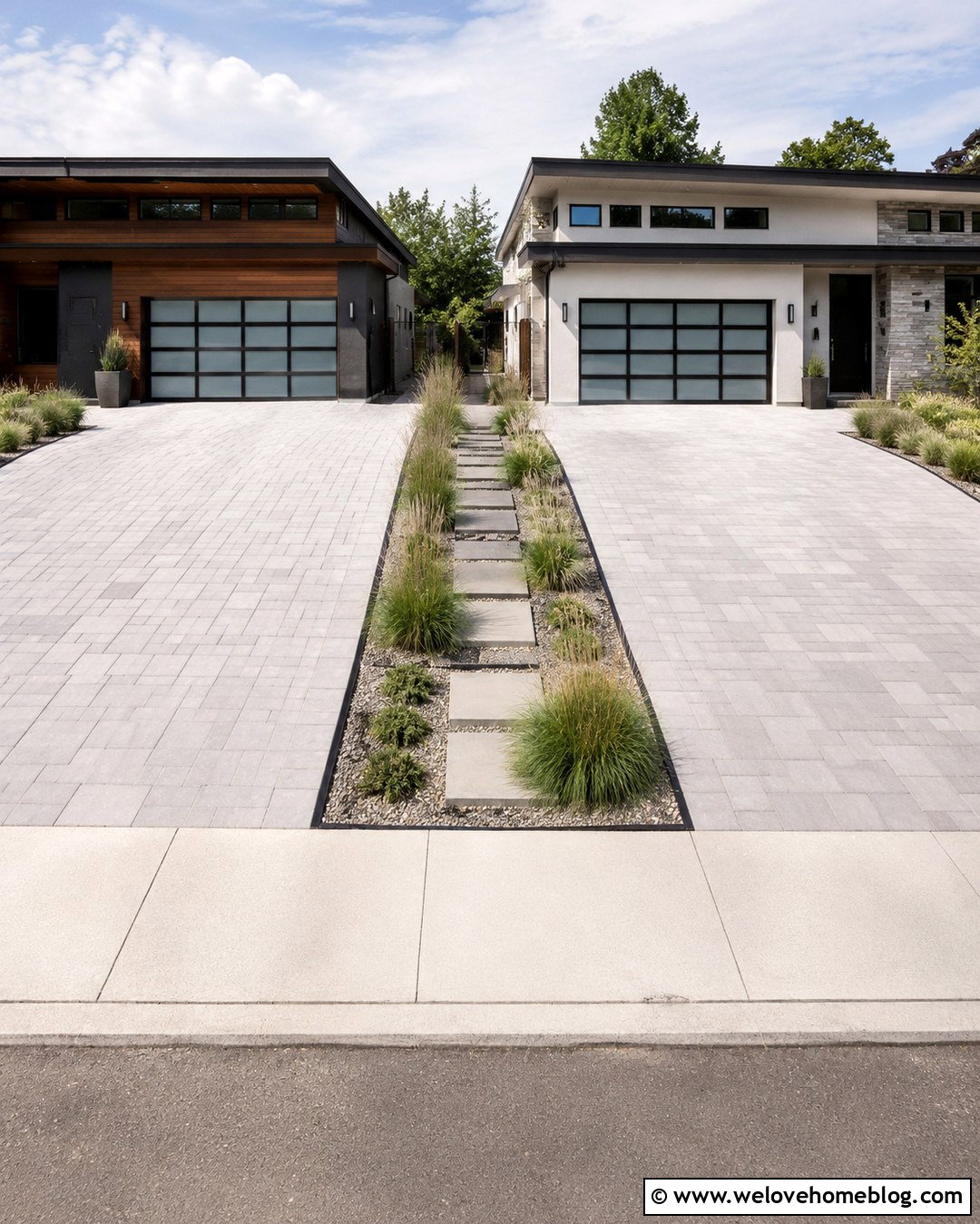
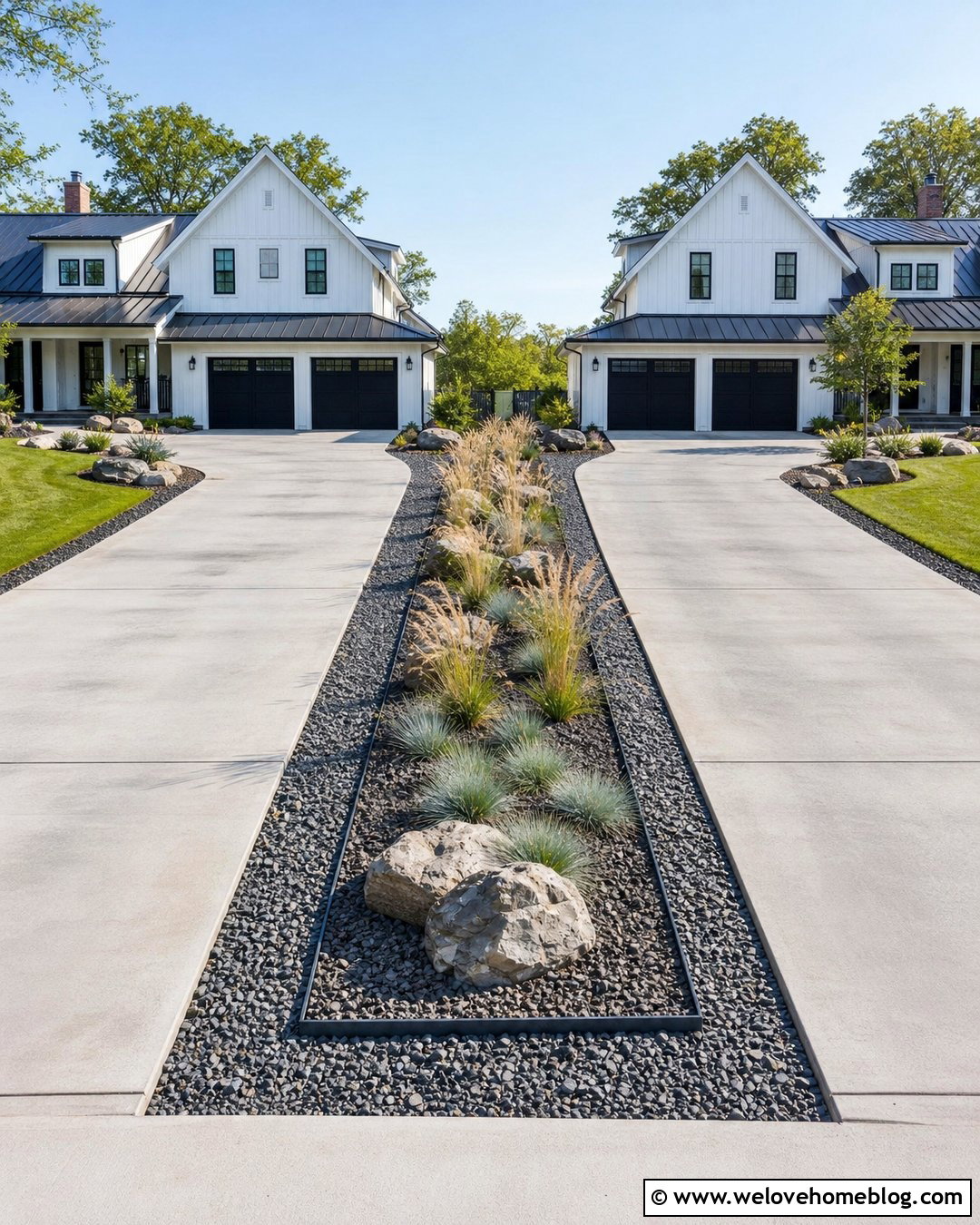
Soft movement from ornamental grasses can balance the hard edges of two paved driveways. Pair light gray concrete pavers with a long central bed edged in black metal for a crisp, modern layout. Plant compact grasses in staggered rows, mixing fine-textured green varieties with a few seasonal accent grasses. Choose clumping plants rather than aggressive spreaders, and position them far enough from the pavement that mature foliage does not scratch cars. Gravel mulch keeps the ground clean and reinforces the contemporary appearance. At the street, switch to shorter grasses or ground cover to preserve visibility. Small concrete stepping pads can provide maintenance access. This airy divider works particularly well between modern, transitional, or updated midcentury homes with restrained front-yard planting.
8. Evergreen Landscaping Between Driveways
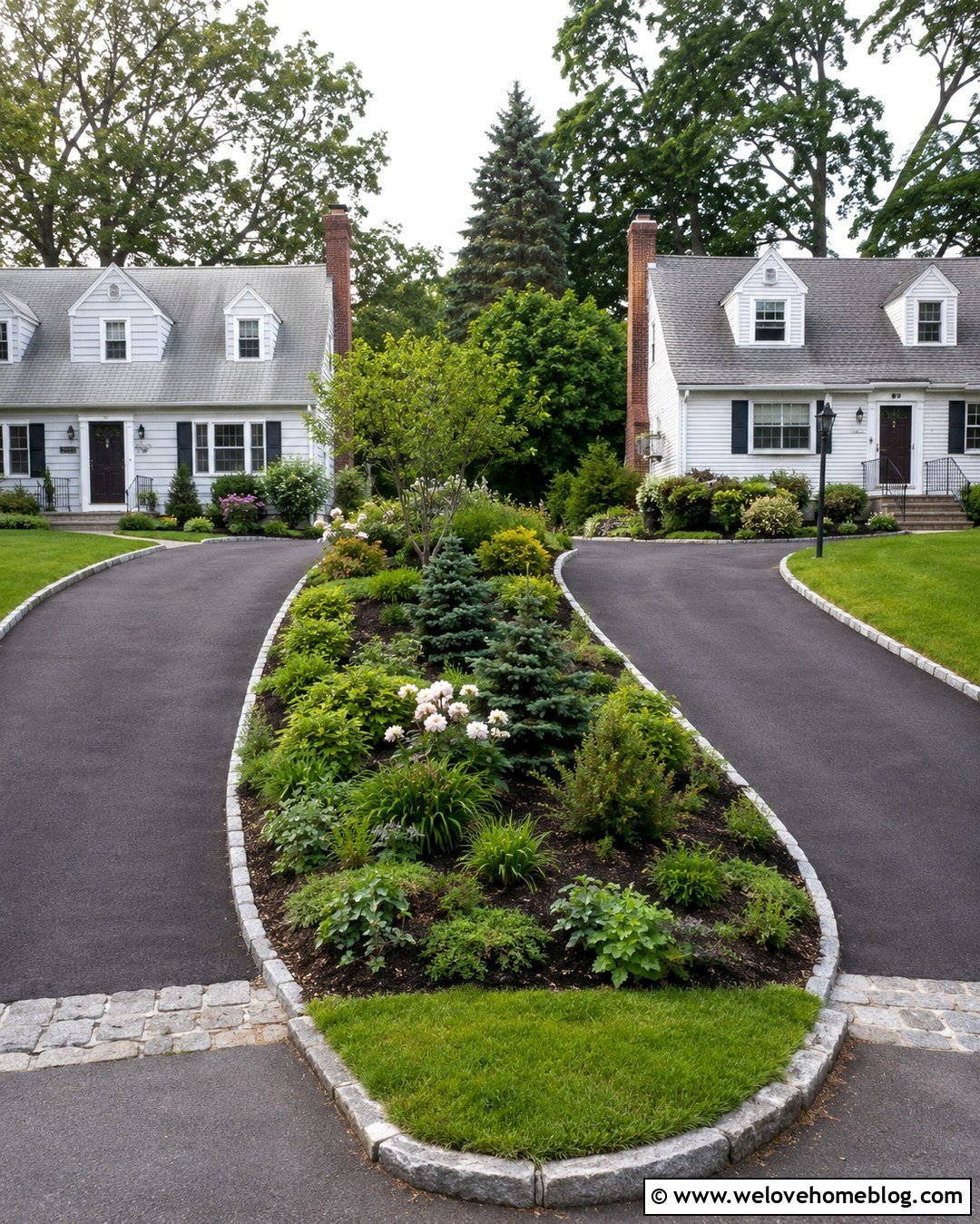
An evergreen-centered divider provides reliable structure through every season. Separate two curved black asphalt driveways with a raised but gently sloped planting bed bordered by granite cobblestones. Place dwarf conifers or compact broadleaf evergreens in an alternating arrangement, leaving enough room for their mature size. Add low ground cover between the shrubs to hide bare soil and soften the stone edge. A few flowering perennials can supply seasonal color without changing the garden’s calm character. Avoid tall, dense planting near the curb or driveway entrances. Toward the garages, slightly larger evergreens can provide screening and connect visually with foundation beds. This complete landscape looks established throughout winter and complements Colonial, Cape Cod, and traditional suburban houses especially well.
9. Modern Landscaping Between Driveways
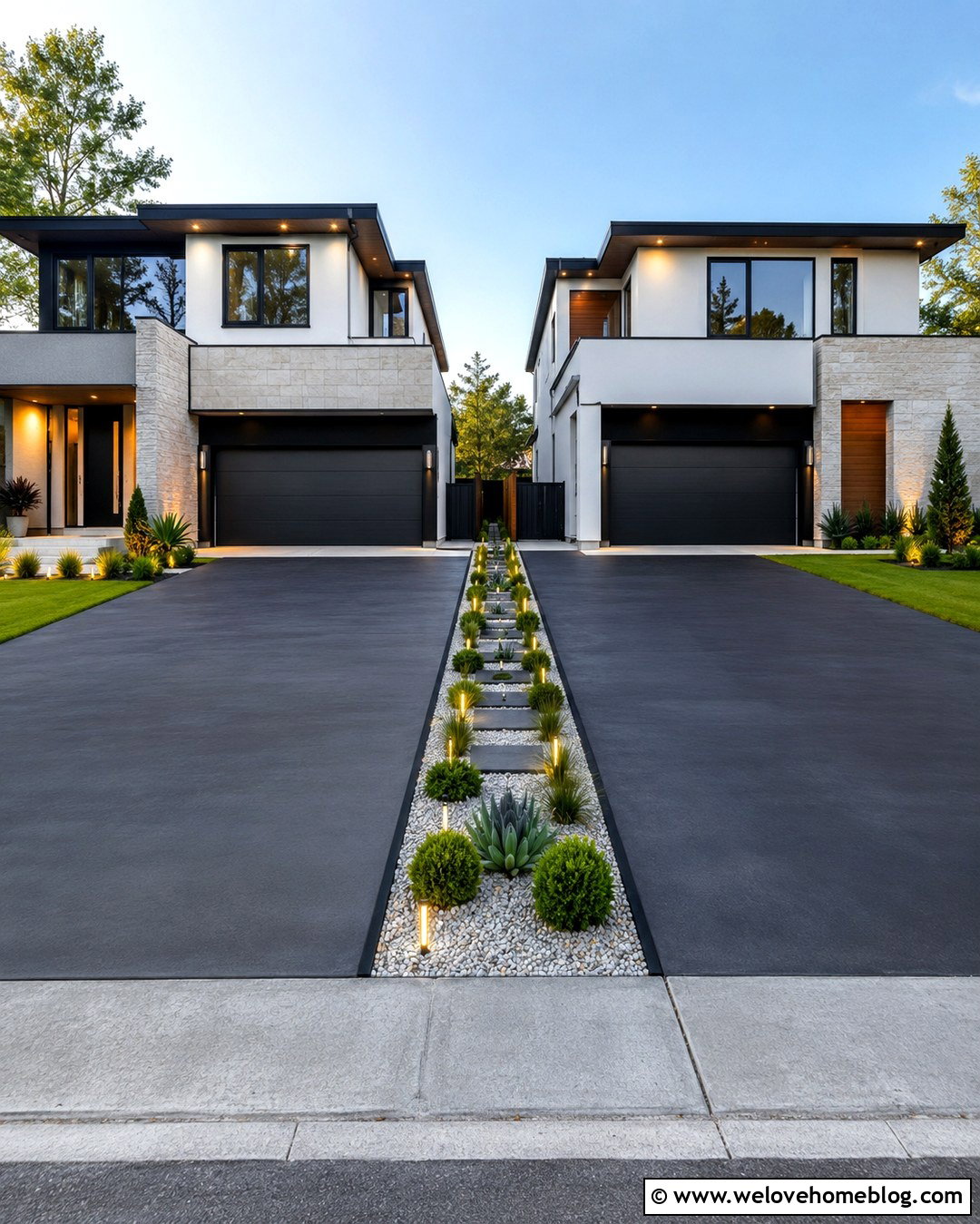
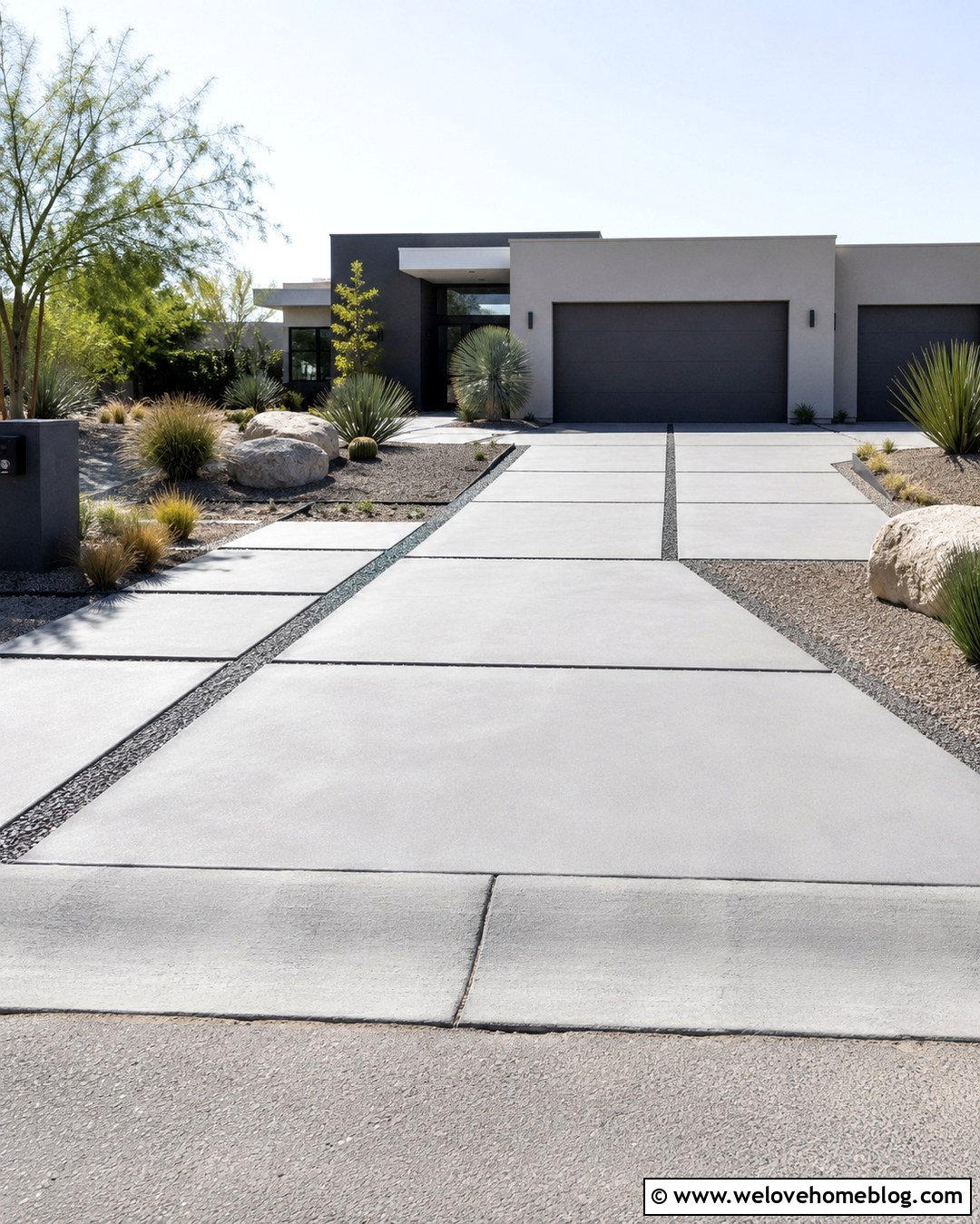
Clean geometry makes a narrow driveway divider feel intentional instead of leftover. Place a linear garden between two smooth charcoal concrete driveways, using flush steel edging to maintain precise boundaries. Fill most of the strip with pale crushed gravel, then add evenly spaced blocks of low ornamental grass, sculptural agave where climate permits, or compact evergreen mounds. Rectangular concrete stepping slabs can cross the divider near the sidewalk and front entries. Limit the palette to two or three plant varieties and avoid crowded decorations. Low-profile linear lights may be positioned safely within the gravel to clarify the edges after dark. The combination of dark pavement, light stone, restrained greenery, and repeating forms gives contemporary homes a crisp transition between neighboring parking areas.
10. Cottage Garden Landscaping Between Driveways
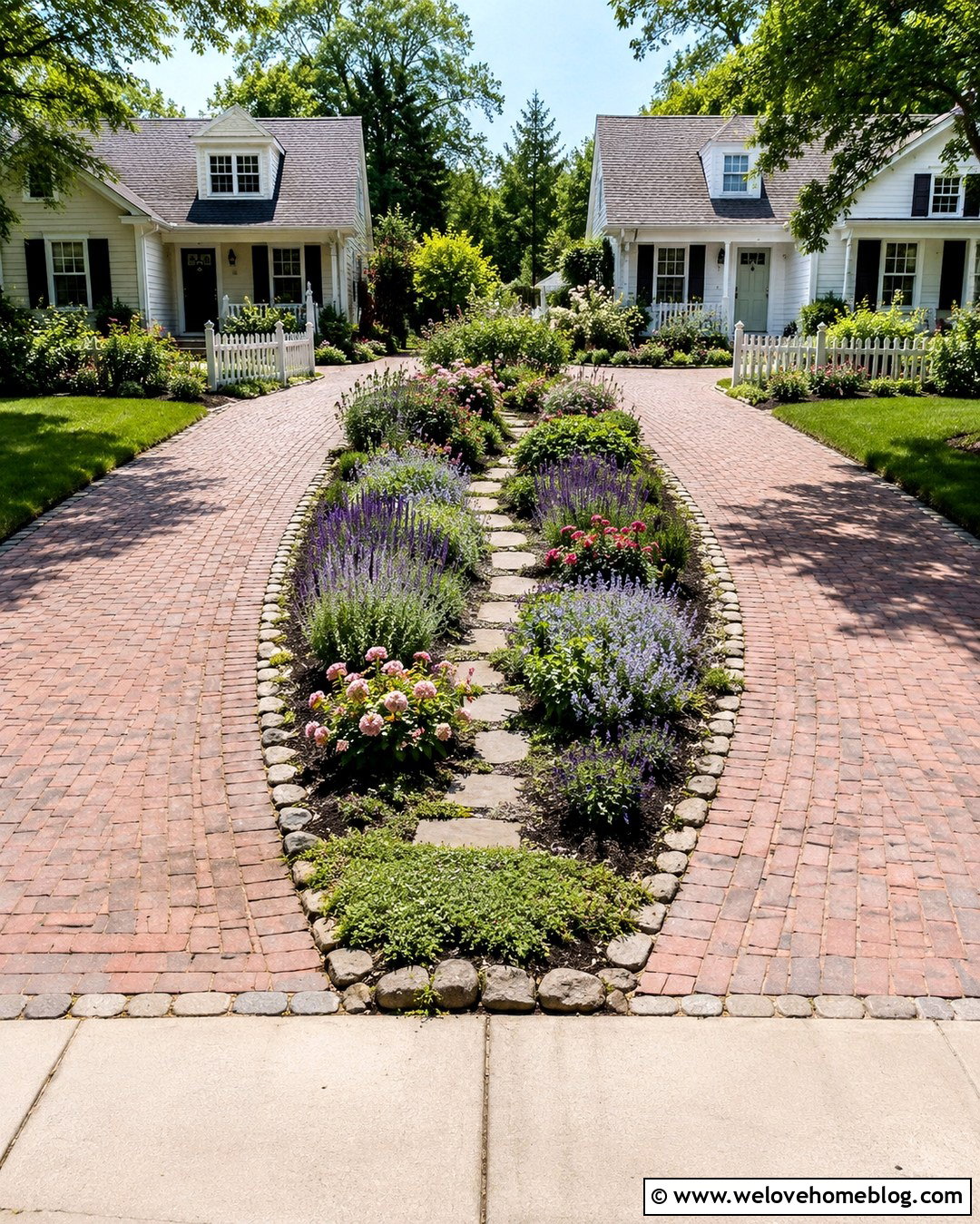
A relaxed cottage garden can make two hard driveway surfaces feel warmer and more welcoming. Start with gently curving cobblestone edging between two weathered brick paver driveways. Fill the central bed with compact roses, lavender, catmint, salvia, and low flowering ground covers selected for local growing conditions. Repeat each plant several times so the layout remains organized rather than chaotic. A narrow flagstone path through the bed allows both households to reach the plants without stepping into loose soil. Keep taller flowers toward the houses and use shorter varieties near the street. Dark mulch helps retain a finished appearance between bloom cycles. This layered divider pairs naturally with cottage, Tudor, Cape Cod, and traditional homes featuring warm masonry or painted siding.
11. Xeriscape Landscaping Between Driveways
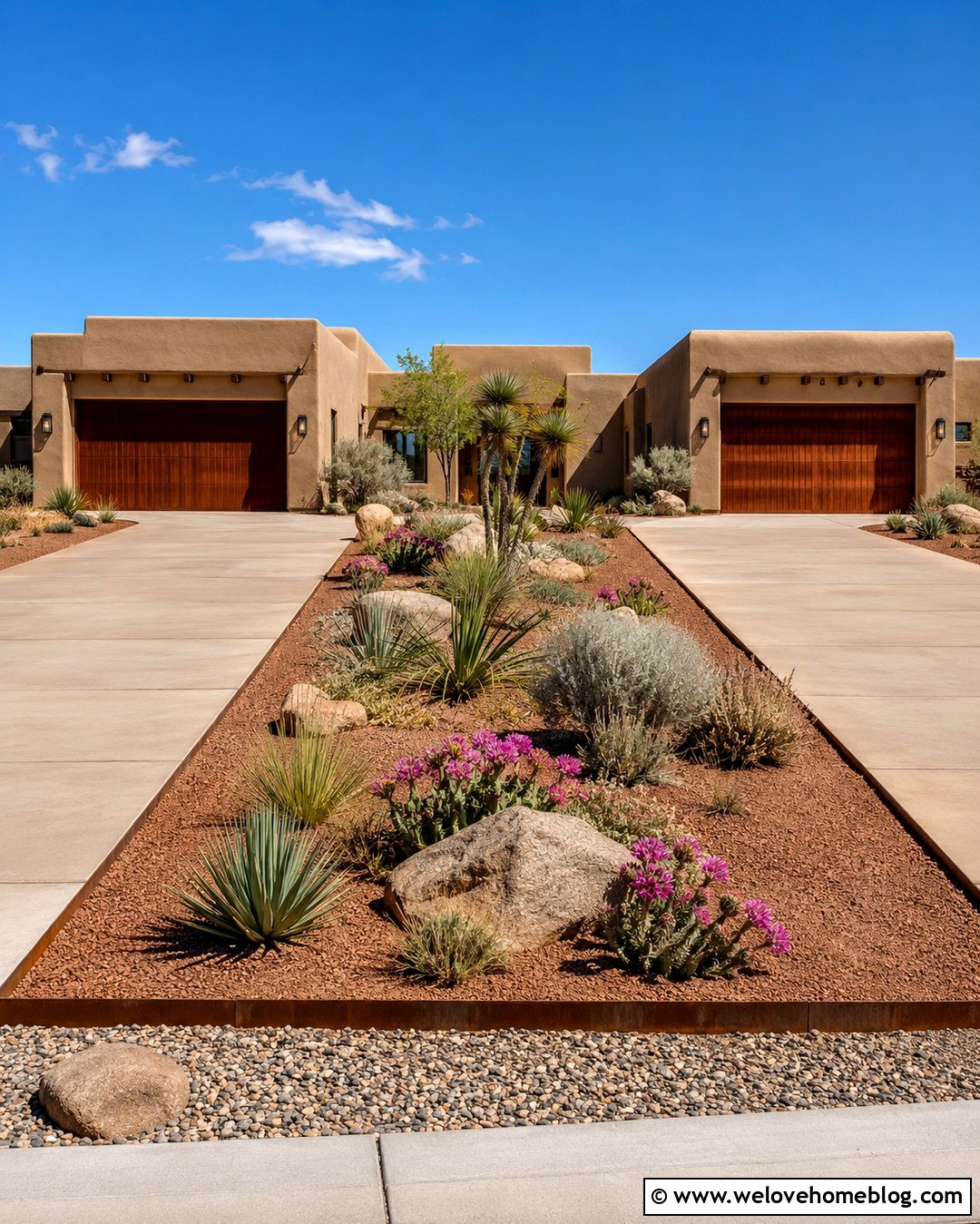
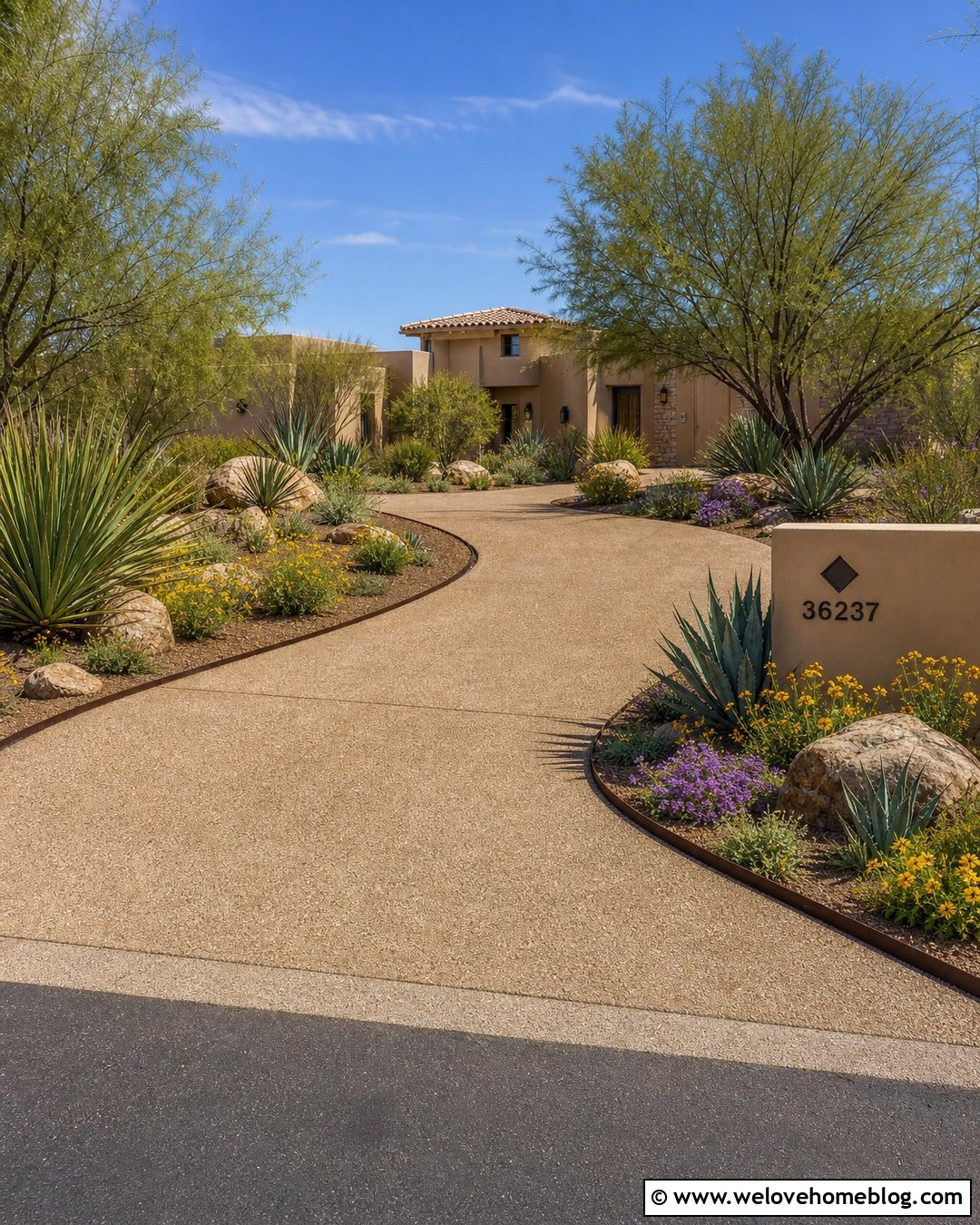
In a dry climate, a water-conscious divider can look detailed without relying on lawn or frequent irrigation. Set a broad xeriscape bed between two tan concrete driveways and border it with rust-colored steel edging. Use decomposed granite as the base, then arrange drought-tolerant grasses, flowering succulents, compact sage, and sculptural desert plants in spaced clusters. Select only plants appropriate for the local climate, especially where winter freezes occur. Place several weathered boulders at different angles to anchor the composition. A simple drip system can deliver water directly to plant roots. Keep gravel below the edging so stones do not scatter onto driving surfaces. This warm, textured landscape complements Southwestern, Spanish, desert-modern, and stucco homes while eliminating a difficult lawn strip.
12. Hydrangea Landscaping Between Driveways
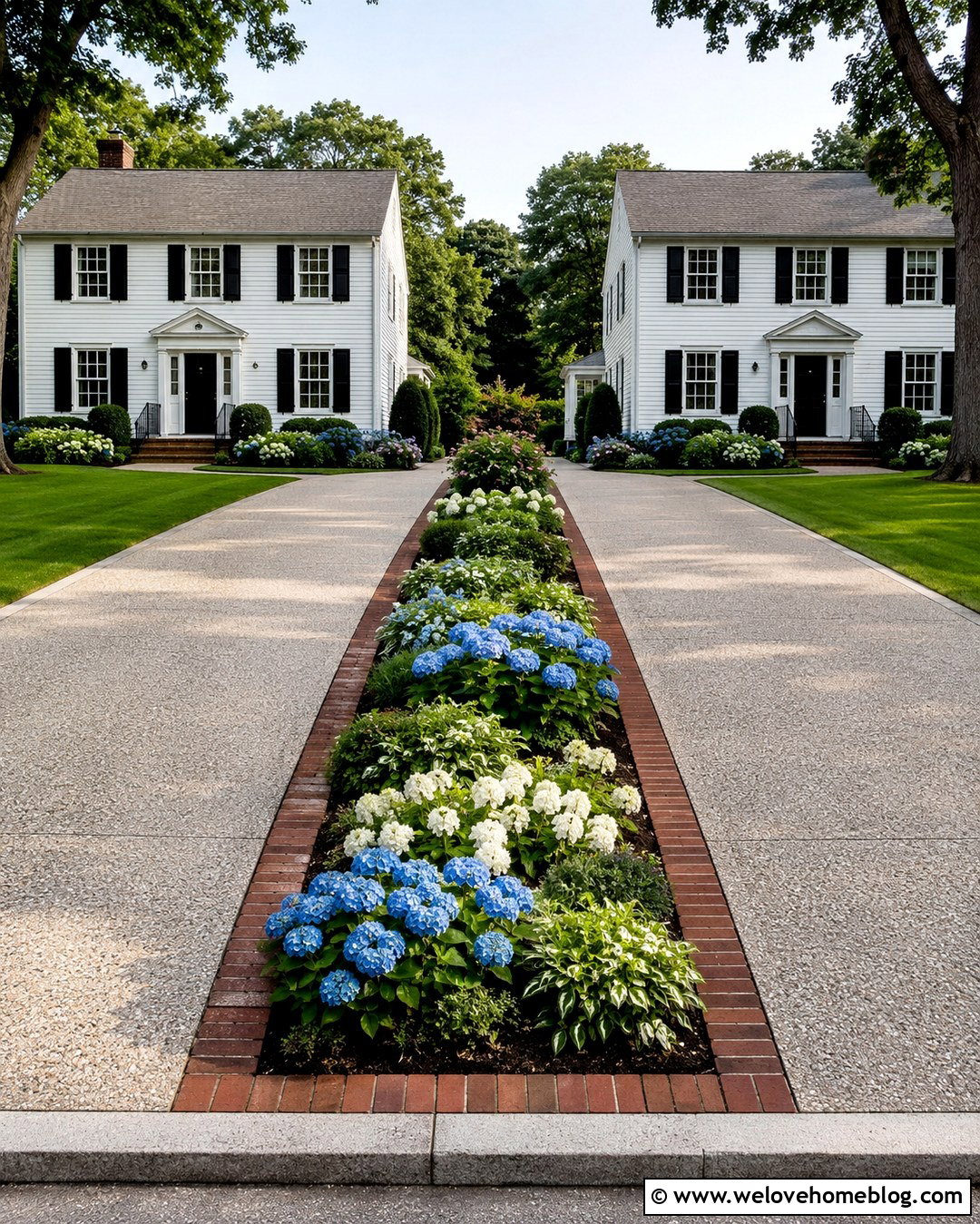
Hydrangeas can create a generous garden divider when the available strip is wide and receives suitable light. Pair two light exposed aggregate driveways with a low red brick border, then plant a repeating row of compact hydrangeas through the middle. Underplant them with shade-tolerant ground cover or low flowering perennials to conceal bare stems. Allow sufficient room for mature growth so branches do not crowd parked vehicles. In narrow areas, use smaller cultivars rather than forcing full-size shrubs into the space. Add a mulch layer and a discreet drip line for a tidy finish. Keep the curb end planted with lower companions for visibility. The broad flowers and structured driveway edges work beautifully with Colonial, farmhouse, Craftsman, and traditional clapboard homes.
13. Small Tree Landscaping Between Driveways
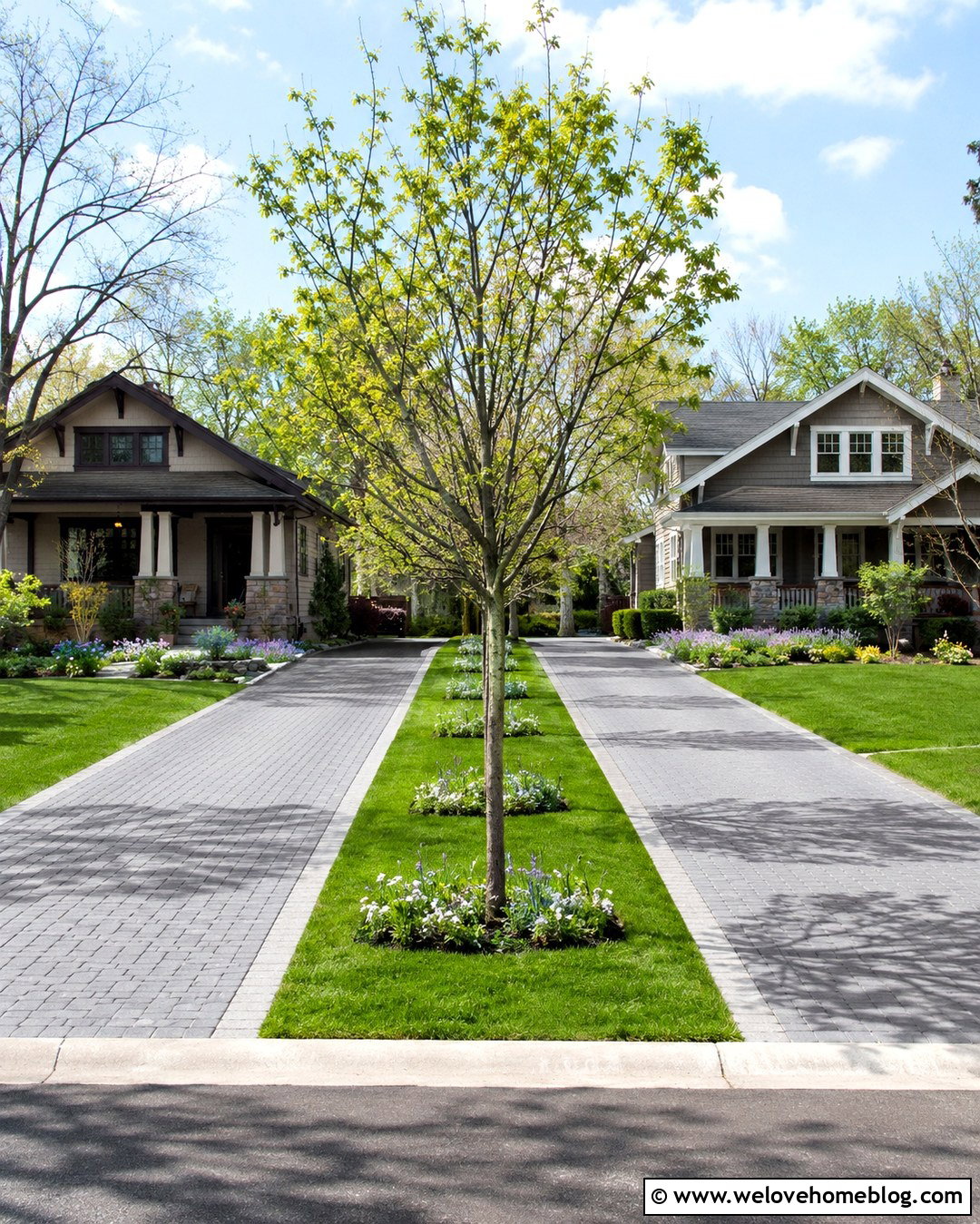
A row of small trees can provide shade and rhythm when the median between driveways is sufficiently wide. Install a long grass-and-planting divider between two permeable paver driveways, using flush stone borders to protect the soil. Choose compact, noninvasive trees with root systems and mature canopies appropriate for nearby pavement, utilities, and overhead lines. Space the trees evenly, then add low ground cover and spring bulbs below them. Avoid positioning trunks where open car doors or snow-storage equipment may cause damage. Near the street, replace the nearest tree with a low planting area to protect sight lines. This complete layout visually connects two driveways while giving each home a greener approach. Professional placement is worthwhile where underground services or drainage lines are present.
14. Mulch Bed Landscaping Between Driveways
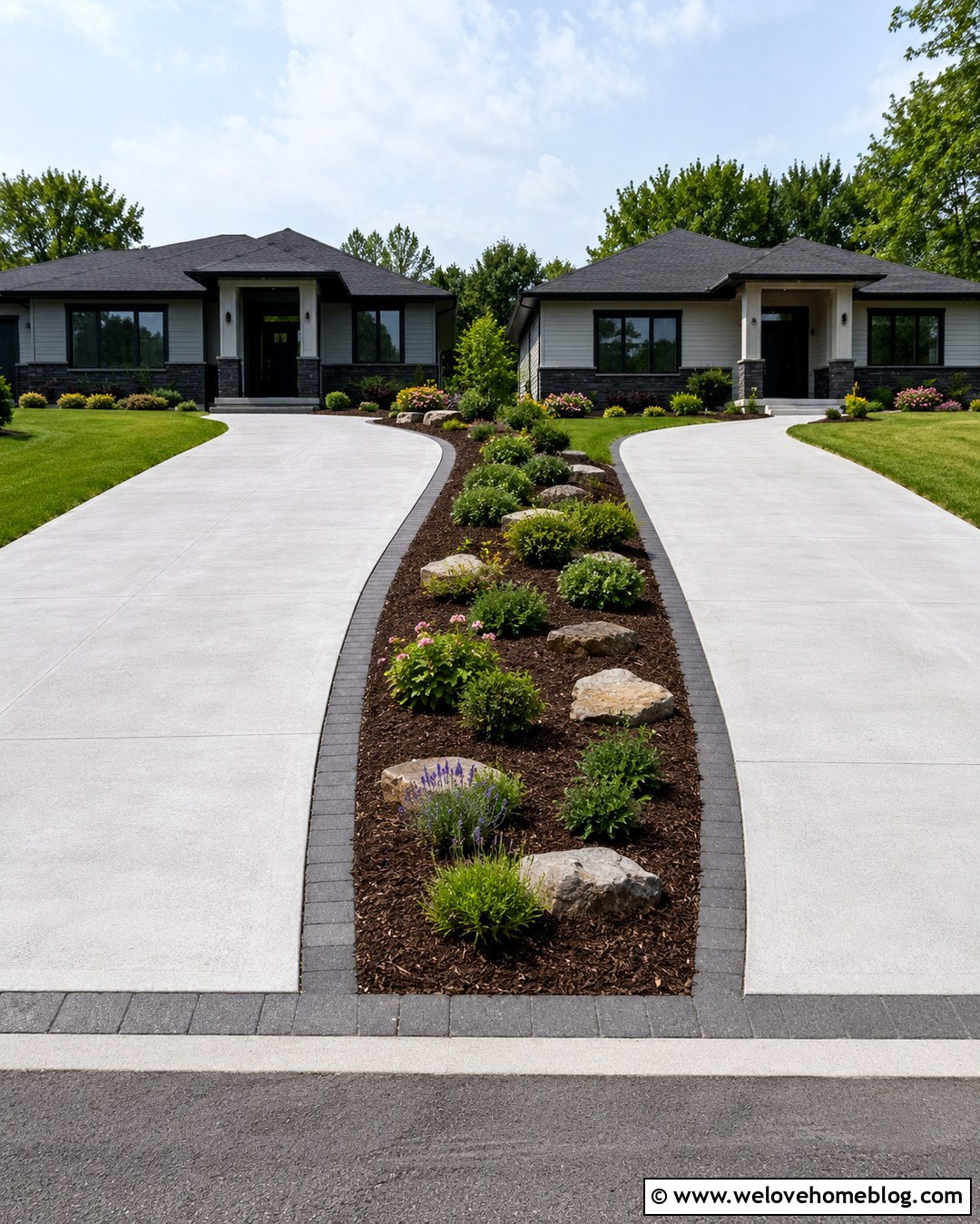
A mulched garden bed is one of the easiest ways to replace worn grass between neighboring driveways. Edge two broom-finished concrete driveways with flush charcoal pavers, then shape the divider as a long, subtle curve. Plant a foundation of dwarf boxwood alternatives, compact flowering shrubs, and low perennials. Cover exposed soil with two to three inches of suitable mulch, keeping it away from plant crowns and woody stems. Brown bark creates a traditional look, while dark mulch produces stronger contrast with pale concrete. Include a few flat access stones so routine pruning does not compact the soil. Because mulch can wash onto pavement, maintain a slightly lower bed level and secure the sloped street end with spreading ground cover or decorative stone.
15. Ground Cover Landscaping Between Driveways
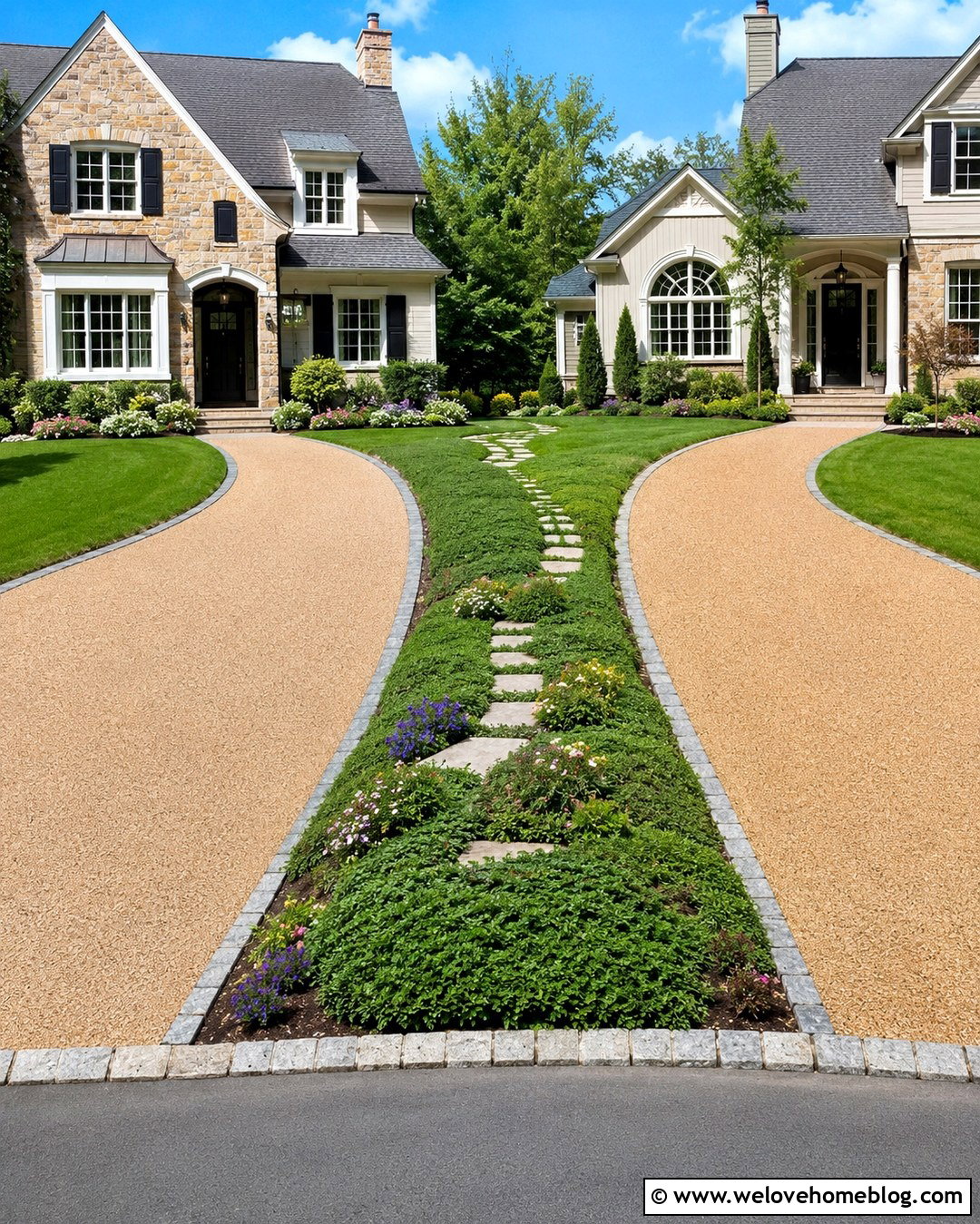
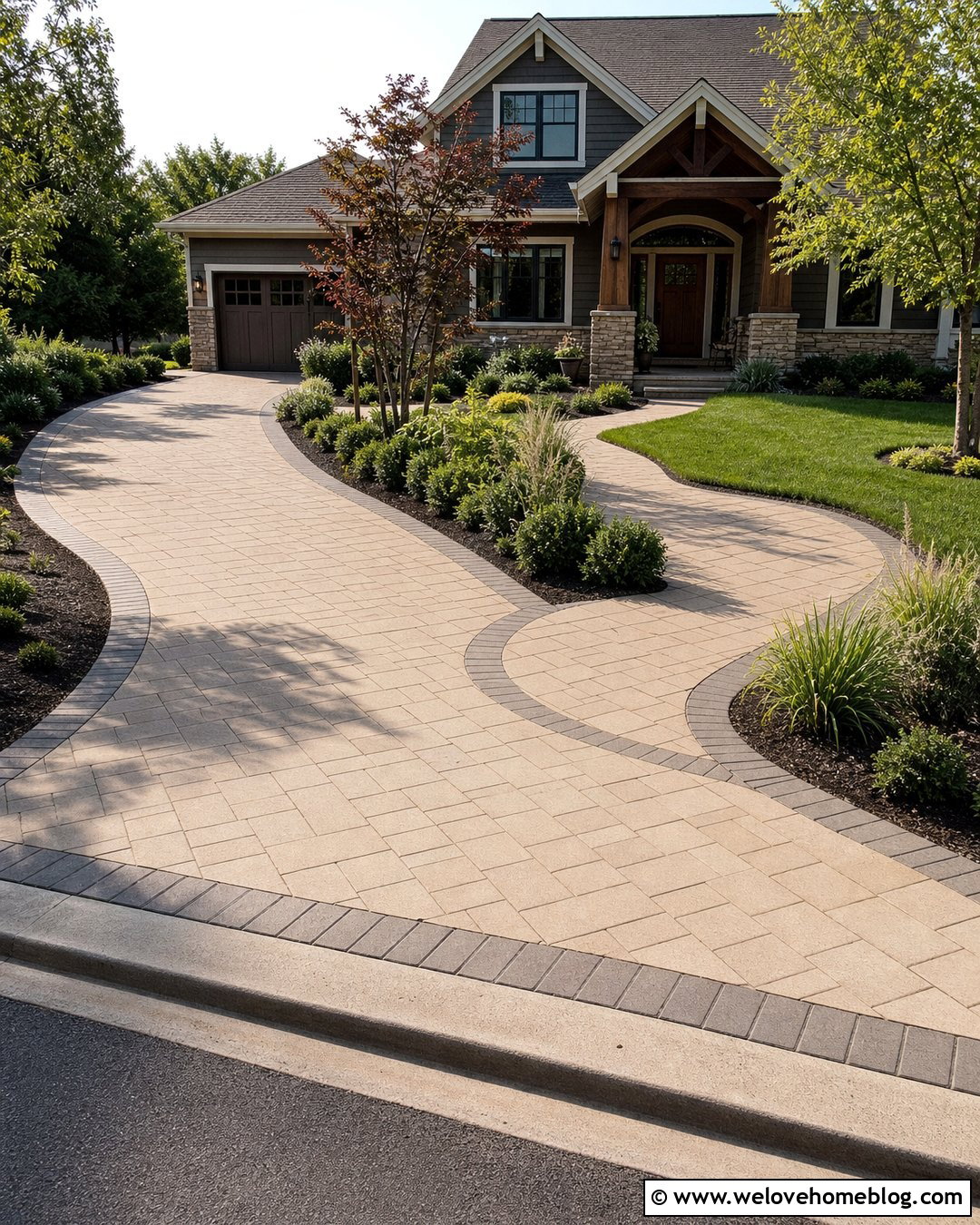
A living carpet is ideal when the divider is too narrow for shrubs but wide enough to support plants. Place a low ground-cover bed between two curved resin-bound gravel driveways and define it with slim granite setts. Use one durable spreading species as the main layer, then add occasional compact flowering plants for seasonal interest. The ground cover should tolerate the site’s sun exposure, soil moisture, winter conditions, and reflected heat. Leave a narrow gravel or stepping-stone crossing where residents frequently move between properties. Plants should remain low enough to avoid catching car doors or concealing the driveway edge. Once established, the continuous greenery visually cools the hardscape and removes the need to maneuver a mower through an inconvenient strip.
16. Raised Bed Landscaping Between Driveways
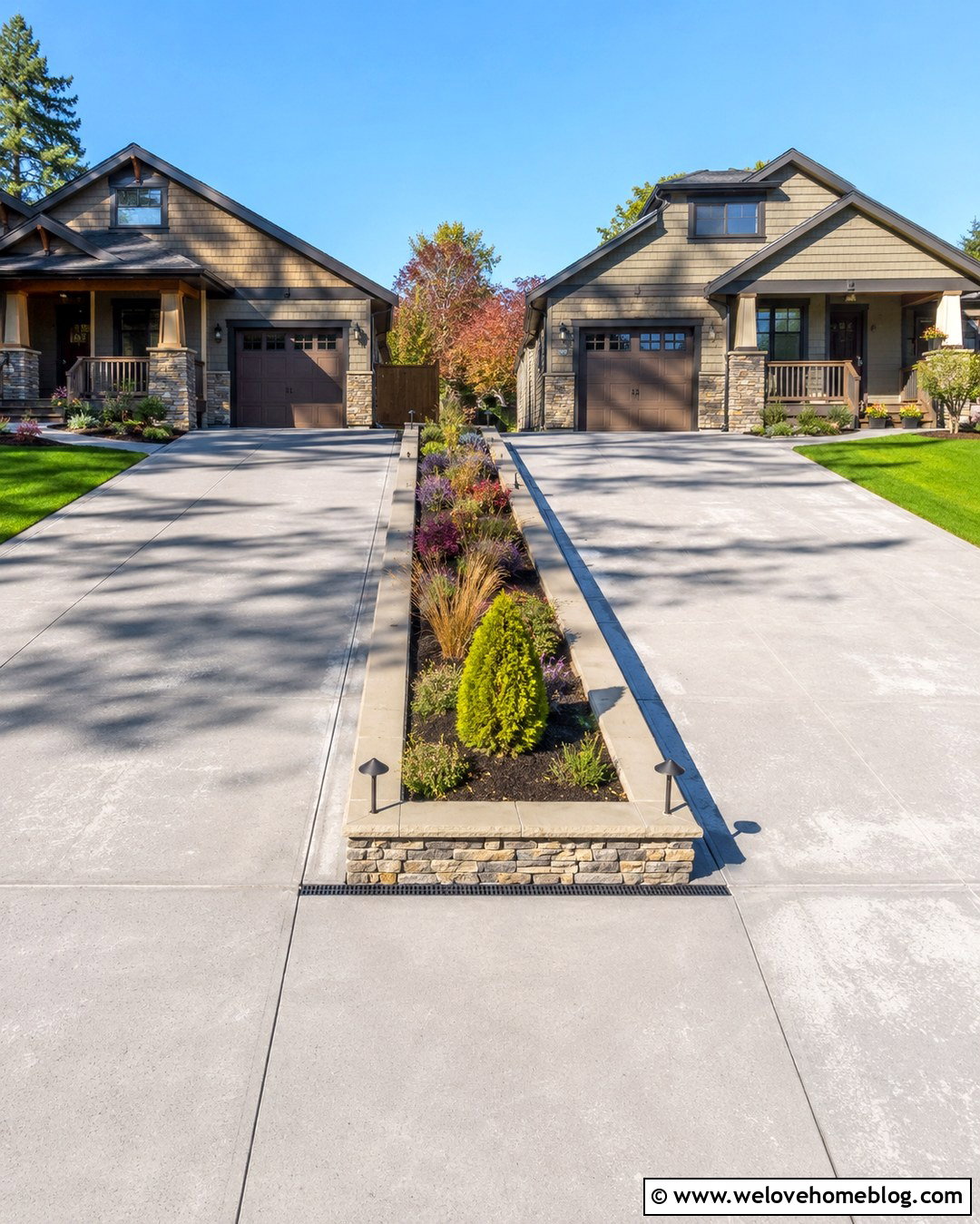
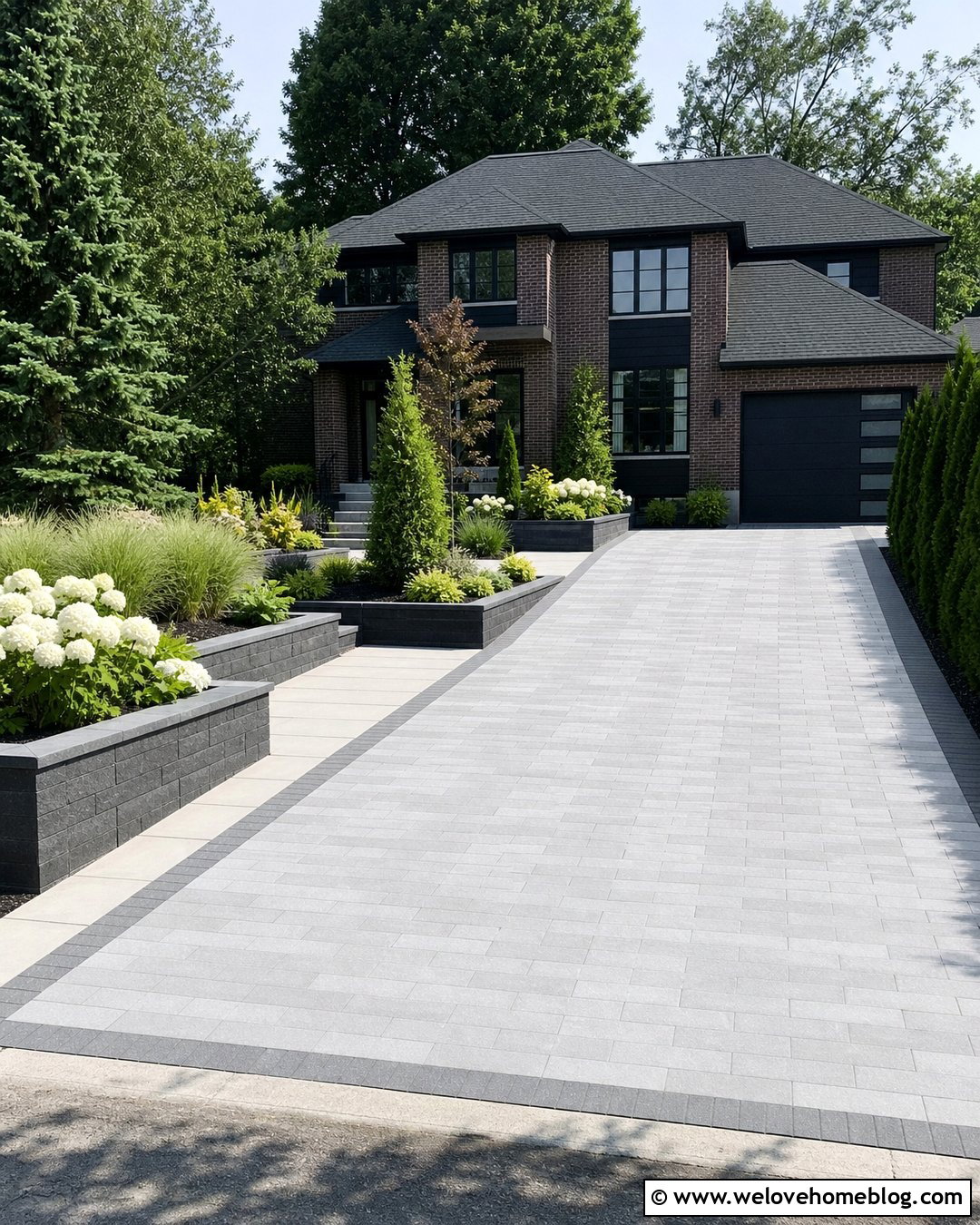
A low raised bed can give a wide driveway divider stronger definition, especially where existing soil is poor. Center a rectangular stone planter between two straight gray concrete driveways, leaving comfortable clearance on both sides. Build the walls only high enough to retain improved soil without creating a visibility problem or damaging vehicle doors. Fill the bed with compact evergreens, ornamental grasses, and long-blooming perennials arranged in balanced groups. Capstones provide a finished appearance, but they should not project into the driving area. Include drainage openings and avoid directing water toward either pavement base. Low lighting at the planter corners can clarify the structure after sunset. This substantial design suits Craftsman, ranch, and contemporary homes with stone or masonry details.
17. Stepping-Stone Landscaping Between Driveways
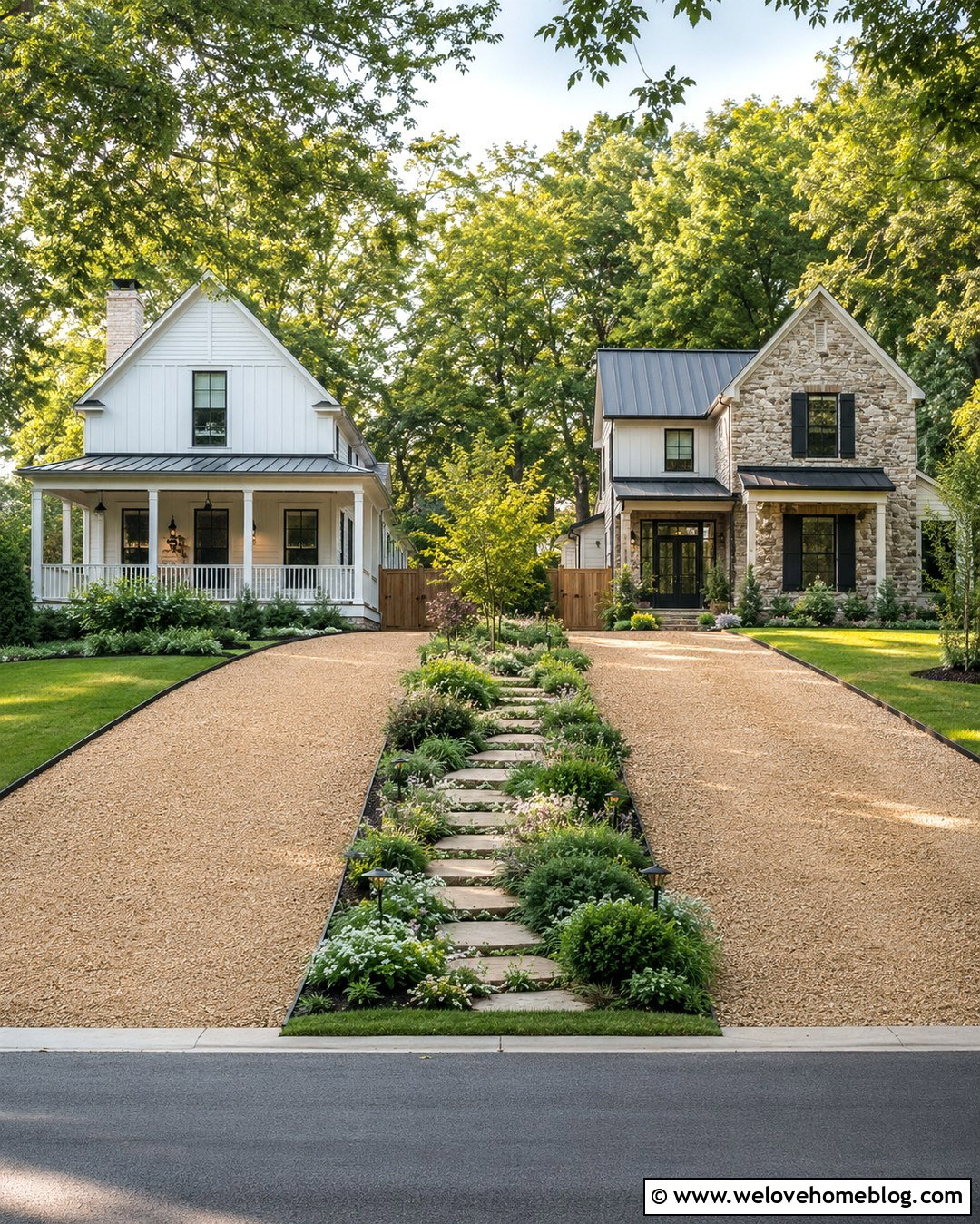
Sometimes the strip between driveways must also function as a convenient pedestrian connection. Build the divider between two tan gravel driveways using a central line of broad flagstone steps set in low ground cover. Add steel edging along each driveway to keep loose gravel from entering the planting area. On both sides of the path, arrange compact grasses, fragrant perennials, and a few evergreen mounds. The stepping stones should create a stable, level route from the sidewalk toward side gates or front walks. Keep plant foliage away from the walking surface and avoid thorny varieties. Solar or wired path lights can improve edge definition when correctly placed. This combination turns an unused gap into a practical garden passage while preserving separation between vehicles.
18. Rain Garden Landscaping Between Driveways
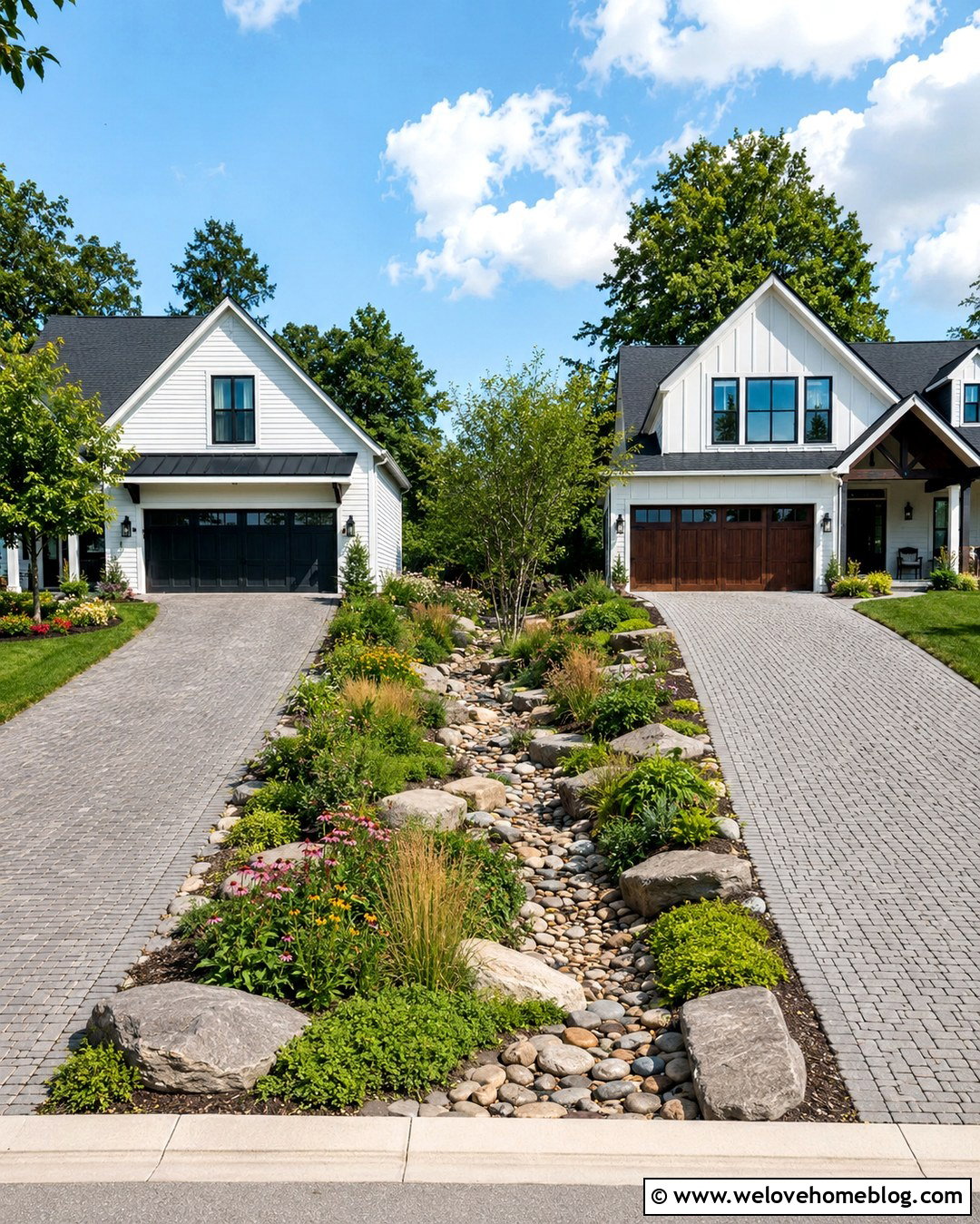
A shallow rain garden may help a suitable low area manage runoff while creating an attractive divider. Position it between two sloped permeable concrete driveways, with curb cuts or stone channels directing water only where an approved drainage plan allows. Shape the garden as a broad, gentle basin rather than a deep ditch. Use moisture-tolerant native plants in the lowest zone and more drought-tolerant selections around the upper edges. Rounded river rock can stabilize entry points and create a clean transition from pavement. Keep the basin safely away from foundations and underground utilities. Because soil conditions, overflow routes, and local regulations matter, evaluate the site carefully before construction. When properly designed, the garden integrates drainage, habitat, and curb appeal in one cohesive strip.
19. White Rock Landscaping Between Driveways
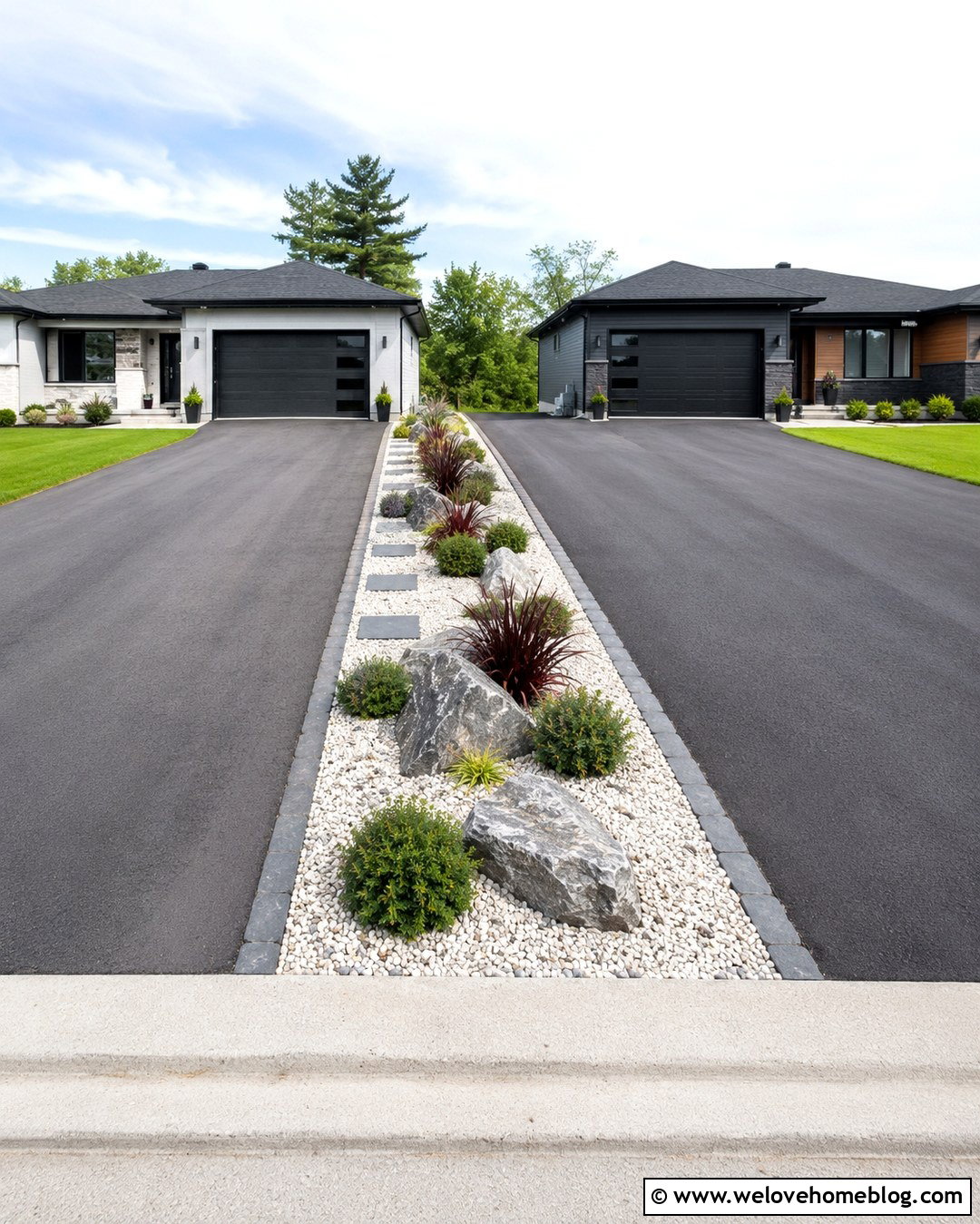
Bright decorative rock can visually widen a confined space between dark driveways. Separate two black asphalt surfaces with a straight bed edged in charcoal concrete blocks. Fill the strip with off-white marble chips, pale limestone gravel, or another locally suitable light stone. Add spaced clusters of deep green dwarf shrubs and burgundy-toned ornamental grasses for strong contrast. A few large gray boulders prevent the design from appearing flat. Keep the rock below the border and use stable stepping pads where maintenance access is needed. Light-colored stone can produce glare and show debris, so this design works best where regular blowing or rinsing is practical. Against dark pavement and green lawns, the finished divider looks crisp, modern, and clearly defined.


20. Brick Border Landscaping Between Driveways
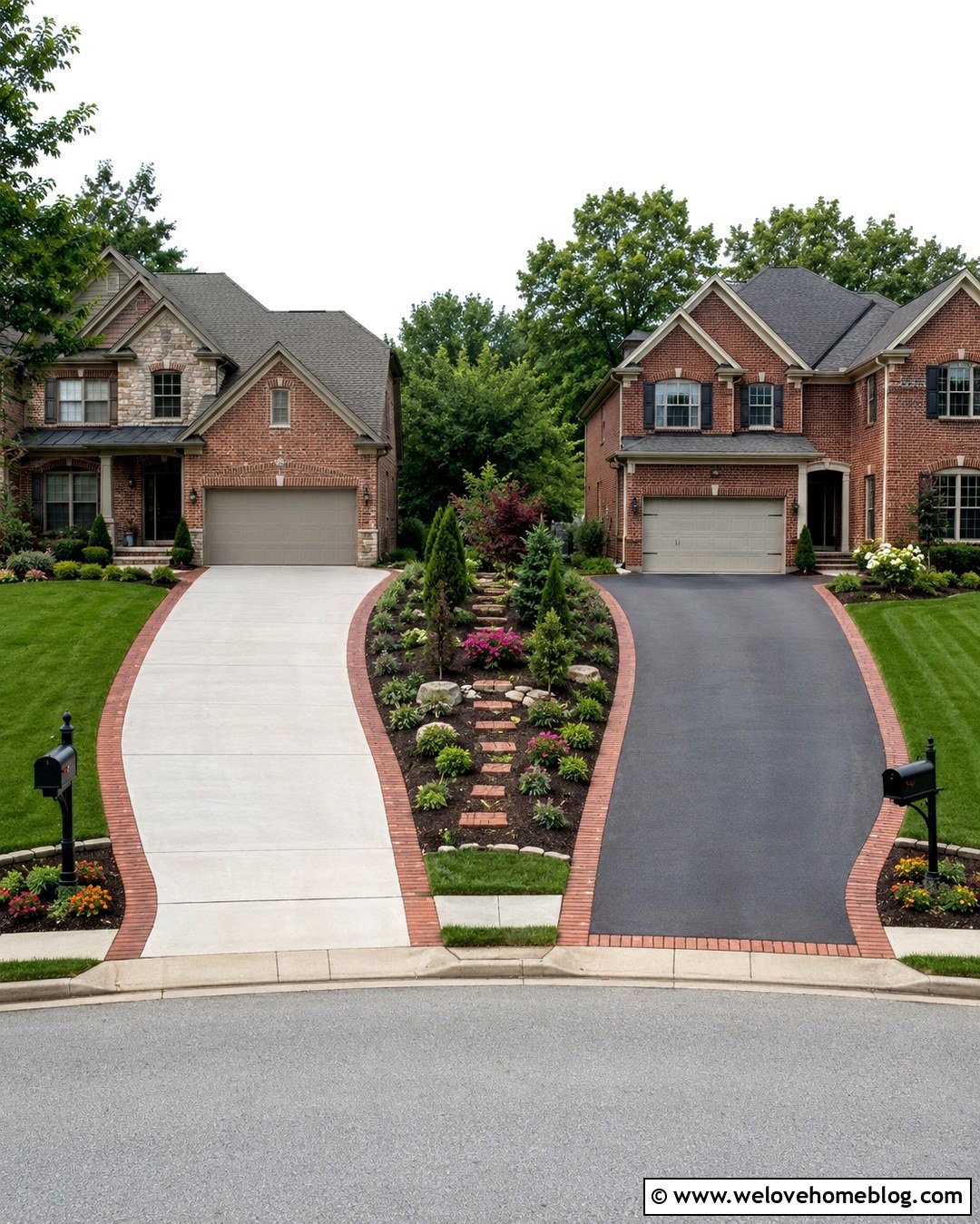
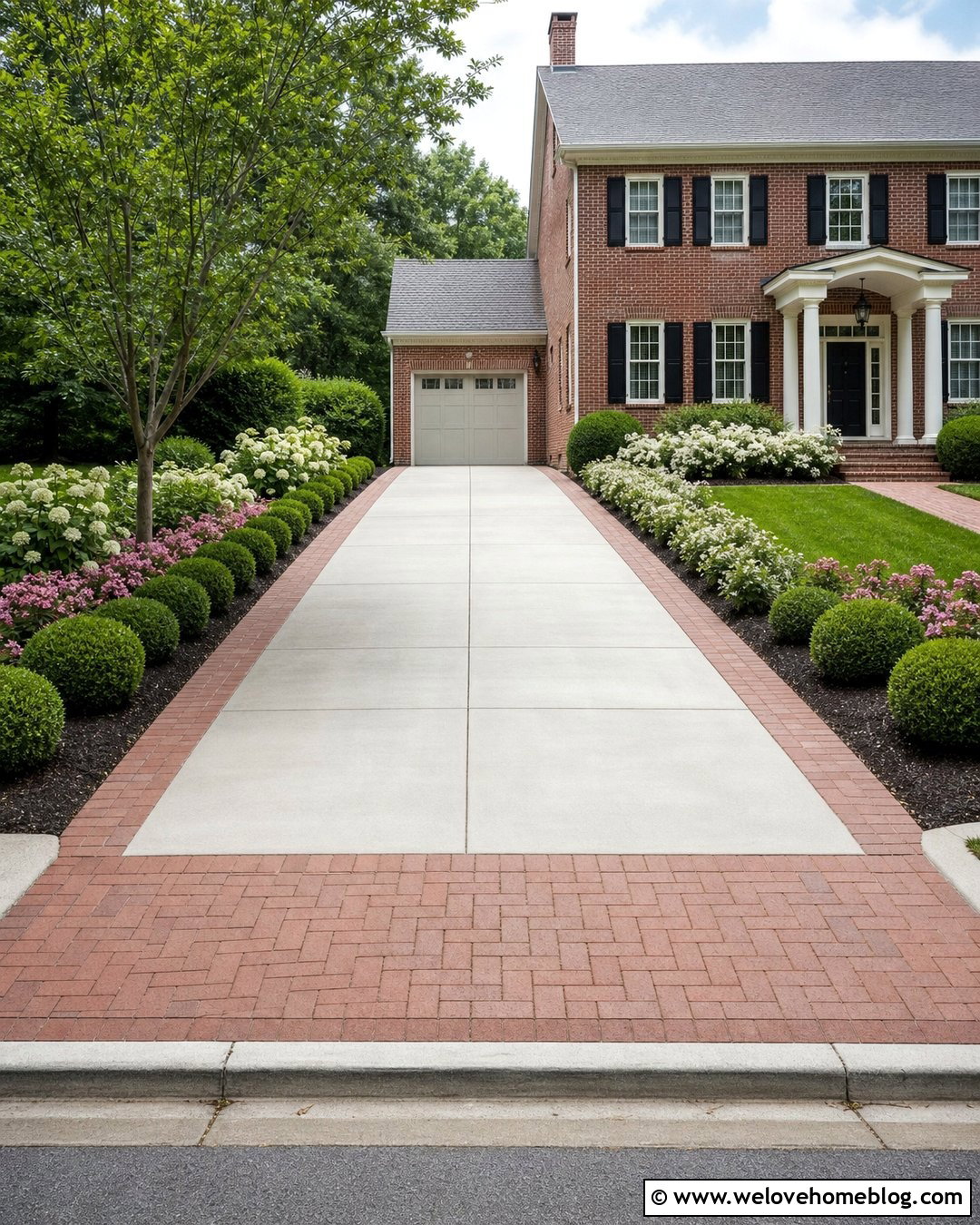
Brick edging can connect two different driveway materials while giving the shared landscape strip a unified finish. Run a matching red or brown brick border beside one poured concrete driveway and one asphalt driveway. Between the borders, create a gently curved bed filled with compact evergreen shrubs, seasonal flowers, and low spreading ground cover. Lay the bricks over a properly prepared base so they remain level and resist movement from tires or freezing conditions. A brick stepping path can cross the bed near the sidewalk, visually linking both properties. Repeat brick accents around nearby walkways or mailbox beds for continuity. The warm masonry softens the contrast between the driveways and works especially well beside traditional, Craftsman, Colonial, and brick-front suburban homes.
Conclusion:
The best divider makes two driveways feel organized while handling heat, runoff, vehicle clearance, and everyday maintenance. Begin by measuring the strip, checking property boundaries, and identifying underground utilities. Then select a complete look that suits both pavement surfaces and nearby architecture. Gravel gardens and ground covers are useful in narrow spaces, while wide medians can support shrubs, flowers, rain gardens, or small trees. Durable edging keeps soil and decorative stone away from tires. Low planting near the street also protects visibility. Before installing shared features, discuss costs and upkeep with your neighbor. With thoughtful planning, these 20 landscaping between driveways ideas can turn an awkward gap into lasting curb appeal.

Related posts:
Leave a Reply