
A driveway should feel like a natural part of your front yard, not a wide strip of paving that ends at the garage. These **20 Creative Driveway Landscaping Tips Ideas** combine practical surfaces, defined borders, layered planting, drainage, lighting, and welcoming entrances. The strongest designs treat every feature as part of one composition. Driveway shape should guide the planting beds, edging should complement the house, and greenery should soften hard surfaces without blocking parking or visibility. Even modest changes, such as widening a border or repeating one plant, can make the approach look more intentional. Thoughtful landscaping can also distinguish the driveway from the walkway and create a clearer, safer route to the home. () Here are 20 Creative Driveway Landscaping Tips Ideas.

1. Concrete Driveway With Curved Garden Beds
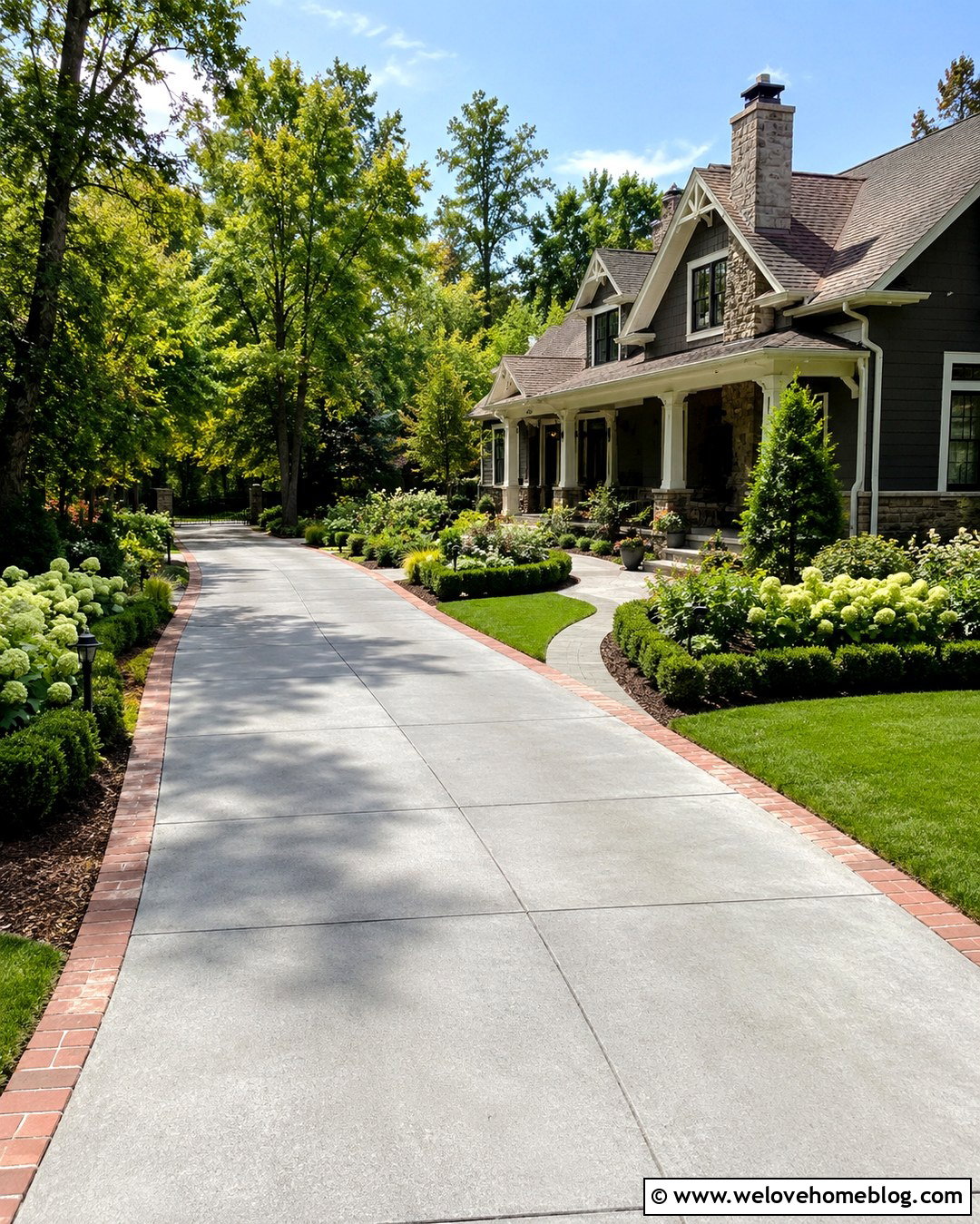
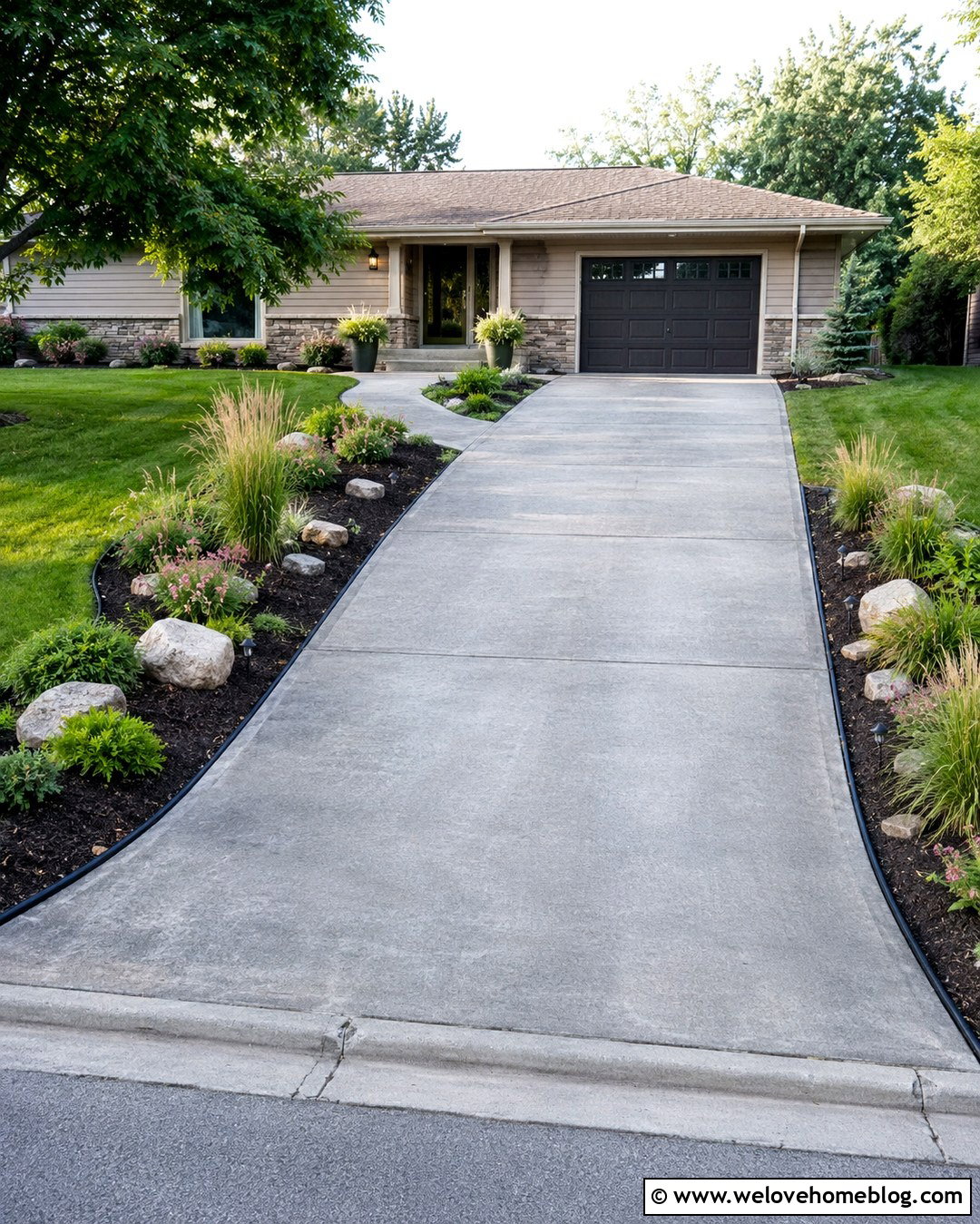
A straight concrete driveway can appear softer when broad, curved planting beds follow both sides. Use smooth gray poured concrete as the practical base, then install flush brick or natural stone edging to create clean boundaries. Instead of planting one narrow row, arrange low evergreens, flowering perennials, and ornamental grasses in layered groups. Keep taller shrubs closer to the house so the entrance remains visible from the street. Repeating the same three or four plants creates rhythm without making the landscape look overly formal. A curved walkway branching toward the porch can echo the bed shapes and connect the entire front yard. This complete design works especially well with ranch and Craftsman homes because it balances the driveway’s straight lines with relaxed, natural planting.
2. Curved Gravel Driveway With Lavender Borders
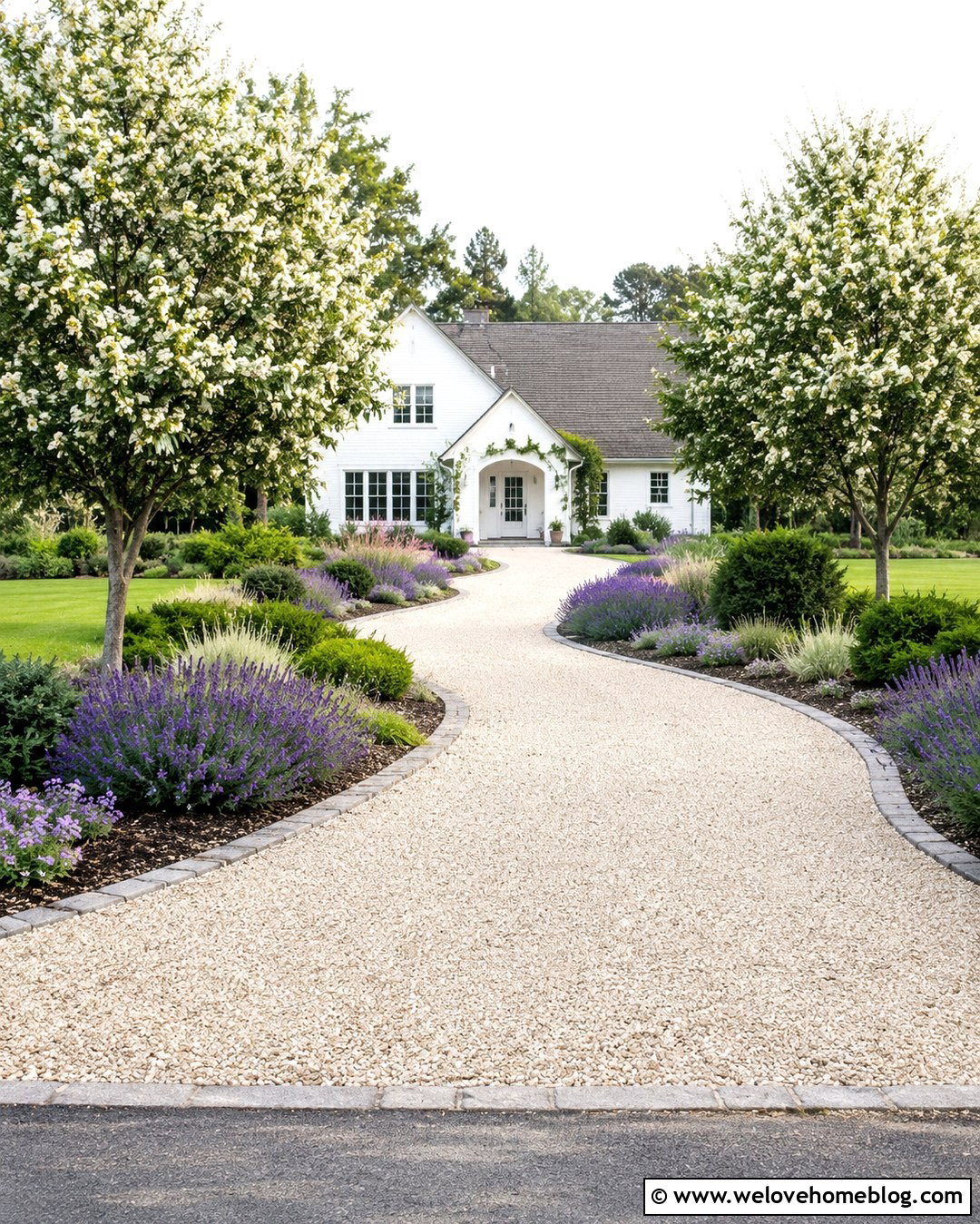
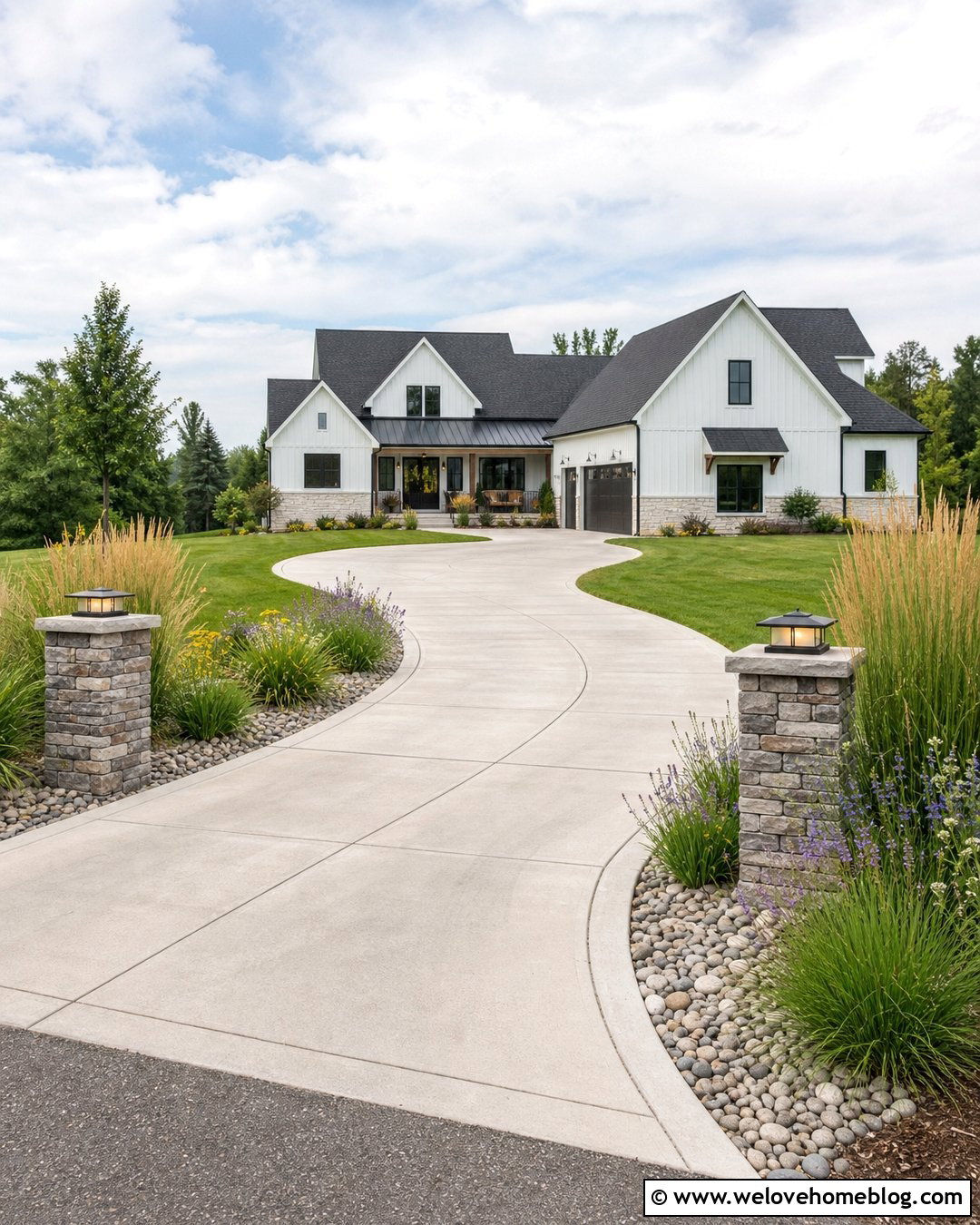
Imagine pale gravel sweeping gently through fragrant purple borders toward a welcoming country home. A curved pea gravel driveway suits this setting because its loose texture feels informal and blends easily with planted surroundings. Edge the surface with cobblestones to hold the gravel in place and establish a durable mowing line. Plant lavender in generous drifts along sunny sections, then mix in compact junipers, catmint, and low ornamental grasses for year-round structure. Leave a narrow setback between the plants and driving surface so stems are not damaged by tires or snow removal. At the entrance, two small flowering trees can frame the curve without hiding approaching vehicles. The combination of gravel, cobblestone, and restrained planting creates an attractive driveway that feels established rather than overdesigned.
3. Asphalt Driveway With Brick Edging
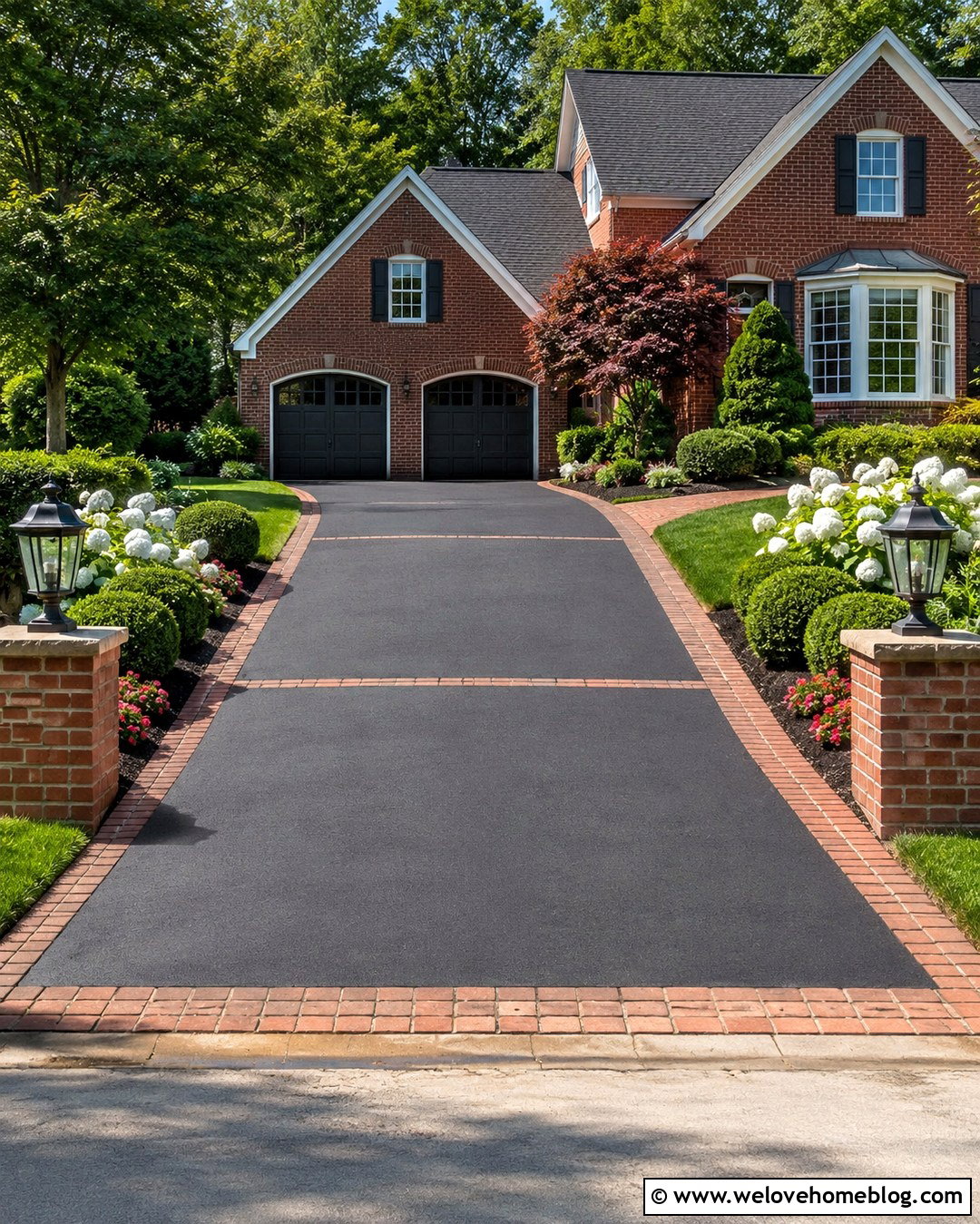
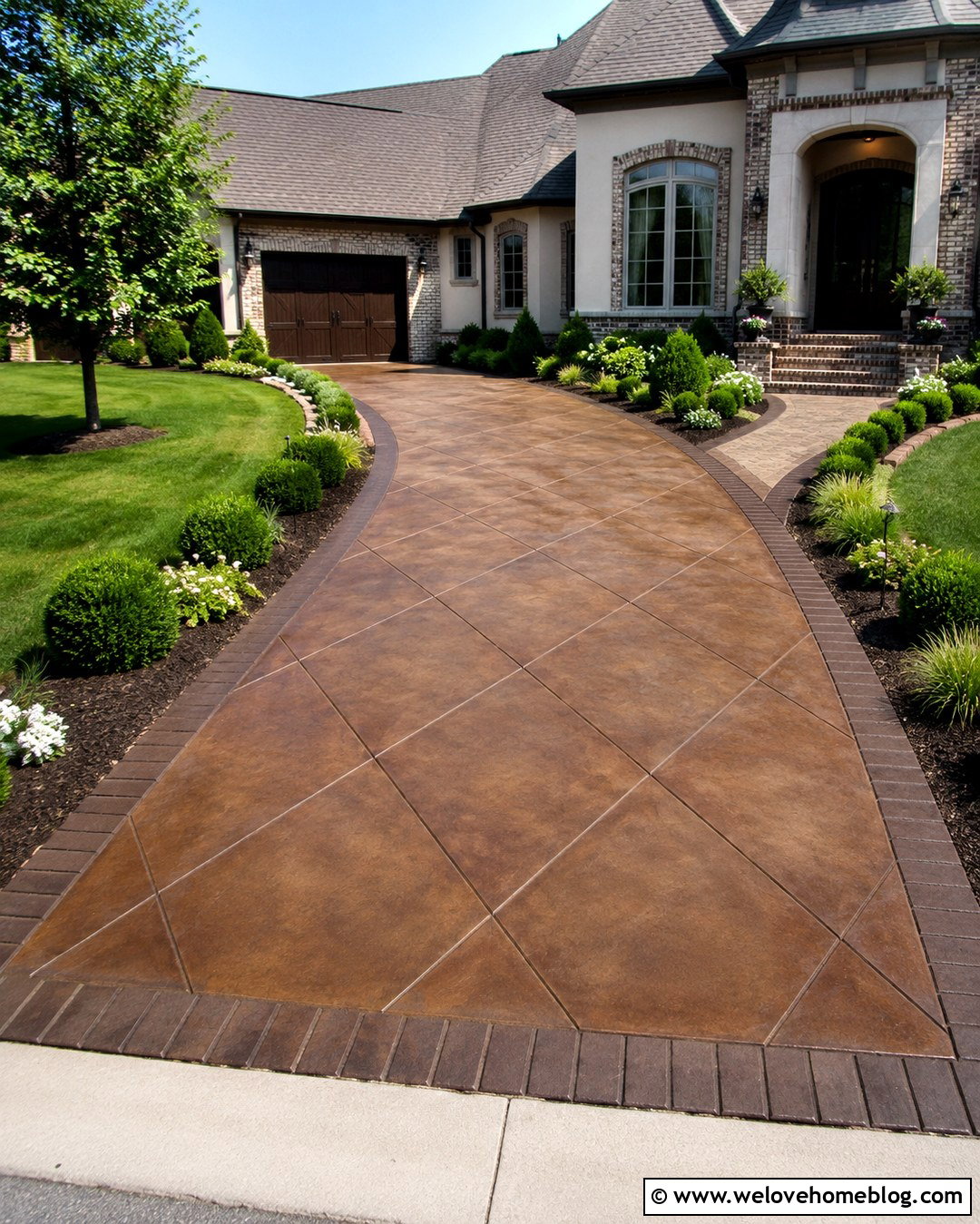
Black asphalt becomes considerably more attractive when warm brick edging connects it to the home’s architecture. Install a single or double ribbon of clay brick pavers along both sides, keeping the bricks level with the asphalt for easier maintenance. Behind the border, create shallow mulched beds filled with rounded boxwoods, dwarf hydrangeas, and seasonal flowers. The dark surface makes green foliage and lighter blossoms appear especially crisp. Carry the same brick toward the front walkway or porch steps so the materials feel coordinated. If the driveway is wide, use matching brick bands near the garage to break up the uninterrupted asphalt. This landscaping approach provides a polished look without requiring the expense of replacing the entire surface, making it useful for traditional brick homes and updated suburban properties.
4. Paver Driveway With Grass Strips
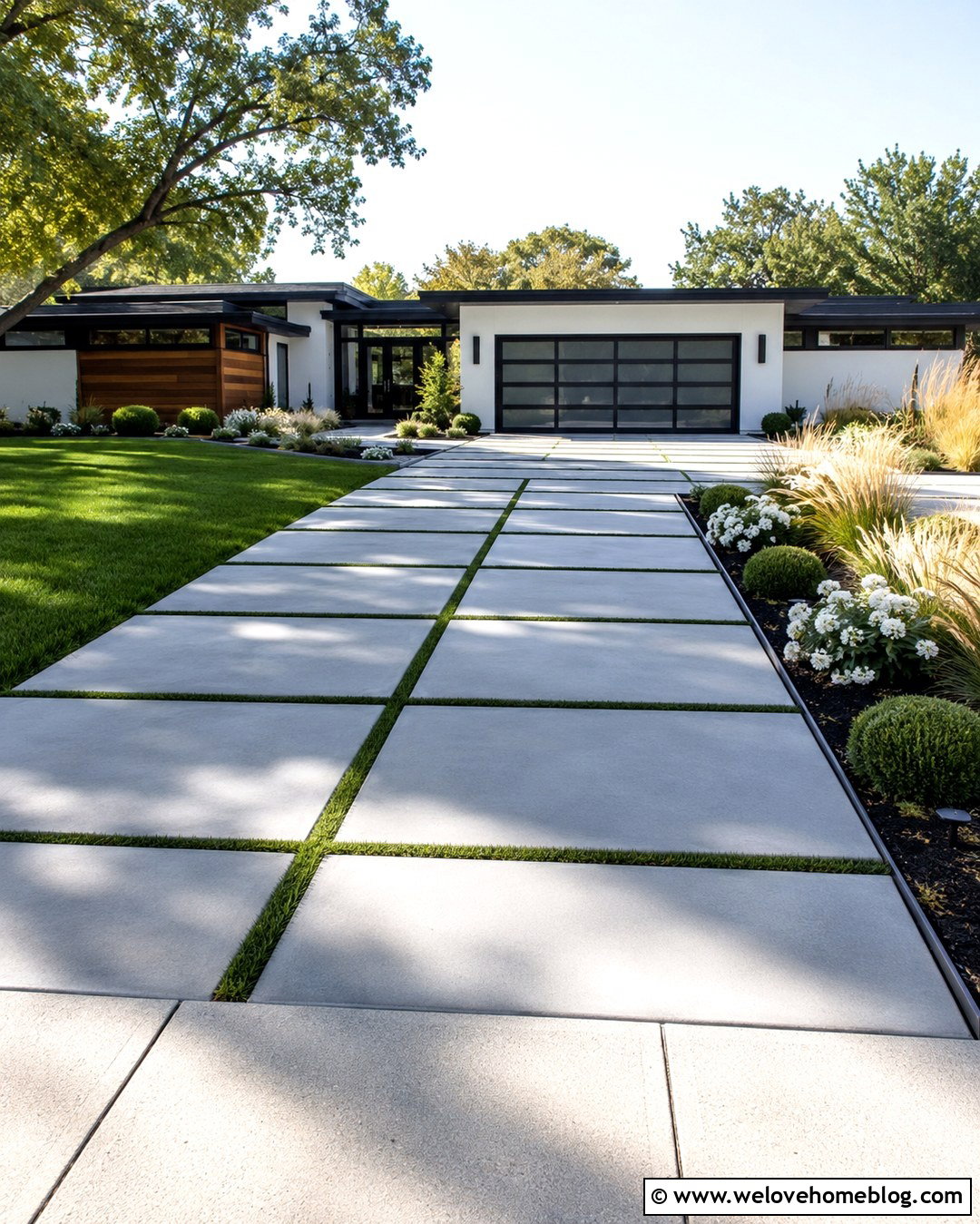
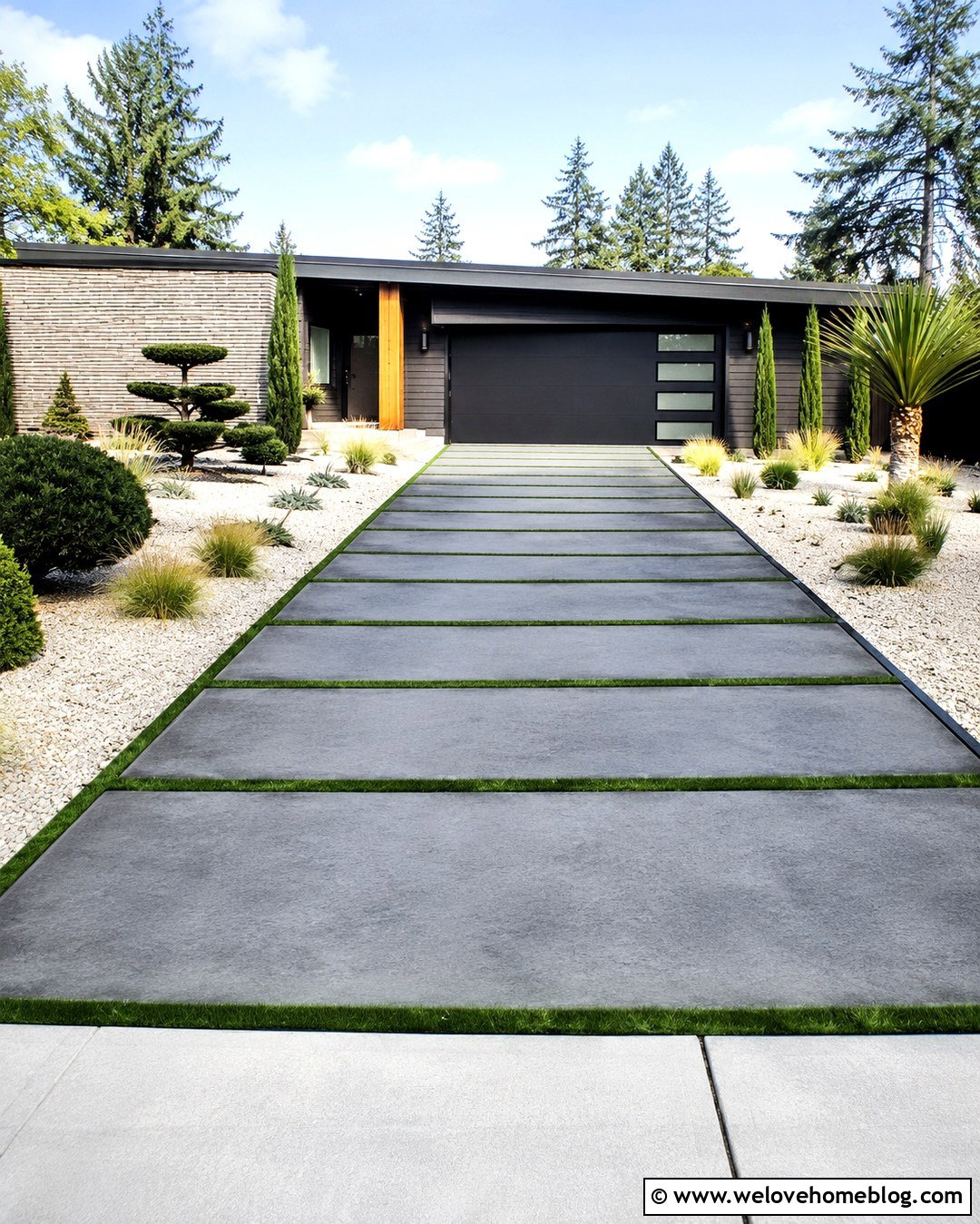
For a fresh, structured entrance, combine large concrete pavers with narrow grass strips running between them. The green joints visually reduce the amount of hardscape while preserving a clear driving route. Choose rectangular charcoal or light gray pavers and repeat their geometry in the adjoining walkway. Steel edging can keep the lawn strips neat and prevent soil from spreading over the paving. On either side, use simple planting beds with clipped shrubs, white flowers, and sculptural ornamental grasses. Avoid too many plant varieties because the paver pattern should remain the strongest feature. This complete driveway look is particularly effective beside a modern or midcentury house. Where regular turf is difficult to maintain, replace it with a durable low-growing ground cover suitable for the property’s climate and exposure.
5. Circular Driveway With A Planted Island
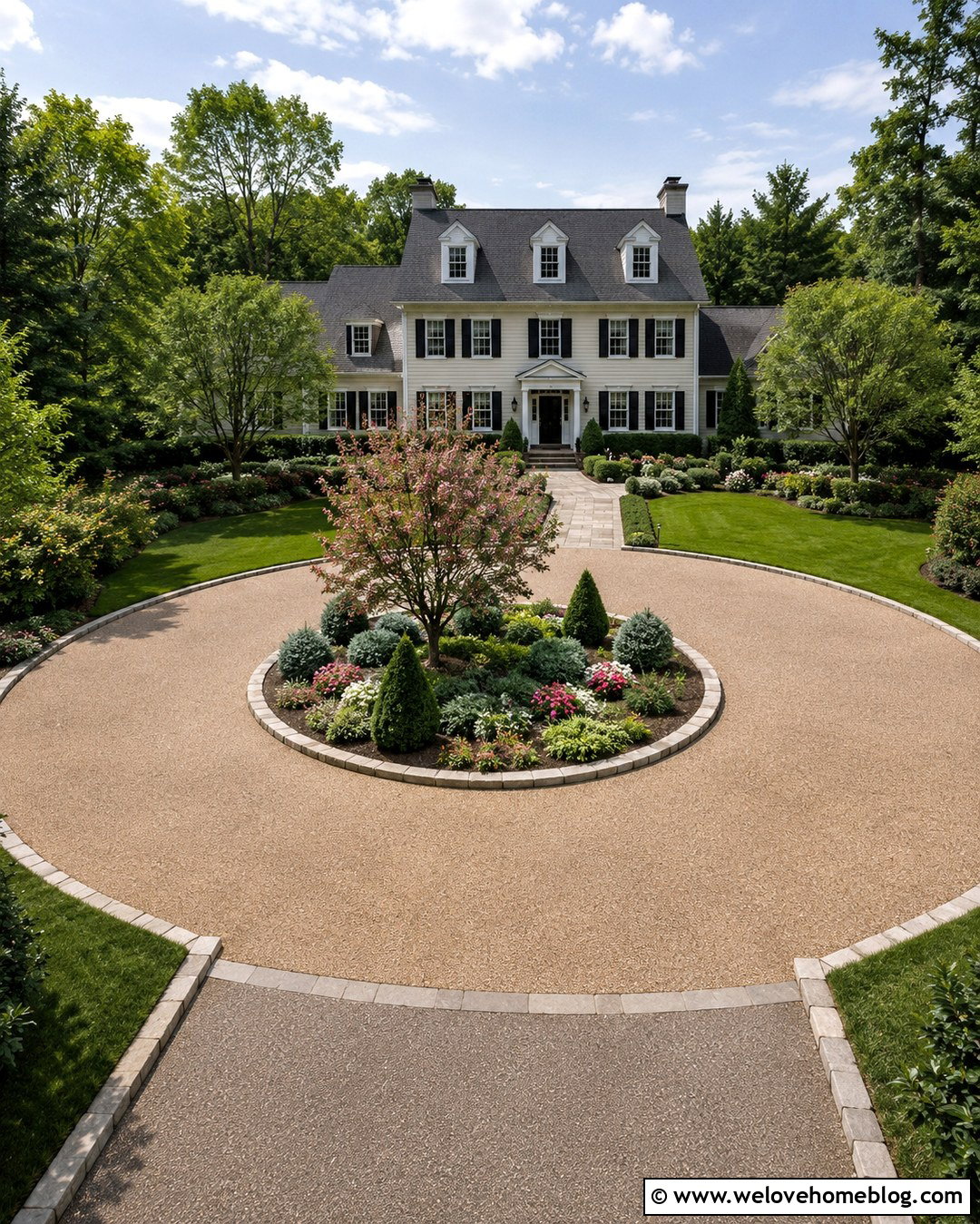
A circular driveway offers a natural centerpiece that should look attractive from the street, house, and every point along the approach. Use warm-toned concrete pavers or exposed aggregate for the driving surface, then define the center island with a low stone curb. Anchor the planting with one appropriately sized ornamental tree rather than a large species that could overwhelm the yard. Surround it with layered evergreens, flowering perennials, and ground cover arranged in broad groups. Keep plants near the island’s outer edge low to preserve driver visibility. Matching beds beside the house will make the island feel connected rather than isolated. A circular layout can also provide convenient vehicle movement and overflow access when its width, turning space, and plant placement are carefully planned. ()
6. Long Driveway With Trees And Grasses
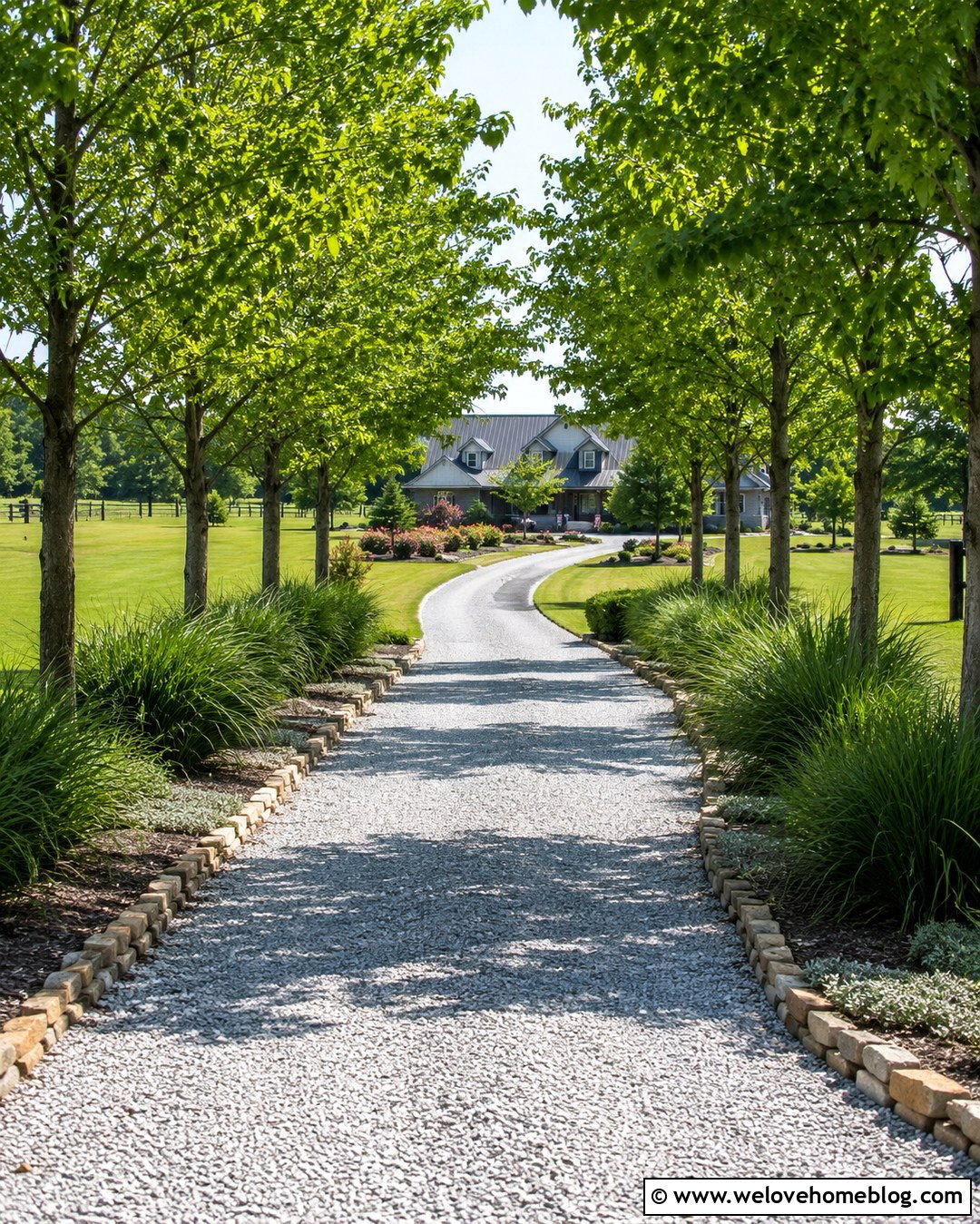
A long driveway needs repeated landscape features that lead the eye toward the house. Start with a durable gravel, asphalt, or concrete surface and add a continuous border that matches the property’s character. Plant evenly spaced trees outside the required driving clearance, choosing species that fit the mature width of the site. Underplant them with sweeps of ornamental grasses or low ground cover instead of separate circles of mulch. This creates a continuous landscape and makes maintenance easier. Break the repetition near the house with wider beds, flowering shrubs, and a clearly marked walkway. If the approach curves, position the trees to emphasize that movement rather than forcing a rigid straight line. The result feels welcoming and established while helping a distant home hold visual importance from the road.
7. Small Driveway With Narrow Planting Beds
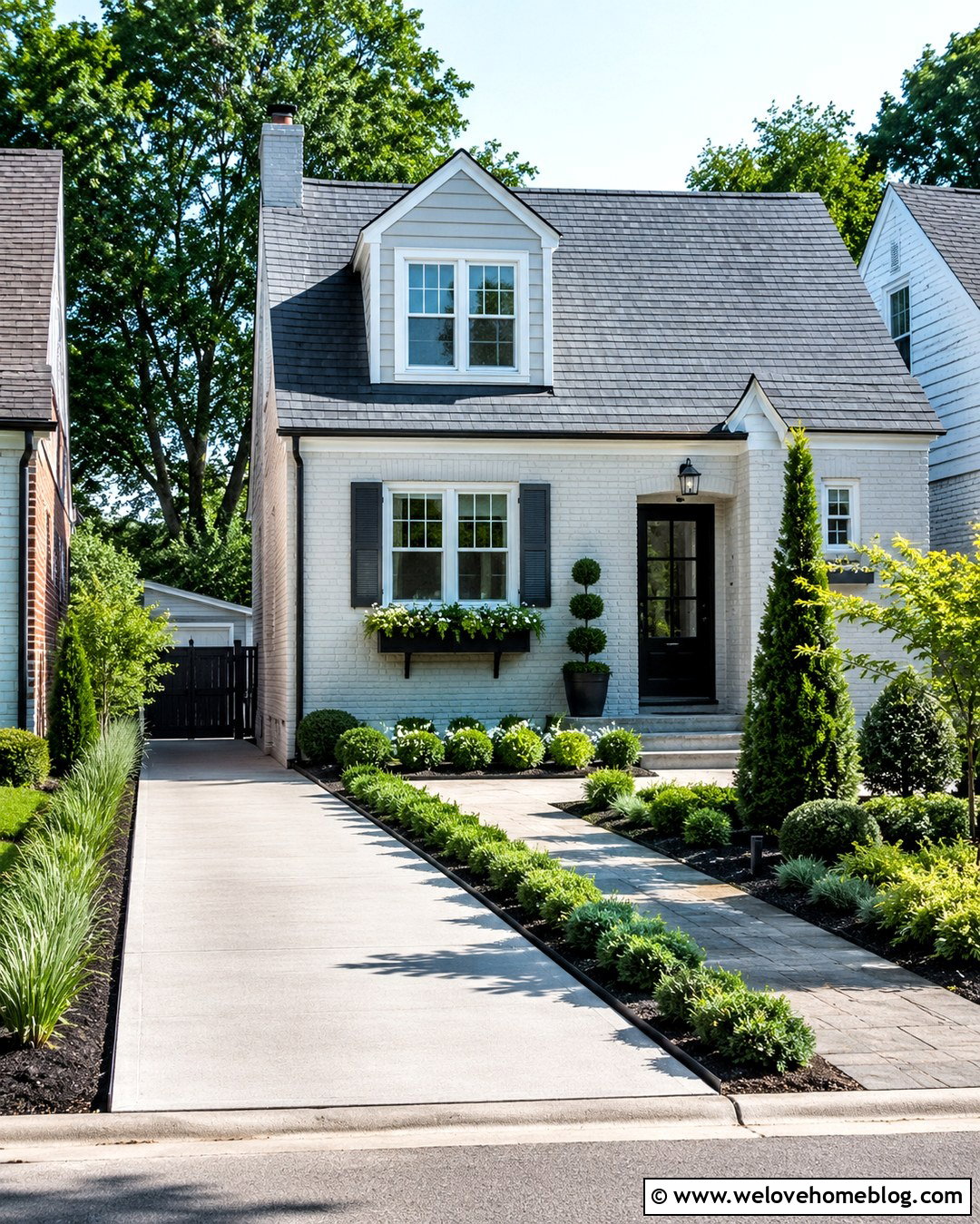
Limited space does not mean the driveway must remain plain. A compact poured concrete driveway can gain character from narrow planting beds designed with vertical and low-growing elements. Use slim metal edging to separate the concrete from beds filled with upright grasses, dwarf evergreens, and spreading ground cover. Avoid wide shrubs that may crowd parked vehicles or scratch doors. A columnar tree near the garage can add height without consuming valuable width. Connect the driveway to the entrance with contrasting rectangular pavers, making the route to the front door instantly recognizable. Wall-mounted planters or a vine-covered trellis can add greenery where ground space is unavailable. By choosing plants according to their mature dimensions, a small driveway can remain functional while looking lush, organized, and connected to the house.
8. Driveway With Native Plant Borders
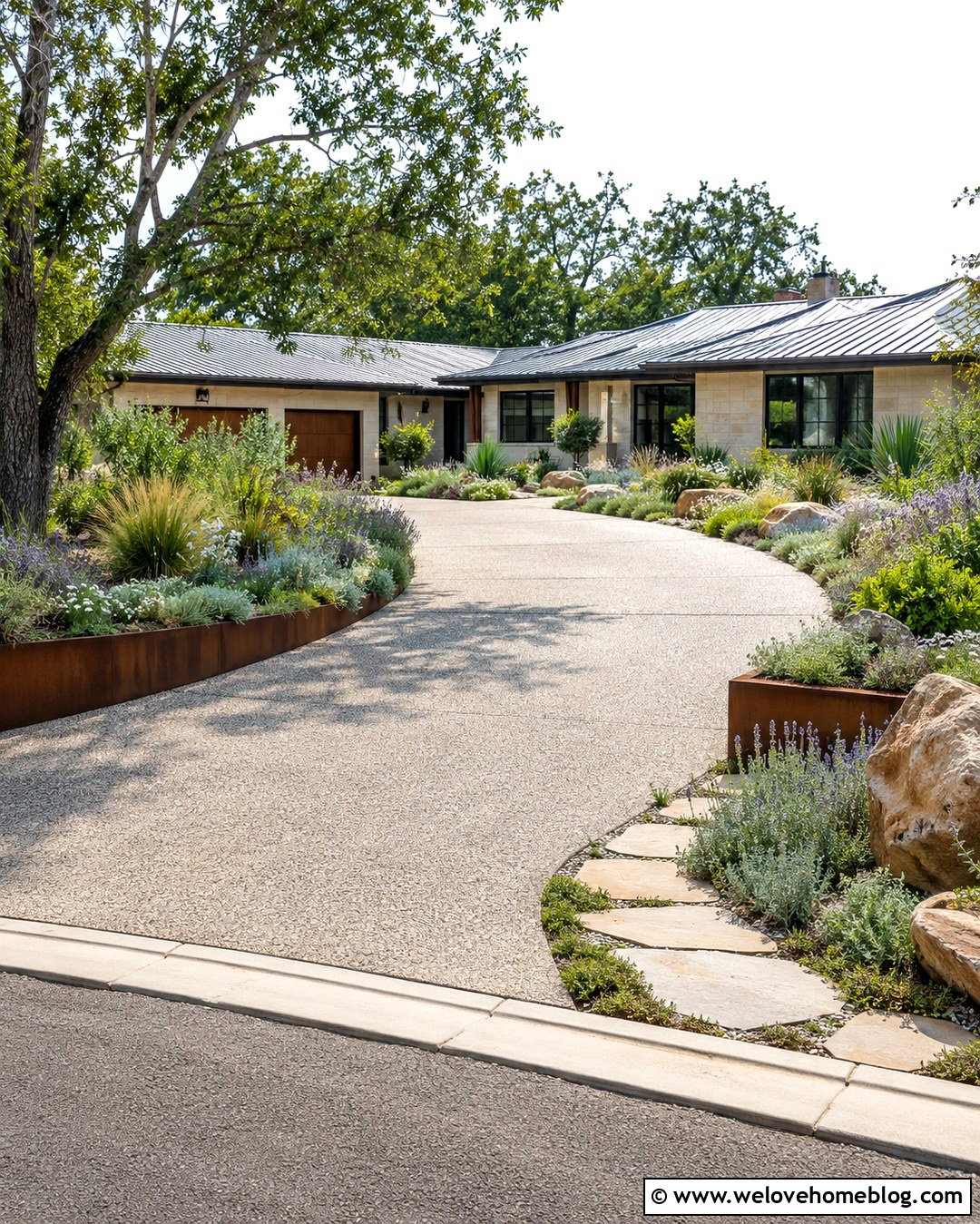
Native planting can transform a basic driveway into a landscape that reflects the surrounding region. Begin with a simple exposed aggregate or permeable paver surface, then shape wide beds along the edges instead of narrow, disconnected strips. Select locally appropriate grasses, flowering perennials, ground covers, and compact shrubs that suit the site’s sun, soil, and moisture conditions. Arrange them in repeating groups for a planned appearance. Maintain a clean stone or steel edge so the natural planting does not look untidy beside the driveway. Place taller species farther from corners and street access to protect visibility. A stone walkway and a few strategically placed boulders can reinforce the regional character. This complete design feels relaxed, supports seasonal interest, and reduces dependence on a formal lawn-dominated landscape.
9. Permeable Driveway With A Rain Garden
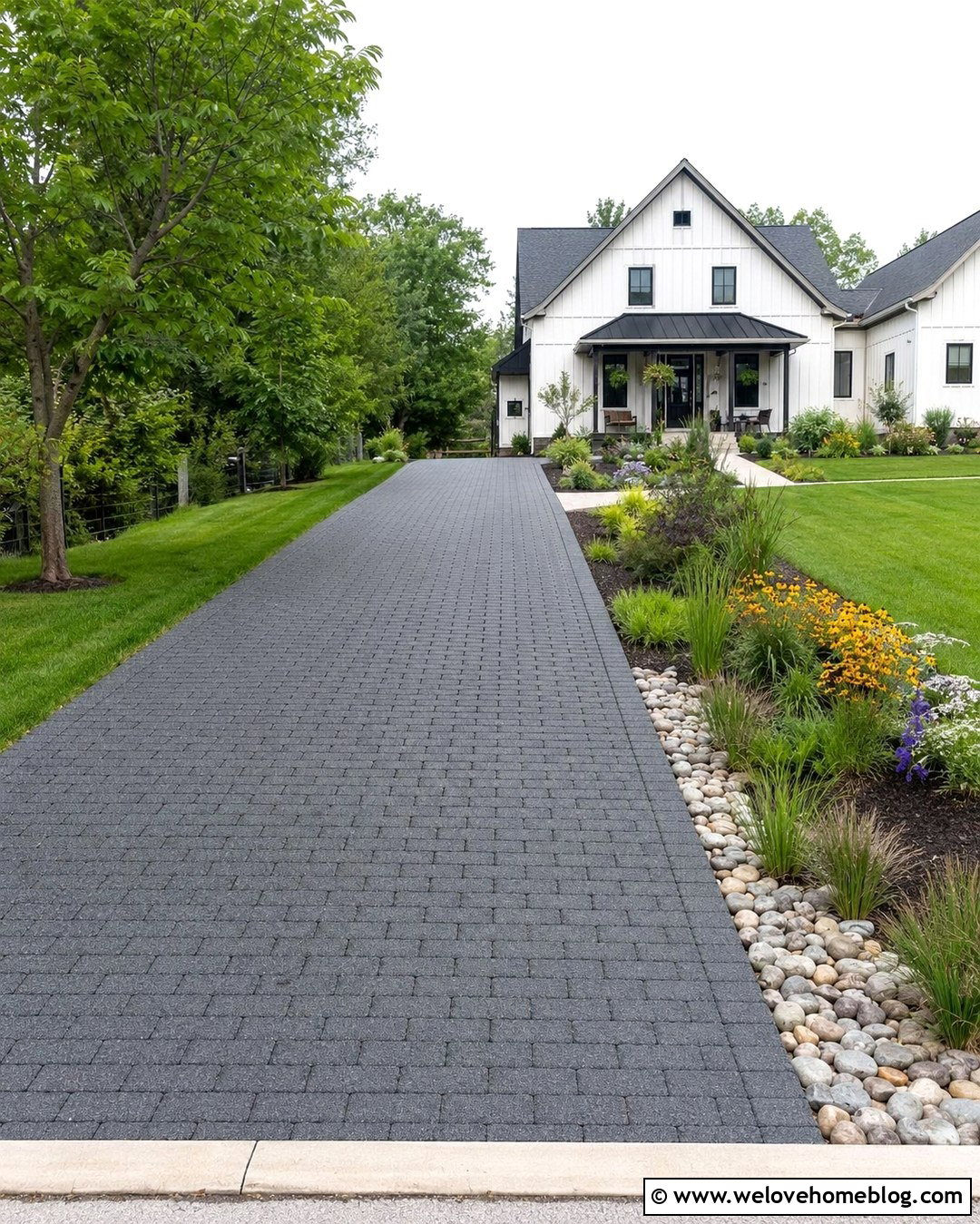
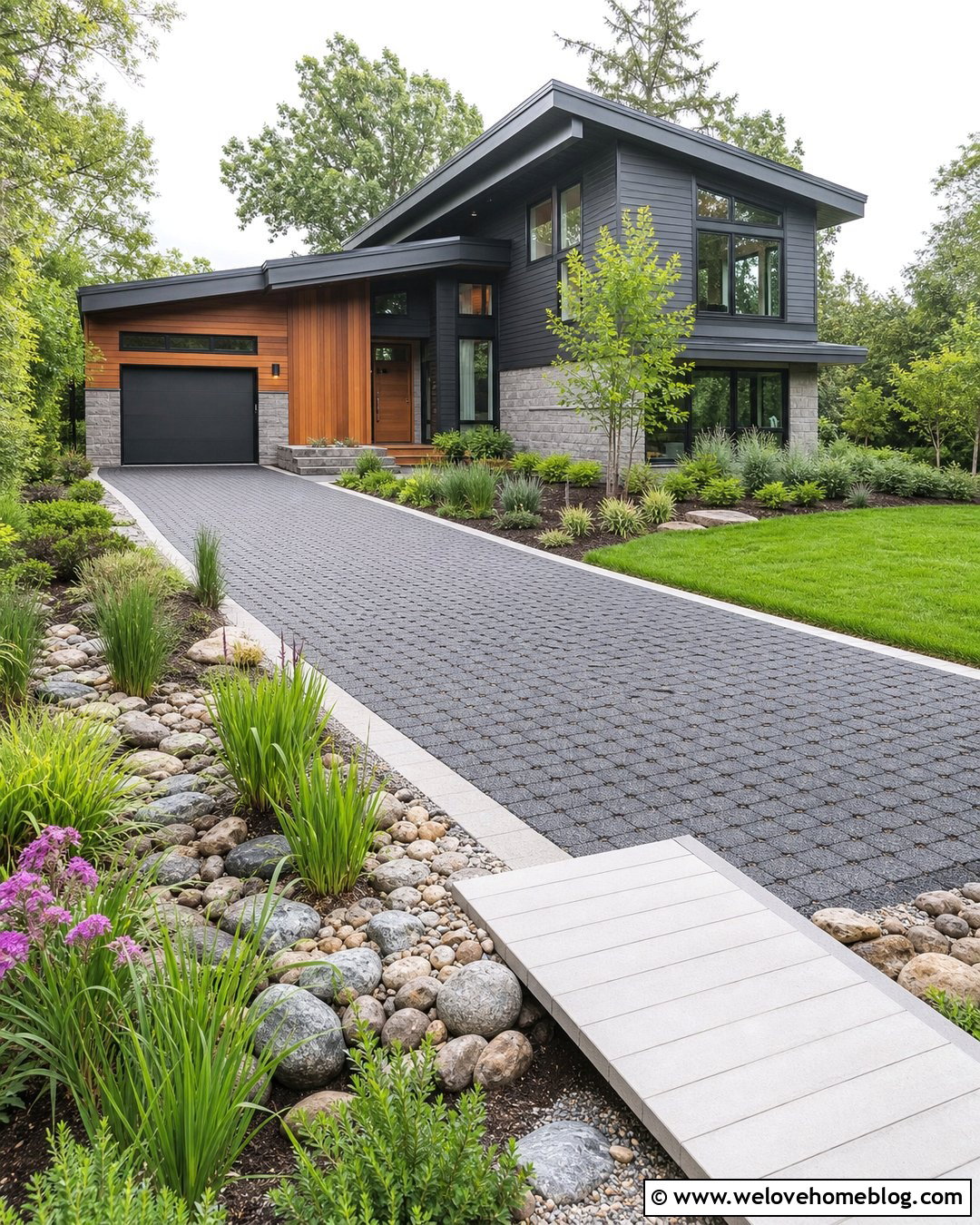
Where runoff collects near the driveway, landscaping should manage water as well as improve curb appeal. Install permeable concrete pavers or resin-bound gravel over a properly designed base, then direct surface water toward a shallow rain garden. Shape the garden as a broad planted basin rather than a deep ditch. Use moisture-tolerant grasses, sedges, flowering perennials, and shrubs suited to local conditions. Decorative stone at the inlet can slow moving water and reduce erosion. Keep the basin away from foundations and confirm where overflow will travel during heavy rain. A flush paver border will create a finished transition between the driveway and garden. Planning drainage with the surface and surrounding landscape helps prevent puddling while making an essential feature look intentional. ()
10. Driveway With Low-Voltage Landscape Lighting
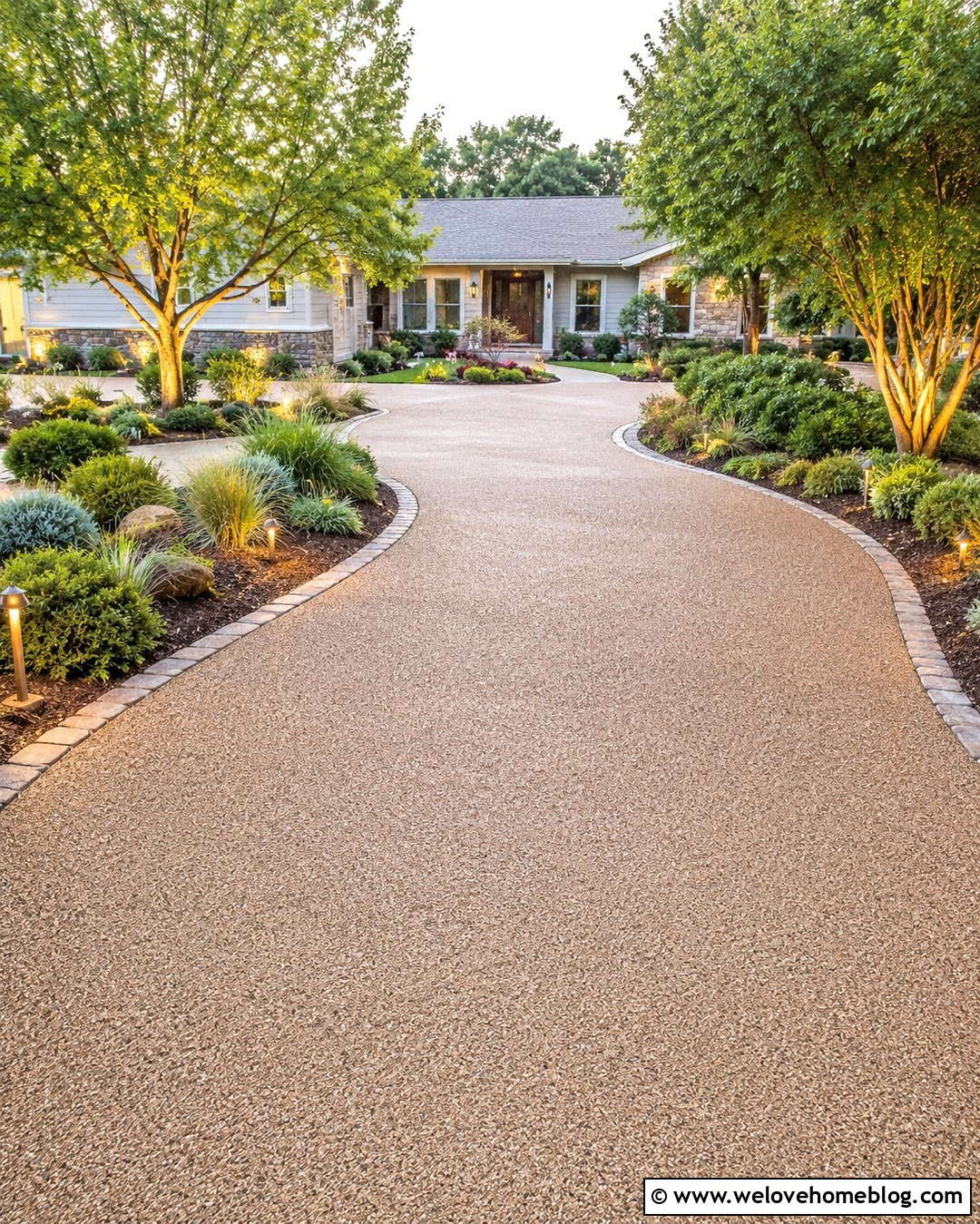
Well-positioned lighting helps the driveway remain attractive and easier to navigate after dark. Use low-voltage fixtures within the planting beds rather than lining the pavement with a rigid row of exposed lights. Small downlights can illuminate the driveway edge, while shielded uplights emphasize specimen trees or entrance pillars. Choose warm, restrained illumination and space fixtures according to what they need to reveal. The daytime design still matters, so combine the lighting with stone edging, layered shrubs, and ground cover that hides wires and fixture bases. Avoid placing lights where tires, lawn equipment, or snowplows may damage them. Coordinate driveway lighting with porch and walkway fixtures for one consistent appearance. Defined edges and purposeful illumination can improve both visibility and the overall nighttime presentation. ()
11. Modern Concrete Driveway With Ornamental Grasses
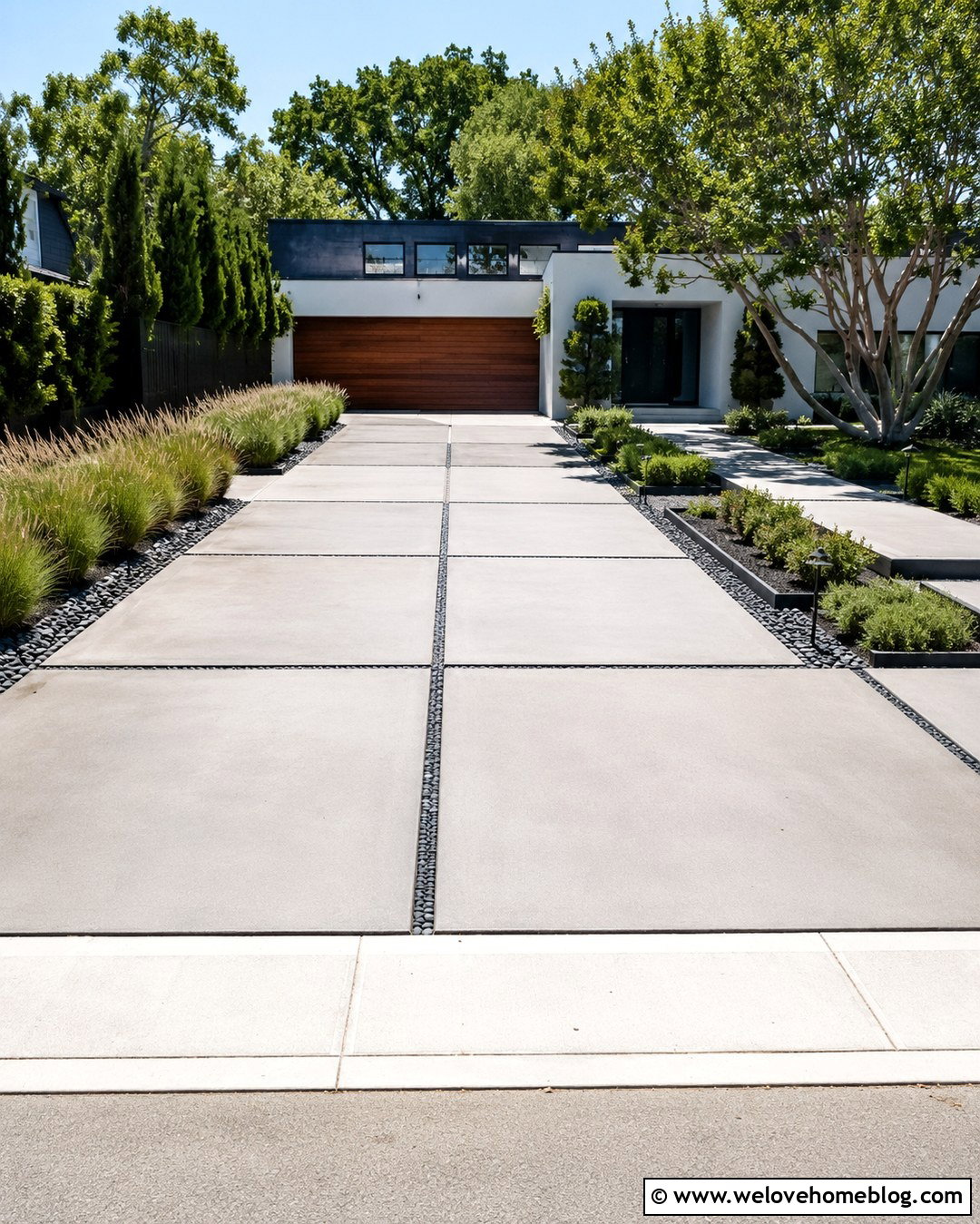
A modern driveway looks strongest when the landscaping is simple, spacious, and repeated. Use large slabs of light gray poured concrete with narrow gravel joints to create a clean geometric surface. Along one side, build a broad bed of ornamental grasses arranged in several substantial groups. Add a few sculptural evergreens or multi-stem trees for height, but keep the plant palette limited. Black steel edging provides a crisp boundary between the bed, driveway, and lawn. Repeat the concrete format in the front walkway so both routes feel related. Near the garage, a strip of dark river rock can catch roof runoff while reinforcing the modern color scheme. This composition softens the concrete without hiding its shape, creating a balanced entrance for contemporary and minimalist homes.
12. Farmhouse Gravel Driveway With Stone Borders
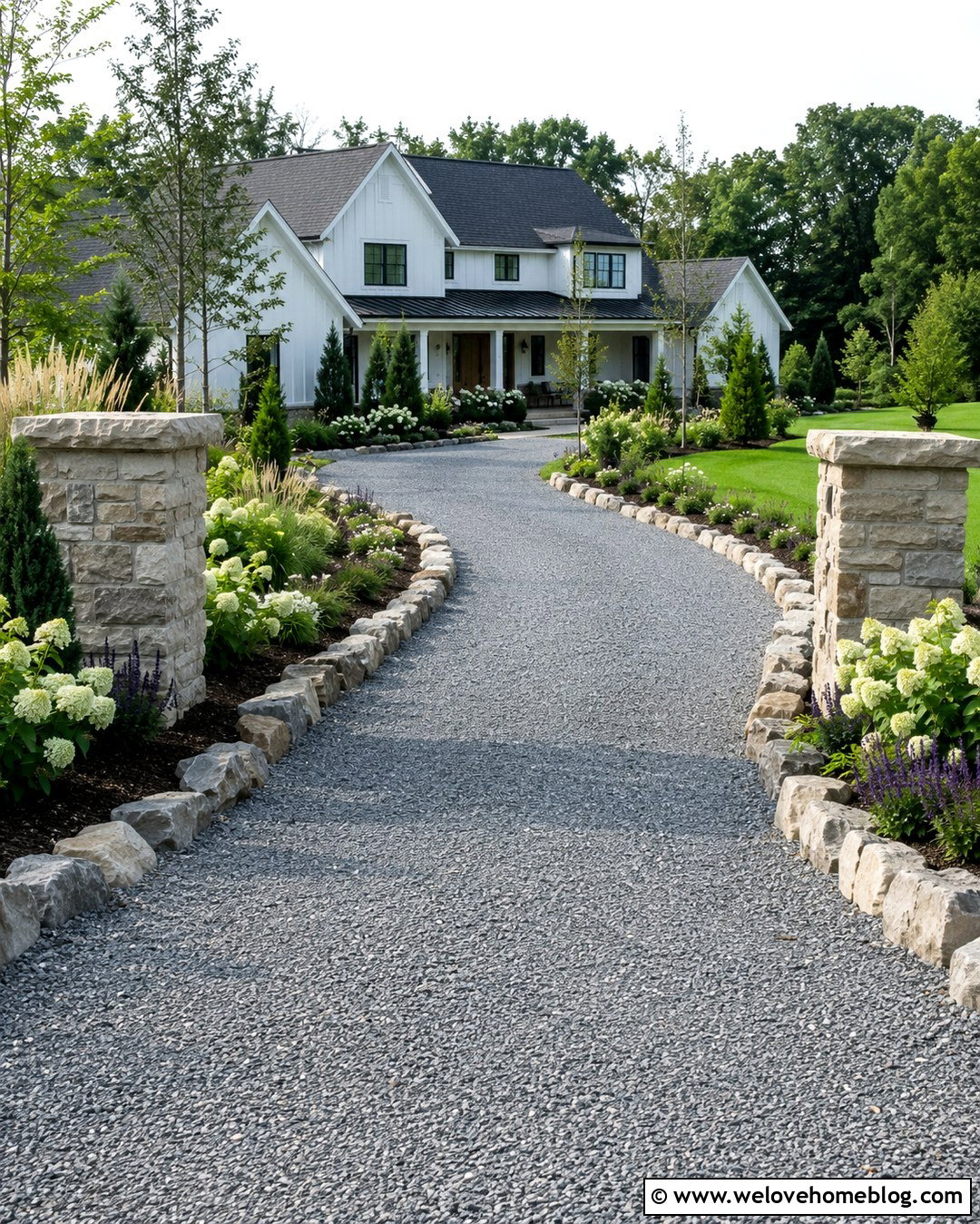
A farmhouse entrance benefits from materials that feel practical, natural, and slightly informal. Choose compacted gray crushed gravel for the driveway and contain it with fieldstone borders laid in gently uneven lines. Wide beds of hydrangeas, panicle grasses, salvia, and compact evergreens can soften the edges without making the approach difficult to maintain. Near the road, add simple timber posts or low stone pillars that match the home’s foundation. A flagstone walkway branching from the driveway provides a comfortable route to the porch and reinforces the rustic material palette. Allow the planting beds to widen near the house, where they can visually reduce the garage’s prominence. The finished driveway should feel relaxed yet organized, with every stone, plant, and transition supporting the farmhouse setting.
13. Brick Driveway With Boxwood Borders
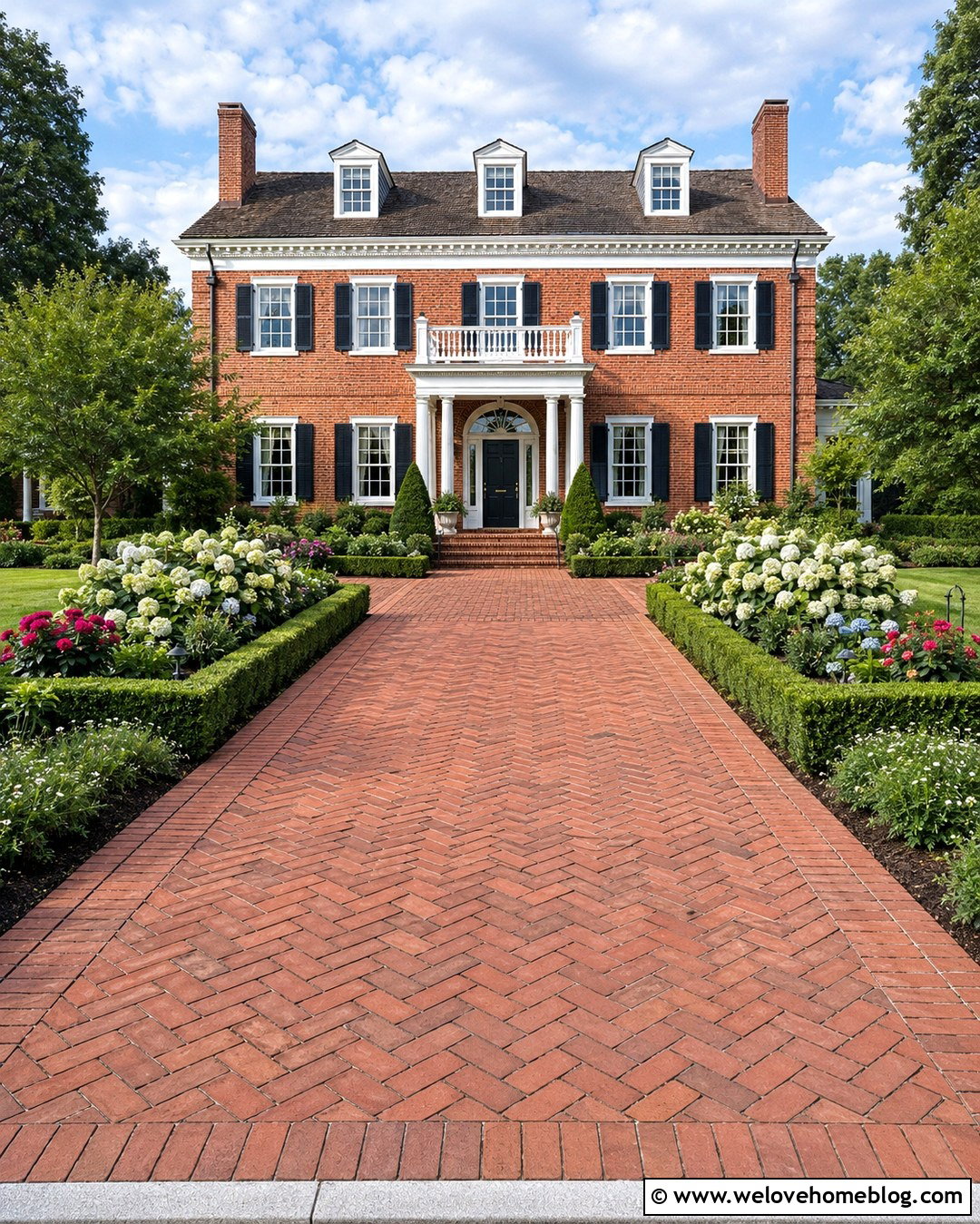
Clay brick pavers and clipped greenery create an orderly driveway that complements Colonial, Georgian, and traditional homes. Lay the bricks in a herringbone pattern for visual movement and frame the surface with a contrasting soldier-course border. On both sides, plant low boxwood hedges with enough setback to accommodate their mature width. Behind them, add hydrangeas, roses, or flowering perennials for a softer second layer. Keep the arrangement symmetrical near the entrance, then loosen it slightly closer to the house to prevent the design from feeling rigid. A brick walkway can branch toward the front door using the same border detail. Properly scaled planting is essential; low hedges should define the route without creating narrow walls. This complete look makes the driveway feel connected to the home’s architecture and formal front landscape.
14. Sloped Driveway With Terraced Landscaping
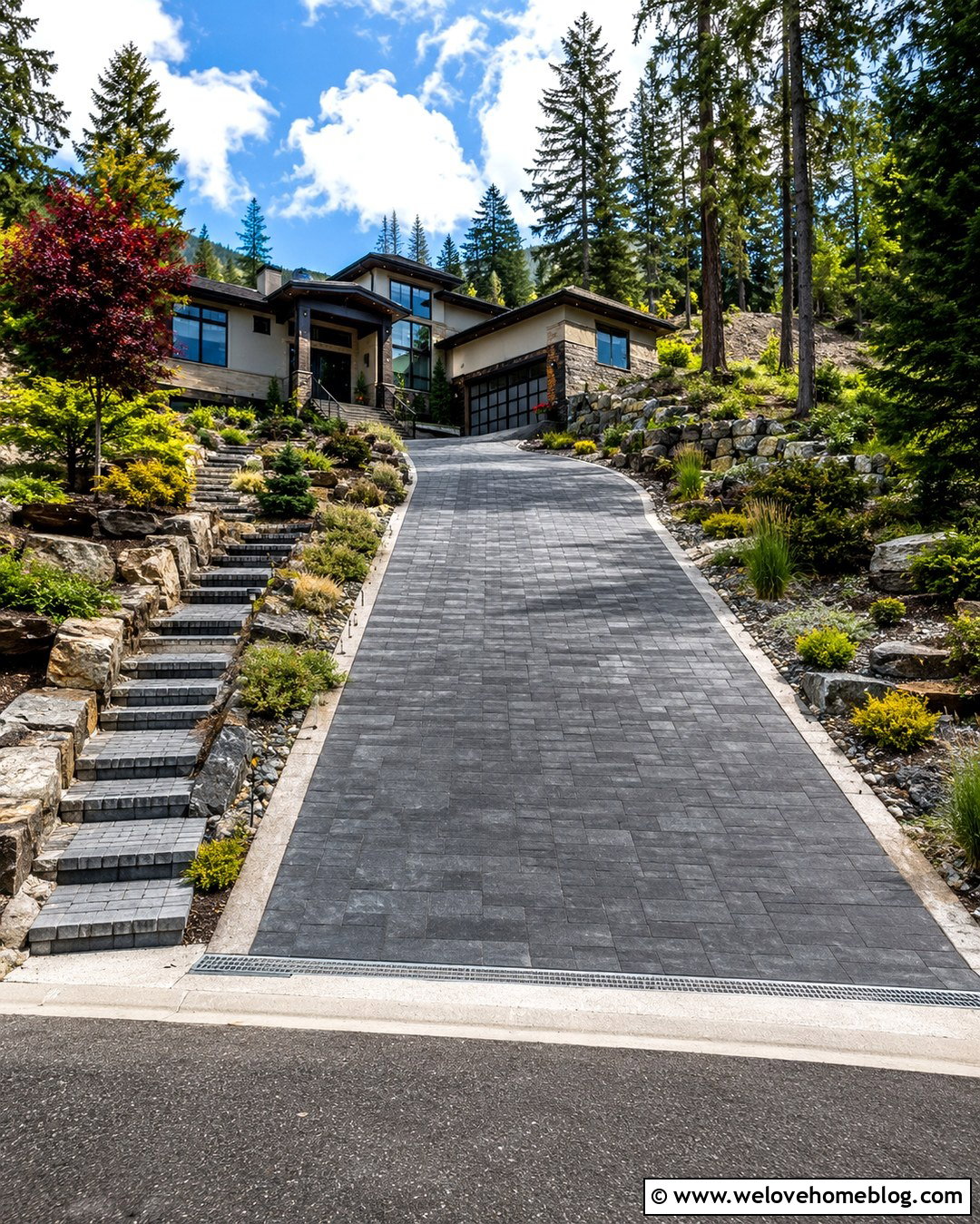
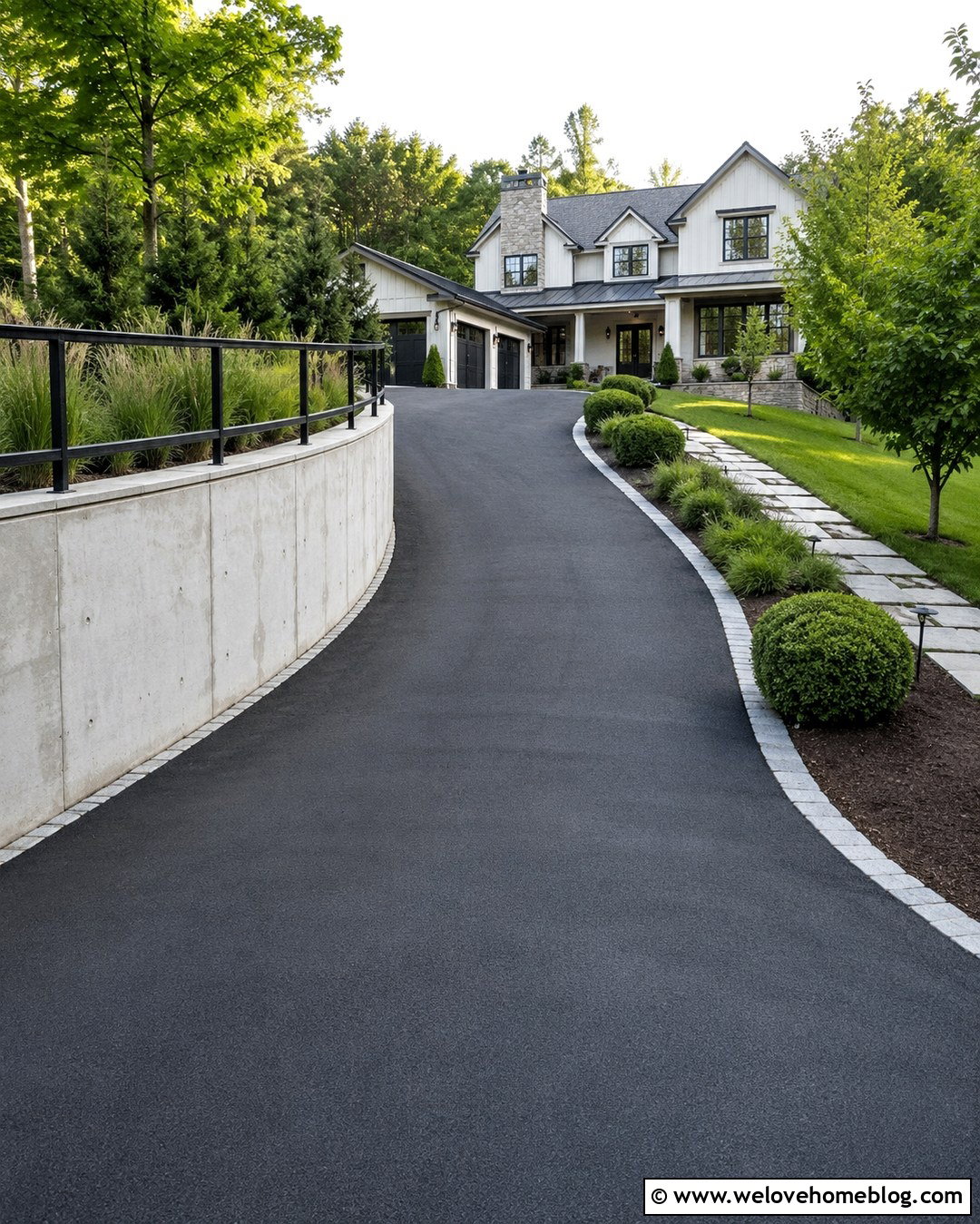
A steep driveway becomes more attractive when its surrounding grade is organized into planted terraces. Use textured concrete or interlocking pavers for dependable visual definition, then install low retaining walls along the higher side. Natural stone works well with rustic homes, while smooth concrete blocks complement modern architecture. Divide tall slopes into several modest planting levels rather than creating one imposing wall. Fill the terraces with deep-rooted ground covers, compact shrubs, and ornamental grasses chosen for the site’s exposure. On the lower side, use a sturdy curb or stone edge to clearly mark the driving surface. Include drainage behind retaining walls and direct water away from the garage. The terraced planting breaks up the slope, frames the approach, and turns a challenging grade into an intentional landscape feature.


15. Crushed Shell Driveway With Coastal Planting
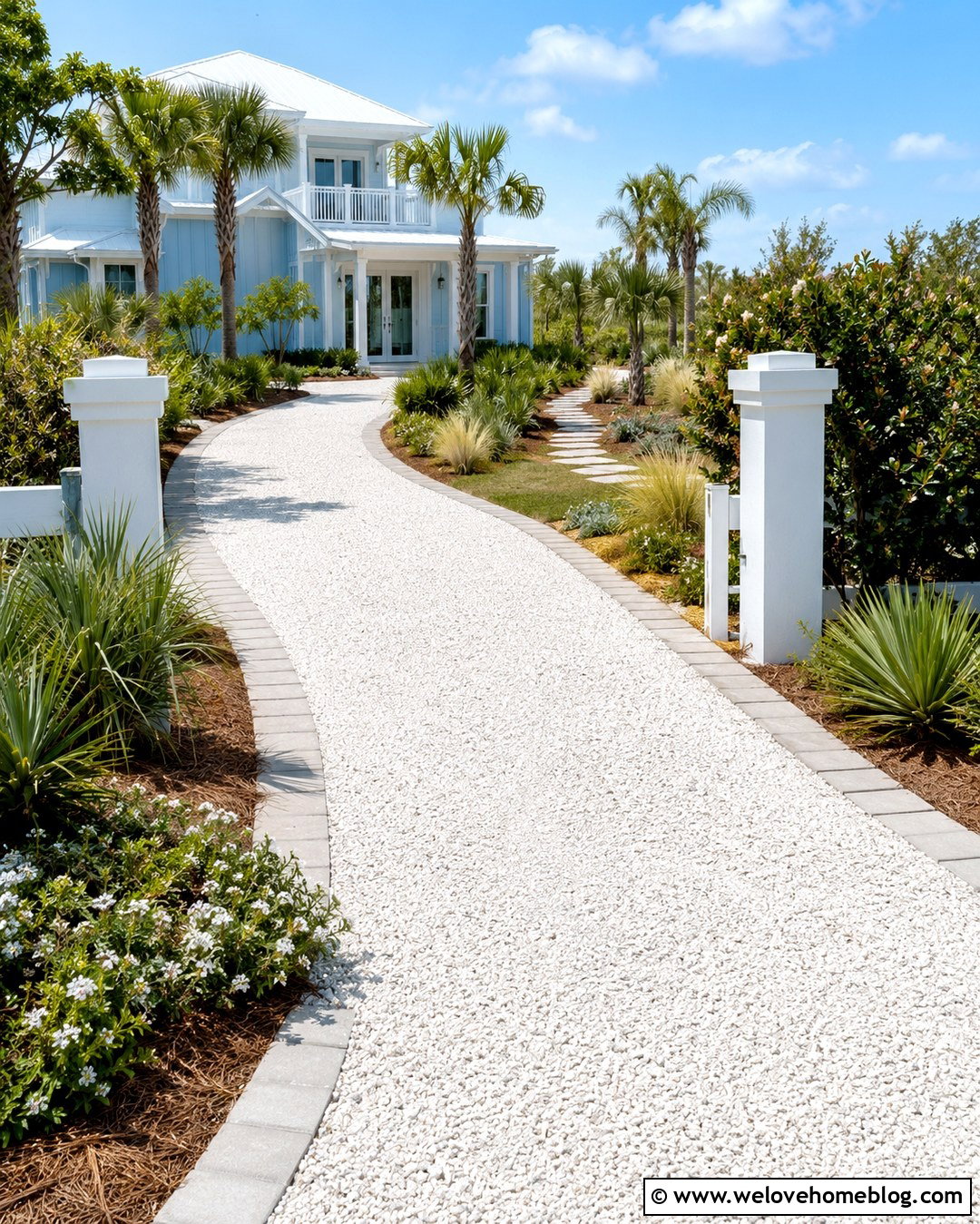
A light crushed shell driveway can give a coastal home a bright, relaxed entrance without excessive decoration. Use a gently curved or straight layout bordered by pale concrete pavers to keep the loose material contained. Plant salt-tolerant ornamental grasses, dwarf palmettos, wax myrtle, and low flowering ground covers where they suit the local climate. Arrange the plants in broad, wind-shaped groups rather than formal rows. A stepping-stone walkway can cross one planting bed and connect the driveway to the porch. Near the road, simple white posts or limestone pillars can mark the entrance without blocking views. Keep mulch colors light and natural so they blend with the shell surface. Together, the pale driveway, breezy plants, and restrained edging produce an easygoing design suited to coastal architecture.
16. Desert Driveway With Rock Landscaping
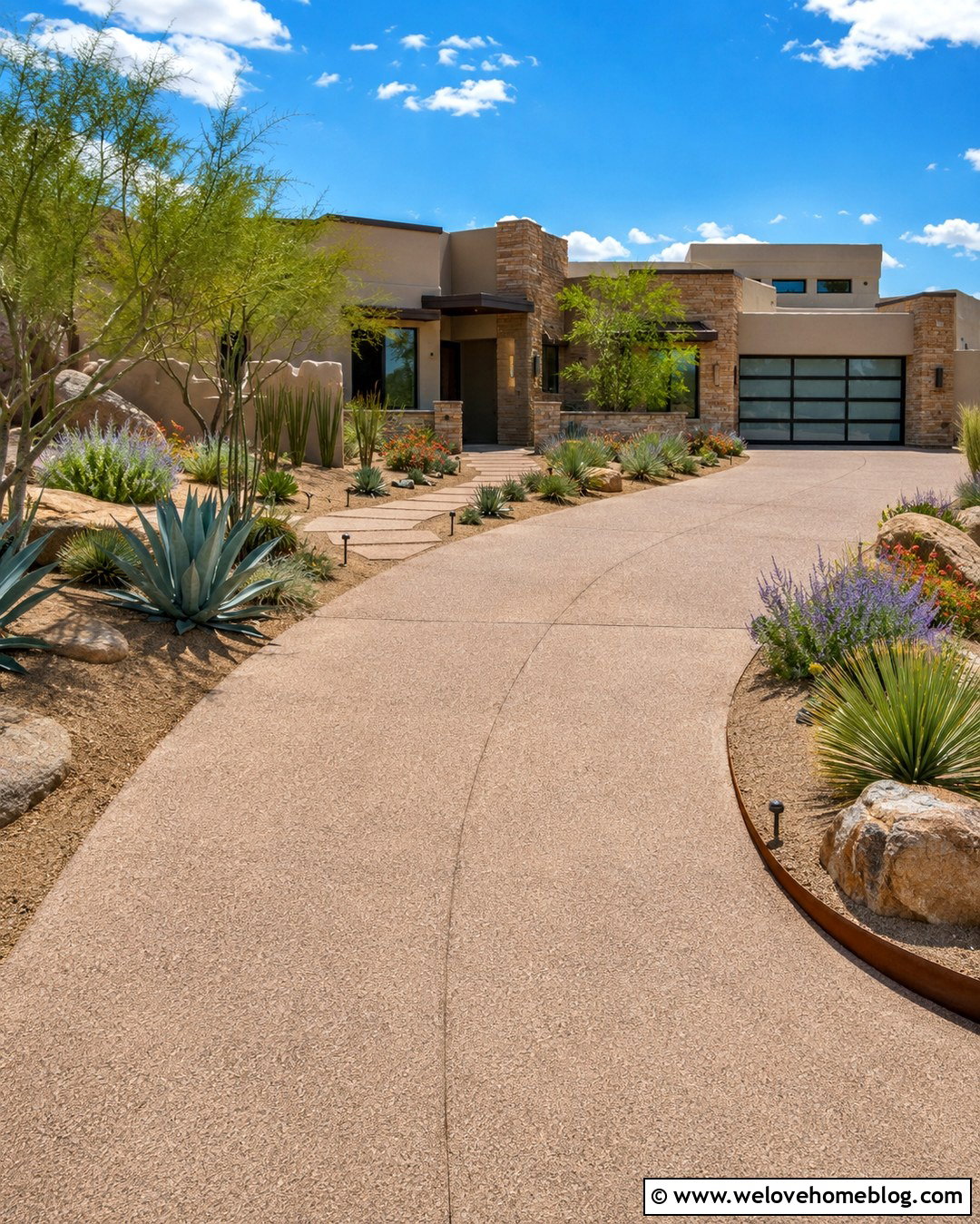
In a dry climate, driveway landscaping can look full and colorful without relying on a conventional lawn. Pair a tan exposed aggregate driveway with wide beds of decomposed granite in a slightly darker shade. Use steel edging or large desert stones to create sweeping boundaries along the pavement. Plant sculptural agaves, yuccas, desert grasses, flowering sages, and other climate-appropriate species in spaced clusters. Leave enough open gravel between plants to show their shapes and simplify maintenance. A few larger boulders can anchor curves, but they should remain safely outside the vehicle clearance zone. Continue the decomposed granite into the front walkway to unify the design. This layered combination of aggregate, stone, and drought-adapted planting creates a strong landscape that feels appropriate to Southwestern and contemporary desert homes.
17. Shaded Driveway With Woodland Planting
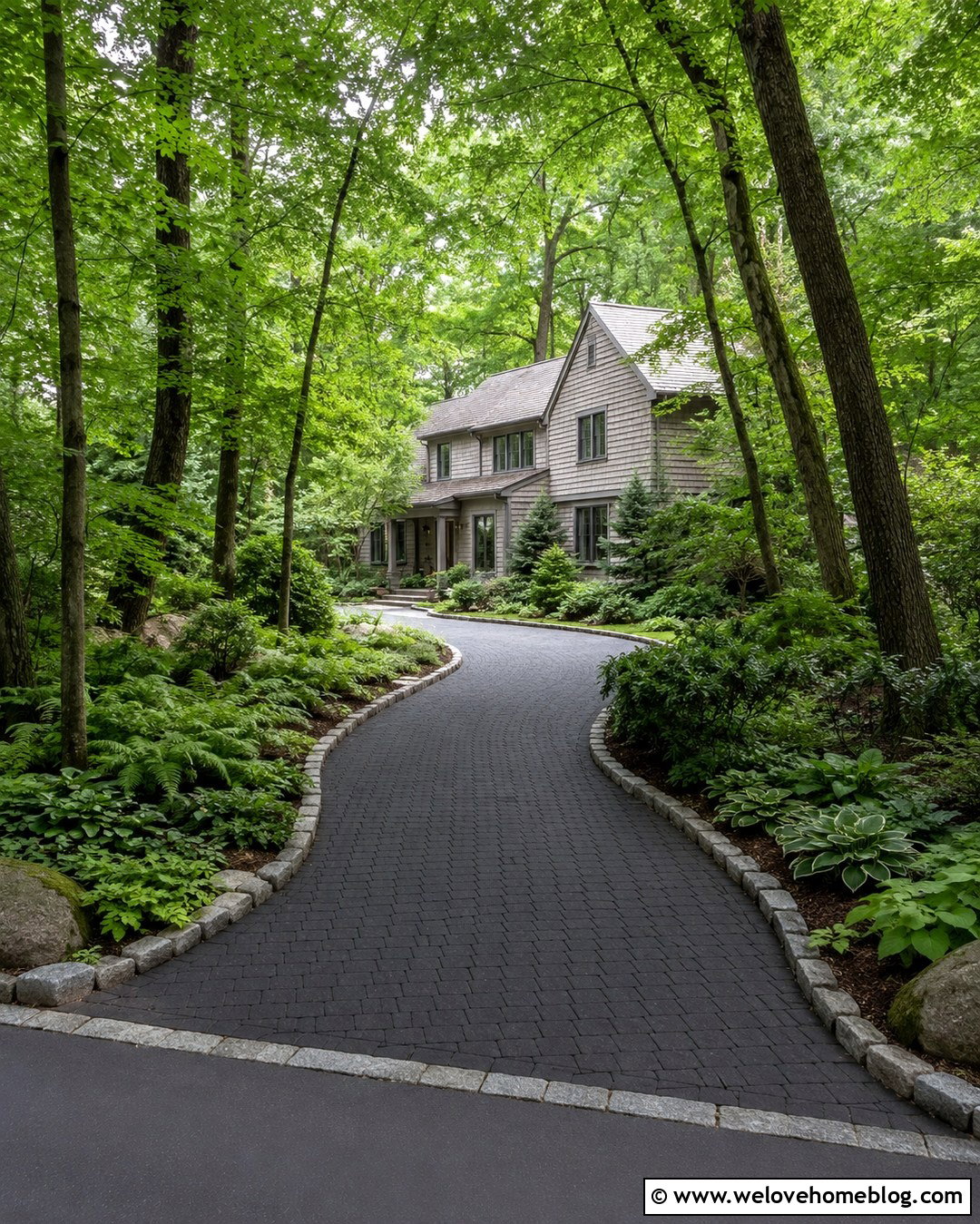
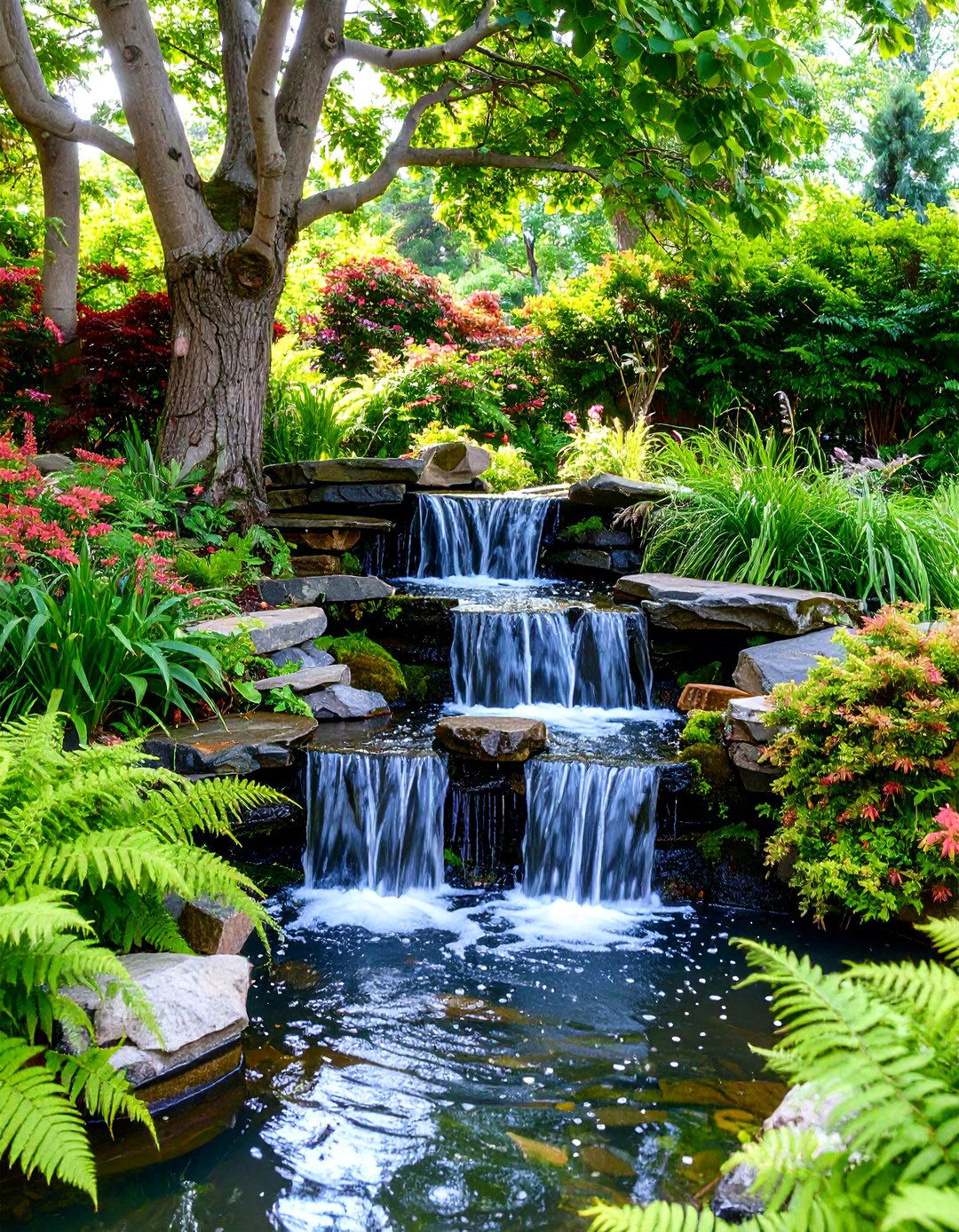
A tree-shaded driveway can become a graceful woodland approach rather than a difficult patch of thin lawn. Use charcoal asphalt or gray permeable pavers as the surface, then edge it with irregular natural stone. Replace struggling turf with generous beds of shade-tolerant ground covers, ferns, hostas, sedges, and evergreen shrubs appropriate for the region. Arrange plants in natural-looking drifts while maintaining a clear boundary beside the pavement. Preserve existing mature trees when possible, protecting roots during construction and avoiding raised soil around trunks. A simple flagstone walkway can wind through the planting toward the front door. Add low, shielded lighting beneath the foliage for visibility. The dark driveway, textured stone, and layered greenery create a cool, established entrance that fits wooded properties and traditional homes.
18. Driveway Entrance With Stone Pillars
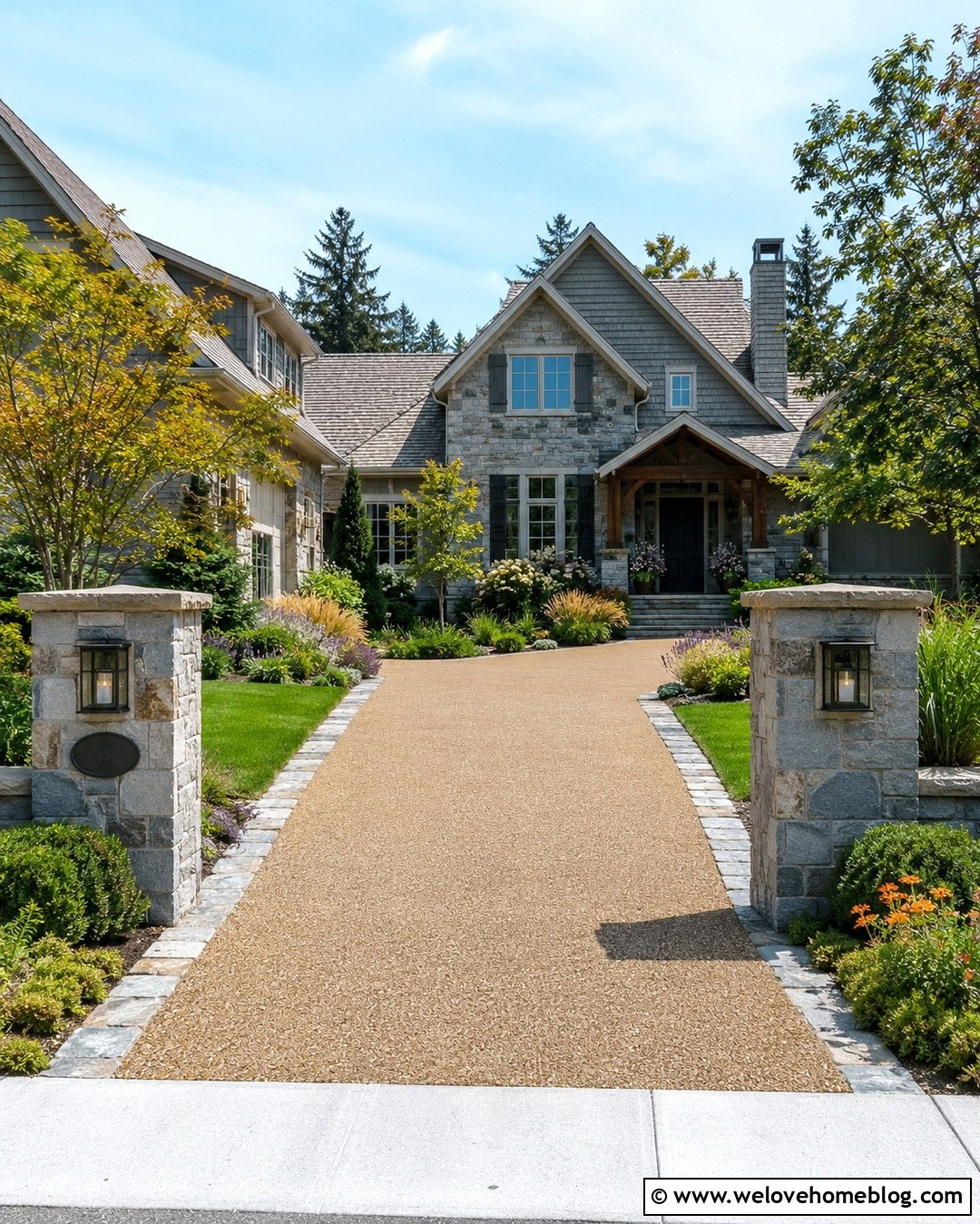
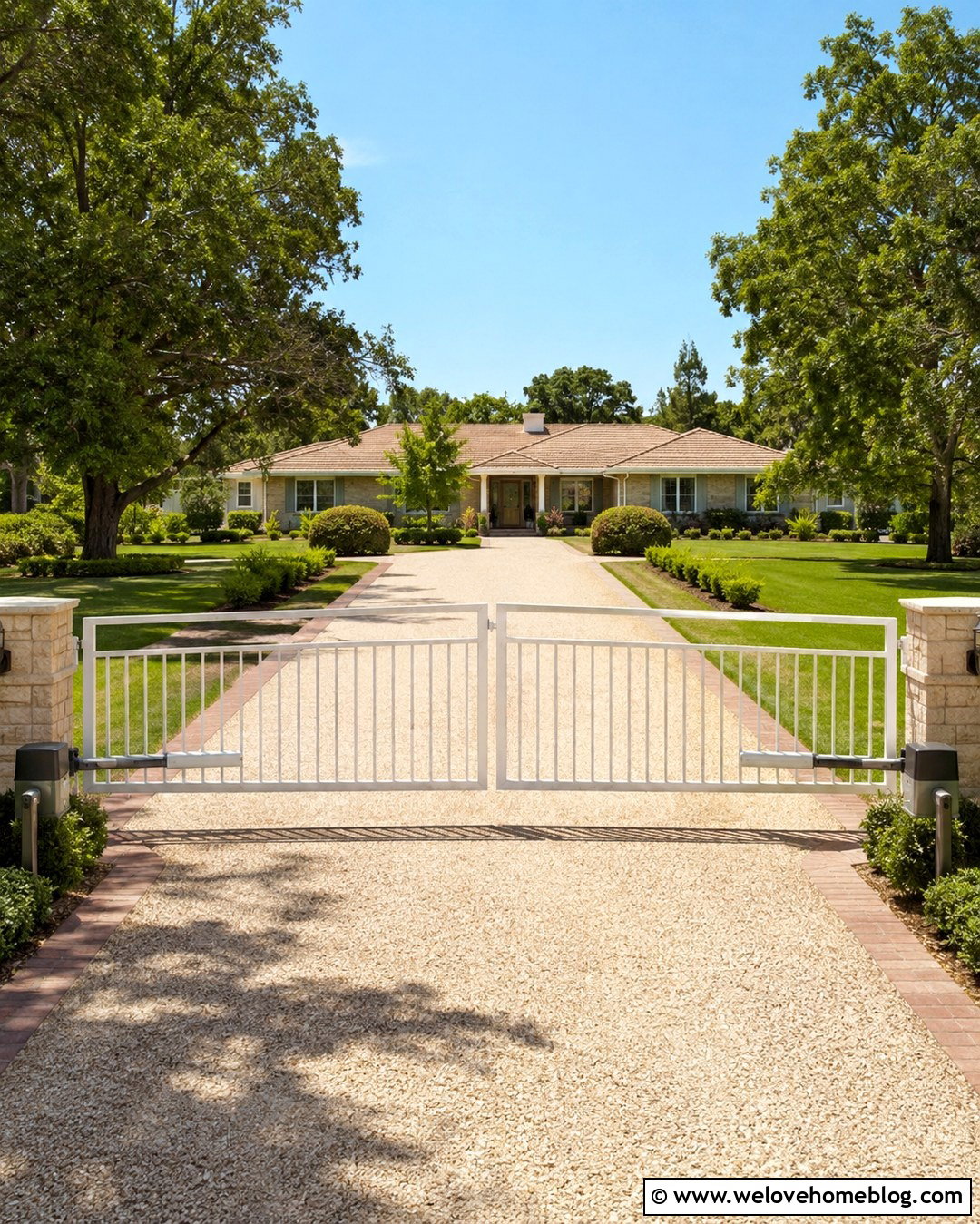
Entrance pillars should introduce the home’s materials while framing a safe, visible opening. Pair a tan resin-bound gravel driveway with two substantial stone pillars set well outside the turning path. Match the stone to the house facade, chimney, or retaining walls so the entrance feels connected to the property. Low planting beds can extend outward from each pillar using compact evergreens, grasses, and seasonal flowers. Keep plants below sight-line height near the street. Install a discreet address plaque and integrate shielded lights into the pillars rather than adding several unrelated fixtures. Continue the stone as a low edging material along the first portion of the driveway. This complete arrangement creates a clear arrival point without becoming overly grand, and it works equally well with Craftsman, ranch, and country homes.
19. Driveway And Walkway With Planted Separation
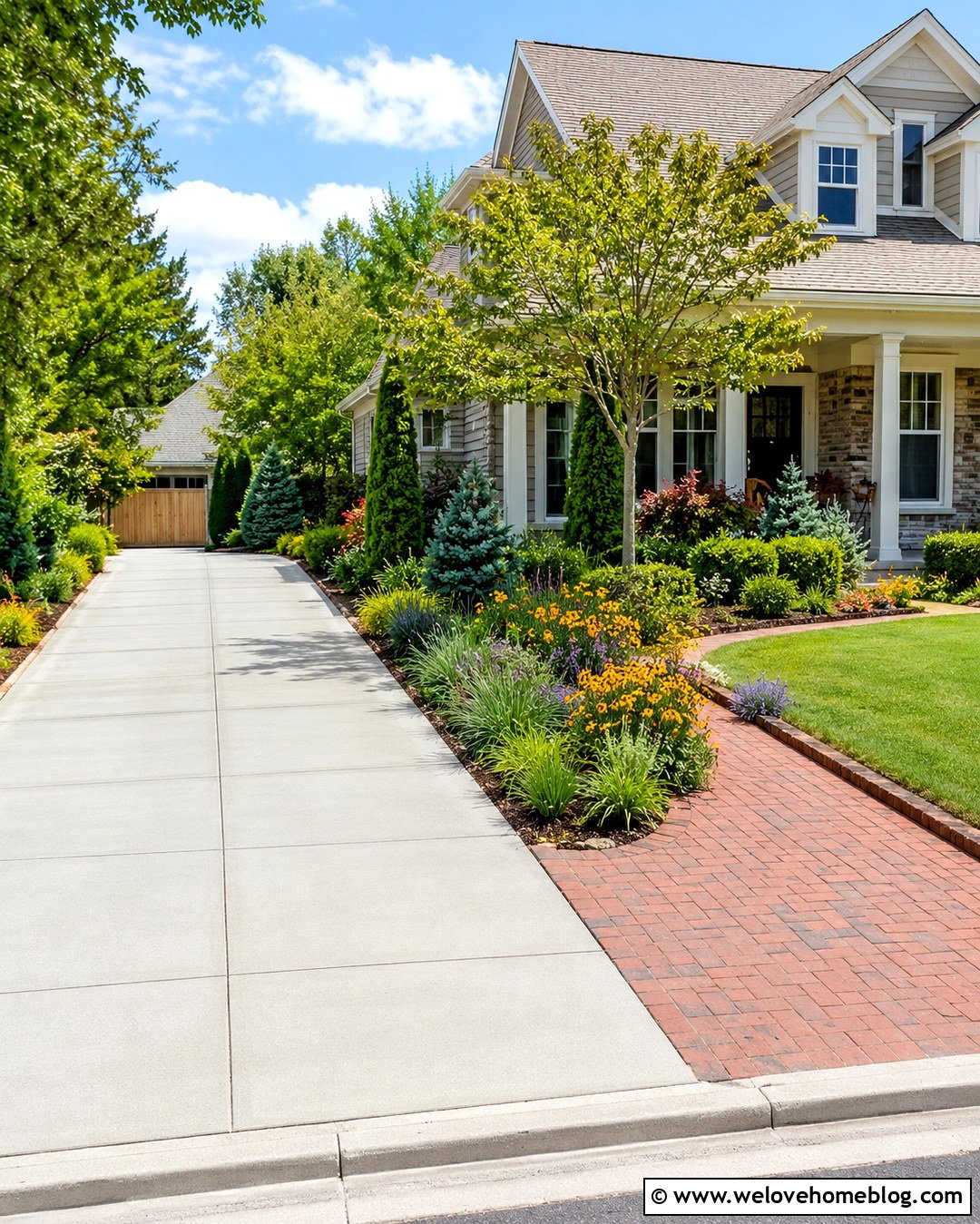
When a driveway and front walkway run beside each other, a slim planting bed can make both spaces easier to understand. Use smooth poured concrete for the driveway and contrasting clay brick pavers for the walkway. Between them, install a three- to five-foot bed where space permits. Fill it with low ornamental grasses, flowering perennials, and compact evergreen shrubs that will not spread into either route. Repeat several plants in beds beside the house to create continuity. A flush metal or brick edge keeps soil and mulch off the paving. Near the porch, widen the bed and add a small ornamental tree as a visual destination. Separating vehicle and pedestrian areas through landscaping gives the approach more structure while preventing the garage from dominating the entire front yard. ()



20. Budget Driveway With Mulch Beds And Planters
A finished driveway landscape does not require replacing the existing pavement. Refresh a basic concrete or asphalt driveway by cutting clean, curved beds along the most visible edges. Install affordable metal edging, cover the soil with natural shredded mulch, and plant a limited mix of hardy grasses, compact shrubs, and long-blooming perennials. Concentrate larger plants near the house and keep the street end simple. Two matching planters beside the garage or walkway entrance can create symmetry without permanent construction. Reuse locally available stone as small accents, but avoid scattering unrelated decorations throughout the beds. Pressure-washing the surface and repairing cracked edges will strengthen the overall result. This budget-friendly design works because the repeated plants, clean borders, and coordinated containers make ordinary materials appear purposeful.
Conclusion:
Successful driveway landscaping balances curb appeal with parking, visibility, drainage, and everyday maintenance. Begin with the driveway’s material and shape, then select borders and planting beds that reinforce those features. Use fewer plant varieties in repeated groups for a cohesive appearance. Keep mature plant sizes in mind, preserve clear street views, and protect enough space for vehicles, doors, and snow removal. Lighting, walkways, entrance markers, and drainage should feel integrated rather than added afterward. Whether you prefer a formal brick entrance, relaxed gravel approach, modern concrete layout, or low-water landscape, these **20 Creative Driveway Landscaping Tips Ideas** can help you create a complete design that feels attractive, functional, and naturally connected to your home.

Related posts:


Leave a Reply