
Driveway edges often collect weeds, loose gravel, muddy footprints, and tire damage, but the right paver treatment can turn those problem areas into attractive features. These 20 Driveway Side Pavers Ideas explore complete designs that combine durable driveway surfaces with practical side strips, defined borders, planting beds, walkways, and drainage-friendly transitions. Side pavers can visually widen a narrow driveway, provide a cleaner place to step out of a vehicle, and connect the parking area to the front entrance. They also introduce color and texture without requiring you to replace the entire driveway. From traditional brick and cobblestone to modern concrete slabs and permeable pavers, the sections below offer adaptable inspiration for different homes, climates, yard sizes, and budgets. Start planning your upgrade with these 20 Driveway Side Pavers Ideas.

1. Concrete Driveway With Brick Side Pavers
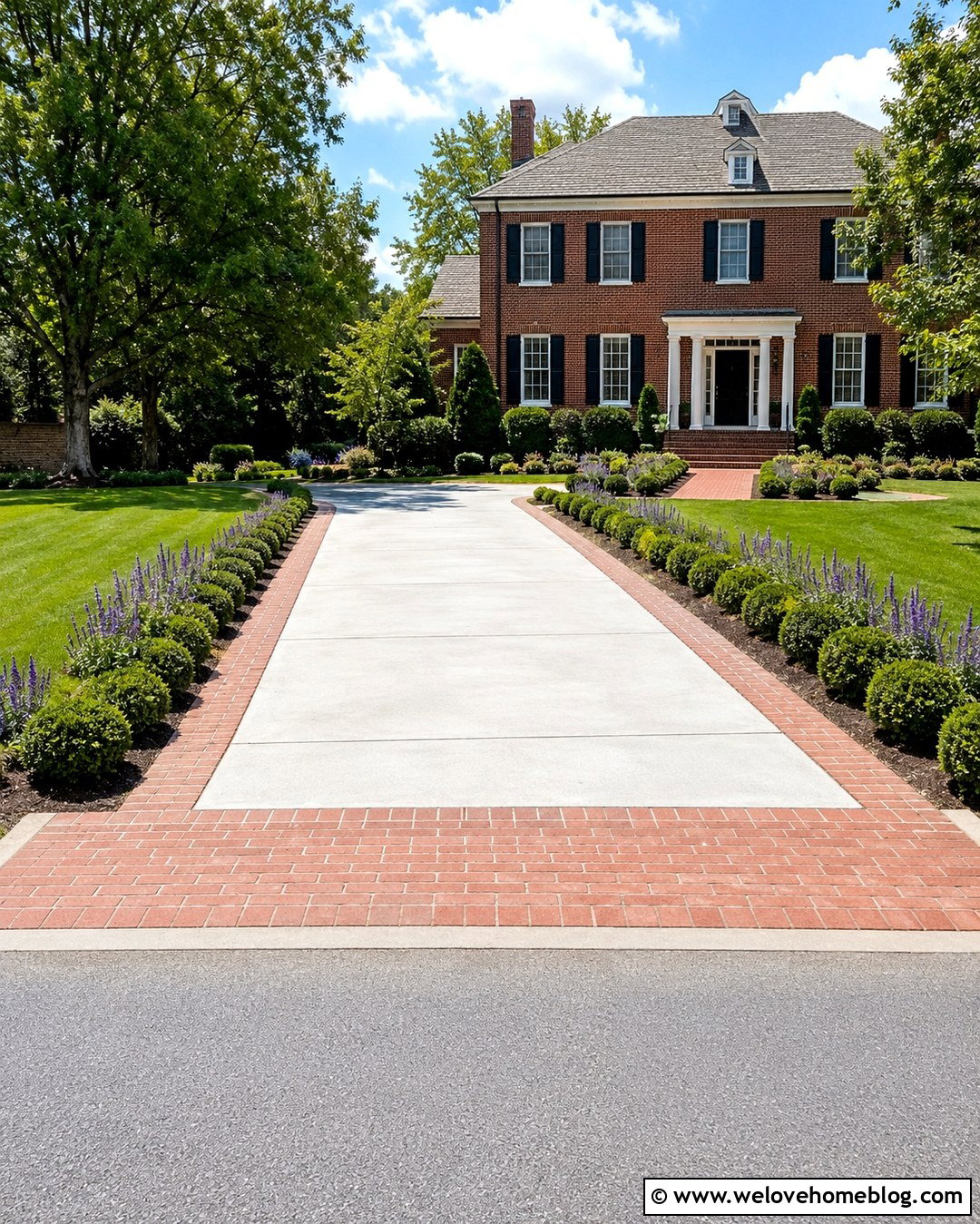
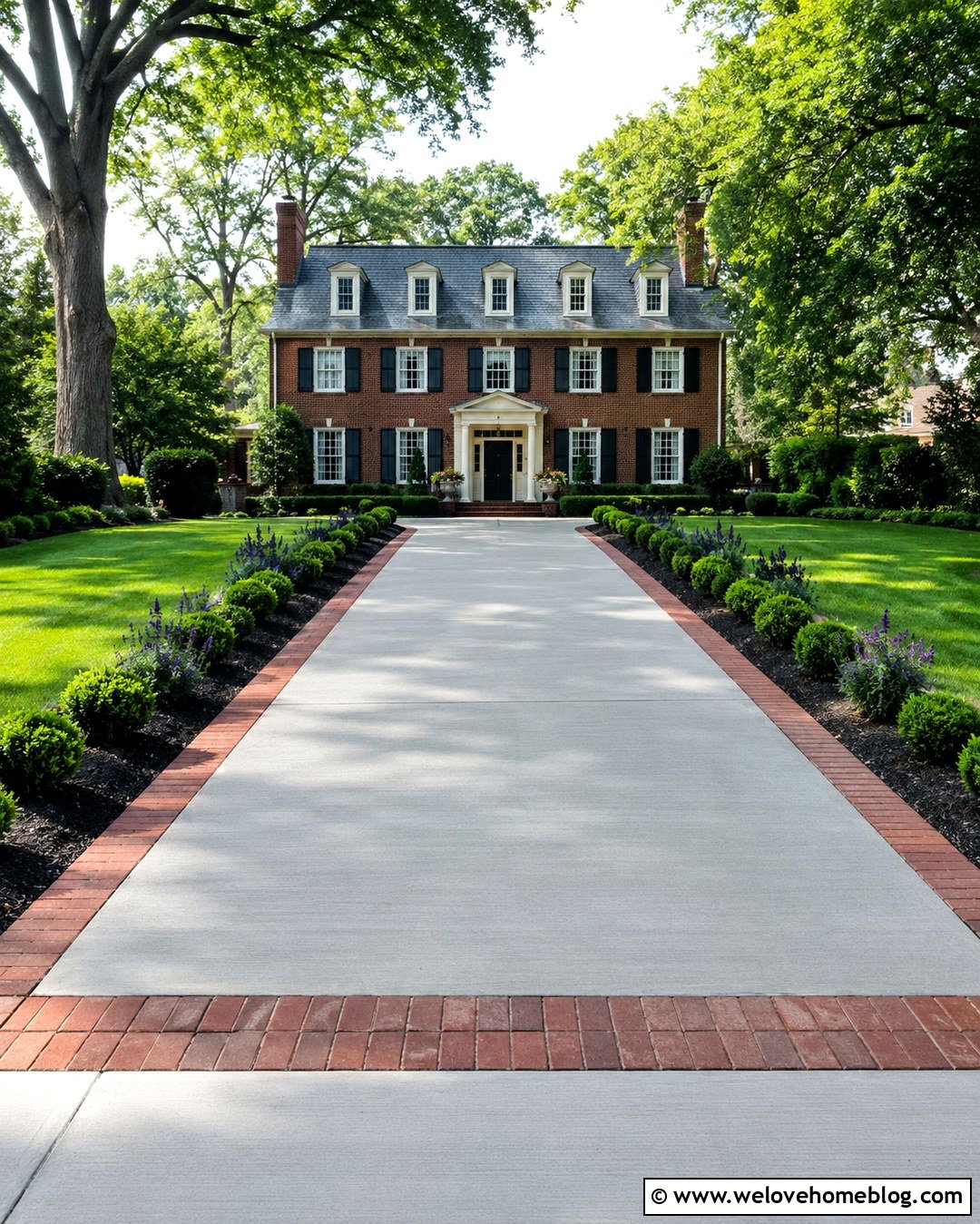
Warm red brick pavers can give a plain concrete driveway a more finished and welcoming appearance. Install two or three brick rows along both sides, using a running bond or basketweave pattern for clear definition. The rich brick color contrasts naturally with light gray poured concrete and works especially well beside a colonial or traditional brick house. Continue the pavers around the driveway apron to create a complete frame rather than ending them abruptly. Narrow planting beds filled with boxwood, salvia, and seasonal flowers can soften the outer edges. Keep the brick surface nearly level with the concrete so passengers can step onto it safely. A matching brick walkway leading to the front porch will connect the entire entrance and make the side pavers look intentional.
2. Asphalt Driveway With Cobblestone Side Pavers
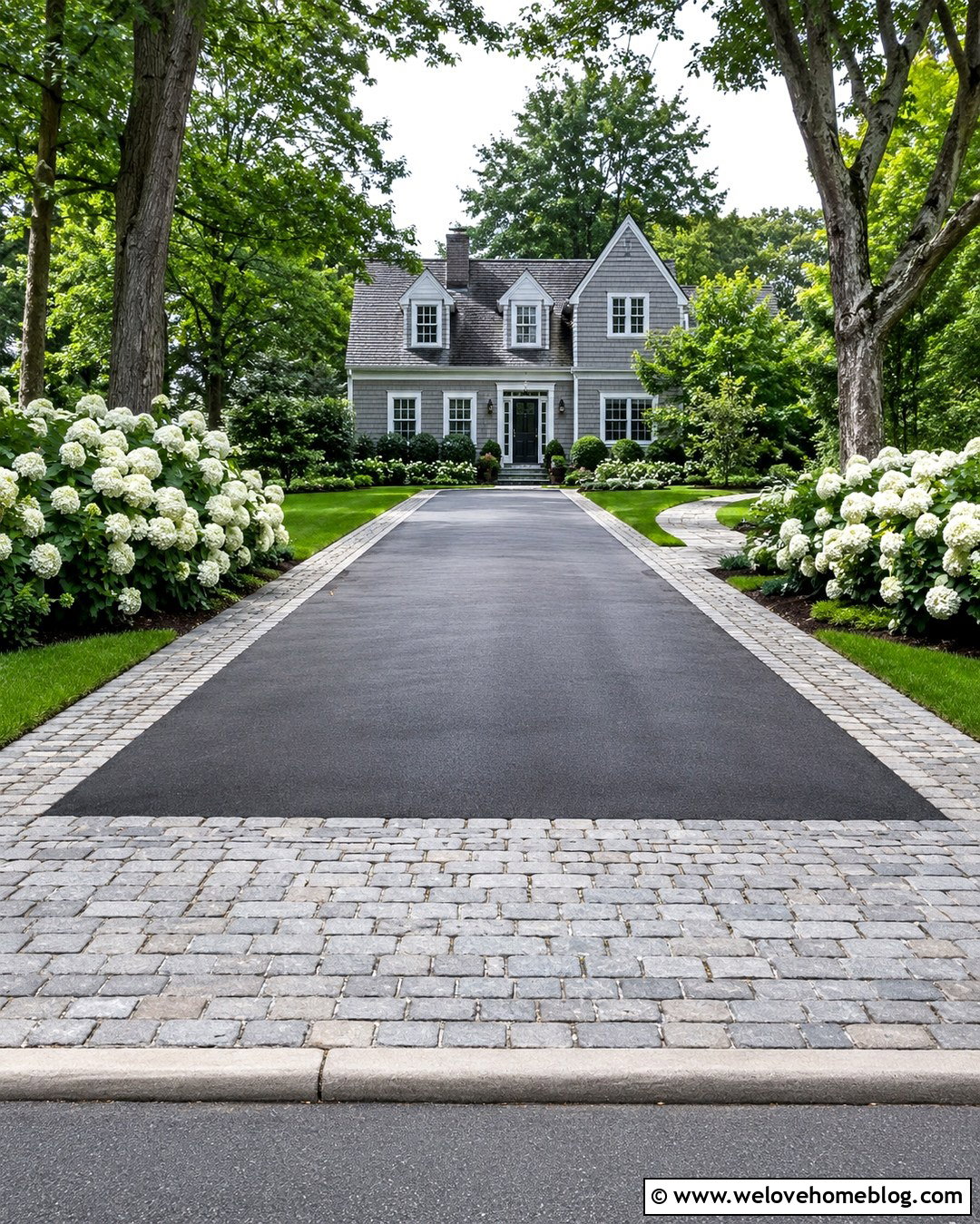
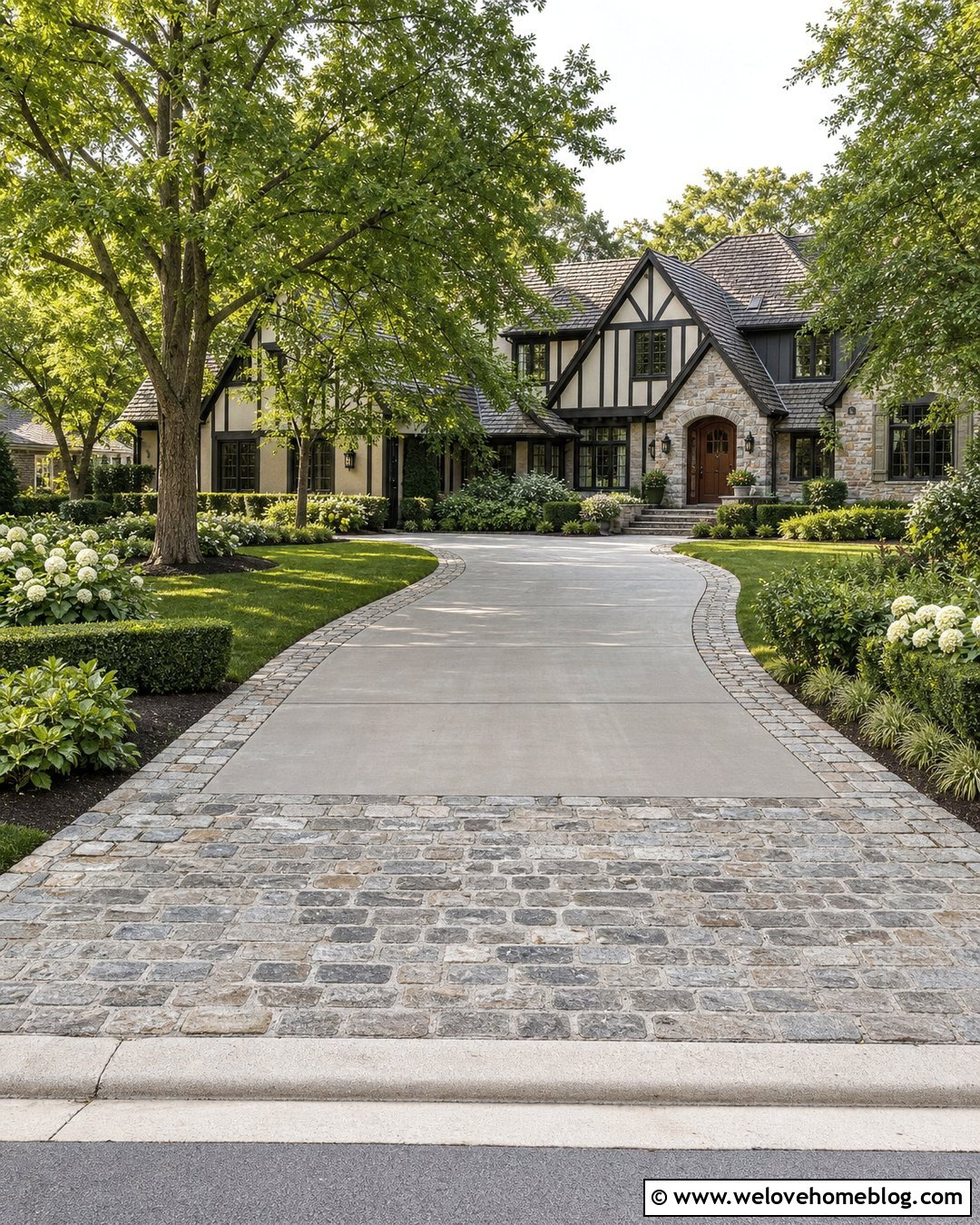
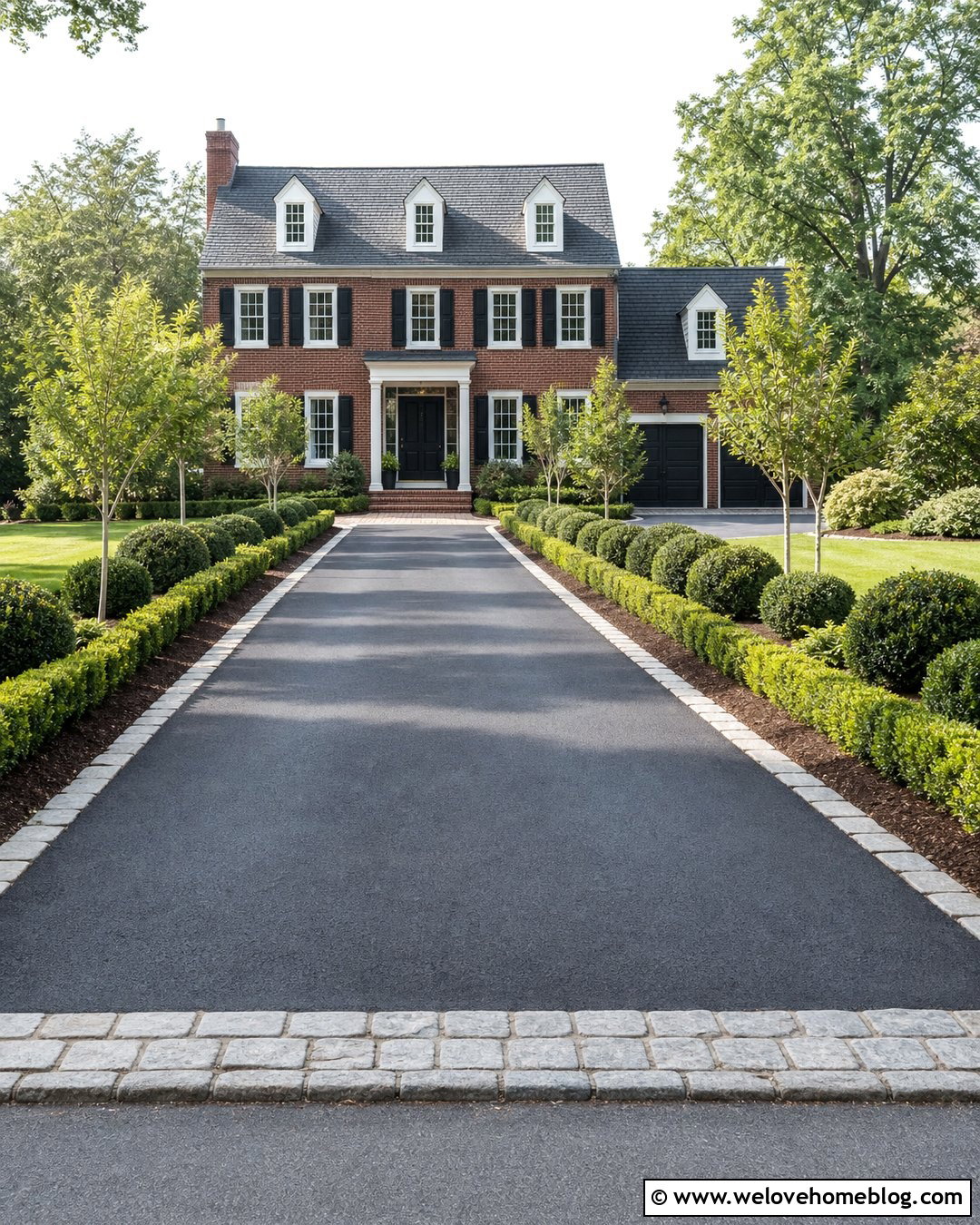
A dark asphalt driveway becomes far more distinctive when framed by chunky gray cobblestone side pavers. The irregular texture creates a traditional look while forming a strong visual boundary between the pavement and lawn. Use two parallel cobblestone rows for a substantial edge that can also provide a convenient step-out area. Near the street, widen the pavers into a cobblestone apron to strengthen the sense of arrival. This combination suits Cape Cod, Tudor, and older cottage homes particularly well. Low evergreen shrubs, white hydrangeas, and a curved flagstone walkway can complete the landscape. Choose stones with gently rounded or split faces rather than extremely uneven surfaces. A properly prepared and compacted base is important because weak edging can shift under vehicle pressure over time. ()
3. Gravel Driveway With Concrete Side Pavers
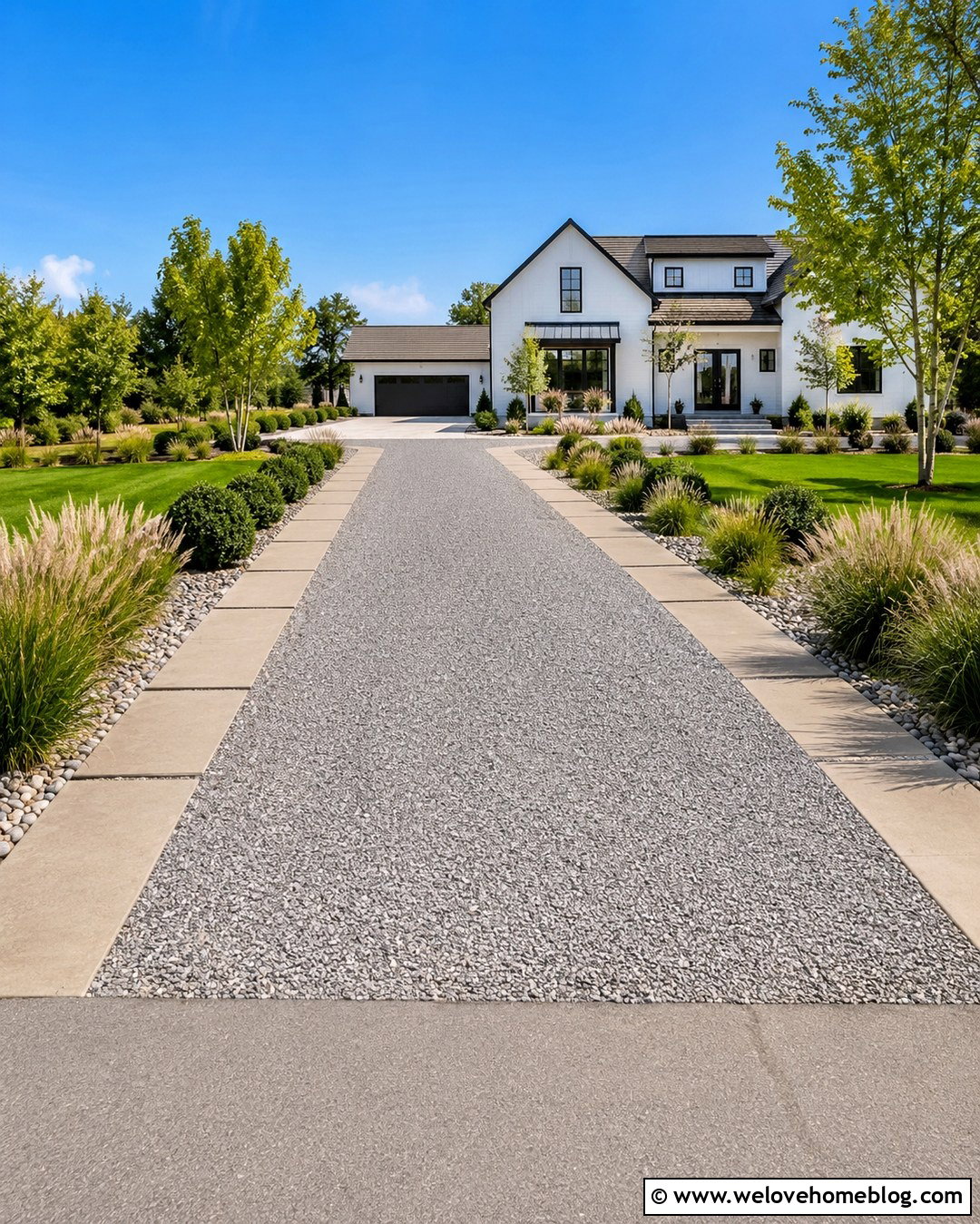
Loose gravel often spreads into surrounding grass, so wide concrete side pavers can create a practical and attractive boundary. Choose large rectangular pavers in a warm gray or sand tone and arrange them in straight running rows. The smooth paver strips make it easier to step out of a vehicle without landing on unstable gravel. They also give the driveway a cleaner, more structured outline. Use compacted gray crushed stone for the central surface and continue the pavers around the entrance apron. Ornamental grasses, clipped shrubs, and pale river rock can frame the outer edges without making maintenance difficult. This simple combination works with contemporary ranch and modern farmhouse homes. Keep the gravel slightly below the paver tops to reduce migration while maintaining a comfortable transition between the surfaces.
4. Concrete Driveway With Herringbone Side Pavers
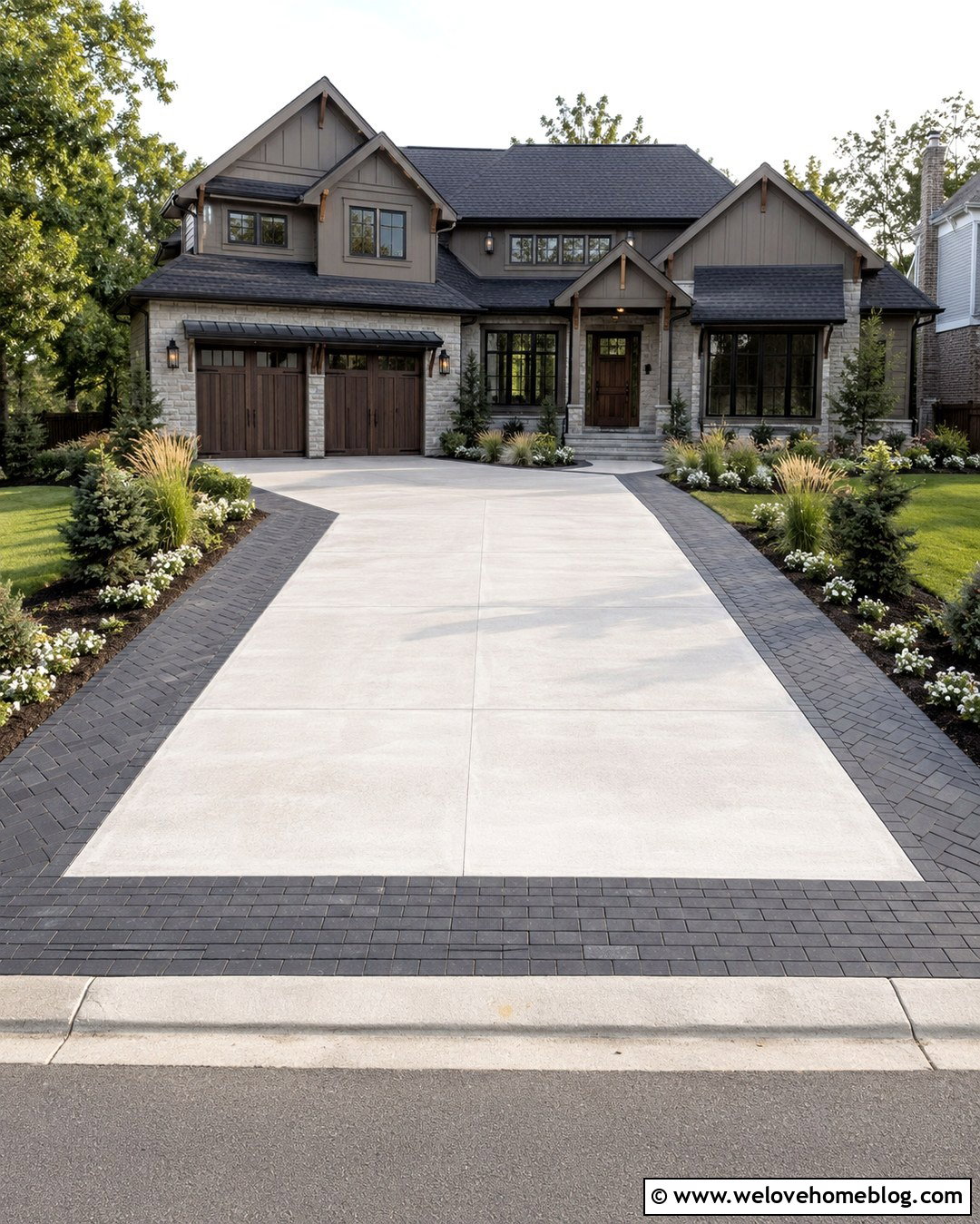
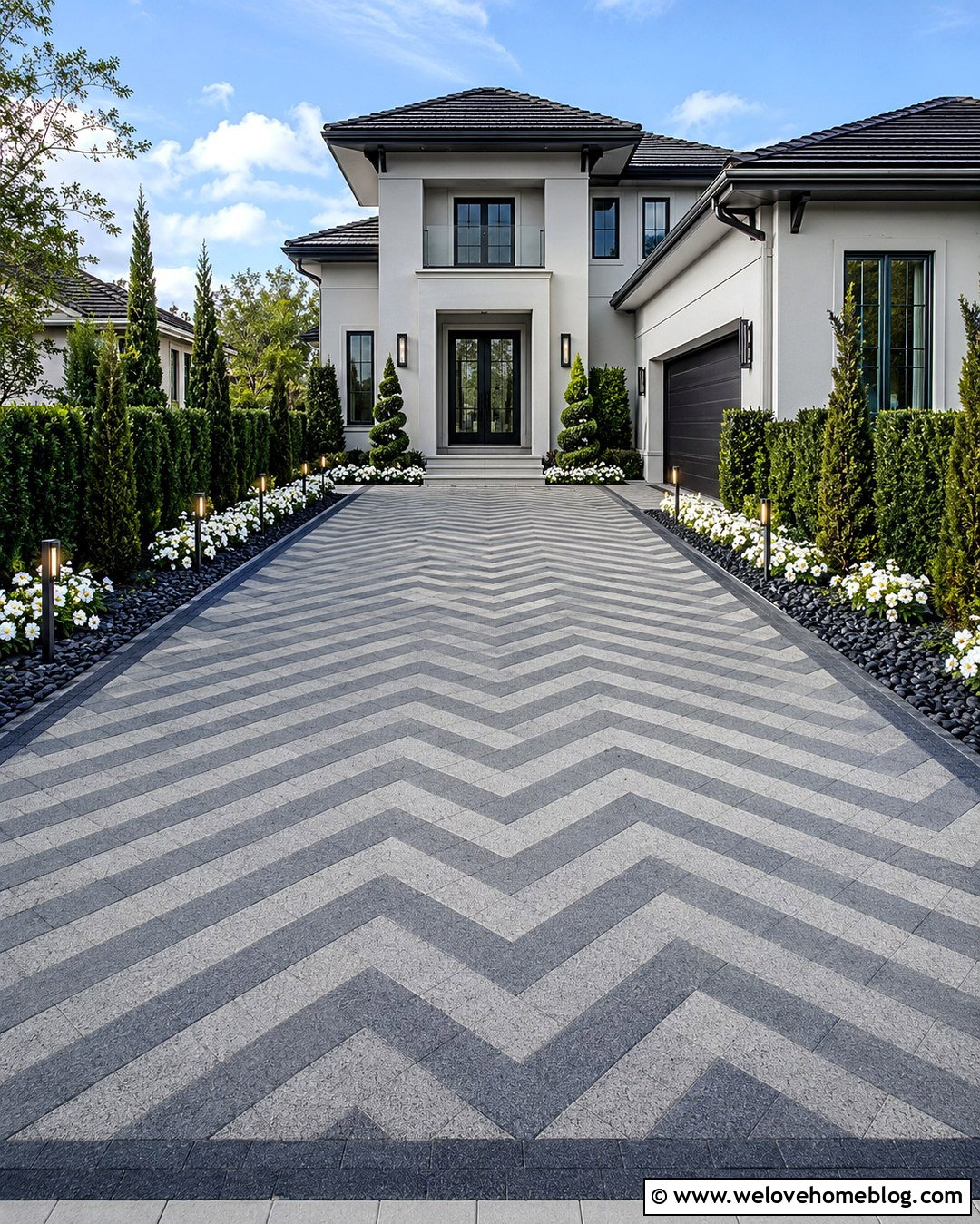
Herringbone side pavers bring movement and detail to a simple poured-concrete driveway. Select charcoal concrete bricks and arrange them in wide bands along both edges. The angled pattern adds visual energy without overwhelming the driveway’s clean central surface. For a coordinated design, repeat the charcoal pavers across the apron and around the walkway entrance. A straight driveway works especially well because the patterned sides emphasize its long lines and guide the eye toward the house. Pair the hardscape with rectangular planting beds containing dwarf evergreens, feather reed grass, and white flowering perennials. This look complements a modern craftsman or transitional home with dark trim. Use vehicle-rated pavers and secure the outside edges carefully, especially where the paver bands meet soft lawn or mulch.
5. Curved Driveway With Tumbled Paver Sides
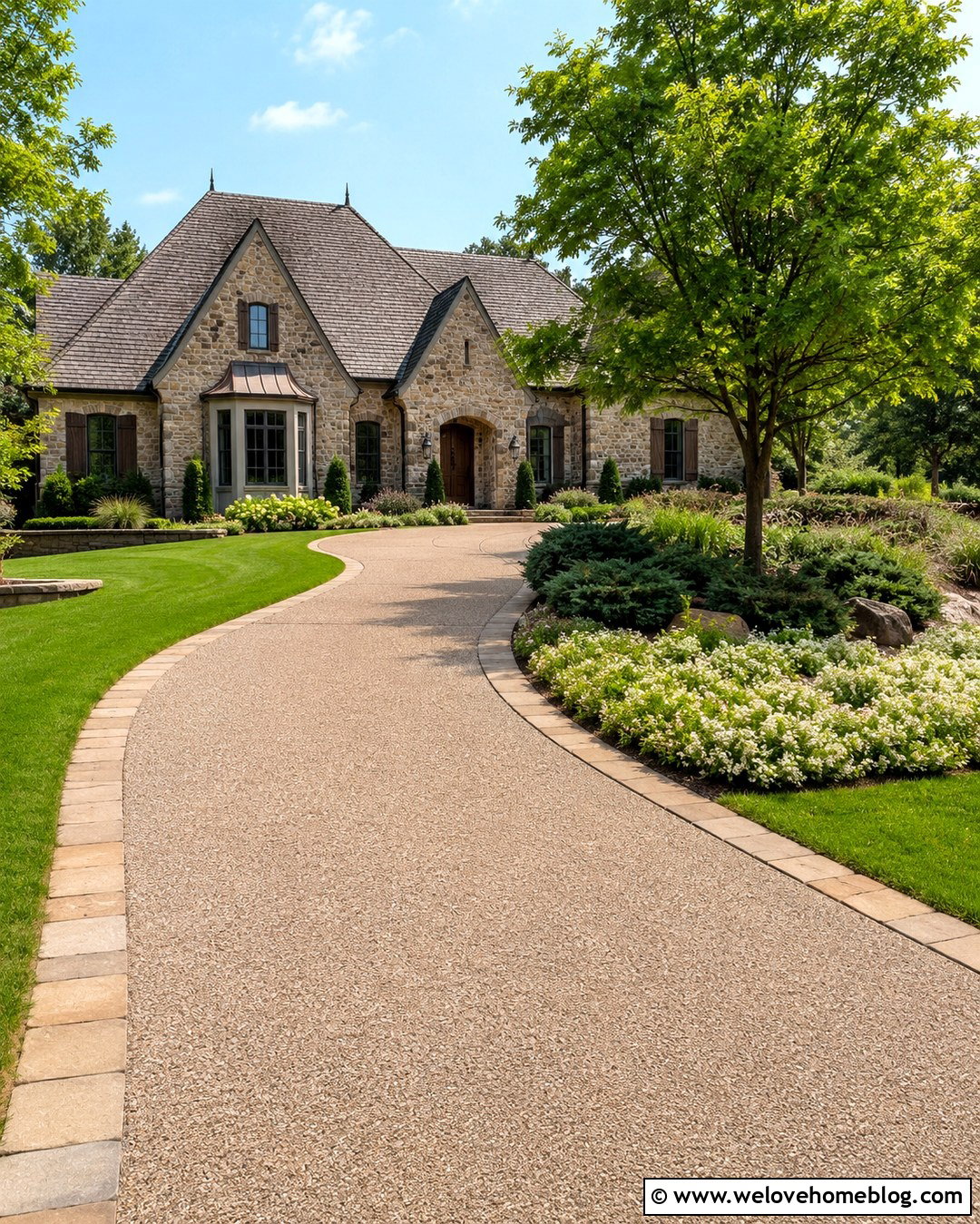
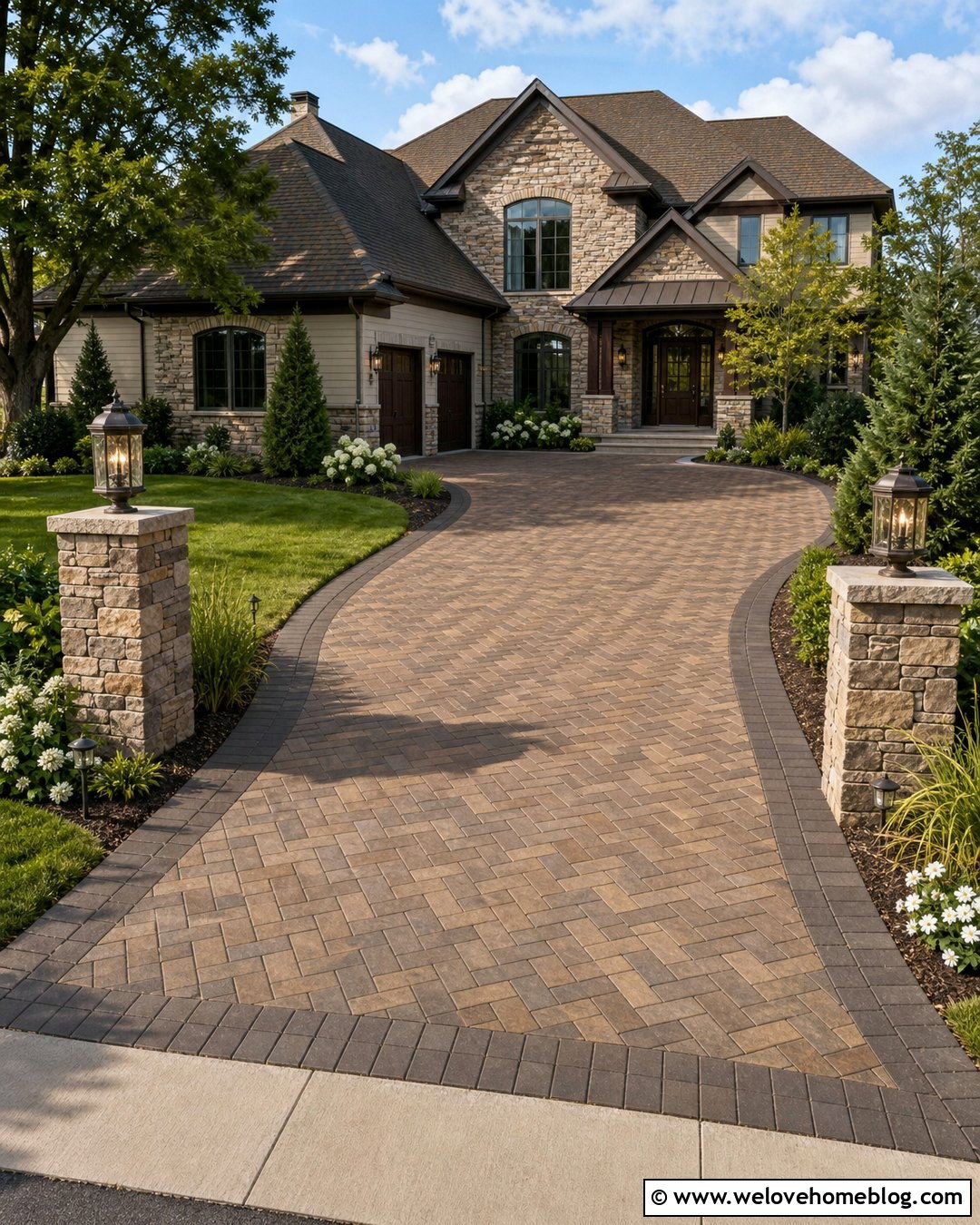
Softly rounded tumbled pavers are a natural match for a curved driveway because their weathered finish avoids a rigid, overly formal appearance. Frame a warm beige concrete or exposed aggregate surface with two wide rows of tan and brown pavers. Follow every curve consistently so the border feels smooth rather than segmented. At the inside bend, expand the paver strip into a small landscaped island with a specimen tree, low junipers, and flowering ground cover. The wider pavers provide extra room beside parked vehicles while protecting planted areas from tires. This complete look works beautifully with stone cottages, craftsman homes, and wooded suburban properties. Pull paver colors from the home’s facade or retaining walls to unite the driveway, architecture, and landscaping without making every material look identical.
6. Modern Driveway With Large Side Pavers
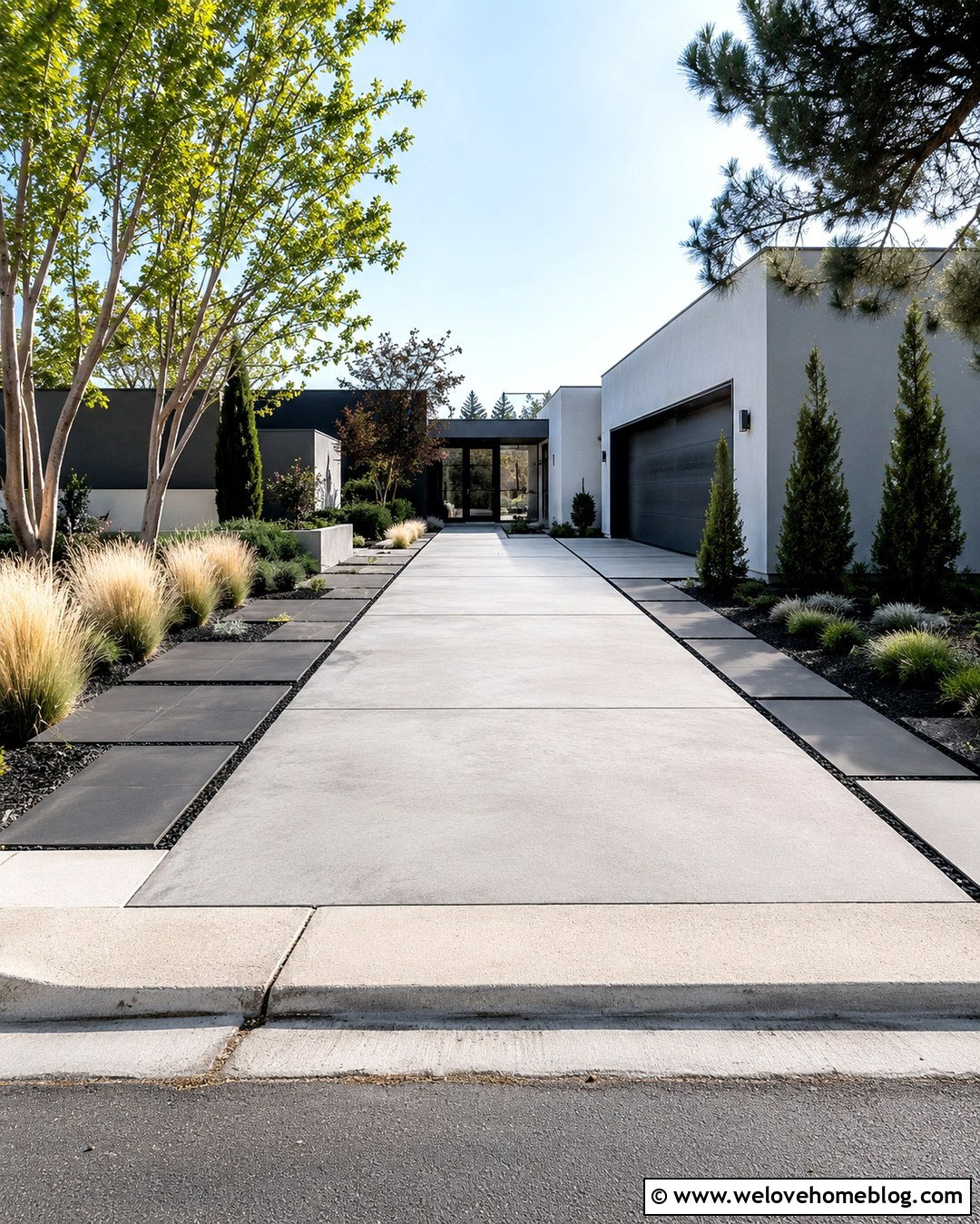
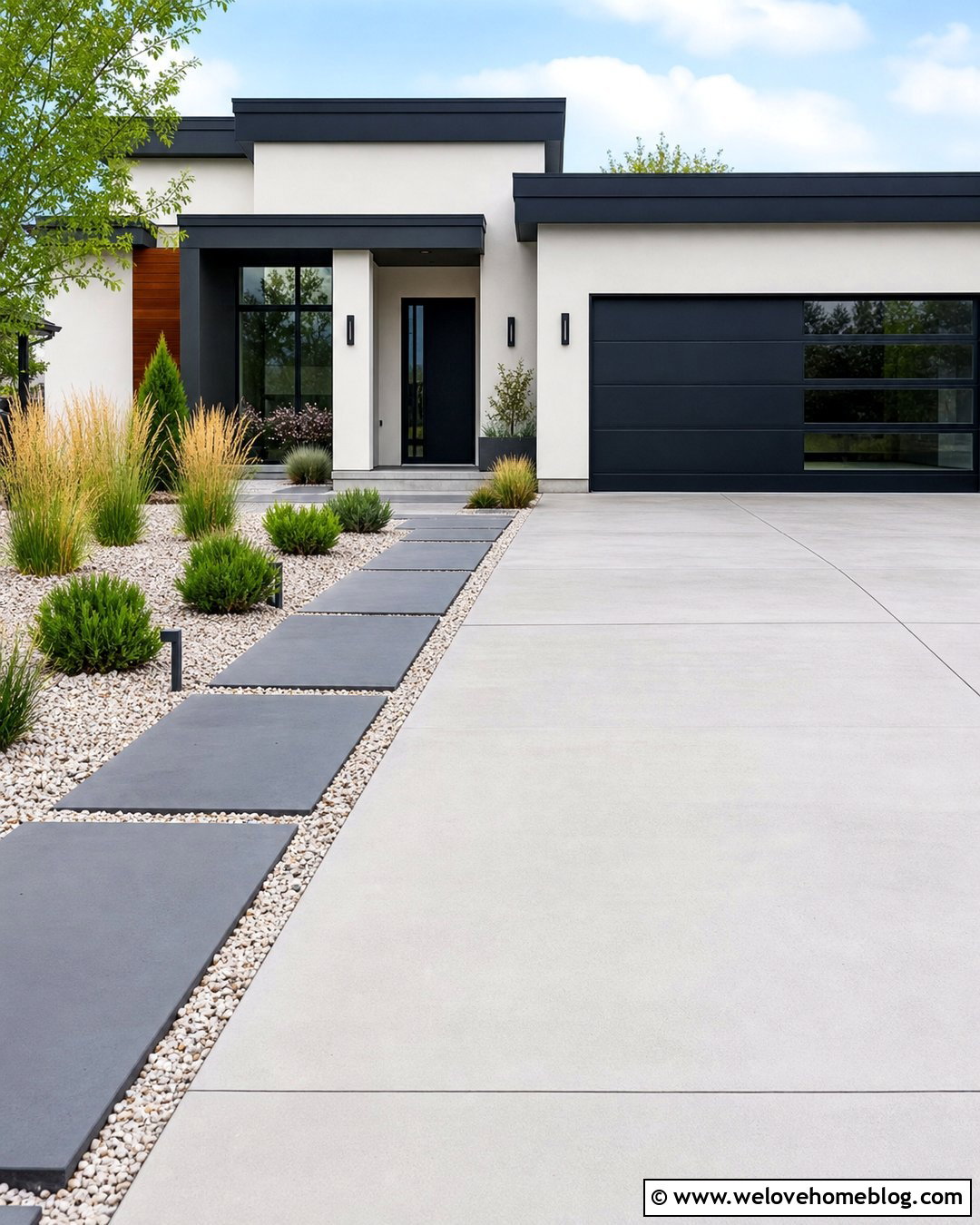
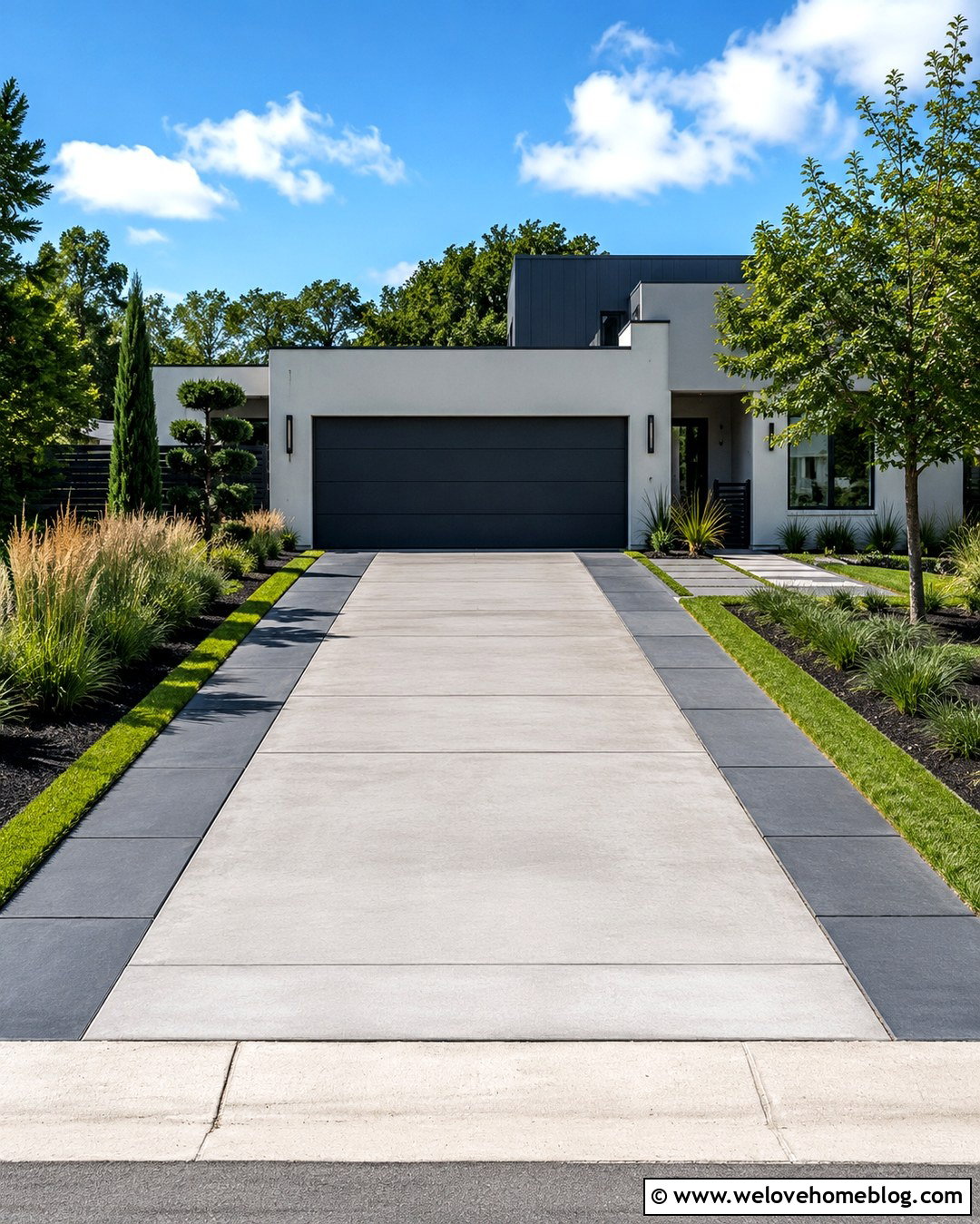
Large-format side pavers can make a narrow driveway look wider and more architectural. Begin with smooth, light gray poured concrete in the center, then install broad charcoal concrete slabs along each side. Use long rectangular units with minimal joint lines to maintain a clean contemporary appearance. Narrow black gravel joints can add definition and allow the side strips to coordinate with dark window frames or garage doors. Keep the surrounding landscaping simple with linear beds, sculptural grasses, compact evergreens, and one multi-stem tree. A matching slab walkway can branch from the side pavers and lead directly to the front entrance. This layout is especially effective for modern and mid-century homes. Avoid overly decorative borders, since the strong contrast and generous paver scale already provide plenty of visual impact.
7. Driveway Side Pavers With Grass Joints
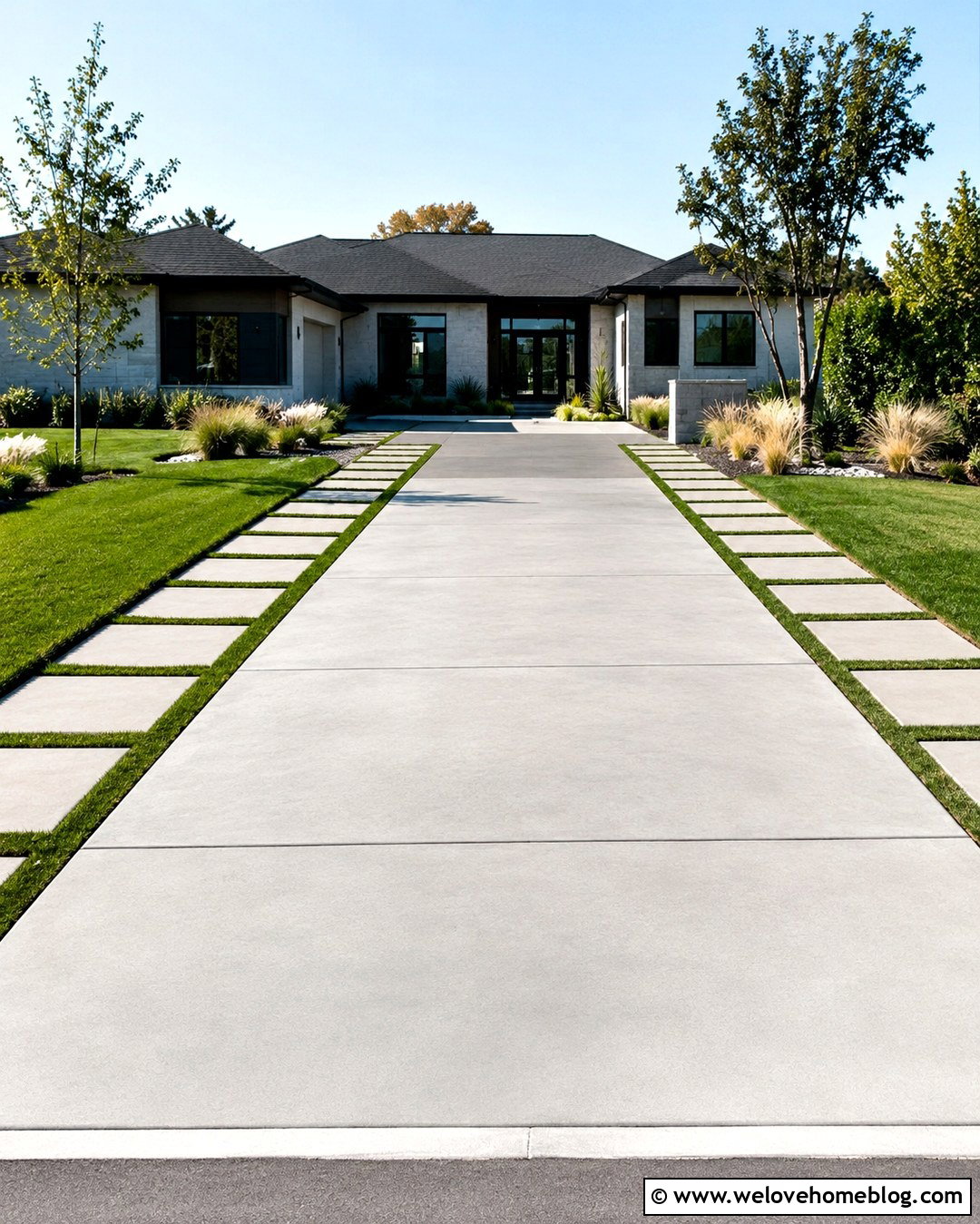
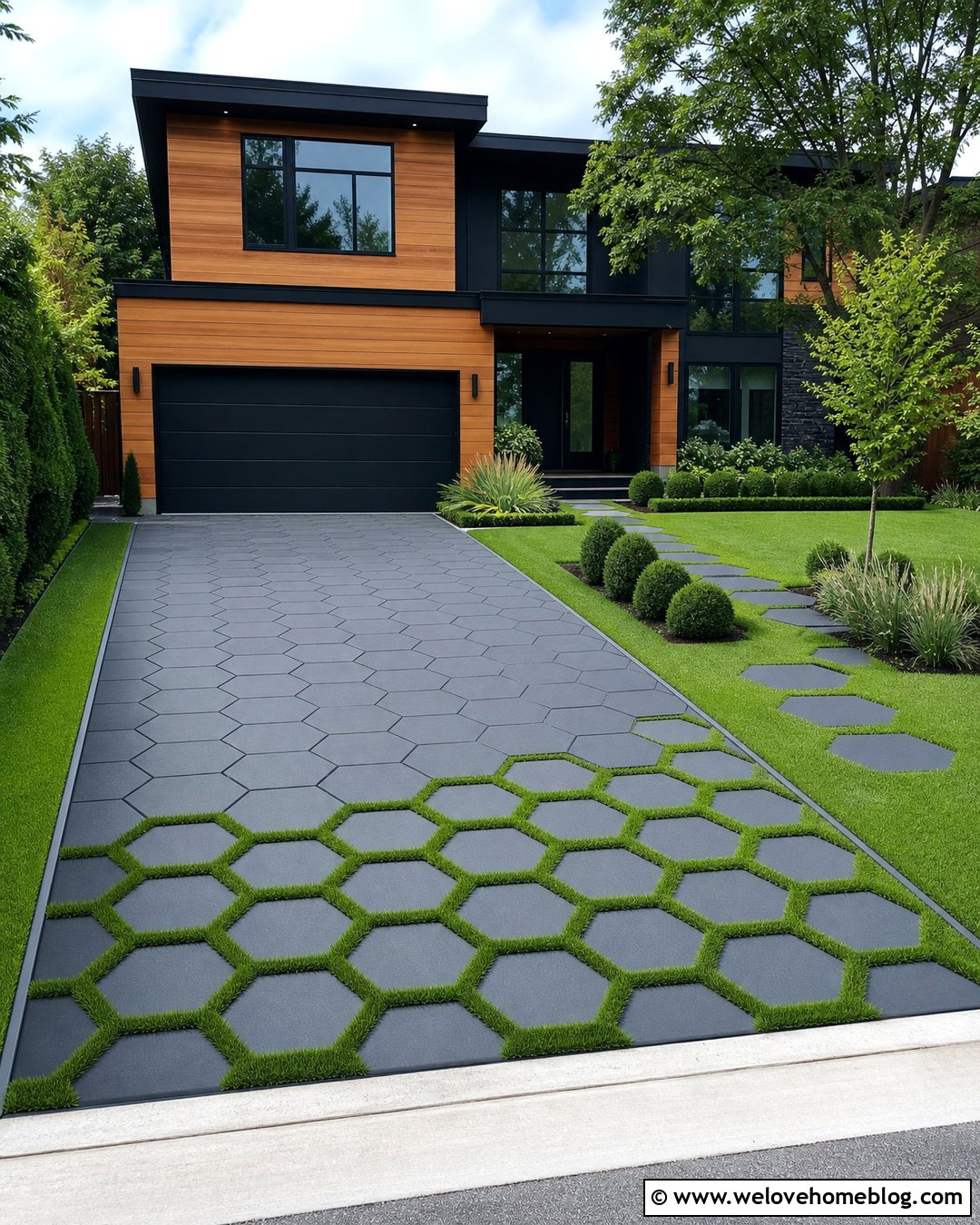
Grass-jointed pavers create a softer transition between a hard driveway and a green front lawn. Place large square concrete pavers along both sides of a straight poured-concrete driveway, leaving consistent gaps for durable turf or low-growing ground cover. The green joints break up the hardscape and help the expanded side strips blend into the yard. Keep the center driveway simple so the planted pattern remains the main feature. Near the house, connect one paver band to a matching walkway and porch landing. This design works best in sunny areas where the selected grass can tolerate local conditions and occasional foot traffic. A modern ranch or contemporary farmhouse provides an ideal background. Install the pavers over an appropriate stable base and make sure the planted gaps remain easy to trim and maintain.
8. Driveway Side Pavers With Lavender Borders
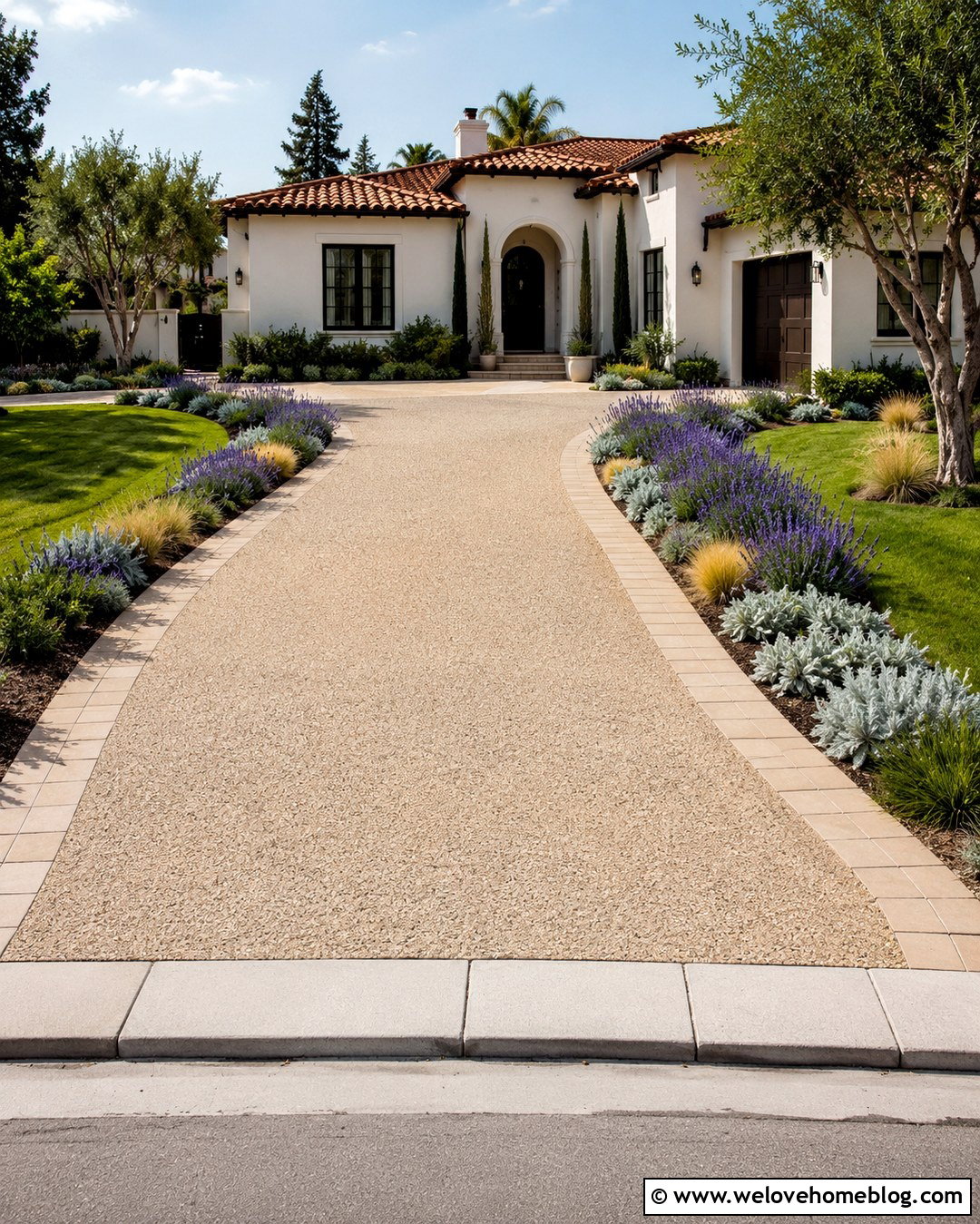
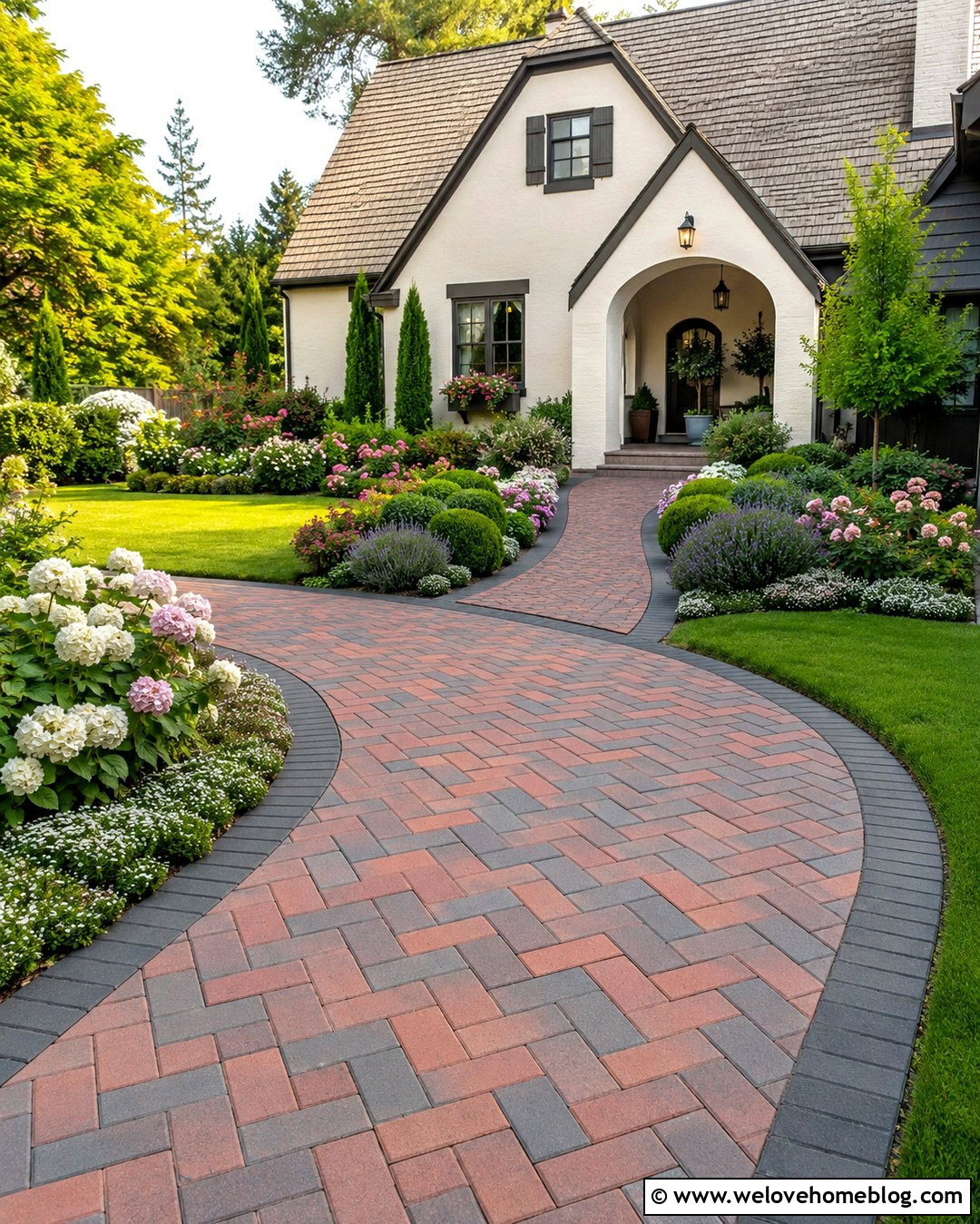
A driveway can feel both structured and relaxed when side pavers are paired with long lavender planting beds. Use warm beige concrete pavers as two-row borders around a pale exposed aggregate driveway. Beyond the pavers, repeat lavender in generous drifts, mixed with low ornamental grasses and silver-leaved plants. The pavers create a neat separation that prevents soil and mulch from spilling onto the driving surface. A gently curved layout enhances the informal garden character and leads naturally toward a cream stucco or Mediterranean-inspired house. Repeat the same pavers in the front walkway and around the entry steps for continuity. Choose plants suited to the site’s sun, drainage, and climate rather than relying on appearance alone. Low plantings will preserve visibility near the street while keeping the entire entrance colorful and inviting.
9. Driveway Side Pavers With River Rock
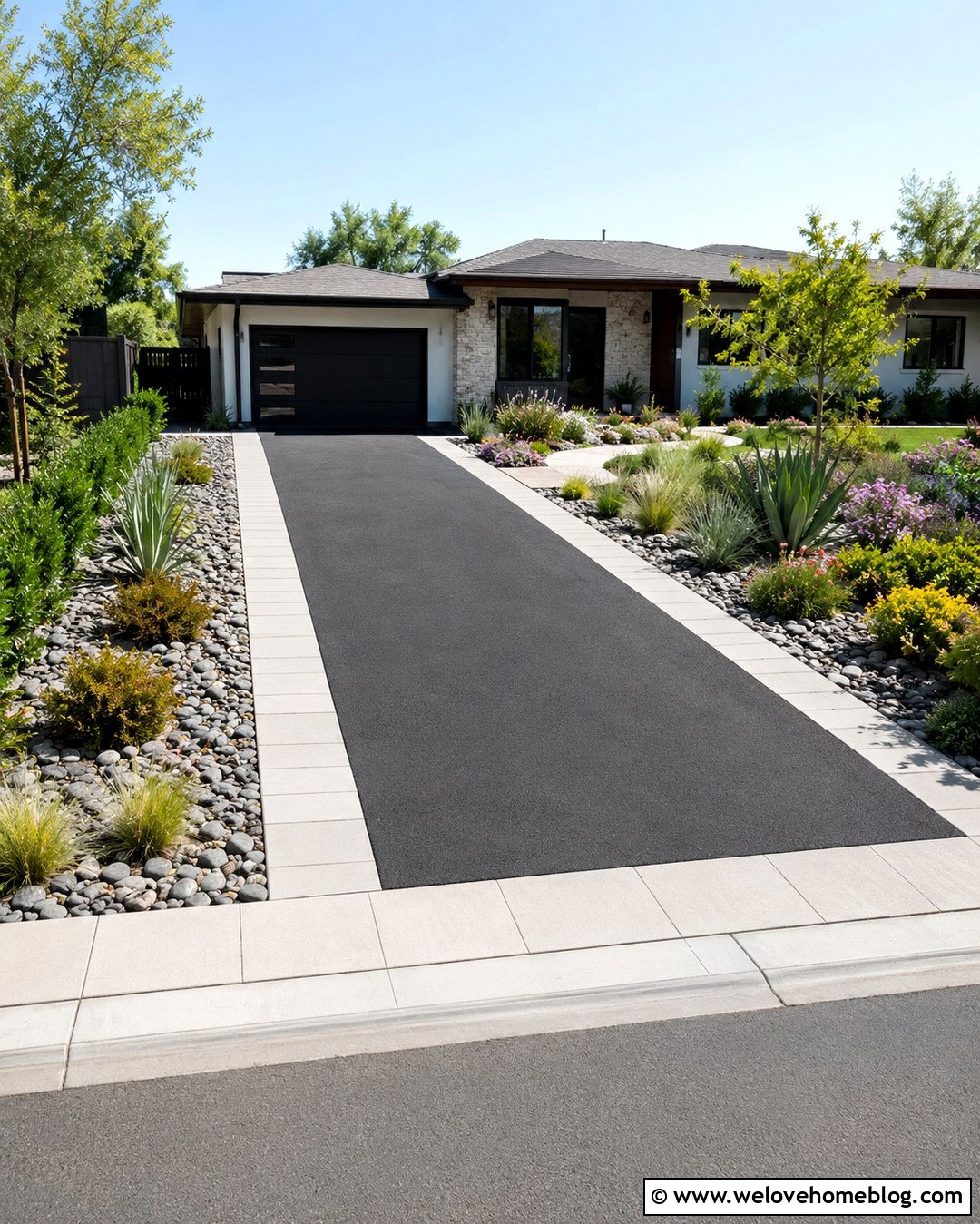
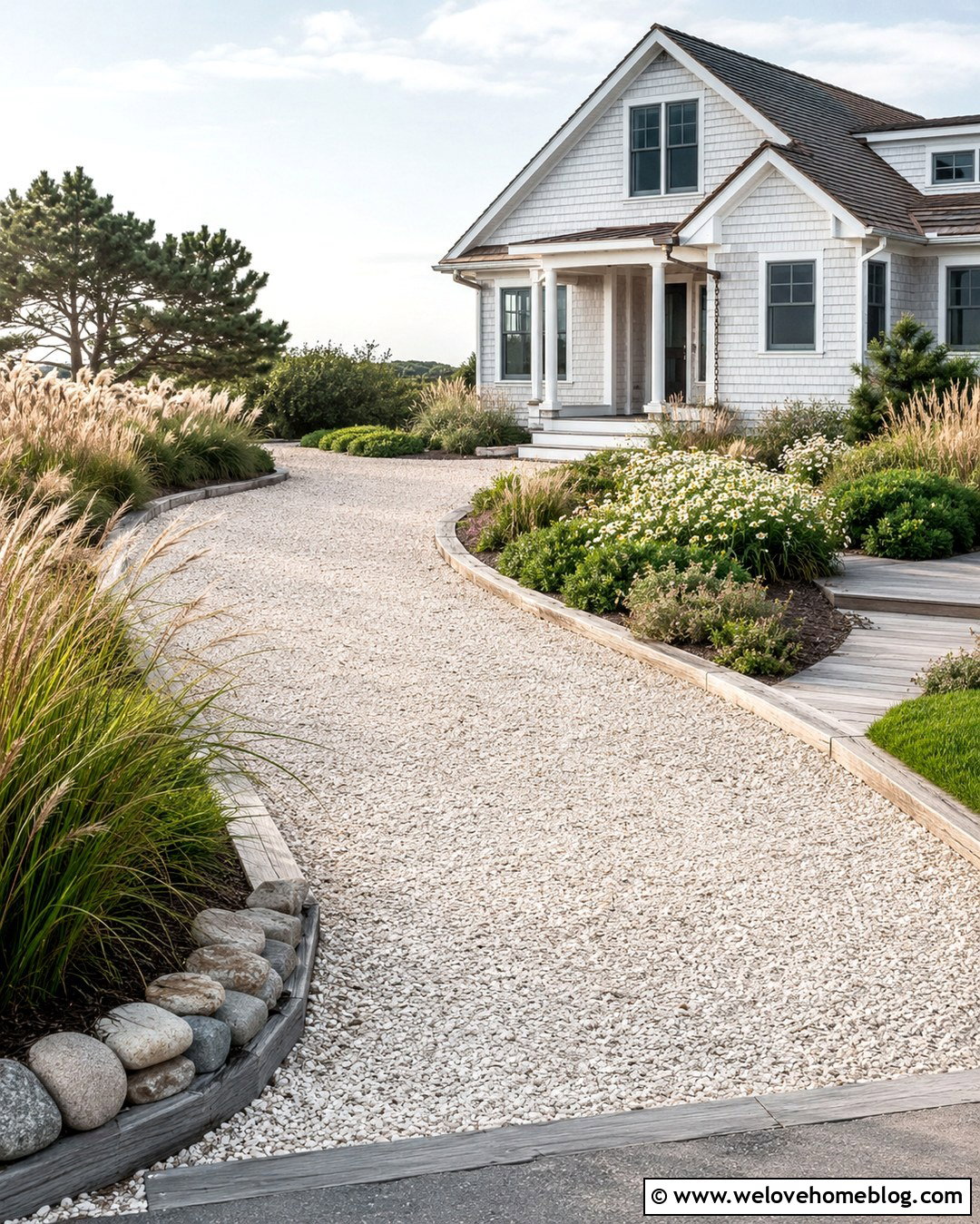
River rock between side pavers and planting beds can provide a clean, low-maintenance transition. Start with a charcoal asphalt driveway and frame it with broad light gray concrete pavers. Add a narrow band of smooth mixed-gray river rock outside the pavers, followed by drought-tolerant shrubs, yucca, ornamental grasses, and small flowering perennials. The layered arrangement clearly separates the driveway, step-out strip, decorative stone, and garden. It is especially suitable for a modern ranch home or a property in a dry climate. Carry the side pavers around the driveway apron and use the same river rock near the house foundation. Make certain the stone band has a defined outer edge so rocks do not migrate into the yard. Keep plants spaced carefully to prevent mature growth from covering the walkable paver surface.
10. Brick Driveway With Limestone Side Pavers
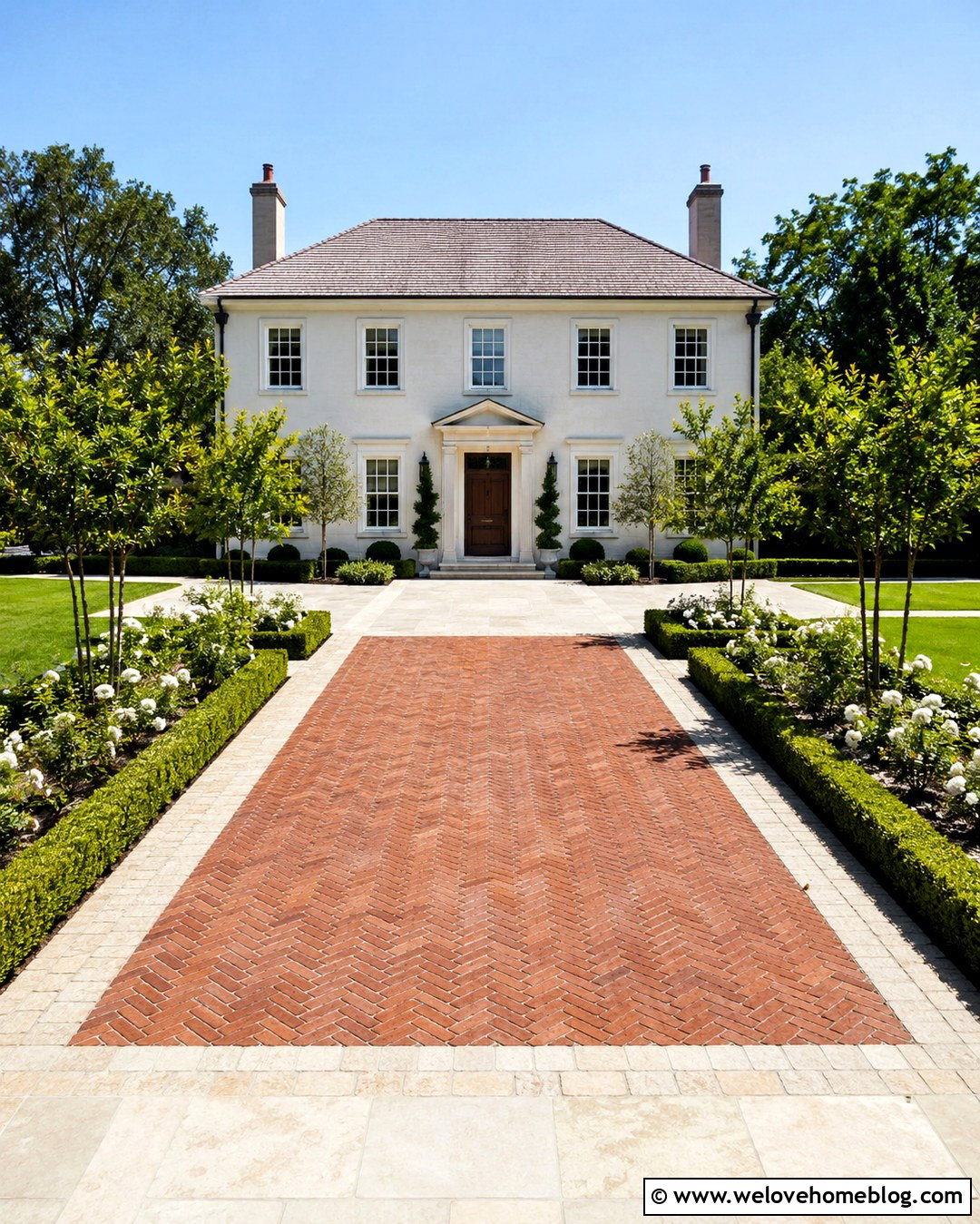
A red brick driveway gains an elegant frame from pale limestone side pavers. Arrange the brick field in a classic herringbone pattern, then add straight limestone bands along both edges and across the entrance apron. The light border highlights the driveway shape and prevents the brick surface from visually blending into surrounding mulch. This refined combination suits Georgian, colonial, and formal traditional homes. Symmetrical boxwood beds, white roses, and small ornamental trees can reinforce the balanced layout. Use limestone with a textured outdoor finish that offers better traction than highly polished stone. Matching limestone walkway details or porch steps will make the side borders feel connected to the architecture. Because natural stone can vary in color, review several pieces together before selecting the final blend for the complete driveway.
11. Driveway Side Pavers With a Matching Walkway
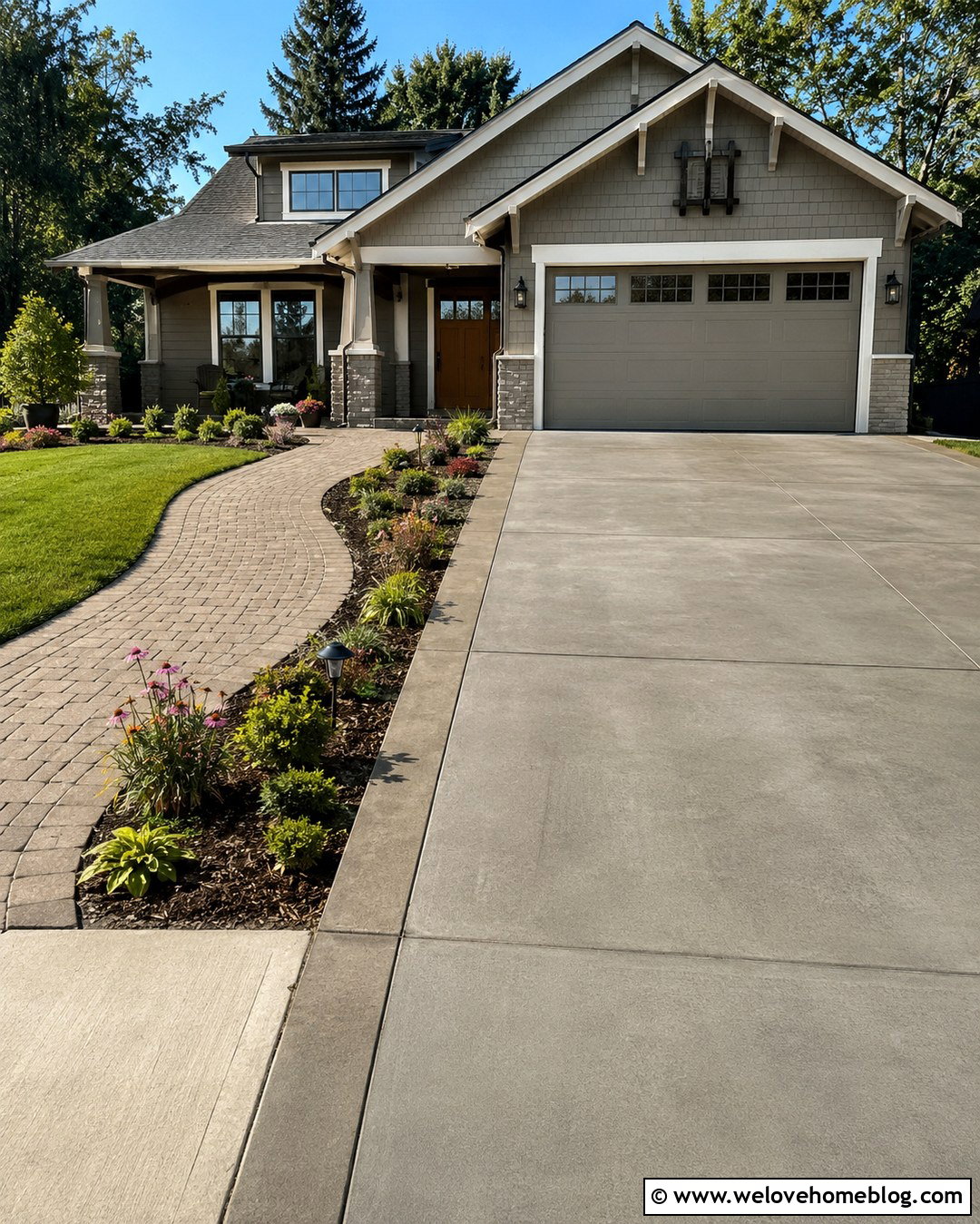
Side pavers become more useful when one band expands into a full walkway leading to the front door. Frame a smooth gray concrete driveway with warm taupe interlocking pavers, then widen the band nearest the house into a comfortable path. A subtle curve can separate pedestrians from the vehicle route while directing visitors toward the porch. Use the same paver color and laying pattern throughout to make the transition appear seamless. A narrow planting bed between the walkway and driveway can hold low shrubs, flowering perennials, and landscape lighting. This layout is ideal for homes where the garage entrance currently dominates the facade. A three- to four-foot walkway generally provides a more comfortable pedestrian route than a very narrow strip. () Complete the scene with a craftsman house, trimmed lawn, and a clearly visible front entrance.
12. Driveway Side Pavers With Raised Garden Beds
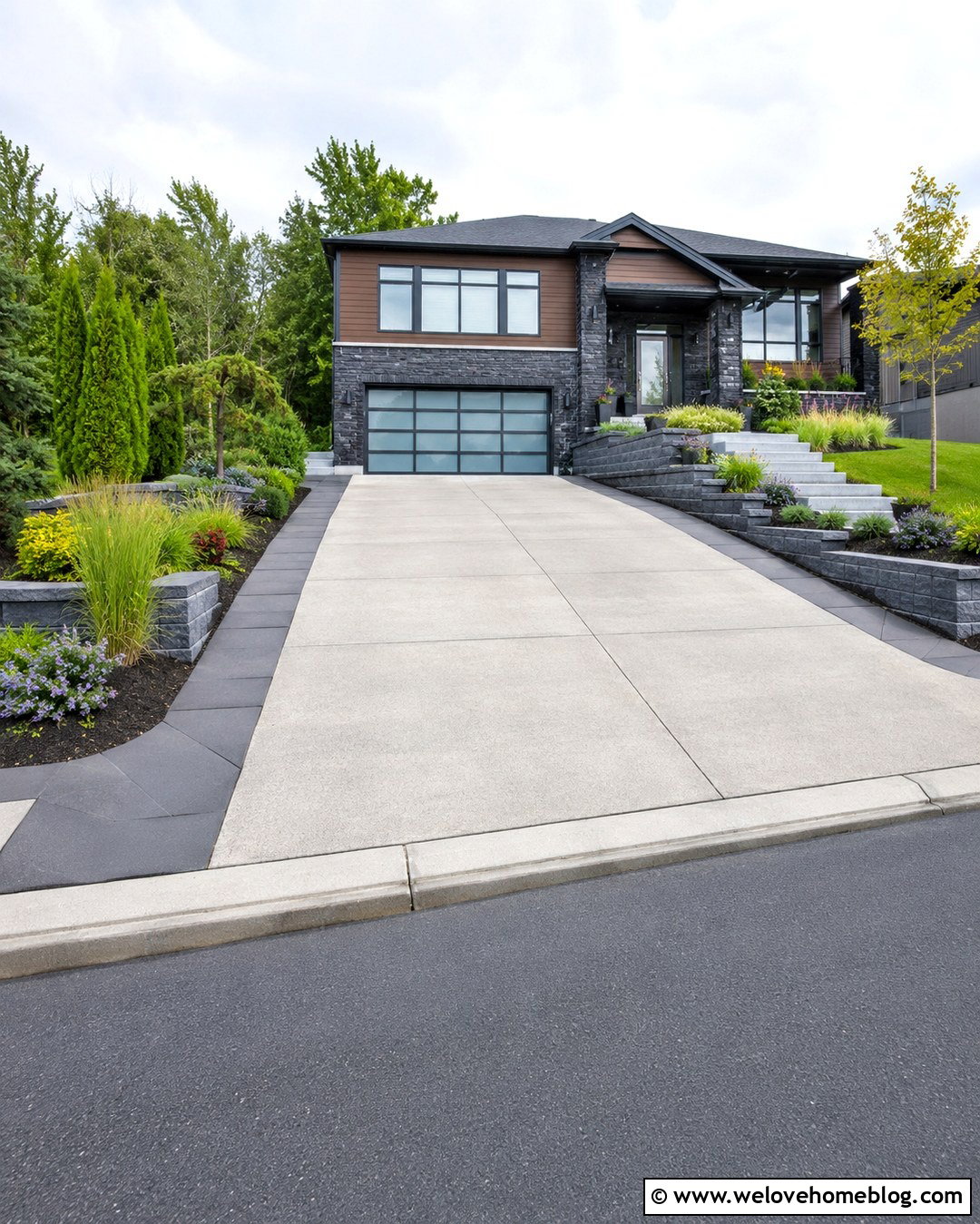
Raised beds can transform paver-lined driveway edges into an organized landscape feature. Use a light gray concrete driveway with charcoal pavers forming wide side strips. Beyond the pavers, build low retaining beds from matching charcoal wall blocks. Fill them with layered evergreen shrubs, ornamental grasses, and long-blooming flowers that remain below driver sightlines near the street. The side pavers provide a clean buffer between vehicles and the raised plantings, reducing the chance of tires or doors damaging the garden. This approach works especially well on a sloped lot where loose mulch frequently washes toward the driveway. Step the beds gradually with the grade rather than forcing one tall wall across the slope. A contemporary split-level or hillside home will complement the strong horizontal lines and structured landscaping.
13. Gravel Driveway With Brick Side Runners
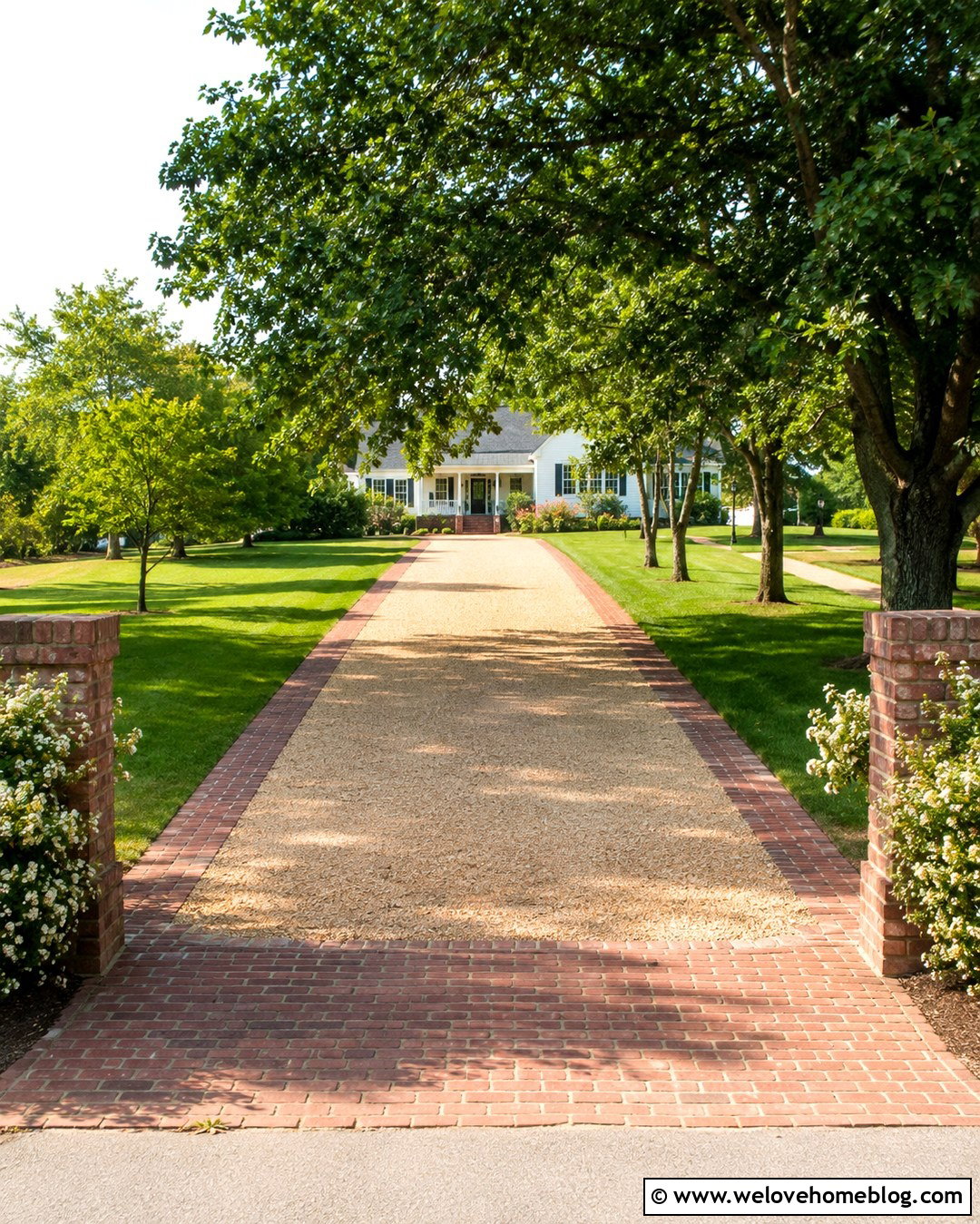
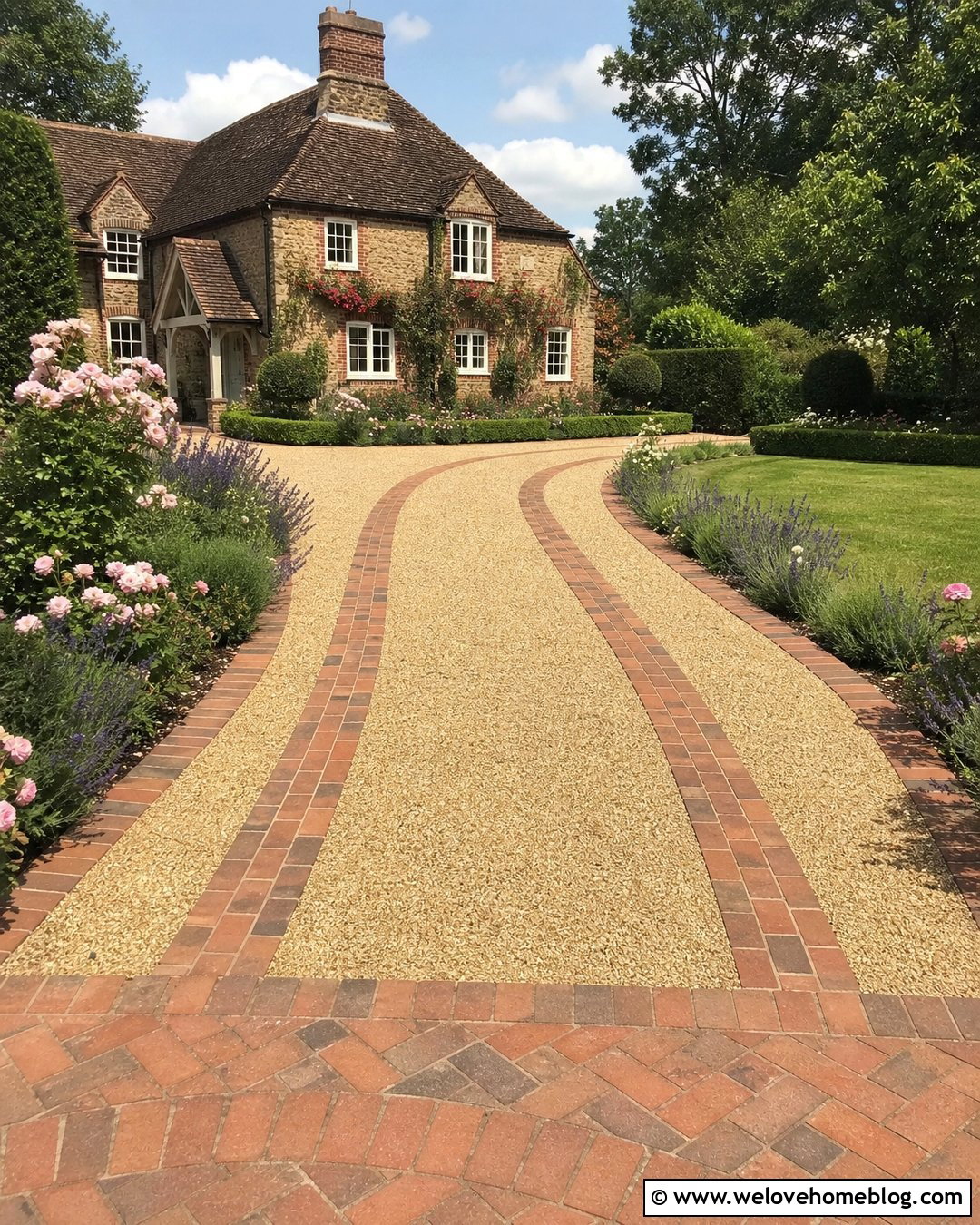
Brick side runners can bring structure to a country gravel driveway without removing its relaxed character. Use compacted buff-colored gravel through the center and install wide red brick bands along each edge. Lay the bricks lengthwise to emphasize the driveway’s direction and create stable step-out zones. A brick apron at the road can visually contain the gravel and introduce the material before visitors reach the house. Frame the outer edges with mown lawn, flowering shrubs, and widely spaced shade trees. This complete look pairs naturally with a white farmhouse, cottage, or converted barn. Select brick pavers rated for exterior paving rather than ordinary wall bricks. The paver runners need a well-compacted base and secure edge restraints so they remain aligned beside the loose driveway material and withstand occasional vehicle contact.
14. Driveway Side Pavers With Low Lighting
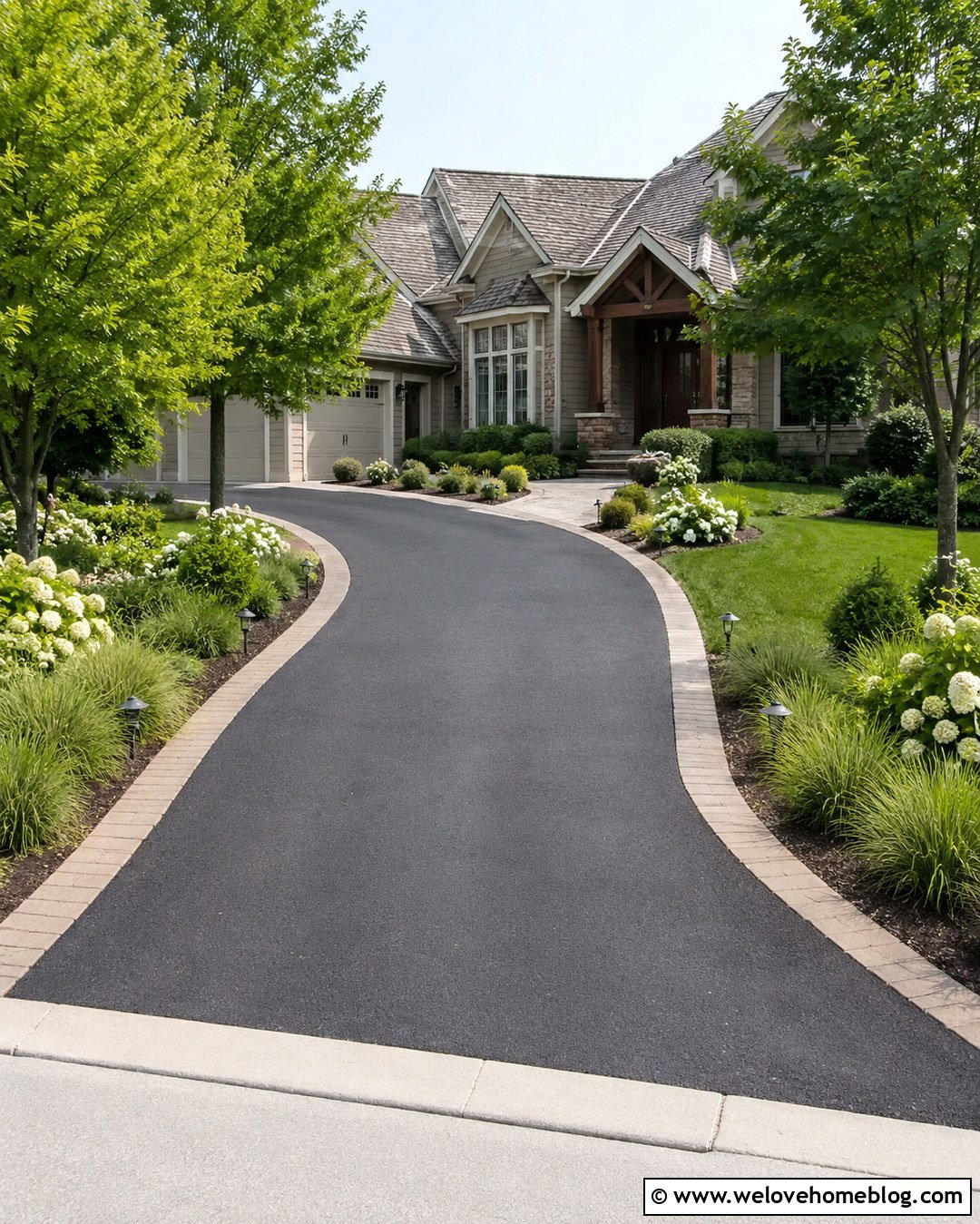
Low-profile lighting can make side pavers useful after sunset without turning the driveway into an overly bright runway. During the day, a black asphalt surface framed with tan concrete pavers creates a warm, noticeable contrast. Install small shielded lights at regular intervals just beyond the pavers, aiming illumination downward across the borders. Keep fixtures out of the vehicle path and avoid placing them where open doors could cause damage. Curved planting beds with low grasses, dwarf hollies, and pale flowers can reflect light while preserving a tidy appearance. Carry the tan pavers around the apron and toward the front walkway for a cohesive design. This combination suits a suburban craftsman or traditional ranch home. Choose fixture spacing based on actual light output instead of crowding the border with unnecessary hardware.

15. Circular Driveway With Contrasting Side Pavers
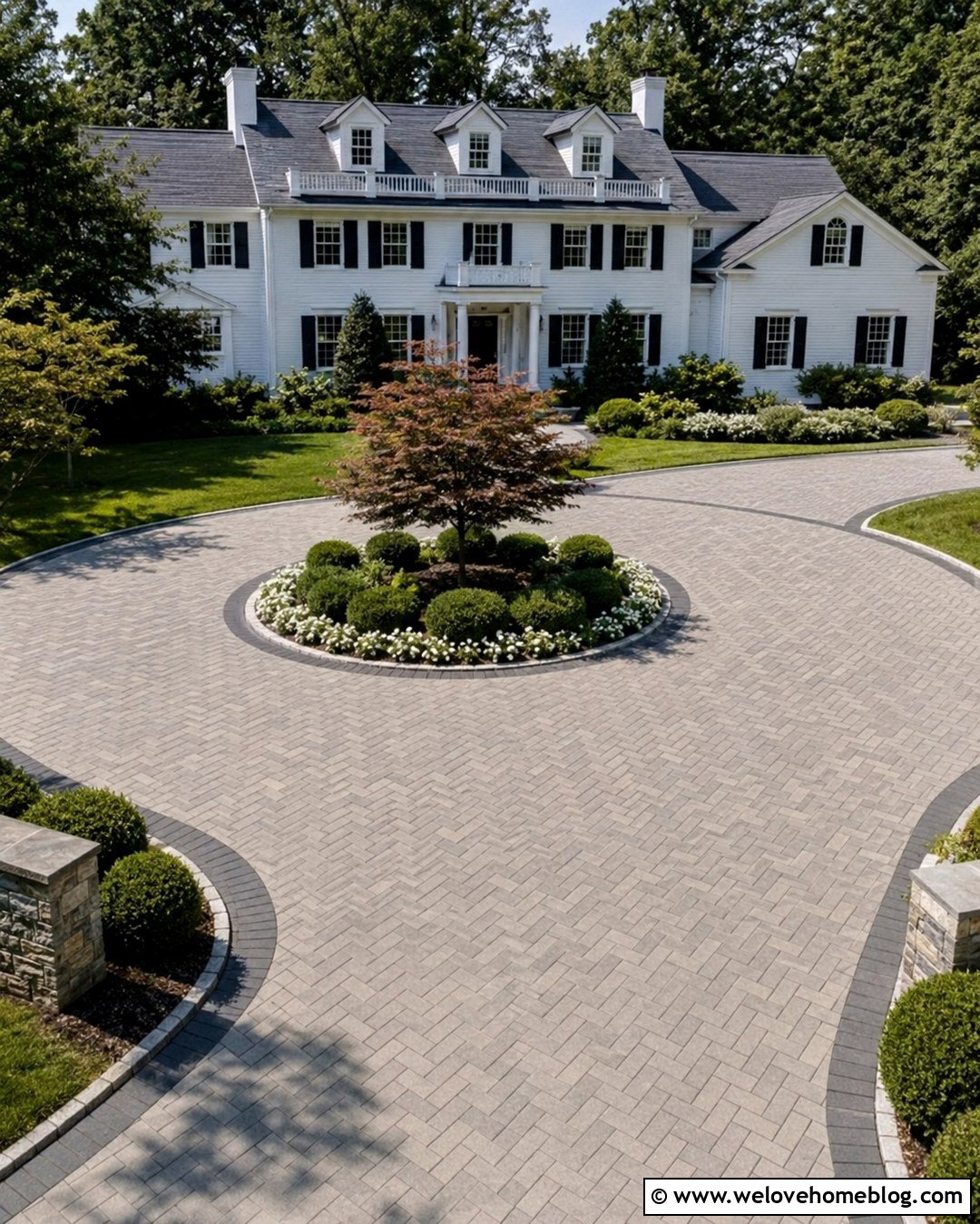
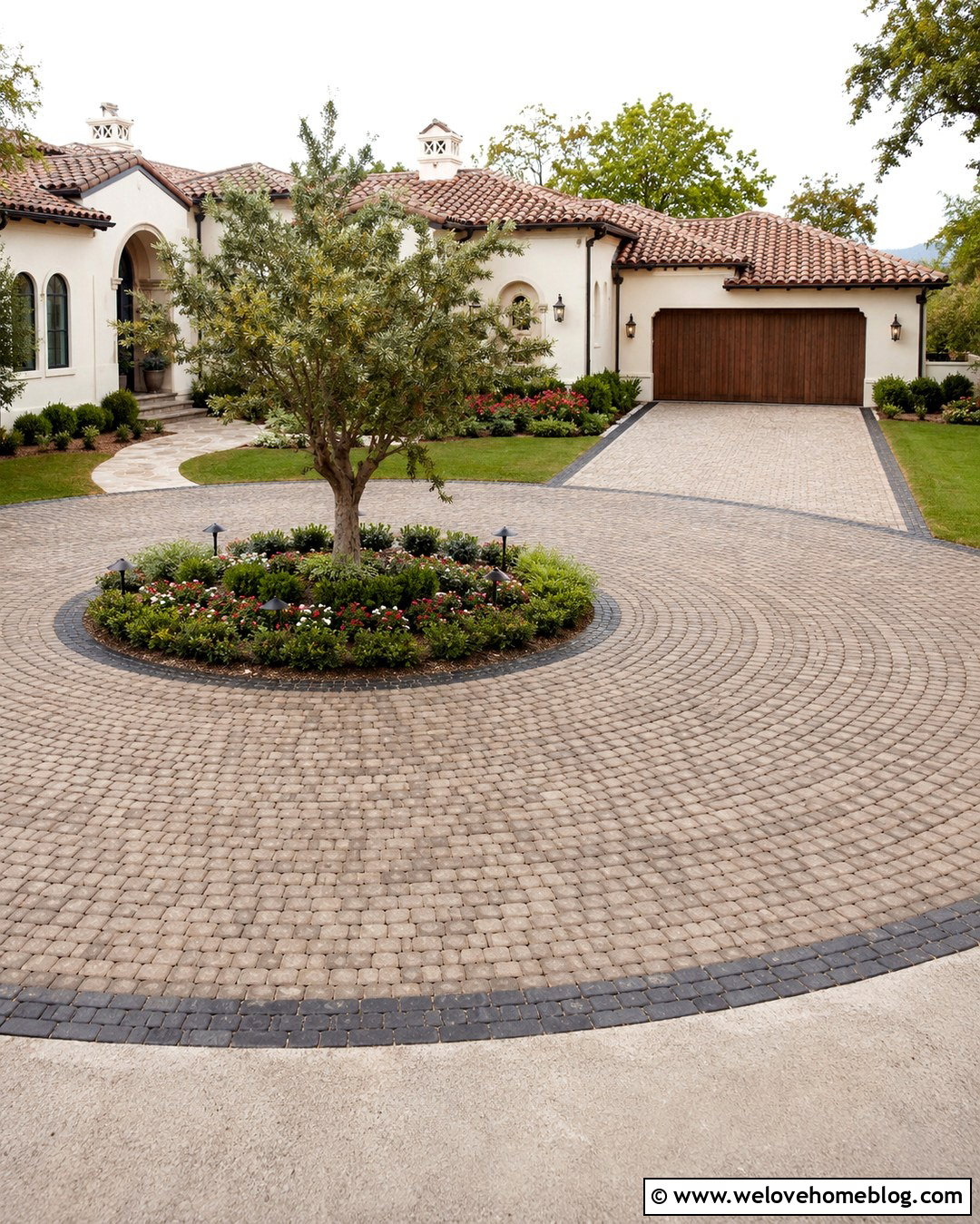
A circular driveway looks clearer and more polished when contrasting pavers define both its inner and outer edges. Use warm gray interlocking concrete pavers for the main driving surface and dark charcoal soldier-course pavers along the sides. Continue the charcoal border around the complete circle, including both entrances and the central island. Plant the island with one small ornamental tree, evergreen structure, and low flowers that will not obstruct the view. On the outer edge, maintain open lawn with balanced planting beds near the house. This layered arrangement emphasizes the circular shape and guides vehicles through the space. It works particularly well with a large colonial, French country, or traditional two-story home. Repeating charcoal pavers around the front walkway can connect the broad driveway to the pedestrian entrance.
16. Driveway Side Pavers With a Parking Strip
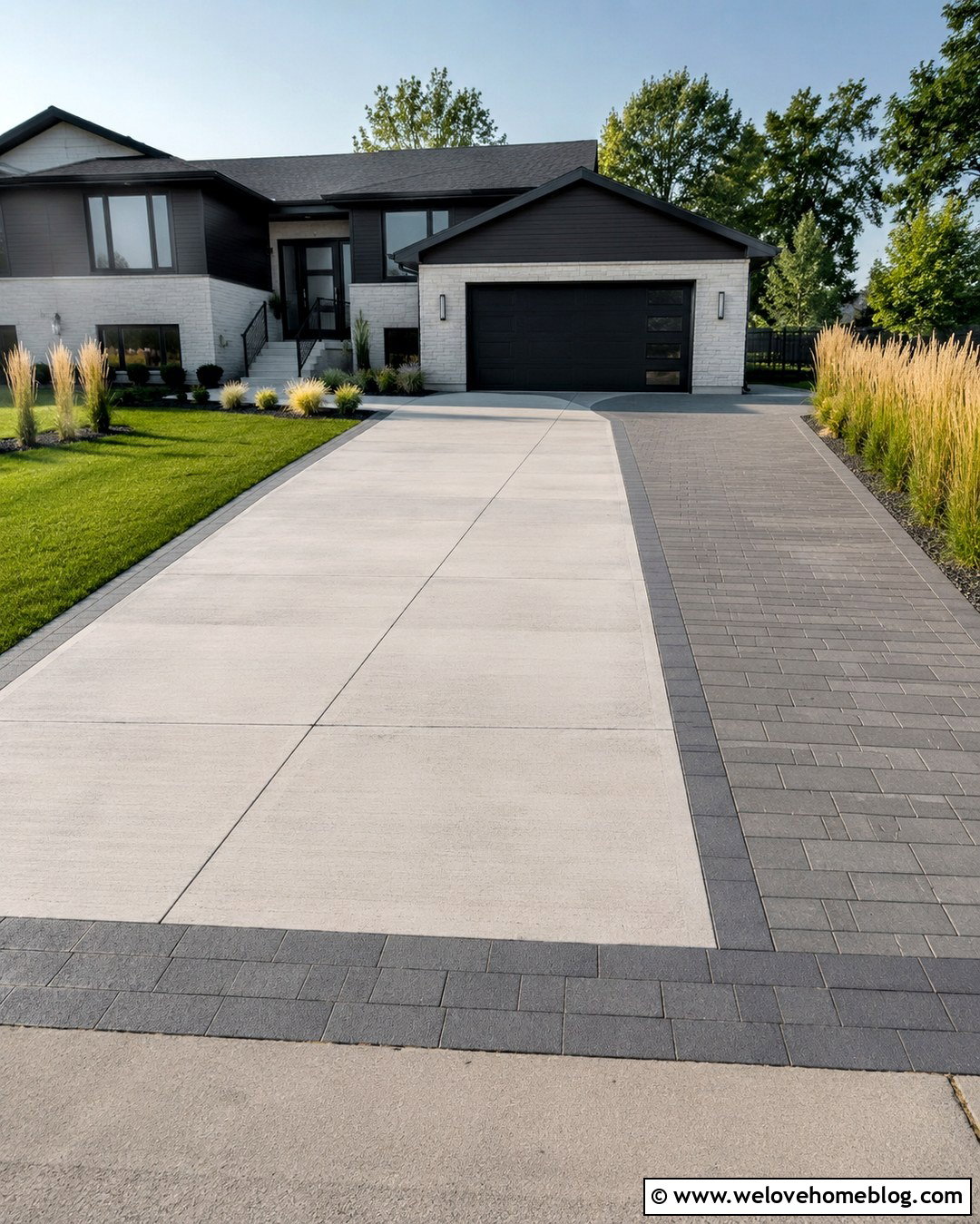
A wide side paver strip can add practical parking space while keeping the original driveway visually distinct. Begin with a straight light gray poured-concrete driveway, then add a six- to eight-foot band of charcoal interlocking pavers along one side. The contrasting surface can serve as occasional guest parking, a turnaround point, or a clear place for passengers to step out. Extend the pavers only where needed rather than covering the entire front yard. A narrow planting bed with upright grasses and compact shrubs can separate the parking strip from the property line. Use a matching charcoal apron band to tie both surfaces together. This design fits contemporary suburban and split-level homes where parking is limited. Confirm local setback, drainage, and lot-coverage requirements before enlarging the paved area.
17. Driveway Side Pavers With Stone Pillars
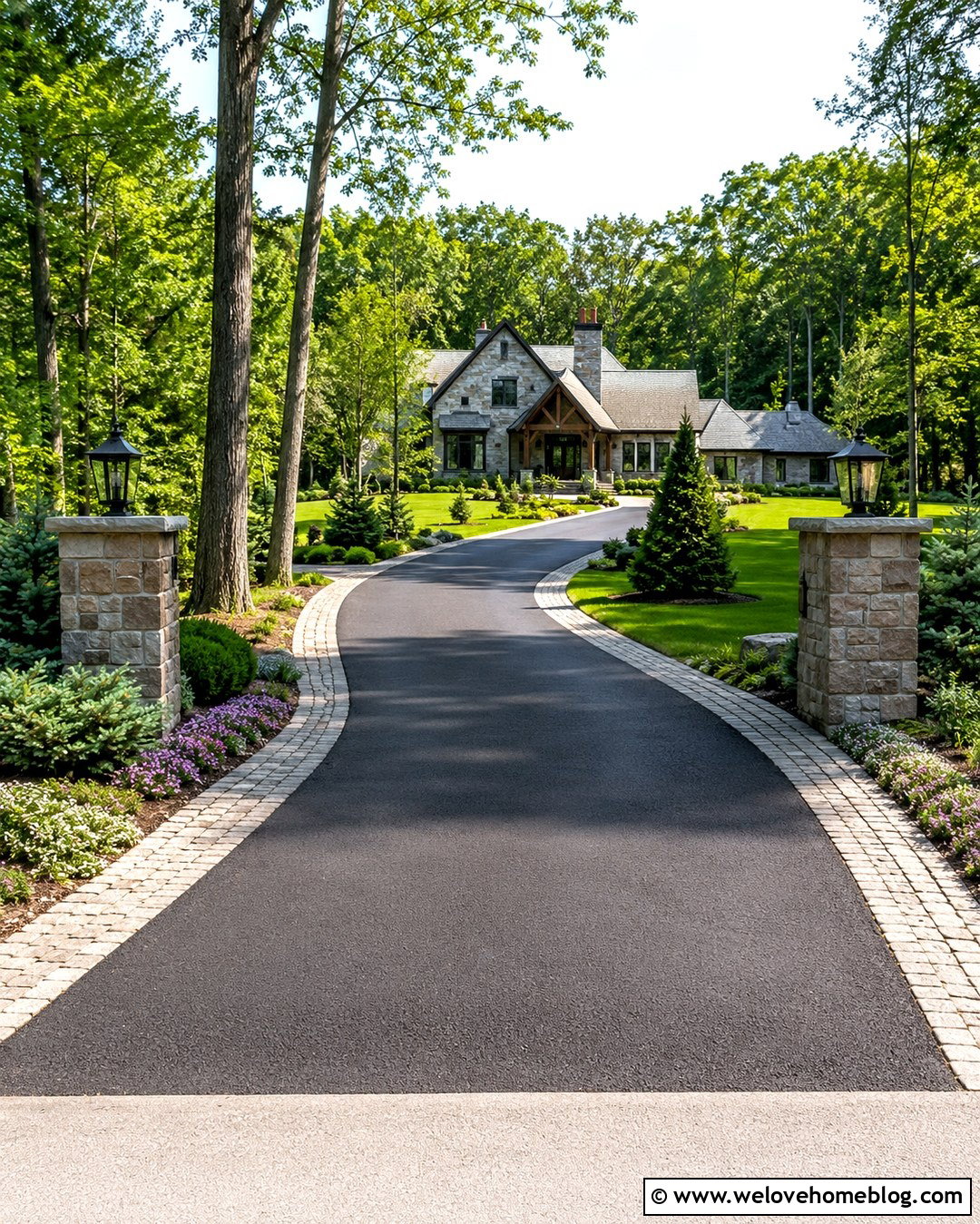
Stone entrance pillars and matching side pavers can give a long driveway a strong beginning and a coordinated path toward the house. Use a dark asphalt driving surface edged with warm gray cobblestone pavers. At the street, position two modest stacked-stone pillars outside the clear vehicle opening. Curve the side pavers gently around their bases and continue them along the driveway. Low evergreen beds, flowering ground cover, and simple lawn areas will prevent the entrance from looking too heavy. Repeat the stone near the front porch or garage foundation so the pillars relate to the house. This complete arrangement works well with craftsman, mountain, and country homes. Keep pillars and plantings far enough from the road to maintain visibility and allow comfortable turning movements into the property.
18. Driveway Side Pavers With a Drainage Channel
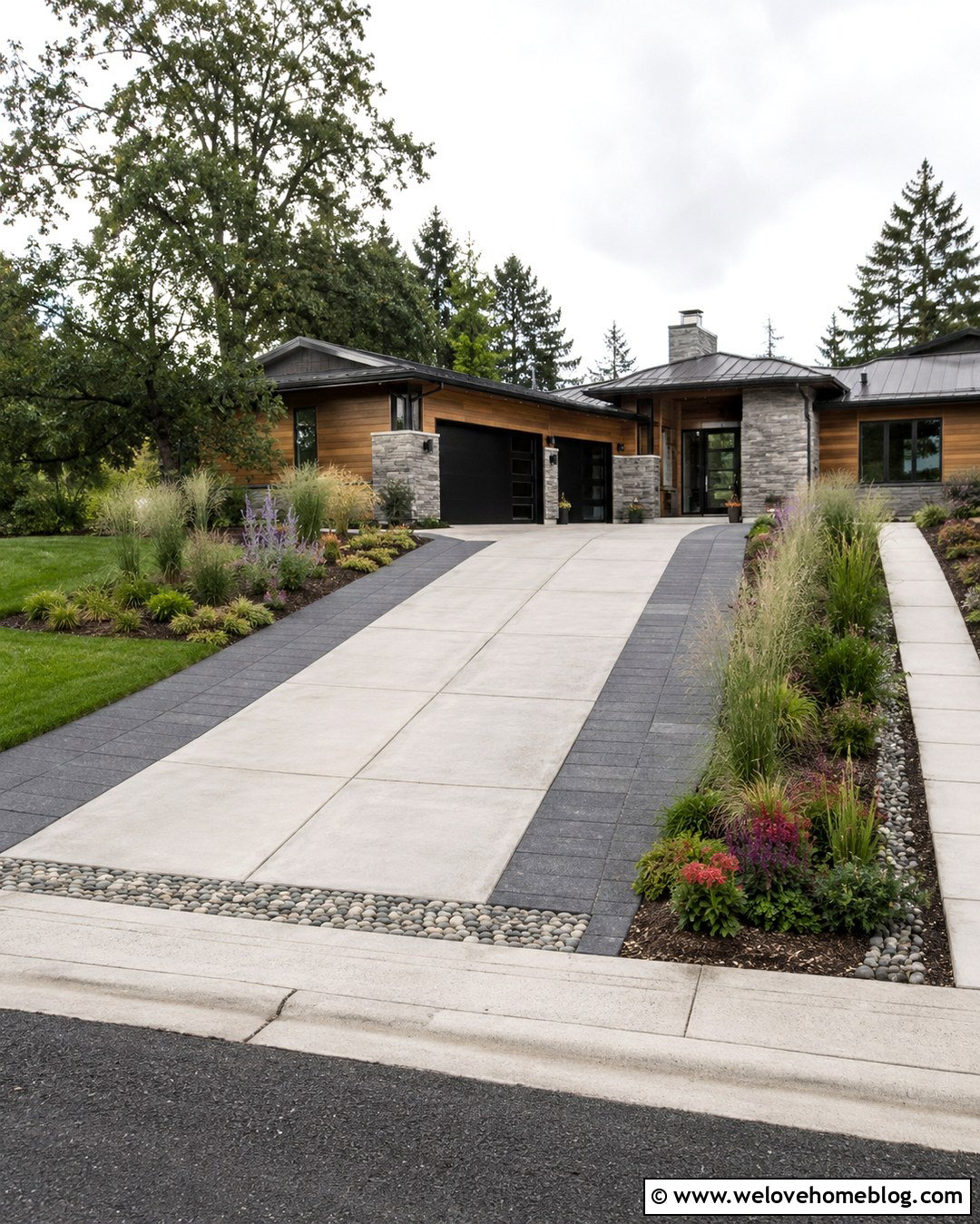
Where runoff collects along the driveway, side pavers can be incorporated into a more attractive drainage layout. Use a light gray poured-concrete driveway with charcoal permeable pavers forming broad bands along the lower edges. Add a shallow decorative channel filled with smooth gray stone outside one paver strip, directing water toward an approved drainage area or planted rain garden. Moisture-tolerant grasses and native perennials can soften the channel without blocking its path. The other side can feature a matching paver walkway for visual balance. This design suits a contemporary home on a gently sloped lot. The finished surface should guide water away from buildings rather than trap it beside the driveway. Because drainage conditions differ by property, have major runoff or erosion problems evaluated before installation.
19. Small Driveway With Light Side Pavers
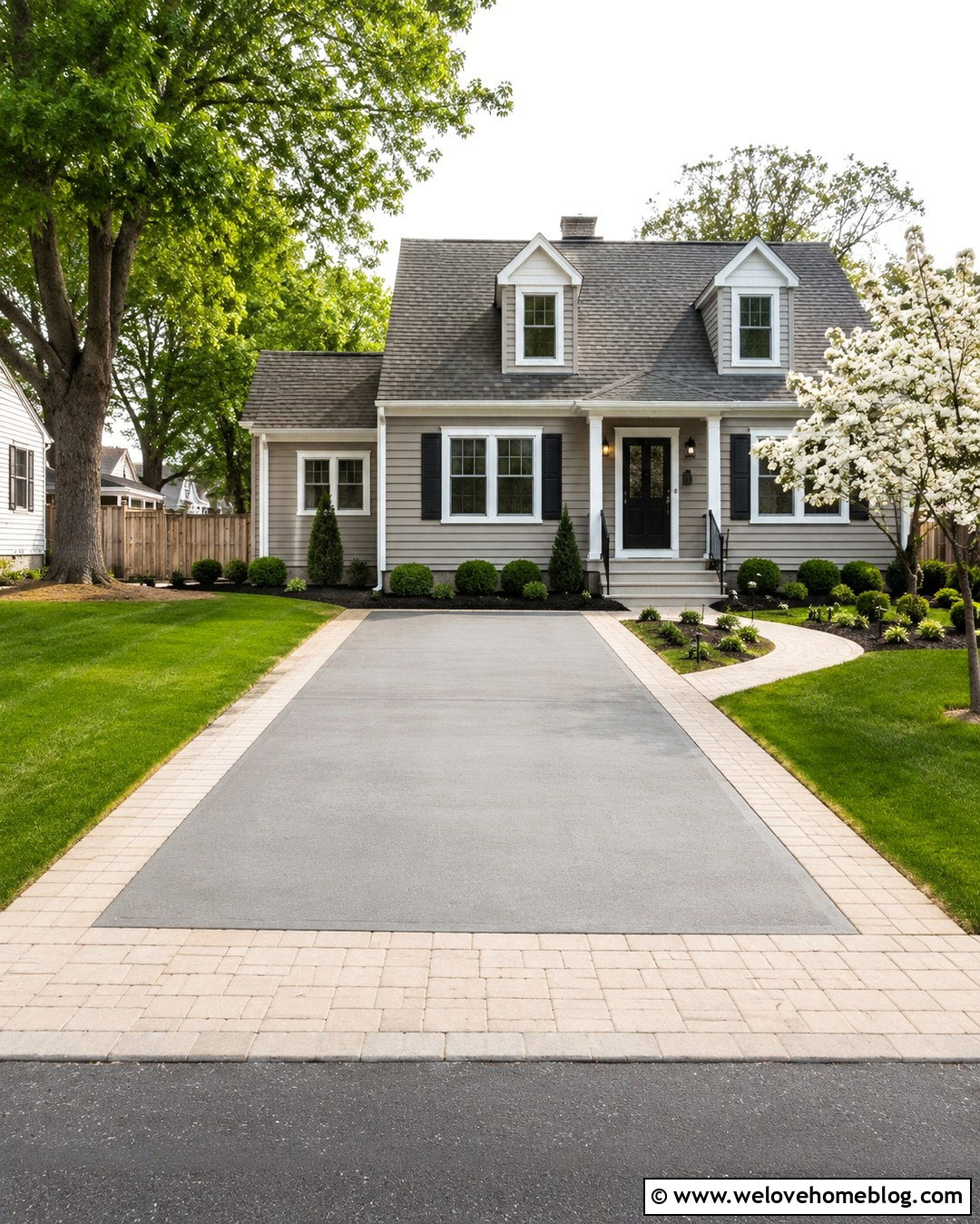
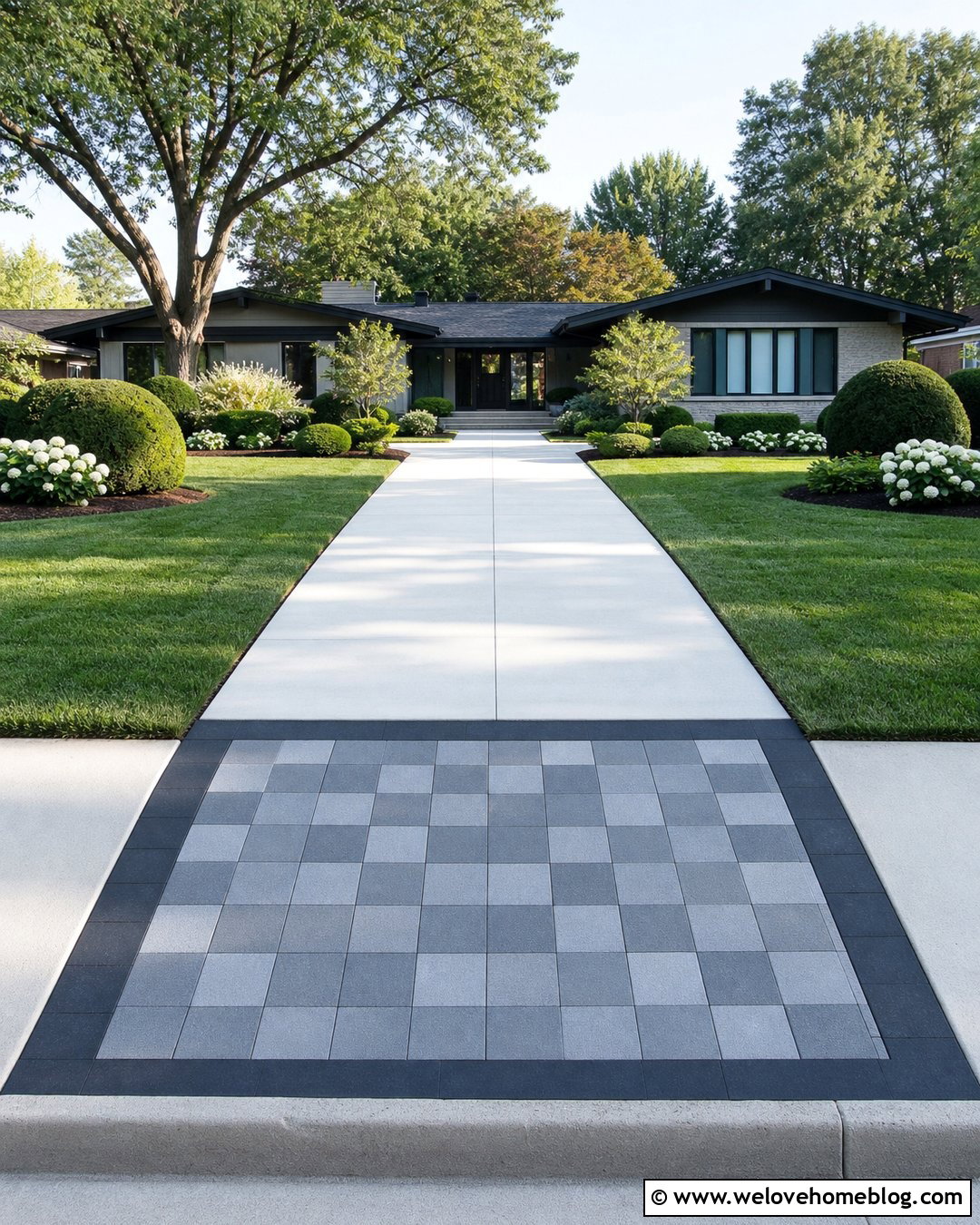
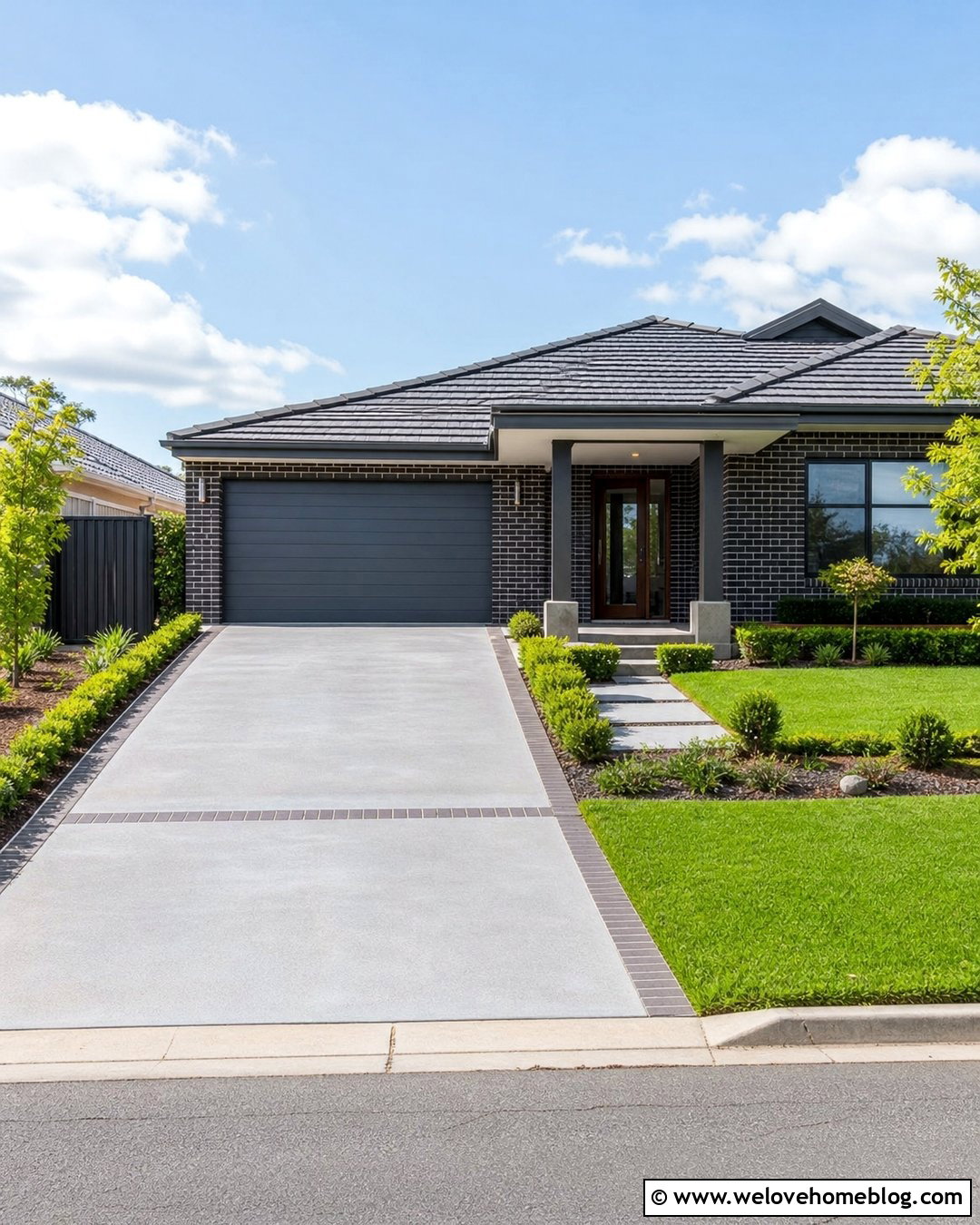
Light-colored side pavers can help a compact driveway feel more open and carefully organized. Use medium gray concrete for the central surface and narrow cream concrete paver bands along both sides. Continue the cream pavers across the apron to create a complete rectangular frame. Keep the landscaping restrained with clipped shrubs, one small flowering tree, and a simple lawn edge. A matching cream paver walkway can branch toward the front door without competing for limited space. This combination is especially effective beside a bungalow, small ranch, or Cape Cod home. Avoid excessively wide borders that reduce the usable driving area. Instead, choose a consistent two-row treatment with clean joints and minimal color variation. The result feels brighter, wider, and more detailed while remaining practical for everyday parking.


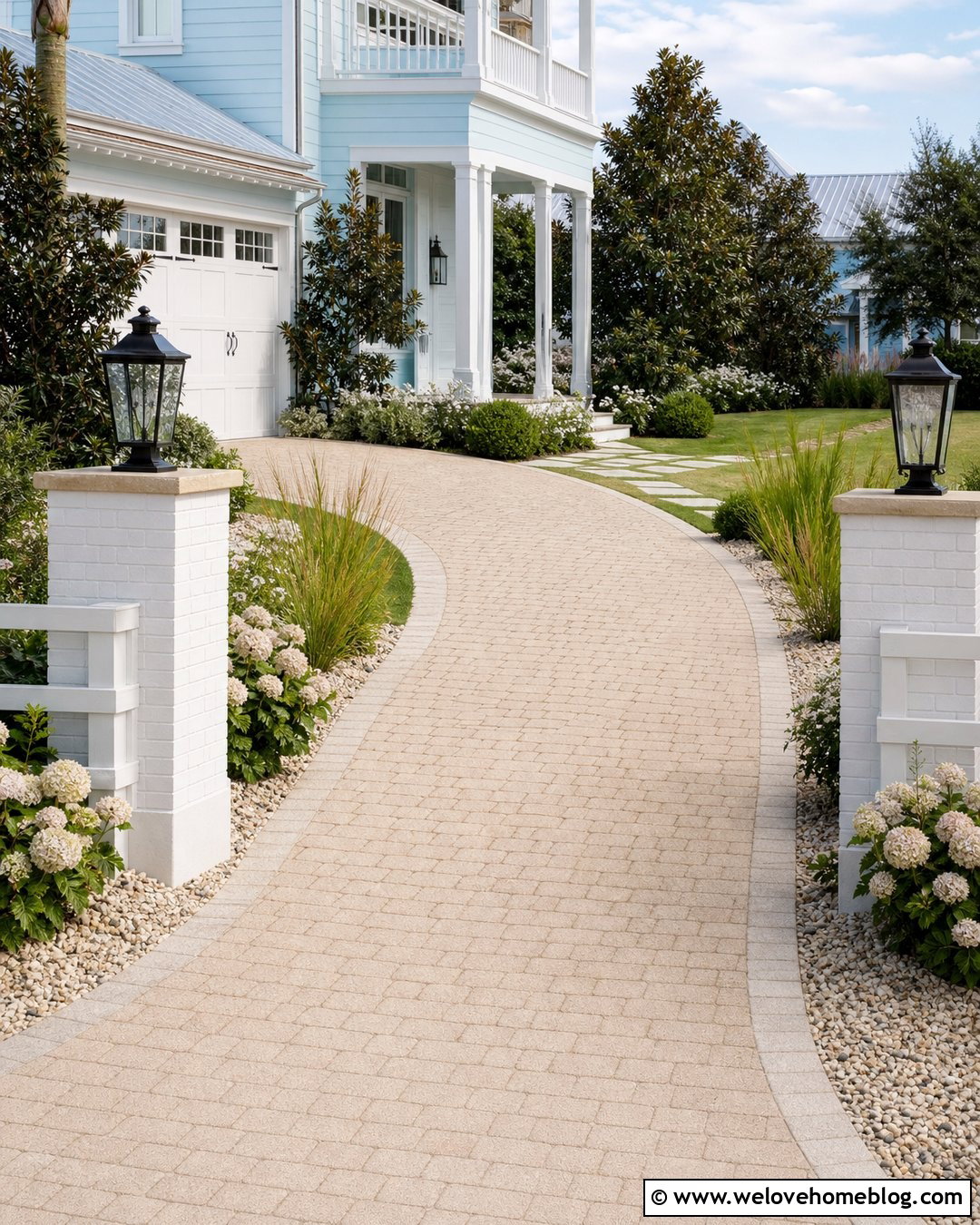
20. Permeable Driveway With Side Paver Borders
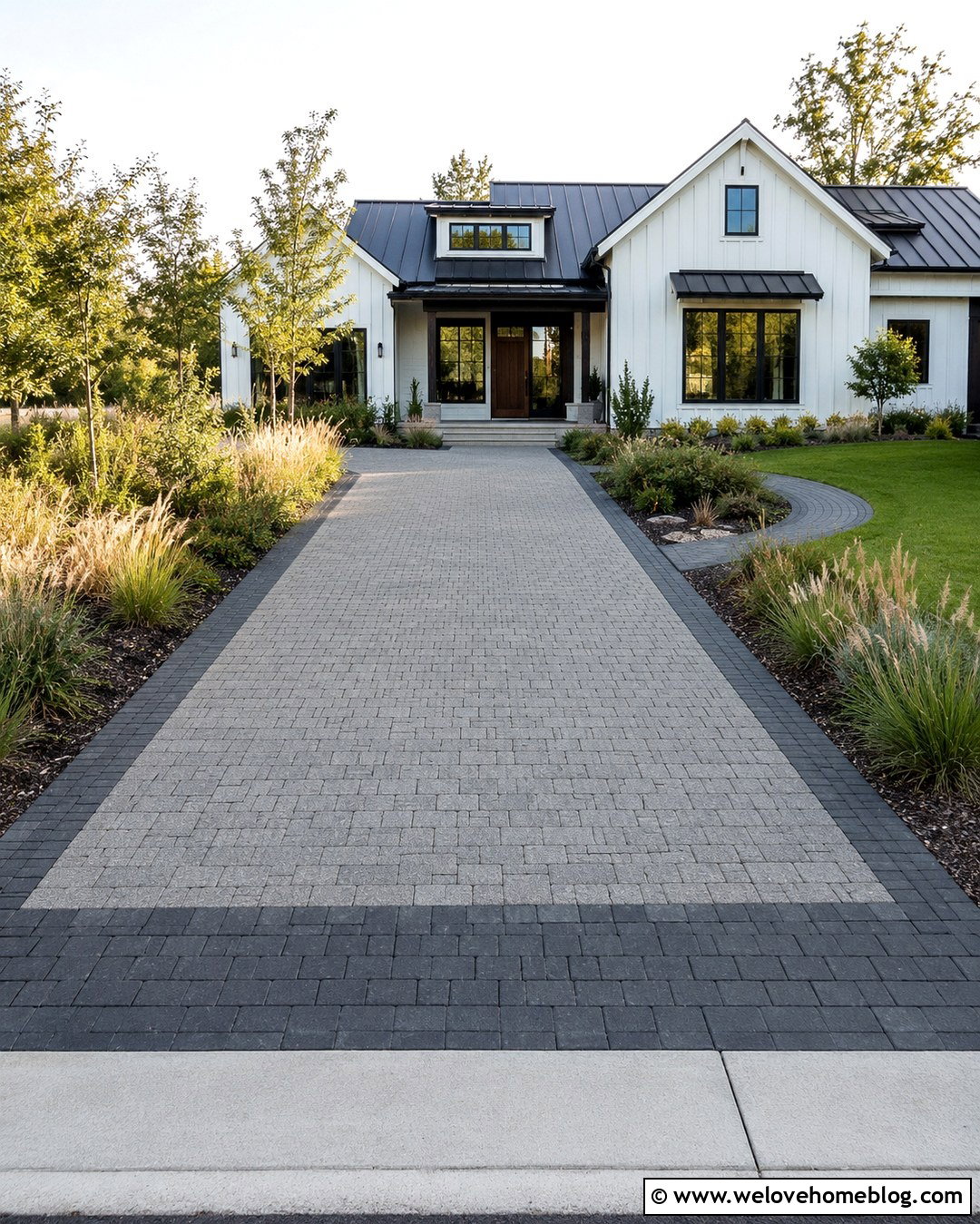
A permeable driveway can look polished when its functional surface is framed with contrasting side pavers. Use medium gray permeable concrete pavers for the main field, arranged in a simple running bond. Add dark charcoal rectangular pavers along both sides and across the apron. The border defines the layout while maintaining a contemporary color palette. Leave carefully designed aggregate-filled joints within the permeable field and use a base system appropriate for the site. Surround the driveway with rain-friendly planting beds, native grasses, low shrubs, and a walkway made from the same charcoal border pavers. This coordinated look complements modern farmhouse and contemporary craftsman homes. Permeable systems can support on-site water infiltration when they are properly designed, installed, and maintained for local soil and drainage conditions. ()
Conclusion:
The best side pavers do more than decorate an unfinished driveway edge. They frame the driving surface, support landscaping, improve pedestrian access, and help the entrance relate to the home. These 20 Driveway Side Pavers Ideas show how brick, concrete, cobblestone, limestone, and permeable pavers can work beside asphalt, gravel, concrete, and full paver driveways. Choose a combination that suits your house, climate, maintenance preferences, and available space. Before installation, consider drainage, vehicle loads, edge restraint, and a properly compacted base. Whether you add one narrow border or a broad multifunctional strip, consistent materials and thoughtful landscaping will produce a driveway that feels complete, useful, and noticeably more welcoming.

Related posts:
Leave a Reply