
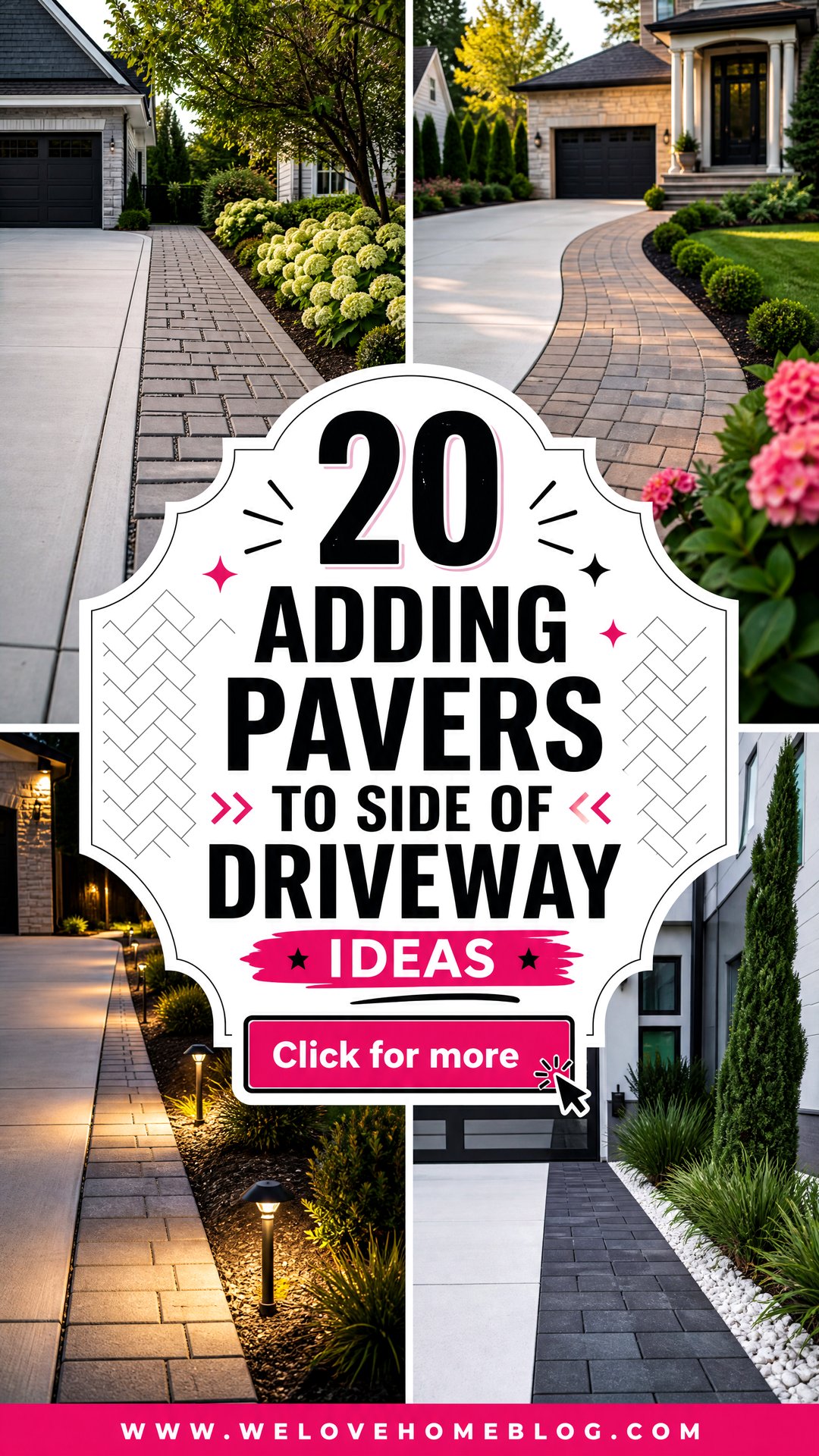
Adding pavers beside an existing driveway can create extra parking space, cleaner borders, safer step-out areas, and a more polished entrance. This guide to **20 Adding Pavers To Side Of Driveway Ideas** explores complete designs rather than isolated paving details. Each look combines the driveway surface with a practical paver layout, defined edging, coordinated landscaping, and an appropriate house style. You will find options for concrete, asphalt, gravel, and existing paver driveways, including narrow side bands and wider parking extensions. Before construction, confirm local setback, drainage, and permit requirements. Any area exposed to vehicle traffic should also use driveway-rated pavers over a properly prepared base. Use these **20 Adding Pavers To Side Of Driveway Ideas** to find a layout that fits your property.
1. Matching Pavers Beside A Concrete Driveway
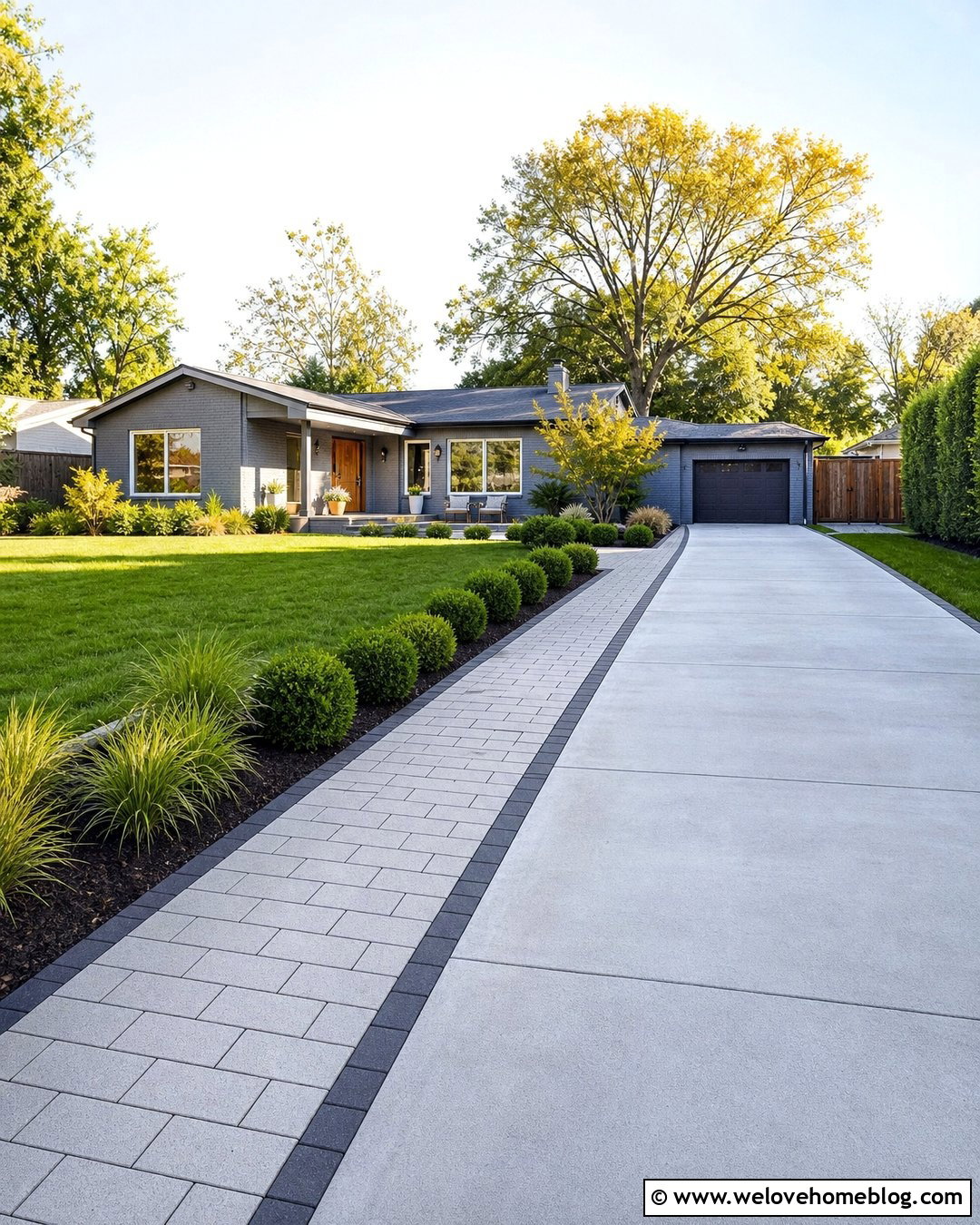
Matching gray concrete pavers create a subtle side extension that looks connected to an existing poured concrete driveway. Select pavers with a tone close to the slab, but use a textured finish so the addition remains visually intentional. A running bond pattern works well for a long, straight driveway because its clean lines guide the eye toward the house. Make the strip wide enough for passengers to step out without reaching the lawn. A darker soldier-course border can define the outer edge and hold the design together. Finish the look with low boxwoods, ornamental grasses, and a simple concrete walkway. This restrained combination is especially attractive beside ranch, contemporary, and midcentury homes where uncluttered materials support the architecture.
2. Brick Pavers Beside An Asphalt Driveway
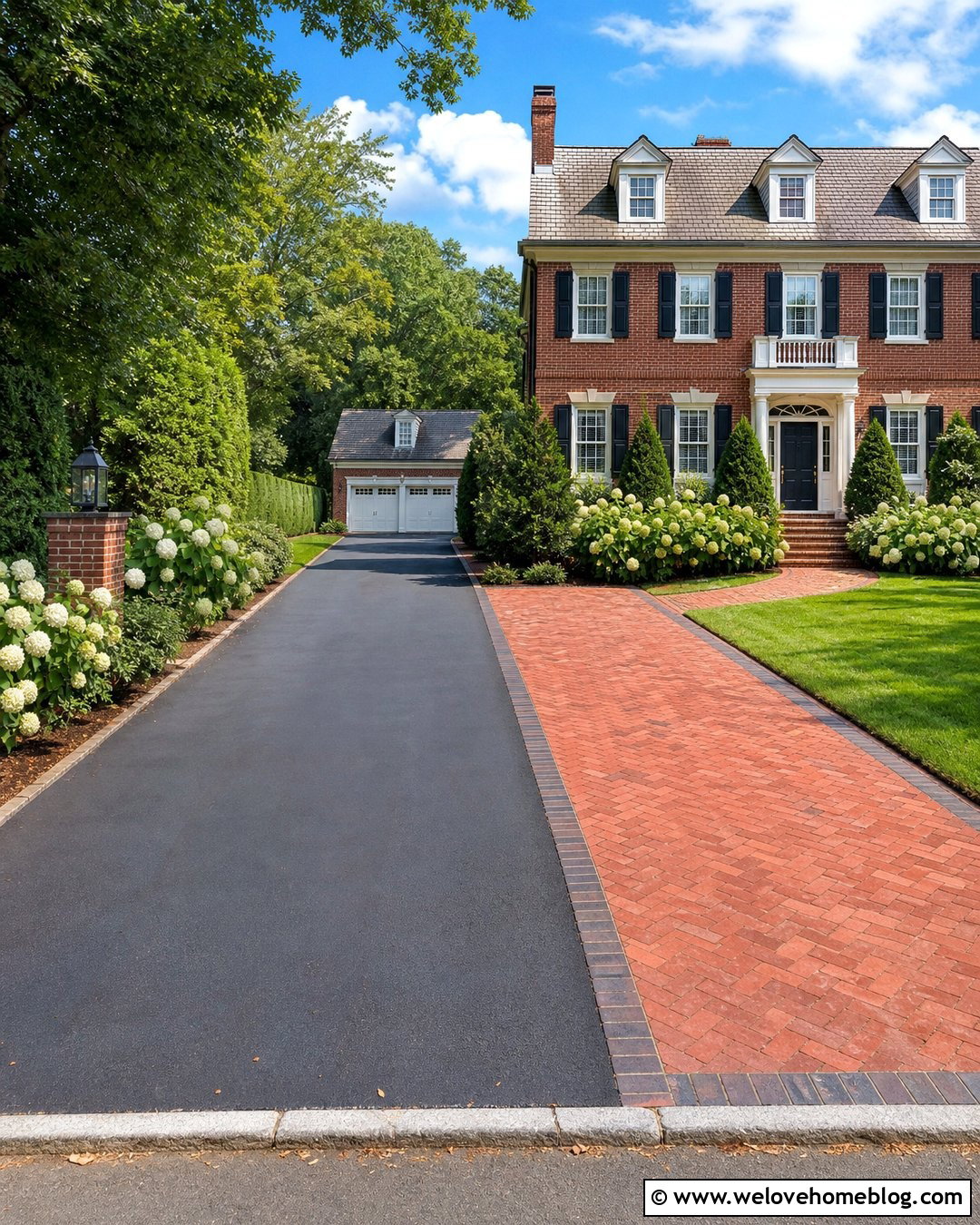
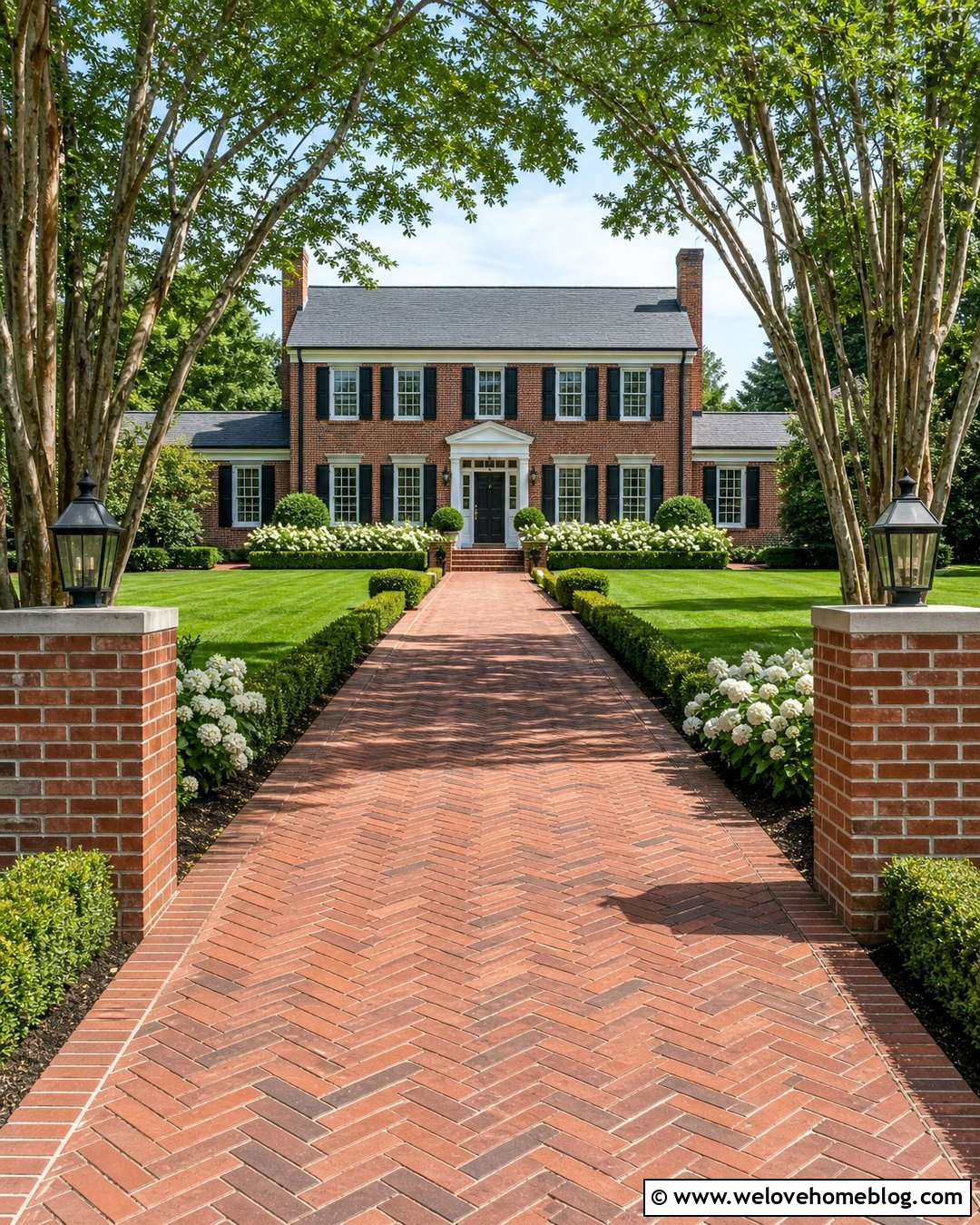
Warm red brick pavers bring classic color to the deep black surface of an asphalt driveway. Place a three- or four-foot-wide brick strip along one side to provide a convenient walking and unloading zone. Herringbone brick offers a traditional appearance and handles the visual scale of a long driveway better than a tiny decorative border. Add a charcoal concrete edge restraint or dark brick soldier course around the extension for a crisp transition. Beds filled with hydrangeas, evergreen shrubs, and seasonal flowers soften the contrast without hiding it. This complete look suits Colonial, Cape Cod, and traditional brick houses. Repeat the same brick around the front walkway or porch steps so the side addition feels planned rather than added as an unrelated patch.
3. Wide Paver Parking Strip Beside A Driveway
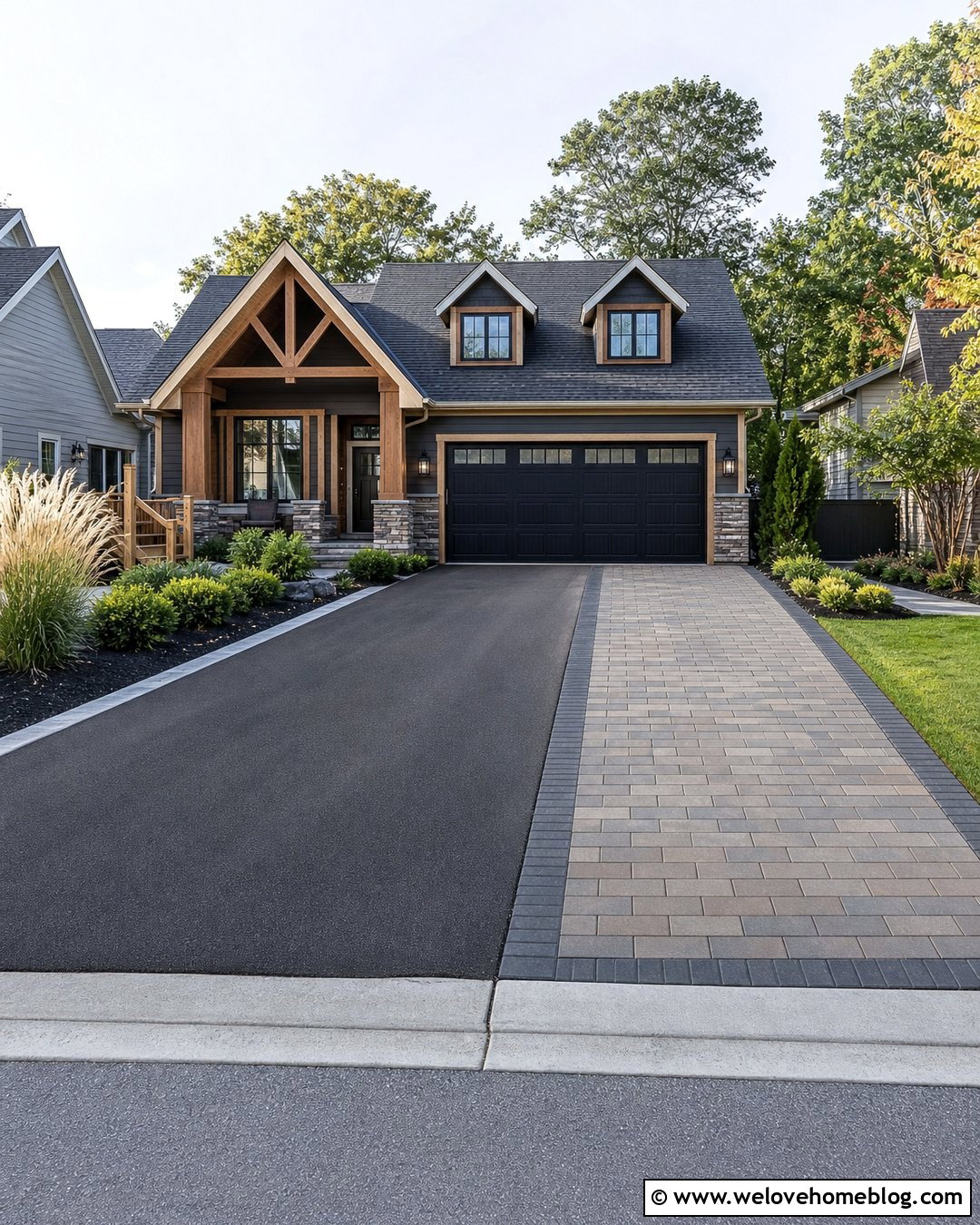
When another vehicle regularly ends up on the grass, a full-width paver parking strip can provide a more durable solution. Install interlocking concrete pavers beside an existing asphalt or concrete driveway, using a blended gray-brown color that complements both the house and main surface. A staggered running bond creates a calm appearance across the wider area. Mark the outside edge with a contrasting charcoal band and a narrow planting bed. Upright grasses and compact shrubs can screen the parking space while preserving visibility near the street. The paver section should connect evenly with the driveway so tires do not encounter a raised lip. Vehicle-rated pavers, strong edge restraints, and a compacted load-bearing base are essential for a frequently used parking extension.
4. Narrow Paver Step-Out Strip Beside A Driveway
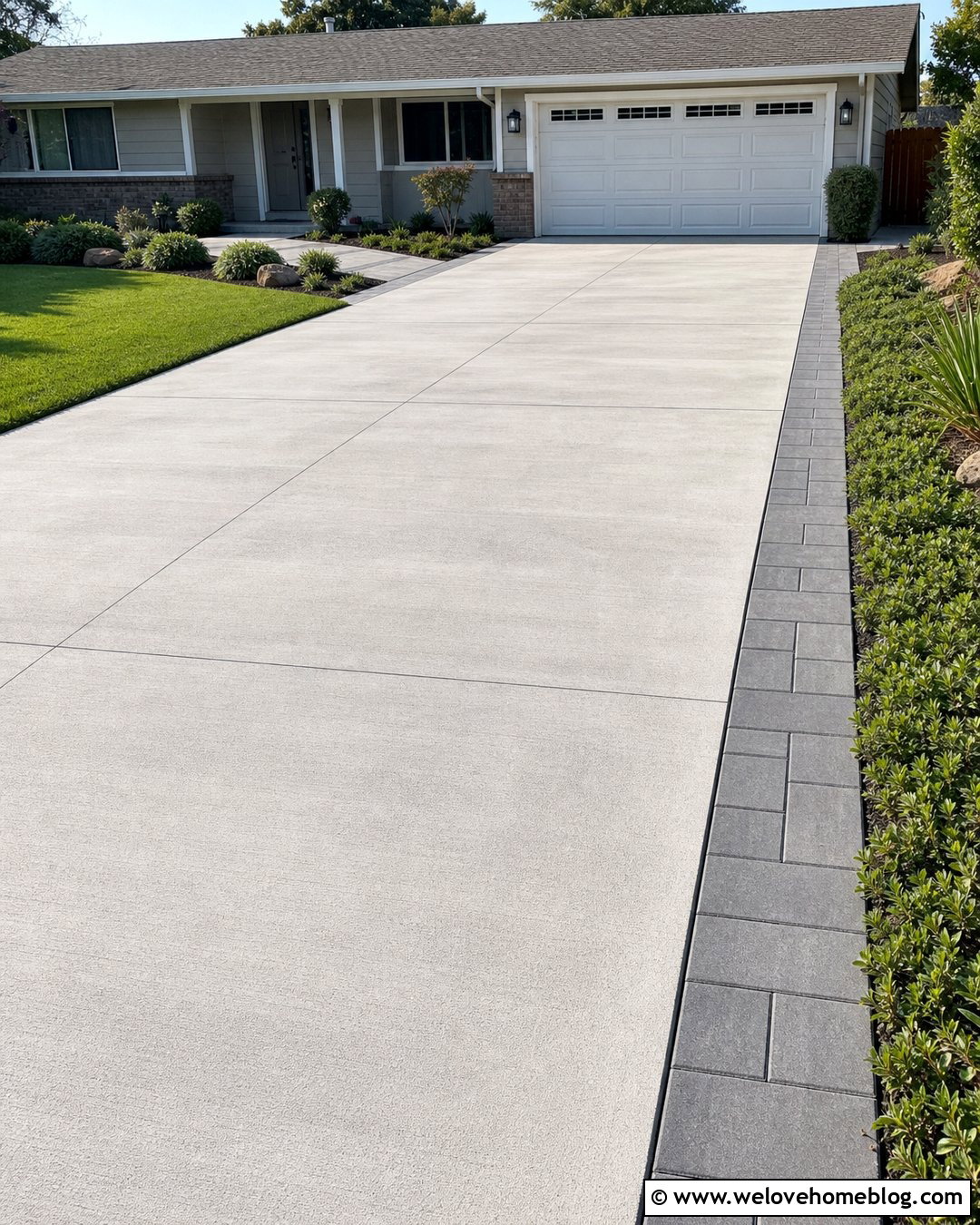
A narrow paver strip can solve the awkward problem of passengers stepping directly into wet grass or mulch. Use smooth concrete pavers in a simple running bond along the busiest side of the driveway. A width of several pavers usually creates enough standing space without sacrificing much lawn. Keep the surface close to the driveway height while maintaining the drainage slope required for the property. Border the outside with flush metal edging and a bed of low groundcover that will not lean into open car doors. Gray pavers beside light concrete create a quiet transition, while tan pavers can warm up a darker asphalt surface. Connect the strip to the front walkway for a continuous route leading toward a craftsman or suburban home.
5. Permeable Pavers Along A Concrete Driveway
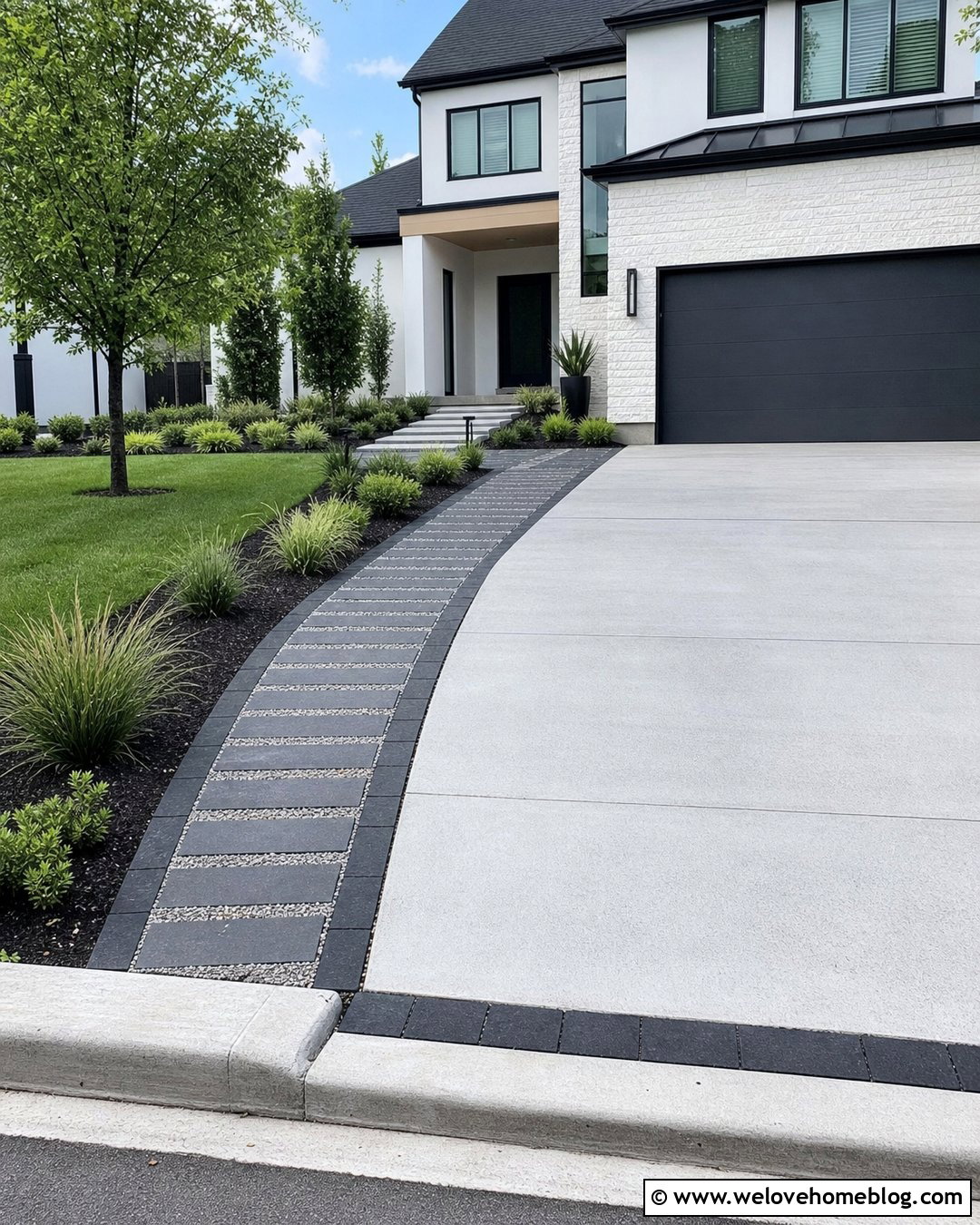
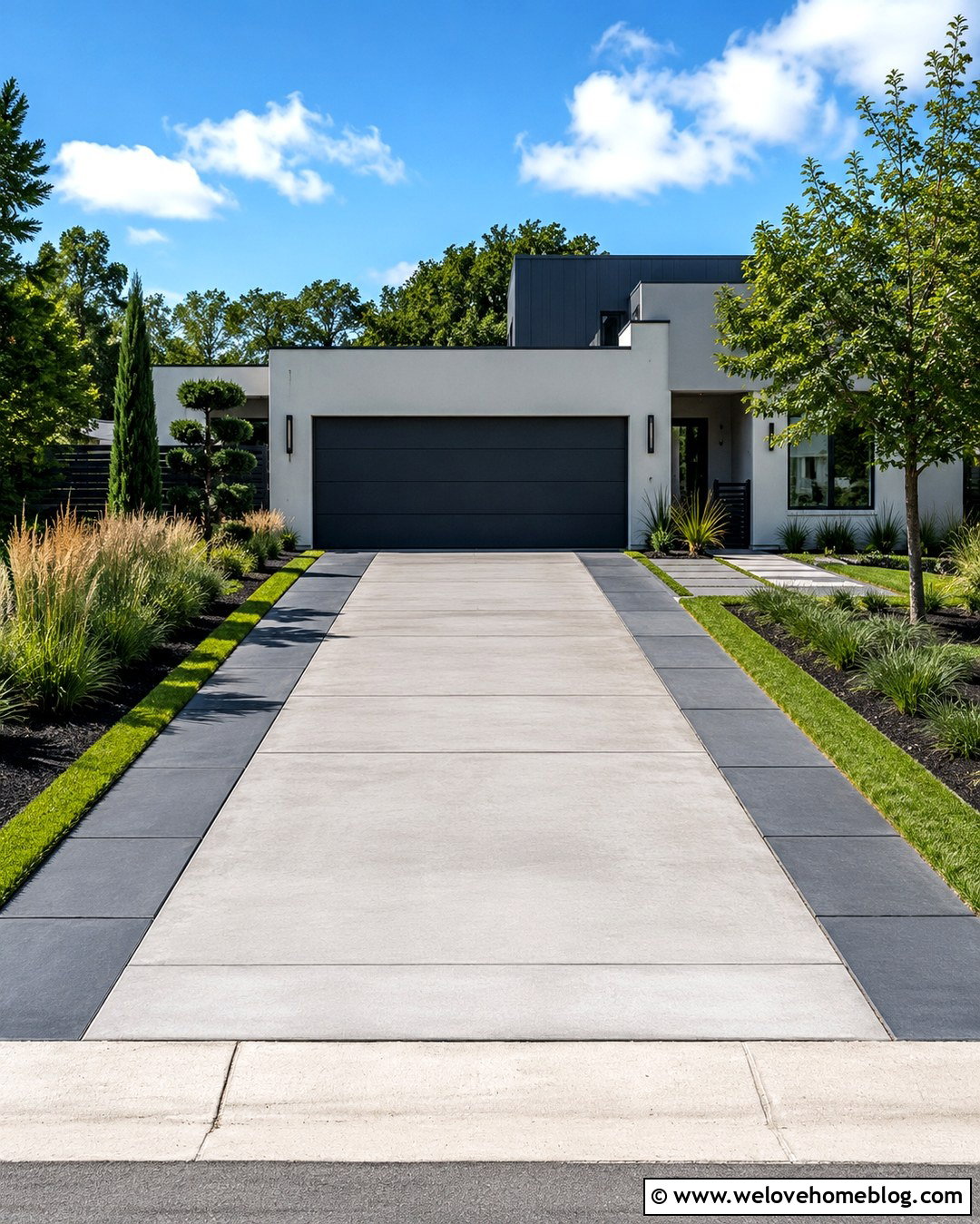
Permeable concrete pavers can turn the side of a driveway into an attractive strip that helps manage surface water. Choose open-joint pavers filled with clean aggregate rather than ordinary soil, and install them over a base designed for infiltration. A straight ribbon beside gray poured concrete creates a clean modern layout without making the front yard feel completely paved. Use darker pavers to distinguish the drainage area from the primary driving surface. Beyond the extension, plant moisture-tolerant grasses and compact native shrubs where local growing conditions allow. A line of small trees can frame the approach without blocking sightlines. This combination works particularly well with contemporary houses, where geometric paving, restrained planting, and visible material contrast can make practical drainage features feel like deliberate landscape architecture.
6. Herringbone Pavers Along A Straight Driveway
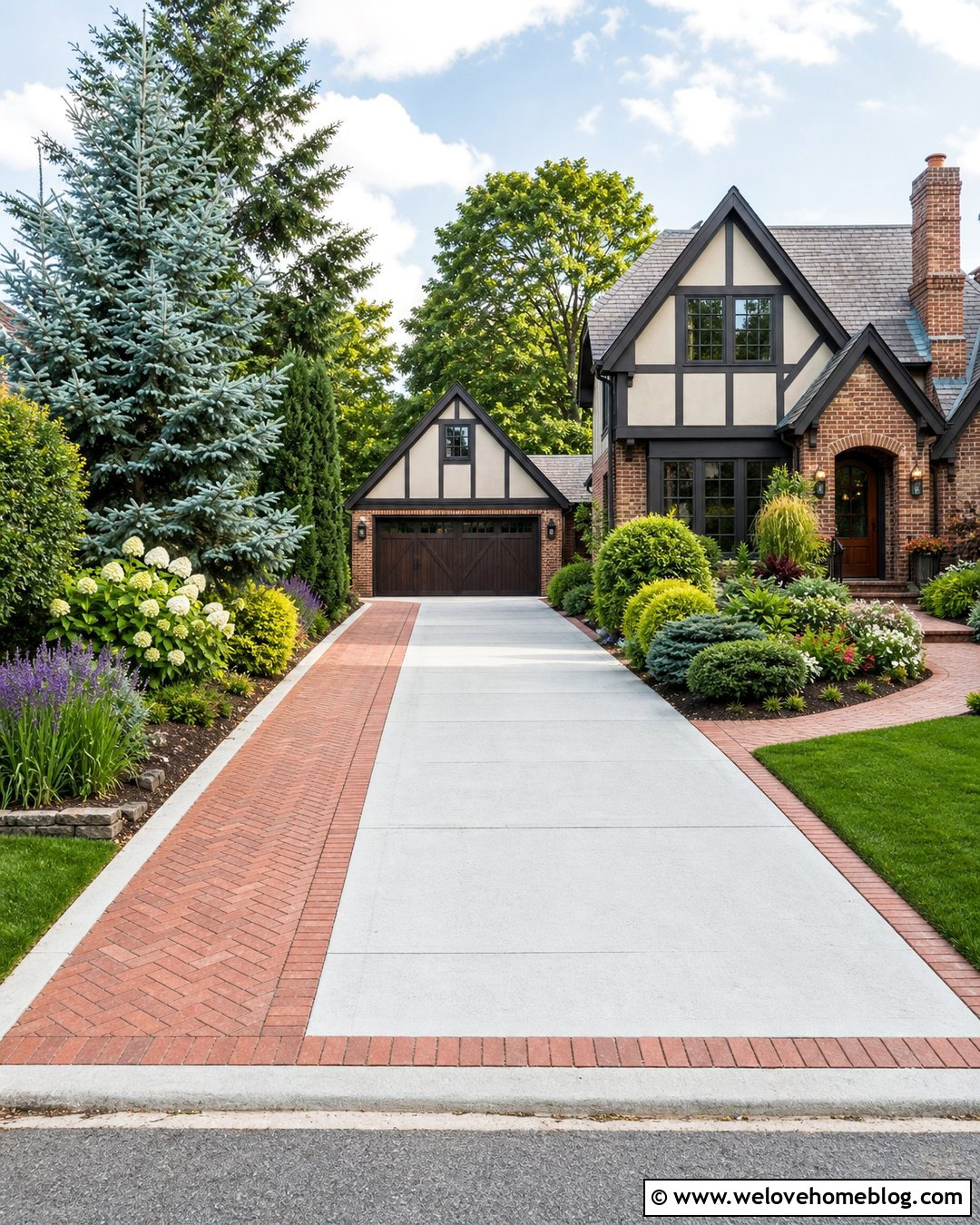
Herringbone pavers add movement and texture beside a simple straight driveway. Use clay brick or rectangular concrete pavers in a 45-degree pattern, then frame them with a straight soldier course. The angled joints produce a strong visual contrast against a plain concrete slab while helping the side strip read as a substantial hardscape feature. Carry the extension from the curb to the garage, or stop it at the front walkway if the remaining area will become a garden bed. Keep plants low near the street and gradually increase their height closer to the house. A tidy lawn on the opposite side balances the detailed paving. This layout complements traditional, Tudor, and craftsman homes, especially when the paver color repeats masonry found on the facade.
7. Large Pavers Beside A Modern Driveway
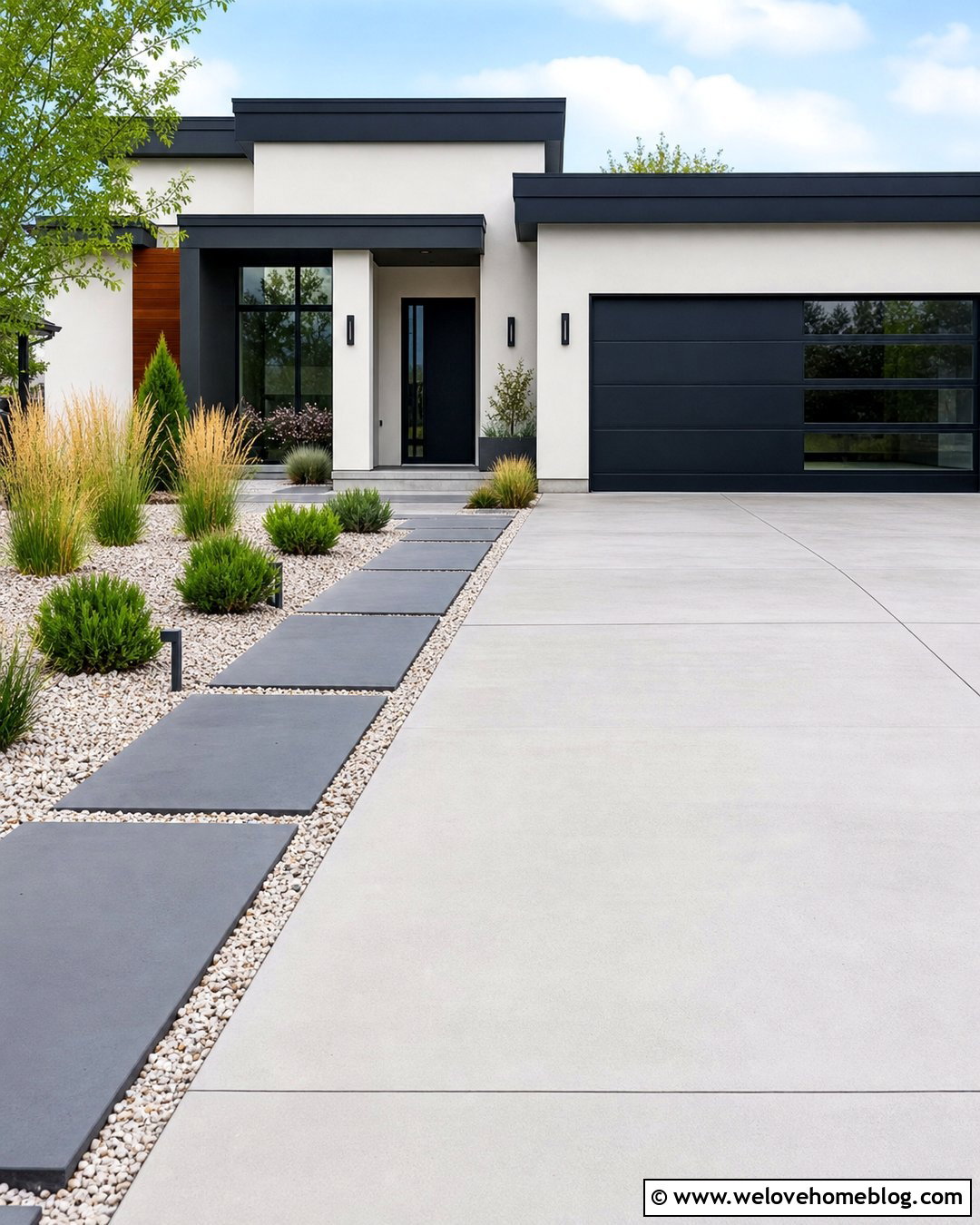
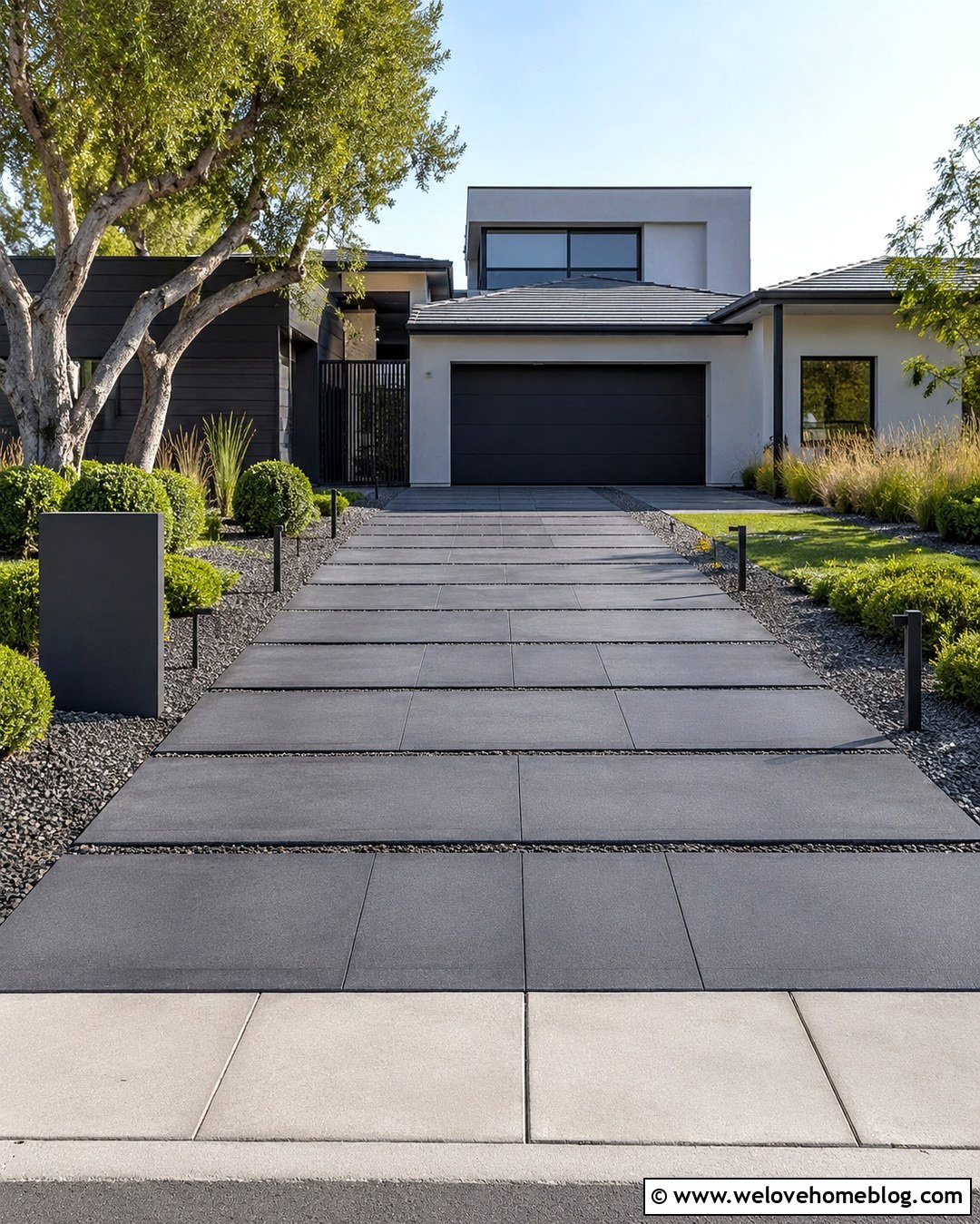
Large-format concrete pavers can create a sleek side extension beside a modern driveway. Choose rectangular charcoal or warm gray units with narrow joints and arrange them in a stacked or offset pattern. Pair the pavers with smooth light-gray poured concrete to produce clear contrast without introducing too many colors. A flush black metal edge keeps the outside line neat beside gravel mulch or a carefully trimmed lawn. Complete the setting with sculptural grasses, compact evergreens, and a straight walkway leading to the entrance. Recessed fixtures or low path lights can mark the boundary after dark without cluttering the daytime view. This design is best suited to contemporary houses with simple rooflines, broad garage doors, and facades that combine stucco, wood, stone, or dark siding.
8. Cobblestone Pavers Beside A Curved Driveway
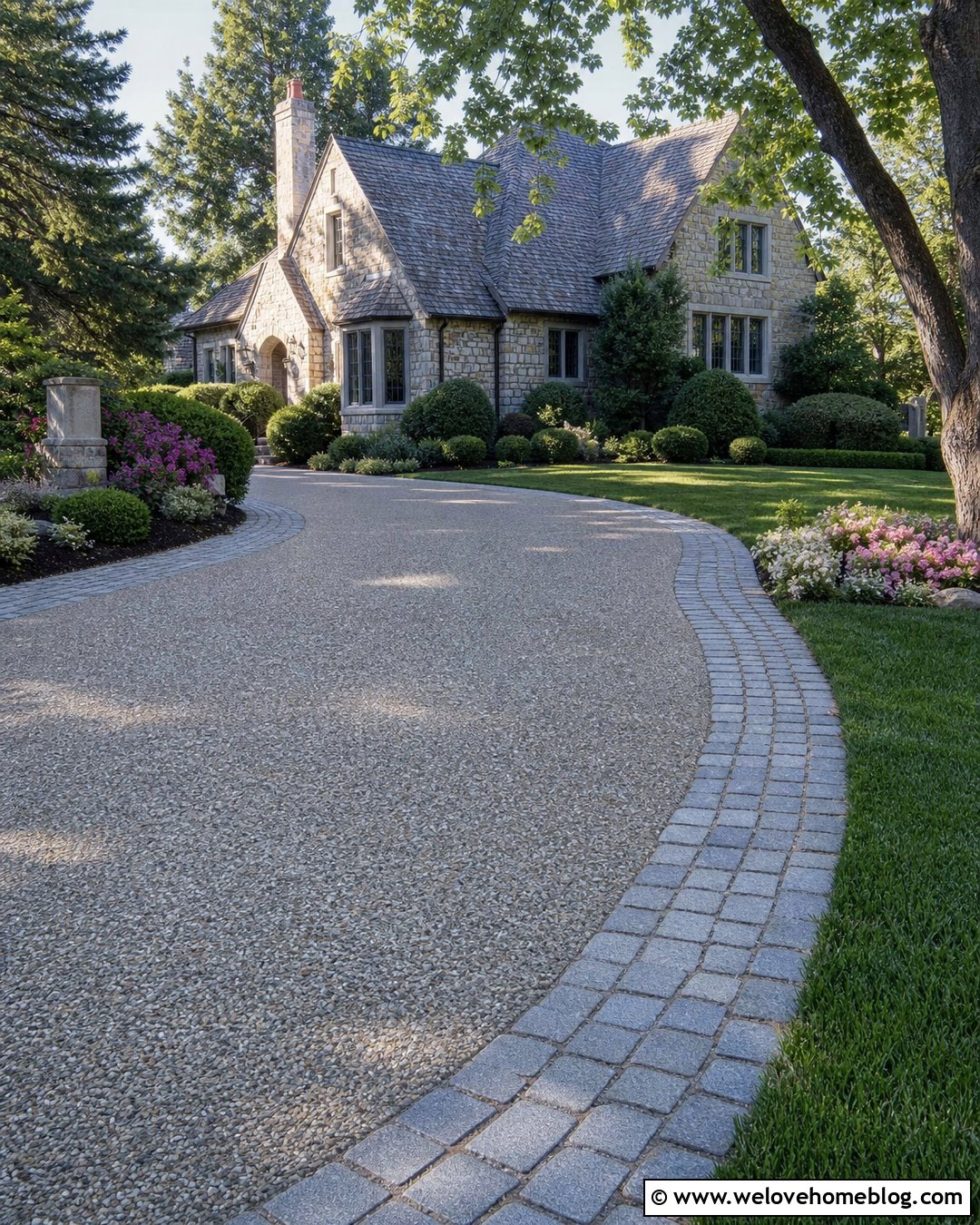
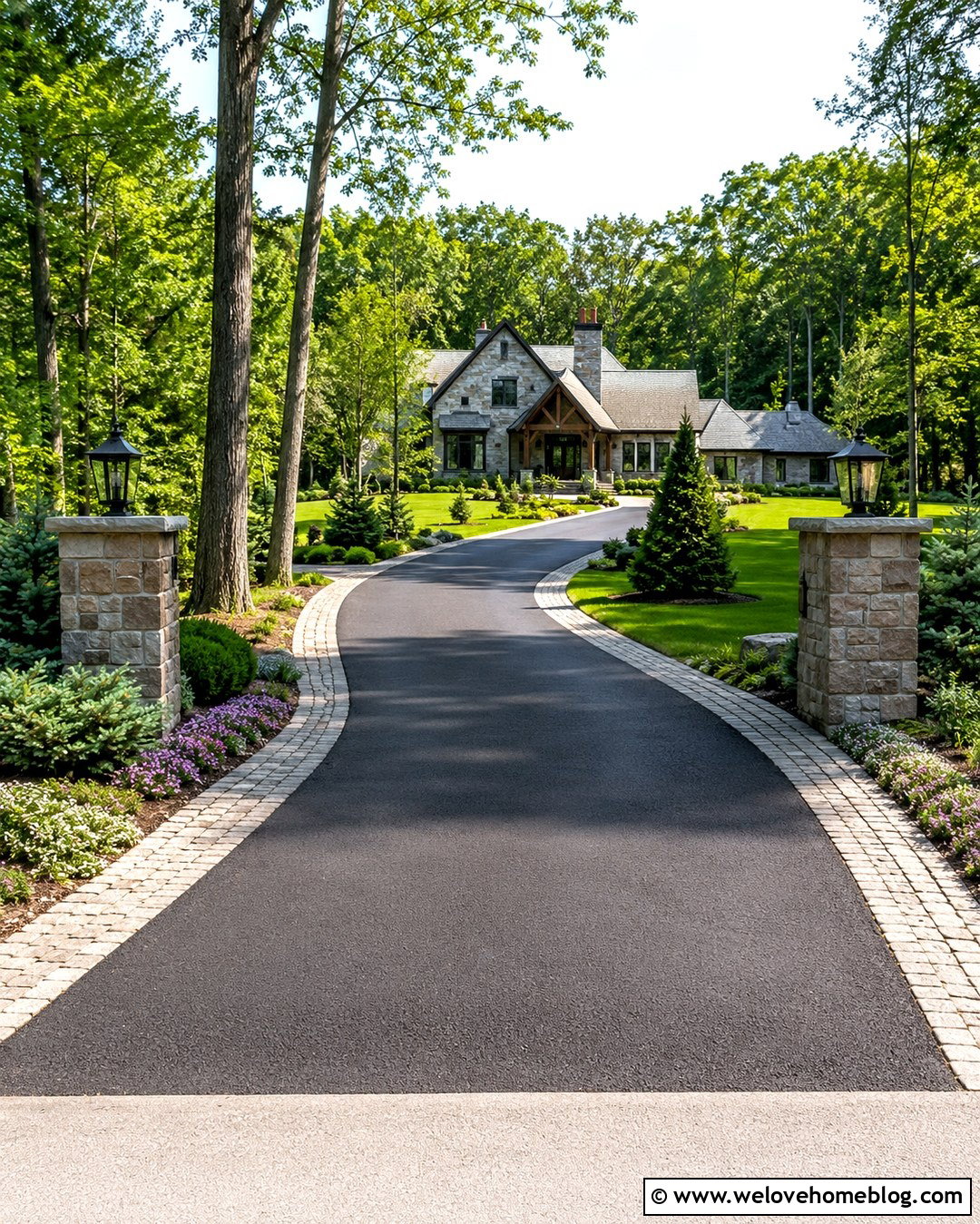
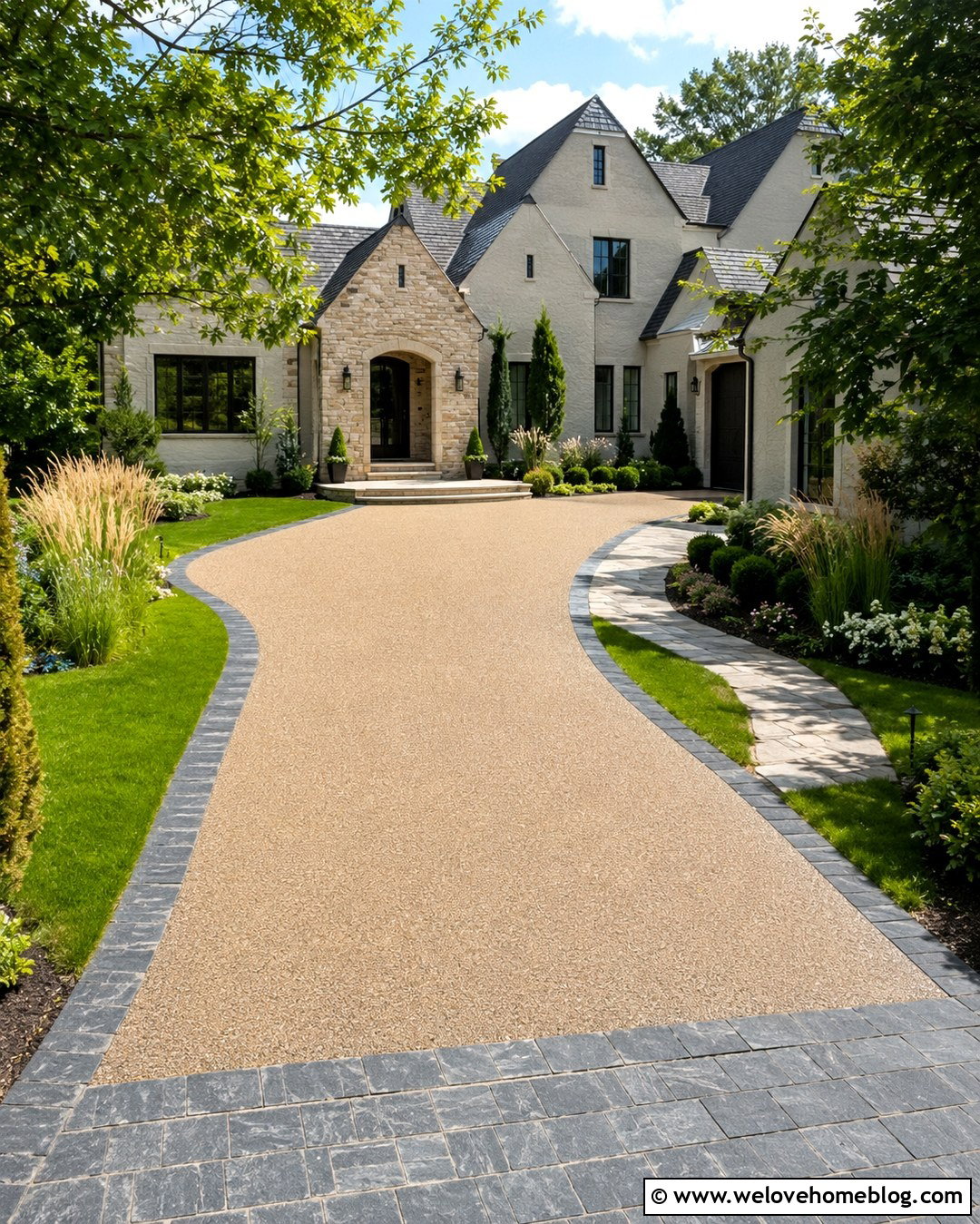
Cobblestone pavers naturally complement the flowing edge of a curved driveway. Add a generous band of granite setts along the inside curve, where they can form a decorative step-out area and protect the lawn from occasional tire contact. A fan or gently staggered pattern follows the bend more naturally than rigid straight rows. Pair cool gray cobblestone with exposed aggregate concrete for a refined, textured entrance. On the landscape side, use sweeping beds filled with flowering shrubs, clipped evergreens, and shade trees placed well away from vehicle clearance areas. Continue the cobblestone around the driveway entrance or front walkway to connect the design. This substantial combination works especially well with stone cottages, European-inspired homes, and large traditional properties with curved approaches.
9. Curved Paver Extension Beside An Asphalt Driveway
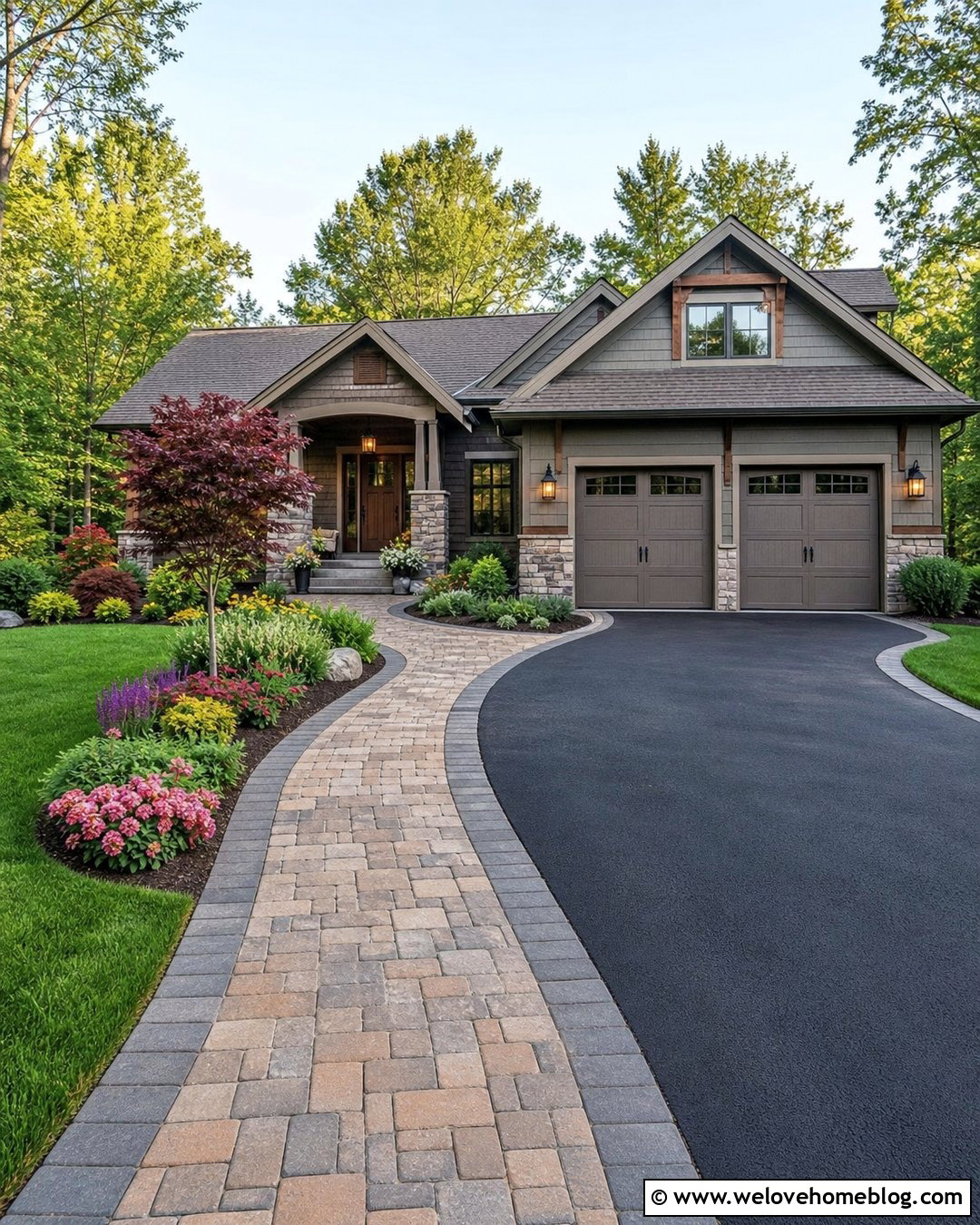
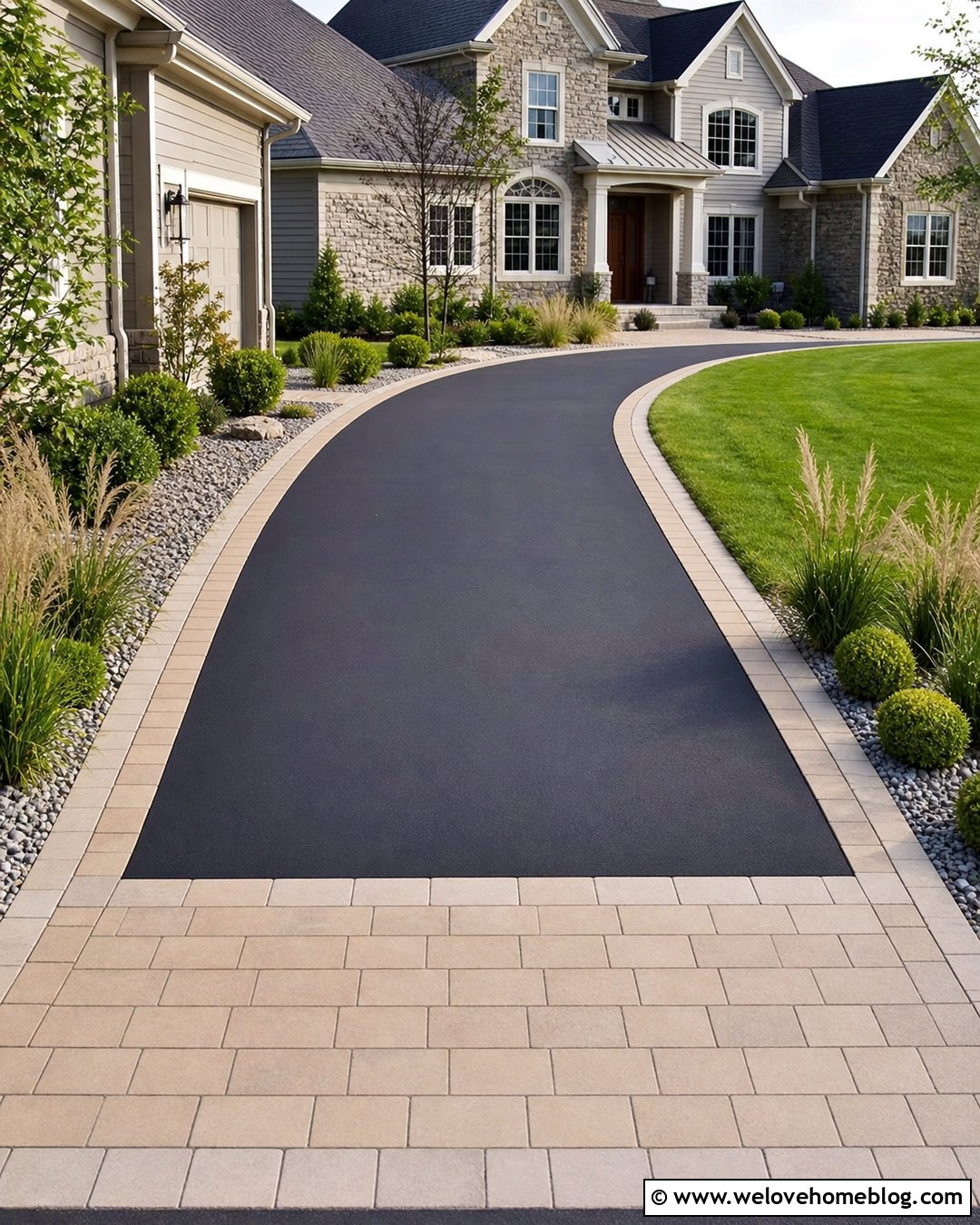
A curved paver extension can soften the hard lines of a rectangular asphalt driveway while adding useful space near the house. Start with a narrow strip near the curb, then gradually widen it into a passenger drop-off or parking bay closer to the garage. Use tumbled concrete pavers in warm taupe and brown tones to balance the dark asphalt. A charcoal soldier-course border defines the curve and creates a clean outside edge. Shape a matching garden bed around the extension rather than leaving an awkward triangle of lawn. Layer compact shrubs, perennials, and one ornamental tree to emphasize the curve. This gradual widening feels more integrated than a box-shaped addition and works beautifully with craftsman, cottage, and traditional suburban homes.
10. Paver Walkway Beside A Driveway
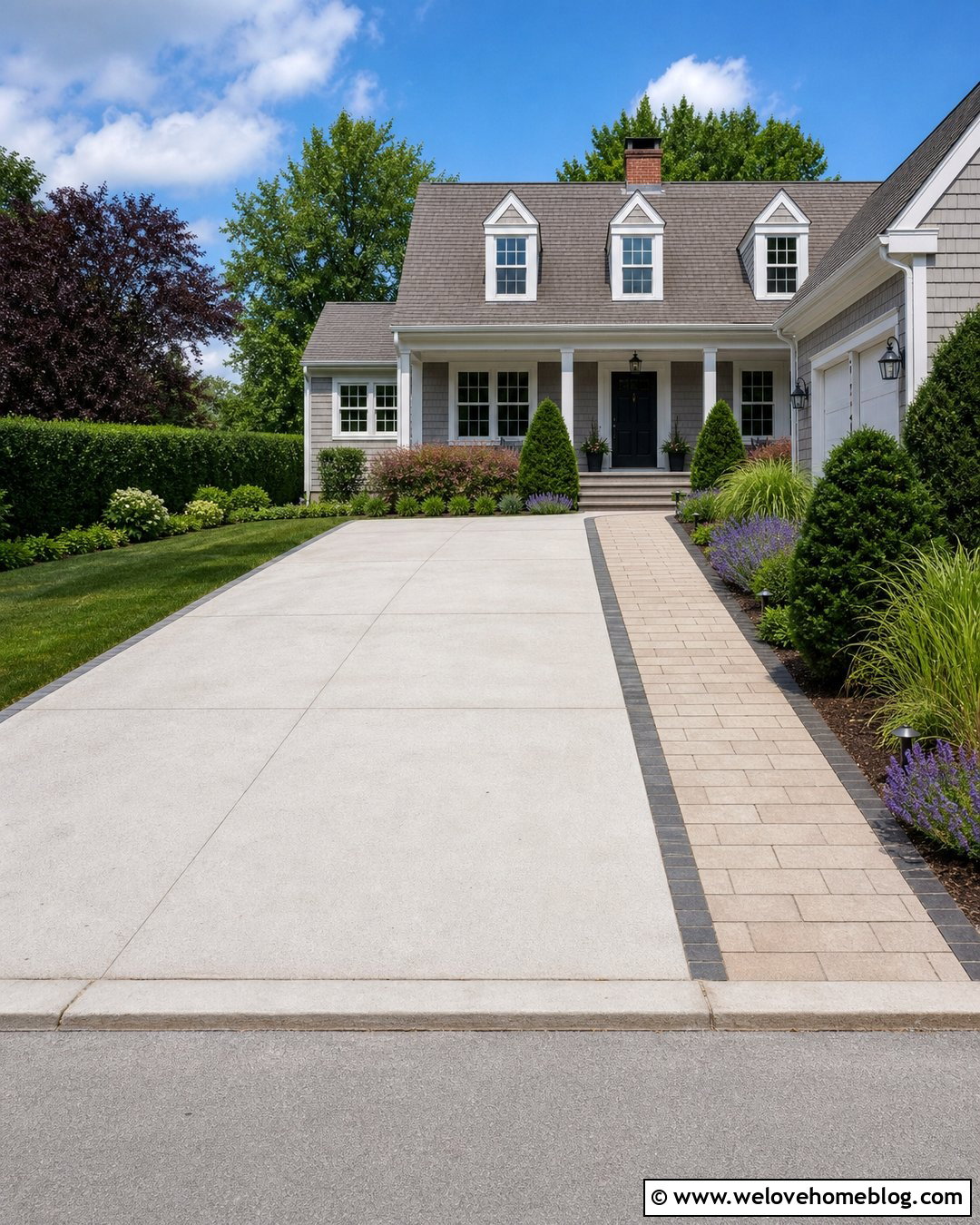
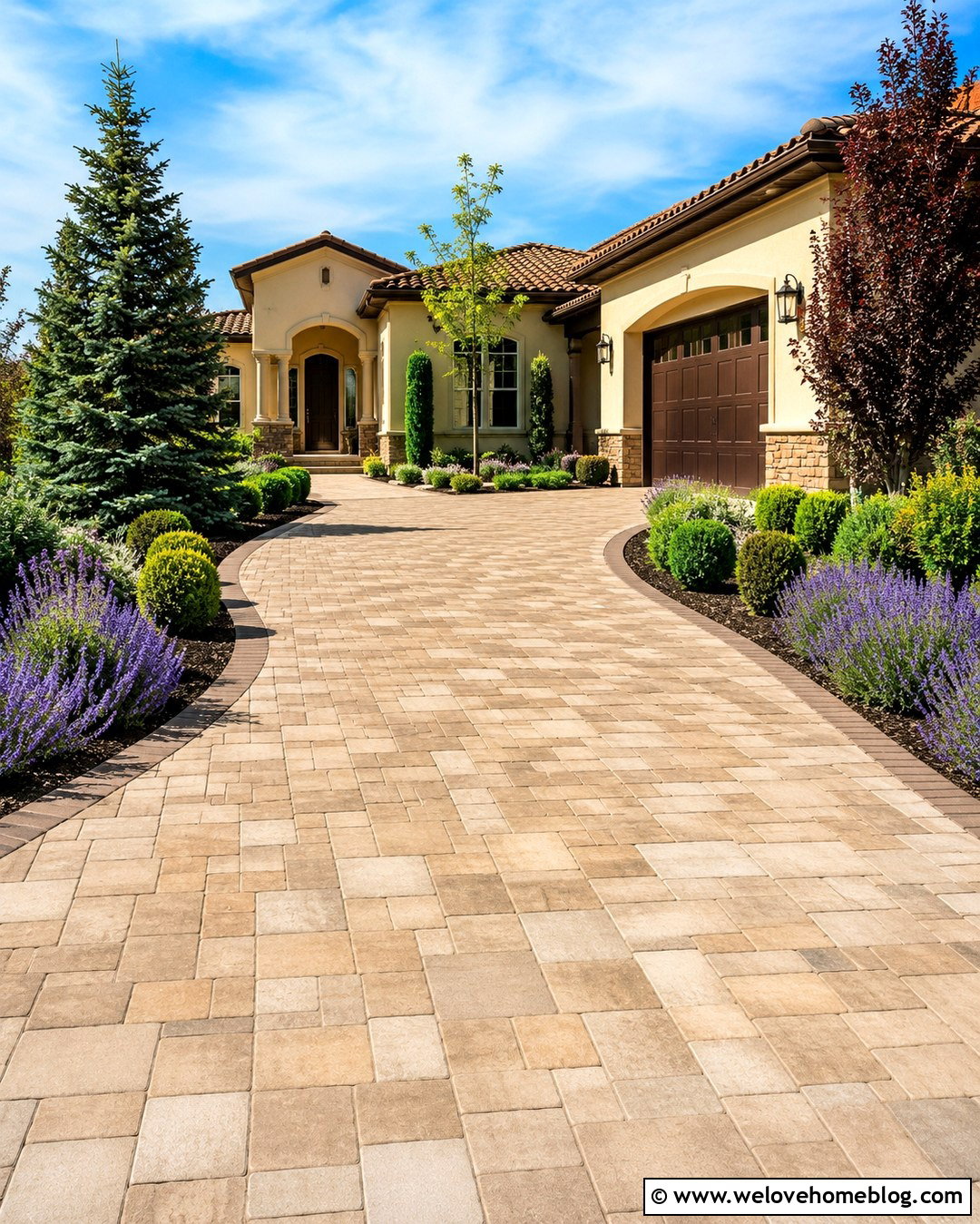
Combining the side extension with a dedicated walkway makes the driveway safer and more organized. Install rectangular concrete pavers in a running bond from the sidewalk or curb to the front porch. Separate the path from the driveway with a narrow contrasting border, but keep both surfaces flush where passengers may step across. Tan or greige pavers can warm up gray concrete without competing with the house. On the outer side, add a slim planting bed with lavender, catmint, ornamental grasses, or compact evergreen shrubs suited to the local climate. A coordinated paver path removes foot traffic from the vehicle area and creates a welcoming approach. It is a practical choice for narrow suburban lots where the front walkway currently begins beside parked cars.
11. Pavers On Both Sides Of A Driveway
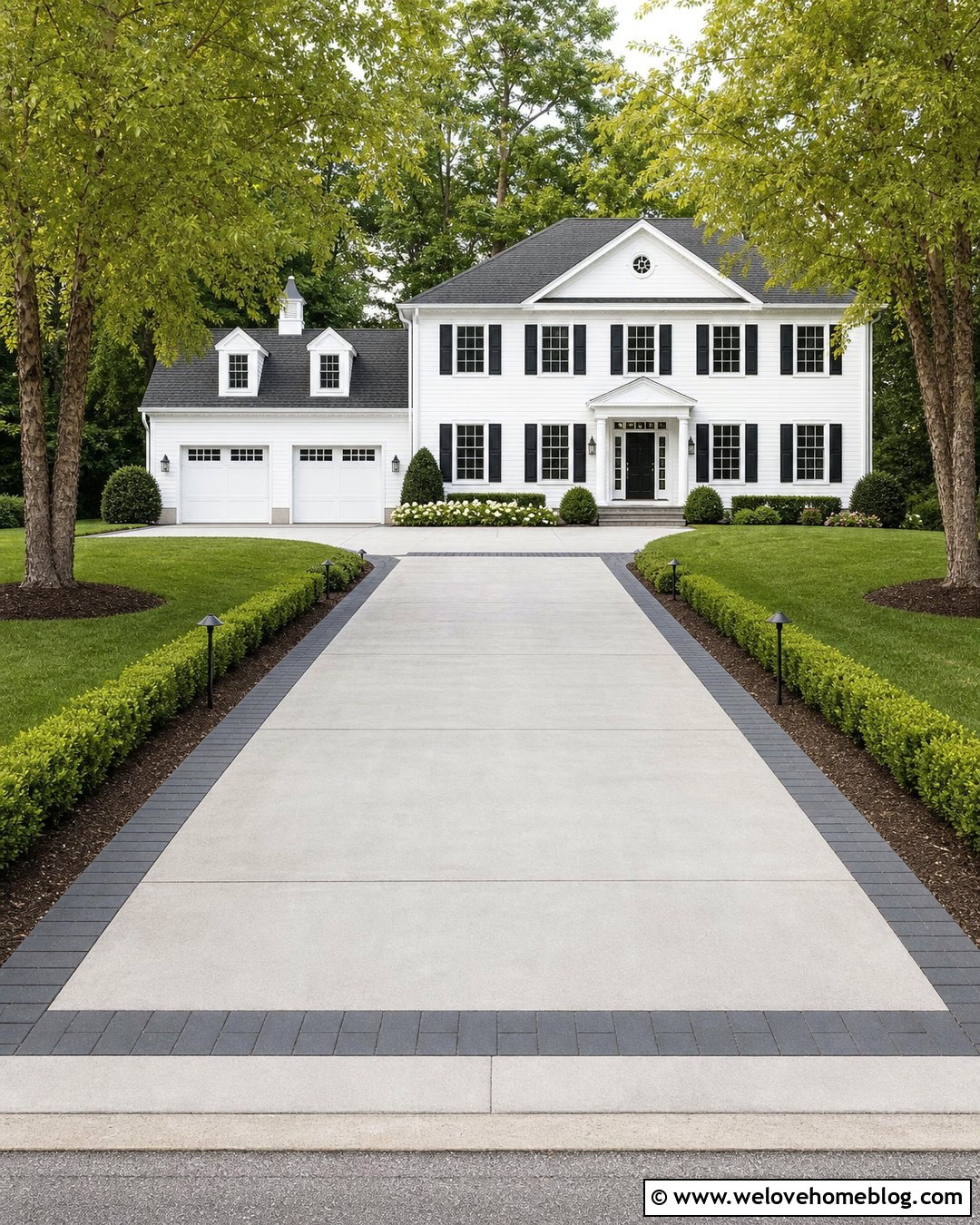
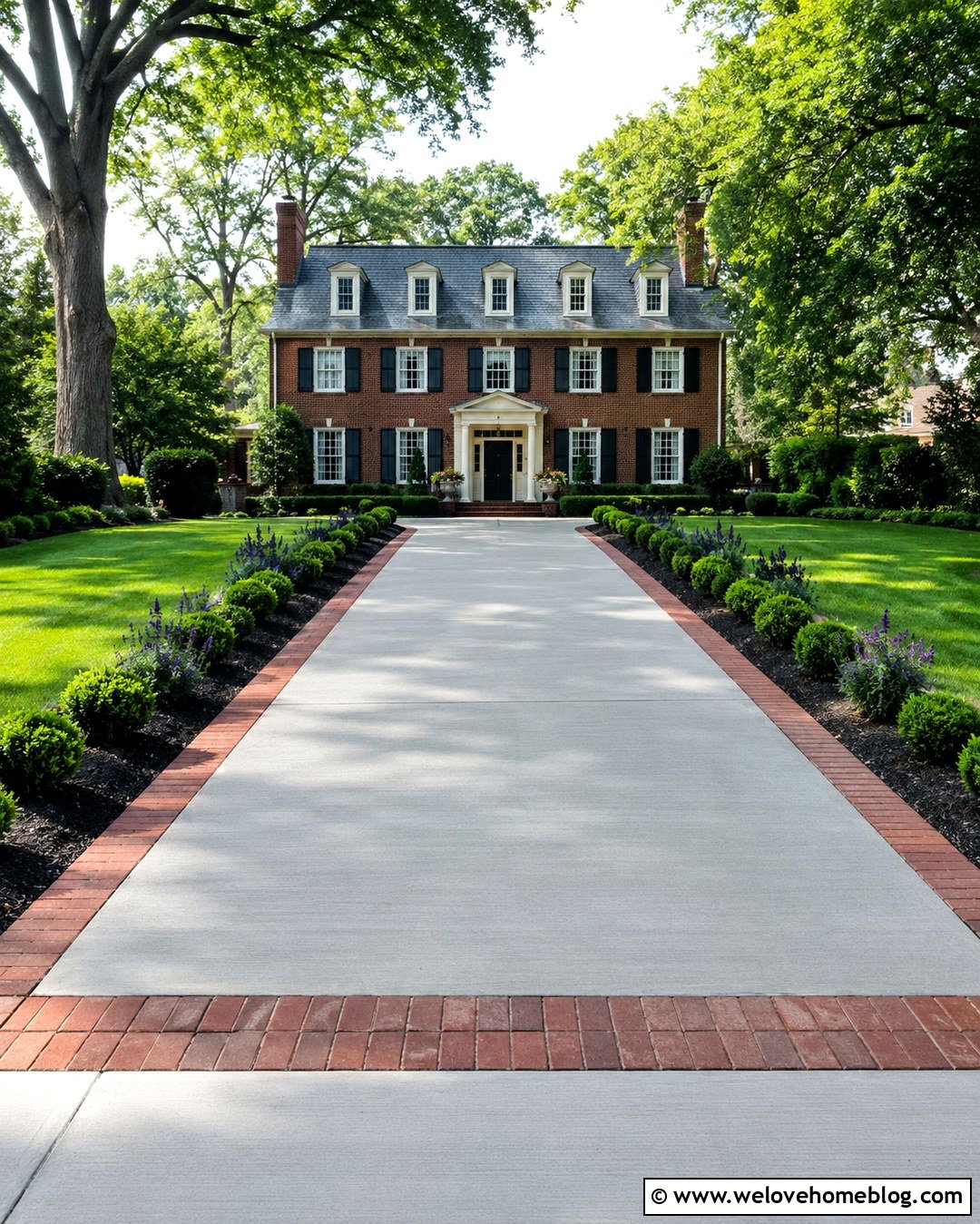
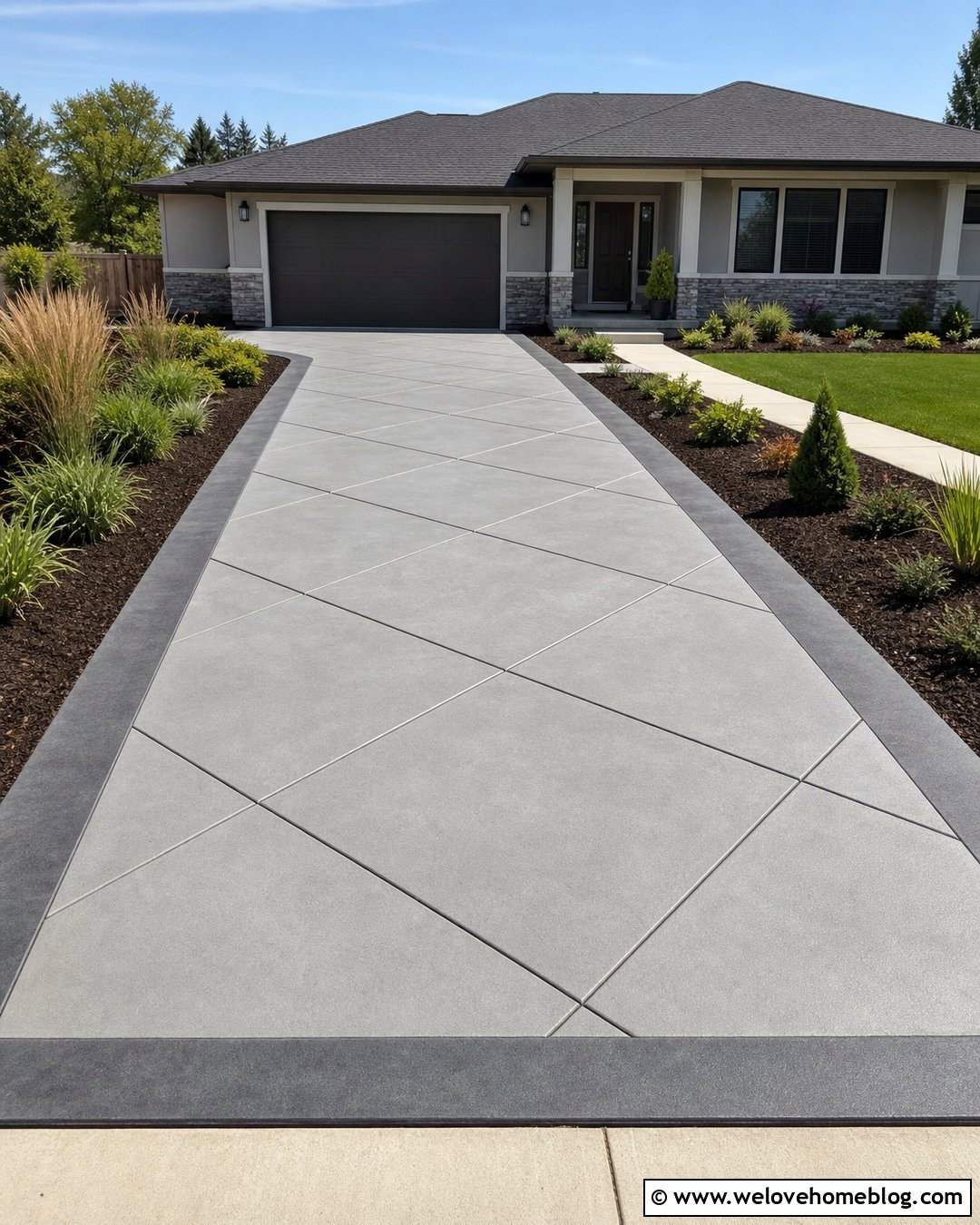
Matching paver bands on both sides give a basic driveway greater visual width and symmetry. Use dark charcoal concrete pavers beside a light-gray poured concrete surface for a strong framed effect. Straight soldier-course rows create a formal appearance, while wider running bond strips provide space for stepping out of vehicles. Repeat the same dimensions on each side unless a walkway or planting bed requires an intentional adjustment. Low hedges, evenly spaced path lights, and balanced foundation planting reinforce the orderly arrangement. At the garage, carry the paver bands across the front as a connecting apron for a finished look. This symmetrical treatment suits Colonial, Georgian, and formal contemporary homes, particularly when the garage and front entrance already follow a balanced architectural layout.
12. Grass Joint Pavers Beside A Driveway
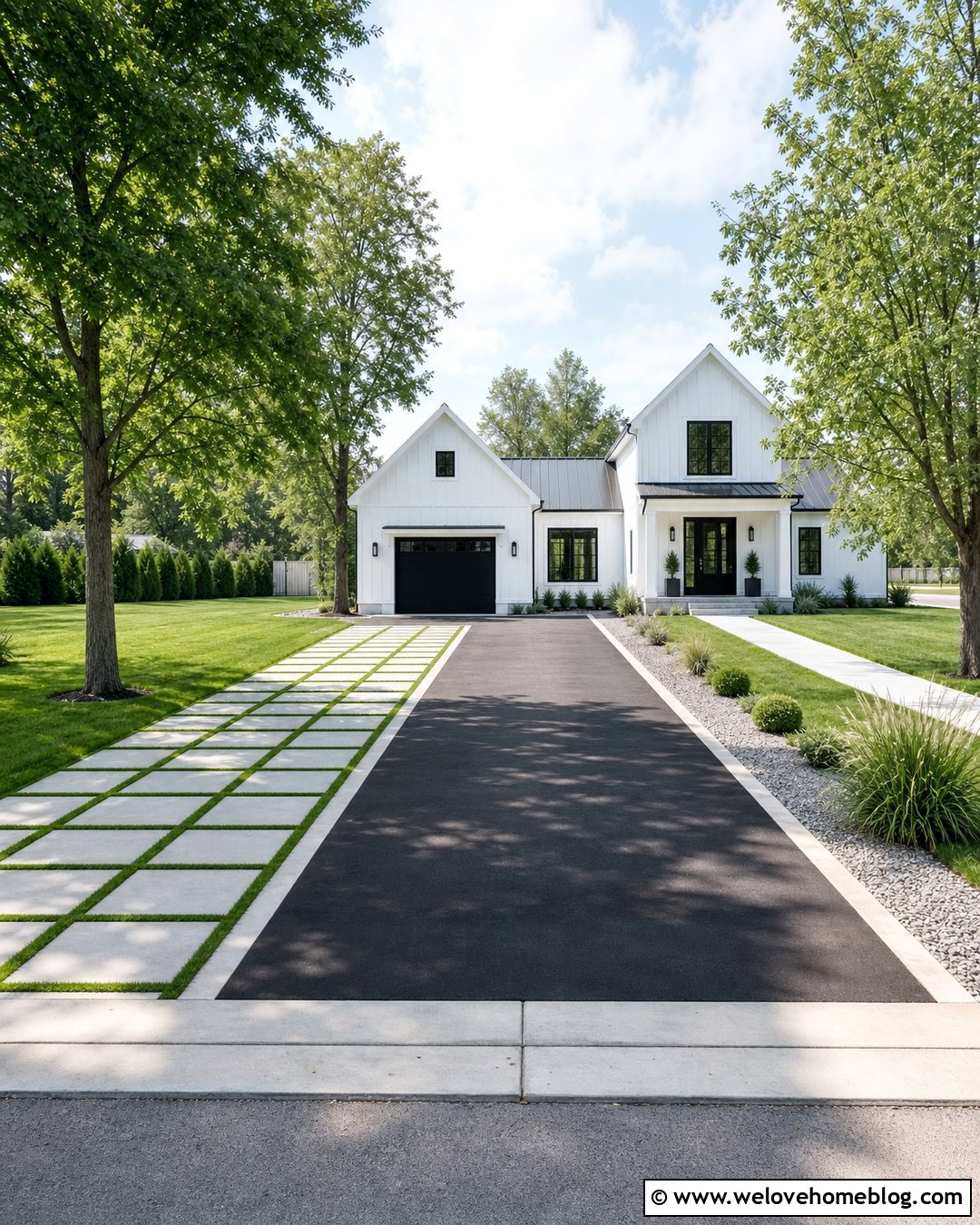
Grass joint pavers offer a softer transition between a solid driveway and the surrounding lawn. Choose load-rated concrete grid pavers or wide-joint units designed to support occasional vehicle use. Install them along one side of a black asphalt or gray concrete driveway, allowing suitable turf or low groundcover to fill the openings. The green joints reduce the visual weight of the extension and make it feel connected to the yard. A flush concrete edge on the outside helps maintain a clean boundary during mowing. Keep nearby landscaping simple with a few shade trees and broad areas of lawn. This design works well for overflow parking, occasional guest use, or a secondary wheel strip beside modern farmhouse and casual suburban homes. Plan maintenance around the chosen joint planting.
13. Driveway Side Pavers With A Retaining Wall
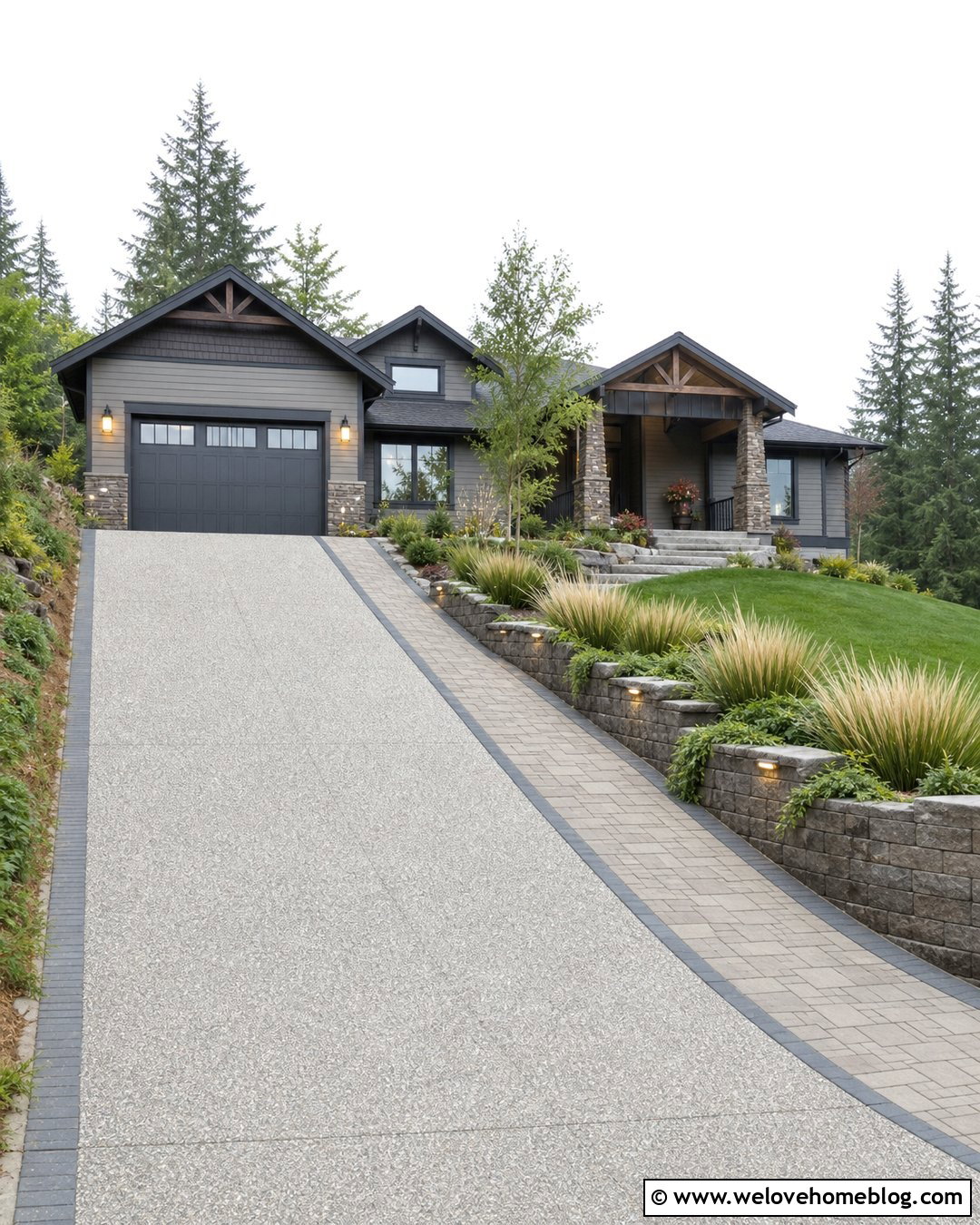
A sloped yard may need more than pavers to create a useful driveway extension. Combine interlocking concrete pavers with a low segmental retaining wall on the downhill side. Choose wall blocks and pavers from the same color family so the structure appears coordinated. A blended tan-gray paver field with a dark border works well beside exposed aggregate or brushed concrete. Plant trailing groundcover and compact ornamental grasses above or below the wall, depending on the grade. Integrated wall lights can improve visibility without placing fixtures where doors or tires may hit them. The retaining structure, drainage, and paver base should be designed for site conditions rather than treated as decoration. This complete layout can provide a stable step-out zone beside hillside ranch and craftsman homes.
14. Paver Driveway Apron With Side Extensions
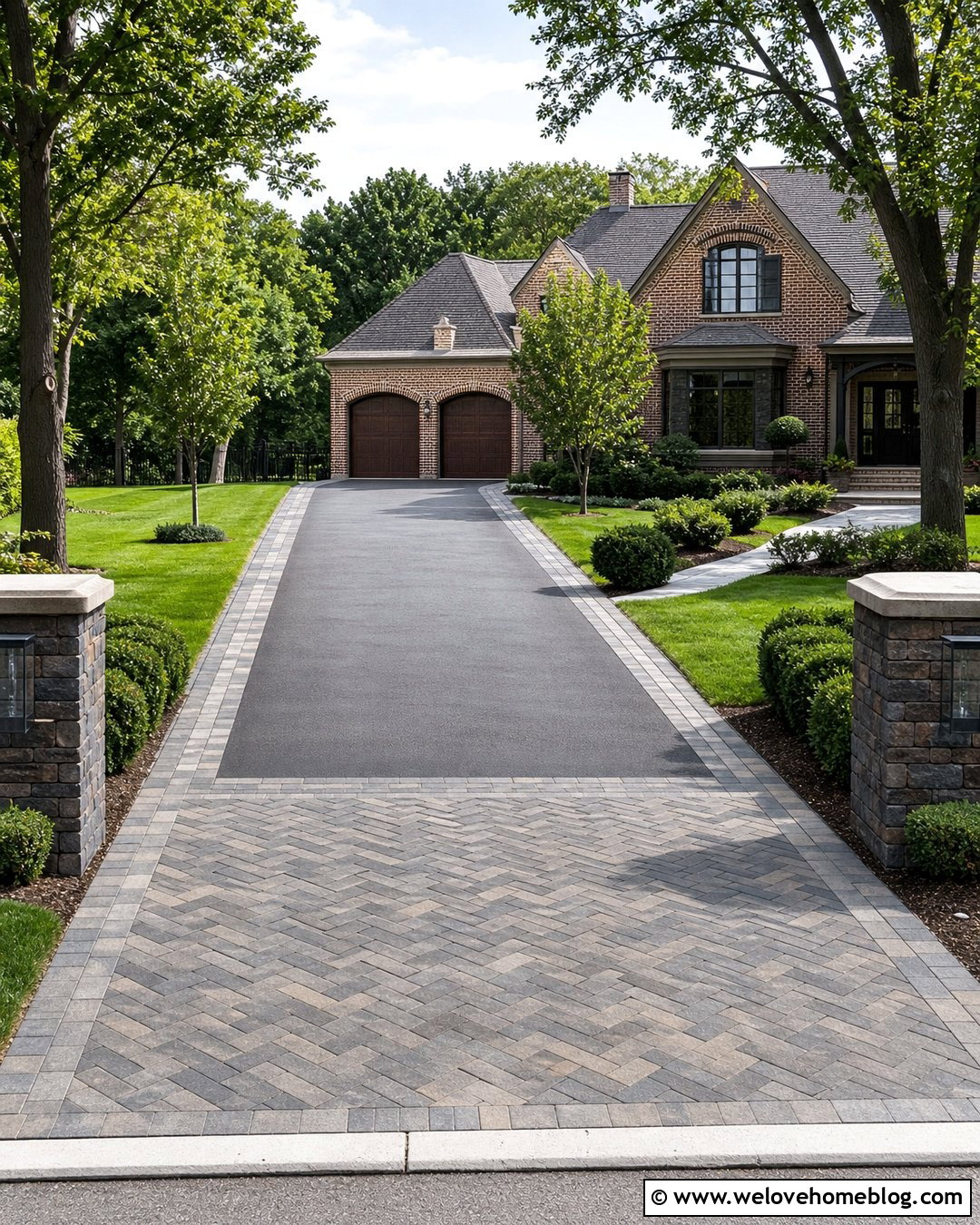
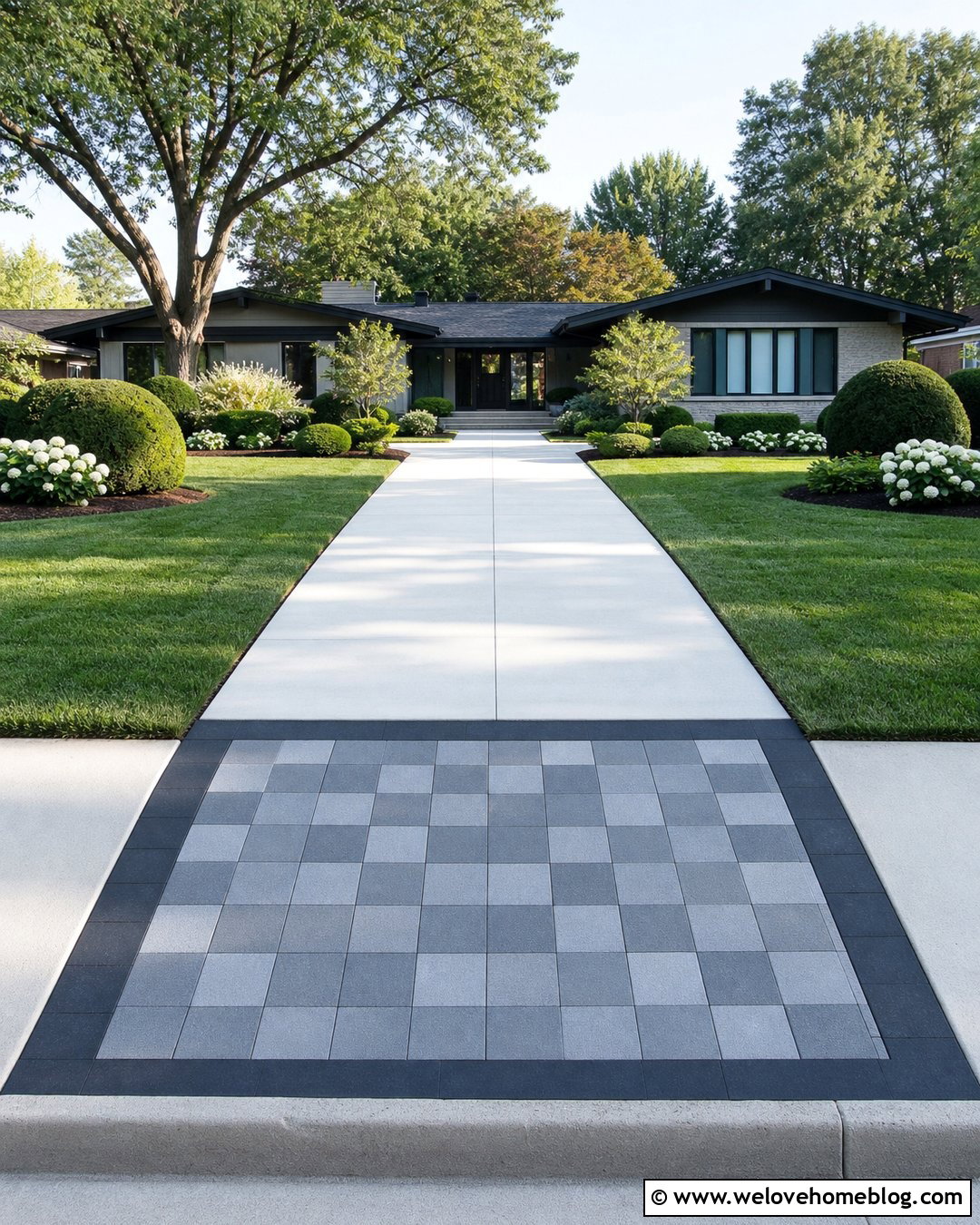
A broad paver apron can connect side paver strips and give the entire driveway entrance a finished appearance. Use brick or concrete pavers across the first several feet near the curb, then continue matching bands along both driveway edges. A herringbone field framed by a soldier course offers clear definition and visual strength. Select colors that bridge the driveway and house, such as charcoal and warm gray beside asphalt or muted red brick beside concrete. Low stone pillars, clipped shrubs, and open lawn can mark the entrance without restricting driver visibility. Confirm local requirements before changing the driveway approach or work near the public right-of-way. When properly planned, the apron and side bands create one continuous composition instead of several disconnected decorative strips.
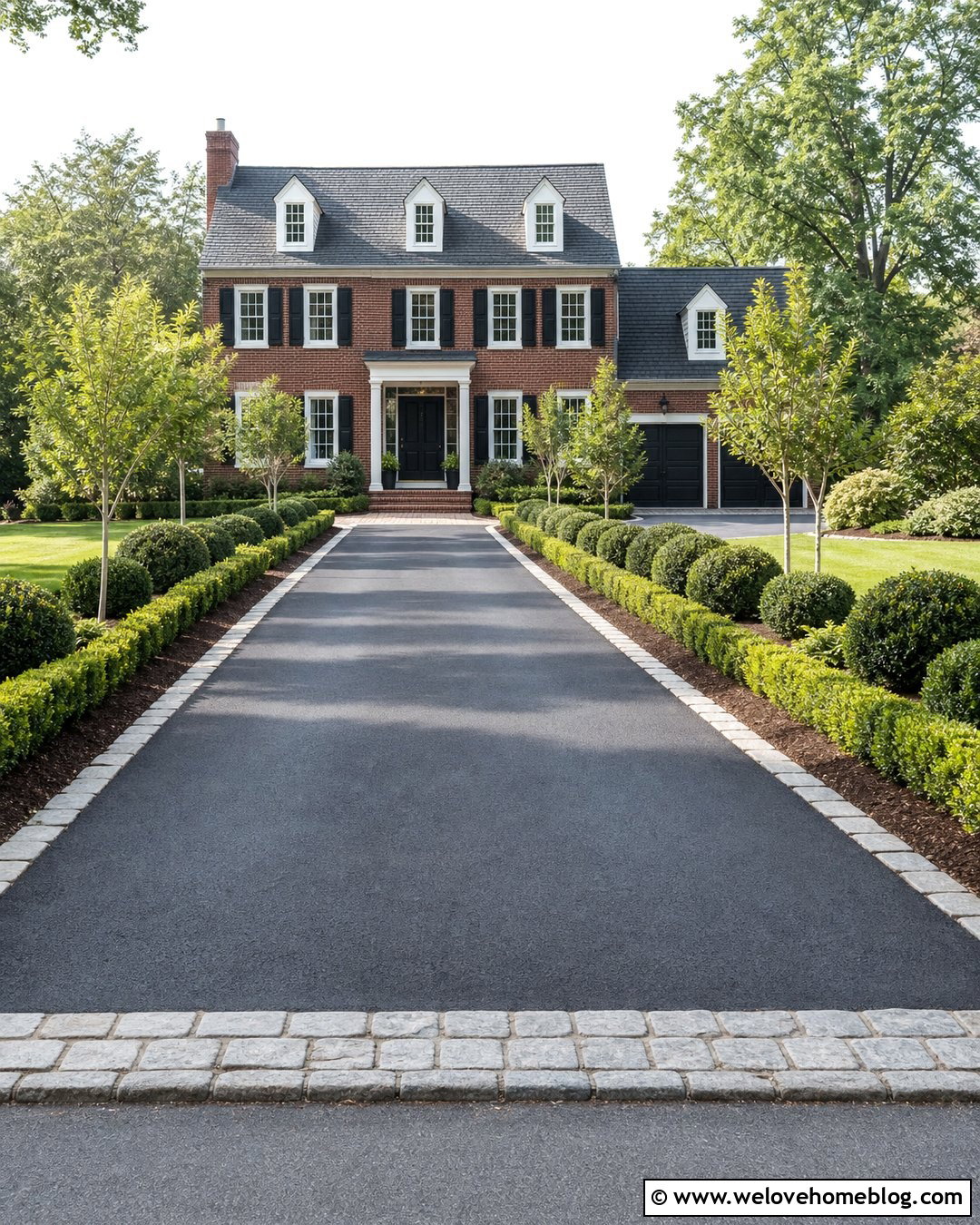
15. Driveway Side Pavers With Landscape Lighting
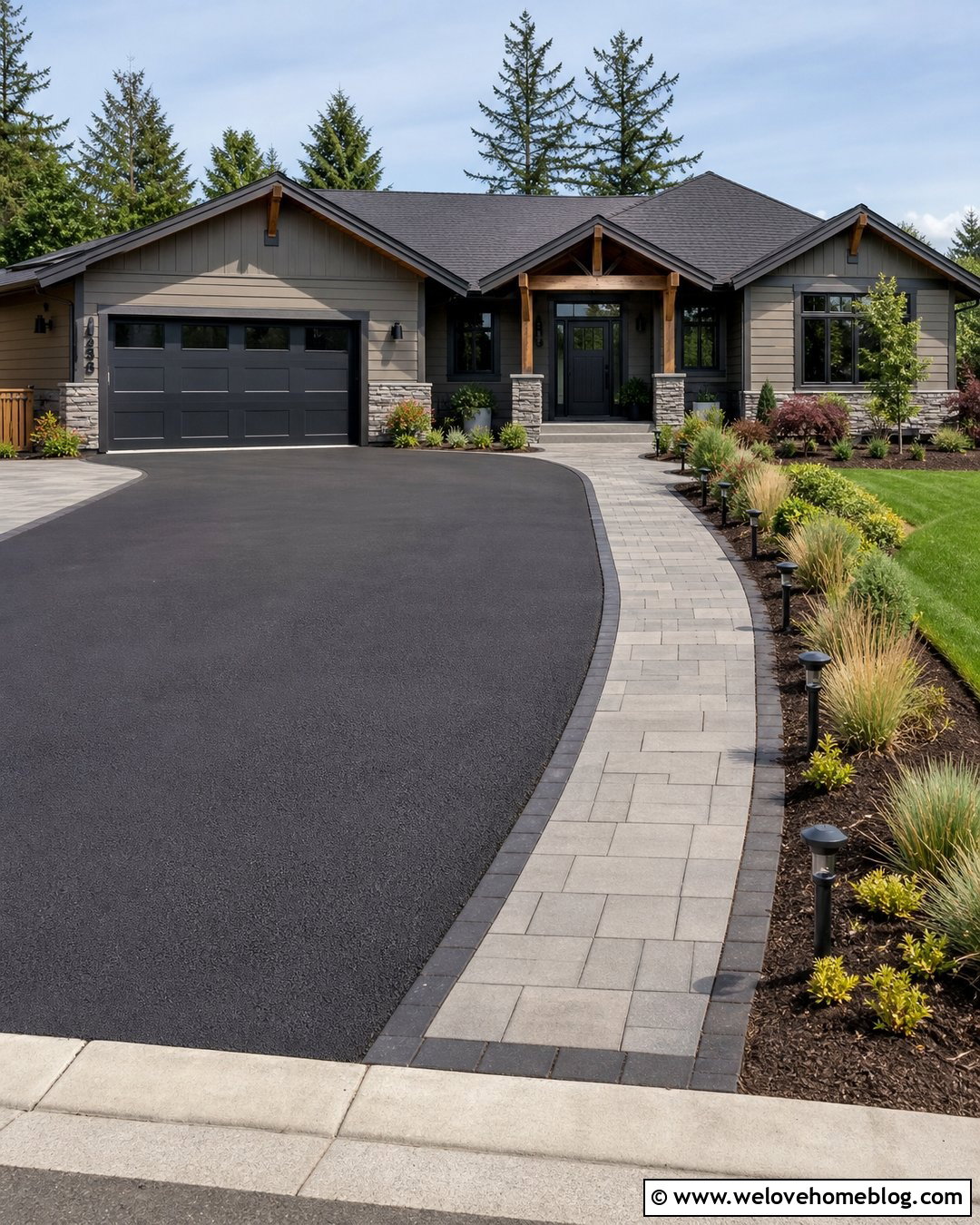
Low-voltage lighting can make a side paver extension easier to follow while improving the home’s evening curb appeal. During daylight, the full design should still look clean and uncluttered. Install warm-gray concrete pavers beside a black asphalt driveway, using a contrasting border to define the walking zone. Position small path lights in the adjacent planting bed rather than directly in areas exposed to tires or open doors. Space them consistently and aim the illumination downward to limit glare. Complete the border with ornamental grasses, low evergreen shrubs, and a mulched bed that follows the driveway line. This design works well beside contemporary craftsman and updated ranch homes. Coordinate fixture finishes with the garage lights, house numbers, and front door hardware for a unified exterior.
16. Reclaimed Brick Pavers Beside A Gravel Driveway
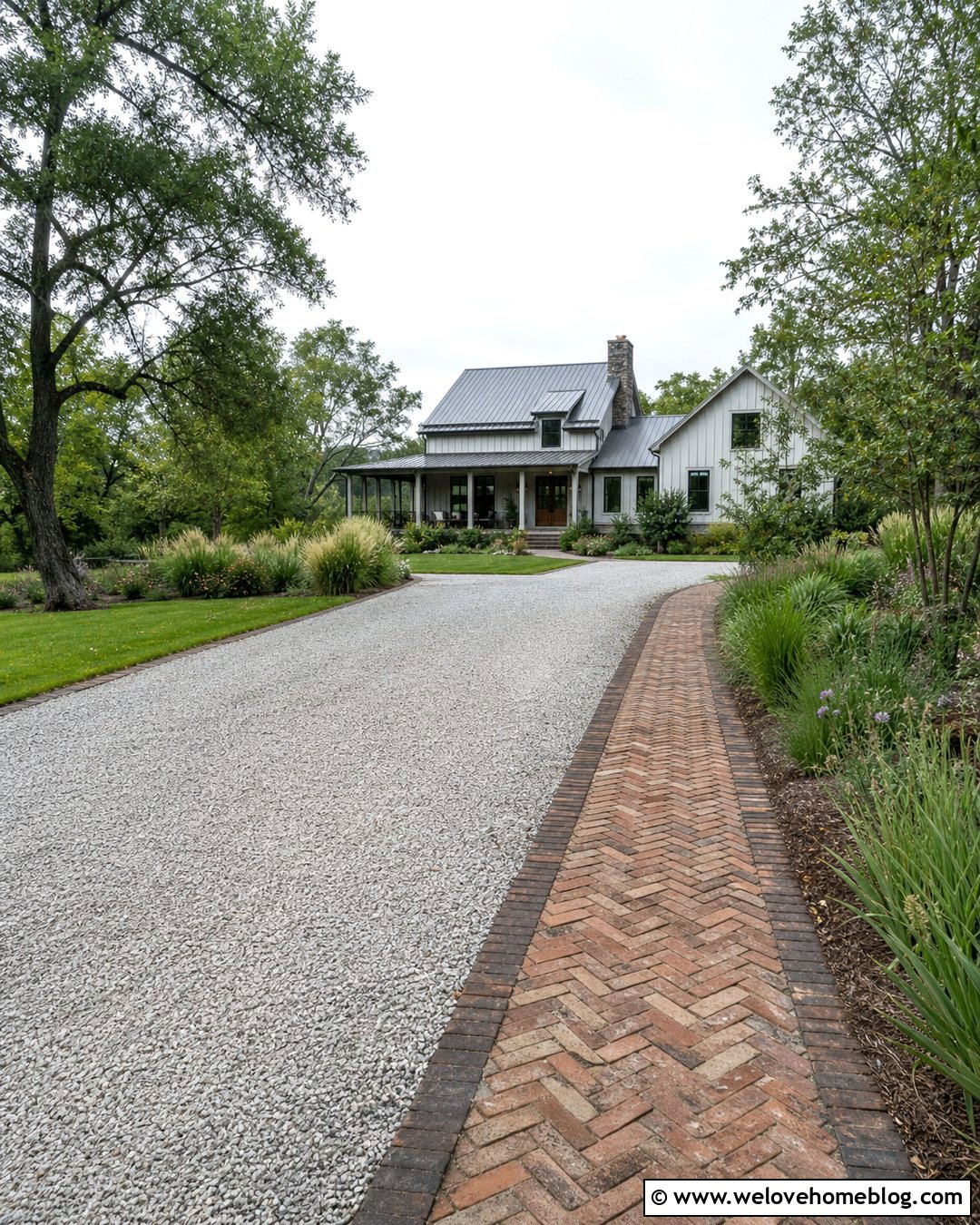
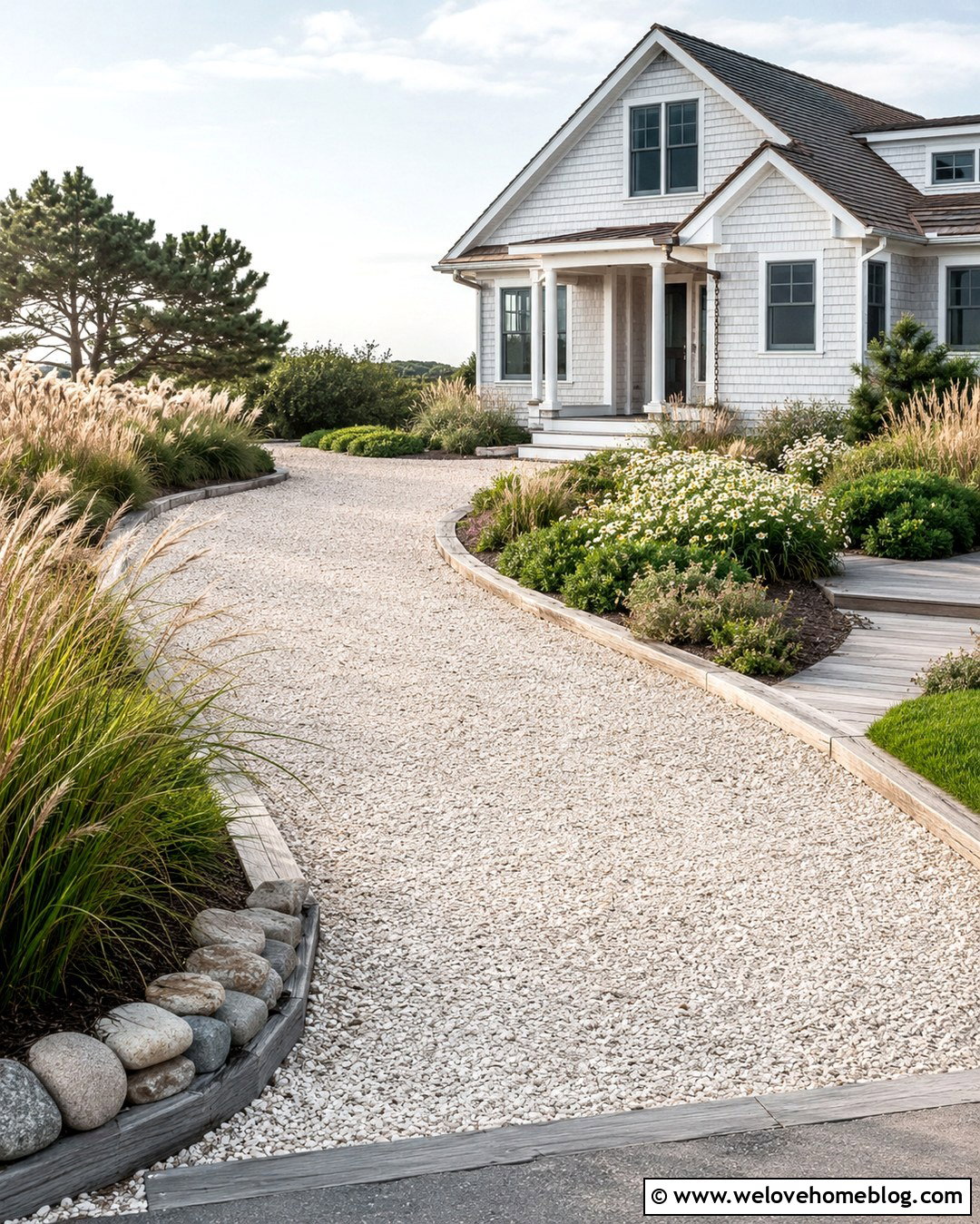
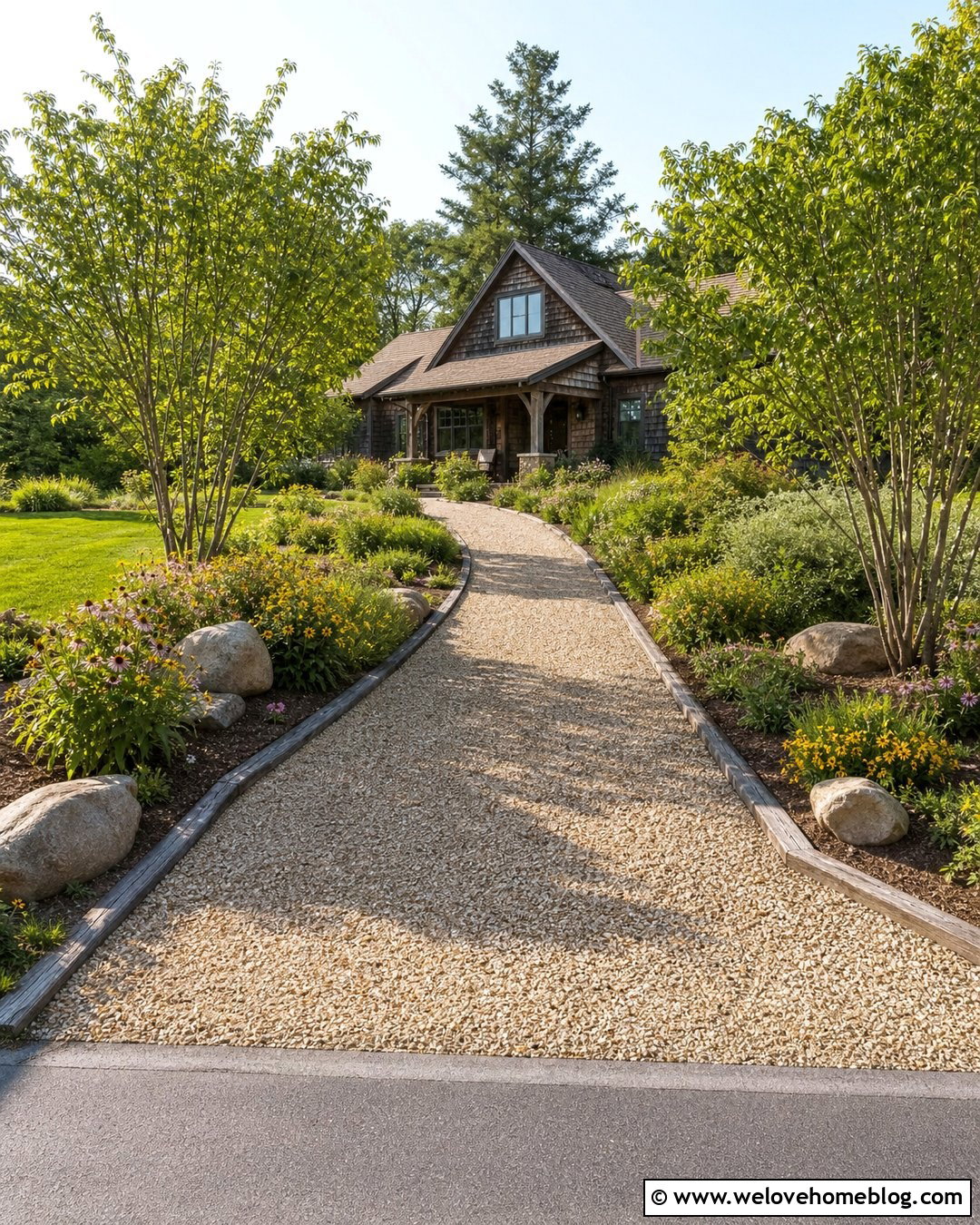
Reclaimed brick can bring age and structure to the loose edges of a gravel driveway. Install a wide brick strip along one side using a running bond or herringbone pattern, then add a sturdy outer restraint to prevent movement. Warm, weathered red bricks contrast beautifully with pale gray crushed stone. The paved band provides a cleaner place to walk while visually containing the gravel surface. Surround the driveway with informal planting beds, native grasses, flowering shrubs, and a simple timber or brick walkway leading to the porch. Because reclaimed units can vary in thickness and strength, select materials appropriate for the expected use. This relaxed combination complements farmhouses, country cottages, and older homes where perfectly uniform modern pavers might appear out of place.
17. Charcoal Pavers Beside A White Concrete Driveway
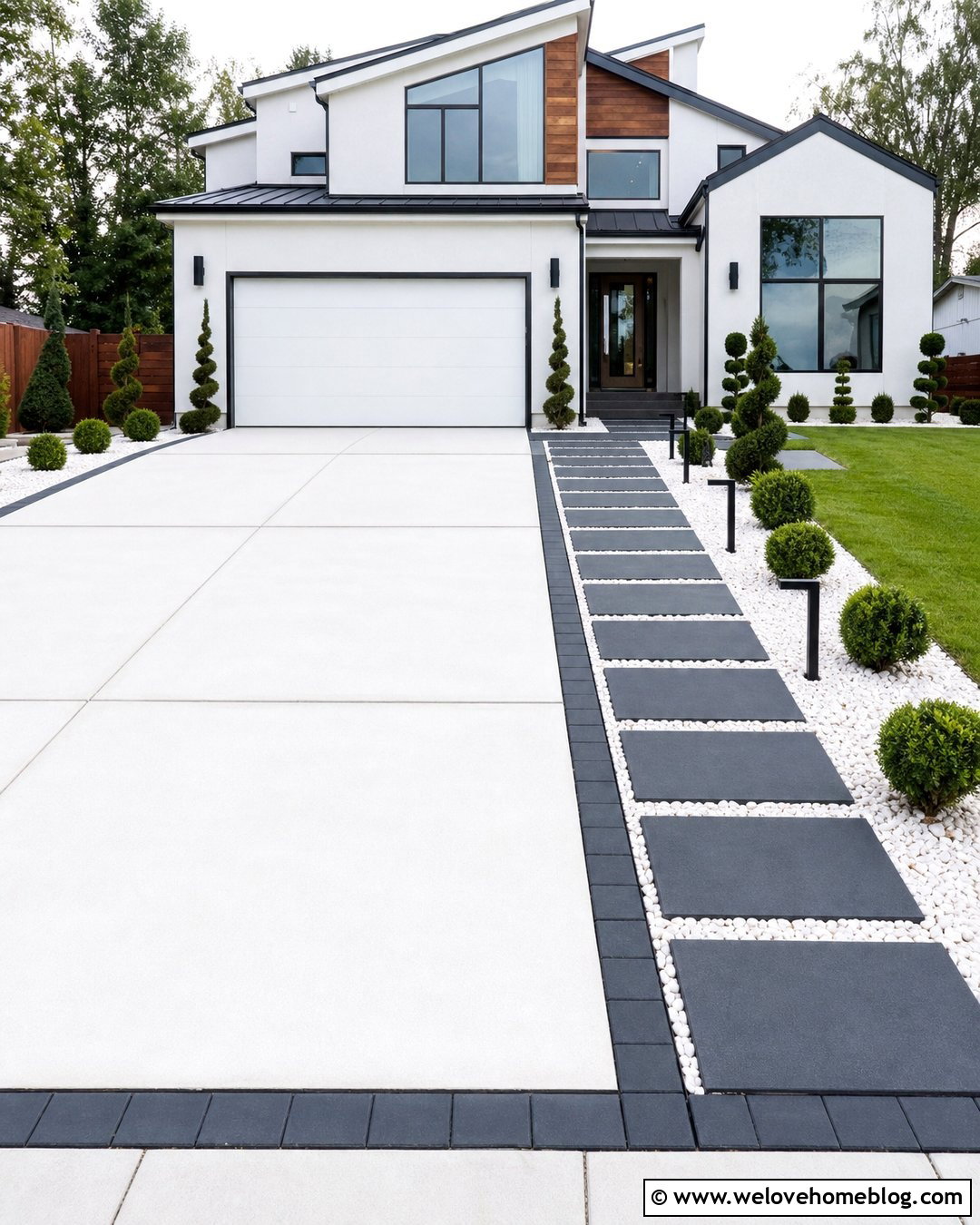
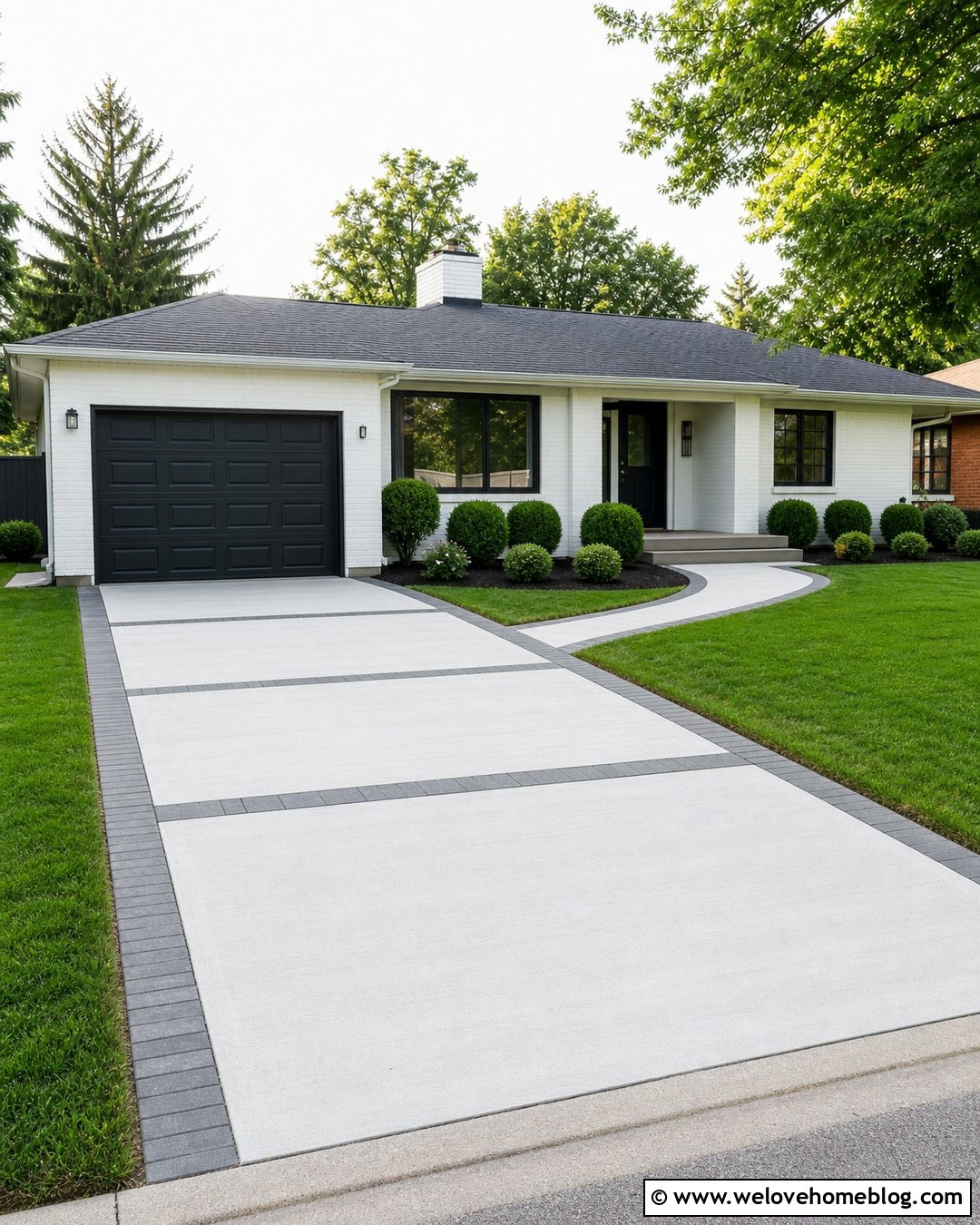
Crisp contrast can transform an ordinary concrete driveway into a strong architectural feature. Add wide charcoal concrete pavers along one side of a pale gray or nearly white driveway. Arrange the pavers in a stacked rectangular pattern for a clean contemporary look, then repeat the charcoal material in a front walkway or garage apron. A strip of white decorative stone and sculptural evergreen shrubs can separate the pavers from the lawn. Keep the planting palette limited so the high-contrast hardscape remains the focus. Black path lights, address numbers, and garage hardware tie the exterior together. This design works especially well with modern houses featuring white stucco, dark window frames, wood accents, and simple geometric landscaping. Flush transitions help the two surfaces feel visually precise.
18. Tan Pavers Beside A Desert Driveway
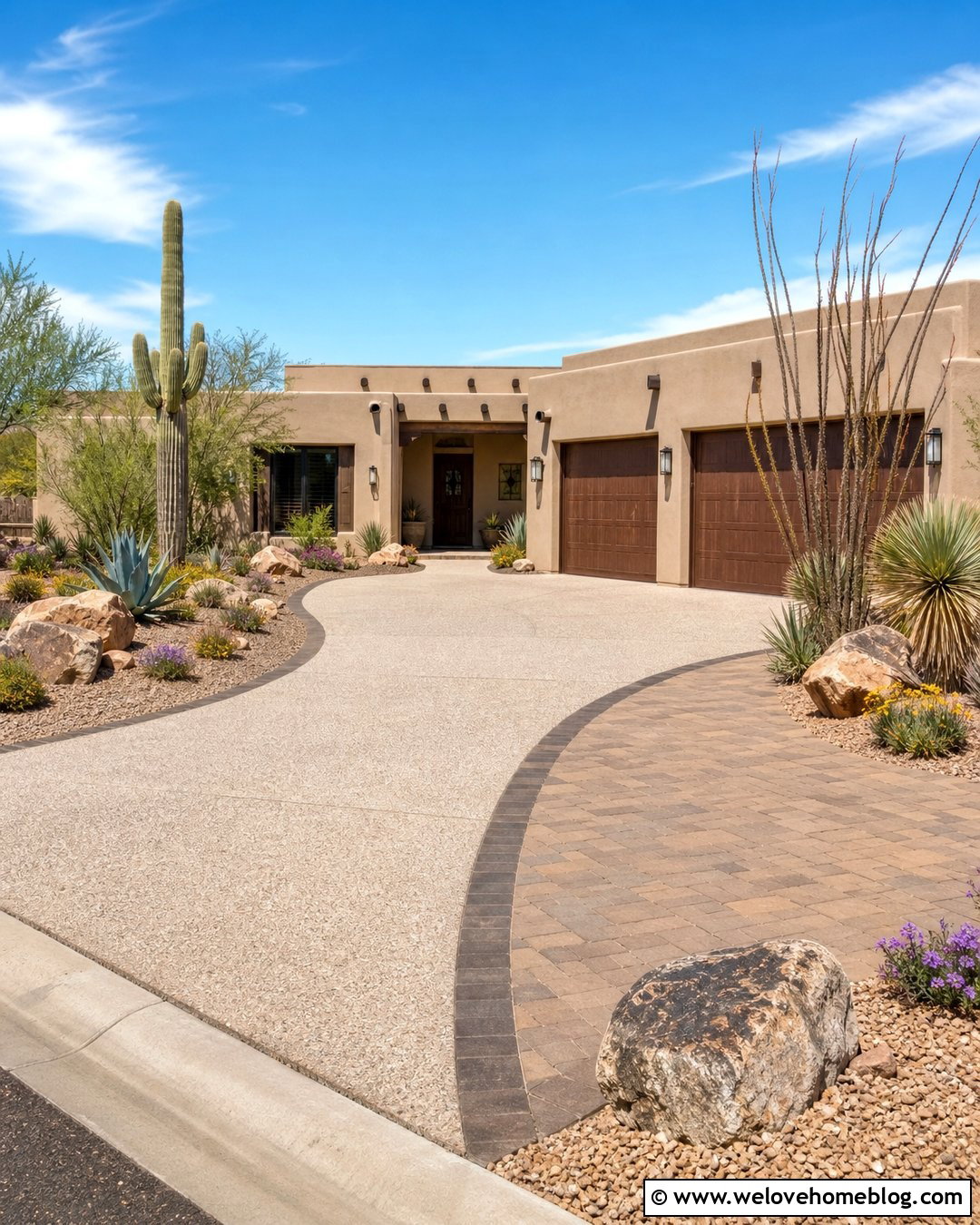
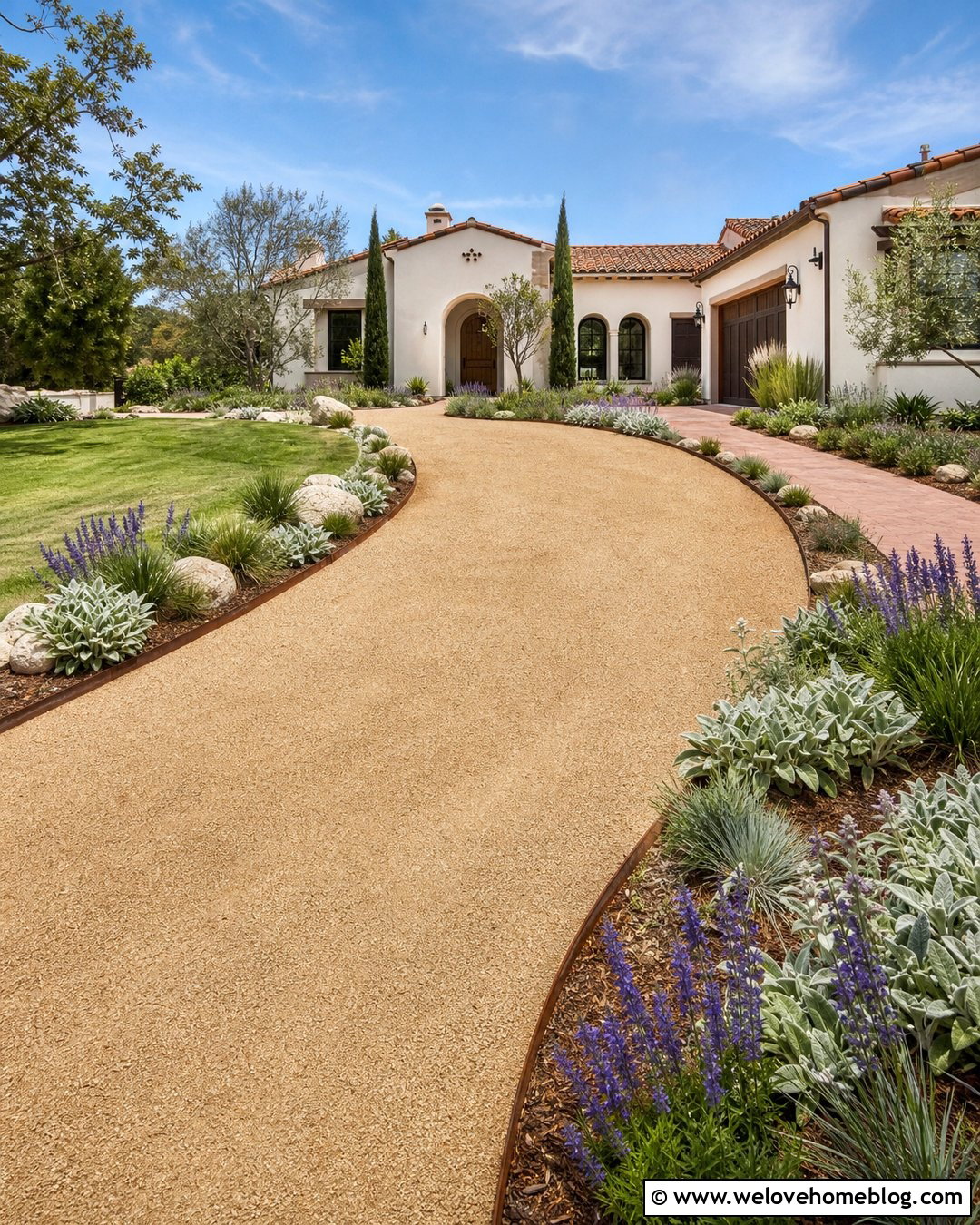
In a dry-climate landscape, tan pavers can widen a driveway while blending naturally with gravel mulch and drought-conscious planting. Pair sand-colored interlocking concrete pavers with a light exposed aggregate driveway. Use a gently curved side strip that broadens near the garage, providing space for passengers or occasional parking. Frame the outside edge with darker brown pavers to prevent the extension from disappearing into the surrounding rock. Complete the look with boulders, agave, yucca, desert-adapted grasses, and widely spaced flowering plants appropriate for the region. Keep thorny or rigid plants away from car doors and pedestrian routes. This warm, low-water composition suits Southwestern, adobe, desert modern, and stucco ranch homes while reducing the need for a narrow strip of difficult-to-maintain lawn.
19. Paver Utility Path Beside A Driveway
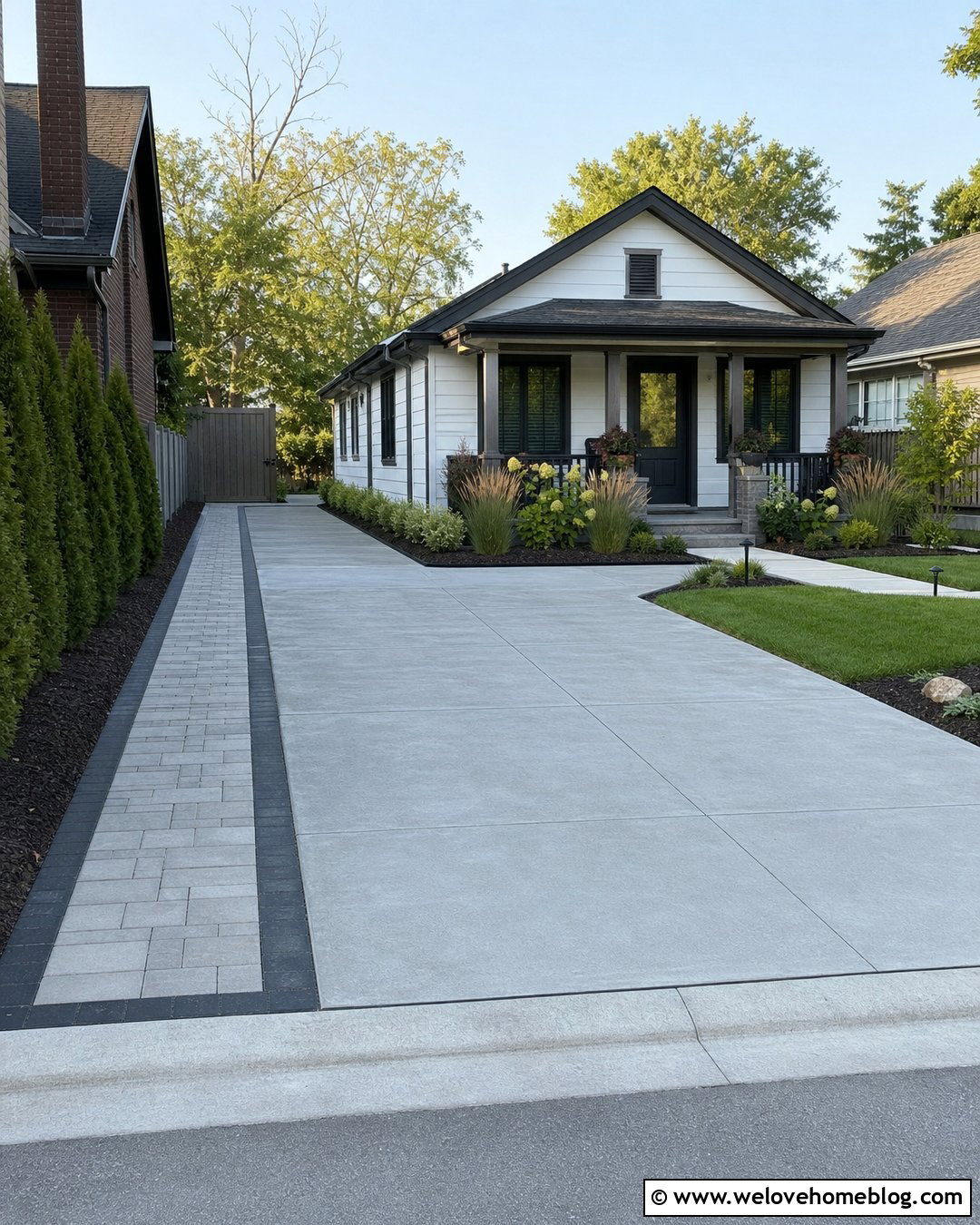
The side of a driveway often doubles as the route to trash bins, a side gate, or backyard storage. Turn that worn track into a coordinated paver utility path. Use medium-gray concrete pavers in a running bond beside an existing concrete driveway, making the path wide enough for rolling bins without creating an oversized paved area. Continue it from the curb or garage to a simple side-yard gate. A dark soldier-course border adds definition, while compact shrubs or a narrow fence can screen the utility zone from the street. Maintain a clear, level transition where the path meets the driveway. This practical layout suits small suburban lots because it improves circulation, organizes service areas, and adds curb appeal without requiring a full parking-width extension.
20. Paver Turnaround Beside A Long Driveway
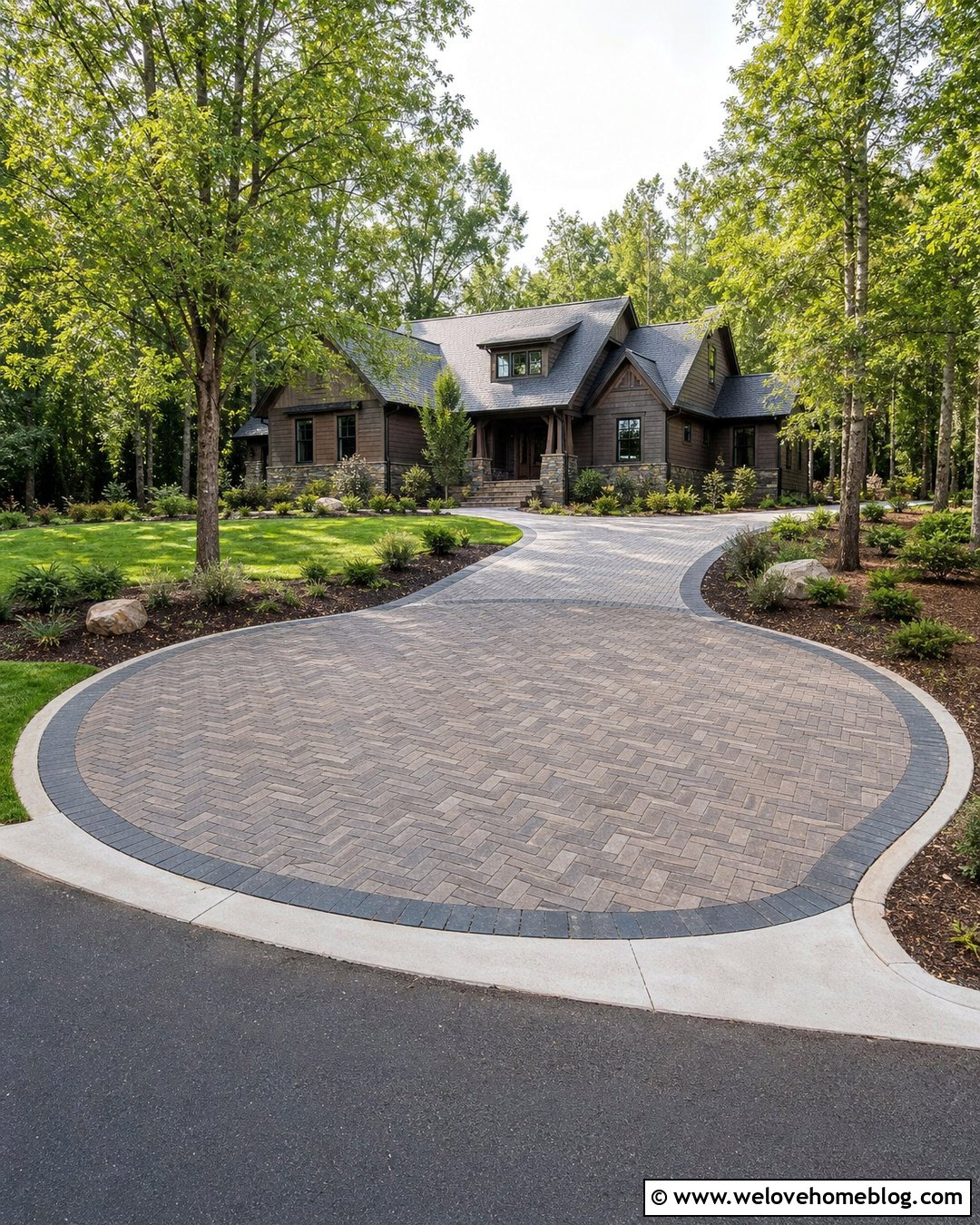
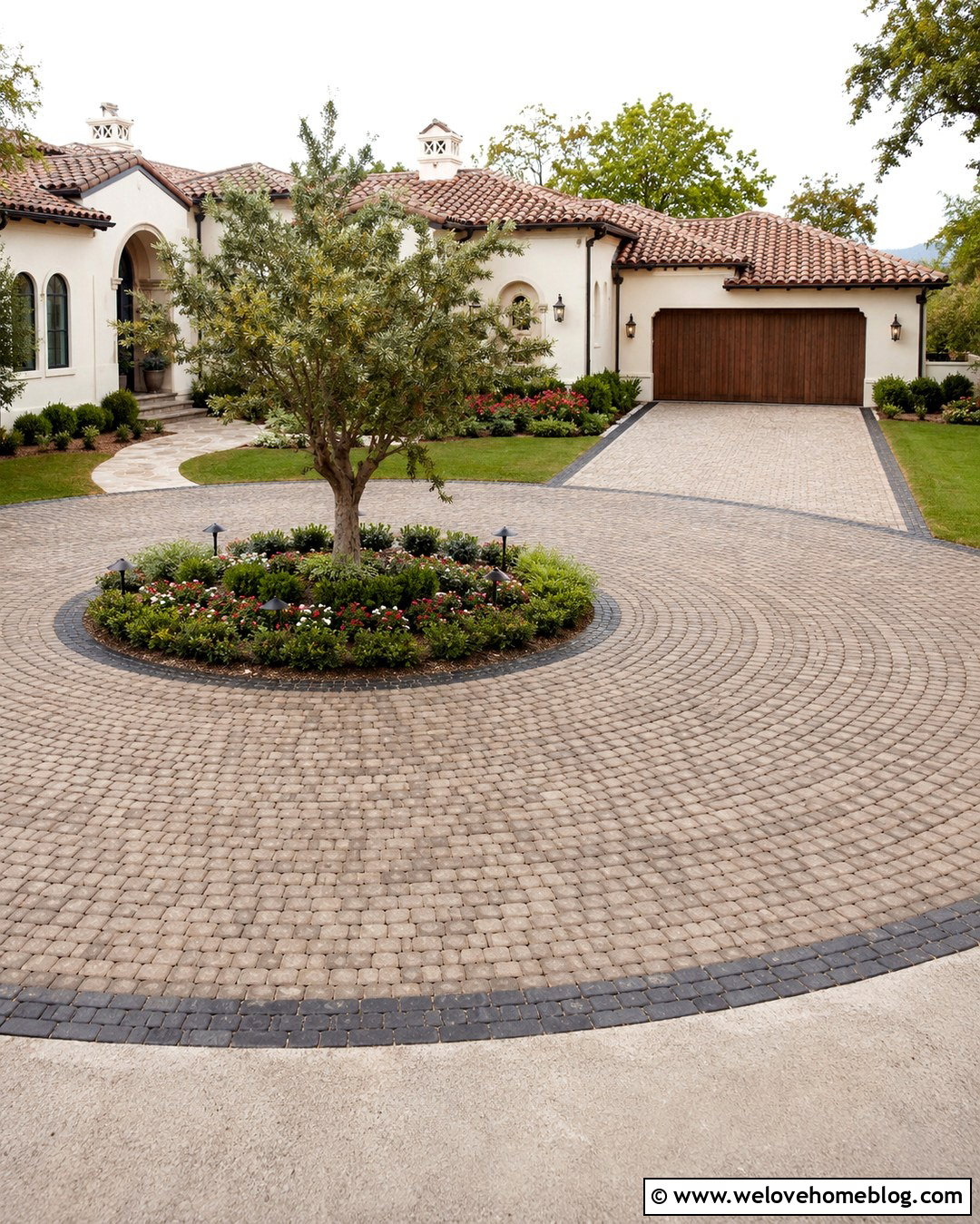
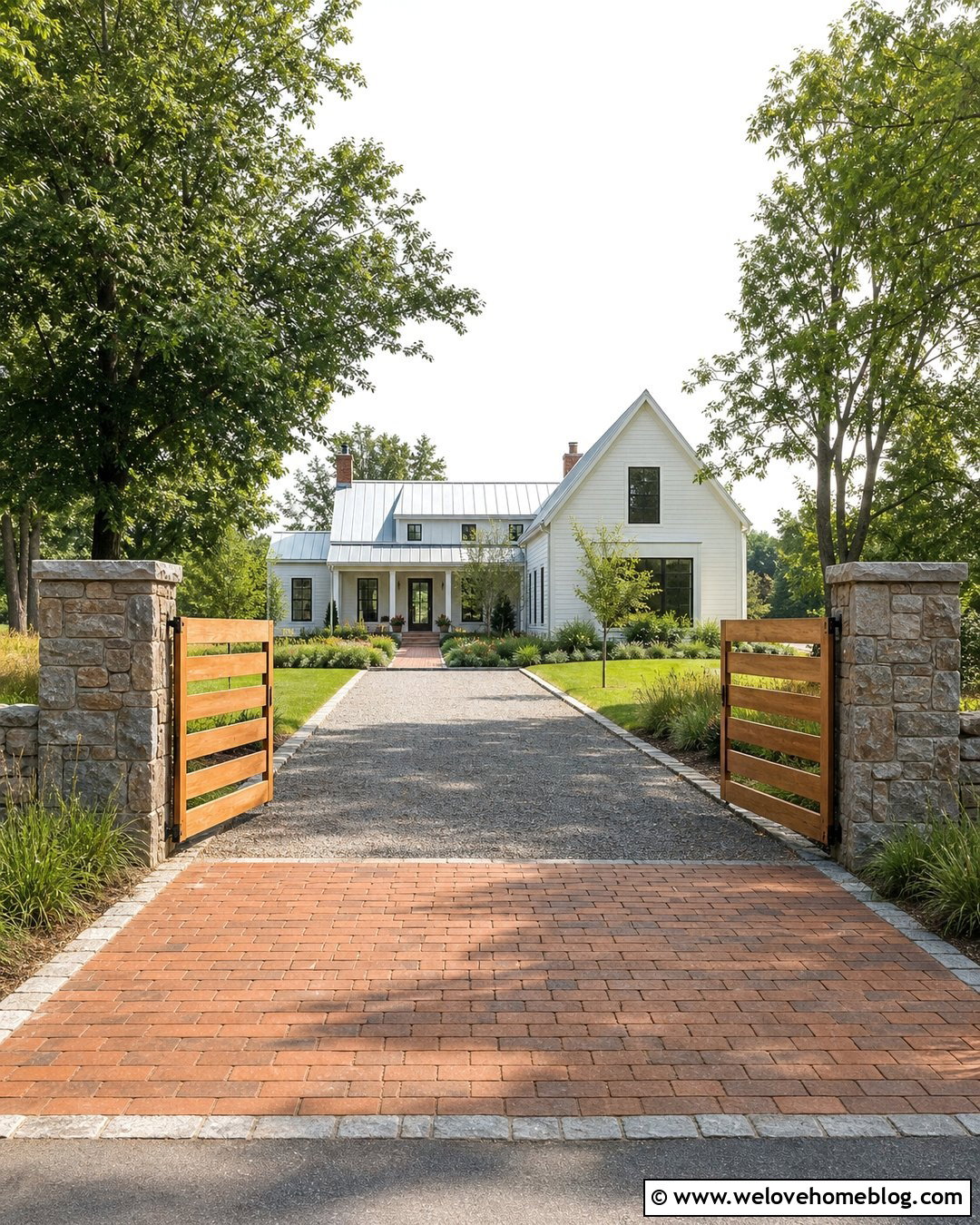
A small paver turnaround can make a long driveway easier to use while adding an attractive hardscape feature near the house. Create a rounded or rectangular bay beside the main asphalt or concrete drive, using vehicle-rated interlocking pavers in a contrasting color blend. A herringbone pattern with a dark border gives the wider area a clear identity. Position the bay where drivers have sufficient space to reverse and reenter the driveway safely. Surround its outer edge with low shrubs and ornamental trees that preserve visibility. Repeat the pavers in the front walkway or porch landing to integrate the new area with the home. This layout works particularly well on deep country, farmhouse, and wooded properties where backing to the road may be inconvenient.
Conclusion:
The best **20 Adding Pavers To Side Of Driveway Ideas** balance appearance with a clear purpose. A narrow band may create a comfortable step-out zone, while a wider extension can support parking, walking, drainage, or turning. Select paver colors and patterns that relate to the driveway, house, and existing walkways without forcing an imperfect match. Contrasting materials often look more intentional than almost-matching ones. For areas exposed to vehicles, prioritize driveway-rated pavers, a properly compacted base, secure edge restraints, and a smooth transition between surfaces. Drainage, property setbacks, underground utilities, and local approvals should be reviewed before installation. With thoughtful planning, side pavers can make the entire entrance feel wider, cleaner, and more complete.

Related posts:
Leave a Reply