
Adding a driveway can make daily parking easier, but it also changes how your home, lawn, and entrance look from the street. The best Adding Driveway To Front Yard Ideas balance vehicle access with drainage, landscaping, walkways, and the architectural style of the house. Before finalizing a plan, check local requirements for curb cuts, permits, driveway width, utility locations, and connections to public sidewalks. These rules can vary between cities and neighborhoods. () You should also plan where rainwater will go, especially when replacing a large section of lawn with paving. Permeable surfaces can help water pass into an appropriate stone base below. () The complete driveway looks below offer practical and attractive Adding Driveway To Front Yard Ideas.
1. Narrow Concrete Driveway With Grass Borders
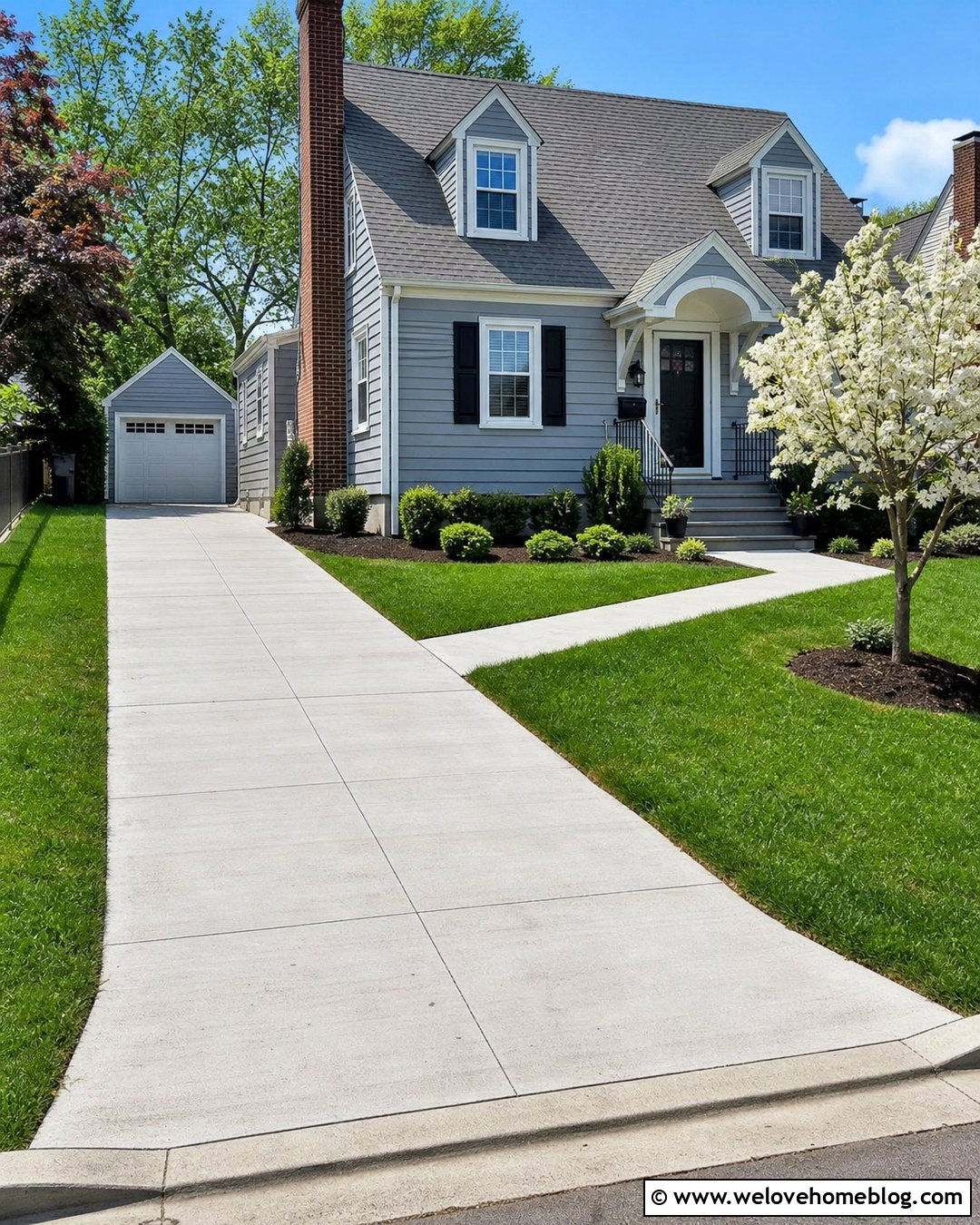
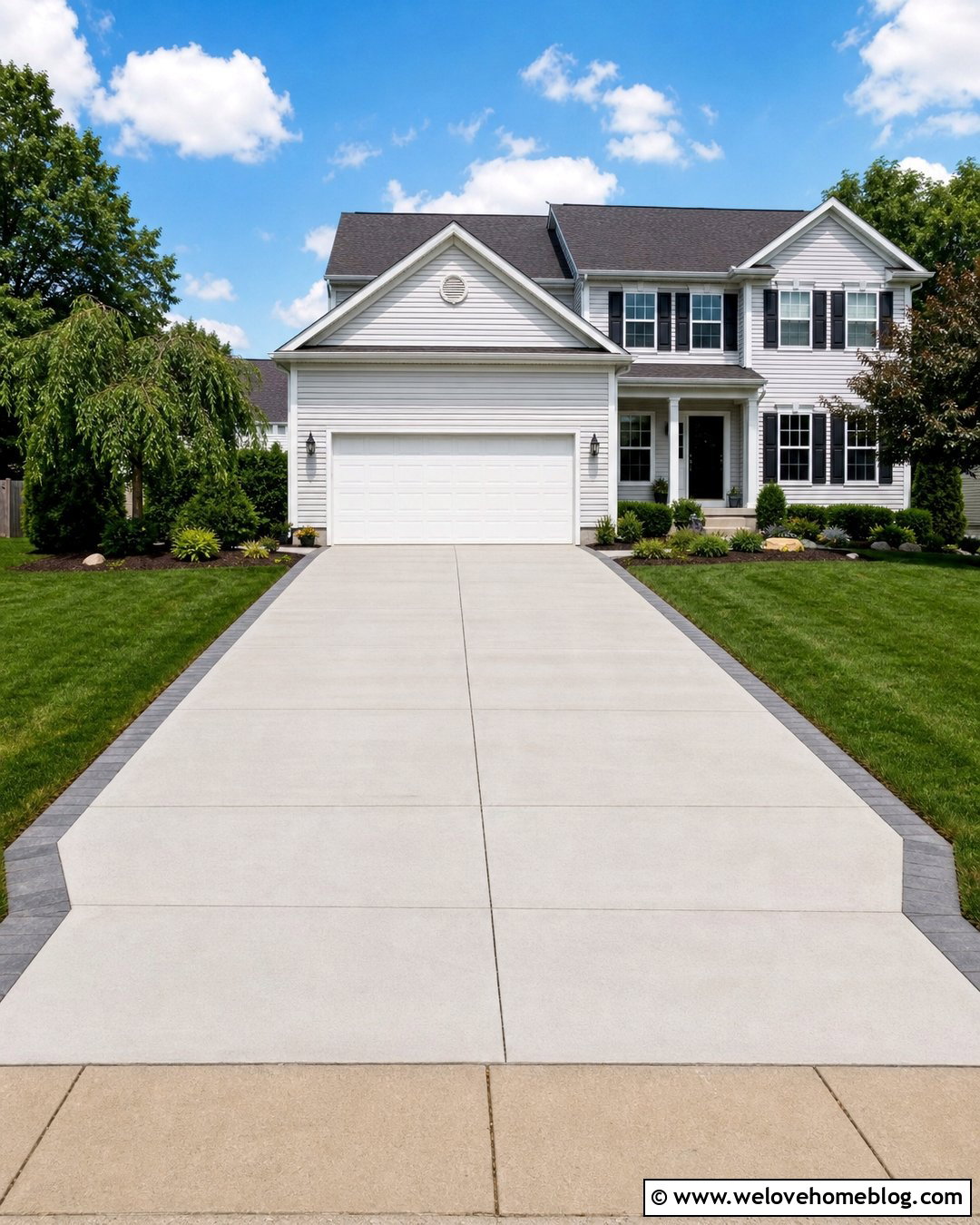
A narrow concrete driveway works well when you need parking without covering most of a compact front yard. Use light gray poured concrete in a straight layout that follows the shortest route from the street to the parking area. Clean expansion joints can divide the surface into balanced rectangular sections. Leave generous grass borders on both sides so the new driveway feels integrated with the lawn rather than dropped on top of it. A simple paved walkway can branch toward the porch near the house. Add low planting beds at the entrance and foundation, keeping shrubs away from vehicle doors and sightlines. This restrained layout complements ranch, Cape Cod, and modest suburban homes while preserving valuable open space.
2. Permeable Paver Driveway With Planting Strips
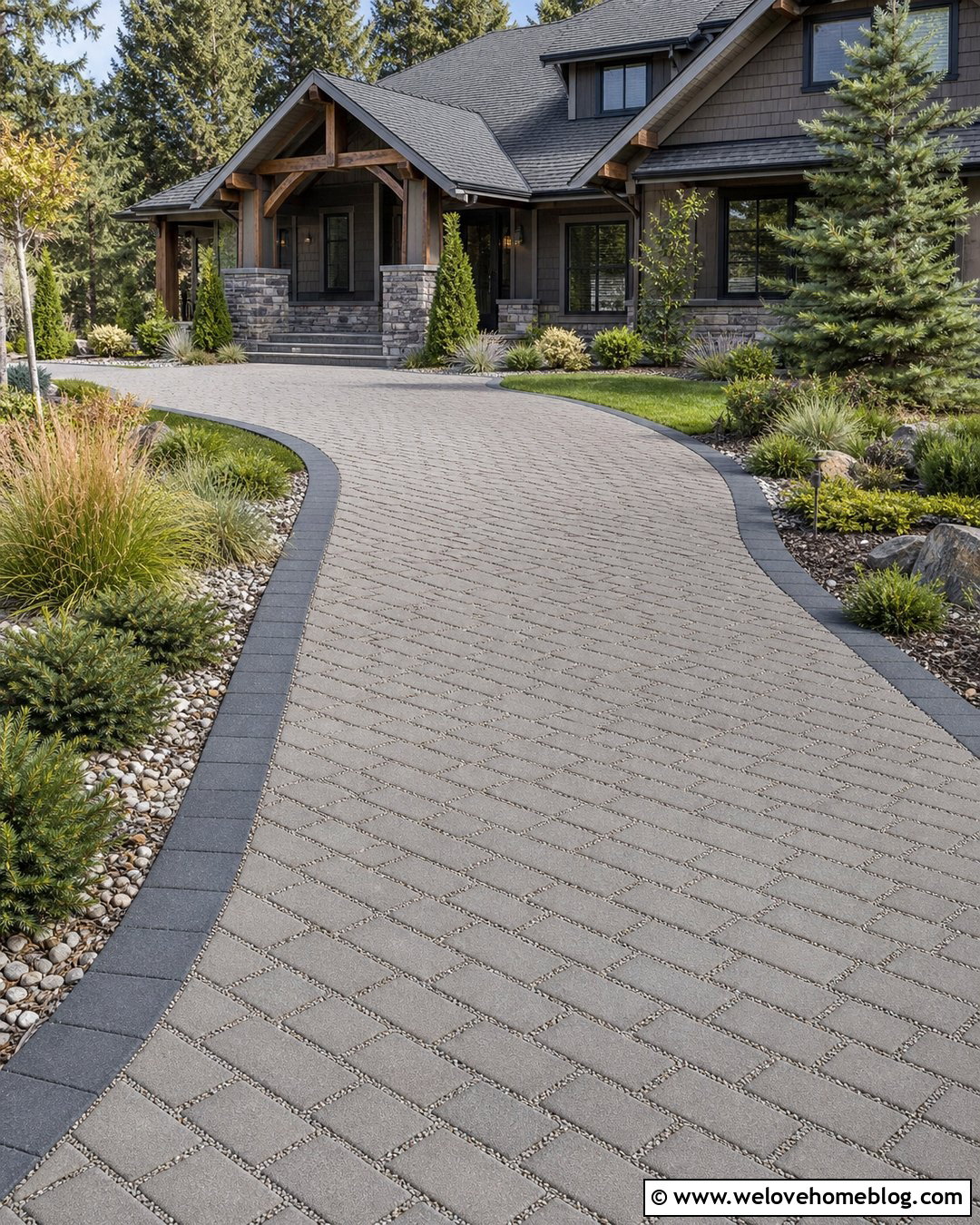
Permeable concrete pavers can create a polished parking surface while supporting a drainage-conscious front yard plan. Choose warm gray pavers with slightly wider, aggregate-filled joints, installed over a properly designed open-graded base. A straight or gently curved layout will keep construction simpler. Frame the driveway with narrow planting strips containing ornamental grasses, compact evergreen shrubs, and durable ground covers suited to your local conditions. A darker paver border can visually define the vehicle area and limit awkward cuts along the edges. Connect the front walk using the same paver color for a coordinated appearance. This complete design is especially suitable for craftsman and contemporary homes where texture, practical drainage, and clean landscaping need to work together.
3. Gravel Driveway With Cobblestone Edging
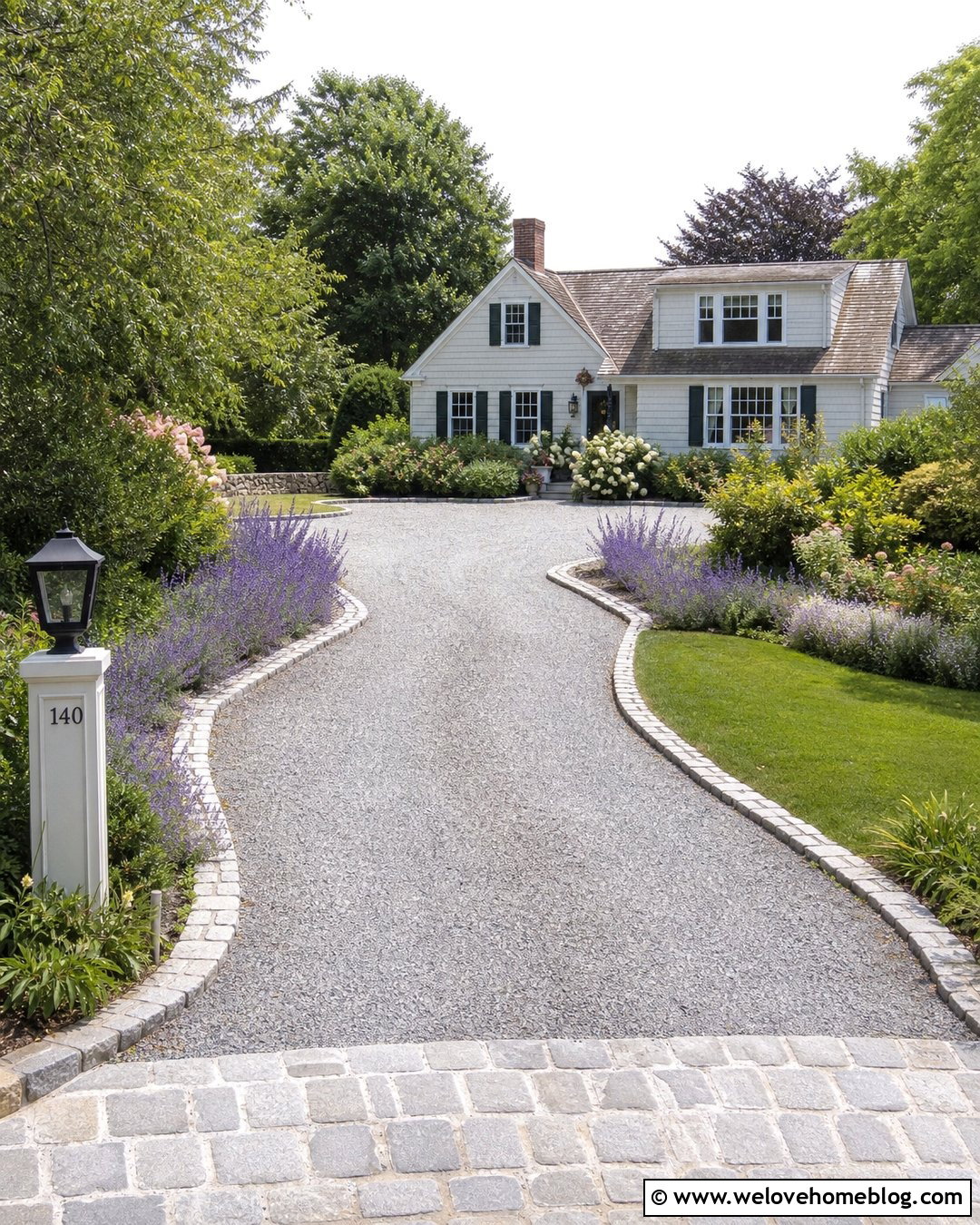
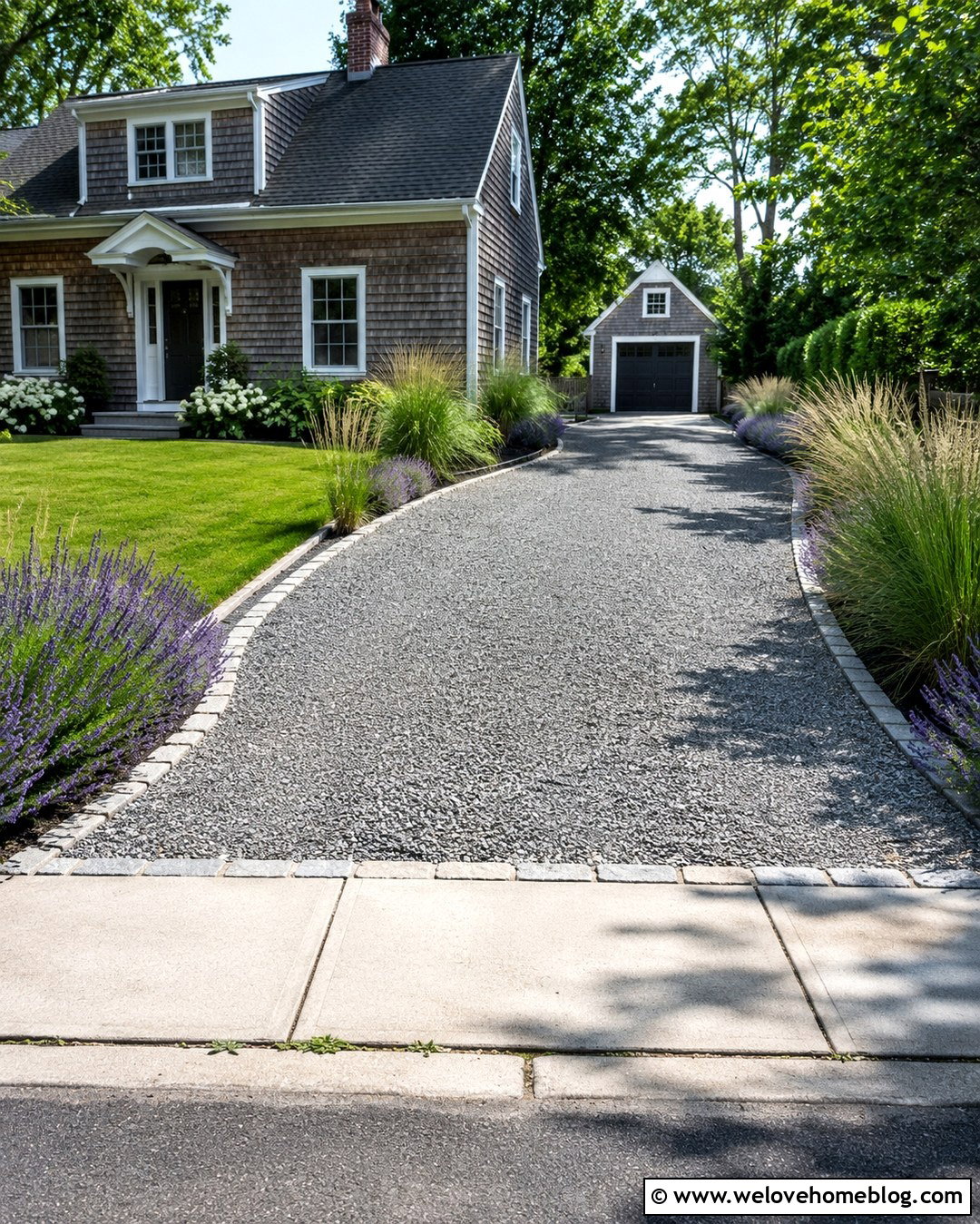
The soft crunch of gravel can give a new front yard driveway a relaxed, established character. Use compacted gray gravel over a correctly prepared base, then install sturdy cobblestone edging to keep loose material away from the lawn and planting beds. A slightly curved route can make the approach feel natural while directing attention toward the front door or garage. Include a cobblestone apron at the street and a wider parking area near the house. Lavender, catmint, small flowering shrubs, and ornamental grasses can soften both sides without crowding vehicles. Gravel needs occasional raking and replenishment, so include easy maintenance access. This complete driveway look pairs beautifully with cottages, traditional homes, and informal country-inspired landscapes.
4. Asphalt Driveway With A Brick Entrance Apron
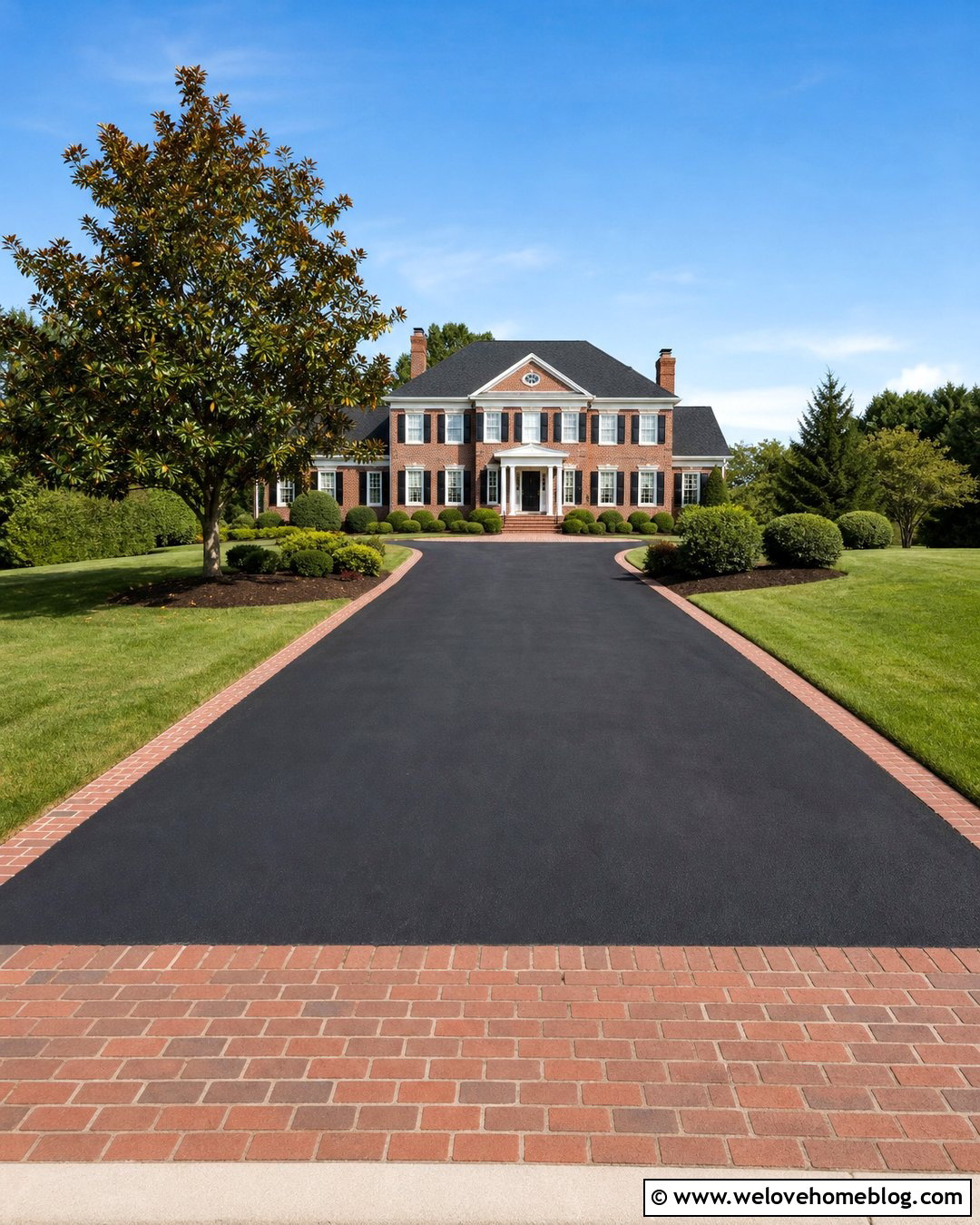
Black asphalt is a practical choice when you need a smooth, visually simple driveway across a larger front yard. Prevent the surface from appearing unfinished by adding a clay brick apron where the driveway meets the street. Continue the brick as a narrow border along both sides for a consistent frame. A straight driveway suits a symmetrical colonial home, while a gentle curve can complement an irregular lot. Surround it with trimmed lawn, broad foundation beds, and one small ornamental tree positioned away from vehicle visibility zones. The contrast between dark asphalt and warm red brick adds character without complicating the main installation. This design offers a traditional appearance while keeping the central driving and parking surface straightforward.
5. Modern Concrete Ribbon Driveway With Gravel
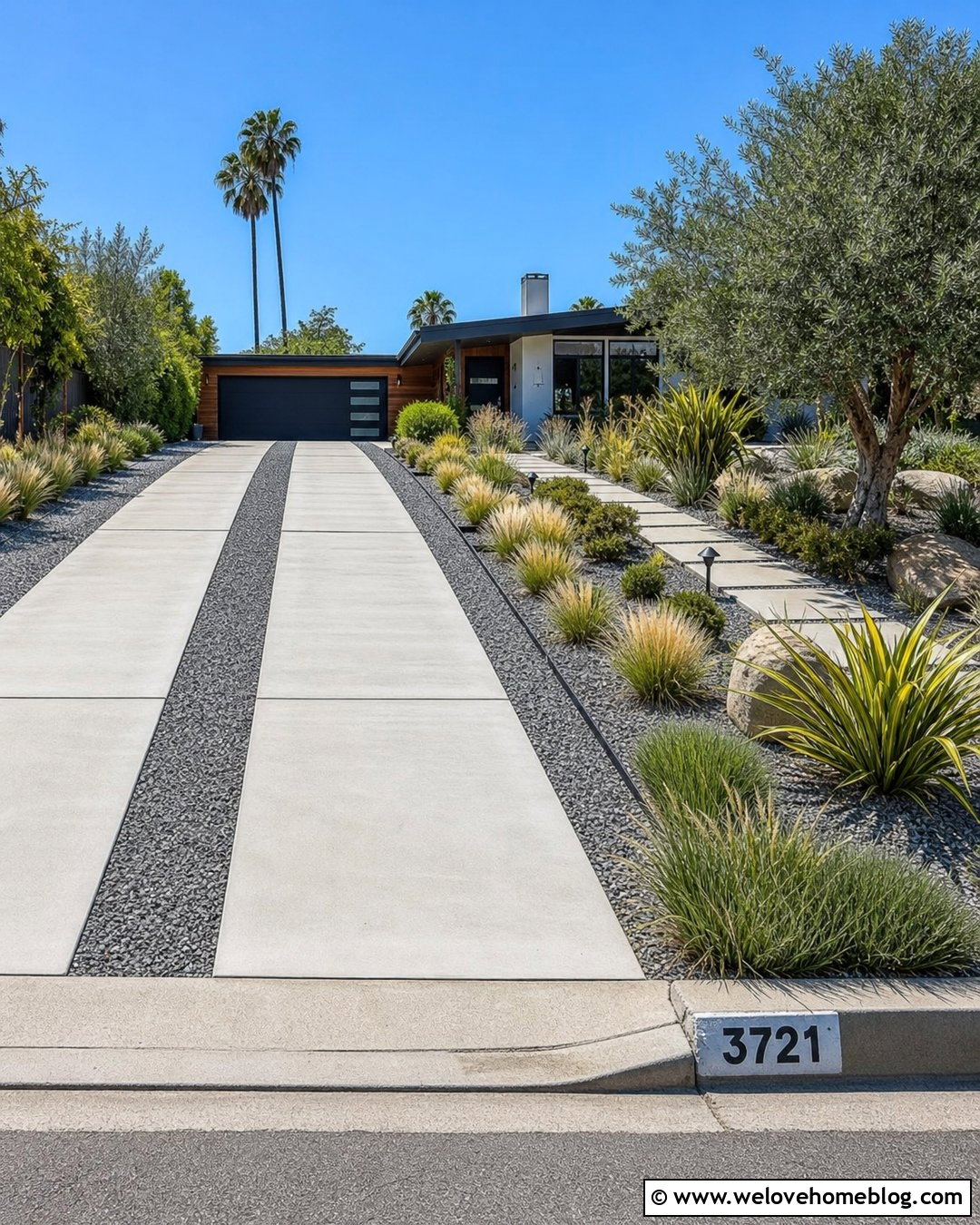
Could a driveway preserve more greenery without sacrificing a usable parking route? A concrete ribbon layout uses two parallel poured-concrete tracks aligned with vehicle tires. Fill the center and outer gaps with decorative gravel rather than lawn if you want easier upkeep and clearer separation. Large rectangular concrete sections in a light gray finish create a strong modern pattern. Use black metal edging to contain the gravel, then add structured beds with upright grasses, clipped shrubs, and sculptural drought-tolerant plants. A matching concrete slab walkway can lead directly to the entrance. This complete look works best with modern or midcentury homes because the repeated lines support their architecture. Accurate spacing and a strong base are essential for reliable vehicle use.
6. Circular Gravel Driveway With A Center Garden
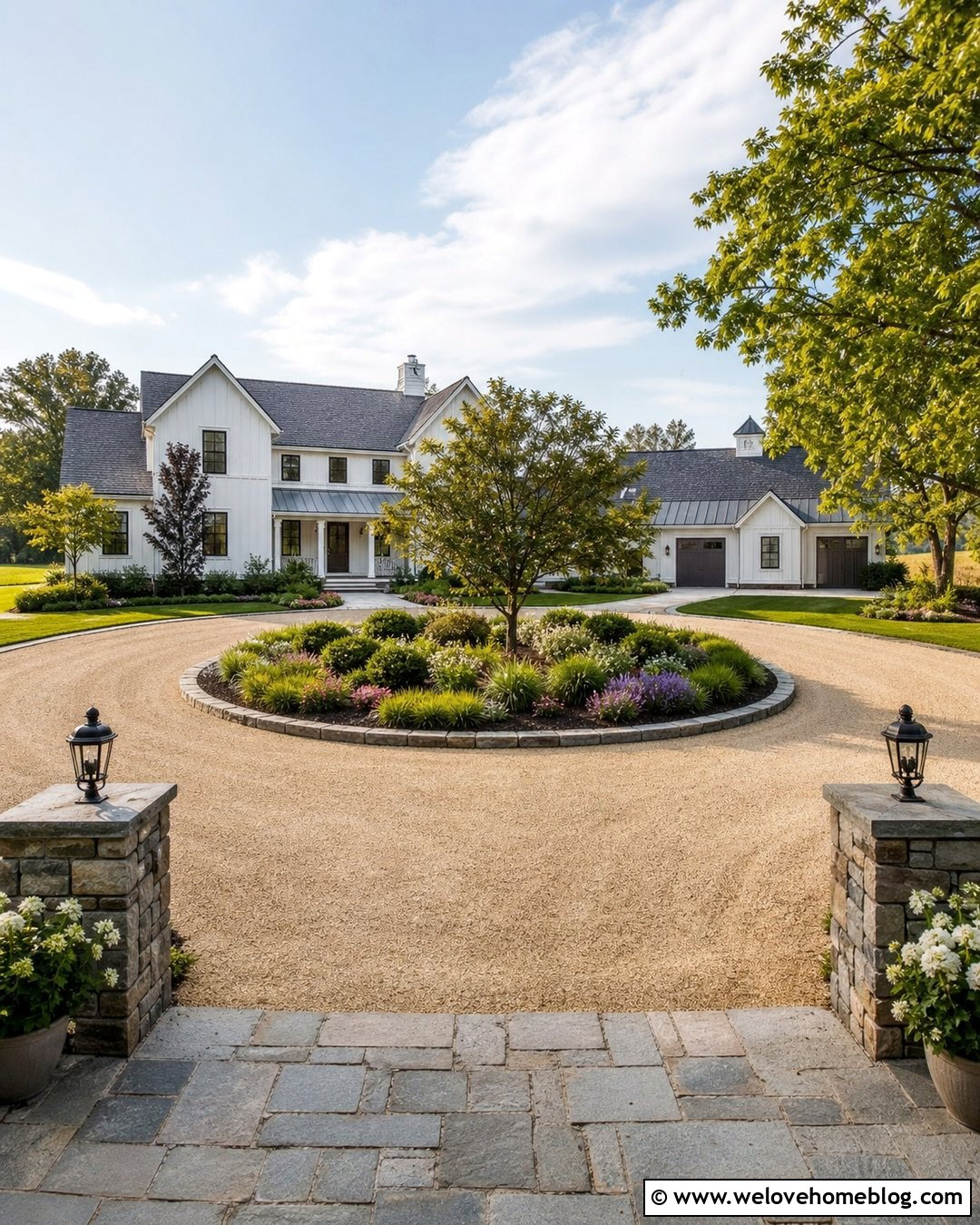
A spacious front yard can support a circular driveway that creates an easy arrival and departure route. Choose compacted tan gravel for the main surface and define both edges with weathered stone curbing. The center island should be large enough to look intentional rather than becoming a tiny obstacle. Plant it with a small ornamental tree, low evergreen shrubs, and layered flowering perennials that will not block views across the driveway. Repeat some of those plants beside the house to connect the island with the wider landscape. A broad stone apron can reduce gravel movement near the street. This complete arrangement suits farmhouse, country, and traditional homes, offering convenient circulation while retaining a green focal point in the front yard.
7. Curved Paver Driveway With Layered Landscaping
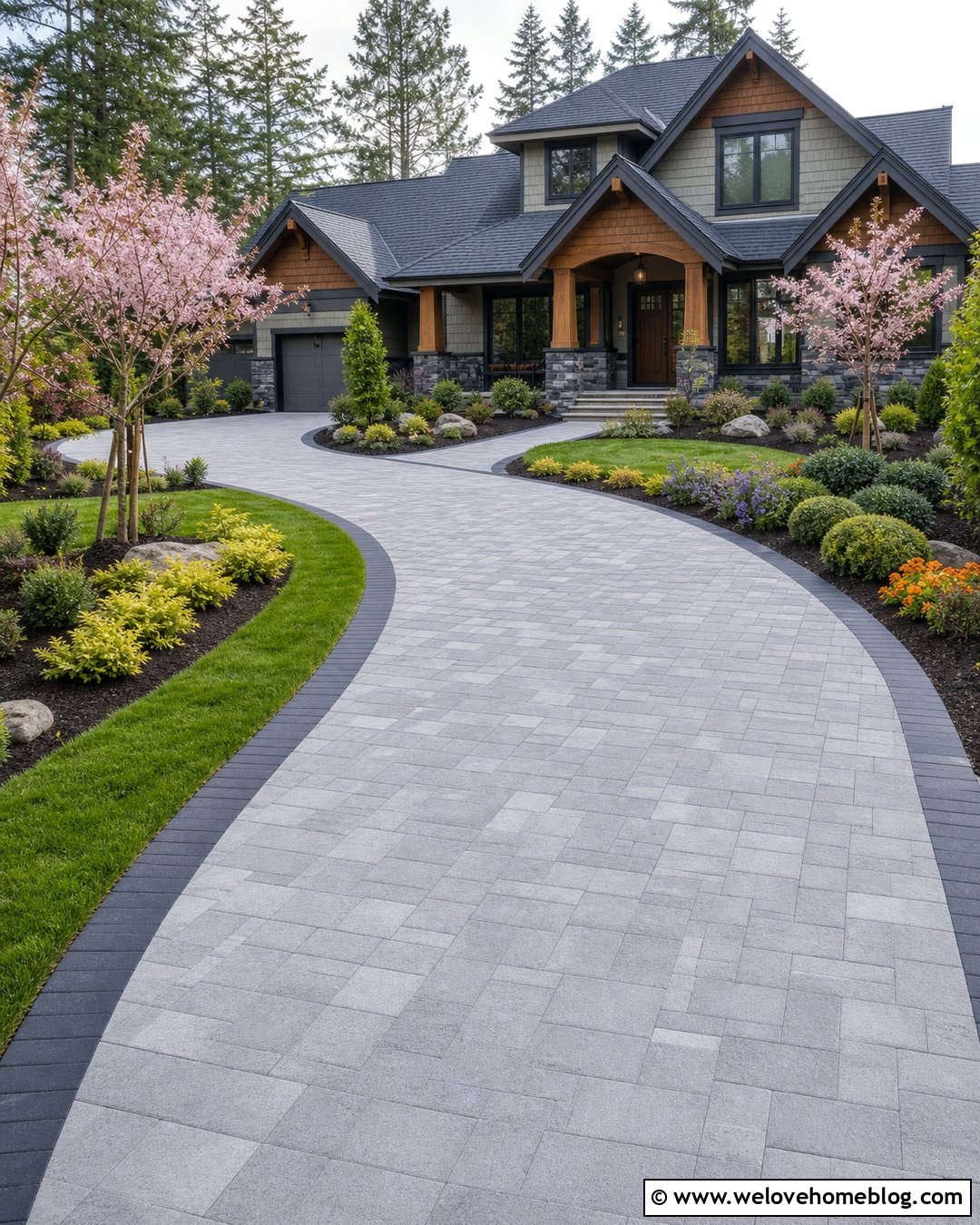
A curved paver driveway can guide the eye through the yard and make the approach feel less abrupt. Use charcoal and medium-gray concrete pavers in a subtle running-bond pattern, with a darker soldier-course border following every curve. Keep the route broad and gradual instead of adding tight bends that make parking difficult. Layer the outer planting beds with small trees, rounded shrubs, perennials, and low ground covers. On the inner curve, use shorter plants to protect visibility. A paver walkway can separate near the final bend and lead toward the porch. This coordinated driveway design works particularly well for craftsman and transitional homes. The repeating paver border helps the curved surface look organized, even when the surrounding landscape is informal.
8. Side Yard Driveway With A Front Parking Court
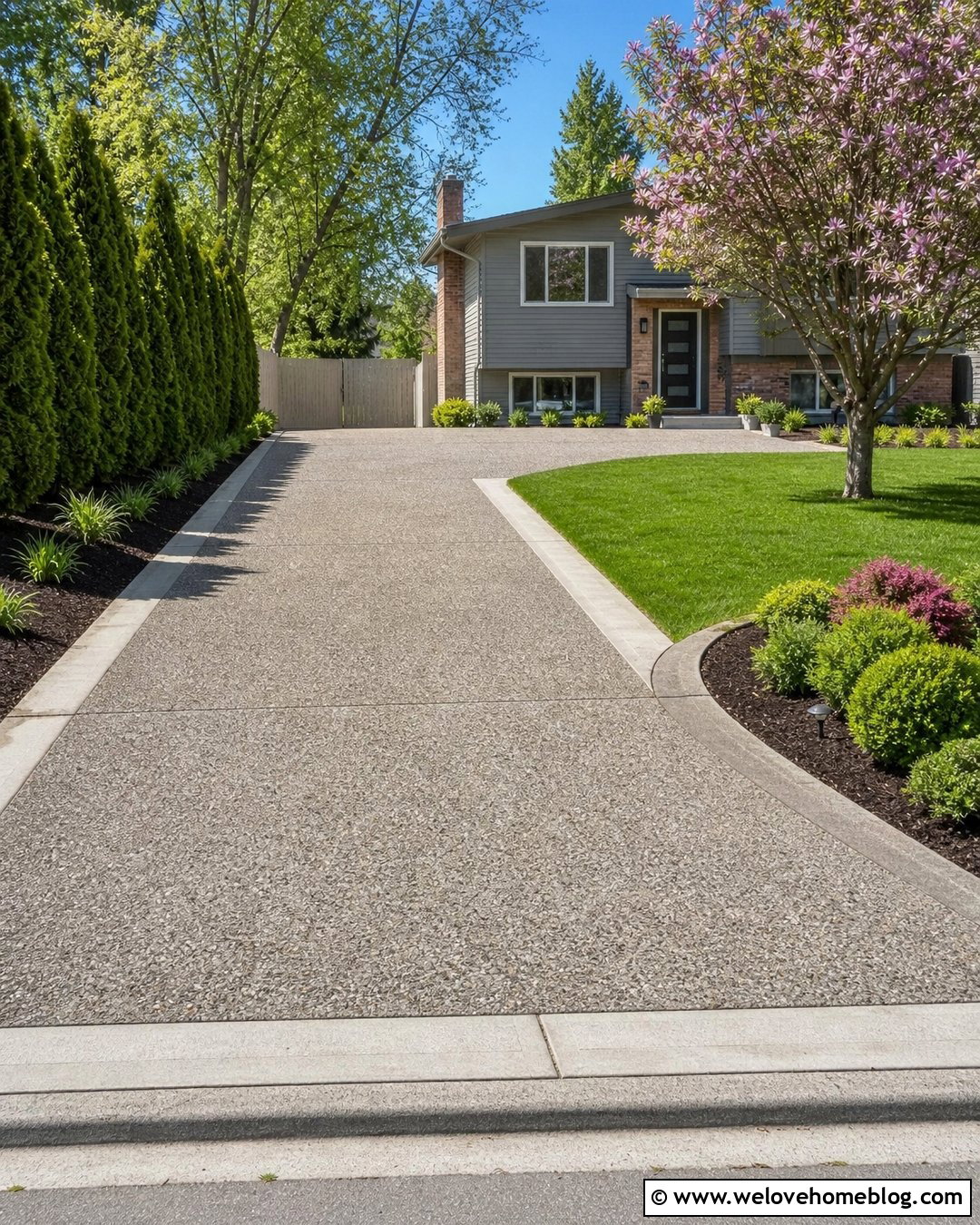
When the front facade deserves to remain the main attraction, place the driveway near one side of the property. A straight exposed-aggregate concrete lane can run beside the lawn before widening into a parking court closer to the house. Use a smooth concrete border around the textured surface for a crisp finish. On the house side, add a narrow walkway and low foundation planting. On the outer side, retain a larger lawn with a flowering tree and curved garden bed. Position the wider parking section carefully so vehicles do not dominate views of the entrance. This design fits ranch, split-level, and suburban homes with adequate side clearance. It provides useful parking while keeping most of the central front yard green and visually open.
9. Two Car Driveway With A Landscaped Divider
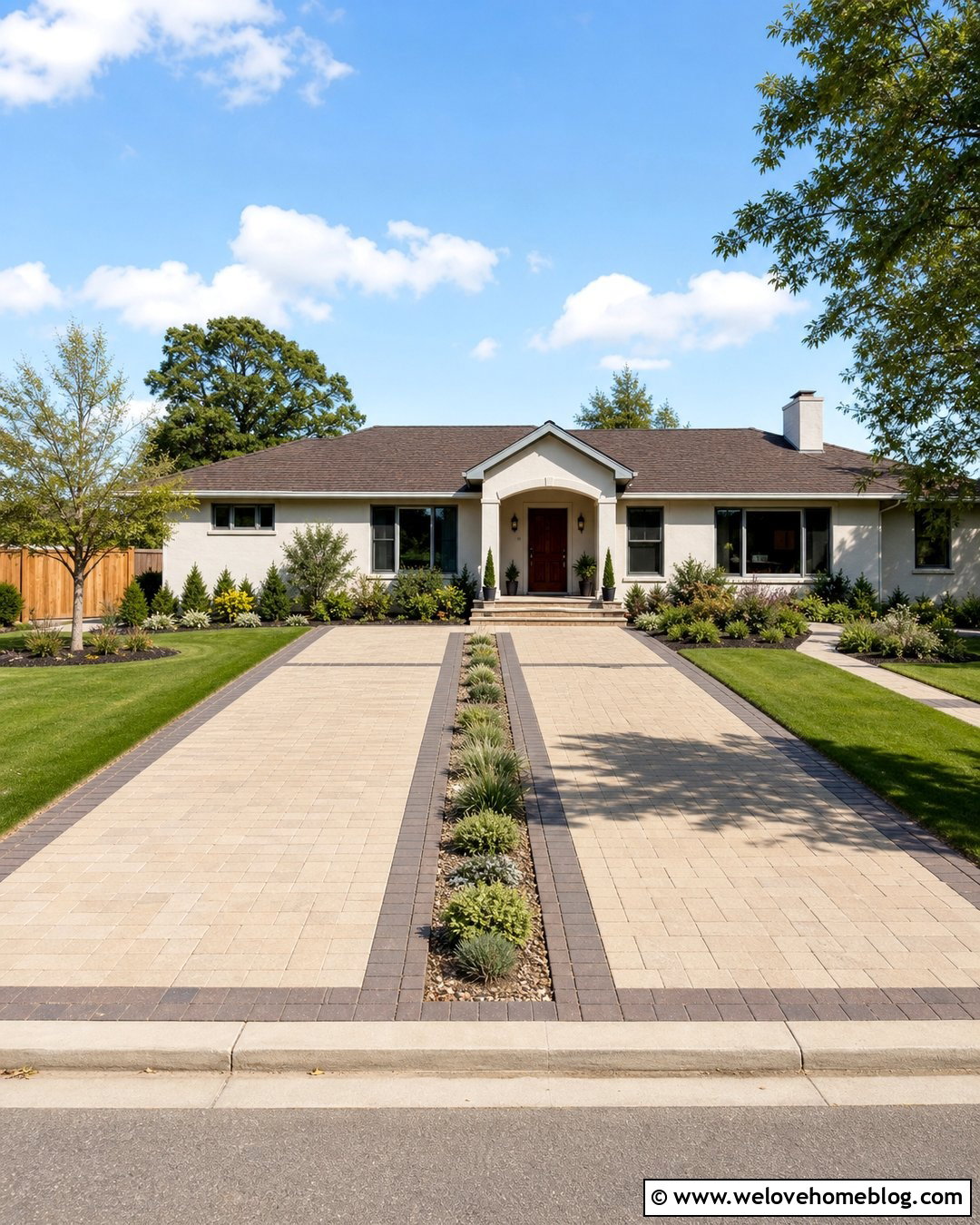
A wide driveway does not have to resemble one uninterrupted slab. Create two parallel parking lanes using beige concrete pavers, separated by a narrow landscaped strip where the site dimensions allow it. Fill the center with a low hedge, ground cover, or decorative gravel and a few upright grasses. Keep plants short near the street and allow enough room for vehicle doors and turning movements. Frame the outside edges with matching paver bands, then connect both lanes near the garage or parking court. A walkway can run alongside one lane without crossing the driving area. This balanced design is suitable for broad ranch and contemporary homes. The center strip breaks up the paving and helps the new driveway feel connected to the yard.
10. Driveway With A Front Yard Rain Garden
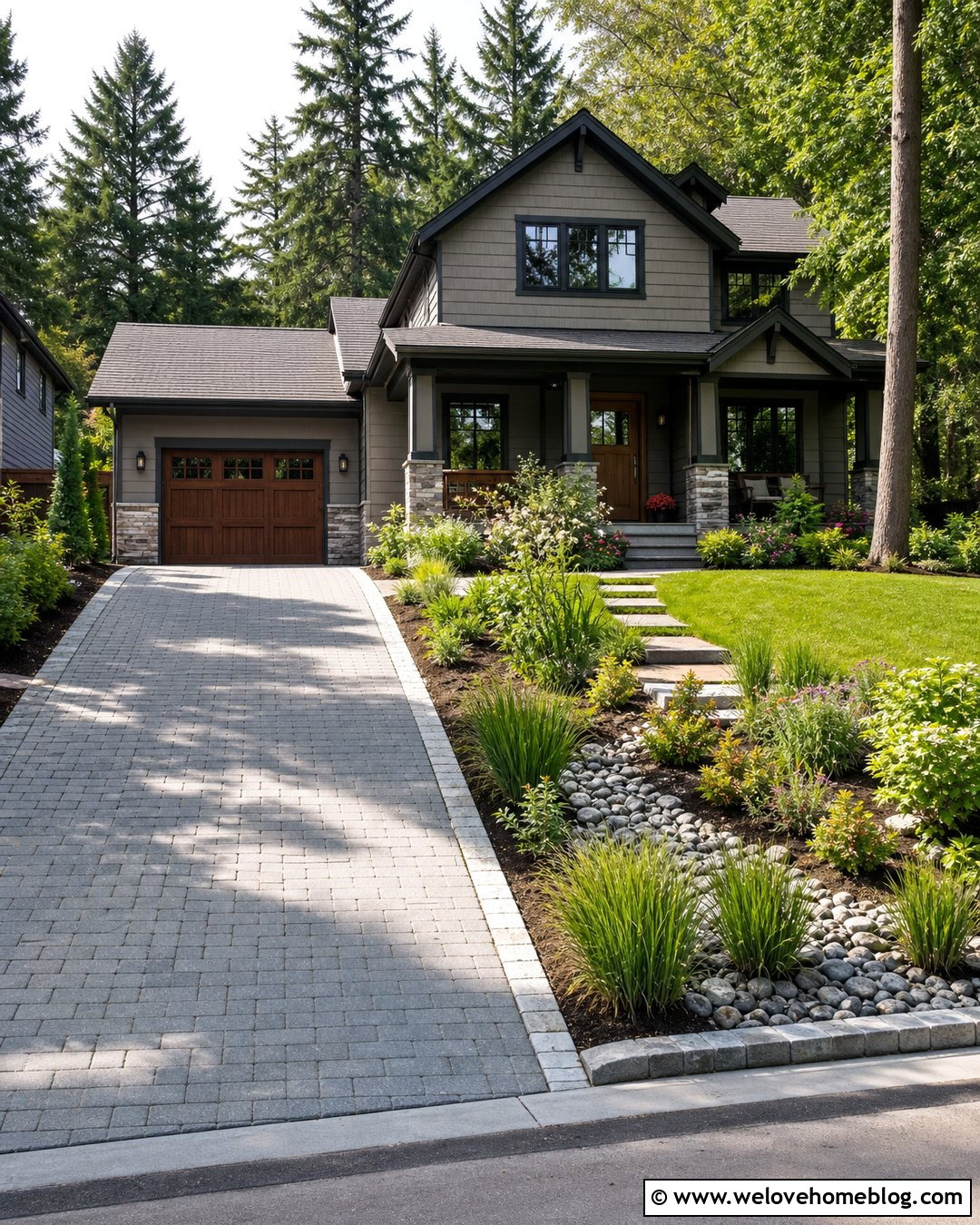
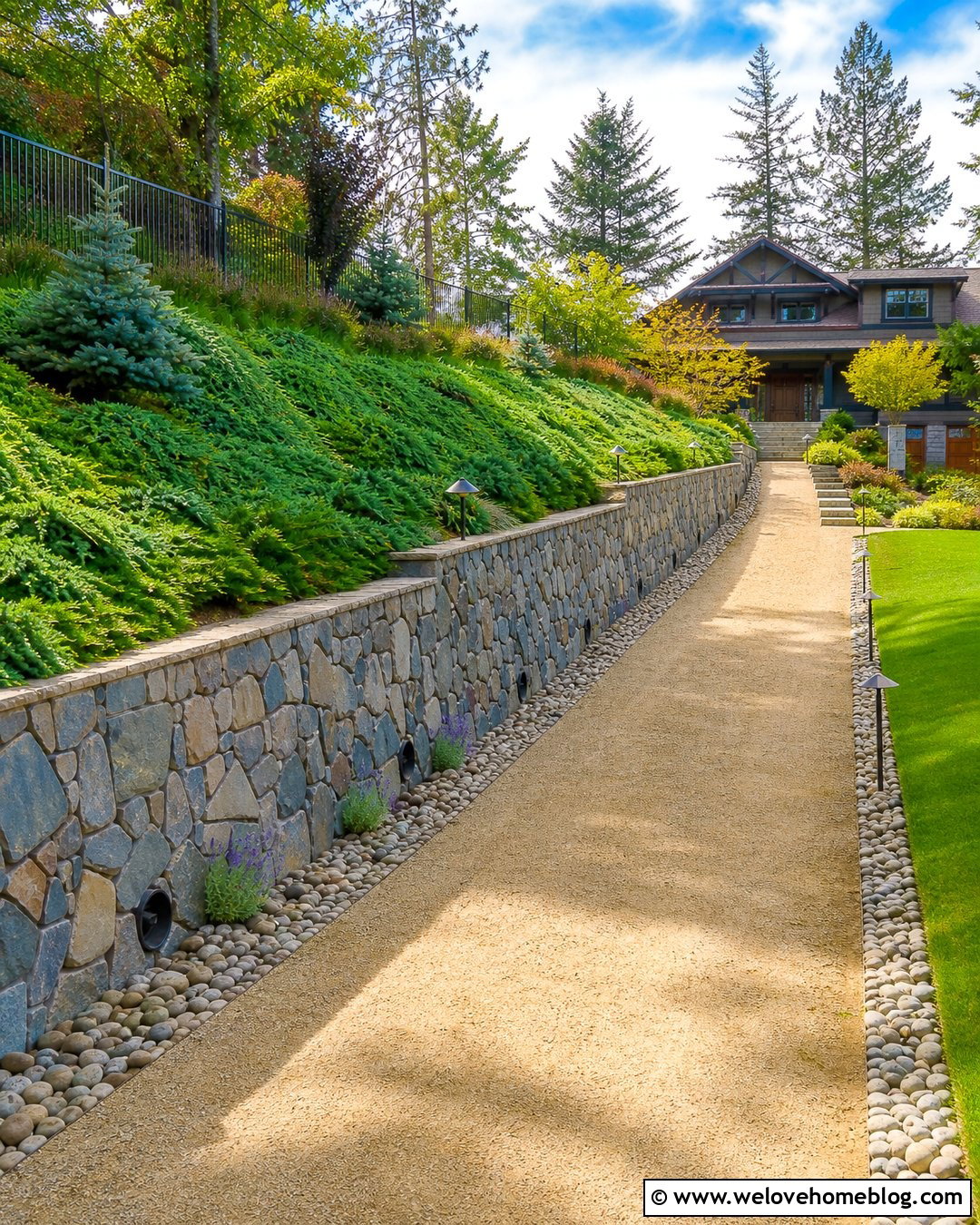
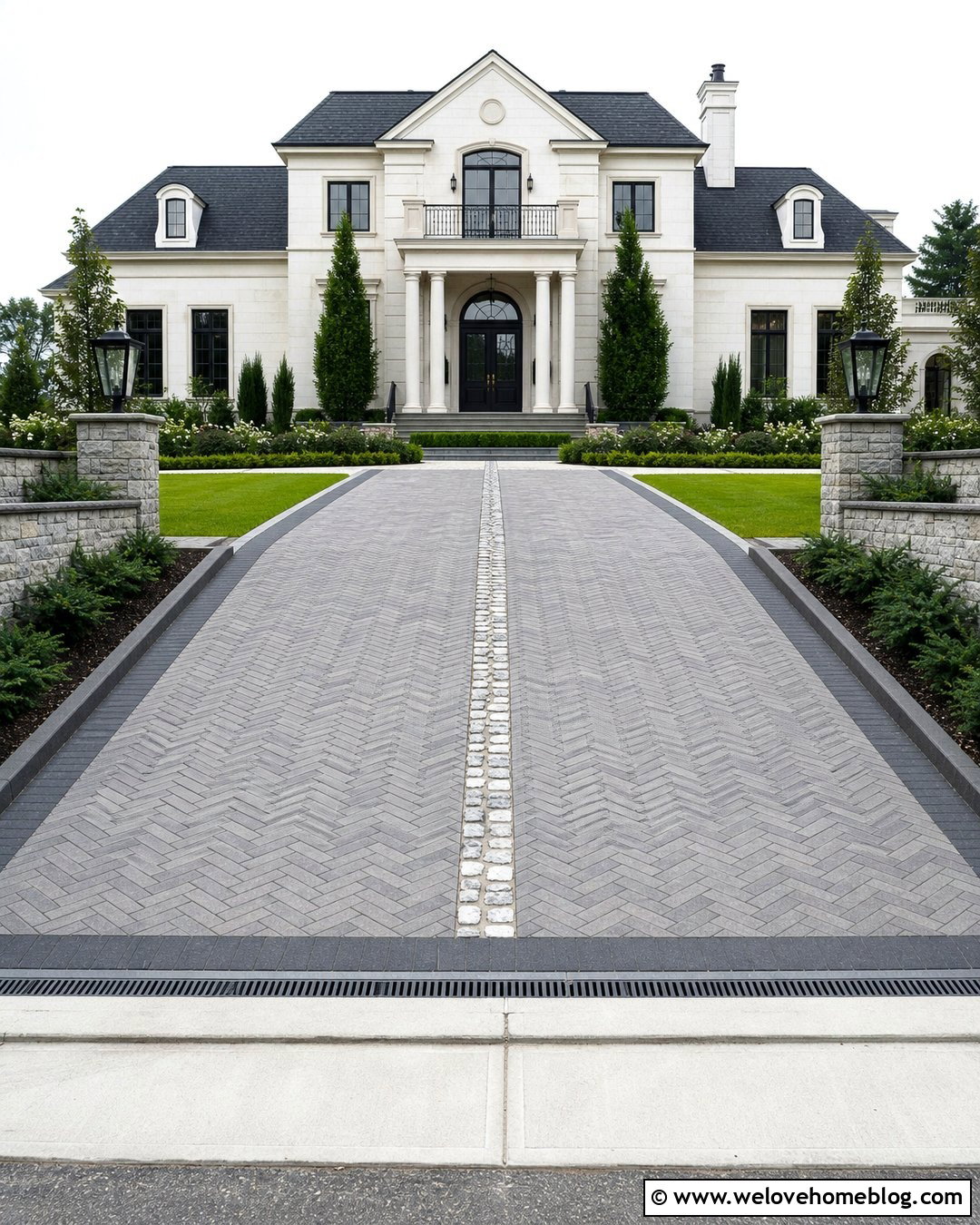
Rainwater can become part of the landscape plan instead of being treated as an afterthought. Install a light gray permeable paver driveway with a gentle slope toward a shallow rain garden located away from the house. The planted basin can contain regionally appropriate grasses, flowering perennials, and moisture-tolerant shrubs selected for local soil and climate conditions. Edge the vehicle surface with a strong concrete or stone restraint so the pavers and planting bed remain clearly separated. Include an overflow route designed by a qualified professional when necessary. A stepping-stone path can cross the garden’s driest edge toward the porch. This complete layout gives a modern farmhouse or craftsman home a softer frontage while combining parking, planting, and responsible water management.
11. Sloped Concrete Driveway With Retaining Walls
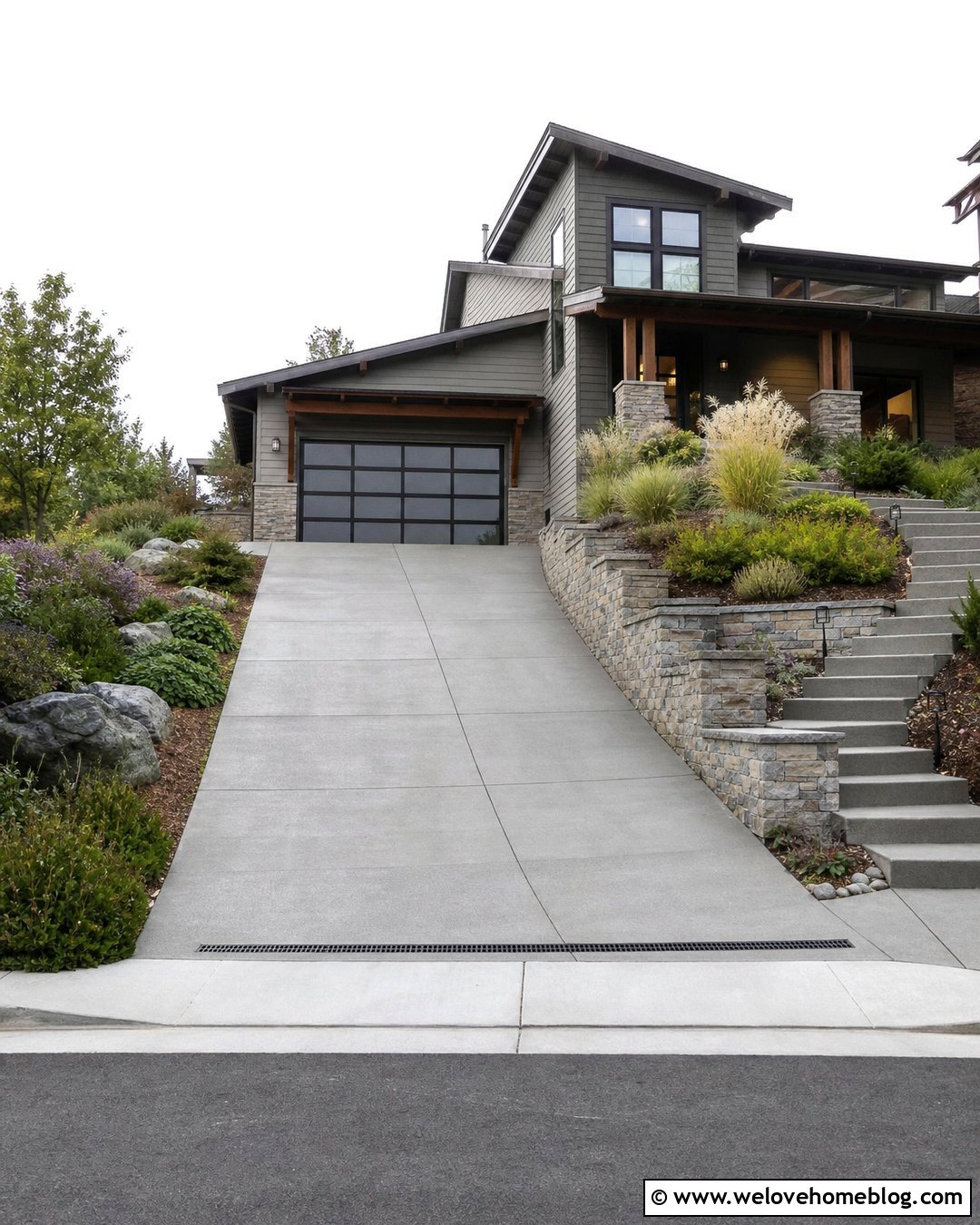
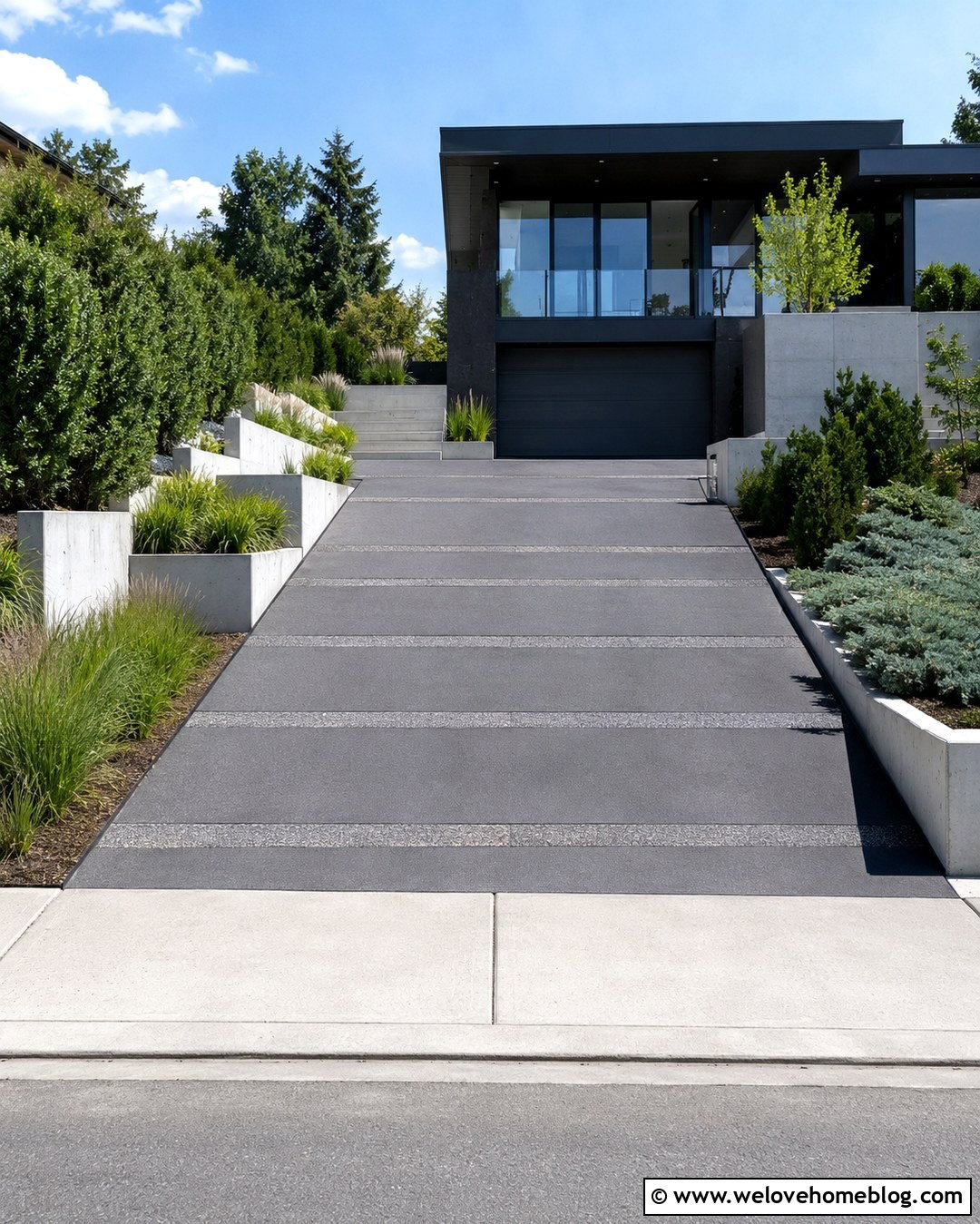
A sloped front yard requires more planning than a flat lawn, but it can produce a strong, organized entrance. Use broom-finished poured concrete for traction and divide it with neat control joints. Low retaining walls made from natural stone or textured concrete block can hold back raised planting beds along both sides. Add drainage channels where needed, particularly if the driveway falls toward the house or garage. Plant the terraces with ground covers, compact shrubs, and ornamental grasses that will not spill into the driving area. Wide stone steps can form a separate pedestrian route to the front door. This complete driveway design suits hillside ranch, craftsman, and contemporary homes, turning difficult grade changes into a structured part of the landscape.
12. Brick Driveway With Cottage Garden Borders
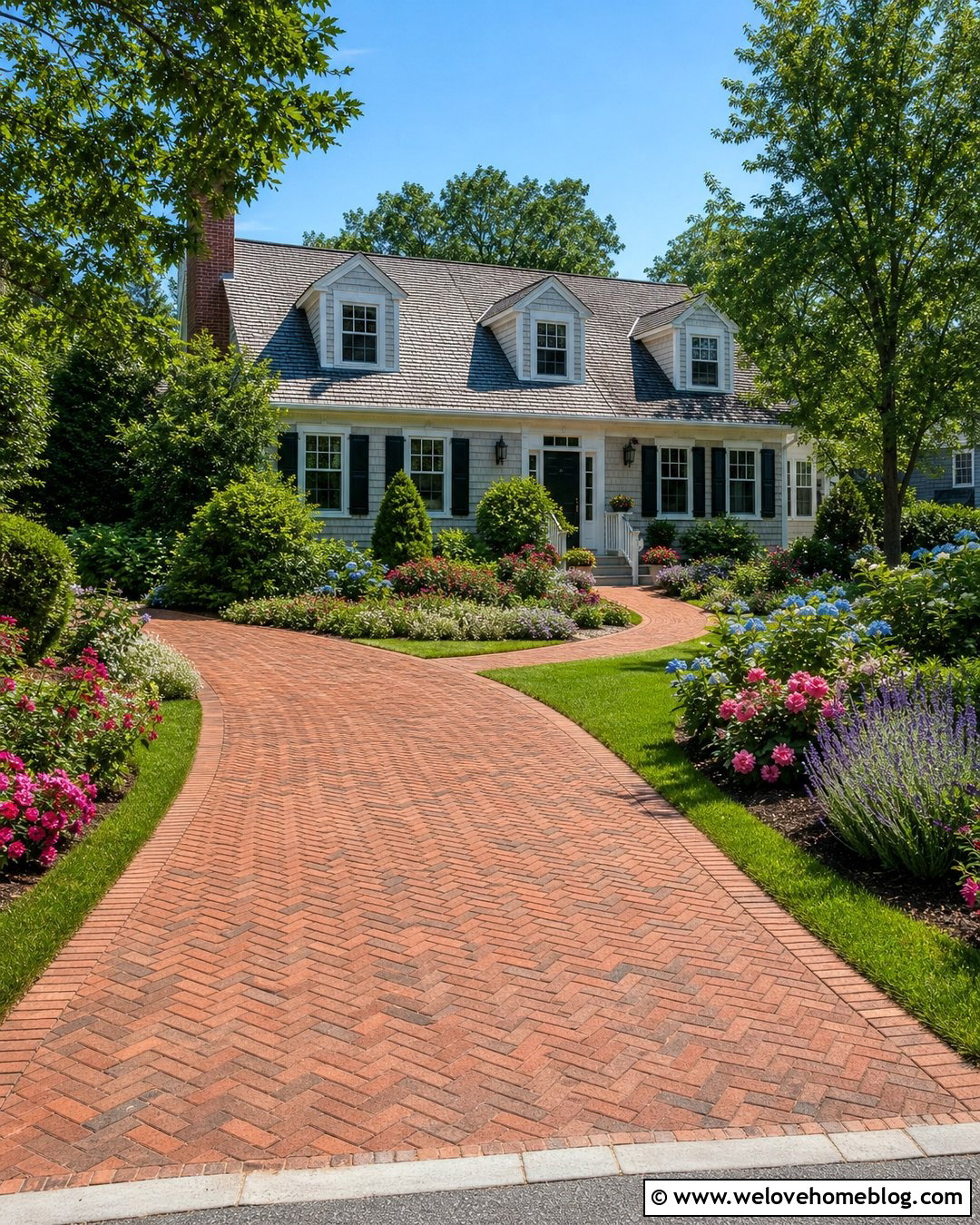
Warm clay brick pavers can make a newly added driveway feel as though it has always belonged to an older home. Lay the bricks in a herringbone pattern for the main vehicle surface, then use a straight soldier-course border around the edges. A gently curved layout will reinforce the informal character of a cottage or Cape Cod facade. Frame the driveway with layered garden beds containing compact roses, salvia, catmint, hydrangeas, and evergreen structure where those plants suit the site. Keep the planting low near the street and leave clear space beside parking areas. Continue the brick into the front walkway to create a unified entrance. The finished look combines useful parking with a colorful front garden rather than allowing paving to dominate the property.
13. Crushed Limestone Driveway With Timber Edging
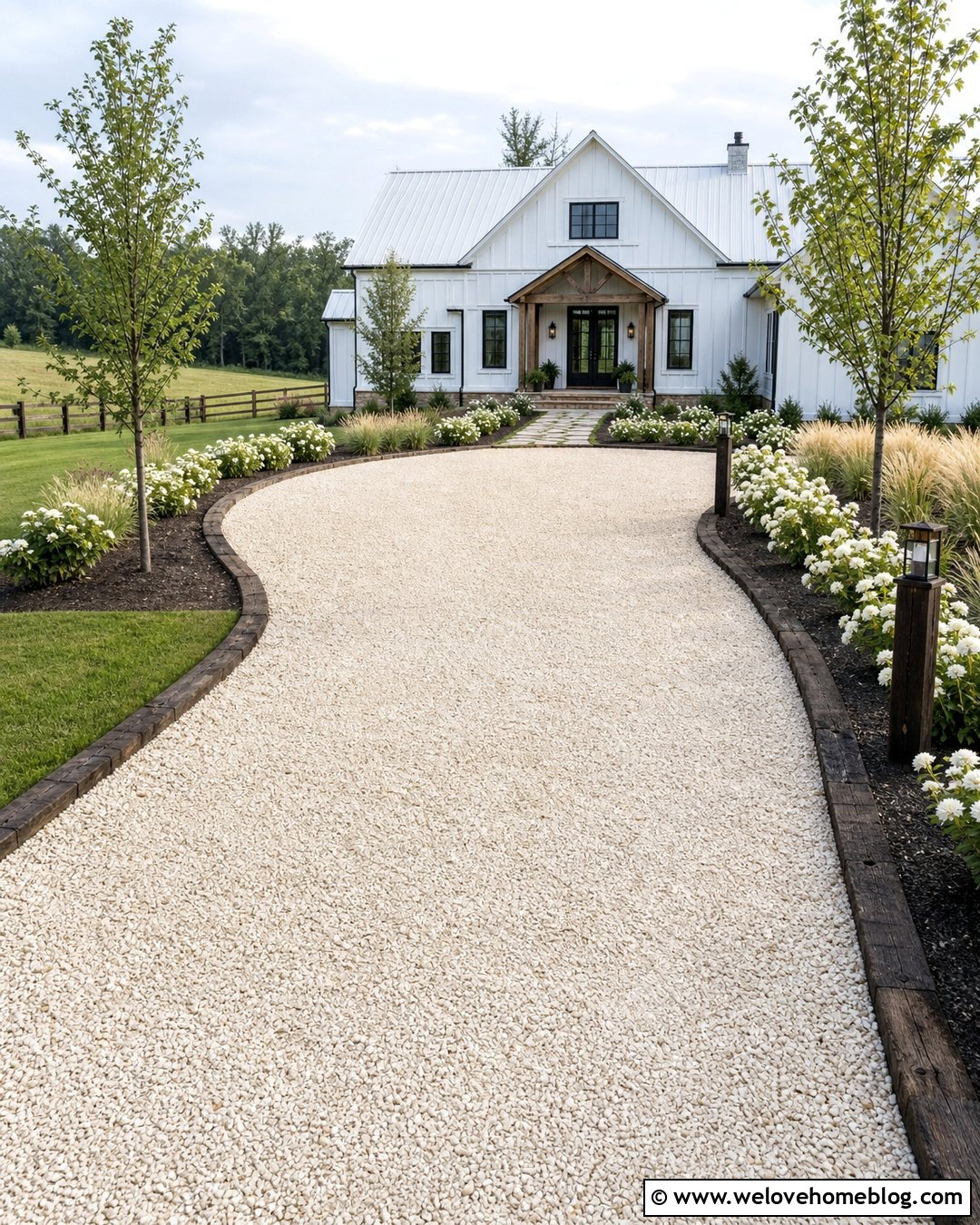
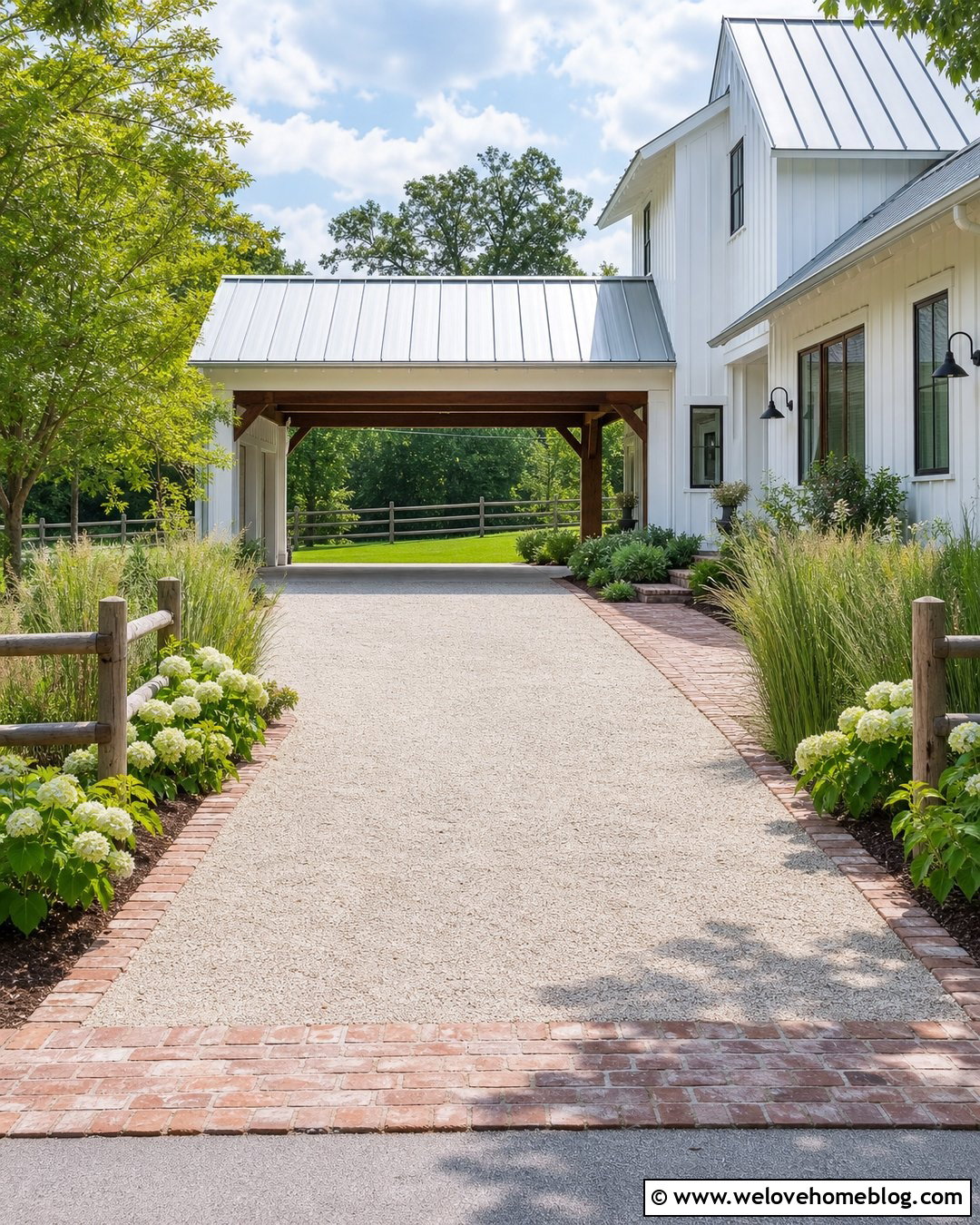
For a farmhouse-inspired front yard, crushed limestone offers a bright, relaxed surface that blends naturally with lawn and planting. Use compacted pale limestone over a stable layered base and shape the driveway into a broad, gentle curve. Heavy timber edging can define the sides, although it should be properly secured and selected for outdoor ground contact. Add a wider turnaround or parking pad near the house if space allows. Line the entrance with small deciduous trees, white flowering shrubs, ornamental grasses, and simple post lighting. A natural flagstone walkway can connect the parking area with the porch. This complete look works particularly well with modern farmhouse, barn-style, and country homes, balancing an informal driveway material with orderly borders and structured landscaping.
14. Exposed Aggregate Driveway With Stone Borders
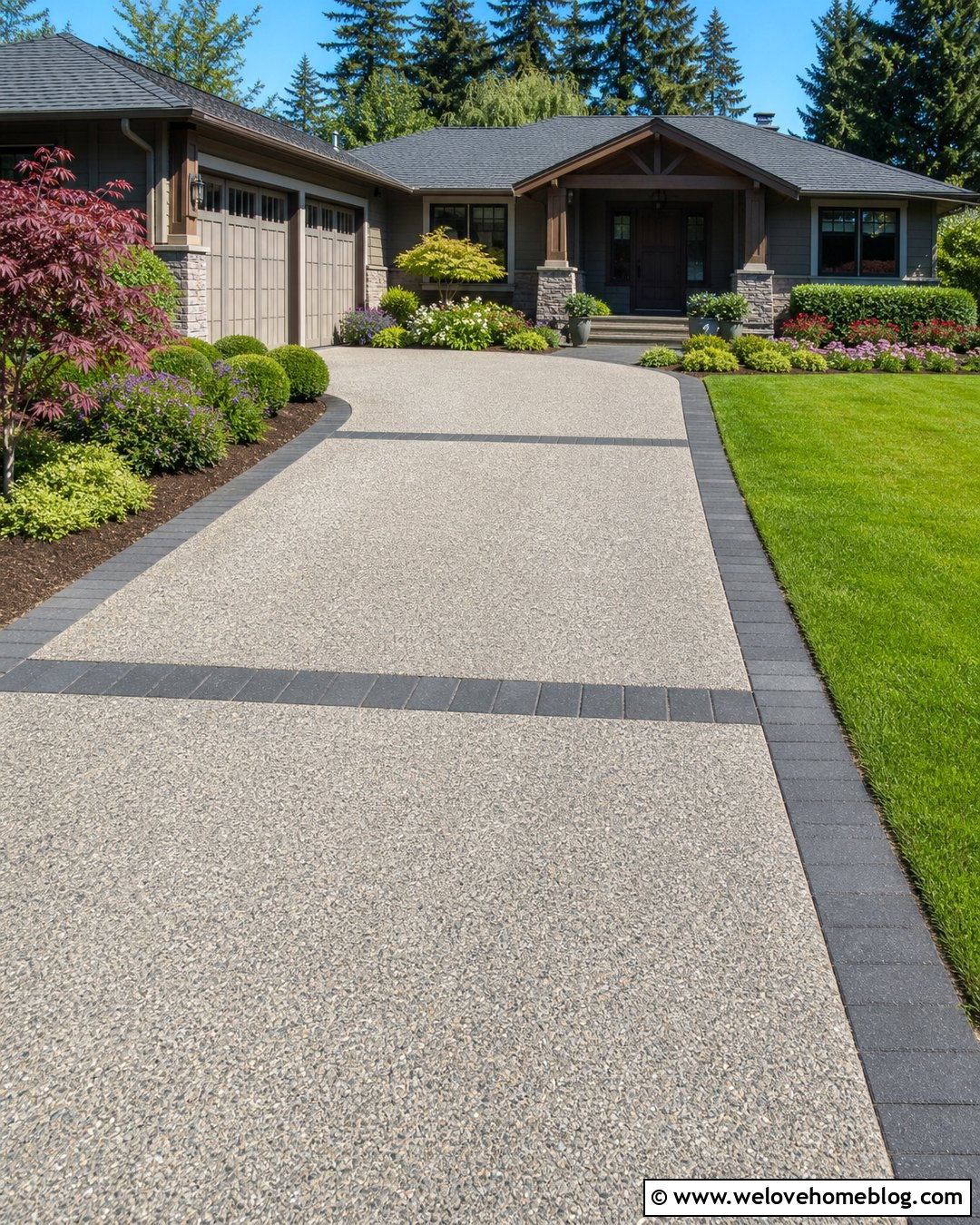
Exposed aggregate provides more surface texture than standard smooth concrete and can complement a wide range of suburban homes. Select a warm gray mix containing small natural stones, then frame the driveway with a contrasting border of charcoal concrete pavers. A straight layout keeps a compact front yard efficient, while a widened section near the house provides easier parking. Repeat the border pavers in the walkway and porch steps so every hardscape element feels related. Along the lawn edge, use clean planting beds filled with rounded shrubs, flowering perennials, and a small ornamental tree. This coordinated driveway works especially well with ranch and craftsman homes. The textured center adds visual interest, while the darker border creates a deliberate, finished outline.
15. Concrete Driveway With A Cobblestone Apron
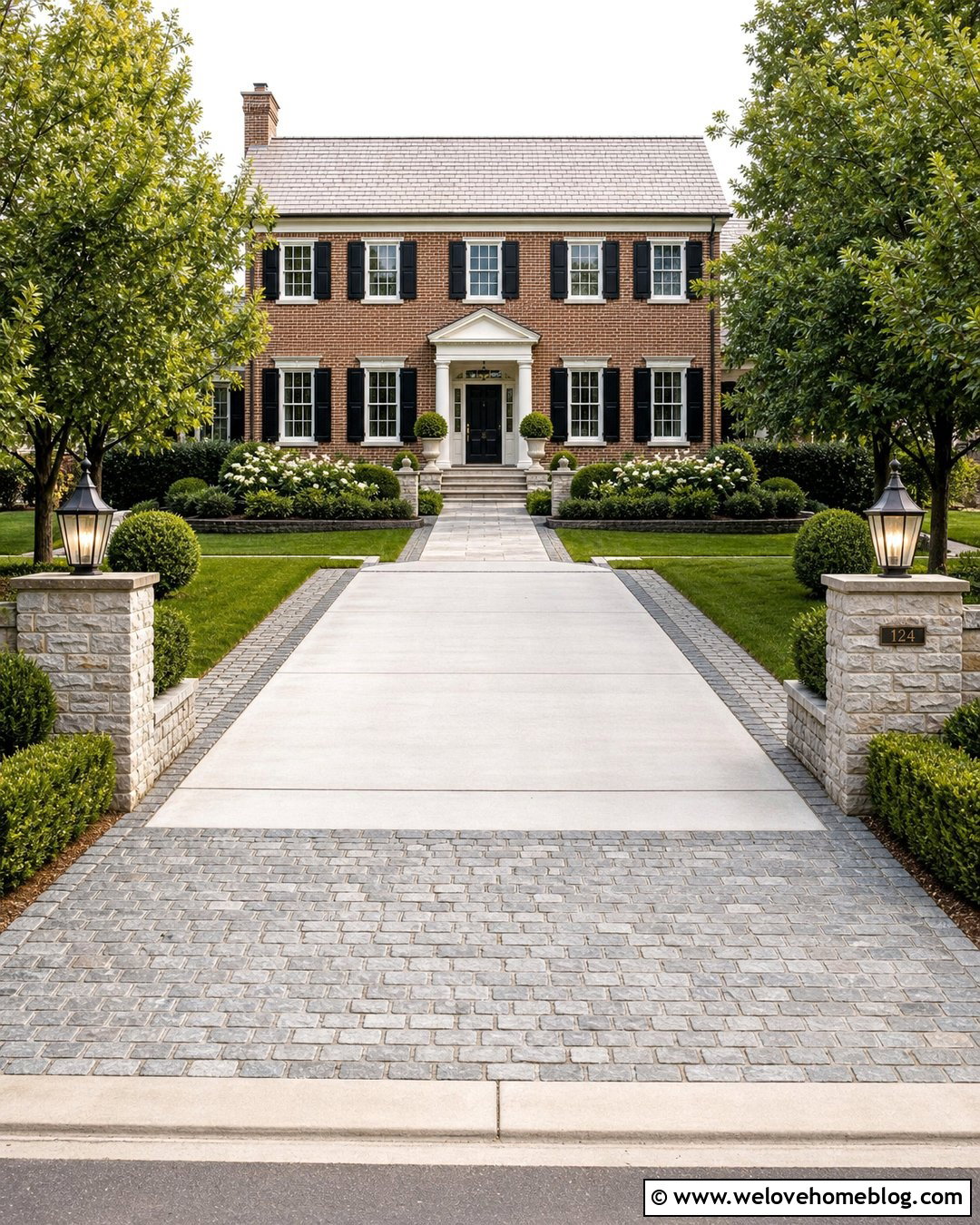
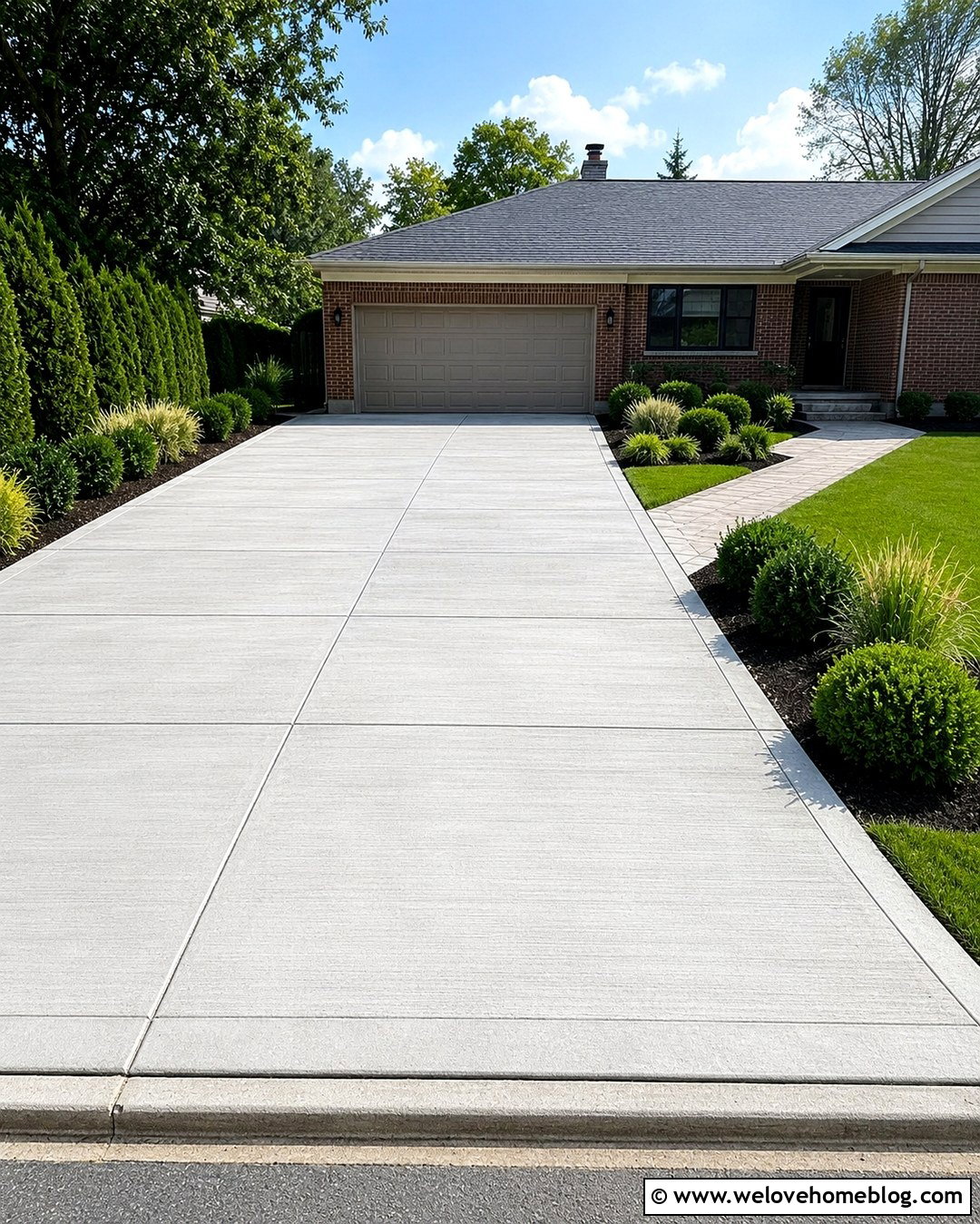
Sometimes one strong material transition is enough to give a simple driveway a custom appearance. Use light gray poured concrete for the main straight surface, then install a broad cobblestone apron at the street entrance. Add narrow cobblestone ribbons along the sides or across selected control joints to carry the detail toward the house. Symmetrical lawn panels and clipped evergreen beds can reinforce the formal appearance of a colonial or Georgian-inspired facade. Place matching stone columns near the entrance only if they preserve safe sightlines and leave comfortable clearance. A straight brick or stone walkway should connect the driveway to the centered front door. The resulting design feels refined without requiring the expense or visual intensity of a fully cobblestone-paved driveway.
16. Budget Gravel Driveway With Metal Edging
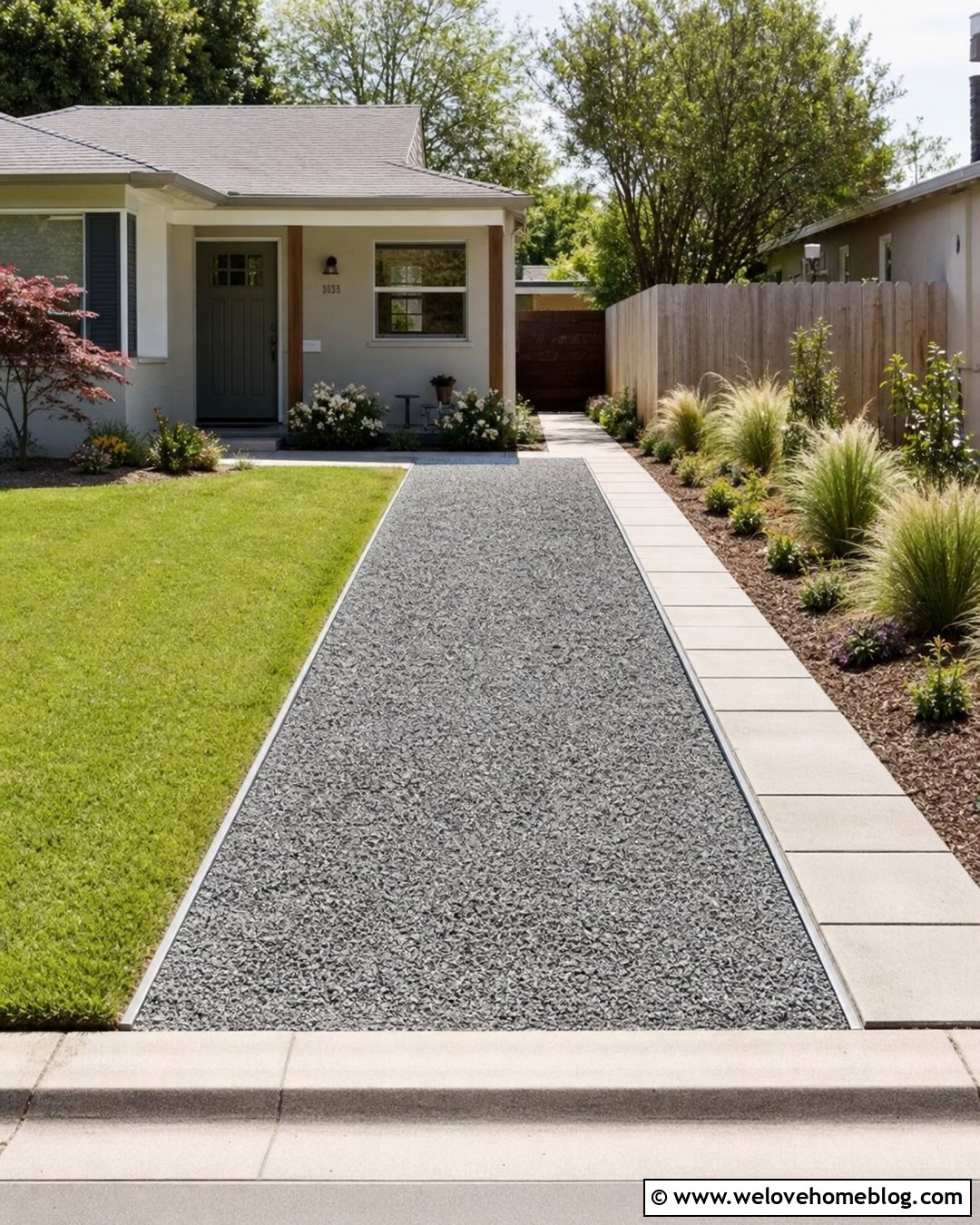
A simple gravel driveway can be attractive when the layout, base, and boundaries are carefully planned. Choose affordable angular gray gravel that compacts more securely than smooth decorative pebbles. Run the driveway straight through a small front yard to reduce excavation and material requirements. Galvanized steel edging can create clean lines while taking up less space than a wide masonry border. Leave a lawn strip on one side and create a low-maintenance mulch bed with grasses and compact shrubs on the other. Use concrete pavers for the walkway so pedestrians have a firm, separate path to the door. This complete plan suits modest ranch, bungalow, and cottage homes, providing economical parking without making the entire yard look temporary or unfinished.
17. Driveway And Walkway With Matching Pavers
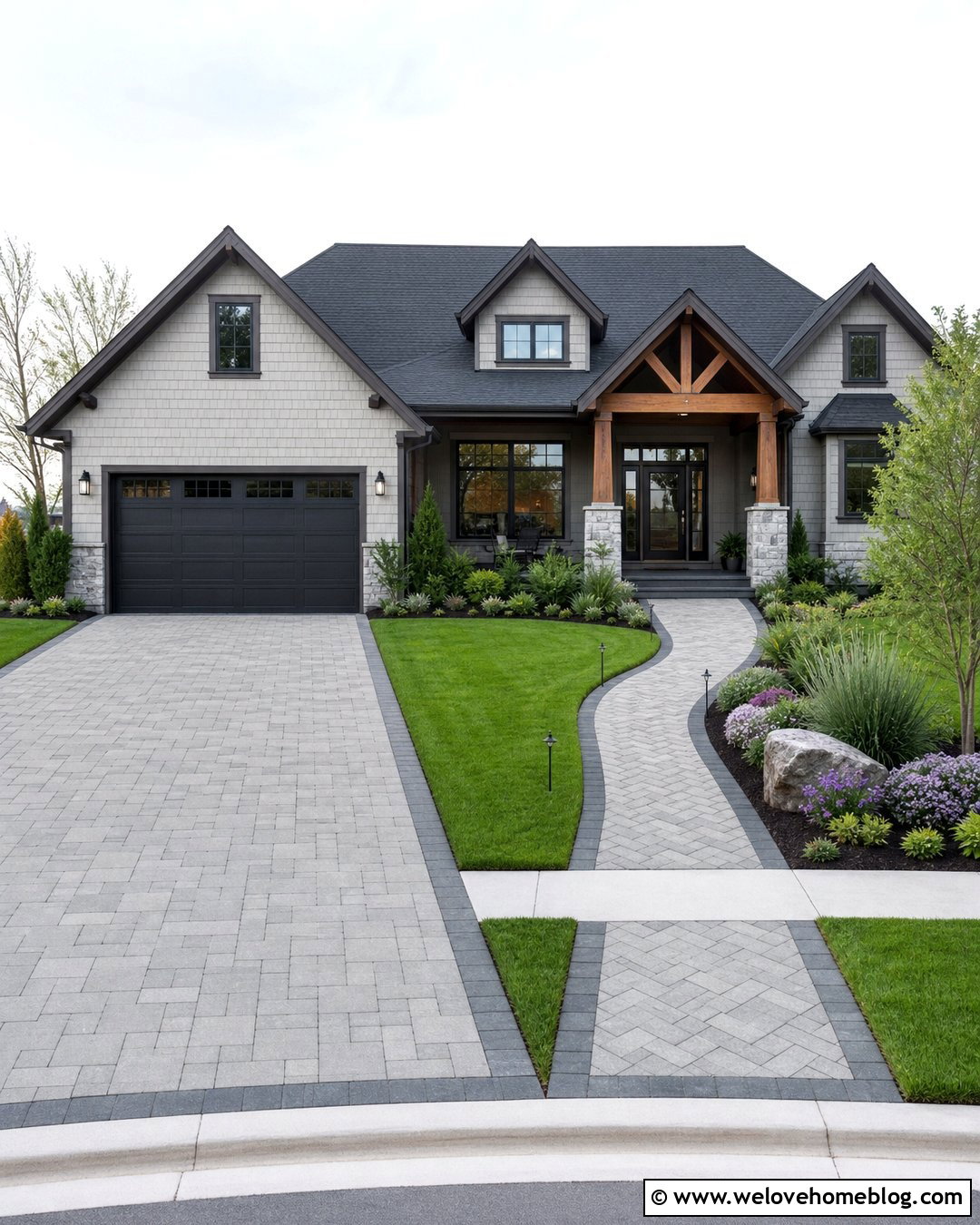
Combining the driveway and front walk can make a small yard feel more organized, provided each route remains easy to understand. Install medium-gray concrete pavers across a straight driveway, using a darker border to define the vehicle area. Build the walkway from the same pavers but change its pattern or border color so it reads as a separate pedestrian path. Let it branch smoothly toward the porch instead of creating a sharp, awkward corner. Fill the remaining yard with simple lawn panels, foundation shrubs, and one curved perennial bed near the entrance. Low path lighting can reinforce the walkway without crowding the driveway. This coordinated look complements contemporary, craftsman, and updated traditional homes while reducing mismatched materials across the front yard.
18. Gated Driveway With Stone Entrance Pillars
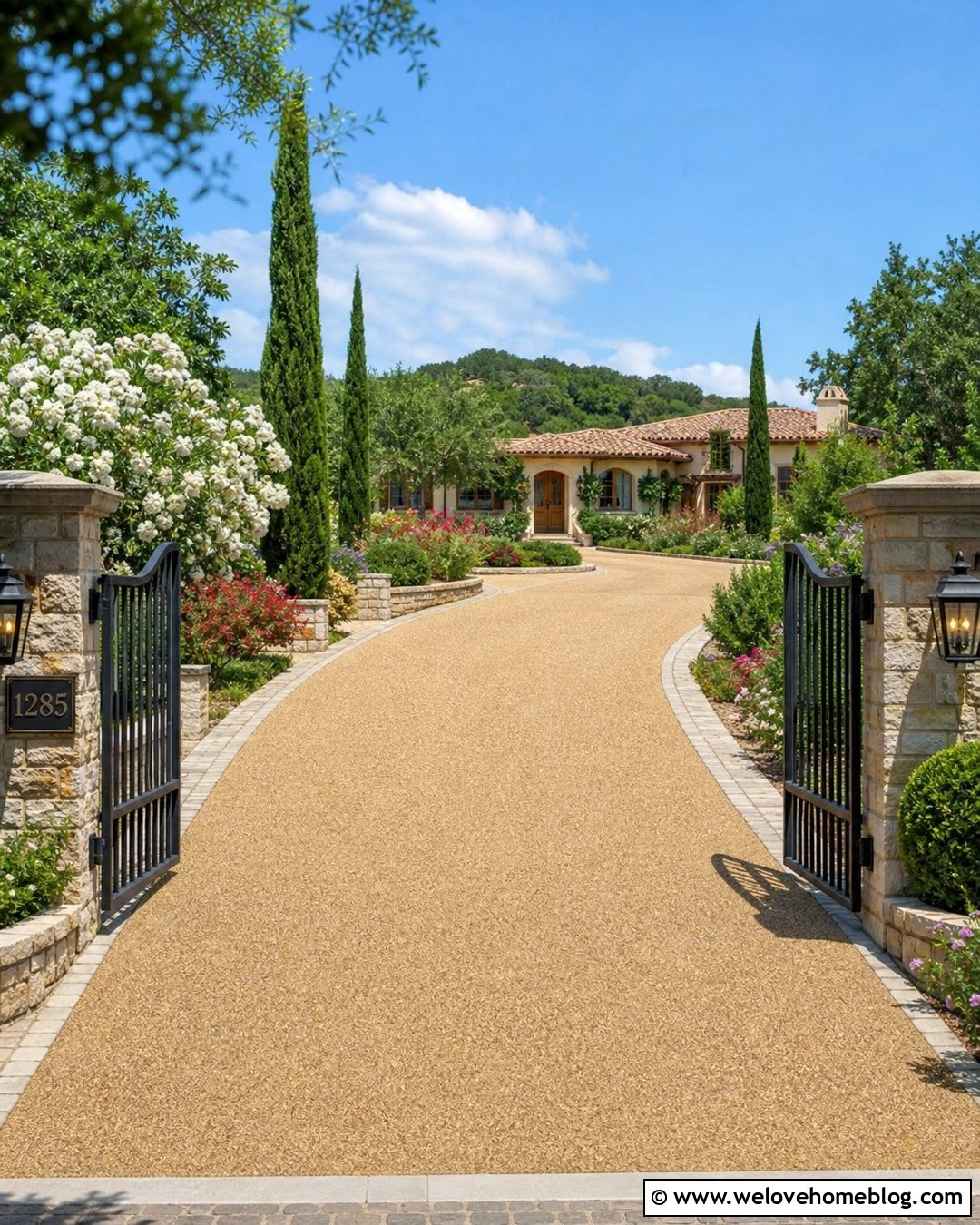
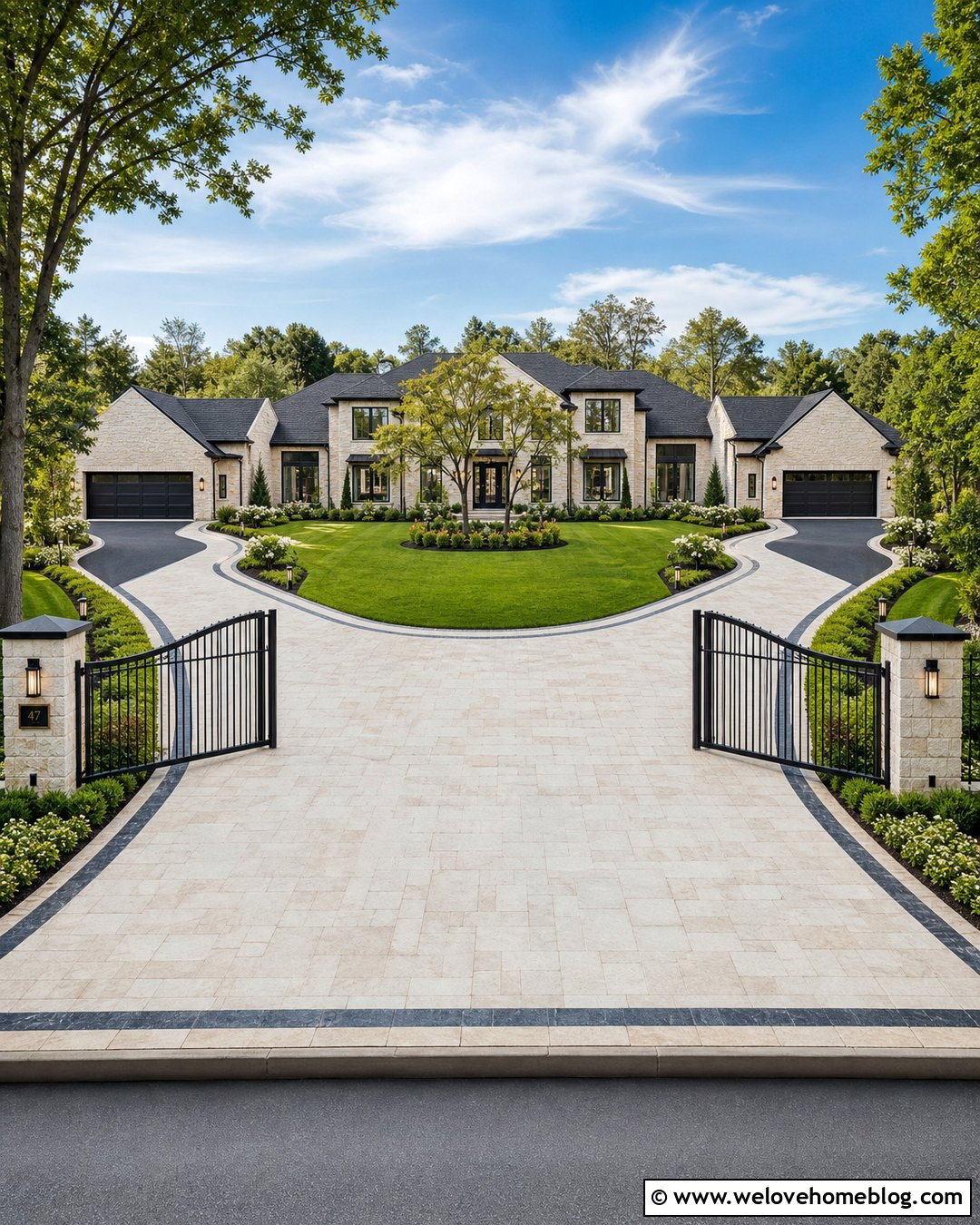
A front driveway gate should look like part of the entire property rather than an isolated security feature. Use tan resin-bound gravel for a broad, gently curved driveway and install a simple black metal gate between low natural-stone pillars. Set the gate far enough inside the property to support safe access and follow all local rules for placement. Continue the stone in low driveway edging and nearby garden walls. Plant both sides with layered evergreens, flowering shrubs, and small trees, keeping branches clear of moving gate components. Subtle address lighting can make the entrance easier to identify. This complete design works with country, Mediterranean, and traditional homes, giving the driveway a defined entrance while maintaining an open, welcoming view toward the house.
19. Split Driveway Around An Existing Tree
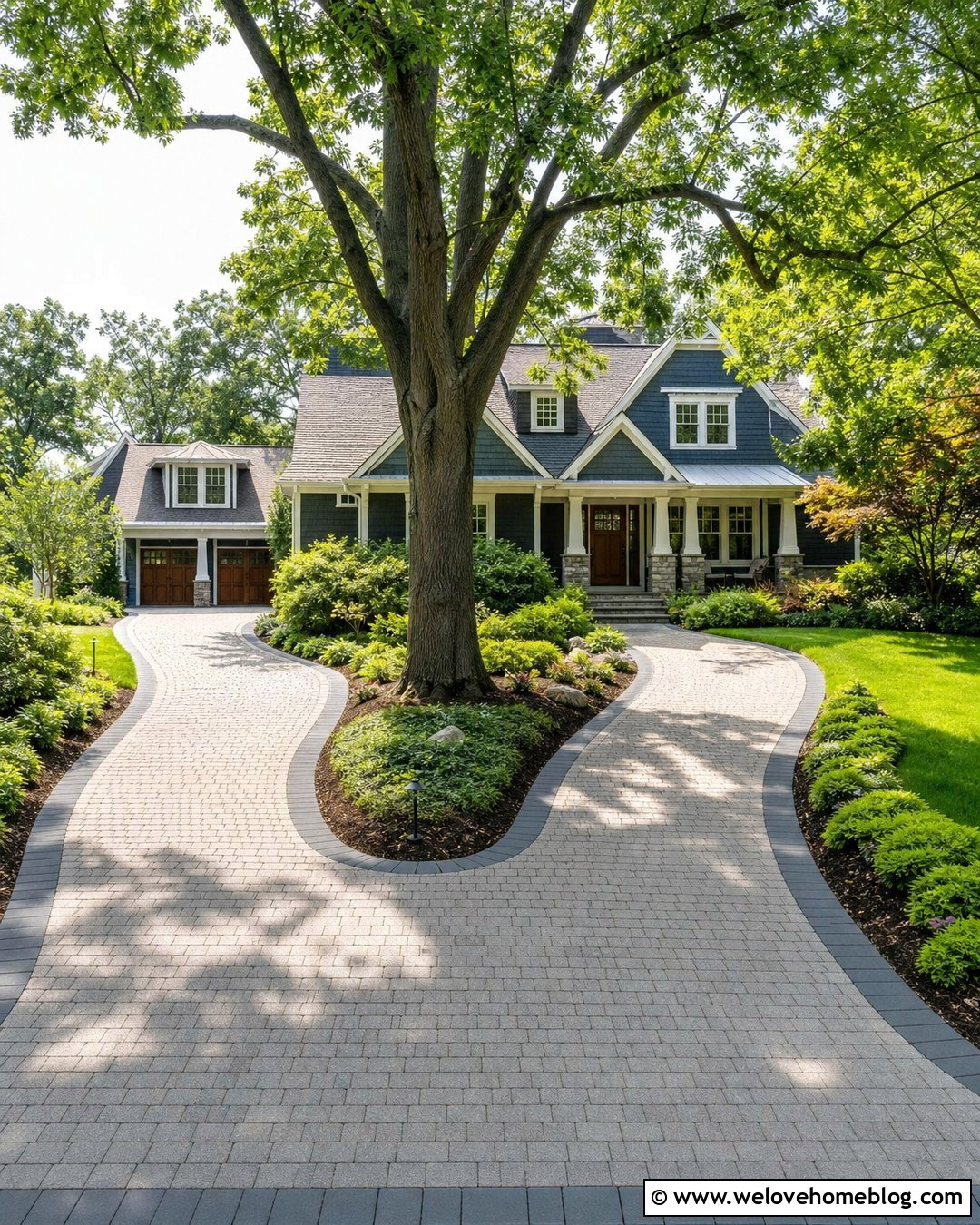
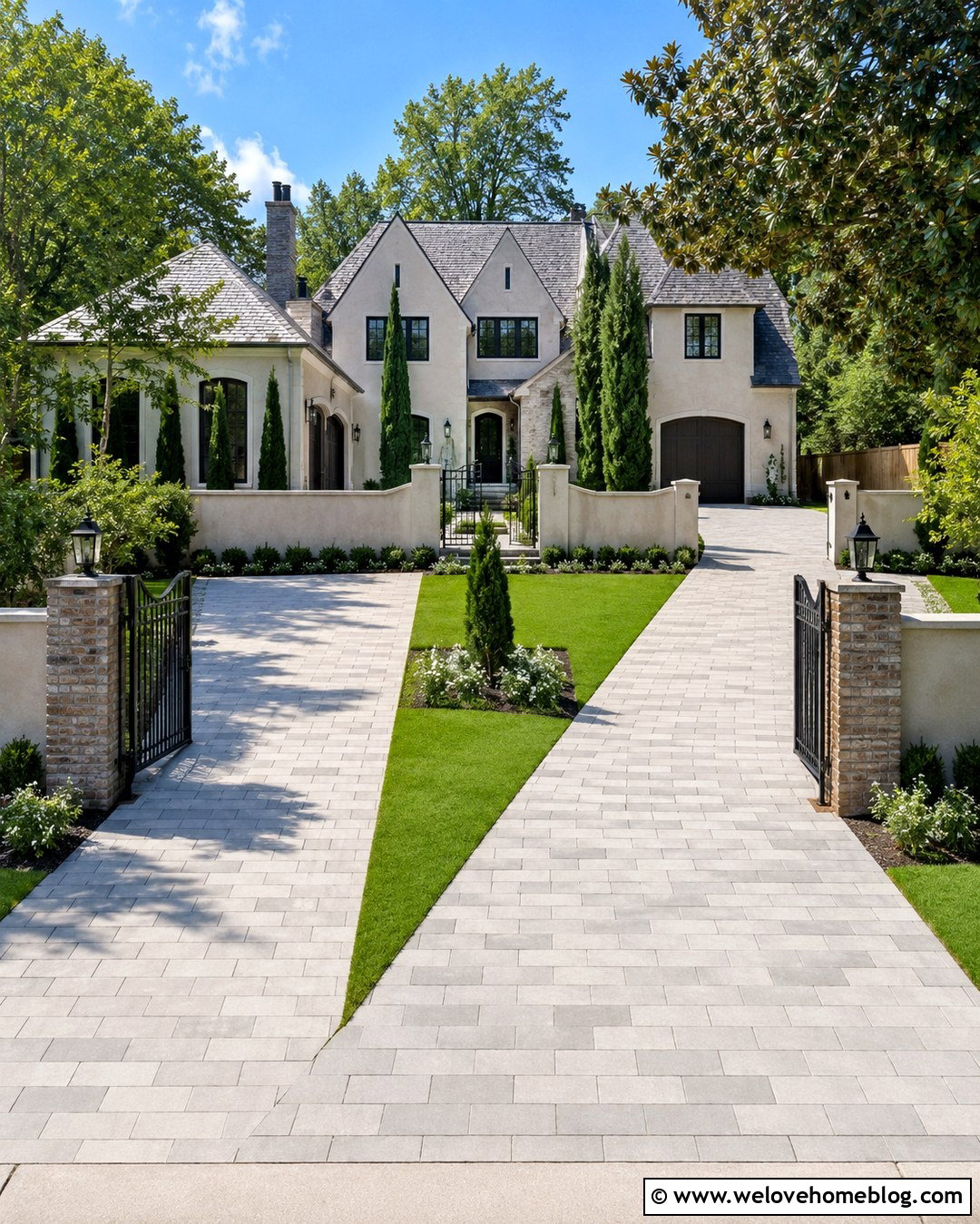
A mature tree can become the centerpiece of a driveway layout when its health and root zone are properly evaluated. Rather than paving directly over important roots, consider two narrow permeable paver lanes that divide around a generous planted island. Use warm gray pavers with dark stone borders, then fill the island with mulch and shade-tolerant ground covers. An arborist and site professional can help determine whether construction near the tree is realistic. Rejoin the lanes before the parking area so the approach remains simple near the house. Additional shrubs should be kept low along the curves for visibility. This design is ideal for a broad traditional or craftsman yard where preserving established landscape character is as important as adding vehicle access.
20. Resin Bound Driveway With Low Maintenance Landscaping
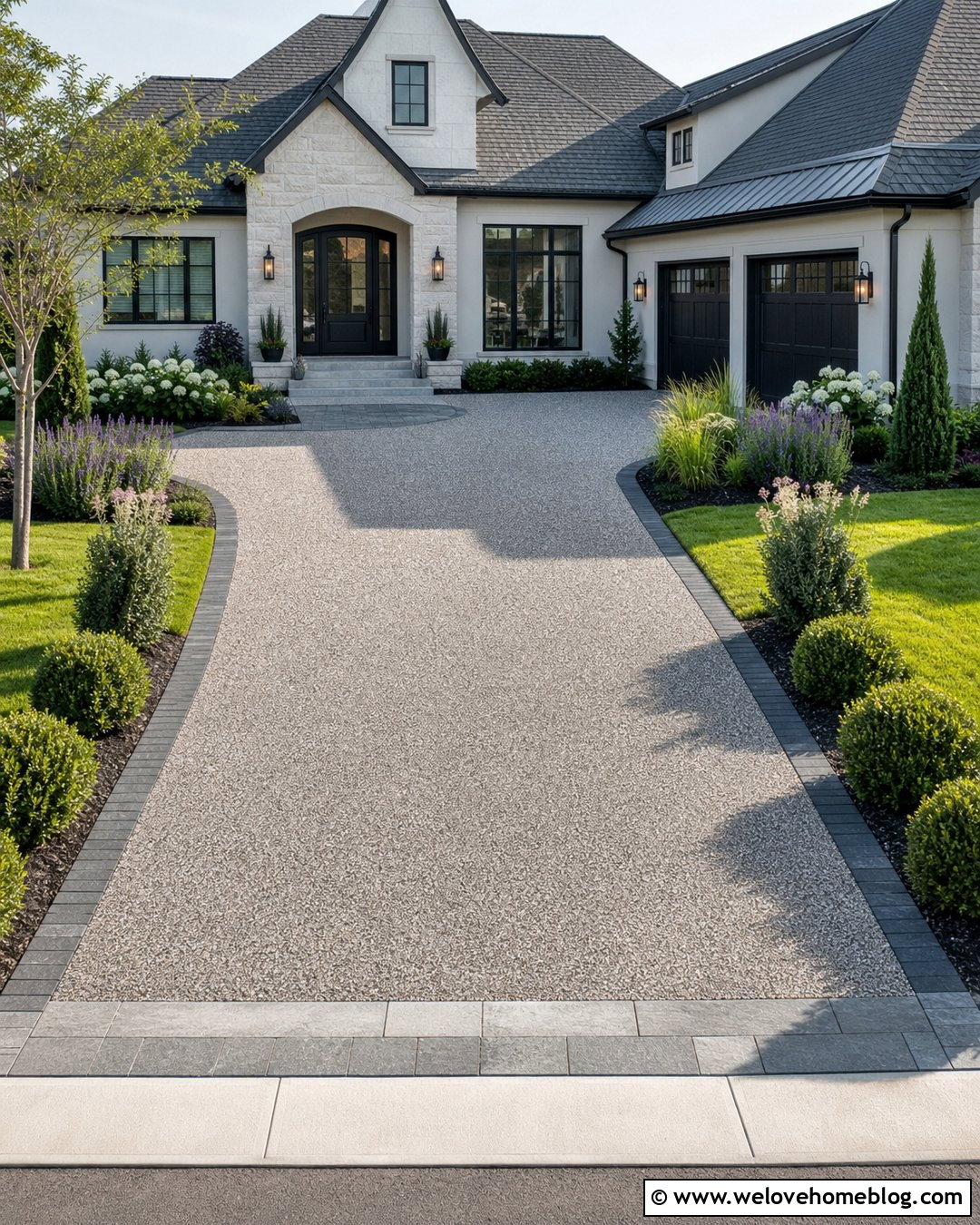
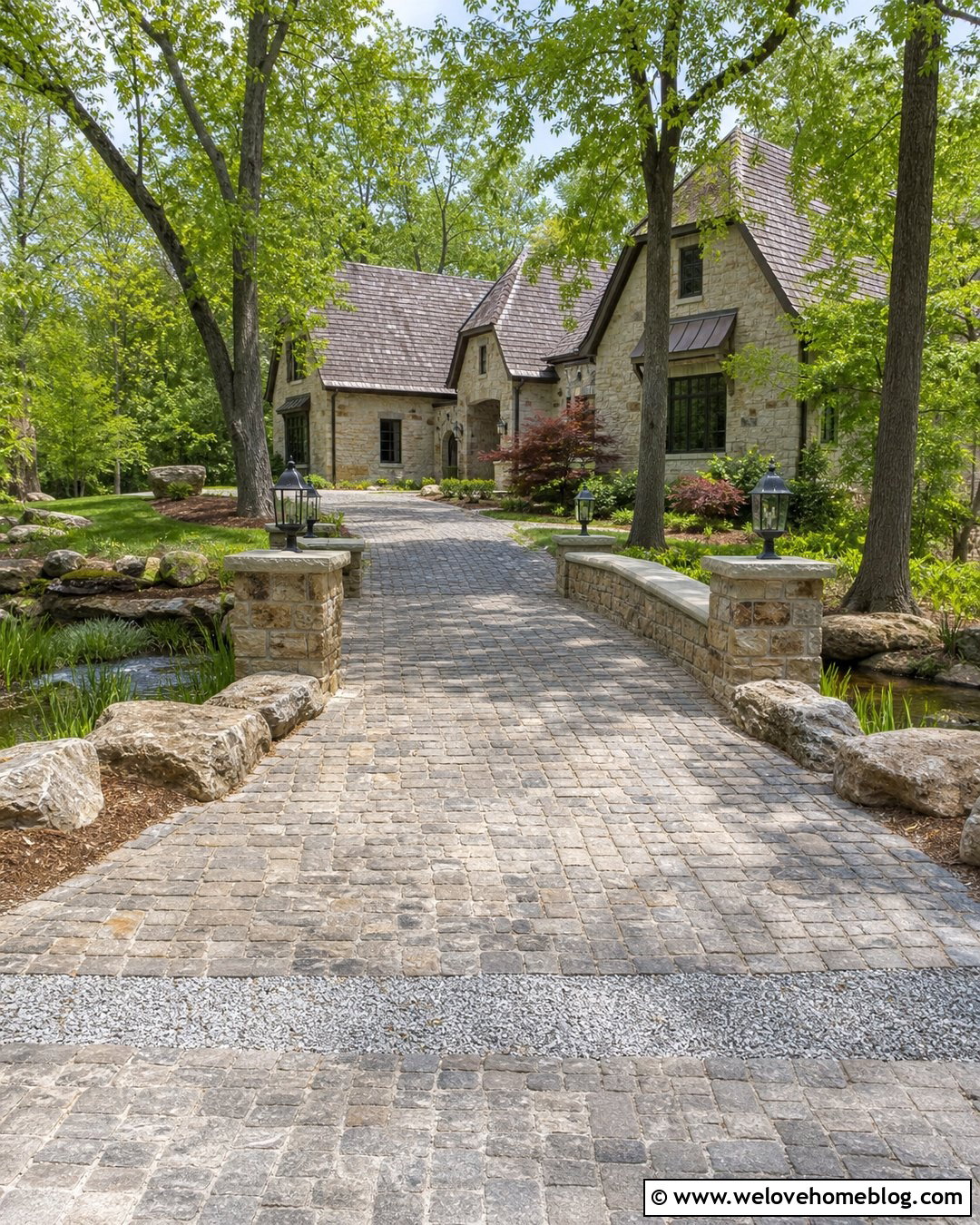
A resin-bound gravel driveway creates a smooth, contemporary-looking surface with the texture of small aggregate. Choose a warm beige or silver-gray blend and use it across a straight driveway with softly rounded corners near the parking area. Dark granite setts can form a durable visual border and a defined apron at the street. Surround the driveway with low-maintenance beds containing compact evergreens, ornamental grasses, and long-blooming perennials selected for the local climate. A large-format concrete walkway can lead to a modern or transitional front entrance. Keep the overall palette limited so the textured driveway remains the central hardscape feature. This complete look is especially effective when you want refined curb appeal without complicated patterns or overly formal landscaping.
Conclusion:
The best driveway plan makes parking easier without turning the entire front yard into a hard, empty surface. Compare straight, curved, circular, and side-yard layouts before selecting concrete, gravel, asphalt, brick, pavers, or resin-bound aggregate. Then use borders, walkways, planting beds, drainage features, and entrance details to connect the new surface with the house. Always confirm local rules before altering a curb, sidewalk, drainage route, or public right-of-way. It is also wise to have the grade, base, and water flow evaluated before construction begins. With careful planning, these Adding Driveway To Front Yard Ideas can create useful parking while preserving greenery, comfortable access, and attractive curb appeal.

Related posts:

Leave a Reply