
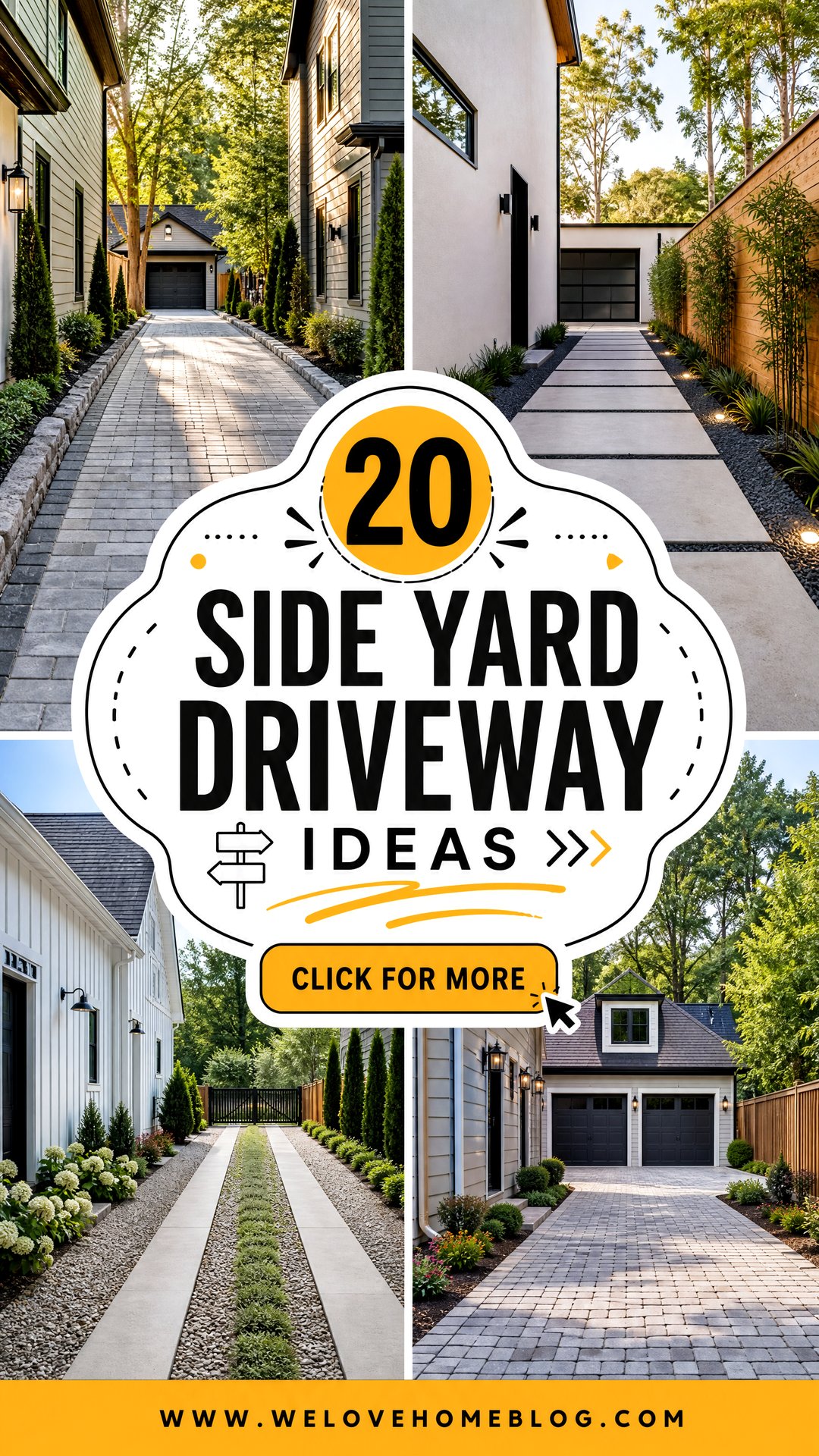
A side driveway can turn a narrow, overlooked part of your property into useful parking, garage access, or a polished route to the backyard. The best **side yard driveway ideas** balance vehicle movement with drainage, privacy, landscaping, and the architectural character of the home. Materials also matter. Concrete offers a clean surface, gravel supports a relaxed look, and permeable pavers can help manage runoff. Thoughtful borders keep the driveway defined, while slim planting beds soften fences and exterior walls without reducing clearance. Before building, confirm local rules for setbacks, drainage, curb cuts, and permitted surfaces. Whether your space is compact, shaded, sloped, or unusually long, the complete driveway designs below offer practical inspiration. Explore these **20 Side Yard Driveway Ideas**.
1. Narrow Concrete Side Yard Driveway
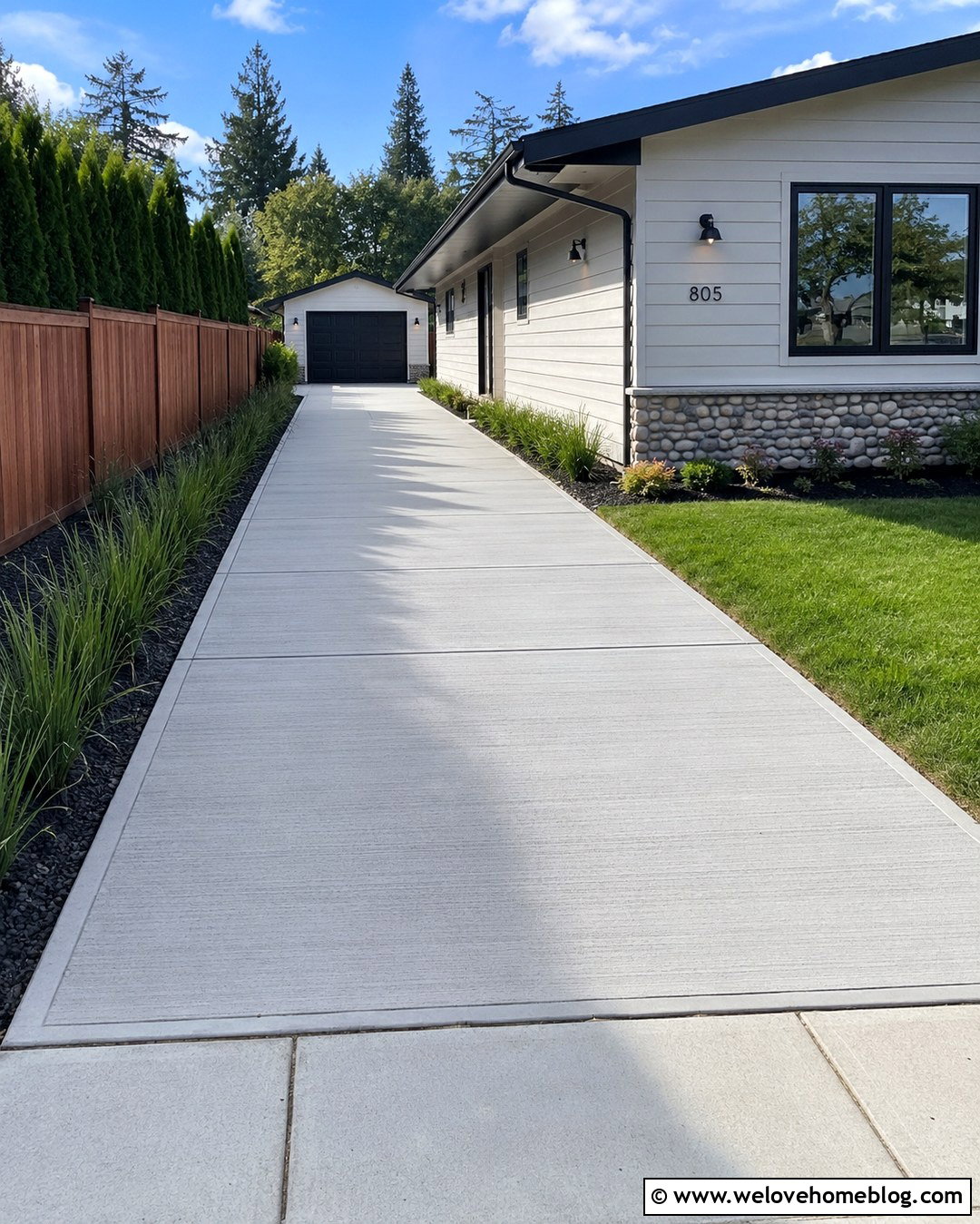
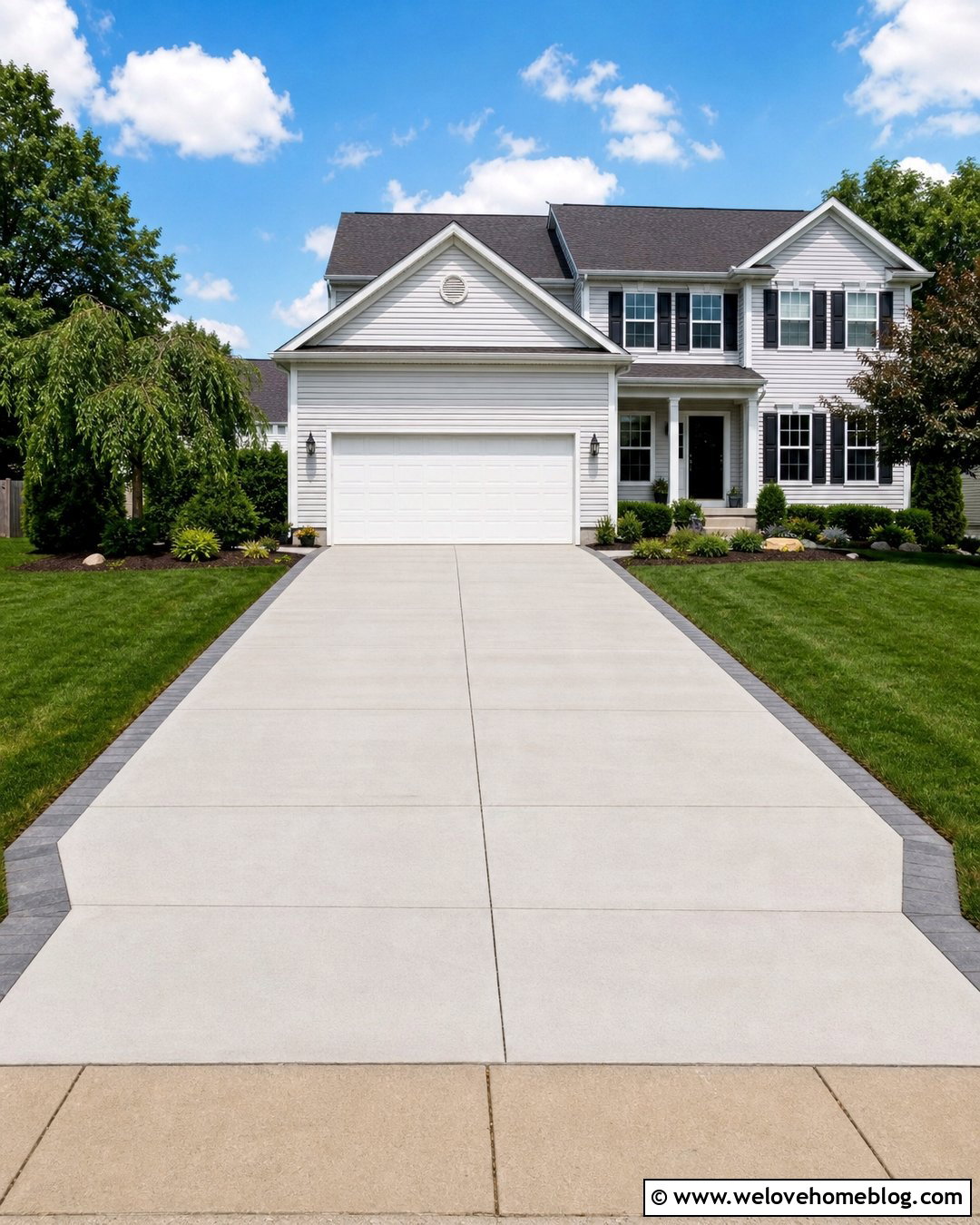
A narrow poured concrete driveway creates a smooth, dependable route beside the house without making the side yard feel overly busy. Use a straight layout that leads toward a detached garage, rear parking pad, or backyard gate. Light gray concrete with a subtle broom finish provides traction and reflects more light into a shaded corridor. A narrow strip of river rock along the foundation can form a clean drainage transition. On the opposite edge, add a slim planting bed with upright ornamental grasses or compact evergreen shrubs. Simple wall-mounted lights improve visibility without taking up valuable ground space. Match the concrete control joints to windows, gates, or fence posts so the long surface looks organized and intentional.
2. Side Yard Paver Driveway
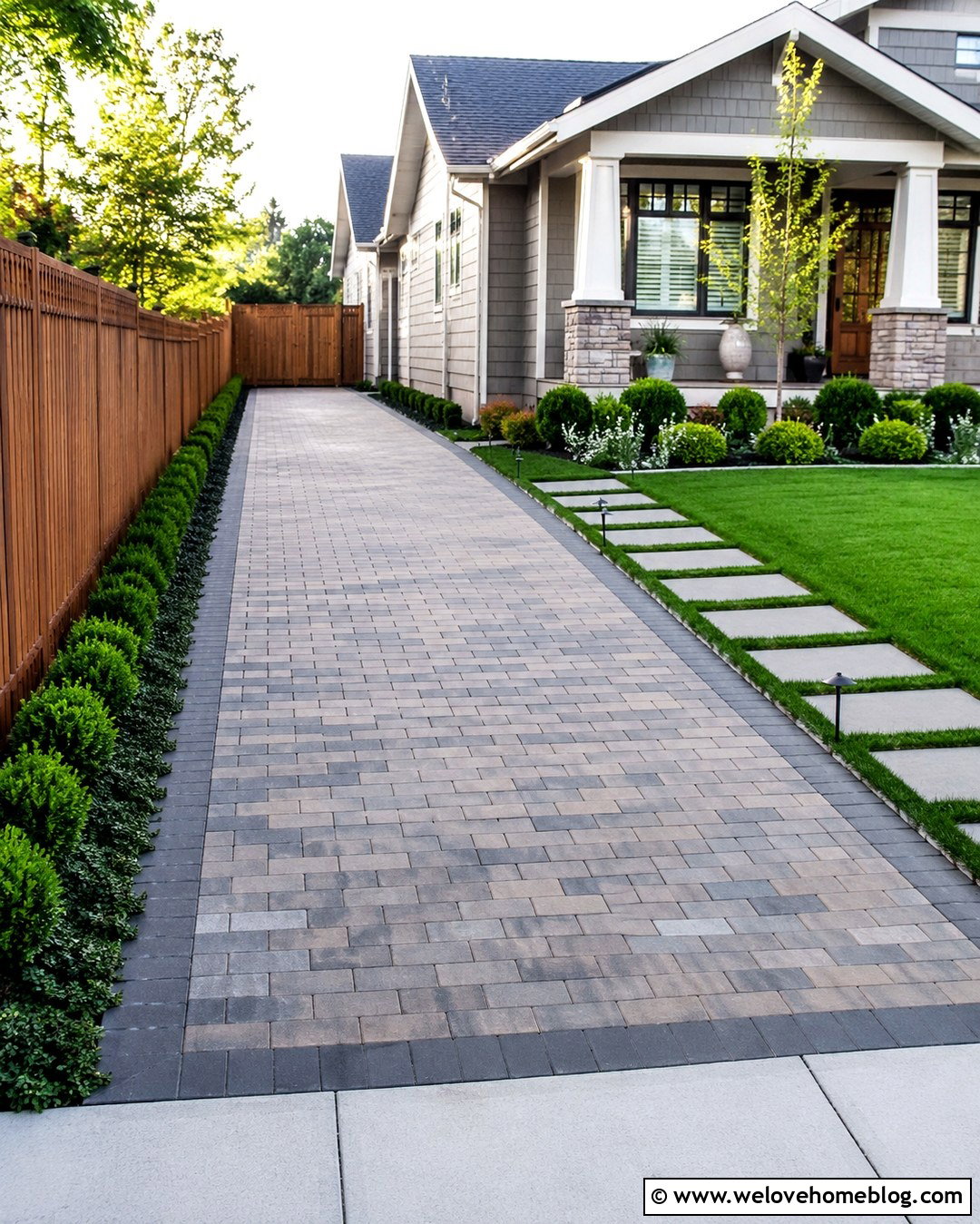
Concrete pavers bring pattern and warmth to a side yard while providing a durable surface for regular vehicle access. Choose medium-format rectangular pavers in blended gray and tan tones, arranged in a running bond pattern that visually lengthens the driveway. A contrasting charcoal paver border can hold the design together and clearly separate the driving surface from nearby beds. Keep the route straight near the house, then widen it slightly at the rear parking area. Low boxwood shrubs, ground cover, and a narrow stepping-stone walkway can soften the fence side. Select pavers rated for driveway use and build them over a properly prepared base. This complete look works especially well beside Craftsman, traditional, and suburban brick homes.
3. Gravel Side Yard Driveway
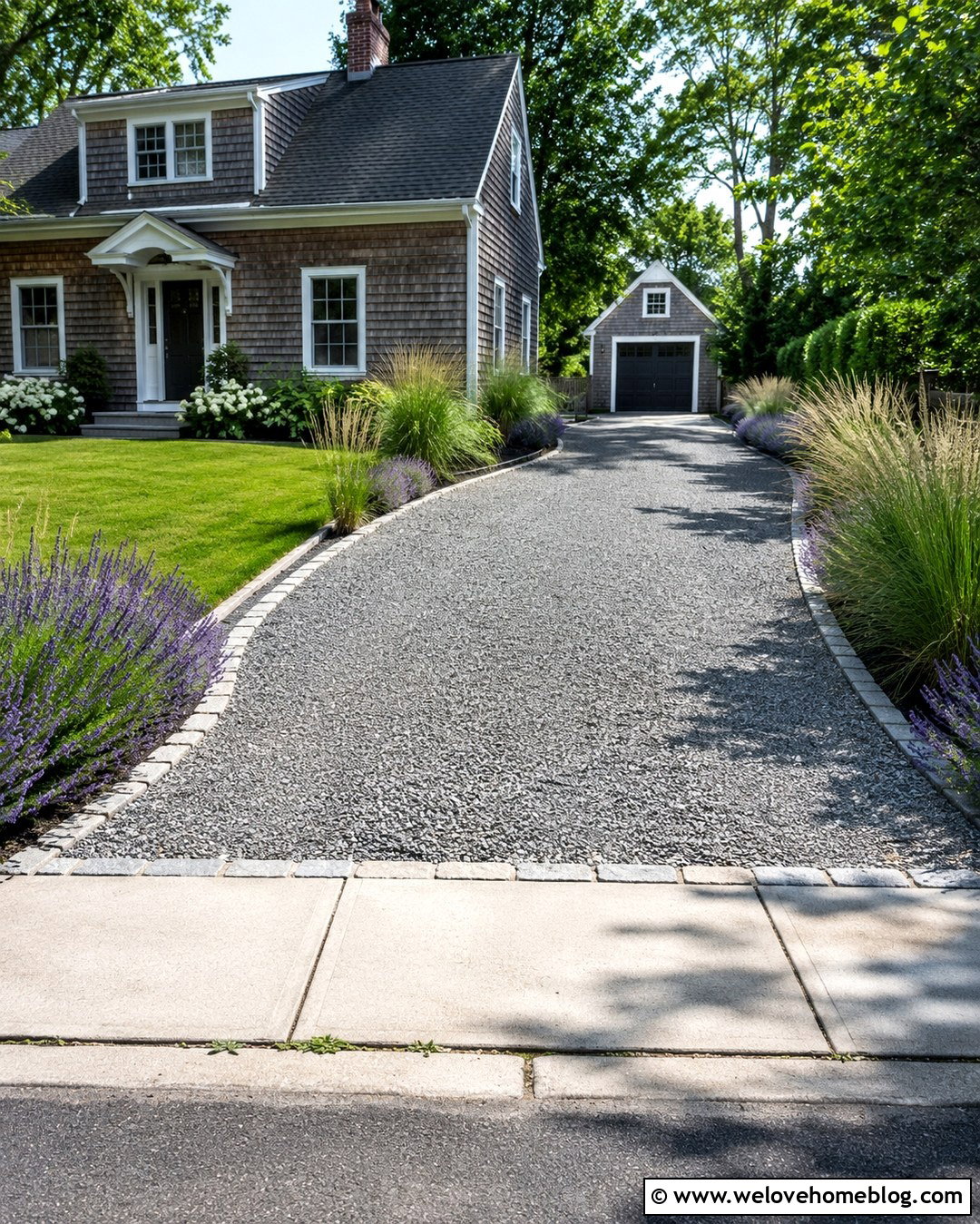
The soft crunch of gravel suits a relaxed side yard leading to a backyard garage or secondary parking area. Use compacted angular gray gravel rather than rounded decorative stones, since the sharper pieces settle into a firmer surface. Install dark steel edging along the house and a cobblestone border beside the lawn to prevent spreading. A gently curved layout can make a long, narrow yard feel less like a service lane. Plant lavender, feather reed grass, or compact shrubs beyond the cobblestone edge, leaving enough clearance for doors and mirrors. At the street, add a short apron of concrete or pavers to create a tidy transition. This driveway pairs naturally with cottage, farmhouse, and country-inspired homes.
4. Permeable Paver Side Yard Driveway
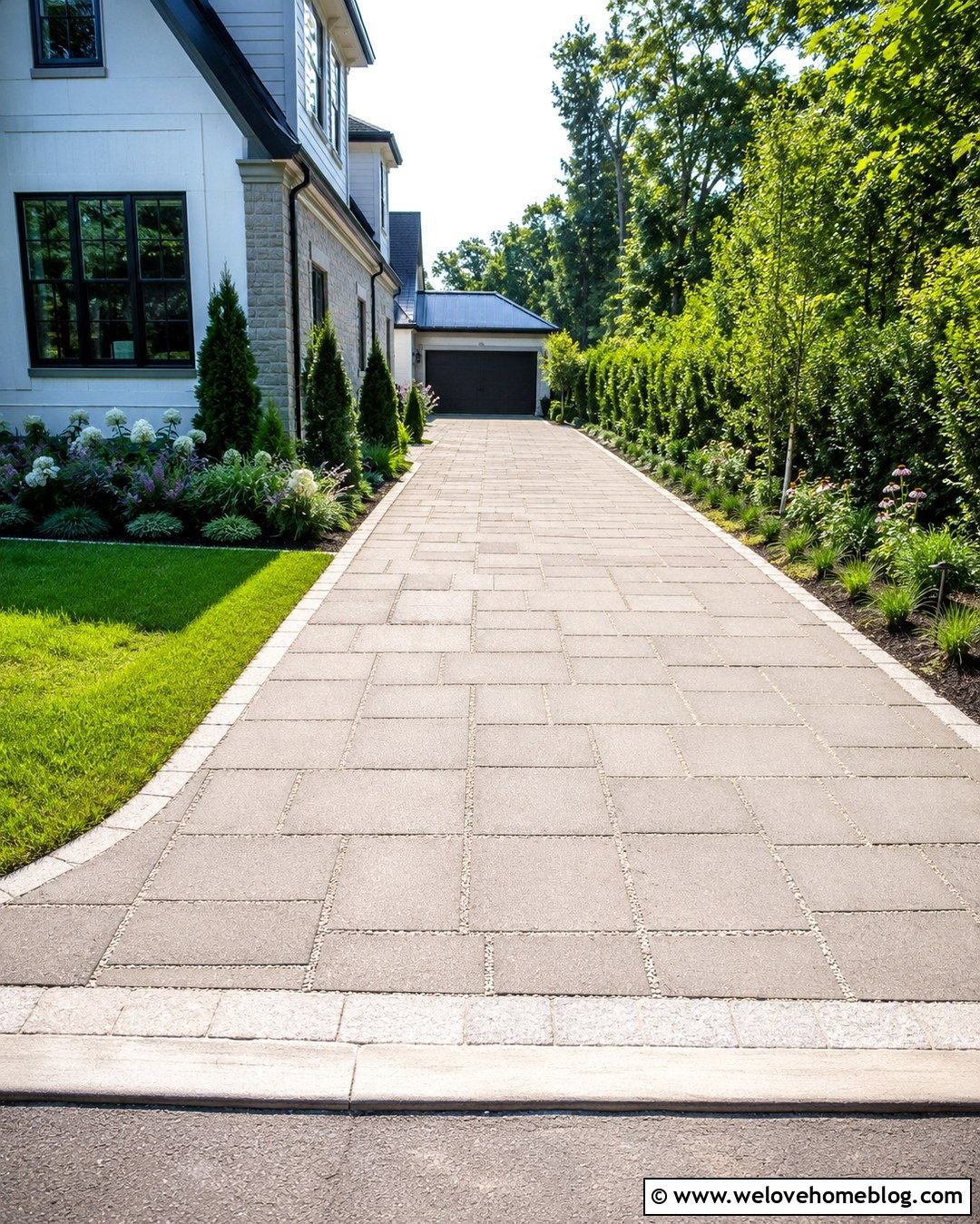
Does rainwater collect between your home and property line? A permeable paver driveway can create a more drainage-conscious side yard surface while maintaining a polished appearance. Choose charcoal or warm gray permeable concrete pavers with wider joints filled with clean aggregate. Arrange the pavers in a straight band leading to a rear garage, with a slight flare near the street entrance. A pale stone border brightens the edges and connects the driveway to the home’s facade. Use narrow rain-garden planting beds where site conditions allow, selecting compact sedges, flowering perennials, and upright shrubs. Keep soil and mulch from washing into the paver joints. The result is structured, contemporary, and especially attractive beside modern or transitional houses.
5. Brick Side Yard Driveway
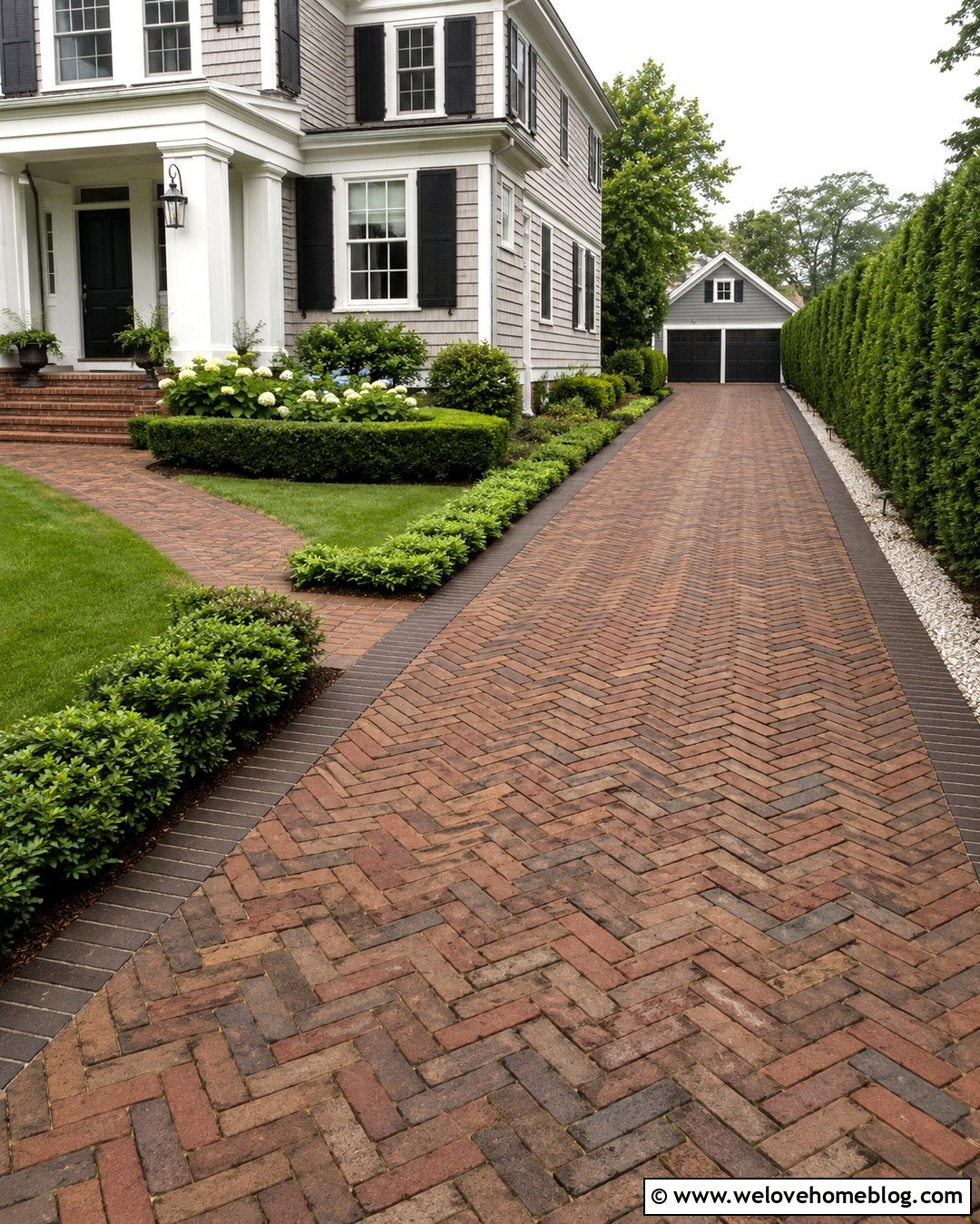
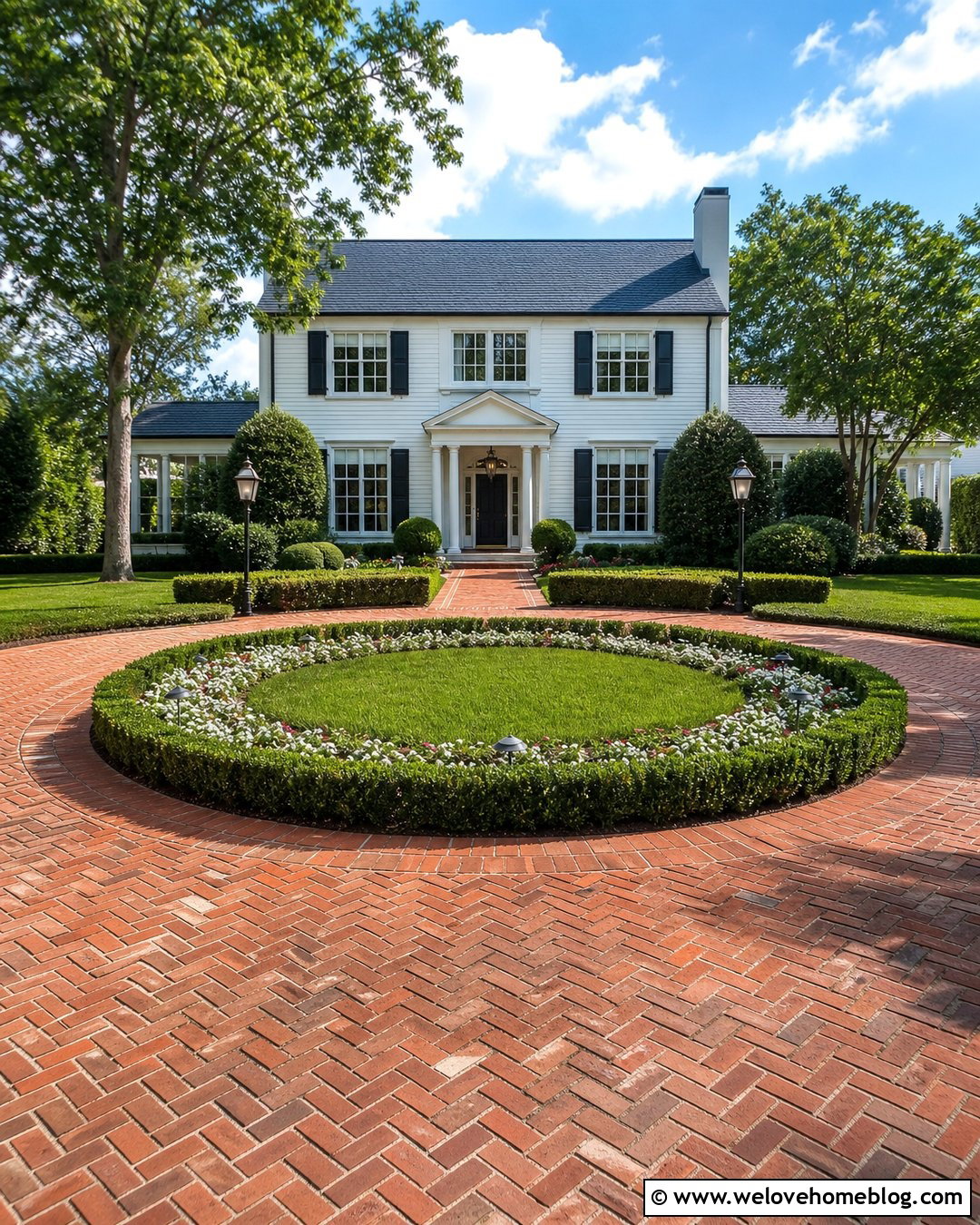
Clay brick pavers can make a side driveway feel like an original part of an older home. A herringbone pattern is visually rich and works beautifully along a straight route beside a Colonial, Tudor, or traditional brick house. Choose weathered red and brown bricks, then frame them with a soldier-course border in a deeper tone. A narrow evergreen hedge can screen the driveway from the neighboring property without overwhelming the space. Along the house, use a slim gravel drainage strip instead of planting directly against the foundation. Continue the same brick into a small rear parking court or garden walkway for a connected layout. Proper edge restraints are essential because they help keep the patterned surface from shifting outward under vehicle traffic.
6. Asphalt Side Yard Driveway With Brick Border
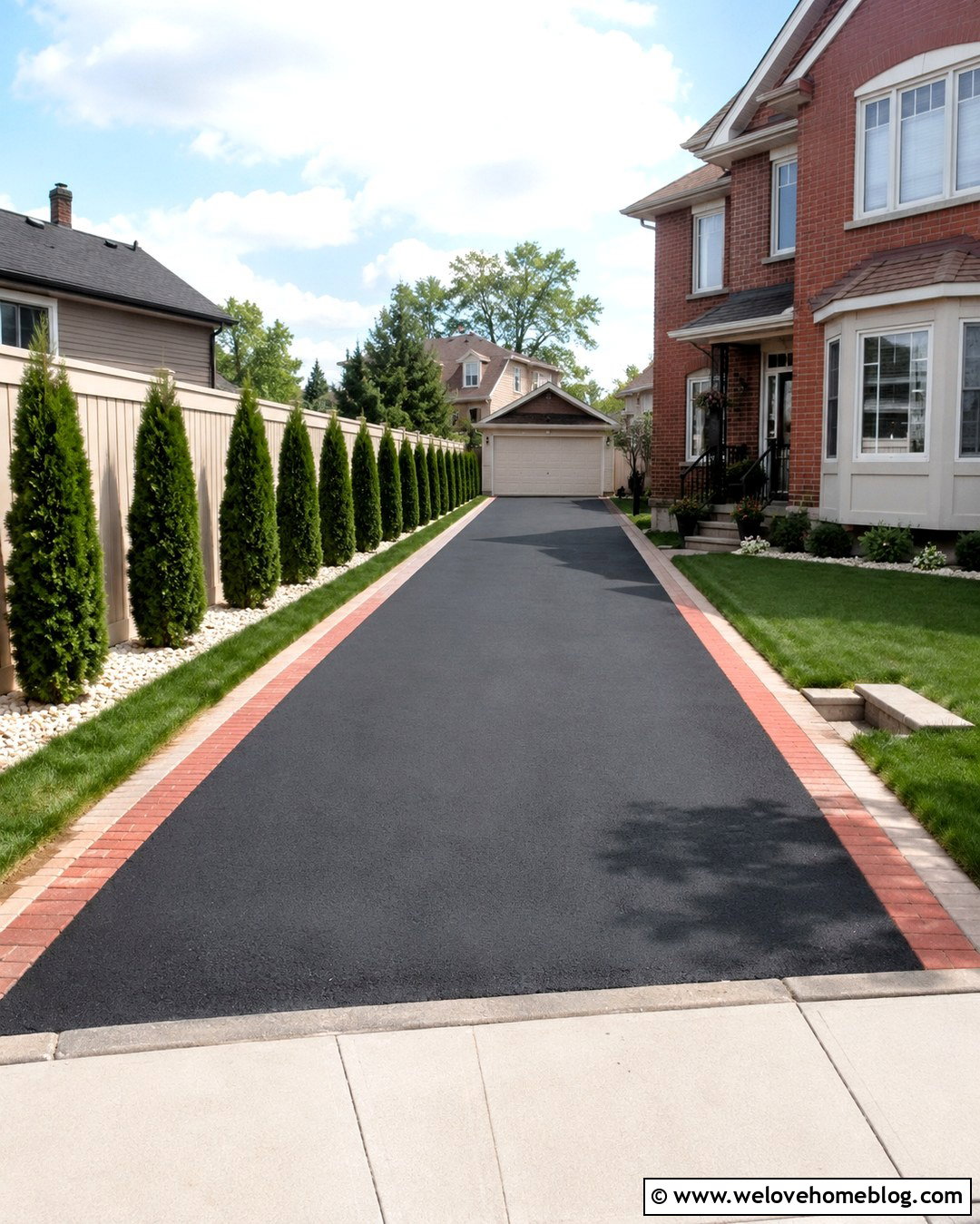
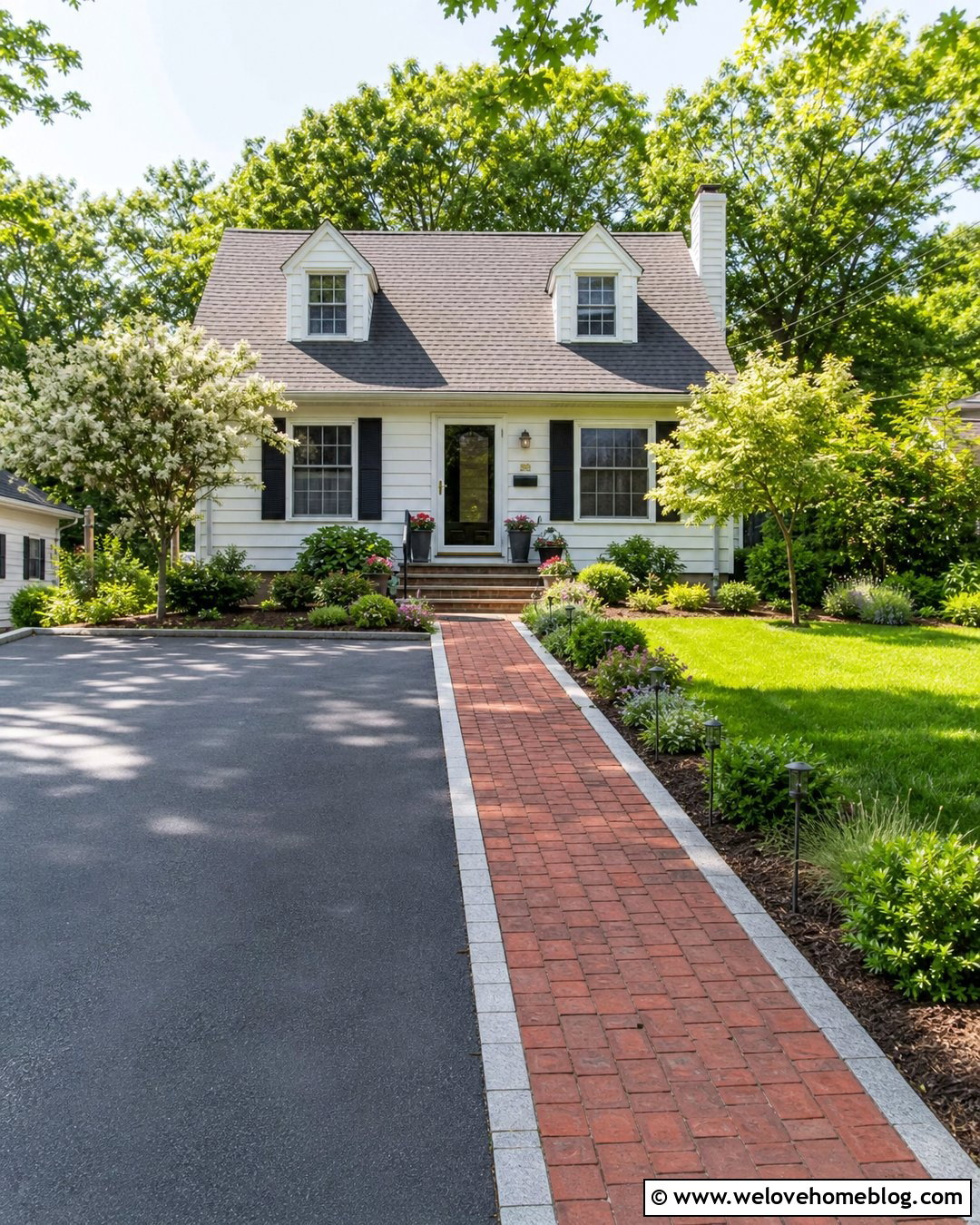
Black asphalt provides a simple, practical base for a long side yard driveway, while brick edging gives it a more finished appearance. Use a straight asphalt lane that follows the side wall of the house and opens into a wider rear parking pad. A single or double row of red clay brick pavers can outline both edges and echo brick details on the home. Leave a light-colored gravel strip beside the foundation to create contrast and simplify maintenance. On the fence side, add a narrow lawn ribbon with evenly spaced columnar evergreens. Their upright shape provides greenery and privacy without spreading into the driving area. This combination is well suited to traditional suburban homes and larger properties with detached garages.
7. Curved Side Yard Driveway
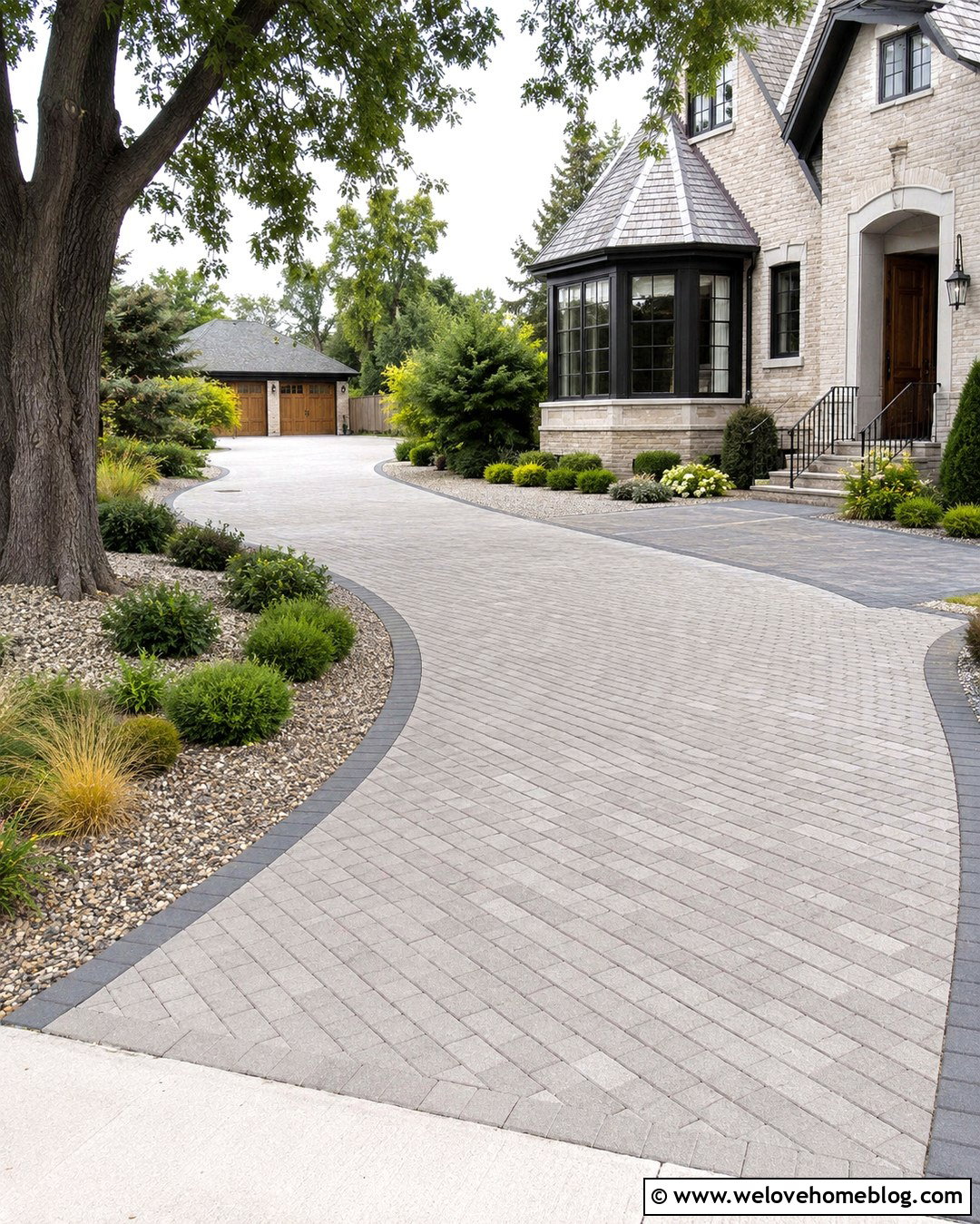
A gentle curve can help a side driveway move naturally around a bay window, mature tree, garden bed, or projecting section of the house. Use warm gray concrete pavers in a flowing stretcher-bond pattern, outlined with darker paver edging. The curve should remain broad and easy to follow rather than creating a tight turn near walls or fences. Low mounded shrubs and ornamental grasses can fill the outside bend, where they will be visible from the street. Keep the inside edge more open with gravel and low ground cover to preserve sightlines. A widened landing near the rear garage makes parking and unloading easier. This complete layout gives a spacious property a softer, more landscape-focused appearance.
8. Side Yard Driveway With Grass Pavers
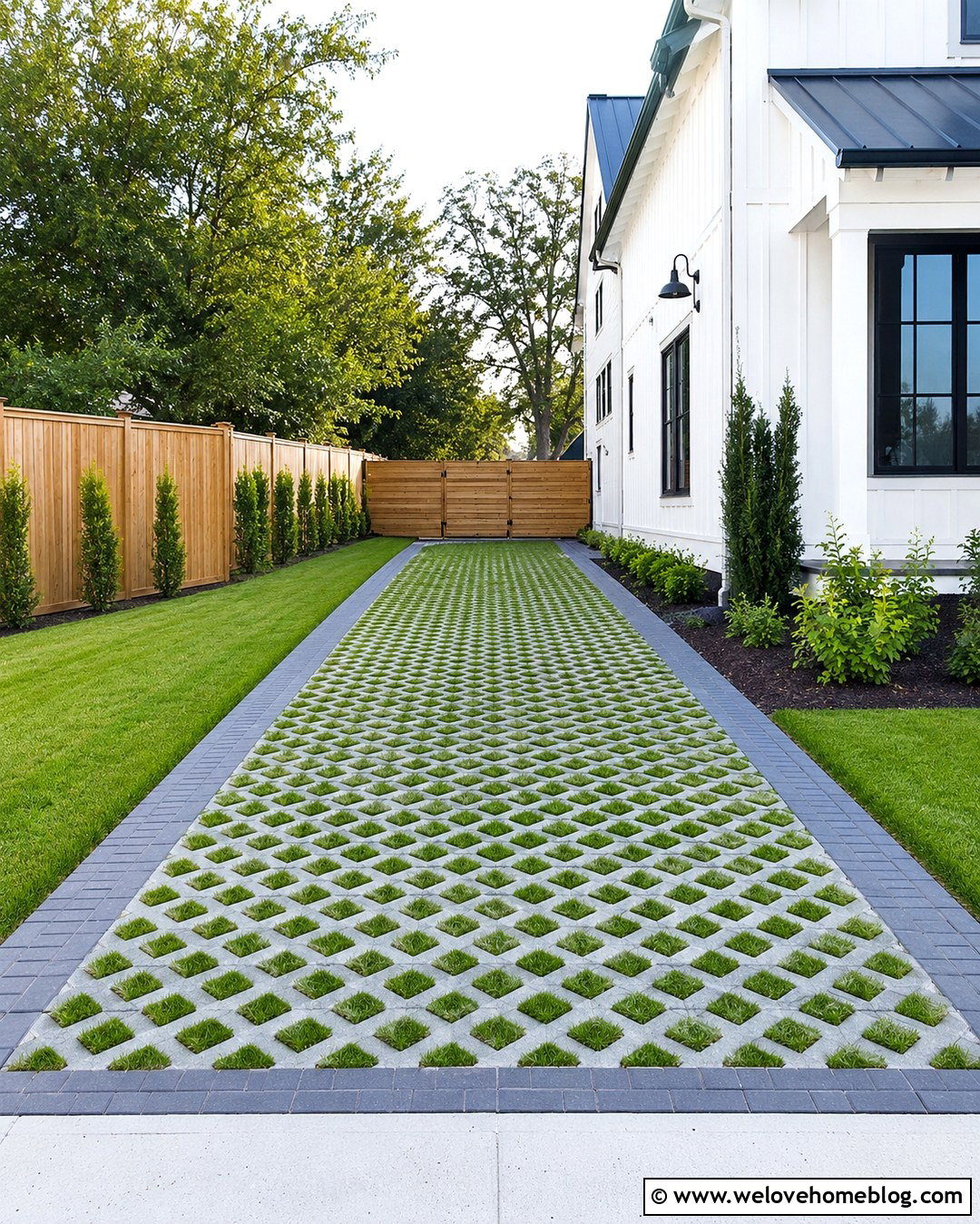
Grass pavers reduce the visual weight of hardscaping by combining a reinforced driving grid with living turf. They work especially well for occasional side yard parking, trailer storage, or access to a backyard structure. Create two defined wheel tracks or cover the complete driveway width, depending on the intended use and local requirements. Frame the green surface with concrete curbs or charcoal pavers to keep the edges crisp. A straight layout beside a modern farmhouse looks clean when paired with white siding, black lighting, and a simple wood gate. Continue the lawn around the driveway so the grid blends into the yard. Regular mowing and suitable base preparation help the surface remain neat, stable, and visually connected to the landscape.
9. Concrete Ribbon Side Yard Driveway
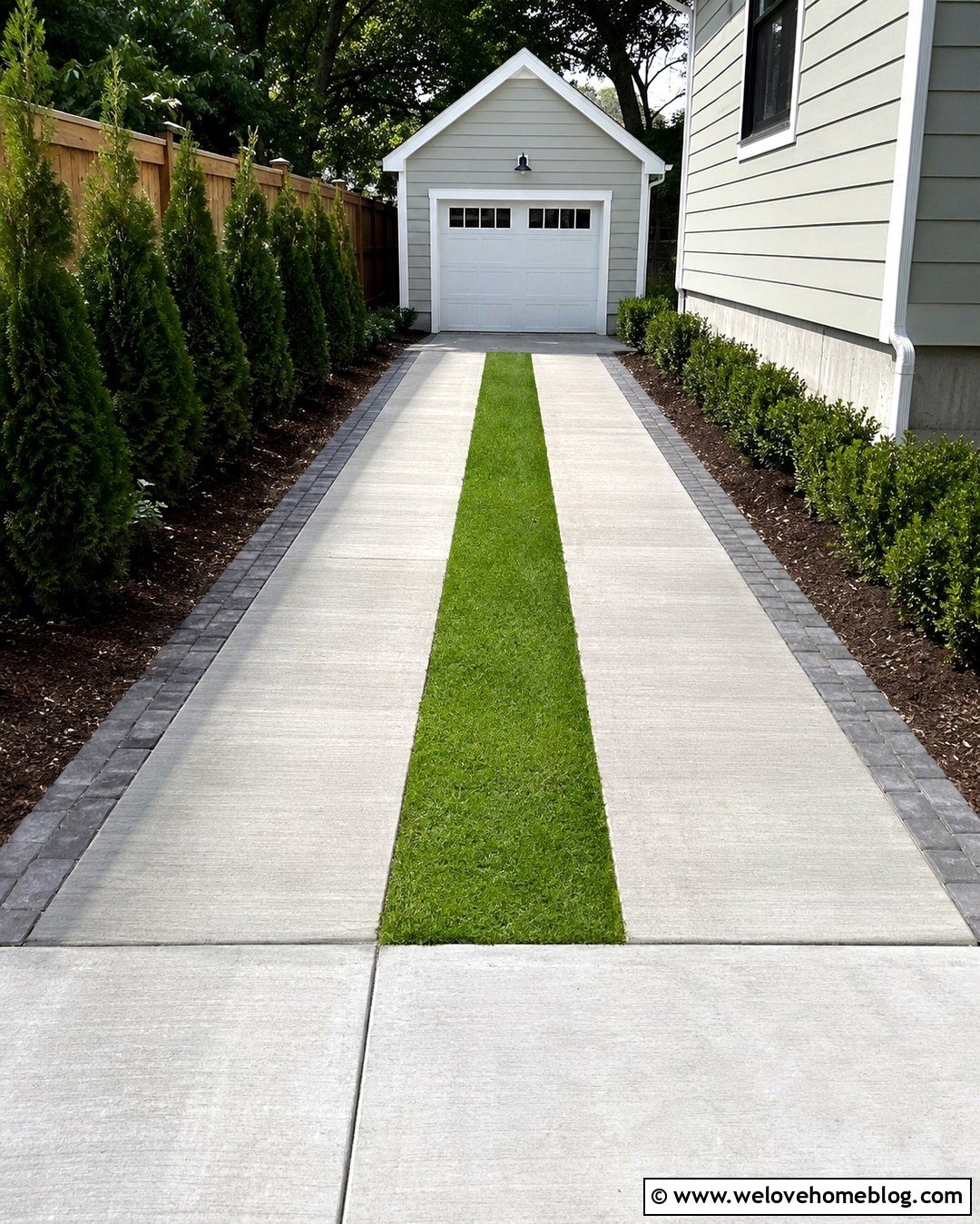
Two poured concrete wheel strips can give a side yard driveway a lighter, more traditional appearance than a full slab. Run the ribbons in a straight line toward a rear garage, leaving a narrow center strip filled with low turf or compact ground cover. Dark brick or cobblestone edging along the outer sides adds definition and prevents the surrounding soil from creeping onto the concrete. This layout looks particularly natural beside ranch homes, cottages, and older detached garages. Add upright shrubs along the fence, but keep branches trimmed away from the vehicle path. A paved apron at the street can connect the separate ribbons and create an easier entry point. Use this design where site conditions and local regulations allow reinforced wheel-track paving.
10. Exposed Aggregate Side Yard Driveway
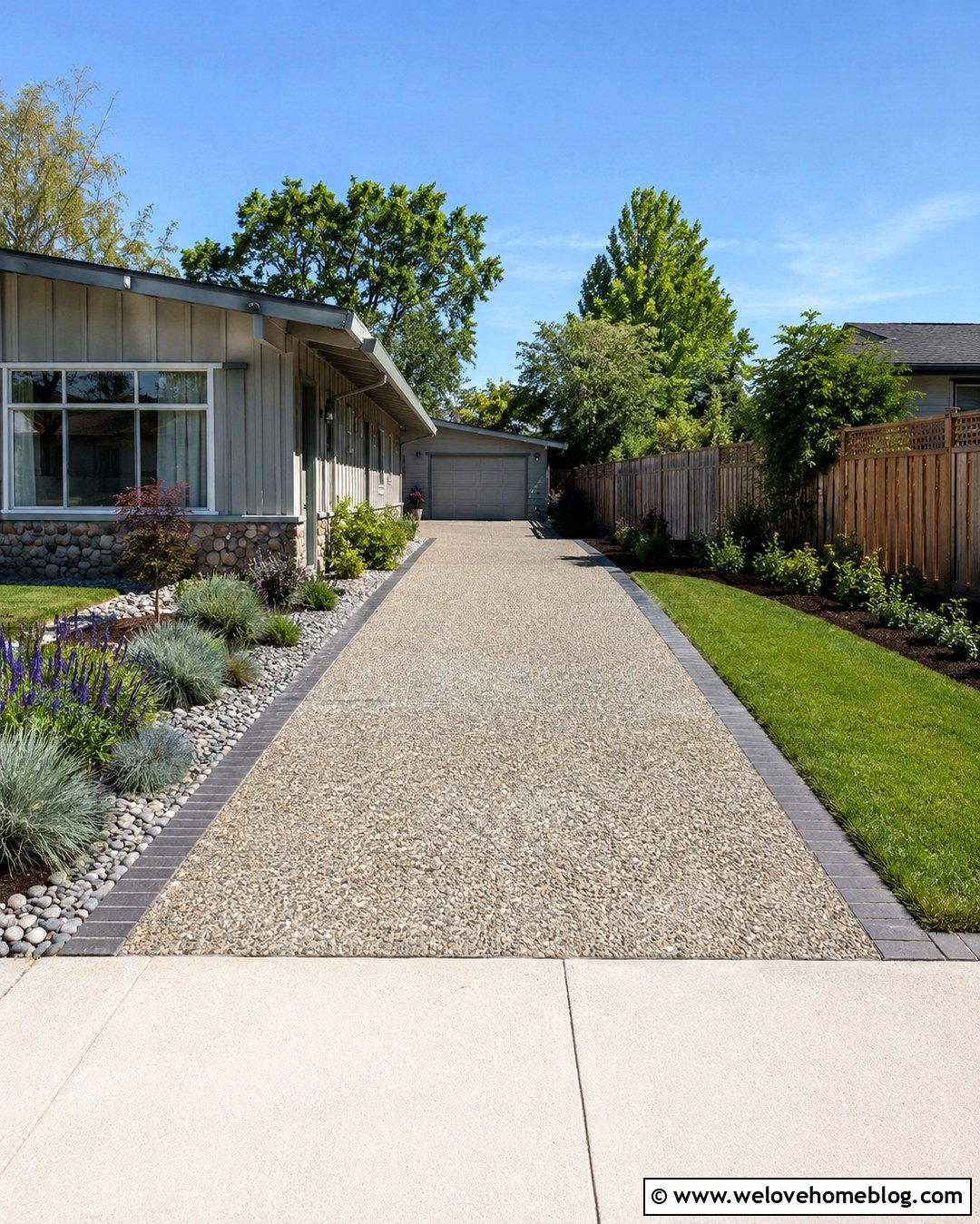
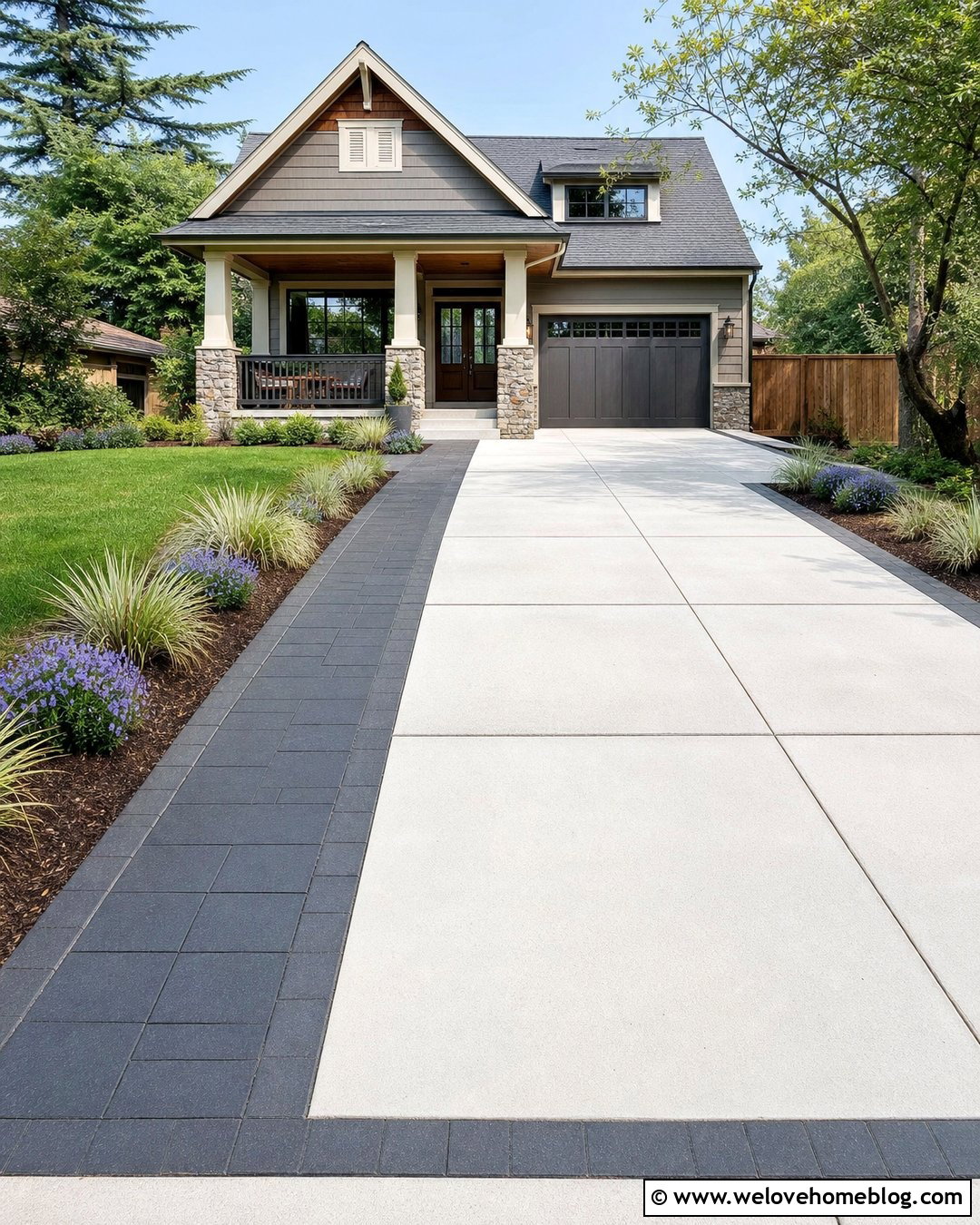
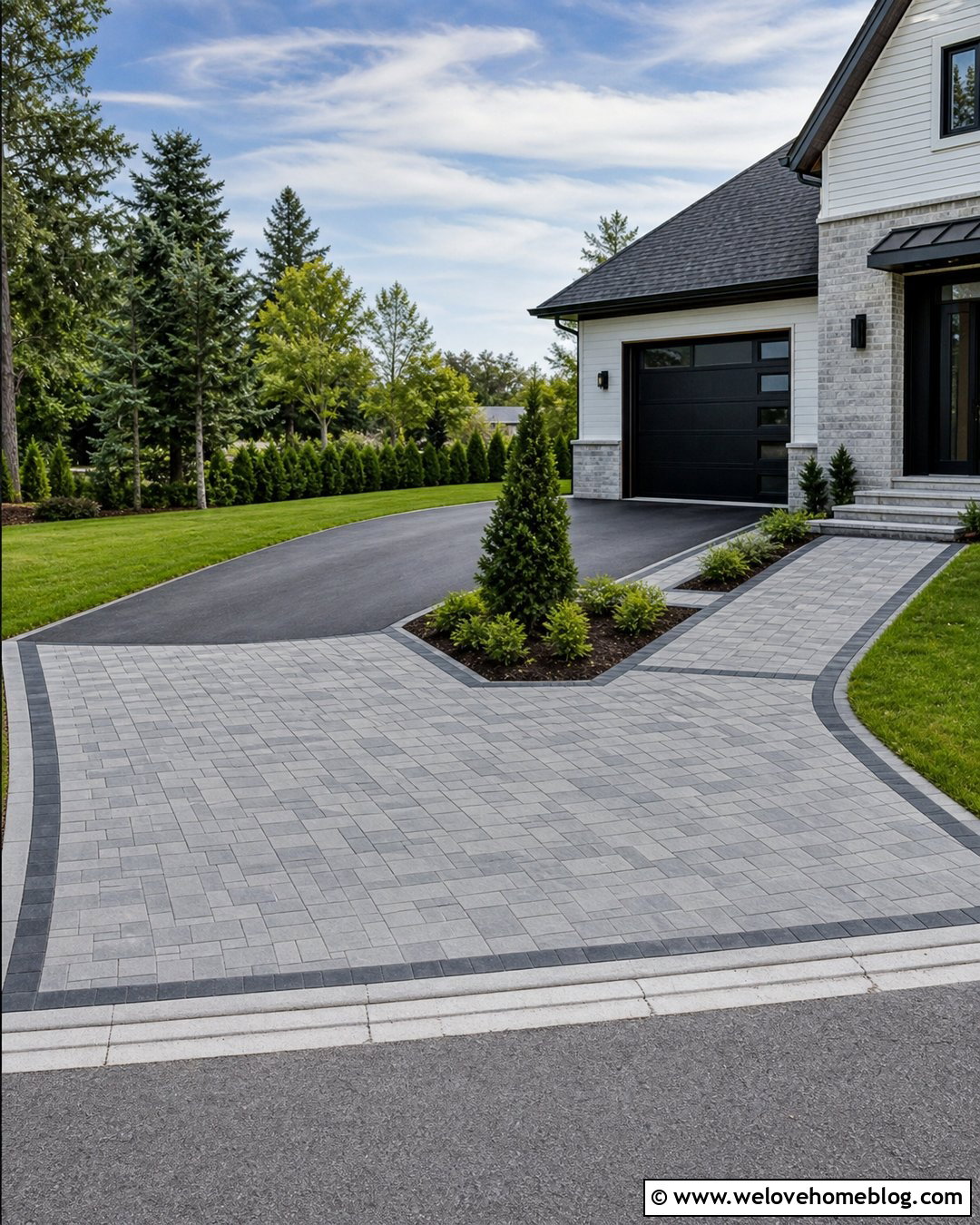
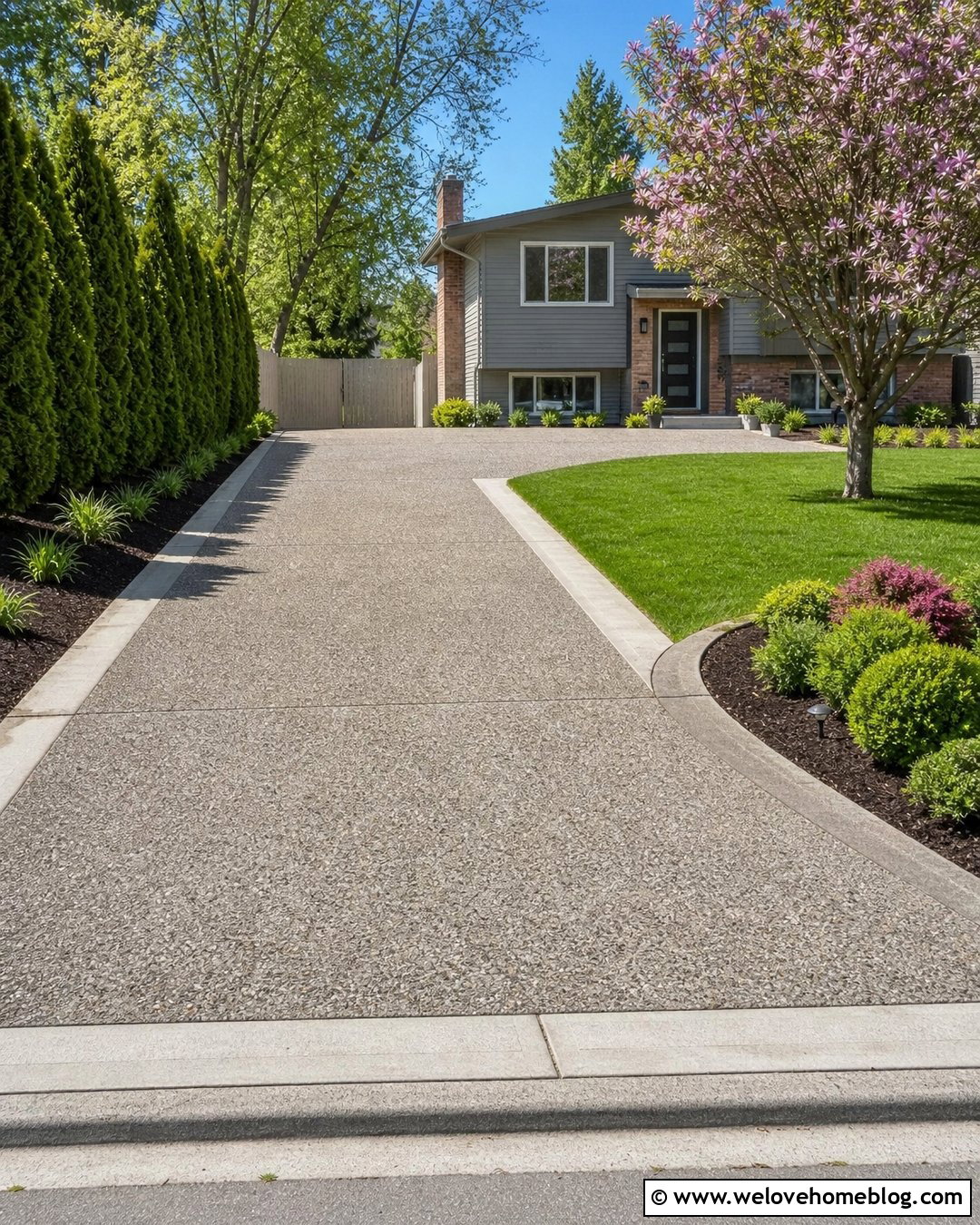
Exposed aggregate concrete adds subtle texture to a narrow side driveway without relying on a complicated pattern. Choose a warm gray mix with small tan, cream, and charcoal stones that coordinate with the home’s siding or masonry. A straight driveway can lead toward a matching rear parking pad, while saw-cut joints create a clean sequence along the route. Border the surface with smooth charcoal pavers for contrast. On the house side, include a river-rock drainage strip. Along the fence, use a slim bed of dwarf grasses and compact flowering perennials. Their soft shapes balance the textured concrete while preserving vehicle clearance. This refined combination works well with midcentury ranch, contemporary, and updated traditional homes that need understated curb appeal.
11. Side Yard Driveway With Privacy Fence
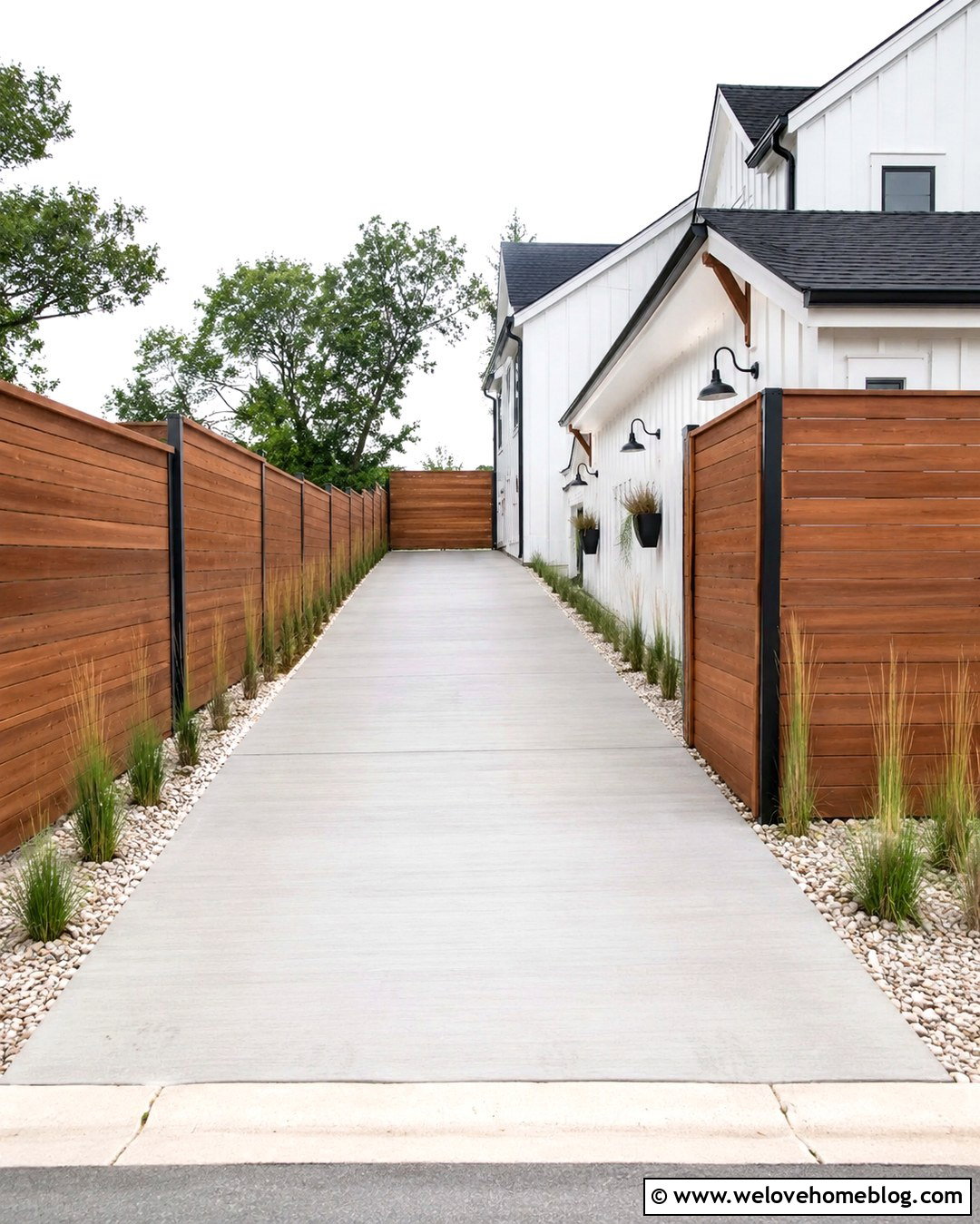
A tall privacy fence can make a side driveway feel more secluded, but the surface and landscaping should prevent the corridor from becoming dark or cramped. Pair a light gray poured concrete driveway with a warm cedar horizontal-slat fence. Keep the driveway straight and use pale limestone edging to reflect light along the boundary. A narrow bed of upright grasses can soften the fence where space permits, while wall-mounted planters add greenery without reducing driving width. At the entrance, coordinate the fence with a wide sliding or double-swing gate. Repeat cedar details on the rear garage for a unified view. This complete design suits modern, Scandinavian-inspired, and contemporary farmhouse homes, especially where backyard privacy is as important as convenient vehicle access.
12. Side Yard Driveway With Sliding Gate
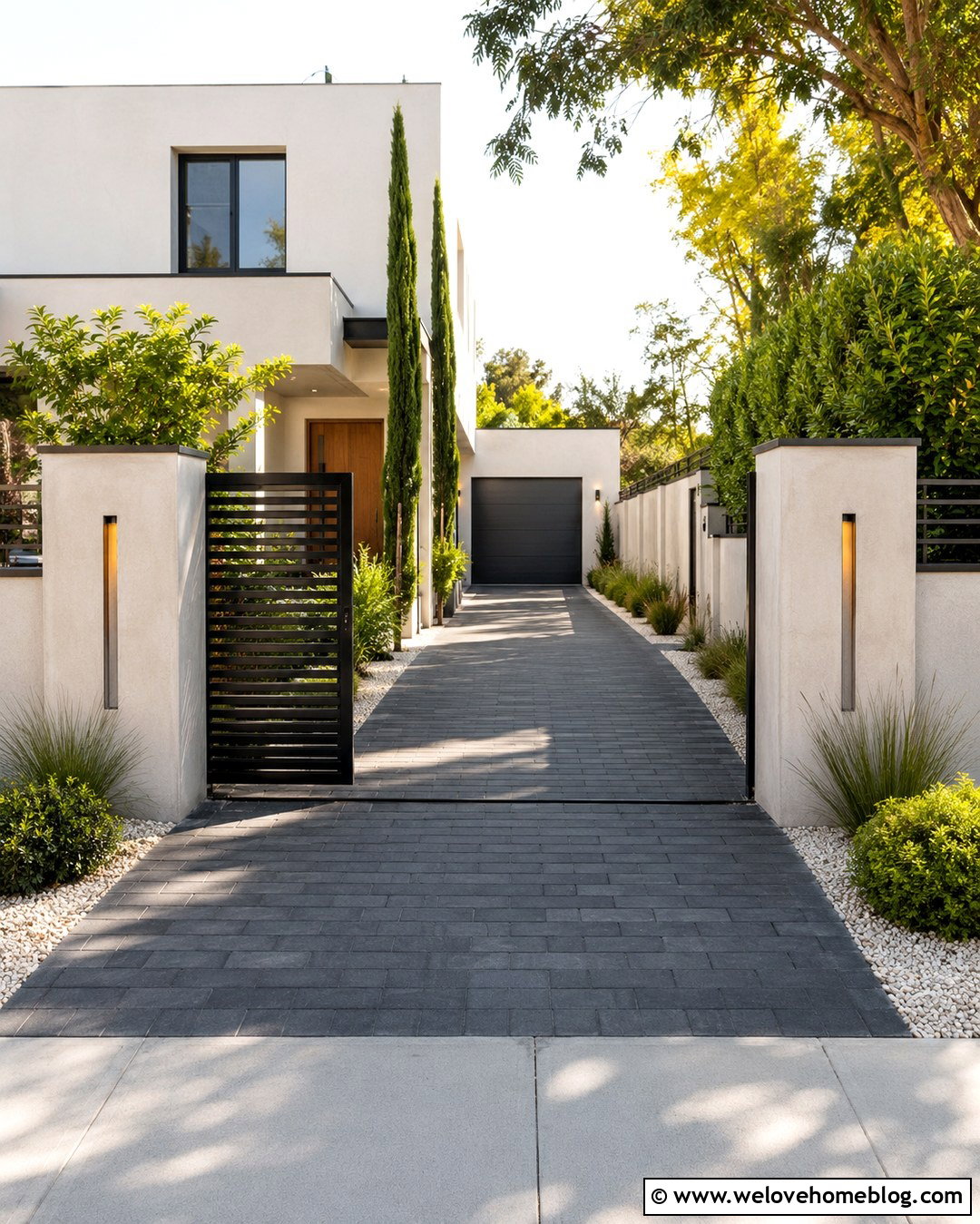
When there is little room for gate panels to swing, a sliding gate can secure a side yard driveway while keeping the approach clear. Use smooth charcoal concrete pavers in a running bond pattern for a contemporary driving surface. Set the gate between low stucco pillars that match the house, allowing it to slide parallel to the fence. A recessed track or suitable cantilever system can maintain a clean entrance, depending on the site and installation method. Frame the driveway with narrow bands of light decorative stone and low architectural plants. Continue the pavers toward a rear garage or sheltered parking court. Minimal column lights, an integrated address panel, and coordinated metalwork give the entrance a finished appearance without crowding the narrow layout.
13. Side Yard Driveway With Wooden Gate
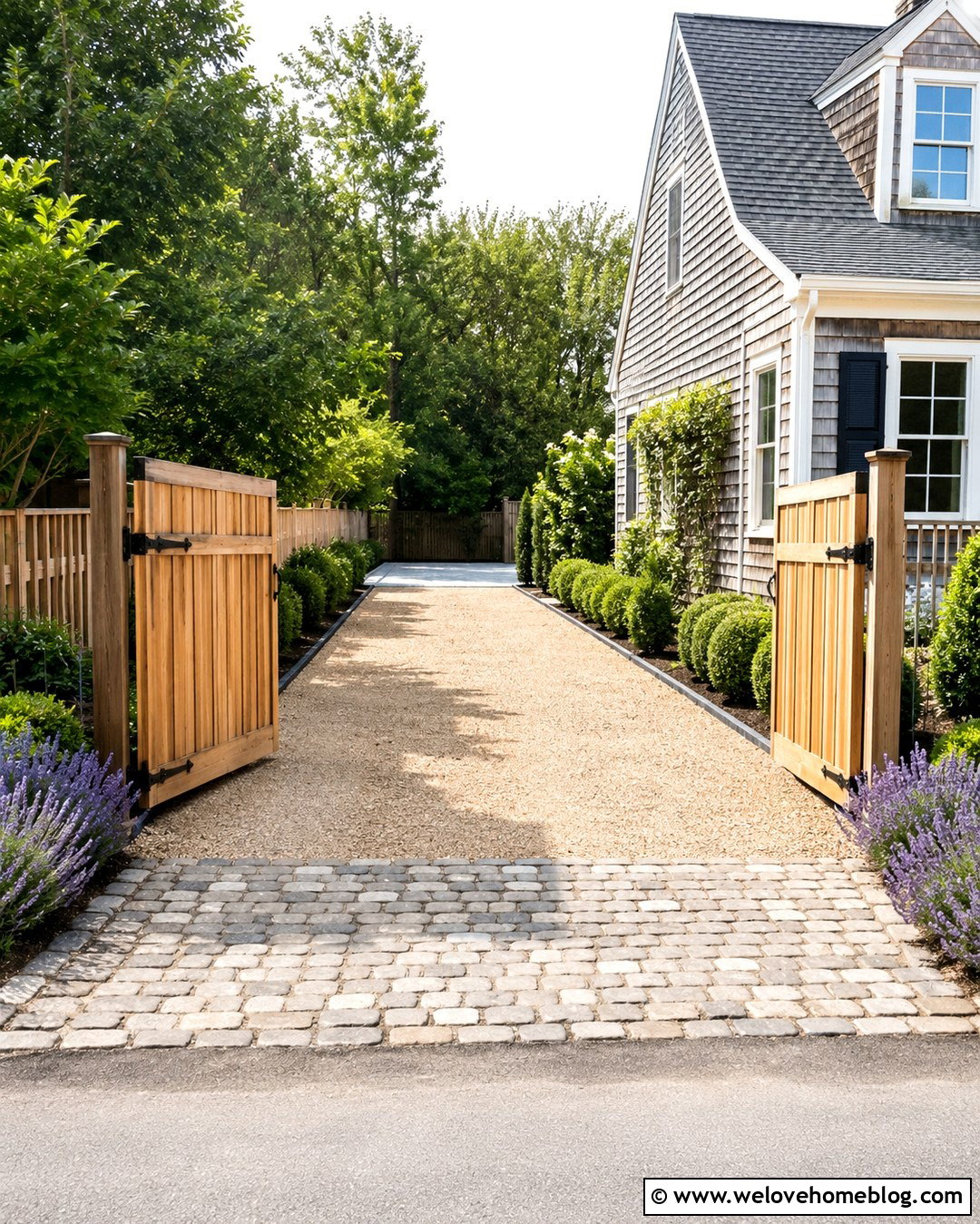
A wooden gate adds warmth and privacy to a driveway running beside a farmhouse, Cape Cod, Craftsman, or cottage-style home. Pair a natural cedar double gate with a compacted beige gravel driveway and dark timber or steel edging. Place a short cobblestone apron beneath the gate so the entrance remains clearly defined and gravel does not scatter toward the sidewalk. Beyond the gate, let the driveway continue straight to a small rear parking pad. Narrow borders of lavender, catmint, or clipped shrubs can soften the fence while leaving comfortable vehicle clearance. Black strap hinges and simple lantern-style fixtures provide traditional detail. Repeating the gate’s wood tone on a nearby fence, garage door, or side entrance helps the entire side yard feel coordinated.
14. Side Yard Driveway With Stone Edging
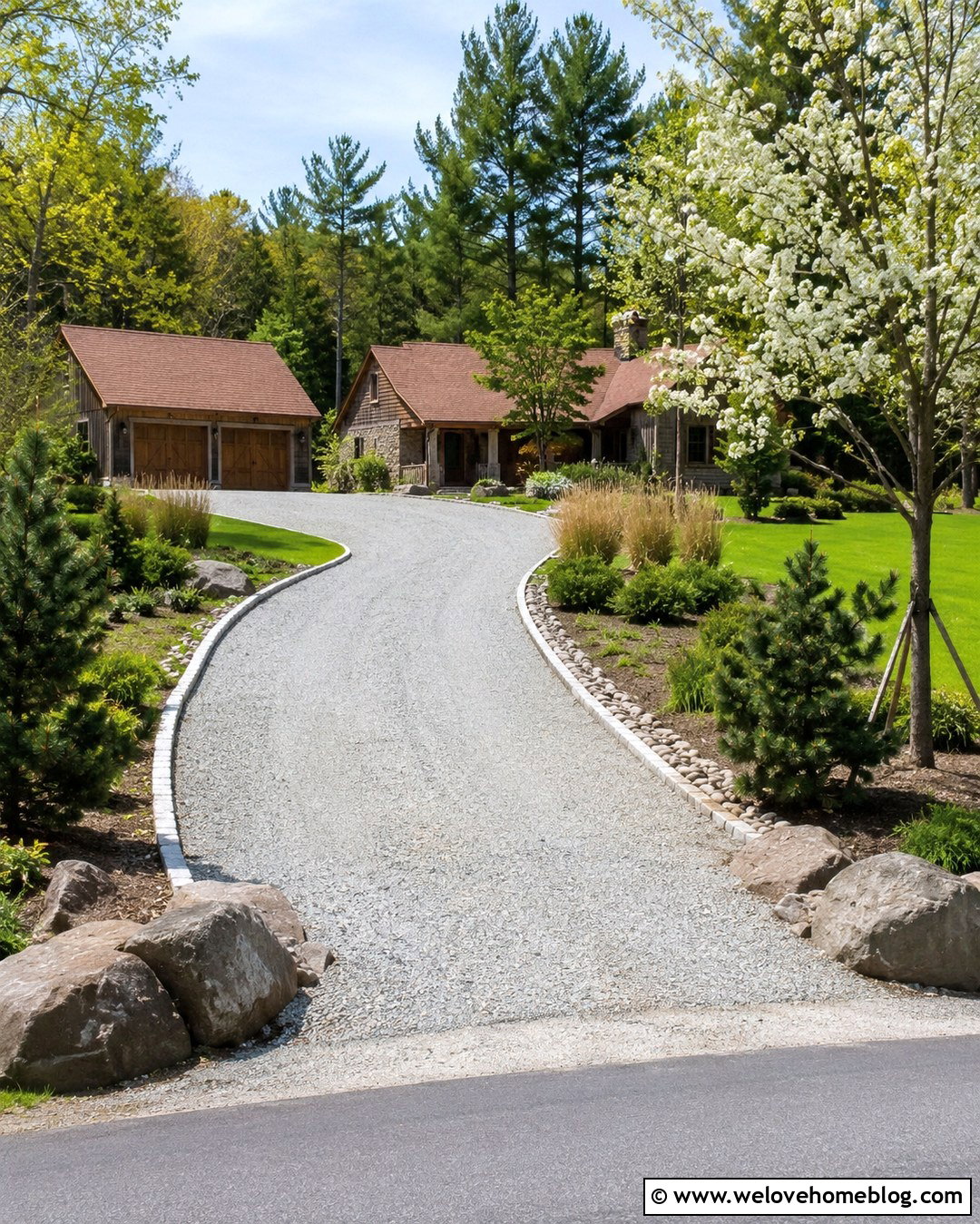
Natural stone edging can transform a basic driveway into a more substantial landscape feature. Start with a compacted light gray crushed-stone surface that follows a gentle curve toward a detached garage. Line both sides with low granite setts or rugged fieldstone blocks, installed close to grade so they define the route without creating an awkward obstacle. Use larger matching stones around the entrance planting beds to connect the driveway with the front yard. Compact evergreen shrubs, ornamental grasses, and a small flowering tree can frame the outer curve. Keep foundation-side planting minimal and use river rock where drainage is needed. This complete combination complements rustic ranch homes, mountain-inspired properties, and traditional houses with natural stone accents.
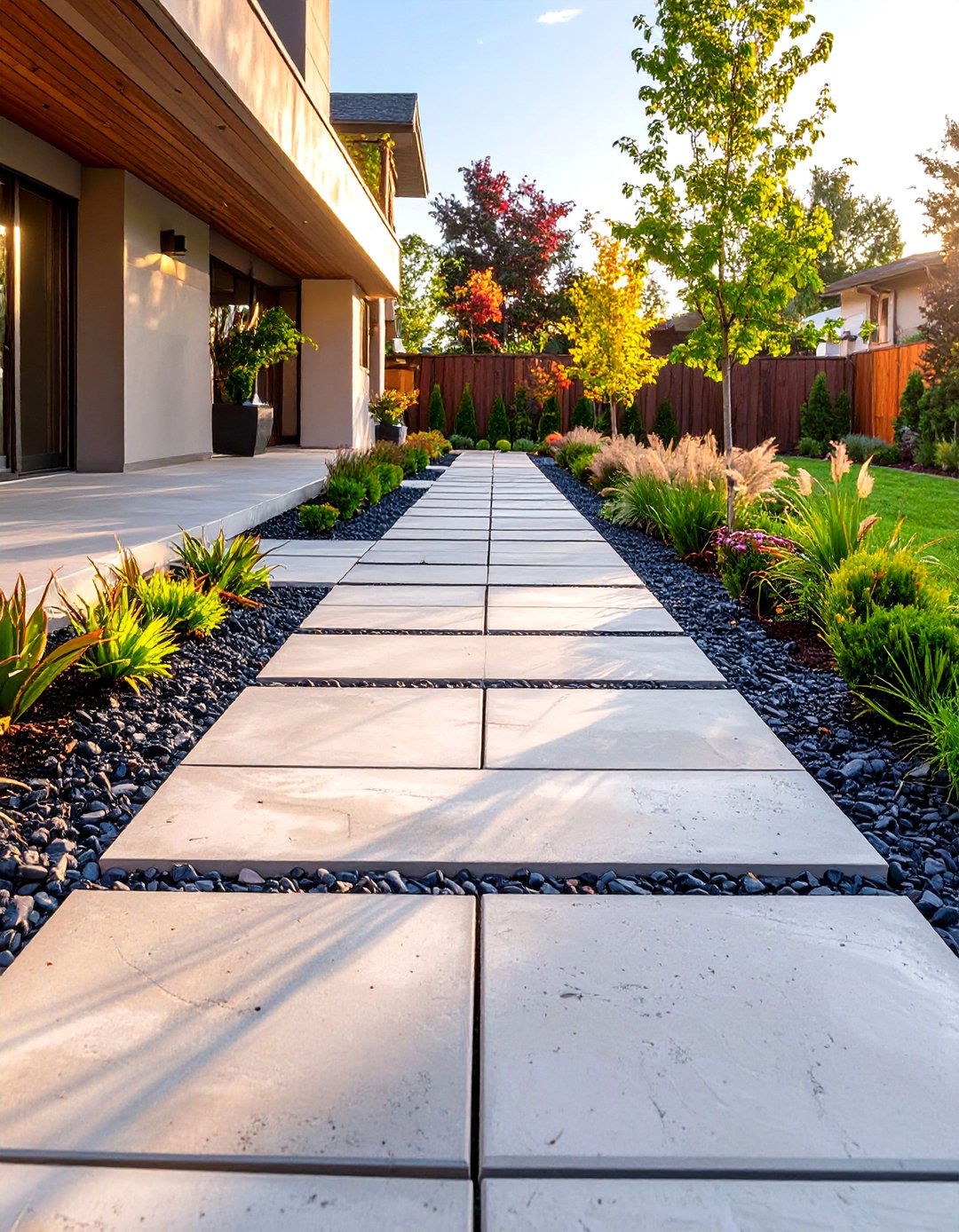

15. Side Yard Driveway With Planting Strips
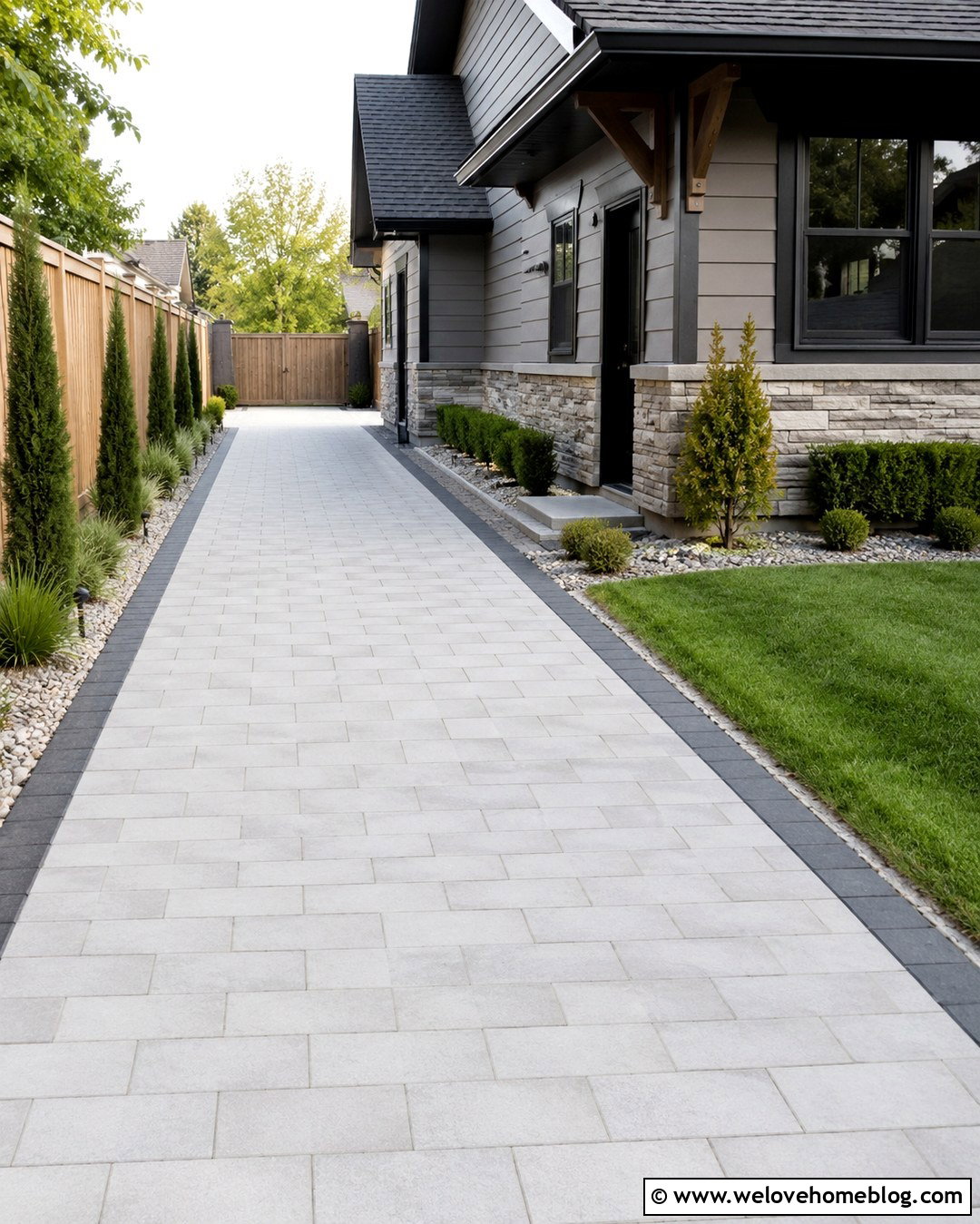
A driveway does not need wide garden beds to feel green and welcoming. Use pale concrete pavers for the main surface, then reserve slim planting strips along the fence and near the street entrance. A straight layout will preserve maximum usable width, while a darker paver border keeps soil and foliage visually contained. Select upright, low-maintenance plants such as compact grasses, columnar evergreens, or neatly clipped shrubs. Repeat a small group at regular intervals rather than mixing too many varieties. Along the house, include a narrow gravel transition and a paved walkway to the side door. The restrained planting creates rhythm without brushing against vehicles. This balanced look works particularly well beside contemporary suburban, ranch, and modern Craftsman homes.
16. Side Yard Driveway With Stepping-Stone Walkway
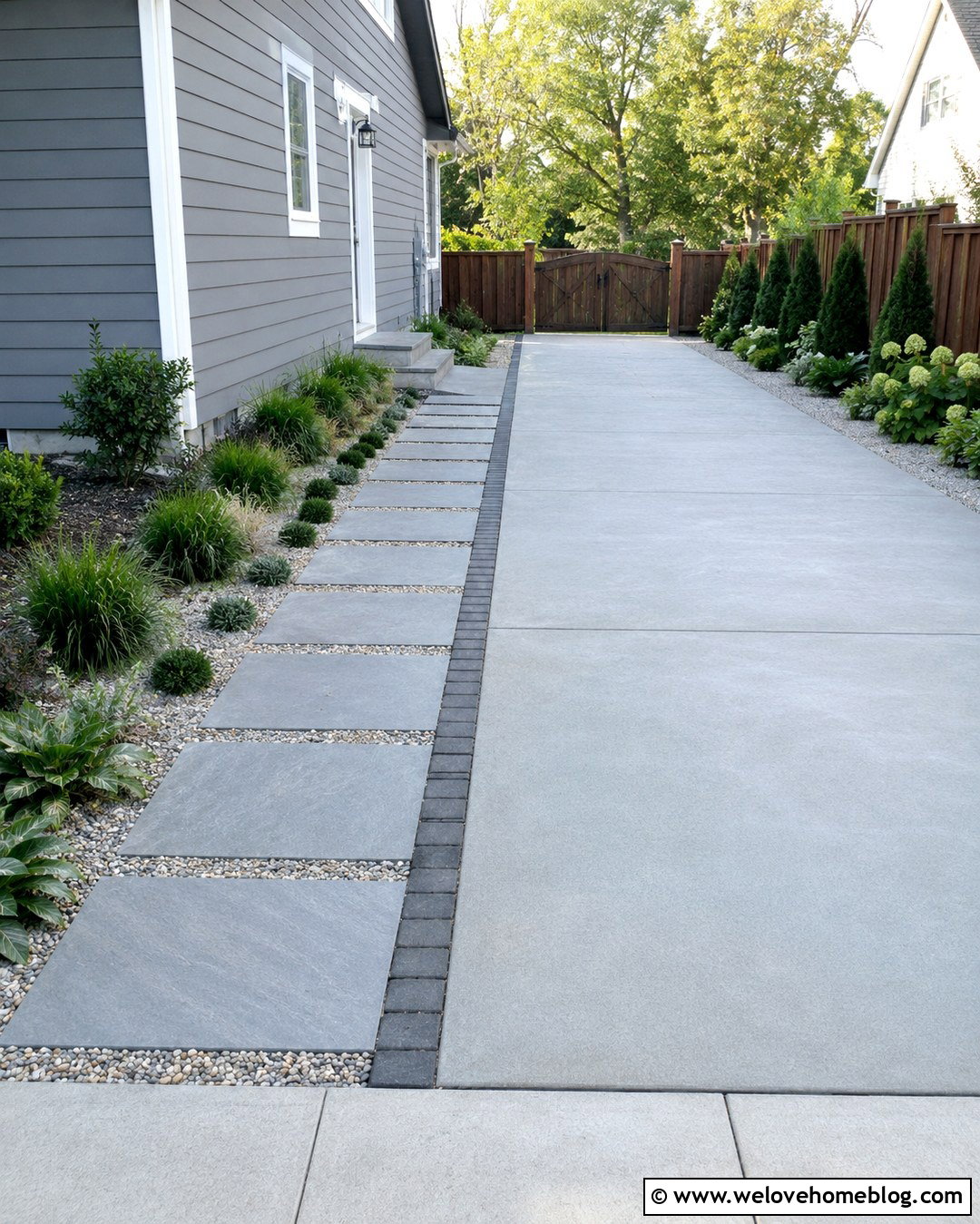
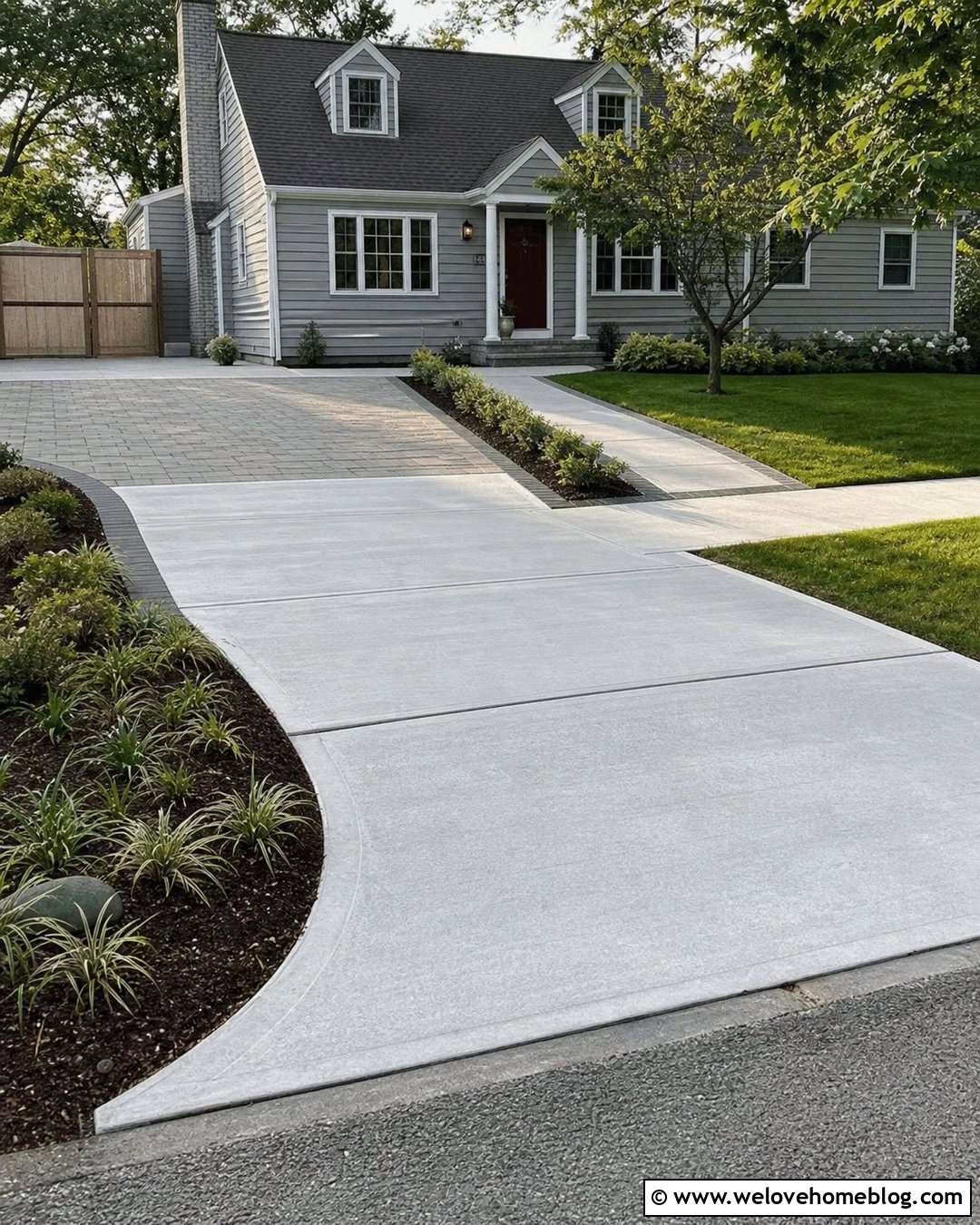
Separating foot traffic from vehicle traffic makes a busy side yard more comfortable and organized. Build the driveway from smooth gray concrete with a broom finish, then add a narrow stepping-stone path along the fence side. Large rectangular bluestone or concrete slabs can sit within pale gravel, creating a clear route to the backyard gate when a vehicle is parked nearby. A dark paver ribbon between the two surfaces forms a crisp divider. Keep planting low, using ground cover, dwarf grasses, and compact shrubs that will not hide the stepping stones. Near the house, connect the path to the side entrance with a small paved landing. This practical layout suits families who regularly move bins, bicycles, garden tools, or pets through the side yard.
17. Sloped Side Yard Driveway
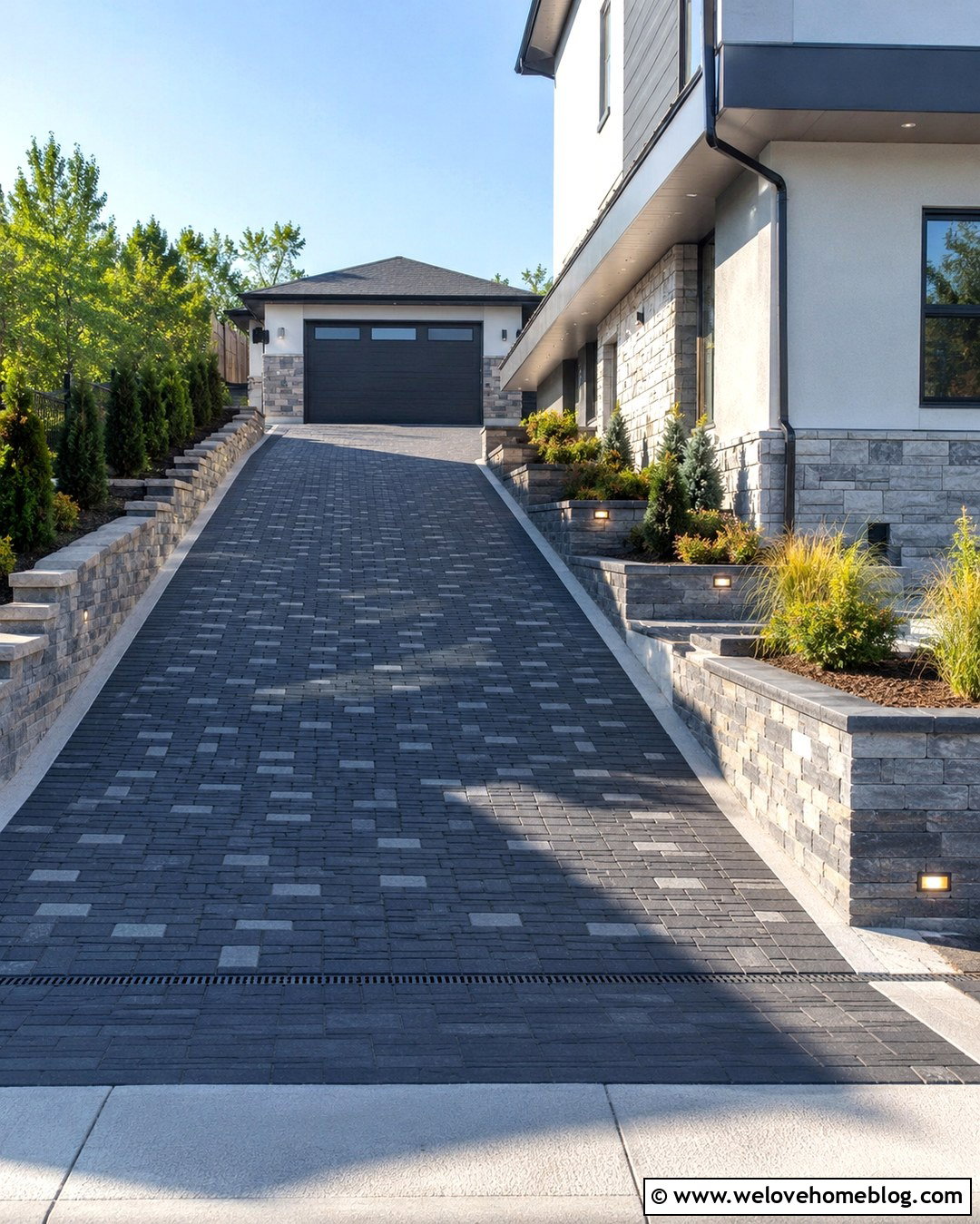
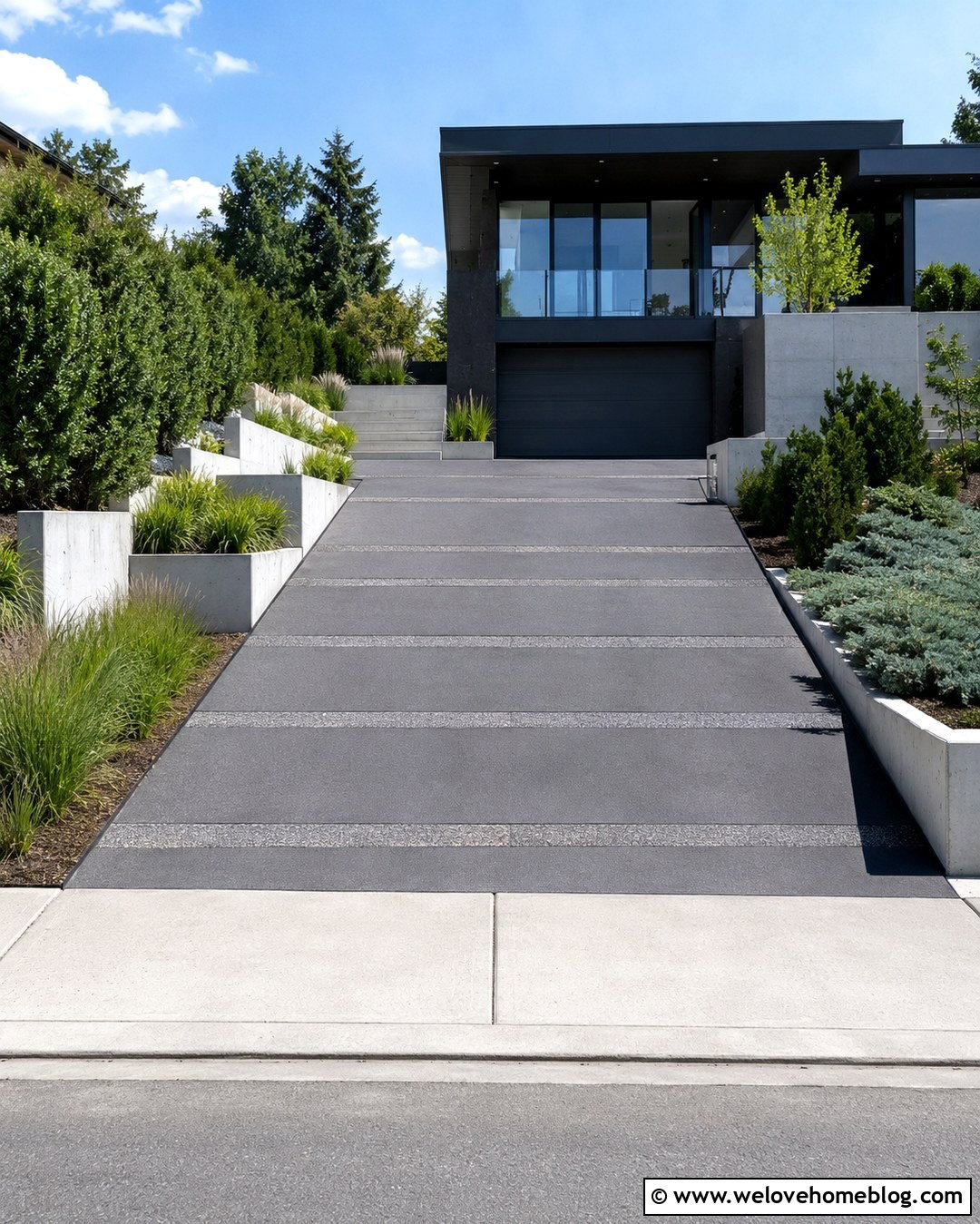
A sloped side yard requires a surface and layout that feel stable, controlled, and visually connected to the surrounding grade. Use textured concrete pavers in blended charcoal and gray, arranged across the slope rather than emphasizing one uninterrupted downhill line. Low retaining walls can hold raised planting beds along the higher side, while a concrete curb contains the lower edge. Choose compact shrubs and deep-rooted ornamental grasses that will not spill into the driving route. Add clearly visible drainage features appropriate for the property, keeping runoff away from buildings and neighboring lots. Step lights installed in the retaining wall can illuminate changes in elevation. A slightly widened, level parking area near the rear garage completes this structured and attractive solution.
18. Modern Side Yard Driveway
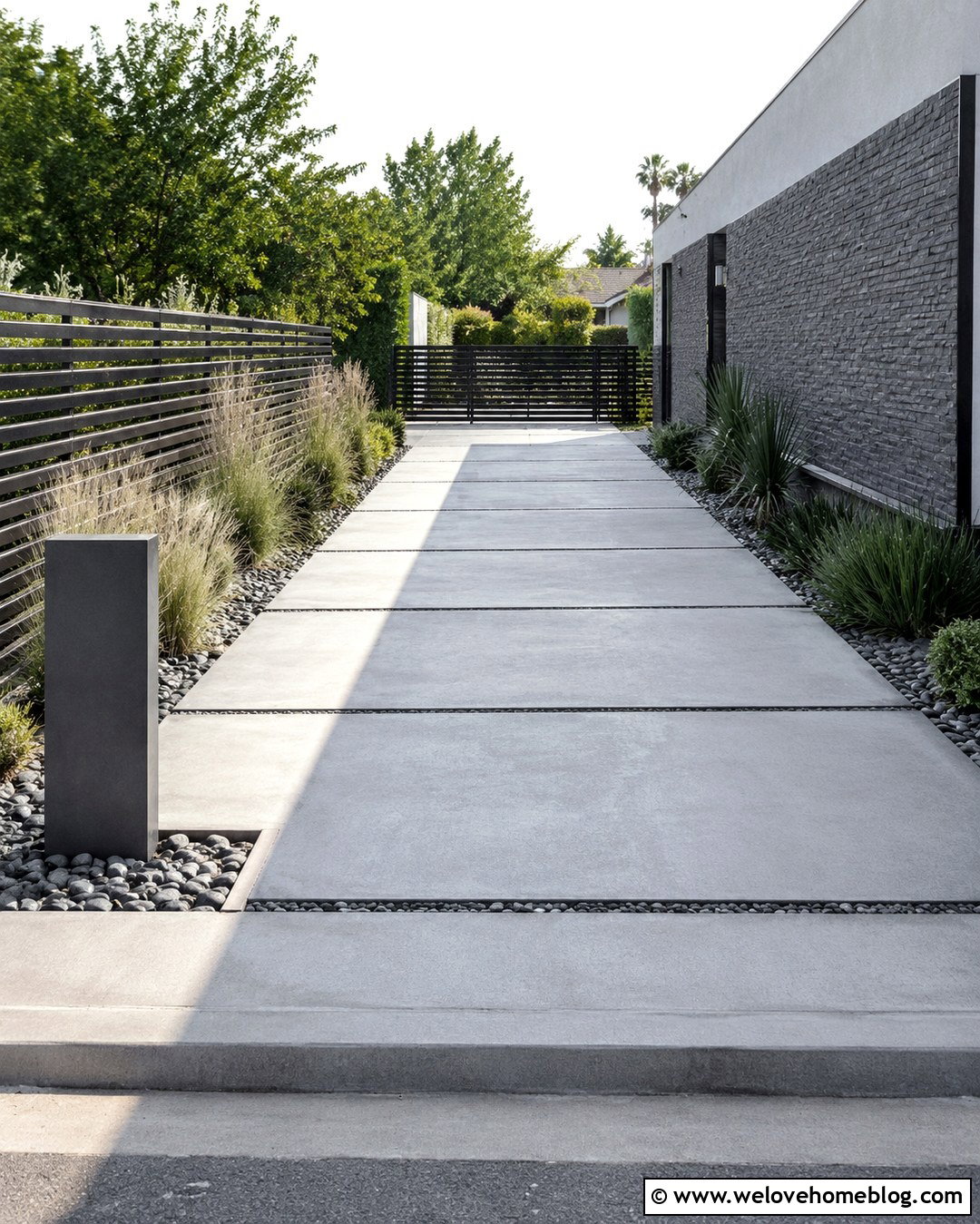
Clean lines can turn a narrow passage into a striking modern driveway. Use large-format concrete pavers in a pale gray tone, separated by slim dark gravel joints for a crisp geometric surface. Run the driveway straight beside the house, then widen it into a rectangular parking court near the garage. Black steel edging reinforces the linear design, while a narrow band of Mexican beach pebbles creates a smooth foundation transition. Landscape the fence side with sculptural grasses, compact agave-like plants suited to the local climate, or clipped evergreen forms. A horizontal metal gate, simple address marker, and low-profile lighting complete the look. Keep the palette restrained so the paver scale, architecture, and carefully spaced landscaping remain the main visual features.
19. Farmhouse Side Yard Driveway
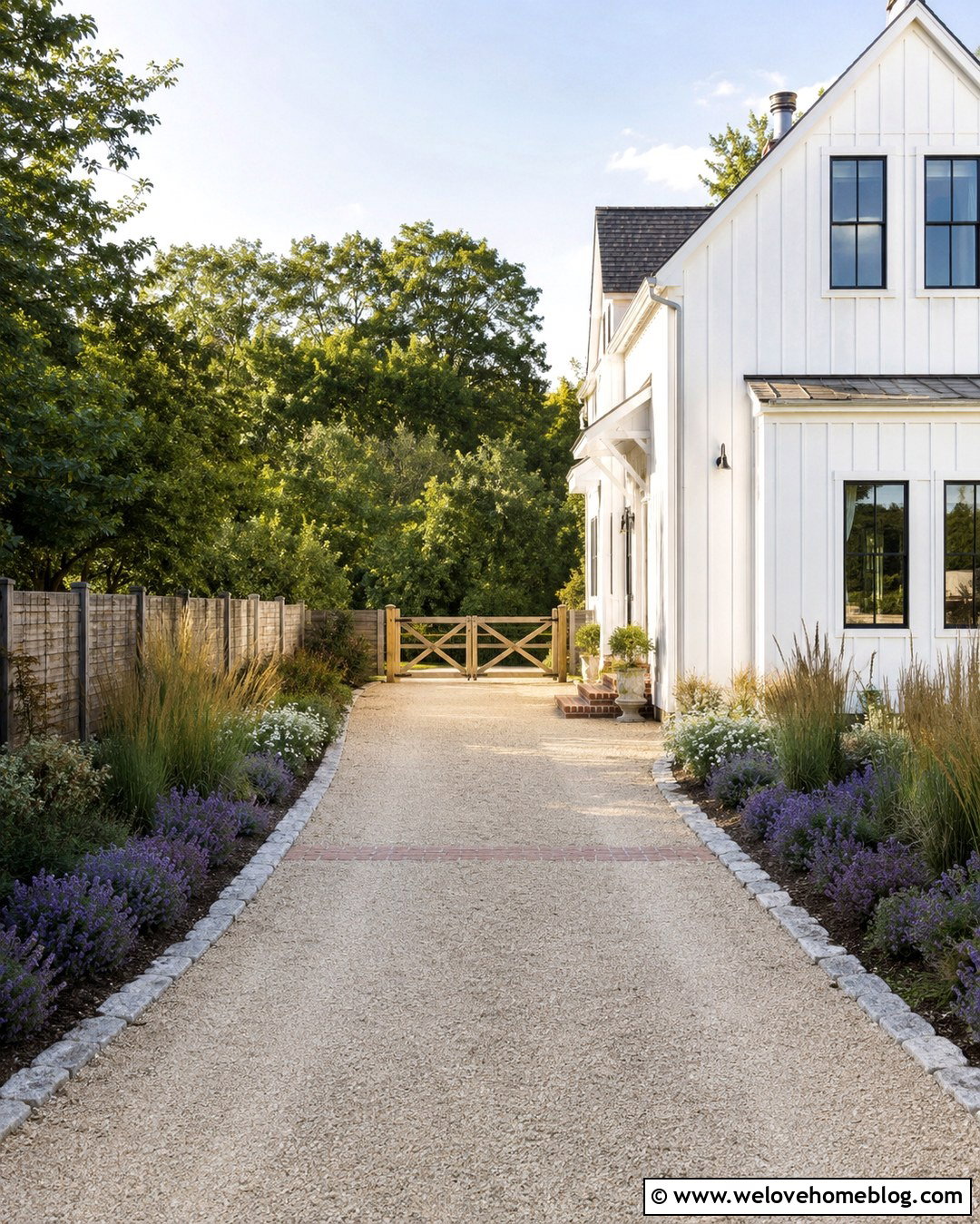
A farmhouse side driveway should feel practical, relaxed, and connected to the wider landscape. Choose compacted buff gravel for the main surface and shape it into a straight route with a slight flare near the entrance. Weathered granite cobbles can hold the gravel in place and add an established appearance. Along the fence, plant a narrow border of lavender, white flowering perennials, and upright grasses. A simple white or natural wood gate can screen the rear parking area while complementing board-and-batten siding. Add a small brick landing at the side door and repeat the brick in a ribbon across the driveway. This layered combination of gravel, stone, brick, and informal planting creates an inviting approach without making the working side yard feel overly decorated.
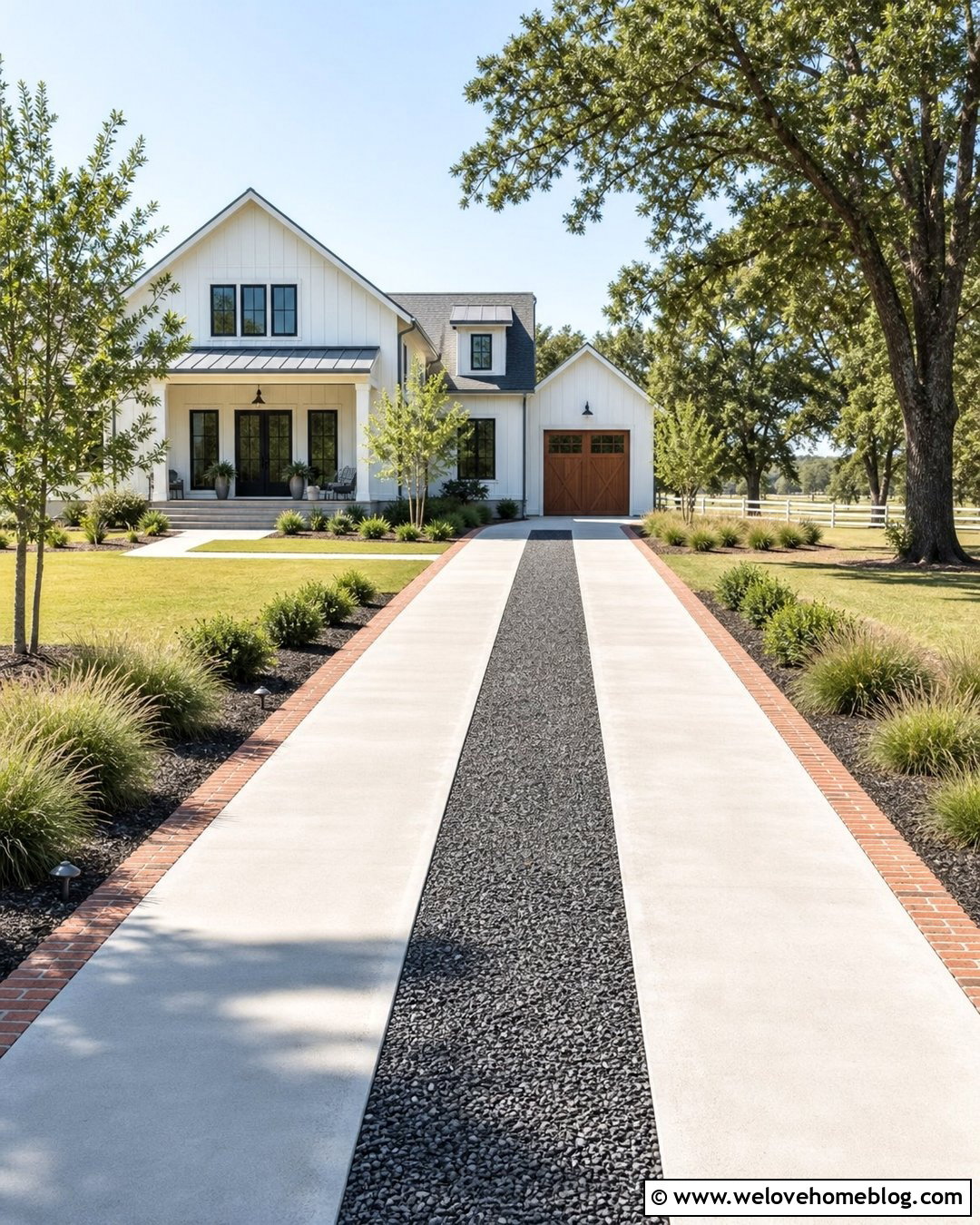
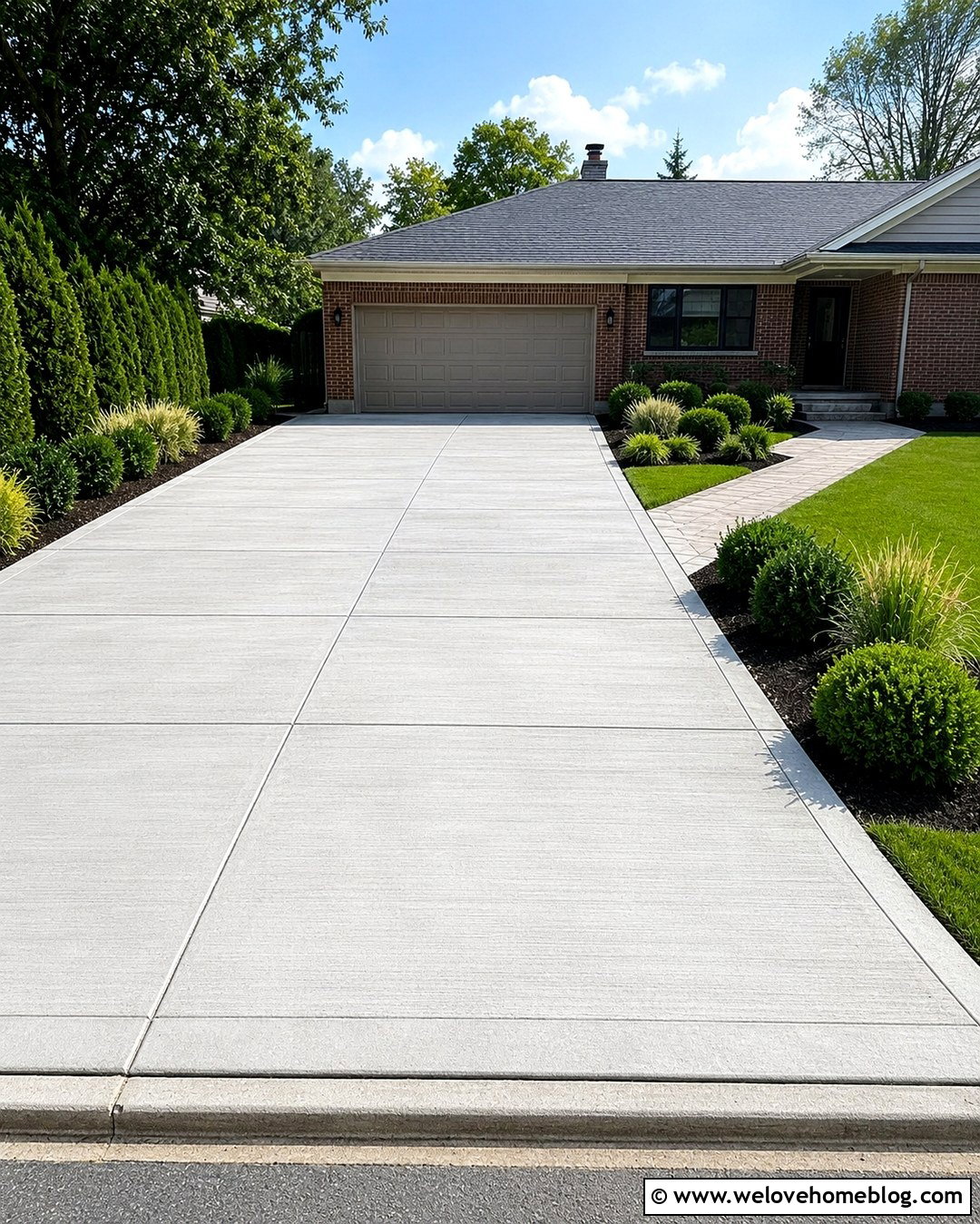
20. Side Yard Driveway With Rear Parking Court
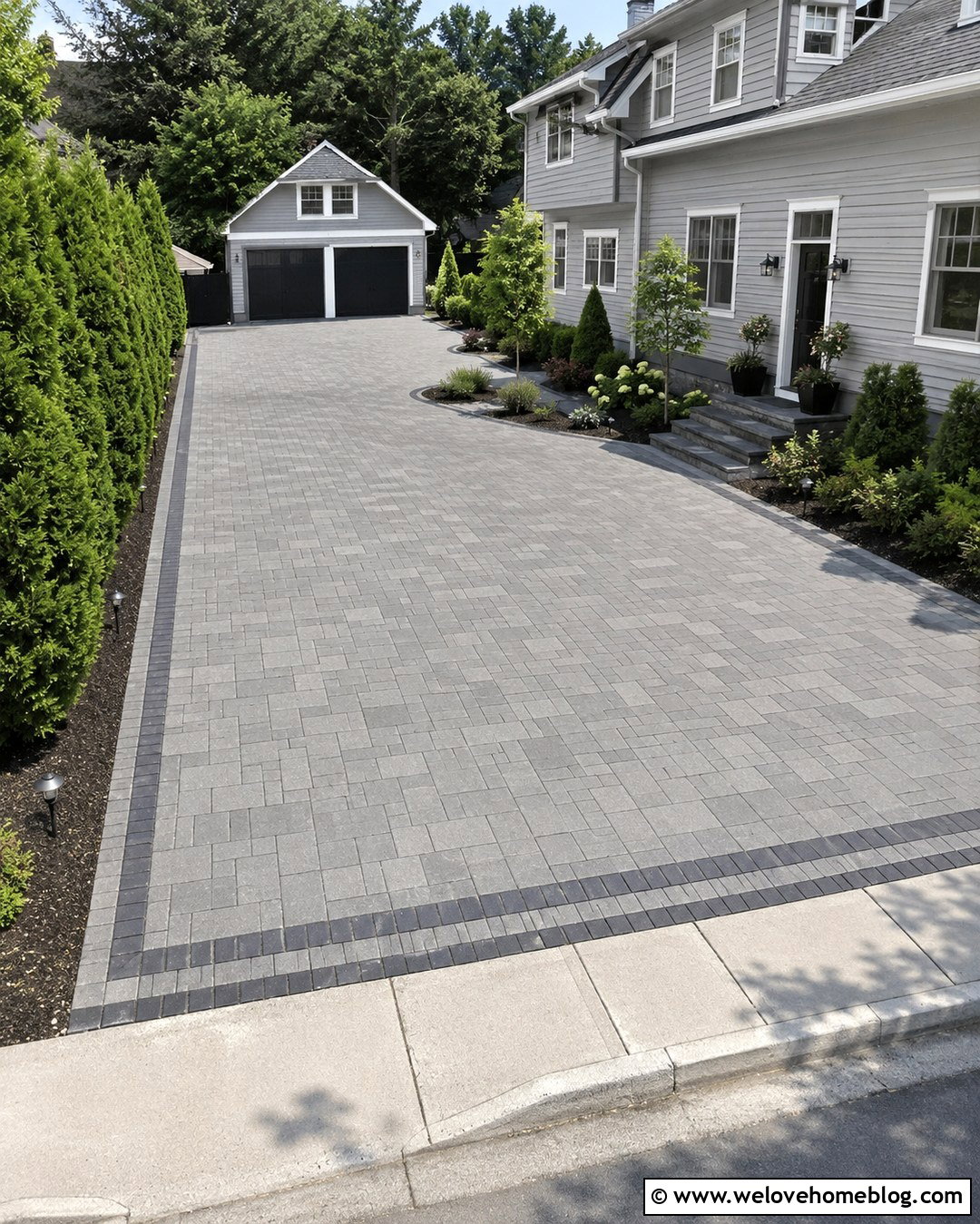
A long side yard driveway becomes more useful when it opens into a clearly defined parking court behind the house. Use gray interlocking concrete pavers for the narrow approach, then shift the pattern or border direction where the space widens. A charcoal soldier-course edge can outline both the driveway and the parking area, making the transition look planned. Add a matching walkway to the back door or detached garage so people do not need to cross planting beds. Use small trees and layered shrubs around the outer parking court for screening, while keeping the narrow approach simple. Wall lights, low path fixtures, and a coordinated gate create continuity from street to backyard. This layout is ideal for secondary vehicles, guests, or workshop access.
Conclusion:
The most effective side driveway combines a reliable vehicle surface with smart borders, controlled landscaping, suitable drainage, and comfortable access to the house or backyard. Concrete and asphalt provide simple continuous routes, while pavers, brick, gravel, and reinforced grass create more visual character. The available width, slope, parking needs, and frequency of use should guide every material decision. Keep planting narrow, preserve clear gate movement, and coordinate colors with the home’s exterior. Professional installation may be valuable where grading, retaining walls, drainage, or regular vehicle loads are involved. Before construction begins, review local setback and paving requirements. With careful planning, these **20 Side Yard Driveway Ideas** can make an overlooked area practical and attractive.

Related posts:
Leave a Reply