
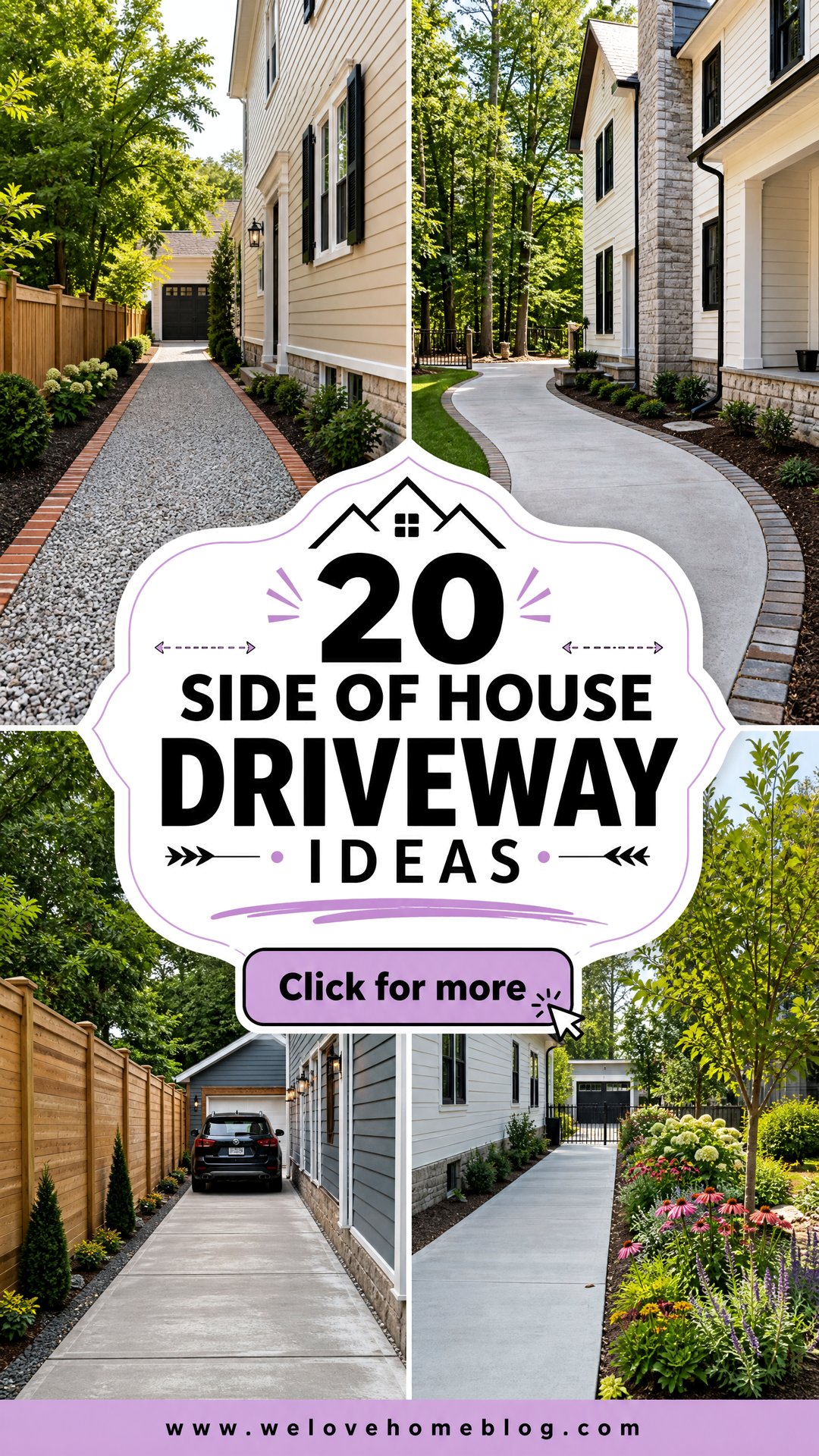
A side driveway can turn an overlooked strip of property into practical parking, garage access, and a polished part of your home’s curb appeal. The best layouts do more than fit a vehicle beside the house. They coordinate the driveway surface, drainage, edging, pedestrian access, lighting, planting, and backyard connection. Narrow lots may benefit from smooth concrete or slim ribbon paving, while wider side yards can support curved approaches, turnaround pads, carports, or parking courts. Before building, measure the tightest points, locate utilities, observe water movement, and check local rules for setbacks and curb cuts. The complete designs below offer adaptable inspiration for different house styles, climates, lot sizes, and budgets. Explore these **20 Side Of House Driveway Ideas** to find a layout that works naturally with your property.
1. Narrow Concrete Side Driveway
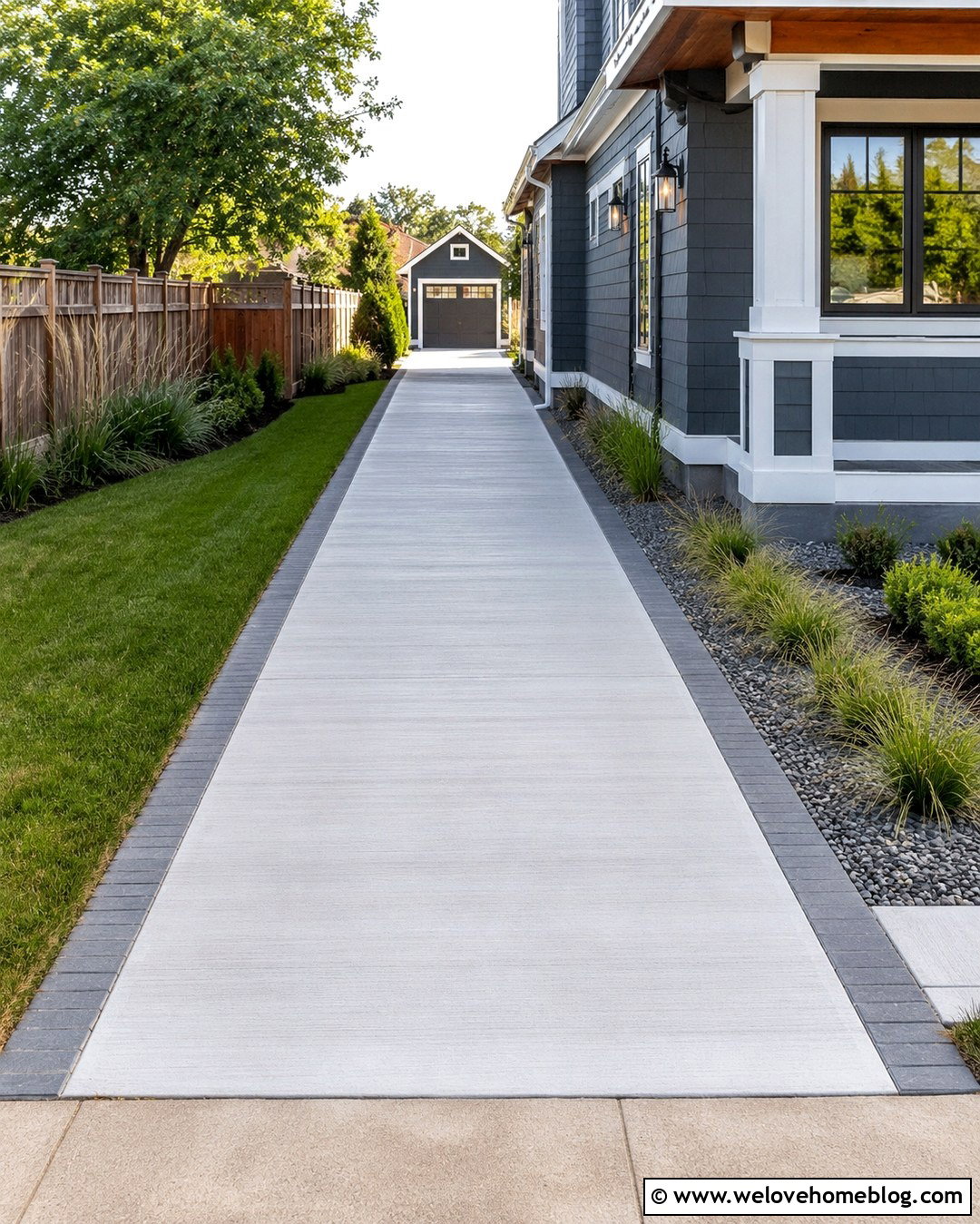
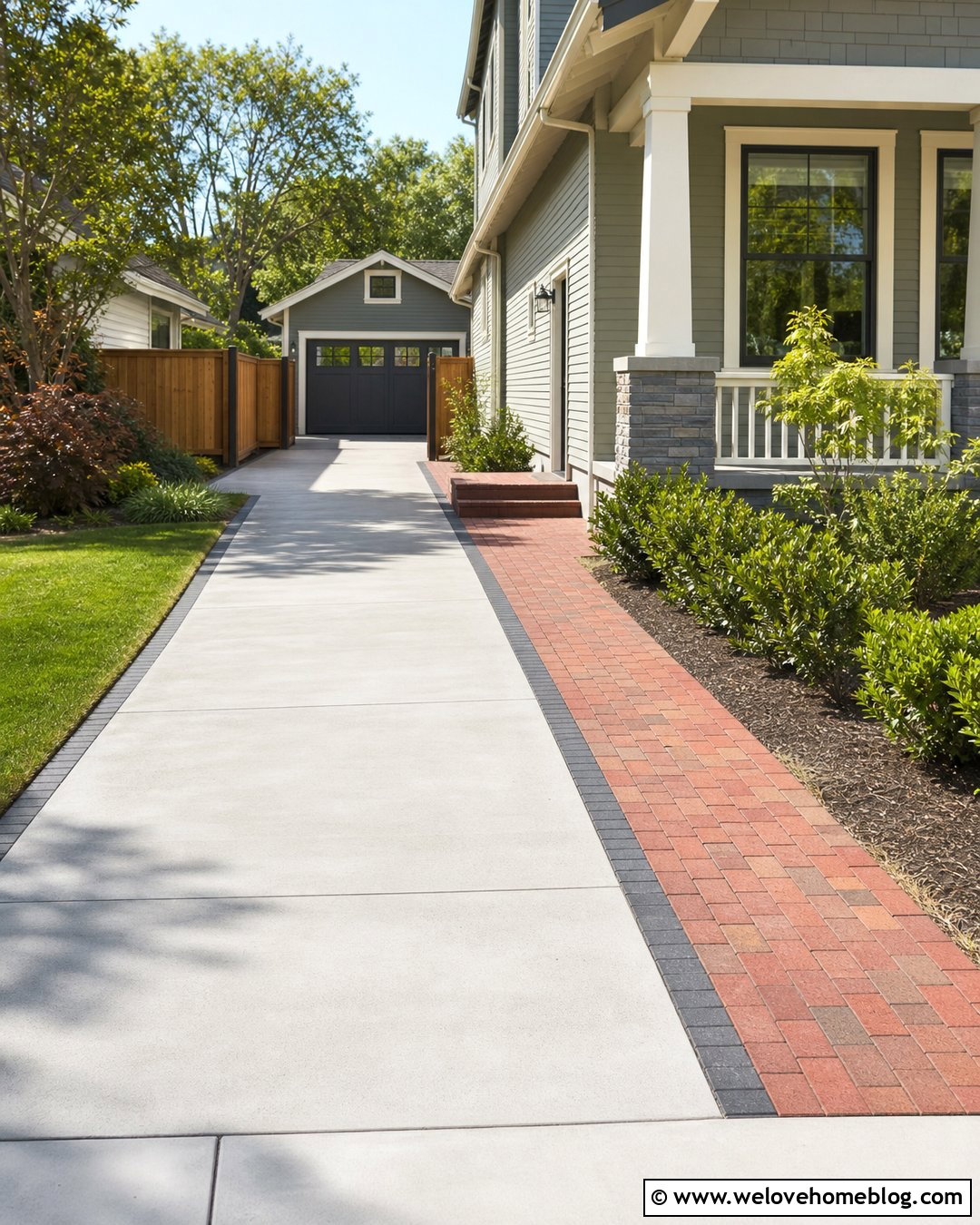
A narrow concrete side driveway creates a clean, dependable route to a rear garage without making a compact lot feel cluttered. Use light gray poured concrete with simple control joints running across the surface. A straight layout usually makes the best use of limited width and keeps construction straightforward. Add a slim brick or charcoal paver border to separate the concrete from the lawn and prevent the edges from looking unfinished. Along the house, leave a narrow gravel drainage strip beneath downspouts. Low ornamental grasses can soften the fence side without interfering with mirrors or opening doors. Wall-mounted lighting provides visibility while preserving ground space. At the front, connect the driveway to a matching concrete walkway so guests can reach the entrance without walking behind parked vehicles.
2. Gravel Side Driveway With Brick Edging
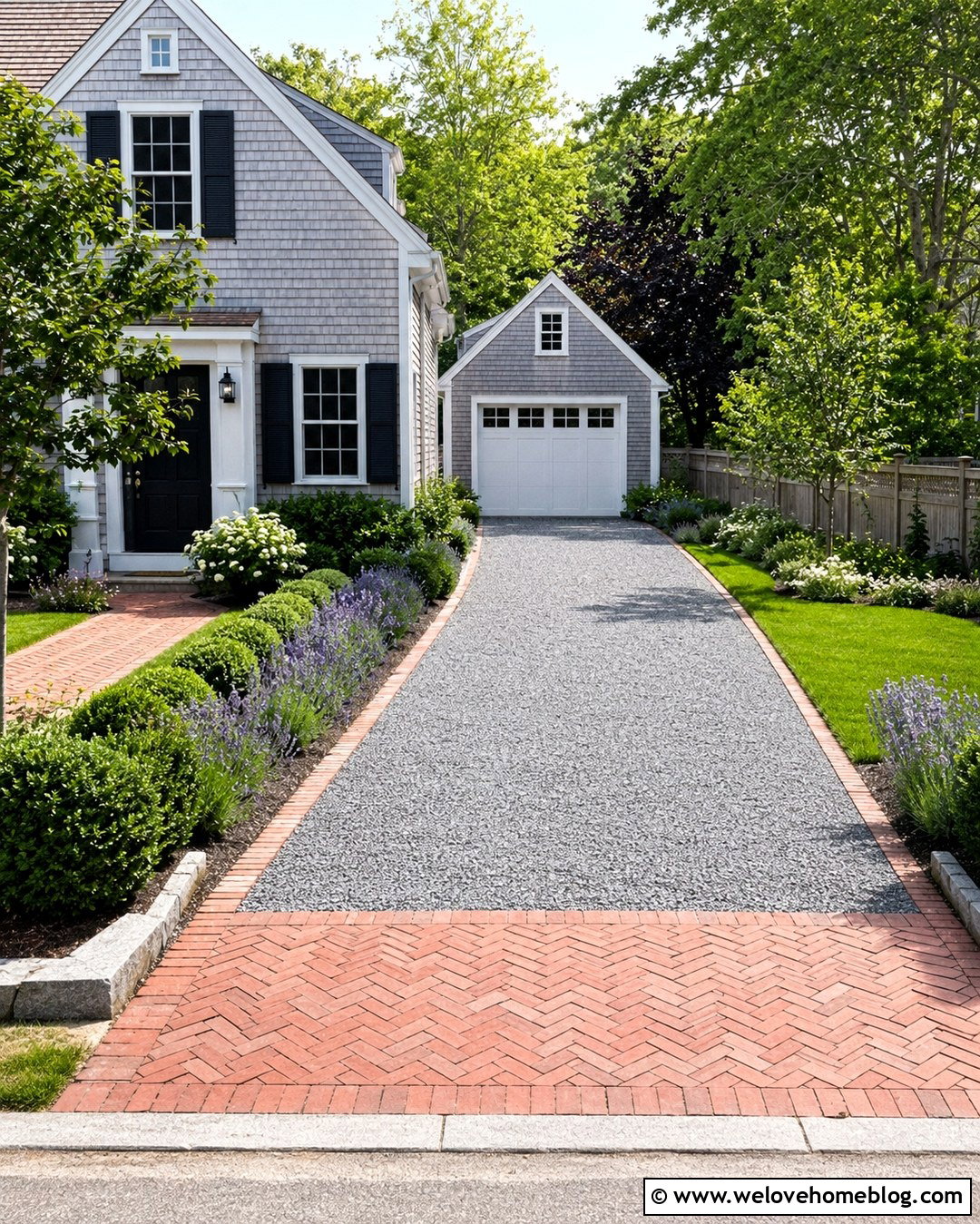
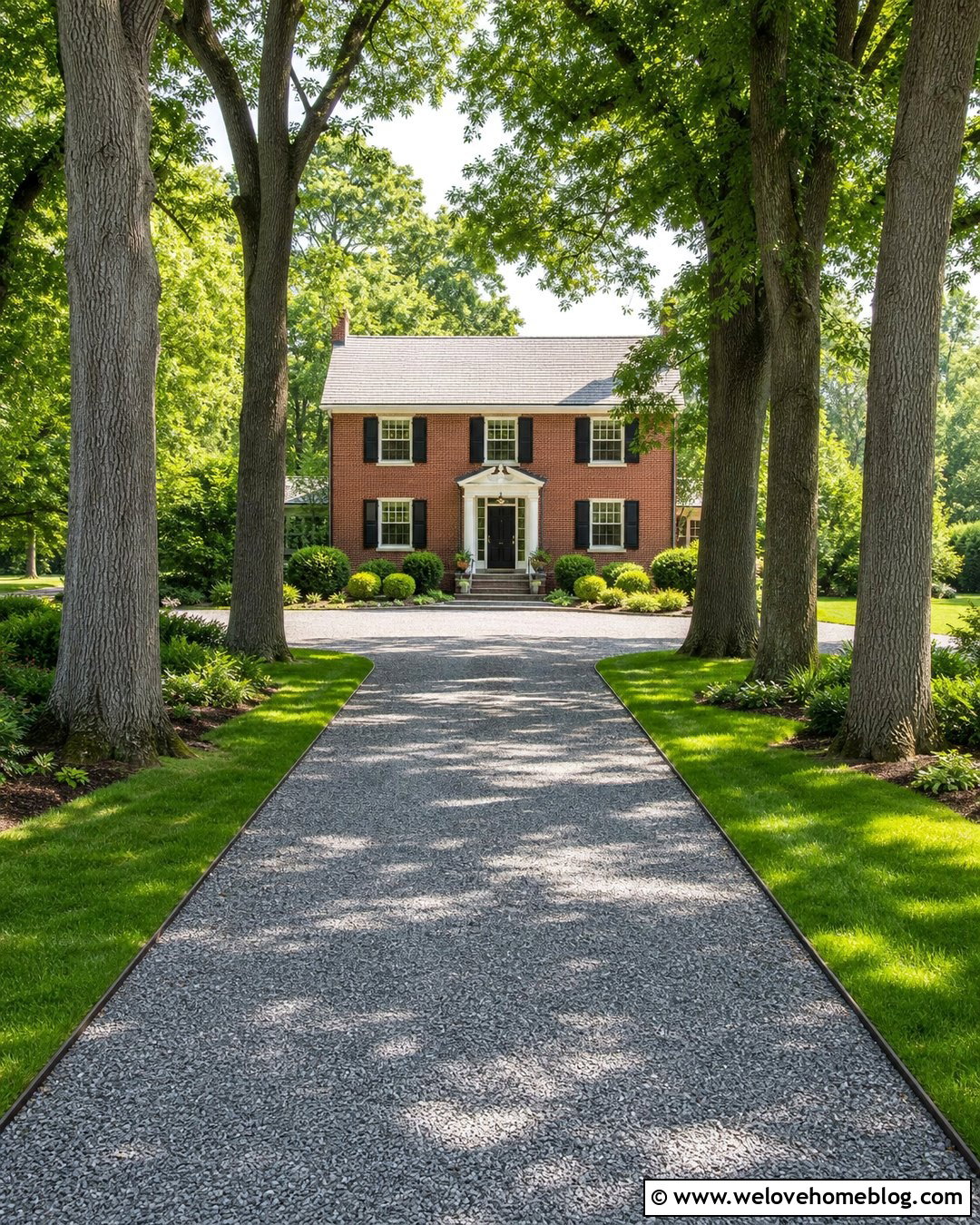
The relaxed texture of gravel works especially well beside cottages, Cape Cod homes, and older brick houses. Choose compact angular gravel rather than loose rounded stones when you want a surface that shifts less under tires. Run the driveway straight toward a detached garage or backyard parking area, then contain the gravel with clay brick edging. Bricks can be installed flat for a subtle line or vertically for a stronger boundary. A wider brick apron near the street helps create a finished transition from the curb. Frame the driveway with clipped shrubs, lavender, catmint, or other plants suited to your local climate. Keep planting narrow near vehicle doors. A matching brick path beside the house creates comfortable foot access and keeps shoes away from loose gravel.
3. Paver Side Driveway To Detached Garage
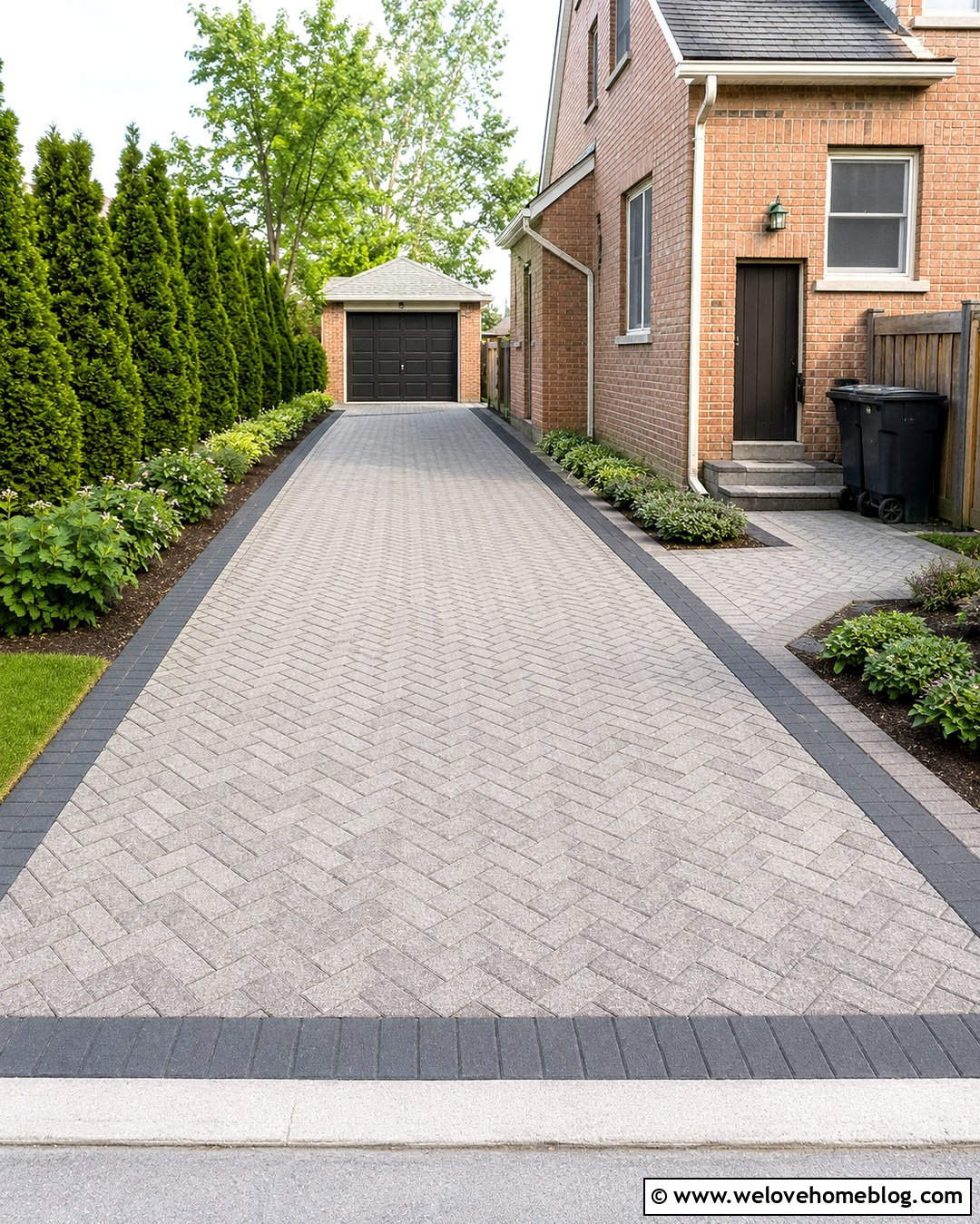
Does your detached garage sit behind the house? A paver side driveway can make that long approach feel intentional rather than purely functional. Install concrete pavers in a herringbone pattern to provide visual movement and complement the traditional shape of the garage. Warm gray, tan, and charcoal tones hide everyday dust while coordinating with many exterior colors. Use a darker soldier-course border to define the driveway and guide the eye toward the backyard. Narrow evergreen shrubs can screen a neighboring fence, while low ground covers soften the house side. Add a separate paver walkway where space permits, especially near side doors and trash storage. The base preparation is just as important as the pattern, so hire an experienced installer who can account for soil conditions, drainage, and vehicle weight.
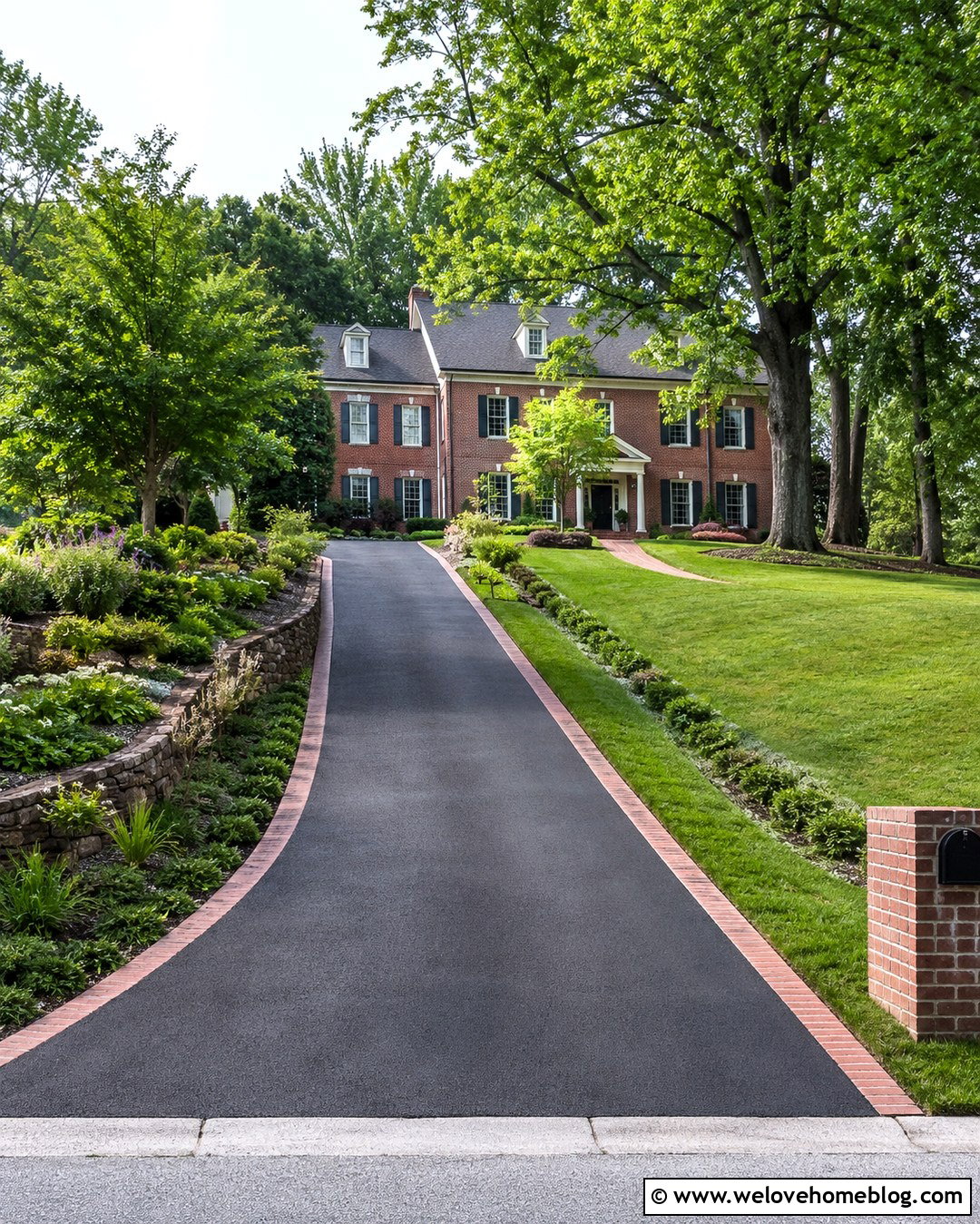
4. Asphalt Side Driveway With Landscape Strip
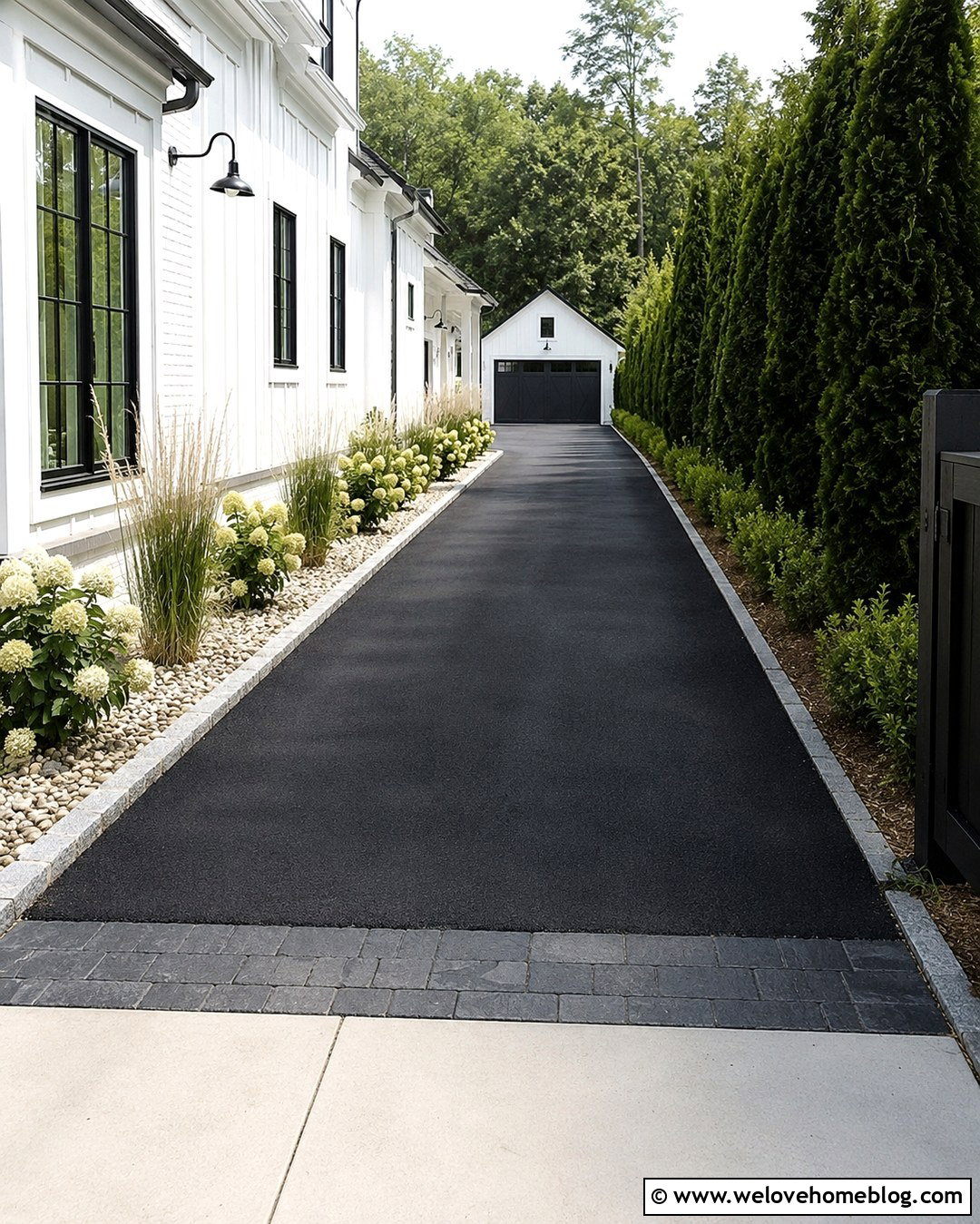
Black asphalt offers a smooth, understated surface that suits long side driveways and tighter budgets. Its dark color looks particularly sharp beside a white farmhouse, light brick ranch, or pale Craftsman exterior. Instead of paving the entire space between the house and property line, reserve a narrow landscape strip along the fence. Fill it with upright evergreens, compact hydrangeas, or ornamental grasses that will not spread into the driving lane. A concrete or granite curb can contain the planting bed and protect the asphalt edge. Near the street, add a contrasting paver apron for a more detailed entrance. Direct downspouts away from the pavement, and avoid placing loose mulch where heavy rain can wash it onto the driveway. Simple wall lights complete the practical, uncluttered design.
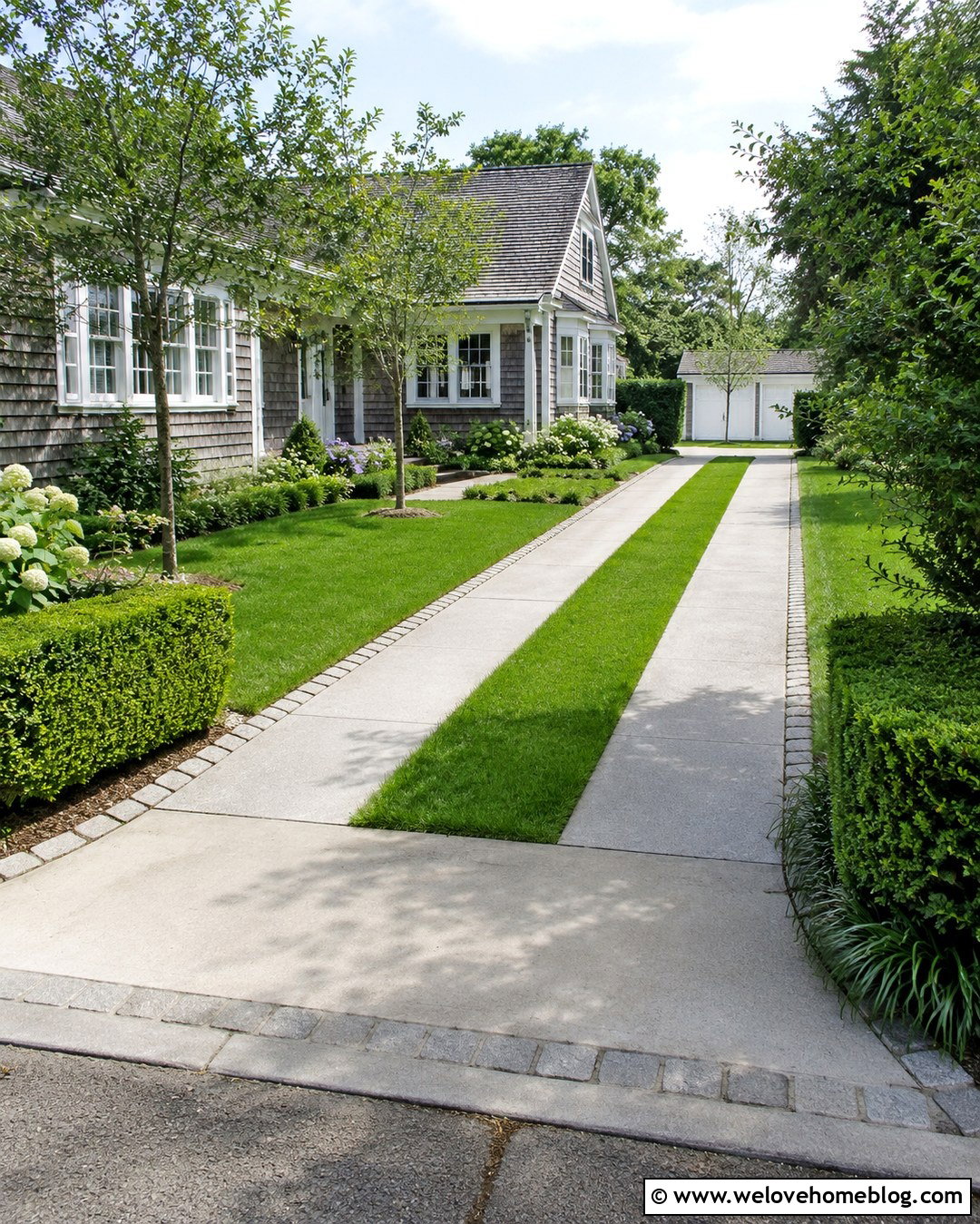
5. Ribbon Side Driveway With Grass Center
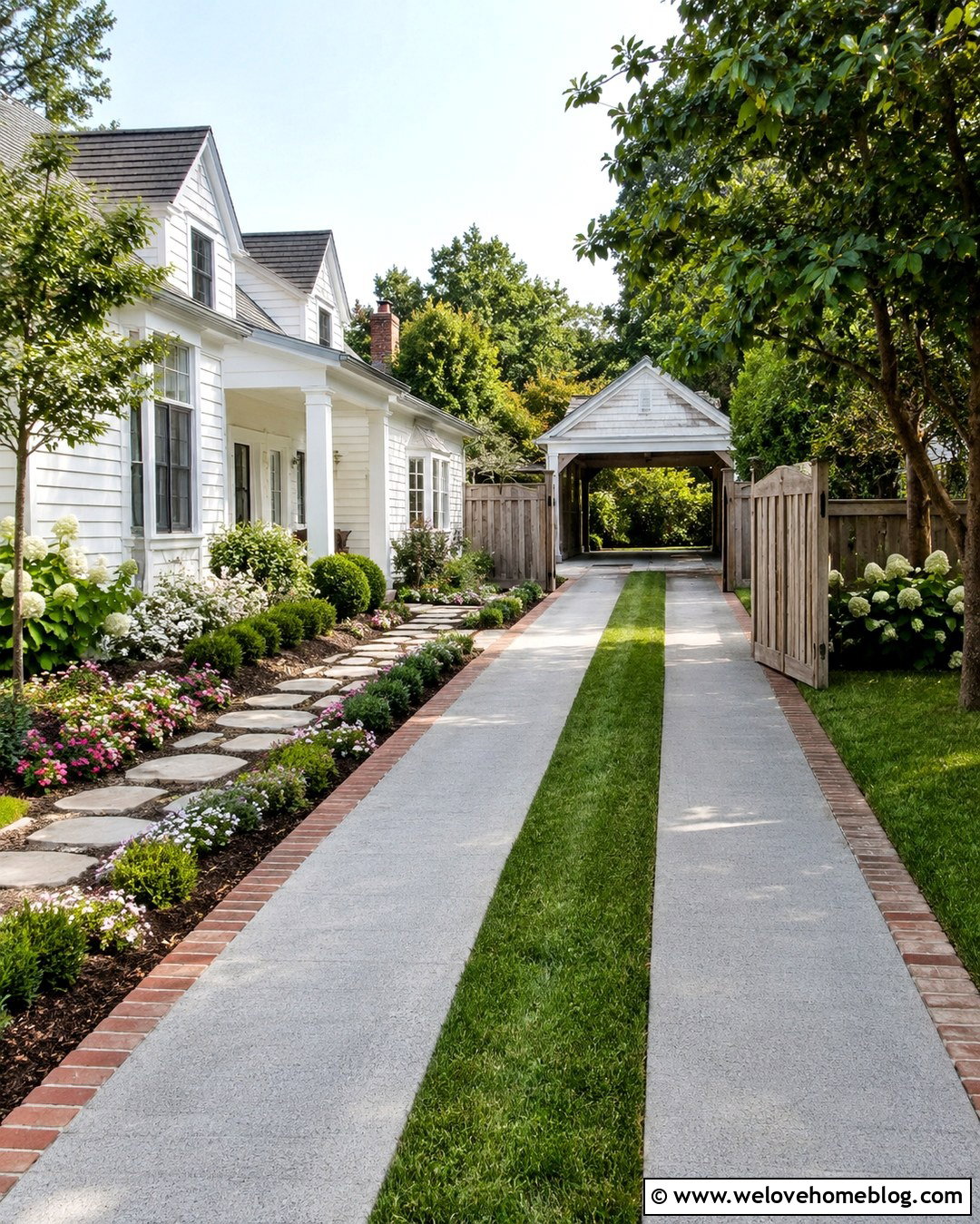
Two paved wheel tracks with grass between them can make a side driveway feel greener and less dominant. This layout, sometimes called a ribbon or Hollywood driveway, works best where vehicles follow a predictable path to a carport or backyard garage. Form the tracks from broom-finished concrete, brick pavers, or cobblestone, keeping their placement aligned with typical tire movement. Use durable turf in the center, or substitute low ground cover when local growing conditions allow. Brick edging along the outside prevents soil and grass from spreading over the tracks. A narrow stepping-stone path can branch toward the side door. This design needs thoughtful maintenance because mowing and snow removal may be less convenient than on a solid surface. It rewards suitable properties with a softer, garden-friendly appearance.
6. Permeable Paver Side Driveway
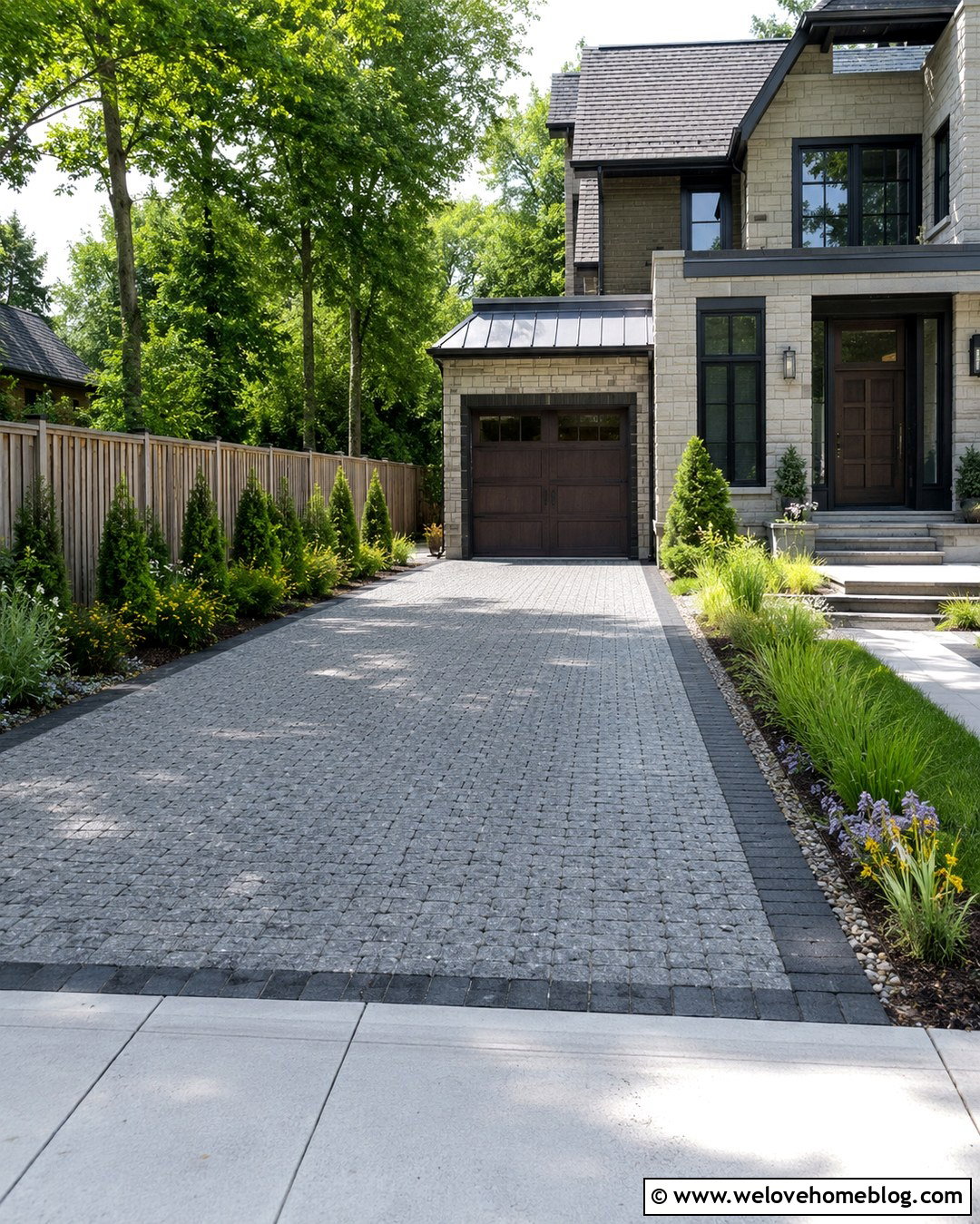
When runoff is a concern, permeable concrete pavers can create a polished driveway while allowing water to move through open joints into specially designed layers below. The subbase, soil, slope, and drainage outlet must be planned as a complete system rather than treated like standard paving. () Choose medium-gray permeable pavers for a straight side driveway, then fill the wider joints with clean aggregate. A darker border can visually contain the surface and complement a modern or transitional home. Add a shallow planted swale along the fence where conditions and local requirements allow. Compact sedges and moisture-tolerant perennials can soften this feature. Keep muddy garden soil away from the paver joints because sediment may reduce performance. Periodic cleaning should be included in the long-term maintenance plan.
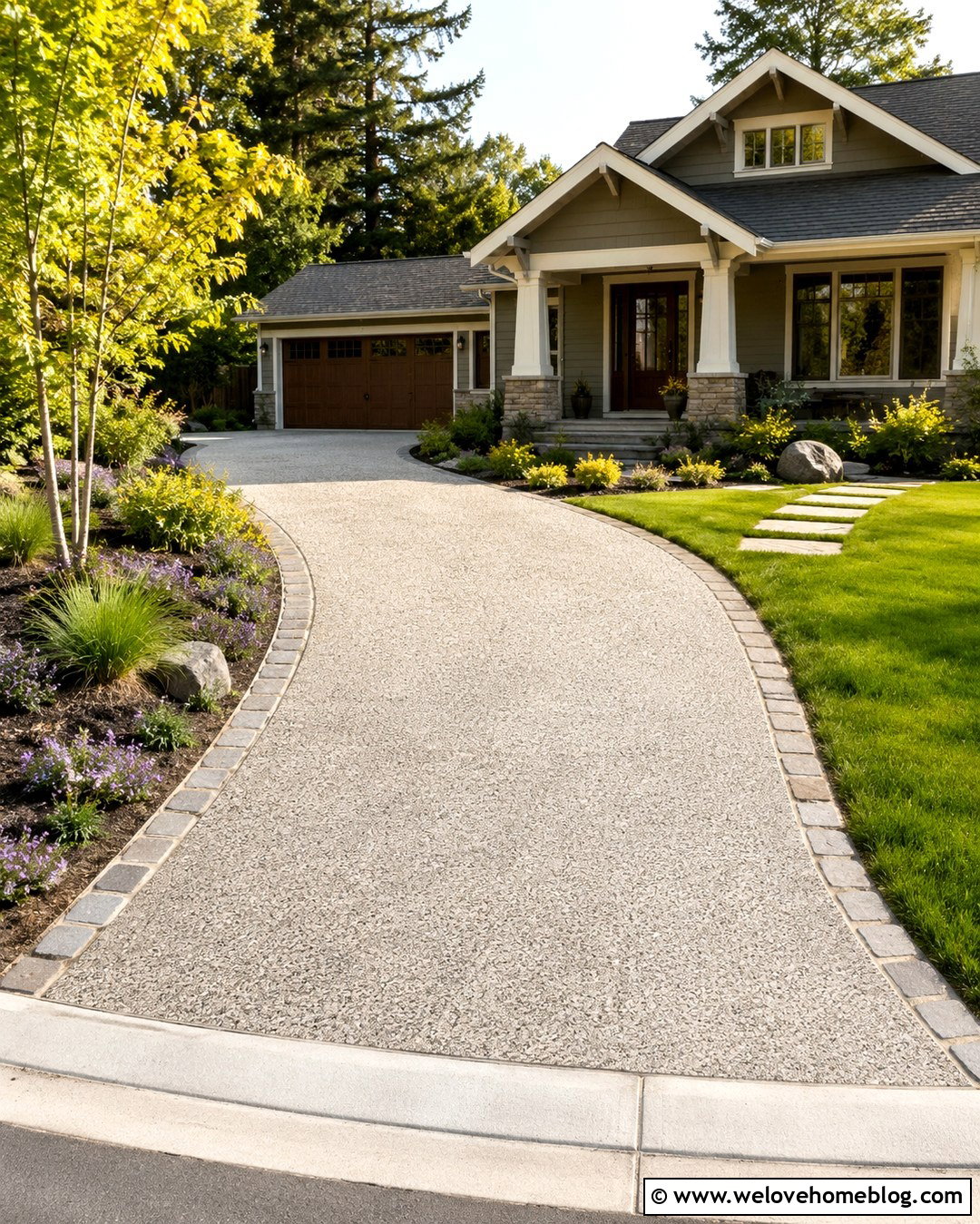
7. Curved Side Driveway Around House
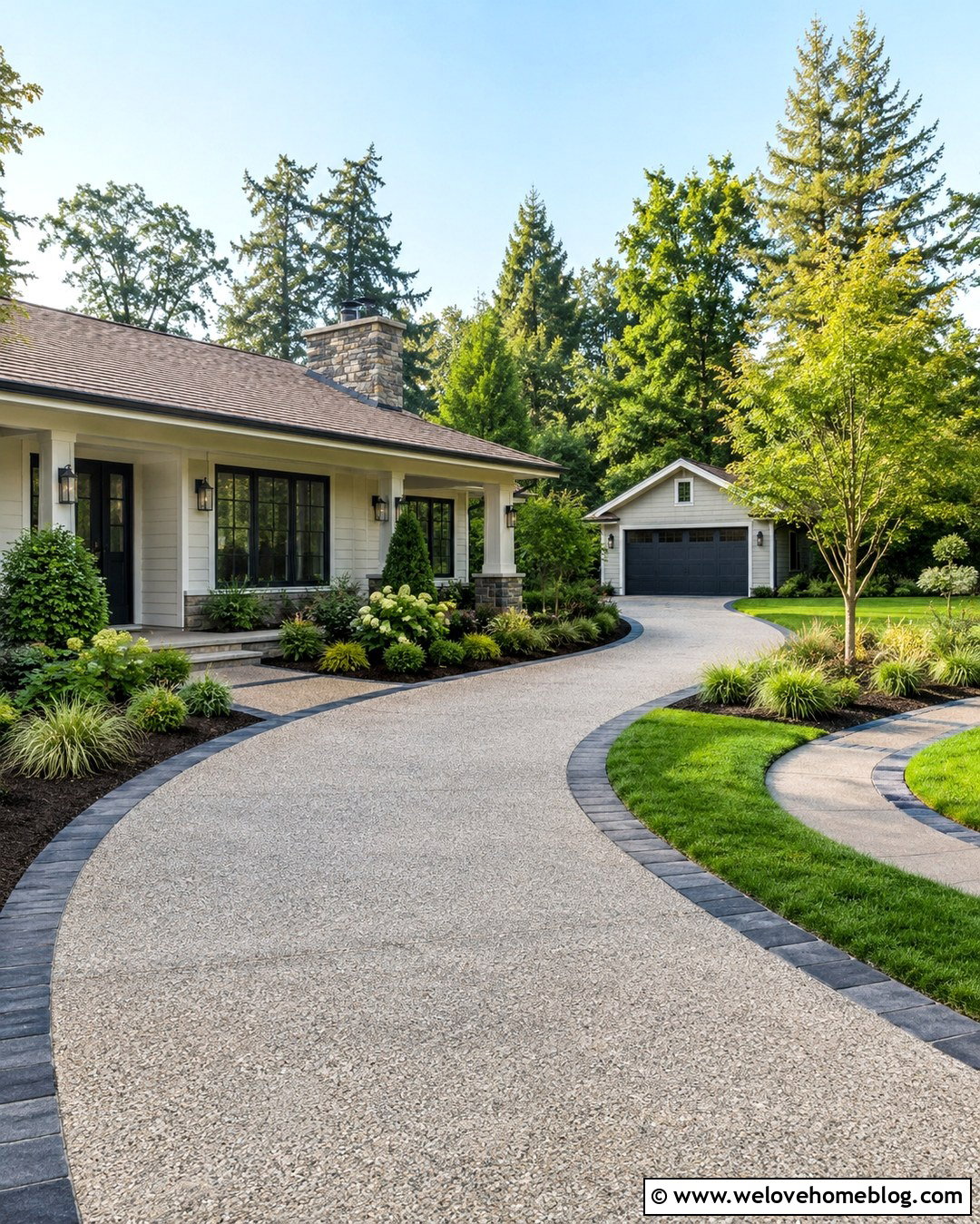
A gentle curve can help a side driveway navigate mature trees, a projecting porch, or an offset backyard garage. Rather than forcing a sharp turn, shape the driveway with a broad, readable arc that gives drivers a clear view of the route. Exposed aggregate concrete is a practical material for this design because its textured finish complements natural landscaping. Define the curve with dark stone setts or a narrow band of contrasting pavers. On the outer edge, use lawn and low planting to preserve visibility. The inner edge can hold a deeper bed with layered shrubs, ornamental grasses, and one carefully positioned specimen tree. Avoid branches or rigid landscape features near turning points. Repeating the same border around a connecting walkway makes the curved side driveway feel integrated with the entire front yard.
8. Side Driveway With Turnaround Pad
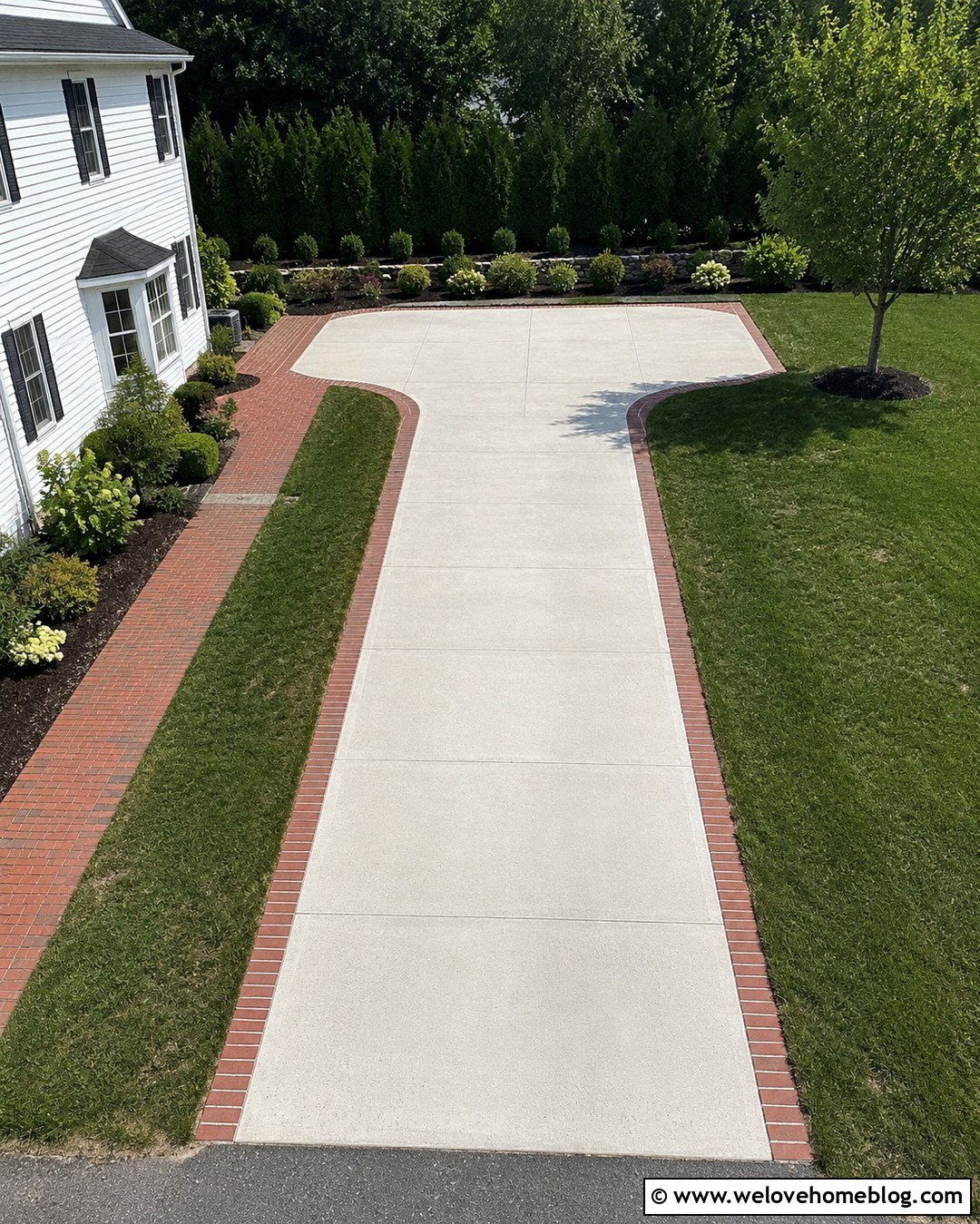
A backyard turnaround pad can make a long side driveway far easier to use, particularly when reversing toward a busy street would be uncomfortable. Extend a straight concrete driveway into a compact hammerhead, T-shaped pad, or wider parking bay behind the house. The exact dimensions should reflect vehicle size, garage placement, fences, and local regulations. Give the pad a visual purpose by framing it with a brick paver border and connecting it to the patio or rear walkway. A small shade tree can anchor one corner, provided its mature roots and canopy will not interfere with vehicles. Use planting beds to soften unused pavement edges without narrowing the maneuvering area. Before construction, test the layout with cones or washable markings and drive through it several times using the household’s largest vehicle.
9. Side Driveway With Carport
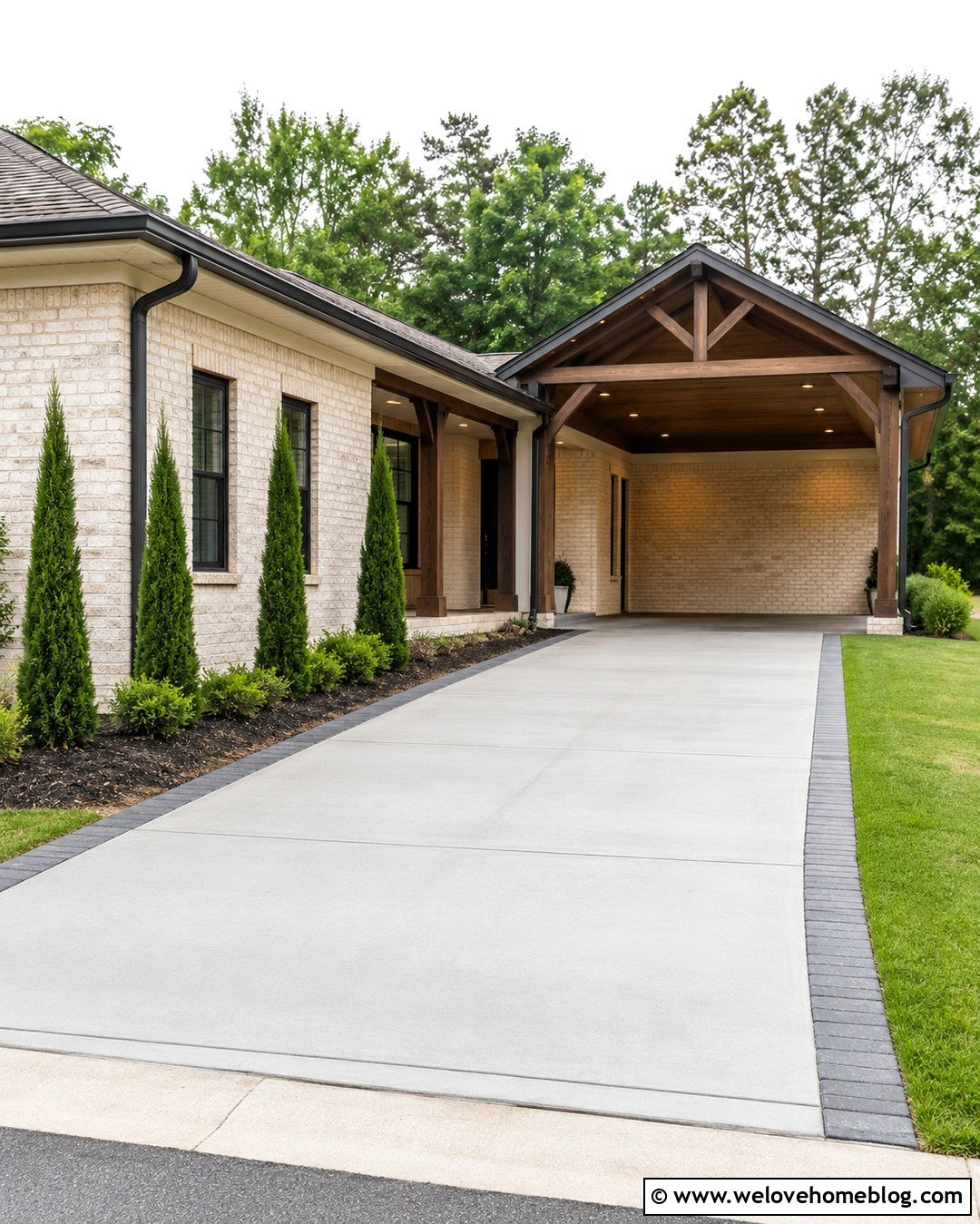
A side driveway leading to a carport can provide sheltered parking without placing a large garage door on the front facade. Match the carport roofline, posts, and trim to the house so the structure feels original rather than added later. A smooth concrete driveway works well beneath the roof because it is easy to sweep and creates a stable surface around posts. Add a charcoal paver border along the exposed approach for contrast. The driveway can widen slightly at the carport to allow easier door opening while remaining narrow near the street. Use slim planting beds and columnar shrubs outside the driving clearance. A covered walkway from the carport to a side entrance adds convenience during bad weather. Integrate ceiling lighting, drainage, and downspouts into the structure from the beginning.
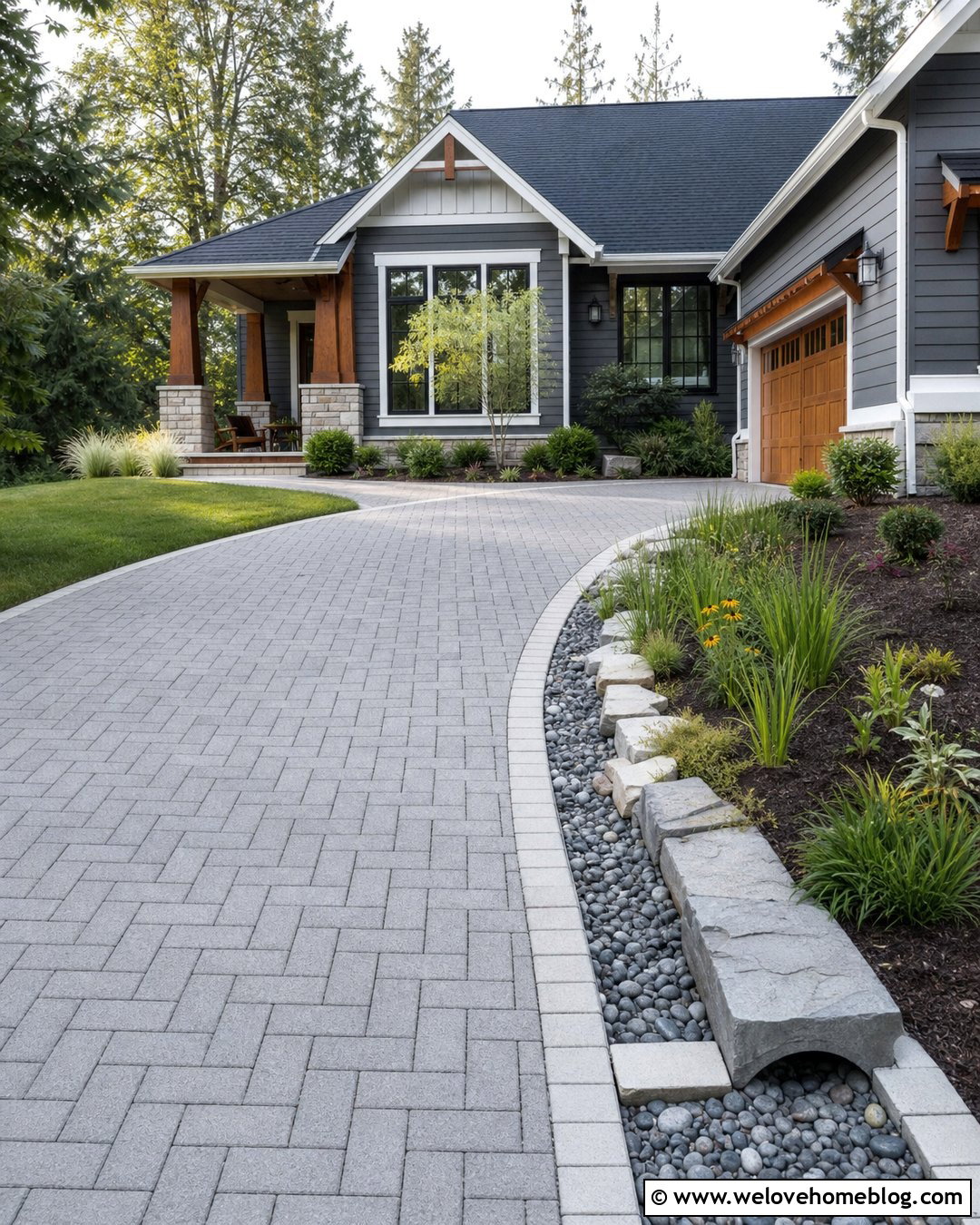

10. Side Driveway With Sliding Gate
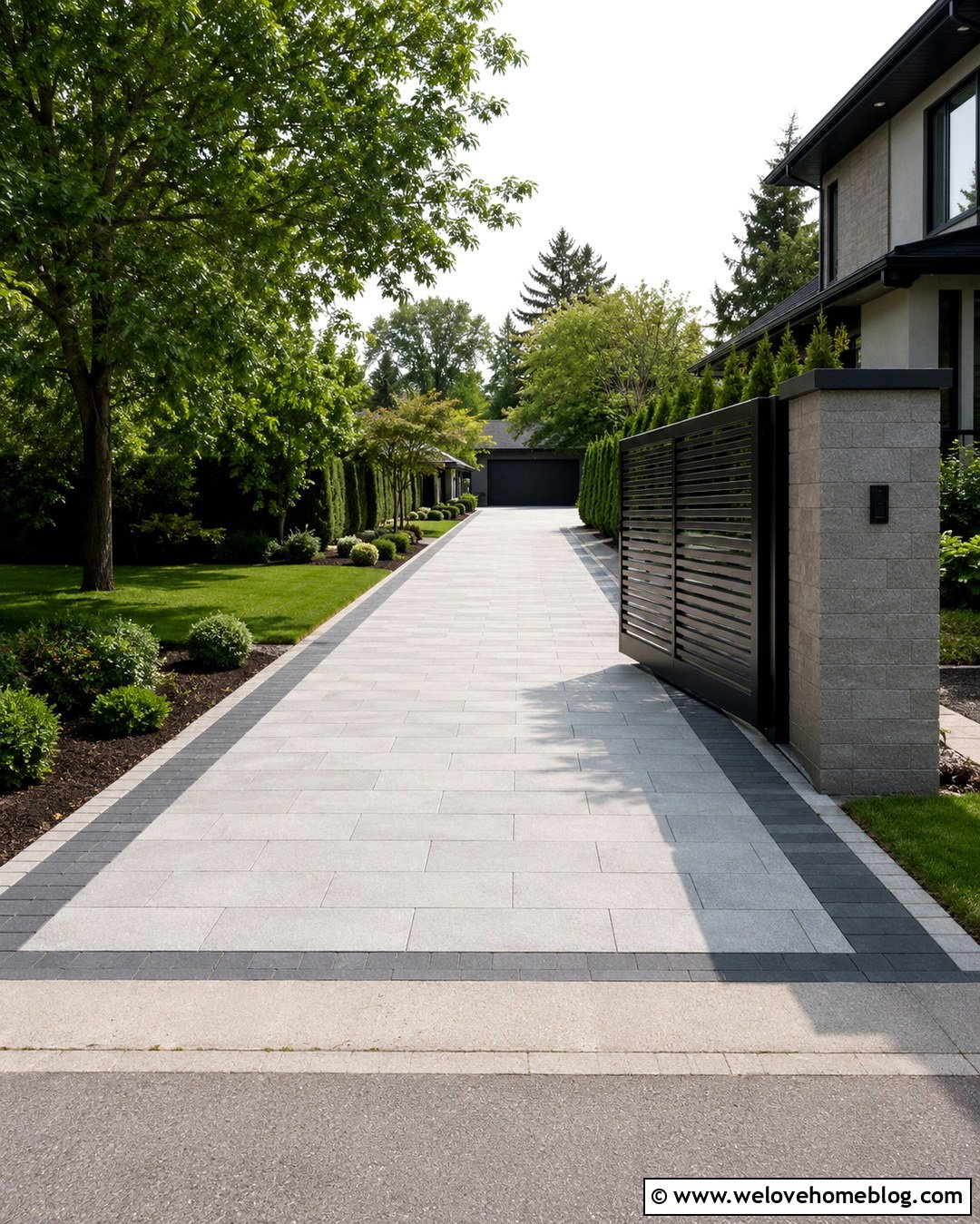
A sliding gate is useful where a swinging gate would block a narrow driveway or require too much clearance. Pair a black steel or horizontal cedar gate with a straight driveway that continues toward secure backyard parking. Large-format concrete pavers create a modern surface, while a matching dark border connects visually with the gate frame. Set the gate far enough inside the property to avoid creating an awkward stopping position near pedestrians or traffic, subject to local rules. Keep shrubs low around the entrance so drivers can see the sidewalk clearly. A masonry pier can hold a light, intercom, and discreet address plaque, but it should not narrow the usable lane. Plan the gate track, drainage, electrical supply, safety sensors, and maintenance access together before paving the driveway.
11. Side Driveway With Privacy Fence

A well-positioned fence can make a side driveway feel like a defined outdoor room while screening backyard storage and neighboring windows. Use a warm cedar fence beside a pale concrete driveway for a welcoming, balanced combination. Horizontal boards suit modern homes, while vertical boards complement Craftsman, farmhouse, and traditional exteriors. Leave enough separation between the fence and driving surface for drainage, maintenance, mirrors, and open vehicle doors. A narrow river-rock strip prevents muddy splashes along the bottom boards. On the house side, install wall-mounted lights and a simple paved path to any side entrance. Near the street, step the fence height down or set it back to maintain visibility and create a less enclosed entrance. A matching gate at the rear can complete the private transition into the backyard.
12. Side Driveway With Covered Walkway
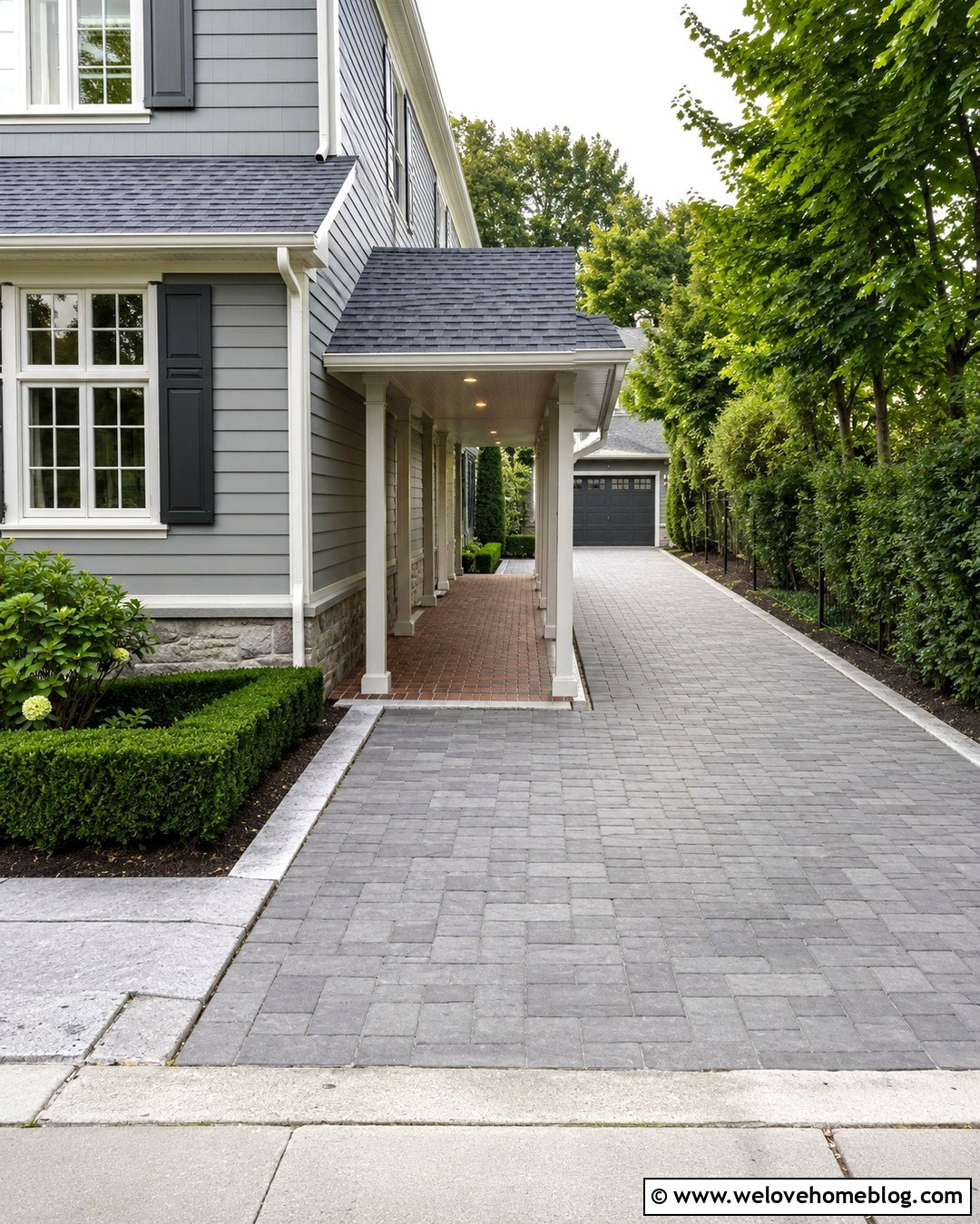
Carrying groceries from a side driveway becomes much easier when a sheltered walkway connects parking to the house. Begin with a gray concrete or paver driveway leading toward a rear garage, then place a narrow covered path along the wall. The canopy might extend from the existing roof or use slim posts aligned safely outside vehicle clearance. Match its roofing, trim, and supports to the home’s architecture. Use a contrasting paver strip beneath the canopy so the walking route is immediately recognizable. A channel or curb between the path and driveway can help keep flowing water away from the entry. Add recessed ceiling lights for even illumination and use compact foundation plants where the cover ends. This complete layout keeps pedestrians separated from the driving lane without wasting valuable side-yard width.
13. Side Driveway With Drainage Channel
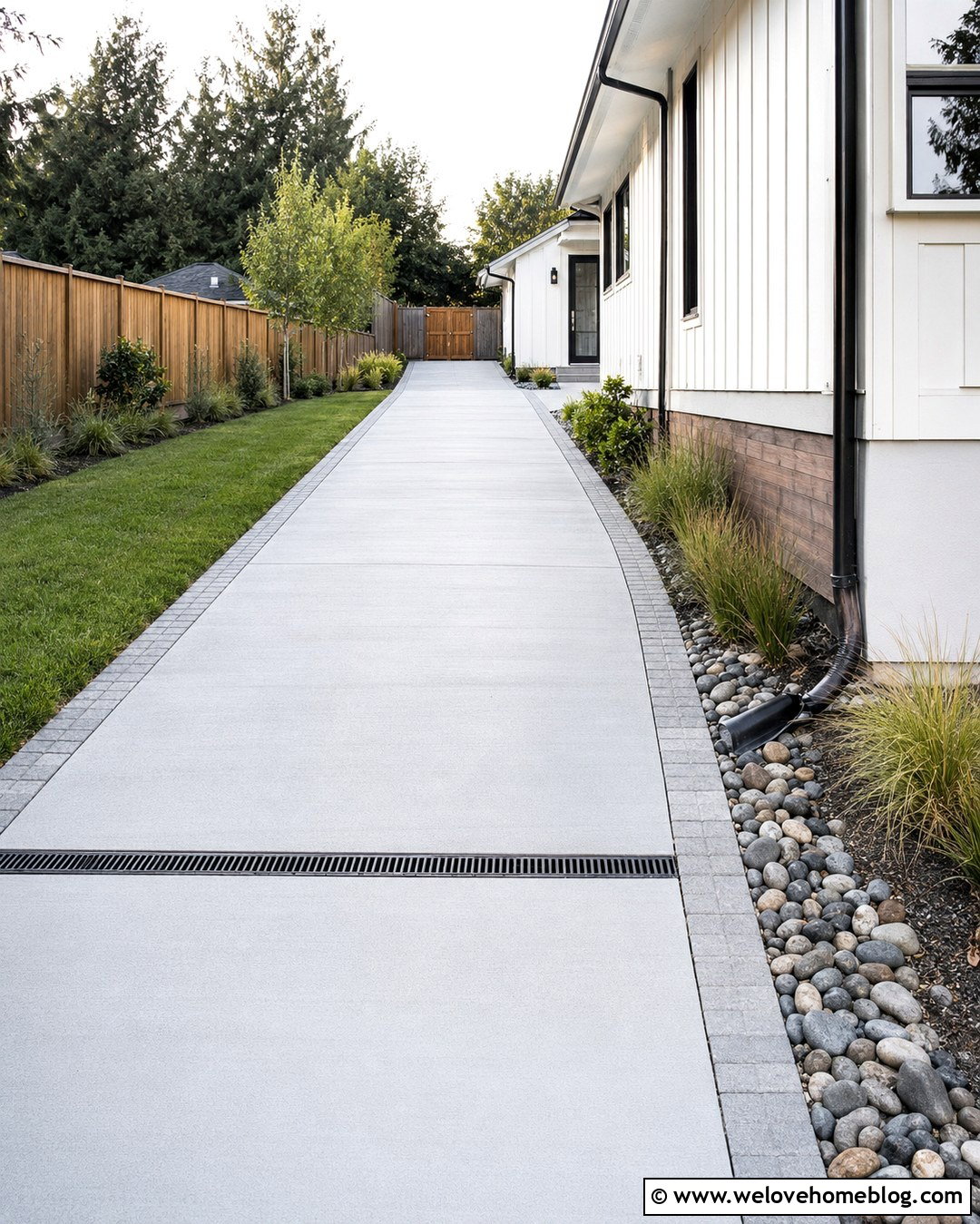
Heavy rain can expose every weakness in a side driveway, especially when the house and fence create a narrow drainage corridor. A practical solution combines a properly sloped broom-finished concrete surface with a linear channel drain or carefully designed gravel infiltration strip. Position drainage features according to site elevations and local requirements rather than choosing placement based only on appearance. The driveway should direct water away from the foundation and avoid sending runoff onto neighboring property. A narrow cobblestone border can frame the channel and add texture. Redirect roof downspouts into an approved drainage system instead of allowing them to discharge across the driving lane. Finish the fence edge with moisture-tolerant planting that remains low and tidy. Professional grading advice is worthwhile when the property has persistent ponding or complicated slopes.
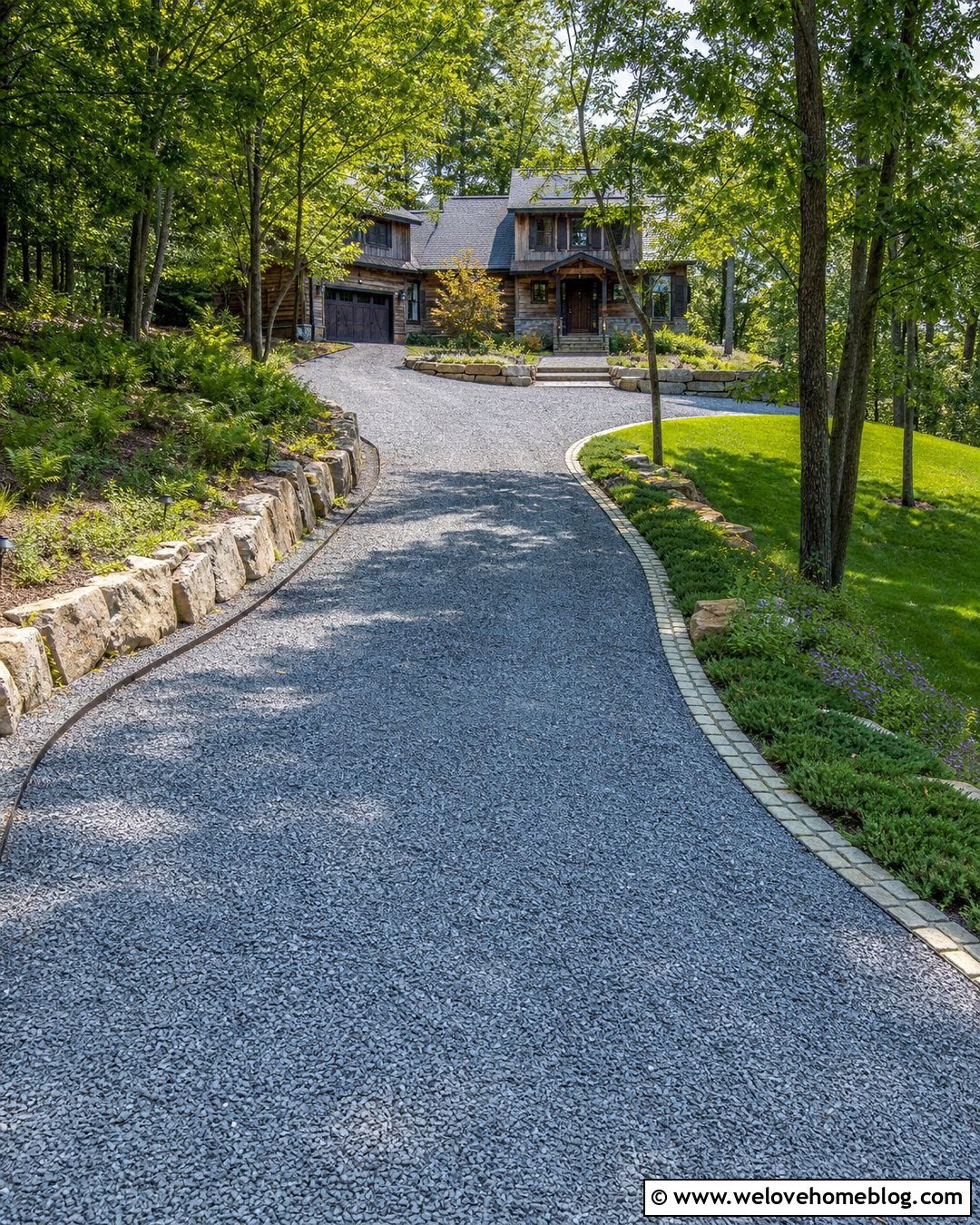
14. Sloped Side Driveway With Retaining Wall
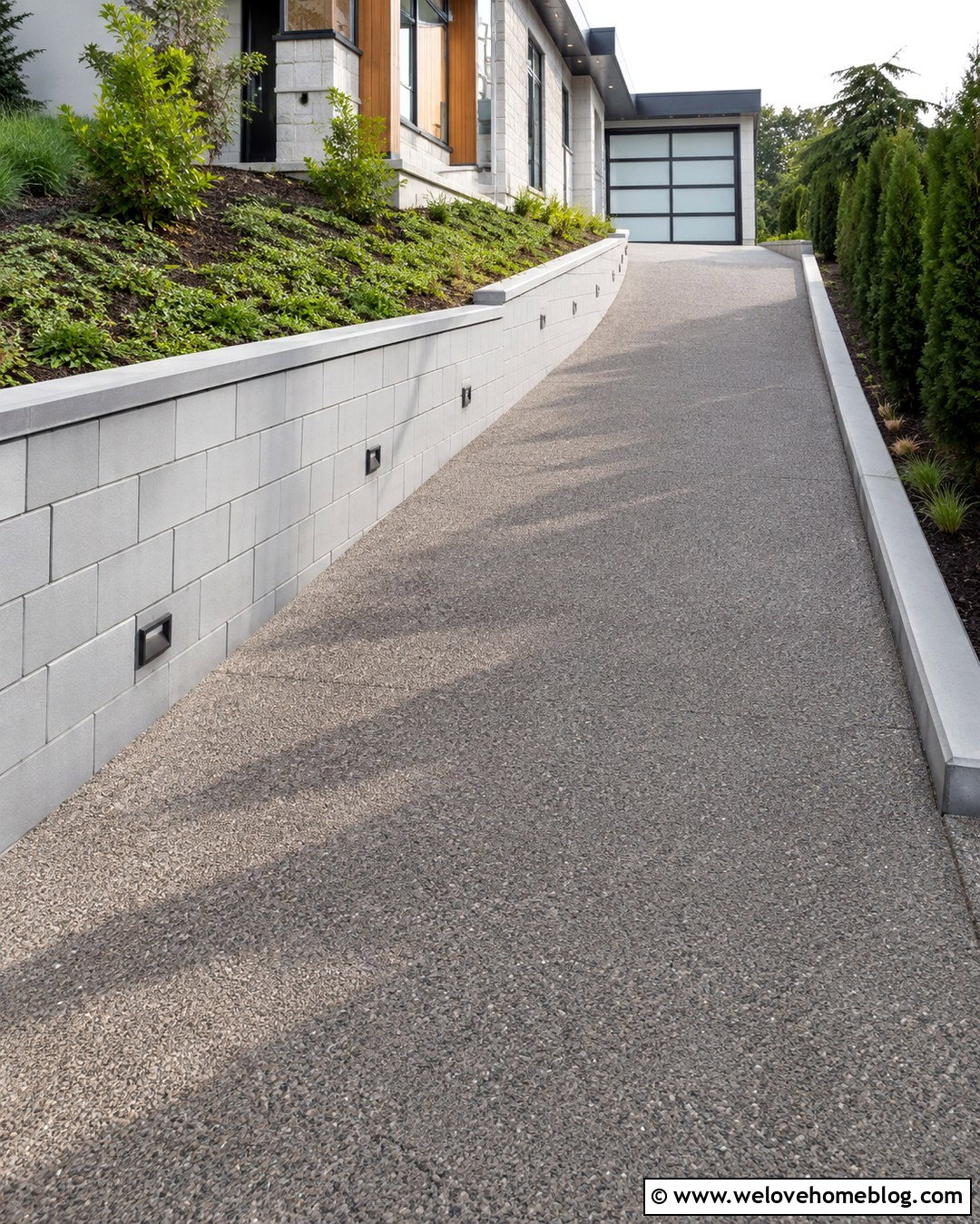
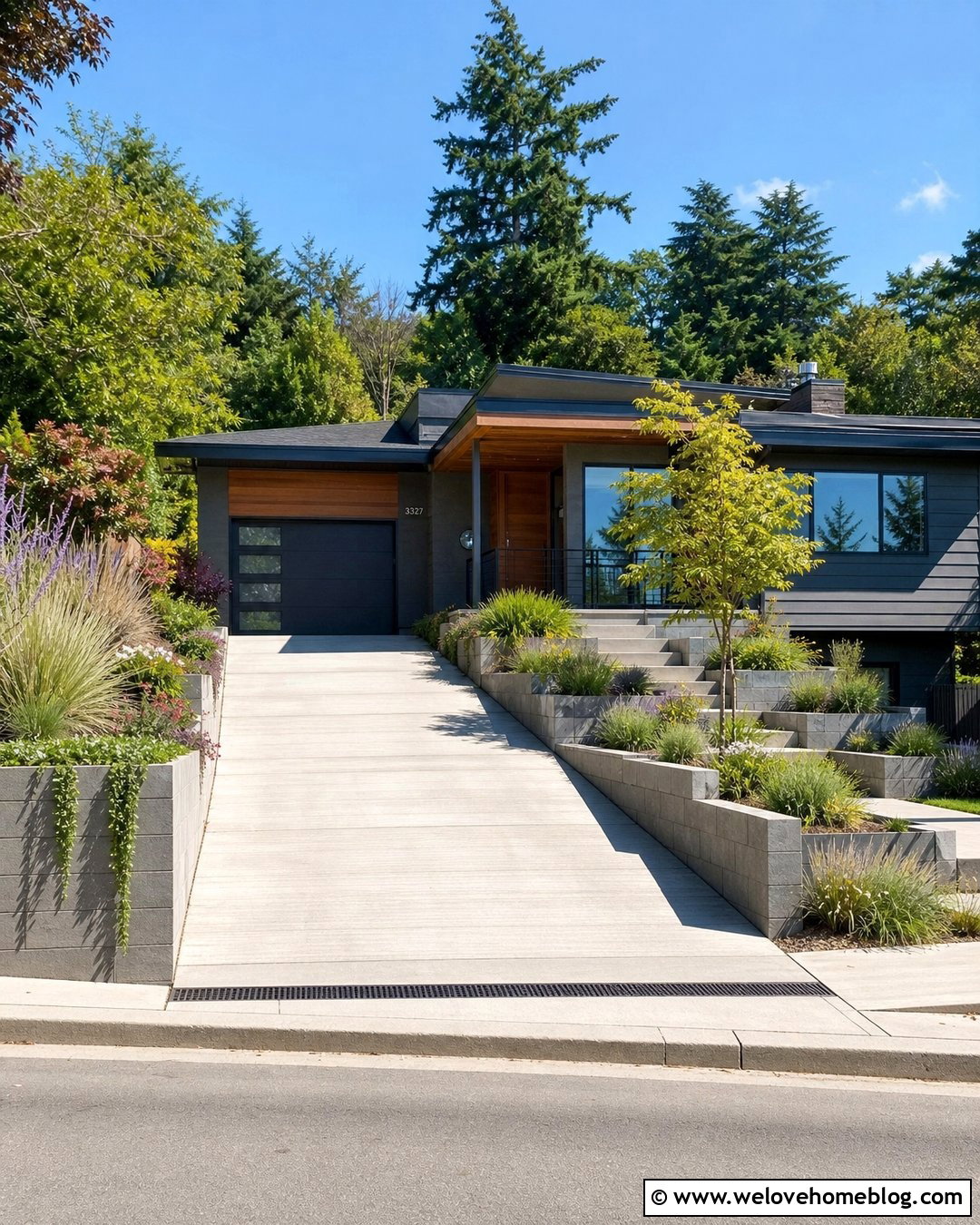
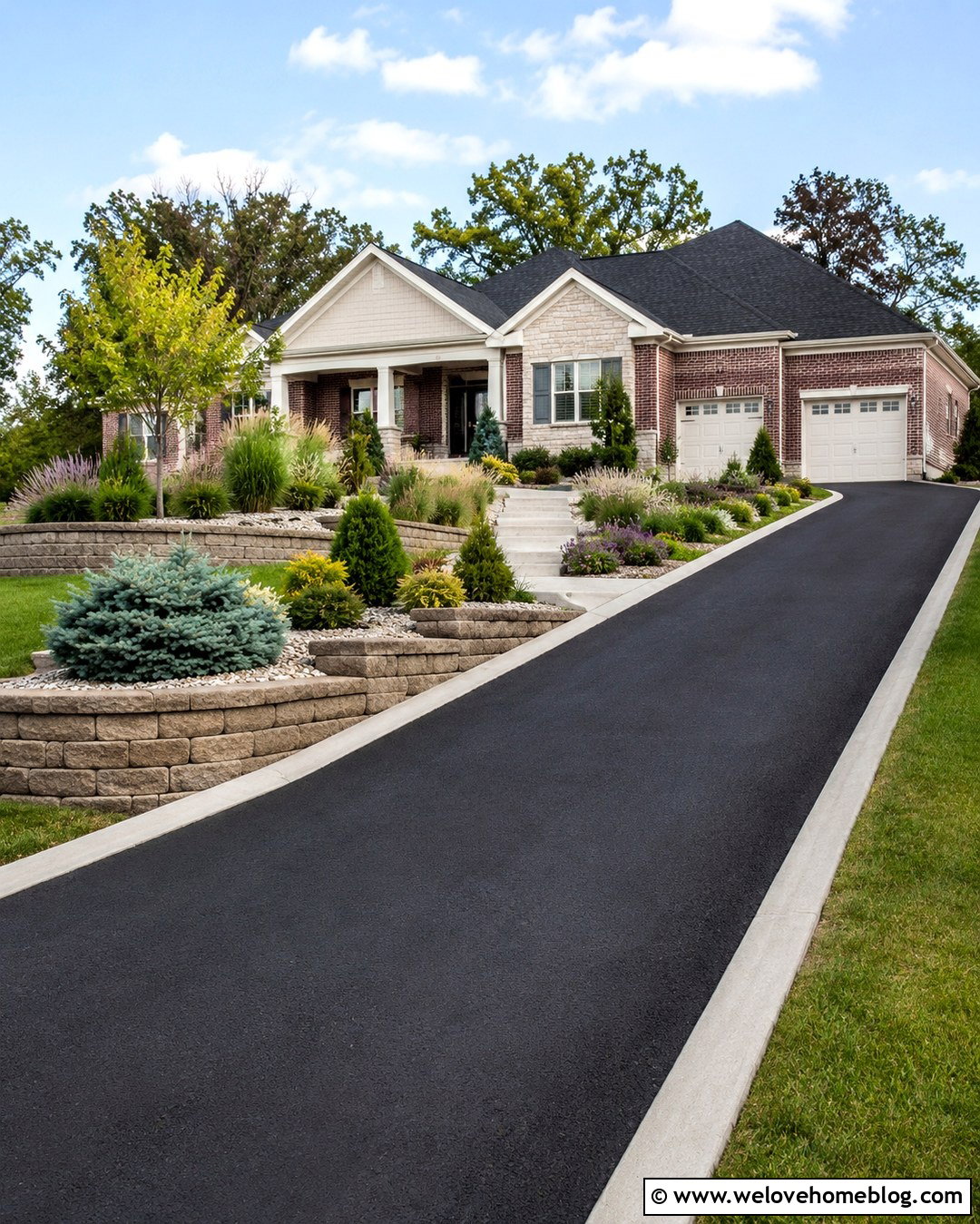
A sloped side yard often needs more structure than a flat driveway. Use textured concrete, concrete pavers, or exposed aggregate to provide a visually secure surface, then support the higher side with an engineered retaining wall. Natural stone facing can complement a rustic or traditional house, while smooth concrete block suits contemporary architecture. Keep the wall outside vehicle clearance and consider a protective curb along its base. Drainage behind the wall is essential and should be designed for the site rather than improvised during installation. Plant the upper bed with low shrubs and ground covers whose mature growth will not lean over the driveway. Step lights built into the wall can illuminate the grade without consuming width. At the top, provide a level transition into the garage or backyard parking pad whenever feasible.

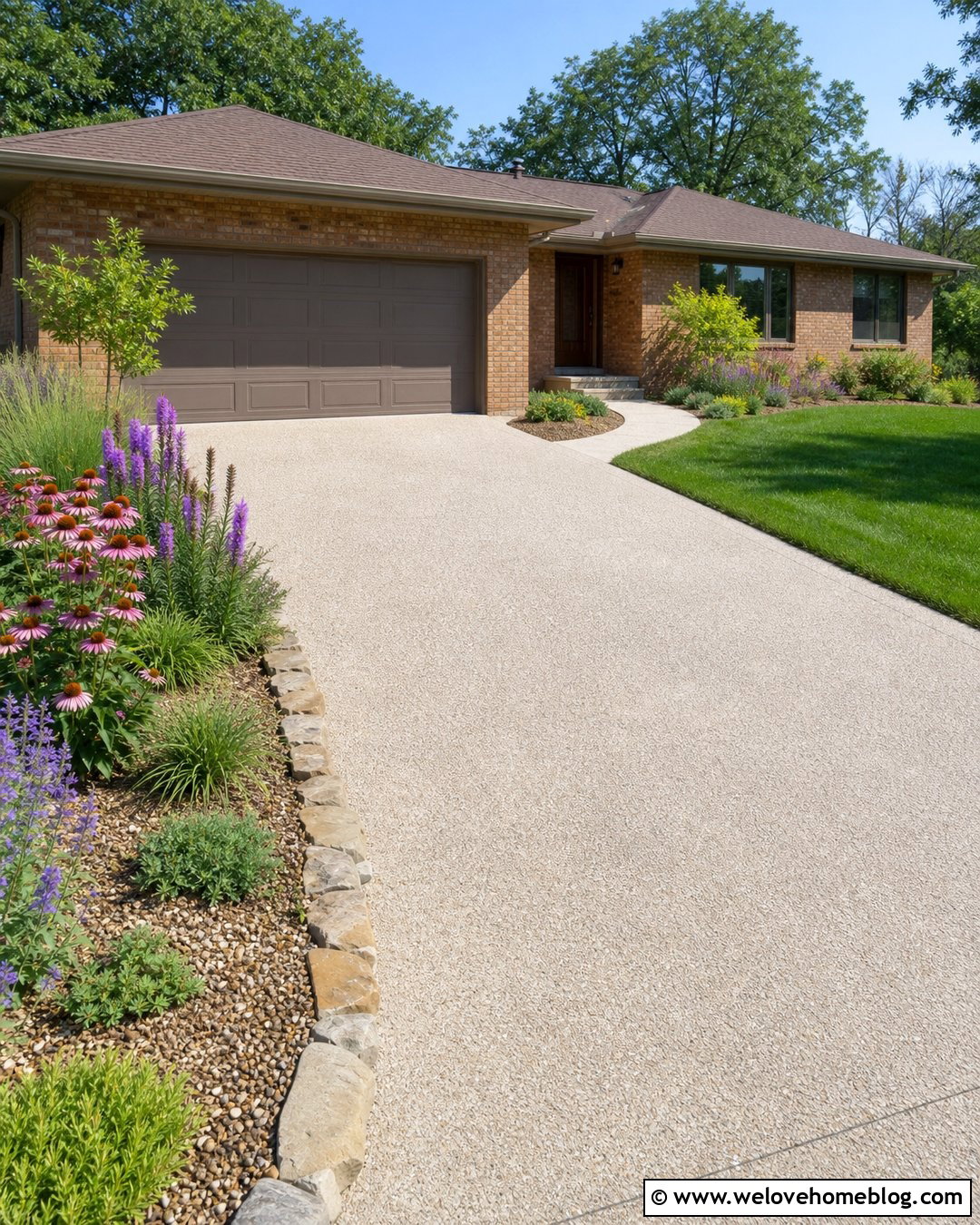
15. Side Driveway With Garden Border
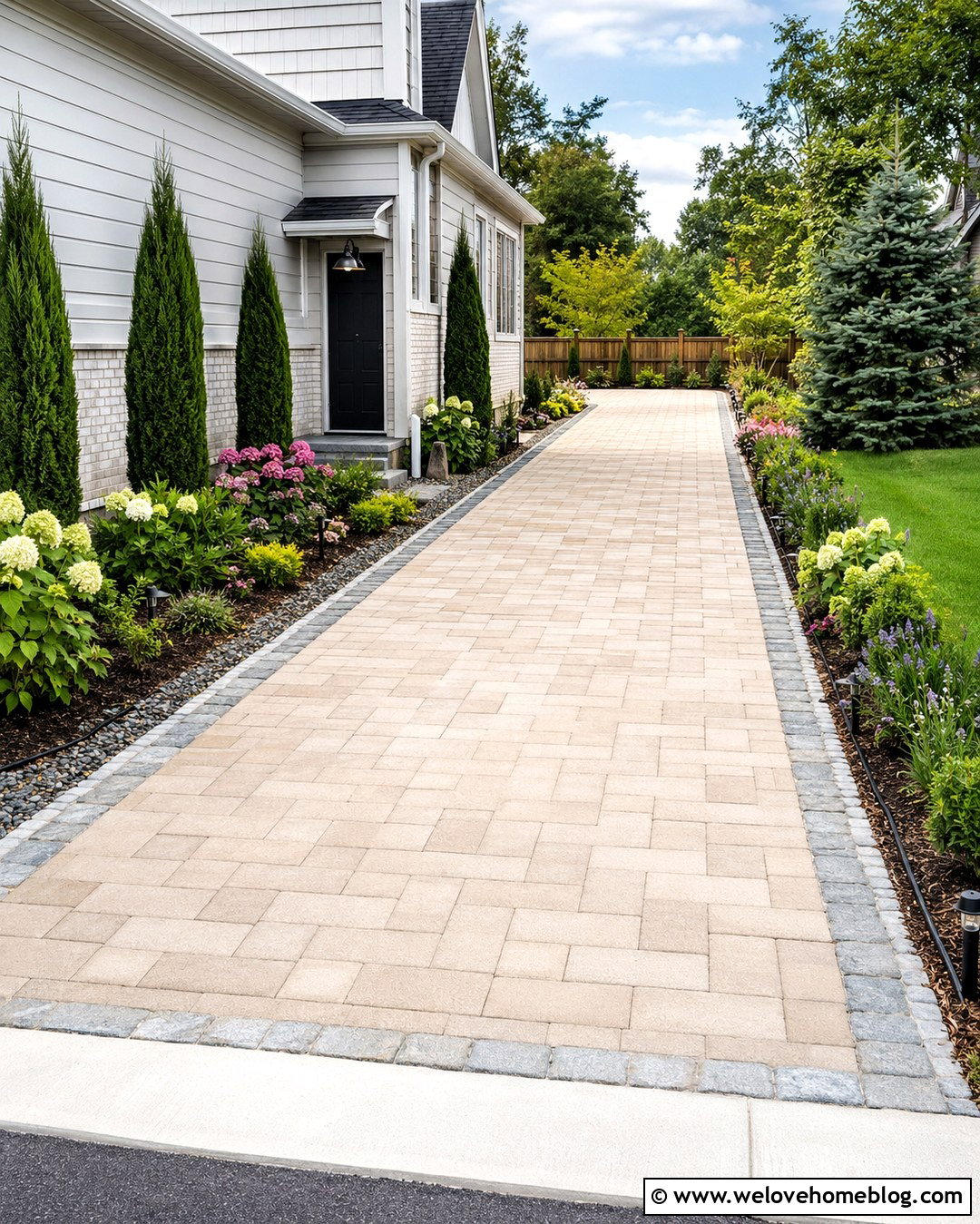
A garden border can transform a plain side driveway into an attractive view from indoor windows and the street. Start with warm beige concrete pavers arranged in a running-bond pattern, then add a narrow cobblestone edge to protect the planting bed. Choose upright, compact plants that provide layers without crowding vehicles. A simple combination might include columnar evergreens at intervals, flowering shrubs in the middle, and low perennials or ground cover near the edge. Repeat plants rather than filling the strip with too many unrelated varieties. Along the house, use a thinner gravel bed to maintain access to utilities, faucets, and foundation walls. Drip irrigation helps keep water off the paving. The final result should provide seasonal interest while preserving a clear, comfortable route from the curb to the backyard.
16. Modern Side Driveway With Large Concrete Pavers
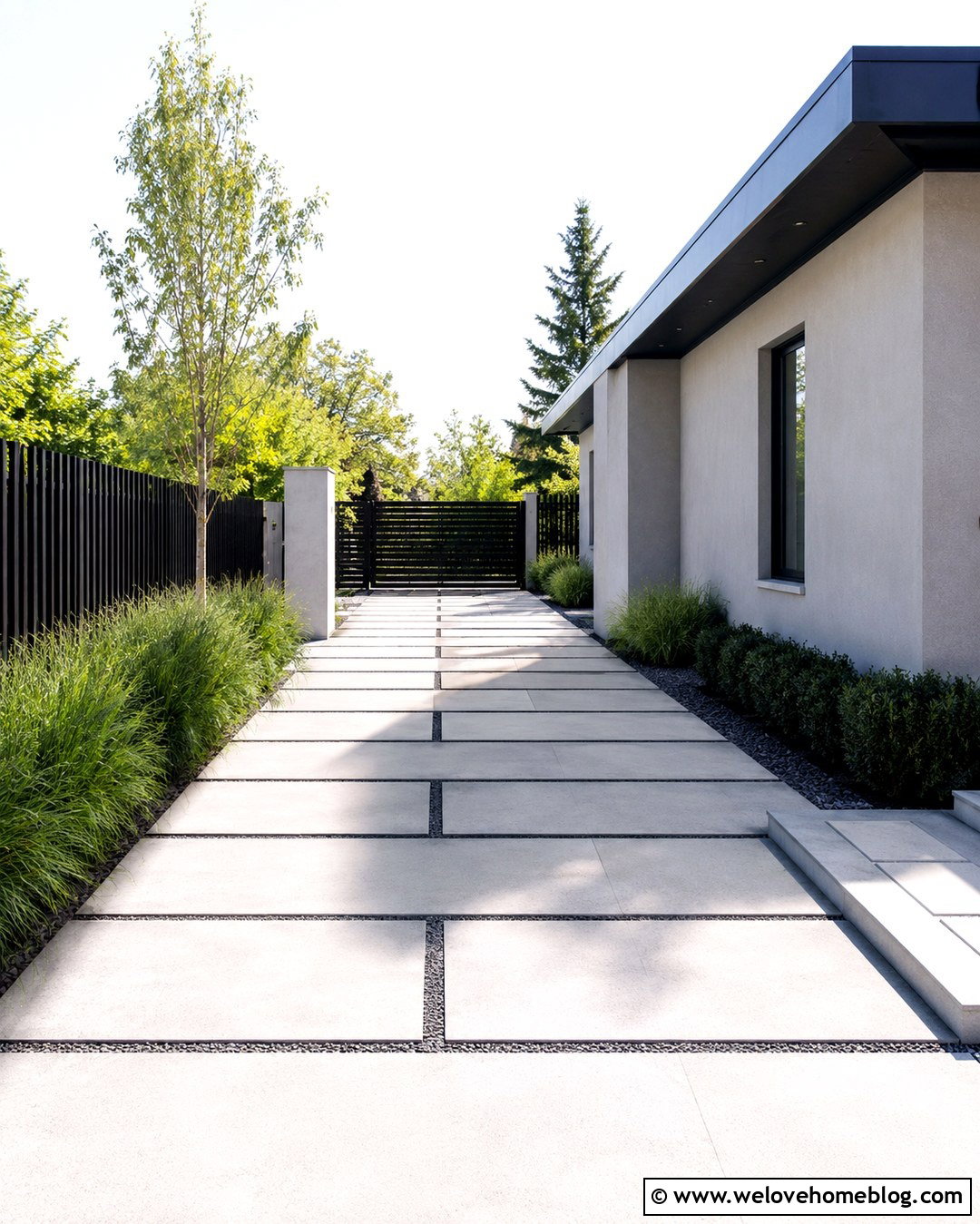
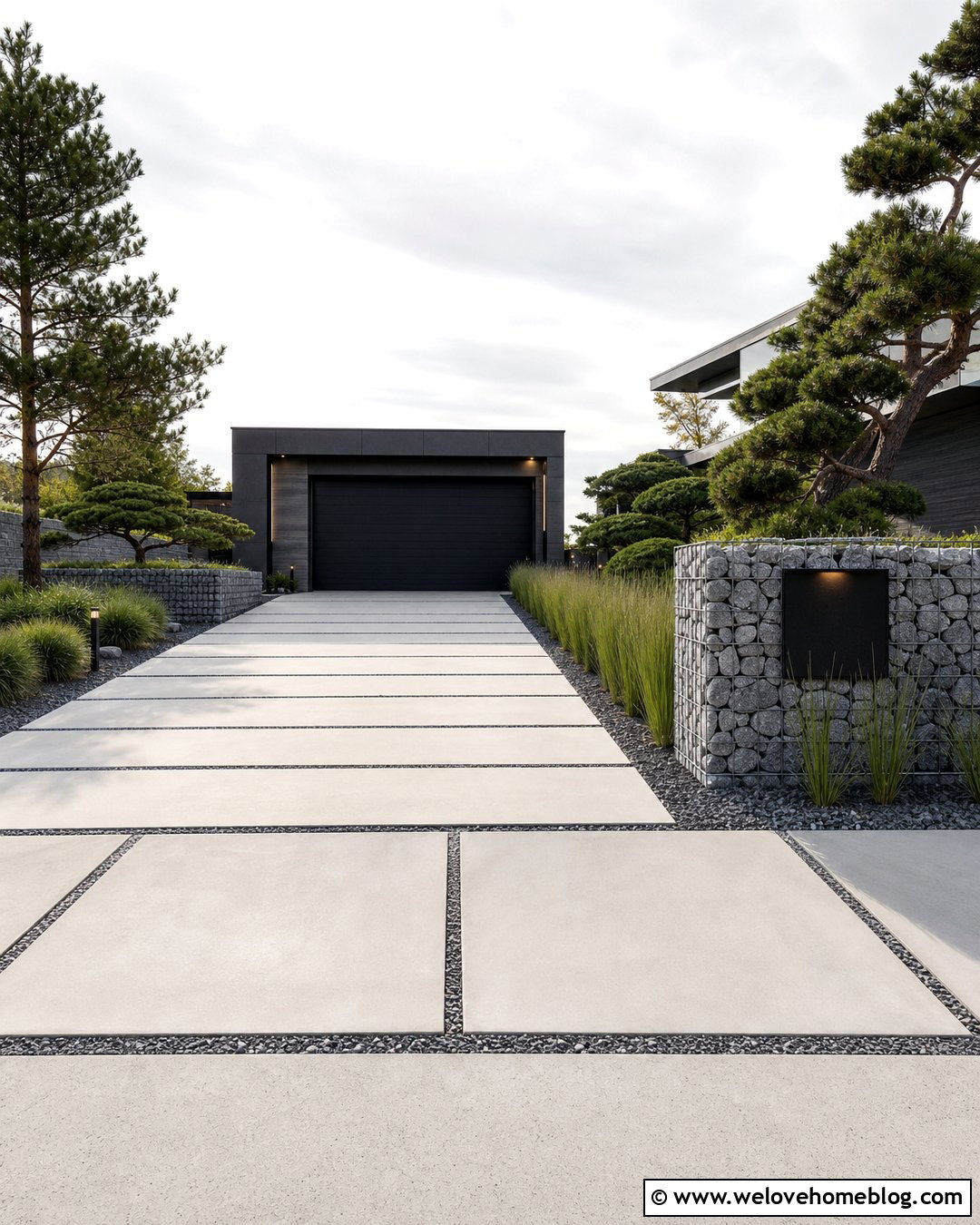
Large rectangular concrete pavers give a side driveway a crisp, architectural appearance. Choose smooth light gray units and install them in a staggered grid that follows the length of the house. Narrow joints filled with dark gravel emphasize the pattern, although the base and joint system must be rated for vehicle use. Continue the same paving language into the front walk for a coordinated modern exterior. A black metal fence, linear gate, and simple address pillar can define the entrance without adding visual clutter. Use restrained landscaping with clipped grasses, compact evergreen masses, and one small ornamental tree near the front. Keep utility equipment accessible behind a slatted screen. Bright wall lights can repeat the rectangular forms while making the long side passage feel safer and more welcoming after dark.
17. Farmhouse Gravel Side Driveway
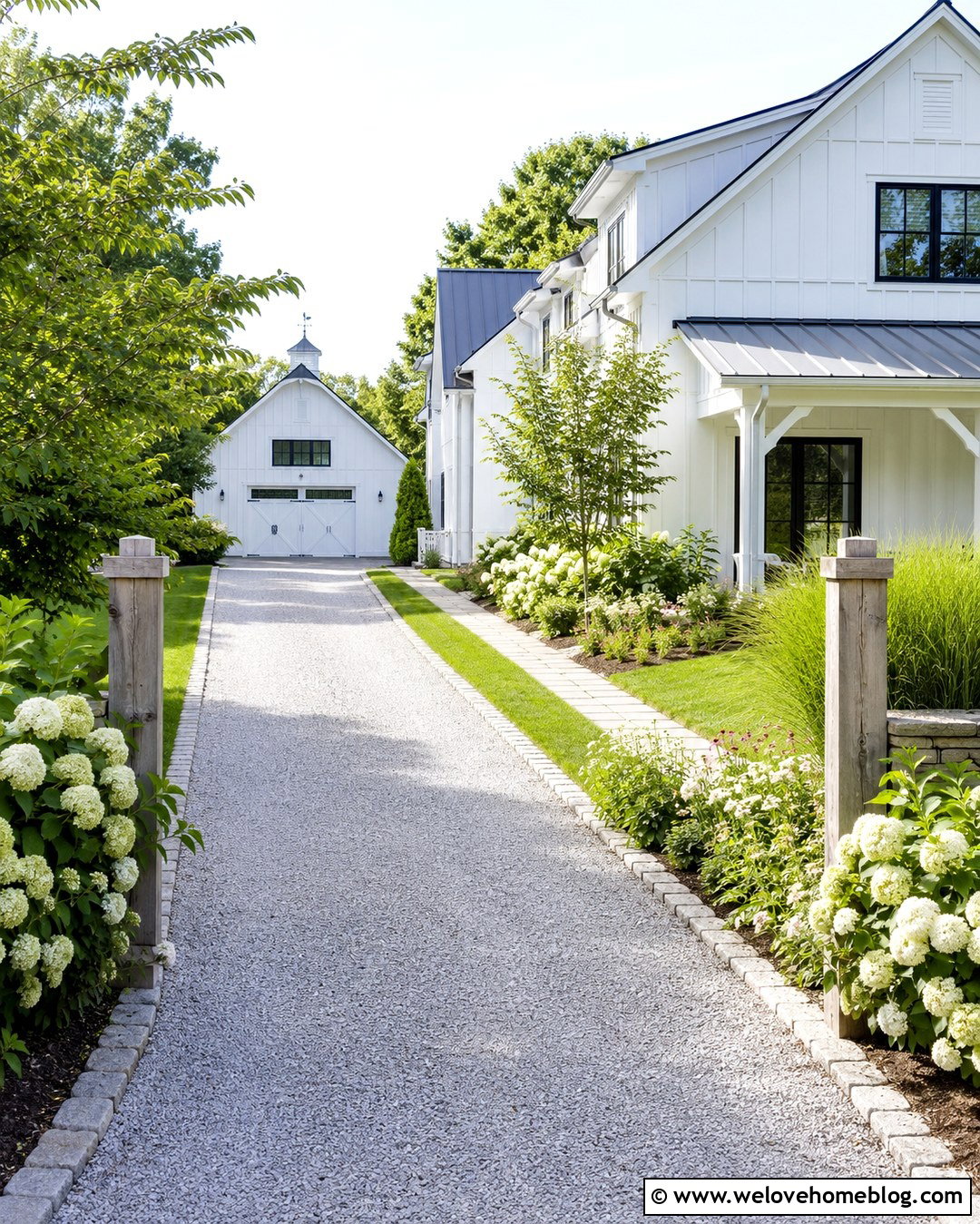
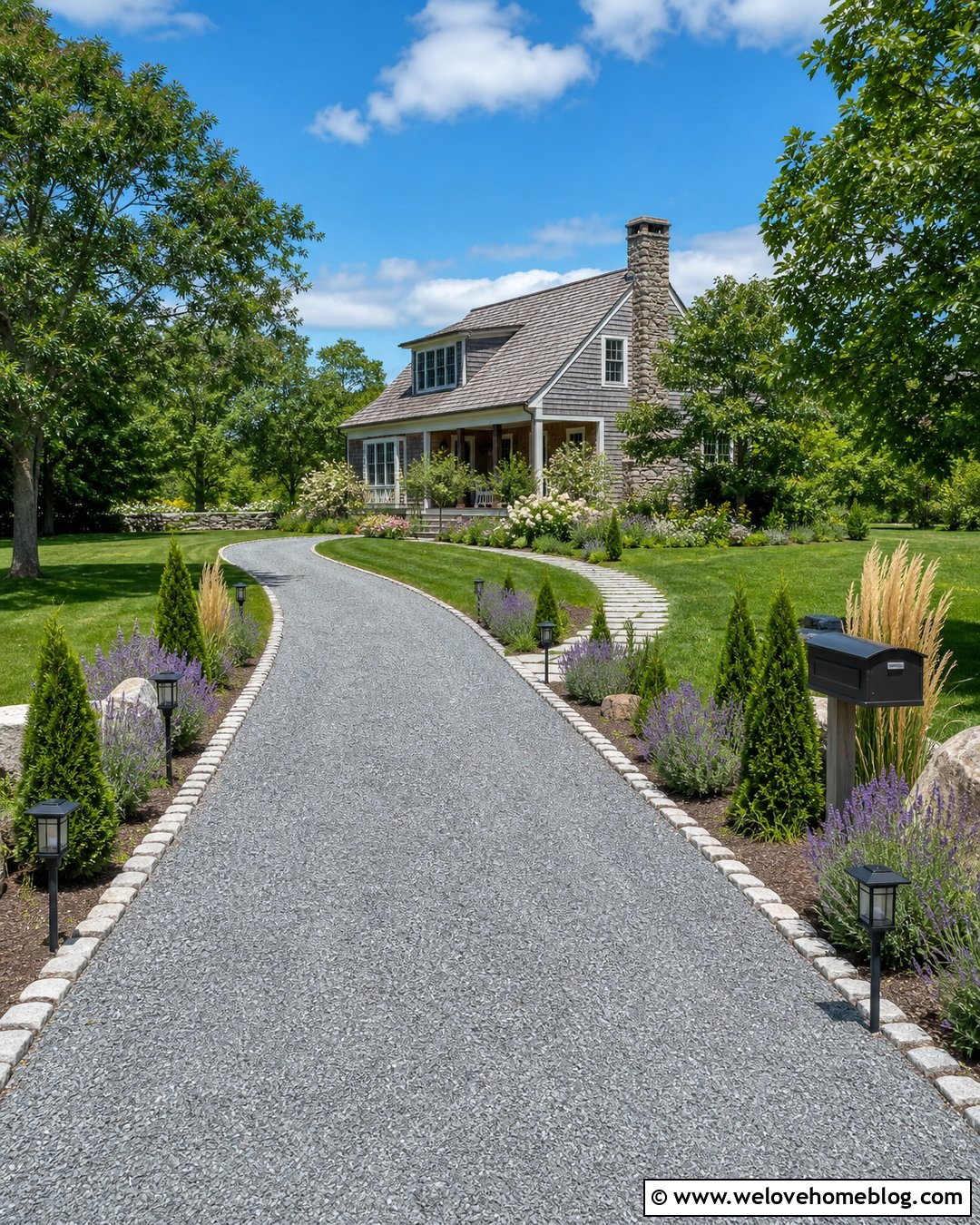
Crunchy gravel, timber details, and informal planting create a side driveway that feels naturally connected to a farmhouse. Use pale gray crushed stone over a properly prepared base, with weathered granite cobbles containing the edges. A straight approach can lead to a barn-style garage, carport, or backyard parking area. Near the street, widen the entrance gently and add simple timber posts or low stone pillars. Plant panicle hydrangeas, ornamental grasses, native perennials, or clipped boxwood in generous but controlled groups. A narrow flagstone walking path beside the house provides firm footing when the gravel is wet. Keep loose stones away from door thresholds and lawn edges with solid transitions. Black gooseneck lights on the garage and side entrance add a familiar farmhouse detail without making the driveway look overly decorated.
18. Brick Side Driveway For Traditional Home
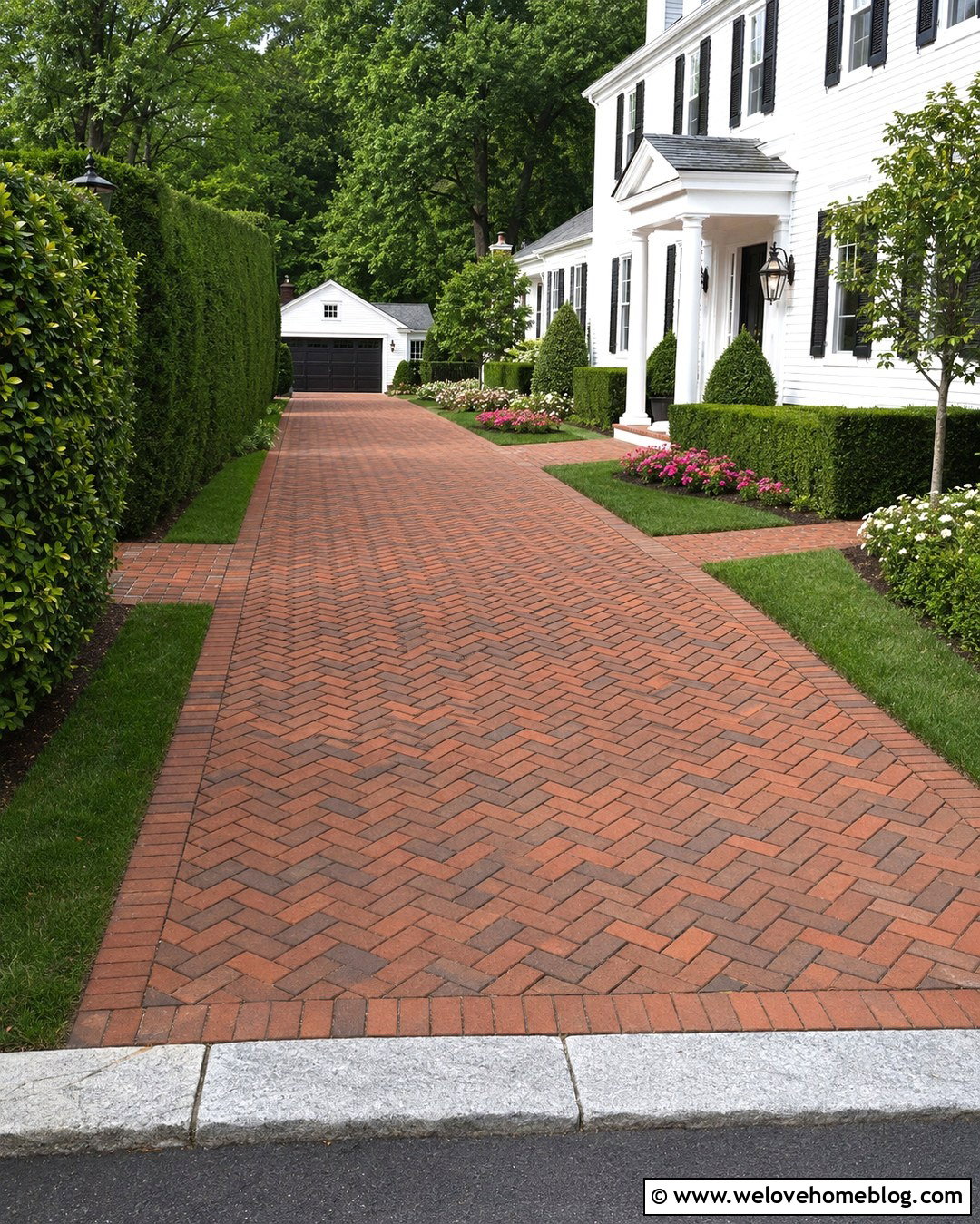
Clay brick pavers bring rich color and historic character to a driveway beside a Colonial, Tudor, or traditional brick home. Lay the main surface in herringbone to help the long, narrow area feel detailed and substantial. A straight soldier-course border creates clean edges, while a granite apron at the street protects the transition and introduces another durable texture. Choose brick colors that relate to the facade without matching it so closely that the design becomes flat. Deep green hedges can frame one side, but keep them clipped back from vehicle clearance. On the house side, install a simple brick walkway connecting the driveway to the entrance. Traditional lantern-style wall lights and restrained planting complete the look. Proper base preparation and edge restraint help the patterned surface remain stable under repeated traffic.
19. Resin-Bound Side Driveway
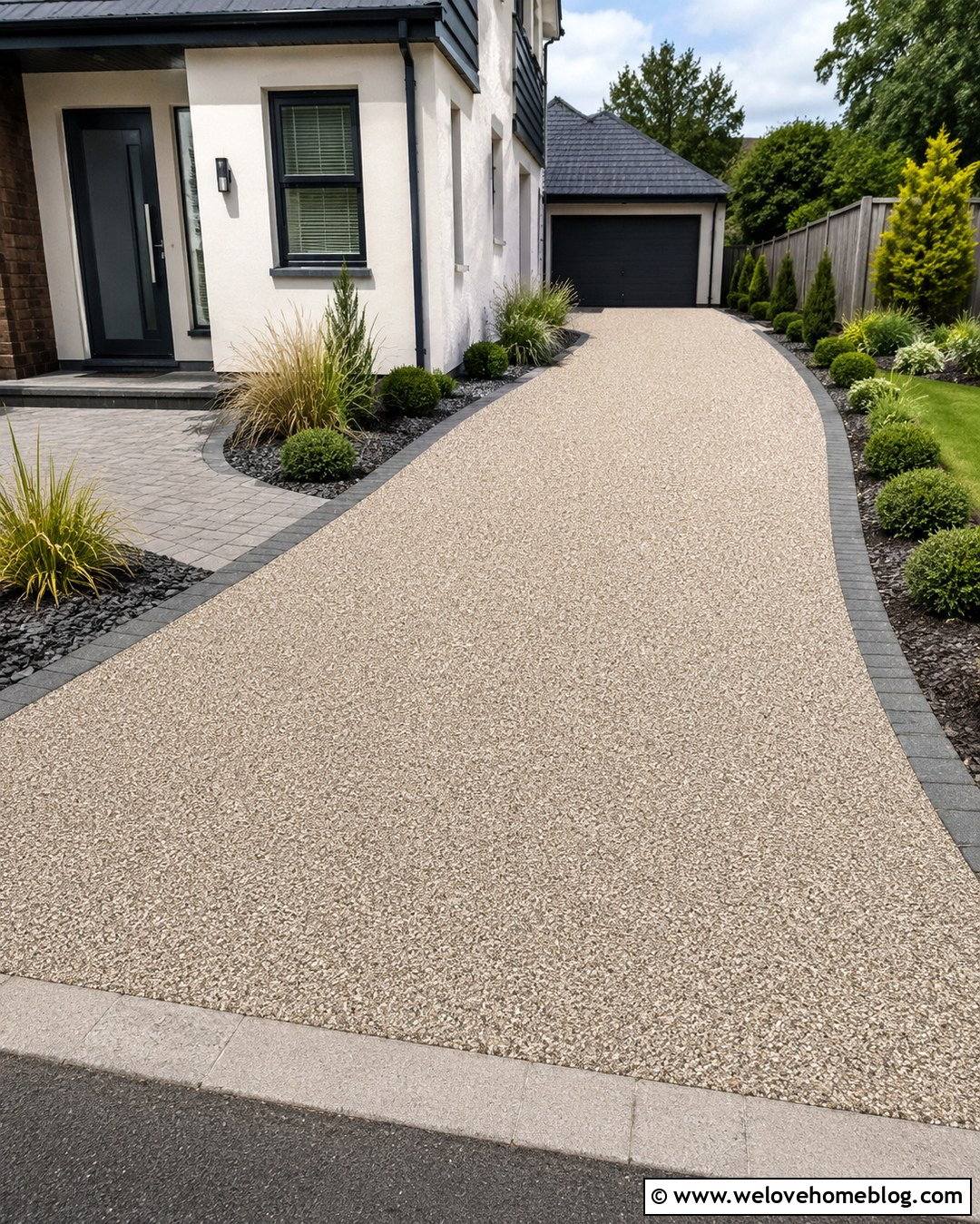
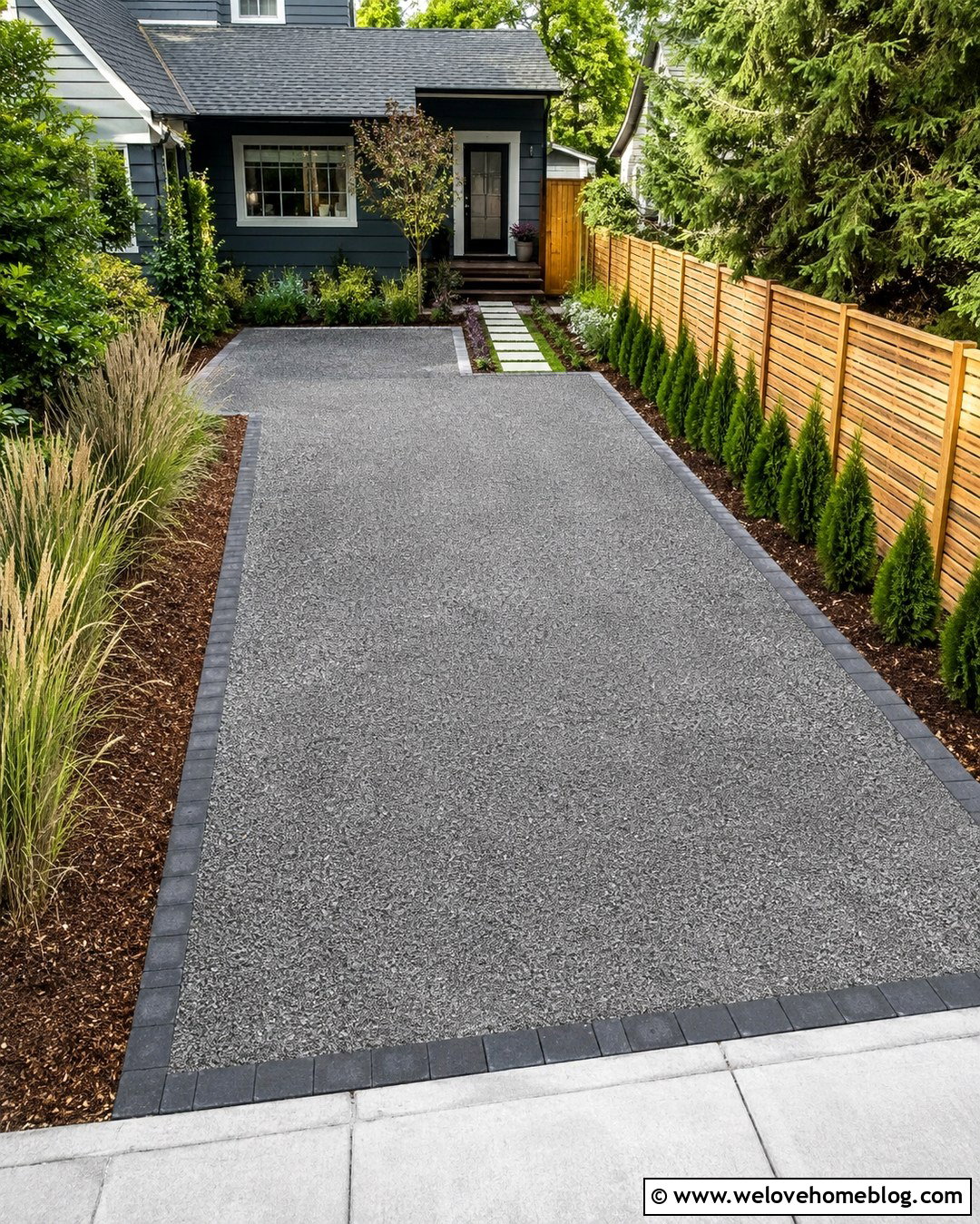
A resin-bound gravel driveway offers a smooth, seamless appearance that can visually widen a narrow passage beside the house. Select a blend of beige, silver, or warm gray aggregate that complements the roof, siding, and masonry. Define the surface with a charcoal block-paver border so the long driveway has a clear outline. A gentle curve near the front can soften the entrance before the lane straightens toward a rear garage. Add a slim planted strip with grasses and low evergreen mounds along the fence. Because resin systems depend on product compatibility, drainage conditions, base quality, and skilled installation, use an experienced contractor familiar with the local climate. Keep the design simple around utility areas. A matching paved landing at the side door creates a clean transition without interrupting the continuous surface.
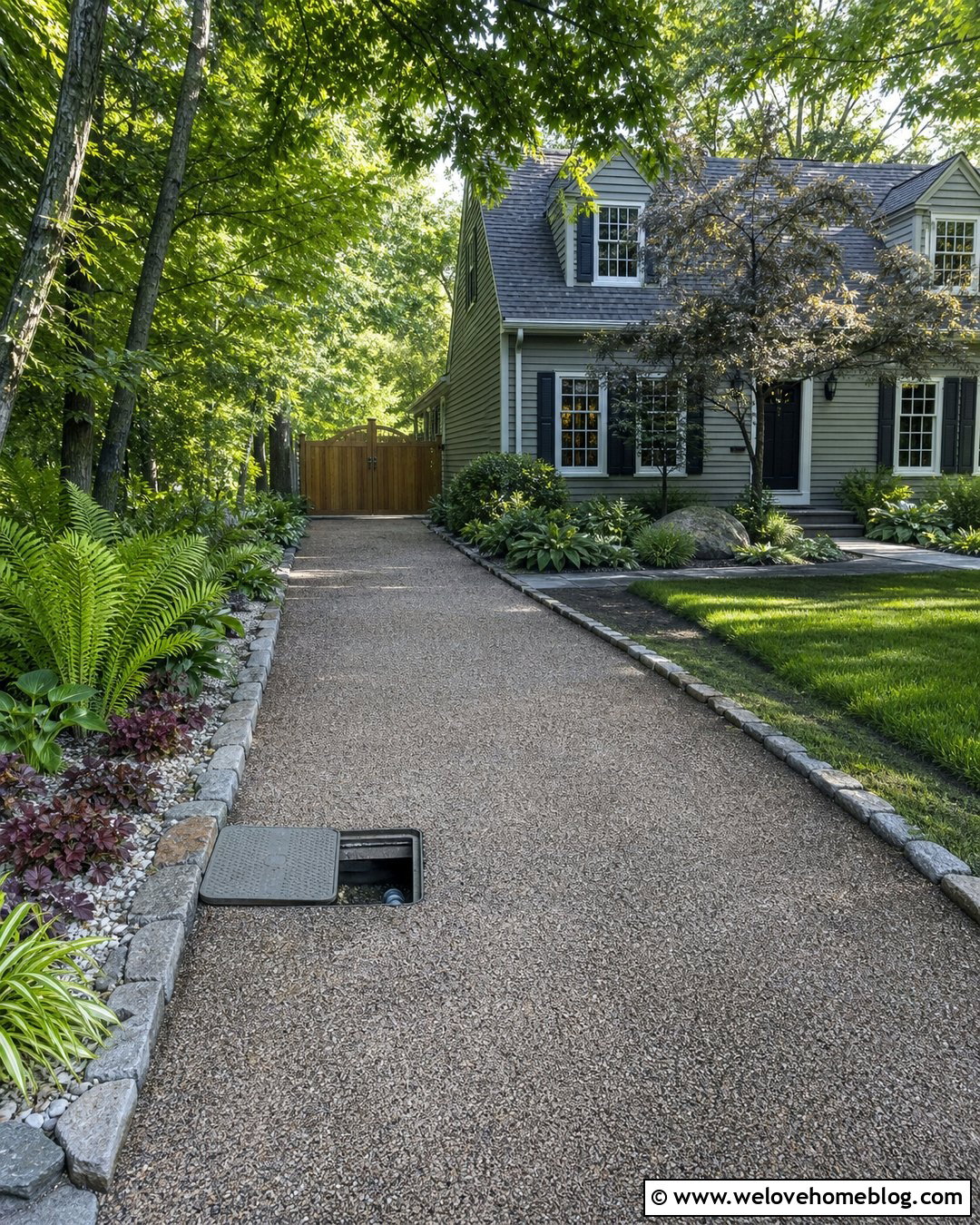
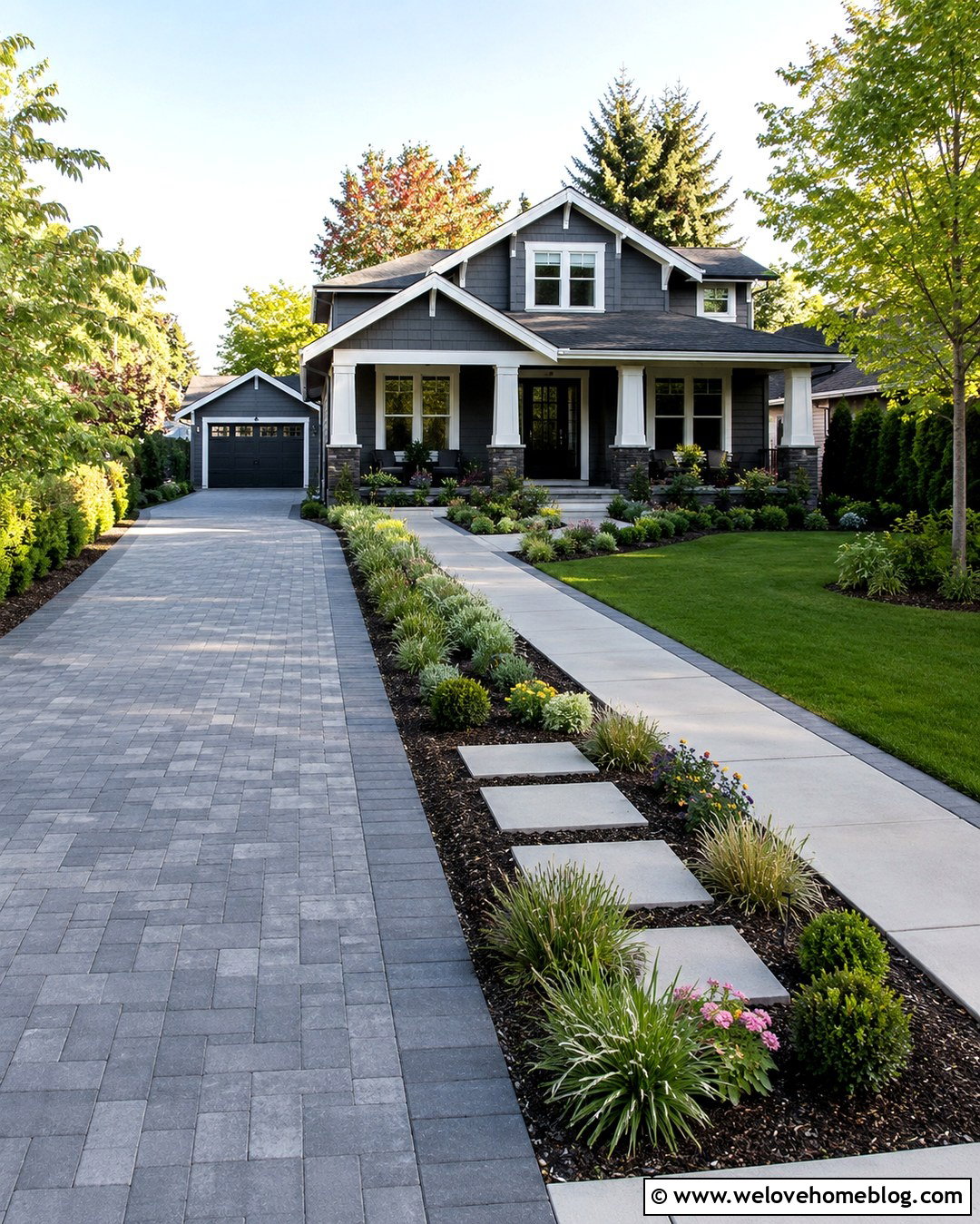
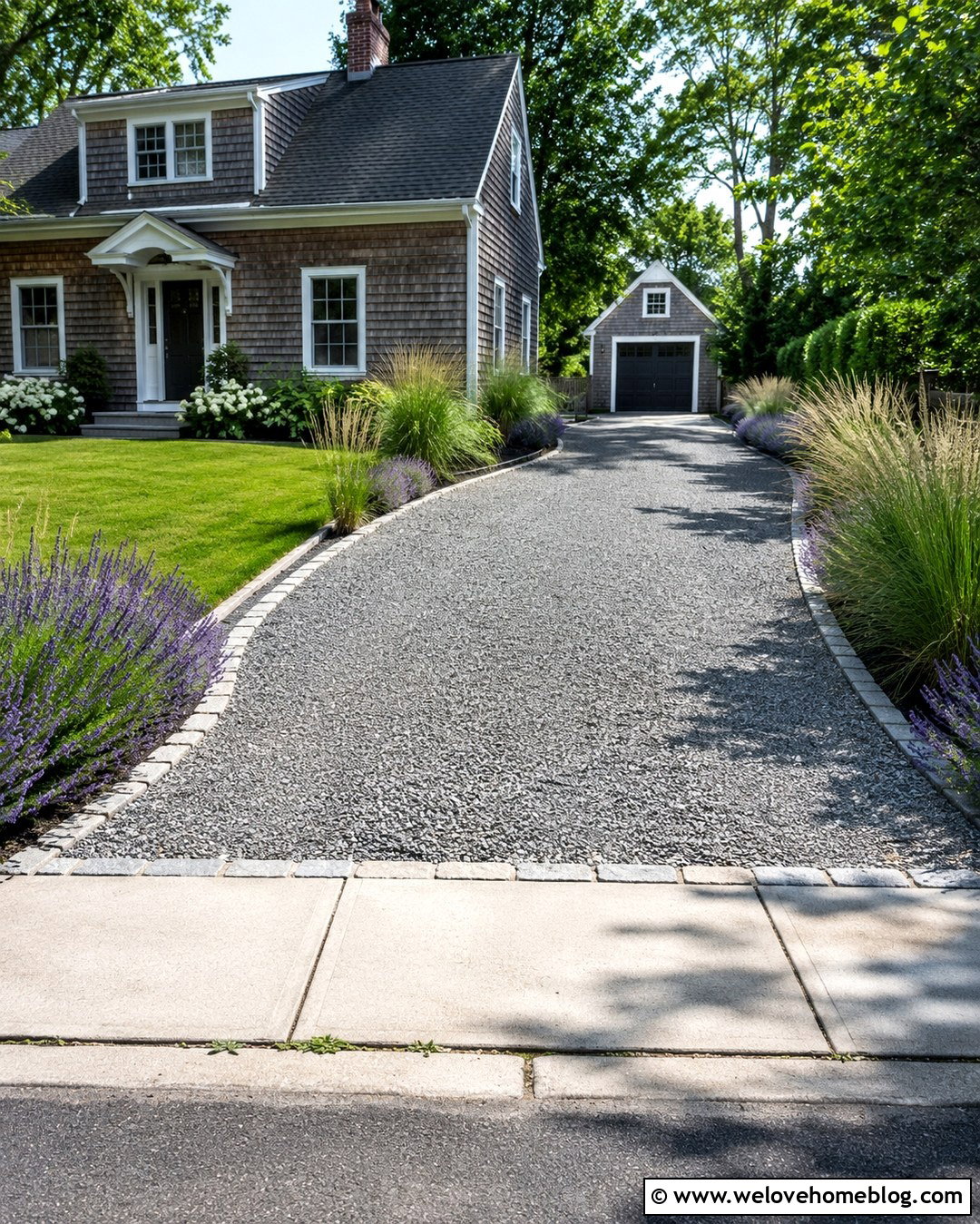
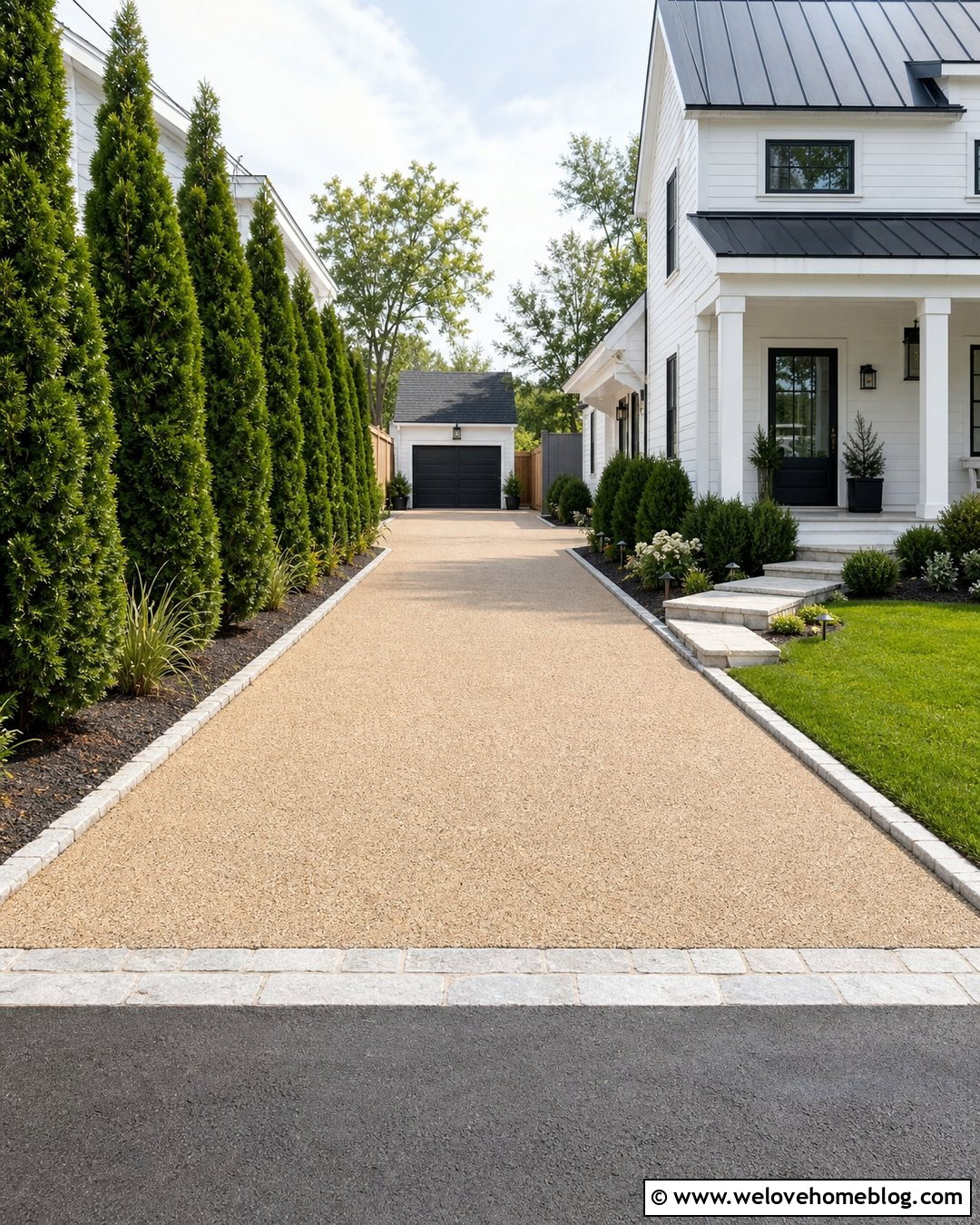
20. Side Driveway With Backyard Parking Court
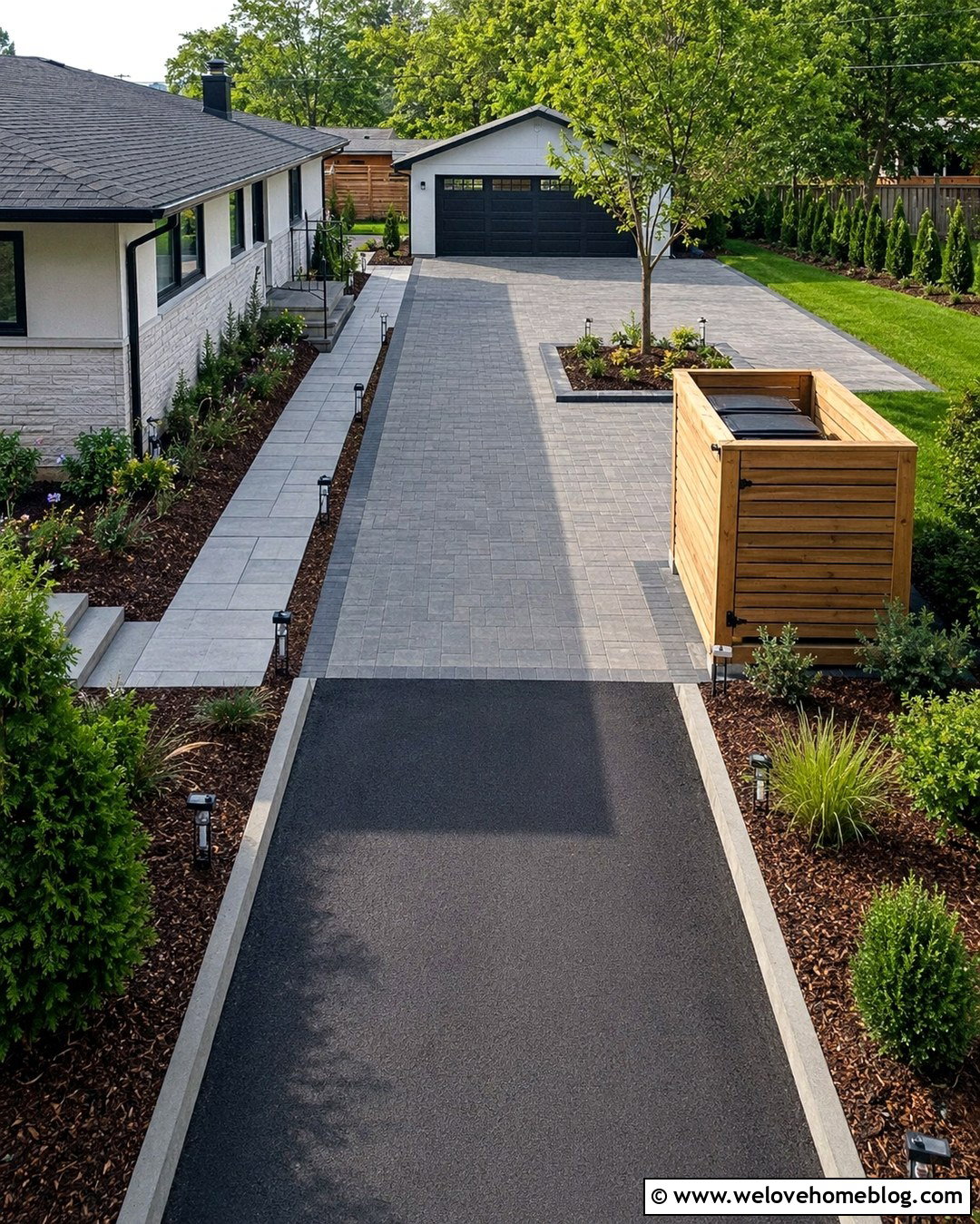
A side driveway can become much more useful when it opens into a well-planned parking court behind the house. Use black asphalt for the narrow approach and transition to charcoal concrete pavers in the wider rear area. The material change helps the court feel like a destination rather than an oversized continuation of the driveway. Arrange parking along one edge so a clear walkway remains available between the house, garage, and backyard. A small tree island or raised planting bed can soften the paved area, provided it does not interfere with turning movements. Screen trash cans and equipment behind a cedar enclosure. Install low, shielded lighting around the perimeter and direct runoff toward an approved drainage feature. This layout can preserve the front facade while supporting multiple vehicles and everyday household access.
Conclusion:
The most successful **20 Side Of House Driveway Ideas** balance vehicle access with drainage, pedestrian movement, landscaping, and the architecture of the home. Concrete and asphalt offer straightforward performance, while brick, pavers, gravel, and resin-bound aggregate introduce more texture and character. Narrow properties benefit from disciplined borders, wall-mounted lighting, compact plants, and clearly separated walking routes. Wider side yards can support gates, carports, turnaround pads, or backyard parking courts. Permeable surfaces may also help manage rainfall when properly matched to the site and installed over a suitable drainage system. () Before choosing a design, measure carefully, observe runoff, locate utilities, and review local driveway, curb-cut, drainage, and setback requirements.

Related posts:
Leave a Reply