
A slim driveway can still feel lush, welcoming, and thoughtfully designed. The best **20 Narrow Driveway Garden Ideas** combine a practical driving surface with compact planting beds, durable edging, vertical greenery, and clear access to the house. Repeated plants and restrained material palettes often make tight landscapes look more cohesive, while upright plants and climbing vines add greenery without consuming valuable pavement. () Before planting, note the sunlight, drainage, driveway heat, available bed width, and space needed for opening car doors. Choose plants suited to your local growing conditions, and keep mature sizes in mind. The complete looks below offer attractive, space-conscious inspiration through **20 Narrow Driveway Garden Ideas**.

1. Narrow Concrete Driveway With Lavender Borders
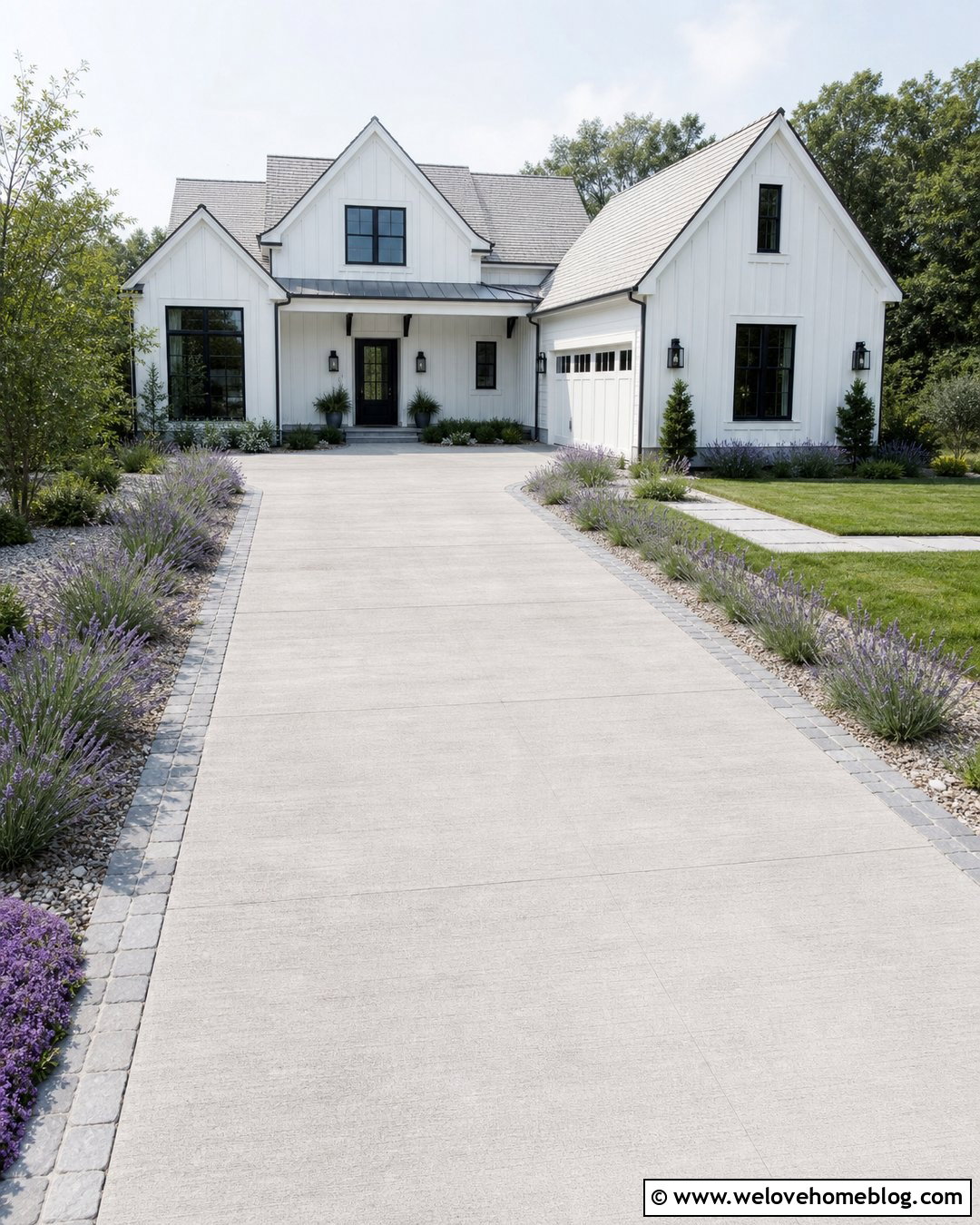
A straight, light-gray concrete driveway gains a softer appearance when slim lavender beds follow both edges. Install a narrow cobblestone border between the pavement and soil to create a tidy transition and protect plant crowns from tires. Repeating one lavender variety produces a calm, organized look that suits a cottage, ranch, or modern farmhouse. Add compact thyme near the street and two narrow evergreen shrubs beside the garage for year-round structure. This combination works best in sunny locations with freely draining soil. Leave enough distance between mature plants and the pavement so branches do not scrape vehicles. Pale gravel mulch can reduce visual clutter while complementing the concrete. The finished driveway feels fragrant, colorful, and carefully framed without sacrificing useful driving width.
2. Narrow Gravel Driveway With Raised Garden Beds
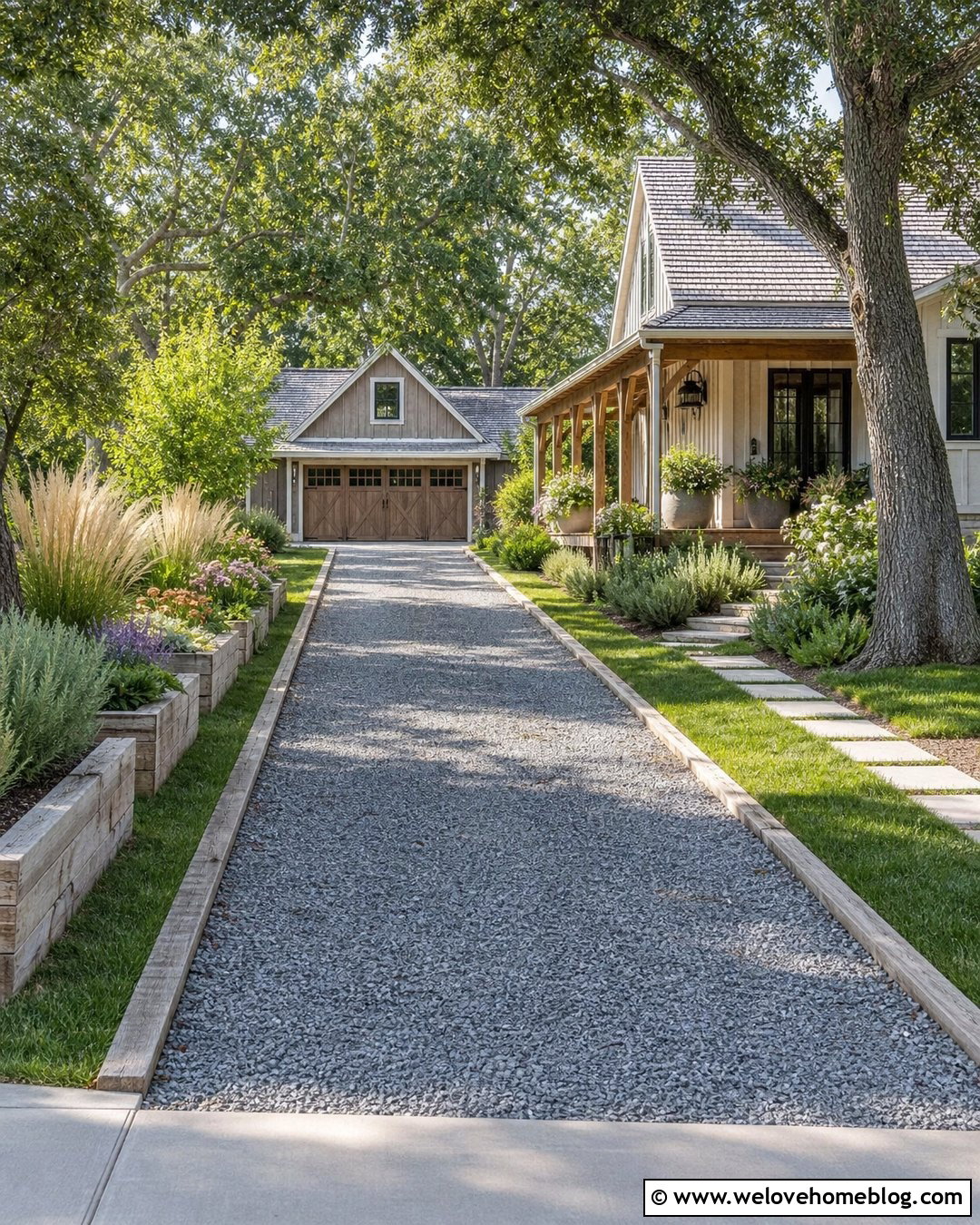
Crunchy gray gravel and low raised beds create a practical garden layout for a narrow country driveway. Keep the driveway straight, then define its edges with weathered timber or slim steel strips that stop loose stones from entering the beds. Long rectangular planters can hold rosemary, sage, ornamental grasses, and seasonal flowers without spreading into the driving area. Set the raised beds slightly back near the street to preserve clear sightlines when entering traffic. A simple stepping-stone route from the driveway to the front door adds function without requiring another wide paved surface. At the house, repeat the timber in window boxes or porch planters. This complete design brings texture and useful planting space to a limited footprint while maintaining a clean route to the garage.
3. Narrow Paver Driveway With Ornamental Grasses
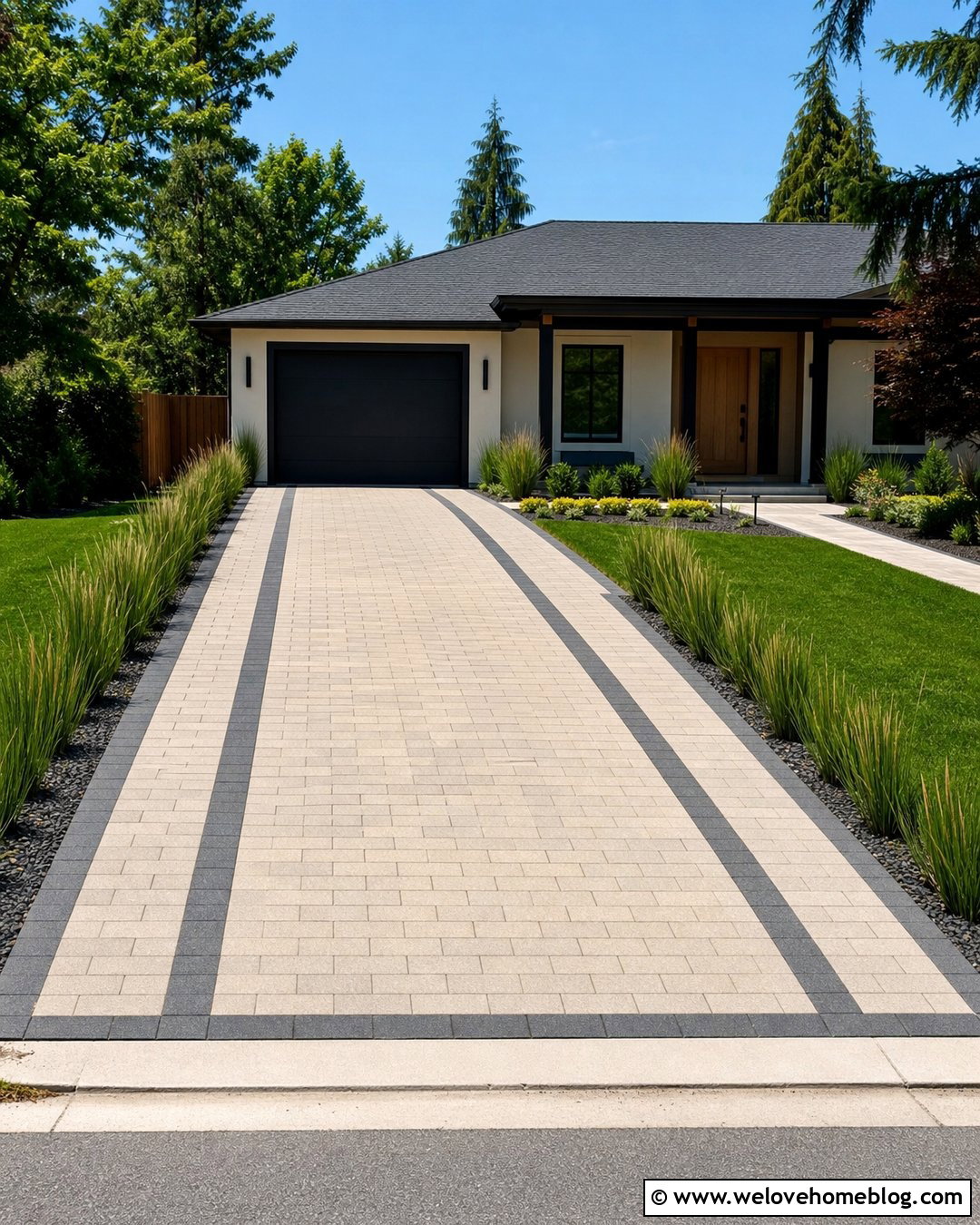
Warm beige concrete pavers laid in a running-bond pattern can make a narrow driveway feel longer and more orderly. Frame the pavement with charcoal paver ribbons, then plant upright ornamental grasses in slim mulched beds along one side. Their vertical form provides movement and greenery without leaning heavily over the driveway. Select compact grasses with mature widths appropriate for the available space, and position taller groups away from street corners. On the opposite side, maintain a simple lawn strip or a line of low ground cover to prevent the entrance from feeling enclosed. Repeat the same grass near the garage to connect both ends visually. The strong paving pattern, dark border, and airy planting create a contemporary driveway garden that feels polished rather than crowded.
4. Narrow Asphalt Driveway With White Flower Beds
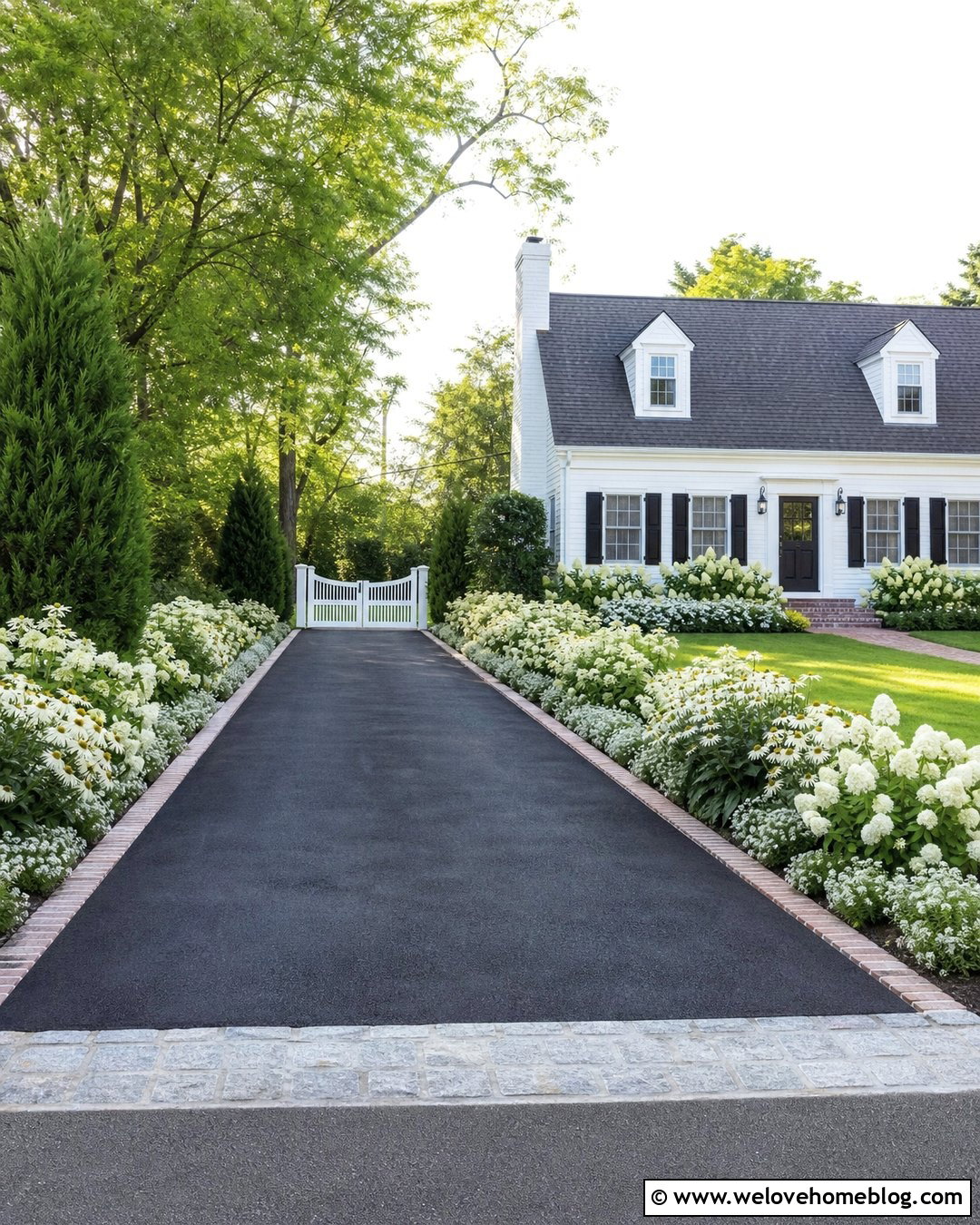
Can a black asphalt driveway look bright and garden-focused? Crisp white flowers can transform its appearance while creating an appealing contrast against the dark surface. Use narrow brick edging to separate the asphalt from beds filled with white coneflowers, compact hydrangeas, sweet alyssum, or locally suitable alternatives. Limit the palette to white, green, and one soft accent color for an uncluttered result. Place shorter flowers near the curb and taller plants closer to the house, where they will not block a driver’s view. A white-painted gate or garage door can repeat the flower color and unify the property. Regular plant groupings are easier to read in a restricted area than many isolated varieties. This design feels fresh, classic, and suitable for several traditional house styles.
5. Narrow Brick Driveway With Boxwood Garden Borders
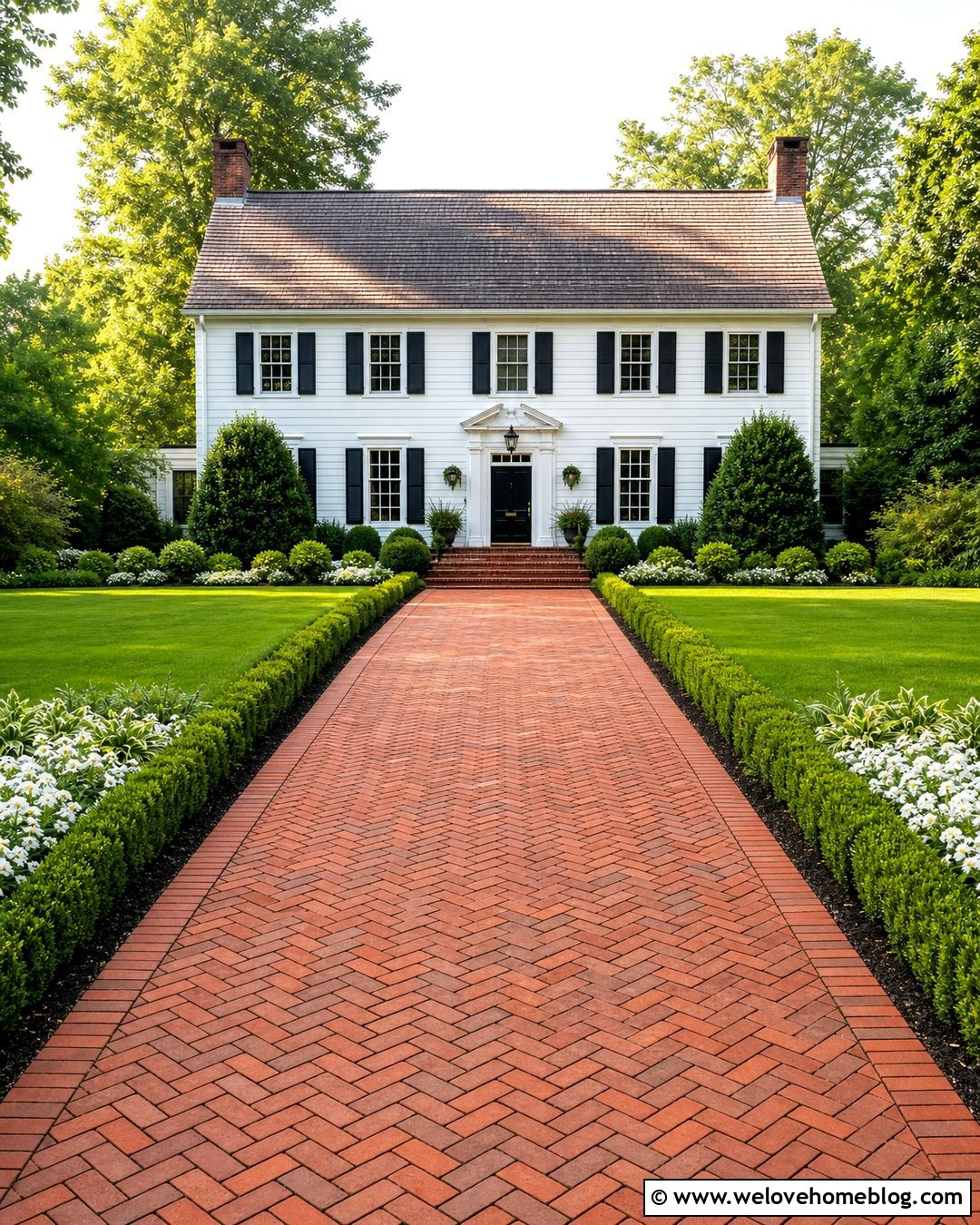
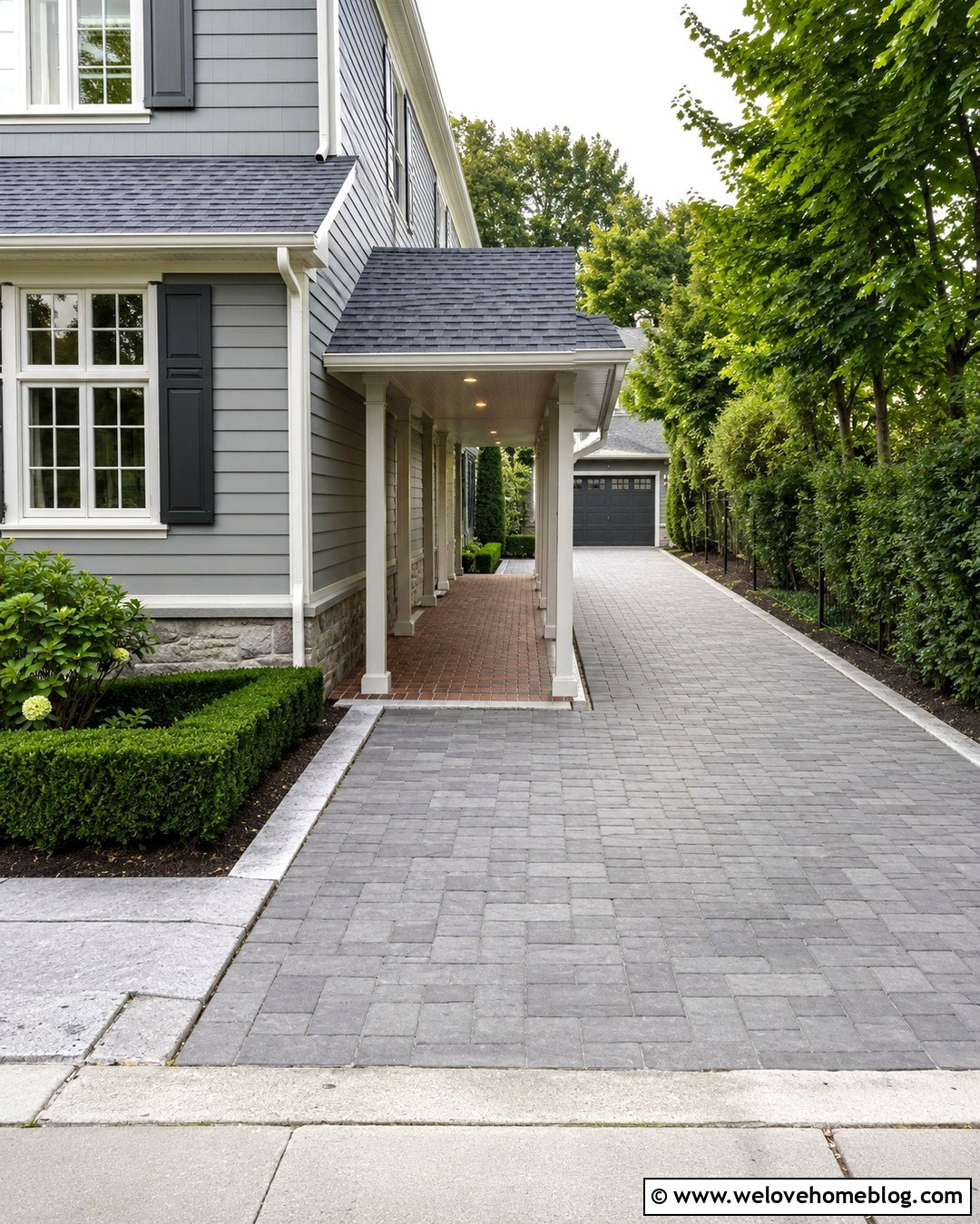
Red clay brick pavers laid in herringbone bring warmth and detail to a slim driveway beside a colonial or Cape Cod home. Low boxwood borders can reinforce the formal character, but they should remain compact enough to avoid crowding parked vehicles. Set the hedge behind a flush soldier-course brick edge so tires, soil, and mulch remain separate. Break the continuous greenery with small pockets of white perennials near the sidewalk and front walkway. This creates focal points without making the driveway look busy. Matching brick steps or a brick path can lead visitors naturally toward the entrance. Where boxwood is unsuitable, choose a disease-resistant, locally appropriate evergreen with a similar clipped form. The completed garden provides symmetry, year-round structure, and an elegant transition from street to house.
6. Narrow Driveway With A Vertical Trellis Garden
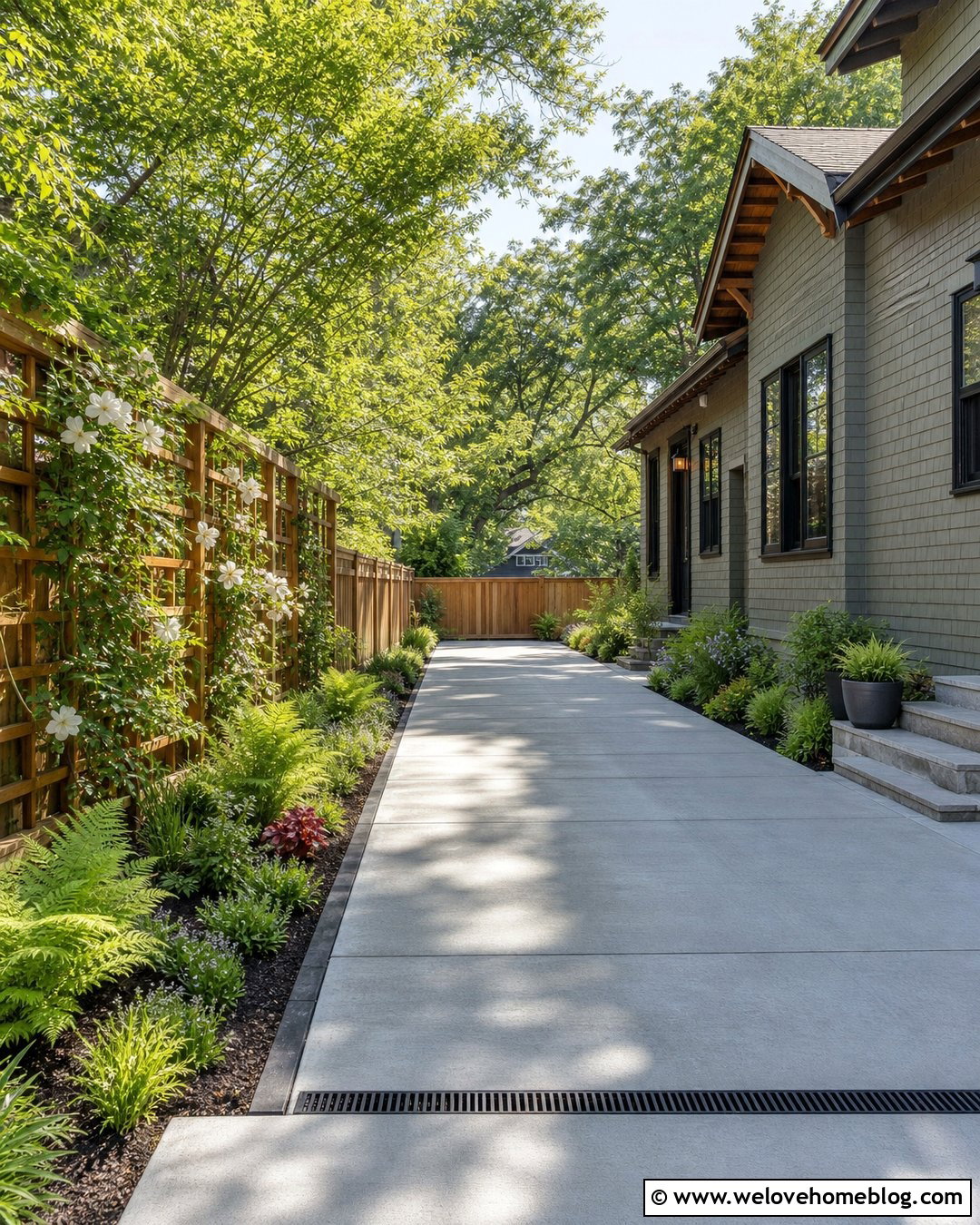
When planting space is measured in inches rather than feet, a vertical garden can make the boundary work harder. Pair a smooth poured-concrete driveway with a narrow planting strip and a simple cedar trellis mounted along the fence or garage wall. Train noninvasive flowering vines across the supports, leaving airflow between foliage and the structure. Below, use compact ferns, coral bells, sedges, or low herbs selected for the site’s sunlight. Vertical surfaces are especially useful in narrow gardens because they add planting layers without widening the bed. () A flush metal edge keeps soil away from the pavement, while a slim drainage channel can manage runoff where needed. The result surrounds the driveway with greenery while preserving comfortable access for vehicles and pedestrians.
7. Narrow Driveway With A Native Pollinator Garden
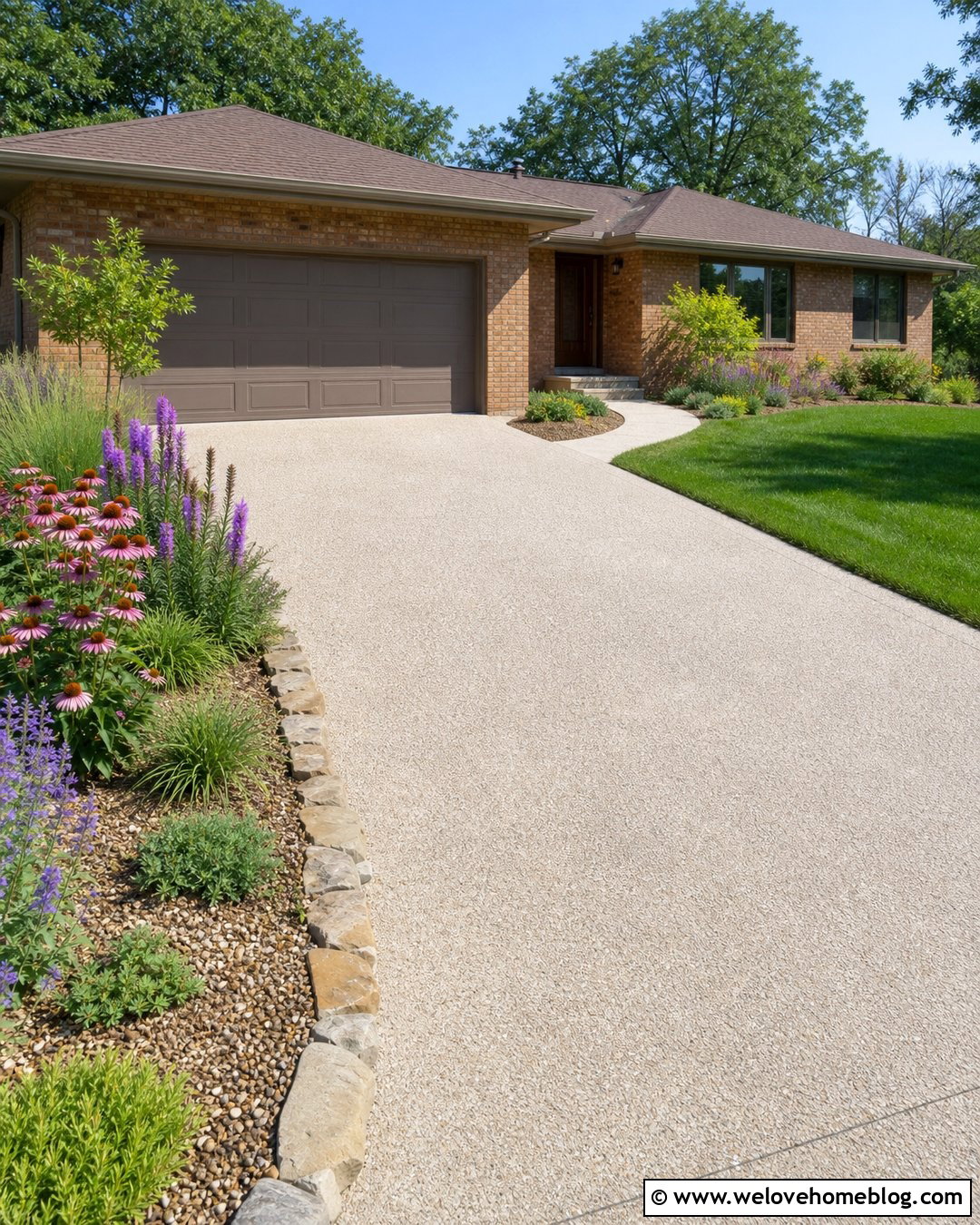
A narrow driveway garden can support local wildlife while still looking intentional. Start with a pale exposed-aggregate concrete surface, bordered by natural stone and a continuous planting bed on the sunnier side. Fill the bed with regionally native perennials and grasses arranged in repeated groups rather than scattered singles. Choose compact species that remain upright, tolerate reflected heat, and provide flowers across several seasons. Keep plants lowest beside the street and front walkway, then increase their height toward the house. A gravel mulch or dense living ground cover can visually connect the planting while limiting bare soil. Add one narrow native shrub near the garage as an anchor. This layered but disciplined layout delivers changing color, texture, and habitat without allowing the planting to overwhelm the driveway.
8. Narrow Driveway With A Shaded Fern Garden
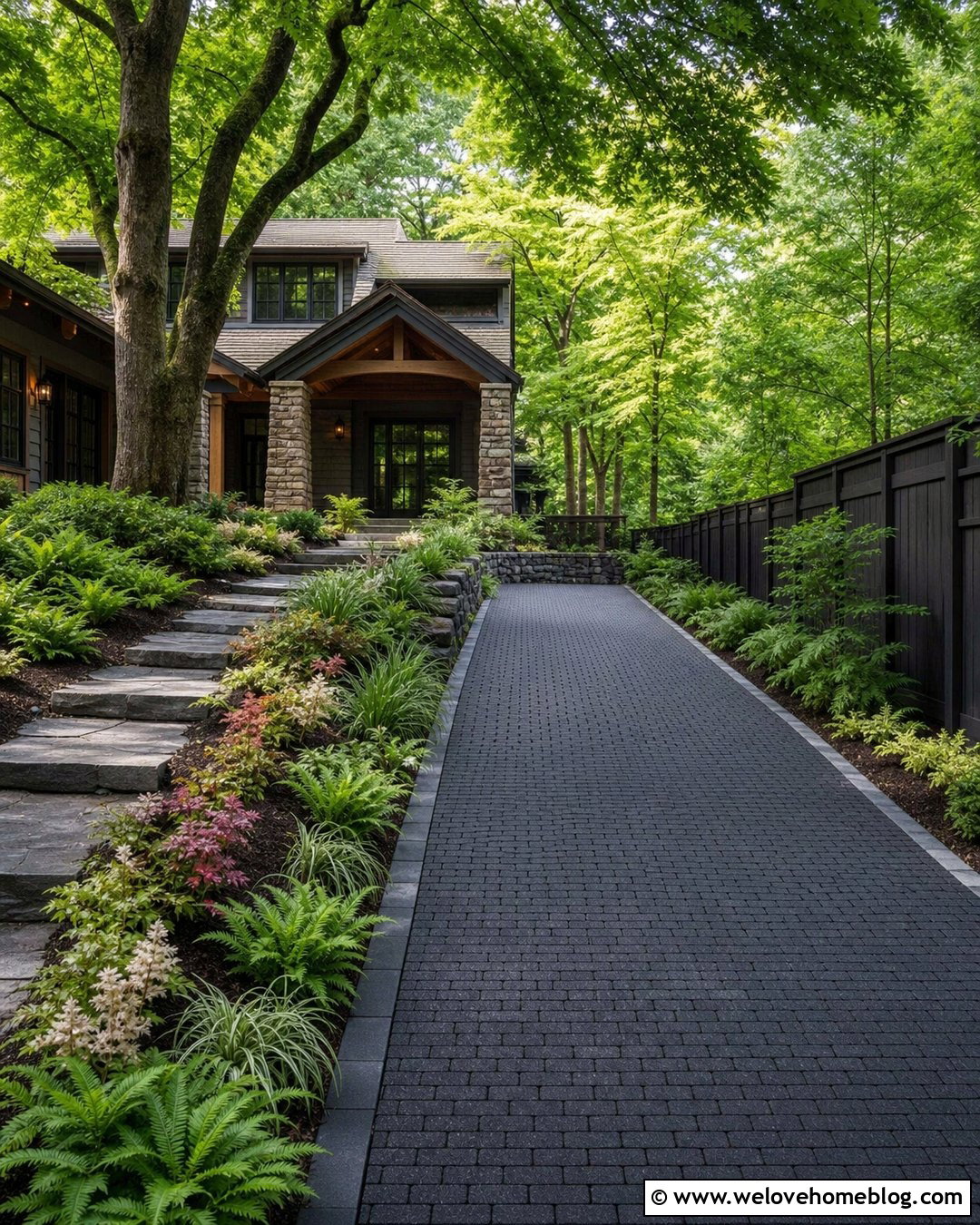
Cool green foliage can turn a shaded side driveway into one of the property’s most attractive spaces. Use charcoal permeable pavers for the driving surface, then build a slim garden bed along the fence with ferns, sedges, coral bells, and other shade-tolerant plants appropriate for the region. Vary leaf shapes rather than relying on many flower colors. A low bluestone curb provides definition and echoes the driveway’s darker tones. Place taller ferns toward the back and small ground covers near the pavement, leaving room for mature growth. Pale foliage or white blooms can brighten the deepest shade. Add a stepping-stone connection to the side door and keep it level with the driveway. This complete combination feels woodland-inspired, peaceful, and visually rich throughout much of the growing season.
9. Narrow Driveway With Drought-Tolerant Landscaping
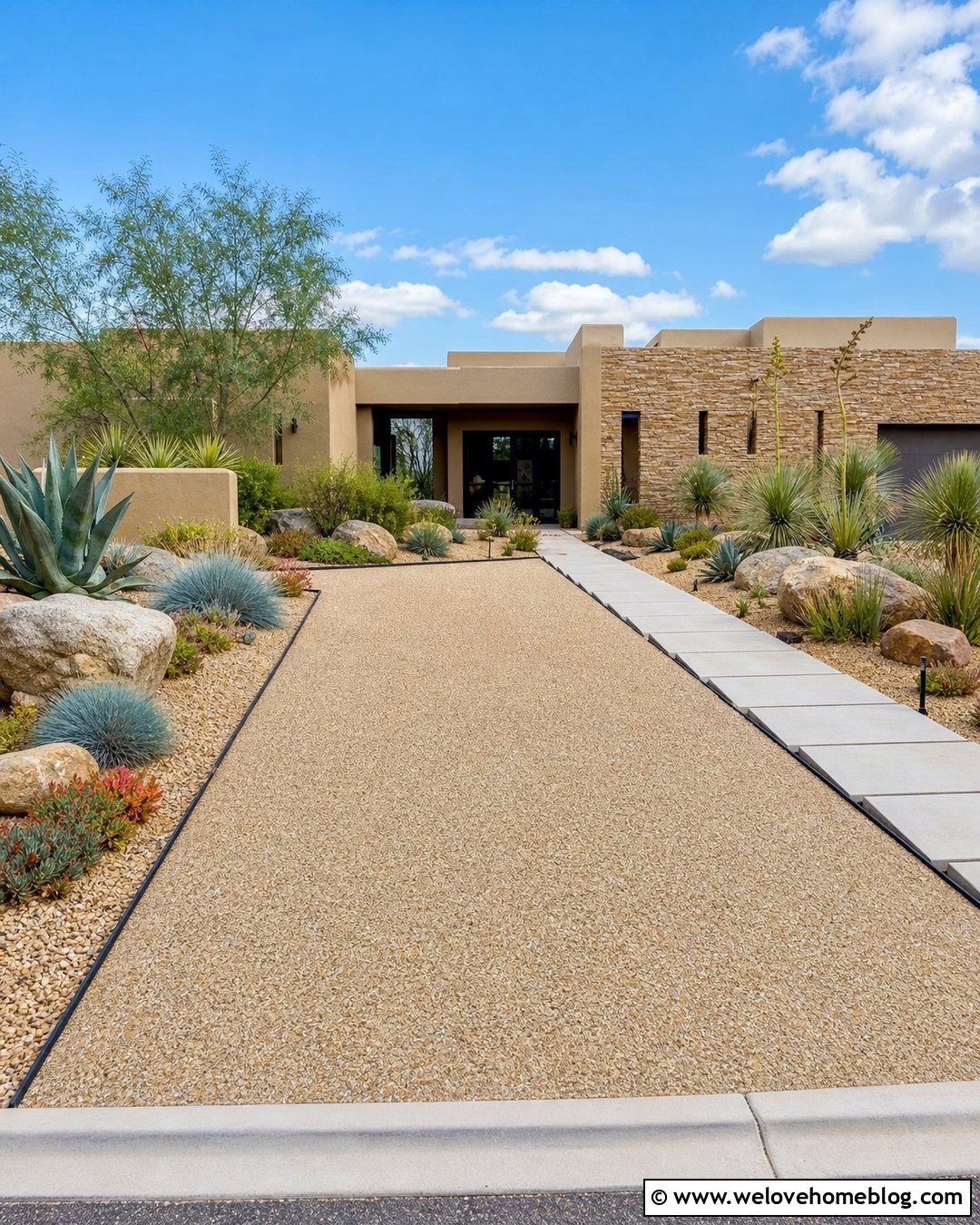
Hot pavement and limited irrigation call for a driveway garden designed around durable, water-conscious planting. Pair a sand-colored resin-bound gravel driveway with slim steel edging and beds mulched in small tan gravel. Arrange compact yucca, agave where climate-appropriate, blue fescue, sedum, and low flowering perennials in widely spaced groups. Avoid thorny plants near car doors or walking routes. A few sculptural specimens will usually look cleaner than a crowded collection in such a tight setting. Add larger accent stones to connect the planting with the textured driveway surface. Near the house, repeat one plant in a simple container beside the garage. This low-spreading palette keeps maintenance manageable and provides strong shapes, while the light pavement and gravel mulch create a bright, coordinated Southwestern or modern appearance.
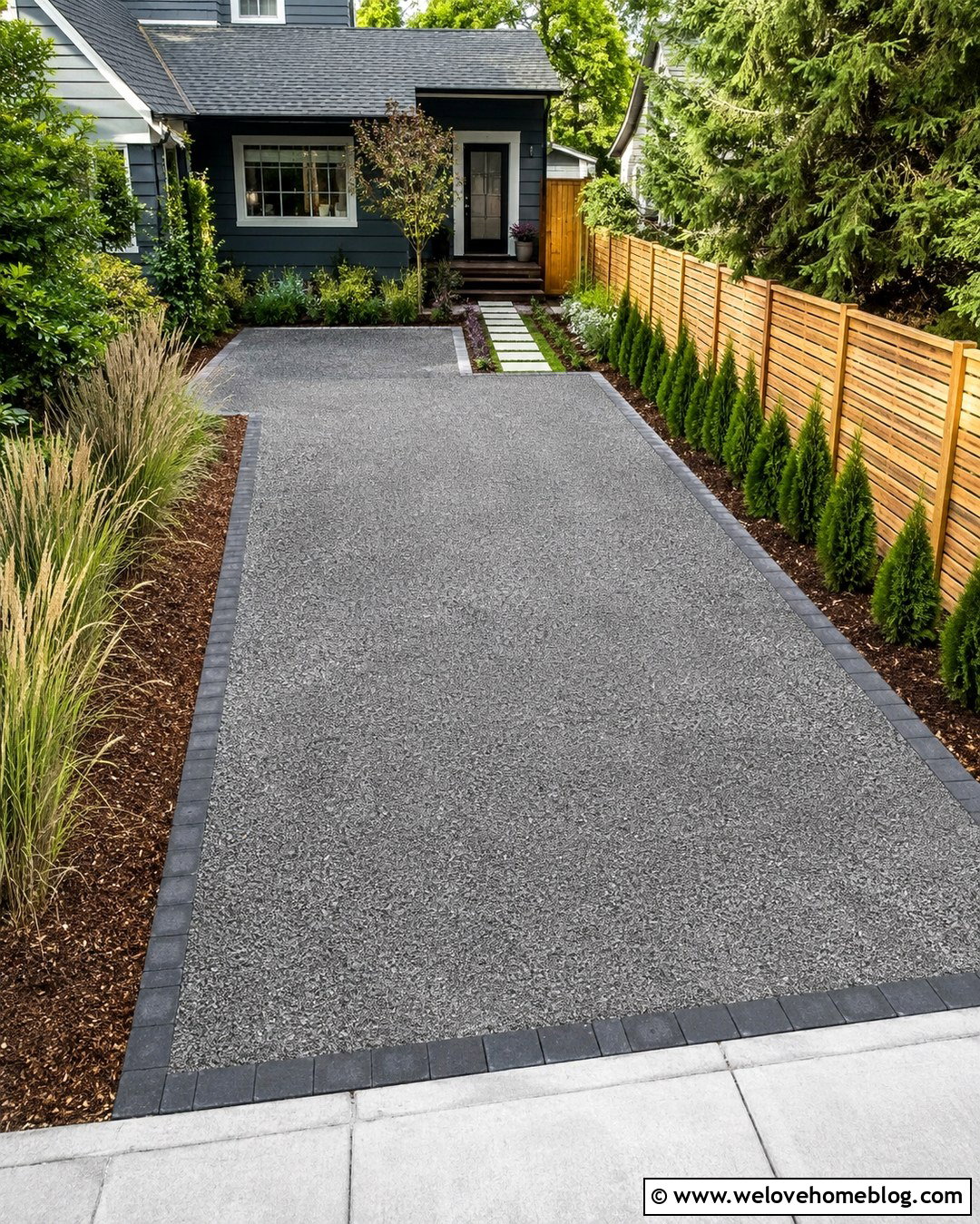

10. Narrow Driveway With A Cottage Flower Garden
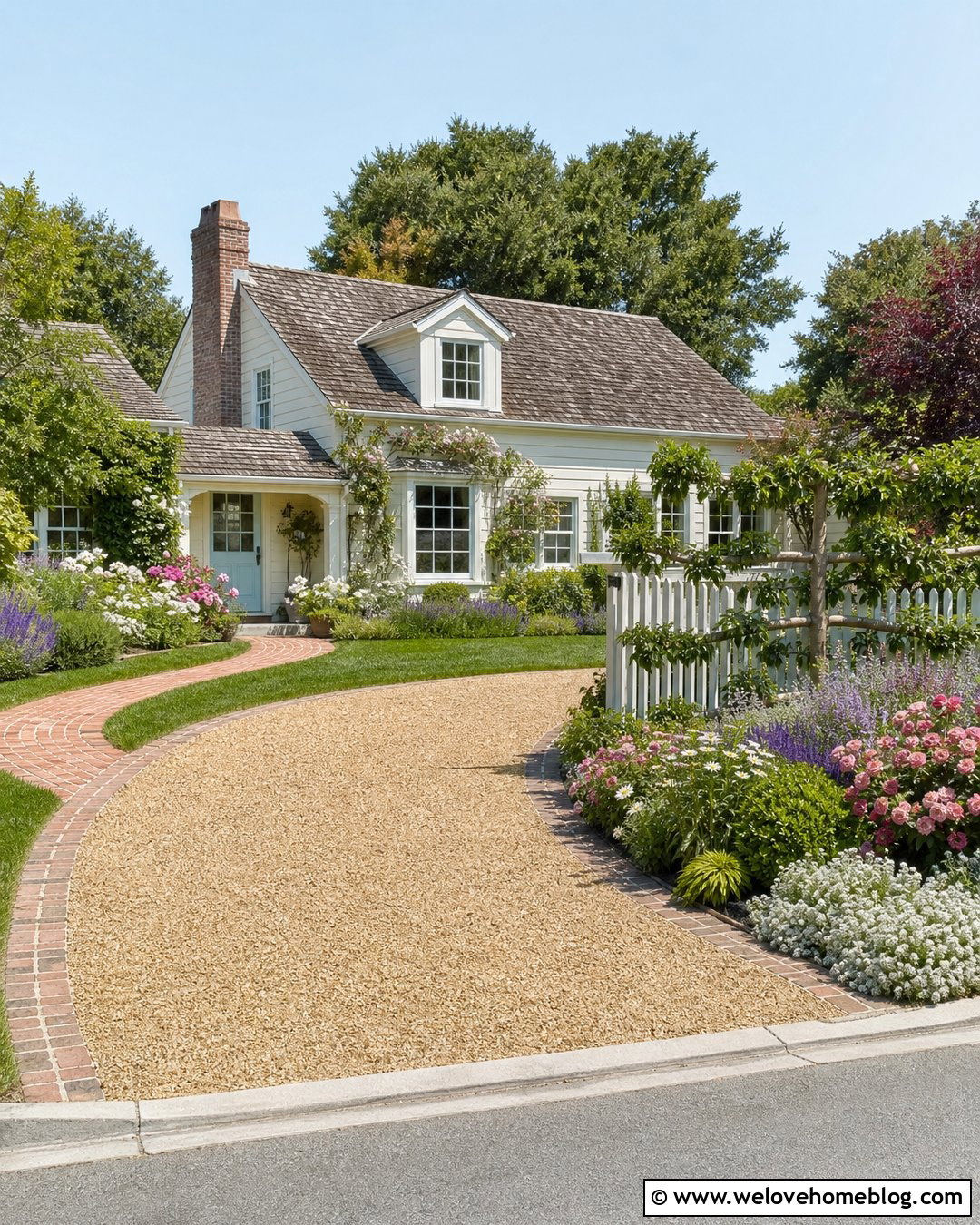
Softly overflowing flowers can border a narrow driveway without turning it into an obstacle course. Begin with warm buff gravel contained by reclaimed brick edging, then curve one planting bed gently toward the house. Fill it with compact roses, salvia, catmint, daisies, and seasonal bulbs, repeating key plants to maintain order. Keep the lowest varieties along the driving edge and reserve taller flowers for the fence or foundation. An espaliered fruit tree can create height without the broad canopy of a standard tree. Allow a few soft stems to blur the brick border, but maintain a clear setback near parking spaces. A matching brick walkway completes the cottage character. This design offers abundant color and fragrance while its controlled layers protect the practical width of the driveway.
11. Narrow Driveway With A Modern Grass Strip
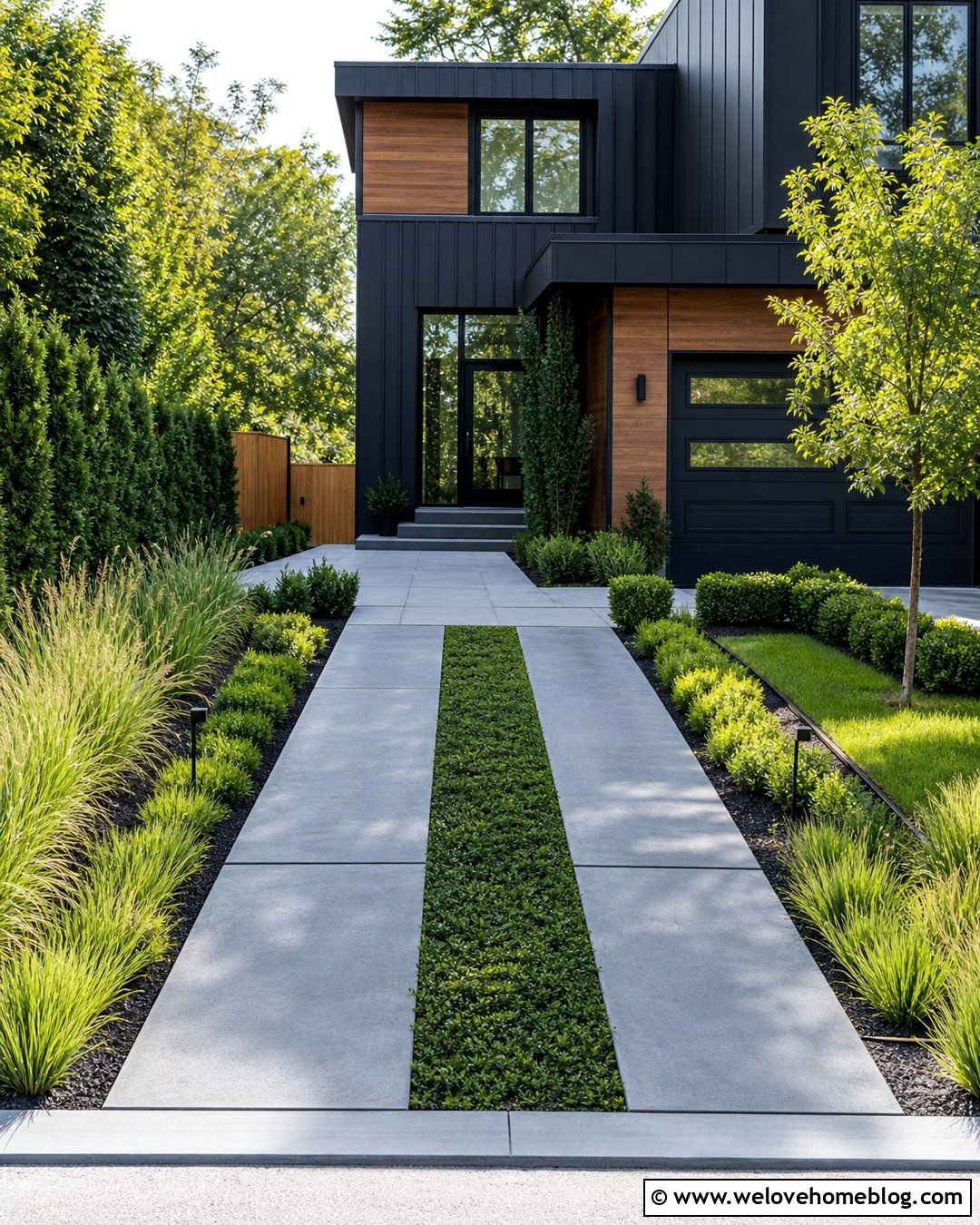
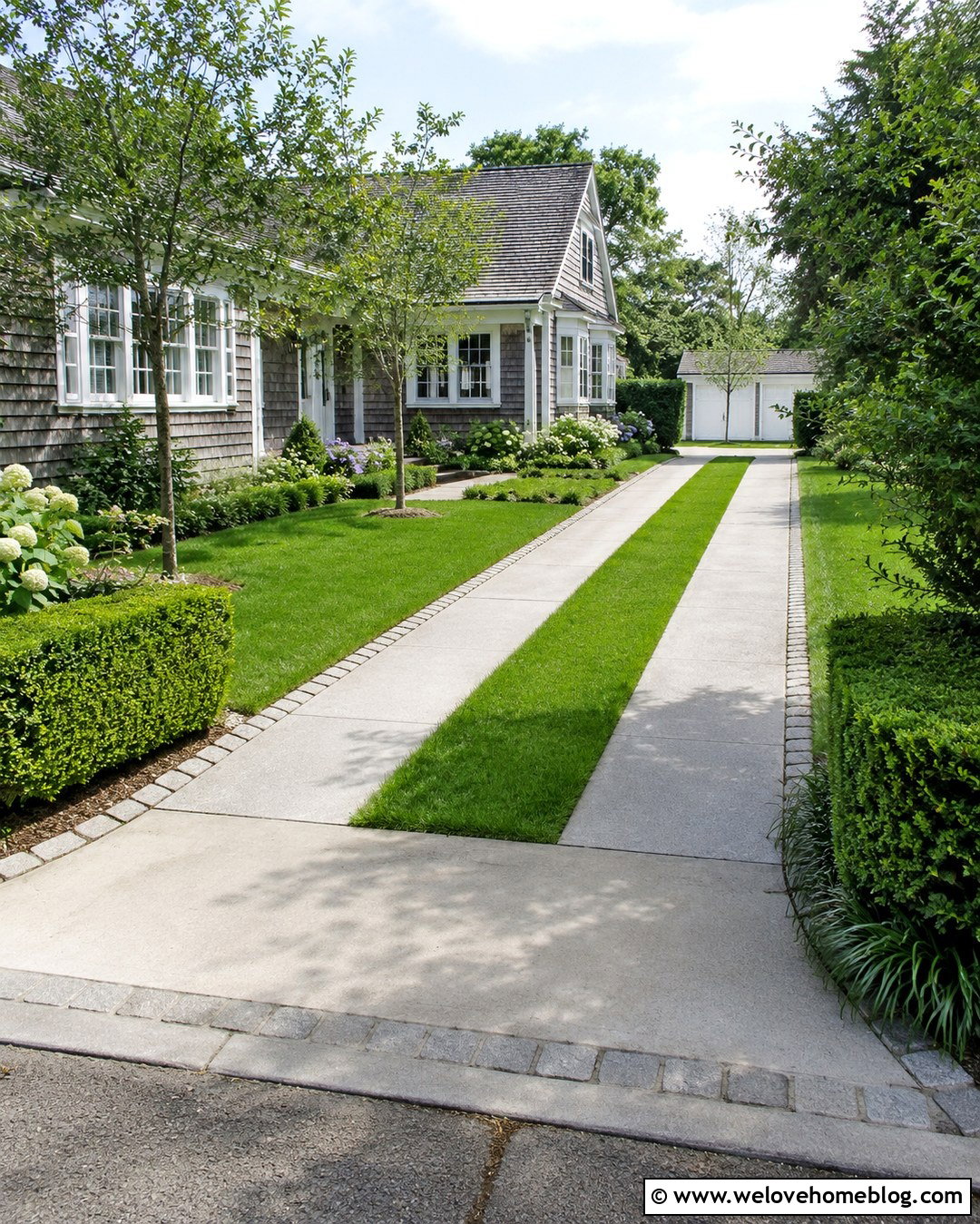
Clean lines and limited planting can make a narrow modern driveway feel wider. Create two smooth gray concrete wheel tracks with a reinforced grass or low ground-cover strip running between them. Continue slim planting beds along the outer edges, using compact evergreen grasses and clipped shrubs in evenly spaced blocks. Black steel edging produces a sharp transition without taking up much room. Keep the plant palette restrained, and match the bed geometry to the home’s windows, walls, or garage doors. A large-format concrete walkway can cross the planting strip and connect the driveway to the entrance. This layout reduces the visual mass of a fully paved surface while maintaining a clear route for vehicles. It feels especially effective beside a simple contemporary home with black, white, or natural wood finishes.
12. Narrow Driveway With Low Ground Cover
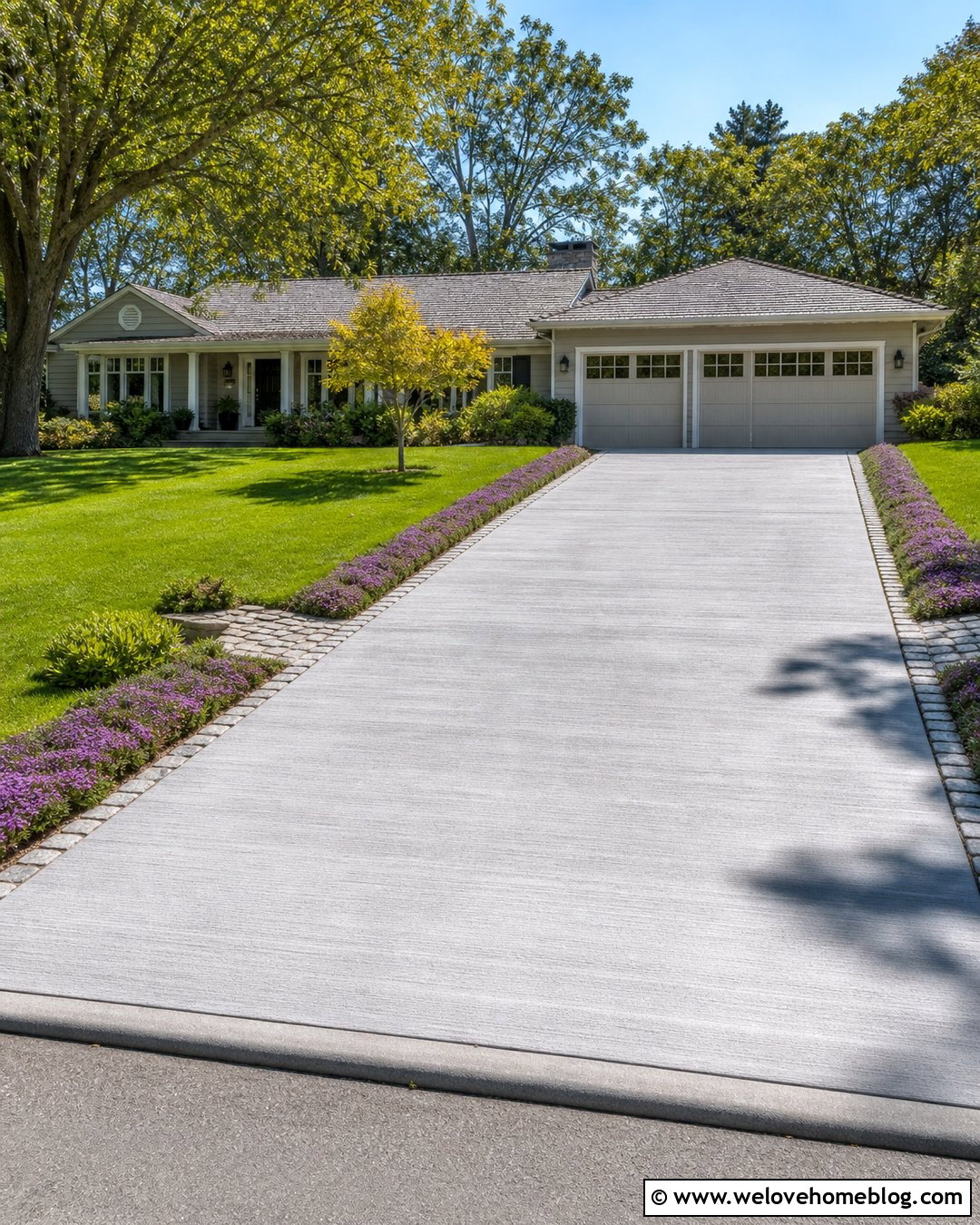
A carpet of low greenery can soften a hard driveway edge without interfering with mirrors, doors, or tires. Pair a light broom-finished concrete driveway with a thin cobblestone border and broad drifts of creeping thyme, sedum, or another locally suitable ground cover. Place the plants in a continuous ribbon rather than a patchwork of unrelated varieties. Tough, low plants are particularly useful beside restricted driving areas where taller growth might flop onto the pavement. () Include small access pads near common parking positions so passengers do not step directly into the bed. A compact ornamental tree near the house can add height without reducing clearance along the entire driveway. The finished space looks green, unified, and easy to navigate, with seasonal flowers providing subtle color at pavement level.
13. Narrow Driveway With Espalier Trees
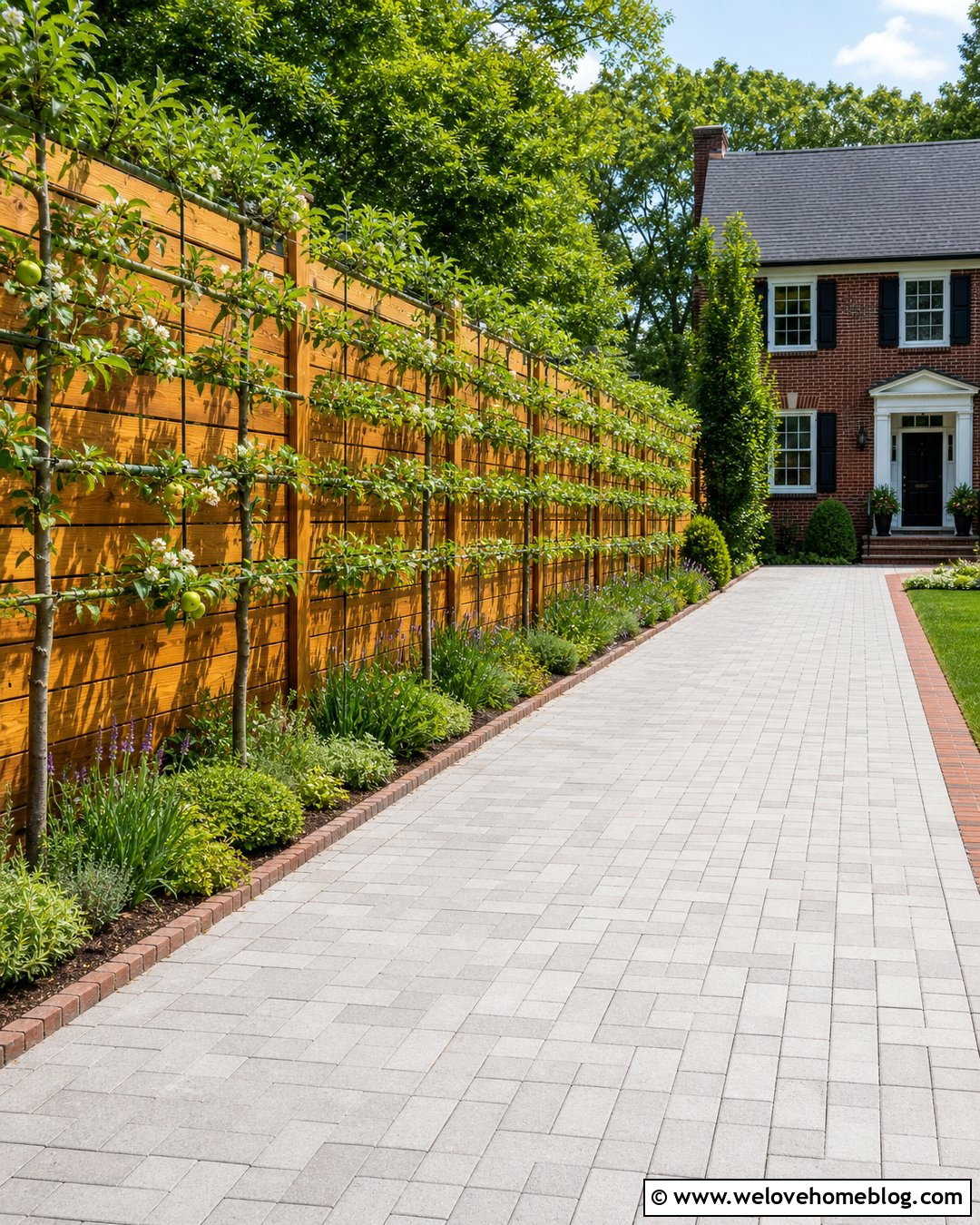
Espalier trees bring fruit, flowers, and architectural structure to a narrow driveway border. Choose a pale gray paver driveway with a straight layout, then install sturdy horizontal wires along a sunny fence or masonry wall. Train suitable apple, pear, or ornamental trees flat against the support, following local horticultural guidance for varieties and pollination. Beneath the trees, plant a narrow ribbon of herbs, spring bulbs, or compact ground cover. A brick mowing strip can separate the bed from the pavers and make cleanup easier. Keep branches pruned within the support plane so they do not extend toward vehicles. Repeating the trained forms along the driveway creates a strong rhythm and draws the eye toward the house. This garden solution is productive, decorative, and notably efficient with limited ground space.
14. Narrow Driveway With Evergreen Privacy Planting
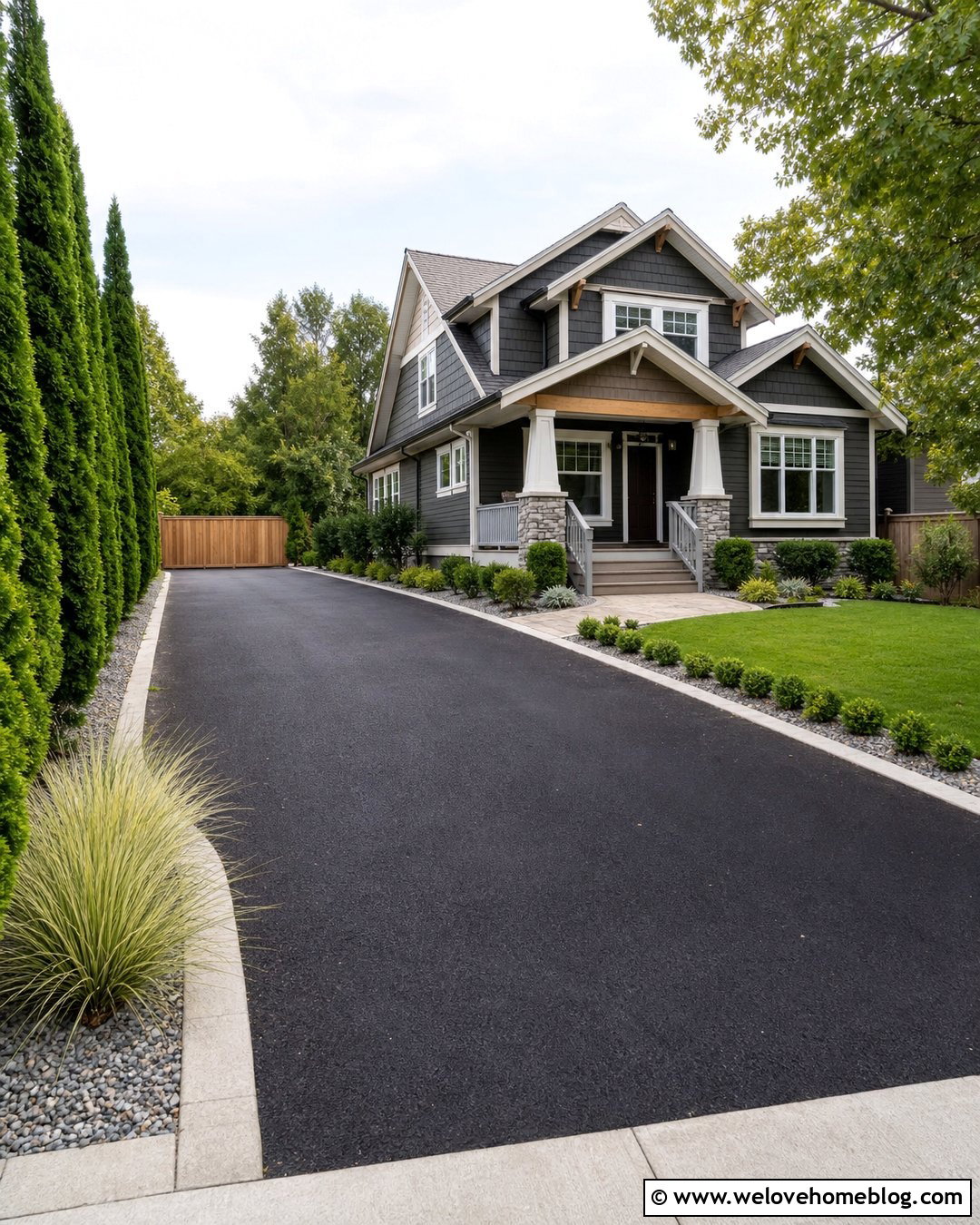
A neighboring property may sit uncomfortably close to a slim driveway, but the planting solution should not consume the parking area. Combine a charcoal asphalt driveway with a narrow gravel bed and a carefully selected row of columnar evergreens. Verify mature widths before planting because even naturally upright shrubs require adequate root space and clearance. Position the screen farther from the curb, where visibility matters less, and transition to shorter ornamental grasses near the street. A low concrete curb keeps roots, gravel, and pavement clearly separated. On the house side, use simple foundation planting rather than another tall hedge, preventing a tunnel-like feeling. The alternating heights provide privacy while preserving openness at the entrance. This complete layout suits urban and suburban lots where every inch of usable driveway matters.




15. Narrow Driveway With A Rain Garden Border
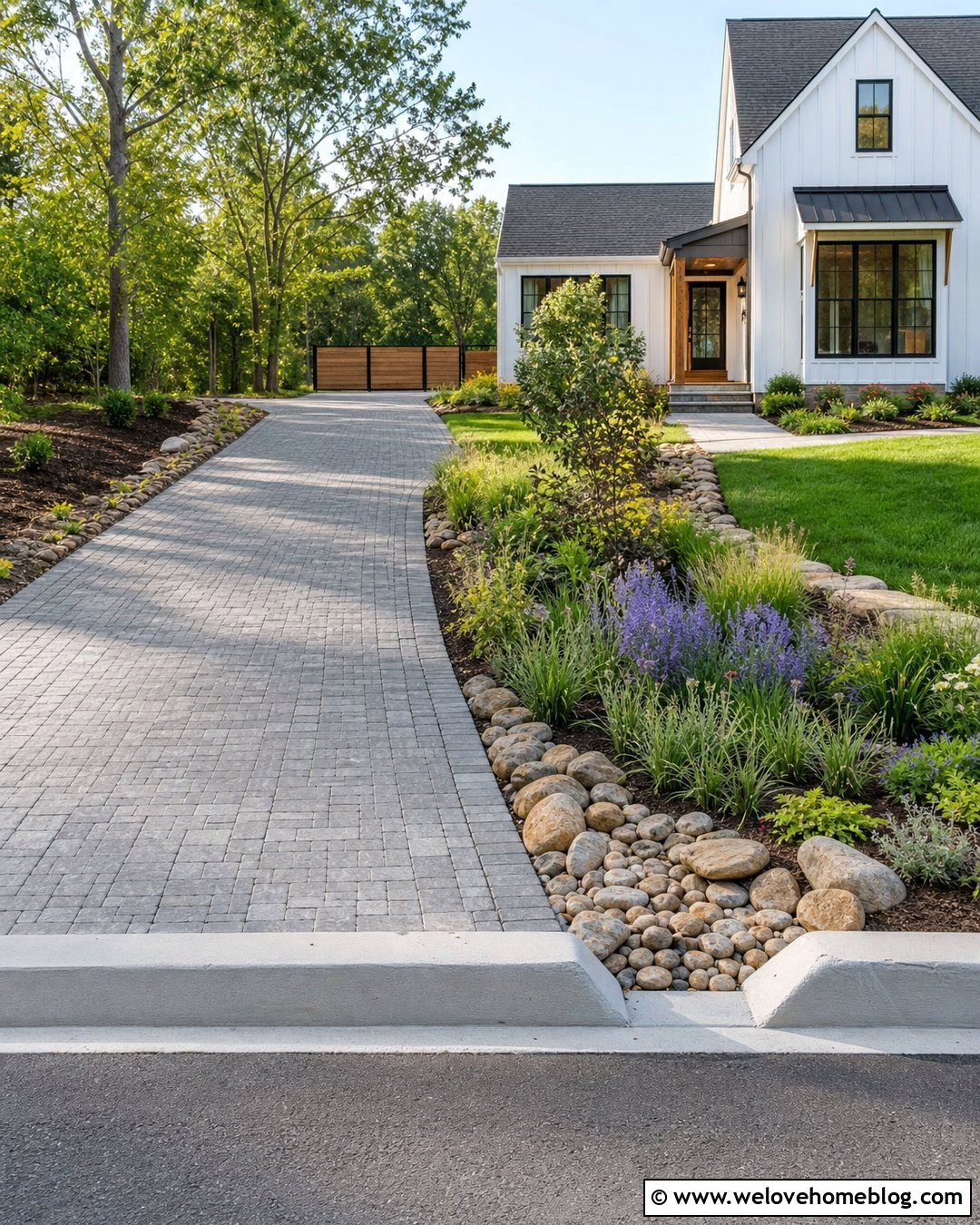
If runoff naturally collects beside the driveway, a shallow rain garden may turn a recurring wet spot into a landscaped feature. Use permeable concrete pavers for the narrow driving surface and direct water toward a gently depressed bed through planned openings in the stone curb. Fill the garden with regionally appropriate plants that tolerate both temporary moisture and dry periods. Arrange lower sedges near the inlet, flowering perennials through the center, and a compact shrub toward the house. The bed must not undermine the driveway base or send water toward the foundation, so evaluate grading and local requirements before construction. Decorative river stones can mark the water route and prevent erosion. This practical garden creates a natural-looking edge while helping the driveway and surrounding landscape function as one coordinated system.
16. Narrow Driveway With Brick Planter Pockets
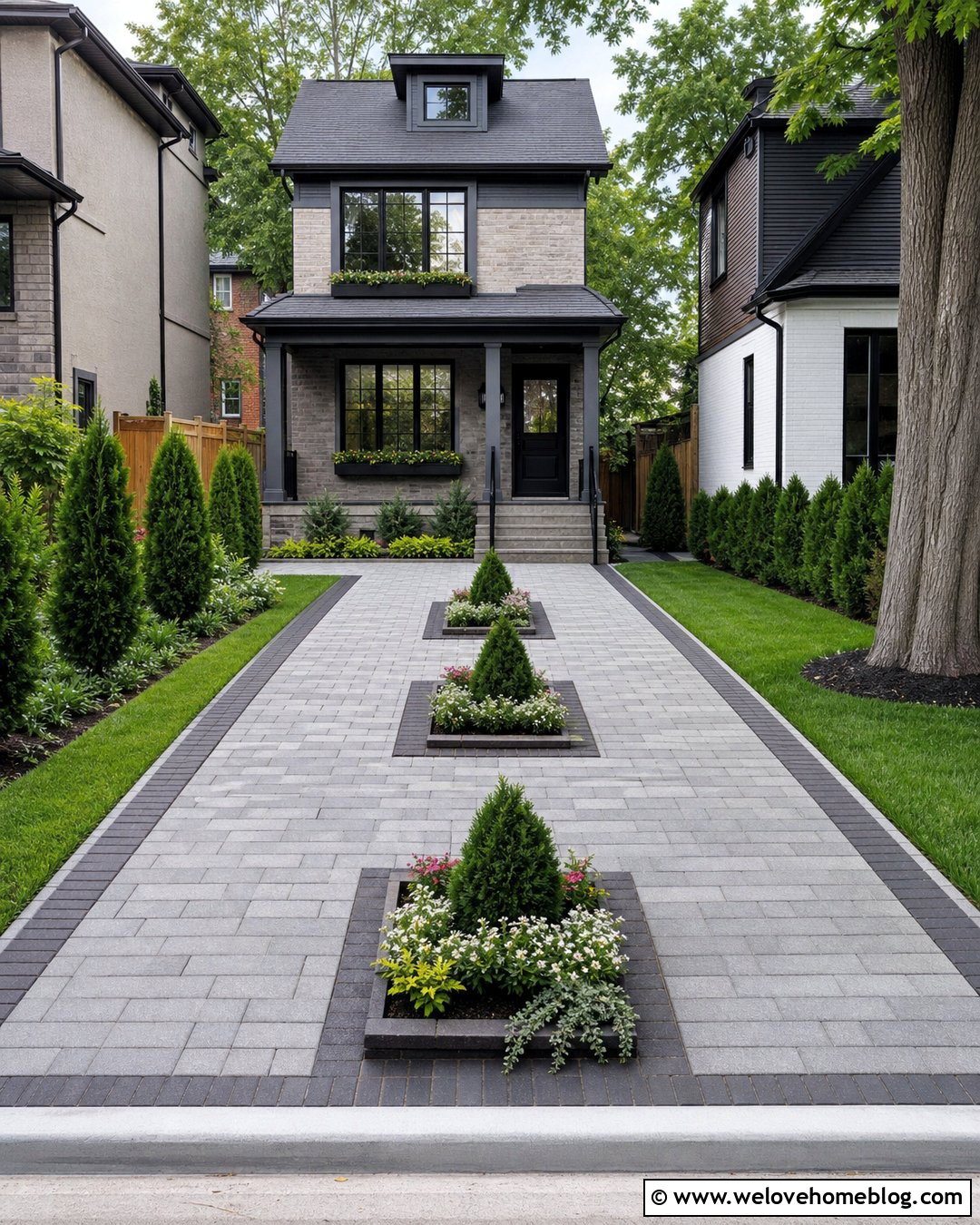
Small planting pockets can bring color to a driveway where continuous beds are impossible. Lay the narrow surface in gray concrete pavers and insert rectangular brick-edged planters at carefully spaced points along one side. Fill each pocket with the same combination of dwarf evergreen shrubs, compact flowers, and trailing ground cover. Repetition prevents the small beds from looking random. Keep the planters away from turning zones and positions where car doors regularly open. Between the pockets, continue a flush brick ribbon that visually connects the garden from the curb to the house. A matching brick path can branch toward the front steps. This approach preserves most of the driveway width while providing several concentrated moments of greenery, making it useful for townhouses and small suburban homes with heavily paved front yards.
17. Narrow Driveway With Stone Walls And Planting
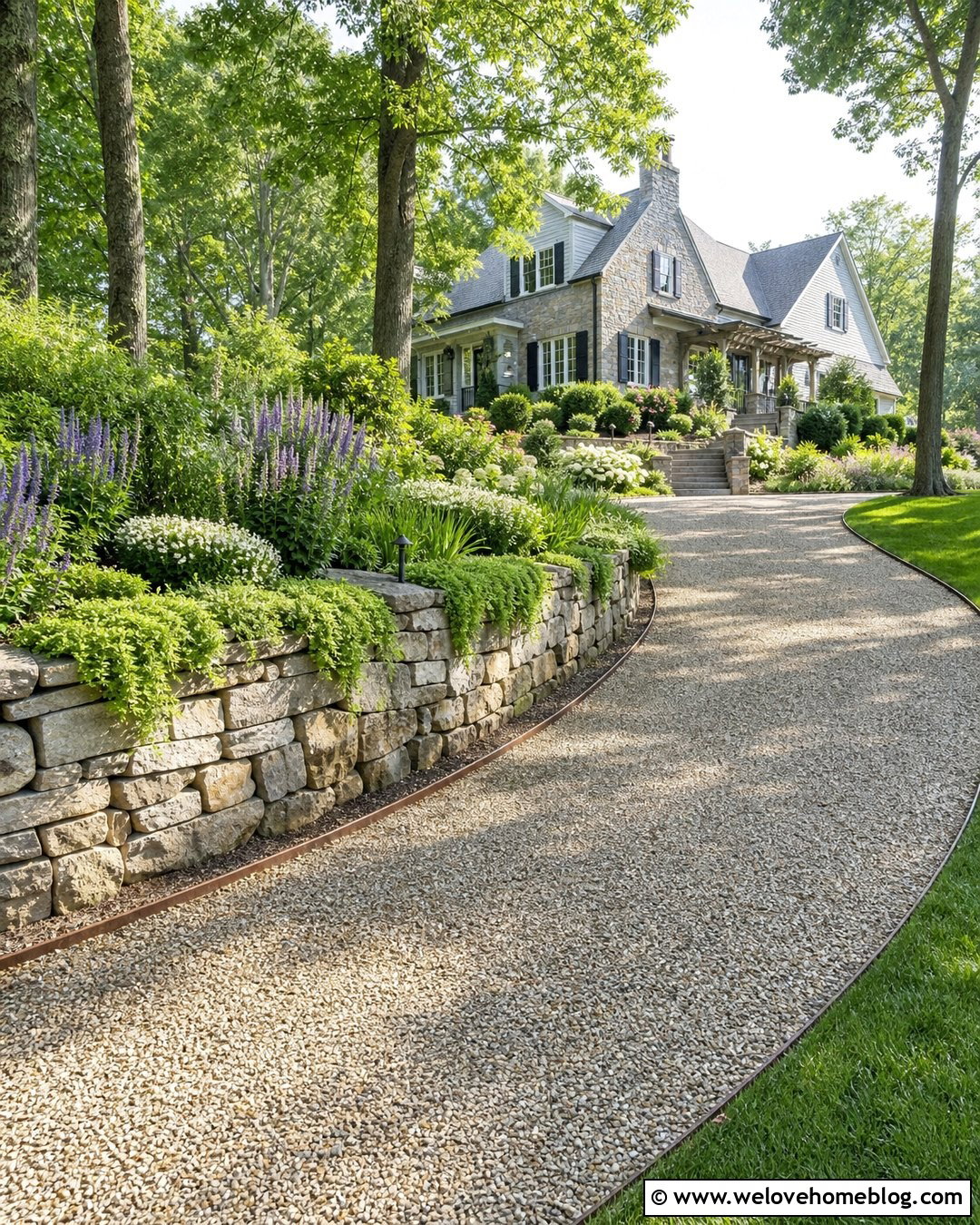
A sloping property may need a retaining solution as much as it needs decorative planting. Border a curved pea gravel driveway with a low dry-stacked fieldstone wall on the raised side. Above the wall, use cascading ground cover, compact shrubs, and upright perennials that soften the stone without covering it completely. On the lower side, install simple metal edging and a lawn strip to keep the driveway visually open. Match the wall stone to the home’s foundation or front steps for a connected look. Confirm that retaining walls, drainage, and foundations meet local requirements before building. The height should remain comfortable near passenger doors and street sightlines. Together, the gravel, stonework, and layered garden create a natural transition across the slope while clearly defining the narrow driving route.
18. Narrow Driveway With Tropical Foliage
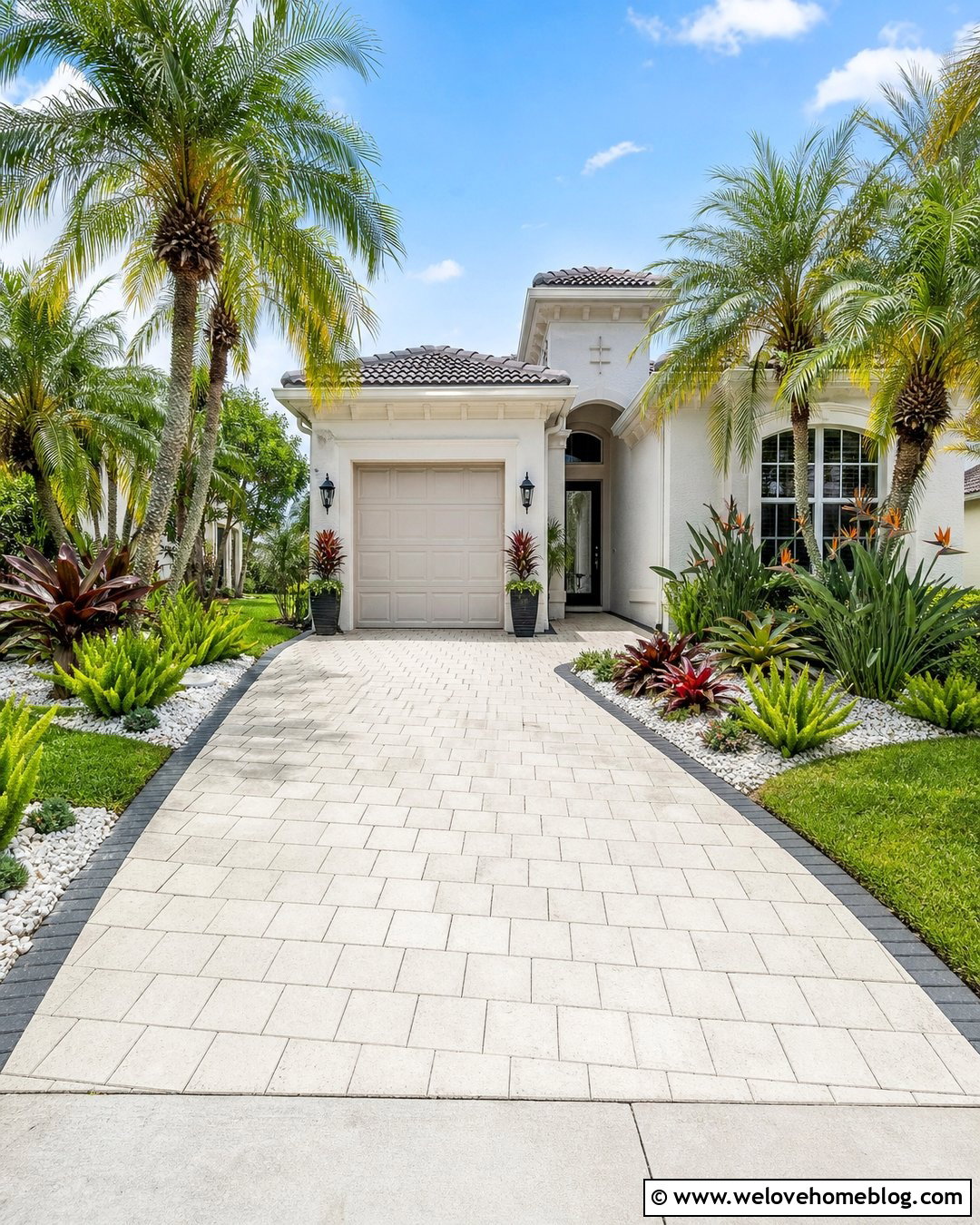
Bold leaves can produce a lush driveway garden even when the available bed is remarkably thin. Use pale ivory concrete pavers to reflect light, then line one side with a dark stone border and layered tropical-looking foliage. In suitable climates, combine compact palms, bird of paradise, ferns, and colorful bromeliads. Gardeners in colder regions can achieve a similar effect with hardy plants that offer large or strongly textured leaves. Keep the largest foliage near the house and use smaller plants beside parking areas. A narrow white gravel strip around the plants provides separation and highlights their shapes. Repeat dark green foliage in containers near the garage. The bright paving and concentrated greenery create a resort-like entrance while careful plant placement keeps broad leaves from brushing against vehicles.
19. Narrow Driveway With A Japanese Garden Border
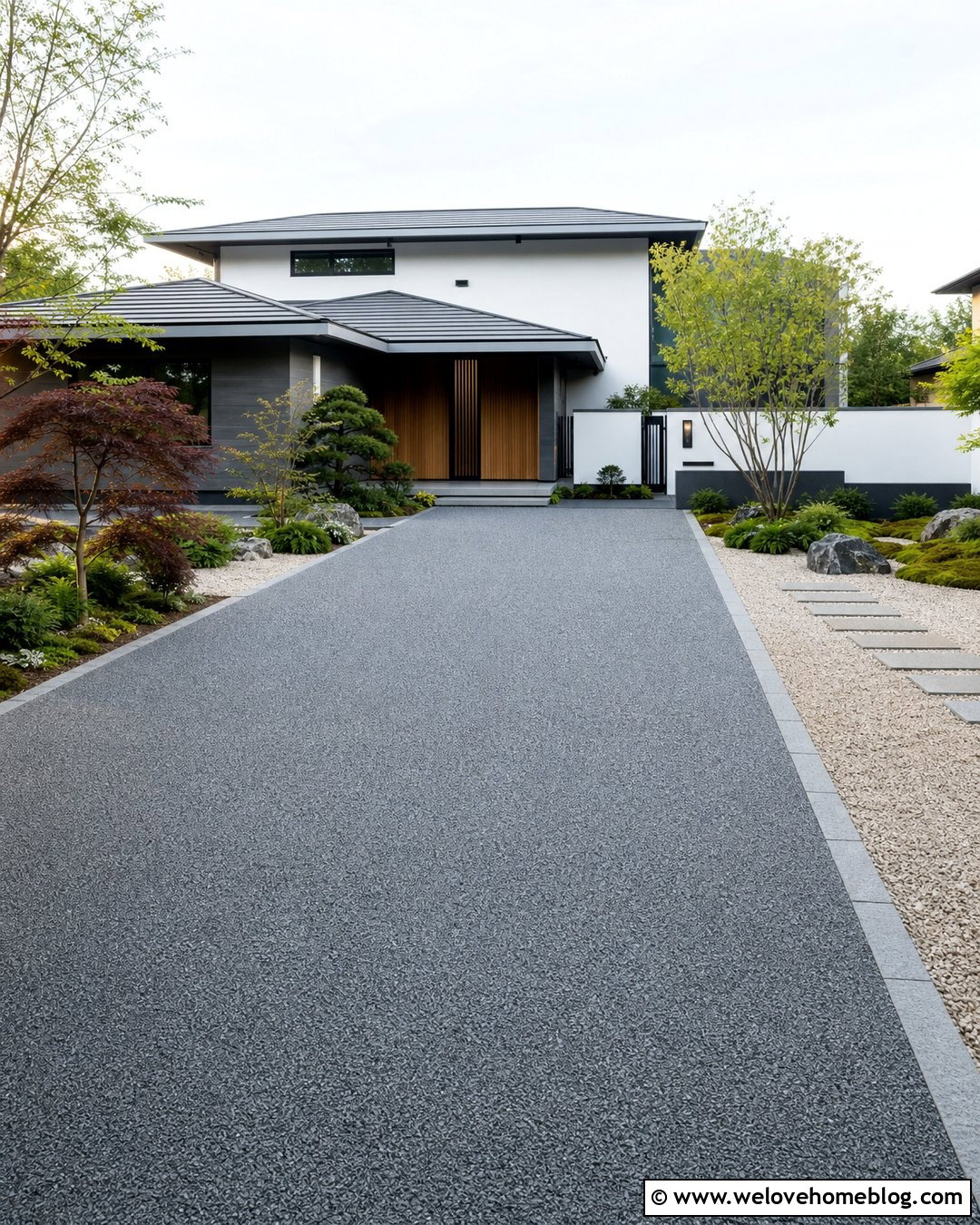
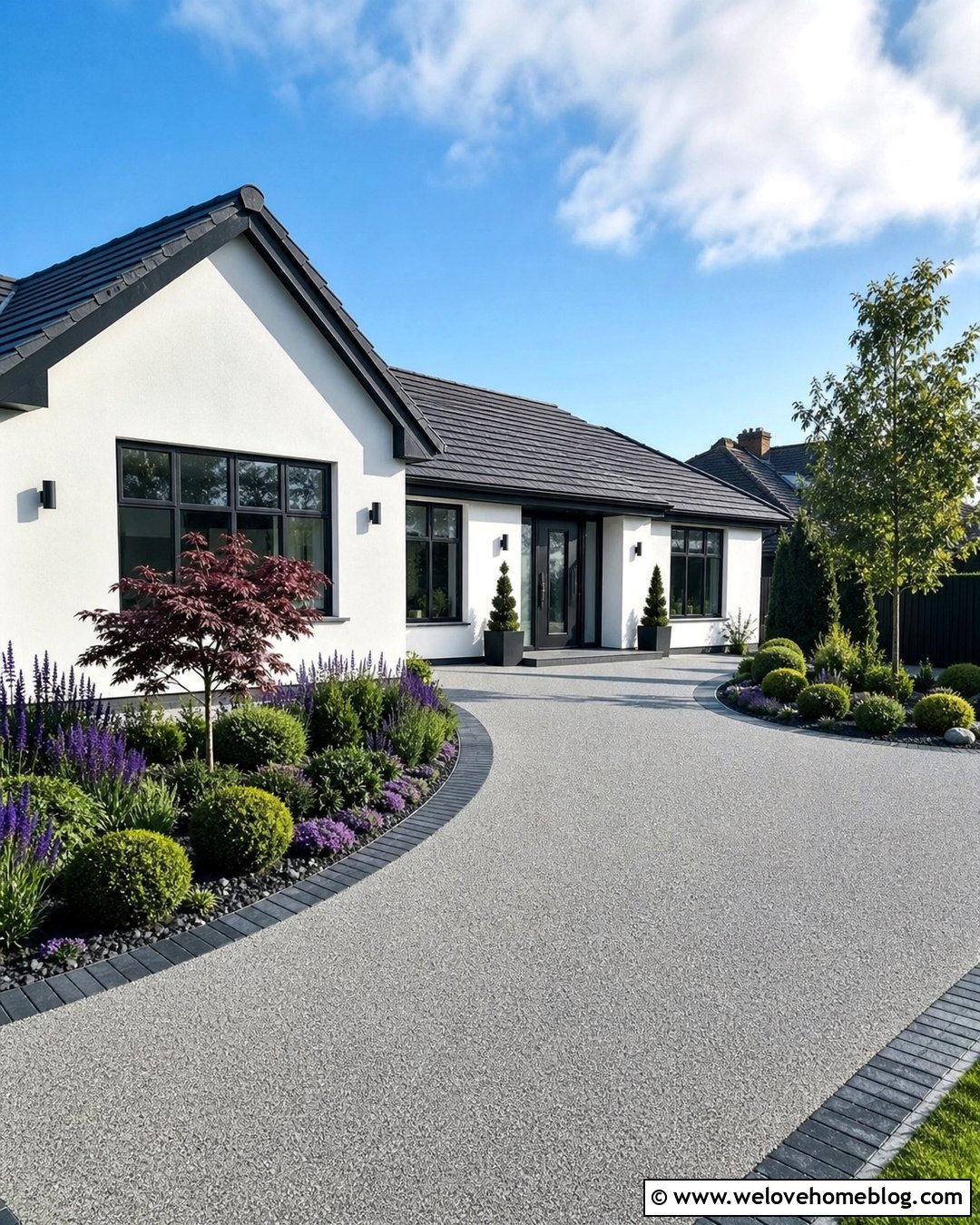
A quiet, restrained landscape can make a narrow driveway feel less like a corridor. Pair dark gray resin-bound gravel with flush granite edging and an asymmetrical garden bed along one side. Use a compact Japanese maple, mounded evergreens, ferns, moss-like ground covers, and several carefully placed stones. Select plants suited to the local climate rather than forcing traditional species into unsuitable conditions. On the opposite edge, maintain a simple gravel margin with one repeated ground cover to balance the composition. A narrow stepping-stone path can branch toward the entrance through the planted area. Avoid filling every open patch; visible gravel and mulch provide valuable breathing room. This complete driveway look relies on shape, texture, and thoughtful spacing, creating a calm approach that remains functional and easy to understand.




20. Narrow Driveway With Seasonal Container Gardens
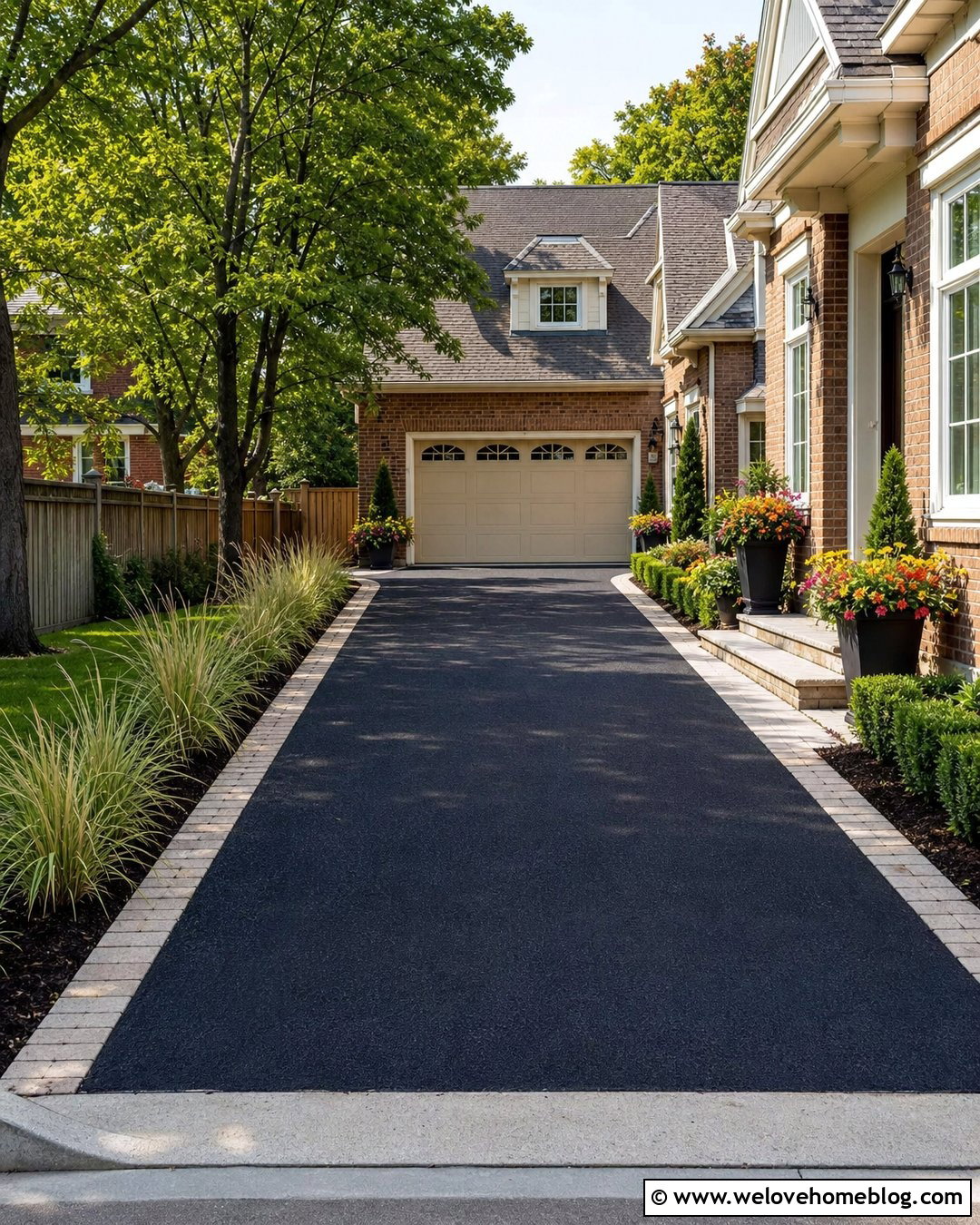
Containers offer flexibility when underground utilities, poor soil, or extremely limited bed width prevent permanent planting. Start with a straight black asphalt driveway and define the edge with a buff brick ribbon. Arrange a small number of tall, narrow planters beside the garage, front walkway, and fence rather than lining the entire driving route. Fill them with compact evergreens for structure, then change surrounding flowers as the seasons progress. Choose heavy, stable containers that will not tip into the driveway, and keep them outside vehicle overhang and door-swing areas. Repeat the same container color to connect the separate groupings. A slim ground-level bed of ornamental grass can soften the longest edge. The finished garden looks colorful and adaptable while retaining the full practical width of the driveway.
Conclusion:
The best **20 Narrow Driveway Garden Ideas** balance attractive planting with safe, comfortable access. Begin with the driveway’s width, sunlight, drainage, and daily parking needs. Then select a surface, border, and compact plant palette that complement the house. Low ground covers work well near tires and doors, while upright shrubs, ornamental grasses, trellises, and espalier trees use vertical space efficiently. Repetition also helps a small garden feel organized instead of crowded. Whether you prefer structured evergreens, colorful cottage flowers, native plants, or drought-tolerant landscaping, treat the pavement and garden as one complete design. A thoughtful plan can turn even the tightest driveway into a welcoming, green approach.

Related posts:



Leave a Reply