
A sloped driveway can create awkward planting space, fast-moving runoff, and difficult mowing zones, but the right planters can turn those challenges into polished curb appeal. These 20 Planter For Sloped Driveway Ideas combine level planting beds with practical driveway surfaces, attractive borders, and landscaping suited to changing grades. Options range from tiered stone beds and modern concrete boxes to budget-friendly timber planters and drought-tolerant boulder gardens. Before construction, consider drainage, driveway clearance, soil pressure, visibility, and safe access for maintenance. Steeper sites or tall retaining planters may also require professional engineering and local approval. Whether your home is modern, traditional, rustic, or coastal, the complete looks below offer useful inspiration. Explore these 20 Planter For Sloped Driveway Ideas to find a design that works with your property.

1. Tiered Stone Planters Beside a Concrete Driveway
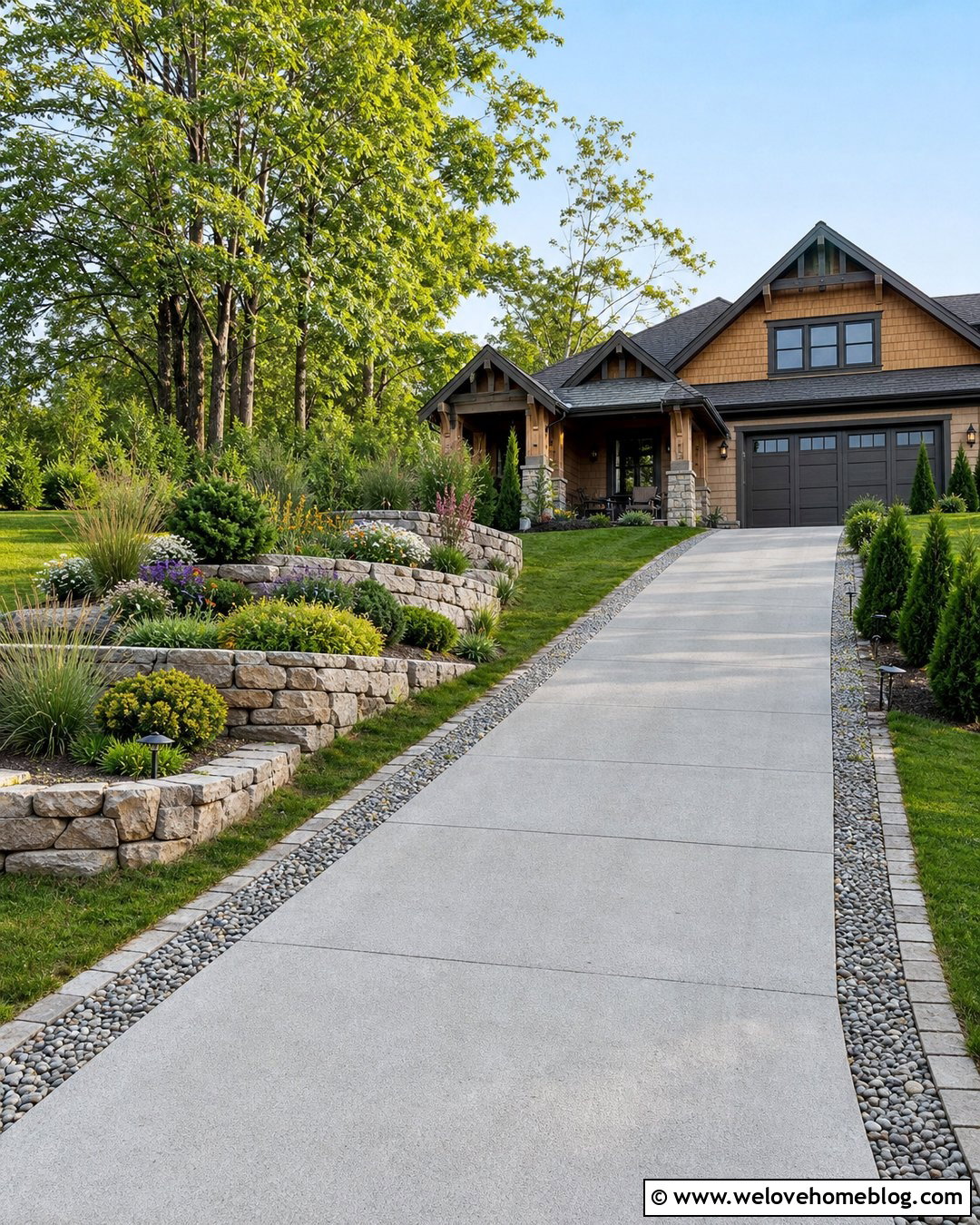
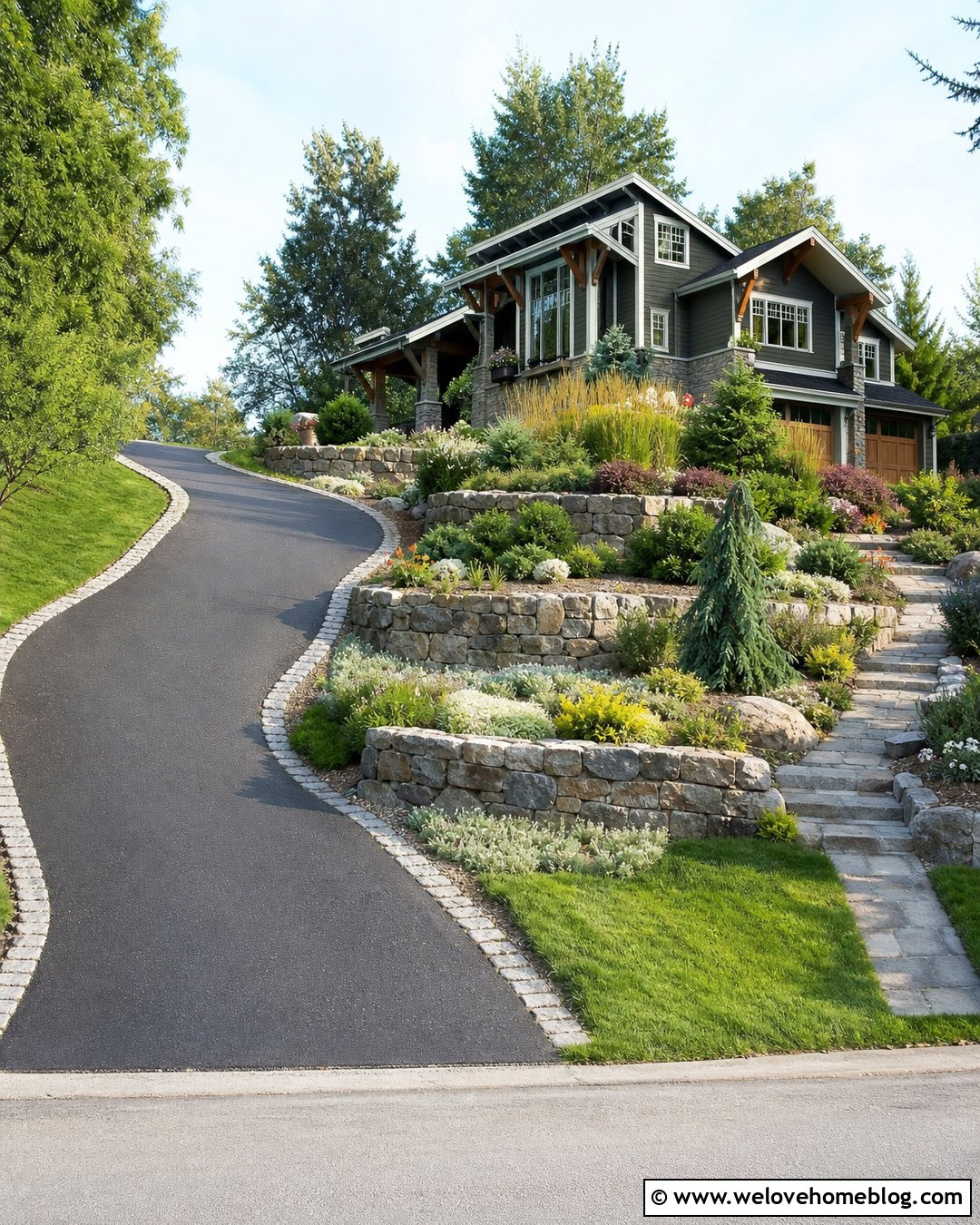
Tiered stone planters can transform a steep driveway edge into a series of manageable garden levels. Pair a light-gray poured concrete driveway with two or three low planters built from natural fieldstone. Follow the slope rather than forcing one tall wall across the entire grade. Fill the upper tier with compact evergreen shrubs, the middle with ornamental grasses, and the lowest with spreading perennials. A narrow gravel strip between the concrete and stone keeps loose soil away from the driving surface. Curved planter ends can soften the transition near the street and garage. Include drainage gravel and a suitable outlet behind any soil-retaining structure, especially where runoff travels downhill. Multiple low terraces often create a more approachable residential scale than one visually heavy wall. ()
2. Modern Concrete Planters Along an Asphalt Driveway
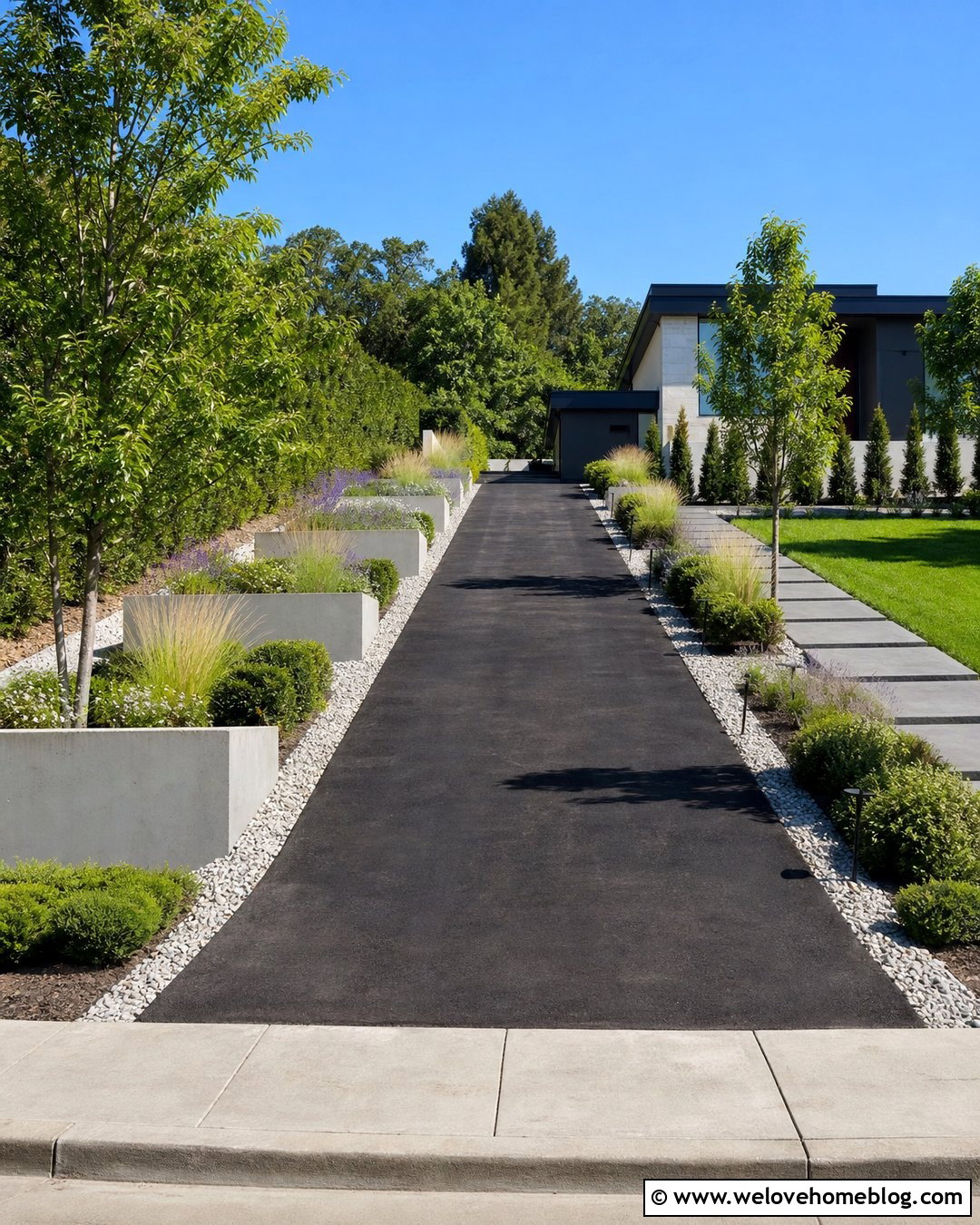
Crisp concrete planters bring order to a sloped driveway without making the landscape feel busy. Use black asphalt for the driveway and install rectangular cast-concrete planters in staggered levels along the higher side. Their straight lines can echo a modern home’s windows, steps, and garage doors. Choose a warm gray or sand-colored finish so the planters remain visible against the dark pavement. Plant repeated groups of feather reed grass, dwarf boxwood, salvia, and low ground cover. Repetition helps the slope appear organized from the curb. Leave enough setback for open car doors, snow removal, and comfortable walking. Concealed drip irrigation reduces hand-watering on the incline, while gravel mulch prevents soil from splashing onto the asphalt during heavy rain.
3. Brick Planters With a Curved Paver Driveway
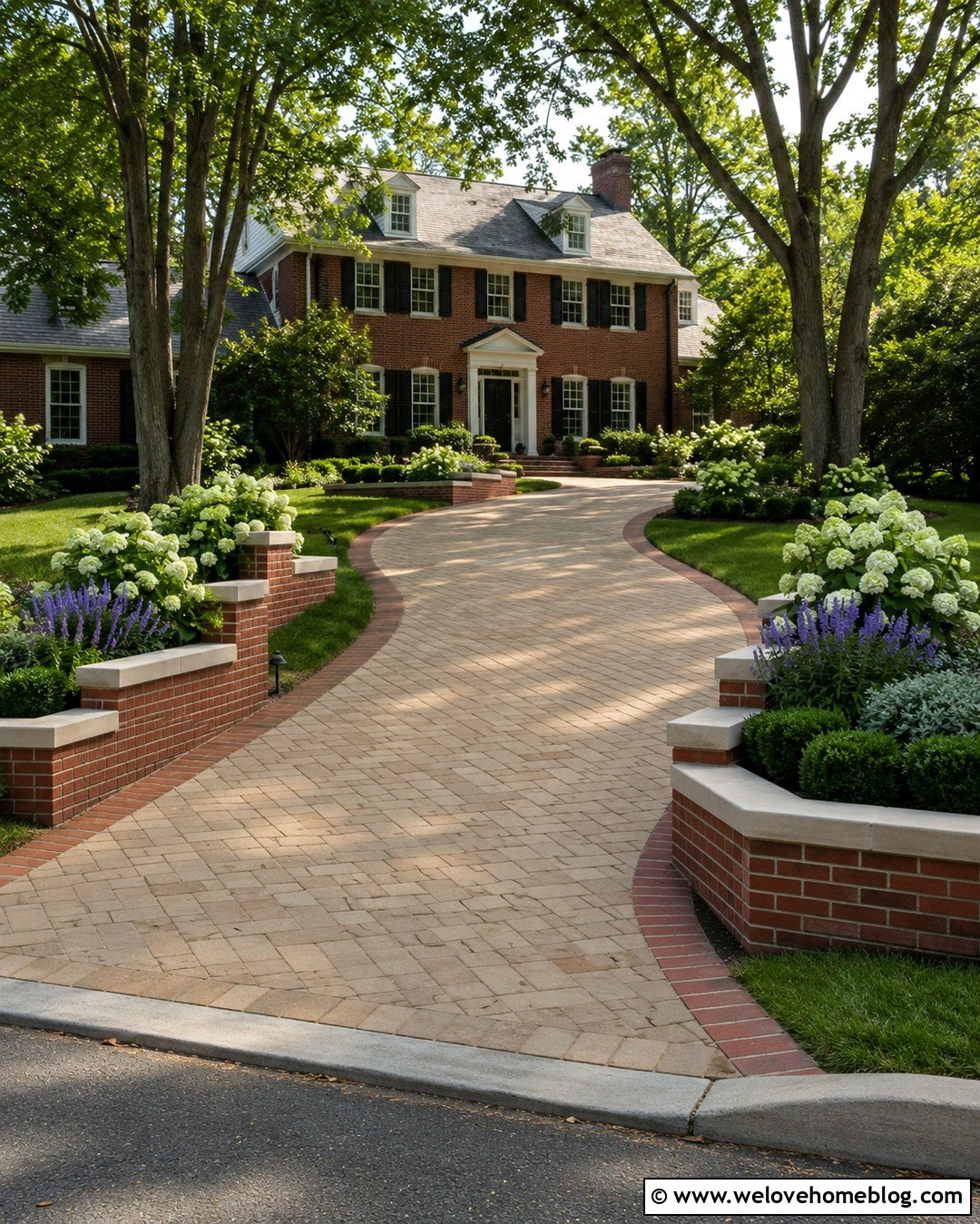
Does your sloped driveway lead to a traditional brick or Colonial home? A curved driveway made from warm concrete pavers can pair beautifully with stepped clay-brick planters. Match the planter brick to the house without requiring an exact color duplicate. A slightly darker coping course will define each level and provide a clean finished edge. Use compact hydrangeas, inkberry holly, catmint, and seasonal bulbs for layered color that remains controlled beside the pavement. The planters should step gradually uphill as the driveway curves, creating a natural visual rhythm. Add a brick ribbon along the driveway edge to connect the surface and planting structures. Keep taller plants away from the street entrance so drivers maintain clear visibility when entering or backing out.
4. Timber Planter Boxes Beside a Gravel Driveway
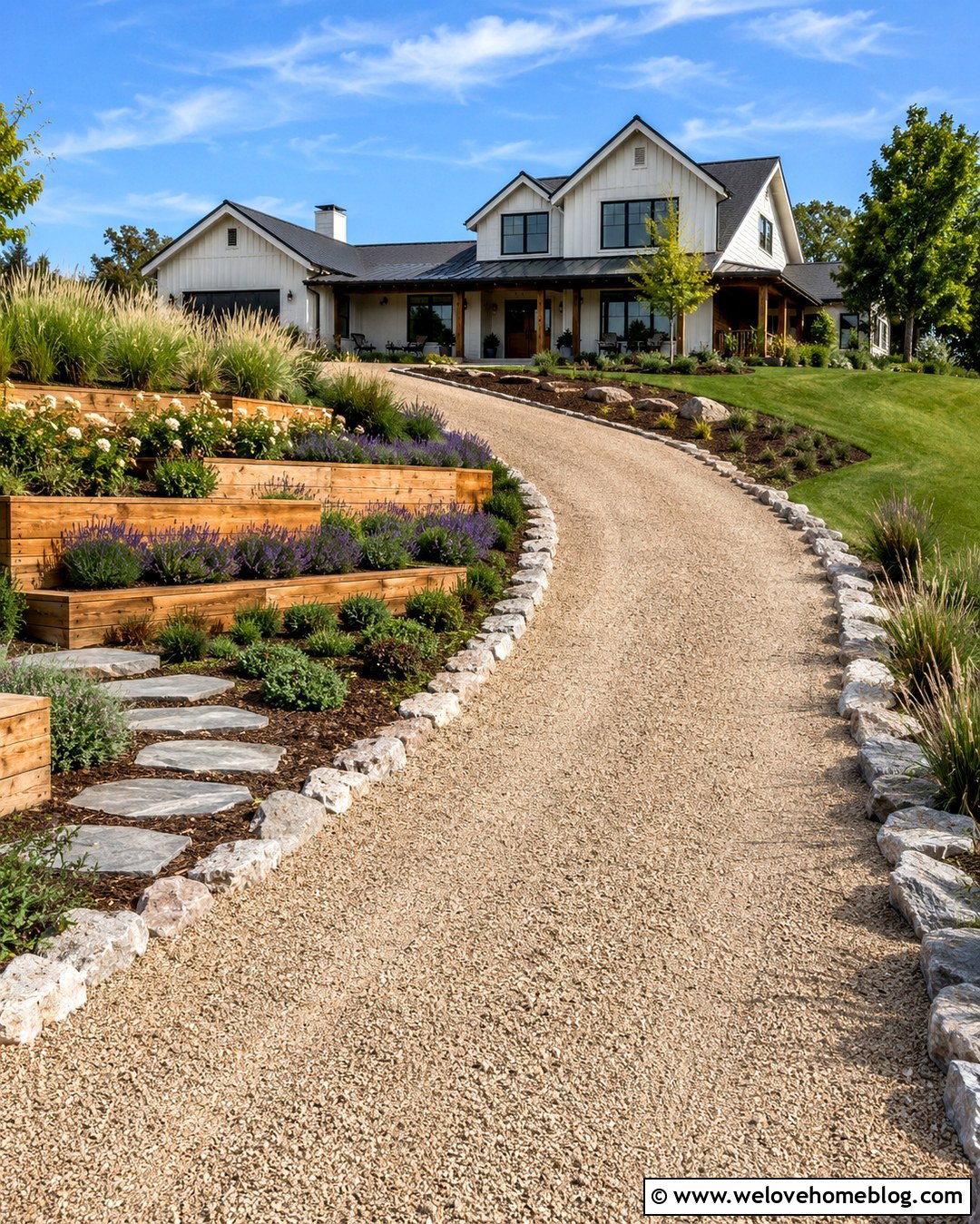
For a relaxed country look, combine a tan crushed-gravel driveway with stepped timber planter boxes. Rot-resistant cedar or properly rated ground-contact lumber can create warm, affordable beds that follow a moderate slope. Build several shorter boxes instead of one long container that sits unevenly against the grade. Fill them with lavender, compact roses, thyme, and soft ornamental grasses. A line of larger cobbles between the gravel and timber creates separation and helps keep driveway stone out of the beds. Match the wood tone to porch posts, fencing, or the garage door for a coordinated finish. Because soil and moisture place constant pressure on wood, use suitable reinforcement, drainage space, and protective detailing. Position each box beyond the vehicle turning area to prevent accidental damage.
5. Corten Steel Planters Along a Modern Driveway
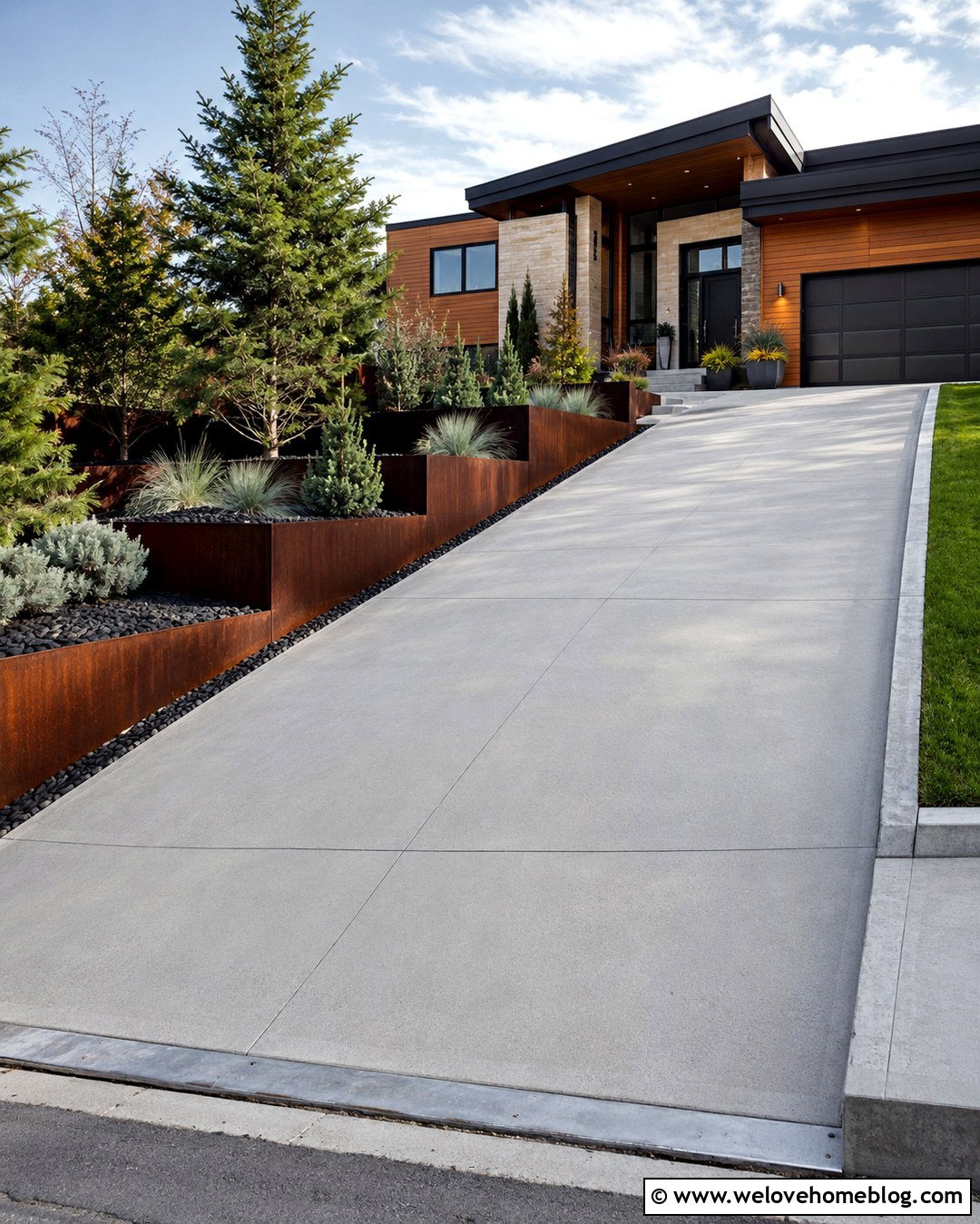
Weathering steel offers a bold solution for a steep, contemporary front yard. Place long Corten steel planters beside a pale broom-finished concrete driveway, stepping each container down with the grade. The warm rust-colored surface contrasts with gray concrete and complements dark siding, stone veneer, or natural wood accents. Plant blue-green grasses, upright sedges, dwarf conifers, and silver-leaved perennials for a clean palette. Use black river rock as mulch to reinforce the modern appearance and reduce loose organic material near the driveway. Rounded or carefully finished planter edges are important beside a frequently used route. Include small gaps between the boxes so runoff can move toward a planned drain rather than collecting against the metal. This look works especially well with simple architectural planting.
6. Boulder Planters Along a Steep Gravel Driveway
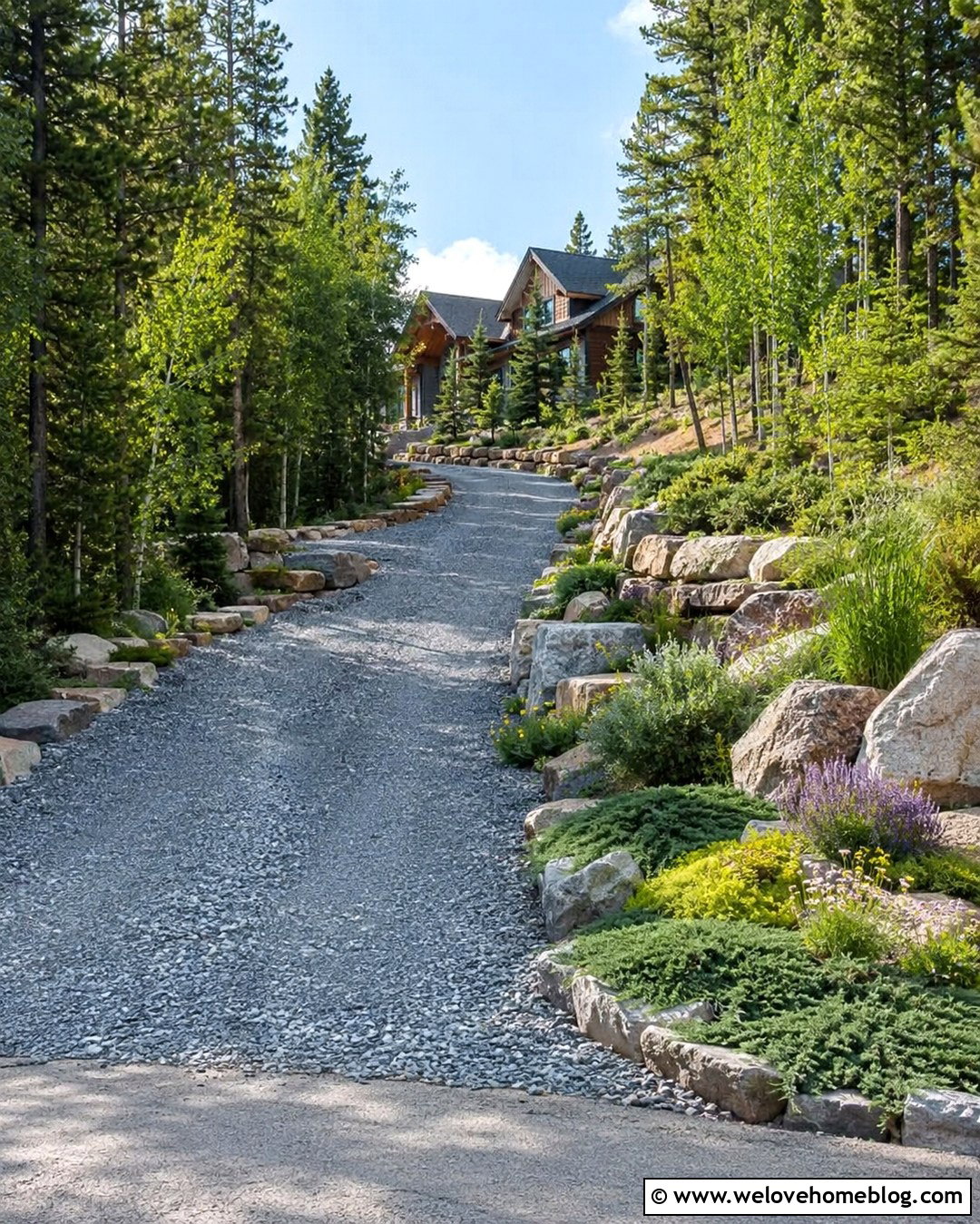
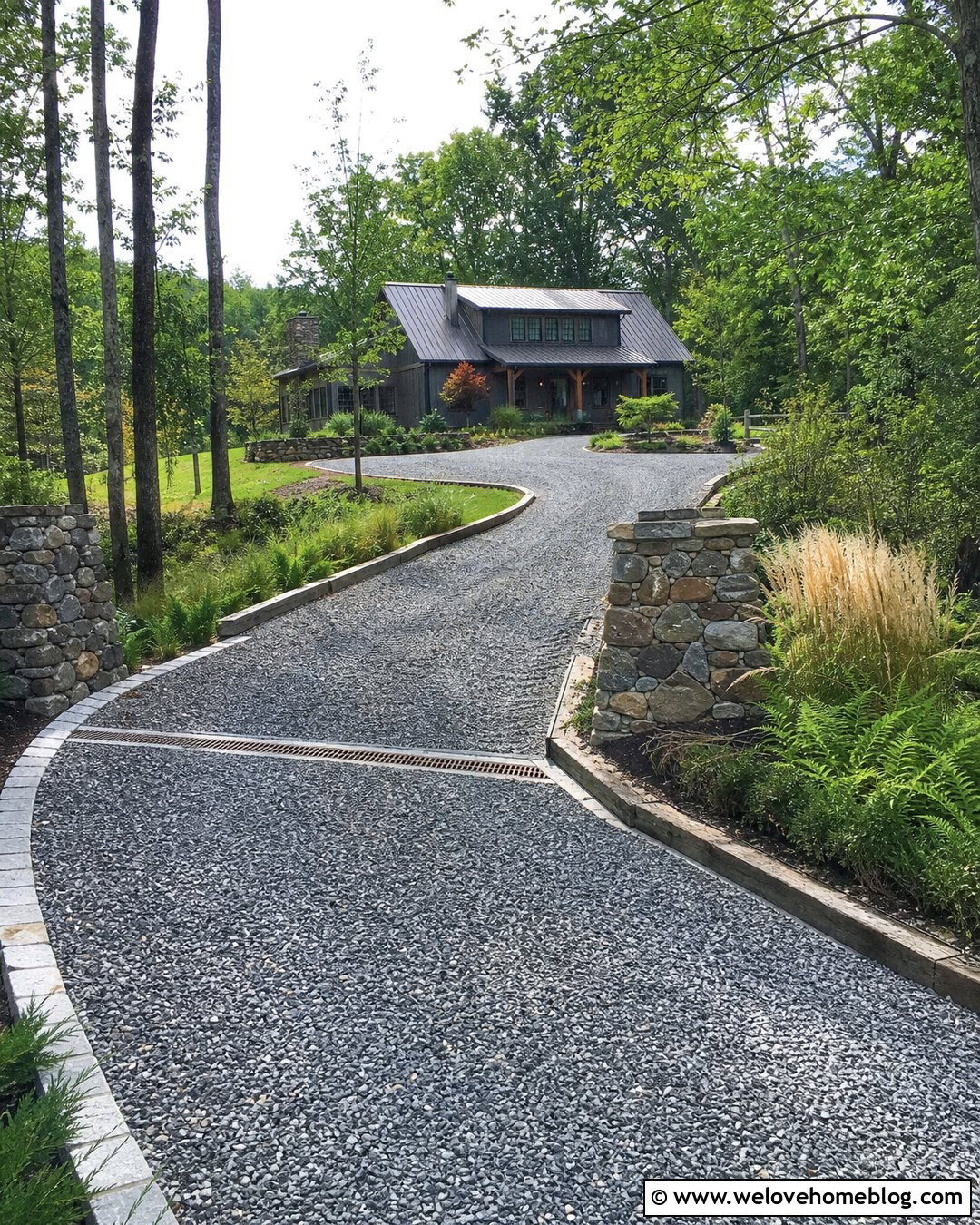
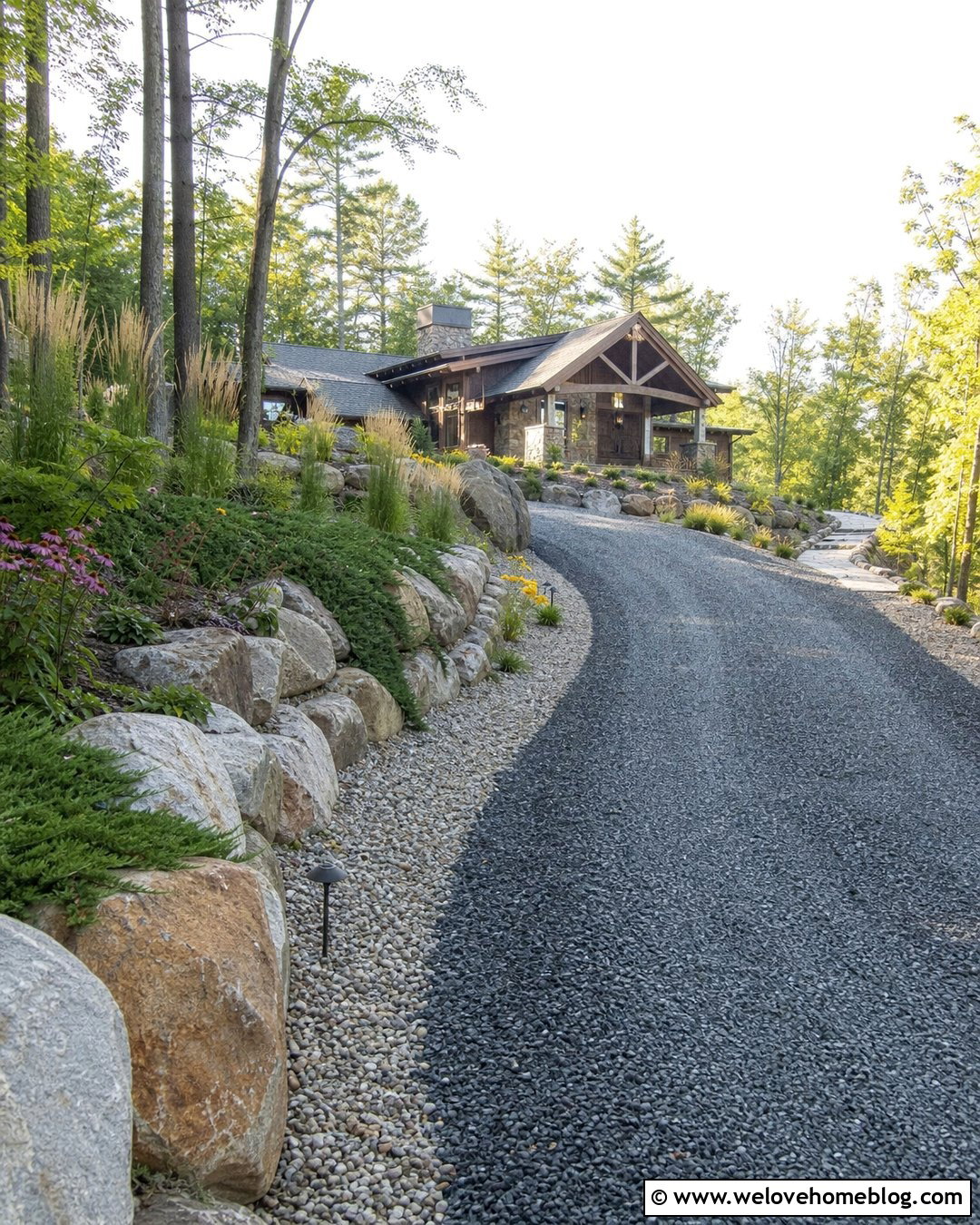
Large boulders can create informal planting pockets that feel naturally anchored into a hillside. Pair a gray crushed-stone driveway with clusters of locally appropriate boulders arranged along the uphill bank. Set the stones at different heights to form shallow, level planter areas rather than placing containers directly on the incline. Fill the pockets with creeping juniper, sedum, native grasses, and drought-tolerant flowering perennials. Smaller gravel and cobbles can bridge gaps between the boulders while keeping exposed soil covered. The result suits mountain homes, cabins, ranch houses, and wooded properties. Boulders must be securely seated so they cannot shift toward the driveway. On a substantial slope, consult an experienced landscape professional to determine excavation, drainage, and stabilization requirements before installation. ()
7. Gabion Planters Beside a Sloped Driveway
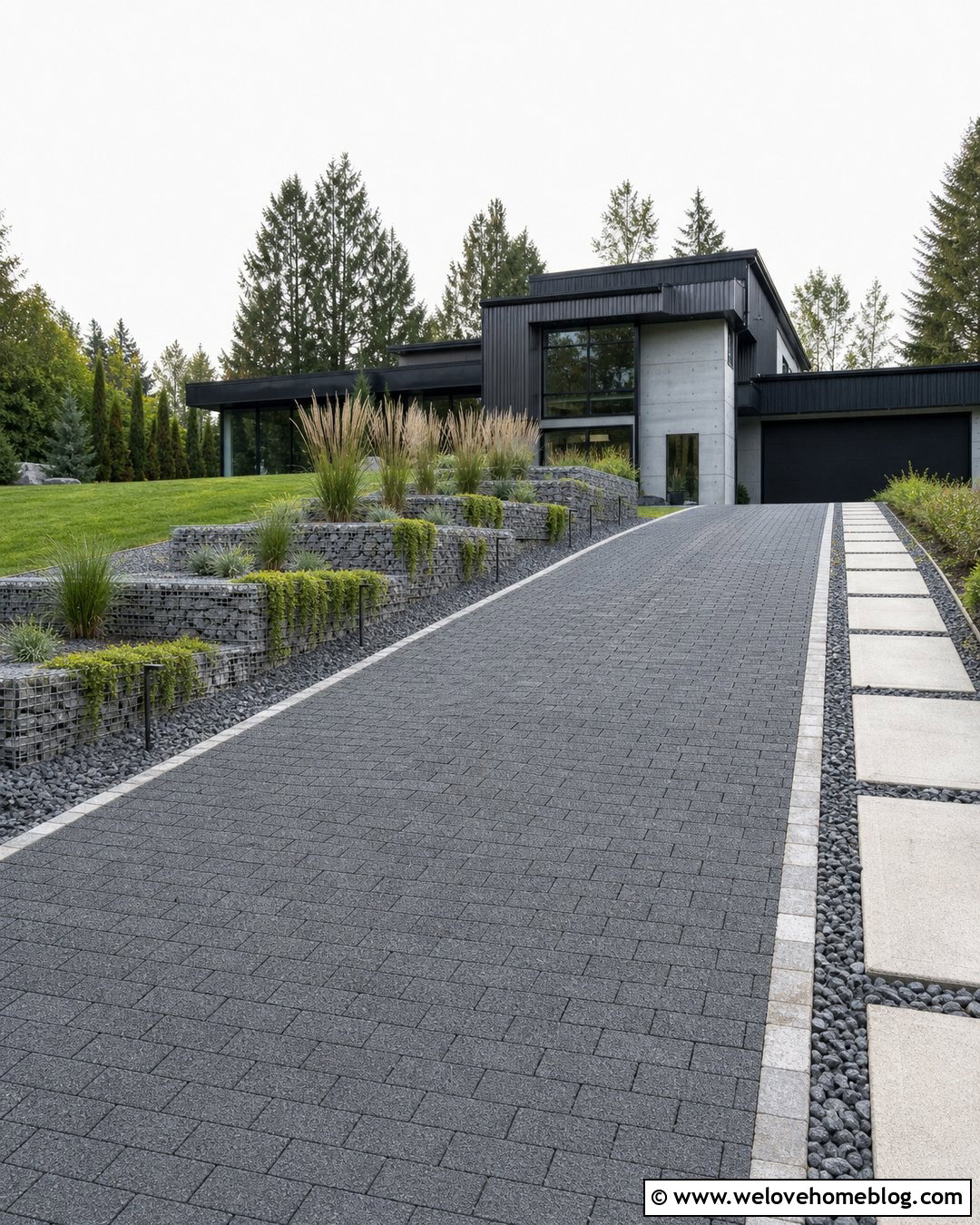
Gabion planters introduce strong texture while helping a sloped driveway blend into a rocky landscape. Use wire cages filled with angular stone to create low, stepped planting beds beside a permeable paver driveway. Select cage stone that coordinates with the home’s facade, walkway, or existing retaining walls. Plant upright grasses, hardy shrubs, and cascading ground covers above the gabions to soften their industrial structure. A narrow band of matching loose stone can separate the planters from the pavers. Keep the cages low near the curb and gradually increase their height farther uphill, preserving visibility at the entrance. Although stone-filled cages can allow water movement, the complete slope still needs thoughtful grading and a controlled drainage route. Proper foundations also help prevent settlement or leaning over time. ()
8. Retaining Wall Planters Along a Narrow Driveway
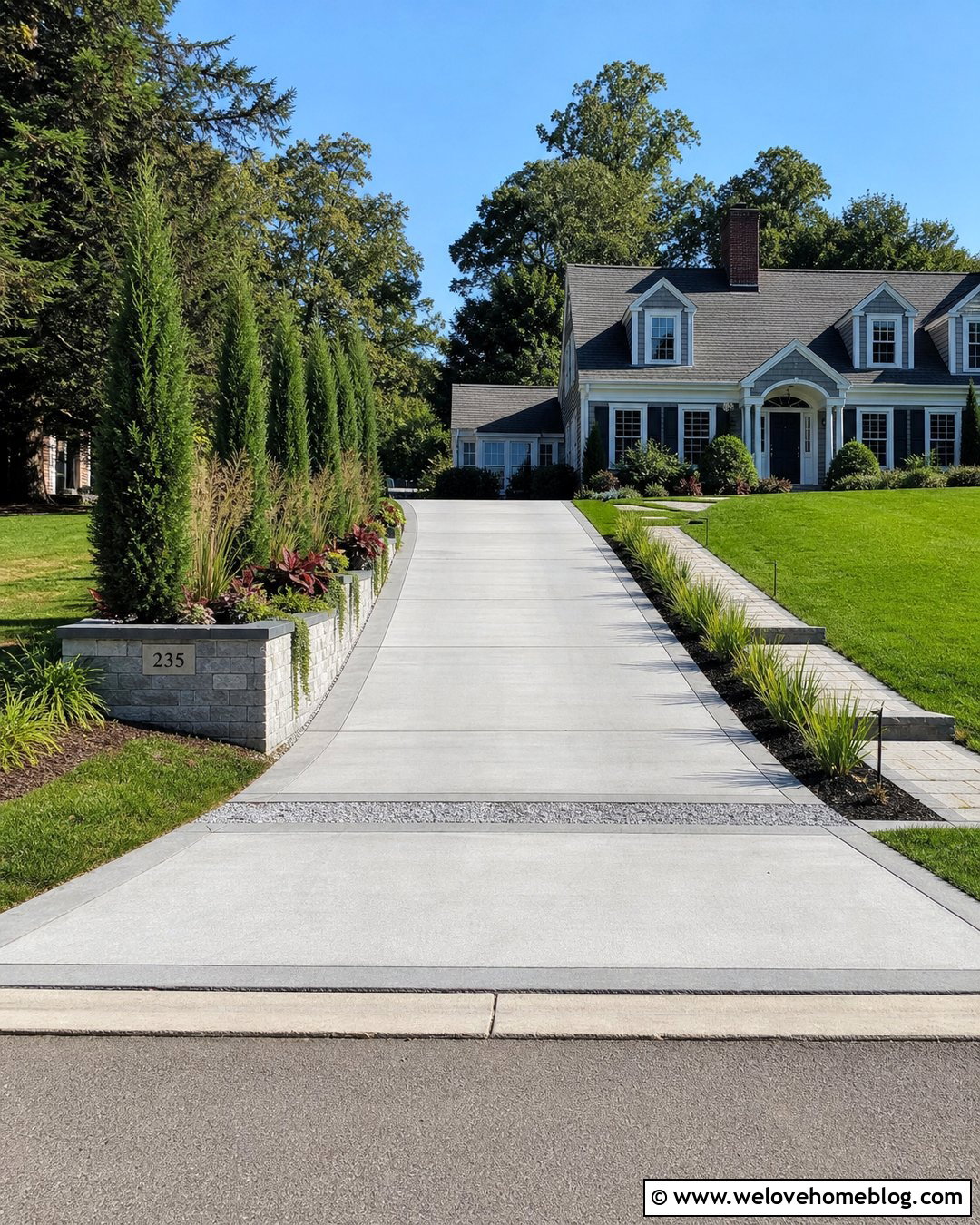
A narrow sloped driveway needs landscaping that adds character without reducing usable pavement. Install a slim segmental-block retaining planter along the uphill edge of a straight concrete driveway. Choose a wall block that coordinates with the house foundation and cap it with a smooth, contrasting stone. Rather than filling the bed with wide shrubs, use columnar evergreens, narrow grasses, coral bells, and low trailing plants. These provide layers without growing into mirrors or doors. A recessed section can hold an address marker or package box without becoming an obstacle. Keep the wall’s base beyond the driveway edge and provide a protective gravel transition. Retaining planters require compacted support, drainage stone, and water relief behind the wall to reduce movement and pressure. ()
9. Round Planters Along a Curved Asphalt Driveway
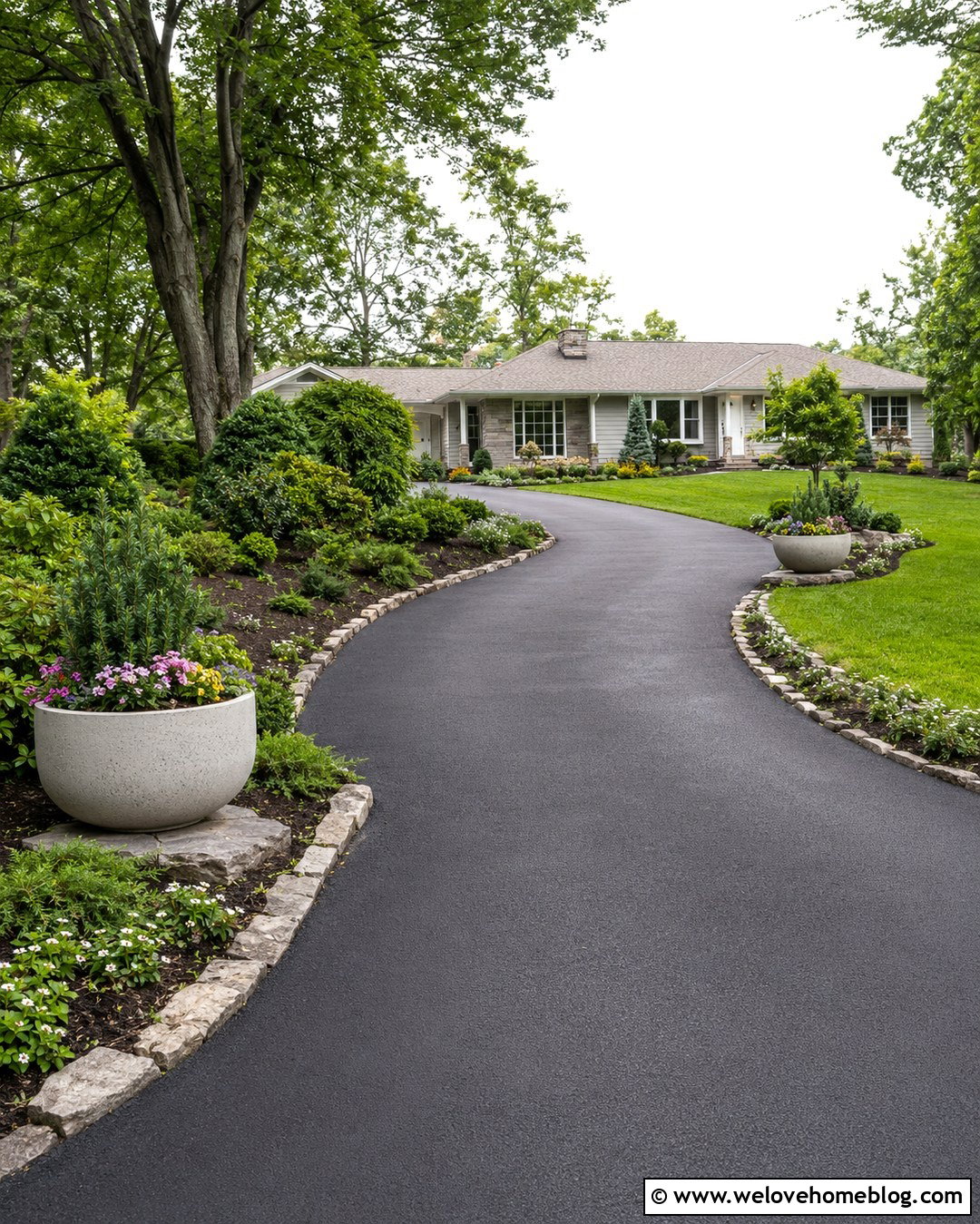
Rounded planters repeat the movement of a curved driveway and prevent the landscaping from feeling rigid. Place large, frost-resistant concrete or fiberglass pots on small level pads along the outside bend of a black asphalt driveway. Choose three to five containers in related sizes rather than lining the entire route with identical pots. Plant compact evergreens as anchors, then add trailing ground cover and seasonal flowers around their bases. Natural stone edging and a mulched shrub bed can visually connect the separate planters. Each pot must sit far enough from traffic to avoid contact with vehicles and maintenance equipment. Secure heavy containers on stable, properly prepared pads so they do not lean downhill. This flexible arrangement works well when permanent retaining construction is unnecessary or currently outside the budget.


10. Built-In Planters With Driveway Steps
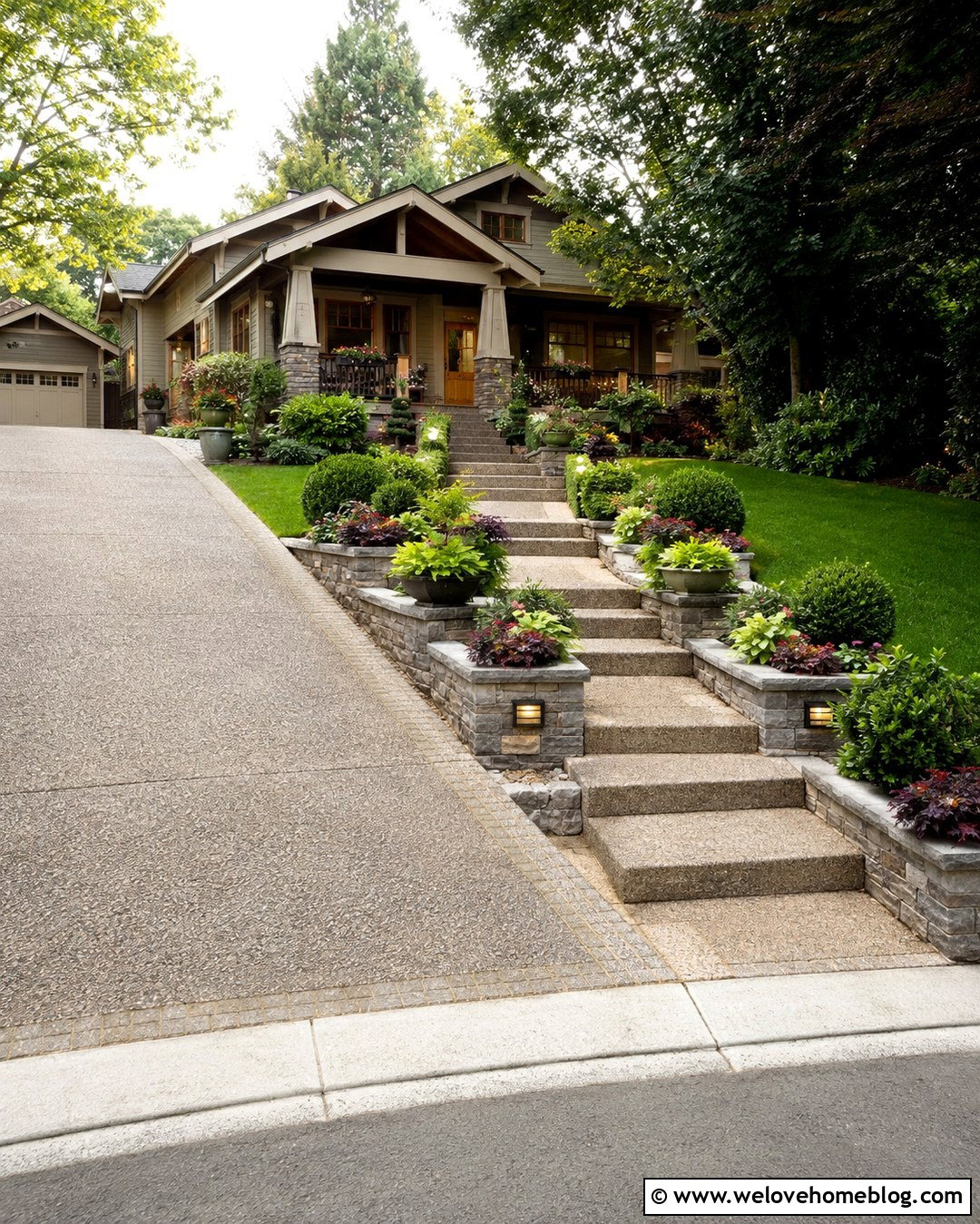
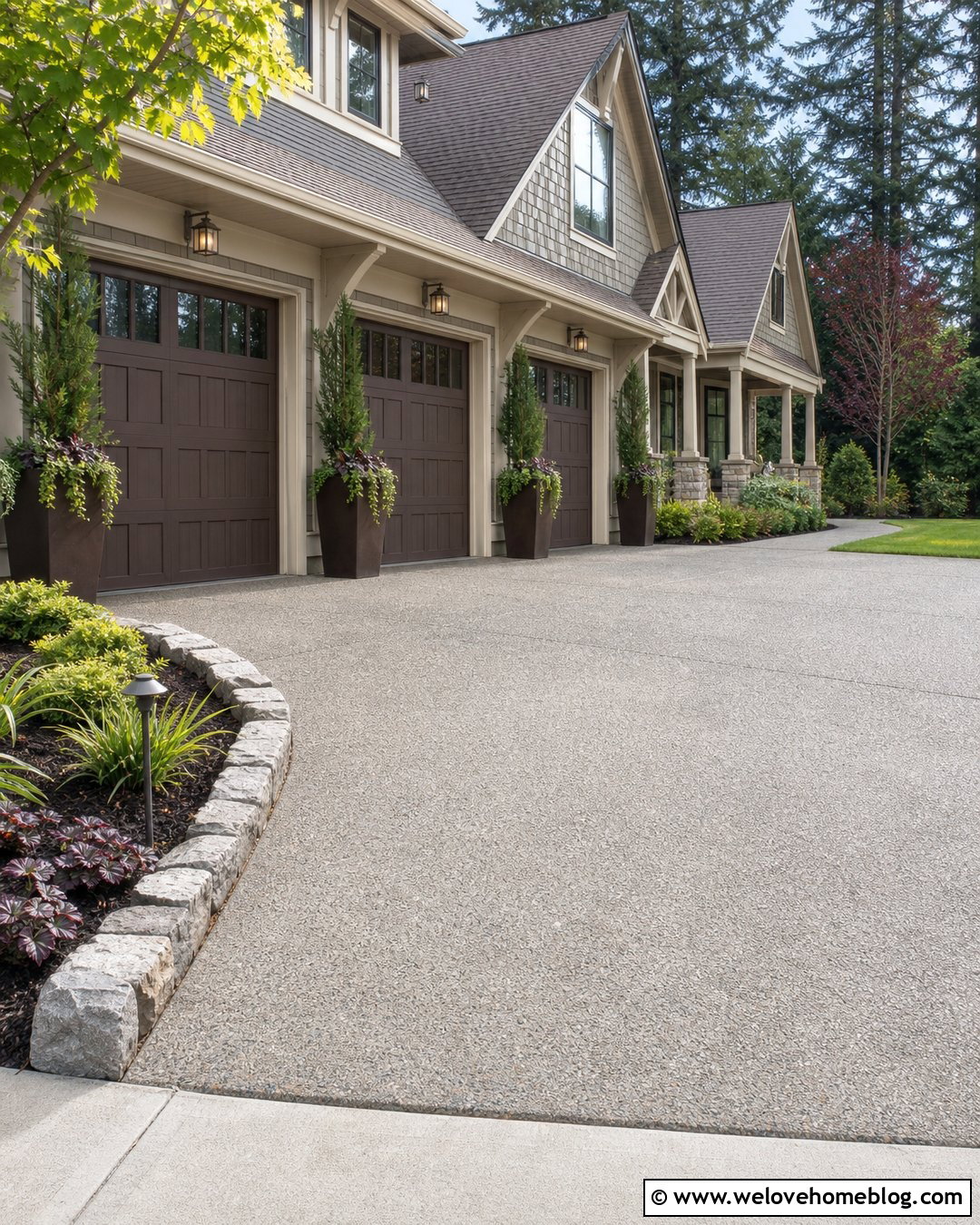
When a front walkway climbs beside a sloped driveway, built-in planters can connect both routes into one organized entrance. Pair an exposed-aggregate concrete driveway with broad stone steps leading toward a Craftsman porch. Construct low masonry planters at selected landings, allowing the walls to double as visual boundaries between pedestrians and vehicles. Use mounded shrubs, ferns, heuchera, and trailing flowers that remain below handrail height. Repeat the driveway’s aggregate color in the planter coping or step risers. Low-voltage lights can be recessed into the wall faces to define elevation changes without placing fixtures in the driving zone. Make every planting area accessible from a landing or path. Safe maintenance access is especially useful on slopes where reaching plants from the driveway could be uncomfortable.
11. Succulent Planters Beside a Sloped Concrete Driveway
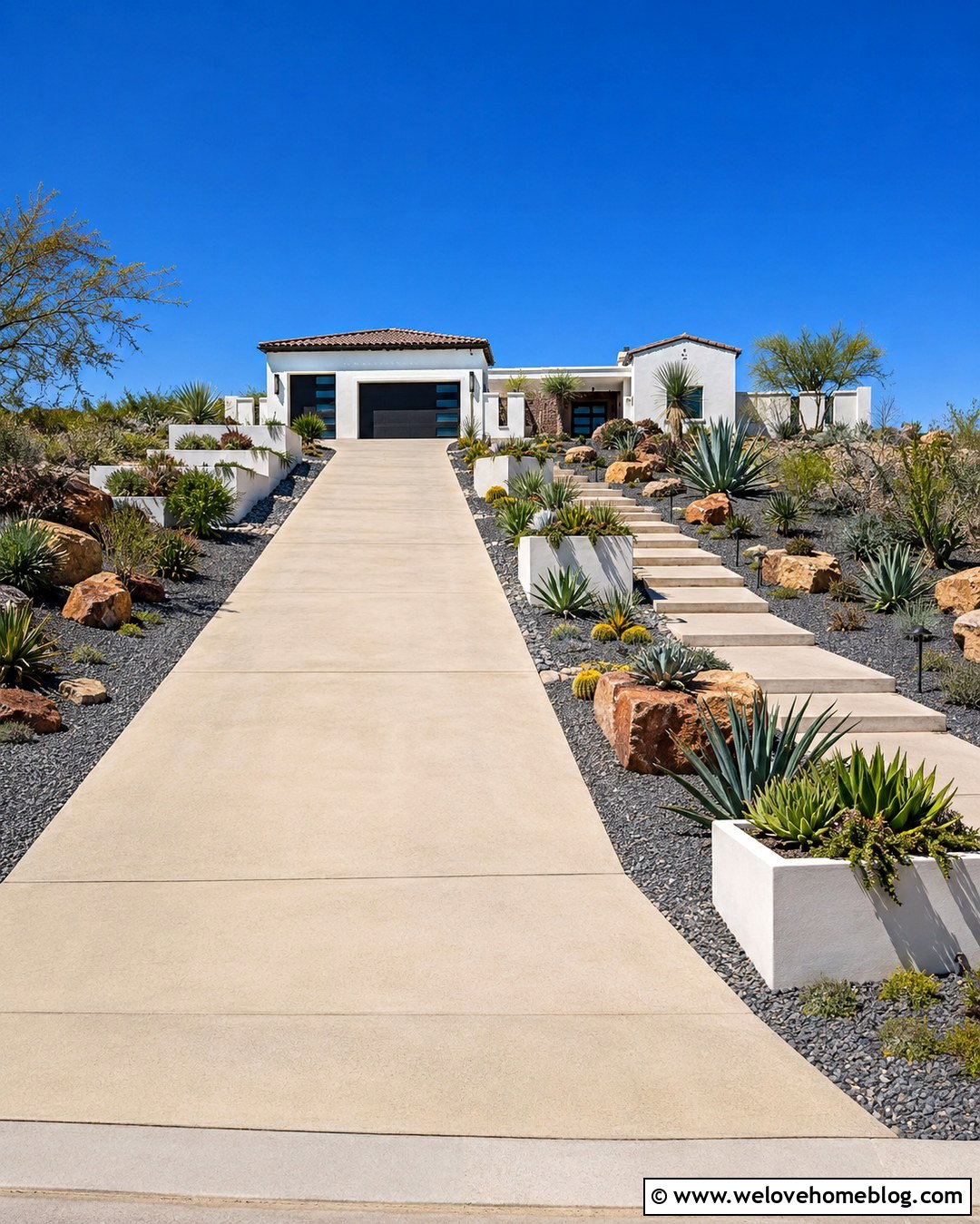
Bright sun and fast-draining soil make a sloped driveway suitable for a layered succulent display. Use smooth stucco planters beside a light-beige concrete driveway leading to a Southwestern or contemporary ranch home. Step the planters gradually uphill and vary their lengths while keeping the same finish. Combine agave, yucca, aloe where climate-appropriate, sedum, and compact ornamental grasses. Decorative gravel mulch should contrast gently with the driveway so the bed edges remain clear. Include boulders inside wider planters to add structure and reduce the amount of exposed soil. Avoid placing sharply pointed plants beside doors, walkways, or tight turning areas. In regions with freezing winters, substitute cold-hardy succulents and drought-tolerant perennials. A drip system provides targeted watering without sending excess water down the driveway.
12. Native Plant Planters Along a Permeable Driveway
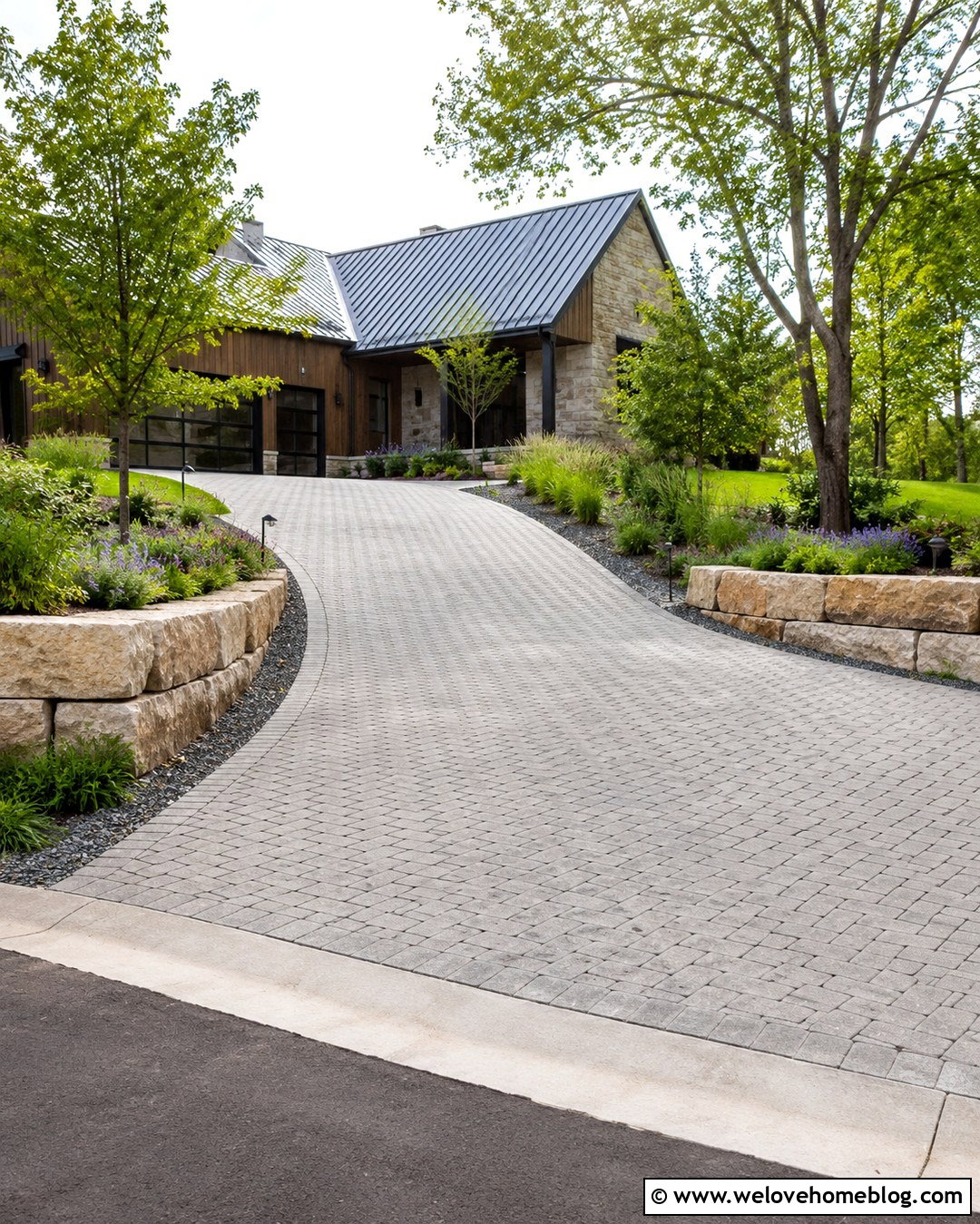
A permeable driveway and native planting can work together to create a softer, environmentally responsive entrance. Install permeable concrete pavers in a straight or gently curved layout, then add broad, low stone planters along the sloped side. Choose locally suitable native grasses, flowering perennials, and compact shrubs that match the site’s sunlight, soil, and rainfall. Plant in repeated drifts rather than mixing too many unrelated varieties. Deep-rooted vegetation and covered soil can help create a more stable planted slope, but planters must not be treated as a substitute for engineered drainage where serious runoff exists. Add gravel inspection strips beside the pavers and direct overflow toward an approved landscape drainage area. The finished look feels natural, seasonal, and connected to the surrounding region. ()
13. Dry Creek Planters Beside a Sloped Driveway
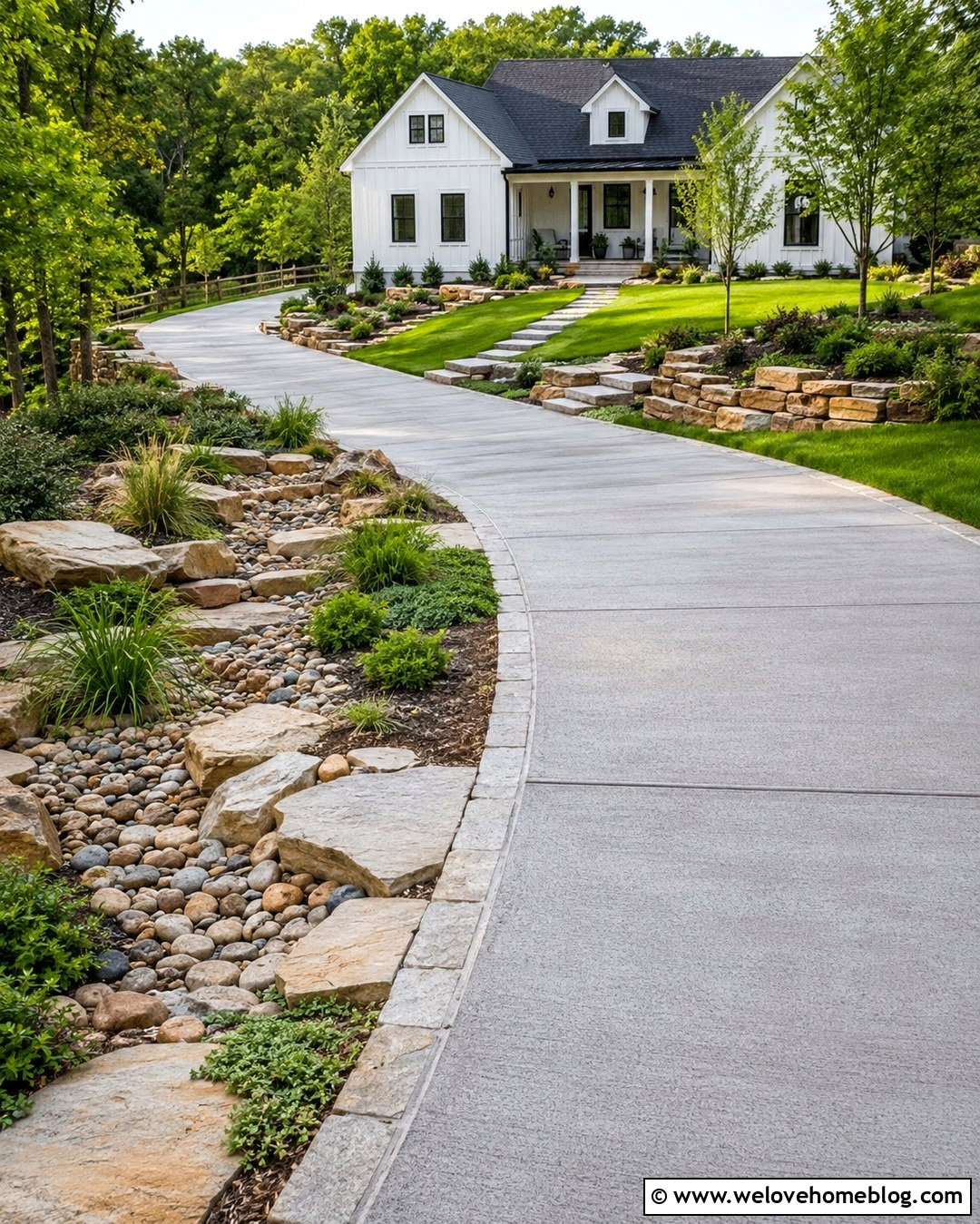
Turn a visible runoff route into a deliberate part of the driveway landscape. Beside a gray concrete driveway, create stepped stone planters that frame a dry creek bed running downhill toward a suitable drainage destination. Use rounded river rocks in the channel and larger stones at curves to make the feature look settled into the yard. Plant moisture-tolerant species near lower collection points and tougher, drier plants on the upper banks. Sedges, native grasses, compact shrubs, and spreading ground covers create texture without blocking the creek. A stone driveway border can repeat the channel material and unite the design. Never direct water onto neighboring property, sidewalks, or foundations. Have persistent erosion, standing water, or major storm flow evaluated before changing the drainage pattern. ()
14. Corner Planter At the Driveway Entrance
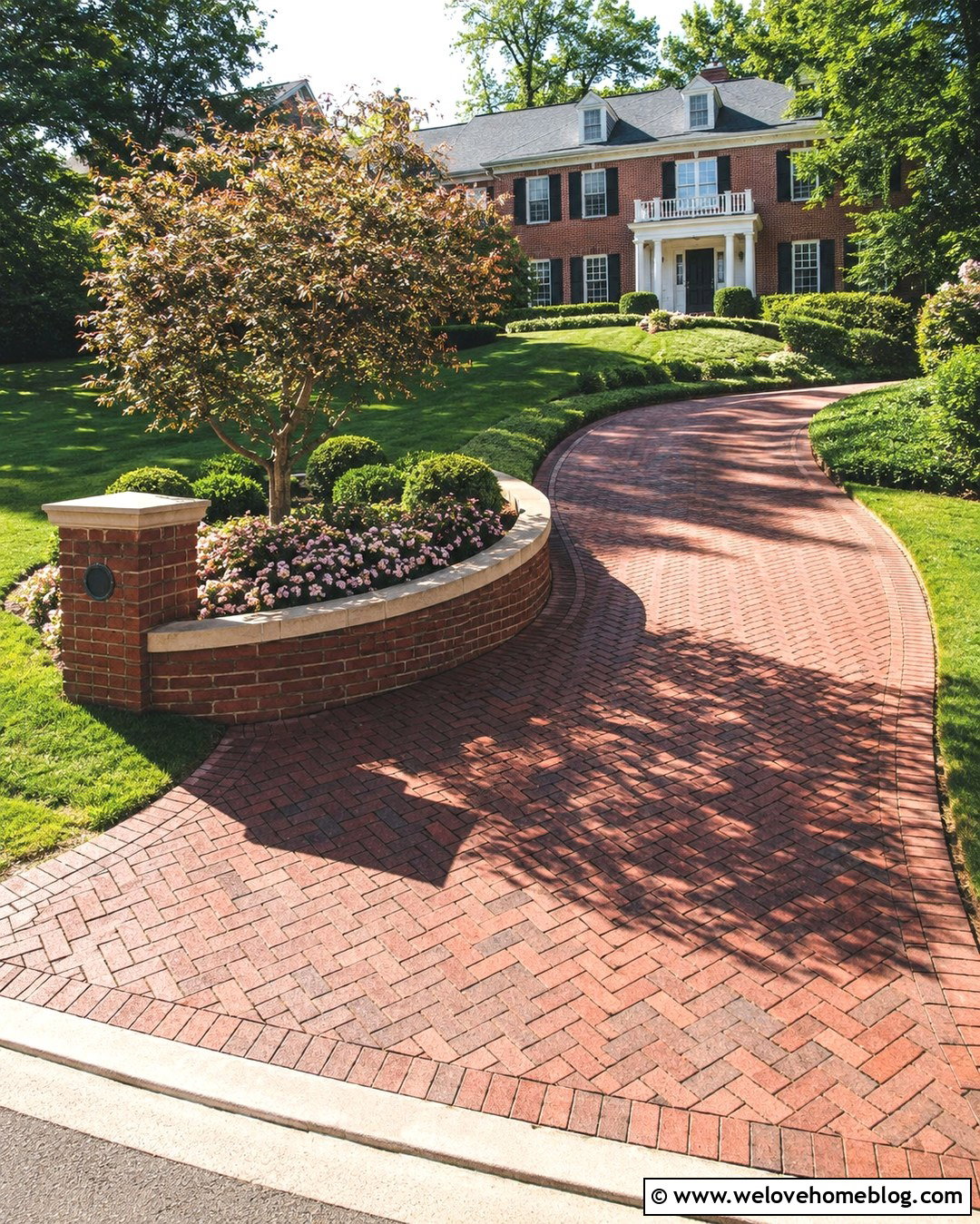
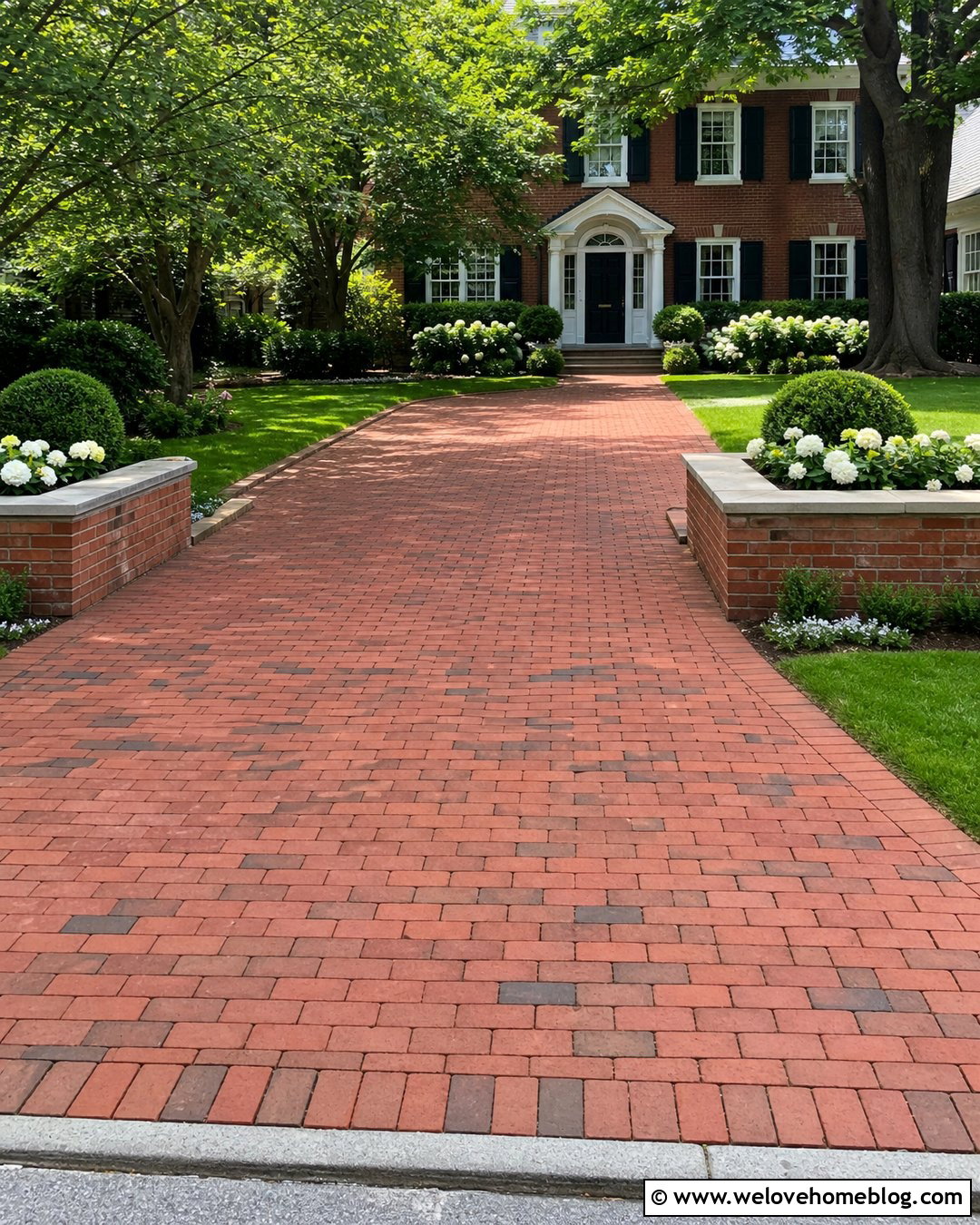
A corner planter can make the bottom of a sloped driveway feel welcoming without narrowing the entrance. Pair a red clay-brick driveway with a low, curved brick planter placed inside the lawn rather than directly against the curb. Repeat the driveway brick in the planter wall, but use a contrasting limestone cap for definition. Plant one compact ornamental tree with low shrubs and ground cover underneath. Keep the mature canopy, branches, and flowers clear of approaching vehicles and public sightlines. A matching address pillar can sit behind the planting instead of at the pavement edge. Grade the planter so soil and mulch remain contained during storms. This design works particularly well with traditional homes because the curved bed visually eases the transition from the street to the uphill driveway.


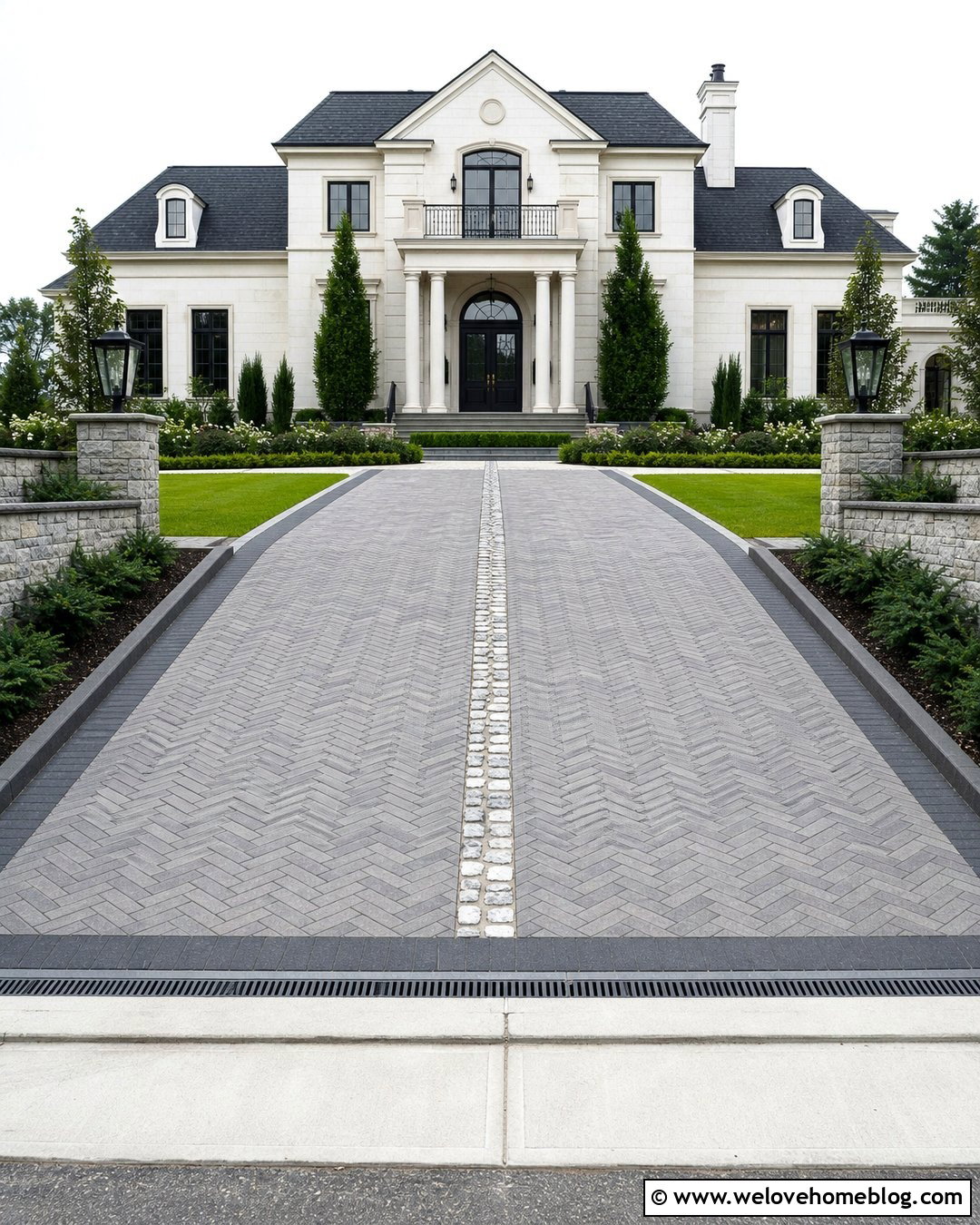
15. Tiered Metal Planters Along a Paver Driveway
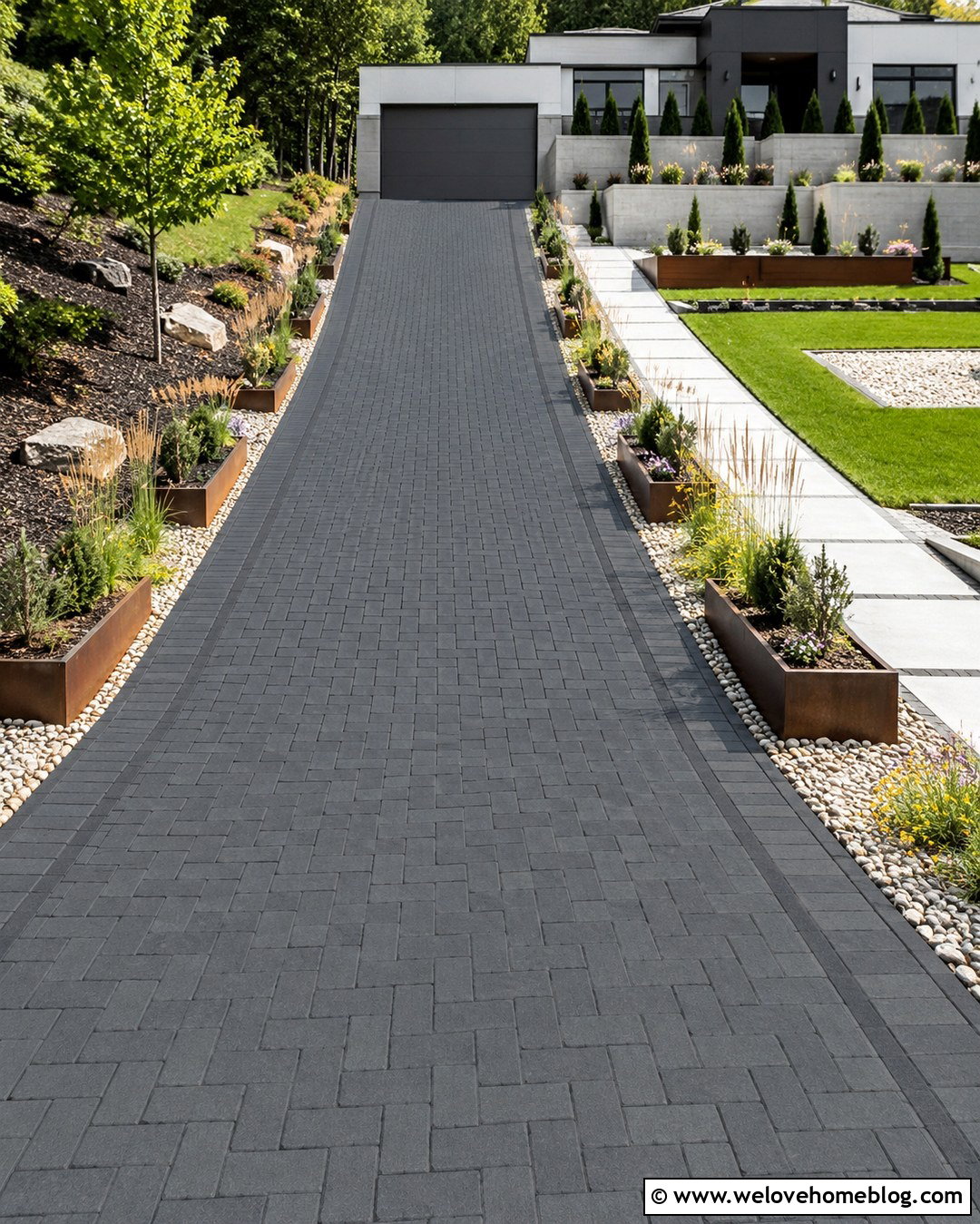
Powder-coated metal planters provide crisp structure without the visual weight of thick masonry. Place wide rectangular boxes beside a charcoal interlocking-paver driveway and step them evenly up the grade. Black, bronze, or deep green finishes can coordinate with window frames, railings, and exterior lights. Fill each box with the same layered combination of dwarf evergreen shrubs, upright grasses, and low flowering plants. Repeating the planting recipe prevents the narrow slope from appearing cluttered. Install each planter on a stable, level footing and allow drainage water to exit away from the pavement. A light gravel band can separate the dark boxes from the dark pavers and improve visibility. Choose durable containers designed for outdoor soil loads, moisture exposure, local temperature swings, and year-round use.
16. Rustic Stone Trough Planters Beside Gravel
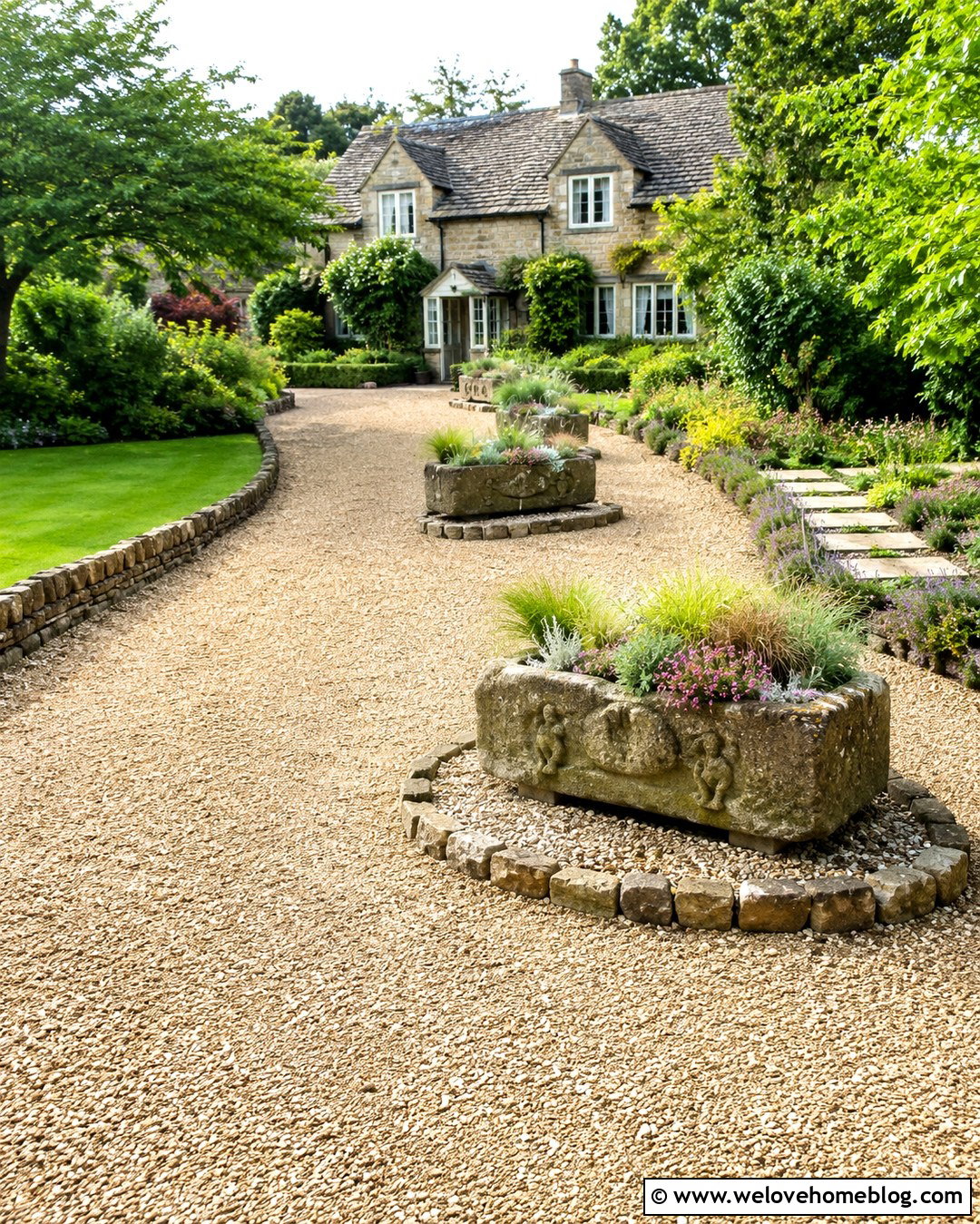
Stone troughs bring an established garden character to a country driveway, especially when the surrounding grade is uneven. Use tan pea gravel for a gently curving driveway and place weathered stone trough planters on level gravel pads along the higher bank. Vary their sizes, but maintain generous spacing so the arrangement feels collected rather than crowded. Fill the troughs with thyme, dianthus, sedum, compact grasses, and small seasonal flowers. Low drystone edging can connect the containers and prevent gravel from migrating into the lawn. Add a few native shrubs behind them to blend the formal planters into the slope. Because stone containers are extremely heavy, determine their final positions before filling them. Stable pads and open drainage holes help prevent leaning, trapped water, and winter damage.
17. White Stucco Planters Along a Coastal Driveway
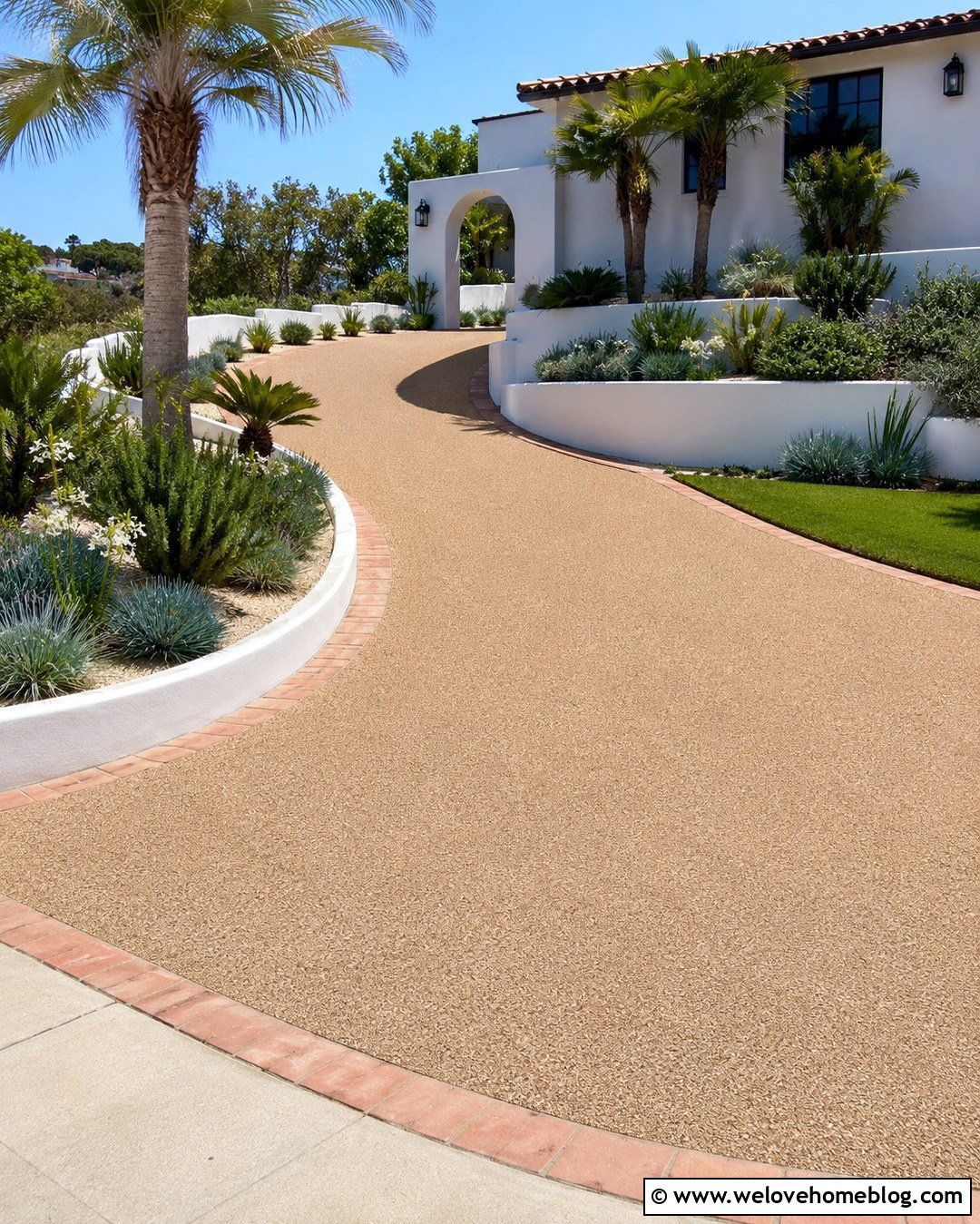
White stucco planters can brighten a sloped driveway and complement coastal, Mediterranean, or Spanish-inspired architecture. Pair them with a warm sand-colored resin-bound gravel driveway in a clean curved layout. Build the planters in graduated levels, with rounded corners that echo arches on the house. Plant blue fescue, compact palms where suitable, rosemary, agapanthus, and silver foliage for breezy color and texture. Pale gravel mulch maintains the light palette, while a narrow terracotta paver ribbon defines the driveway edge. Use stain-resistant finishes near tires and runoff paths because white surfaces show splashes easily. Keep plants low around the street entrance and allow fuller specimens closer to the house. The overall design should appear bright and open, not crowded with oversized tropical planting.
18. Raised Vegetable Planters Beside a Long Driveway
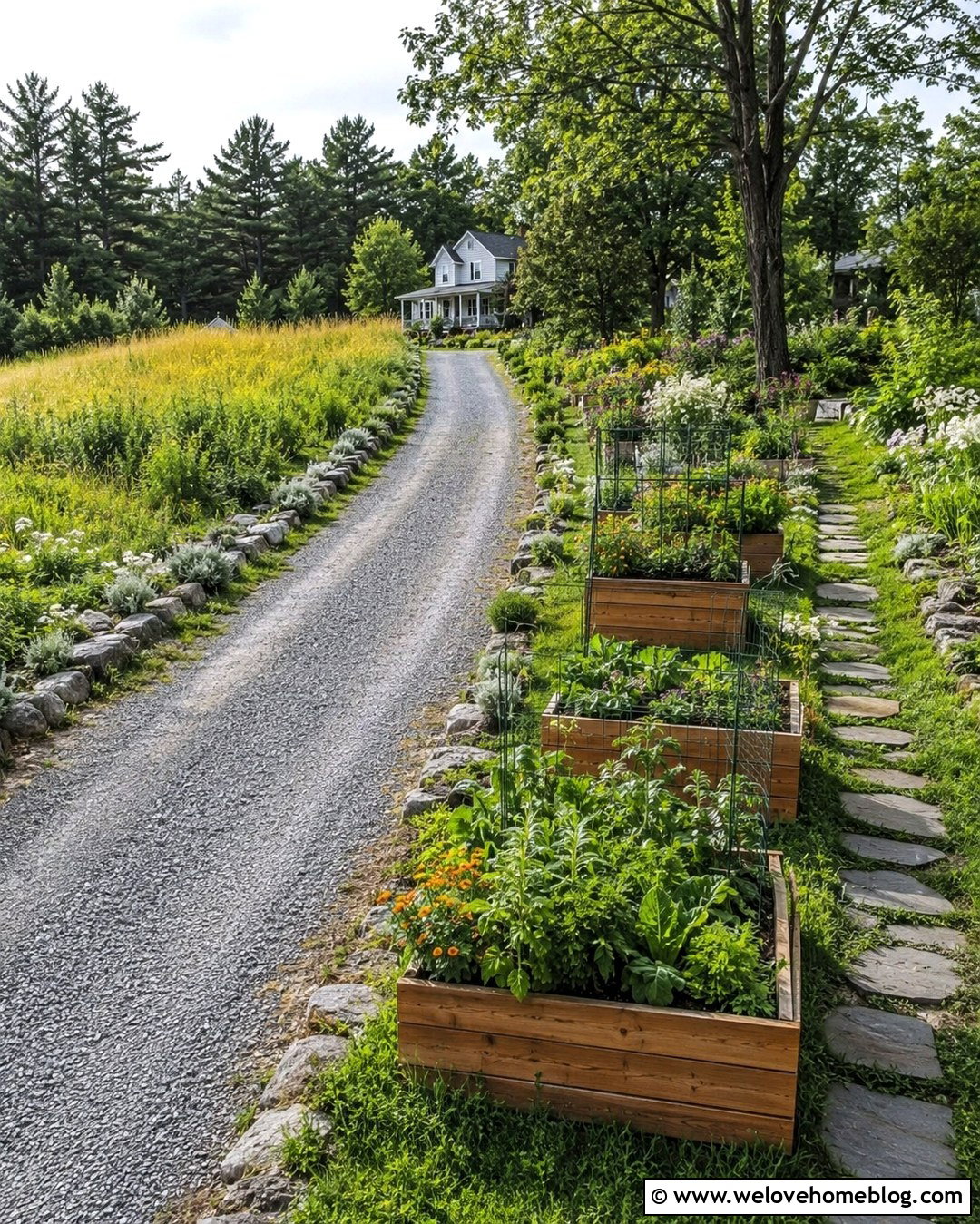
A sunny slope beside a long rural driveway can become productive garden space when level beds are created safely. Use compacted gray gravel for the driveway and place cedar raised planters on broad terraces beyond a low stone border. Align the beds across the slope rather than letting them tilt downhill. Grow compact vegetables, culinary herbs, strawberries, and pollinator-friendly flowers. Add a separate stepping-stone path behind the planters so harvesting never requires standing in the driveway. Simple wire trellises can support climbing crops without blocking the view of the house. Use drip irrigation and mulch to manage moisture efficiently. Keep edible beds away from areas affected by vehicle fluids, deicing salt, or contaminated runoff, and select materials appropriate for contact with garden soil.
19. Illuminated Planters Along a Steep Driveway
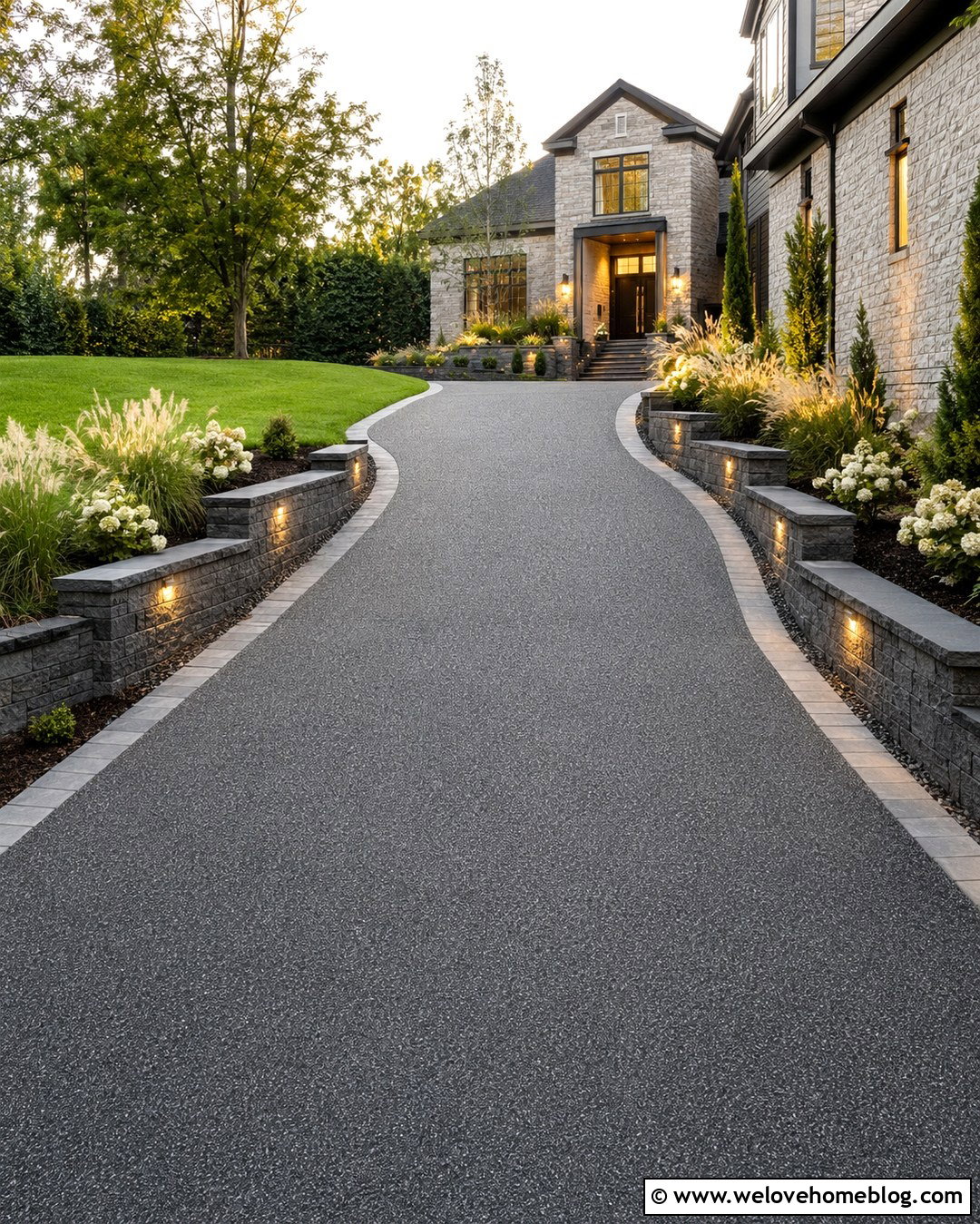
Lighting integrated with planters can make elevation changes easier to read while creating a refined entrance. Pair a dark exposed-aggregate driveway with low charcoal masonry planters that step up the slope. Recess small shielded fixtures into selected planter faces and direct their light toward the pavement edge, not toward drivers or neighboring windows. Plant pale ornamental grasses, white flowering perennials, and compact evergreens that remain visible against the dark materials. Add a light-gray paver border to create daytime contrast and protect the driveway edge. Keep electrical components accessible without requiring anyone to stand in the vehicle path. Although the image prompts emphasize daylight, the installed lighting should support practical nighttime navigation. Coordinate fixture spacing with steps, curves, walls, and garage approaches instead of producing an overly bright runway effect.
20. Low-Maintenance Planters Along an Asphalt Driveway
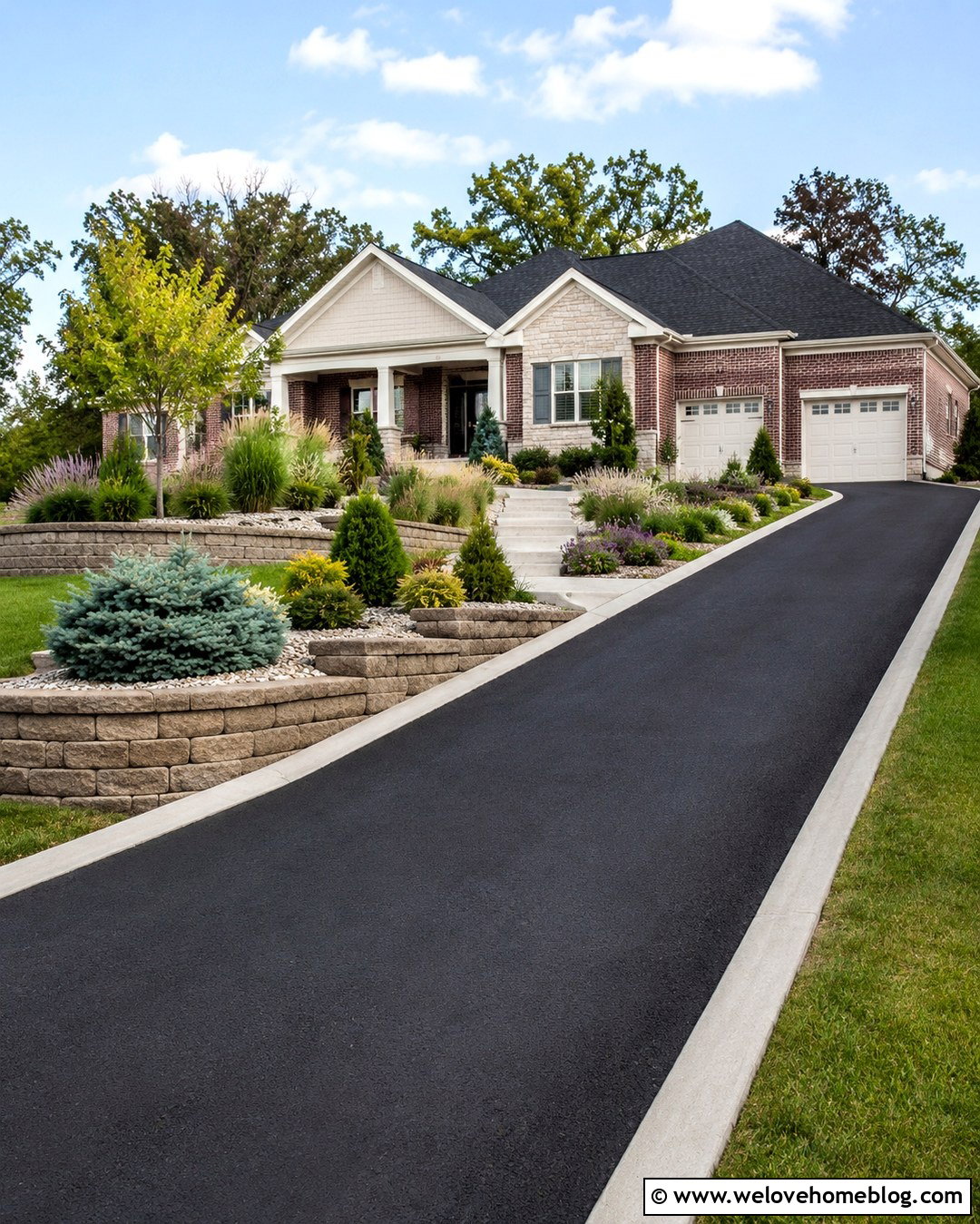
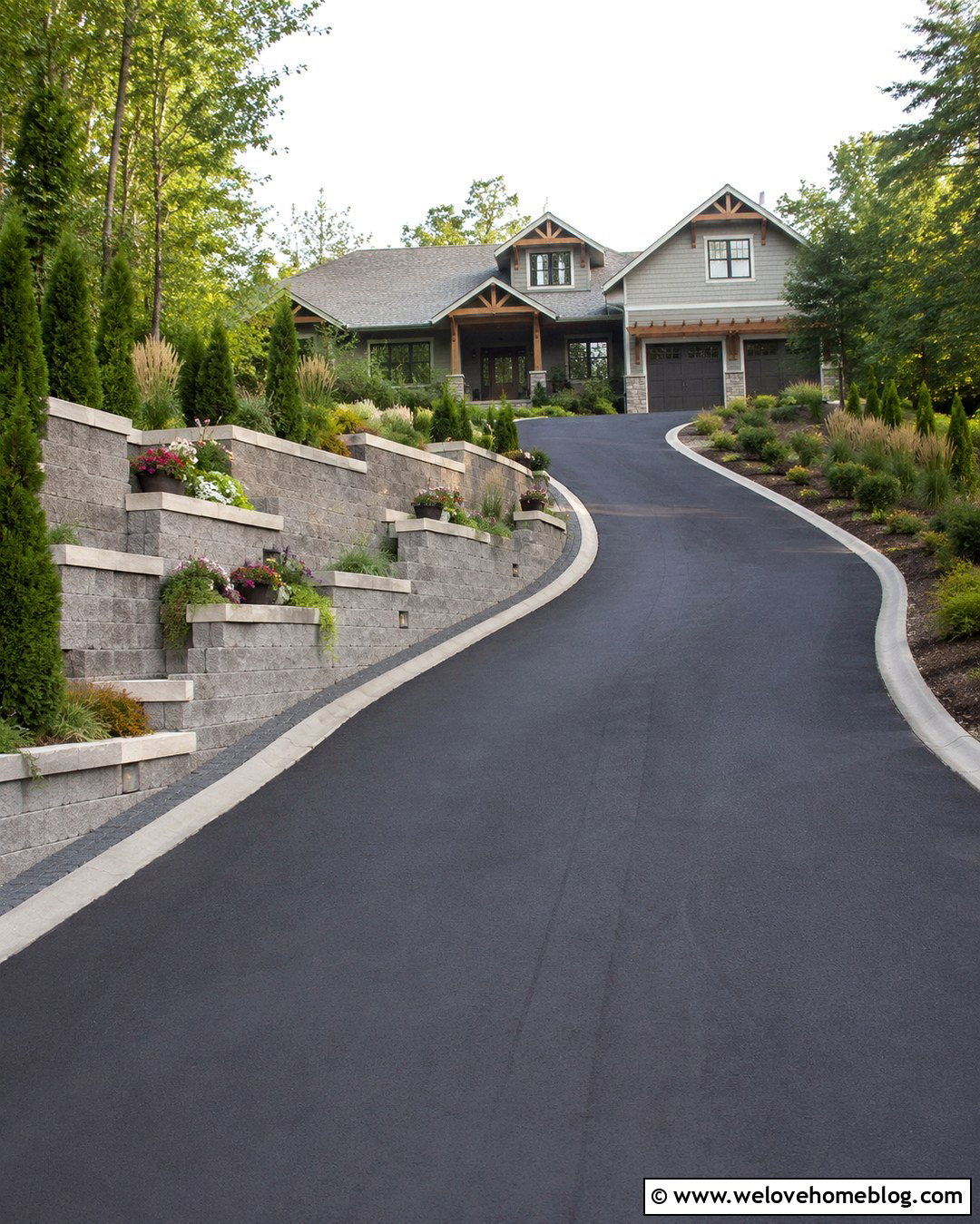
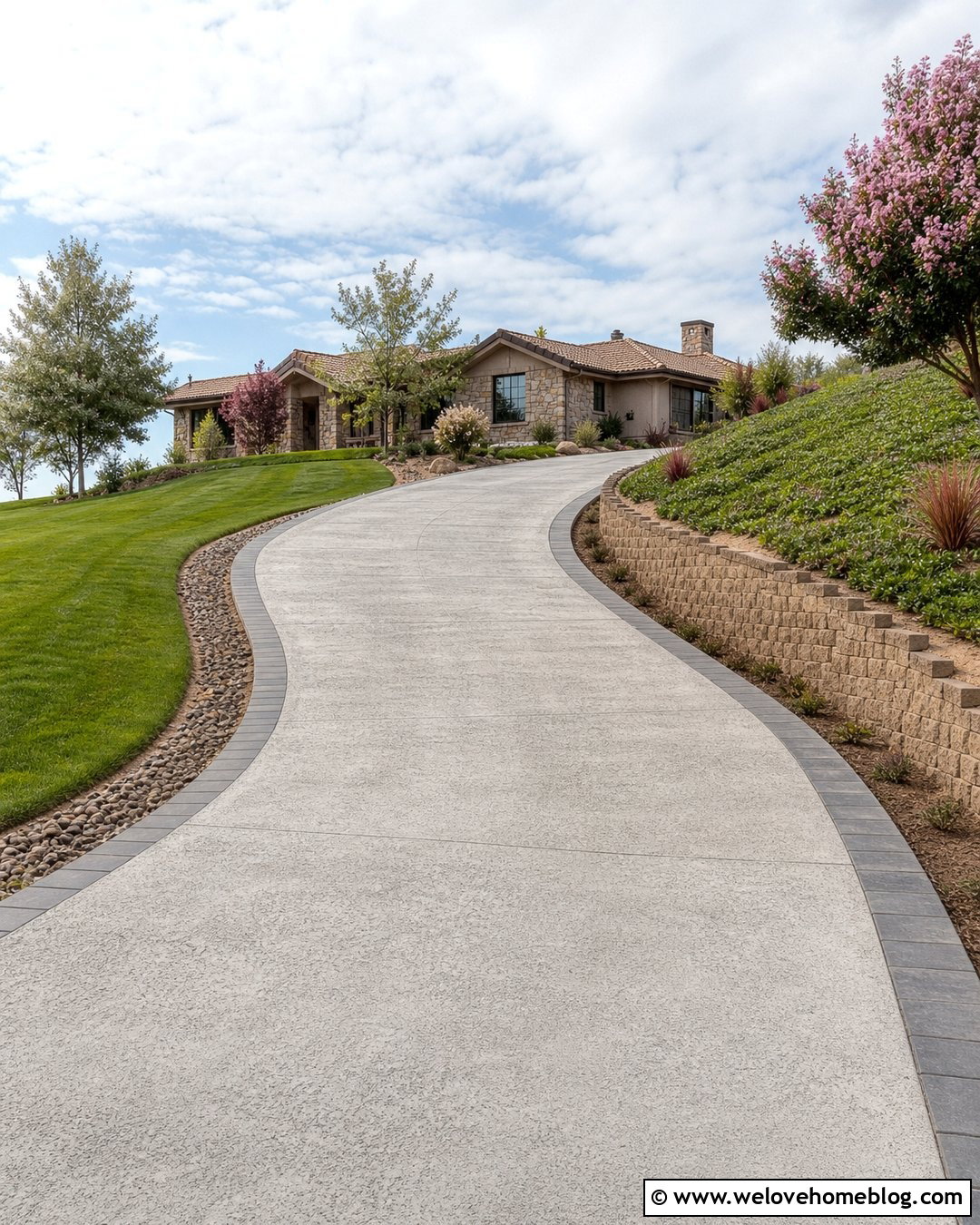
For an easy-care finish, combine a smooth black asphalt driveway with wide, low planters made from tan segmental wall block. Follow the slope with two or three shallow tiers, keeping their shapes simple enough for quick trimming and cleanup. Fill the beds with dwarf conifers, spreading juniper, hardy ornamental grasses, and long-blooming perennials suited to the local climate. Use gravel mulch rather than loose bark where stormwater regularly moves downhill. A contrasting concrete curb can protect the asphalt edge and prevent soil from spilling onto the surface. Include permanent access points so weeds, irrigation lines, and plants can be maintained safely. Avoid species that drop large fruit, develop invasive roots, or need constant pruning. The completed driveway should look attractive through every season without demanding weekly attention.
Conclusion:
The most successful planters do more than decorate an incline. They help the driveway, slope, house, and garden feel like one carefully planned entrance. These 20 Planter For Sloped Driveway Ideas include flexible container arrangements, tiered planting beds, built-in walls, native landscapes, and modern architectural options. Match planter materials to the driveway and home, then choose plants suited to the site’s sun, soil, moisture, and climate. Leave enough space for vehicles, walking, maintenance, and clear street visibility. Most importantly, address runoff and soil pressure before focusing on decorative details. If a planter retains substantial soil or sits on a steep grade, consult qualified local professionals about drainage, engineering, permits, and safe construction.

Related posts:


Leave a Reply