
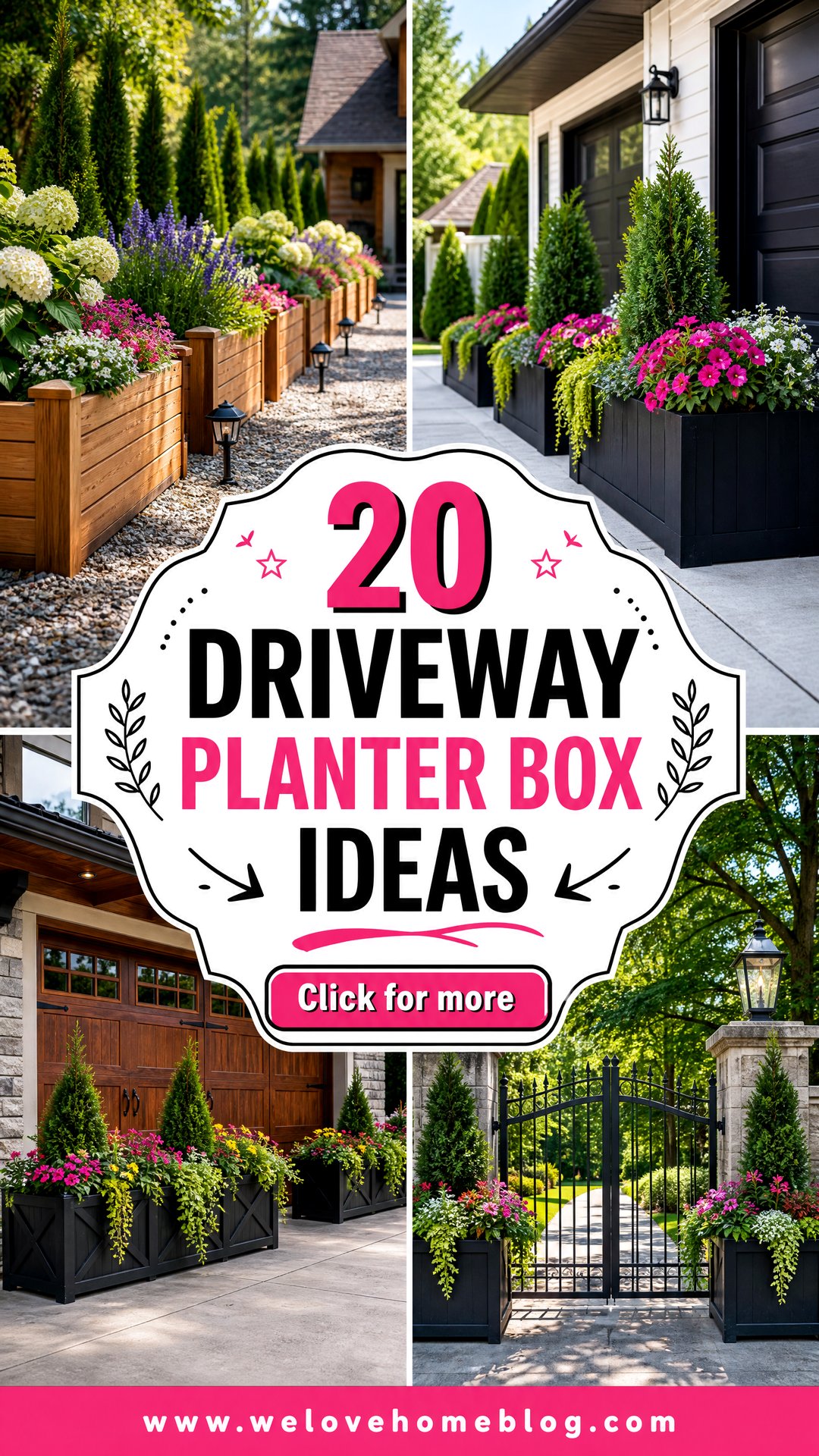
Driveway planter boxes offer an easy way to soften broad paved areas, define parking zones, and give the front of your home a more welcoming look. They can frame the street entrance, guide visitors toward the front door, or add greenery beside a garage without requiring a large garden bed. Materials such as cedar, brick, stone, concrete, and weathered steel make it possible to coordinate the planters with almost any driveway surface or house style. Before installing them, consider vehicle clearance, drainage, sunlight, mature plant size, and visibility near the road. The strongest designs treat the driveway, containers, borders, and surrounding yard as one connected landscape. Use these complete layouts to find practical inspiration among these **20 Driveway Planter Box Ideas**. ()
1. Cedar Planter Boxes Along A Gravel Driveway
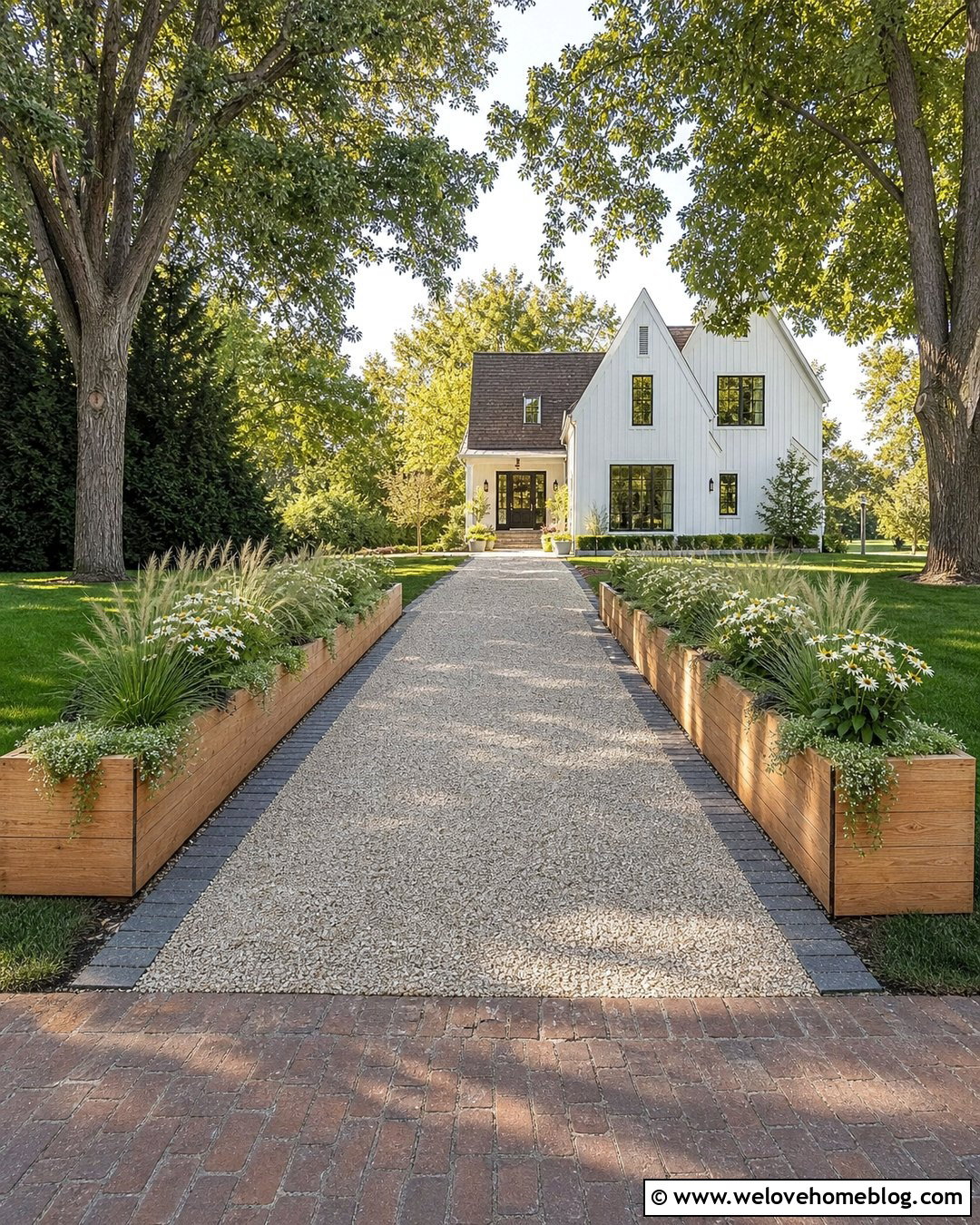
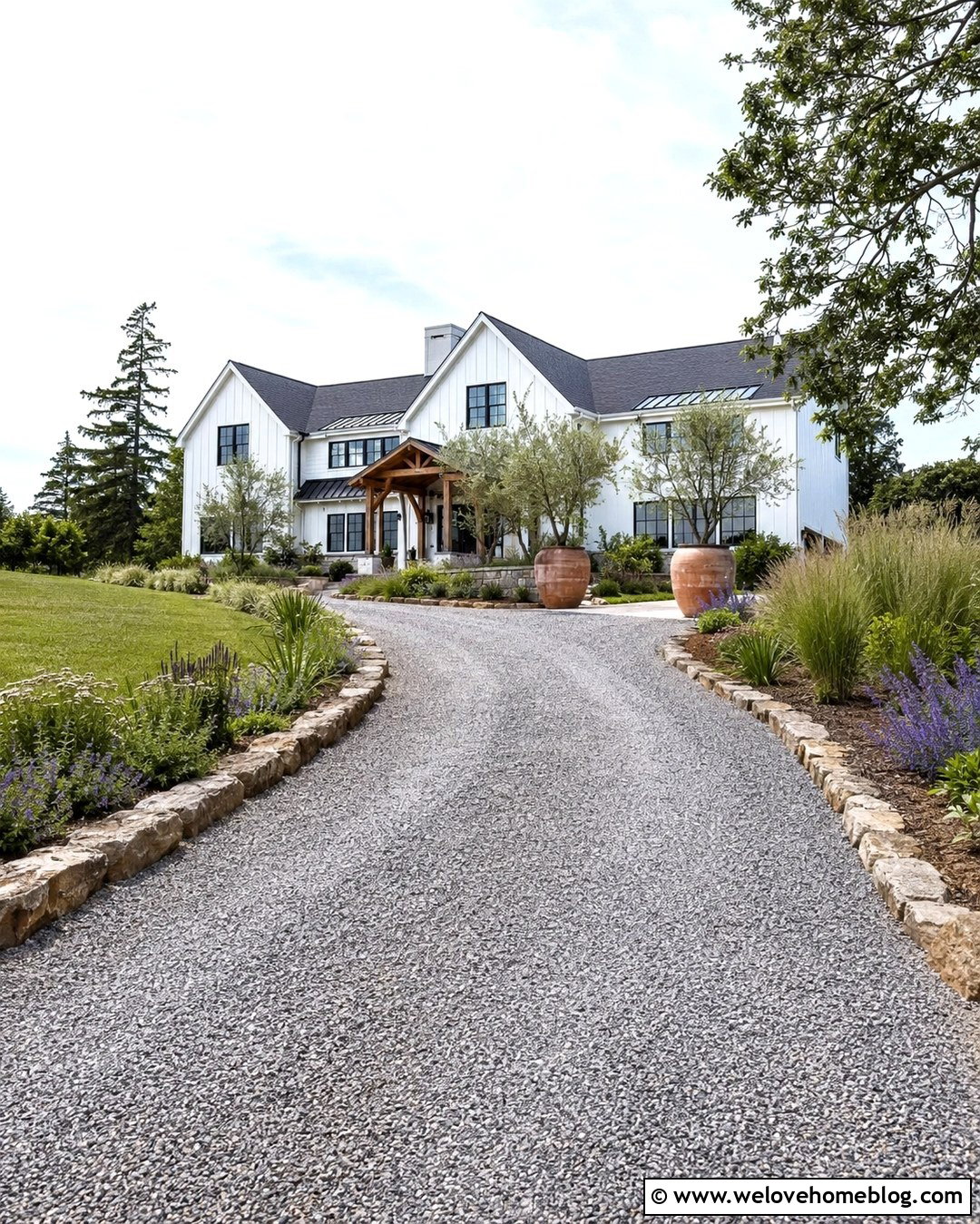
Warm cedar planter boxes make a pale gravel driveway feel softer and more connected to the surrounding yard. Position long, rectangular boxes along one side of a straight driveway, leaving enough open pavement for doors, deliveries, and snow removal. Fill them with feather reed grass, white coneflowers, and trailing thyme for layered height and movement. A steel or cobblestone edge will prevent loose gravel from collecting beneath the planters. Repeat the cedar on a nearby mailbox post or front porch to create a coordinated exterior. This complete look works especially well with a modern farmhouse, ranch house, or country property because the natural wood complements both casual planting and light-colored gravel.
2. Black Planter Boxes Beside A Concrete Driveway
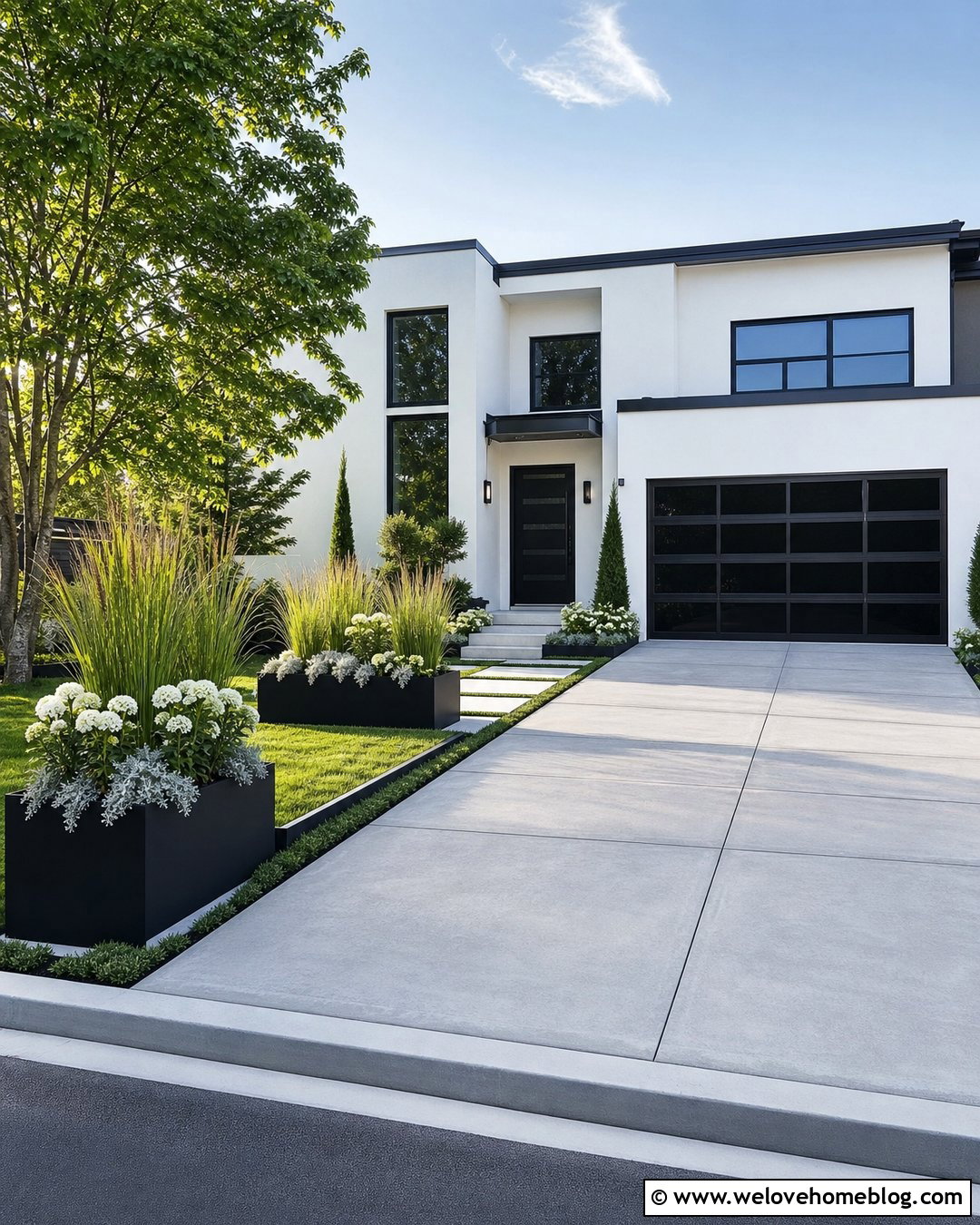
Matte black planter boxes create crisp contrast beside a light gray poured concrete driveway. Choose two or three low rectangular containers rather than many small pots, which can make the entrance feel crowded. Plant upright ornamental grasses in the center, then add white flowers and silver foliage around the edges. Straight driveway joints, dark metal edging, and square concrete stepping pads will strengthen the clean geometry. Near the garage, place the boxes outside the door-swing and tire zones so they frame the architecture without reducing usable parking space. This streamlined arrangement suits a modern home with white stucco, charcoal siding, or warm wood accents. Keep the planting palette limited for a simple, polished driveway that remains visually calm.
3. Brick Planter Boxes At A Driveway Entrance
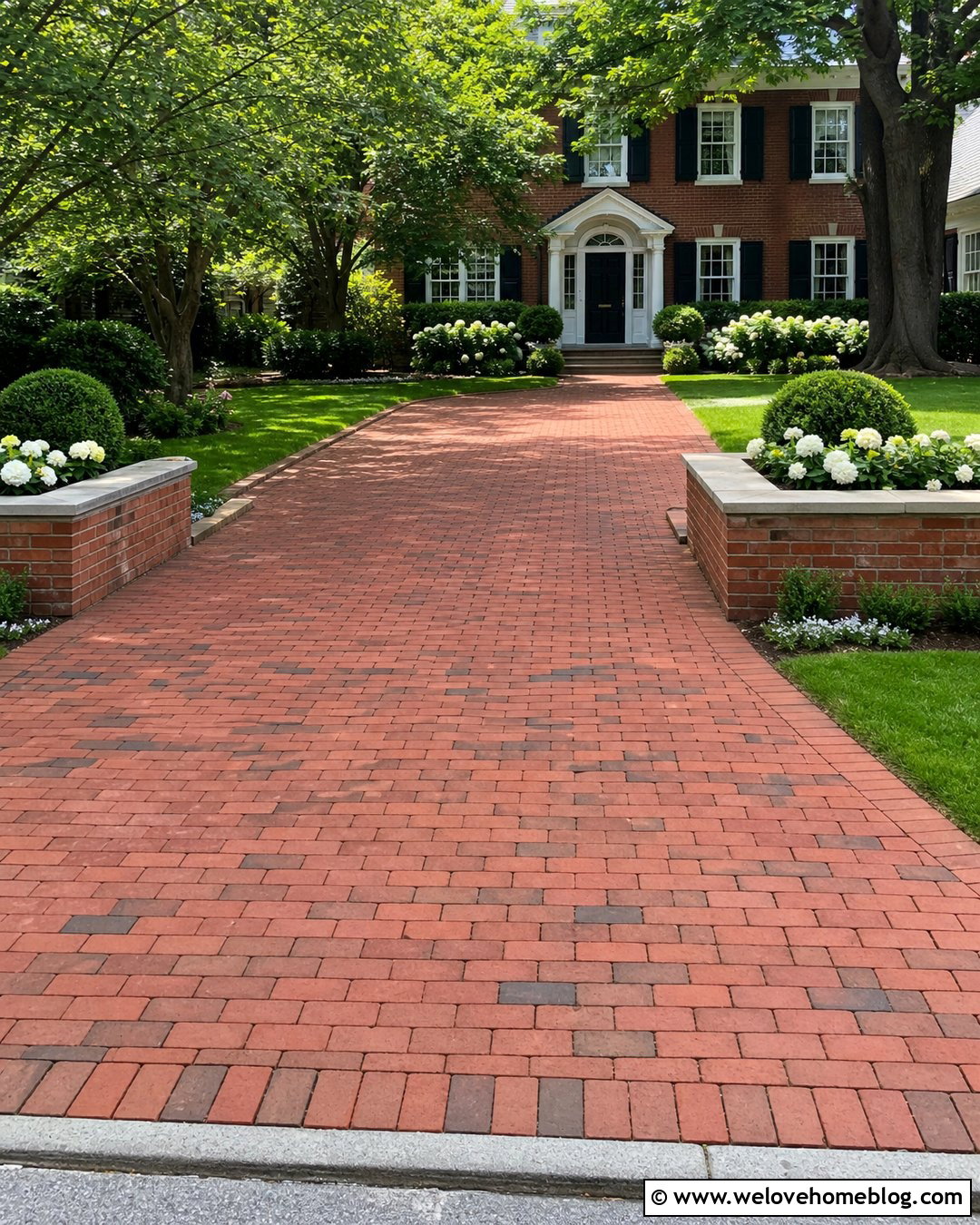
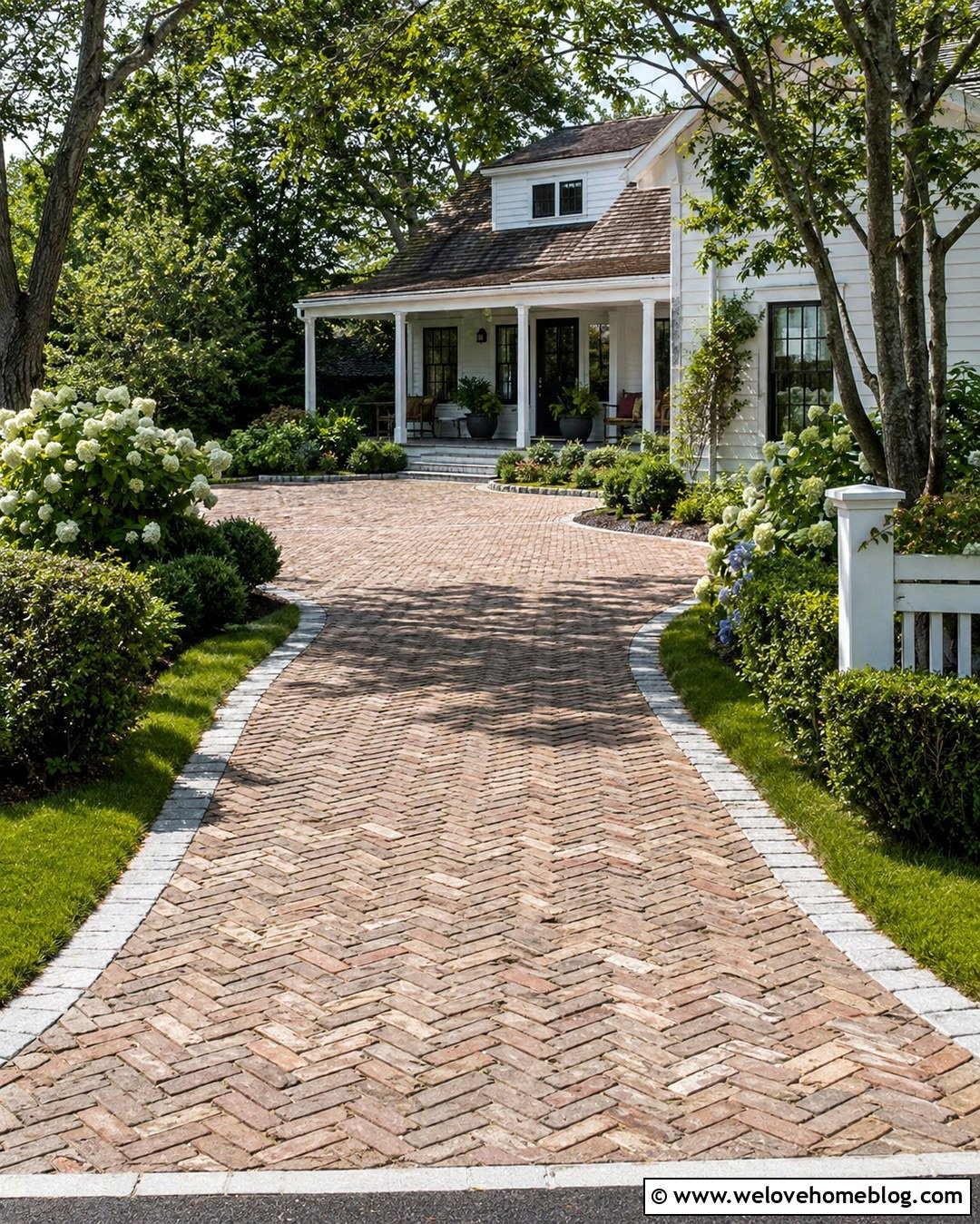
Brick planter boxes can make the street entrance feel established while connecting the landscaping to a traditional home. Build a matching pair on opposite sides of a red clay brick paver driveway or use them to introduce warmth beside black asphalt. Keep the boxes low enough to preserve a clear view of pedestrians and approaching traffic. Rounded boxwood, compact hydrangeas, and seasonal flowers provide a balanced combination of structure and color. Cap each planter with smooth stone to protect the masonry and create a finished top edge. Continue a narrow brick ribbon along the driveway so the entrance does not look isolated. This symmetrical layout is a natural fit for colonial, Georgian, Cape Cod, and traditional brick houses.
4. Stone Planter Boxes On A Curved Driveway
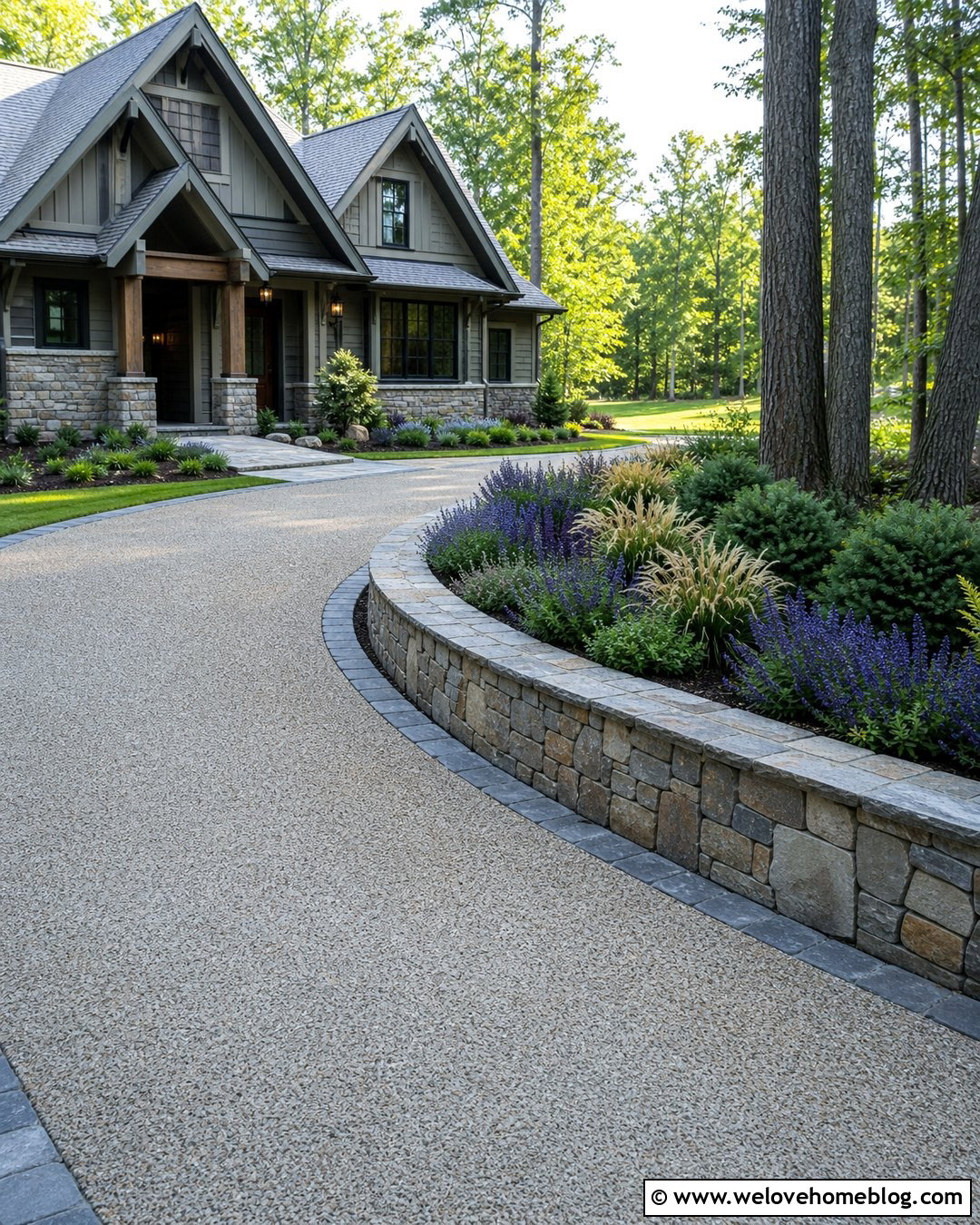
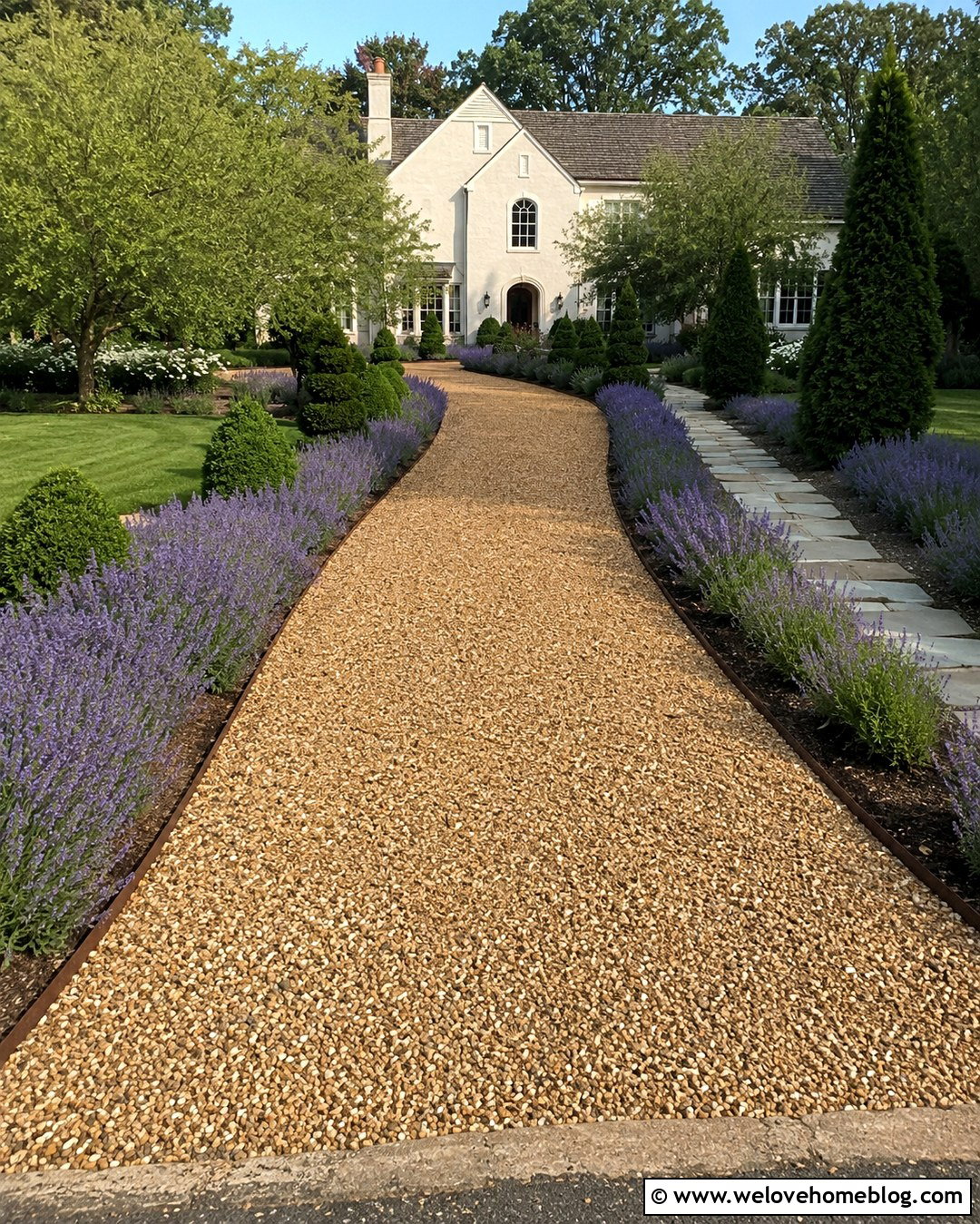
A curved driveway already creates a graceful approach, and stone planter boxes can emphasize that movement. Place one long planter along the outside curve where it will not interfere with turning vehicles. Use local fieldstone or ledgestone that matches the home’s foundation, retaining walls, or front steps. Inside the box, combine dwarf evergreens with catmint, salvia, and low ornamental grasses. Their varied forms will keep the planting interesting without hiding the driveway edge. A light exposed aggregate surface and a dark cobblestone border provide texture while making the curve easier to read. This design works beautifully with craftsman, mountain, cottage, and rustic contemporary homes surrounded by mature trees or naturalistic front-yard landscaping.
5. Concrete Planter Boxes With A Paver Driveway
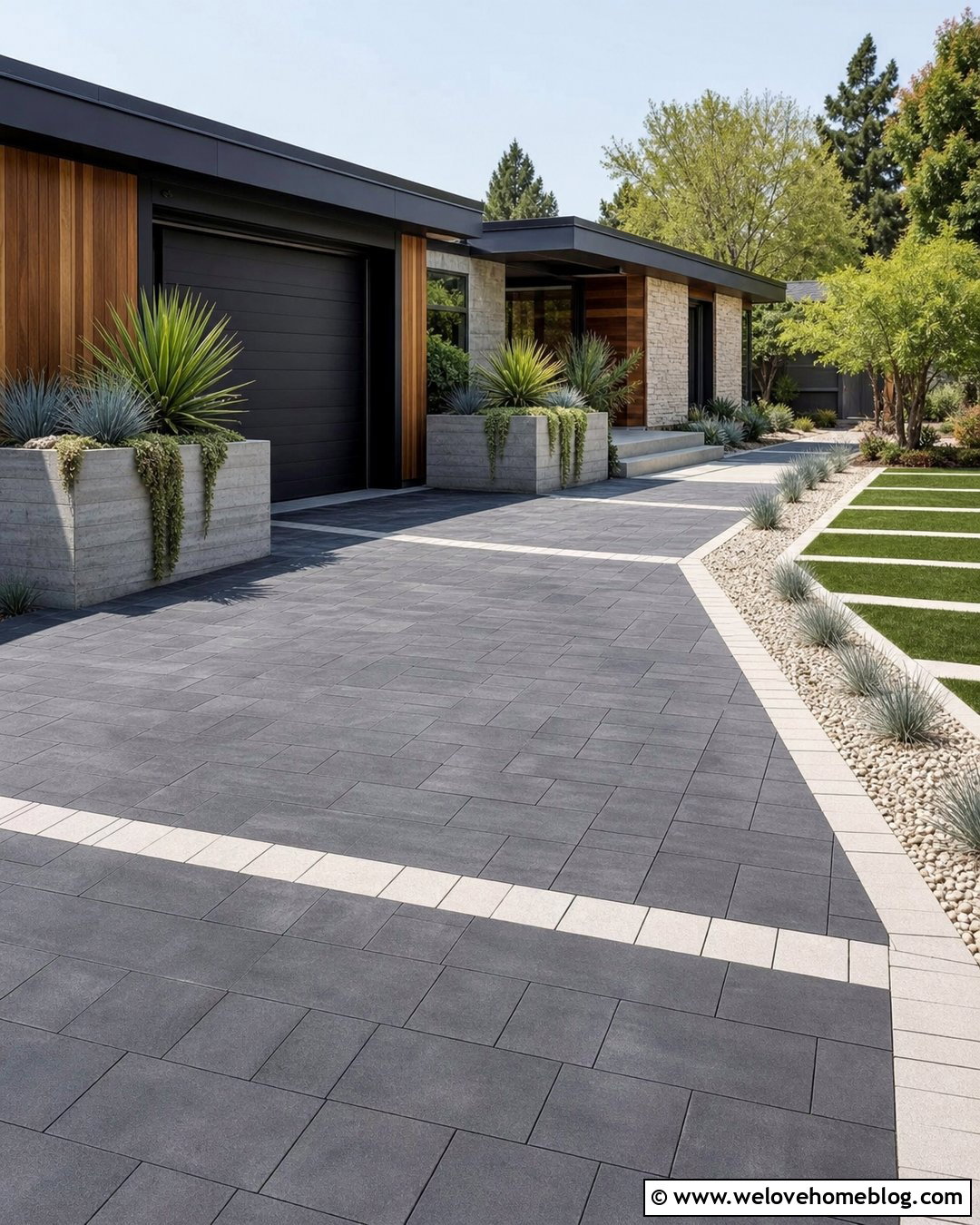
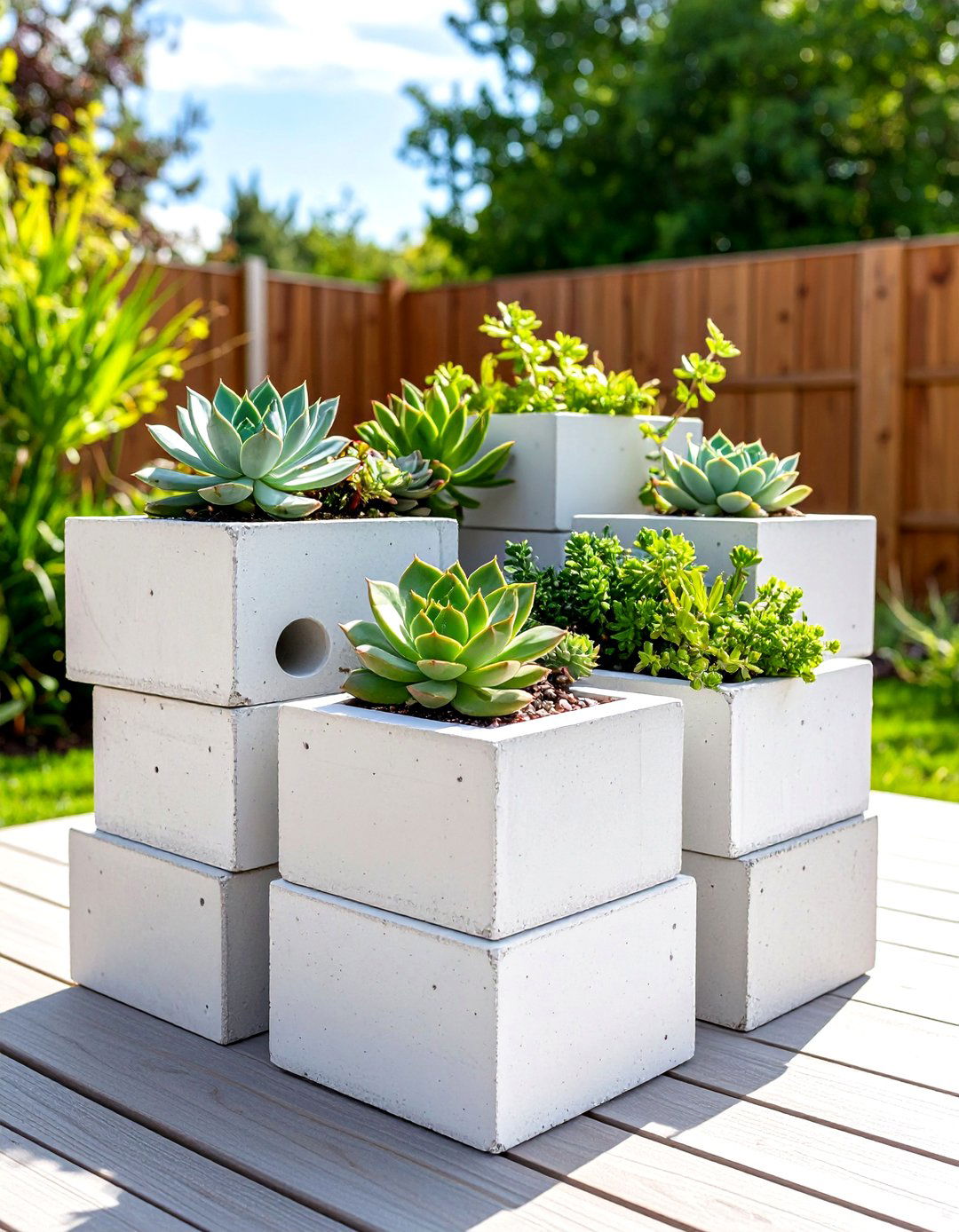
Smooth concrete planter boxes bring architectural weight to a driveway made from charcoal or greige concrete pavers. For a balanced contemporary layout, position broad rectangular boxes near the garage and repeat a smaller pair near the walkway. Fill them with sculptural plants such as yucca, compact juniper, blue fescue, and trailing sedum. Choose plants suited to your climate rather than forcing a high-maintenance combination. A contrasting paver ribbon can visually connect each planter while identifying the pedestrian route. Maintain generous clearance around corners because heavy concrete boxes are difficult to relocate after installation. With controlled planting, geometric beds, and a restrained color palette, this arrangement complements modern ranch homes, minimalist houses, and updated midcentury facades.
6. White Planter Boxes Along An Asphalt Driveway
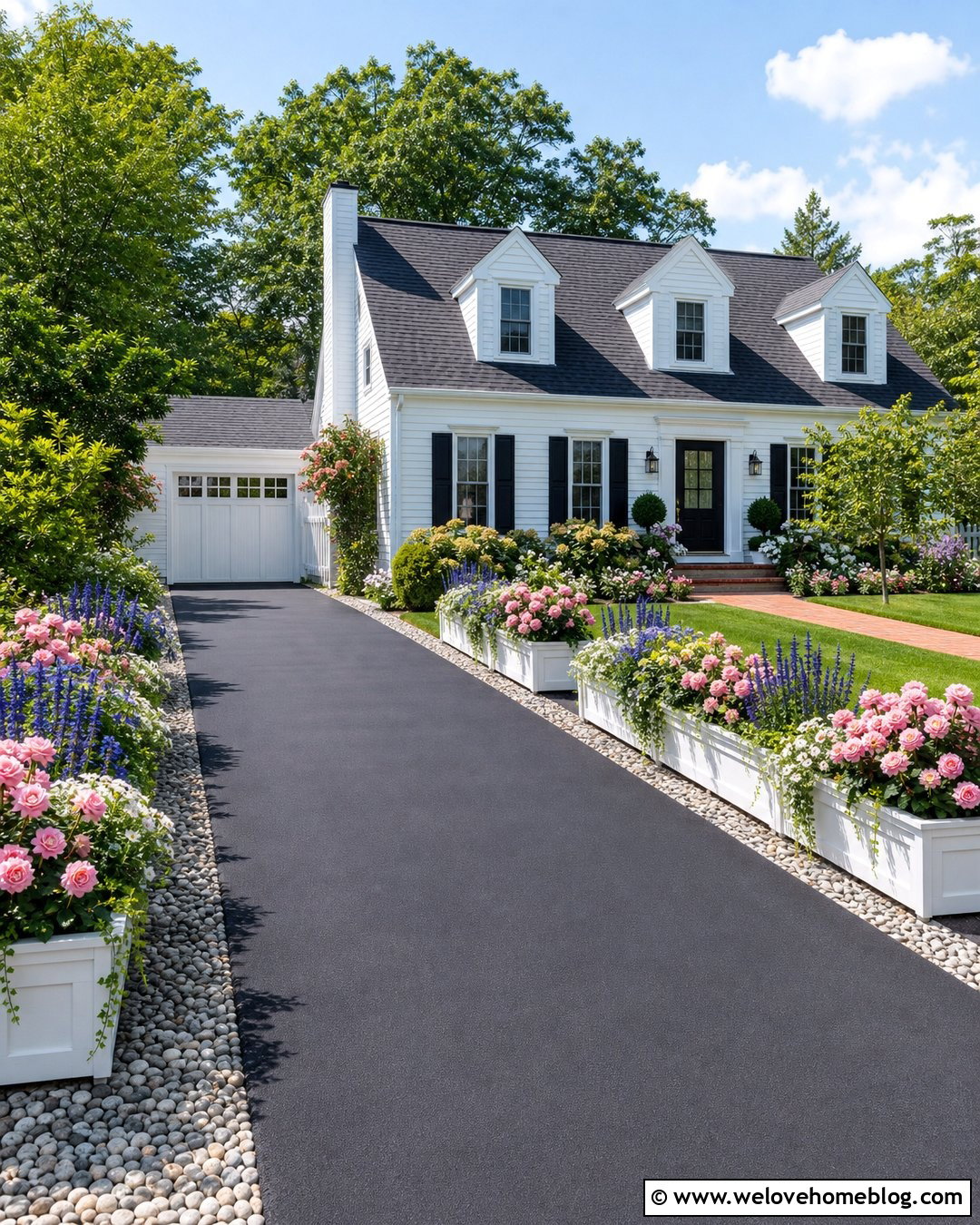
Bright white planter boxes can lift the appearance of a dark asphalt driveway and tie it to a white fence, porch, or home exterior. Use long farmhouse-style boxes along the lawn edge, but set them back slightly to protect the finish from tires and maintenance equipment. Plant soft pink roses, blue salvia, white annuals, and cascading greenery for an inviting cottage-inspired combination. A narrow strip of river rock underneath the boxes will improve the transition between pavement and grass while reducing muddy splashes. Add a brick walkway leading from the driveway to the porch for another layer of warmth. This complete design suits Cape Cod houses, traditional cottages, and simple suburban homes needing color without extensive permanent landscaping.
7. Corten Steel Planter Boxes With A Modern Driveway
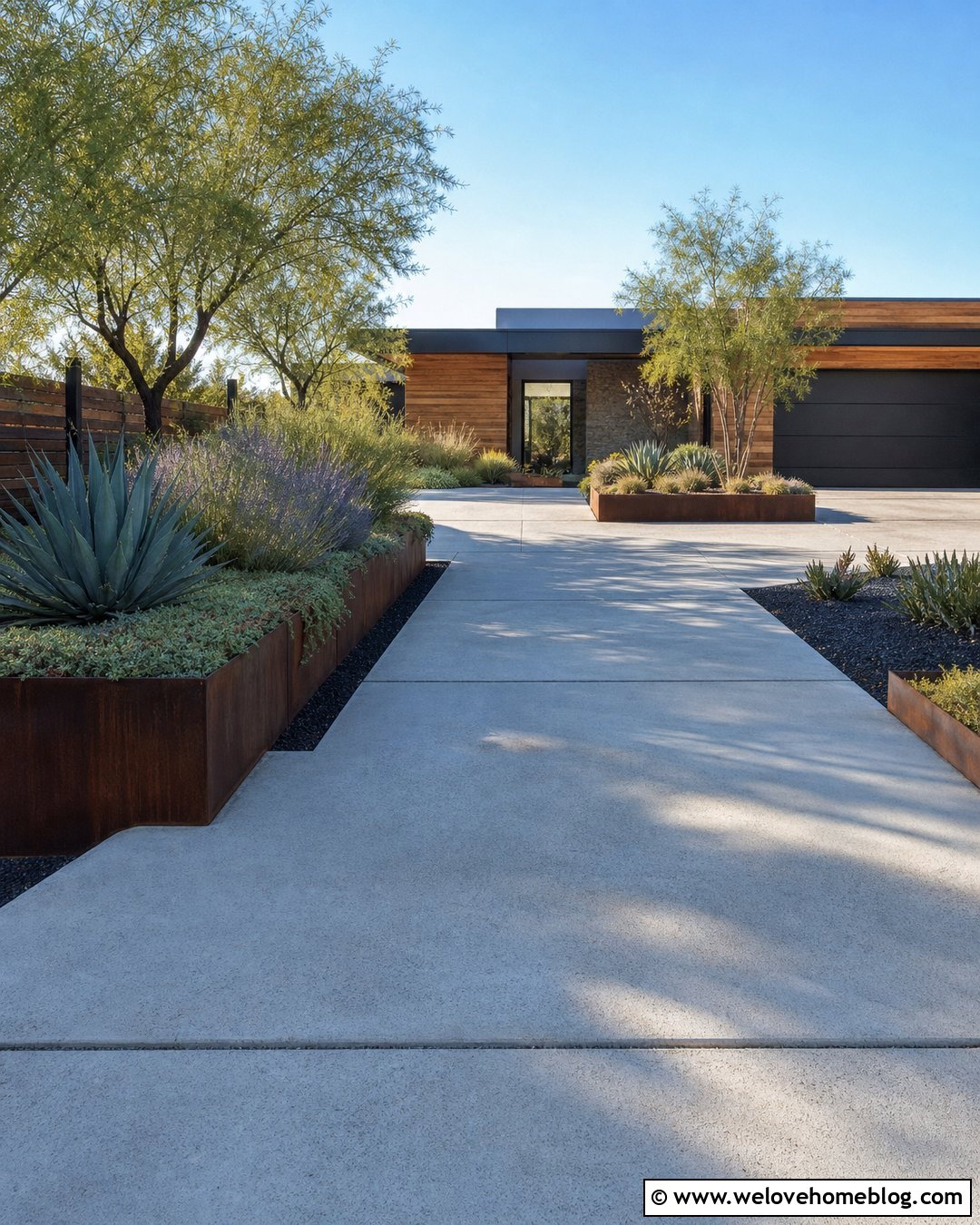
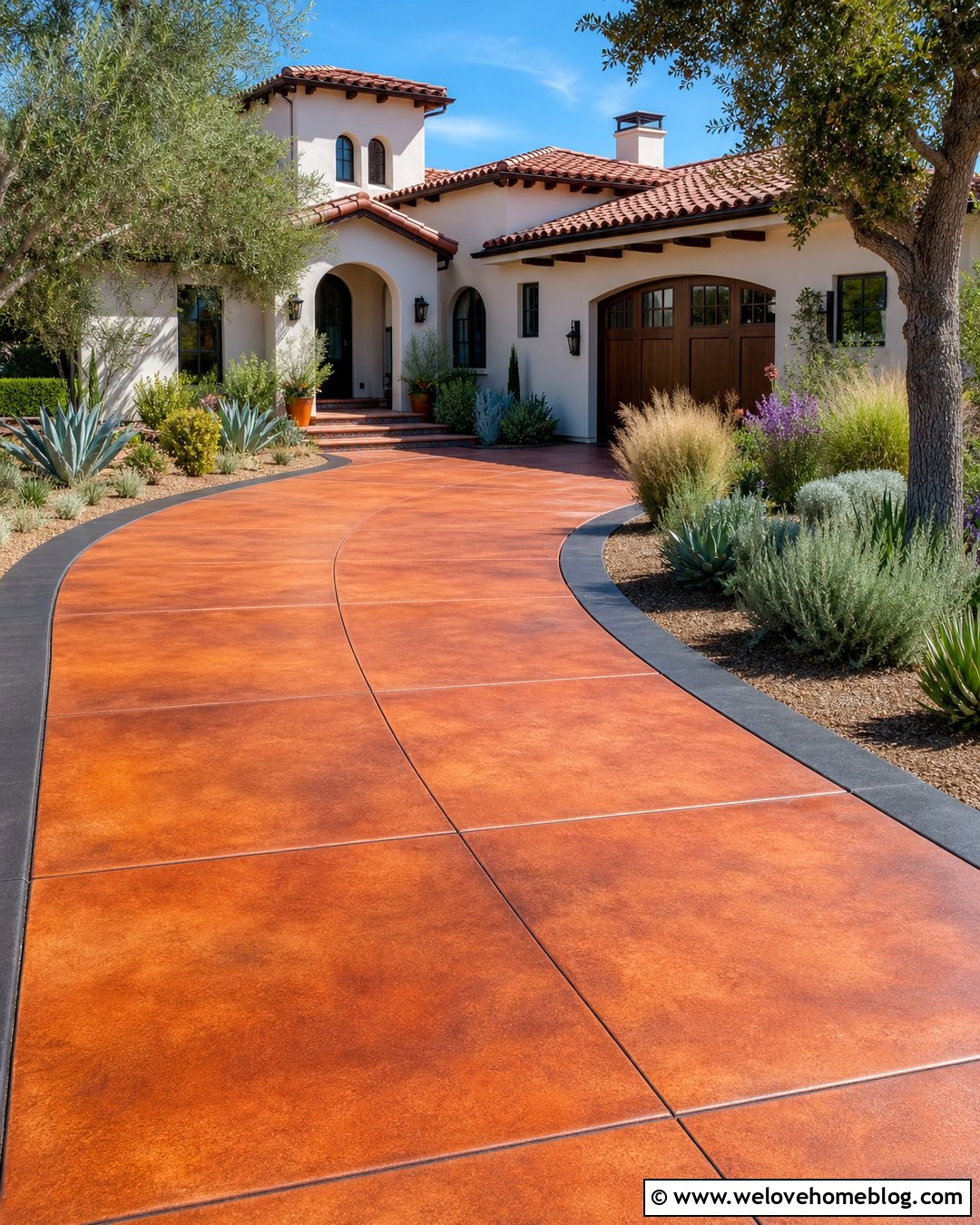
Weathered steel planter boxes provide rich rust color beside large-format concrete driveway slabs. Their warm finish can also echo wood siding, bronze fixtures, or a rust-toned front door. Arrange several long, low boxes parallel to the driveway instead of placing one tall container in the middle of the view. Use drought-tolerant grasses, agave where climate permits, Russian sage, and creeping sedum for texture and controlled movement. Black gravel around the planters creates a sharp transition from the pale concrete. Integrated drainage is important because standing water can affect both plant health and nearby paving. This bold yet uncluttered driveway landscape is especially effective for modern desert homes, contemporary architecture, and remodeled midcentury properties. ()
8. Tiered Planter Boxes On A Sloped Driveway
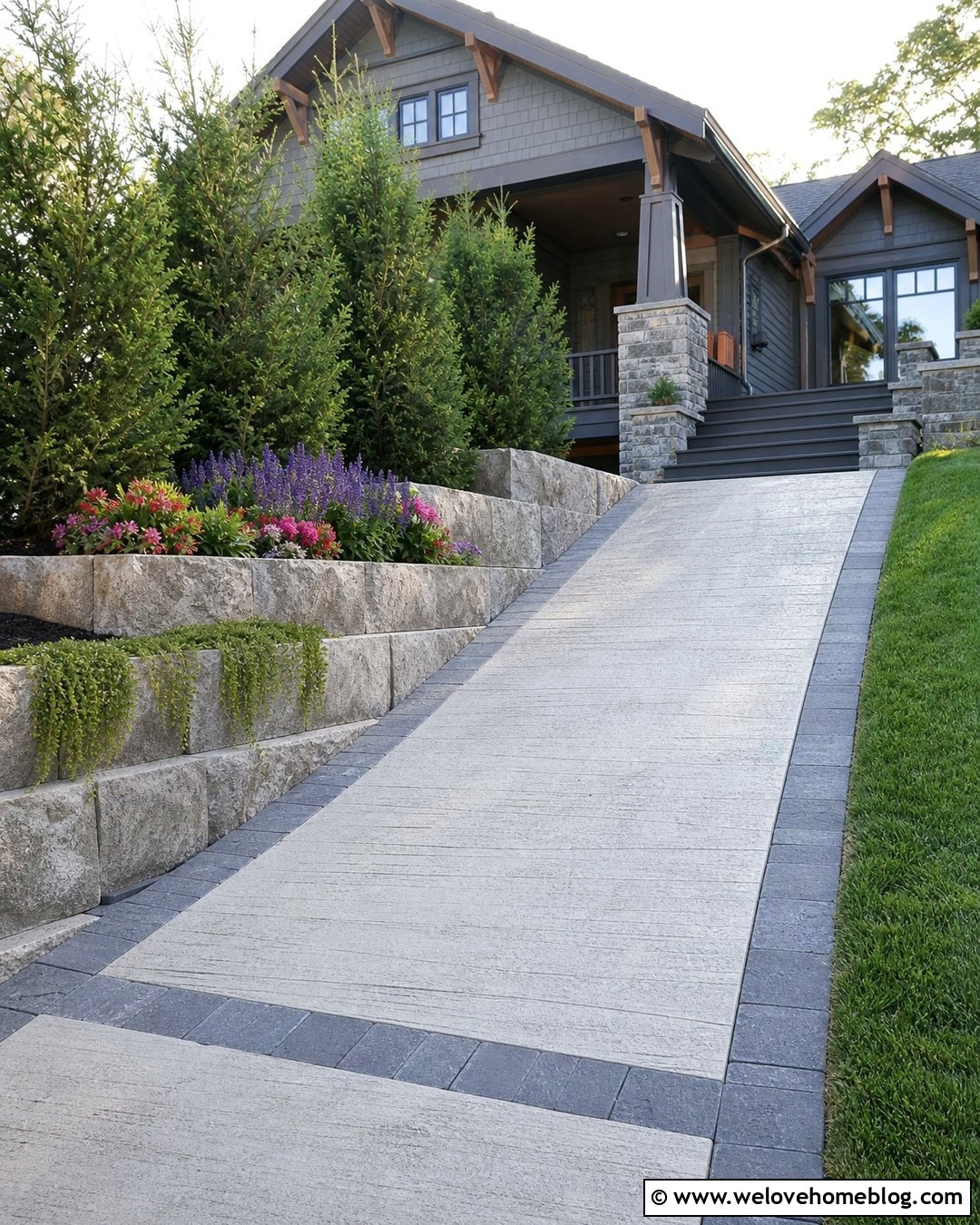
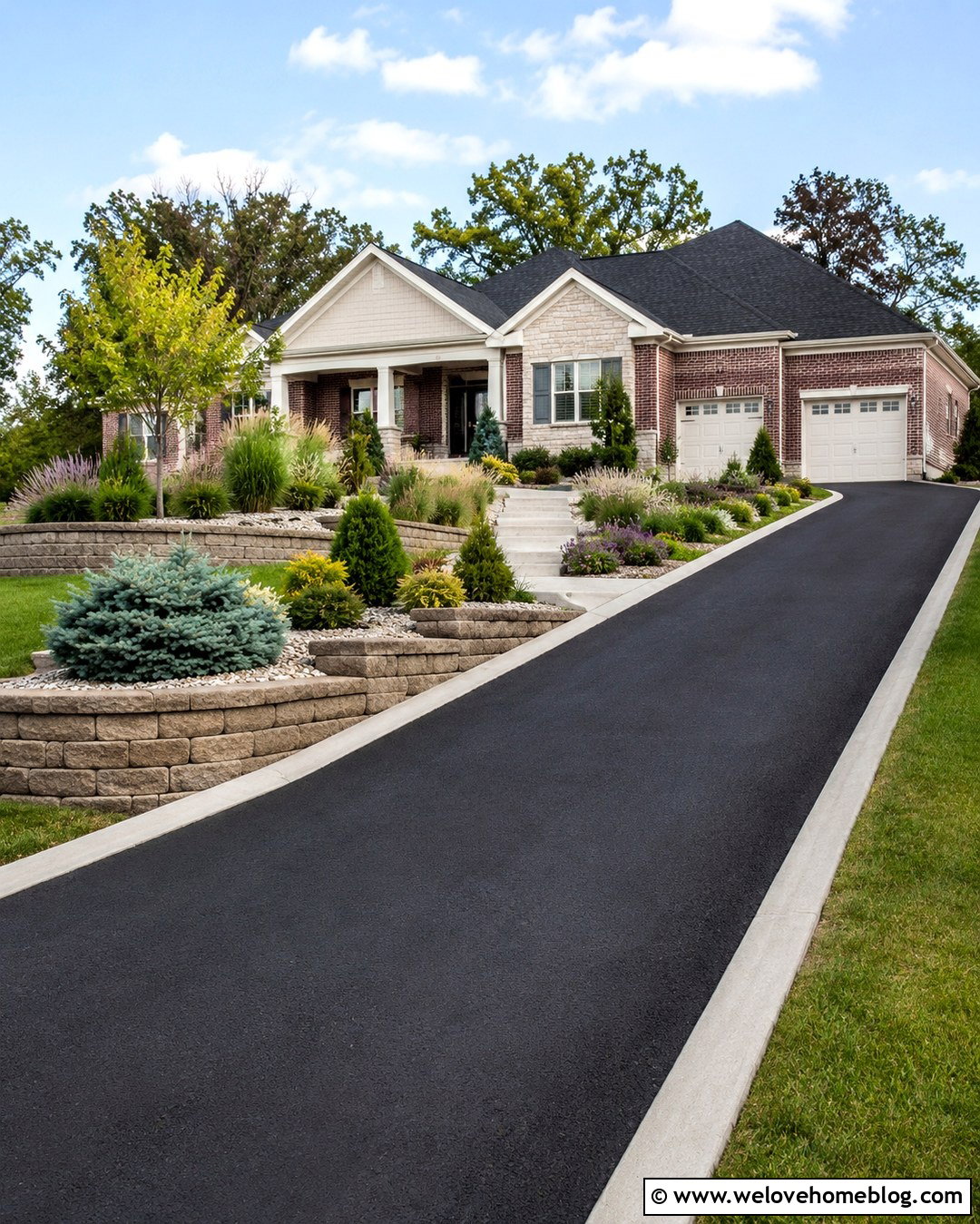
What can you do when the driveway rises sharply toward the house? Tiered planter boxes can visually manage the grade while creating safer, more usable planting levels. Build two or three stepped boxes beside the driveway rather than one oversized wall. Pressure-treated timber, concrete block, or stone can be selected to match the home and budget. Plant taller evergreen shrubs in the upper tier, colorful perennials in the middle, and trailing ground covers near the lowest edge. A textured concrete driveway with a stone border will provide traction and connect the hardscape materials. Keep soil and mulch contained below the planter tops so heavy rain does not wash debris across the pavement. The finished landscape should follow the slope naturally.
9. Narrow Planter Boxes For A Small Driveway
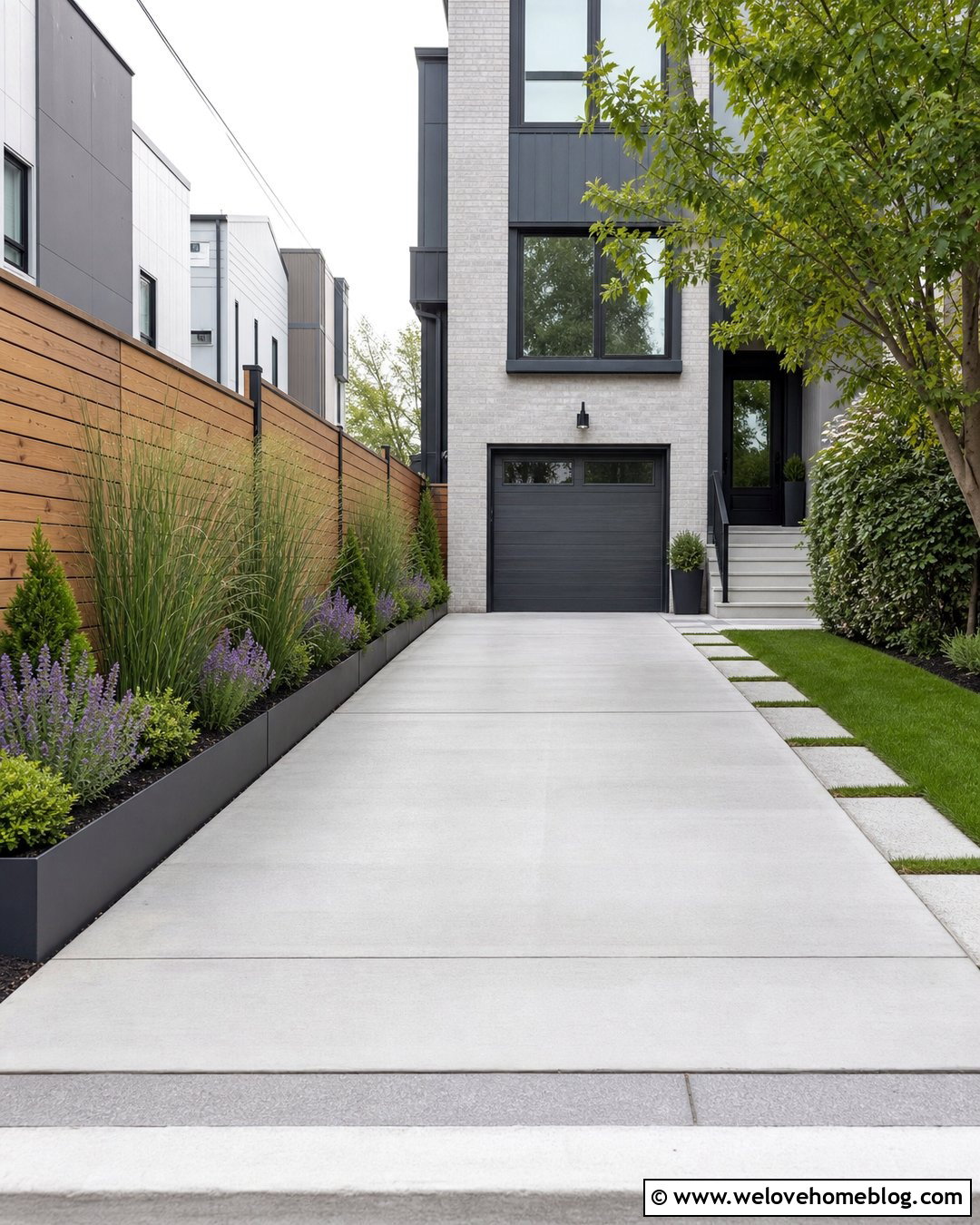
A compact driveway needs greenery that does not consume valuable parking room. Slim planter boxes measuring only as wide as the available edge strip can fit between the pavement and a fence, wall, or walkway. Choose powder-coated metal, cedar, or fiber-cement containers with a simple rectangular profile. Upright plants such as switchgrass, compact holly, lavender, or narrow clumping bamboo varieties provide height without spreading into the vehicle zone. Use a straight gray concrete driveway and a matching stepping-stone path to keep the layout visually open. Painting the boxes to blend with the fence can make the area appear less crowded. This practical design gives a small urban home or townhouse a planted entrance while preserving everyday access.
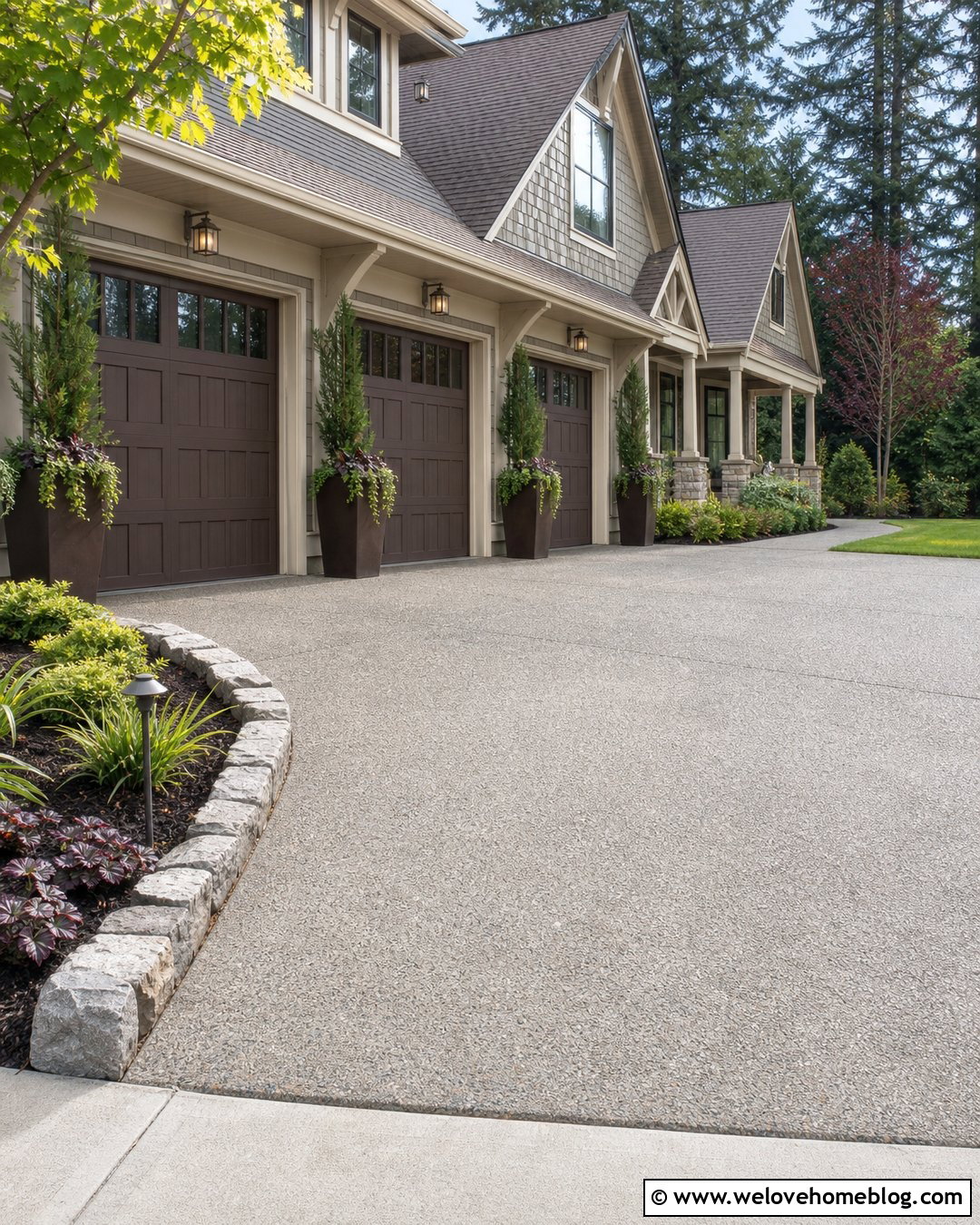

10. Planter Boxes With Trellis Driveway Screening
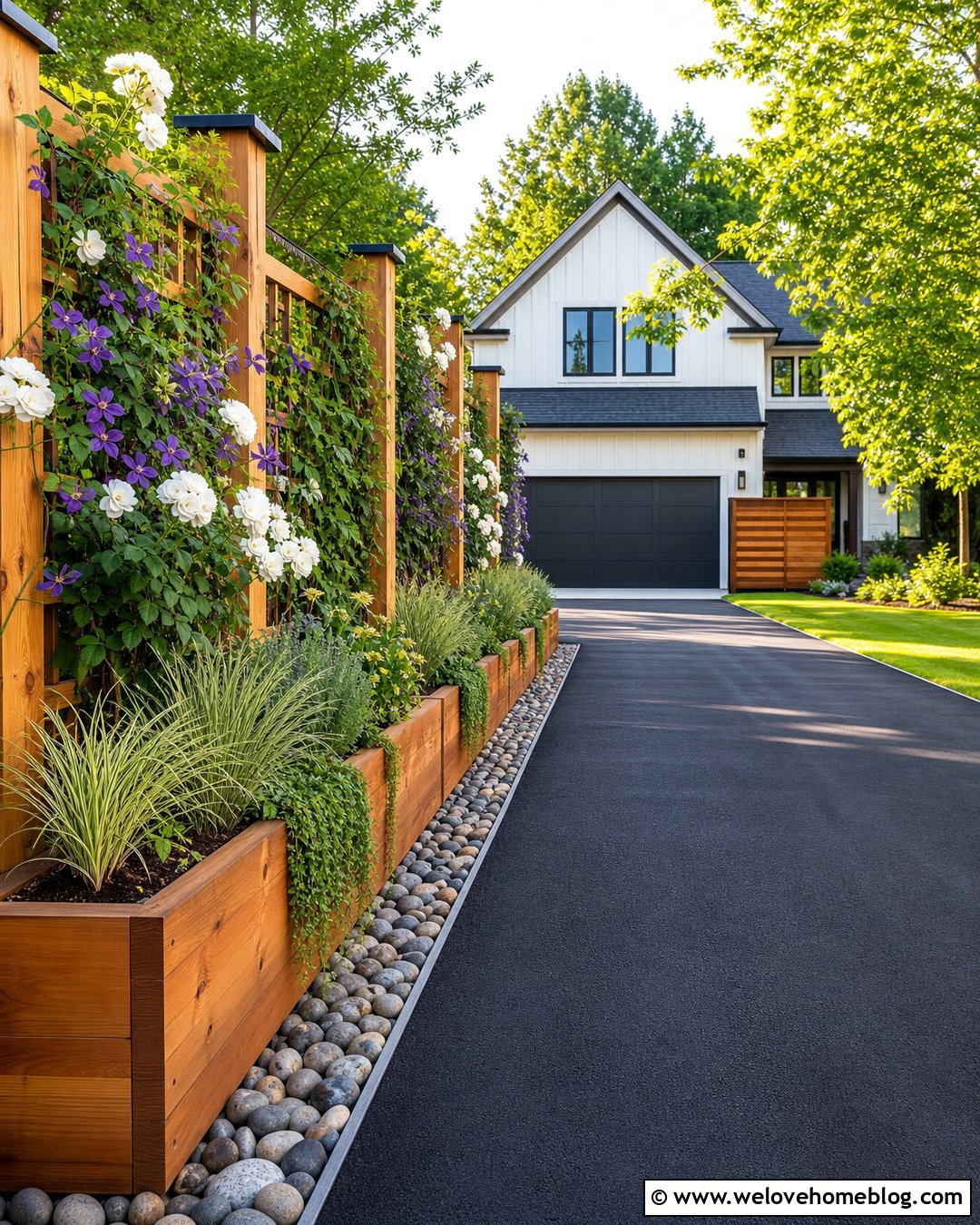
When a driveway runs close to a neighboring property, planter boxes with attached trellises can provide a softer boundary than a solid wall. Line one side of a black asphalt or permeable paver driveway with deep cedar boxes and sturdy vertical screens. Train clematis, star jasmine in suitable climates, or climbing roses across the trellis while using compact grasses below. The structure should remain entirely outside the driving lane and be secured against wind. Repeat the wood tone on the gate or front porch for a unified appearance. A river-rock drainage strip beneath the planters helps separate them from the pavement. The result is a leafy driveway corridor that adds privacy while still feeling open, residential, and welcoming.
11. Planter Boxes Around A Circular Driveway Island
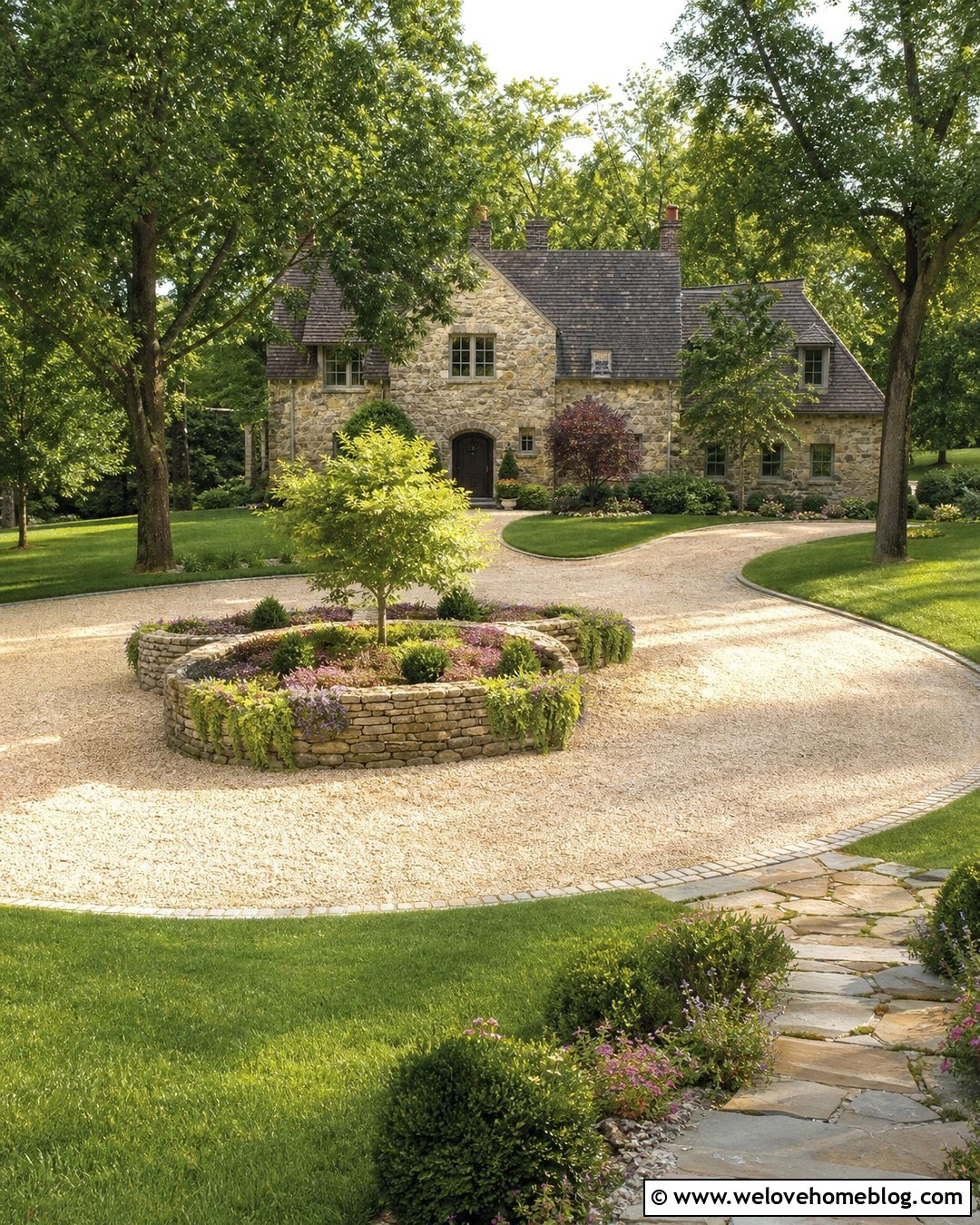
A circular driveway offers a natural central focal point, and curved planter boxes can turn the island into a finished garden. Use low stone, brick, or formed concrete boxes that follow the driveway’s radius rather than forcing straight containers into the space. Anchor the center with a small ornamental tree, then layer dwarf shrubs, flowering perennials, and trailing plants toward the edge. A light pea gravel driveway with cobblestone edging creates a relaxed country look, while concrete pavers produce a more formal result. Keep the plants near entry and exit points low for visibility. Repeating the planter material around the front walkway will connect the island to the house and prevent it from appearing like a separate landscape feature.
12. Planter Boxes With Built-In Driveway Lighting
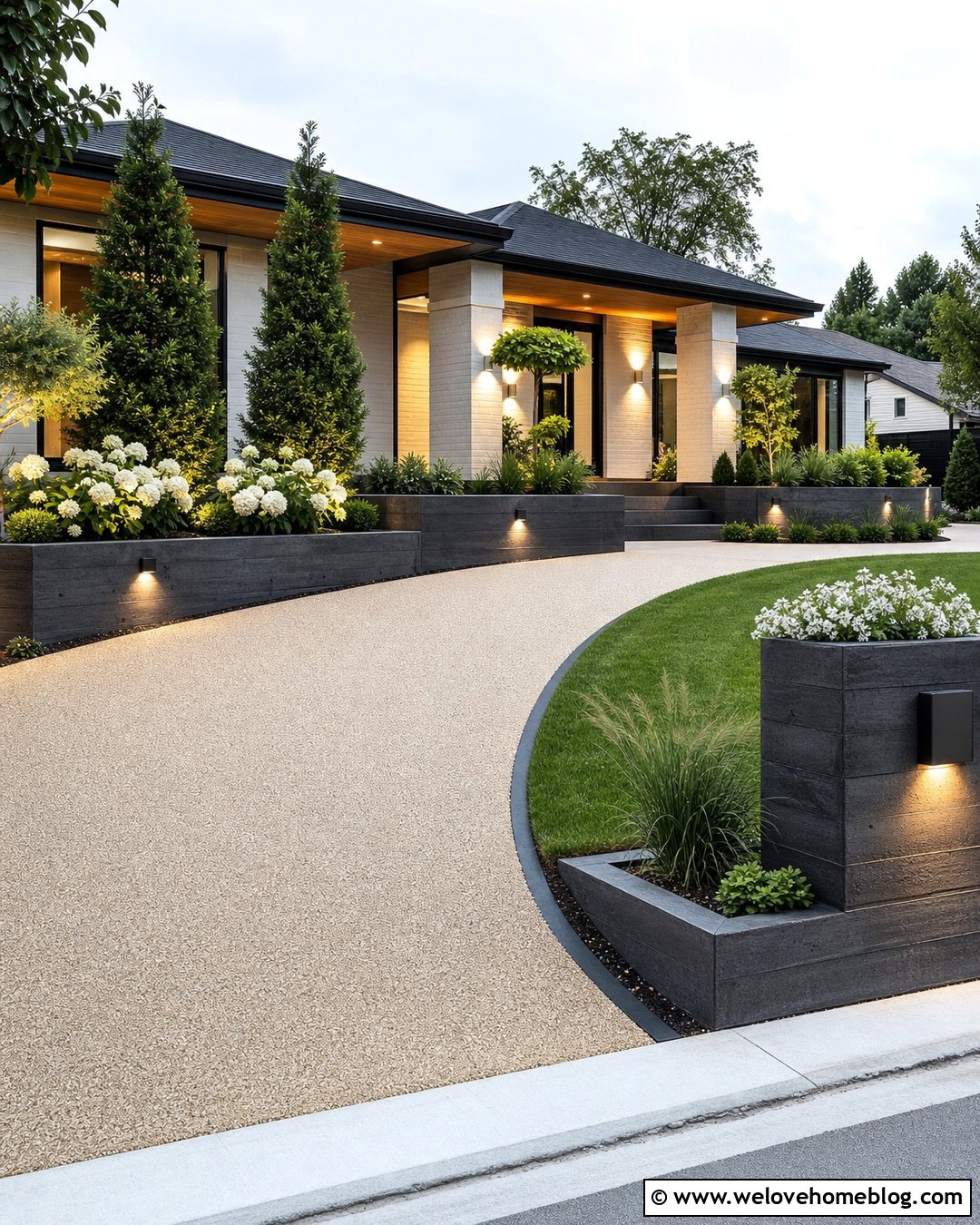
Planter boxes can provide convenient locations for driveway lighting when the fixtures are integrated carefully. Install low-voltage downlights beneath the planter caps or use compact fixtures that illuminate the pavement without shining toward drivers or neighboring windows. Dark concrete boxes filled with grasses, white flowers, and evergreen shrubs look refined beside a pale resin-bound gravel driveway. During daylight, the planters define the route from the street to the garage. After sunset, the lights clarify curves, edges, and walkway transitions. Conceal wiring inside protected channels and allow drainage openings to remain unobstructed. A curved layout, matching address marker, and evenly spaced boxes will give a contemporary home a cohesive entrance rather than a collection of unrelated lighting fixtures and containers.
13. Planter Boxes With A Driveway Address Sign
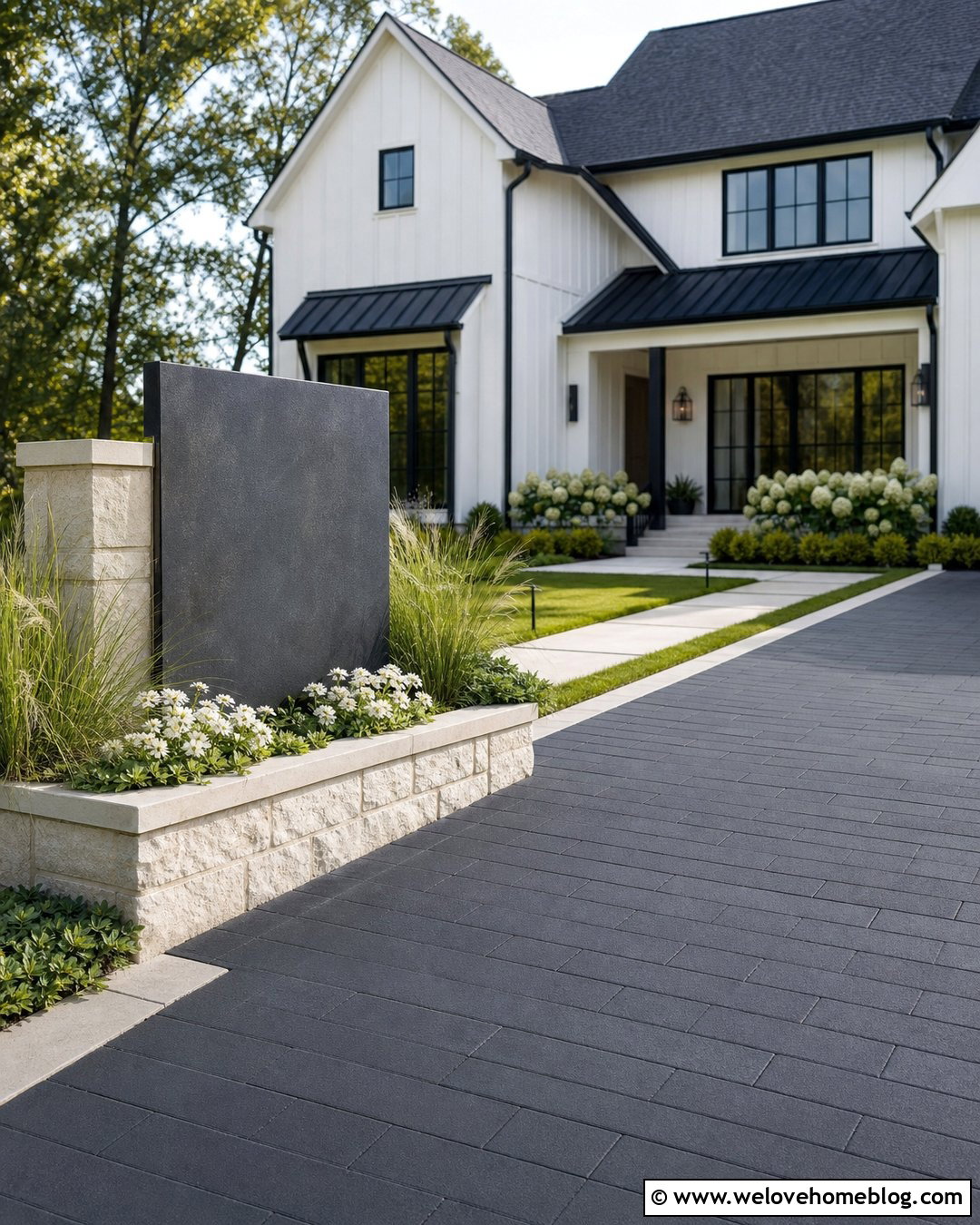
Combining a planter box and address sign creates an attractive focal point without adding another freestanding object near the road. Build a broad stone or concrete box at the driveway entrance and mount clear address numbers on a taller back panel. Low ornamental grasses, seasonal flowers, and creeping ground cover will soften the base without covering the numbers. Pair the feature with a straight charcoal paver driveway edged in matching masonry. The sign should face the street and remain easy to see from both directions. Keep the planter outside public rights-of-way and clear of utility access points. This organized design works with modern farmhouse, craftsman, and contemporary homes, especially when the sign material matches exterior columns, garage details, or the mailbox.
14. Planter Boxes Between A Driveway And Walkway
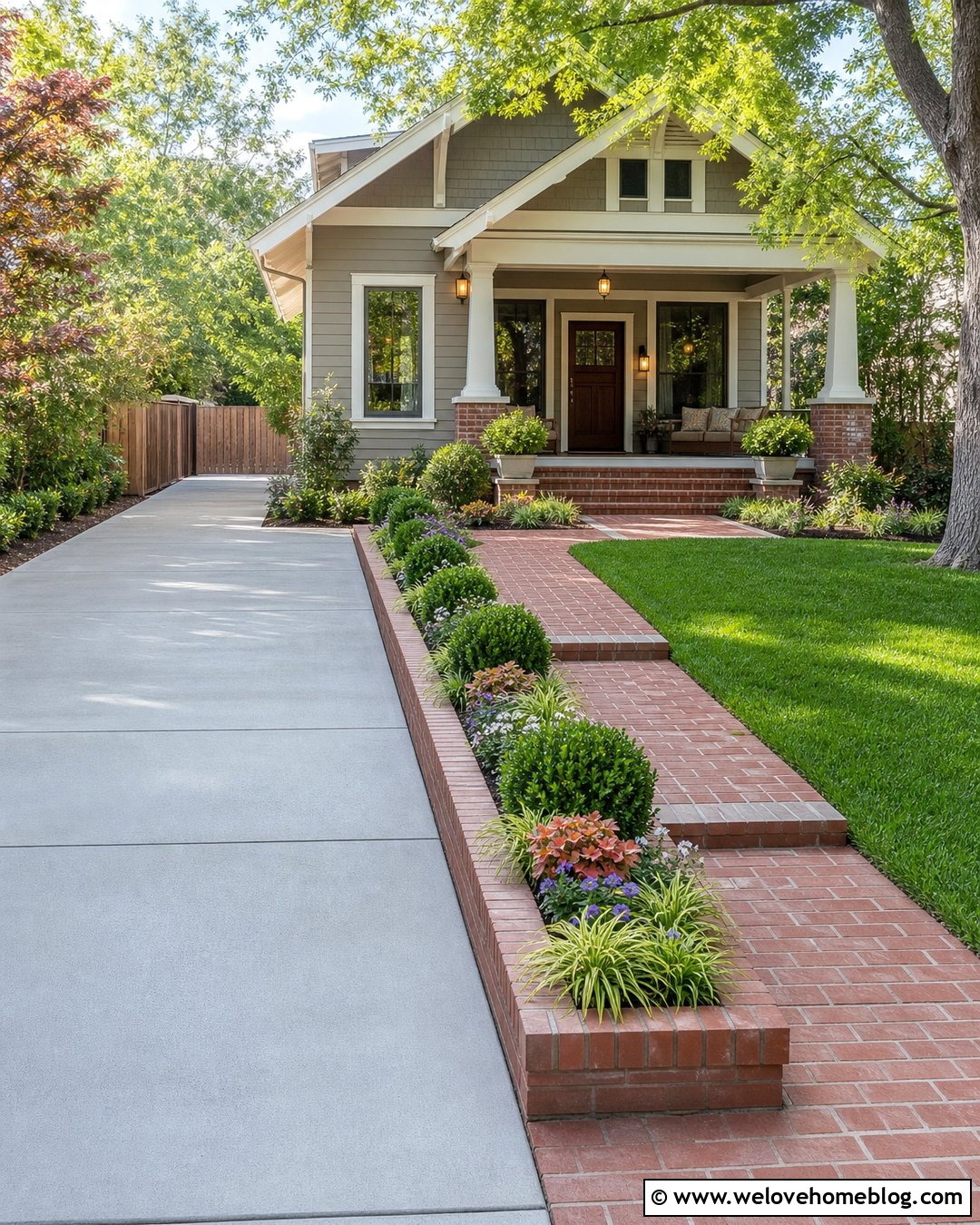
The narrow zone between a driveway and front walkway often becomes wasted lawn or an awkward strip of mulch. A continuous planter box can transform it into an intentional divider while guiding guests toward the door. Build a low brick or board-formed concrete container that follows both hardscape lines. Use compact plants that will not lean into the walking or parking areas, such as dwarf boxwood, coral bells, sedges, and low seasonal flowers. A gray concrete driveway paired with a warm brick walkway creates useful contrast, while the planter visually joins them. Include breaks where passengers commonly cross. This thoughtful layout makes the front approach easier to understand and gives a suburban ranch, bungalow, or craftsman home a more finished landscape.


15. Planter Boxes In Front Of A Garage
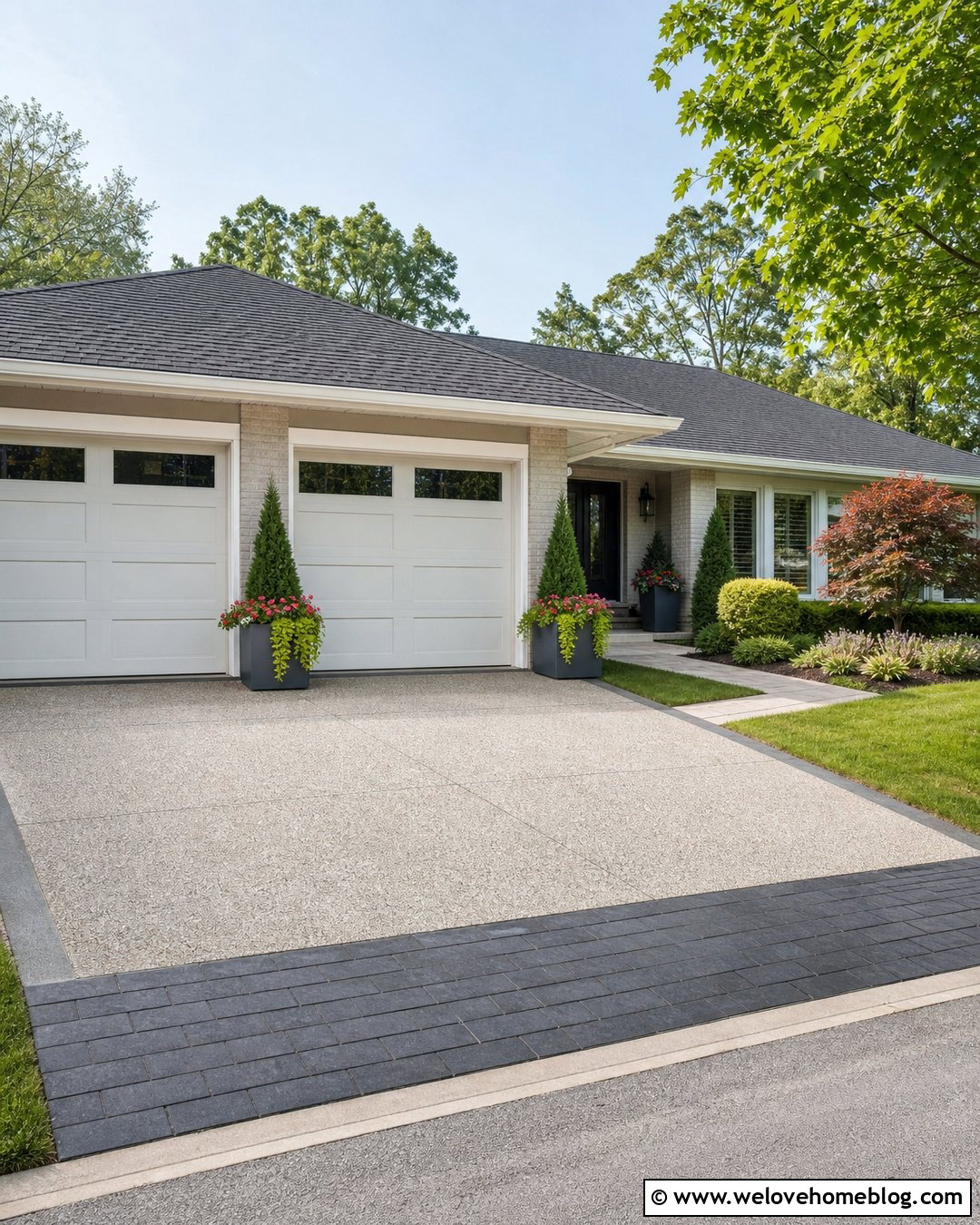
Large garage doors can dominate the front elevation, but well-scaled planter boxes help soften the transition between the driveway and building. Place matching rectangular boxes beside the doors rather than directly in front of them. Fiber-cement or painted wood containers can coordinate with the trim, while compact evergreens add reliable structure. Introduce flowering plants and trailing vines for seasonal color without blocking garage lights or house numbers. A wide exposed aggregate driveway with a dark paver apron gives the planters a defined setting. Confirm that the boxes leave room for mirrors, trash bins, and people walking around parked vehicles. Repeating the planting near the front steps creates a balanced composition and directs attention beyond the garage toward the home’s main entrance.
16. Planter Boxes Along A Driveway Retaining Wall
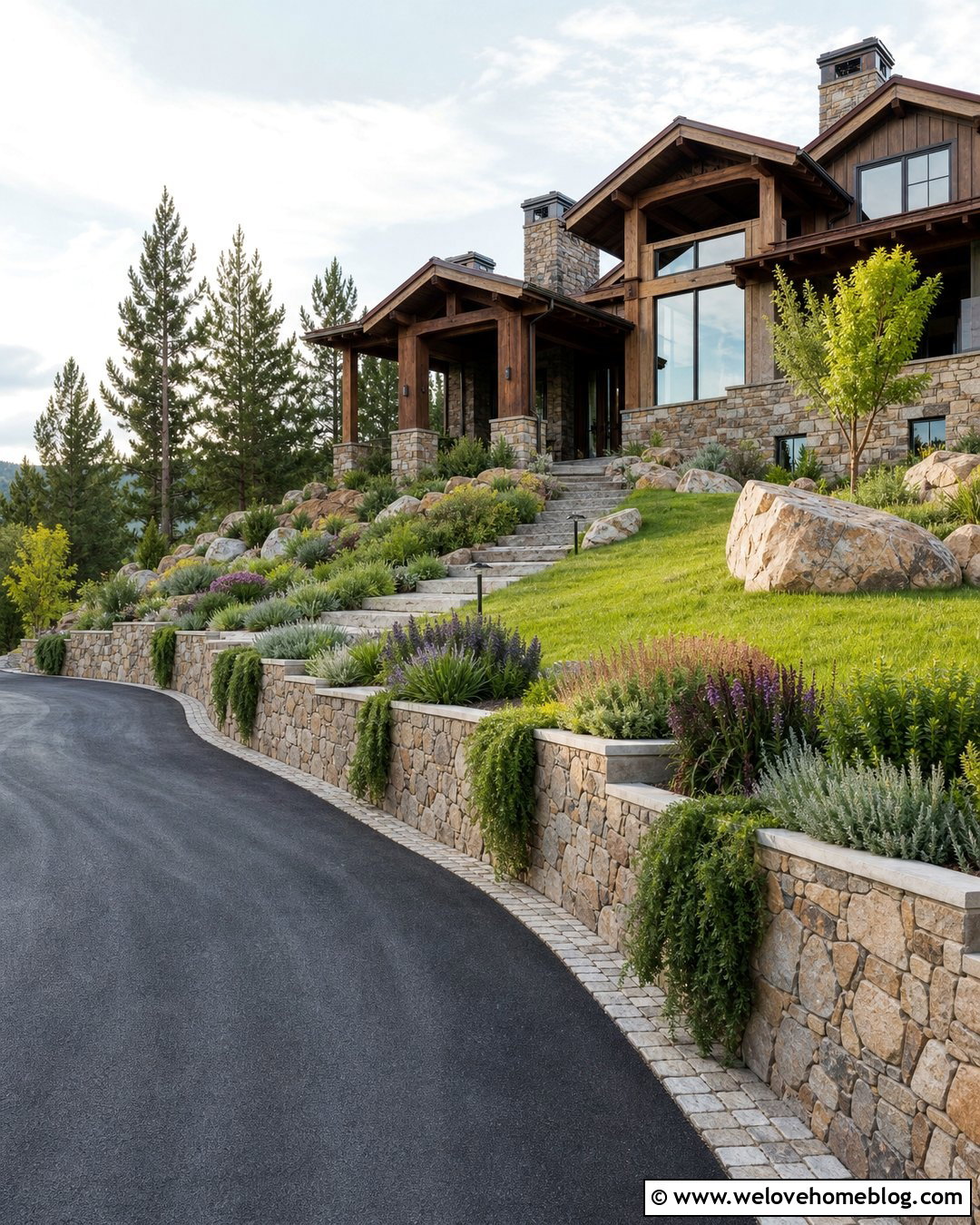
A retaining wall beside a driveway can feel bare and imposing, particularly when the surface is long and uninterrupted. Add built-in planter boxes at intervals along the top or base to break up the masonry and introduce natural texture. Use wall blocks or stone veneer matching the existing structure, then fill the containers with trailing juniper, rosemary in warm climates, ornamental grasses, and hardy flowering perennials. A curved black asphalt driveway with a cobblestone edge will contrast nicely with the planted wall. Provide drainage that directs water away from the wall and pavement. Keep growth trimmed so it does not narrow the driveway. This layered treatment makes a necessary structural feature look like an intentional part of the front-yard design.
17. Mobile Planter Boxes For A Flexible Driveway
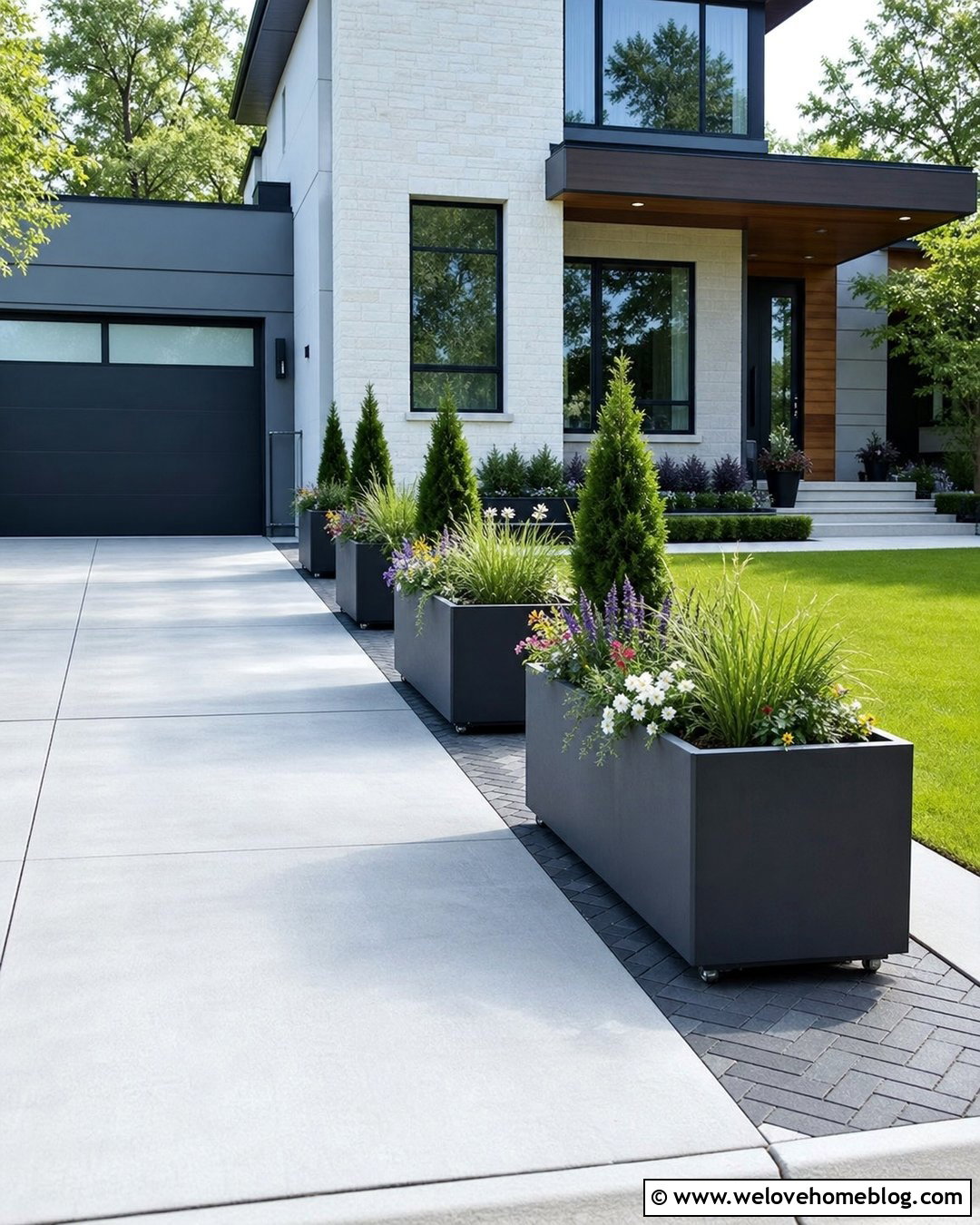
Not every driveway planter needs to be permanent. Large mobile boxes with locking casters can divide parking areas, frame a temporary gathering space, or move aside during winter maintenance. Select lightweight fiberglass, composite, or metal containers designed for exterior use. Fill them with compact evergreens, grasses, and long-blooming annuals rather than top-heavy trees. On a wide concrete driveway, arrange the boxes beside a paver parking strip or near the garage walkway. Their color can match the front door or shutters for a coordinated look. Lock the wheels whenever the containers are in position and avoid placing them on a steep slope. This flexible arrangement is useful for rental homes, multipurpose driveways, and households whose parking needs change regularly.
18. Self-Watering Planter Boxes On A Sunny Driveway
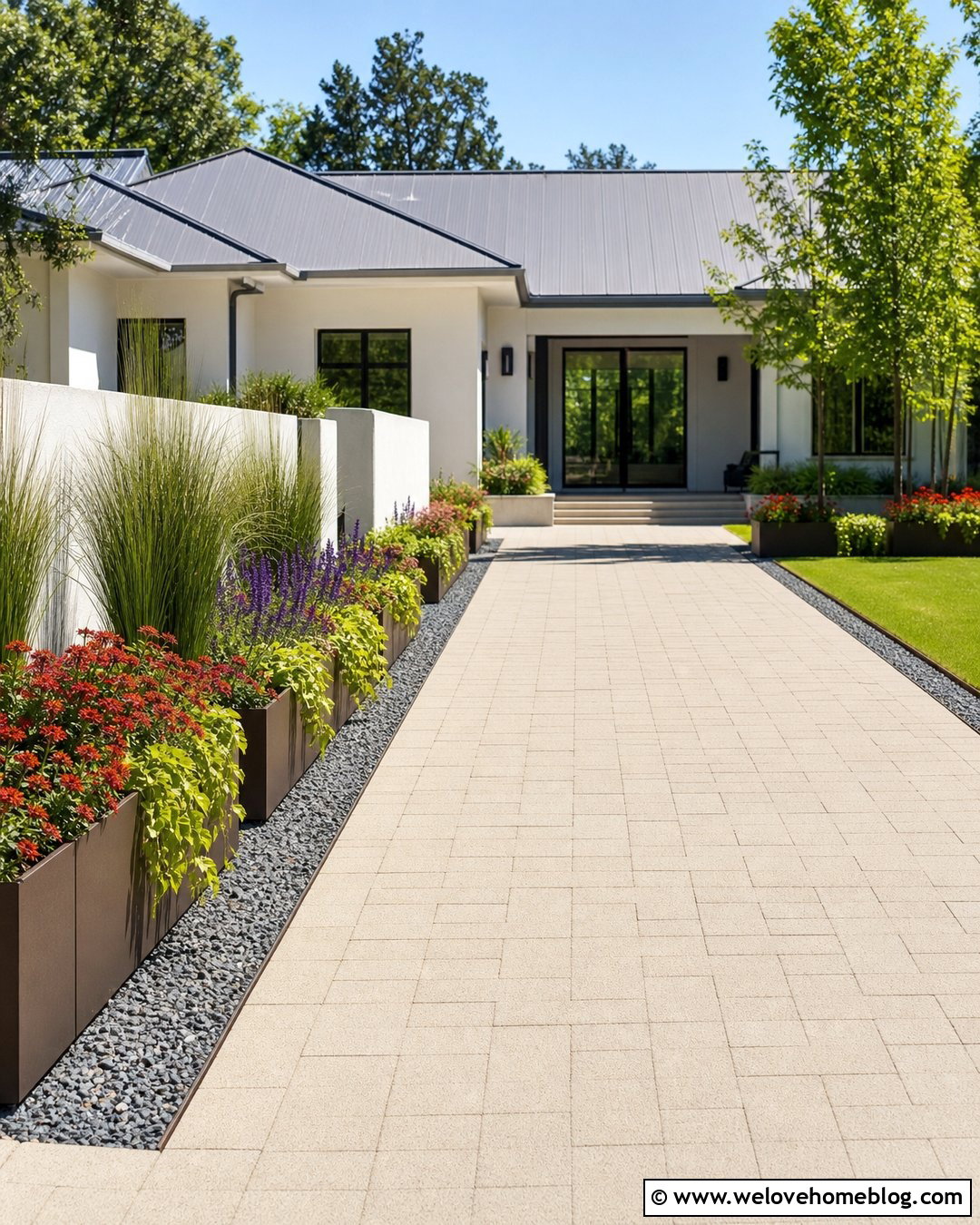
Driveways often reflect heat, so containers in full sun may dry faster than nearby garden beds. Self-watering planter boxes can make care more manageable by storing water in a lower reservoir. Place long composite or powder-coated metal boxes beside a light-colored permeable paver driveway, where excess water can drain without creating muddy edges. Choose heat-tolerant plants appropriate for your region, combining upright grasses with lantana, salvia, sedum, or trailing sweet potato vine. Mulch the soil surface to reduce evaporation and keep roots cooler. Position the boxes near a hose connection, but outside the vehicle path. A coordinated row along a sunny ranch or contemporary home creates reliable color while reducing the need to carry watering cans across the driveway.
19. Native Plant Driveway Planter Boxes
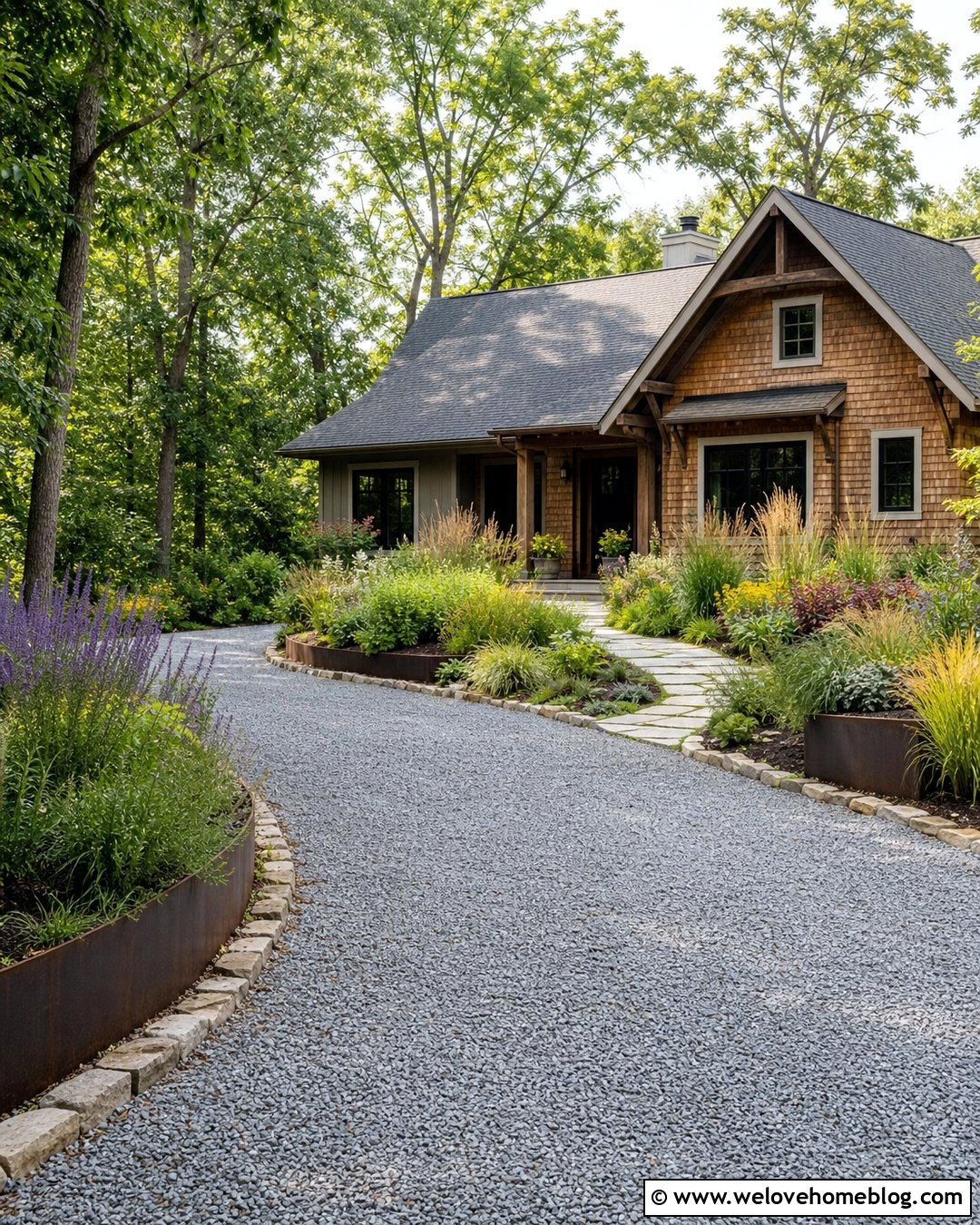
Native planting can give driveway boxes a relaxed, regionally appropriate character. Start with deep cedar, stone, or weathered steel containers that provide sufficient root space for the selected plants. Then choose locally adapted grasses, flowering perennials, and compact shrubs that suit the available sun, rainfall, and winter conditions. Arrange them in layered groups instead of scattering many unrelated varieties. A permeable gravel driveway with natural stone edging supports the informal look, while a curved walkway carries the planting toward the front door. Allow room for mature growth so stems do not spill into the driving lane. This complete design works with cottages, craftsman homes, cabins, and contemporary houses that use natural materials and meadow-inspired landscaping.
20. Matching Planter Boxes At A Driveway Gate
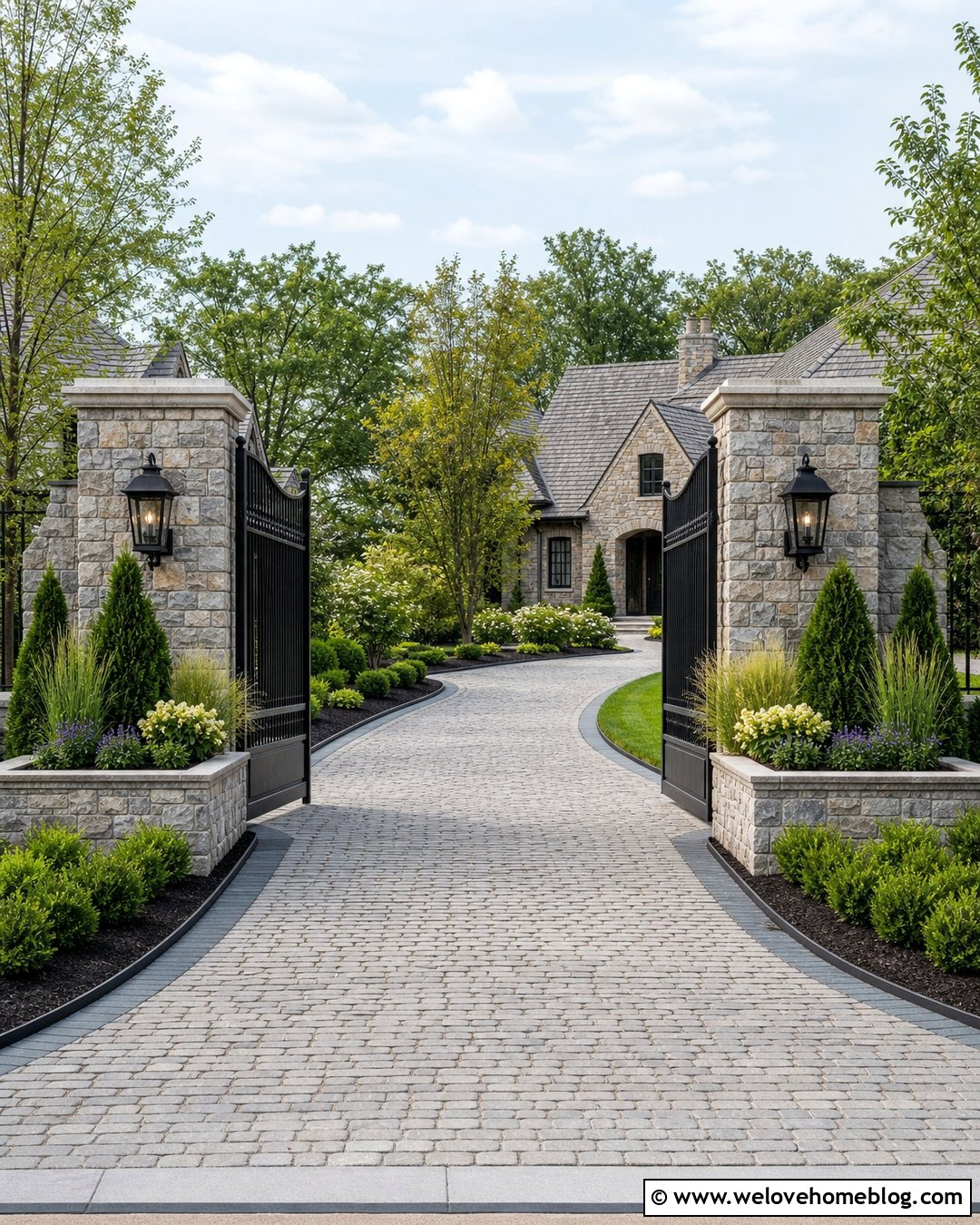
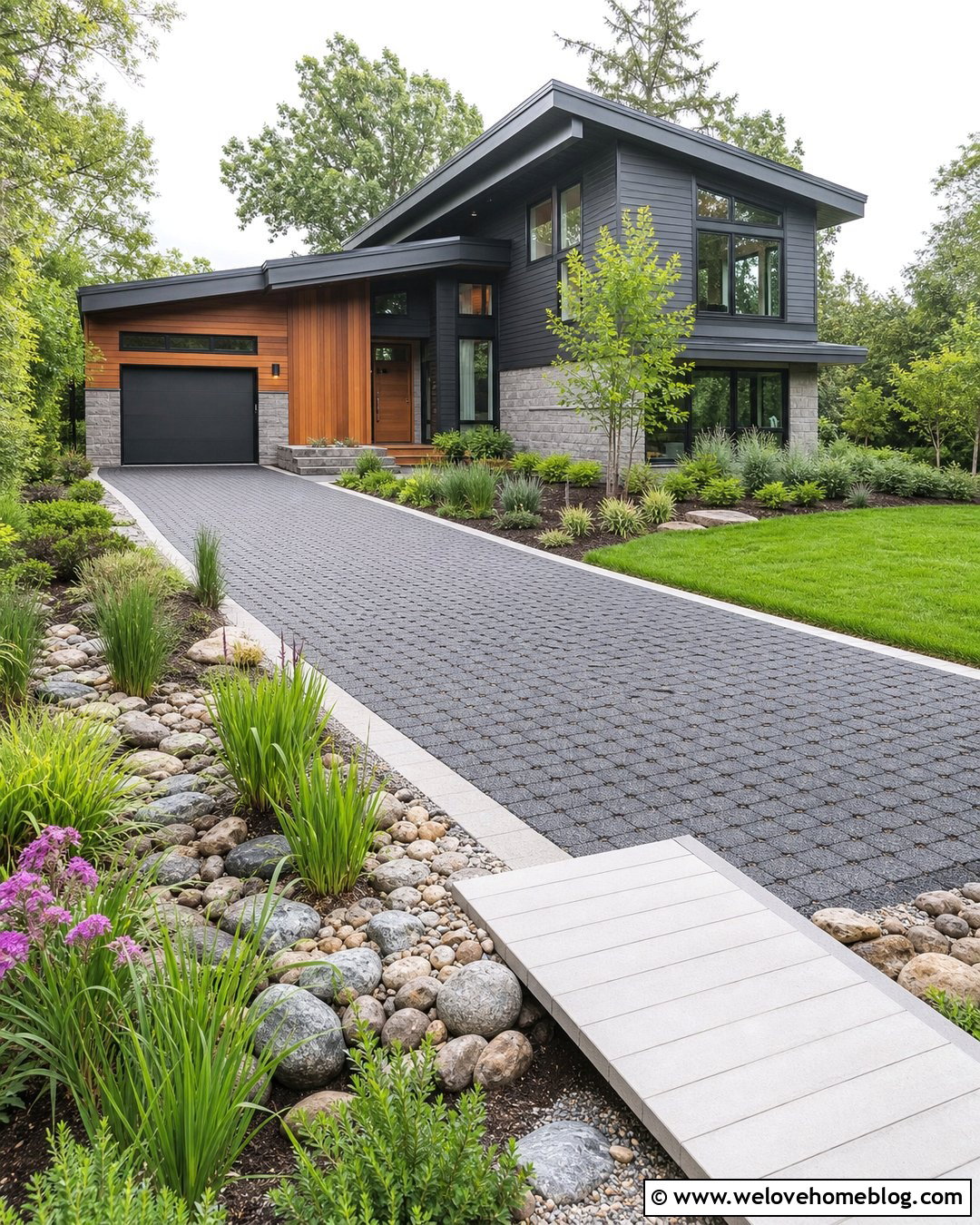
A coordinated pair of planter boxes can visually anchor a driveway gate and make the entrance feel connected to the house. Place low stone boxes beside masonry pillars, leaving gate hinges, sensors, keypads, and vehicle sightlines unobstructed. Fill each box with matching dwarf evergreens, ornamental grasses, and controlled seasonal color. A sweeping cobblestone driveway reinforces the traditional character, while dark steel edging keeps nearby planting beds tidy. Repeat the pillar stone on the house foundation or front steps for consistency. For a modern variation, use smooth concrete boxes, a horizontal metal gate, and a resin-bound gravel surface. Either approach should maintain enough width for comfortable turning while presenting the gate, landscaping, and driveway as one balanced entrance.
Conclusion:
The best planter boxes do more than introduce flowers beside the pavement. They help organize traffic, soften hard surfaces, highlight entrances, and connect the driveway with the home’s architecture. Select materials that complement existing masonry, siding, gates, and walkways. Always account for drainage, vehicle clearance, road visibility, mature plant growth, and local climate before settling on a layout. Low containers are useful near the street, while deeper boxes can support shrubs and screening plants farther from traffic. Whether you prefer rustic cedar, traditional brick, modern steel, or durable concrete, these **20 Driveway Planter Box Ideas** provide complete starting points for creating a more attractive, practical, and welcoming front approach.

Related posts:

Leave a Reply