
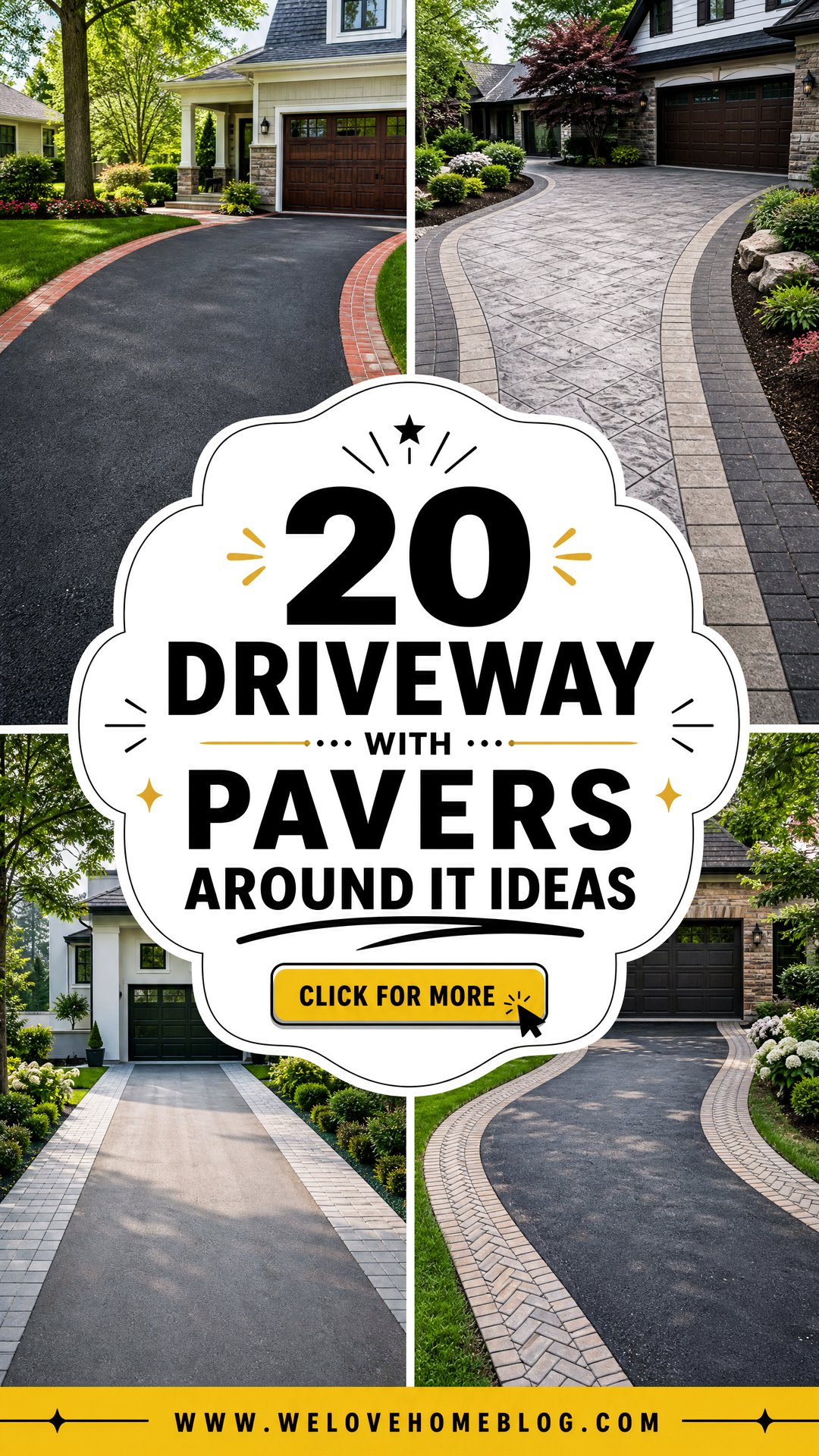
A driveway border can do much more than tidy the edge. Pavers add color, texture, definition, and a polished transition between the driving surface and the surrounding yard. They can also connect the driveway to a walkway, front steps, patio, or house facade. The best 20 driveway with pavers around it ideas combine a practical center surface with a border that suits the home’s architecture. Contrasting pavers create a bold frame, while similar colors produce a quieter, more spacious look. Always choose driveway-rated products, plan drainage carefully, and install the border over a properly compacted base. Paver borders can work with concrete, asphalt, gravel, exposed aggregate, and other surfaces. ()
Explore these 20 driveway with pavers around it ideas.
1. Concrete Driveway With Brick Paver Border
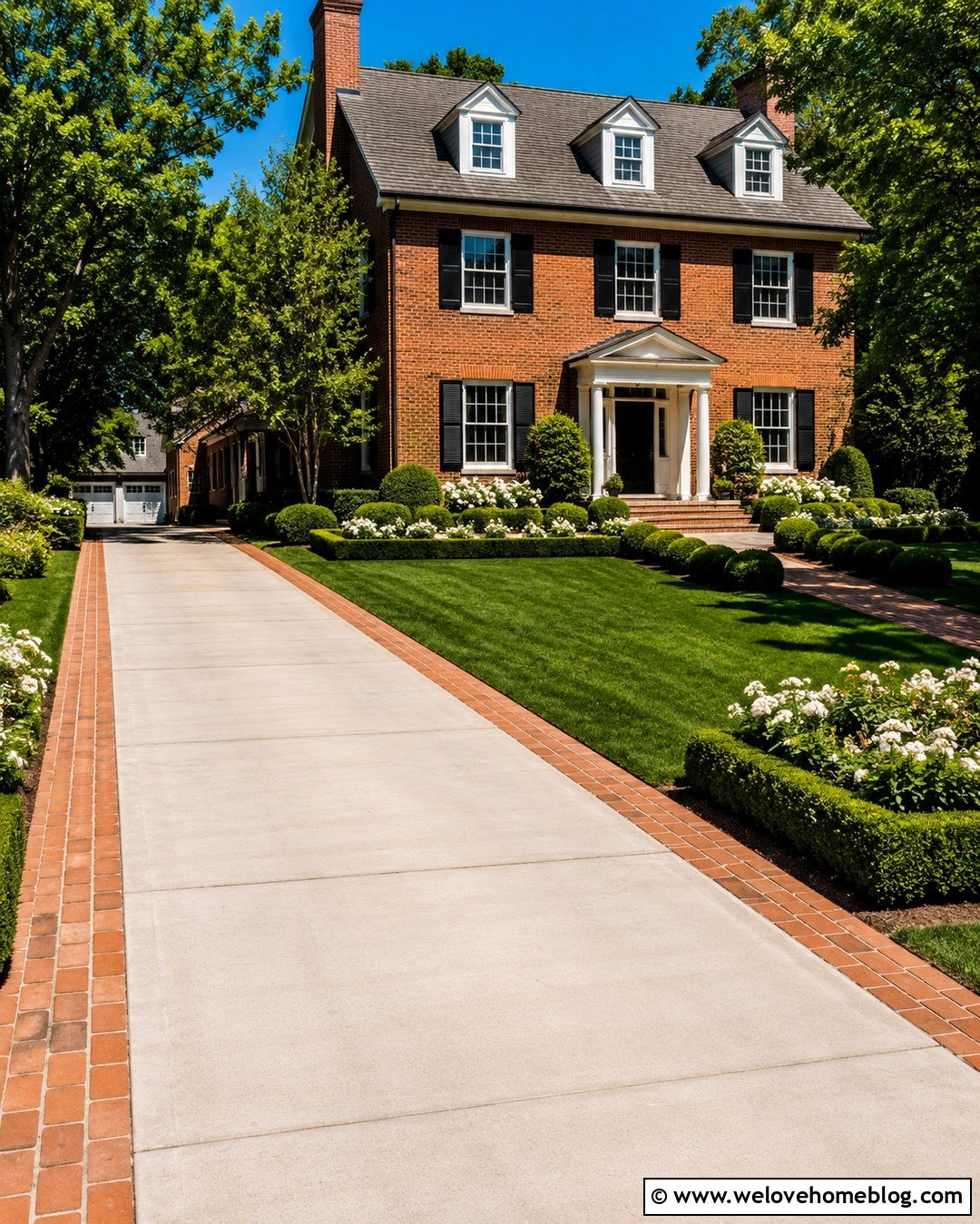
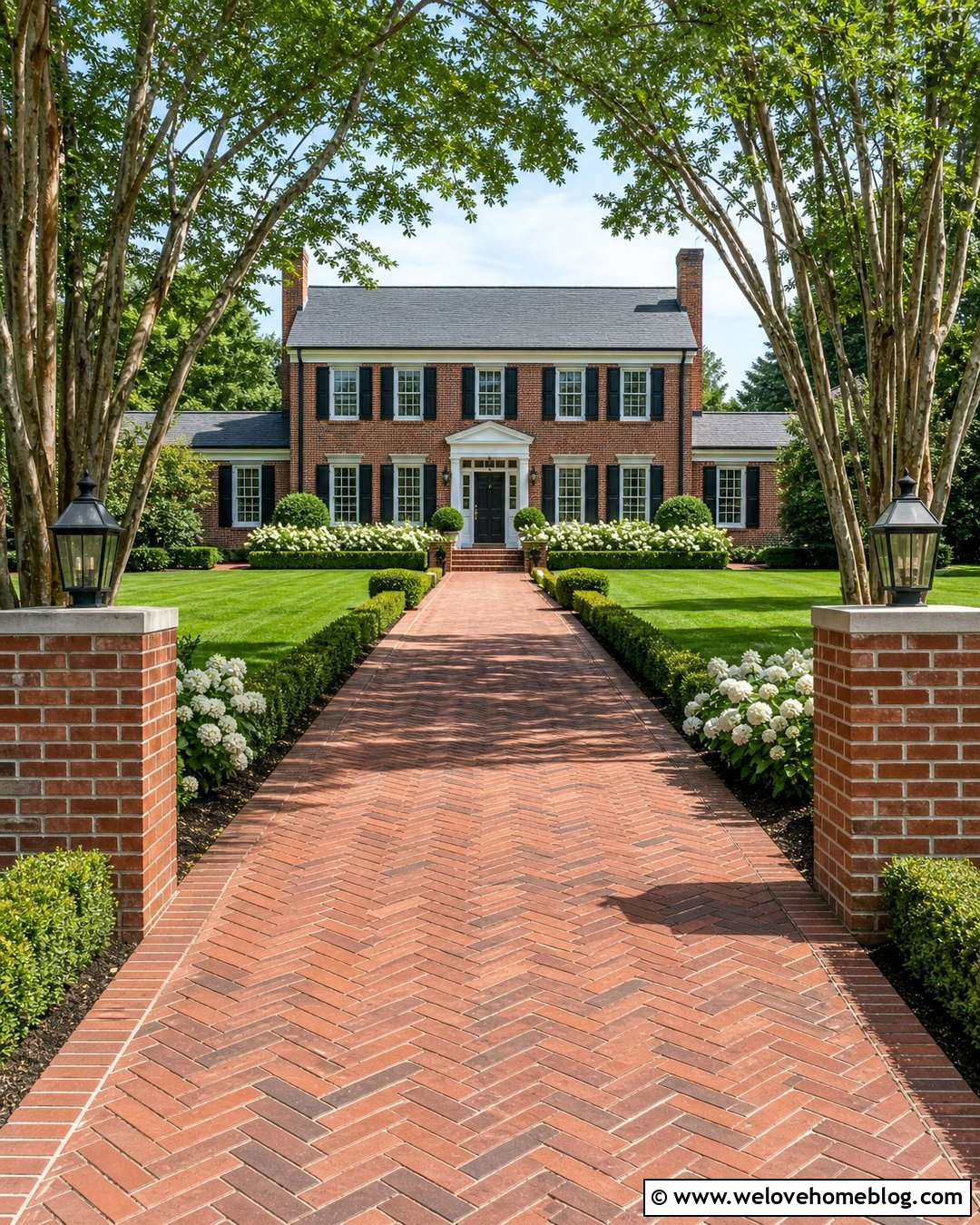
Warm red brick pavers give a plain concrete driveway a more established, traditional appearance. Use a smooth light-gray poured concrete center with one or two rows of clay brick around the complete perimeter. A soldier-course layout creates a crisp frame that is easy to follow along straight edges. Continue the same brick toward the front walkway to connect both surfaces visually. This combination looks especially natural beside a Colonial, Cape Cod, or traditional brick house. Add clipped boxwoods, green lawn, and white flowering plants for simple curb appeal. Keep the pavers nearly flush with the concrete to reduce abrupt transitions. A narrow concrete joint between the materials can help accommodate movement and create a cleaner finished edge.
2. Asphalt Driveway With Gray Paver Border
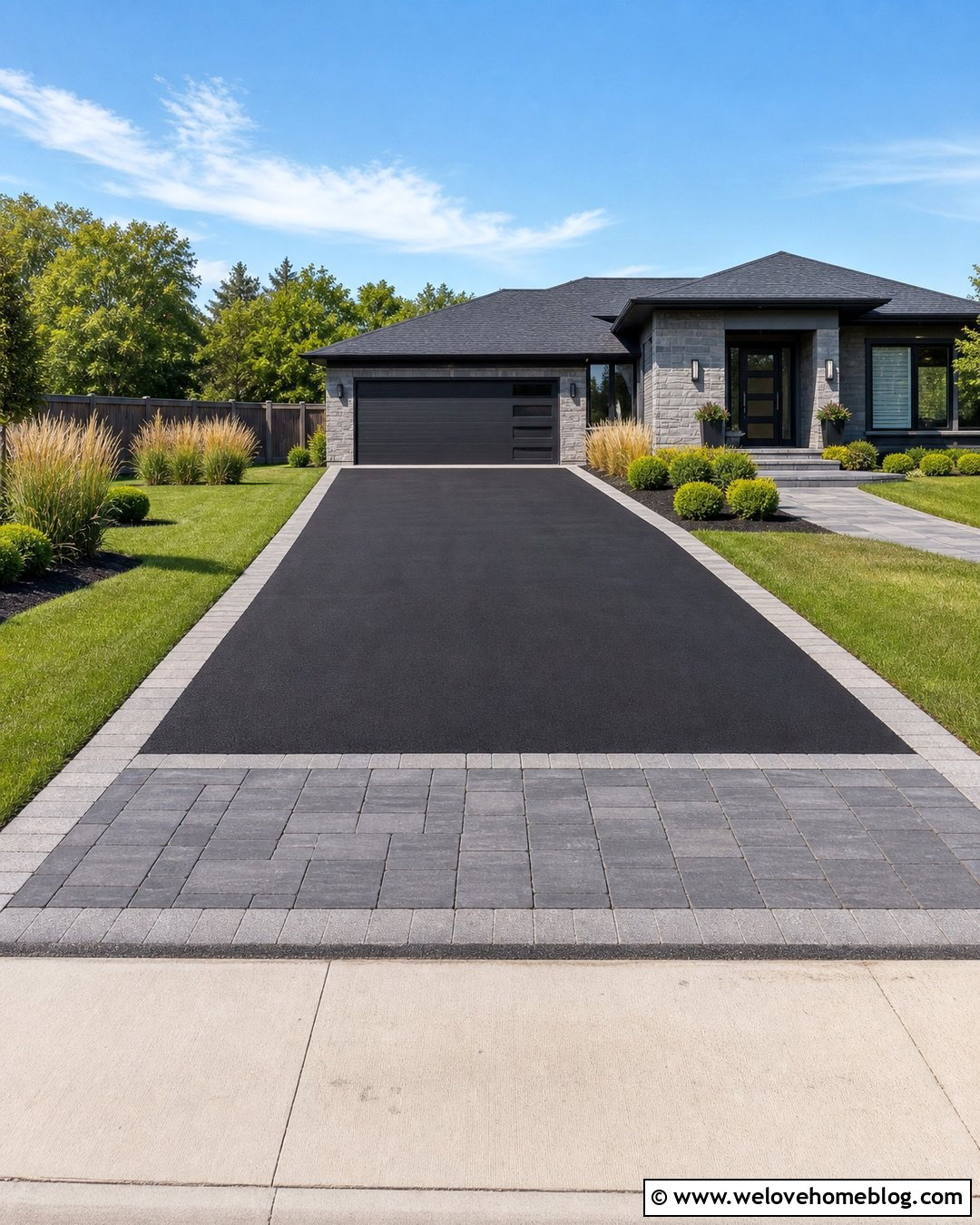
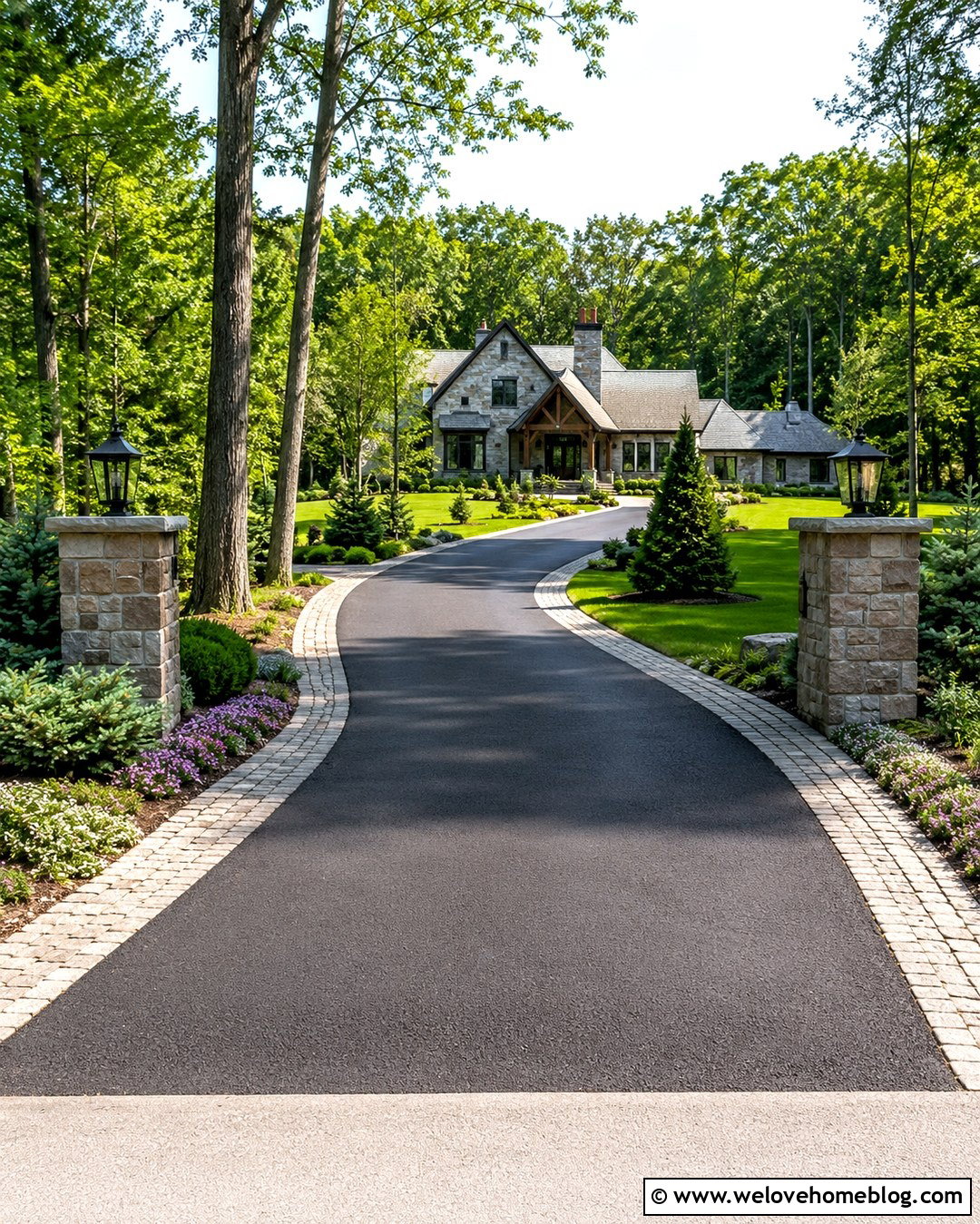
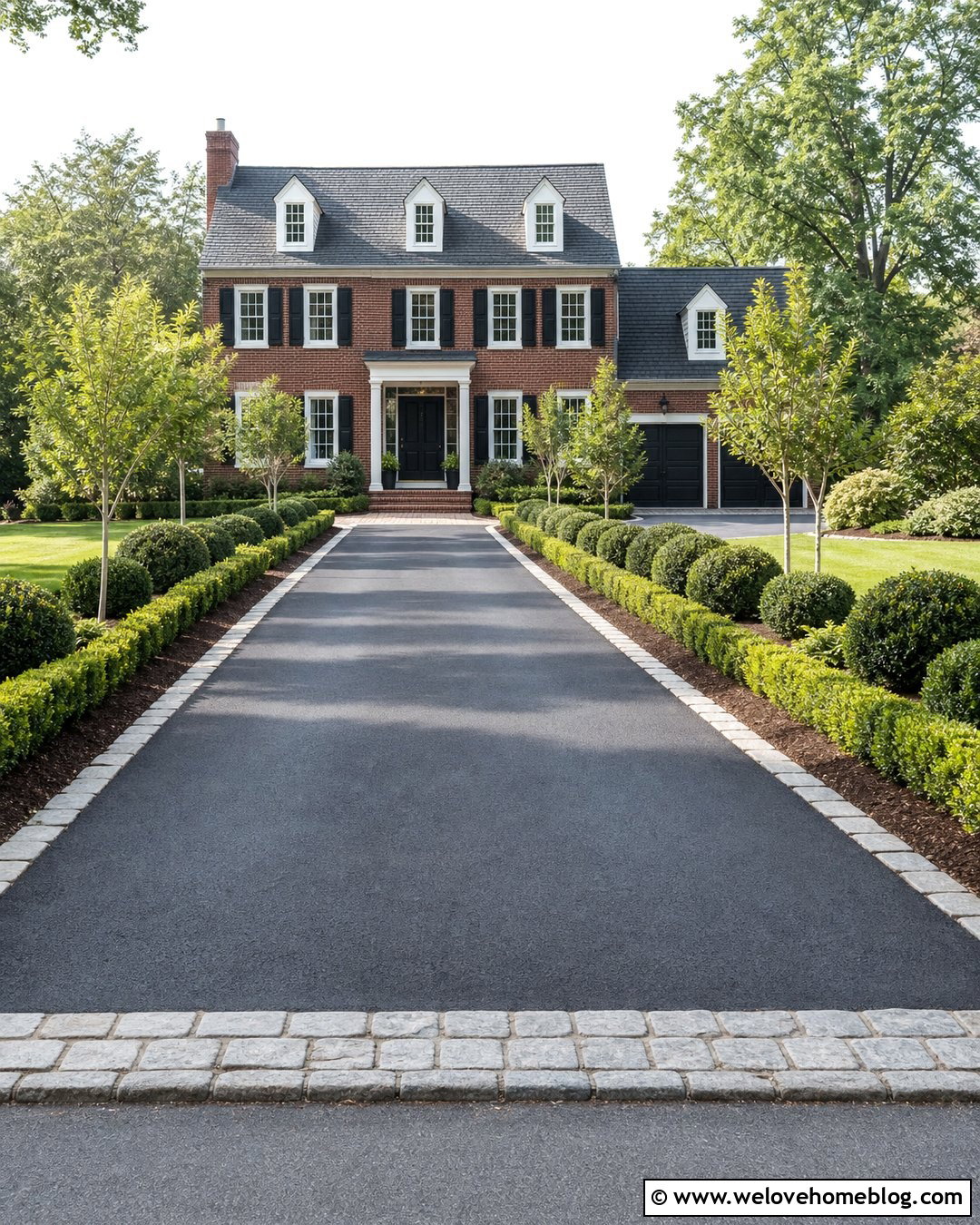
Fresh black asphalt becomes much more refined when surrounded by medium-gray concrete pavers. The strong contrast gives the driveway a tailored outline without making the overall design feel overly decorative. Choose rectangular pavers in a charcoal or slate tone and arrange them in a simple soldier course. A wider border at the street can form a coordinated driveway apron. This design works particularly well with contemporary ranch homes, gray siding, and dark garage doors. Low ornamental grasses and rounded evergreen shrubs soften the straight layout. For a cohesive result, use the same pavers along the nearby walkway. Make sure the asphalt and border meet evenly so water cannot settle in a low channel between the two surfaces.
3. Gravel Driveway With Cobblestone Paver Border
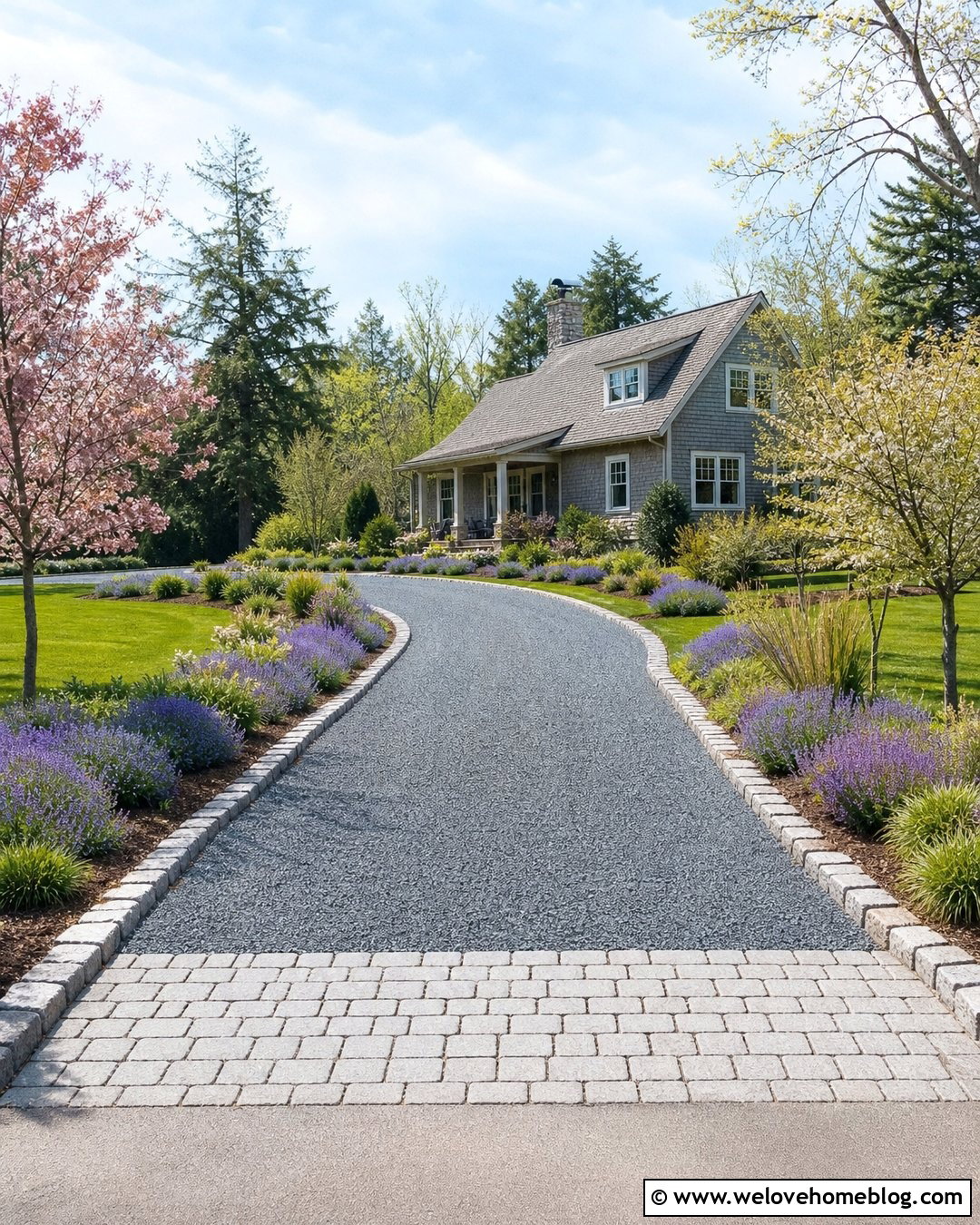
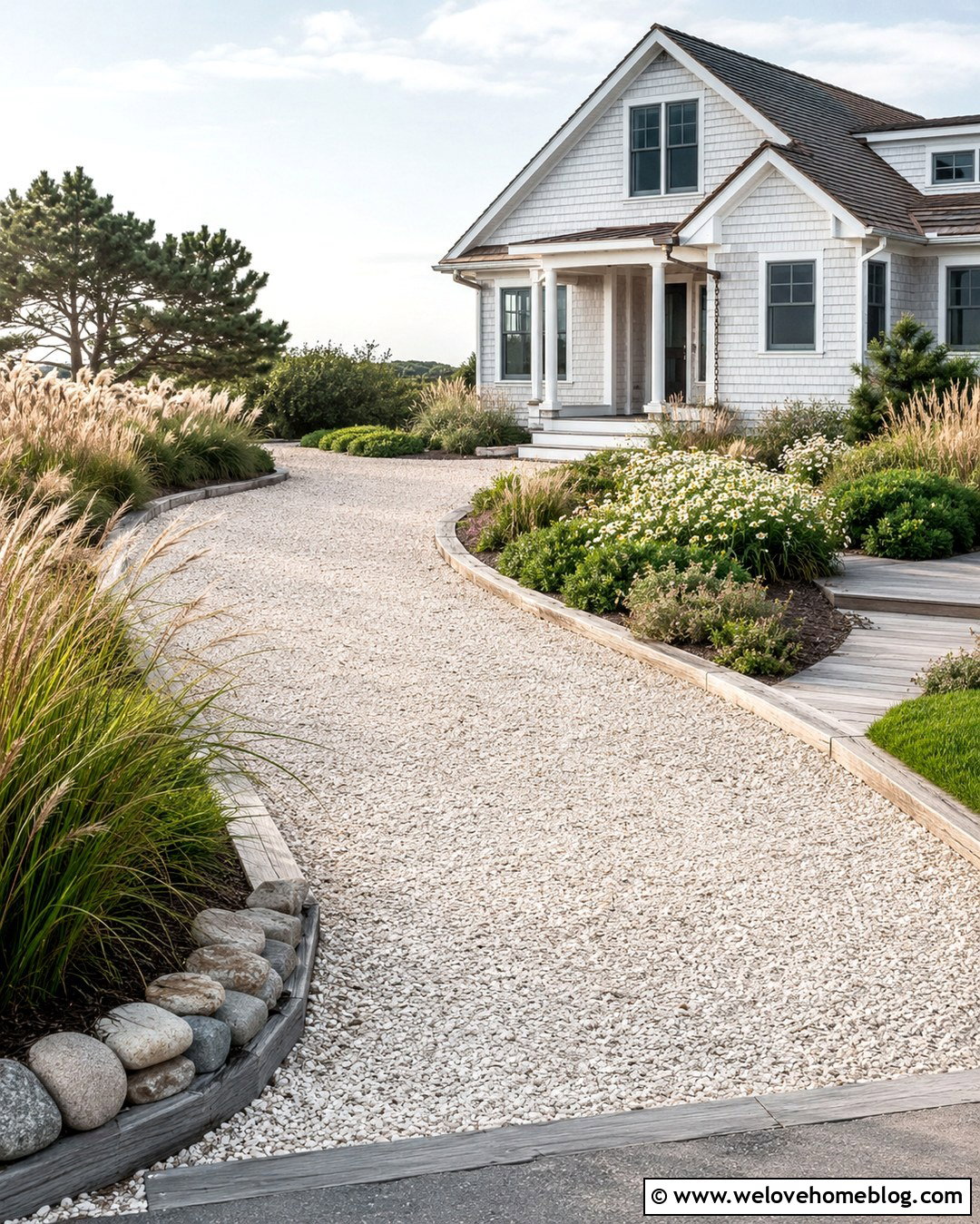
Loose gravel looks more intentional when chunky cobblestone pavers contain the edges. Fill the center with compacted gray crushed stone, then frame it with granite cobbles in mixed gray and charcoal shades. The rugged border prevents the driveway from visually blending into lawns and planting beds. It also creates a clear guide for occasional raking and replenishing. A gently curved shape suits country homes, cottages, and wooded properties particularly well. Add lavender, catmint, ornamental grasses, and a few small flowering trees beside the border. At the garage, install a wider cobblestone transition strip to catch loose stones. The finished driveway feels relaxed and rural, yet the structured perimeter keeps the entrance looking neat and carefully planned.
4. White Concrete Driveway With Black Paver Border
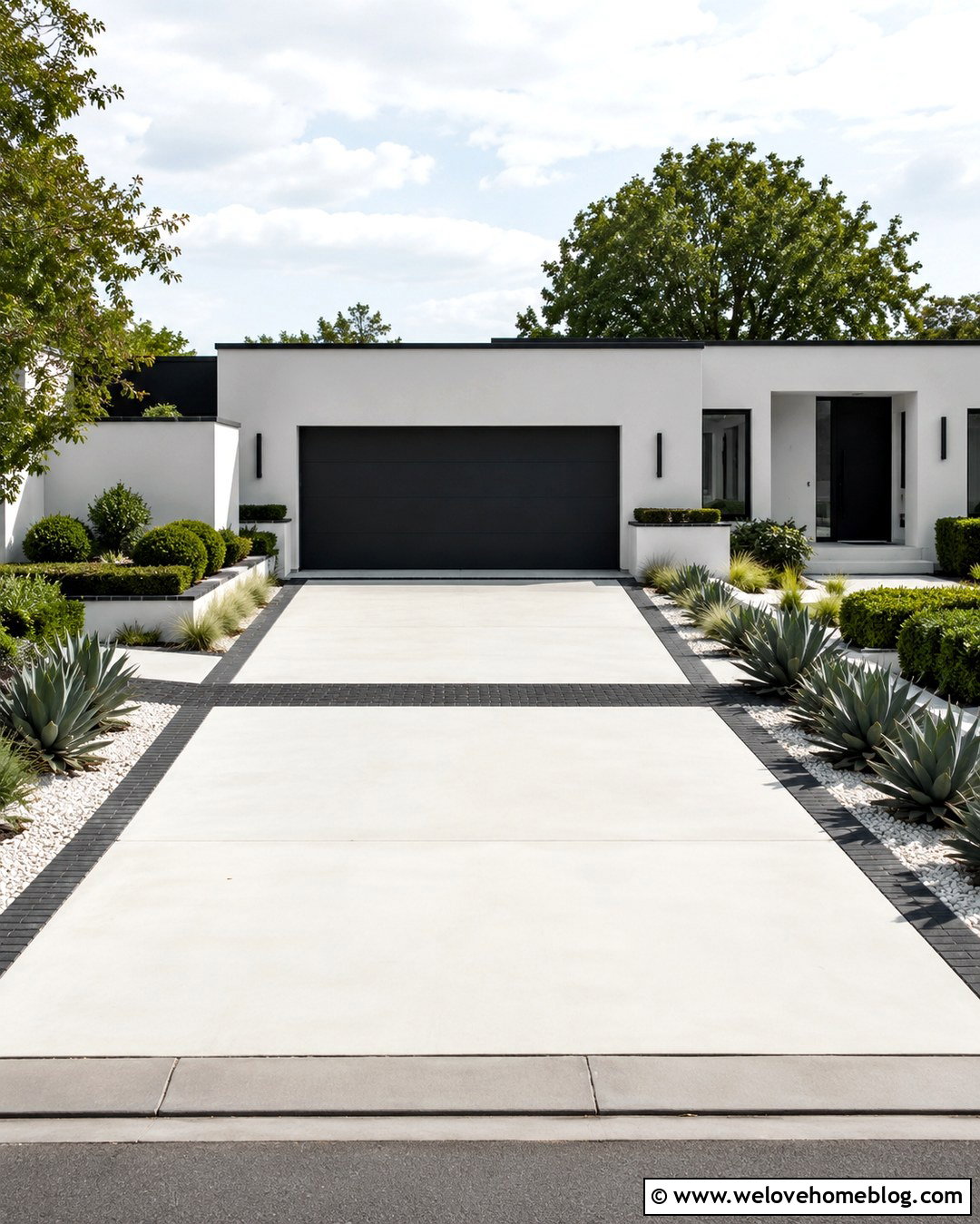
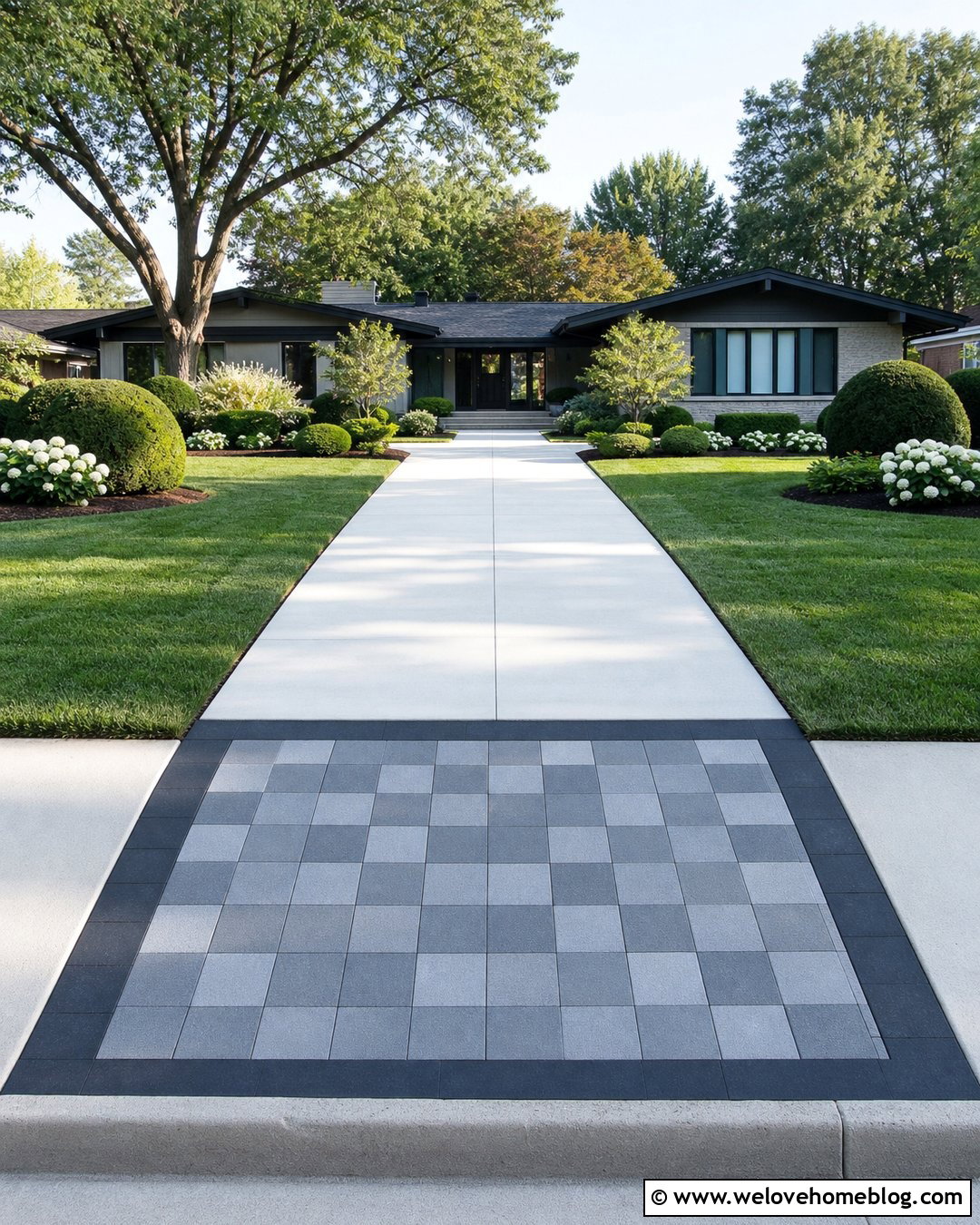
A pale concrete driveway surrounded by black pavers creates a clean, graphic look for a modern home. Choose smooth white or very light-gray concrete for the center and narrow charcoal concrete pavers for the outline. Long rectangular units reinforce the straight lines of a flat-roofed or minimalist facade. Extend the dark pavers across the driveway near the garage to create a finishing band. Simple beds filled with white gravel, agave, dwarf grasses, or clipped shrubs will keep the landscaping equally streamlined. Avoid too many extra colors because the sharp light-and-dark contrast is already the main feature. This complete design can also make a narrow driveway feel longer by directing the eye from the curb toward the house.
5. Curved Concrete Driveway With Tumbled Paver Border
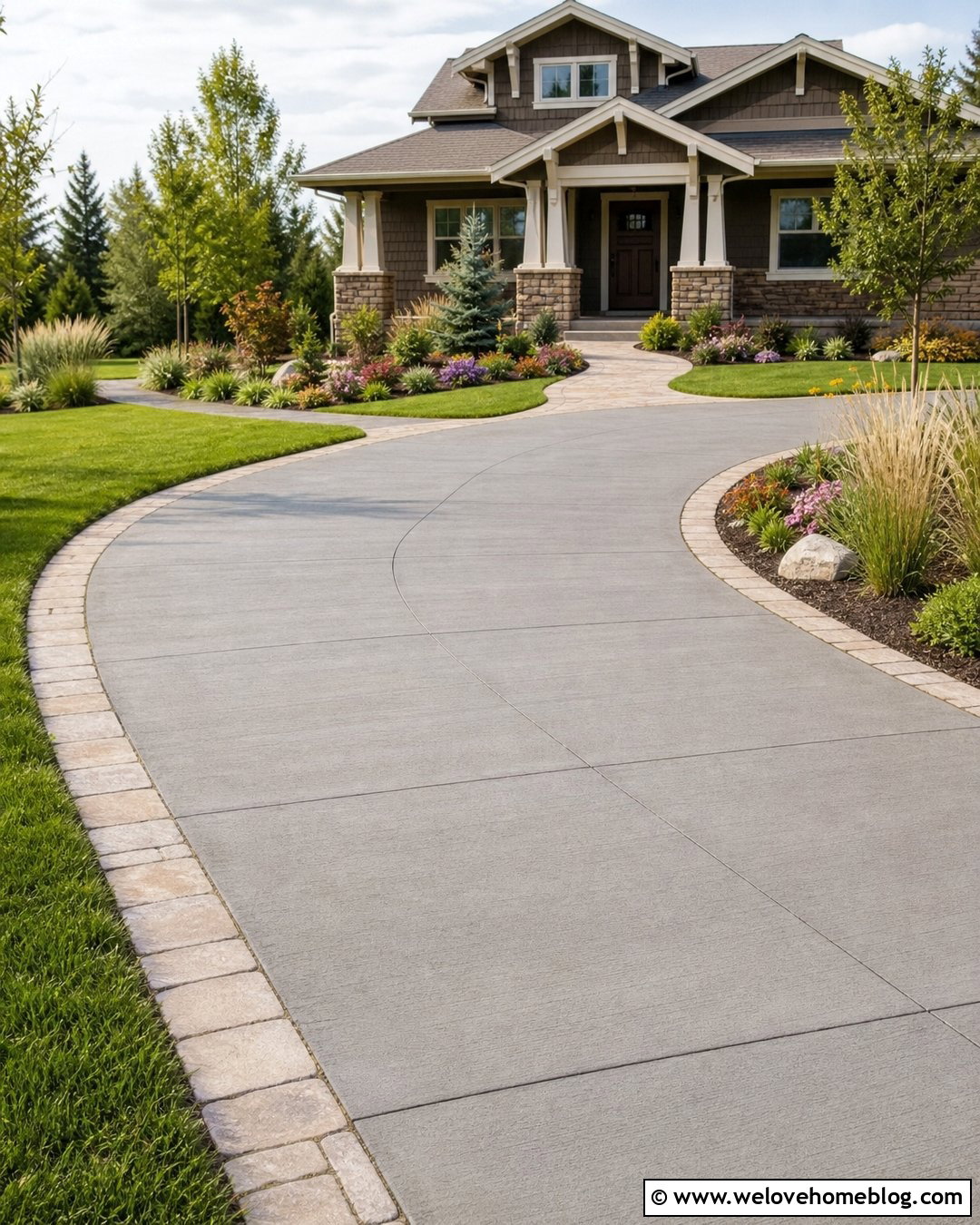
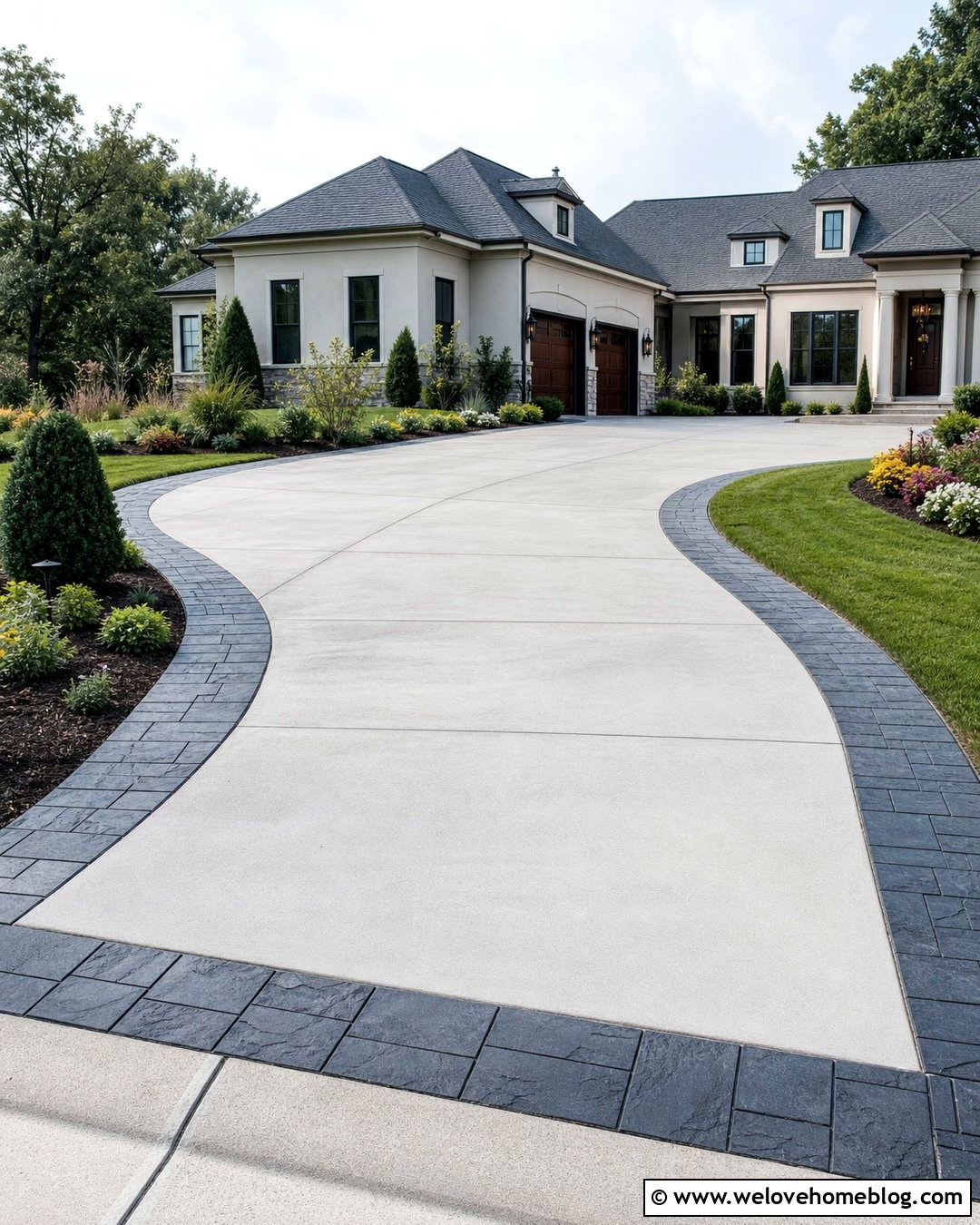
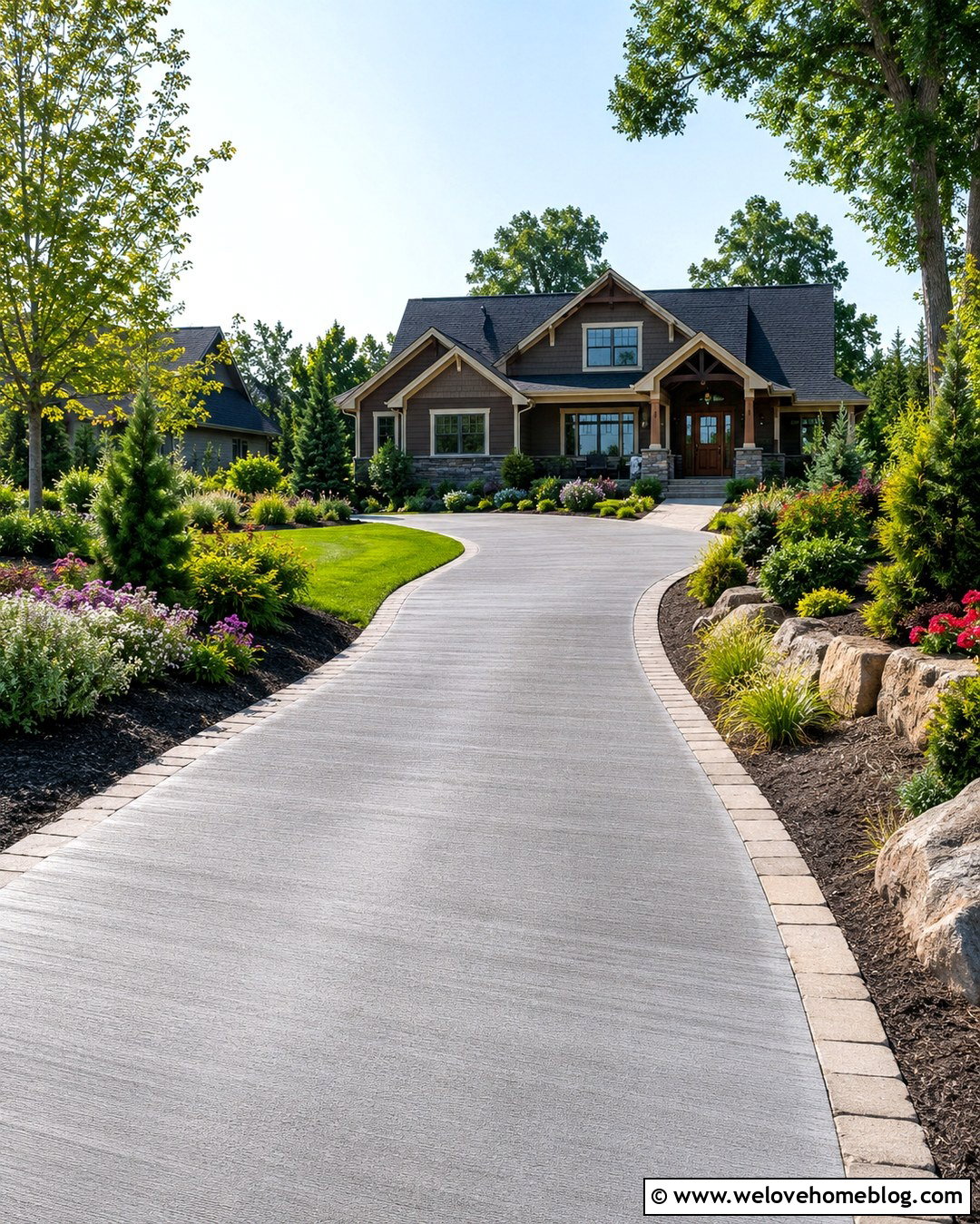
Soft curves become easier to read when a contrasting paver border traces the entire driveway. Start with broom-finished gray concrete and surround it with tan tumbled concrete pavers. Their softened edges and varied coloring complement a Craftsman, Mediterranean, or stucco house. The border should flow smoothly around every bend rather than changing direction in short, awkward steps. Place layered planting beds along the outside curve, using compact evergreens, flowering perennials, and ornamental grasses. Keep taller plants away from the inside turn so drivers retain a clear view. A matching paver walkway can branch from the driveway toward the front porch. Together, the curved surface, warm border, and flowing landscaping make the approach feel welcoming rather than rigid.
6. Exposed Aggregate Driveway With Brick Paver Border
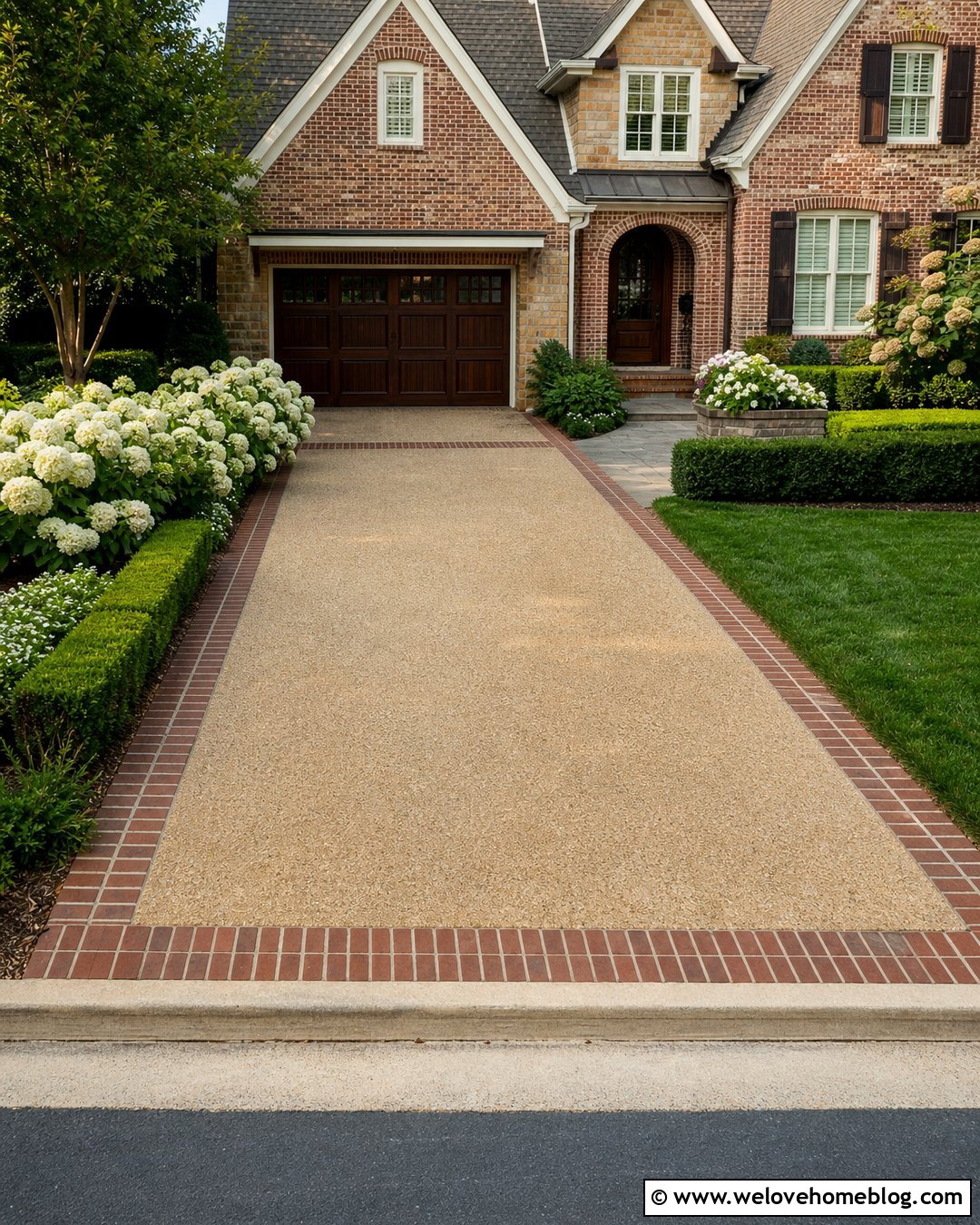
Exposed aggregate already has noticeable texture, so a simple brick outline provides definition without making the driveway too busy. Select a warm gray or beige aggregate mix and frame it with deep red or brown clay brick pavers. The brick can echo a chimney, porch column, or brick portion of the house facade. A single soldier-course border is usually enough for a smaller driveway, while a double row suits a wider entrance. Plant hydrangeas, low hedges, and seasonal flowers beyond the pavers to create a classic suburban setting. Use a smooth paver band across the garage threshold for a clean transition. Because both materials contain visual variation, keep the driveway shape straightforward and let the contrasting textures provide the character.
7. Pea Gravel Driveway With Concrete Paver Border
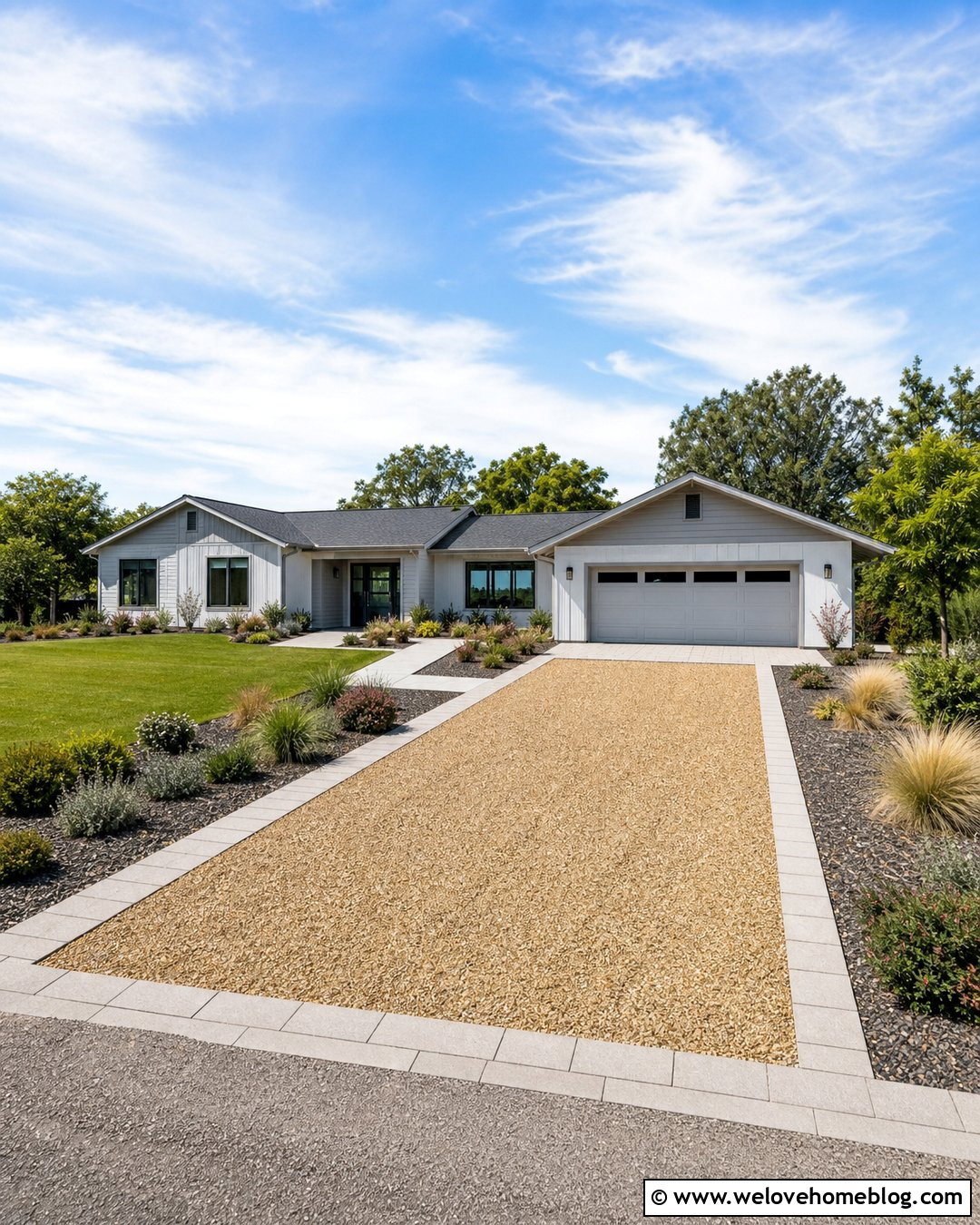
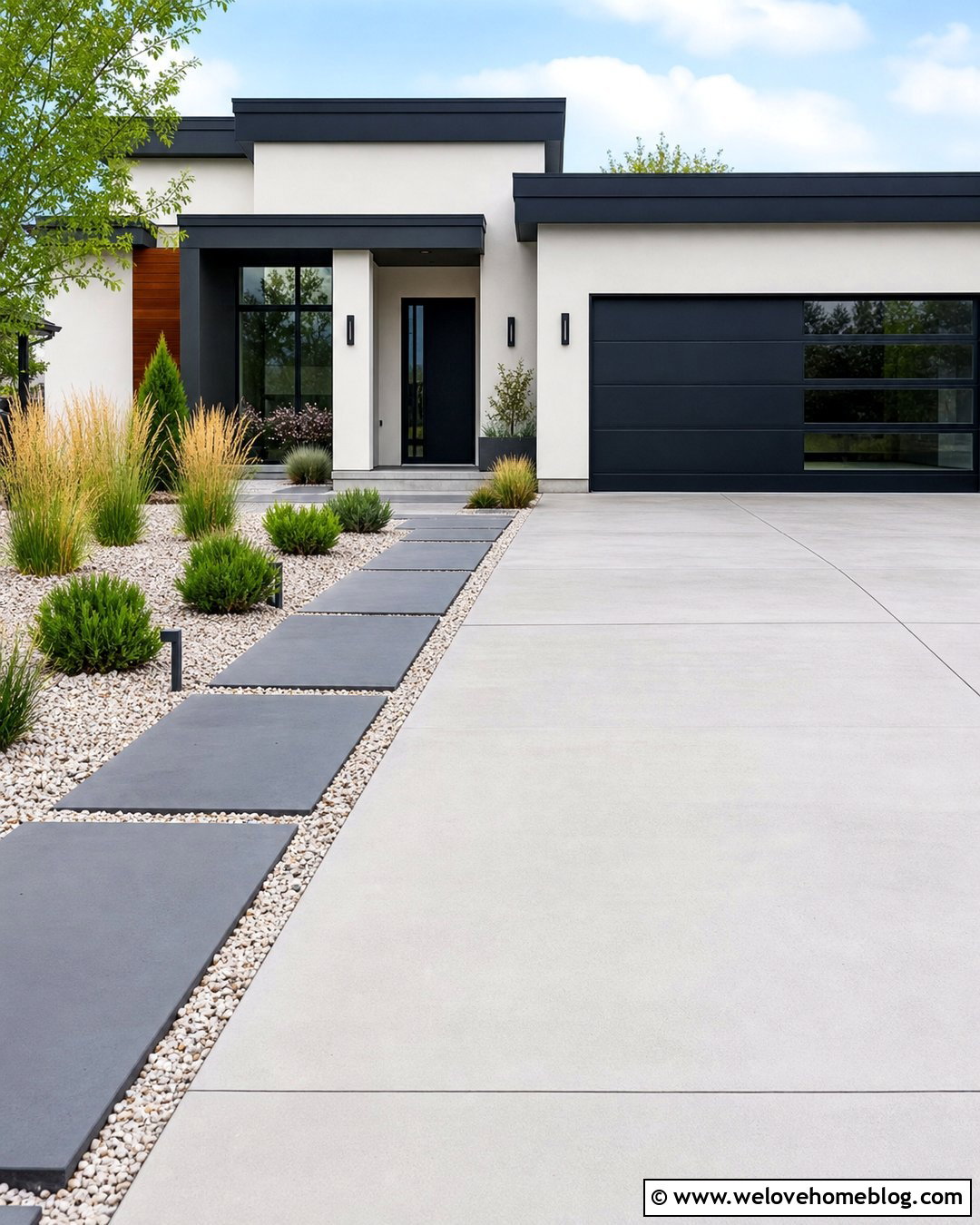
Golden pea gravel paired with large concrete pavers creates a casual driveway with a clean contemporary outline. Use compacted gravel in the center and install wide rectangular pavers around the sides, apron, and garage entrance. Light-gray border units keep the palette bright, while charcoal pavers create a stronger frame. A straight driveway works well because the crisp border balances the loose texture of the gravel. Surround it with drought-tolerant grasses, compact shrubs, and a simple concrete walkway. Consider a stabilized gravel system beneath the surface where local conditions allow, especially if rutting and material movement are concerns. The paver perimeter should sit securely on a suitable base and at a practical height that contains the gravel without forming a harsh raised curb.
8. Asphalt Driveway With Red Brick Paver Border
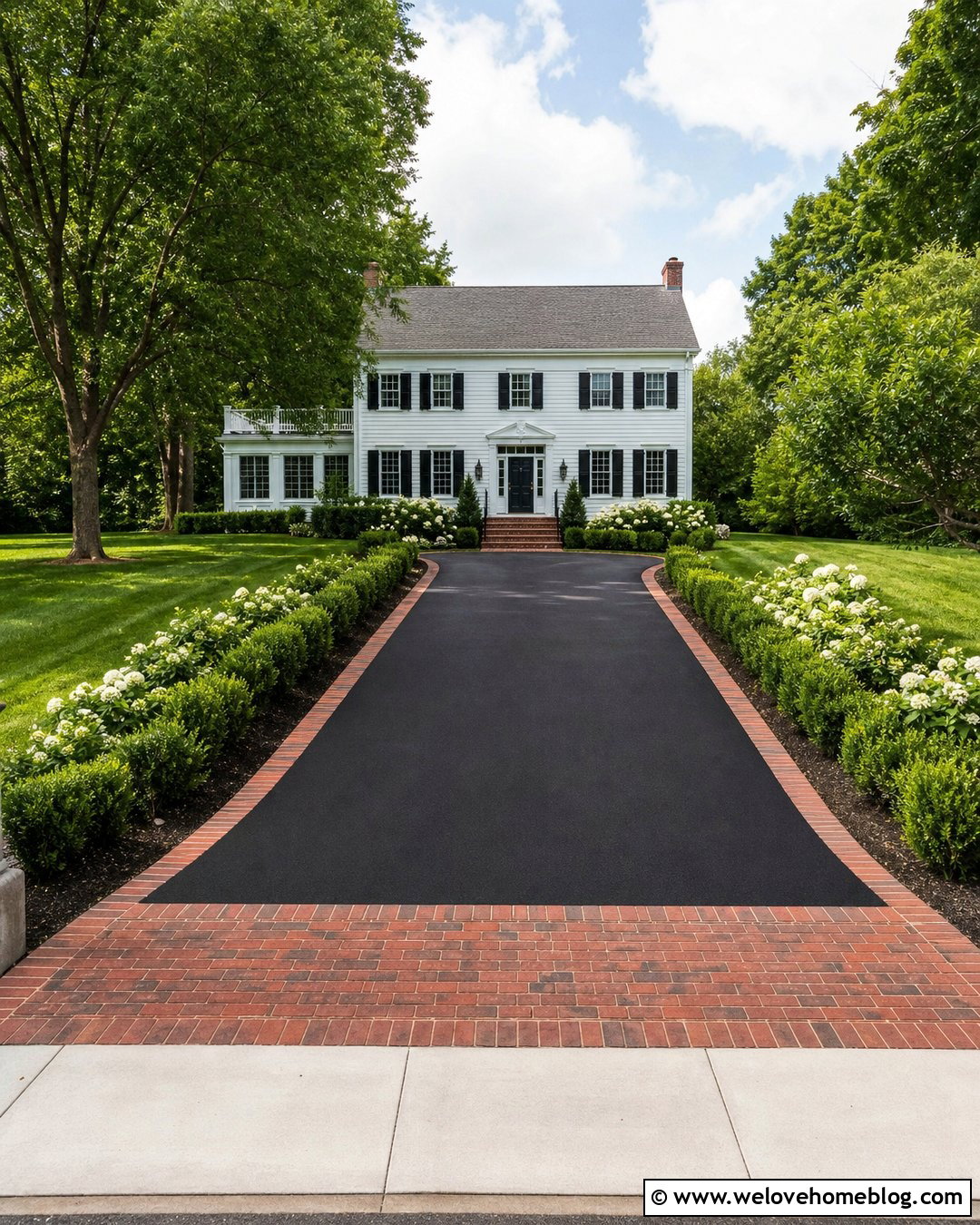
There is something familiar and inviting about black asphalt framed with classic red brick. This combination works beautifully with Colonial, Georgian, Cape Cod, and traditional suburban homes. Lay one or two rows of clay brick pavers along both sides, then widen the treatment at the street to form a visible apron. The brick color can match the front steps or chimney, helping the driveway feel connected to the house. Green lawn, clipped hedges, and white flowers provide a simple background for the dark surface. A gently flared entrance adds presence without requiring a completely new driveway layout. Choose bricks rated for vehicular use and local weather conditions rather than standard wall bricks, which may not be suitable for repeated loads and exposure.
9. Circular Driveway With Contrasting Paver Border
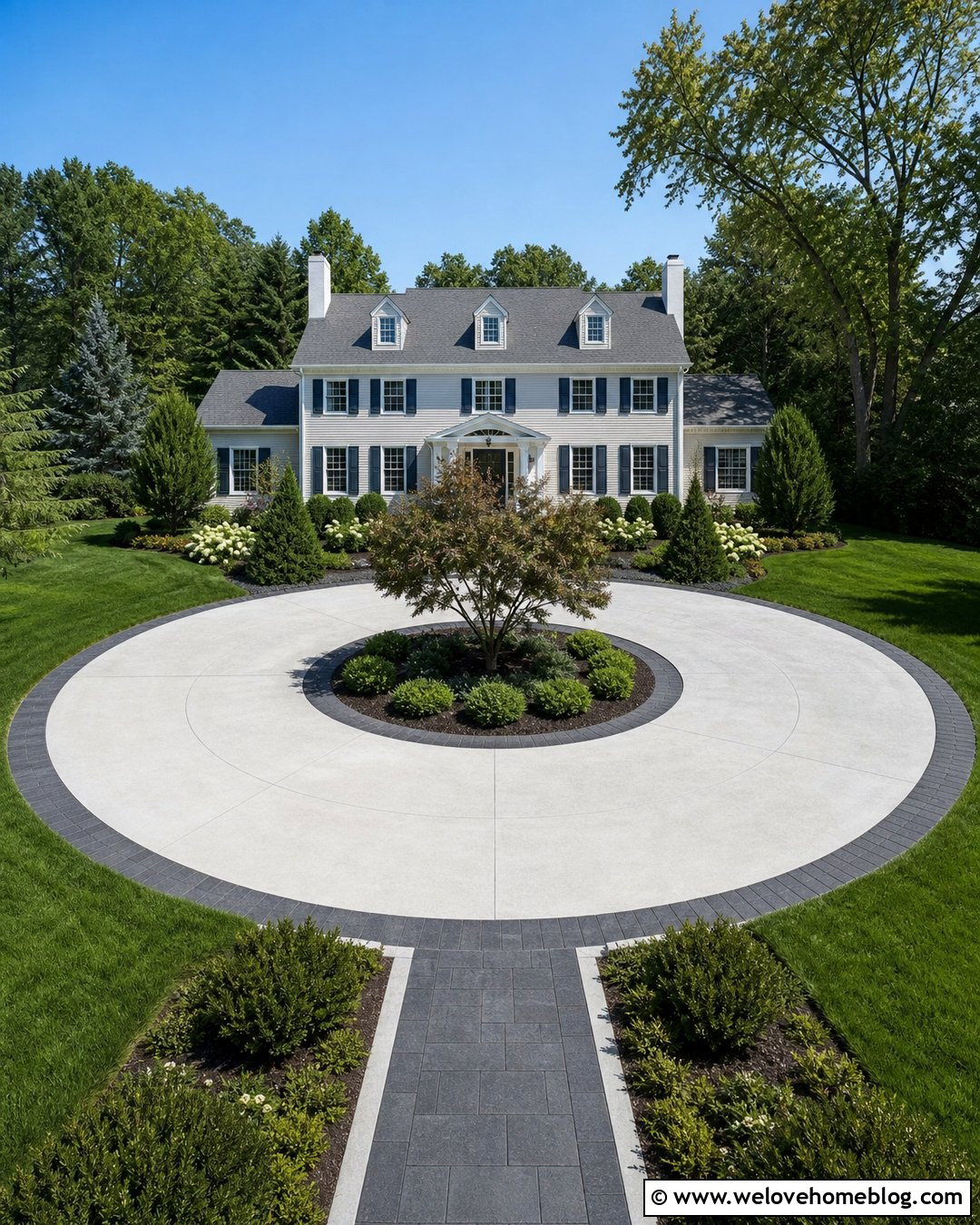
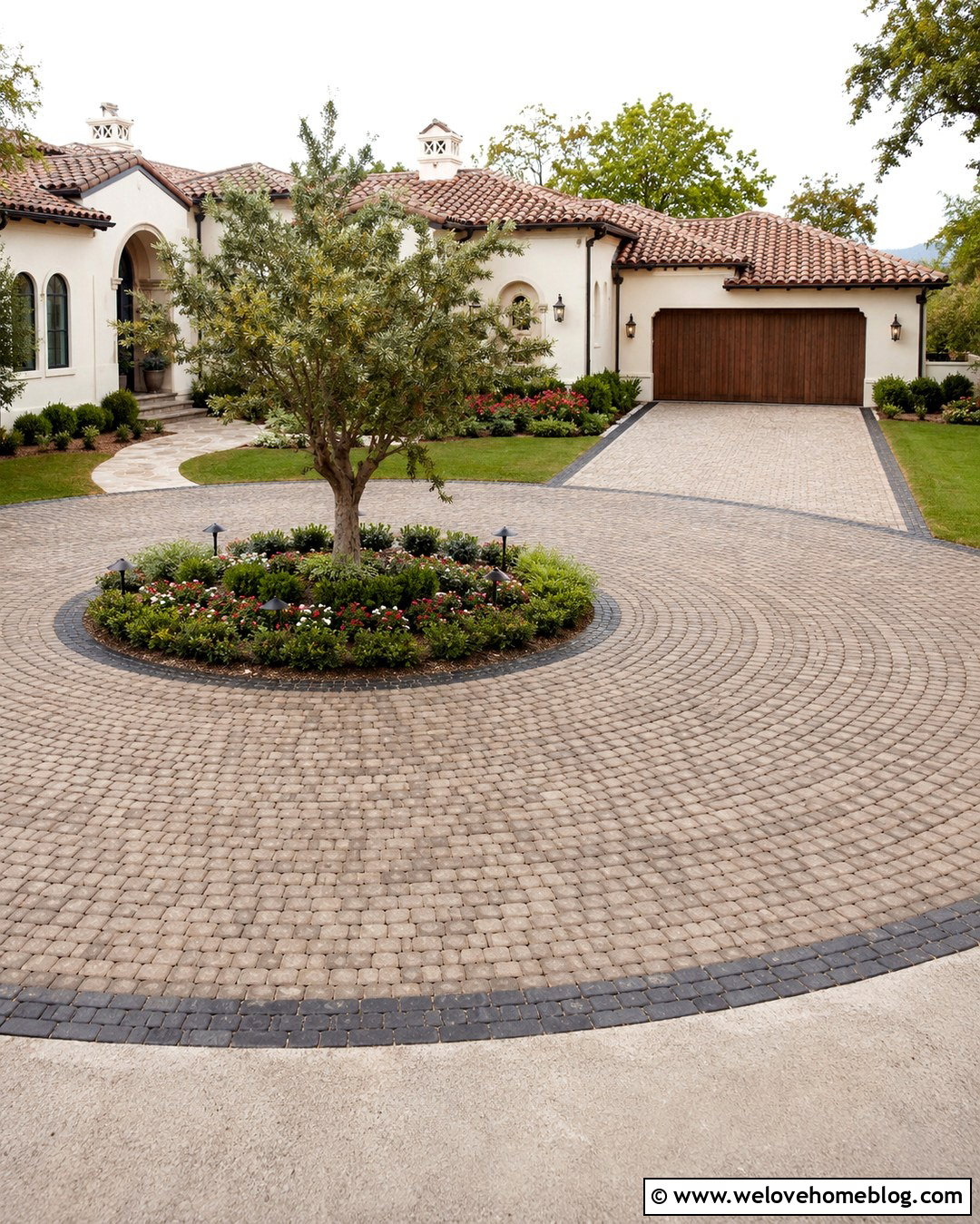
A circular driveway gains stronger definition when pavers outline both its outer edge and central island. Use light-gray poured concrete for the driving surface and dark charcoal pavers for a distinct double-sided frame. The contrast highlights the circular layout from the curb and prevents the center bed from feeling disconnected. Landscape the island with a small ornamental tree, low shrubs, and ground cover that will not block views. Repeat the same plants near the house for balance. This layout suits larger Colonial, ranch, and modern farmhouse properties. The border may also continue into a walkway leading to the front door. Keep planting and decorative features well inside the turning area so the attractive design remains comfortable for everyday vehicle movement.
10. Crushed Stone Driveway With Brick Paver Border
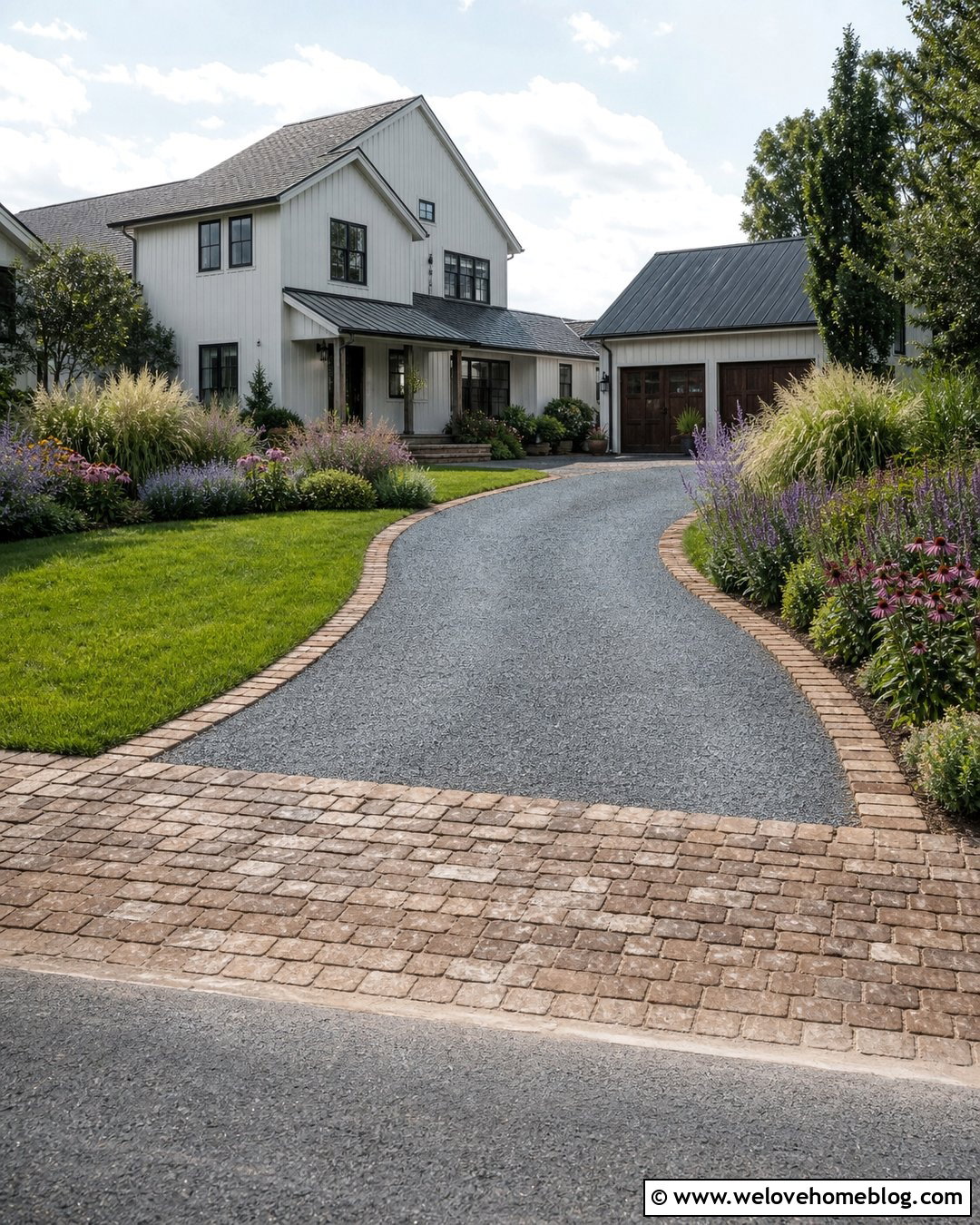
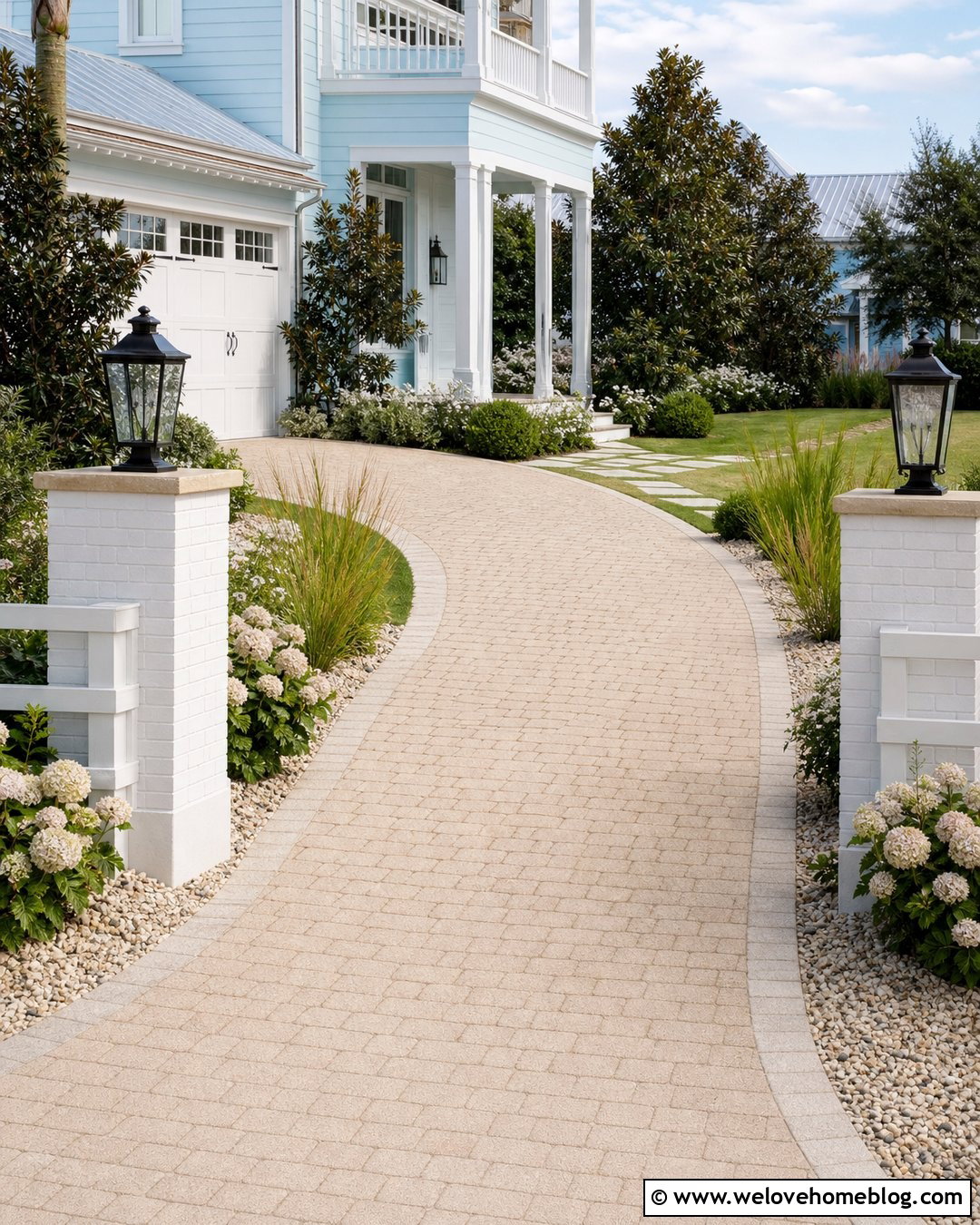
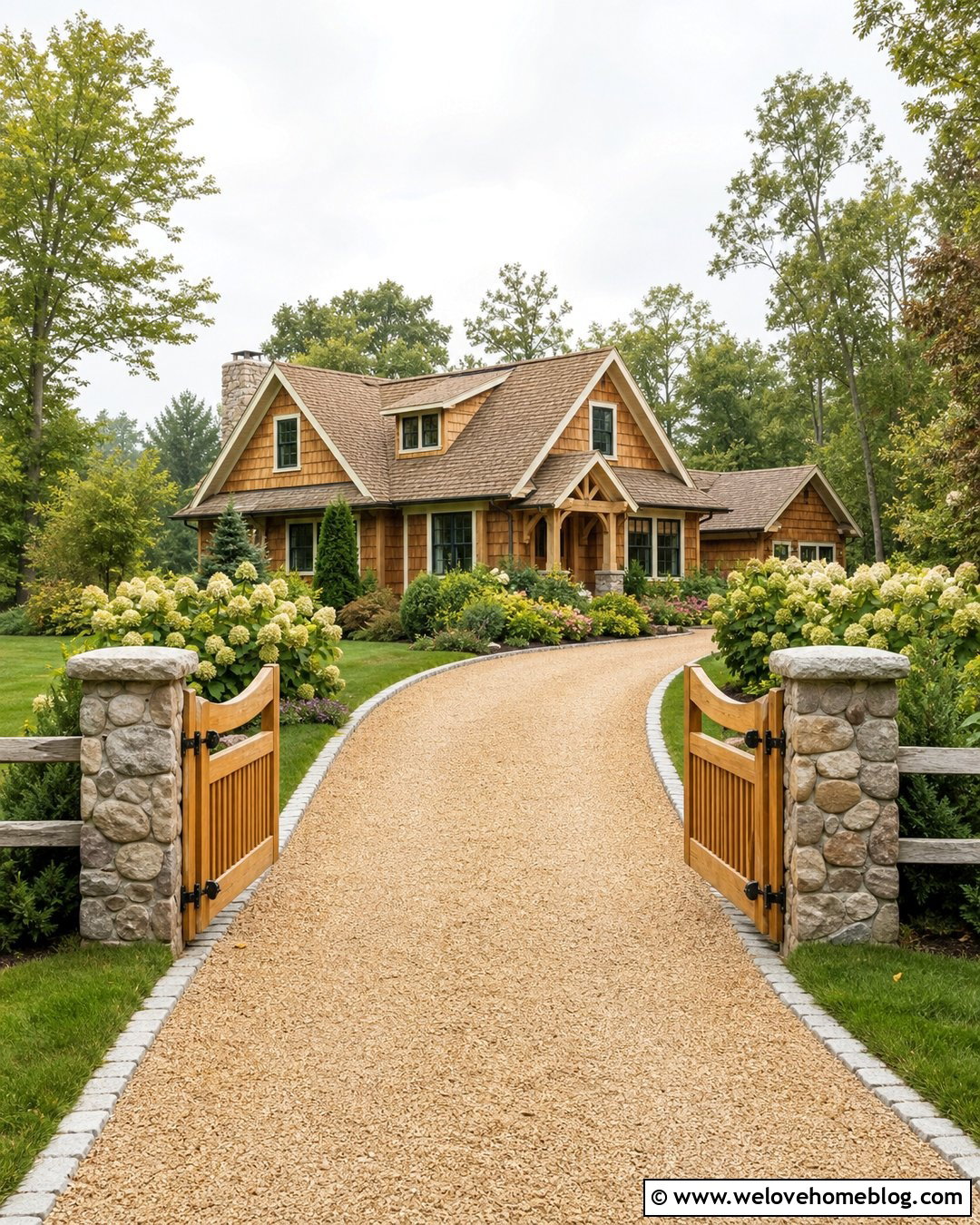
A crushed stone driveway can look polished rather than temporary when surrounded by a substantial brick frame. Choose compacted blue-gray stone for the center and weathered brown brick pavers for the perimeter. The combination offers a softer alternative to asphalt while still giving the entrance a clear shape. A straight or gently curved layout works with farmhouse, cottage, and country properties. Install a wider brick apron where the driveway meets the road, then repeat the material near the garage doors. Informal planting beds filled with salvia, coneflowers, grasses, and small shrubs suit the rustic texture. The finished border must be supported by a proper base and edge restraint so it stays aligned beside the shifting stone surface. ()
11. Stamped Concrete Driveway With Solid Paver Border
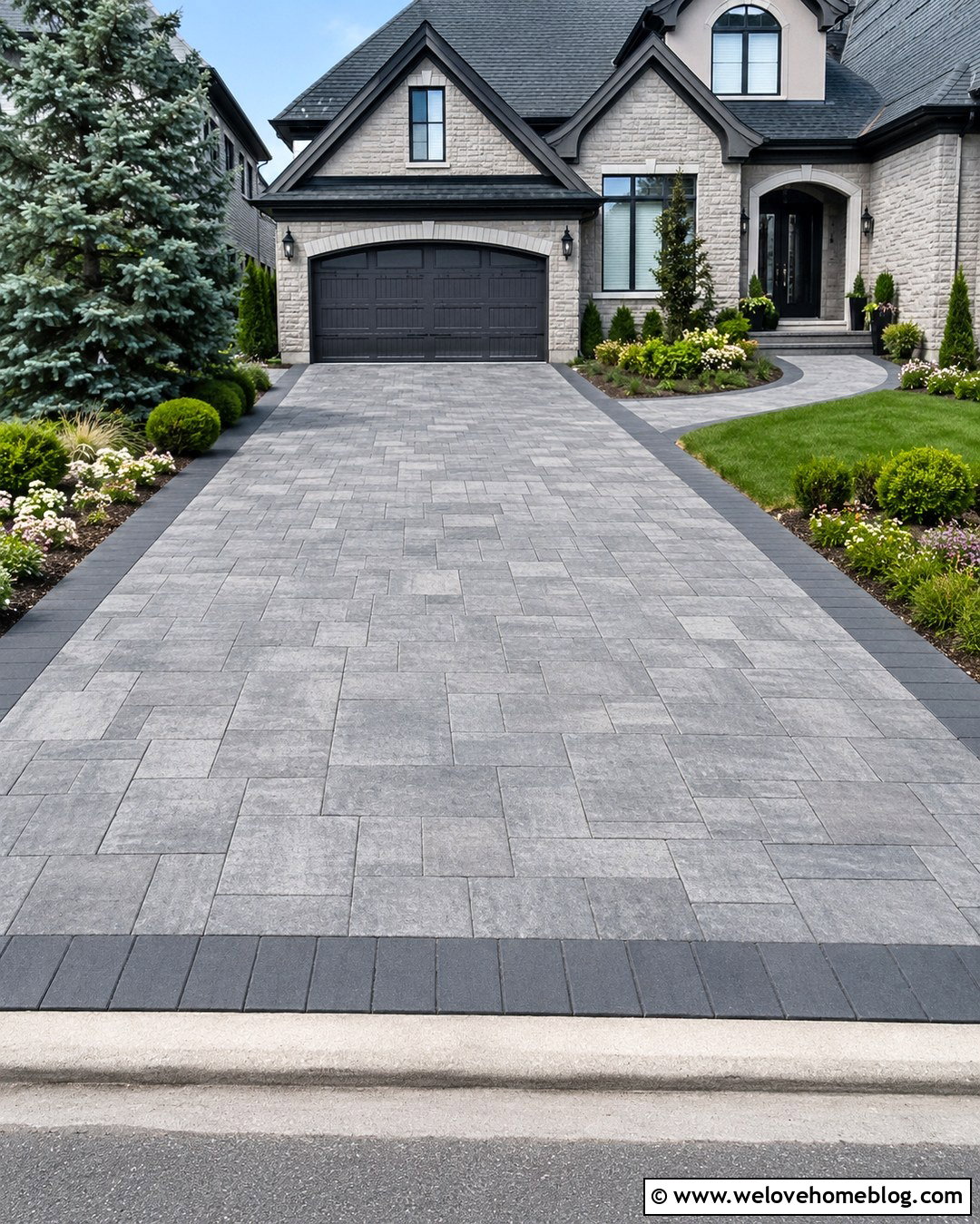
Stamped concrete benefits from a quiet border that defines its shape without competing with the pattern. Select a medium-gray concrete center stamped in a restrained ashlar stone design. Surround it with smooth charcoal pavers arranged in a solid soldier course. Using a darker version of the driveway color creates contrast while keeping the palette coordinated. This treatment suits transitional homes, stone-front houses, and updated ranch properties. Add curved planting beds with evergreen shrubs and light flowering perennials to soften the hardscape. Avoid combining too many paver sizes or colors because the stamped center already provides detail. A matching dark band near the garage and street can visually anchor the design and make the entire driveway appear professionally planned.
12. Resin-Bound Driveway With Stone Paver Border
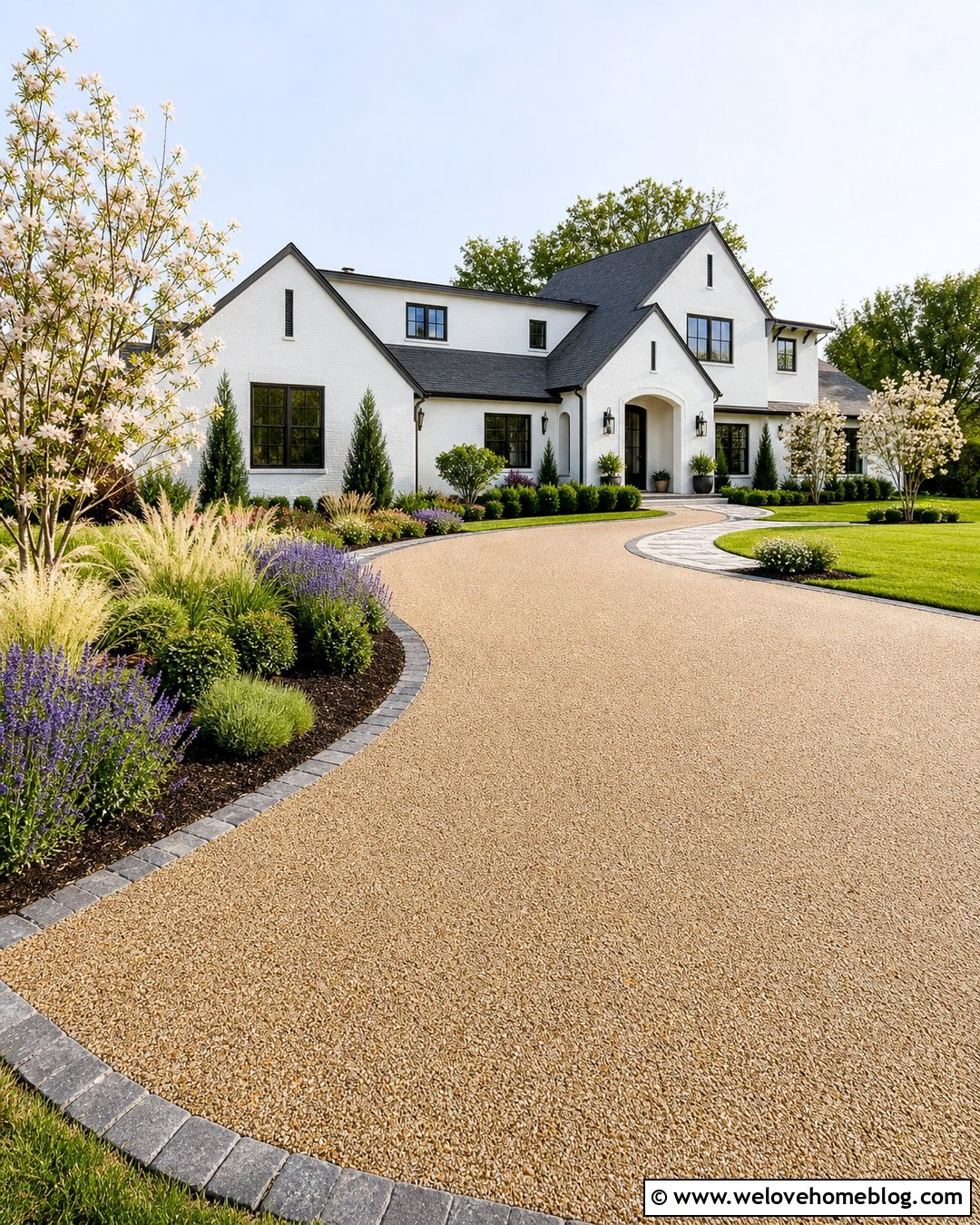
A resin-bound gravel surface has a smooth, seamless appearance that pairs naturally with textured stone pavers. Choose a warm beige resin-bound aggregate for the center and frame it with charcoal-gray granite pavers. The darker outline keeps the pale surface from blending into nearby walkways and planting beds. A gently curved driveway looks elegant beside a contemporary farmhouse or light stucco home. Repeat the granite around the front path or entrance steps for continuity. Soft grasses, lavender, low evergreens, and small trees create a balanced landscape without hiding the border. Discuss drainage, slope, base construction, and material compatibility with an experienced local installer. These details affect how successfully different surfaces meet and perform in a specific climate.
13. Driveway With Wide Paver Side Borders
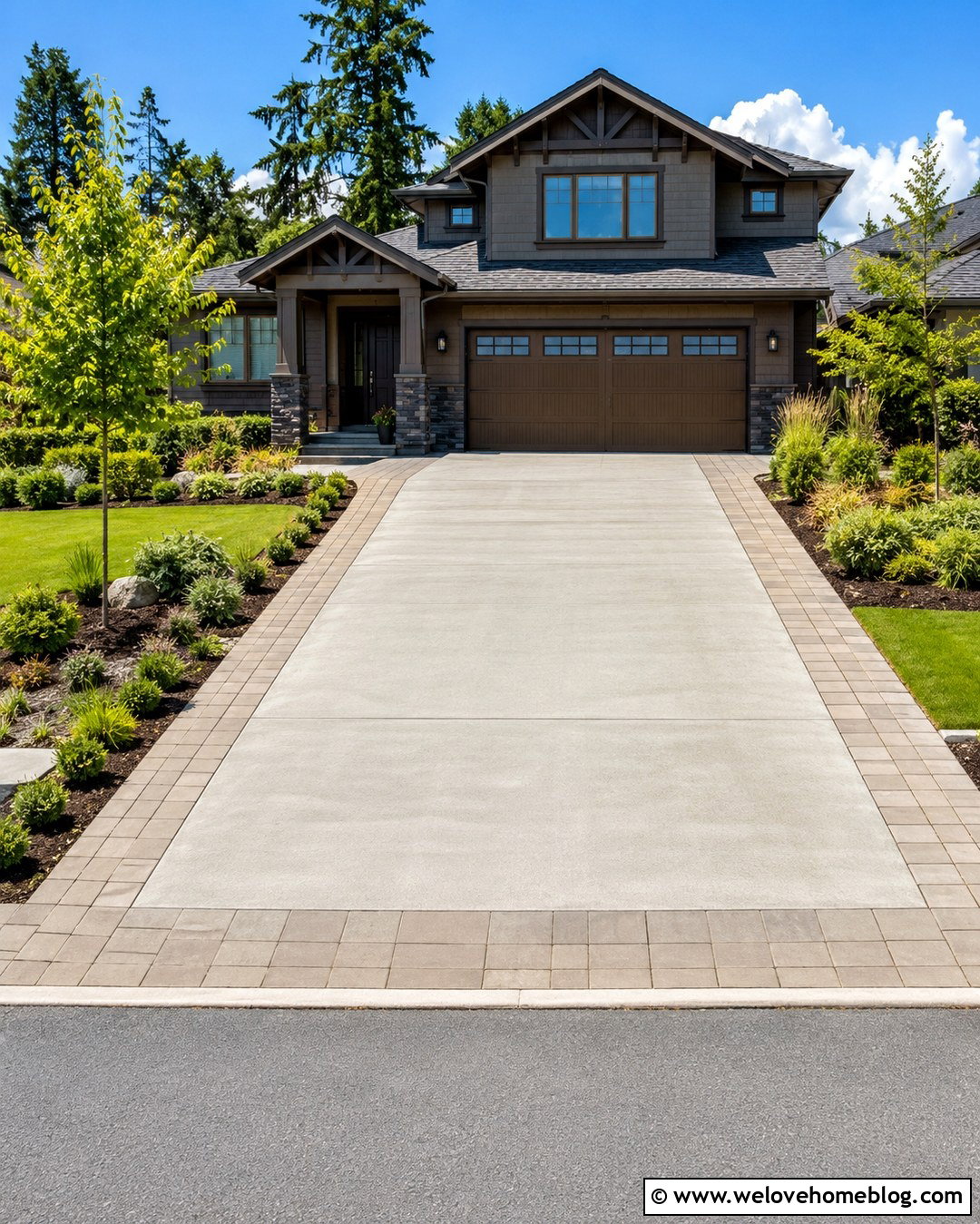
Wide paver borders can add usable space along a narrow driveway while creating a layered, high-end appearance. Start with a smooth concrete center and install three or four rows of taupe concrete pavers along both sides. The expanded border provides a clear visual buffer between vehicle space and landscaping. It may also make entry and exit more comfortable when designed and supported for the intended use. Choose a running bond or simple modular pattern that remains calm beside the larger concrete field. A ranch or Craftsman home makes an attractive backdrop. Frame the driveway with lawn, low shrubs, and a matching paver walkway. Keep the border width consistent from the curb to the garage unless a deliberate flare is needed near the entrance.
14. Driveway With Herringbone Paver Border
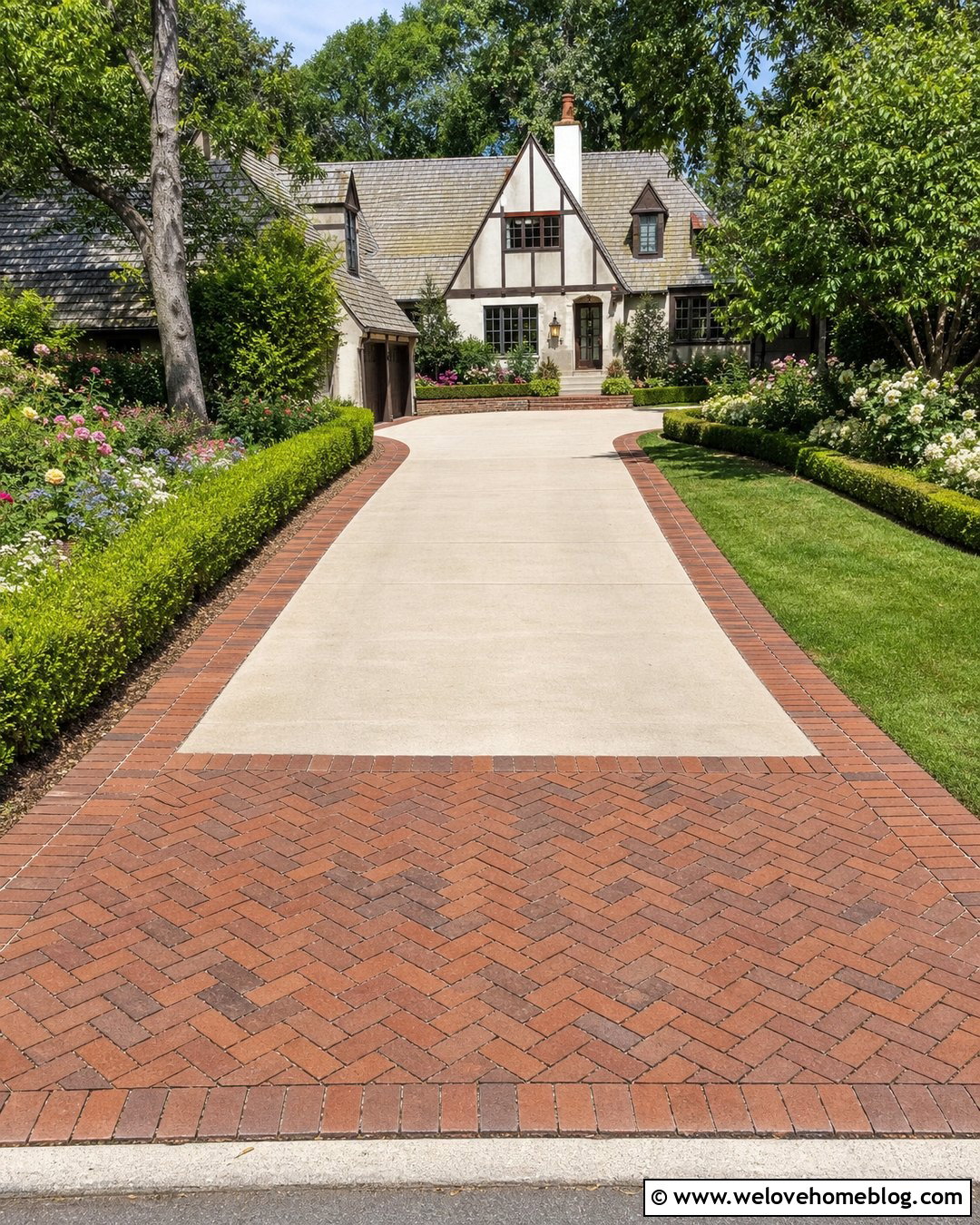
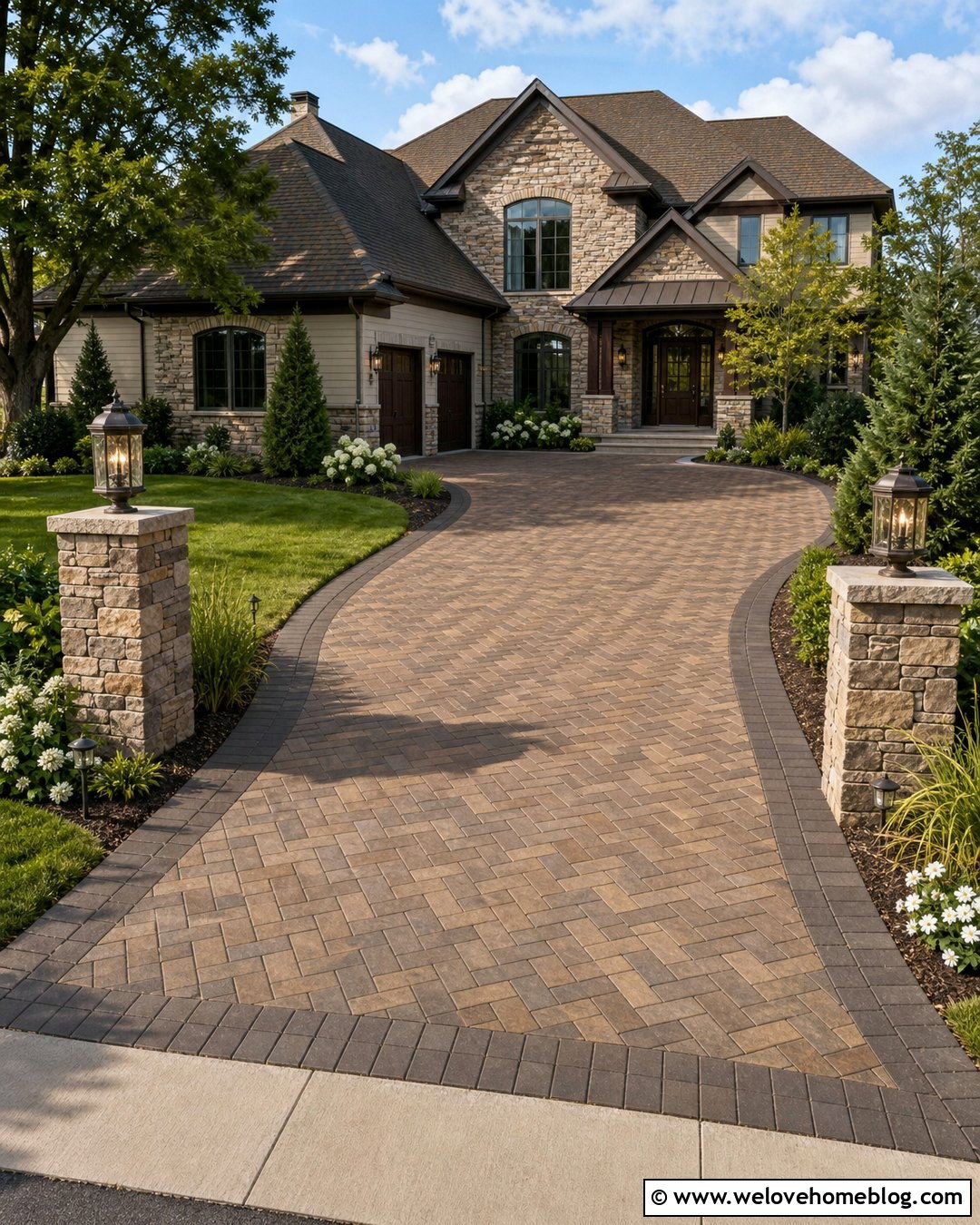
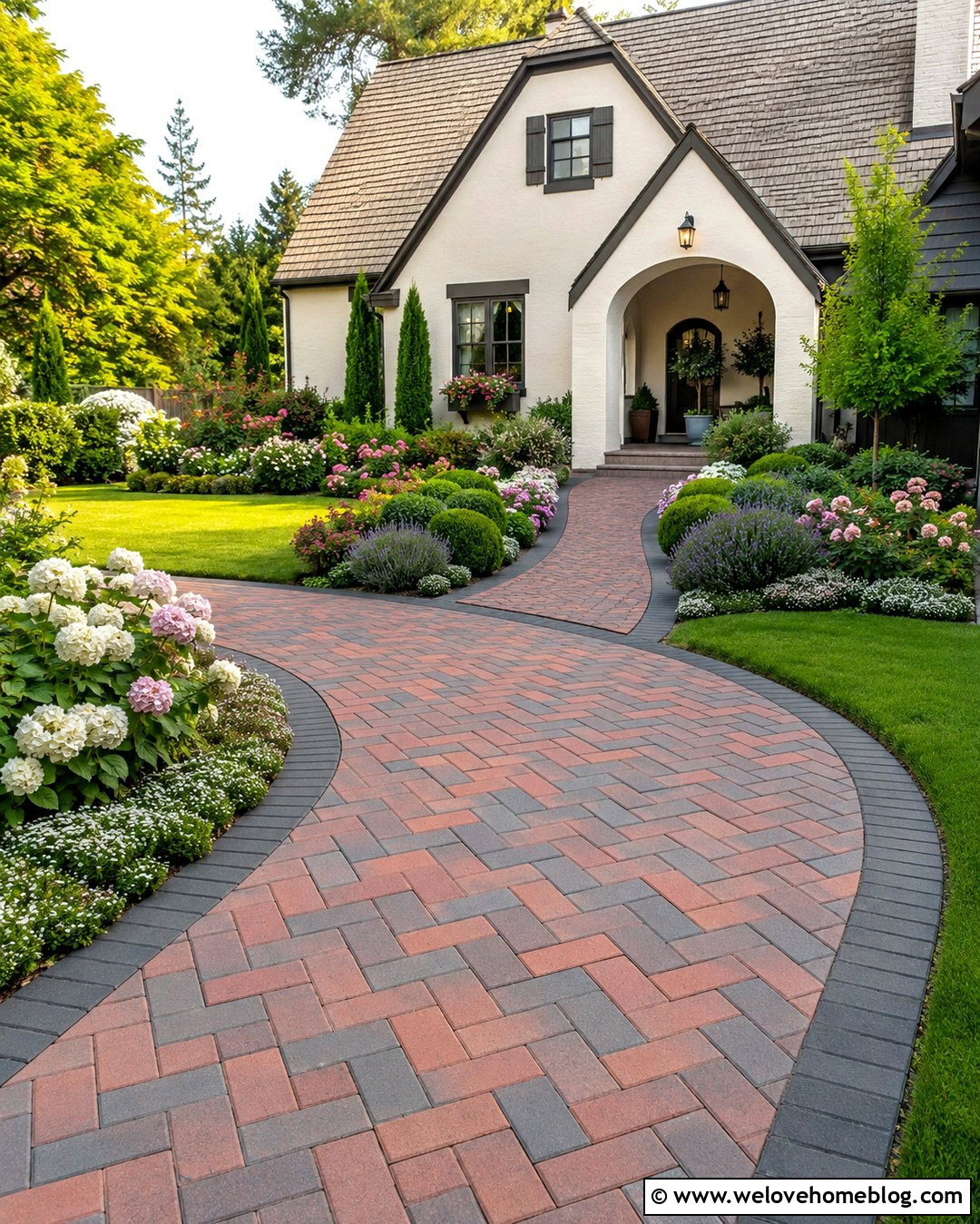
A herringbone paver border brings movement and detail to a simple driveway surface. Pair smooth beige concrete with reddish-brown clay pavers laid in a compact herringbone band around the perimeter. Because the pattern is visually active, make the border wider than a single row so the layout can be clearly recognized. This treatment complements Tudor, traditional brick, and English cottage-inspired homes. Deep green hedges and informal flowering beds reinforce the established character. Keep the center driveway plain to prevent the combination from becoming crowded. The herringbone band can widen into a decorative apron at the curb or a landing near the garage. Careful cutting and alignment are essential around curves and corners, so the pattern maintains a continuous, intentional appearance.
15. Modern Driveway With Large Paver Border
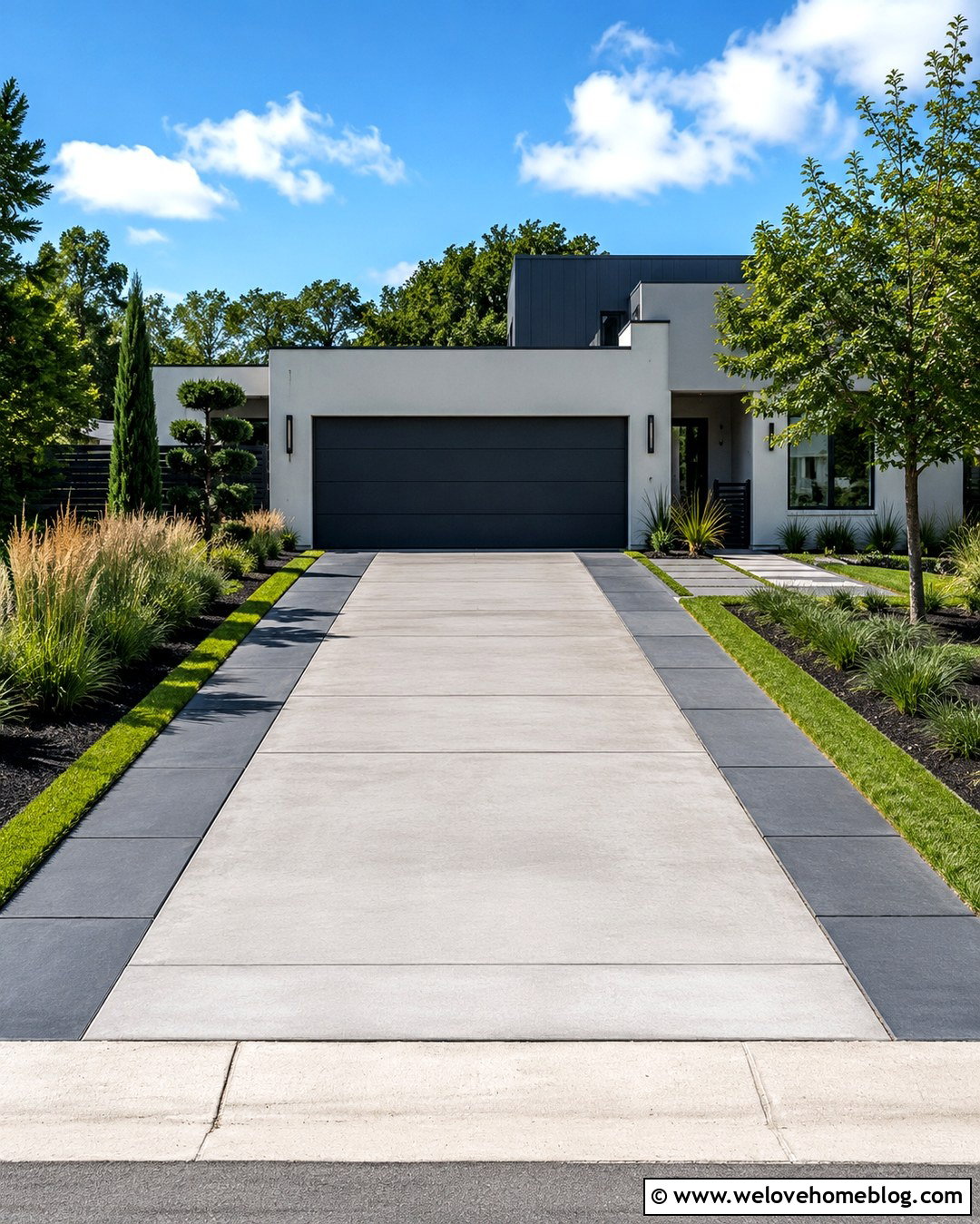
Large-format pavers give a basic driveway a strong architectural frame. Use smooth medium-gray concrete in the center and oversized dark-gray concrete pavers along the perimeter. Arrange the border in long, uninterrupted lines that coordinate with the garage door, front walkway, and horizontal features of the house. A straight driveway is the best match for this restrained geometry. Add narrow grass strips, linear planting beds, sculptural evergreen shrubs, and a few ornamental grasses. The pavers should be driveway-rated and installed on a base designed for the site’s soil and vehicle loads. Keep joint spacing controlled and colors limited to two or three tones. The complete result feels modern and purposeful without requiring an elaborate pattern across the entire driving surface.
16. Farmhouse Driveway With Weathered Paver Border
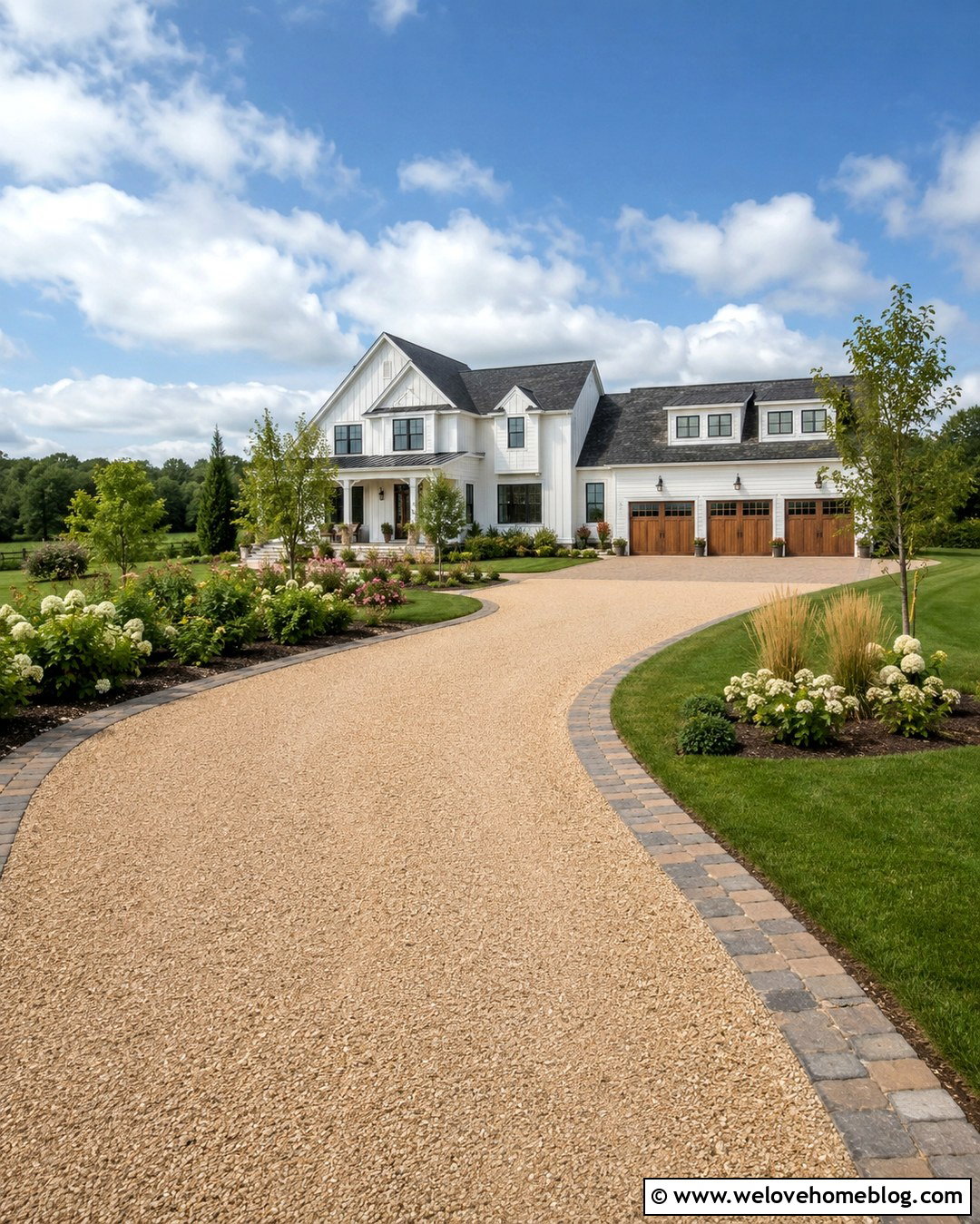
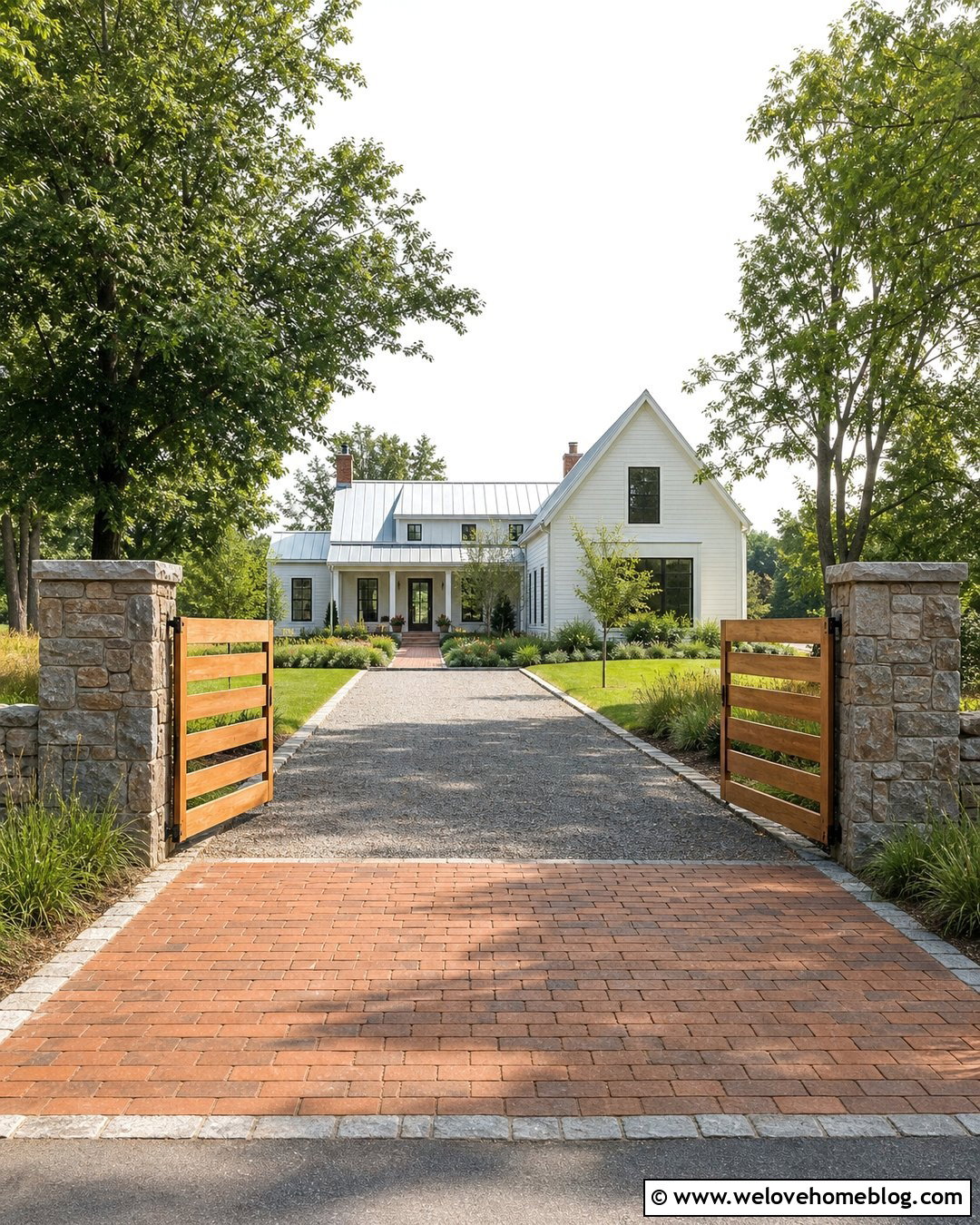
A warm weathered paver border can make a practical driveway feel naturally connected to a farmhouse setting. Fill the center with compacted tan gravel or light crushed limestone, then surround it with tumbled brown and gray concrete pavers. A slightly irregular color blend creates an aged appearance, while a consistent soldier-course layout keeps the edge orderly. Let the driveway curve gently toward a white modern farmhouse with dark windows and a covered porch. Plant hydrangeas, fountain grasses, flowering shrubs, and a pair of small trees near the entrance. A matching paver walkway can cross the gravel and lead to the porch. Include a wider paved pad near the garage to control loose stone and create a smooth transition between the two materials.
17. Sloped Driveway With Textured Paver Border
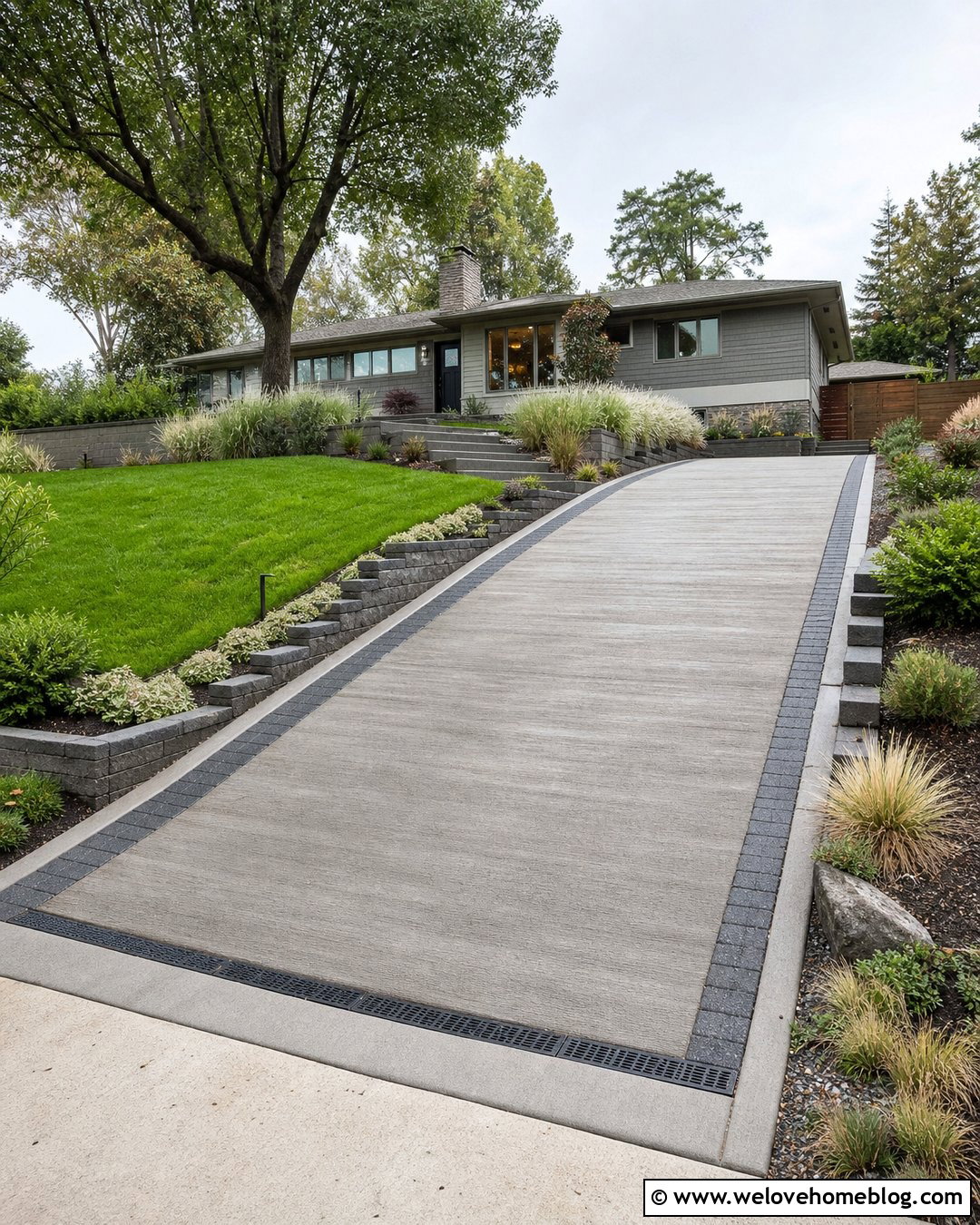
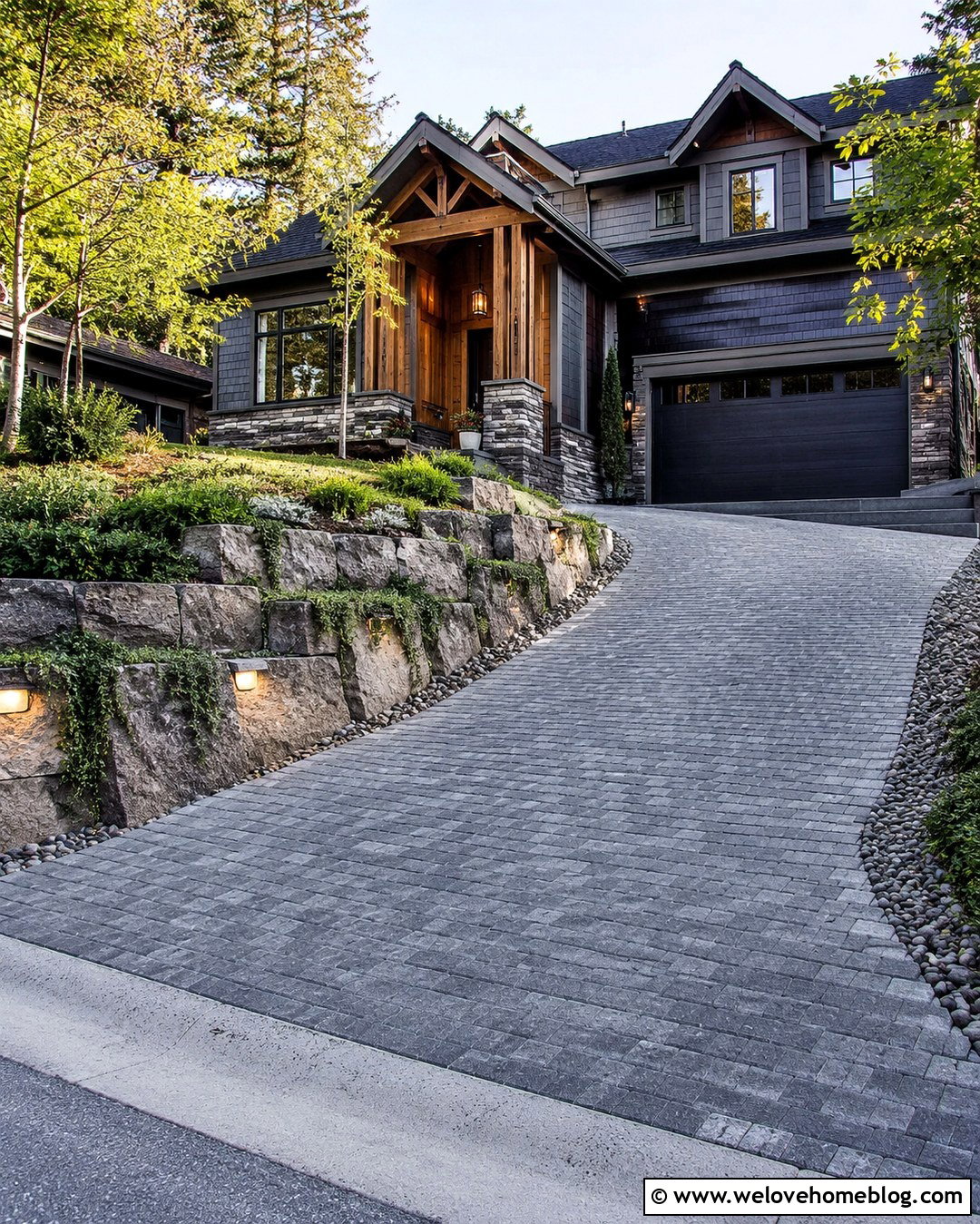
On a sloped driveway, the border needs to complement both the design and the site’s drainage plan. Use broom-finished concrete for reliable visual texture and surround it with dark, textured concrete pavers. A double-row border makes the edge easy to see and gives the incline a stronger outline. Low retaining walls can coordinate with the pavers where the driveway cuts through raised planting beds. Choose compact ground covers, ornamental grasses, and erosion-conscious planting suited to local conditions. Drainage channels or other approved solutions should be positioned according to professional site recommendations, not added as an afterthought. A split-level ranch or hillside contemporary home provides a fitting backdrop. The finished driveway should look integrated with the slope rather than imposed upon it.
18. Small Driveway With Dark Paver Border
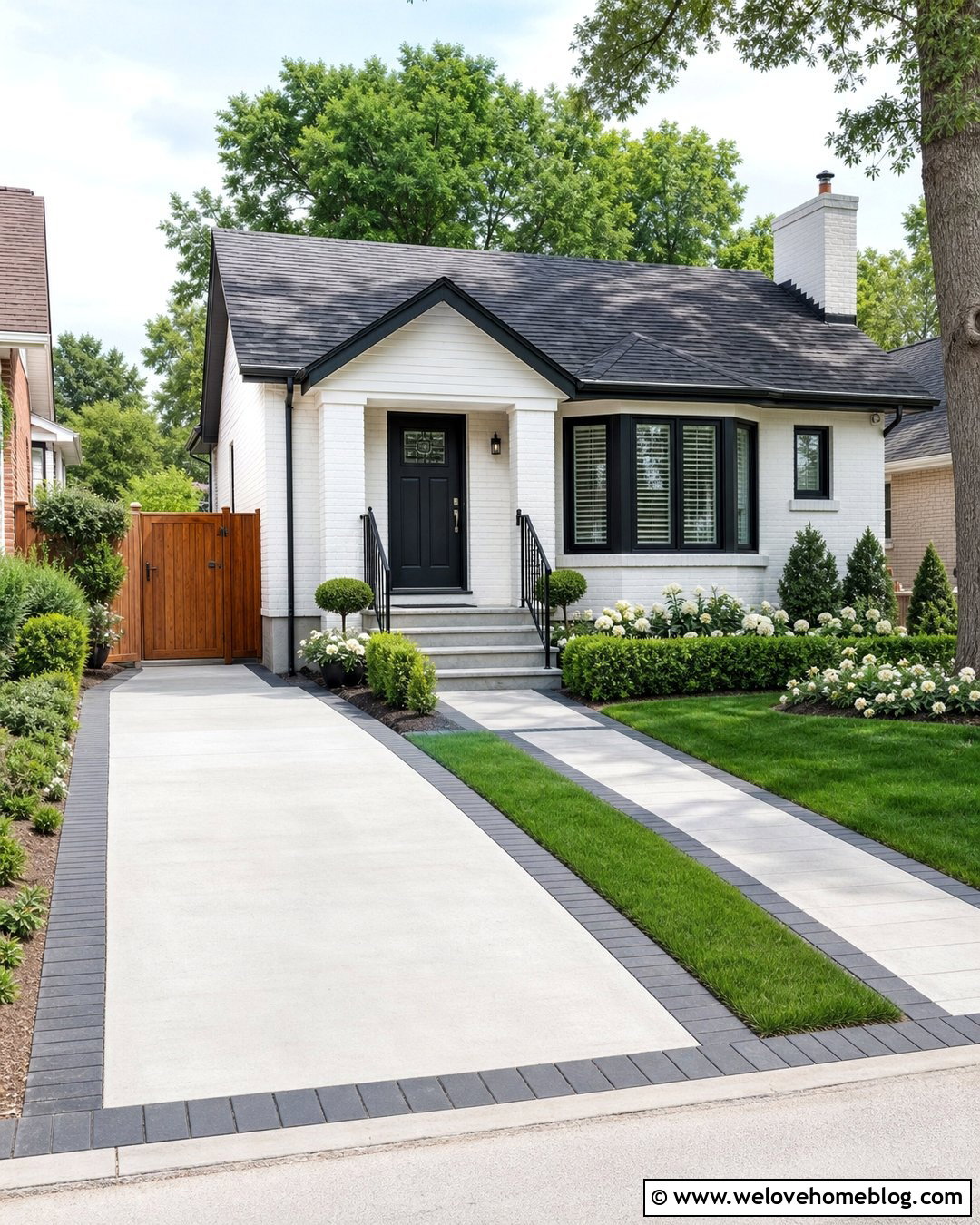
A compact driveway can appear more finished with one narrow row of contrasting pavers around it. Choose light-gray concrete for the main surface and charcoal rectangular pavers for a sharp perimeter. The dark frame clearly separates the parking area from the lawn and planting beds without consuming much space. Continue the border around a small apron near the sidewalk, then connect it to a matching front walkway. This approach works well for bungalows, townhomes, cottages, and modest ranch houses. Use low plants and tidy beds so the landscaping does not visually squeeze the driveway. Repeating the charcoal tone on the front door, shutters, or exterior lights creates cohesion. A simple two-color scheme keeps the small frontage open, organized, and easy to understand.
19. Driveway With Paver Border And Grass Strip
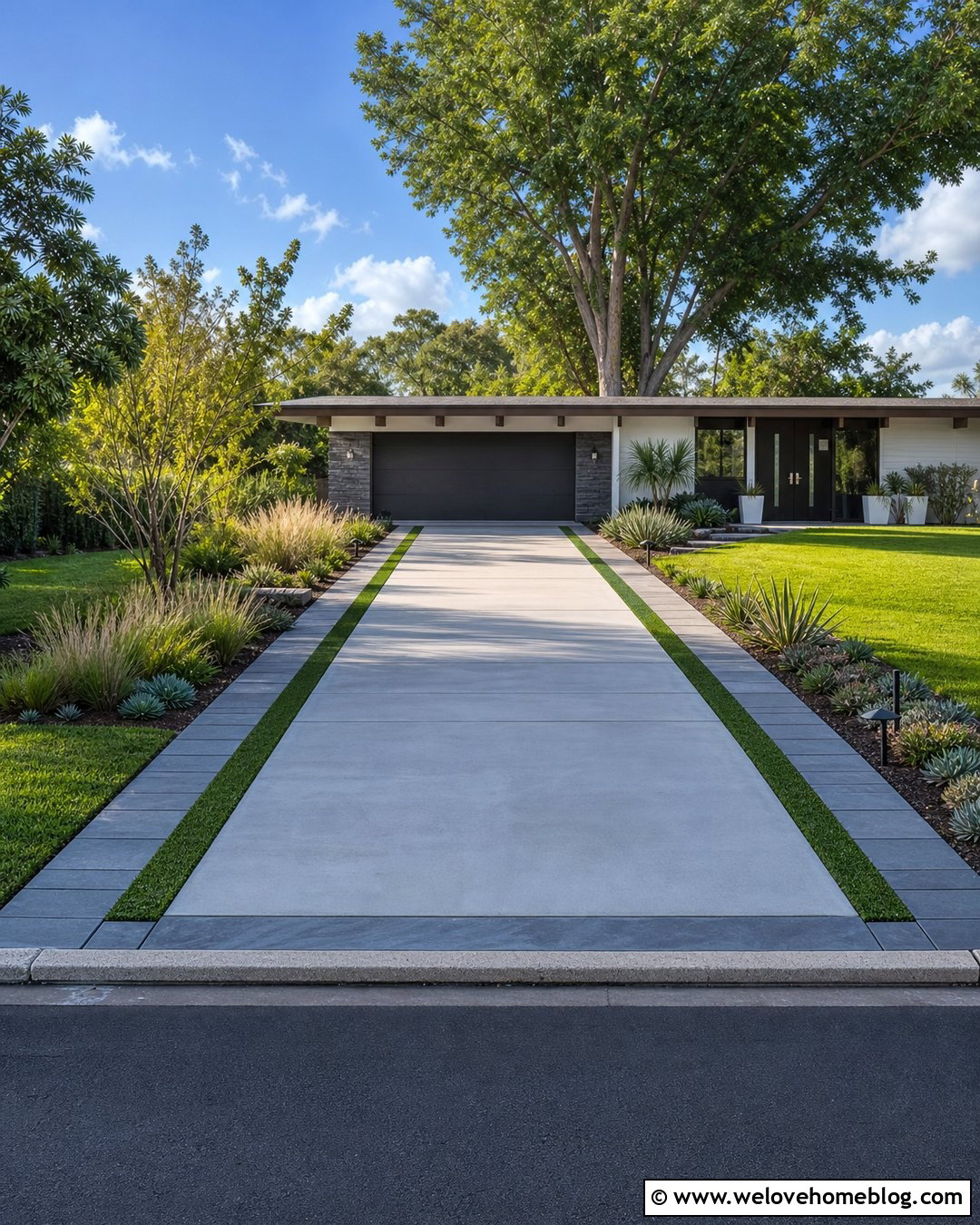
A narrow grass strip between the driveway and its outer paver border creates a softer, garden-focused look. Use pale poured concrete for the main driving surface, followed by a slim green strip and a row of warm-gray concrete pavers. The layered edge works best on a wide, straight driveway where there is enough room to maintain practical vehicle clearance. Small ground-cover plants may replace turf in dry climates, provided they suit local growing conditions. Repeat the pavers around the front walkway to unify the hardscape. A contemporary ranch or midcentury-inspired home complements the horizontal layout. Plan mowing, irrigation, drainage, and border support carefully. The green ribbon should remain neat and accessible rather than becoming a difficult maintenance gap between hard surfaces.
20. Driveway With Paver Border And Matching Walkway
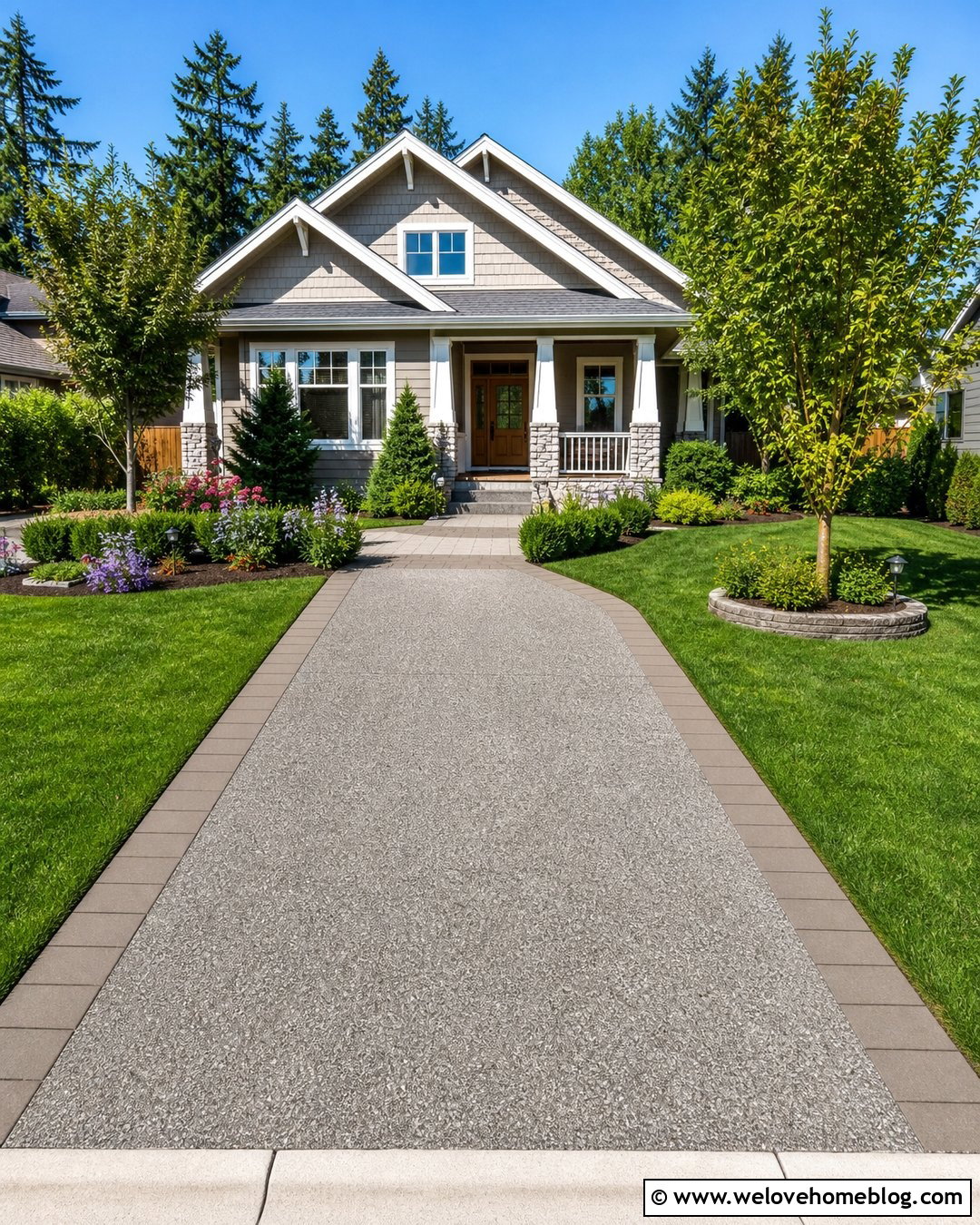
Connecting the driveway border directly to the front walkway creates one of the most cohesive entrance designs. Begin with a gray exposed aggregate driveway and surround it with warm taupe concrete pavers. At the most convenient point, widen the border into a full paver path leading toward the porch. This creates a clear pedestrian route while repeating the same color and texture around the driveway. A Craftsman, transitional, or suburban brick house works well with this arrangement. Layer evergreen shrubs, flowering perennials, and mulch beds beside the path, keeping plants away from vehicle overhang zones. The walkway and border should look like one continuous installation. Matching materials, joint lines, and elevations help the driveway, landscape, and front entrance read as a complete composition.
Conclusion:
The strongest paver border designs combine appearance with practical construction. Start with the driveway’s existing material, shape, slope, and drainage needs. Then choose pavers that complement the house instead of introducing an unrelated color or texture. Brick offers traditional warmth, charcoal concrete pavers create modern contrast, and cobblestone suits rustic or established landscapes. Borders can also connect walkways, define gravel, highlight curves, and create attractive driveway aprons. Whatever look you prefer, use products rated for driveway conditions and prioritize a stable base, secure edge restraint, and smooth transitions. These 20 driveway with pavers around it ideas offer flexible inspiration for small suburban lots, country properties, modern homes, and formal entrances.

Related posts:
Leave a Reply