
A concrete driveway can be far more than a plain gray slab. With the right finish, layout, border, and landscaping, it can become a polished part of your home’s curb appeal. These 25 Concrete Driveways Cement Ideas explore practical looks for modern homes, traditional properties, small front yards, and spacious country settings. Options range from affordable broom-finished surfaces to exposed aggregate, stamped patterns, integral colors, and geometric slabs. Concrete can also be paired with brick, stone, grass, lighting, and planting beds to create a more customized entrance. Although concrete is often casually called cement, cement is actually one ingredient used to make concrete. Browse these complete driveway designs to find inspiration in 25 Concrete Driveways Cement Ideas.

1. Broom Finish Concrete Driveway
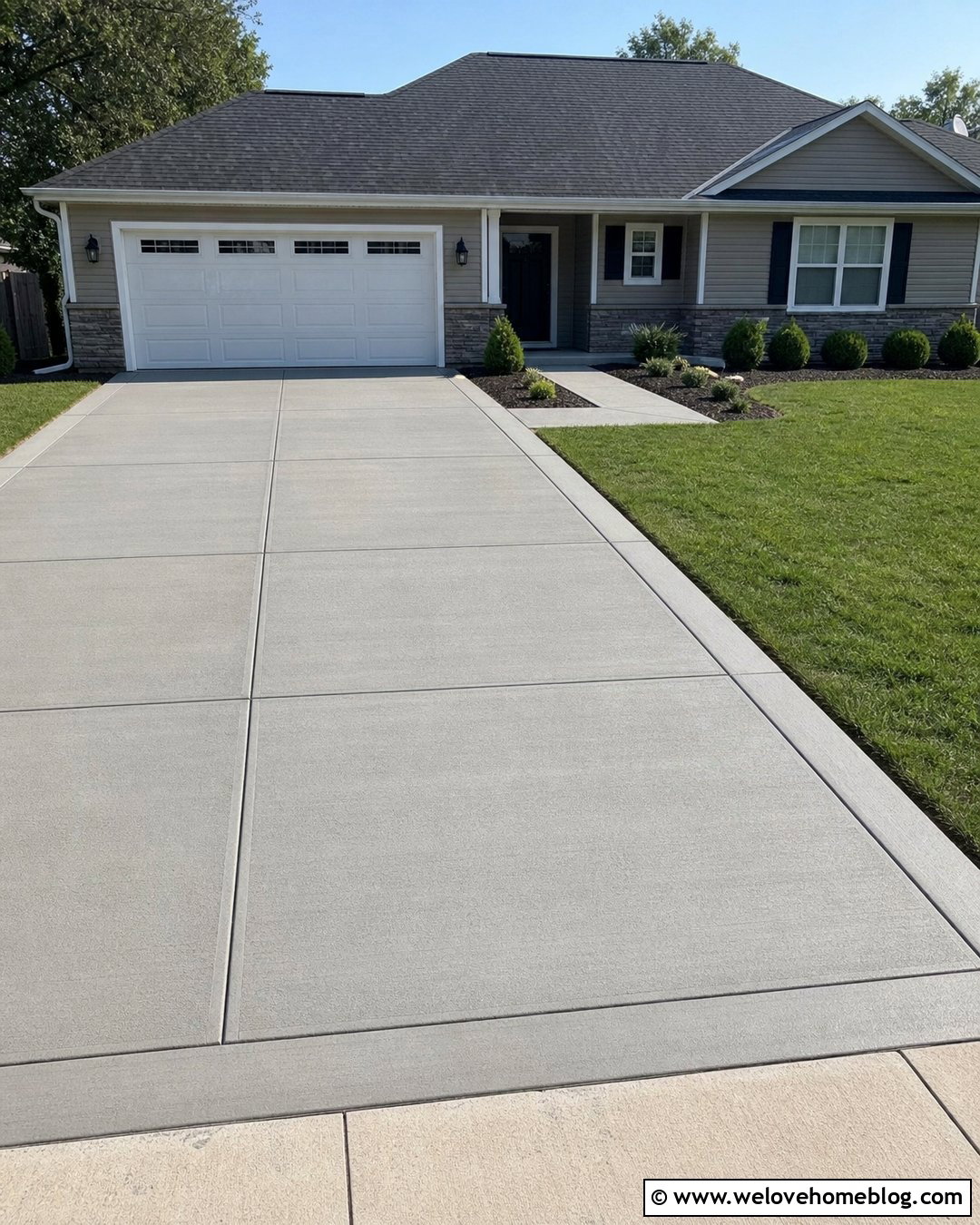
A broom finish concrete driveway is simple, practical, and easy to match with almost any house. Fine lines are brushed across the fresh surface, creating texture while giving the concrete a clean, uniform appearance. Frame a straight driveway with a narrow smooth concrete border for subtle contrast. Low evergreen shrubs, fresh lawn, and a matching concrete walkway can complete the entrance without making it feel busy. This look works especially well with ranch, Craftsman, and traditional suburban homes. Choose medium-gray concrete when you want a familiar finish that hides everyday dust. Properly placed control joints can divide the surface into balanced panels. Broom finishing is also one of the simplest ways to add useful surface texture without an elaborate decorative treatment. ()
2. Exposed Aggregate Concrete Driveway
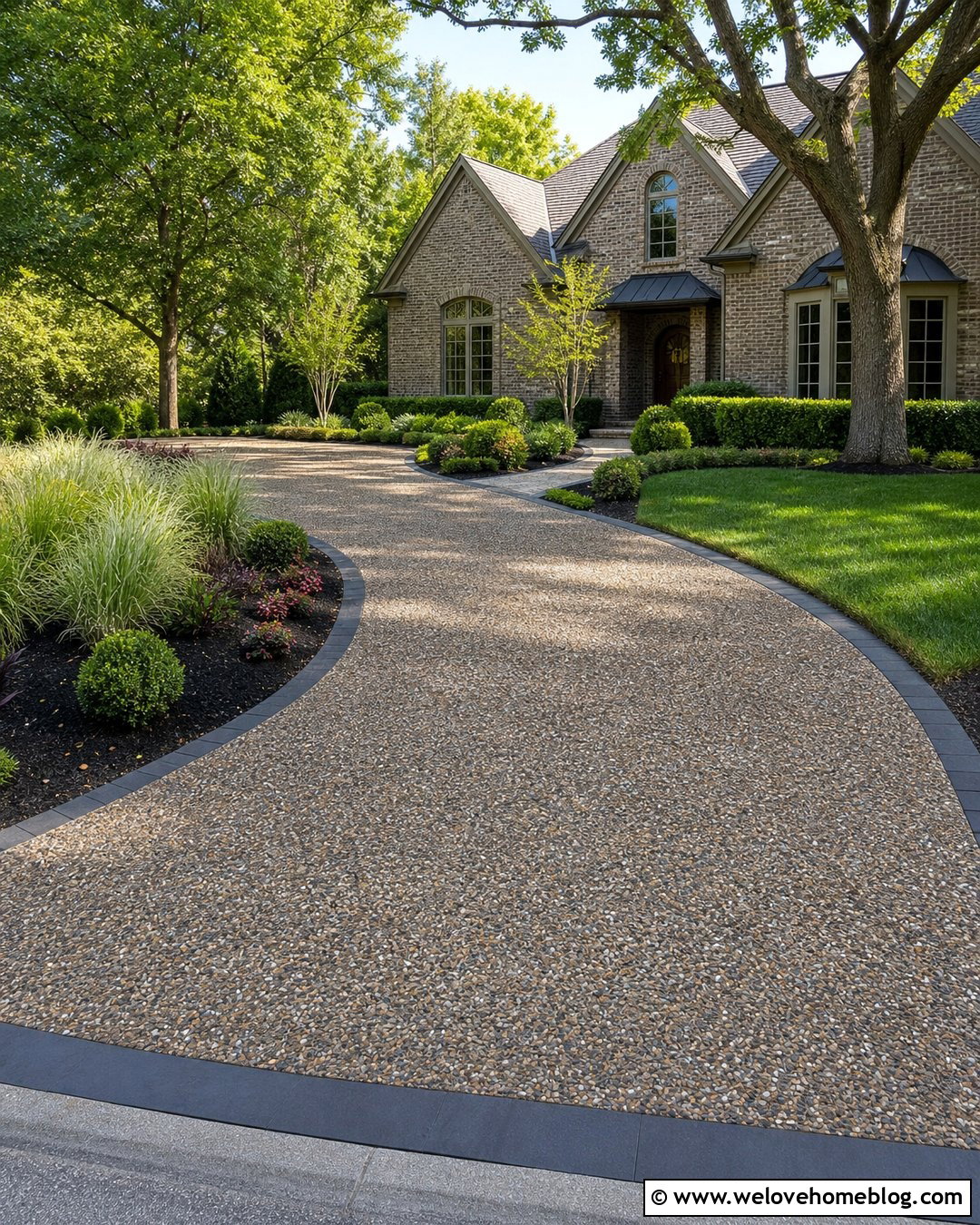
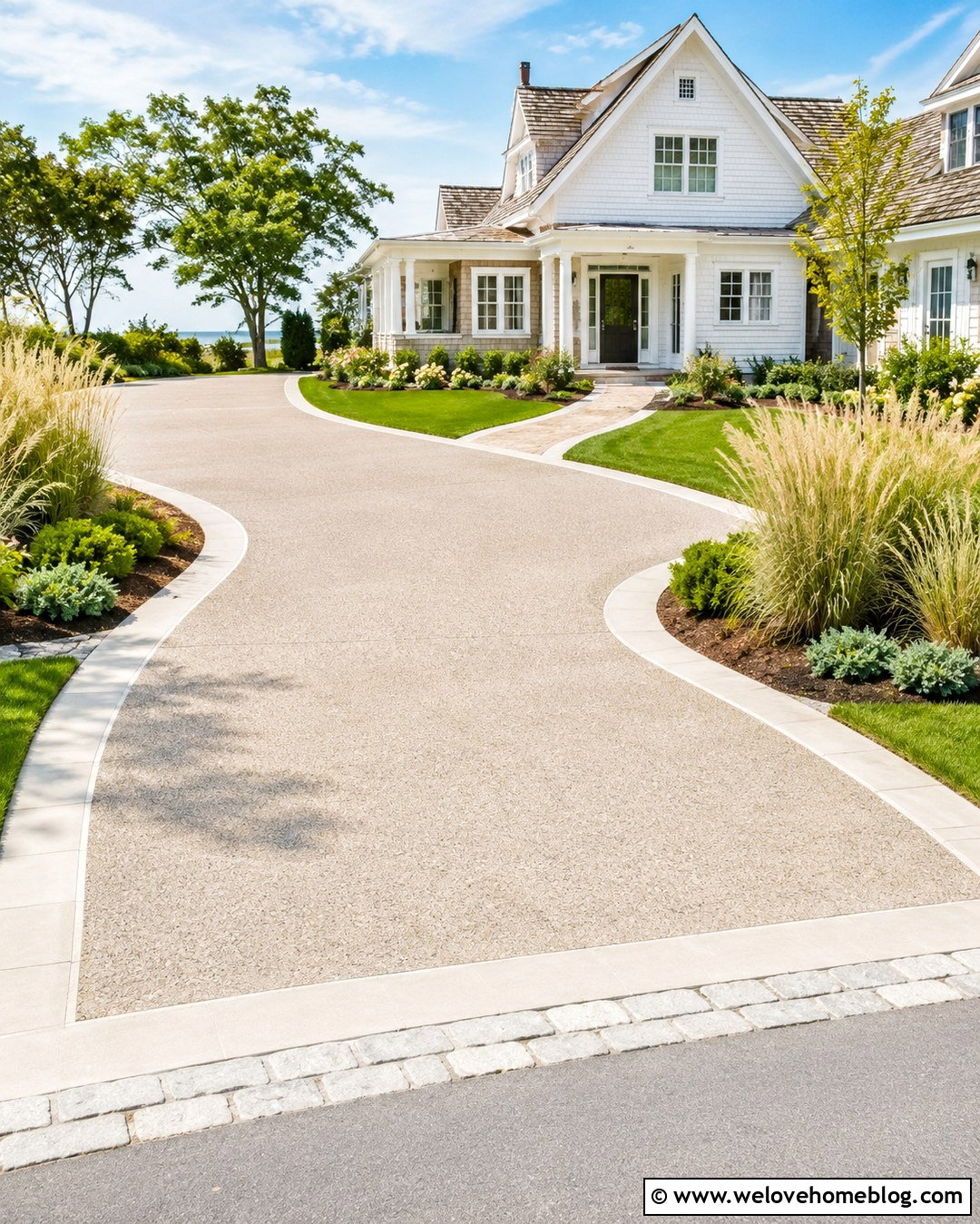
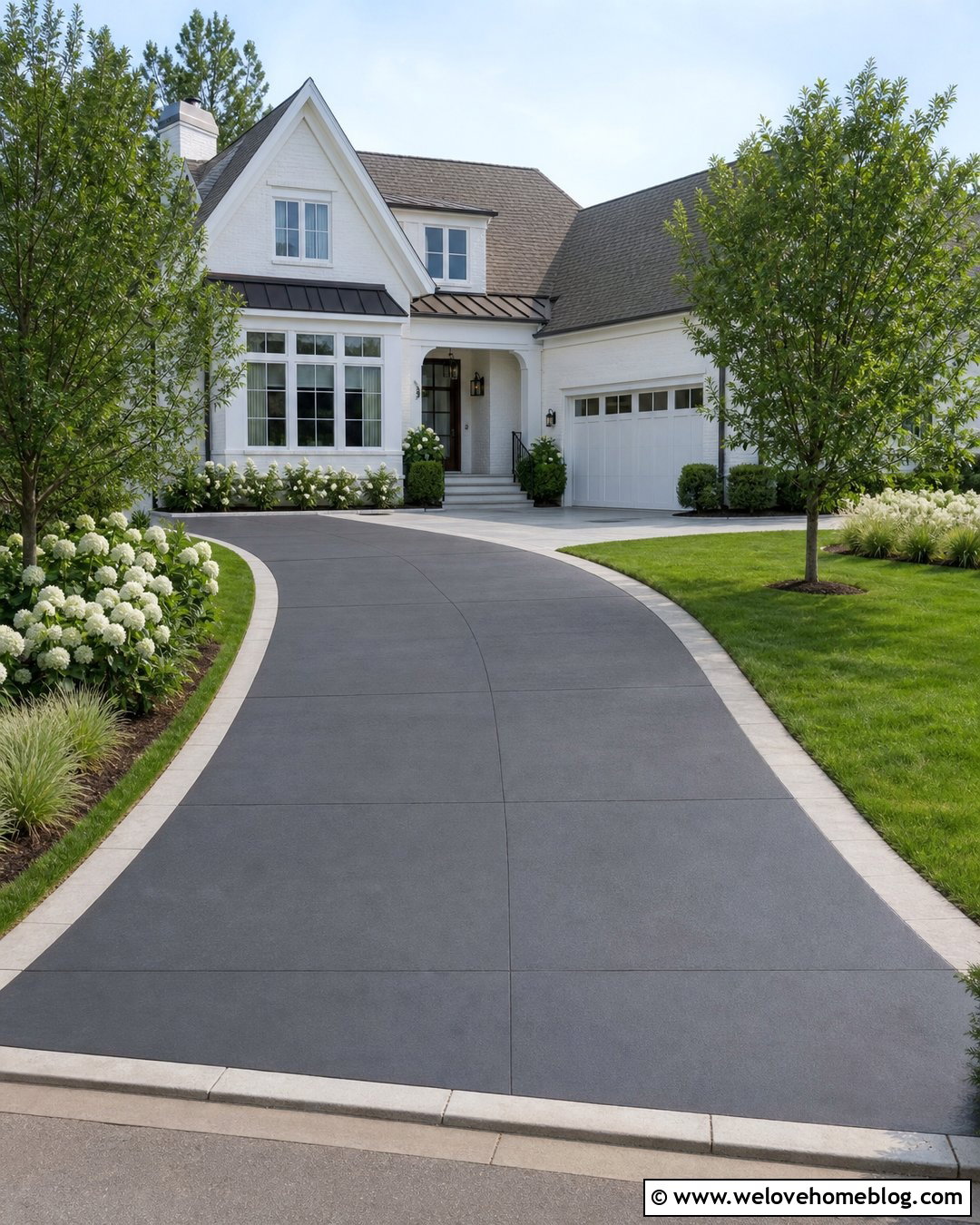
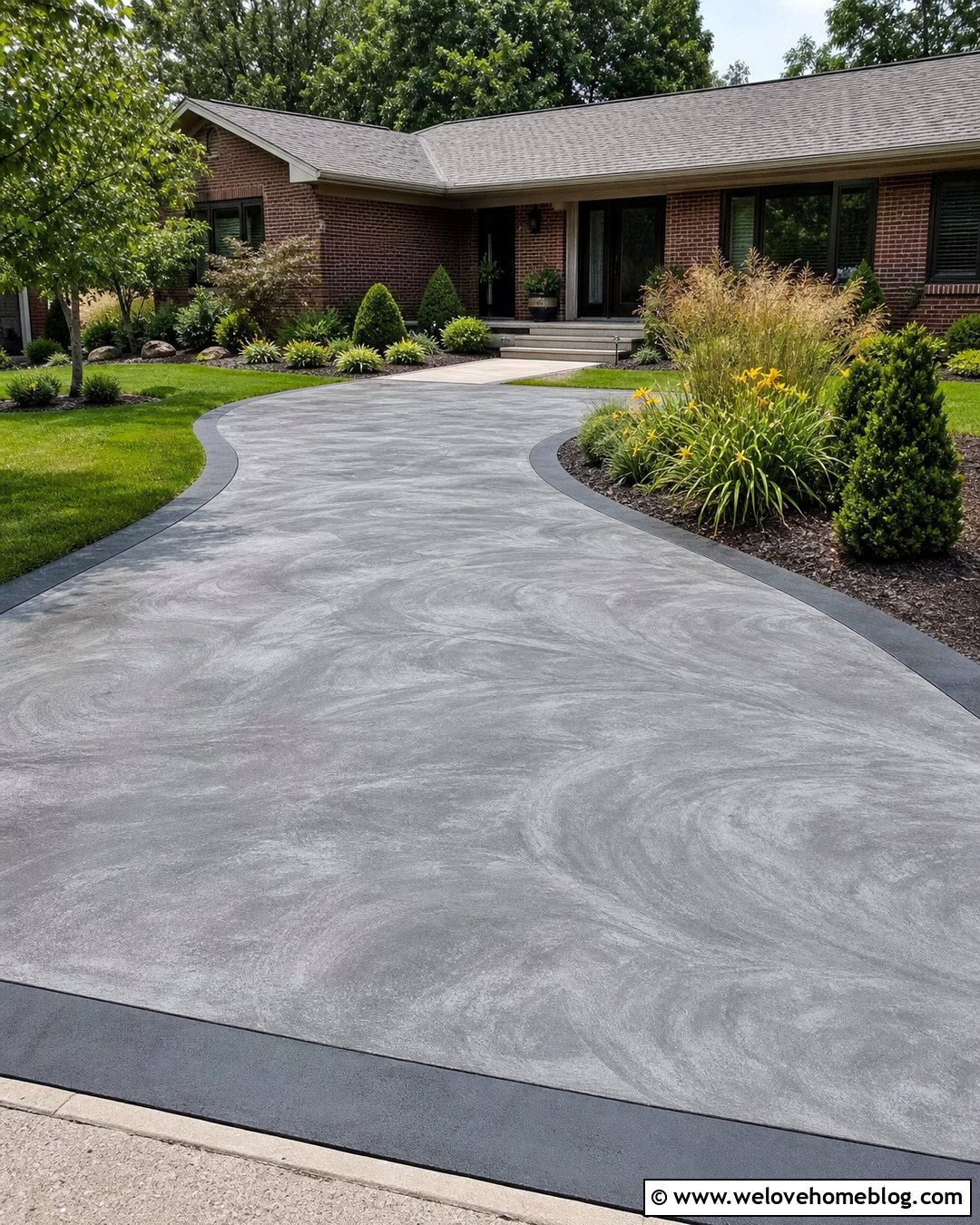
Small decorative stones give an exposed aggregate concrete driveway its distinctive color and texture. The upper cement paste is removed during finishing, revealing the aggregate embedded within the concrete. Select warm river pebbles for a traditional home or gray crushed stone for a modern exterior. A curved layout edged with smooth charcoal concrete creates a polished contrast. Around the driveway, use ornamental grasses, rounded shrubs, and broad planting beds that echo the natural texture of the stone. Exposed aggregate can provide a durable, slip-resistant surface while delivering the visual character of gravel without loose material spreading into the lawn. Sealing can deepen the aggregate colors and simplify routine cleaning. This complete look feels especially attractive beside brick, stone, or neutral stucco houses. ()
3. Modern Concrete Slab Driveway
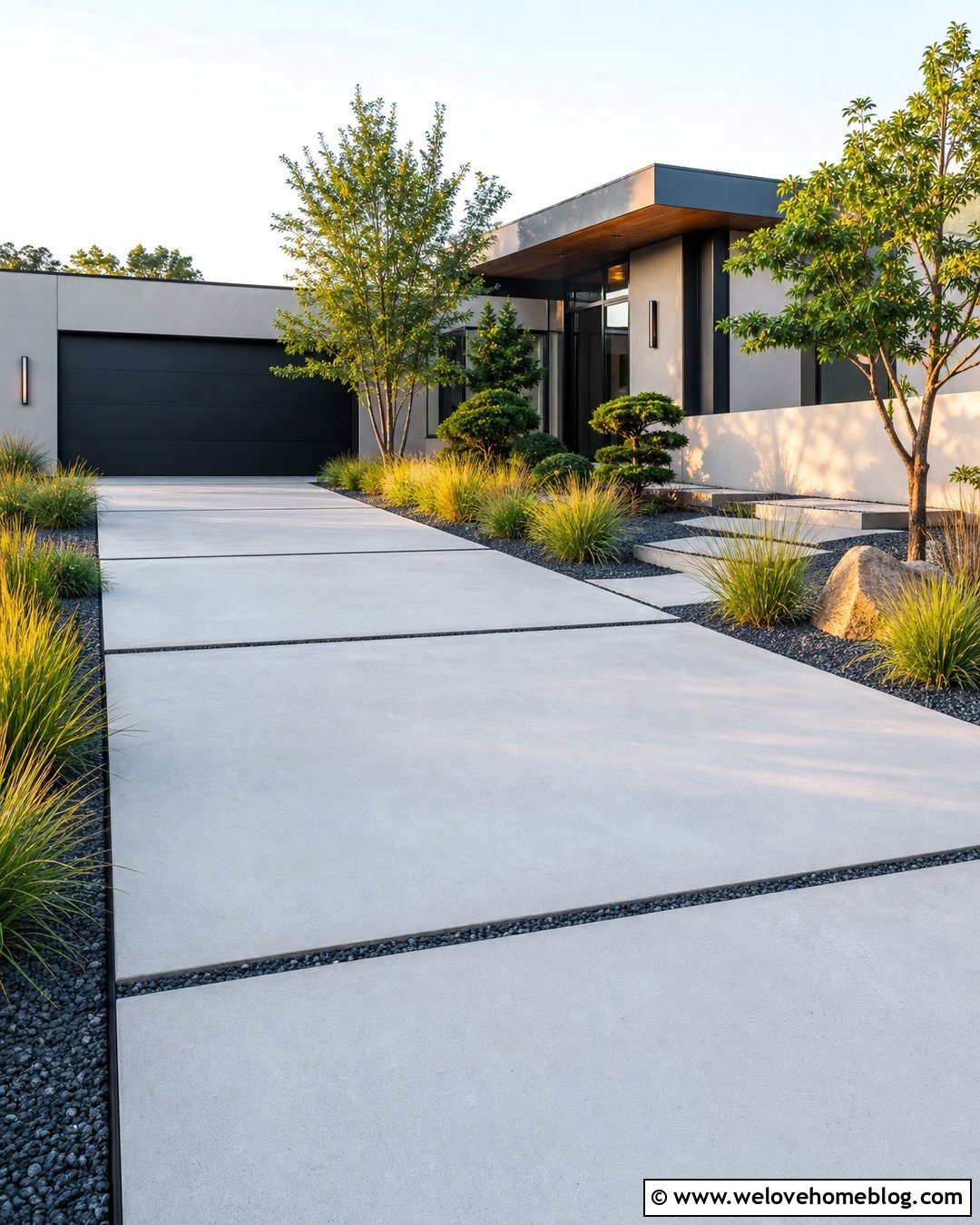
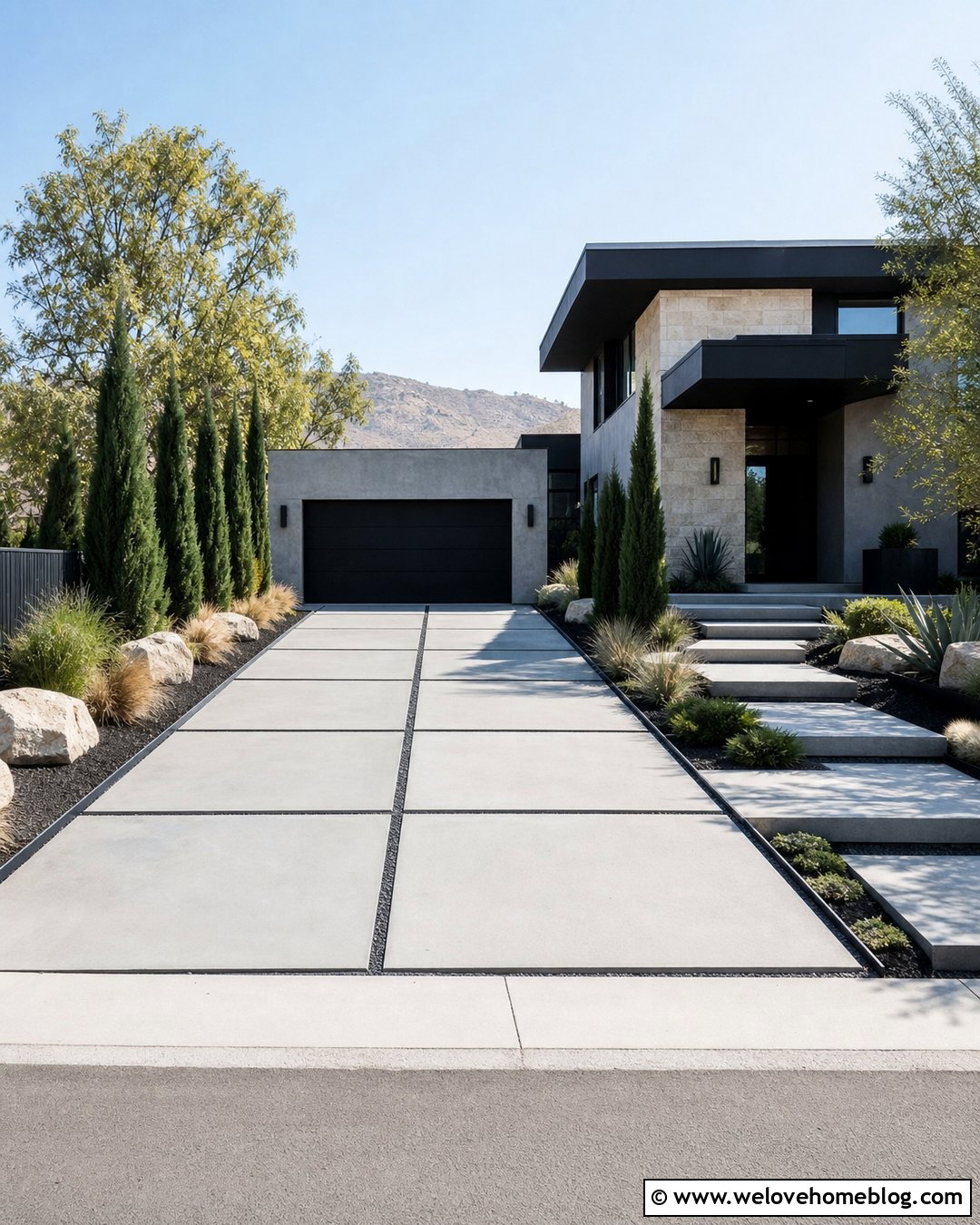
Large concrete slabs create a strong geometric approach to a contemporary house. Use smooth, light-gray poured concrete divided into oversized rectangular panels with crisp saw-cut joints. Narrow strips of dark gravel between selected slabs can emphasize the pattern without interrupting the driving surface. Keep the driveway straight and align its joints with the garage doors, walkway, or architectural lines of the house. Structured planting beds filled with ornamental grasses, clipped shrubs, and small trees will soften the hardscape. Black metal edging can provide another clean detail along the lawn. This design looks best when every line has a purpose. Oversized panels and restrained landscaping help the driveway appear wider, calmer, and more connected to modern architecture. ()
4. Stamped Slate Concrete Driveway
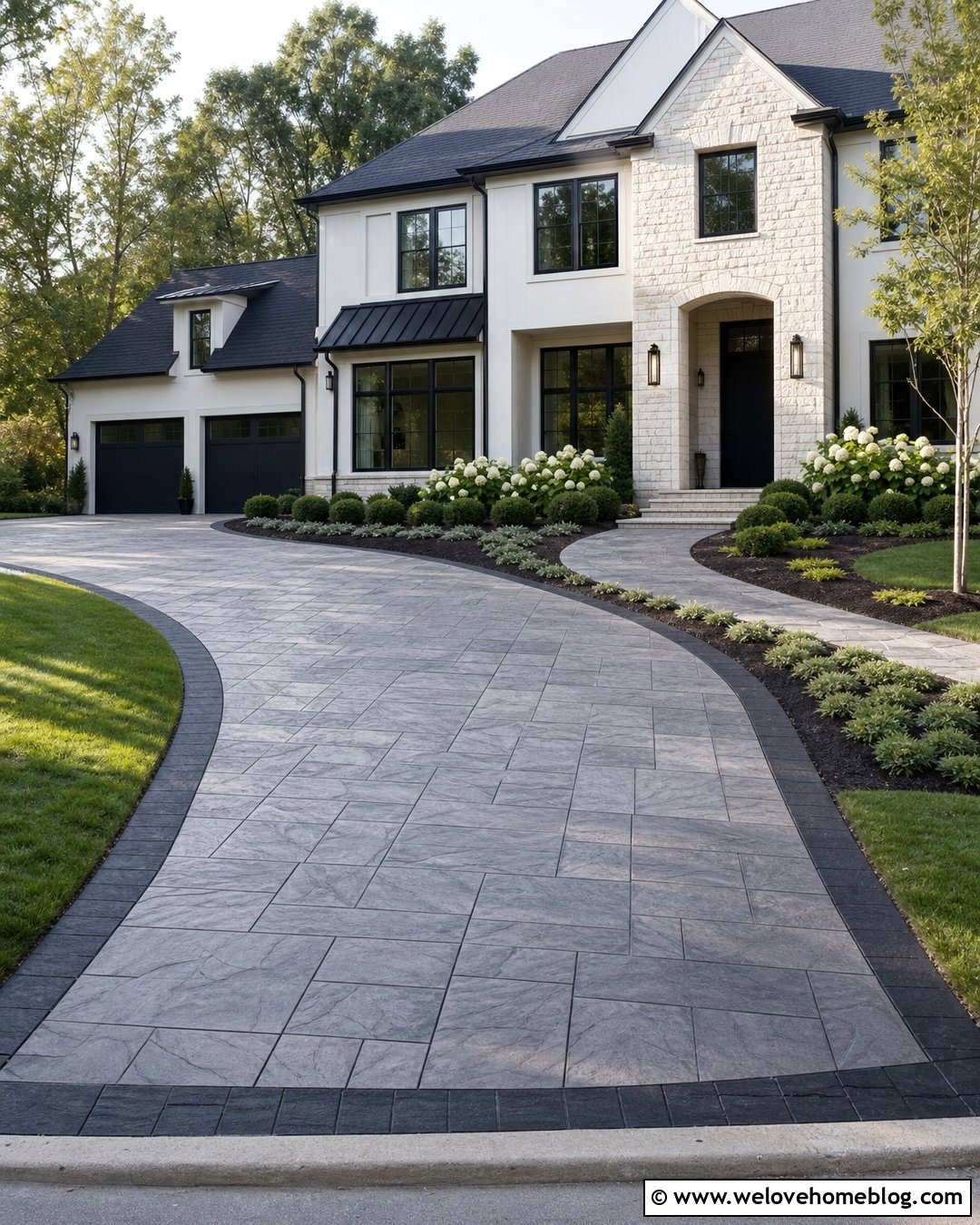
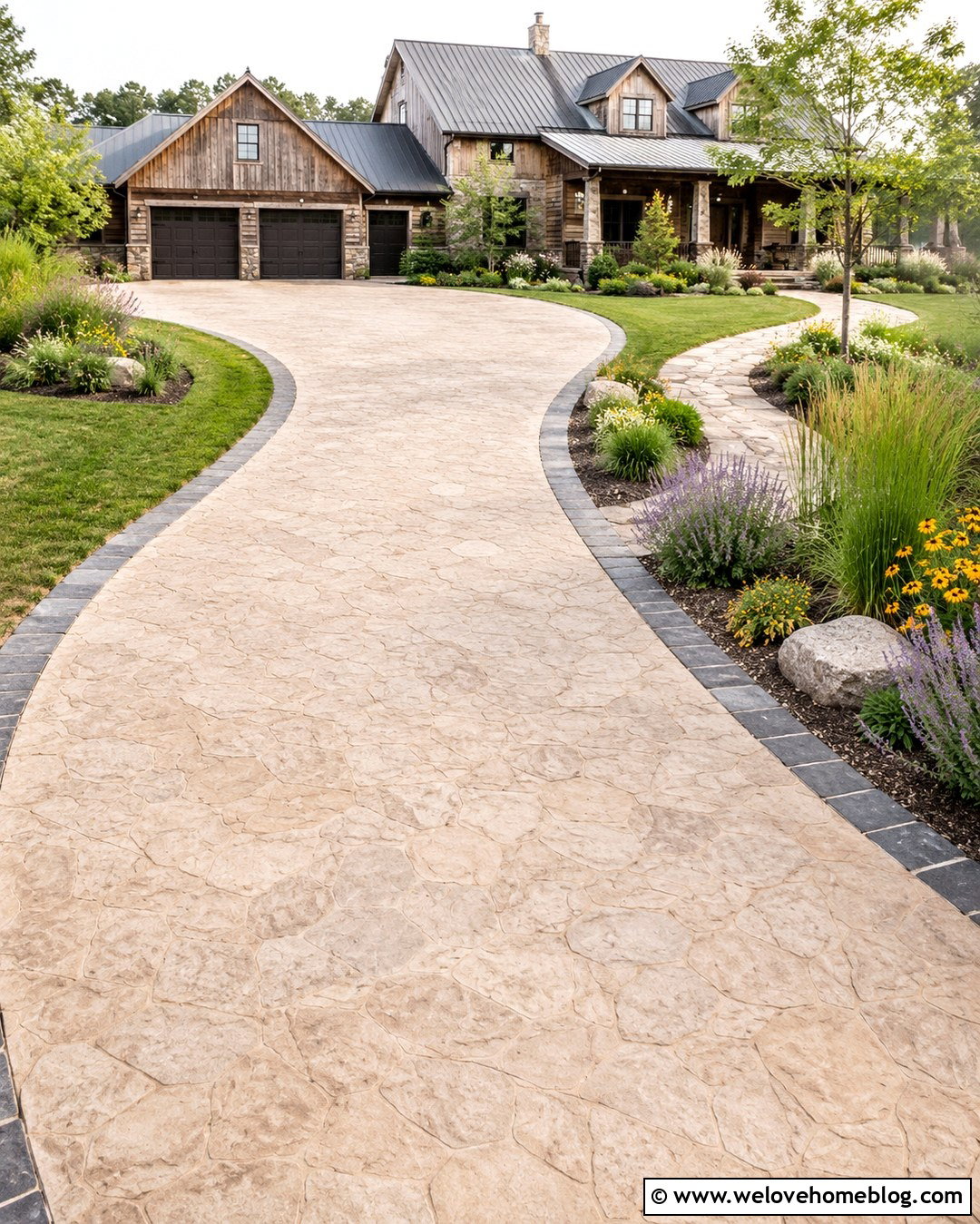
Stamped slate concrete brings the layered appearance of natural stone to a continuous poured surface. Choose a seamless slate texture in warm gray, taupe, or muted brown so the driveway complements the house instead of competing with it. A gently curved layout can make the pattern feel more natural. Add a darker stamped border to define the edges and connect the driveway with the front walkway. Plant hydrangeas, boxwoods, and ground cover in sweeping beds along the curve. Because stamped patterns and colors can be customized, they can coordinate with brick, stone veneer, siding, and roofing materials. A subtle antiquing color helps reveal the texture, but excessive color variation can look artificial. Use a compatible sealer and appropriate traction additive where needed. ()
5. Stained Concrete Driveway
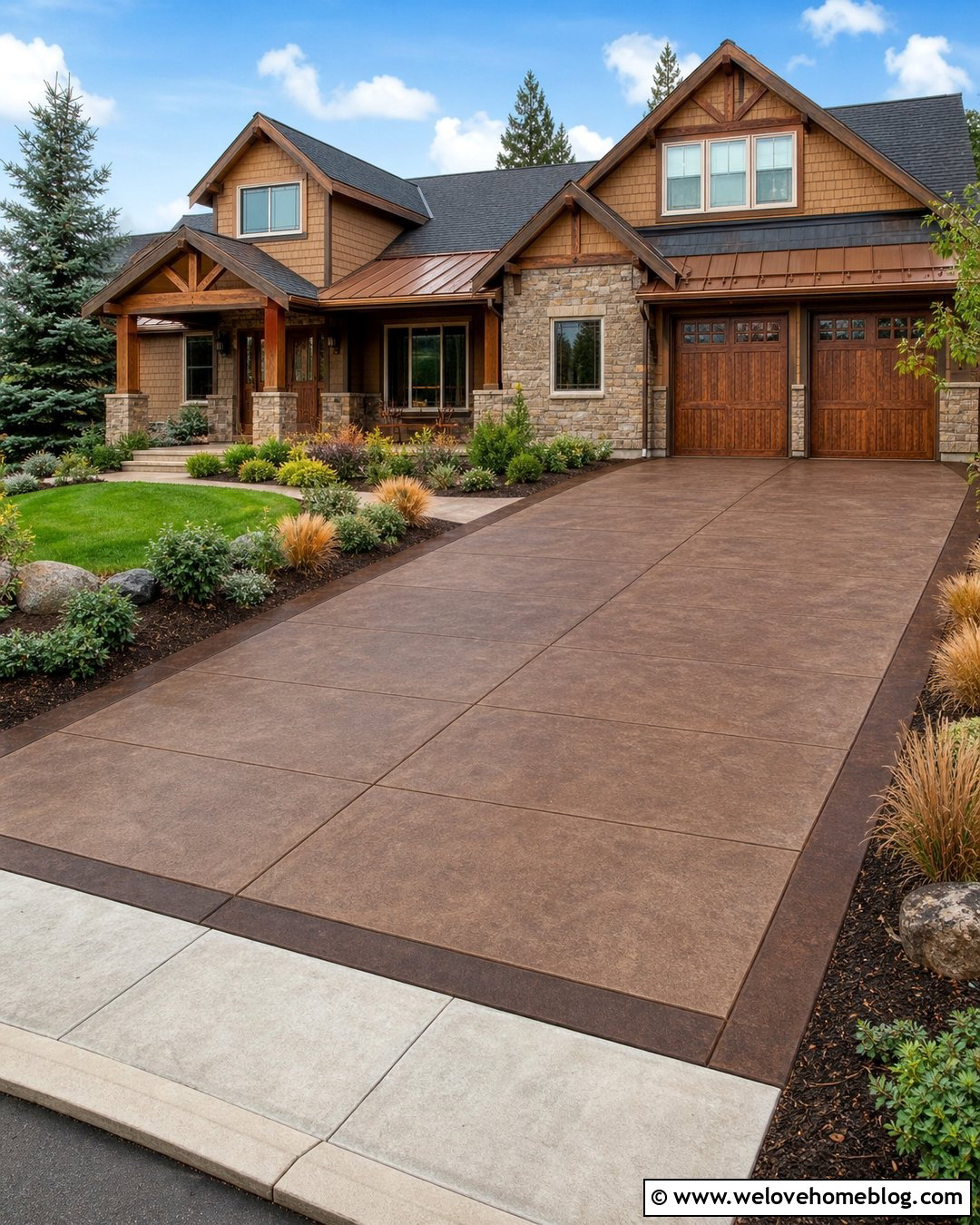
Rich color can turn a basic concrete driveway into a more intentional part of the landscape. A warm tan or soft walnut stain works particularly well with a Craftsman home, natural stone columns, and wood garage doors. Keep the driveway straight, then divide the surface with clean control joints that create large rectangular sections. A border in a slightly deeper shade can make the entire installation appear finished. Repeat the driveway color in the front steps or walkway for visual continuity. Green lawn, layered foundation plants, and a few copper-toned grasses will balance the earthy surface. Always test the selected stain on a sample because existing concrete conditions can influence the final color. The best result supports the home’s palette rather than becoming its brightest feature.
6. Concrete Driveway With Brick Border
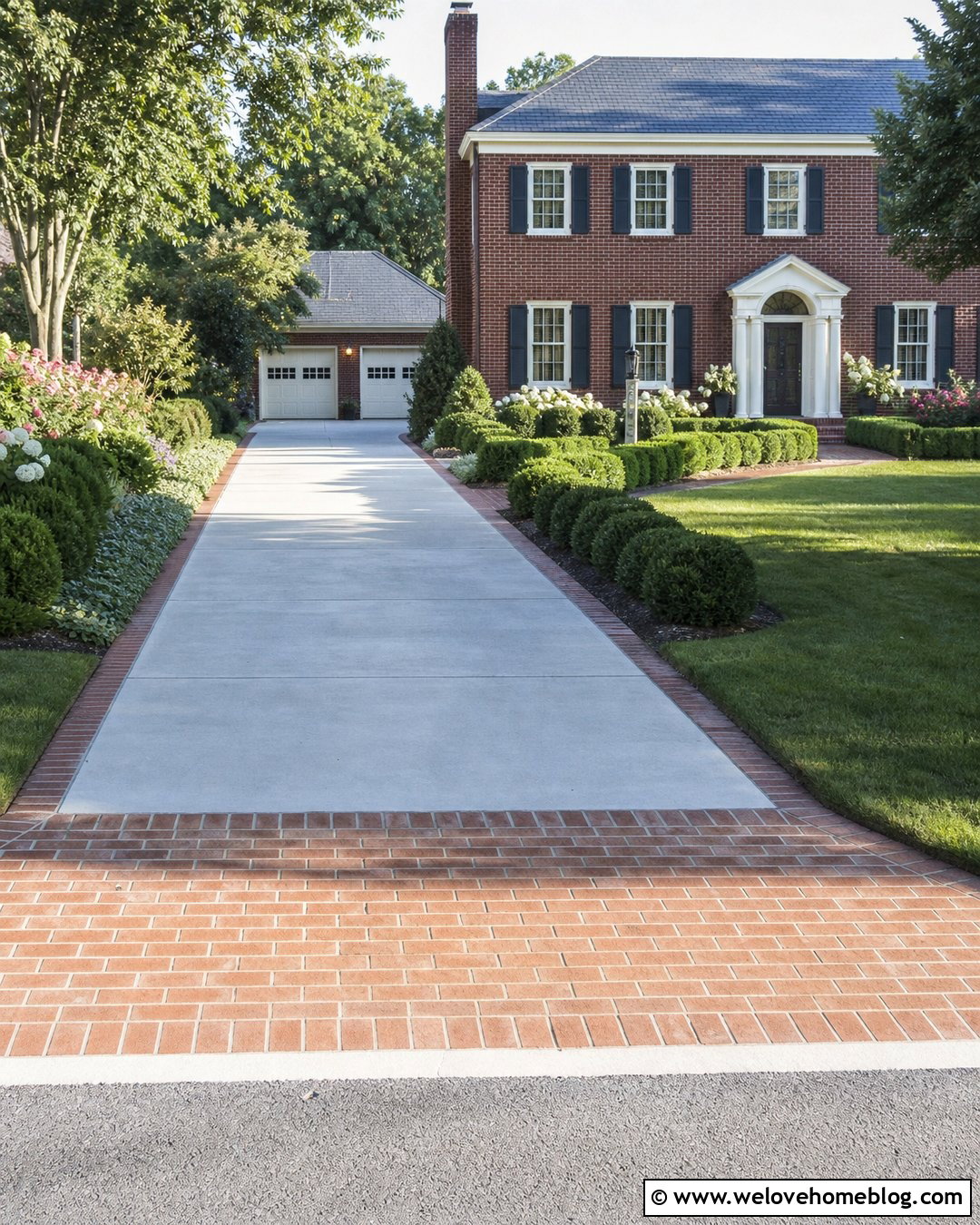
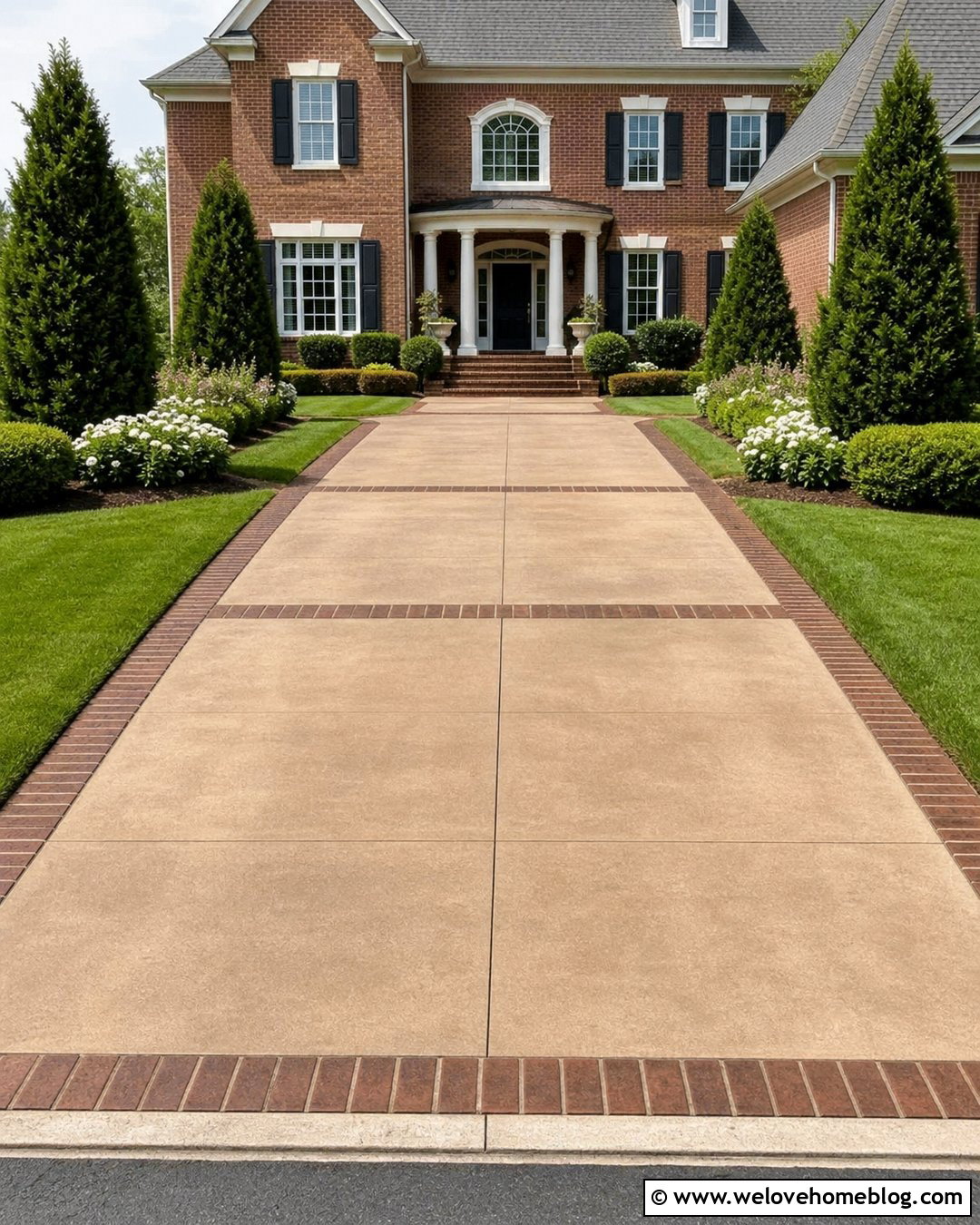
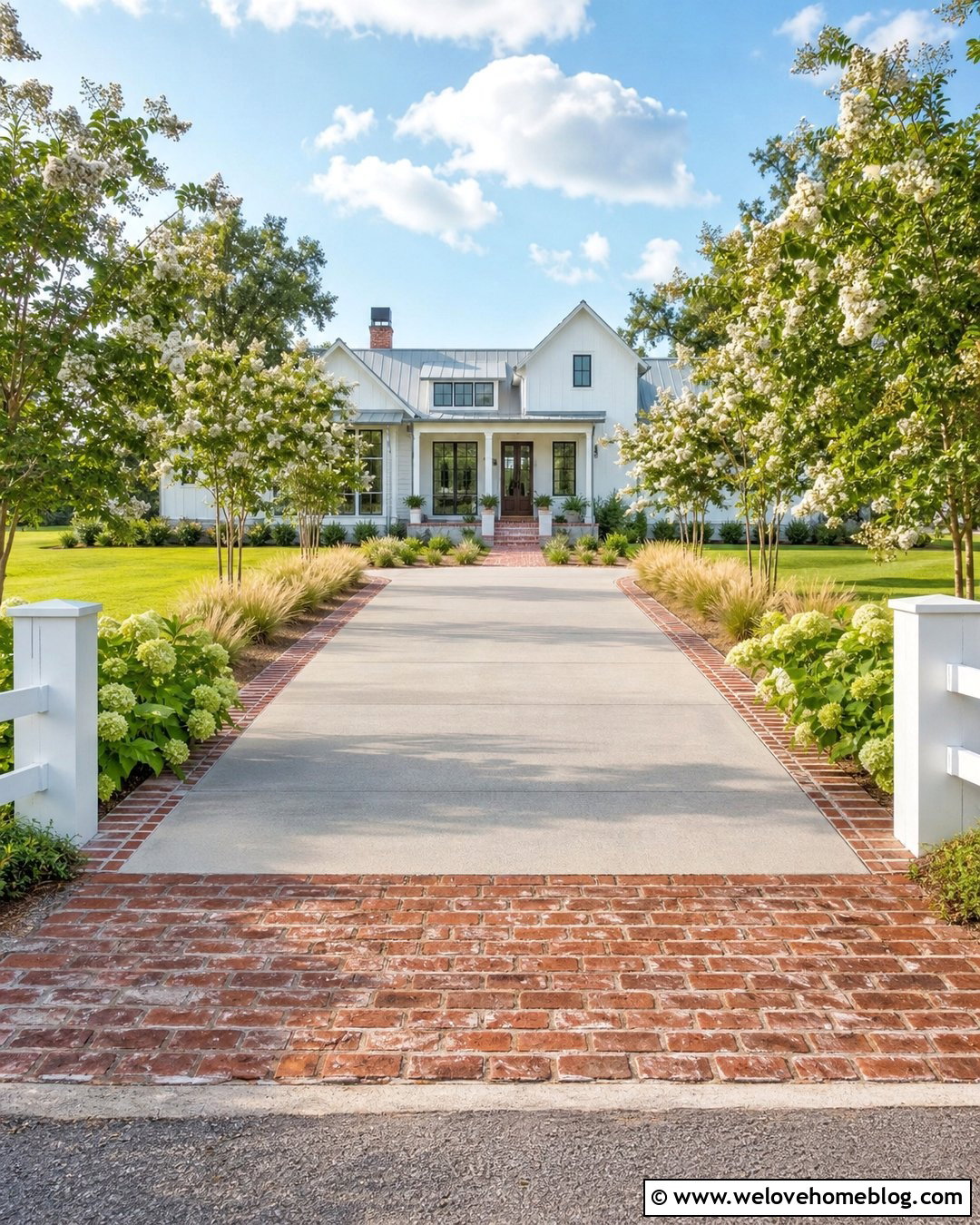
Brick edging introduces warmth and traditional detail around a pale-gray concrete driveway. Use a straight broom-finished center with clay brick pavers installed in a soldier-course border along both sides. Continue the brick across the entrance as an apron to create a clear transition from the street. This combination suits Colonial, Cape Cod, and red-brick homes because it repeats familiar facade colors. Shape adjoining beds with simple curves and fill them with boxwoods, flowering shrubs, and seasonal ground cover. The contrasting border defines the concrete while keeping the larger center field economical and visually calm. Decorative borders can make a significant impact without stamping the entire driveway, and matching the border to existing masonry helps the design feel connected to the house. ()
7. Concrete Driveway With Paver Apron
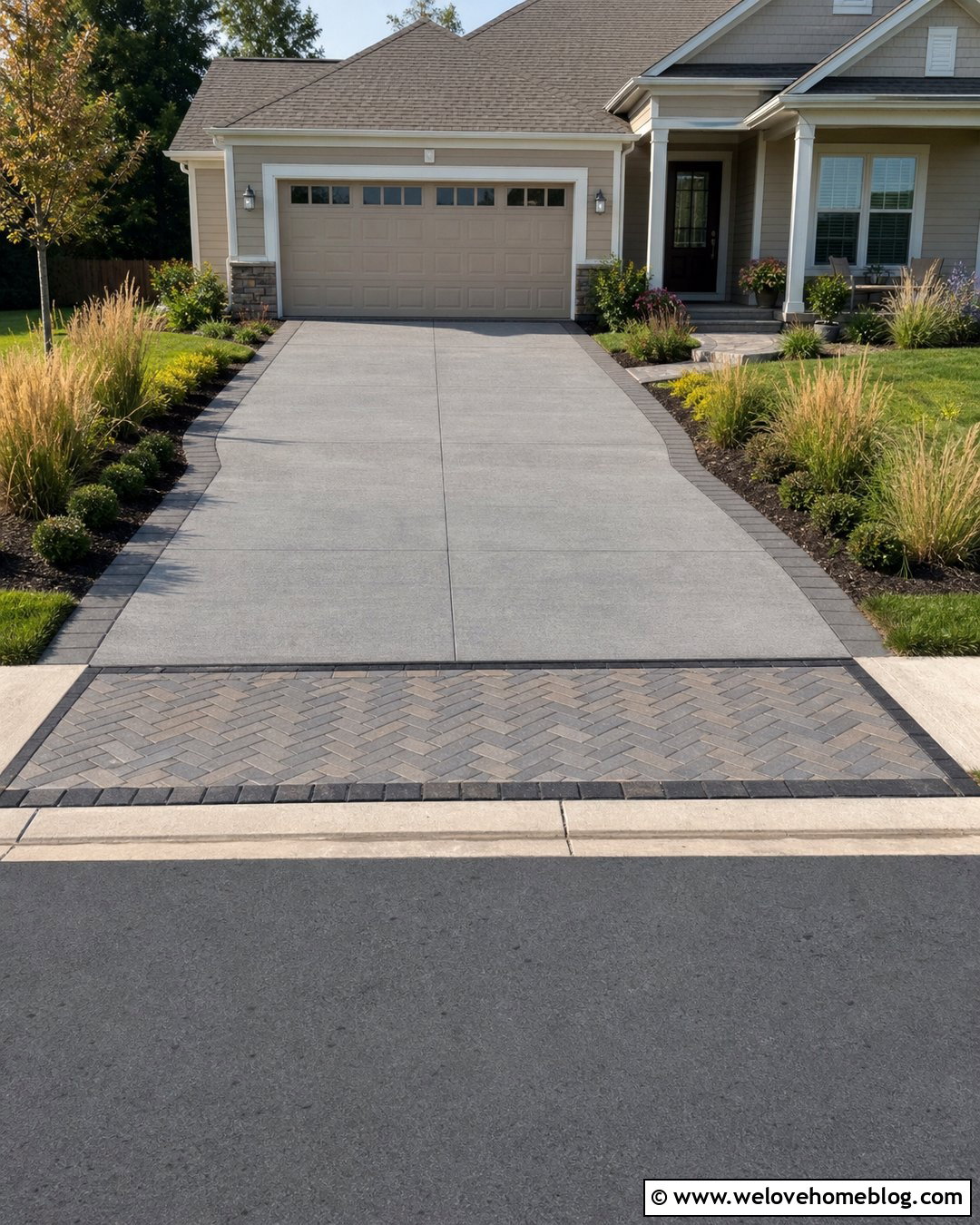
A paver apron creates an attractive focal point where a concrete driveway meets the street. Begin with smooth or lightly broom-finished gray concrete, then install a six- to ten-foot apron using charcoal, beige, or blended concrete pavers. A running-bond or herringbone pattern makes the entrance clearly visible while establishing a more formal arrival. Repeat the same pavers beside the driveway or around the front walkway to avoid an isolated patchwork effect. Low shrubs and ornamental grasses can frame the apron without blocking sightlines. This approach works well when you want decorative character but do not need an upgraded finish across the entire driveway. Coordinate the paver tone with the roof, garage door, or stone veneer so every part of the frontage feels intentional.
8. Curved Concrete Driveway
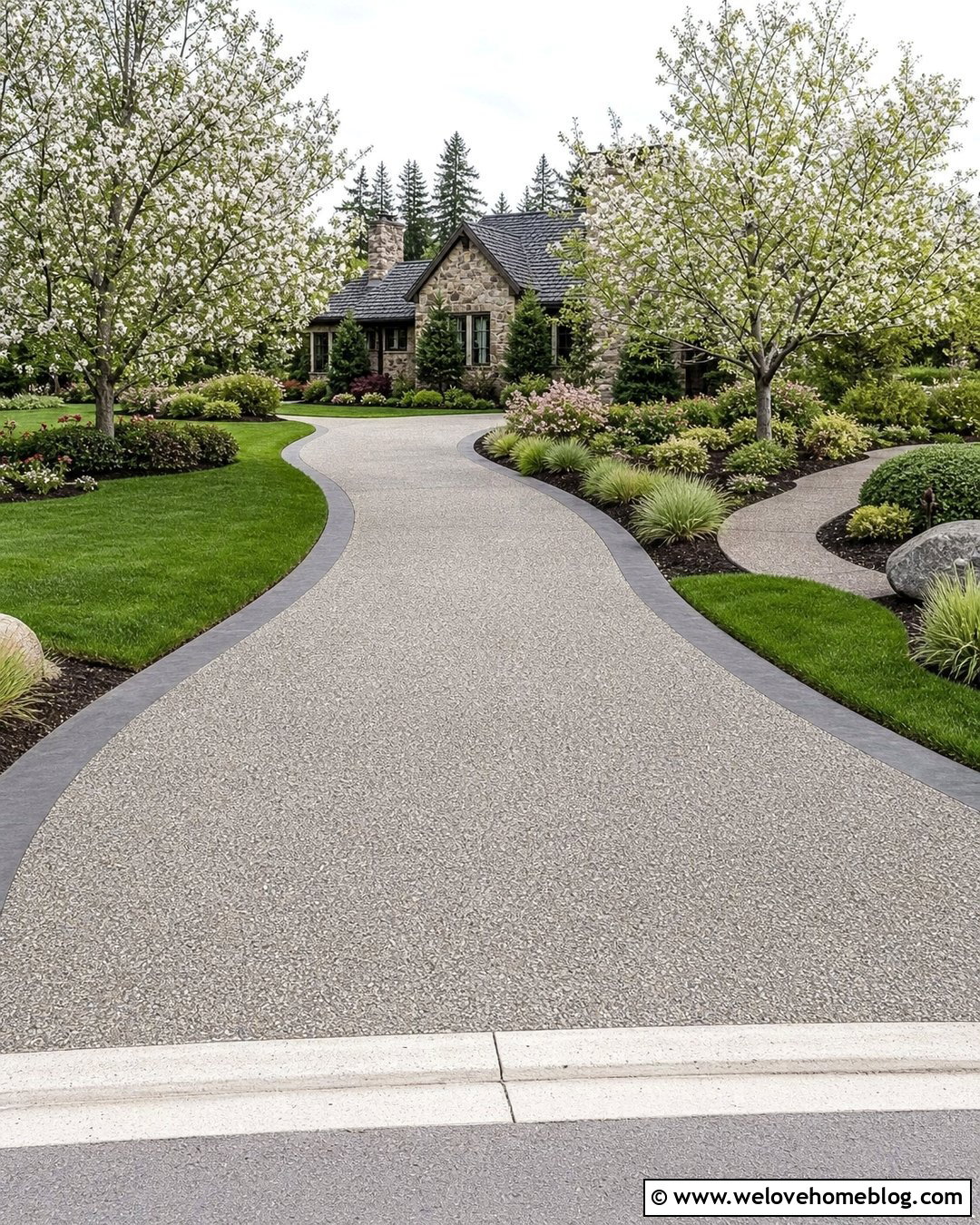
A curved concrete driveway can soften a wide front yard and create a more graceful approach to the garage. Use warm-gray exposed aggregate concrete for the main surface and define the outside curve with a smooth, darker concrete band. A generous turning radius will look more natural than a series of tight bends. Follow the driveway shape with sweeping planting beds containing small flowering trees, layered shrubs, grasses, and mulch. Keep taller plants away from the street entrance so drivers retain clear views. A walkway can branch gently from the inner curve and lead toward the front porch. This layout is especially effective for country homes, cottages, and properties where a straight driveway would feel too rigid. The surface, border, and landscaping should all follow the same flowing lines.
9. Circular Concrete Driveway
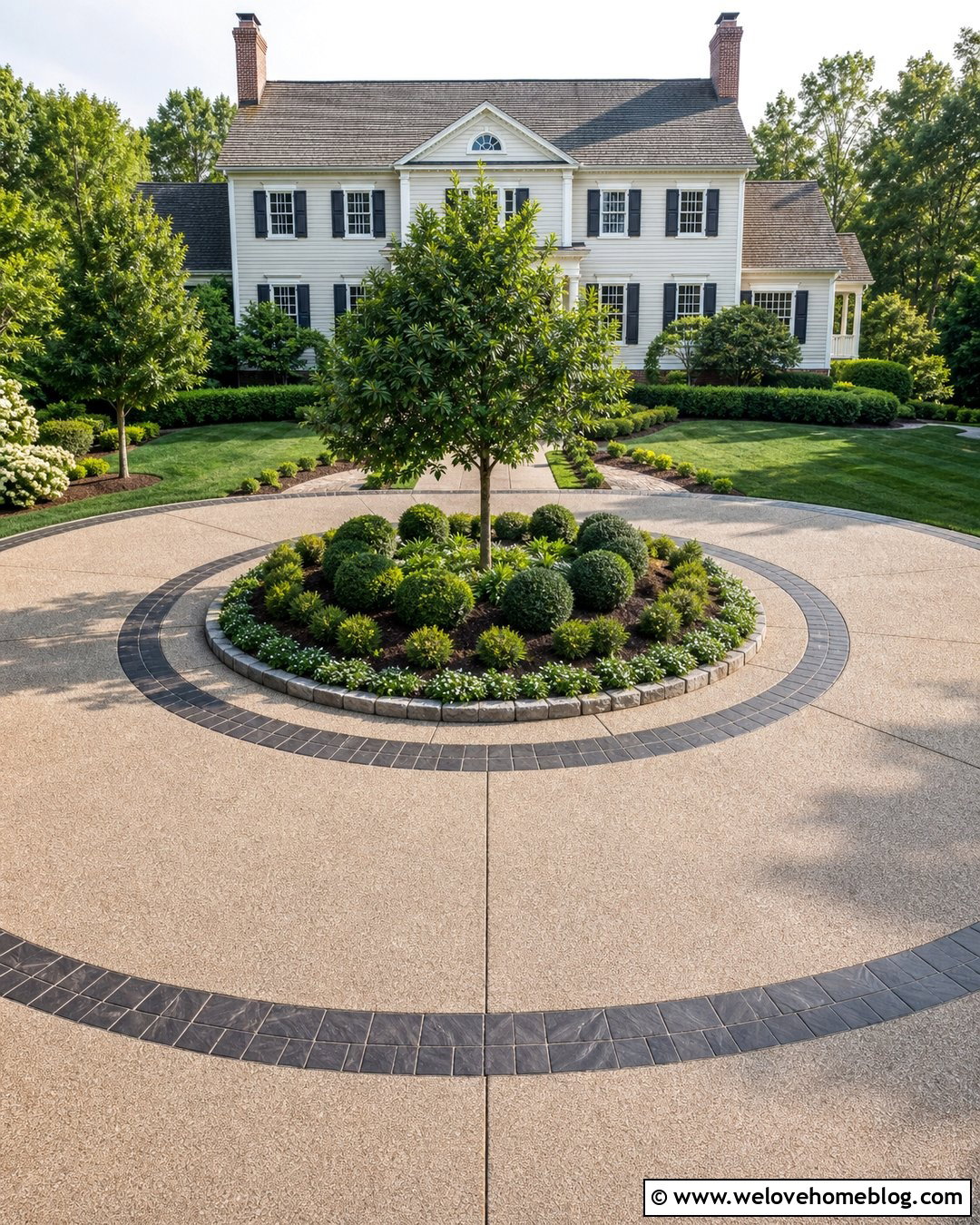
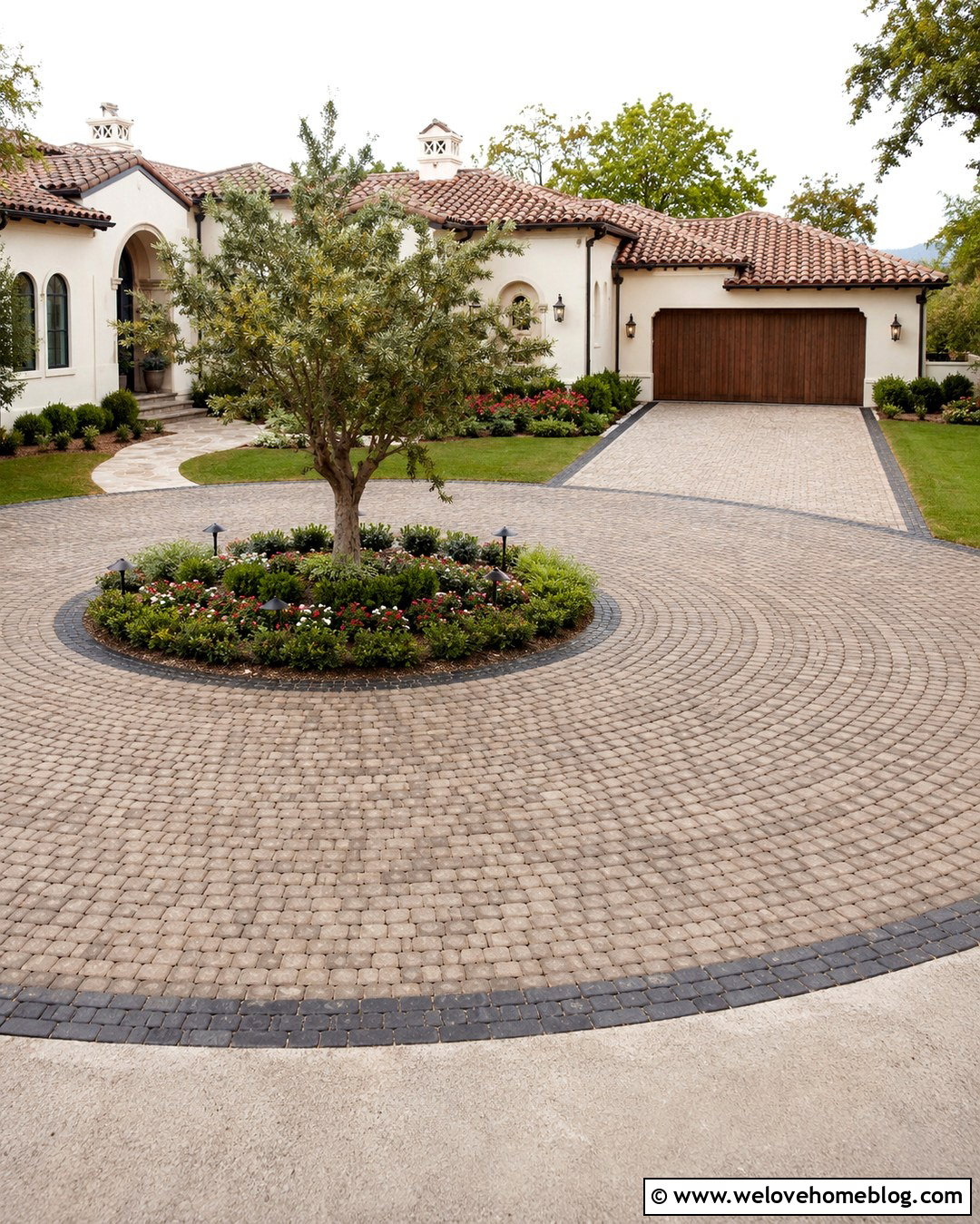
A circular concrete driveway creates convenient movement while giving a broad front yard a formal focal point. Use lightly textured, sand-colored concrete with darker stamped bands marking the entrance, exit, and central turning area. Inside the circle, build a landscaped island with one small ornamental tree, low evergreen shrubs, and ground cover. The planting should remain open enough to preserve views of the house. Stone curbing around the island can protect the bed and coordinate with facade masonry. Carry the same concrete toward the garage so the entire route reads as one design. This layout suits Colonial, Mediterranean, and estate-style homes with sufficient frontage. Before installation, plan comfortable turning space, drainage, and access so the circular shape performs as well as it looks.
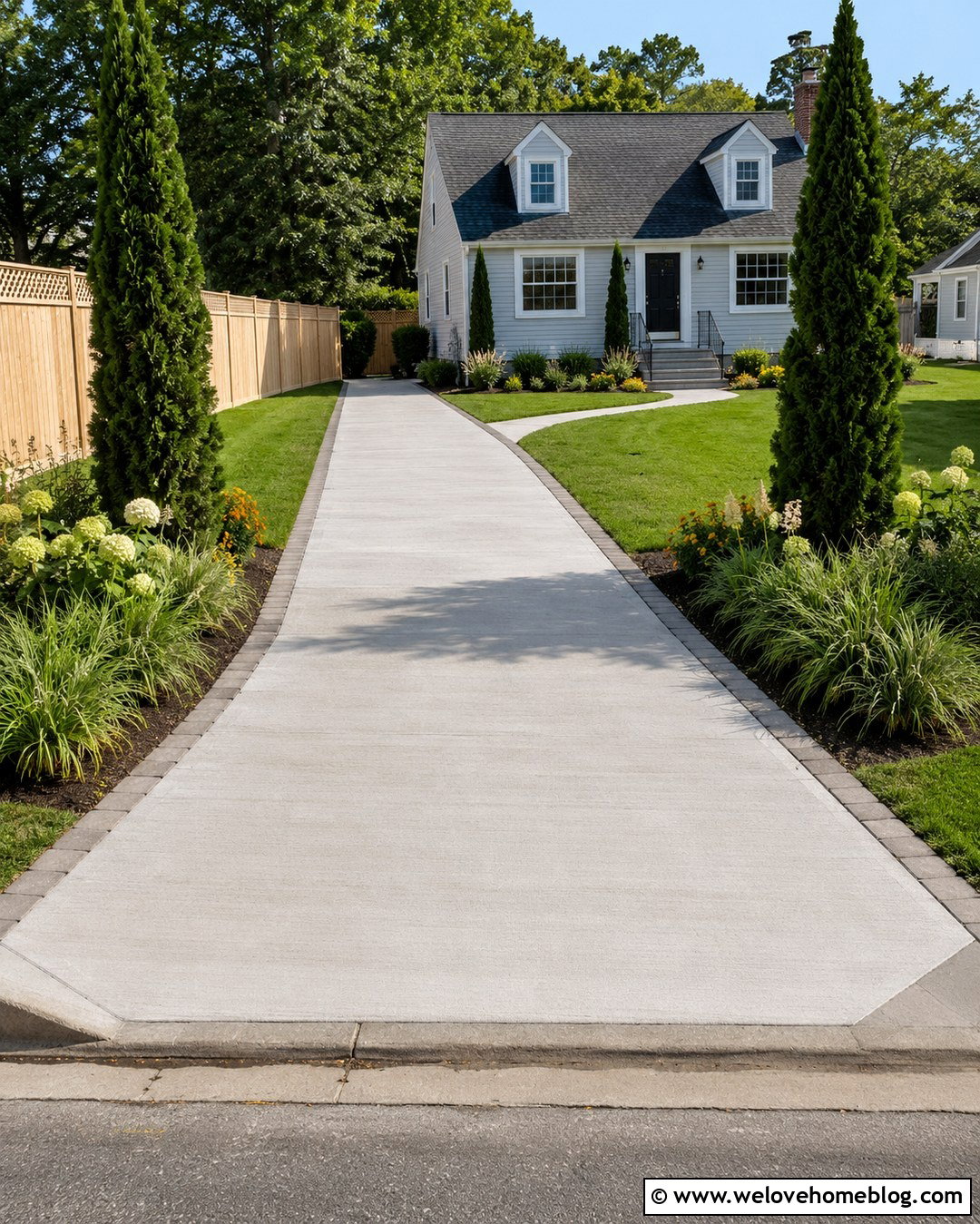

10. Concrete Driveway With Grass Strips
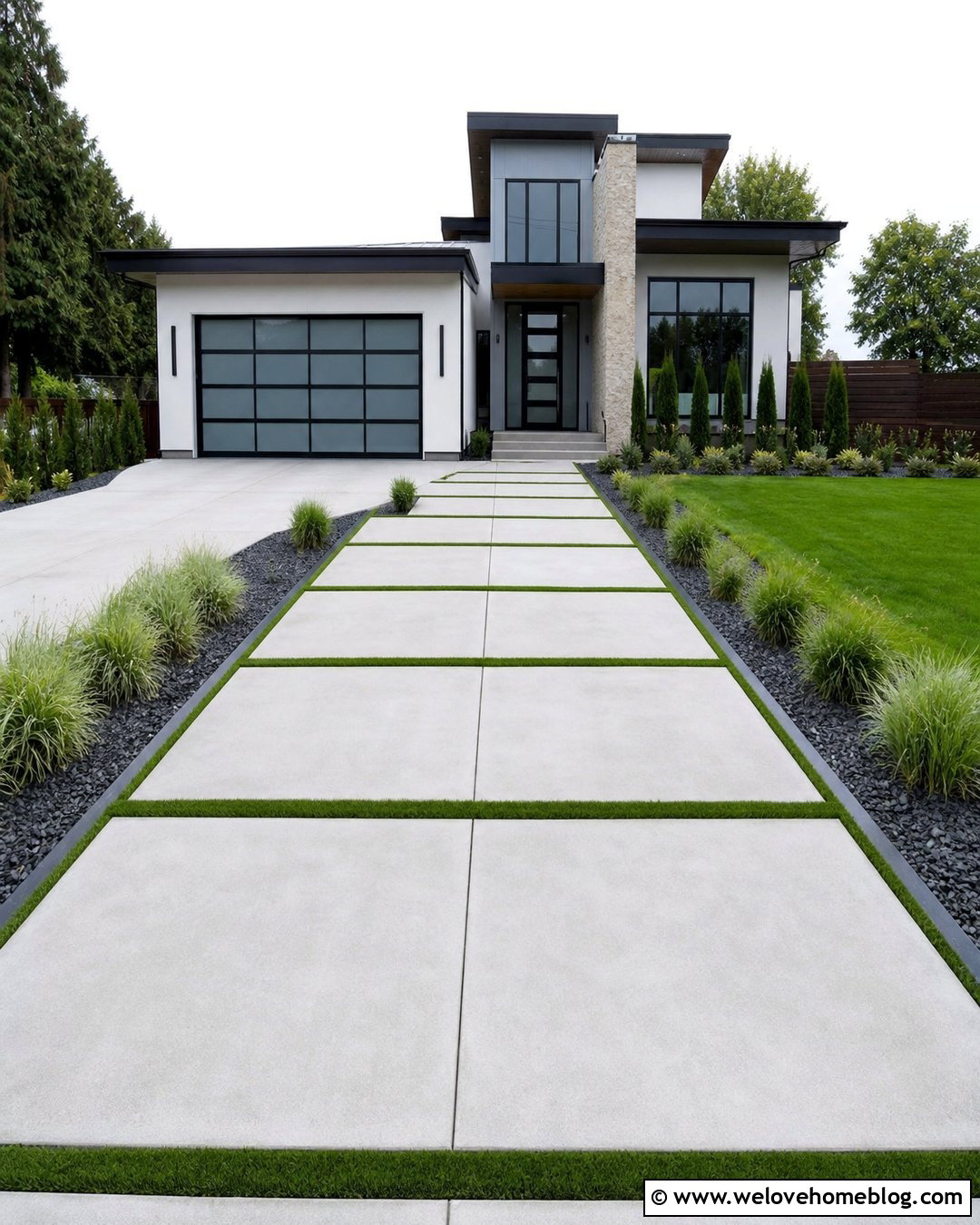
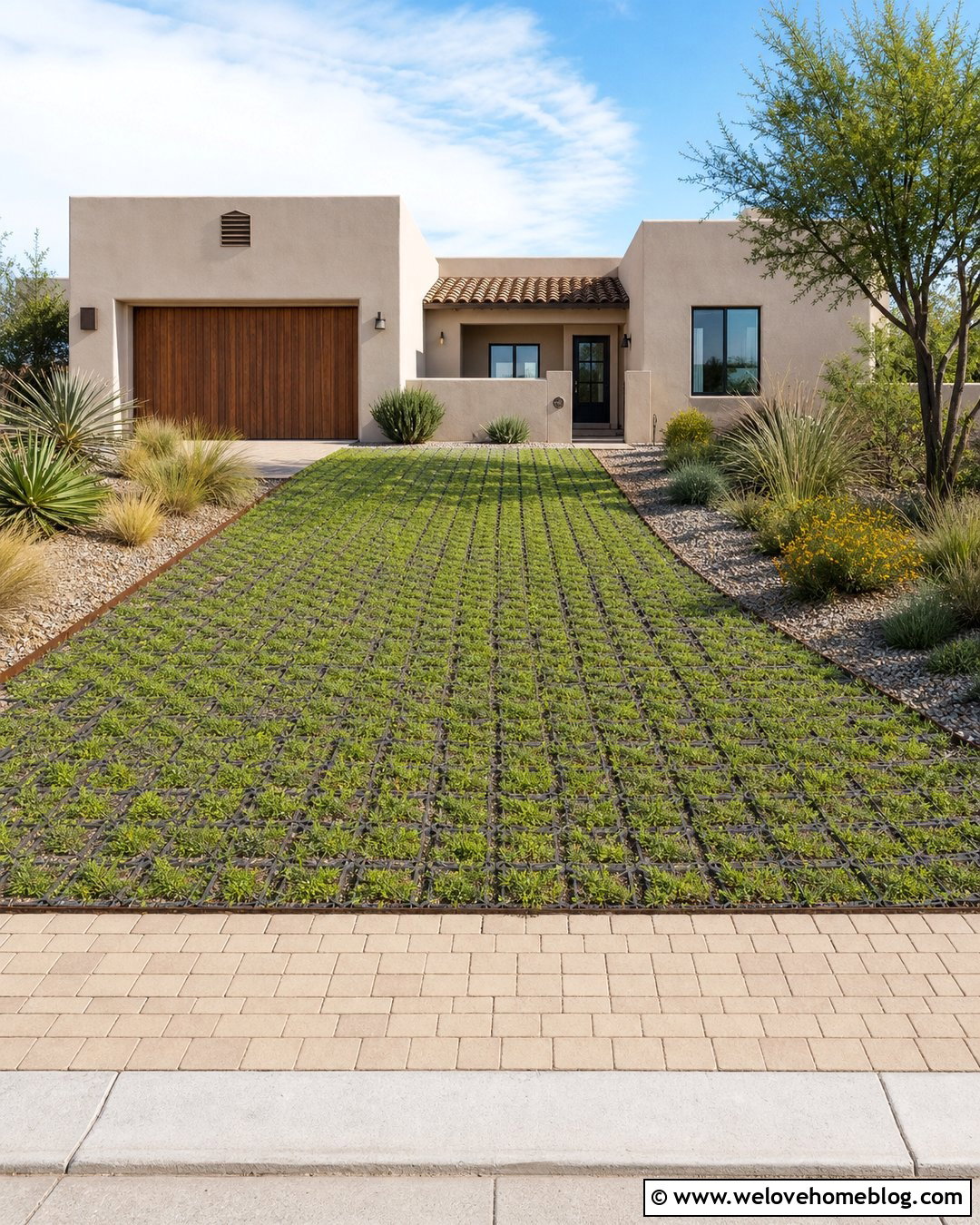
Grass strips between concrete sections produce a fresh, contemporary driveway with less visual heaviness. Use smooth light-gray concrete in two parallel driving tracks or a grid of large rectangular slabs. Plant durable turf in the spaces, keeping the green joints wide enough to read clearly from the curb. This treatment is best for a level driveway in a mild setting where the grass can receive appropriate sunlight, water, and maintenance. Crisp steel edging can separate the lawn from surrounding gravel beds. Pair the driveway with a modern house, simple concrete walkway, and restrained plantings of grasses and sculptural shrubs. Large concrete panels divided by greenery are frequently used to blend modern hardscape with the surrounding landscape. ()
11. White Concrete Driveway
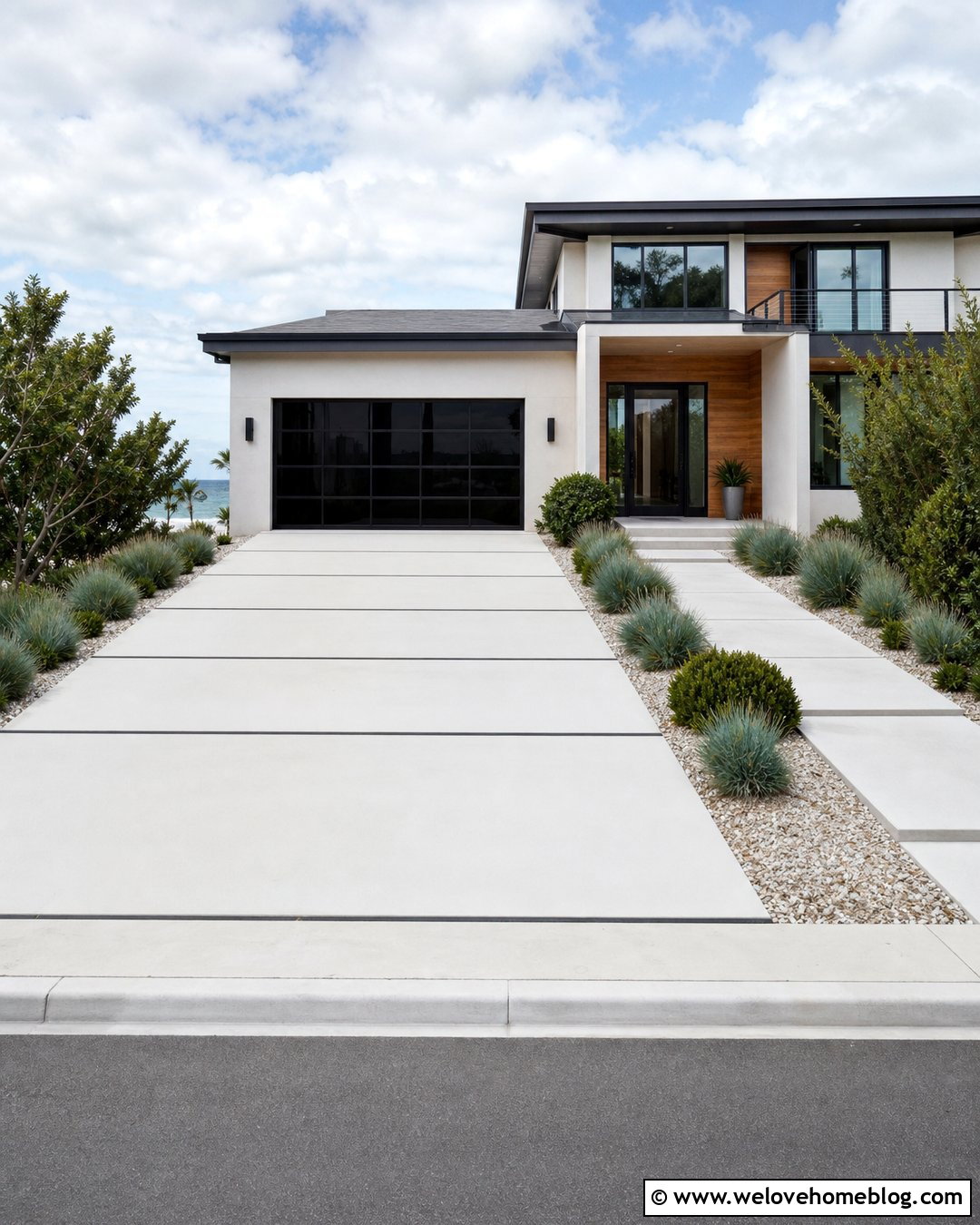
Bright white concrete can give a coastal or contemporary home a clean, open appearance. Instead of stark white, consider a soft off-white integral color that relates to pale stucco, limestone, or painted brick. A wide straight driveway with large square panels keeps the surface streamlined. Frame it with light gravel borders, blue-green grasses, and compact evergreen shrubs for gentle contrast. A matching walkway can branch toward the front door, while narrow charcoal joints introduce definition. Light concrete is visually striking, so thoughtful maintenance and drainage are important parts of the design. Avoid combining it with too many competing materials. The strongest look uses a limited palette of white concrete, green landscaping, dark window frames, and one natural accent such as wood or stone.
12. Charcoal Concrete Driveway
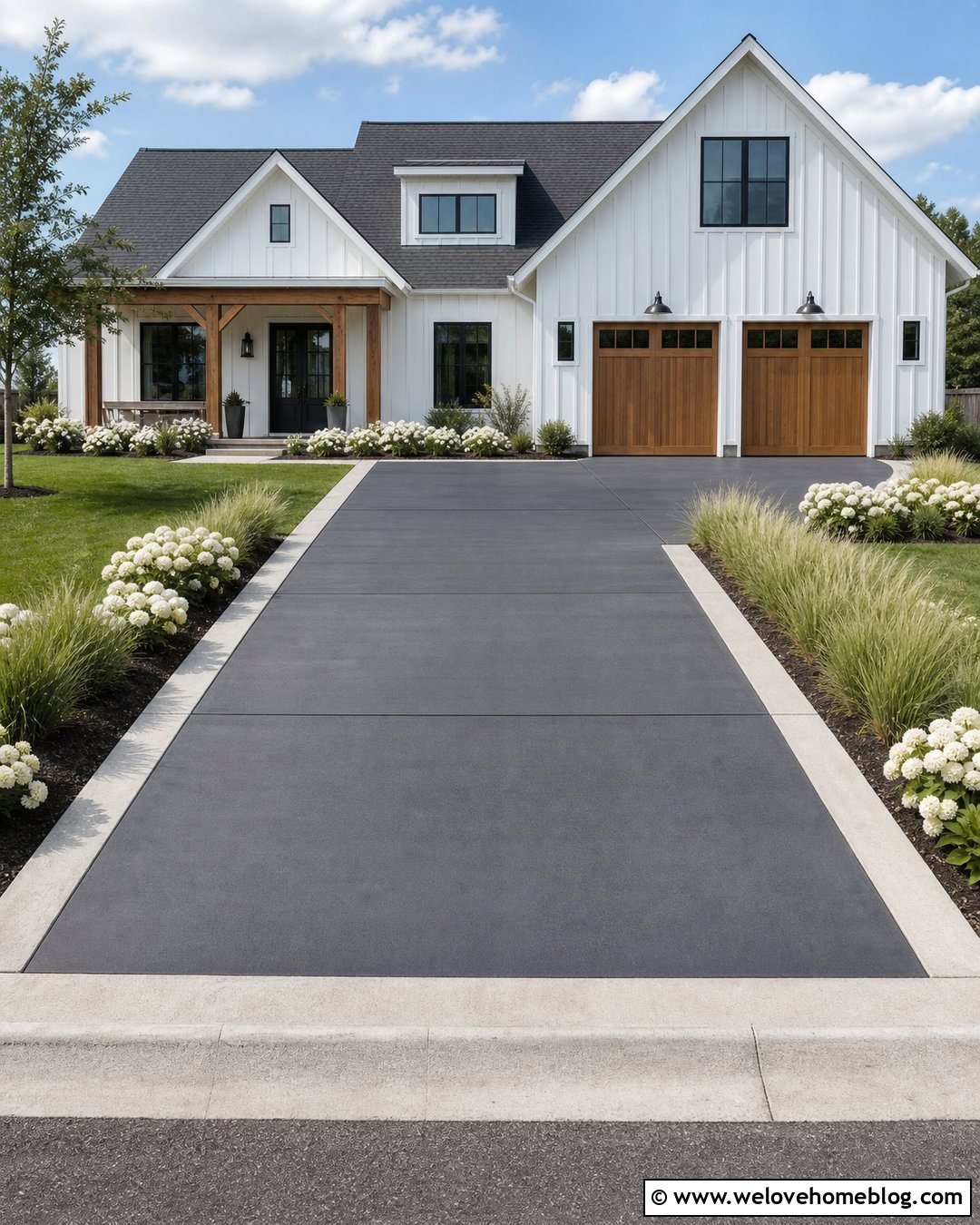
Dark charcoal concrete provides a dramatic base for homes with light siding or pale masonry. Use integrally colored concrete rather than relying only on a surface coating, then add a subtle broom or sand finish for practical texture. A straight driveway divided by neat rectangular joints will keep the deep color from appearing like one oversized block. Border it with light-gray concrete or pale stone to sharpen the edges. Soft ornamental grasses, white flowers, and fresh green lawn prevent the frontage from feeling too dark. This design looks especially effective with modern farmhouses and contemporary homes featuring black trim. Dark surfaces can show dust, mineral deposits, or fading differently than standard gray concrete, so discuss local conditions, curing, color consistency, and sealer options with an experienced installer.
13. Sand Finish Concrete Driveway
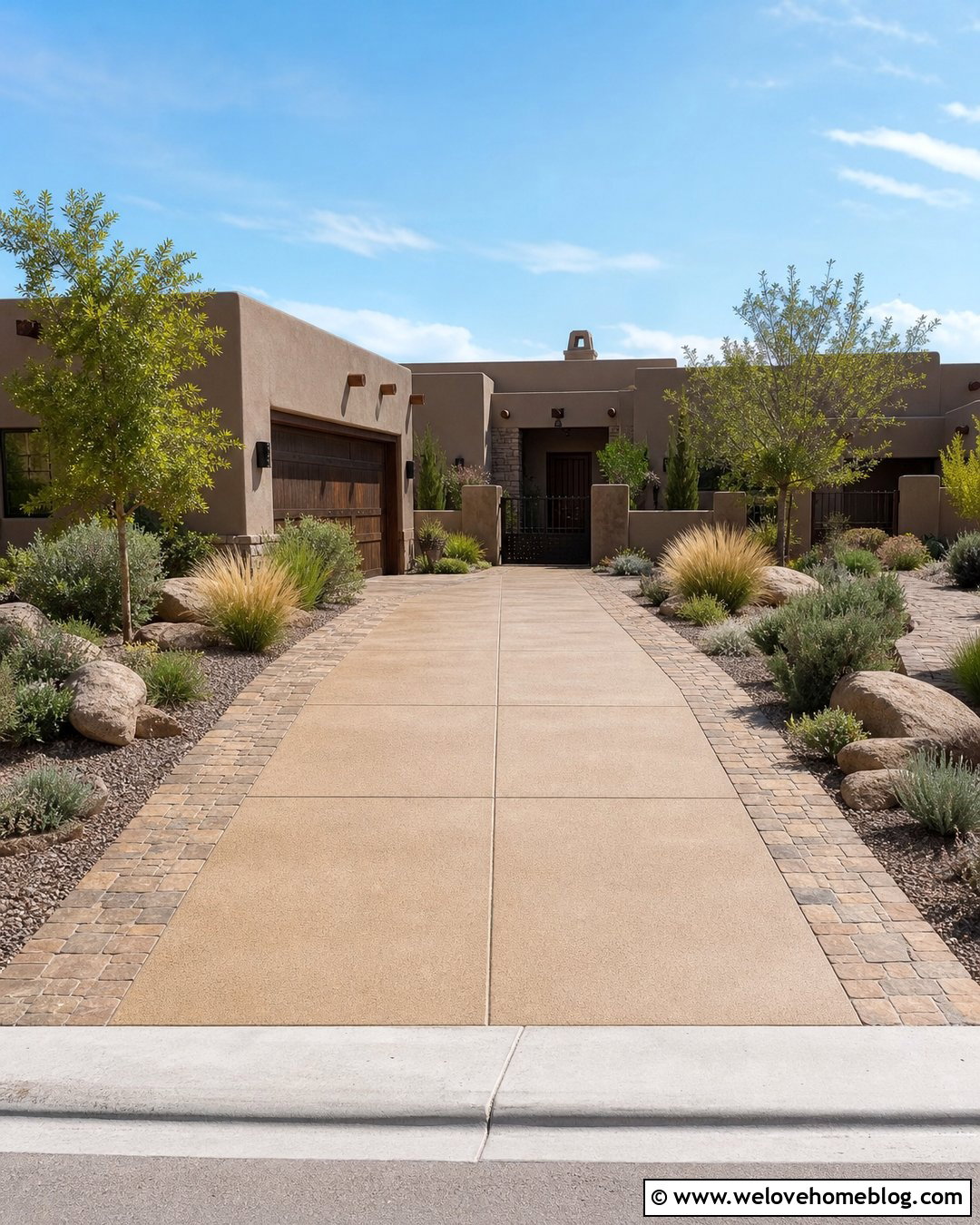
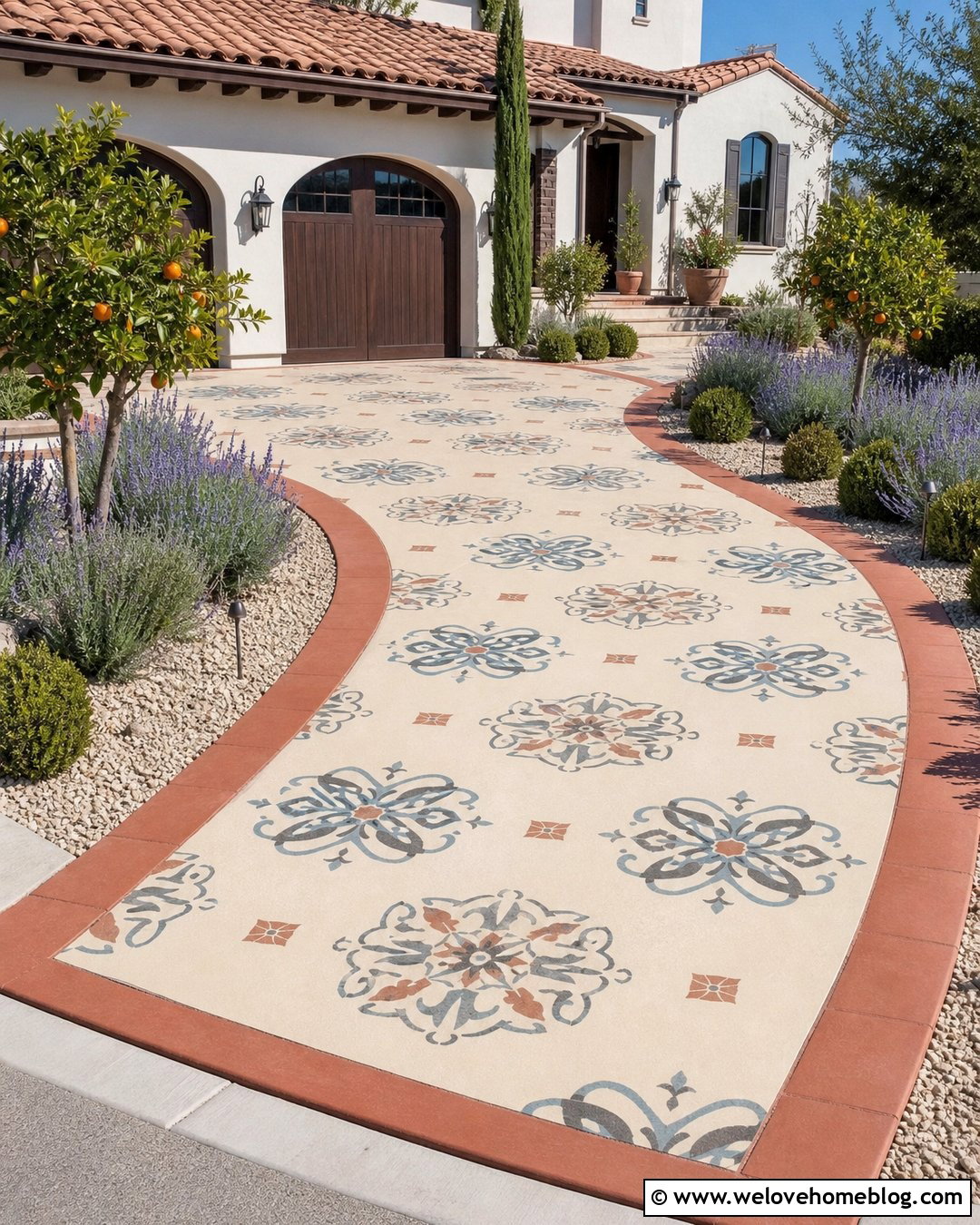
A sand finish creates a refined texture that feels smoother and more understated than heavily exposed aggregate. Choose warm beige concrete for a Mediterranean, Southwestern, or stucco home. Form the driveway in broad panels and use shallow saw cuts to build a balanced grid. A border of tan cobblestones can add definition while remaining close to the main color. Complete the setting with drought-tolerant planting beds, rounded boulders, sage-green shrubs, and ornamental grasses. The soft surface texture works well when the driveway connects directly with a matching front walkway or courtyard. Keep the color variation controlled for a natural appearance. This driveway design offers detail that is noticeable from the curb without relying on a bold stamp pattern, making it suitable for relaxed and elegant front yards.
14. Salt Finish Concrete Driveway
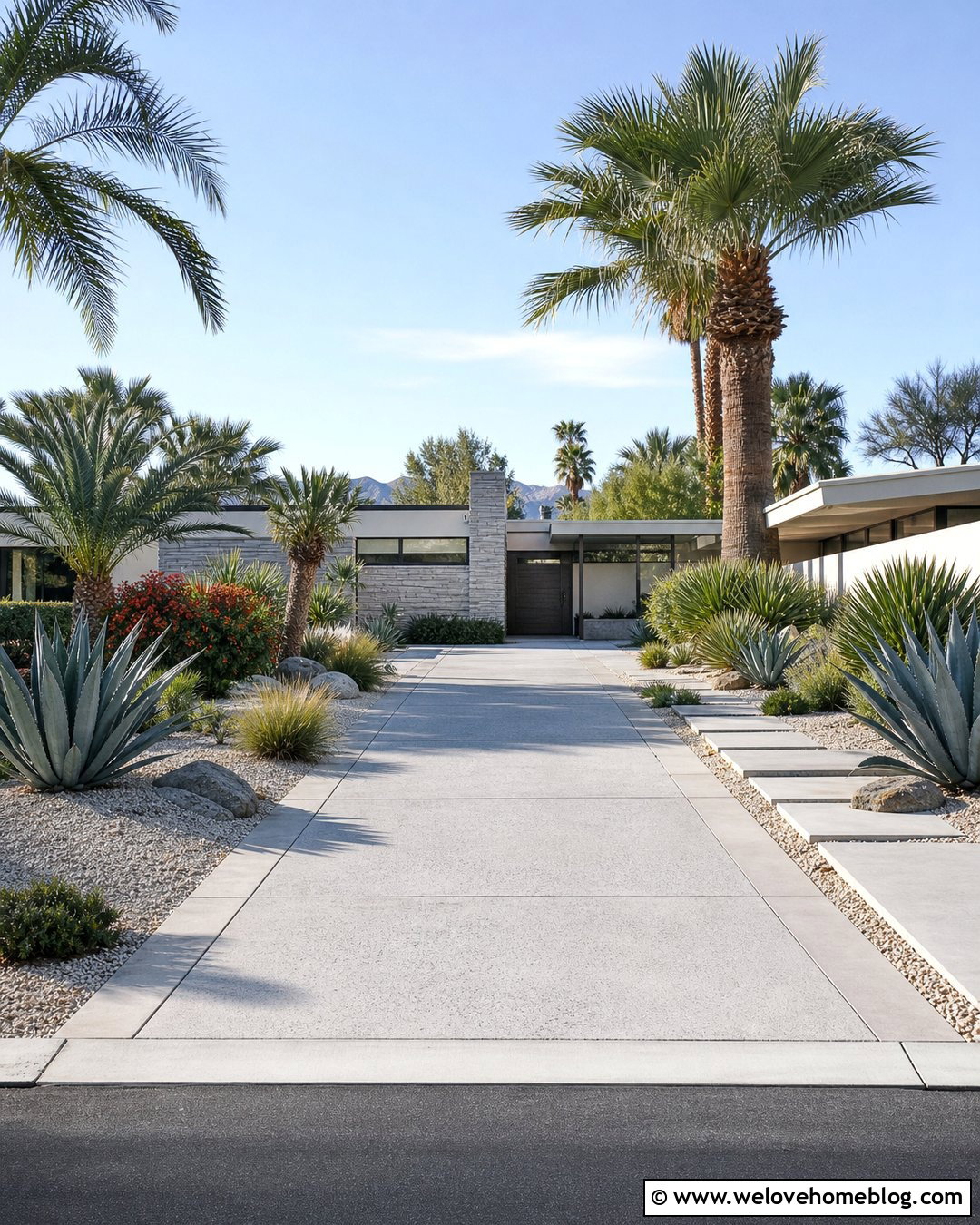
A salt finish adds small, irregular indentations to concrete for a lightly weathered appearance. It pairs naturally with midcentury, coastal, and warm-climate homes where a highly polished driveway might feel too formal. Use pale-gray or sandy concrete in a straight layout, bordered by smooth poured concrete bands. Broad planting beds filled with palms, agave, flowering shrubs, or breezy grasses can reinforce the casual character. Extend the finish into the walkway carefully so the driveway and entrance feel related. The texture should remain subtle and evenly distributed rather than deeply pitted. Since finish suitability can depend on climate, exposure, and maintenance expectations, consult a local concrete professional before selecting it. A well-planned salt-finished surface looks relaxed while maintaining the crisp outline of a professionally designed driveway.
15. Seamless Stone Texture Concrete Driveway
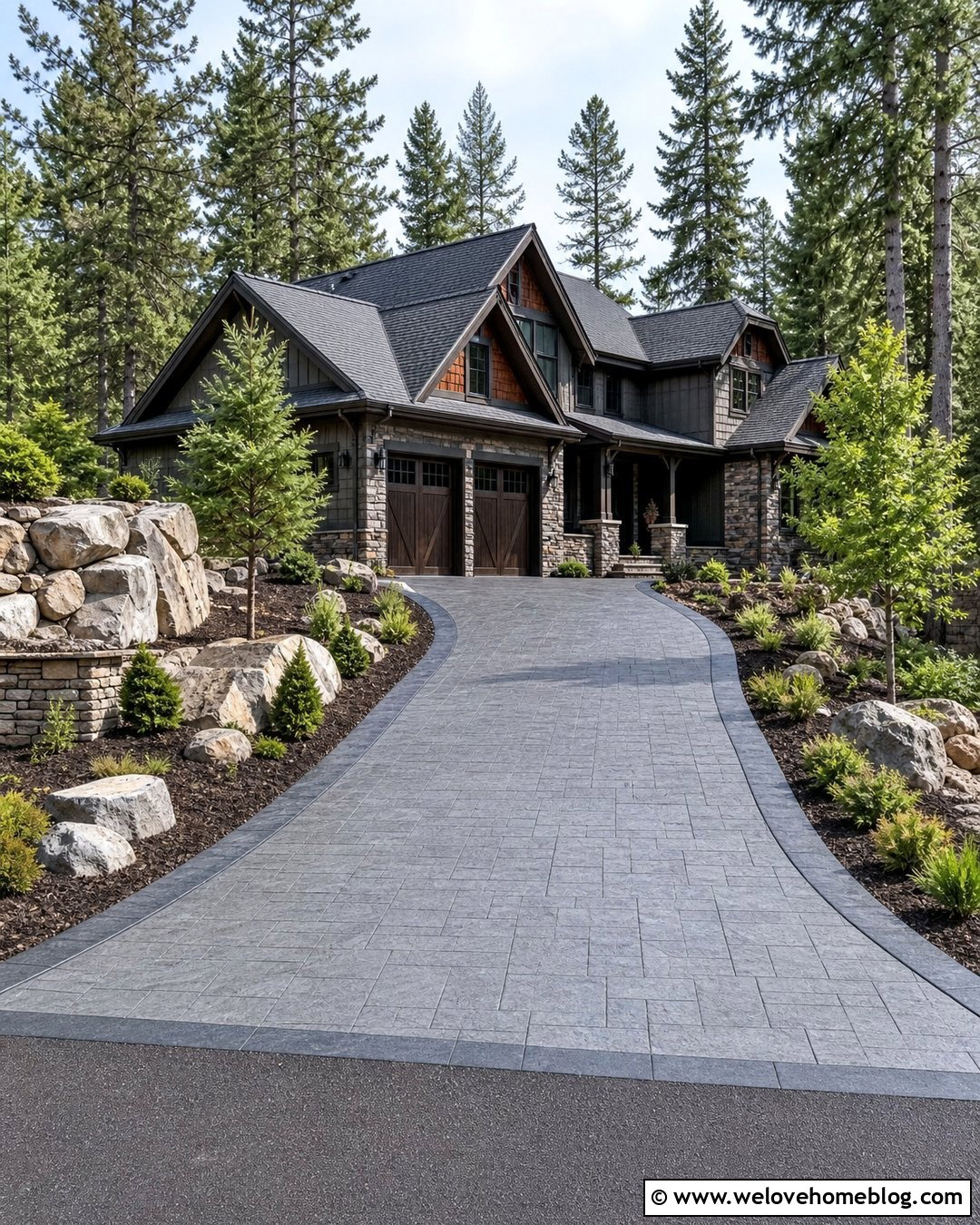
A seamless stone texture gives concrete a natural appearance without repeating obvious blocks or grout lines. Select a soft granite or slate texture in medium gray, then use hand-tooled joints to divide the driveway into generous sections. A gently flared entrance can make the approach more welcoming, while a darker smooth border keeps the edges crisp. Surround the driveway with layered shrubs, small trees, and natural stone accents that reinforce its organic finish. This complete look suits Craftsman, mountain, and transitional homes. Seamless texture skins can create a continuous stone-like surface while allowing custom joints and colors to be added for greater control. Keep the color palette restrained so the texture remains believable when viewed from the curb. ()
16. Concrete Driveway With Saw Cut Grid
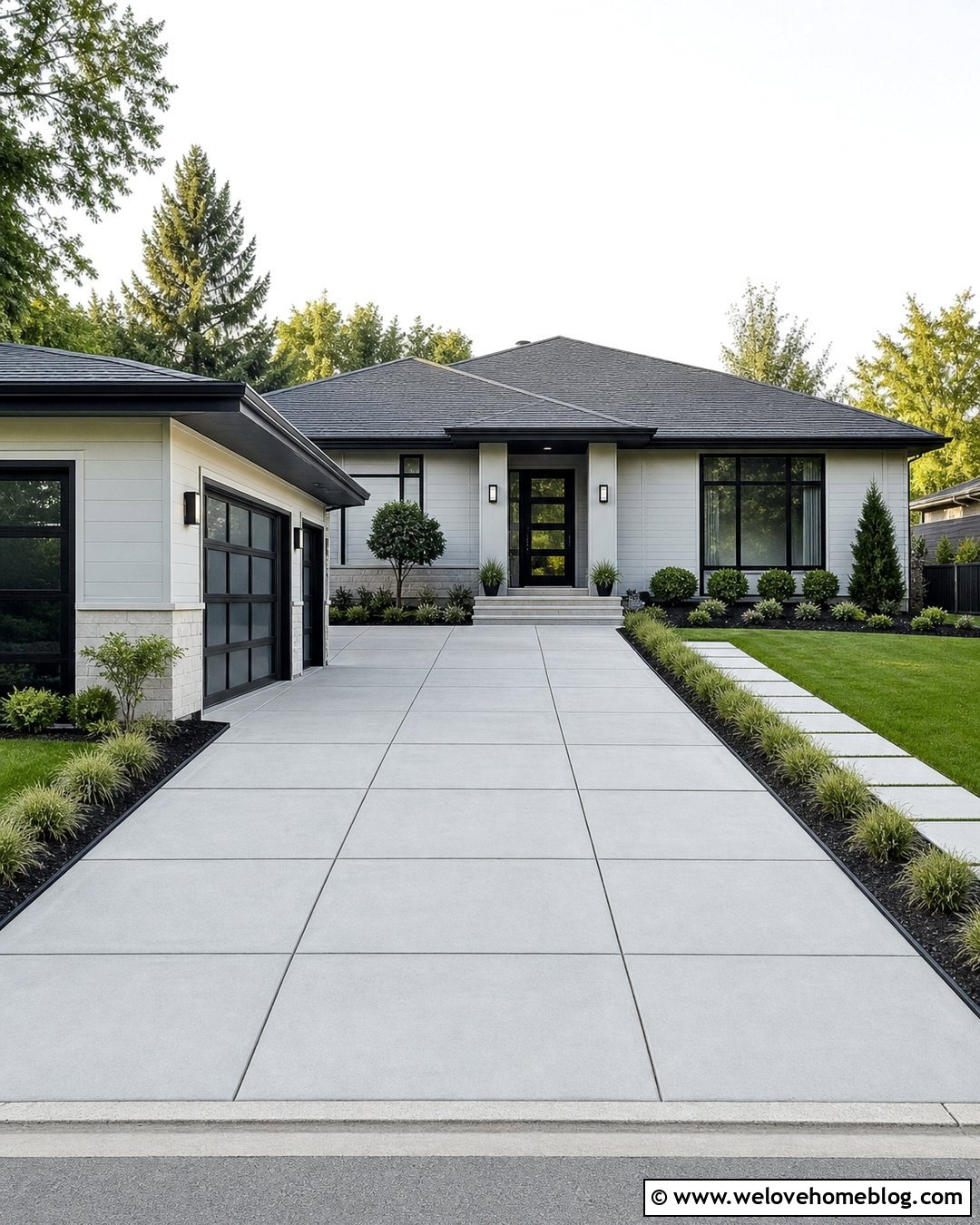
Clean saw-cut lines can transform ordinary concrete into a carefully organized geometric surface. Use smooth medium-gray concrete and divide it into large squares or rectangles that align with the garage bays. Narrow cuts create the most streamlined appearance, while wider decorative joints make the grid more noticeable. Frame the driveway with black metal edging and linear beds of ornamental grasses. A modern walkway made from matching concrete panels can continue the geometry toward the entrance. This design performs best when the joint layout is planned before the pour rather than added as an afterthought. Necessary control joints can often be incorporated into the visual pattern. Pair the driveway with a contemporary ranch or minimalist home so its straight lines relate to windows, roof edges, and facade divisions.
17. Concrete Driveway With Cobblestone Border
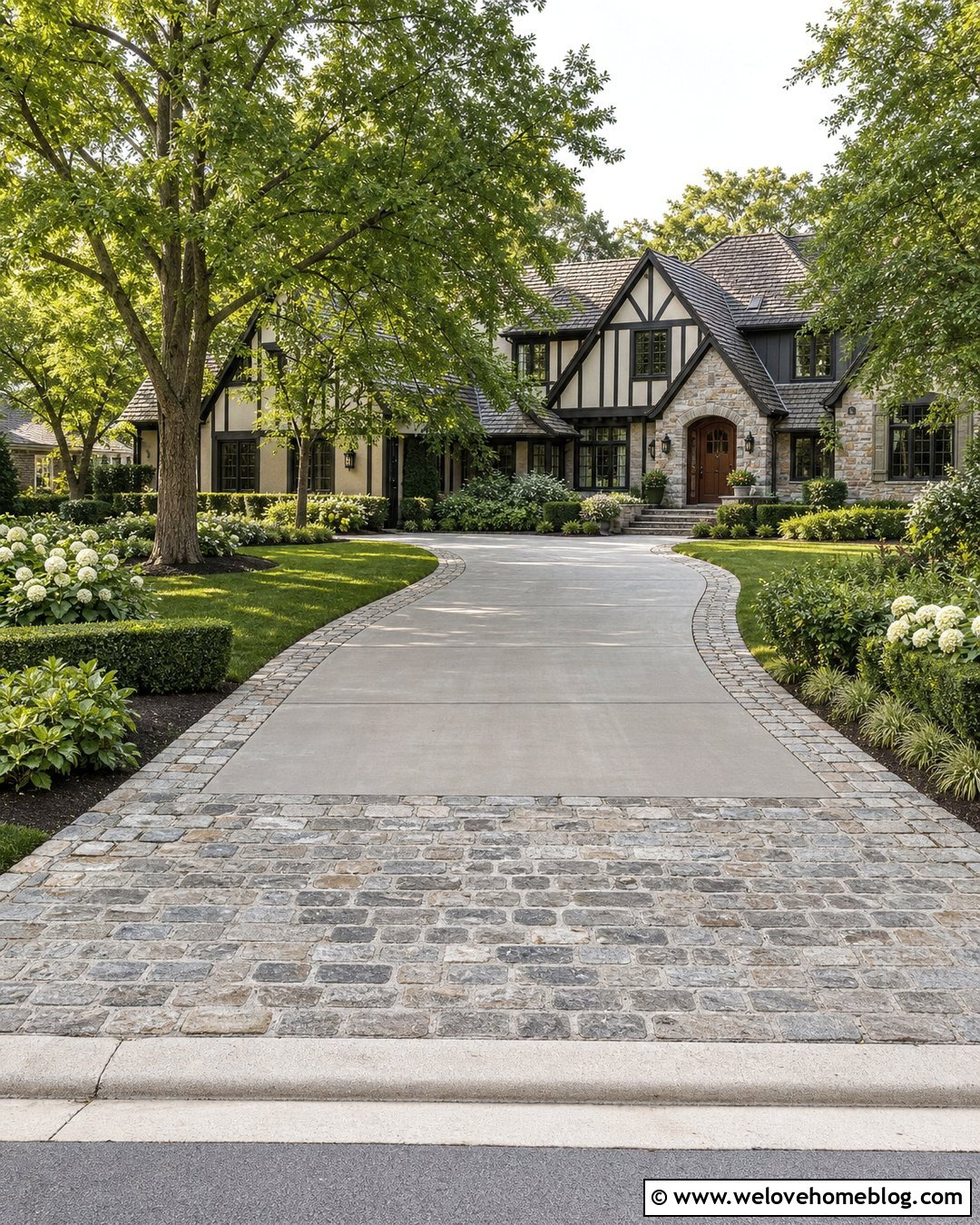
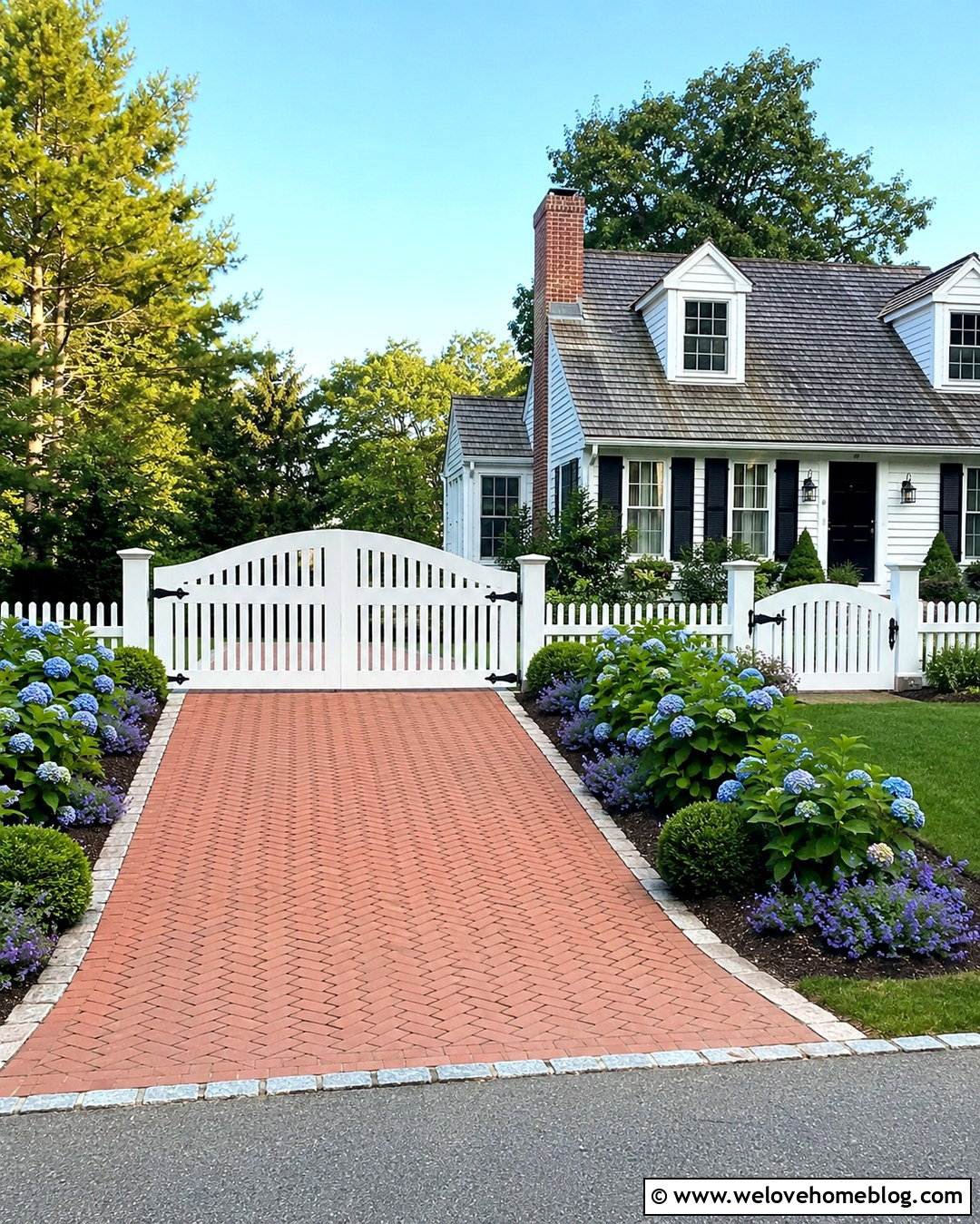
Cobblestone borders add rich texture to a concrete driveway without making the driving surface overly detailed. Start with warm-gray broom-finished concrete and install natural granite cobblestones along the perimeter. Carry the stones across the street entrance as a wider apron, then repeat them around the front walkway. A softly curved driveway will make the irregular stone edges feel especially natural. Complete the look with traditional lawn, hydrangeas, clipped hedges, and mature shade trees. Granite in mixed gray and brown tones pairs well with stone cottages, Tudor homes, and classic brick facades. Ensure that the border is installed on a stable base and meets the concrete at a practical height. The result combines an easy-to-read concrete center with the craftsmanship and character of natural stone.
18. Concrete Driveway With Drainage Channel
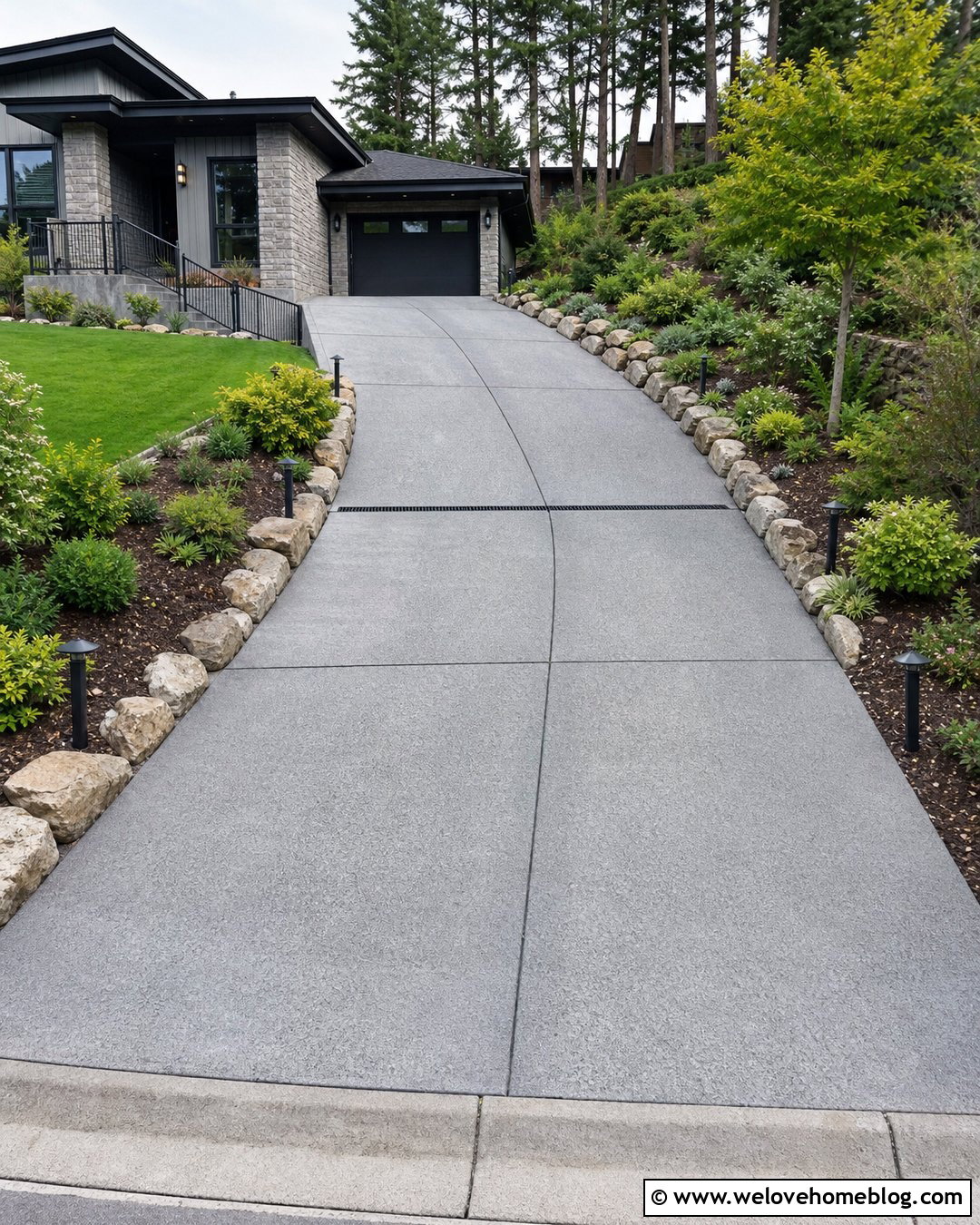
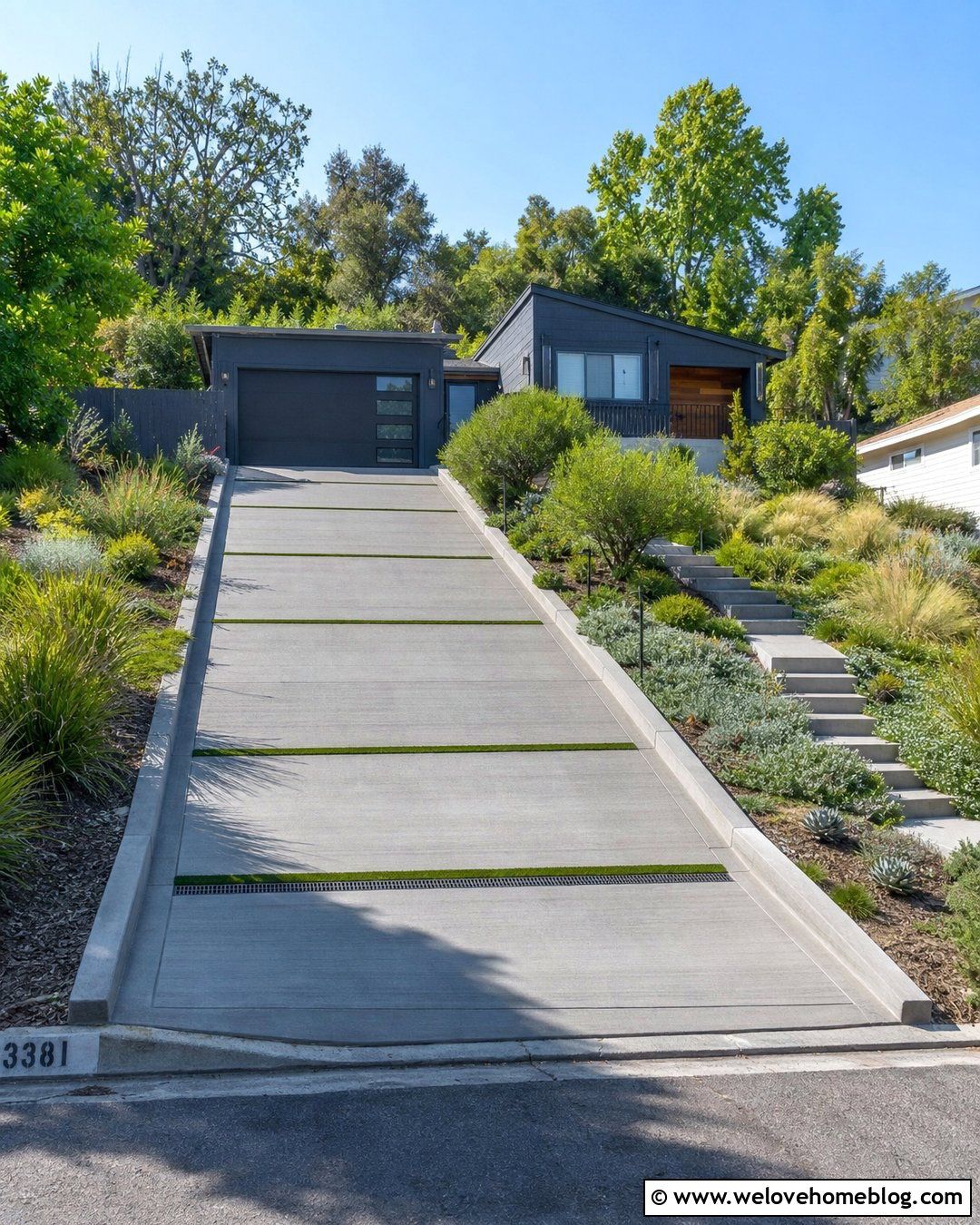
A visible drainage channel can become part of the driveway design rather than an awkward interruption. Use textured gray concrete on a sloped driveway and position a narrow channel across the garage entrance or along the lower edge. Select a linear black or stainless-steel grate that coordinates with exterior lighting and house trim. Divide the driveway into rectangular panels that direct attention toward the home. Stone edging, deep planting beds, and moisture-tolerant plants can help the drainage feature fit naturally into the landscape. The exact channel placement and capacity should be determined by site grading and local rainfall conditions. Combining drainage planning with a deliberate joint and border layout creates a cleaner result than attempting to correct water problems after the driveway is installed.
19. Concrete Driveway With Retaining Wall
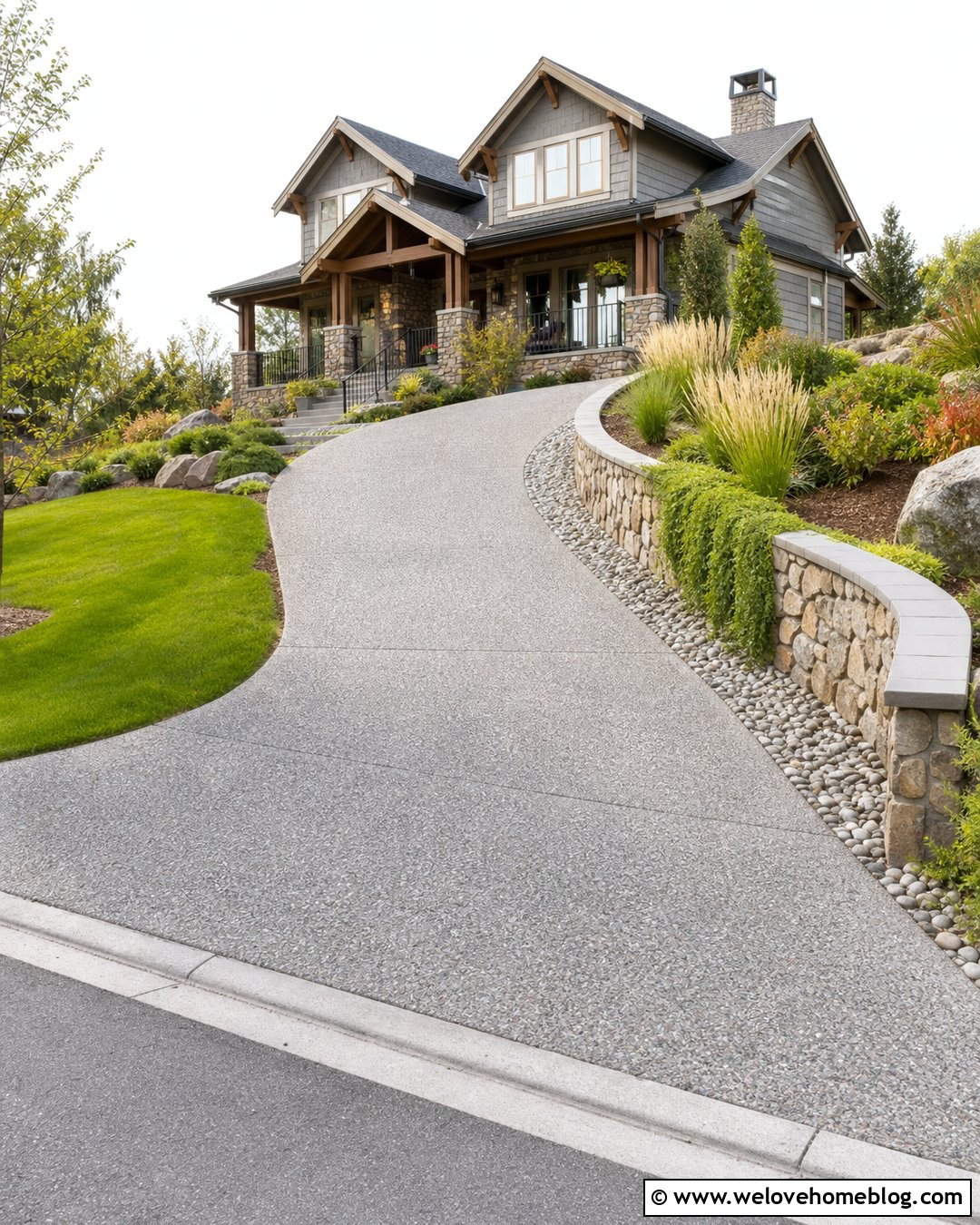
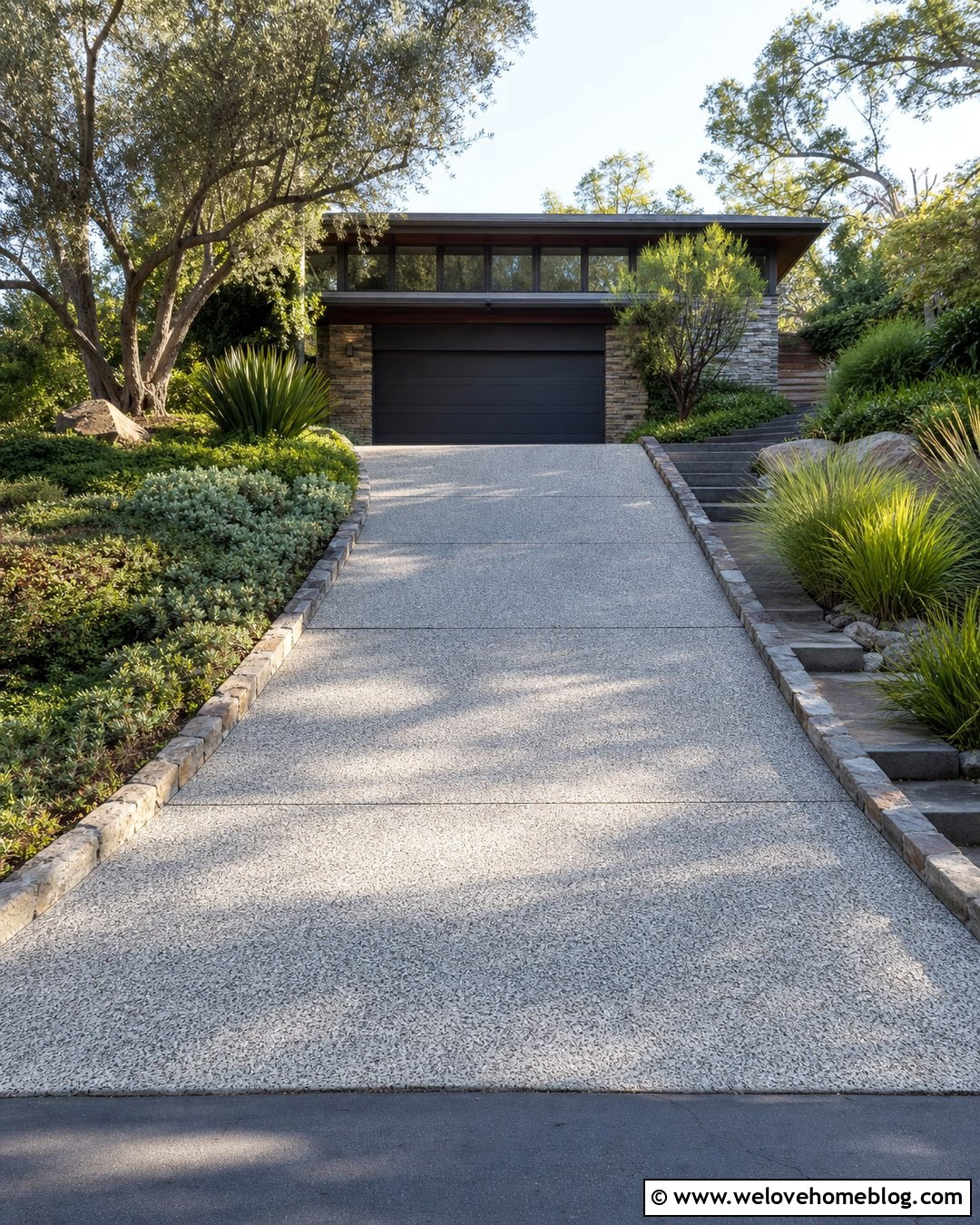
Sloped front yards often need a driveway and retaining wall that work as one coordinated structure. Use exposed aggregate concrete for a gently rising driveway and border it with a low wall built from natural stone or architectural concrete blocks. Follow the driveway’s curve instead of forcing the wall into sharp, unrelated angles. Above the wall, plant cascading ground cover, compact shrubs, and ornamental grasses that soften the hard edges. Add a smooth concrete cap that relates to the driveway’s border. On the open side, maintain a simple lawn or gravel strip for balance. Proper engineering, drainage, and guard requirements are essential for taller walls. Visually, repeating one stone tone across the wall, house foundation, and driveway aggregate will help the entire hillside entrance feel unified.
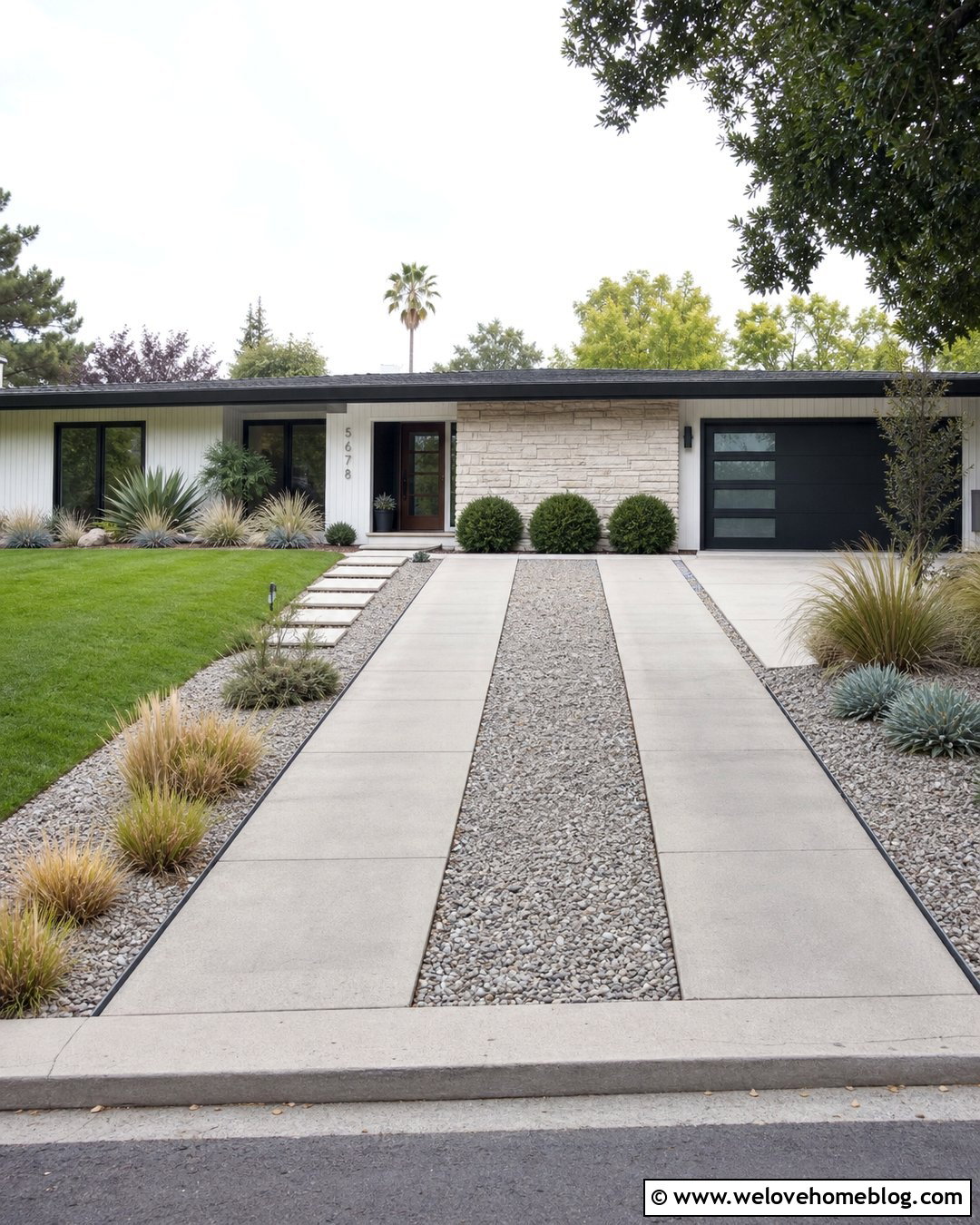
20. Concrete Driveway With Landscape Beds
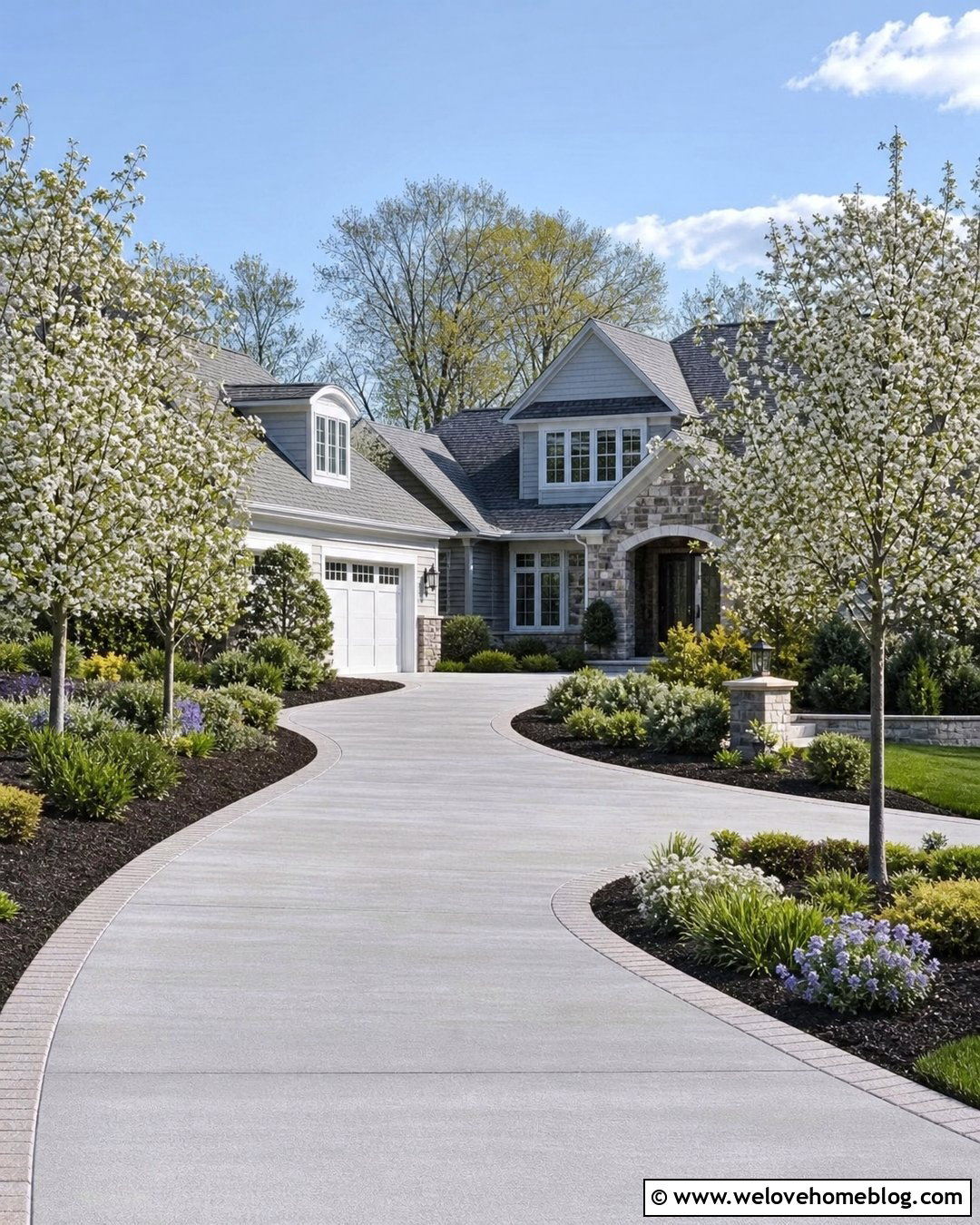
Generous planting beds can make a wide concrete driveway feel softer and more welcoming. Choose light broom-finished concrete with a curved outer edge, then follow that curve with deep mulched beds. Layer small trees, flowering shrubs, evergreens, grasses, and low ground cover to create year-round structure. Keep mature plant sizes in mind so branches and roots do not crowd the driving area. A narrow brick or stone border can separate the concrete from soil and repeat materials found on the house. Use similar plants near the street and garage to visually connect both ends of the driveway. This complete design works for suburban homes where plain concrete occupies a large portion of the front yard. Strong planting masses balance the hardscape better than scattered individual plants.
21. Concrete Driveway With Gate And Pillars
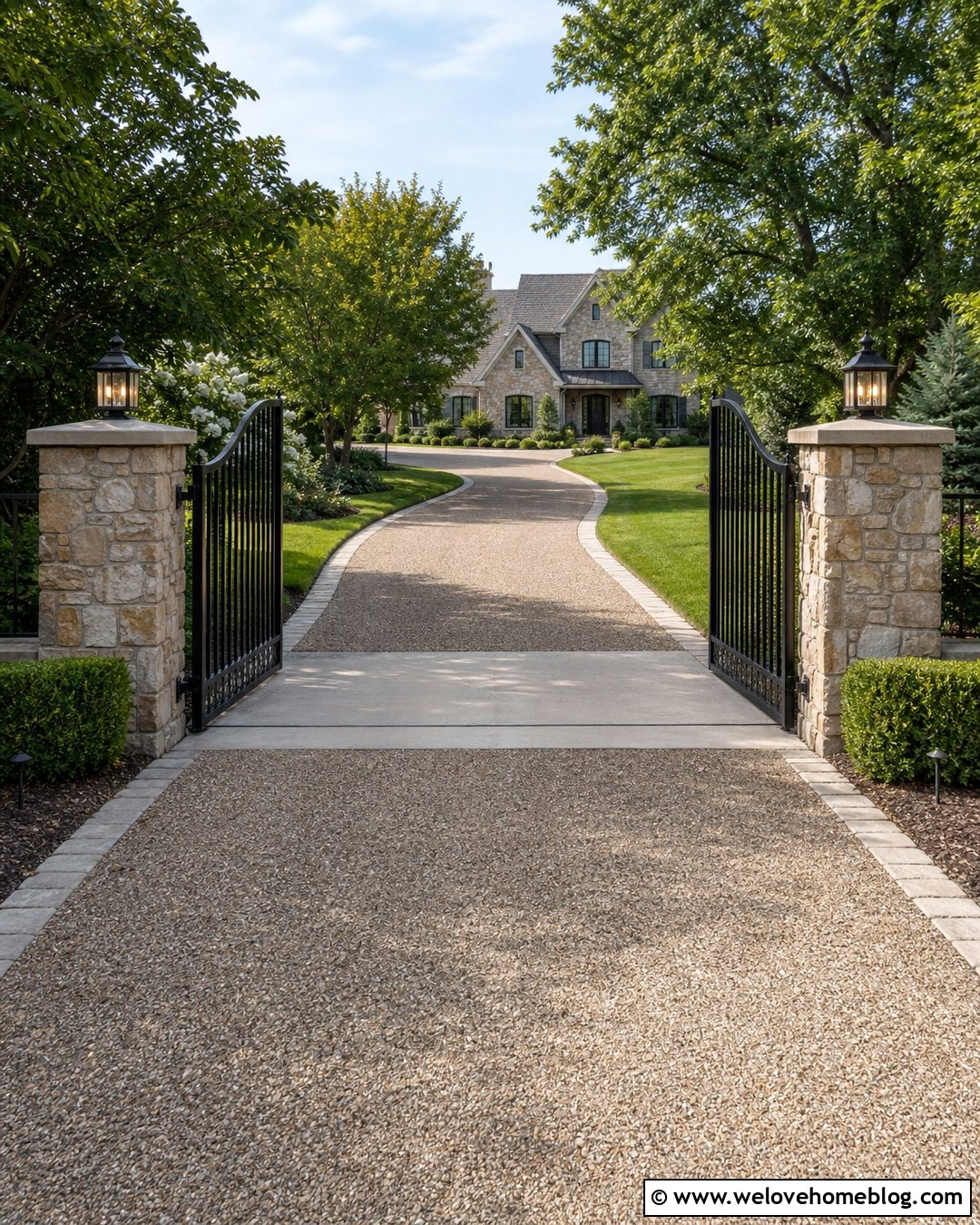
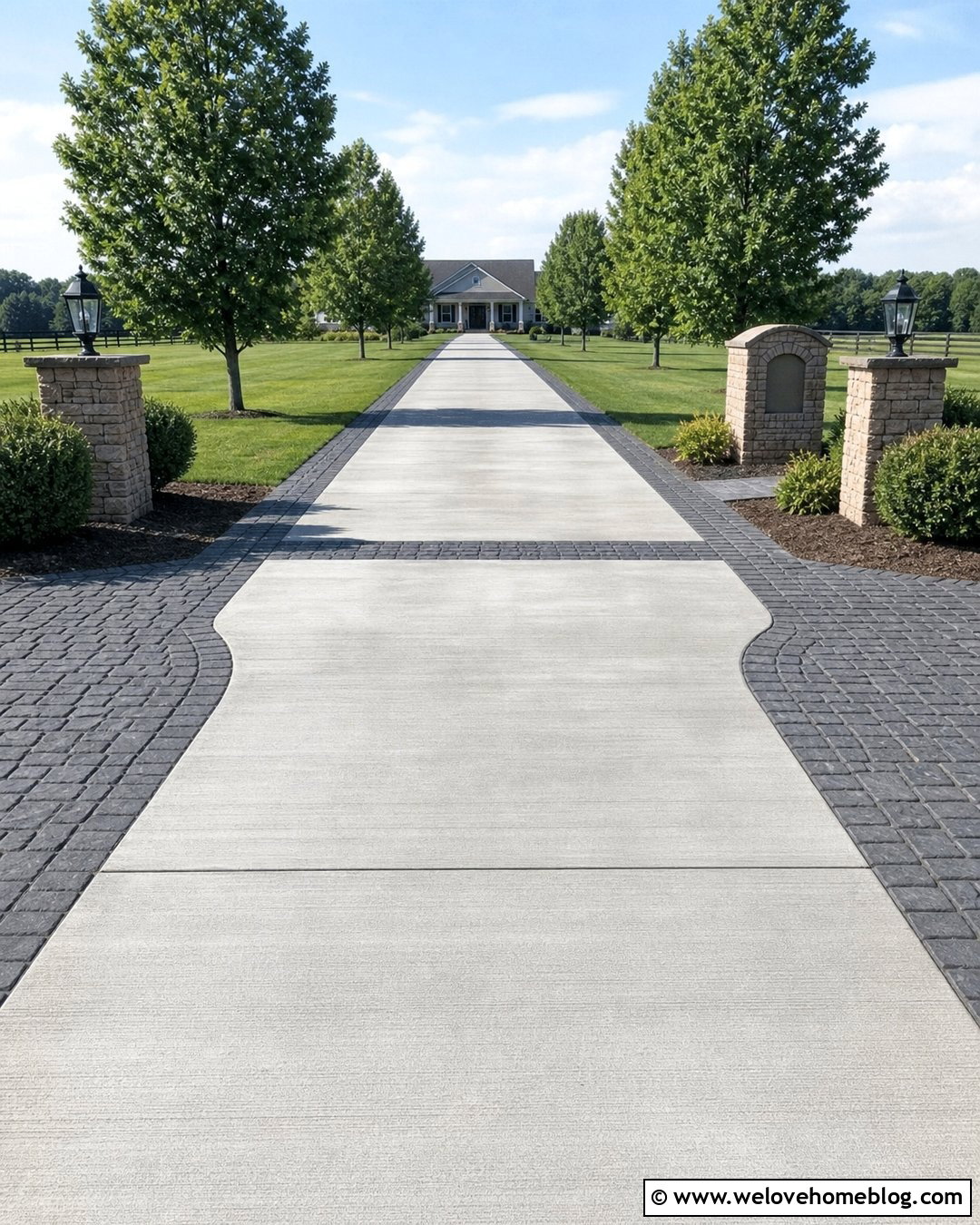
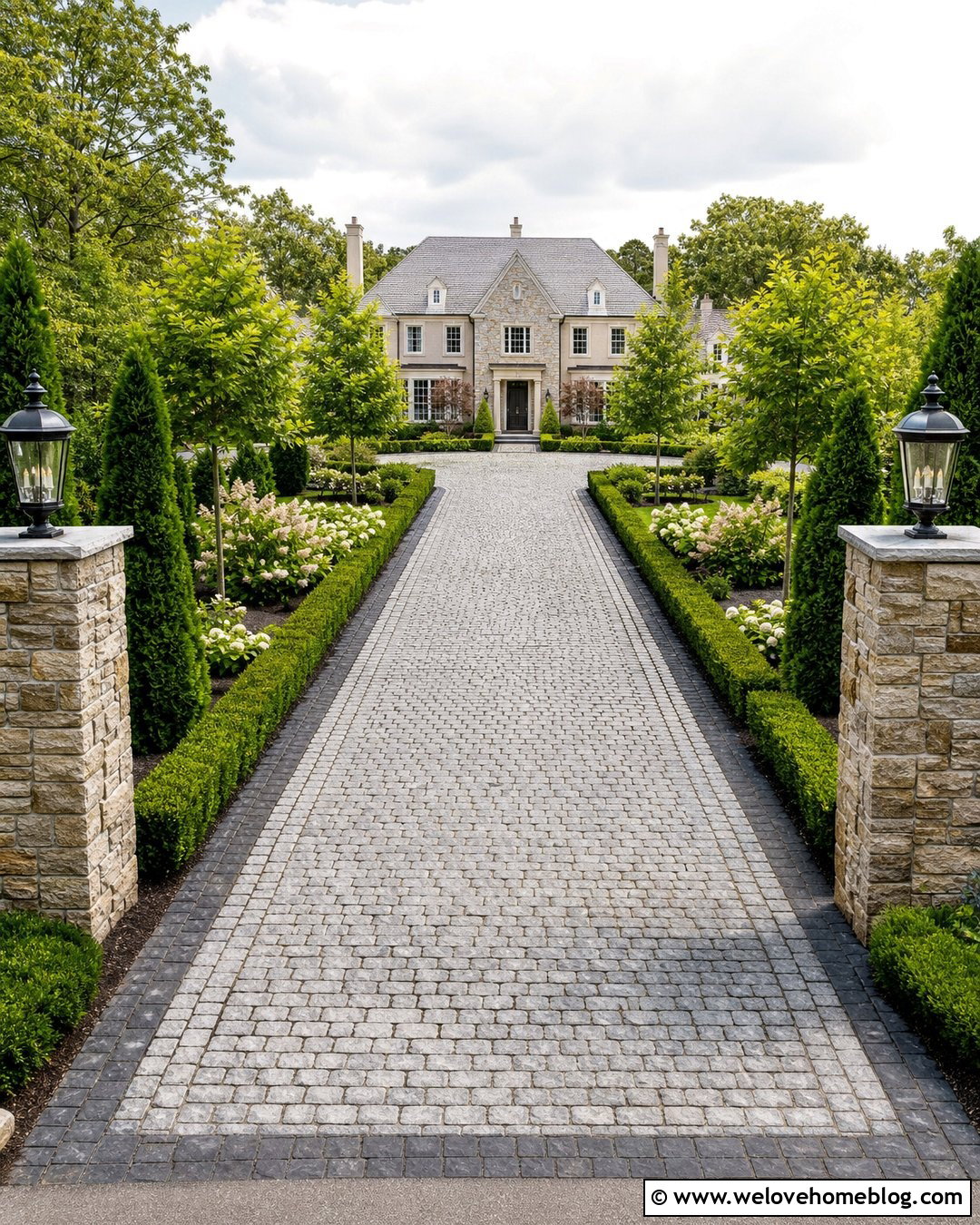
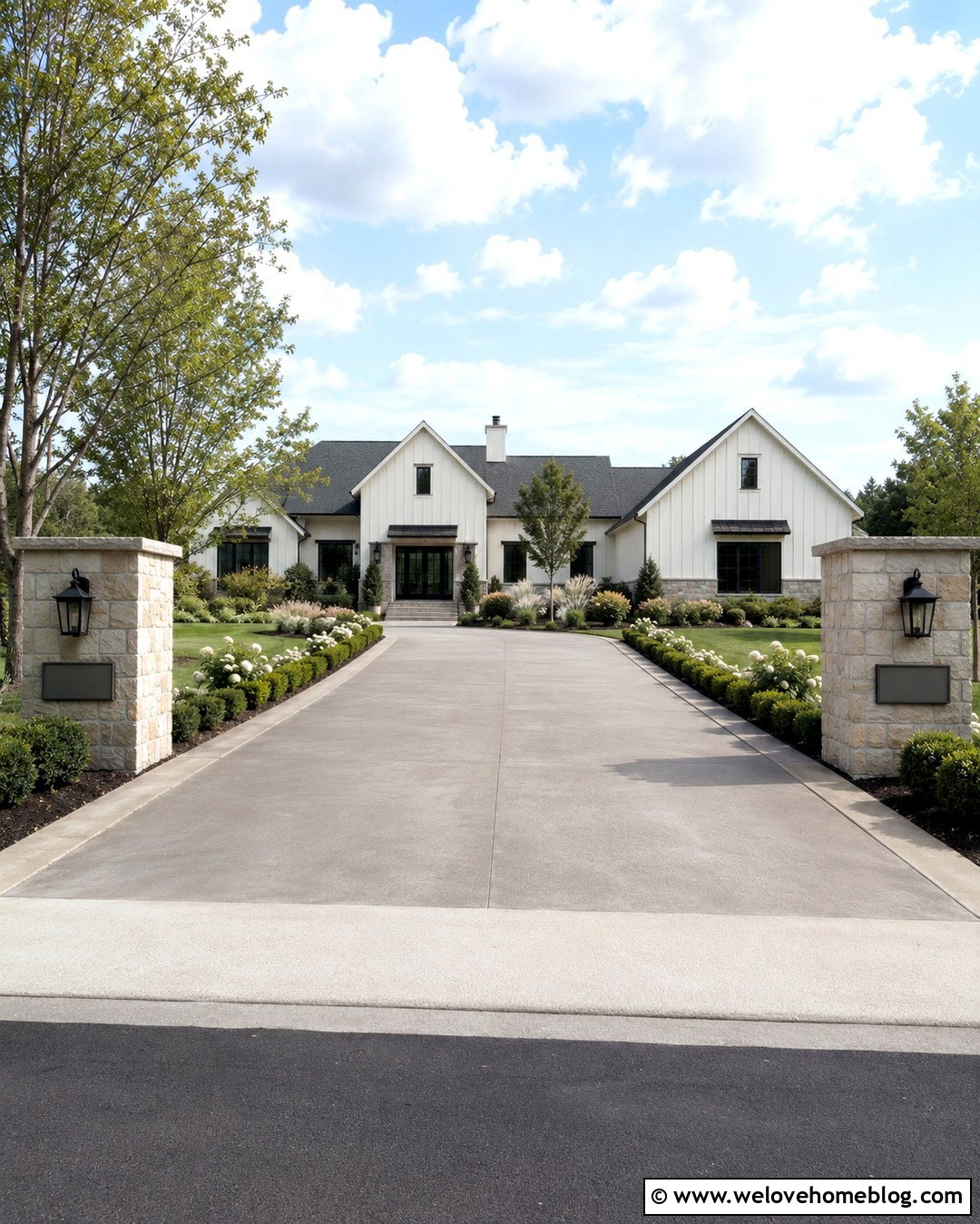
A gated concrete driveway should feel secure without appearing disconnected from the house. Use warm exposed aggregate concrete in a straight or gently curved layout leading through stone pillars and a simple metal gate. Match the pillar masonry to the home’s foundation, chimney, or porch columns. A smooth concrete apron beneath the gate provides a clean transition and leaves room for operating hardware. Low hedges and symmetrical planting beds can frame the entrance while preserving visibility. Continue the driveway beyond the gate with the same aggregate and border so it reads as one uninterrupted route. Add discreet lighting to the pillars for practical illumination. The gate width, setback, slope, drainage, and opening direction should all be planned carefully before the concrete and entrance structures are installed.
22. Concrete Driveway With Lighting
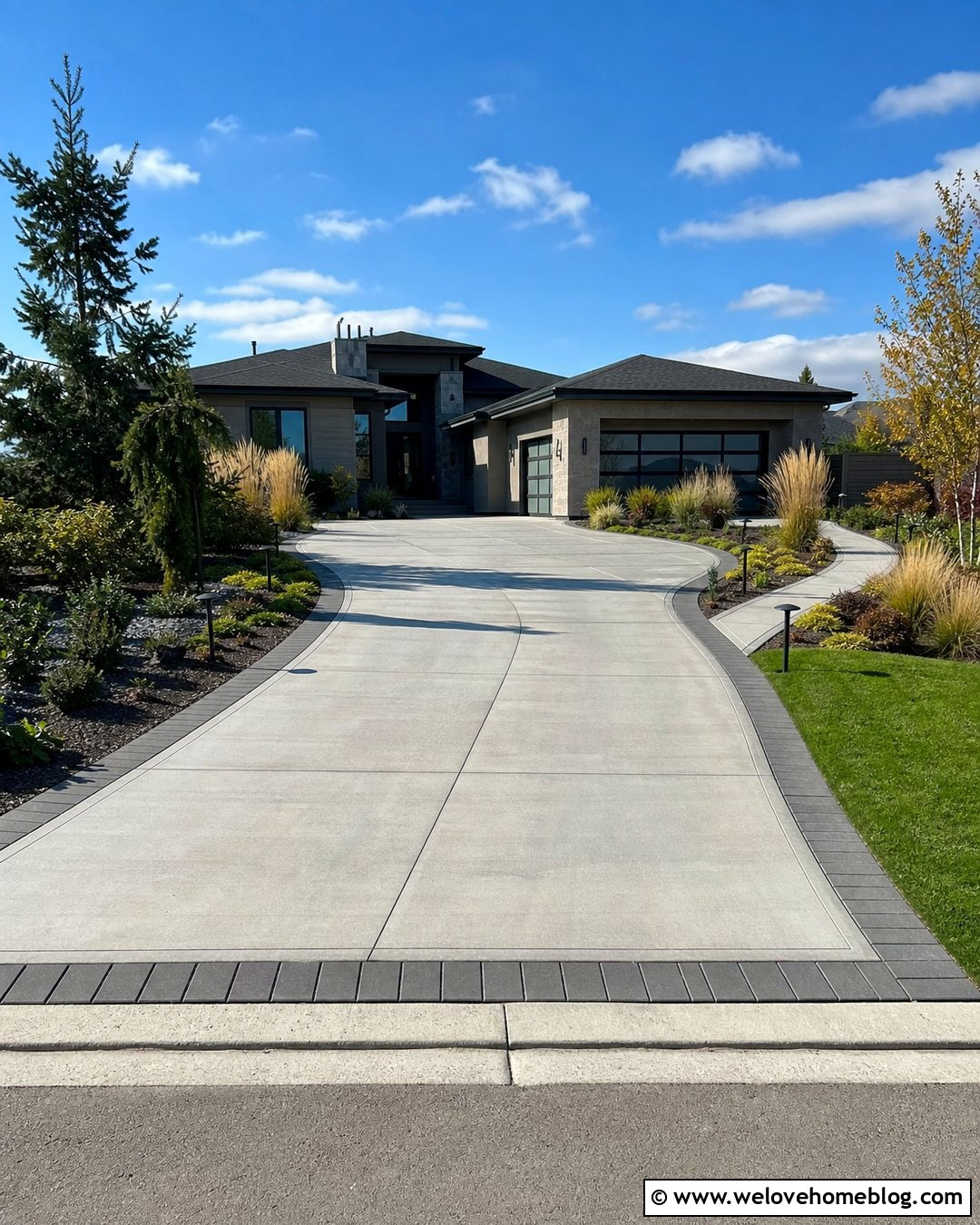
Well-positioned lighting can make a concrete driveway easier to navigate while improving its daytime appearance. Use smooth light-gray concrete with a dark paver border, then place low-profile fixtures at regular intervals outside the driving surface. During daylight, simple black path lights create a neat rhythm leading toward the garage. Add matching fixtures beside the walkway and near the entrance for consistency. Plant low grasses and ground cover around the lights so taller foliage does not block them. A gently curved driveway can benefit from lighting at each change in direction, while a straight driveway needs fewer visual markers. Avoid placing fixtures where doors, tires, lawn equipment, or snow removal could damage them. The final layout should support visibility without making the front yard look crowded.
23. Concrete Driveway With Center Island
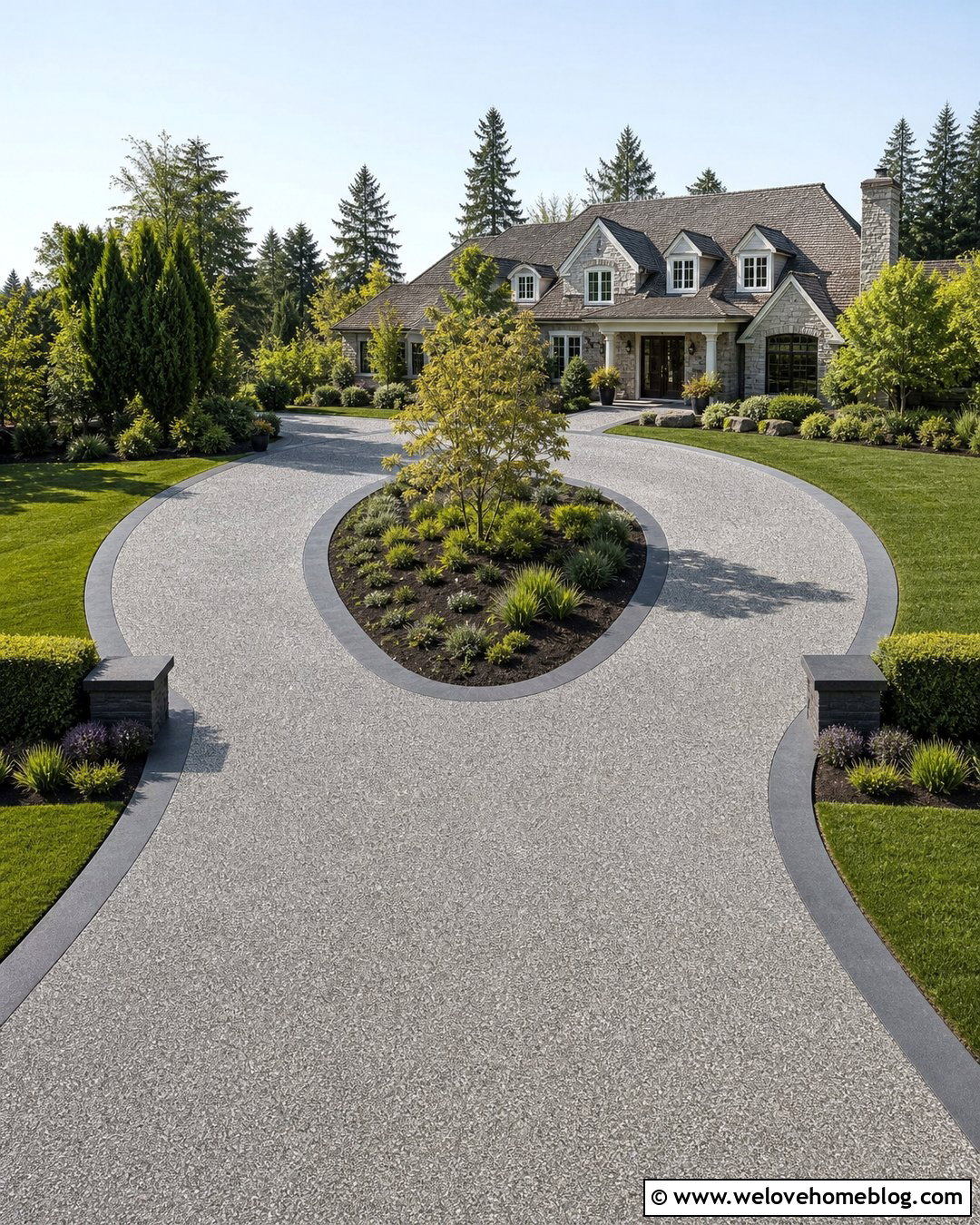
A landscaped center island can break up an expansive concrete driveway and organize vehicle movement. Form a wide horseshoe or split driveway using medium-gray exposed aggregate concrete. Edge the island with smooth charcoal concrete or natural stone curbing for a defined shape. Plant one appropriately sized ornamental tree as the focal point, then surround it with low shrubs, grasses, and ground cover. Avoid tall plants that hide the house or reduce visibility around the turn. Repeat the island’s border at the street entrance and walkway to connect the separate areas. This layout is suitable for broad suburban and country properties where a large solid slab would overwhelm the front yard. Graceful curves and restrained planting help the center island feel integrated rather than placed in leftover space.
24. Concrete Driveway For Modern Farmhouse
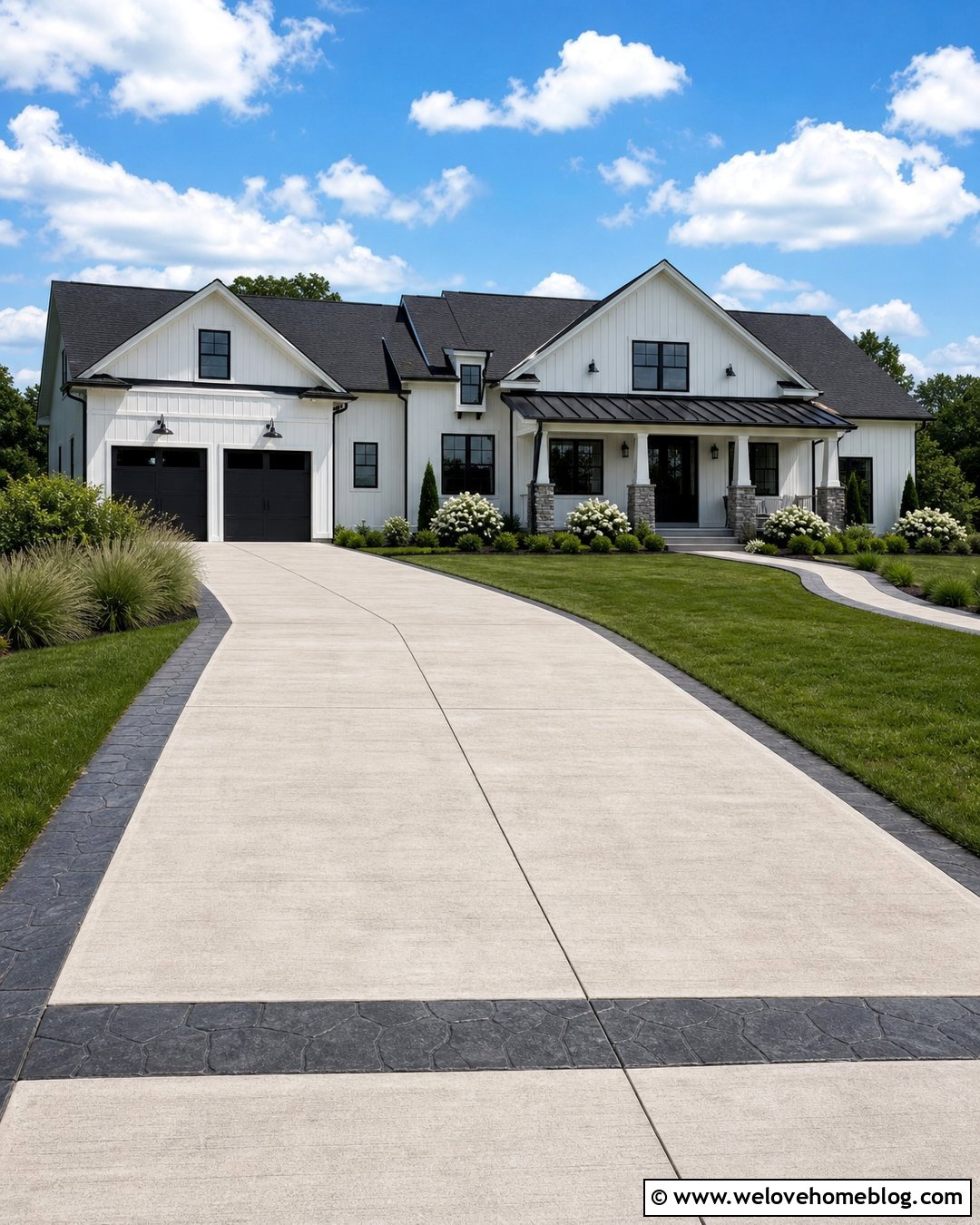
A modern farmhouse driveway looks best when it balances clean lines with warm, familiar materials. Use pale-gray broom-finished concrete in a wide straight layout leading toward black or natural-wood garage doors. Install a charcoal stamped-concrete border and a matching band across the entrance. Deep planting beds filled with white flowering shrubs, ornamental grasses, and clipped evergreens soften the broad surface. A concrete walkway with the same border can connect the driveway to a covered porch. Black metal lights and simple stone columns reinforce the house palette without adding unnecessary decoration. Keep the joint pattern rectangular and symmetrical. This combination feels polished but not overly formal, making it suitable for both suburban farmhouse exteriors and country homes with larger lawns.
25. Concrete Driveway For Small Front Yard
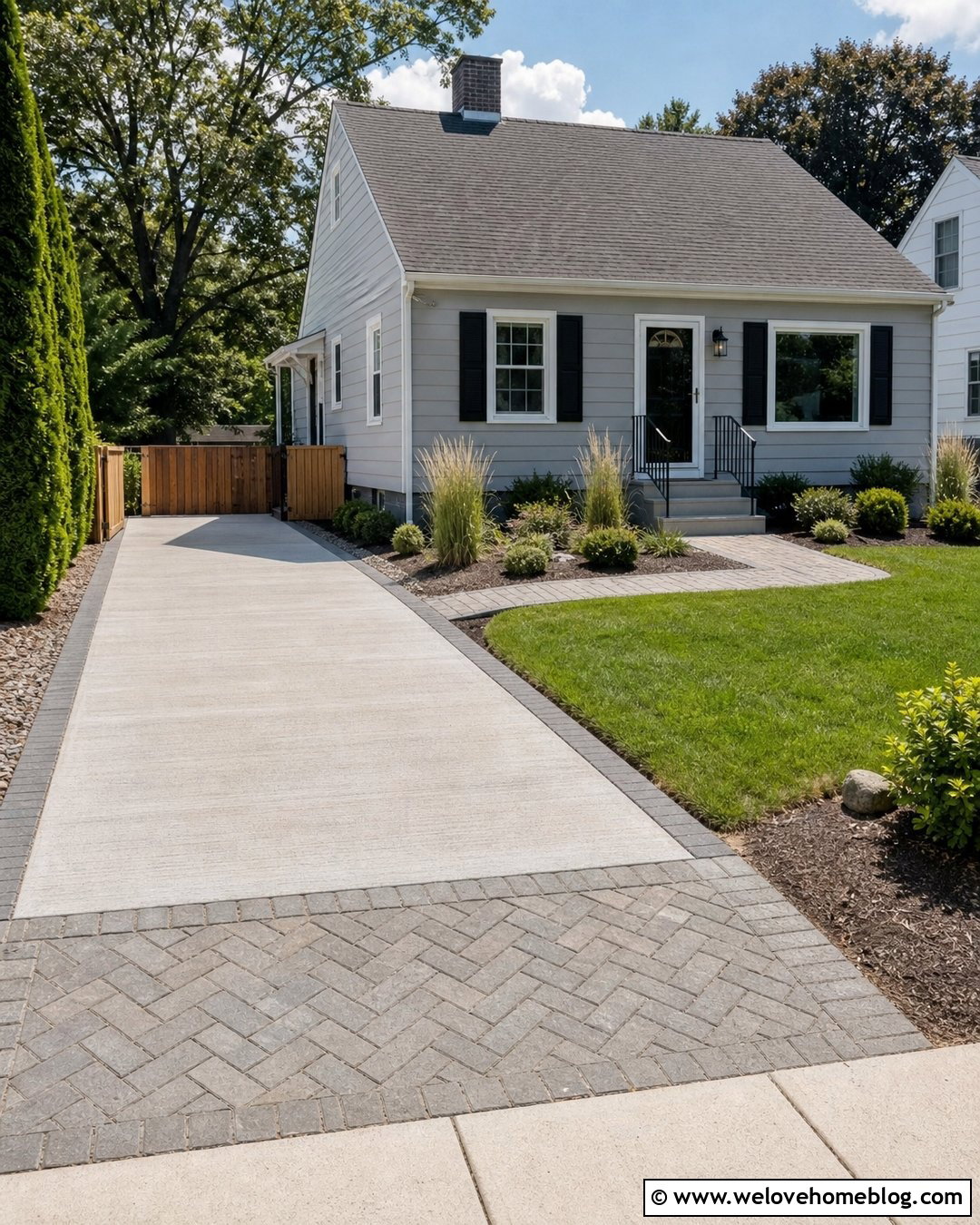
A small front yard needs a concrete driveway that feels useful without visually taking over the property. Choose light-gray concrete because a pale, consistent surface can make the limited space appear more open. Use a straight single-car layout with clean rectangular joints and a narrow charcoal paver border. Where possible, connect the driveway and front walkway with one carefully planned transition instead of creating several competing paths. Slim planting beds can hold upright grasses, compact shrubs, and ground cover without reducing usable width. A modest paver apron at the curb adds detail while preserving the simple concrete center. Match the driveway lines with the garage and house facade. Every material should serve a purpose, allowing the complete entrance to remain uncluttered, welcoming, and easy to understand.
Conclusion:
The best concrete driveway combines a dependable surface with a layout that fits the property, architecture, and everyday needs of the household. Broom finishes provide simple appeal, while exposed aggregate, stamping, staining, borders, and geometric joints offer greater visual character. Landscaping, lighting, drainage, gates, and walkways should be planned as parts of the same entrance rather than added separately. Before construction, discuss grading, reinforcement, joint placement, finish maintenance, and local climate conditions with a qualified contractor. Whether you prefer a traditional brick-edged entrance or oversized modern slabs, these 25 Concrete Driveways Cement Ideas offer practical starting points for building a driveway that supports long-term function and stronger curb appeal.

Related posts:
Leave a Reply