
Stained concrete can turn a plain driveway into a coordinated part of your home’s exterior. Unlike a flat painted surface, concrete stain can create layered color, subtle mottling, and finishes that resemble stone, tile, or aged masonry. Acid stains commonly produce varied earth tones, while water-based products offer a broader color range. Sawcuts, stamped textures, contrasting borders, and decorative bands provide even more ways to personalize the surface. () The best design also considers the driveway’s shape, surrounding plants, garage facade, and walkway connections. From warm brown finishes for traditional homes to charcoal geometric layouts for modern exteriors, the following 30 Stained Concrete Driveway Ideas offer complete, practical looks for distinctive curb appeal.

1. Brown Stained Concrete Driveway With Dark Border
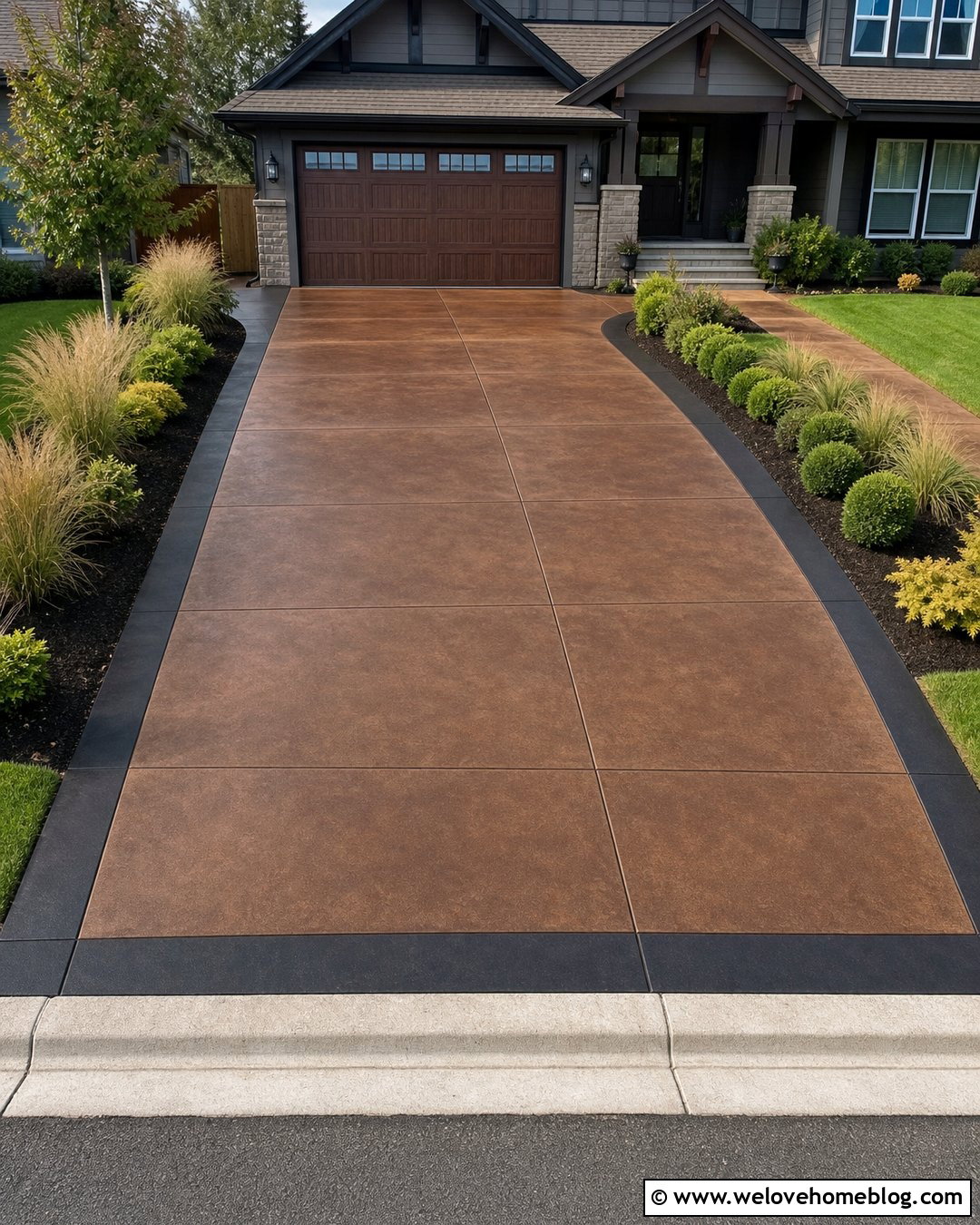
A warm brown stained concrete driveway feels especially welcoming beside a Craftsman or traditional brick home. Use a medium walnut shade across the main surface, then frame it with a dark espresso-stained concrete border. The contrast defines the driveway without making the entrance look overly decorated. A straight layout keeps the result practical, while evenly spaced sawcut joints add quiet structure. Complete the look with curved planting beds containing boxwoods, ornamental grasses, and low flowering perennials. A matching stained walkway can connect the driveway to the porch. Before choosing the final colors, test both stains on the actual concrete because texture and age can influence how each shade appears.
2. Gray Stained Concrete Driveway With Geometric Sawcuts
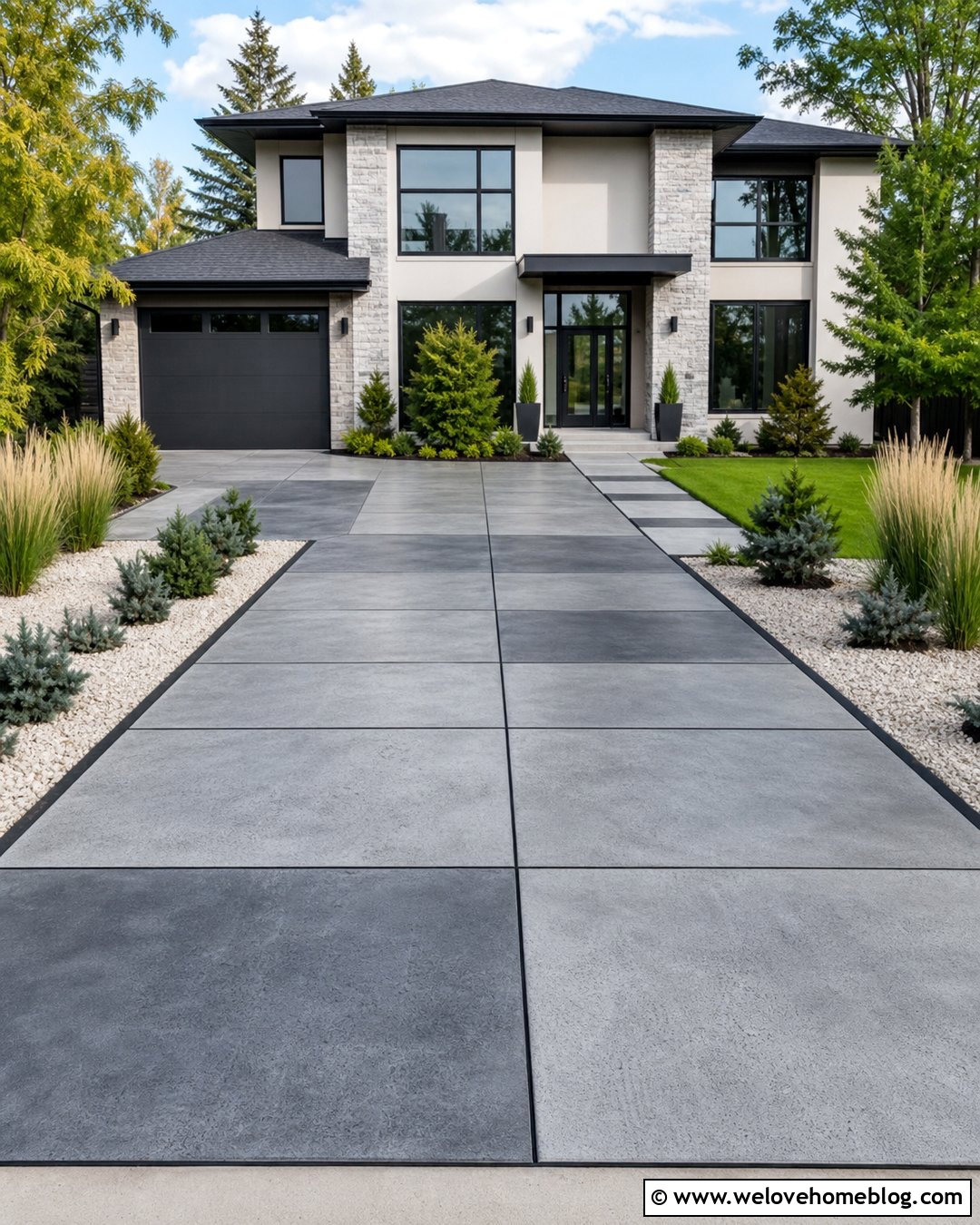
Crisp lines make a gray stained concrete driveway a natural choice for a modern home. Divide the surface into large rectangular panels with straight decorative sawcuts, using the garage doors and front walkway to guide the grid. Apply a medium gray water-based stain to the main panels and a slightly darker charcoal shade inside selected sections. This subtle two-tone approach creates movement without resembling a busy checkerboard. Narrow black metal edging can provide a clean transition to gravel planting beds. Use compact evergreens, upright grasses, and one sculptural tree to reinforce the orderly layout. Keep the concrete finish matte or softly satin so the geometric pattern remains sophisticated rather than overly glossy.
3. Tan Stained Concrete Driveway With Brick Edging
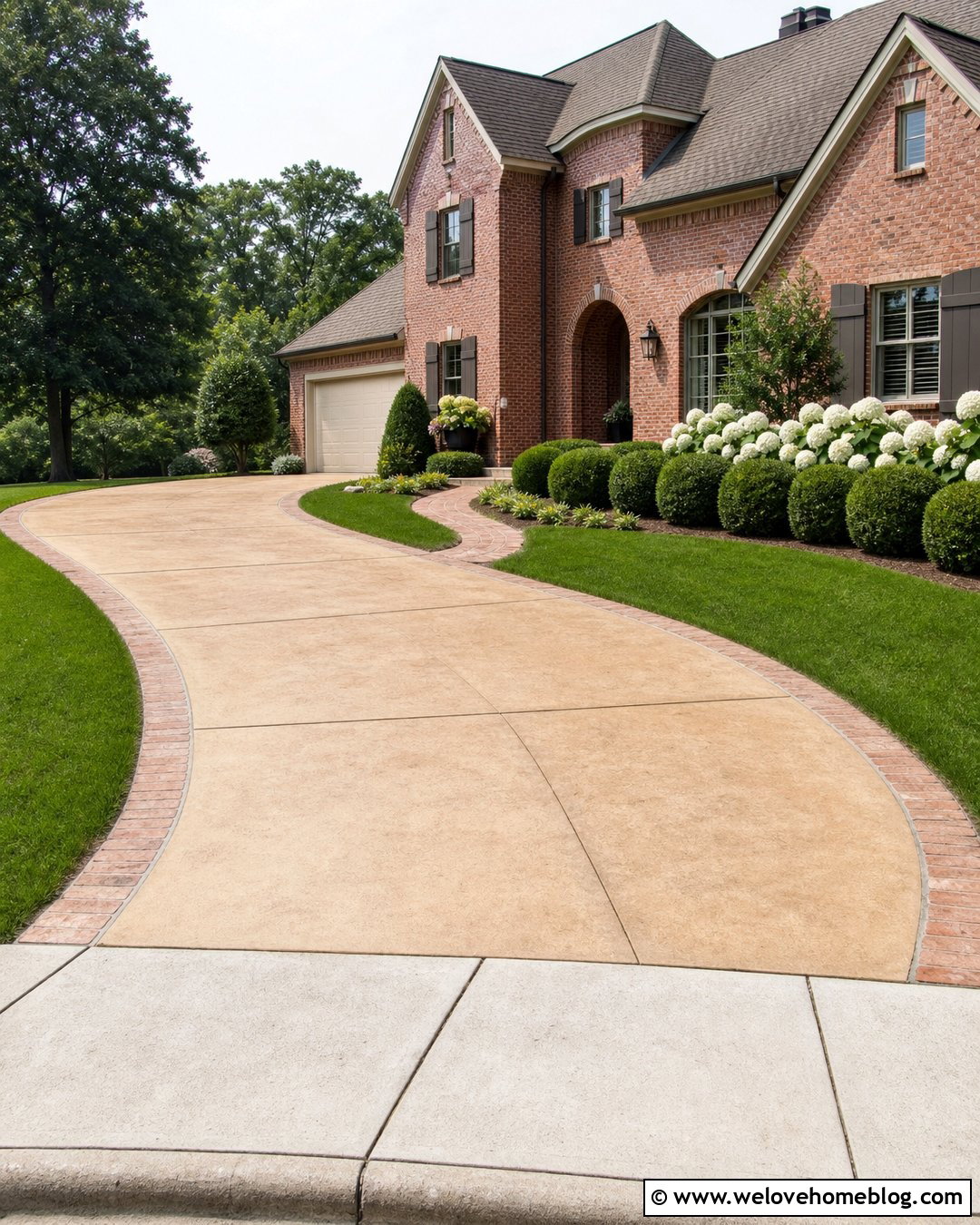
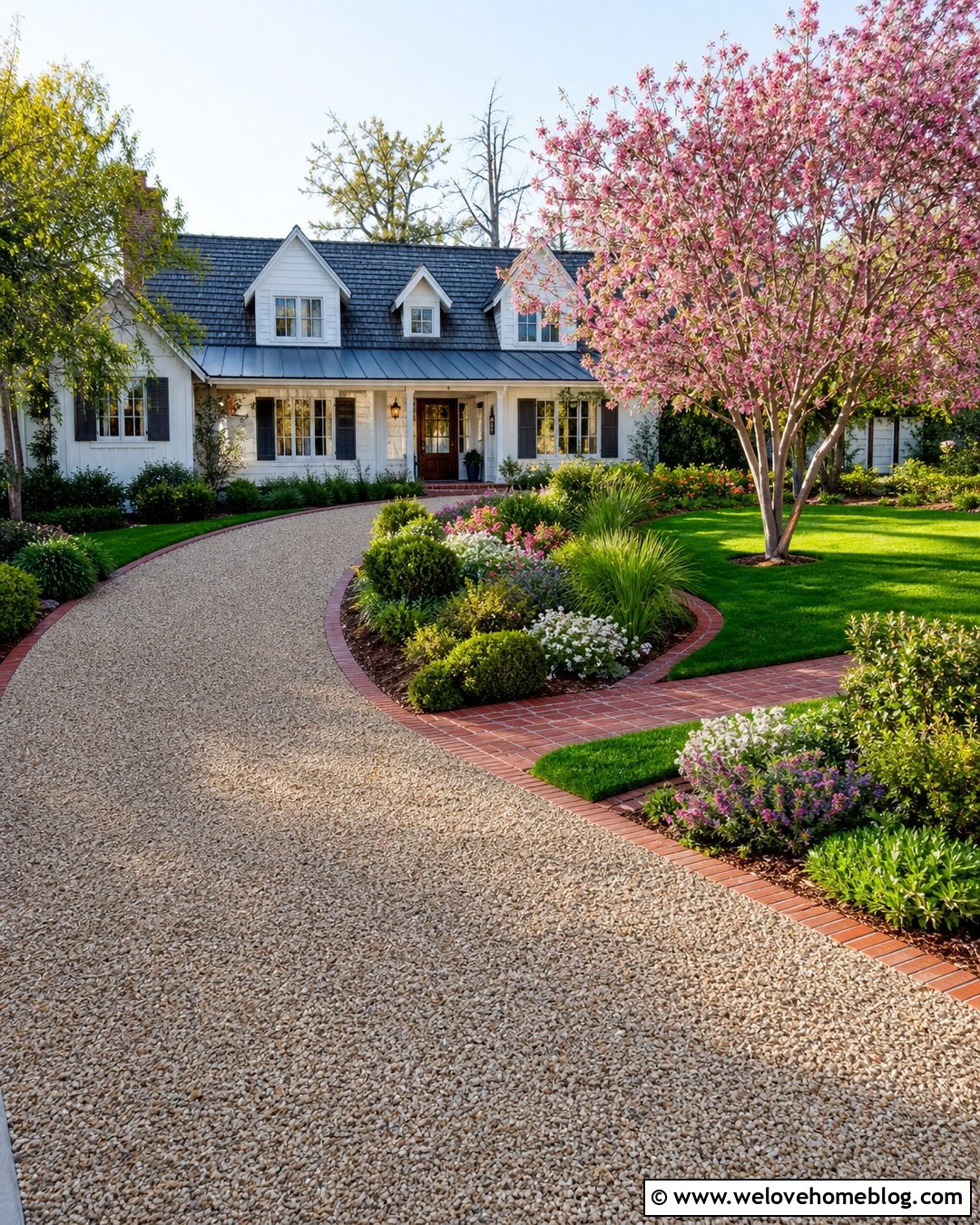
Does your home have red brick, cream siding, or warm stone details? A tan stained concrete driveway with brick edging can unite those exterior materials beautifully. Choose a sandy beige or light adobe stain for the concrete field, allowing natural tonal variations to remain visible. Install clay brick in a soldier-course border along both sides and repeat it where the driveway meets the sidewalk. A gentle curve can make the approach feel softer and more established. Frame the edges with green lawn, hydrangeas, and rounded shrubs rather than highly colorful planting. Carrying the same brick into the front walkway creates continuity. Select brick tones already present on the house instead of introducing an unrelated red or orange.
4. Charcoal Stained Concrete Driveway With Grass Strips
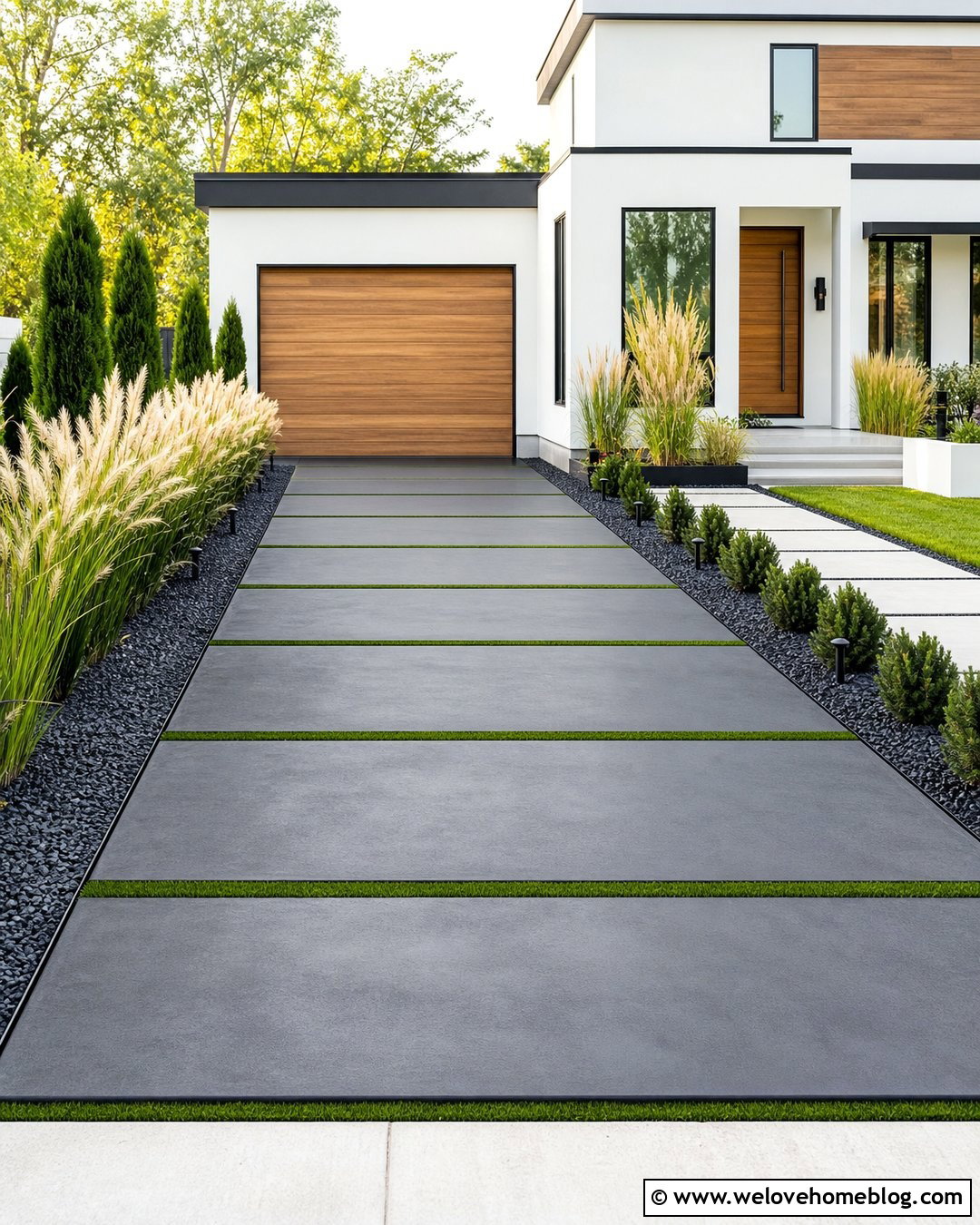
Long concrete slabs separated by grass strips create an attractive balance between hardscape and greenery. For this design, use charcoal stained concrete in broad driving lanes, leaving narrow planted channels between selected slabs. The dark surface looks sharp against a white, light gray, or natural wood modern house. Keep the driveway straight and align every division with architectural features such as windows, columns, and garage doors. Low, durable ground cover can replace lawn in the strips when frequent trimming is undesirable. Along the outer edges, use simple beds filled with dark mulch, evergreen shrubs, and feather reed grass. The finished entrance feels contemporary, but the living joints prevent the large paved area from appearing severe.
5. Terracotta Stained Concrete Driveway With Stone Walls
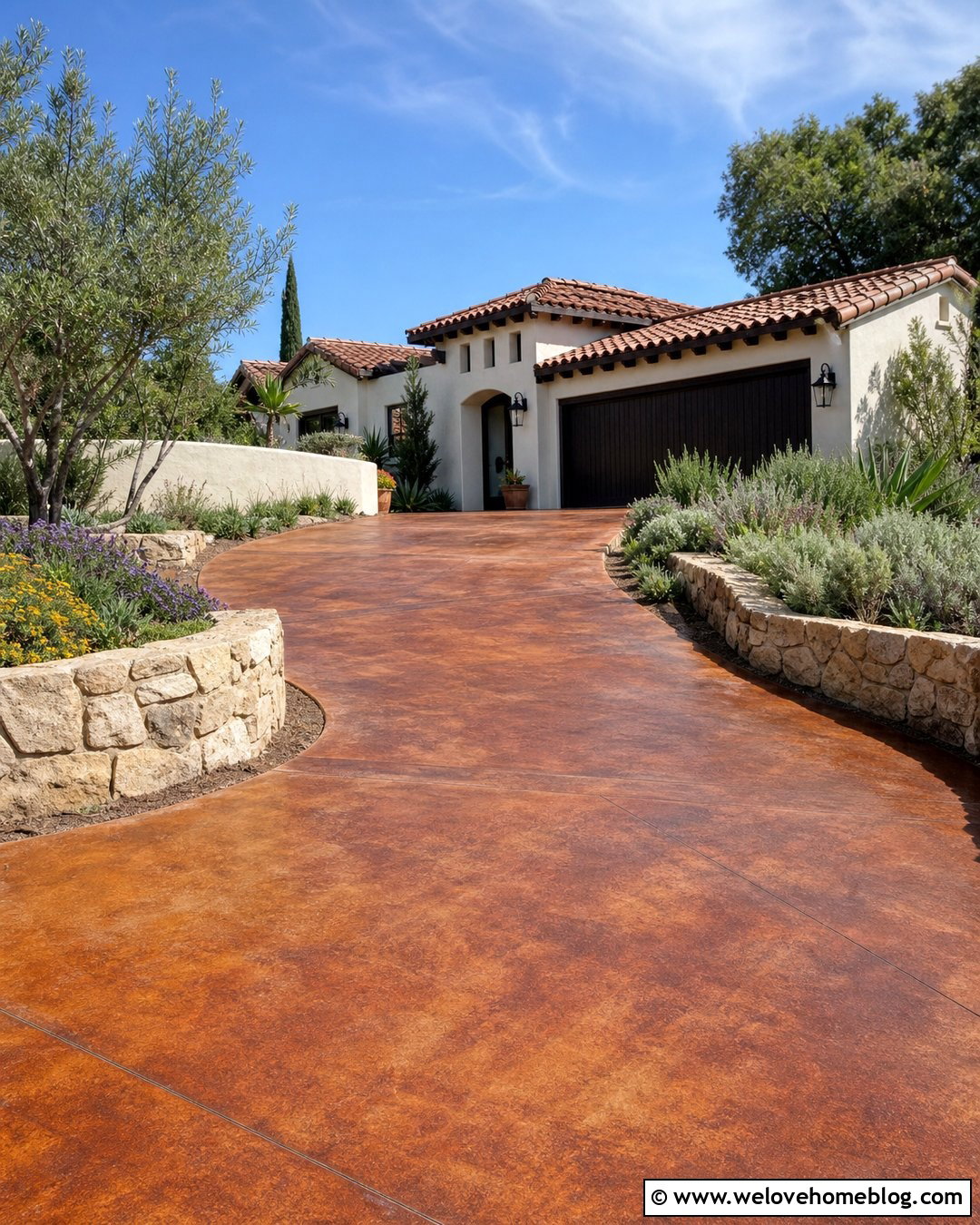
Warm terracotta stained concrete brings a sunbaked character to Spanish, Southwestern, and Mediterranean-inspired homes. A curved driveway works particularly well because it echoes the relaxed shapes often found in these landscapes. Add low retaining walls made from buff or cream natural stone, keeping their color lighter than the driveway. Olive-toned shrubs, sage, rosemary, ornamental grasses, and drought-tolerant flowers can soften the masonry. For visual depth, use a mottled acid-stain effect that blends rust, clay, and muted brown instead of one flat orange tone. A darker stained band near the garage provides a tidy transition. Coordinate the surface with the roof tile, but avoid matching it so closely that the house and driveway become one uninterrupted color.
6. Black Stained Concrete Driveway With White House
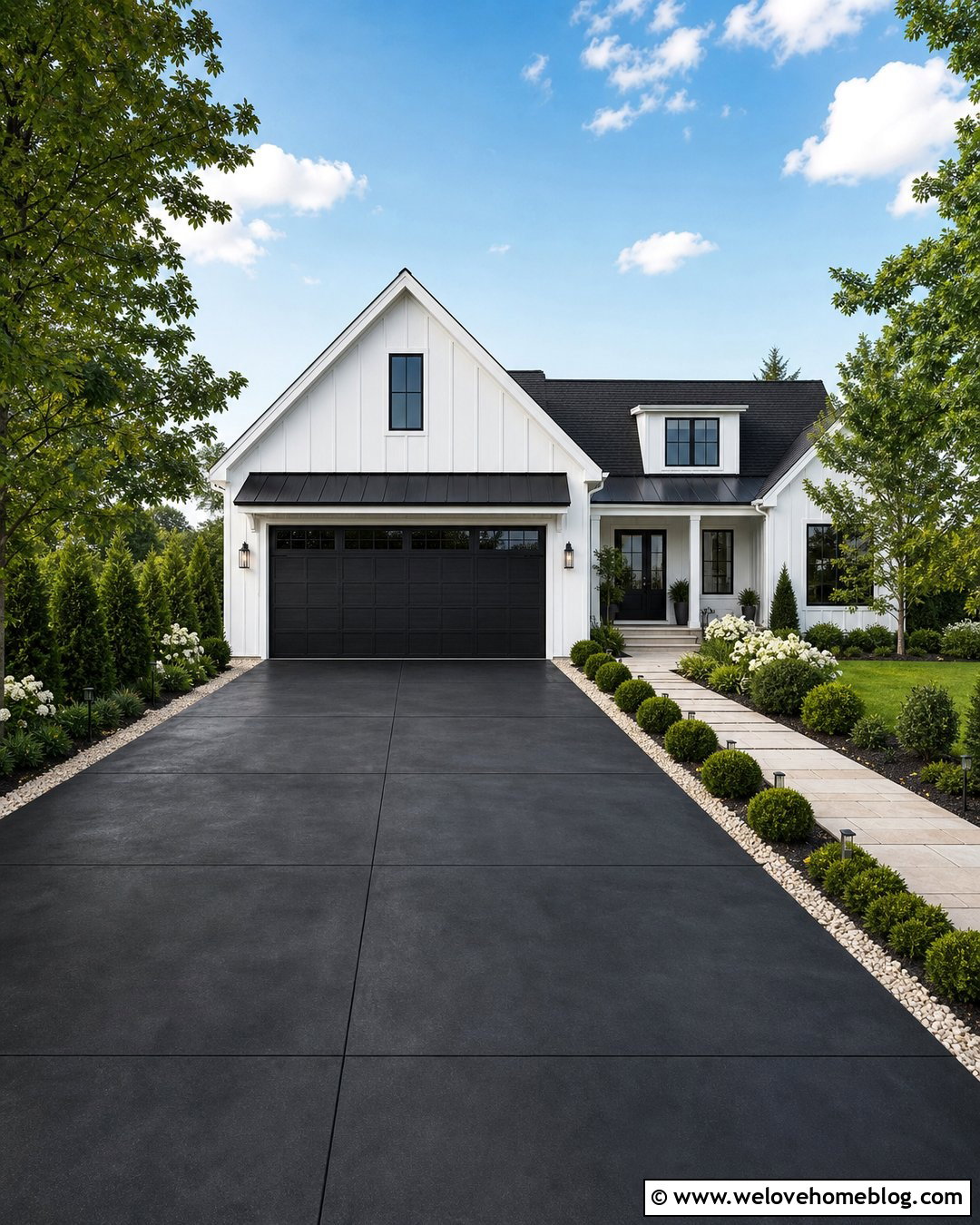
Few combinations feel as graphic as a black stained concrete driveway leading to a bright white house. This treatment suits modern farmhouses, minimalist homes, and renovated ranch exteriors. Choose a deep charcoal-black stain rather than a completely uniform jet black, allowing enough variation to show the concrete’s character. A straight driveway with clean edges will strengthen the high-contrast effect. Border it with pale gravel, clipped green shrubs, and white flowering plants. Add a light concrete or limestone walkway so pedestrians have a clear route to the front door. Because very dark paving can visually dominate a small yard, break up a wide surface with narrow sawcut bands or slightly lighter stained panels near the entrance.
7. Stained Concrete Driveway With Faux Stone Pattern
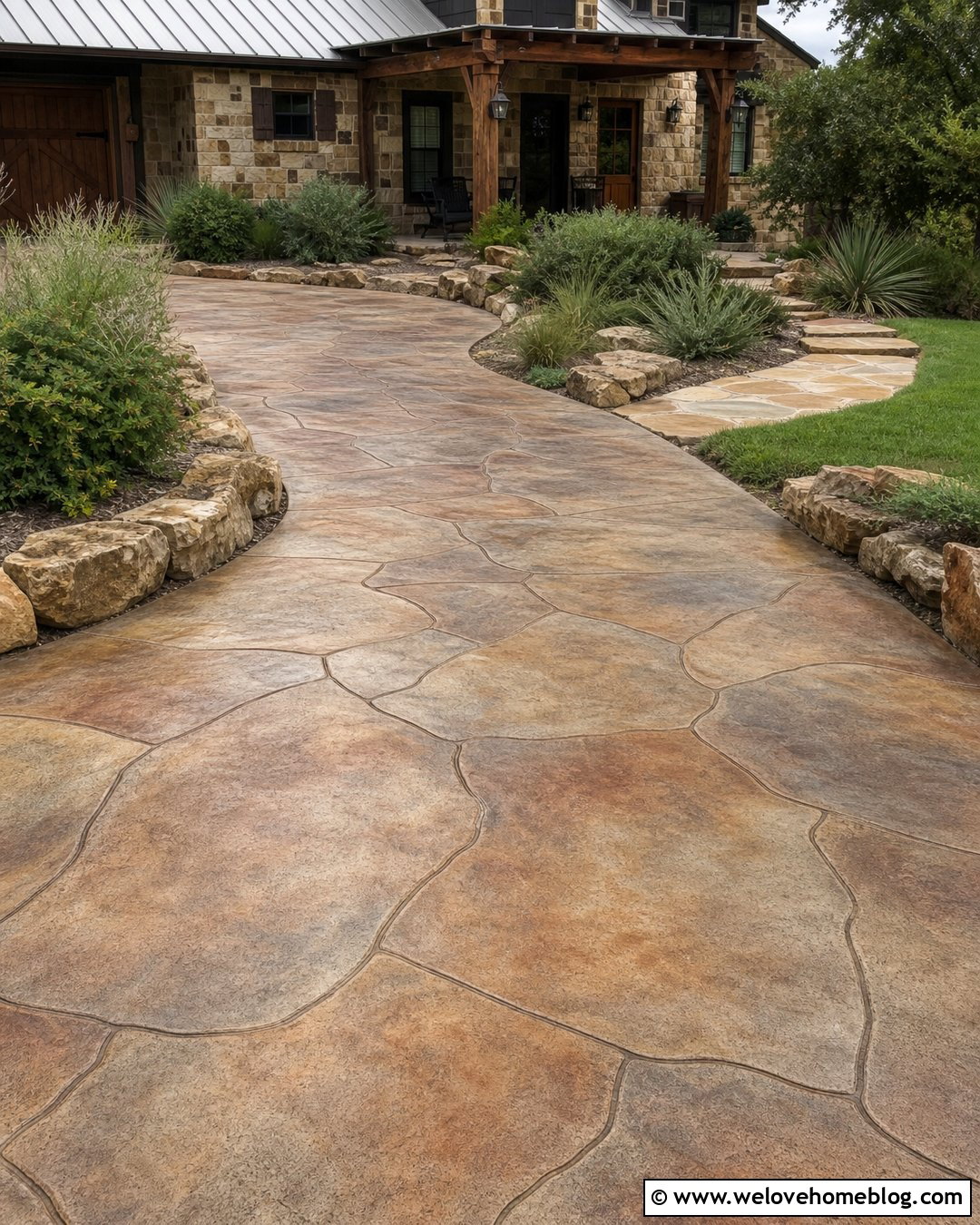
A faux stone pattern can give stained concrete an organic appearance without covering the driveway with separate masonry pieces. Start with decorative sawcuts arranged in varied flagstone-like shapes. Layer tan, umber, soft gray, and muted rust stains within the individual fields, keeping neighboring sections slightly different. A dark brown stain inside the cut lines will emphasize the pattern. This complete look is well suited to a country home, stone cottage, or rustic ranch. Use an irregular natural-stone border and relaxed planting beds filled with native grasses and spreading shrubs. Avoid making every simulated stone the same size or color. Controlled variation is what helps the pattern relate convincingly to real stonework elsewhere on the property.
8. Stained Concrete Driveway With Faux Tile Pattern
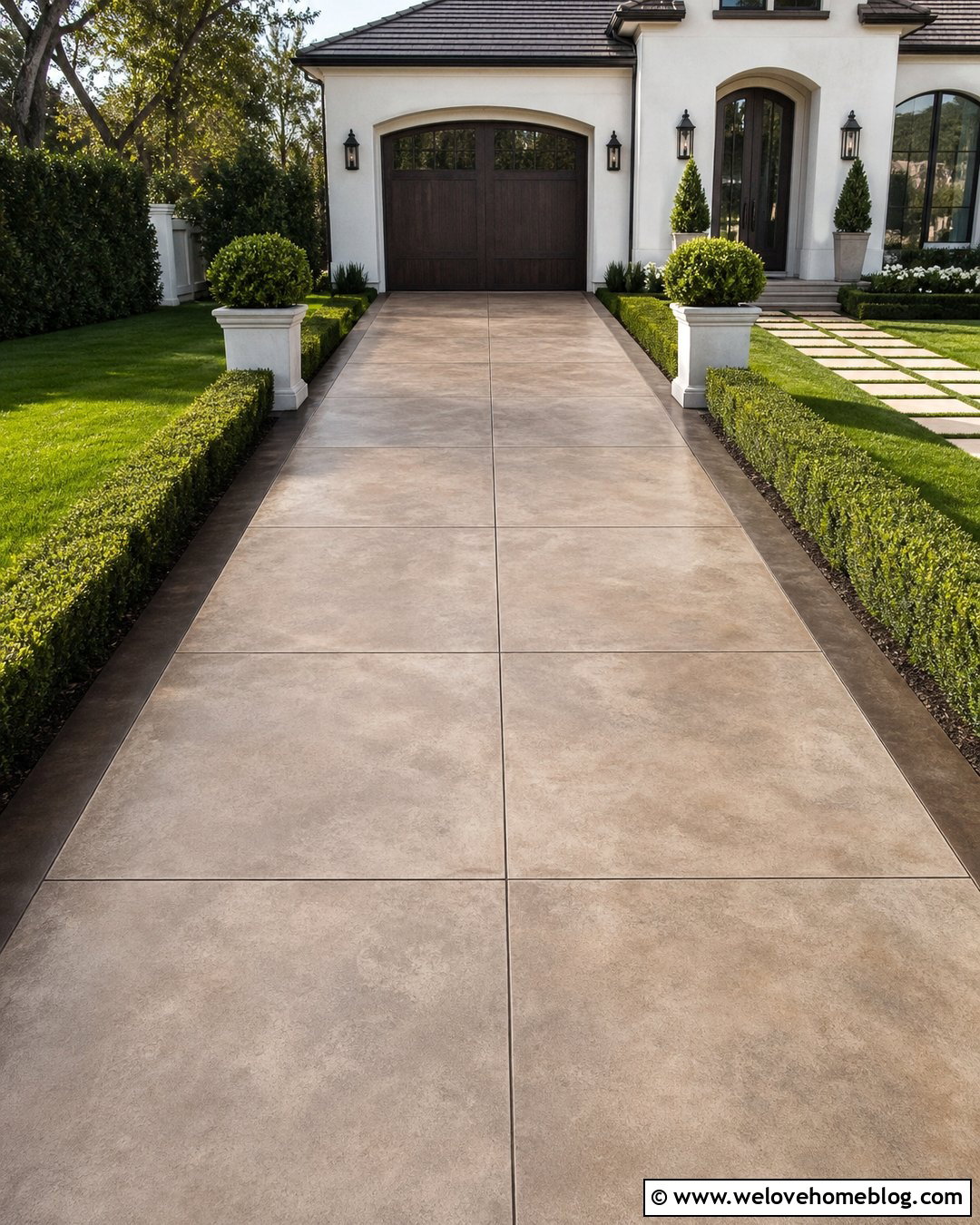
Large square sawcuts can transform stained concrete into a tidy tile-inspired driveway. For a balanced appearance, use 30- or 36-inch visual squares rather than a small pattern that may feel crowded across a wide surface. Apply a light taupe stain to most fields, then introduce occasional beige and soft brown variations. Darker cut lines will make the layout easier to read from the curb. Frame the driveway with a narrow solid-color border that repeats the darkest tone. This treatment complements stucco homes, transitional exteriors, and suburban houses with simple facades. Low hedges and symmetrical planters support the organized pattern. Continue the same grid onto the walkway, but reduce its scale slightly to distinguish the pedestrian route.
9. Stained Concrete Driveway With Brick Pattern Border
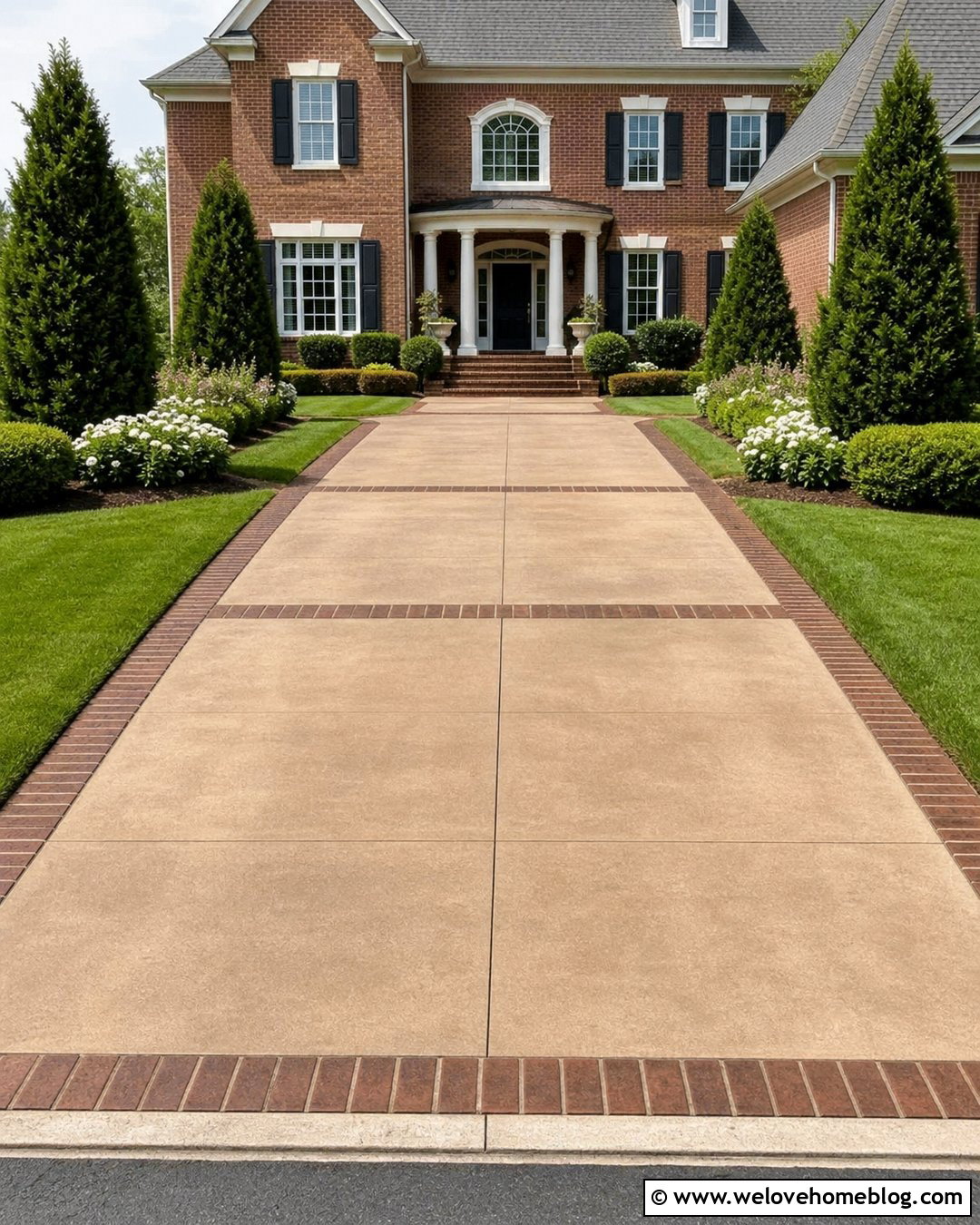
A brick-pattern border adds traditional detail without overpowering the main stained surface. Use warm beige or light brown stained concrete for the central field, then stamp or stencil the perimeter to resemble red-brown brick. Layer several related colors through the border so it feels connected to real masonry rather than painted onto the surface. The brick pattern can also cross the driveway in bands that align with control joints. This design fits colonial, Georgian, and classic suburban homes, especially when the facade already contains brick accents. Add formal foundation shrubs, a green lawn, and a straight walkway edged with matching brick. Keep the center relatively simple so the detailed perimeter remains the clear finishing feature.
10. Stained Concrete Driveway With Compass Medallion
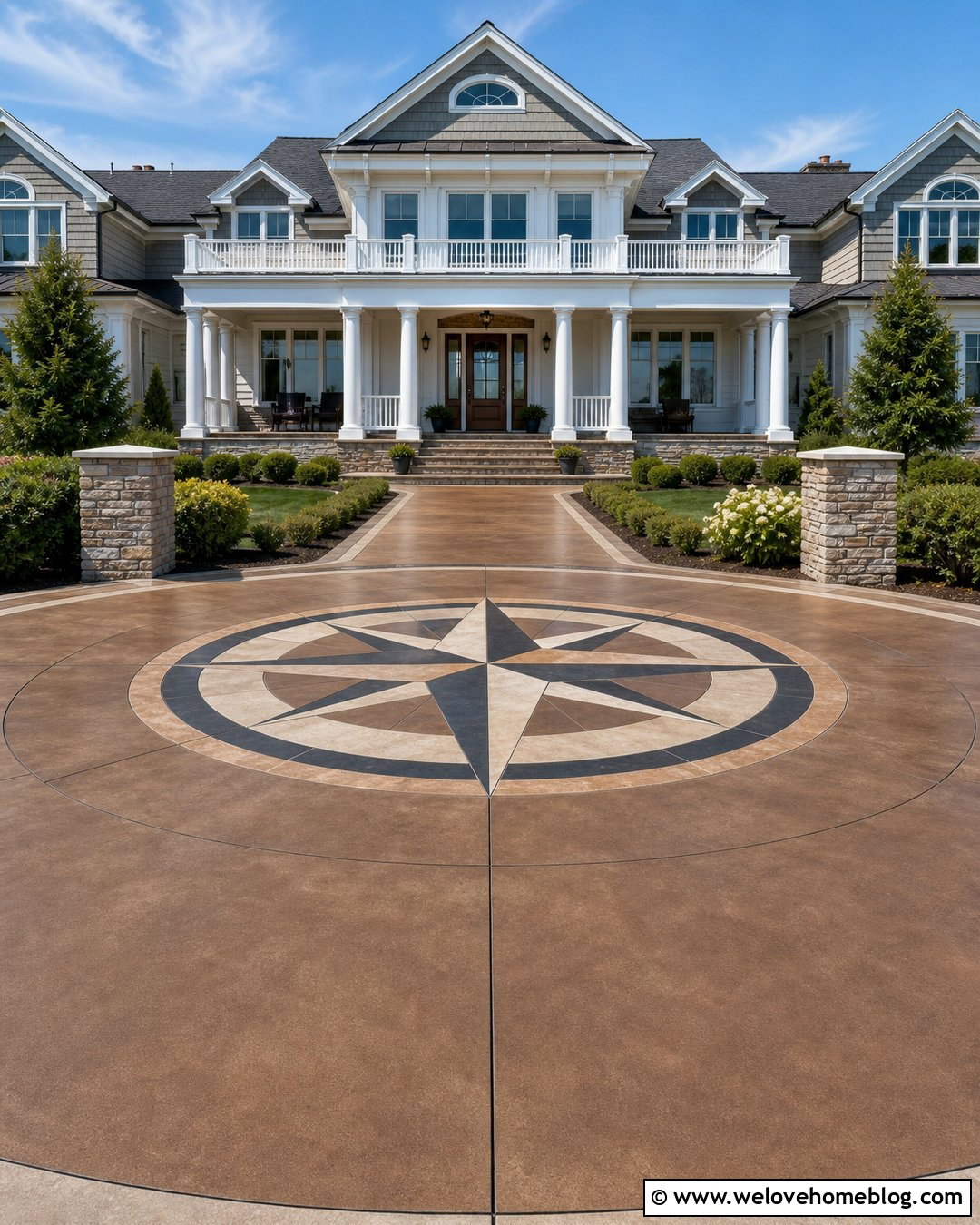
A decorative compass medallion creates a memorable focal point on a wide driveway or circular arrival court. Position the design where it can be seen clearly from the street without being hidden by parked vehicles. Surround it with a warm tan or coffee-brown stained concrete field. Use charcoal, dark walnut, and cream stains within the medallion for readable contrast. Simple sawcut borders around the driveway will keep the central feature from competing with other patterns. This approach looks especially appropriate in front of a coastal, colonial, or large traditional home. Balance the medallion with symmetrical planting beds and understated pillars. Carefully scale the motif to the paved area; a small emblem can disappear within an oversized driveway.
11. Blue Gray Stained Concrete Driveway With Coastal Landscaping
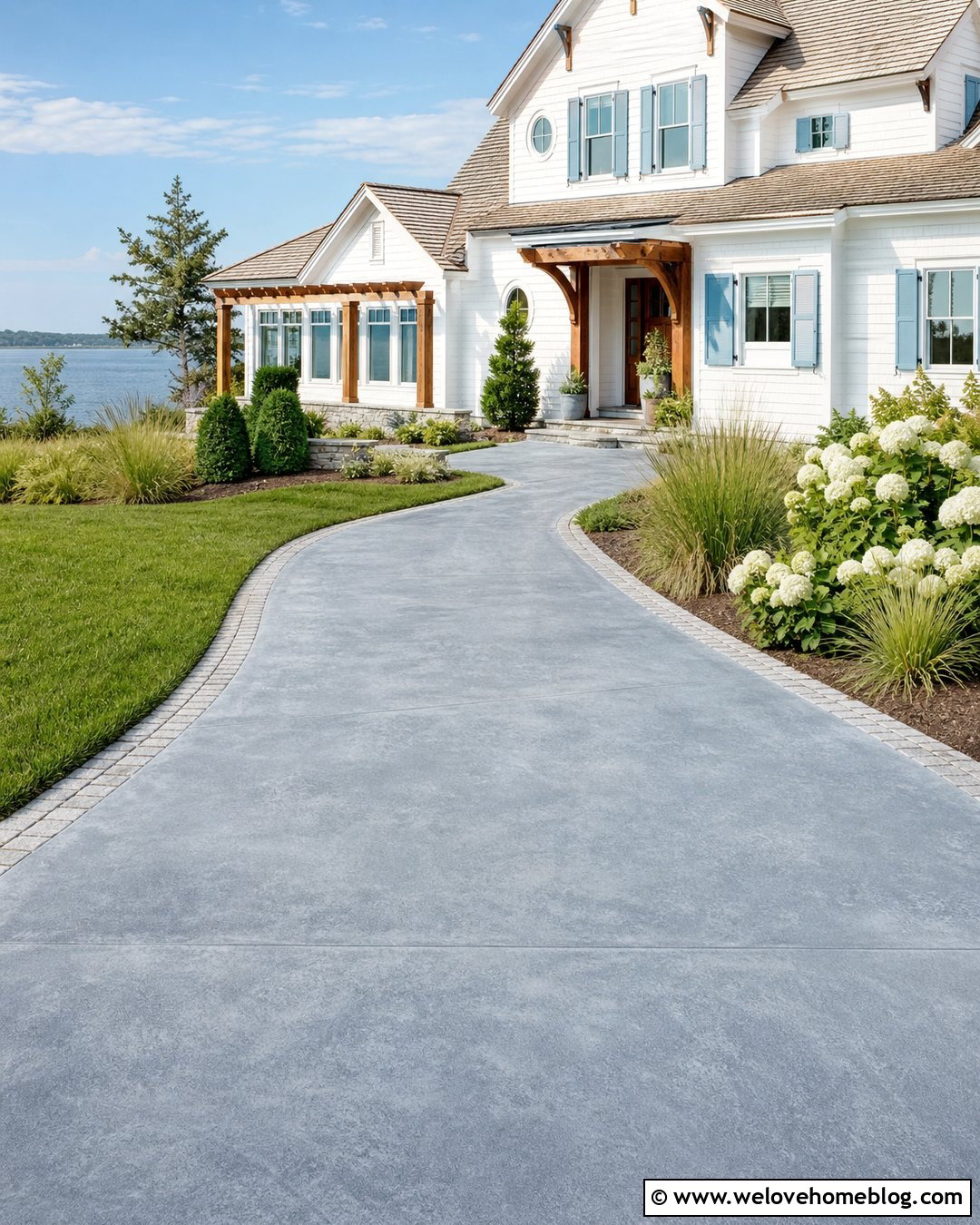
Blue-gray stained concrete provides a cool foundation for a coastal-inspired exterior. The color works well with white siding, pale blue shutters, natural cedar, and light stone. Choose a softly mottled finish rather than a vivid blue, keeping the driveway grounded in realistic slate and storm-gray tones. A gently curved layout can lead around a bed of beach grass, dwarf evergreens, and white hydrangeas. Edge the surface with pale cobblestones or a narrow band of light gray stained concrete. A coordinating path should branch naturally toward the porch instead of cutting awkwardly across the lawn. Repeating blue-gray tones in planters, porch steps, or garage hardware helps the driveway feel integrated into the overall exterior palette.
12. Green Stained Concrete Driveway With Woodland Setting
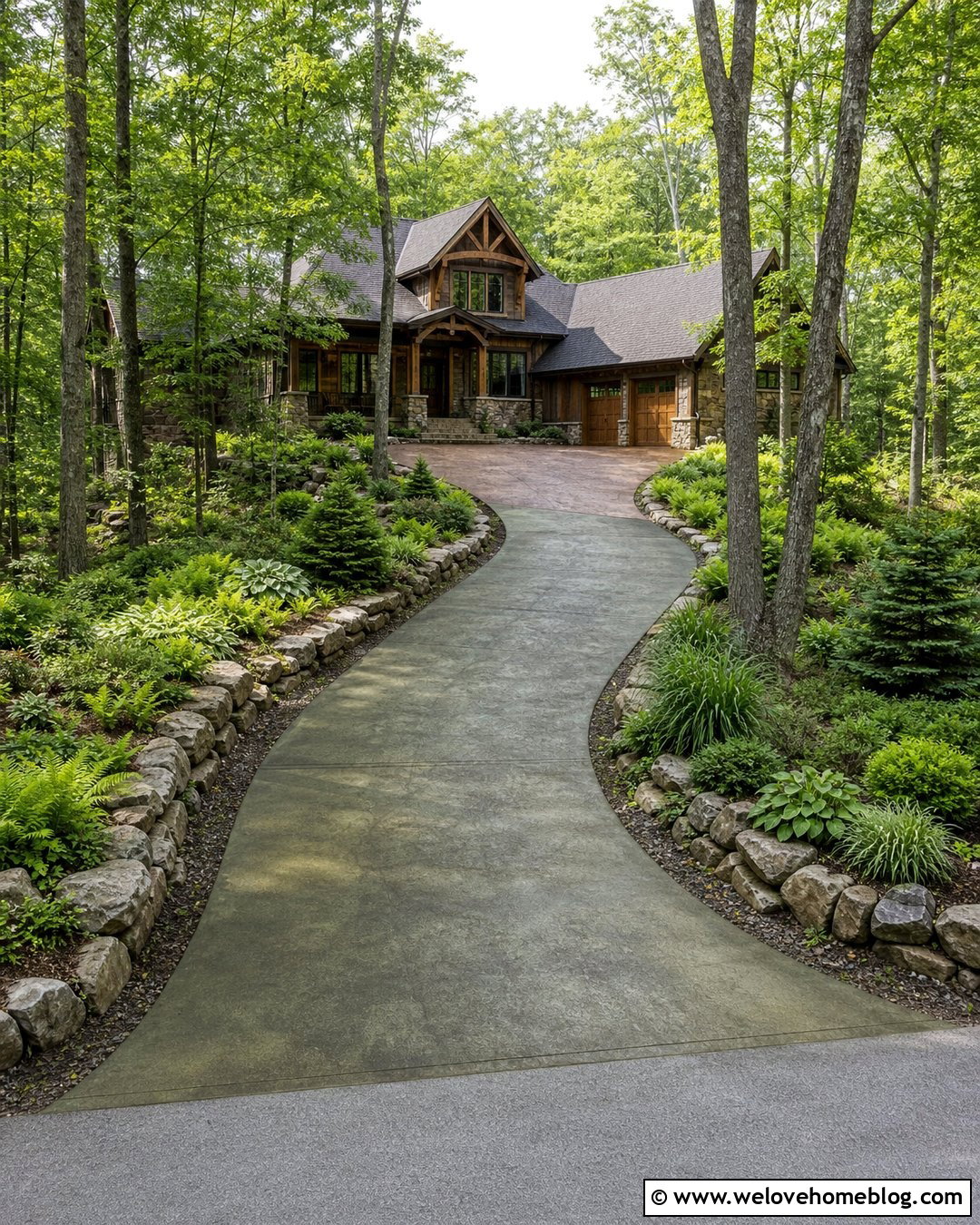
Muted green stained concrete can settle comfortably into a wooded property when the color leans toward moss, sage, or weathered copper. Use the shade sparingly, blending it with gray and brown undertones so the surface complements the landscape rather than appearing artificially bright. A winding driveway is ideal for this setting. Border it with natural stone and preserve established trees where the site allows. Ferns, hostas, woodland grasses, and low evergreen shrubs can fill the shaded planting beds. Near the house, transition to a darker brown stained apron that relates to timber siding or stone veneer. The finished design should feel understated from the street, with the driveway following the terrain and guiding attention toward the home.
13. Stained Concrete Driveway With Exposed Aggregate Border
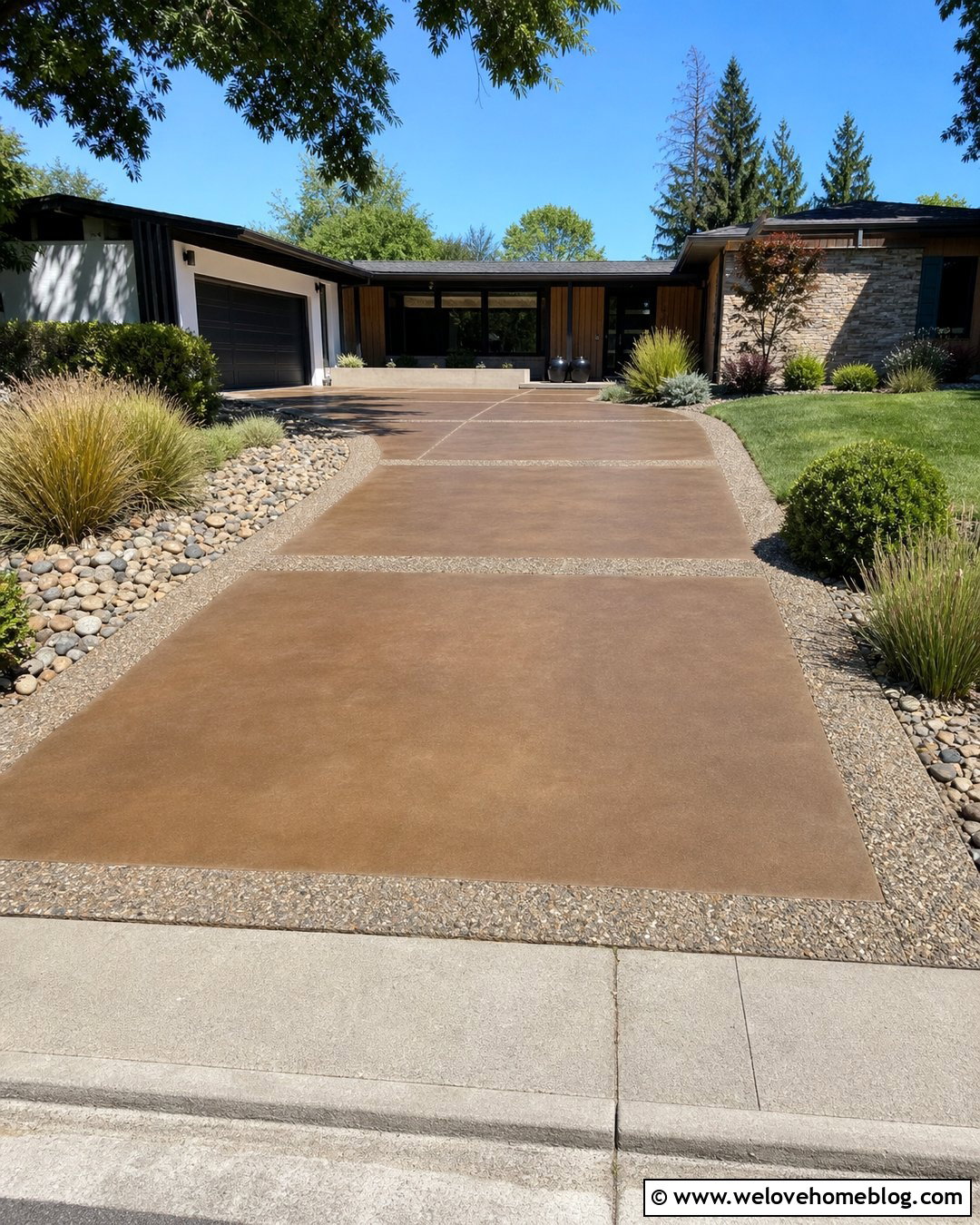
Texture can be just as important as color. Pair a smooth, medium-brown stained concrete field with an exposed aggregate border in complementary tan and gray tones. The aggregate frame adds visual depth and creates a clear edge beside lawn or planting beds. It can also continue across the driveway in bands placed along existing joints. This combination suits contemporary ranch homes, midcentury exteriors, and updated traditional properties. Keep the layout broad and simple so the contrasting textures remain easy to appreciate. Use river rock, rounded shrubs, and ornamental grasses in the surrounding landscape to echo the aggregate. When selecting both finishes, view samples together outdoors to confirm that their undertones work naturally in changing daylight.
14. Stained Concrete Driveway With Cobblestone Edging
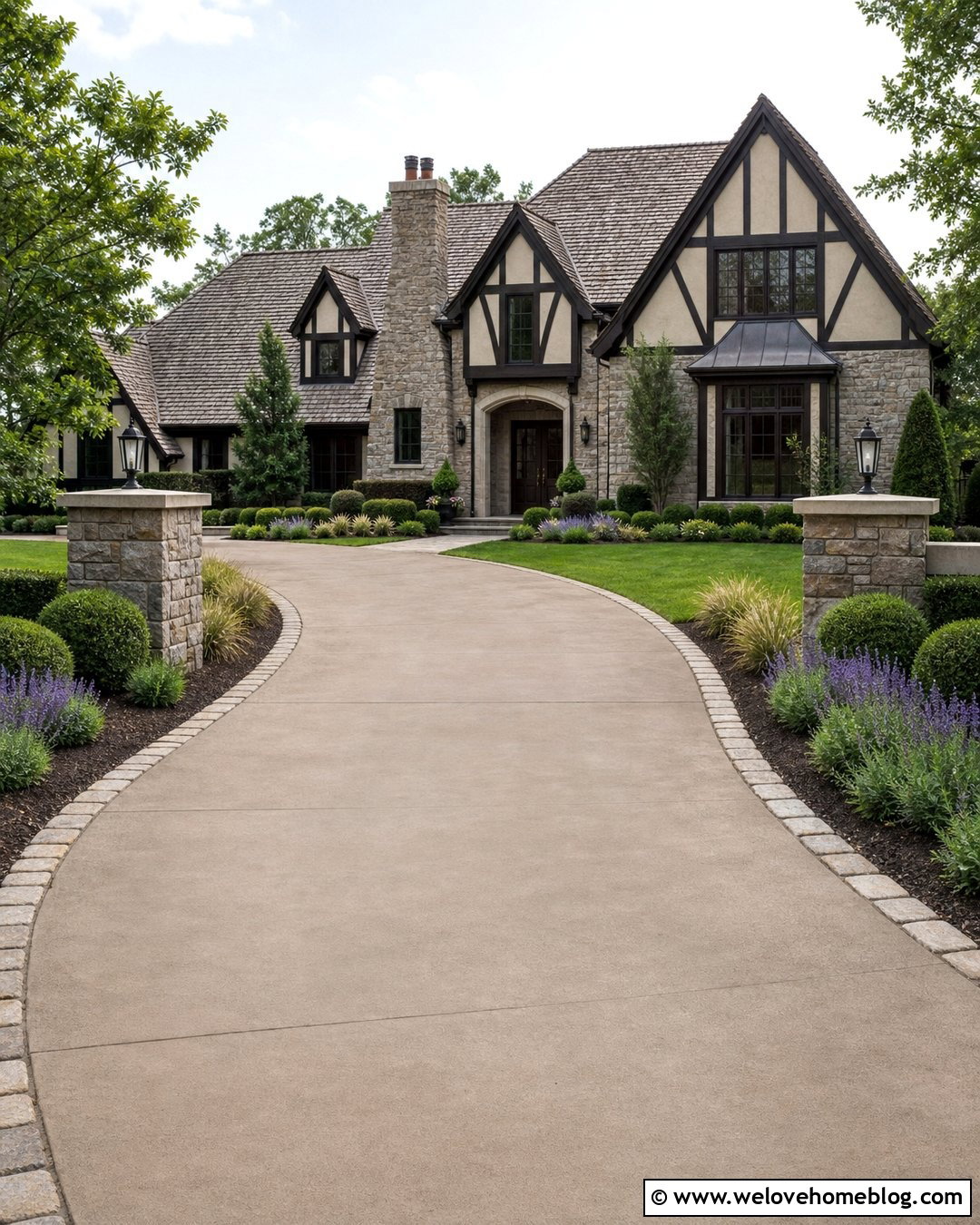
Picture a long, gently curved driveway framed by a single row of weathered cobblestones. The main concrete surface can be stained a soft taupe, mushroom brown, or aged gray to complement the varied stone. Cobblestone edging gives the driveway a substantial finish and works especially well with Tudor, European-inspired, Cape Cod, and country homes. Allow the border to widen near the entrance, where it can wrap around stone pillars or connect to a matching walkway. Plant low boxwoods, lavender, and ornamental grasses behind the stones so their texture stays visible. A restrained stain color is important here. Highly varied concrete could compete with the natural shifts already present in the cobblestone edging.
15. Stained Concrete Driveway With Paver Ribbons
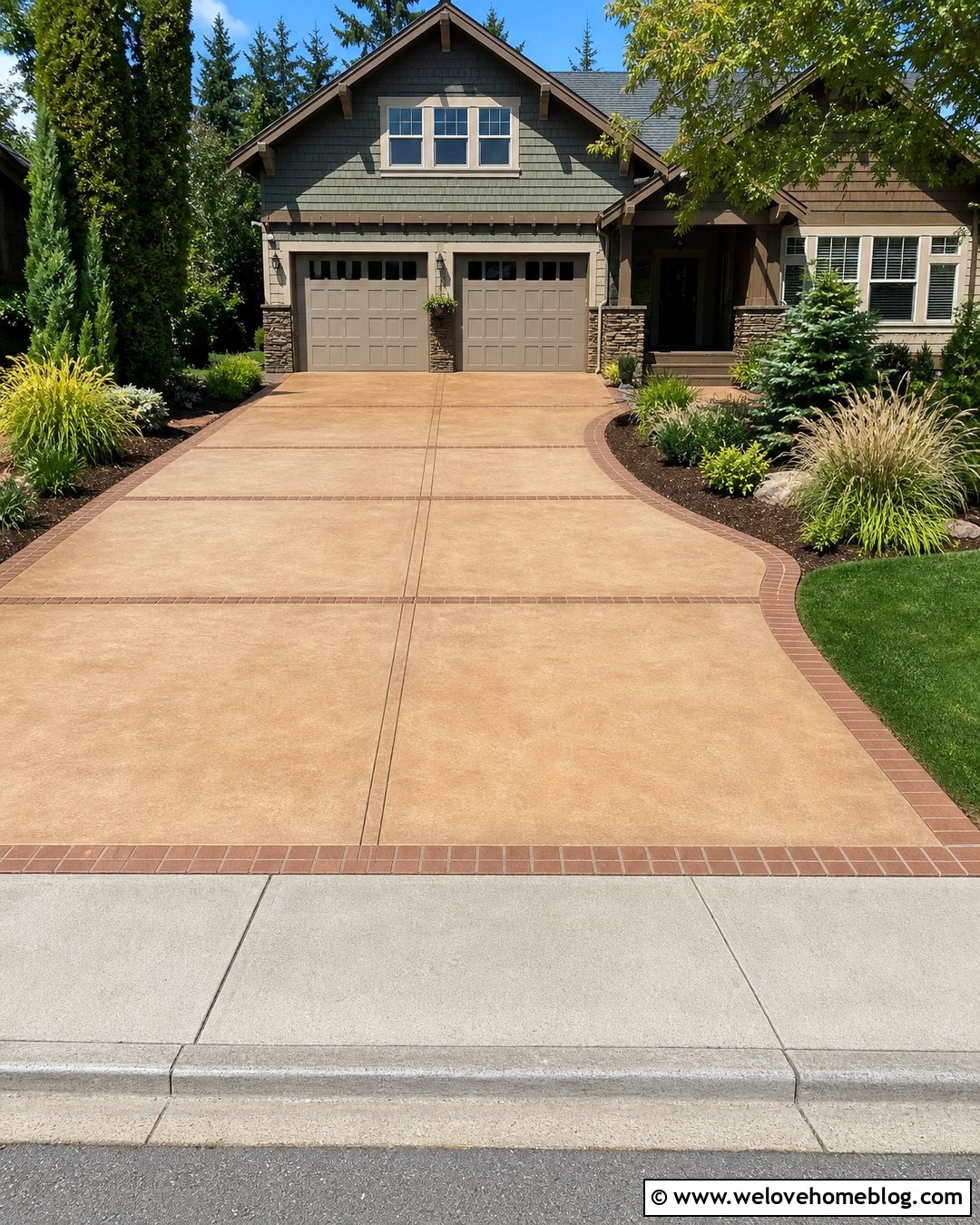
Paver ribbons can divide a wide stained concrete driveway into smaller, more comfortable visual sections. Apply a light caramel or warm gray stain to the concrete, then install narrow brick or concrete-paver bands across the surface. Align those bands with control joints whenever possible to make the pattern feel purposeful. Continue the pavers around the perimeter or into the front walkway for a unified result. This design is flexible enough for traditional, Craftsman, and transitional homes. Use a curved planting island near the garage to soften a large parking area. Choose pavers that contrast with the stain but repeat a color from the facade. Too many unrelated shades may make the entrance look fragmented instead of coordinated.
16. Stained Concrete Driveway With Wood Plank Pattern
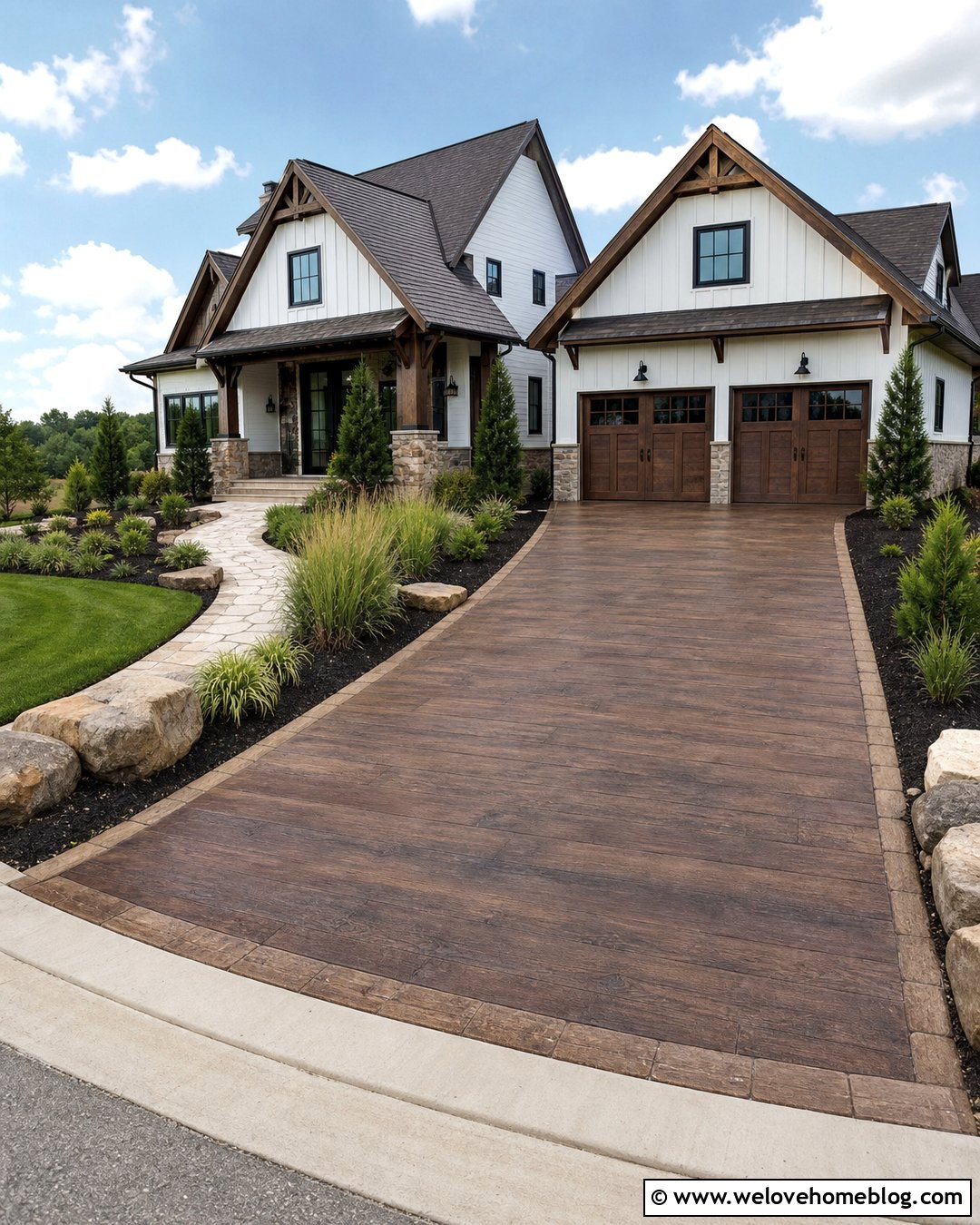
Wood-look stamped concrete gains additional depth when stain highlights the grain and board divisions. Choose a weathered walnut, driftwood gray, or medium oak palette rather than a bright artificial brown. The plank pattern can frame a simpler stained center, or it can cover the full driveway on a smaller property. Orient the boards across the driving direction so the surface visually widens as it approaches the garage. This complete look pairs naturally with modern farmhouse siding, rustic beams, or a mountain-style home. Add stone edging, evergreen shrubs, and native grasses to balance the wood effect. Keep nearby wood finishes slightly different in tone, allowing the driveway to coordinate with the architecture without looking like an exact imitation.
17. Light Beige Stained Concrete Driveway With Desert Plants
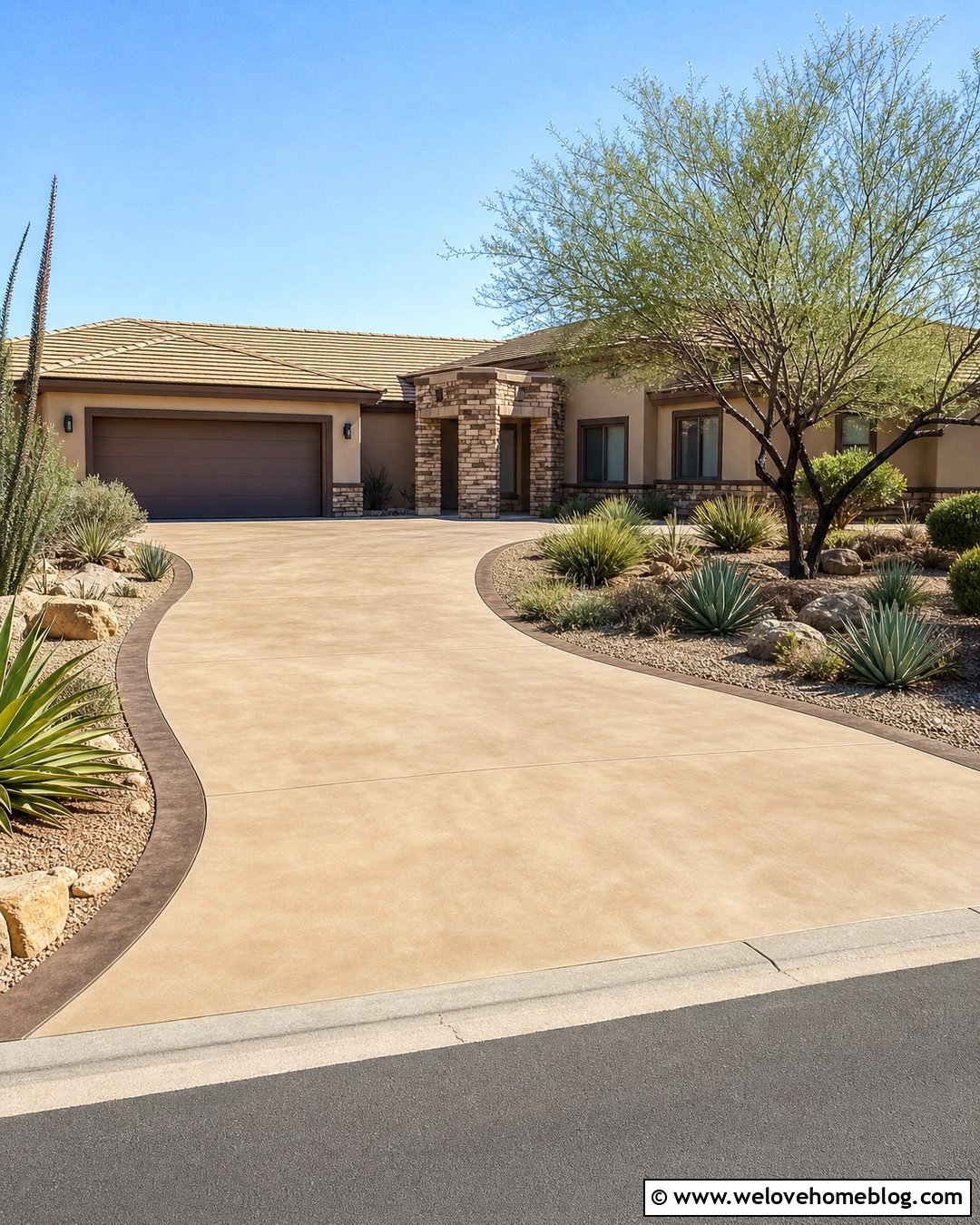
A light beige stained concrete driveway creates a calm transition between a desert landscape and a stucco home. Use sandy, cream, and pale adobe undertones to reflect the colors found in gravel beds and dry-climate planting. A broad curved layout can wrap around an island containing a sculptural desert tree, agaves, yuccas, and ornamental grasses. Border the driveway with warm gravel and a narrow darker stained band to keep the pale surface visually defined. Select a low-sheen finish so the design feels natural in strong daylight. Tan stone columns at the entrance can repeat the driveway color while providing height. Limit the surrounding palette to a few coordinated materials for a clean, water-conscious curb view.
18. Dark Brown Stained Concrete Driveway With Rustic House
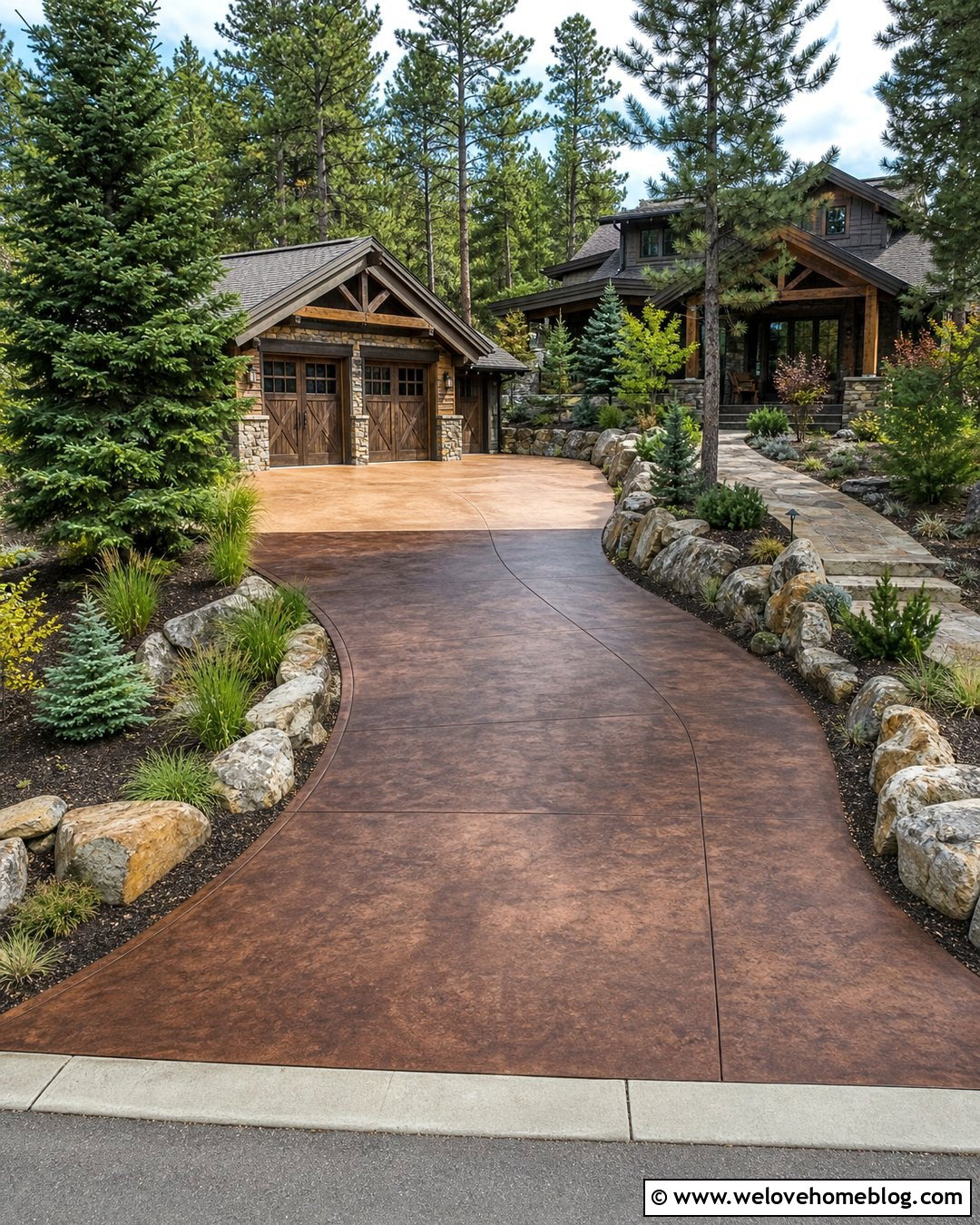
Deep chocolate and coffee tones can ground a rustic home surrounded by wood, stone, or mature trees. Instead of applying one solid shade, layer dark brown stain over a lighter base to create a worn leather effect. Existing surface variations may become part of the character when they are properly evaluated and prepared by a concrete professional. Use a curved or slightly irregular driveway edge, then frame it with natural boulders and informal native planting. A lighter stone walkway will prevent the entrance from becoming too dark. Near the garage, add a wide tan-stained apron that echoes stonework on the house. Simple, earthy landscaping lets the richly colored concrete remain the strongest feature without making the property feel heavily decorated.
19. Stained Concrete Circular Driveway With Center Island
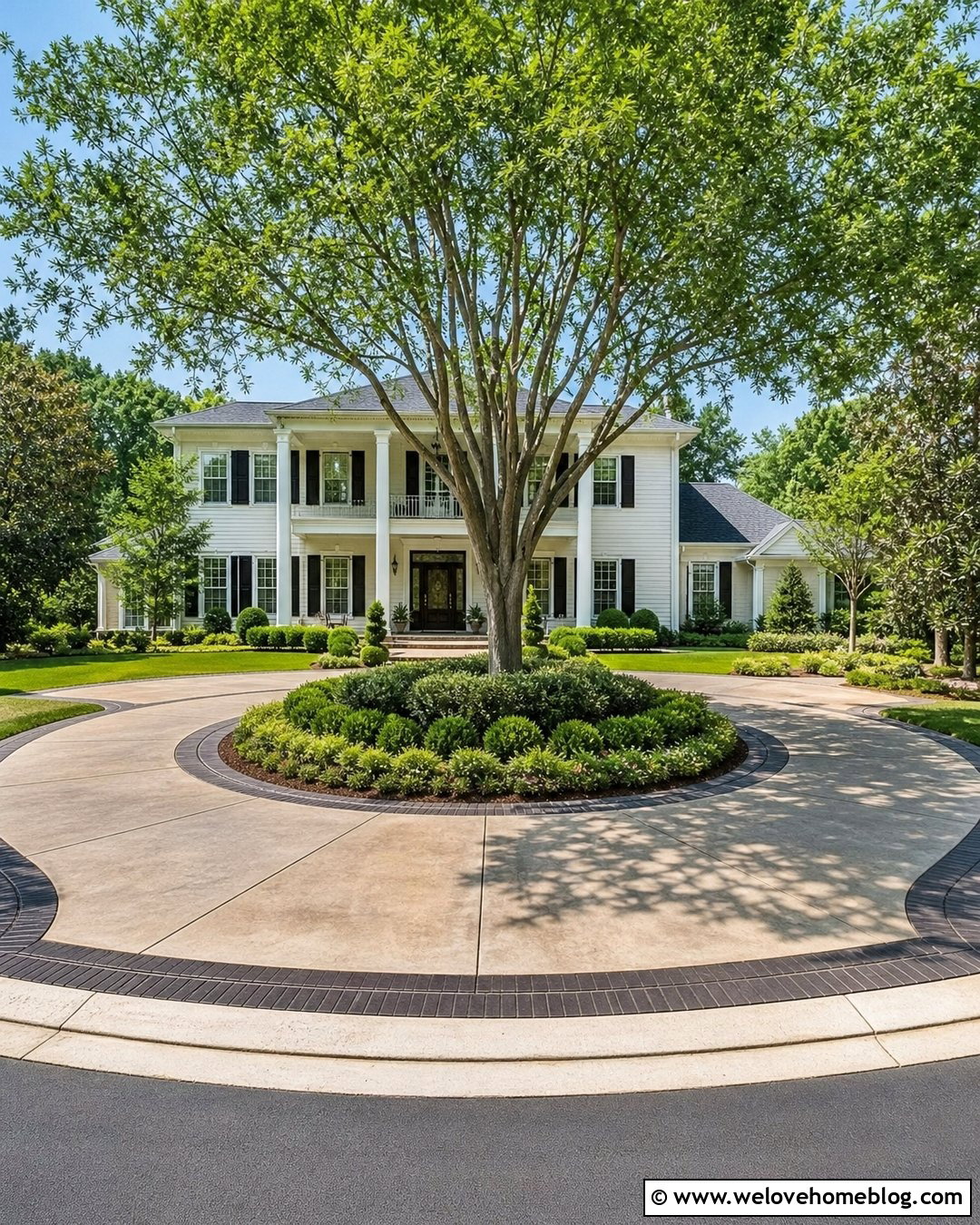
A circular stained concrete driveway offers both a graceful arrival and a practical flow around the front yard. Use a warm gray or caramel stain across the driving surface and define the inner curve with a dark contrasting border. The center island should be large enough to look intentional, with a specimen tree, layered shrubs, and low ground cover arranged for visibility. Repeat the border color around the outside edge and at the street entrance. This layout suits colonial, Southern, Mediterranean, and spacious ranch homes. A walkway can connect the island-side curve to the porch using the same stained finish. Keep decorative patterns concentrated near the entrance or center point so the sweeping circular form remains clear from the curb.
20. Stained Concrete Horseshoe Driveway With Stone Pillars
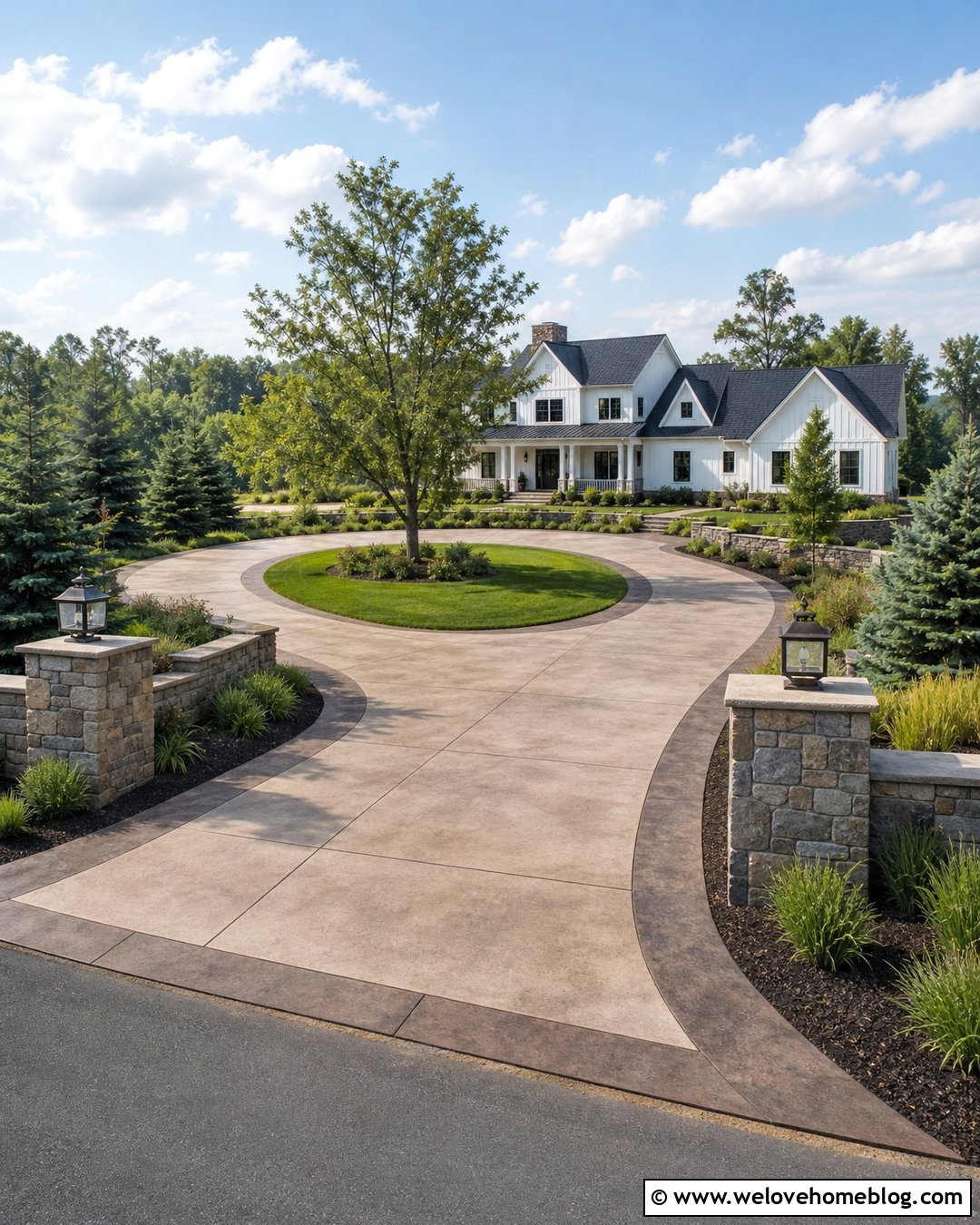
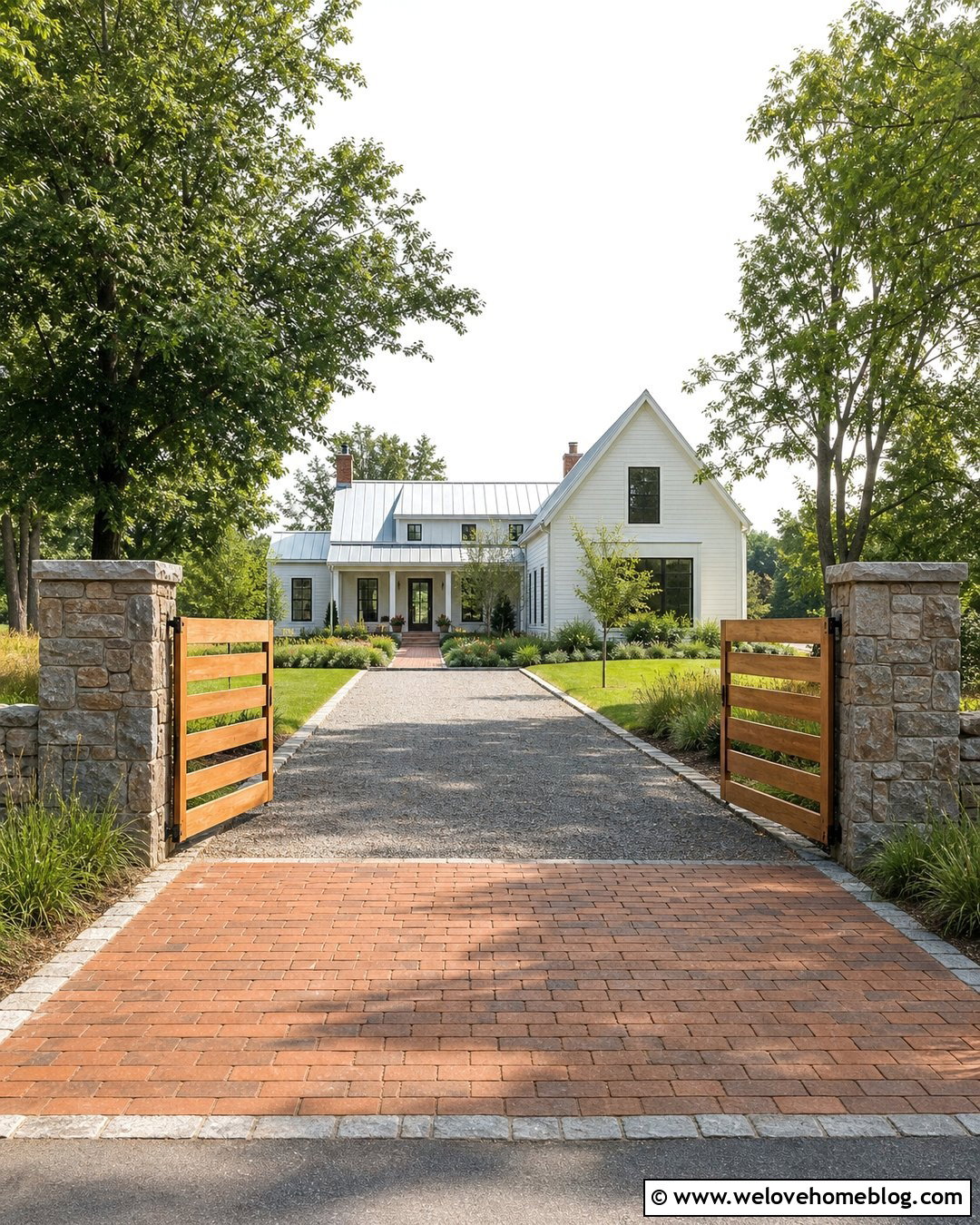
Stone pillars give a horseshoe driveway two clearly defined entry points and a polished sense of arrival. Choose medium taupe stained concrete with subtle brown variation, then add a darker band along both curved edges. Match the pillars to stone already used on the home, and keep their scale appropriate for a residential lot. Low walls or planting beds can extend from each pillar without blocking sightlines. Between the driveway loops, create a broad lawn or landscaped island with one feature tree and layered evergreens. A farmhouse, country estate, or large traditional home forms an ideal backdrop. Repeating the driveway stain on the front walk will visually connect the broad vehicle route to the more intimate porch entrance.
21. Stained Concrete Driveway With Curved Planting Beds
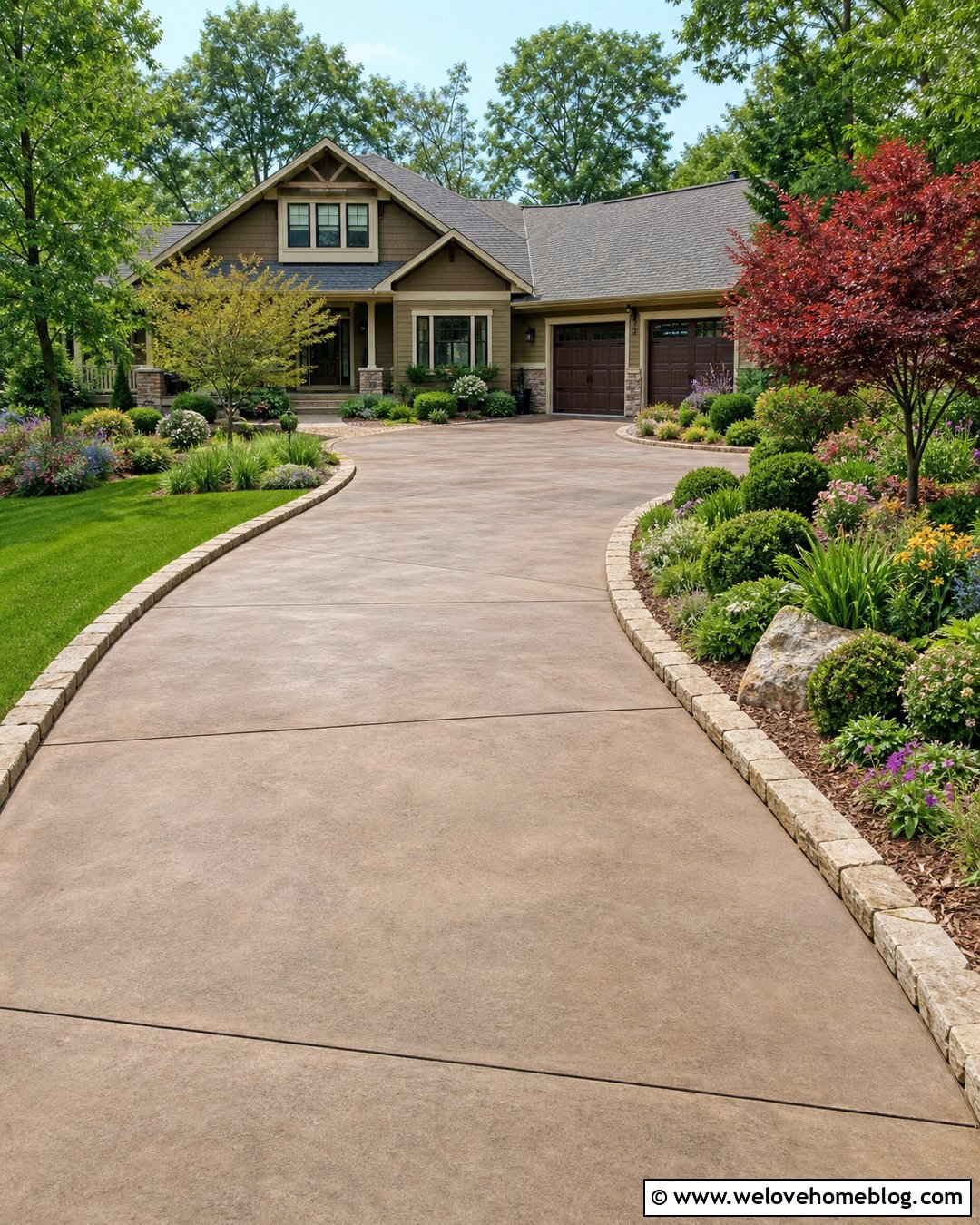
Hard driveway edges can feel less imposing when curved planting beds follow the approach. Use a soft brown-gray stained concrete surface with a gently bending layout, then outline it with low stone curbing. Create deeper planting pockets at the curve and near the garage rather than maintaining one narrow strip from street to house. Layer small trees, rounded evergreen shrubs, ornamental grasses, and seasonal perennials for year-round structure. A Craftsman or suburban ranch home works well with this informal arrangement. Keep plants set back enough that mature growth will not crowd the driving space. The stain should repeat warm tones from the mulch, stone, or facade, helping the pavement and landscape read as one planned exterior design.
22. Stained Concrete Driveway With Modern Concrete Bands
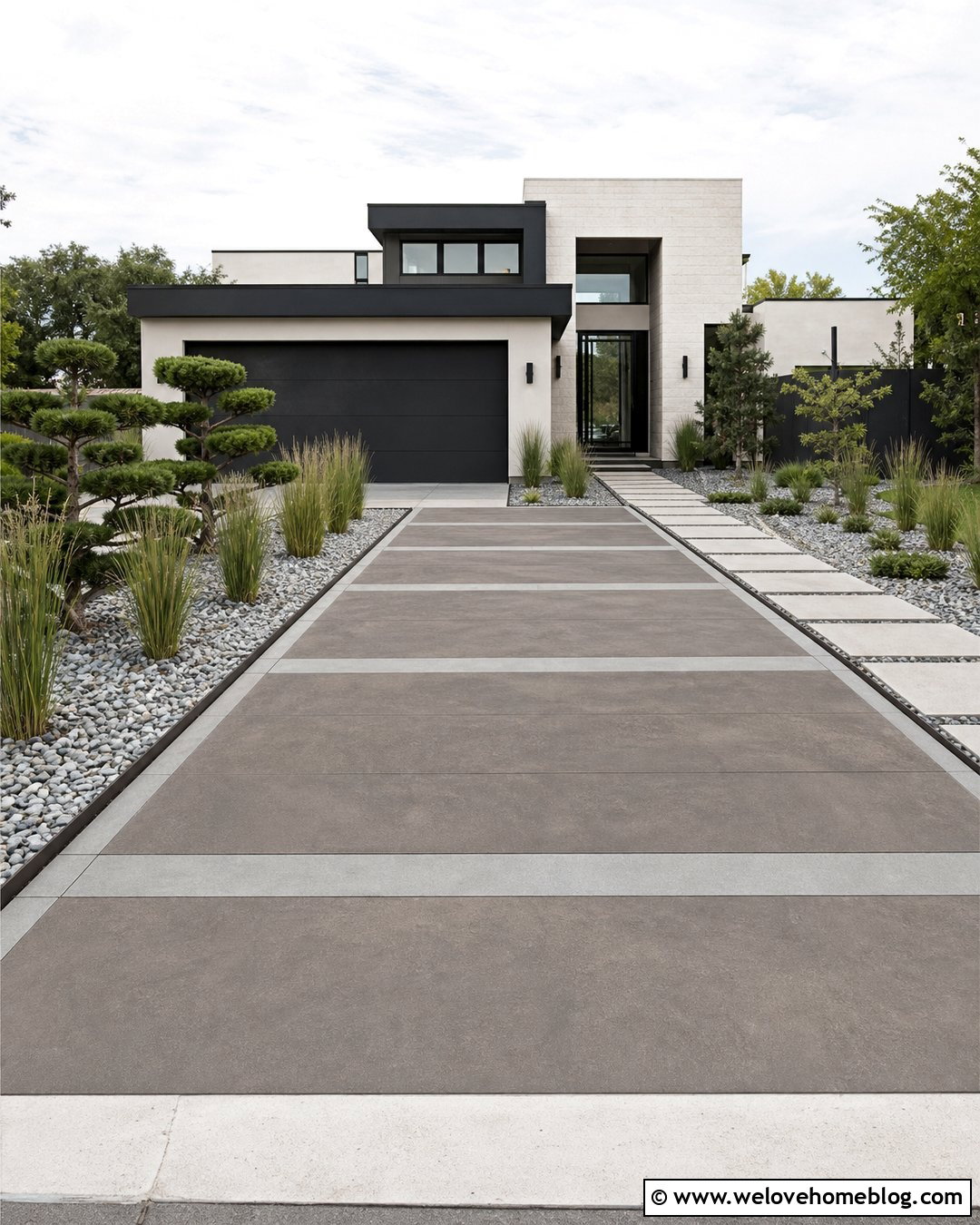
For a subtle modern statement, combine stained concrete fields with smooth natural-gray concrete bands. Apply a medium charcoal or cool taupe stain to the larger sections, leaving narrow horizontal strips unstained or finished in pale gray. Space the bands consistently and align them with garage openings, front steps, or architectural seams. A straight or slightly angled driveway will show the linear design most clearly. Border it with steel edging, decorative gravel, upright grasses, and neatly shaped evergreens. The light bands prevent the darker field from appearing too heavy while giving the driveway a tailored rhythm. Avoid adding ornate borders or multicolored masonry elsewhere; this look depends on disciplined lines and a limited material palette.
23. Stained Concrete Driveway With Checkerboard Pattern
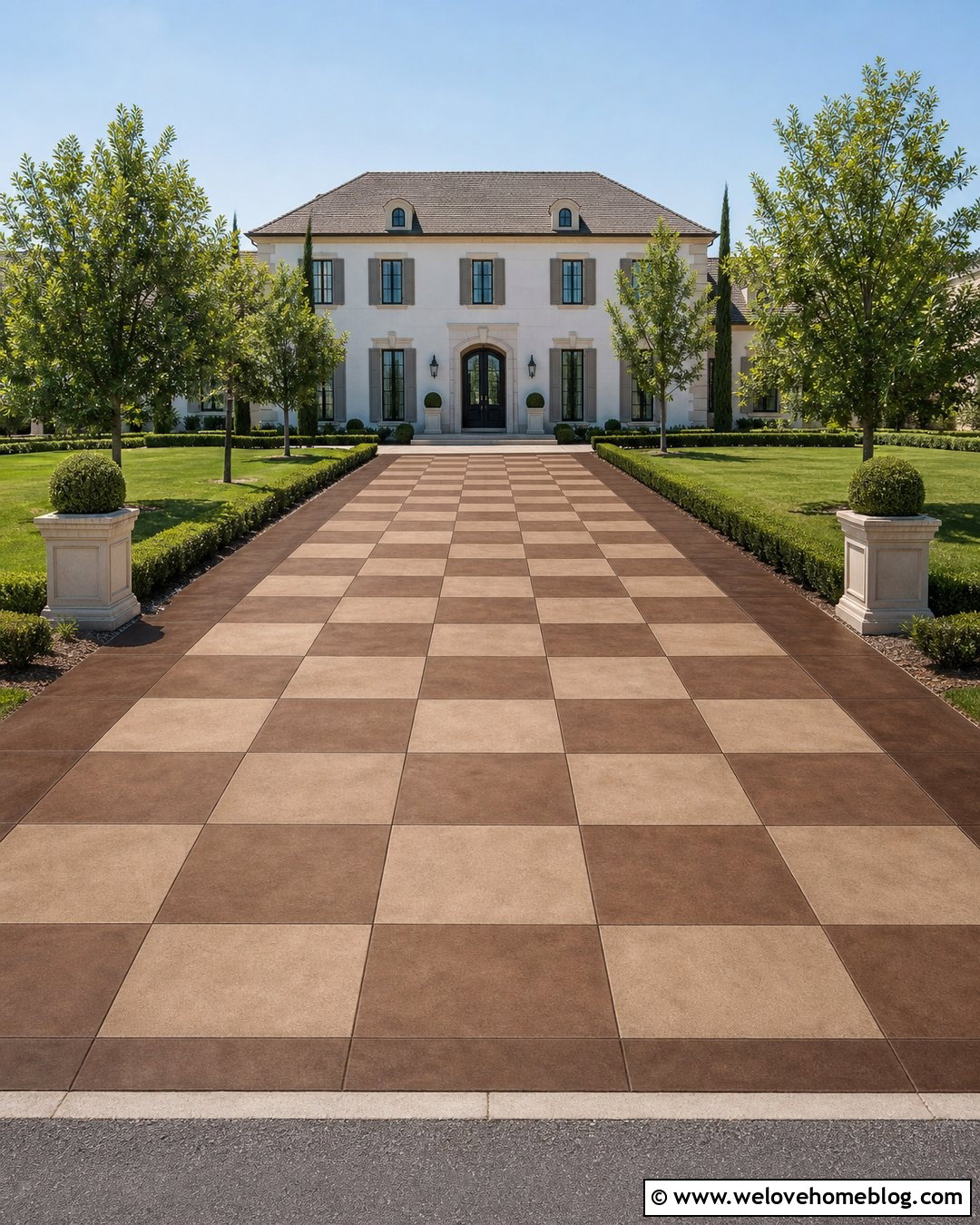
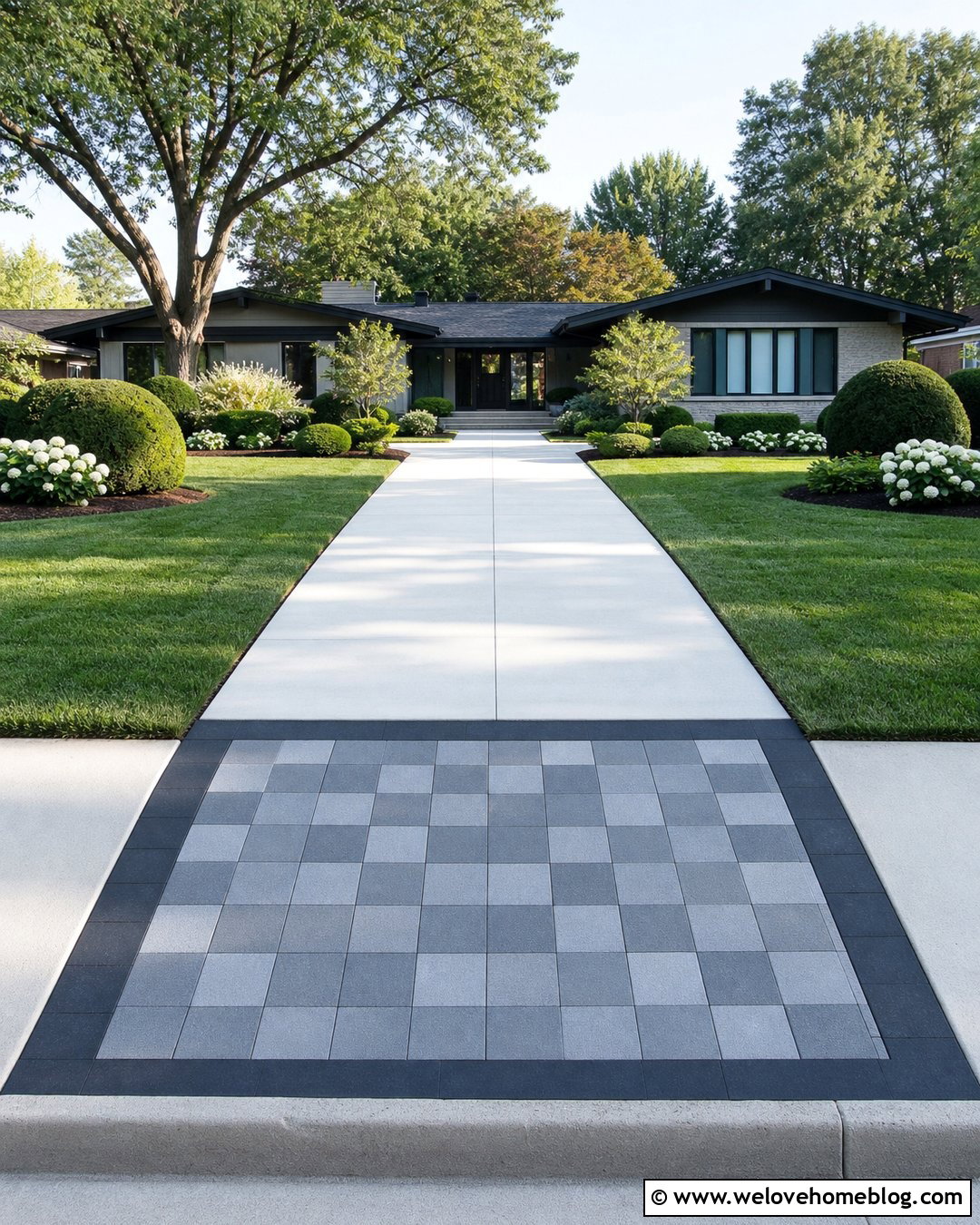
A large-scale checkerboard pattern can make a courtyard driveway feel distinctive without relying on elaborate ornament. Sawcut the surface into generous squares and alternate two closely related colors, such as light taupe and medium walnut or soft gray and charcoal. Low contrast keeps the design refined and prevents it from resembling an indoor floor. Surround the paved court with a simple solid-color stained border. This layout suits Mediterranean, French country, and formal traditional homes with symmetrical facades. Use clipped hedges, matching planters, and evenly spaced trees to support the structured pattern. Before staining, map the grid carefully around joints, curves, drains, and garage thresholds so incomplete squares do not distract from the finished layout.
24. Stained Concrete Driveway With Random Stone Sawcuts
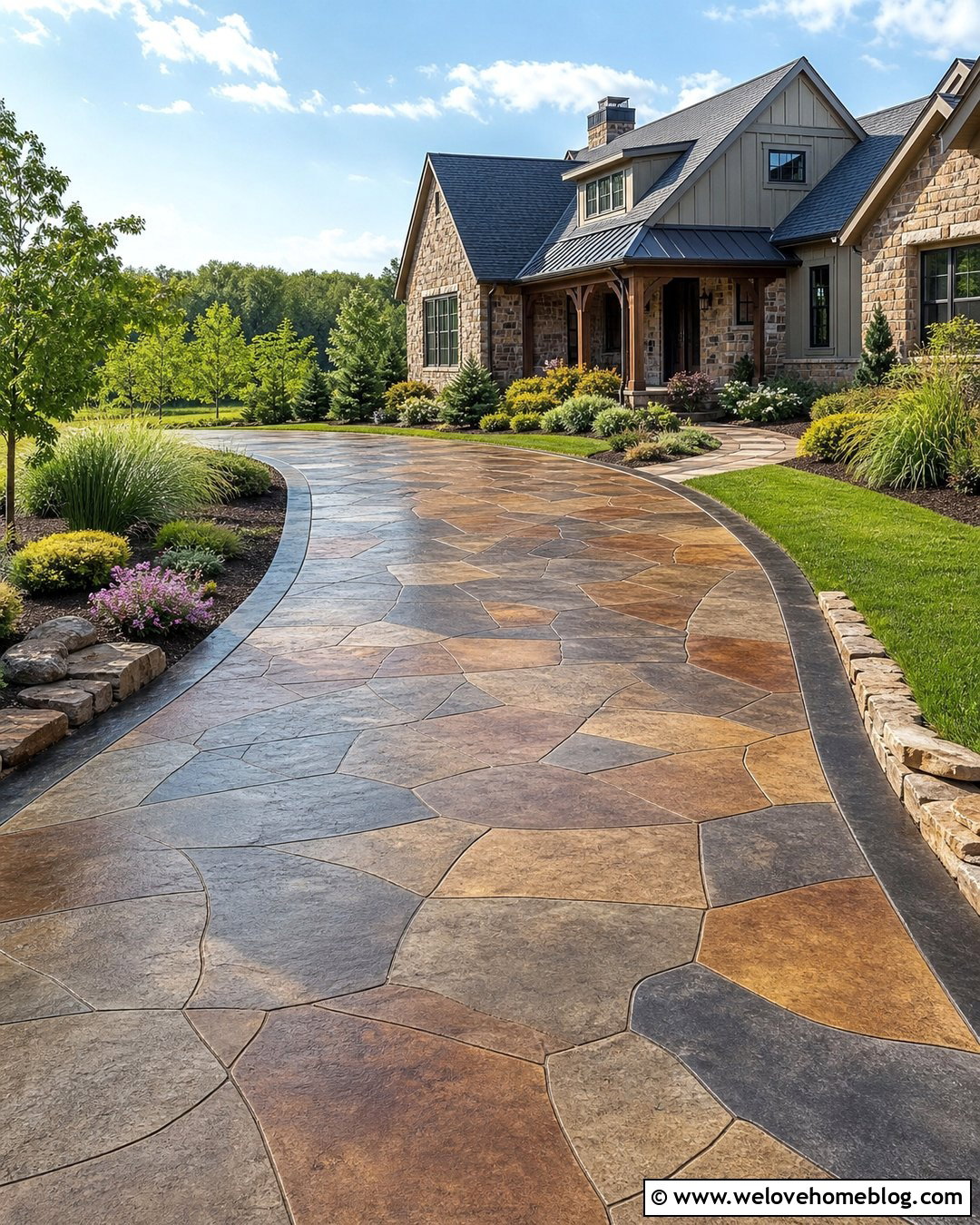
Random stone sawcuts create a relaxed masonry effect that works well on an existing concrete driveway with a simple shape. Cut irregular fields across the main surface, avoiding tiny pieces and overly sharp angles. Apply a blend of sandstone, muted brown, slate gray, and soft rust stains, using darker tones sparingly for depth. A solid dark border will contain the varied pattern and give the driveway a finished perimeter. Pair this surface with a stone-and-siding home, informal garden beds, and a walkway built from real flagstone or coordinating stained concrete. Keep the landscaping natural but controlled. Broad shrubs, ornamental grasses, and ground cover will complement the irregular pattern without hiding its outer edges.
25. Stained Concrete Driveway With Red Brick House
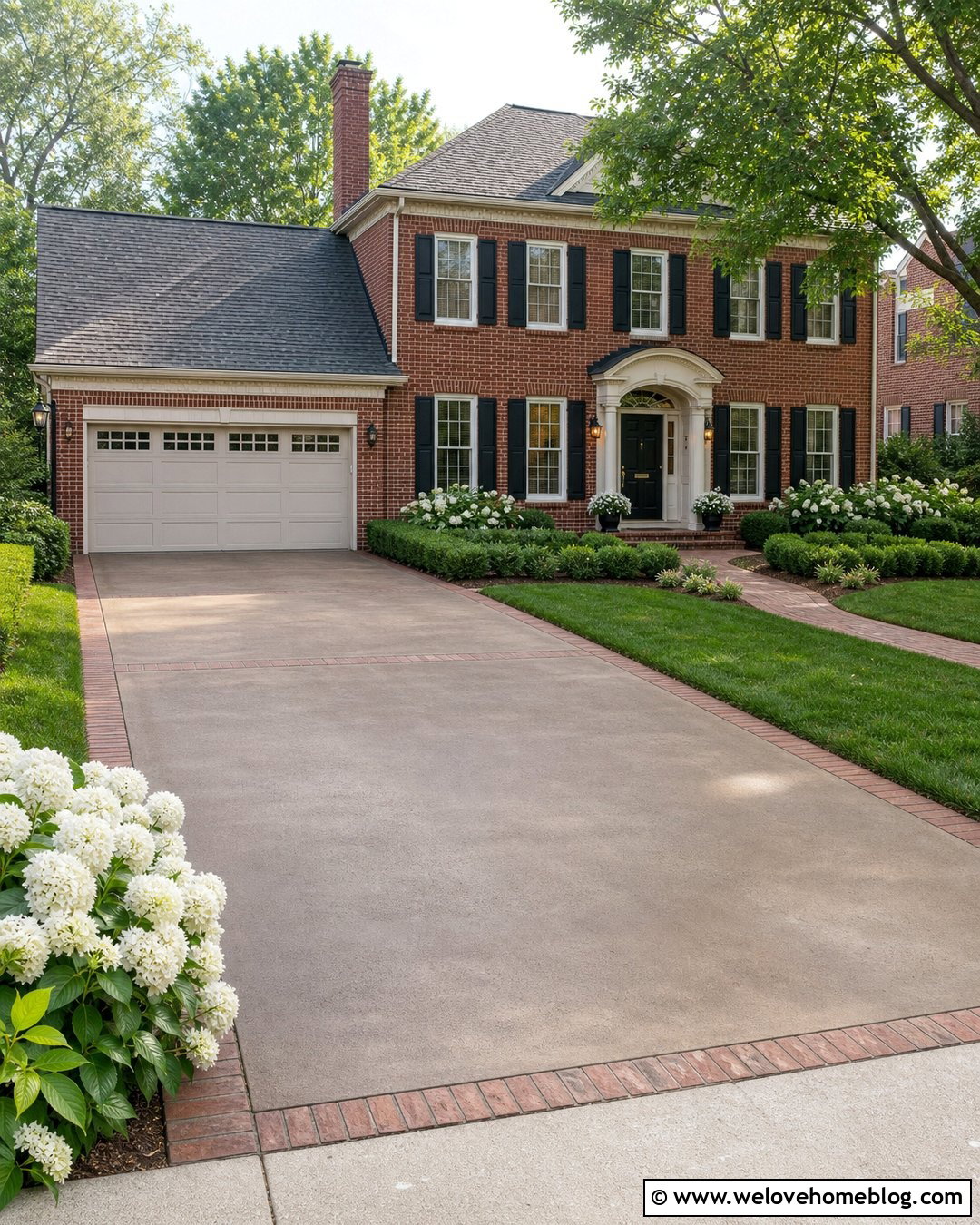
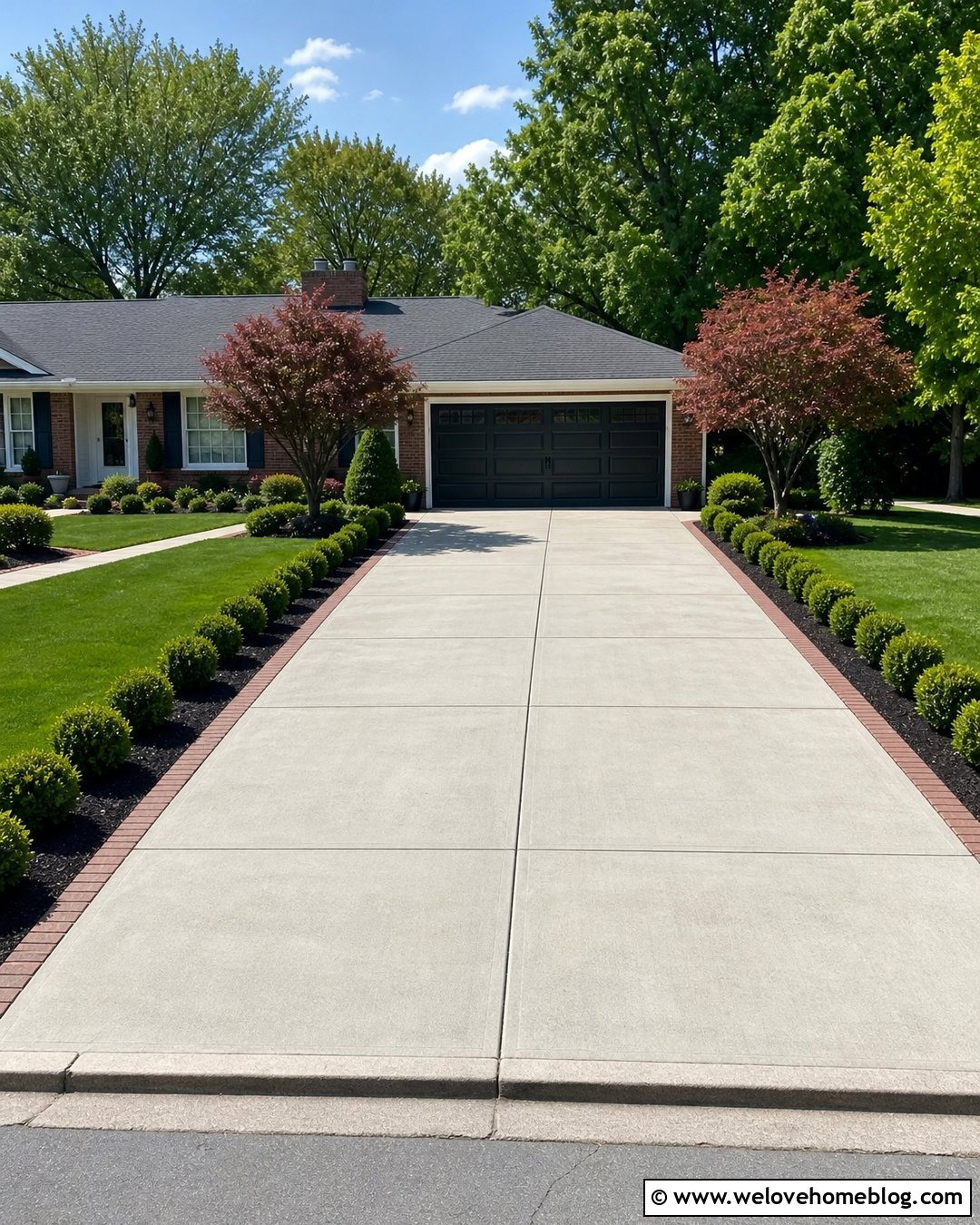
Choosing a driveway color beside red brick can be challenging because another strong red may compete with the facade. Instead, use stained concrete in warm taupe, muted brown, or smoky charcoal. These tones support the brick while providing enough contrast to define the approach. Add a narrow brick ribbon around the driveway using masonry that closely matches the house. A straight layout with a slightly wider parking apron suits many colonial and traditional suburban properties. Green lawn, boxwoods, and white flowering shrubs will freshen the warm color scheme. Pull the stain color from the brick’s mortar, shutters, roof, or stone foundation rather than matching the dominant red. This creates a more layered, balanced exterior palette.
26. Stained Concrete Driveway With Modern Farmhouse Exterior
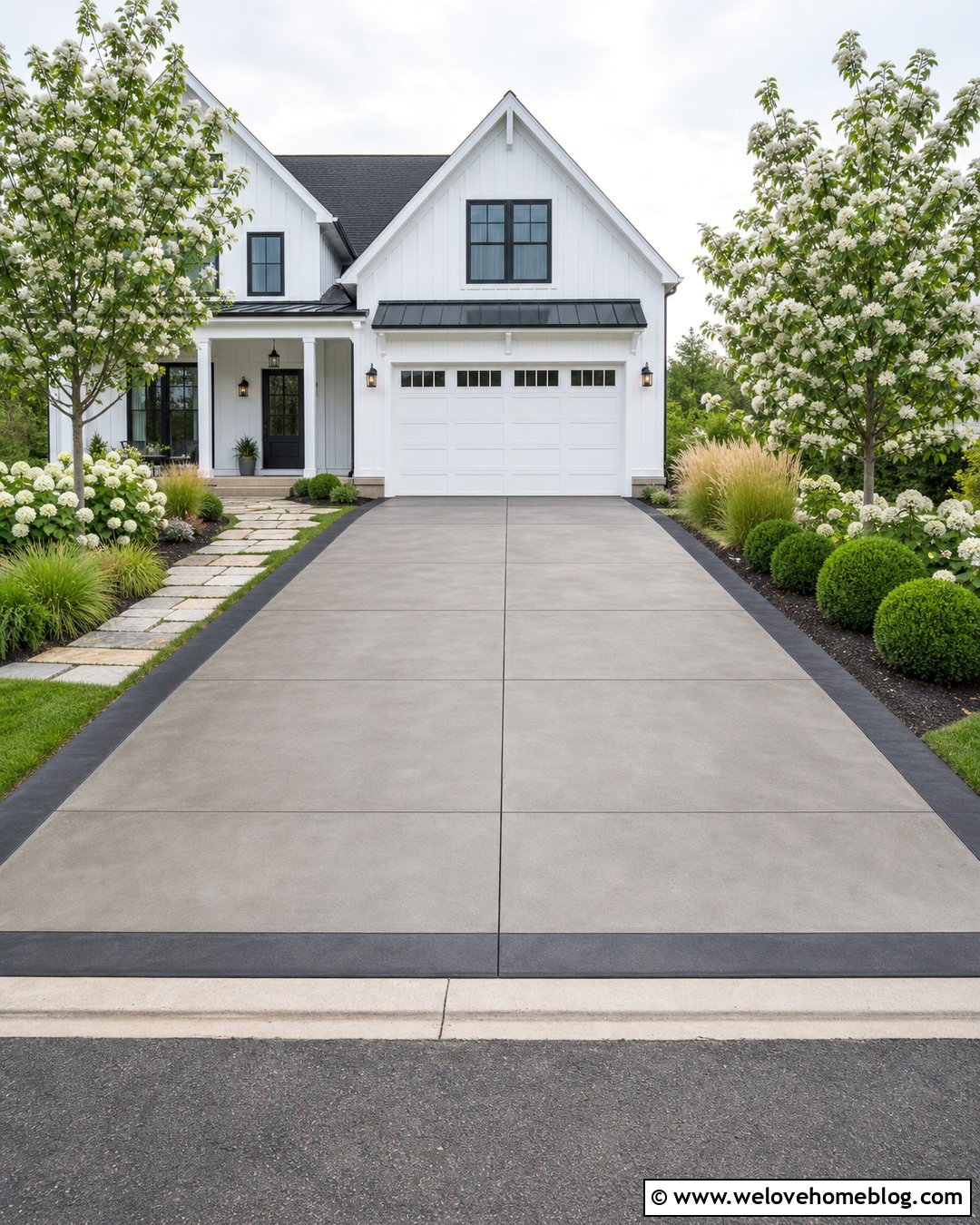
Warm gray stained concrete provides an attractive middle ground between the black and white features of a modern farmhouse. Use broad rectangular sawcuts to organize a straight driveway, then apply a charcoal stain to the outer border. A brick or natural-stone walkway can branch toward the porch and introduce welcome texture. Frame the driveway with soft ornamental grasses, white hydrangeas, rounded evergreens, and a few small flowering trees. Black address numbers or simple lantern-style lights can repeat the home’s dark windows and roof. Avoid an extremely glossy sealer, which may conflict with the farmhouse’s understated materials. The completed design should look crisp from the road but still feel warm, practical, and connected to the surrounding yard.
27. Stained Concrete Driveway With Ranch House Landscaping
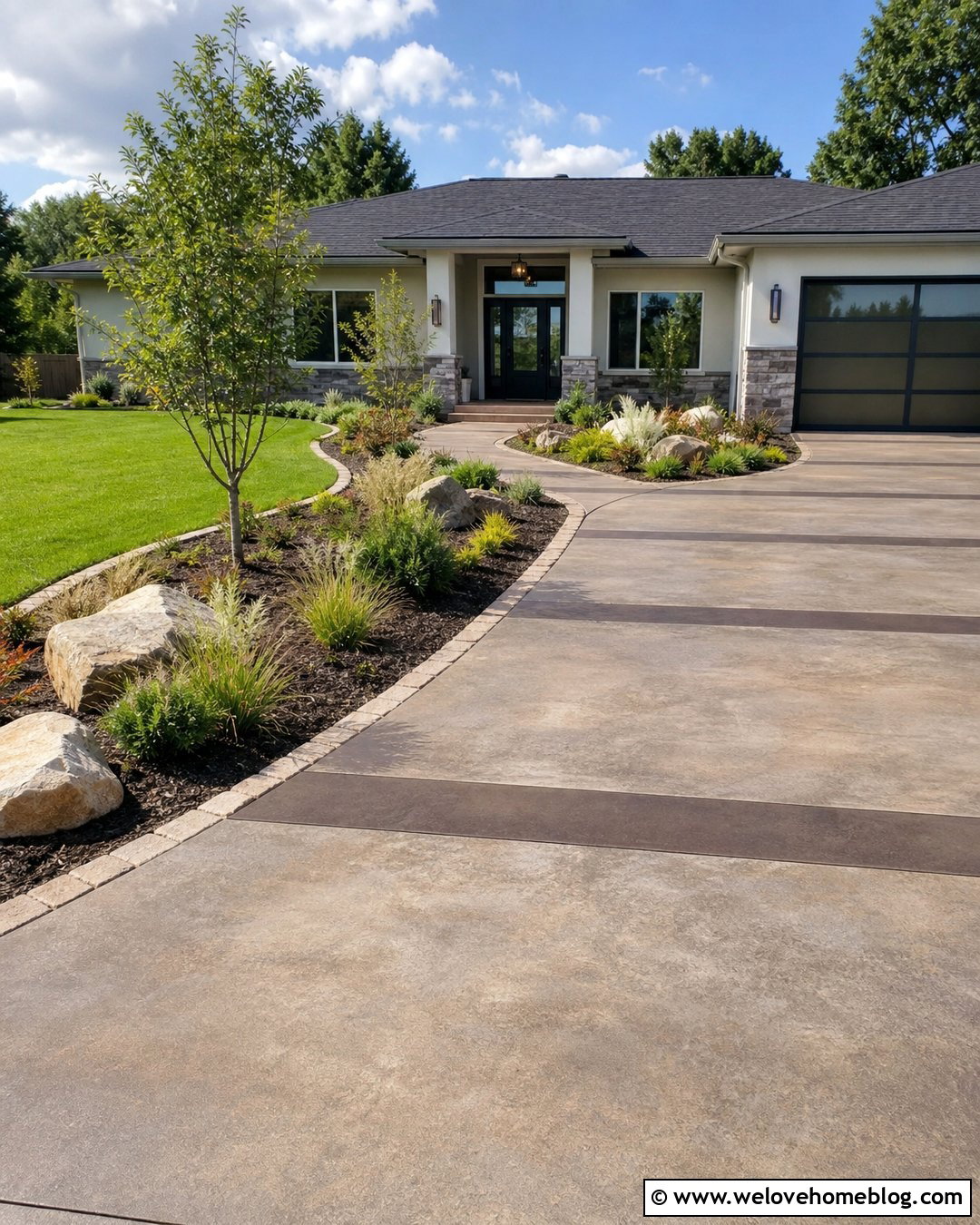
A long, low ranch house benefits from driveway details that emphasize its horizontal architecture. Apply a medium tan or brown-gray stain to the concrete and divide the surface with wide bands running across it. Use matching stained concrete for a broad walkway leading directly toward the front door. Along one edge, create a sweeping planting bed with dwarf trees, low shrubs, grasses, and spreading ground cover. Keep taller plants away from windows so the home retains its open profile. A single row of brick or stone edging can provide definition beside the lawn. This complete arrangement updates a plain ranch exterior without introducing overly formal features, and the stain adds warmth across the home’s broad street-facing elevation.
28. Two Tone Stained Concrete Driveway With Garage Apron
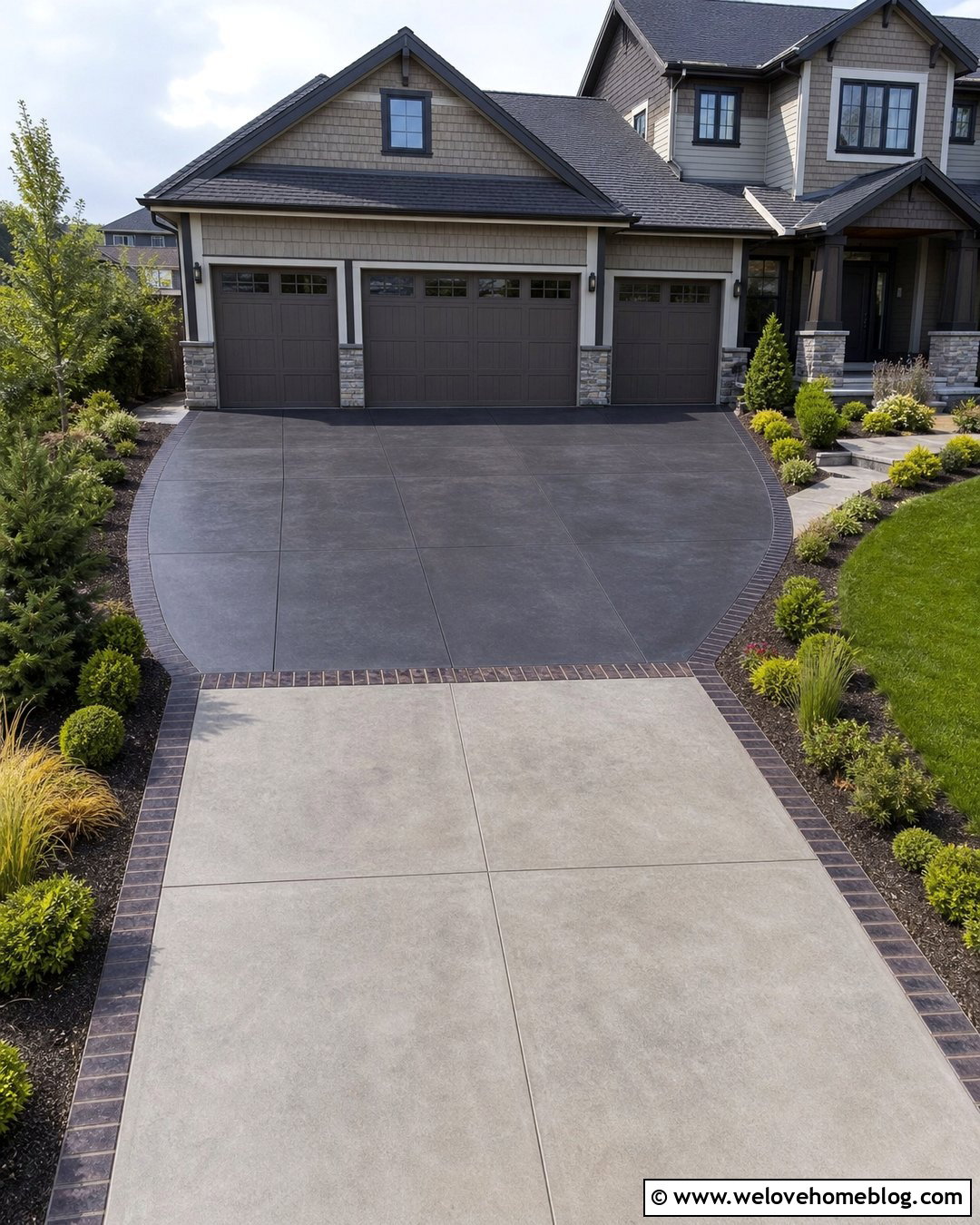
A two-tone layout can distinguish the garage apron from the main approach while keeping both areas connected. Use a light beige, taupe, or warm gray stain down the driveway, then switch to a deeper version of that color across the widened parking area. Separate the sections with a brick ribbon or dark stained band. This method works well where a narrow drive opens into a broad three-car garage, since the color change makes the transition appear intentional. Repeat the darker tone in the walkway border, porch steps, or planters. Surround the apron with low shrubs instead of tall planting that could crowd vehicle movement. Closely related colors will usually produce a more polished result than a dramatic, unrelated contrast.
29. Stained Concrete Driveway With Address Inlay
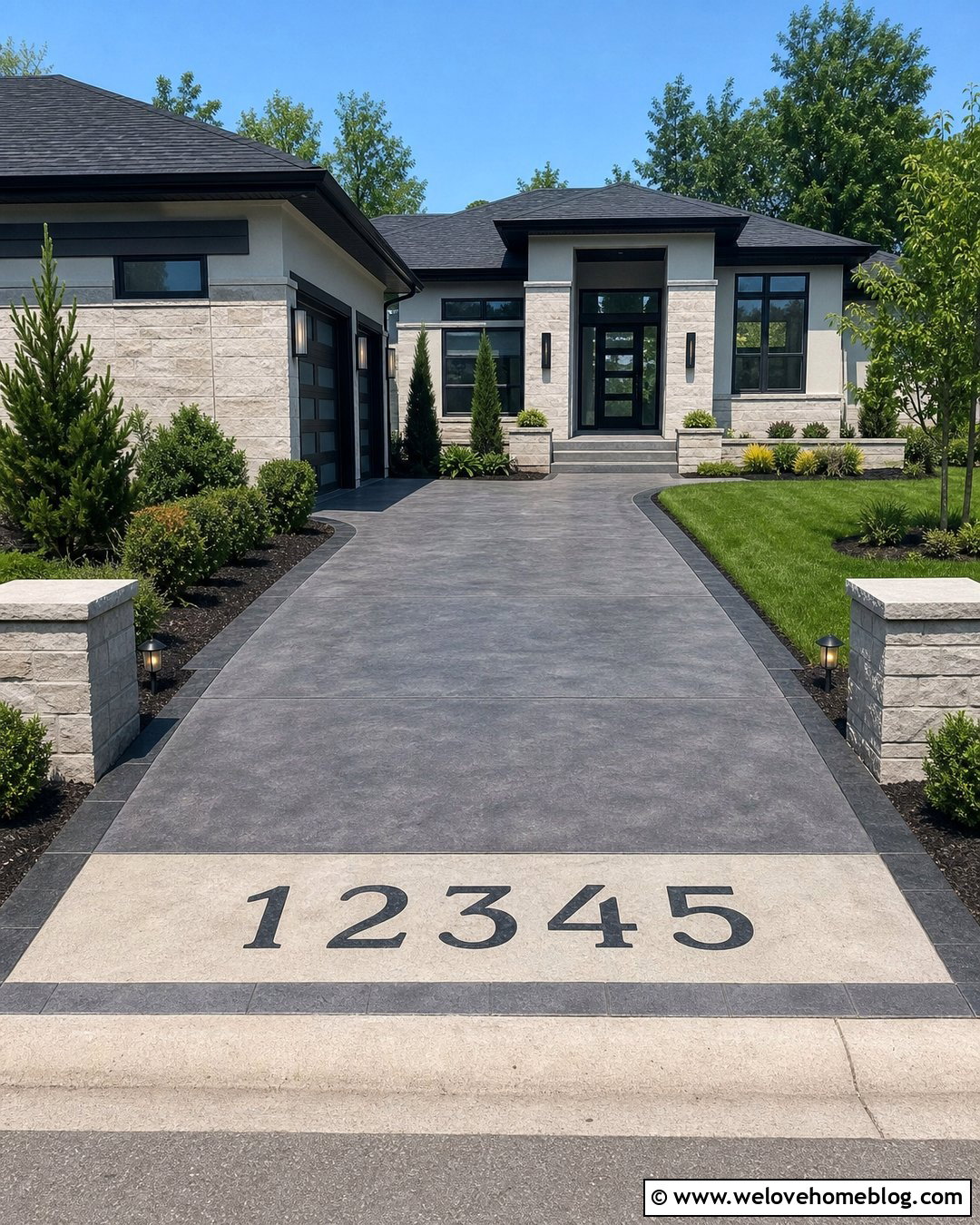
An address inlay can make a driveway entrance functional as well as decorative. Place large, simple numbers within a stained concrete panel near the street, where they remain visible from the road. Use a light tan or medium gray field with charcoal-stained numbers and a matching border. The inlay should sit beside the driving path or within a widened entrance apron rather than in an area commonly covered by vehicles. Pair it with low stone columns, subtle landscape lighting, and neat evergreen planting. A straight driveway leading to a contemporary or transitional home keeps the layout easy to read. Repeat the same number design on a mailbox or house plaque to create a consistent property identity.
30. Stained Concrete Driveway With Layered Landscape Lighting
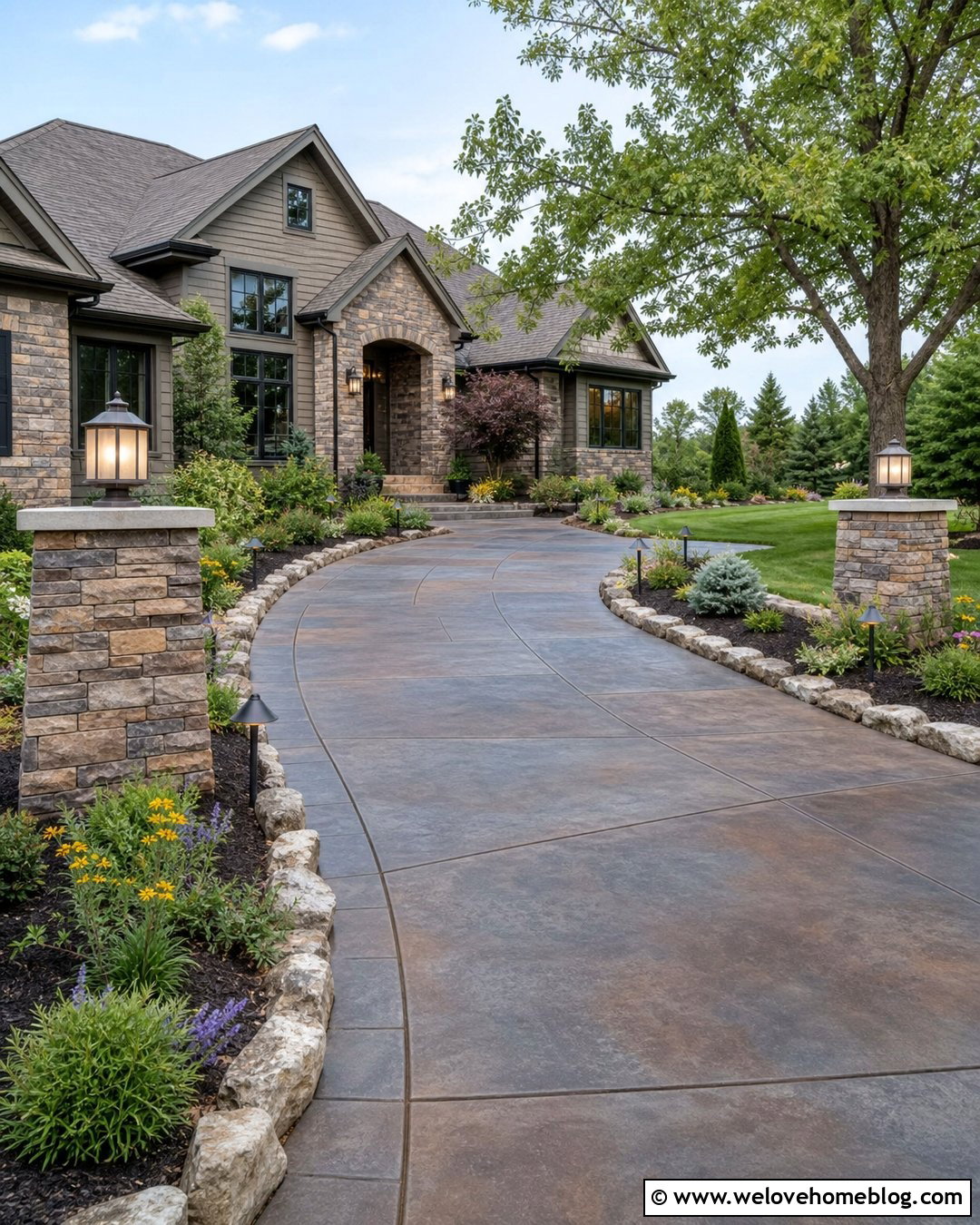
Thoughtful lighting completes a stained driveway even though the surface should remain attractive during the day. Choose warm brown or slate-gray stained concrete with a simple sawcut pattern, then place low fixtures along planting beds instead of lining the pavement like a runway. Use a few focused lights to highlight entrance pillars, a specimen tree, and the route toward the porch. Recessed or shielded fixtures can clarify curves without creating glare. During daylight, stone edging, layered shrubs, lawn, and flowering plants should still provide a complete curb view. Coordinate fixture finishes with the garage hardware and front-door lighting. A satin sealer can gently emphasize the stain, but confirm that the final surface treatment provides suitable traction for an outdoor driveway.
Conclusion:
The most successful stained driveway feels connected to the entire property, not treated as a separate decorative surface. Select colors that relate to the house, roof, masonry, and surrounding landscape. Then use borders, sawcuts, textured bands, planting beds, or entrance features to give the pavement a clear structure. Simple one-color treatments can be just as attractive as detailed medallions and faux stone patterns when the proportions are right. Always test stain samples on the actual concrete and discuss surface preparation, drainage, joints, traction, and sealing with an experienced contractor. With careful planning, these 30 Stained Concrete Driveway Ideas can help create a practical entrance with lasting character and stronger curb appeal.

Related posts:
Leave a Reply