
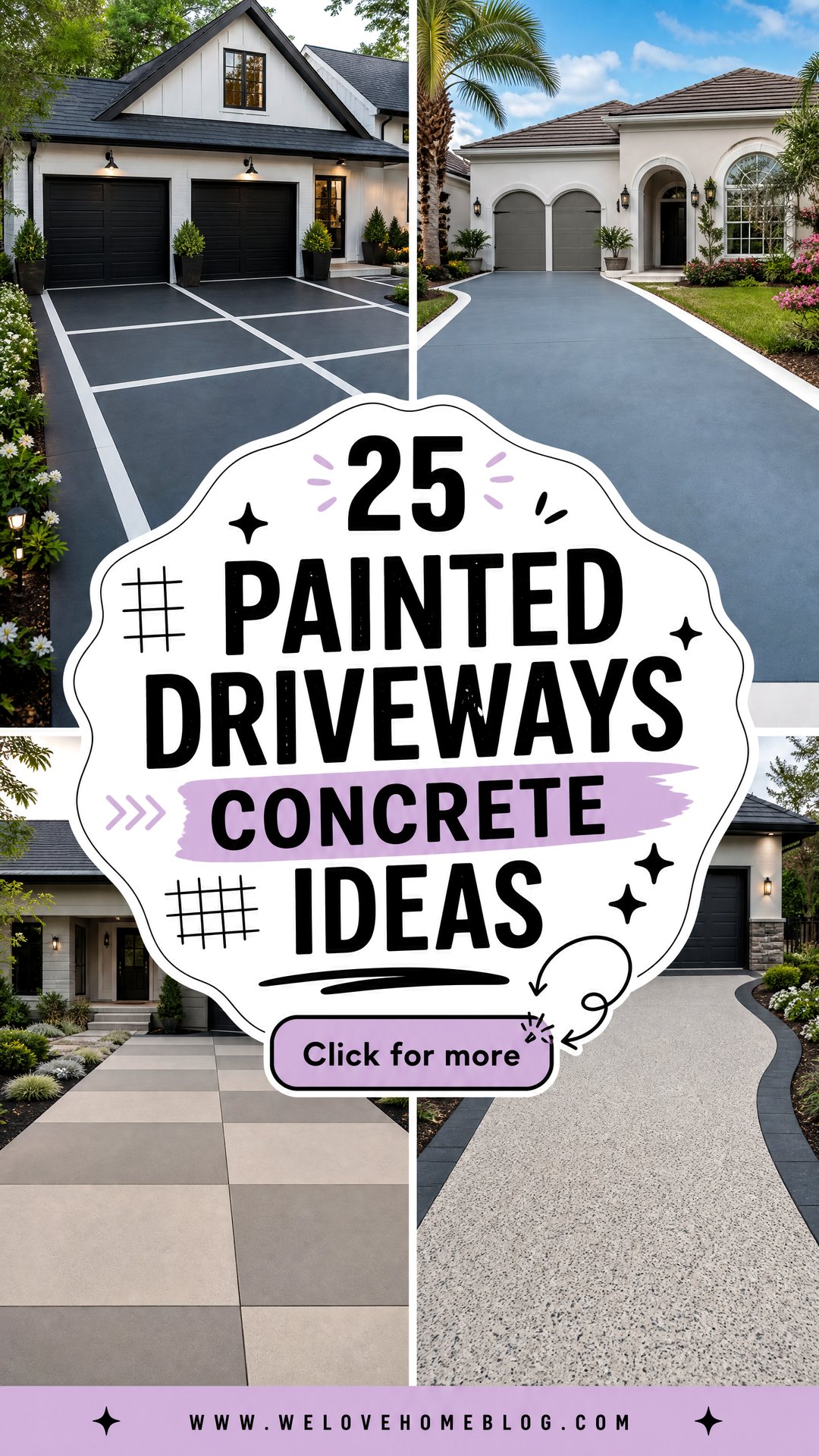
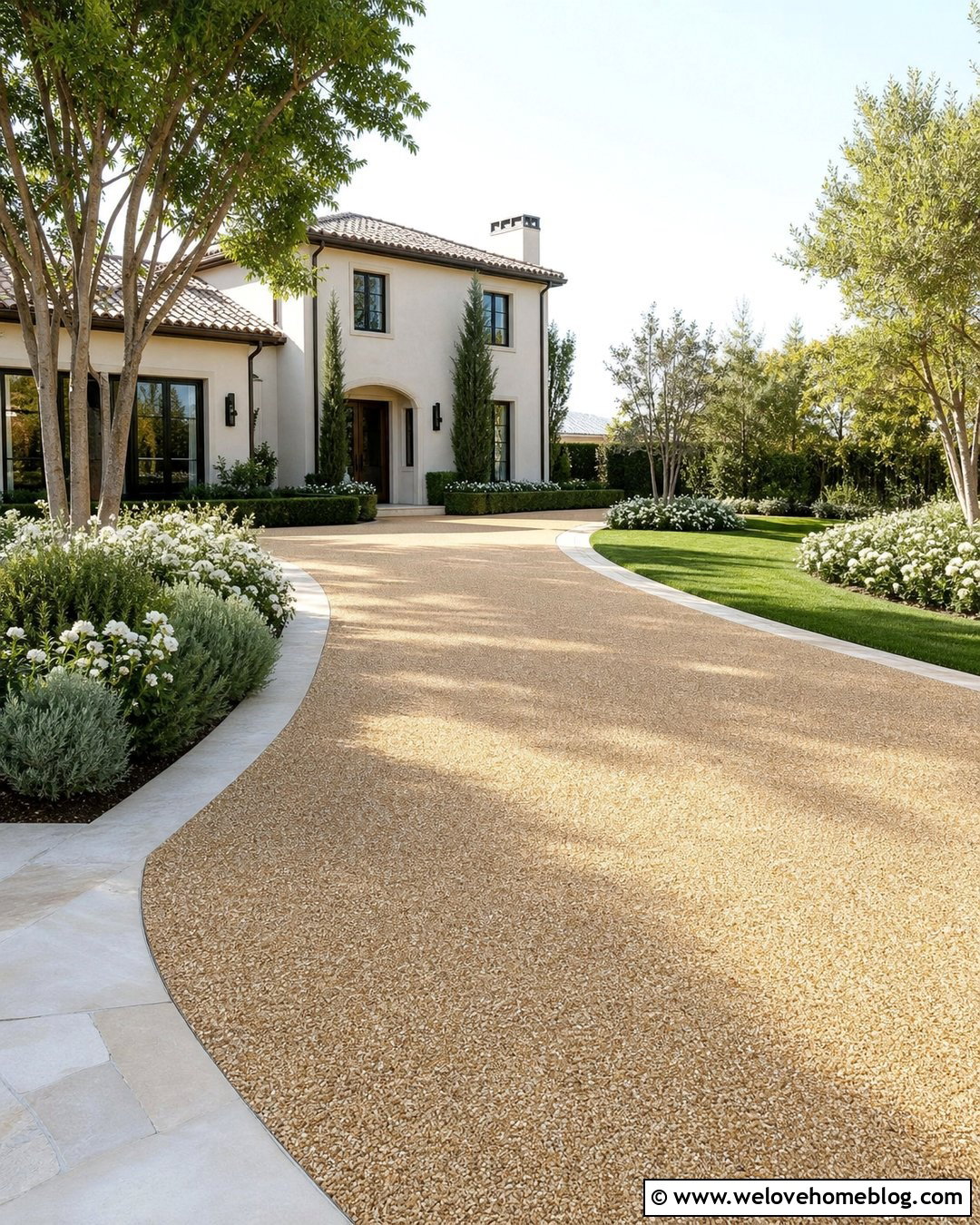
A painted concrete driveway can turn a plain slab into a strong curb-appeal feature without changing the entire hardscape. This collection of 25 painted driveways concrete ideas explores complete looks that combine practical color schemes, patterns, borders, landscaping, and house styles. Concrete paint offers an accessible way to add color to an existing driveway, while scoring, stenciling, and layered finishes can create more decorative effects. () For lasting results, use a traffic-rated exterior concrete coating, prepare the surface carefully, and include a compatible nonslip additive. The best design should also complement your siding, roof, garage door, and surrounding landscape. Whether you prefer understated gray or a detailed faux-paver finish, explore these 25 painted driveways concrete ideas.
1. Light Gray Painted Concrete Driveway With Charcoal Border
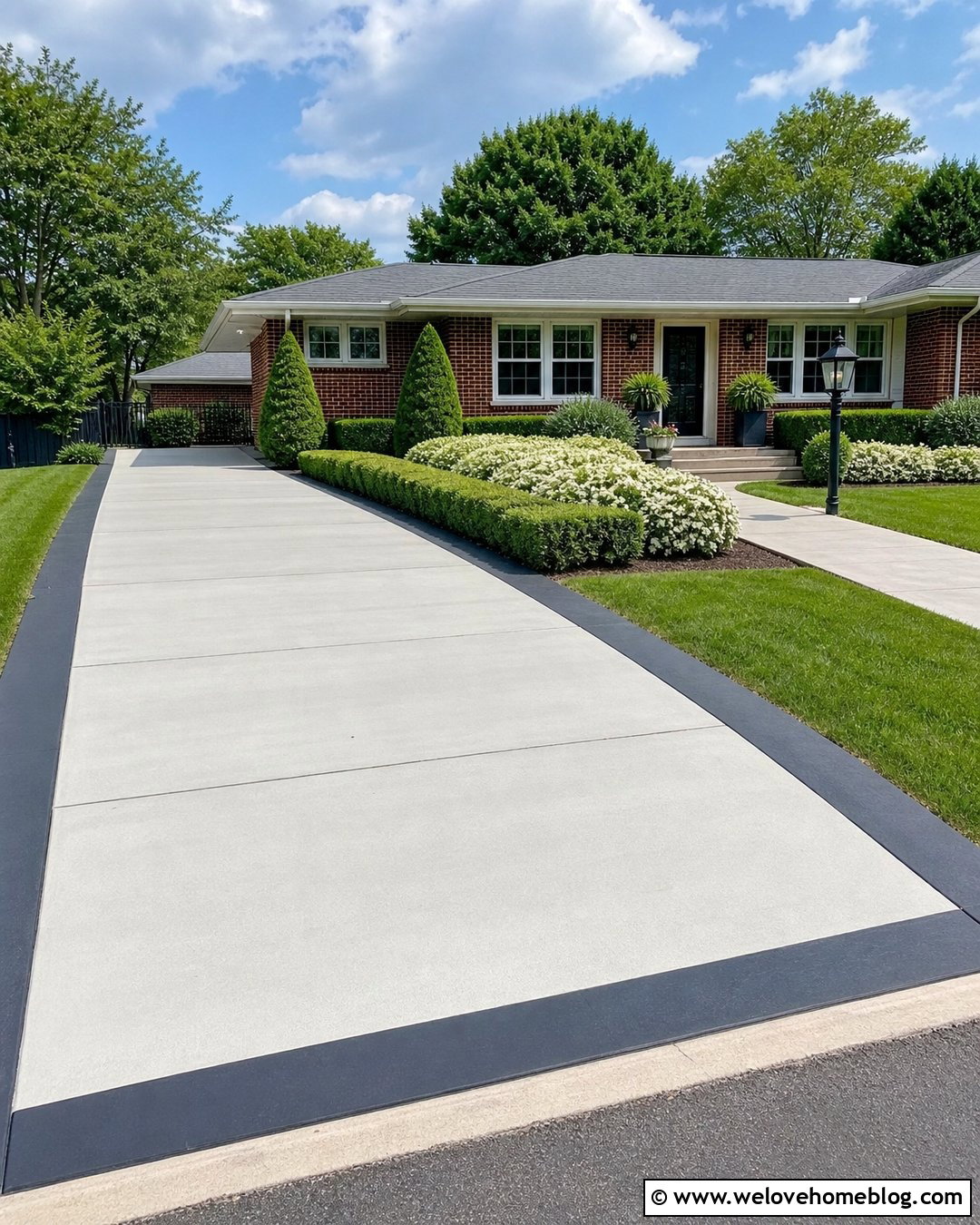
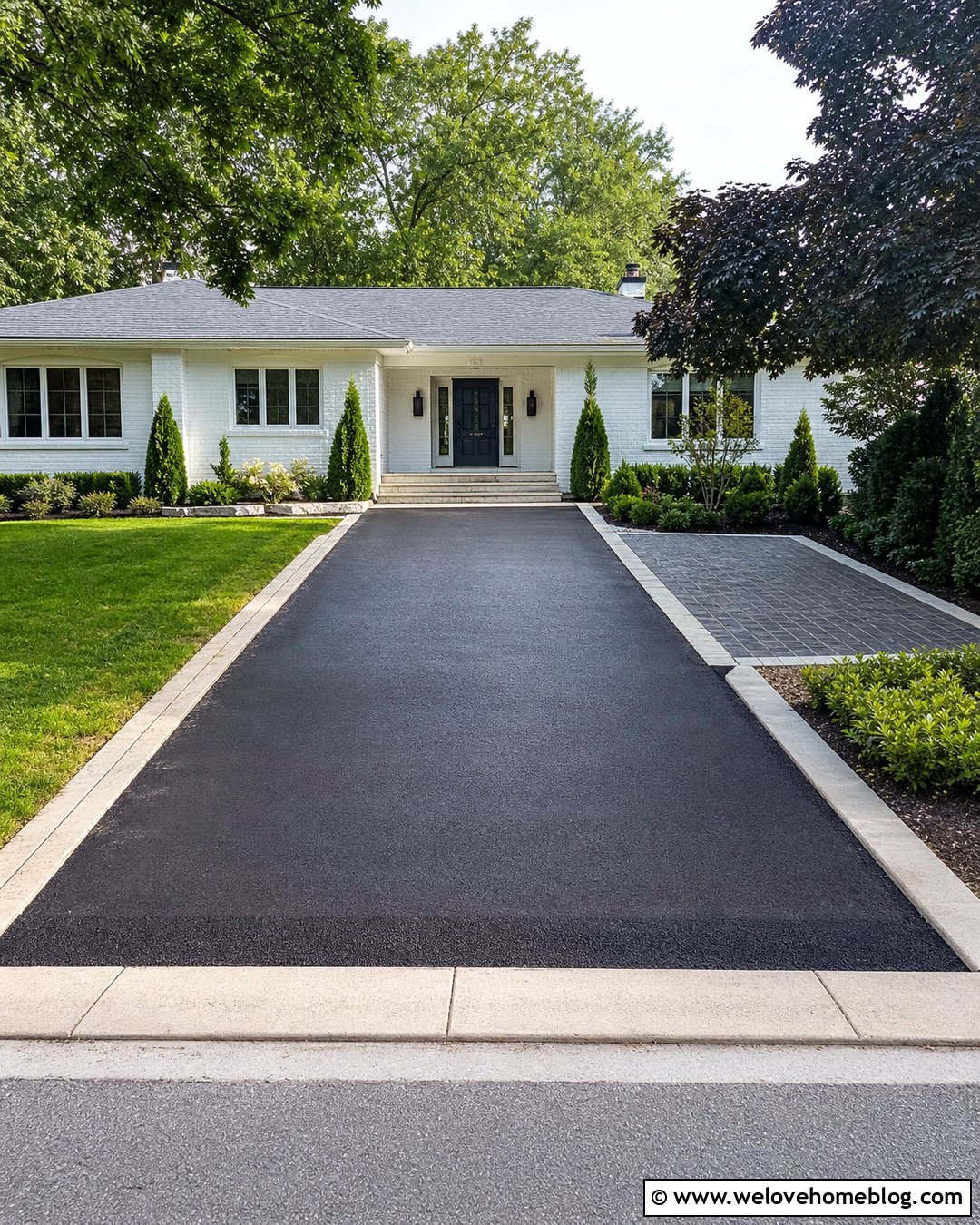
A light gray painted concrete driveway creates a clean foundation that works with nearly any home exterior. Frame the entire straight driveway with a charcoal painted border to give the slab a sharper, more finished appearance. Existing control joints can remain visible, creating large rectangular panels that make the surface look organized rather than flat. Add low boxwood hedges, white flowering plants, and narrow mulch beds along both sides. A matching concrete walkway can branch toward the front porch for a connected layout. This complete look suits brick ranch homes, Colonials, and updated split-level houses. Choose colors with enough contrast to define the edge without making the driveway feel narrower. A satin or low-sheen traffic-rated coating keeps the overall effect practical and understated.
2. White Painted Concrete Driveway With Grass Strips
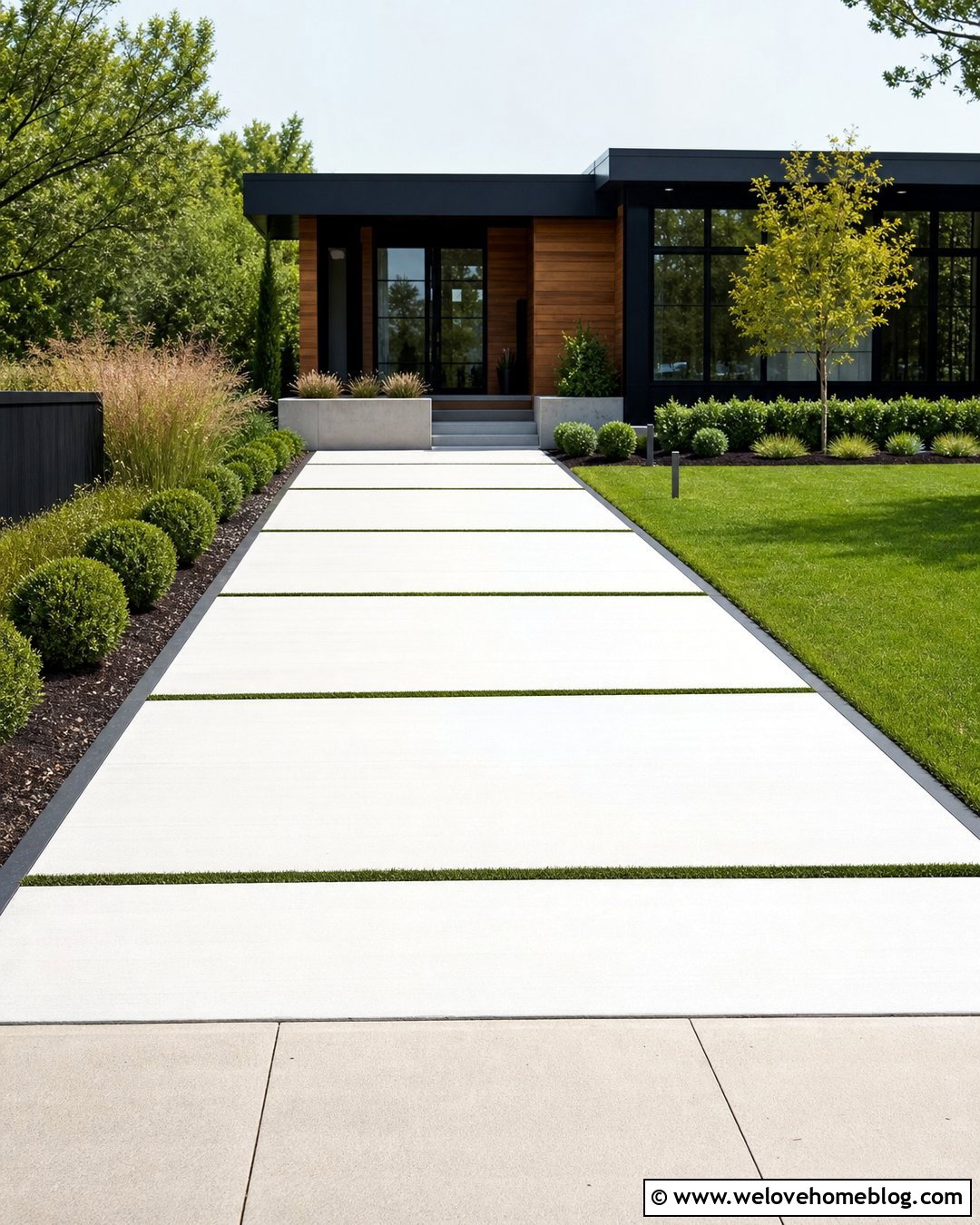
Bright white painted concrete panels separated by slim grass strips can give a modern house a crisp, spacious entrance. Instead of covering one uninterrupted slab, emphasize the driveway’s existing sections and allow narrow green channels to create rhythm between the parking tracks. Dark steel edging helps keep soil and grass away from the painted surface. Repeat the same white concrete finish on a geometric walkway leading to the front door. Ornamental grasses, clipped shrubs, and one sculptural tree can soften the strong lines without hiding them. This design works especially well with a flat-roofed home, black-framed windows, and warm wood siding. Because very pale surfaces show tire marks, reserve pure white for side panels and use a soft off-white or pale greige in the main driving areas.
3. Beige Painted Concrete Driveway With Brick Edging
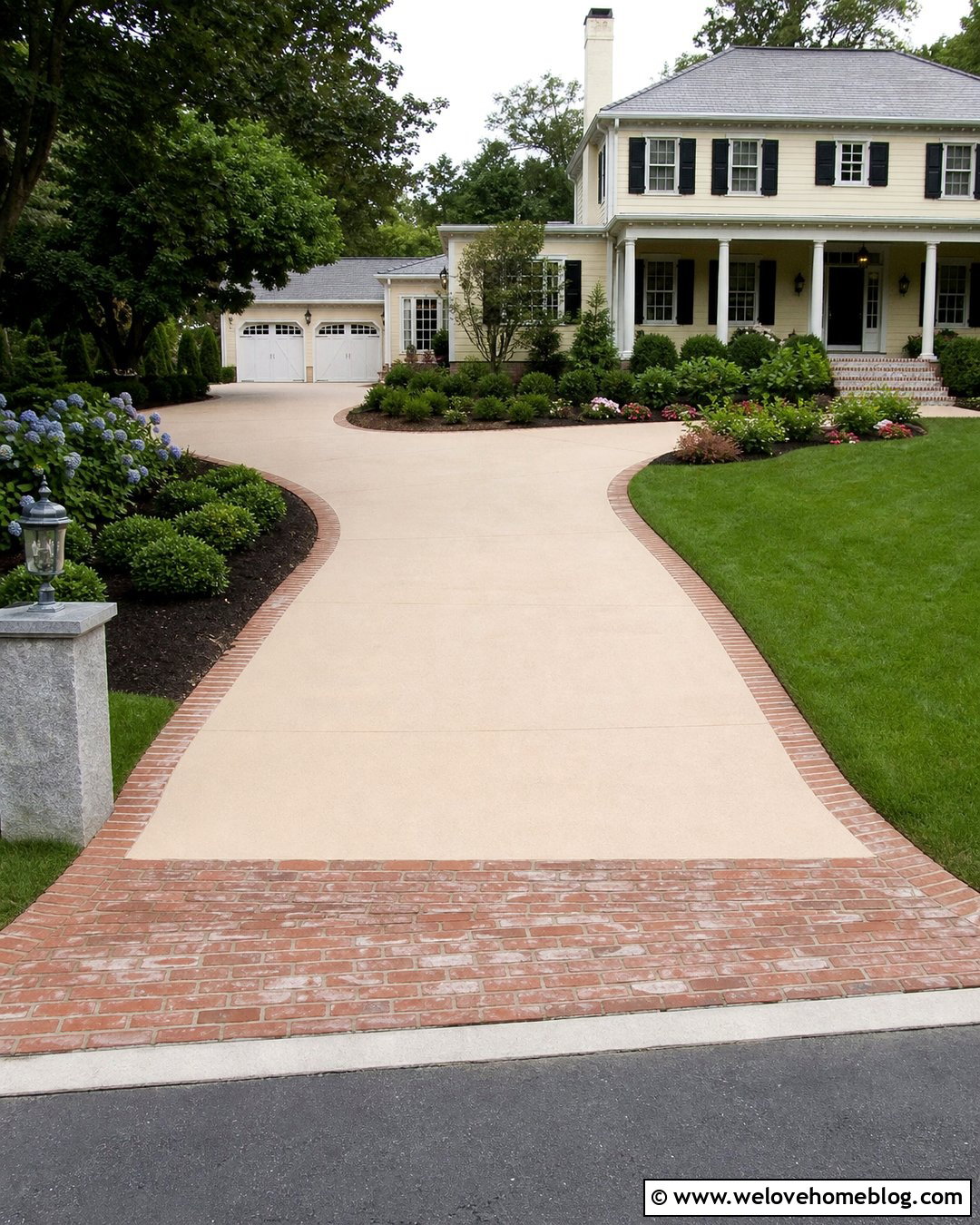
Warm beige paint can make a concrete driveway feel more welcoming while coordinating with brick, cream stucco, or natural stone. Use the beige across a gently curved driveway, then install clay brick edging in a simple soldier-course pattern. The brick border adds genuine texture and prevents the painted surface from looking like one large block of color. Near the garage, widen the border into a brick apron that visually connects the driveway to the home. Layer the surrounding beds with hydrangeas, evergreen shrubs, and seasonal flowers in restrained colors. A curved lawn edge should follow the driveway’s shape for a polished transition. This complete design is particularly effective beside a traditional Colonial or Cape Cod home. Select a sandy beige that relates to the mortar, trim, or stonework already present.
4. Charcoal Painted Concrete Driveway With White Grid Lines
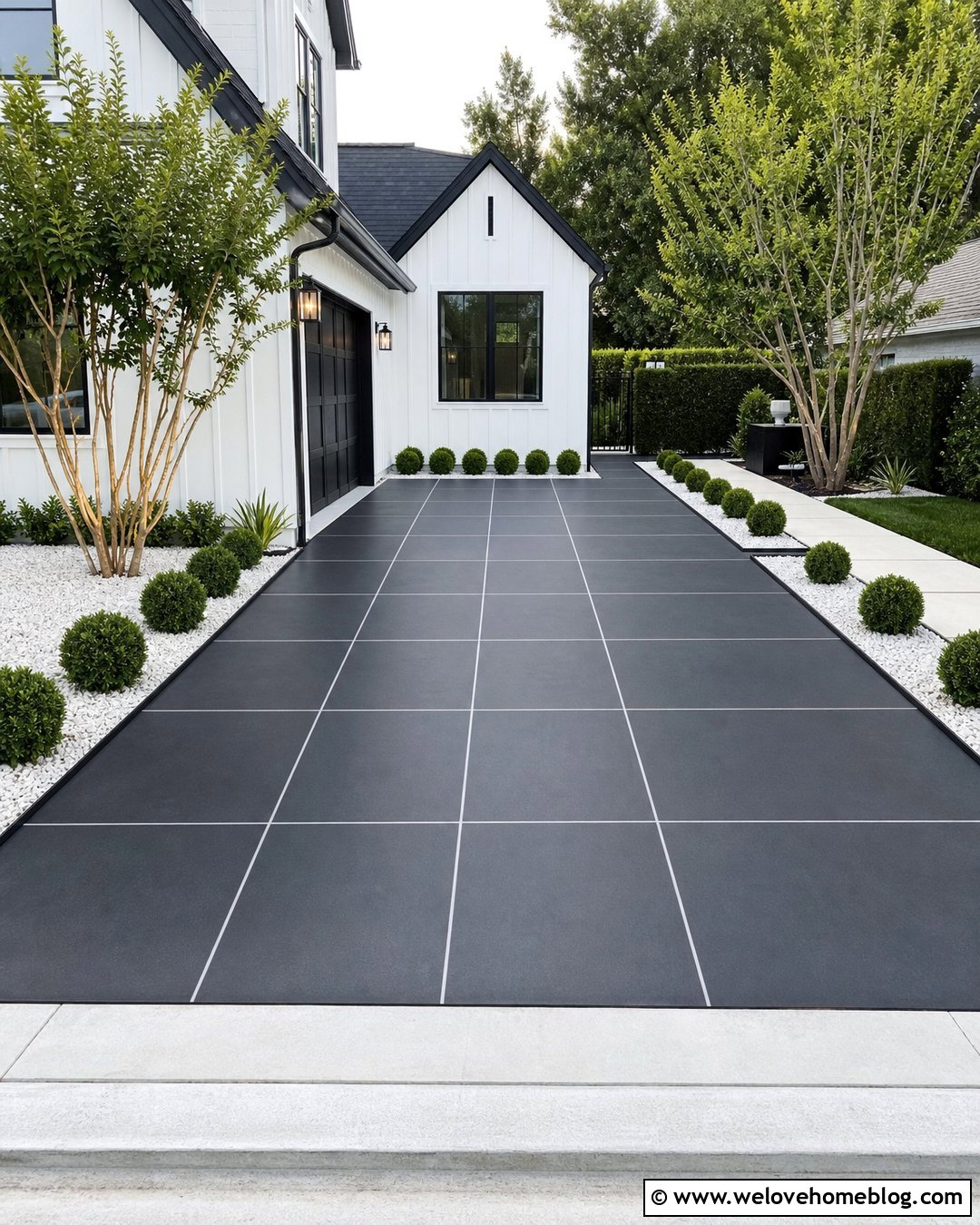
Deep charcoal concrete paint becomes much more interesting when thin white lines divide the driveway into large geometric squares. The grid can follow existing control joints, with additional lines planned carefully to maintain even spacing from the curb to the garage. A straight driveway with a broad parking pad gives the pattern enough room to read clearly. Continue the monochrome palette through black metal landscape edging, white gravel beds, and compact evergreen plants. A few multi-stem trees can bring natural shape to the otherwise structured design. This painted concrete driveway pairs beautifully with a white modern farmhouse or contemporary home with black windows. Add fine nonslip aggregate to both colors, especially where the driveway slopes. Keeping the grid large and simple also makes future touch-ups easier than maintaining a highly detailed pattern.
5. Terracotta Painted Concrete Driveway With Cream Border
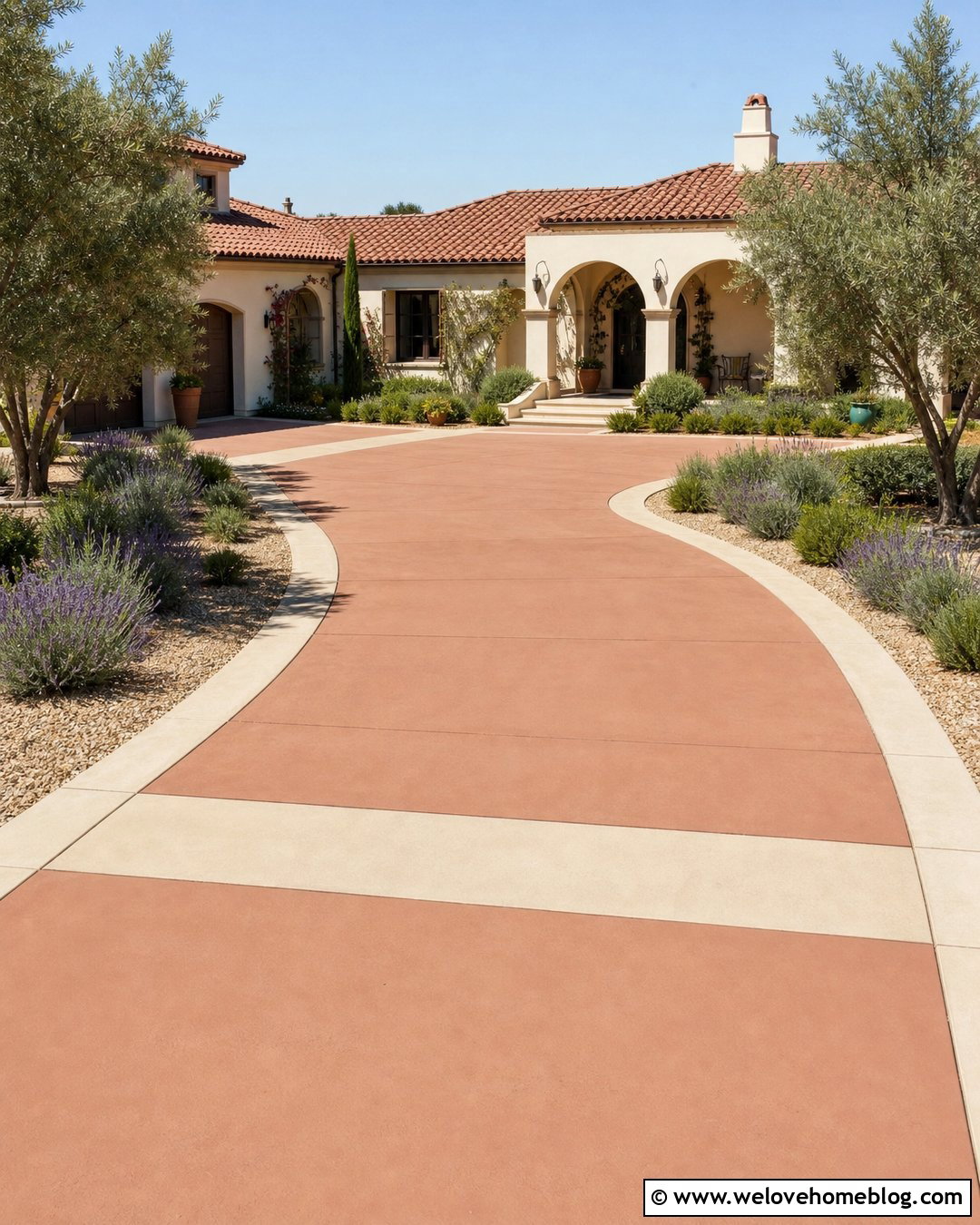
Terracotta paint can bring warmth to a curved concrete driveway and create a relaxed Mediterranean character. Cover the main surface in a muted clay tone rather than a bright orange, then add a wide cream border around the perimeter. Lightly varied color layers can make the finish resemble sun-softened paving instead of solid industrial paint. Frame the driveway with rosemary, lavender, olive-style trees, and pale gravel mulch. Where the driveway meets the sidewalk, repeat the cream paint in a broad entrance band that visually marks the transition. This palette suits cream stucco, an arched entry, and a red or brown tile roof. Keep planting beds wide enough to balance the rich surface color. Terracotta already makes a statement, so simple scoring and restrained landscaping will produce a more convincing, cohesive entrance.
6. Faux Slate Painted Concrete Driveway With Stone Pillars
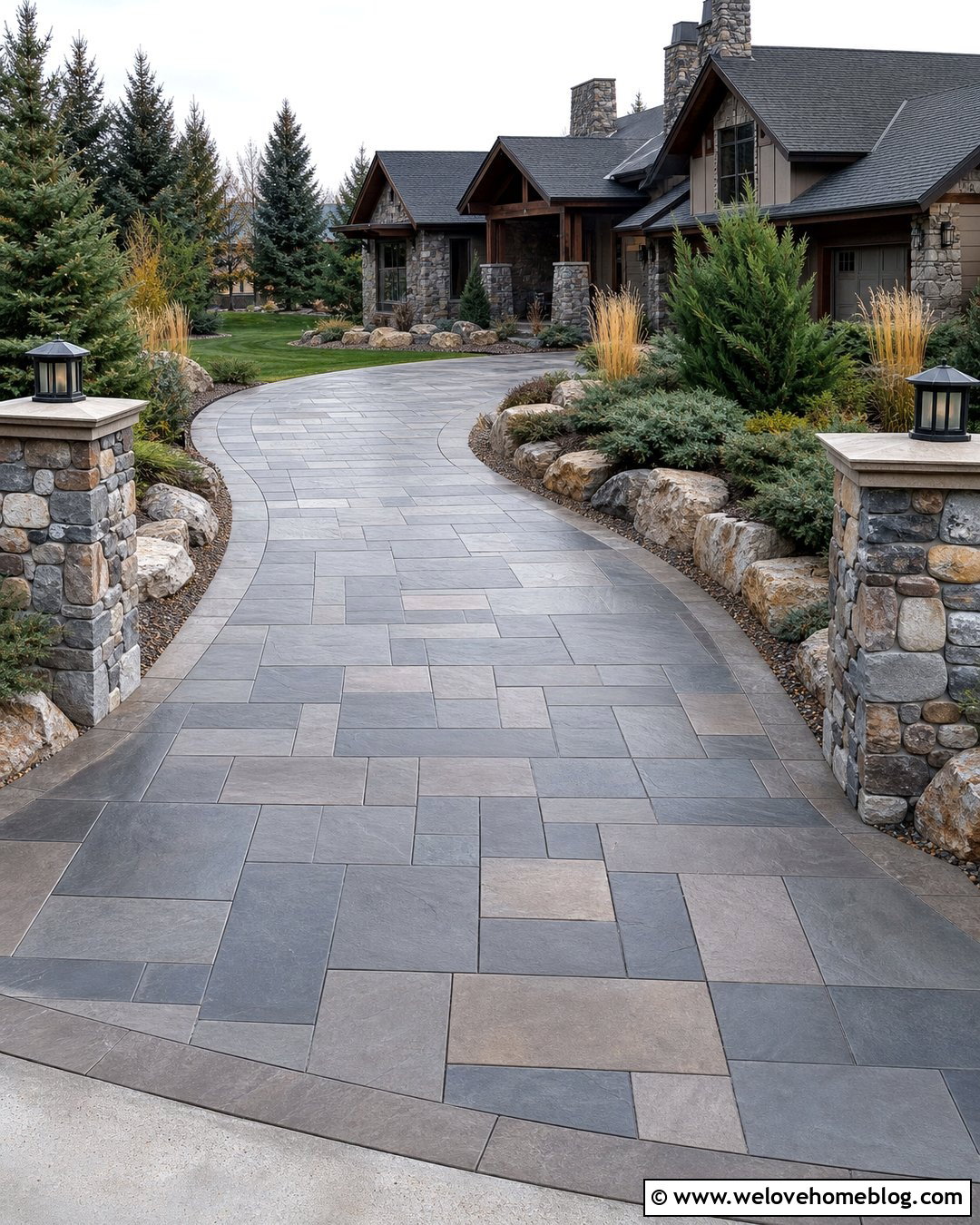
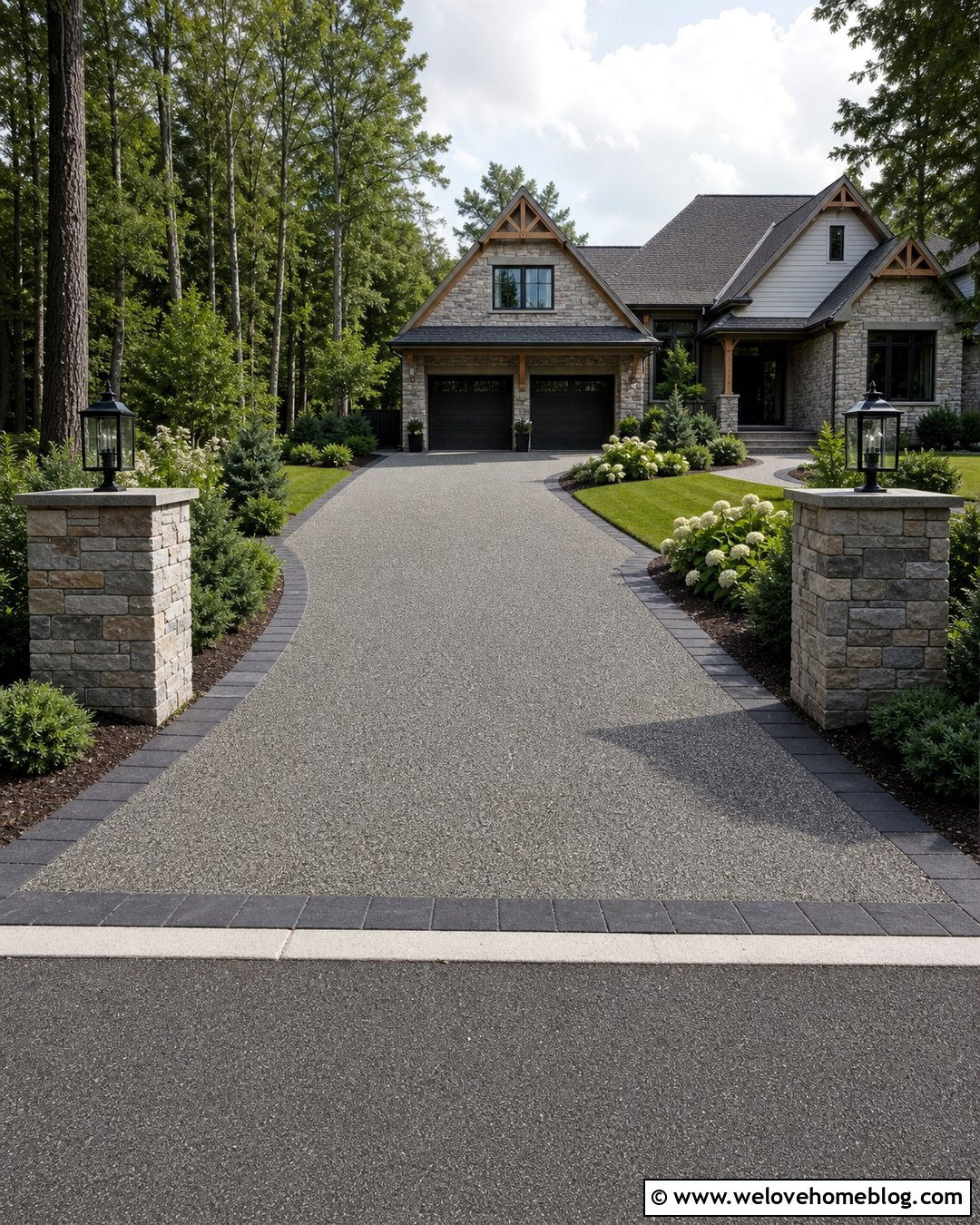
A faux slate finish gives poured concrete the visual depth of stone while preserving a continuous driveway surface. Begin with a medium gray painted base, then layer charcoal, blue-gray, and soft taupe in irregular rectangular sections. Existing sawcuts can guide the pattern, or a professional can create shallow decorative scoring before coating. At the curb, substantial fieldstone pillars make the entrance feel connected to the painted stone effect. Continue the natural palette with boulder edging, juniper, ornamental grasses, and a broad green lawn. A gently curving layout allows the varied colors to unfold gradually on the approach to a craftsman home. Avoid making every painted “stone” identical. Subtle tonal variation and restrained grout-colored lines create a more believable result while preventing the driveway from overpowering the architecture.
7. Faux Brick Painted Concrete Driveway In Herringbone
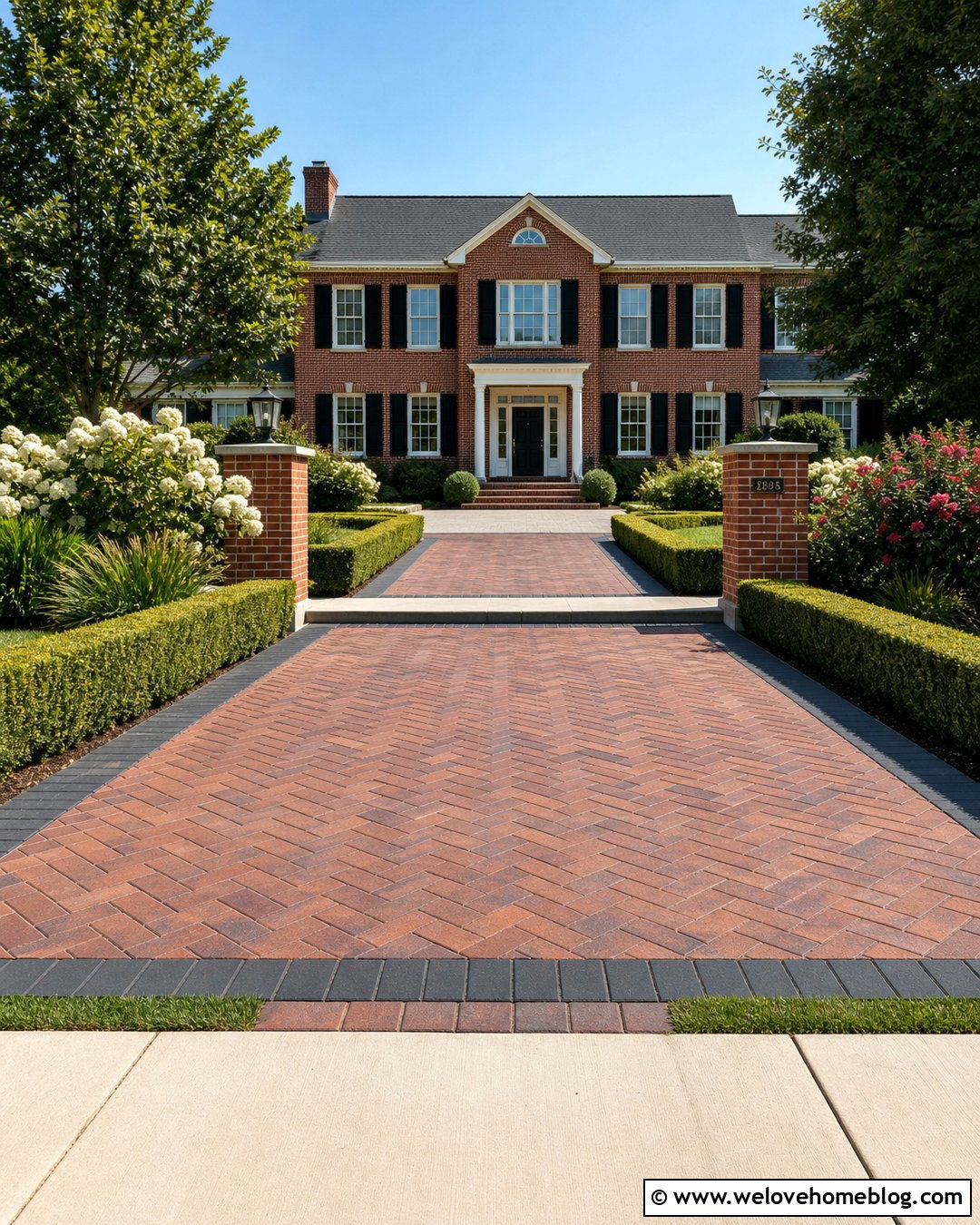
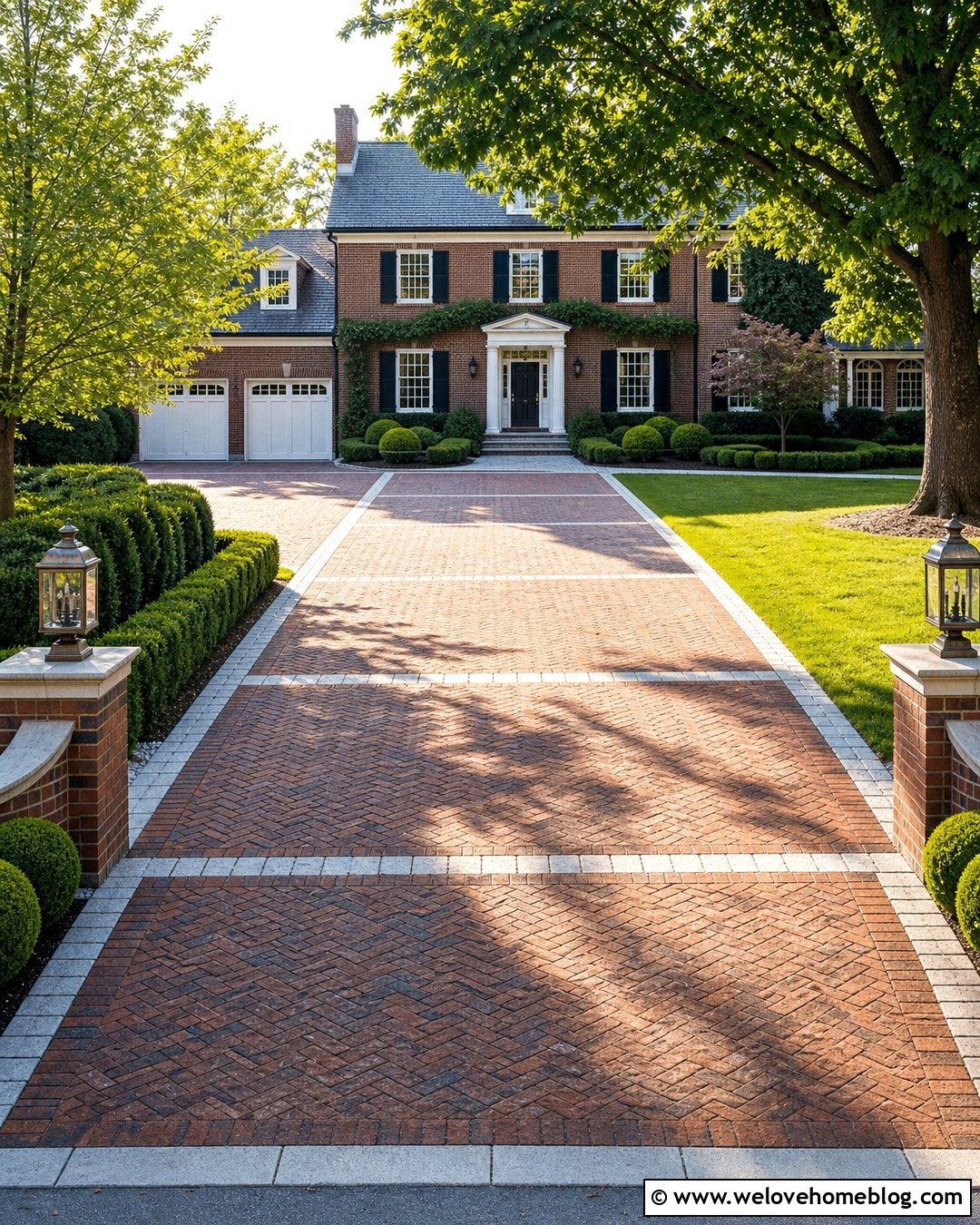
Could a basic concrete slab complement a traditional brick house? A painted herringbone pattern can create that connection without covering the driveway in individual pavers. Use muted red, brown, and clay-colored masonry coatings over a warm gray base, keeping the faux mortar lines slightly irregular. A straight or gently flared driveway provides a clear canvas for the diagonal pattern. Frame it with an actual charcoal paver border to strengthen the illusion and protect the most visible edges. Neatly clipped hedges, lawn panels, and a matching front walkway complete the formal setting. This look works well with Georgian, Federal, and Colonial architecture. Use larger painted brick shapes than standard wall bricks so the pattern remains readable from the curb and does not become visually crowded across a wide driveway.
8. Gray Checkerboard Painted Concrete Driveway
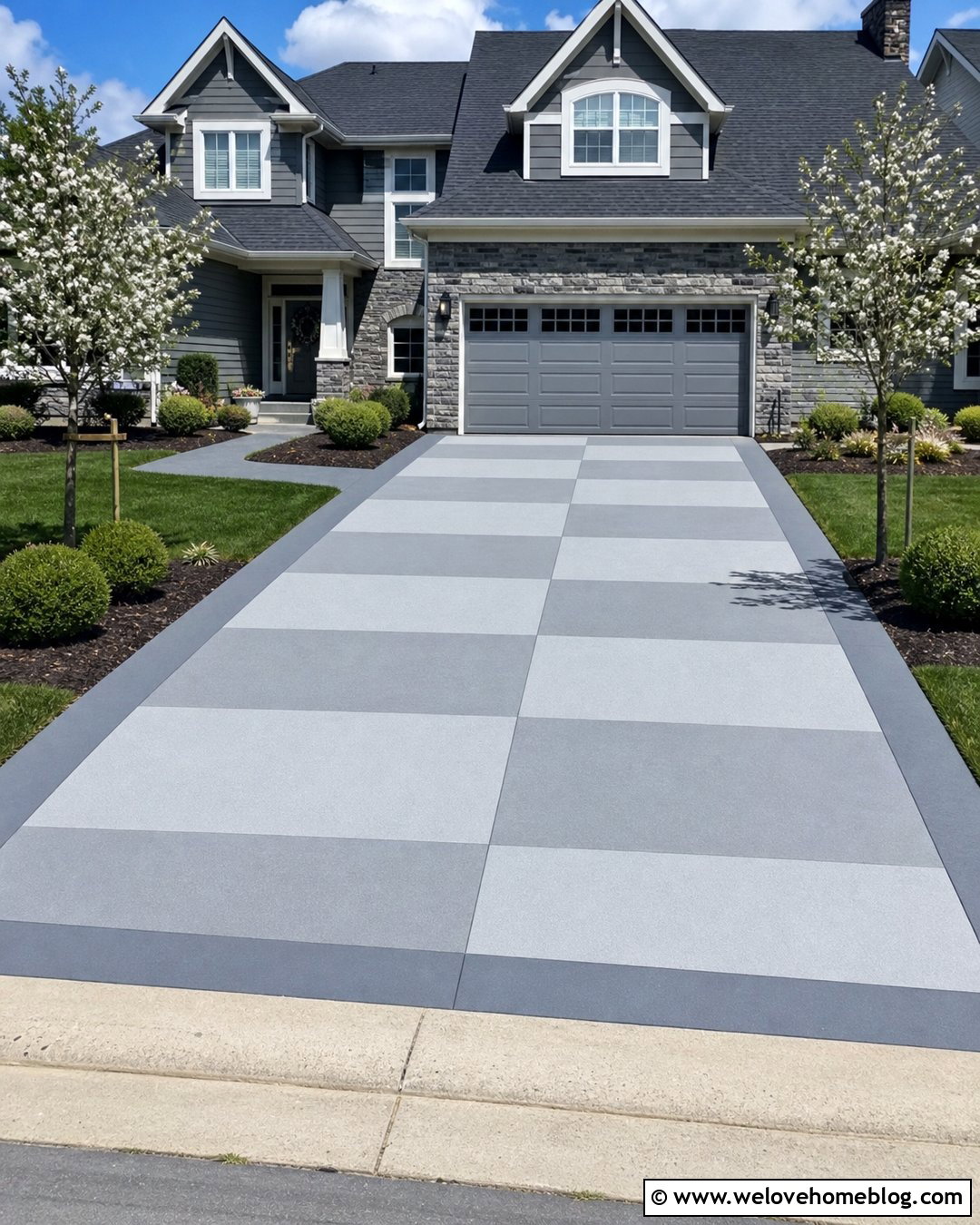
A checkerboard pattern can feel sophisticated when the two colors are closely related. Alternate medium gray and pale gray squares across a wide, straight concrete driveway, using existing joints whenever possible. A solid dark gray perimeter keeps the checkerboard contained and gives the curb edge a clean finish. For a balanced landscape, place symmetrical planting beds on both sides with rounded shrubs, small flowering trees, and dark mulch. A central walkway can repeat one of the gray tones without continuing the full pattern. This complete design works with a large suburban home, especially one with gray siding, stone veneer, or white trim. Before painting, map the squares from the garage outward so partial blocks appear in less noticeable areas. Larger sections create a calmer, more architectural appearance than a small, busy checker pattern.
9. Geometric Painted Concrete Driveway With Color Blocks
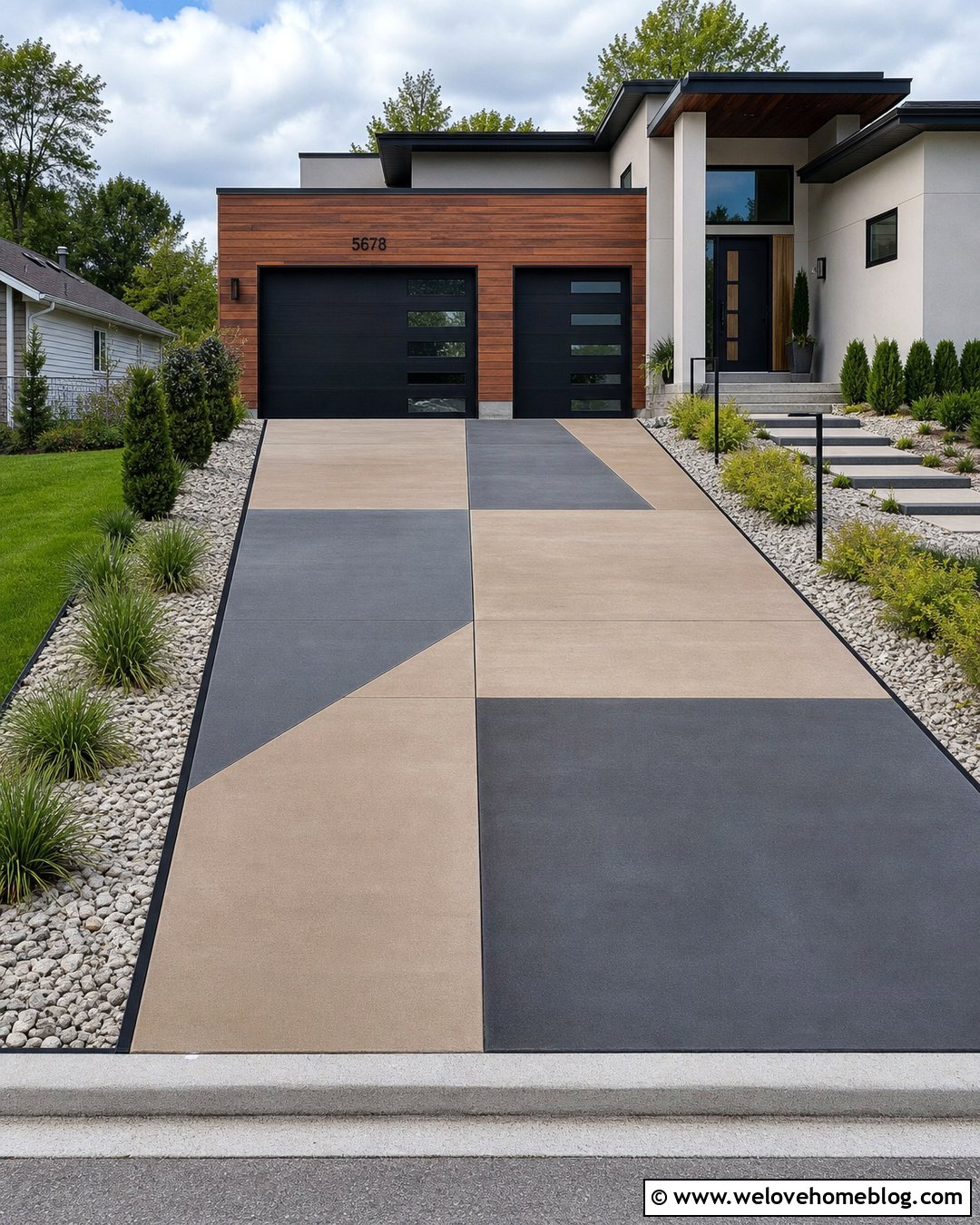
Large geometric color blocks can transform a broad concrete driveway into a contemporary entrance. Combine warm gray, muted tan, and charcoal in offset rectangles that follow the driveway’s expansion joints. Keep the darkest tone near the garage or along the outer edges, where it can visually anchor the layout. A straight approach with an asymmetrical walkway reinforces the modern composition. Use steel landscape edging, gravel mulch, low grasses, and compact evergreen shrubs beside the slab. The house can repeat the same palette through wood cladding, charcoal garage doors, and light stucco walls. Limit the design to three coordinated colors so it feels intentional rather than playful. Precise masking is essential, but perfectly equal sections are not required. Slightly varied block sizes can help the painted surface relate to a modern home’s windows and facade panels.
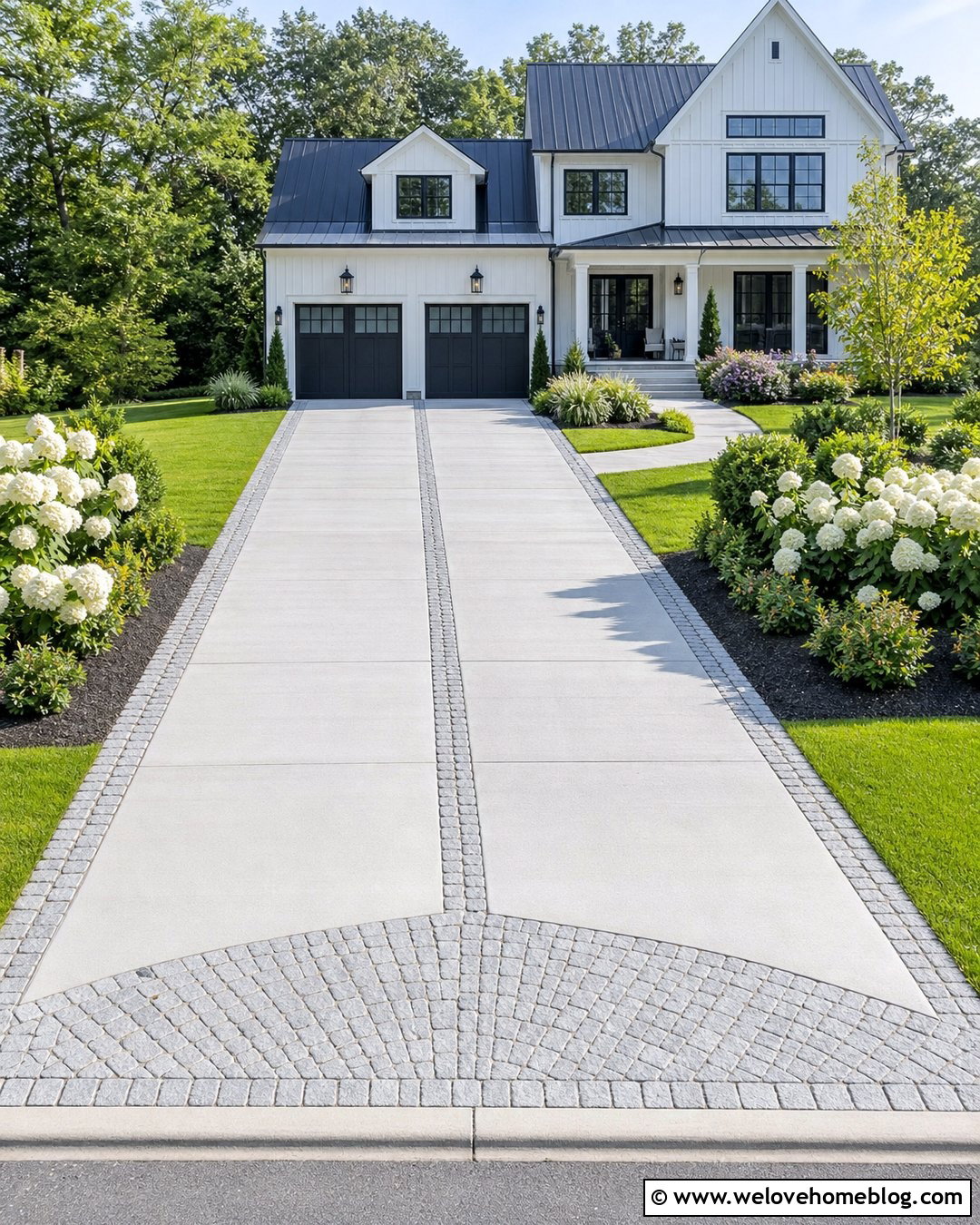
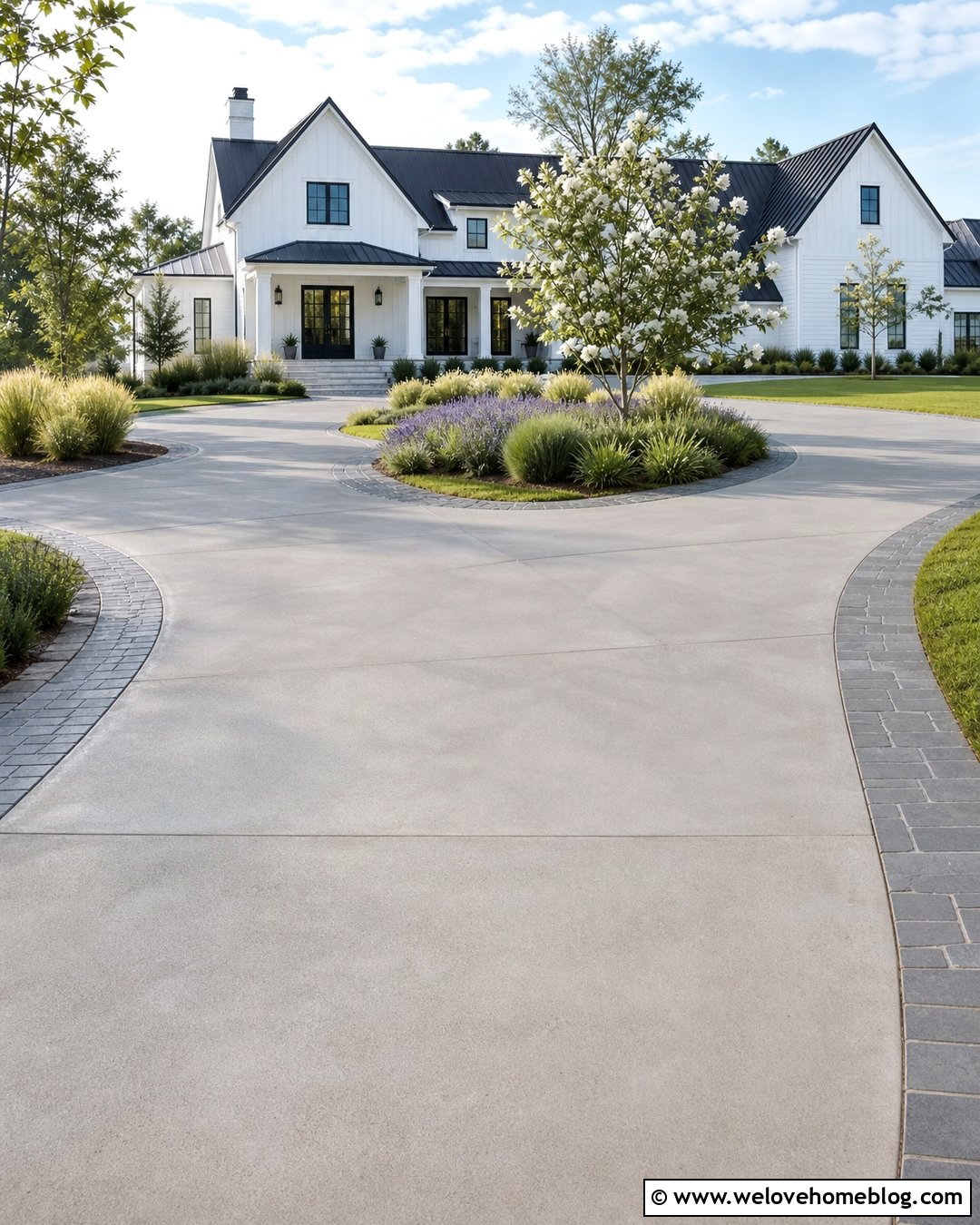
10. Blue-Gray Painted Concrete Driveway With White Edging
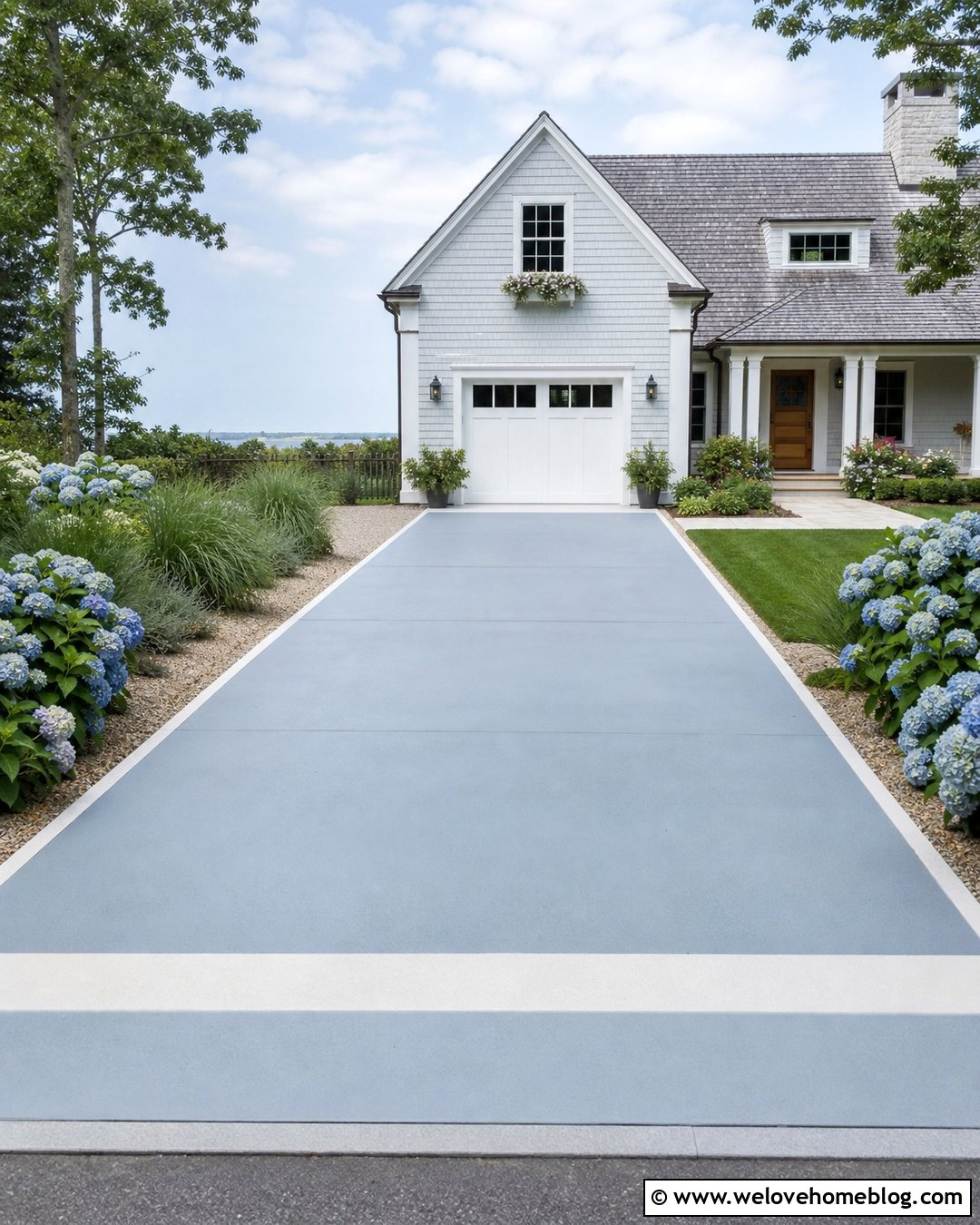
A soft blue-gray painted driveway can complement a coastal home without becoming overly colorful. Apply the blue-gray finish across a straight concrete surface, then outline it with a clean white painted edge. Add a wider white band where the driveway meets the garage and sidewalk to create a framed appearance. Sandy gravel beds, blue-green grasses, hydrangeas, and a simple shell-colored walkway reinforce the light coastal palette. The house might feature pale siding, white trim, and a natural wood front door. Choose a gray with only a subtle blue undertone because strongly saturated paint can dominate the facade. This full driveway look feels airy and fresh while remaining practical for an everyday residential setting. A fine texture additive is particularly useful on painted entrance bands, sloped sections, and areas exposed to frequent rain.
11. Sage Green Painted Concrete Driveway With Cottage Landscaping
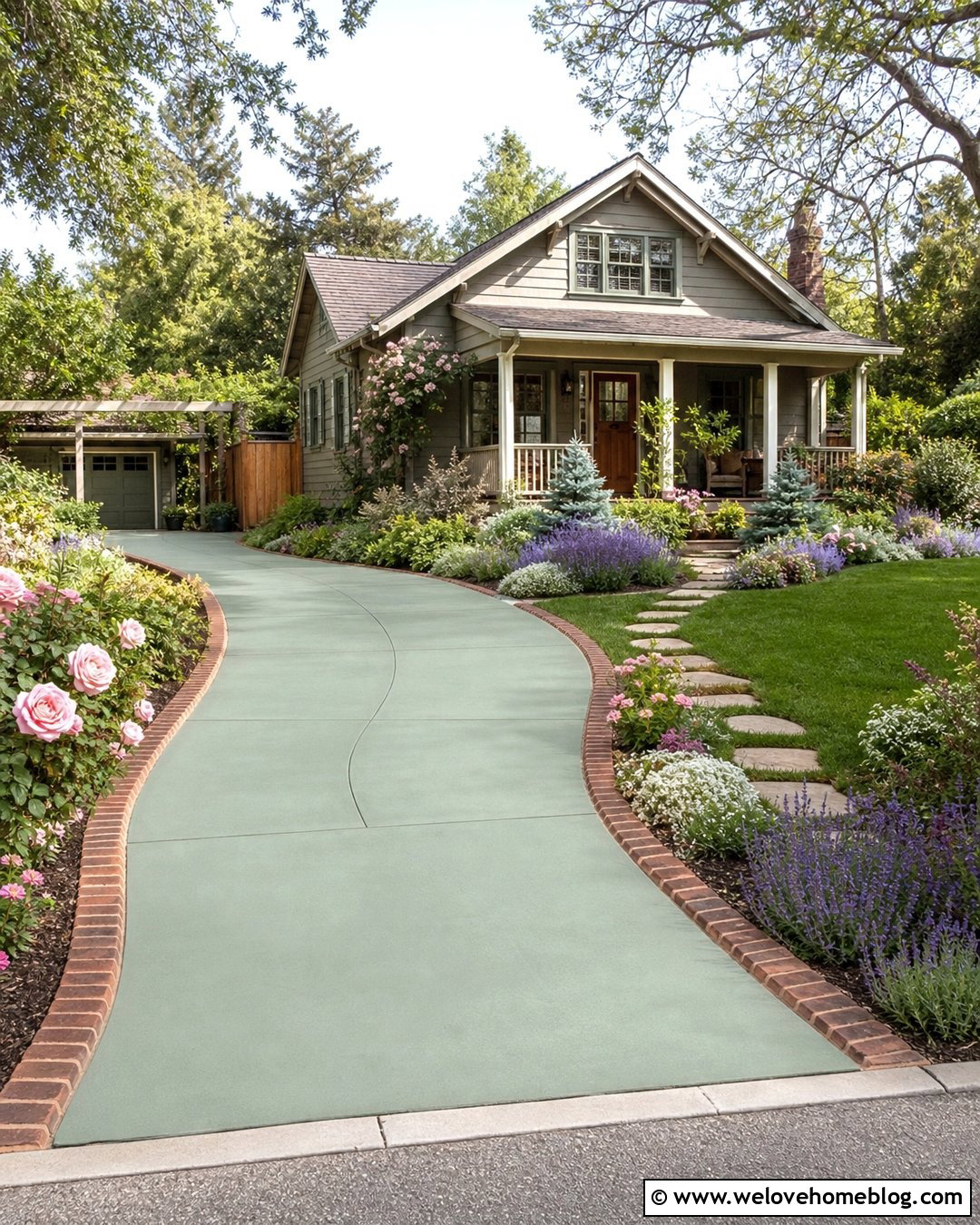
Muted sage paint can help a concrete driveway blend into a heavily planted front yard. Use the color on a narrow, gently curved driveway leading toward a cottage or small craftsman home. A border of reclaimed-looking brick provides warm contrast and separates the green surface from planting soil. Fill the surrounding beds with roses, catmint, salvia, dwarf evergreens, and informal ground covers. A stepping-stone walkway can curve away from the driveway toward the porch, creating a softer transition than a straight concrete path. The sage shade should be dusty and gray-based, not bright green, so it reads as a neutral from the street. Repeat it subtly on shutters or porch furniture. This design works best when the landscaping partly frames the driveway but remains trimmed back enough to protect the coating and preserve safe visibility.
12. Black Painted Concrete Circular Driveway
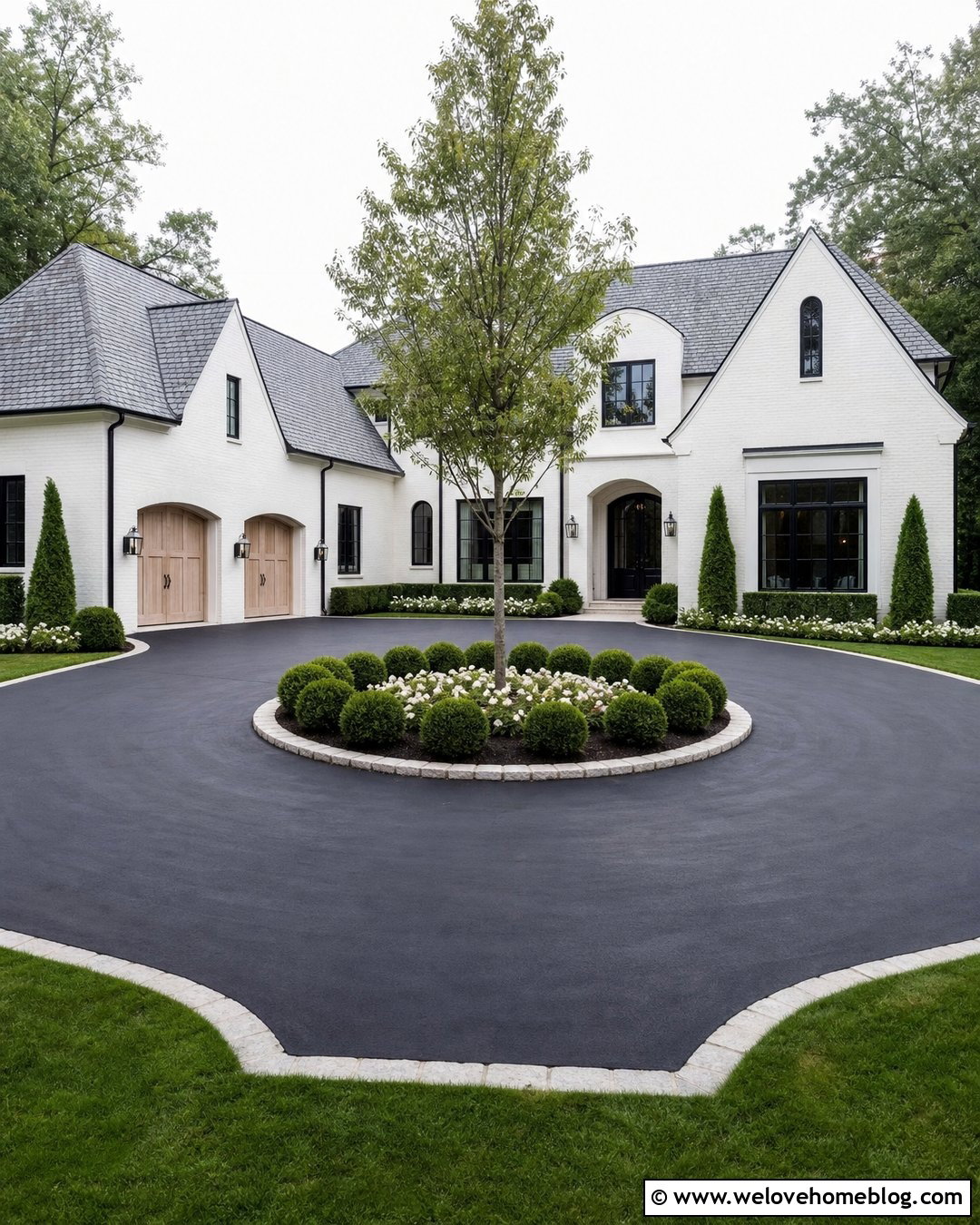
A black painted circular concrete driveway creates strong contrast around a light-colored home. Keep the finish closer to softened black or deep charcoal, which usually coordinates more easily with roofs, windows, and garage doors. Define the inner island with a pale limestone curb and fill it with a specimen tree, clipped shrubs, and low white flowers. On the outside edge, a narrow light-gray border can improve visibility and prevent the dark surface from blending into surrounding mulch. This layout suits a large modern, transitional, or white-painted brick house. Circular driveways already have a prominent shape, so avoid covering the surface with another complicated pattern. Solid color, crisp borders, and disciplined landscaping will create the strongest result. In hot, sunny locations, consider using charcoal selectively because very dark coatings can become noticeably warm.
13. Two-Tone Painted Concrete Driveway With Wide Border
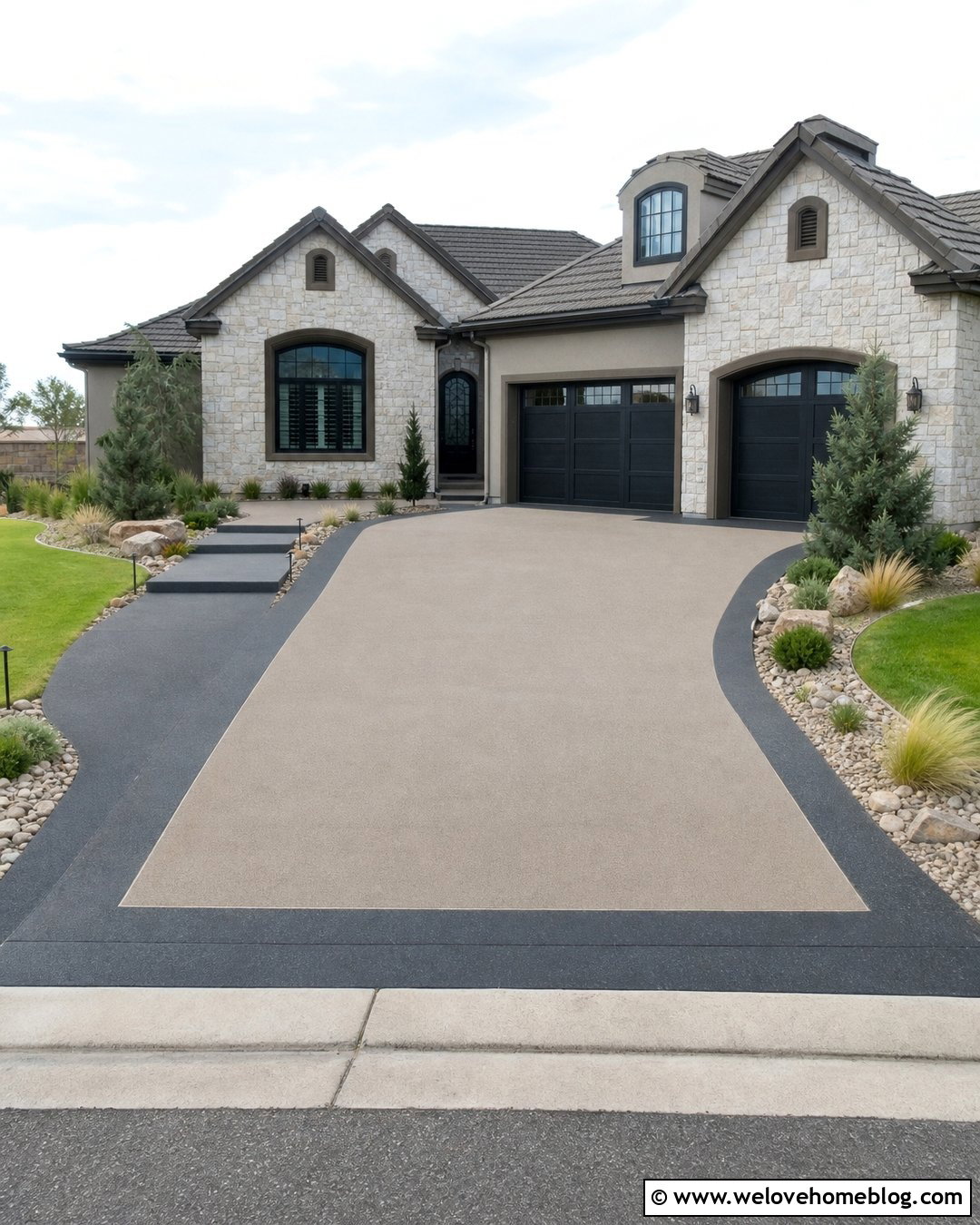
Two neutral paint colors can make an ordinary concrete driveway look carefully planned. Cover the central driving area in warm greige, then frame it with a wide dark brown or charcoal border. Follow the full shape of the driveway, including any flare near the curb and wider parking section beside the garage. The border can also continue around a matching walkway to connect the front door with the driveway. Use layered evergreen shrubs, ornamental grasses, and tan gravel mulch to echo the neutral palette. This approach complements stone-front suburban homes and transitional exteriors with mixed materials. A border measuring several inches wide is easier to see and maintain than a very thin stripe. It also offers a practical place for localized touch-ups if tires repeatedly cross the same outer portions of the driveway.
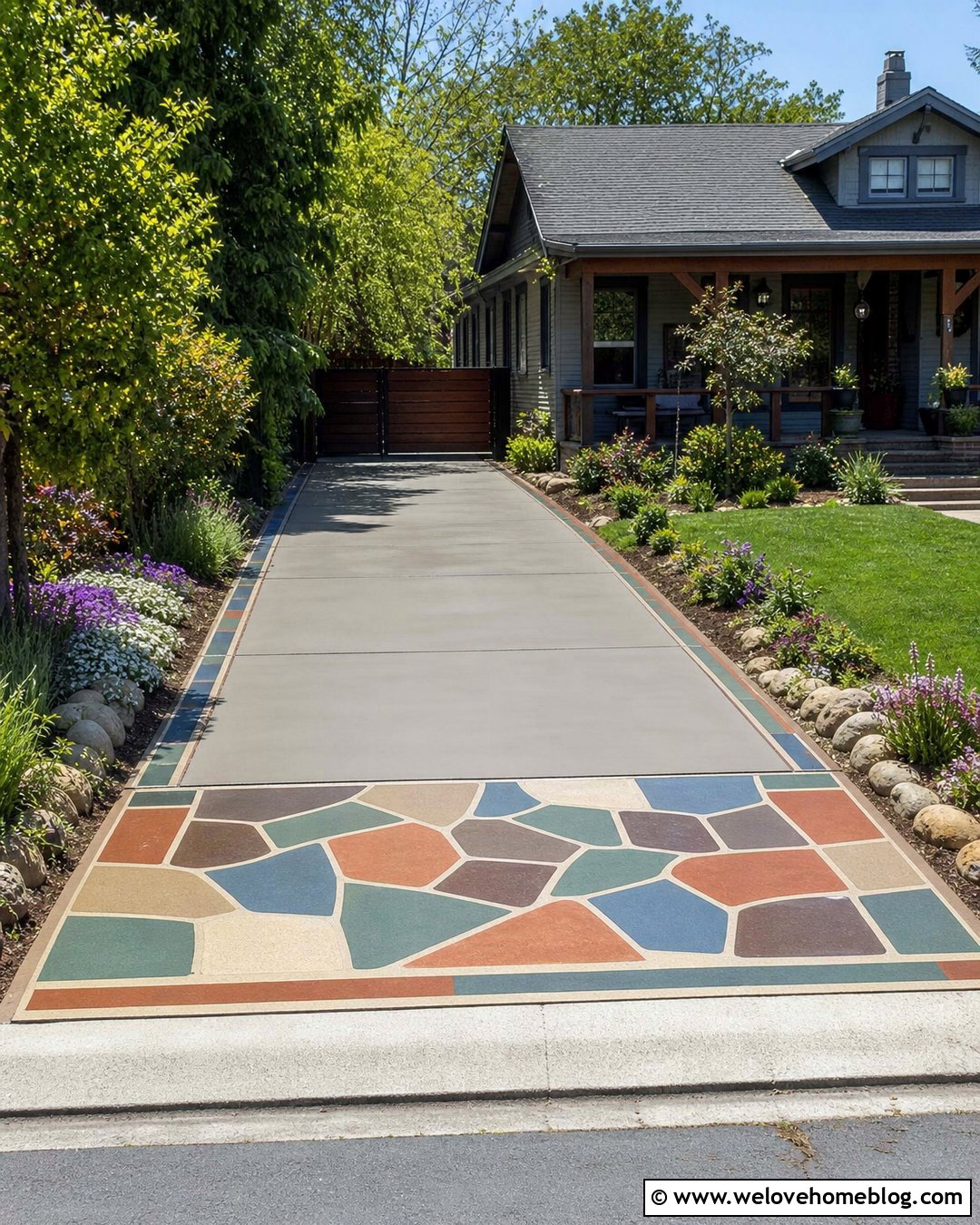
14. Stenciled Tile Painted Concrete Driveway
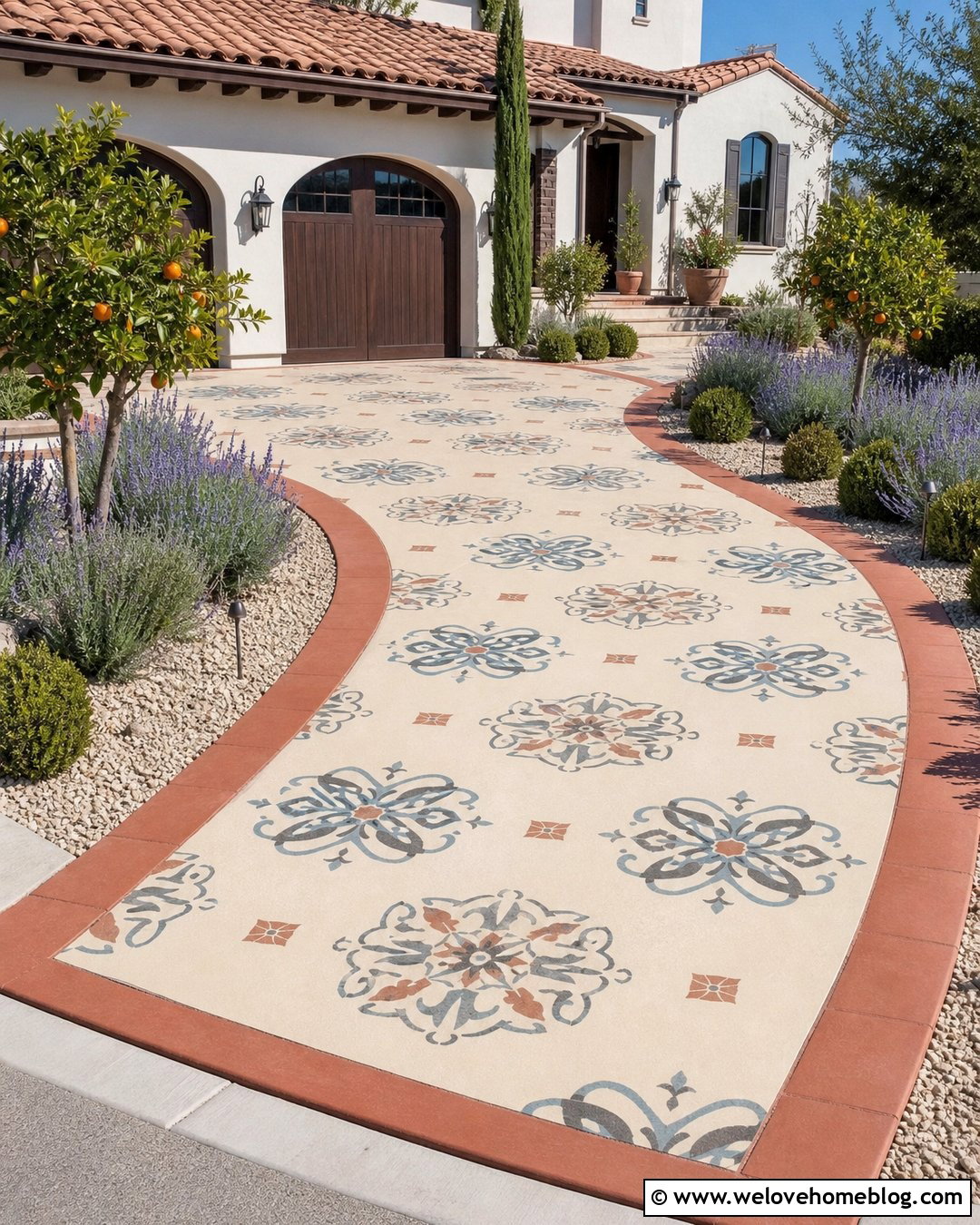
A large tile stencil can give a painted concrete driveway the character of patterned paving. Use a warm cream base with muted blue, terracotta, and charcoal details, keeping the design broad enough to remain clear from the street. Rather than covering every inch, place the stencil across the central driveway field and surround it with a solid terracotta border. A gently curved approach, stucco house, and arched garage doors provide a suitable architectural background. Complete the look with gravel beds, lavender, clipped rosemary, and small citrus-like ornamental trees. Patterned driveways need visual breathing room, so keep the adjacent walkway and entrance apron relatively simple. Carefully repeat the stencil along a snapped grid, and use coatings rated for exterior vehicular concrete. A compatible clear protective system may simplify maintenance if recommended for the chosen paint.
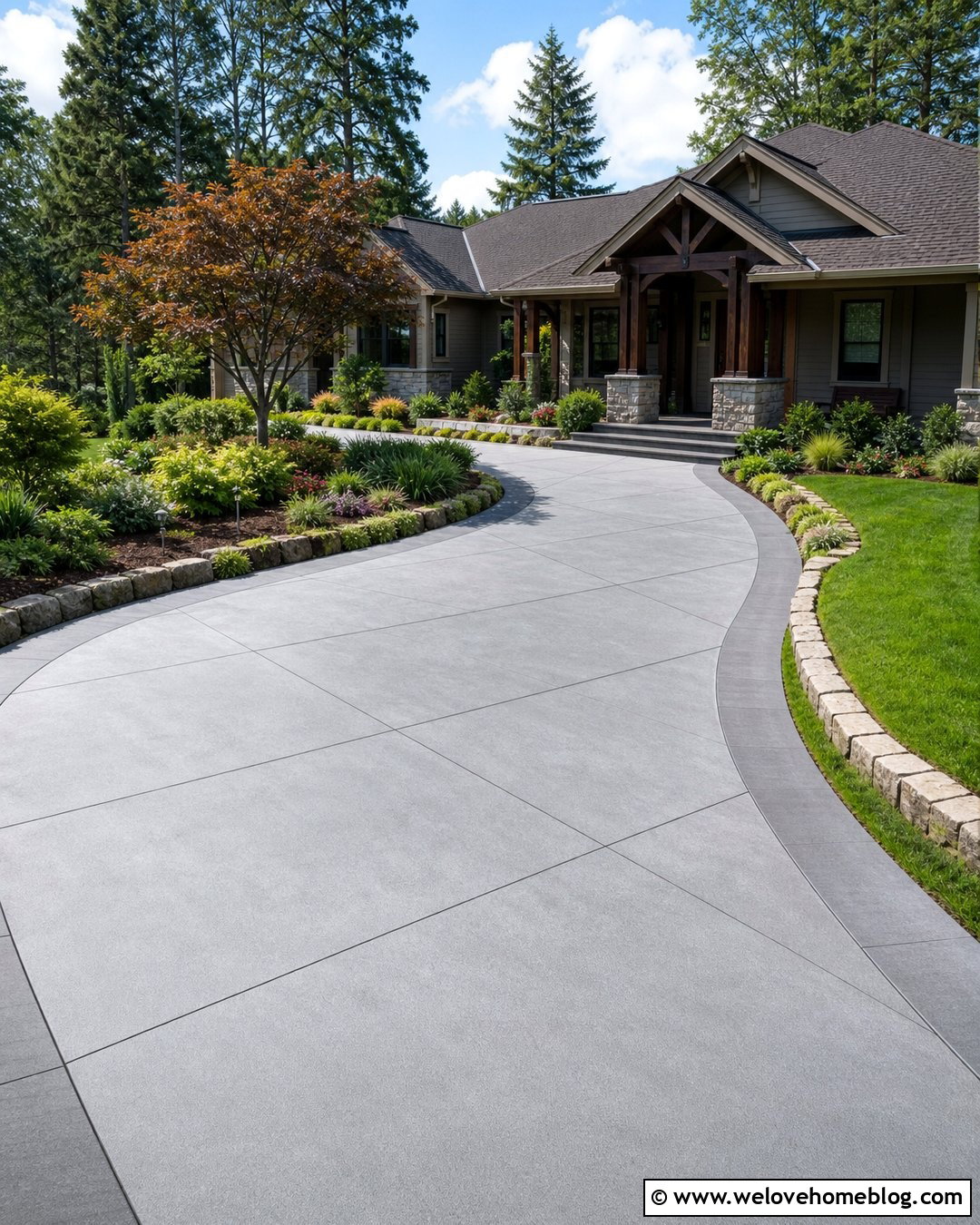
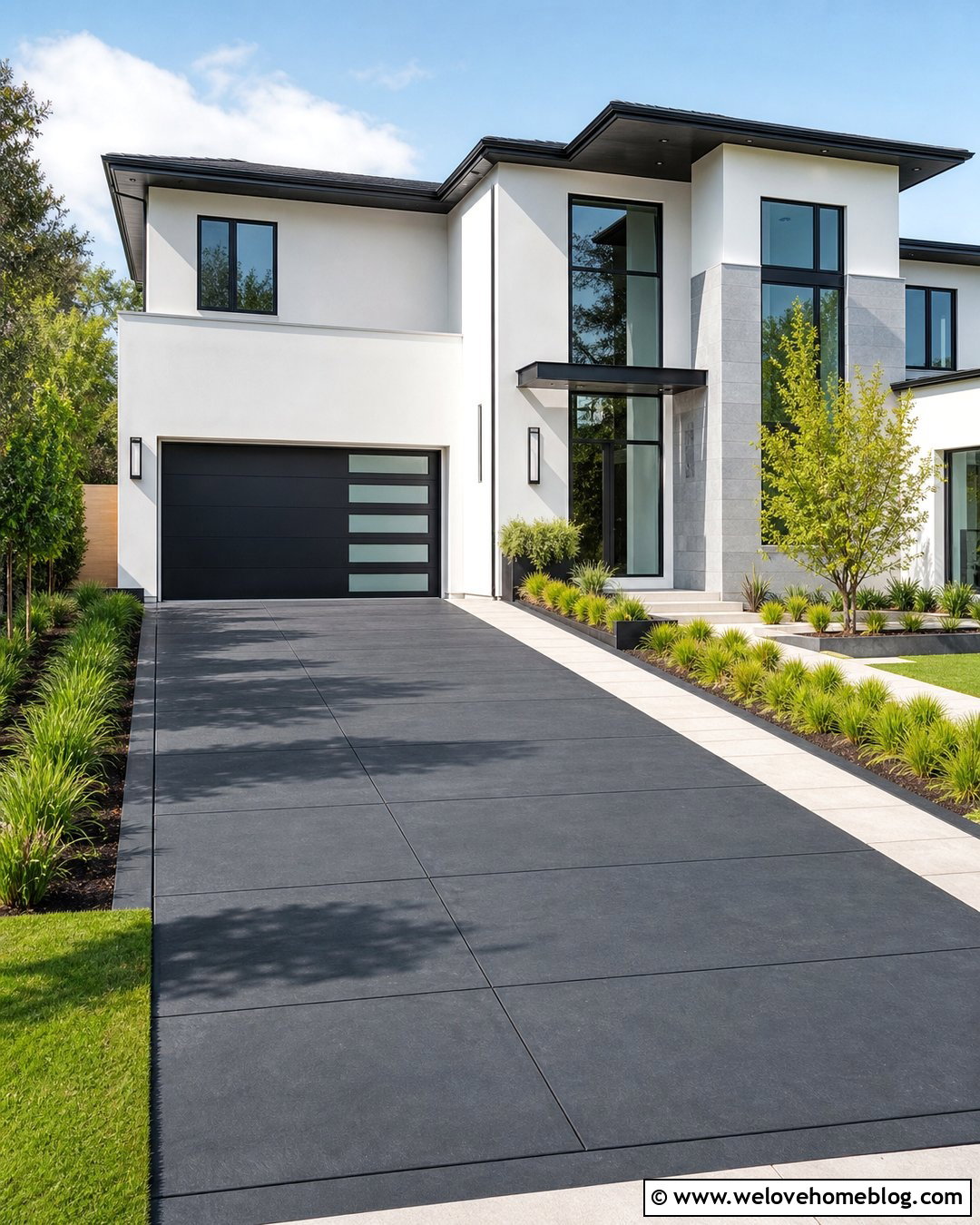
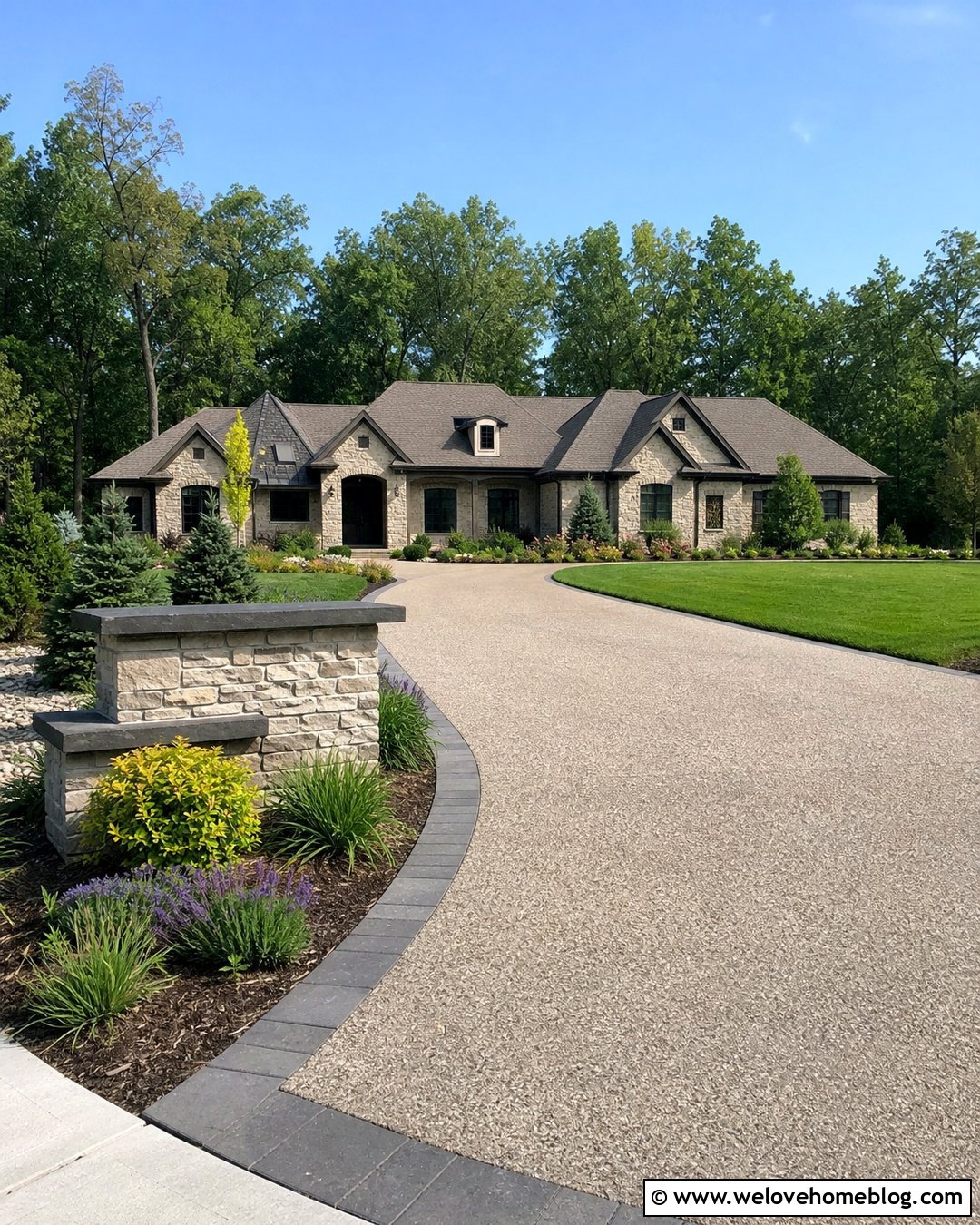
15. Faux Cobblestone Painted Concrete Driveway
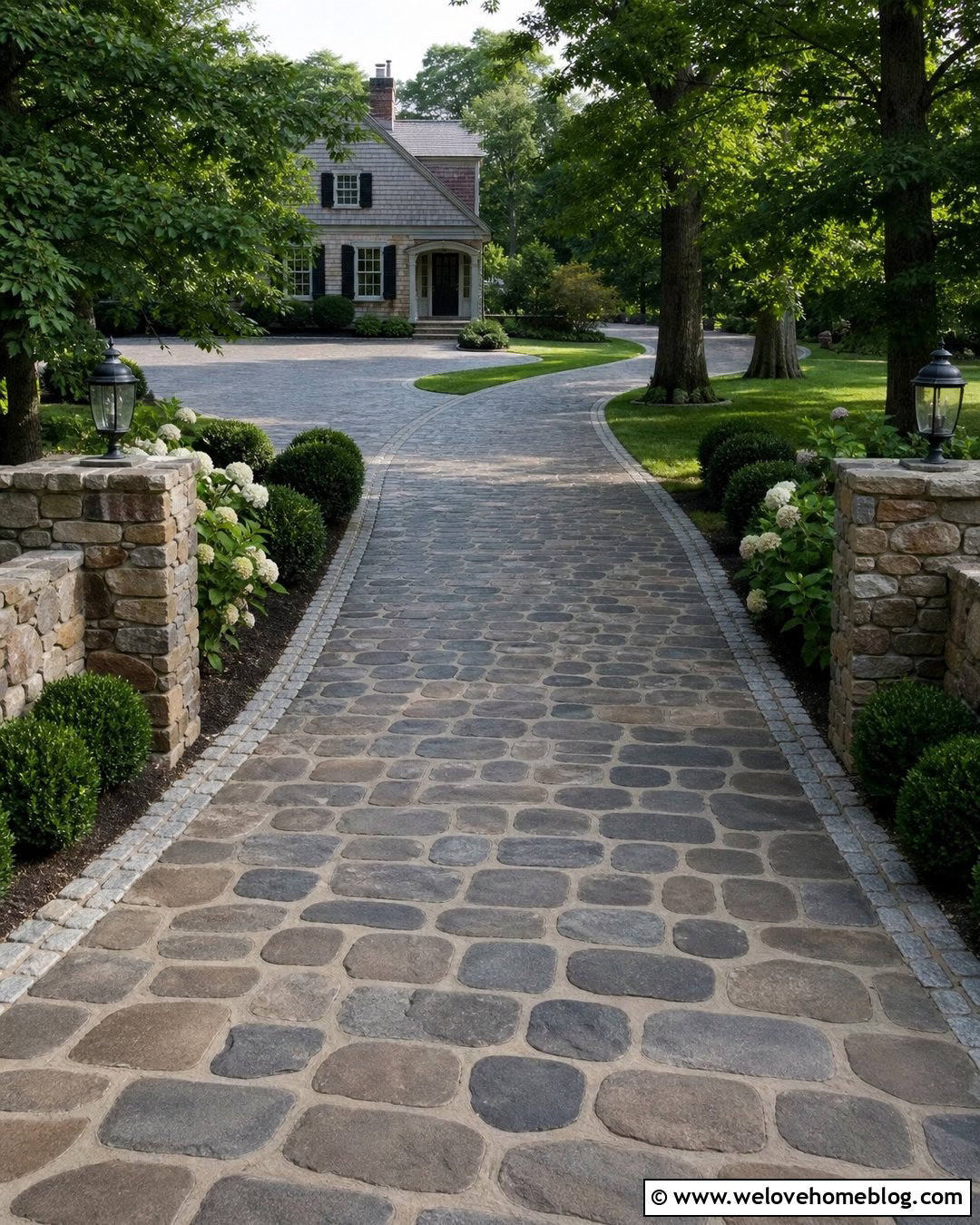
Faux cobblestone painting can soften a long concrete driveway leading to a traditional or country home. Start with a medium taupe base and create oversized rounded blocks in layered shades of gray, brown, and muted charcoal. Darker joints will define the pattern, but they should not be perfectly uniform. Install real granite setts along the driveway edges to add texture where the painted surface meets the lawn. Near the house, widen the drive into a simple parking court surrounded by hydrangeas, boxwoods, and mature shade trees. A low stone wall at the entrance can repeat the gray-brown palette. The cobblestone shapes should follow the direction of travel, helping the long approach feel cohesive. Restrict strong color variation to a few areas so the completed driveway resembles weathered stone rather than a theatrical mural.
16. Diagonal Stripe Painted Concrete Driveway
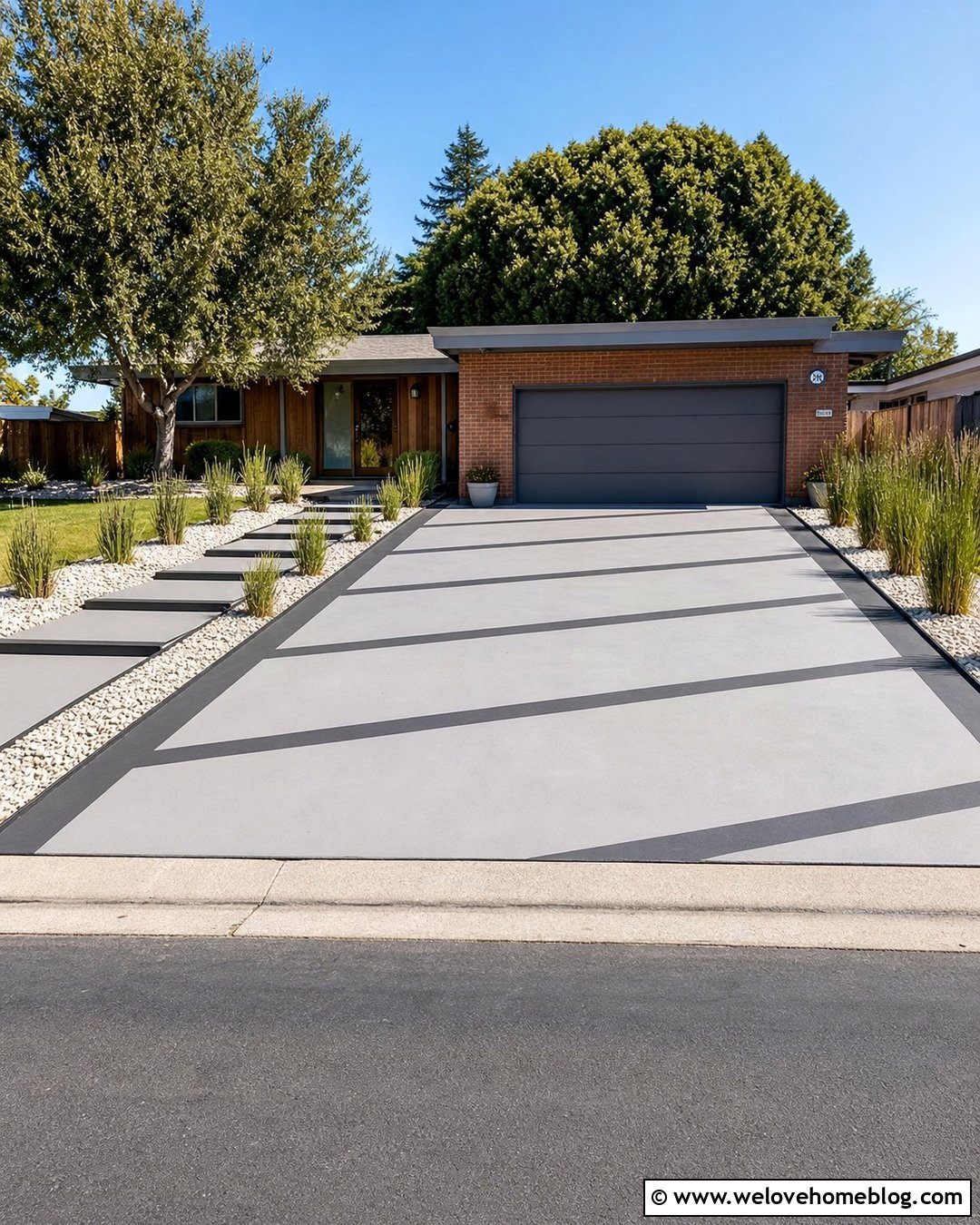
Diagonal stripes bring movement to a small or medium concrete driveway, especially when the surface has a simple rectangular shape. Use a pale gray background with broad charcoal stripes running at a consistent angle from one edge to the other. Limit the pattern to the central field and surround it with a solid gray border, preventing the design from feeling unfinished. A narrow strip of white gravel, upright grasses, and black steel edging can frame both sides. This driveway look pairs naturally with a compact midcentury modern home featuring horizontal lines, warm brick, and a low roof. Stripes should remain wide enough to avoid visual clutter and reduce the amount of masking required. If a full diagonal layout feels too bold, place the pattern only on the entrance apron and keep the remaining driveway a coordinated solid gray.
17. Painted Concrete Driveway With Central Runner
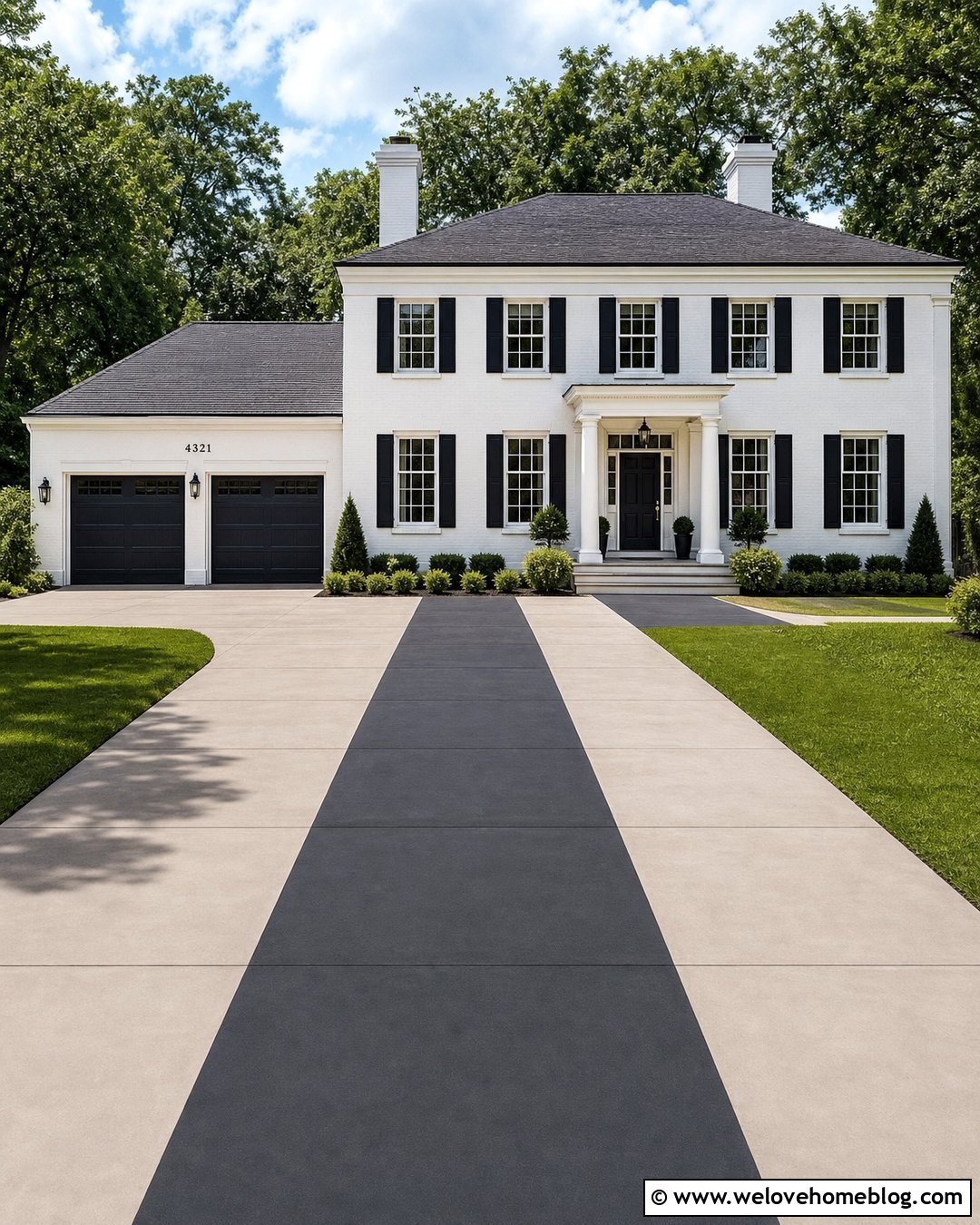
A contrasting central runner can make a wide concrete driveway feel narrower and more directed. Paint the primary surface in light taupe, then add a charcoal strip through the middle from the curb to the garage. Break the runner into large rectangular sections using thin light-colored lines, creating the appearance of oversized pavers. Match the charcoal with a dark garage door, porch lights, and metal address numbers. On both sides, use symmetrical lawn strips and planting beds filled with low shrubs that preserve visibility. This complete layout works particularly well with a front-facing garage and a symmetrical Colonial or transitional house. The runner should be proportionate to the driveway rather than matching a vehicle’s exact tire width. A broad central feature looks intentional even when cars are parked in different positions.
18. Greige Painted Concrete Driveway With Alternating Panels
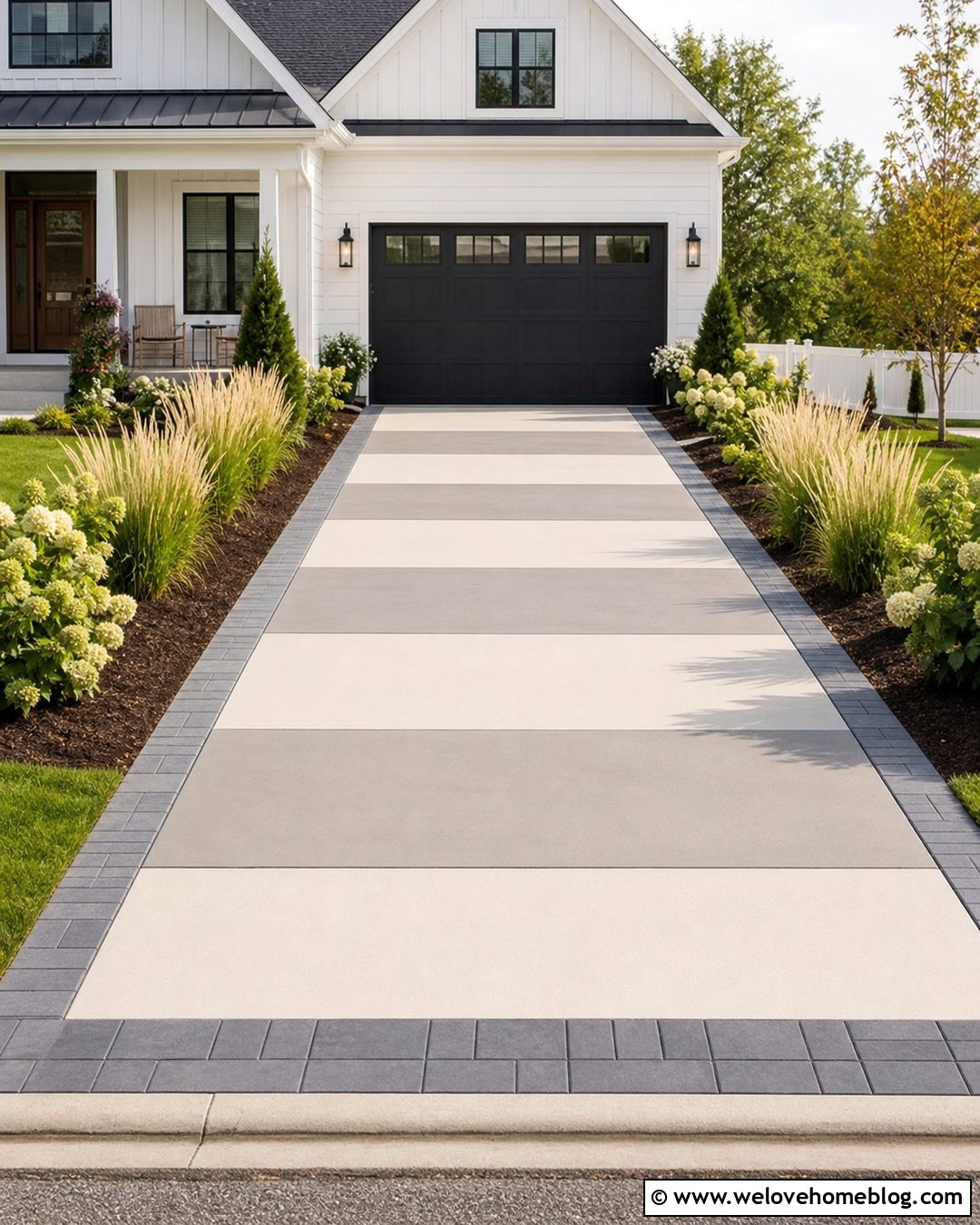
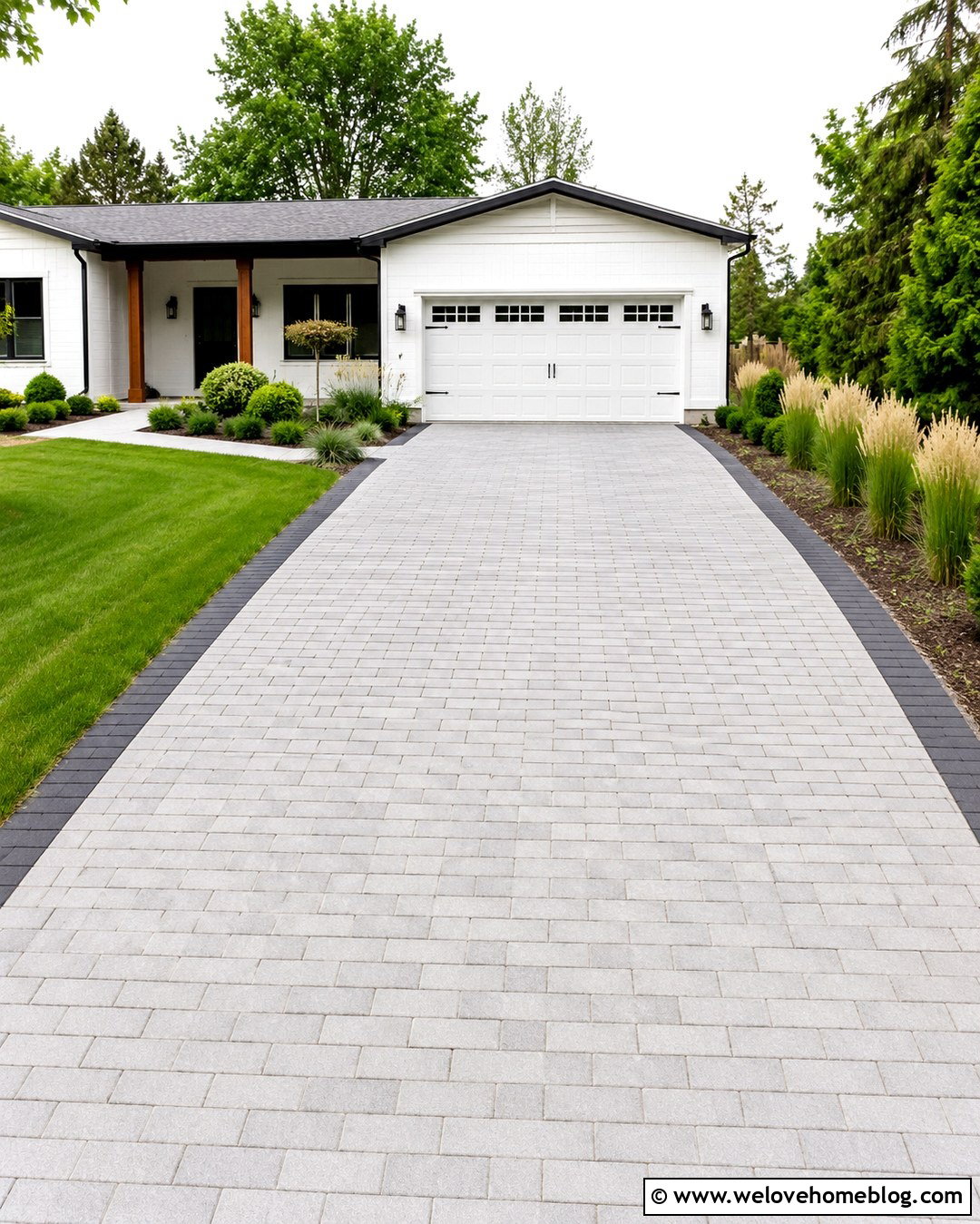
Alternating greige panels offer a subtle way to highlight existing concrete joints. Choose two closely related shades, such as pale mushroom and medium warm gray, and apply them to consecutive rectangular sections. The tonal change creates depth while keeping the surface calm enough for a busy home exterior. Outline the entire straight driveway with dark gray pavers, then carry those pavers across the curb as an entrance band. Surrounding beds can include feather reed grass, compact hydrangeas, and small evergreens in repeated groups. This design suits a modern farmhouse, craftsman, or remodeled ranch house with neutral siding. Before selecting paint, compare samples beside the garage door during bright and overcast conditions. The two shades should remain visibly different without creating the high contrast of a checkerboard, allowing the driveway to support rather than dominate the facade.
19. Cream Painted Concrete Driveway With Red Brick Ribbon
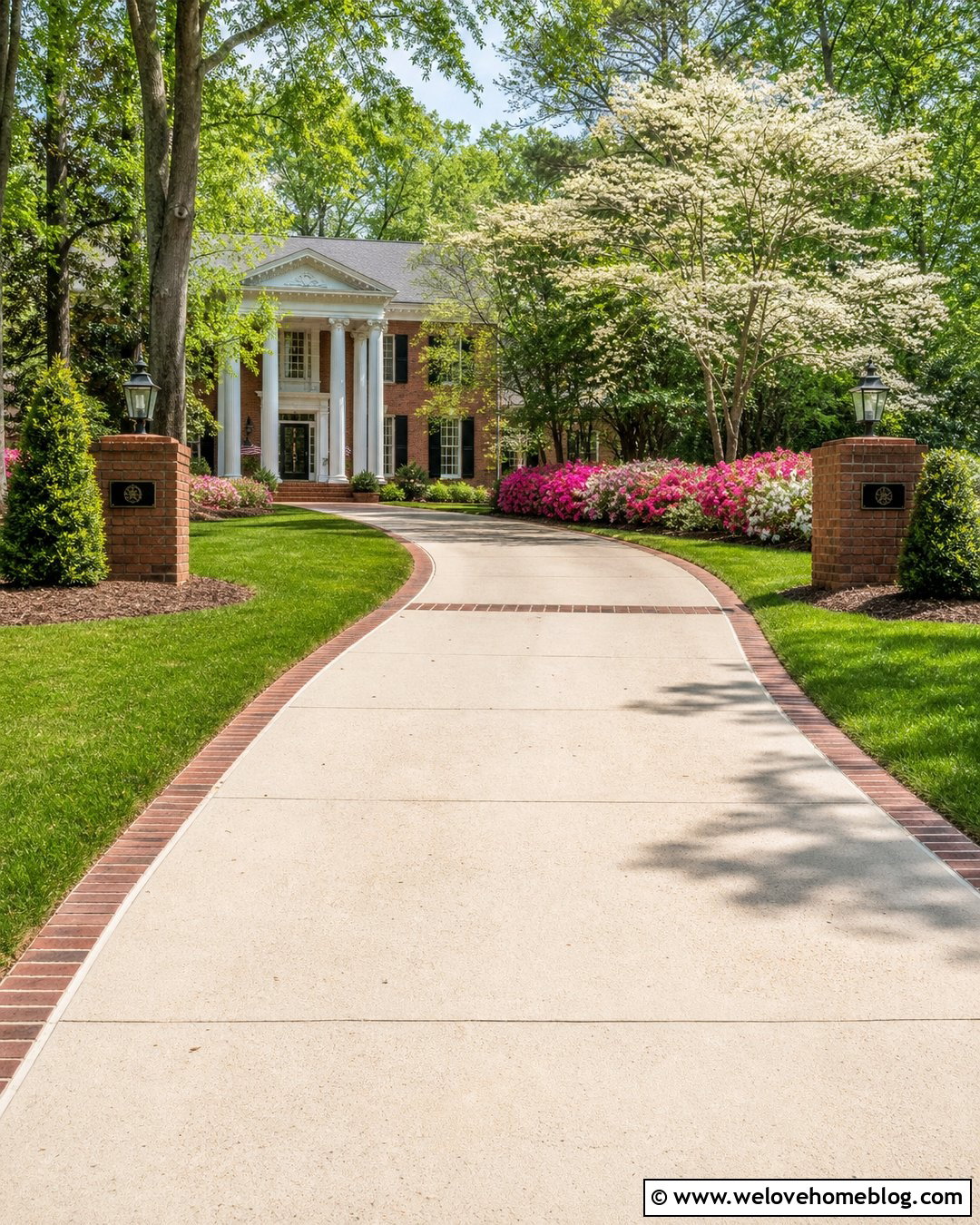
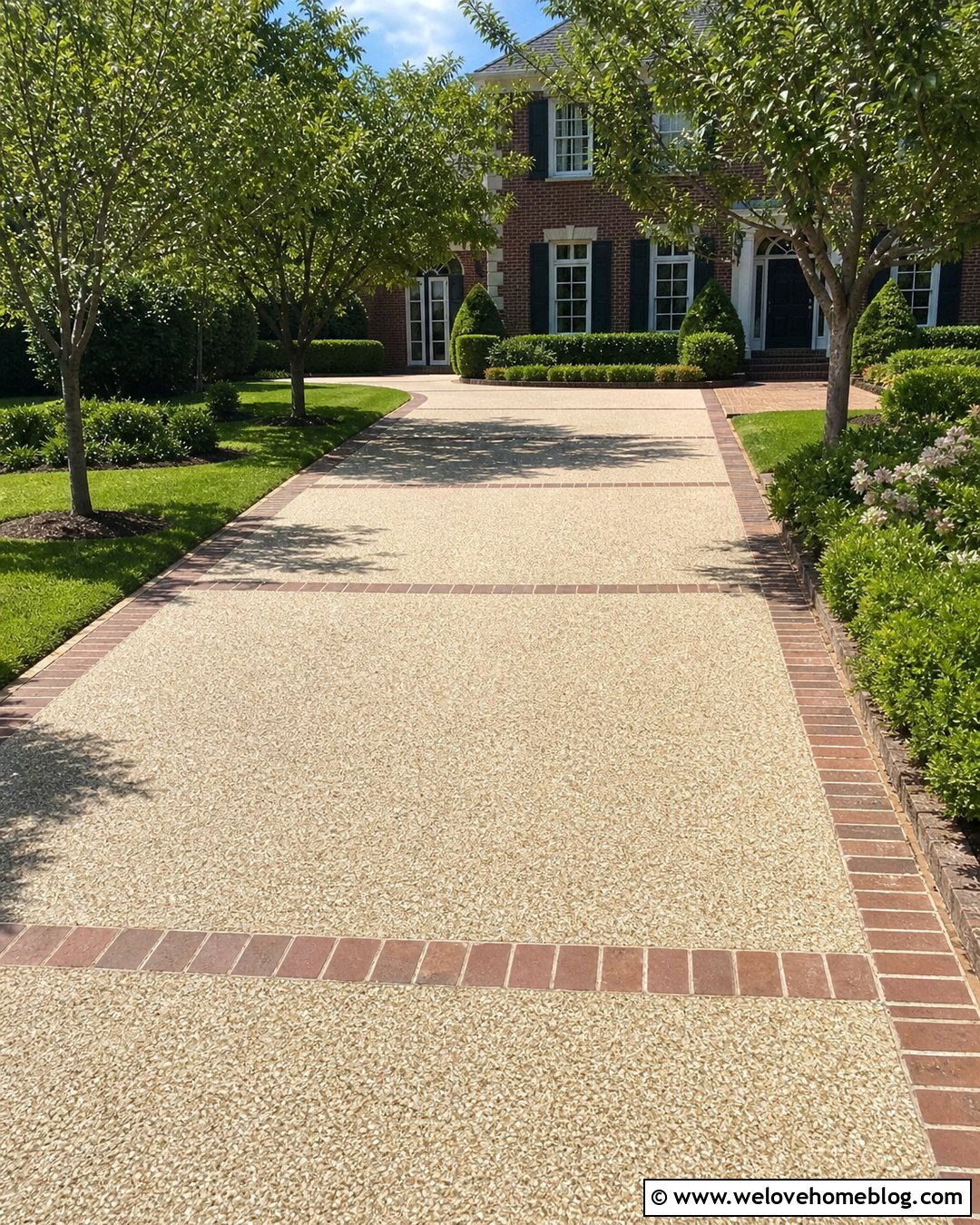
Cream paint can brighten a shaded driveway and establish an attractive contrast with traditional red brick. Apply a warm off-white coating over the concrete, then place a narrow brick ribbon inside both outer edges. A second brick band across the entrance can visually connect the driveway to a brick walkway or front steps. Use a curved layout if space allows, letting the ribbon emphasize the approach toward the garage. Green lawn, azaleas, boxwoods, and a flowering dogwood provide rich color without adding another hardscape material. This complete design is well suited to a red brick Colonial or Southern-inspired home with white columns. Avoid a stark, cool white that may clash with warm masonry. A cream or ivory tone will be easier on the eye and can make the old and new materials feel naturally connected.
20. Painted Concrete Driveway With Address Medallion
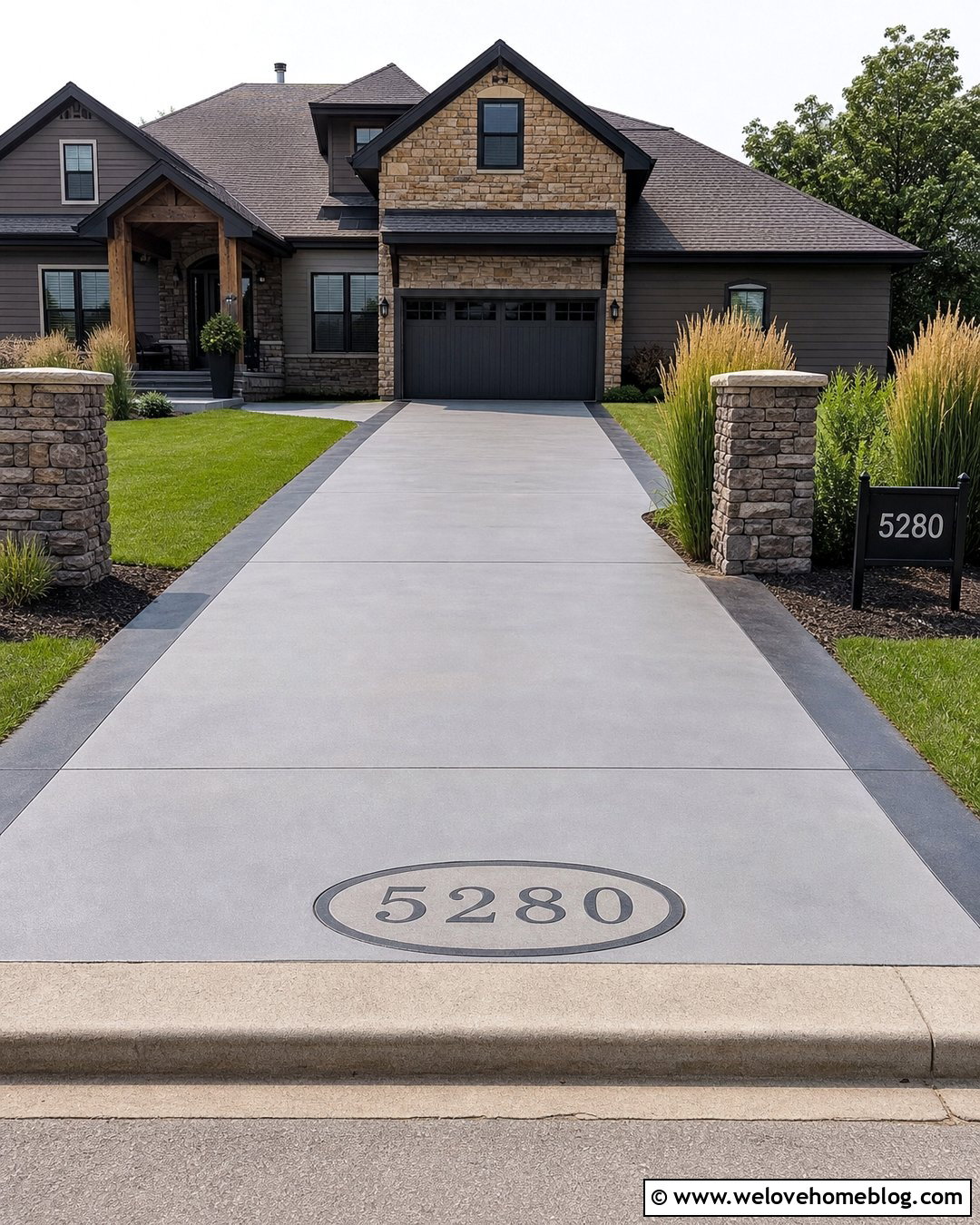
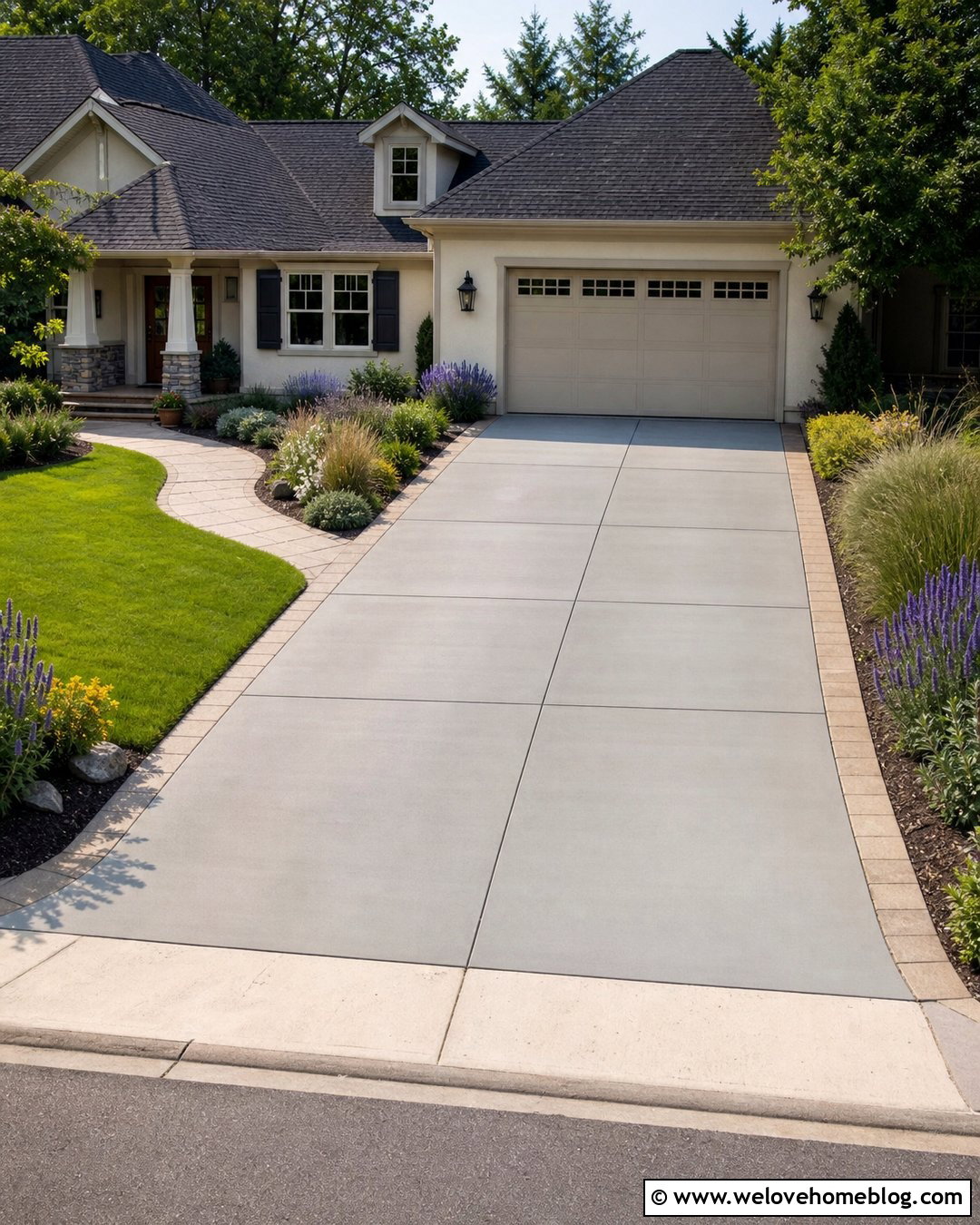
An address medallion can personalize a concrete driveway while keeping the broader design restrained. Paint the main surface medium gray and add a charcoal border around a broad, straight layout. Near the curb, create a large circular or rectangular medallion in lighter gray, with a simple address-number design applied through a durable stencil. Keep the numerals bold and uncomplicated so they remain legible from the street. Coordinate the feature with stone entry pillars and a matching freestanding address sign rather than adding multiple decorative motifs. Low ornamental grasses and compact shrubs can frame the entrance without covering the numbers. Continue the plain gray driveway from the medallion to the garage. Placing the detailed feature near the curb gives it visibility while allowing most of the painted concrete to remain easy to maintain.
21. Taupe Painted Concrete Driveway With Tree-Lined Entrance
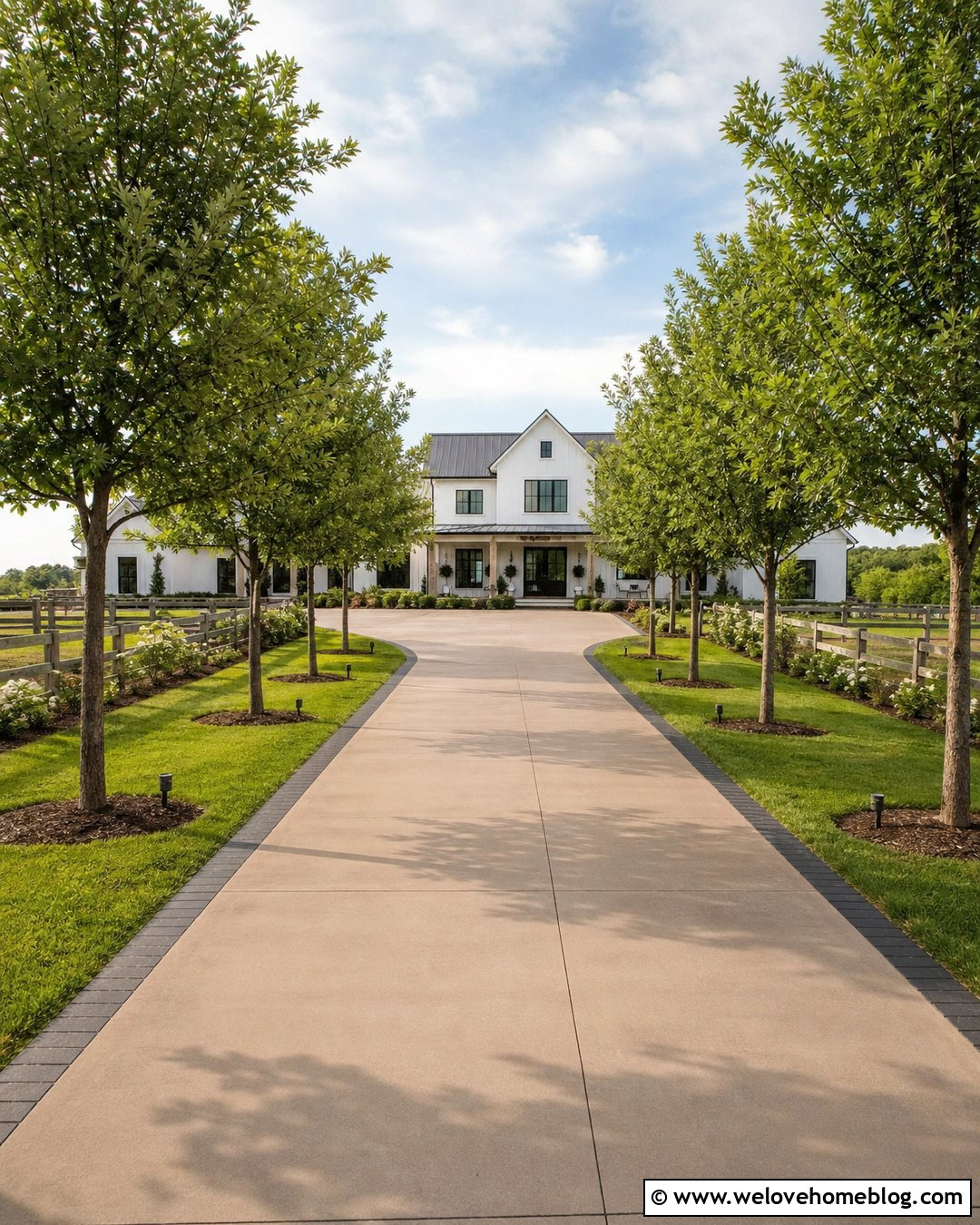
A long driveway can feel integrated into the property when its color relates to the surrounding soil, tree trunks, and architecture. Paint the concrete a medium taupe with subtle warm undertones, then edge both sides with narrow charcoal pavers. Arrange evenly spaced deciduous trees along the approach, leaving enough distance for mature roots and canopies. Beneath them, use simple lawn or low ground cover rather than deep planting beds that require constant edging. At the house, allow the driveway to widen into a rectangular parking area with the same taupe finish. This complete look suits a country home, large craftsman, or modern farmhouse on a spacious lot. Warm gray-brown paint helps the long paved surface appear less stark, while the repeated trees give the route structure and draw attention toward the home.
22. Sandstone Painted Concrete Horseshoe Driveway
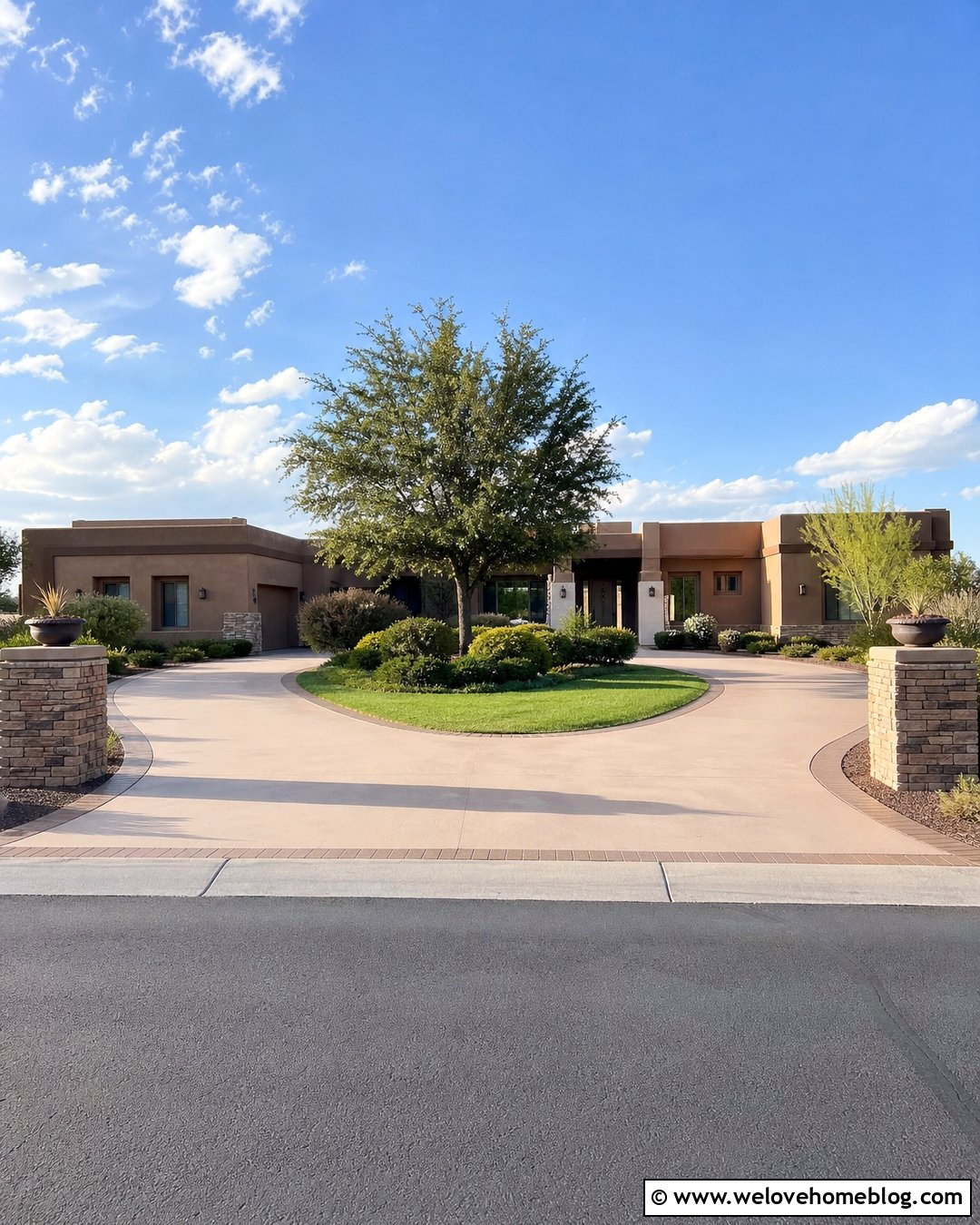
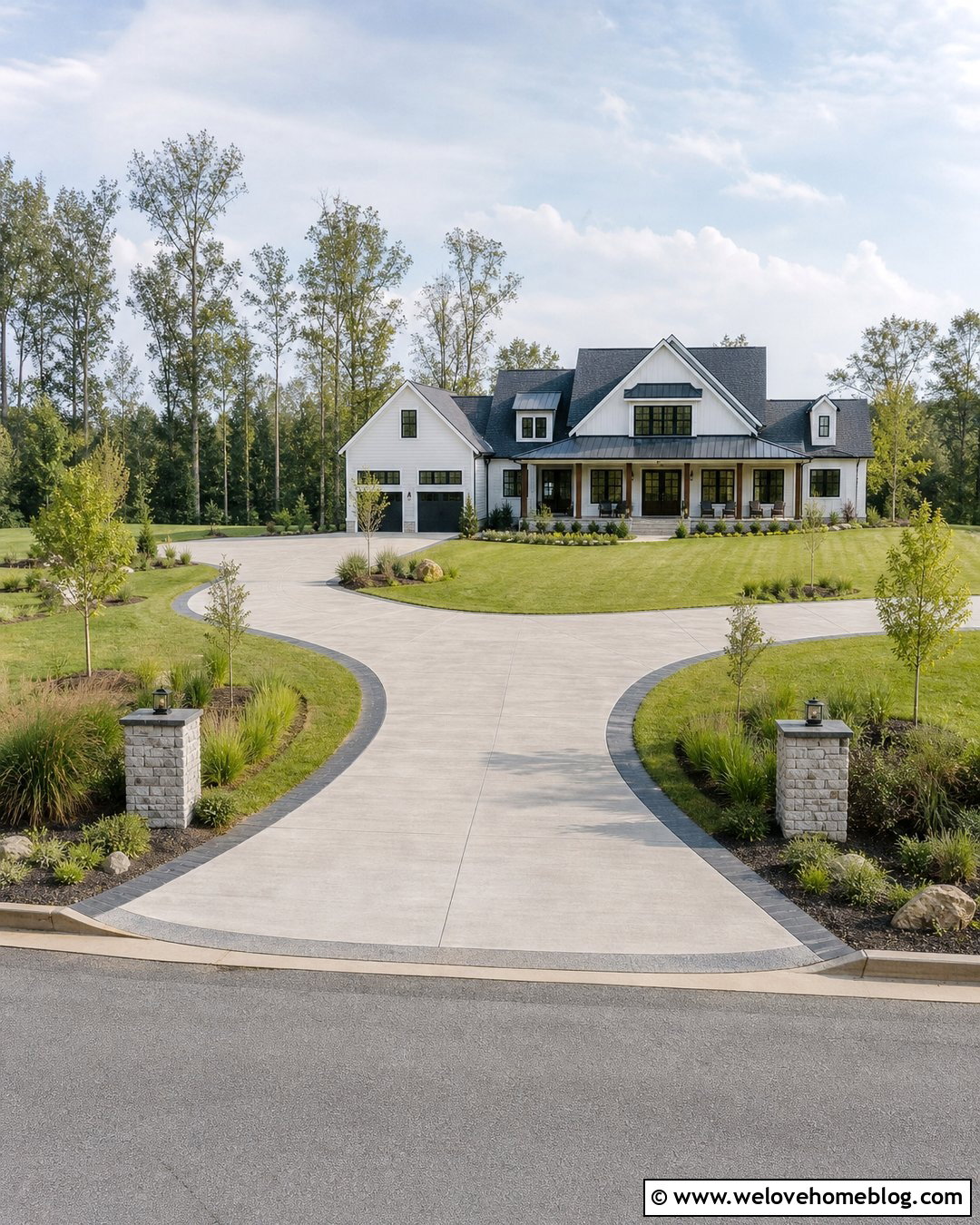
A sandstone-colored coating can give a horseshoe concrete driveway a warm, natural presence. Apply a softly varied beige finish across both entrances and the connecting curve, then use brown pavers to define the inner and outer edges. The central island can contain a broad lawn, one ornamental tree, and layered shrubs positioned low enough to preserve sightlines. Add stone pillars at both curb openings so the two entrances appear connected rather than separate. A tan stucco, ranch, or Southwestern-inspired home makes a fitting background for this palette. Keep the painted finish mostly solid because the horseshoe shape already provides visual movement. A slightly deeper entrance band can help conceal dirt near the street and reinforce each opening. Coordinating the coating with the roof and masonry will make the driveway feel original to the property.
23. Pale Blue-Gray Painted Concrete Driveway For A Small Home
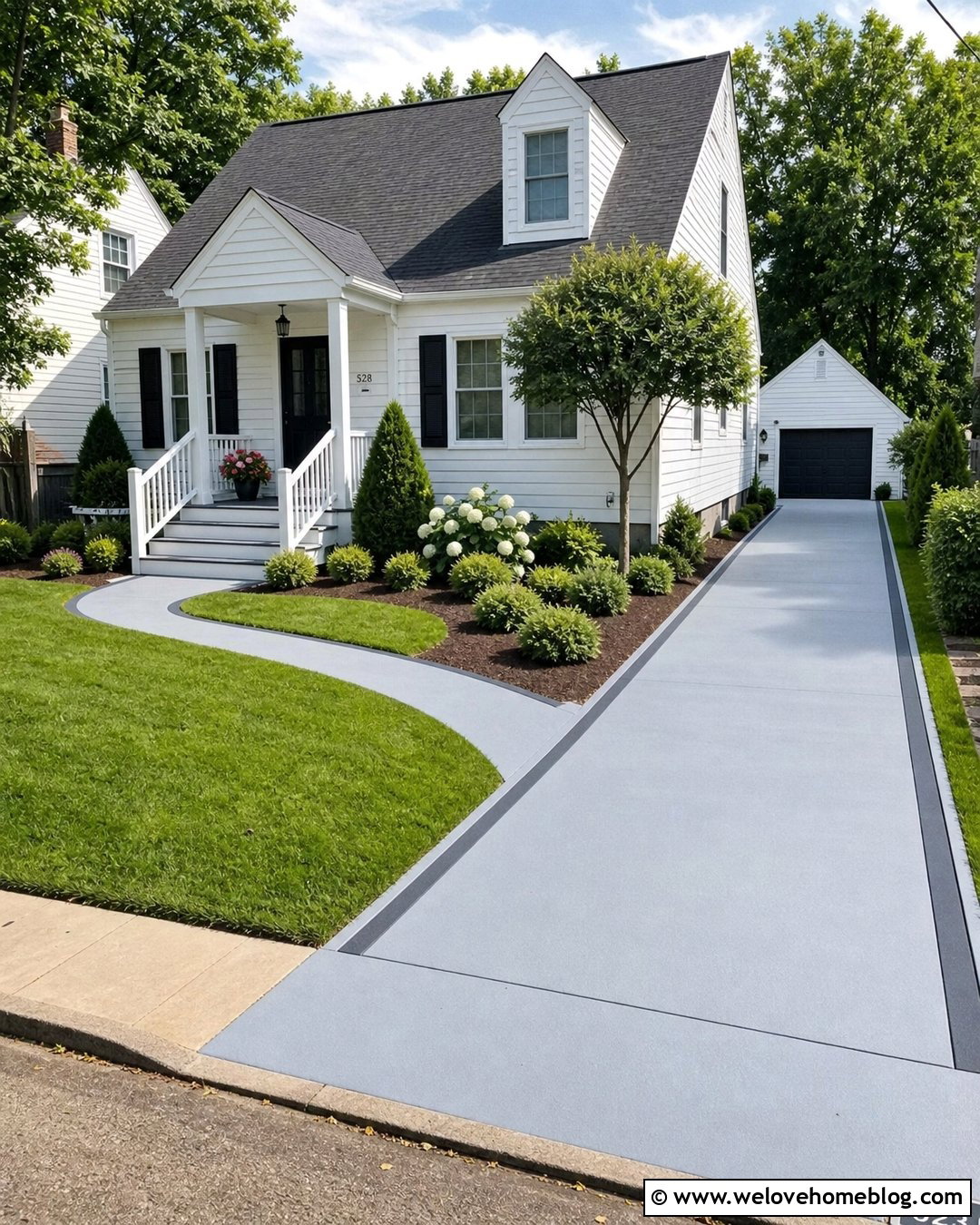
A narrow driveway beside a small home benefits from light color and uncomplicated detailing. Paint the concrete pale blue-gray, then use a thin charcoal edge to clearly separate it from the lawn and planting beds. Keep the driveway straight, but soften the setting with a curved walkway leading toward the porch. Compact shrubs, white flowers, and one small ornamental tree can add interest without making the front yard feel crowded. Repeat the blue-gray on porch steps or foundation trim for a coordinated finish. This design works well with a Cape Cod, bungalow, or cottage featuring white siding and dark shutters. Avoid small allover patterns, which can make a limited driveway look busier. One continuous color, crisp edges, and carefully scaled landscaping will create a more open and orderly entrance.
24. Brown Painted Concrete Driveway With Rustic Finish
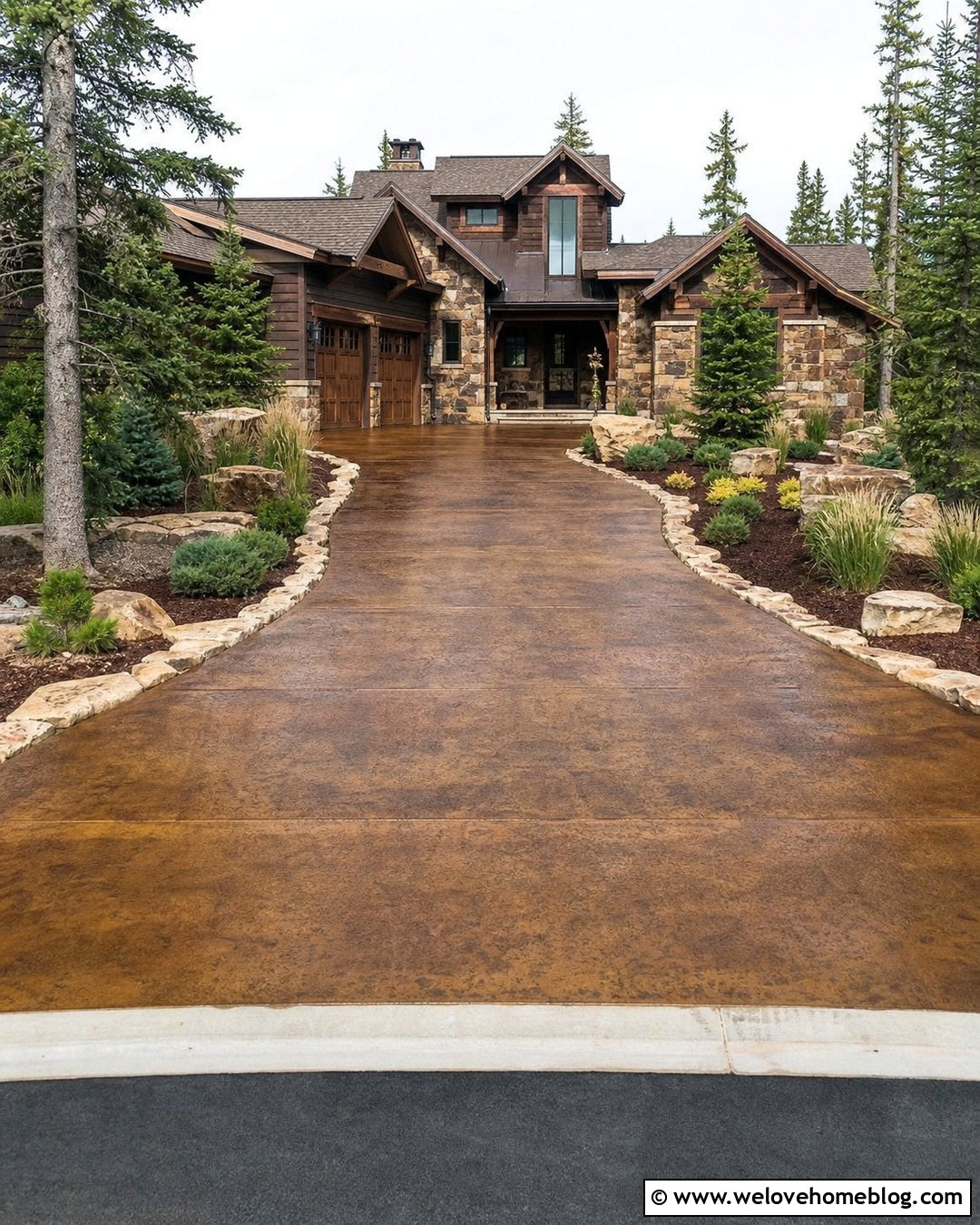
Layered brown paint can give an older concrete driveway a rustic, leather-like character. Begin with a warm medium-brown base, then add irregular translucent-looking variations in tan and deep umber. Preserve visible panel divisions so the texture feels contained rather than random. A curved driveway bordered by rough-cut stone works especially well with this finish. Complete the setting with native grasses, evergreen shrubs, boulders, and bark mulch around a lodge-style or rustic craftsman house. Brown surfaces can visually connect with wood siding, stone veneer, and dark roofing, but the paint should not match every element exactly. Use several related tones for depth. Because random mottling can also help disguise future localized touch-ups, keep notes on the colors and application method used for each layer.
25. Speckled Painted Concrete Driveway With Dark Edging
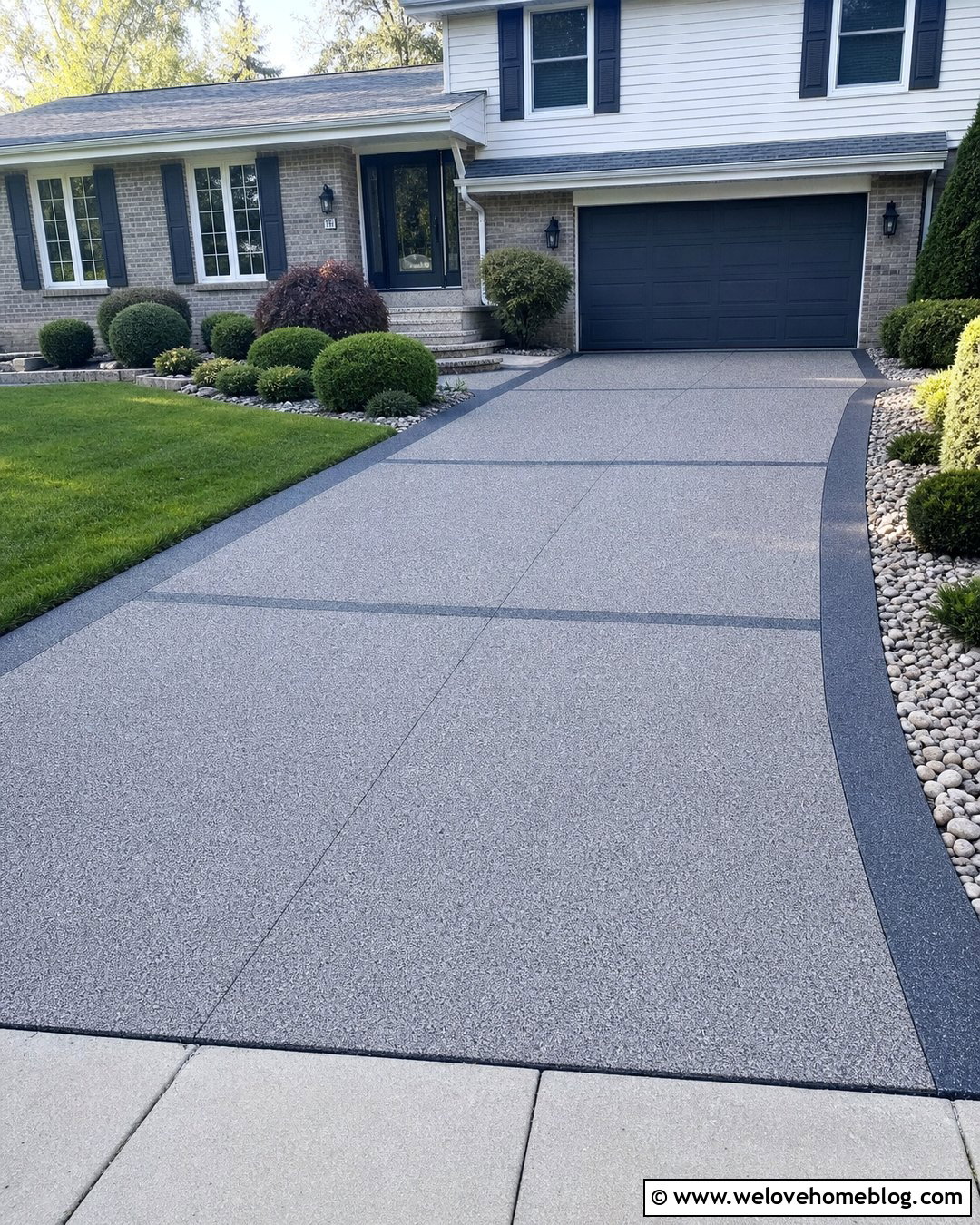
A speckled coating can refresh a patched or visually uneven concrete driveway while creating a practical, unified appearance. Choose a medium gray base with fine flecks of charcoal, tan, and pale gray. The small color variations help break up the broad surface without forming an obvious pattern. Add a solid charcoal edge and matching bands across selected control joints to organize the straight driveway into large panels. At the sides, use river rock, low evergreen shrubs, and tidy lawn to maintain a clean suburban setting. This finish suits an updated ranch or split-level house with mixed brick and siding. Repair active damage before coating rather than relying on paint to solve structural problems. The finished surface should be evenly textured, compatible with vehicle traffic, and easy to touch up in individual sections when normal wear eventually appears.
Conclusion:
The most successful painted driveway treats the concrete, borders, layout, landscaping, and home exterior as one connected design. Neutral colors deliver an understated upgrade, while stencils, faux masonry patterns, contrasting runners, and geometric panels create a more distinctive entrance. Whatever look you choose, careful surface preparation matters as much as the color scheme. Repair suitable cracks, remove weak coatings and contaminants, allow the slab to dry, and follow the coating manufacturer’s application instructions. Use products specifically approved for exterior concrete and vehicle traffic, along with a compatible nonslip treatment. These 25 painted driveways concrete ideas offer options for small cottages, modern homes, traditional properties, and large landscaped entrances without treating the driveway as an isolated surface.

Related posts:
Leave a Reply