
Tile driveways can give a front yard a polished, custom look while offering far more design flexibility than a plain concrete slab. From large-format porcelain pavers to stone-look patterns and decorative borders, tile can complement modern, traditional, Mediterranean, and farmhouse homes. The key is choosing exterior, vehicle-rated products rather than standard indoor ceramic tile. Appropriate thickness, wet traction, freeze-thaw performance, drainage, edge restraint, and a professionally prepared load-bearing base are essential. () You can also use color changes, grass joints, contrasting ribbons, and thoughtful landscaping to make the driveway feel connected to the entire property. The complete looks below combine practical layouts with strong curb appeal, offering 20 Tile Driveway Ideas for different homes, climates, and yard sizes.

1. Large Gray Porcelain Tile Driveway
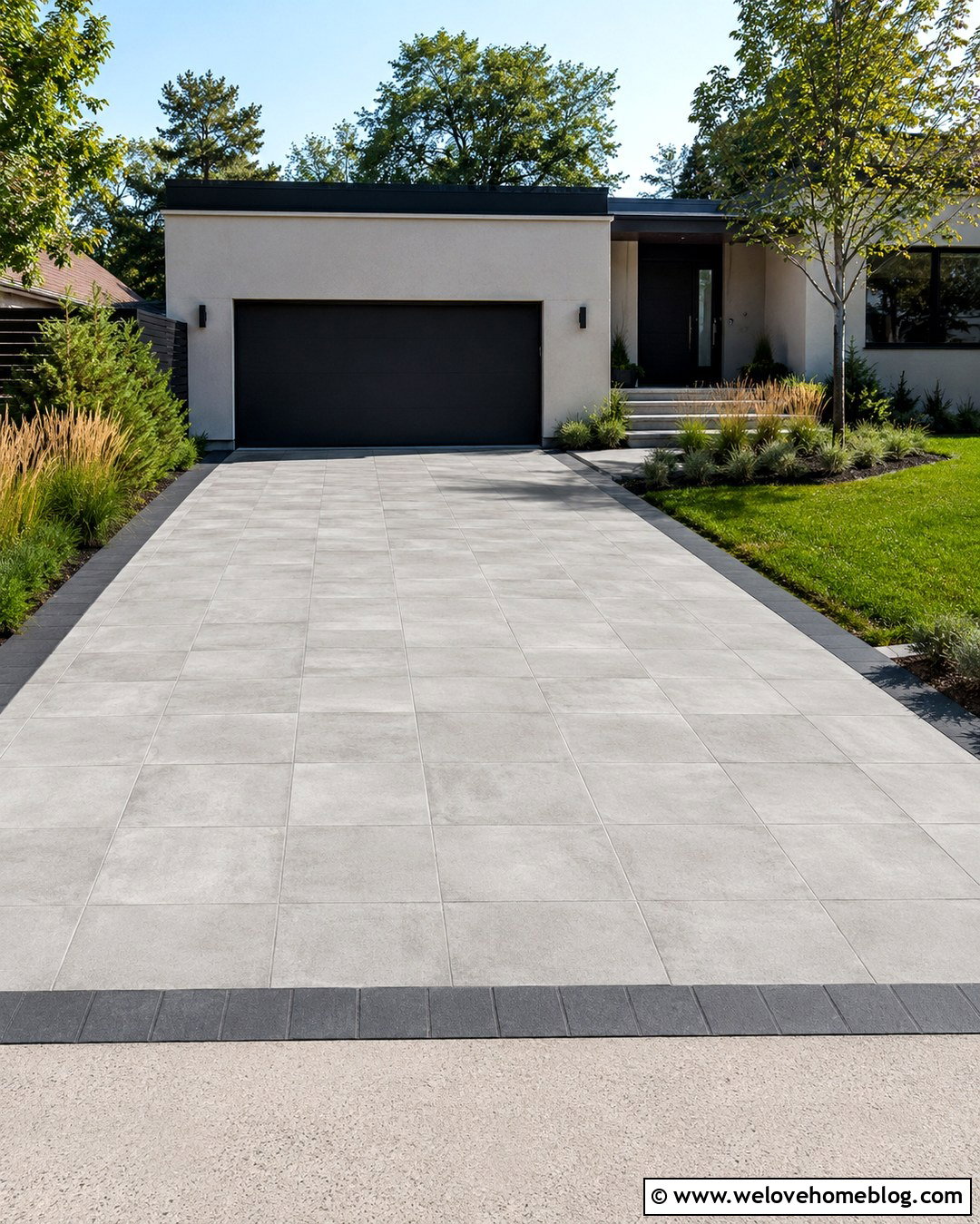
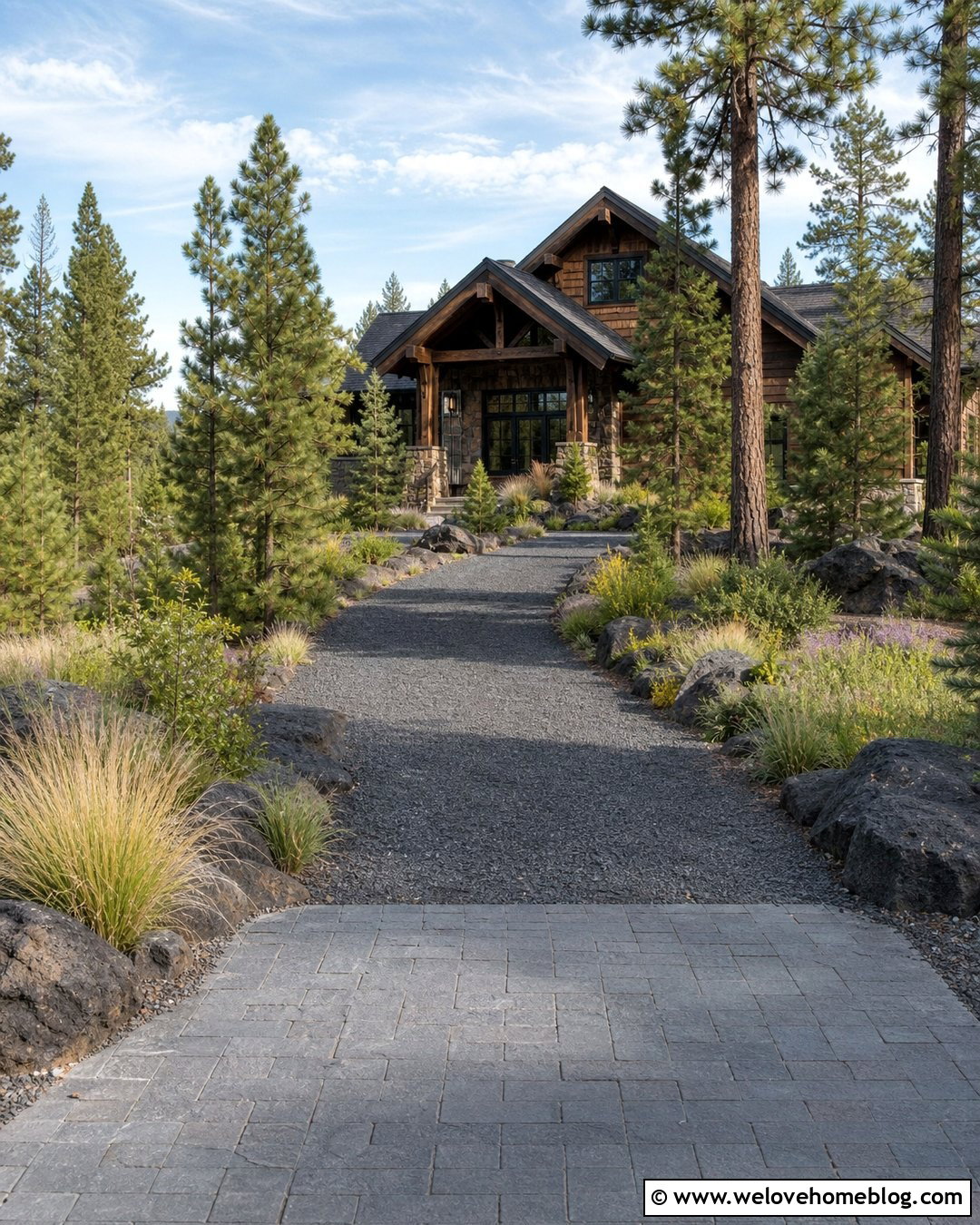
Large gray porcelain driveway tiles create a clean foundation for a modern home. Choose vehicle-rated, concrete-look porcelain pavers with a textured matte finish instead of smooth indoor tile. A straight layout with narrow, consistent joints makes a short driveway appear wider and less cluttered. Frame the surface with darker charcoal tiles to define the edges and protect nearby planting beds. Ornamental grasses, low evergreen shrubs, and a simple concrete walkway continue the streamlined look without hiding the driveway. For visual balance, match the gray tile to the home’s metal roof, garage door, or window frames. Proper grading is especially important with large tiles because water should move away from the garage and never collect across the finished surface.
2. Beige Stone Look Tile Driveway

Warm beige stone-look porcelain tile works beautifully with cream stucco, tan brick, and natural wood details. A gently curved driveway softens the approach and gives the tile pattern more movement. Use rectangular tiles in a running bond layout, then add a slightly darker beige border that follows every curve. Planting beds filled with boxwood, flowering sage, and ornamental grasses can make the neutral surface feel more welcoming. Natural boulders or limestone edging will strengthen the stone-inspired appearance without introducing too many colors. Select a textured, vehicle-rated outdoor porcelain product with subtle tonal variation. This keeps dust and minor marks less noticeable than a completely uniform finish. Repeating the same tile on the front walkway can also create a smooth visual connection to the entrance.
3. Black And White Checkerboard Tile Driveway
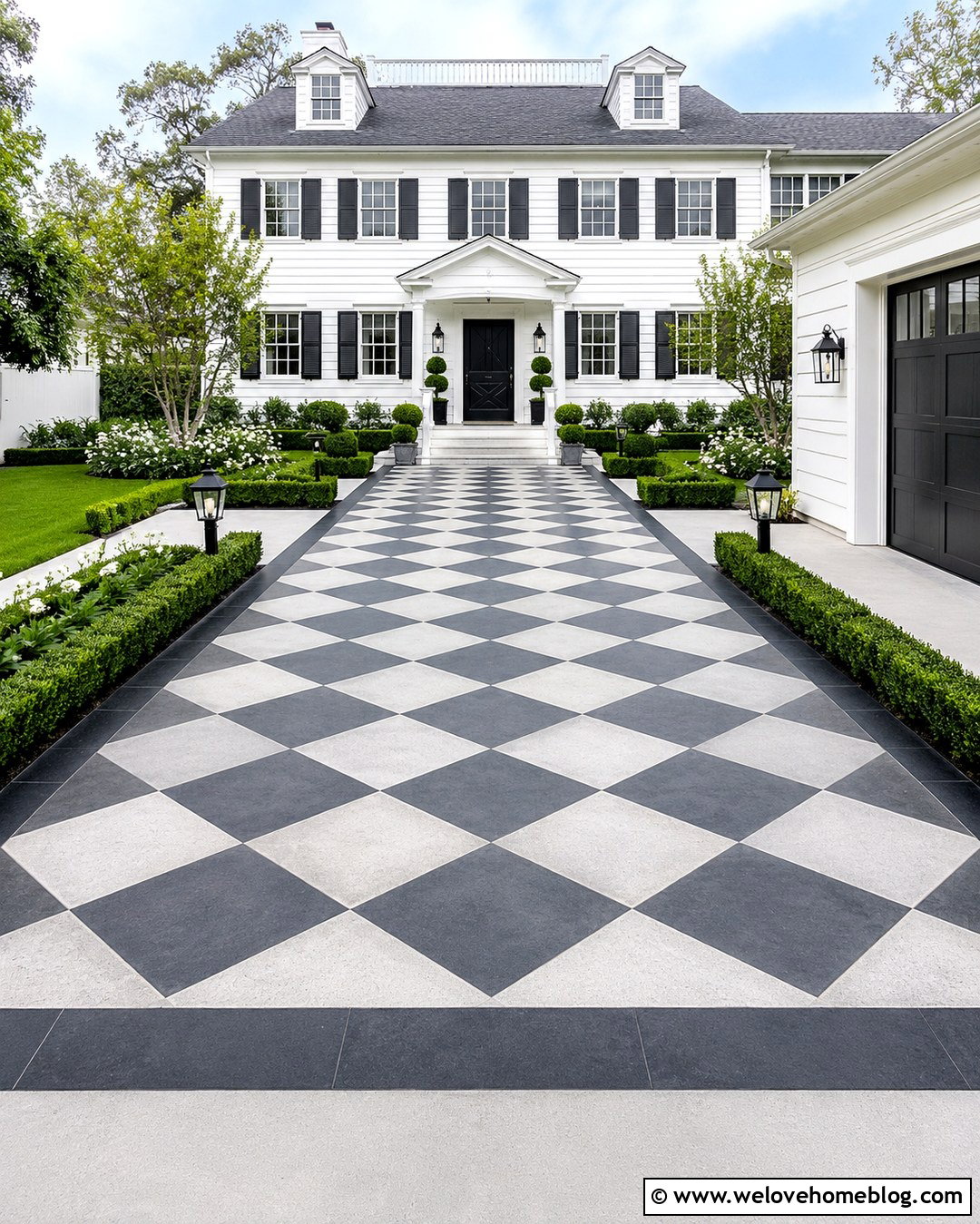
A black and white checkerboard tile driveway creates a bold entrance suited to Colonial, traditional, and contemporary homes. Use large, exterior-rated porcelain squares with textured surfaces so the pattern feels architectural rather than overly detailed. Soft white or light gray tiles are generally easier to maintain visually than brilliant white ones. A straight driveway provides the clearest layout, while a solid black tile frame gives the checkerboard a finished edge. Keep surrounding landscaping simple with clipped hedges, green lawn, and symmetrical planters near the garage. Black lanterns and a dark front door can repeat the deeper tile color. Because this pattern naturally attracts attention, avoid adding several competing borders. Precise installation and carefully aligned joints are essential for keeping the grid crisp from the curb.
4. Herringbone Porcelain Tile Driveway

Herringbone tile adds directional movement that can make an ordinary driveway feel carefully designed. Long, narrow porcelain pavers with a brick or natural stone finish work especially well for this layout. Position the pattern so its visual flow guides the eye toward the garage or front entrance. A straight soldier-course border in the same material will contain the angled tiles and simplify cuts around the edges. Deep green hedges, a narrow lawn strip, and a matching herringbone walkway can complete the approach. For a traditional home, consider warm brown or muted red tiles. Charcoal and soft gray are better suited to modern architecture. Herringbone involves more cutting than a simple running bond, so detailed planning can reduce awkward fragments and maintain a balanced pattern.
5. Slate Look Tile Driveway
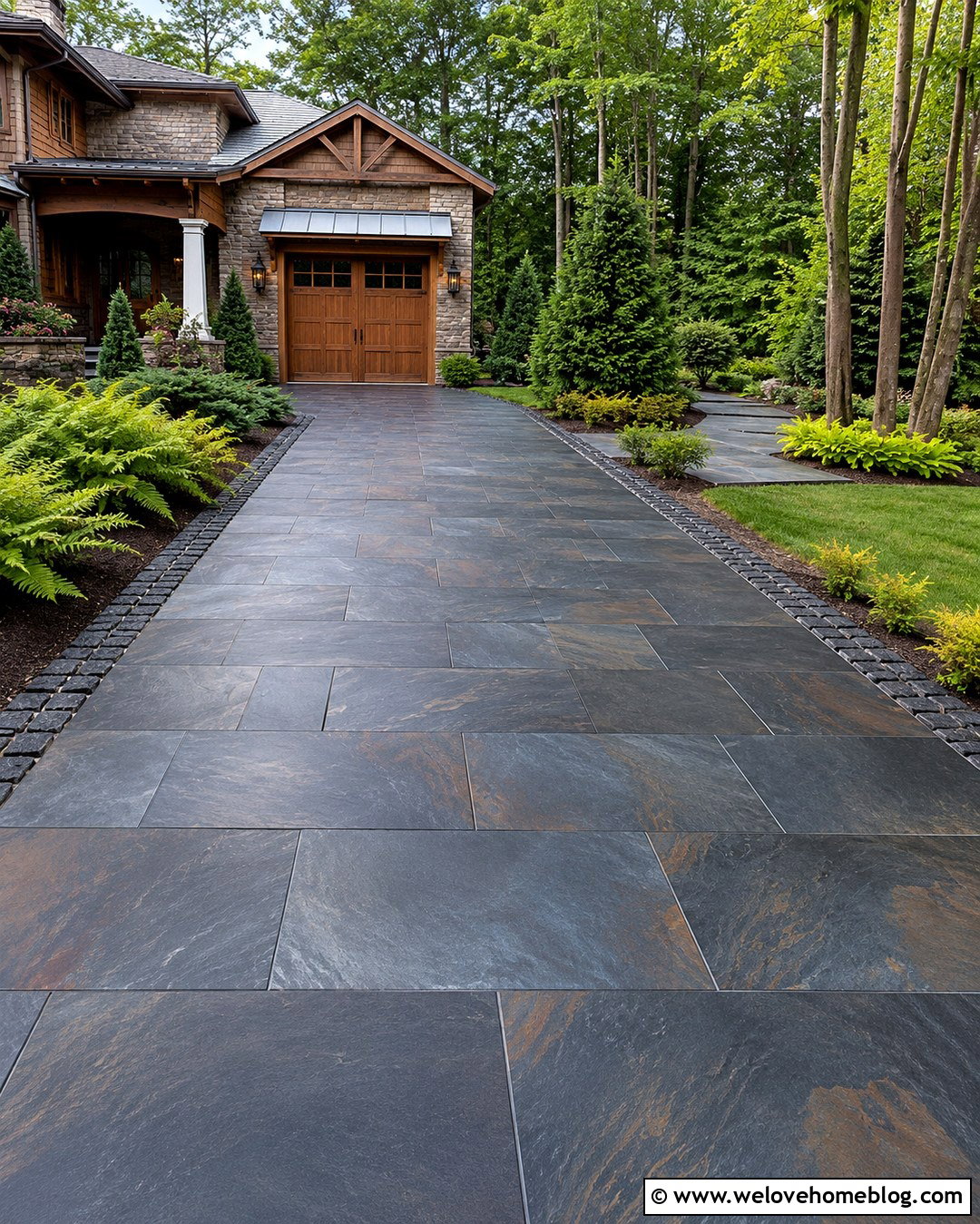
Slate-look porcelain driveway tiles provide rich color variation without requiring every piece to have the same surface characteristics as natural slate. Choose a vehicle-rated outdoor paver with a textured finish and a blend of charcoal, blue-gray, and muted rust tones. A wide straight driveway suits this varied material because the simple shape prevents the surface from feeling too busy. Use dark granite setts or charcoal porcelain pieces along the edges for a strong, stable frame. Ferns, evergreen shrubs, and small multi-stem trees complement the cooler colors and create a woodland-inspired entrance. The home can feature stone veneer, dark siding, or warm timber details to balance the driveway. Carry one slate tone into the walkway or porch steps so the entire front yard feels coordinated.
6. Travertine Look Tile Driveway
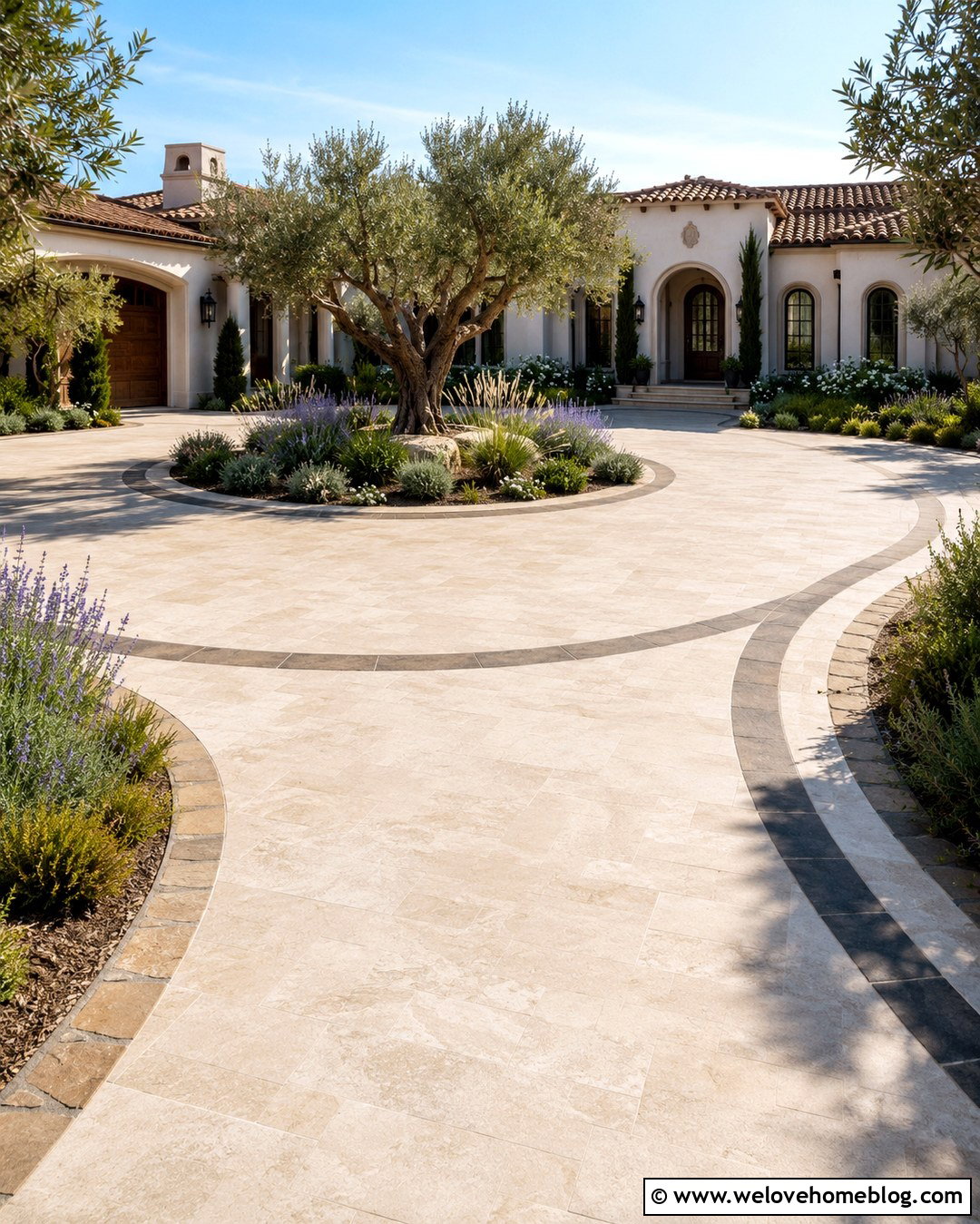
Travertine-look porcelain tile brings a light, relaxed finish to Mediterranean, Spanish, and warm contemporary homes. Select cream, ivory, or sand-colored pavers with gentle movement rather than strong printed veining. A circular or broad curved driveway gives this material an elegant scale and creates room for a landscaped center island. Edge the drive with tan stone blocks, then fill nearby beds with lavender, rosemary, olive-style trees, and drought-tolerant grasses. A darker tile band around the circle can improve definition and help guide vehicles through the turn. Look for an outdoor textured finish that remains practical in wet conditions. Since pale surfaces may reveal tire marks more readily, avoid extremely white shades and consider a sealer or cleaning routine recommended specifically for the selected product and joint system.
7. Wood Look Porcelain Tile Driveway
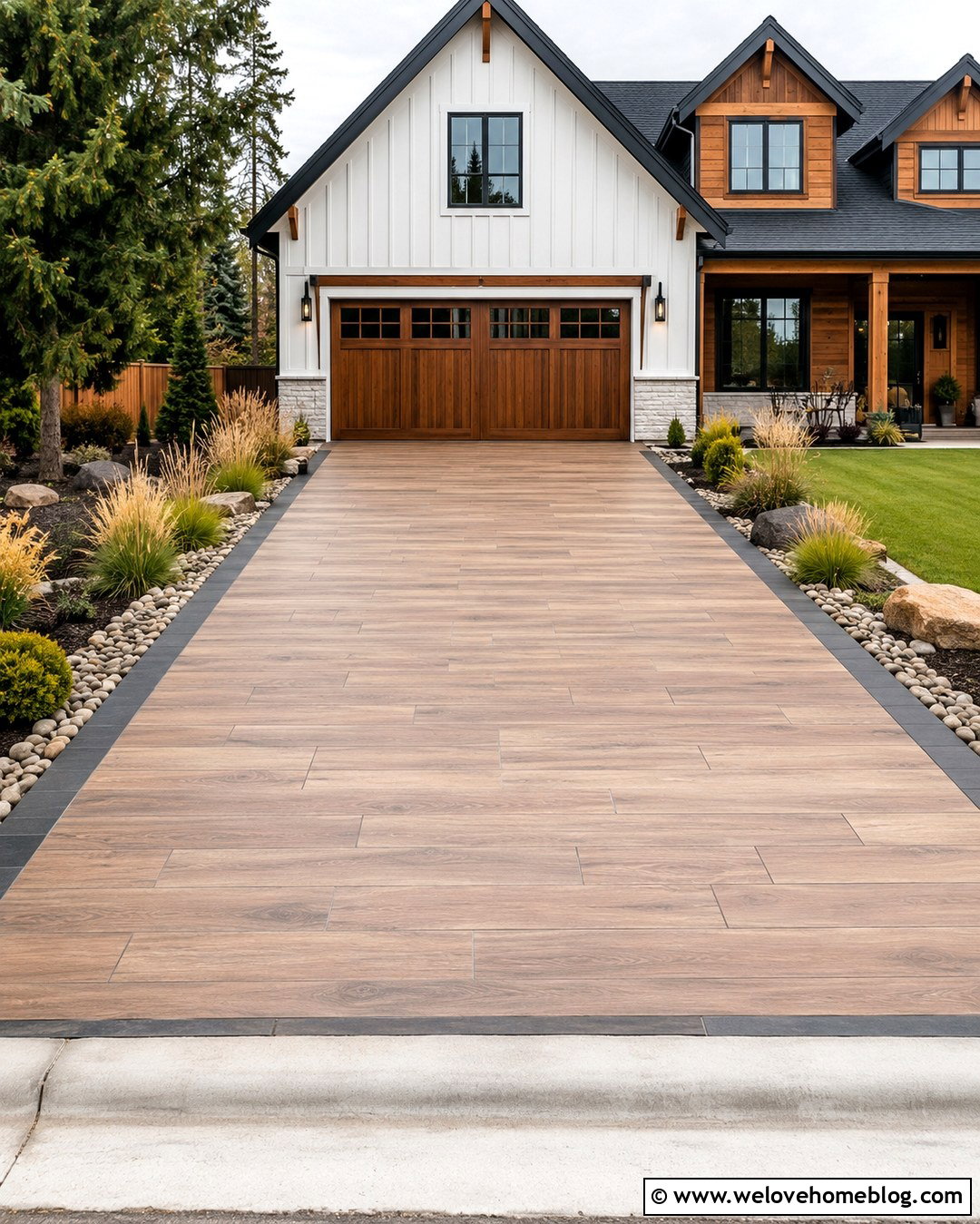
Wood-look porcelain driveway tiles can introduce warmth without using actual timber across a vehicle area. Choose thick, exterior-rated porcelain planks in a medium oak, weathered brown, or gray-brown finish. Lay them in a straight staggered pattern that runs toward the house, visually lengthening a compact driveway. A charcoal porcelain border will separate the wood effect from the lawn and keep the design grounded. Pair the surface with a modern farmhouse, contemporary cabin, or craftsman facade featuring real wood accents. Native grasses, river rock beds, and simple evergreen shrubs reinforce the natural palette. Avoid highly repetitive plank graphics by selecting a collection with several different faces. The finished driveway should resemble broad timber boards from a distance while still providing the structure and consistency required for exterior paving.
8. Brick Look Tile Driveway
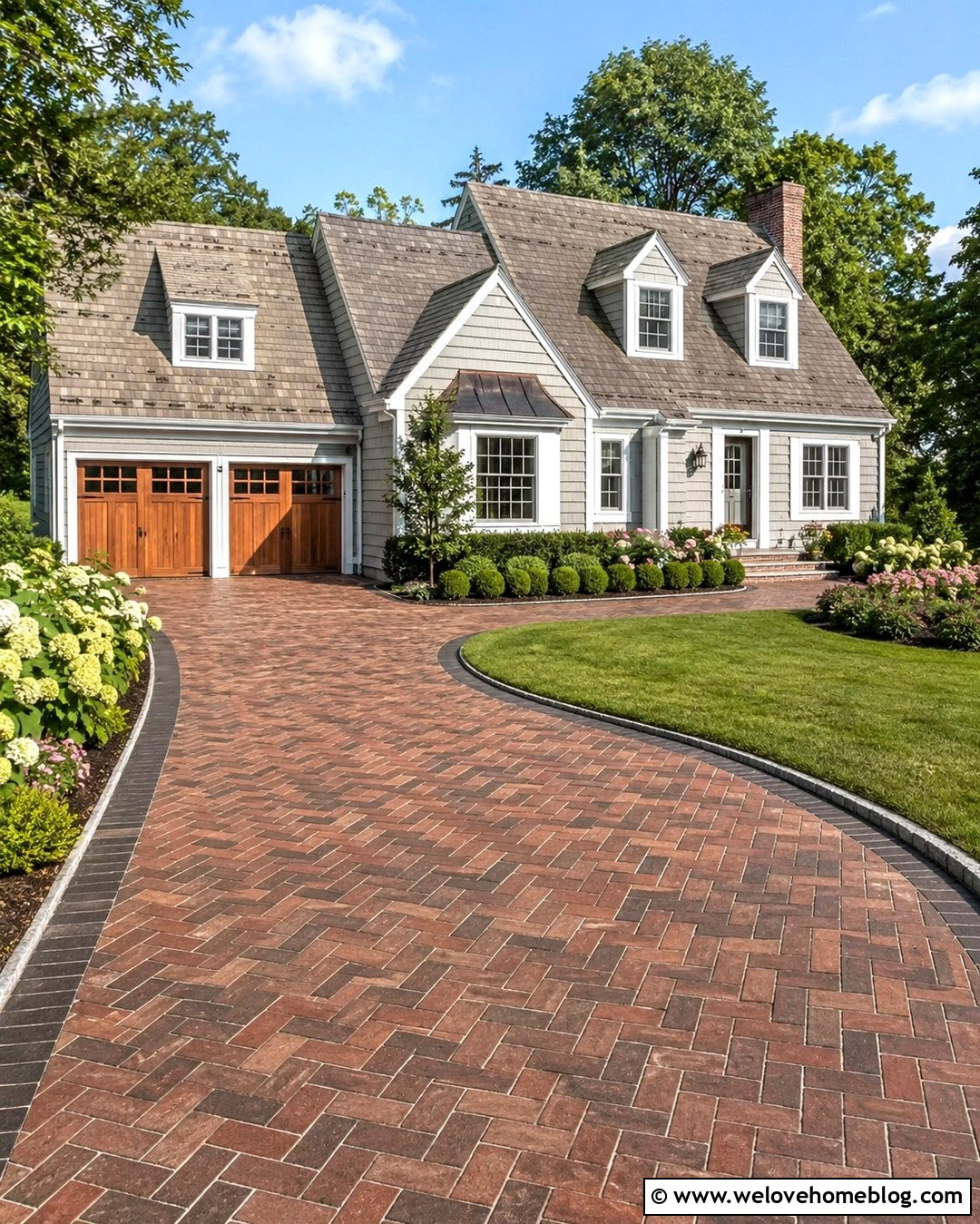
Brick-look porcelain tile offers the welcoming color of traditional clay paving with a more controlled tile format. Choose warm red, brown, or weathered terracotta tones that suit a Colonial, Cape Cod, or craftsman home. A basketweave or running bond pattern can cover the main driveway, while a darker herringbone border highlights the edges and garage apron. Curved planting beds filled with hydrangeas, boxwood, and seasonal flowers soften the strong geometry. Match the front walkway to the driveway, but consider changing the laying pattern to distinguish pedestrian and vehicle areas. Slight tonal variation will make the surface look more natural and help conceal everyday dust. Select only exterior, vehicle-rated porcelain pavers, and make sure the base and edge restraints are designed for turning tires and repeated traffic.
9. Cobblestone Look Tile Driveway
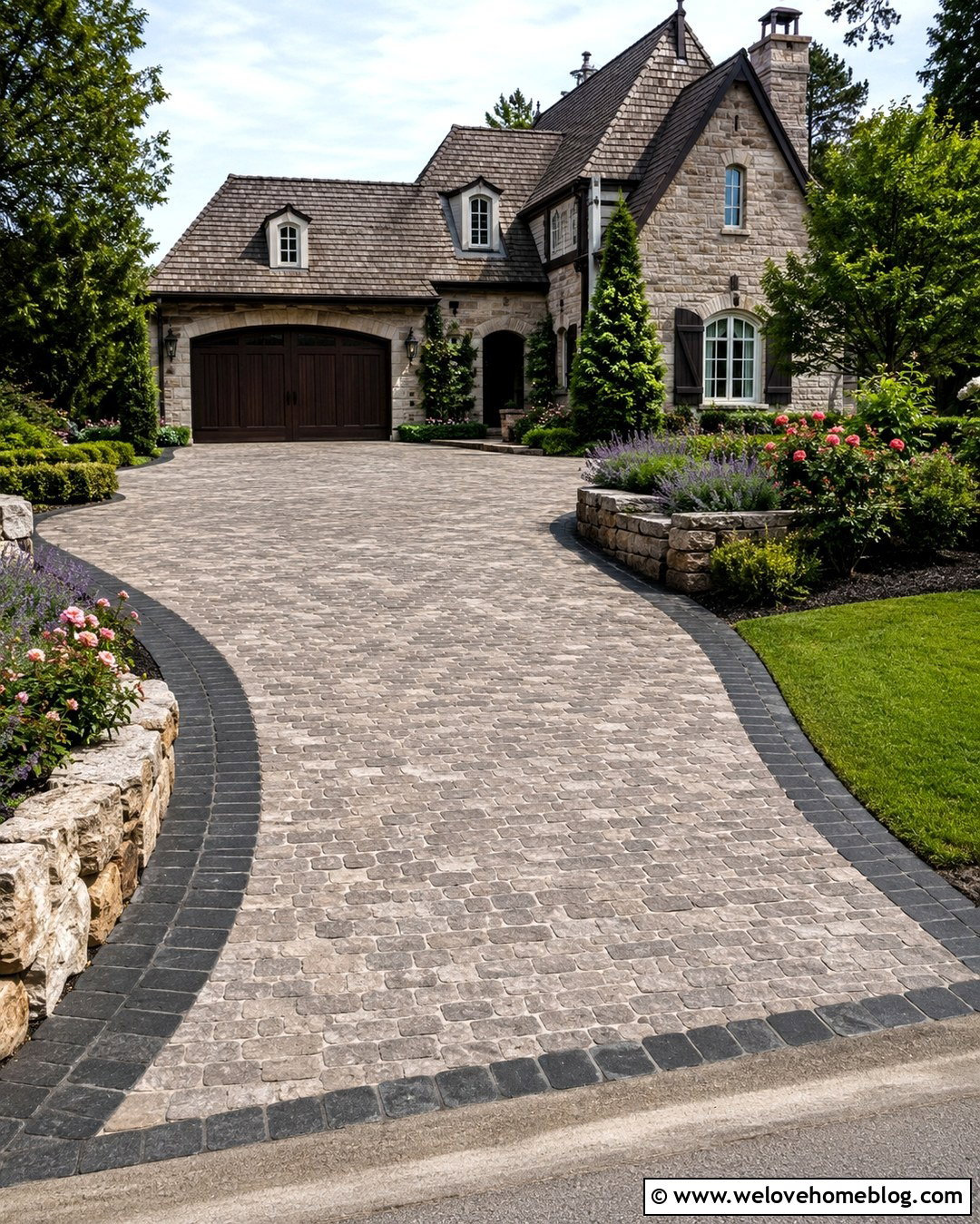
Cobblestone-look porcelain tiles can deliver an old-world appearance with a more even surface than deeply rounded cobbles. Use small-format squares or modular pieces printed in gray, taupe, and charcoal stone tones. A gently curved driveway leading to a cottage or European-inspired house makes the design feel especially convincing. Add a darker cobblestone-look border, low stone walls, and layered planting beds with roses, lavender, and clipped evergreens. Keep the joint color close to the tile so the surface reads as one continuous design. A wider apron near the garage can make parking and turning easier without disrupting the traditional character. To avoid an artificial appearance, choose a tile collection with varied faces, irregular-looking edges, and restrained color movement rather than dramatic repeated markings.
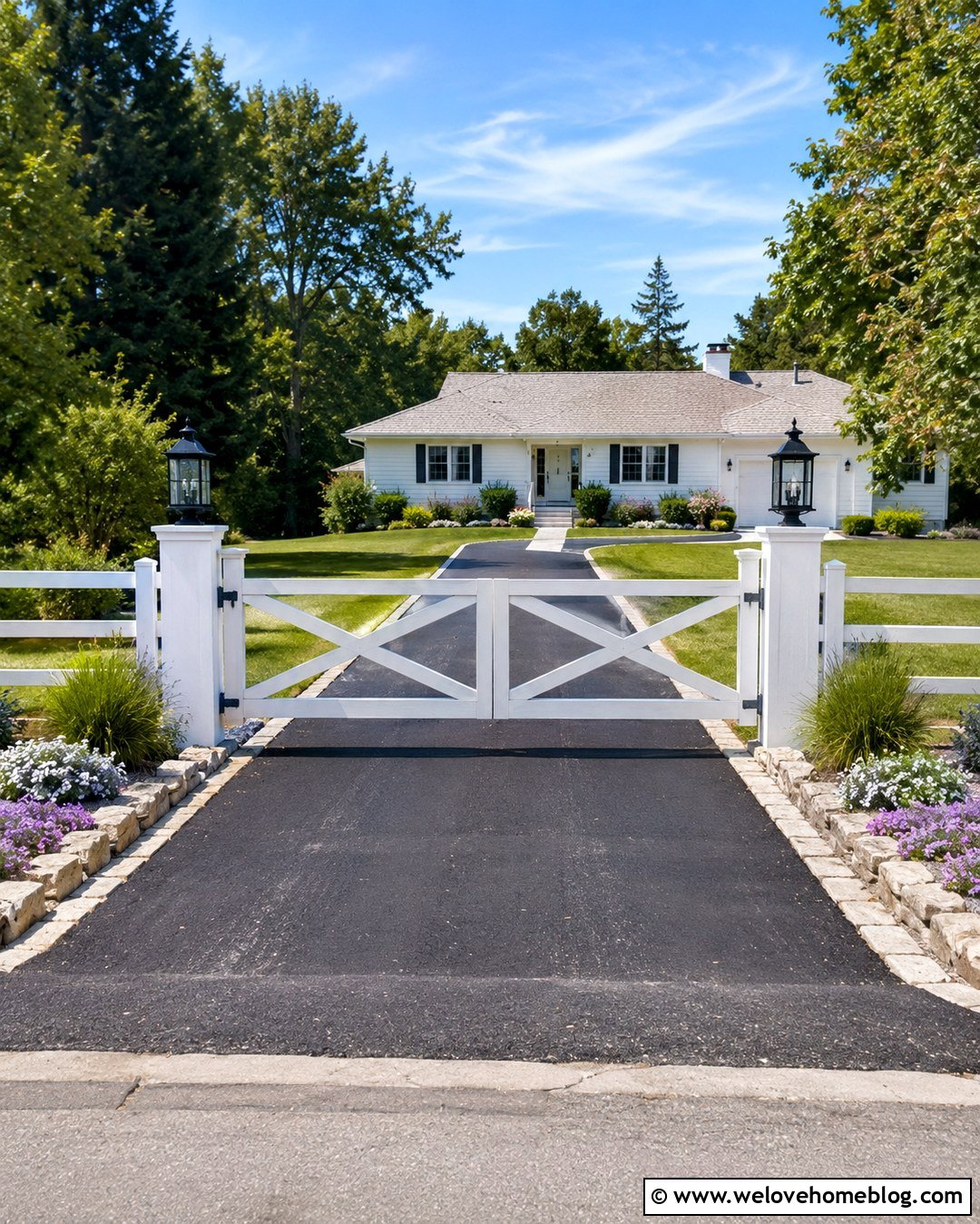
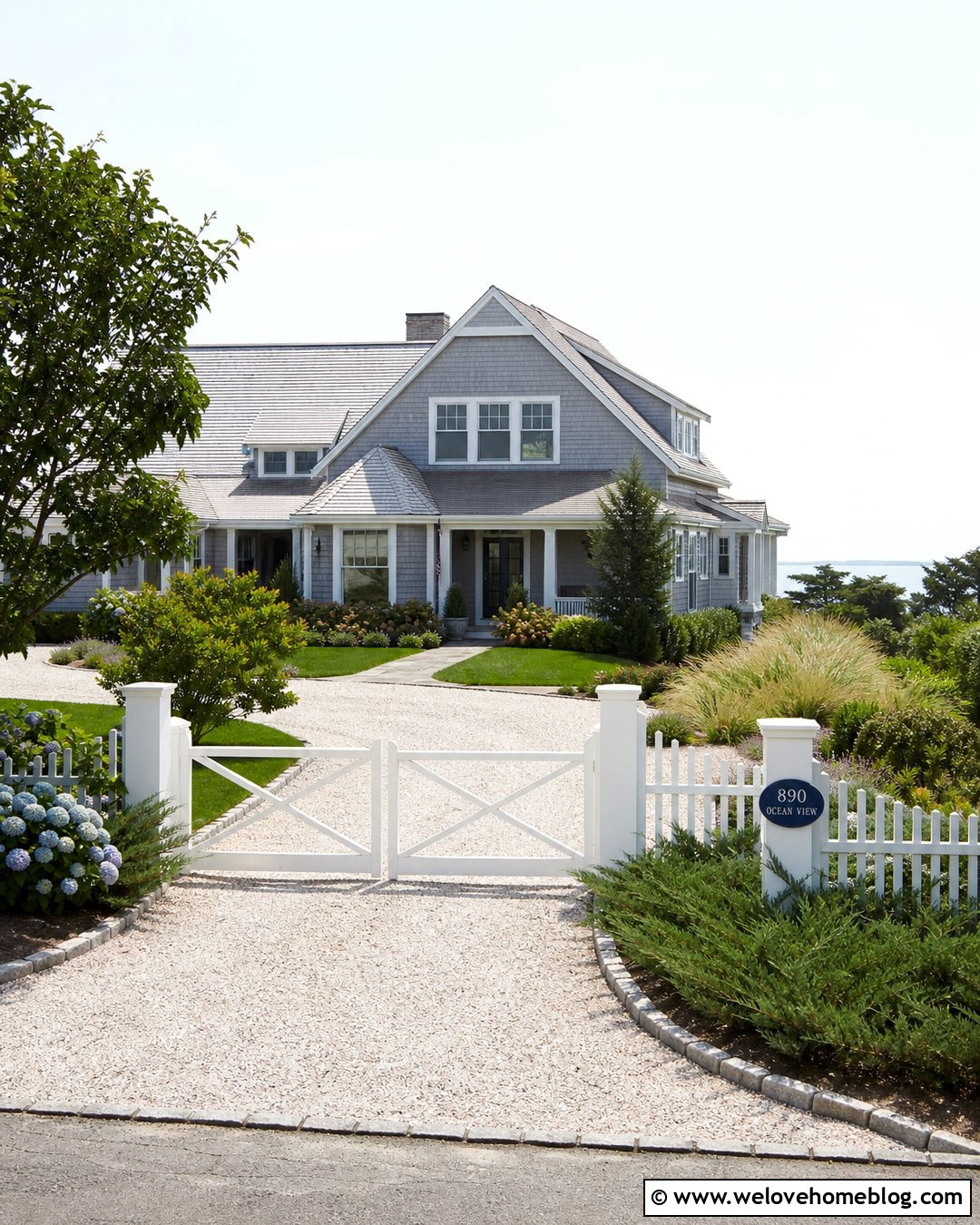
10. Two Tone Porcelain Tile Driveway
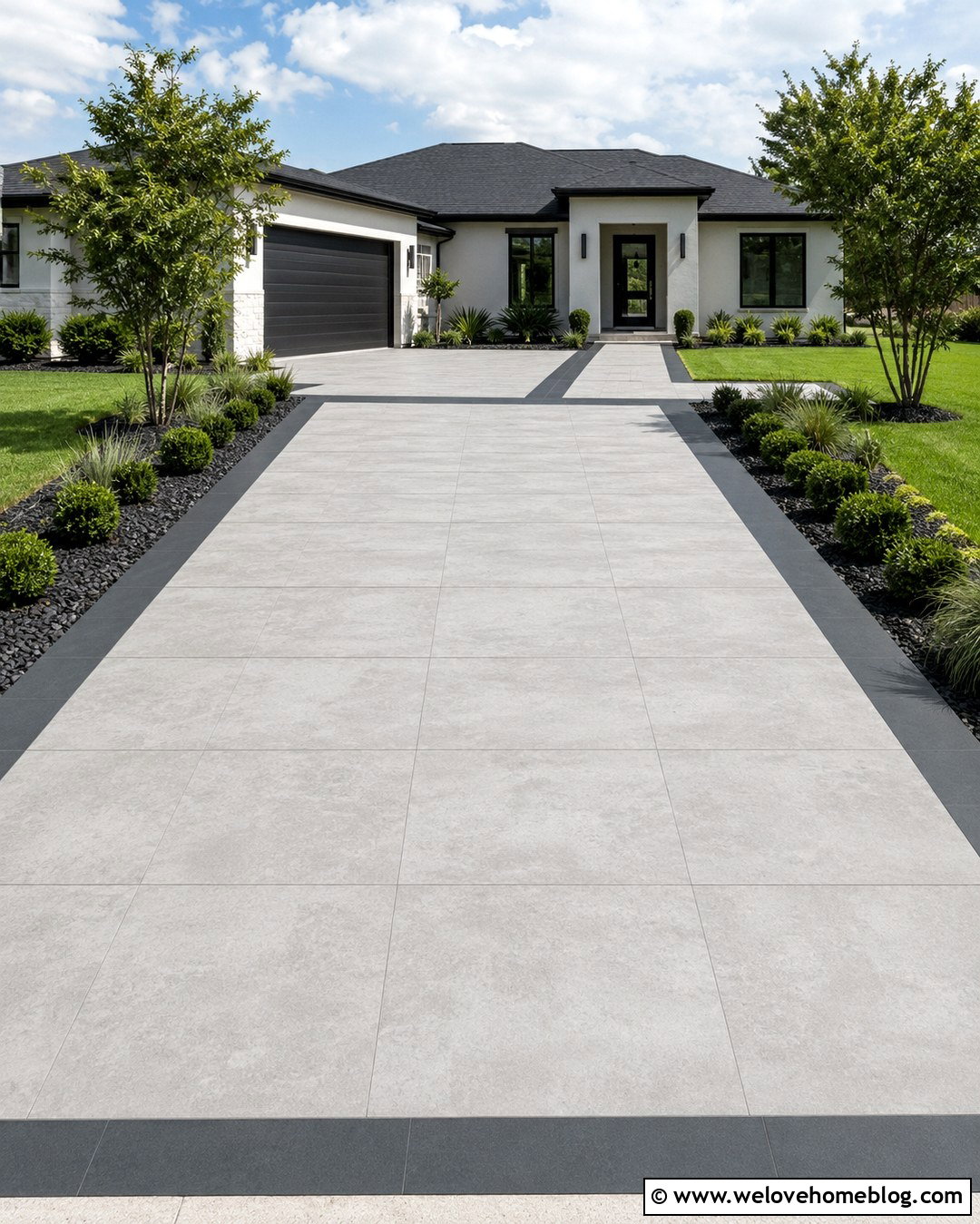
A two-tone tile driveway can organize a large paved area and make a basic rectangular layout more interesting. Use light gray concrete-look porcelain across the main surface, then outline it with charcoal tiles in a wide border. The darker band can continue around the garage apron, walkway intersection, and entrance to create a unified frame. This approach works particularly well with a contemporary ranch or modern two-story home. Add linear planting beds containing grasses, rounded shrubs, and one or two small trees for height. Keep the tile sizes consistent if you want a calm finish, or use narrower border pieces for stronger contrast. The two colors should share similar undertones. Warm gray and blue-gray, for example, may look disconnected when placed directly beside each other.
11. Geometric Pattern Tile Driveway
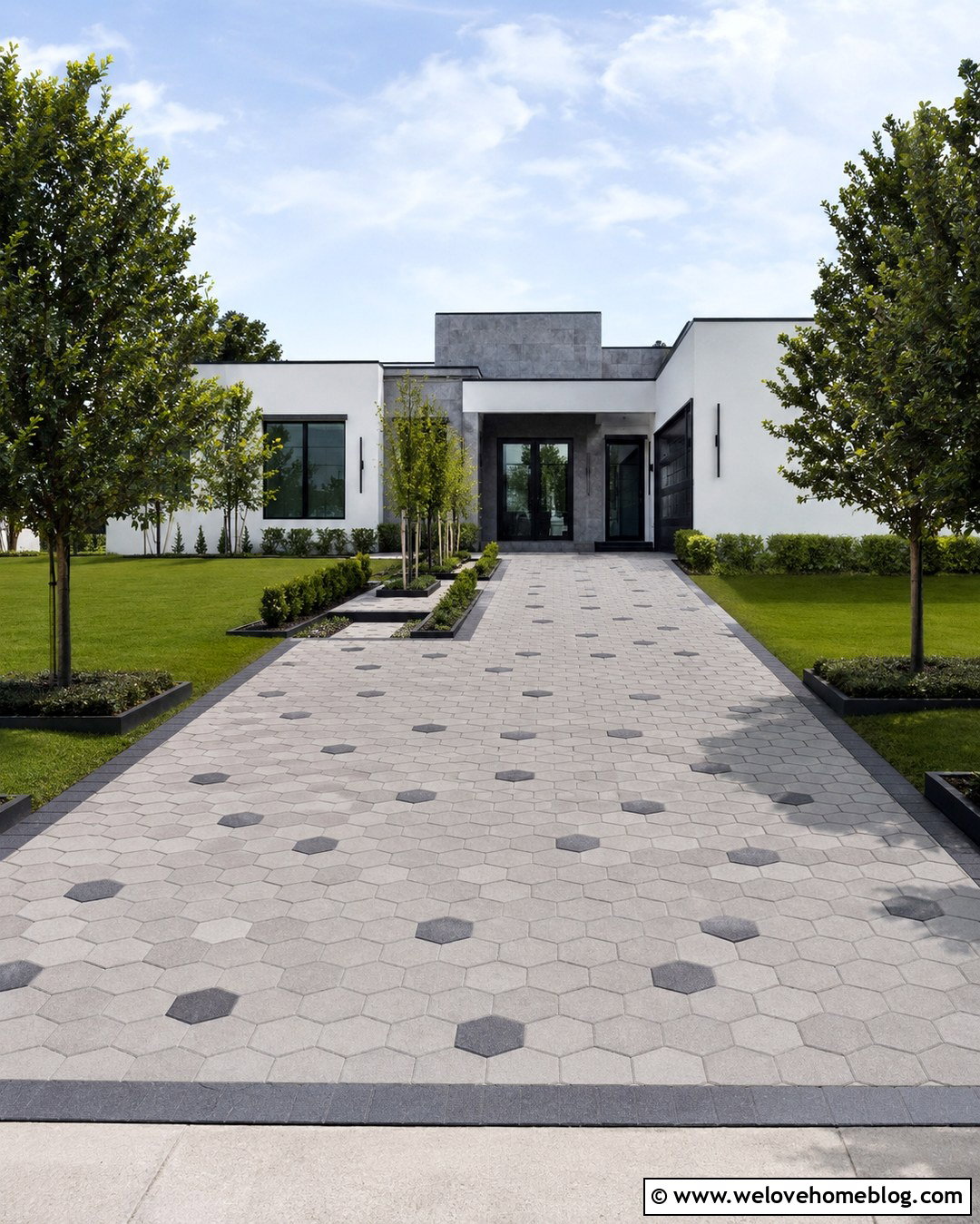
Geometric driveway tiles turn the paved surface into a strong architectural feature. Large hexagonal porcelain pavers are a practical visual choice because they create an interesting pattern without relying on several colors. Use medium gray hexagons throughout a straight driveway, then mix in a controlled number of charcoal pieces near the entrance or walkway. A simple dark border will stop the pattern cleanly at the lawn. Modern landscaping should echo the geometry through rectangular beds, clipped shrubs, and evenly spaced ornamental trees. Keep the house facade restrained, with white stucco, natural wood, or dark metal accents. Before installation, plan the tile placement on a scaled drawing. This helps prevent random-looking color clusters and limits narrow cuts along garage doors, drains, and curved landscape edges.
12. Tile Driveway With Grass Strips
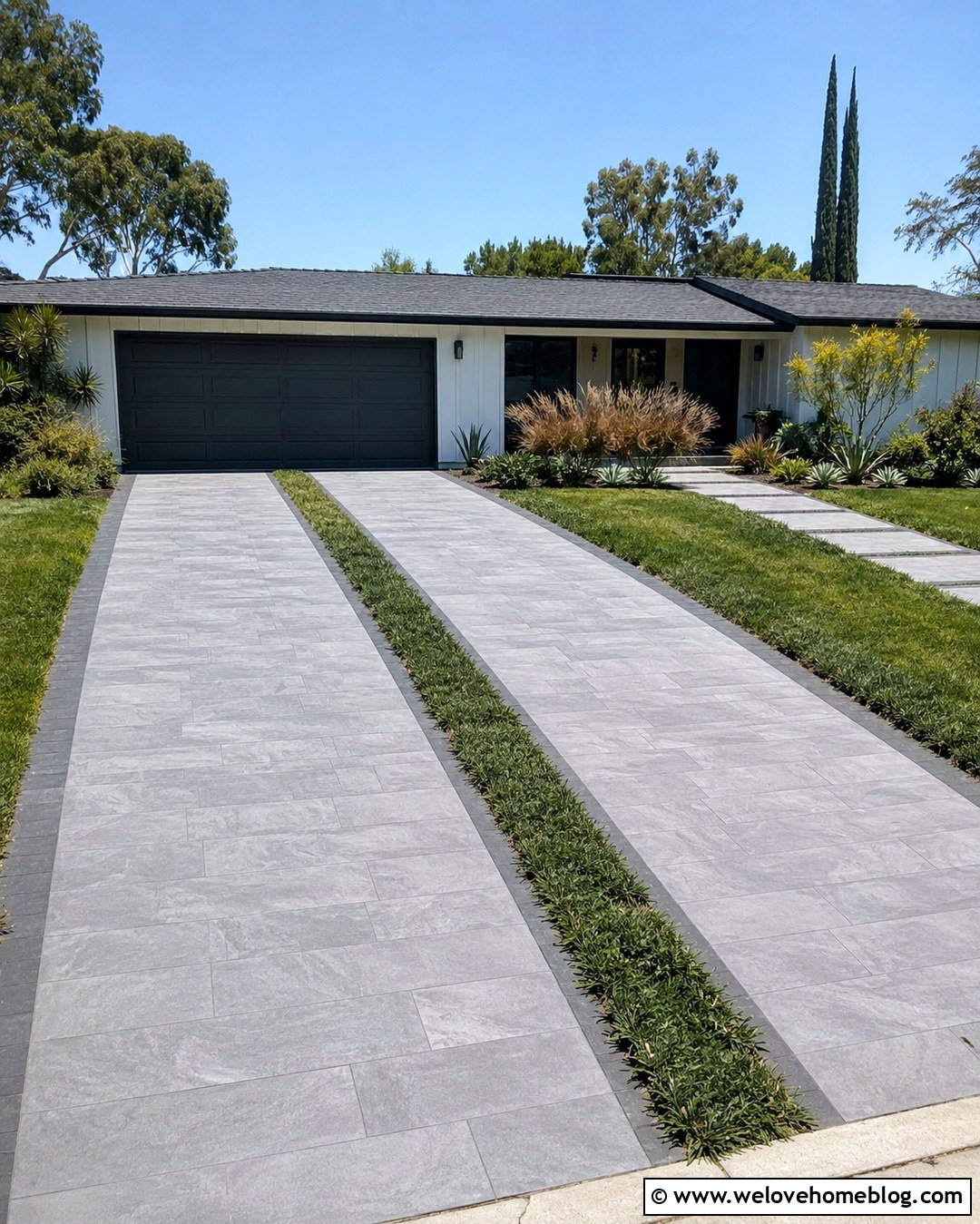
Grass strips can break up a wide tile driveway and reduce the visual weight of the paved area. Start with textured gray porcelain pavers arranged in two broad driving lanes, then place reinforced grass channels between and beside them. The finished layout should provide full support beneath vehicle tires rather than relying on isolated stepping tiles. A modern or midcentury ranch home makes a fitting backdrop for this clean, linear design. Continue the green theme with a neatly maintained lawn, low grasses, and drought-tolerant shrubs. Dark porcelain edging can separate planted joints from the main paving and create tidy boundaries. Consider local rainfall, irrigation needs, and maintenance before selecting living grass. In demanding climates, low ground cover or decorative permeable aggregate may be a more manageable alternative.
13. Curved Porcelain Tile Driveway
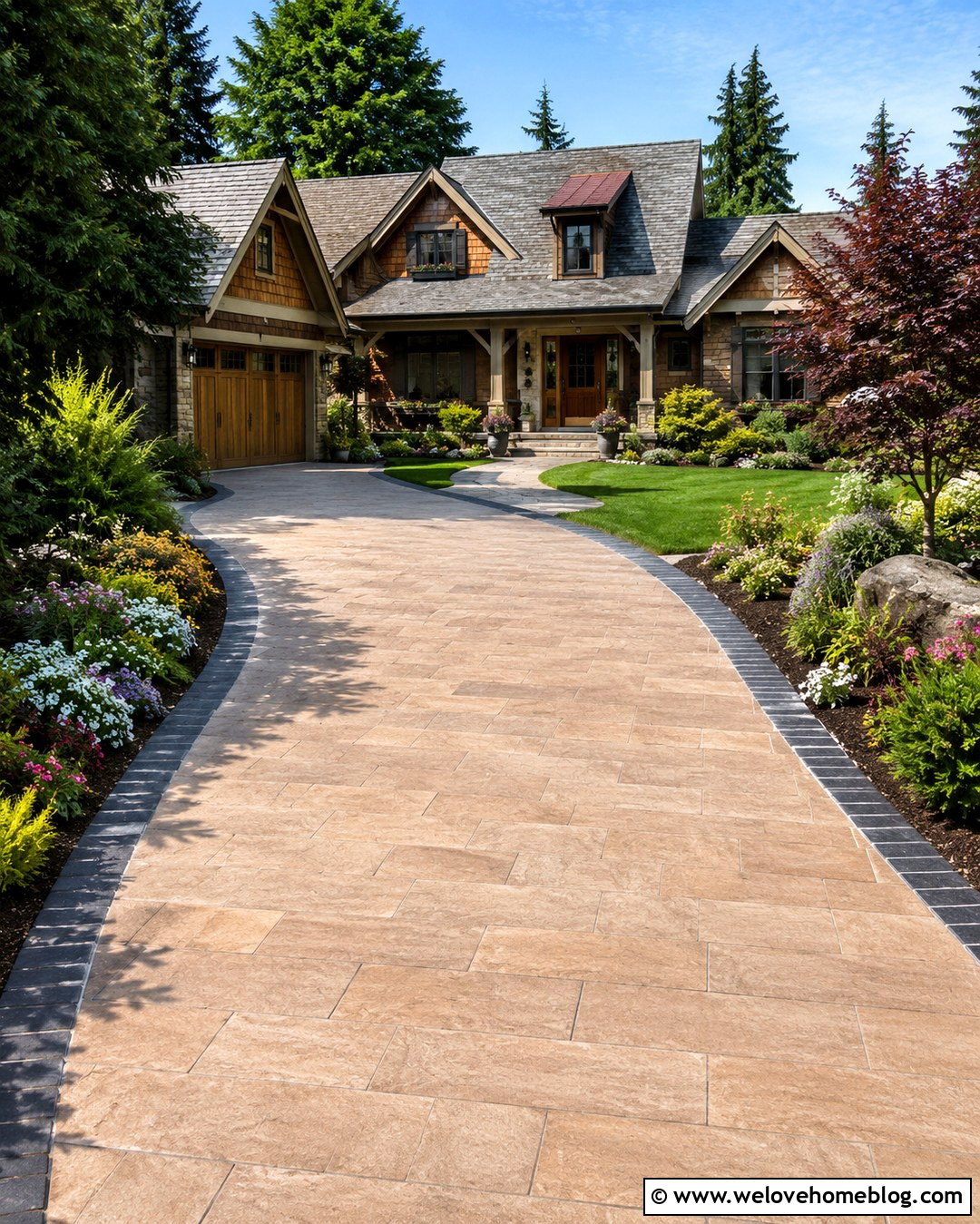
A curved tile driveway creates a softer approach and can help preserve mature trees or important landscape areas. Medium-format sandstone-look porcelain tiles work well because their warm coloring complements the organic layout. Install the rectangular pieces in a running bond that follows the direction of travel, using wedge cuts only where needed. A dark brown or charcoal tile border will emphasize the curve and provide a clear edge beside the lawn. Layered beds with flowering shrubs, ornamental grasses, and a small specimen tree can fill the inside radius. Keep taller plants away from the street so drivers retain a clear view when exiting. A craftsman or contemporary cottage facade fits this combination well. Thoughtful drainage is crucial because curved edges can unintentionally direct water toward planting beds or foundations.
14. Circular Tile Driveway
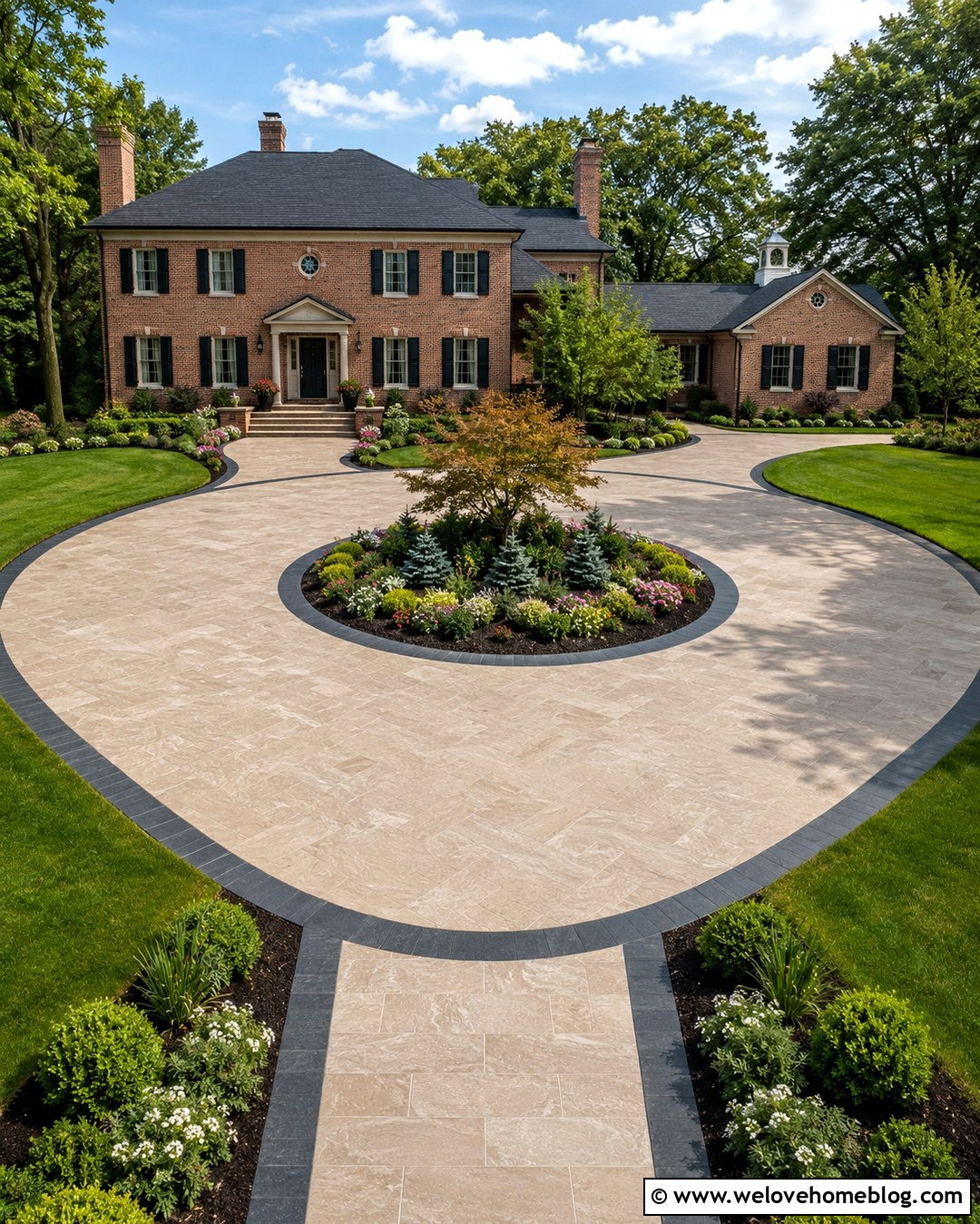
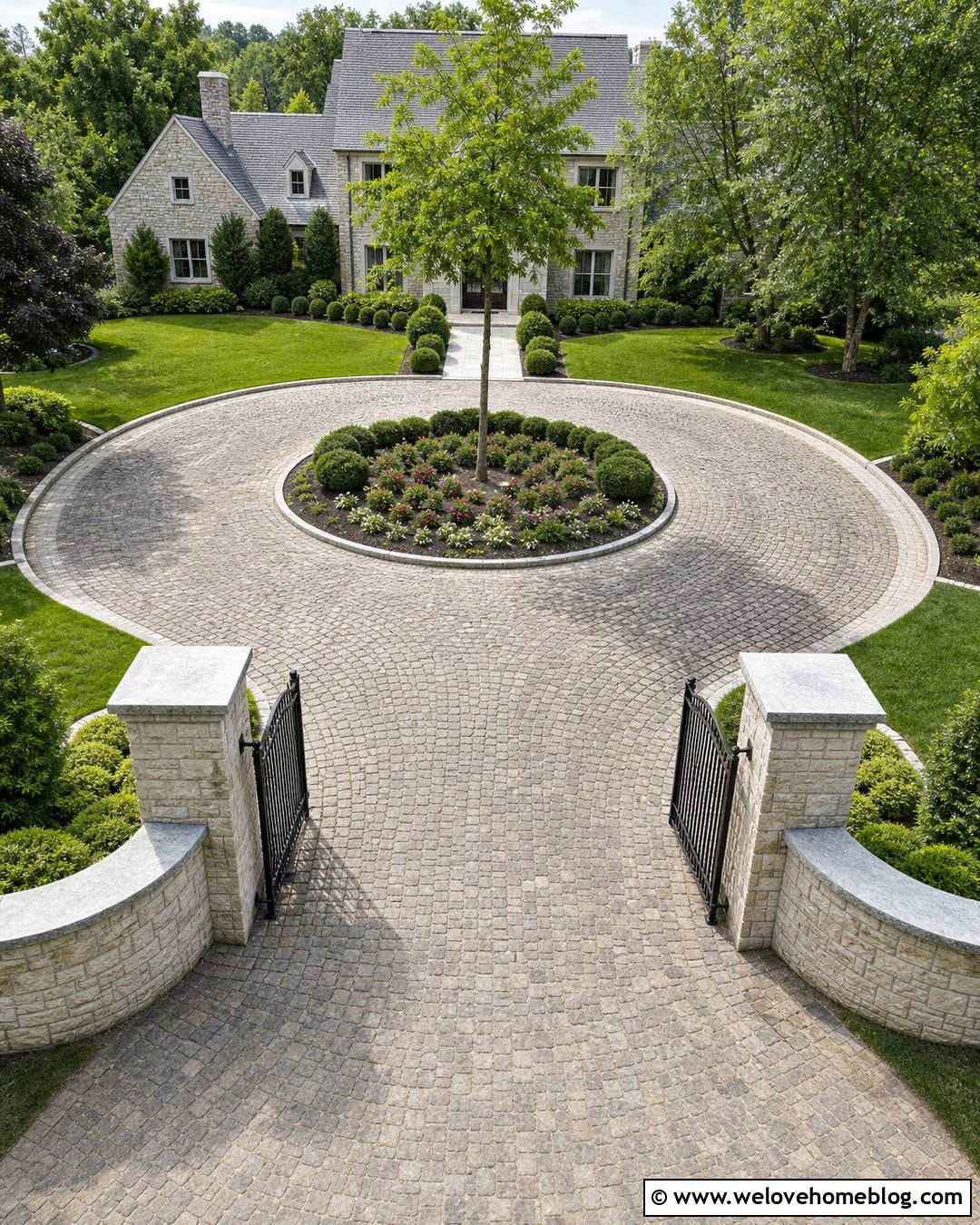
A circular tile driveway creates a convenient arrival loop while placing landscaping at the center of the property’s entrance. Use large taupe porcelain pavers in a fan-inspired or segmented layout that follows the circle. Outline both sides with charcoal tile bands to make the driving route easy to read. The center island can hold a small ornamental tree, low evergreen shrubs, and colorful perennials that remain below important sightlines. A traditional brick, Colonial, or symmetrical modern home provides a strong focal point beyond the circle. Repeat the taupe tile on the walkway leading from the island or driveway edge to the front door. Plan the turning radius before choosing the island size. The design needs comfortable vehicle movement without encouraging tires to cross the borders or damage surrounding plants.
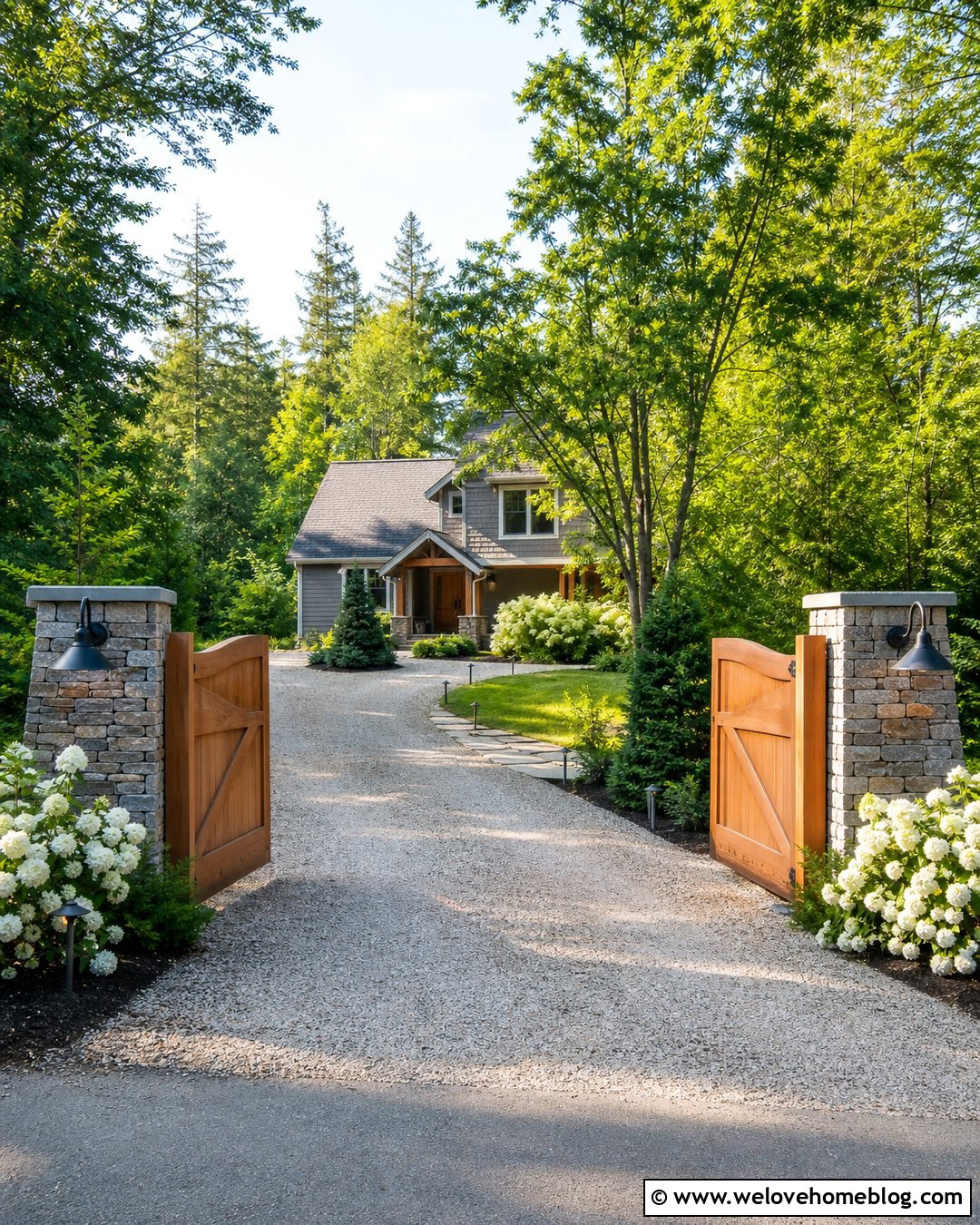
15. Terracotta Look Tile Driveway
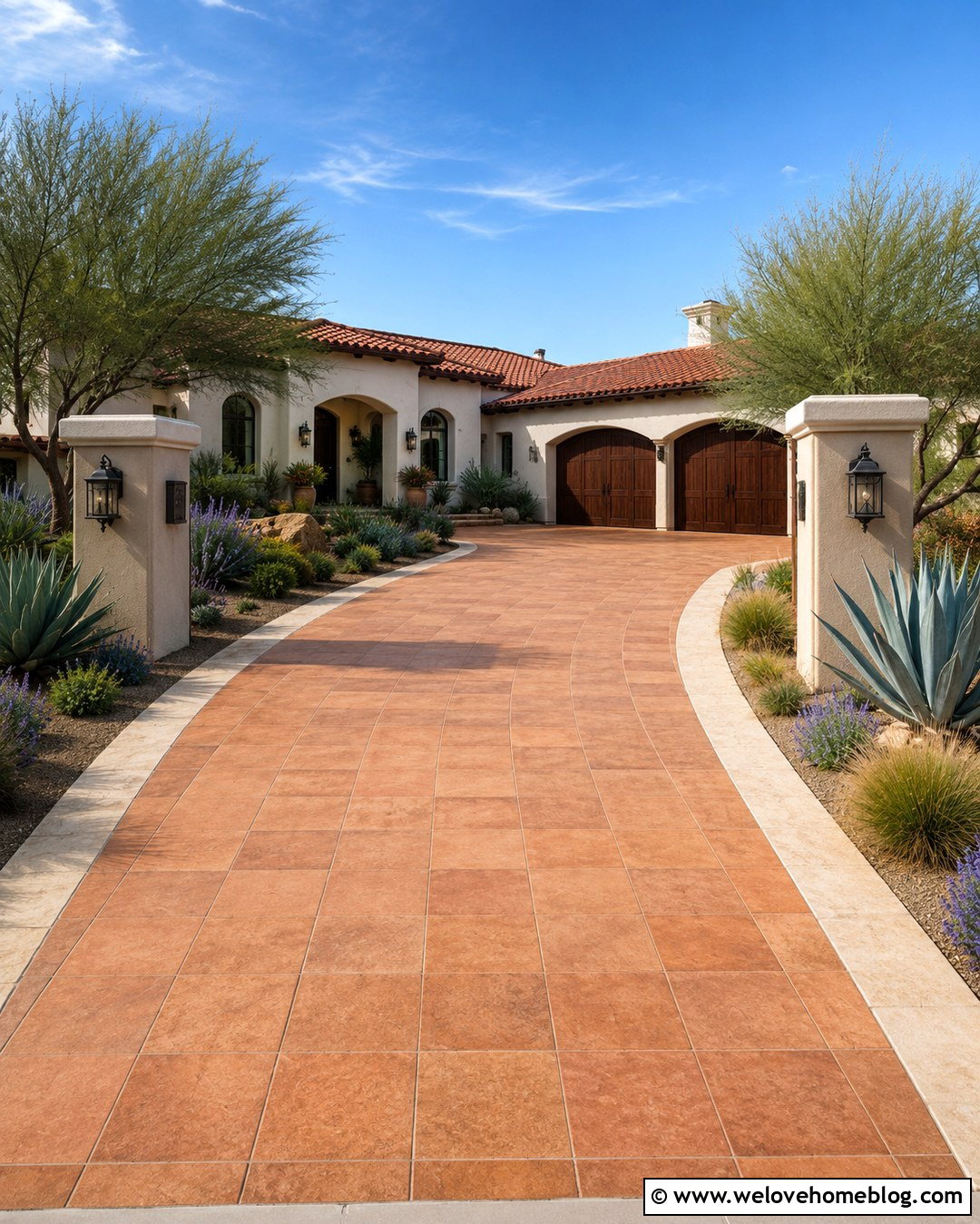
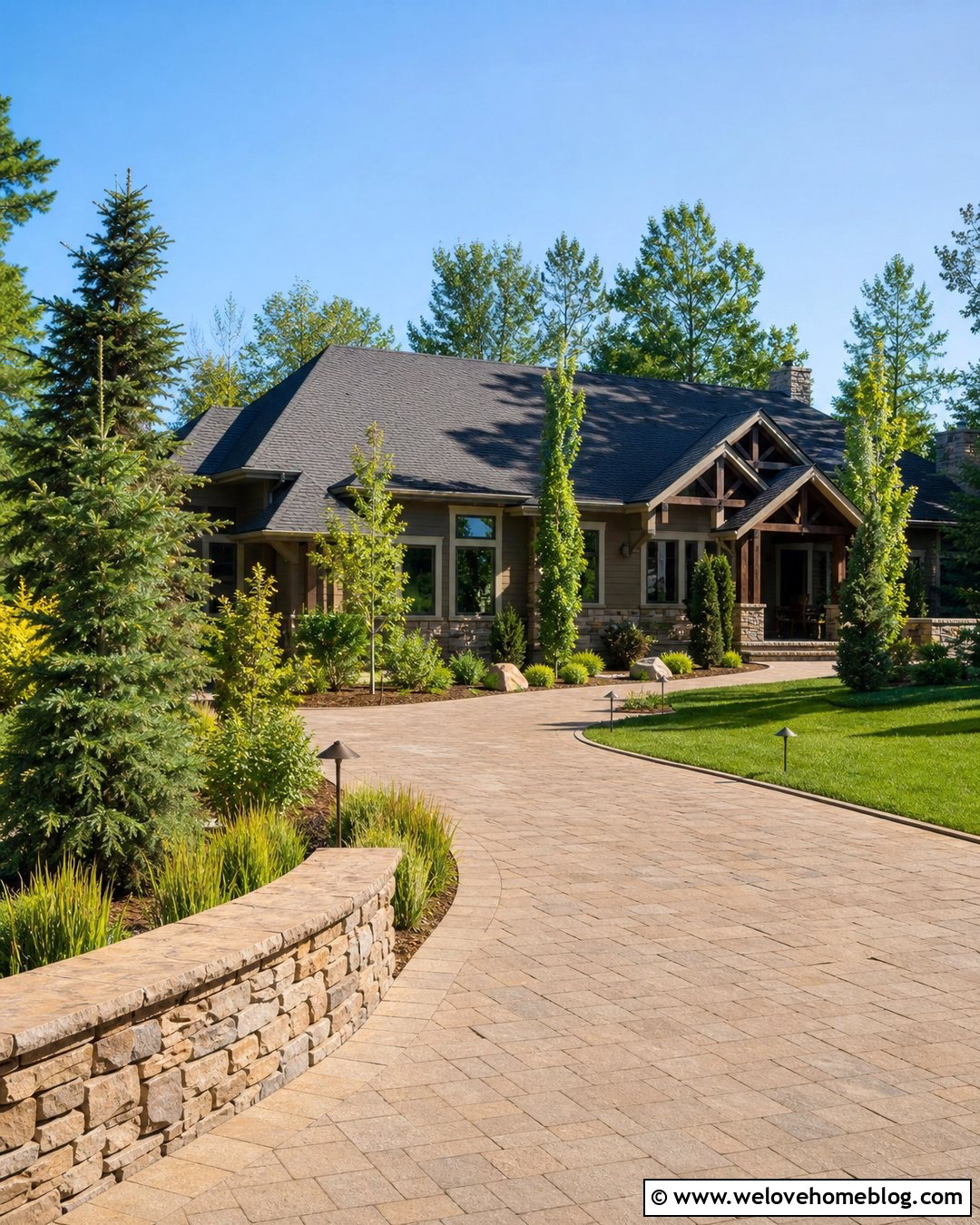
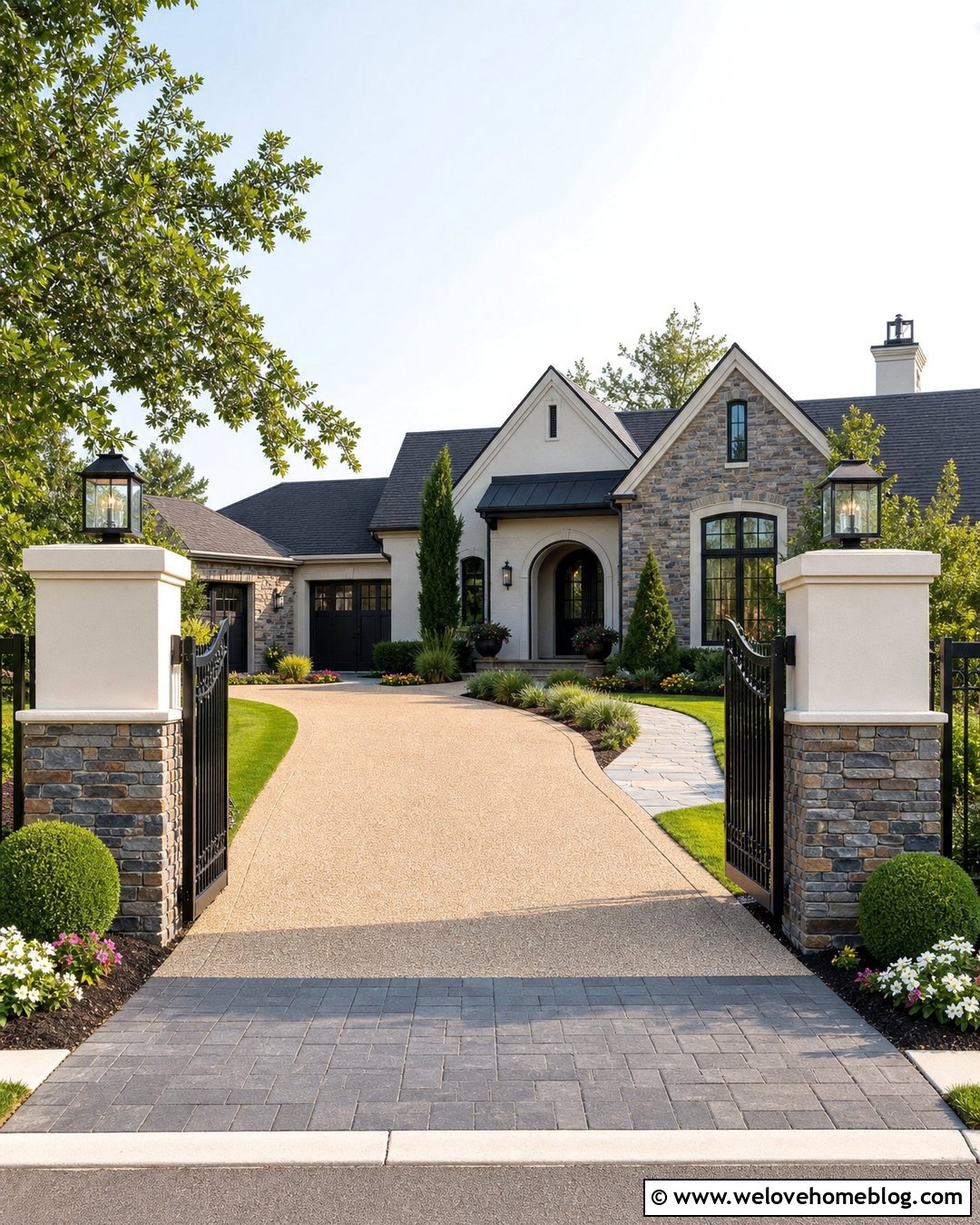
Terracotta-look porcelain tile gives a driveway warmth and character while pairing naturally with stucco walls and clay roof colors. Choose outdoor, vehicle-rated pavers in muted orange, burnt sienna, and sandy red rather than one flat shade. A broad straight or gently curved layout suits a Spanish, Southwestern, or Mediterranean house. Define the edges with cream limestone-look porcelain, creating a bright frame around the warmer center. Drought-tolerant planting beds filled with agave, flowering sage, ornamental grasses, and small desert trees complete the setting. Decorative pillars at the entrance can repeat the stucco and tile palette. Use a simple running bond or modular pattern so the color remains the main feature. Dark brown garage doors and wood details can add contrast without making the approach feel overly ornate.
16. White Porcelain Tile Driveway
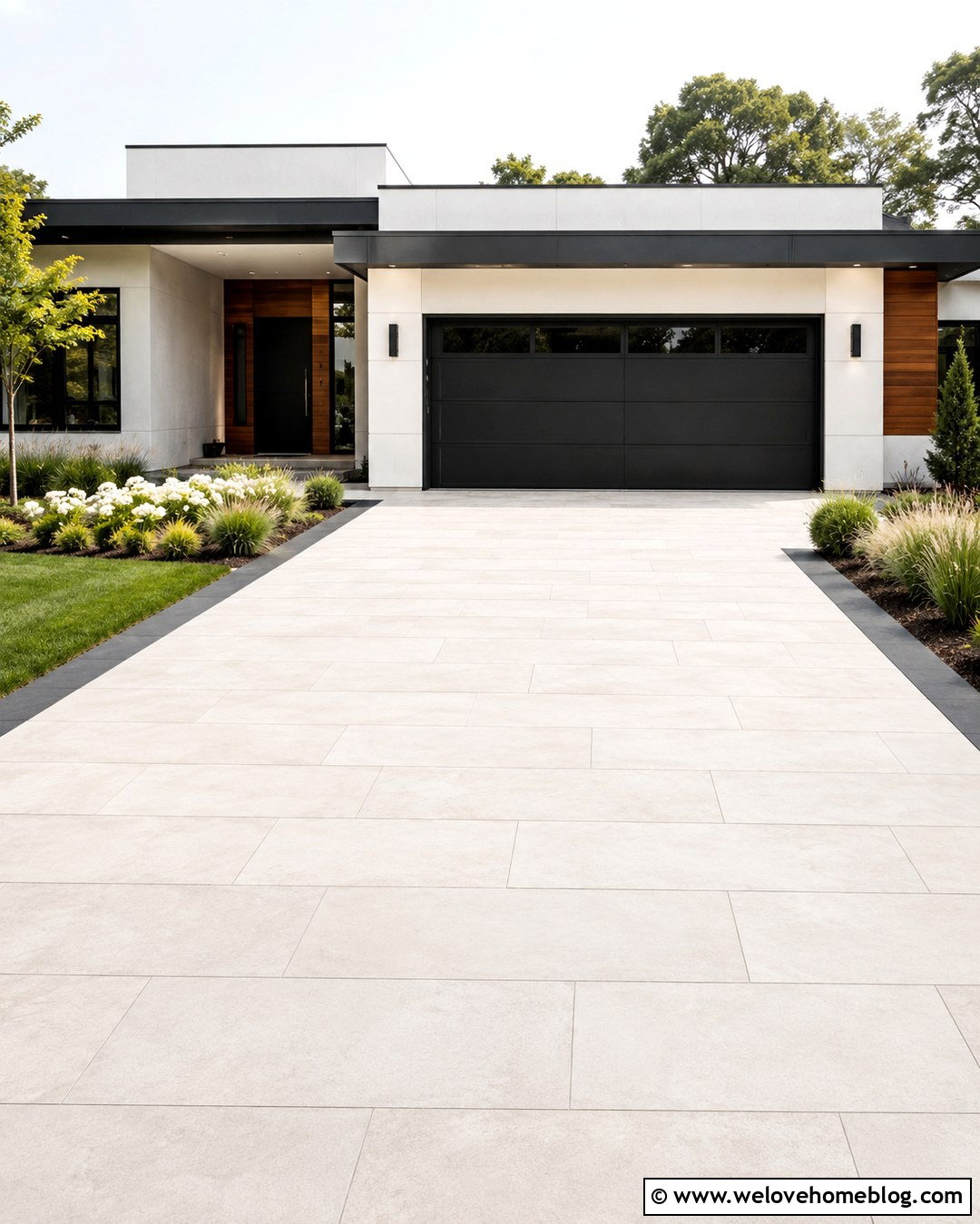
An off-white porcelain tile driveway can brighten a shaded front yard and emphasize the crisp lines of a modern home. Instead of pure white, use textured ivory, pale greige, or light concrete-look pavers that are more forgiving of dust and tire marks. Large rectangular tiles laid in a stacked pattern create a calm, expansive surface. Add charcoal edging along the lawn and garage apron for contrast and clear definition. Planting beds with dark green shrubs, white flowers, and architectural grasses will reinforce the limited palette. A flat-roofed or minimalist house with warm wood accents prevents the finished space from feeling cold. Before committing to a very light tile, review maintenance requirements and place a sample outdoors to see how it responds to sunlight, soil, and surrounding facade colors.
17. Charcoal Porcelain Tile Driveway
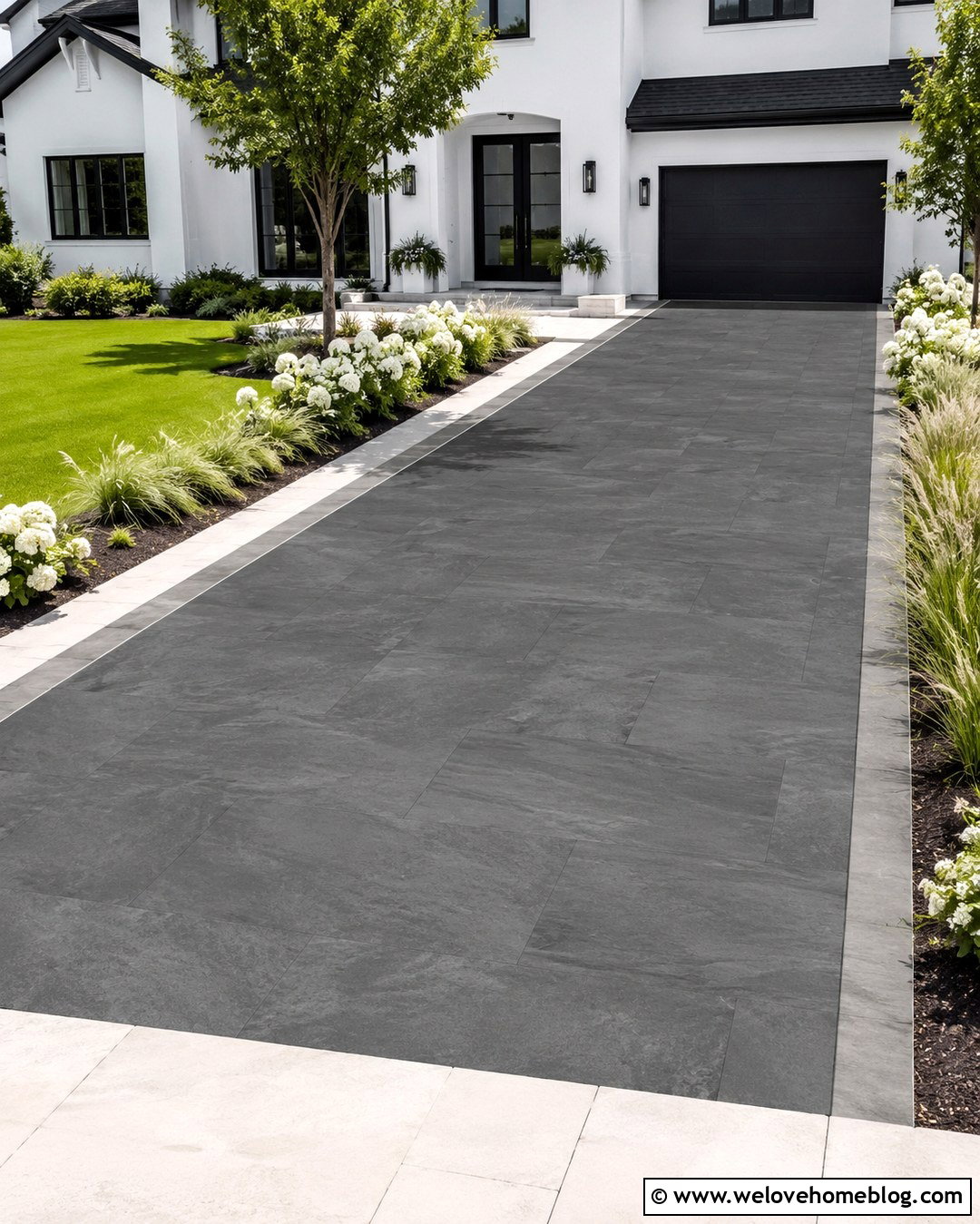
Charcoal porcelain driveway tile creates a dramatic approach that pairs well with light brick, white stucco, and natural wood siding. Select a matte, textured product with slight gray variation so dust and water spots are not emphasized against a completely black background. A wide straight driveway with large square tiles keeps the dark surface orderly. Frame it with a narrow light gray tile band to make the boundaries visible and connect the drive to a pale front walkway. Use bright green lawn, white flowering shrubs, and airy ornamental grasses to soften the deeper color. In hot, sunny regions, ask suppliers how the selected dark surface performs under intense heat. Thoughtful shade from small trees may improve the surrounding landscape while giving the driveway a more balanced, established appearance.
18. Mixed Size Tile Driveway
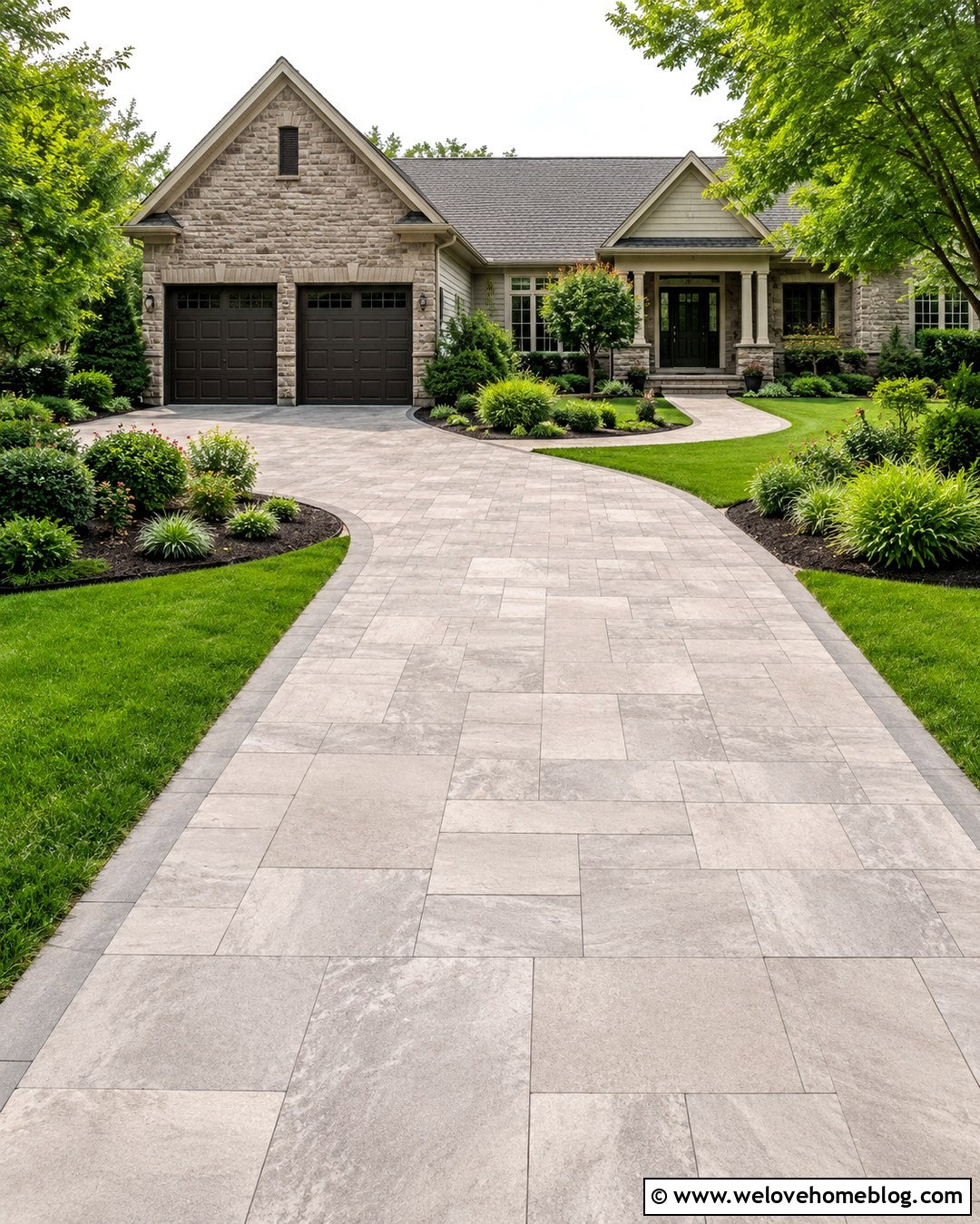
Mixed-size porcelain tiles create the varied appearance of natural stone paving without requiring every unit to have the same dimensions. Use a coordinated modular set containing squares and rectangles in warm gray or taupe. The pattern is especially effective on a broad driveway where repeated sections can be distributed evenly. Add a straight border made from one rectangular tile size to contain the more active interior layout. A stone-front ranch, transitional home, or modern farmhouse can all work with this adaptable surface. Surround the drive with curved beds, medium-height shrubs, and a walkway paved in the largest matching tile. Lay out several pattern modules before installation begins. Good planning prevents identical clusters from sitting beside each other and helps avoid tiny cuts around drains, corners, pillars, and garage entrances.
19. Tile Driveway With Permeable Joints
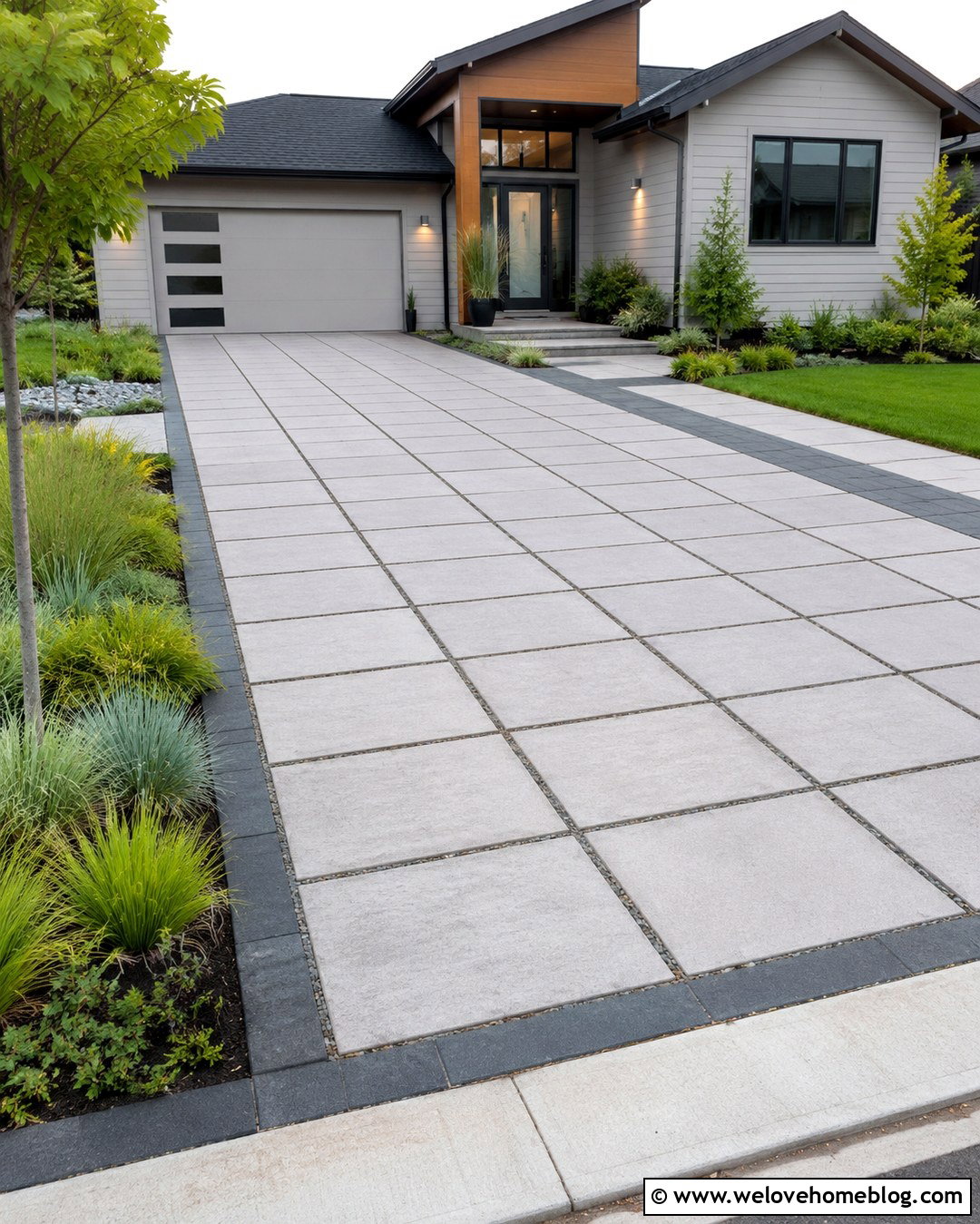
A tile driveway with permeable joints combines a refined surface with visible drainage spaces between the pavers. Use vehicle-rated gray porcelain tiles laid over a properly engineered permeable system, with joints filled according to the manufacturer’s approved specification. A rectangular grid works well because it makes the drainage pattern look deliberate. Border the driveway with darker porcelain pieces and rain-friendly planting beds containing grasses, sedges, and moisture-tolerant shrubs. The design suits contemporary homes as well as compact properties where stormwater management is an important consideration. A shallow planted area beside the driveway can visually connect the paving to the landscape. Because permeable performance depends on the complete installation, the subbase, bedding layer, joints, grading, and outlet conditions should be planned together rather than treated as separate features.
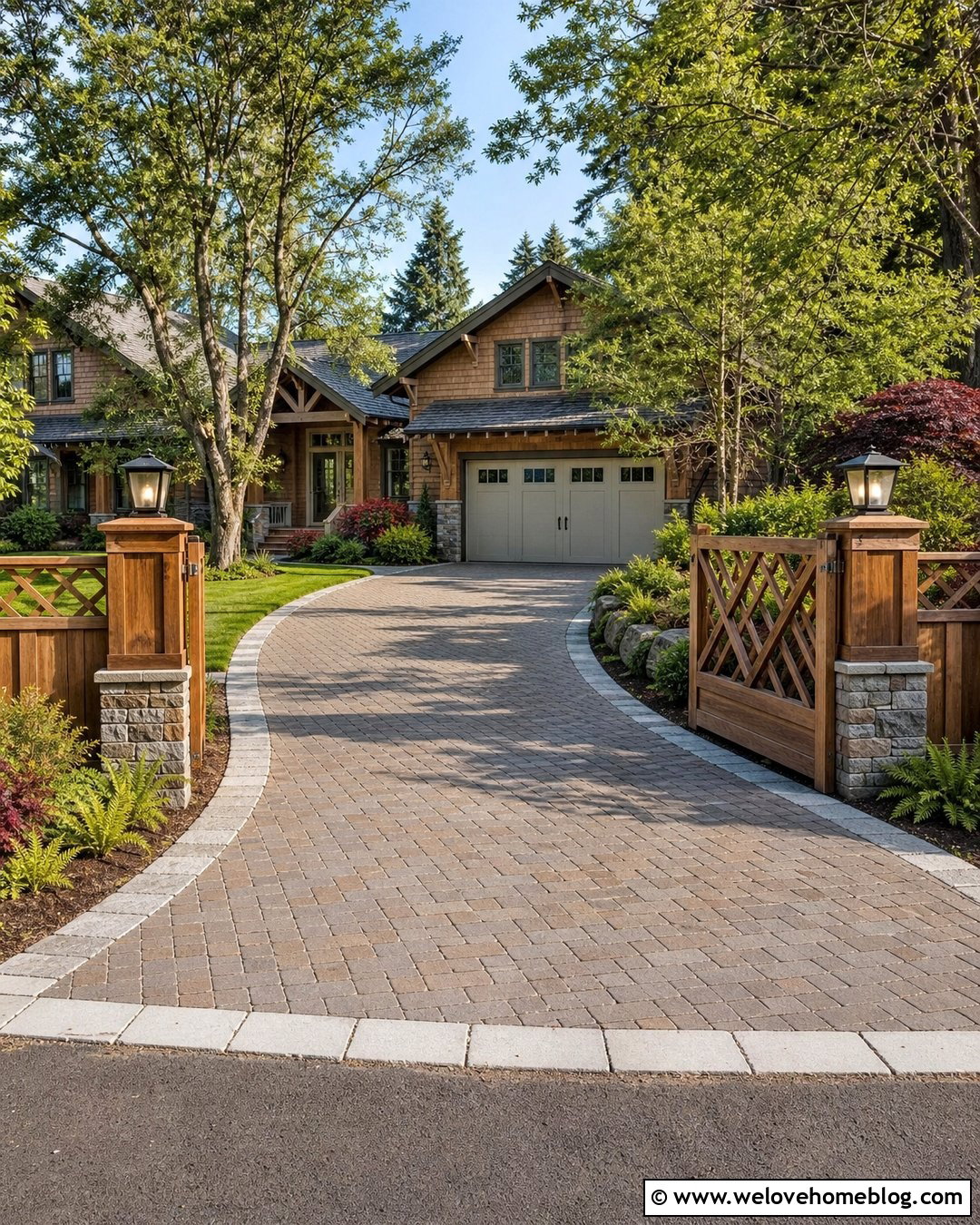
20. Tile And Concrete Band Driveway
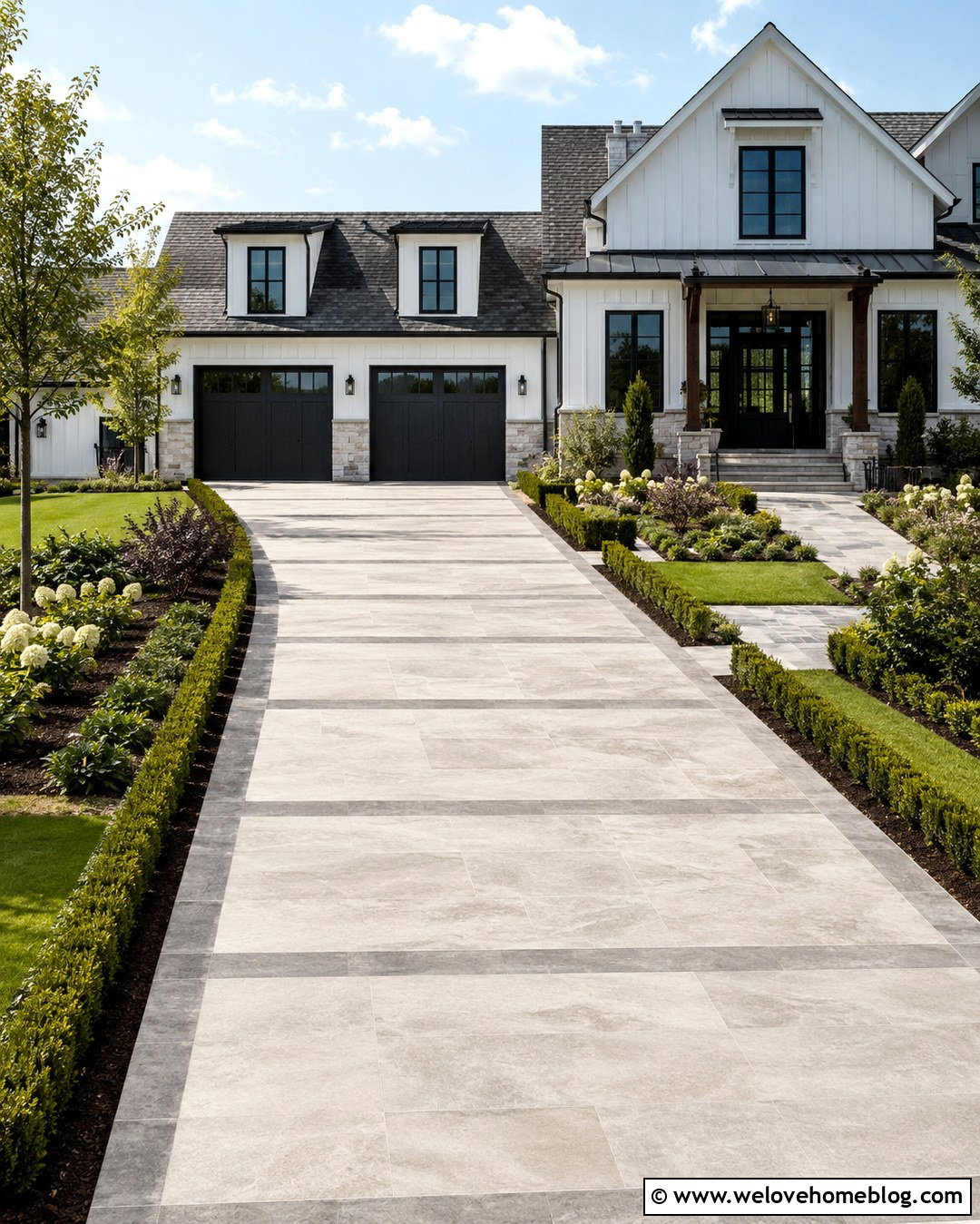
Combining tile with concrete bands can create a custom driveway while controlling how much decorative material is used. Begin with vehicle-rated stone-look porcelain pavers in broad parking sections, then separate them with reinforced poured-concrete bands. The concrete can cross the driveway at regular intervals or form a clean perimeter around each tiled area. Choose similar gray or beige undertones so the surfaces feel connected instead of patched together. This layout complements modern farmhouse, transitional, and contemporary homes. Add low hedges, lawn panels, and a matching porcelain walkway to extend the design toward the entrance. Concrete bands should be positioned with the tile dimensions in mind, reducing narrow cuts and uneven modules. Careful joint planning is also needed where the materials meet and respond differently to temperature and ground movement.
Conclusion:
The best tile driveway balances visual character with the practical needs of a vehicle surface. Large porcelain pavers can create a modern entrance, while brick-look, slate-look, travertine-look, and terracotta-look finishes suit more traditional architecture. Patterns, borders, curves, grass channels, and landscaped islands make the driveway feel like a complete part of the front yard rather than an isolated paved area. Always confirm that the chosen tile is rated for exterior vehicle traffic and appropriate for the local climate. A strong base, controlled drainage, stable edges, and experienced installation are just as important as color or pattern. Use these 20 Tile Driveway Ideas to develop an entrance that looks cohesive, welcoming, and built for everyday use.

Related posts:


Leave a Reply