
A well-designed driveway edge does more than separate pavement from the lawn. It can control loose material, organize planting beds, guide vehicles, and give the entire front yard a cleaner appearance. Brick, stone, steel, timber, shrubs, flowers, and decorative gravel all create different effects, so the best choice should complement the driveway surface and the home’s architecture. Low-profile borders can also simplify mowing, while wider planted edges soften large areas of hardscaping. Landscape edging is especially effective when the driveway material, border, walkway, and nearby plants are planned as one connected composition. () The complete designs below offer practical inspiration for different homes, climates, budgets, and yard sizes. Explore these **20 landscape driveway edge ideas** to find a look that fits your property.

1. Concrete Driveway With Brick Landscape Edge
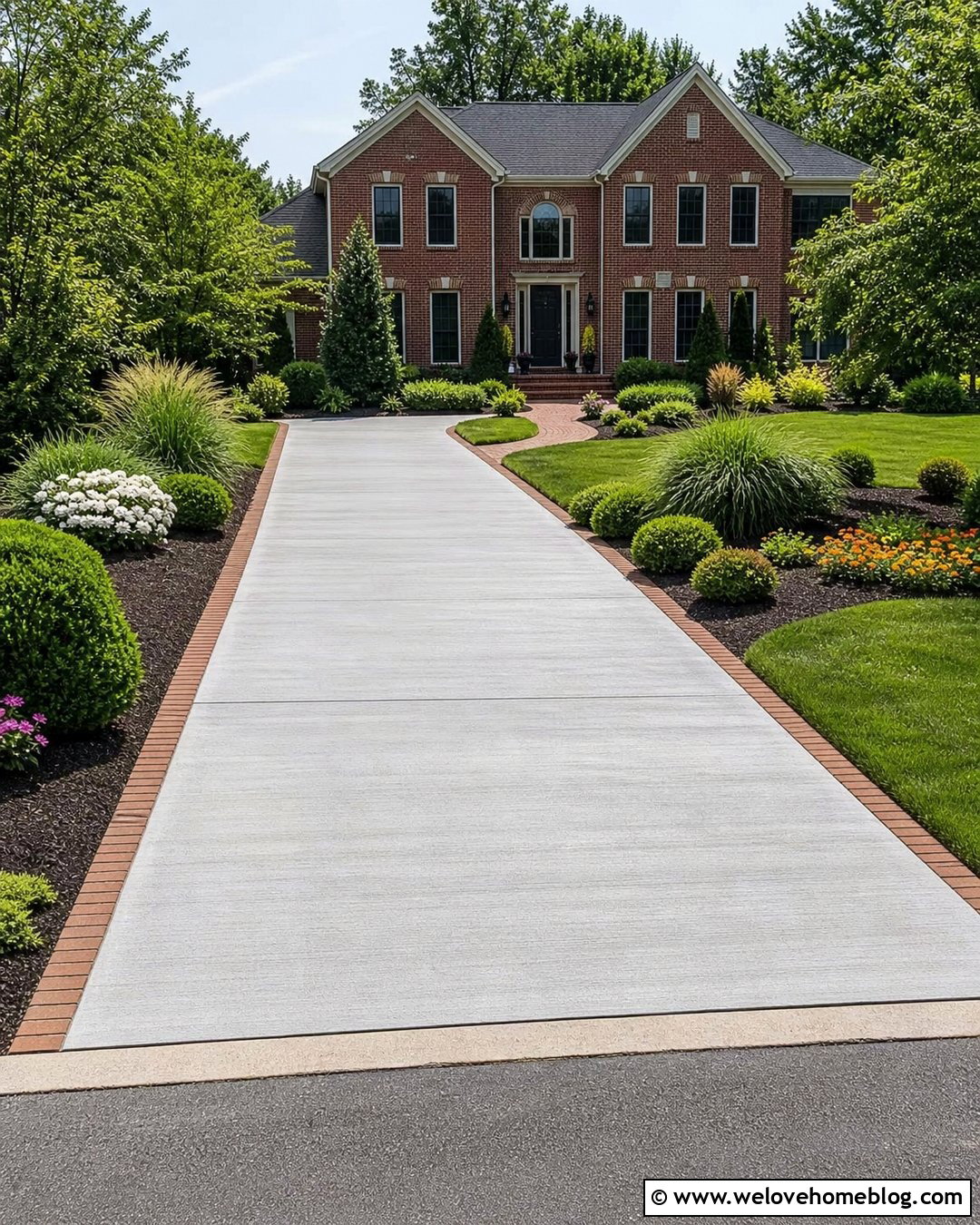
Warm red brick can bring definition and character to a plain concrete driveway. Install the bricks lengthwise for a narrow ribbon or side by side for a wider, more noticeable border. A flush installation keeps the transition smooth and makes the surrounding lawn easier to mow. Complete the look with gently curved planting beds containing evergreen shrubs, compact ornamental grasses, and seasonal flowers. Red brick works especially well beside a colonial, Cape Cod, or traditional ranch home because it can echo masonry used on the facade. Choose weathered brick for a relaxed appearance or uniform clay pavers for cleaner lines. Carrying the same brick border onto the front walkway will visually connect the driveway, entrance, and house.
2. Gravel Driveway With Cobblestone Landscape Edge
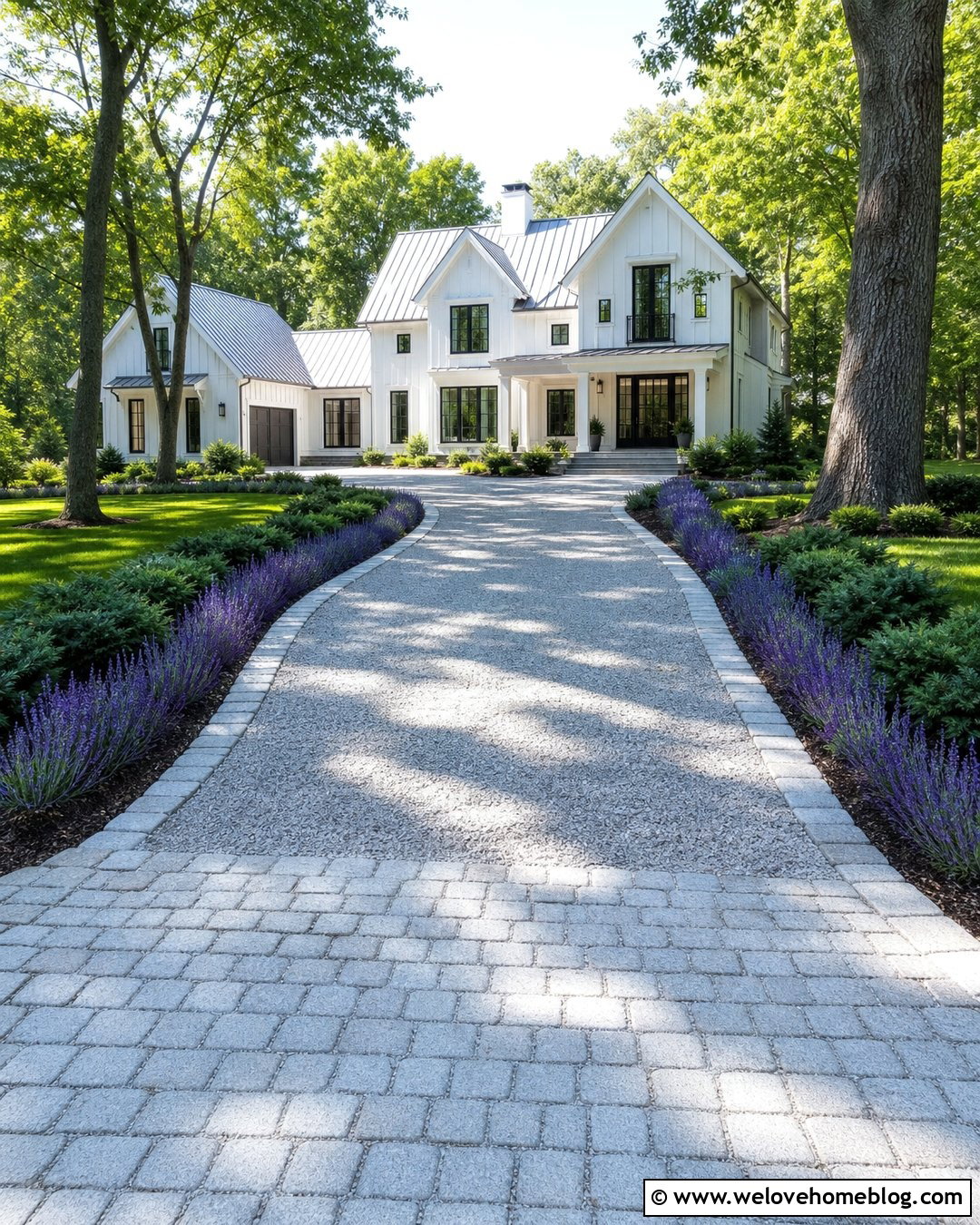
Loose gravel looks much more intentional when framed by a substantial cobblestone border. Use medium or large granite cobbles set slightly above the driveway surface to create a strong visual edge and help contain migrating gravel. On the landscape side, add a narrow mulch bed filled with lavender, catmint, dwarf juniper, or another low-growing plant suited to your region. A softly curved layout enhances the informal character of gravel while guiding the eye toward a country, cottage, or farmhouse-style home. Select gray gravel for a cool, understated palette or golden gravel for additional warmth. At the street, widen the cobblestone edge into a small entrance apron. This gives the entire driveway a finished transition instead of an abrupt beginning.
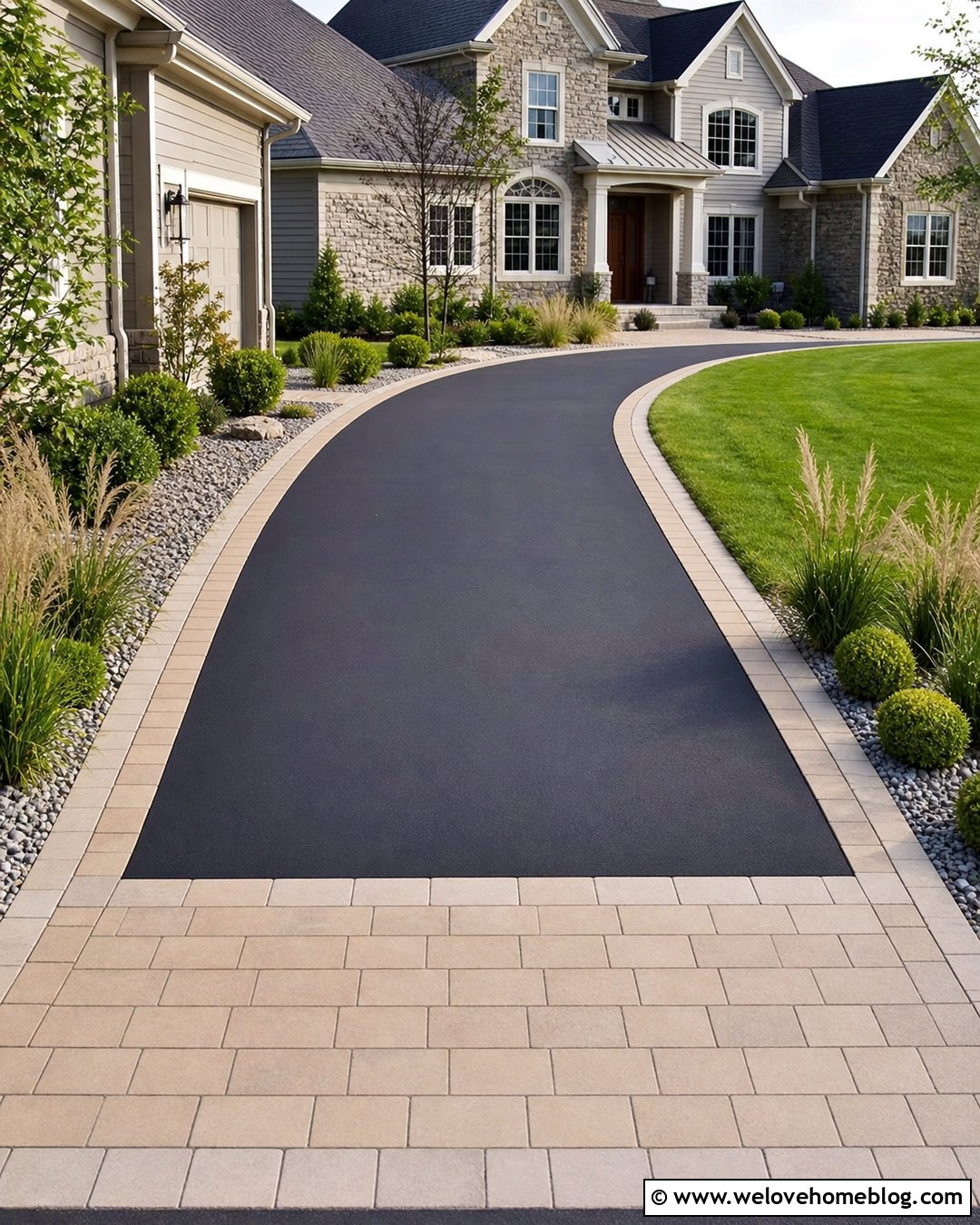
3. Asphalt Driveway With Belgian Block Landscape Edge
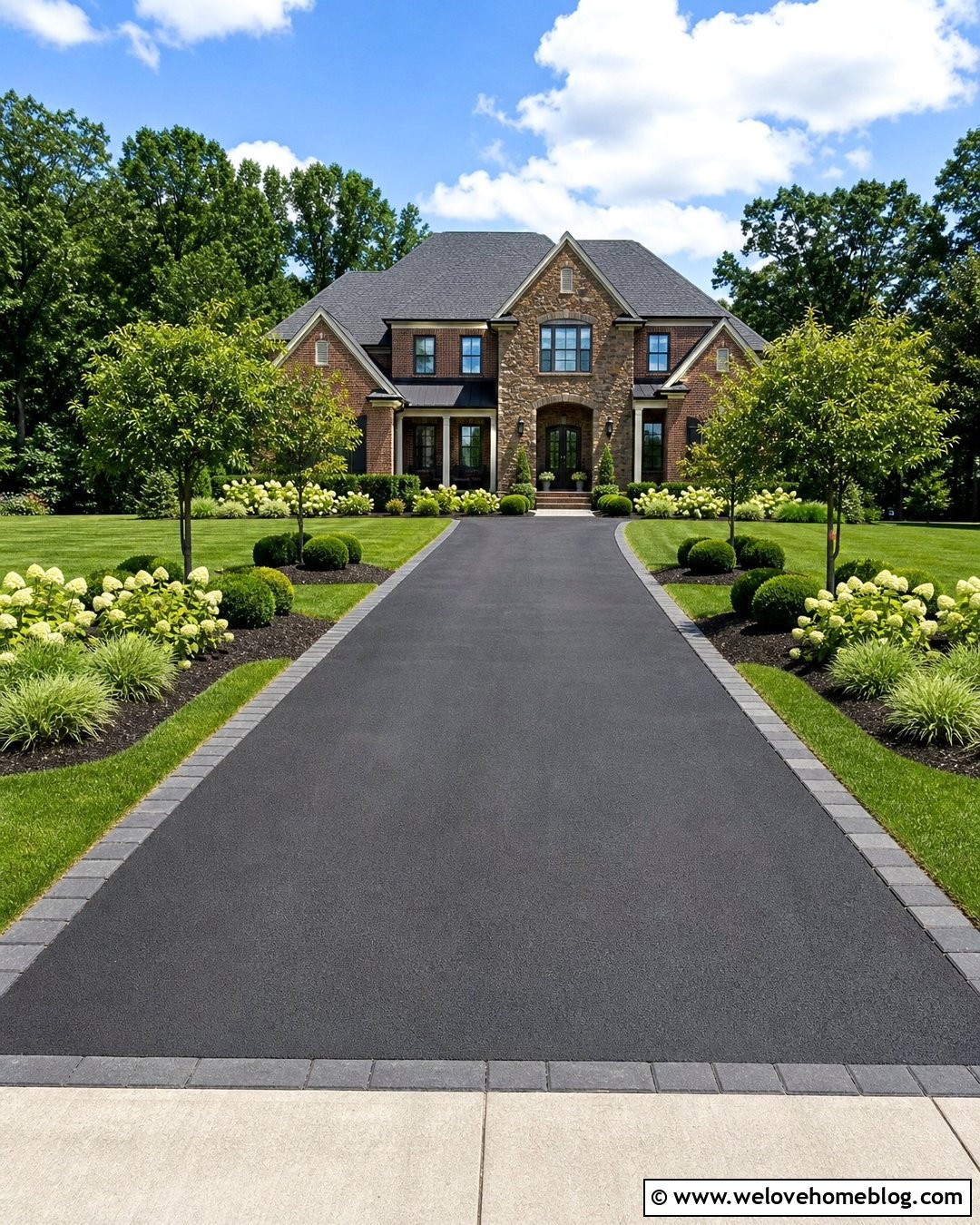
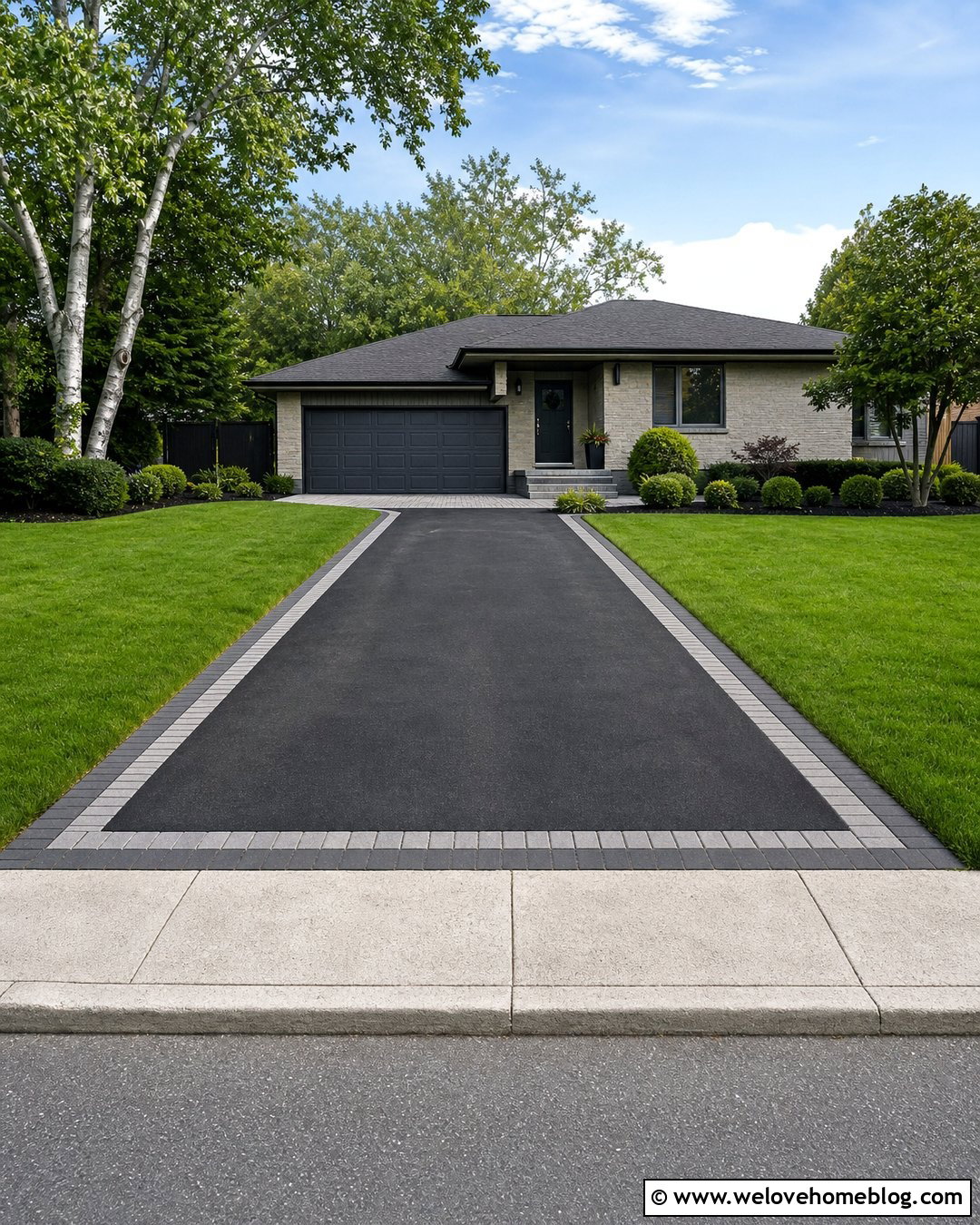
The deep color of black asphalt creates a striking backdrop for light gray or charcoal Belgian block. Install the blocks in a single soldier-course border along both sides, keeping the lines straight and symmetrical for a polished appearance. A low foundation of concrete beneath the blocks can help maintain an even alignment in areas exposed to regular vehicle traffic. Beyond the stone edge, use neatly maintained lawn with small planting pockets near the entrance and garage. Rounded boxwood, dwarf hydrangeas, and compact grasses can soften the hard surfaces without crowding the driving area. This complete look suits brick colonials, suburban homes, and traditional two-story houses. Matching Belgian block around the walkway or mailbox bed helps repeat the material and makes the front yard feel coordinated.
4. Paver Driveway With Low Hedge Edge
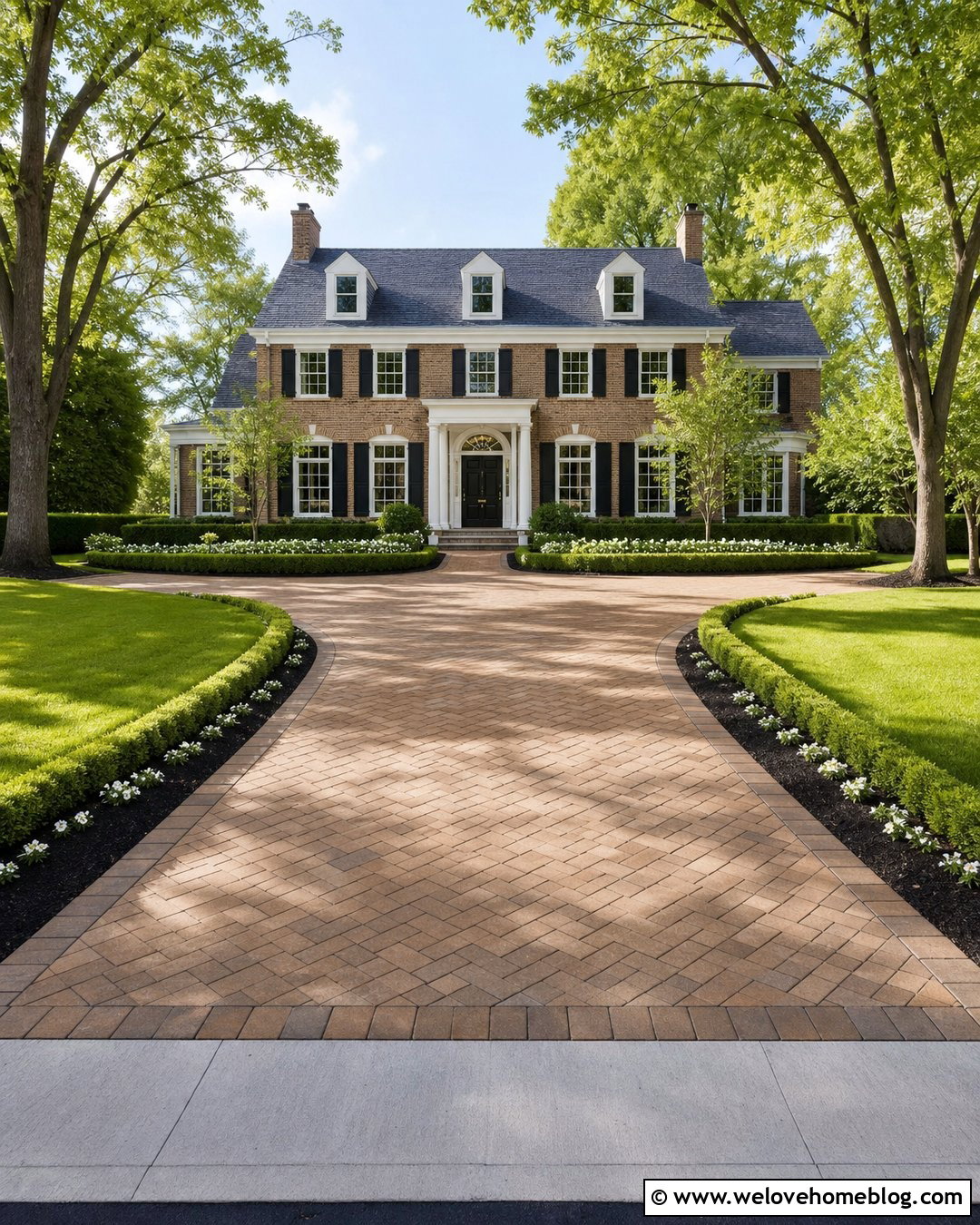
A clipped hedge gives a paver driveway a formal, established frame without requiring a tall visual barrier. Choose a low-growing shrub appropriate for your climate and keep it set back from the pavement so mature branches do not interfere with vehicles. A narrow strip of dark mulch between the pavers and hedge creates contrast, simplifies maintenance, and leaves room for irrigation. For the driveway, consider warm tan concrete pavers in a running-bond or herringbone pattern. Gentle curves can make the composition feel welcoming, while a straight layout creates stronger symmetry. This treatment looks particularly refined beside Georgian, colonial, and European-inspired homes. Keep the hedge below knee height near the street entrance to preserve visibility, then allow it to become slightly fuller closer to the house.
5. Curved Driveway With Lavender Landscape Edge
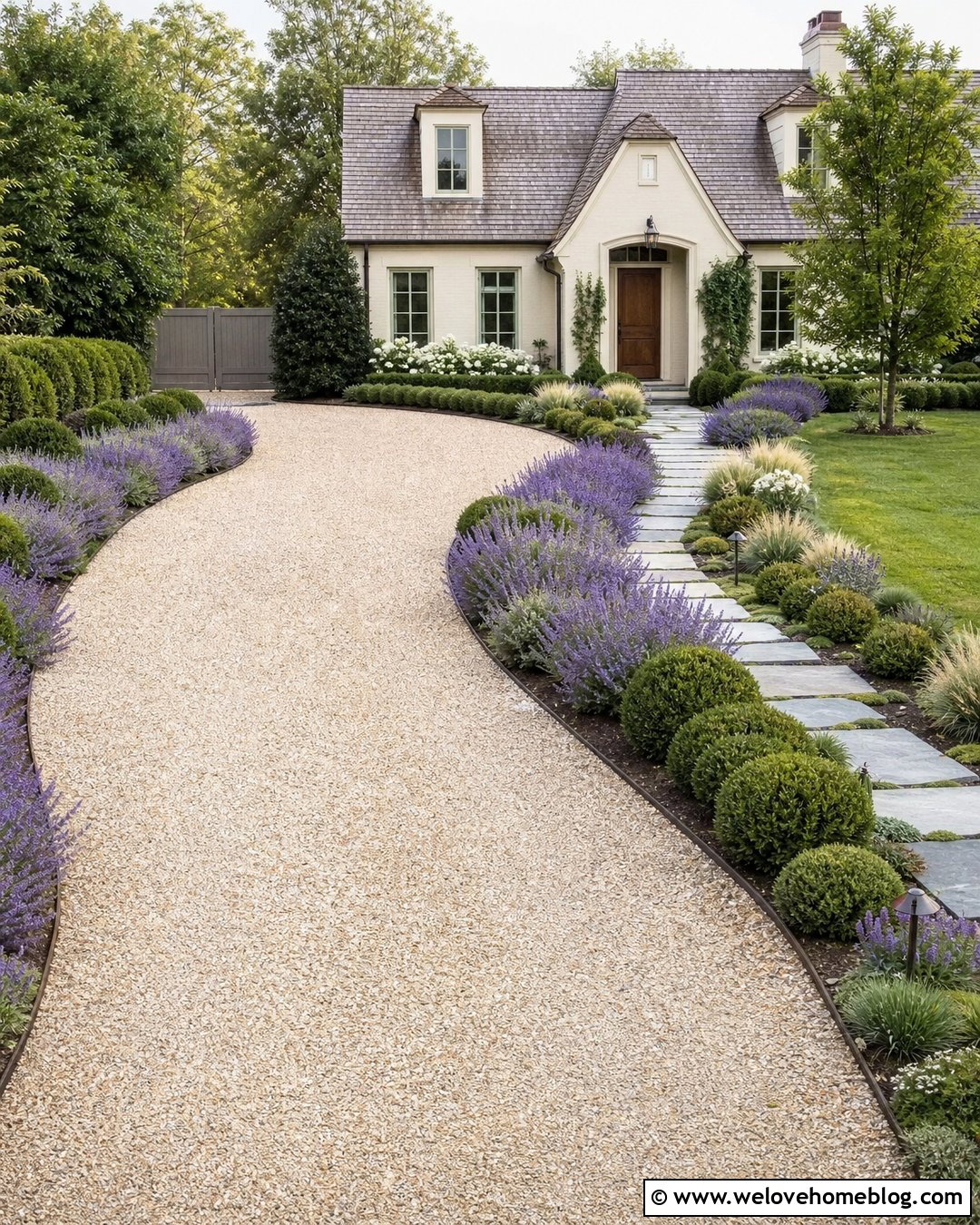
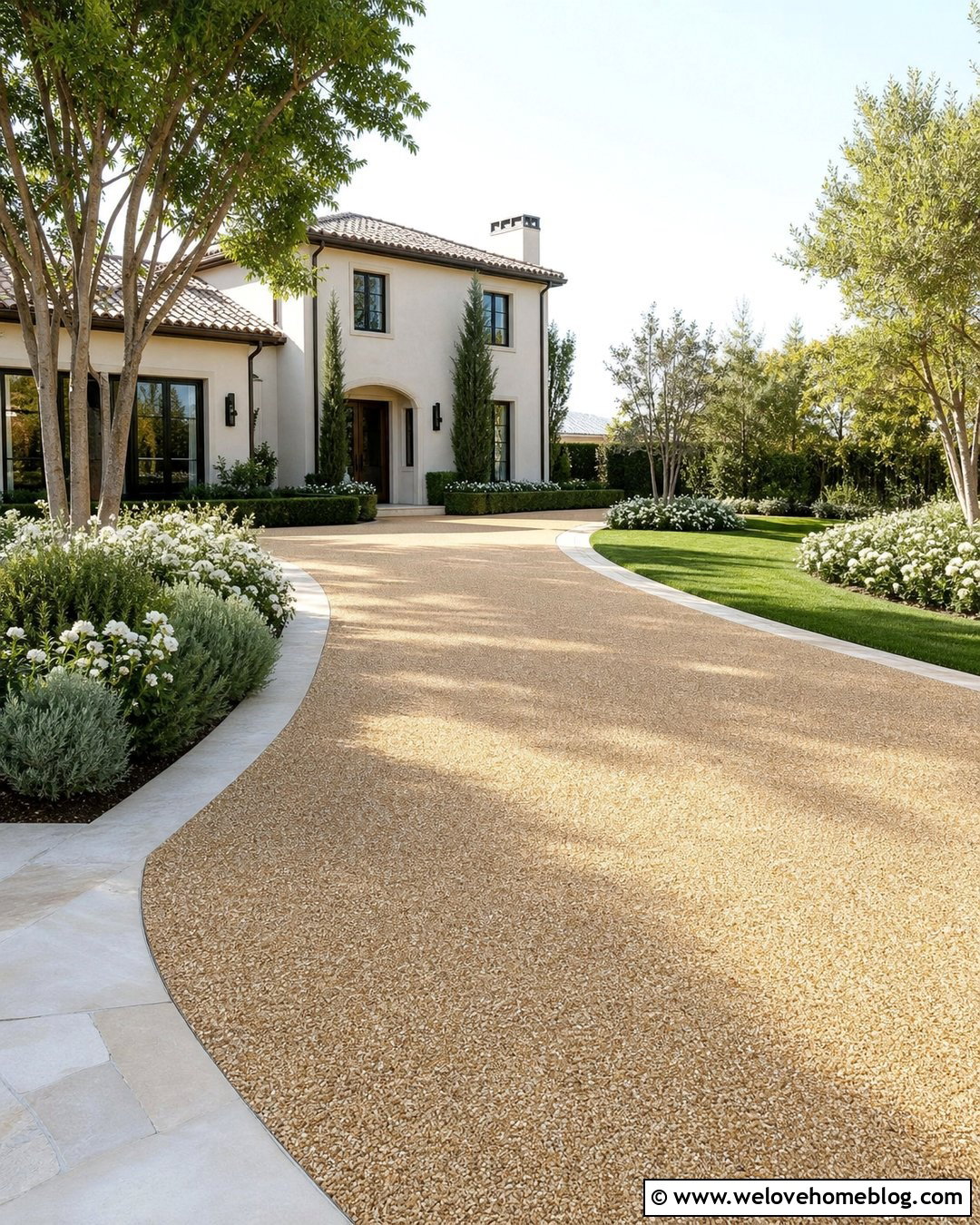
Imagine a curved driveway bordered by soft purple flowers and silvery foliage. Lavender can turn the edge into a fragrant, colorful feature when it is planted in sunny, well-drained conditions. Pair it with a pale pea-gravel driveway and a narrow steel or stone restraint that keeps the surface separate from the planting bed. Repeating the same plant in generous groups creates more impact than scattering individual specimens. Between lavender clusters, add low evergreen mounds for structure outside the flowering season. The curved layout should follow the planting line naturally, creating a graceful approach to a cottage, stucco, or modern farmhouse home. Leave sufficient space between the plants and driving surface so mature growth does not obstruct doors, mirrors, or vehicle movement.
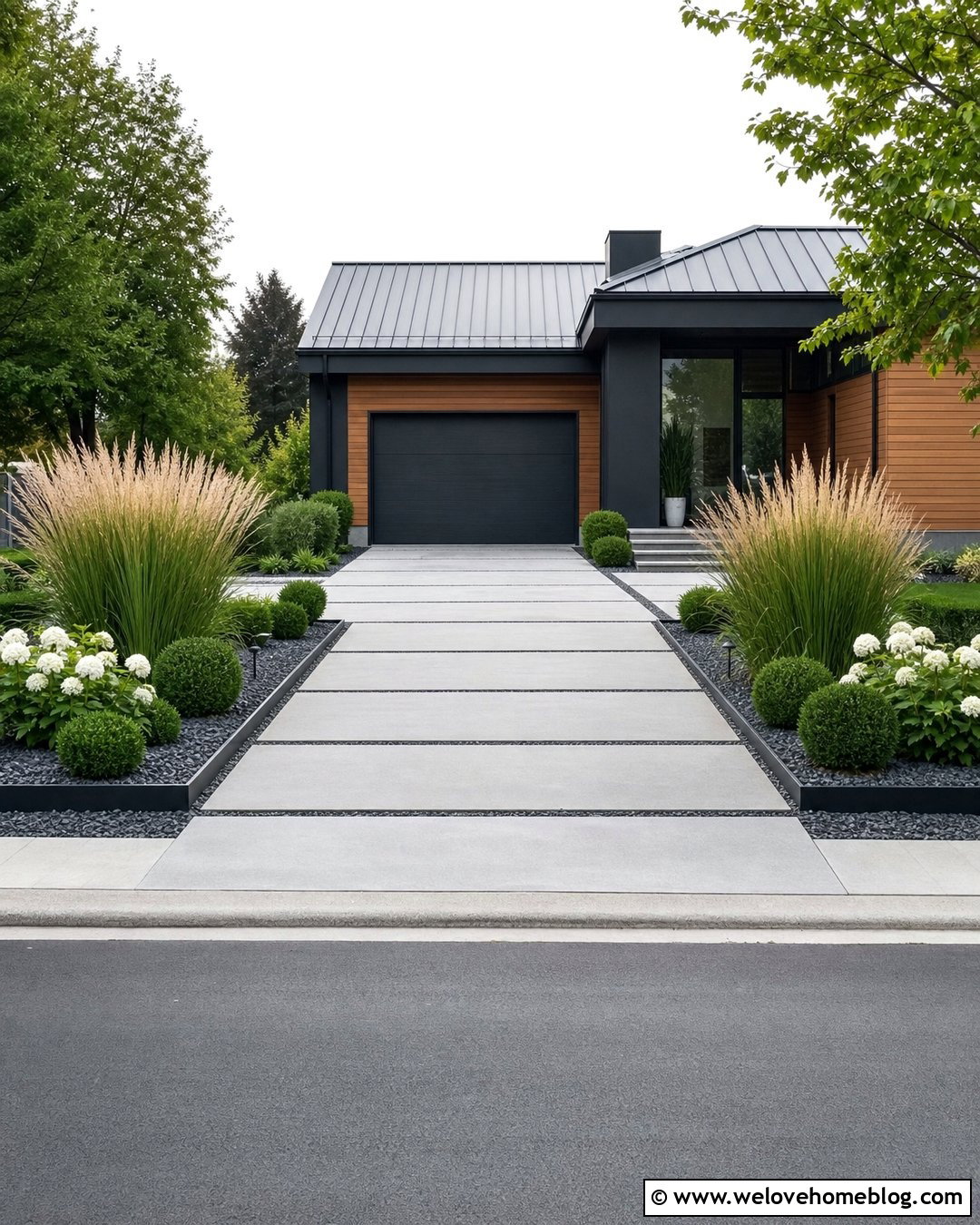
6. Modern Concrete Driveway With Steel Landscape Edge
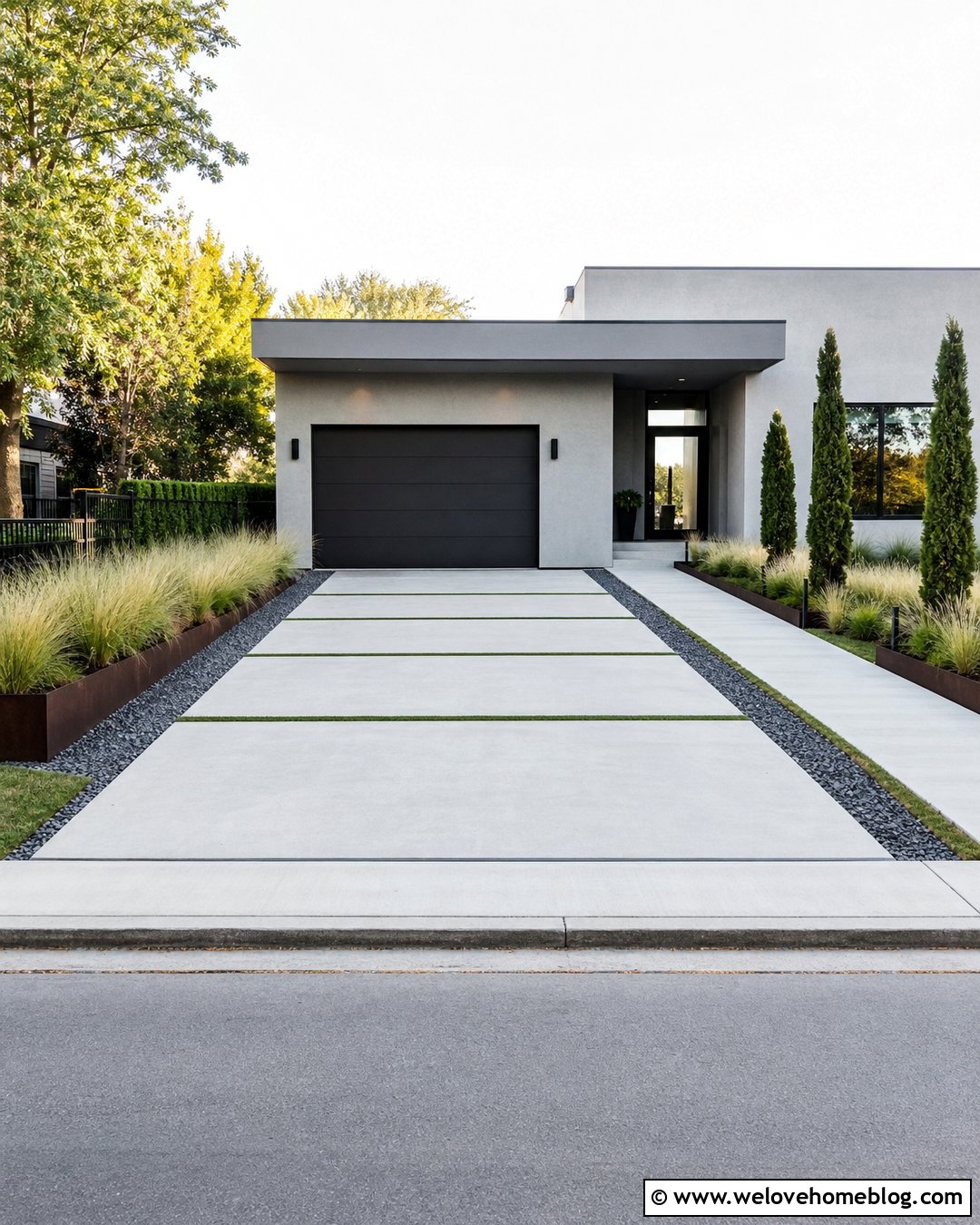
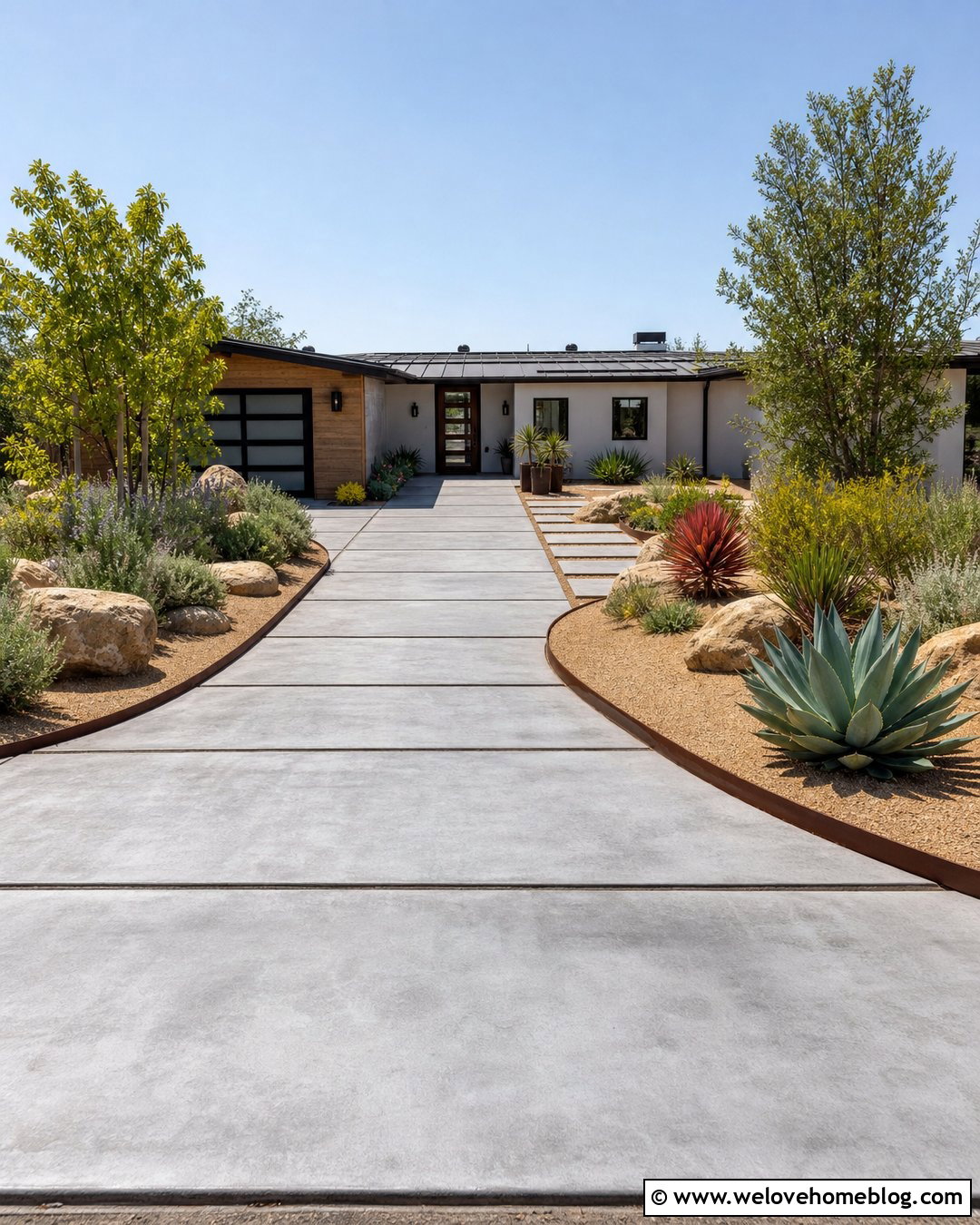
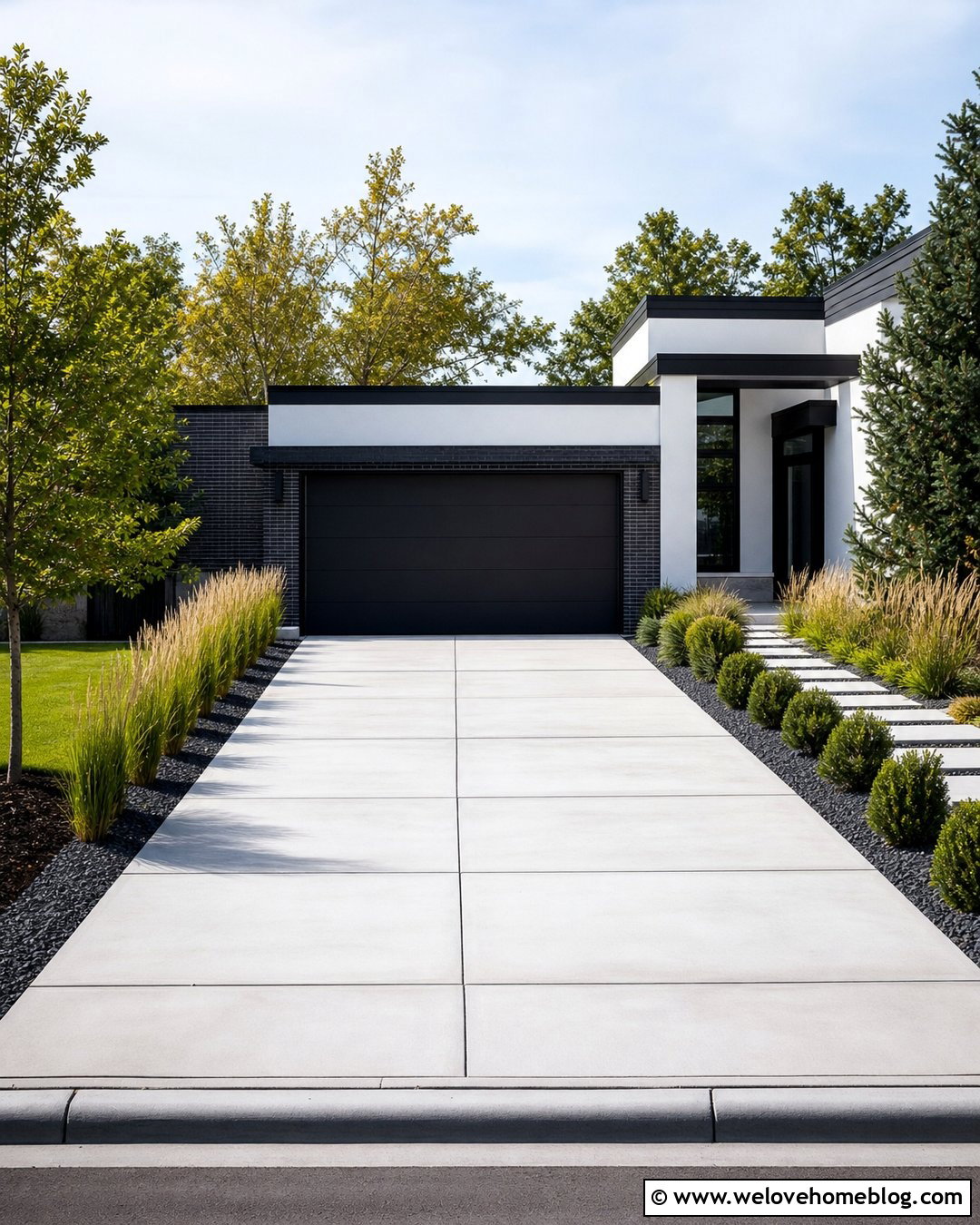
For a crisp contemporary appearance, combine large gray concrete slabs with slim black steel edging. The steel creates a precise boundary without adding bulky visual weight, making it ideal for straight driveways and geometric planting beds. Thin grass joints or dark gravel strips between concrete sections can break up the paved area and improve the overall scale. Along the outer edge, repeat sculptural plants such as feather reed grass, compact agave in suitable climates, or upright evergreens. Flexible steel can form both straight lines and controlled curves, while galvanized versions provide another durable, understated finish. () Keep the plant palette limited and repeat each variety in blocks. This disciplined composition complements flat-roofed homes, modern ranch houses, and minimalist facades with black-framed windows.
7. Resin-Bound Driveway With River Rock Edge
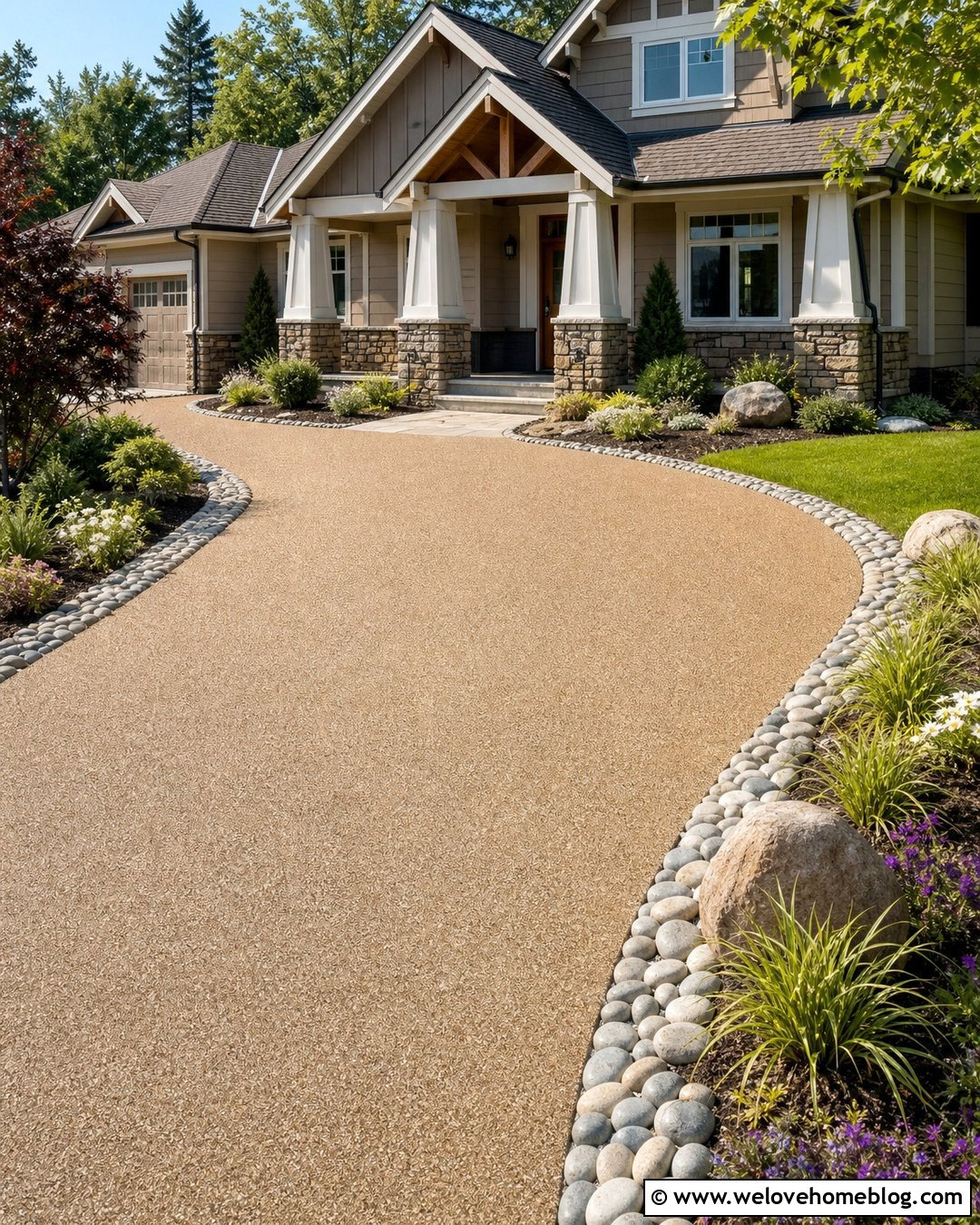
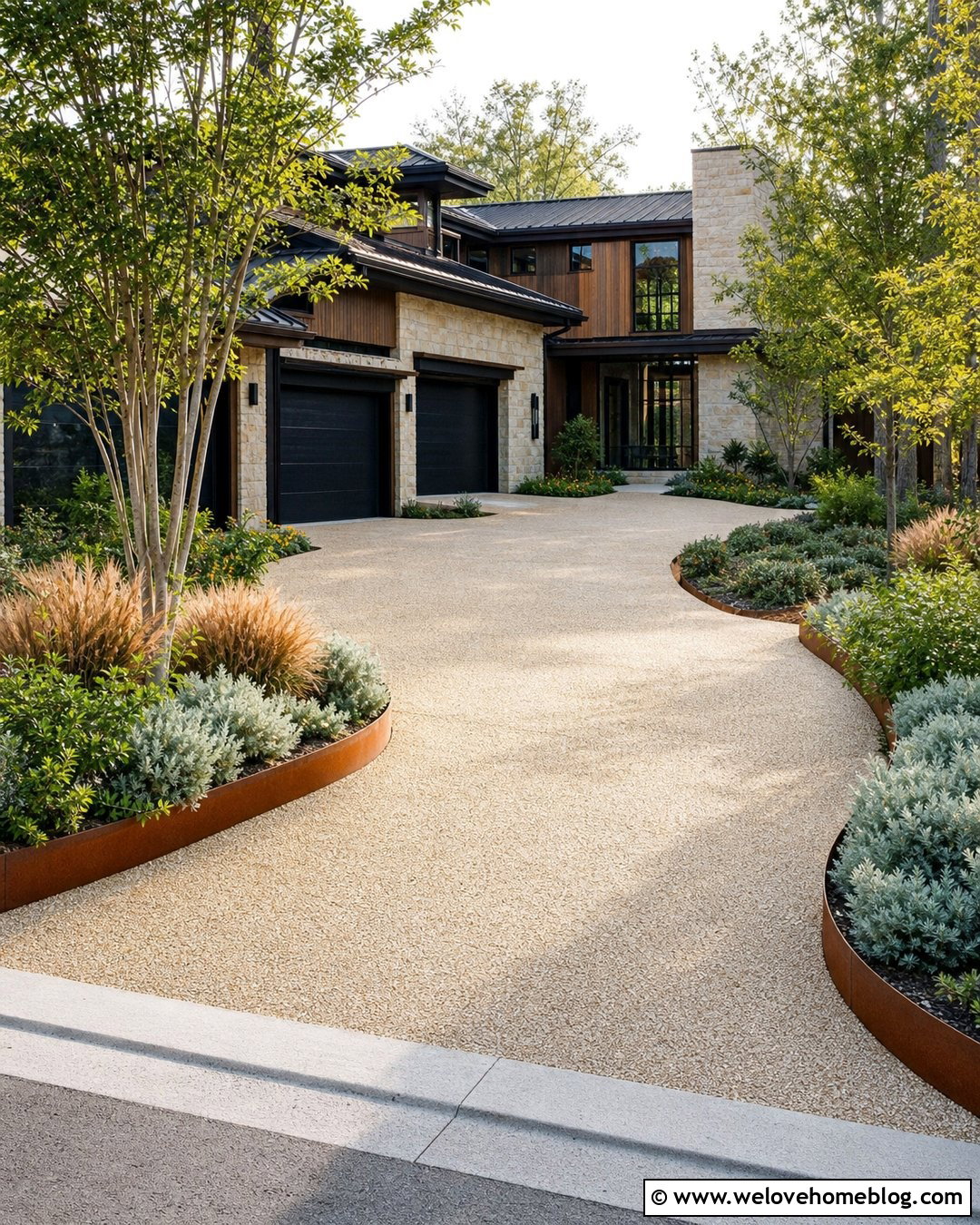
A smooth resin-bound gravel driveway pairs beautifully with a loose river rock border because the materials offer contrasting textures. Choose warm beige resin-bound gravel and frame it with rounded stones in cream, gray, and soft brown tones. Place a discreet metal restraint between the surfaces to maintain a clean line. Beyond the river rock, create informal beds with compact grasses, flowering perennials, and a few larger accent boulders. The border can also widen around downspout outlets or low areas to form a decorative drainage feature, provided the site is properly graded. This complete design feels natural without appearing untidy. It works well with craftsman houses, contemporary cottages, and wooded suburban properties where organic colors can connect the driveway to the surrounding landscape.
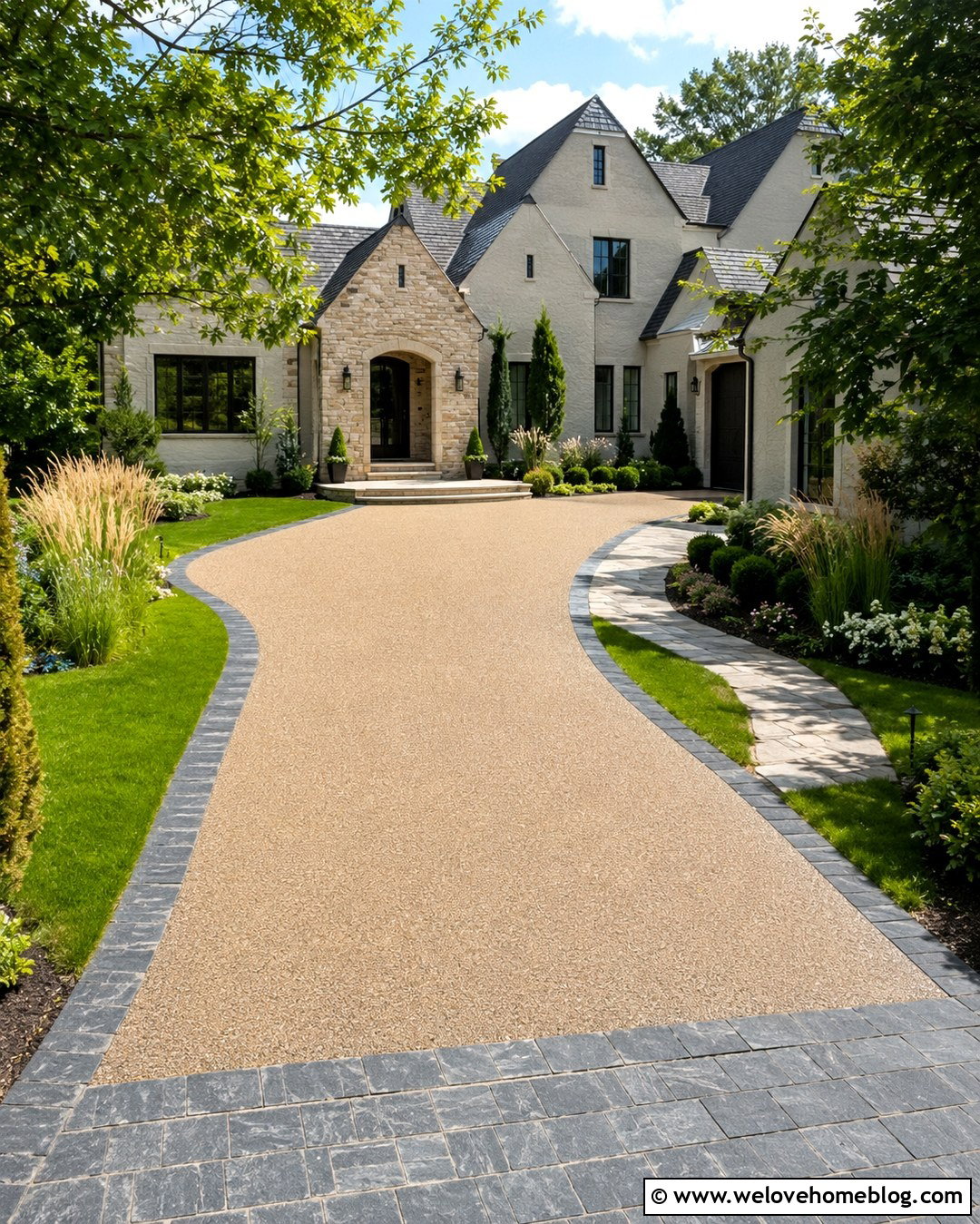
8. Circular Driveway With Planted Island Edge
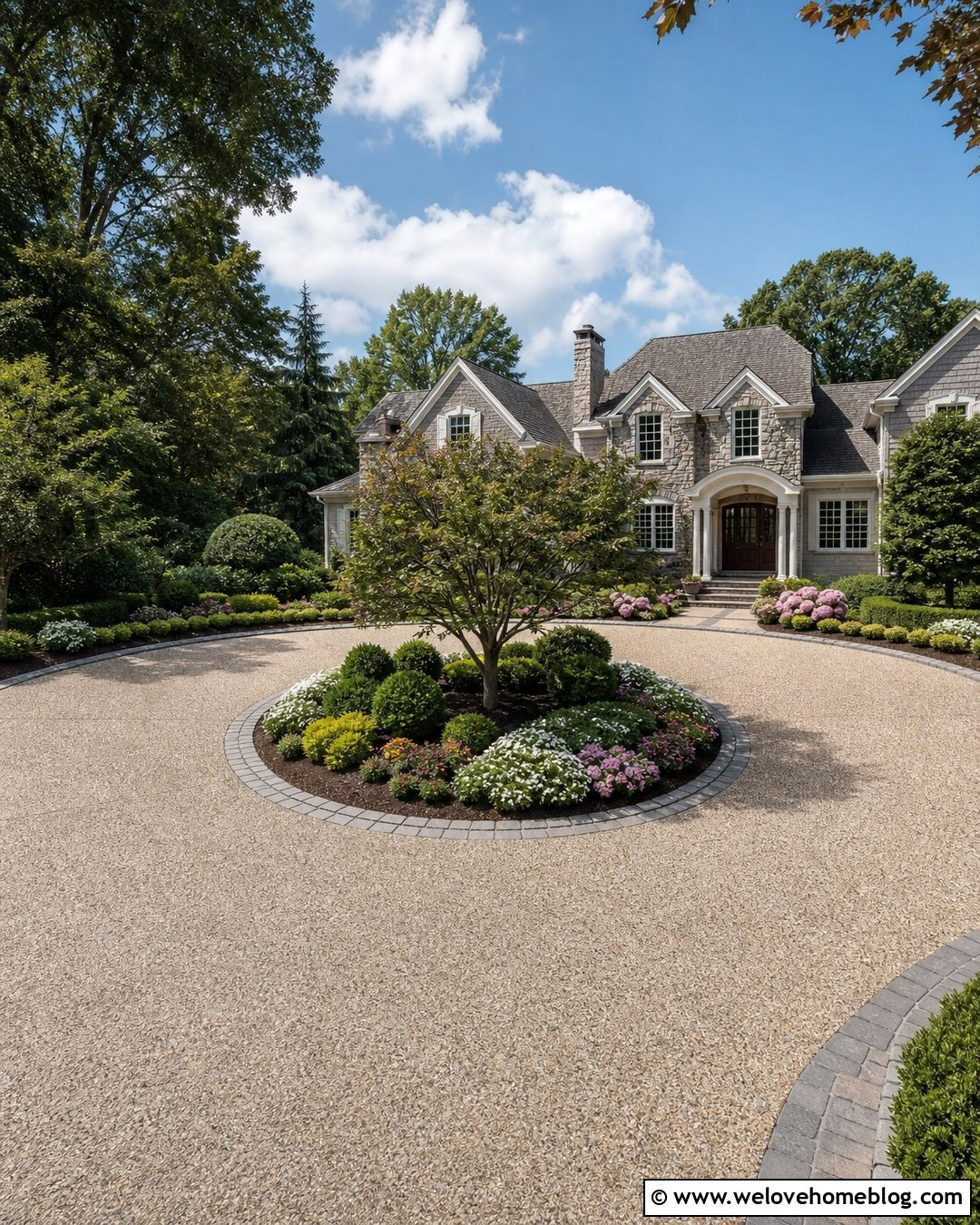
A circular driveway becomes a major front-yard feature when the center island has a clearly defined landscape edge. Surround the island with a low cobblestone or brick curb that follows the circle smoothly and protects the soil from vehicle tires. Inside, place a small ornamental tree slightly off-center, then layer compact evergreen shrubs, flowering perennials, and ground cover around it. An exposed-aggregate concrete surface provides subtle texture without competing with the planting. Repeat a smaller selection of the island plants along the driveway’s outer edge to unite the entire landscape. Avoid oversized shrubs that could block views across the circle. The completed design creates an organized arrival area for a colonial, Mediterranean, ranch, or large traditional home while keeping the front entrance visually prominent.
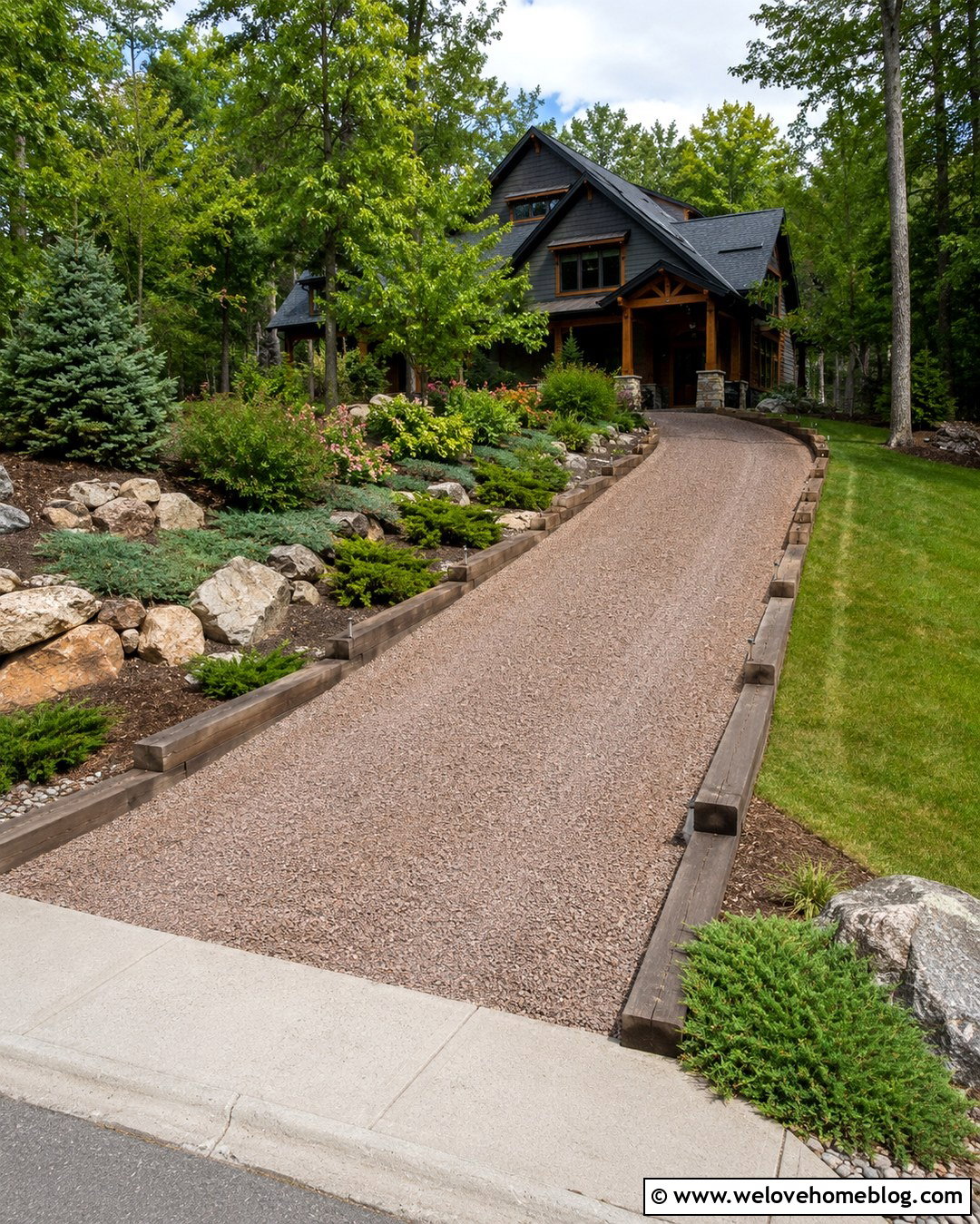
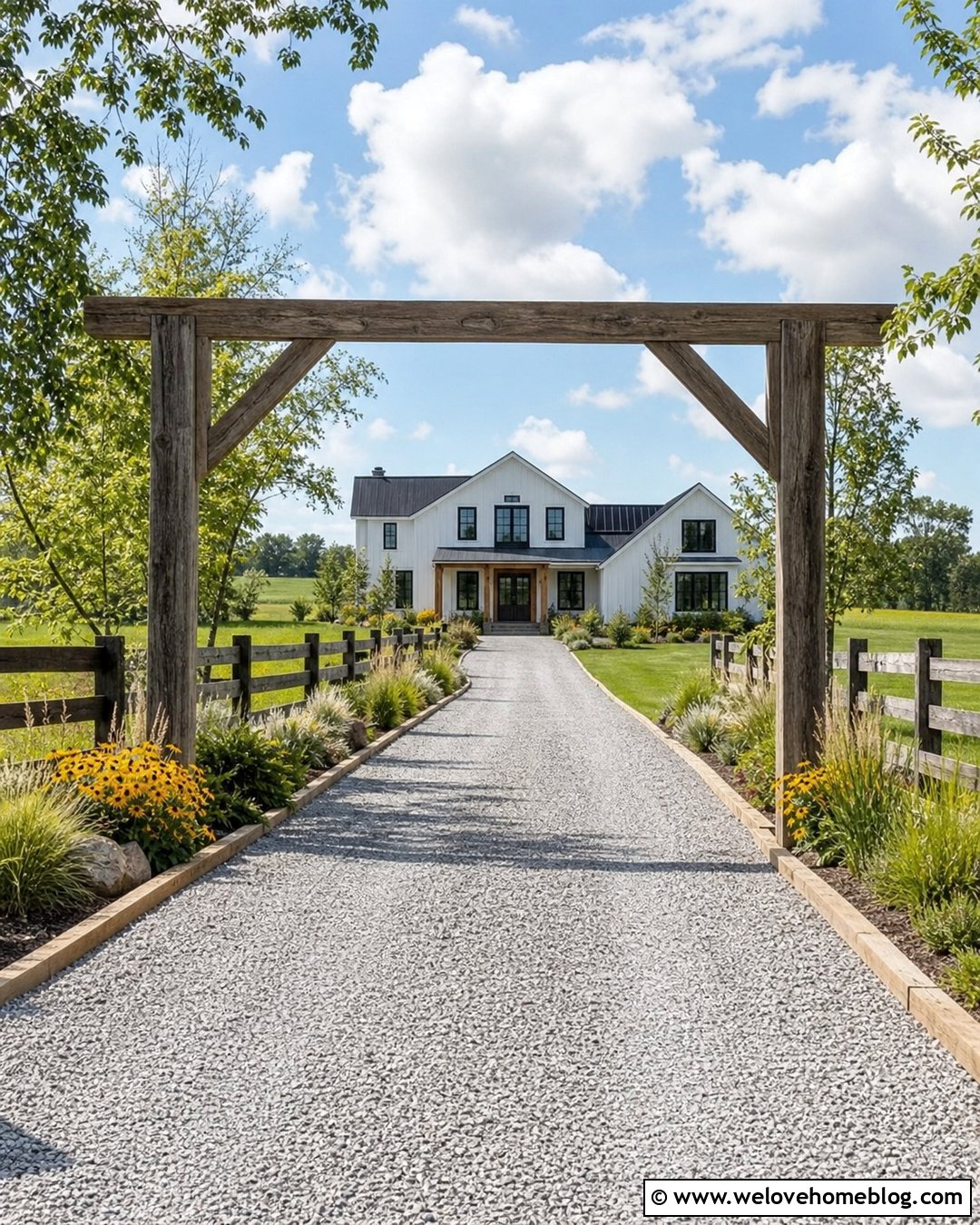
9. Farmhouse Gravel Driveway With Timber Edge
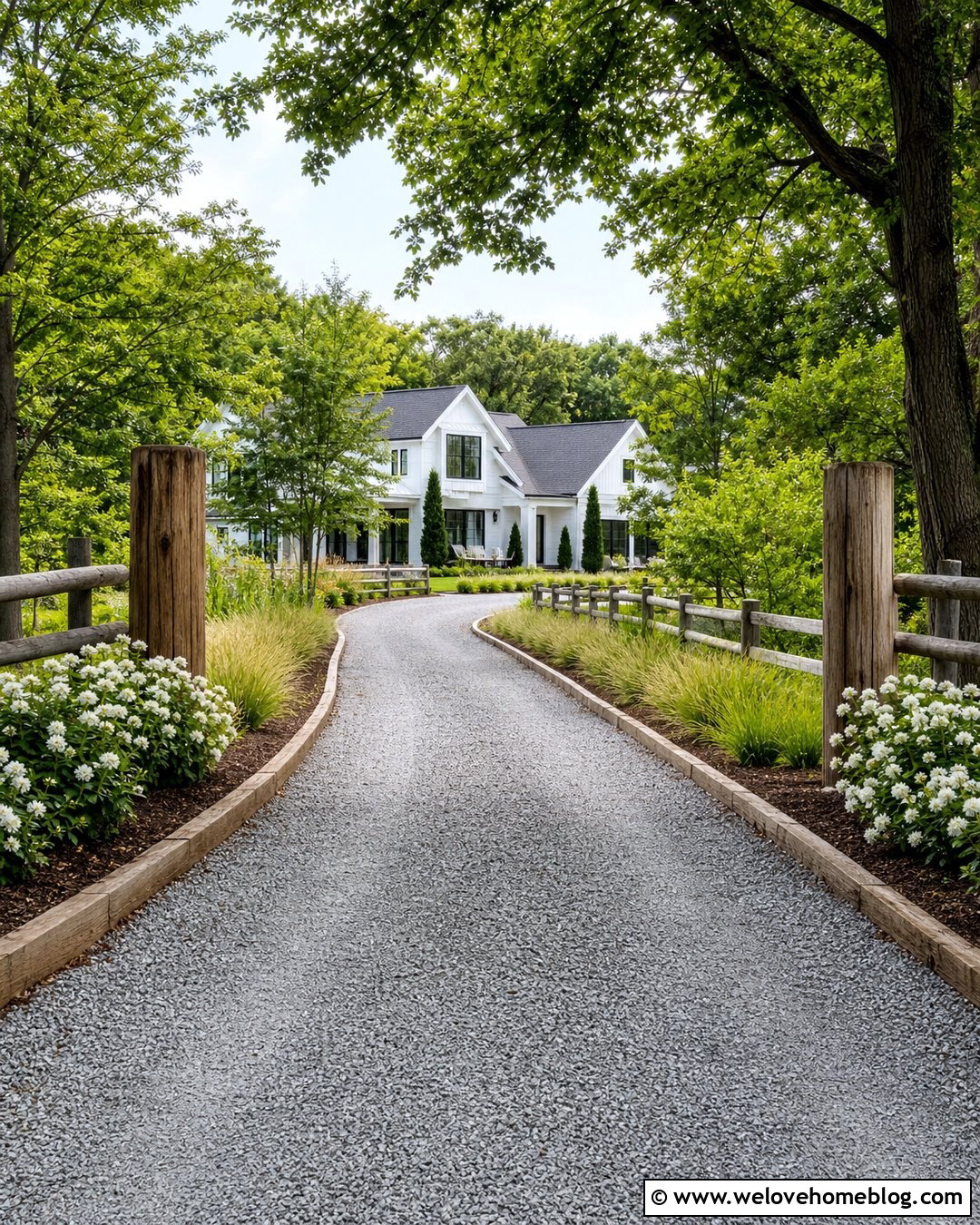
Timber edging gives a gravel driveway a relaxed rural character and can be an approachable choice for long properties. Use substantial, ground-contact-rated landscape timbers installed in straight or gently curving runs. Set them securely so the top sits just above the gravel and clearly separates it from lawn or planting beds. Weathered gray gravel, split-rail fencing, native grasses, and clusters of white flowering shrubs complete the farmhouse setting. Near the entrance, add timber posts with a simple address sign and widen the landscaped borders around them. A double row of small deciduous trees can frame a longer driveway without making it feel enclosed. This design suits modern farmhouses, barns, country cottages, and wooded homes where highly formal masonry edging might look out of place.
10. Brick Driveway With Boxwood Landscape Edge
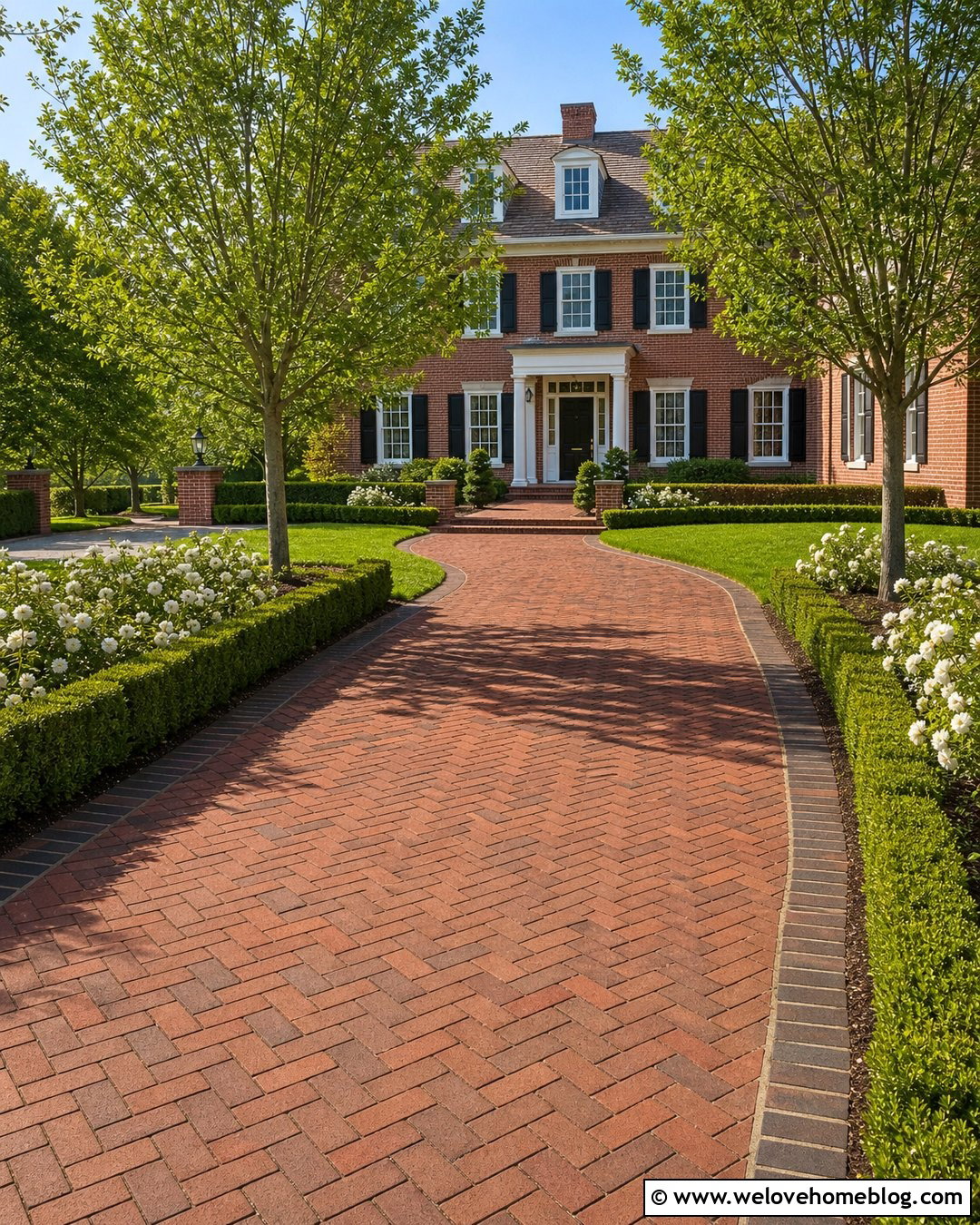
A brick driveway already has strong color and texture, so its landscape edge should be simple and carefully proportioned. Frame herringbone clay brick pavers with a darker brick soldier course, then add a narrow bed of clipped boxwood on each side. The structured greenery balances the detailed paving pattern and creates a formal route toward the front door or garage. Small white flowering perennials can be placed between the shrubs for seasonal interest without overwhelming the design. Repeat the driveway brick in the front walkway and porch steps for continuity. This complete look is especially effective with colonial, Georgian, and traditional brick houses. Use broad curves rather than sharp bends if the driveway changes direction, allowing the masonry border and hedge to flow naturally through the front yard.
11. Exposed Aggregate Driveway With Native Plant Edge
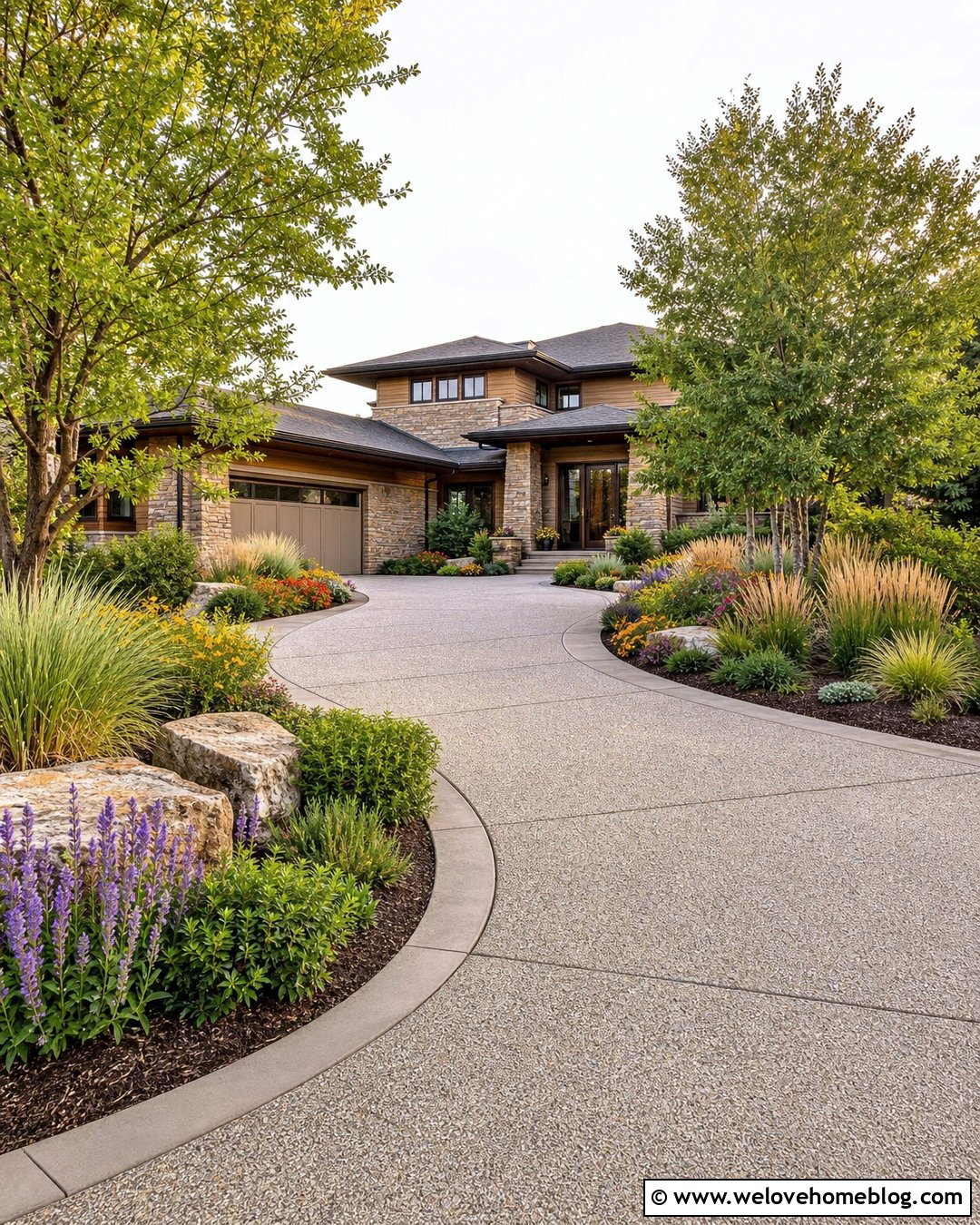
Exposed aggregate has a naturally textured surface that works well beside layered native planting. Select an aggregate blend containing tan, gray, and brown stones, then frame it with a flush concrete curb in a coordinating tone. Beyond the curb, create a wide, gently curved bed filled with regional grasses, flowering perennials, and compact shrubs. Repeated plant groups will look deliberate while still providing a relaxed, naturalistic effect. Keep taller plants toward the back and use low ground covers beside the driveway to preserve visibility. A few locally sourced boulders can connect the paving colors to the landscape. This low-fuss composition complements craftsman homes, prairie-style architecture, and contemporary ranch houses, especially on larger lots where broad planting beds are more proportional than narrow borders.
12. Narrow Driveway With Ornamental Grass Edge
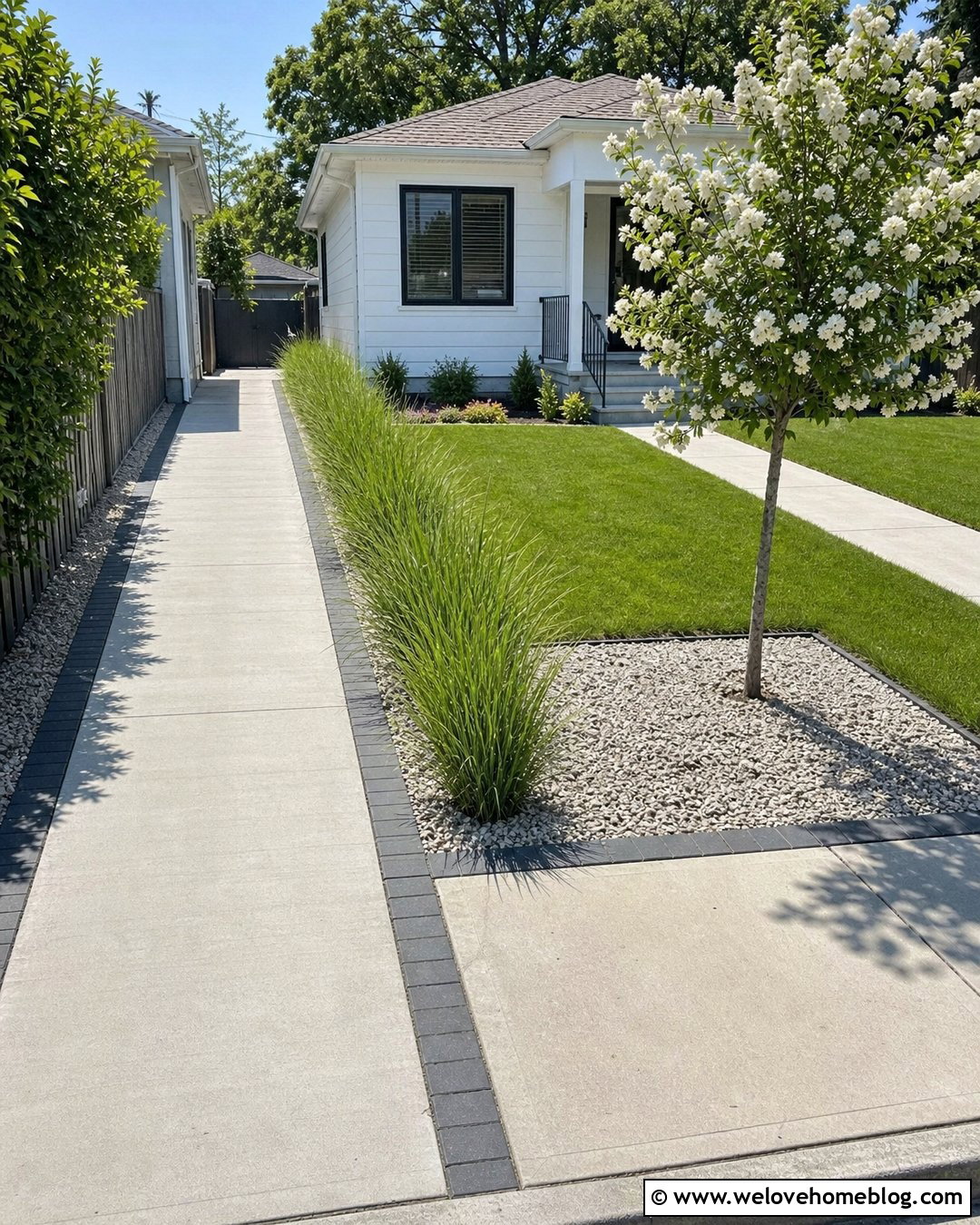
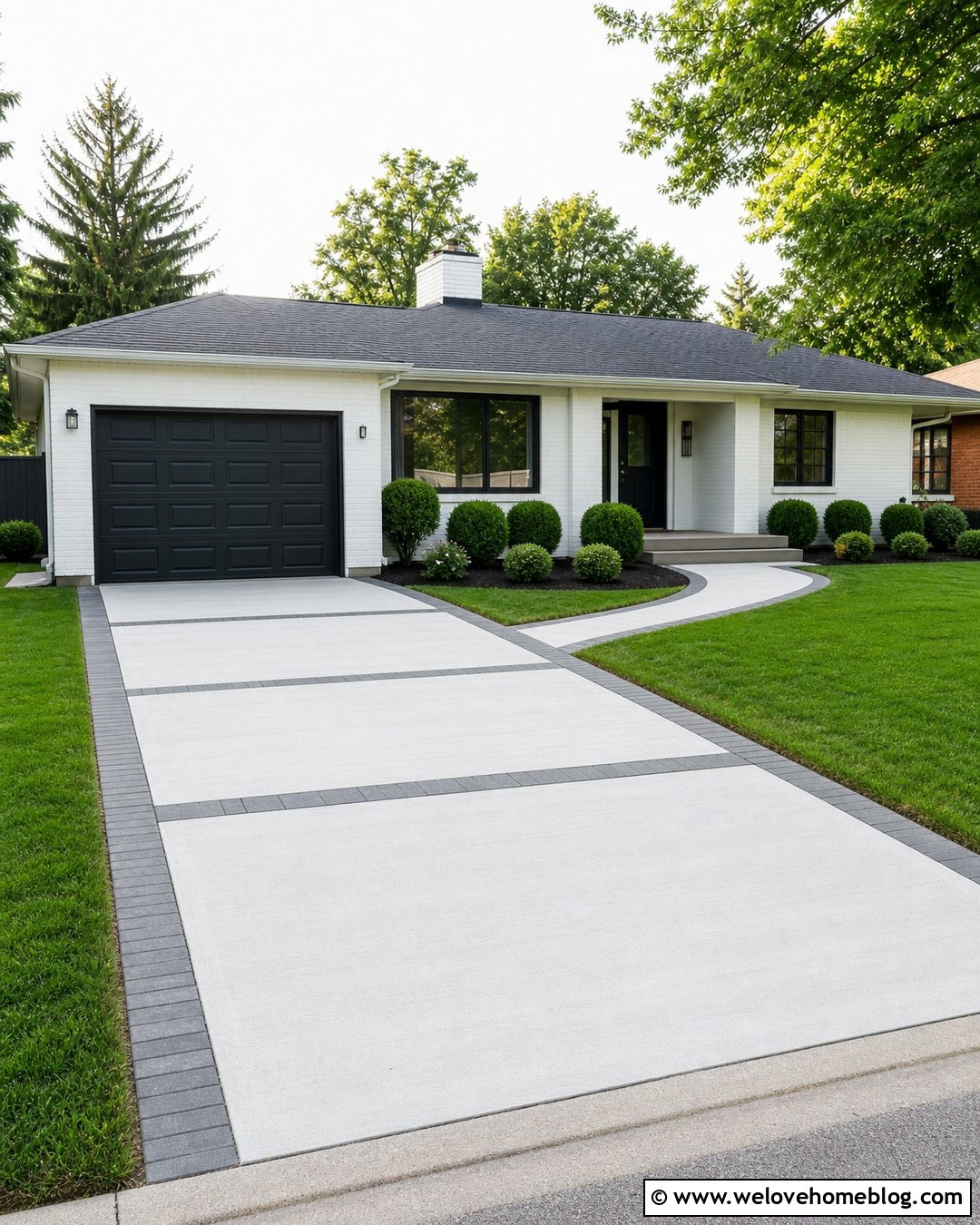
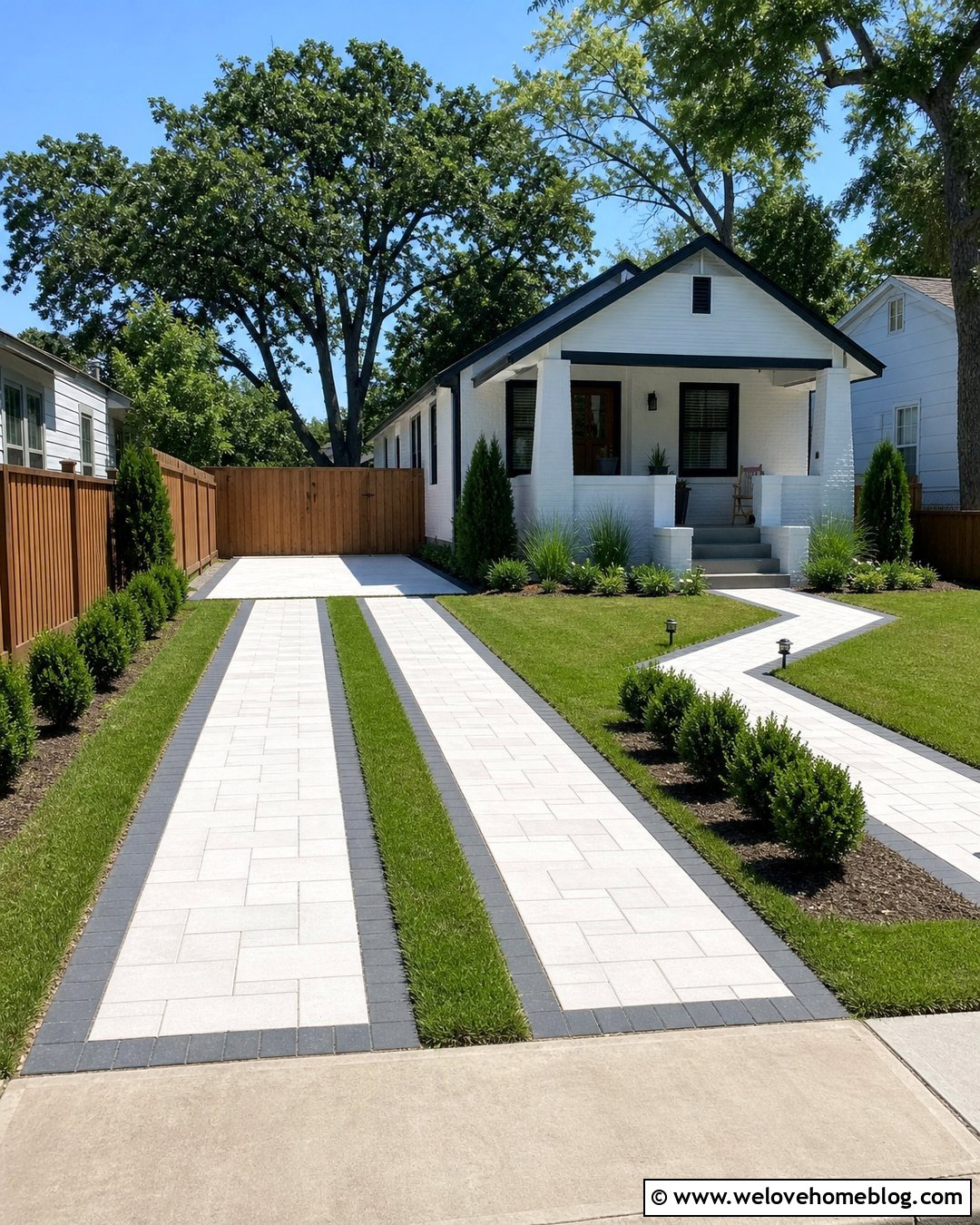
When a driveway is narrow, every inch of planting space matters. A single ribbon of compact ornamental grass can soften the pavement without creating an obstacle. Pair a straight light gray concrete driveway with a flush charcoal paver border and repeat one upright grass variety along the more visible side. On the opposite side, maintain a simple lawn edge or a narrow gravel strip to preserve usable width. Choose grasses that remain tidy and do not flop onto the driving surface when mature. Near the house, widen the bed slightly and add one small flowering tree or evergreen accent. This asymmetrical approach makes a tight driveway feel landscaped rather than crowded. It is a practical match for urban cottages, duplexes, bungalows, and compact suburban homes.
13. Sloped Driveway With Stone Retaining Edge
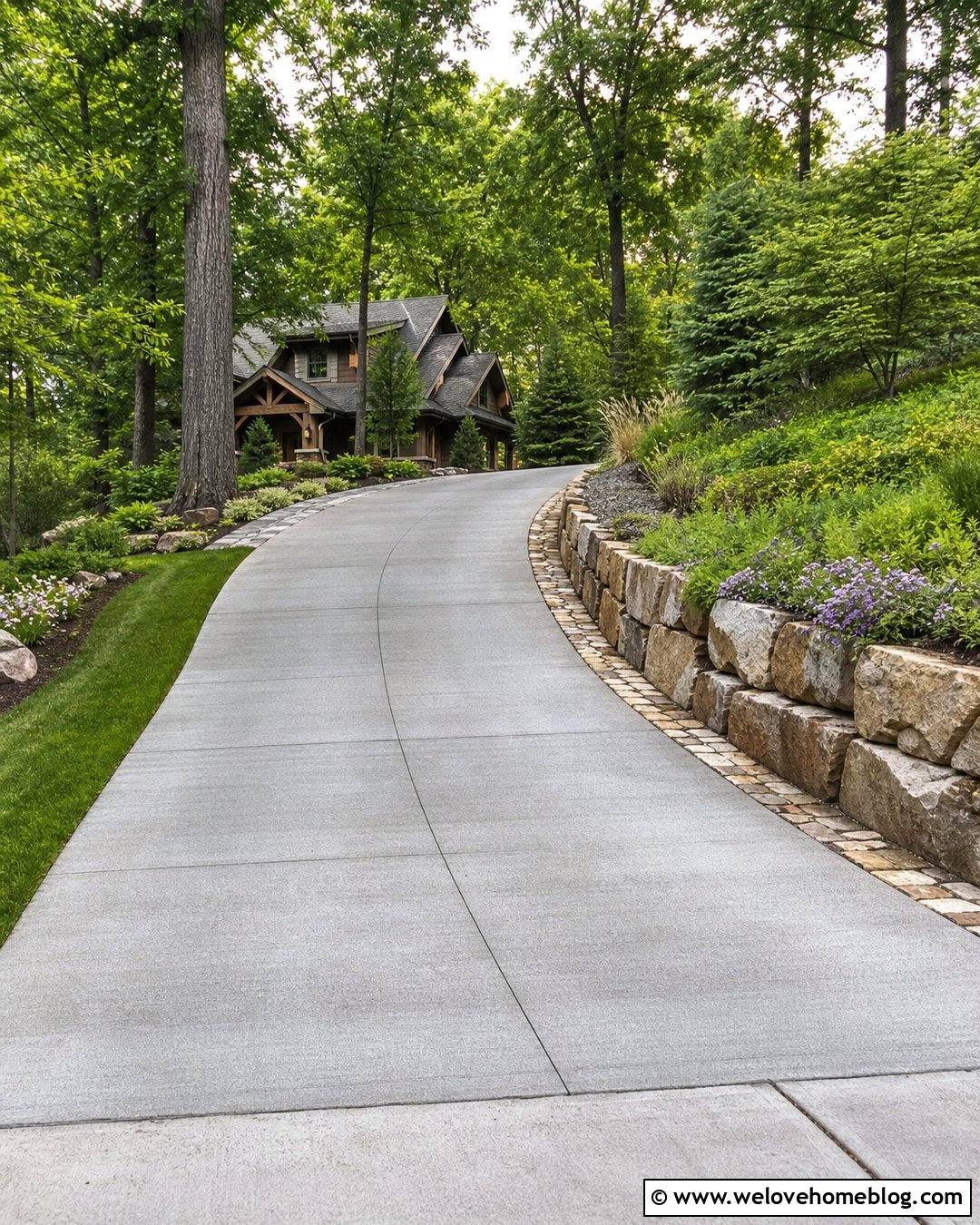
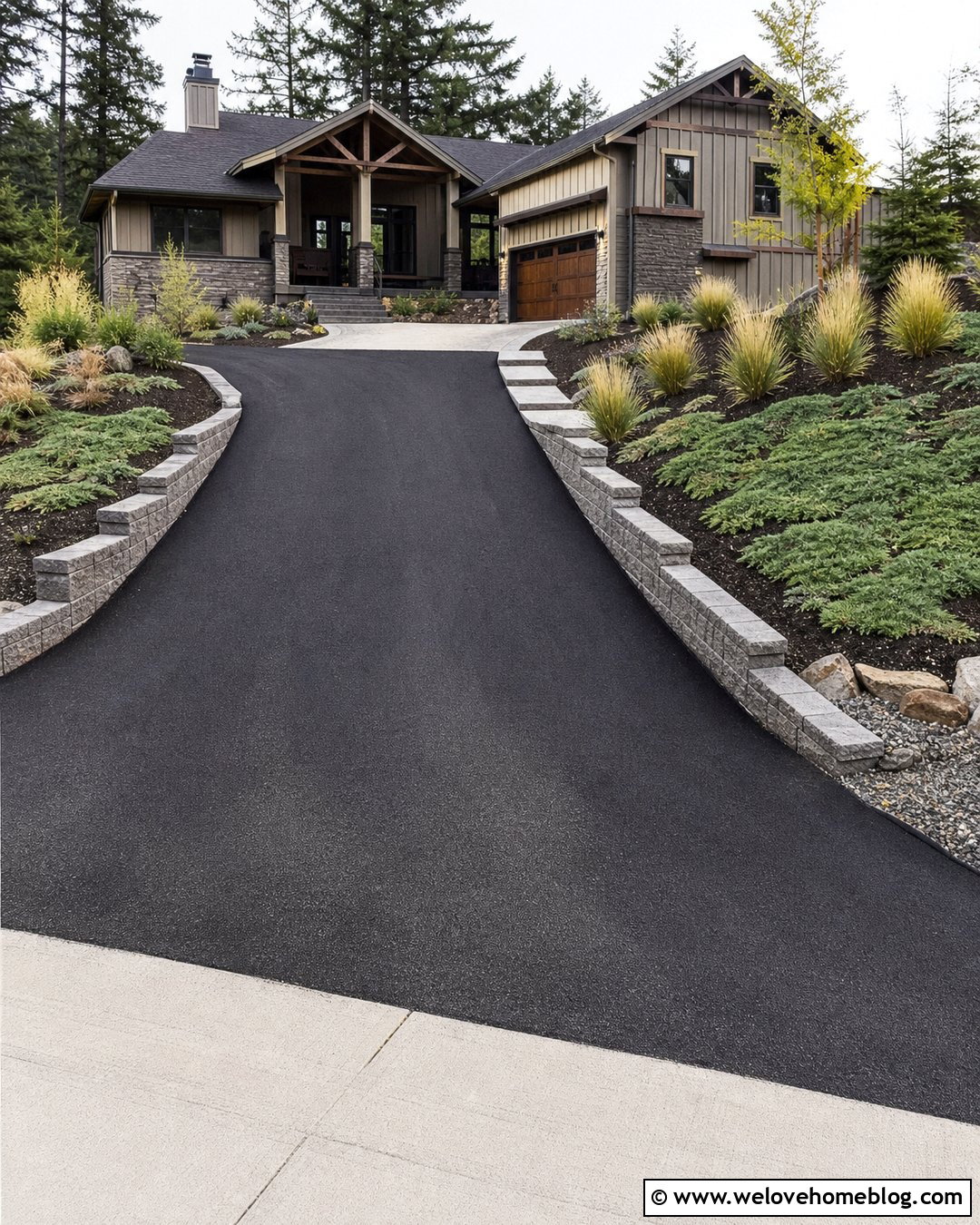
A sloped driveway often needs an edge that looks attractive while managing a noticeable change in grade. Use a low retaining border of stacked natural stone along the higher side of a broom-finished concrete driveway. Let the wall step gradually with the slope instead of forcing a single level line. Above it, plant spreading evergreens, deep-rooted ornamental grasses, and low flowering ground covers that visually stabilize the bank. On the lower side, a flush stone mowing strip can create a clean transition to lawn. Select stone colors that relate to the home’s foundation or exterior cladding. This complete arrangement works with mountain houses, split-level homes, craftsman architecture, and wooded properties. Proper drainage behind any retaining edge is important, particularly where runoff gathers during heavy rain.
14. Driveway Edge With Rain Garden
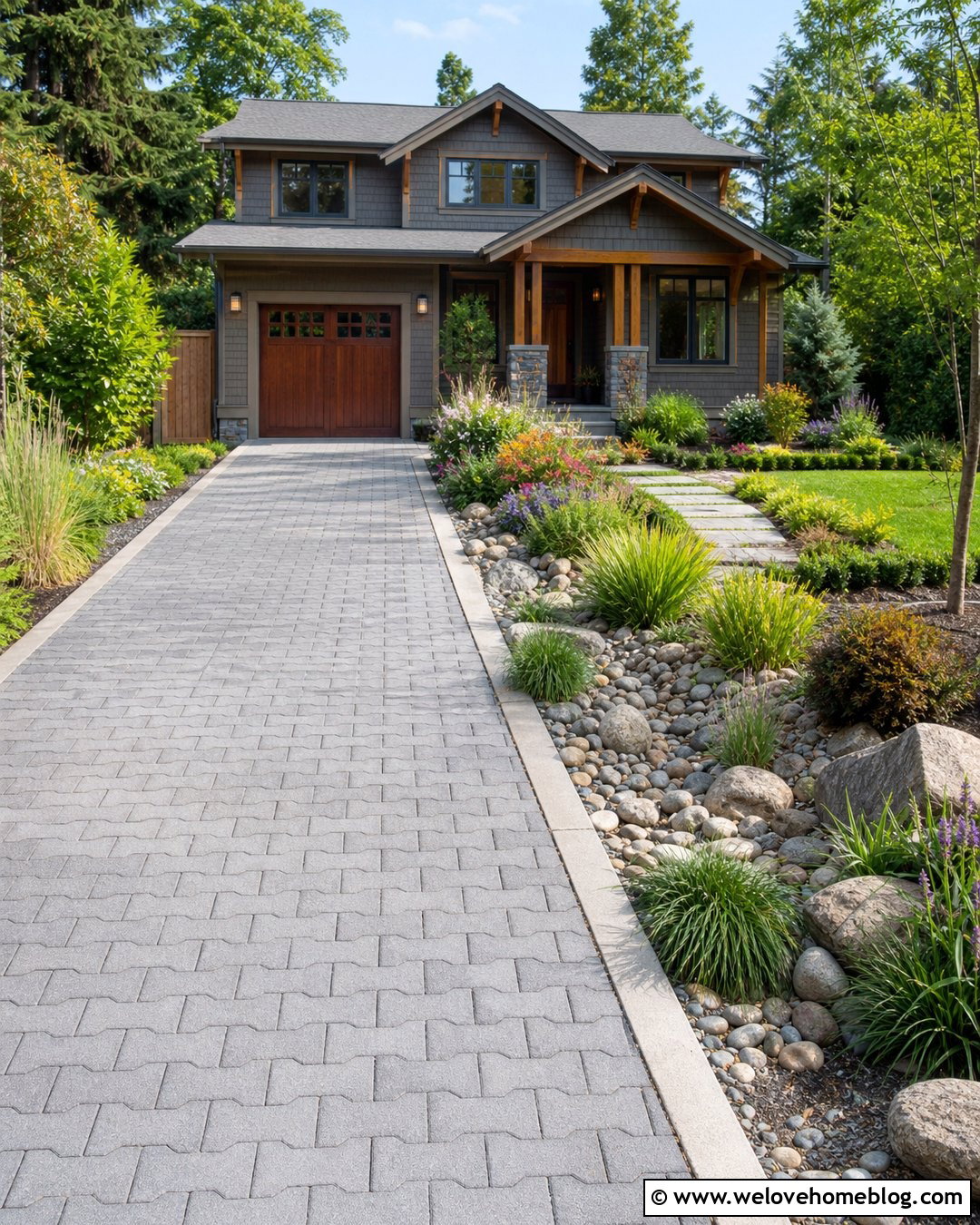
Turn a broad driveway border into a purposeful landscape by incorporating a shallow rain garden. A permeable interlocking concrete paver driveway can slope gently toward a planted depression lined with river rock and moisture-tolerant vegetation. Use a stone or flush paver edge to define the driving surface while allowing planned openings where water can enter the garden. Layer the bed with lower plants near the inlet and taller grasses or shrubs toward the back. A small dry-creek channel can carry the design toward a side yard without looking purely functional. This landscape treatment suits contemporary homes, craftsman houses, and eco-conscious suburban properties. Because soil conditions and local rainfall vary, the basin’s depth, overflow route, and plant selection should be designed for the specific site.
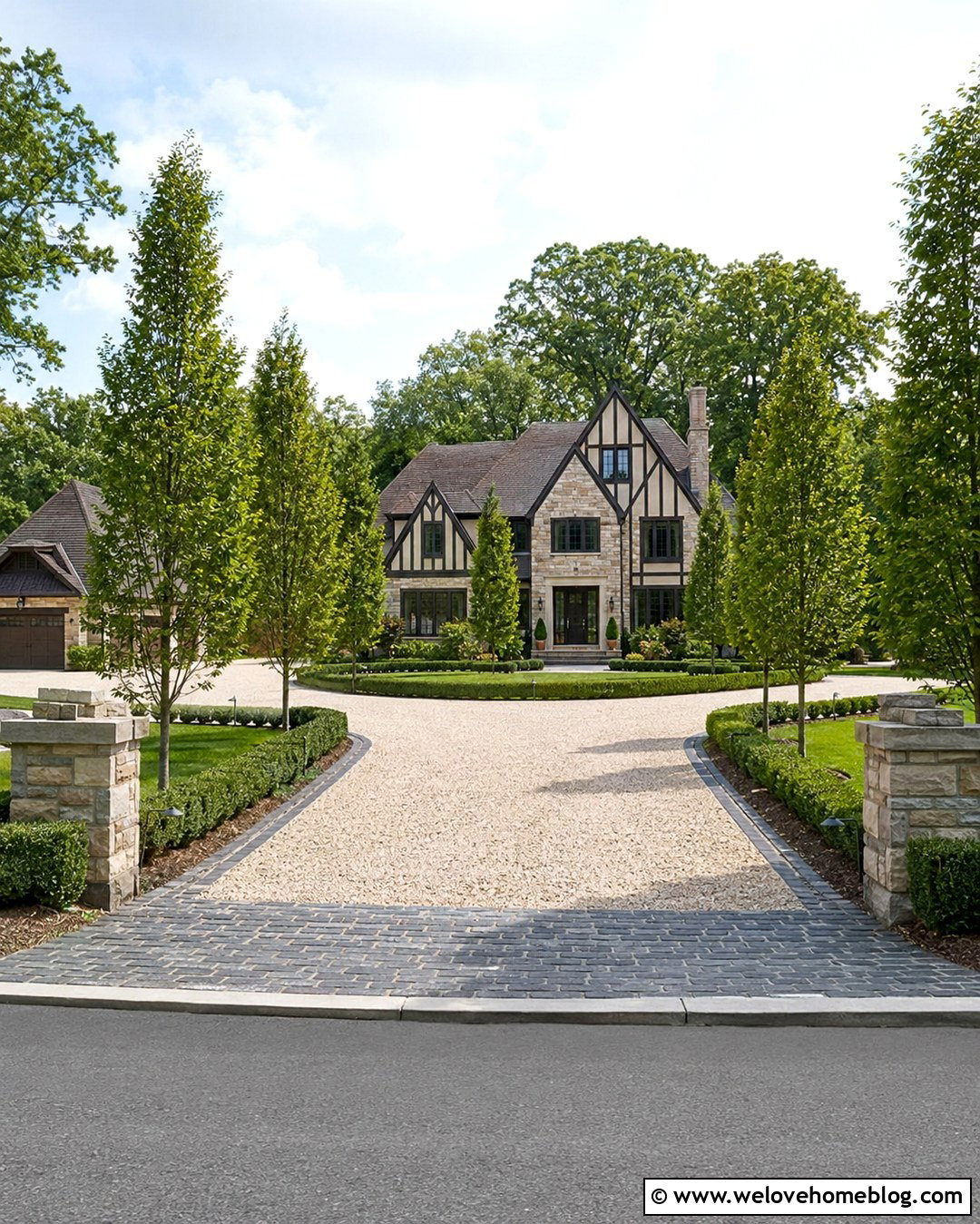
15. Driveway Edge With Low-Voltage Lighting
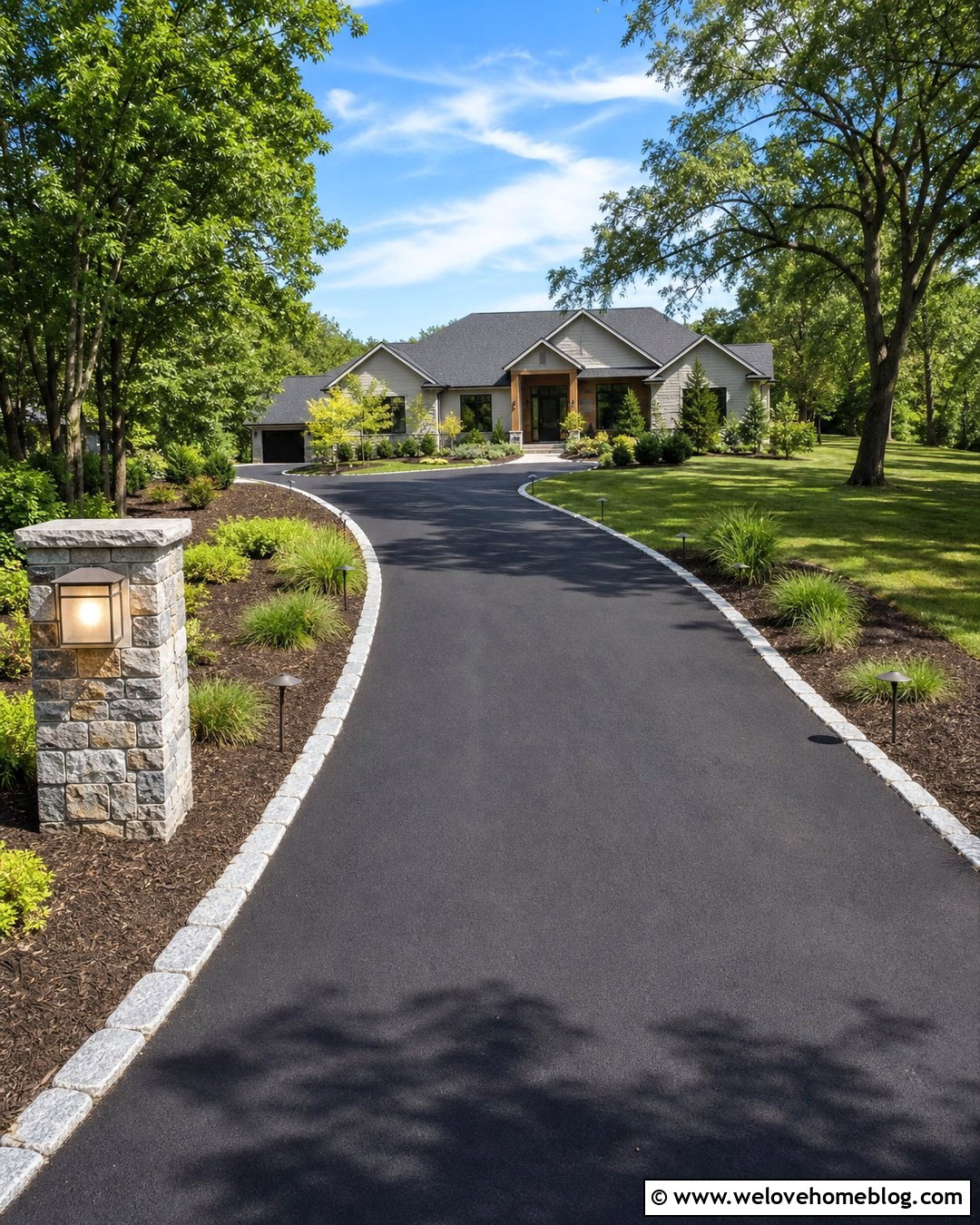
Lighting can transform a planted driveway edge while also making the route easier to read after sunset. Along a dark asphalt driveway, install a granite cobblestone border followed by a mulched bed of compact shrubs and low grasses. Place simple low-voltage fixtures at measured intervals, aiming the light downward across the edge rather than toward drivers or neighboring windows. Accent lights can also highlight a tree, stone pillar, or address marker near the entrance. Landscape lighting is frequently used to define where the driveway ends and the yard begins, improving both appearance and nighttime guidance. () During the day, the repeated fixtures should blend into the planting. This balanced design complements modern ranch homes, traditional brick houses, and long suburban driveways.
16. Cottage Driveway With Flower Bed Edge
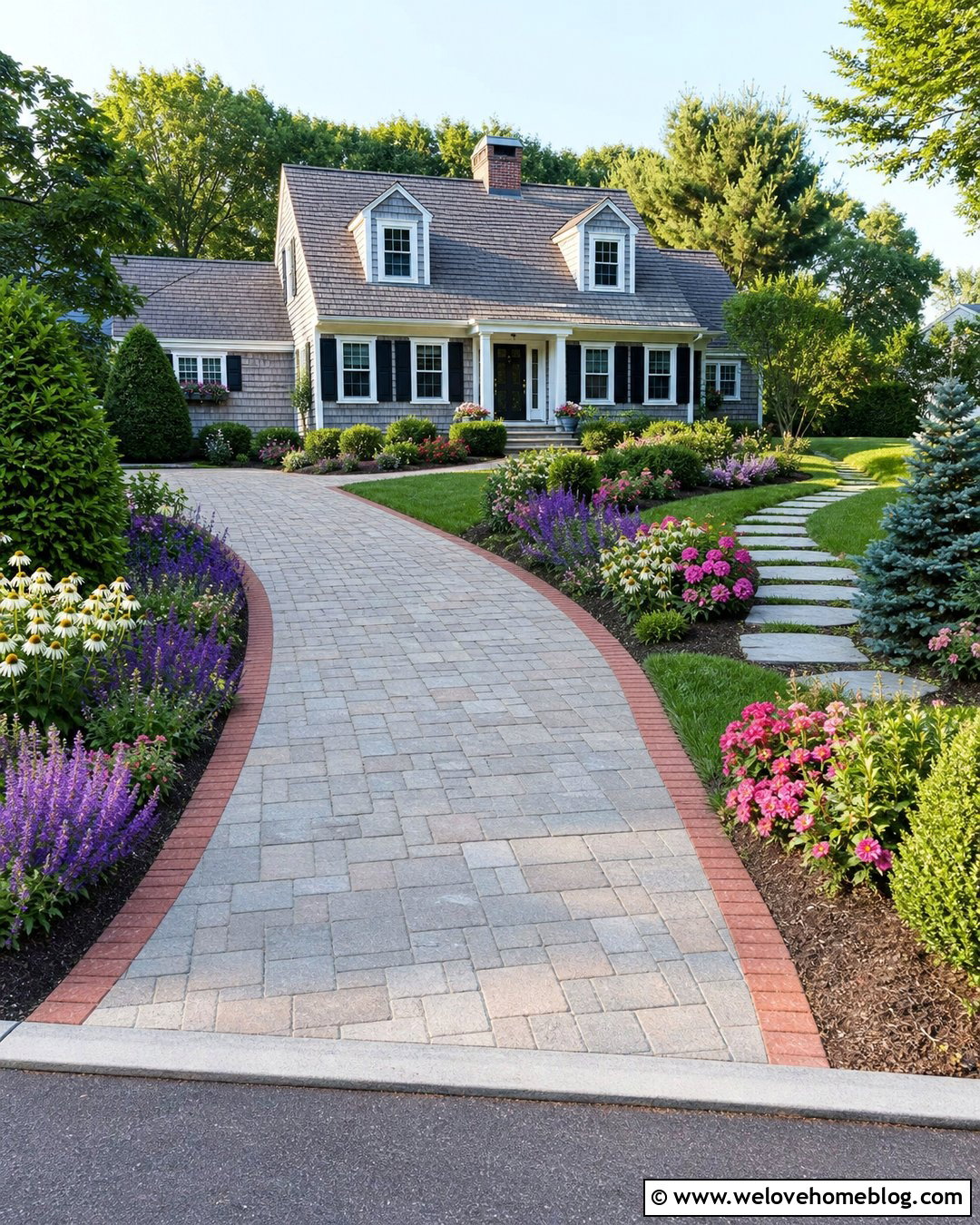
A cottage driveway feels most inviting when the edges are full but still controlled. Start with warm gray cobblestone or tumbled concrete pavers in a gently curved layout. Add a flush brick border, then create wide flower beds containing repeated drifts of salvia, coneflower, catmint, compact roses, and evergreen structure plants. Keep the lowest flowers beside the driveway and place taller varieties toward fences or the house. This layering prevents mature growth from spilling heavily onto the driving area. A matching stepping-stone walkway can pass through the border toward the porch. Use a limited color palette, such as purple, white, and soft pink, to avoid a chaotic appearance. The result complements Cape Cod homes, English-inspired cottages, bungalows, and smaller houses with welcoming front porches.
17. Desert Driveway With Rock Landscape Edge
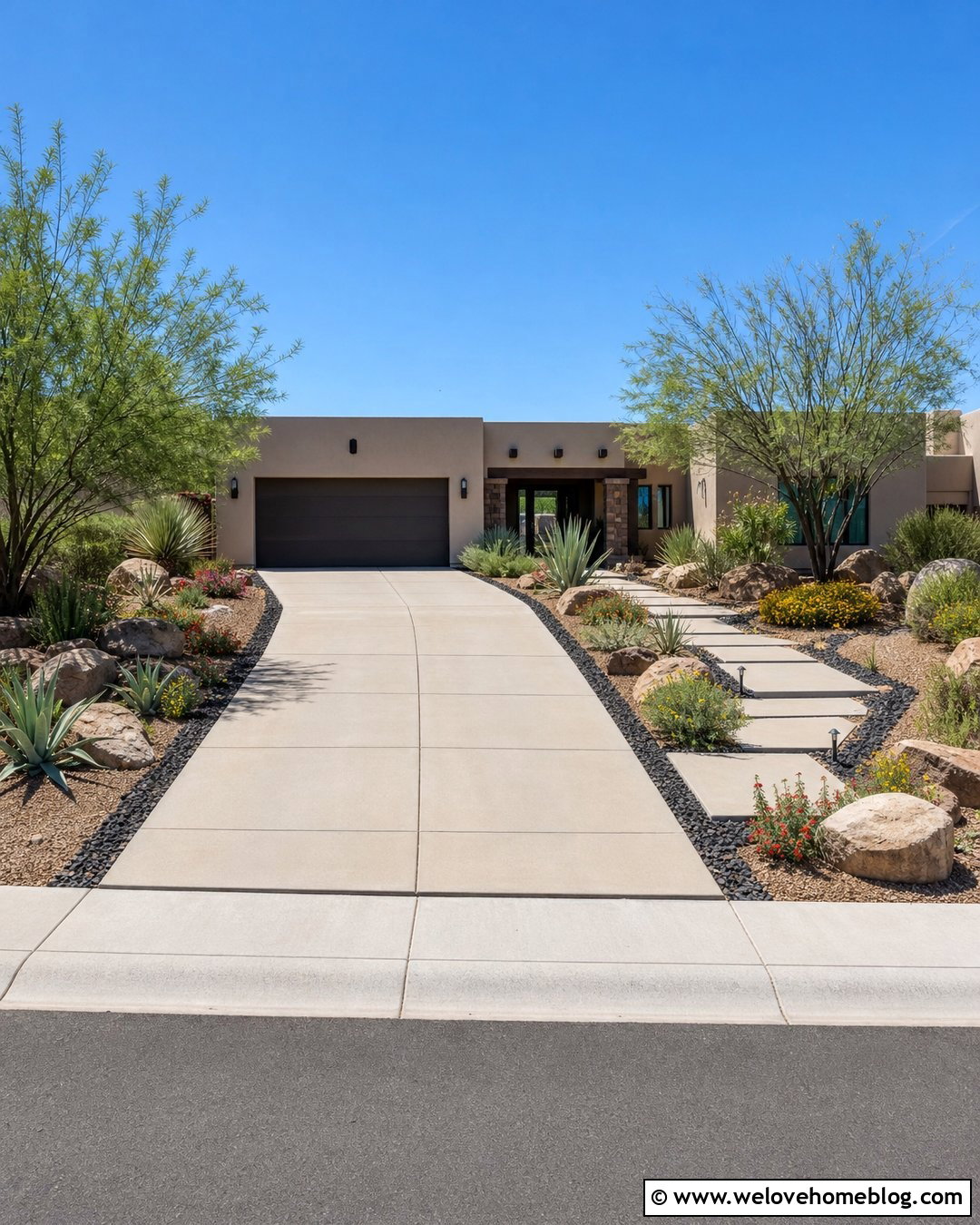
In a dry climate, a rock-based edge can give the driveway definition without depending on a thirsty lawn. Pair a light sand-colored concrete driveway with a charcoal steel border and broad beds of decomposed granite. Arrange agave, yucca, desert spoon, flowering shrubs, and sculptural boulders in widely spaced groups. A shallow band of darker lava rock beside the concrete can create an additional line of contrast and make the driveway shape easier to see. Follow the same materials around the mailbox, walkway, and entrance pillars for a unified front yard. This complete design works with Southwestern, adobe, midcentury, and desert-modern homes. Choose plants suitable for the local climate and keep spiny varieties safely set back from areas where passengers enter or exit vehicles.
18. Driveway Edge With Flowering Ground Cover
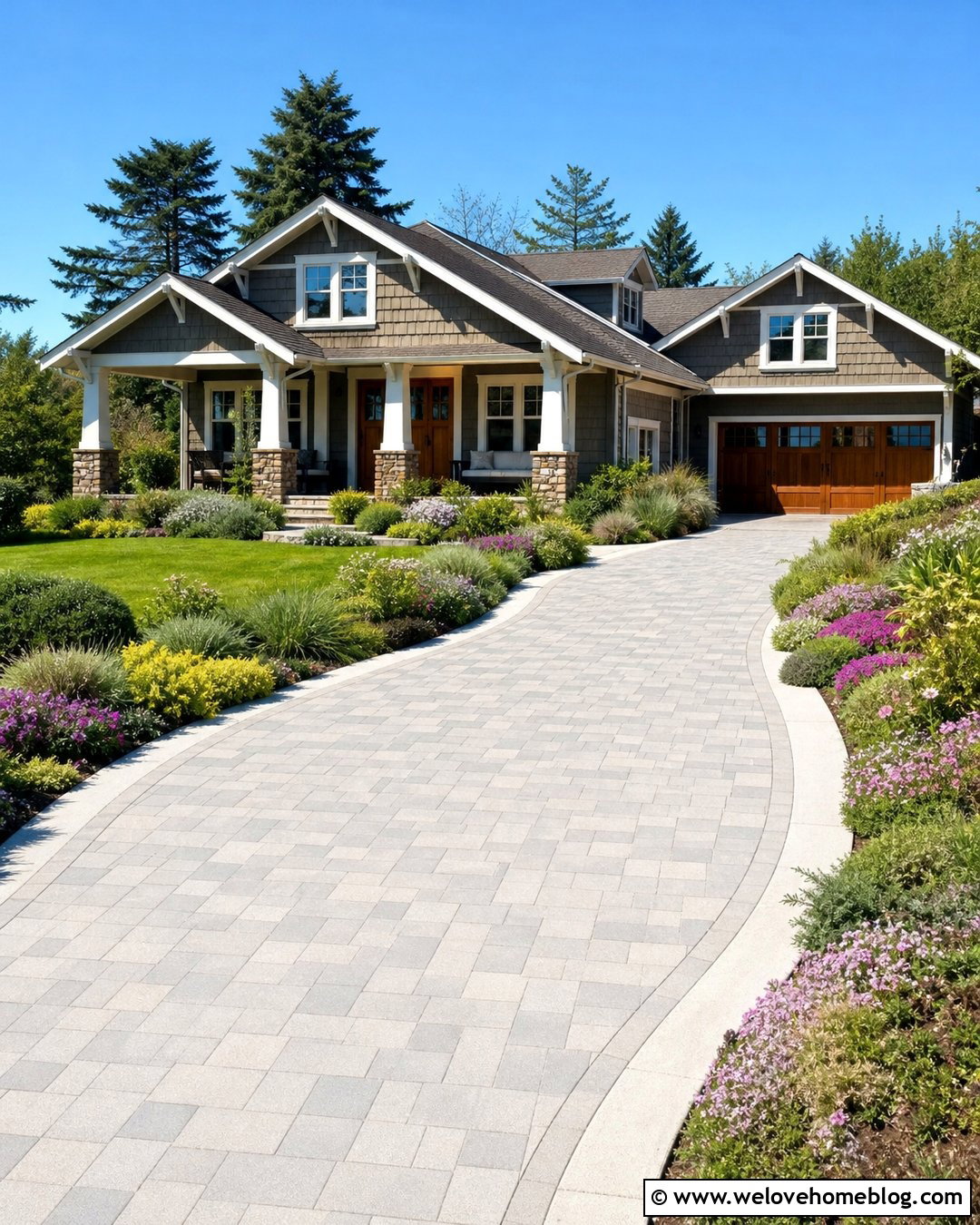
Low flowering ground cover can create a soft transition between a hard driveway and the surrounding yard. Frame a pale gray paver driveway with a narrow flush curb, then plant a continuous carpet of climate-appropriate ground cover along gently curved beds. Creeping thyme, sedum, phlox, or other low varieties may work depending on local light, soil, and moisture conditions. Add occasional dwarf shrubs and ornamental grasses to keep the border from looking flat. The ground cover should remain behind the structural edge so it does not interfere with tires or become damaged by regular traffic. This treatment fits cottage homes, craftsman bungalows, and casual ranch properties. Repeating the same flowering plant beside the front walkway helps connect the driveway edge to the home’s entrance.
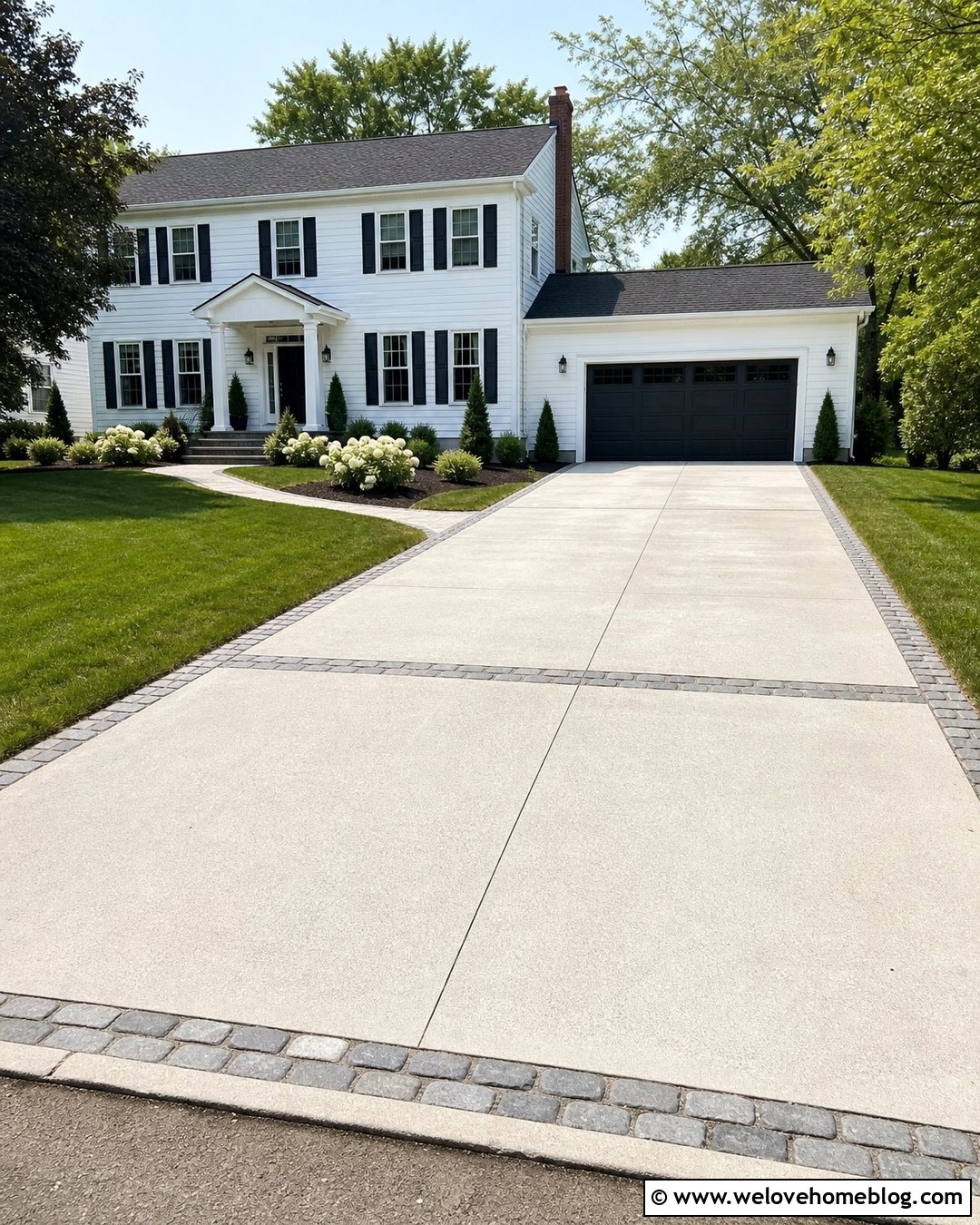
19. Driveway Edge With Paver Mowing Strip
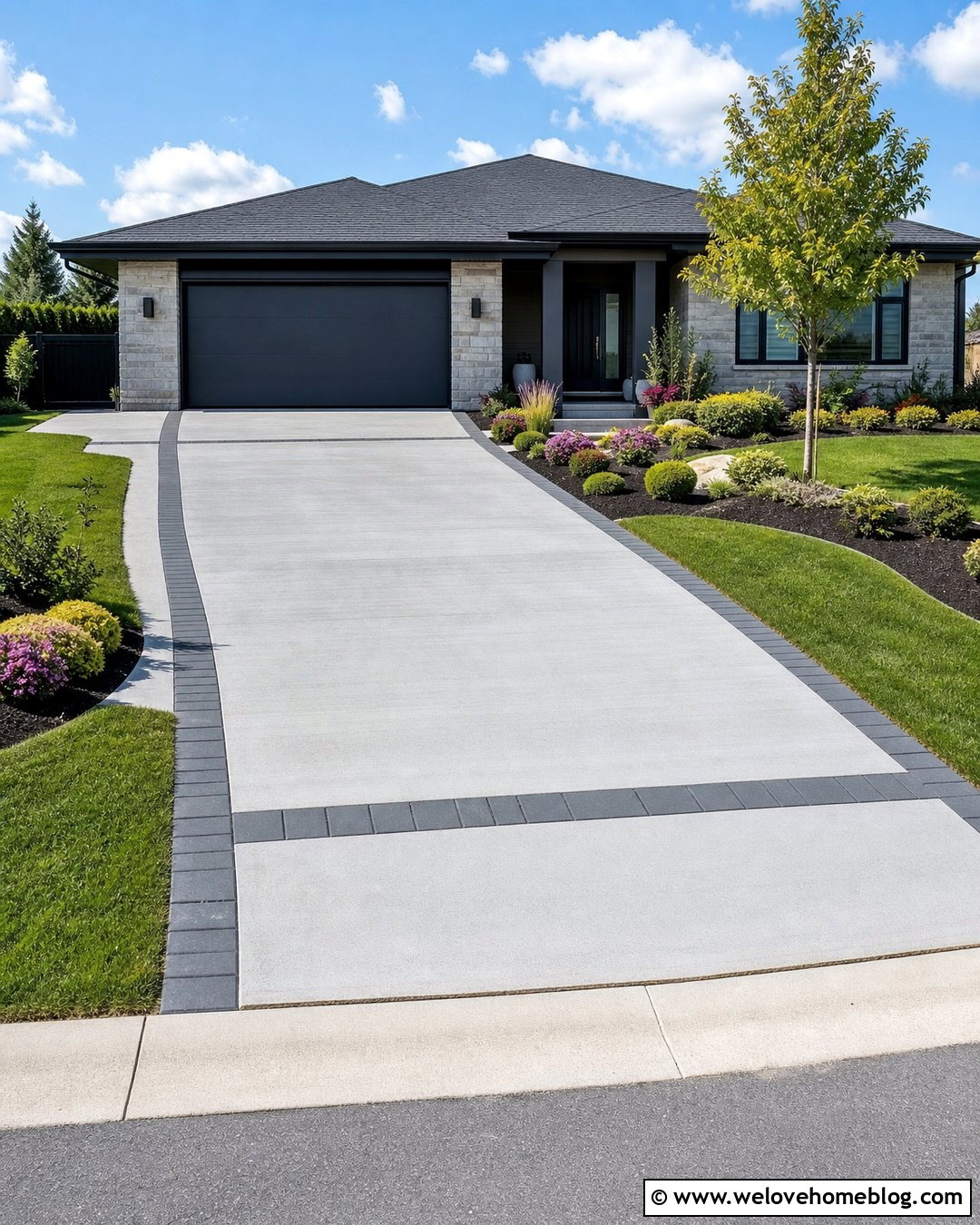
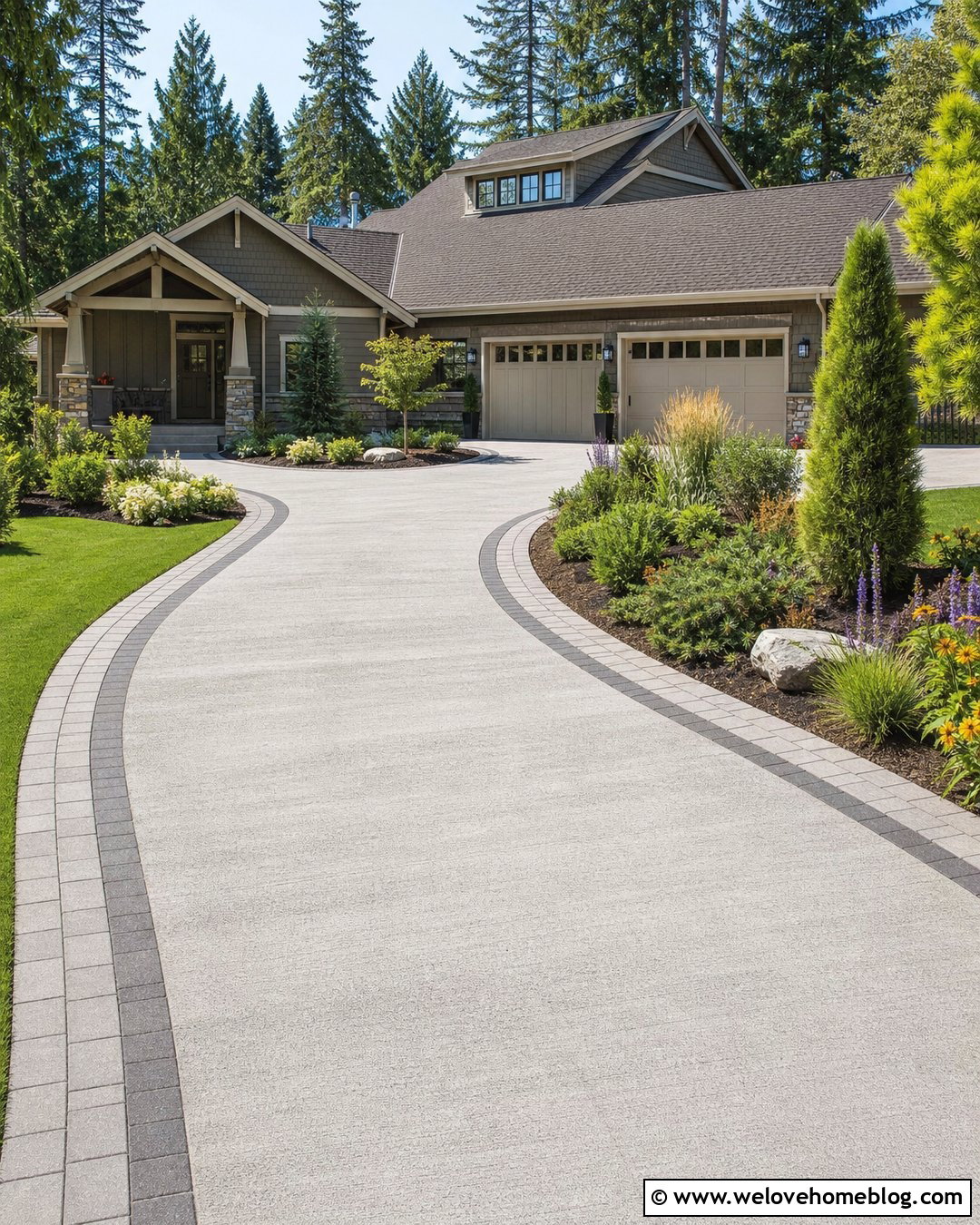
A flush paver mowing strip offers a tidy transition between the driveway and lawn. Border a broom-finished concrete driveway with two rows of charcoal rectangular pavers installed at the same height as the surrounding turf. The wider strip provides a clear visual outline and allows mower wheels to travel along a stable surface. At key points, curve the border outward to create planting pockets for a small ornamental tree, rounded shrubs, and seasonal flowers. Continue the charcoal pavers around the walkway to make the hardscape feel planned as one design. This clean, practical arrangement suits suburban ranch homes, craftsman houses, and contemporary exteriors. Choose a paver color with enough contrast to be visible without clashing with the roof, siding, or masonry on the house.
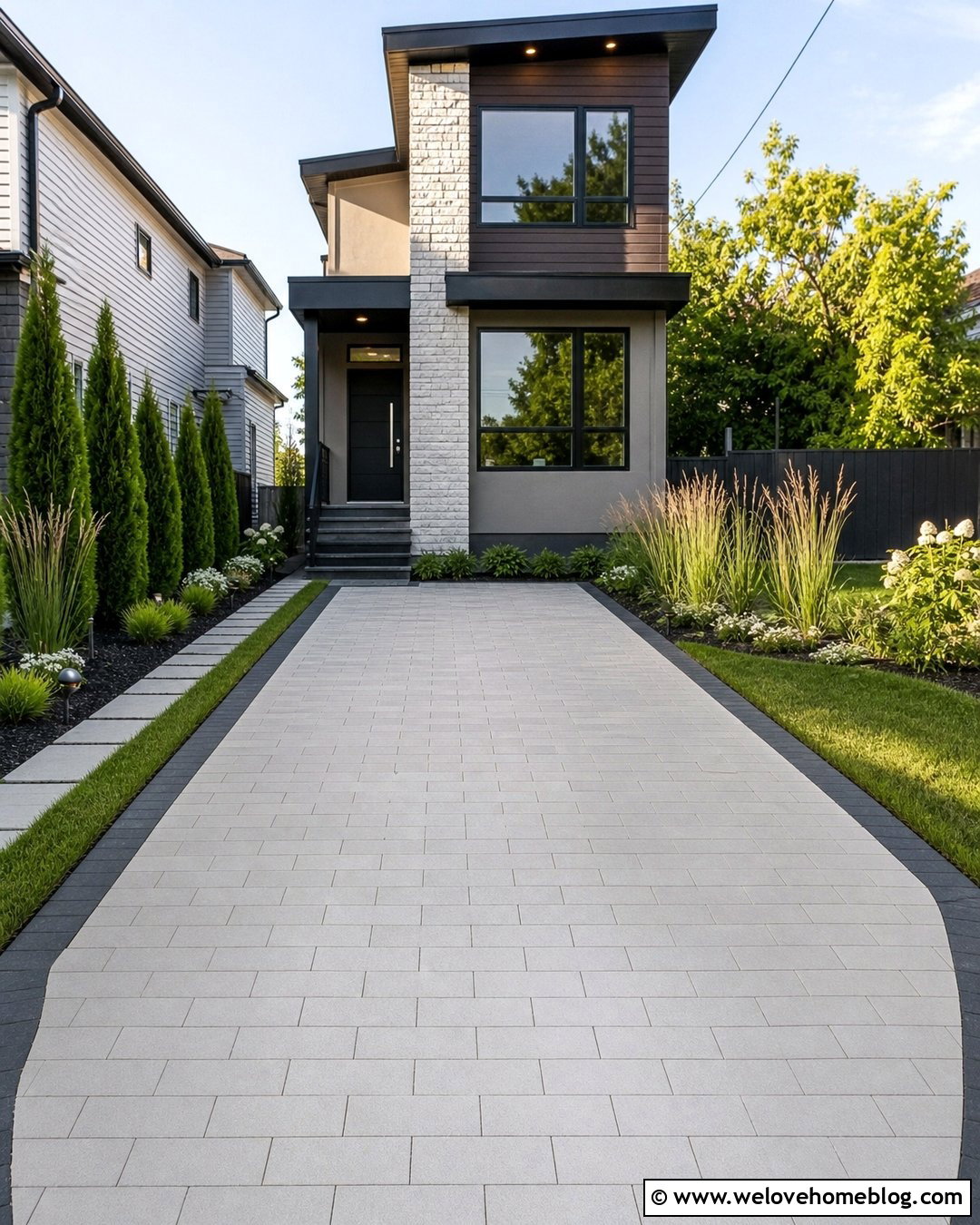
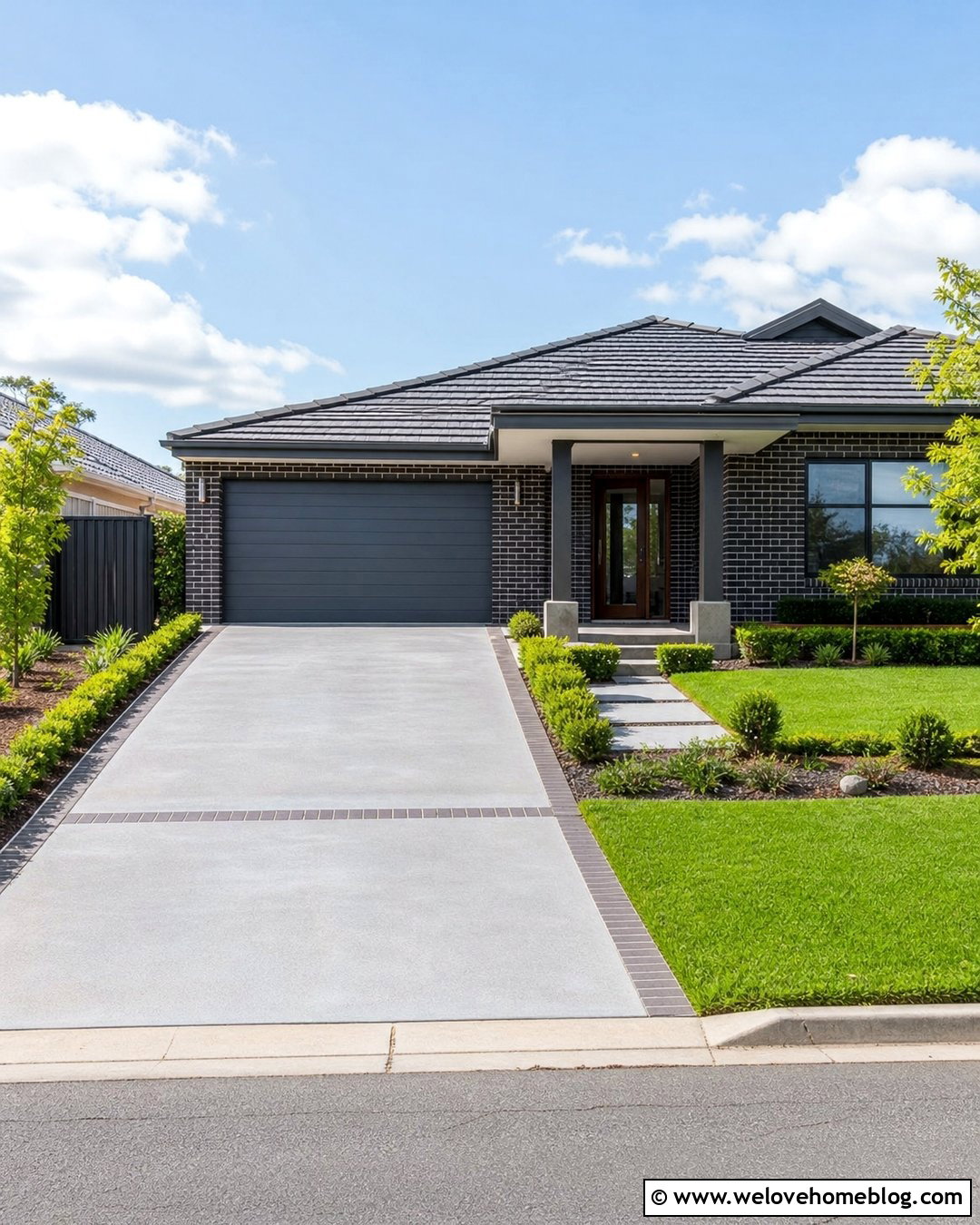
20. Budget Driveway With Natural Trench Edge
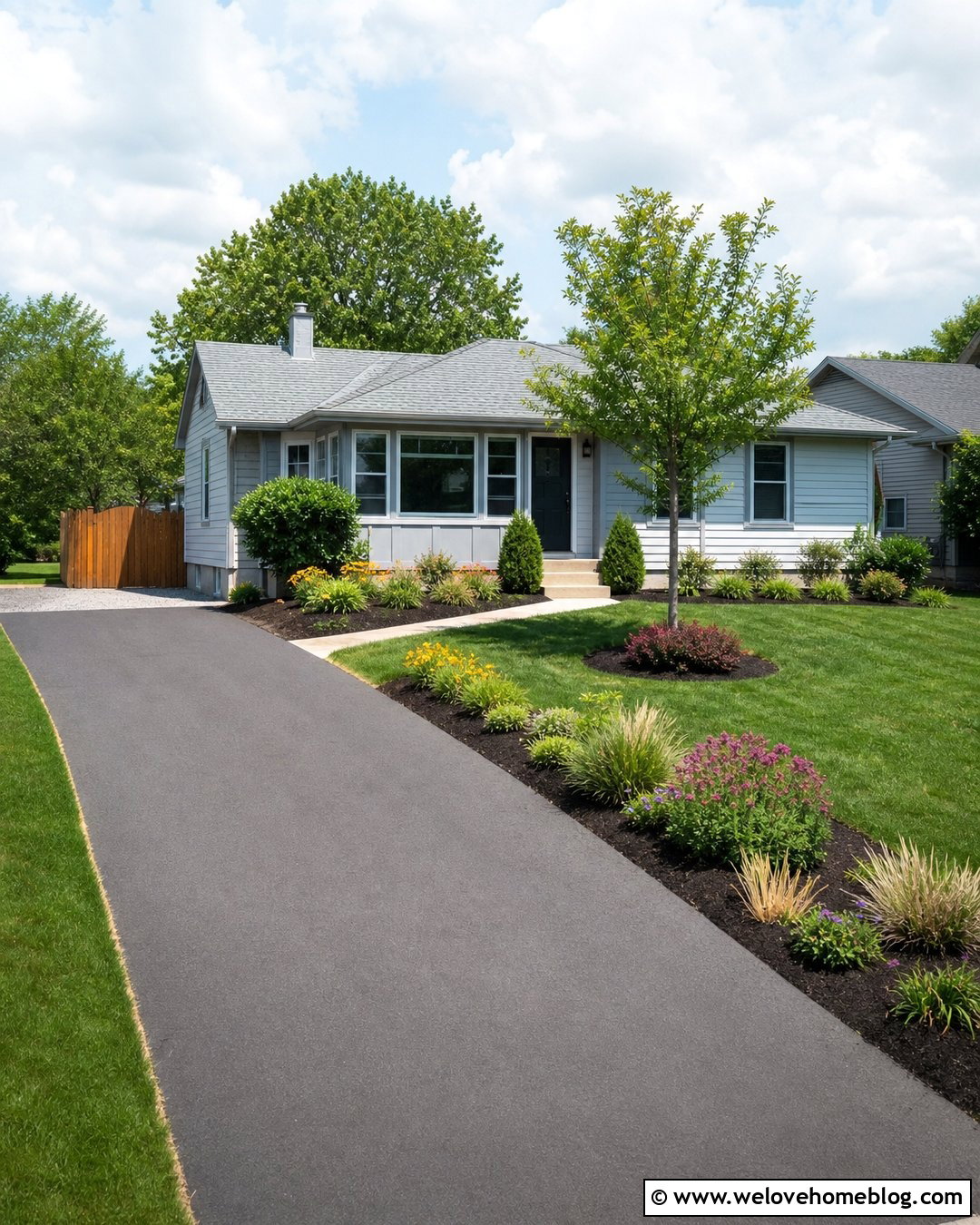
A simple cut trench can define a driveway landscape without the cost of masonry, metal, or manufactured curbing. This approach works particularly well beside an existing asphalt or concrete driveway with a healthy lawn. Cut a crisp, shallow V-shaped edge, remove encroaching turf, and maintain the line regularly so it remains intentional. Near the house and street entrance, widen selected areas into mulched planting beds with affordable ornamental grasses, compact shrubs, and flowering perennials. Keeping long sections as lawn reduces material costs, while the planted pockets add color where it has the most visual effect. This understated design complements ranch homes, bungalows, and modest suburban properties. The edge requires periodic recutting, but it offers an adaptable starting point that can later be upgraded with brick or stone.
Conclusion:
The best driveway edge should improve the entire approach to your home, not simply decorate the pavement. Consider how the border will work with the driveway material, vehicle movement, drainage, mowing, mature plant sizes, and the architecture in the background. Brick and cobblestone create traditional definition, while steel and flush pavers support cleaner modern lines. Timber, native plants, ground covers, and natural trench edges offer softer or more budget-friendly alternatives. Before installing anything, mark the proposed edge and view it from the street, garage, and front door. This simple step can reveal awkward curves or tight spaces. Use these **20 landscape driveway edge ideas** to build a practical, attractive border that strengthens your home’s curb appeal.

Related posts:
Leave a Reply