
The best **20 corner driveway landscaping ideas** turn an awkward or overlooked area into a polished part of your home’s entrance. A driveway corner may sit beside the street, wrap toward the garage, or form a tight wedge between the pavement and walkway. Each location needs a design that looks attractive without restricting visibility, drainage, or vehicle movement. The strongest layouts combine a suitable driveway surface with defined edging, layered plants, and a focal feature that complements the house. Low-maintenance shrubs, ornamental grasses, flowering perennials, boulders, lighting, and small trees can all work when properly scaled. The complete driveway looks below cover different materials, budgets, house types, and yard sizes, making it easier to find practical **20 corner driveway landscaping ideas**. ()

1. Curved Driveway Corner With Lavender
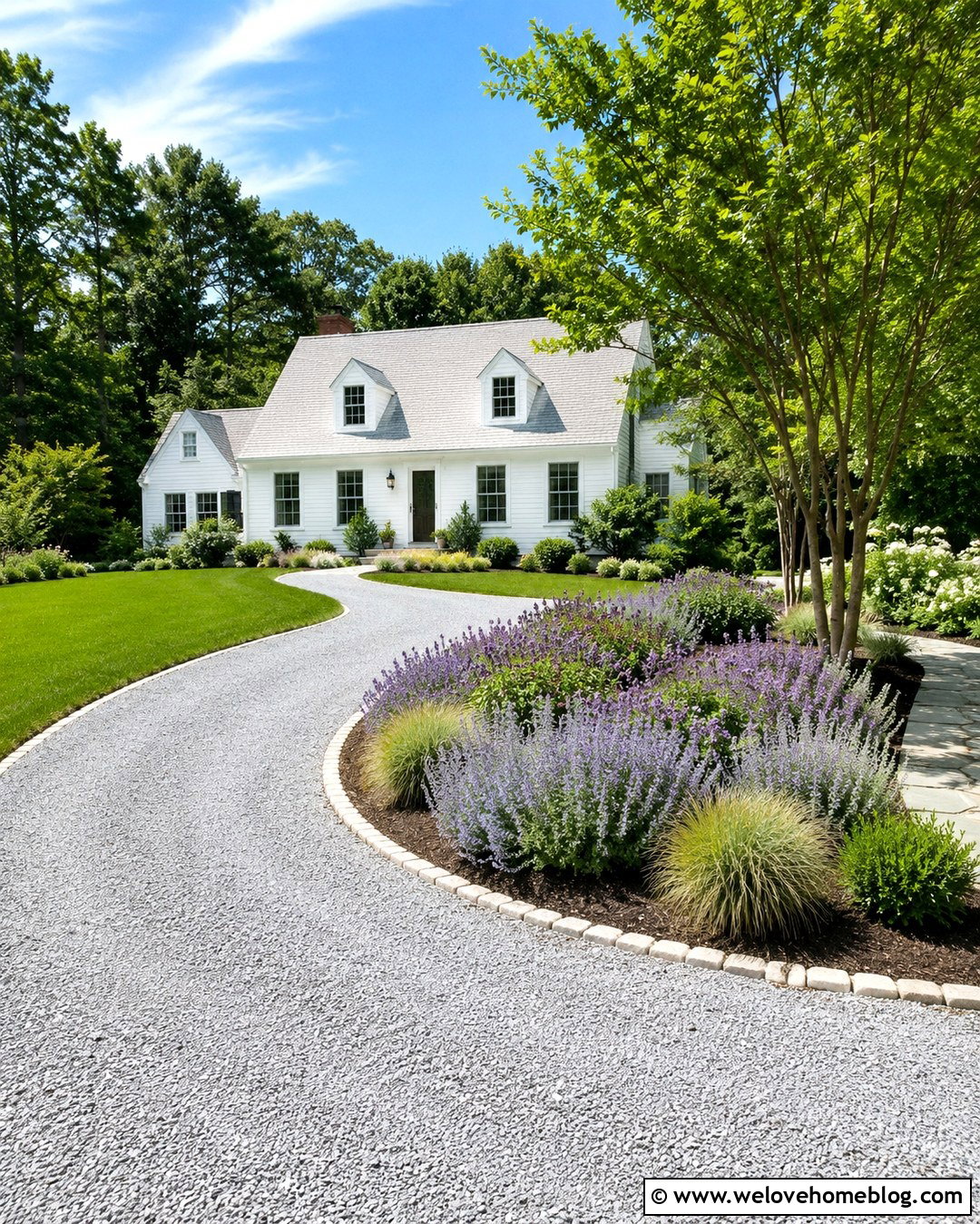
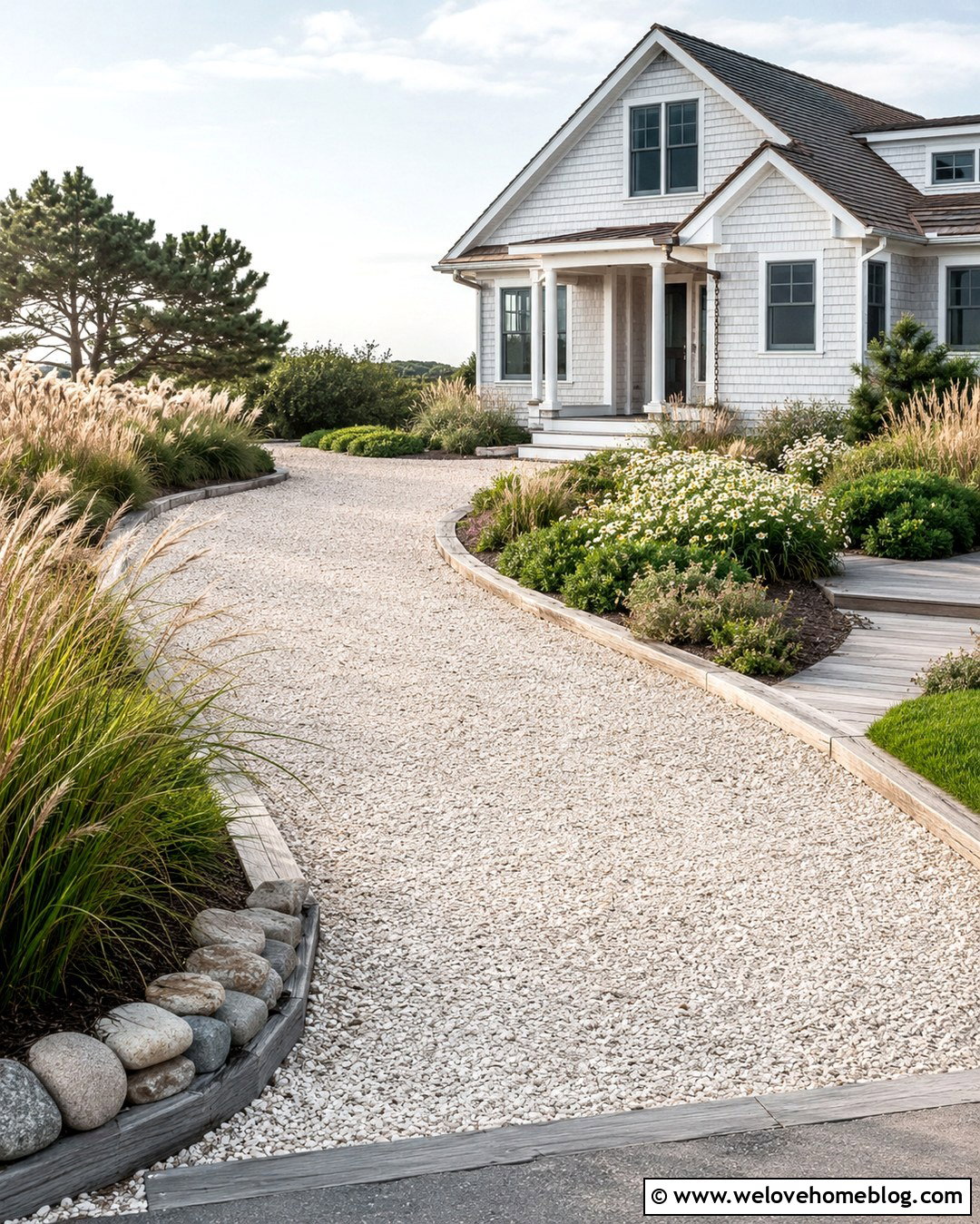
A curved gray gravel driveway feels softer and more welcoming when the inside corner follows the same flowing shape. Edge the gravel with warm cobblestones, then create a wide planting bed filled with lavender, catmint, and compact ornamental grasses. Keep the shortest plants nearest the street so drivers can see pedestrians and approaching vehicles. Taller grasses can sit farther back, where their movement adds texture without crowding the driveway. A small multi-stem tree near the house gives the corner height and visually connects the bed to the home. This complete look works especially well with cottages, Cape Cod homes, and light-colored farmhouses. Repeating a few lavender plants beside the walkway creates continuity instead of making the corner appear isolated.
2. Concrete Driveway Corner With River Rock
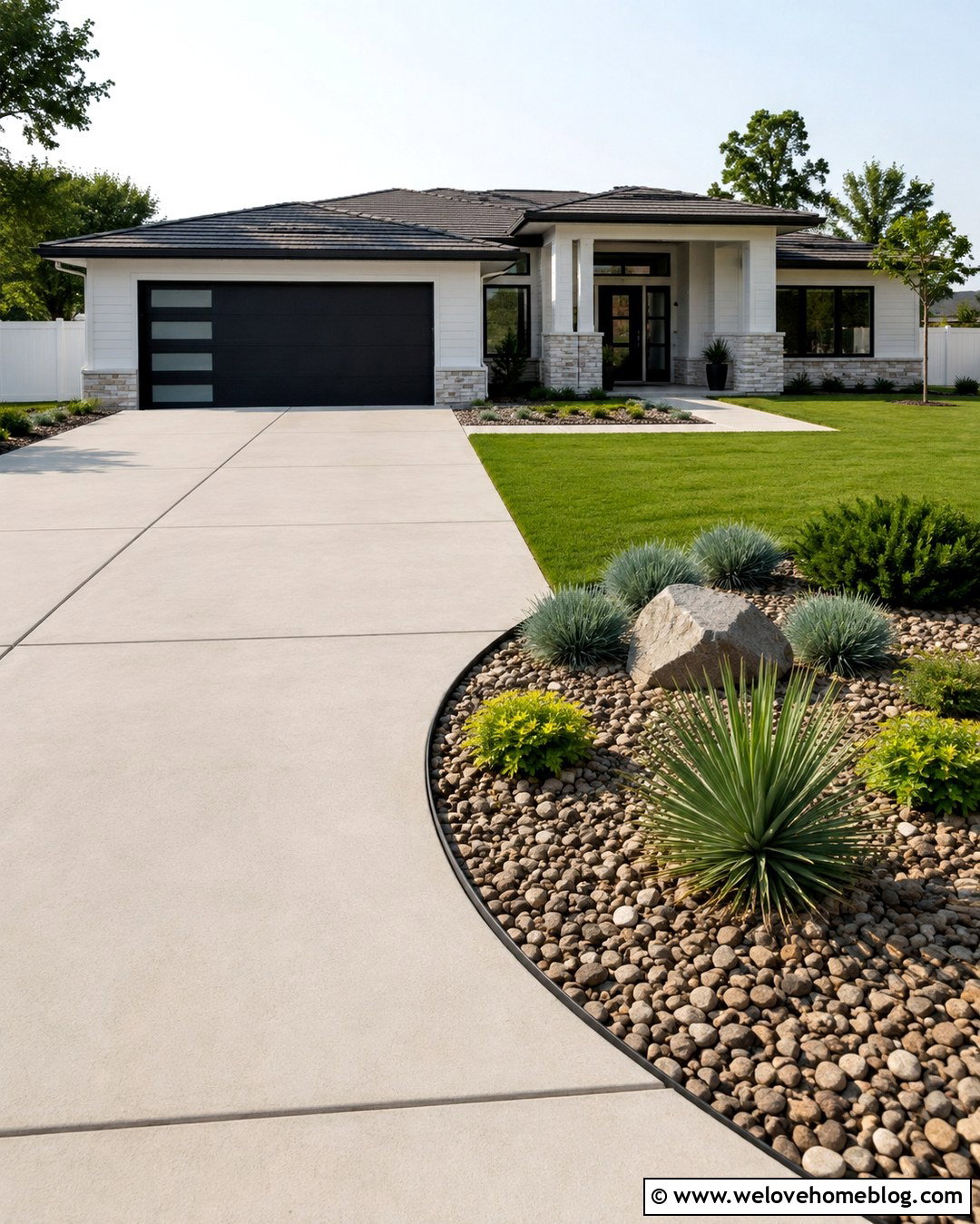
Clean river rock can transform the sharp corner of a poured concrete driveway into an orderly, low-maintenance landscape. Start with a broad kidney-shaped bed that rounds off the pavement’s hard angle. Fill it with mixed tan and gray river stones, then place several architectural plants in small groups rather than scattering them randomly. Dwarf yucca, blue fescue, sedum, and compact juniper provide varied color and form with limited upkeep. One large weathered boulder can serve as the focal point, while dark steel edging keeps the rock from spreading onto the concrete. This combination suits modern ranch houses and contemporary homes. Leave open space around every plant so the bed feels intentional and the mature foliage does not interfere with car doors or turning movements.
3. Asphalt Driveway Corner With Hydrangeas
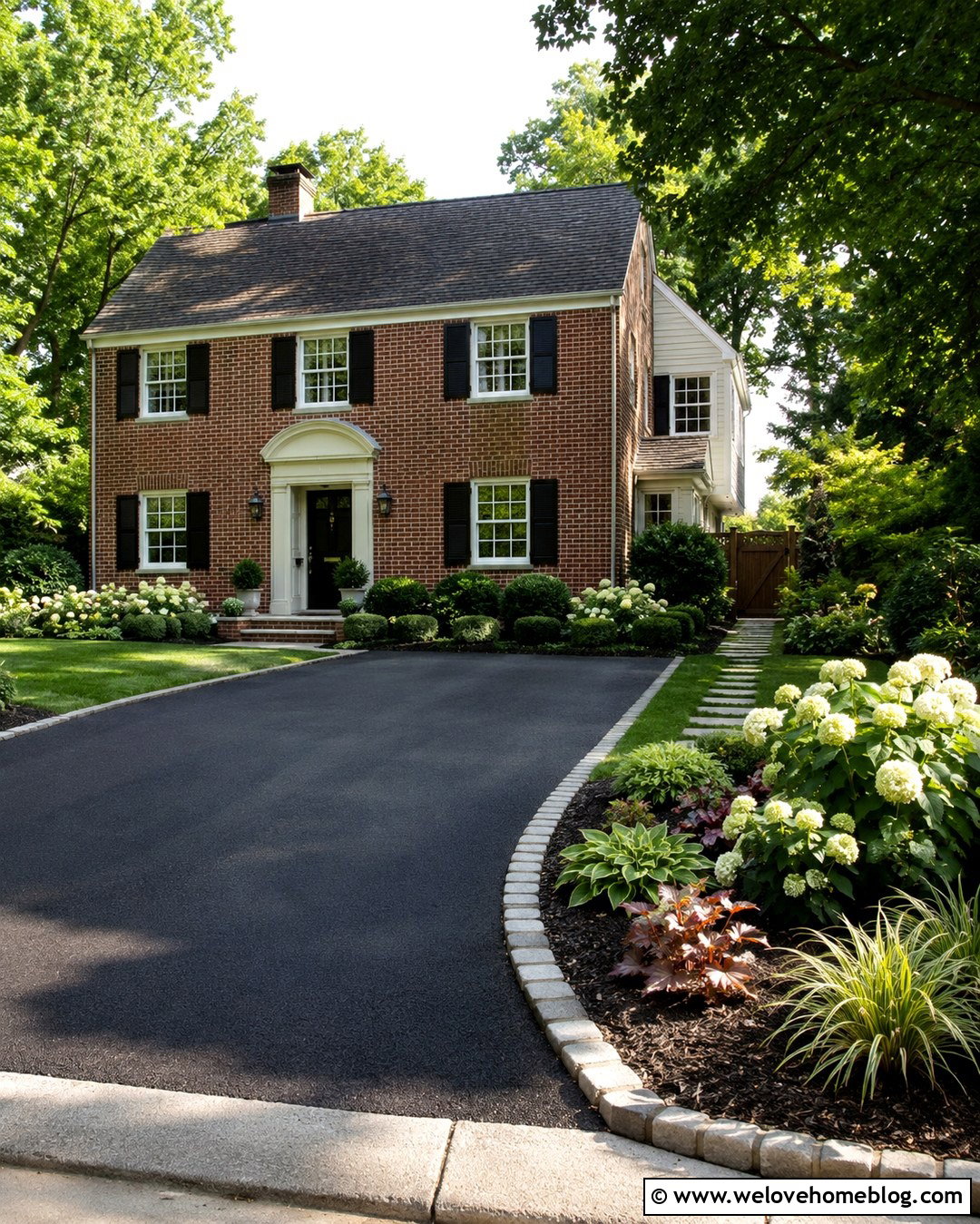
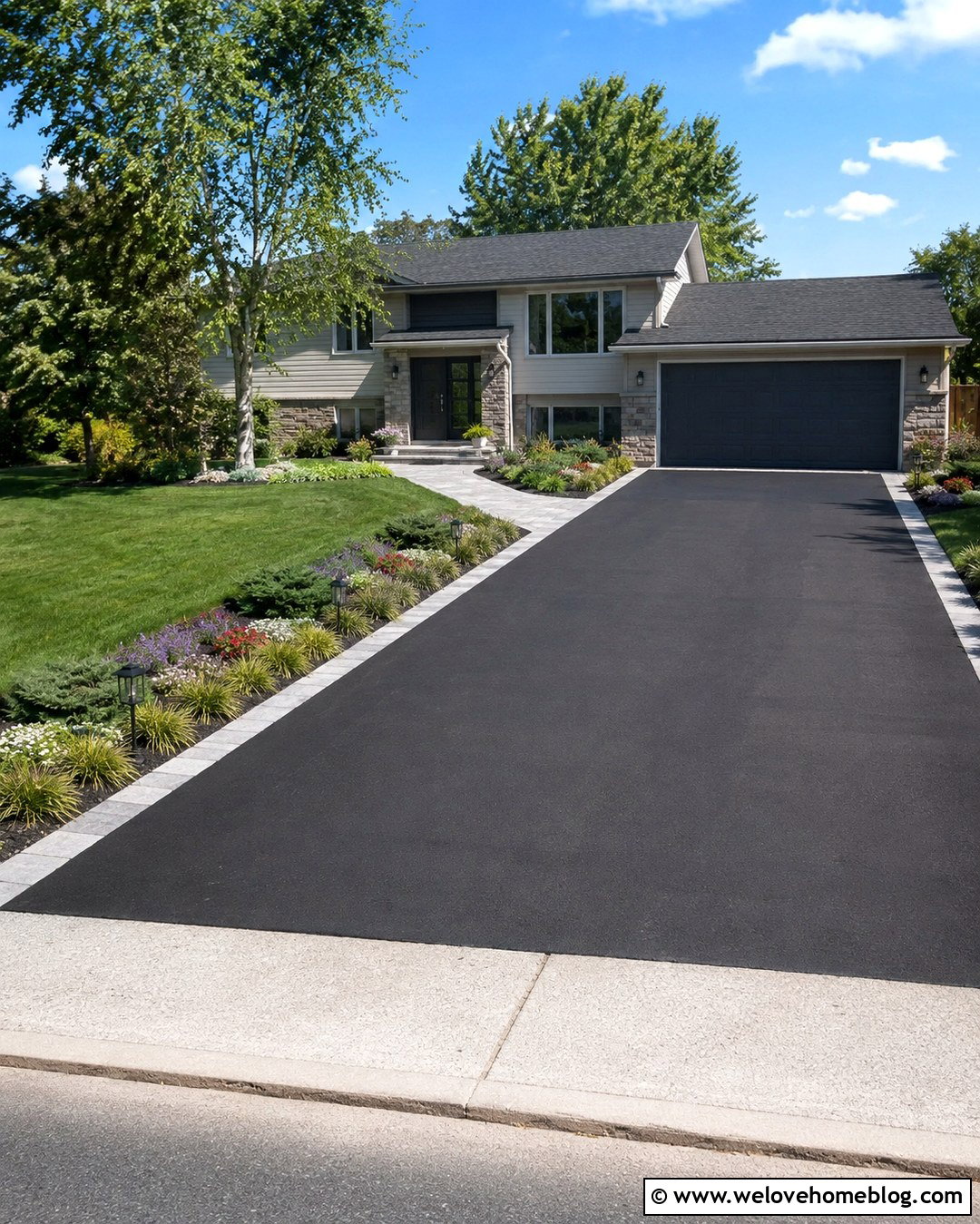
The deep color of a black asphalt driveway creates a striking background for pale hydrangeas and fresh green foliage. Shape the corner bed with a gentle outward curve, using a light granite cobblestone border to separate mulch from pavement. Plant compact hydrangeas toward the back, where their mature size will not narrow the driveway. Add hostas, heuchera, or low sedges along the front for layered texture. In sunny climates, substitute sun-loving panicle hydrangeas and drought-tolerant groundcovers. A narrow stepping-stone path through the bed can connect the driveway to a side gate without creating a worn shortcut. This full landscape works beautifully beside traditional brick, colonial, or craftsman homes. Dark brown mulch completes the corner while making white, pink, or blue blooms more noticeable.
4. Brick Driveway Corner With Boxwood
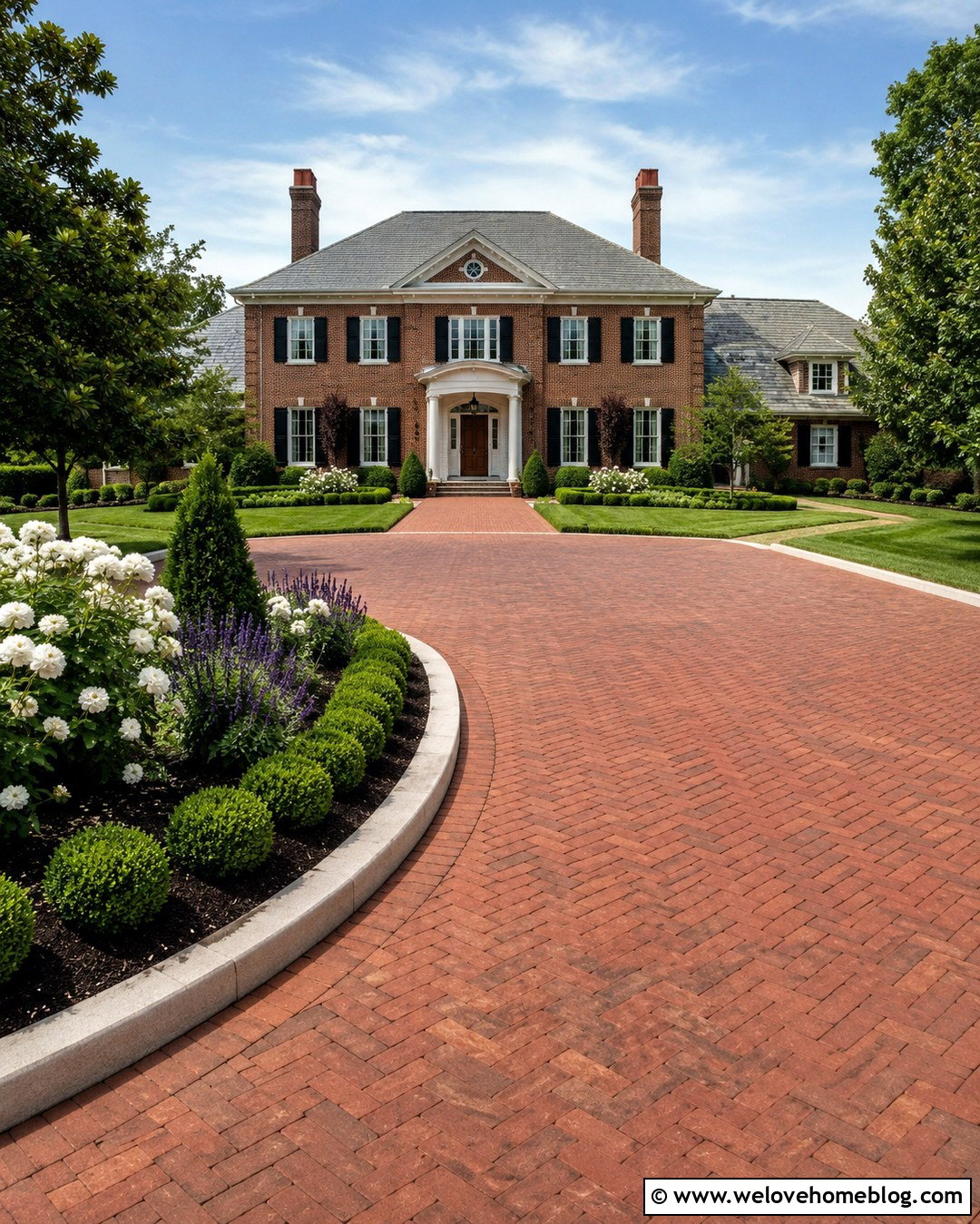
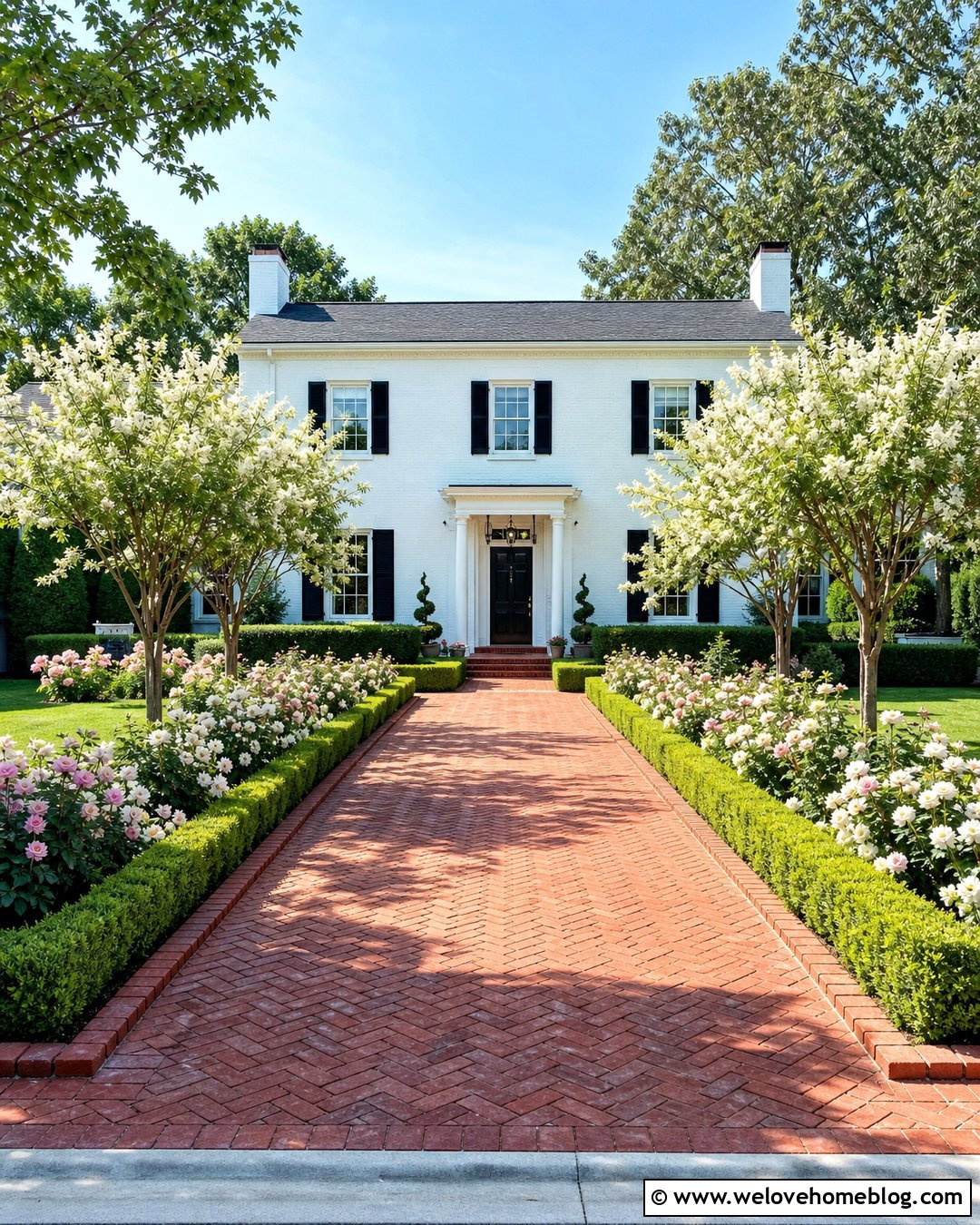
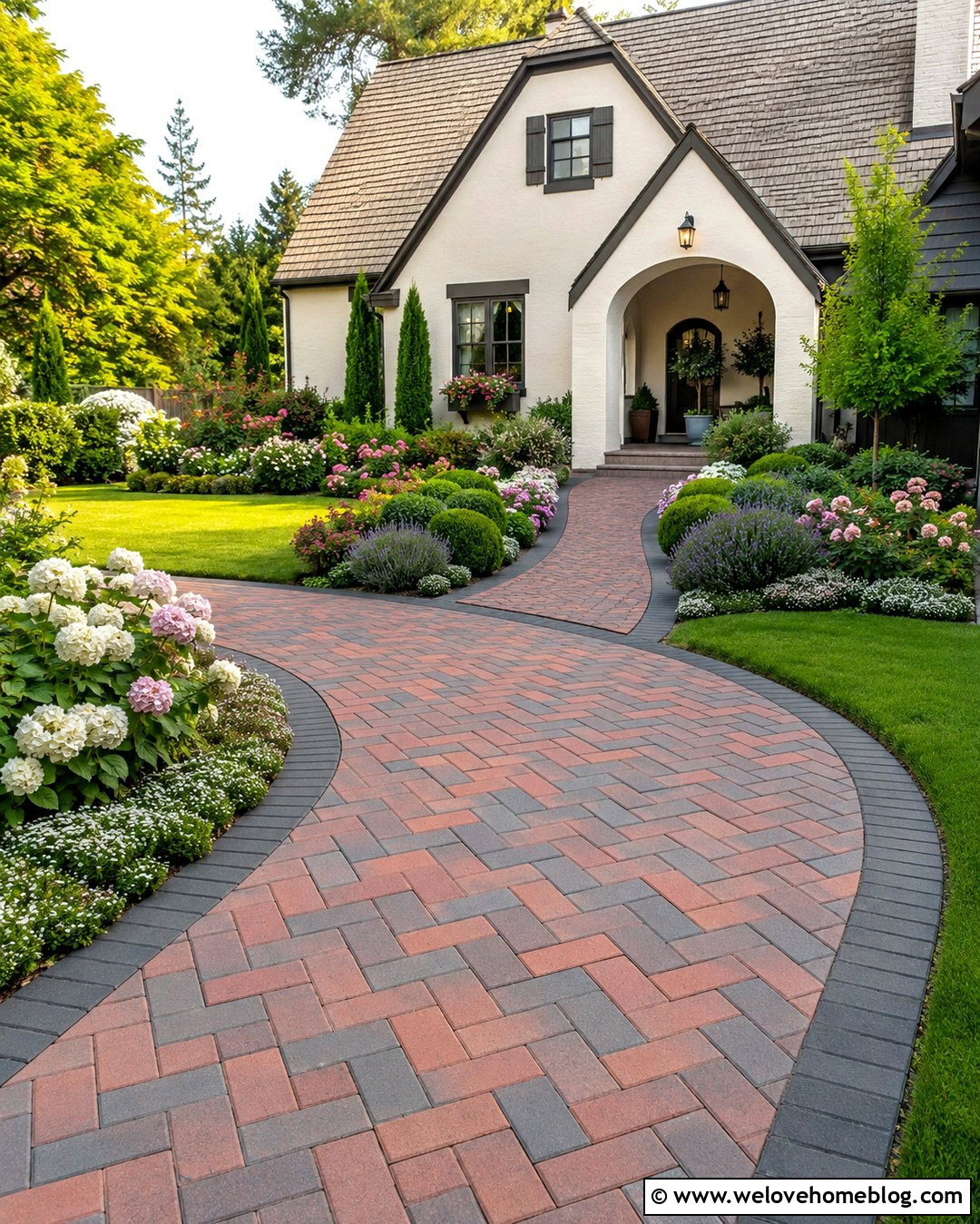
A clay brick driveway paired with clipped boxwood creates a formal corner that feels connected to traditional architecture. Continue the brick pattern through the driveway turn, then frame the inner corner with a low limestone curb. Inside the bed, arrange dwarf boxwoods in a broad arc instead of a rigid straight line. Fill the spaces behind them with white roses, salvia, or seasonal flowers for restrained color. A single upright evergreen placed closer to the house can anchor the composition without blocking the street view. This design is especially effective with Georgian, colonial, and Federal-style homes because the symmetry and materials feel established. Keep the hedge below window and headlight level near the entrance. Regular trimming preserves the clean curve and prevents branches from extending over the brick surface.
5. Paver Driveway Corner With Ornamental Grass
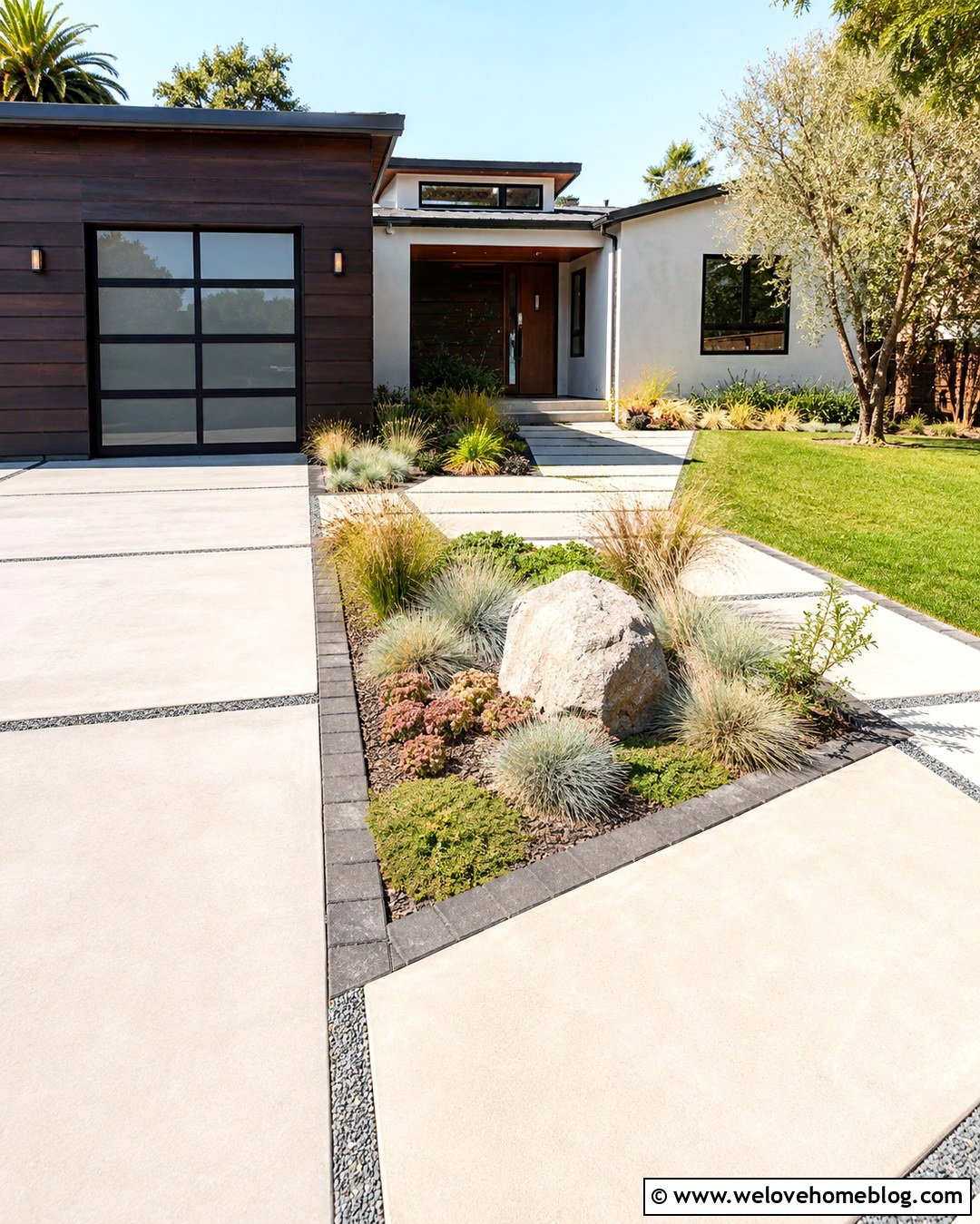
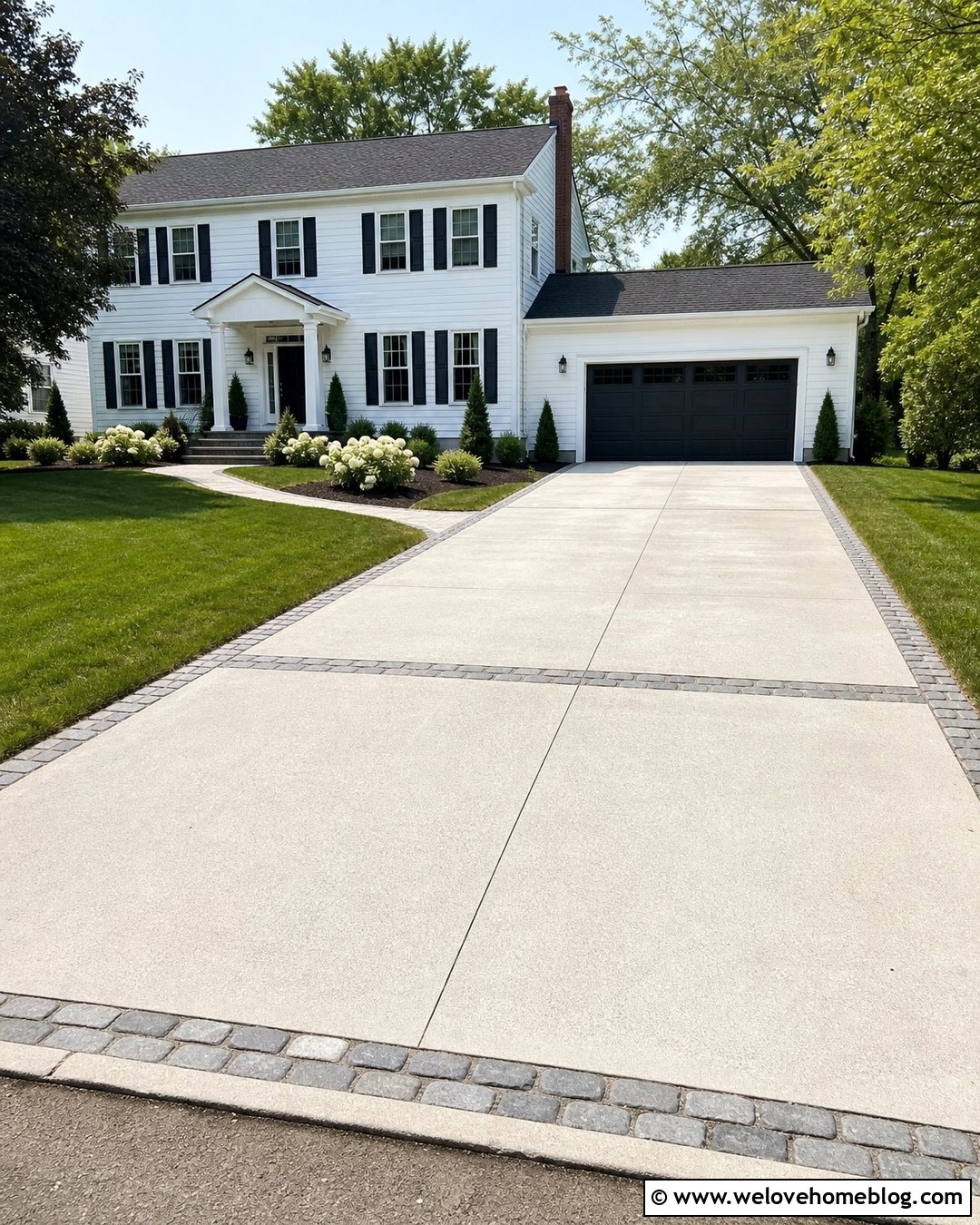
Large-format concrete pavers make a modern driveway corner feel spacious, especially when narrow gravel joints visually soften the hard surface. Build a triangular planting bed into the inside turn and edge it with matching pavers set vertically. Use three or five ornamental grasses as the main feature, choosing compact varieties that will not flop across the driving area. Add low mounds of sedum, creeping thyme, or blue fescue around their bases. A sculptural boulder can introduce another natural texture while keeping the planting simple. This look pairs well with a modern home featuring stucco, wood, or dark metal details. Extend the same gravel and grasses beside the front walkway so the corner landscaping becomes part of one coordinated entrance rather than a separate decorative patch.
6. Gravel Driveway Corner With Timber Edging
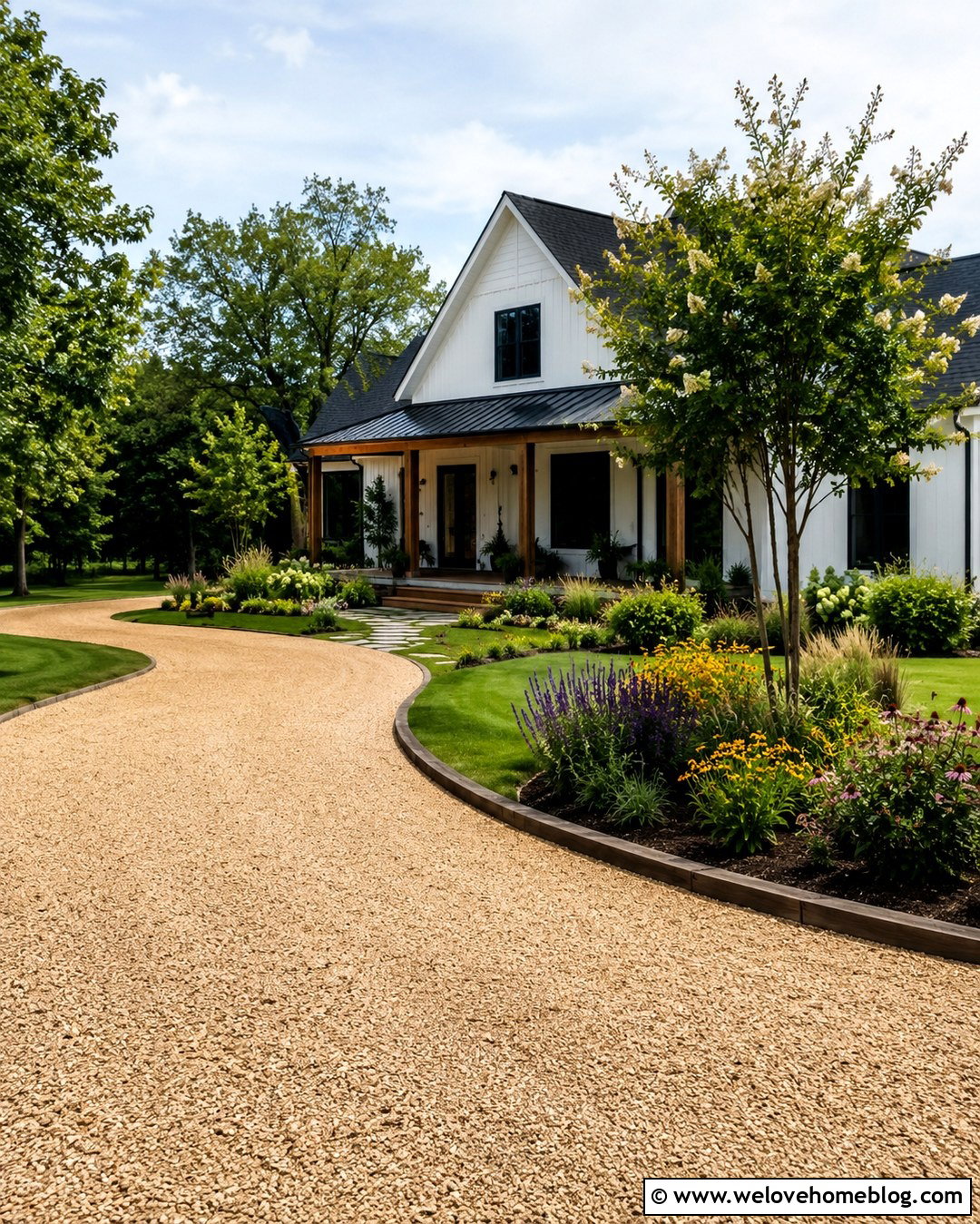
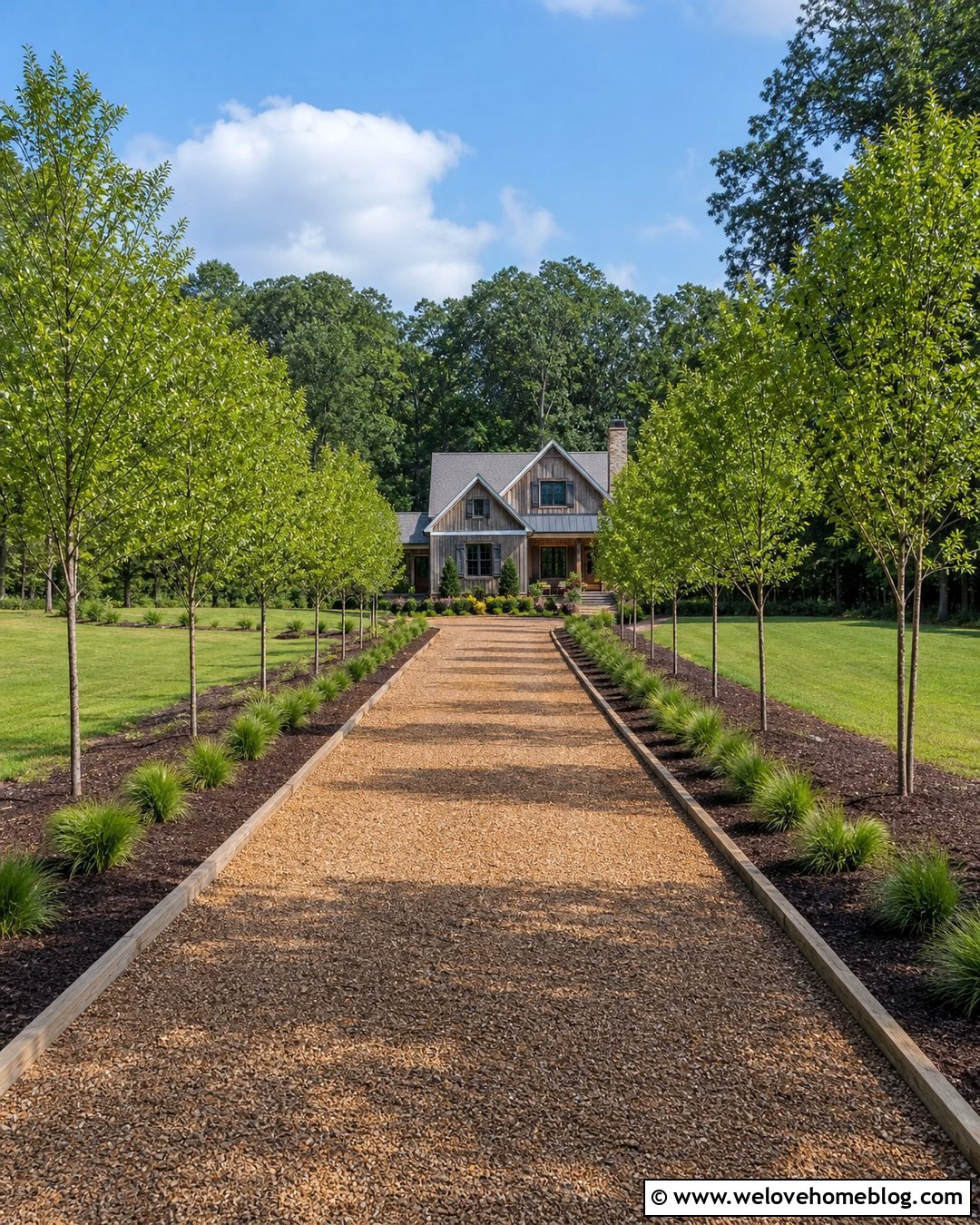
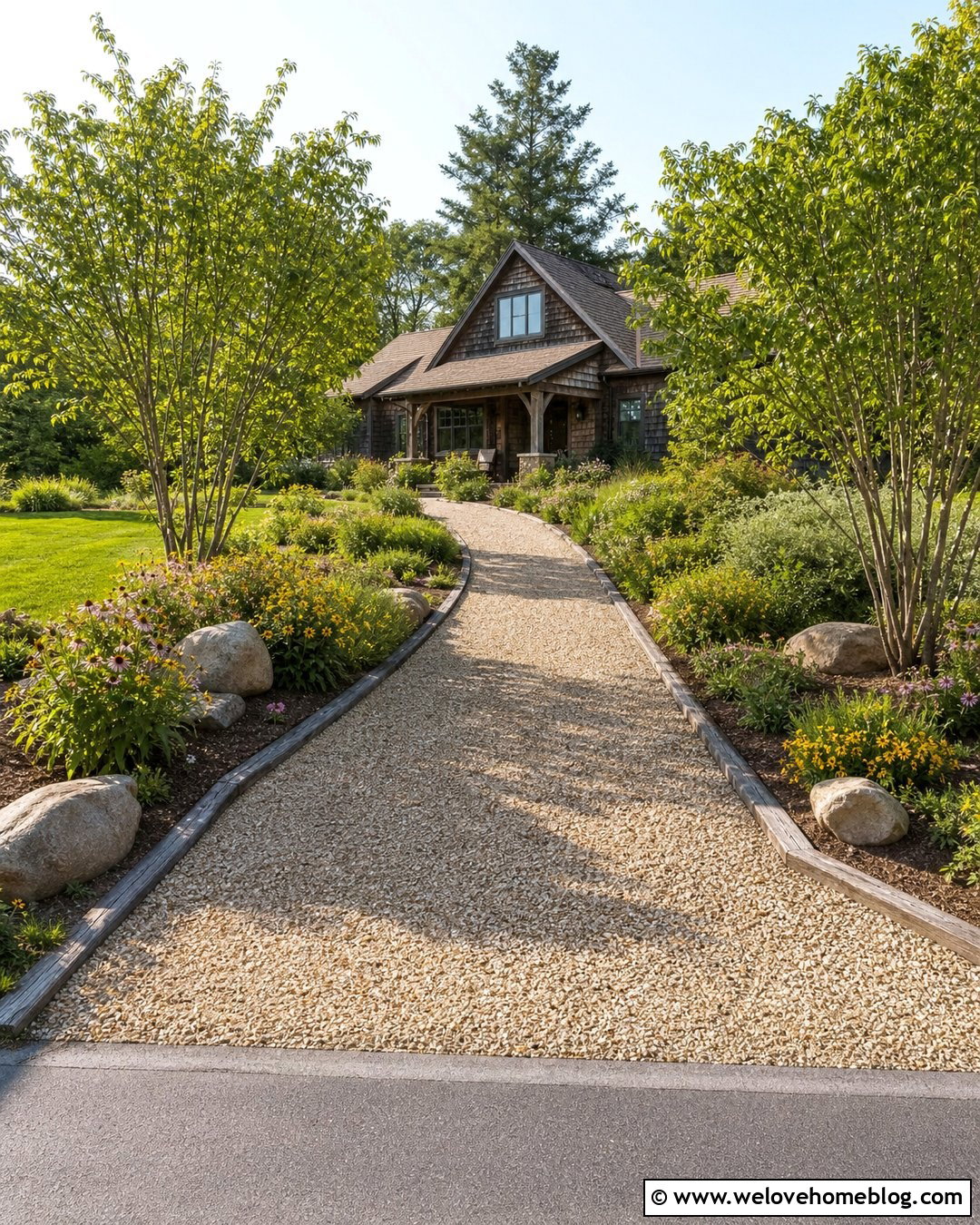
A warm gravel driveway can gain structure from thick timber edging and relaxed cottage planting. Use pressure-treated or naturally durable landscape timbers to define a broad corner where the driveway changes direction. Behind the edging, layer flowering perennials such as coneflowers, coreopsis, salvia, and black-eyed Susans. Place compact grasses between the flowers to maintain texture after the blooming season ends. A small flowering tree farther from the driving edge provides height and shade without overwhelming the corner. This informal combination looks natural beside a country home, cabin, or modern farmhouse. Keep the gravel slightly below the timber’s top edge to reduce spillover. Repeating the same timber border along another part of the driveway makes the corner look planned and visually balances the entrance.
7. Corner Driveway Entrance With Stone Pillars
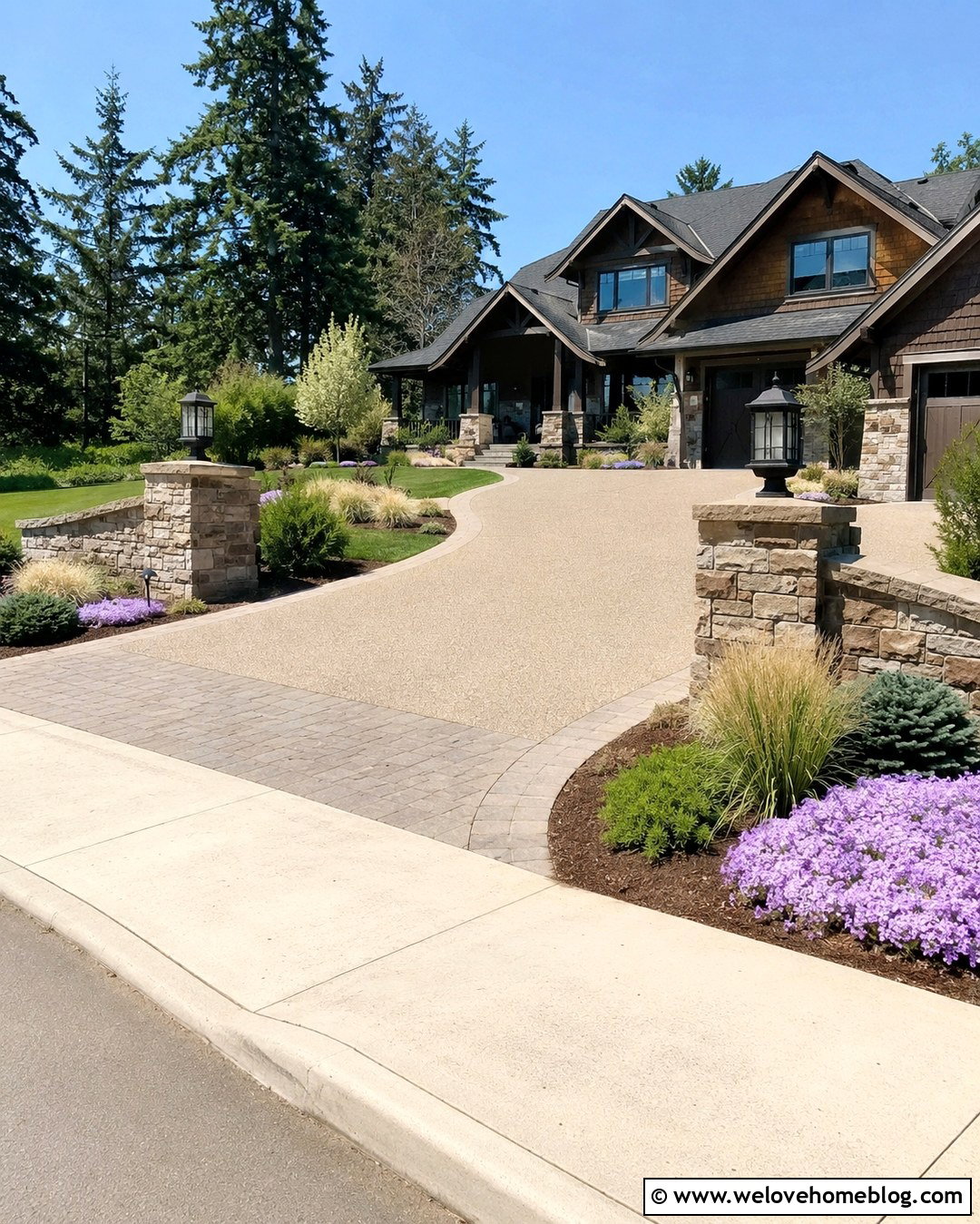
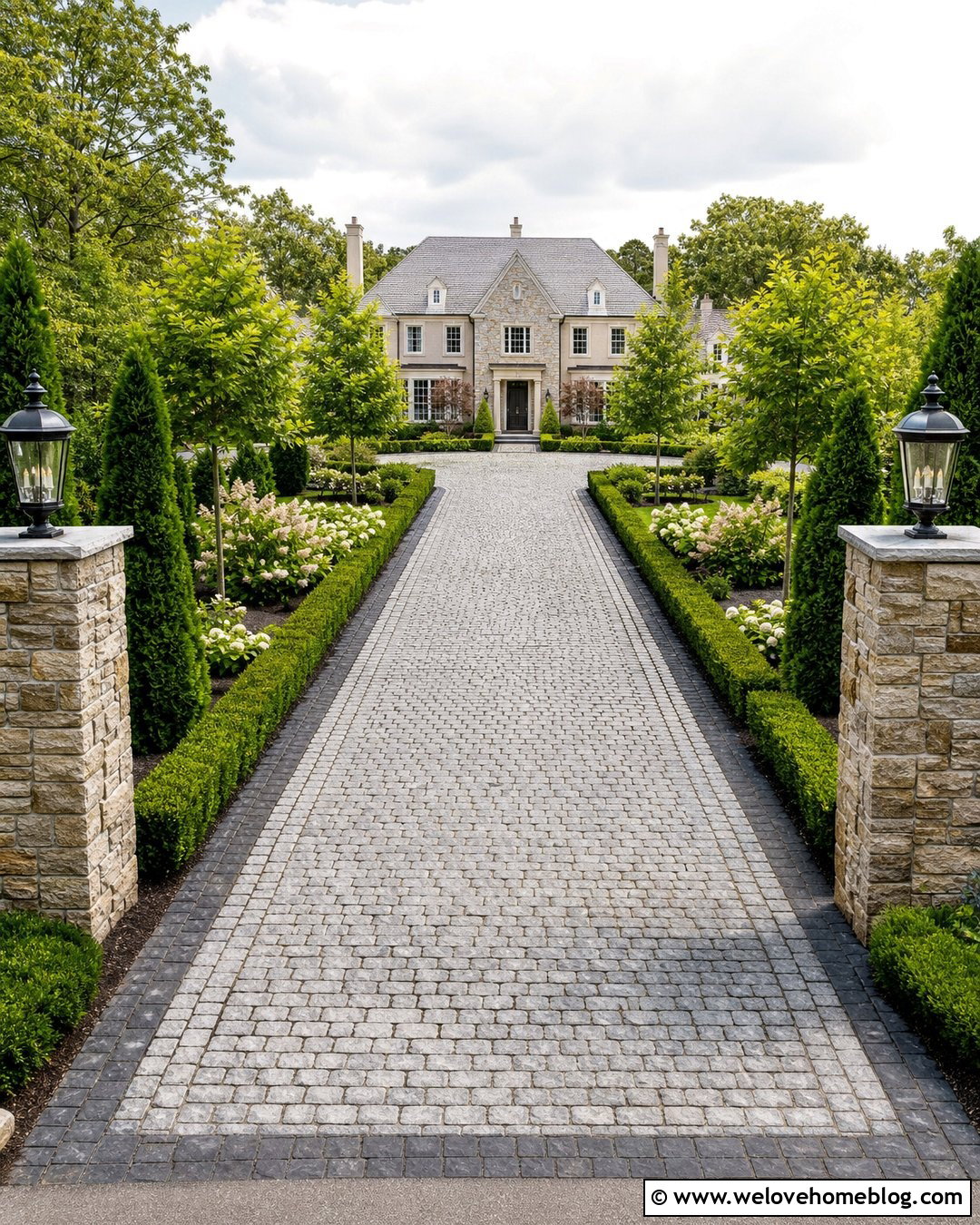
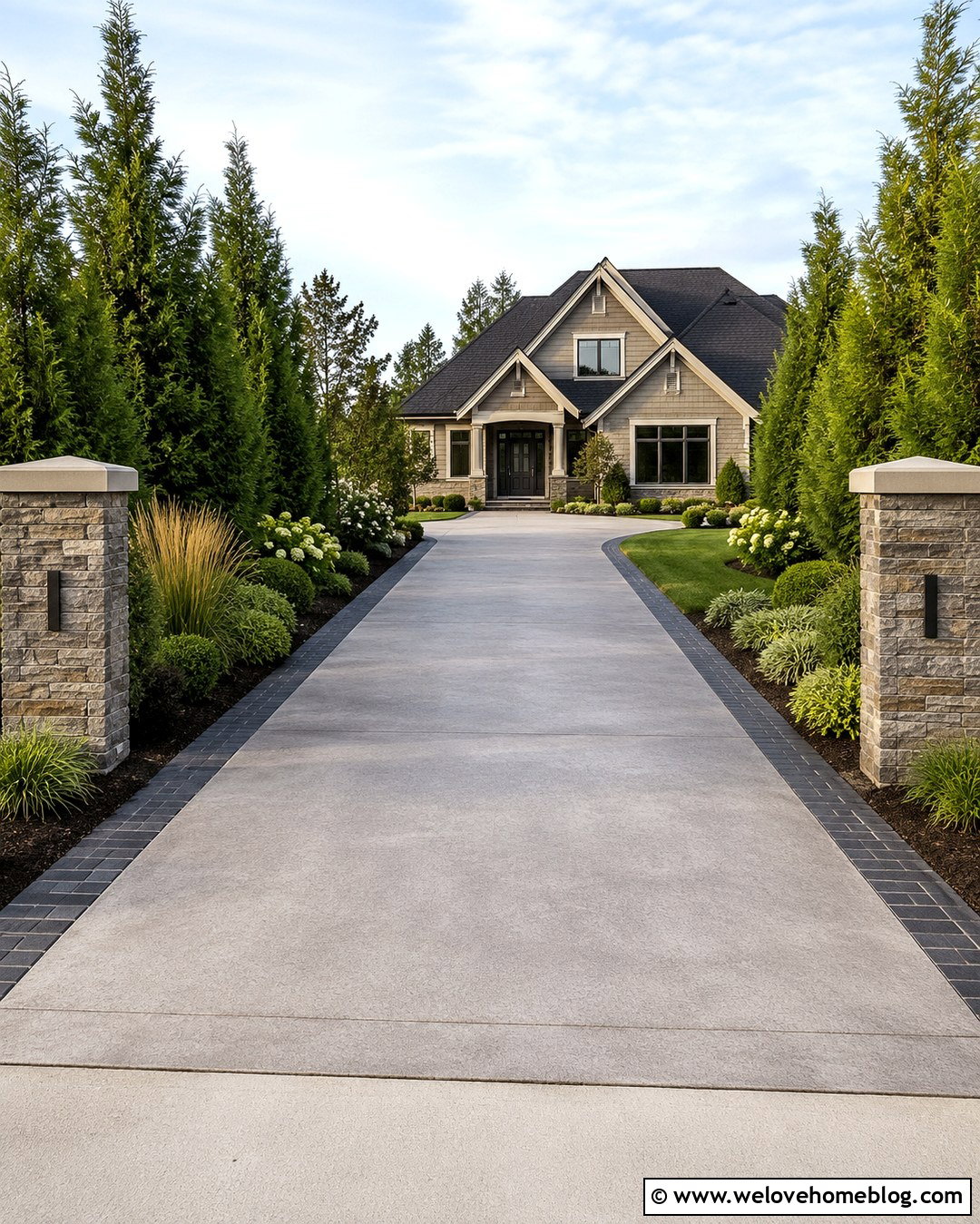
Stone pillars can give a corner driveway entrance definition while connecting it to the home’s facade. For a cohesive look, combine an exposed aggregate driveway with low walls and pillars faced in the same stone used on the house. Set the pillars back from the curb and turning path so they frame the approach without making it feel narrow. Curve planting beds around their bases using low evergreen shrubs, creeping phlox, and ornamental grasses. Matching lanterns provide visibility and a finished appearance, while a wide paver apron marks the transition from the street. This design works well for craftsman, lodge, and transitional homes. Before construction, verify property lines, utility locations, right-of-way restrictions, drainage requirements, and local visibility rules for corner entrances. ()
8. Small Driveway Corner With Ground Cover
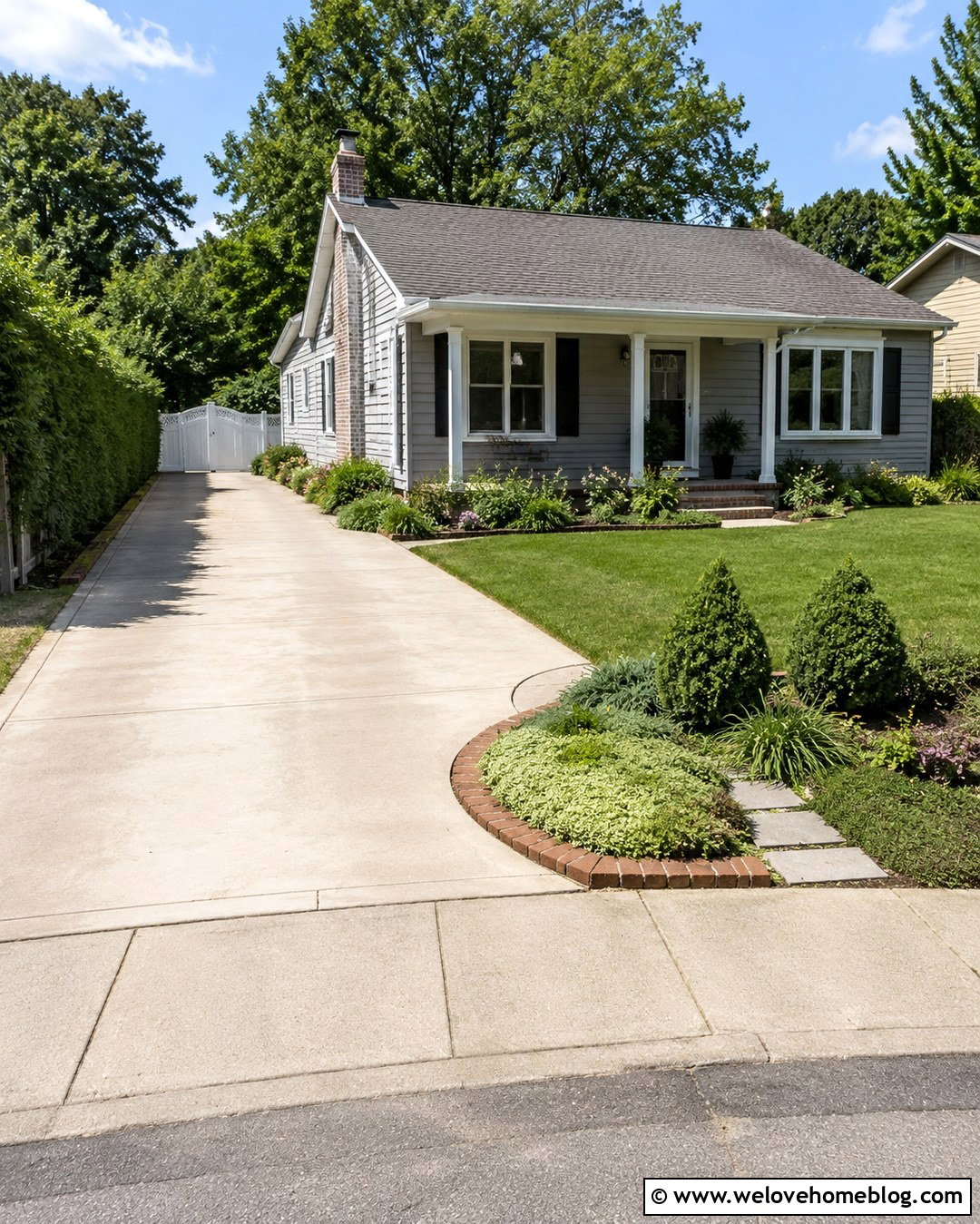
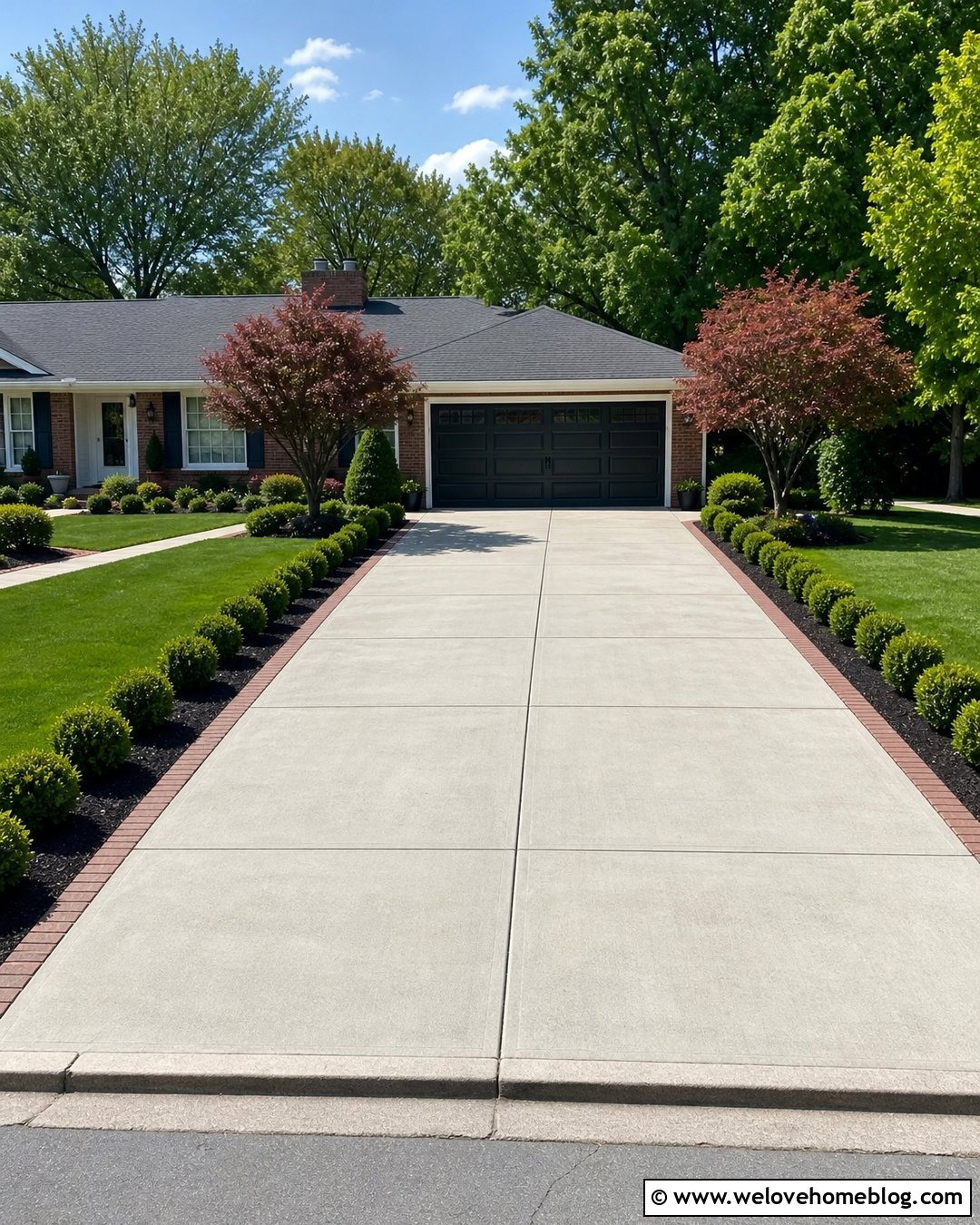
When the available corner is narrow, a simple ground-cover bed can provide greenery without creating a crowded entrance. Pair a smooth concrete driveway with a gently curved brick border that follows the pavement. Fill the bed with one dependable low-growing plant suited to the site’s light and climate, such as creeping thyme, sedum, liriope, or native ground cover. Add two or three compact shrubs near the house for height, but leave the street end open and low. A slim stepping-stone route can connect the driveway to the sidewalk if people commonly cross the area. This layout is practical for townhomes, bungalows, and small suburban lots. Limiting the plant palette makes the space appear larger, while dense ground cover reduces exposed soil and gives the tiny corner a complete, finished appearance.
9. Driveway Corner With a Flowering Tree
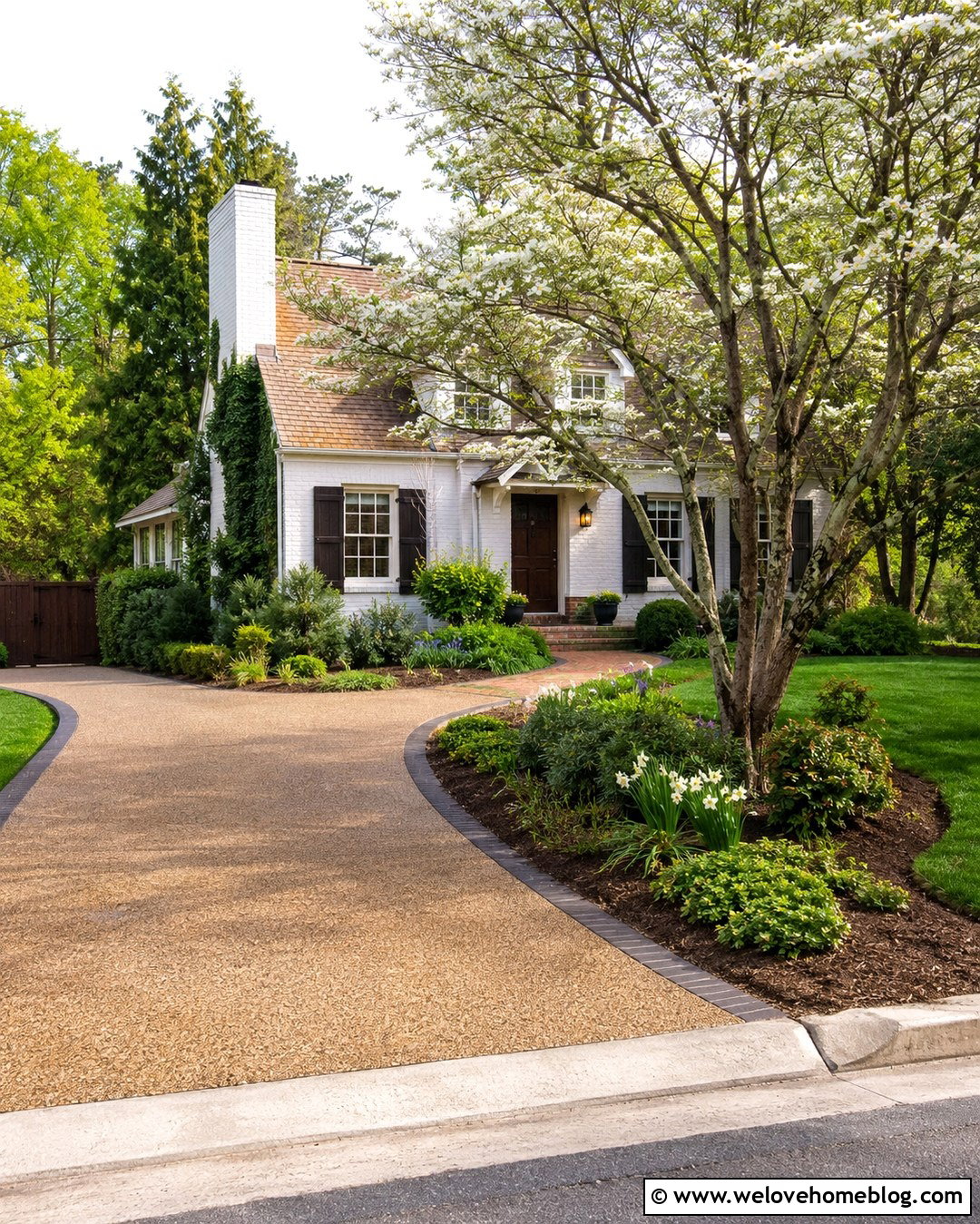
A flowering tree can anchor a generous driveway corner and make the entrance memorable through several seasons. Choose a smaller species appropriate for the local climate, soil, and available overhead space. Position it well back from the pavement, then surround it with a broad mulched bed rather than planting turf directly around the trunk. A buff-colored resin-bound gravel driveway and dark brick edging create a neat framework for the tree. Beneath it, use shade-tolerant ground cover, spring bulbs, and a few low shrubs arranged in sweeping groups. This complete look complements cottages, ranch homes, and traditional suburban houses. Account for the tree’s mature canopy and roots before planting. Proper spacing prevents low branches from scraping vehicles and keeps roots from being unnecessarily confined beside the driveway foundation.
10. Driveway Corner With Landscape Lighting
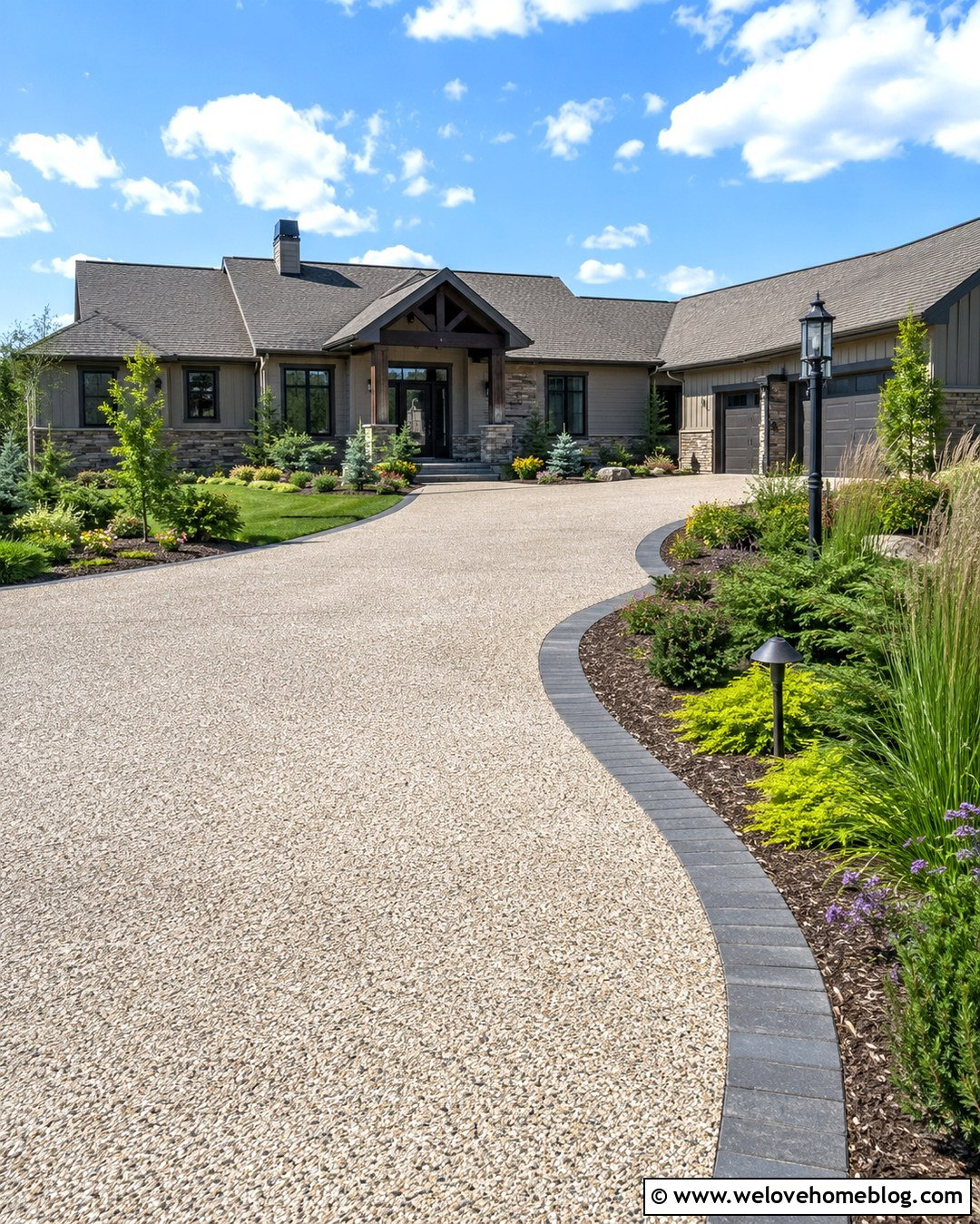
Soft landscape lighting can clarify a driveway corner while highlighting the plants and pavement after sunset. During the day, the design should still look complete: combine a light exposed aggregate driveway with a curved charcoal paver border and layered beds of dwarf evergreens, flowering perennials, and grasses. Install low-voltage fixtures between plants rather than placing a continuous row of identical lights along the pavement. Aim them downward or across foliage to reveal texture while limiting glare for drivers and neighbors. A slightly taller fixture can mark the walkway connection or address sign. This approach works with almost any house style, from ranch to contemporary. Lighting is most successful when it reinforces the driveway shape and helps distinguish the pavement edge from adjacent lawn and planting areas. ()
11. Sloped Driveway Corner With a Stone Wall
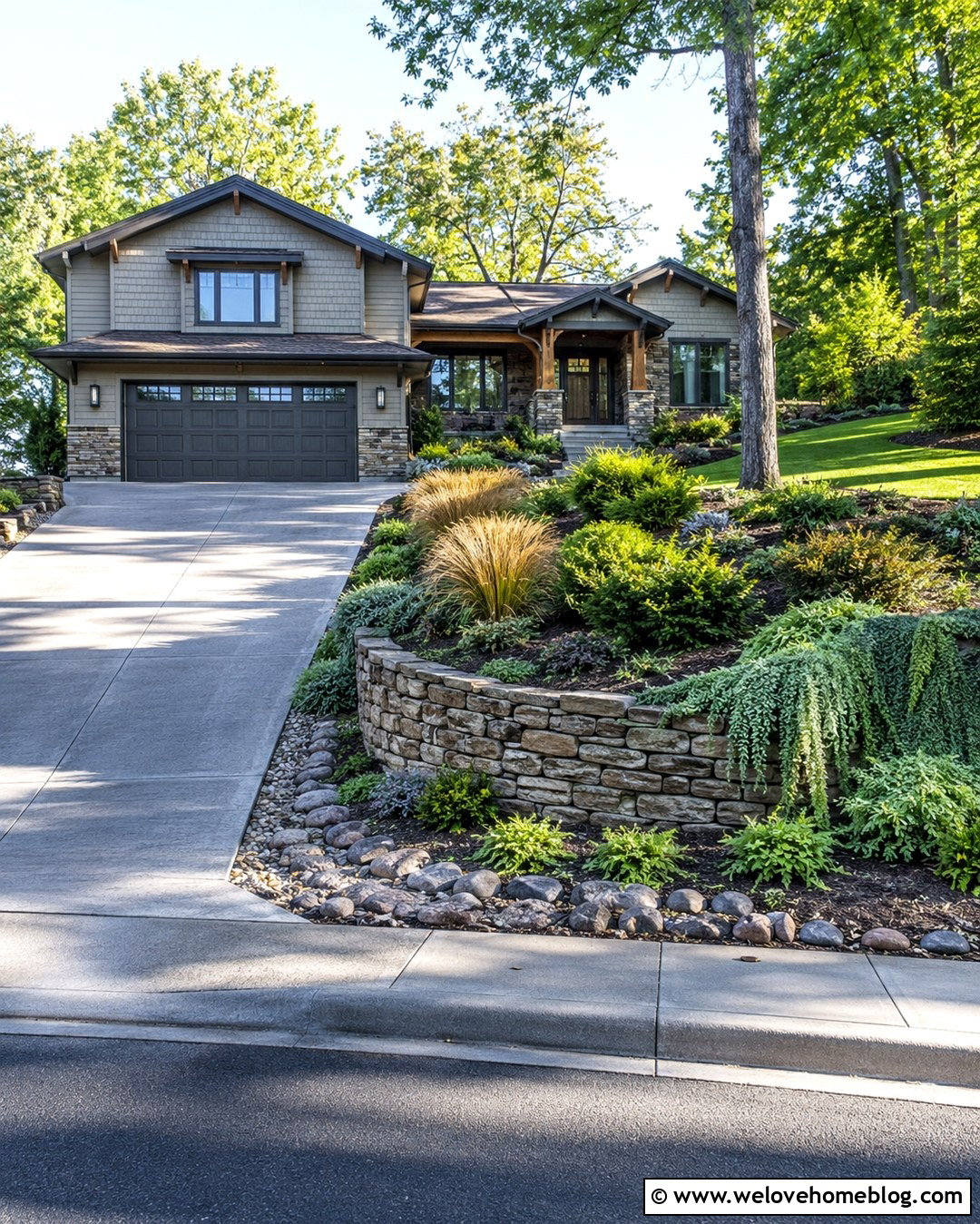
A sloped corner beside a driveway often needs structure before decorative planting is added. Pair a brushed concrete driveway with a low dry-stacked stone retaining wall that follows the grade and curves into the yard. The wall should create a stable, level planting area without becoming so tall that it dominates the entrance. Above it, use cascading ground covers, compact shrubs, and deep-rooted ornamental grasses suited to the site. River rock near a drainage outlet can visually integrate runoff management into the design. Match the wall stone to the house foundation or porch for a coordinated appearance. This solution looks especially appropriate beside craftsman, mountain, and split-level homes. Because grading and water movement can affect neighboring surfaces and structures, substantial walls and drainage changes should be professionally evaluated before installation.
12. Driveway Corner With a Mailbox Garden
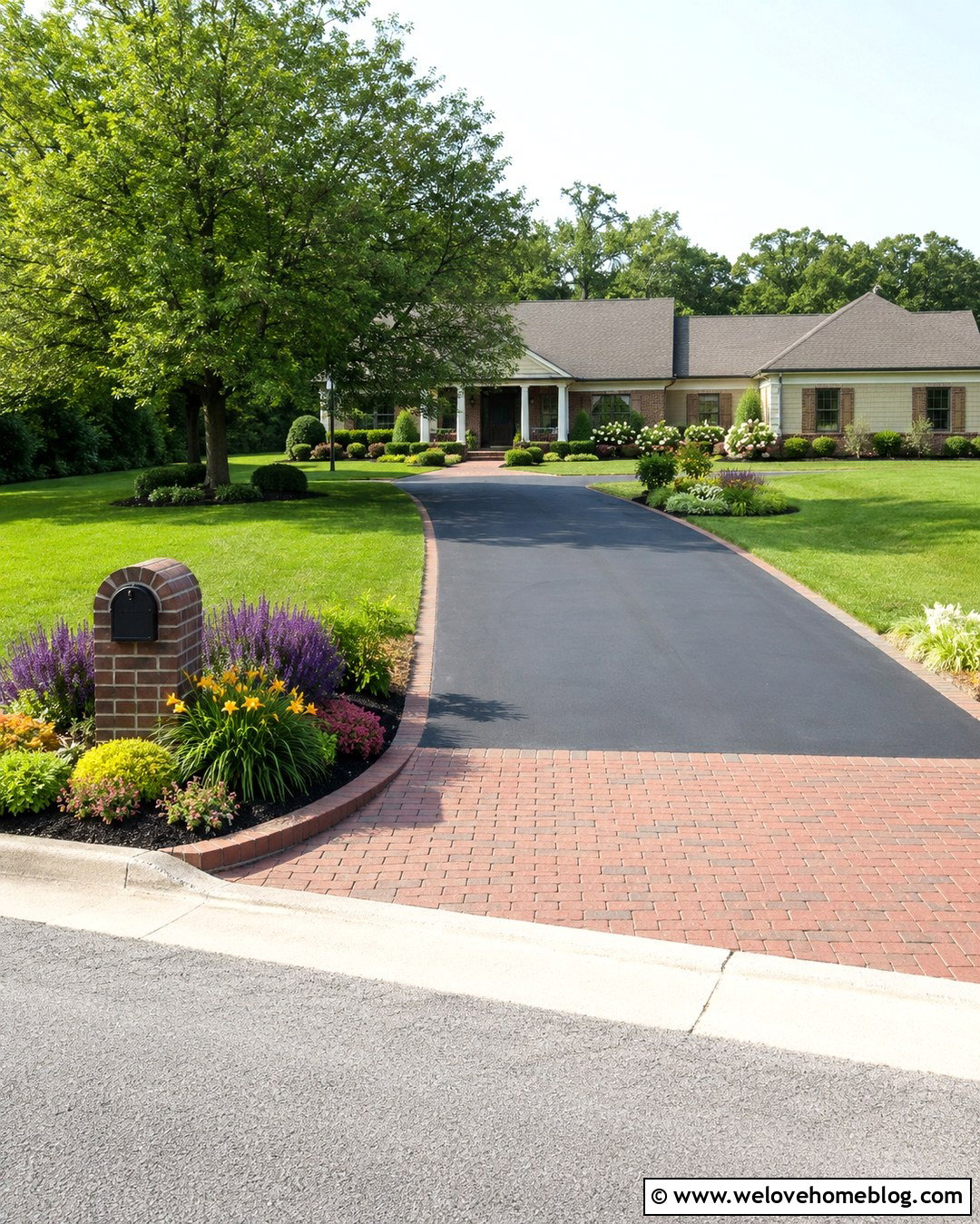
A mailbox garden can make the street-side driveway corner feel welcoming rather than purely functional. Use a black asphalt driveway with a red brick entrance apron, then repeat that brick around a generous curved planting bed. Place the mailbox far enough from turning vehicles and surround its post with low, durable plants. Daylilies, salvia, dwarf grasses, sedum, and seasonal annuals can provide color without hiding the box. Keep thorny plants and aggressive vines away from the area used by the mail carrier. A neat layer of mulch simplifies maintenance and keeps weeds from competing with the flowers. This complete corner works well with classic suburban homes and traditional ranch houses. Continue several matching plants farther up the driveway to visually connect the mailbox garden with the home’s foundation landscaping.
13. Driveway Corner With a Decorative Boulder
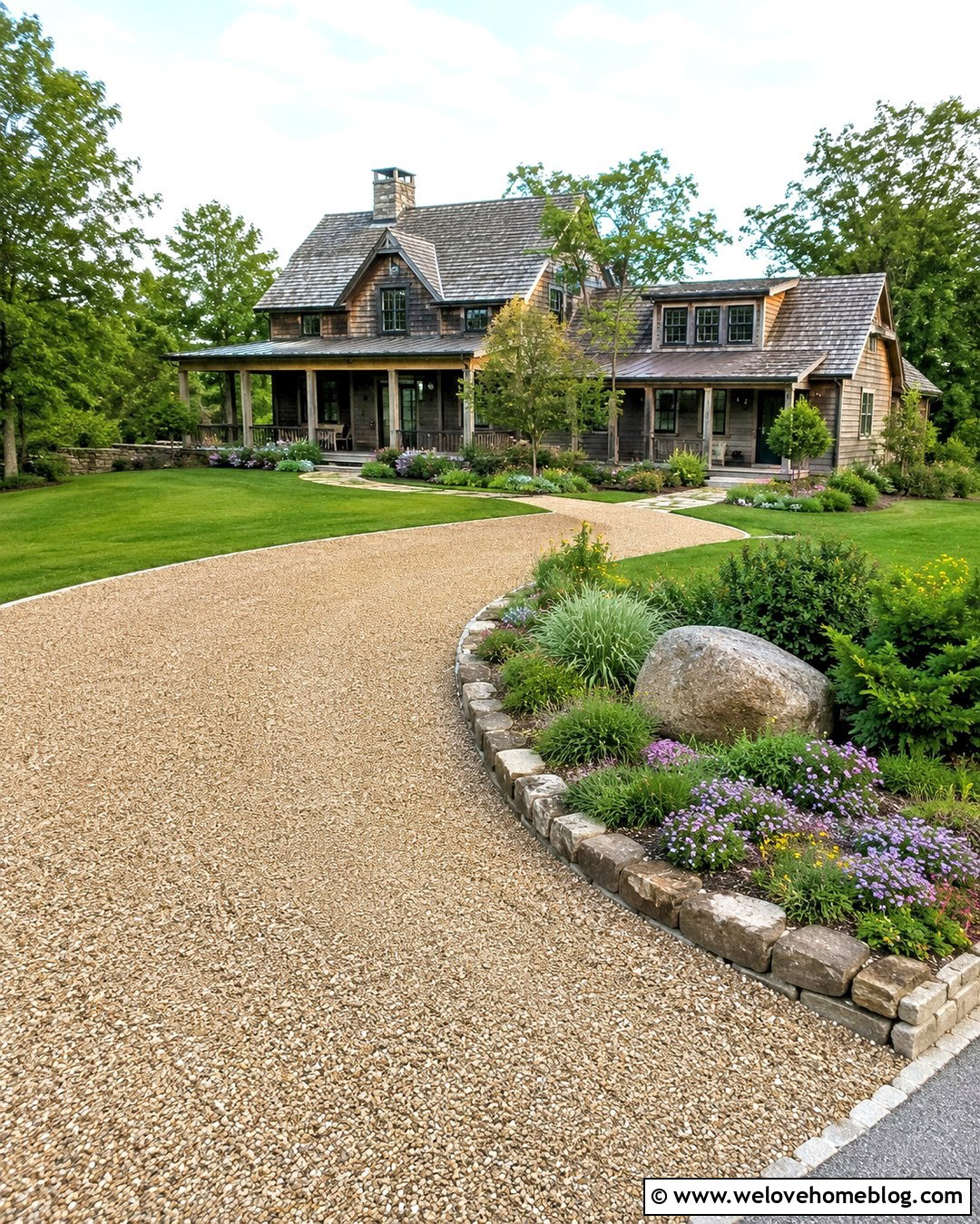
One substantial boulder can ground a wide driveway corner more effectively than many small ornaments. Set it within a crescent-shaped bed beside a tan pea gravel driveway edged with irregular fieldstone. Position the boulder partly below grade so it looks naturally settled rather than placed on top of the soil. Surround it with low juniper, native grasses, creeping phlox, and small flowering perennials. Keep the tallest growth toward the yard side of the bed, preserving an open view near the street. This relaxed landscape suits ranch homes, cabins, and rustic farmhouses. The boulder should remain outside public rights-of-way, drainage paths, utility zones, and vehicle clearance areas. A second, smaller stone near the walkway can repeat the material and make the entire front landscape feel more unified.
14. Circular Driveway Corner With a Center Garden
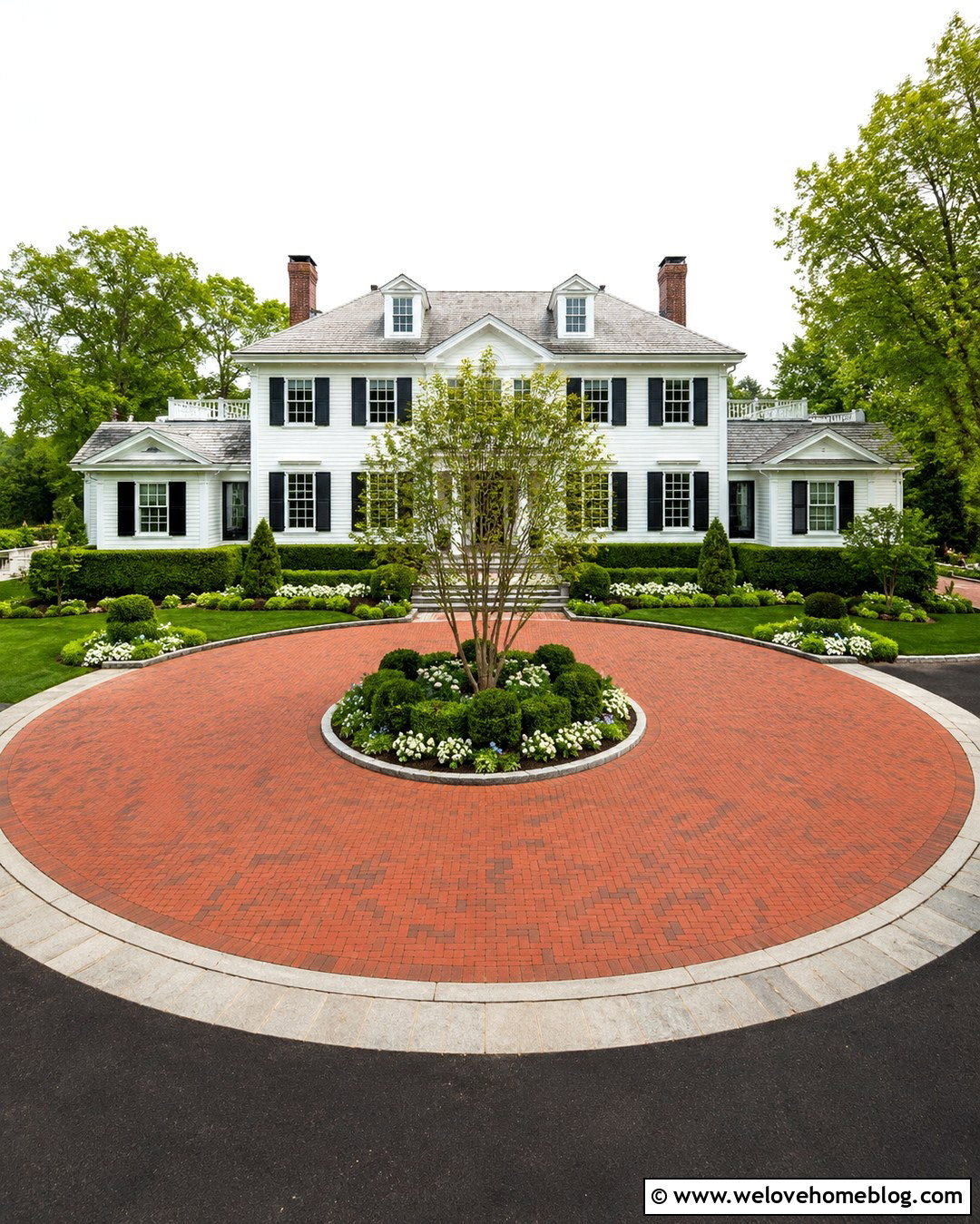
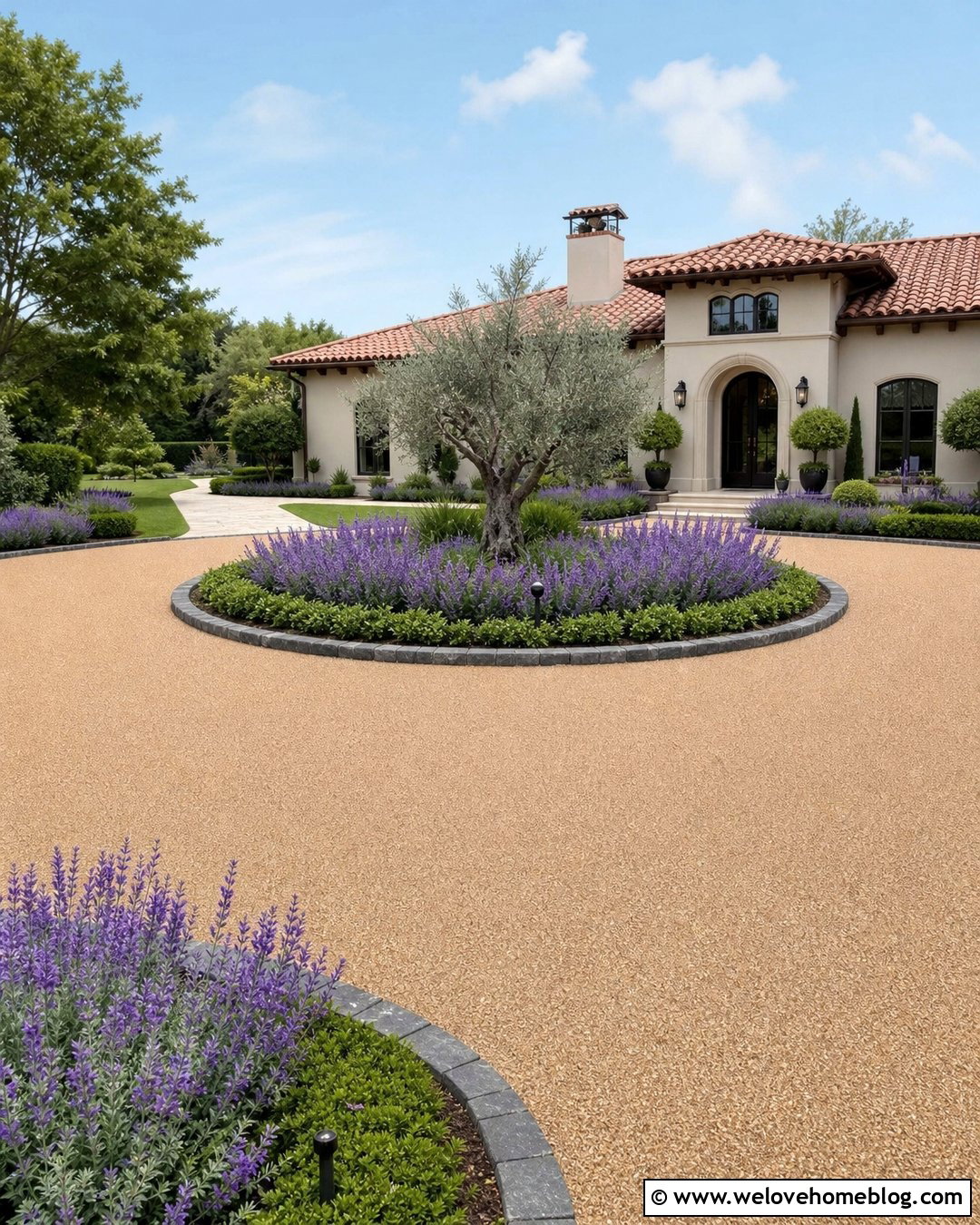
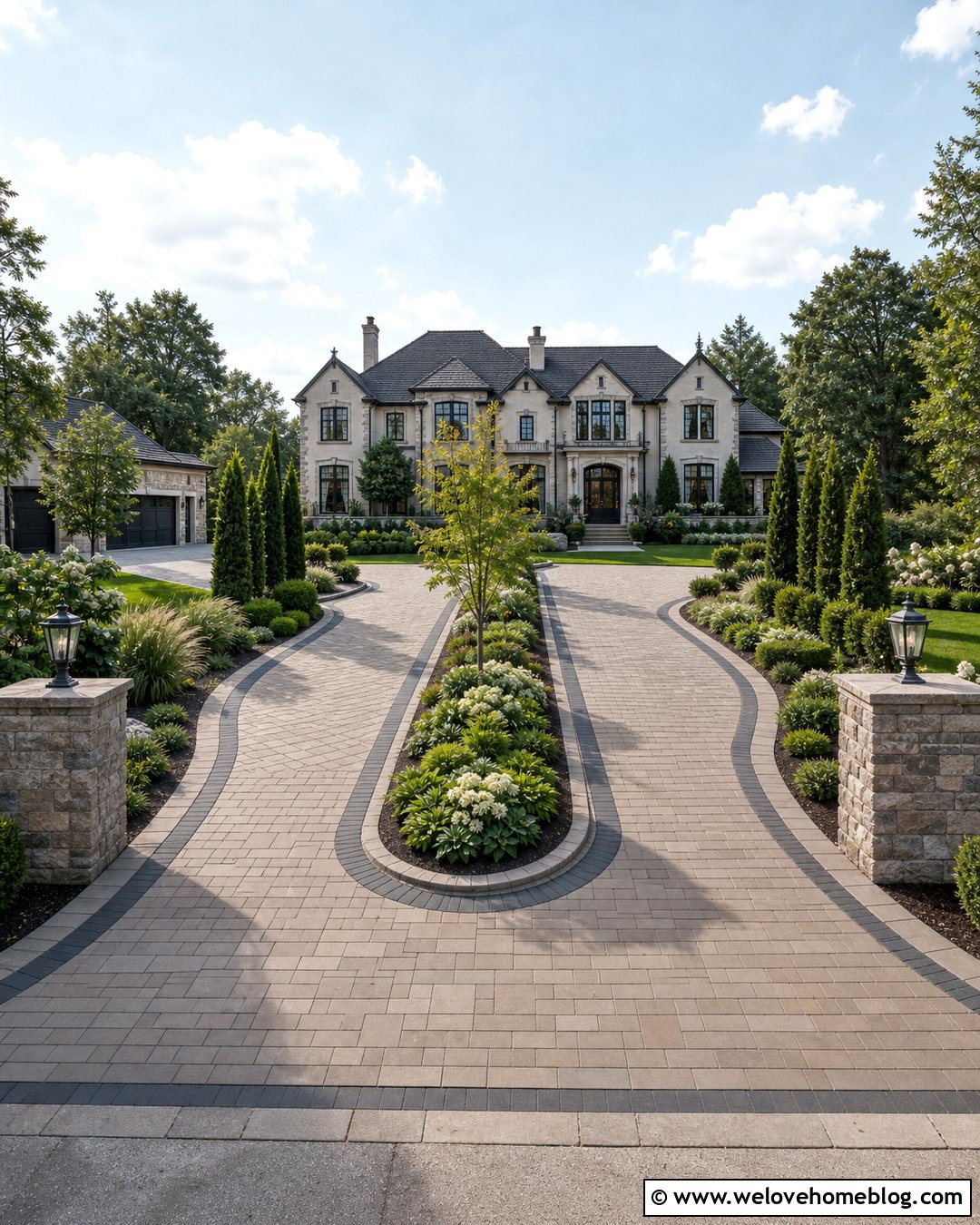
A circular driveway provides several corners and curves that can be tied together through one coordinated planting plan. Use warm-toned brick pavers for the drive and create a central island edged with limestone. Plant a multi-stem ornamental tree in the island, then surround it with clipped evergreens, white flowering perennials, and seasonal bulbs. At each outer corner, repeat smaller groups of the same plants to connect the entrance, parking area, and front walkway. The repeated materials establish order without making the landscape feel overly formal. This complete design suits colonial, French country, and large craftsman homes. Keep island plants scaled to preserve views across the circle. A simple lawn beyond the outer driveway edge gives the detailed brickwork and layered central garden enough visual space to stand out.
15. Corner Driveway With Native Plants
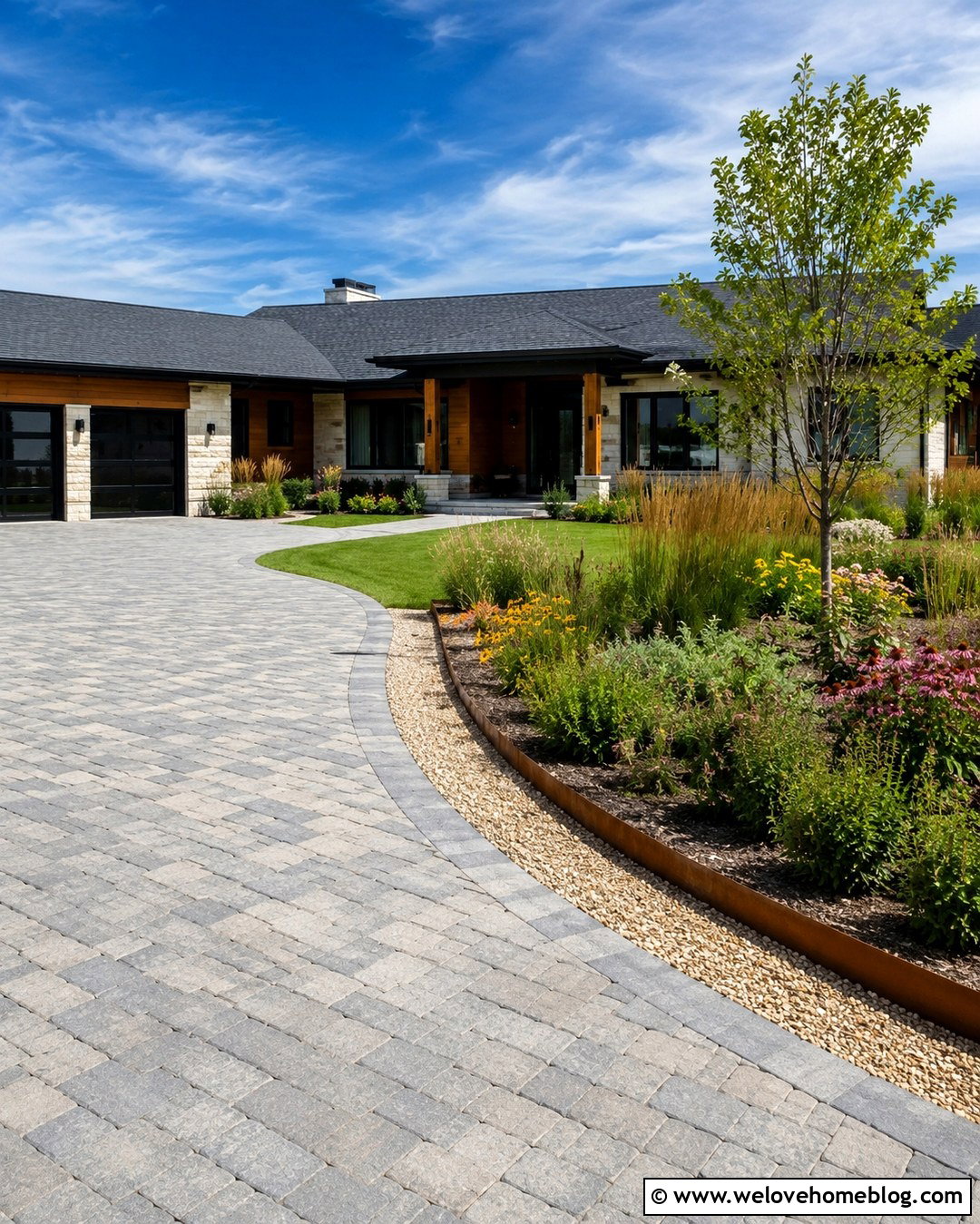
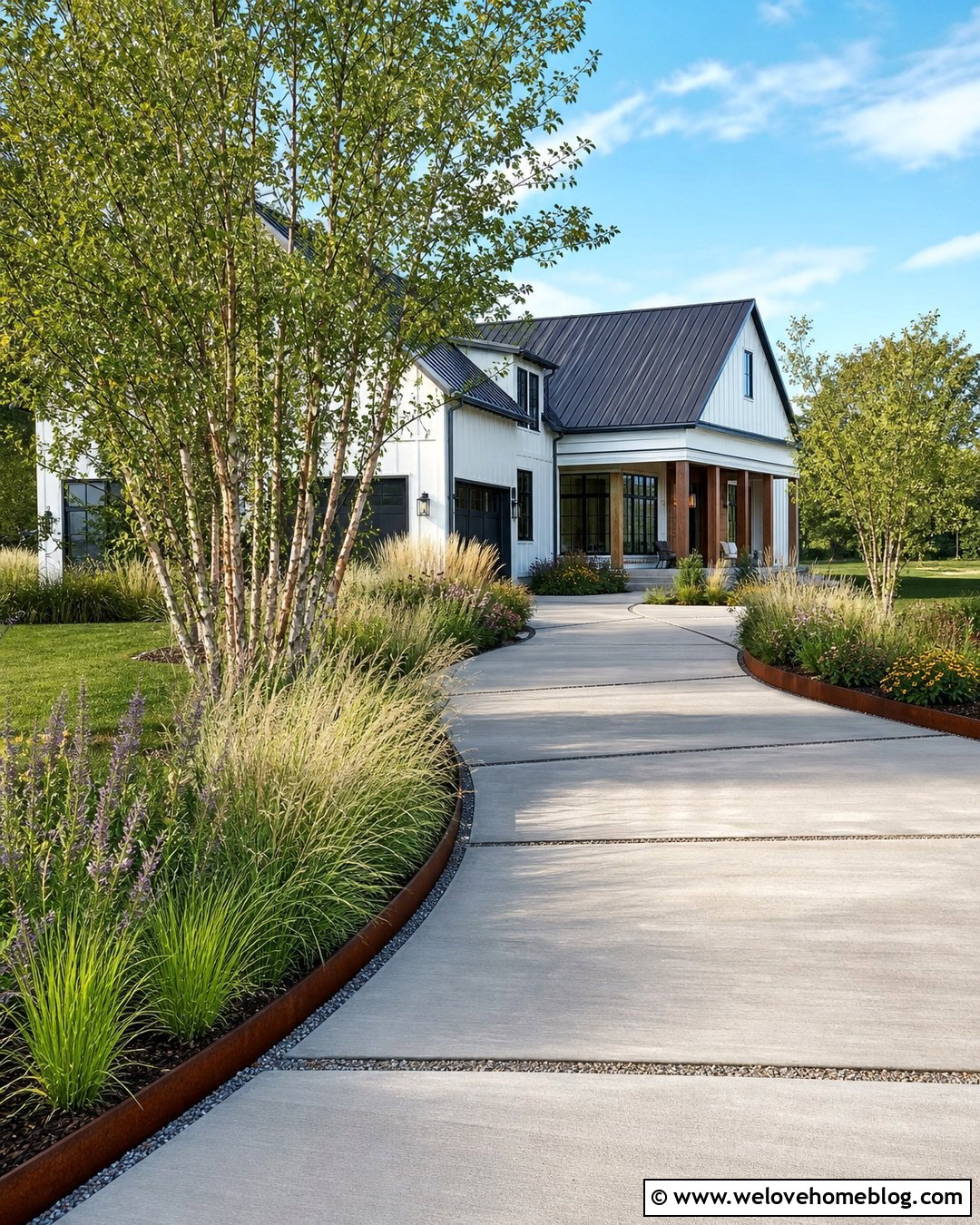
Native planting can give a driveway corner a natural appearance while responding to local growing conditions. Begin with a permeable gray paver driveway and a wide steel-edged bed that sweeps around the inner turn. Select locally appropriate grasses, flowering perennials, shrubs, and one small tree, arranging them in clear masses rather than mixing every plant evenly. Keep low plants along the pavement and place taller species toward the back of the bed. A gravel maintenance strip between foliage and pavers prevents stems from leaning directly into the driveway. This landscape works with prairie-inspired modern homes, ranch houses, and casual farmhouses. Native does not automatically mean maintenance-free, so plan for establishment watering, seasonal cleanup, and mature spacing. Repeating key species elsewhere in the yard creates a cohesive front landscape.
16. Modern Driveway Corner With Black Edging
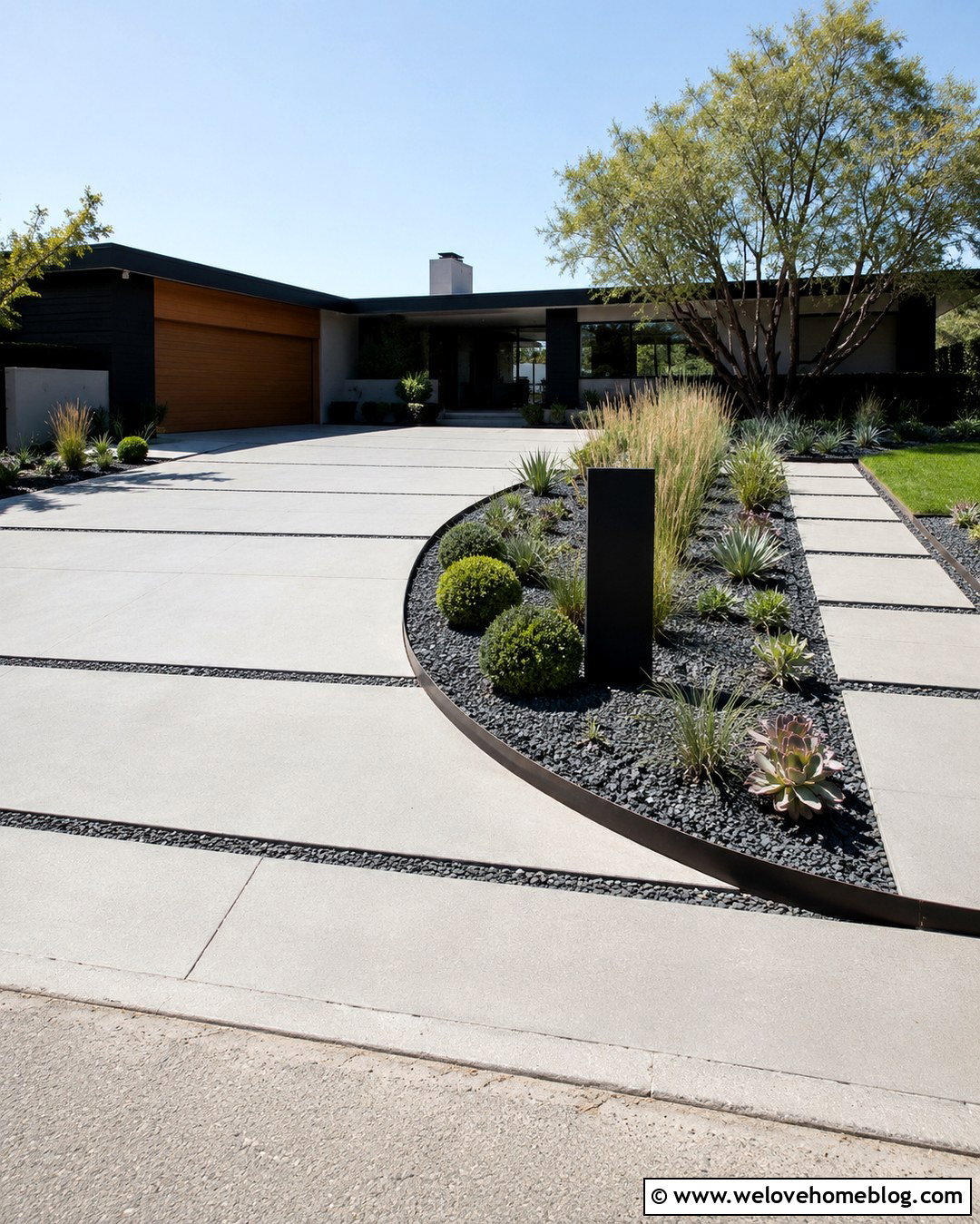
Crisp black edging gives a modern driveway corner definition without adding visual clutter. Pair pale gray poured concrete with narrow decorative gravel strips and a sharply curved powder-coated steel border. Inside the bed, use a restrained mix of upright grasses, rounded evergreen shrubs, and low succulents or ground cover. Space the plants generously so their forms remain distinct against dark stone mulch. A slim black address monument near the entrance can match the edging and the home’s window frames. This complete design is ideal for modern, midcentury, and contemporary houses with simple facades. Preserve enough open pavement around the corner for comfortable turning. Extending one concrete walkway panel through the planting bed creates a clear route to the front door and prevents guests from taking shortcuts through the gravel.
17. Farmhouse Driveway Corner With Split-Rail Fencing
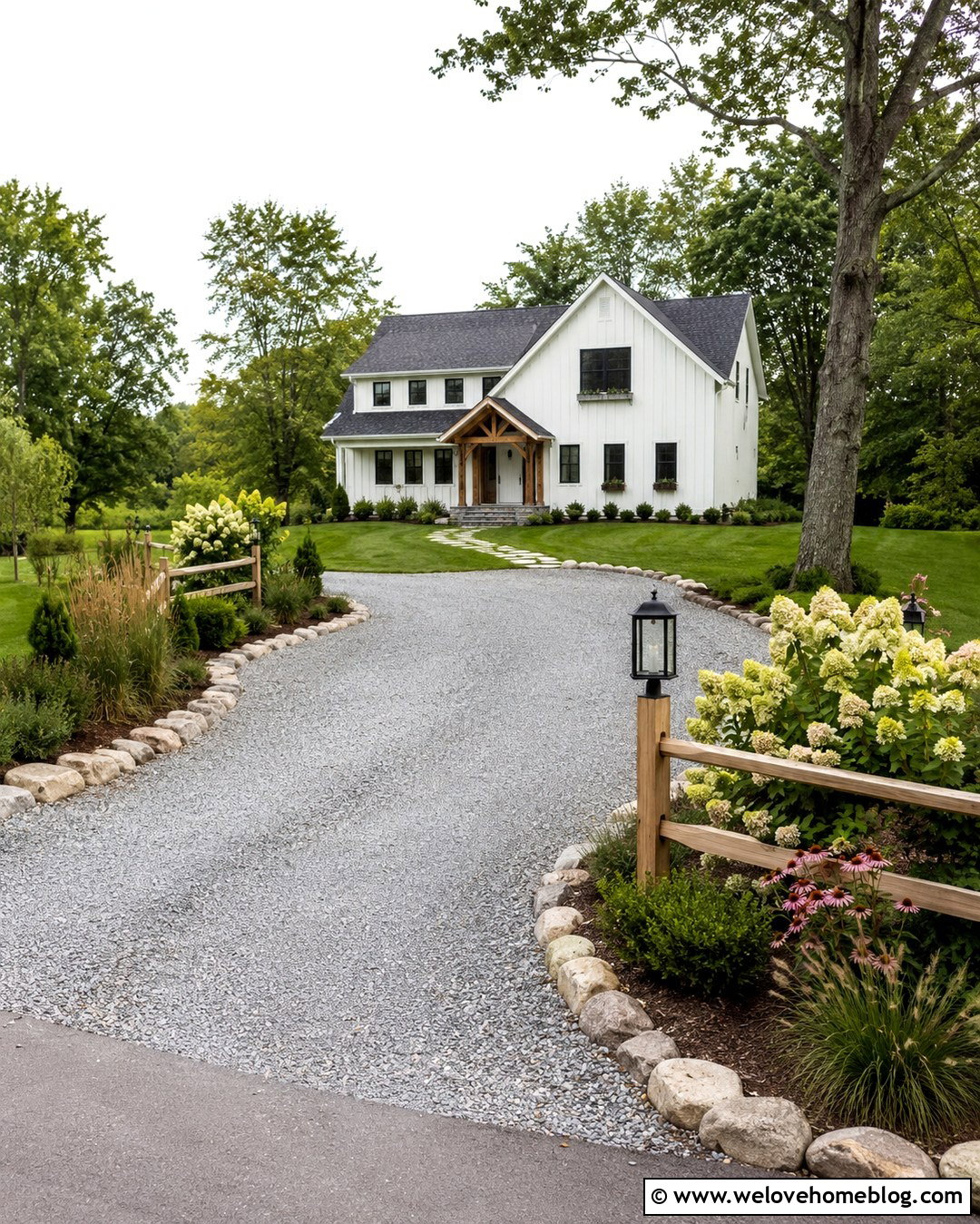
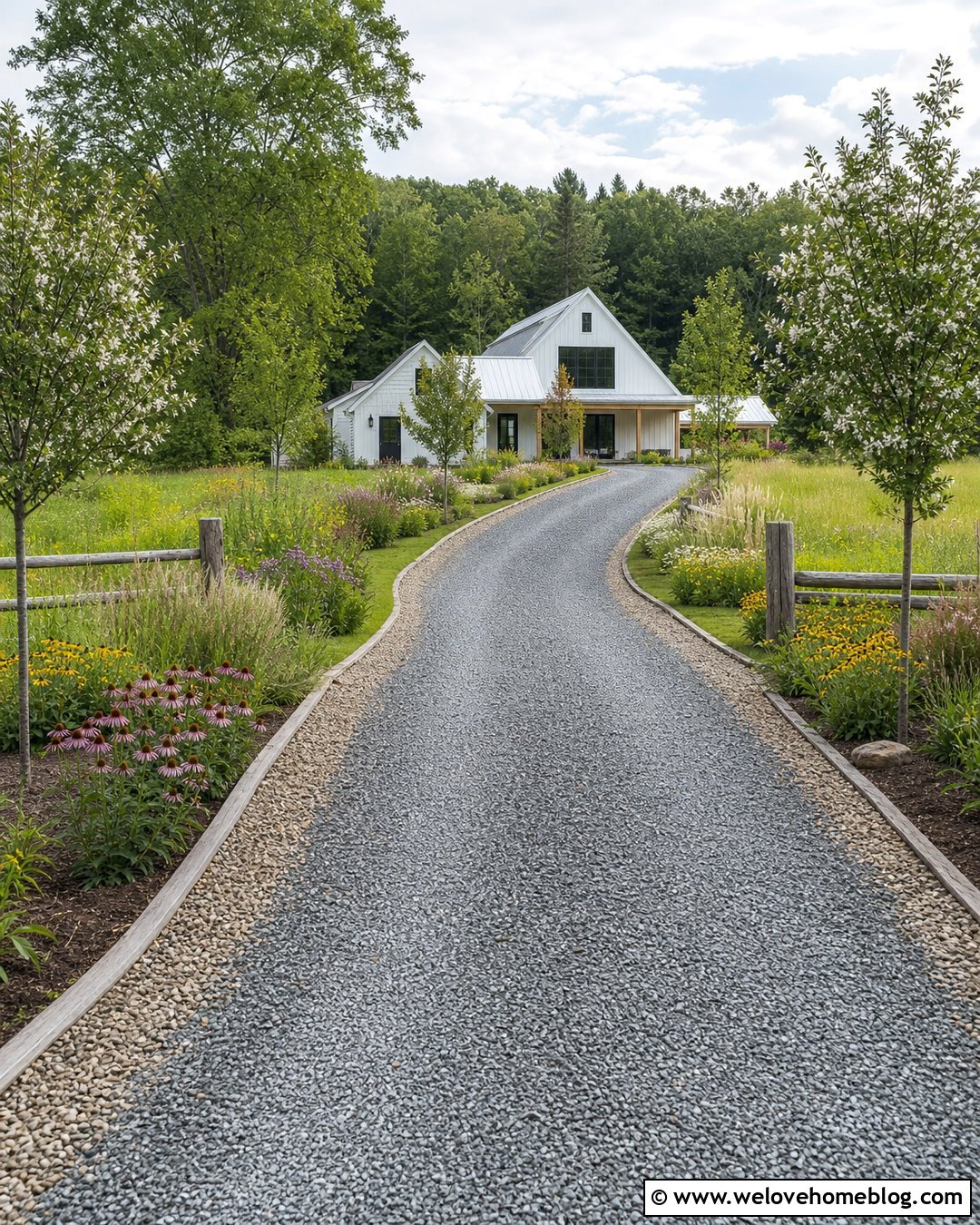
A short section of split-rail fencing can shape a farmhouse driveway corner without closing off the property. Combine a compacted gray gravel driveway with chunky fieldstone edging, then run the fence along the outer curve with a generous setback from the pavement. Plant panicle hydrangeas, ornamental grasses, coneflowers, and low evergreen shrubs around the rails. Allow the plants to overlap slightly for a relaxed appearance, but keep the actual driving edge open and easy to maintain. A galvanized metal or simple black lantern near the entrance adds a useful focal point. This look pairs naturally with white siding, board-and-batten details, and timber porches. Instead of ending the fence abruptly, let it disappear into a larger shrub group so the corner flows smoothly into the surrounding yard.
18. Driveway Corner With a Rain Garden
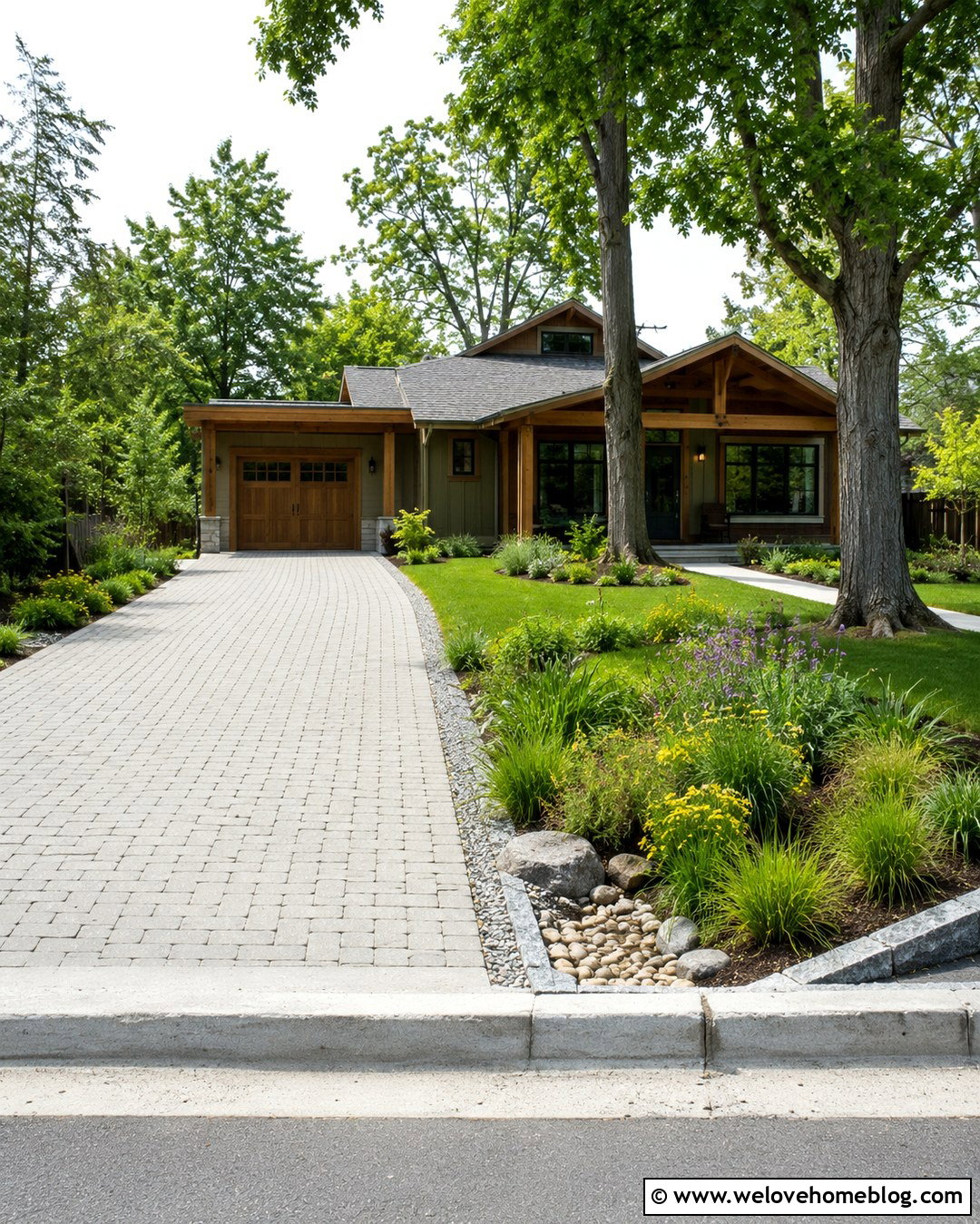
A low driveway corner where water naturally collects may be suitable for a carefully planned rain garden. Use permeable concrete pavers for the driveway and create a shallow planted basin beyond a flush granite edge. Choose moisture-tolerant native grasses, sedges, flowering perennials, and compact shrubs that can also handle drier periods between storms. Decorative river rock can define the inlet and slow visible water movement while complementing the paver color. Keep the basin away from foundations and avoid changing drainage in ways that affect neighboring properties. This practical landscape can suit modern, craftsman, and environmentally focused home designs. A narrow lawn or gravel buffer beside the pavement keeps soil and plant stems out of the driving area. Professional guidance may be needed for grading, overflow routing, and soil conditions.
19. Wide Driveway Corner With Layered Evergreens
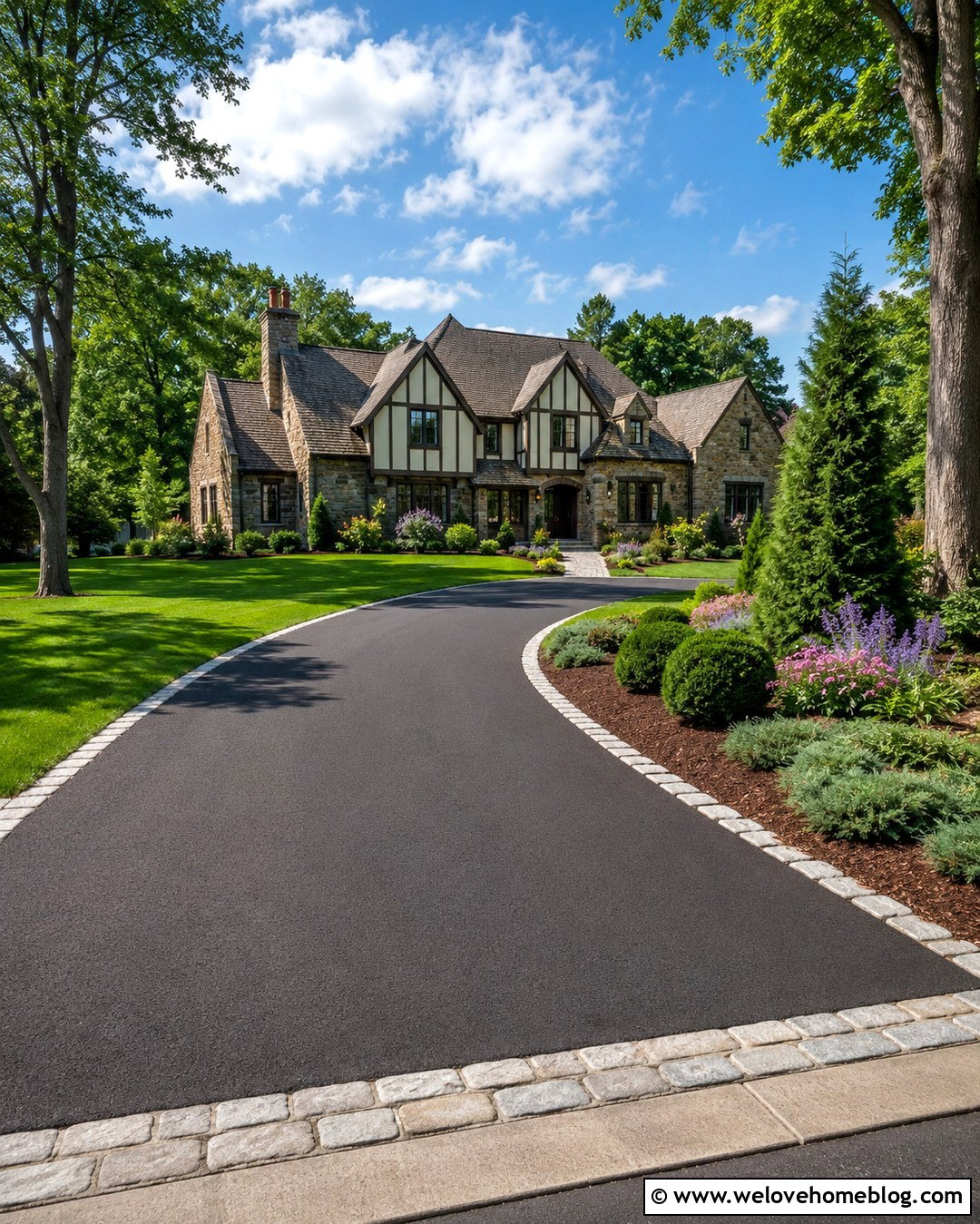
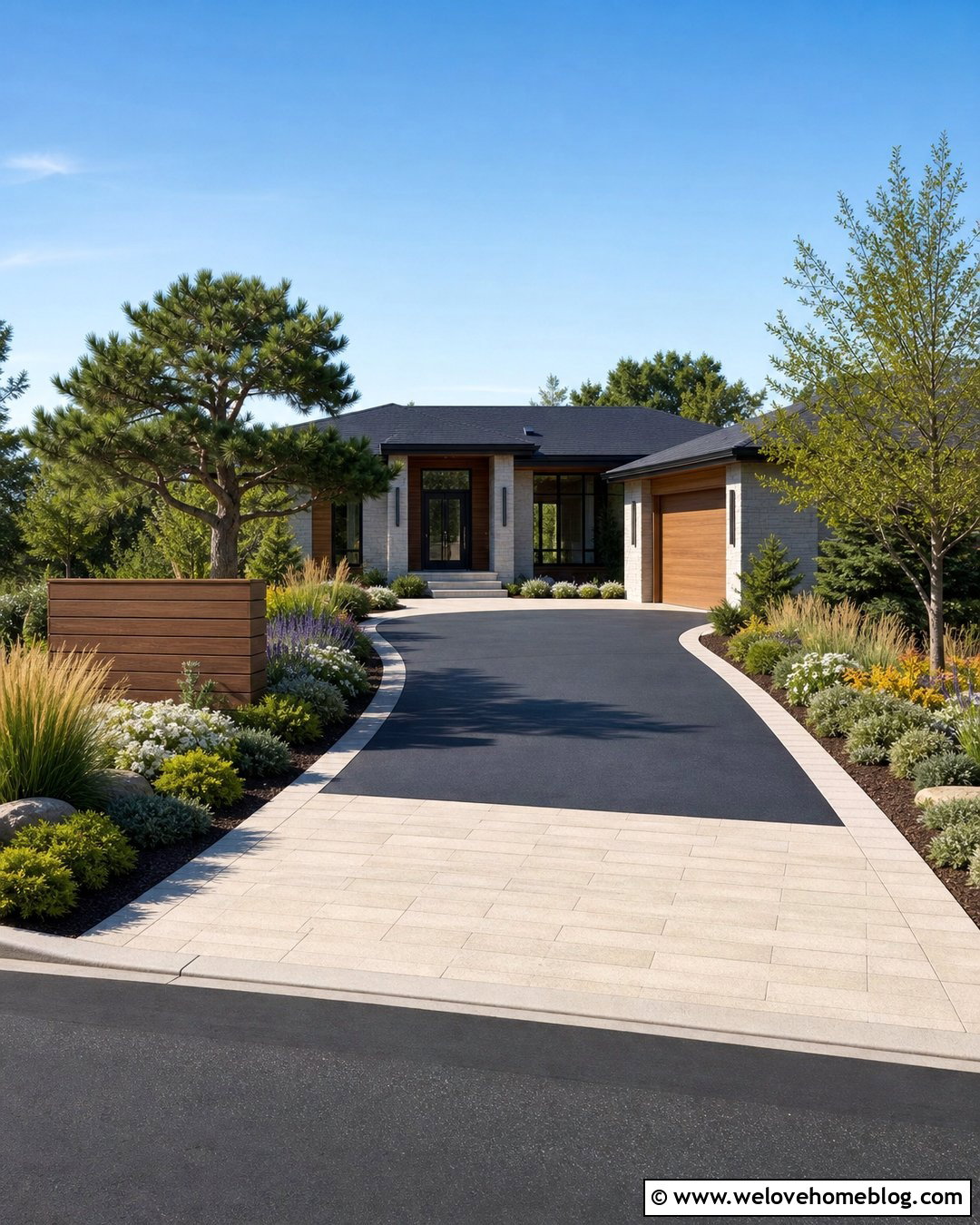
A large driveway corner can look empty if the planting is too small or scattered. Give the area structure with a sweeping bed beside a charcoal asphalt driveway and a light cobblestone border. Place a compact ornamental tree or upright evergreen toward the back, then layer medium rounded shrubs and low spreading evergreens toward the pavement. Add groups of flowering perennials between the permanent plants for seasonal color. The varied heights create depth while preserving an open foreground near the entrance. This arrangement complements substantial colonial, Tudor, and craftsman homes. Use mulch in a color that contrasts gently with the foliage and driveway. Repeating the same cobblestone around the walkway or front steps helps the wide corner feel connected to the house instead of becoming a separate island.
20. Budget Driveway Corner With Mulch and Perennials
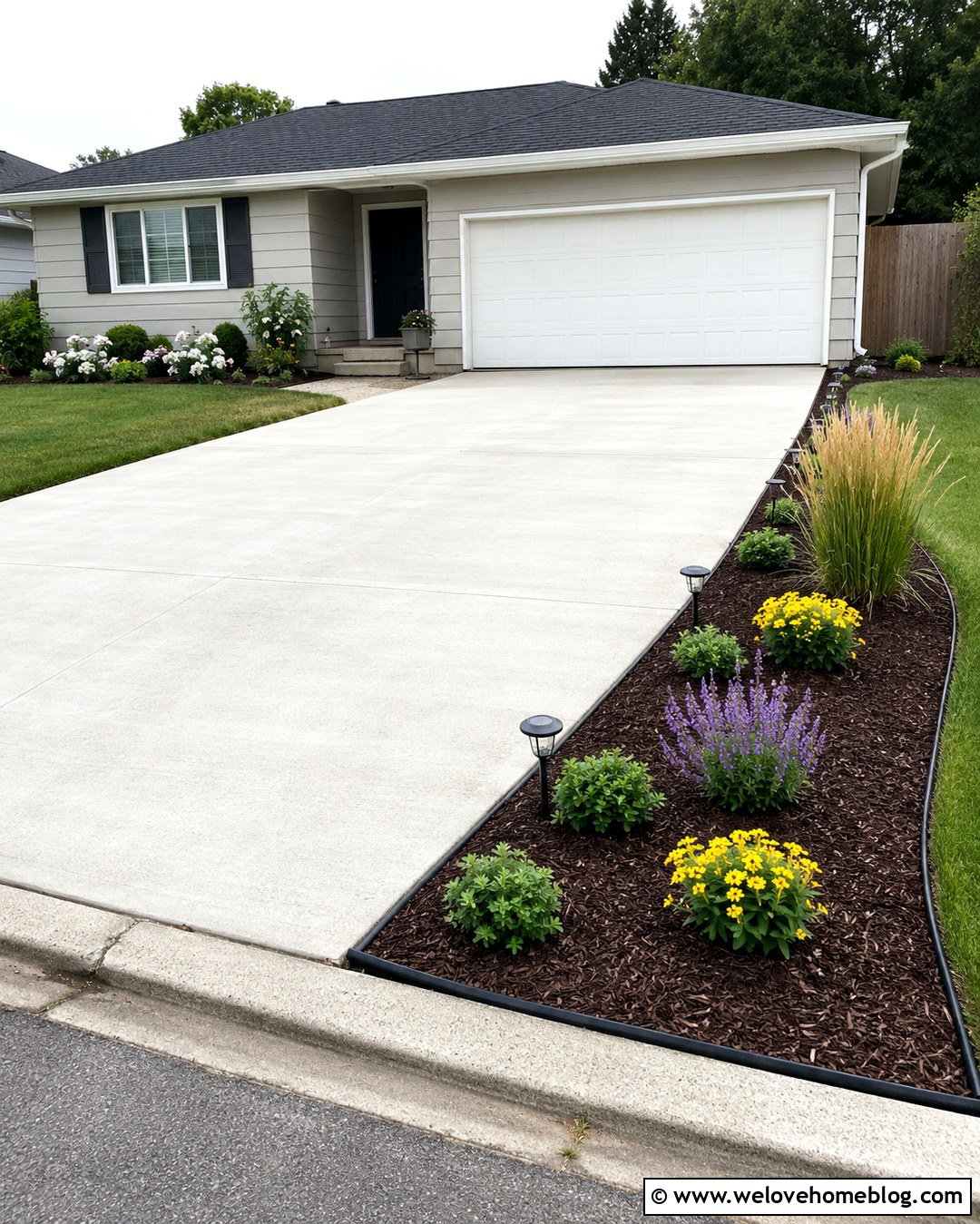
An attractive driveway corner does not require expensive masonry or a complete pavement replacement. Refresh an existing broom-finished concrete driveway by cutting a clean curved bed into the adjacent lawn. Install simple metal or composite edging, apply an even layer of mulch, and plant a limited mix of reliable perennials and compact shrubs. Choose younger plants and allow room for them to mature instead of filling every gap immediately. A cluster of ornamental grass can create an affordable focal point, while solar or wired lighting may be added later. This design works with bungalows, ranch homes, and modest suburban houses. Repeating three or four plants across the bed creates more impact than buying many unrelated varieties. Clear lines, healthy plants, and consistent mulch make the finished corner appear intentionally designed.
Conclusion:
These **20 corner driveway landscaping ideas** show how pavement, borders, planting, lighting, and practical circulation can work together as one complete entrance. The right design depends on the corner’s size, sunlight, slope, drainage, and relationship to the street. Start by protecting vehicle clearance and visibility, then choose materials that complement the driveway and house. Small spaces usually benefit from low ground cover and simple edging, while larger corners can support layered shrubs, flowering trees, walls, or statement boulders. Before digging, locate underground utilities and confirm any local setback or right-of-way requirements. With thoughtful spacing and a manageable plant palette, even an awkward driveway corner can become a polished focal point that improves the entire property.

Related posts:
Leave a Reply