
Crush and run combines angular stone with fine particles that compact into a firm, practical driving surface. These **20 Crush And Run Driveway Ideas** show how this affordable material can also deliver attractive curb appeal. The key is to treat the driveway as a complete landscape feature. Shape, edging, drainage, planting, and the transition to the garage should all work together. A properly prepared base, firm edge restraints, and a crowned or sloped surface can reduce spreading, rutting, and standing water. () From narrow cottage entrances to long rural approaches, the following designs offer realistic inspiration for different homes, lots, and budgets. Use these **20 Crush And Run Driveway Ideas** to find a complete look that fits your property.

1. Straight Crush And Run Driveway With Timber Edging
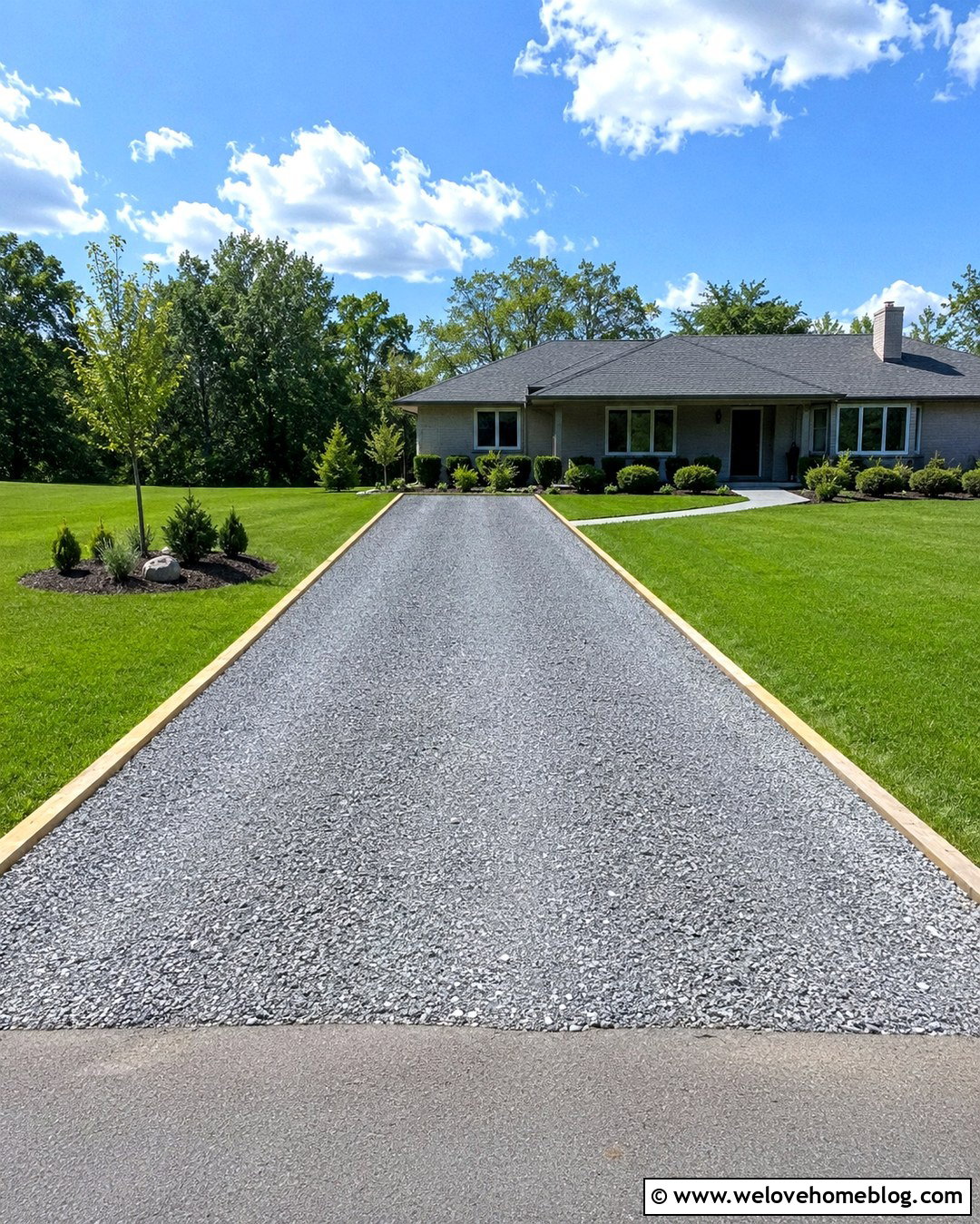
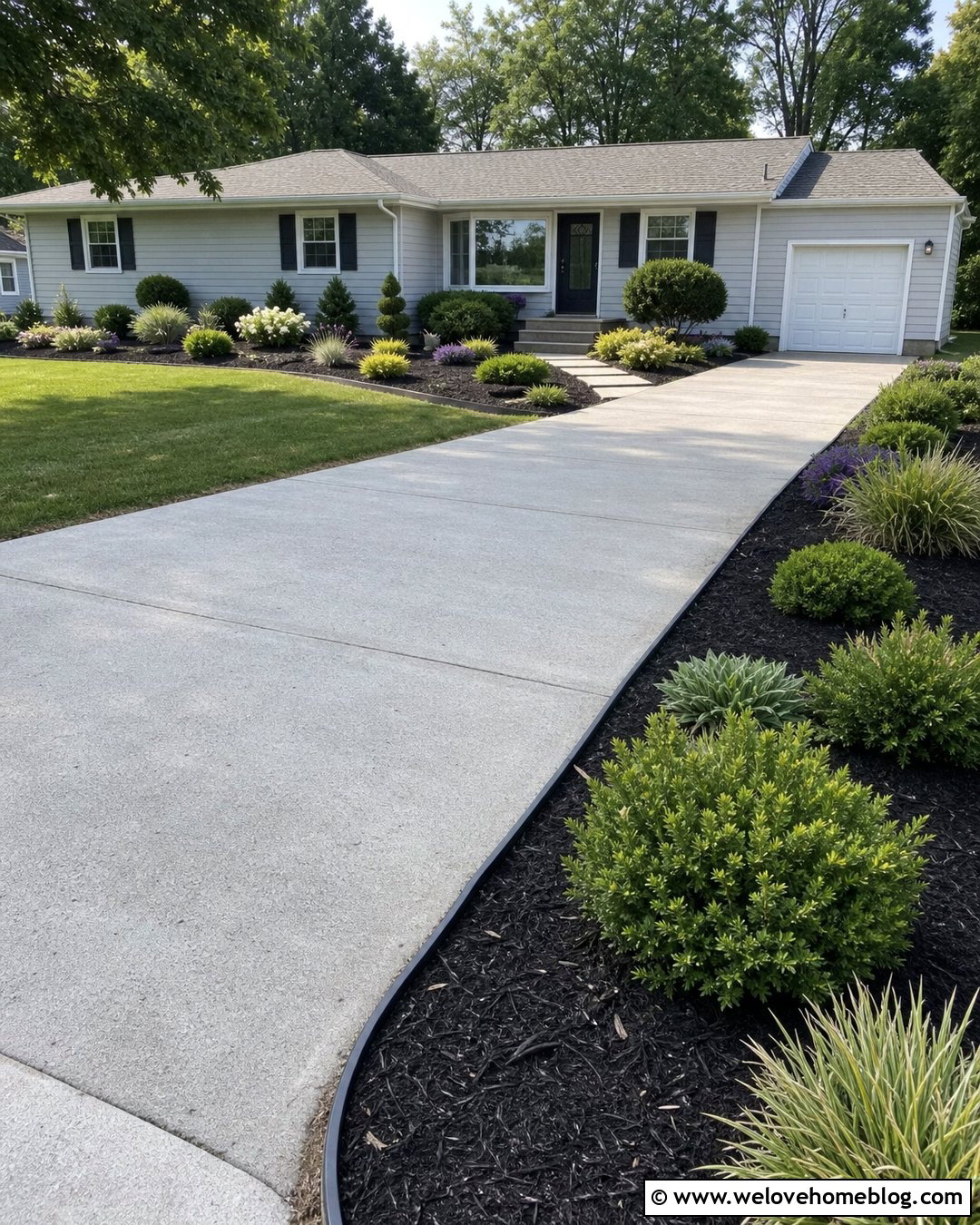
A straight crush and run driveway is one of the simplest layouts to install and maintain. Give it a finished appearance by containing the compacted gray aggregate with pressure-treated timber boards. Set the boards nearly flush with the surface so tires are less likely to catch them. A gentle crown down the center helps direct rain toward shallow lawn areas on both sides. Frame the approach with neatly cut grass, low evergreen shrubs, and a simple concrete walkway leading to the front door. This combination suits ranch homes, cabins, and casual country houses. Timber creates a warm visual boundary while keeping loose material away from planting beds. Choose ground-contact-rated lumber and secure it with sturdy stakes for better long-term stability.
2. Curved Crush And Run Driveway With Brick Edging
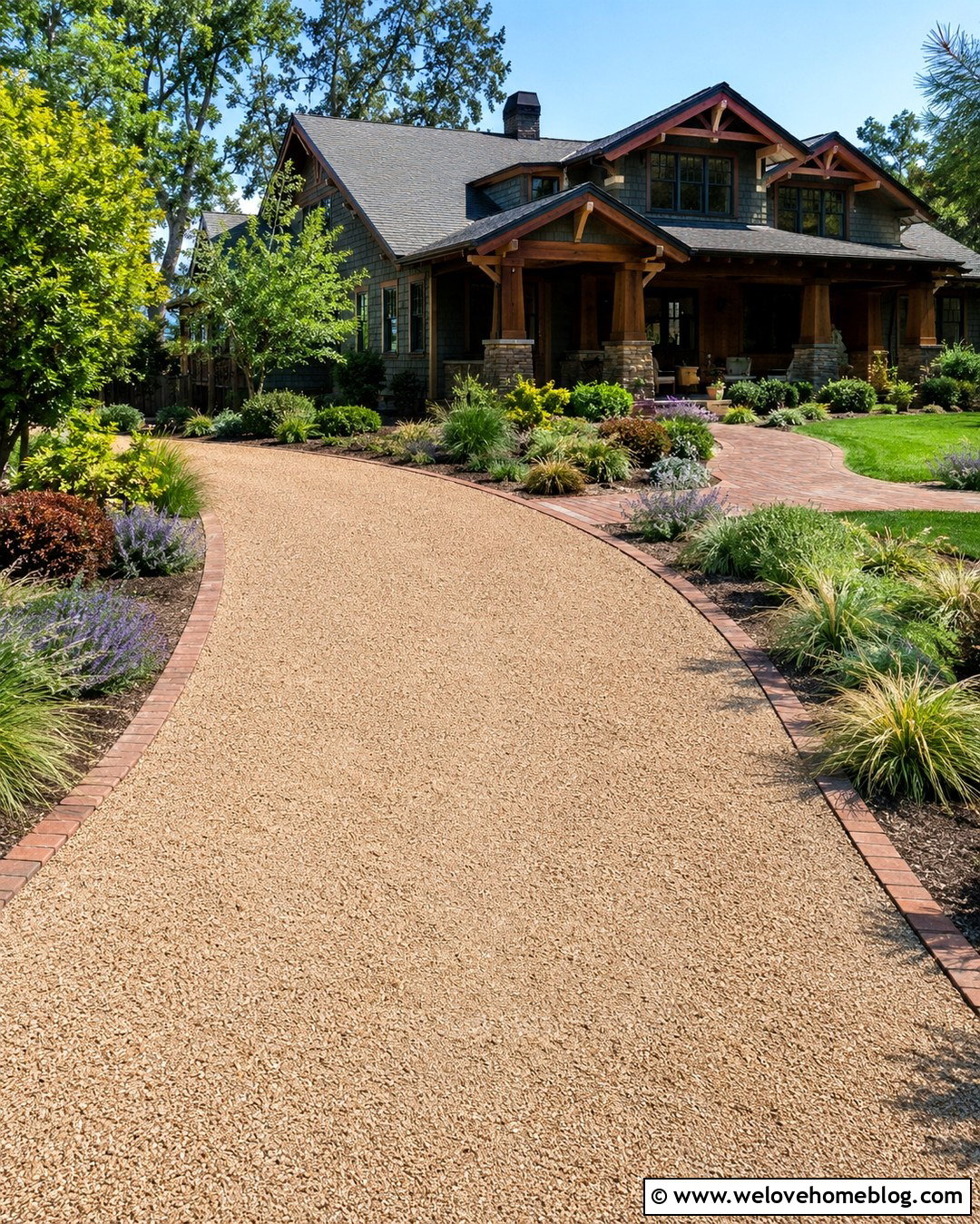
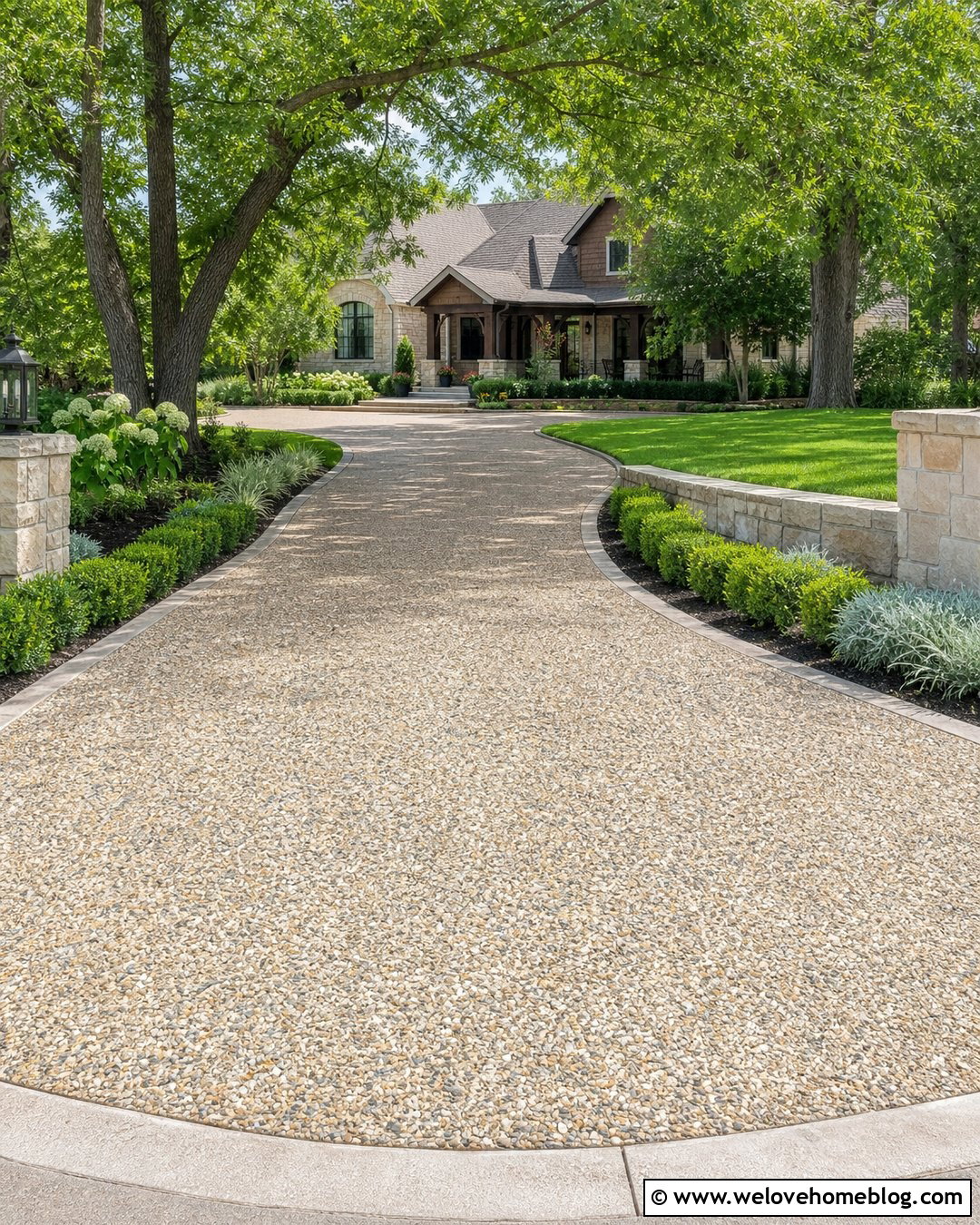
A soft curve makes an ordinary driveway feel more connected to the shape of the yard. Use compacted tan crush and run for the main surface, then outline both sides with red or brown clay brick pavers. The brick can sit level with the aggregate or form a slightly raised border where runoff is controlled. Continue the curve with layered planting beds filled with ornamental grasses, flowering perennials, and rounded shrubs. Place taller plants on the outside of the bend without blocking the driver’s view. This complete look works especially well with Craftsman and traditional brick homes. The contrasting brick gives the muted aggregate a more intentional appearance while defining the driveway’s flowing shape and separating it from surrounding lawn.
3. Crush And Run Driveway With Stone Boulder Borders
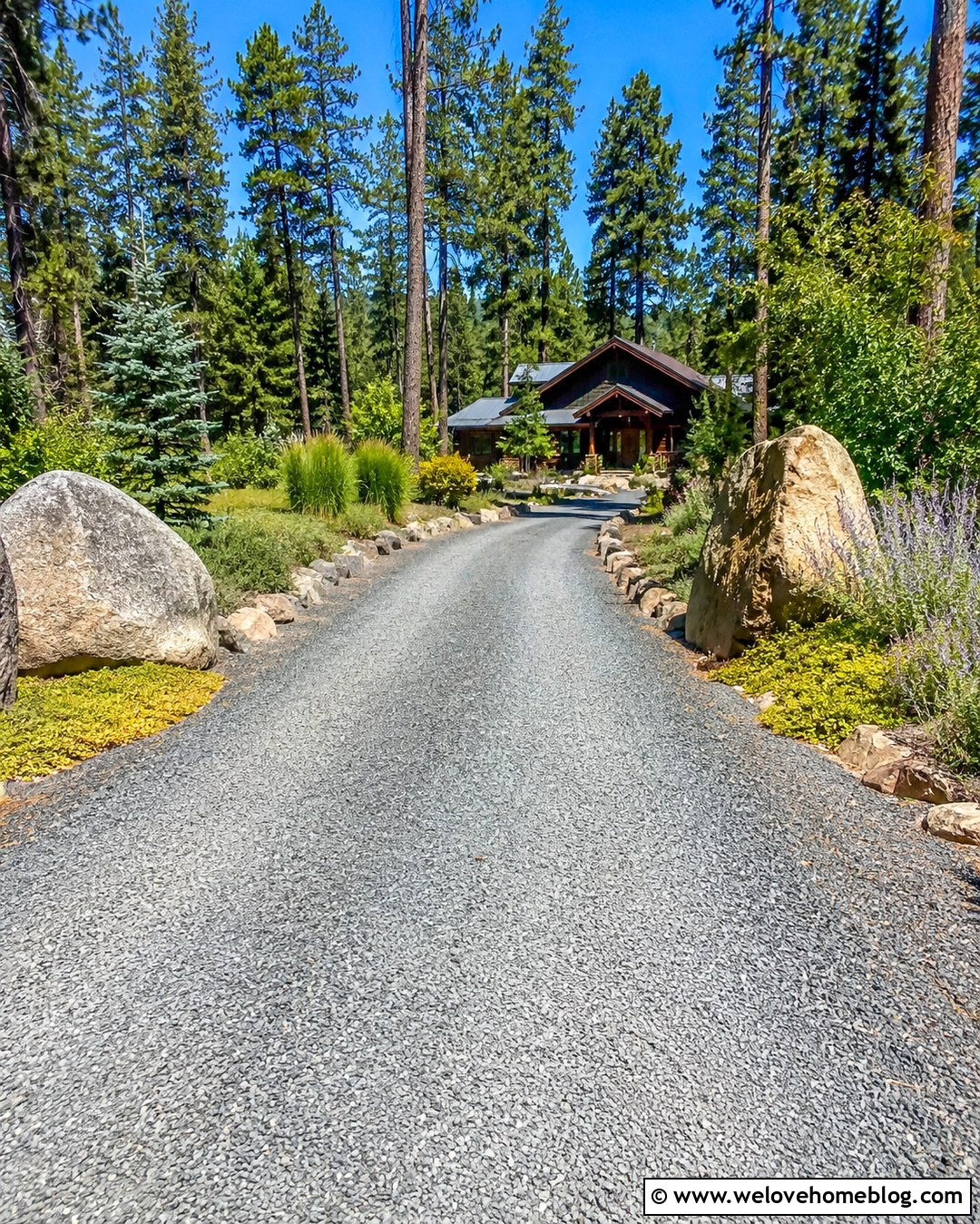
Large natural boulders can turn a basic crush and run driveway into a rugged country entrance. Start with a broad, gently curving surface made from compacted gray crusher run. Place irregular fieldstone boulders along selected sections rather than lining every inch. This creates containment without making the driveway feel overly formal. Fill the spaces behind the rocks with native grasses, creeping ground covers, and drought-tolerant shrubs. Near the road, use two larger boulders as visual markers for the entrance. Keep them far enough from the driving lane to allow comfortable turning and delivery access. The finished design pairs naturally with mountain cabins, rustic farmhouses, and wooded properties where manufactured edging might look out of place.
4. Circular Crush And Run Driveway With A Center Garden
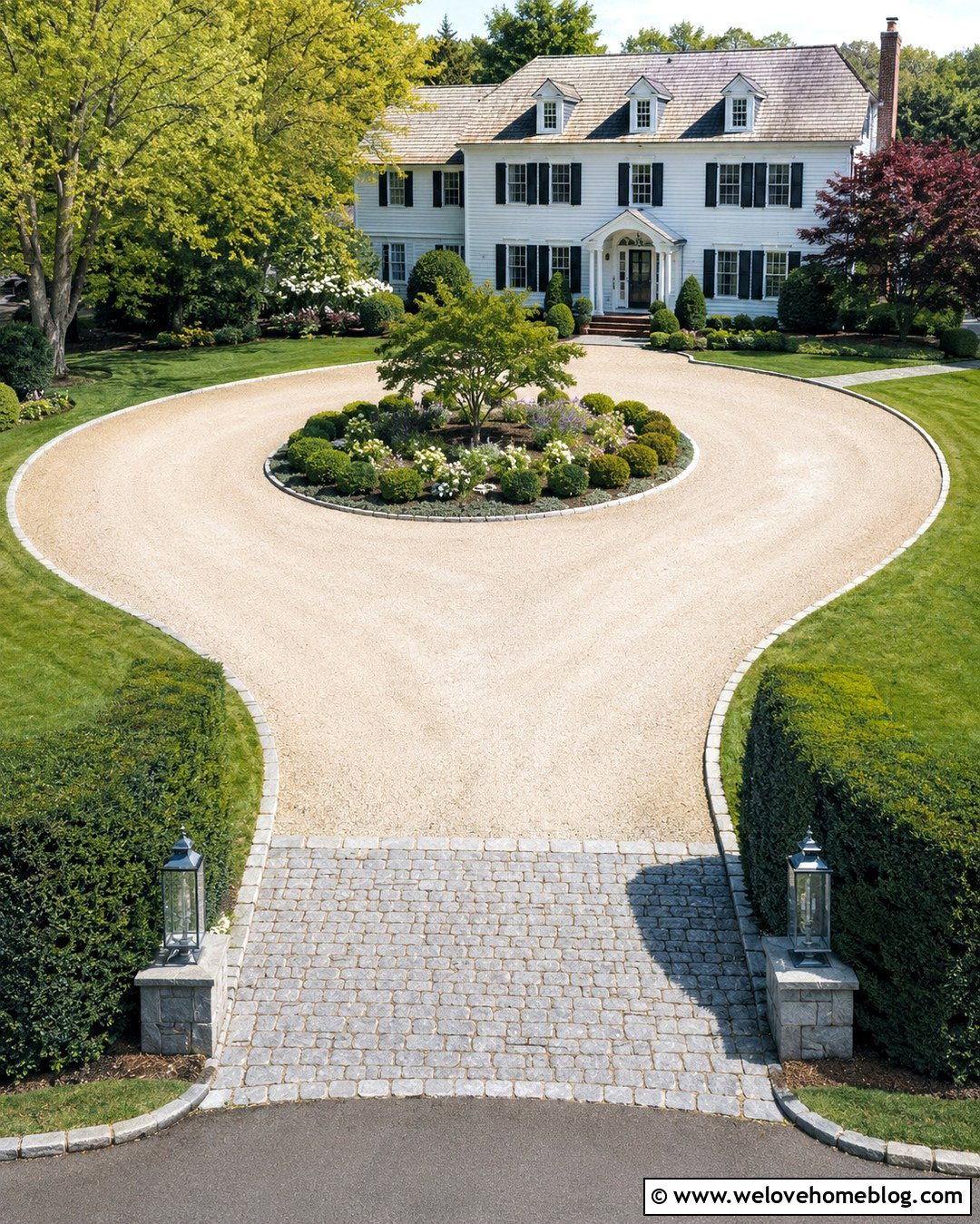
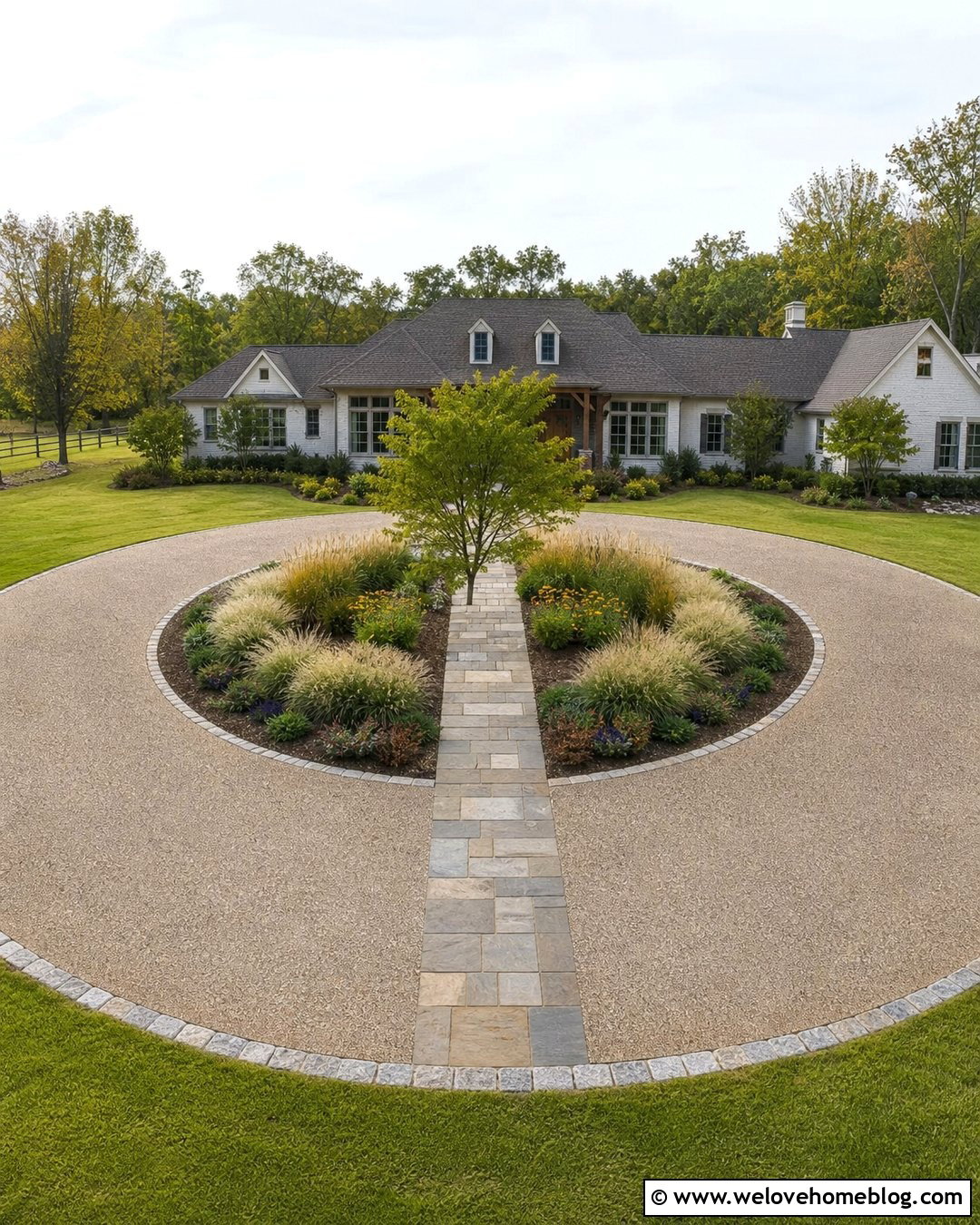
A circular crush and run driveway provides an elegant arrival area without requiring vehicles to back into the street. Build the driving loop around a landscaped center island, using compacted limestone crush and run for a light, clean surface. Edge the inside of the circle with cobblestones to protect the garden from wandering tires. The island can feature a small ornamental tree surrounded by evergreen shrubs, seasonal flowers, and mulch. Keep plants low near the entrance and exit for clear sightlines. A matching cobblestone apron at the road helps connect the full design. This layout suits Colonial, Georgian, and larger farmhouse properties, provided the yard offers enough turning space and properly planned drainage.
5. Narrow Crush And Run Driveway With Cottage Landscaping
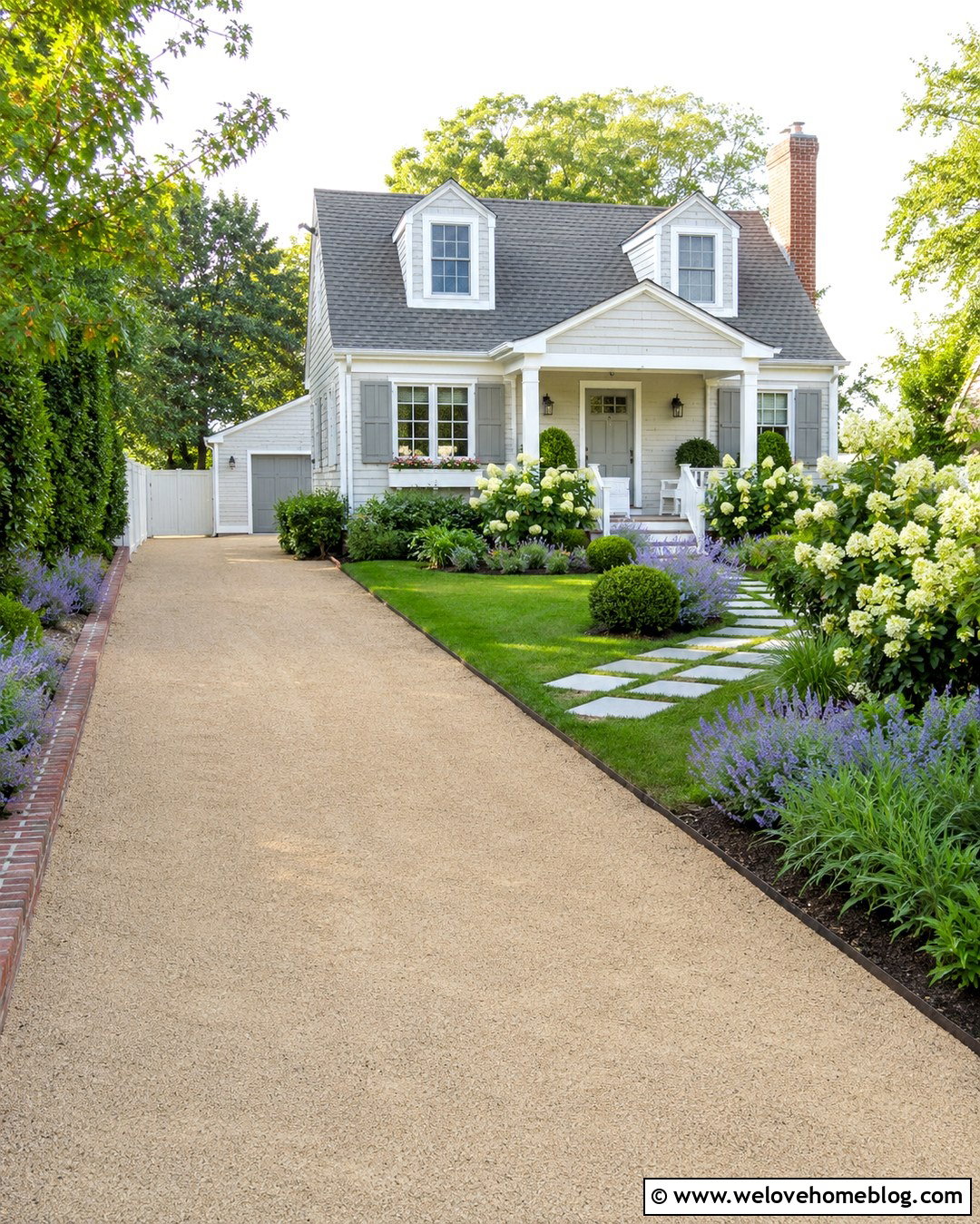
Small properties can still have a charming and functional crush and run driveway. Use a narrow, straight layout with warm beige aggregate compacted into a smooth surface. Define one side with a low brick border and the other with a flush steel edge beside the lawn. This slightly asymmetrical treatment prevents the space from feeling rigid. Add lavender, catmint, dwarf boxwood, and compact flowering shrubs along the house side. A stepping-stone walkway can branch naturally from the driveway toward the porch. Keep mature plant widths in mind so growth does not reduce vehicle clearance. This complete look complements Cape Cod homes, cottages, and small bungalows while making efficient use of a limited front yard.
6. Crush And Run Driveway With A Concrete Garage Apron
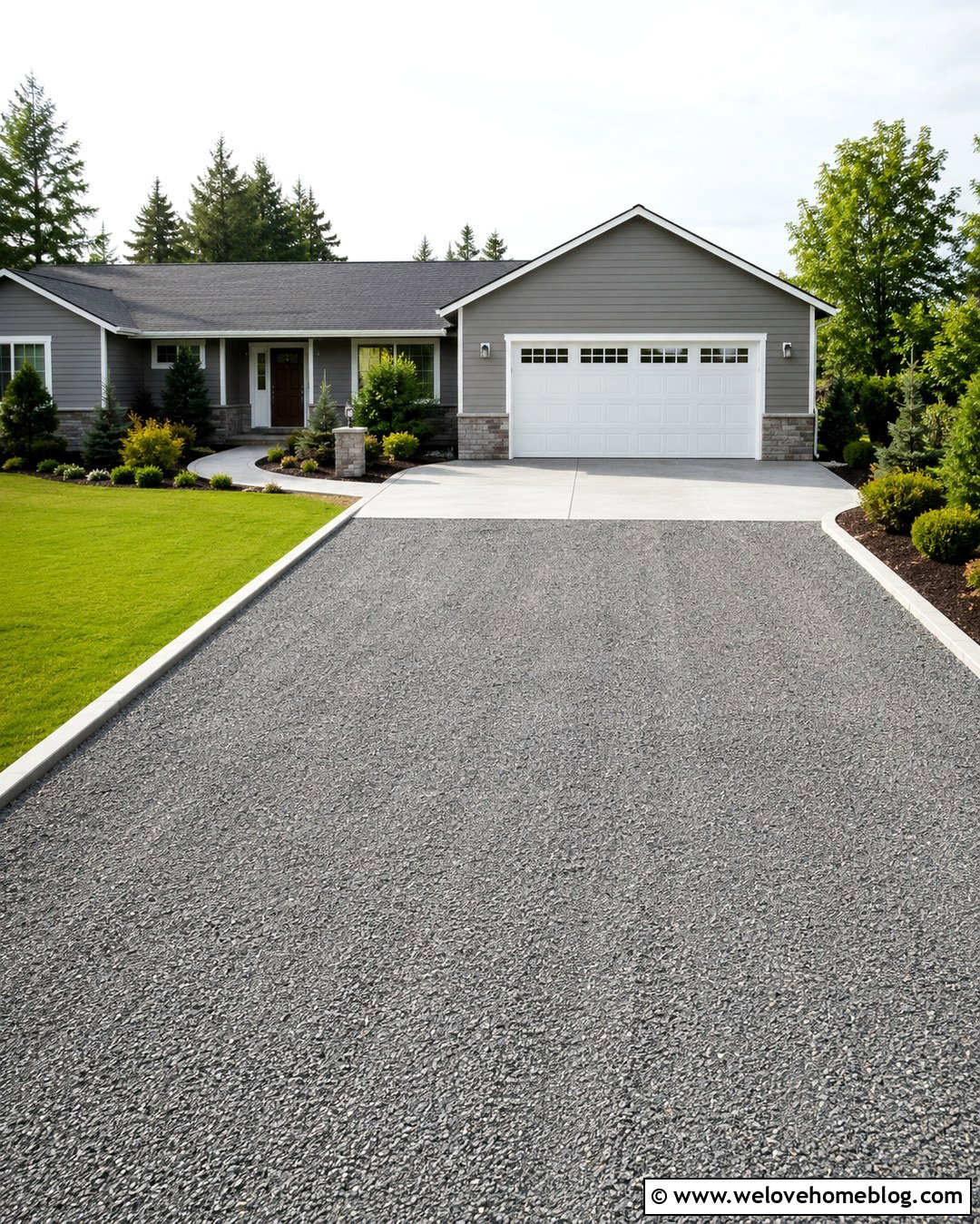
The area directly in front of a garage receives frequent turning, braking, and parking pressure. A concrete apron can create a durable transition while the rest of the driveway remains affordable crush and run. Install compacted gray aggregate along the main approach and connect it to a poured concrete pad near the garage doors. A straight control line between the materials keeps the change looking deliberate. Use concrete curbing along nearby beds and low stone edging beside the lawn. Simple evergreen foundation plants and a paved front walkway complete the layout. The hard apron also provides a cleaner place for moving trash cans, working on equipment, or entering the garage after rain. Coordinate its color with the home’s trim or foundation.
7. Crush And Run Driveway With Grass Drainage Swales
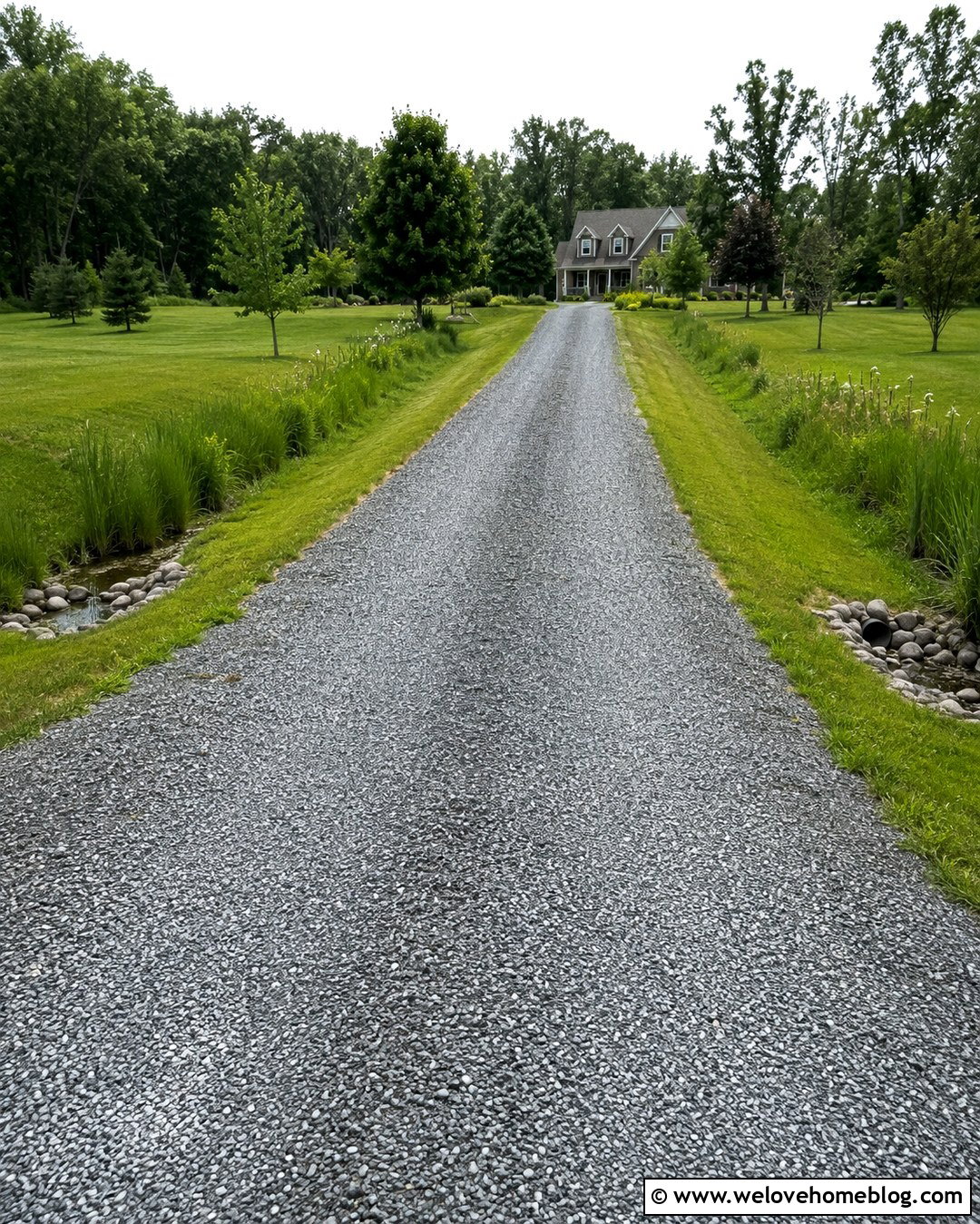
On a wet or gently sloping property, drainage should shape the entire driveway design. Form a slightly crowned crush and run surface so water moves toward shallow grass-lined swales on both sides. The swales should follow the land and carry runoff toward a suitable drainage area rather than neighboring property or the house. Crusher run can compact tightly, so surface grading remains essential even when a geotextile separator and strong stone base are used. () Add clusters of moisture-tolerant native plants beyond the swales, leaving open grass close to the driving lane. This practical look blends easily into wooded rural lots and traditional suburban yards without making the drainage system appear industrial.
8. Modern Crush And Run Driveway With Steel Edging
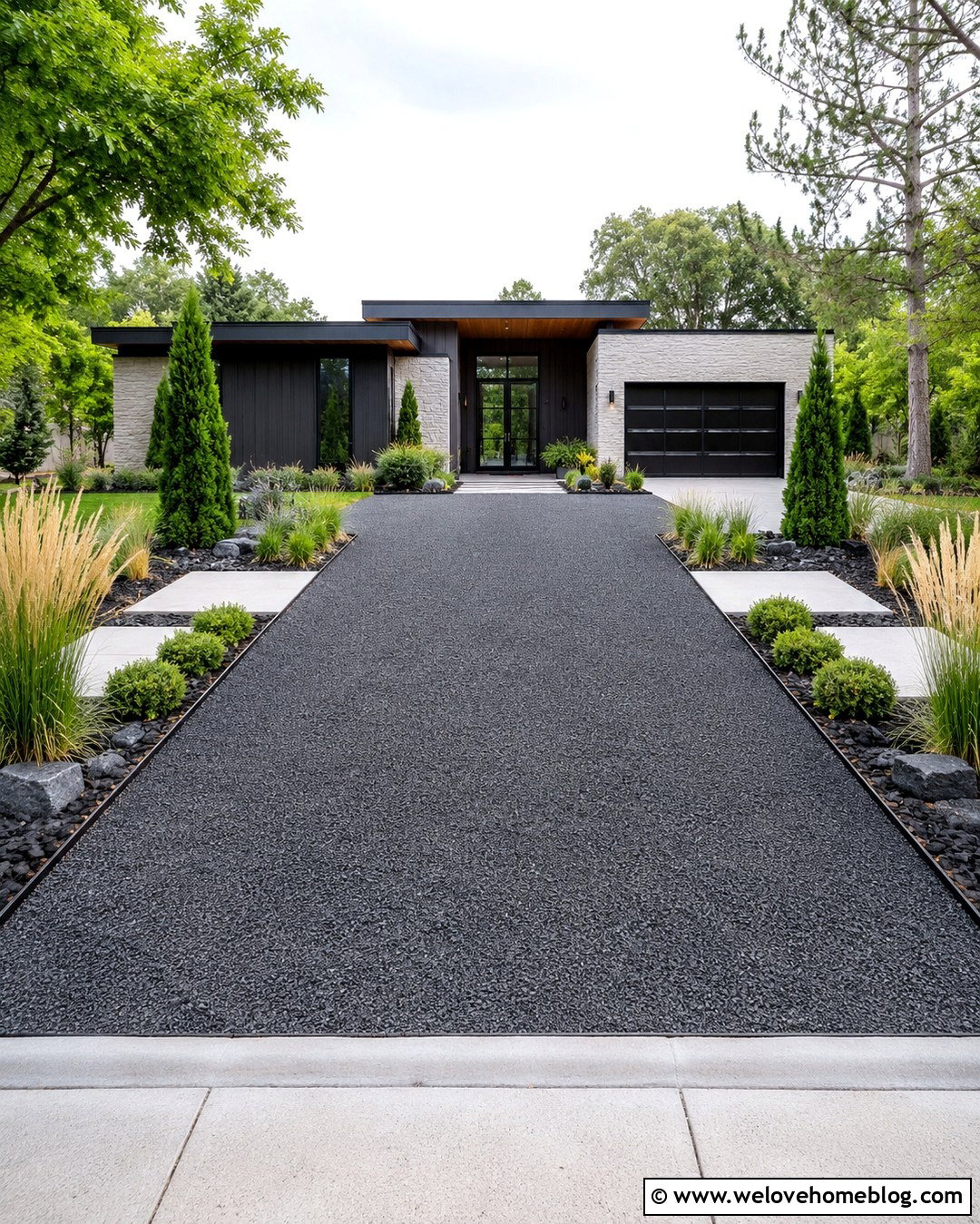
Crush and run can suit a modern home when the layout uses crisp lines and controlled planting. Choose finely graded charcoal-gray aggregate and compact it into a wide, straight driveway. Define both sides with black powder-coated steel edging installed close to surface level. Add rectangular planting beds containing ornamental grasses, clipped evergreen forms, and dark landscape rock. A large-format concrete walkway can run parallel to the driveway before turning toward the entrance. Keep the palette limited to gray, black, green, and one accent color from the facade. The steel helps create a precise boundary without visually overpowering the stone surface. This streamlined design works well with contemporary homes featuring flat roofs, mixed siding, or minimalist architecture.
9. Crush And Run Driveway With Cobblestone Entrance
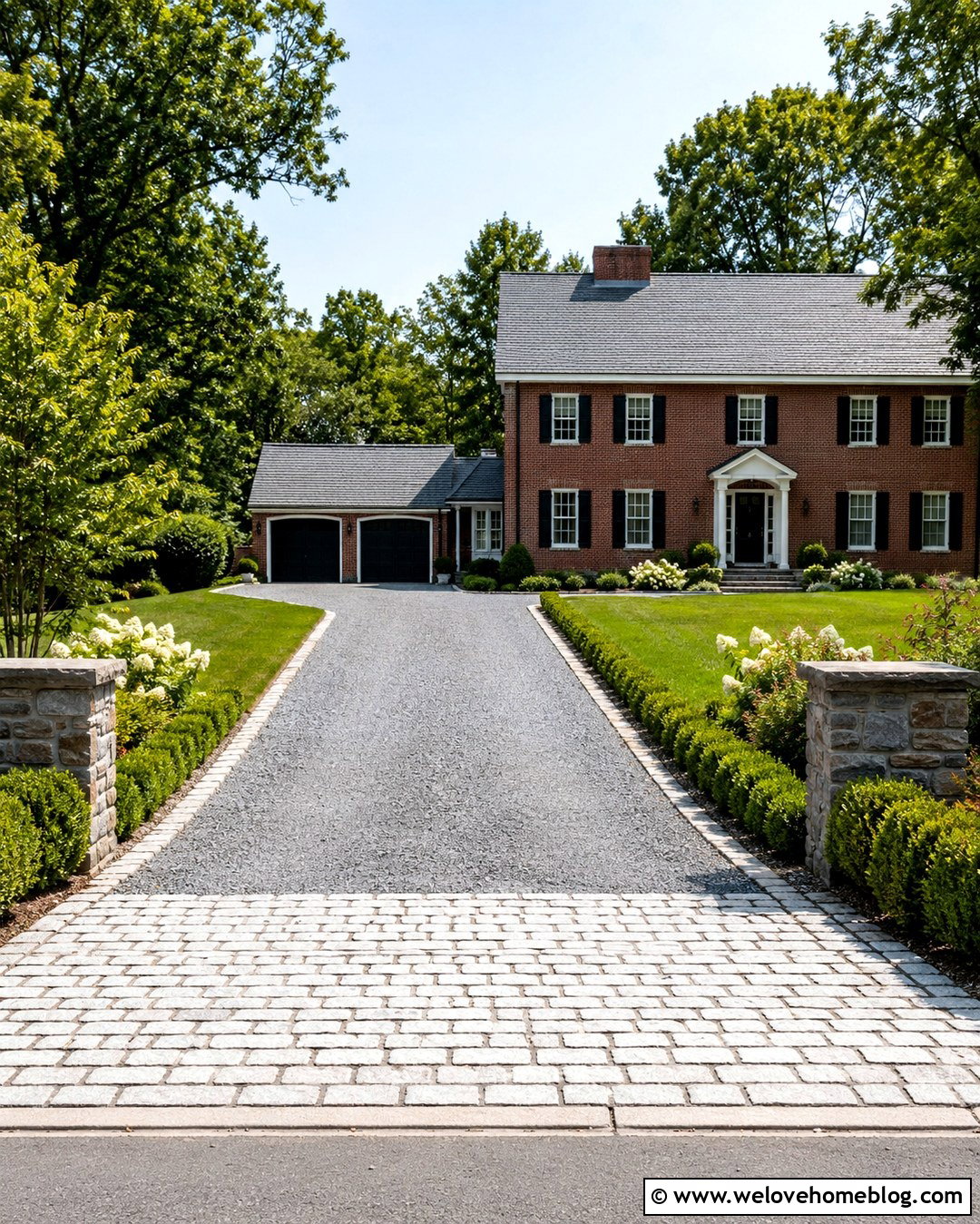
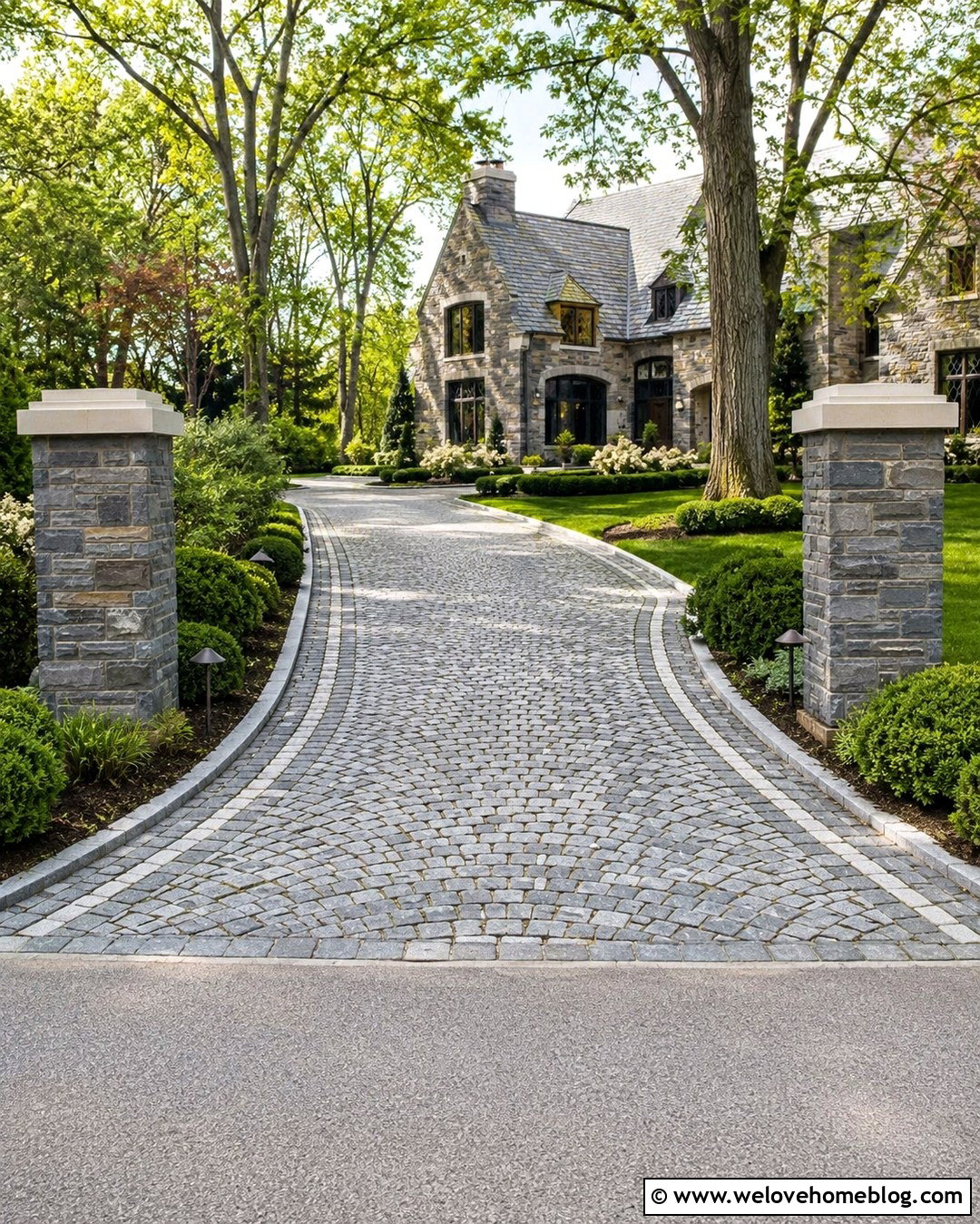
A cobblestone entrance creates a strong first impression while keeping the main driveway economical. Begin at the street with a broad apron of granite cobbles, then transition into a compacted gray crush and run surface. Repeat the cobblestone as short edge sections near the entrance rather than continuing it along the entire driveway. Low masonry pillars, clipped shrubs, and balanced planting beds can frame the opening. Farther toward the house, allow the borders to become softer with lawn and informal landscaping. This approach places the most decorative material where it has the greatest visual impact. It works particularly well for Colonial, Tudor, and traditional homes. Ensure the apron transition remains smooth so stones do not create an uncomfortable bump.
10. Sloped Crush And Run Driveway With Retaining Walls
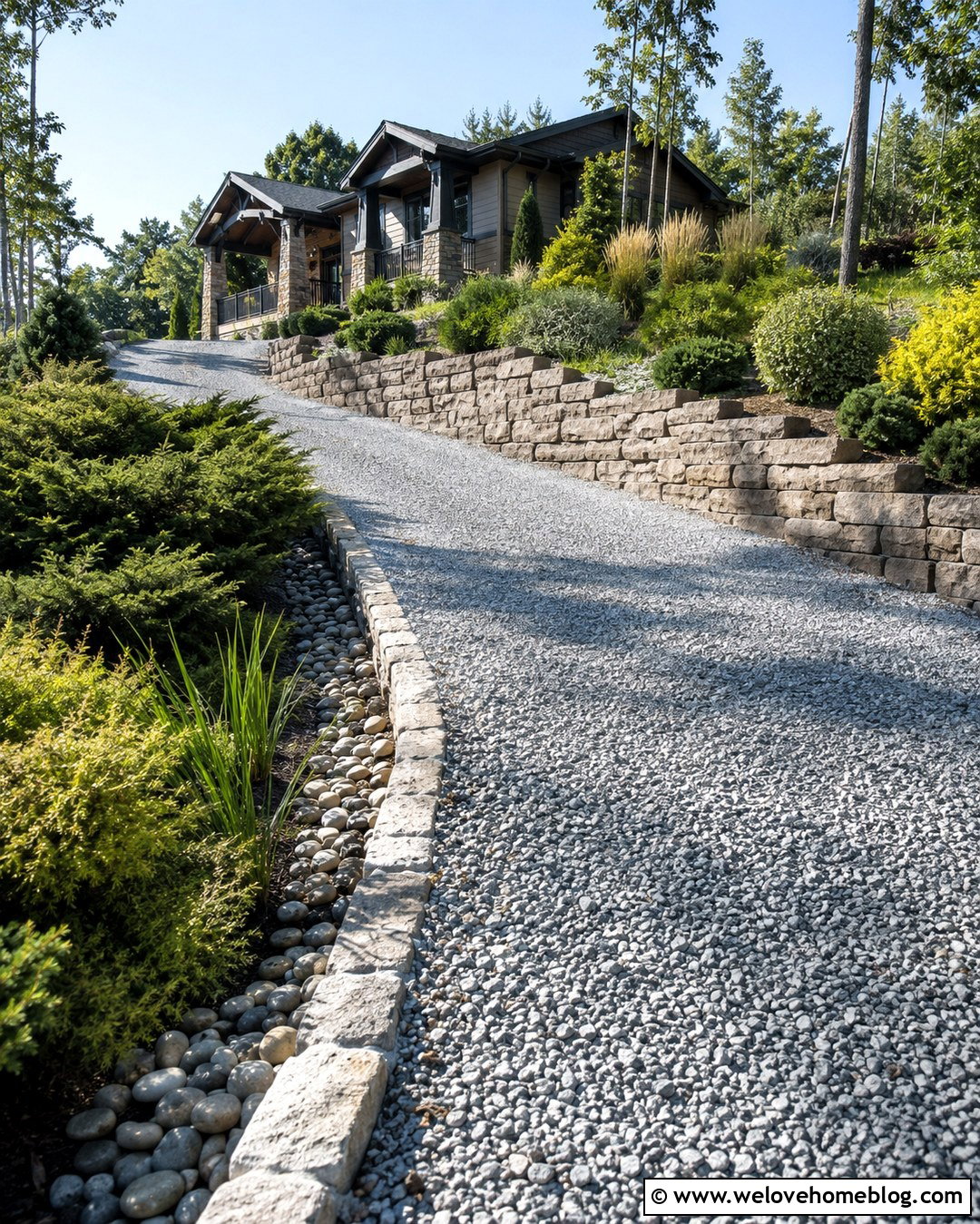
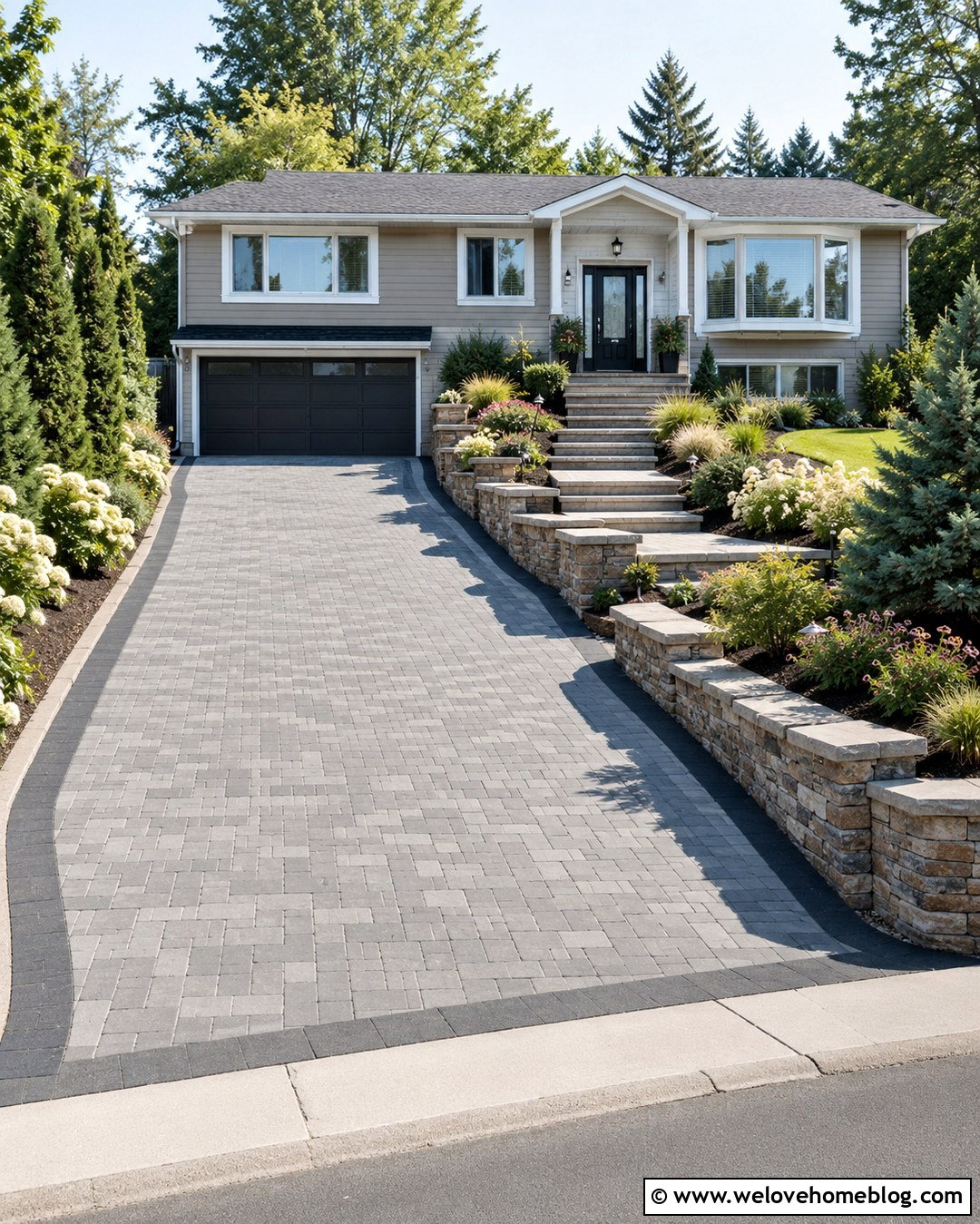
A sloped driveway needs controlled runoff and strong side support. Use compacted angular crush and run in a straight or gently curved layout, then build a low segmental retaining wall along the uphill side. The wall can hold back soil while creating space for a narrow planting bed above it. On the downhill edge, install a secure curb or stone border to reduce aggregate migration. Direct runoff toward an approved collection point with a properly placed swale, channel, or drain. Avoid allowing roof water to discharge onto the driving surface. Plant the upper bed with spreading junipers, ornamental grasses, and other low-maintenance species that help cover exposed soil. The result feels integrated rather than simply carved into the slope.
11. Crush And Run Driveway With Split Rail Fencing
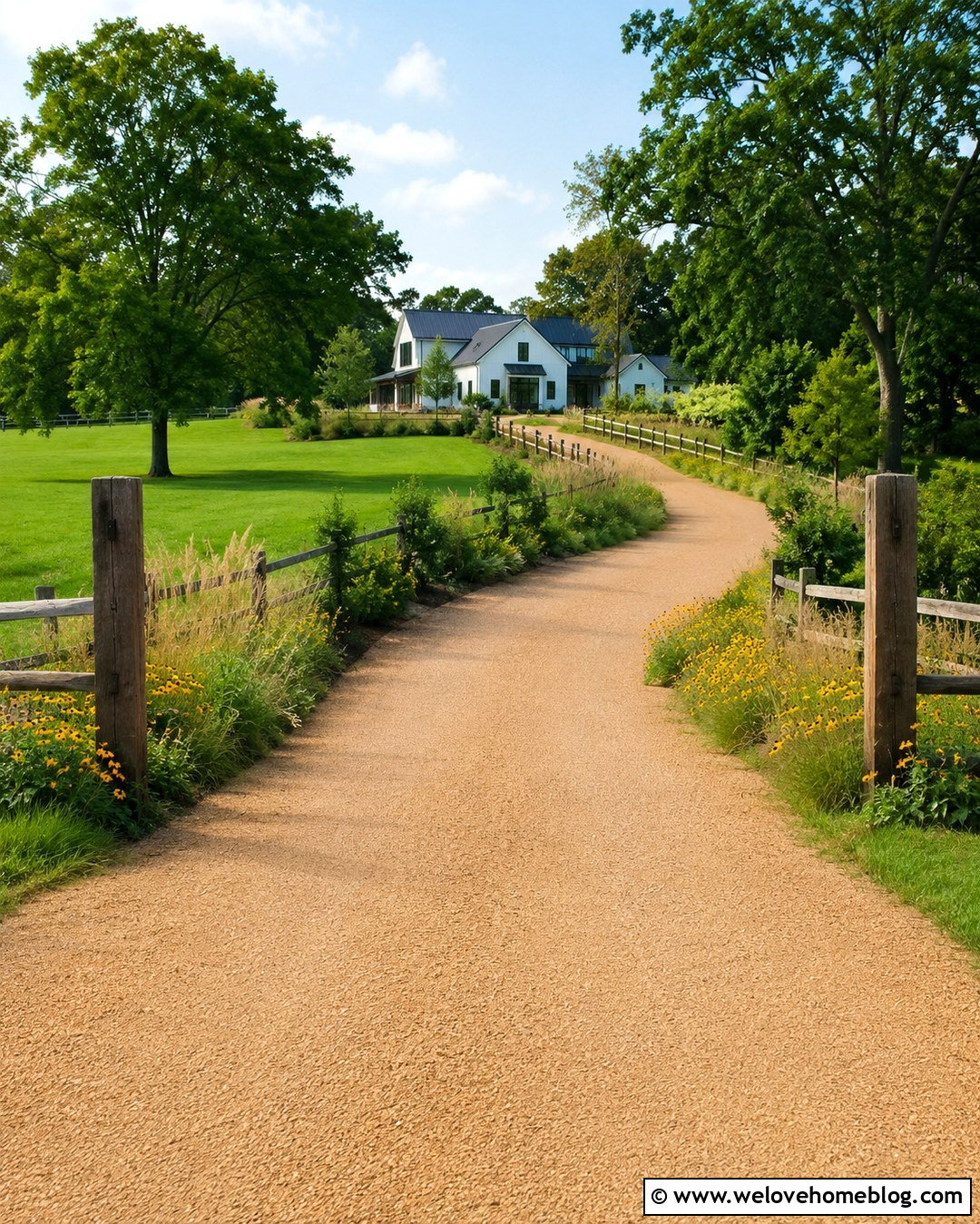
Nothing frames a rural driveway quite like split rail fencing. Pair a broad tan crush and run surface with fencing placed several feet beyond each edge, leaving room for drainage and occasional maintenance. Follow the driveway’s natural curve instead of forcing the fence into a perfectly straight line. Native meadow grasses, black-eyed Susans, and informal shrub groups can fill selected areas between the fence and driveway. At the road, widen the entrance and use sturdy wooden posts as simple visual markers. The design is ideal for country homes, horse properties, and modern farmhouses. Keep the planting closest to the road low enough to preserve visibility. The open fence defines the approach without making a large property feel enclosed.
12. Small Crush And Run Driveway With Paver Borders
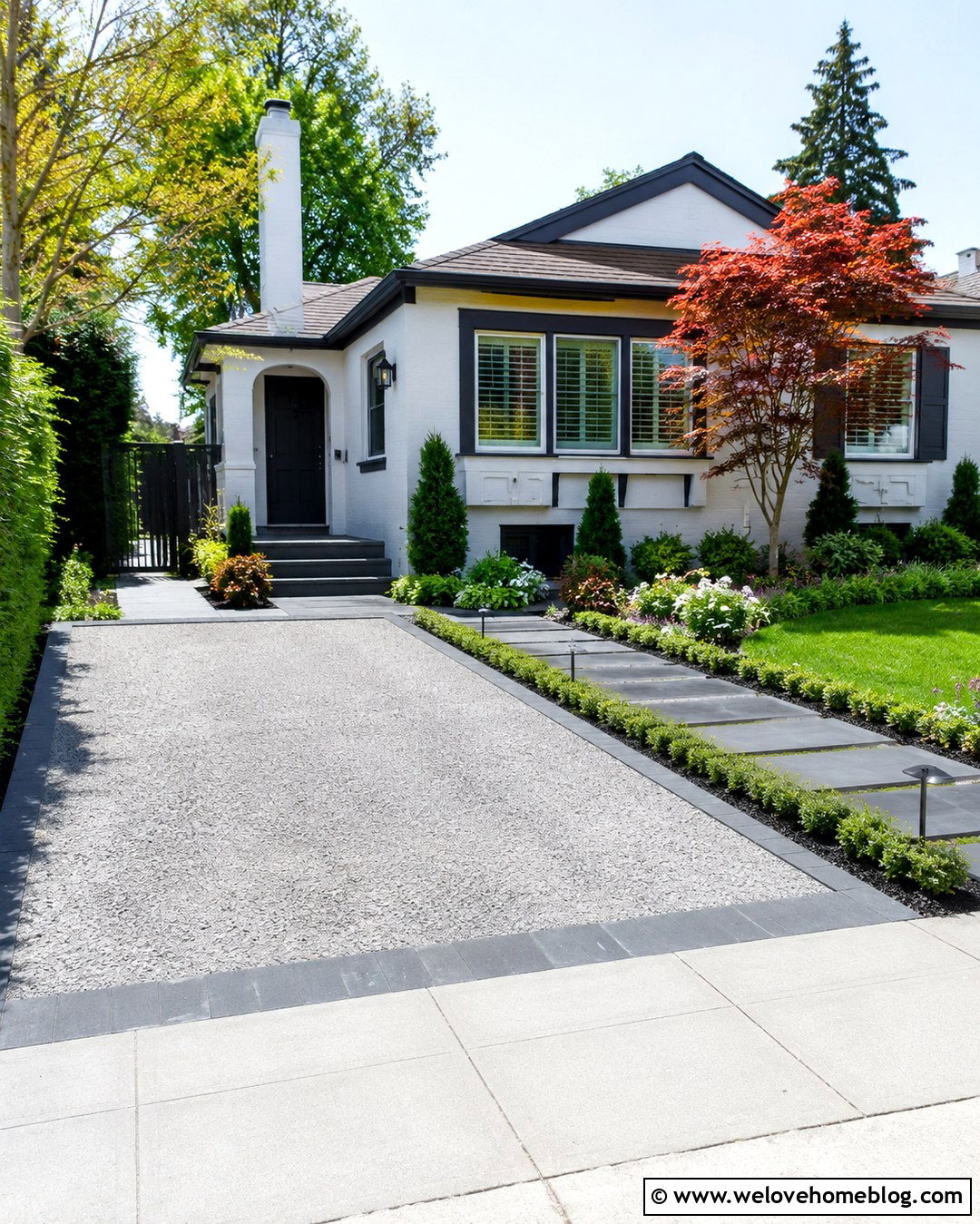
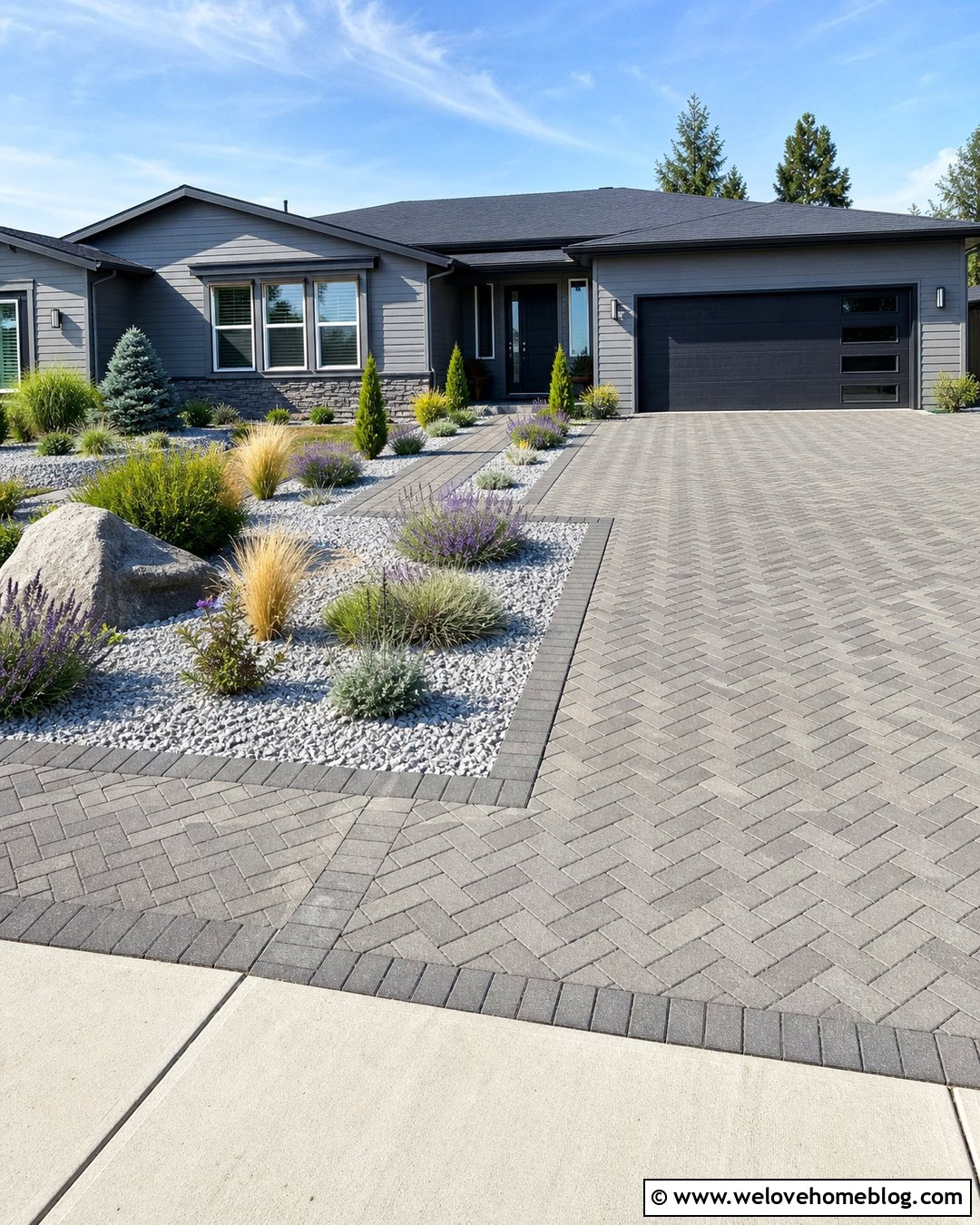
A short front-yard driveway can look polished without requiring a large landscaping budget. Use compacted light-gray crush and run for the central parking surface and frame it with a single row of charcoal concrete pavers. Continue the same pavers into a walkway leading toward the front steps. This repetition connects the driveway and entrance while reducing the number of materials in the design. Add narrow planting beds with dwarf shrubs, ground covers, and one small ornamental tree. A clean transition at the sidewalk or street keeps the aggregate contained. Dark pavers provide helpful contrast, especially beside pale siding or white-painted brick. The complete arrangement is well suited to townhomes, compact ranch houses, and remodeled suburban bungalows.
13. Long Crush And Run Driveway With Tree-Lined Borders
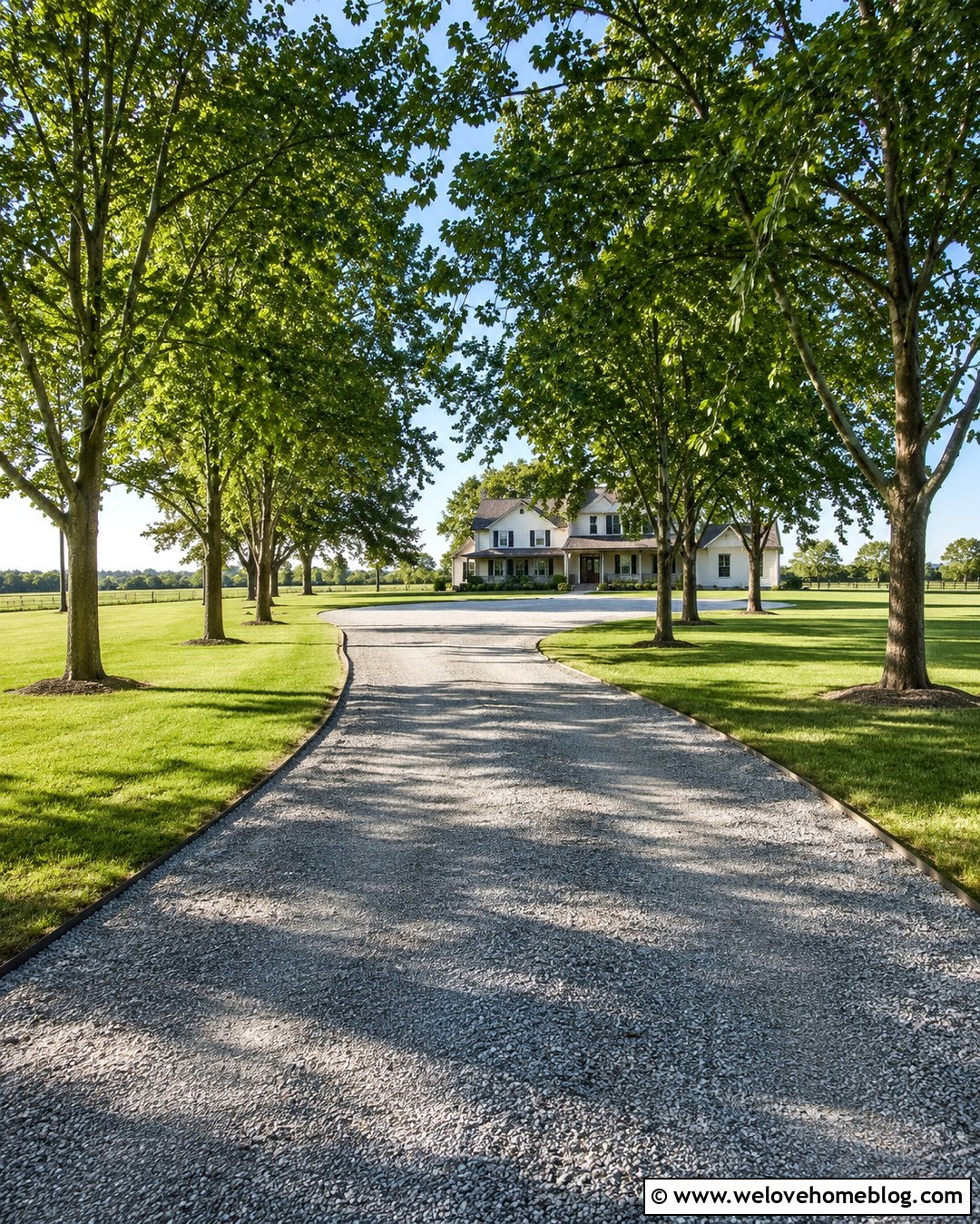
A long driveway becomes more inviting when trees create rhythm along the approach. Use compacted natural-gray crush and run in a gently curving layout that reveals the house gradually. Plant matching deciduous trees in generously spaced groups on both sides, keeping trunks and mature canopies safely away from the driving lane. Instead of continuous formal rows, leave occasional gaps to preserve views and reduce the tunnel effect. Define the surface with flush metal edging or narrow stone borders. Beneath the trees, use mown grass or simple ground cover for easy maintenance. A wider turnaround near the house completes the plan. This layout suits large rural lots, estates, and farmhouses where the driveway is a major part of the arrival experience.
14. Crush And Run Driveway With A Side Parking Pad

A side parking pad adds useful space without making the entire driveway unnecessarily wide. Build the main crush and run driveway as a straight approach, then expand one side near the house into a rectangular or softly angled parking bay. Outline the pad with concrete pavers so its shape remains easy to read. A planted island between the parking area and front walkway can soften the extra surface. Use compact shrubs, ornamental grasses, and a small shade tree that will not drop heavy fruit or branches onto vehicles. Maintain the same compacted aggregate across both areas for a seamless finish. This practical layout gives guests, trailers, or additional household vehicles a defined location while preserving an organized front-yard appearance.
15. Crush And Run Driveway With A Farmhouse Gate
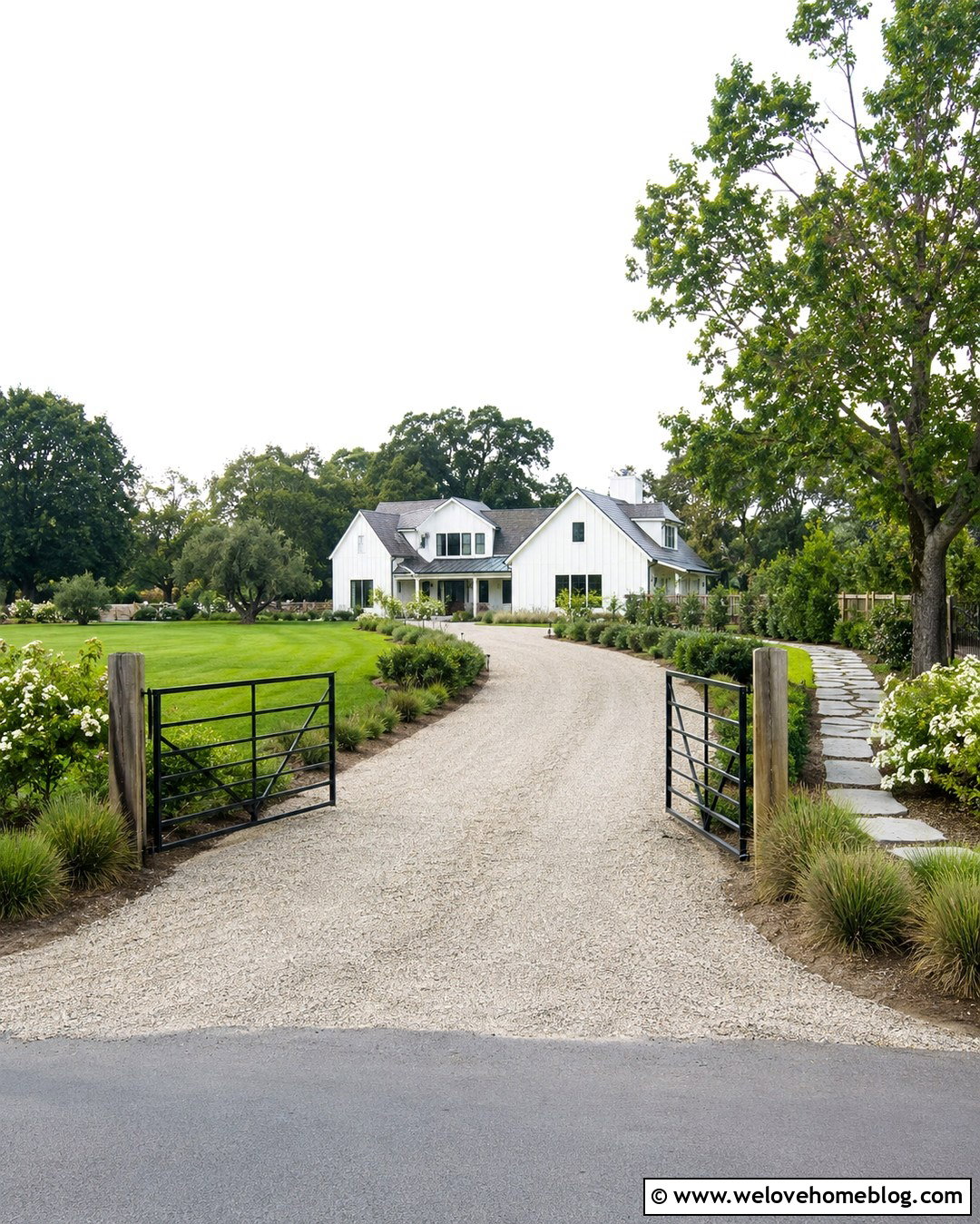
A simple farm gate can provide security and character without feeling overly formal. Set a broad crush and run driveway between stone or heavy timber posts, then install a black metal or wooden gate that matches the home’s exterior details. Create a level stopping area on both sides of the gate so vehicles do not wait on a steep grade. Continue the compacted aggregate toward a modern farmhouse with a gentle curve through open lawn. Low native grasses and white flowering shrubs can frame the entrance without hiding the gate. Add a separate pedestrian path where regular foot access is needed. The finished look feels welcoming, practical, and connected to its rural setting while clearly defining the property boundary.
16. Crush And Run Driveway With Stone Pillars
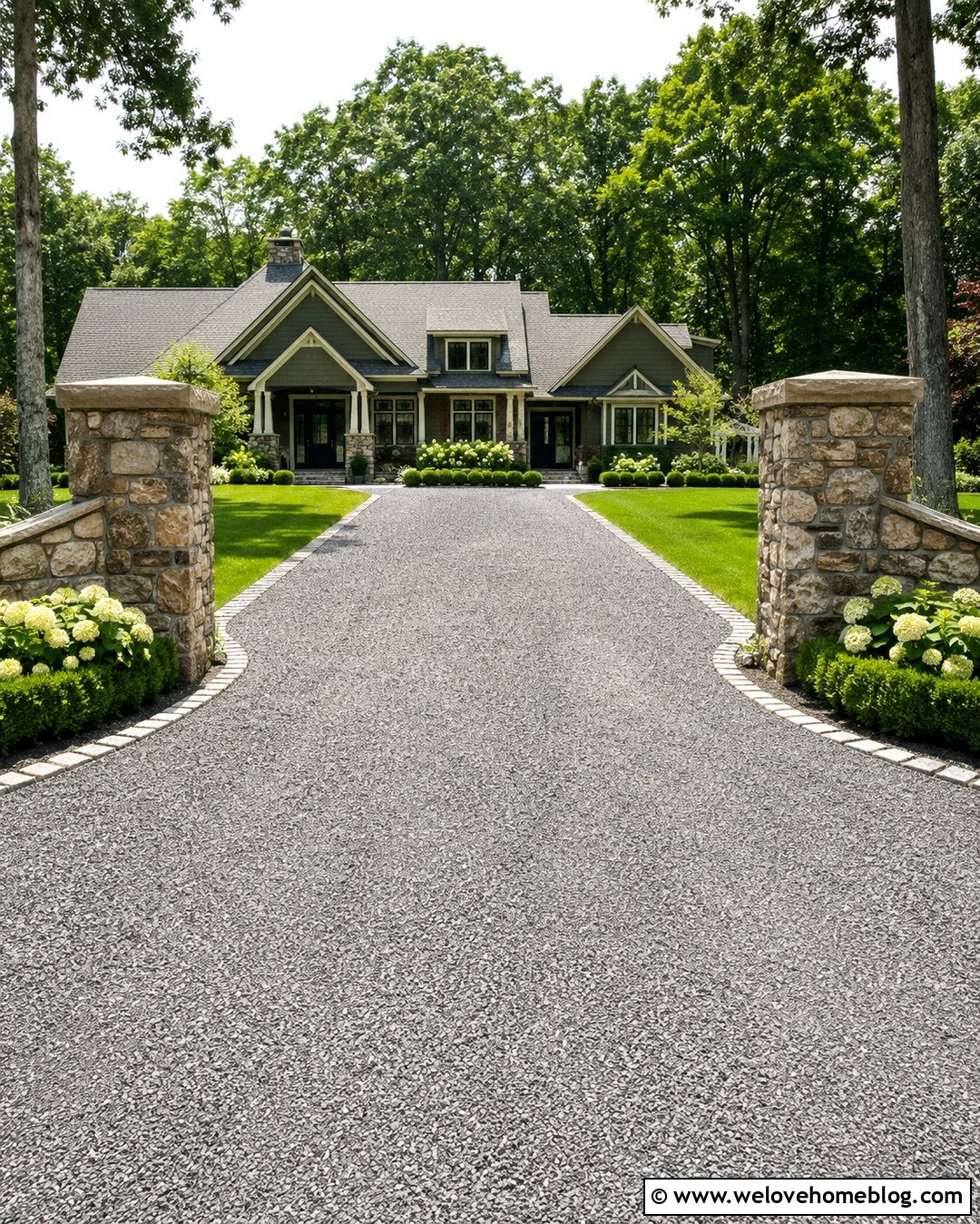
Stone pillars give a crush and run driveway a substantial, permanent entrance. Choose pillars faced with local fieldstone or cut limestone, then repeat the stone around the home’s foundation or porch. Between the pillars, build a wide compacted crusher run surface that allows comfortable turning from the road. A pair of low curved walls can extend into planting beds filled with boxwood, hydrangeas, and ornamental grasses. Keep the aggregate contained with flush cobblestone edging near the entrance, transitioning to simpler borders farther inside the property. Include integrated address plaques or mail features only where local rules allow. This balanced design complements Craftsman, traditional, and lodge-style homes while making an inexpensive driveway material feel carefully planned and established.
17. Crush And Run Driveway With A Brick Ribbon
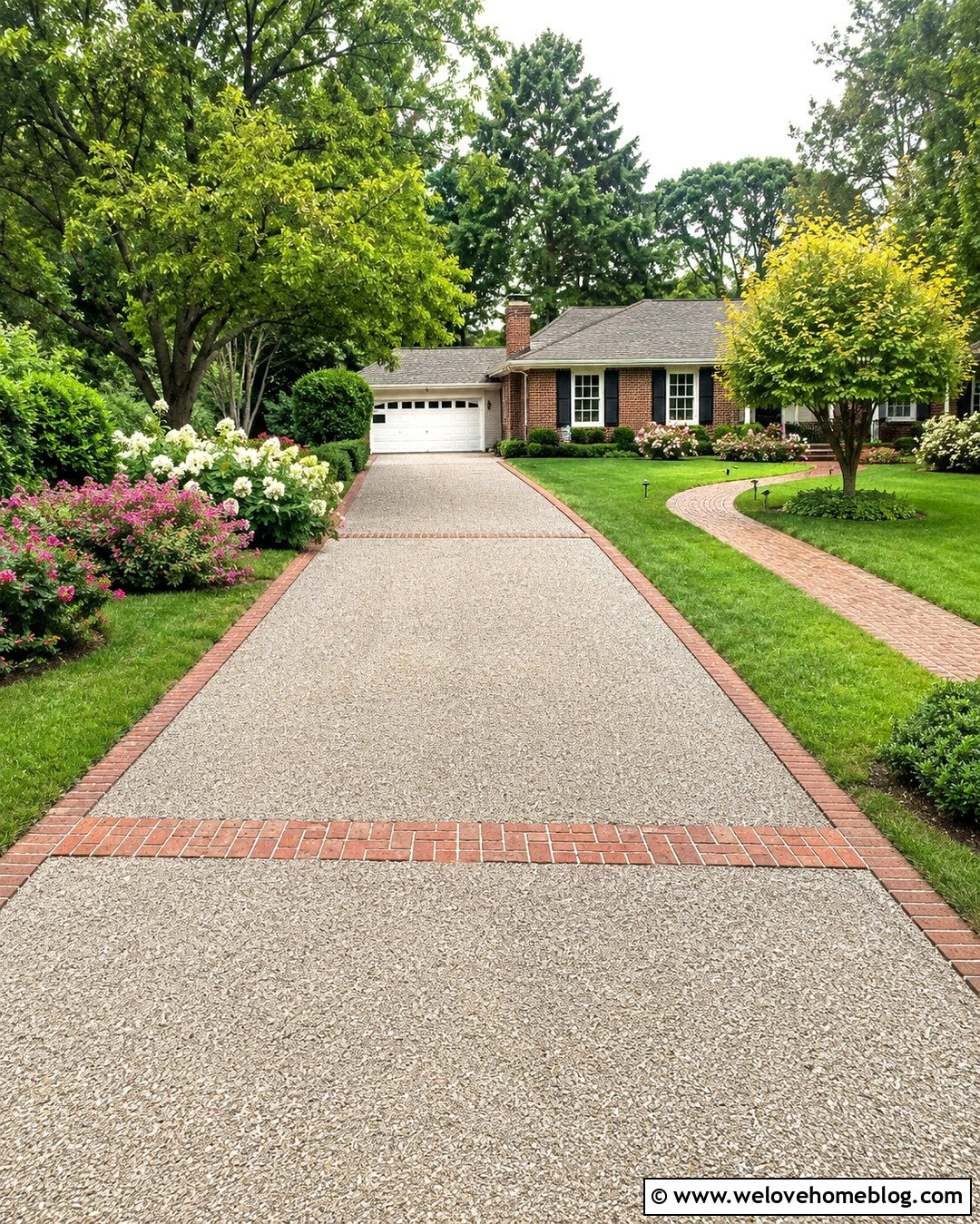
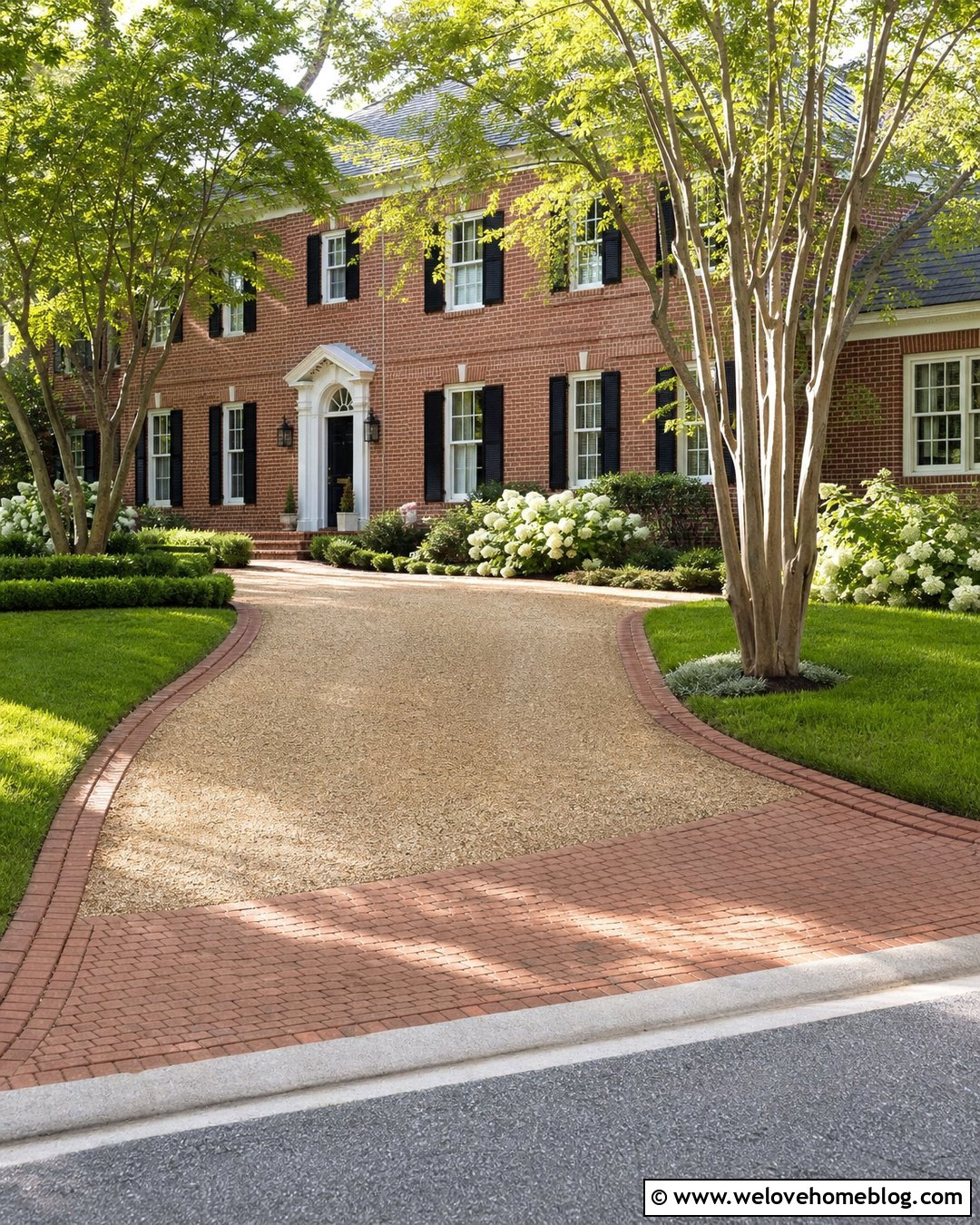
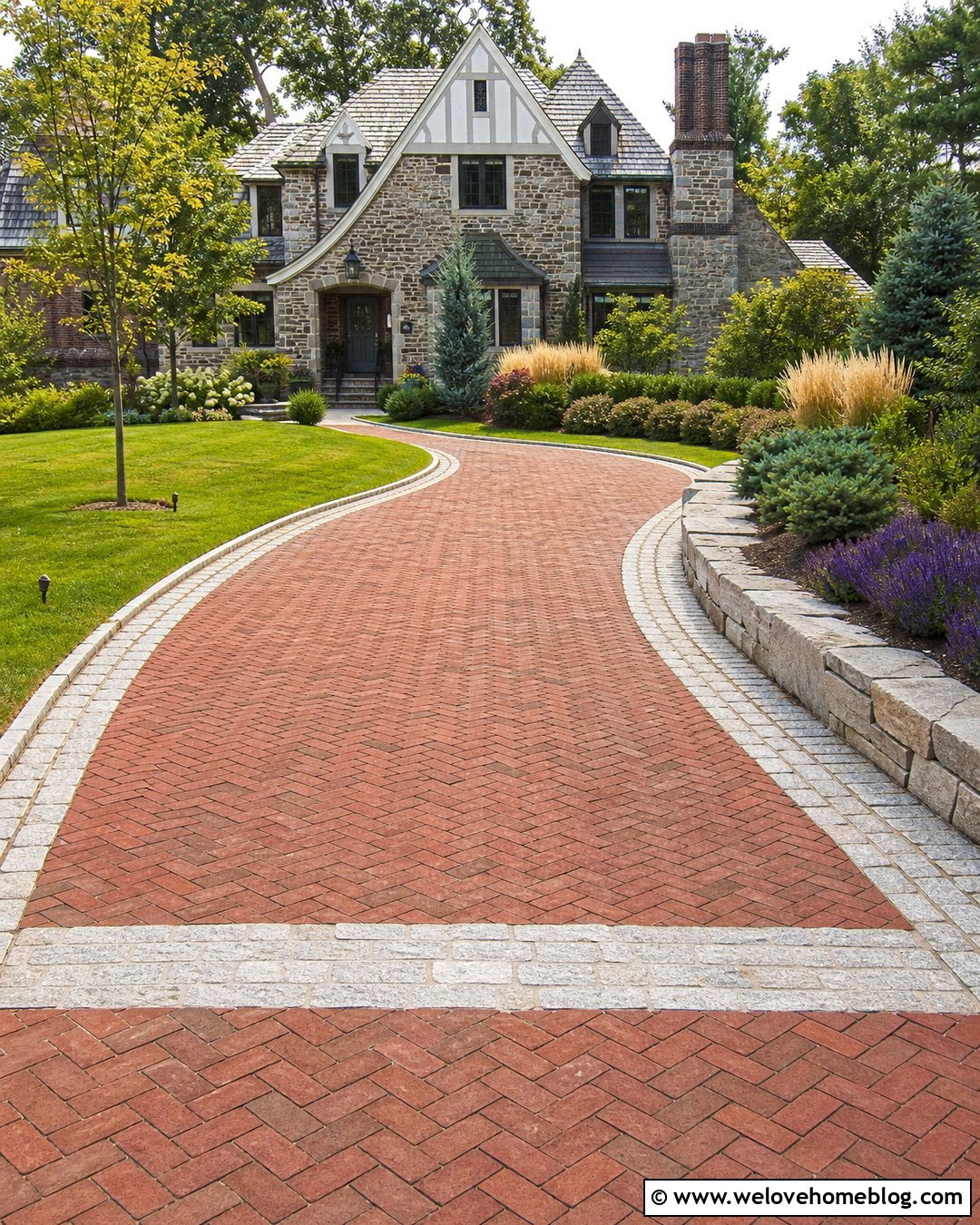
A brick ribbon adds detail without the cost of paving an entire driveway. Create a wide surface of compacted beige or gray crush and run, then install a band of clay brick across the entrance and another near the garage. These ribbons visually divide a long driveway into manageable sections. Matching brick edging can outline curves or connect the driveway to a front walkway. Surround the layout with lawn, flowering shrubs, and one or two ornamental trees. For the best appearance, choose brick colors already present on the house. The brick bands should sit flush with the compacted surface to provide a comfortable transition. This design is especially effective for brick ranch homes, Colonial houses, and traditional suburban properties.
18. Crush And Run Driveway With A Grass Center Strip
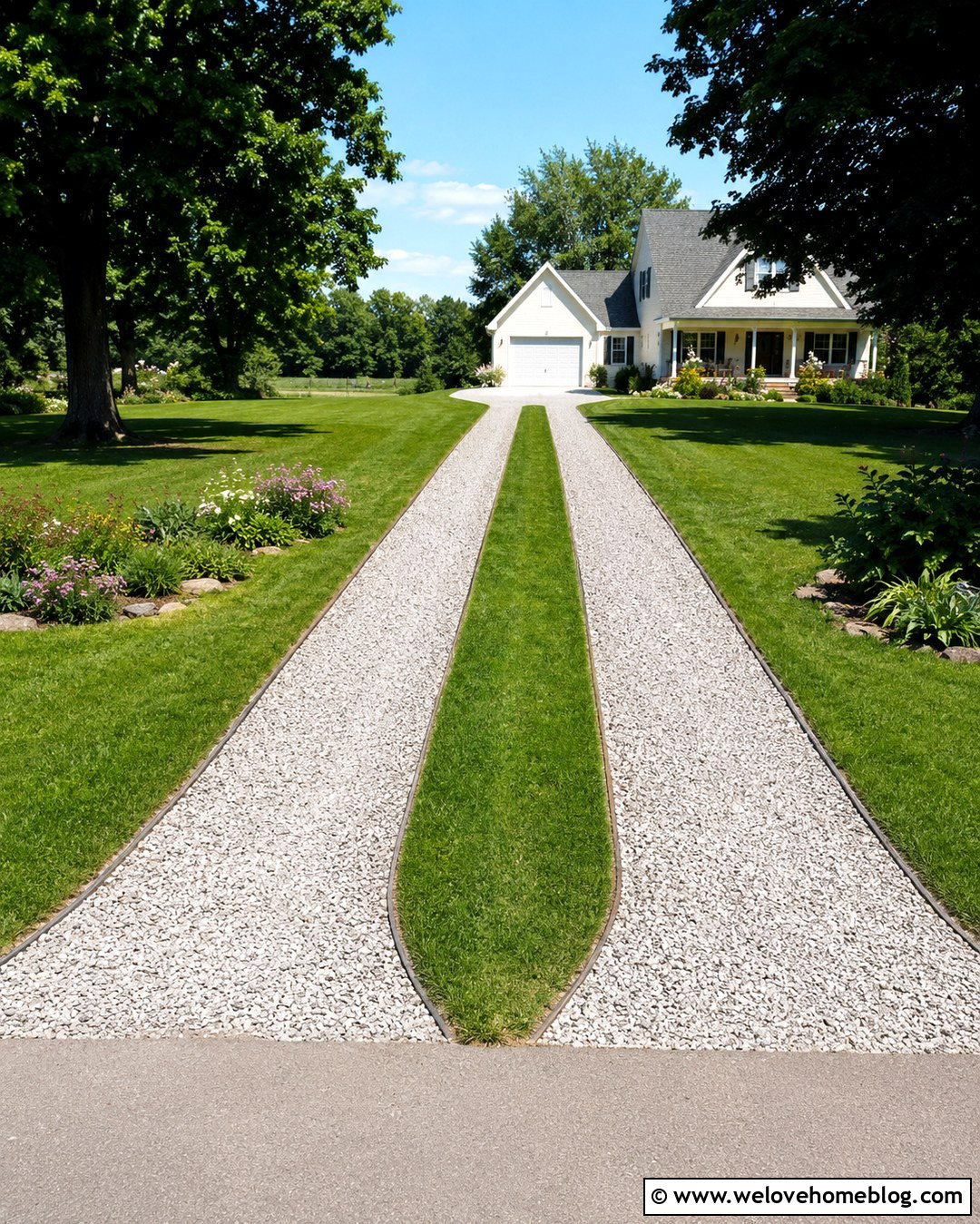
A grass center strip can reduce the visual width of a lightly used driveway. Form two compacted crush and run tire tracks with a broad grass strip running between them. Edge the inside and outside of each track with steel, brick, or stone to protect the narrow lanes from spreading. This layout works best on relatively level private driveways with predictable passenger-vehicle traffic. Continue the lawn outward for a simple country look, or add informal planting beds near the house. At the garage and road entrance, replace the grass strip with a full-width aggregate apron to simplify turning. The result feels softer and greener than a solid driveway while still providing a stable route through the yard.
19. Crush And Run Driveway With Landscape Lighting
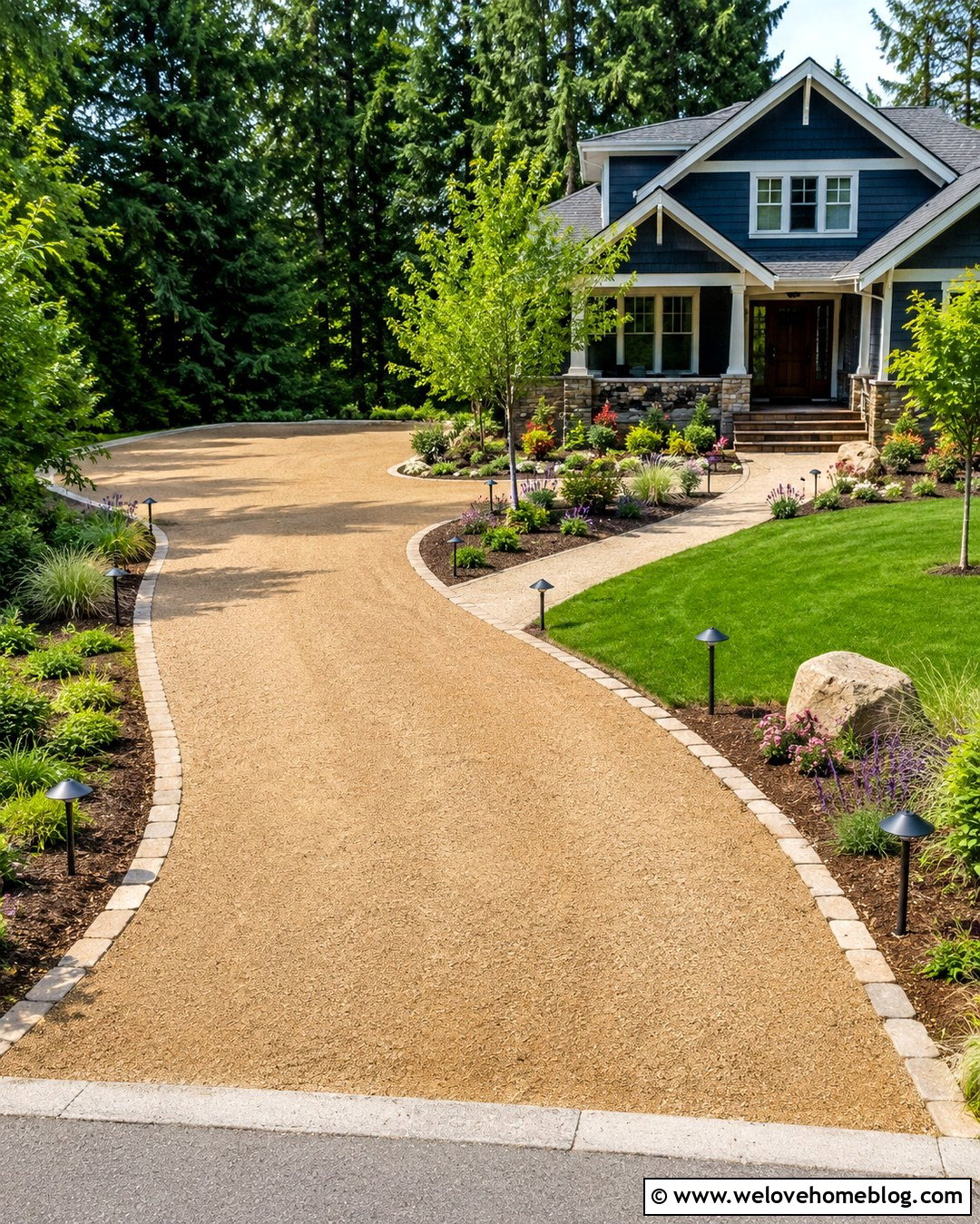
Thoughtful lighting improves visibility while making the driveway feel connected to the house. Use a curved crush and run surface bordered by low stone edging, then place shielded path lights at important points rather than in an unbroken line. Focus fixtures near the street entrance, tight curves, walkway connection, and parking area. Keep them outside the tire zone and coordinate their finish with porch lights, gates, or house hardware. During the day, layered beds of evergreen shrubs and ornamental grasses should frame the same route. Although lighting is experienced after sunset, the driveway itself should remain attractive in daylight. A restrained fixture layout prevents visual clutter and works with contemporary, Craftsman, or traditional homes.
20. Crush And Run Driveway With A Covered Carport
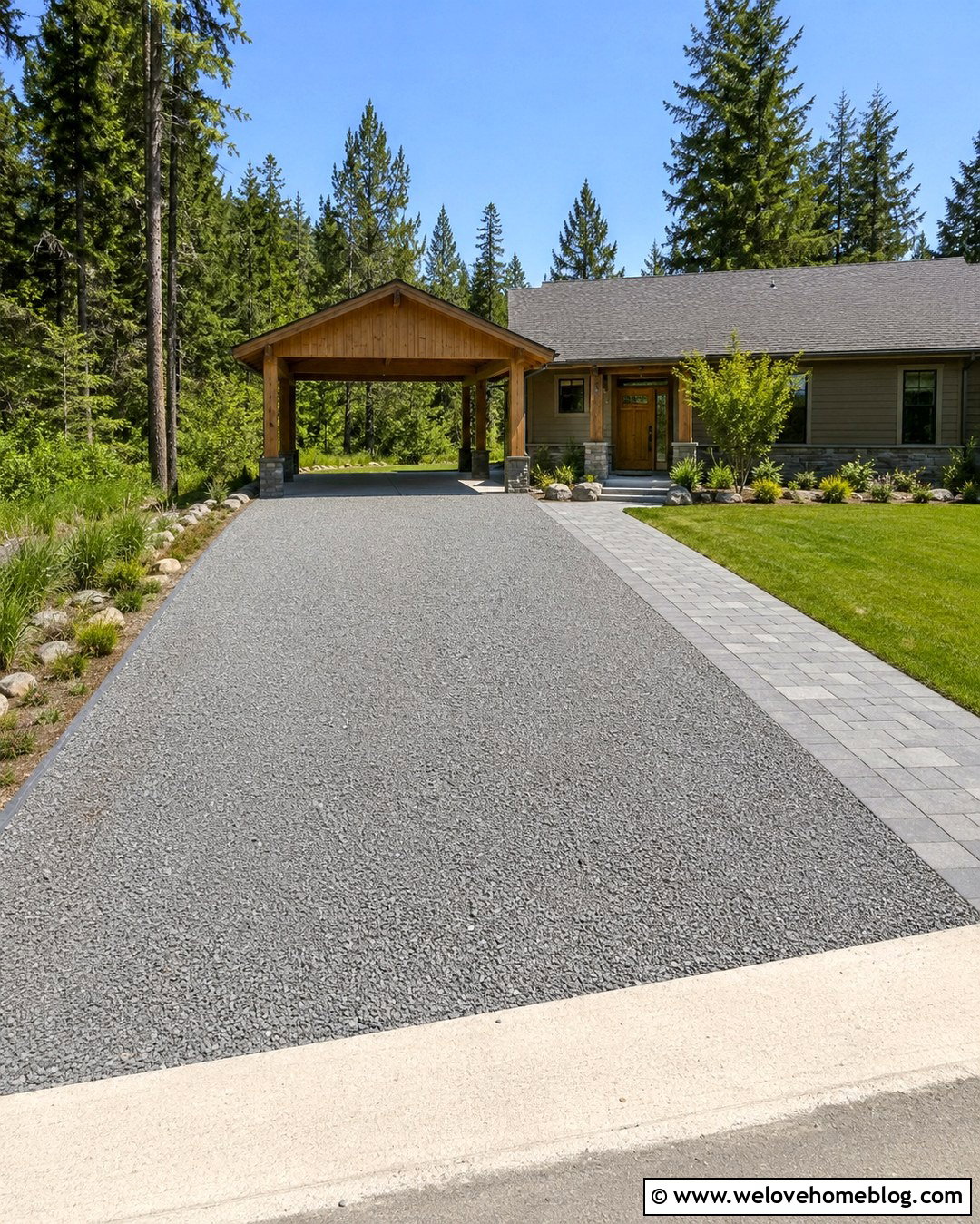
A crush and run driveway can transition naturally into a detached or attached carport. Use a broad straight approach with well-compacted gray crusher run, then create a firm threshold beneath the carport using concrete, pavers, or an additional stabilized aggregate section. A narrow paver border can connect the two surfaces and continue toward the house as a walkway. Frame the driveway with lawn on one side and a rain garden or planted drainage bed on the other. Choose shrubs that remain low near the carport opening and avoid planting trees where roots may disturb the base. This complete layout suits ranch homes, cabins, and budget-friendly rural houses that need protected parking without a fully enclosed garage.
Conclusion:
The best crush and run driveway is more than a layer of compacted stone. It combines a properly prepared surface with reliable drainage, strong borders, comfortable vehicle access, and landscaping that suits the house. Timber edging can create a casual country look, while brick, cobblestone, steel, and masonry add a more structured finish. Curves, parking pads, center gardens, gates, and planted swales can also solve practical site challenges while improving curb appeal. Before installation, consider soil conditions, runoff, traffic, and local entrance requirements. With thoughtful planning and routine grading, these **20 Crush And Run Driveway Ideas** can inspire an attractive, functional approach that feels like a permanent part of your property.

Related posts:



Leave a Reply