
Standing water can stain paving, weaken driveway edges, create icy patches, and send runoff toward the garage or foundation. The best drainage plan does more than add a random grate. It combines the right surface, slope, collection point, outlet, and landscaping into one attractive design. Depending on your property, that may mean permeable paving, a channel drain, a French drain, a planted swale, or several systems working together. Water must also discharge to a safe, approved location rather than a neighboring property. Local soil, rainfall, driveway pitch, and municipal rules should guide the final plan. Use these practical and visually appealing **20 driveway water drainage ideas** to create an entrance that stays functional in wet weather. ()

1. Sloped Concrete Driveway With Channel Drain

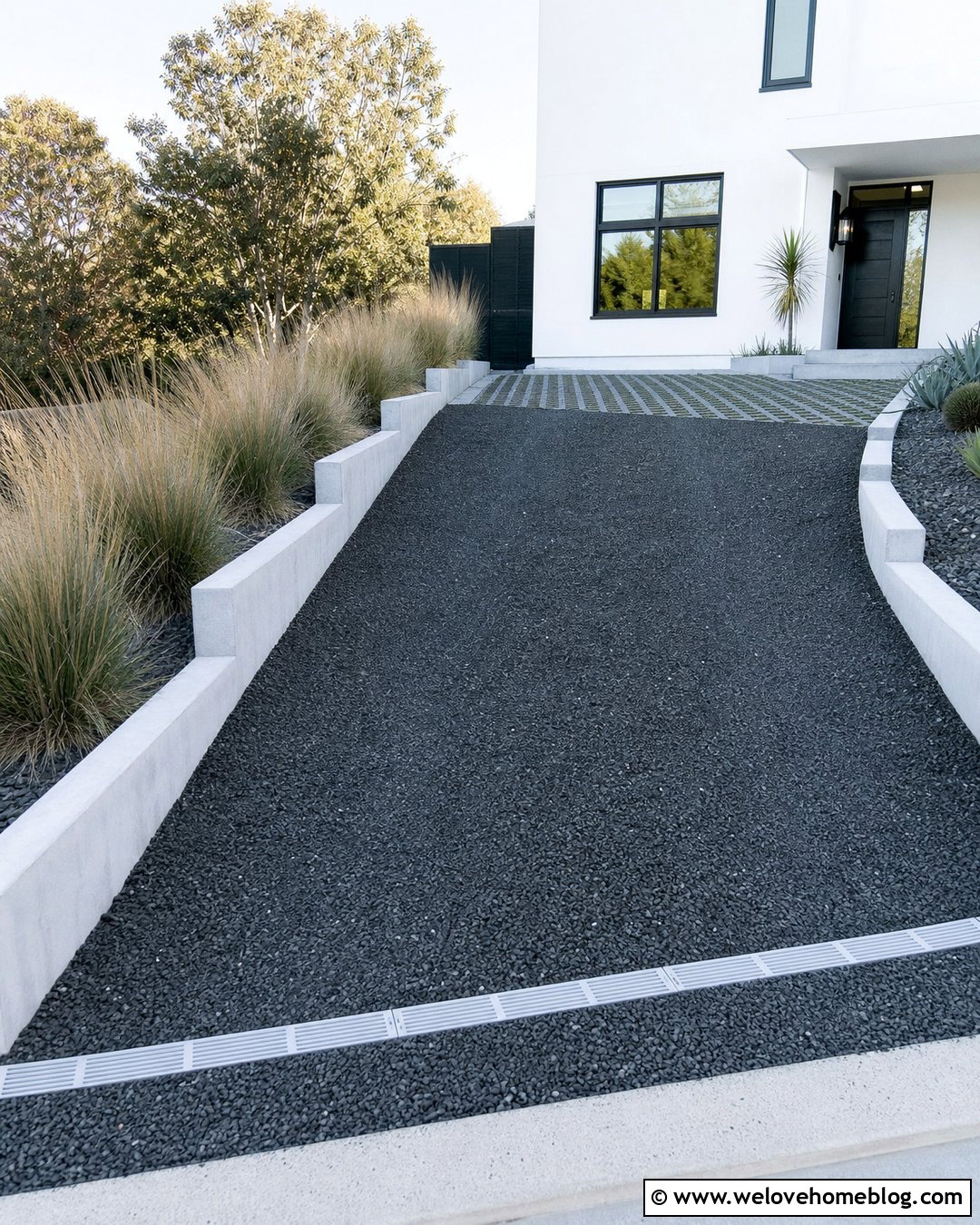
A sloped concrete driveway can look clean and polished while directing surface water into a channel drain near the garage. Install the linear grate across the full driveway width so it catches runoff before water reaches the door or foundation. Light gray poured concrete with a subtle broom finish provides traction, while a dark metal grate creates a crisp transition. Shape the driveway with a gentle cross-slope that guides water toward the channel rather than allowing scattered puddles. Low planting beds and concrete curbs can keep soil from washing onto the pavement. The drain still needs a properly sized pipe and legal outlet, such as an approved stormwater system, swale, or infiltration area. ()
2. Asphalt Driveway With Trench Drain

Black asphalt makes water movement easy to see, which helps when planning a trench drain across a downhill driveway. Position the drain where runoff naturally concentrates, often near the street, garage, or lowest section of pavement. A heavy-duty galvanized or cast-iron grate is better suited to vehicle traffic than a lightweight landscape grate. Frame it with a narrow concrete collar to support the drain and prevent the surrounding asphalt from breaking apart. On both sides, use raised planting beds or stone edging to stop mulch and soil from clogging the channel. This complete layout works best when the asphalt is correctly pitched toward the grate and the collected water has a dependable outlet that remains accessible for cleaning. ()
3. Permeable Paver Driveway With Gravel Joints
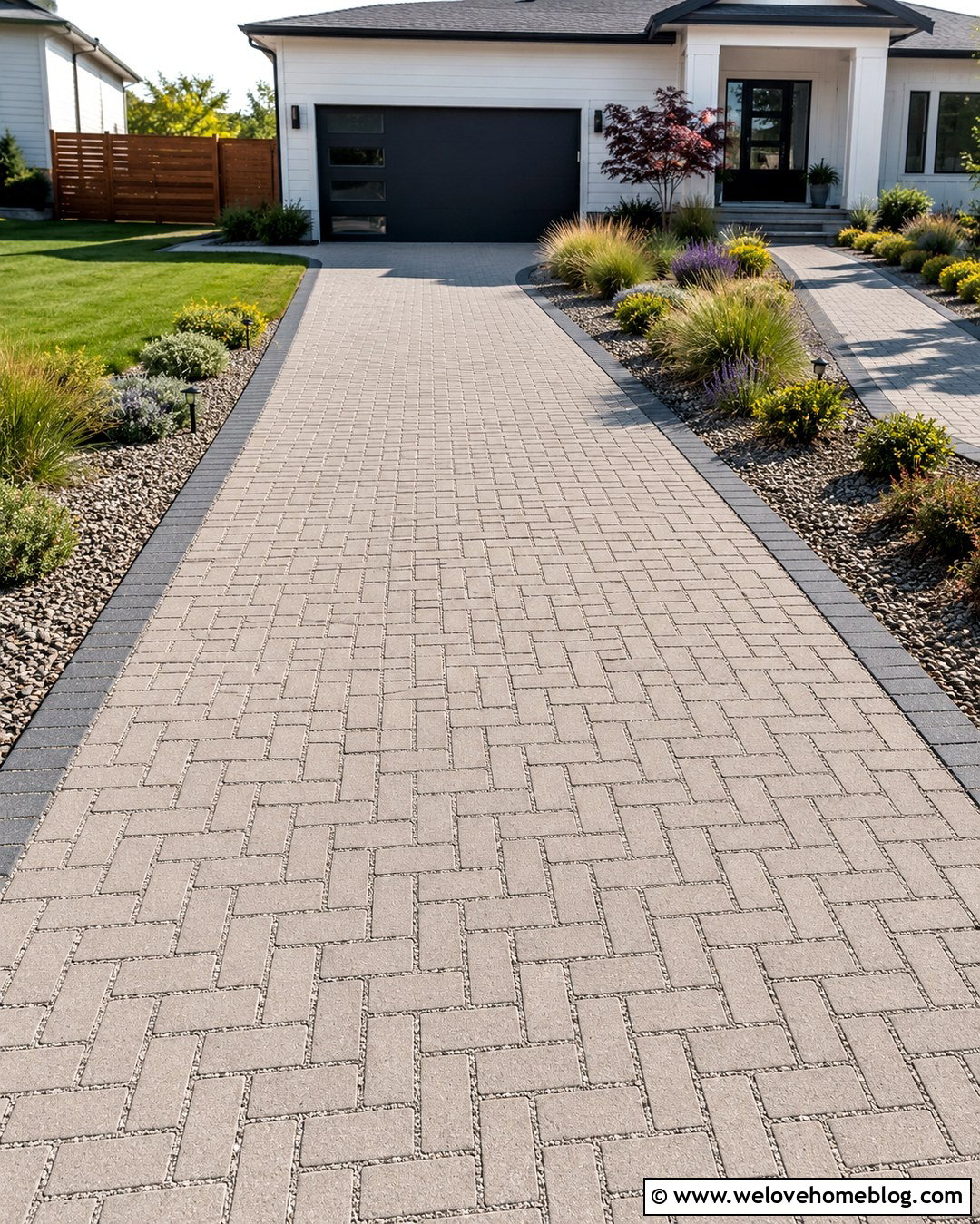
Permeable concrete pavers create an upscale driveway while allowing rainwater to move through stone-filled joints. Choose charcoal, tan, or warm gray pavers arranged in a running bond or herringbone pattern. The open joints should contain clean, angular aggregate rather than ordinary joint sand. Beneath the surface, a carefully designed crushed-stone reservoir temporarily stores water as it infiltrates or moves toward an underdrain. A soldier-course border keeps the pattern visually contained, while drought-tolerant beds reduce runoff from nearby landscaping. This design depends heavily on correct excavation, subgrade conditions, and base materials. Dense clay, steep grades, and high groundwater may require additional drainage engineering instead of relying on infiltration alone. ()
4. Crowned Gravel Driveway With Side Ditches
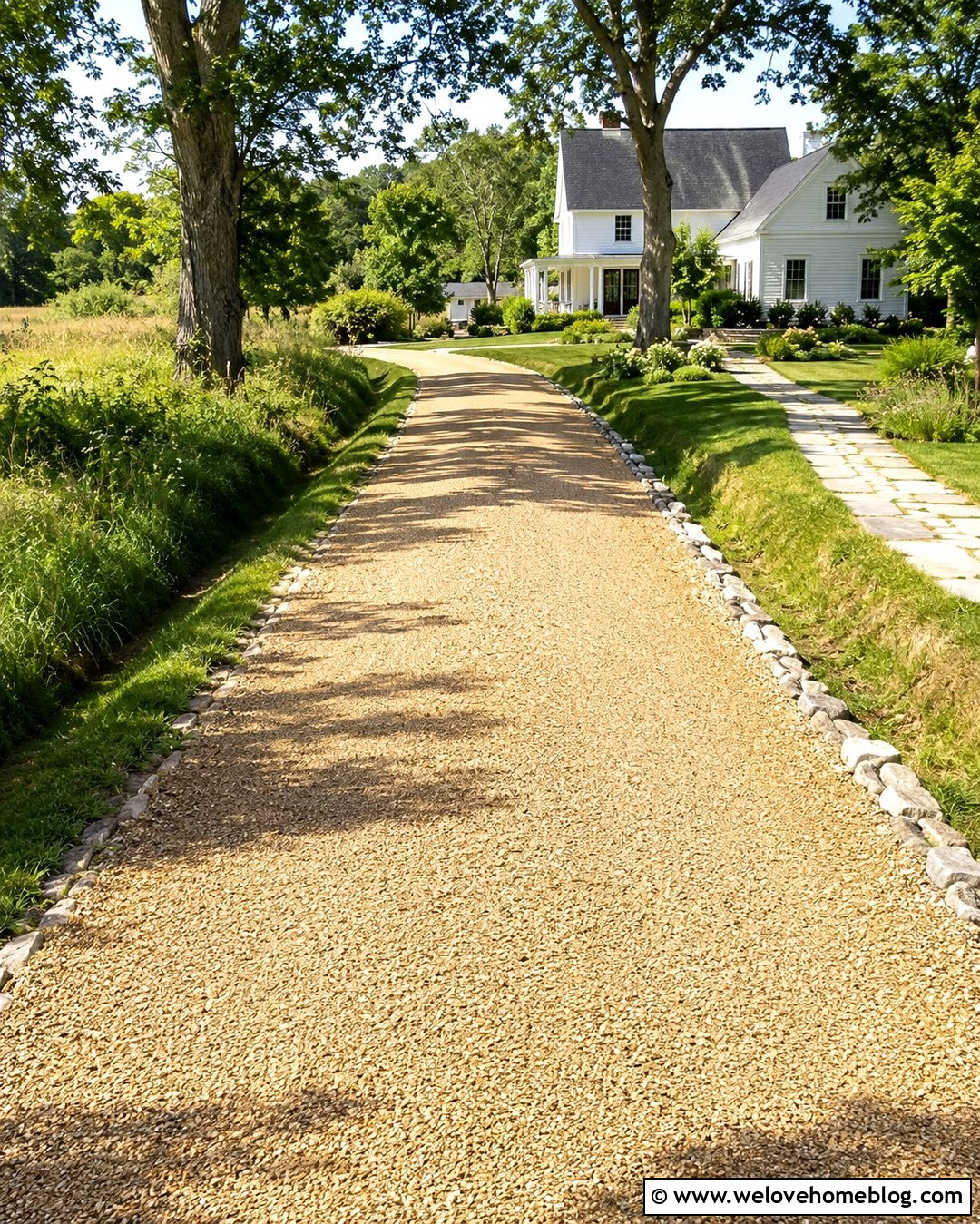
A crowned gravel driveway sheds water toward both sides instead of allowing rain to travel straight down the wheel tracks. The center should sit slightly higher than the edges, creating a smooth rounded profile across the driveway. Use compacted crushed stone with angular particles for stability, then finish it with a durable gravel surface that suits the home. Shallow grass-lined ditches along both sides can receive runoff and carry it toward a safe lower area. Fieldstone edging near planting beds helps contain loose material without blocking drainage. This arrangement is especially practical for long country driveways, but the crown and ditches require occasional reshaping. Keep leaves, sediment, and displaced gravel out of the drainage channels so water can move freely. ()
5. Concrete Driveway With French Drain Border

When water collects along one side of a concrete driveway, a French drain can become an attractive gravel border. The system typically includes a fabric-lined trench, washed drainage stone, and a perforated pipe that carries subsurface water toward an appropriate outlet. Use contrasting river rock or angular gray stone on top, then separate the drainage strip from lawn and planting beds with steel or stone edging. The concrete surface should slope gently toward the border without exposing or weakening its base. Ornamental grasses and moisture-tolerant shrubs can soften the look, but roots should not interfere with the pipe. French drains are most useful for water moving through saturated soil; fast surface runoff may need a channel drain or swale too. ()
6. Asphalt Driveway With Grass Swale

Picture a smooth asphalt driveway bordered by a broad green channel instead of a visible plastic drain. A grass swale is a shallow, carefully graded depression that intercepts runoff and guides it toward a lower drainage area. Its gentle side slopes make it easier to mow and help the feature blend into a suburban or rural yard. Add a stone check area where concentrated water enters, reducing erosion before the flow reaches the grass. A low curb on the opposite driveway edge can prevent runoff from spreading toward the house. The swale should stay lower than the pavement and remain densely planted. For sites handling larger volumes, a French drain may be installed beneath the swale as part of a professionally designed system. ()
7. Paver Driveway With Rain Garden

A rain garden can turn the lowest side of a paver driveway into a colorful stormwater feature. Grade the driveway so runoff enters a stone-lined opening rather than rushing across the lawn. The shallow basin can contain native sedges, flowering perennials, compact shrubs, and decorative rocks selected for alternating wet and dry conditions. Permeable concrete pavers reduce the amount of runoff reaching the garden, while a defined paver border protects the driveway edge. Include an overflow route for storms that exceed the garden’s storage capacity. The basin should be placed where captured water will not threaten the foundation, septic area, sidewalk, or neighboring property. Soil infiltration and local rainfall should determine its depth, size, planting mix, and drainage components. ()
8. Brick Paver Driveway With Catch Basin

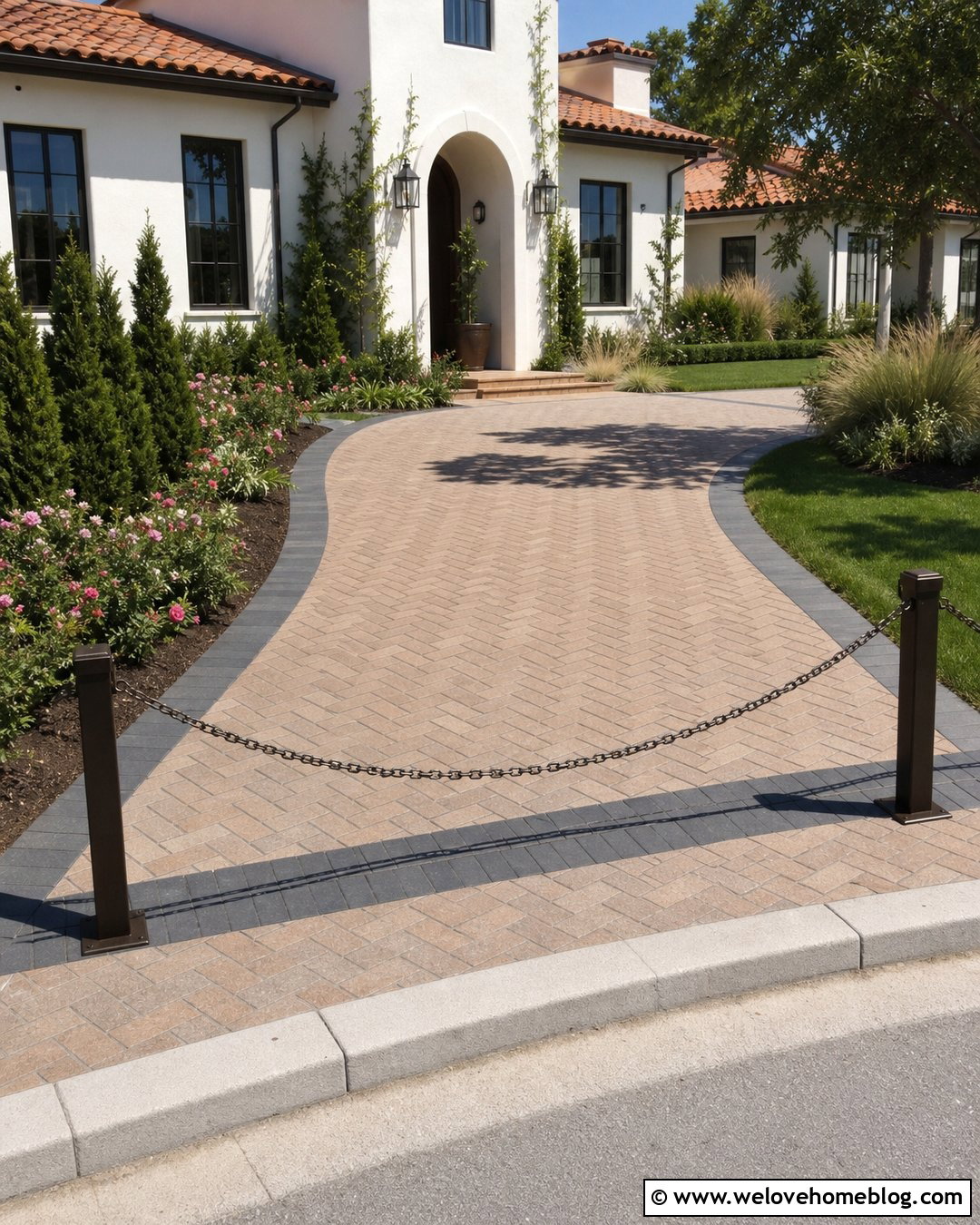
A catch basin works well where a brick paver driveway naturally funnels water into one distinct low point. Place a traffic-rated square or round grate within a carefully sloped section of paving. Clay brick pavers in herringbone can be cut neatly around the basin, making the functional feature feel intentional. A contrasting charcoal border defines the driveway and directs attention toward the house instead of the drain. Beneath the grate, the basin collects water and traps some sediment before it enters the outlet pipe. It needs routine cleaning because leaves, soil, and joint material can reduce performance. Surrounding beds should have raised or stabilized edges so mulch does not wash onto the pavers. Confirm that the outlet can safely handle the expected runoff. ()
9. Modern Concrete Driveway With Slot Drain
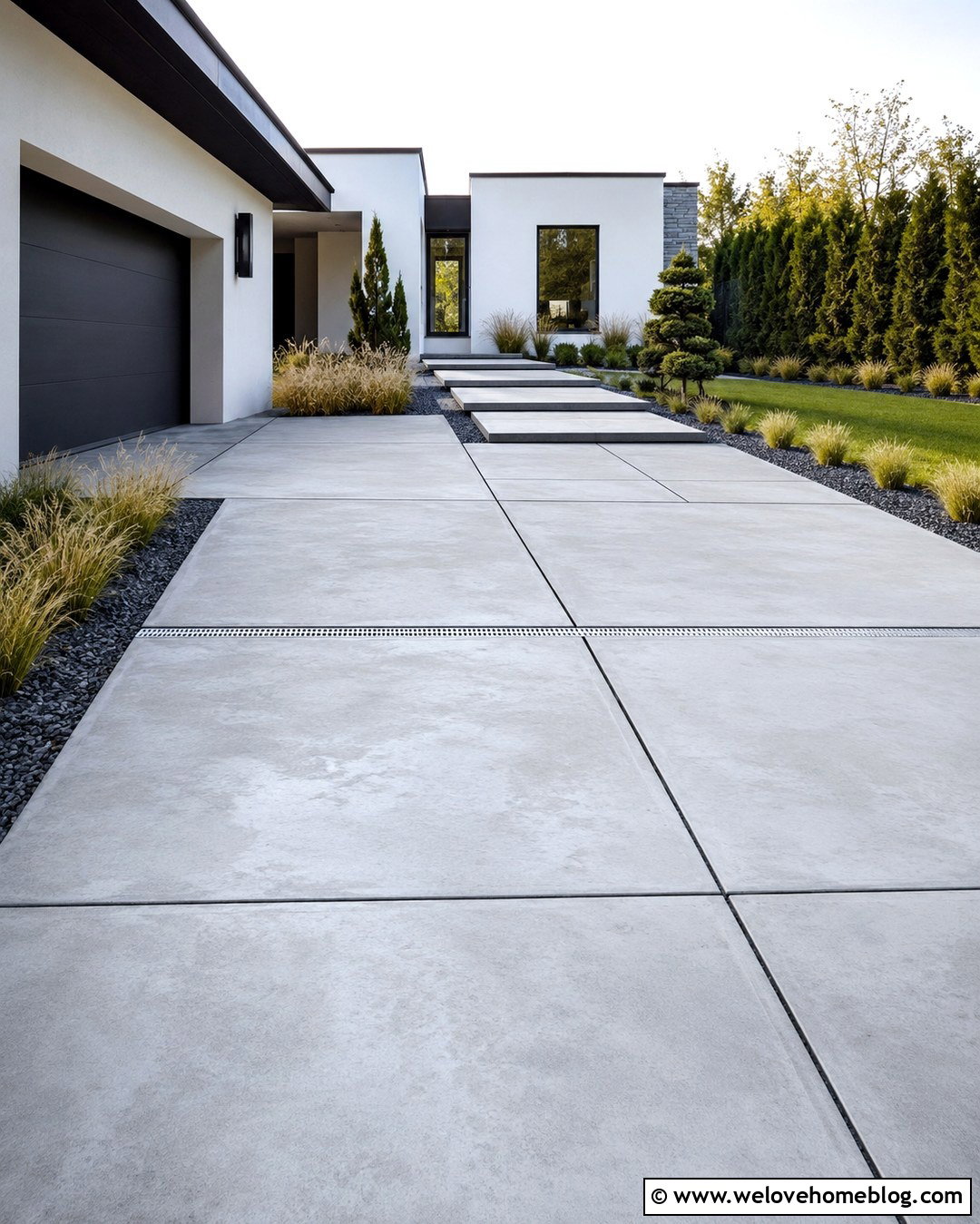
For a contemporary home, a narrow slot drain offers a more discreet look than a wide grated channel. Pair it with large gray poured-concrete panels, dark expansion joints, and straight planting beds. The driveway surface should pitch toward the slim opening, which can run across the garage entrance or along the downhill edge. Because the visible slot is narrow, it creates a sharp architectural line without dominating the design. Use gravel beds, clipped shrubs, and ornamental grasses to continue the modern appearance. Proper access for inspection and sediment removal is still essential, even when the drainage system appears almost hidden. The channel body, load rating, pipe capacity, and outlet must be selected for the amount of water produced by the driveway and surrounding roof areas. ()
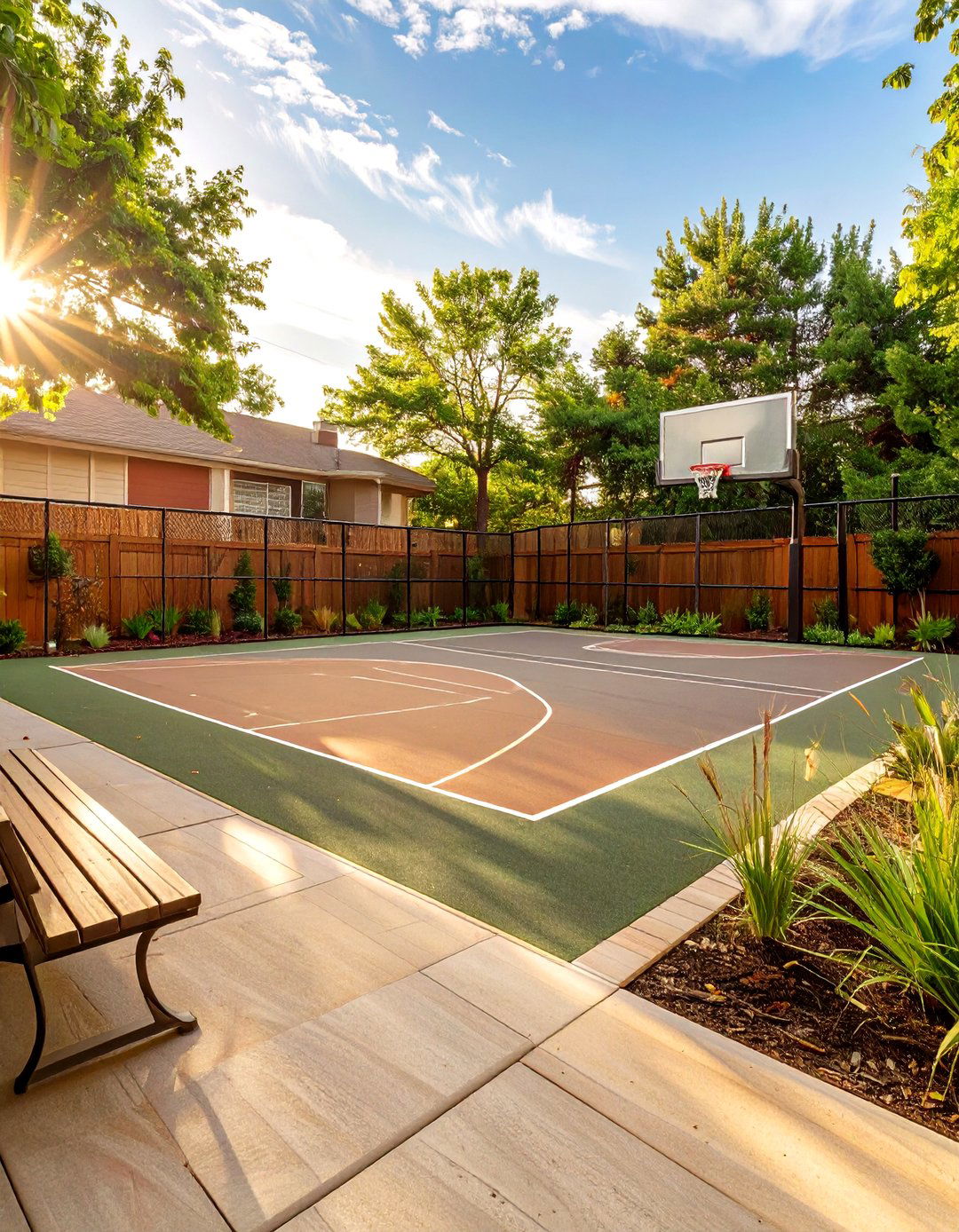

10. Curved Gravel Driveway With Dry Creek Bed
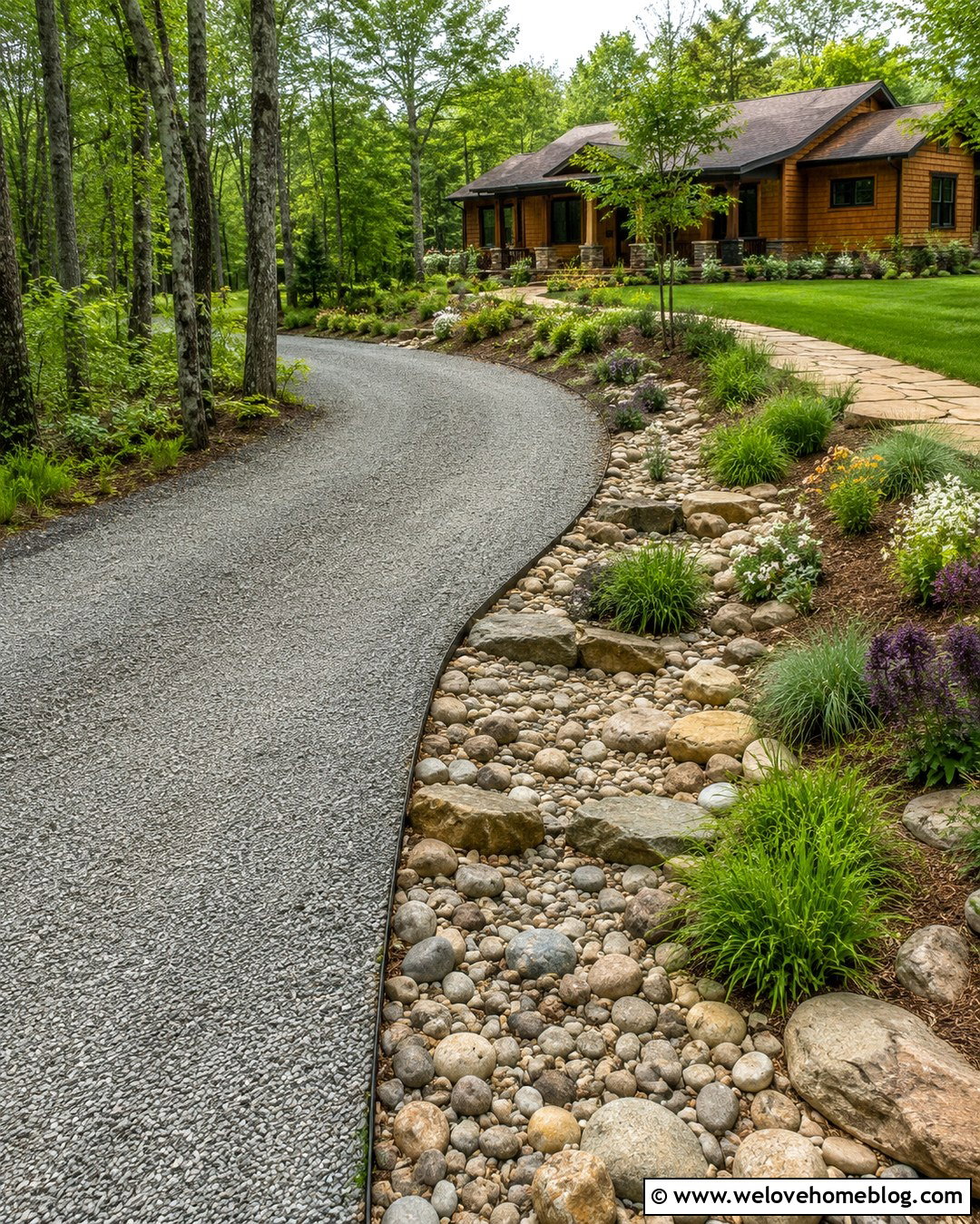
A dry creek bed pairs naturally with a curved gravel driveway surrounded by informal landscaping. Build the shallow channel along the downhill side using a mix of larger stones, river rock, and smaller gravel. The driveway should have a stable compacted crushed-stone surface and a slight cross-slope toward controlled entry points in the creek bed. Group ornamental grasses, native shrubs, and ground covers around the rocks to soften the edges and hold nearby soil. Small stone checks can slow concentrated runoff on steeper properties. Although this feature can resemble a natural stream, it must lead water toward a safe discharge or infiltration area. Avoid making it so deep or steep-sided that driveway access, mowing, or routine maintenance becomes difficult. ()
11. Cobblestone Driveway With Dry Well
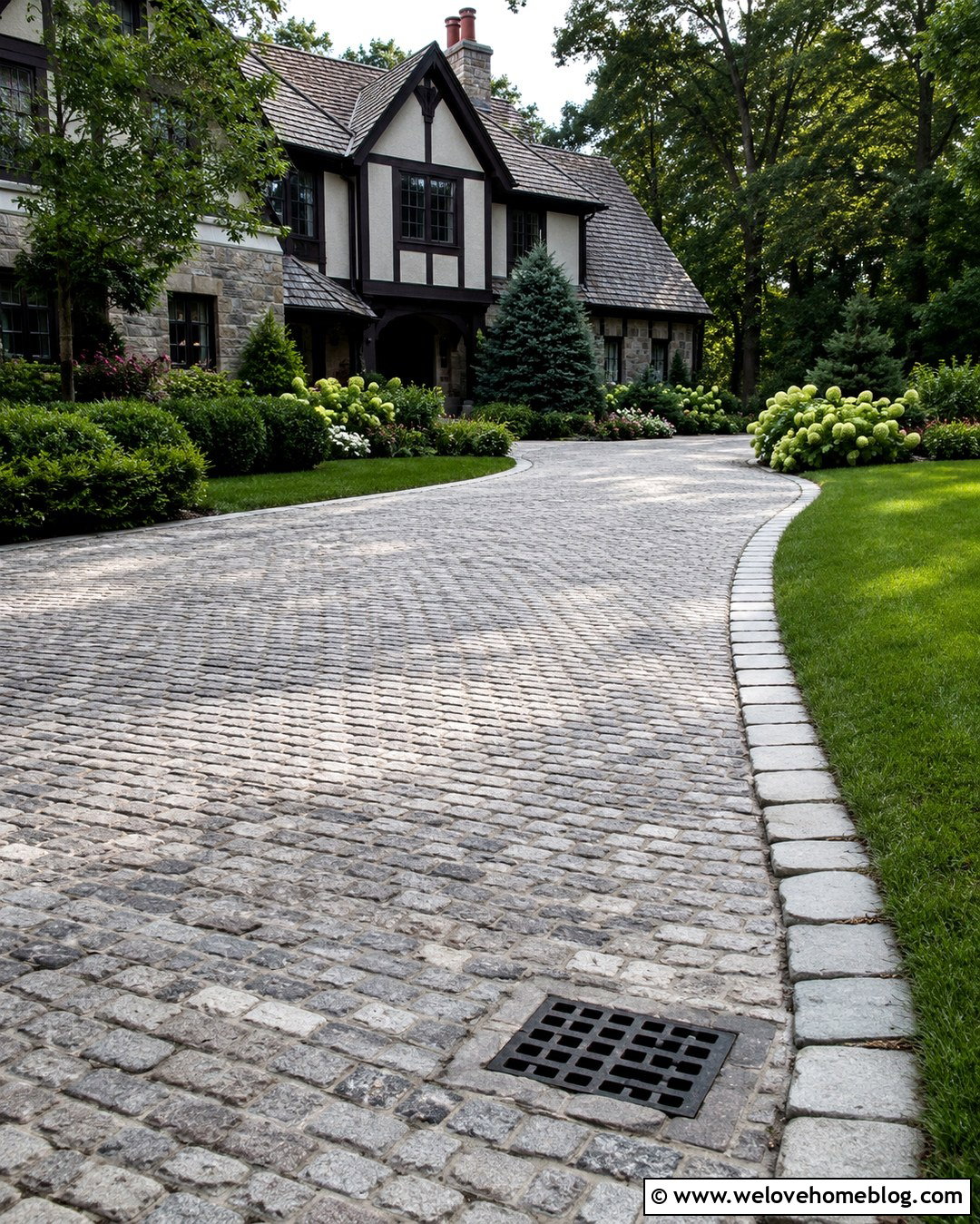
A cobblestone driveway and hidden dry well can combine traditional curb appeal with below-ground water storage. Grade the cobblestones toward a discreet catch basin positioned away from the house. From there, a solid pipe can carry runoff to a properly sized dry well surrounded by suitable drainage aggregate. A granite or brick border keeps the cobblestone surface secure, while layered foundation shrubs frame the entrance. The system works best where soil can accept water at a reliable rate and there is enough separation from foundations, wells, utilities, and groundwater. Dry wells are not appropriate for every property, especially where soil drains poorly. Before excavation, arrange utility marking and check local requirements governing stormwater storage, setbacks, overflow routes, and permitted discharge locations. ()
12. Grass Grid Driveway With Stone Border
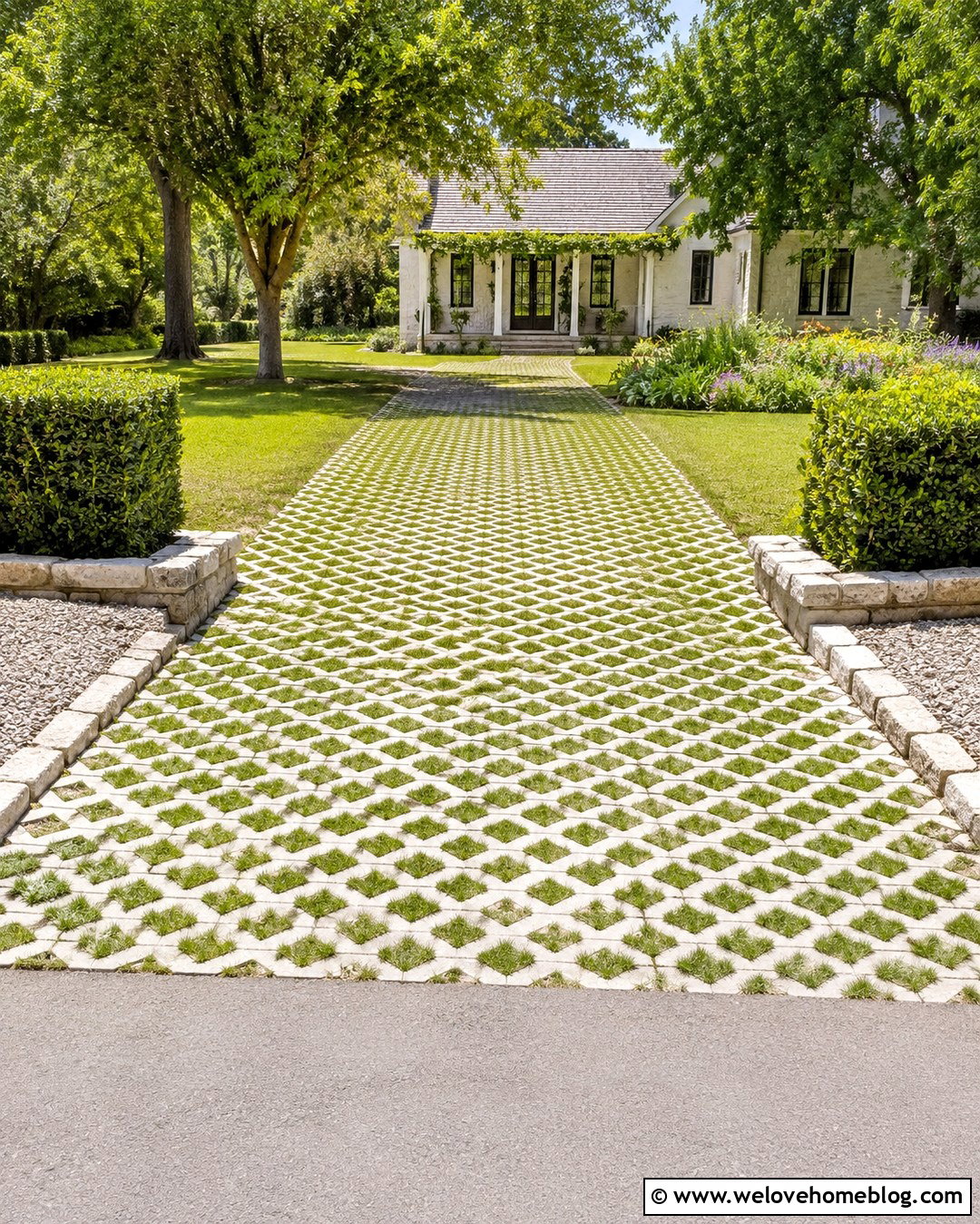
Grass grid pavers create a green driveway surface that can absorb rainfall while supporting vehicle traffic. The plastic or concrete cellular system sits over a properly prepared open-graded base, with the openings filled by grass or clean gravel. Frame the driveway with natural stone edging to establish a clear boundary and protect the grid from turning movements. A straight layout works well with cottage, ranch, and modern farmhouse homes. Add wider hard-paved pads near the garage if frequent parking would make it difficult to maintain healthy turf. The base, drainage layer, grid strength, and grass variety should suit local soil and climate. In heavily shaded or drought-prone areas, gravel-filled cells may be more practical than living grass. ()
13. Permeable Asphalt Driveway With Planted Edges

Permeable asphalt provides the dark, continuous appearance of a traditional asphalt driveway while allowing water to pass into a stone reservoir below. It creates a particularly clean look on a straight suburban driveway with simple concrete curbs and deep planting beds. Keep sediment-producing soil and loose mulch away from the surface because fine particles can clog its pores. A strip of decorative stone between the asphalt and garden beds can act as a practical buffer. The subgrade, aggregate storage layer, overflow system, and underdrain must be designed for local conditions. Regular vacuum maintenance may also be necessary to preserve infiltration. This option is best installed by contractors familiar with porous pavement rather than crews using standard dense asphalt methods and bases. ()
14. Pervious Concrete Driveway With Landscape Swale

Pervious concrete can give a driveway a uniform pale surface without creating the same amount of runoff as conventional concrete. Its open structure allows rainfall to enter a carefully built stone base. Combine the surface with a shallow planted swale along the lower edge to manage overflow during intense storms. A contrasting standard-concrete apron can reinforce the entrance, while stone edging protects adjacent planting beds. Use low grasses and resilient native perennials inside the swale to create a tidy, intentional landscape. Pervious concrete requires specialized installation and maintenance because incorrect mixing, finishing, or base preparation can reduce its performance. It should also be protected from muddy construction traffic and sediment. Soil, slope, groundwater, and winter maintenance practices must be evaluated during design. ()





15. Concrete Ribbon Driveway With Grass Center

A concrete ribbon driveway reduces the amount of solid paving by placing durable wheel tracks around a planted center strip. Each concrete ribbon should be gently pitched so water drains into the lawn or into narrow gravel infiltration strips along the outside edges. This layout works especially well for cottages, bungalows, and low-traffic residential entrances. Add brick edging where the concrete meets garden beds to hold soil in place and create a finished transition. The grass center needs a strong, well-drained soil profile that can tolerate occasional tires and runoff. In regions where turf struggles, replace it with gravel or low-growing ground cover suited to local conditions. Keep the ribbons wide enough for normal vehicles and reinforce turning or parking areas where extra loads occur. ()
16. Rural Gravel Driveway With Culvert
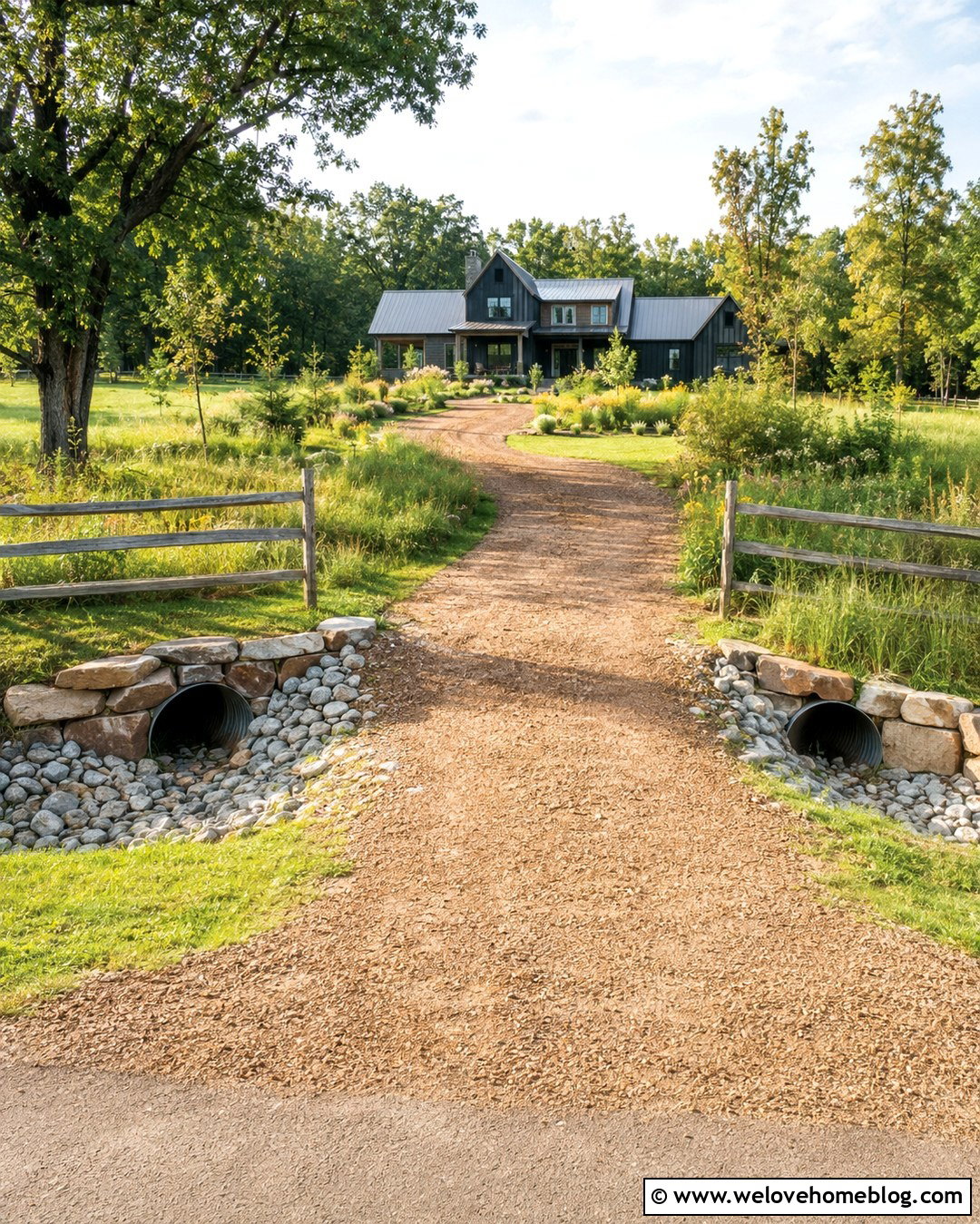
Where a rural gravel driveway crosses a roadside ditch or natural swale, a culvert can maintain water flow beneath the entrance. The pipe must be sized for the expected drainage area and installed at the correct elevation and slope. Create a broad crushed-stone driveway with a crowned surface that sends rain toward grass-lined side ditches. Stone headwalls or stabilized riprap around the culvert ends can limit erosion and give the entrance a finished appearance. Keep both openings clear of leaves, branches, sediment, and displaced gravel. A culvert that is undersized, crushed, or installed too high may cause water to back up and wash over the driveway. Because roadside drainage is often regulated, confirm permit, material, and placement requirements with the local authority before construction. ()
17. Paver Driveway With Berm And Swale
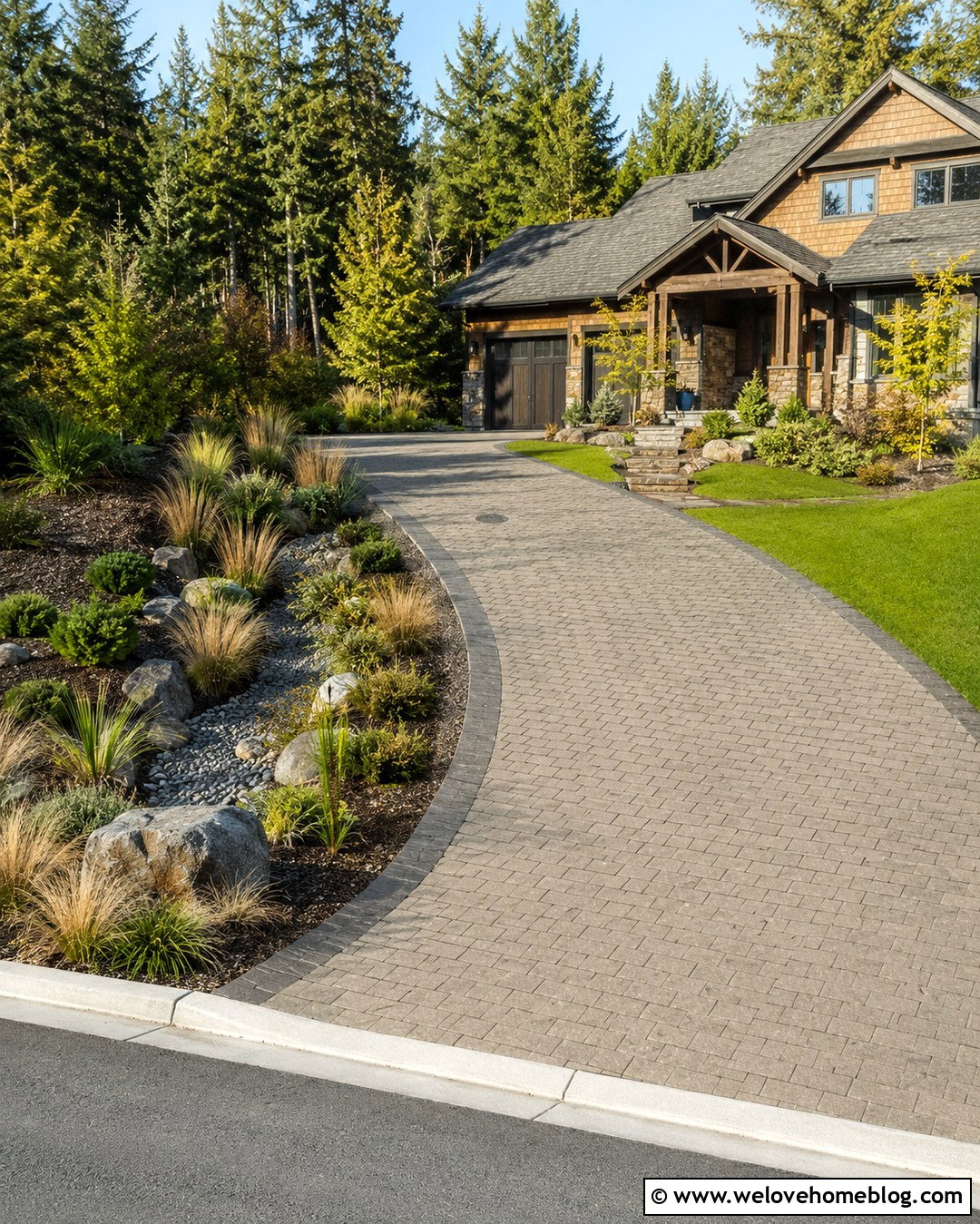
Runoff coming from an uphill lawn can be intercepted before it reaches a paver driveway. A low landscaped berm redirects incoming water toward a shallow swale running beside the pavement. Use permeable concrete pavers in a warm gray pattern, with a darker border that strengthens the driveway edges. Plant the berm with ornamental grasses, compact shrubs, and ground covers whose roots help stabilize the soil. The swale can be lined with turf, stone, or moisture-tolerant plants depending on water speed and the desired appearance. Leave a defined overflow path for unusually heavy rainfall. The berm should not trap water near the house or push it onto adjoining land. Careful grading is essential because even an attractive mound can worsen drainage when placed incorrectly. ()
18. Concrete Driveway With Downspout Drainage
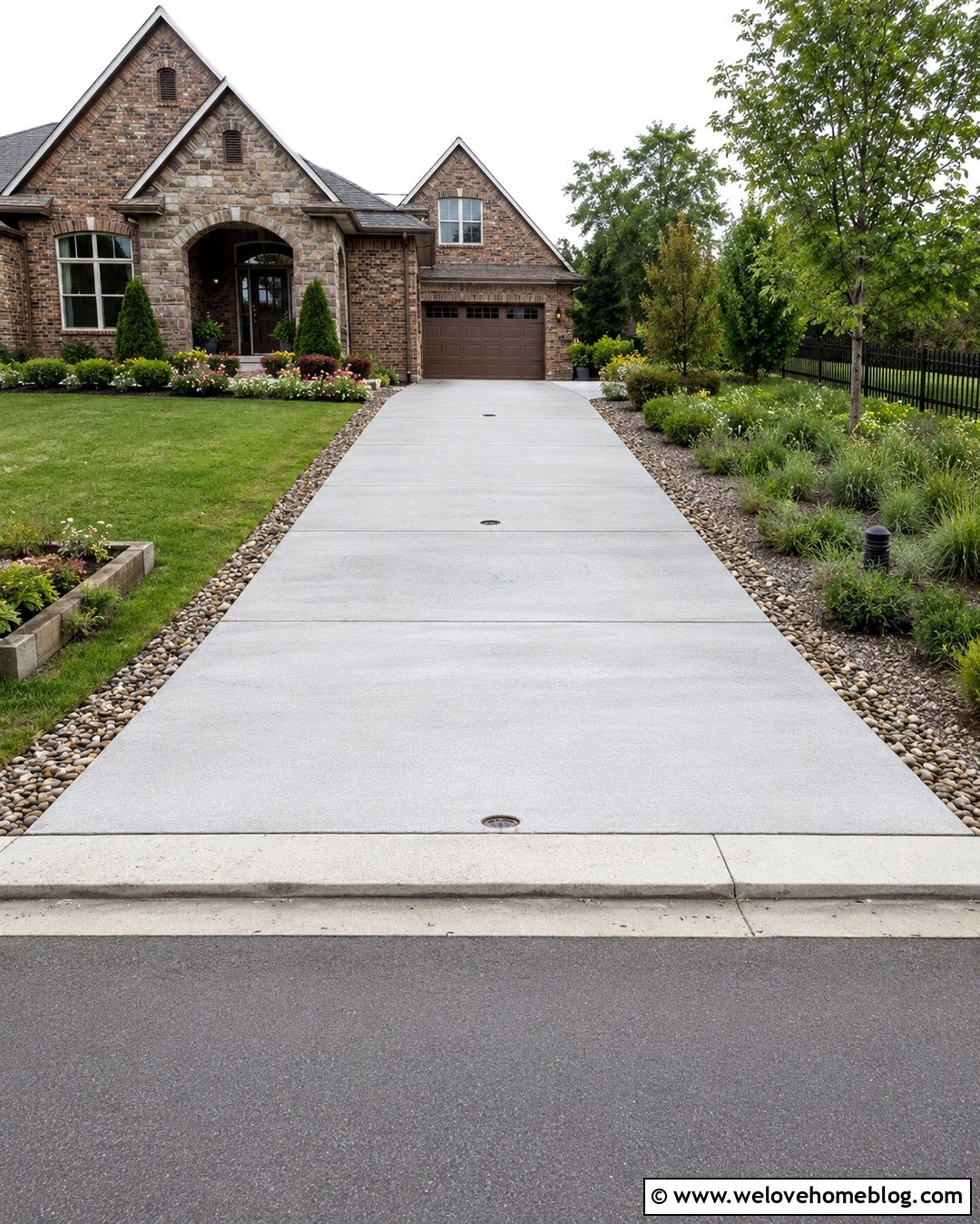
Roof runoff can overwhelm an otherwise well-drained driveway when downspouts discharge directly onto the concrete. Create a complete system by extending downspouts through solid underground pipes toward a rain garden, approved outlet, or pop-up emitter positioned in a safe lower area. Pair the light broom-finished concrete with narrow stone borders that visually connect the house to the drainage route. Maintain a surface slope away from the garage and foundation, and avoid connecting roof water to a perforated pipe immediately beside the building. Decorative planting beds can conceal parts of the route without blocking cleanouts. Check gutters, strainers, joints, and outlet areas regularly. During heavy storms, an overflow route should keep backed-up water from returning toward the driveway or basement. ()
19. Regraded Asphalt Driveway With Cross Slope
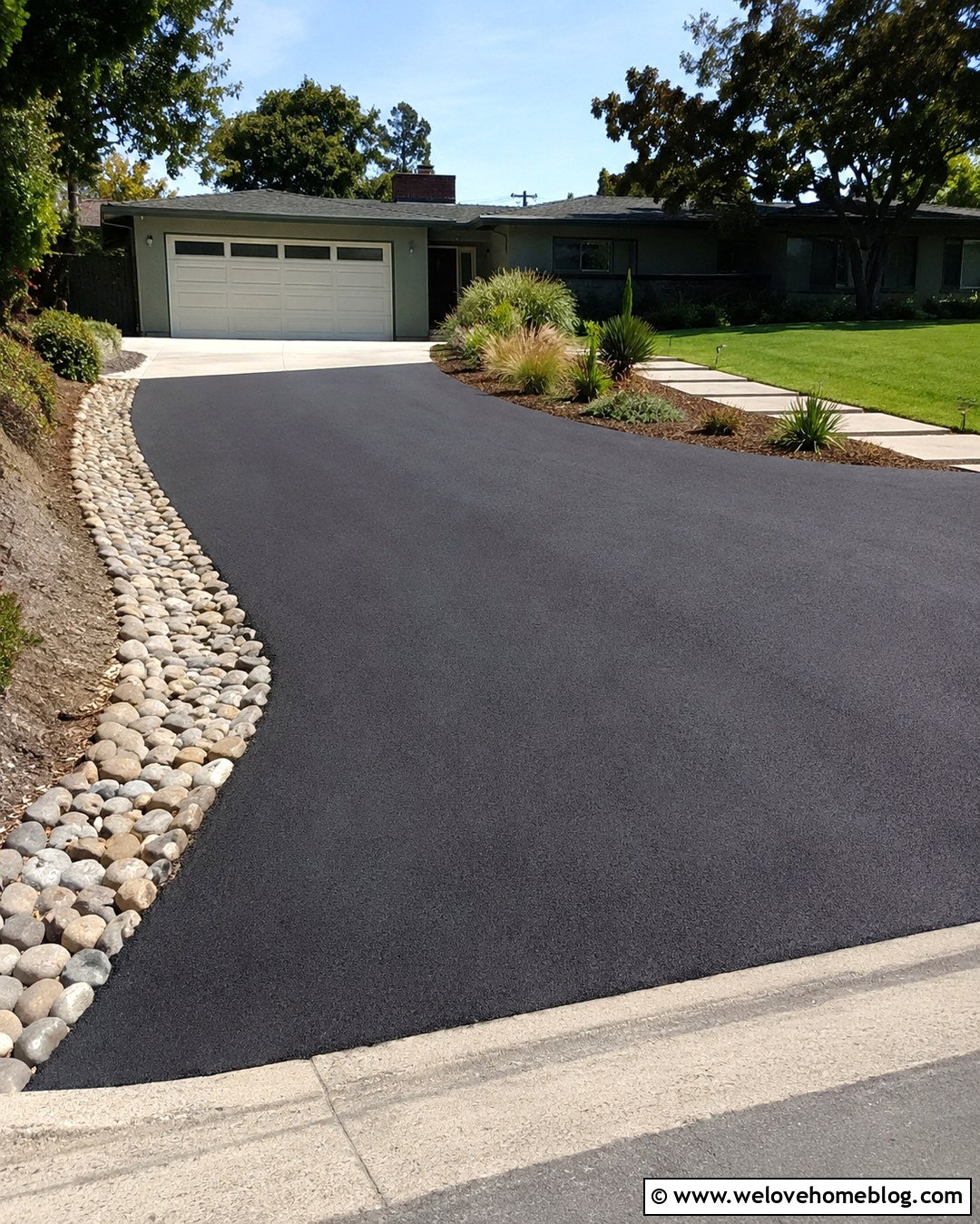
Sometimes the simplest-looking solution requires the most careful construction. A regraded asphalt driveway uses a consistent cross-slope or crown to move rainwater toward a grass swale, stone channel, or drain rather than leaving puddles in low spots. This may require removing failed pavement, correcting the compacted base, and rebuilding the surface instead of adding a thin overlay. Use a concrete or paver apron at the garage and street for strong transitions. Along the lower edge, install a defined stone strip that receives sheet flow without letting soil erode onto the asphalt. Surveying the existing elevations can reveal where water is trapped. The finished grade must move runoff away from buildings while maintaining comfortable vehicle access and complying with street drainage rules. ()


20. Circular Paver Driveway With Combined Drainage

A large circular driveway may need several drainage features working together because it creates a wide runoff area. Use permeable concrete pavers around the main loop, then pitch the inner edge toward a landscaped rain garden in the center island. Add a channel drain near the garage to intercept water from the parking apron, and place catch basins at unavoidable low points. Stone-filled joints, a deep open-graded base, and a controlled overflow pipe provide additional capacity. Frame the island with a raised paver curb and plants suited to occasional moisture. This layered approach manages water near where it falls while protecting important thresholds. A drainage professional should calculate flow, storage, infiltration, pipe sizing, and emergency overflow for a driveway of this scale. ()
Conclusion:
Effective driveway drainage begins with understanding where water comes from, where it naturally travels, and where it can safely go. A surface material alone cannot solve every problem. Successful designs combine grading, stable base construction, appropriate drains, erosion-resistant borders, and a dependable outlet. Permeable pavers, swales, French drains, catch basins, rain gardens, and channel drains can also improve curb appeal when they are integrated into the entire landscape. Before digging, locate underground utilities and review local stormwater requirements. Serious flooding, foundation risks, steep slopes, or large drainage areas deserve professional evaluation. Use these **20 driveway water drainage ideas** as inspiration, then adapt the best complete design to your soil, rainfall, home, and budget.

Related posts:





Leave a Reply