
A sloped property can create a striking entrance, but loose stone needs thoughtful planning to stay attractive and easy to drive on. These **20 Gravel Driveway On A Hill Ideas** combine stable surfaces, practical drainage, strong borders, and landscaping that helps control erosion. Angular crushed stone generally performs better than smooth, rounded gravel because the pieces lock together under compaction. A well-prepared base, suitable grading, and planned runoff routes are equally important. From gently curved country approaches to grid-stabilized modern driveways, each complete look balances curb appeal with hillside performance. Steeper or erosion-prone sites should be evaluated by a qualified local contractor before work begins. Explore the following complete designs for practical and visually appealing **20 Gravel Driveway On A Hill Ideas**.

1. Crushed Stone Gravel Driveway With Stone Edging
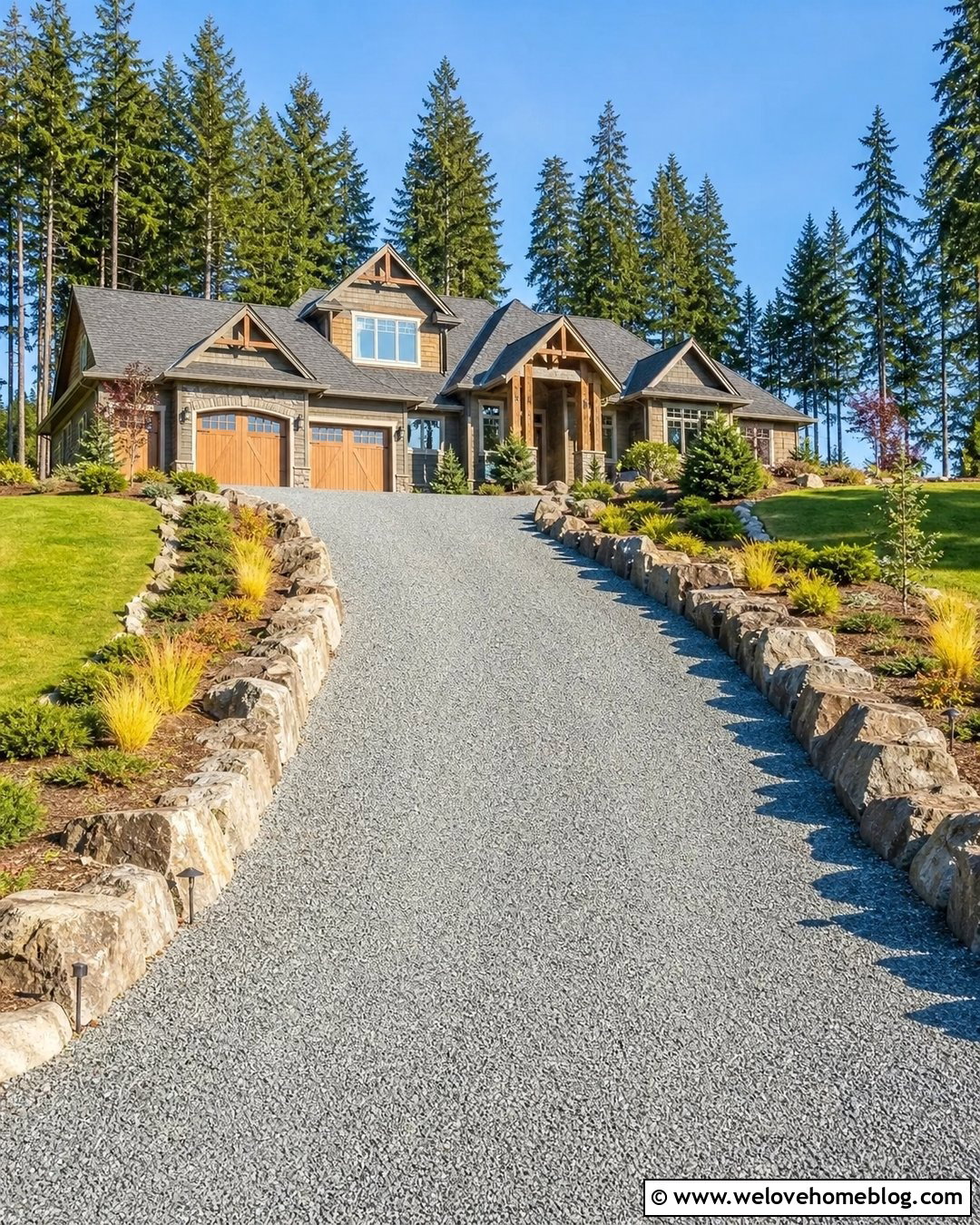
Angular crushed stone creates a firm, textured surface that fits naturally into a hillside landscape. Use gray or warm buff stone over a deeply compacted aggregate base, then frame the driveway with substantial stone curbs. The edging helps contain loose material where vehicle tires press toward the sides. A gentle crown can move rainwater away from the driving area and into planted drainage strips. Low junipers, ornamental grasses, and spreading ground covers soften the banks without blocking visibility. This complete look works especially well with craftsman, ranch, and mountain-style homes. Keep the route mostly straight for easier winter access, but widen the arrival area near the garage. Regrading and periodic compaction will help preserve its clean profile.
2. Gravel Driveway With Stabilization Grid
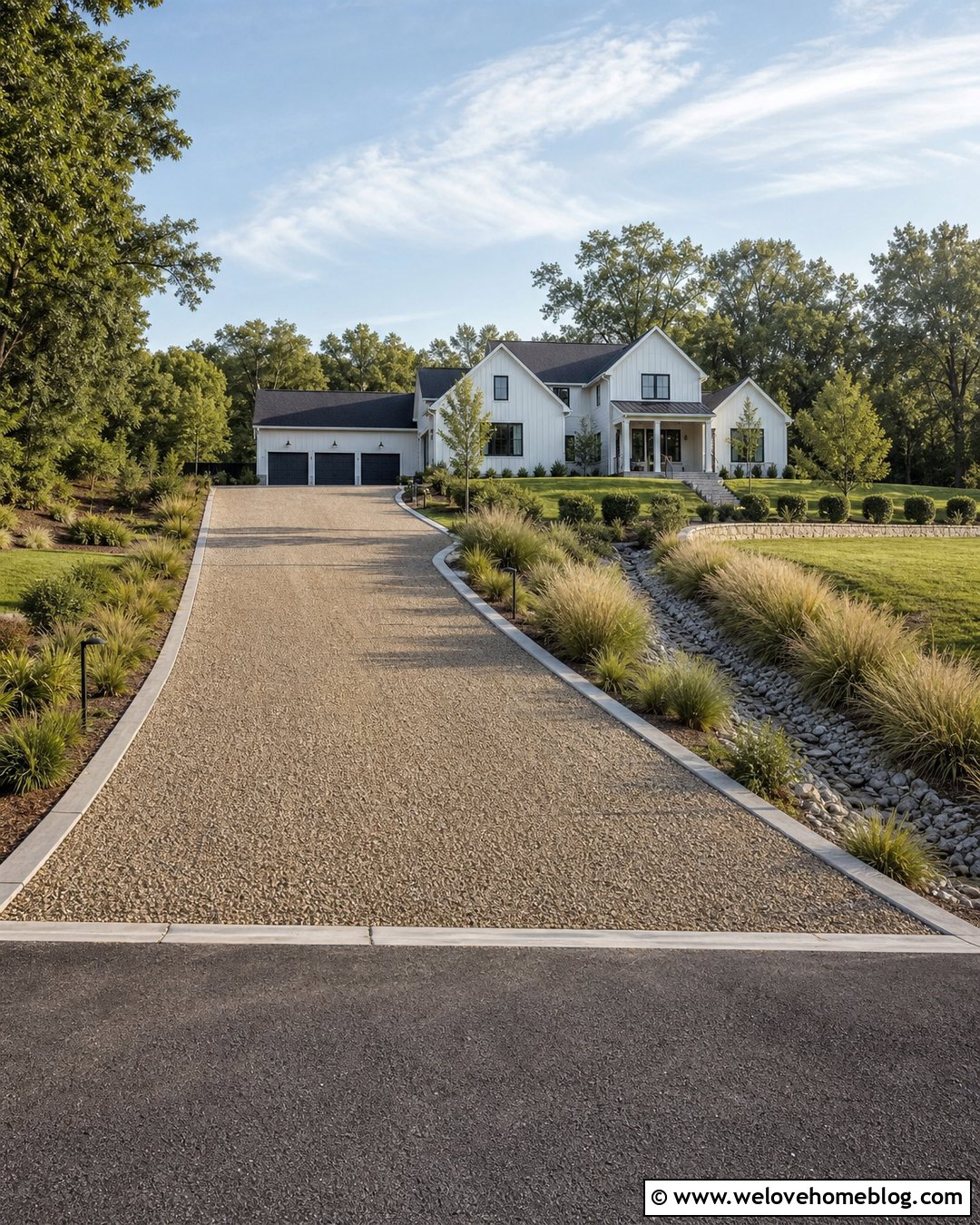
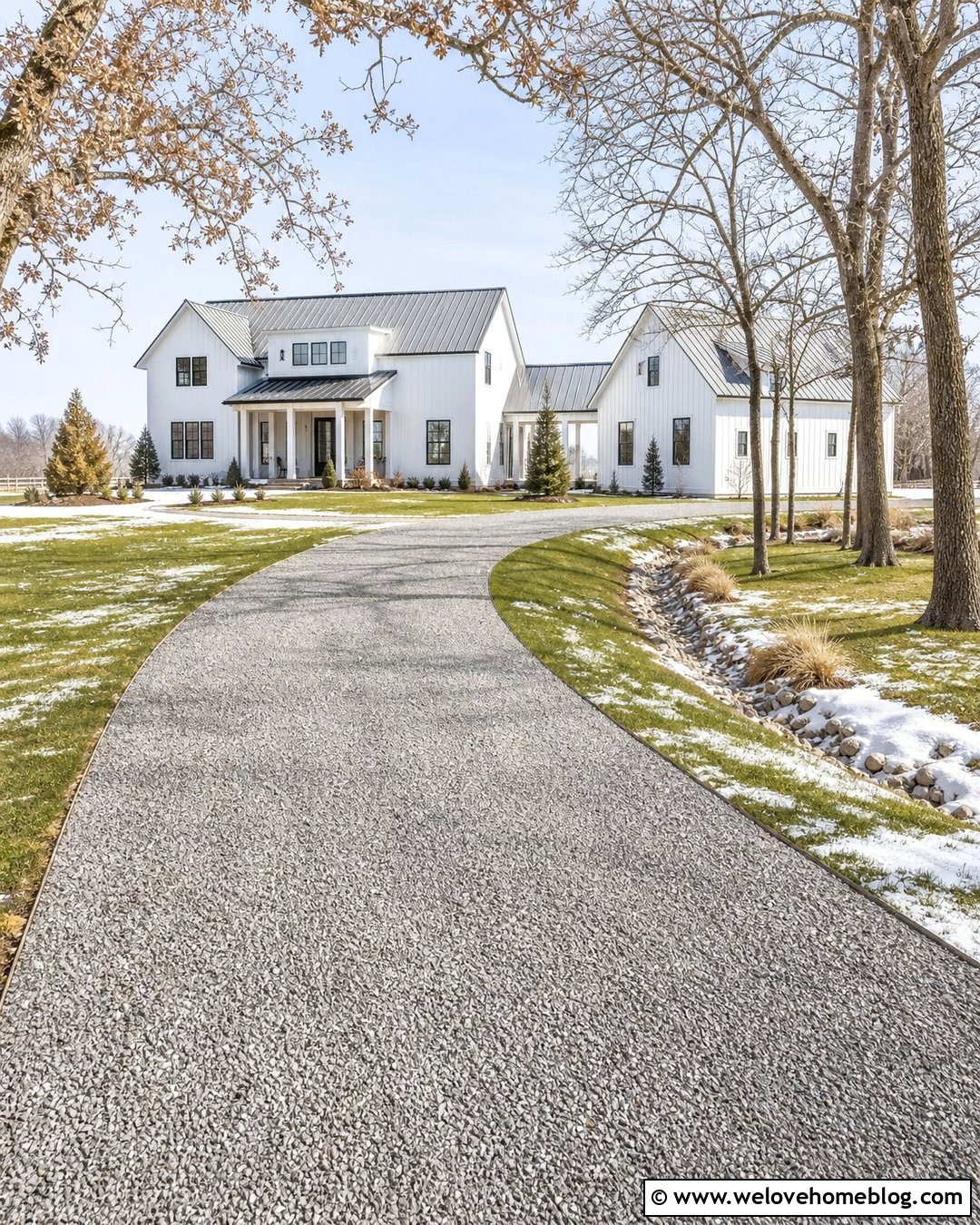
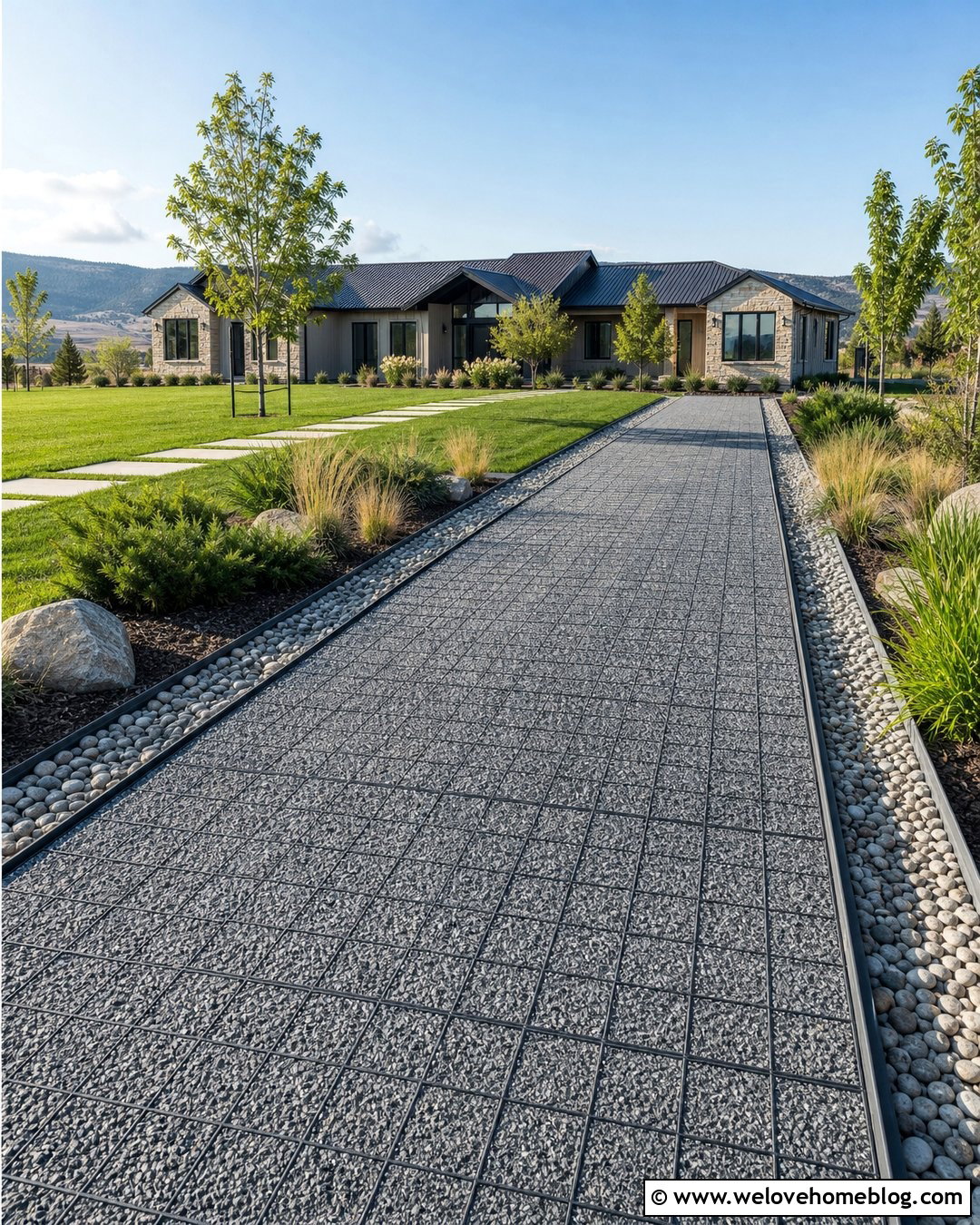
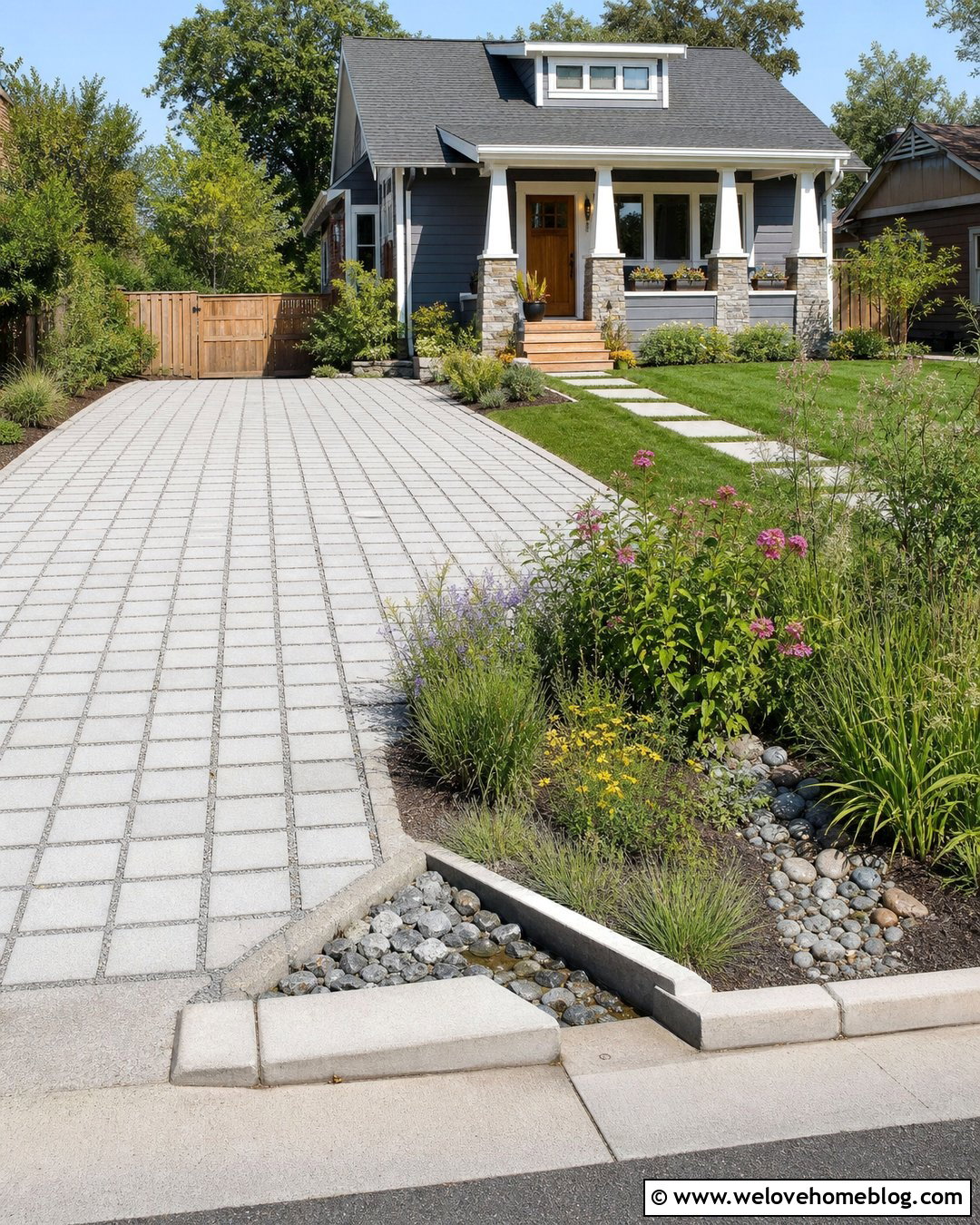
A gravel stabilization grid can give a hillside driveway a cleaner and more controlled appearance. The cellular panels sit over a prepared base and hold angular gravel in small sections, reducing lateral movement and visible tire ruts. Choose stone that fits the grid manufacturer’s specifications rather than filling the cells with oversized or highly rounded material. Concrete or stone edging creates a fixed perimeter, while a drainage swale on the uphill side intercepts runoff. This design pairs beautifully with a modern farmhouse and simple, drought-tolerant planting. Use a broad straight layout with a level parking pad near the house. The finished surface still looks like a traditional gravel driveway, but the hidden structure makes it more practical for regular vehicle traffic on a moderate incline.
3. Curved Gravel Driveway With Retaining Wall
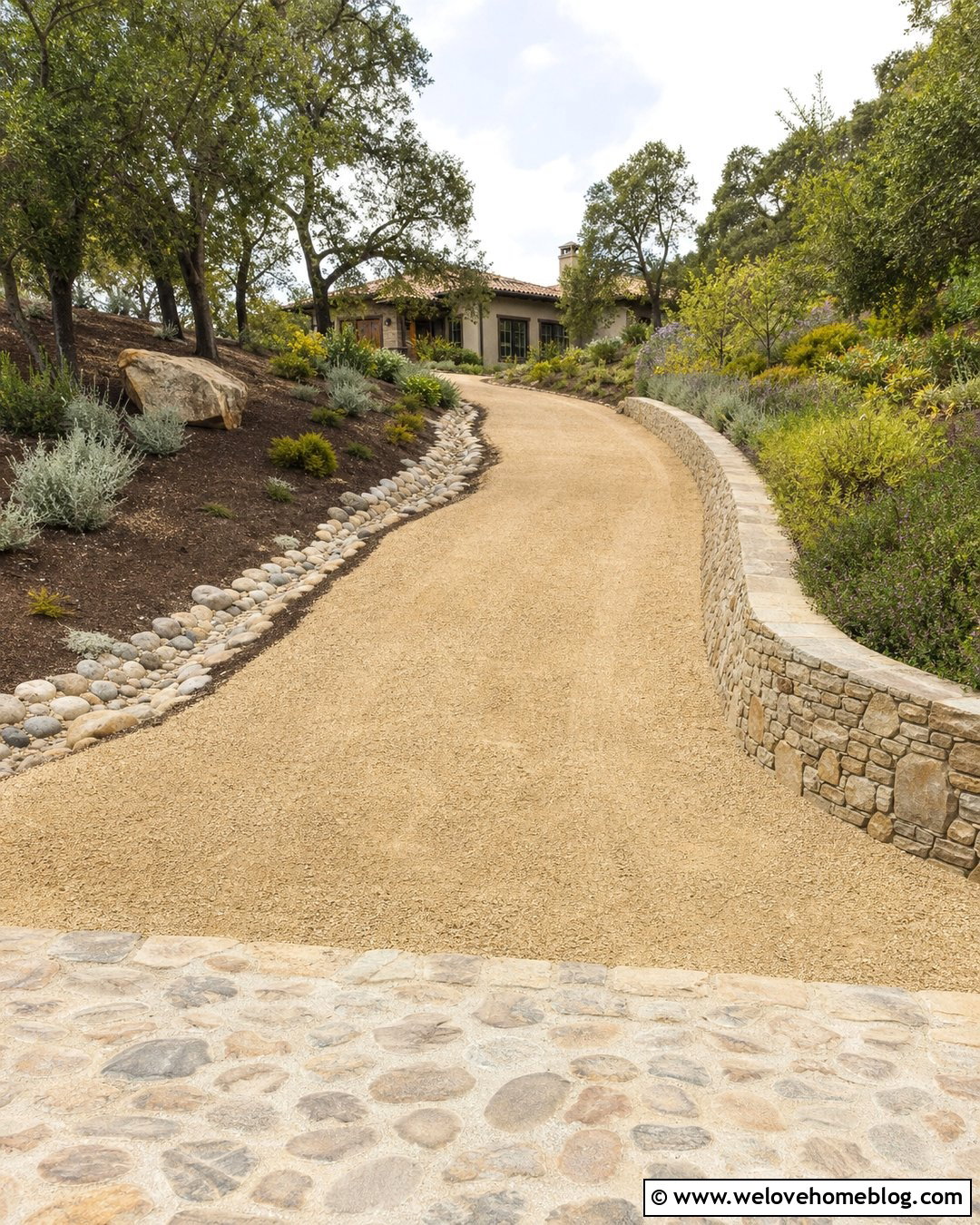
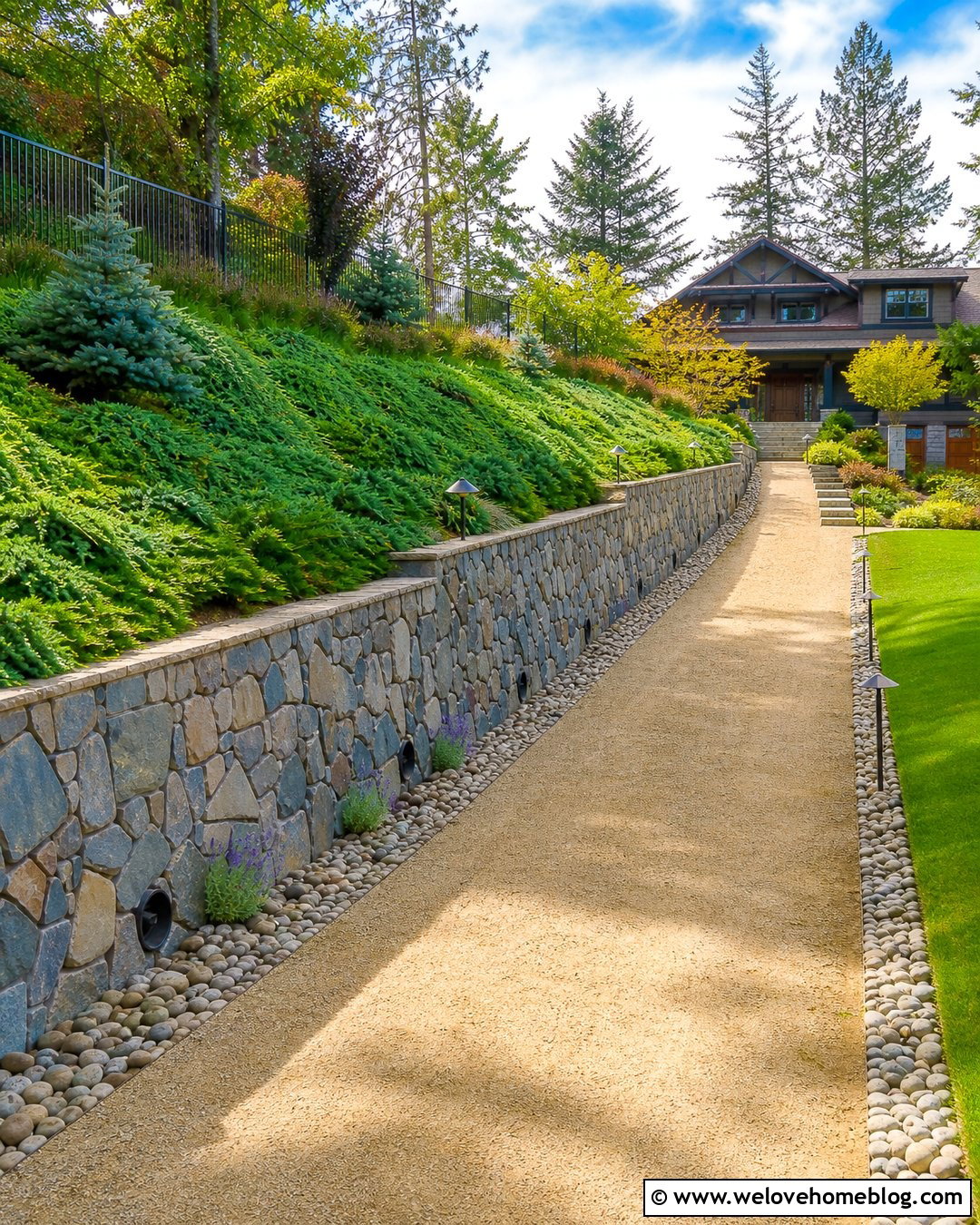
A curved route can reduce the harsh appearance of a direct climb while creating a graceful approach to the house. Cover the driveway with compacted tan crushed gravel and support the downhill edge with a stone retaining wall. The wall should be professionally designed where soil pressure, drainage, or significant height is involved. On the uphill side, include a shallow rock-lined swale that carries stormwater toward a safe outlet. Plant the surrounding banks with deep-rooted native shrubs, ornamental grasses, and erosion-resistant ground covers. A brick or cobblestone apron at the road prevents gravel from spreading into traffic. This complete driveway look suits country homes and wooded properties, especially when the curve follows the land instead of cutting sharply across it.
4. Gravel Driveway With French Drain
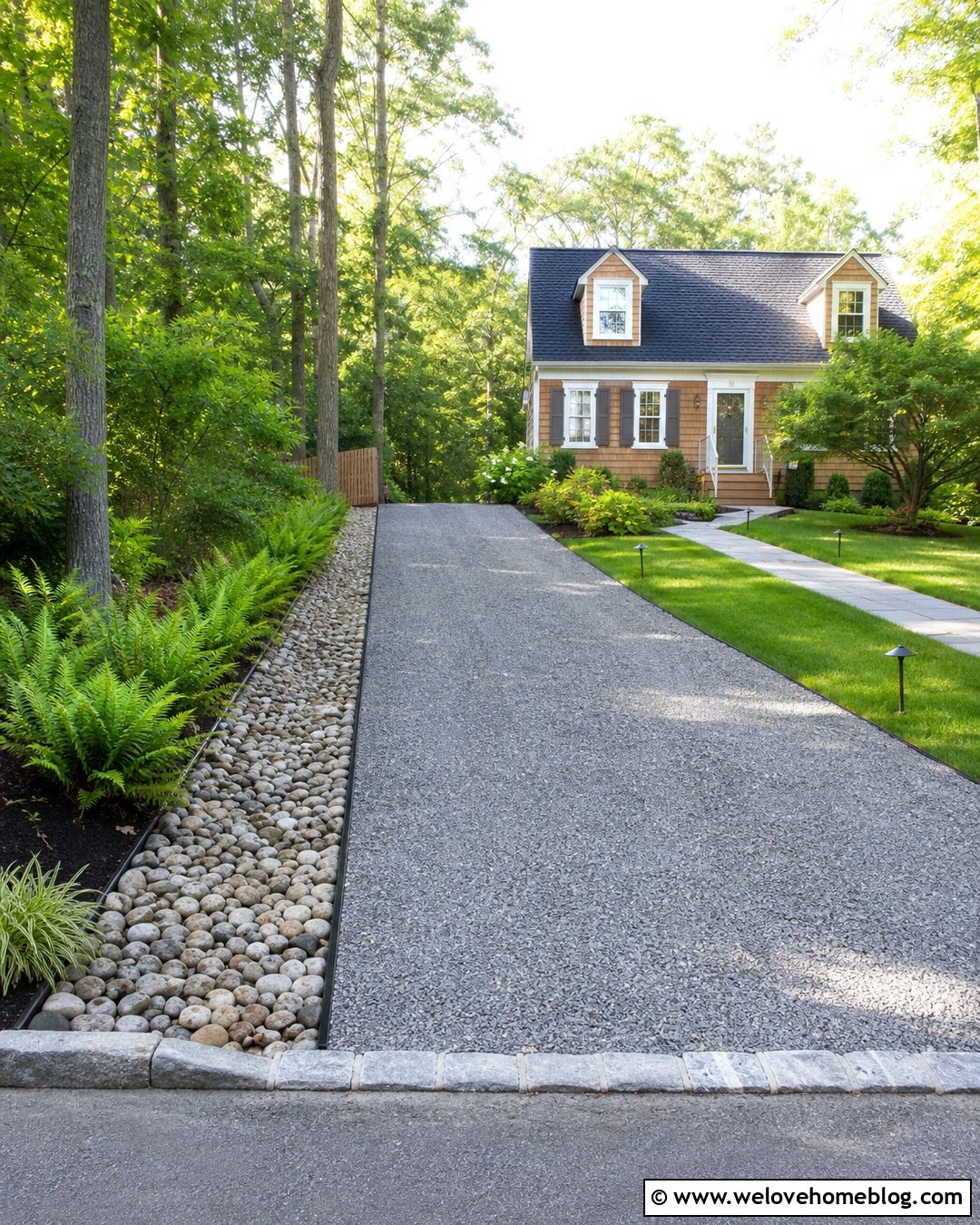
Does water flow from the upper bank and cross your driveway after every storm? A French drain installed along the uphill edge can collect subsurface moisture before it damages the gravel surface. Pair it with compacted gray crusher run, sturdy steel edging, and a slight cross slope that directs surface water toward the drainage side. River rock over the drain creates a neat visual transition, although the functional stone and pipe beneath must be correctly sized for site conditions. Ferns, sedges, and moisture-tolerant shrubs can landscape the drainage corridor. This practical design looks at home beside a woodland cabin or Cape Cod house. The drain needs a suitable outlet, so have the runoff path planned before excavation rather than simply moving water toward another property.
5. Gravel Driveway With Concrete Drainage Channels
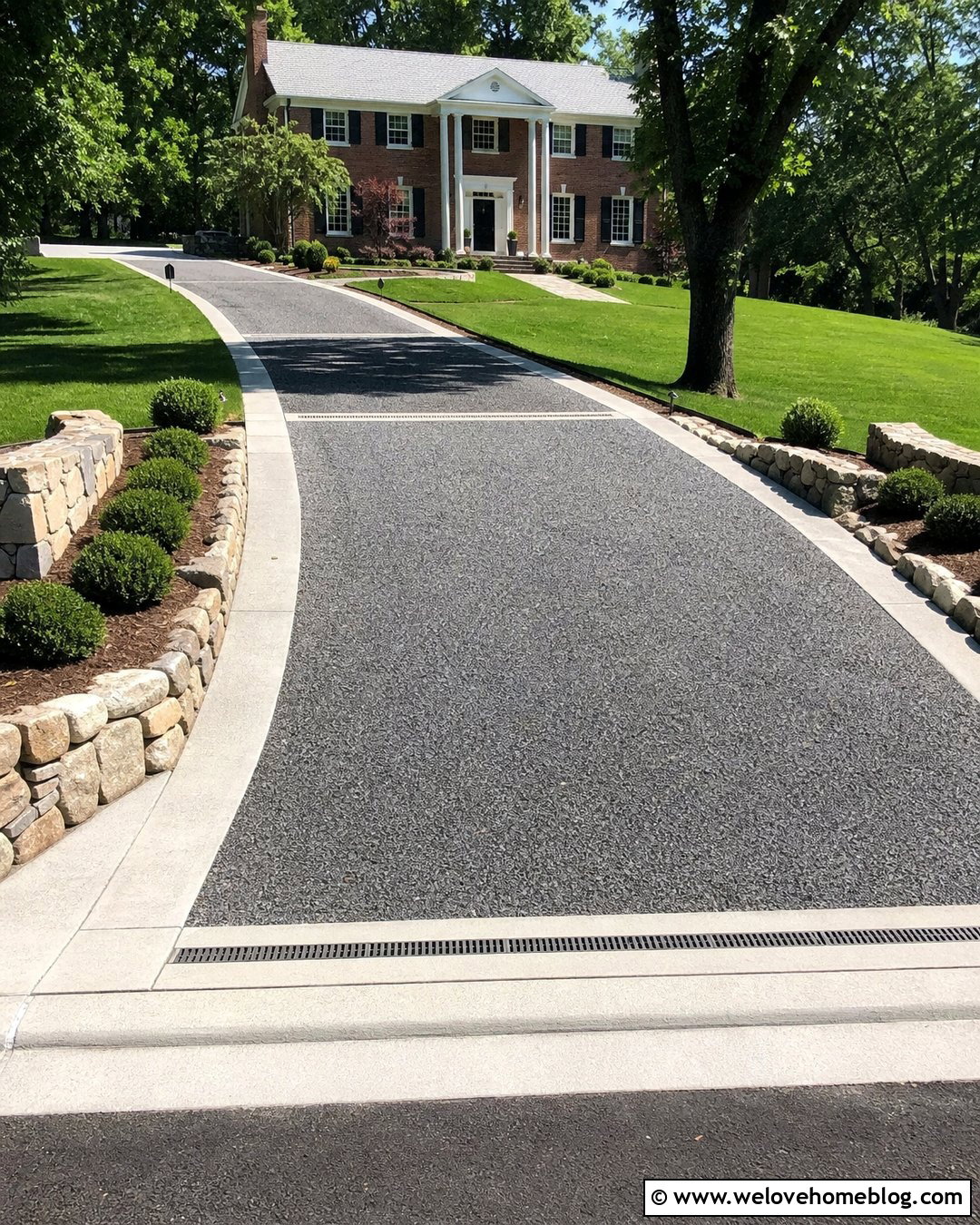
On a long hill, water can gather speed before reaching the bottom. Concrete channel drains placed across carefully selected points can intercept that flow and redirect it toward side ditches or approved drainage areas. Surround the channels with compacted dark gray crushed stone and reinforced concrete shoulders to limit edge damage. Use visible but attractive stone borders so drivers can easily identify the driveway width. A line of clipped shrubs along the upper bank and lawn on the lower side gives the rugged drainage system a residential finish. This layout works particularly well for a long straight driveway leading to a colonial home. Channel placement, load rating, outlet capacity, and slope should be professionally determined, since poorly positioned drains can clog or create new erosion below the driveway.
6. Terraced Gravel Driveway With Stone Walls
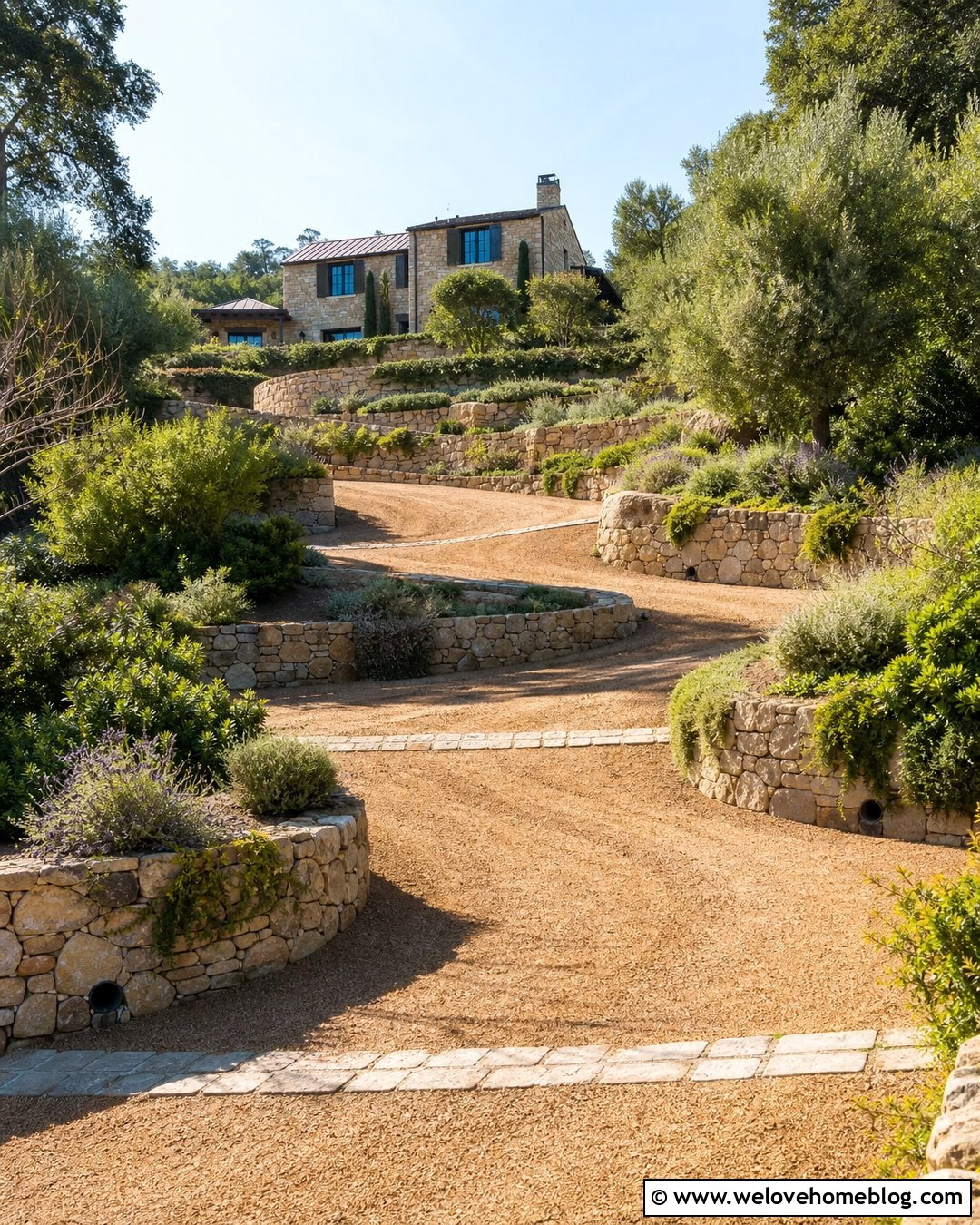
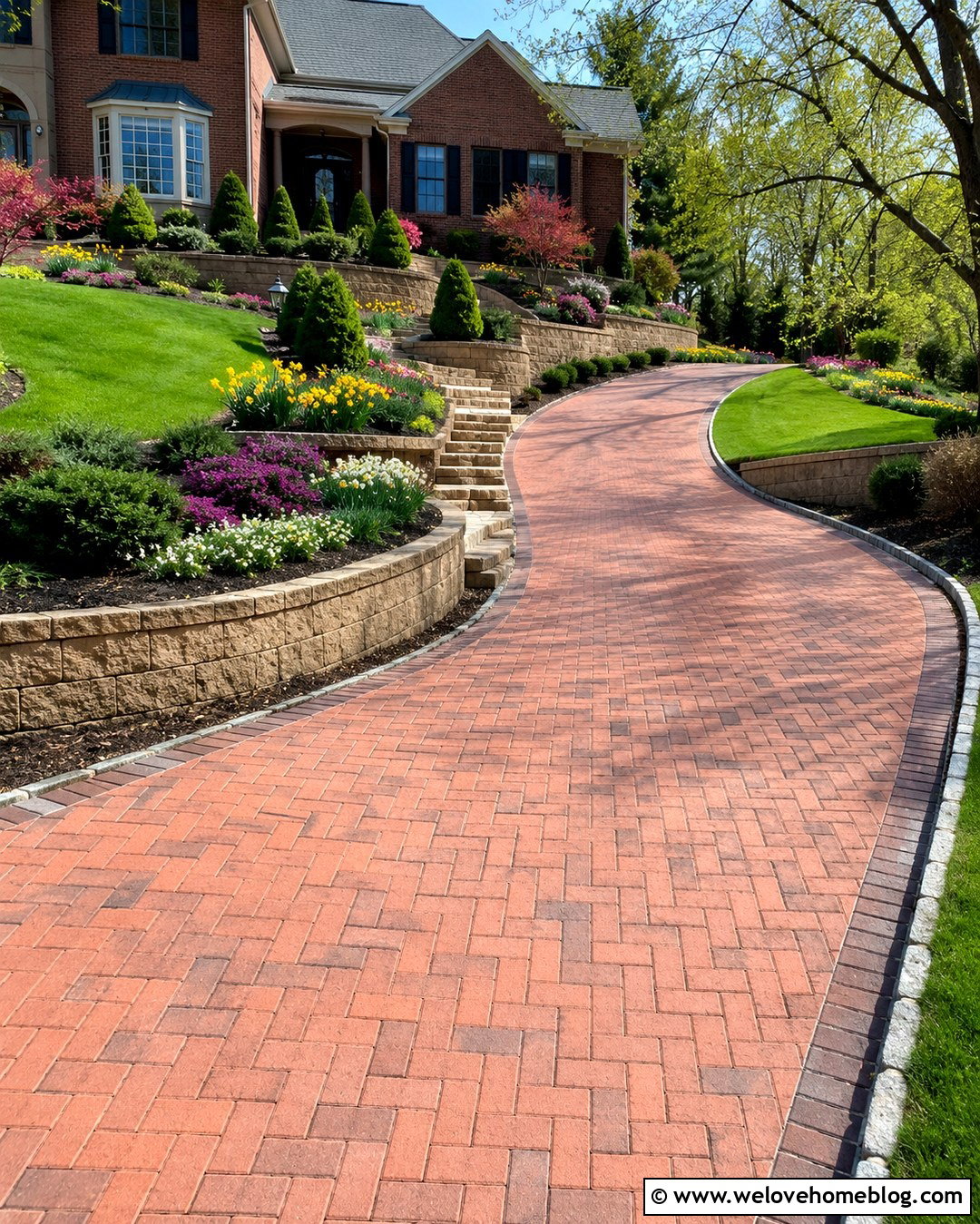
Very steep land may benefit from a terraced driveway that divides the climb into shorter, more manageable sections. A series of gently sloped gravel runs can be connected by broad curves and supported with engineered stone retaining walls. Use compacted brown crushed gravel for the surface and cobblestone bands where each section changes grade. Drainage behind the walls is essential because trapped water can increase pressure and weaken the structure. Plant the terraces with low native shrubs, creeping ground covers, and small ornamental trees that will not obstruct sightlines. This complete look complements a hillside cottage or stone-fronted home. It is more complex than resurfacing an existing drive, but it can create a stable, attractive entrance when the original route is excessively direct or difficult to navigate.
7. Switchback Gravel Driveway With Native Landscaping
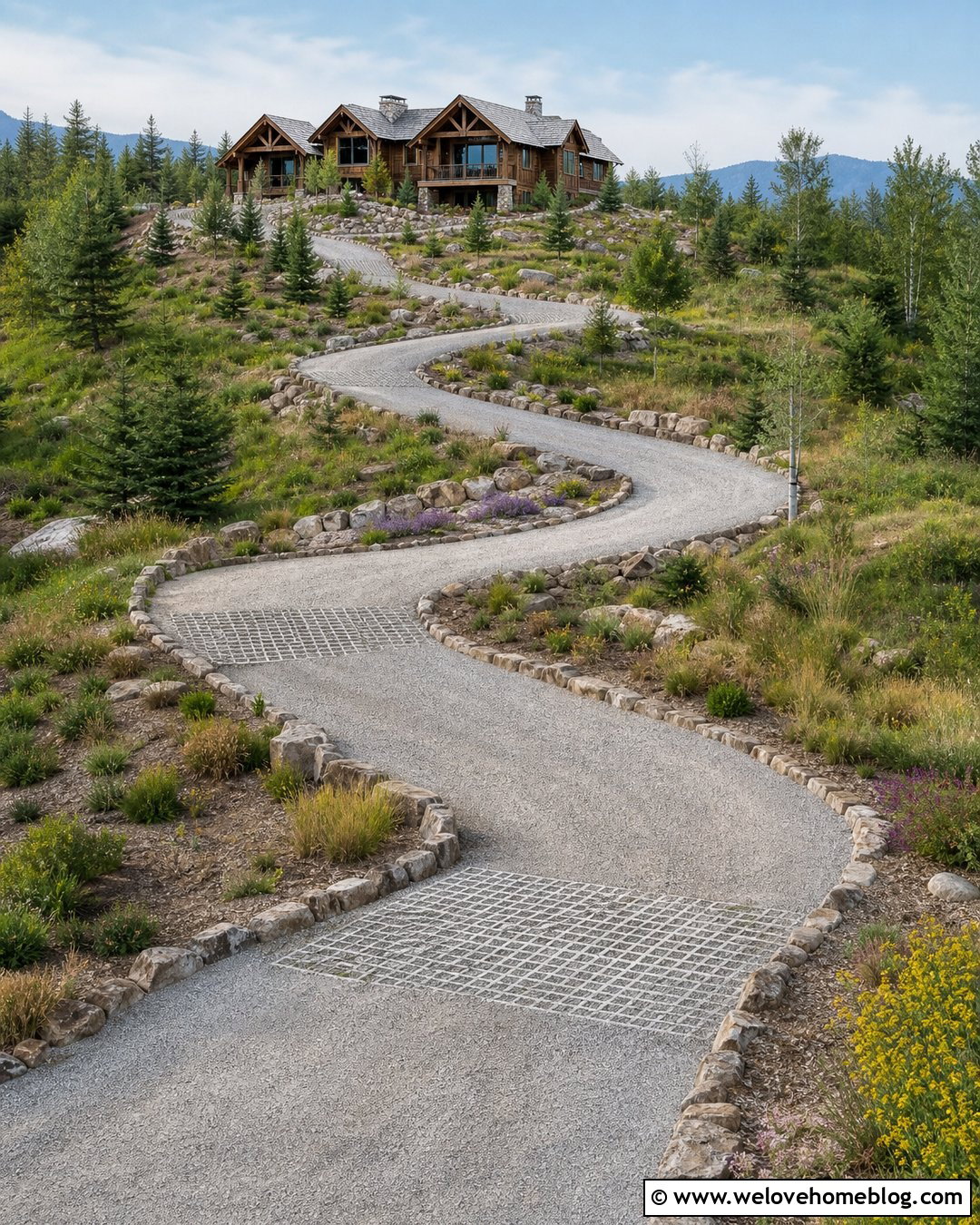
A switchback layout can make a dramatic hillside easier to climb by extending the route across the slope. Cover the driving surface with compacted angular granite gravel and reinforce each turning area with stabilization grids or a more substantial paved transition. The inside of every bend can include a landscaped drainage basin, while the exposed outside edge may require a retaining wall or reinforced shoulder. Native grasses, flowering shrubs, and ground covers help the driveway blend into the surrounding land. This approach suits large rural properties where sufficient space is available for wide, comfortable turns. Keep trees and tall plants away from the bends to protect visibility. Professional grading is important because each switchback must manage runoff without directing concentrated water onto the lower driveway section.
8. Crowned Gravel Driveway With Grass Swales
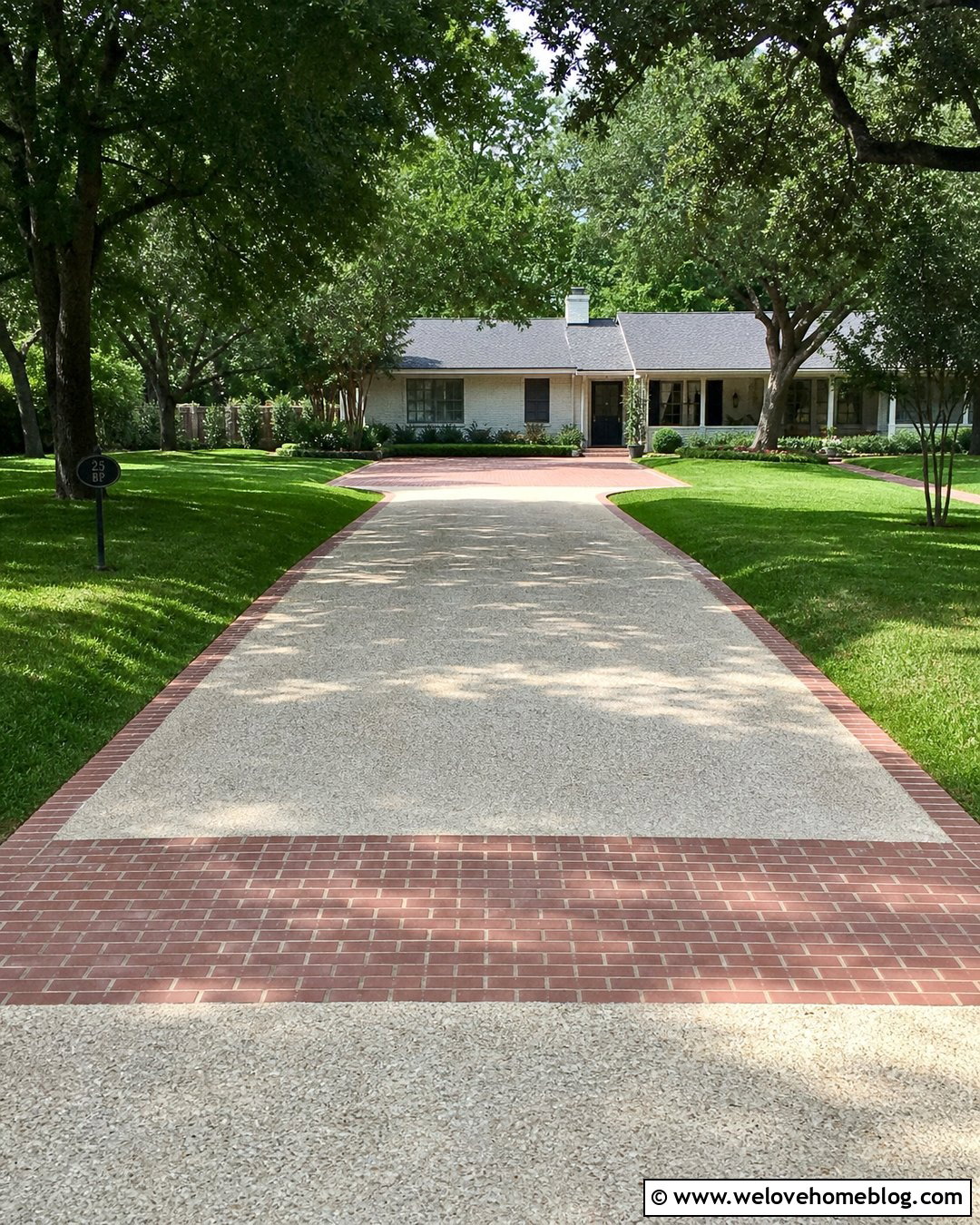
A softly crowned gravel driveway offers a simple way to move water toward both sides instead of letting it run down the tire tracks. Use compacted limestone or crusher run with a slightly raised center and firm, well-defined shoulders. Shallow grass swales along the edges can receive runoff and carry it gradually toward stable outlets. The swales should have dense turf or suitable native ground covers to resist erosion during heavy rain. Brick edging at the entrance and a brick turnaround near the house give the practical surface a polished finish. This complete design looks welcoming beside a traditional ranch home with an open lawn. Regular grading helps restore the crown after traffic and weather flatten it. Avoid creating an overly high center that could scrape low vehicles.
9. Gravel Driveway With Timber Borders
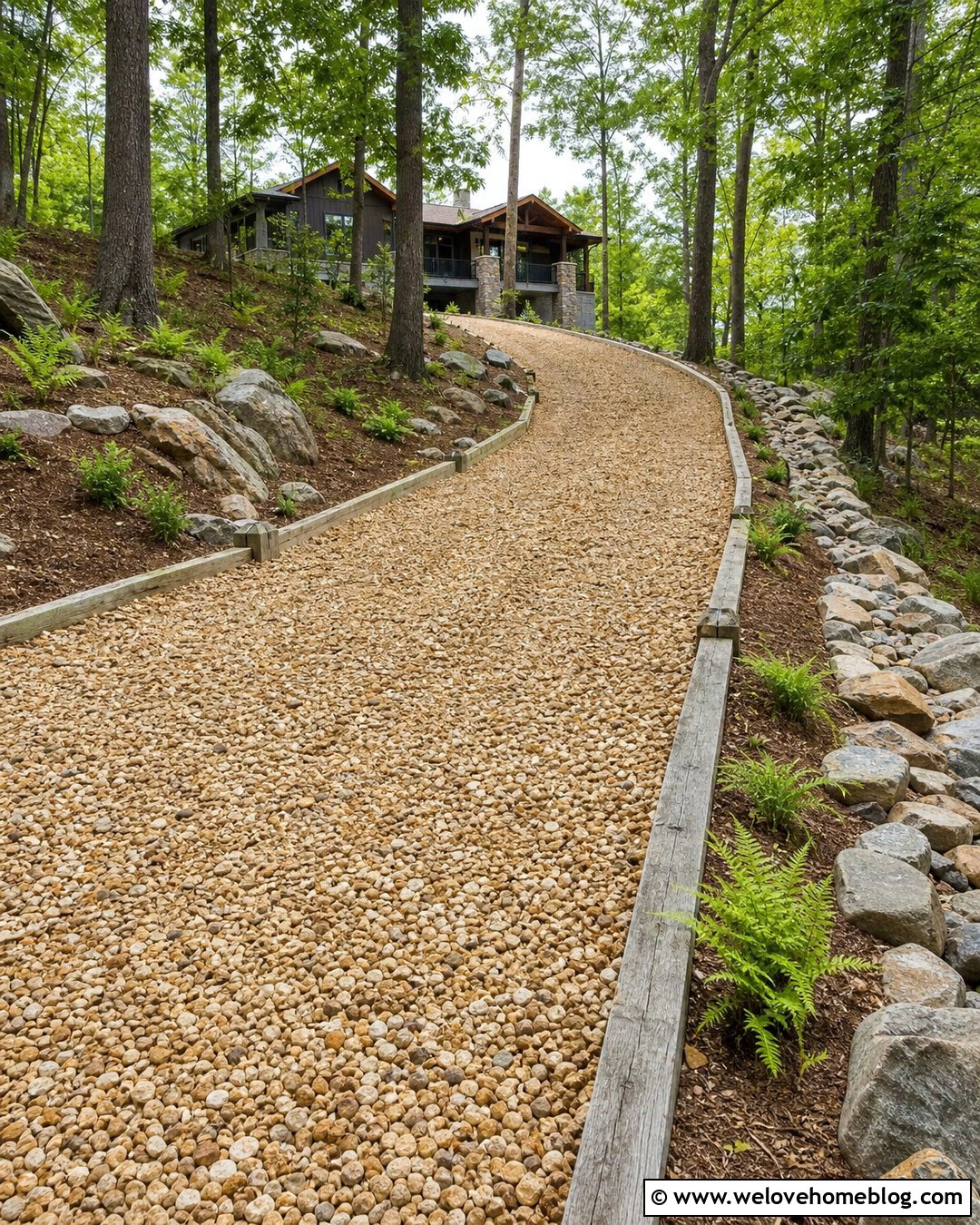
Timber borders bring warmth and definition to a gently sloped gravel driveway, especially on a wooded or rustic property. Use pressure-rated landscape timbers secured with appropriate stakes, and pair them with compacted golden-brown crushed stone rather than rolling pea gravel. A shallow ditch lined with larger rock can run outside the uphill border to keep stormwater away from the driving surface. Add ferns, native grasses, and woodland shrubs beyond the drainage zone for a layered entrance. The driveway can curve gradually toward a cabin, lodge, or modern rustic home. Timber is best for moderate conditions because severe slopes and heavy soil pressure may require stronger masonry or concrete restraints. Check the borders regularly for movement, decay, and places where runoff has begun cutting around the ends.
10. Gravel Driveway With Cobblestone Ribbons
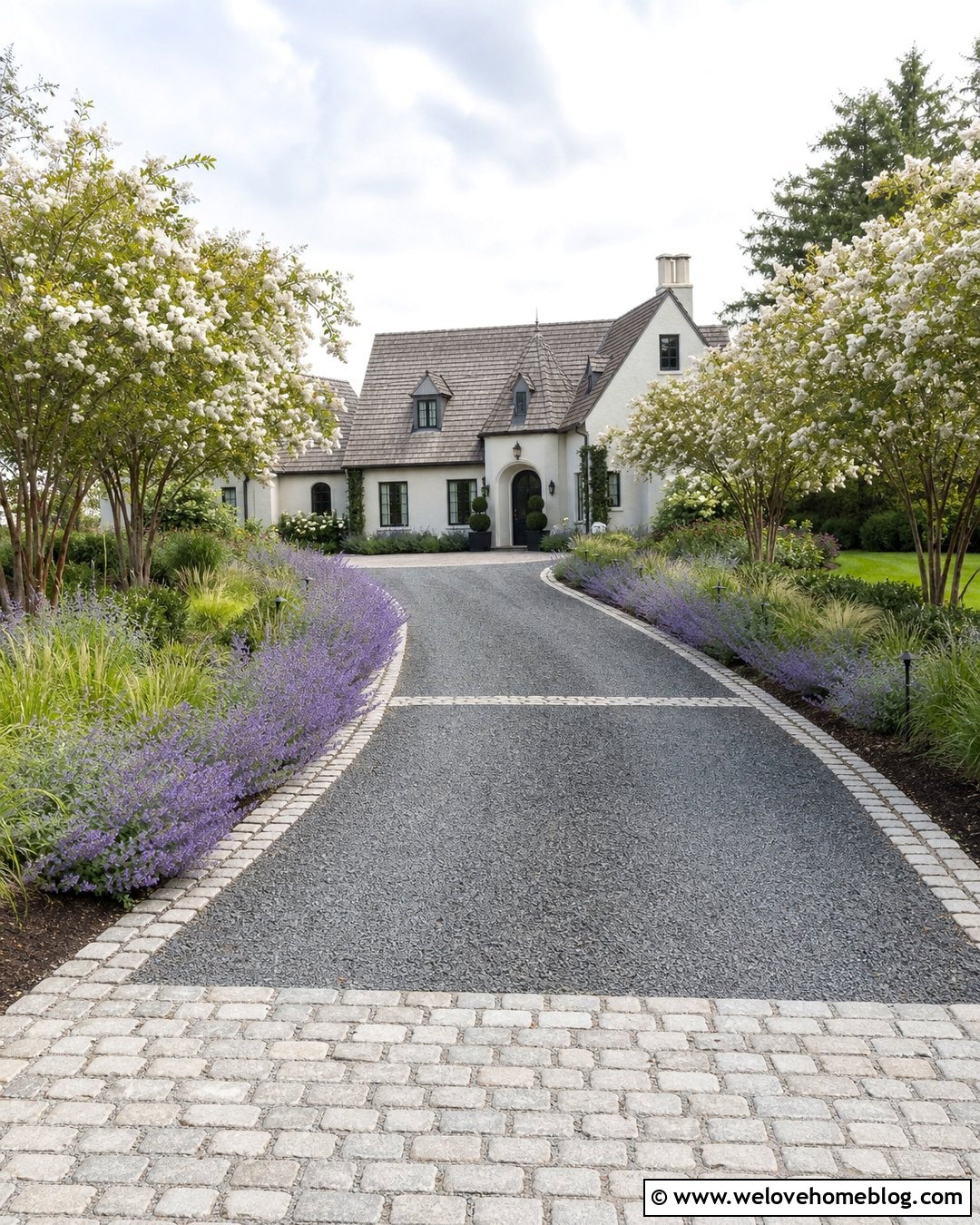
Cobblestone ribbons can divide a sloped gravel driveway into shorter visual sections while adding extra structure and character. Install the bands across a compacted gray gravel surface at carefully planned intervals, using a properly supported base so the stones remain level under vehicle loads. The ribbons may help interrupt minor surface movement, but they should complement—not replace—a complete drainage system. Frame the driveway with matching cobblestone curbs and plant lavender, catmint, and low ornamental grasses along the sunny banks. A gentle curved layout leading to a European-inspired cottage makes the combination feel especially cohesive. Include a cobblestone apron where the driveway meets the road and another near the garage. Keep transitions smooth to avoid uncomfortable bumps and interference with snow-removal equipment.
11. Gravel Driveway With Rock-Lined Drainage Ditch
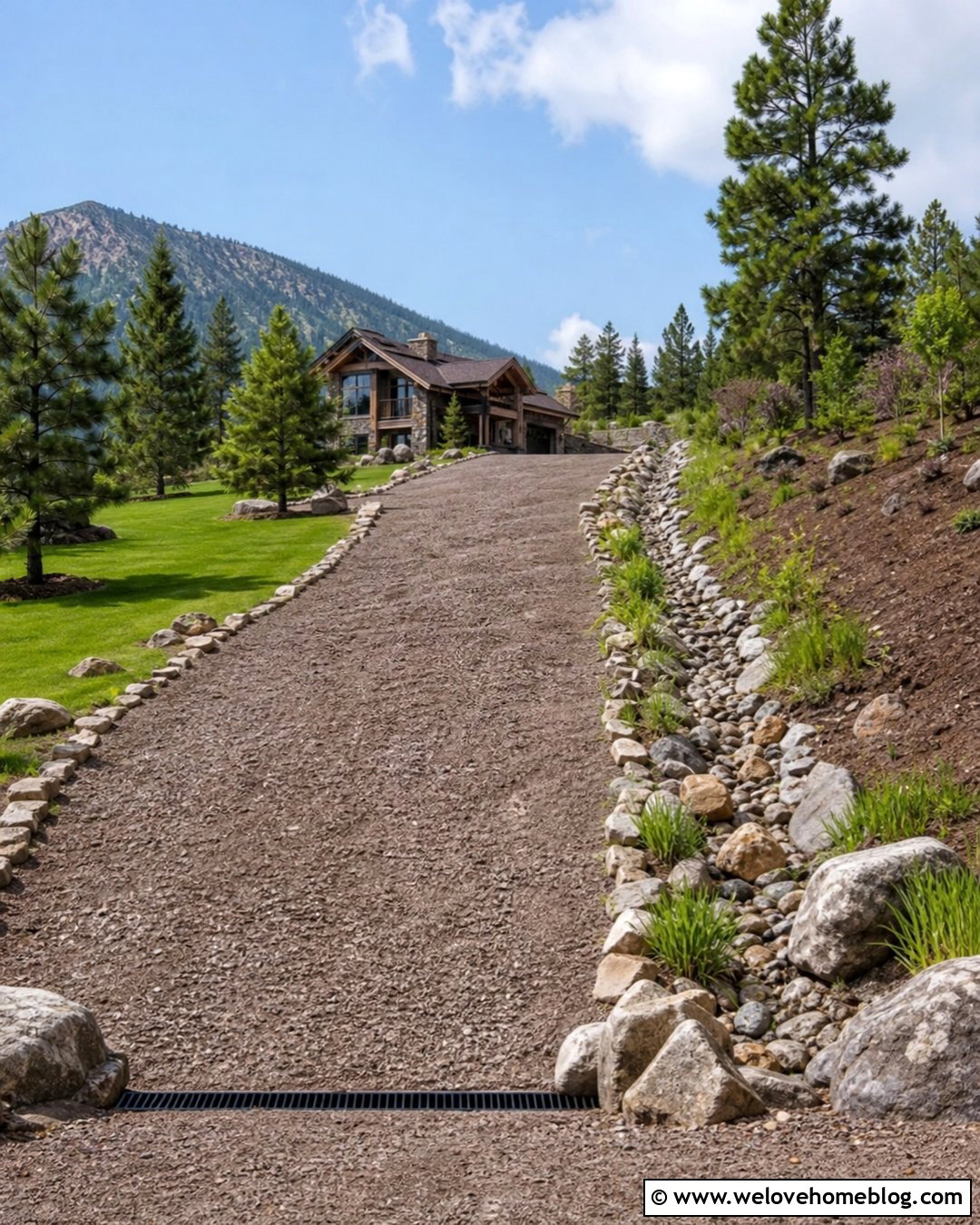
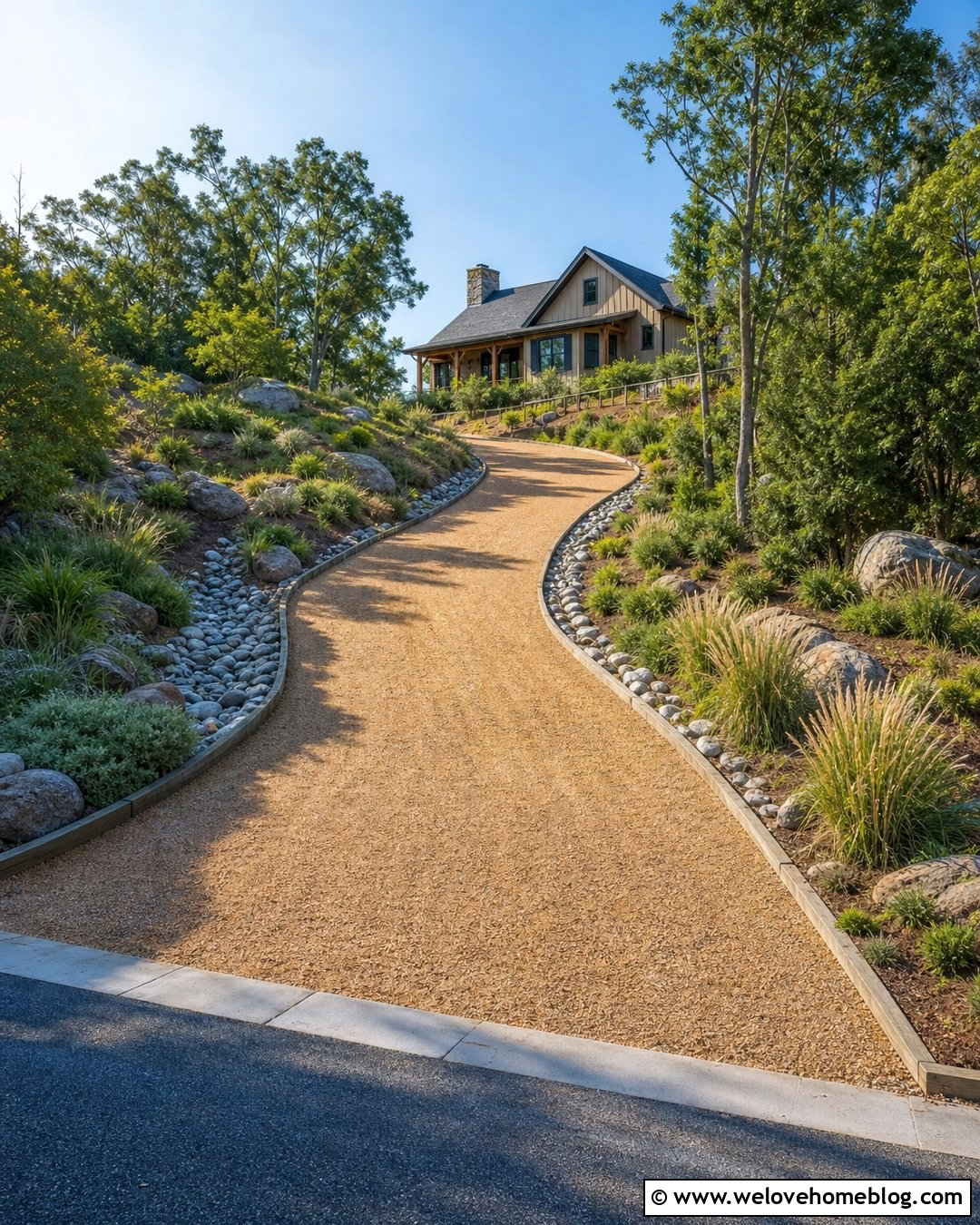
A visible drainage ditch can become an attractive landscape feature rather than an unfinished trench. Place it along the uphill side of a compacted brown crushed-gravel driveway, then line the channel with appropriately sized angular rock that can withstand the expected water flow. Larger boulders at curves add structure, while sedges and moisture-tolerant native plants soften the edges. A low stone curb separates the ditch from the driving surface and helps prevent tires from crushing the channel. This rugged look works well with a mountain ranch or country house. Add a culvert beneath the entrance where the ditch meets the public road, subject to local approval. The ditch must discharge safely, and its dimensions should reflect actual drainage conditions rather than appearance alone.
12. Two-Track Gravel Driveway With Grass Center
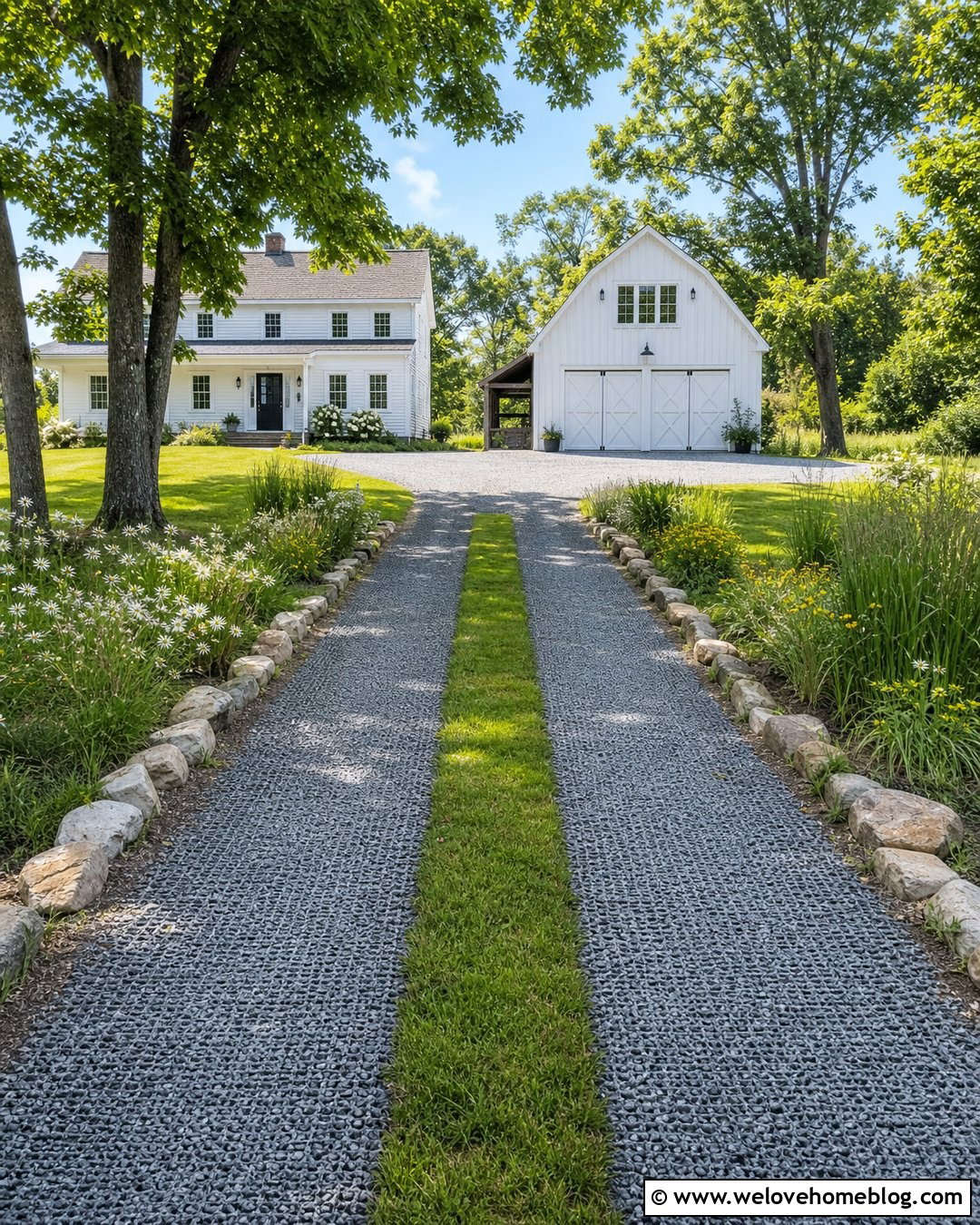
For a gently sloping rural property, a two-track driveway can reduce the amount of loose surface material while creating a relaxed country look. Build two reinforced tracks using compacted angular gravel held within stabilization grids, then establish a narrow grass strip between them. Stone edging keeps the outside lines crisp, while shallow planted swales manage runoff along both sides. The grass center should remain low and must not interfere with vehicle clearance. This design is most practical for predictable residential traffic rather than frequent deliveries or unusually wide vehicles. It pairs naturally with a farmhouse, barn-style garage, and meadow landscaping. At the entrance and parking area, transition to a full-width gravel surface so vehicles can turn comfortably without driving over the planted center.
13. White Gravel Driveway With Brick Edging
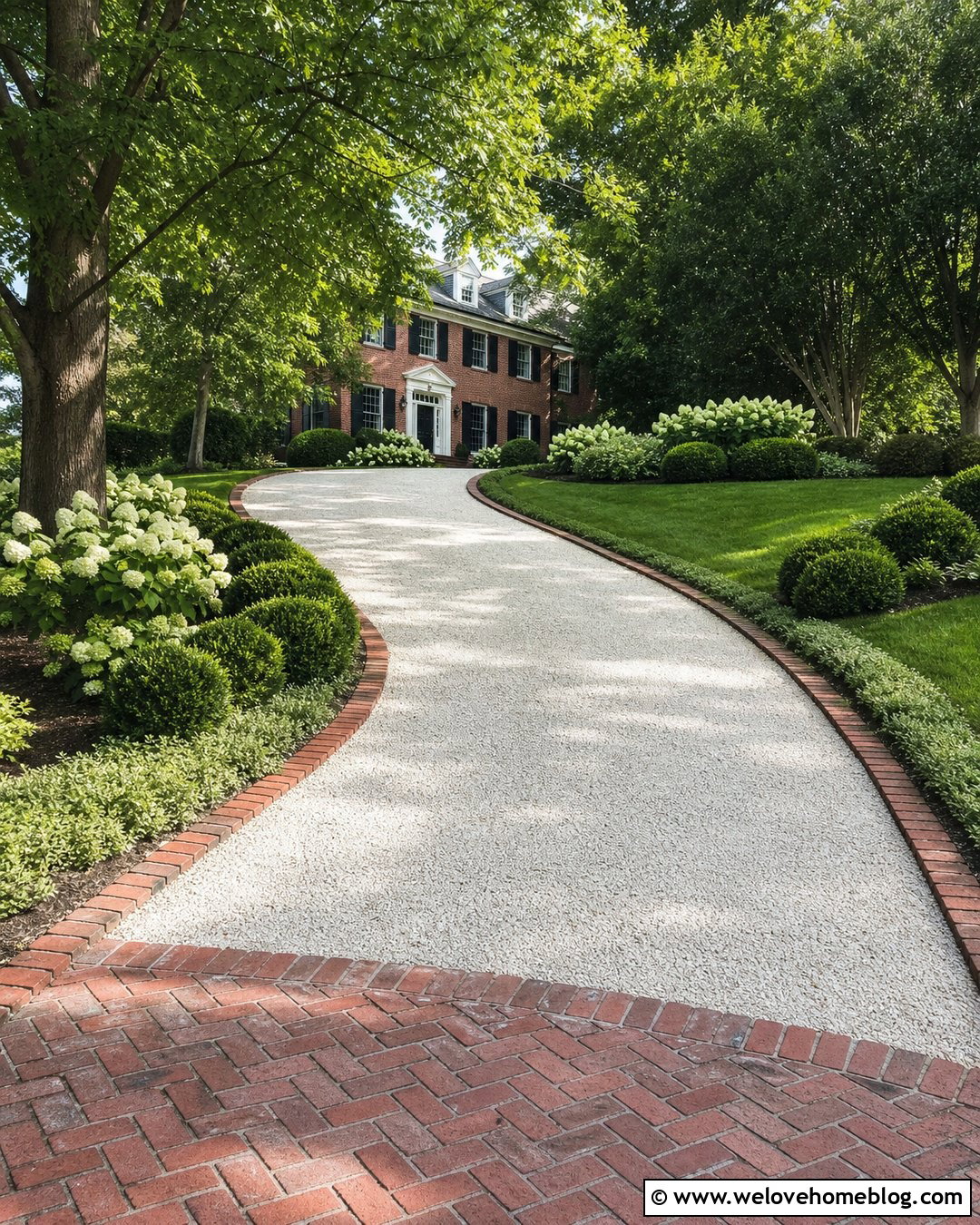
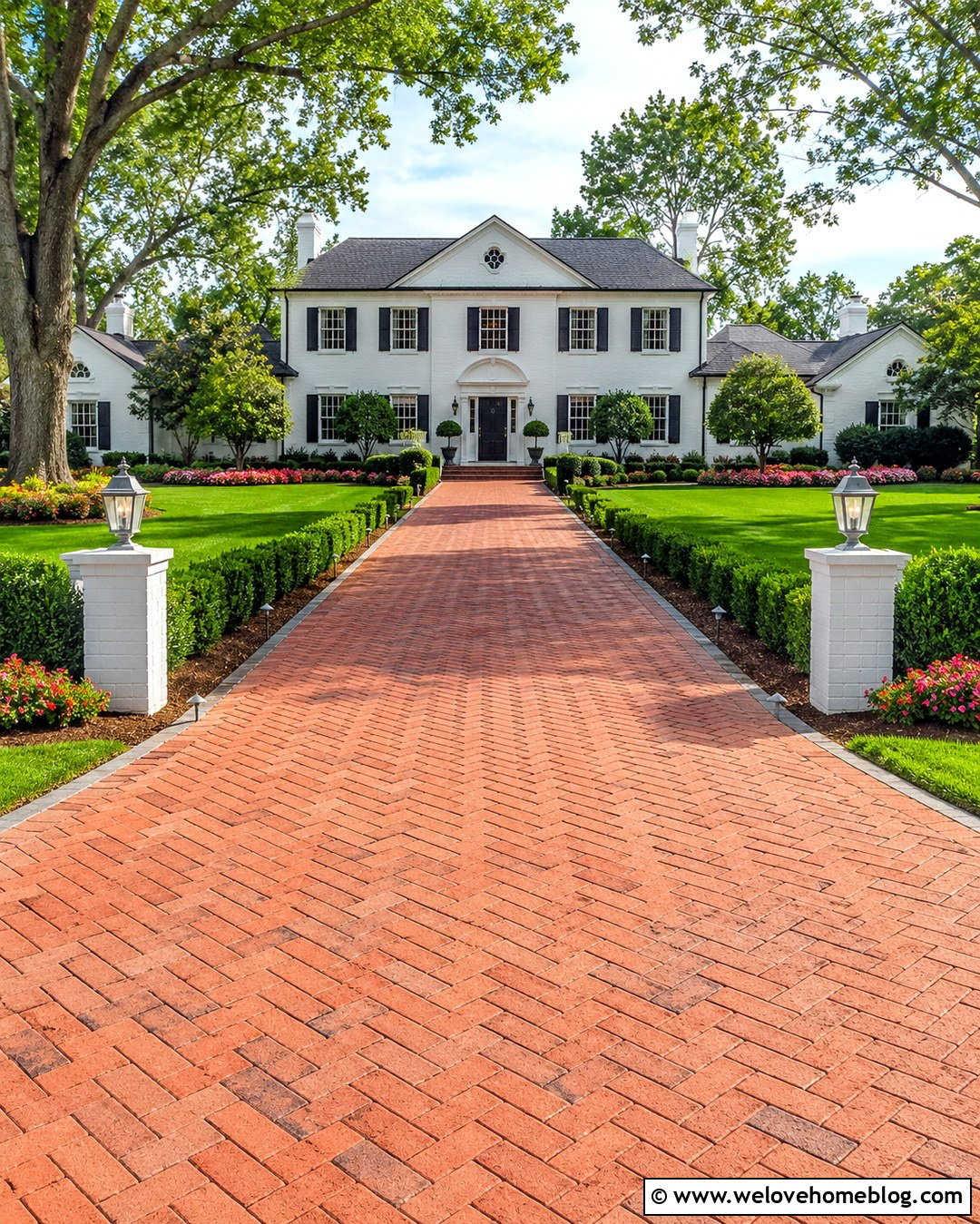
Bright limestone gravel can make a shaded hillside entrance feel lighter and more welcoming. Choose angular white or cream crushed stone that can be compacted, then contain it with deep-set red brick edging. A softly curving route creates contrast between the pale driveway, green lawn, and warm brick border. On the uphill side, install a concealed drainage system or narrow planted swale to prevent runoff from carrying soil onto the clean surface. Boxwood, hydrangeas, and low ground covers can frame the approach to a red-brick colonial house. Because pale gravel displays mud and leaf debris easily, provide generous planting setbacks and maintain stable banks. A matching brick apron near the street reduces scattered stone and creates a durable transition between the sloped driveway and public pavement.
14. Dark Gravel Driveway With Steel Edging
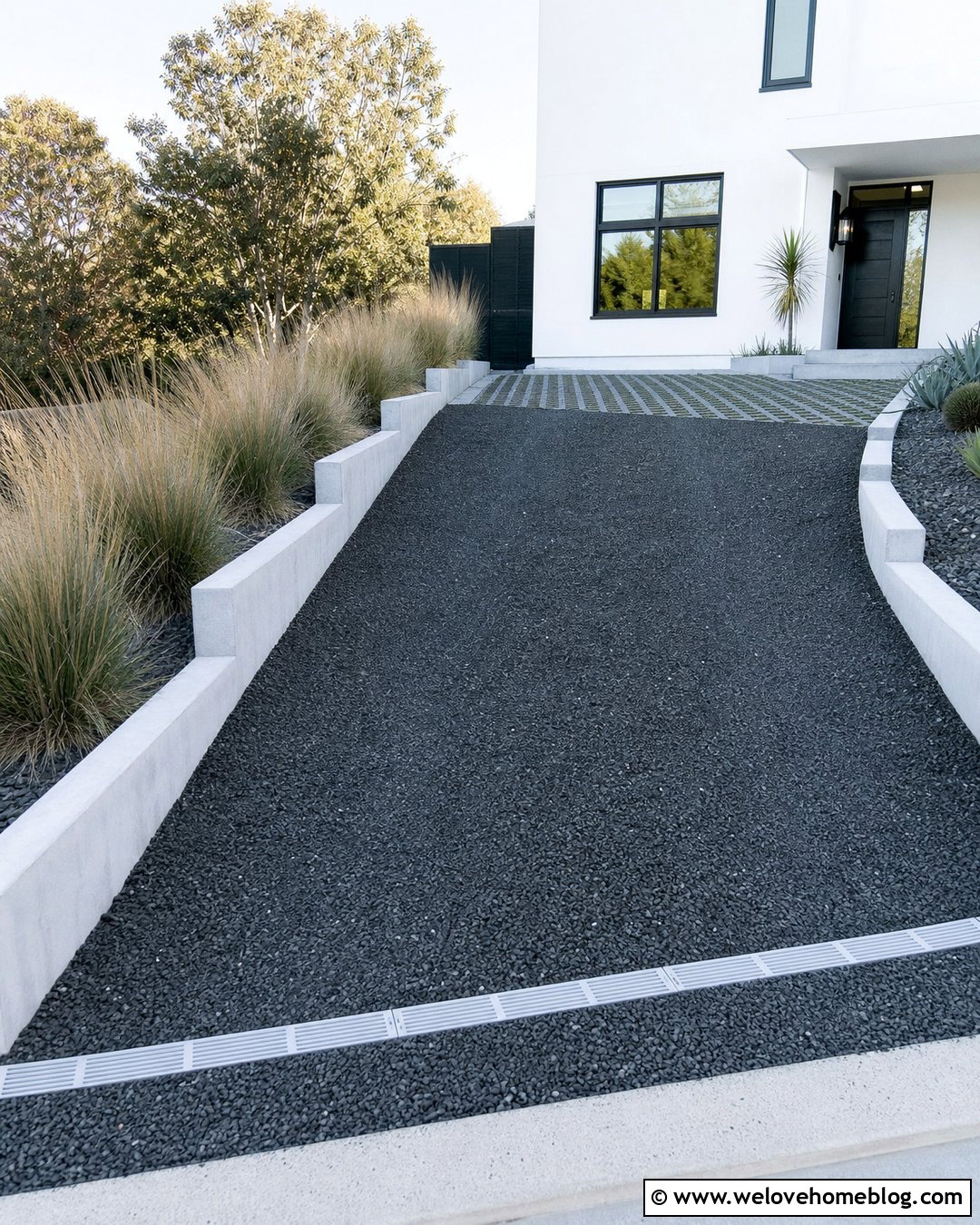
Dark charcoal gravel creates a crisp, modern appearance on a sloping lot. Use angular basalt or dark crushed granite over a properly compacted structural base, with heavy-duty steel edging anchored deeply along both sides. The dark surface looks particularly effective against pale concrete retaining walls, architectural grasses, and a white modern house. Shape the driveway as a broad straight run with a subtle cross slope toward a linear drainage strip. Add a level gravel-grid parking court near the garage to provide a comfortable arrival area. Minimal landscaping keeps the geometry clear, but the open soil should still be protected with dense ground cover or stone mulch. Select edging designed for vehicular applications, since lightweight garden strips may bend under the sideways pressure created by traffic and moving gravel.
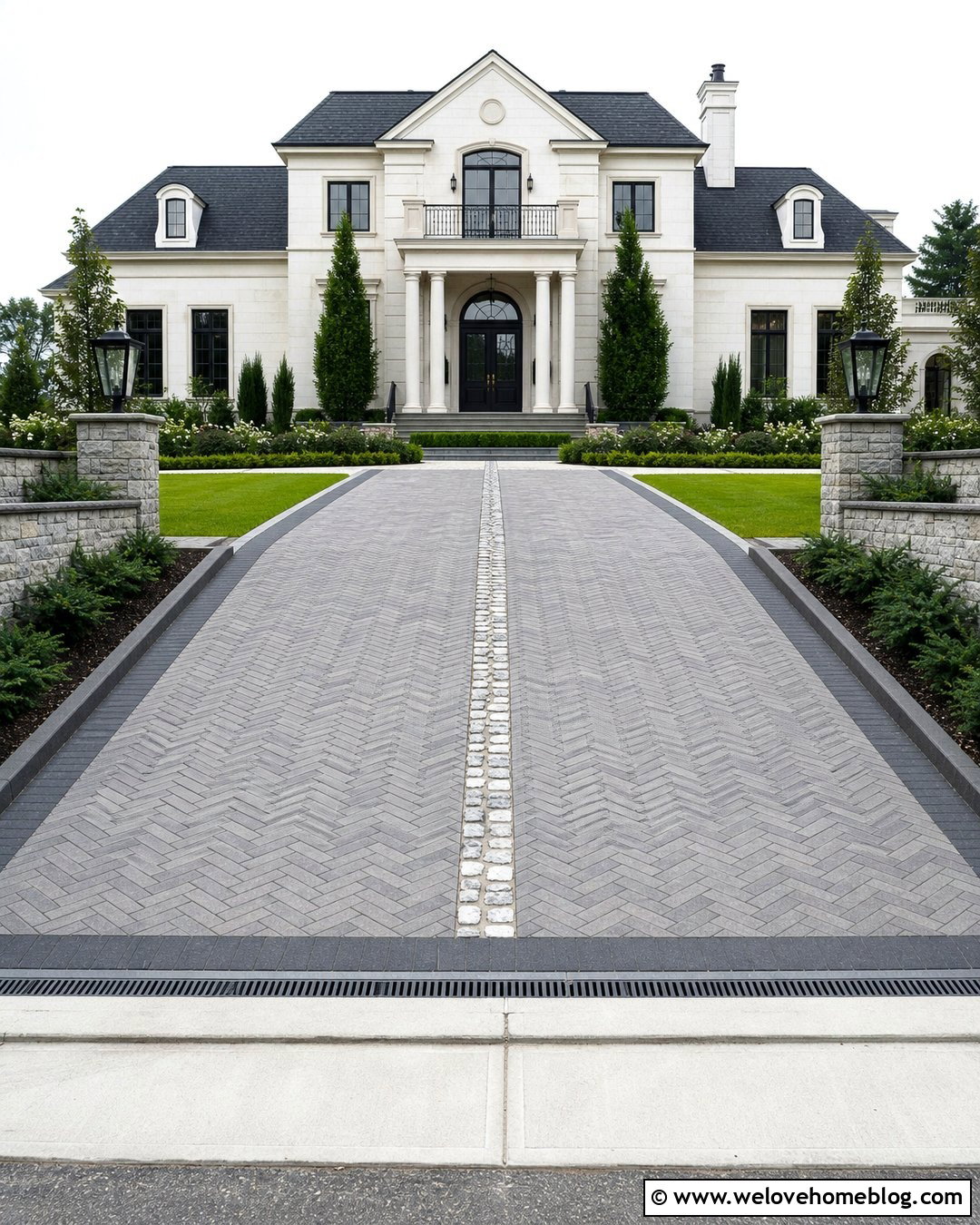
15. Decomposed Granite Driveway With Paver Borders
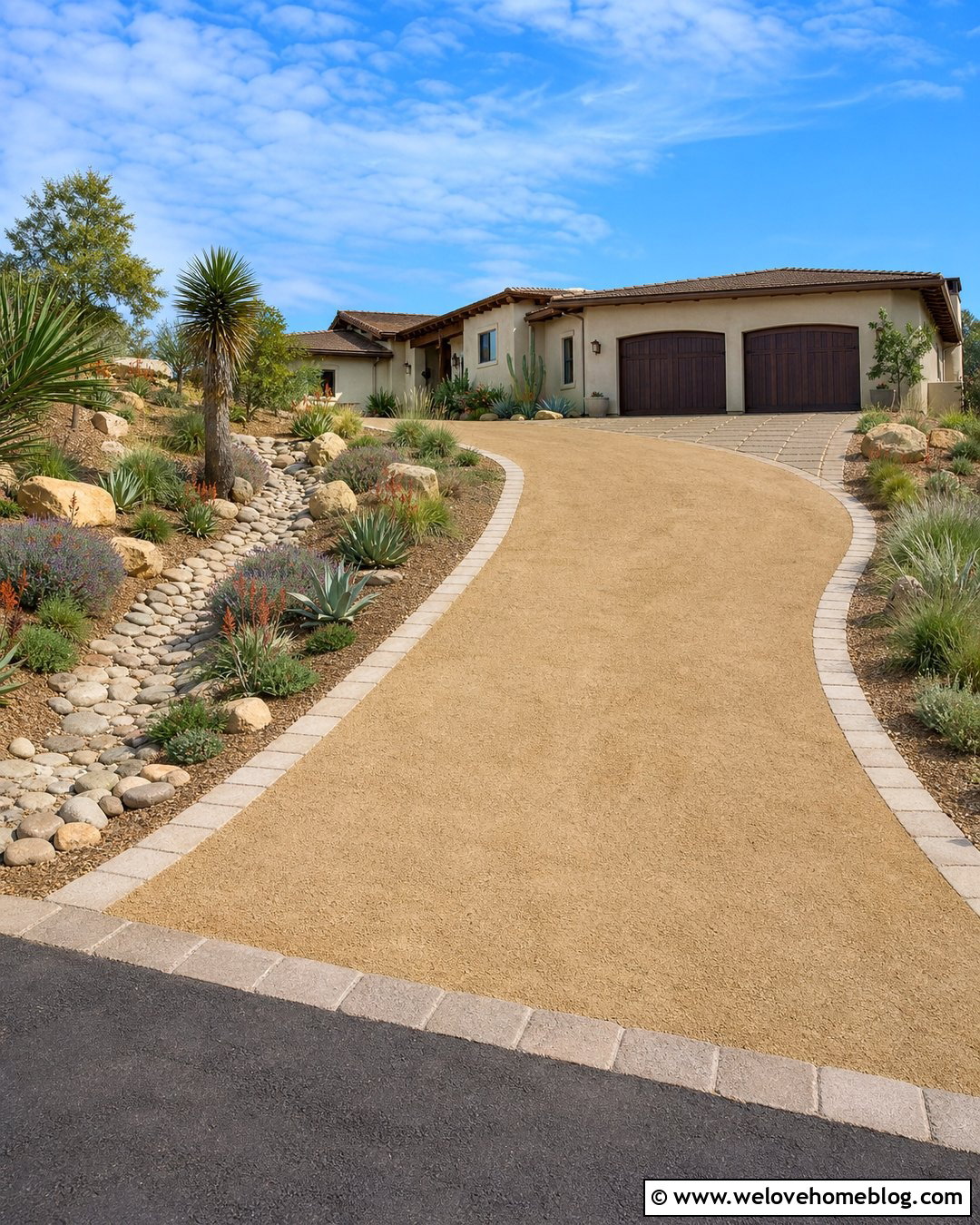
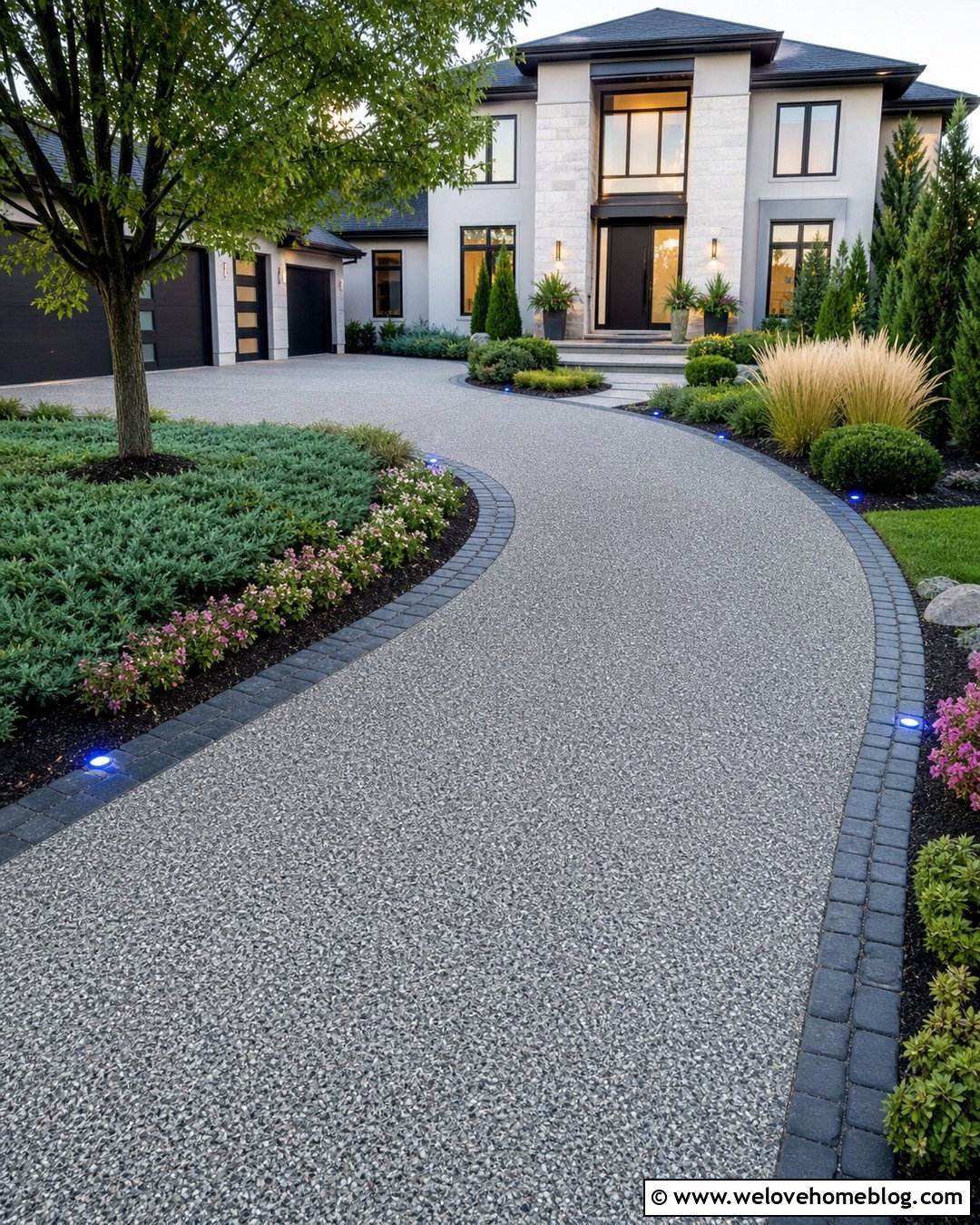
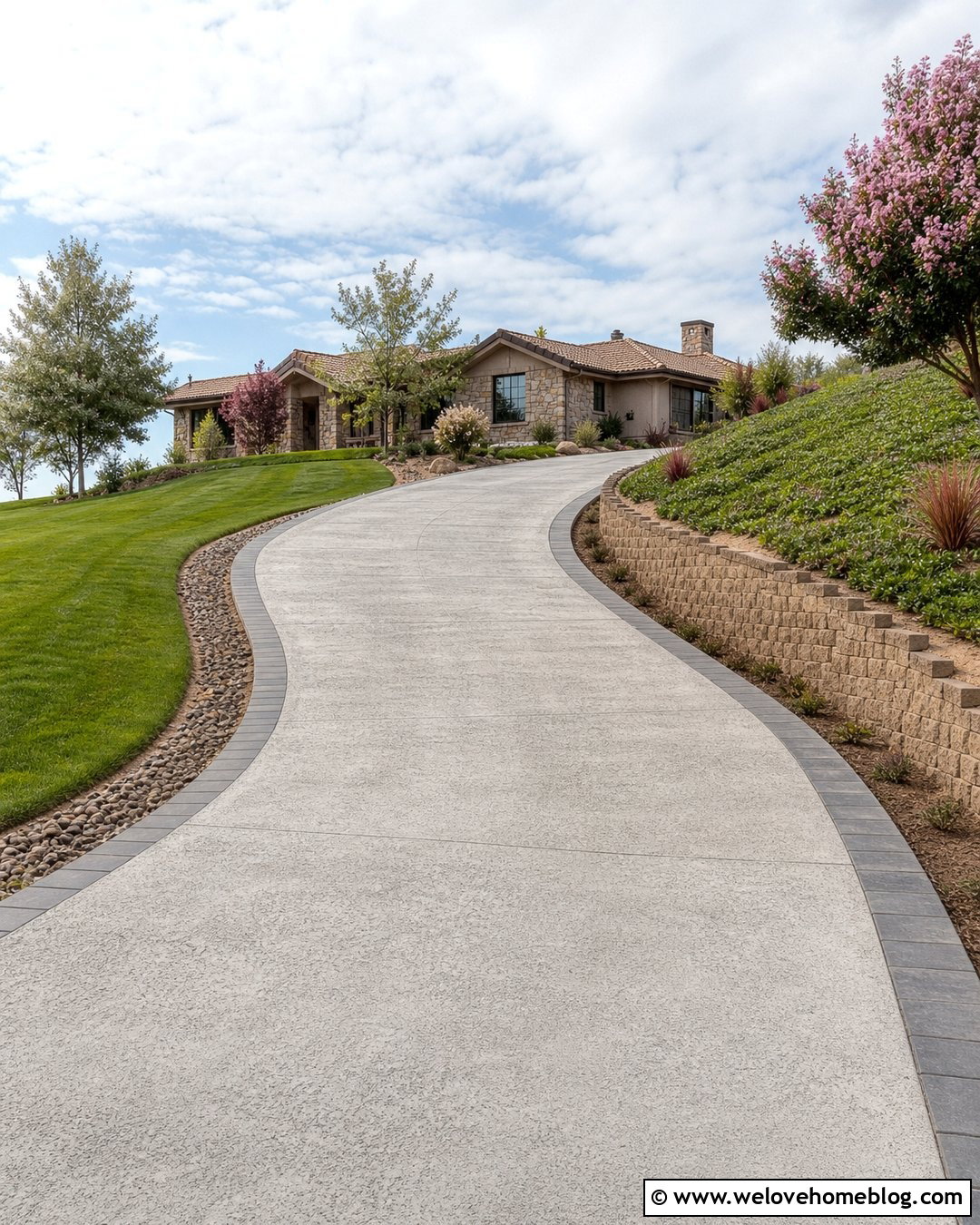
Stabilized decomposed granite offers a smooth, natural-looking surface for a mild hillside where drainage and installation conditions are suitable. Select a compactable product intended for vehicle use and frame it with concrete paver borders set on a secure base. A wide, gently curved layout can lead toward a Southwestern ranch or stucco home. Landscape the sides with agave, yucca, ornamental grasses, and drought-tolerant flowering plants, leaving clear sightlines near the road. A shallow rock swale on the uphill side controls runoff before it crosses the driveway. Decomposed granite can erode when concentrated water is allowed to travel over it, so proper grading remains essential. Consider gravel stabilization at turning areas and near the garage, where tires apply greater twisting force to the surface.
16. Gravel Driveway With Planted Retaining Banks
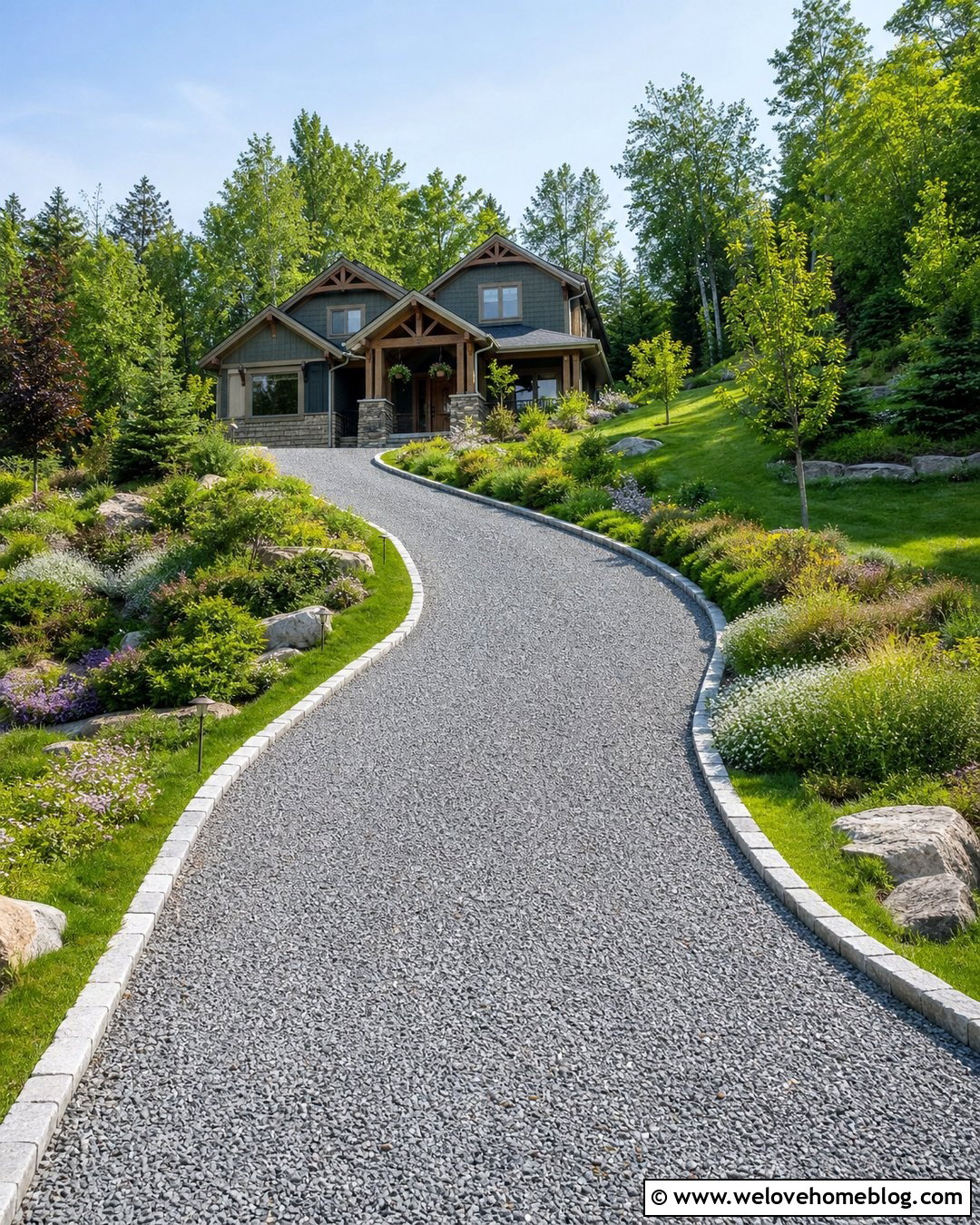
Sometimes the driveway itself is stable, but the exposed banks beside it keep washing soil onto the gravel. A complete solution pairs compacted gray crushed stone with reshaped, densely planted slopes. Use stone curbing along the driveway and erosion-control planting on the banks, including native grasses, spreading shrubs, and ground covers suited to local soil and sunlight. Biodegradable erosion matting can protect disturbed soil while roots establish. A curved layout leading to a craftsman home allows the planting beds to follow the contours naturally. Include an uphill drainage swale so vegetation is not expected to absorb concentrated stormwater by itself. Keep large shrubs away from narrow sections and bends. The result feels lush and established while helping the driveway remain cleaner after rain.
17. Gravel Driveway With Stone Entrance Apron
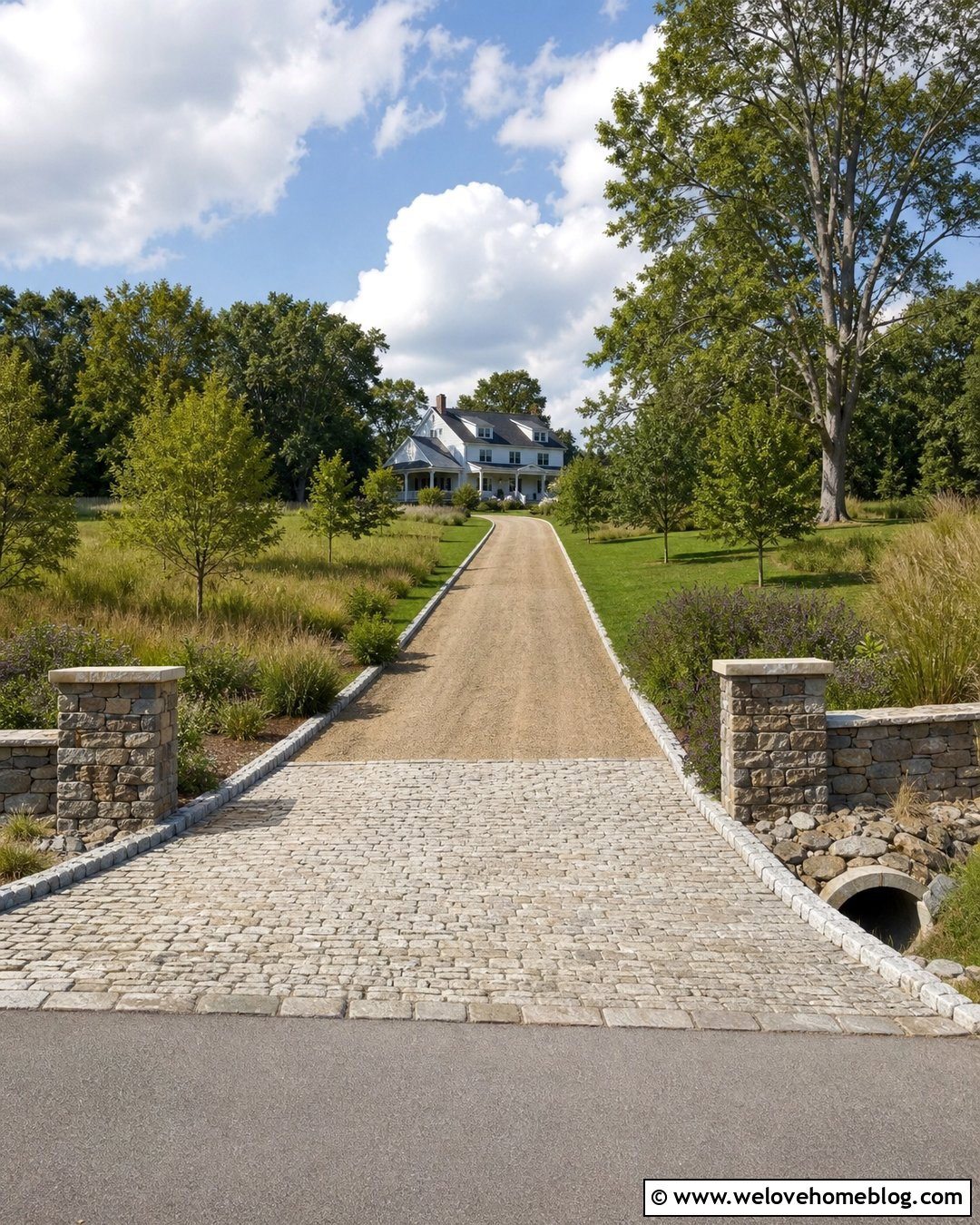
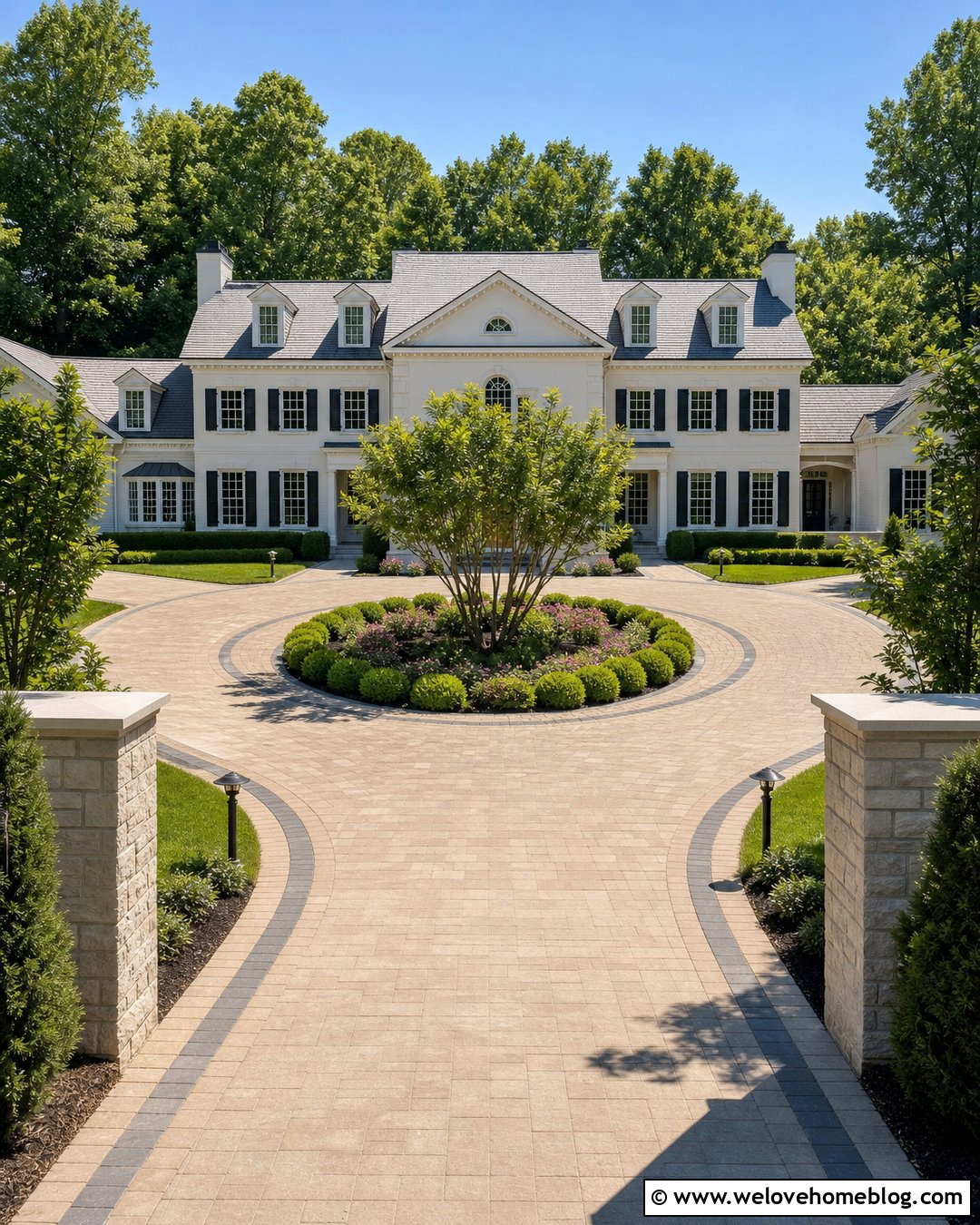
The point where a gravel driveway meets the road often receives hard braking, tight turning, and concentrated runoff. Create a durable entrance apron with textured granite setts, cobblestone, or permeable pavers, then transition into compacted tan crushed gravel for the uphill run. Strong stone curbs can continue along both edges and guide water toward a roadside swale or permitted culvert. Low stone pillars, an address marker, and simple native planting give the entrance a finished appearance without reducing visibility. This design suits a long country driveway leading to a farmhouse or traditional home. Make the apron deep enough to accommodate a full vehicle before the gravel begins. Coordinate any roadside drainage or culvert work with the appropriate local authority before changing the entrance grade.
18. Curved Gravel Driveway With Boulder Borders
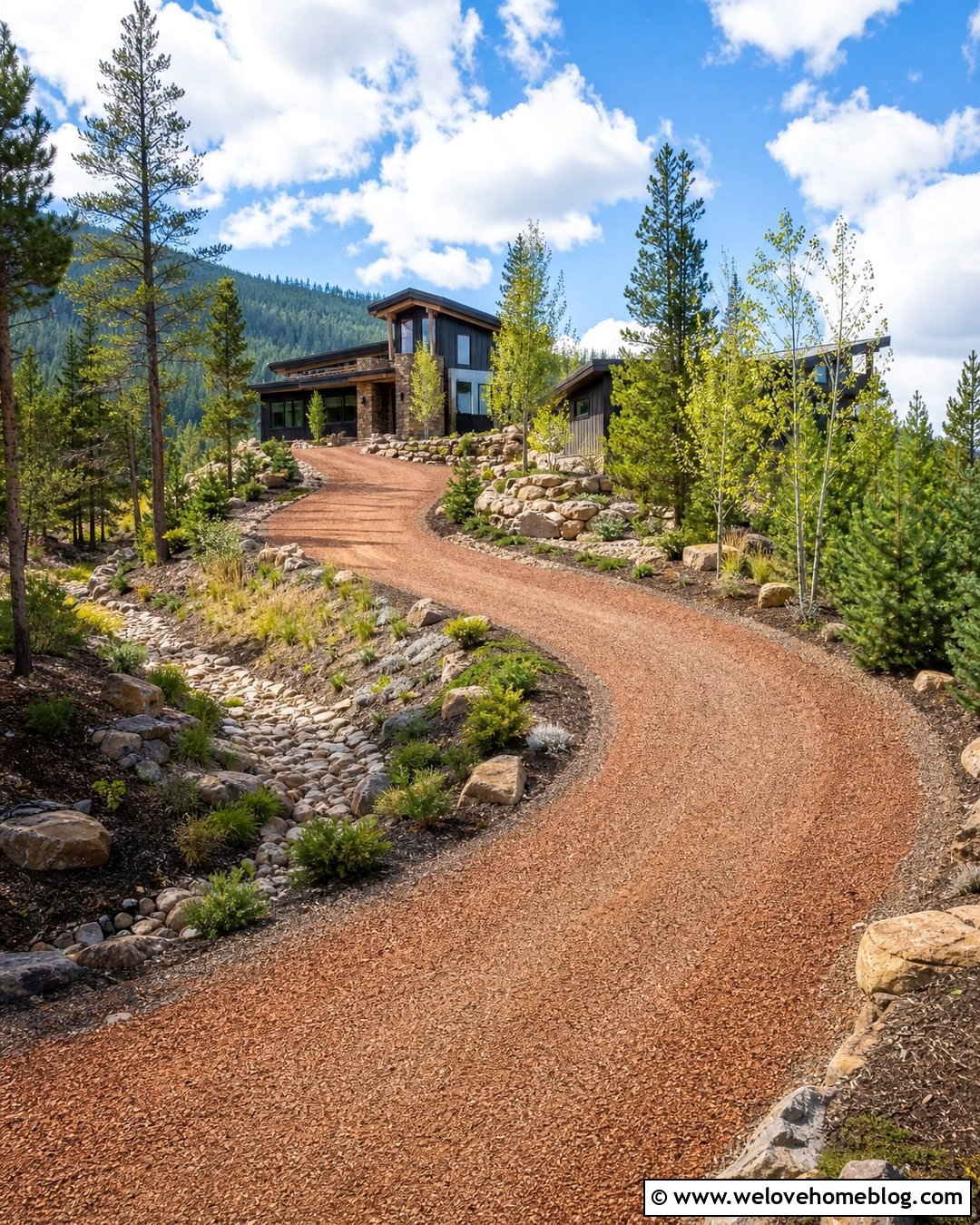
Large natural boulders can visually anchor a broad gravel driveway that winds up a landscaped hill. Use compacted rust-colored crushed stone for the surface and partially bury irregular boulders along selected outside curves. Avoid placing them too close to the driving lane, especially where snow, trailers, or emergency vehicles require extra clearance. On the uphill side, a rock-lined swale can echo the boulder border while directing runoff safely downhill. Native pines, serviceberry, ornamental grasses, and creeping ground covers create a natural transition into the surrounding yard. This complete look is ideal for a mountain contemporary or rustic craftsman house. The boulders should accent stable edging rather than serve as random obstacles, and the driveway curves should remain wide enough for comfortable two-way maneuvering.
19. Gravel Driveway With Level Parking Court
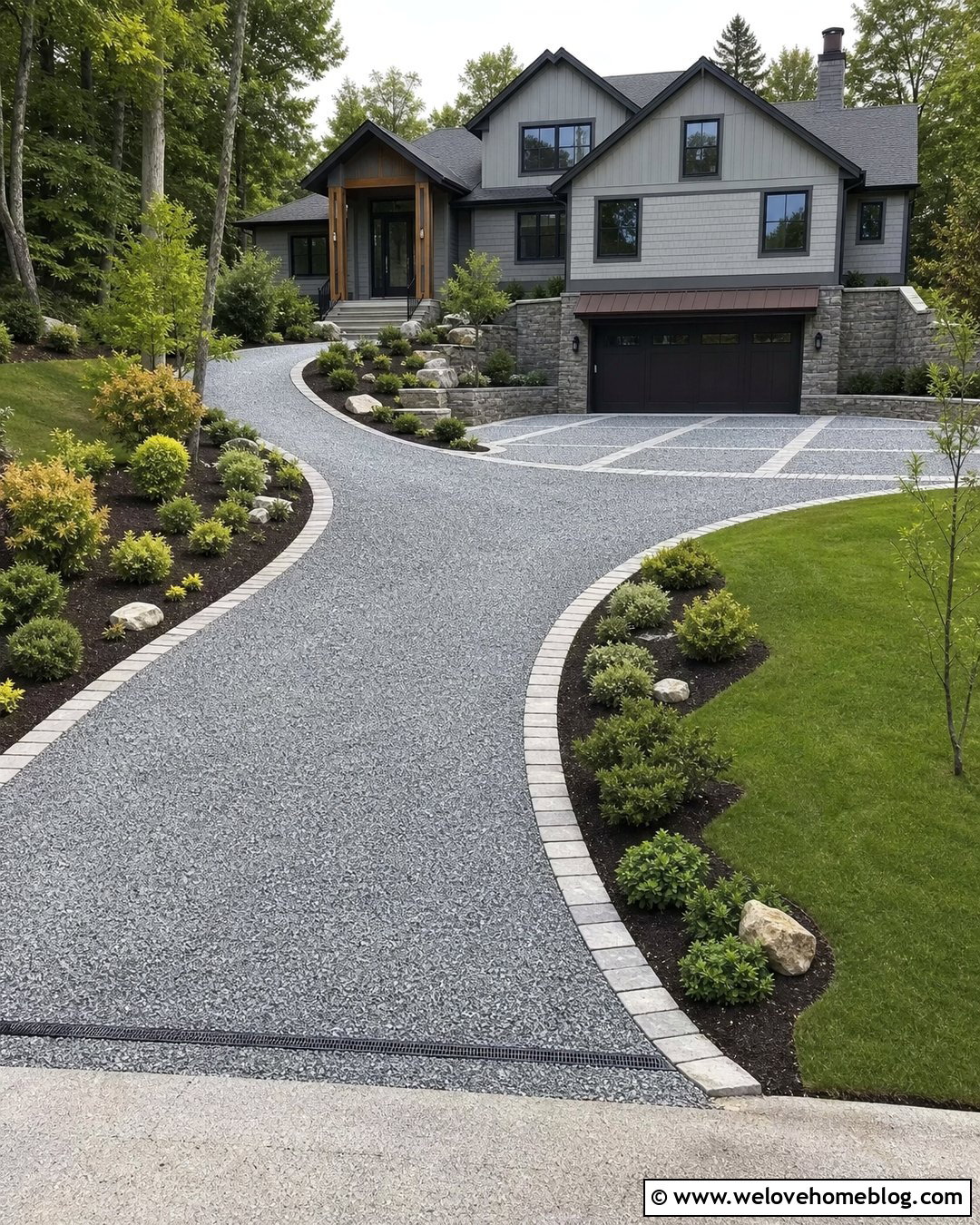
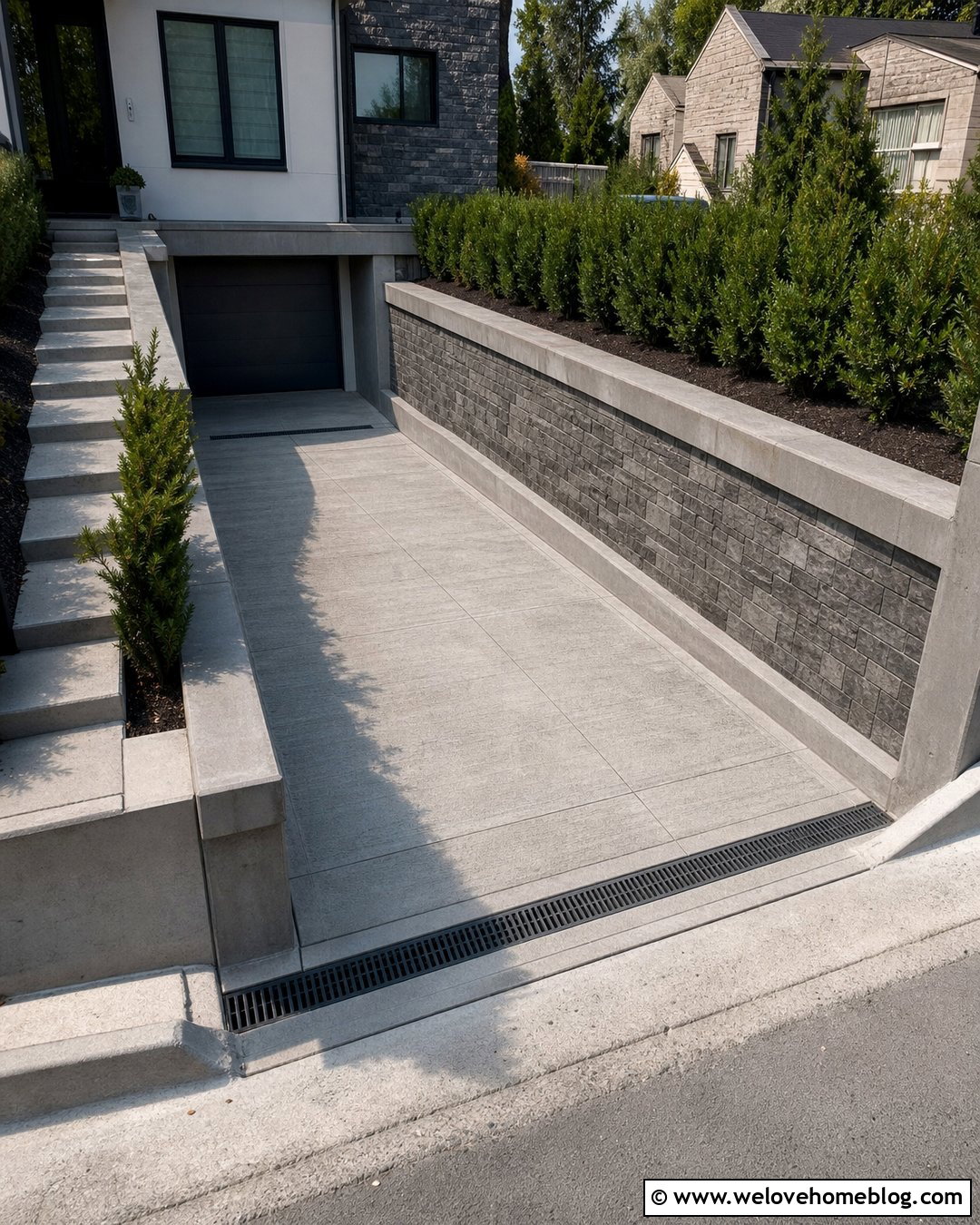
A steep arrival can feel awkward when there is no flat space for parking, unloading, or turning around. Combine an angular gray gravel driveway with a professionally graded level court near the house. Stabilization grids beneath the parking area can limit rutting from turning tires, while a stone retaining wall supports the cut side of the hill. Install a channel drain or catch basin before runoff reaches the garage, then route it to an approved outlet. A curved planting bed can separate the court from the front walkway and soften the wider gravel area. This practical layout works with a split-level, ranch, or hillside contemporary home. Define the court using contrasting paver edging so its shape looks intentional rather than like an oversized patch of loose stone.
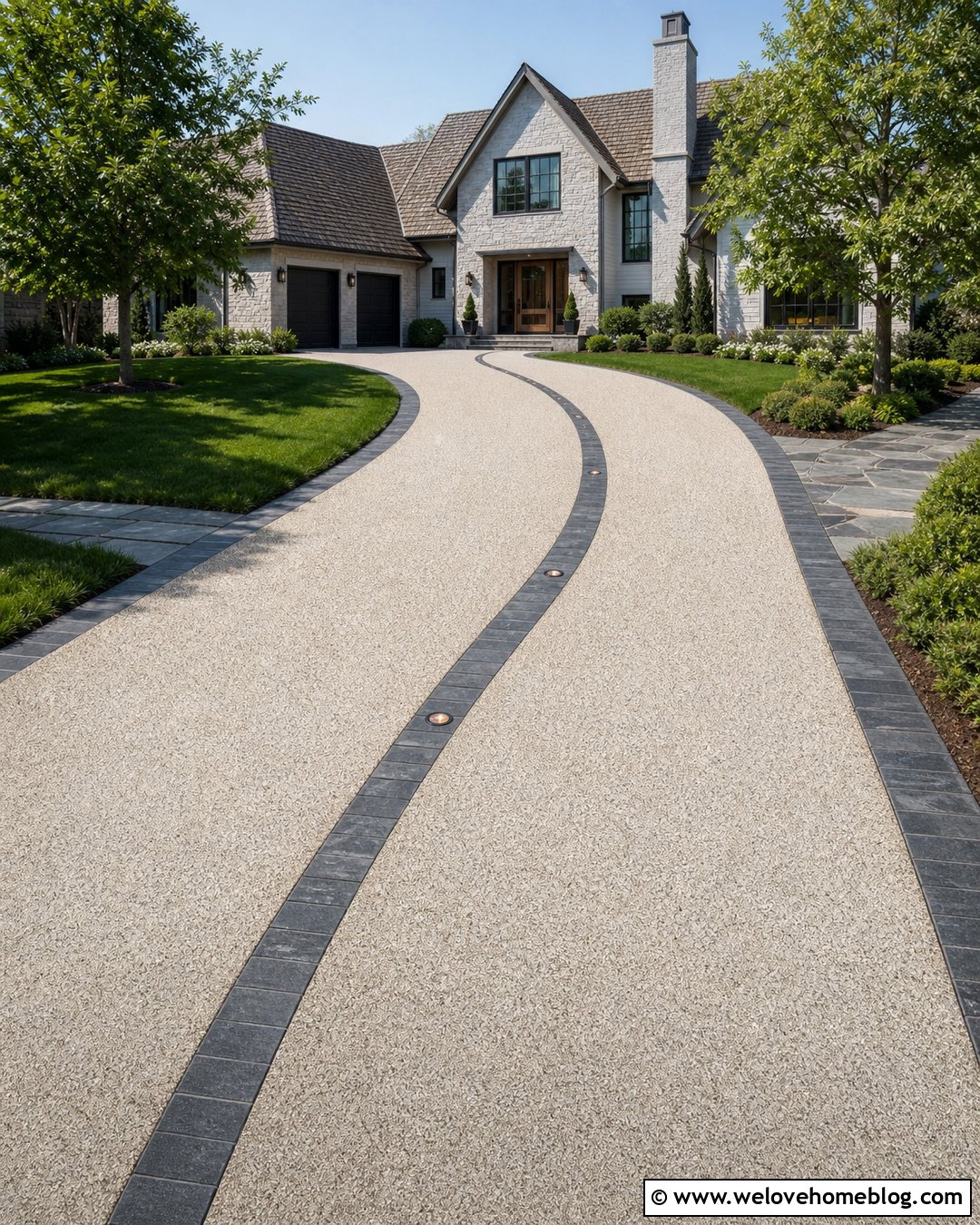
20. Gravel Driveway With Gated Hill Entrance
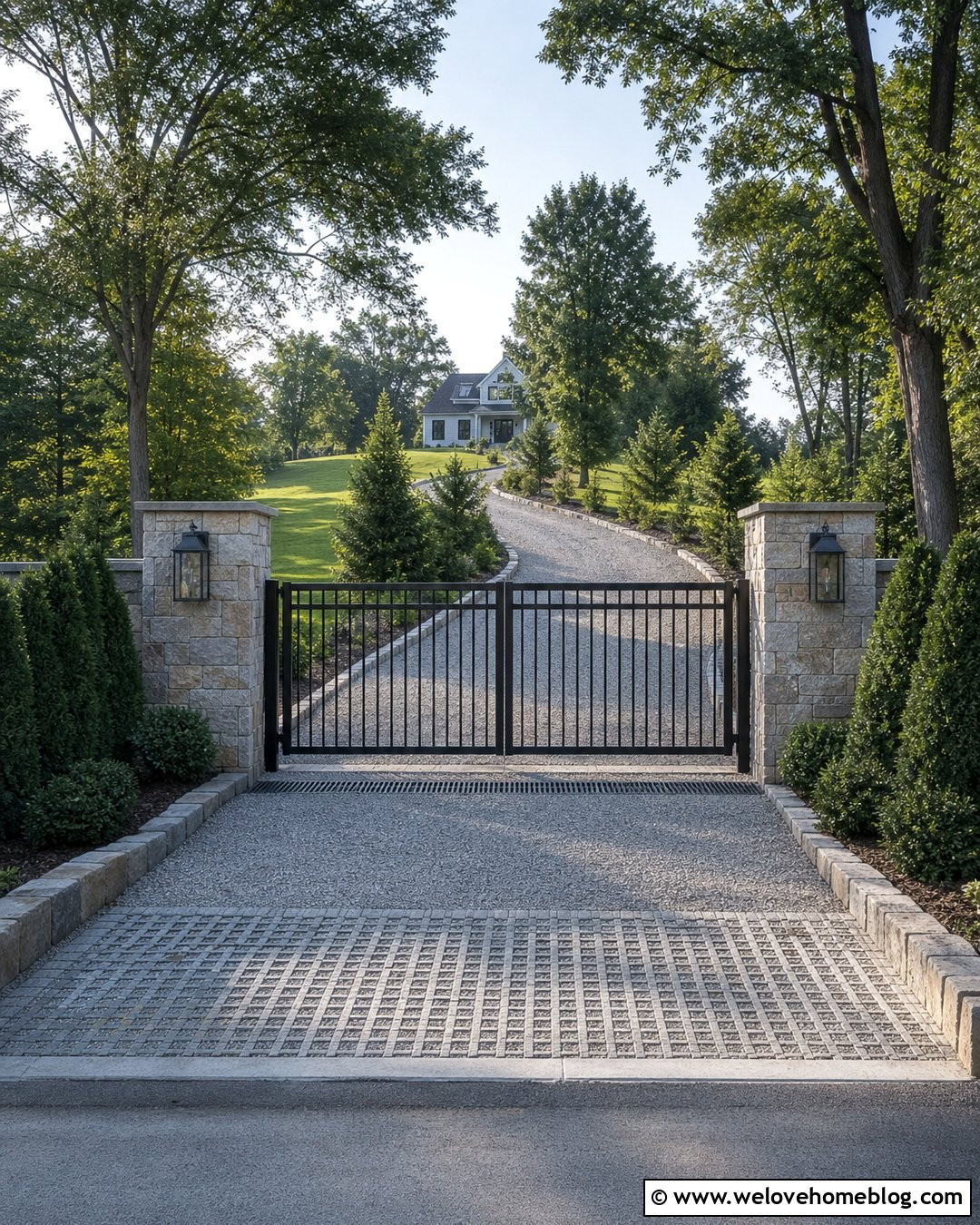
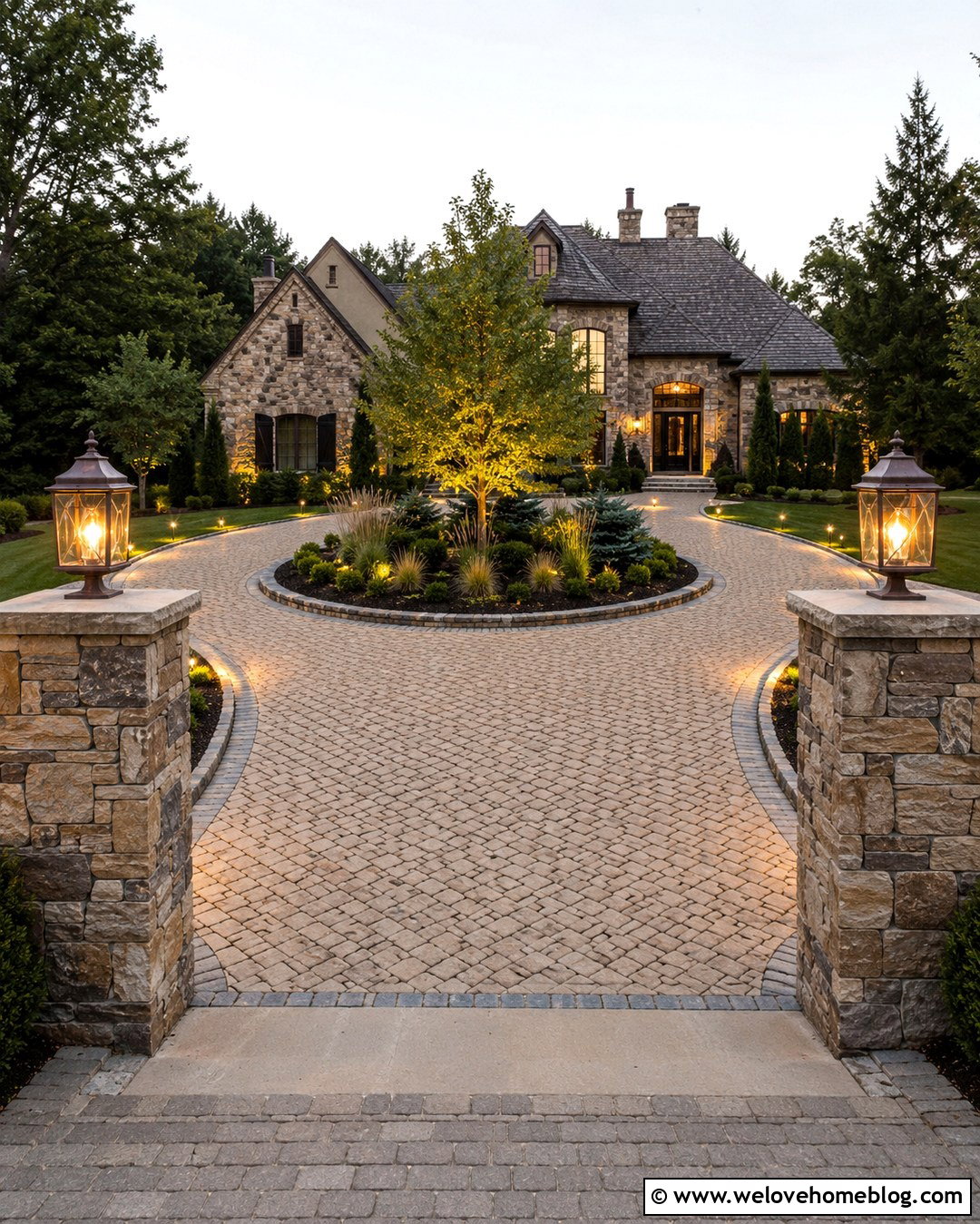
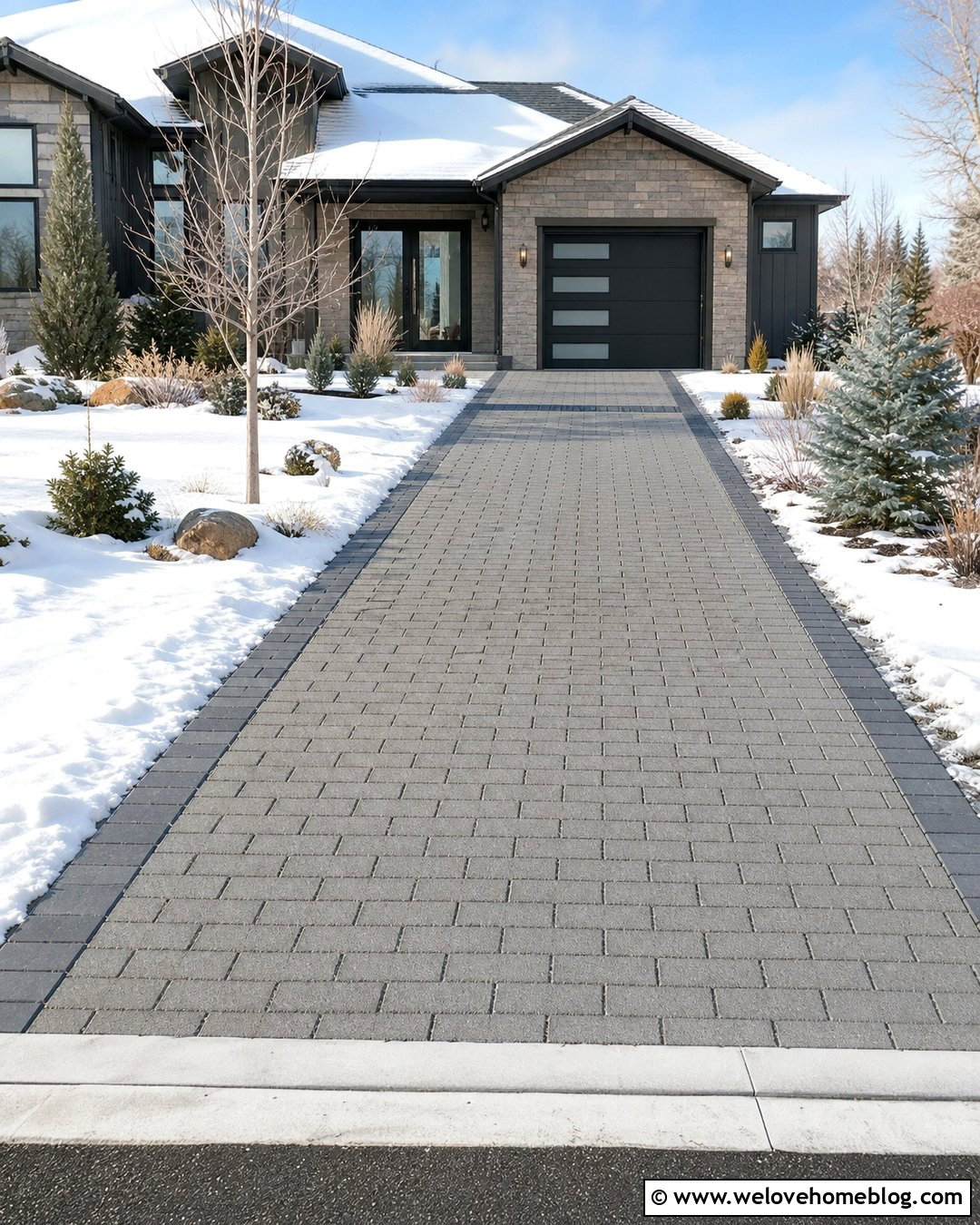
A gated hillside entrance needs enough level space for a vehicle to stop safely without waiting in the road. Begin with a stone or permeable-paver apron between masonry pillars, then continue uphill with compacted buff crushed gravel. Set the gate back from the street and provide drainage channels that prevent water from collecting around its track, hinges, or electrical components. Stone edging and low evergreen planting can frame the entrance without hiding approaching traffic. Beyond the gate, let the driveway curve gently through the slope toward a modern farmhouse. A matching gravel-grid turnout can accommodate guests or deliveries. Gate location, sight distance, emergency access, and drainage should meet local requirements. This creates a secure entrance that still feels open, attractive, and connected to the hillside landscape.
Conclusion:
The best **20 Gravel Driveway On A Hill Ideas** combine appearance with careful control of stone, soil, and stormwater. Angular gravel, a compacted structural base, firm edge restraints, and a dependable drainage route form the foundation of a lasting design. Stabilization grids can improve demanding areas, while swales, channels, retaining walls, and planted banks address different hillside conditions. The driveway’s shape should respond to the land instead of forcing a steep, erosion-prone route. Before choosing a look, study where water enters, crosses, and leaves the property. A qualified driveway, drainage, or landscape professional can then adapt your preferred design to local soil, rainfall, permits, vehicle access, and slope requirements.

Related posts:
Leave a Reply