
The right driveway extension can create easier parking, smoother turning, and a more balanced approach to your home. These 20 Asphalt Driveway Extension Ideas explore practical ways to expand a narrow, short, or awkward driveway without sacrificing curb appeal. Options include full-length widening, side parking bays, turnaround pads, RV spaces, and decorative paver accents. Good planning matters because the new area needs a stable base, supported edges, and a slope that directs water away from buildings. Local rules may also limit driveway width, front-yard paving, or changes near the sidewalk and street. () Whether your property is compact, sloped, suburban, or rural, the complete looks below offer useful inspiration through 20 Asphalt Driveway Extension Ideas.
1. Full-Length Asphalt Driveway Extension
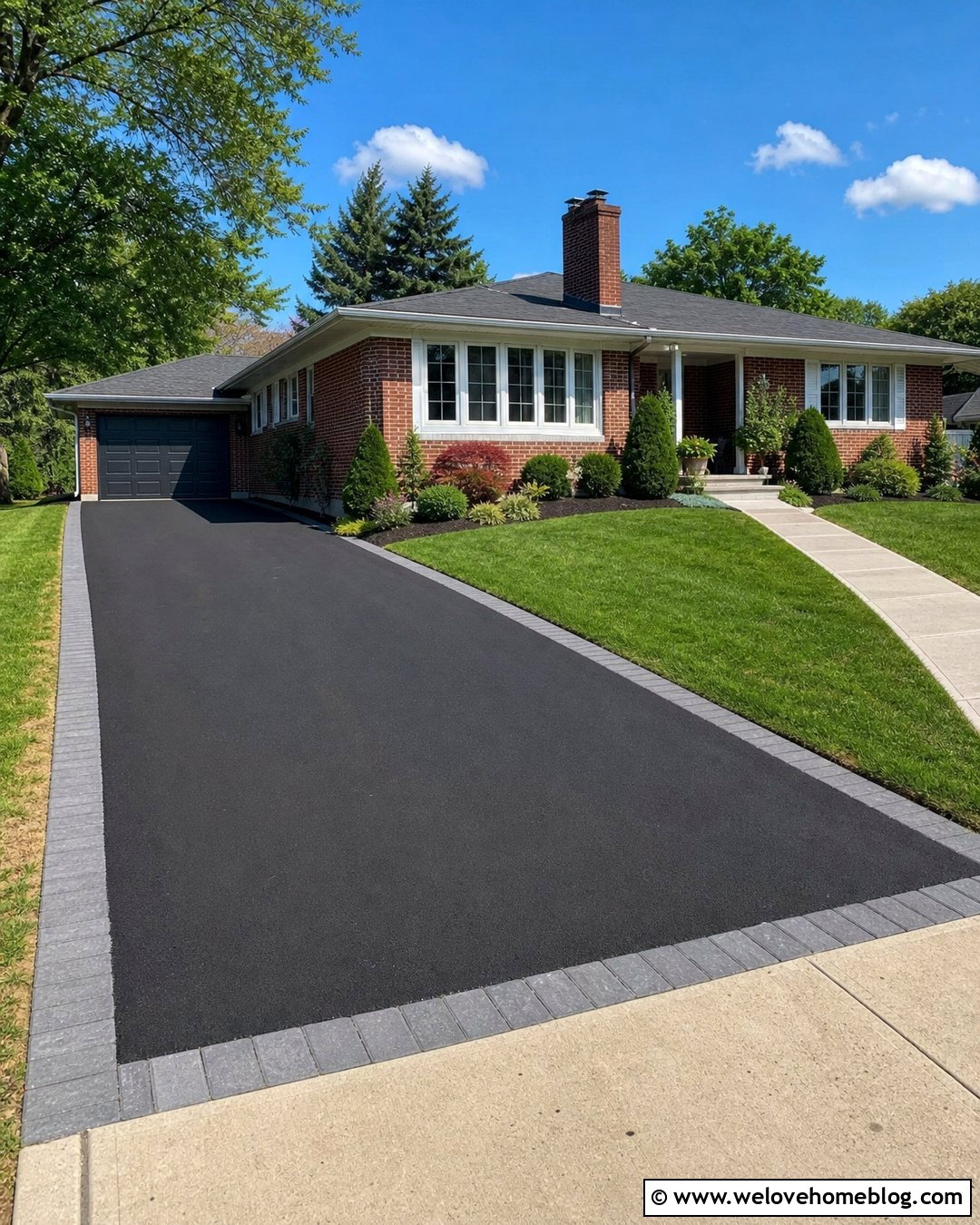
A full-length extension makes sense when the entire driveway feels too narrow for comfortable daily use. Add a continuous strip of black asphalt along one side, running from the street to the garage. Matching the elevation and surface finish helps the old and new pavement read as one driveway. A brick or concrete paver border can cover the visual seam while strengthening the outer edge. Keep planting simple with a narrow lawn strip, low shrubs, and a walkway separated from vehicle traffic. This arrangement works especially well for ranch and split-level homes with wide front yards. Have the contractor inspect the existing pavement first. If it is heavily cracked or sunken, resurfacing both sections may produce a cleaner, more consistent finish.
2. Asphalt Driveway Extension For Two Cars
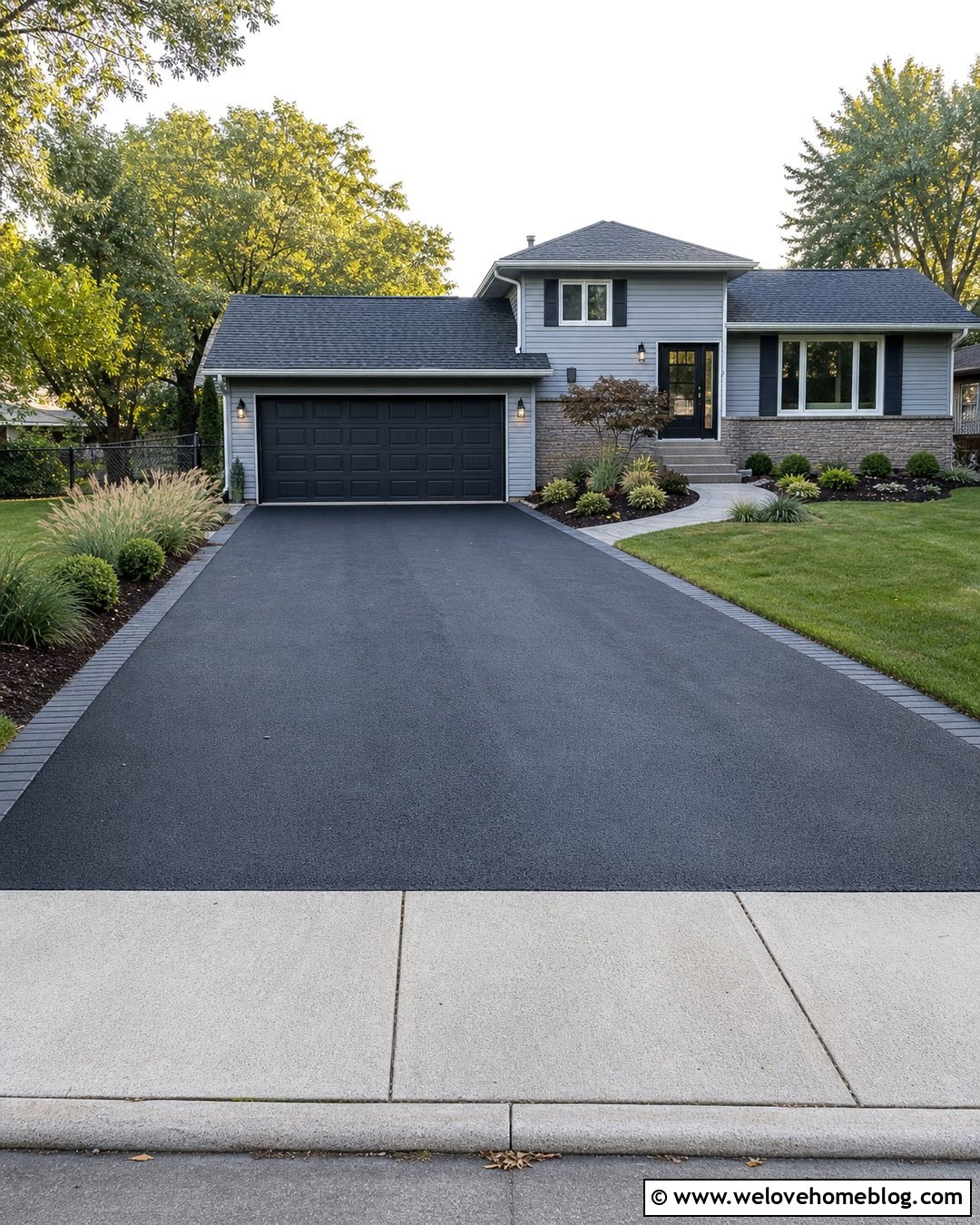
Can two vehicles pass or park without one touching the lawn? If not, widening a single-car asphalt driveway into a two-car layout may provide the most useful upgrade. The extension should continue toward the garage in a clean rectangular shape rather than forming an awkward bump-out. Use a saw-cut connection and a properly compacted aggregate base to reduce settling along the joint. A charcoal paver border can visually frame the expanded pavement and coordinate with dark roofing or shutters. On the lawn side, add a shallow planting bed with compact ornamental grasses that will not block doors. The finished driveway should look proportionate to the garage and front facade while leaving enough green space to soften the larger paved area.
3. Asphalt Driveway Extension With Parking Pad
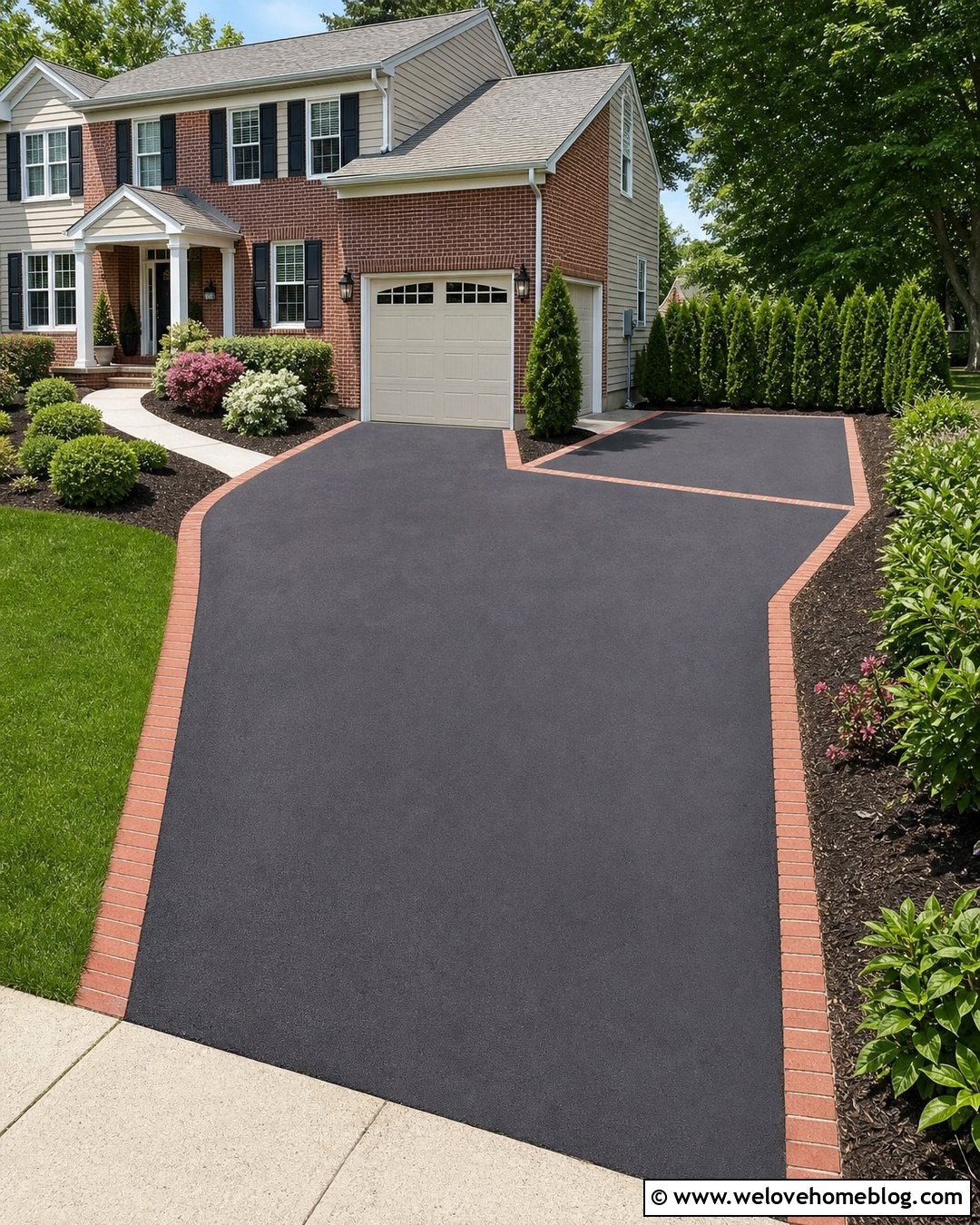
A side parking pad adds space without making the whole driveway noticeably wider. Position the asphalt extension near the house or garage, where a parked vehicle will not dominate the front yard. A rectangular pad typically looks cleaner than an irregular patch, especially when its edges align with the architecture. Frame it with a brick soldier course or light-gray concrete pavers for an intentional transition. A narrow hedge, flowering shrubs, or ornamental grass bed can screen the parking space from the street. Ensure the pad is long and wide enough for the intended vehicle, including room to open doors. This complete layout suits suburban homes that need occasional guest parking but do not require a permanent double-wide driveway from the curb.
4. Asphalt Driveway Extension With Paver Border
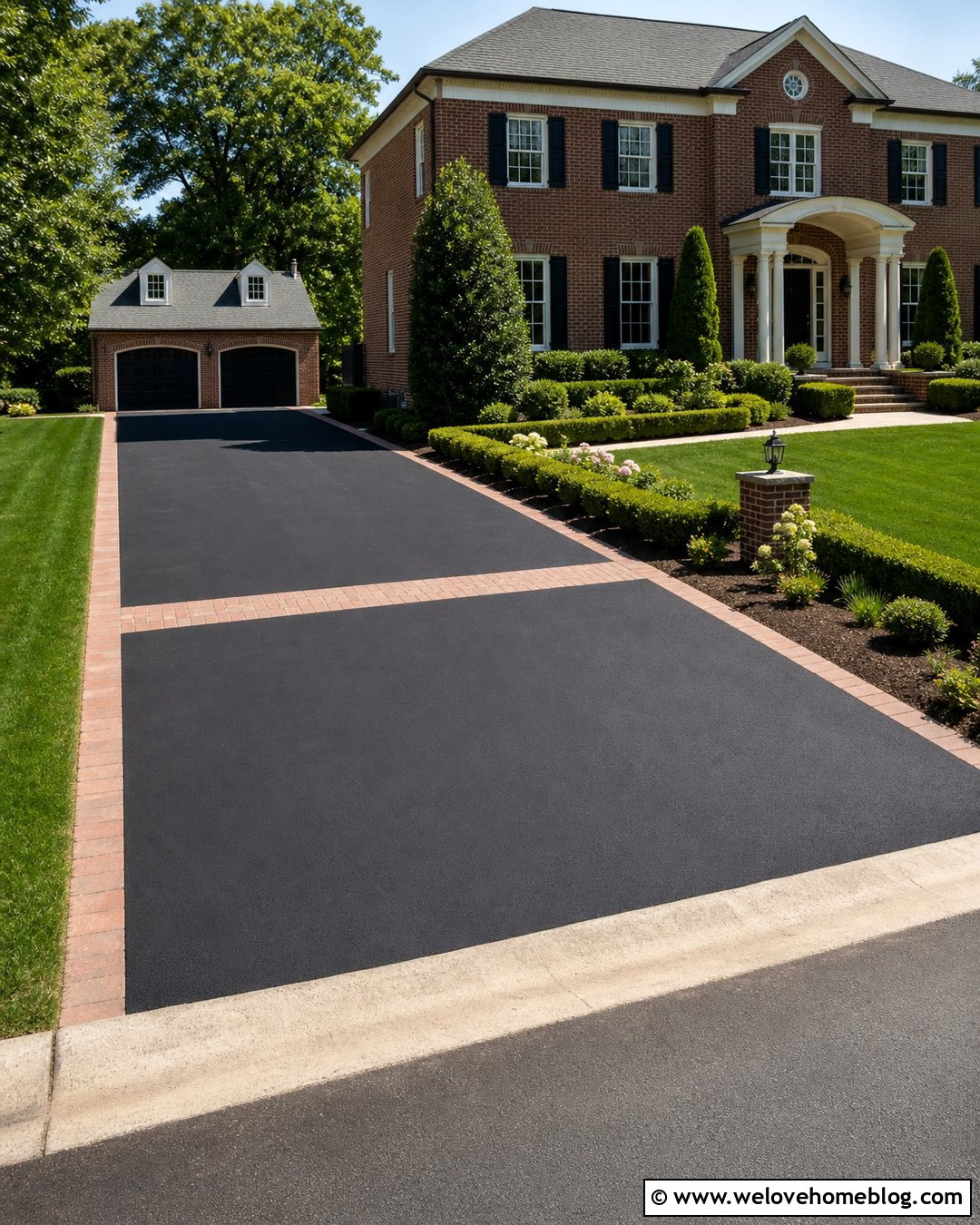
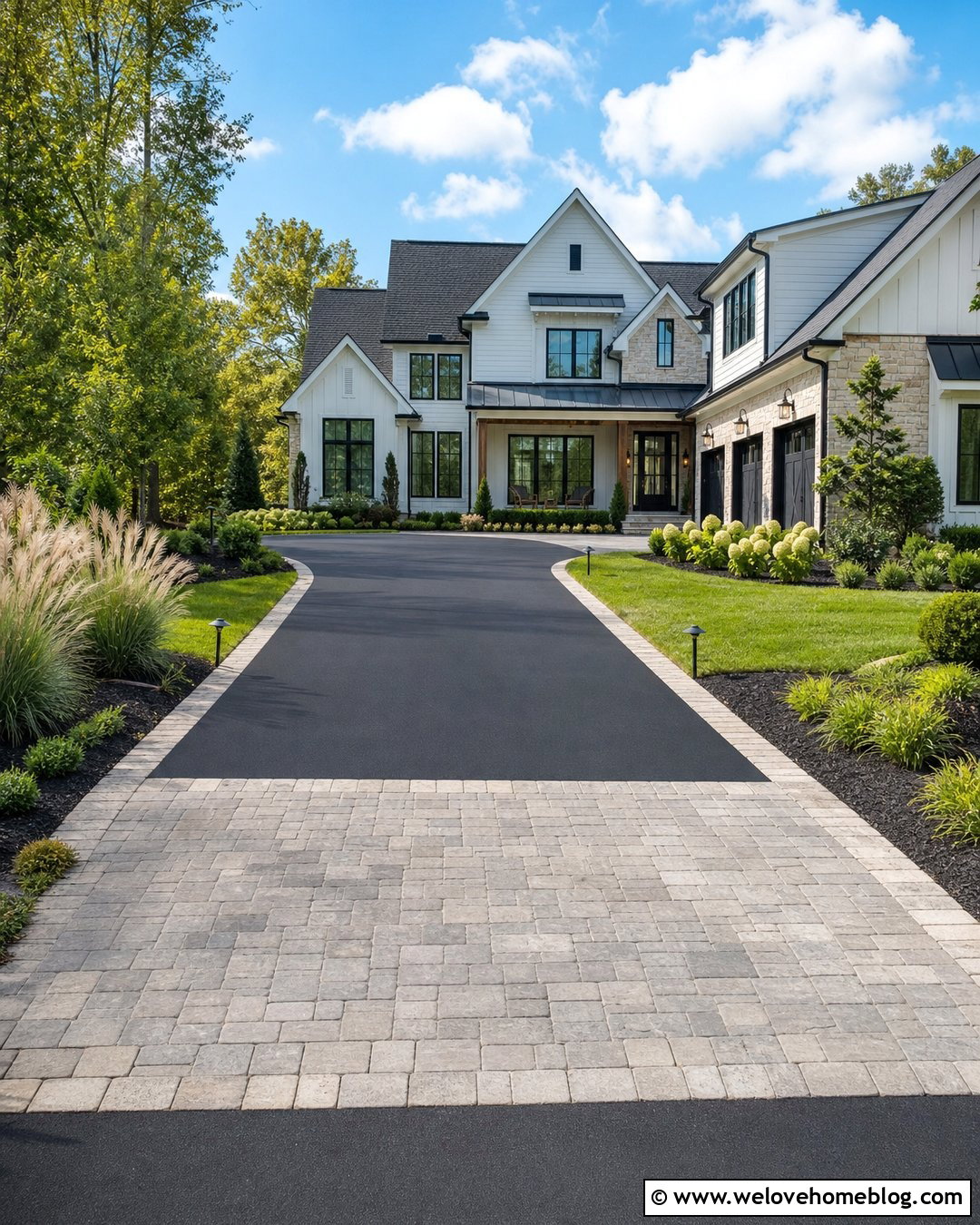
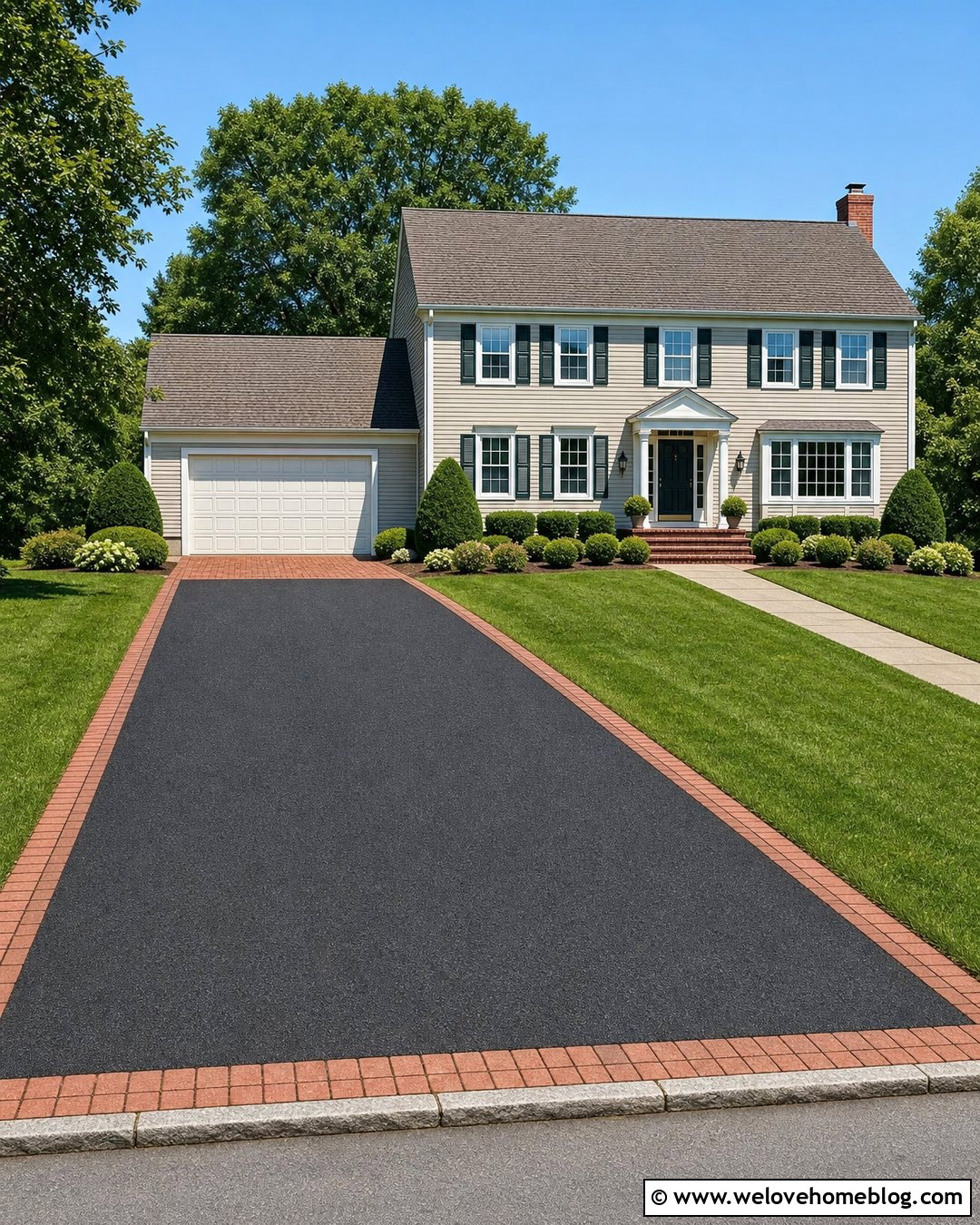
Warm red or brown pavers can make a black asphalt extension look like part of a planned landscape rather than a later addition. Install the extension beside the existing pavement, then use a continuous paver ribbon to define its outside edge. The same pavers can continue across the driveway near the garage as a decorative band. This repeated detail helps connect the old asphalt, new asphalt, walkway, and house facade. Choose vehicle-rated pavers over a compacted base, not thin patio products. Complete the design with clipped shrubs, fresh mulch, and a simple concrete walkway. The contrast is particularly attractive beside colonial, traditional, and craftsman homes. Keep the paver color related to the brick, stone, or trim already used on the property.
5. Asphalt Driveway Extension With Gravel Edge
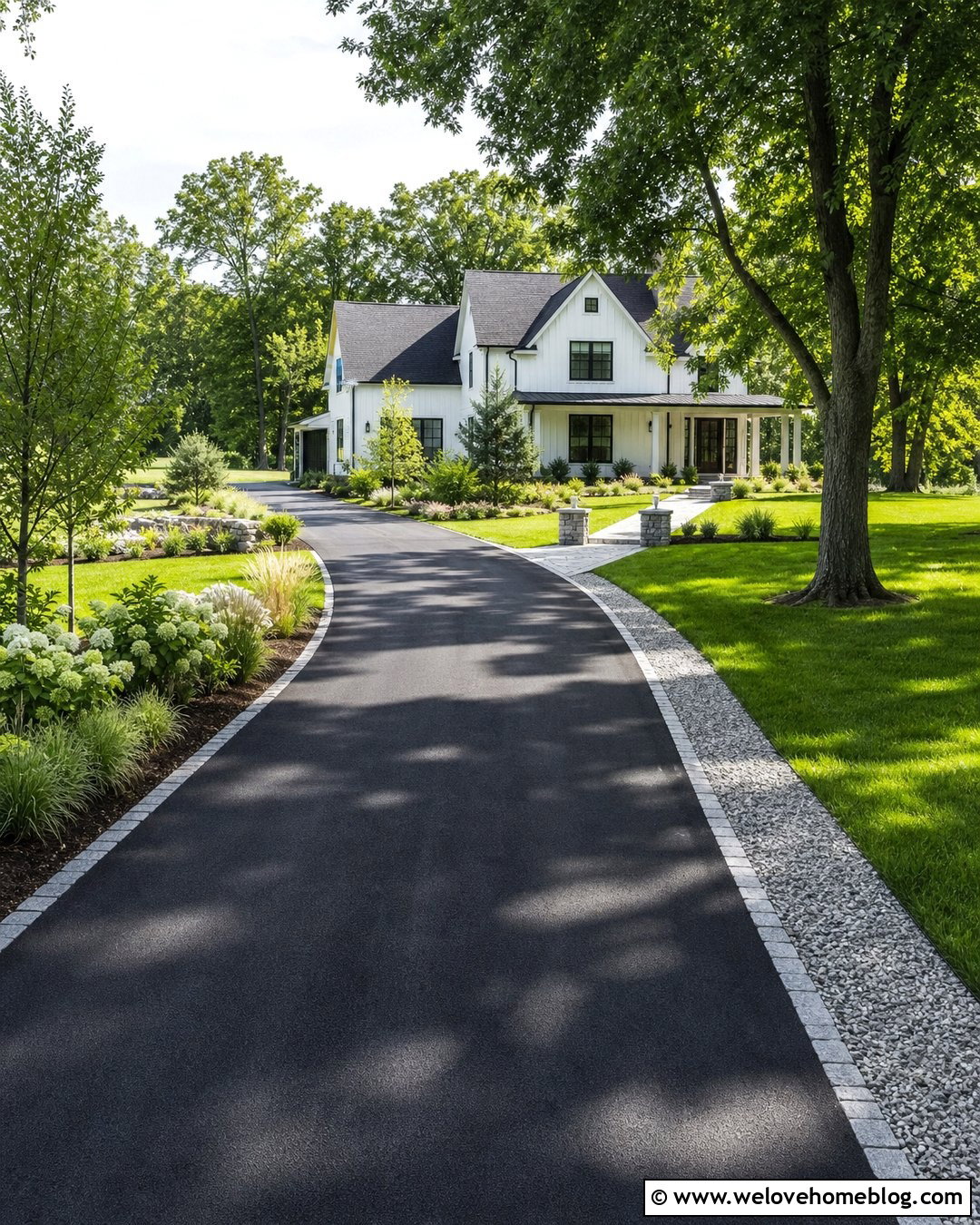
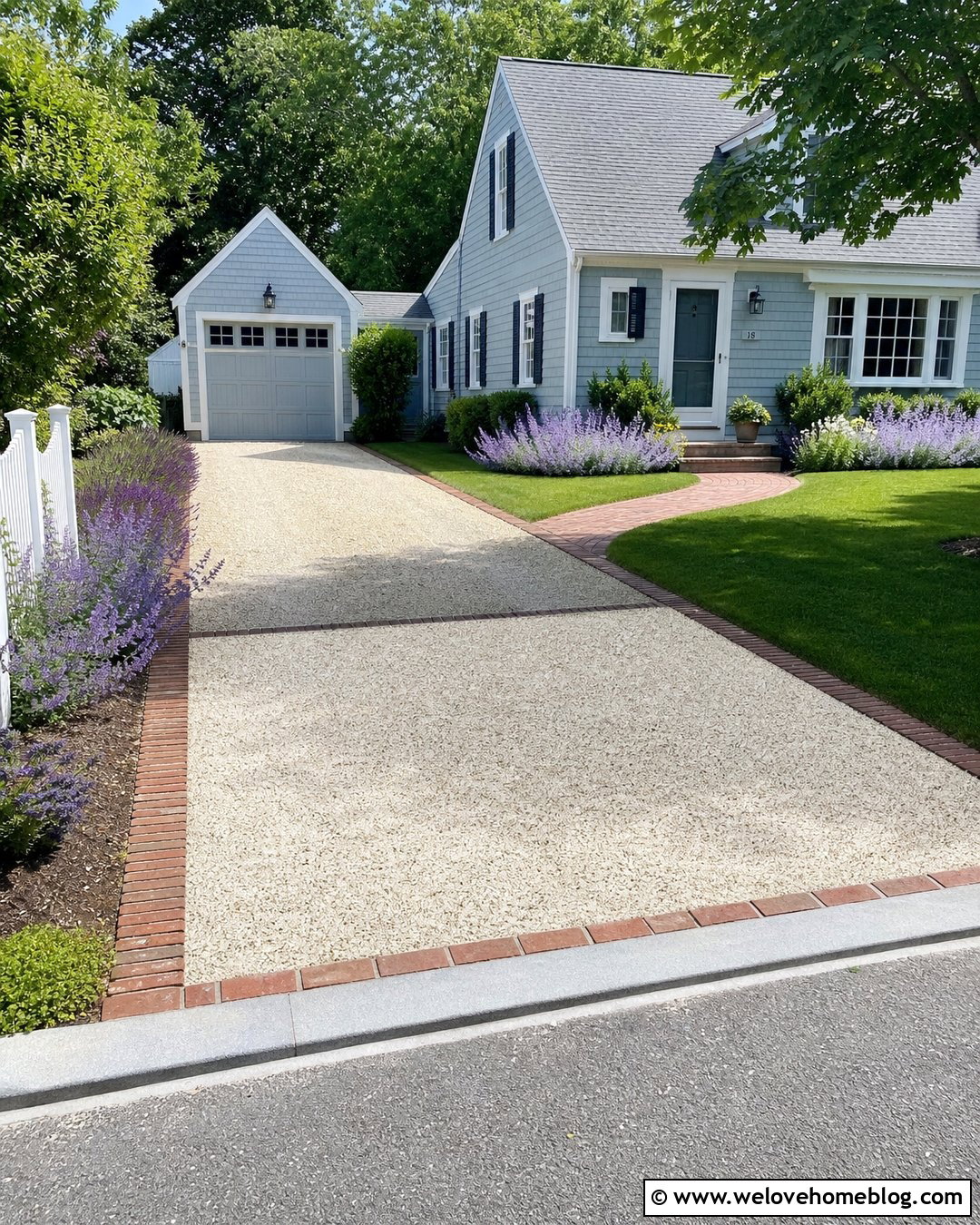
Crunchy gravel and smooth black asphalt create a relaxed combination that works well around cottages, farmhouses, and wooded properties. Extend the asphalt into the functional parking or driving area, then add a contained gravel shoulder beyond it. Steel edging, granite blocks, or pressure-treated timbers can prevent loose stone from spreading across the lawn. Select angular gravel that locks together more effectively than rounded pea gravel in areas exposed to tires. A planted border of native grasses and hardy shrubs can soften the outer edge without crowding vehicles. The gravel strip can also provide visual breathing room beside a dark driveway. Grade the complete extension carefully so runoff does not collect between the asphalt and gravel or wash material into nearby planting beds.
6. Asphalt Driveway Extension With Concrete Border
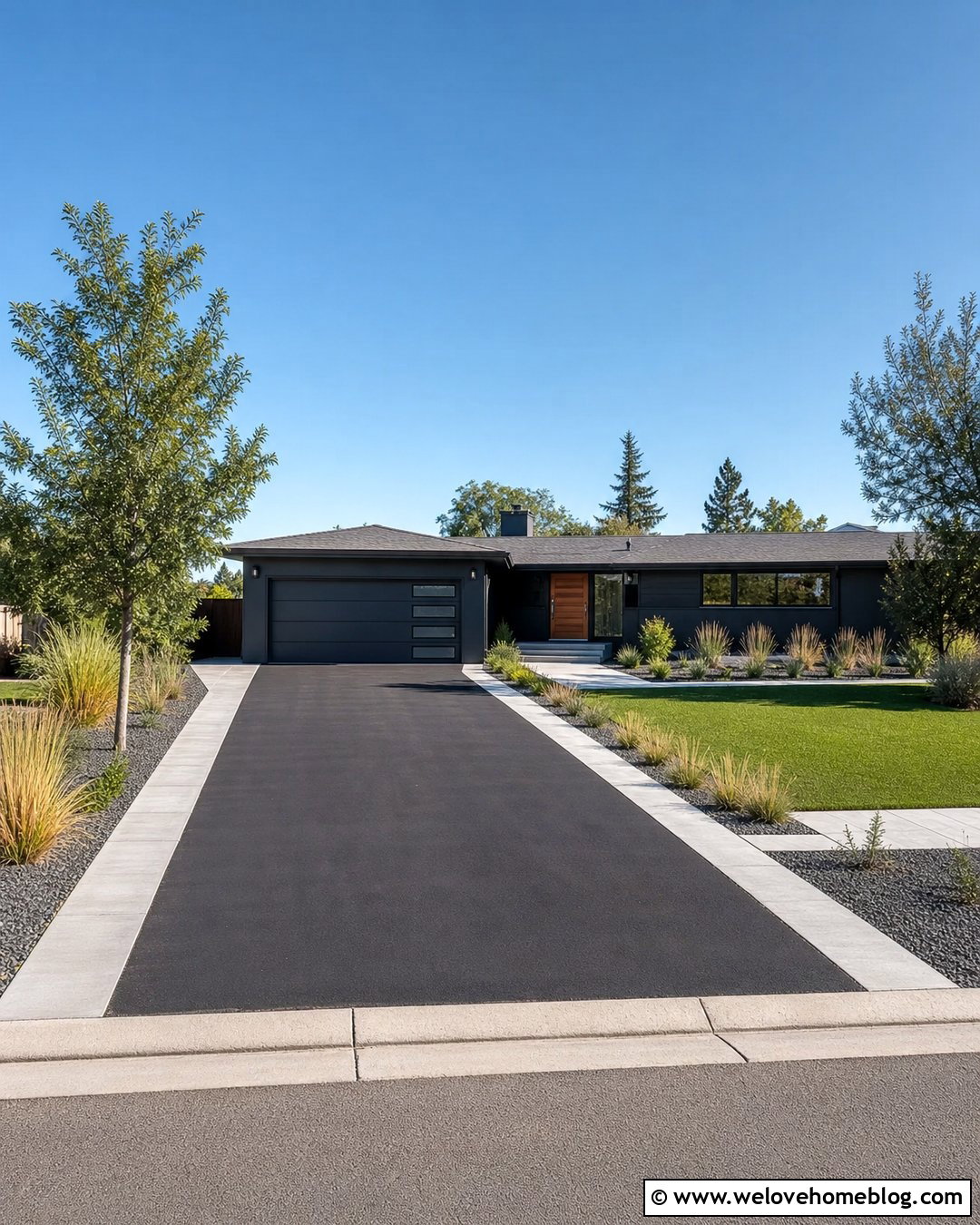
A pale concrete border gives an asphalt extension a crisp, high-contrast outline. This look is especially effective with modern, midcentury, and updated ranch homes. Widen the driveway with smooth black asphalt, then install a flush concrete band along both exterior edges. The concrete can also form the front walkway and a wider landing near the garage, creating a coordinated hardscape. Keep the border level with the asphalt to avoid catching tires, snow shovels, or wheeled equipment. Straight lawn lines and restrained planting reinforce the clean appearance. Consider low boxwoods, ornamental grasses, and one sculptural tree rather than crowded beds. Because asphalt and concrete respond differently to temperature changes, proper joints and professional installation are important where the two materials meet.
7. Curved Asphalt Driveway Extension
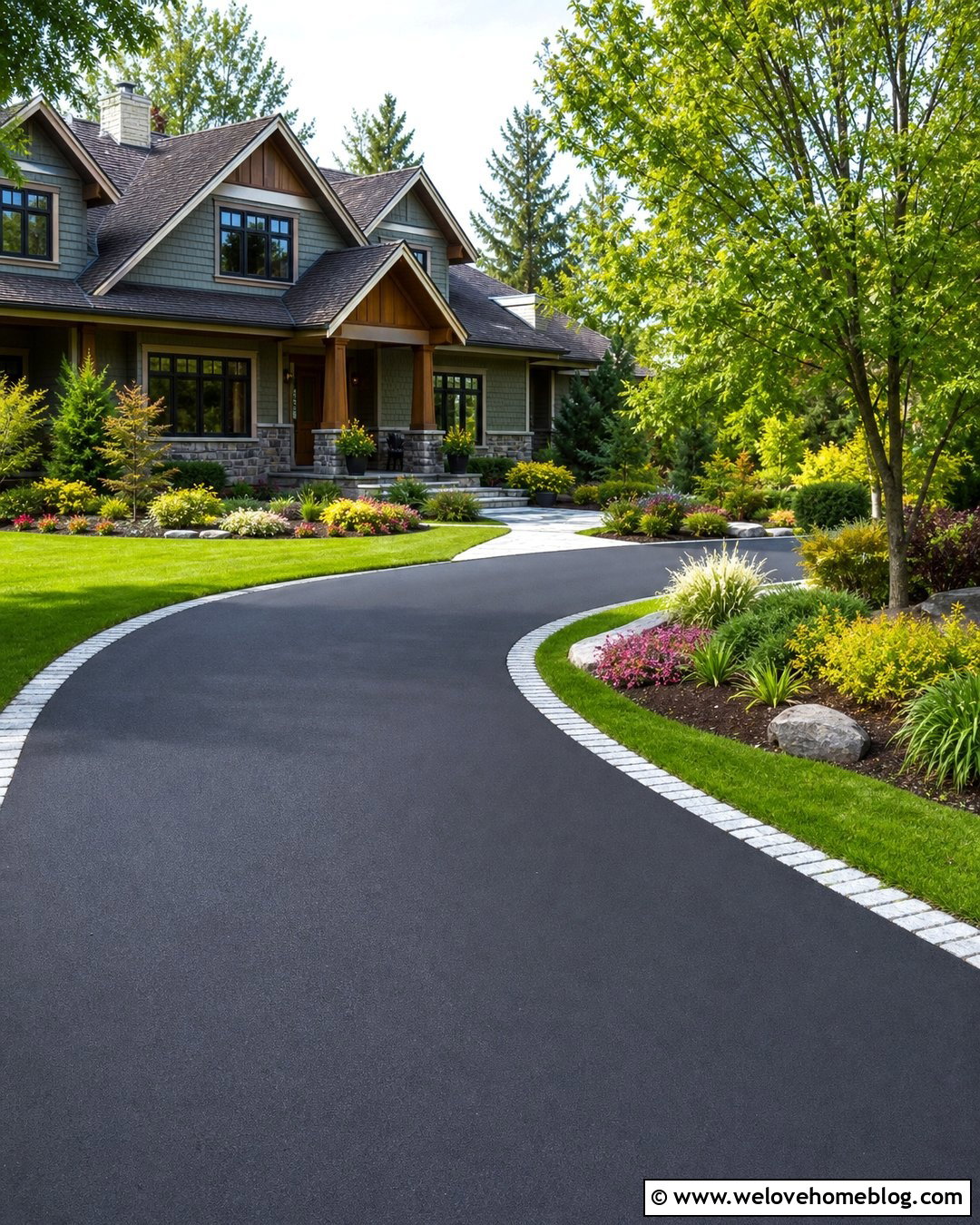
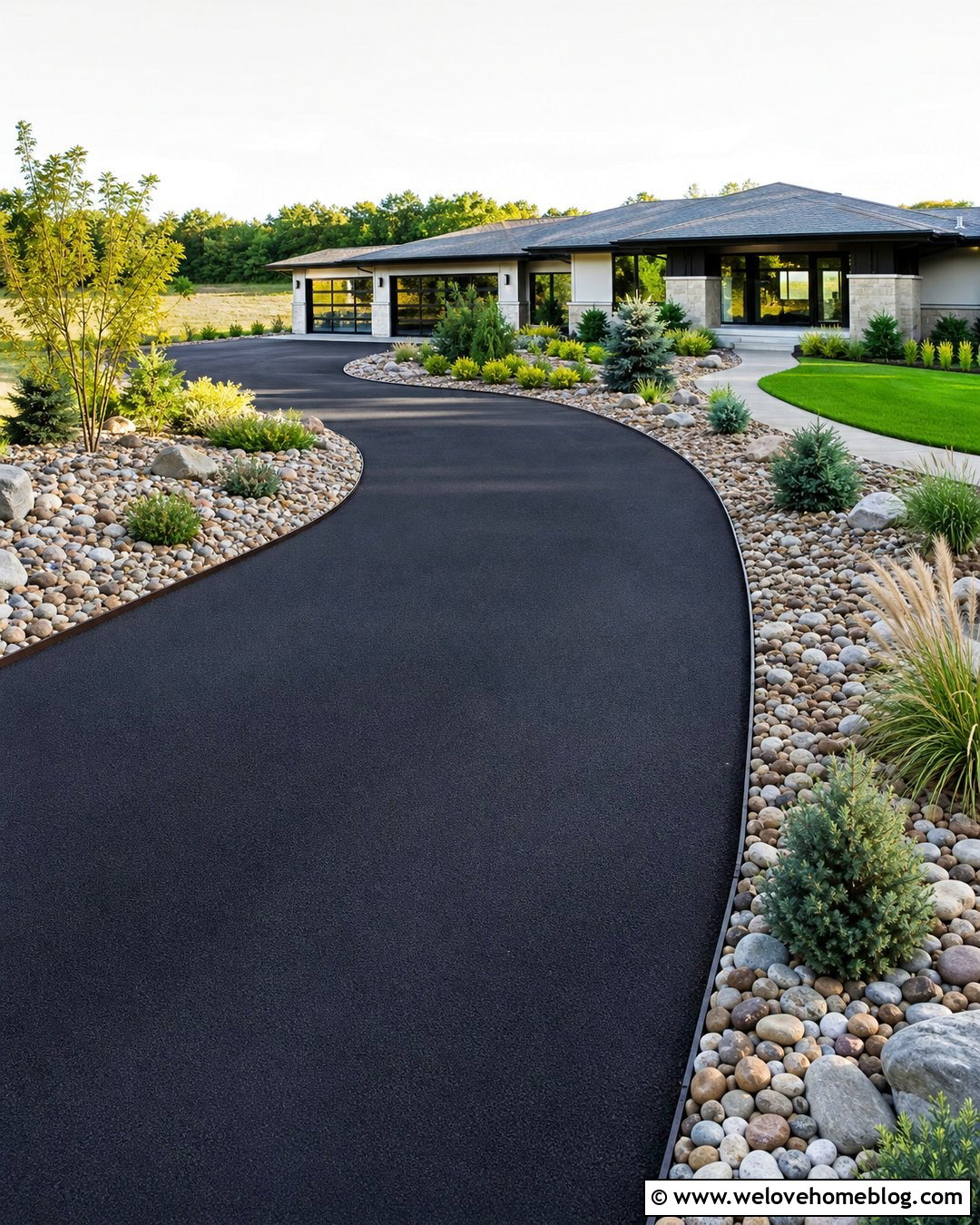
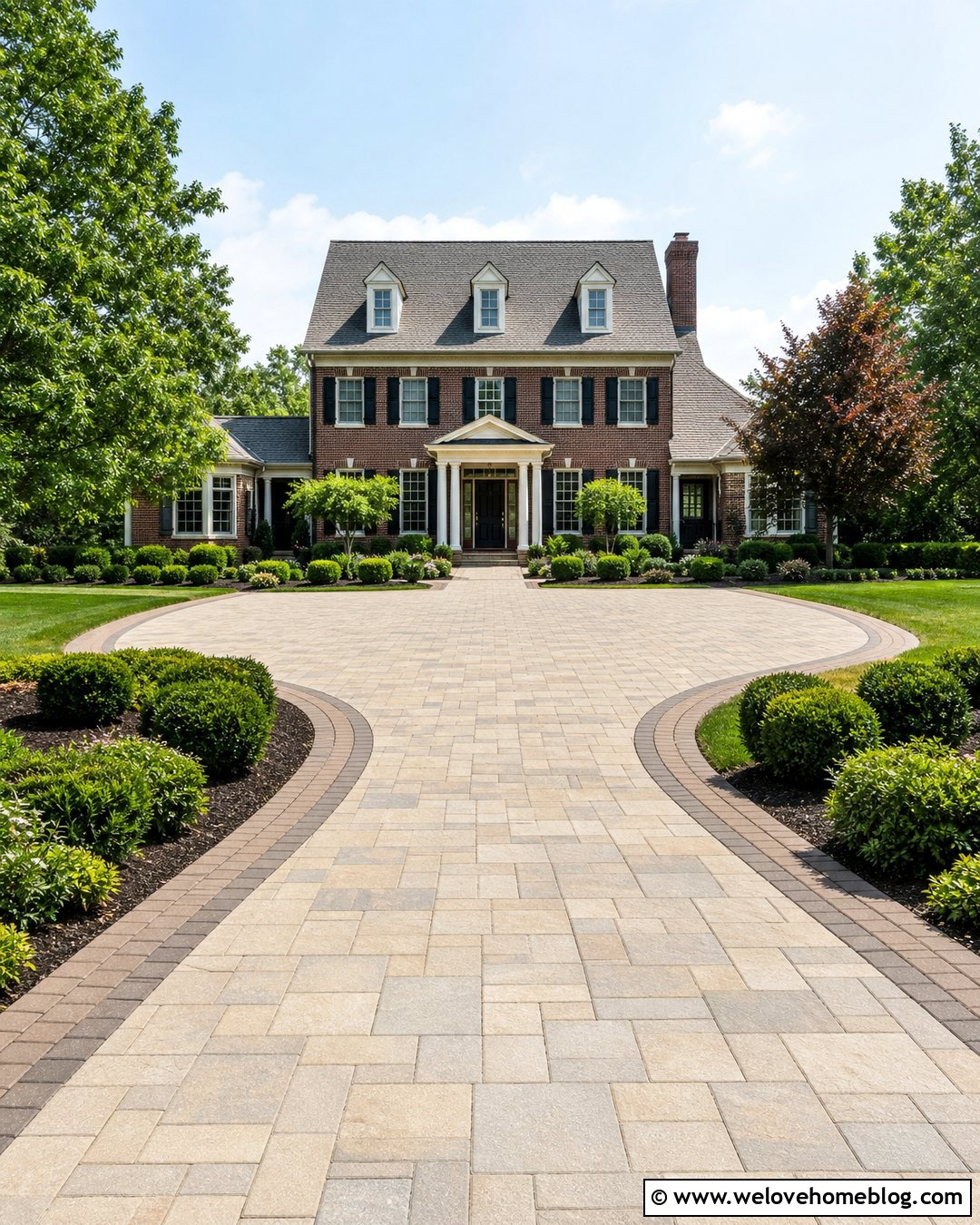
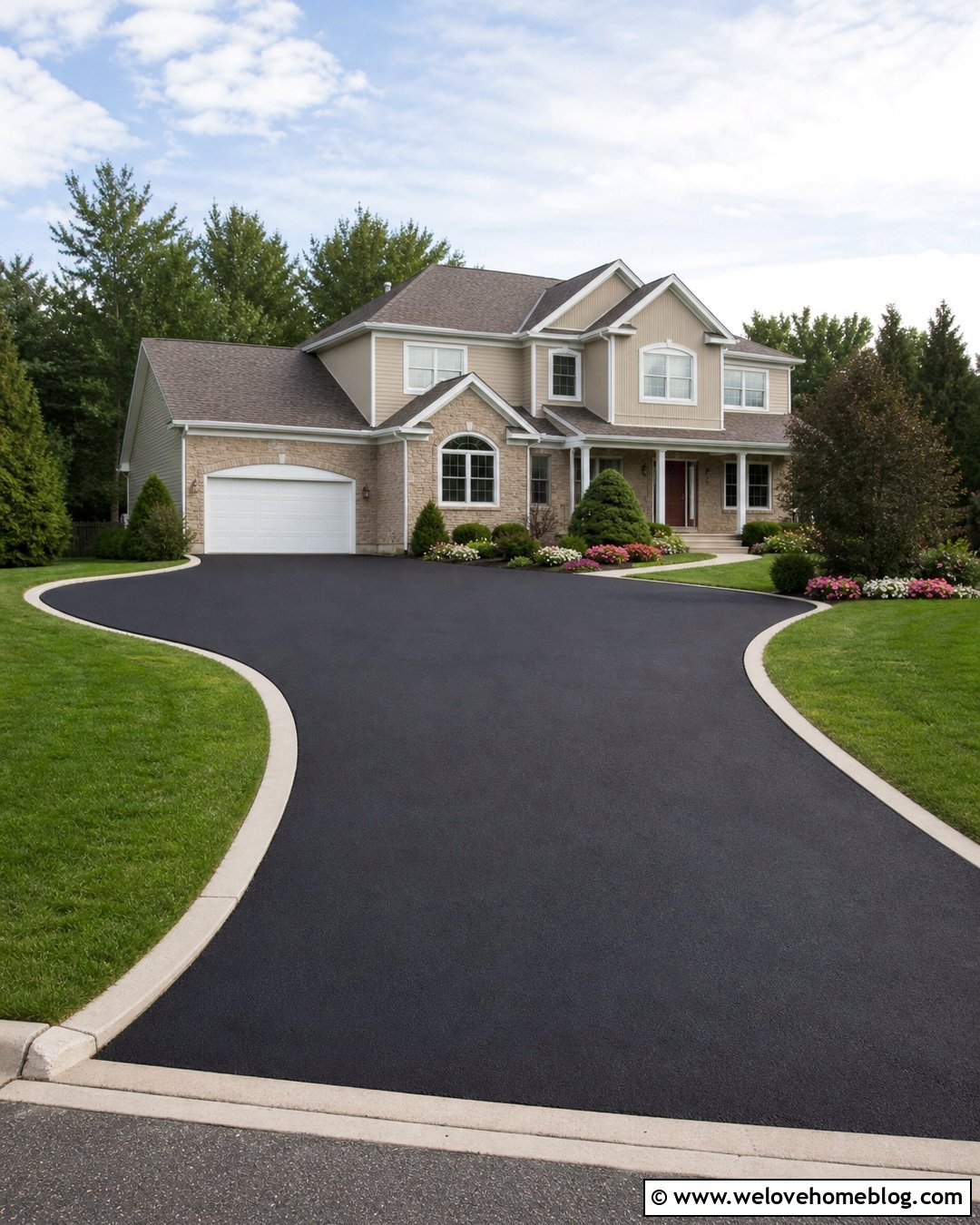
A gentle curve can improve access while making a widened driveway feel more natural in a landscaped front yard. Instead of adding a rigid rectangular strip, extend the black asphalt outward near the street and gradually taper it toward the garage. This shape gives drivers more turning room without paving the full length at maximum width. Edge the curve with cobblestones or concrete pavers to keep the asphalt perimeter supported and visually precise. Follow the same line with a sweeping planting bed filled with low shrubs, ornamental grasses, and seasonal flowers. Avoid tall plants near the entrance because they can limit sightlines. This layout works beautifully with craftsman, cottage, and traditional homes where softly curved landscaping already frames the front approach.
8. Asphalt Driveway Extension With Turnaround Pad
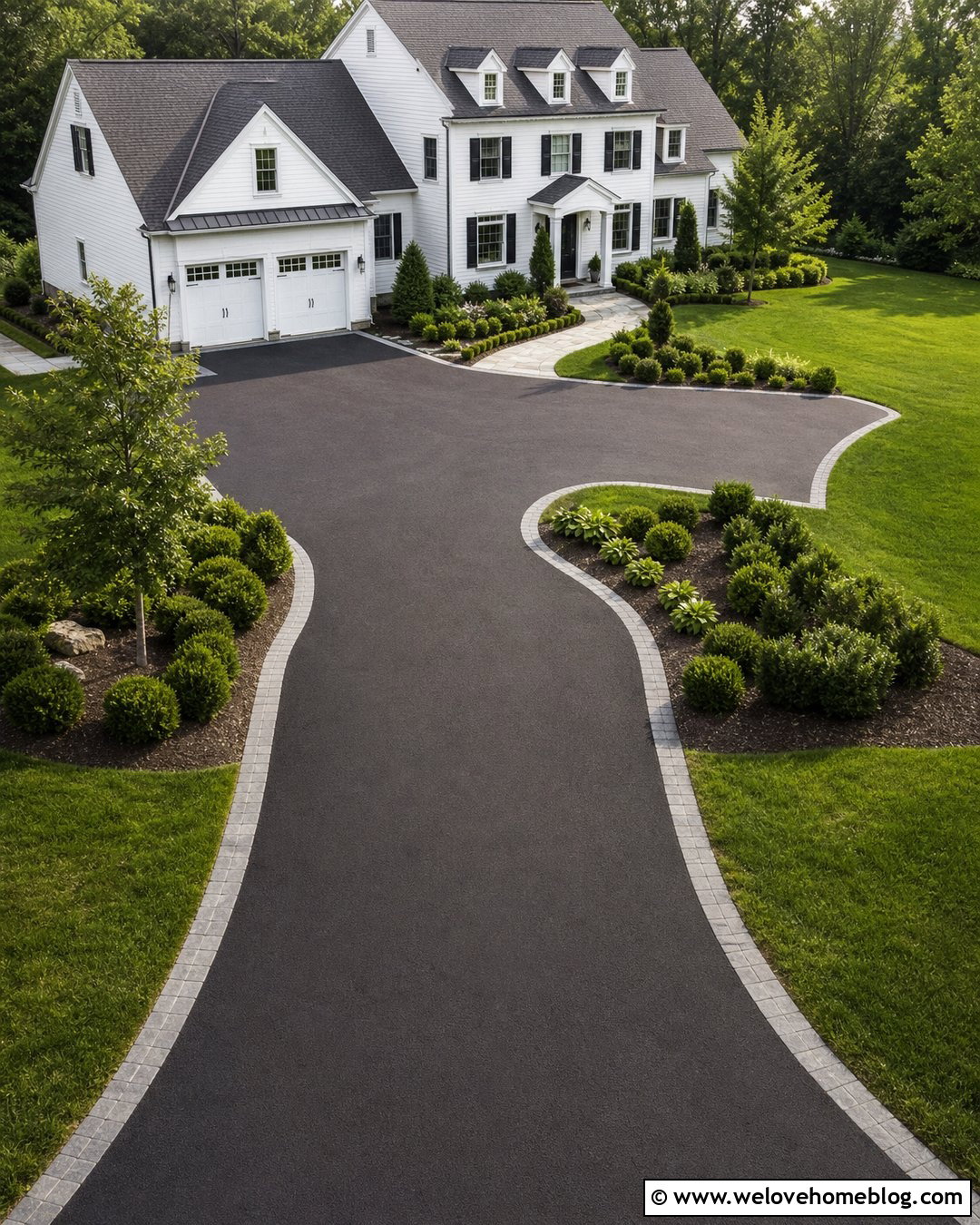
Backing onto a busy street can be stressful, particularly when the driveway is long or visibility is limited. An asphalt turnaround pad creates room to change direction before leaving the property. Add a rectangular, hammerhead, or gently curved extension near the garage, depending on the available yard space. The pavement should connect smoothly to the main driveway without tight corners that require repeated maneuvering. Define the pad with a sturdy paver border and low planting beds that remain safely beyond the turning path. A small ornamental tree can anchor the outer corner without blocking views. This complete arrangement is useful for colonial, country, and large suburban properties. Before construction, test the proposed dimensions using cones to confirm that your regular vehicles can turn comfortably.
9. Asphalt Driveway Extension Beside Garage
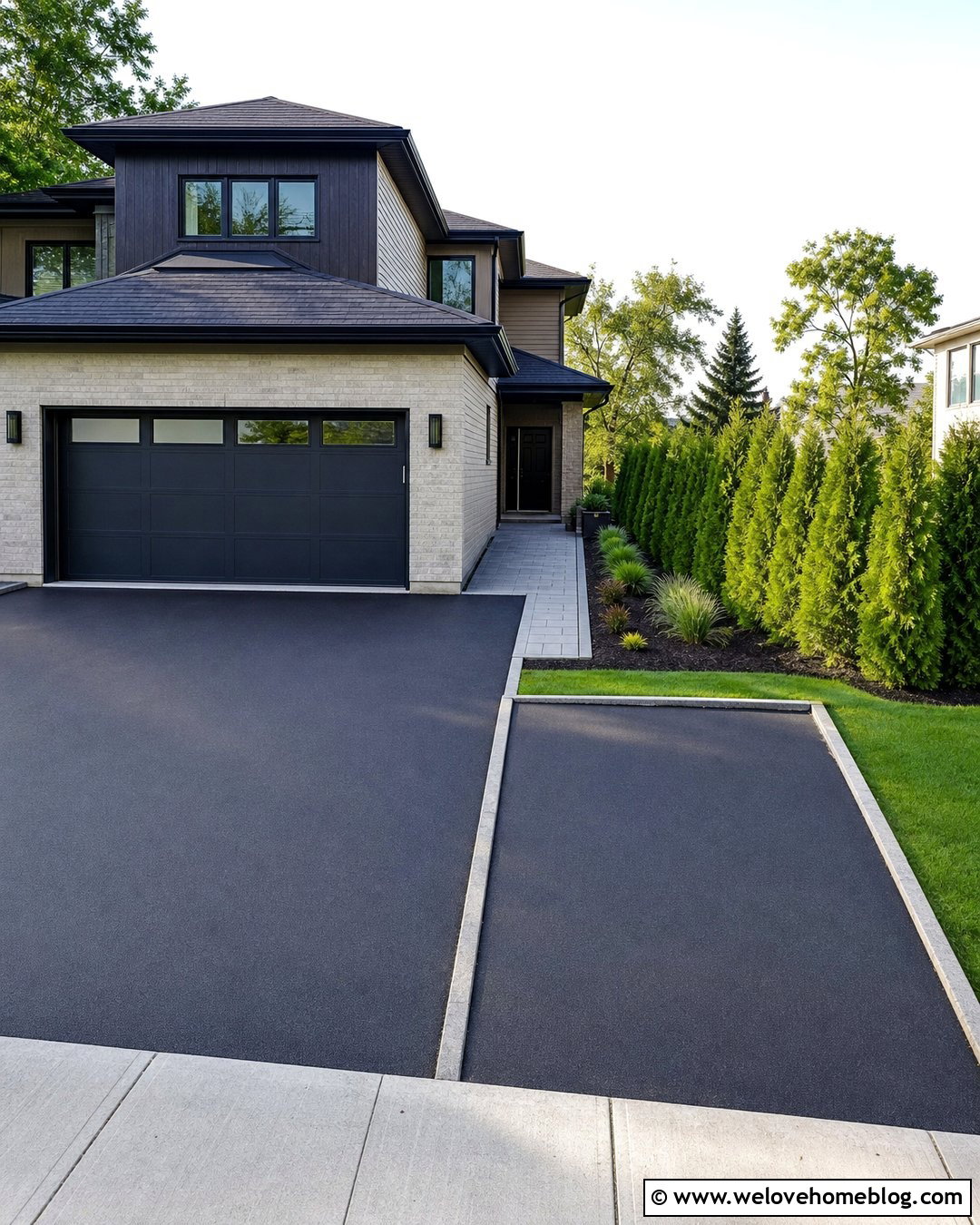
Unused ground beside an attached garage can become valuable parking or work space. Continue the black asphalt past the garage opening to form a neat side pad aligned with the building. This extension can accommodate a guest vehicle, utility trailer, trash bins, or outdoor projects without interrupting the main driving lane. Add a stone or concrete curb along the yard edge to protect the asphalt and prevent tires from entering planting beds. A privacy screen of upright evergreens can hide stored items while maintaining an orderly appearance. Connect the pad to a side door with a short paver walkway. Keep water moving away from the garage foundation, and avoid placing the extension over utility lines, drainage structures, or areas needed for future maintenance.
10. Asphalt Driveway Extension For RV Parking
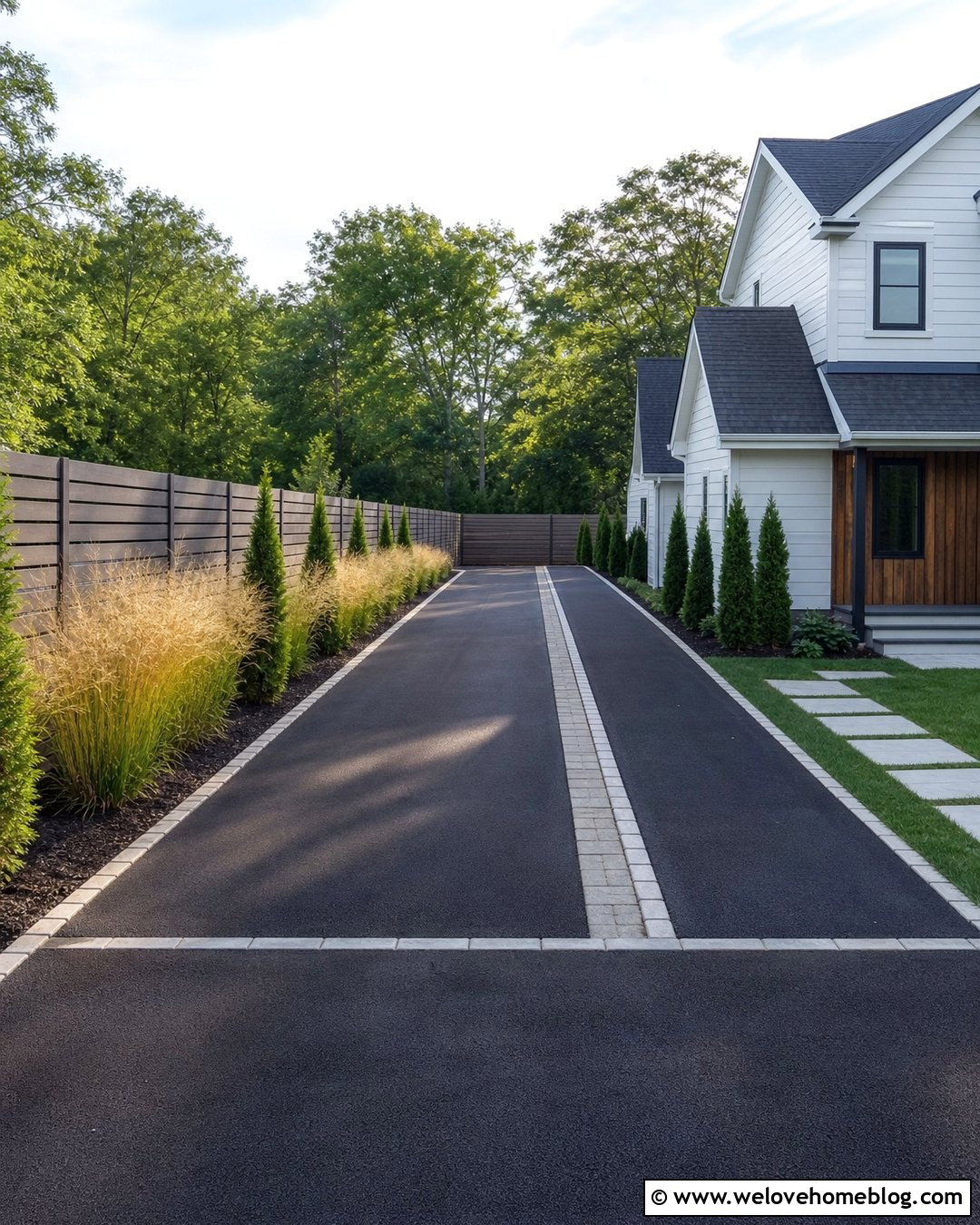
An RV parking extension requires more planning than an occasional guest space. Create a long, straight asphalt pad beside the existing driveway, allowing enough clearance for mirrors, slide-outs, and access doors. The base must be designed for the vehicle’s weight so the pavement does not develop depressions or cracked edges. A reinforced concrete or paver ribbon can separate the RV lane from the main driveway while making the large paved area feel organized. Use narrow evergreen shrubs, a horizontal privacy fence, or tall ornamental grasses along the outer boundary. Keep branches and overhead wires away from the parking route. This layout is most comfortable on wider suburban or rural lots where the extended pavement can sit beside the house without overwhelming the front landscape.
11. Asphalt Driveway Extension For Boat Parking
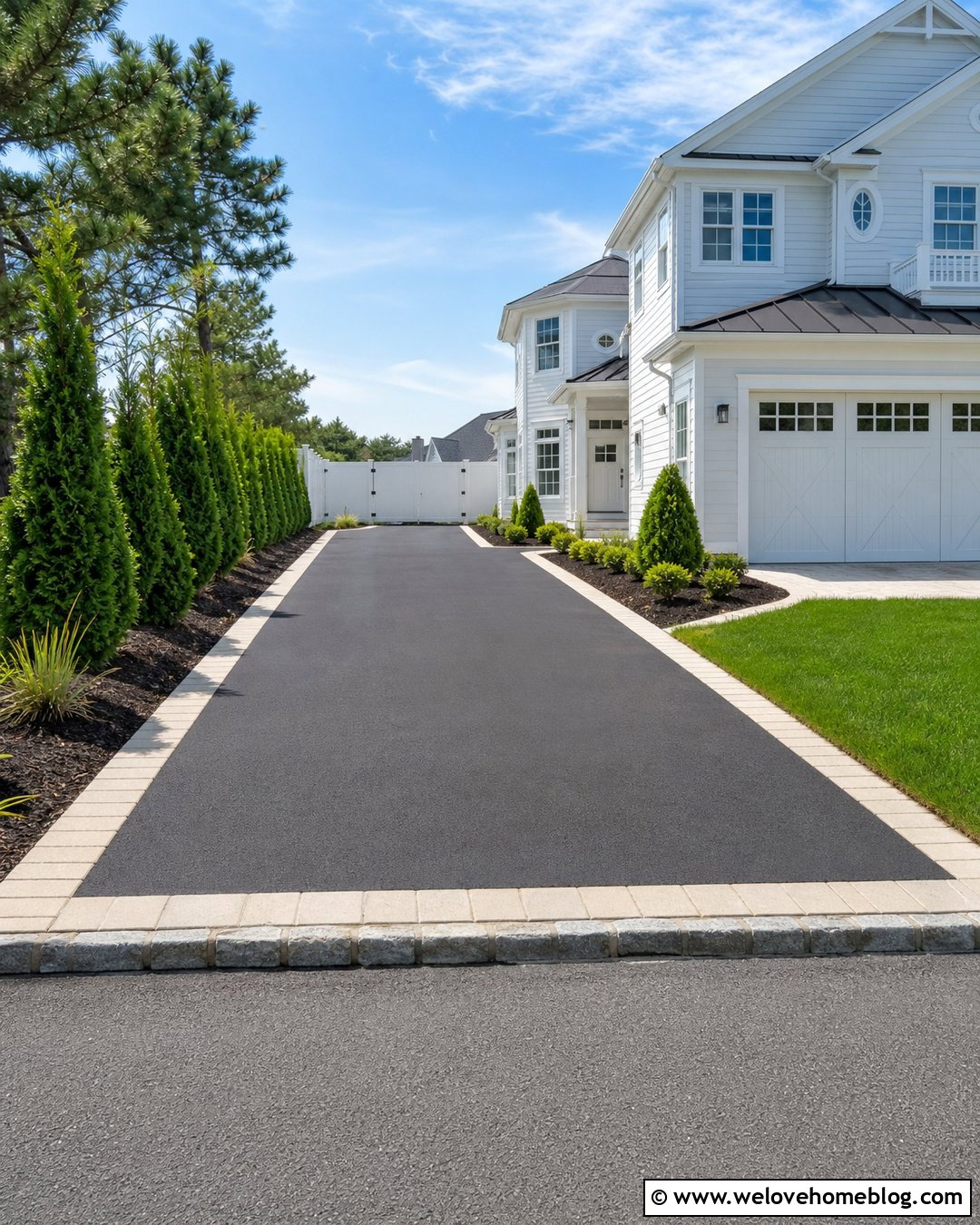
A dedicated boat pad keeps the trailer out of the main driveway while creating a cleaner arrival area. Extend the asphalt along the side of the house or garage in a straight lane with an open approach. The layout should provide sufficient width for backing and enough length to keep the trailer away from sidewalks. Use a light-colored paver edge to define the extension and protect the asphalt from crumbling under repeated tire movement. A gated fence can screen the stored boat while maintaining access. Complete the surroundings with durable shrubs and mulch rather than delicate plants that may be damaged during maneuvering. Check overhead clearance, gate width, and local storage rules before building. Thoughtful placement makes the extension practical without allowing it to dominate the home’s curb appeal.
12. Asphalt Driveway Extension With Basketball Area
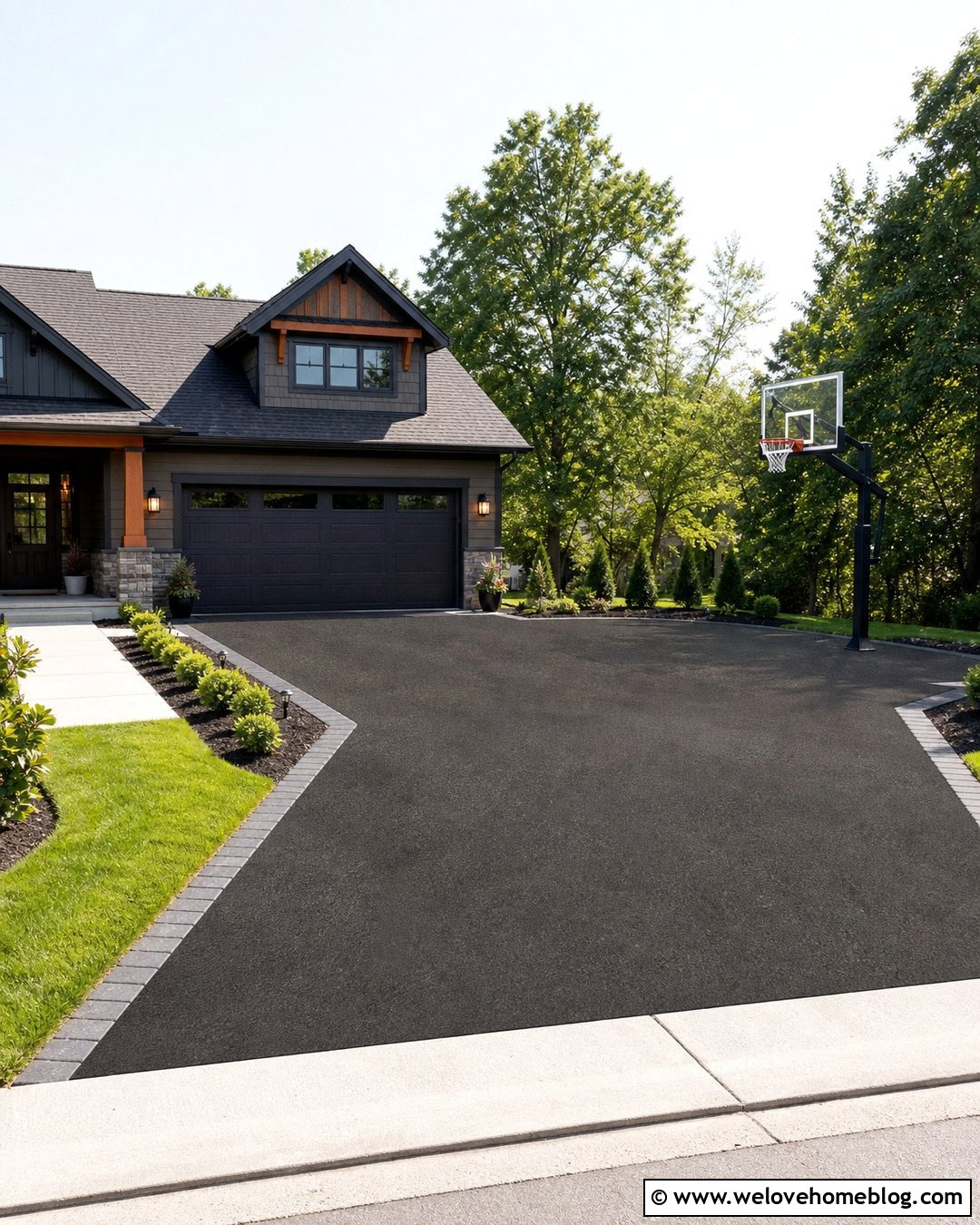
The rhythmic bounce of a basketball works best on a smooth, level surface away from parked vehicles. Add a broad asphalt extension near the garage to create a combined parking and recreation pad. A rectangular shape provides clearer playing boundaries and connects naturally with the primary driveway. Set the hoop along an exterior edge rather than directly above a garage door. A concrete paver border can frame the asphalt while visually separating the court from lawn and planting beds. Keep shrubs low and avoid loose gravel near the play area. For a polished appearance, coordinate the hoop, exterior lights, garage hardware, and border colors. The extension remains useful for guest parking when it is not being used for recreation, making it a flexible choice for family homes.
13. Asphalt Driveway Extension With Permeable Pavers
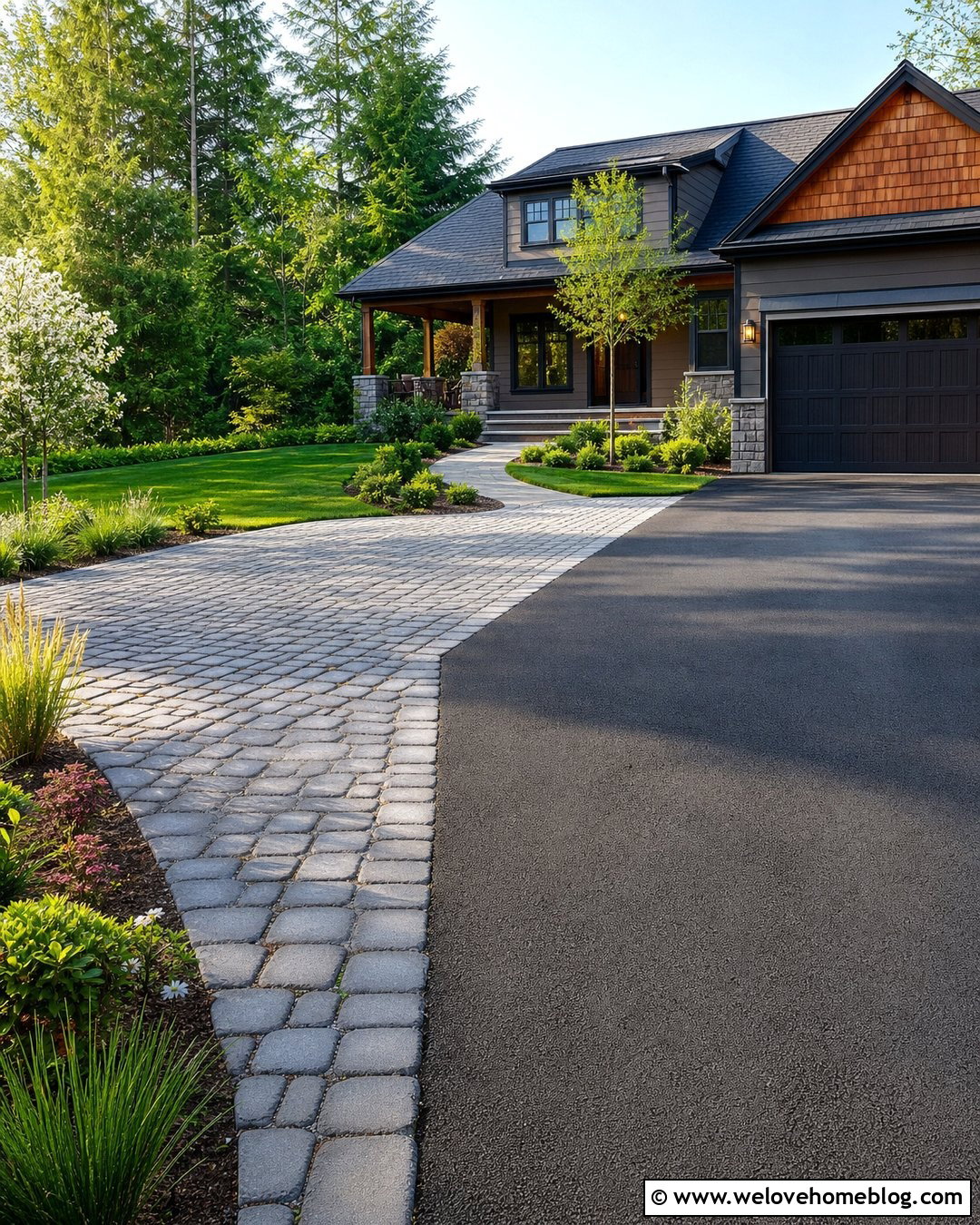
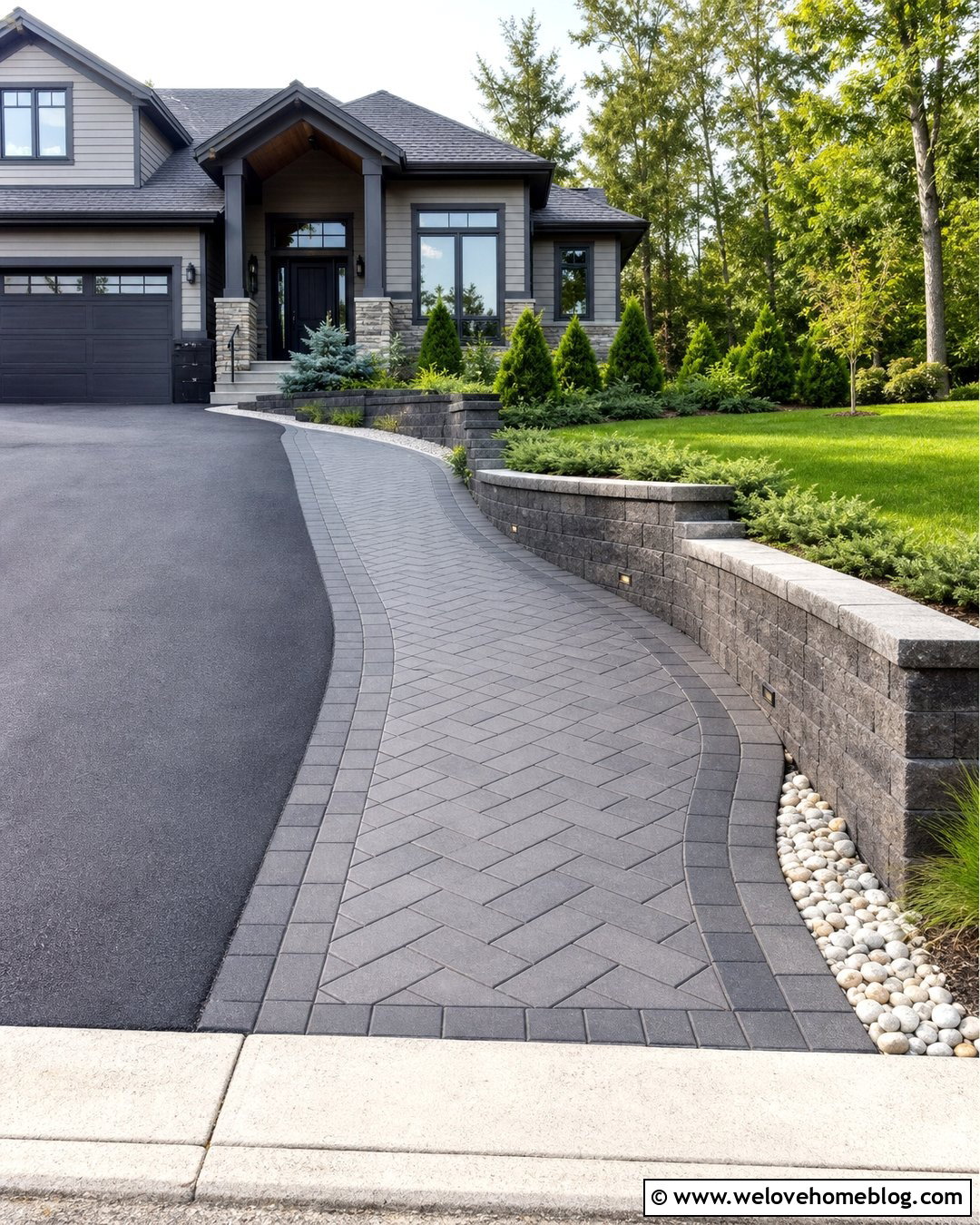
Permeable pavers can soften the edge of an asphalt expansion while providing a different way to manage surface water. Keep black asphalt in the primary driving lane and install a wide strip of open-joint concrete pavers along the new parking side. The pavers should be vehicle-rated and supported by a properly designed, free-draining stone base. Their color can match the front walkway, retaining walls, or house trim. Use clean-lined planting beds with native grasses and compact shrubs to reinforce the environmentally conscious look. This combination works well on modern and craftsman homes where mixed materials add texture. Because drainage conditions vary by property, have the soil, slope, and outlet locations assessed before assuming permeable paving alone will solve an existing water problem.
14. Asphalt Driveway Extension With Stone Edging
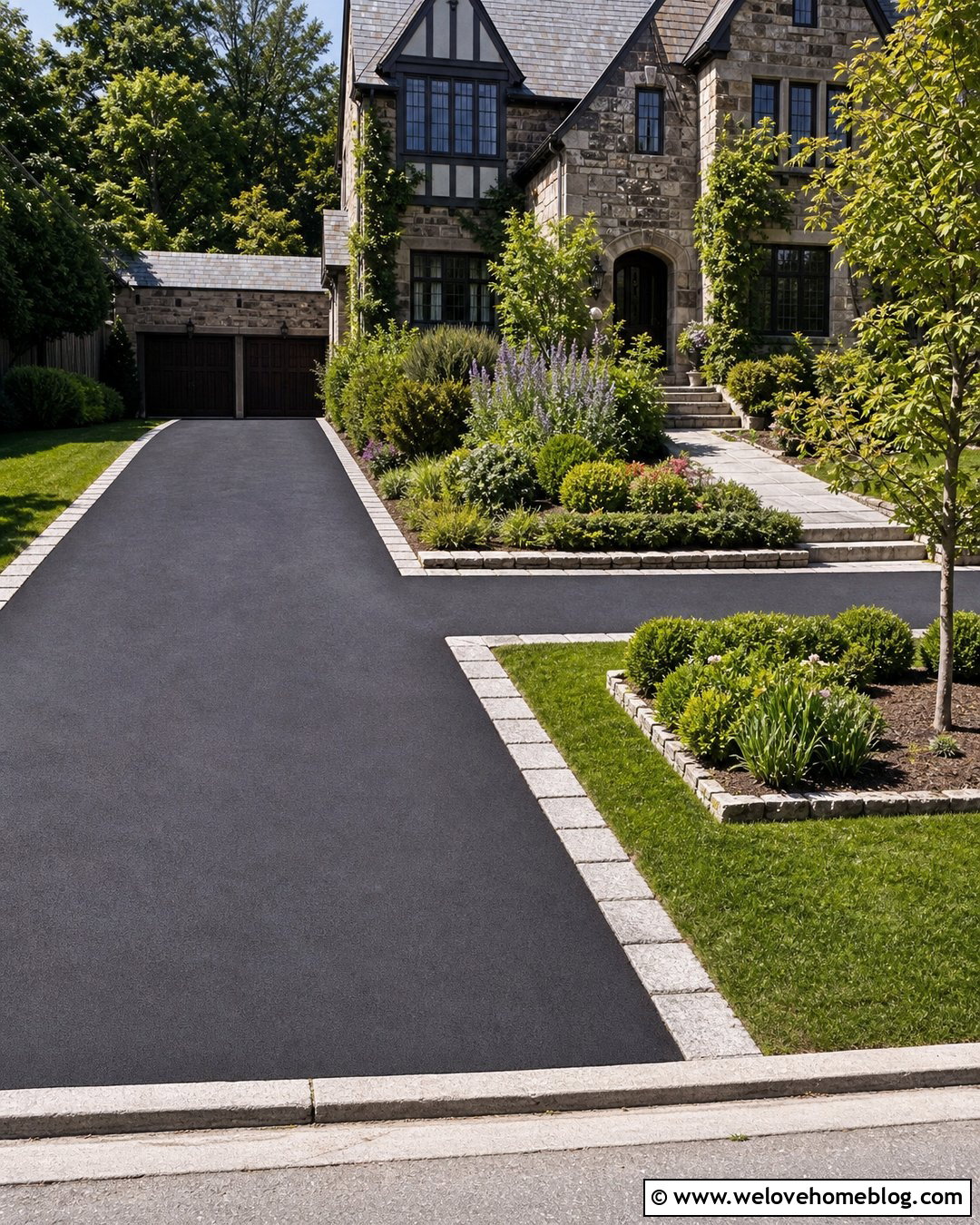
Natural stone edging gives a basic asphalt extension a more substantial, established appearance. Widen the black asphalt along one side, then frame the new perimeter with granite setts, fieldstone curbing, or rectangular limestone blocks. Install the stones flush or only slightly raised so doors and tires can clear them easily. Repeat the stone around nearby planting beds or along the front walkway for better visual continuity. A layered landscape of evergreen shrubs, flowering perennials, and one shade tree can make the wider driveway feel integrated into the yard. This complete look complements craftsman, Tudor, and stone-front homes. Select dense, durable stone that can handle moisture and freeze-thaw conditions, and provide a strong base beneath the edging so individual pieces do not shift.
15. Asphalt Driveway Extension On A Slope
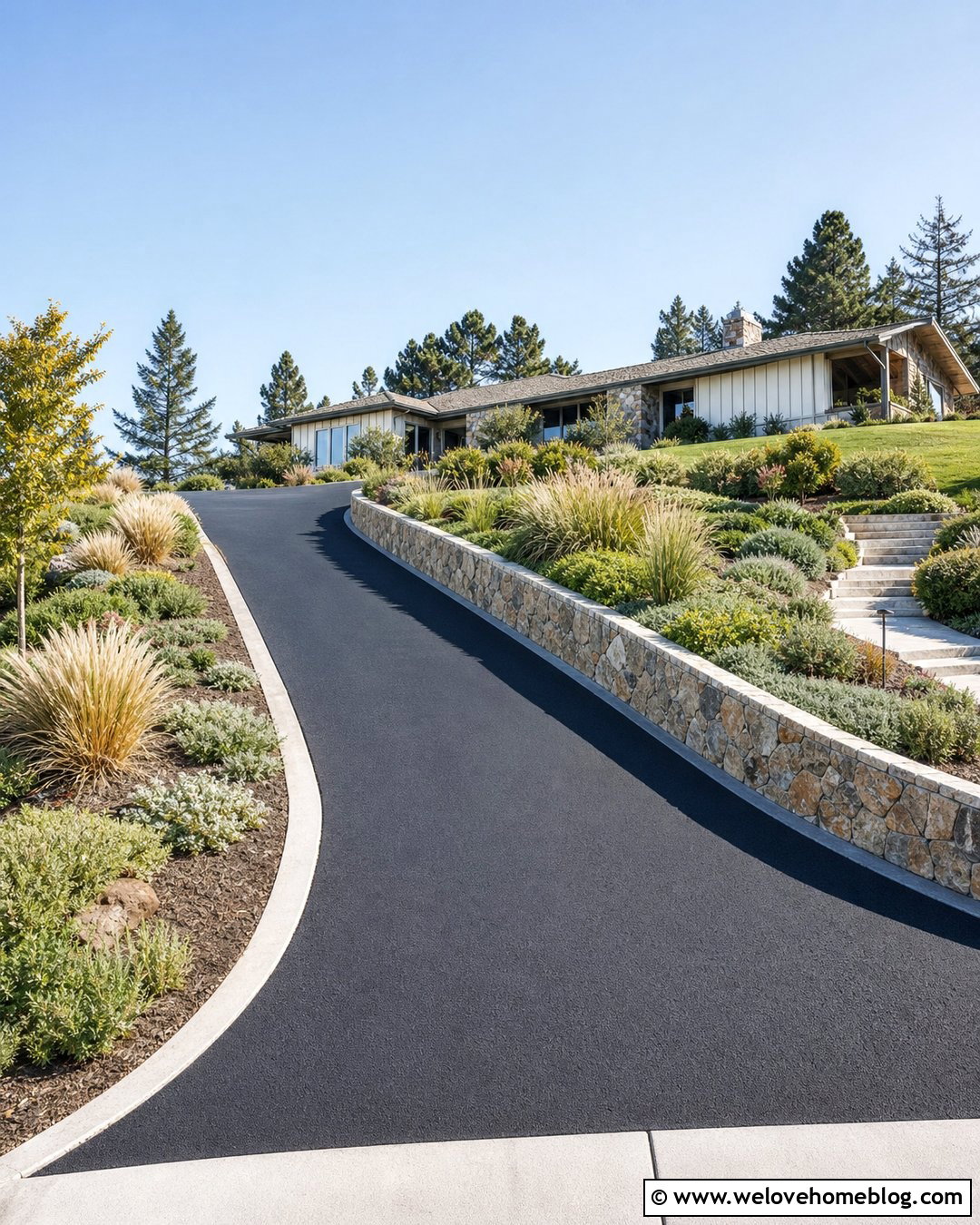
A sloped extension needs a strong base, careful grading, and dependable edge support. Rather than simply laying asphalt over the lawn, excavate the new area and rebuild it with compacted aggregate suited to the site conditions. Extend the black asphalt along the uphill or structurally supported side whenever practical. A low retaining wall may be needed where the pavement meets a significant grade change. Use concrete curbing or large stone blocks to define the edge and protect nearby soil from erosion. Plant the slope with deep-rooted ground covers, ornamental grasses, and compact shrubs that tolerate runoff. Add a channel drain only where a contractor determines it is appropriate. The finished driveway should direct water safely without creating puddles, washed-out beds, or runoff toward the foundation.
16. Asphalt Driveway Extension With New Apron
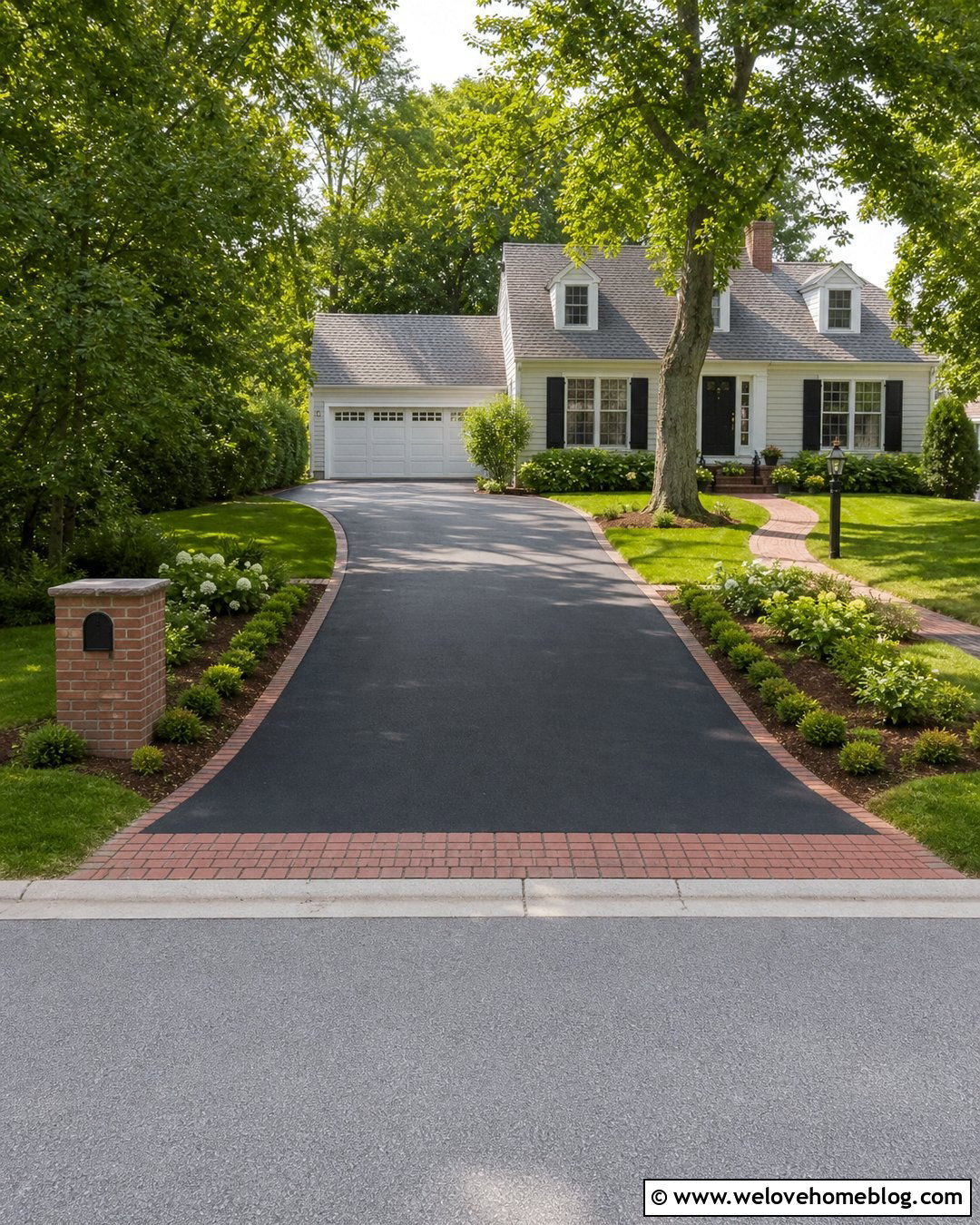
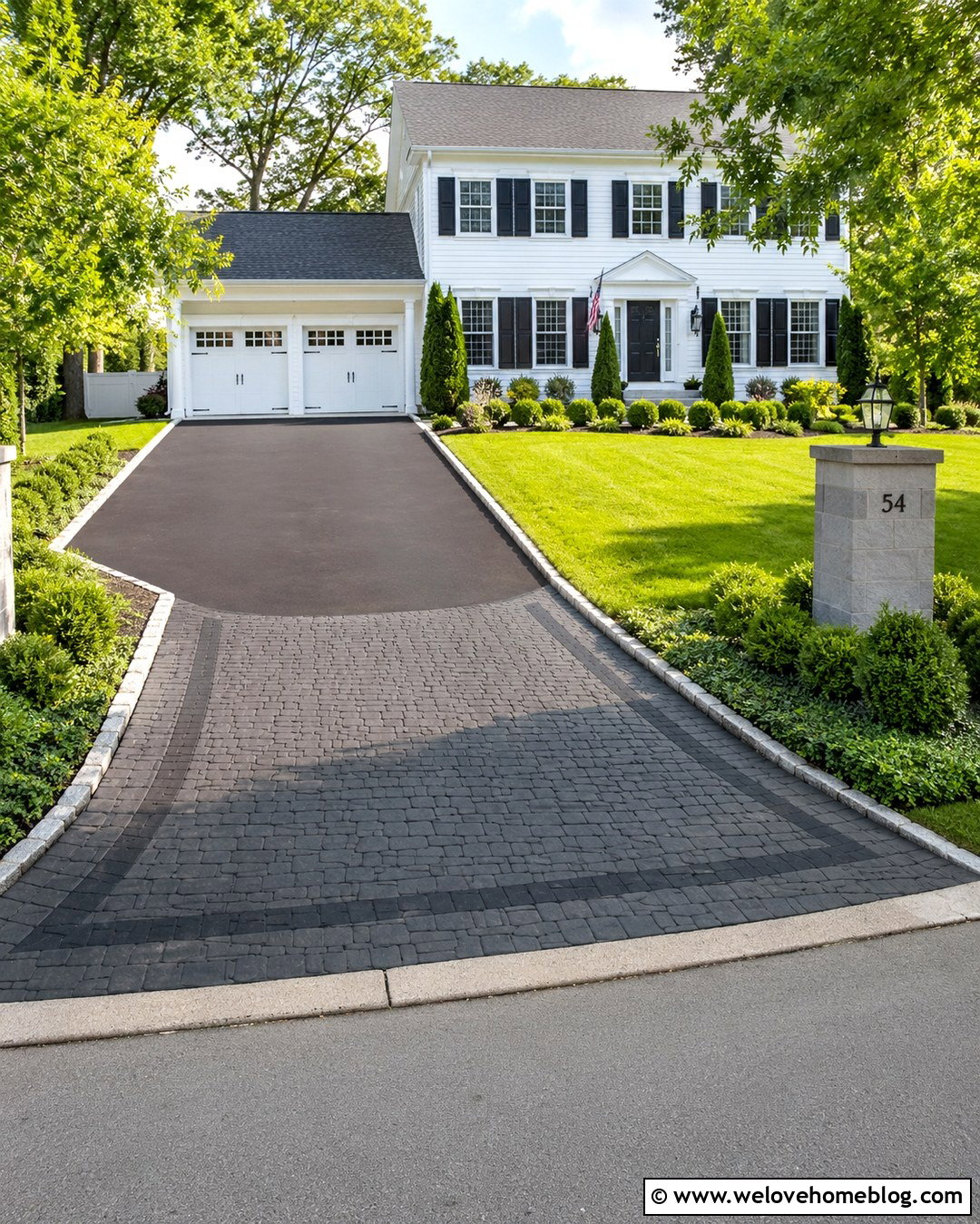
A wider apron makes the entrance easier to spot and reduces tight turning at the street. Flare the black asphalt extension outward near the curb, then taper it gradually into the existing driveway width. This approach can work as a stand-alone improvement or as the beginning of a full side extension. Frame the entrance with contrasting brick pavers, granite cobbles, or concrete bands that remain flush with the pavement. Low planting beds on both sides can create symmetry without blocking traffic views. Consider repeating the same materials around an address marker or mailbox. Changes near sidewalks, curbs, drainage channels, and public rights-of-way commonly receive closer municipal review, so confirm requirements before excavation. A well-proportioned apron should feel welcoming while remaining safe and easy to navigate.
17. Asphalt Driveway Extension To Detached Garage
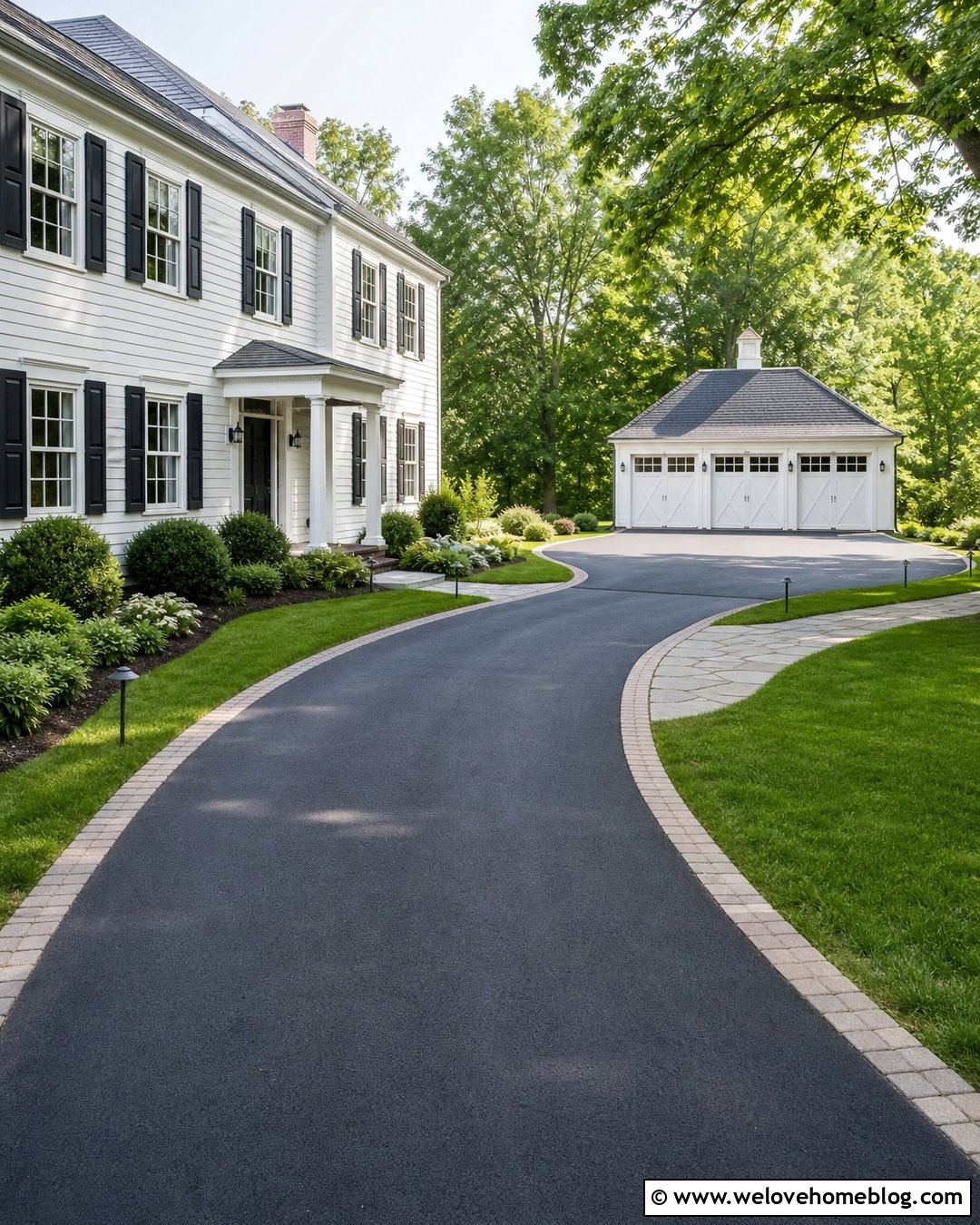
A detached garage may require more than a simple parking bay. Extend the asphalt driveway in a clear lane that follows the shortest practical route while preserving usable lawn and planting space. A gentle curve can guide vehicles around mature trees, but avoid unnecessary bends that make trailer access difficult. Support the asphalt with a compacted base and define both sides with concrete curbing or brick pavers. At the garage, widen the pavement into a maneuvering pad that aligns with the doors. Use low path lights, tidy foundation shrubs, and a connecting walkway to make the secondary building feel integrated with the home. The finished layout should accommodate vehicle movement, snow removal, drainage, and pedestrian access rather than functioning as an isolated strip of pavement across the yard.
18. Asphalt Driveway Extension With Grass Pavers
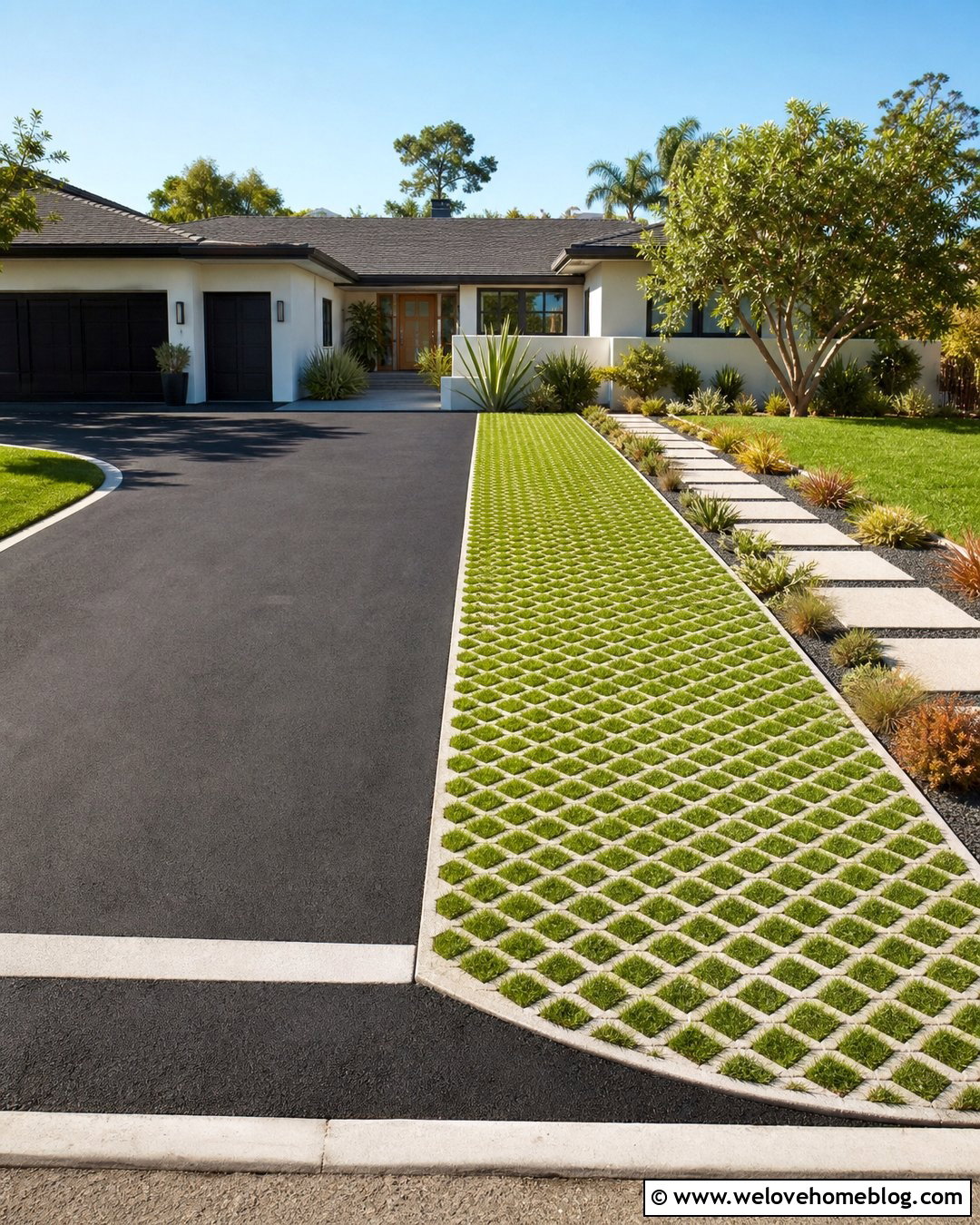
Grass pavers offer a subtle way to create occasional overflow parking beside an asphalt driveway. Keep the main driving surface in dense black asphalt, then install load-rated cellular pavers along one side and fill them with healthy turf. From the street, the extension reads as part of the lawn when empty, reducing the visual impact of additional parking. A flush concrete strip between the materials can create a clean transition and support the asphalt edge. Choose grass that suits the local sun, rainfall, and traffic conditions. Include stepping stones or a separate walkway so pedestrians do not compact the turf unnecessarily. This approach is best for light or occasional use. Frequent heavy parking may damage the grass and require a more durable permeable paver or asphalt surface.
19. Asphalt Driveway Extension With Landscape Island
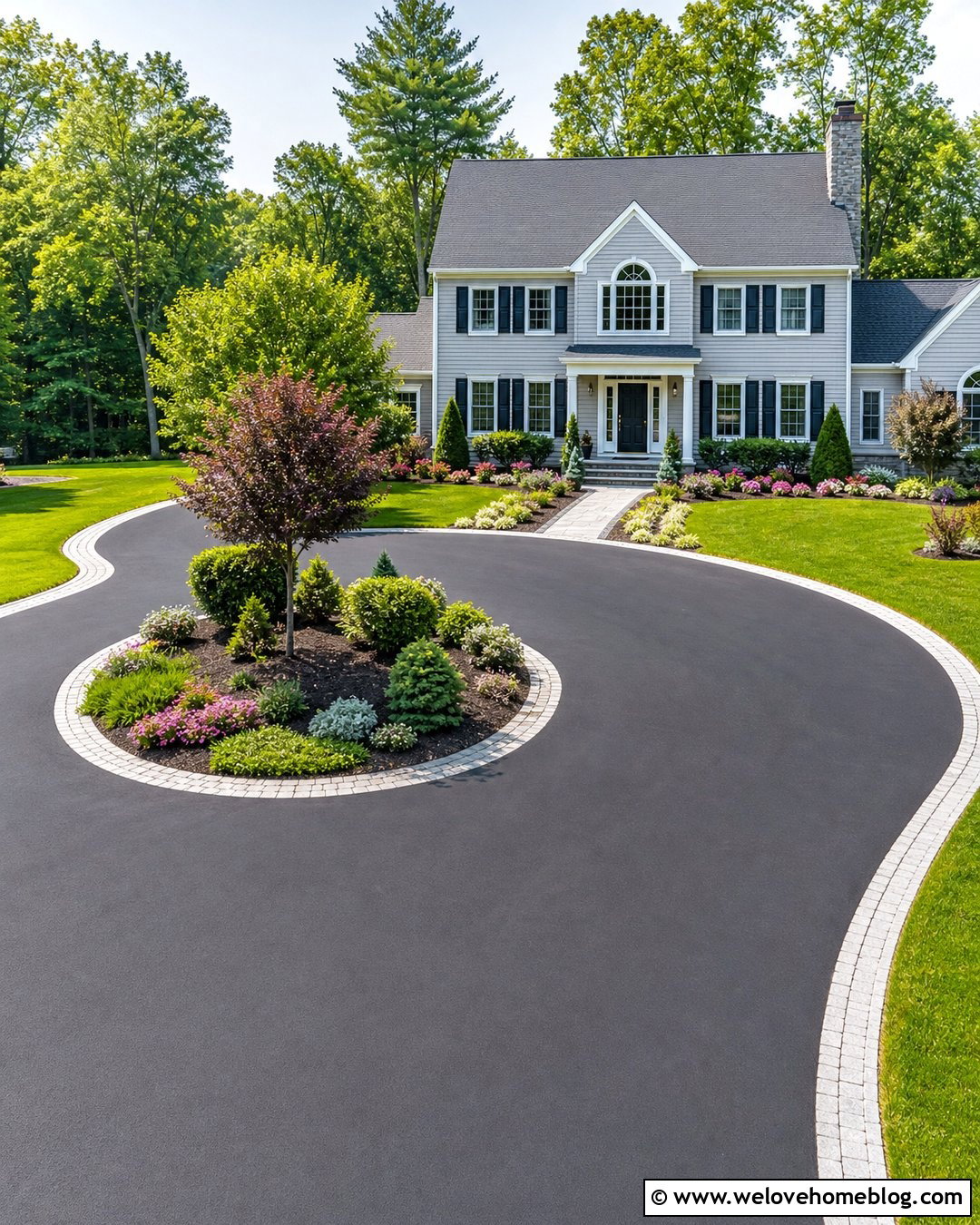
A larger driveway does not have to become one uninterrupted sheet of pavement. Create an asphalt extension for parking or turning, then preserve a small landscape island at its outer corner. Shape the island with a broad curve that vehicles can navigate comfortably. Edge it with stone or pavers to support the asphalt and simplify maintenance. One small ornamental tree, several compact shrubs, and a low ground cover can provide structure without limiting visibility. Match the island’s materials to the front walkway or porch for a connected design. This layout works especially well with wide ranch, colonial, and contemporary homes where the paved area needs visual relief. Plan mature plant sizes carefully so branches, roots, and fallen debris do not interfere with vehicles or damage the driveway.
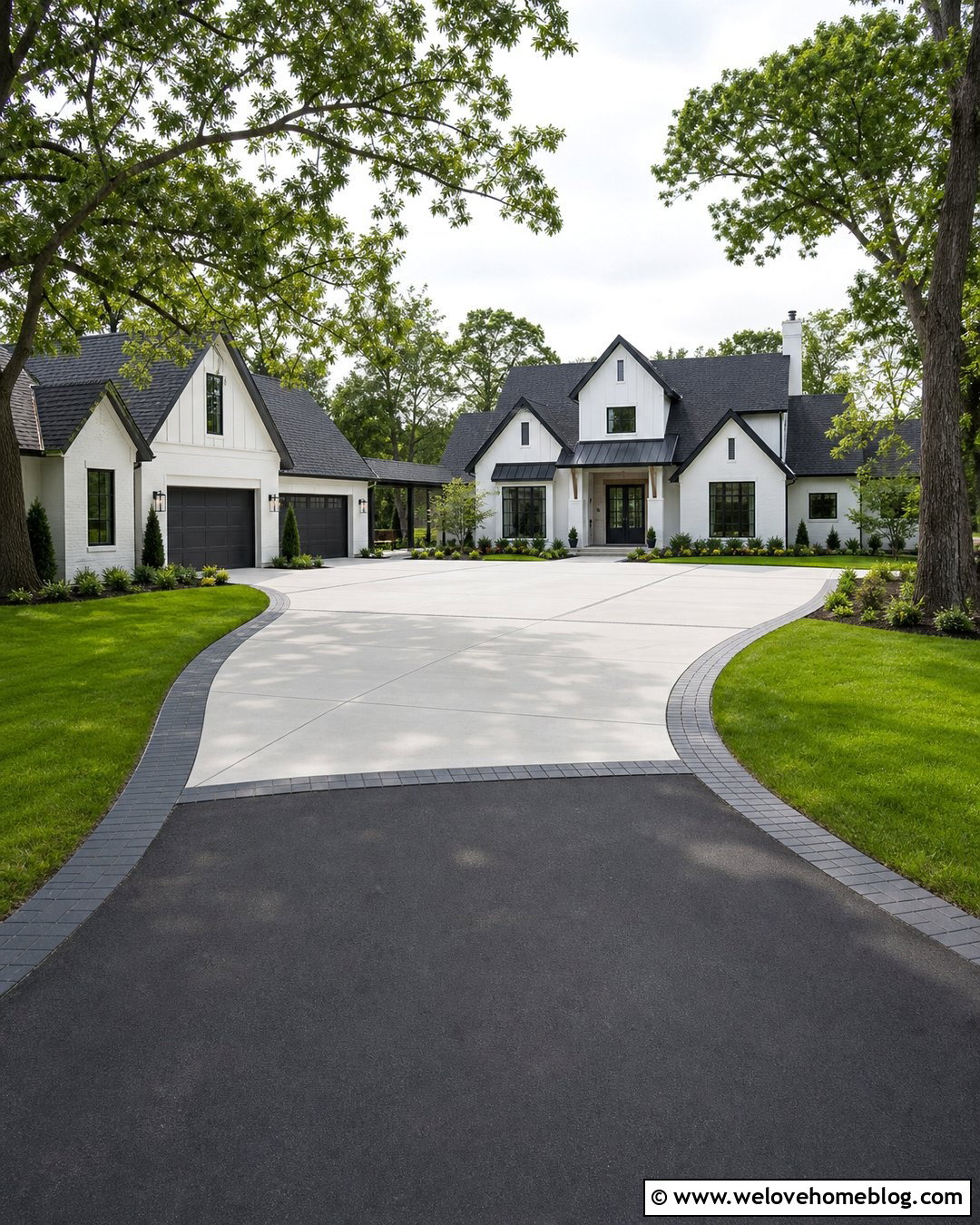
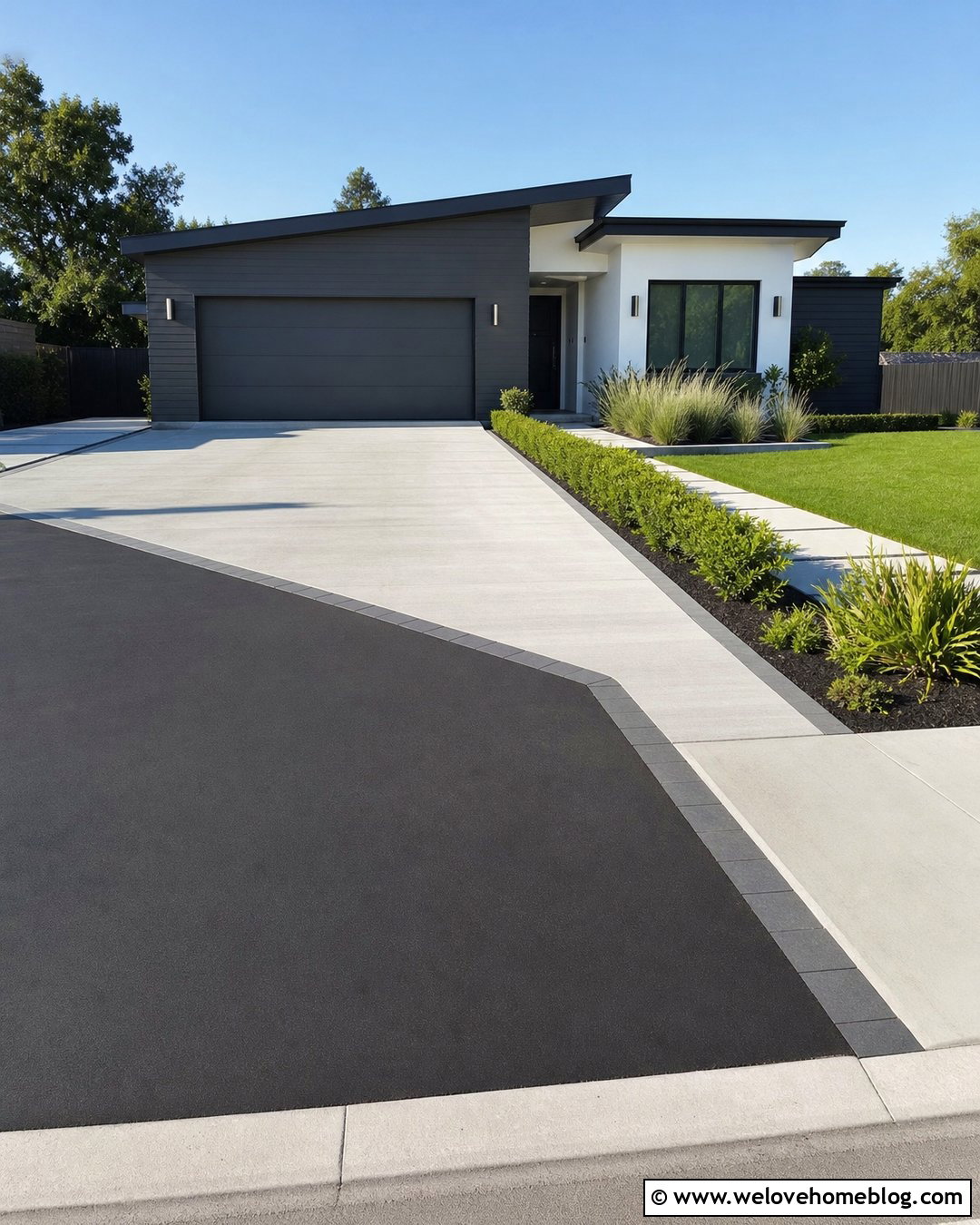
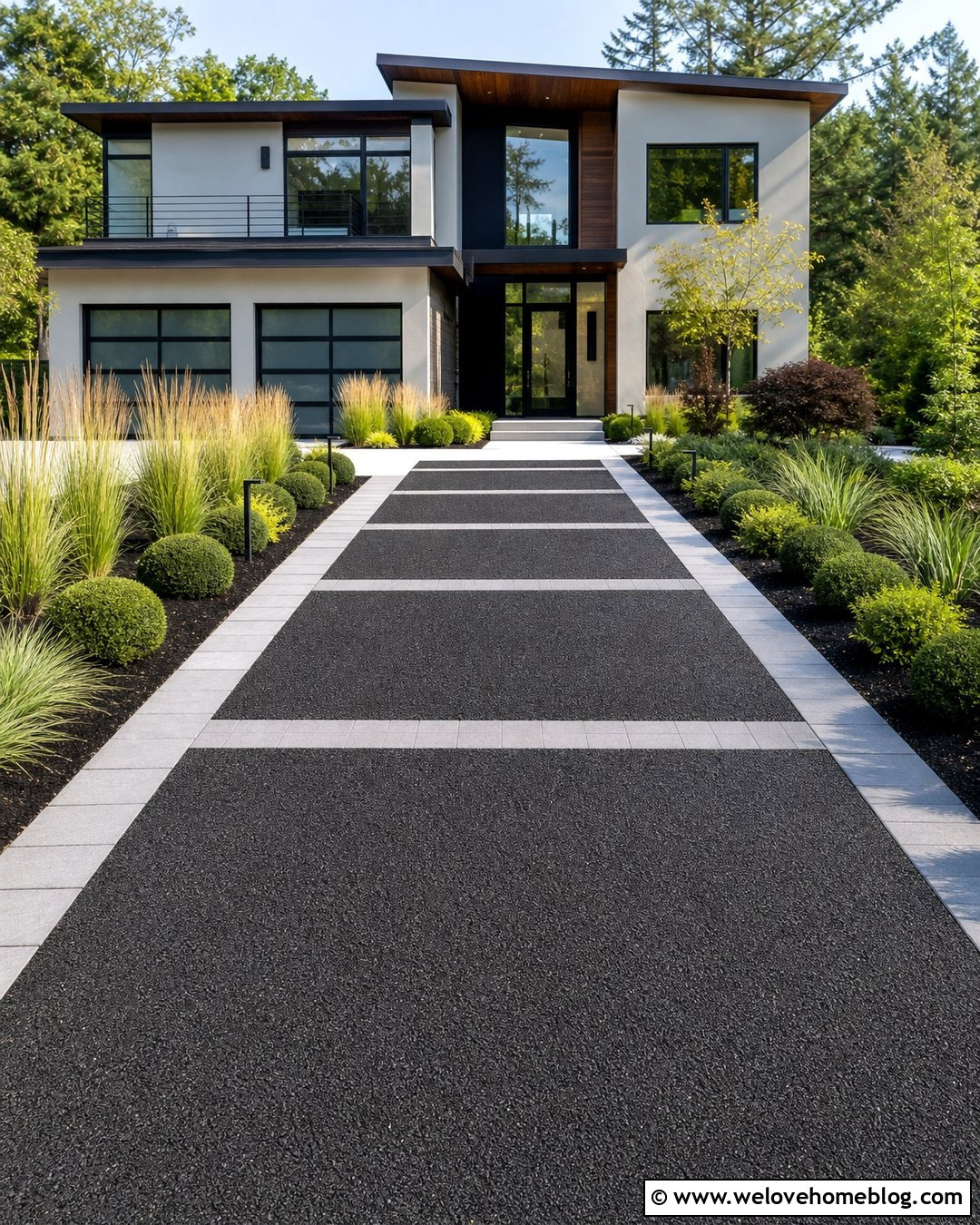
20. Two-Sided Asphalt Driveway Extension
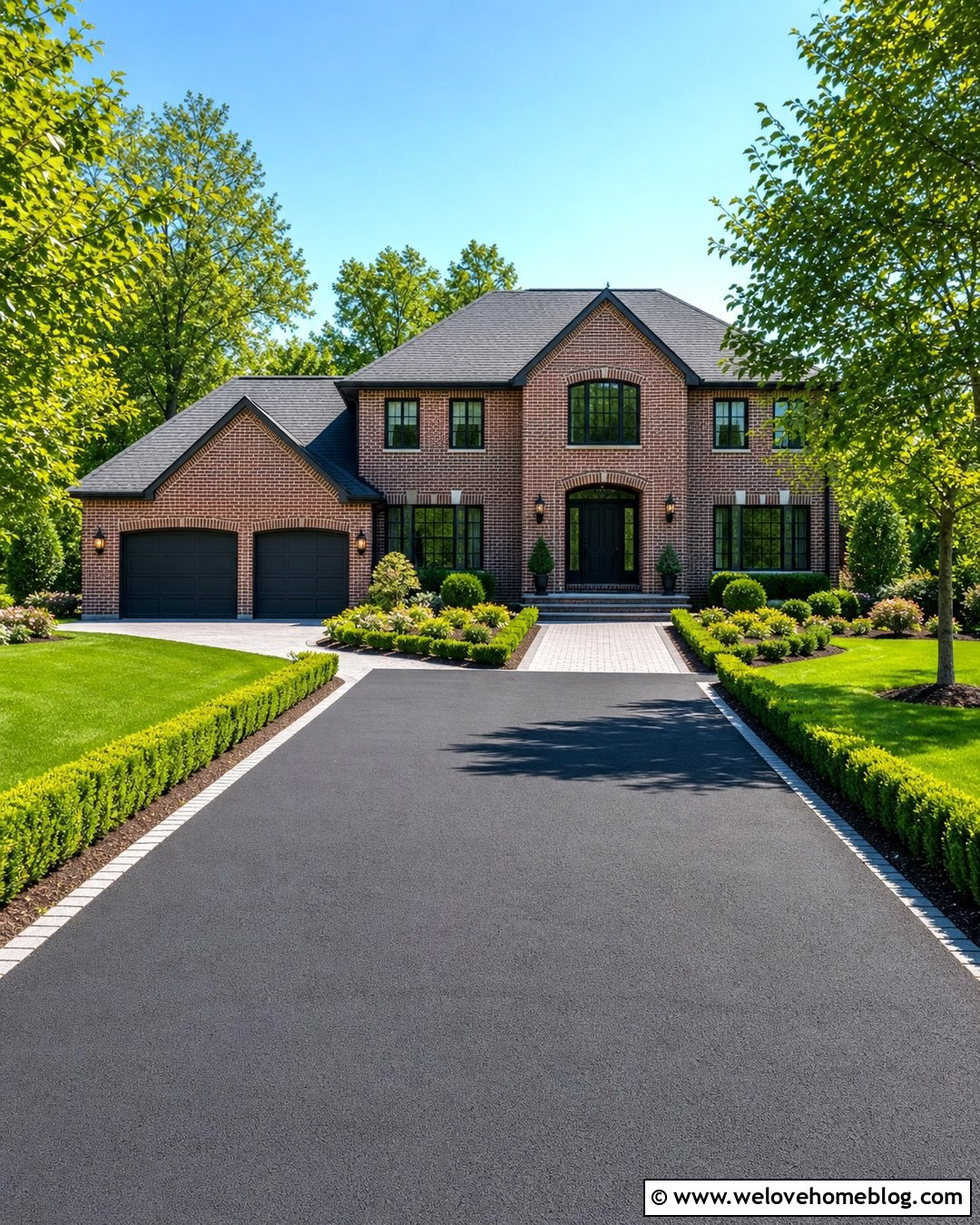
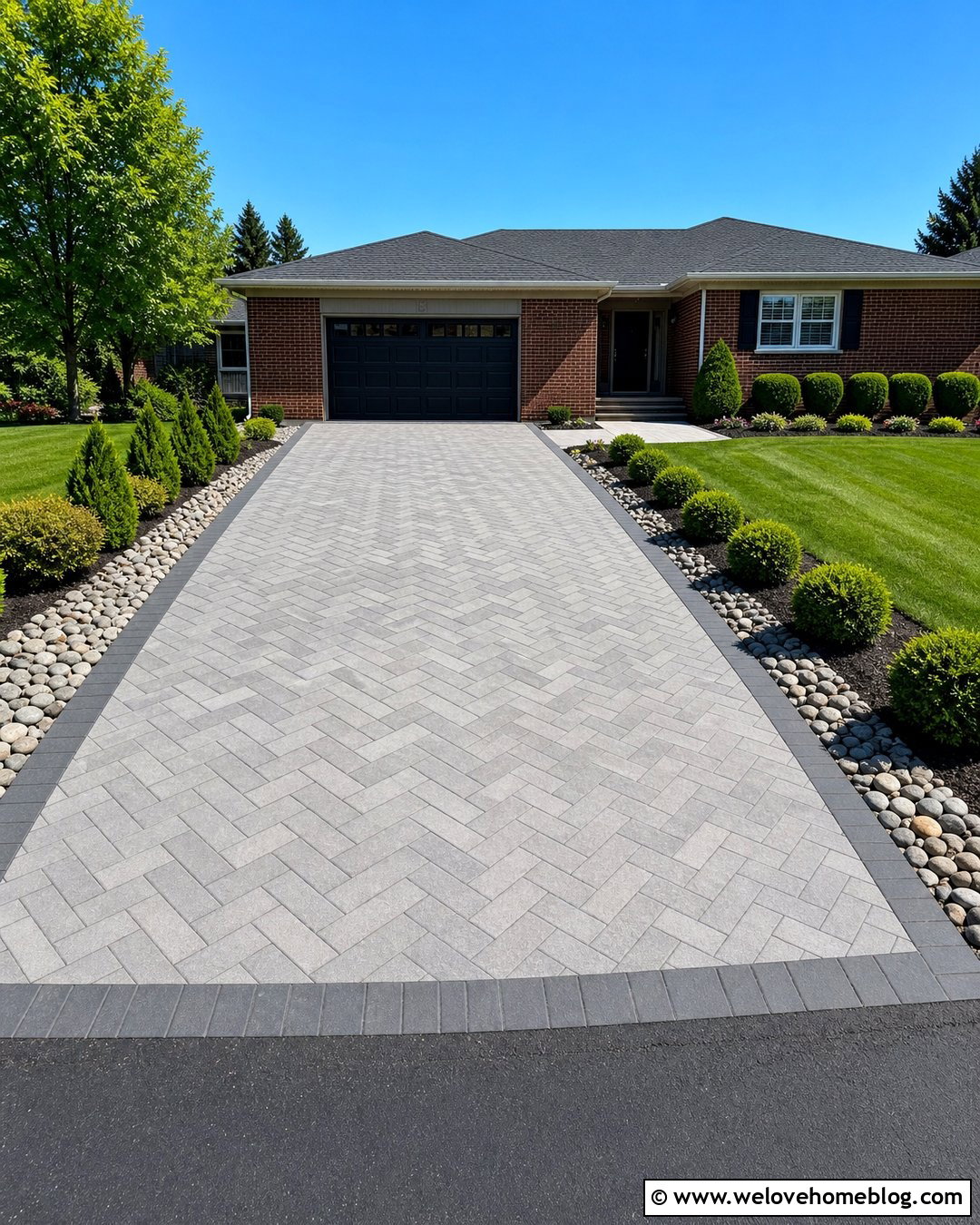
Widening both sides creates a balanced appearance when the driveway aligns with the center of the garage or front facade. Add equal strips of black asphalt along the existing pavement, keeping the new outer edges straight and parallel. This configuration distributes the added width evenly and can preserve symmetrical planting beds near the house. Frame both sides with matching concrete pavers or granite blocks to give the expanded surface a deliberate finish. Repeat the symmetry with low hedges, lawn panels, walkway connections, and coordinated entrance lighting. The center seam may remain visible if the original asphalt has faded, so consider sealcoating or resurfacing after the extension has properly cured. The result is a broad, orderly approach that looks planned rather than patched onto one side of the yard.
Conclusion:
These 20 Asphalt Driveway Extension Ideas show that added pavement can be both practical and attractive. The best layout depends on how you use the space, whether you need easier parking, a wider entrance, a turnaround, or storage for a larger vehicle. Asphalt can blend naturally with paver borders, stone edging, concrete bands, permeable surfaces, and thoughtful landscaping. However, appearance should never replace proper preparation. A durable extension needs excavation, a compacted base, supported edges, and grading that moves water safely. Measure vehicles and turning paths before finalizing the shape. You should also confirm local permits, setbacks, and HOA requirements. With careful planning, an asphalt extension can improve everyday function while strengthening the home’s overall curb appeal.

Related posts:


Leave a Reply