
A harsh curb transition can make an otherwise attractive driveway frustrating to use. The right **driveway curb ramp ideas** can reduce scraping, soften the bump at a rolled curb, support easier entry, and protect the finished driveway apron. Appearance matters too. A bulky ramp can distract from curb appeal, while a well-sized model can blend naturally with concrete, asphalt, pavers, gravel, and landscaped entrances. Before installing anything, measure the curb rise, driveway width, approach angle, and gutter depth. Keep stormwater moving freely, and confirm local city or HOA requirements because the curb and gutter may be within a public right-of-way. Use the complete entrance designs below to compare practical, attractive **20 Driveway Curb Ramp Ideas**.

1. Rubber Driveway Curb Ramp With Concrete Driveway
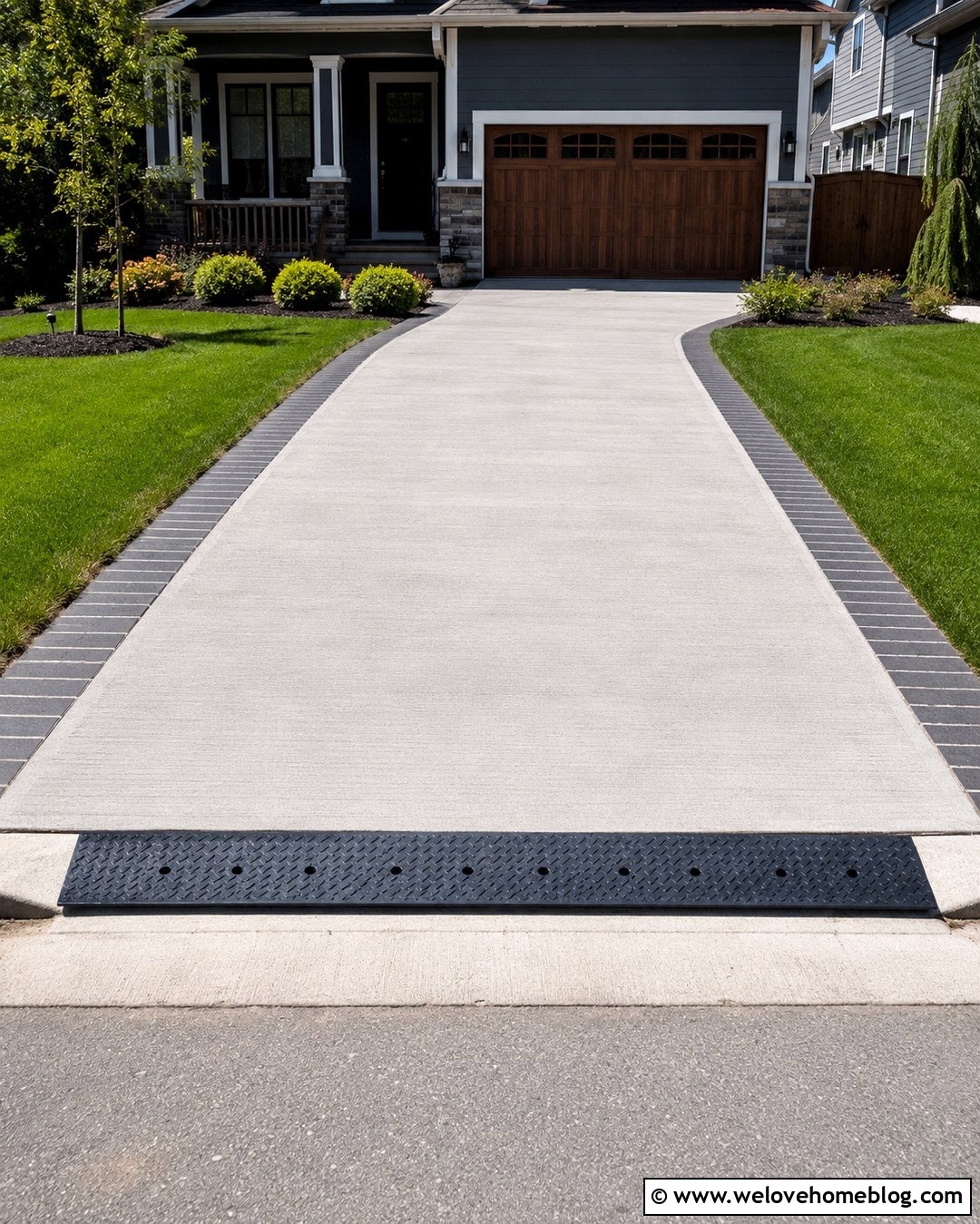
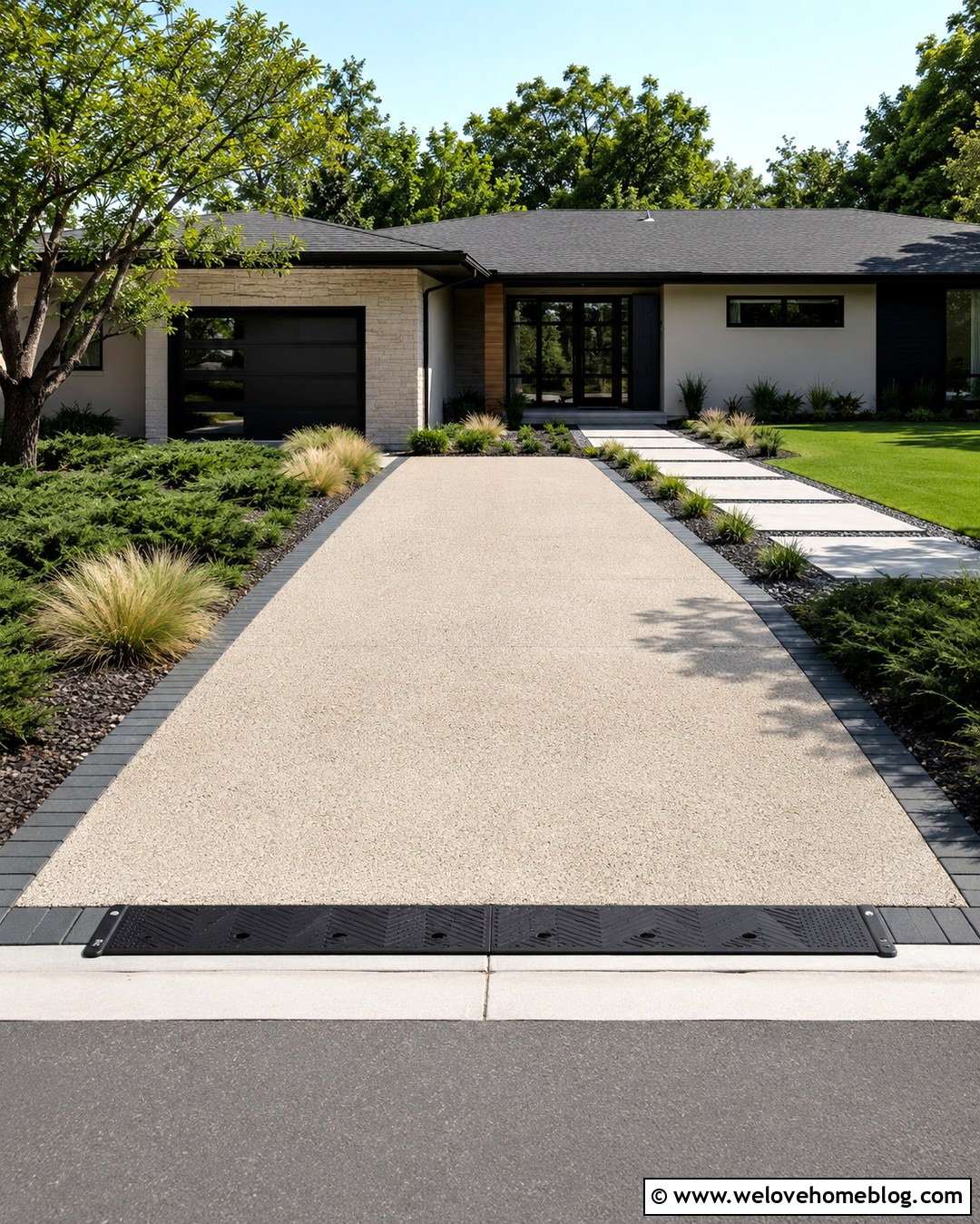
A modular black rubber curb ramp creates a clean transition into a light-gray poured concrete driveway. It works especially well with rolled curbs because the flexible material softens the initial impact without requiring a permanent addition to the gutter. Choose enough sections to cover the usable driveway width rather than placing small ramps only beneath the expected tire paths. This makes daily entry more forgiving and gives the entrance a unified appearance. Look for a textured driving surface, tapered side pieces, and an open channel underneath for gutter drainage. Modular systems can also be expanded for wider or gently curved entrances. () Frame the concrete with dark brick ribbons, clipped shrubs, and a straight walkway to make the black ramp feel intentional.
2. Low Profile Driveway Curb Ramp For Sports Cars
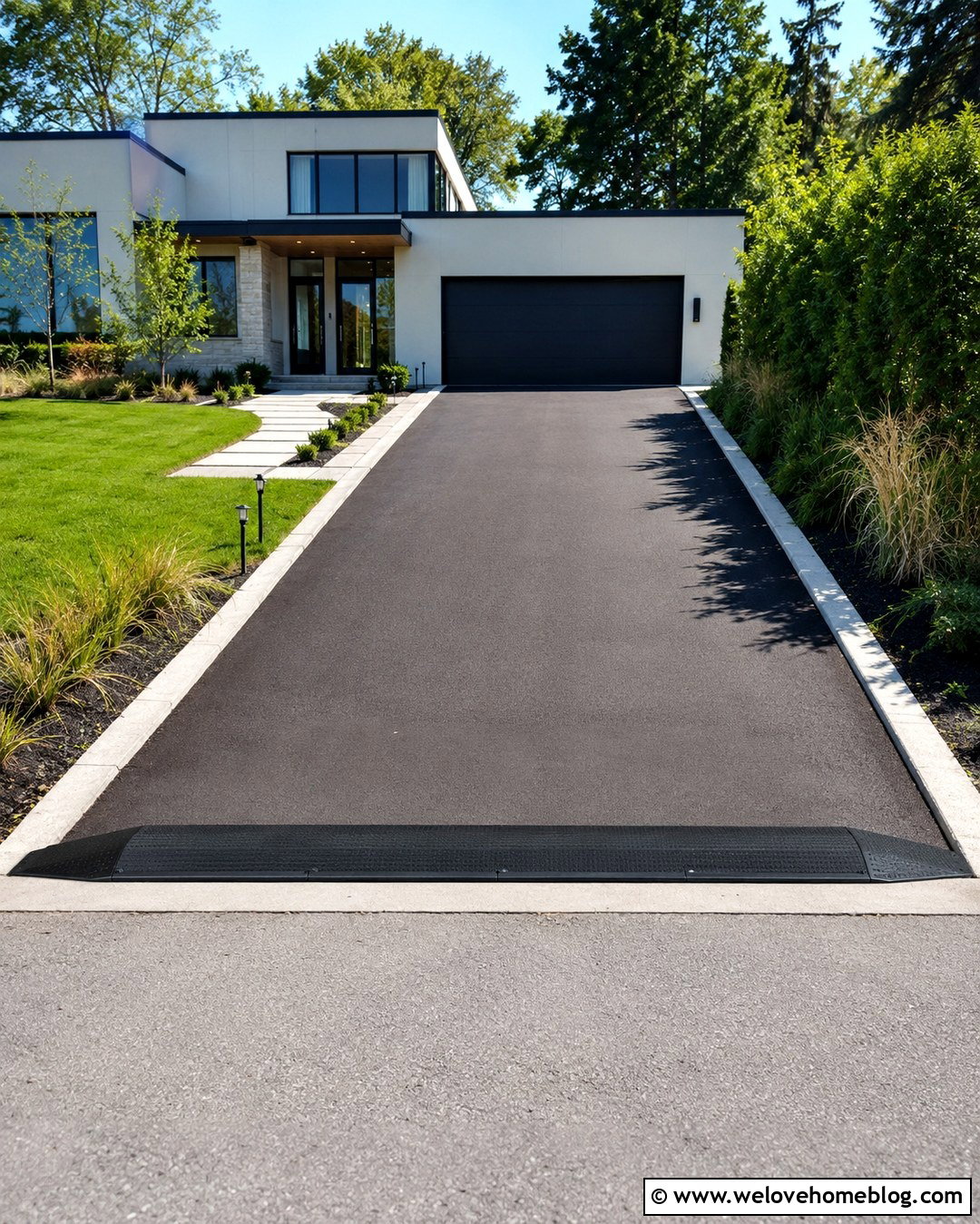
Low-clearance vehicles need a longer, gentler transition instead of a short ramp with an abrupt face. Pair a low-profile rubber driveway curb ramp with a smooth black asphalt driveway that rises gradually toward a modern garage. A broader ramp changes the approach angle and helps the vehicle pass over the curb without concentrating pressure at one sharp point. The ramp should span the primary driving area and sit firmly against the rolled curb without rocking. Add tapered ends so parallel parking and street-edge movement remain easier. A pale concrete border can visually separate the asphalt from the lawn, while low ornamental grasses soften the entrance. Always compare the ramp dimensions with the measured curb height, gutter shape, vehicle wheelbase, and front overhang before selecting a model.
3. Full Width Driveway Curb Ramp For Two Cars
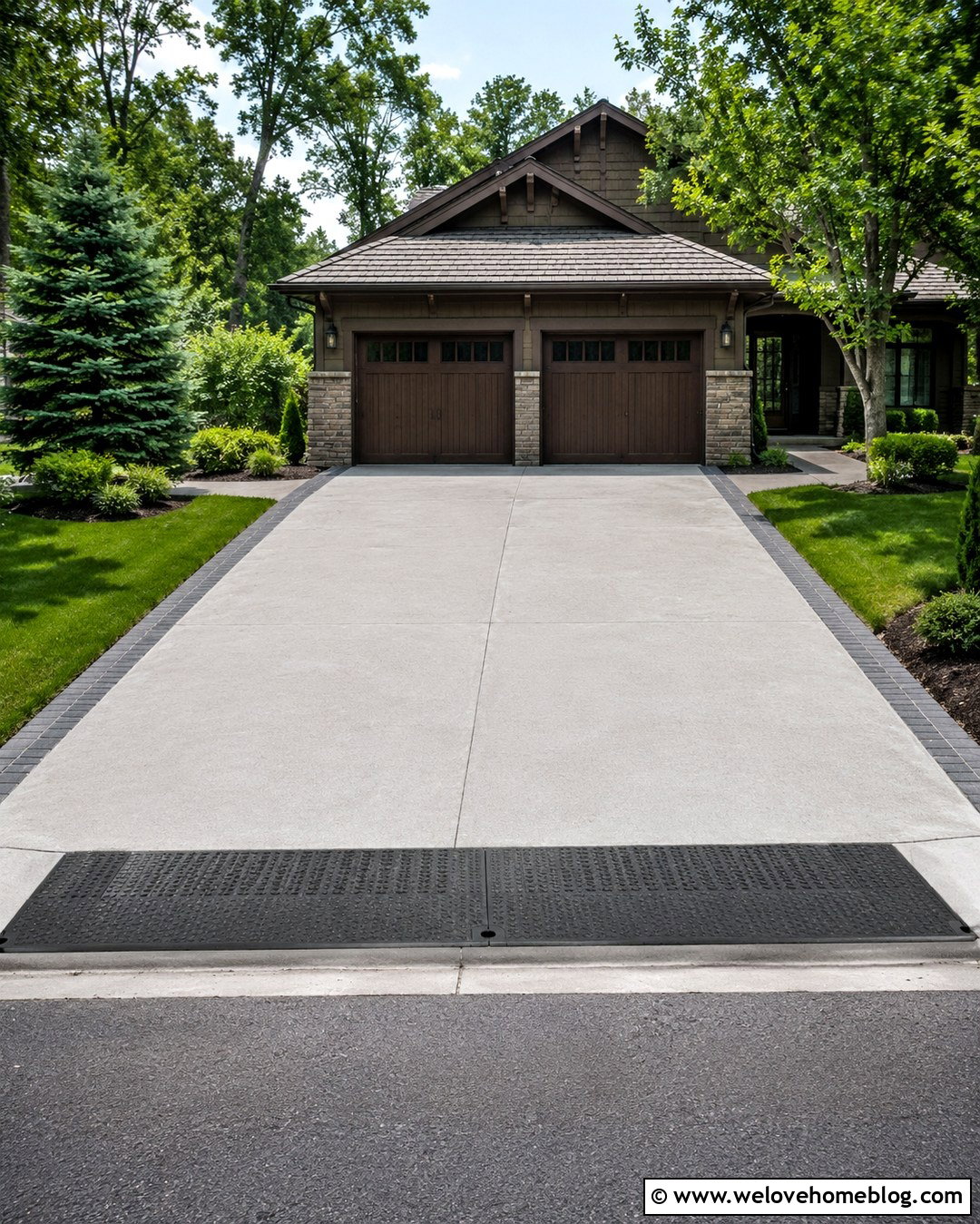
A wide double driveway looks more polished when the curb ramp runs across the full entrance. Use linked recycled-rubber sections in front of a broom-finished concrete driveway leading to a two-car craftsman garage. Full-width coverage allows either vehicle to enter at a natural angle, which is useful when drivers share the driveway or back out in different directions. It also eliminates the scattered appearance of separate tire-track ramps. Select a system with substantial weight, secure section connections, textured traction, and a continuous drainage opening beneath it. Finish the driveway with charcoal paver edging and symmetrical evergreen beds near the garage. At the street, keep planting low and open so drivers can see pedestrians, bicycles, and approaching traffic before crossing the sidewalk or entering the road.
4. Curved Driveway Curb Ramp With Paver Driveway
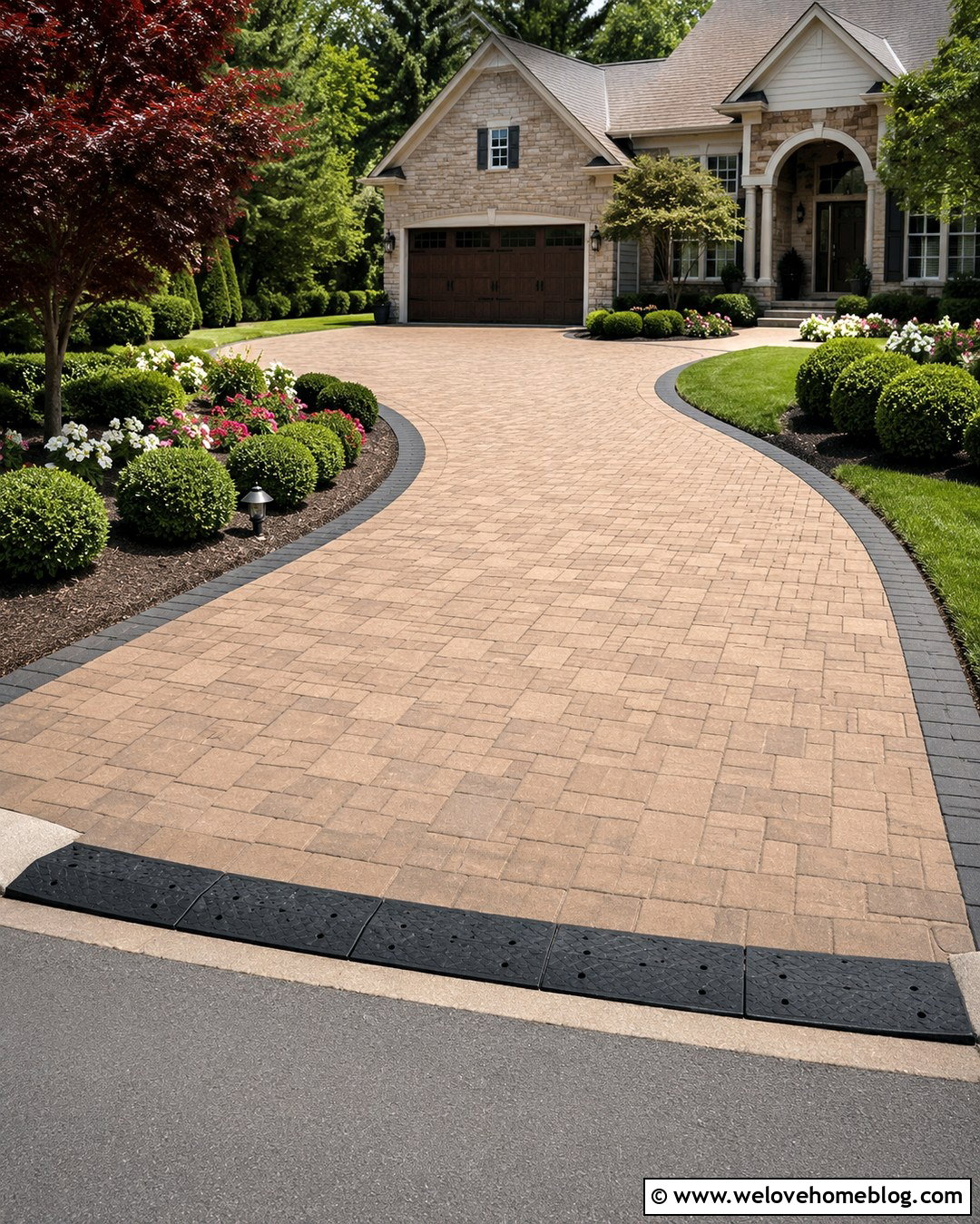
Does your driveway entrance sweep gently toward the house? A flexible modular driveway curb ramp can follow that movement more naturally than one rigid, straight piece. Pair the ramp with warm tan concrete pavers arranged in a running-bond pattern along a curved driveway. Dark charcoal edging will define the shape and coordinate with black rubber ramp sections. Additional center modules can cover a broad entrance, while angled end pieces create a smoother visual transition into the gutter. Keep the ramp aligned with the actual vehicle path rather than simply centering it on the property. Plant rounded boxwoods, flowering perennials, and one small ornamental tree along the outside curve. The coordinated materials make the practical ramp appear connected to the entire entrance rather than added as an afterthought.
5. Driveway Curb Ramp With Built-In Drainage Channel
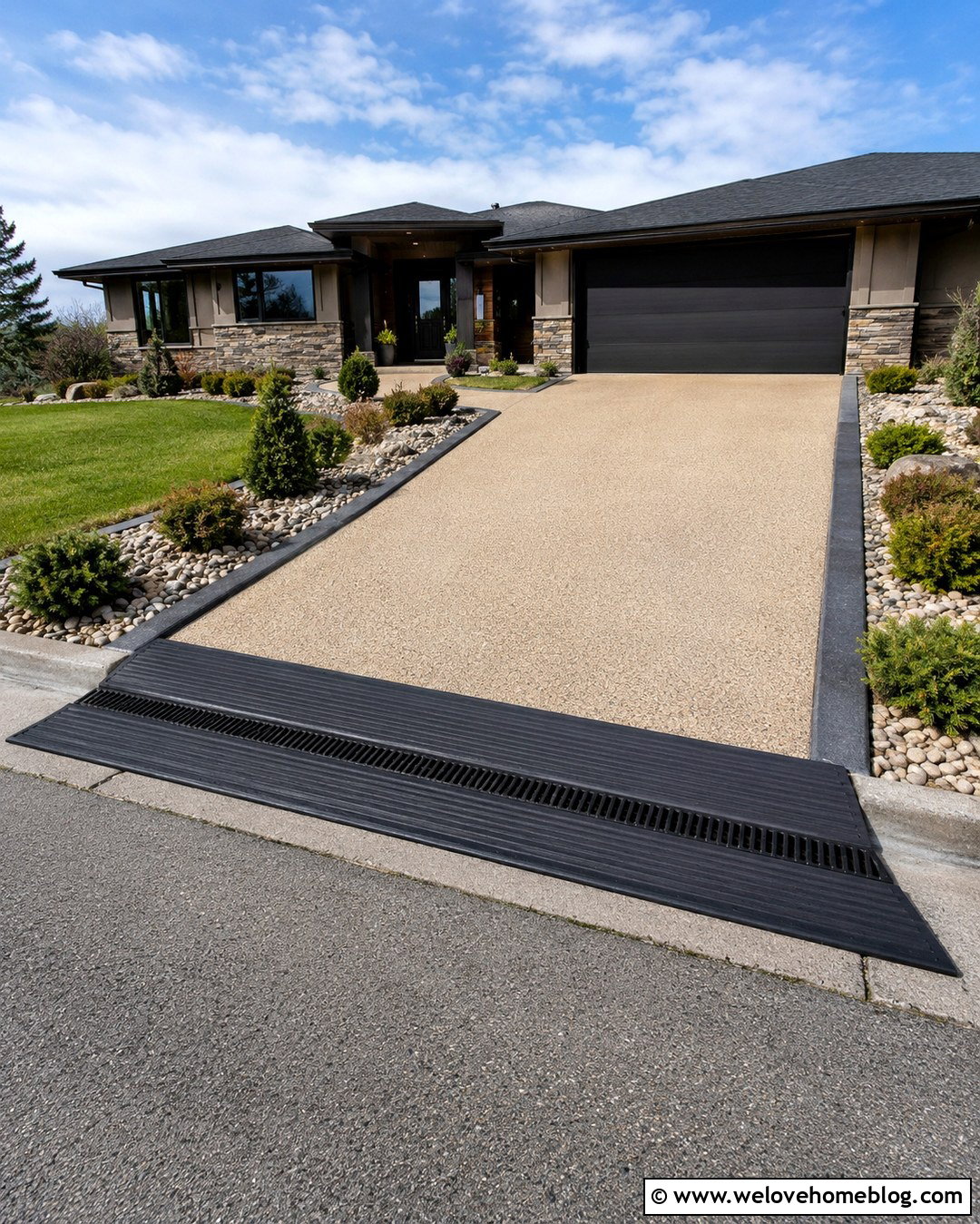
Water management should be part of the design from the beginning. Install a purpose-made rubber driveway curb ramp with a full-length drainage channel in front of an exposed aggregate concrete driveway. The textured concrete and dark ramp create a practical, low-maintenance entrance, while river-rock planting beds reinforce the drainage-focused look. Keep the channel aligned with the gutter’s natural flow and inspect it regularly for leaves, mulch, and sediment. Avoid filling a public gutter with loose concrete or another solid material that can obstruct runoff. Local construction requirements can specify approved driveway aprons, curb transitions, slopes, and drainage details, so permanent alterations should be reviewed before work begins. () Add a wide concrete walkway and restrained evergreen planting to keep the entrance clean and accessible.
6. Aluminum Driveway Curb Ramp With Modern Concrete
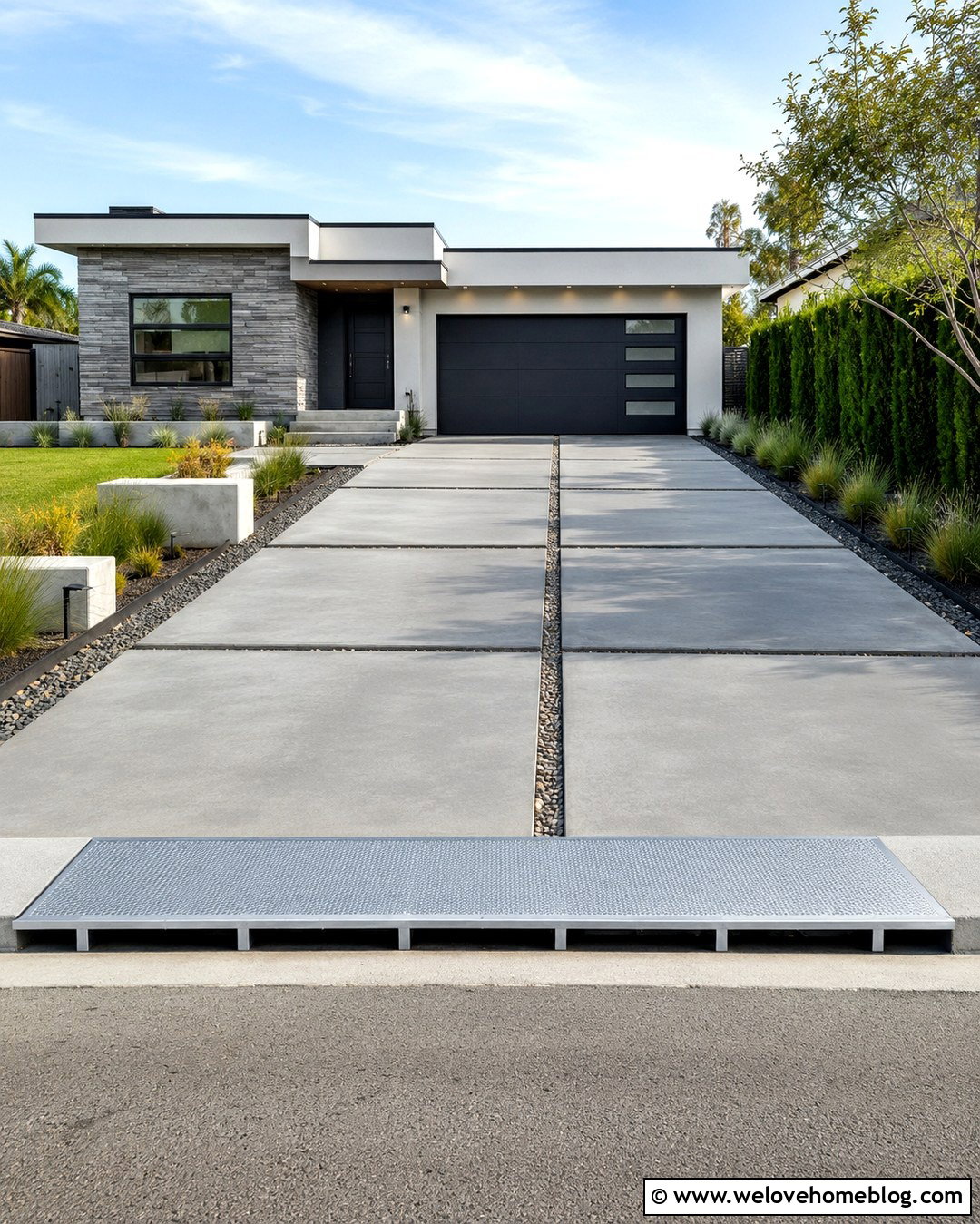
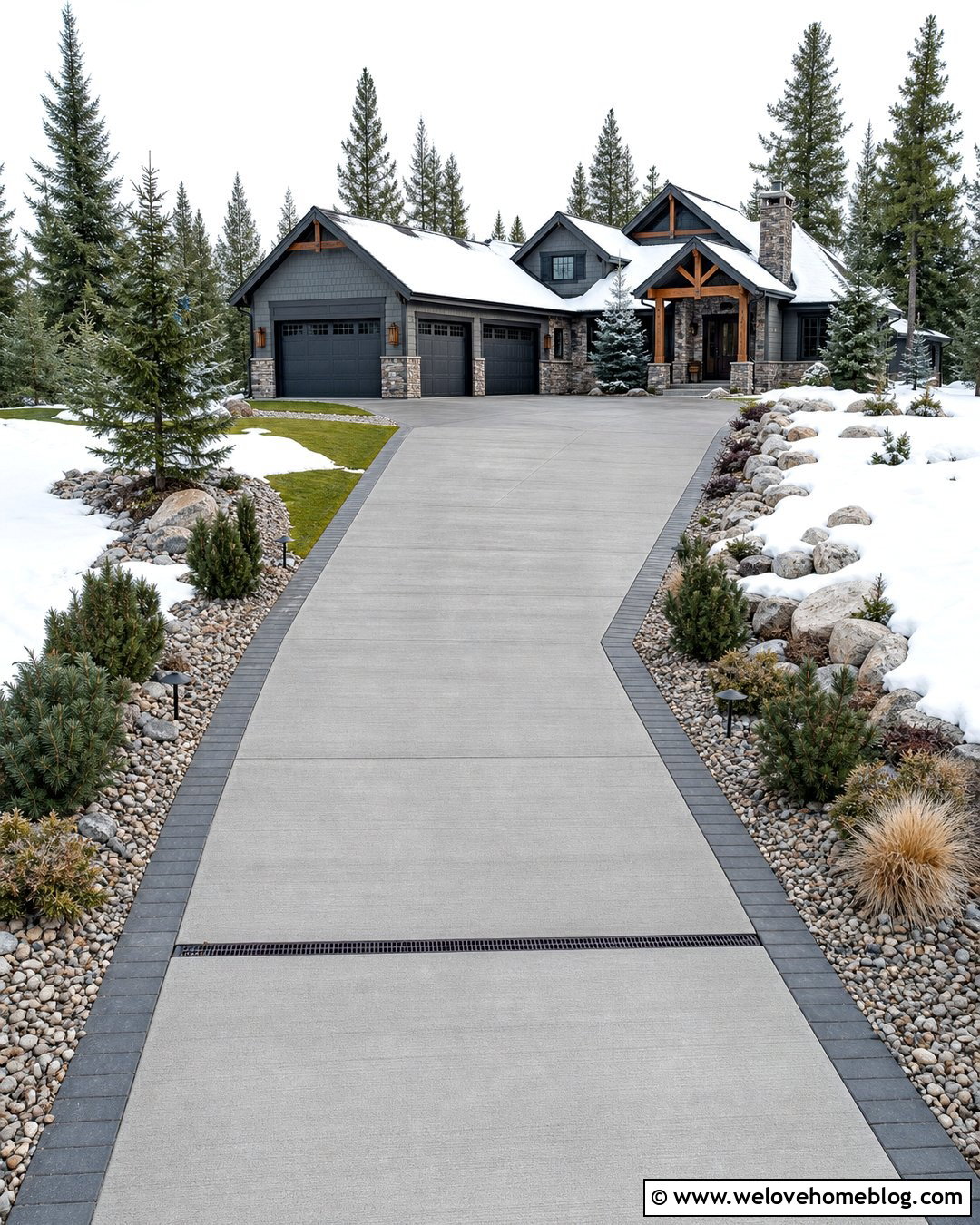
An aluminum driveway curb ramp can suit a crisp modern entrance when it is properly engineered for vehicle loads and the exact curb profile. Set it against a straight charcoal-gray concrete driveway made from large rectangular slabs with narrow gravel joints. The silver metal introduces a deliberate architectural detail instead of trying to disappear. Choose a ramp with a slip-resistant surface, supported underside, stable edge contact, and space for water to pass through the gutter. Lightweight panels may need approved anchoring or reinforcement, so avoid improvising with thin, unsupported sheet metal. Frame the driveway with linear planting beds, black steel edging, dwarf grasses, and a simple concrete walkway. The result should feel precise and uncluttered, matching a contemporary house with dark trim and a flat or low-pitched roofline.
7. Recycled Rubber Driveway Curb Ramp With Brick Pavers
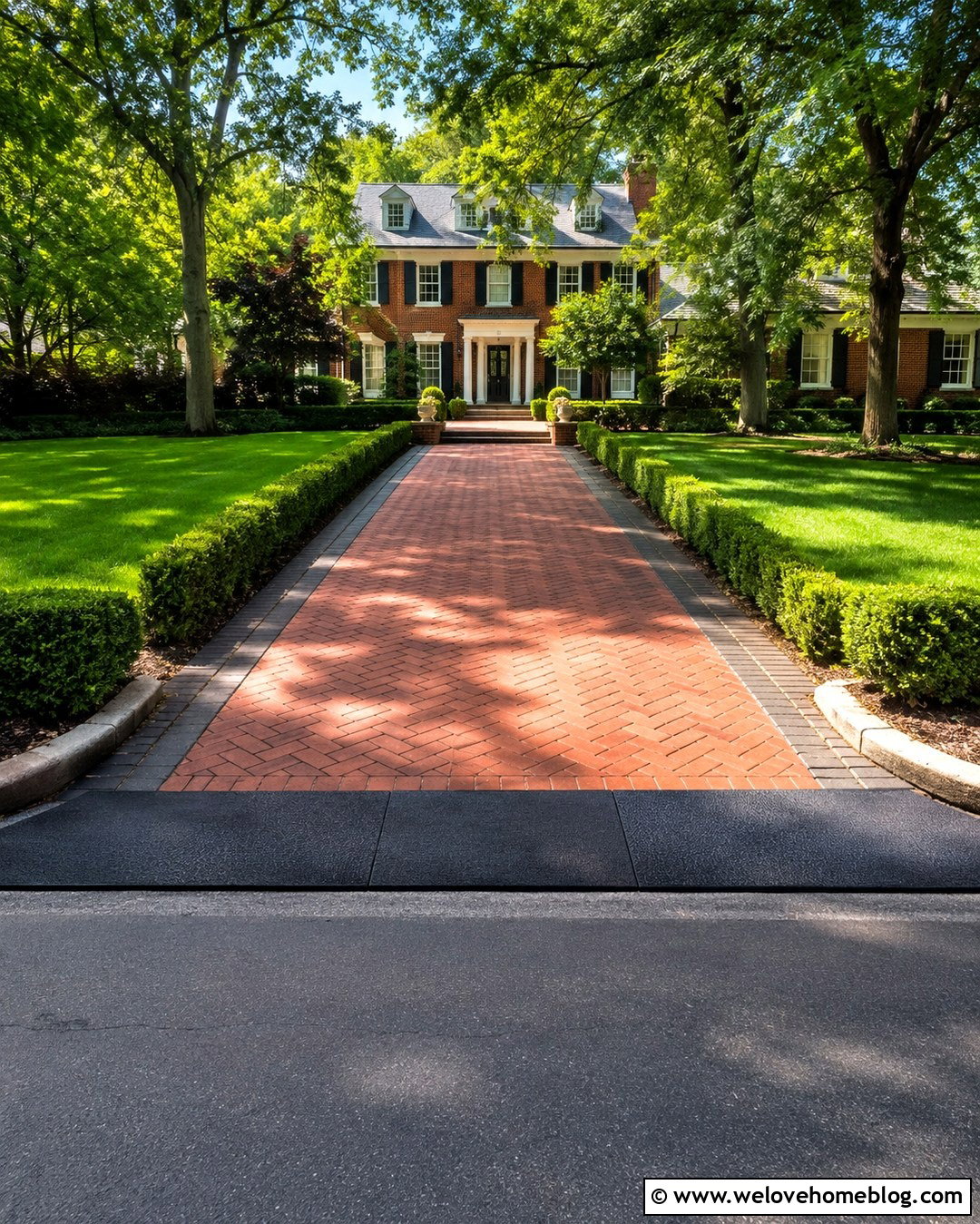
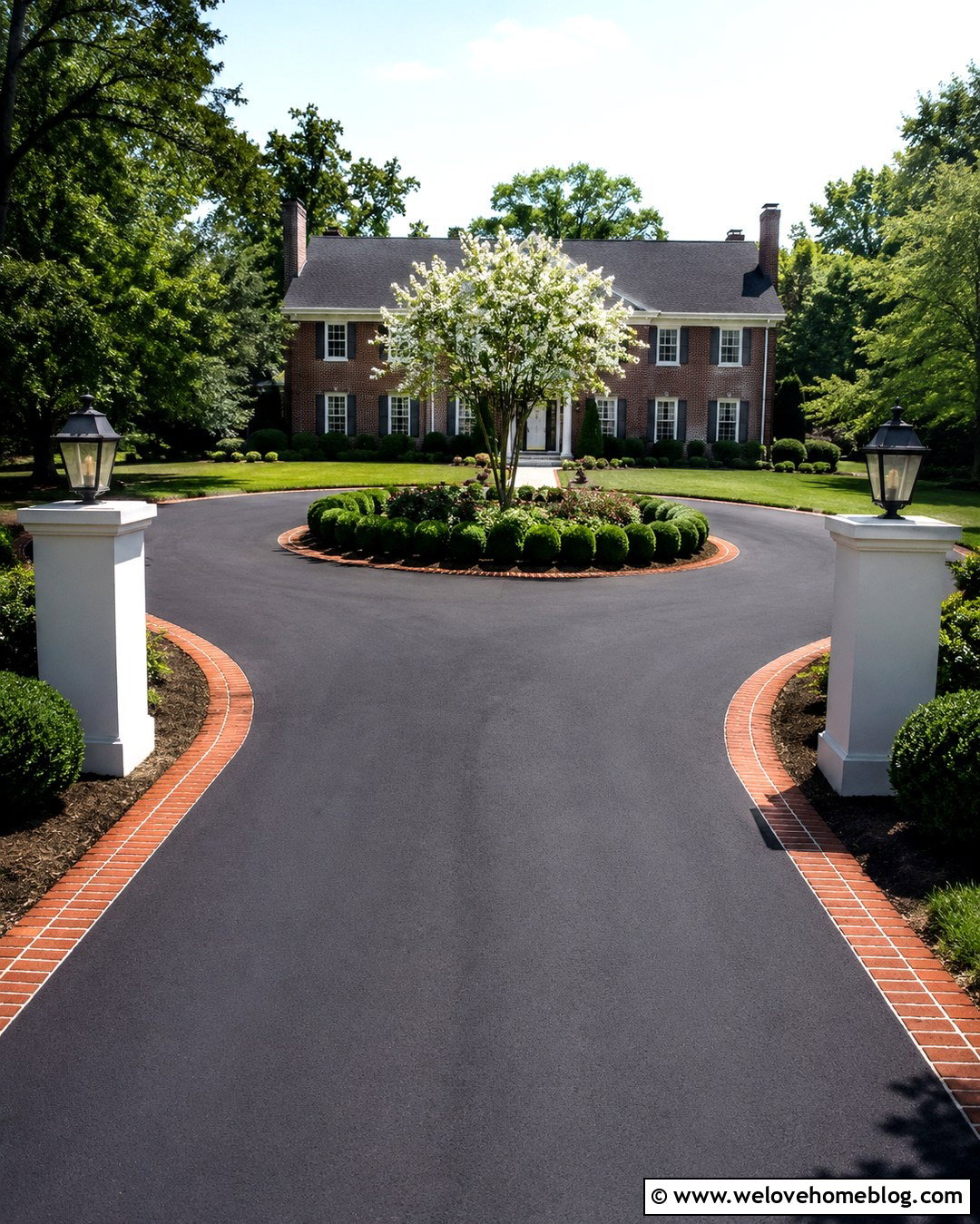
Warm red brick and black recycled rubber create a surprisingly balanced driveway entrance. Use clay brick pavers in a herringbone pattern for the main driveway, then install a broad modular curb ramp along the rolled street edge. A narrow charcoal soldier-course border can connect the dark ramp visually to the brick surface. This combination works beautifully with a colonial house, especially when the driveway is framed by lawn, clipped hedges, and traditional lantern-style fixtures near the garage. Select heavy ramp sections that connect securely and remain stable under turning tires. The surface should have deep traction patterns without creating awkward ridges. Keep the gutter opening visible and easy to clean. Periodic sweeping prevents leaves from collecting between the brick apron, ramp, and drainage channel.
8. Reflective Driveway Curb Ramp With Asphalt Driveway
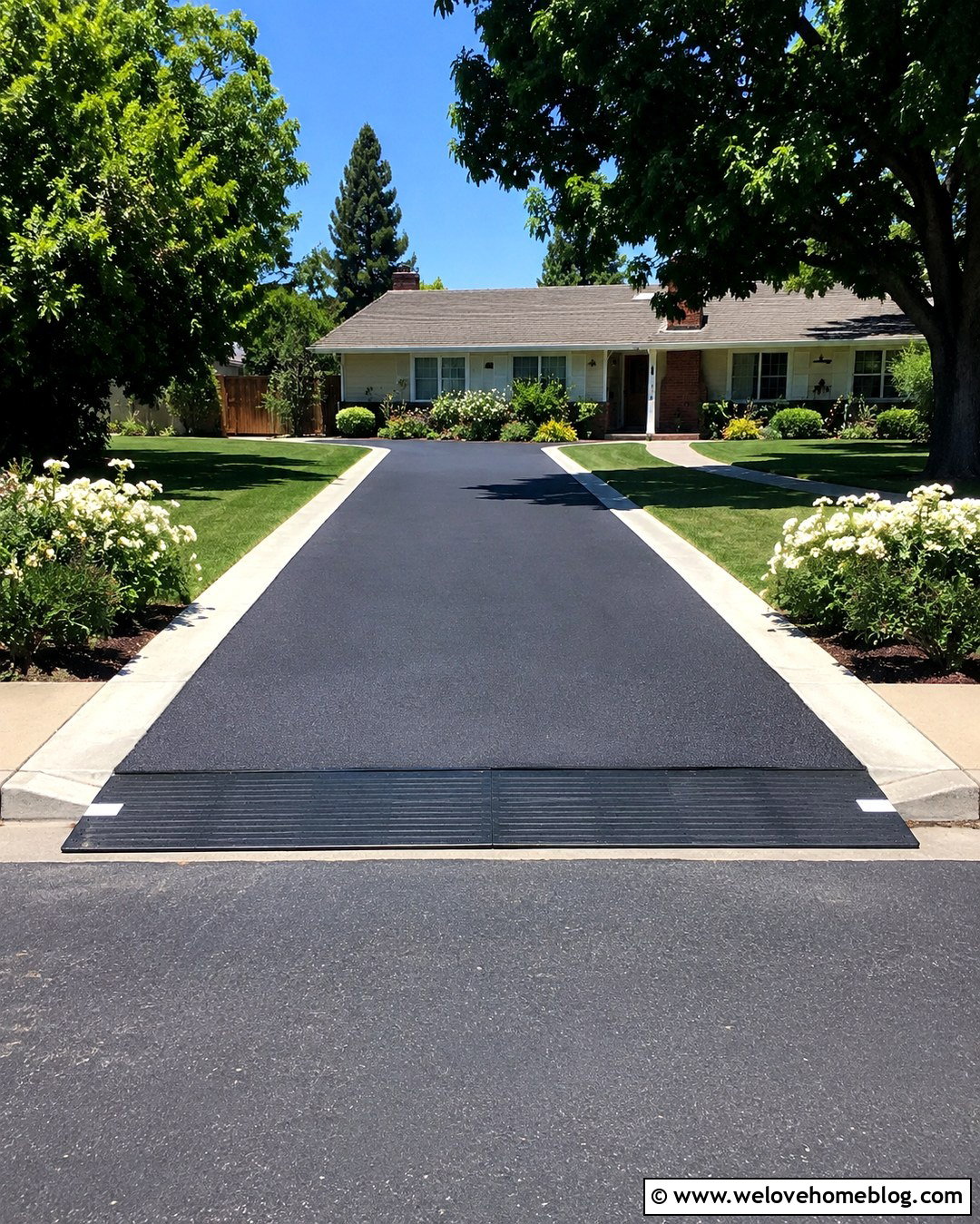
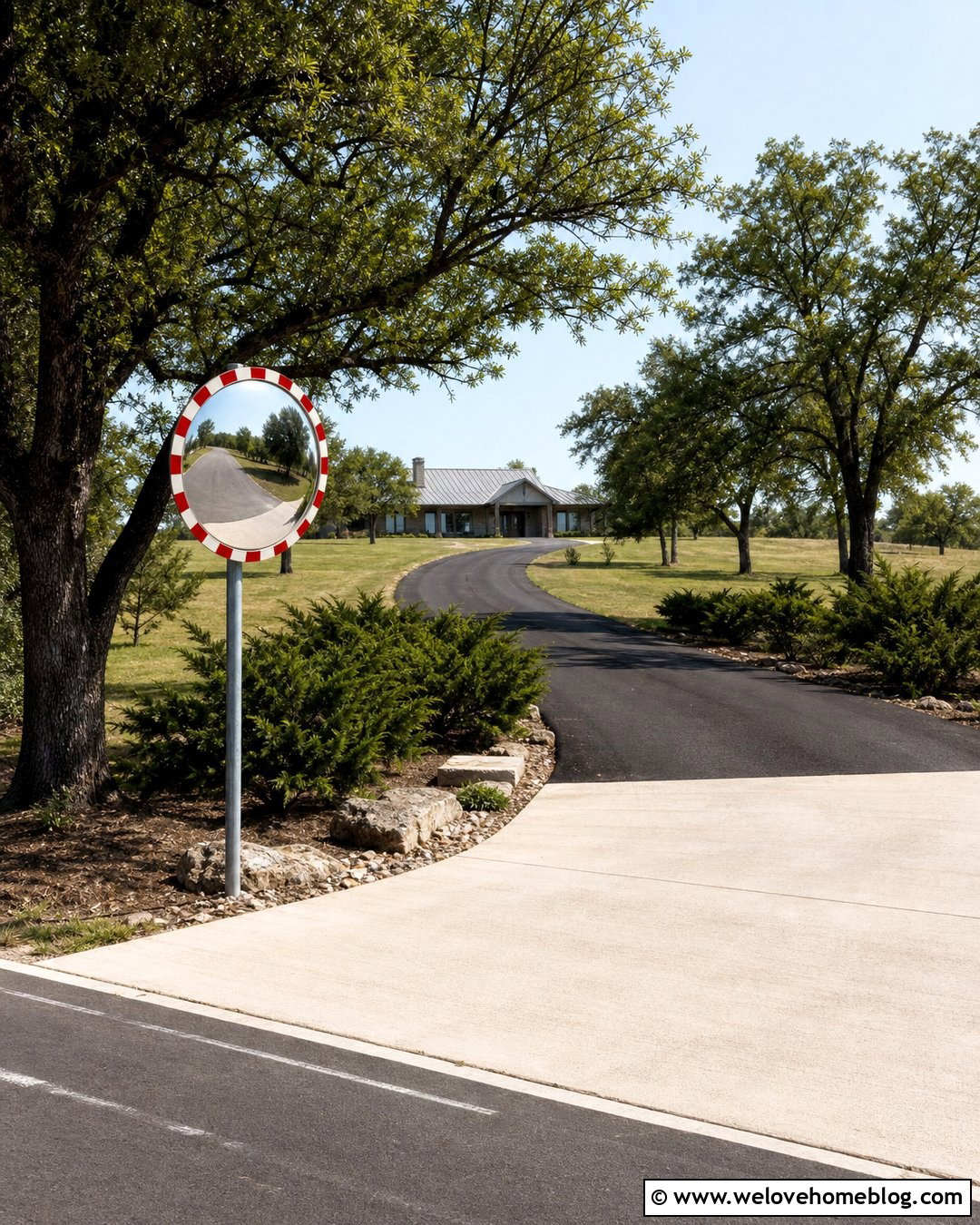
A driveway curb ramp can be difficult to see from the street, especially when black rubber sits against black asphalt. Improve daytime visibility with small molded reflective panels or bright edge markers designed for exterior traffic use. Keep the main surface black so it blends with the driveway, but place the visual markers near the tapered ends rather than covering the entire ramp in strong color. Pair this setup with a straight asphalt driveway, light-gray concrete edging, and fresh green lawn. White flowering shrubs near the entrance can brighten the scene without blocking sightlines. The ramp should remain broad, textured, and properly matched to the curb rise. This complete look is especially useful for long suburban driveways where visitors may not immediately recognize the change in elevation at the street.
9. Tapered Driveway Curb Ramp For A Narrow Driveway
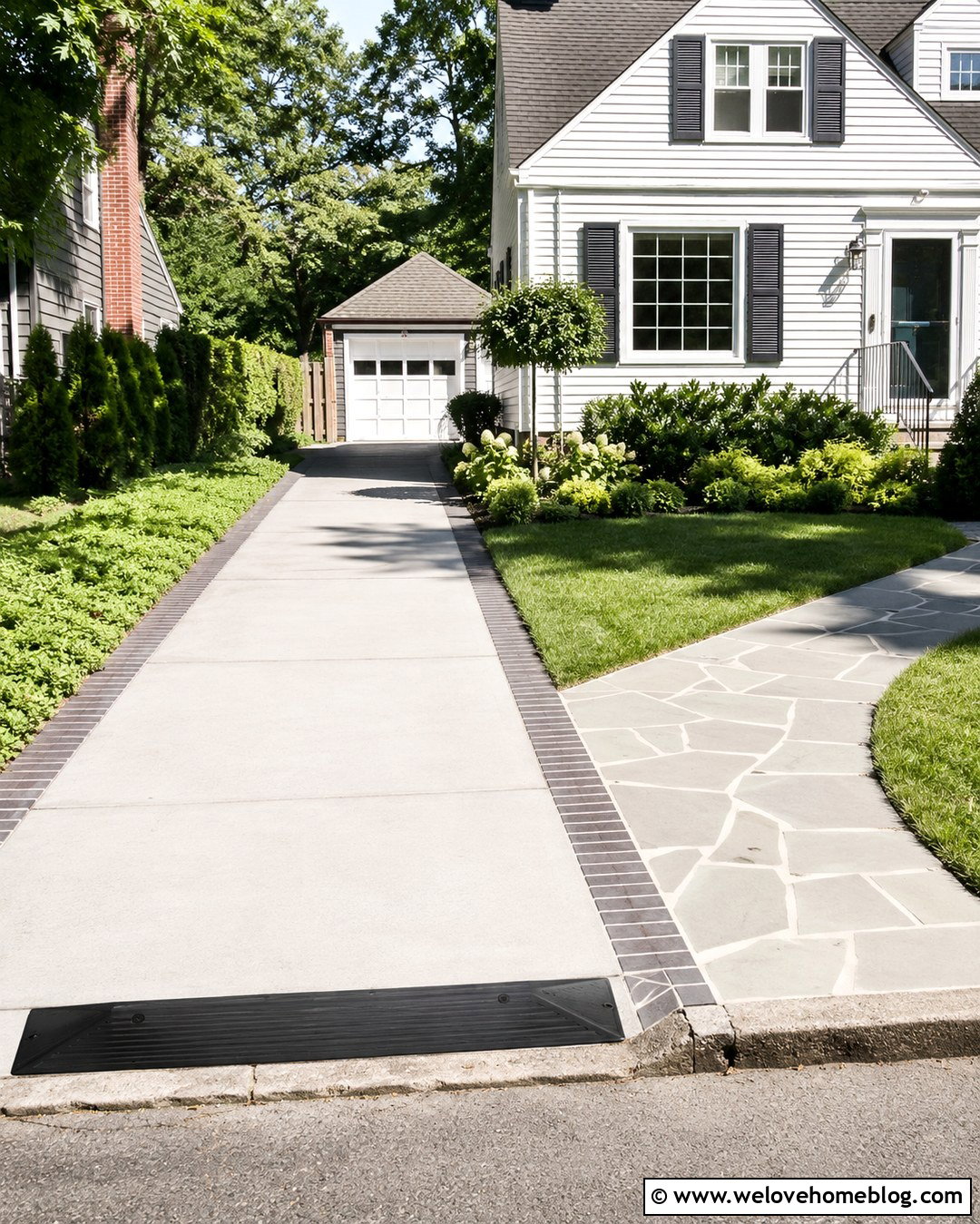
A narrow driveway requires a compact ramp that uses the entrance efficiently without extending unnecessarily along the street. Choose a heavy rubber driveway curb ramp with a full center section and smoothly tapered ends. Place it before a single-lane poured concrete driveway leading to a detached garage or small Cape Cod home. A dark brick ribbon along both sides will visually connect the black ramp to the light concrete. Keep shrubs set back from the apron so the vehicle has space to approach at a slight angle when necessary. The ramp’s width should cover the realistic tire path, including minor steering variation. Avoid tall curbs or decorative rocks immediately beside the entrance. Simple lawn panels, low ground cover, and a clear walkway will make the compact driveway feel wider and easier to navigate.
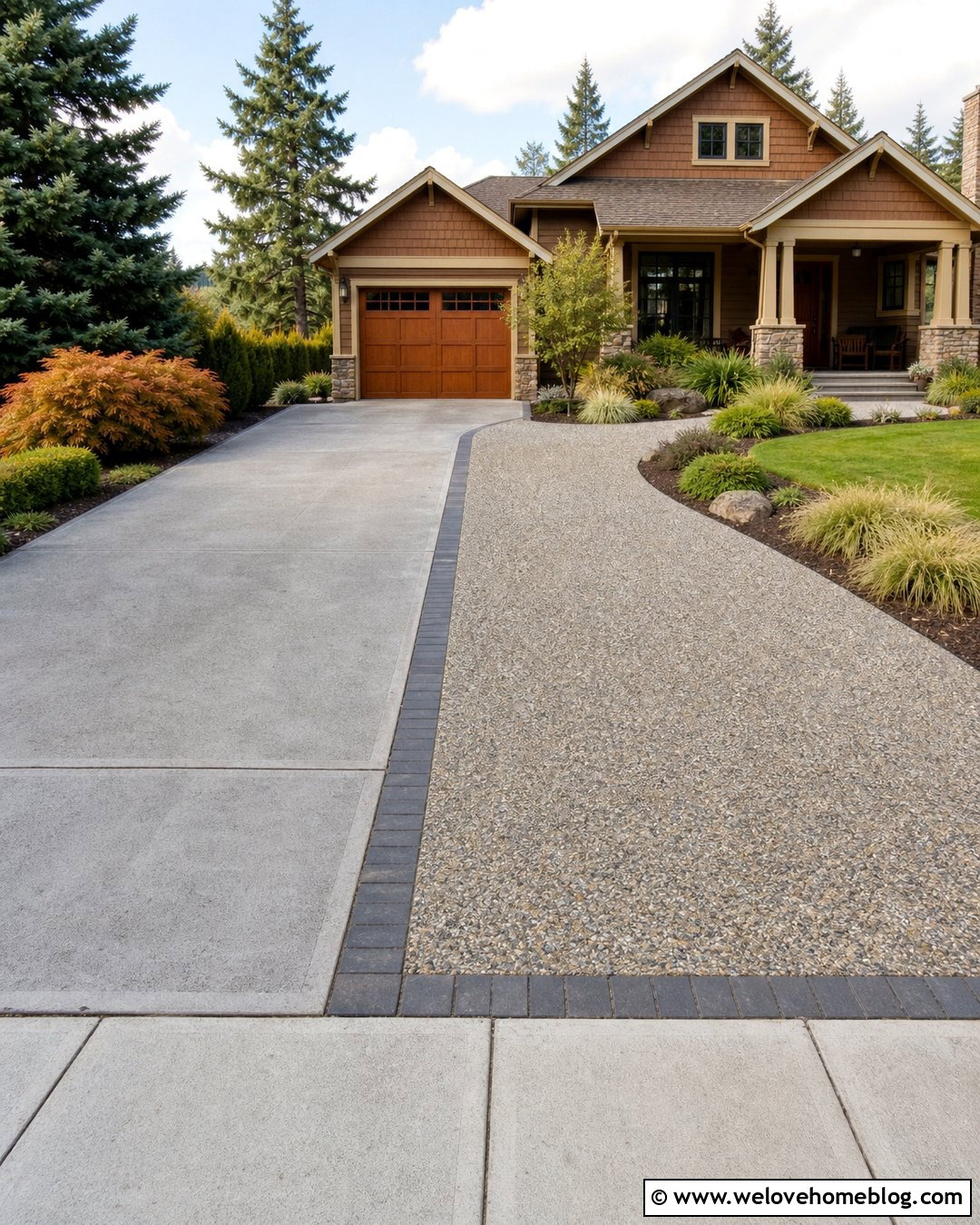

10. Removable Driveway Curb Ramp With Gravel Driveway
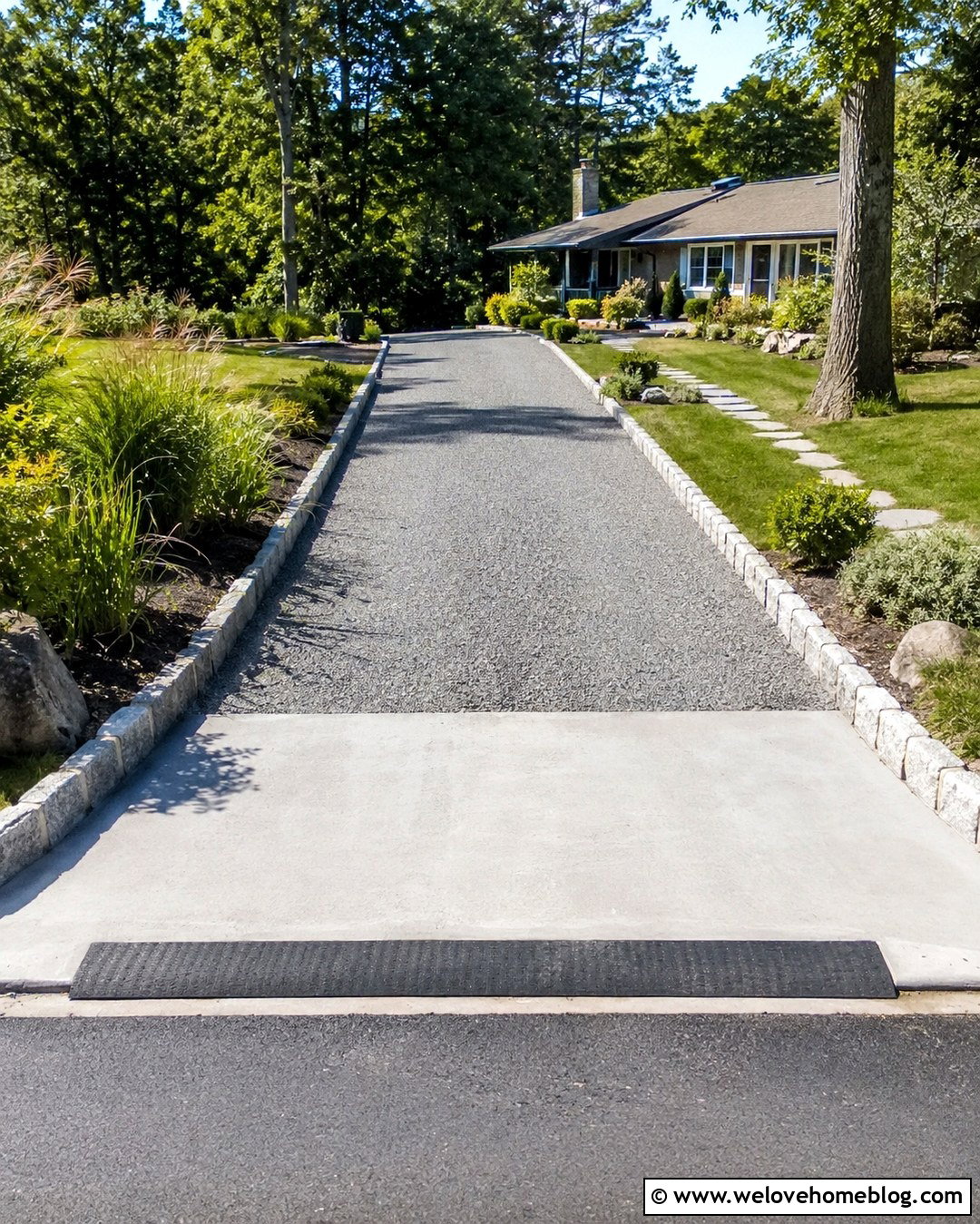
Gravel driveways need a stable paved apron before the loose stone reaches the street. Create a short broom-finished concrete transition at the entrance, then place a removable rubber driveway curb ramp against the rolled curb. Beyond the apron, use compacted gray crushed gravel bordered by weathered granite blocks. The hard apron keeps gravel from spilling into the gutter and provides a level surface behind the ramp. A removable system is also practical when local maintenance, street sweeping, or severe weather requires temporary clearance. Choose connected sections that are substantial enough to resist ordinary tire movement but manageable for two adults to reposition safely. Frame the entrance with native grasses and low shrubs. The gravel, stone edging, and black rubber create a relaxed look suited to a ranch or country home.
11. Custom Fit Driveway Curb Ramp For A Rolled Curb
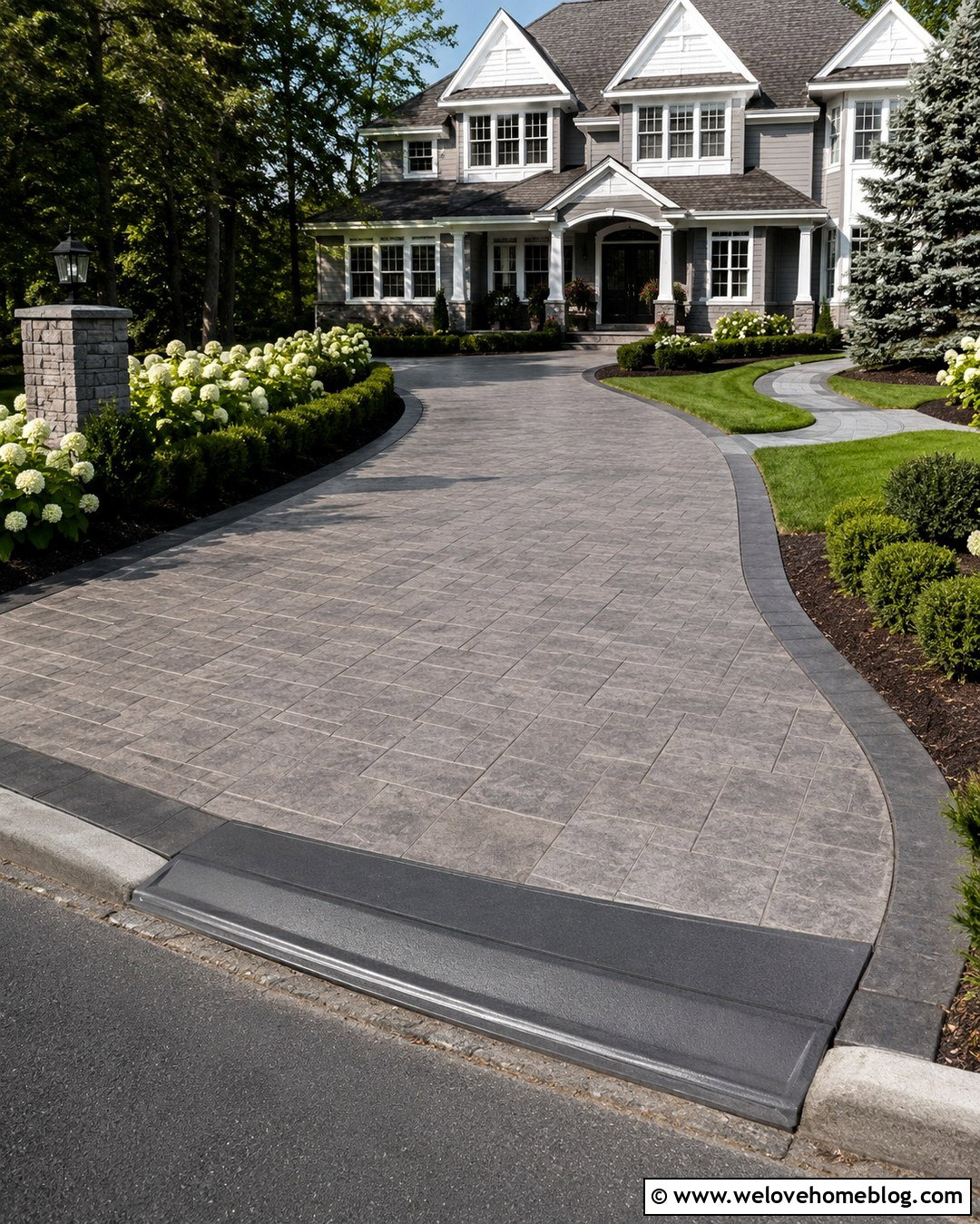
Not every rolled curb has the same height, radius, or gutter depth. A custom-fit driveway curb ramp can provide closer contact where standard blocks leave gaps or rock under pressure. Pair a molded dark-gray rubber ramp with a stamped concrete driveway finished in a subtle slate pattern. Use a smooth charcoal border around the stamped field so the entrance does not become visually busy. Accurate measurements are essential. Record the vertical rise, horizontal depth, gutter contour, driveway width, and preferred transition length. The ramp should meet both surfaces evenly while preserving the drainage route. Add curved planting beds with compact hydrangeas and low evergreen shrubs around a traditional two-story home. This tailored approach improves the appearance of the driveway and avoids oversized sections that extend beyond the actual entrance.
12. Driveway Curb Ramp With Trench Drain
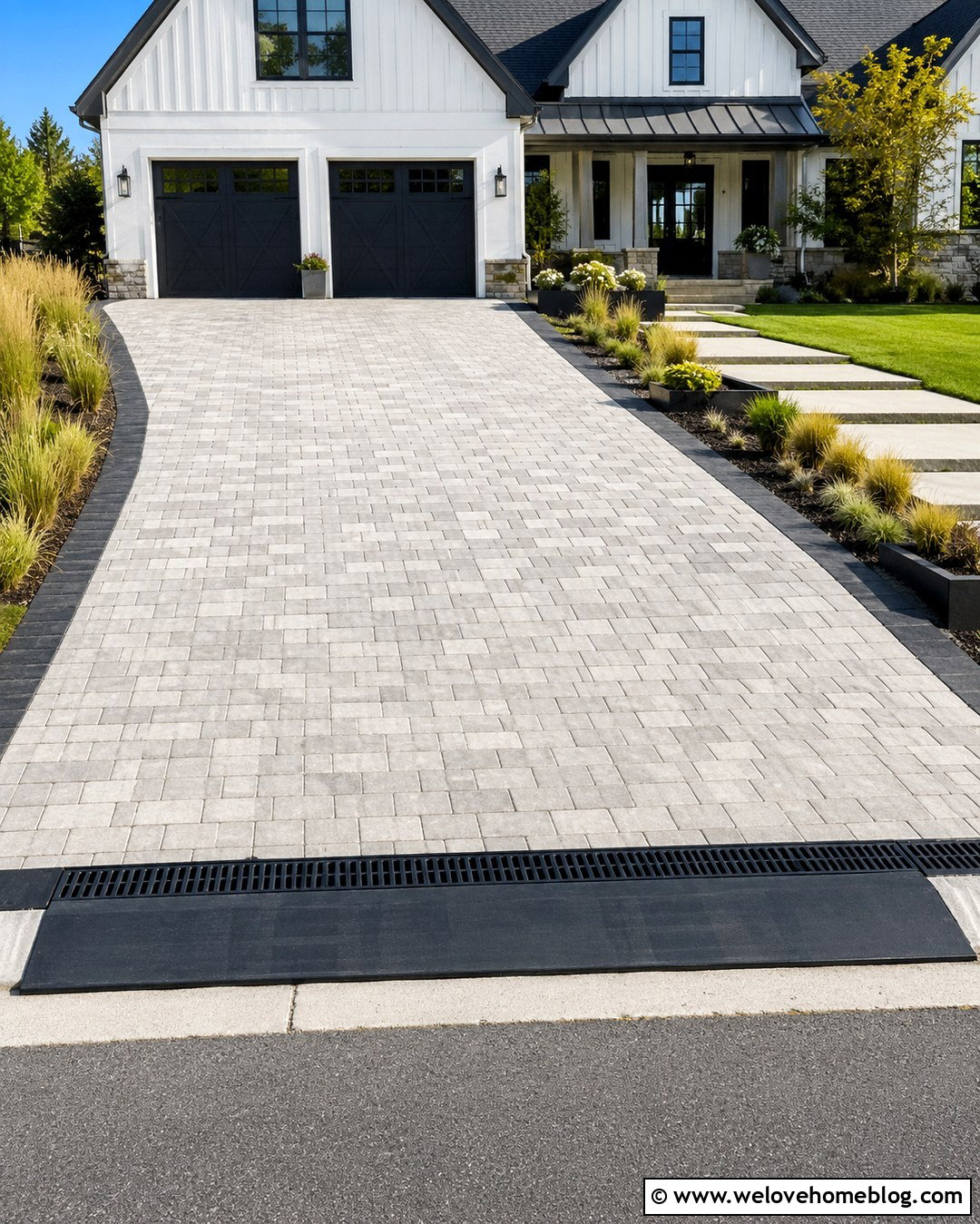
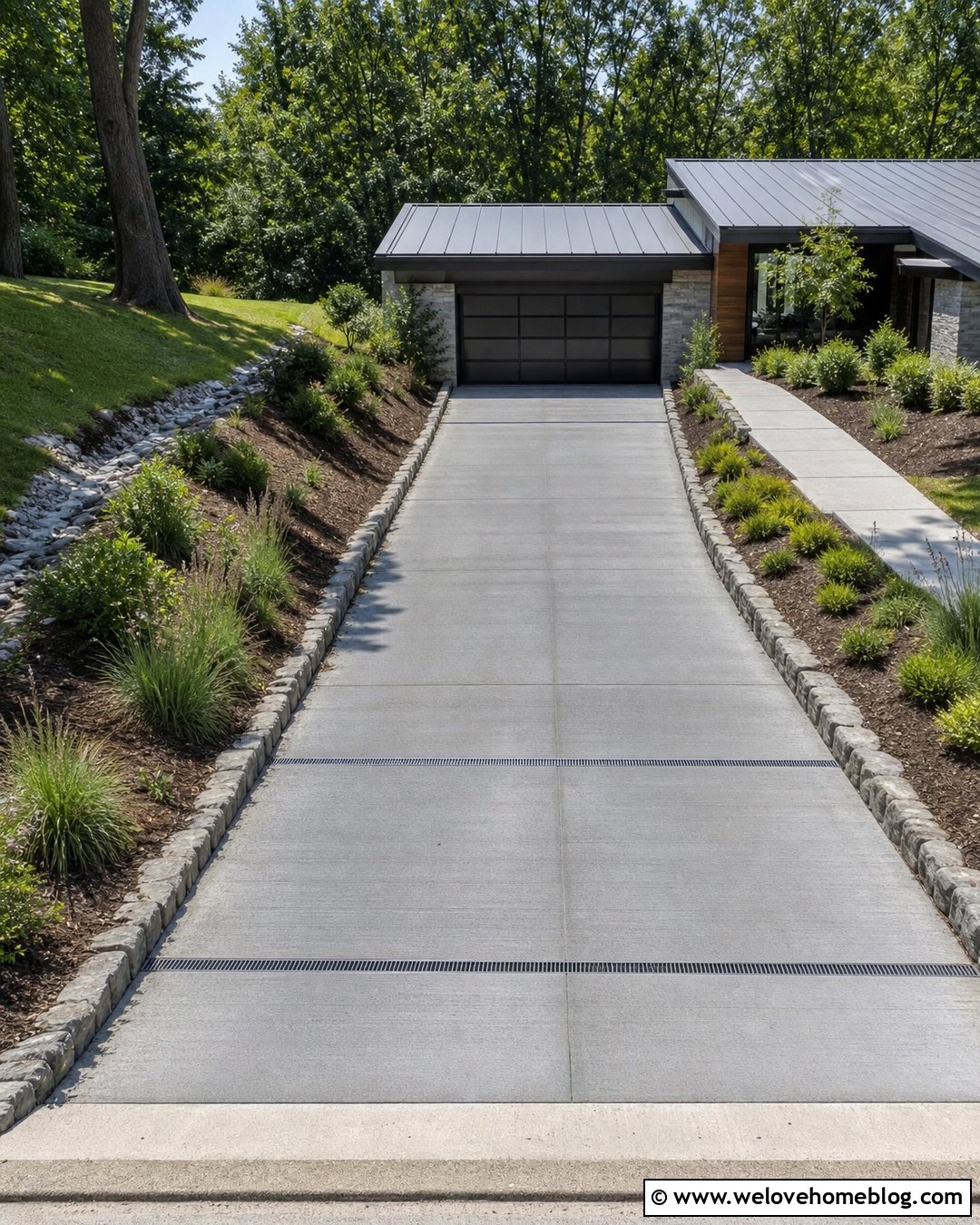
Properties that receive heavy runoff may benefit from a coordinated entrance containing both a curb ramp and a properly designed trench drain. Use pale-gray concrete pavers for the driveway, a dark linear trench grate across the paved apron, and a black rubber curb ramp at the street. The trench drain manages water reaching the driveway, while the ramp’s lower channel keeps the street gutter open. These components serve different drainage areas and should not be treated as interchangeable. Direct collected water only to a lawful discharge location approved for the property. Surround the straight driveway with raised planting beds, ornamental grasses, and a broad stepping-stone walkway. The repeated black details—the grate, ramp, house trim, and edging—will unify the practical features and complement a clean modern farmhouse facade.
13. Snow Friendly Driveway Curb Ramp With Asphalt
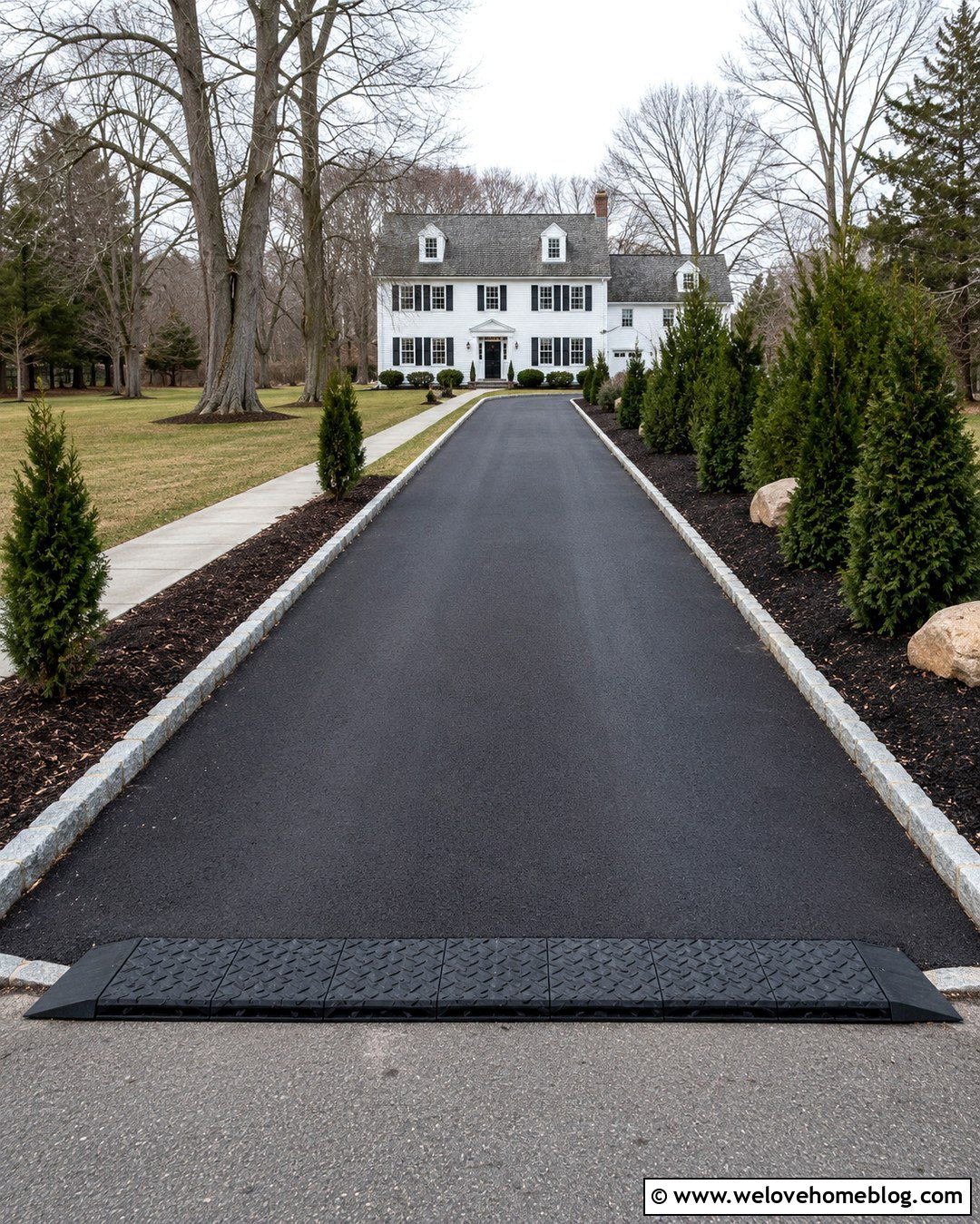
Snow, ice, salt, and plowing can make a permanent street-edge accessory difficult to maintain. A removable heavy-rubber driveway curb ramp offers a flexible solution for a black asphalt driveway in a cold climate. Choose connected sections with deep traction, visible tapered ends, and a drainage channel that can be cleared after storms. The ramp should be movable before municipal plowing if local rules or conditions require it. Never allow packed snow to hide the entrance or block the gutter opening. Border the asphalt with light granite curbing and evergreen planting beds that remain attractive in winter. A colonial or saltbox-style house provides an appropriate background for this practical design. Store removable sections on a flat surface when they are not in use, and inspect hardware before reinstalling them.
14. Driveway Curb Ramp For A Hot Climate
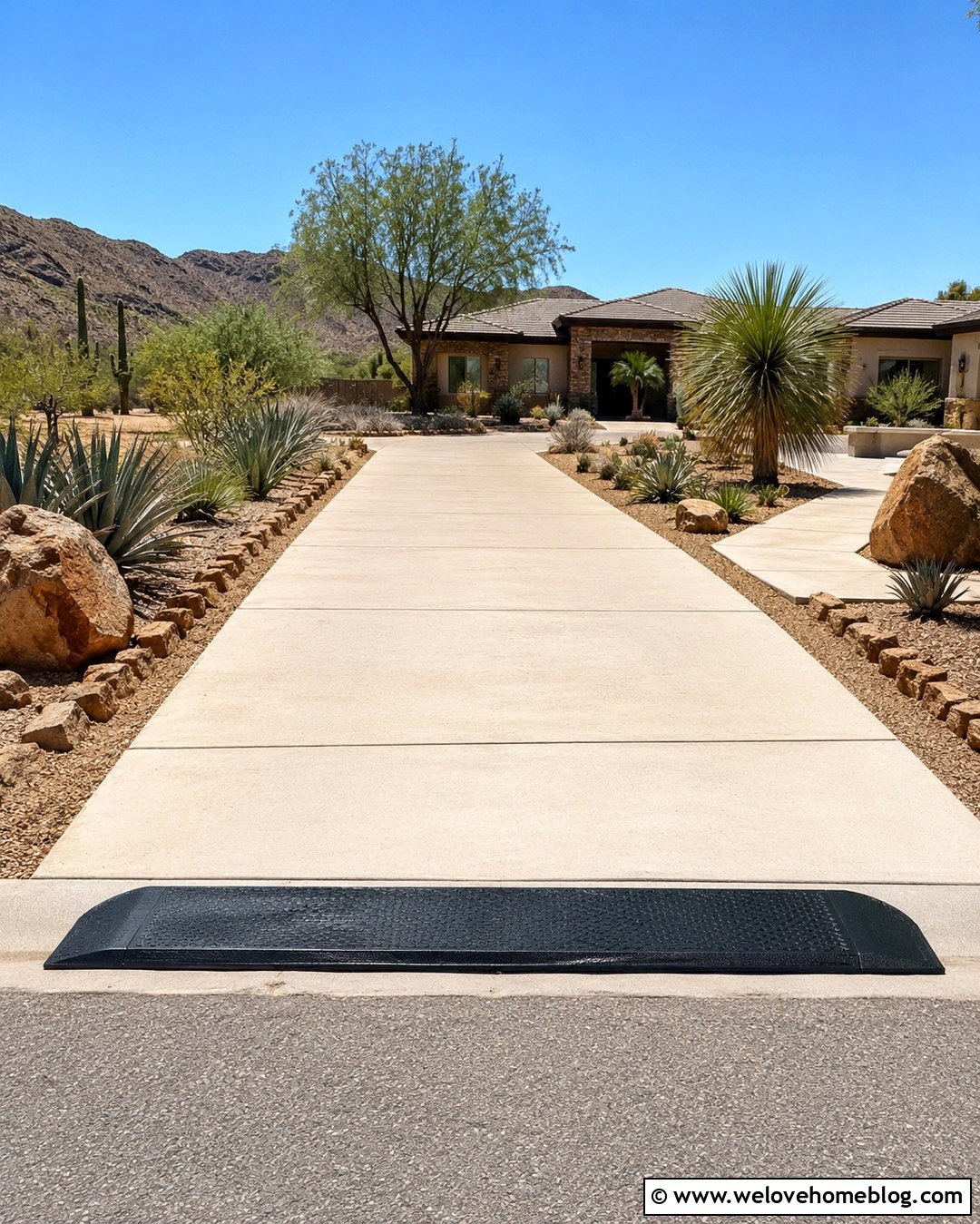
Strong sun and high pavement temperatures call for durable exterior materials. Pair a UV-resistant black rubber driveway curb ramp with a pale sand-colored concrete driveway that reflects more light than dark asphalt. A straight entrance with wide tapered ramp ends will suit a low-slung desert ranch house. Use decomposed granite beds, agave, yucca, and sculptural boulders beside the driveway, but keep sharp plants away from passenger doors and pedestrian paths. Confirm that the ramp material is rated for outdoor heat and vehicle use. It should retain its shape, maintain traction, and sit evenly against the curb. Light concrete, warm stone edging, and drought-tolerant landscaping prevent the black ramp from dominating the view. Regular cleaning will remove dust that can reduce traction or disguise drainage openings.
15. Driveway Curb Ramp With A Paver Apron
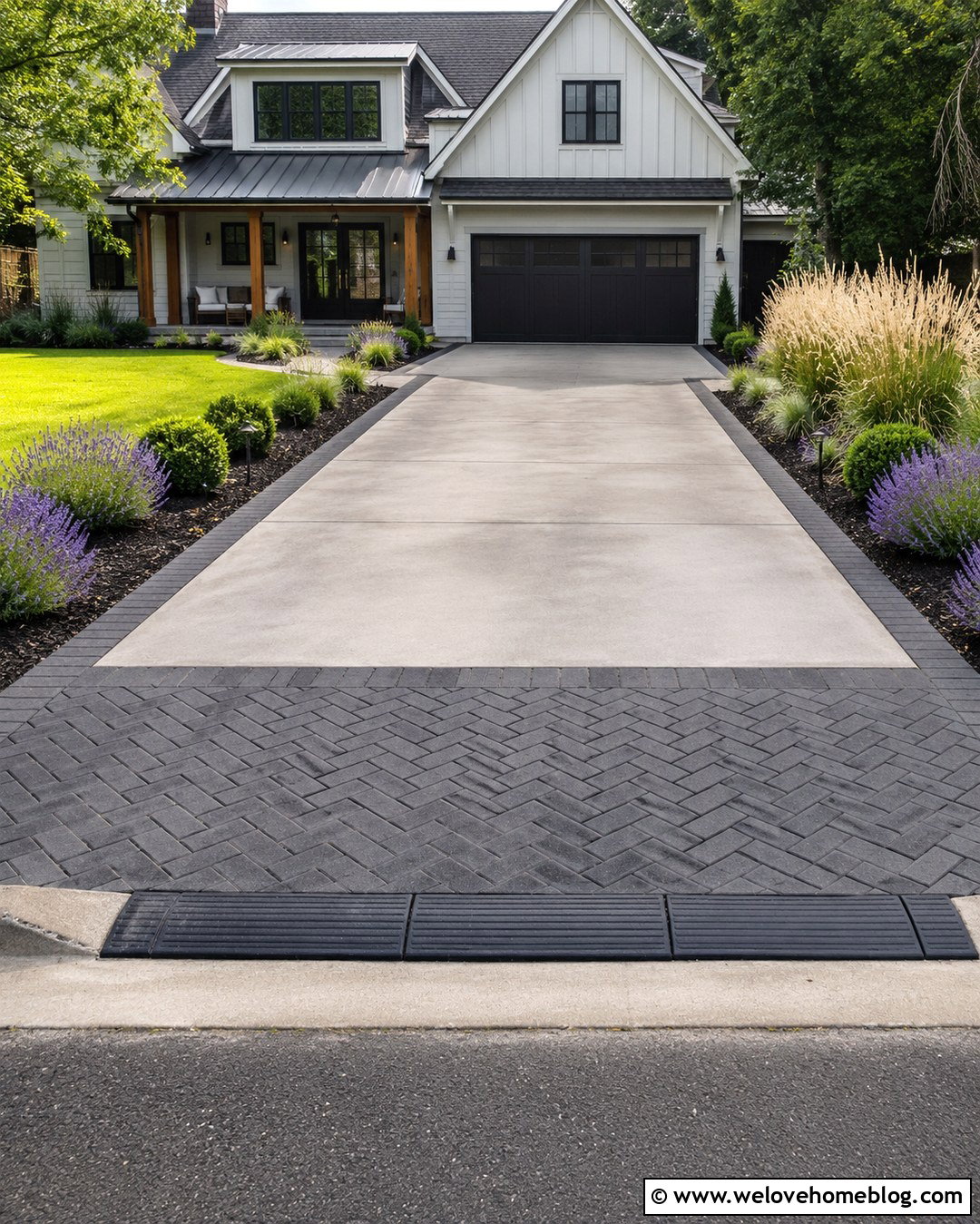
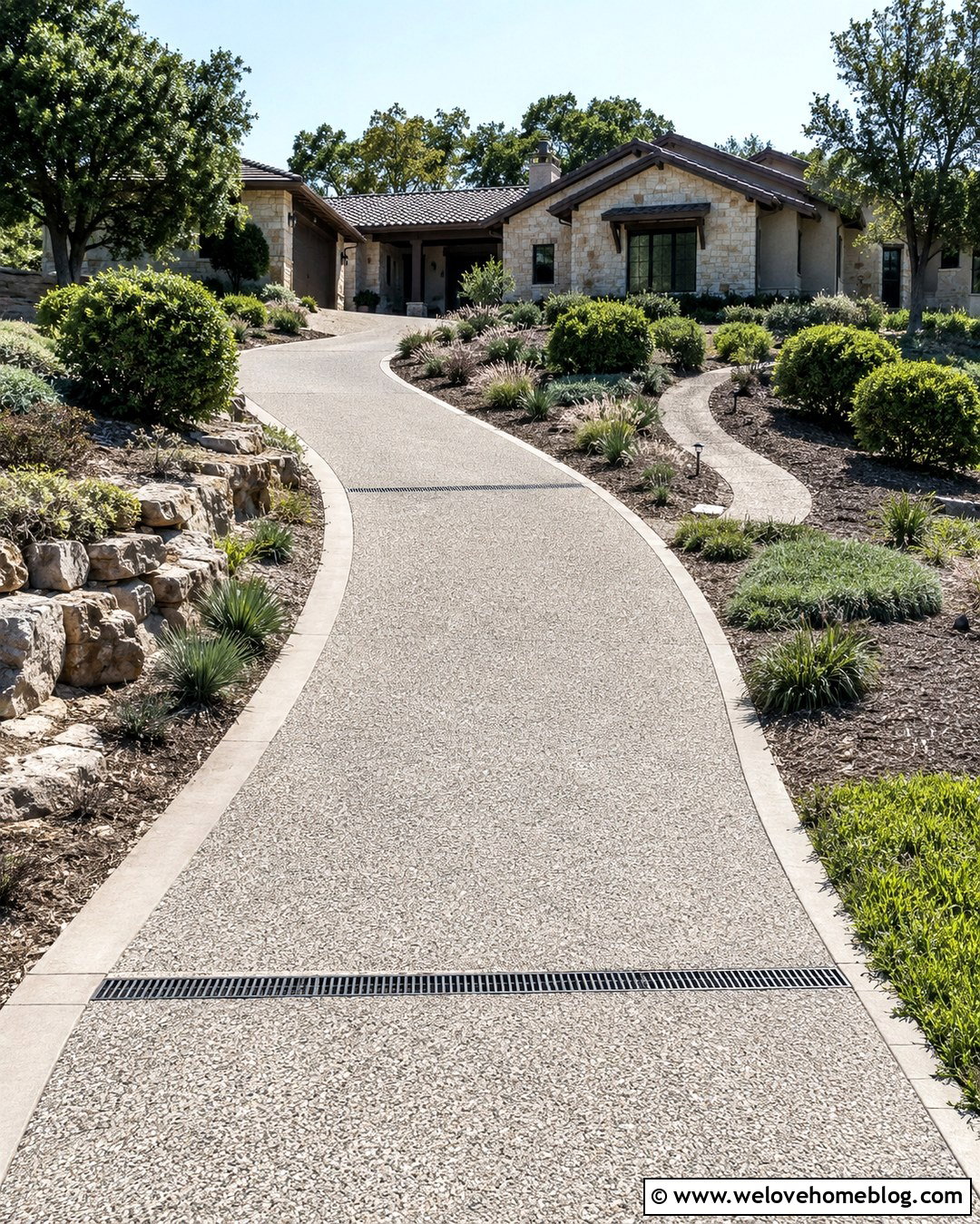
A decorative paver apron can make a utilitarian curb ramp feel integrated into the entrance. Build the main driveway from smooth gray poured concrete, then add a six-foot-deep apron of charcoal concrete pavers in a herringbone pattern. Position a full-width black rubber driveway curb ramp against the rolled curb in front of the apron. The dark pavers create a strong visual bridge between the ramp and lighter driveway surface. Continue the charcoal material as a narrow border along the concrete for better continuity. Low lavender, boxwood, and ornamental grass beds can soften both sides without interfering with visibility. Make sure the paver base is well compacted so repeated braking and turning do not create settlement near the ramp. This look works well with craftsman, transitional, and contemporary homes.
16. City Approved Depressed Curb Driveway Ramp
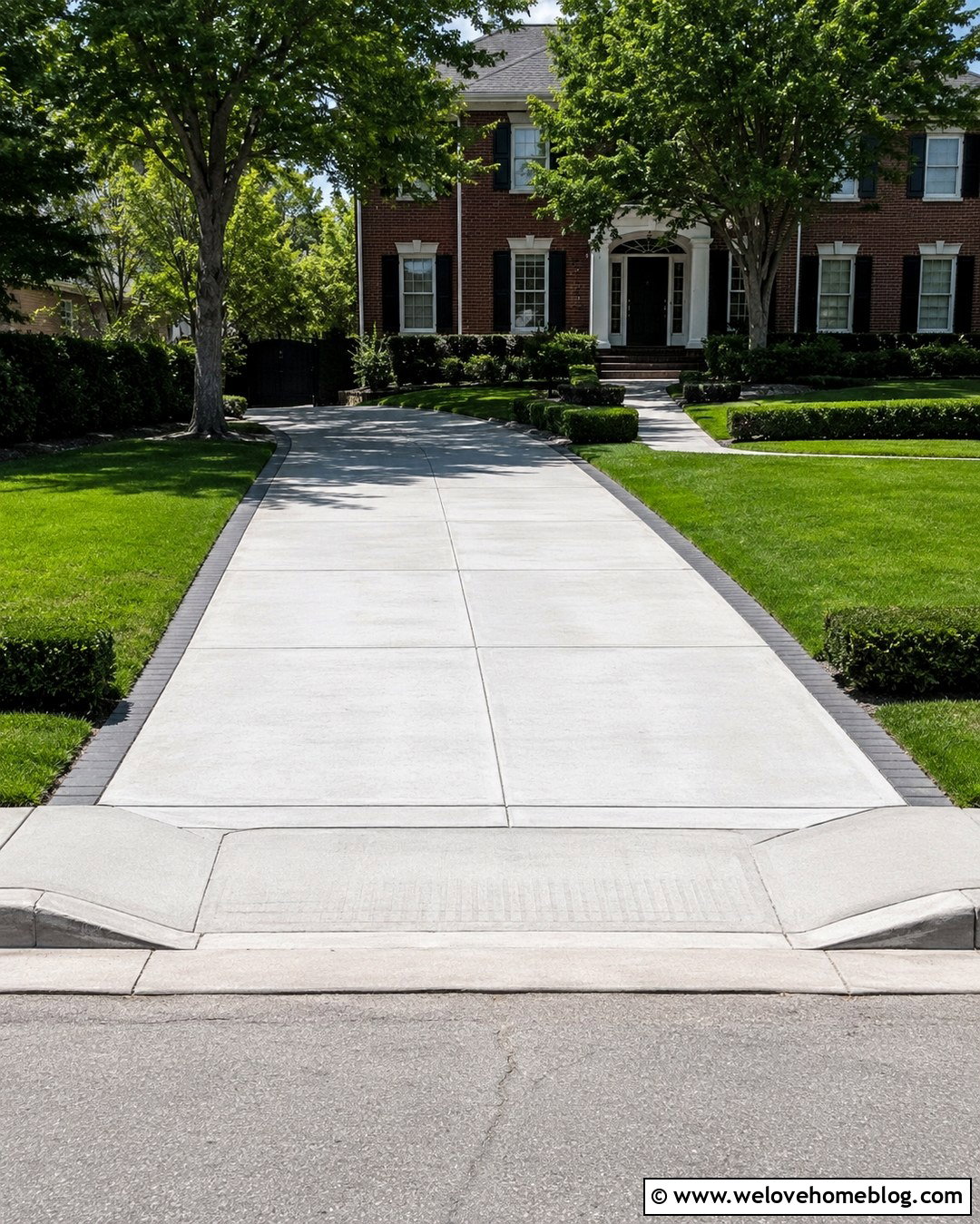
For a permanent, seamless entrance, ask the local authority whether an approved depressed curb and reconstructed driveway apron are possible. This design replaces an abrupt curb transition with a properly formed concrete ramp rather than adding a portable product in the gutter. Pair the depressed curb with a reinforced light-gray concrete driveway, saw-cut control joints, and a charcoal paver border. The apron slope, sidewalk crossing, curb shape, base preparation, drainage, and reinforcement should follow municipal specifications and be completed by qualified contractors. Permits may be required because work can affect public infrastructure. Keep the landscaping formal and simple, using lawn panels, small hedges, and a straight walkway leading to a brick colonial house. When approved and correctly built, the entrance reads as one continuous, professionally planned surface.
17. Permeable Paver Driveway Curb Ramp
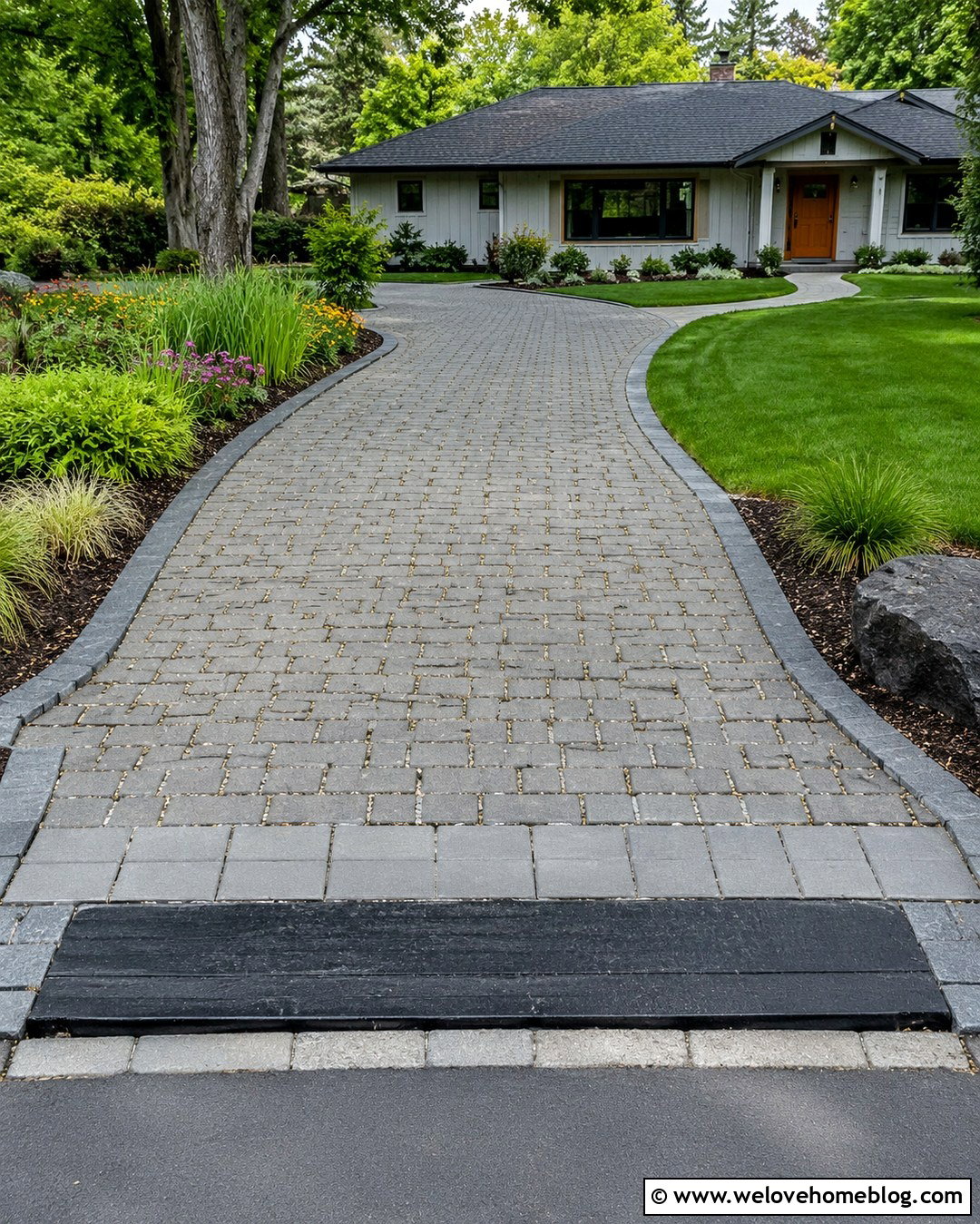
A permeable paver driveway can combine attractive patterning with a curb ramp that protects the street-side transition. Use medium-gray permeable concrete pavers with wide aggregate-filled joints and a gently curved layout. At the rolled curb, install a black rubber ramp with an unobstructed gutter channel. Add a short conventional concrete or tightly laid paver apron where necessary to stabilize the entrance and prevent joint aggregate from migrating into the road. Dark granite edging will contain the paver field and coordinate with the ramp. Surround the driveway with rain-garden planting, sedges, native flowers, and low shrubs suited to local conditions. Although permeable paving can manage water on the property, the curb ramp must still preserve street drainage. The complete design suits an updated ranch or environmentally focused contemporary home.
18. Driveway Curb Ramp With Entrance Pillars
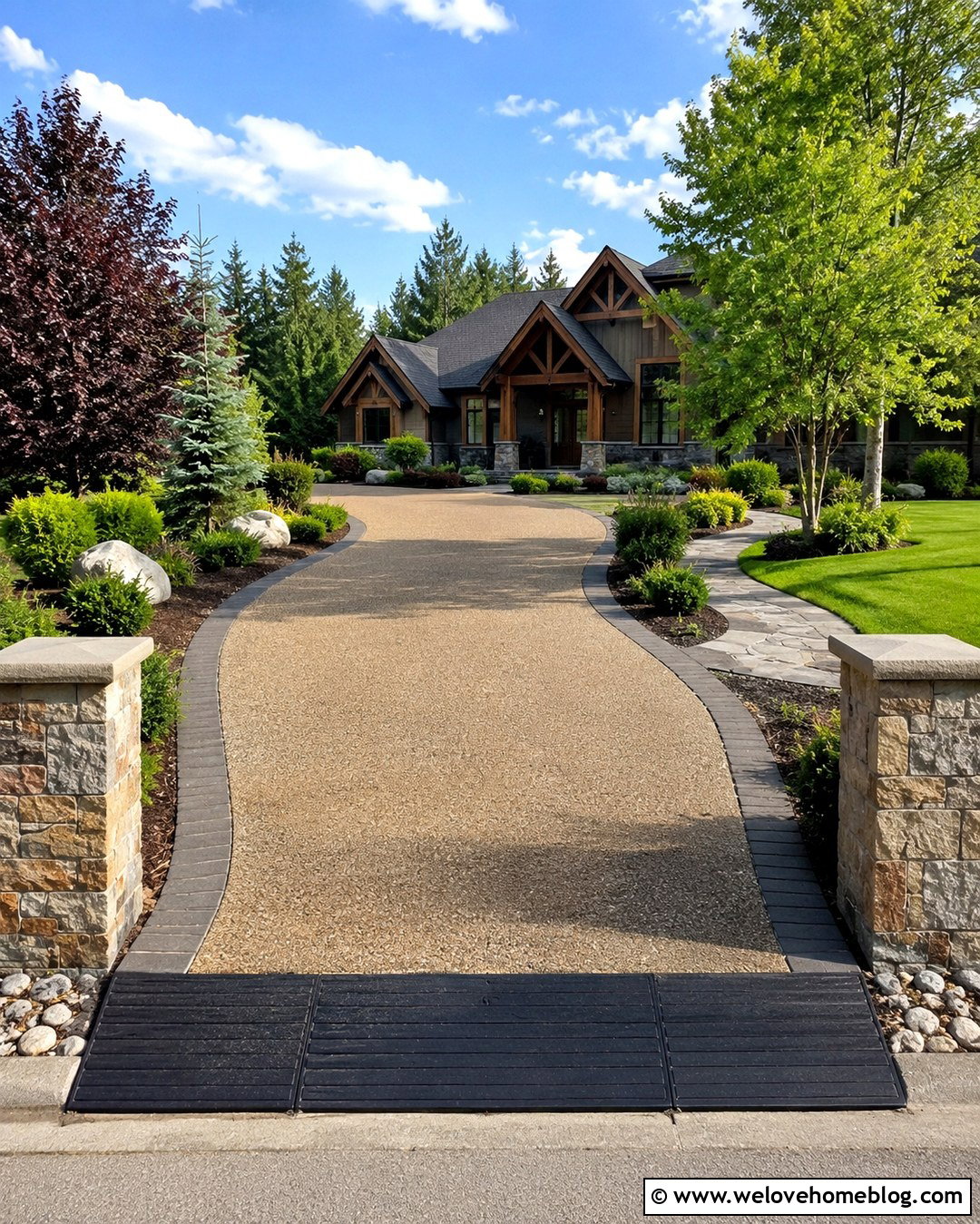
Substantial entrance pillars can balance the visual weight of a wide driveway curb ramp. Start with a tan exposed aggregate driveway, then place a dark modular rubber ramp across the rolled curb. Build low natural-stone pillars several feet behind the curb so they do not interfere with visibility, drainage, sidewalks, or turning vehicles. Match the pillar caps to a dark paver ribbon running along the driveway edges. Between the pillars and house, use curved lawn panels, evergreen shrubs, and small ornamental trees to frame the approach. The entrance should remain open rather than crowded. Choose ramp sections with tapered ends to reduce abrupt side edges near the pillars. This full composition works especially well for a broad craftsman or country property where the practical ramp needs stronger architectural features around it.
19. Two Track Driveway Curb Ramp With Concrete Strips
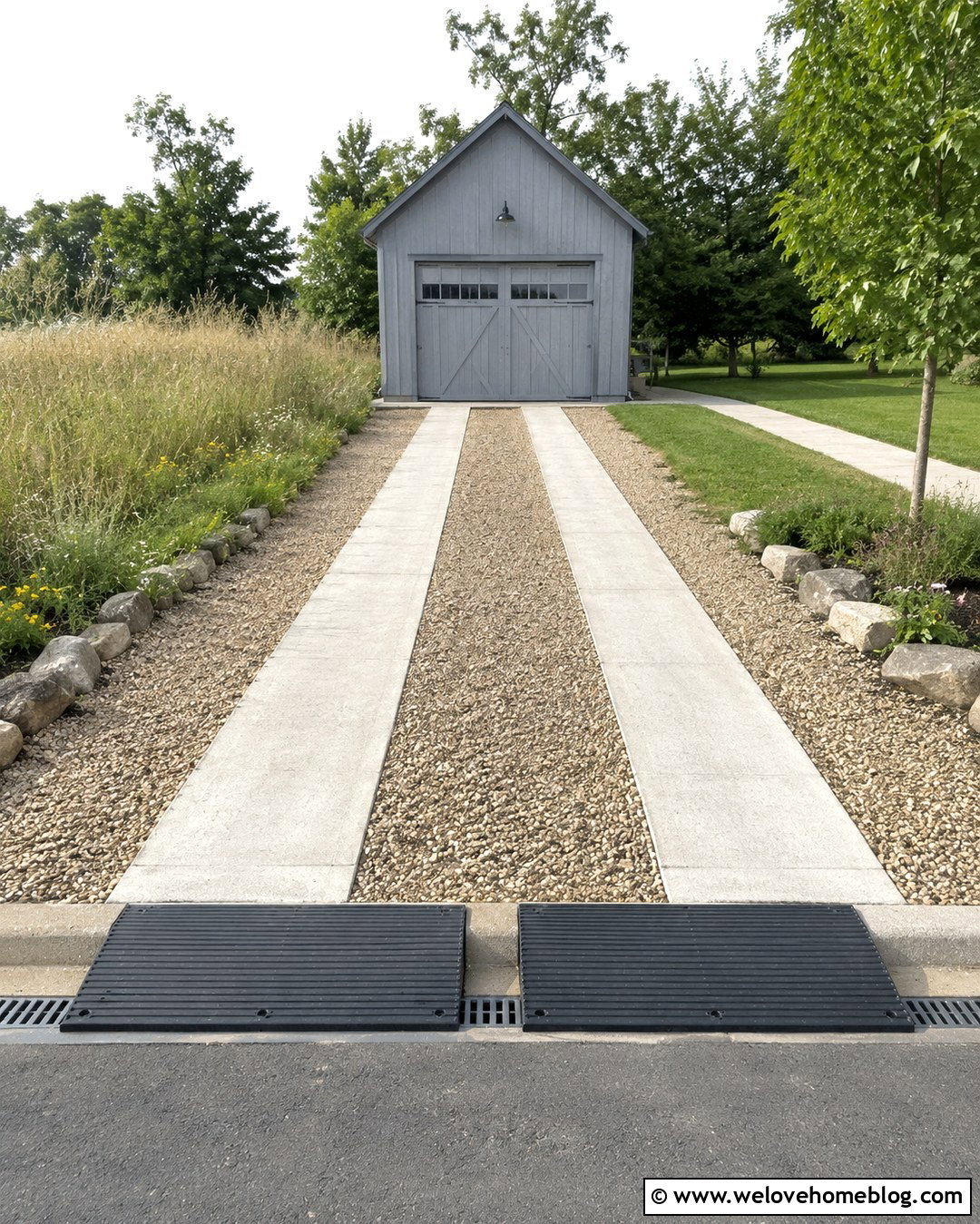
A two-track curb ramp setup can serve a compact rural driveway when a full-width system is unnecessary or restricted. Use two heavy rubber ramp sections aligned carefully with poured concrete wheel strips. Fill the center and outer areas with compacted pea gravel, then contain everything with steel or stone edging. This creates a lighter visual footprint than one large paved slab while still providing firm tire paths from the street to a detached garage. The ramps must be wide enough to accommodate normal steering variation, and their placement should be checked with every vehicle that uses the property. Maintain an open route for gutter water between and beneath the sections. Add meadow grasses, low wildflowers, and a simple concrete walkway to complete the relaxed country-house setting without allowing vegetation to obscure the entrance.
20. Driveway Curb Ramp With Cobblestone Border
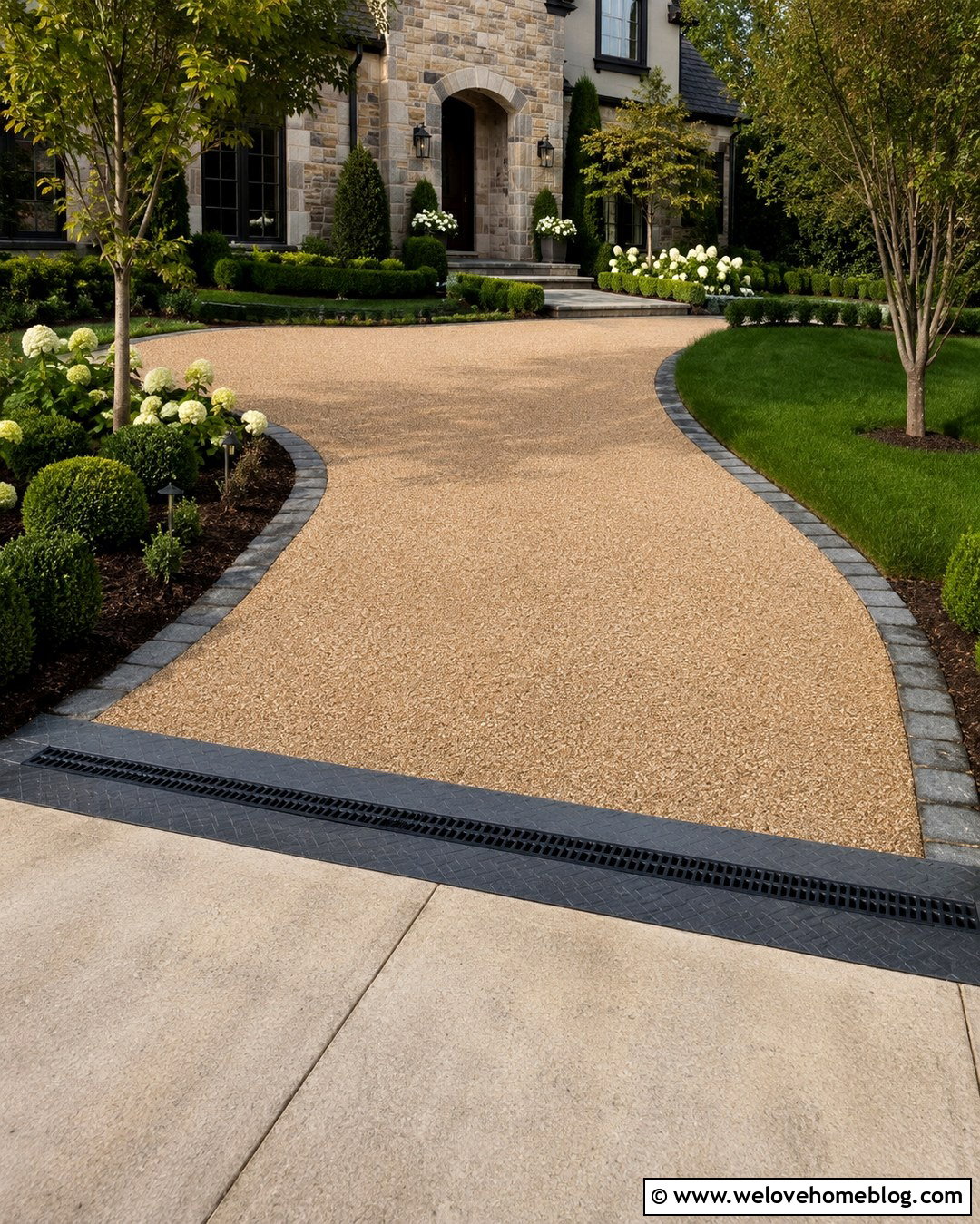
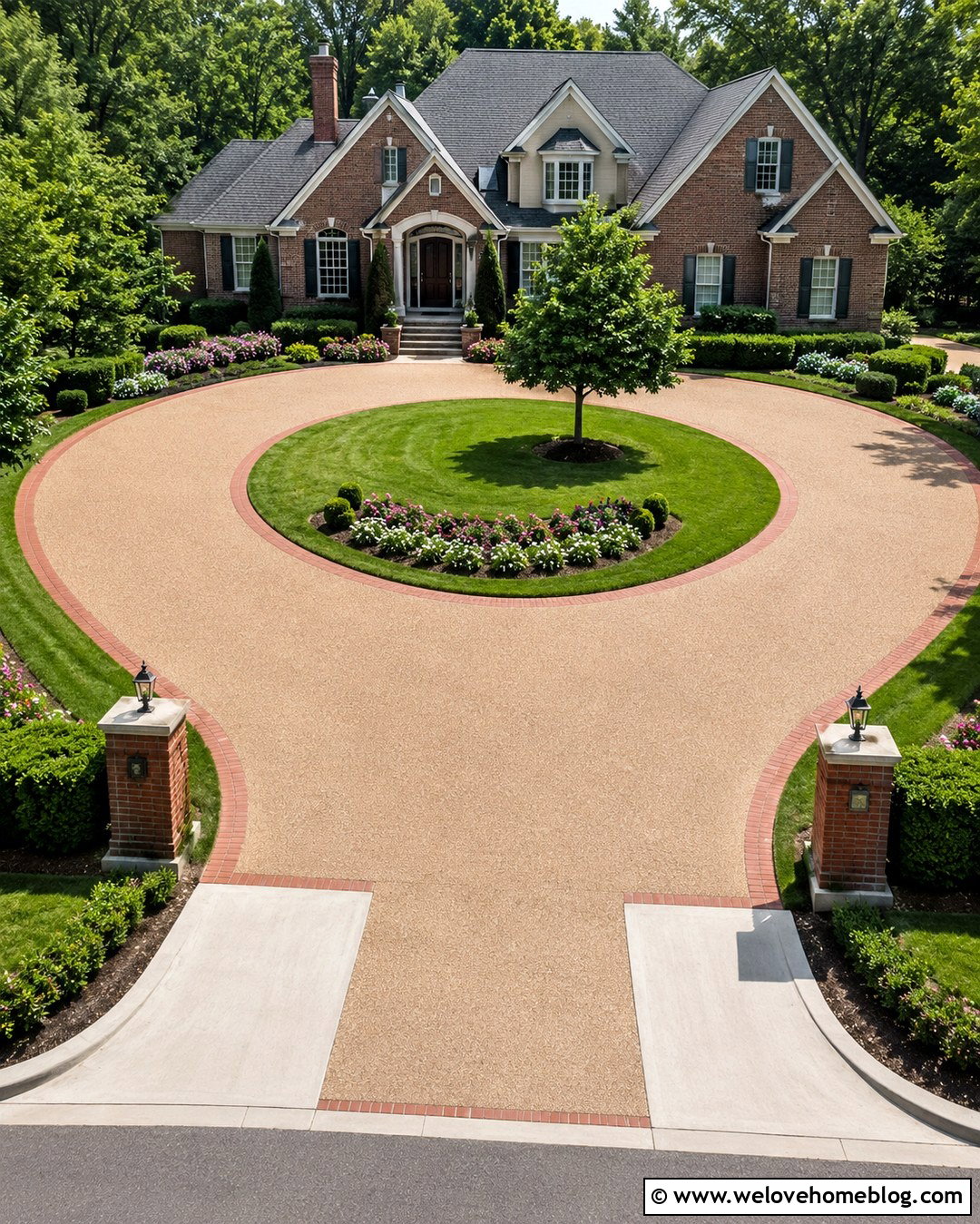
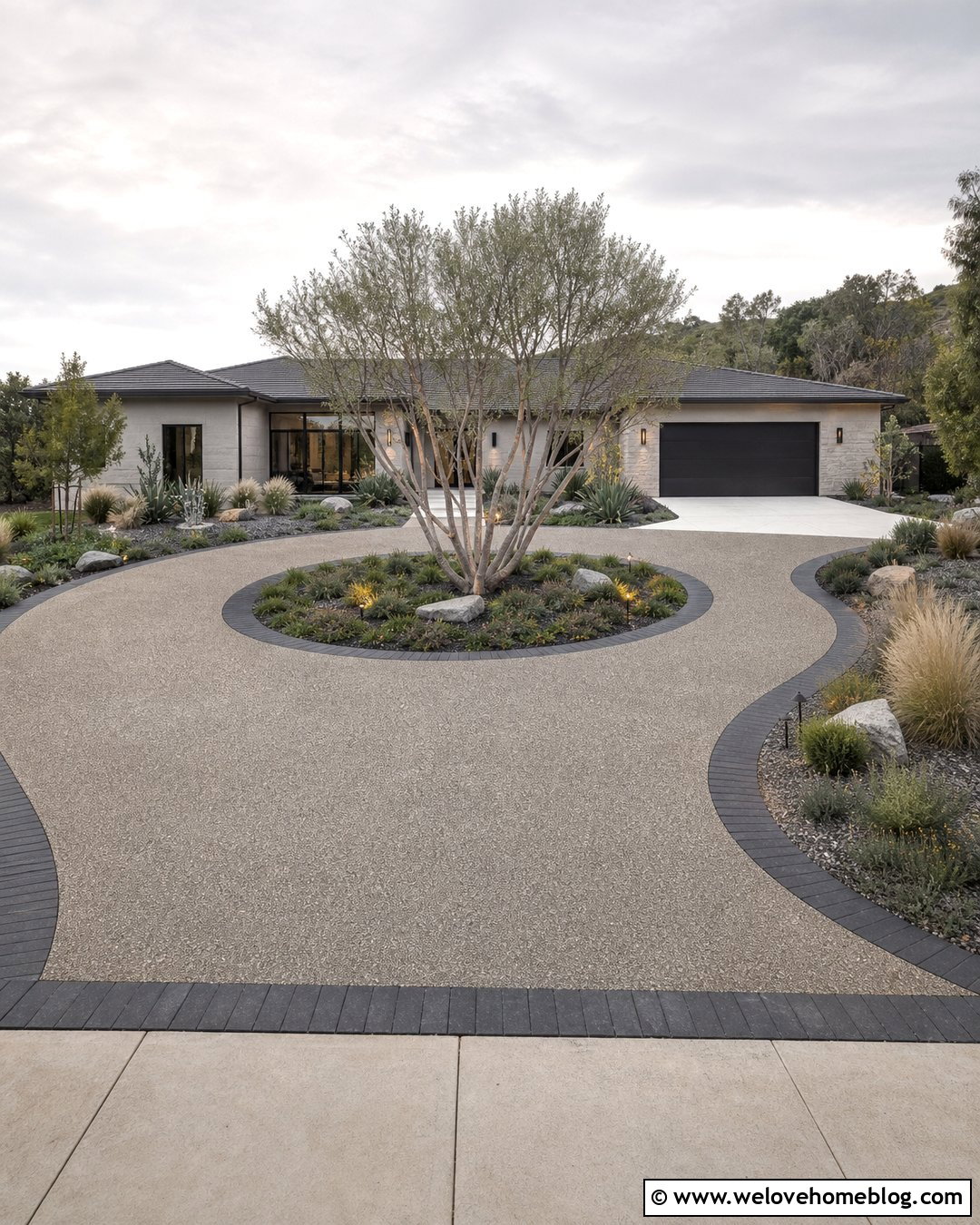
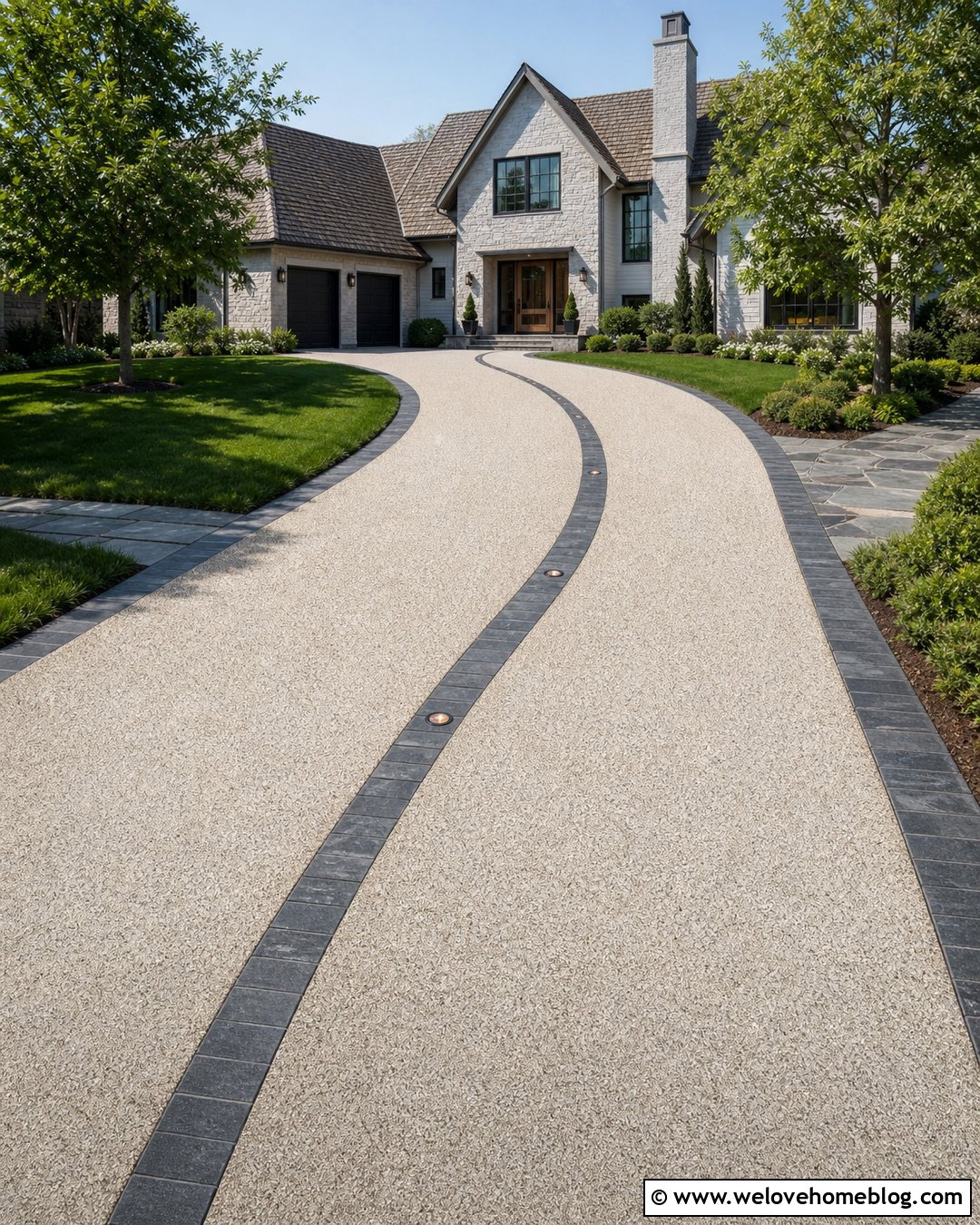
Cobblestone can turn the street edge into a strong design feature without disguising the functional ramp. Use a smooth resin-bound gravel driveway in a warm beige tone, edged with dark-gray granite cobbles. At the rolled curb, place a full-width charcoal rubber driveway curb ramp with tapered ends and a continuous drainage channel. Continue the cobbles across the driveway as a narrow decorative band several feet behind the ramp, creating a visual connection without blocking runoff. Frame the entrance with low boxwoods, white flowering perennials, and a curved lawn edge leading toward a stone-fronted traditional home. The smooth resin-bound surface makes loose-stone migration less likely than ordinary gravel. Its warm color also provides enough contrast for drivers to identify the dark ramp as they approach from the street.
Conclusion:
The best **20 Driveway Curb Ramp Ideas** combine a smoother vehicle transition with safe drainage, stable placement, and an entrance that complements the home. Rubber modular systems are versatile for rolled curbs, while engineered aluminum ramps and approved depressed curbs can address more specialized conditions. Whatever design you prefer, measure the complete curb profile rather than relying on curb height alone. Consider vehicle clearance, driveway width, weather, street maintenance, and visibility from both directions. Most importantly, avoid blocking the gutter or permanently altering public infrastructure without approval. Coordinate the ramp with the driveway material, border, landscaping, and house facade. That simple planning step can turn a practical necessity into a clean, cohesive part of your curb appeal.

Related posts:
Leave a Reply