
Natural driveways feel softer, more welcoming, and better connected to the surrounding yard than broad areas of plain pavement. The best **natural driveway ideas** combine practical surfaces with organic shapes, textured borders, layered planting, and materials that suit the home. Gravel, natural stone, grass pavers, reclaimed brick, and permeable paving can all create this effect. Permeable surfaces may also help rainwater filter into the ground when they are supported by a correctly designed base. () Whether you have a compact suburban entrance, a long country approach, or a wide circular drive, the complete layout matters. Use the following designs to compare materials, edging, drainage features, and planting combinations across 25 Natural Driveway Ideas.
1. Pea Gravel Driveway With Cobblestone Edging
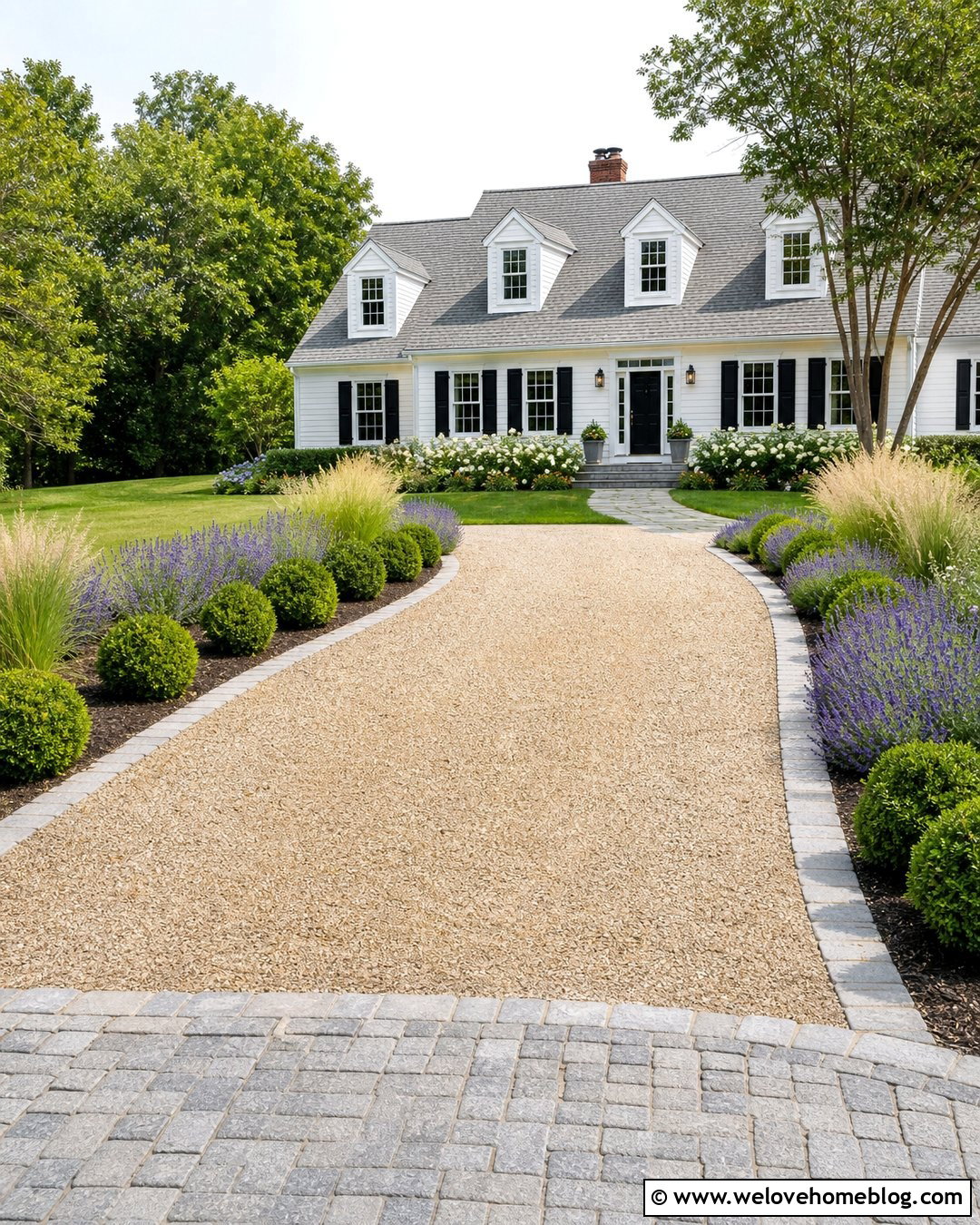
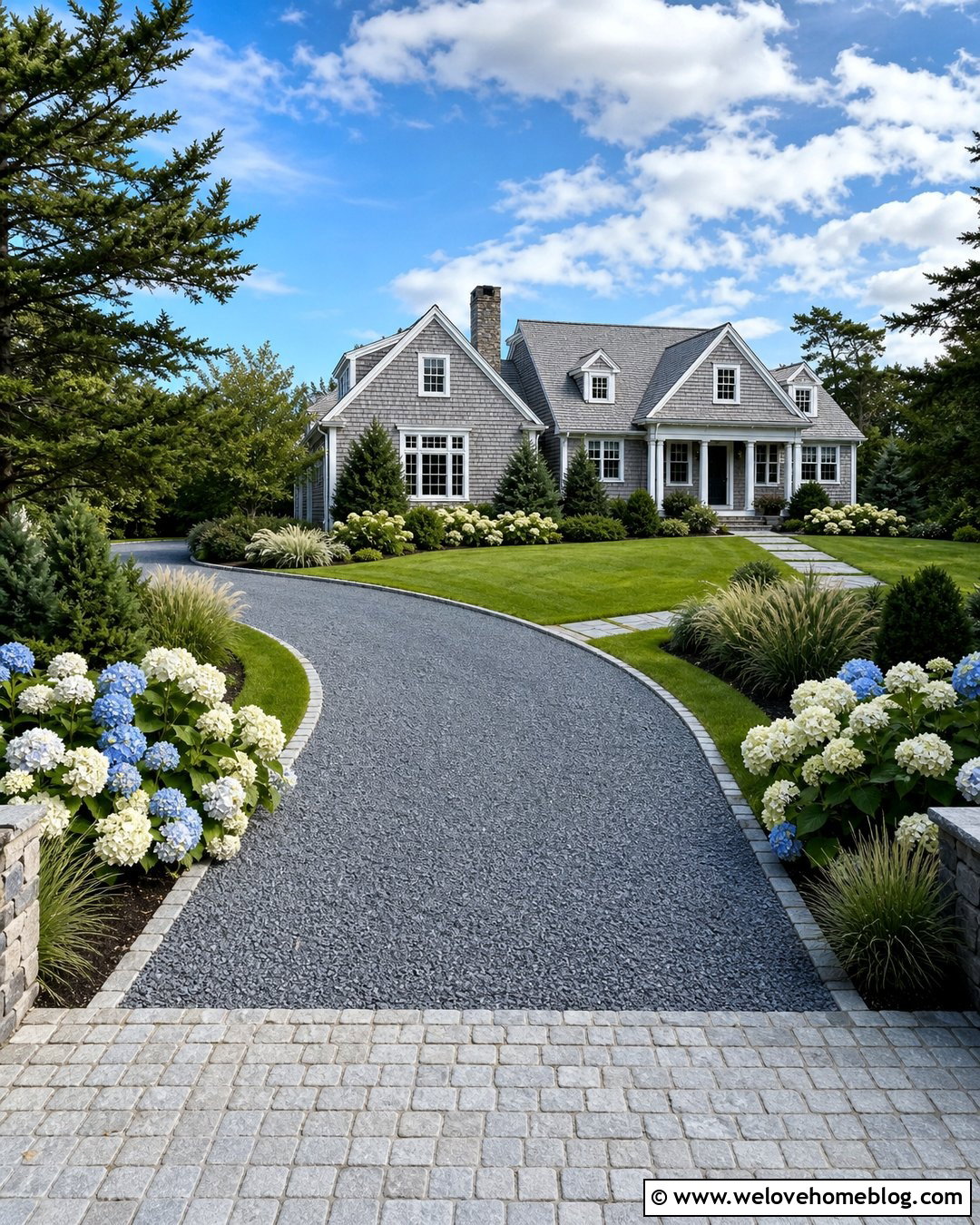
Warm pea gravel creates a relaxed surface that works especially well with cottages, Cape Cod homes, and traditional suburban houses. Give the driveway a gentle curve so the approach feels connected to the garden rather than rigidly engineered. A cobblestone border keeps the small stones visually contained and provides a firm transition along the lawn. Near the street, widen the cobblestone into a durable entrance apron. Plant lavender, catmint, dwarf boxwood, and ornamental grasses in deep beds beside the drive. Their soft textures balance the rough gravel. Because rounded pea gravel may shift under tires, use a well-compacted base and consider a stabilizing grid beneath the surface. This combination creates an informal driveway that still looks deliberate and well maintained.
2. Crushed Granite Driveway With Native Plant Borders
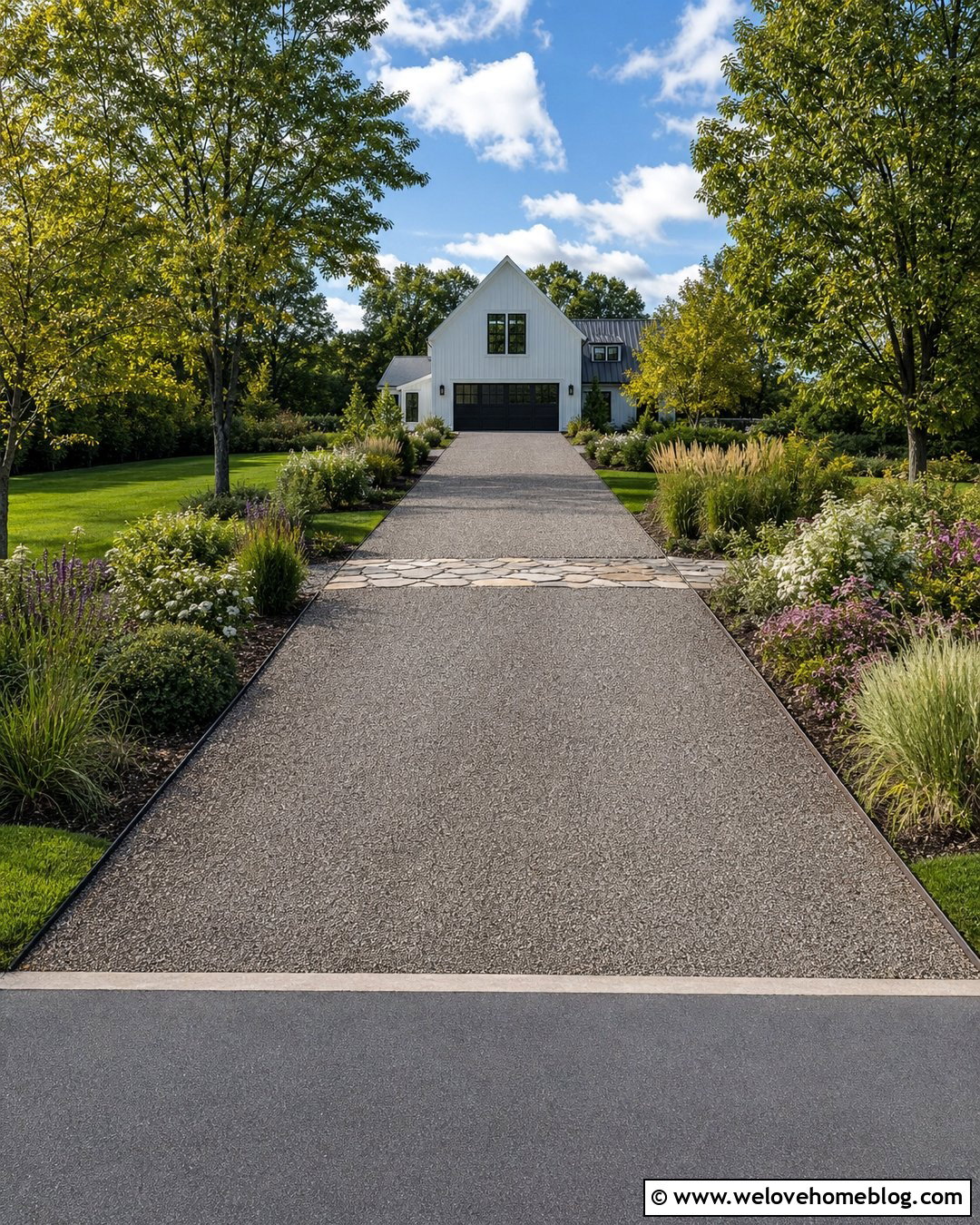
A straight crushed granite driveway can feel natural without looking unfinished. Choose warm gray, buff, or rusty granite that echoes the colors found in the house, retaining walls, or local landscape. Steel edging gives the surface a clean boundary while remaining nearly invisible from the curb. On each side, create broad planting beds filled with regionally appropriate native shrubs, flowering perennials, and bunch grasses. Repeat a limited group of plants rather than adding too many varieties. This makes the entrance feel calm and cohesive. A short flagstone walkway can cross the driveway near the house and lead guests toward the front door. Proper grading and compacted angular stone are important because they help create a firmer driving surface than loose, rounded gravel.
3. Decomposed Granite Driveway With Desert Landscaping
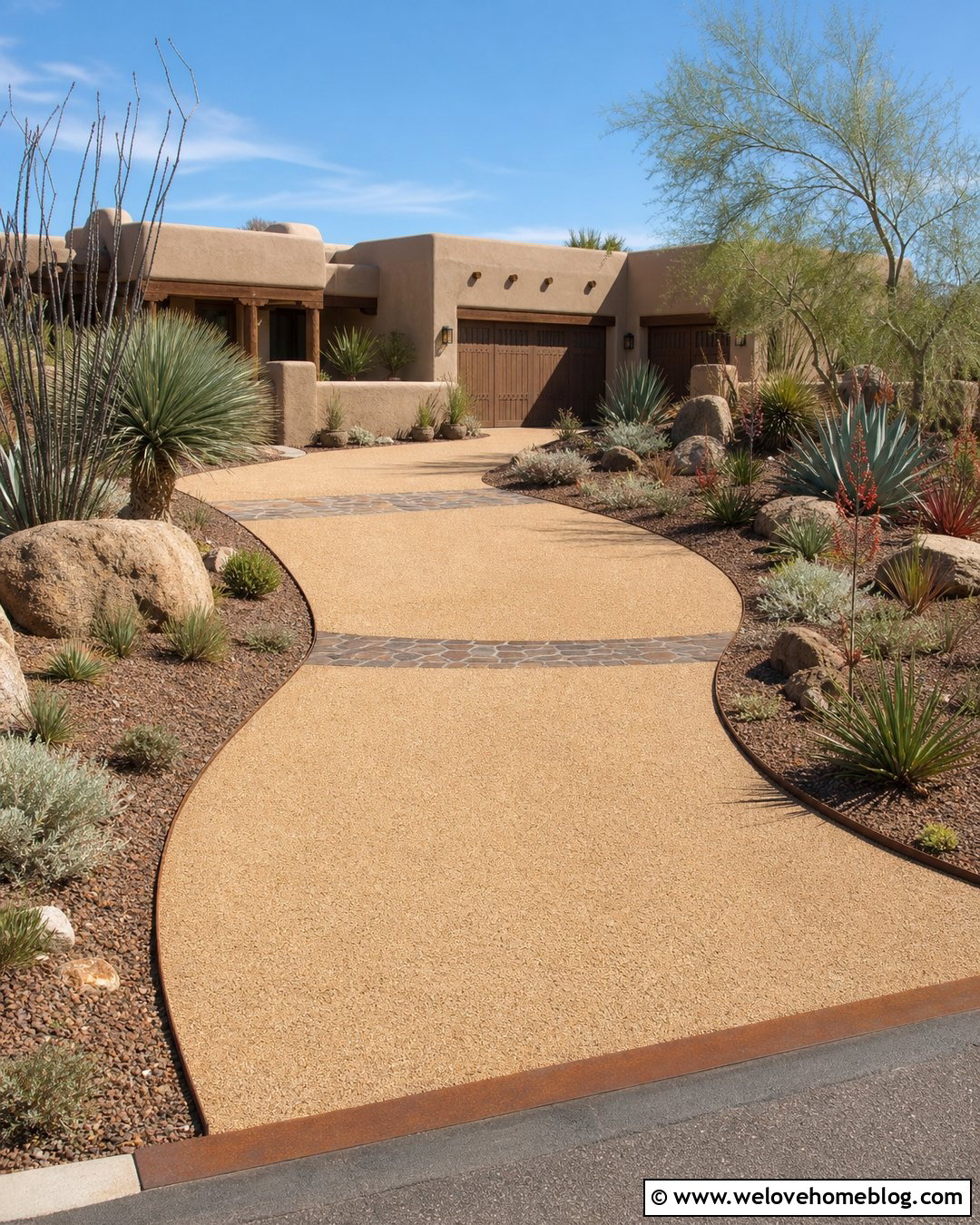
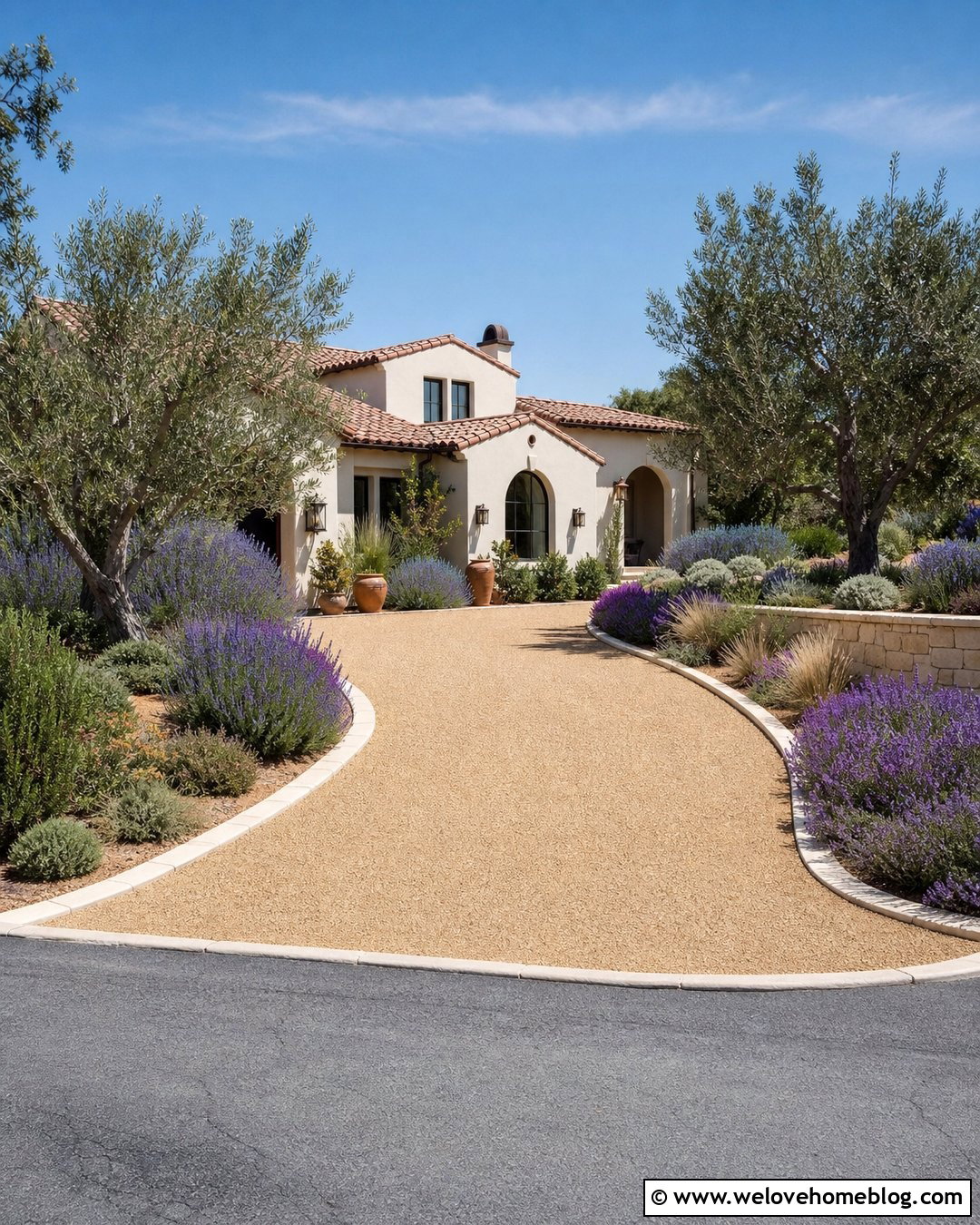
Soft gold decomposed granite fits naturally into Southwestern, Spanish, adobe, and desert-modern landscapes. Use it across a gently curved driveway with weathered steel edging that matches the warm tones of the surface. Large accent boulders can mark the entrance without creating a formal gate. Surround them with agave, yucca, desert spoon, red yucca, and low mounds of drought-tolerant ground cover. Leave generous areas of open gravel mulch between plants to preserve the uncluttered desert character. Near the garage, add broad bands of darker stone to reduce the appearance of tire marks. Decomposed granite should be installed over a prepared, compacted base suited to local soil and drainage conditions. The finished driveway will appear understated, earthy, and visually tied to the surrounding terrain.
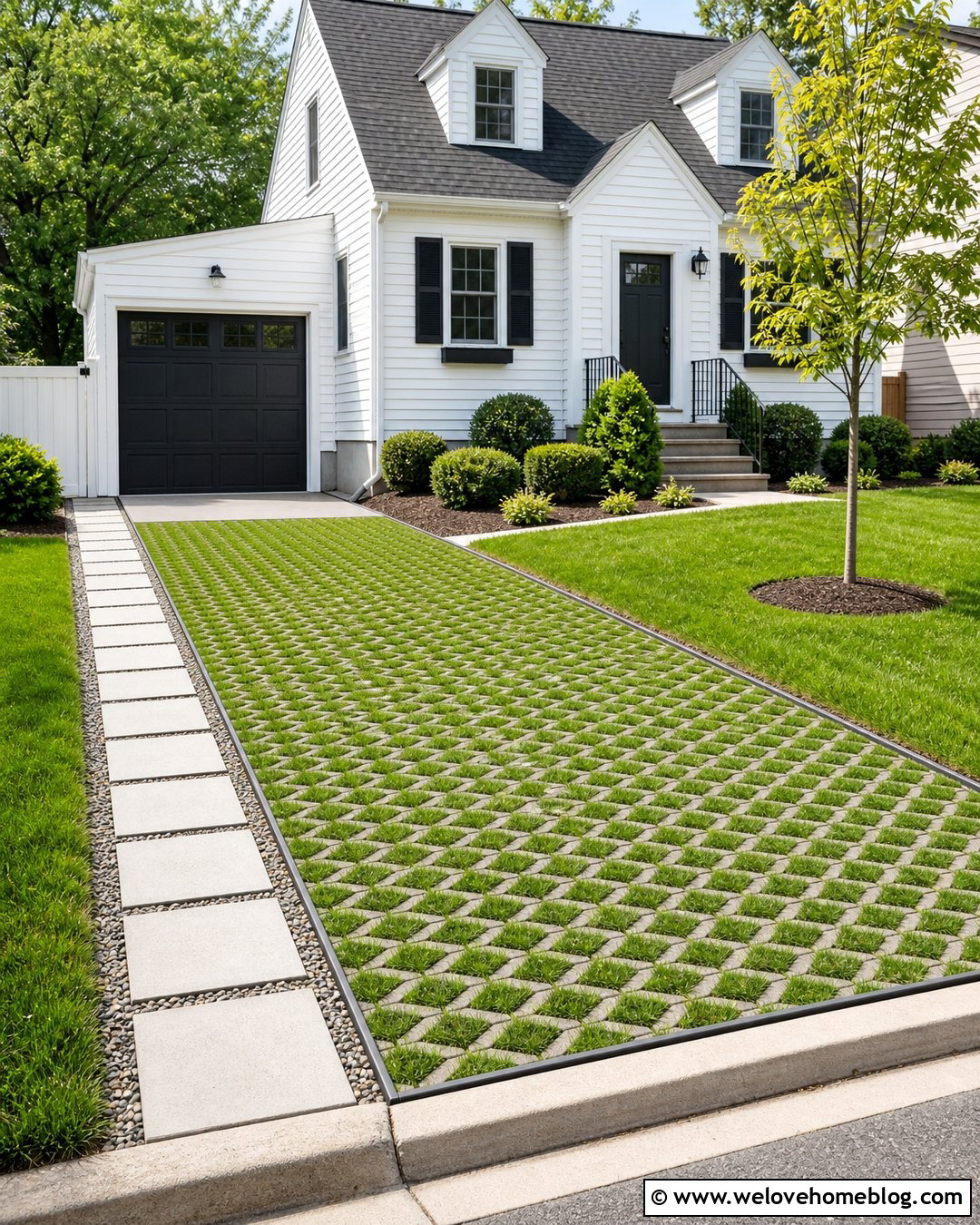
4. Grass Paver Driveway With Modern Landscaping
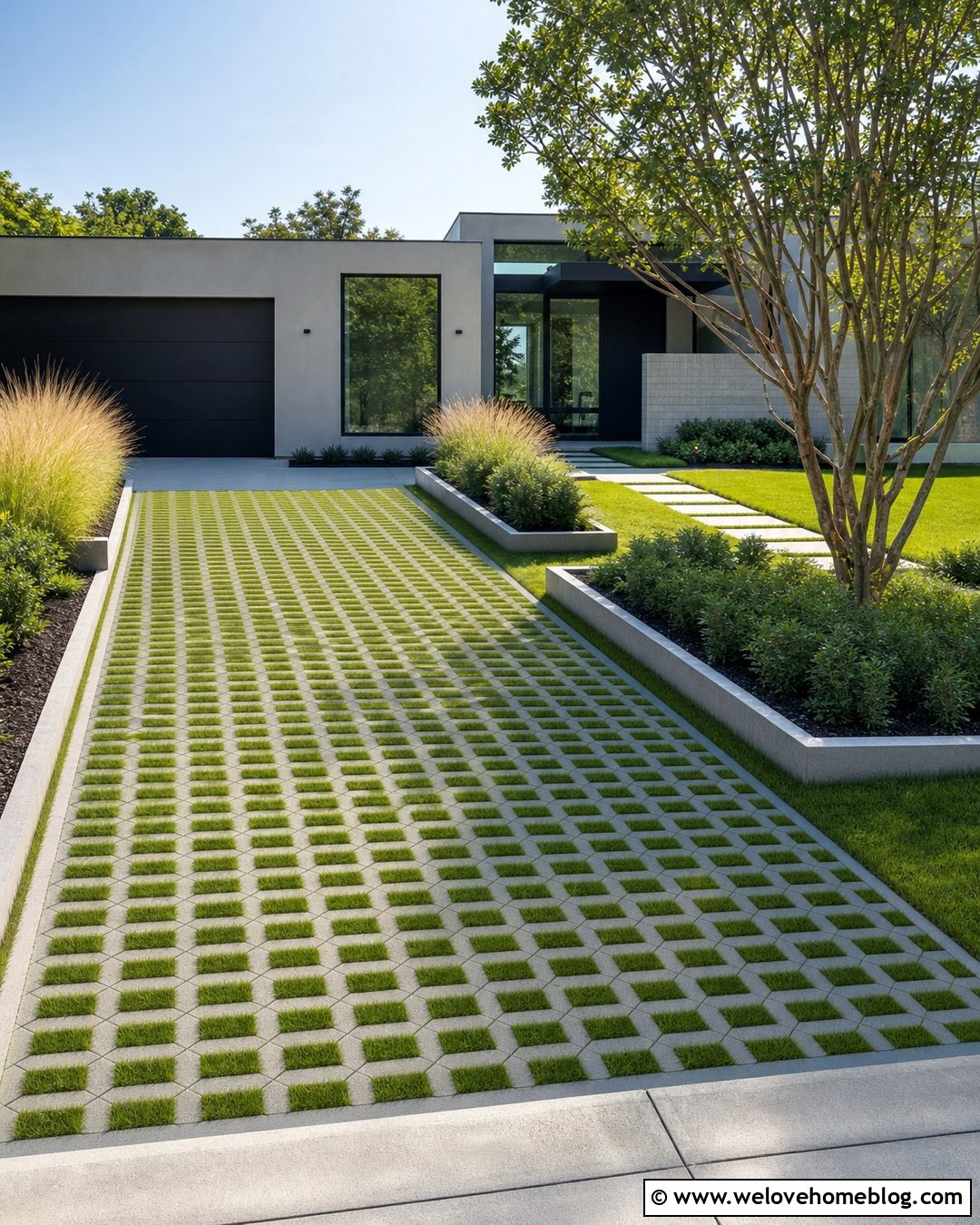
Grass pavers can turn a large parking surface into an extension of the lawn. Their open cells reinforce the driving area while allowing turf or another suitable low-growing plant to occupy the spaces between structural sections. () For a contemporary look, use a straight driveway framed by narrow concrete curbs and simple rectangular beds. Plant feather reed grass, low evergreen shrubs, and one sculptural multi-stem tree near the entrance. Keep the remaining lawn lines crisp so the green driveway looks intentional. Select grass that matches the site’s sunlight, climate, traffic, and irrigation conditions. The planted areas should sit slightly below the top of the pavers, helping tires travel over the structural grid instead of pressing directly against the grass.
5. Natural Stone Tire Track Driveway
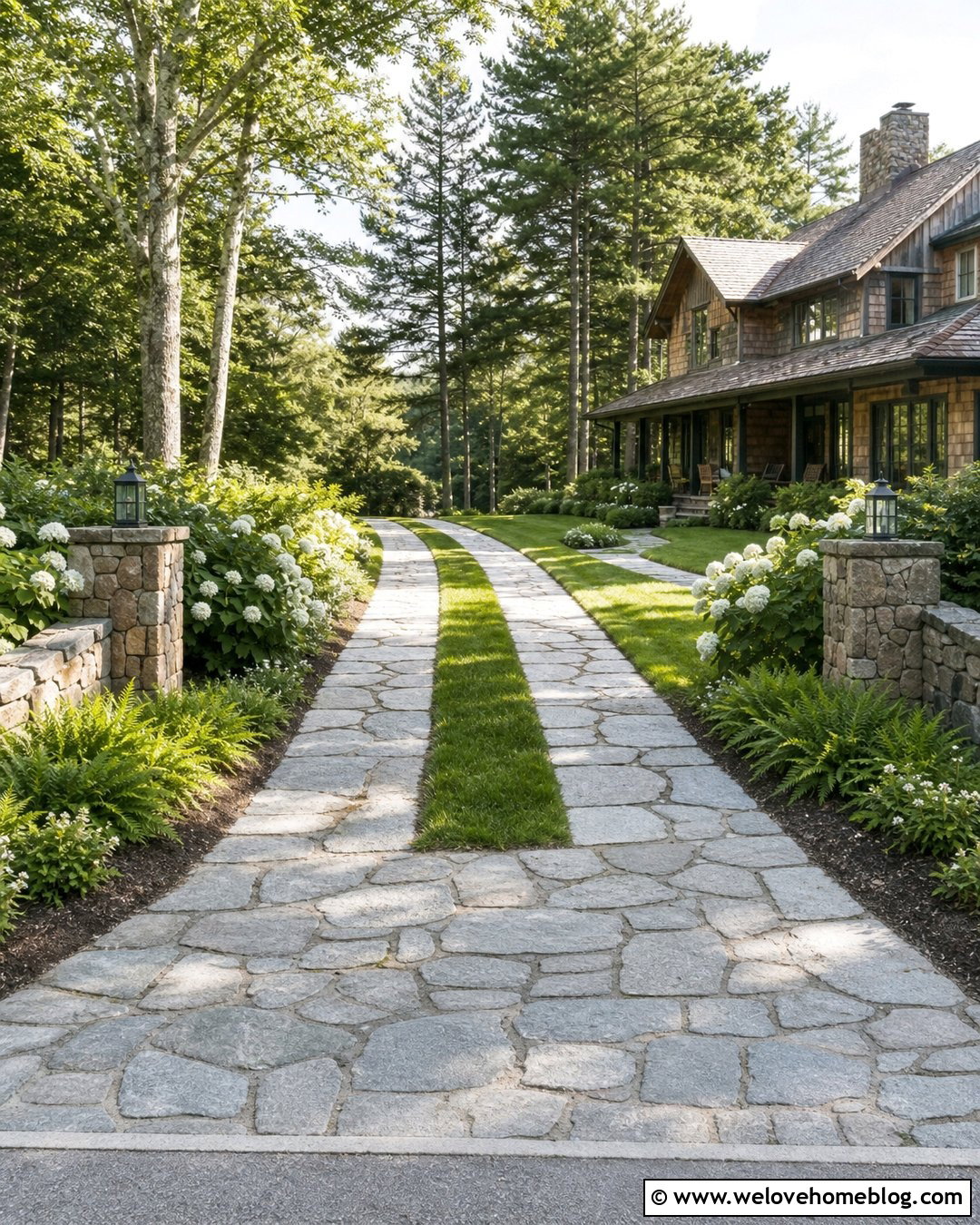
Two parallel natural stone tracks create a driveway with less visual weight than a fully paved surface. Use thick rectangular slabs of locally appropriate granite, sandstone, or limestone, spaced to match normal tire paths. Fill the center and outer strips with durable turf for a country look or low gravel for easier maintenance. Rustic fieldstone edging can separate the driveway from informal planting beds filled with hydrangeas, ferns, sedges, and woodland ground covers. This layout is particularly attractive in front of cabins, cottages, farmhouses, and homes with smaller garages. Careful planning is essential because the tracks must be wide enough for daily vehicles and supported by a load-bearing base. A matching stone apron near the road gives the entrance a more finished, permanent appearance.
6. Flagstone Driveway With Planted Joints
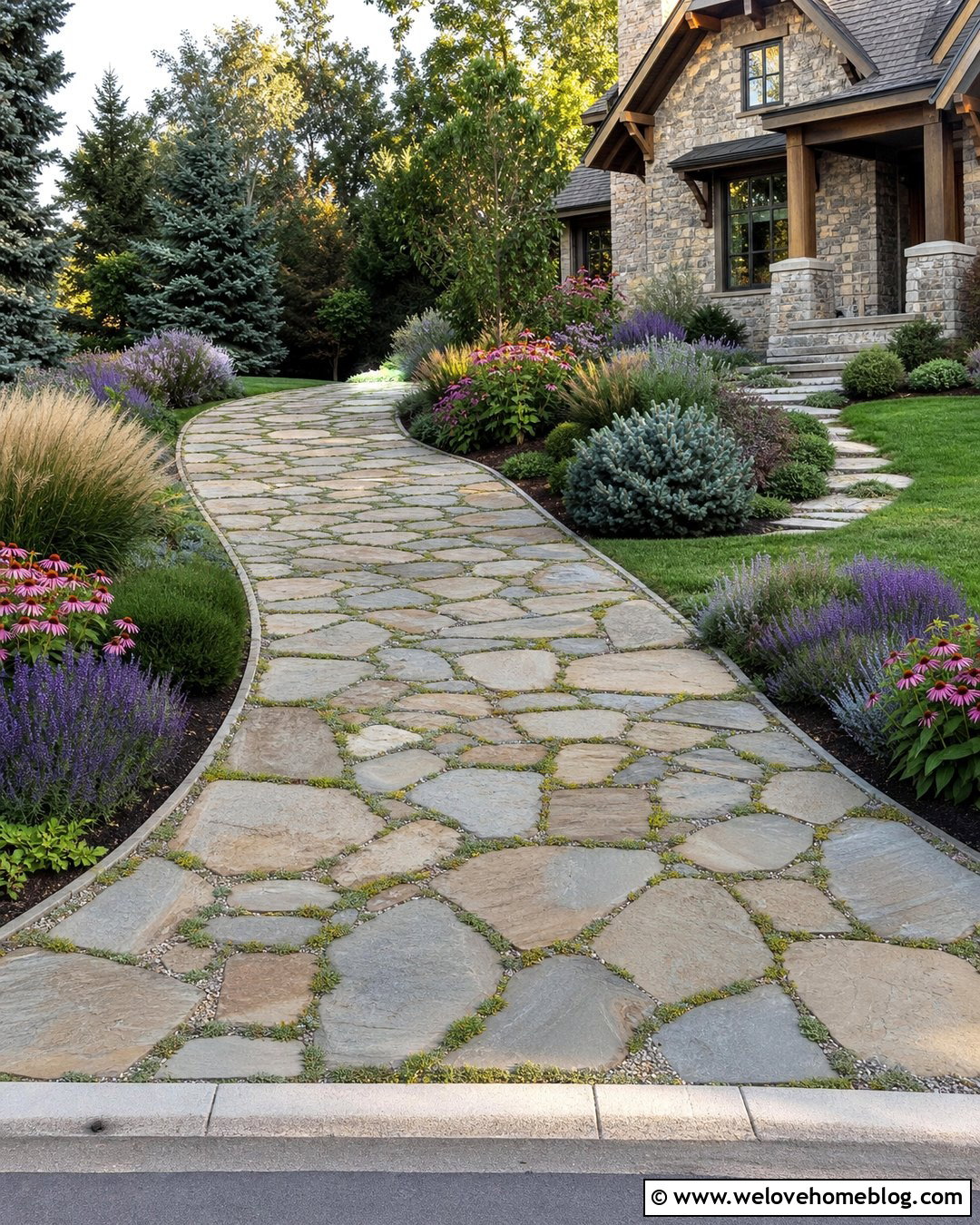
Irregular flagstone can make a driveway feel like part of a mature garden. Choose thick, load-rated stone in varied earth tones and place the pieces over a properly engineered base. Wider joints can be filled with compacted gravel or a low ground cover selected for the local climate and expected vehicle use. Creeping thyme may suit some sunny, lightly traveled settings, while gravel joints are often simpler in heavily used areas. Edge the driveway with matching flagstone set vertically or use discreet metal edging for a cleaner boundary. Surround the surface with loose drifts of ornamental grass, salvia, coneflower, and low evergreen shrubs. A gently curving layout enhances the natural effect, especially when the driveway approaches a craftsman or stone-faced house through layered garden beds.
7. Cobblestone Circular Driveway With A Planted Island
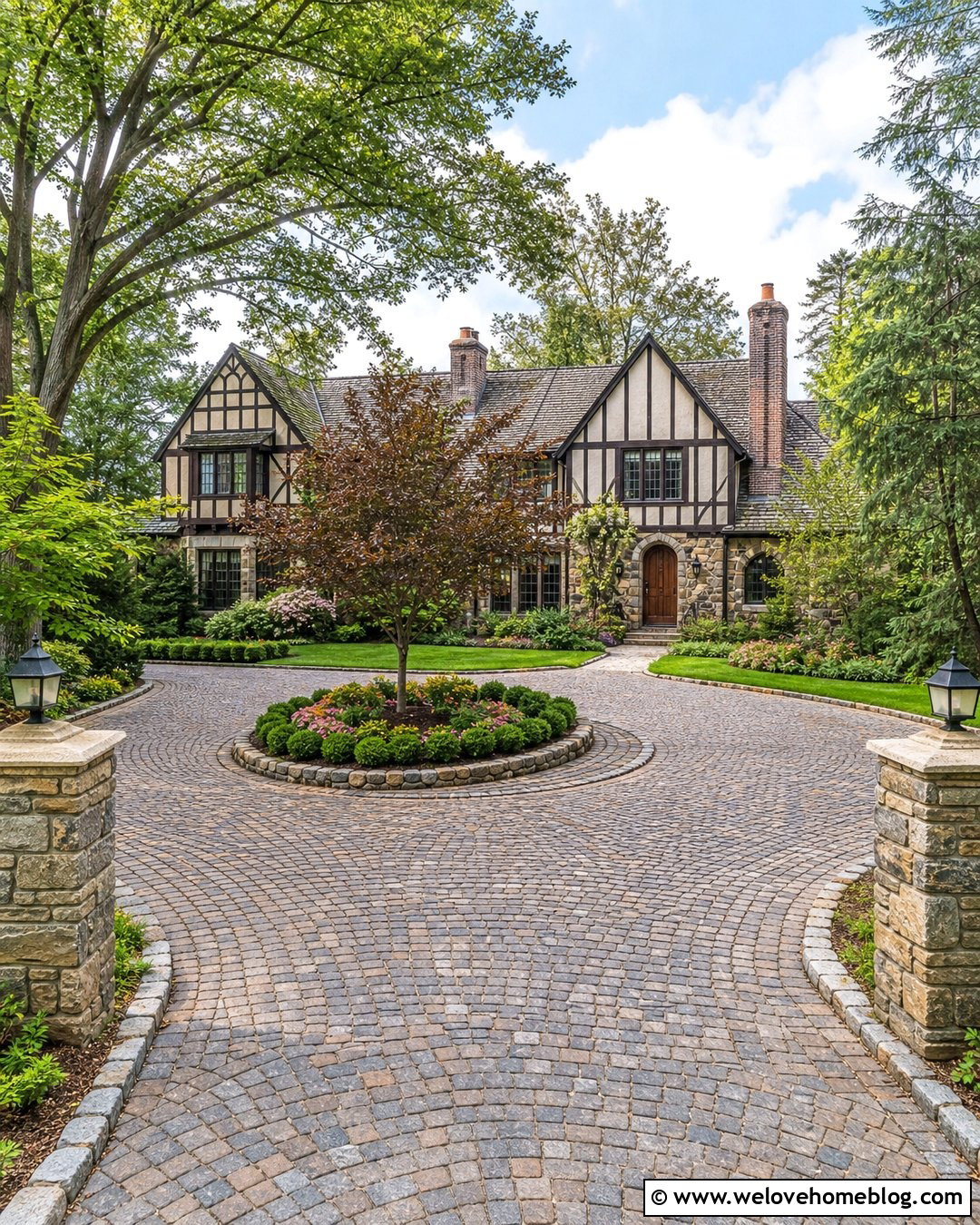
A cobblestone circular driveway feels established and traditional, yet the irregular stone texture keeps it connected to nature. Select granite setts in blended gray, brown, and charcoal tones rather than a single uniform color. Lay the stones in curved bands that follow the circular shape and visually guide vehicles around the center island. Fill that island with a small ornamental tree, low evergreen shrubs, and seasonal perennials that will not block sightlines. A fieldstone curb can contain the planting soil and echo the driveway material. At the road, simple stone pillars can define the two entrances without making the property feel closed off. This substantial design pairs beautifully with colonial, Tudor, European-inspired, and stone country homes on wider front lots.
8. Bluestone Driveway With Gravel Joints
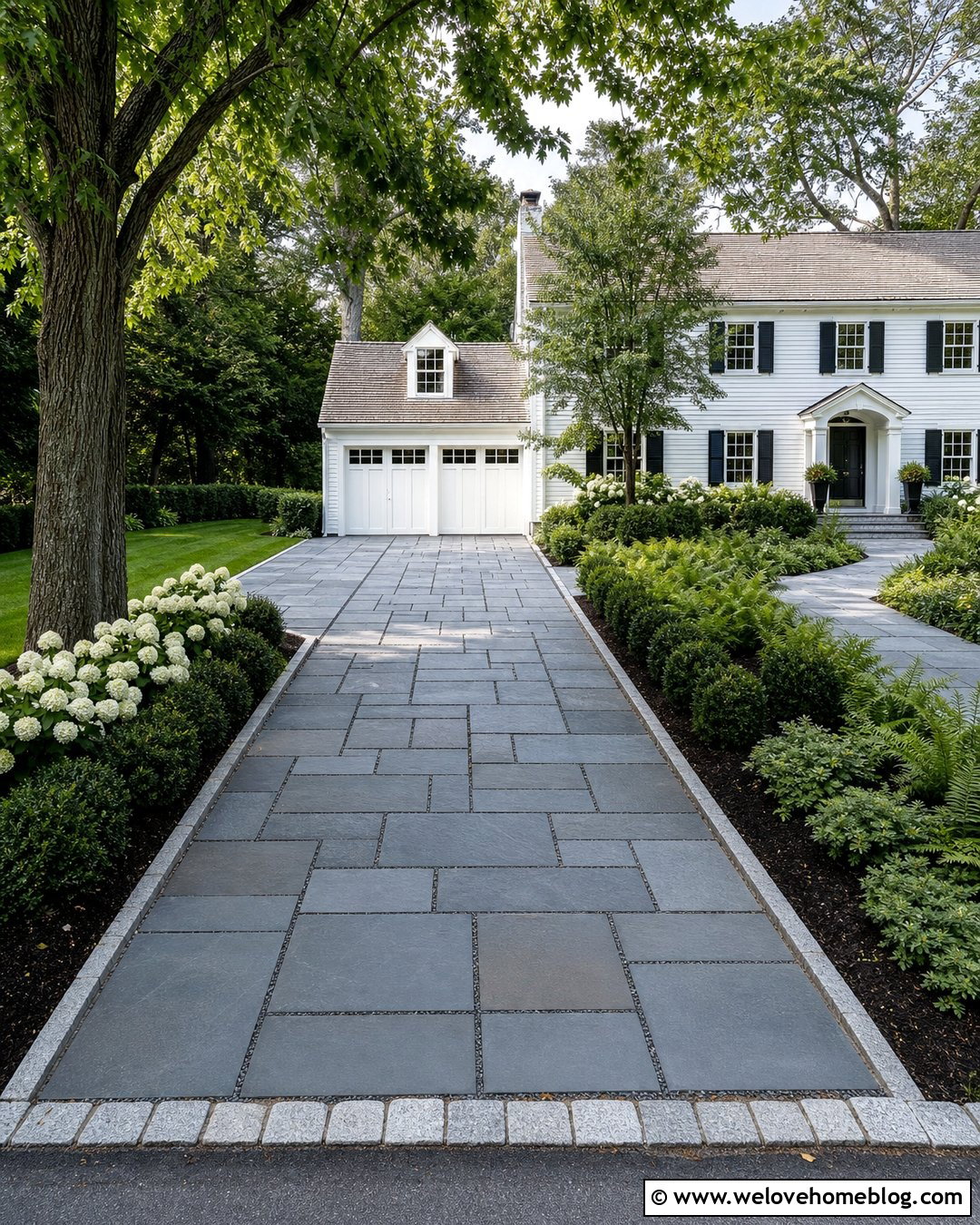
Large bluestone slabs create a natural driveway with a more tailored appearance. Their blue-gray color works well with white siding, gray shingles, natural cedar, and cool-toned masonry. Arrange rectangular slabs in a running pattern, leaving narrow joints filled with dark crushed stone. The gravel breaks up the hard surface and emphasizes each piece of stone. Continue the bluestone into a walkway leading to the front porch so the arrival sequence feels unified. Along the driveway, use restrained planting beds with inkberry holly, hydrangeas, ferns, and shade-tolerant ground cover. A straight or slightly offset layout complements craftsman, colonial, and contemporary homes. Because large stone slabs carry substantial vehicle loads, professional base preparation and careful stone selection are important for a stable result.
9. Limestone Gravel Driveway With Boxwood Borders
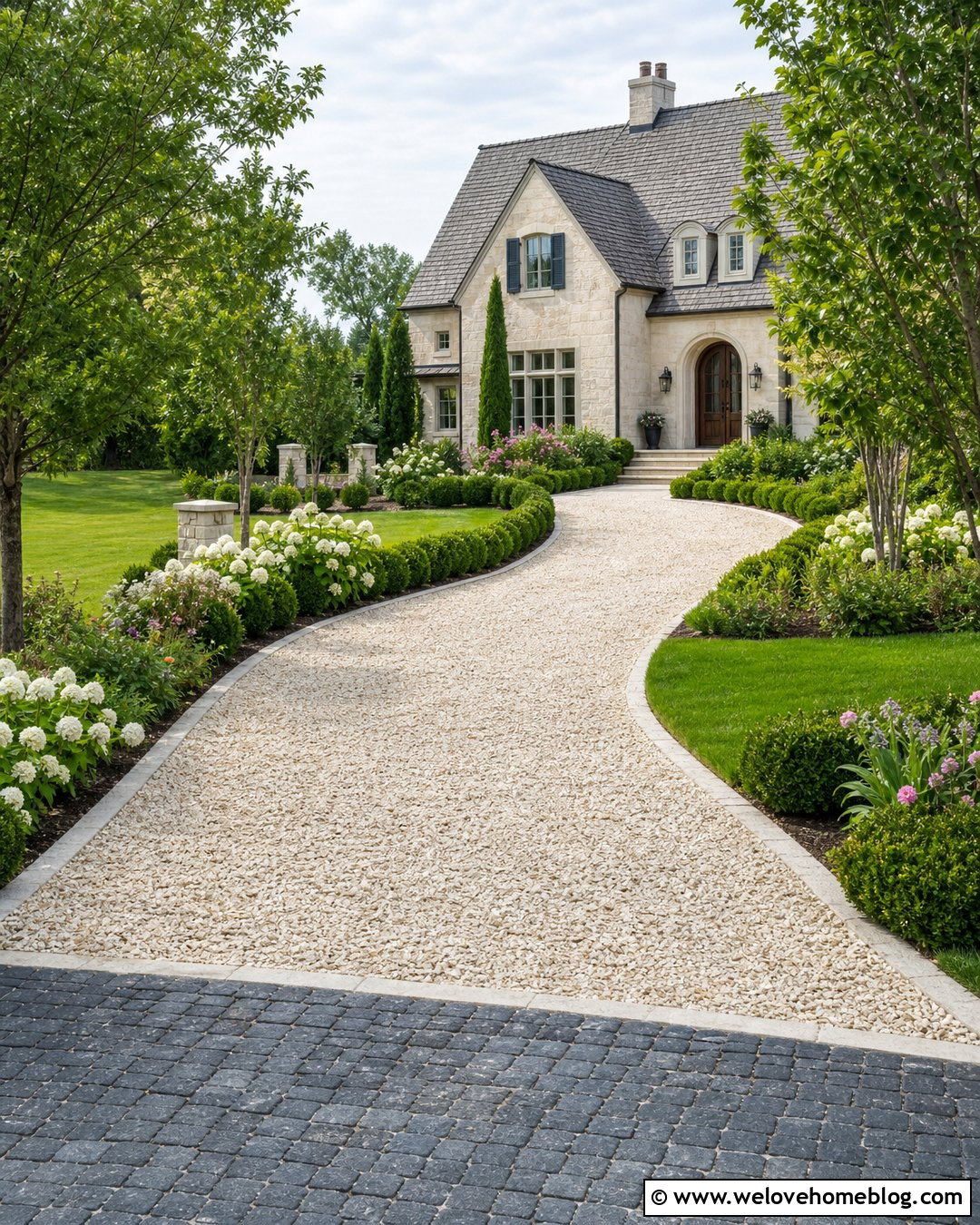
Pale limestone gravel brightens a shaded front yard and creates a classic surface for farmhouse, French country, and traditional homes. Shape the driveway into a broad curve, then use larger limestone blocks as edging. The blocks keep the loose aggregate away from planting beds while repeating its soft cream color. Low boxwood hedges can trace selected portions of the drive, but leave openings near walkways and parking areas for comfortable movement. Behind the hedge, layer white hydrangeas, flowering perennials, and small ornamental trees. A darker cobblestone apron at the street provides contrast and visually anchors the entrance. Choose angular limestone rather than smooth pebbles for the main driving area, and replenish thin spots as part of routine maintenance to preserve an even, attractive finish.
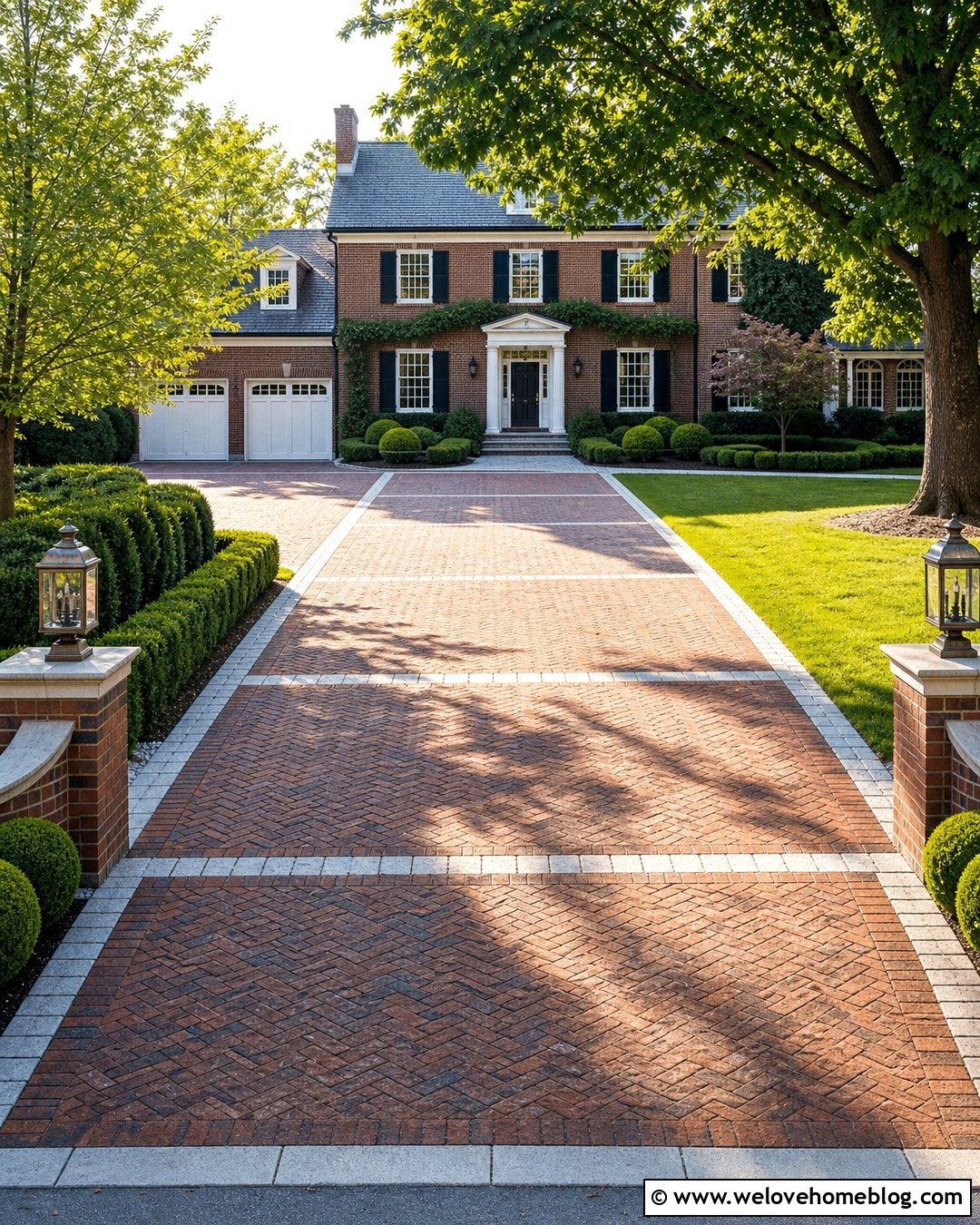
10. Reclaimed Brick Driveway With Cottage Planting
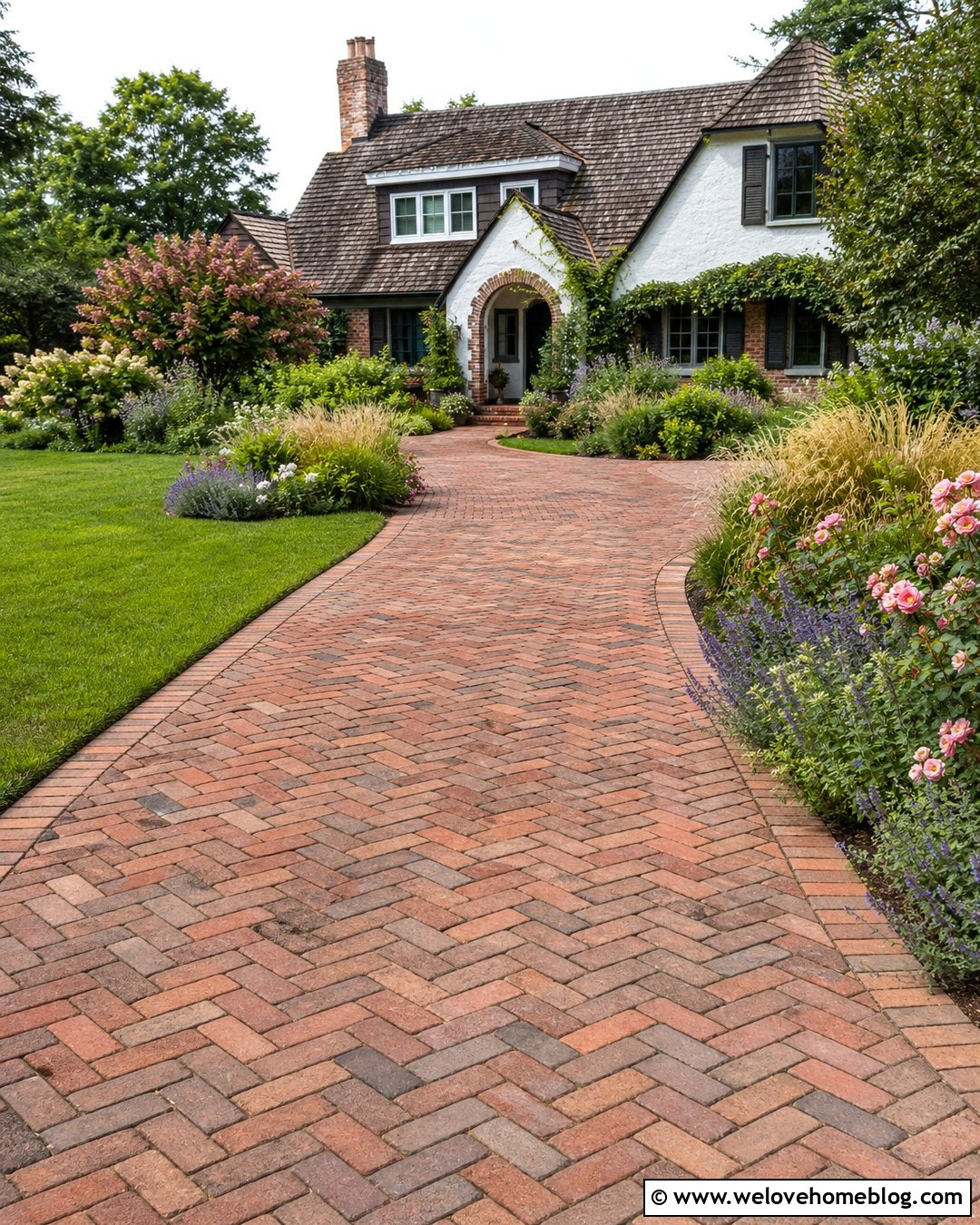
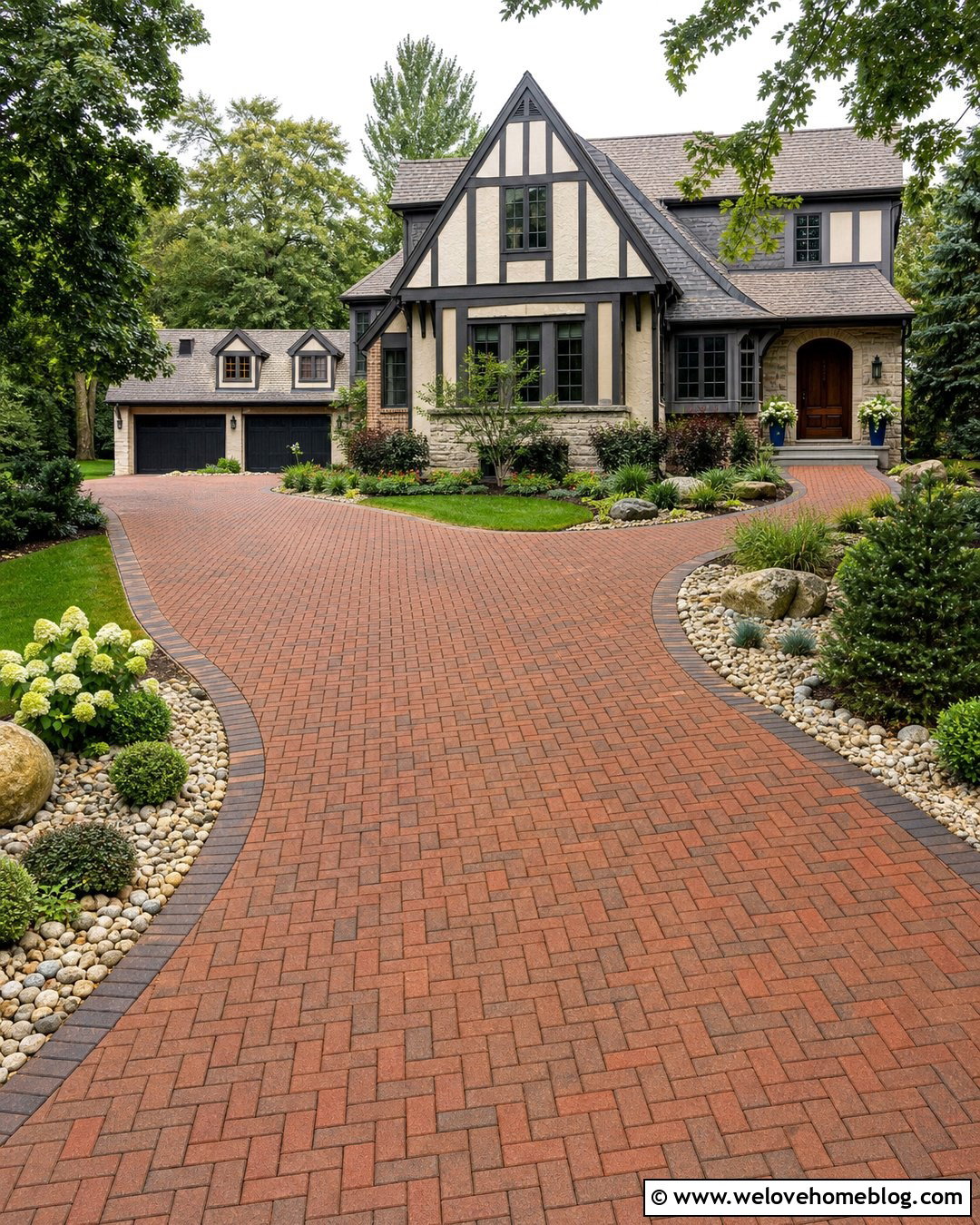
Weathered reclaimed brick brings warmth and history to a natural driveway. Lay the bricks in a herringbone pattern for the main driving surface, then use a simple running-bond border to define the edges. Mixed red, brown, and muted charcoal tones create a softer appearance than perfectly uniform new brick. Frame the driveway with cottage-style planting, including roses, salvia, nepeta, ornamental grasses, and compact flowering shrubs. Let a few plants lean gently toward the edge without allowing them to narrow the usable space. A curved layout can make the approach feel intimate, while a brick walkway branching toward the front door creates a clear route for guests. Install the brick over a driveway-rated base and provide defined edging to reduce spreading and movement over time.
11. Gravel Driveway With Natural Boulder Edging
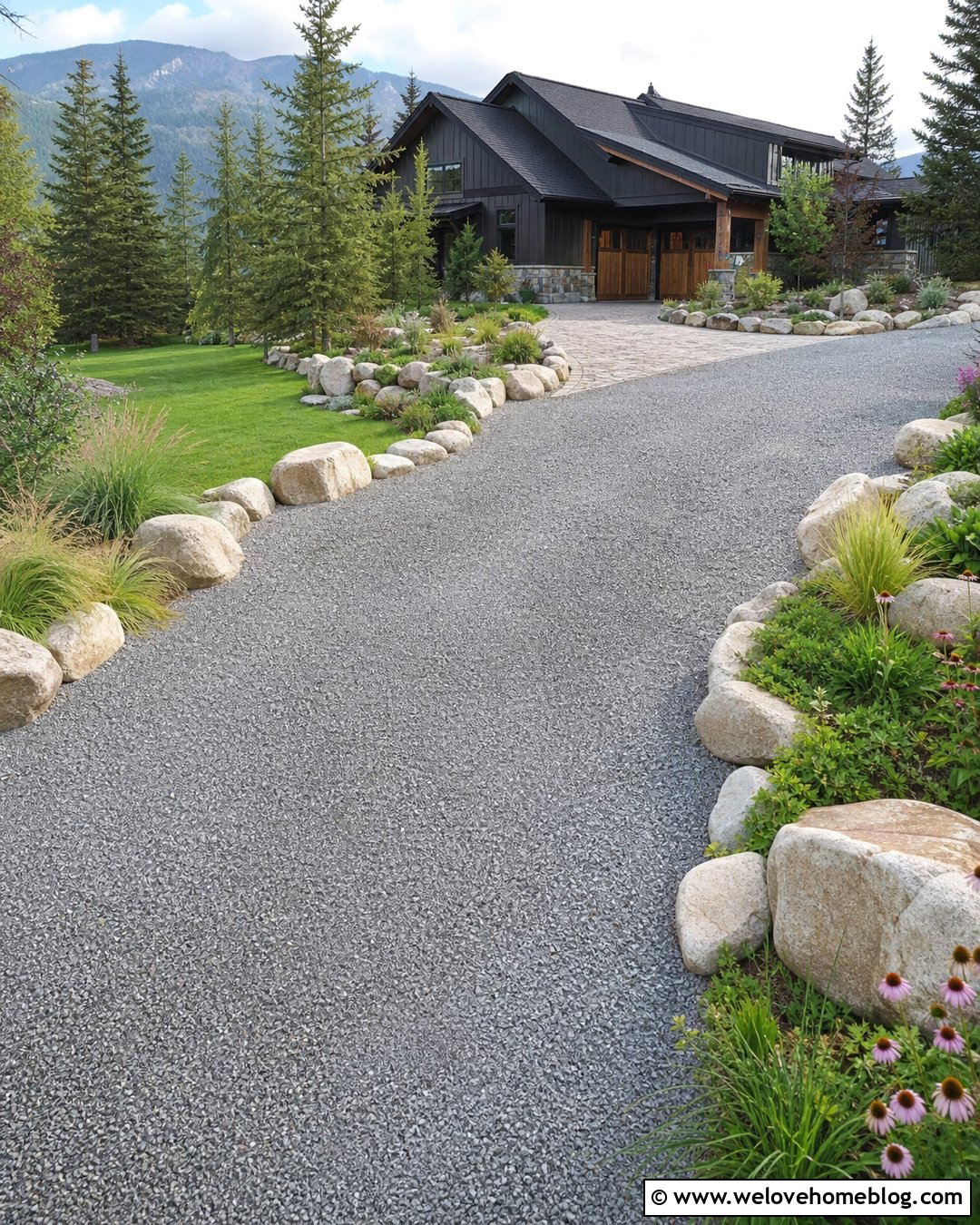
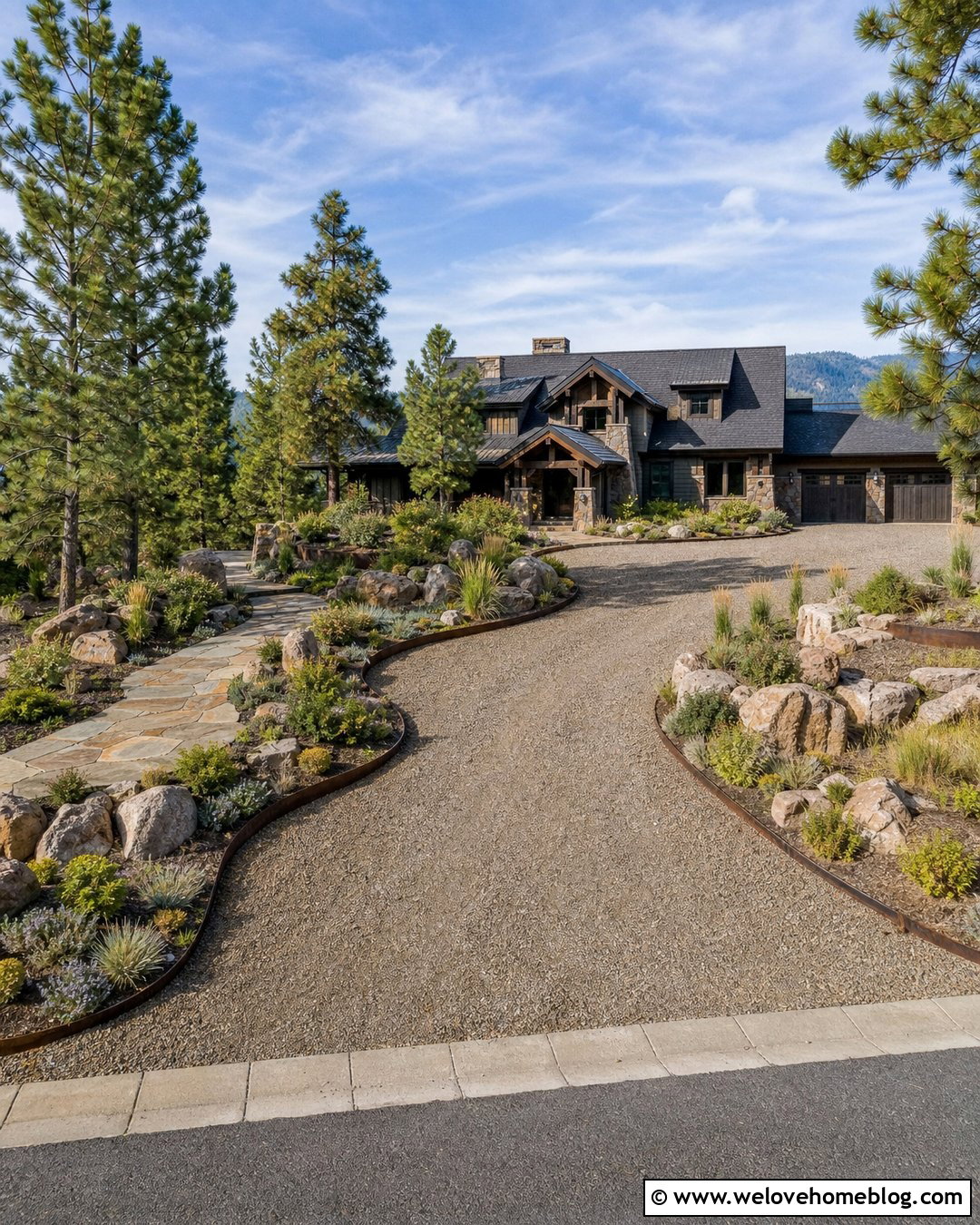
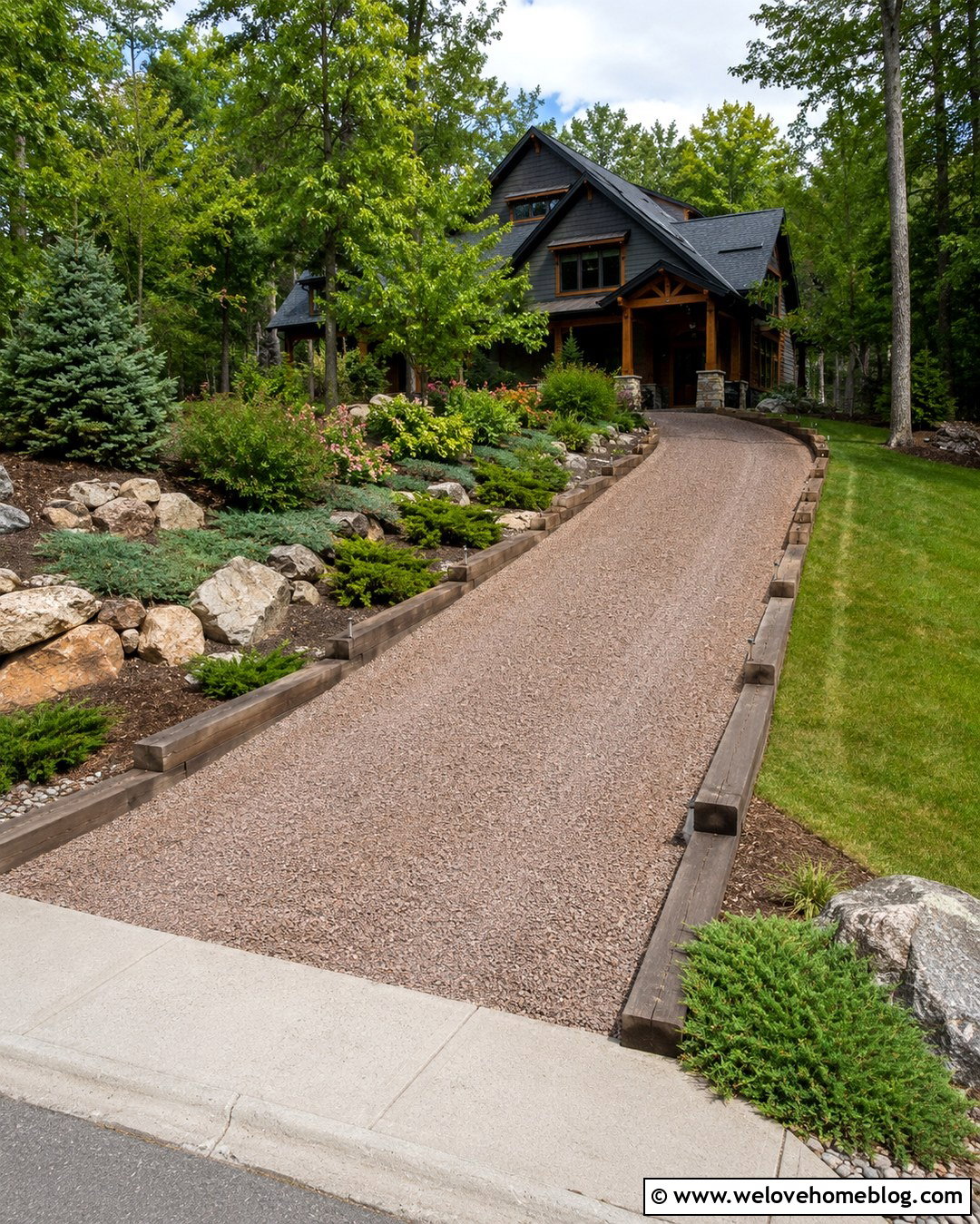
Large boulders can make an ordinary gravel driveway feel grounded in the surrounding landscape. Use compacted gray crushed stone for the driving surface and place locally sourced boulders at wider intervals along the edges. Avoid creating a continuous wall. Instead, group the stones near curves, planting beds, and the driveway entrance. Fill the spaces between them with tough shrubs, native grasses, creeping ground covers, and seasonal wildflowers. A broad, curved layout works especially well because the boulders can visually reinforce the changing direction. Near the garage, transition to a short band of stone pavers for a clean stopping point. This complete look suits mountain homes, rustic ranches, wooded properties, and contemporary houses designed with stone, timber, or dark exterior materials.
12. Woodland Gravel Driveway With Fern Borders
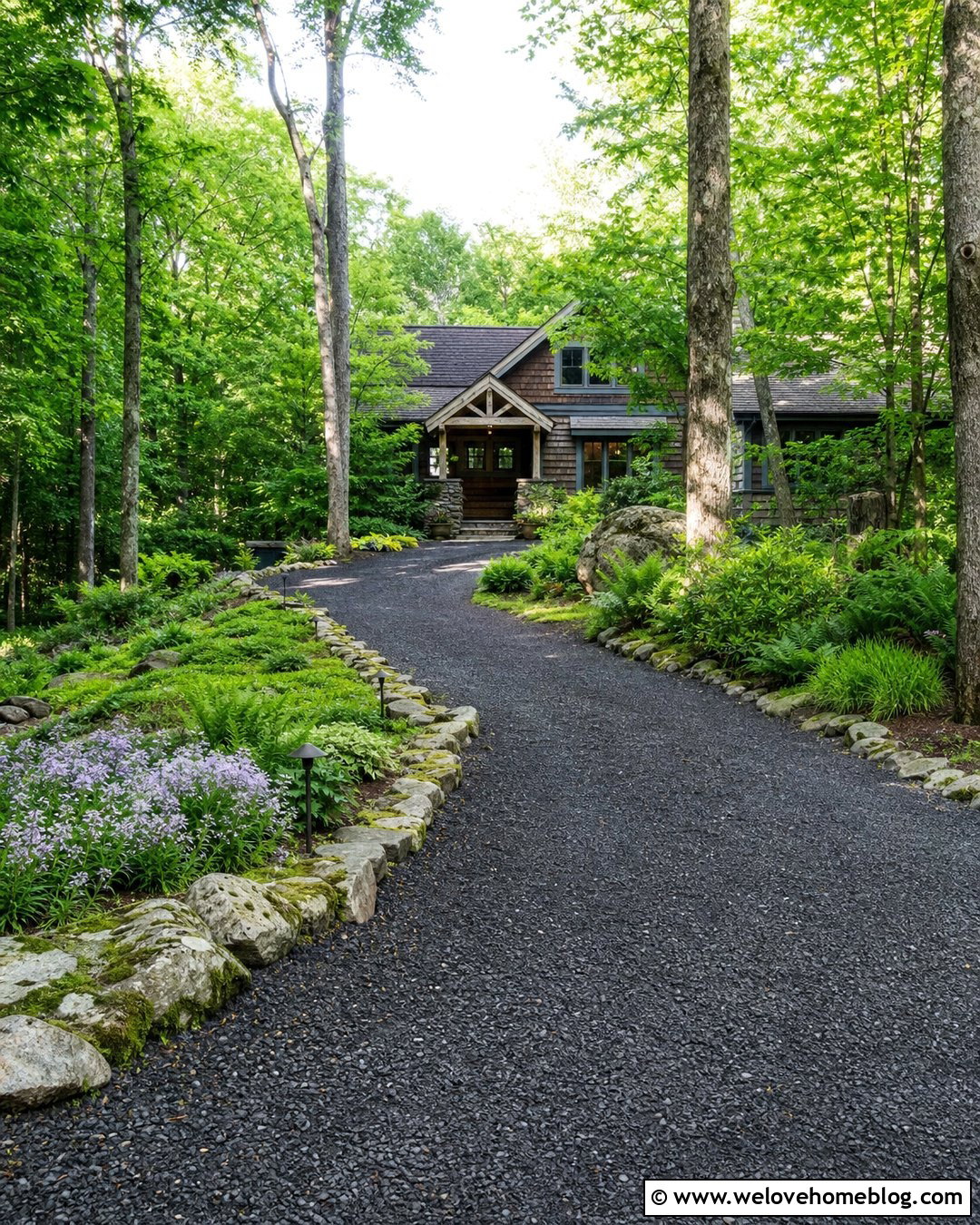
Picture a narrow gravel driveway winding beneath mature trees toward a quiet craftsman or cabin-style home. Dark gray crushed gravel helps the surface settle visually into the shaded woodland setting. Edge the drive with irregular fieldstone, partially softened by moss where local conditions naturally support it. Plant broad sweeps of ferns, sedges, woodland phlox, foamflower, and shade-tolerant shrubs beyond the stone. Keep plants low near bends and the road entrance so drivers retain clear visibility. A few simple path lights can mark the route without turning the garden into an overly formal landscape. Avoid disturbing major tree roots when planning excavation and drainage. The best result feels lightly placed within the woods, even though the driveway structure beneath the surface is carefully prepared.
13. Long Gravel Driveway With Tree-Lined Landscaping
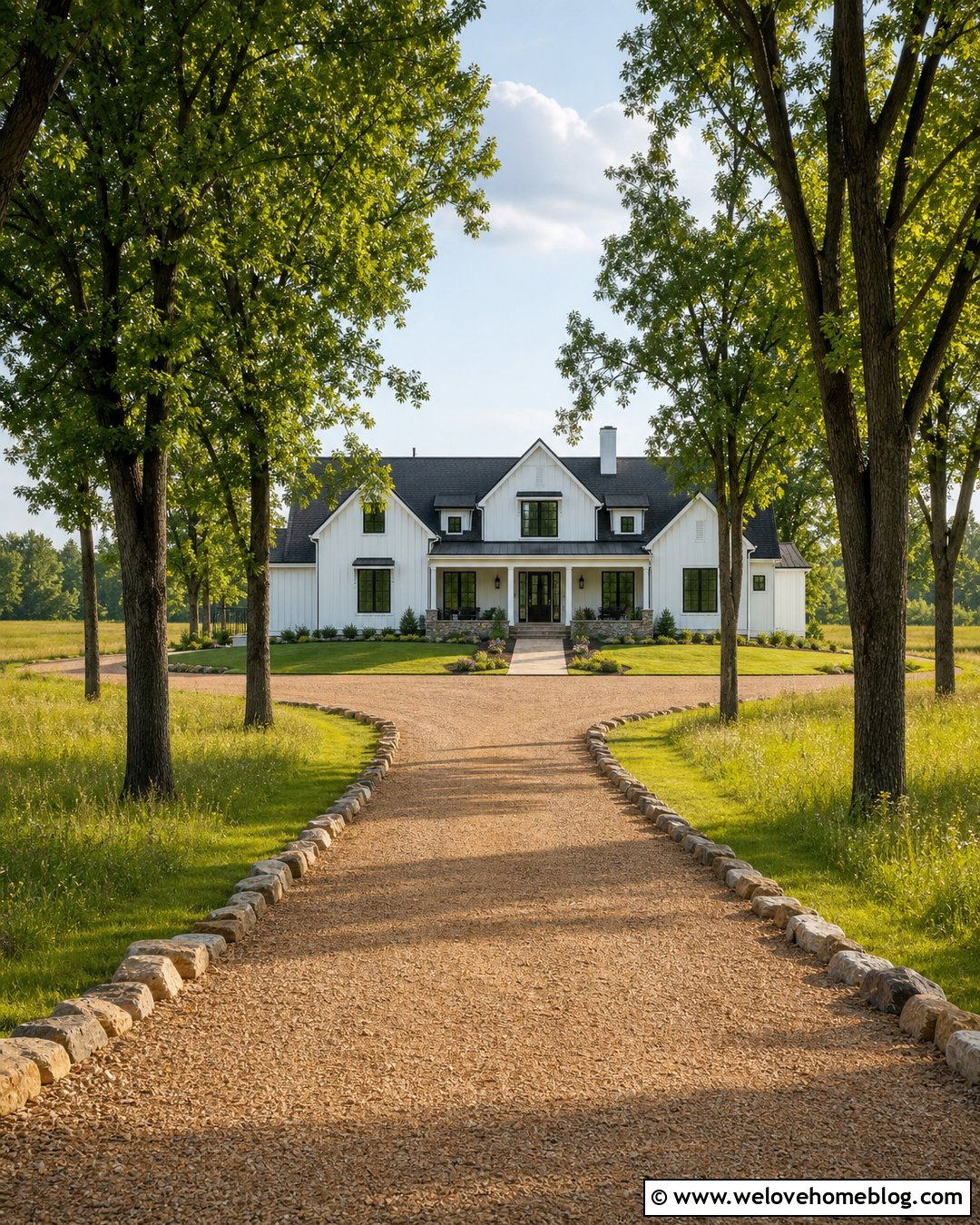
A long country driveway becomes more memorable when its materials and planting create a clear rhythm. Use warm brown or medium-gray crushed gravel for a surface that complements the surrounding soil and vegetation. Narrow fieldstone borders can reinforce the edges near curves while remaining less formal along straight sections. Plant evenly spaced native or climate-appropriate trees far enough from the driving surface to accommodate mature trunks, roots, and branches. Between the trees, use meadow grass or simple mown lawn rather than complicated flower beds. At the house, widen the driveway into a practical parking court framed by larger shrubs. A matching gravel walkway can connect the parking area to the porch. The repeated trees naturally direct attention toward the home and make the full approach feel balanced.
14. Permeable Paver Driveway With A Rain Garden
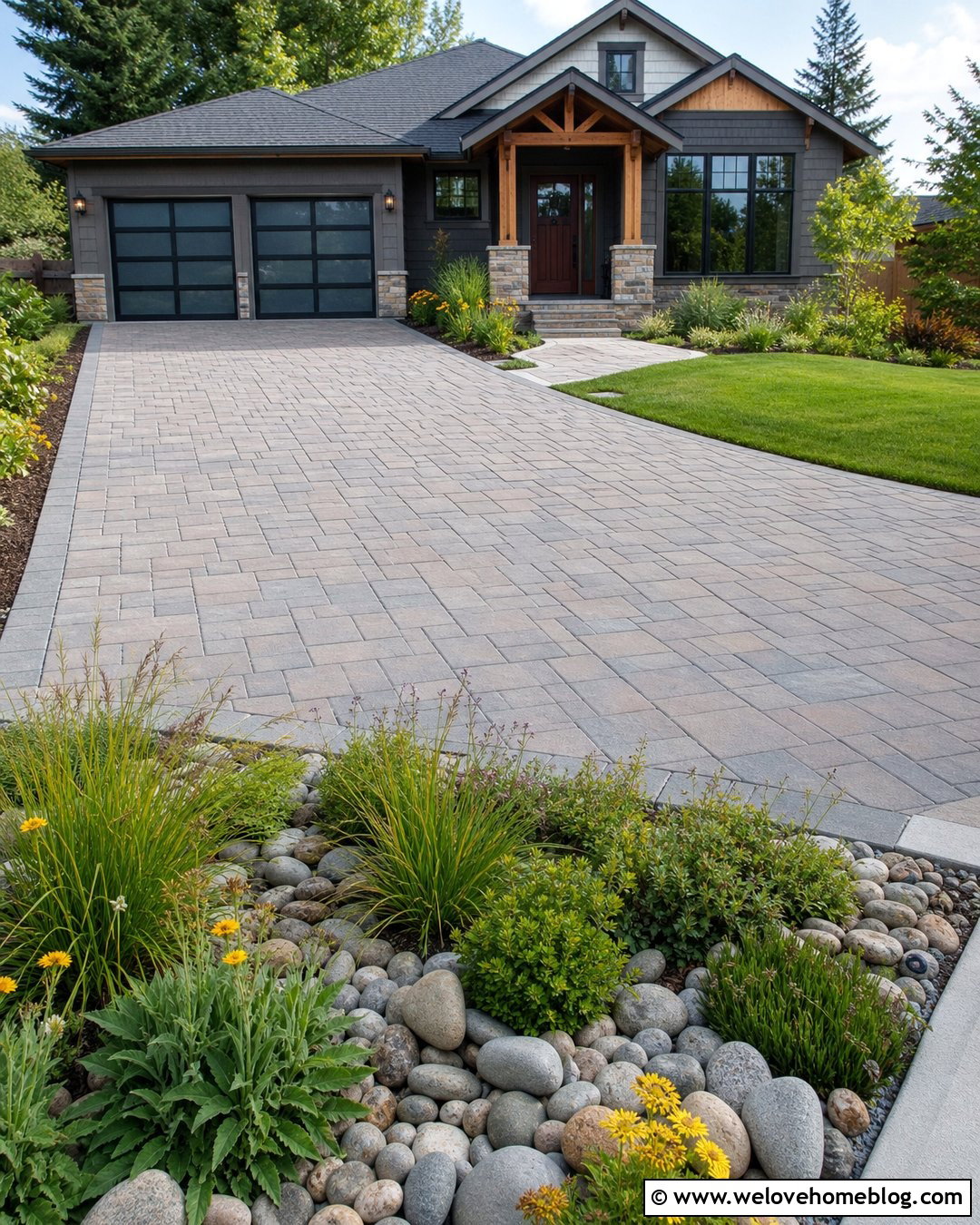
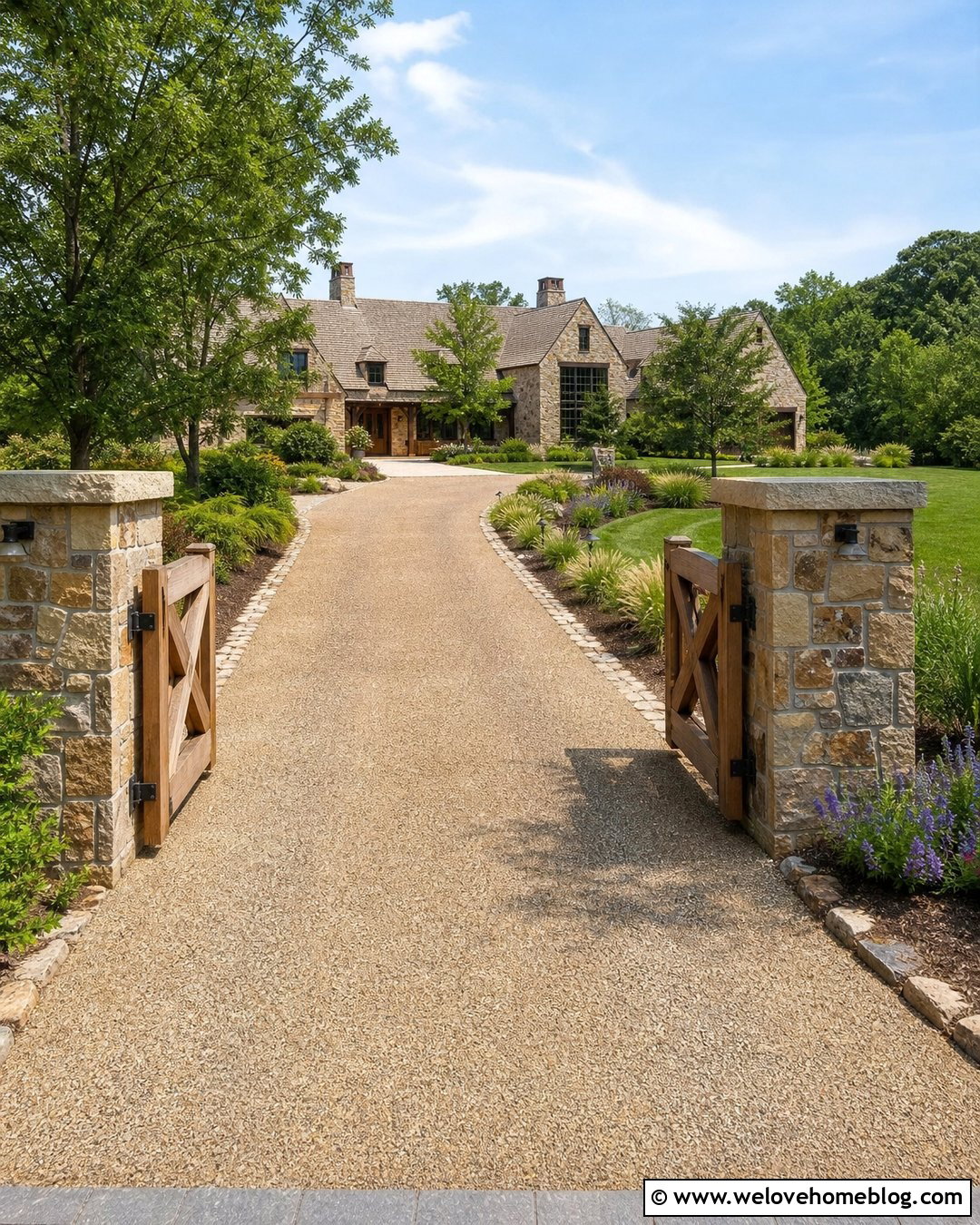
A permeable paver driveway and rain garden can work together as one attractive landscape system. Choose stone-look concrete pavers in muted gray and tan tones, with wider permeable joints filled with clean aggregate. Gently direct surface drainage toward a planted depression beside the lower edge of the driveway rather than toward the home. Fill the rain garden with plants selected for both temporary wet conditions and normal dry periods in your region. Add river cobbles at the inlet to slow water and reduce exposed soil. Permeable driveway systems allow water to pass through joints into an open-graded stone base when they are designed and installed correctly. () The finished layout can feel lush, practical, and appropriate for contemporary or craftsman homes.
15. Crushed Shell Driveway With Coastal Landscaping
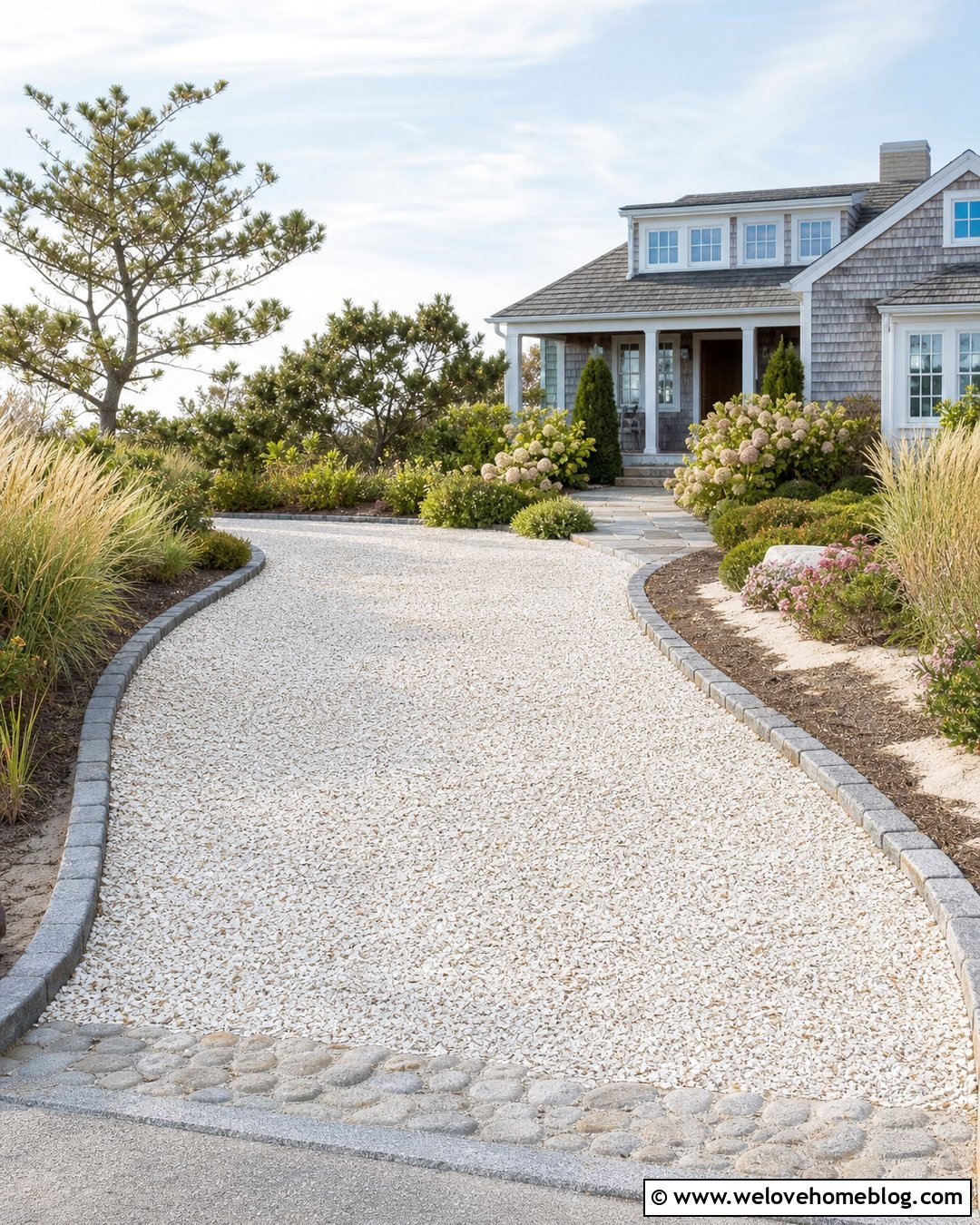
A crushed shell driveway creates a pale, textured entrance that feels at home in suitable coastal settings. Use compacted white or cream shell material on a straight or gently curved driveway leading to a shingle-style, coastal cottage, or pastel-sided house. Contain the surface with weathered granite curbing or pressure-treated timber chosen for ground-contact use. Frame the driveway with salt-tolerant grasses, low evergreen shrubs, beach plum, and other plants appropriate for the specific region. A shell-and-stone entrance apron can strengthen the transition from the road and reduce material migration. Before choosing this surface, check local availability, regulations, environmental concerns, and maintenance requirements. Where responsibly sourced shell is practical, its light color and subtle texture can create an airy entrance that coordinates naturally with sandy landscapes.
16. Tan Chip Seal Driveway With Meadow Borders
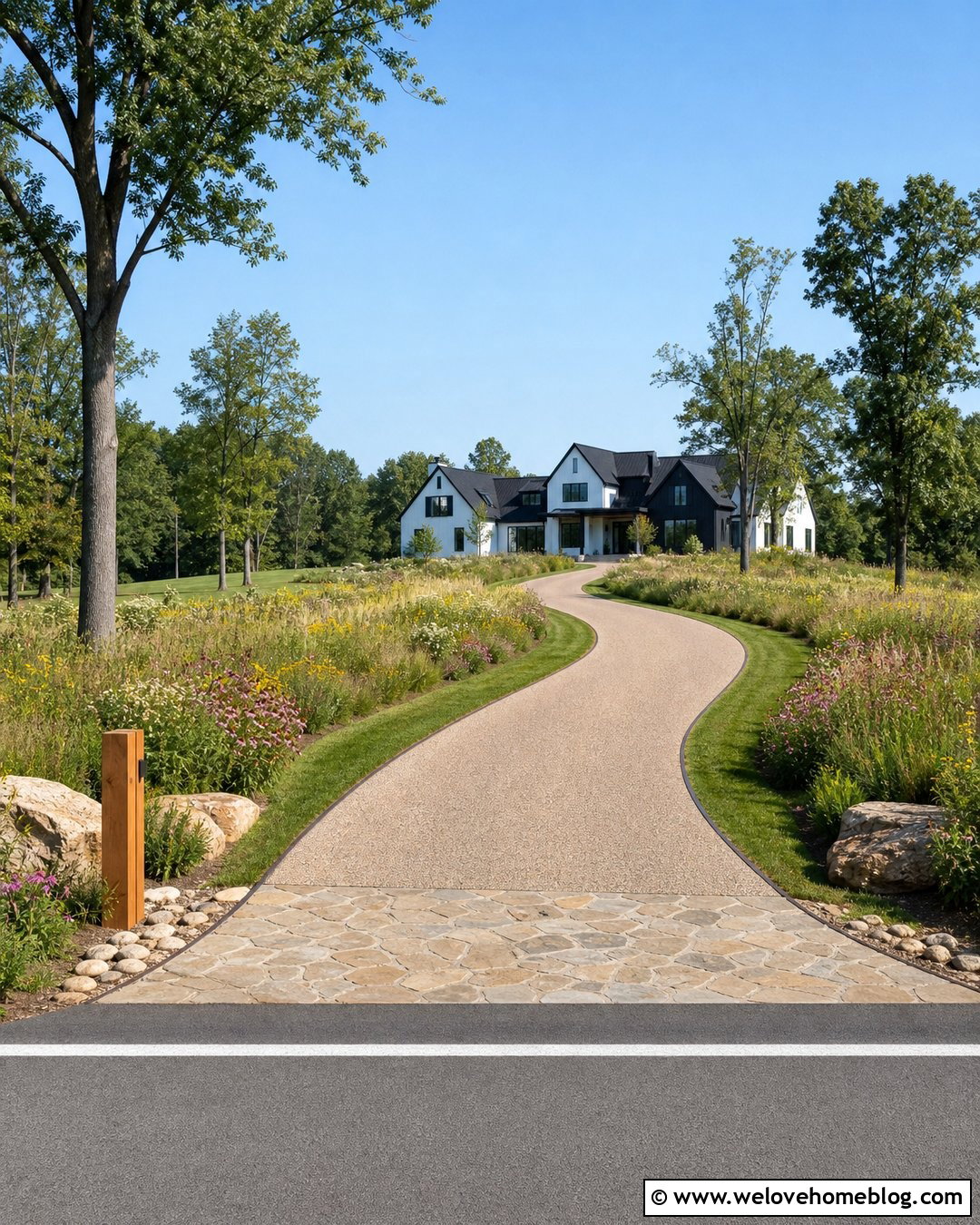
Tan chip seal offers a practical way to achieve the visual warmth of gravel with a more firmly bonded surface. Small natural stone chips are applied over a prepared binder, creating a textured finish that suits long rural driveways and sloping approaches. Choose buff, brown, or mixed aggregate that relates to the home’s siding and local stone. Keep the driveway shape gently curved, with flush steel edging near formal areas and softer transitions beside meadow planting. Native grasses and wildflowers can frame the outer edges, while a regularly mown strip keeps vegetation from leaning into the driving lane. Add a natural stone apron and simple timber address marker at the entrance. This design works particularly well with ranch houses, barns, modern farmhouses, and country properties.
17. Resin-Bound Gravel Driveway With Soft Planting
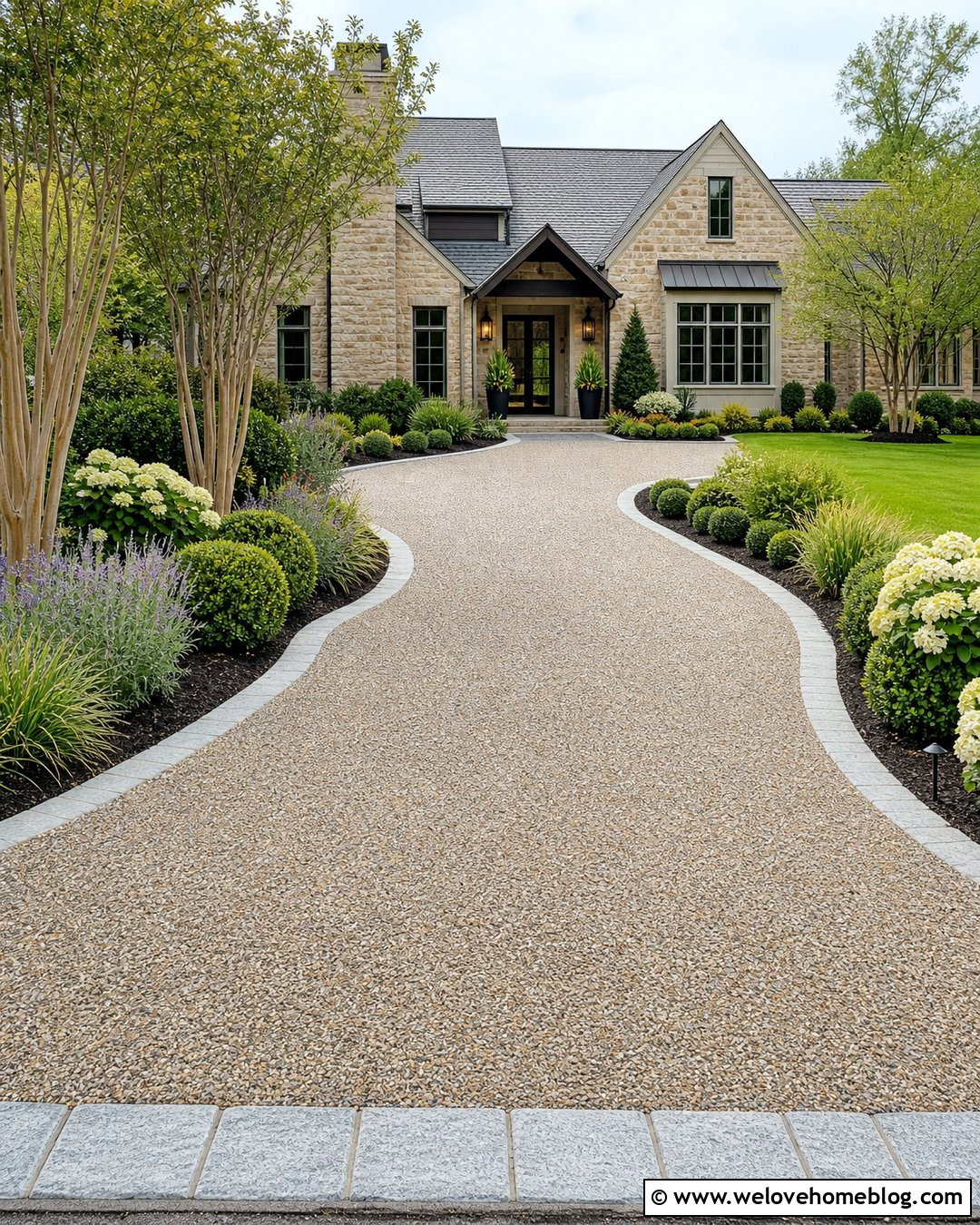
Resin-bound gravel can deliver the color and texture of natural aggregate in a smoother, more controlled finish. Select a blend of small tan, cream, and gray stones that complements the house rather than competing with it. Use the material on a sweeping curved driveway, with granite setts forming a defined border and entrance apron. Deep planting beds should follow the same curves. Fill them with rounded shrubs, ornamental grasses, flowering perennials, and one or two multi-stem trees. Some resin-bound systems can be permeable when the entire build-up is designed for drainage, but product specifications and base construction must be checked carefully. () The seamless appearance suits modern farmhouses, updated cottages, and contemporary homes surrounded by informal planting.
18. Gravel Grid Driveway With Fieldstone Borders
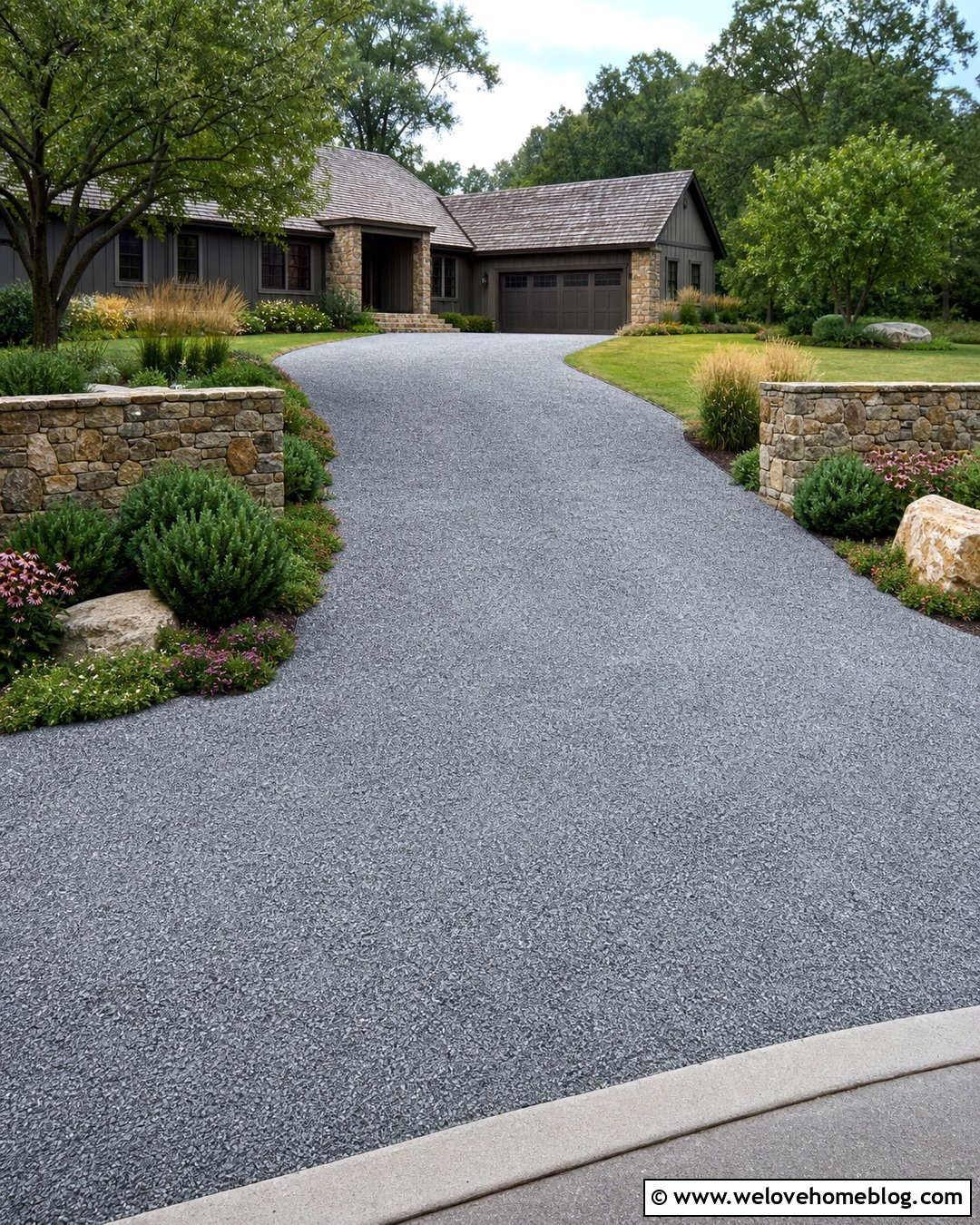
A gravel grid system helps a loose-stone driveway maintain a more organized surface. The cellular structure is installed over a prepared base and filled with angular gravel, helping hold the aggregate within the driving area while allowing water to move through a properly designed system. () Choose medium-gray stone for a versatile look, then add rugged fieldstone edging along the outer curves. Plant compact junipers, switchgrass, coneflowers, and low ground covers in generous beds beyond the border. At the entrance, widen the fieldstone into short pillars or low walls that match the home’s foundation. A slightly curved driveway keeps the grid-based construction from feeling too utilitarian. This combination works well for busy family homes, rustic properties, and larger parking areas.
19. Two-Tone Gravel Driveway With A Stone Ribbon
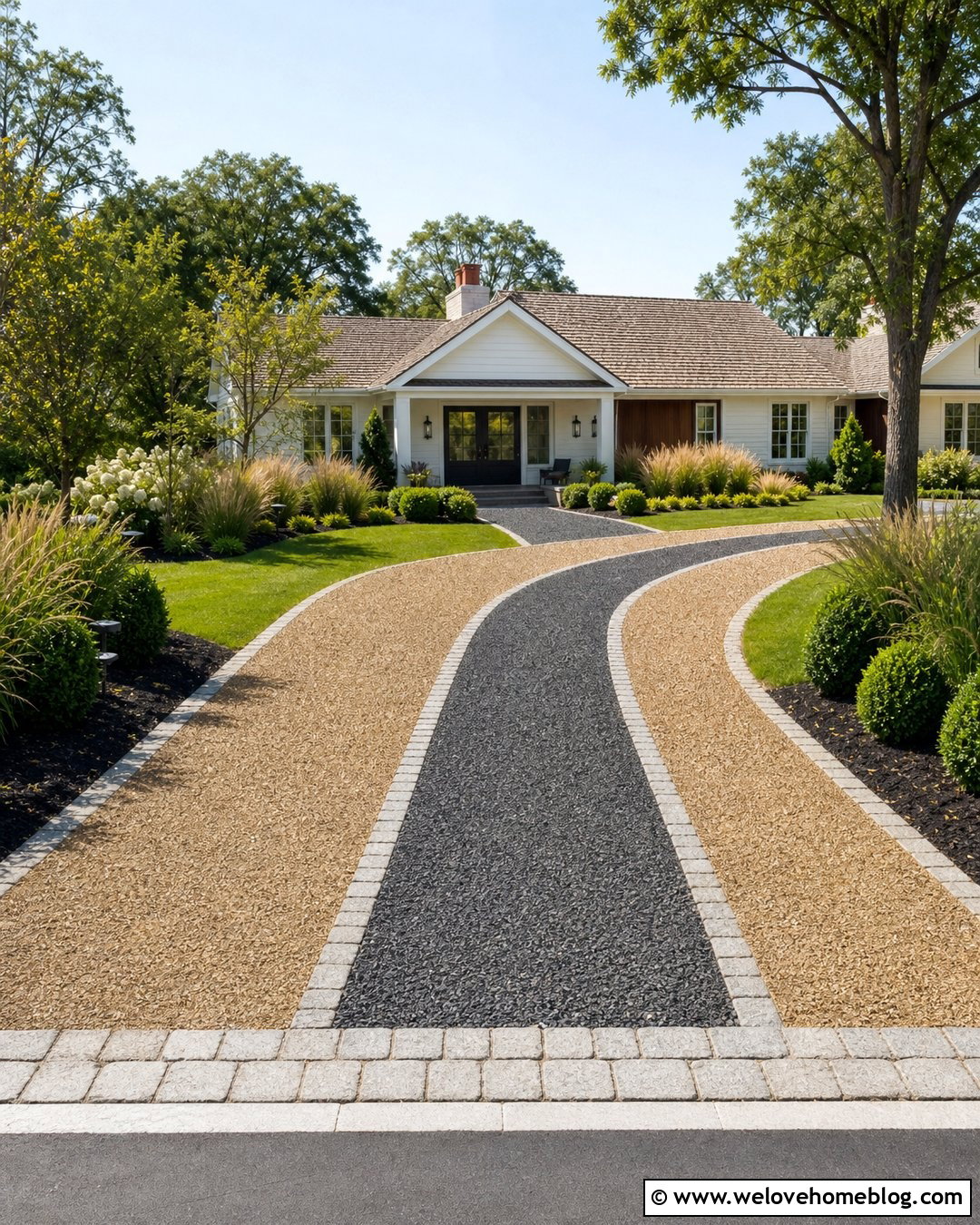
Using two gravel colors can define a driveway without making it feel overly decorative. Cover the main surface with compacted buff crushed stone, then add a wide ribbon of charcoal gravel down the center or along both sides. Separate the colors with narrow granite setts so they do not blend quickly under traffic. On a curved driveway, the darker ribbon emphasizes the shape and visually guides the approach. Surround the layout with simple lawn, clipped shrubs, and airy ornamental grasses. Repeat the charcoal tone in the walkway or front steps for a cohesive transition to the house. This design suits updated ranch homes, modern farmhouses, and transitional exteriors. Keep the color contrast moderate so the driveway still appears natural and connected to the broader landscape.
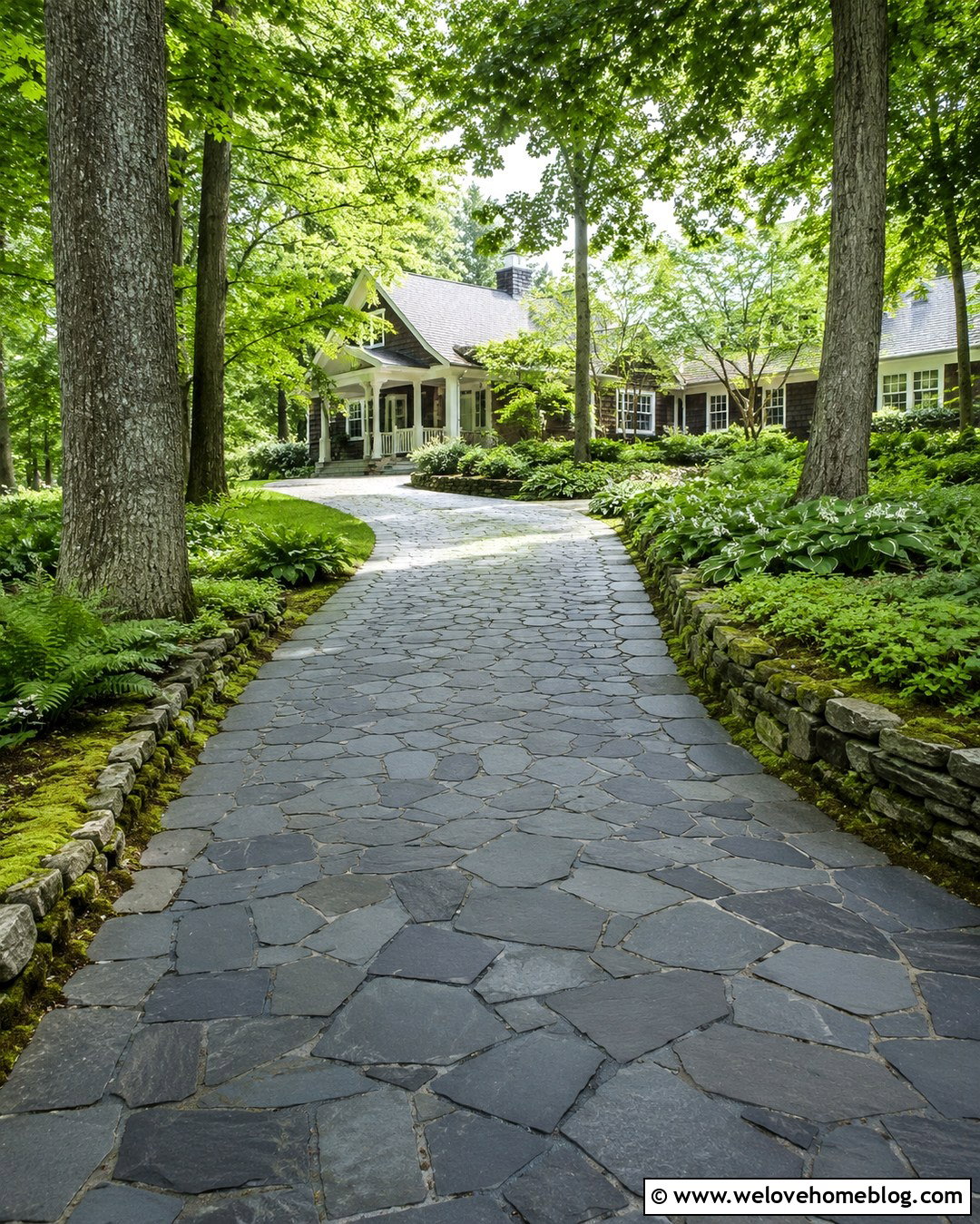
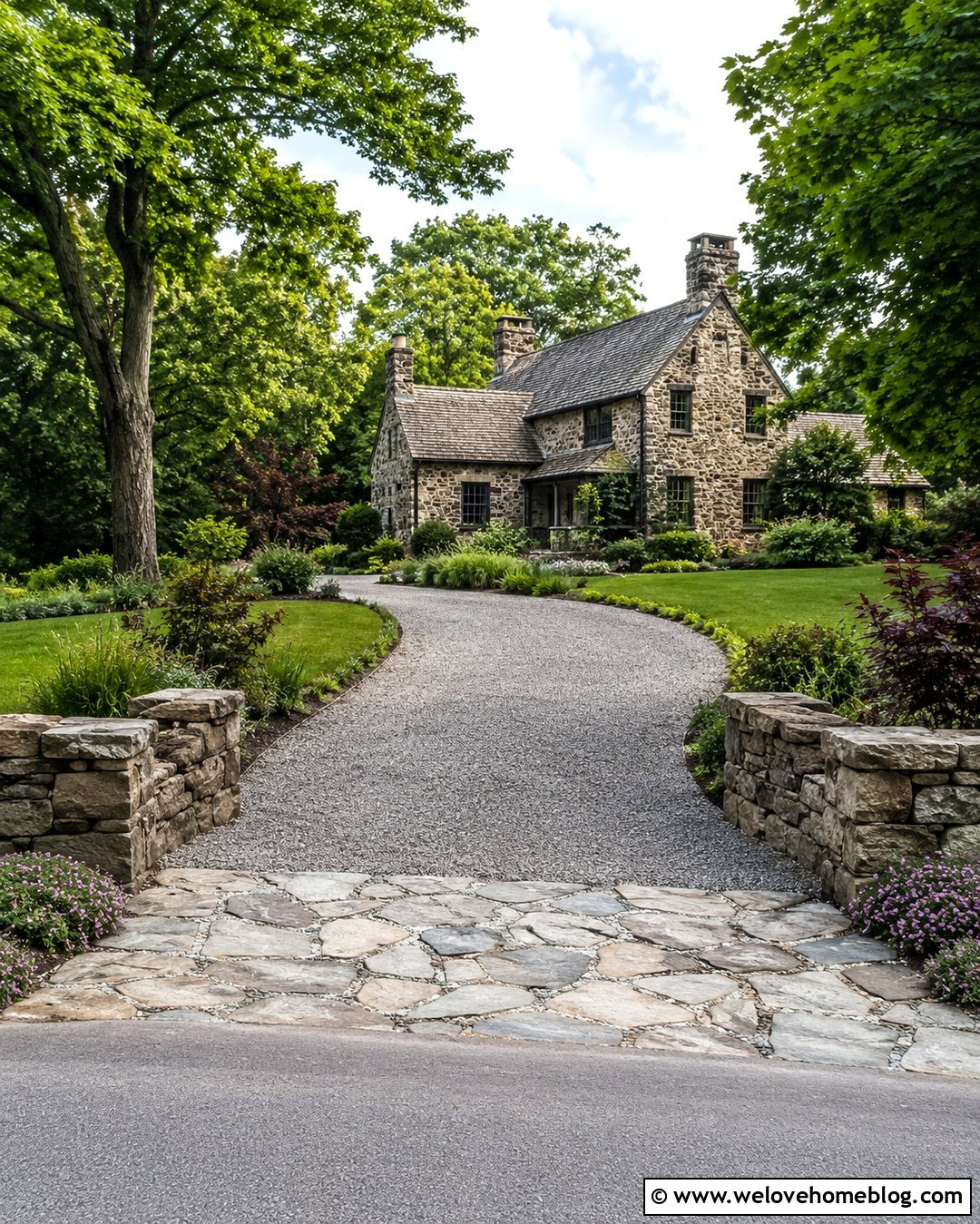
20. Gravel Driveway With A Fieldstone Entrance Apron
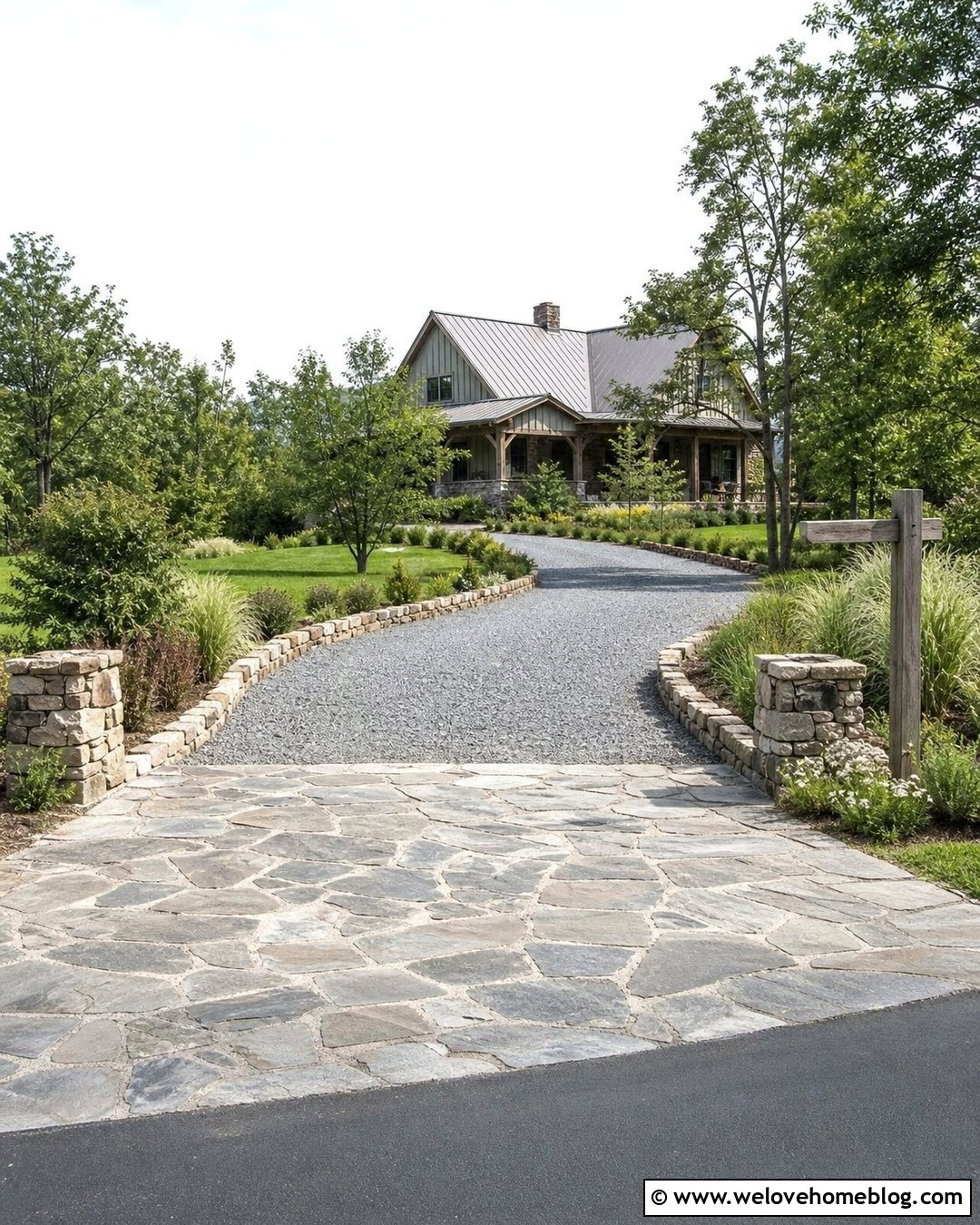
A fieldstone apron gives a gravel driveway a strong and attractive connection to the street. Use irregular but closely fitted stone across the first several feet of the entrance, then transition into compacted crushed gravel for the main drive. The stone should be selected and installed for vehicle traffic, not treated like thin garden stepping stones. Continue matching fieldstone along the edges for a short distance before letting the gravel meet informal planting beds. Low native shrubs, ornamental grass, and a simple timber or stone address marker can complete the entrance. Farther up the drive, allow the layout to curve toward a farmhouse, cottage, or ranch home. The apron adds visual structure where the driveway receives frequent turning, braking, and street debris.
21. Crushed Stone Driveway With Dry Creek Drainage
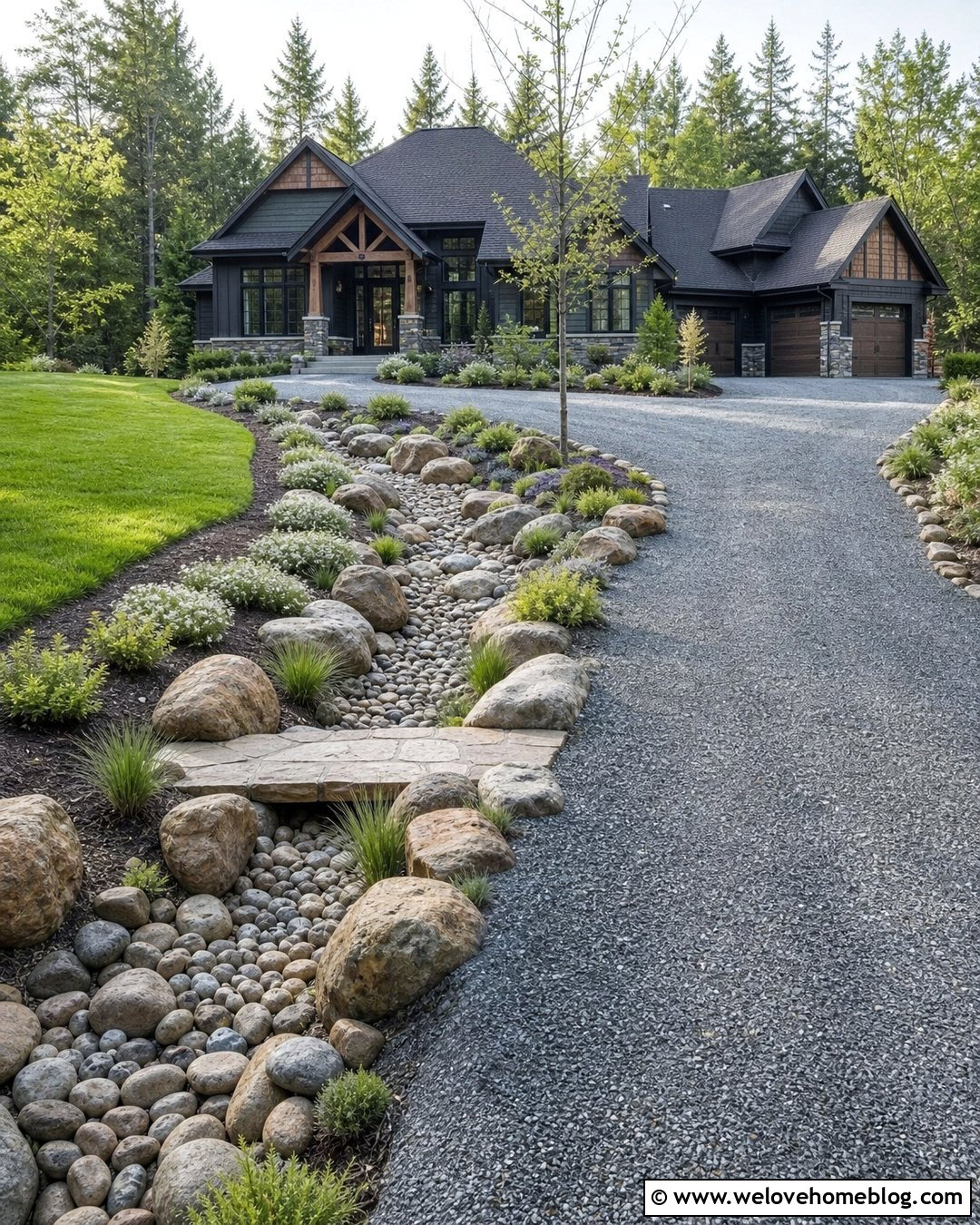
A dry creek can make driveway drainage look like a natural landscape feature. Use compacted charcoal or brown crushed stone for the main driveway and place the creek along the downhill side. Build it with a varied mix of cobbles, river stones, and larger weathered boulders, following the direction water naturally needs to travel. A small stone-lined channel or culvert can carry water beneath the driveway when site conditions require it. Plant moisture-tolerant sedges and shrubs near lower areas, with drought-tolerant ground covers on the upper banks. The creek should remain visually open rather than buried beneath dense vegetation. Because drainage affects foundations, neighboring property, erosion, and driveway stability, have complicated runoff conditions evaluated before changing the site’s grading or water route.
22. Gravel Driveway With Wildflower Borders
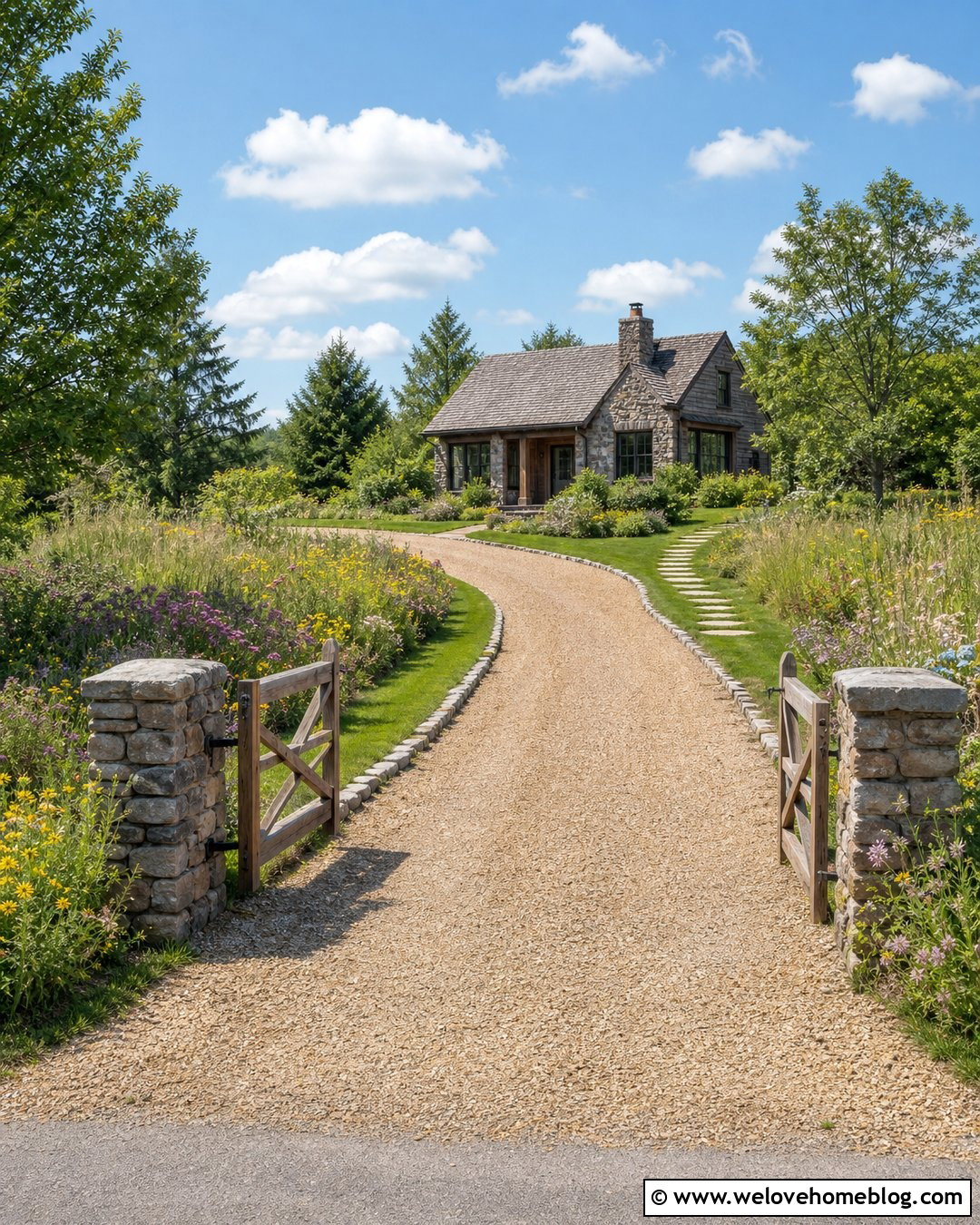
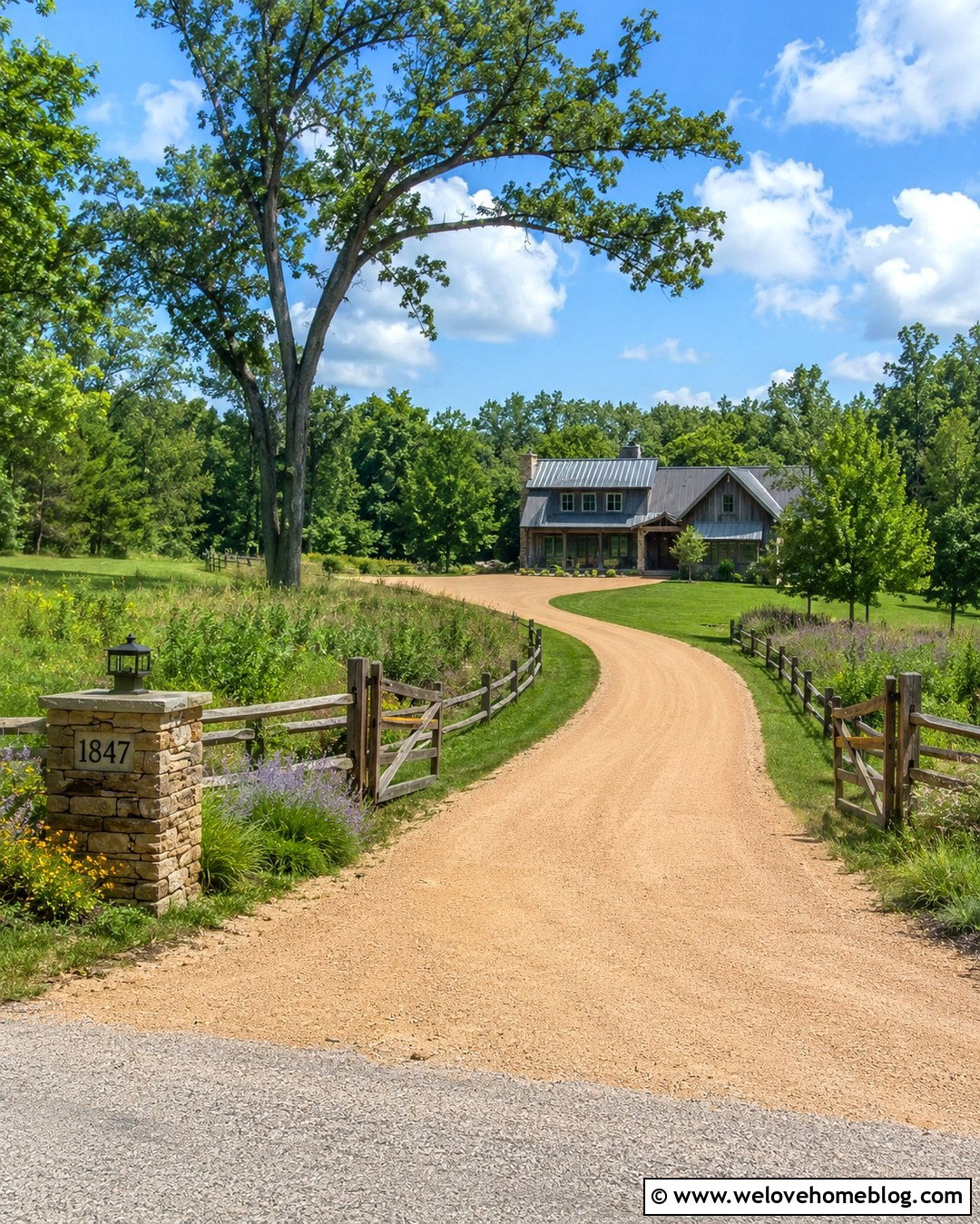
Loose sweeps of wildflowers can soften a simple gravel driveway and connect it to a meadow or naturalistic front yard. Start with compacted tan or gray crushed gravel contained by low steel or fieldstone edging. Give the driveway a relaxed curve and maintain a narrow mown strip along each side. This buffer prevents taller stems from falling into the driving area and creates a neat visual boundary. Beyond it, plant a regionally suitable mix of native grasses and flowering plants with staggered bloom periods. Keep vegetation shorter near the street, intersections, and tight bends to protect sightlines. A rustic wooden gate, modest stone pillars, or a simple address sign can define the entrance. This complete design complements country cottages, farmhouses, cabins, and rural ranch properties.
23. Natural Stone Driveway With Evergreen Hedges
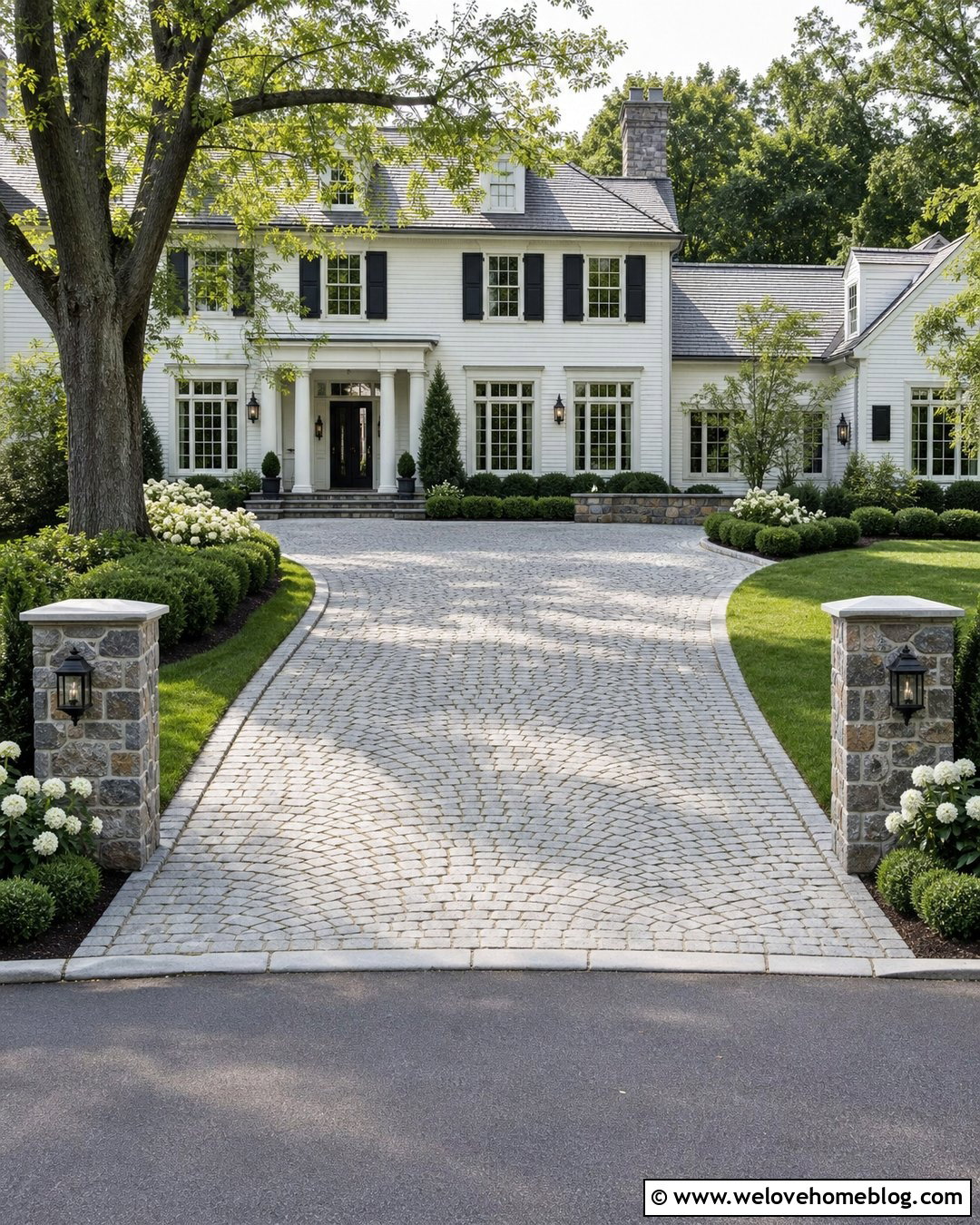
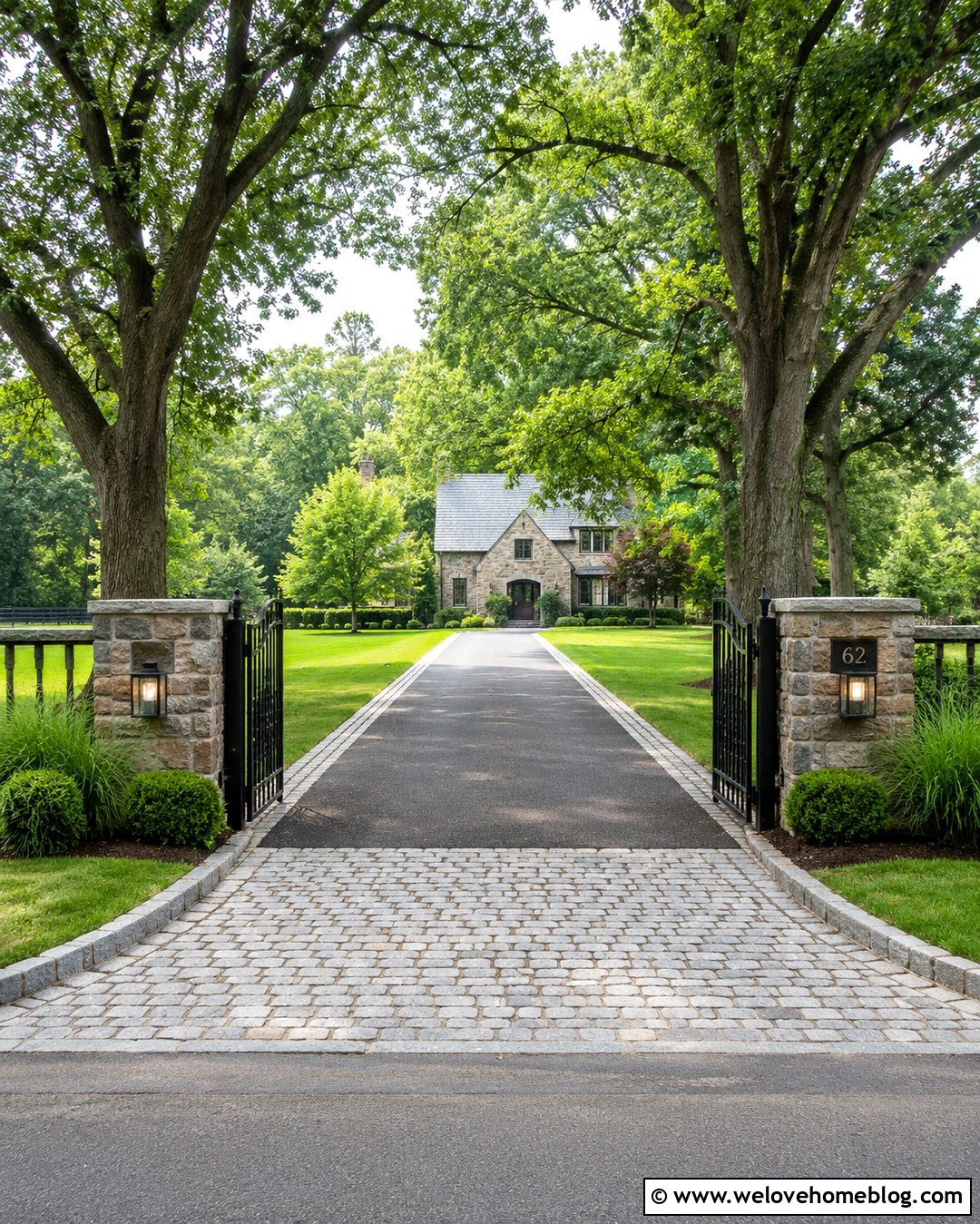
Natural stone paving paired with evergreen hedges creates a driveway that feels refined but still grounded in the landscape. Use rectangular granite or limestone setts in a blended, lightly weathered finish. Lay them in gently curving rows rather than a rigid square grid. Low hedges can frame the approach, while occasional openings reveal flowering shrubs, a walkway, or a specimen tree. Choose hedge plants suited to the region and position them far enough from the pavement to allow mature growth without constant clipping. At the entrance, use matching stone pillars with understated lighting. Near the house, widen the driveway into a small parking court with a central planted bed if space allows. This composed look works well with colonial, Georgian, Tudor, and European-inspired homes.
24. Circular Gravel Driveway With A Meadow Island
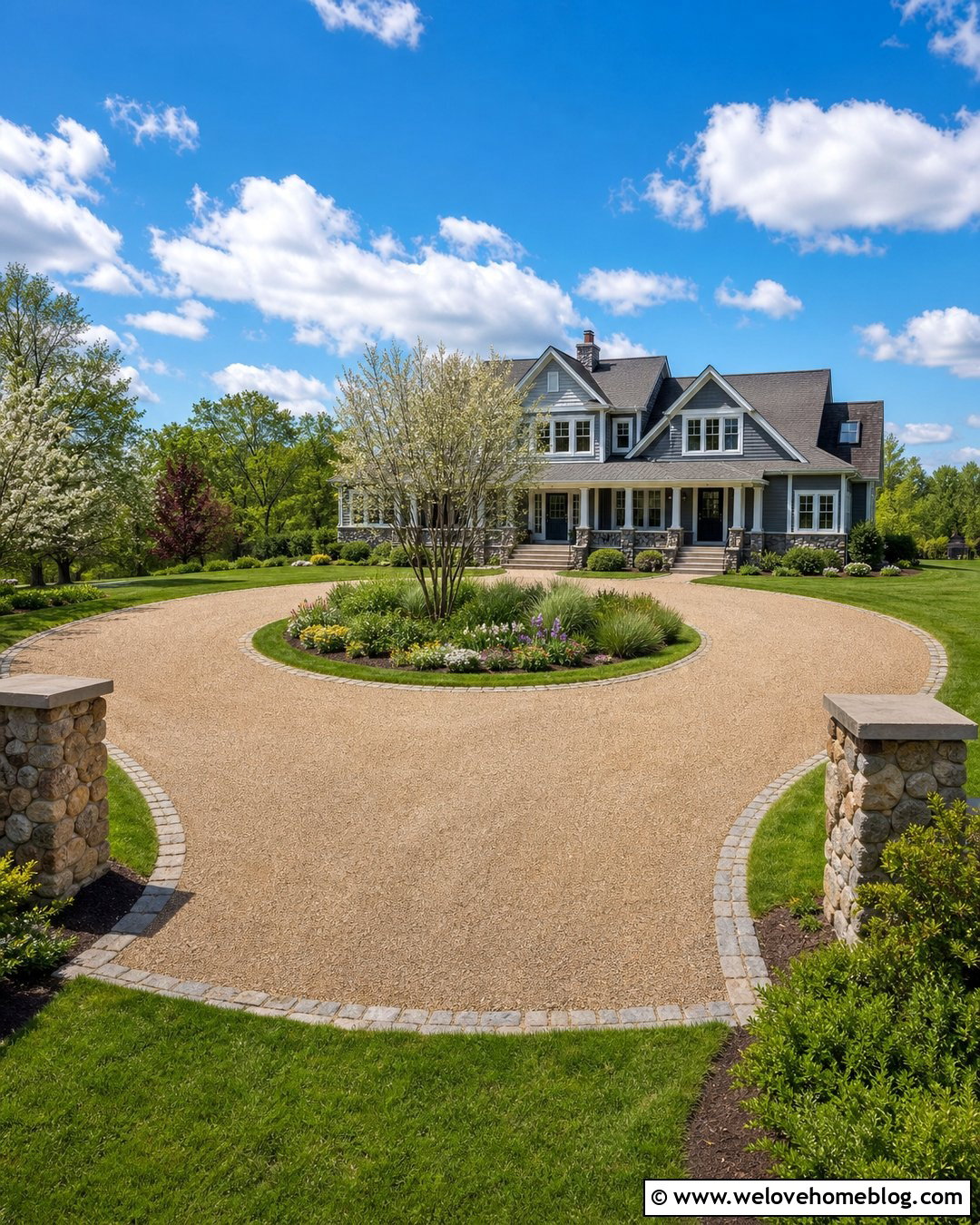
A circular gravel driveway can look remarkably natural when its center island is planted like a small meadow. Use warm crushed gravel for the driving loop and edge it with flush cobblestones that create a stable, easy-to-read boundary. Inside the island, combine a multi-stem serviceberry or another suitable small tree with native grasses, flowering perennials, and spring bulbs. Keep plants low around the outer edge to preserve visibility across the circle. Match the driveway’s entrance and exit with modest fieldstone pillars or timber posts, leaving both openings visually generous. Around the outer drive, use simple lawn or broad shrub beds rather than additional busy planting. The combination supports smooth vehicle movement while giving farmhouse, craftsman, and country homes a softer front-yard focal point.
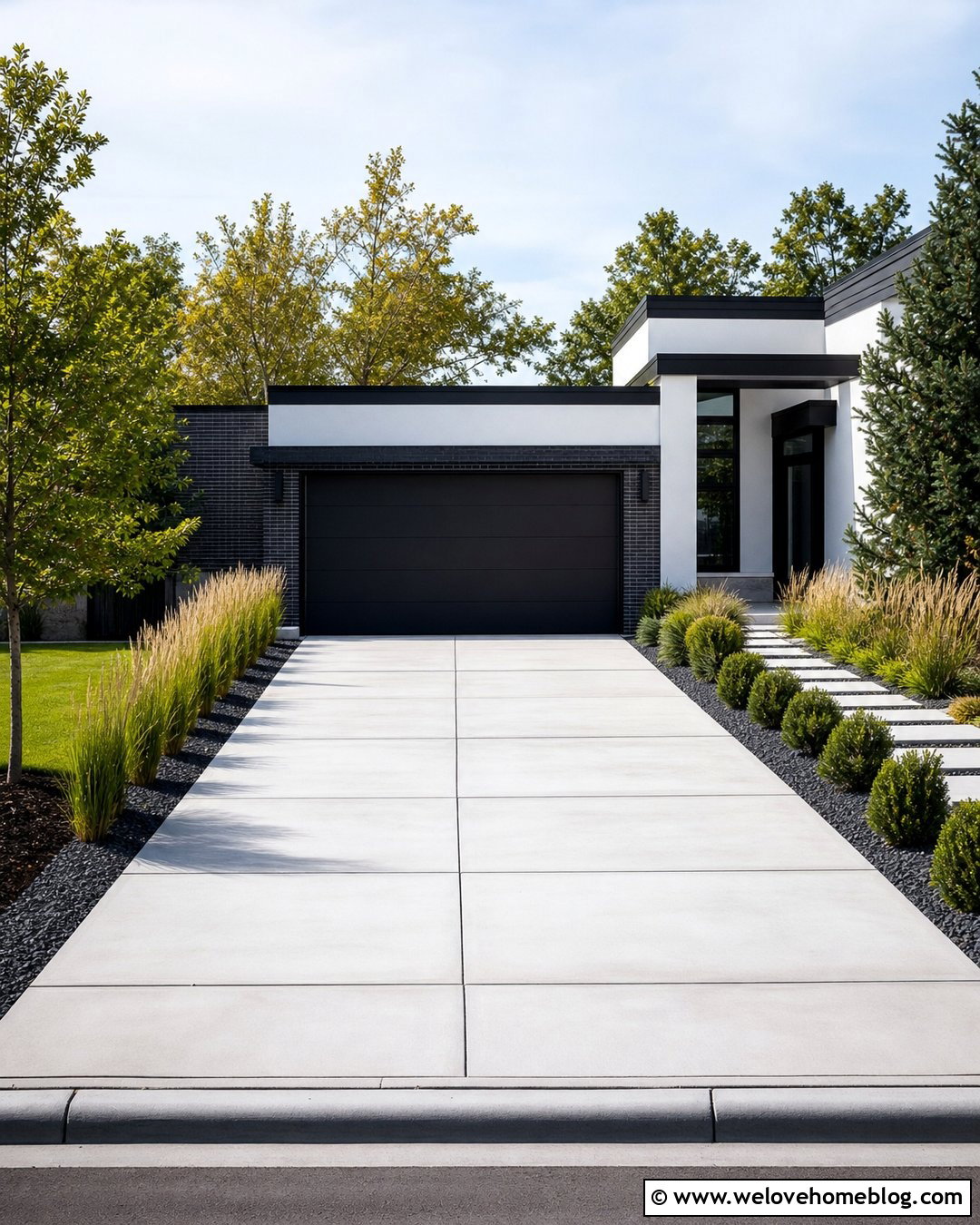
25. Modern Stone Strip Driveway With Native Grasses
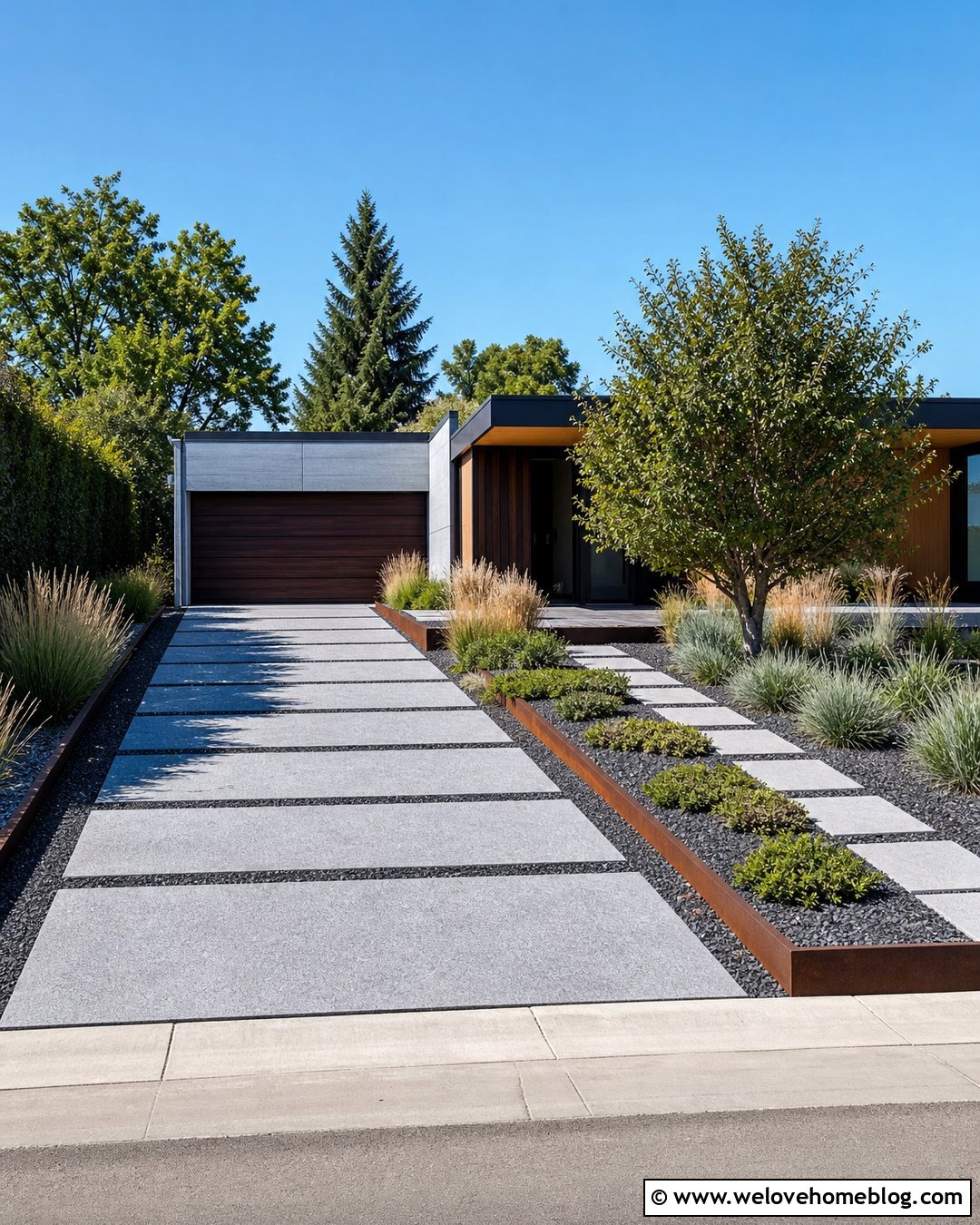
For a modern natural driveway, use broad strips of flamed granite, limestone, or textured concrete with gravel-filled drainage bands between them. Keep the layout straight and align the strips with the garage, front walk, and major architectural lines. Dark crushed basalt or soft gray gravel can create subtle contrast without overpowering the stone. Along each side, plant sculptural native grasses, low spreading shrubs, and one carefully positioned tree. Weathered steel edging provides a thin, precise boundary between the gravel and planting beds. Add simple rectangular stepping stones to connect the driveway with the front entry. This layout reduces the appearance of one uninterrupted paved slab while preserving a clean contemporary character. It suits modern, midcentury, and minimalist homes with restrained exterior materials.
Conclusion:
The strongest **25 Natural Driveway Ideas** treat the driveway as part of the landscape rather than a separate paved zone. Start with a material that suits your climate, home, budget, maintenance preferences, and daily vehicle use. Then strengthen the complete look with a practical shape, durable edging, clear walkways, and planting that stays away from important sightlines. Gravel, grass pavers, reclaimed brick, natural stone, and permeable systems offer distinct levels of structure and softness. Proper excavation, grading, drainage, and base preparation are just as important as surface appearance. With those essentials resolved, even a simple driveway can become an inviting, cohesive entrance that feels naturally connected to the house and yard.

Related posts:

Leave a Reply