
A driveway culvert does an essential job, but it can also become a polished part of your home’s curb appeal. The best 30 driveway culvert landscaping ideas combine an attractive driveway surface, stable culvert ends, erosion-resistant planting, and clear space for stormwater to move. Natural stone, brick, gravel, native grasses, flowering shrubs, and low retaining walls can all help the crossing feel intentional. However, decorative features should never reduce pipe capacity, obstruct the ditch, or create unstable roadside hazards. Local permit and drainage requirements should always guide structural changes. () Whether your property is modern, rustic, wooded, or suburban, the following complete designs offer practical inspiration for 30 driveway culvert landscaping ideas.

1. Driveway Culvert With Stacked Stone Walls
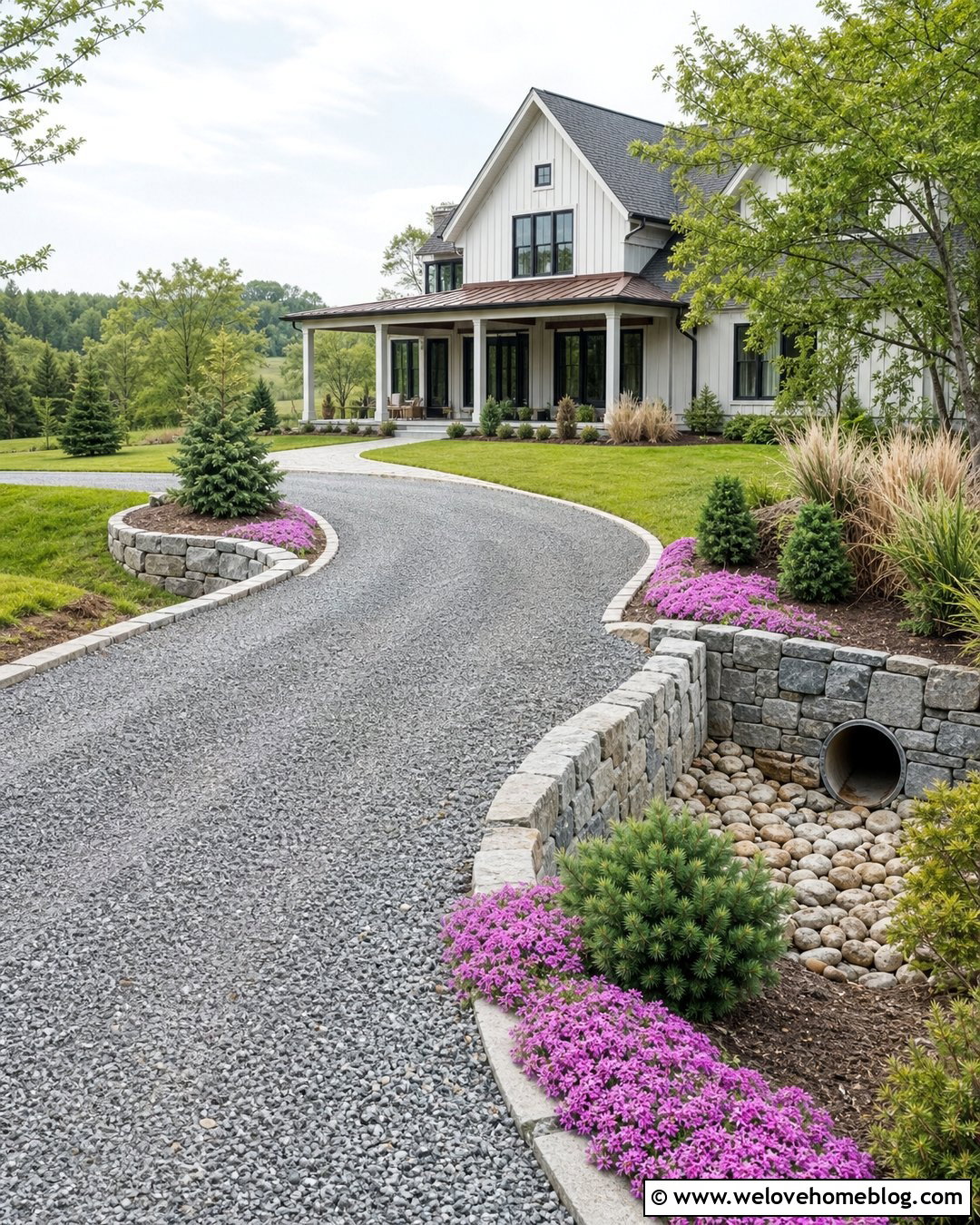
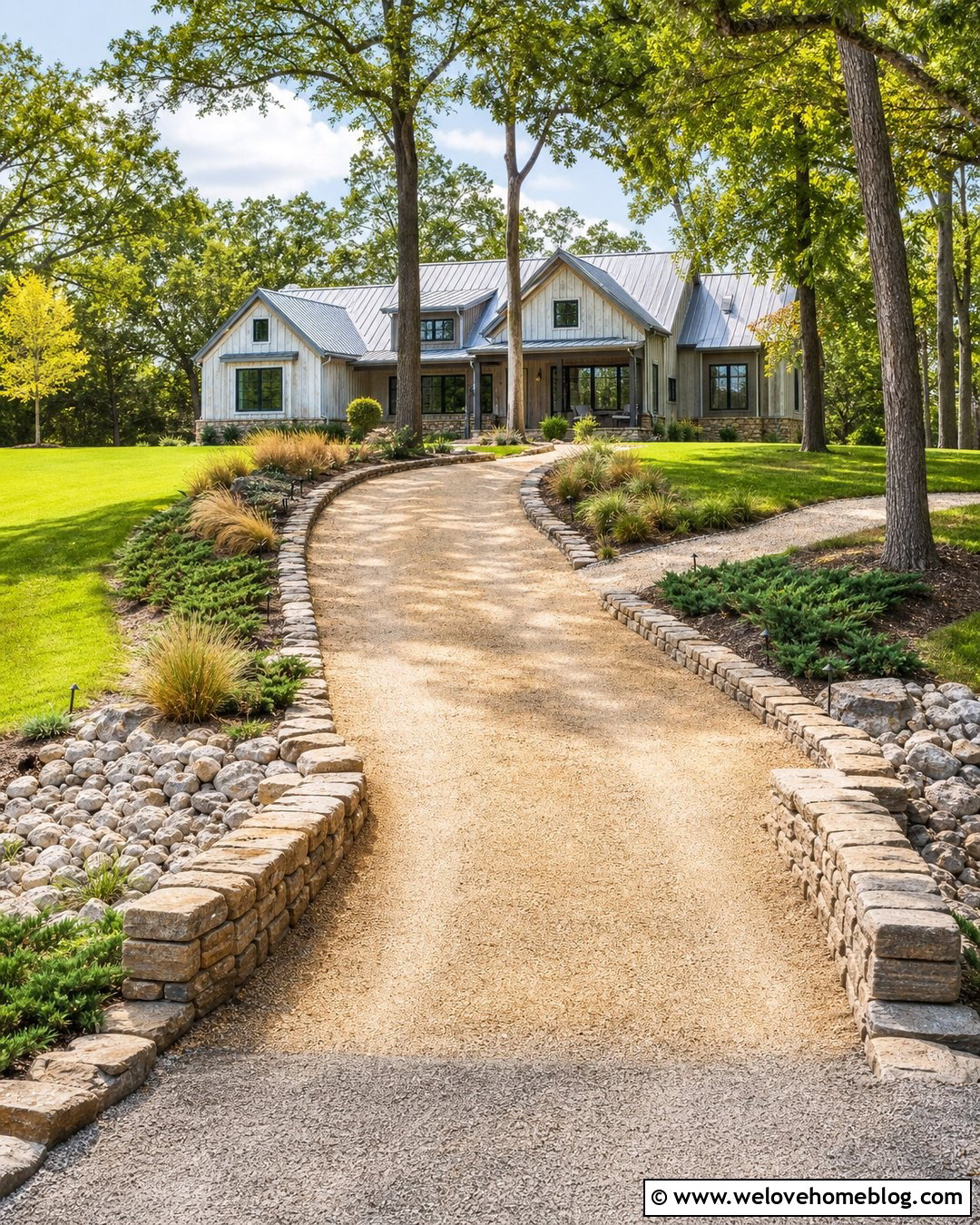
A stacked stone wall gives an exposed culvert a finished appearance without making the entrance feel overly formal. Use gray crushed gravel for a gently curved driveway, then build low fieldstone headwalls around both pipe openings. The walls should follow the slope instead of rising abruptly from it. Above each wall, create a shallow planting bed with compact evergreens, creeping phlox, and ornamental grasses. Larger stones placed along the lower banks can help the culvert transition naturally into the roadside ditch. Keep plants, loose mulch, and decorative gravel away from the pipe opening. Repeating the same stone in the driveway border and nearby walkway will connect the crossing visually to the house.
2. Driveway Culvert With River Rock Banks
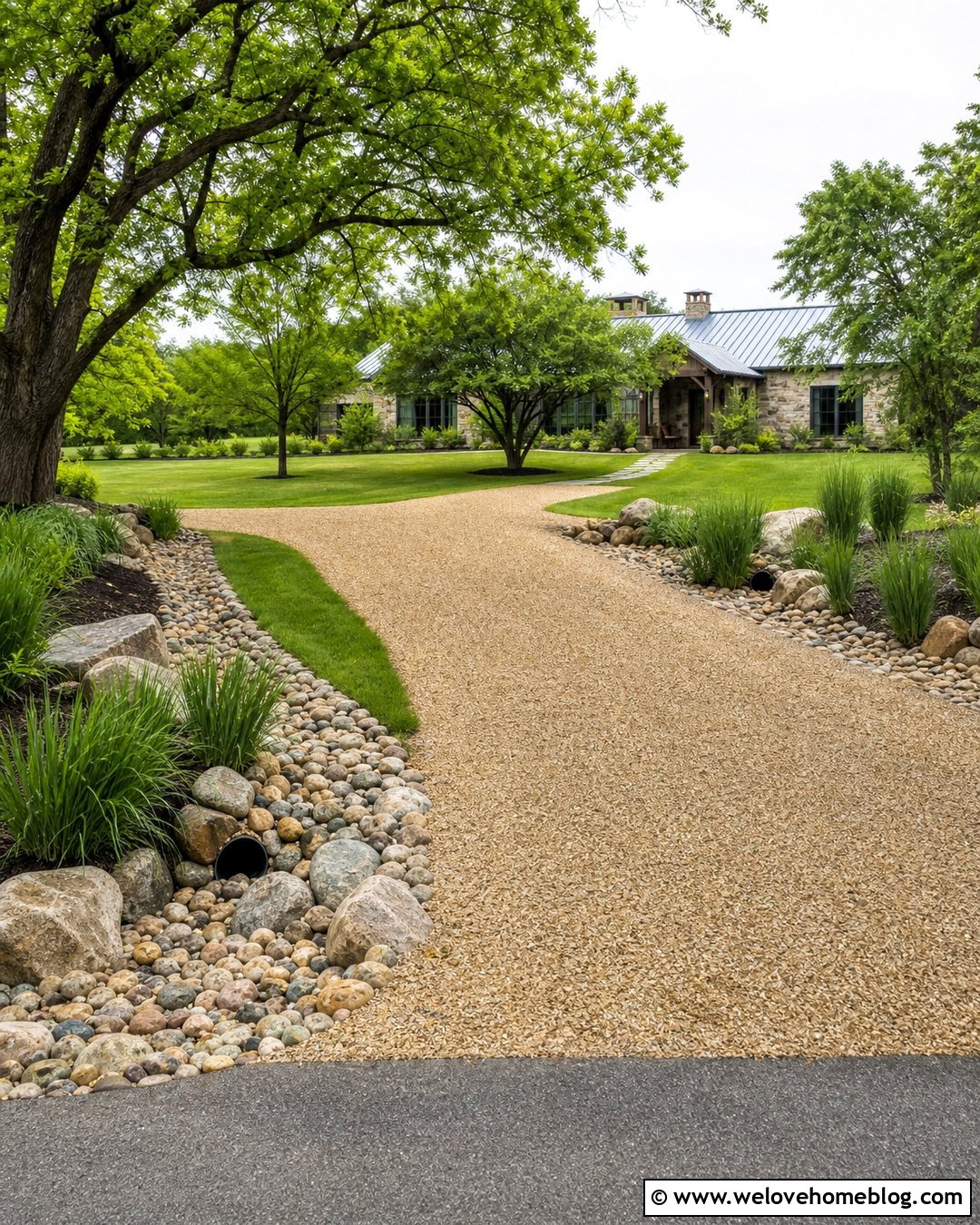
Smooth river rock can turn a basic drainage crossing into a natural-looking creek feature. Pair a tan pea gravel driveway with broad, gently sloping culvert banks covered in mixed gray, cream, and brown stones. Use larger rocks near the pipe and gradually reduce the stone size toward the lawn. This creates a softer transition while protecting exposed soil from moving water. Add moisture-tolerant sedges along the upper edges, where they will not interfere with the flow channel. A few carefully positioned boulders can mark the driveway entrance, but they should remain outside the vehicle clearance area. The finished design works especially well beside ranch homes, cabins, and wooded country properties.
3. Driveway Culvert With Brick Headwalls
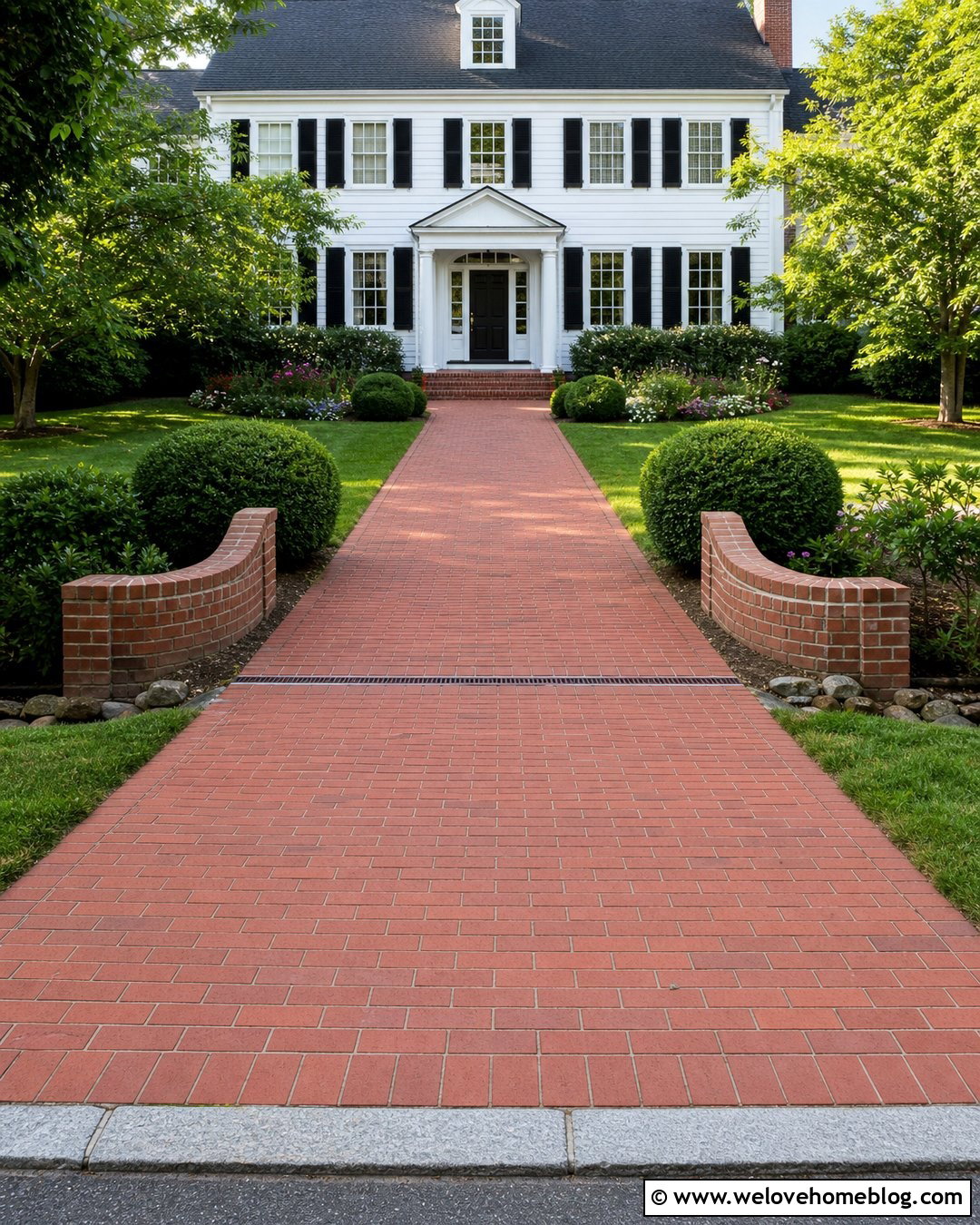
Warm brick makes a driveway culvert feel connected to a traditional home rather than added as an afterthought. Choose red clay brick pavers for the driveway apron and continue the same material into low masonry headwalls at each culvert opening. A curved brick cap creates a neat outline around the pipe while softening the structure. Frame the entrance with trimmed boxwoods, seasonal flowers, and narrow lawn strips that keep the area open and easy to inspect. For a coordinated look, repeat the brick in the front walkway or mailbox base. The mortar color should complement the home’s facade. Avoid placing trailing plants directly above the opening, where stems and fallen leaves could collect.
4. Driveway Culvert With Boulder Landscaping
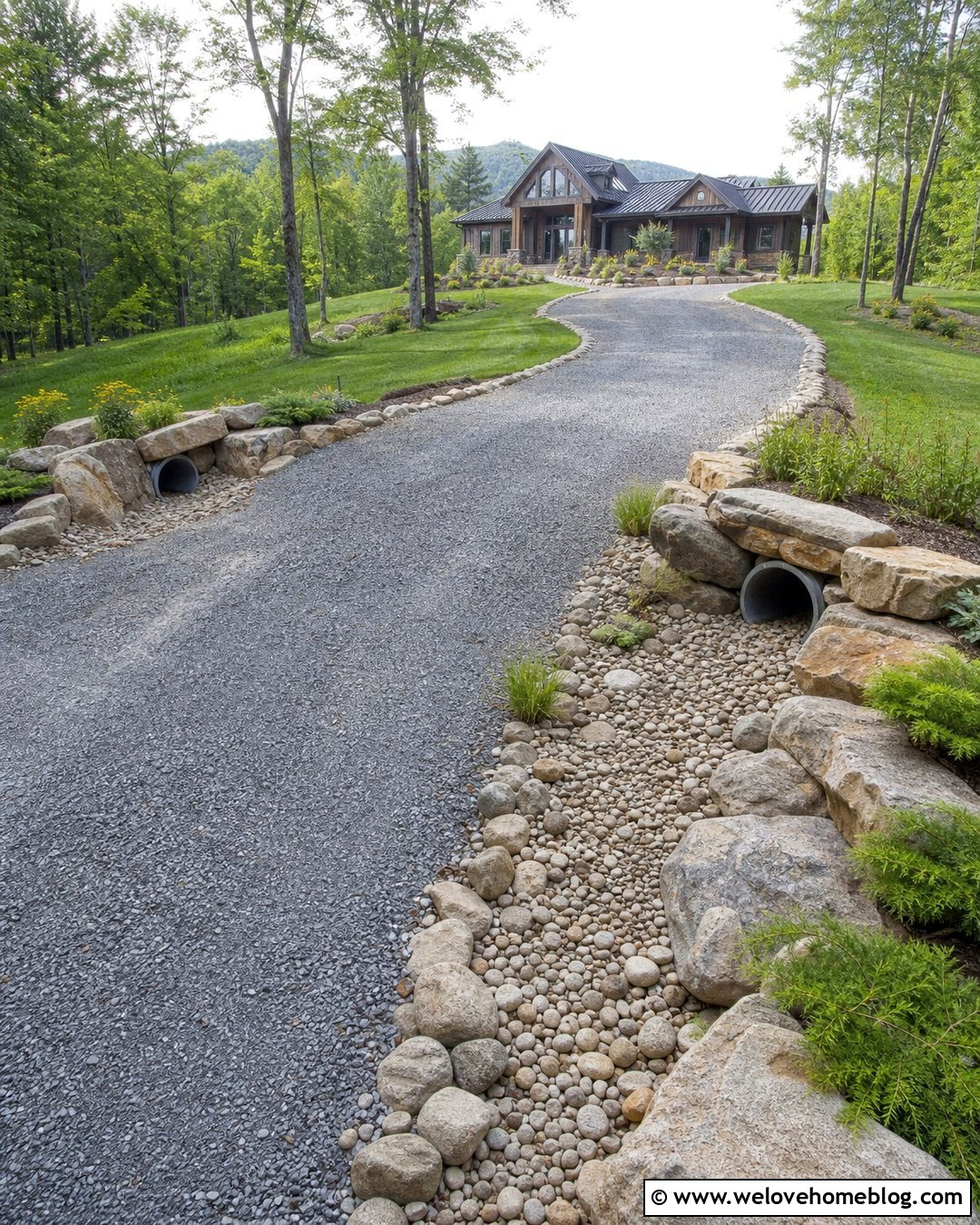
Large boulders are ideal when a culvert sits within a wide rural ditch or sloped front yard. Start with a compacted gray gravel driveway that curves toward a farmhouse or mountain-style home. Arrange weathered boulders around the culvert ends in loose, staggered groups rather than a rigid row. Fill spaces above the drainage line with native grasses, low junipers, and tough flowering perennials. Smaller cobbles can cover exposed soil between the stones. The boulders create scale and help the crossing blend with its surroundings, while the planting softens their weight. Leave a broad, unobstructed channel for water and maintain enough roadside visibility for vehicles entering or leaving the property.
5. Driveway Culvert With Native Grasses
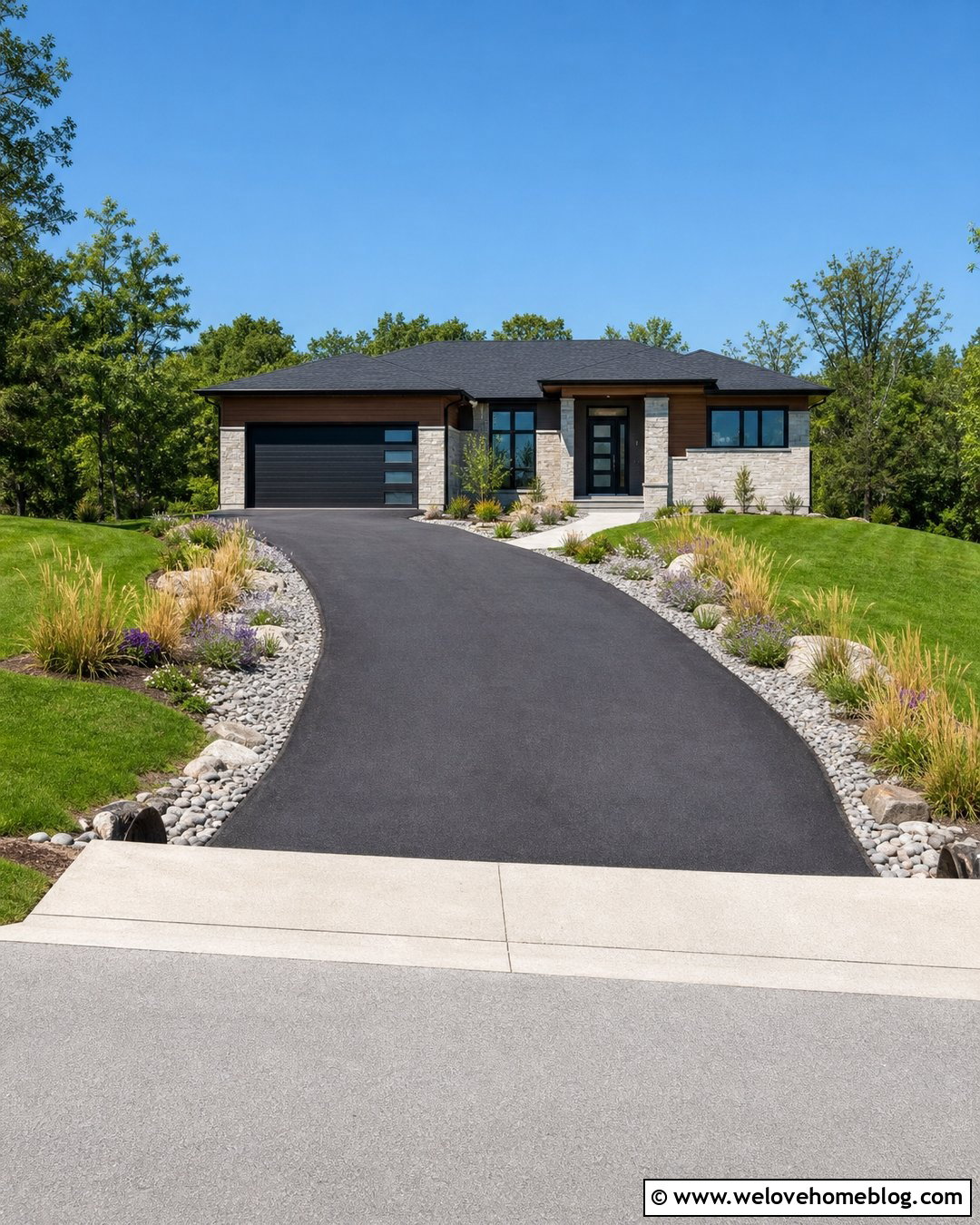
Feathery grasses add movement and color without making a culvert entrance look crowded. Combine a black asphalt driveway with a clean concrete apron and gently graded grass-covered banks. Plant compact native grasses in repeated drifts along the upper slopes, keeping taller varieties away from sightlines and pipe openings. Add a narrow band of drainage stone at the bottom of the ditch to define the watercourse and reduce exposed mud. Small flowering perennials can be mixed between the grasses for seasonal interest. This complete look suits contemporary ranch homes and casual suburban landscapes. Native vegetation can also support a stable, densely rooted swale when selected for the property’s moisture and soil conditions. ()
6. Driveway Culvert With a Dry Creek Bed
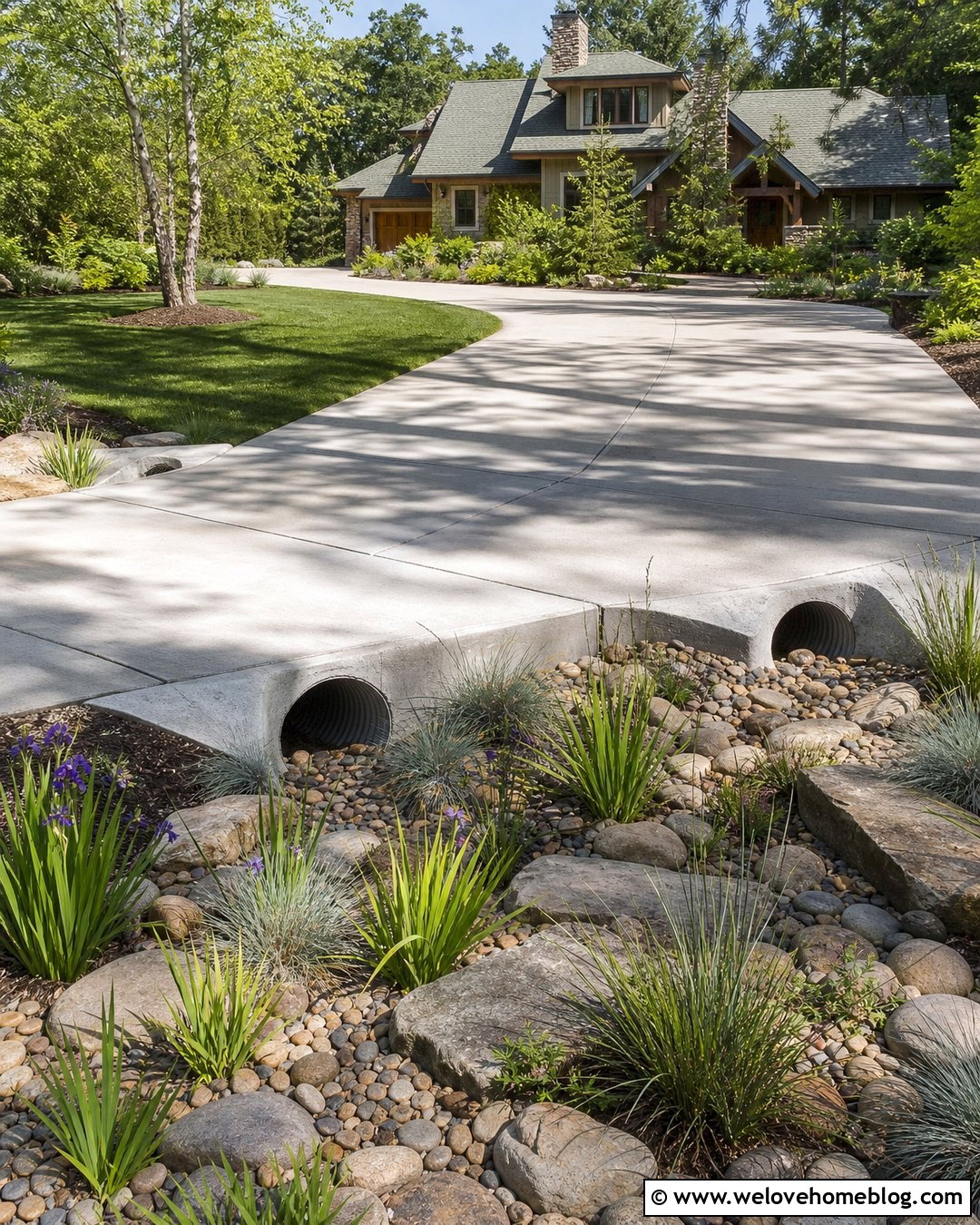
A dry creek bed makes the drainage route part of the landscape instead of attempting to conceal it. Use light gray poured concrete for a straight driveway crossing over the culvert. Extend an irregular bed of rounded cobbles and river rock from both pipe openings along the ditch. Vary the stone sizes and add several flat rocks to create natural changes in texture. Plant blue fescue, sedges, dwarf iris, and low ground covers along the upper banks. Keep the central stone channel open so runoff can pass through freely. The creek bed should look broad and gently shaped rather than narrow and deeply excavated. This design complements Craftsman, cottage, and nature-inspired homes.
7. Driveway Culvert With a Small Flower Bed
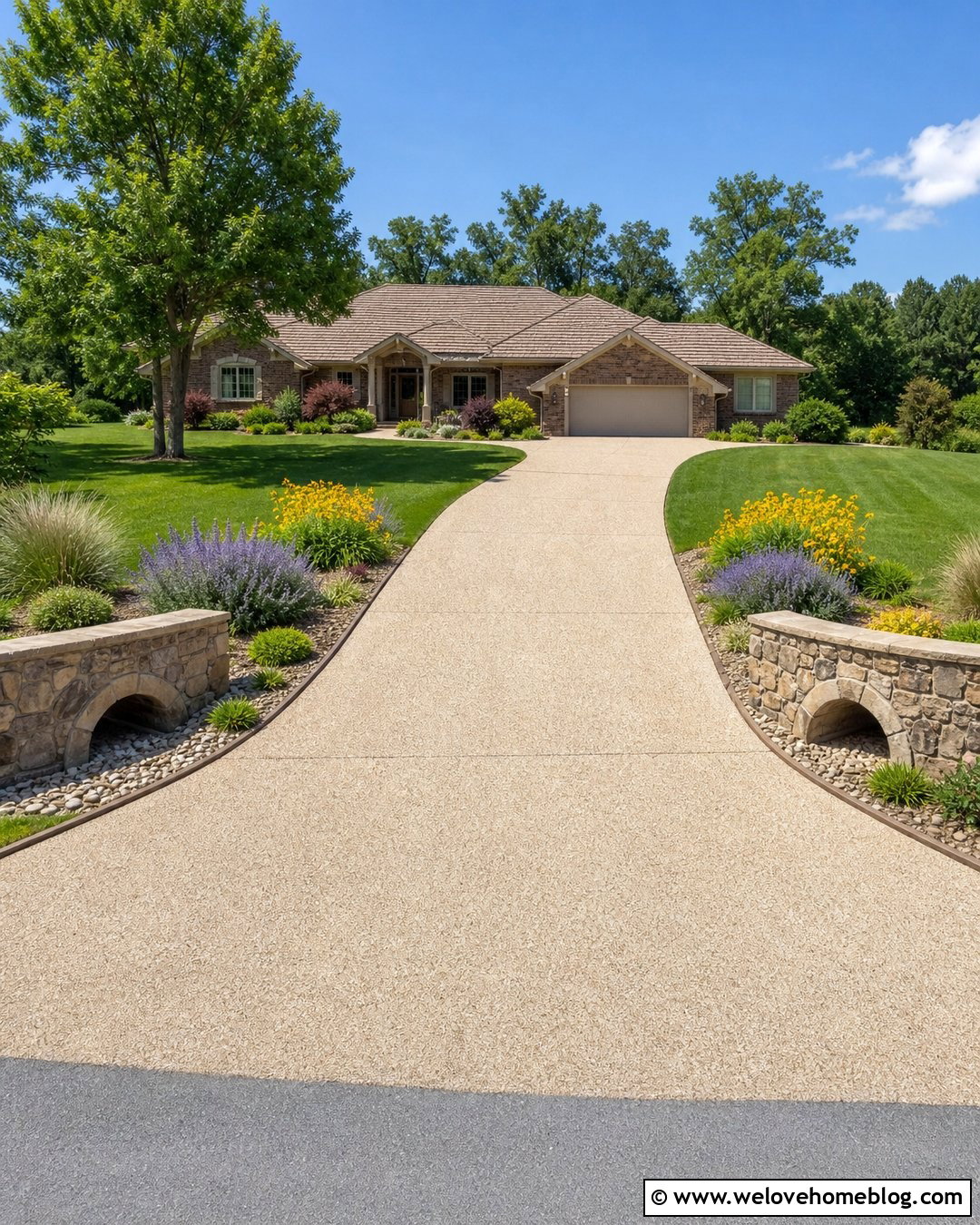
Even a narrow driveway entrance can support an attractive flower bed when the planting remains above the active drainage zone. Pair a light exposed aggregate driveway with compact stone headwalls and shallow semicircular beds on both sides. Plant low-maintenance flowers in repeated groups instead of using many unrelated varieties. Coreopsis, dwarf salvia, daylilies, and compact ornamental grasses provide texture without hiding the culvert. Apply stone mulch rather than lightweight bark near the ditch, since loose material can move during heavy rain. Define the beds with a simple concrete or brick edge that matches the driveway. The result is colorful, tidy, and appropriate for a modest suburban front yard.
8. Driveway Culvert With Limestone Edging
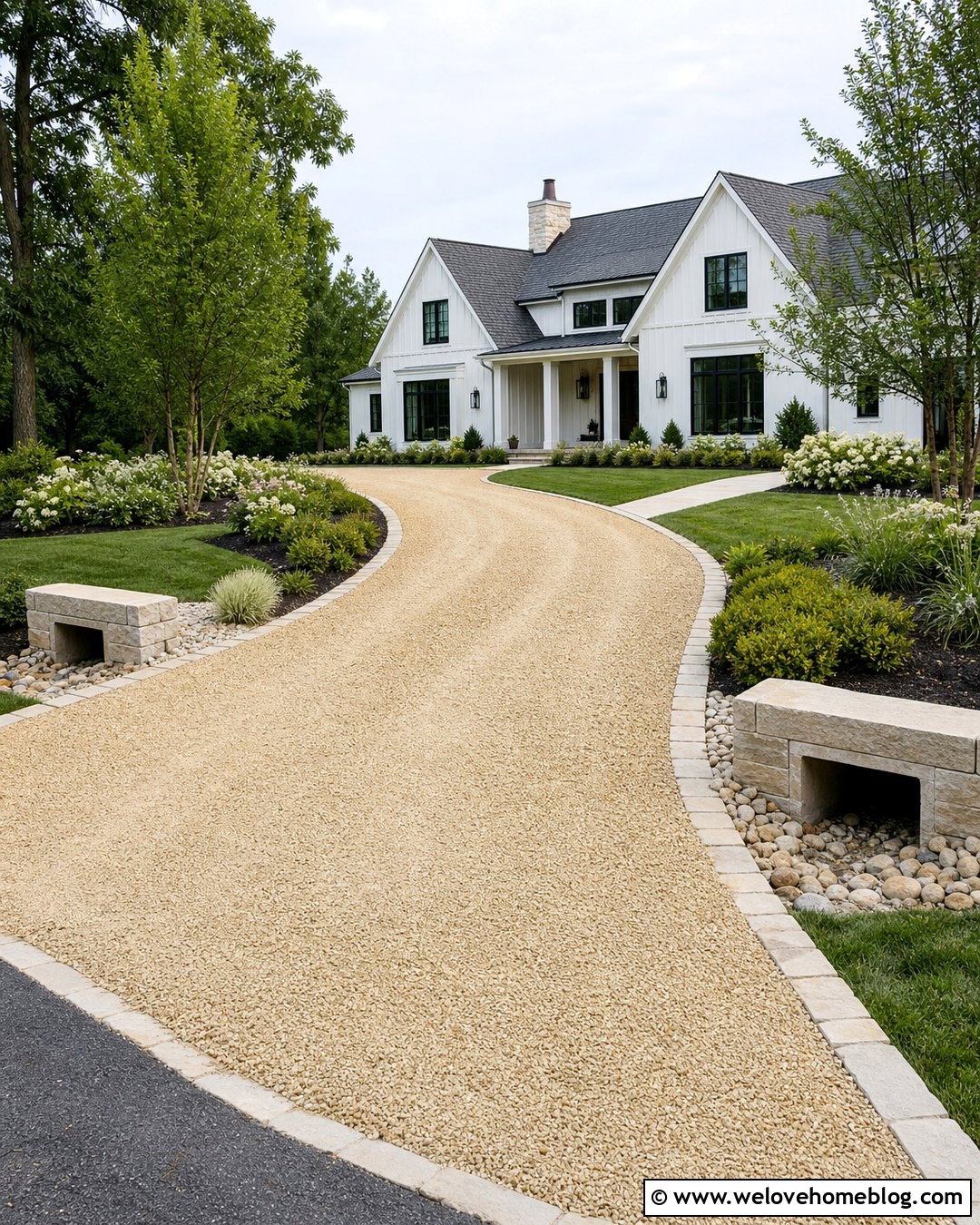
Pale limestone creates a bright, refined transition between a driveway and roadside drainage area. Install a beige crushed limestone driveway with a wide, slightly flared entrance. Use rectangular limestone blocks to form low culvert headwalls, then continue smaller matching stones along the upper ditch edges. Soft green shrubs, white flowering perennials, and clipped ground covers keep the palette calm and cohesive. Place washed gravel immediately around the drainage openings to reduce bare soil while preserving access. The light stone looks particularly attractive beside white siding, pale brick, or modern farmhouse architecture. Keep the walls low enough to preserve visibility and check that the foundation is suitable for the slope and expected water movement.
9. Driveway Culvert With Gabion Walls
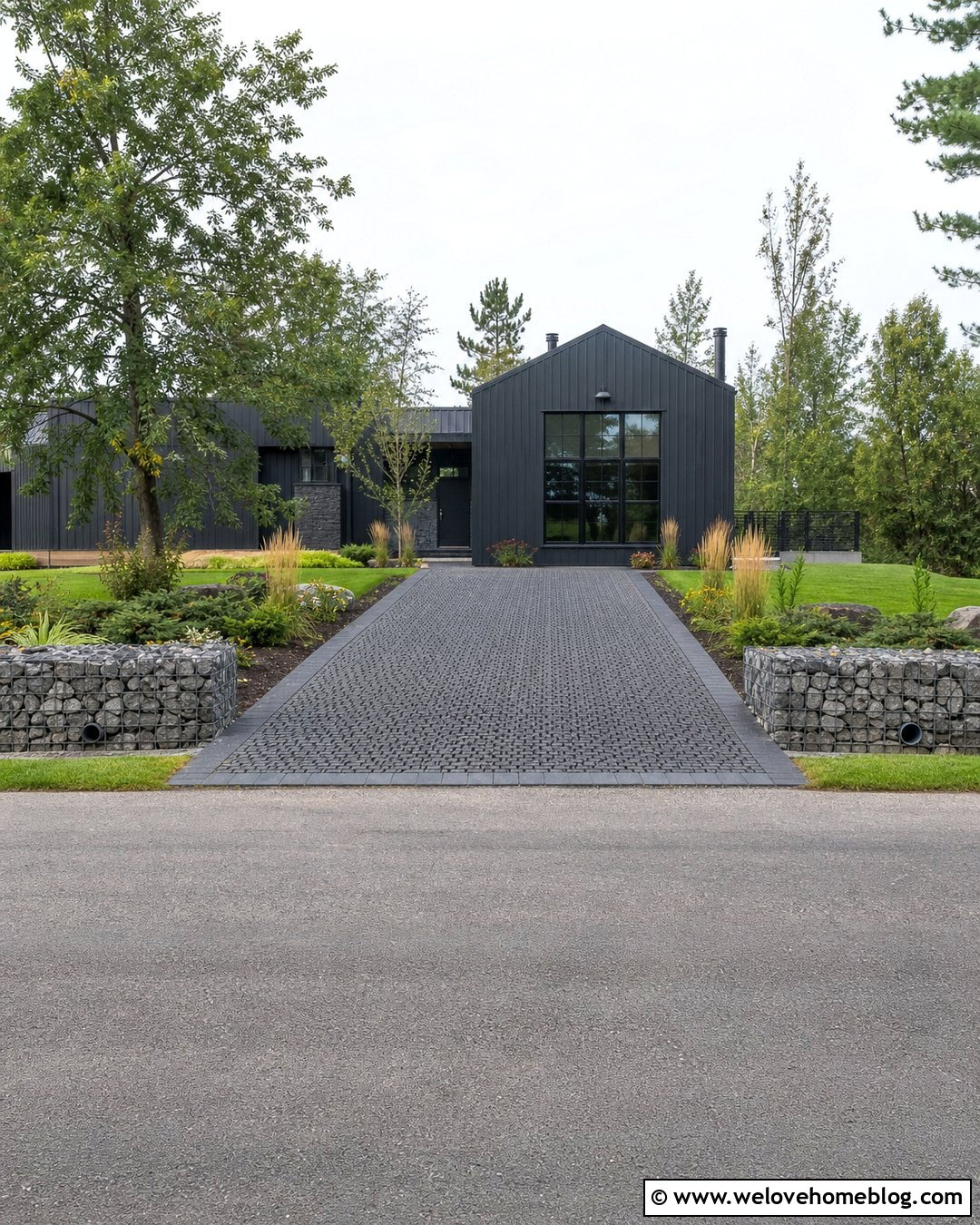
Gabion walls offer a clean but rugged solution for a culvert crossing with steep banks. Choose dark gray permeable pavers for the driveway and install low wire baskets filled with angular local stone around the pipe ends. The baskets can continue a short distance along the banks to create stable-looking transitions. Above them, use simple planting beds with upright grasses, spreading junipers, and drought-tolerant perennials. A matching stone strip can separate the driveway from the lawn. Keep the gabions proportional to the crossing so they do not overpower the entrance or narrow the ditch. This complete arrangement fits industrial modern homes, contemporary cabins, and properties with strong architectural lines.
10. Driveway Culvert With Mulched Shrub Beds
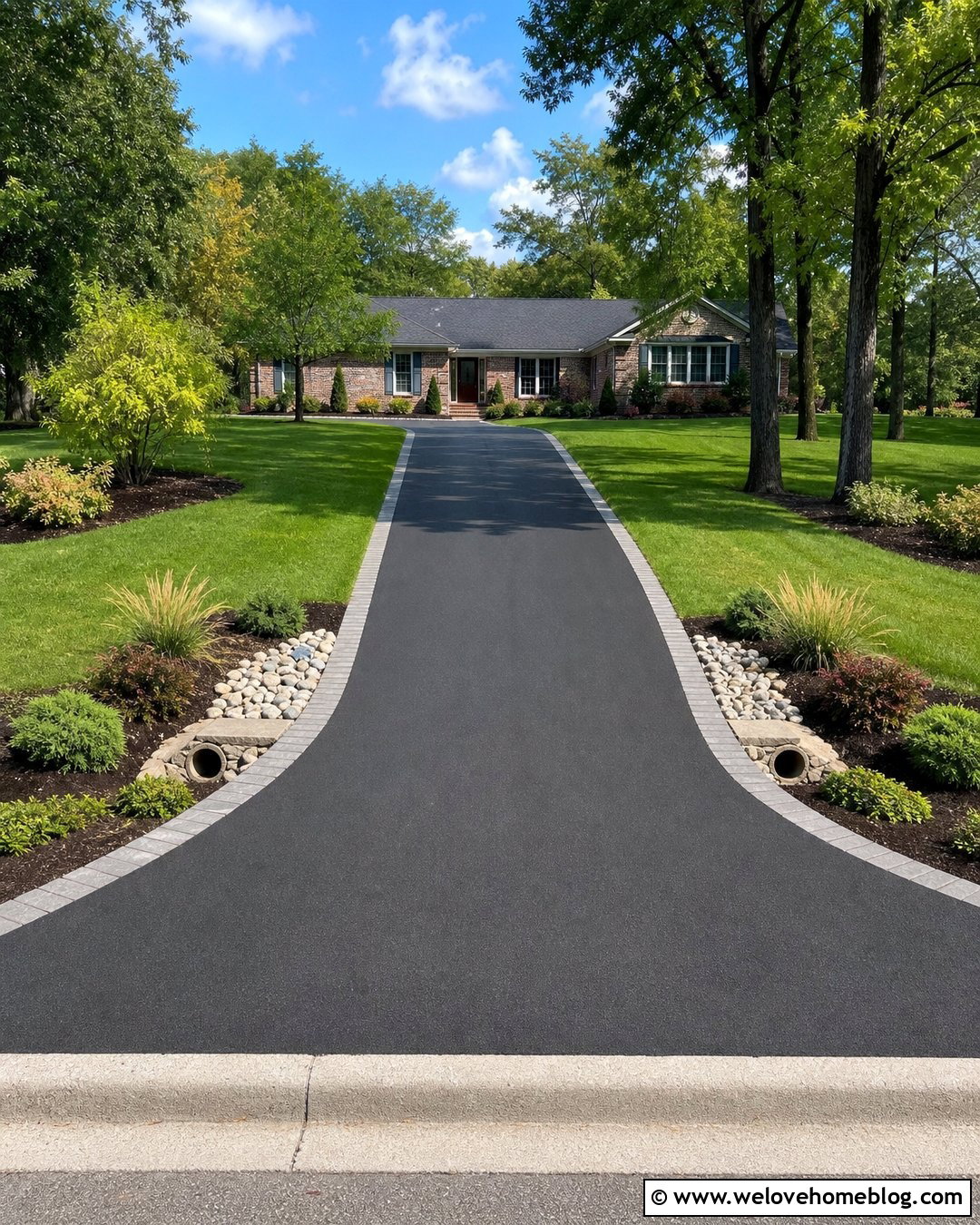
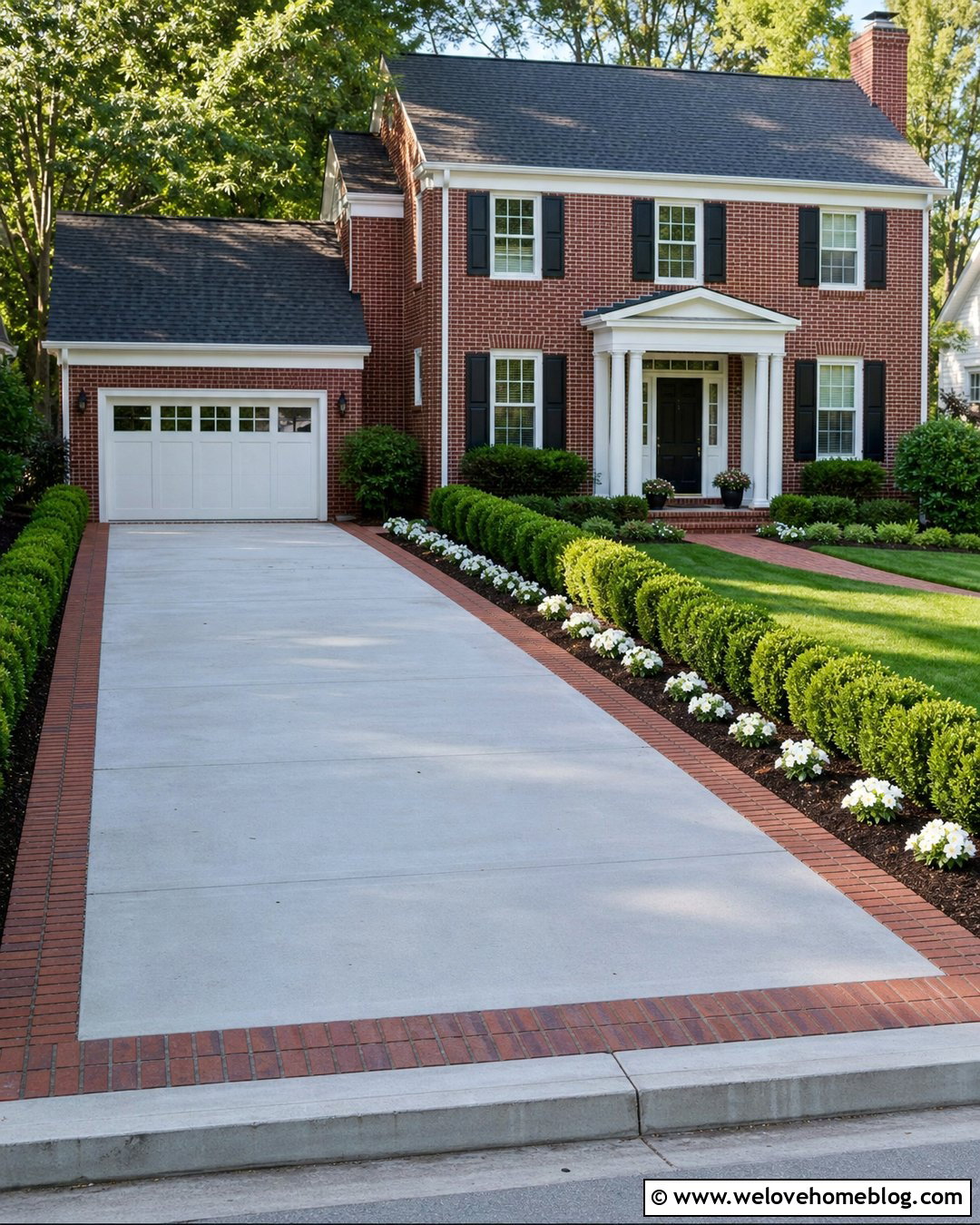
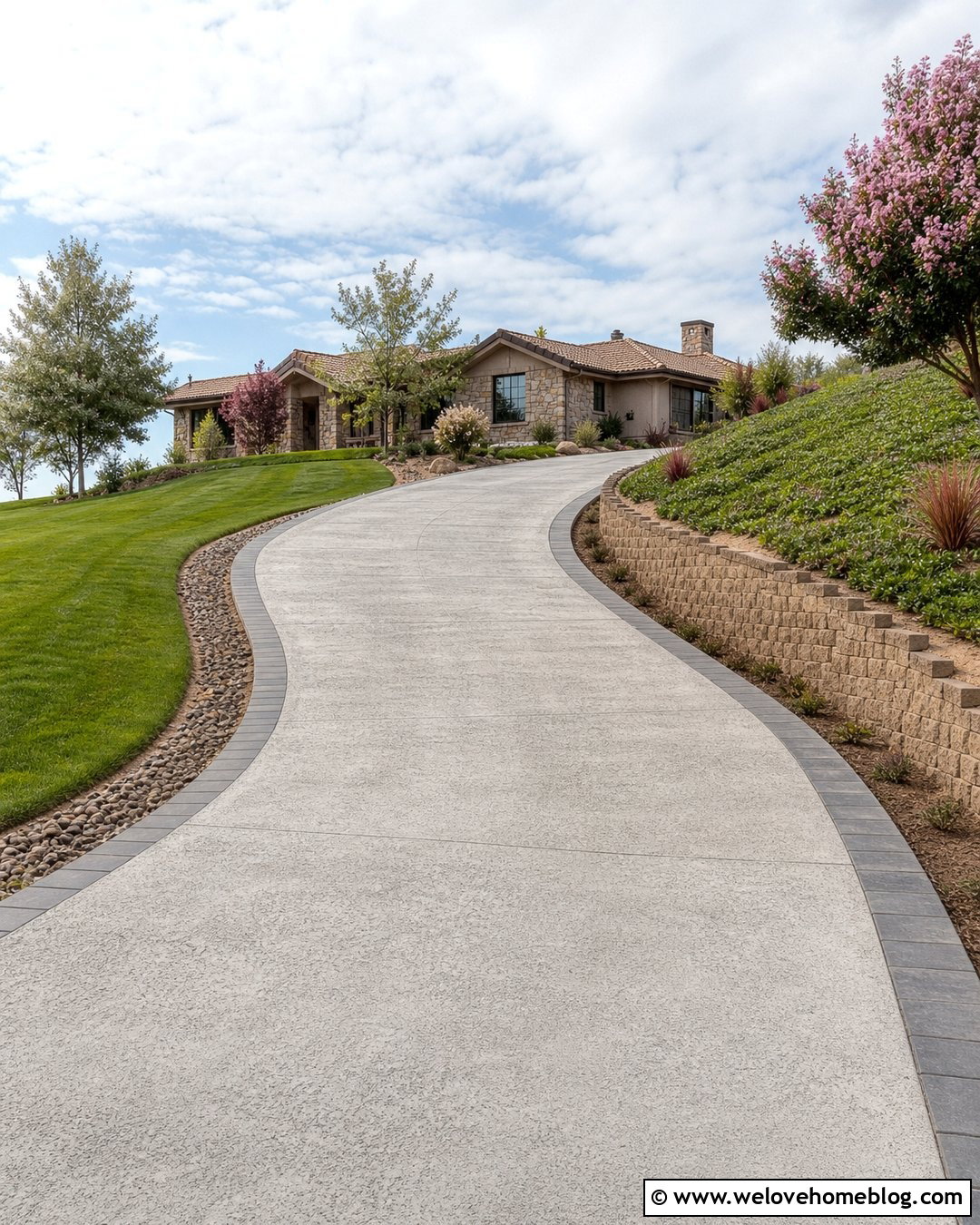
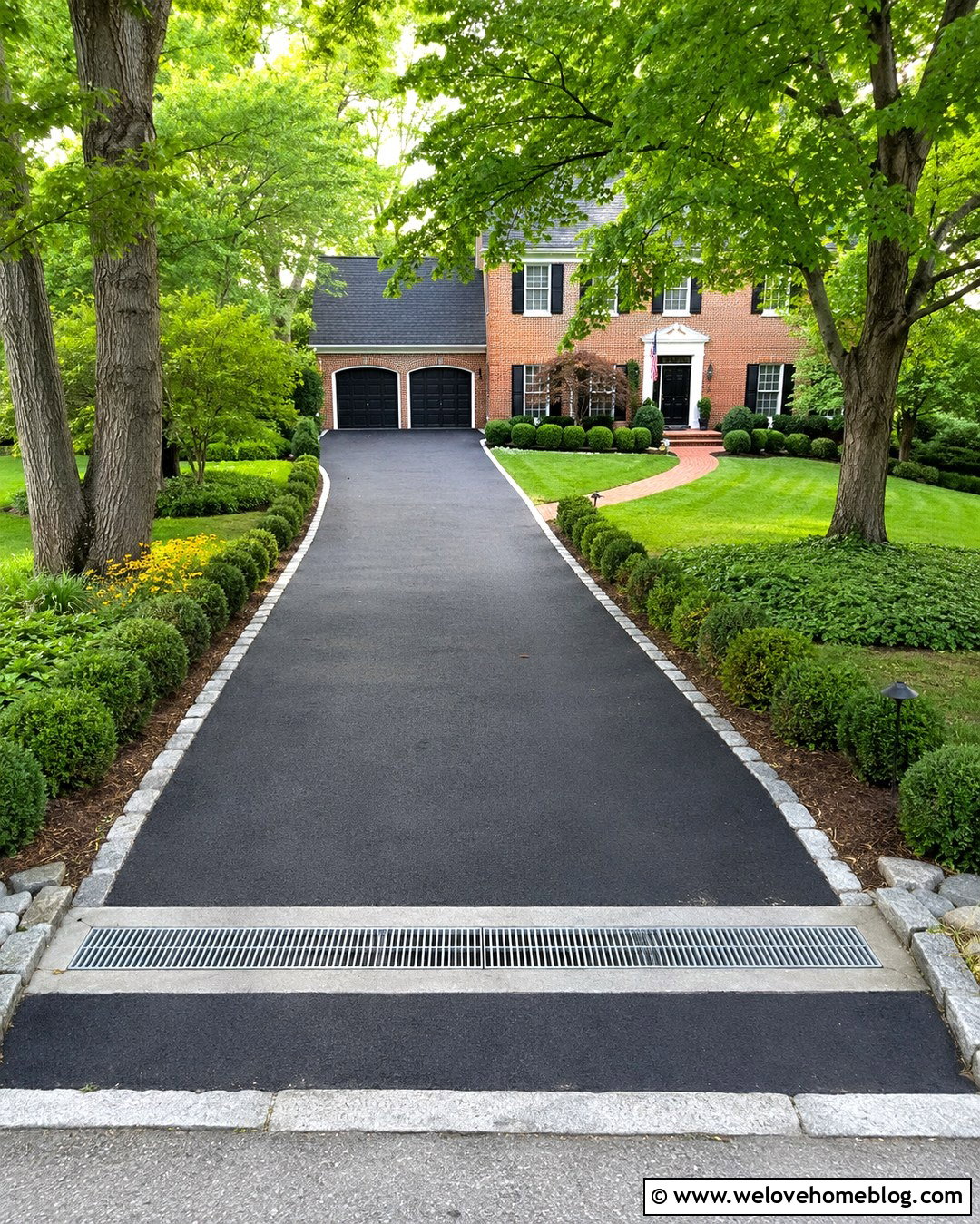
Deeply colored mulch and layered shrubs can soften a plain culvert without requiring elaborate masonry. Use a smooth black asphalt driveway bordered by a single row of charcoal concrete pavers. Grade the roadside banks gently and cover the upper planting areas with dark brown shredded mulch. Arrange dwarf hollies, spreading junipers, flowering spirea, and compact grasses in groups with enough space for mature growth. Surround each pipe opening with larger drainage stone instead of mulch. This prevents the soft material from sitting directly within the flow path. A crisp lawn edge keeps the entrance tidy. The simple material palette works well with brick ranch houses and traditional two-story suburban homes.
11. Driveway Culvert With Flagstone Walls
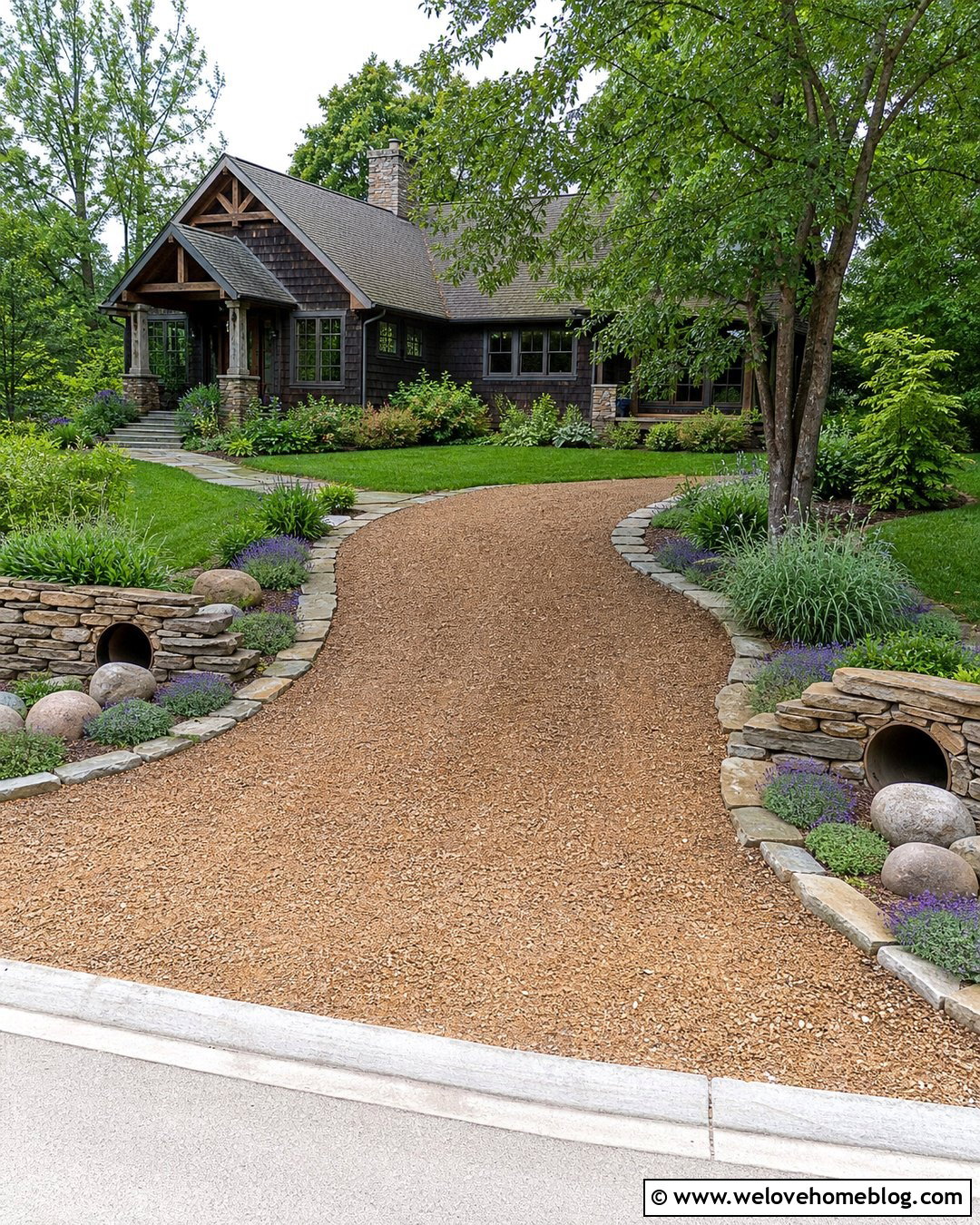
Irregular flagstone gives a culvert crossing the relaxed character of a garden bridge. Pair a warm brown gravel driveway with low, dry-laid flagstone headwalls and matching flat-stone borders. Let the walls curve gently around the pipe openings rather than forming square corners. Above the stone, plant creeping thyme, compact catmint, and low ornamental grasses to soften the hardscape. Continue a flagstone walkway from one side of the driveway toward the front door for visual balance. Larger stones should anchor the lower banks, while the water channel remains open and easy to clear. This complete look is especially effective for cottage homes, Craftsman houses, and rustic properties with mature trees.
12. Driveway Culvert With Concrete Headwalls
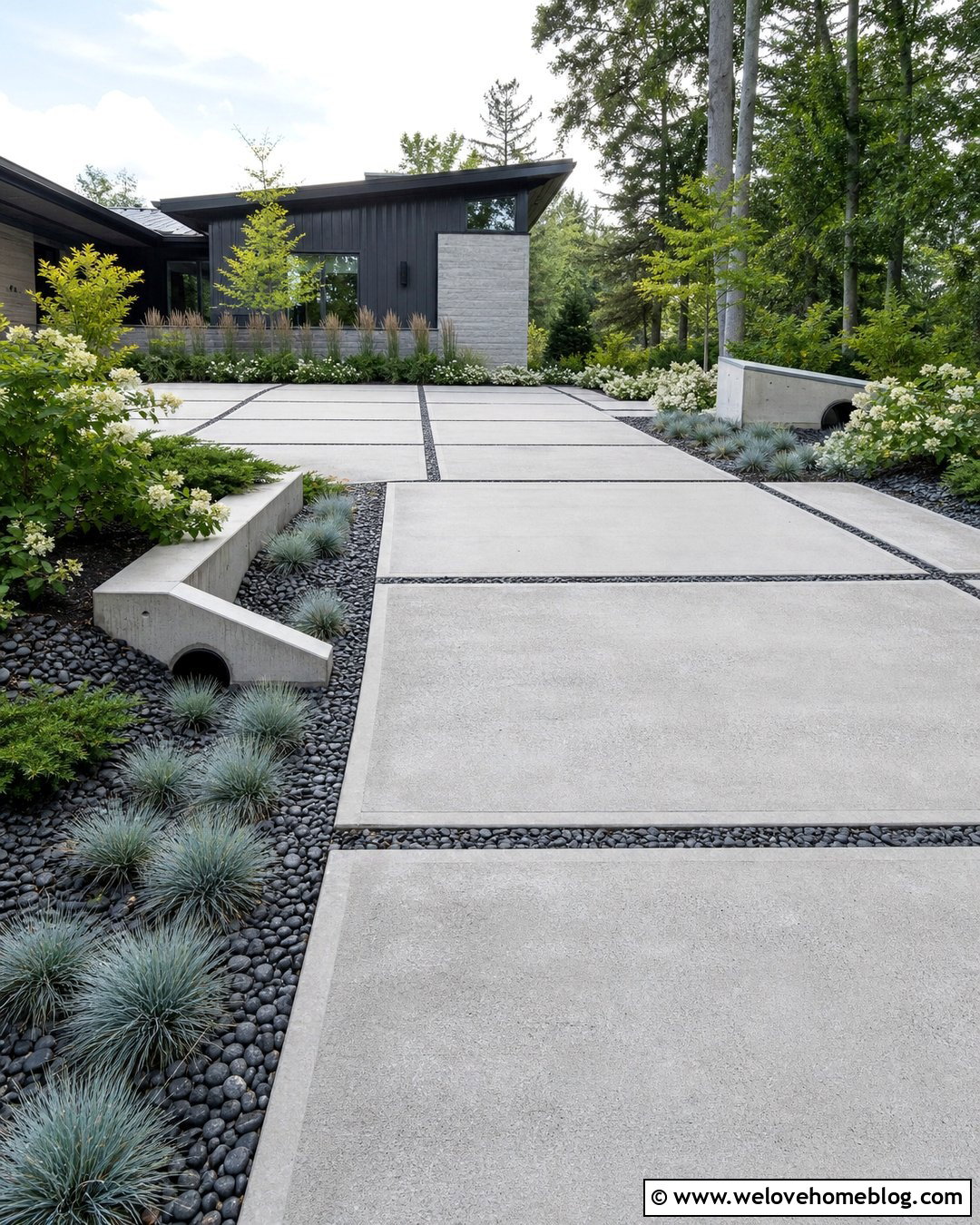
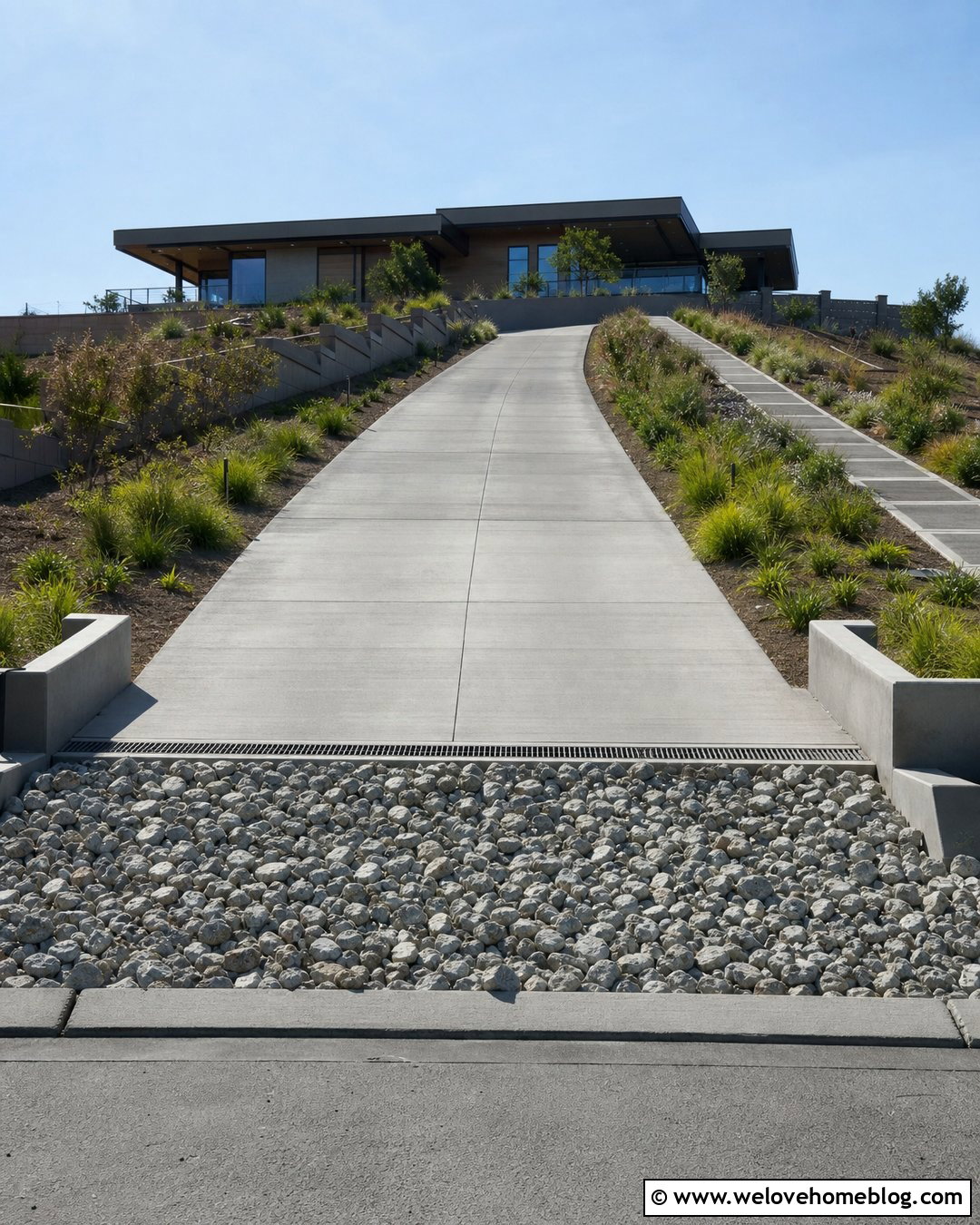
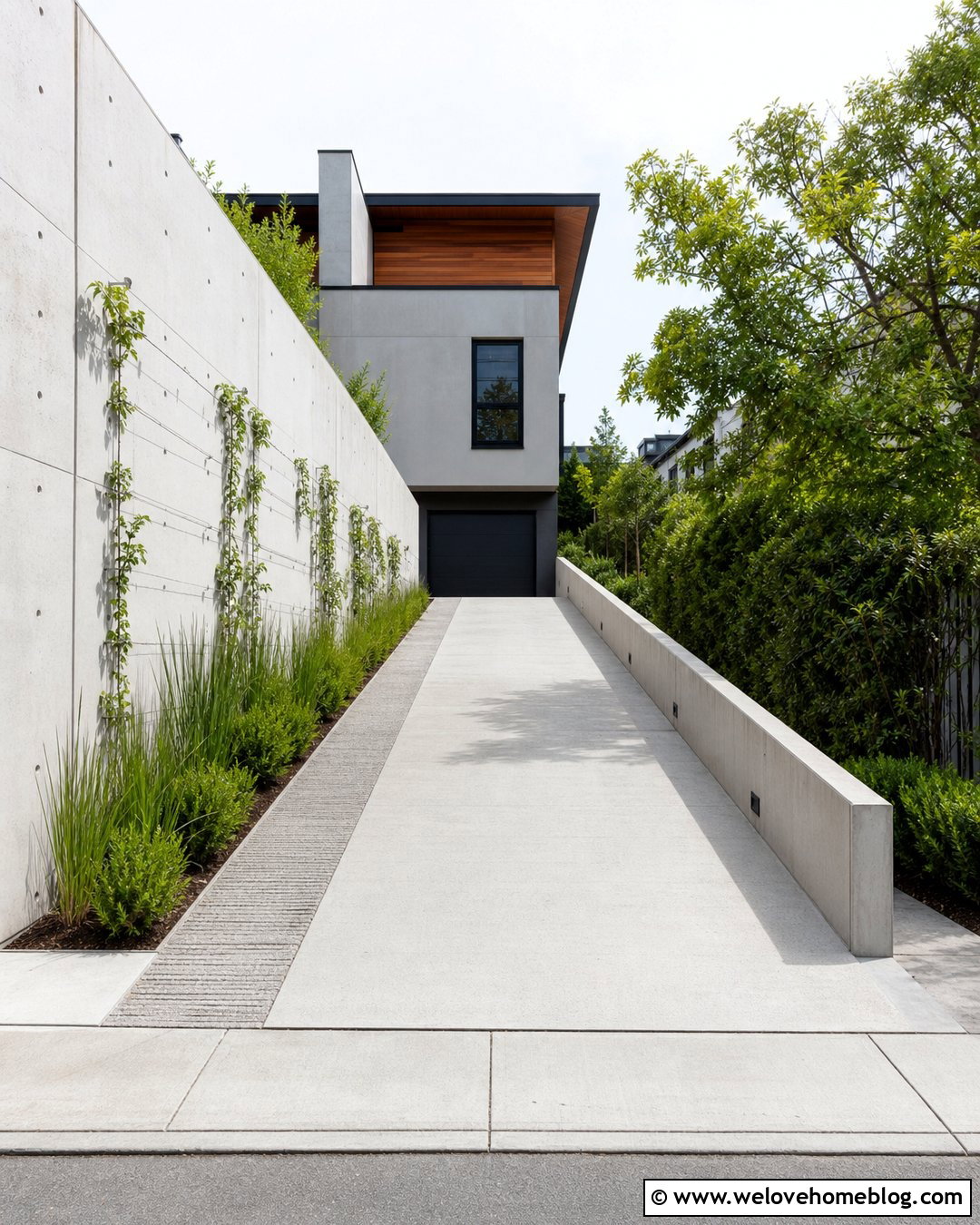
A simple concrete headwall can look polished when it is integrated into a modern entrance. Use large gray concrete driveway slabs separated by narrow strips of dark gravel. Form smooth, low headwalls around the culvert openings with clean horizontal caps and subtle beveled edges. Add structured planting beds containing blue-green ornamental grasses, dwarf inkberry, and low white flowers. Dark basalt rock around the base creates contrast and marks the drainage route. Keep the landscaping symmetrical but not crowded, allowing the geometric driveway to remain the main feature. This design works best with a contemporary home featuring simple siding, large windows, and restrained colors. Precise installation is important because the walls must suit the drainage conditions.
13. Driveway Culvert With Cobblestone Borders
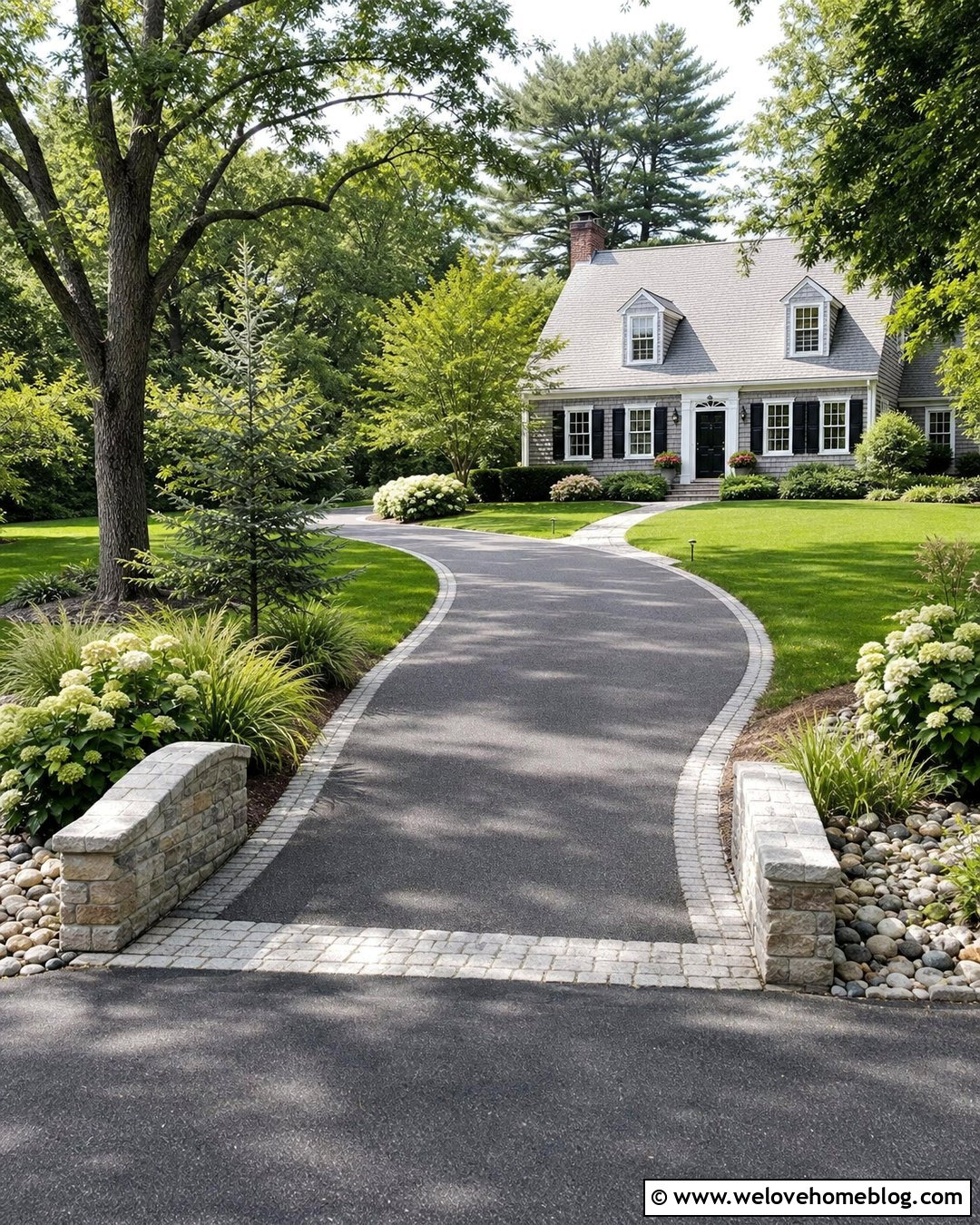
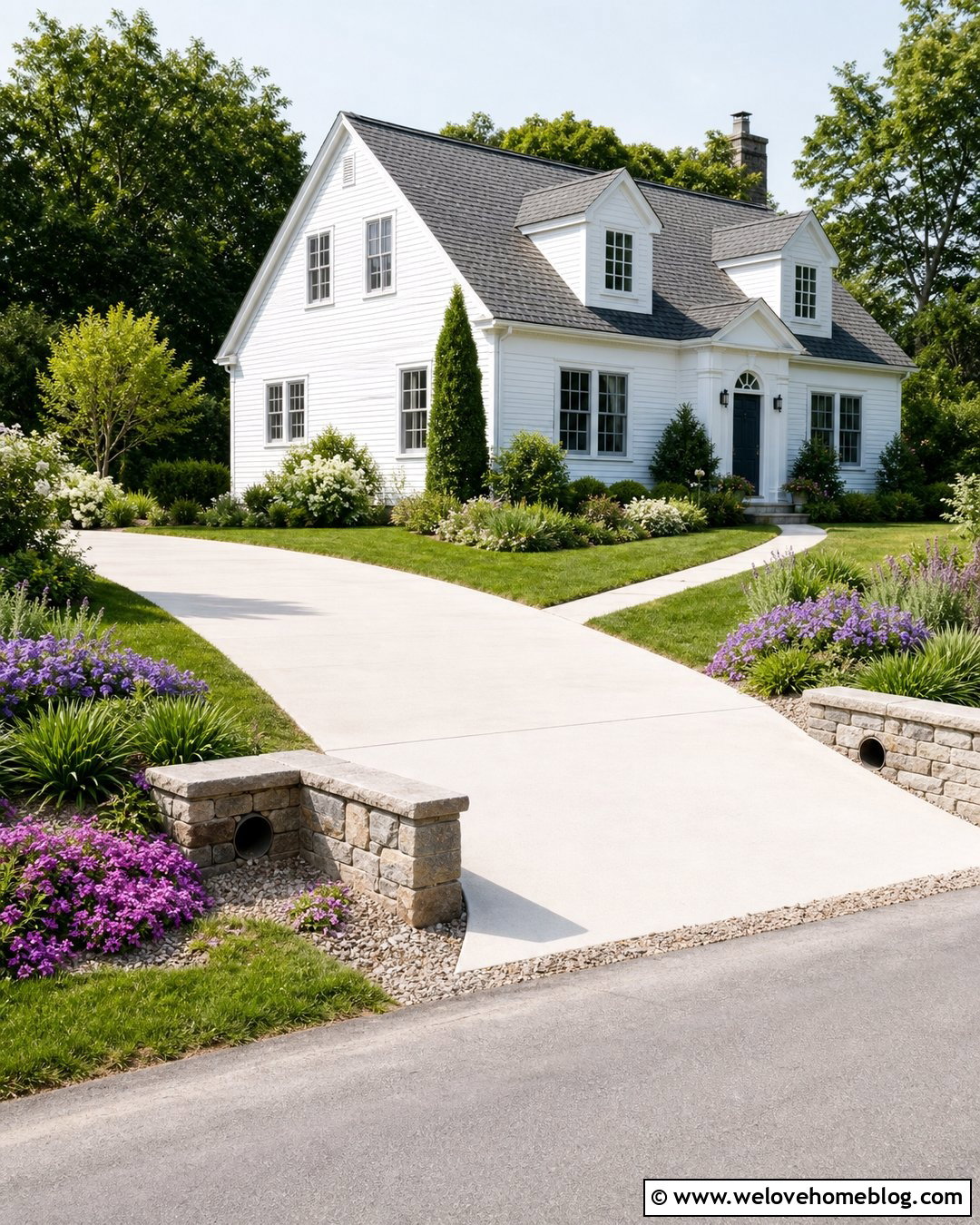
Cobblestone borders can make a basic driveway crossing look established and carefully crafted. Begin with a medium-gray asphalt driveway and add a double cobblestone ribbon along each edge. At the entrance, curve the cobbles around low stone culvert walls to create one continuous frame. Plant compact hydrangeas, dwarf fountain grasses, and spreading ground covers above the ditch slopes. Fill the lower drainage area with washed stone in colors that complement the cobbles. This combination creates a traditional look without covering the functional parts of the culvert. It is a strong match for Colonial, Cape Cod, and European-inspired homes. Leave comfortable vehicle clearance between the raised borders and the traveled driveway surface.
14. Driveway Culvert With Evergreen Shrubs
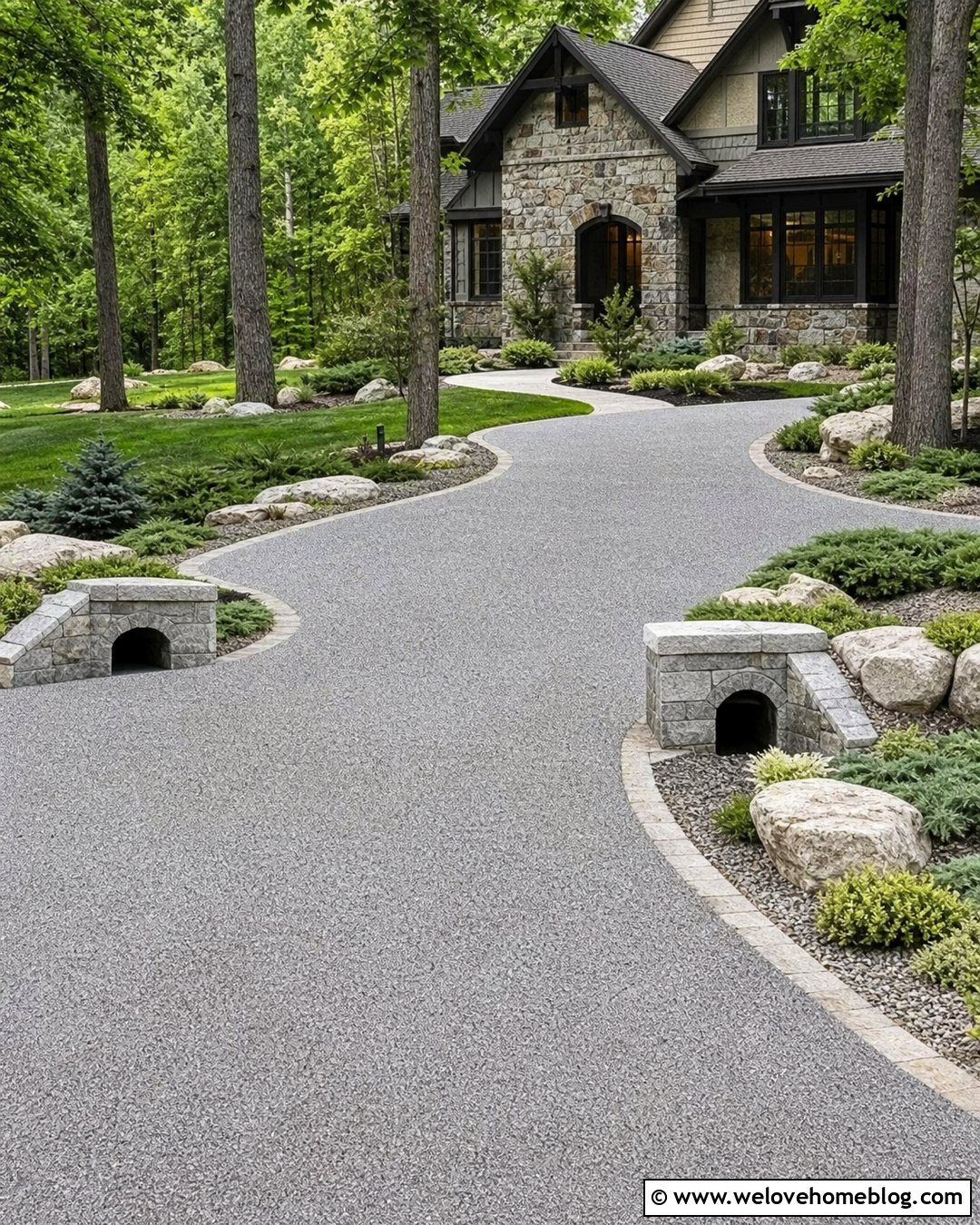
Evergreen shrubs provide year-round structure around a driveway culvert, especially in regions with long winters. Pair a gray resin-bound gravel driveway with low granite headwalls and gently sloping planting beds. Use compact juniper, dwarf spruce, inkberry, or another locally suitable evergreen that will not outgrow the entrance. Arrange the plants in asymmetrical groups and leave open gravel pockets near the pipe openings. Add a few pale boulders and low sedges to connect the shrubs with the roadside landscape. Avoid tall hedges that could restrict visibility or make maintenance difficult. The design feels neat in every season and complements stone cottages, Craftsman homes, and properties surrounded by mature woodland.
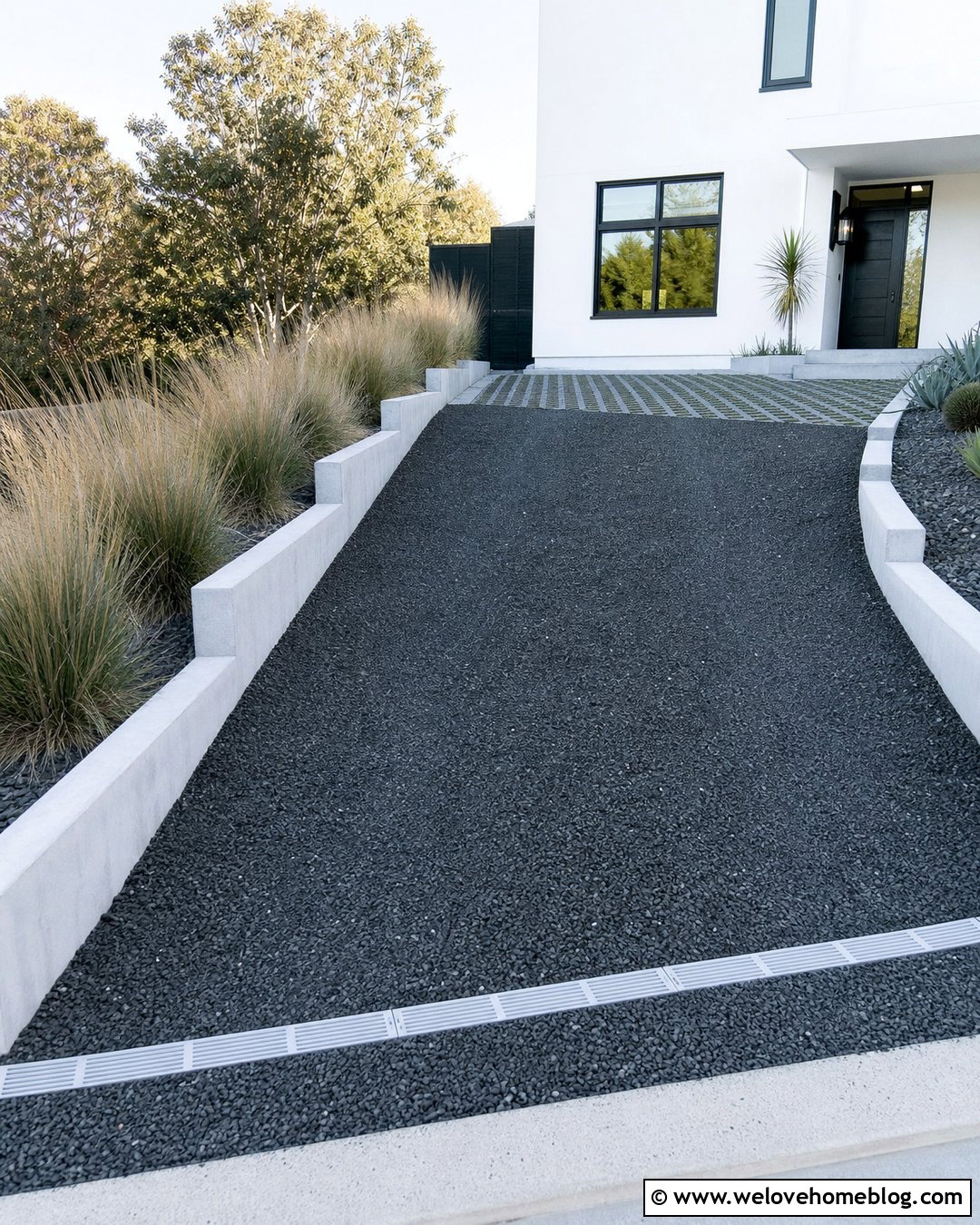
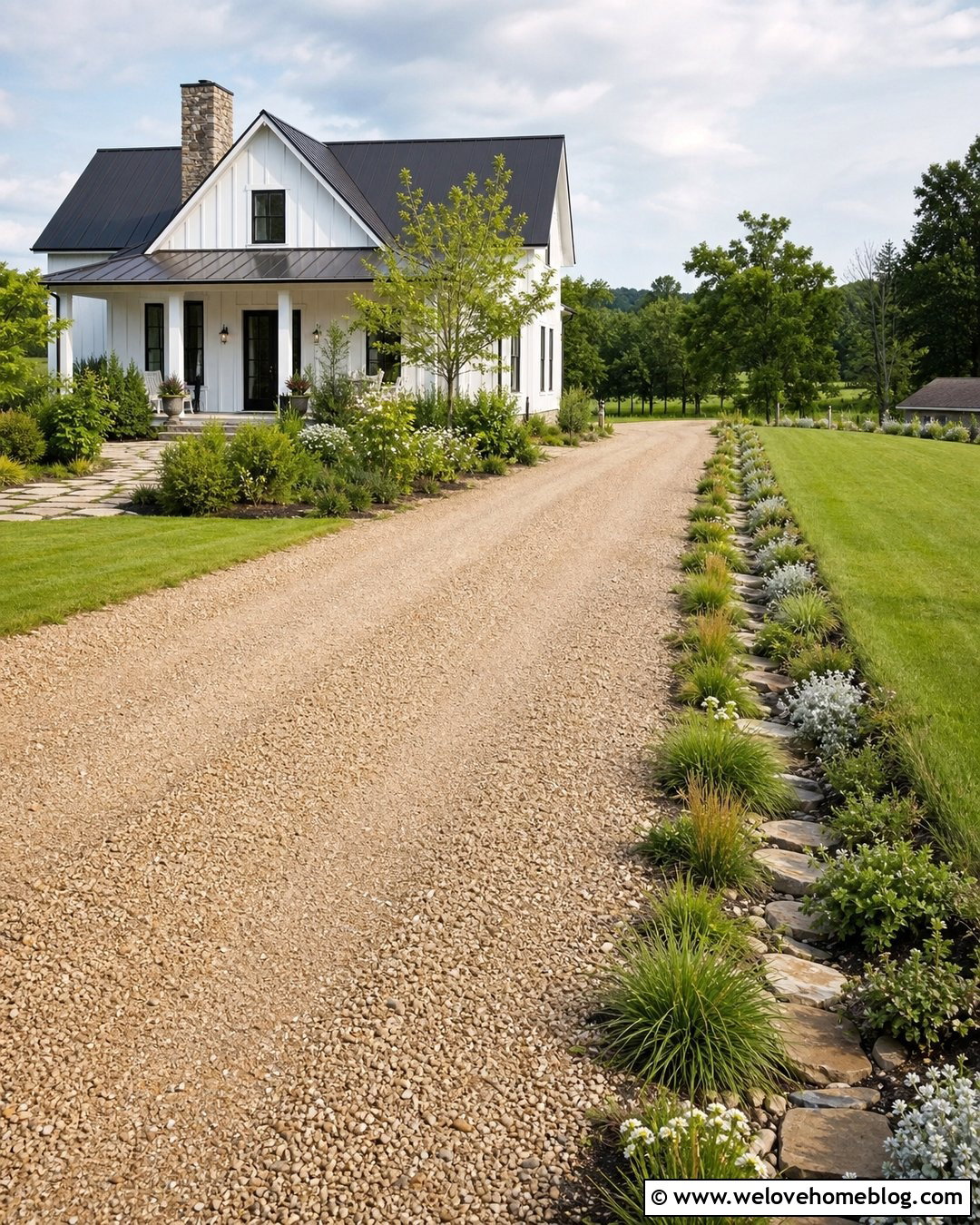
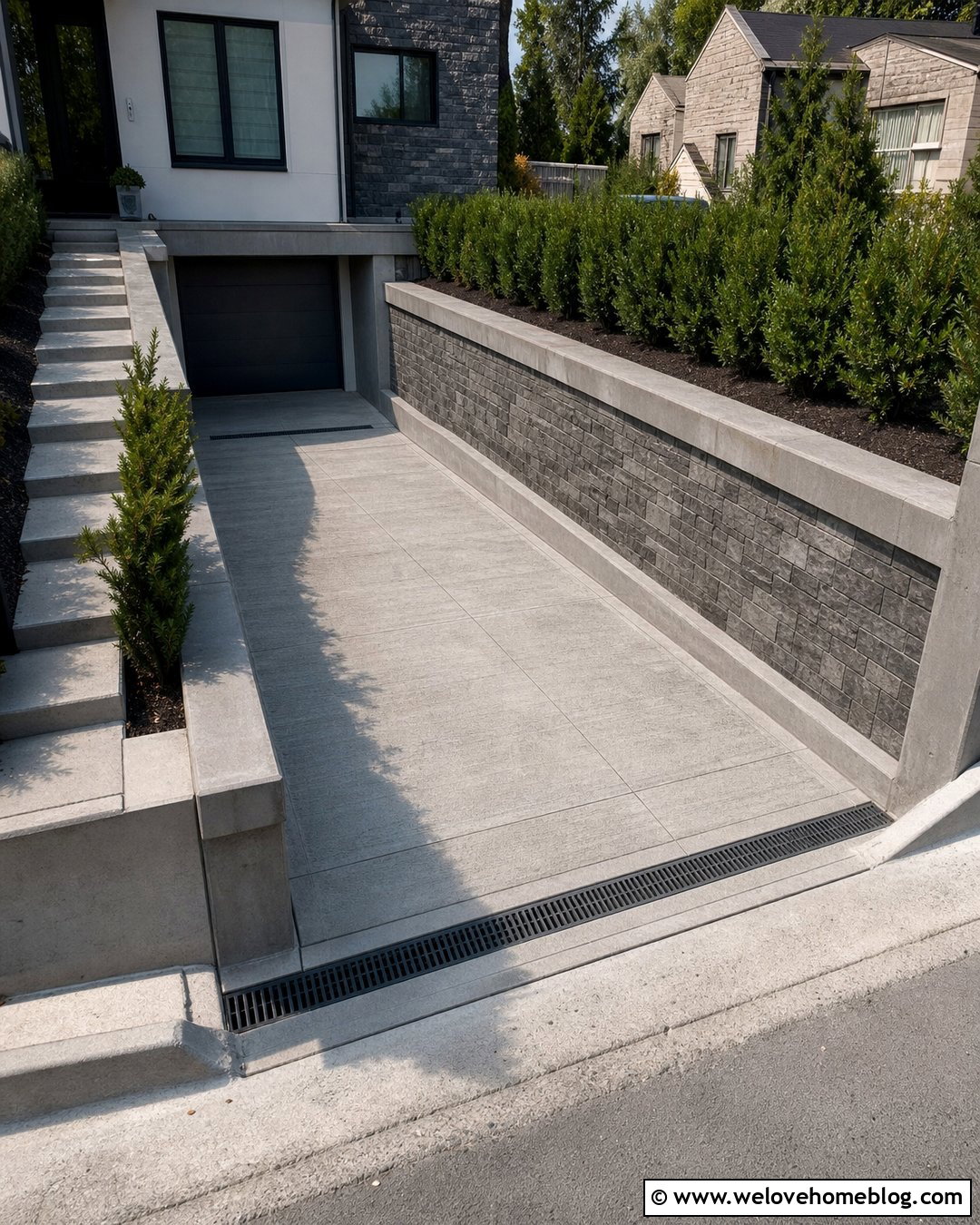
15. Driveway Culvert With a Rain Garden
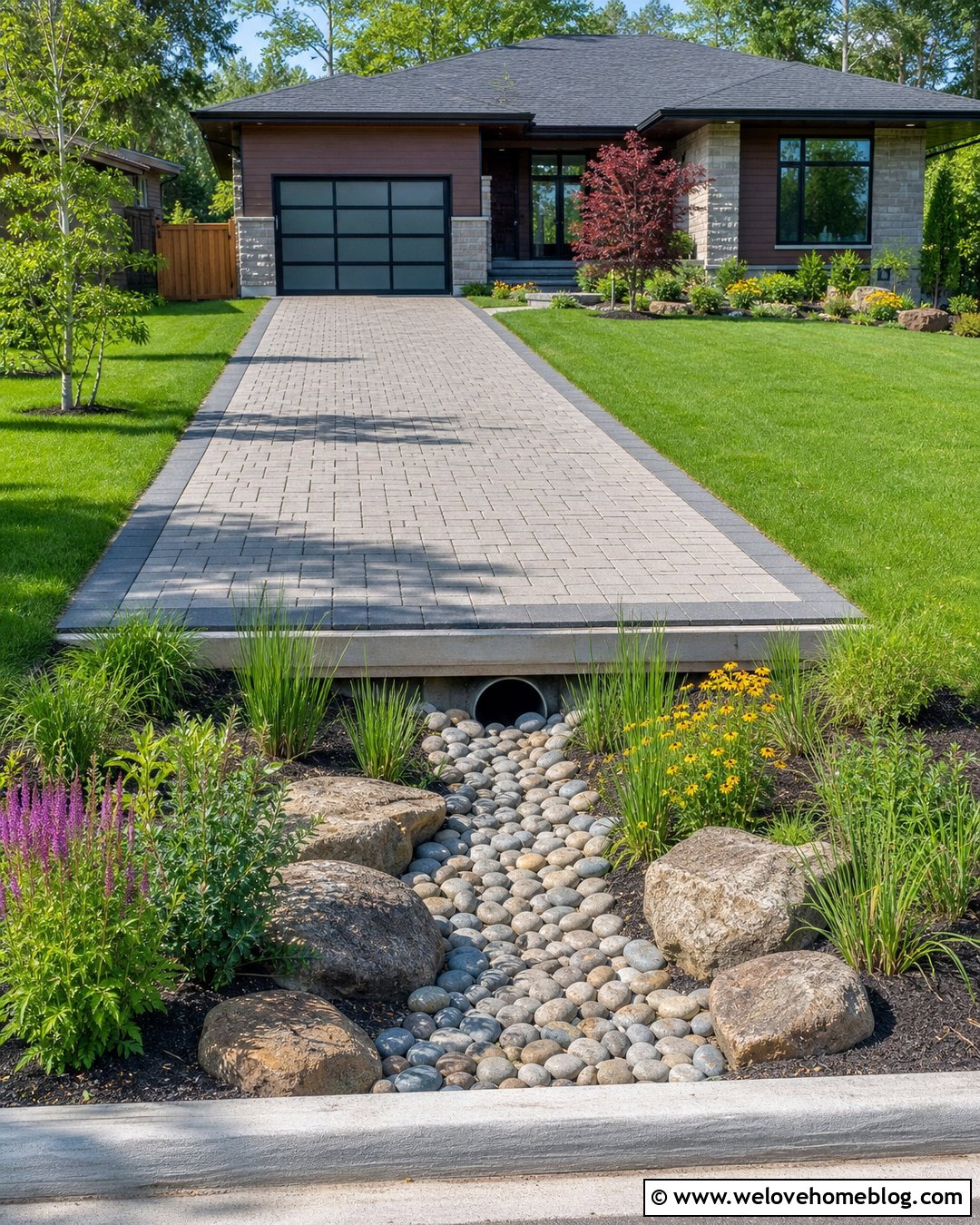
Where site conditions allow, a shallow rain garden can create a planted transition beyond the culvert’s discharge area. Pair permeable concrete pavers with stone-edged planting basins positioned away from the driveway structure and active pipe opening. Use moisture-tolerant native sedges and flowering perennials in the lower zone, then place plants suited to drier conditions around the upper edge. A broad river-rock inlet can guide water while reducing the appearance of exposed soil. The garden should drain as designed rather than remain permanently wet. Its size, soil profile, and placement depend on local drainage conditions, so professional guidance may be appropriate. Rain gardens and other green infrastructure can capture, slow, and filter stormwater. ()
16. Driveway Culvert With Timber Borders
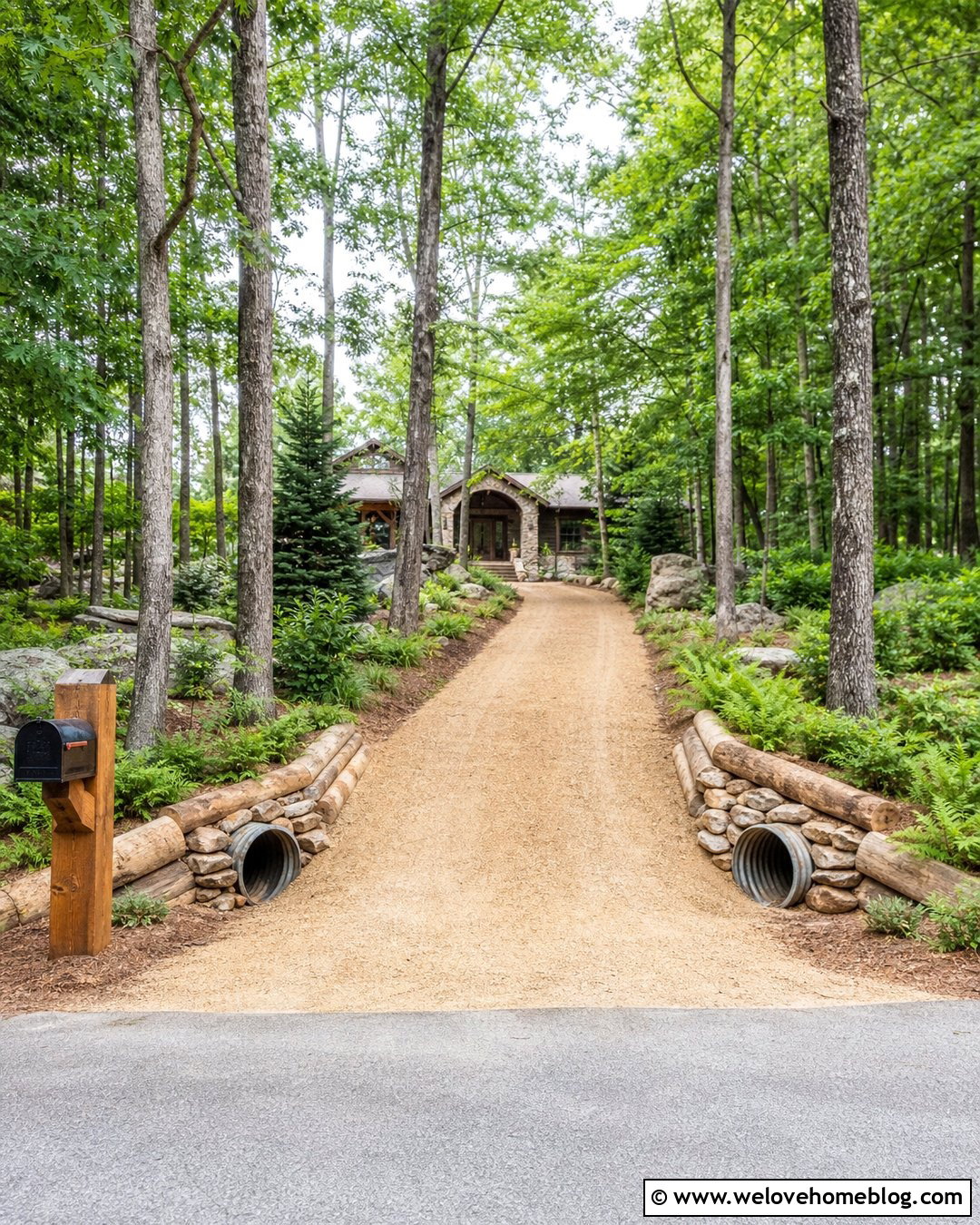
Timber edging creates a casual entrance that fits naturally into a wooded or rural property. Use compacted tan gravel for a straight driveway and install thick, ground-contact-rated timbers along the upper edges of the culvert banks. Keep the wood away from the central flow channel and use stone around the pipe openings. Above the timbers, plant ferns, woodland sedges, low shrubs, and shade-tolerant ground covers. A few irregular boulders can make the transition from wood to ditch feel less rigid. Repeat the timber in a nearby mailbox post or simple entrance fence. This design works best where the banks are gently sloped and the edging serves mainly as a visual border rather than a structural retaining wall.
17. Driveway Culvert With Stone Pillars
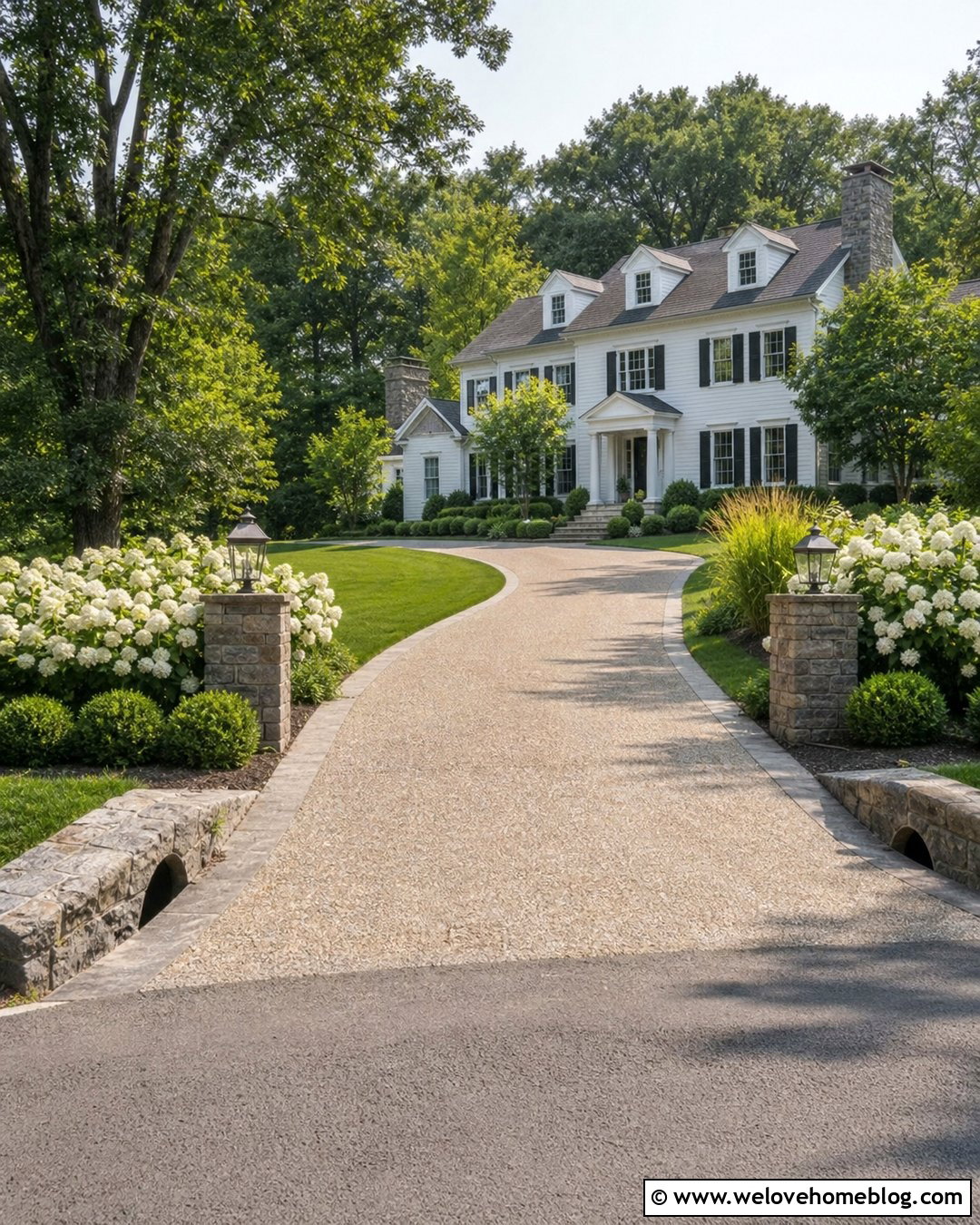
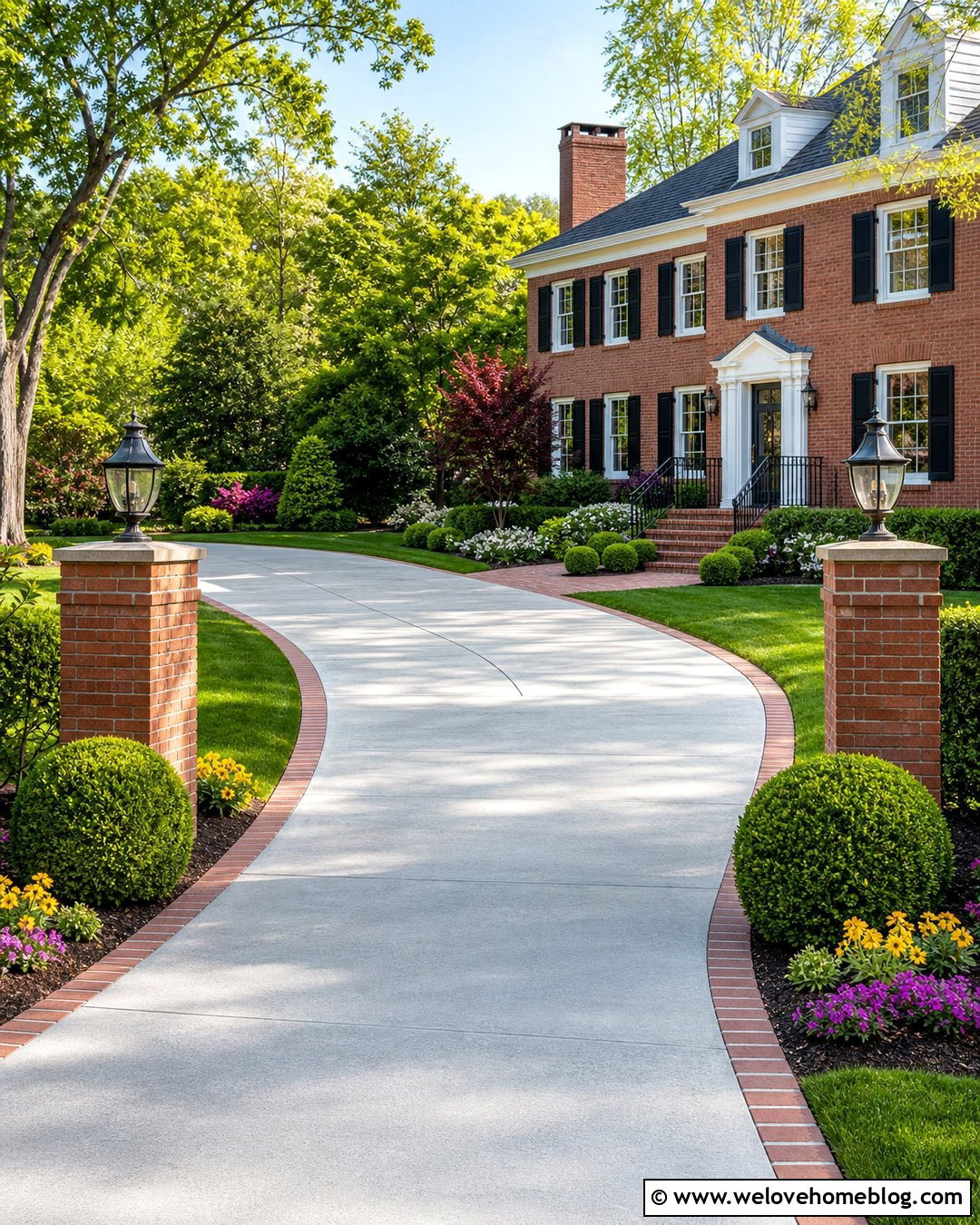
Stone pillars can transform a wide culvert crossing into a defined driveway entrance. Choose warm exposed aggregate concrete for the driveway and low fieldstone headwalls around the drainage openings. Place one substantial pillar on each upper corner, set safely back from the road and vehicle path. Add simple lanterns, restrained address markers, and curved planting beds filled with boxwood, ornamental grasses, and white flowering shrubs. Continue matching fieldstone along the bed edges to unify the arrangement. The pillars should frame the approach without narrowing sightlines or making turns difficult. This complete entrance looks appropriate for traditional estates, large Colonial homes, and modern farmhouses with generous front yards.
18. Driveway Culvert With Solar Lighting

Lighting can make a culvert crossing easier to recognize while adding a welcoming detail to the entrance. Start with a charcoal asphalt driveway, a light concrete apron, and low natural-stone headwalls. Position compact solar fixtures along the upper banks rather than inside the ditch or directly over the pipe. Surround them with low grasses, creeping ground covers, and pale drainage stone that remains visible in daylight. Keep the fixtures below typical driver sightlines and space them evenly without creating an airport-runway effect. Reflective driveway markers may provide added guidance in snowy areas. This balanced design suits suburban ranch houses, contemporary homes, and long country driveways where the roadside transition needs clearer definition.
19. Driveway Culvert With a Split Rail Fence
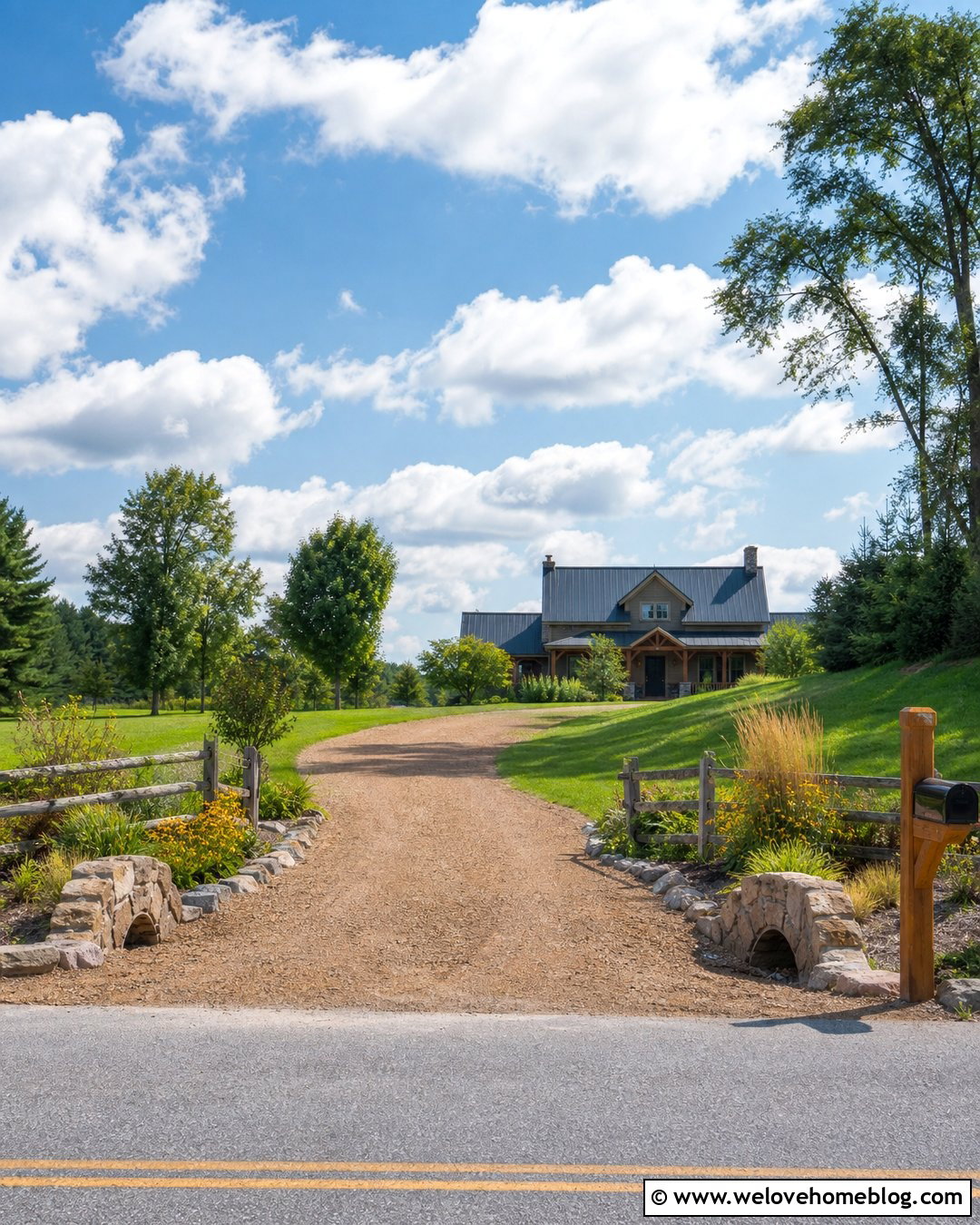
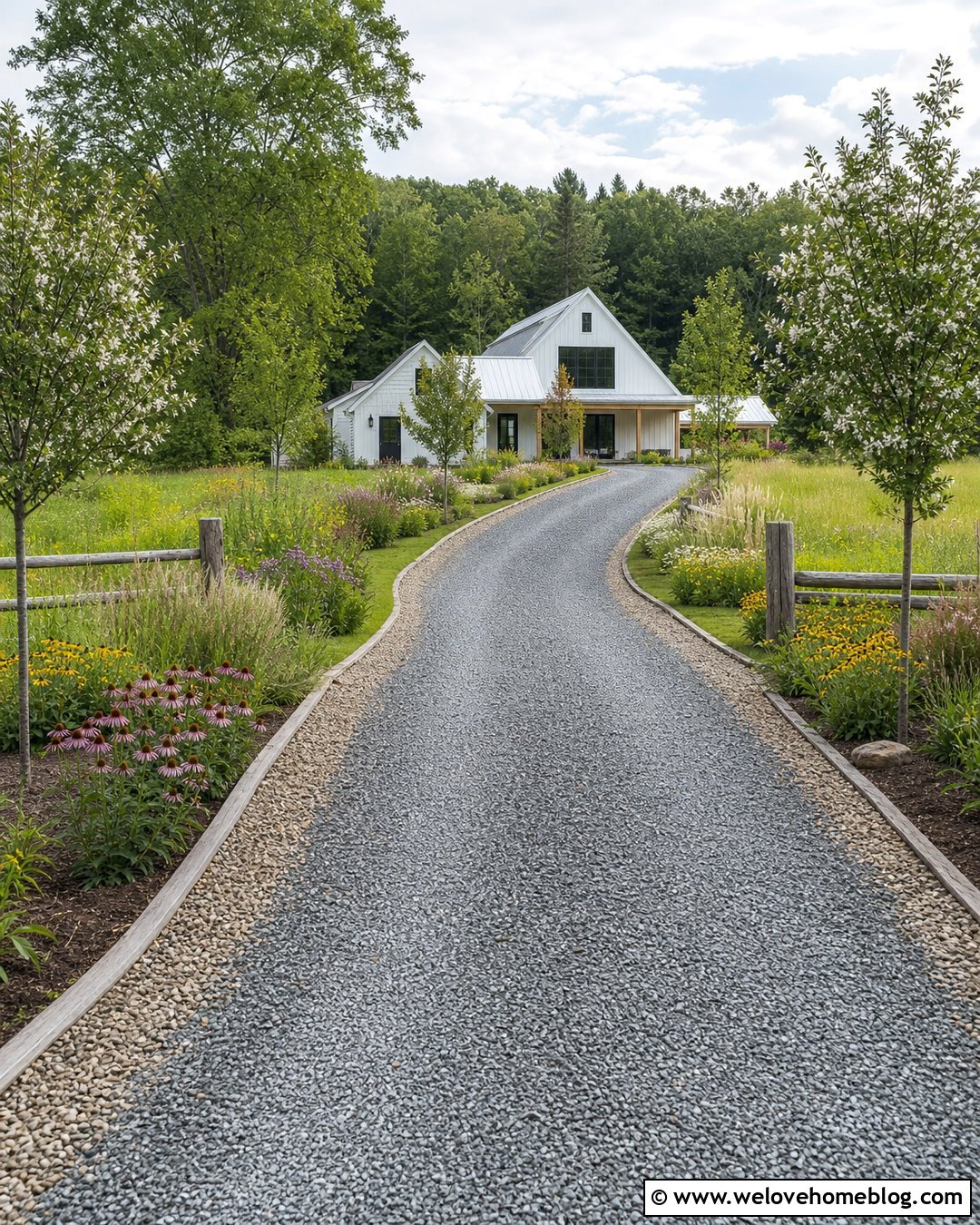
A split rail fence gives a rural culvert entrance clear boundaries without making it feel closed. Combine a warm brown gravel driveway with rugged fieldstone around the pipe openings and a short fence section running along each upper bank. Set fence posts outside the ditch and well back from normal vehicle movement. Plant native grasses, black-eyed Susans, and low spreading shrubs beneath the rails, leaving open stone near the drainage channel. A timber mailbox can repeat the fence material on one side. The design works beautifully with farmhouse, ranch, and barn-style architecture. Keep the fence short enough to protect views of approaching traffic and avoid placing rails where they could obstruct maintenance equipment.

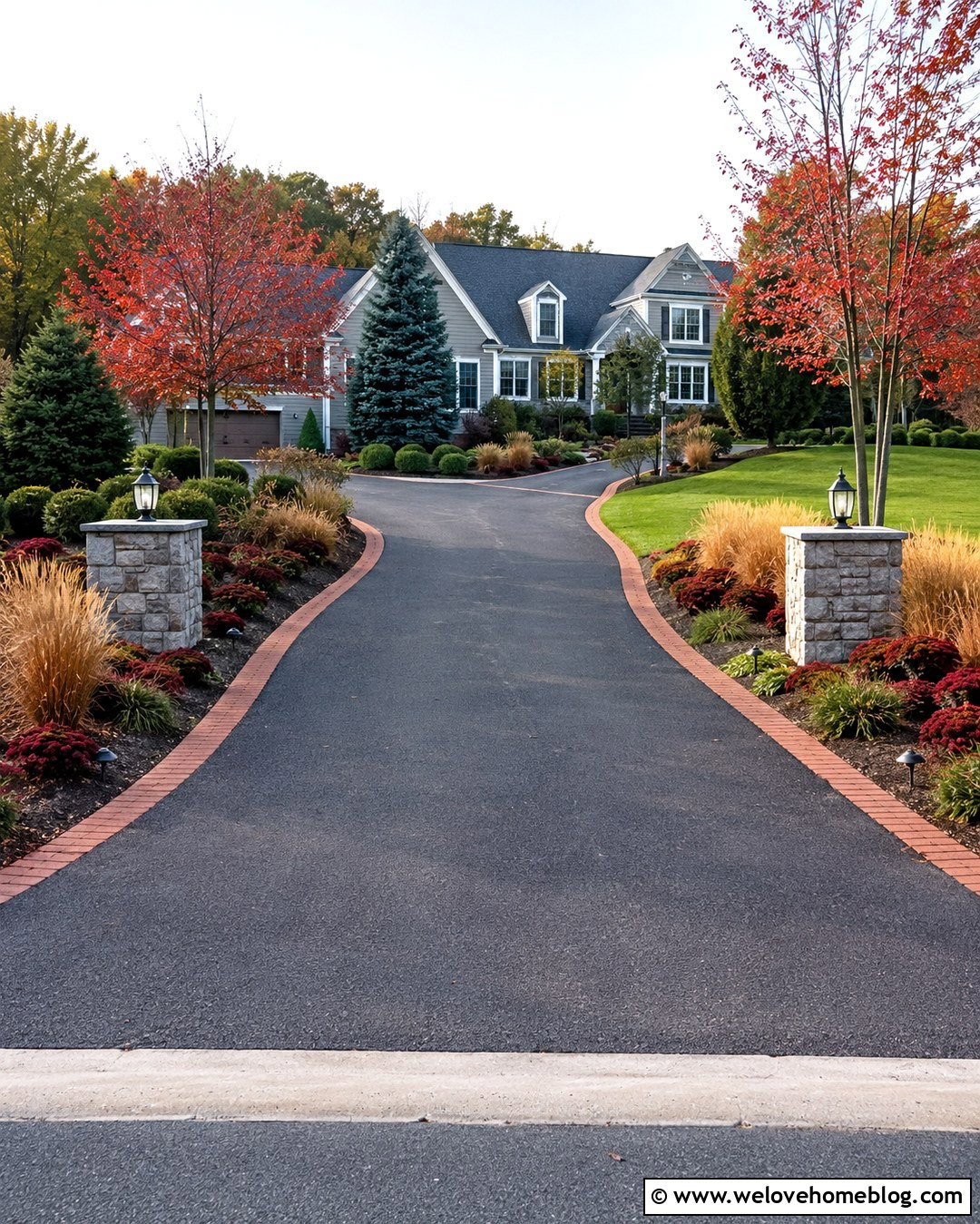
20. Driveway Culvert With White Gravel
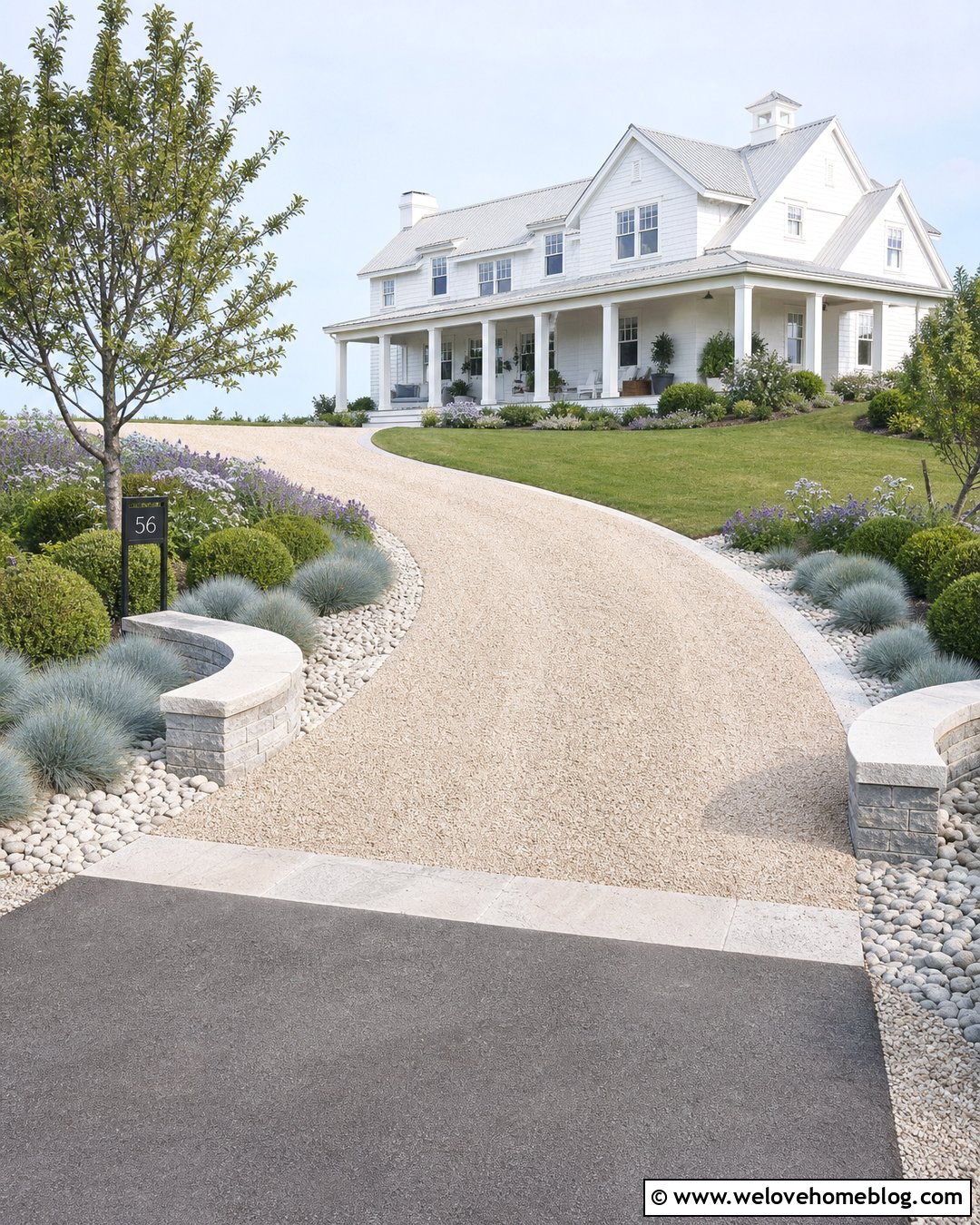
White or pale gravel creates a crisp culvert landscape that stands out against green lawn and dark foliage. Use light limestone gravel for a broad curved driveway, then frame the culvert openings with smooth gray stone blocks. Extend pale washed gravel along the lower banks to form a visible drainage corridor. On the upper slopes, plant rounded evergreen shrubs, blue fescue, and purple-flowering perennials for strong color contrast. A dark metal address sign can anchor one side without overwhelming the simple design. The bright stone is particularly attractive beside a white modern farmhouse or coastal-style home. Install stable edging where needed so decorative gravel does not migrate into the road, lawn, or pipe opening.
21. Driveway Culvert With Red Gravel
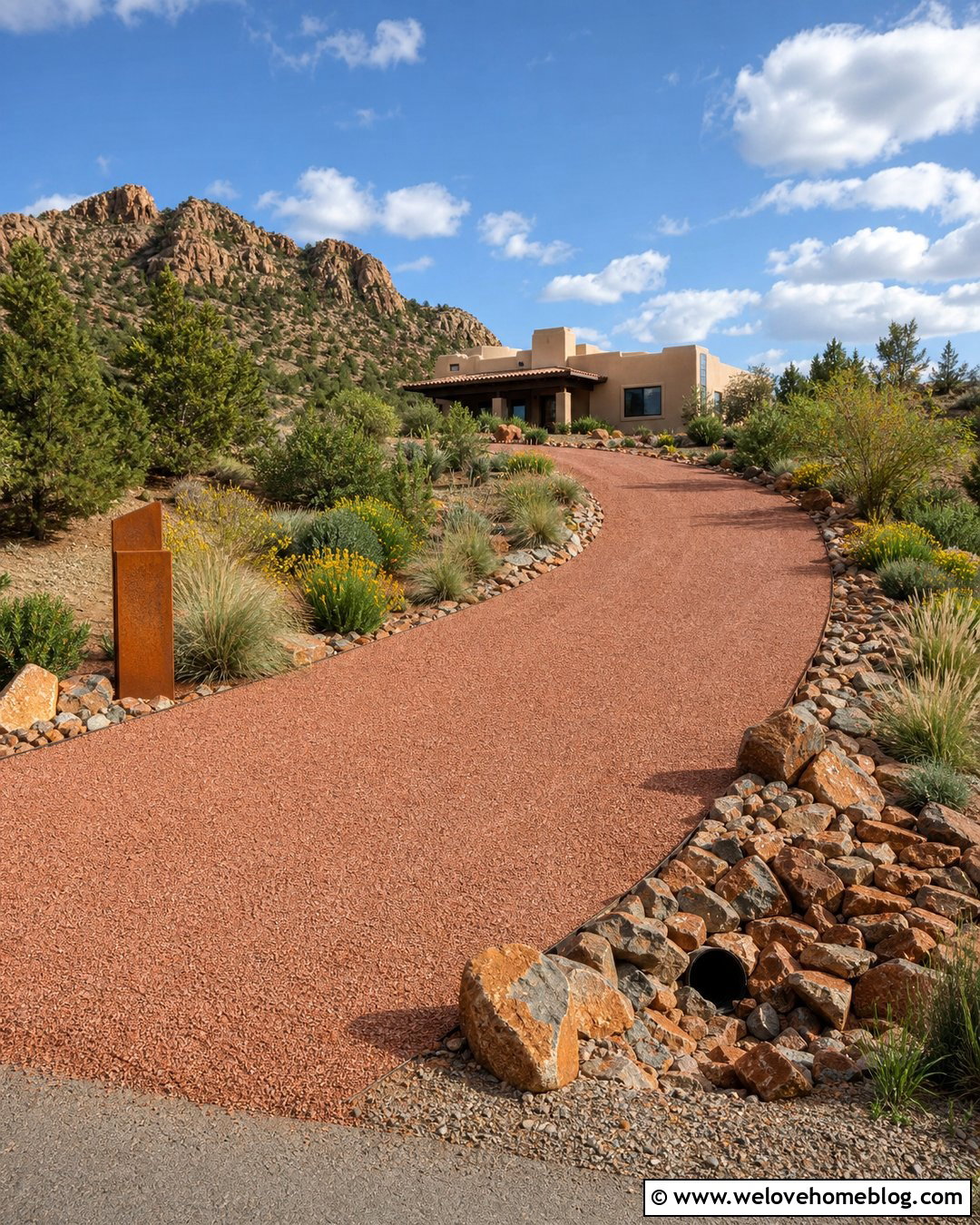
Red gravel brings warm color to a driveway entrance and pairs naturally with earthy stone landscaping. Create a gently curving driveway from compacted red granite gravel and finish the culvert ends with irregular brown and rust-toned boulders. Add drought-tolerant grasses, low evergreen shrubs, and yellow flowering perennials along the upper banks. Use larger angular rock in the active drainage area, where it will read as part of the same color palette. A simple weathered-steel address marker can add a modern accent. This complete look works well with Southwestern, rustic contemporary, and tan stucco homes. Keep loose driveway gravel contained with steel edging or buried stone borders near the culvert crossing.
22. Driveway Culvert With a Grass Swale
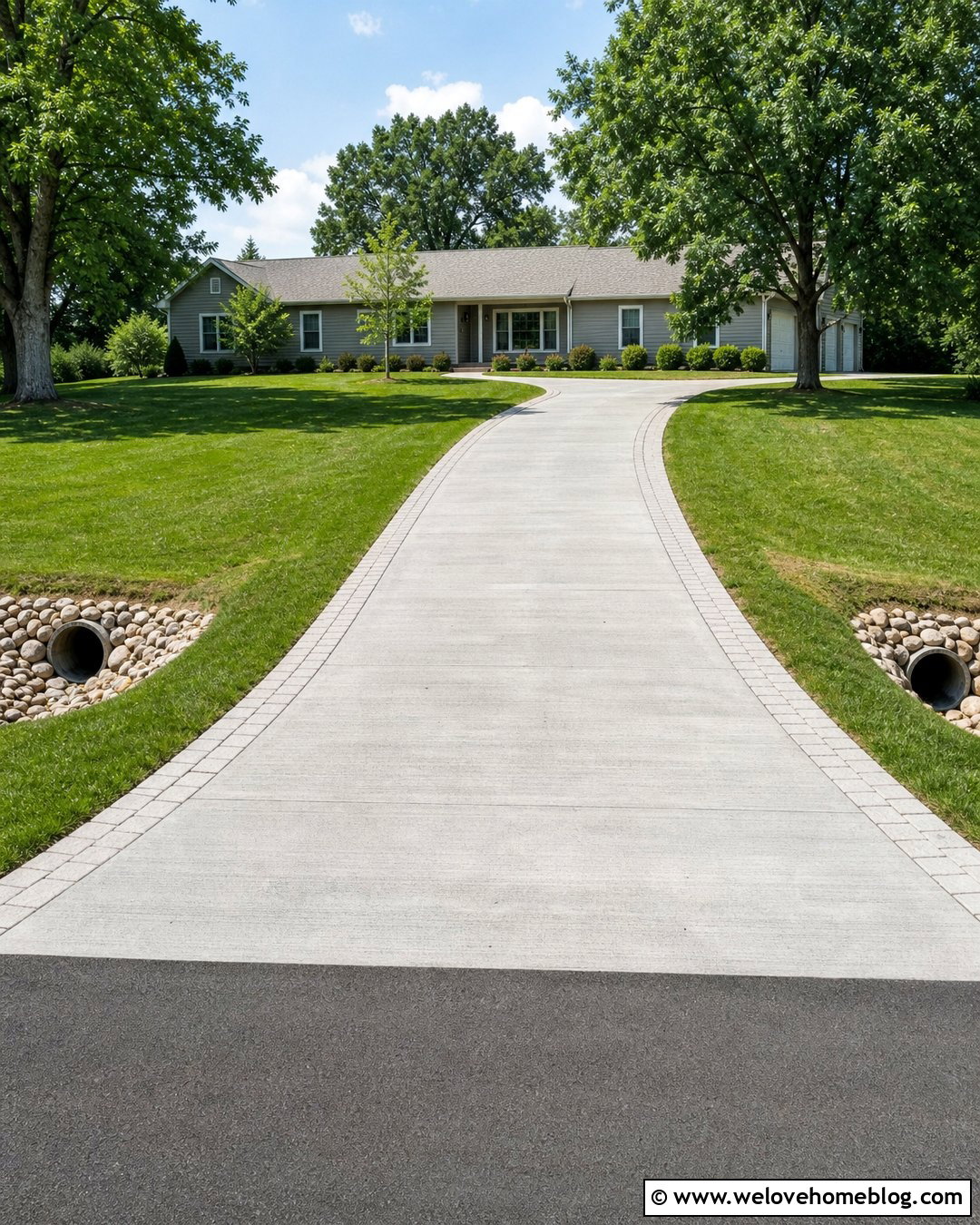
A grass swale offers one of the simplest ways to create an open, uncluttered culvert landscape. Pair a brushed concrete driveway with wide, gently graded turf banks that flow smoothly into the front lawn. Use reinforced stone only around the pipe openings and at areas where concentrated water could expose soil. The remaining ditch can be covered with dense, locally suitable grass that tolerates occasional runoff. A narrow paver border along the driveway keeps the pavement edge neat. Avoid ornamental beds in the lowest channel, where debris could gather. Properly established grassed swales can slow runoff, encourage infiltration, and reduce erosion, although they still require mowing, inspection, and repair of bare areas. ()
23. Driveway Culvert With Wildflowers
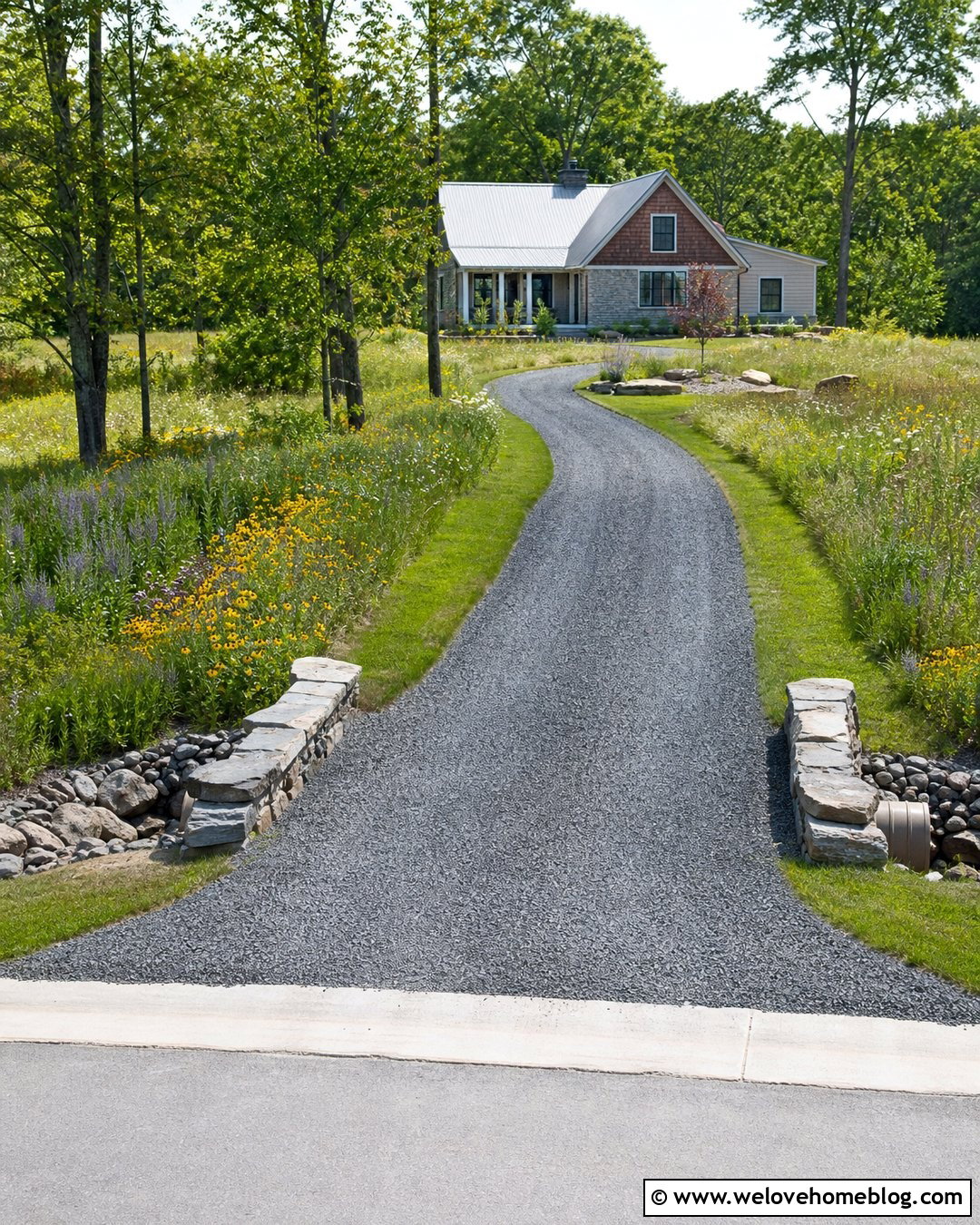
A wildflower border can make a rural culvert entrance feel colorful and natural without disguising the drainage route. Use compacted gray gravel for the driveway and build low stone headwalls with broad, open pipe entrances. Establish native wildflowers and fine-textured grasses along the upper ditch banks, where roots can cover soil without occupying the primary flow channel. Choose shorter plants near the road and taller varieties farther into the property. A mown strip between the planting and driveway maintains a deliberate appearance. Add several flat boulders for structure during seasons when flowers are absent. This complete look suits country cottages, cabins, and informal farmhouses surrounded by meadows or open fields.
24. Driveway Culvert With Dwarf Hydrangeas
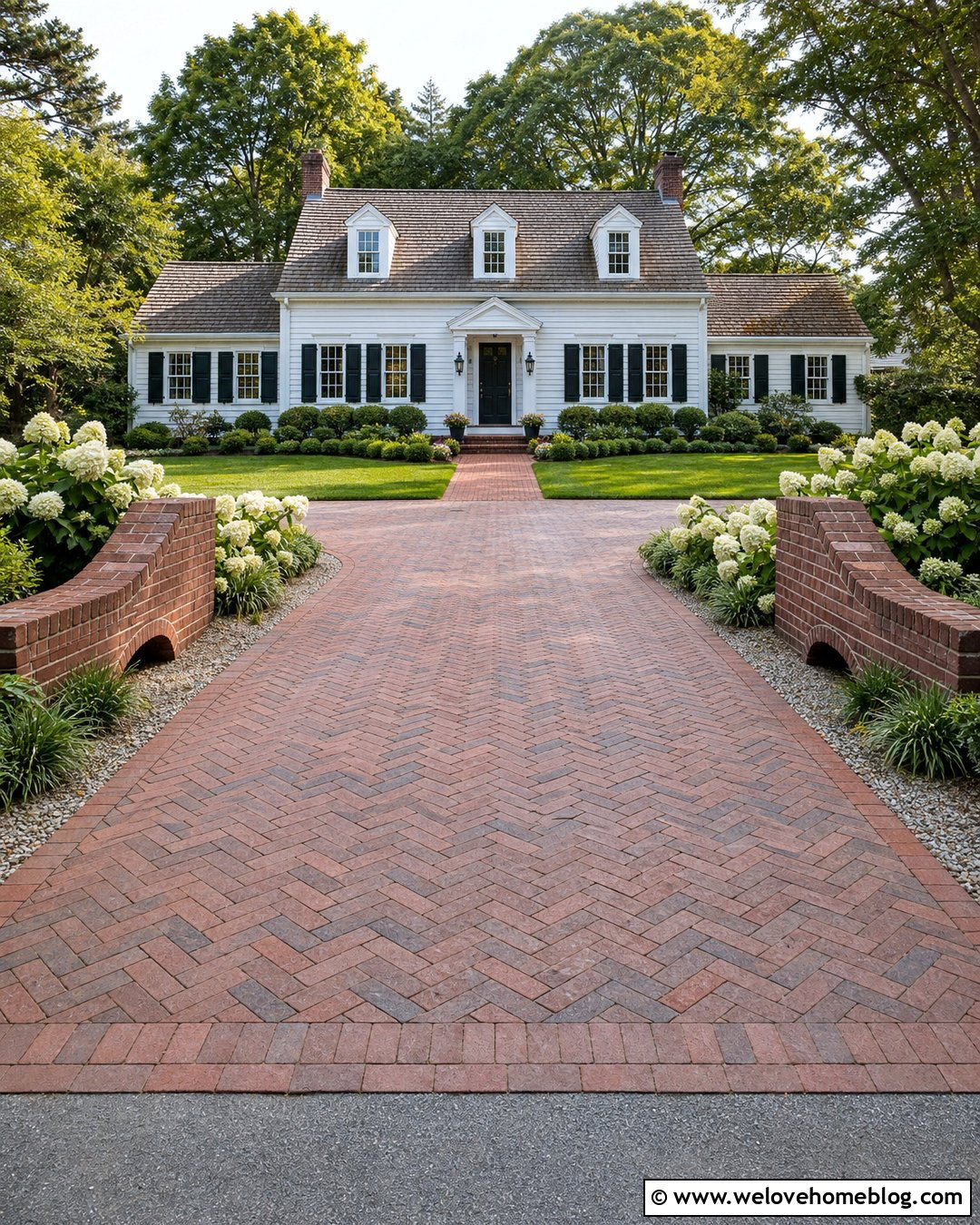
Dwarf hydrangeas can give a culvert entrance generous summer color while remaining easier to manage than full-size shrubs. Pair a clay brick paver driveway in a herringbone pattern with low matching brick headwalls. Place compact hydrangeas in raised beds above the culvert banks, safely separated from the pipe openings by bands of washed gravel. Add boxwood, sedges, and simple lawn edges to provide structure before and after flowering. Choose varieties suited to the site’s sunlight, climate, and soil conditions. The rounded blooms soften the strong brickwork and complement Colonial, Cape Cod, and traditional cottage homes. Regular pruning and leaf removal will help keep the drainage area tidy and accessible.
25. Driveway Culvert With a Modern Rock Garden
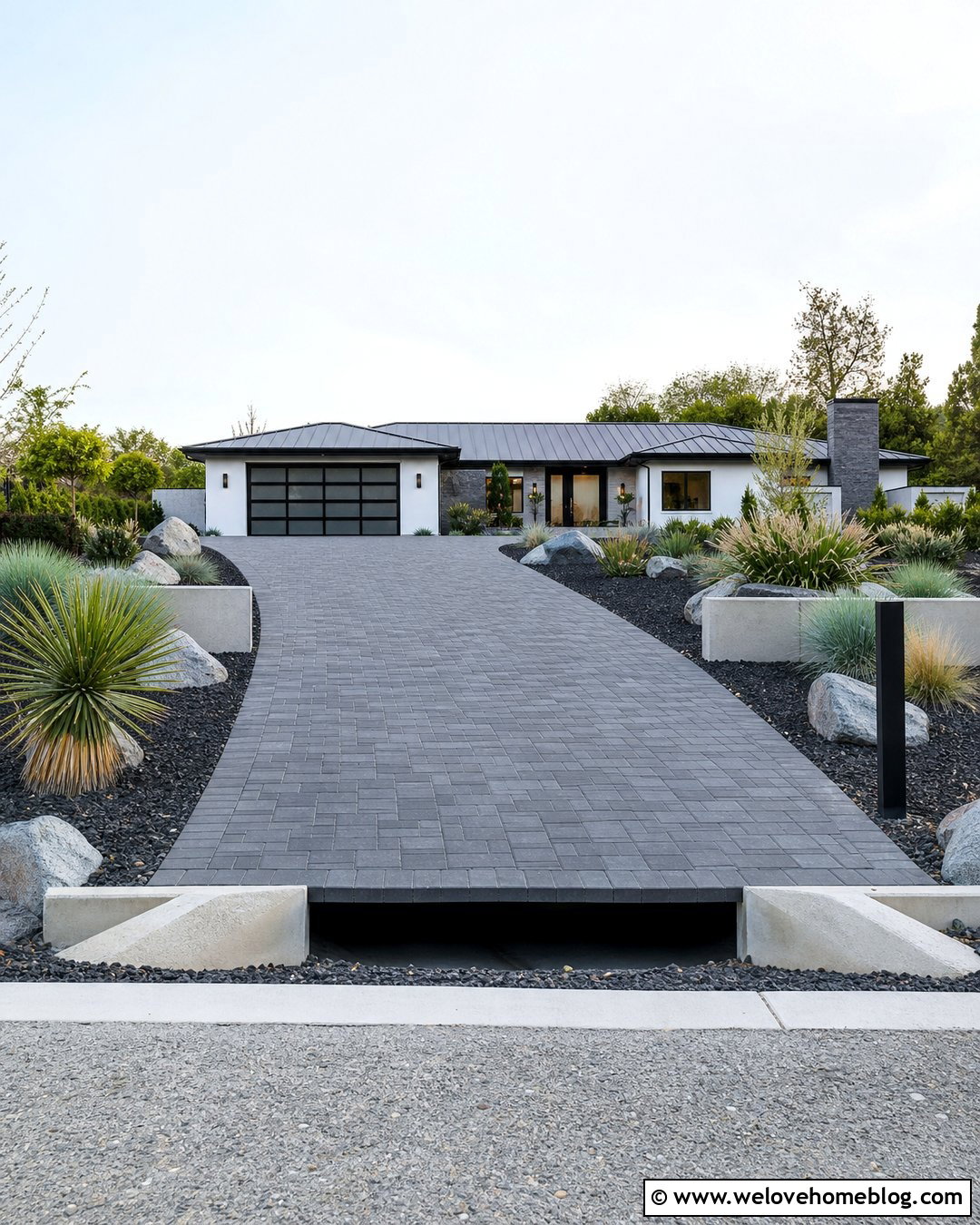
A restrained rock garden can turn a visible culvert into part of a contemporary landscape. Install charcoal concrete pavers in a straight geometric driveway, then use smooth poured-concrete headwalls around the pipe openings. Cover the upper banks with black basalt gravel and place several sculptural gray boulders in balanced groups. Add blue-green grasses, dwarf yucca, or compact drought-tolerant plants suited to the local climate. Keep generous empty space between elements so the entrance feels organized rather than crowded. A slim black address sign can repeat the home’s window frames. The culvert channel should remain clearly defined with larger drainage stone. This look works especially well with modern homes and low-slope roofs.
26. Driveway Culvert With Cottage Landscaping
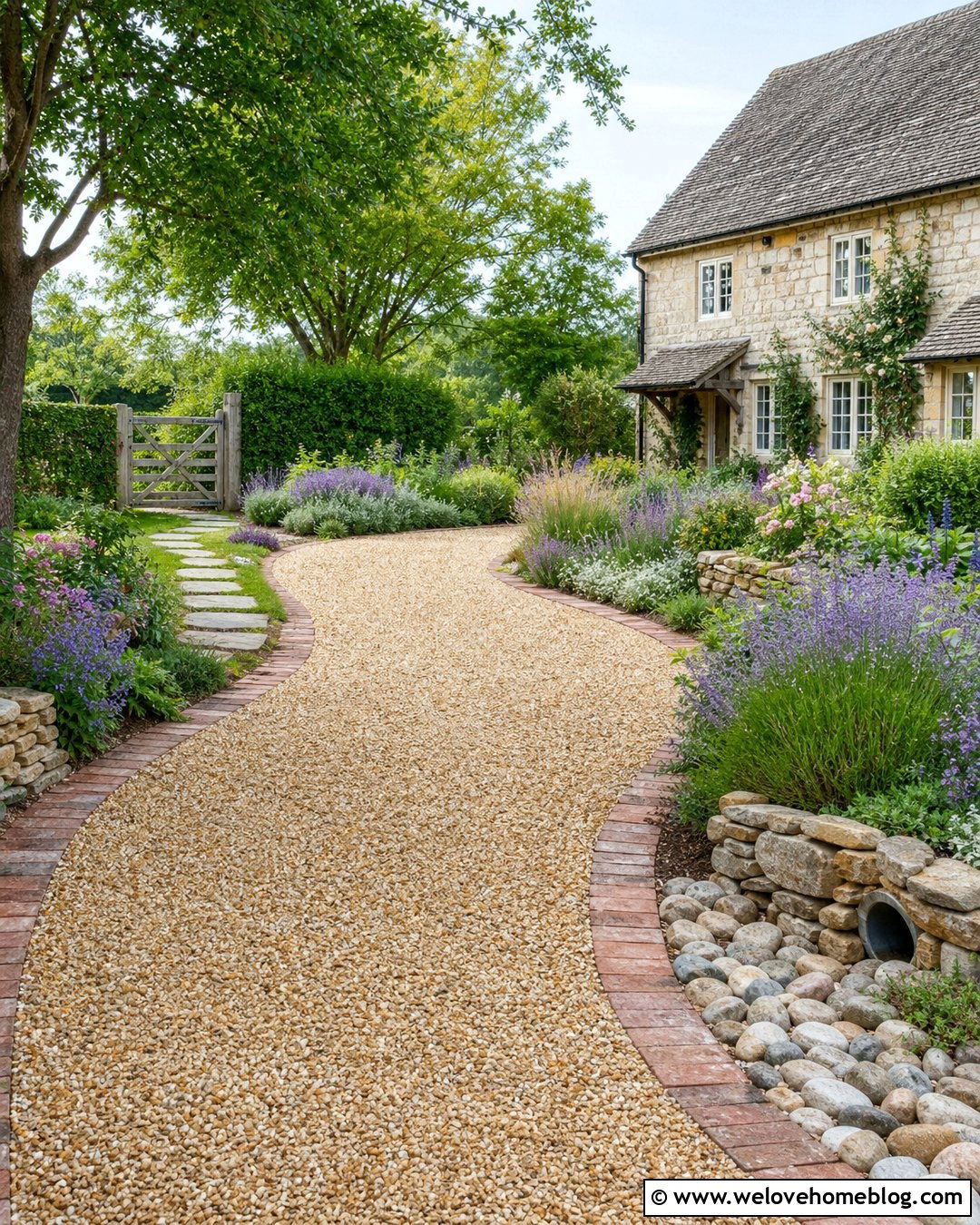
Soft planting and traditional materials can make a culvert crossing feel like part of a cottage garden. Use warm pea gravel for a slightly curved driveway bordered by weathered clay bricks. Build low fieldstone headwalls and continue the stone into gently rounded planting beds above the ditch. Fill the beds with lavender, catmint, dwarf roses, salvia, and compact grasses while keeping the central drainage line open. Add a narrow stepping-stone path from the driveway toward the front gate. Plants can overlap the bed edges lightly, but they should not conceal the culvert openings. This coordinated design suits cottage, Tudor, and small Craftsman homes with layered front-yard gardens and informal architecture.
27. Driveway Culvert With Coastal Plants
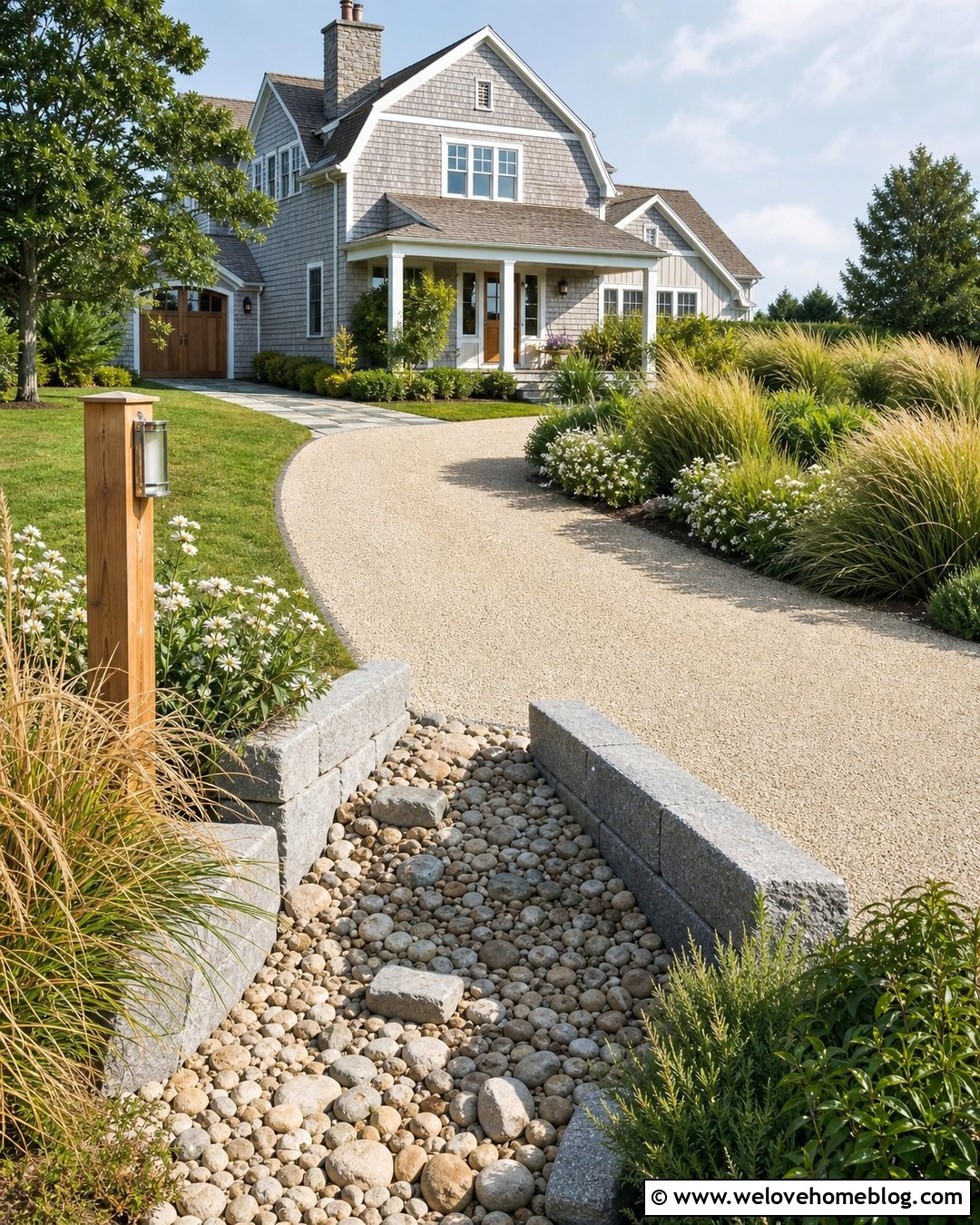
A coastal-inspired culvert entrance should feel light, open, and resilient rather than densely planted. Pair a pale shell-colored resin-bound gravel driveway with low gray granite headwalls and washed beach-tone cobbles. Arrange salt-tolerant or regionally appropriate grasses and compact shrubs along the upper banks, using sweeping groups that echo nearby dunes. White flowering perennials can brighten the entrance without adding visual clutter. Continue a strip of cobbles through the ditch to show the intended drainage path. A simple cedar address post complements the natural palette. This complete look works with coastal cottages, shingle-style homes, and light-colored ranch houses, but plant choices should always match actual local exposure and growing conditions.
28. Driveway Culvert With a Stone Bridge Look
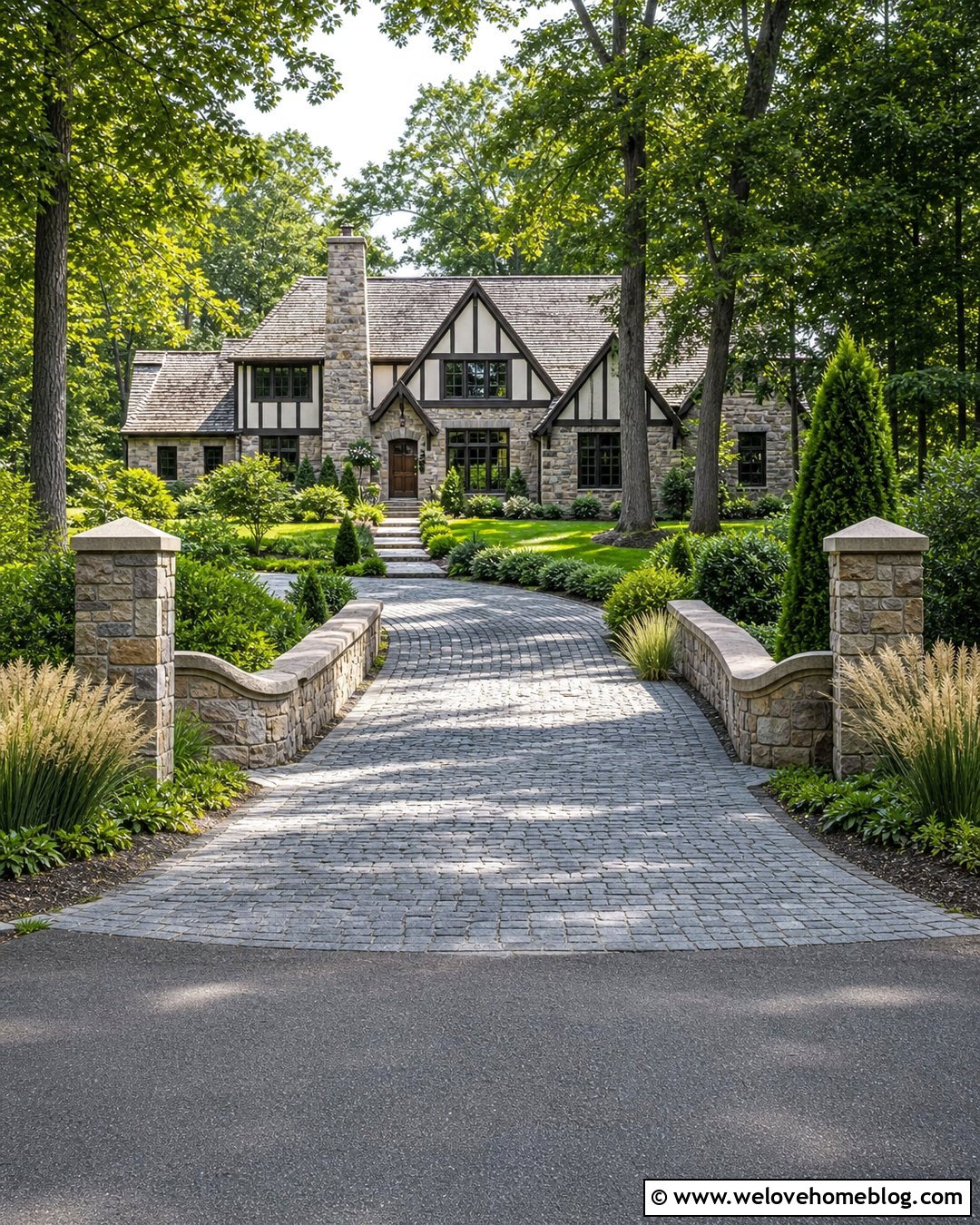
A bridge-inspired culvert can create a substantial entrance when the crossing is wide enough to support the visual scale. Use gray cobblestone paving across the driveway apron and construct professionally designed stone-faced headwalls with gently curved tops. Low stone parapets may continue along the driveway edges, provided they meet local safety and clearance requirements. Plant clipped evergreens, spreading ground covers, and woodland grasses beyond the walls. Add matching stone posts at the inner end of the crossing rather than close to the road. The result resembles a small estate bridge leading toward a Tudor, Colonial, or stone country house. Structural work should be designed around water capacity, loads, erosion, and required roadside setbacks.
29. Driveway Culvert With a Xeriscape Garden
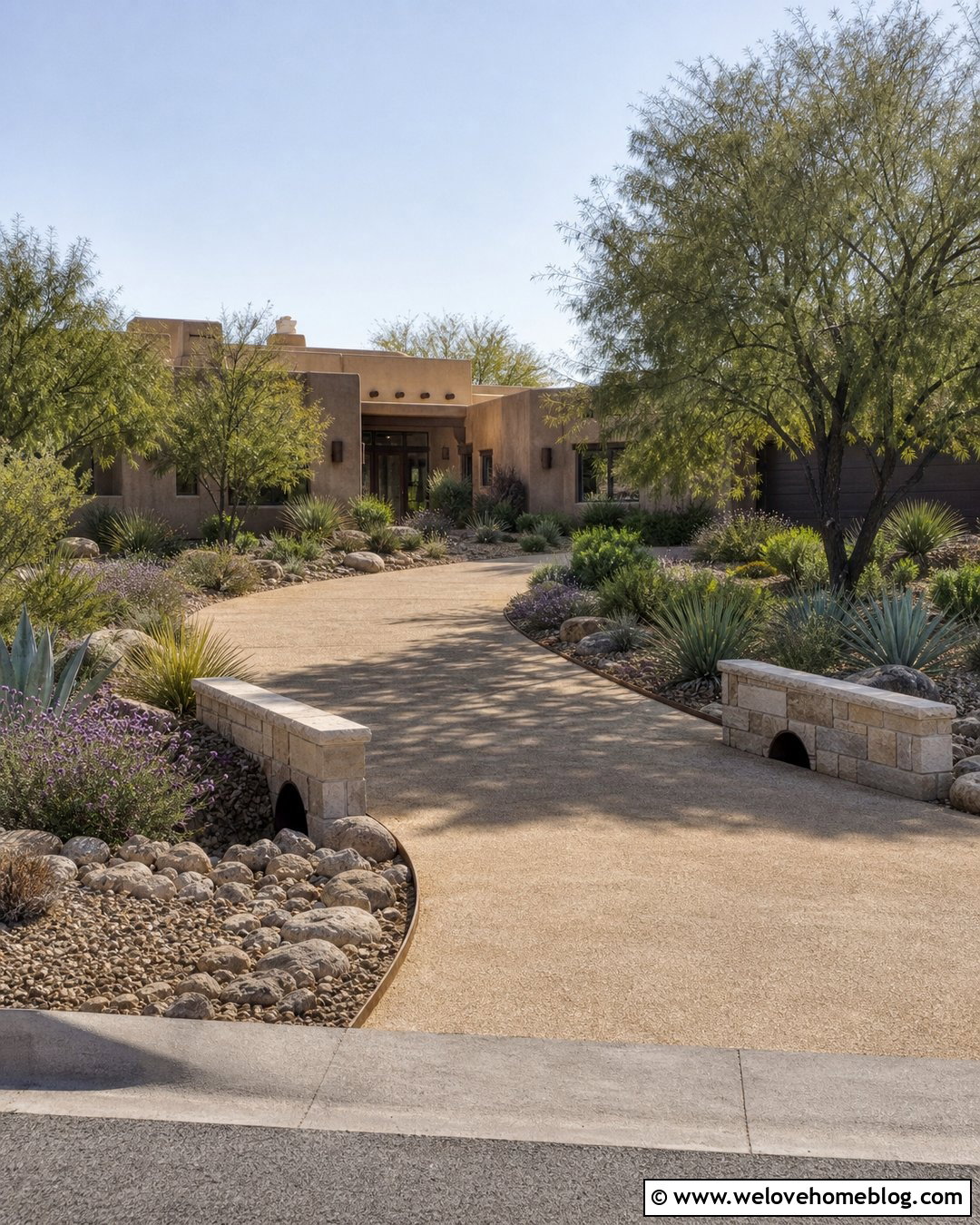
A xeriscape treatment is practical for a sunny culvert entrance in a dry climate. Combine a tan decomposed granite driveway with low headwalls built from buff-colored masonry blocks. Cover the upper slopes with mixed gravel and arrange drought-tolerant grasses, flowering penstemon, compact agave, and small native shrubs in widely spaced groups. Use larger riprap around the culvert openings and through the main drainage corridor. A weathered-steel border can separate the planted gravel beds from the driveway. The warm colors complement adobe, Southwestern, desert modern, and light stucco homes. Although the landscape is water-conscious, it still needs grading that directs stormwater safely through the crossing without sending loose decorative material into the pipe.
30. Driveway Culvert With Layered Entrance Landscaping
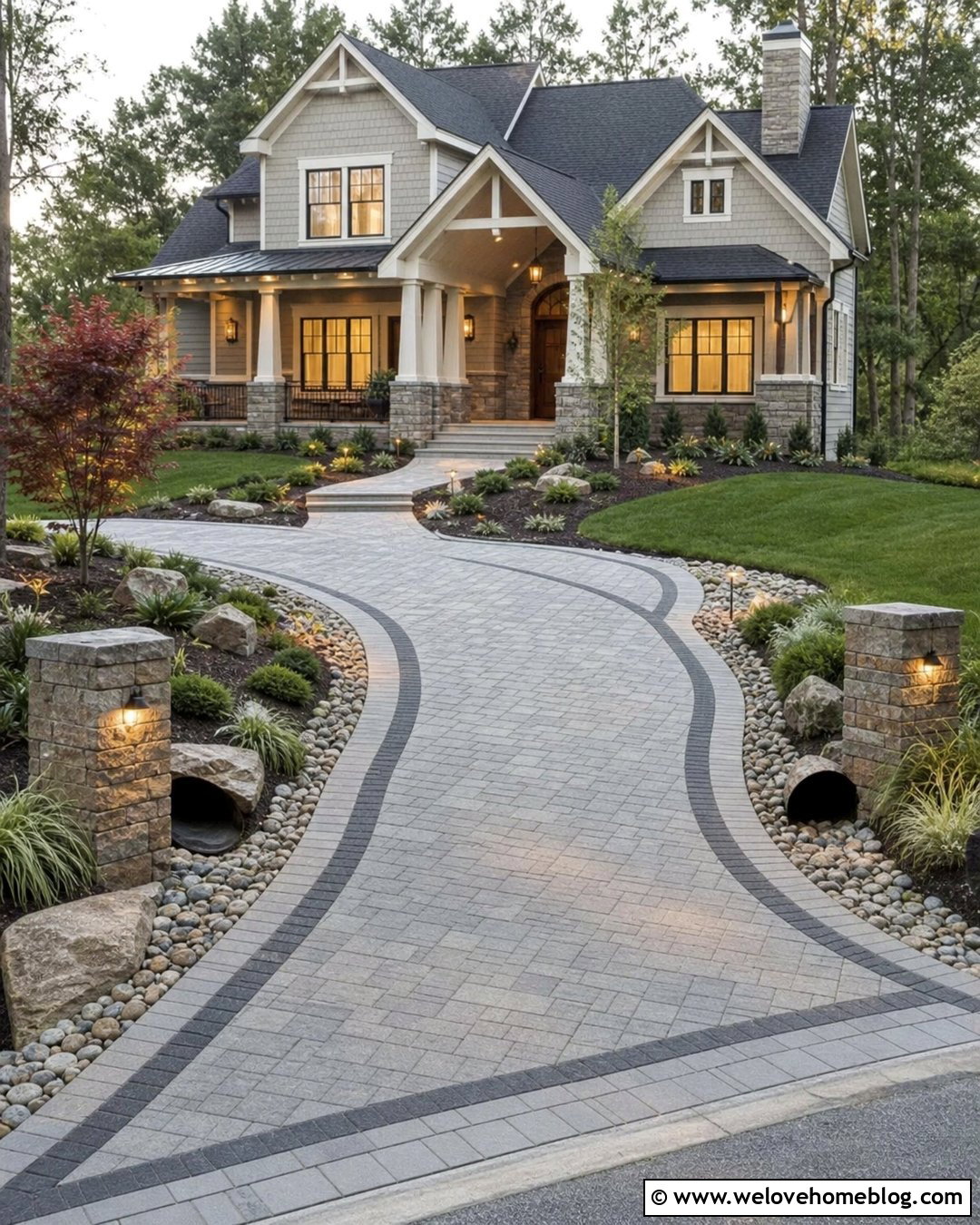
Layered landscaping creates a polished culvert entrance by combining hardscape, plants, and clear drainage zones. Use medium-gray concrete pavers for a gently curved driveway with a darker paver ribbon along each side. Frame the culvert openings with low stone walls, then add cobble-lined channels at the bottom of the banks. Plant sedges and spreading ground covers in the middle layer, followed by dwarf shrubs and small ornamental trees farther from the road. Finish the design with low address pillars and subtle entrance lighting. Each element should step upward from the ditch rather than crowding it. This complete arrangement provides strong curb appeal for a large Craftsman, transitional, or updated suburban home.
Conclusion:
The most successful 30 driveway culvert landscaping ideas treat drainage, driveway design, and curb appeal as one connected project. Start by keeping the pipe openings and natural flow path clear. Then choose headwalls, stone, planting, edging, and entrance details that complement your driveway material and house. River rock and native grasses create a relaxed look, while brick, concrete, pillars, and structured shrubs feel more formal. Avoid unstable walls, loose mulch in active channels, oversized plants, and anything that reduces road visibility. Because culvert dimensions and roadside requirements vary, confirm local rules before making structural changes. With thoughtful planning, this functional crossing can become an attractive, durable part of your front landscape.

Related posts:
Leave a Reply