
Bluestone gravel brings a refined blue-gray color to the relaxed, practical character of a loose-stone driveway. The angular texture works with traditional, coastal, farmhouse, and modern homes, while thoughtful borders keep the surface looking intentional. The best designs consider more than the gravel itself. Driveway shape, edging, planting, drainage, walkways, and entrance details should read as one complete landscape. A properly prepared, compacted base is also important because attractive gravel alone cannot correct weak support or poor grading. From cobblestone aprons and brick ribbons to flowering borders and modern steel edges, these complete looks offer options for different properties and budgets. Use the following **20 Bluestone Gravel Driveway Ideas** to plan an entrance that feels polished, functional, and connected to your home.

1. Straight Bluestone Gravel Driveway With Cobblestone Edging
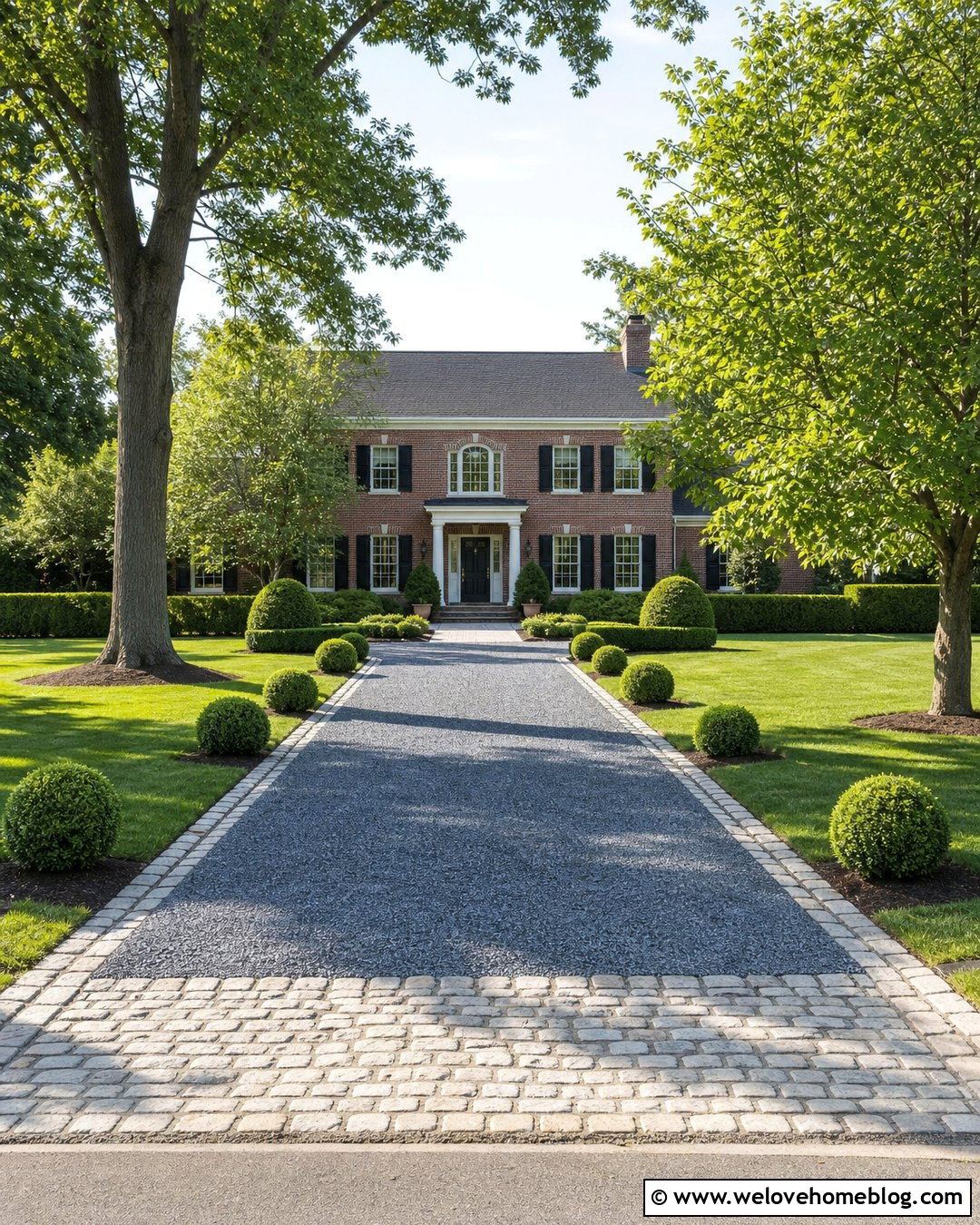
A straight blue-gray gravel drive gains structure from cobblestone edging installed along both sides. The darker stones create a strong outline, helping the driveway feel established rather than loosely spread across the yard. Use a slightly wider cobblestone apron at the street to define the entrance and handle frequent turning traffic. A matching cobblestone band near the garage can create a clean transition to the floor slab. For balanced landscaping, add clipped boxwoods, low ornamental grasses, and a simple lawn on each side. This complete look works especially well with Colonial and traditional brick homes. Keep the driveway wide enough for comfortable access, but avoid excessive width that would overpower the facade. The simple rectangular layout also makes raking and surface refreshing easier.
2. Curved Bluestone Gravel Driveway With Steel Edging
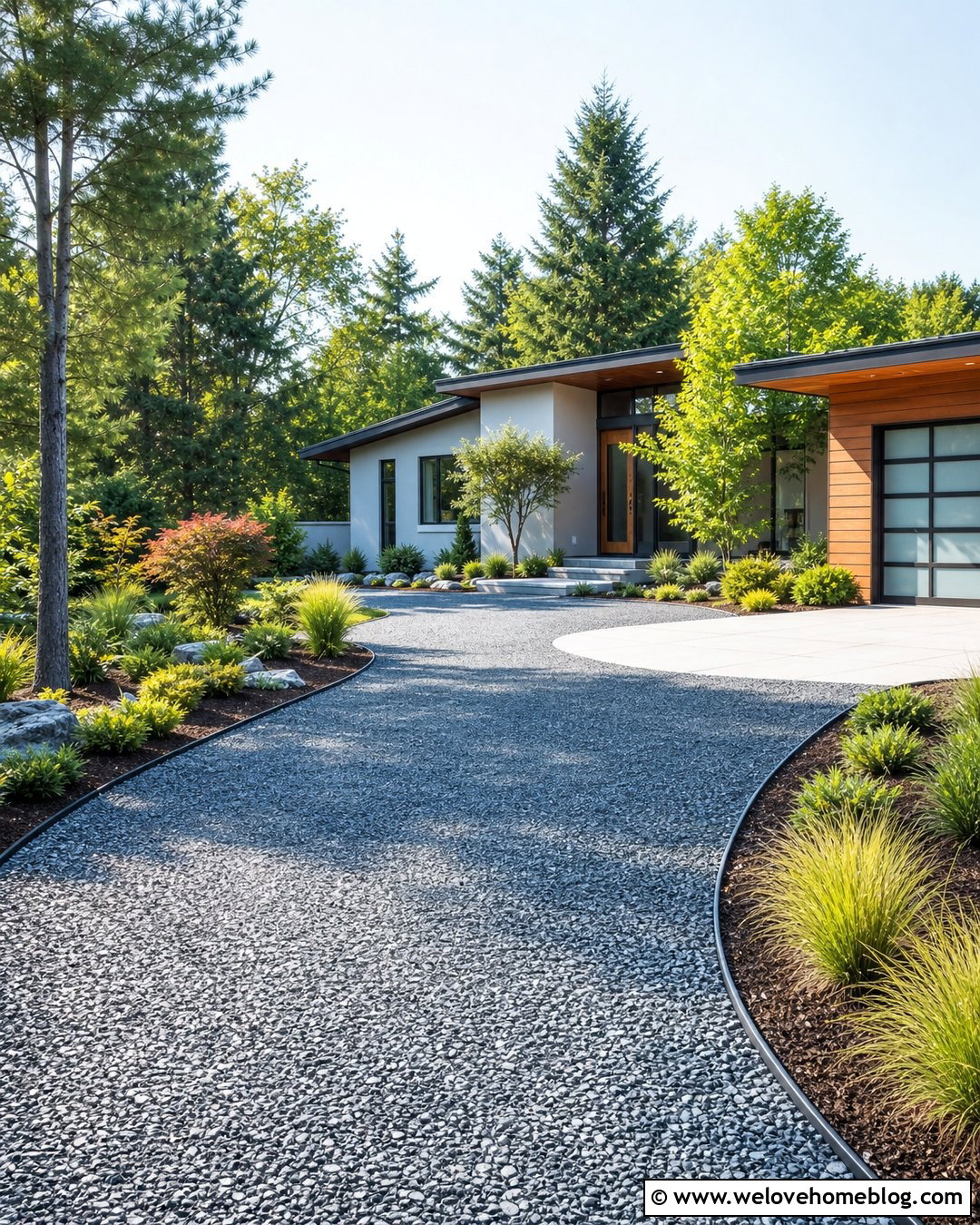
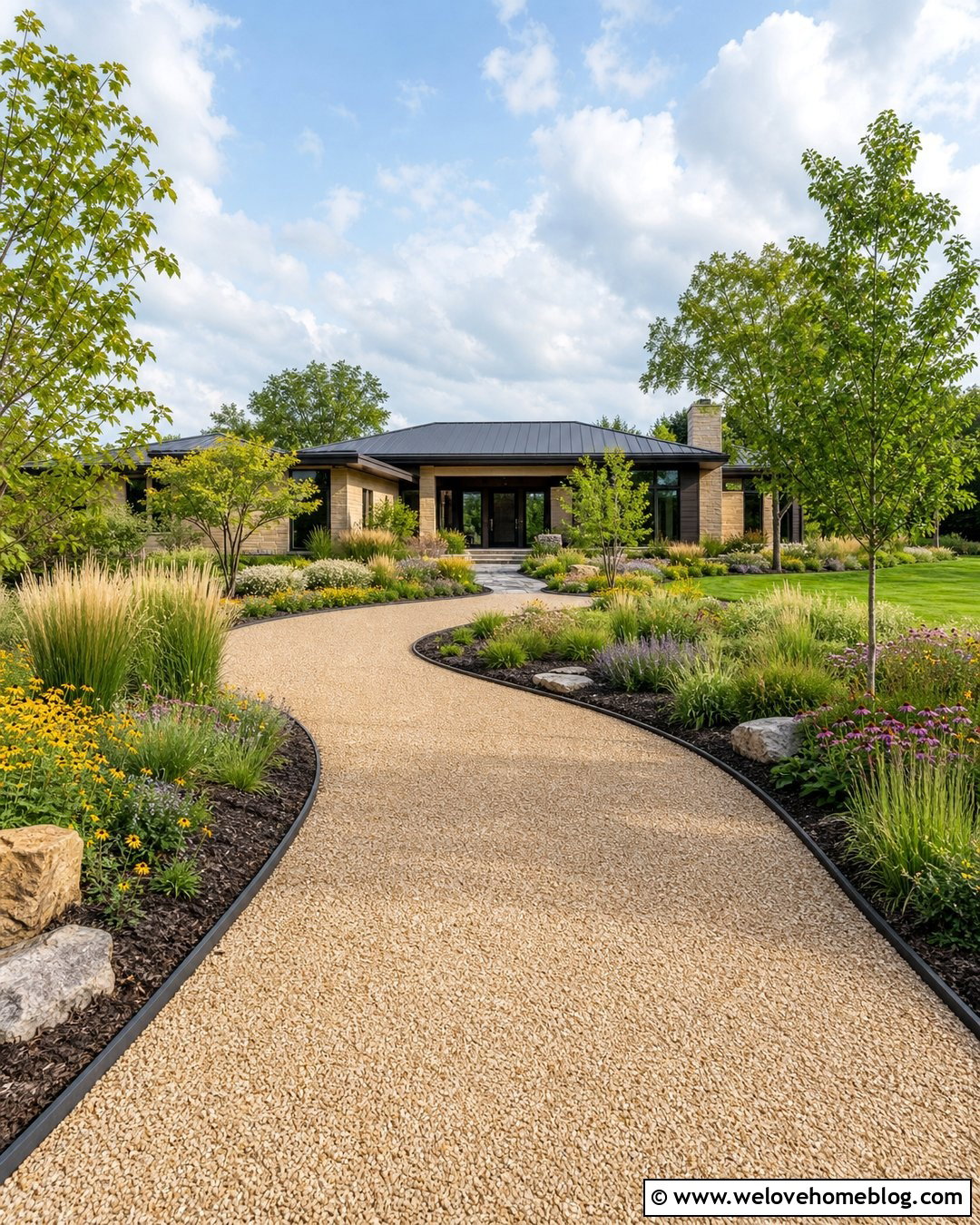
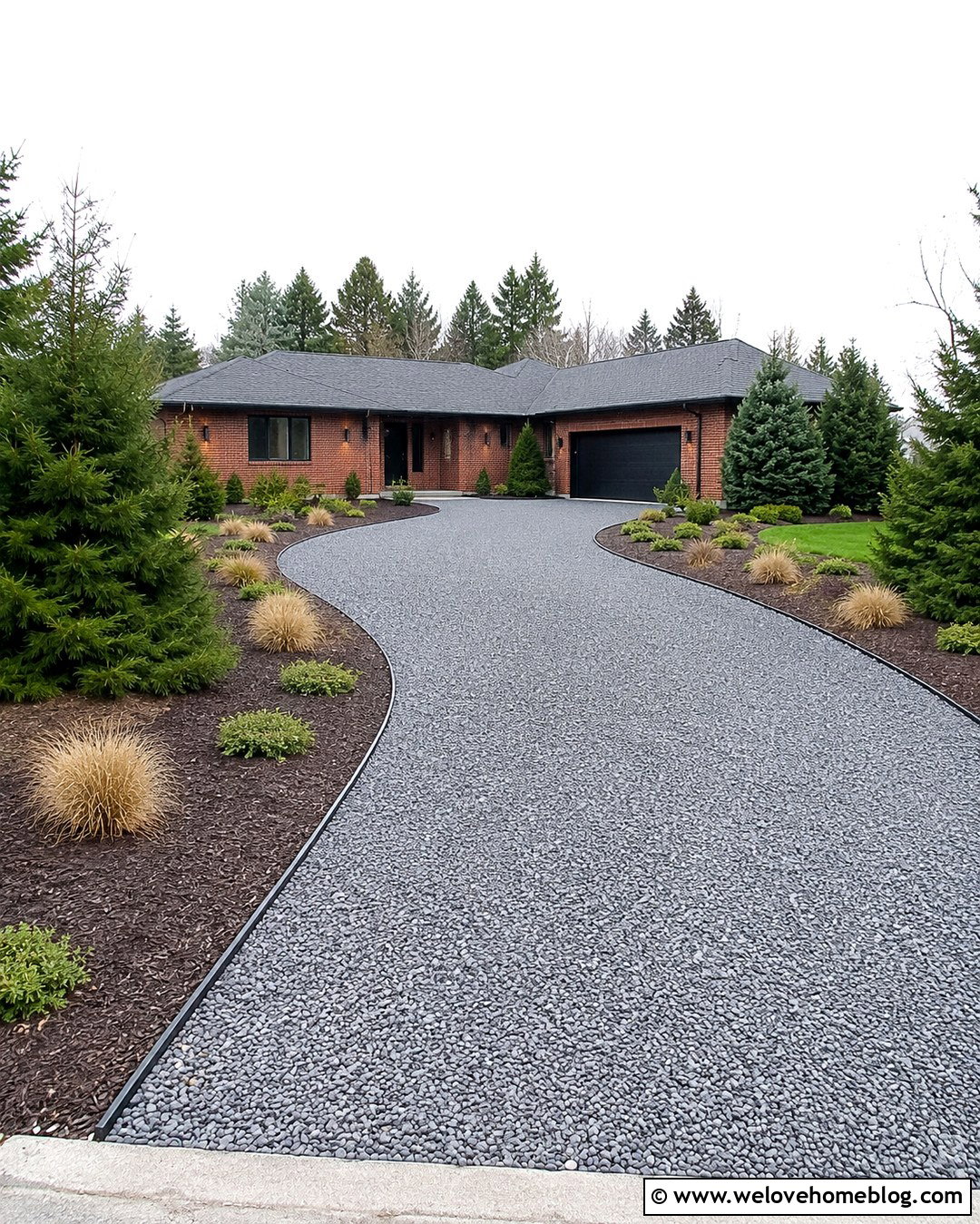
Clean steel edging gives a curved bluestone gravel driveway a crisp, contemporary profile. The slim border nearly disappears from a distance, allowing the blue-gray aggregate and flowing shape to receive the attention. Follow the curve with repeated groups of ornamental grasses, compact evergreens, and low ground covers. These plants reinforce the driveway’s movement without hiding the entrance. Near the house, transition the gravel into a rectangular concrete parking pad or a wider gravel court with matching steel containment. This design is especially effective beside a modern home with dark siding, pale stucco, or mixed wood cladding. Make every curve gradual enough for easy vehicle movement. Sharp bends may look dramatic on paper, but broad, natural arcs generally create a calmer and more practical approach.
3. Bluestone Gravel Driveway With Red Brick Border
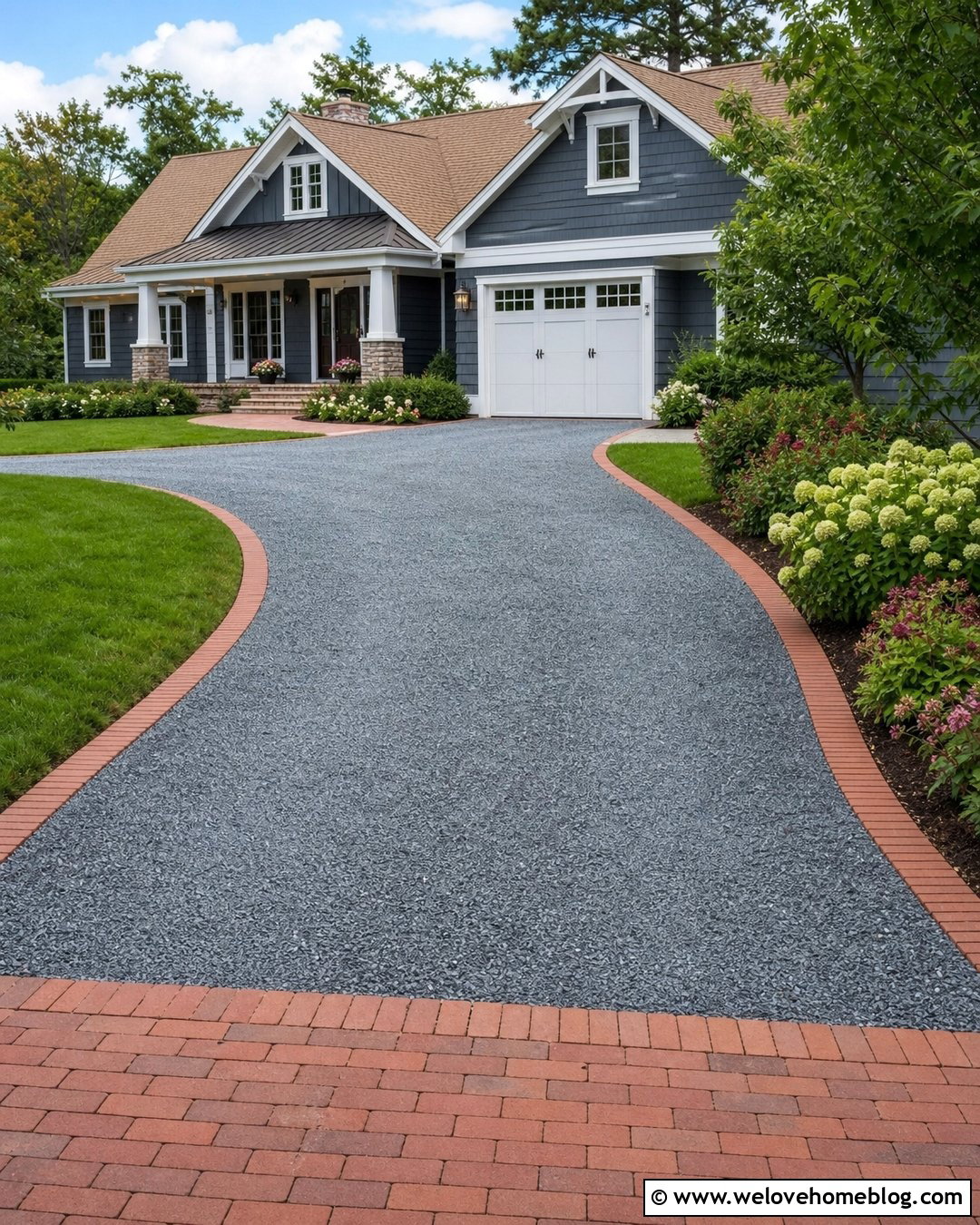
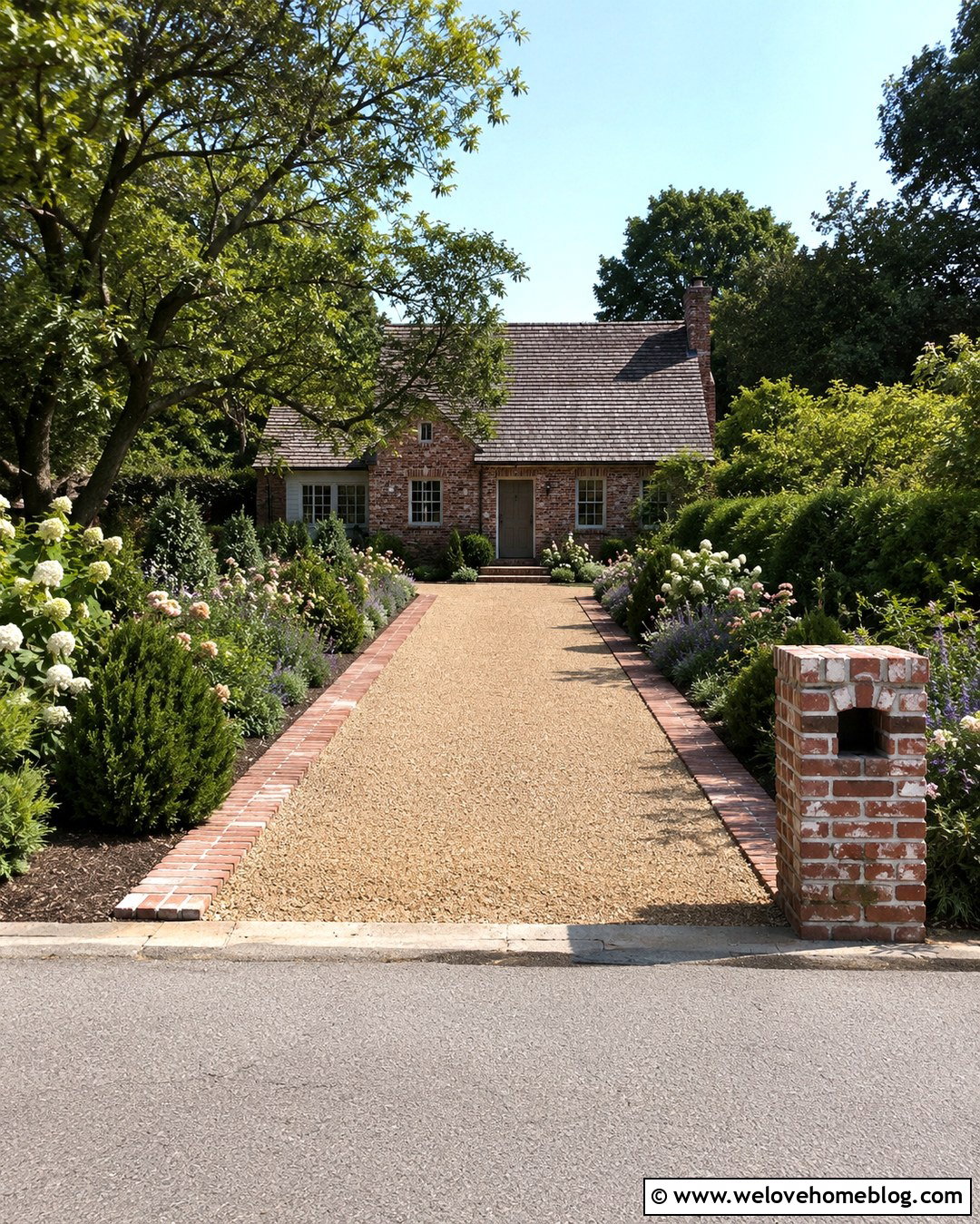
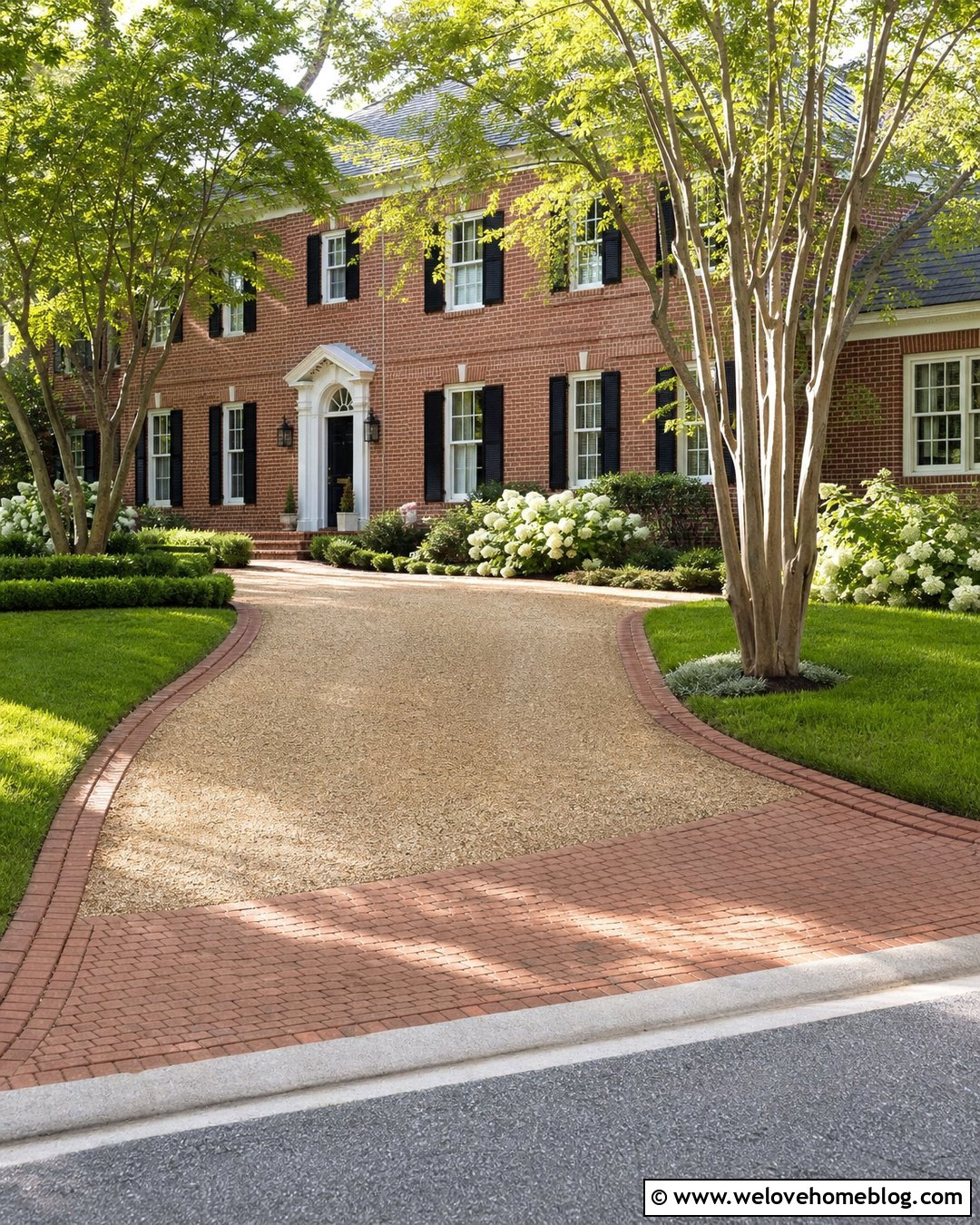
Warm red brick creates an appealing contrast against cool bluestone gravel. Use bricks as a flat soldier-course border so vehicle tires can cross the edge without striking a raised obstruction. Continue the same brick around the driveway apron, nearby walkway, and planting beds to make the landscape feel coordinated. This combination naturally complements Craftsman houses, red brick homes, and cottages with warm exterior details. Plant hydrangeas, inkberry, and seasonal flowers beyond the border, leaving enough open space to prevent branches from reaching parked vehicles. A straight or gently curved layout both work with this treatment. For extra detail, add a narrow brick ribbon across the gravel near the garage. It creates a visual stopping point while tying the driveway to the home’s masonry.
4. Bluestone Gravel Driveway With Bluestone Apron
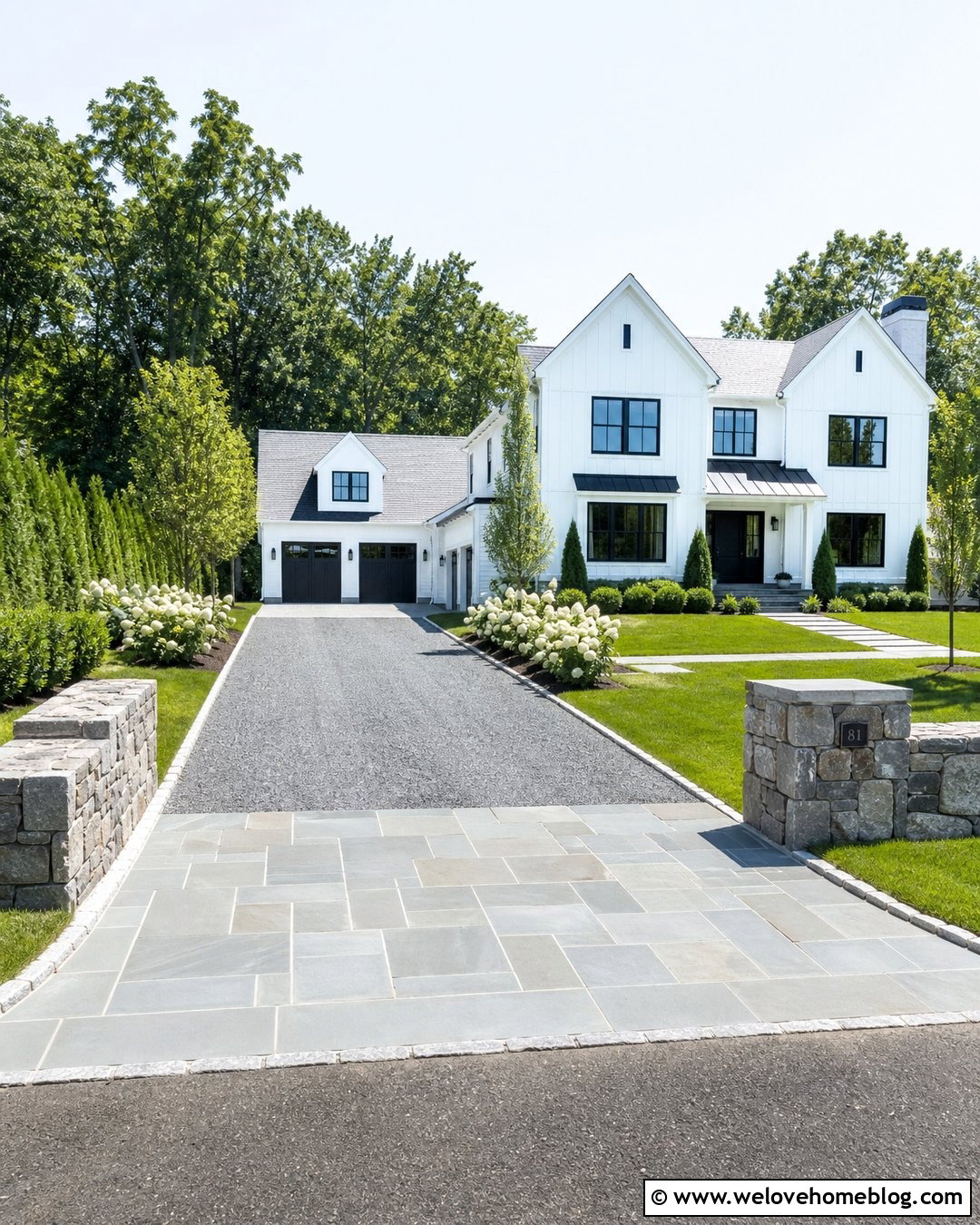
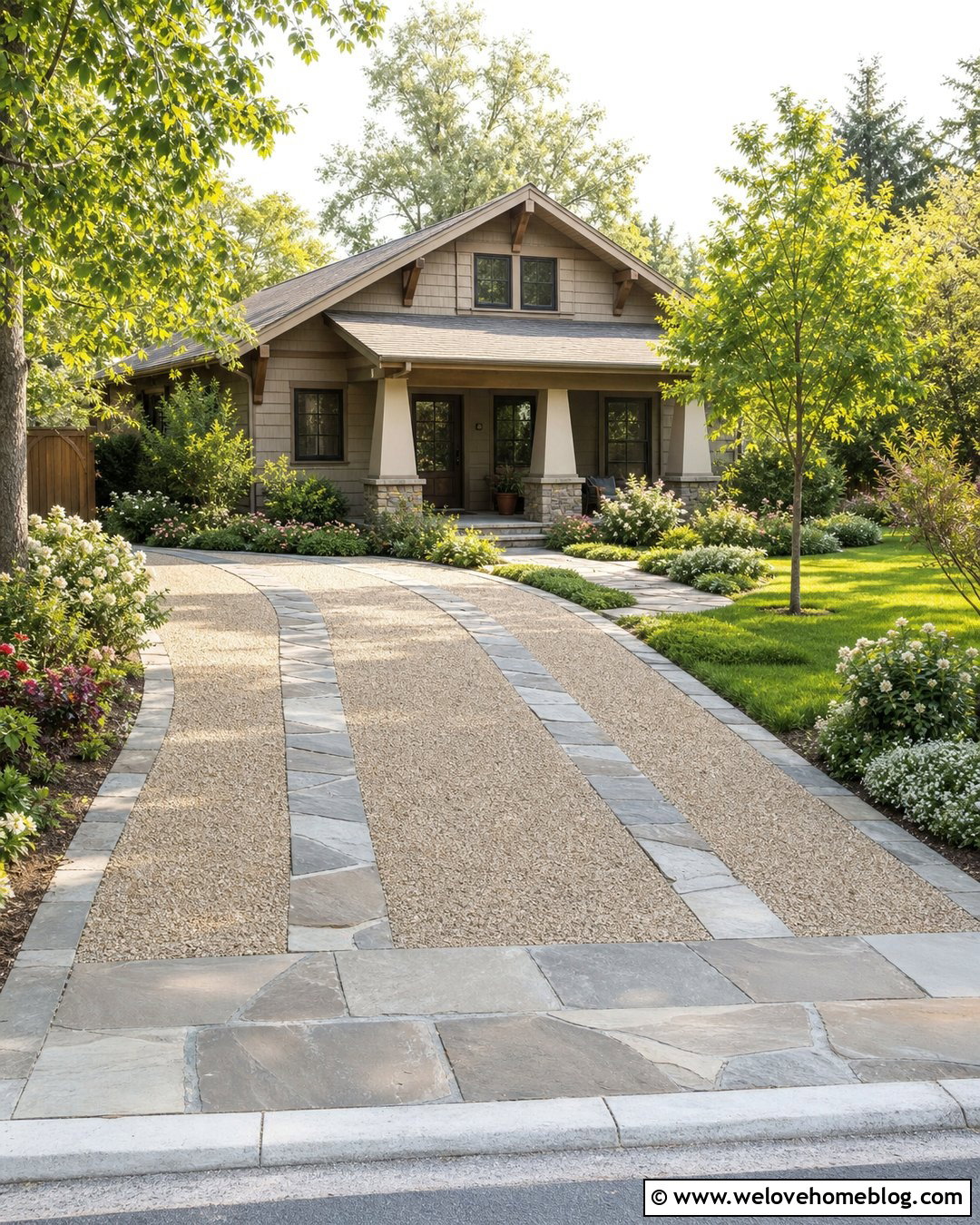
A large bluestone paver apron can turn an ordinary gravel entrance into a more finished composition. Install rectangular blue-gray slabs at the street, then allow crushed bluestone gravel to continue toward the house. The similar colors make the two materials feel unified, while their different scales provide subtle visual interest. Repeat the slab treatment in front of the garage or across the main pedestrian route. This reduces the number of loose stones that reach adjoining hard surfaces. Low stone walls, white flowering shrubs, and broad lawn panels suit the restrained palette. The look is particularly attractive with a modern farmhouse or Cape Cod home. Select pavers with a textured exterior finish for outdoor use, and coordinate joint dimensions with the size and geometry of the entrance.
5. Circular Bluestone Gravel Driveway With Center Island
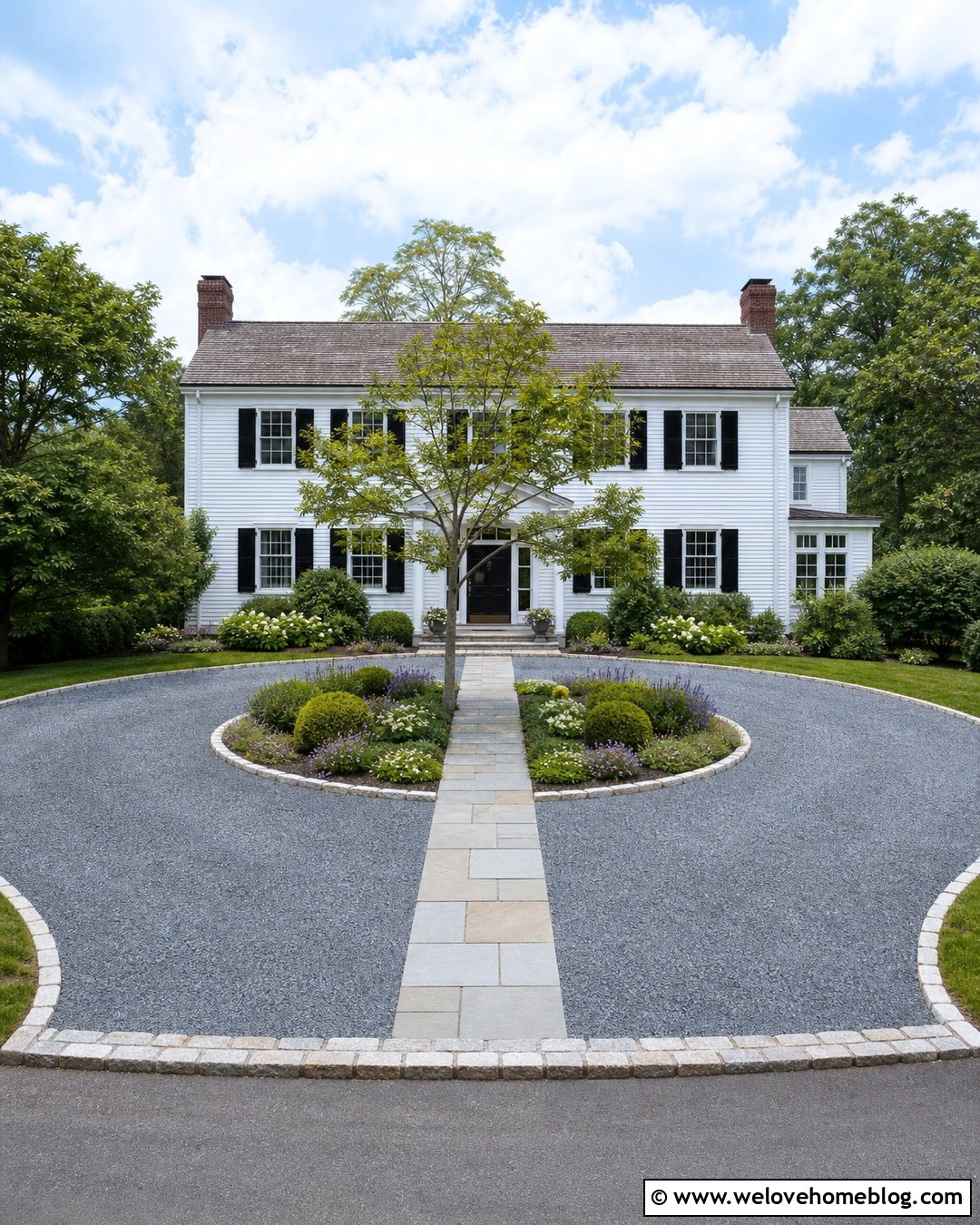
A circular bluestone gravel driveway offers an elegant arrival sequence and eliminates the need for most vehicles to reverse toward the street. Make the center island large enough to feel intentional without creating a tight turning lane. Edge both sides of the drive with cobblestones or sturdy stone curbing to hold the gravel within the circular form. In the island, feature one well-scaled tree surrounded by low shrubs, flowering perennials, and a clean ground-cover layer. Avoid tall, dense planting near the entrance where it could limit visibility. This arrangement pairs beautifully with symmetrical Colonial, Georgian, and French-inspired homes. Align the front walkway with the center of the facade, then bridge it across the driveway with rectangular bluestone slabs. That connection helps organize the entire front landscape.
6. Long Bluestone Gravel Driveway With Trees
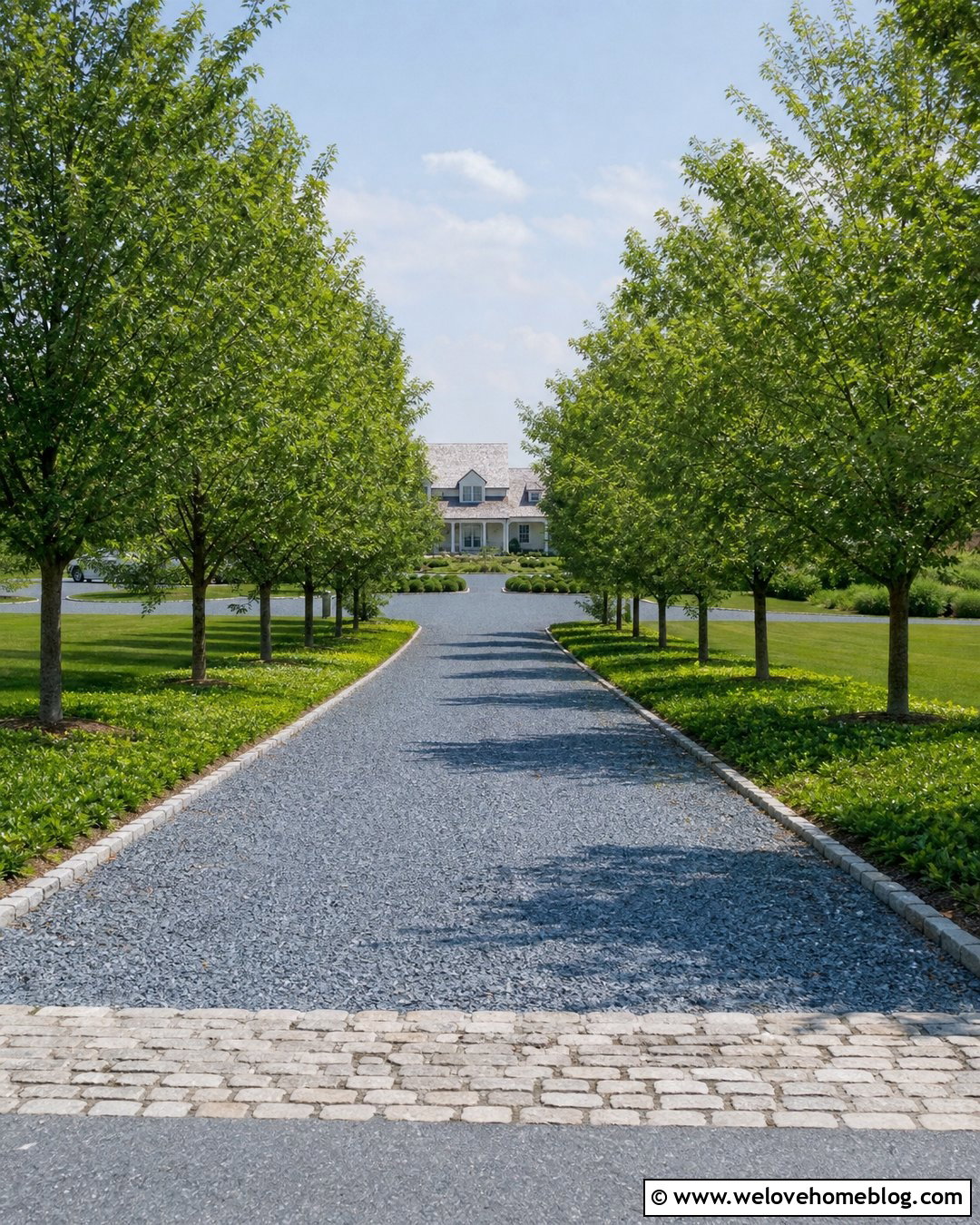
Few entrances feel as established as a long bluestone gravel driveway framed by evenly spaced trees. The cool gravel becomes a quiet central axis, while the repeated trunks lead the eye toward the house. Choose trees suited to the property’s climate, soil, and available width, and set them far enough from the driving surface to protect vehicles and roots. Beneath the trees, use lawn, low ground cover, or a simple mulch strip for an uncluttered appearance. Natural stone edging can subtly contain the gravel without competing with the tree line. This layout suits country houses, farmhouses, and larger suburban lots. At the far end, widen the driveway into a practical parking court. A modest stone apron and coordinated walkway complete the arrival without making it overly formal.
7. Bluestone Gravel Driveway With Lavender Borders
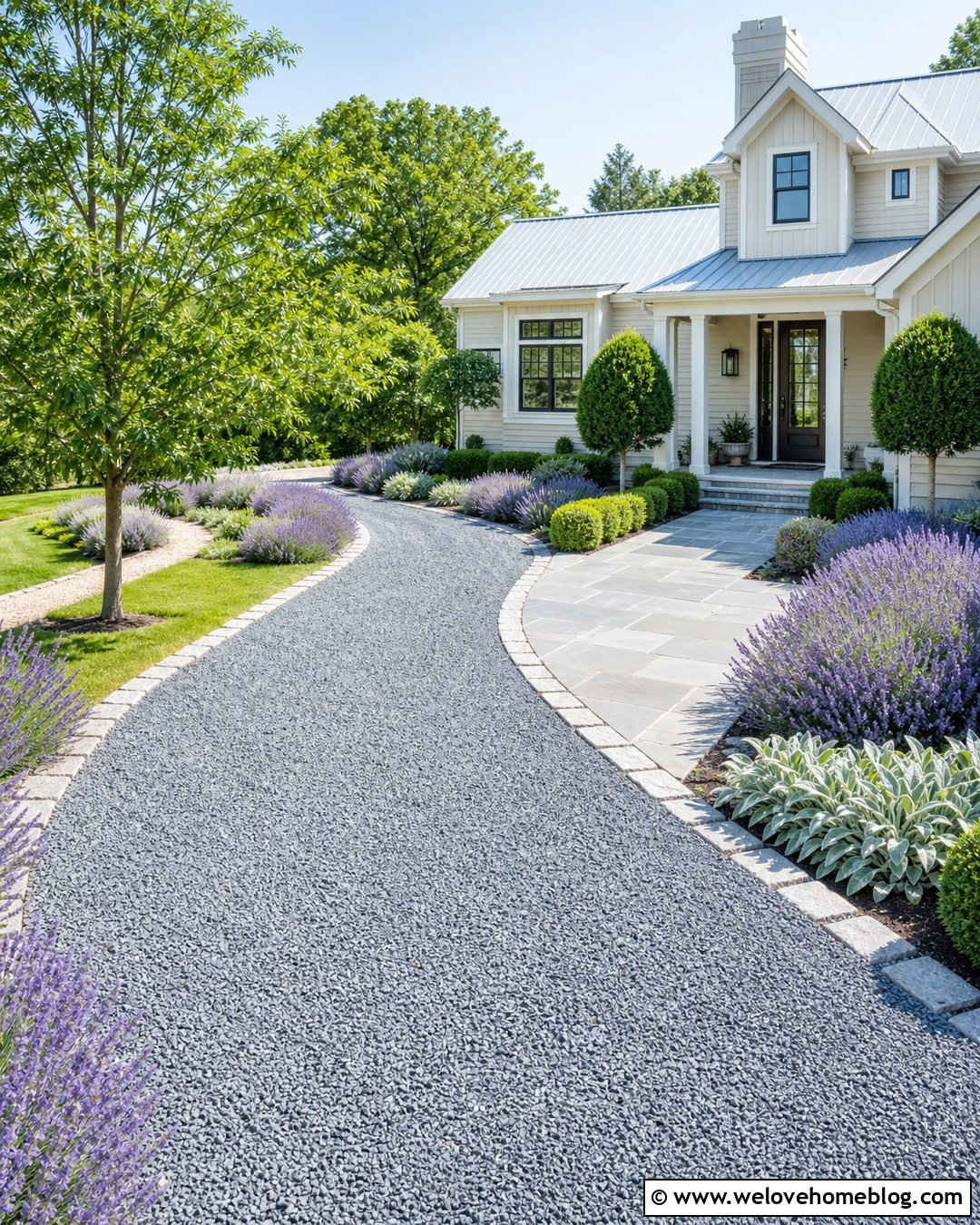
Soft purple flowers and silvery foliage bring warmth to the cool coloring of crushed bluestone gravel. Arrange lavender in generous repeated drifts instead of isolated plants, placing it beyond a cobblestone or steel edge that keeps gravel away from the soil. The planting works best where local growing conditions provide the sun and drainage lavender requires. In unsuitable climates, choose a regionally appropriate plant with a similar compact form and flower color. A gently curved driveway enhances the relaxed garden character, especially when it approaches a light-colored cottage or farmhouse. Add pale gravel walkways, clipped evergreens, and a small bluestone landing at the front steps. Keep plants low near the curb and driveway bends so the attractive border does not interfere with clear views or comfortable vehicle movement.
8. Bluestone Gravel Driveway With Rain Garden
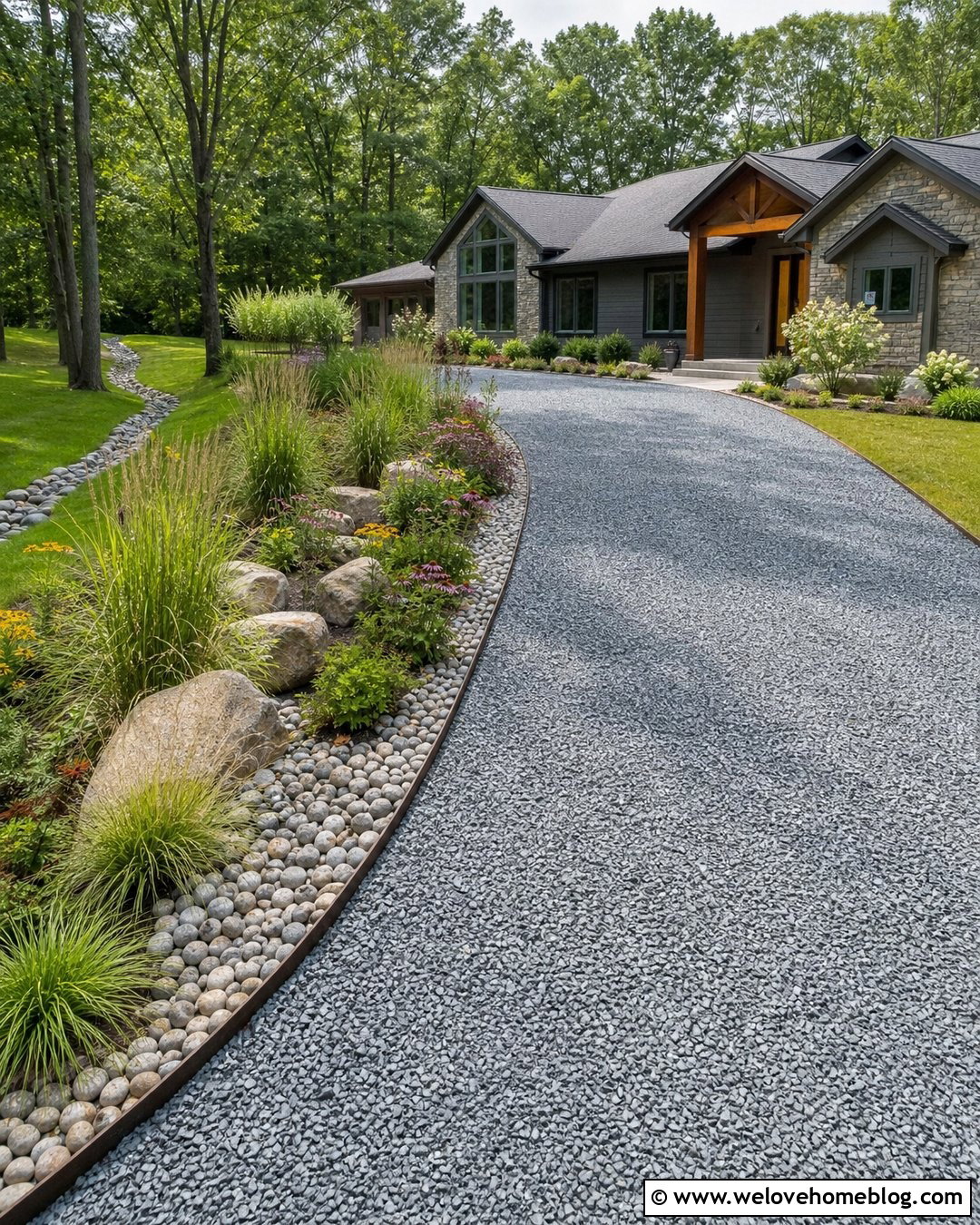
Where the landscape allows it, a planted rain garden can become an attractive companion to a bluestone gravel driveway. Shape the drive with a gentle curve and direct surface runoff toward a shallow landscaped depression rather than the home’s foundation. Fill the garden with regionally suitable plants that tolerate changing moisture levels, then define the driveway edge with cobblestones or heavy-gauge steel. Decorative river rock within the planted area can visually connect the drainage feature to the blue-gray driveway. This complete look is ideal for a contemporary ranch or nature-focused home with simple architecture. The grading, base, and overflow route should be planned for the specific site. When properly integrated, the rain garden looks like intentional landscaping instead of a separate utility zone beside the driveway.
9. Bluestone Gravel Driveway With Timber Edging
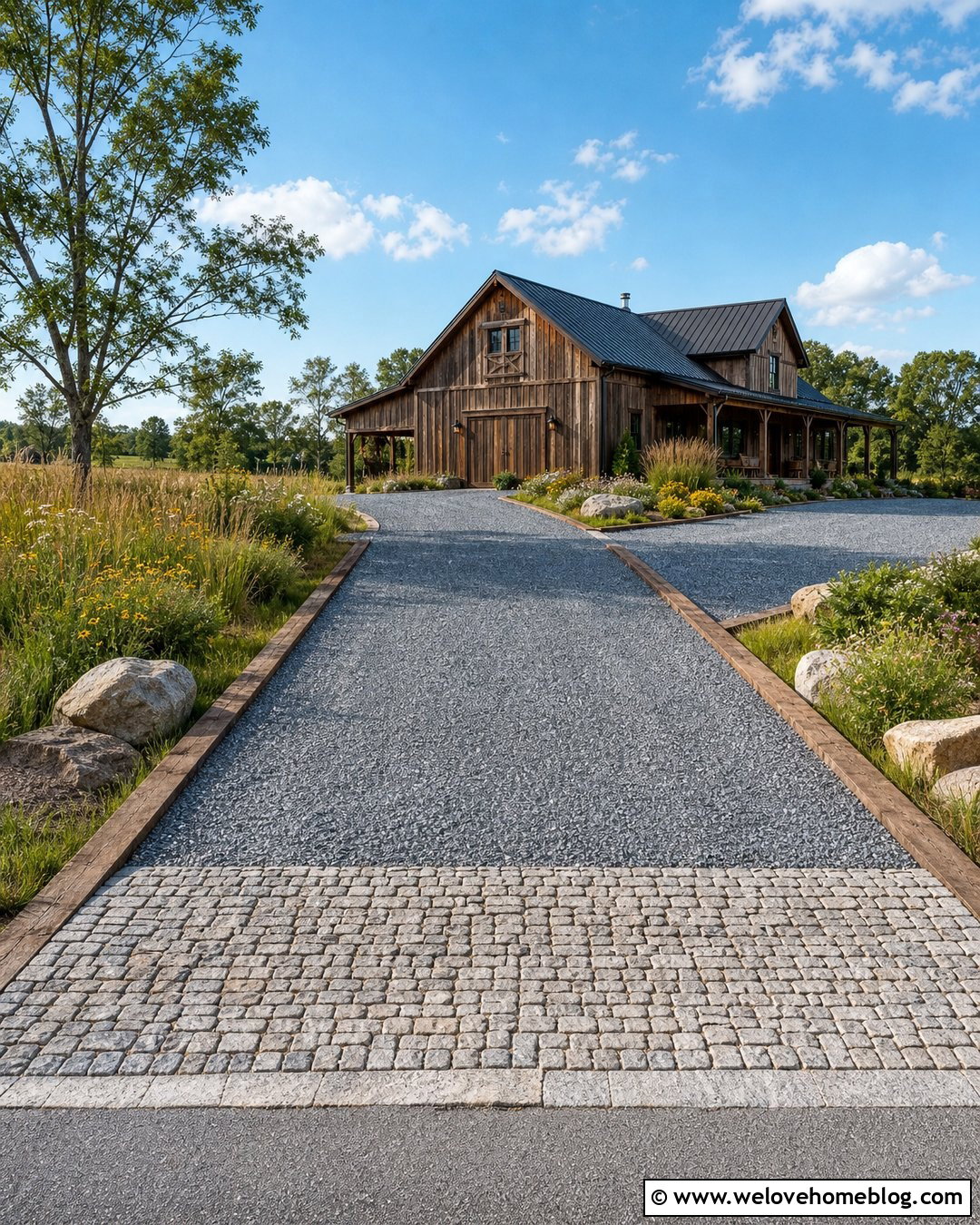
Timber edging gives bluestone gravel a relaxed, rustic frame that suits cabins, barns, and informal country houses. Use substantial, ground-rated timbers secured firmly in place rather than thin garden boards that may shift beside vehicle traffic. A straight driveway creates the cleanest installation, although wide curves can also work when the border is carefully segmented. Surround the drive with meadow grasses, native flowering plants, and a few natural boulders to blend the hardscape into the setting. At the road, consider switching to a stronger stone or cobblestone apron where turning tires place greater pressure on the edge. Repeat the timber around nearby planting beds or a gravel parking bay. The contrast between warm brown wood and cool blue-gray aggregate creates a simple look with welcoming rural character.
10. Bluestone Gravel Driveway With Concrete Curb
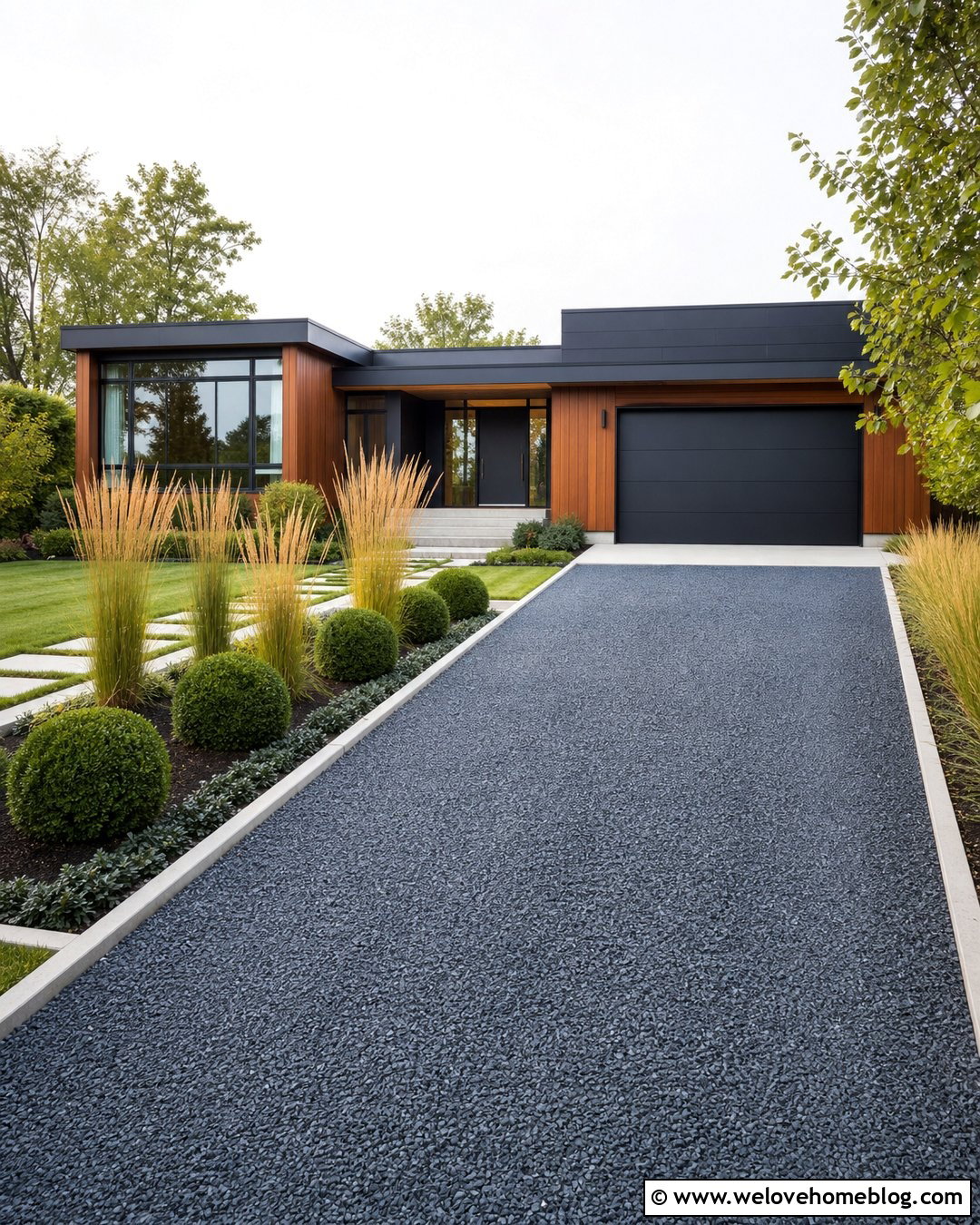
A pale concrete curb produces a sharp, durable-looking outline around dark bluestone gravel. This pairing works especially well with modern and midcentury homes because it emphasizes simple geometry. Use a straight driveway or a broad angled approach, then match the curb color to concrete walkways, steps, or architectural panels on the house. Plant narrow beds with upright grasses, globe-shaped shrubs, and low ground covers to preserve the clean lines. At the garage, a concrete threshold can create a neat transition and reduce loose gravel migration. Keep the curb low enough to avoid making parking and snow removal unnecessarily difficult. If the driveway needs drainage openings or crossing points, incorporate them into the original layout. Consistent curb widths and smooth transitions are essential for a professionally planned appearance.
11. Bluestone Gravel Driveway With Grass Edging
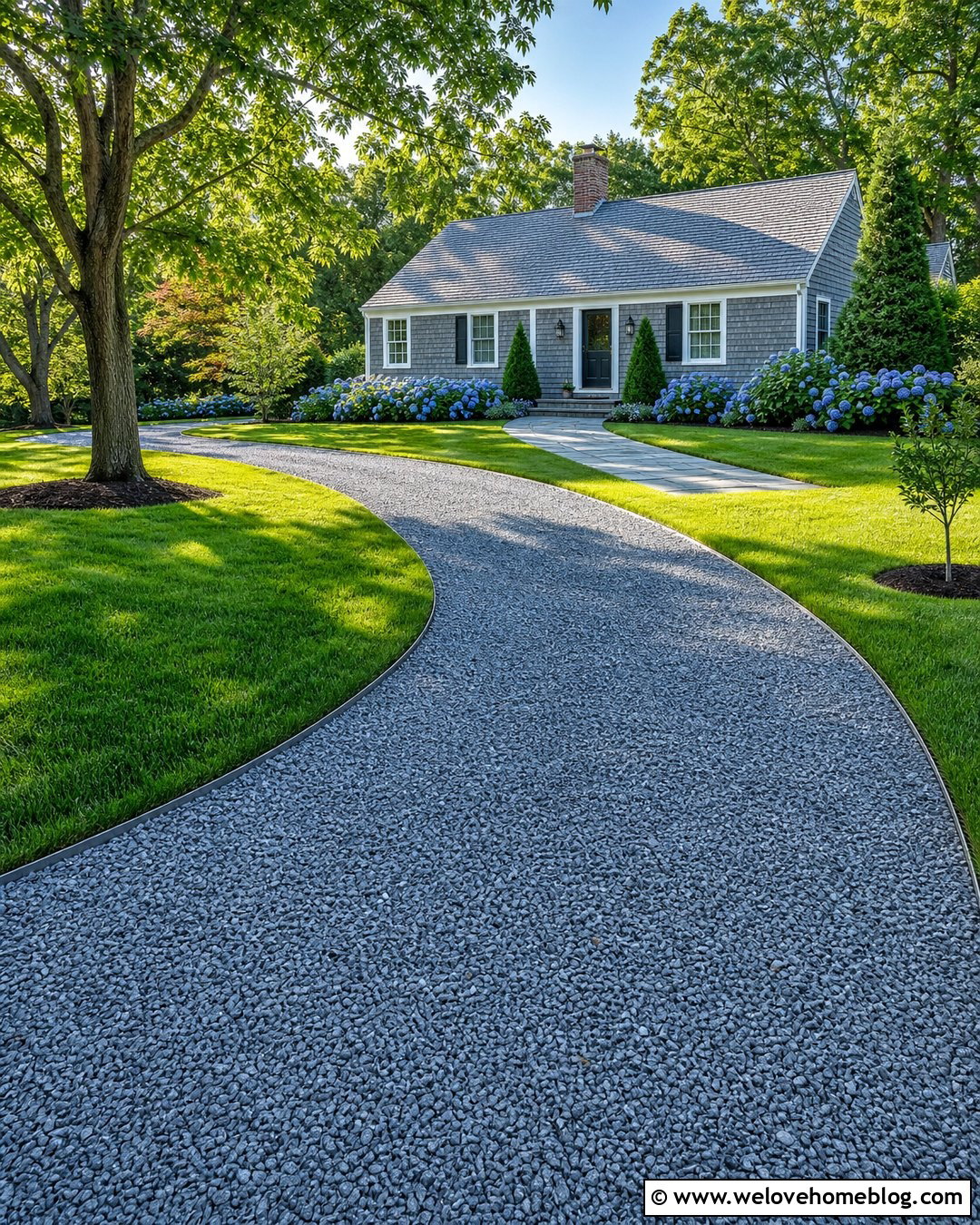
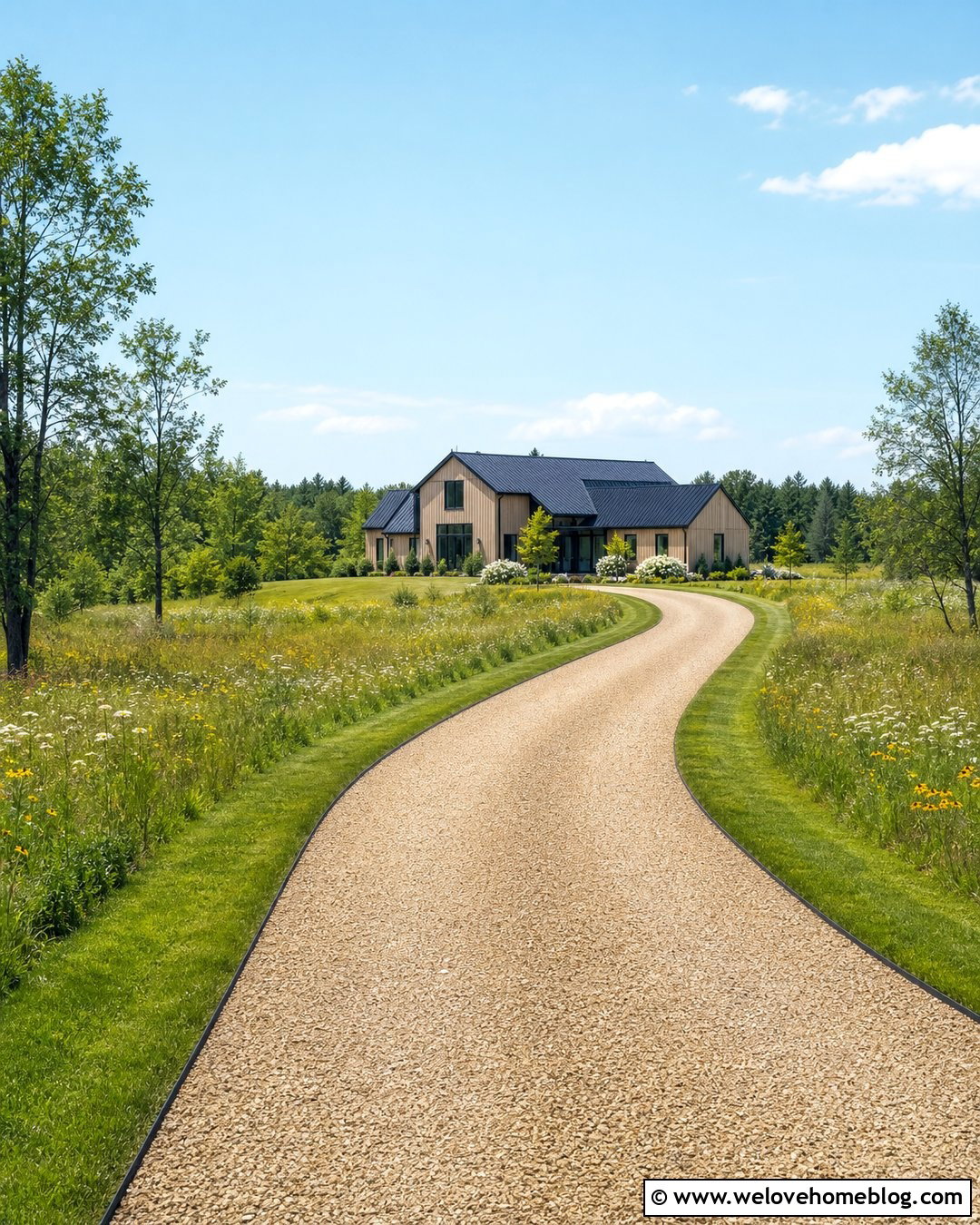
A grass-edged bluestone gravel driveway feels simple, open, and naturally connected to the yard. The blue-gray surface stands out clearly against fresh green lawn without requiring a visually heavy border. For better definition, install concealed metal edging just below or near the gravel surface. This helps preserve the line while maintaining the appearance of gravel meeting grass directly. A straight or softly curved drive works well, particularly beside a ranch, Cape Cod, or modest country home. Create a wider planted area near the house using hydrangeas, small evergreens, and a bluestone walkway. The uncluttered lawn makes the driveway appear generous without adding more hardscape. Regularly trim the turf edge and return displaced stones before they spread, especially around the curb entrance and areas where vehicles frequently turn.
12. Gated Bluestone Gravel Driveway With Stone Pillars
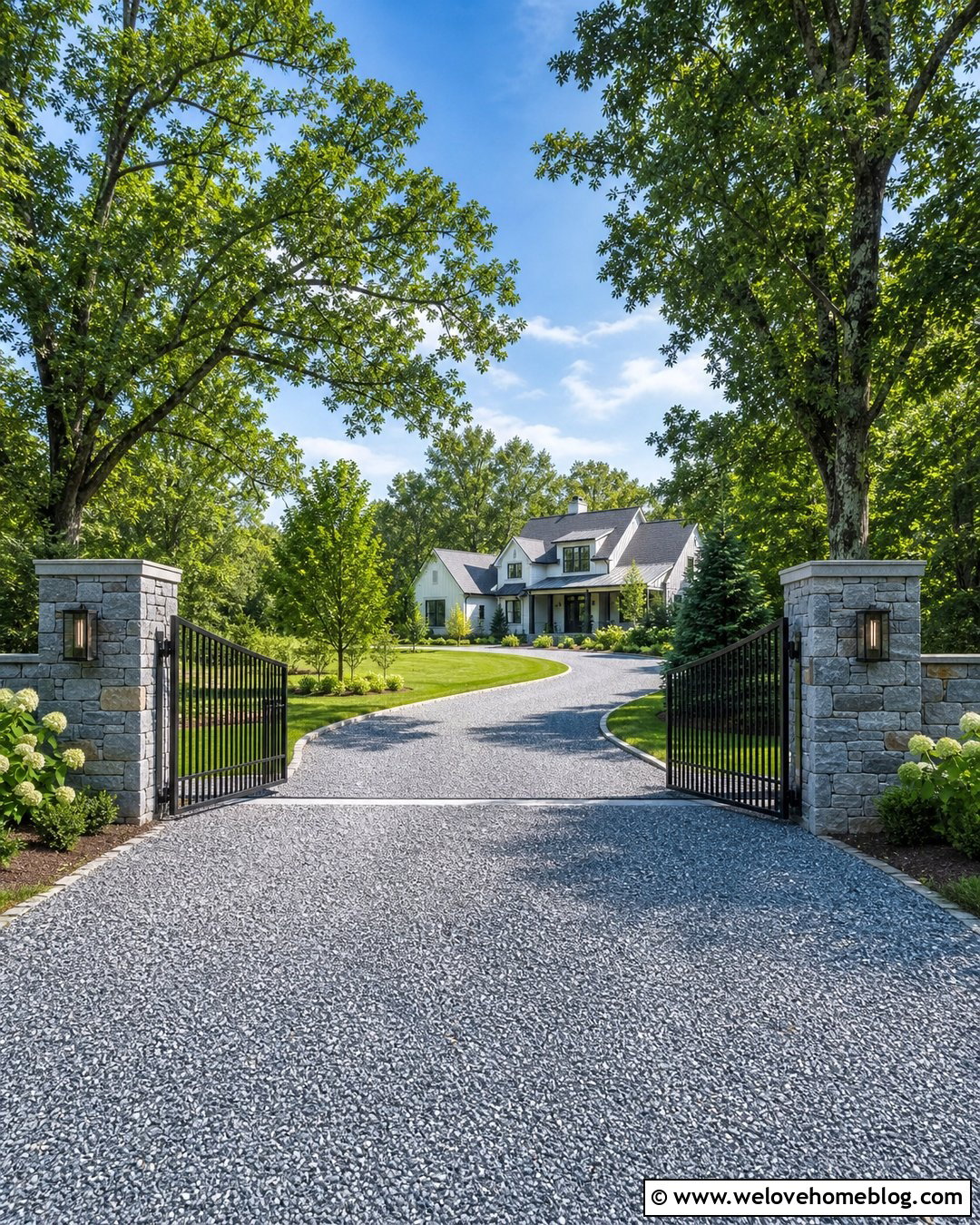
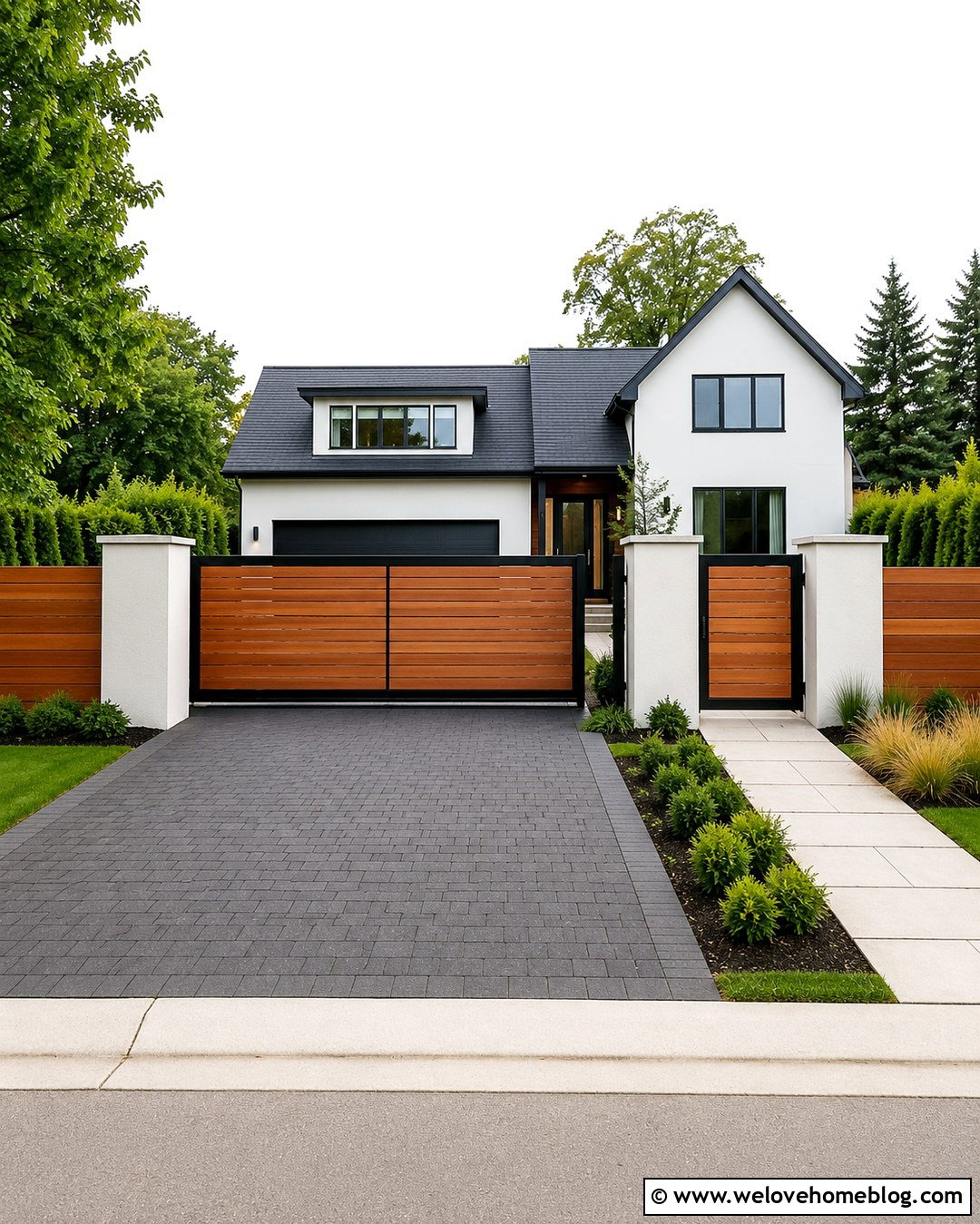
Stone pillars give a bluestone gravel driveway a strong sense of arrival while connecting the entrance to the natural aggregate surface. Select pillar stone that shares blue, charcoal, or gray tones with the gravel, and use a wood or dark metal gate for contrast. Set the pillars back from the road where space permits, creating a comfortable gravel apron in front of the gate. Continue the driveway in a gentle curve so the house appears gradually rather than all at once. Low shrubs, canopy trees, and simple ground covers can frame the entrance without hiding the masonry. Add discreet lighting and a clearly visible address marker to the pillars. This combination works with traditional estates, country homes, and modern farmhouses, provided the gate proportions match the scale of the property.
13. Bluestone Gravel Driveway With Paver Parking Court
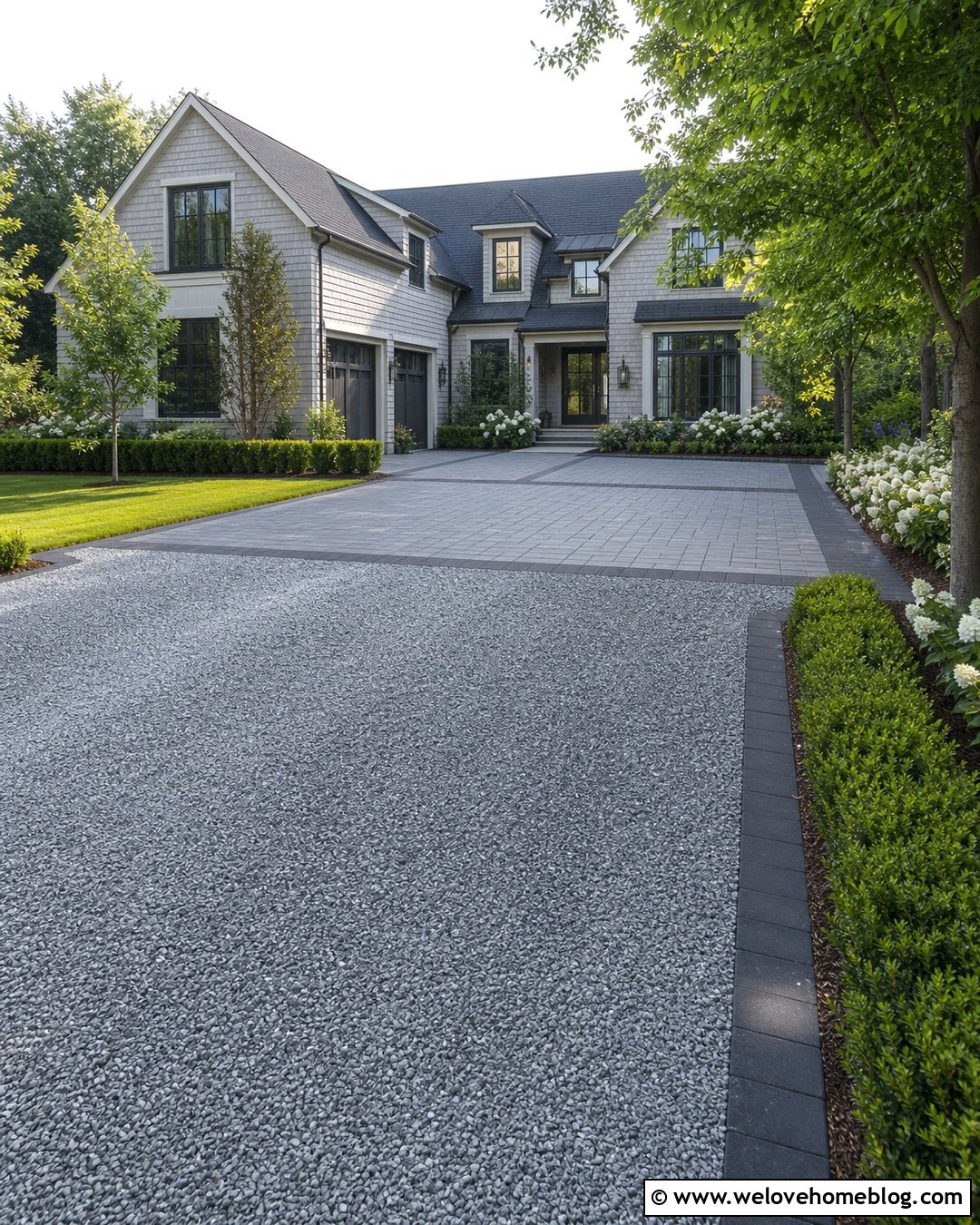
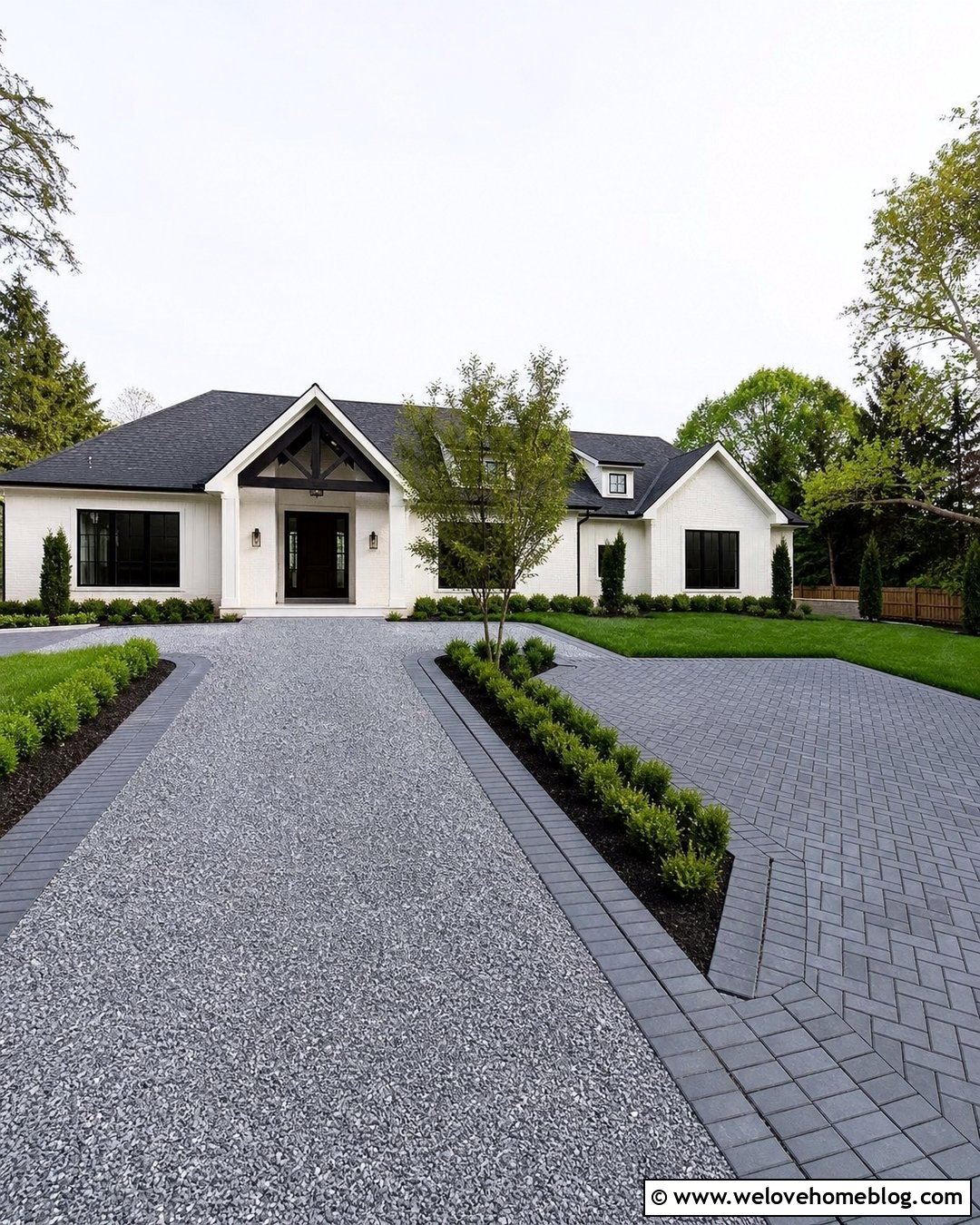
A structured paver parking court can make a bluestone gravel approach more practical near the house. Let the gravel form the main driveway, then transition into charcoal concrete pavers or natural stone set in a simple running-bond pattern. A paver band between the two surfaces creates a deliberate material change and helps visually separate driving from parking. Match the court’s shape to the garage and front walkway rather than making it unnecessarily large. Surround the space with low hedges, shade trees, and deep planting beds that soften the extra hardscape. This design is useful for a transitional or contemporary house that needs an organized guest-parking area. Keep the paver and gravel colors closely related so the complete driveway remains calm, cohesive, and connected to the architecture.
14. Split Bluestone Gravel Driveway With Planted Median
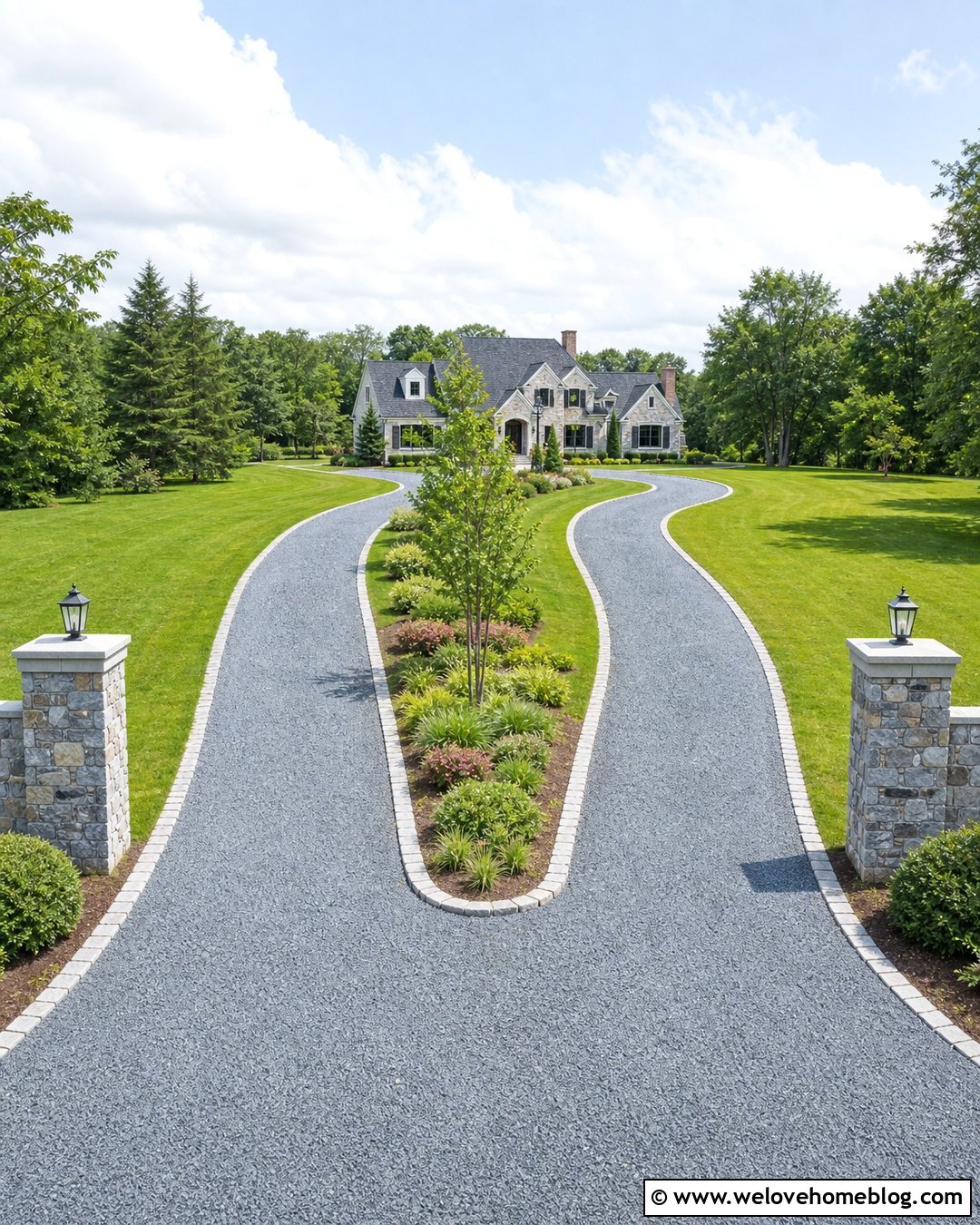
A split driveway can create separate arrival and departure lanes while introducing more landscaping into a broad front yard. Use crushed bluestone gravel for both branches, giving each one a gentle curve around a long planted median. Cobblestone edging will clearly hold the shapes and withstand occasional tire contact. Fill the center with one or two small ornamental trees, low grasses, and flowering shrubs that remain clear of vehicle sightlines. Near the house, reconnect the lanes at a gravel parking court or continue them around a circular turnaround. This layout suits wide properties and homes positioned well back from the road. Keep the two branches visually balanced, even if they serve different functions. Matching entrance pillars or low stone walls can make the split point feel purposeful and easy to understand.
15. Hillside Bluestone Gravel Driveway With Retaining Wall
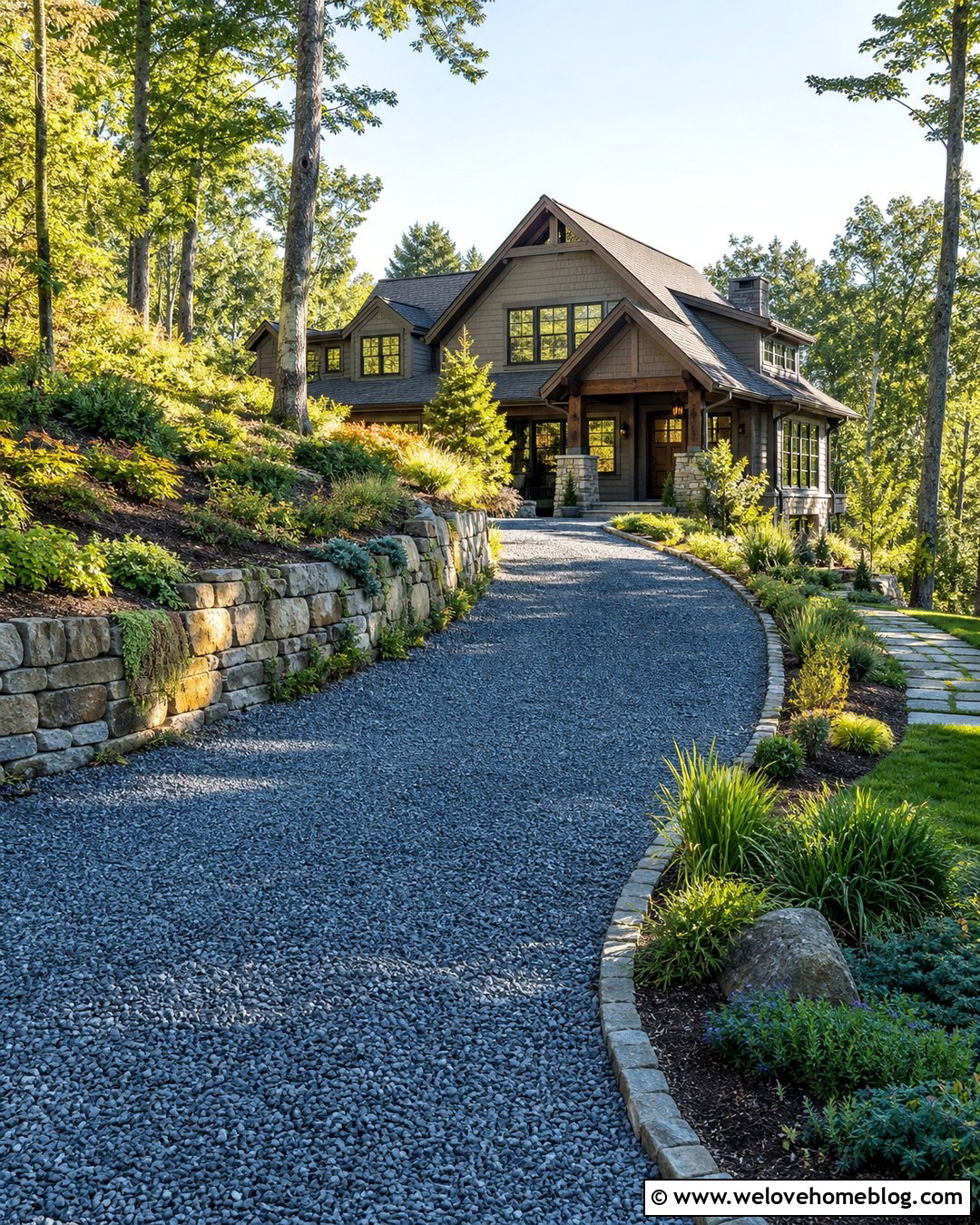
On a sloped property, a low retaining wall can visually anchor a bluestone gravel driveway while supporting the surrounding grade. Follow the hillside with a broad, gradual curve and place the wall along the uphill side. Choose weathered fieldstone or cut gray stone that complements the aggregate without making the design feel too uniform. On the downhill edge, use a restrained curb and low planting that preserves open views. Cascading ground covers, compact shrubs, and ornamental grasses can soften the wall, while a simple guard or raised edge may be appropriate where site conditions require it. A craftsman, mountain, or woodland home suits this layered look. Because slope, runoff, and structural requirements vary considerably, grading and retaining components should be planned around actual site conditions rather than appearance alone.
16. Coastal Bluestone Gravel Driveway With Hydrangeas
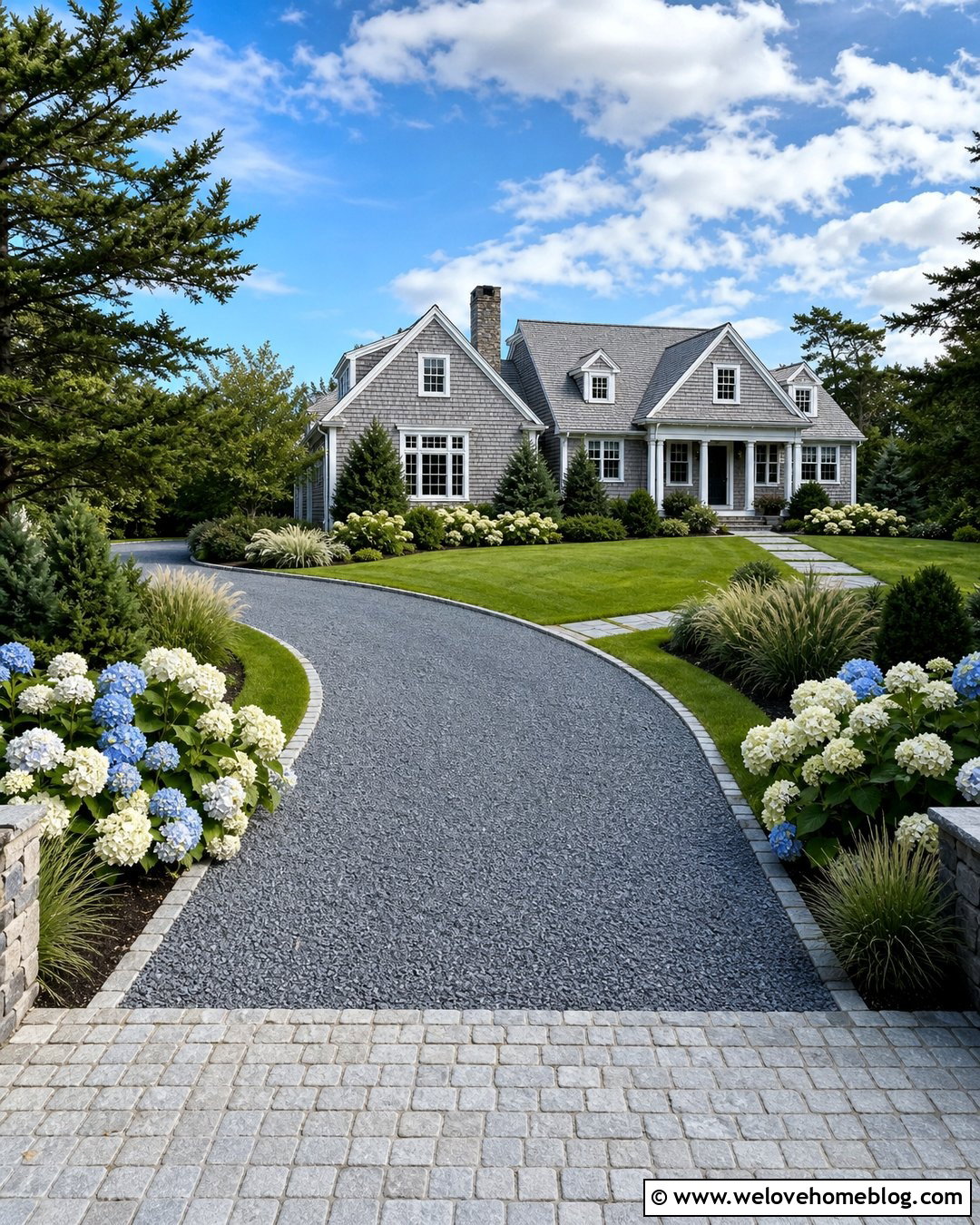
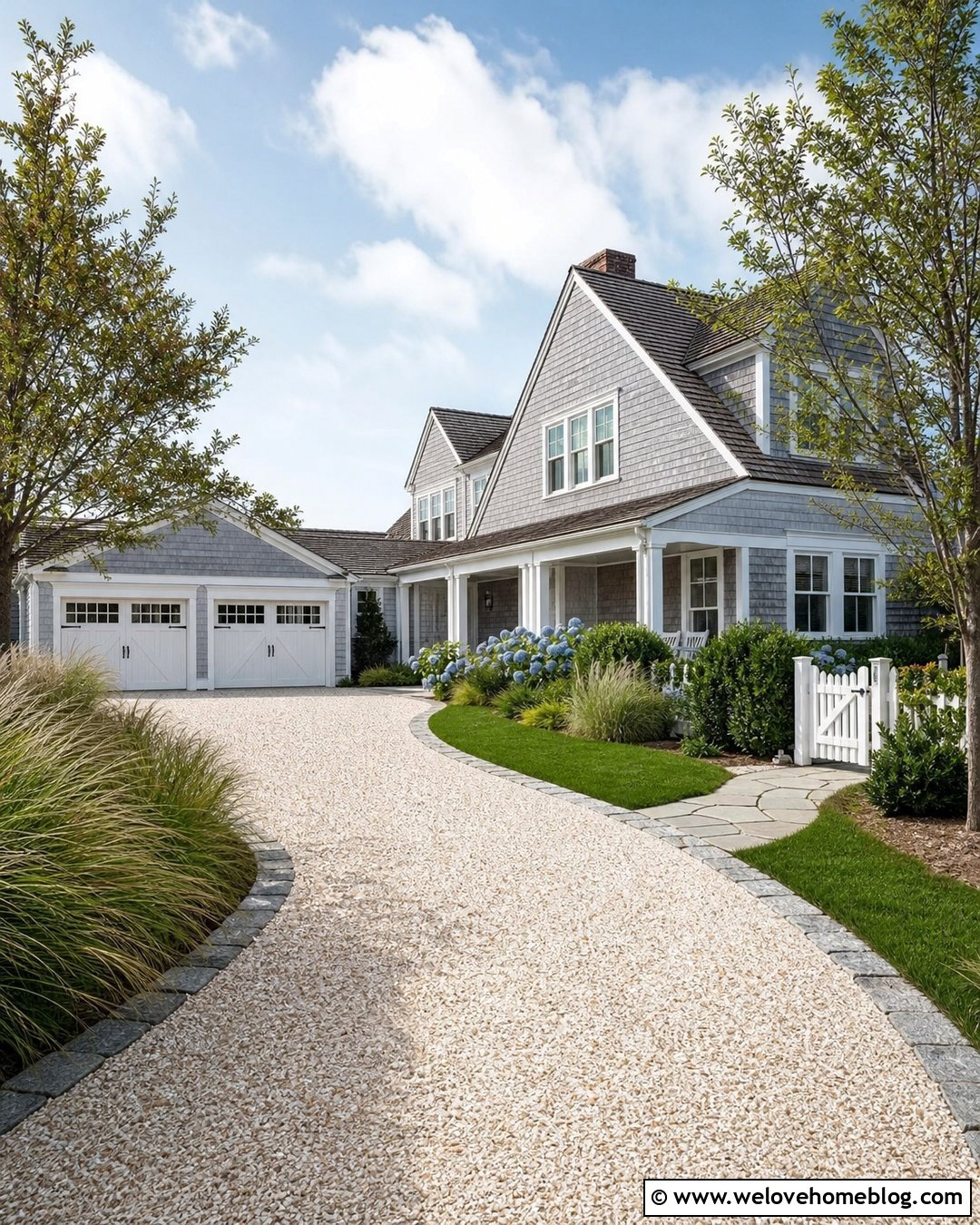
Bluestone gravel and hydrangeas form an easy coastal palette of soft blue, gray, green, and white. Use the gravel on a gently curved driveway leading toward a shingle-style, Cape Cod, or pale clapboard house. Frame the surface with gray cobblestones, then place broad hydrangea groups behind the edging where their stems will not extend into vehicle space. Add beach grass, compact evergreens, and a bluestone walkway for varied texture. A wider cobblestone apron at the curb gives the loose gravel a finished public-facing edge. Keep the planting beds loose but repeated so the landscape feels relaxed rather than unplanned. White gate posts or a low painted fence can reinforce the coastal character. The final design should look fresh and welcoming without relying on overt nautical decorations.
17. Woodland Bluestone Gravel Driveway With Ferns
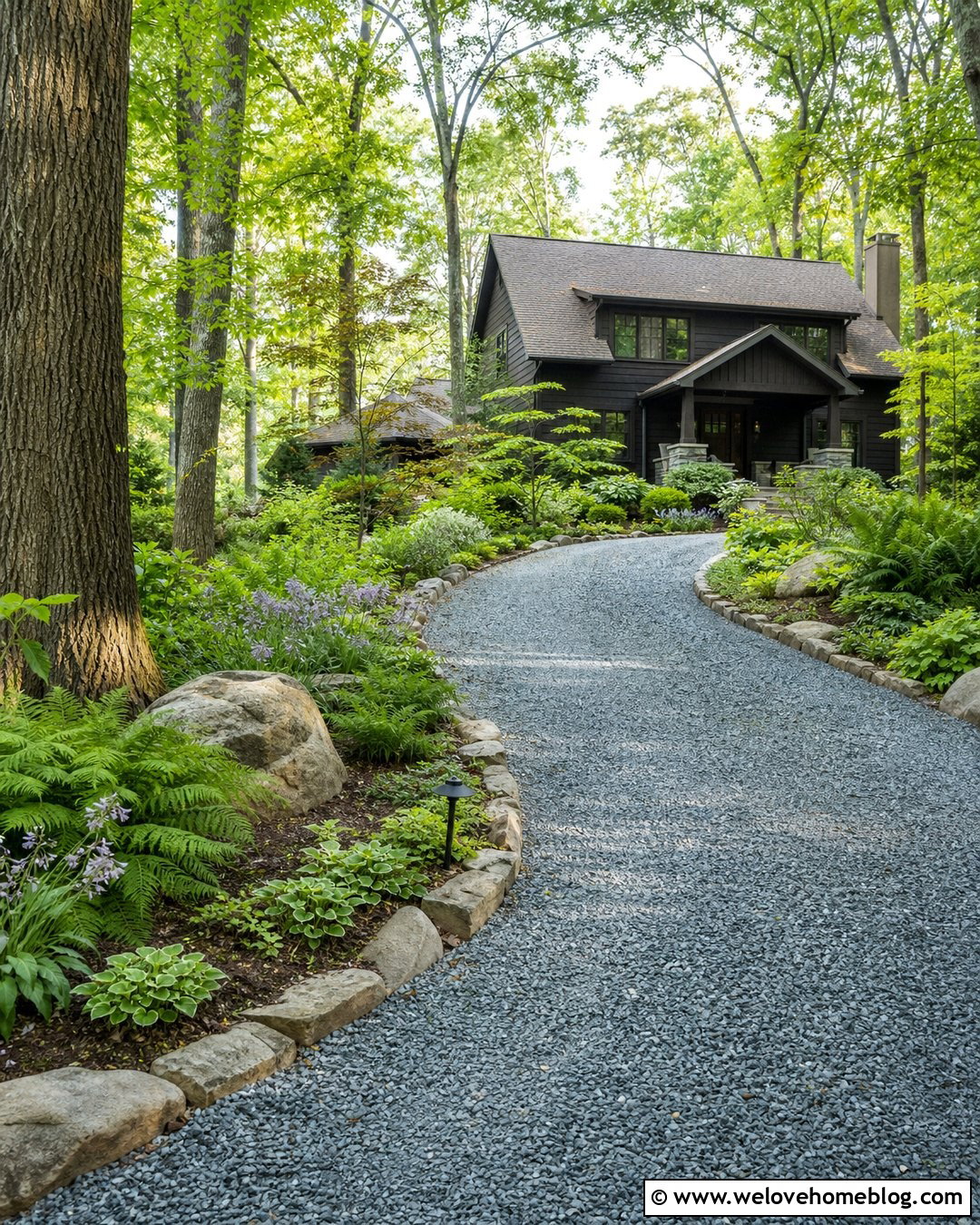
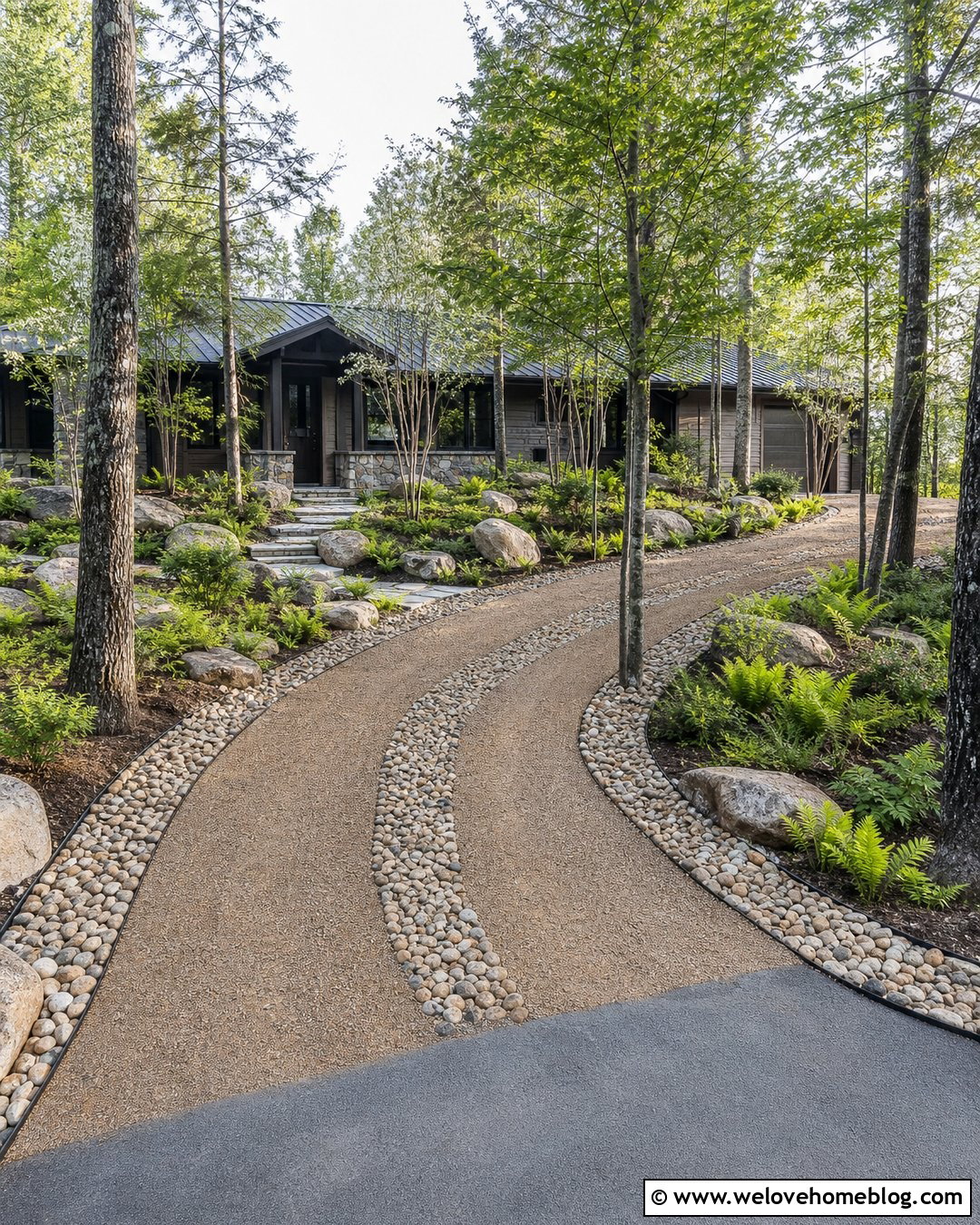
In a wooded front yard, blue-gray gravel can blend quietly with tree trunks, mossy stones, and deep green foliage. Shape the driveway as a slow curve that follows the existing terrain instead of cutting across it in a rigid line. Use large natural stones or dark steel edging to contain the gravel while preserving an informal woodland appearance. Plant ferns, shade-tolerant ground covers, woodland shrubs, and spring bulbs in layered beds beyond the border. Leave the base of mature trees undisturbed and provide enough clearance for vehicle doors and maintenance. Low path lights can mark the edge without turning the landscape into a brightly decorated runway. This driveway treatment works beautifully with Craftsman, contemporary woodland, and rustic homes featuring stone, stained wood, or dark exterior siding.
18. Narrow Bluestone Gravel Driveway With Brick Ribbons
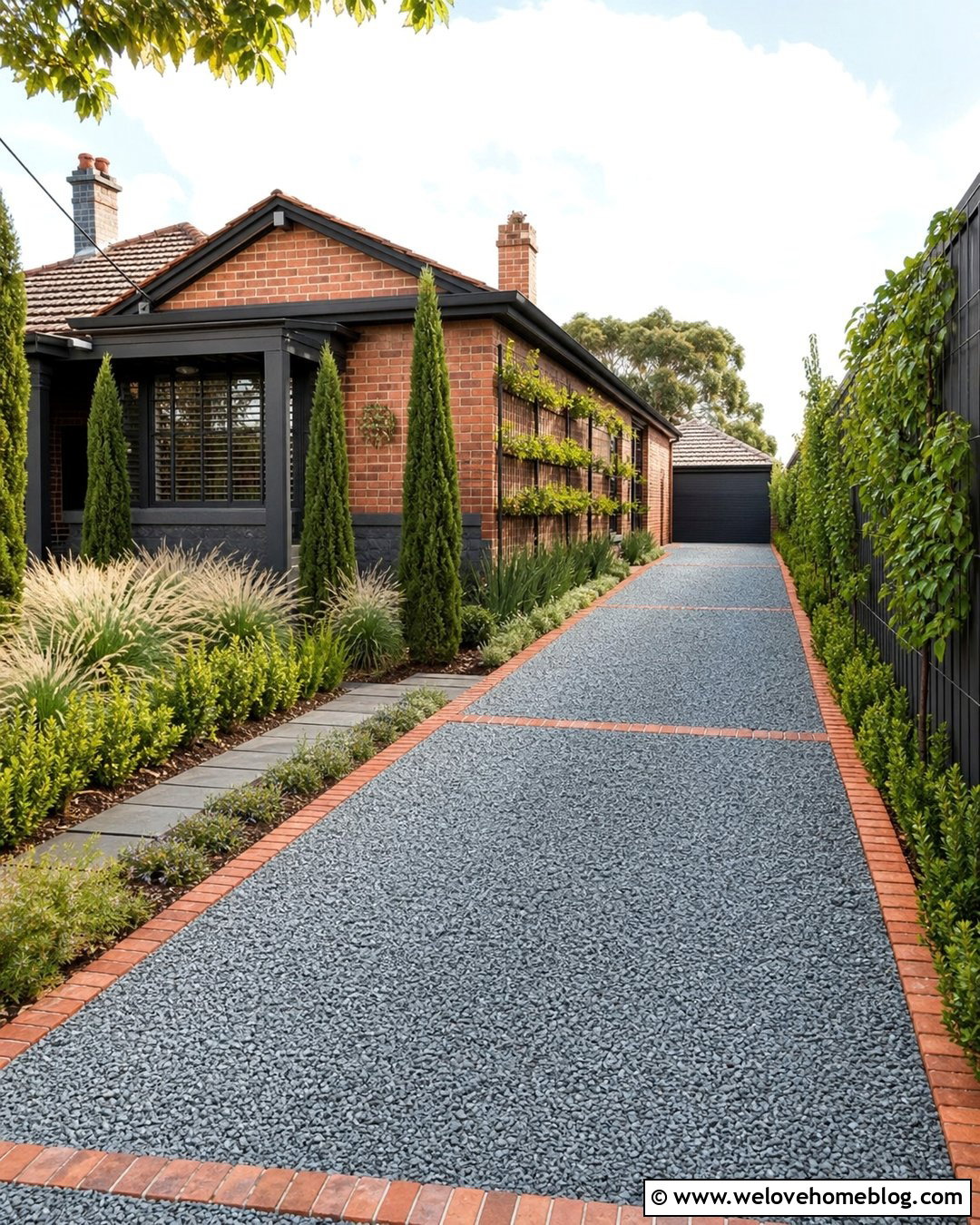
A narrow side driveway can feel polished when bluestone gravel is divided by strategically placed brick ribbons. Run one brick band along each edge and another across the surface near the garage or rear parking area. The warm masonry breaks up the long blue-gray strip while visually connecting it to a brick facade or chimney. Keep planting narrow and upright, using columnar shrubs, ornamental grasses, or espaliered greenery where space is limited. A slim walkway can sit on one side, separated from the vehicle area by a brick course. This approach works well for urban cottages, bungalows, and older homes with compact lots. Avoid oversized borders that consume valuable driving width. Careful alignment and a consistent material palette will make the confined area appear orderly rather than crowded.
19. Bluestone Gravel Driveway With Gravel Stabilization Grid
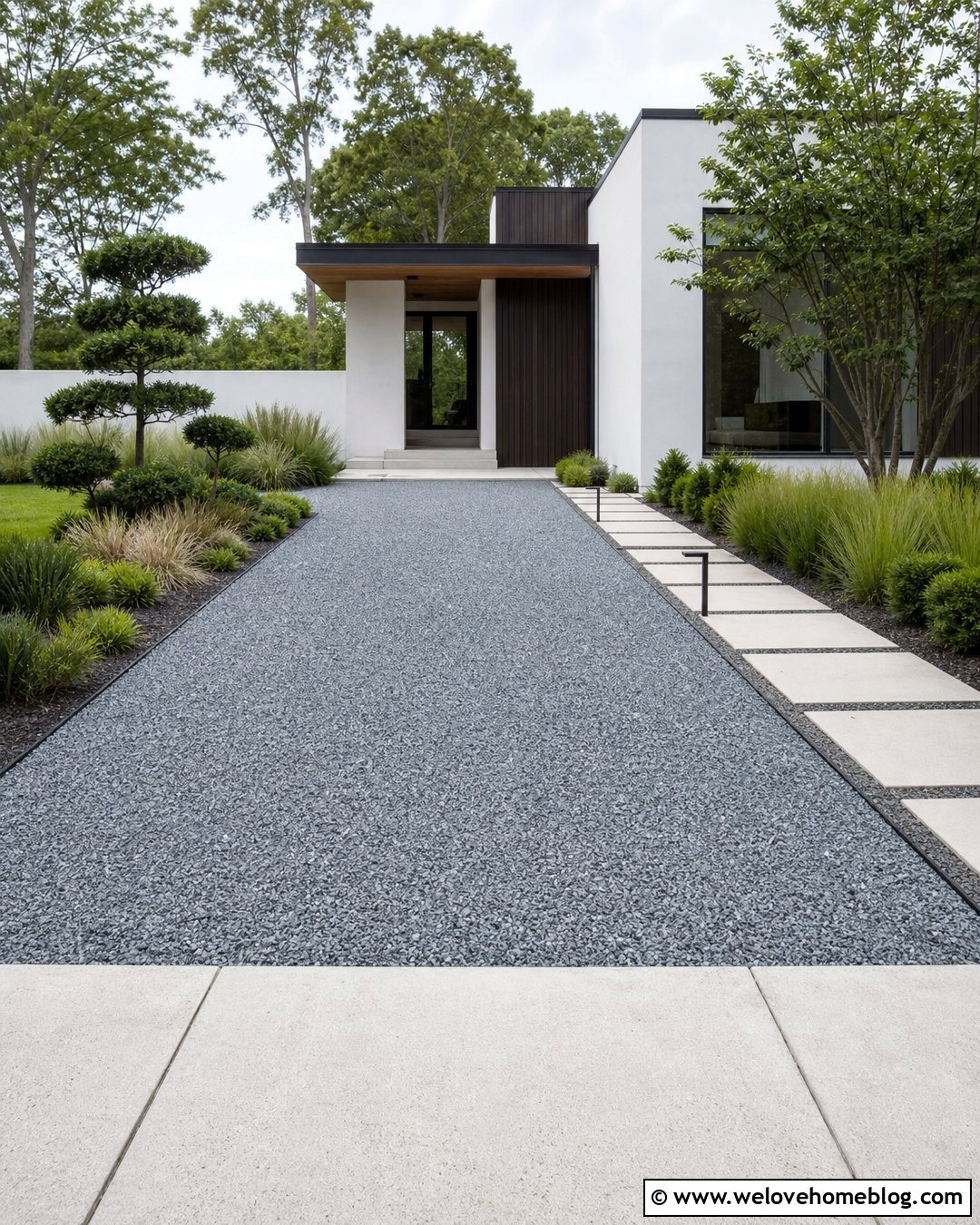
For a neat contemporary surface, install angular bluestone gravel within a driveway stabilization grid designed for vehicle use. Once filled, the underlying grid should remain visually subtle while helping the aggregate maintain a more even profile. Frame the driveway with dark metal edging or a flush concrete border, then use a straight layout that matches the home’s architecture. Minimal planting beds with ornamental grasses, low evergreens, and sculptural small trees keep the focus on the clean surface. This treatment is particularly suitable for modern homes where deep ruts and loosely scattered gravel would conflict with precise design lines. A large-format concrete walkway can cross the gravel near the entrance. Coordinate the stone depth, grid specification, base, and installation method with the selected product and expected vehicle loads.
20. Bluestone Gravel Driveway With Evergreen Landscaping
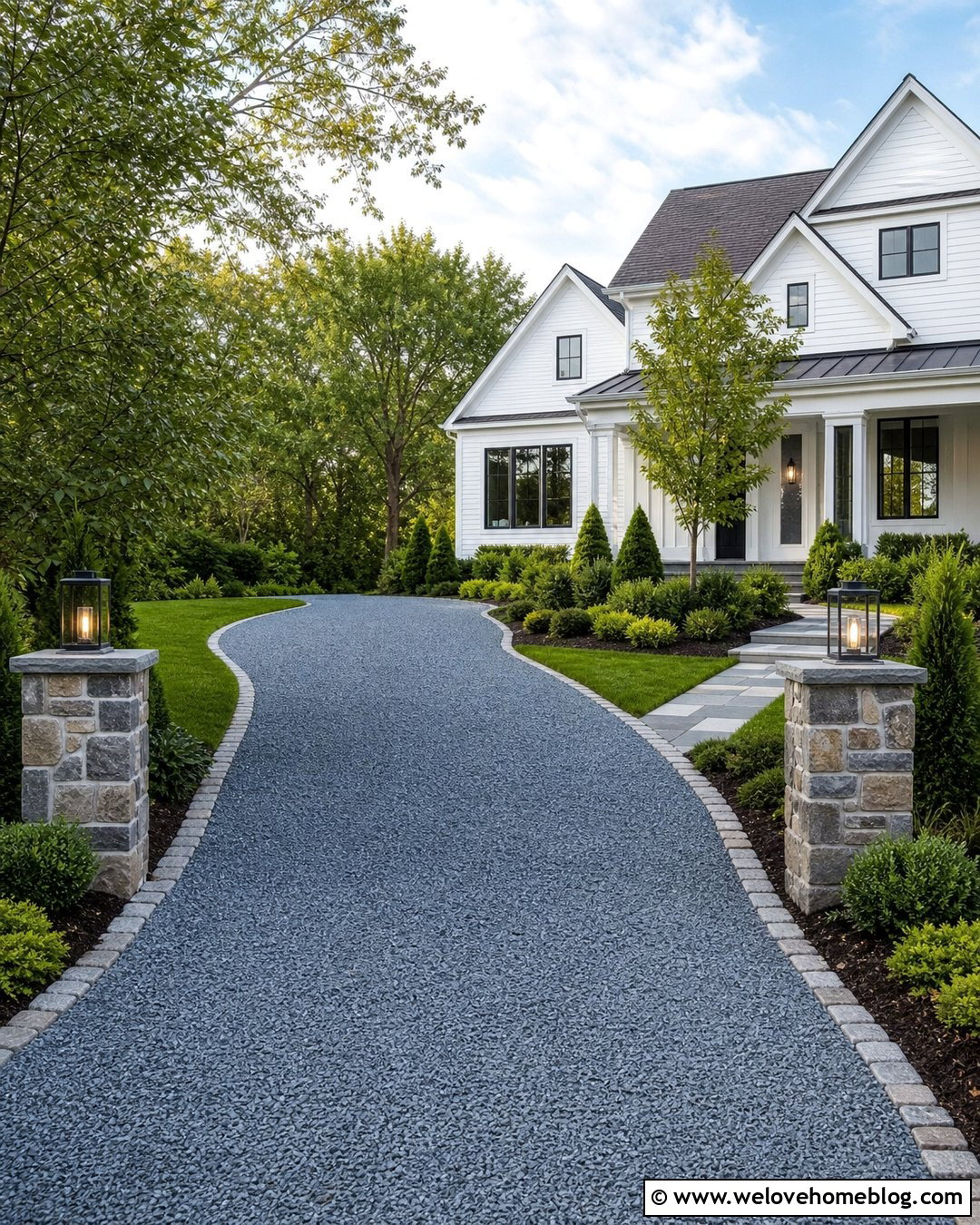
Evergreen planting keeps a bluestone gravel driveway framed throughout the year. Combine compact conifers, inkberry, low junipers, or other regionally suitable evergreen shrubs in staggered groups rather than forming one continuous wall. Their rich green color makes the blue-gray aggregate look brighter while providing structure during seasons when flowers are absent. Use cobblestone edging and a gently curved layout to create a classic, low-clutter composition. Near the entrance, add simple stone pillars and restrained lighting. Closer to the house, widen the planting beds and connect the drive to the front door with a rectangular bluestone walkway. This complete look adapts easily to traditional, farmhouse, and transitional homes. Mix several evergreen forms and heights so the border remains layered, natural, and visually interesting without blocking important views.
Conclusion:
The strongest bluestone gravel driveways combine an appealing surface with a shape, border, entrance, and landscape that fit the property. Cobblestone and brick create traditional definition, while steel and concrete produce cleaner modern lines. Trees, flowering borders, rain gardens, and evergreen planting can soften the aggregate and connect it to the wider yard. Before selecting a look, consider turning space, drainage, maintenance, snow removal, visibility, and the architectural details already present on your home. A sound base and dependable edging will help the finished driveway remain orderly. Whether your property is compact, wooded, coastal, or expansive, these **20 Bluestone Gravel Driveway Ideas** provide practical starting points for creating lasting curb appeal.

Related posts:
Leave a Reply