
Gravel offers an appealing balance of relaxed character, practical drainage, and flexible design. The best **gravel rock driveway ideas** go beyond spreading loose stone between the street and garage. They combine the right rock color and size with a well-planned shape, sturdy edging, attractive planting, and a welcoming entrance. Angular crushed rock generally creates a firmer driving surface, while rounded gravel can work when contained by a stabilization grid and strong borders. Proper grading and a compacted base also help limit ruts, puddles, and stone migration. () Whether your home is modern, rustic, coastal, or traditional, the following complete designs will help you find practical and attractive **20 Gravel Rock Driveway Ideas**.

1. Crushed Limestone Gravel Rock Driveway
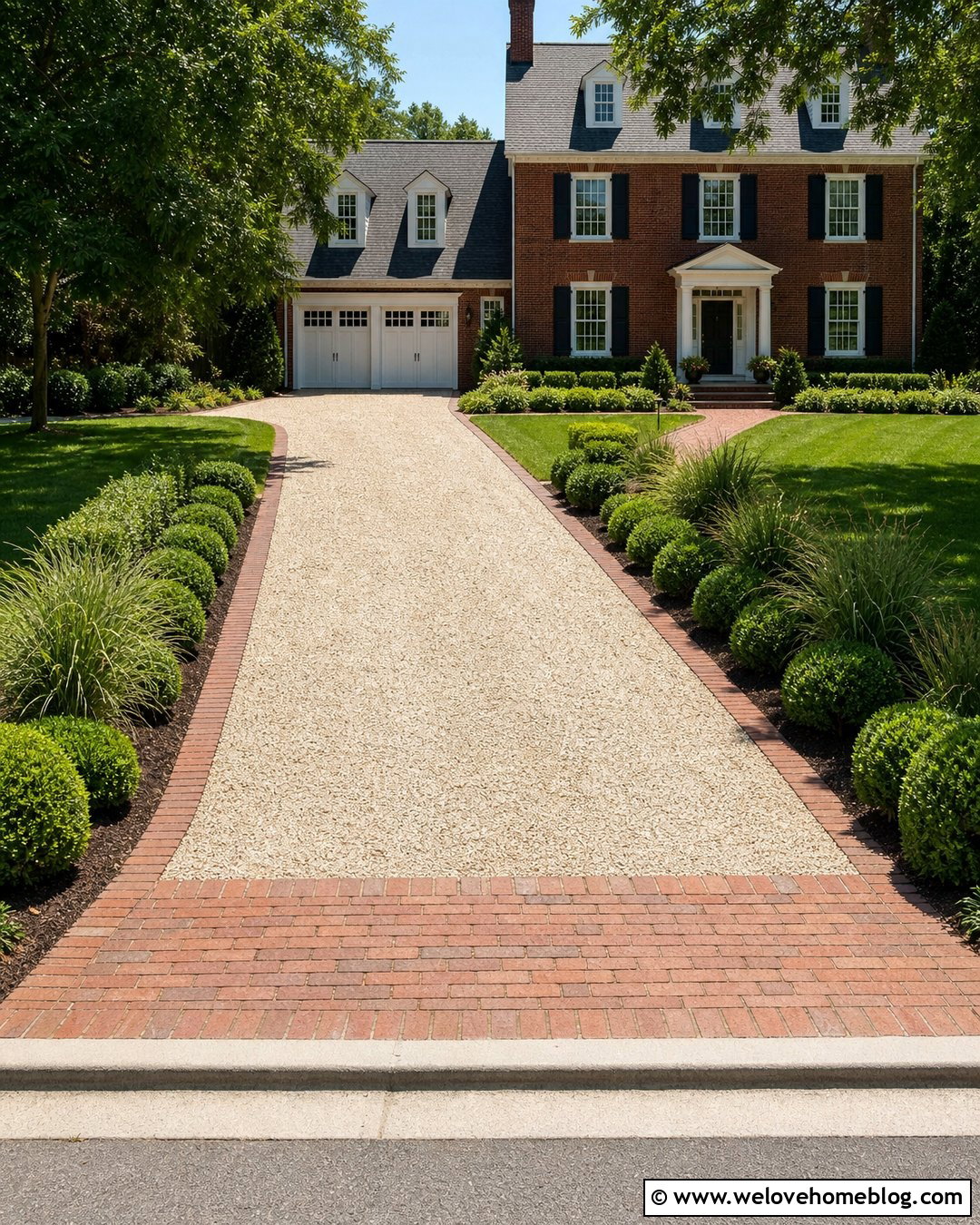
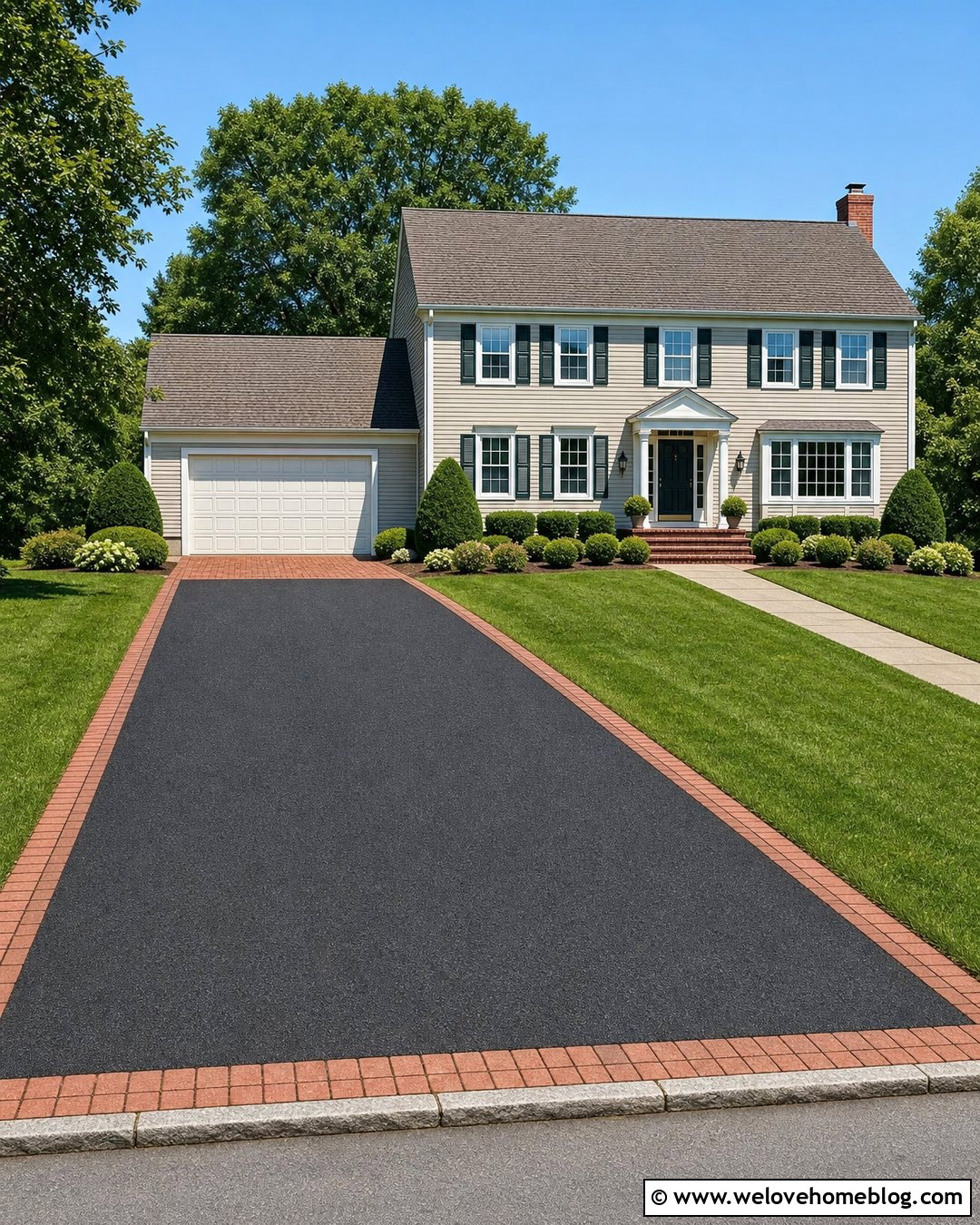
A crushed limestone driveway creates a clean, bright approach that works especially well with traditional brick and white-sided homes. Use angular, three-quarter-inch limestone for the visible surface because the pieces settle together more securely than smooth stones. A straight layout keeps the design simple and makes routine raking easier. Add a double row of red brick along both sides to contain loose rock and connect the driveway to a brick walkway. Low boxwood shrubs, ornamental grasses, and a neatly maintained lawn soften the pale stone without hiding its edges. Near the street, widen the entrance slightly and install matching brick aprons. The contrast between creamy limestone, green planting, and warm masonry creates a polished look without making the property feel overly formal.
2. Gray Gravel Rock Driveway With Cobblestone Edging
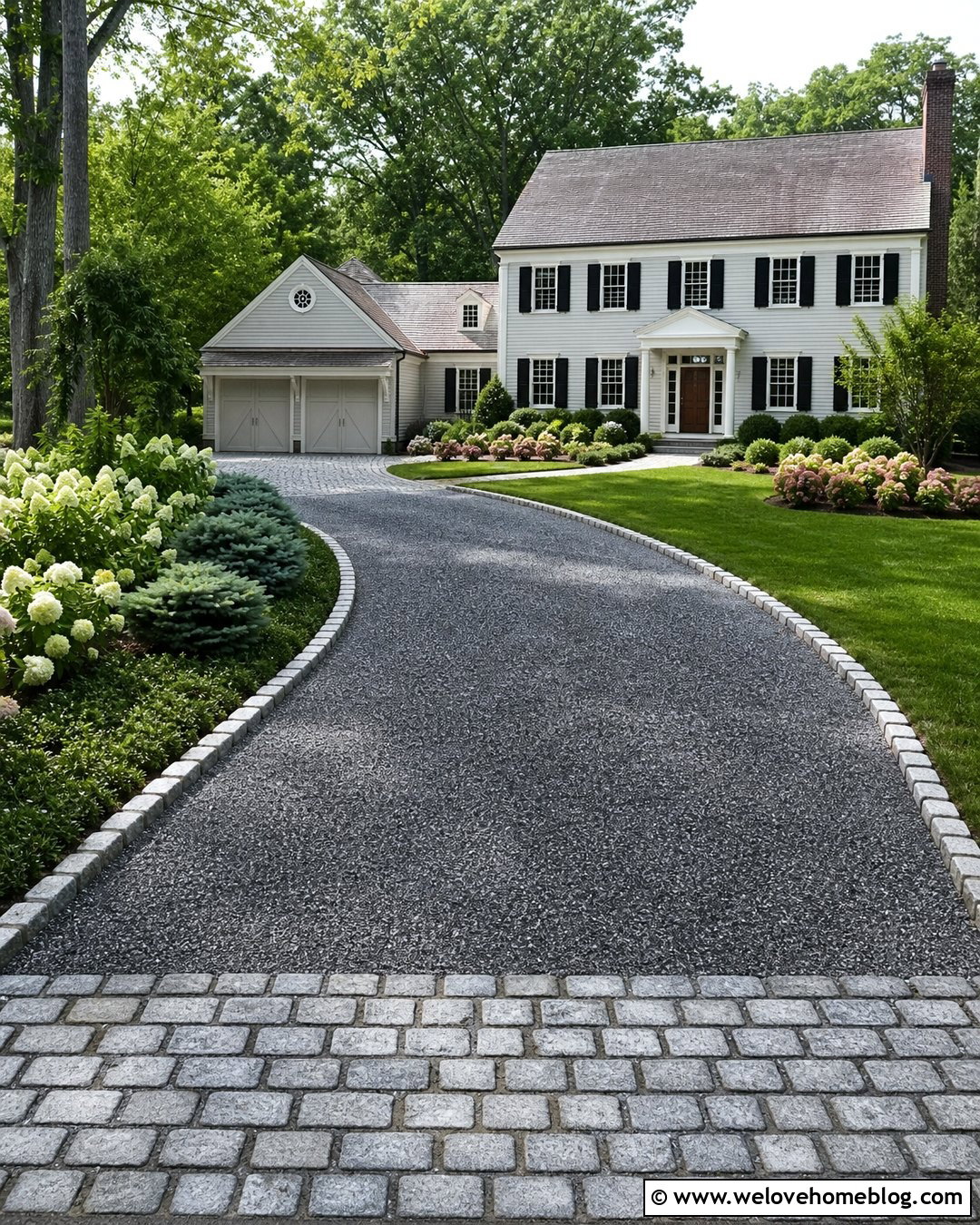
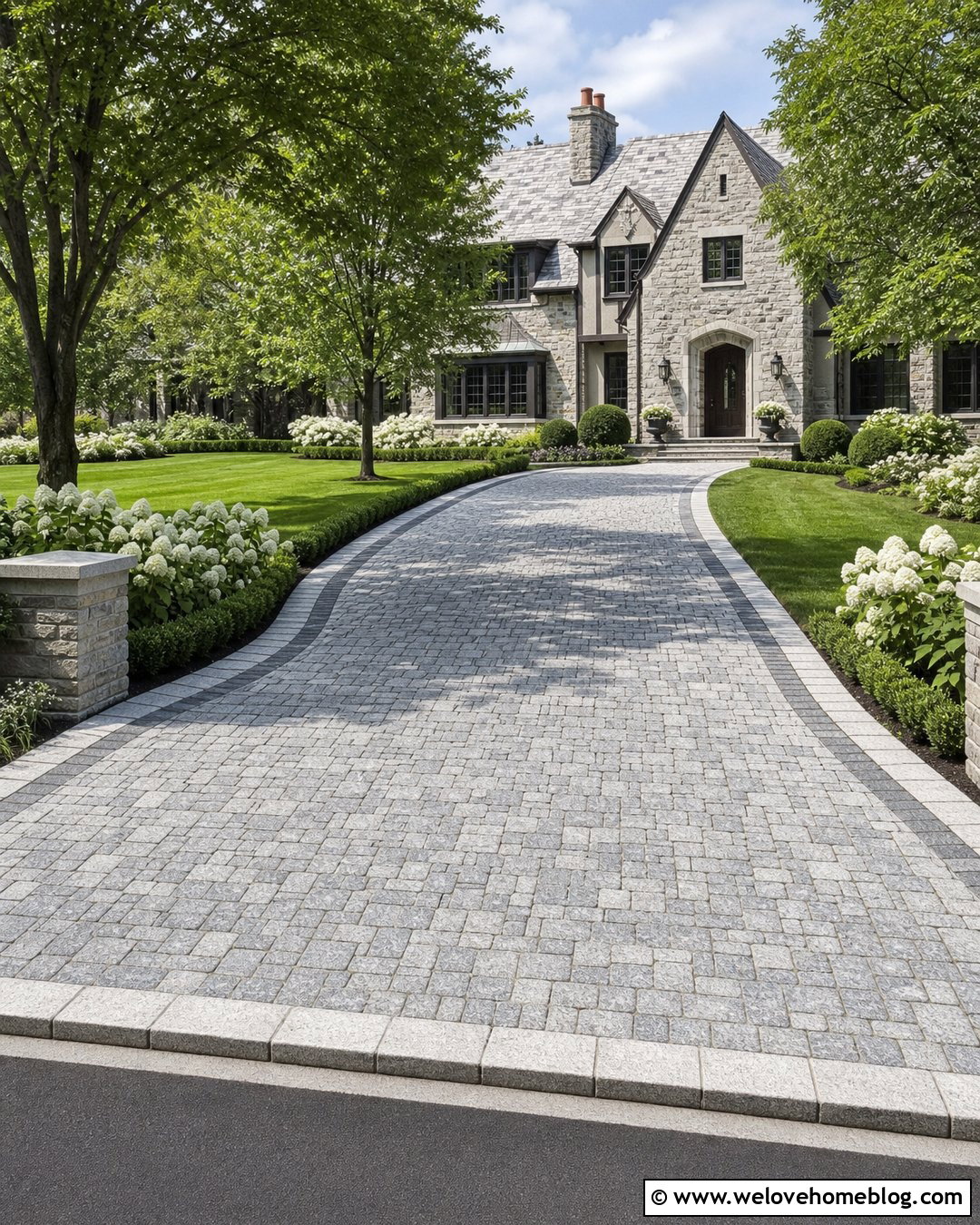
Deep gray gravel can make a driveway feel refined while remaining natural enough for an older home. Choose compactable crushed granite in blended charcoal and silver tones, then frame it with chunky cobblestone edging. The cobbles should sit slightly above the finished surface to reduce gravel spreading into the lawn. A gently curved layout is more inviting than a rigid straight line and can guide attention toward the front facade. Repeat the curve with sweeping planting beds filled with hydrangeas, dwarf evergreens, and low ground cover. At the garage, use a broad cobblestone transition strip where vehicle tires regularly turn. Durable edging is particularly important around loose driveway materials because weak borders can contribute to migration and ongoing maintenance. () The finished driveway feels established, structured, and pleasantly understated.
3. Pea Gravel Rock Driveway With Brick Borders
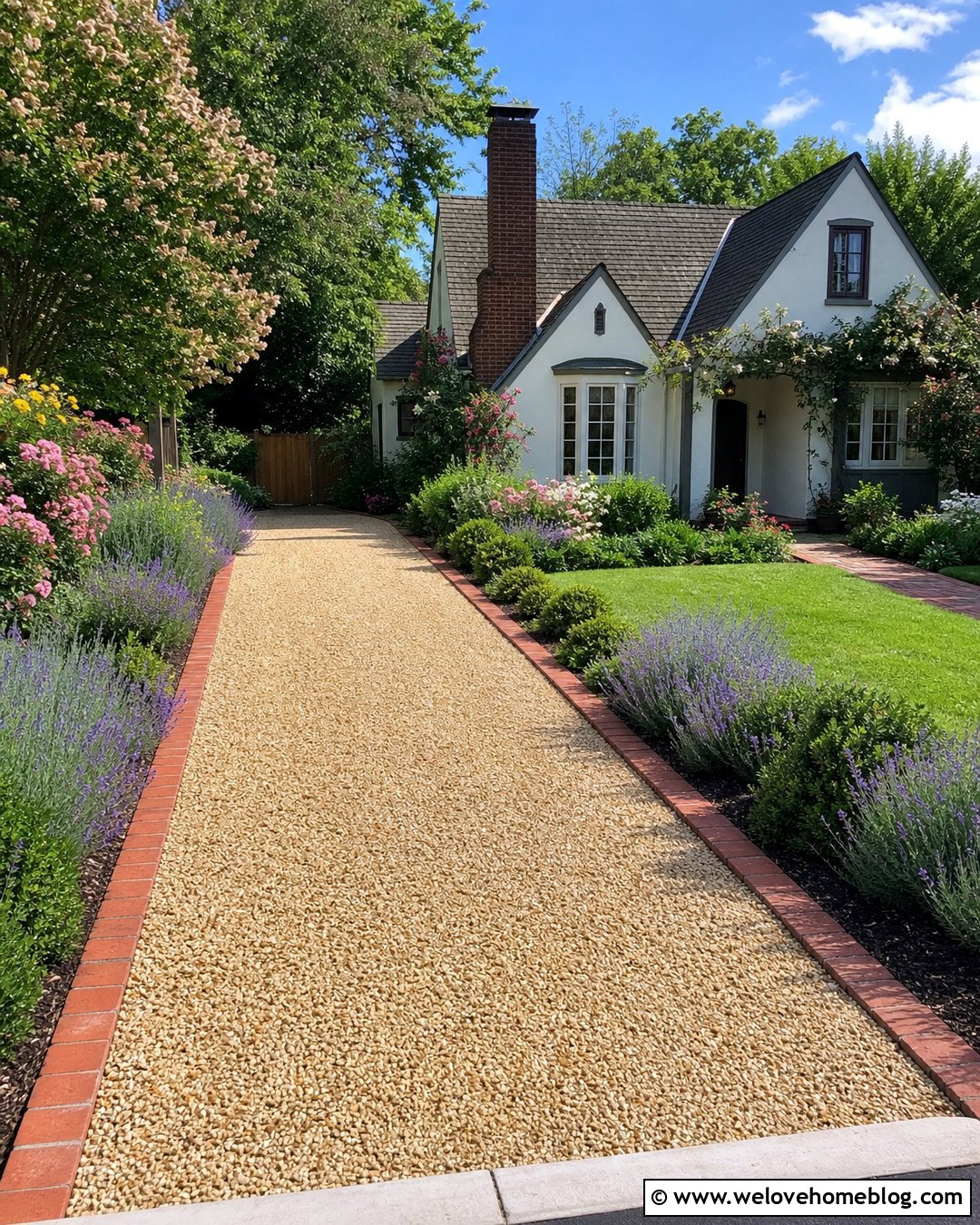
Warm pea gravel brings soft color and cottage character to a small front yard. Since its rounded stones can shift under tires, place the gravel inside a heavy-duty cellular stabilization grid over a properly prepared base. A strong brick border provides another layer of containment and gives the driveway a crisp outline. Use a narrow, straight layout leading to a detached garage or side parking area. Along one edge, include a brick walkway separated from the driving surface by a slim planting strip. Lavender, catmint, compact roses, and clipped evergreen mounds reinforce the welcoming cottage appearance. Select golden, tan, and cream pea gravel that complements the brick rather than competing with it. This complete arrangement keeps the romantic texture of rounded stone while introducing the structure needed for a more functional residential driveway.
4. White Gravel Rock Driveway With Black Edging
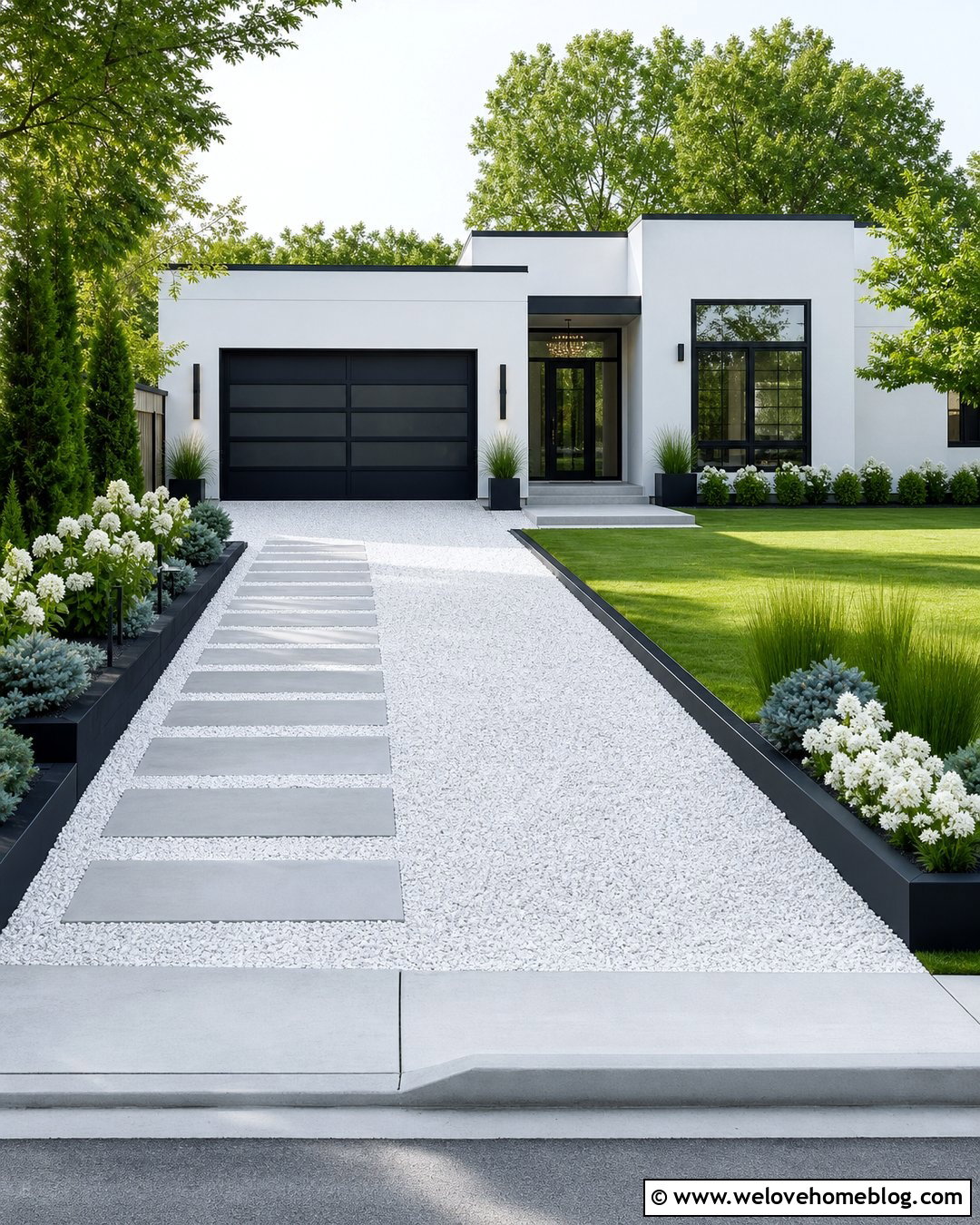
Crisp white gravel and narrow black edging create a high-contrast driveway suited to contemporary architecture. Use white crushed marble or pale limestone chips rather than oversized decorative rocks. Keep the driveway straight, wide, and geometrically aligned with the garage. Heavy-gauge black steel edging produces a slim visual line while separating the rock from lawn and planting beds. Repeat the dark tone through black planters, simple path lights, and the home’s window frames. Plant the surrounding beds with green ornamental grasses, dwarf pines, and groups of white flowering perennials. Avoid overcrowding the landscape because open space strengthens the modern effect. White rock can show soil and leaf debris more readily, so this design works best where regular blowing, raking, and occasional replenishment fit comfortably into the maintenance plan.
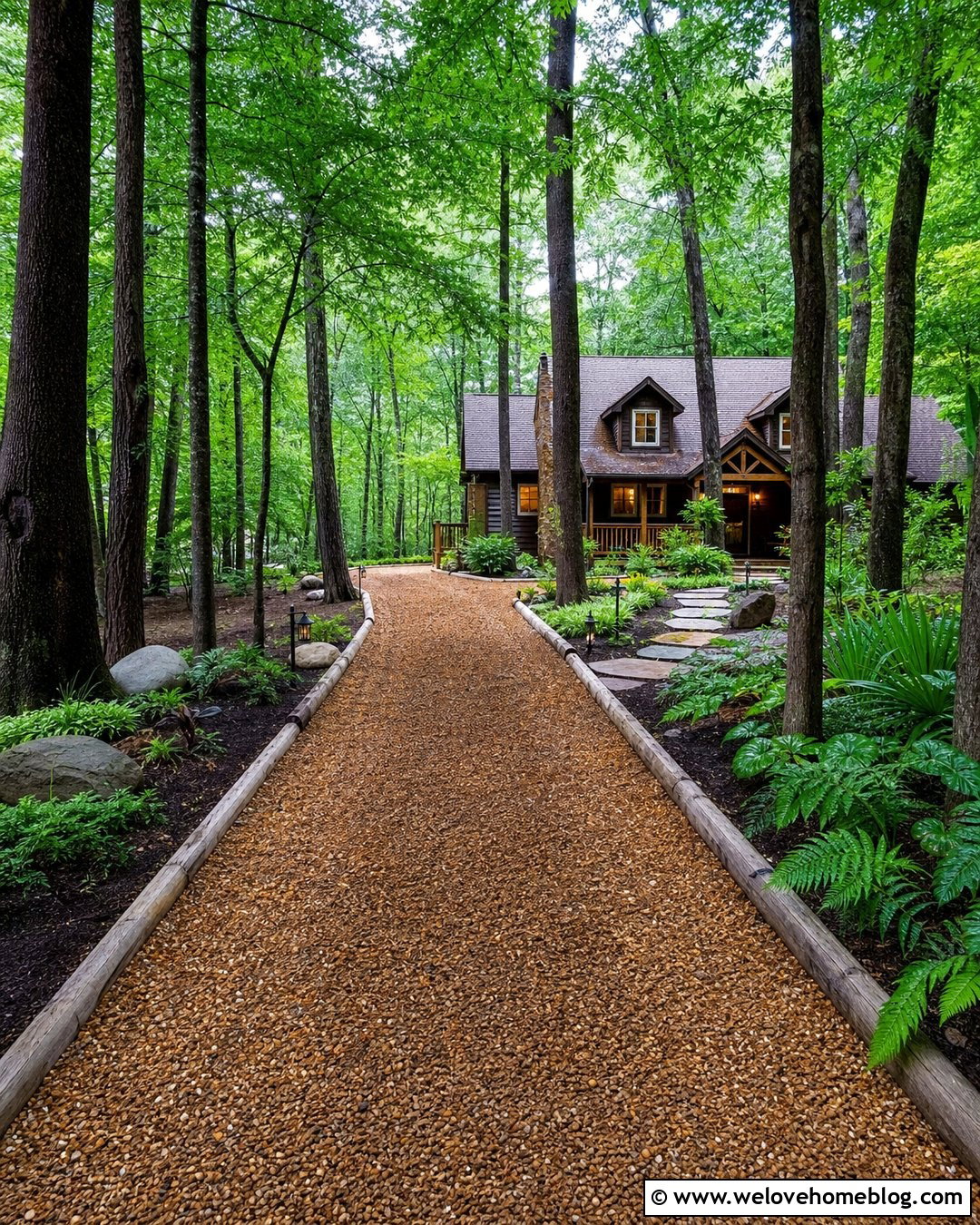
5. Tan Gravel Rock Driveway With Timber Edging
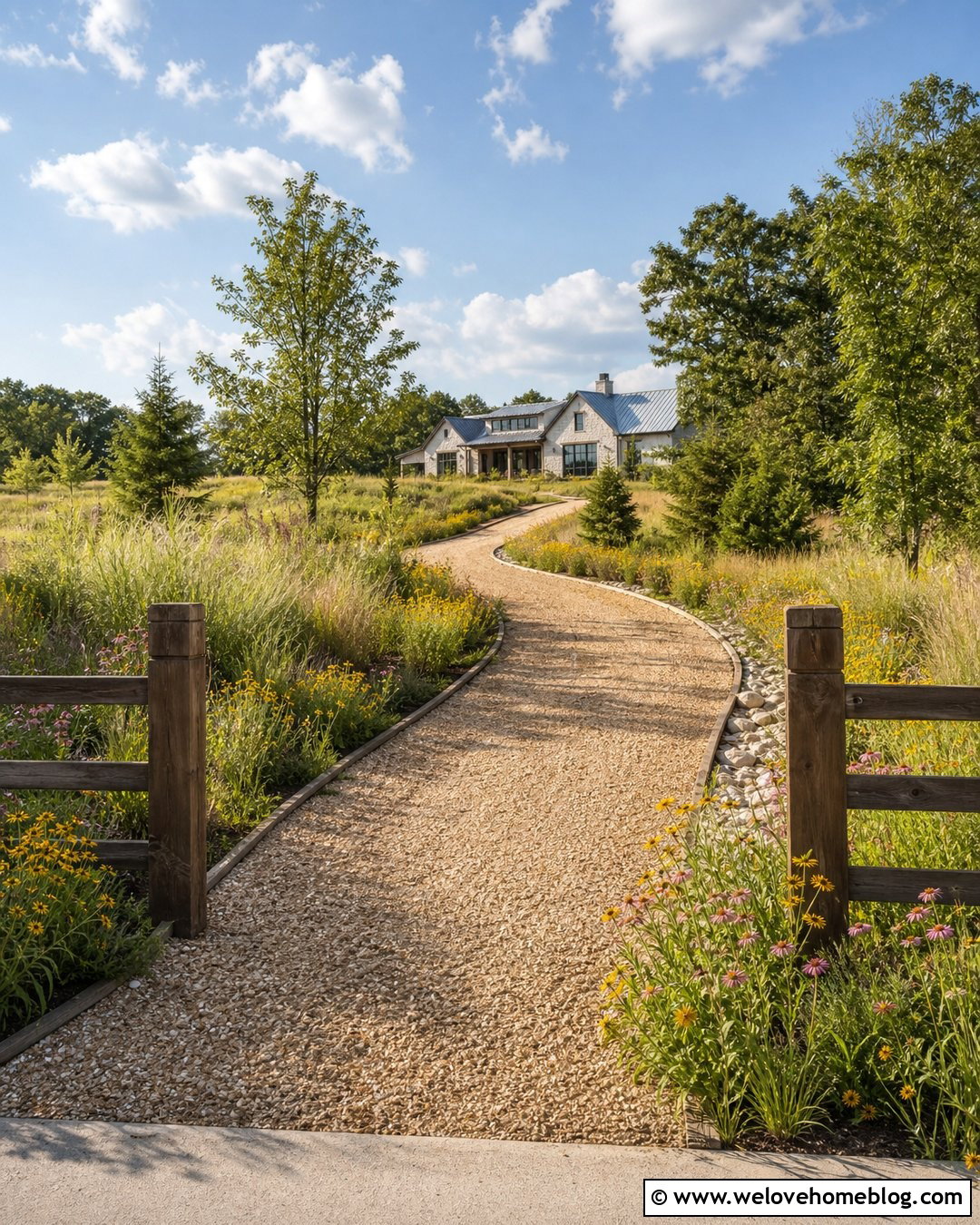
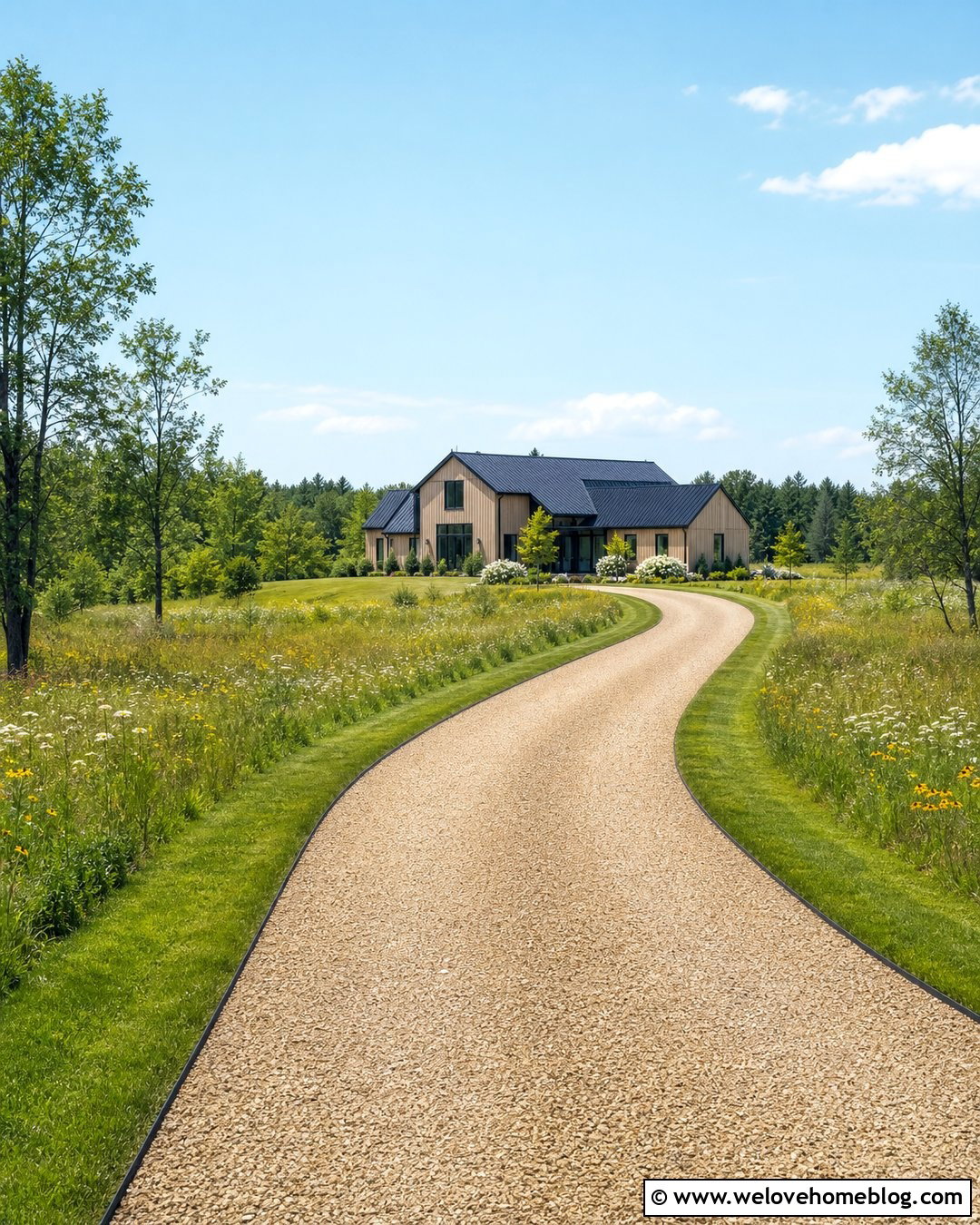
A tan gravel driveway bordered by substantial landscape timbers gives a country home a warm, practical entrance. Select angular crushed sandstone or tan road gravel with a mix of particle sizes that can compact into a stable surface. Create a long, gently winding layout that follows the natural contours of the yard instead of cutting directly across it. Pressure-treated or naturally rot-resistant timber edging provides a rustic boundary, especially when installed securely and kept level. Beyond the border, use meadow grasses, black-eyed Susans, coneflowers, and scattered native shrubs. A small timber footbridge can carry the driveway over a shallow drainage swale if site conditions require one. At the entrance, simple wood posts and a horizontal farm-style fence make the entire approach feel intentional, relaxed, and connected to the surrounding landscape.
6. Black Gravel Rock Driveway With Concrete Borders
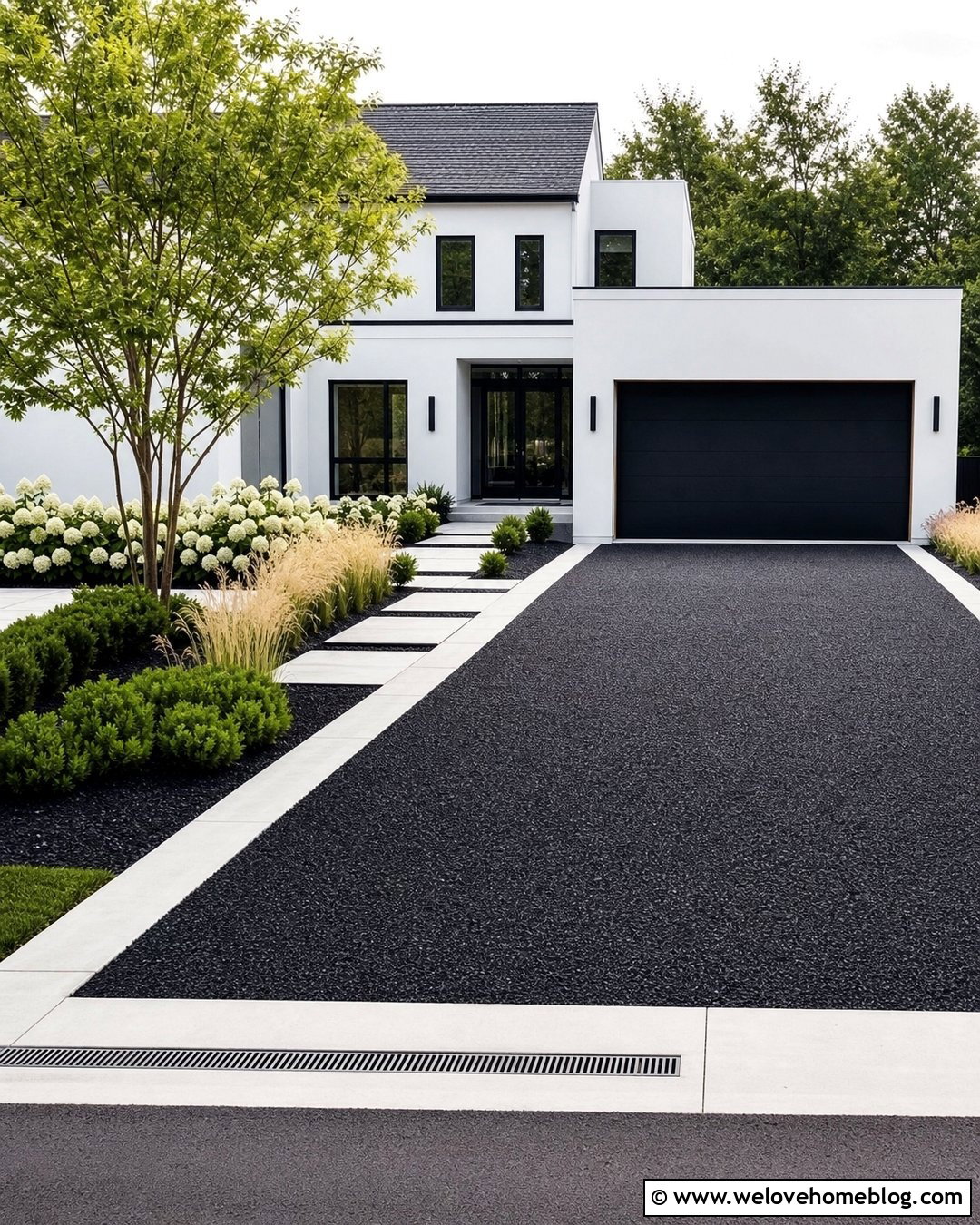
Black crushed basalt creates a dramatic driveway surface that complements a light modern house. Its charcoal color looks especially sharp beside poured concrete curbs in a pale natural finish. Design the driveway as a broad straight run with a rectangular parking pad near the garage. The concrete borders should be wide enough to function as clean mowing strips while securely containing the dark rock. Add large concrete stepping pads along one side to form an easy route to the front entrance. Sparse planting keeps the composition calm. Consider feather reed grass, compact juniper, white hydrangeas, and one carefully positioned ornamental tree. A channel drain near the garage can intercept runoff where needed. The combination of dark stone, pale concrete, and restrained greenery gives the property strong contrast without relying on complicated patterns or excessive decoration.
7. Red Gravel Rock Driveway With Stone Pillars
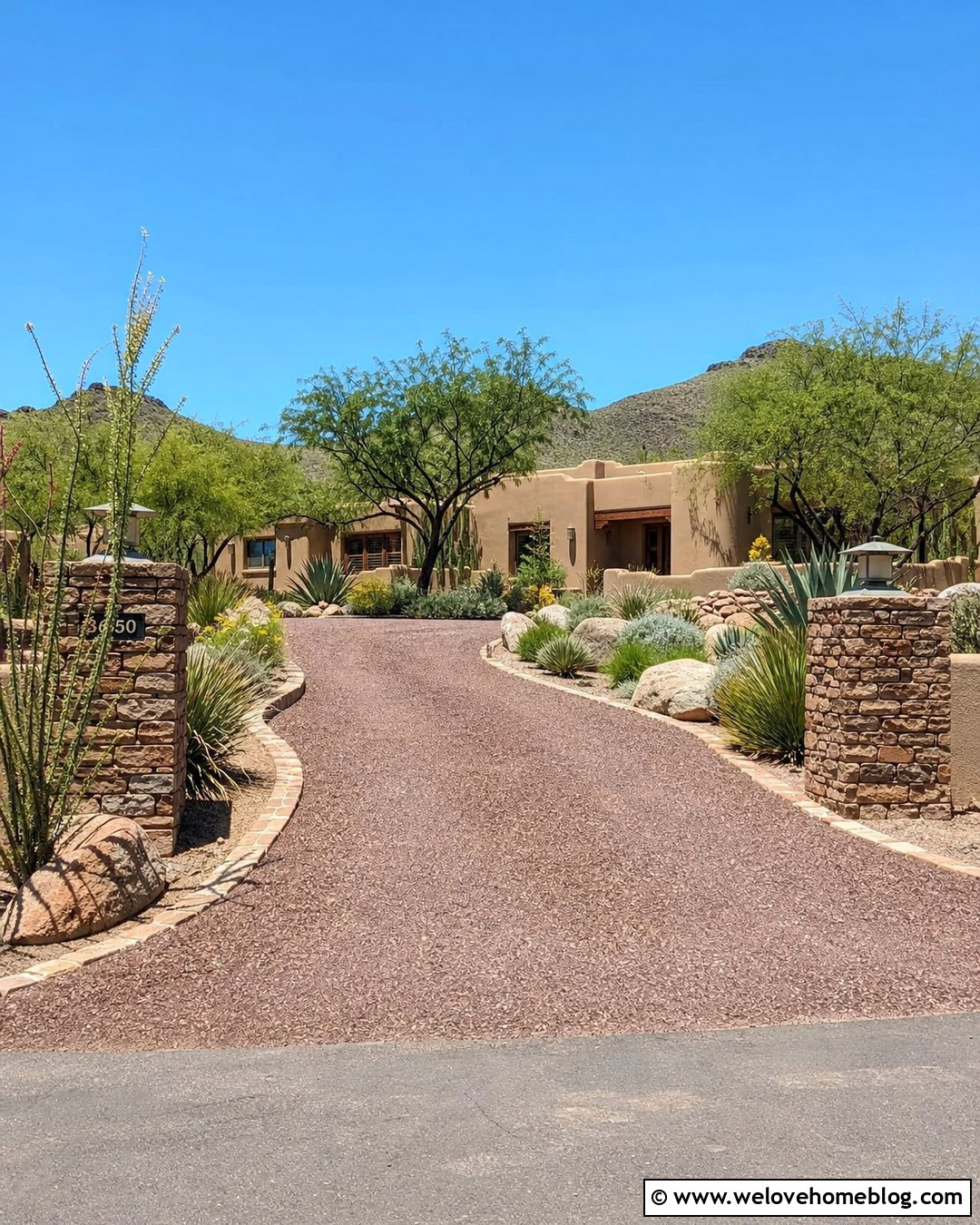
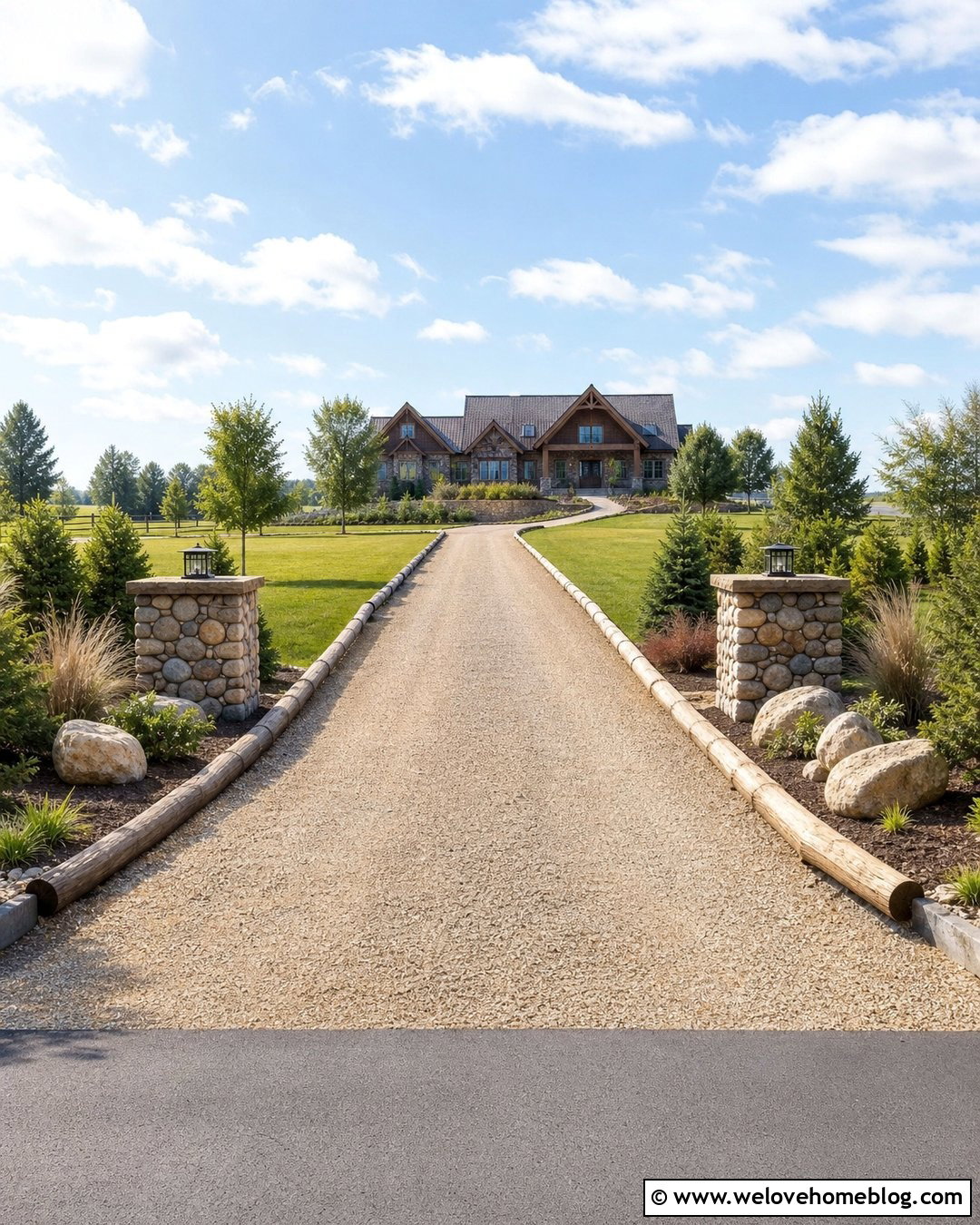
Red crushed granite can bring rich, earthy color to a ranch, Spanish-inspired, or Southwestern home. Use a wide driveway with a gentle curve, allowing the colored stone to become a visible part of the front landscape. Natural stone pillars at the street create a substantial entrance and help visually anchor the loose-rock surface. Choose pillar stones containing rust, brown, gray, and muted red tones so the entrance coordinates with the gravel. Low masonry edging can continue inward from each pillar before transitioning to steel edging farther along the driveway. Complete the setting with drought-tolerant grasses, yucca, agave, sage, and carefully placed landscape boulders. Keep plants away from vehicle clearance areas and maintain open sightlines near the road. The resulting driveway feels warm and regionally appropriate rather than stark or overly engineered.
8. Gravel Rock Driveway With Paver Tire Tracks
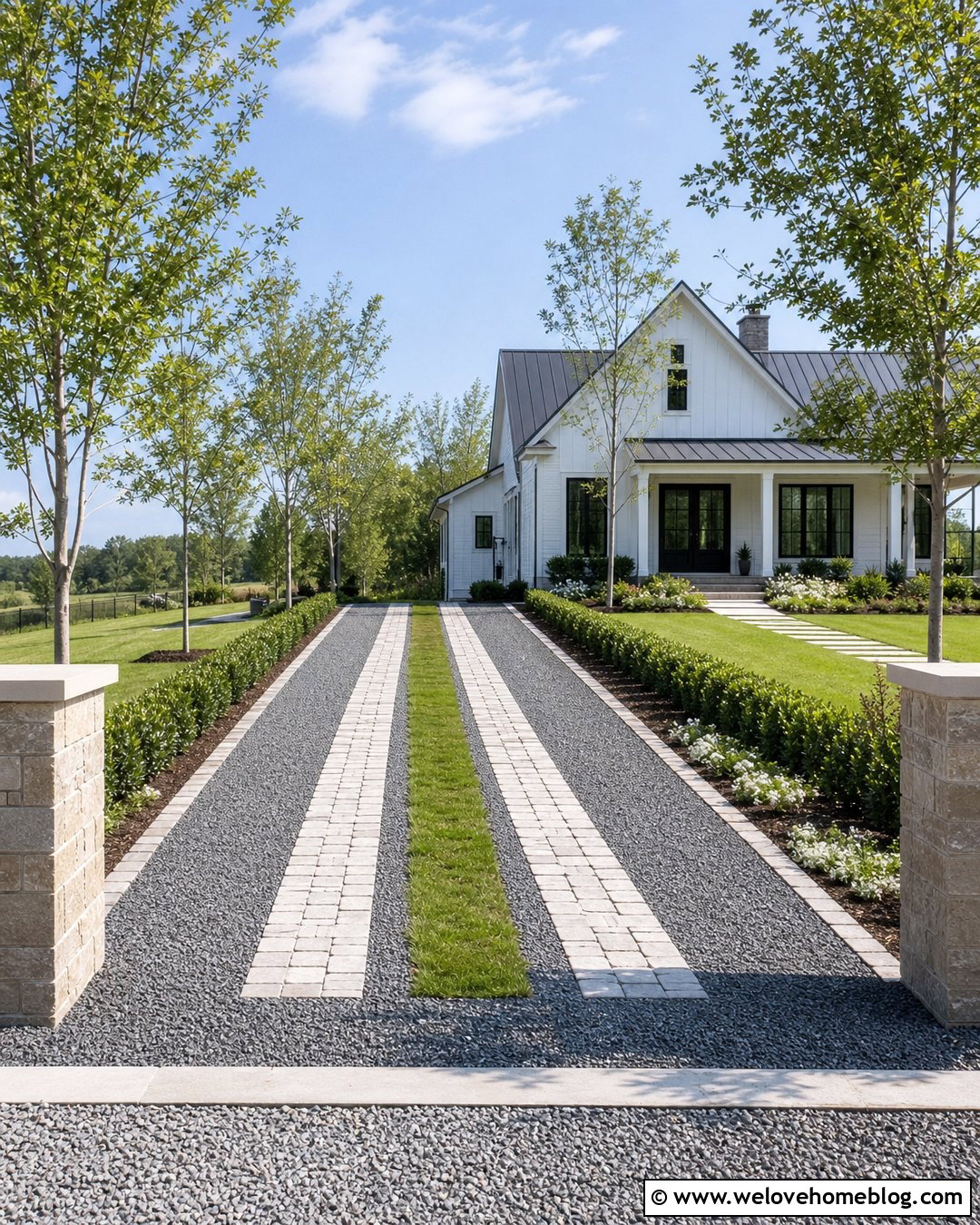
Paver tire tracks offer a clever way to combine the softness of gravel with a more defined driving path. Install two parallel bands of concrete or stone pavers over a load-bearing base, spacing them to align with vehicle tires. Fill the center and outer sections with compacted gray crushed gravel. The pavers reduce disturbance in frequently traveled areas, while the gravel preserves a casual landscape appearance. Use a straight layout for a modern farmhouse or a subtle curve for a country property. Edge the entire driveway with matching pavers to create a consistent frame. Grass, thyme, or another suitable low ground cover can fill narrow areas that do not receive regular tire traffic. Add simple hedging and deciduous trees along the approach, keeping trunks set well back from the driving area and turnaround space.
9. Circular Gravel Rock Driveway With Center Garden
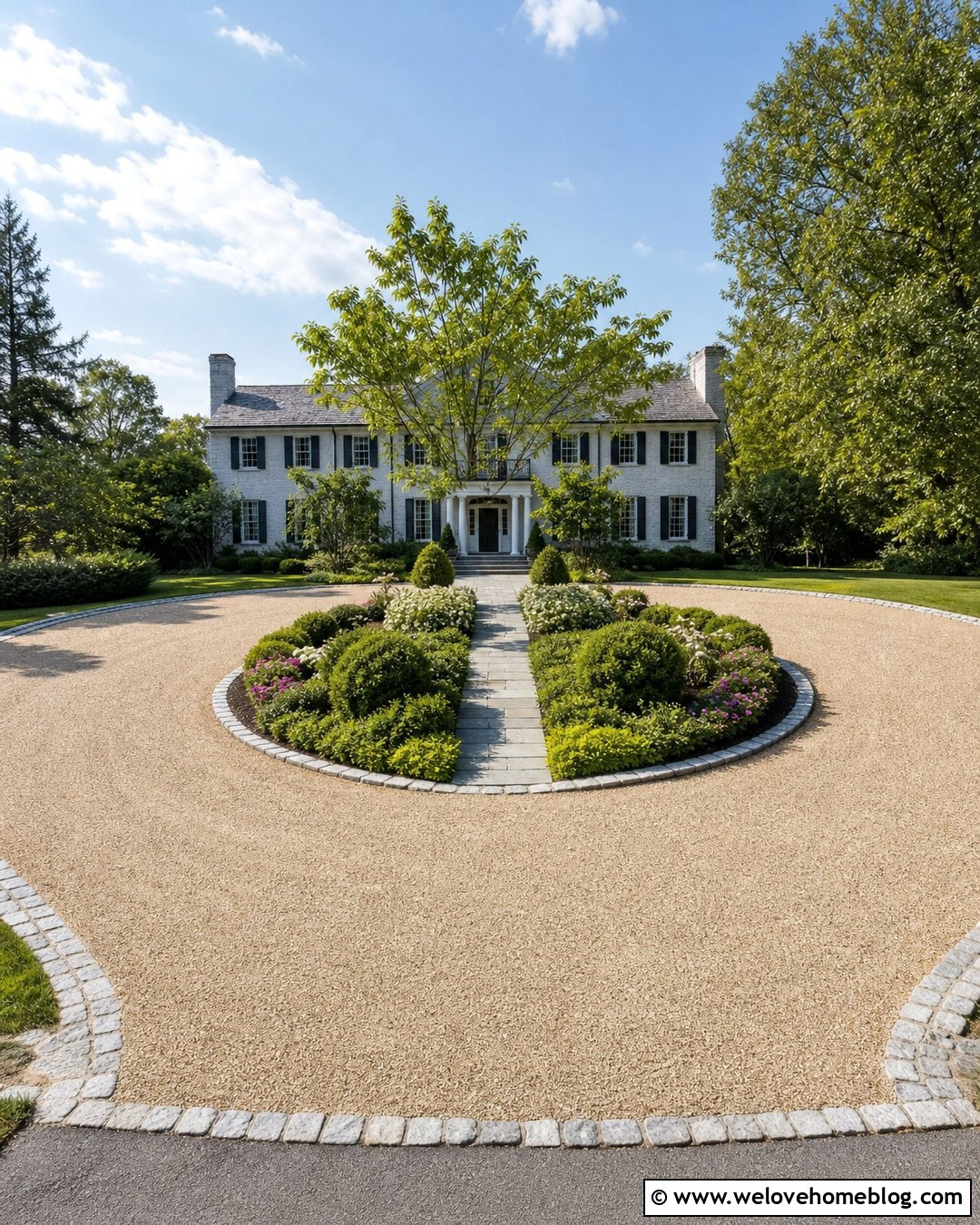
A circular gravel driveway creates an elegant arrival sequence while making it easier for vehicles to enter and leave without reversing toward the street. Use compacted beige crushed stone for the main loop and outline both edges with granite setts or cobblestones. In the center island, plant one small ornamental tree surrounded by layered shrubs, seasonal flowers, and low evergreen ground cover. Keep taller plants toward the middle so drivers maintain clear views around the curve. The circle should be proportioned for comfortable turning rather than squeezed into an undersized front yard. Connect a paved walkway from the inner border to the front door without interrupting the driving route. With balanced planting and restrained materials, the island becomes a focal point while the gravel surface maintains a relaxed, estate-inspired appearance.
10. Curved Gravel Rock Driveway With Native Landscaping
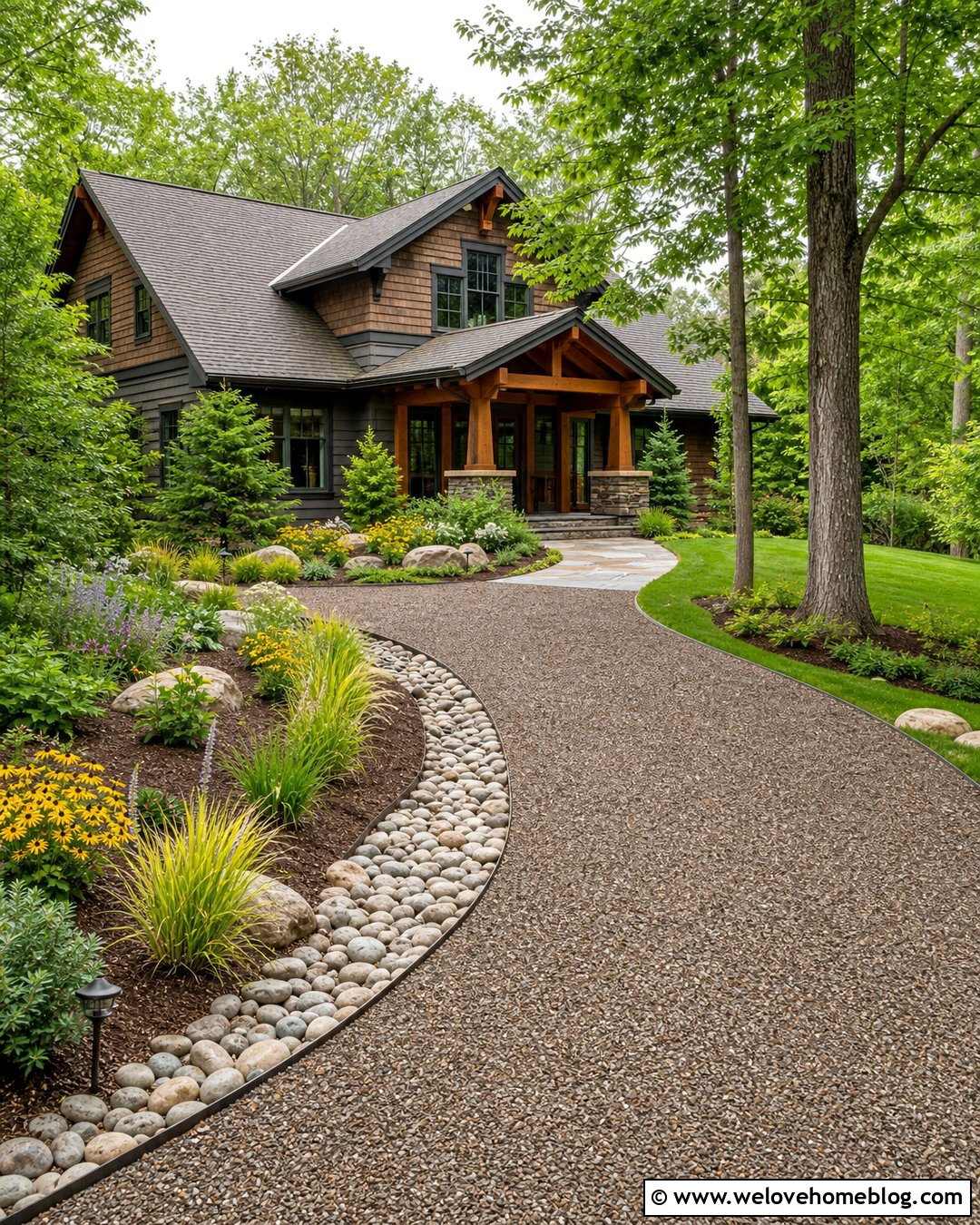
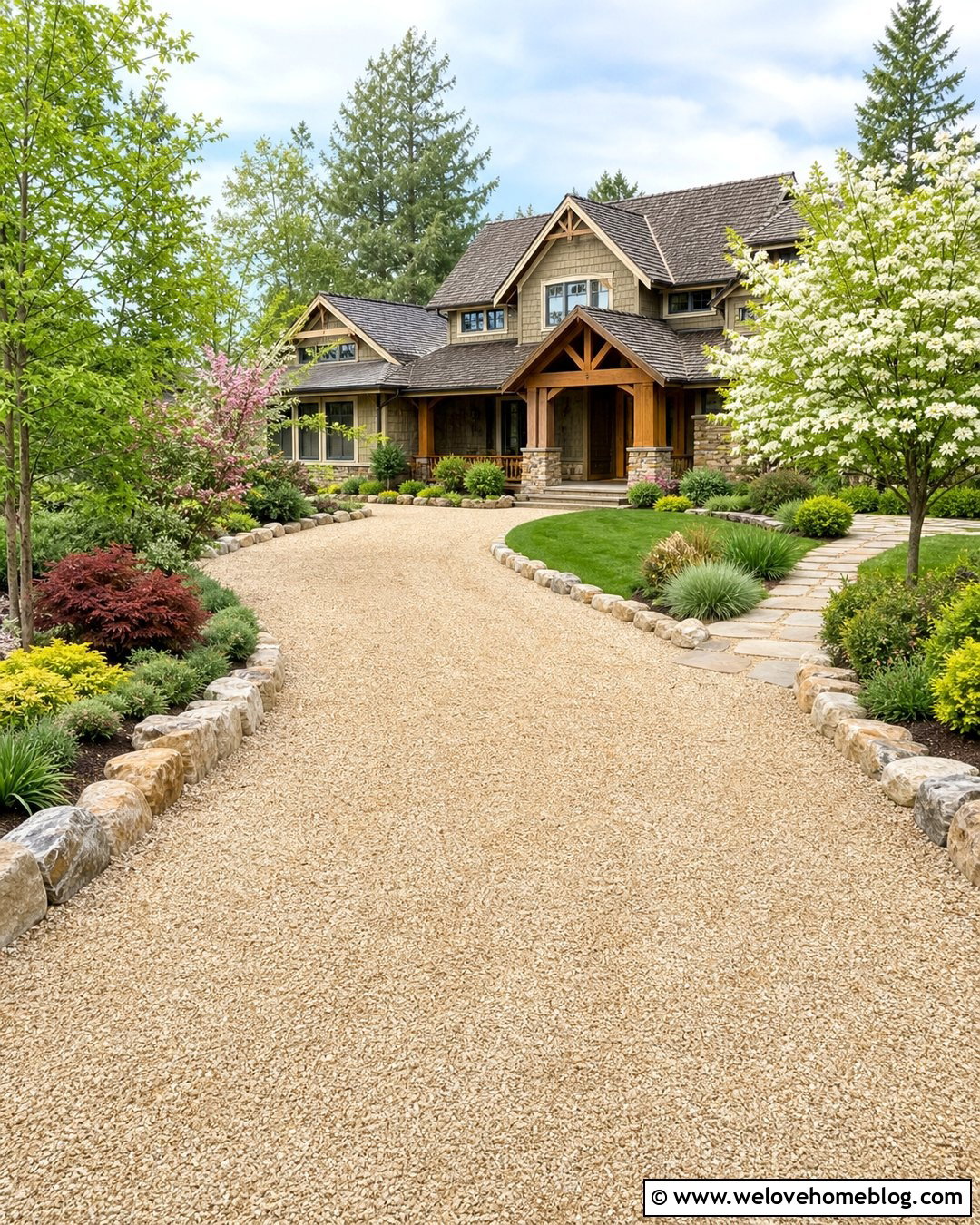
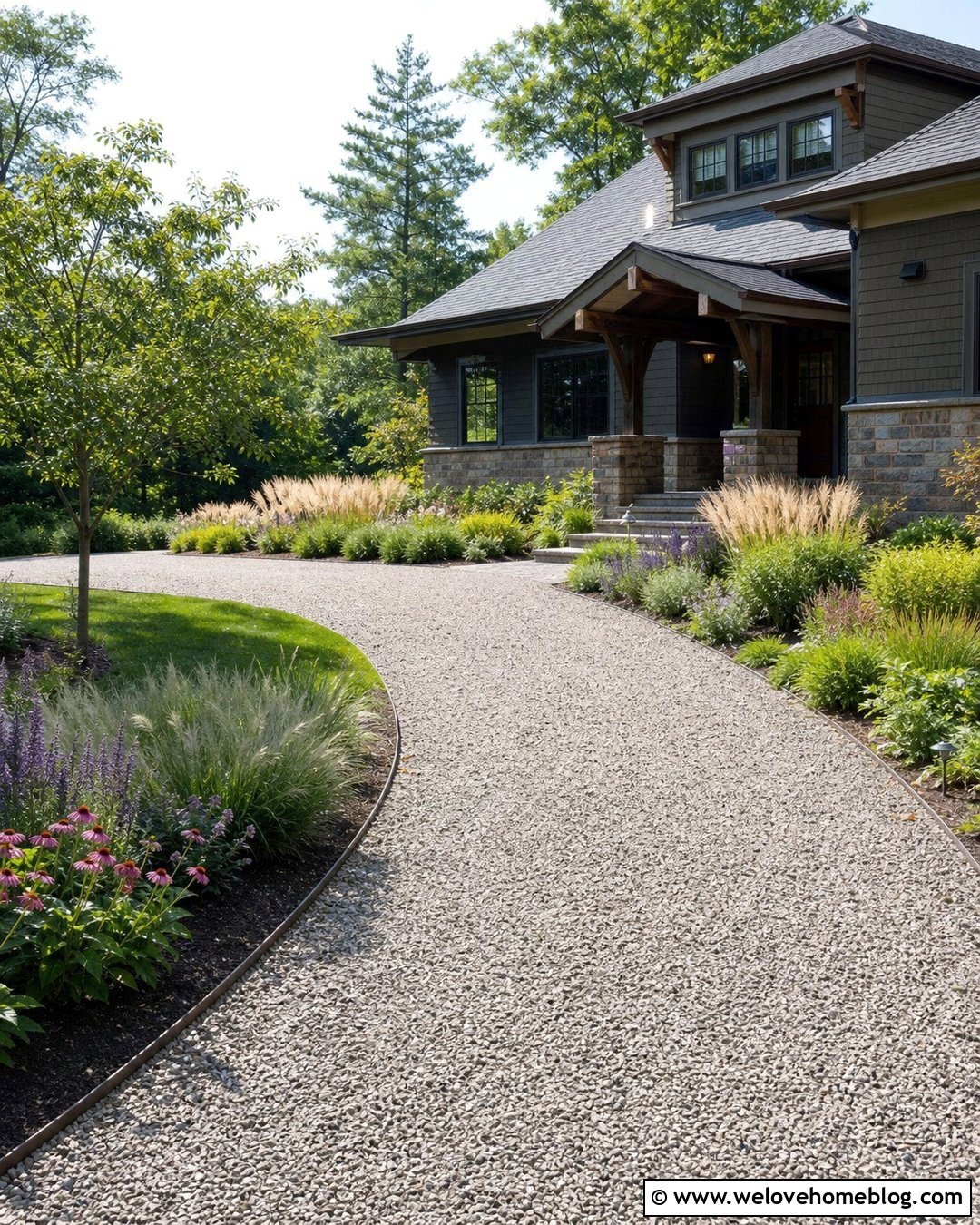
A curving driveway can make an ordinary approach feel longer and more connected to the yard. Cover the surface with compacted brown and gray crushed gravel that resembles naturally weathered local stone. Use flush steel edging to preserve the flowing shape without adding a heavy visual border. On the outside of the curves, arrange native shrubs, flowering perennials, ornamental grasses, and several well-spaced trees. Lower planting should occupy inside bends to protect visibility. Include a shallow rock-lined swale where runoff naturally collects, using larger cobbles and moisture-tolerant plants to make the drainage feature look intentional. Gravel driveways should be graded so water moves away from the driving surface rather than settling into low areas. () This landscape-led design works beautifully with craftsman, ranch, and woodland homes.
11. Gravel Rock Driveway With Grass Center Strip
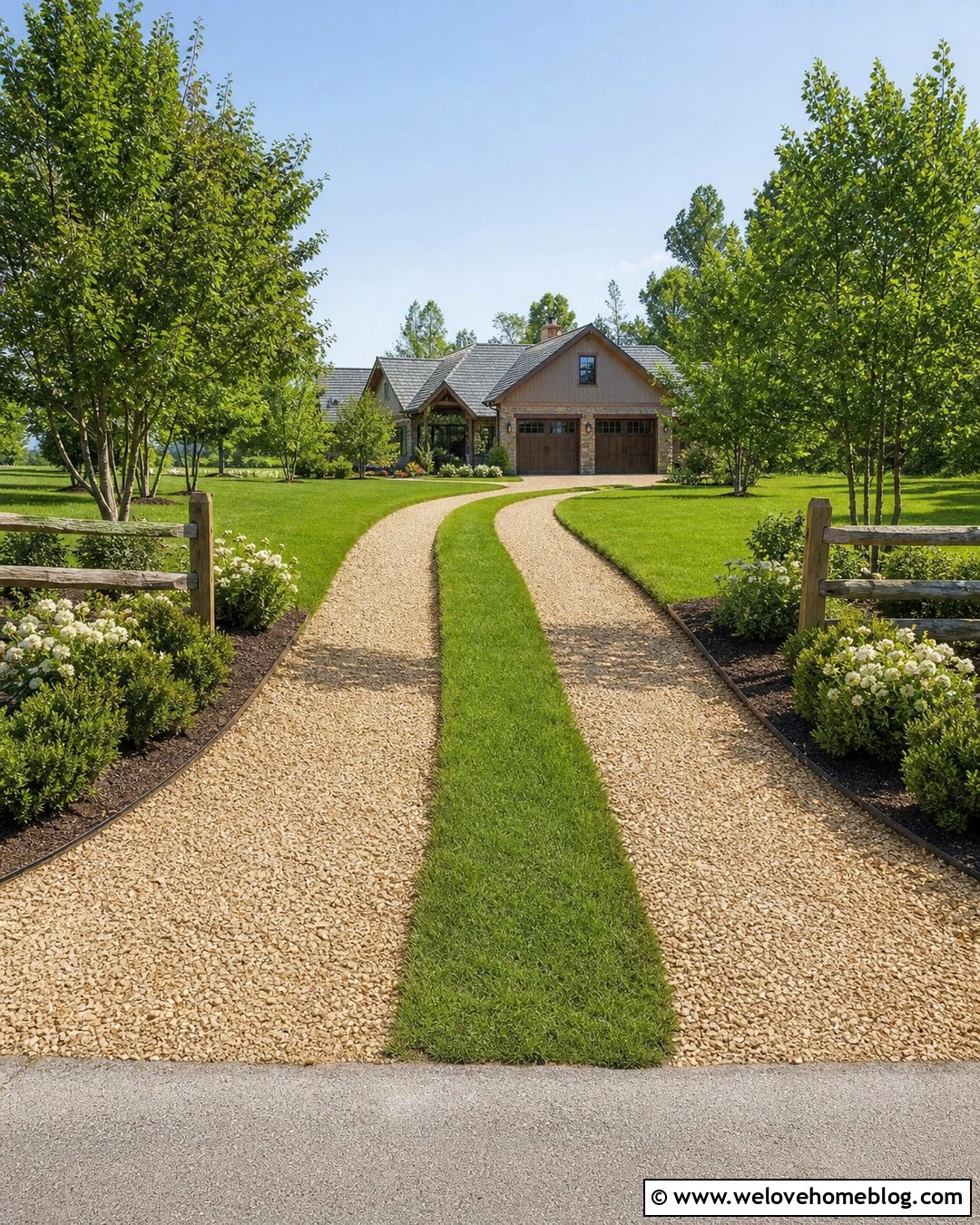
A grass center strip breaks up a wide gravel surface and gives the driveway a softer country appearance. Form two compacted lanes from angular gray or tan gravel, leaving a broad green strip between them. The layout works best on a straight or gently curving driveway where vehicles can follow predictable paths. Install hidden steel edging around the grass to prevent gravel from spreading into the center. Choose durable turf suited to local conditions, or replace conventional lawn with a low-growing ground cover where appropriate. Match the outer edges with the same understated metal border. Frame the entrance with split-rail fencing, flowering shrubs, and small deciduous trees. A permeable center visually reduces the amount of hardscape, although the underlying driveway base and drainage still need to support regular vehicle use.
12. Gravel Rock Driveway With Brick Entrance Apron
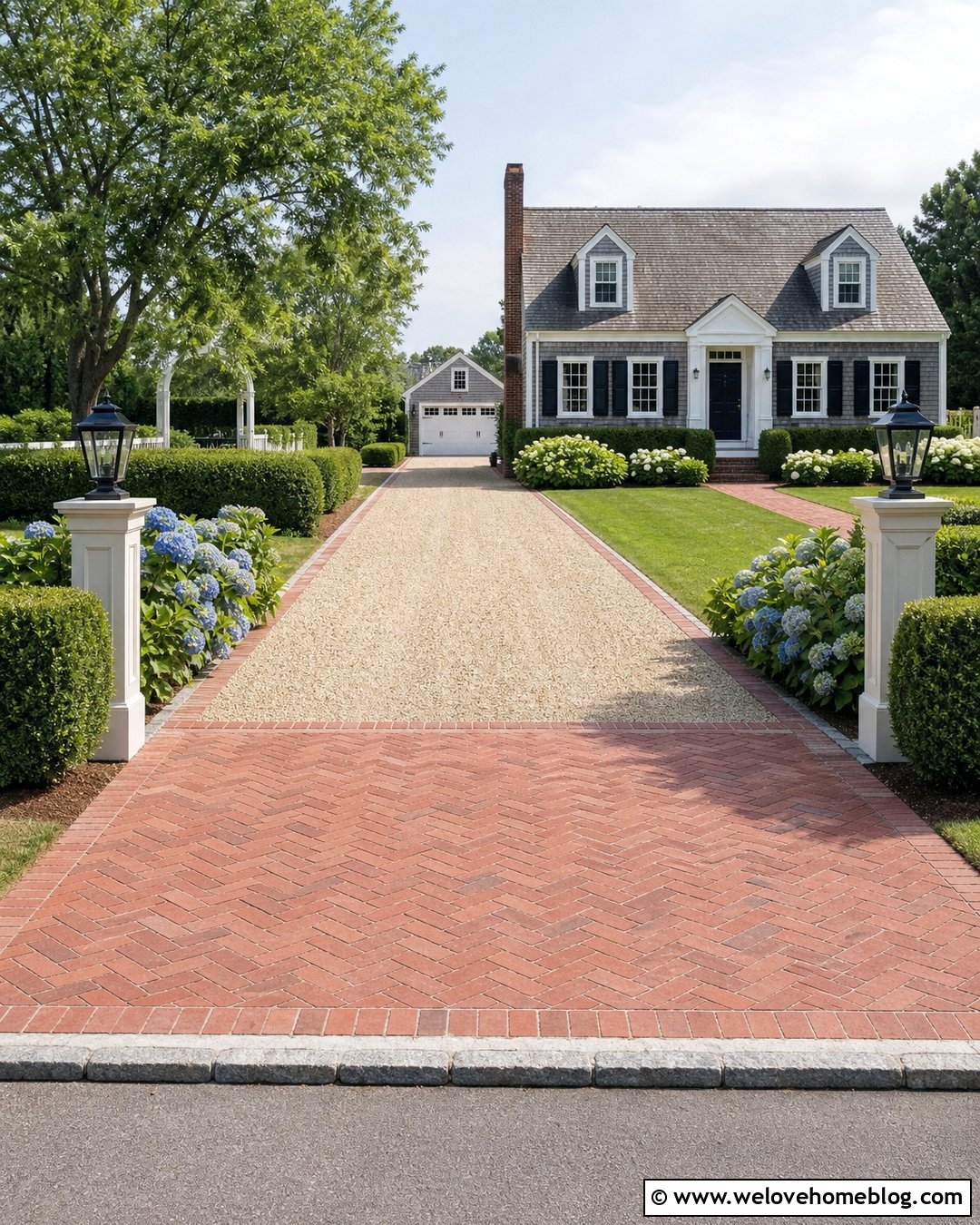
A brick entrance apron adds a finished transition where a gravel driveway meets the public road. Begin with a wide band of clay brick pavers laid in a herringbone pattern, then continue inward with compacted buff-colored crushed gravel. Repeat the brick as narrow ribbons along the driveway edges and near the garage threshold. These firm transition zones help define areas where tires turn, brake, or carry loose stones toward adjoining pavement. A straight driveway suits a colonial or Cape Cod home, particularly when framed by clipped hedges and symmetrical planting beds. Add brick walkway connections that lead from the parking area to the front door. Use classic black lantern-style fixtures on low posts near the entrance. The combination feels traditional, orderly, and more detailed than an uninterrupted expanse of loose stone.
13. Gravel Rock Driveway With Natural Boulder Borders
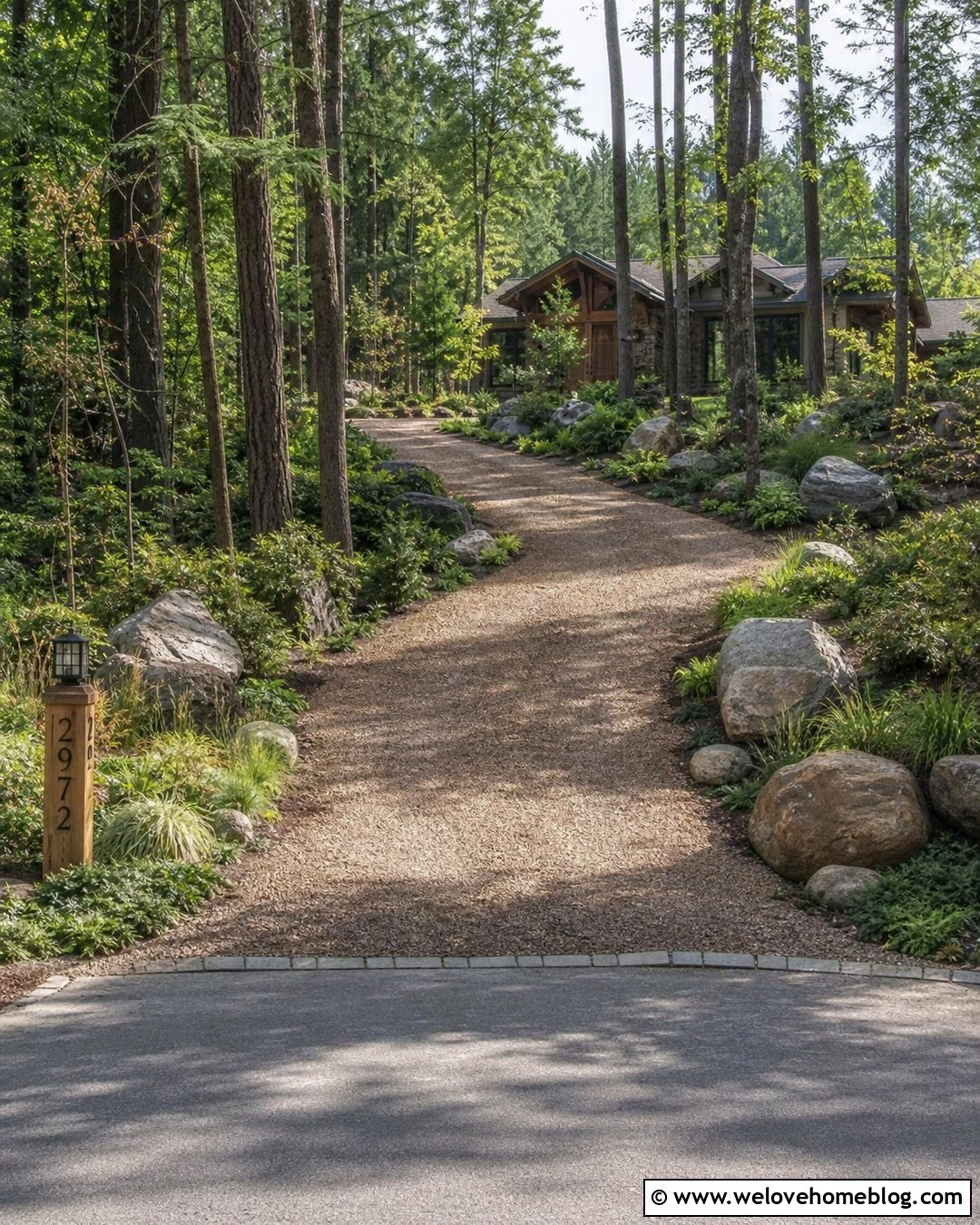
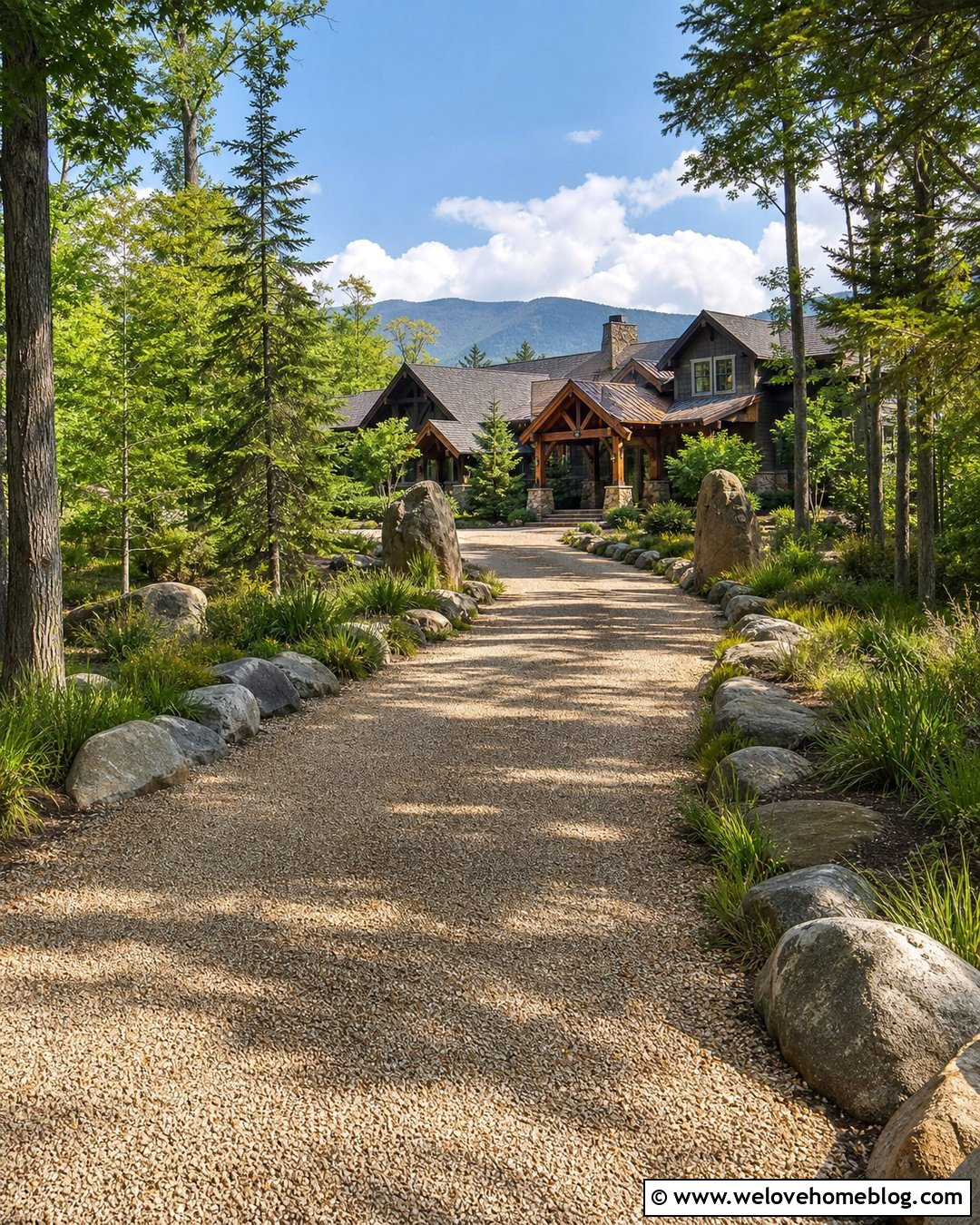
Large boulders can define a rural gravel driveway while blending naturally into an informal landscape. Choose compacted brown crushed rock for the driving surface, then place locally sourced boulders in irregular groups along the outer edges. Avoid lining up identical rocks like fence posts. Instead, vary their sizes and partly settle them into planting beds so they appear established. Leave generous clearance beside the traveled surface to protect vehicles and simplify snow removal. Fill the surrounding beds with native grasses, ferns, creeping ground covers, and clusters of hardy shrubs. A winding driveway works particularly well because the boulders can emphasize each bend. At the road, use two larger stones beside a modest wood address post. This design feels rugged and natural while still giving the loose driveway material a clear visual boundary.
14. Gravel Rock Driveway With Metal Landscape Edging
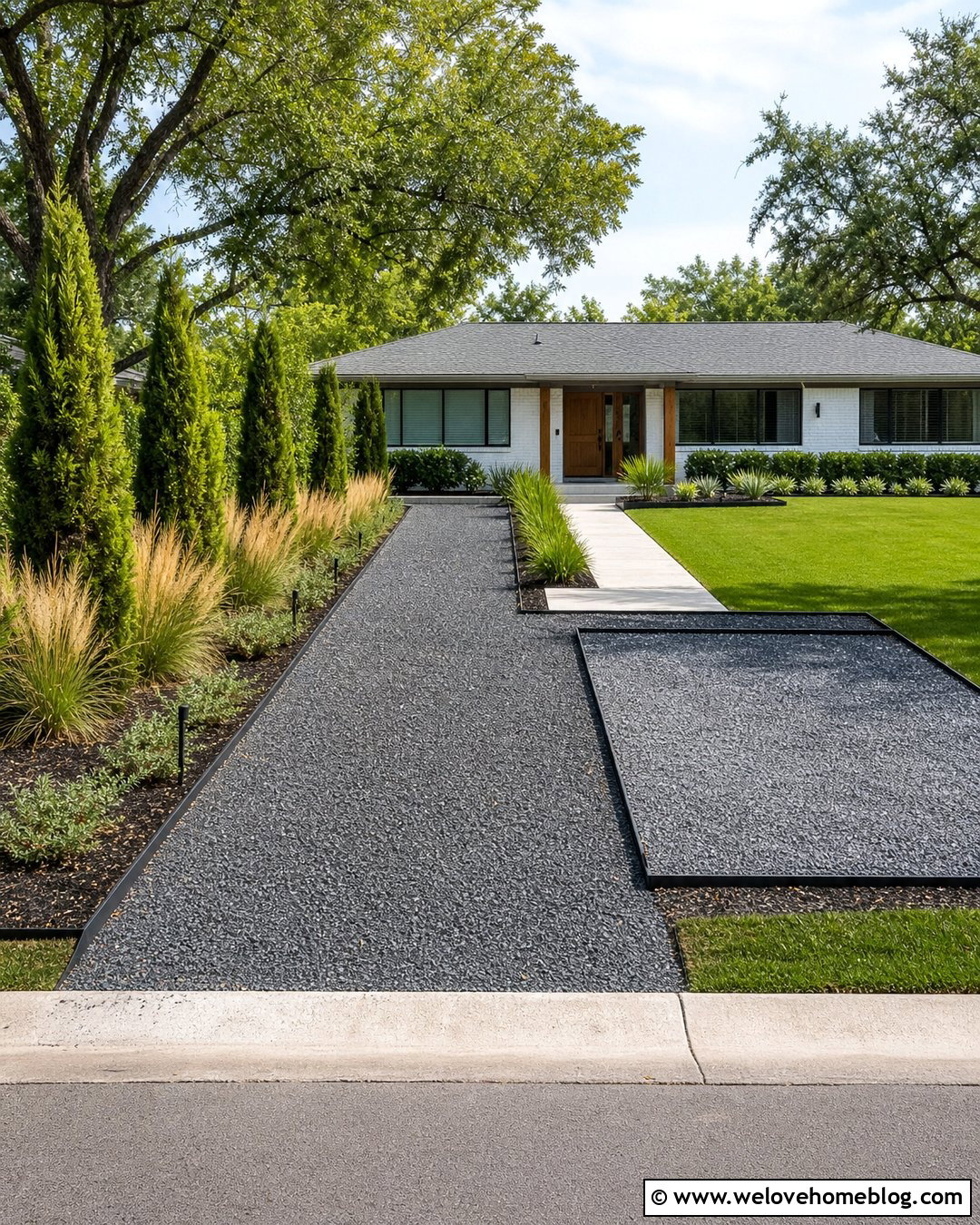
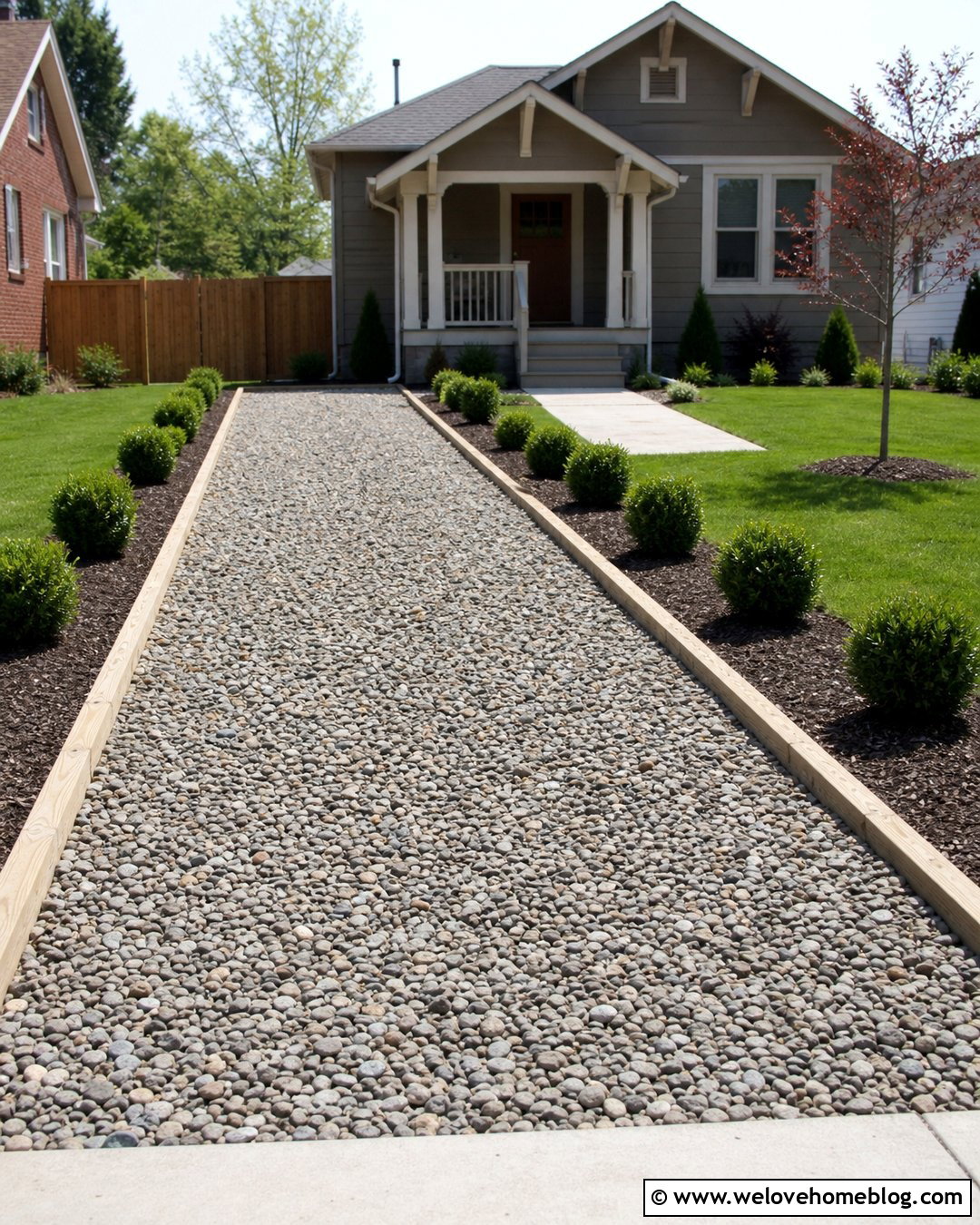
Metal edging creates a clean boundary without introducing a wide band of contrasting material. Pair dark gray crushed granite with thick black or weathered-steel edging, securely installed so the top remains visible but does not become a vehicle hazard. A narrow straight driveway can then feel crisp and spacious, making this approach useful for compact suburban lots. Run a simple concrete walkway beside the gravel and separate it with a slim bed of ornamental grasses. Near the house, widen the driveway into a rectangular parking area outlined by the same metal edge. Repeating materials creates continuity even when the layout changes. Add columnar evergreens where screening is needed and low ground covers near street corners. The finished design is restrained, affordable-looking without appearing unfinished, and compatible with modern, transitional, or updated ranch architecture.


15. Gravel Rock Driveway With Stone Retaining Walls
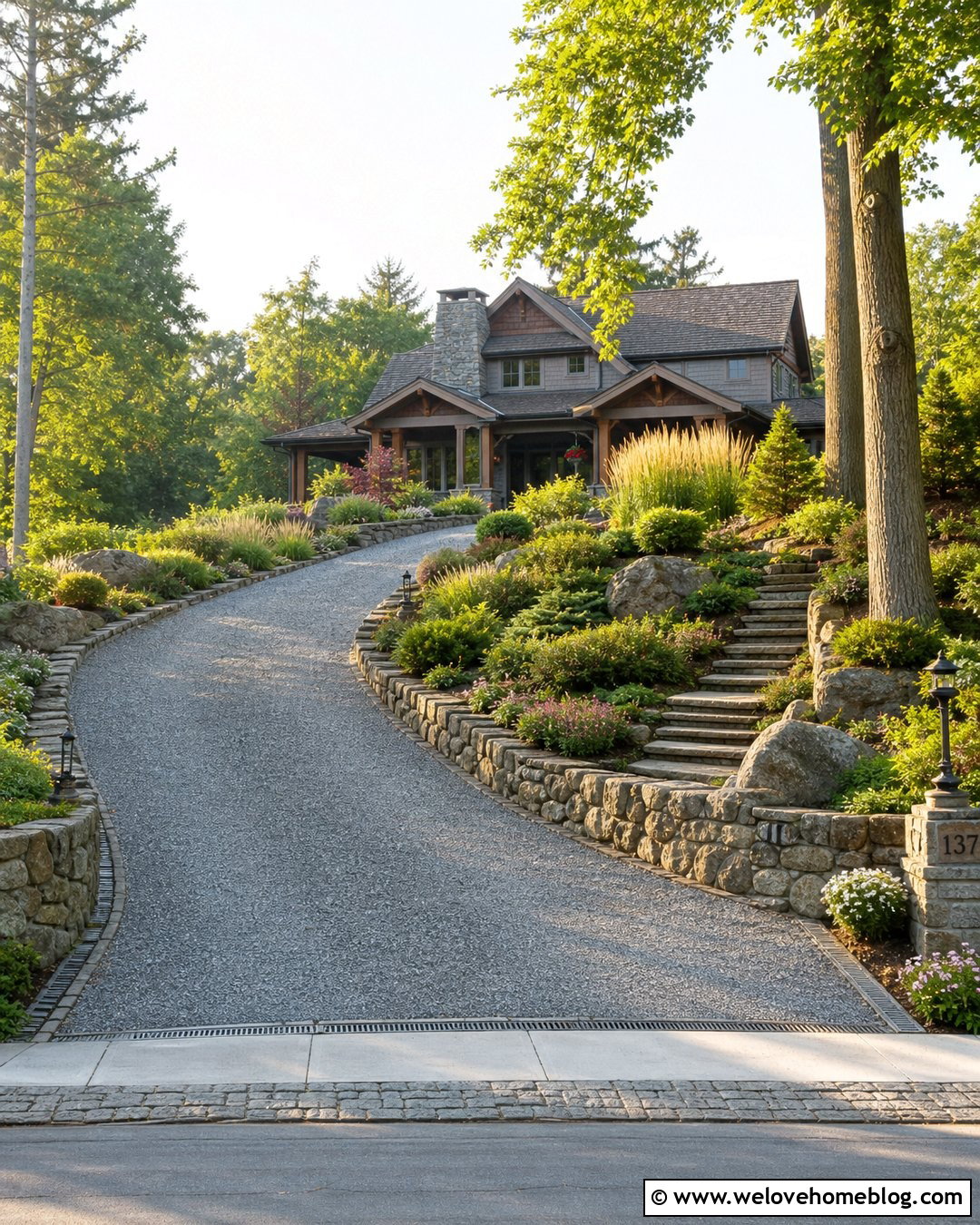
Sloped properties often need more than a decorative border. Low stone retaining walls can hold back raised planting beds while framing a gravel driveway as it climbs toward the house. Use compacted crushed granite in medium gray, then build walls from weathered fieldstone containing similar tones. A gently curving layout reduces the harsh appearance of the incline and follows the land more naturally. Incorporate drainage behind the walls and direct surface water toward suitable collection points determined by site conditions. Plant the upper beds with cascading ground covers, compact shrubs, and deep-rooted ornamental grasses. Place simple stone steps beside the driveway to create a safer pedestrian route. Wall heights, foundations, drainage, and local permitting requirements should be evaluated professionally. When properly planned, the stonework makes a challenging grade feel purposeful and beautifully integrated.
16. Gravel Rock Driveway With Wood Farm Gate
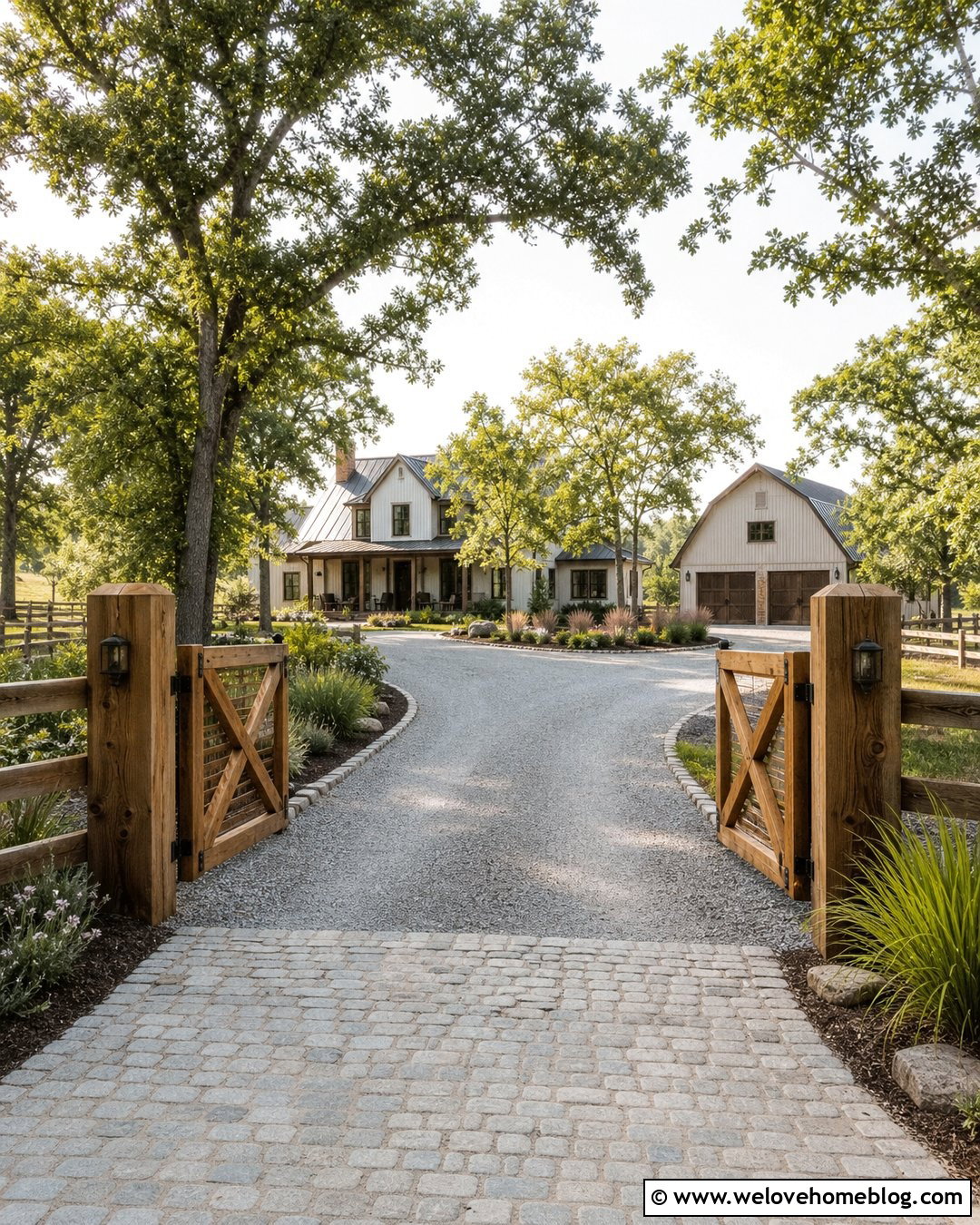
A wood farm gate can turn a long gravel driveway into a welcoming country entrance. Lay warm gray crushed stone in a broad straight or softly curved route leading toward a farmhouse, barn-style garage, or rural ranch home. Position the gate between substantial timber posts set back far enough from the road to allow safe vehicle access. Continue post-and-rail fencing along both sides, but soften it with native grasses, flowering shrubs, and occasional shade trees. Use cobblestone edging near the gate where the entrance needs stronger visual definition, then transition to hidden metal edging farther inward. A discreet gravel turnaround near the house improves everyday movement without disrupting the rural character. Keep gate swing, utilities, drainage, snow storage, and delivery access in mind before selecting its exact location and dimensions.
17. Gravel Rock Driveway With Lavender Borders
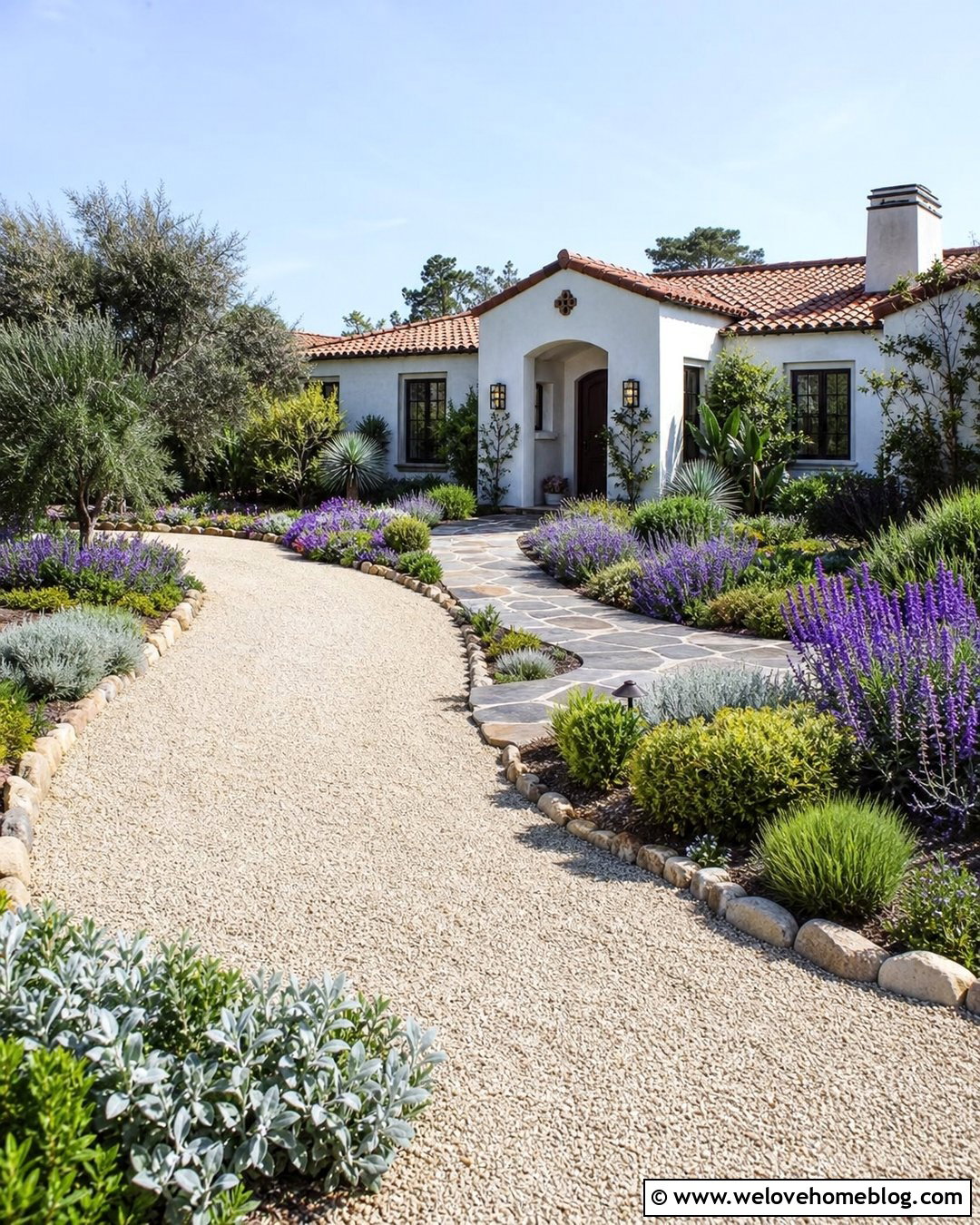
Imagine pale gravel winding between fragrant bands of purple flowers and silvery foliage. Start with cream-colored crushed limestone or stabilized golden gravel, then add stone edging that clearly separates the driveway from the planting beds. A soft curve suits the relaxed garden character and provides several attractive views toward the house. Plant lavender in repeated groups rather than one continuous row, leaving enough room for mature growth and airflow. Combine it with catmint, salvia, rosemary where climate allows, dwarf ornamental grasses, and compact evergreen shrubs. Use drought-tolerant plants with similar water needs so irrigation does not repeatedly soak the driveway base. A simple stone walkway can cross the gravel near the front door. This complete look complements cottage, Mediterranean, French country, and light-colored stucco homes particularly well.
18. Gravel Rock Driveway With Evergreen Hedge Borders
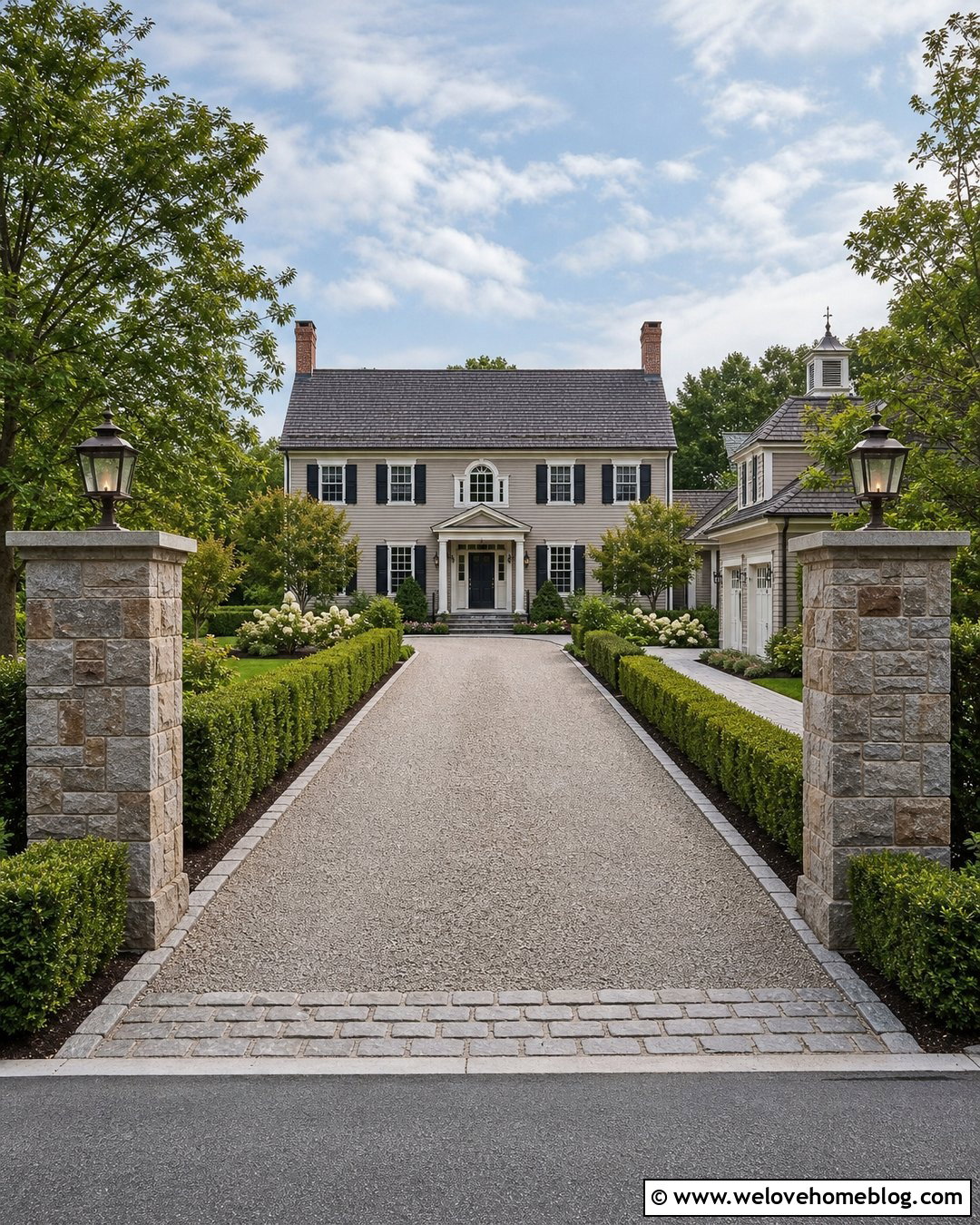
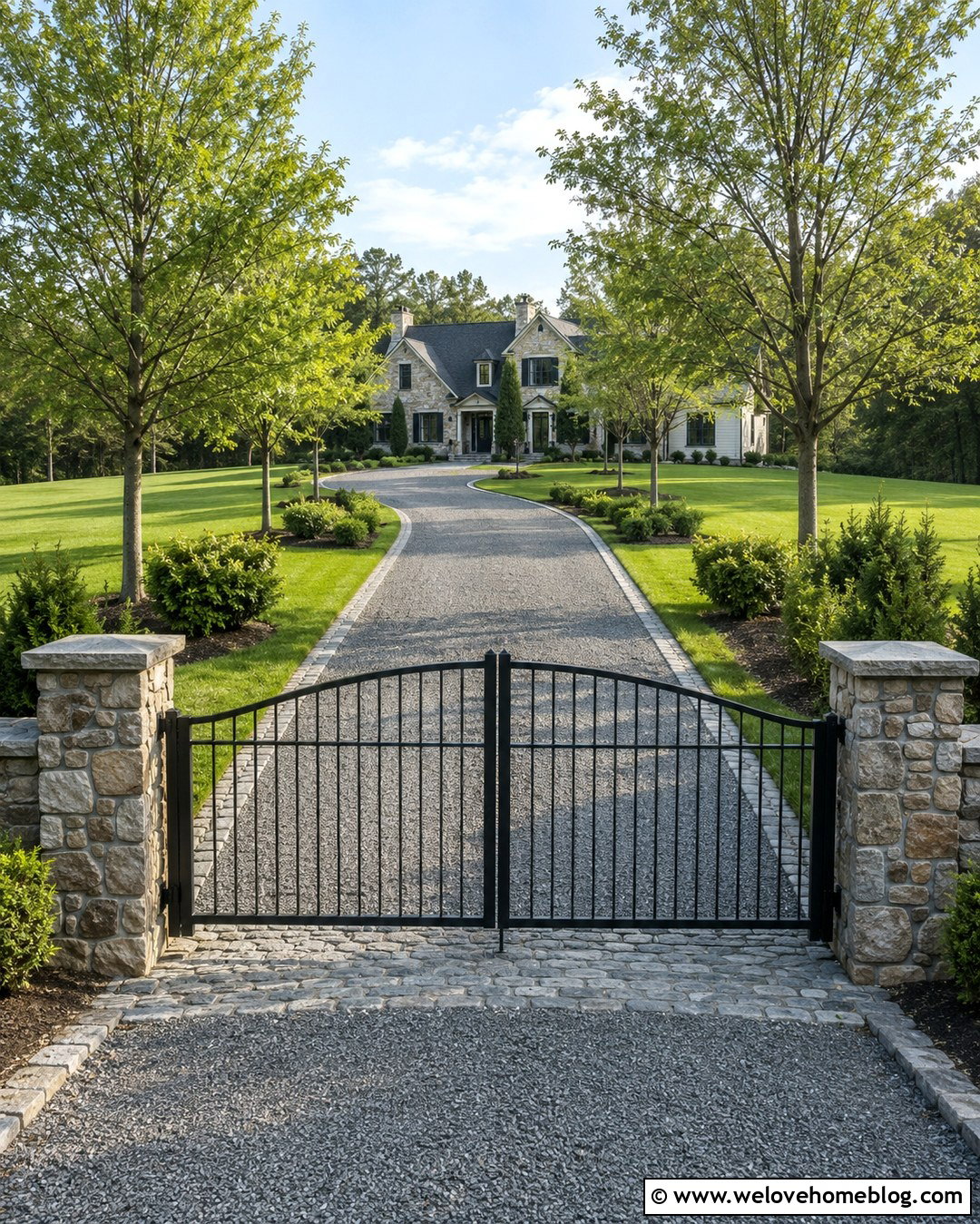
Evergreen hedges provide year-round structure and can make a basic gravel driveway feel more private. Use charcoal or warm gray crushed rock in a straight layout, bordered by granite setts for a strong, tailored edge. Plant compact hedge varieties beyond the border, allowing enough setback for mature width, trimming access, snow storage, and vehicle mirrors. For a formal colonial home, keep both hedge lines symmetrical and add matching stone pillars at the entrance. For a more relaxed craftsman property, combine clipped sections with flowering shrubs and small trees. Install a separate walkway inside one hedge so pedestrians do not have to share the driving surface. The gravel’s textured appearance prevents the design from feeling too rigid, while the greenery creates a clear corridor and frames the home as the destination.
19. Gravel Rock Driveway With Solar Path Lighting
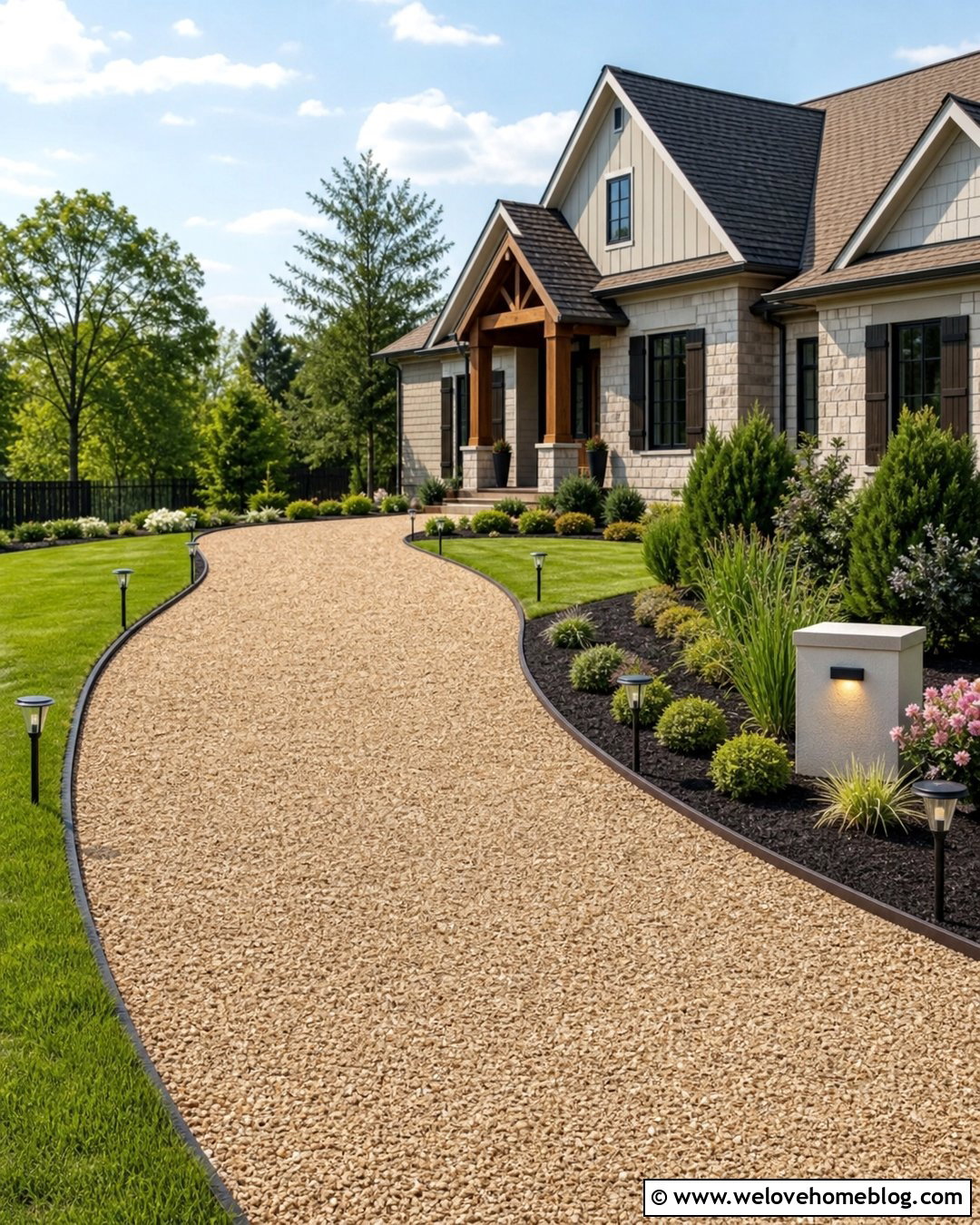
Low path lighting makes a gravel driveway easier to follow after sunset, but the fixtures should also look attractive during daylight. Select compacted tan crushed gravel for a curved driveway and contain it with a dark brown steel edge. Space simple solar or low-voltage lights evenly along the outside curve, keeping them safely beyond areas reached by tires, lawn equipment, and snowplows. Use fewer fixtures on straight sections and emphasize changes in direction, pedestrian crossings, gates, and parking edges. During the day, ornamental grasses and low evergreen shrubs can partially soften the fixture bases without blocking light. Add a matching illuminated address marker near the road. Although the lighting supports nighttime use, the daytime composition should remain the priority: a clearly defined gravel route, neat borders, layered landscaping, and an unobstructed approach to the house.


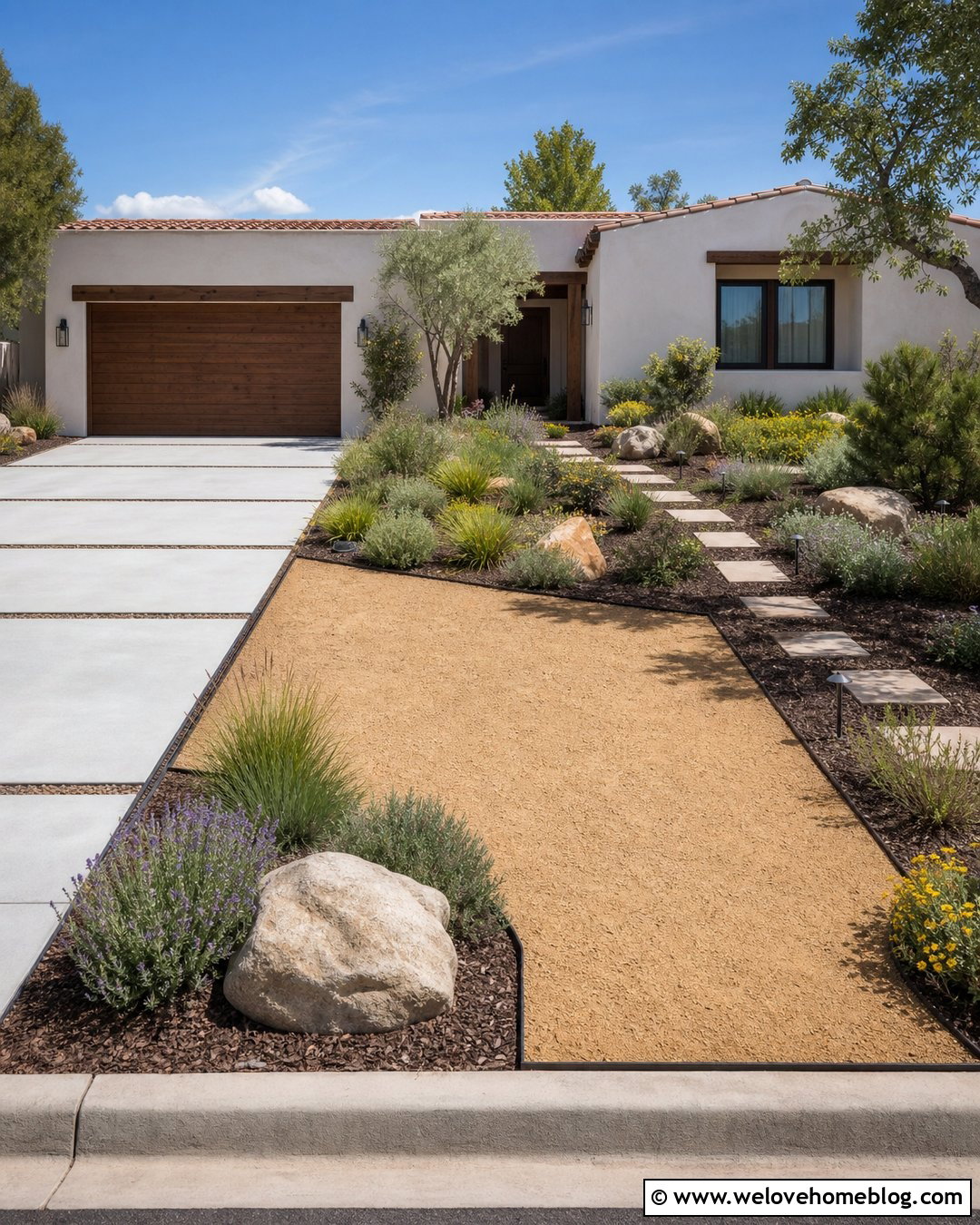
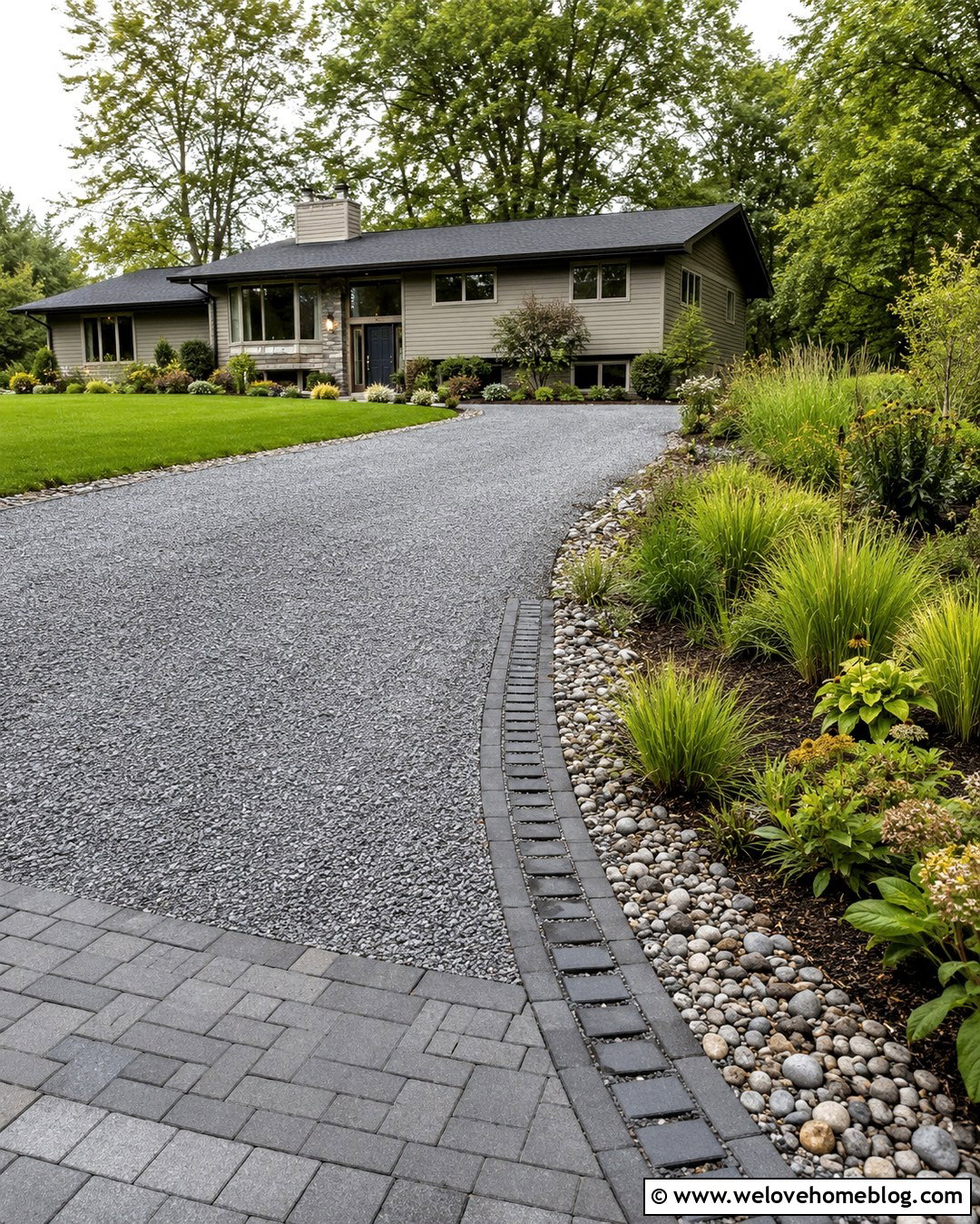
20. Gravel Rock Driveway With Crushed Stone Parking Court
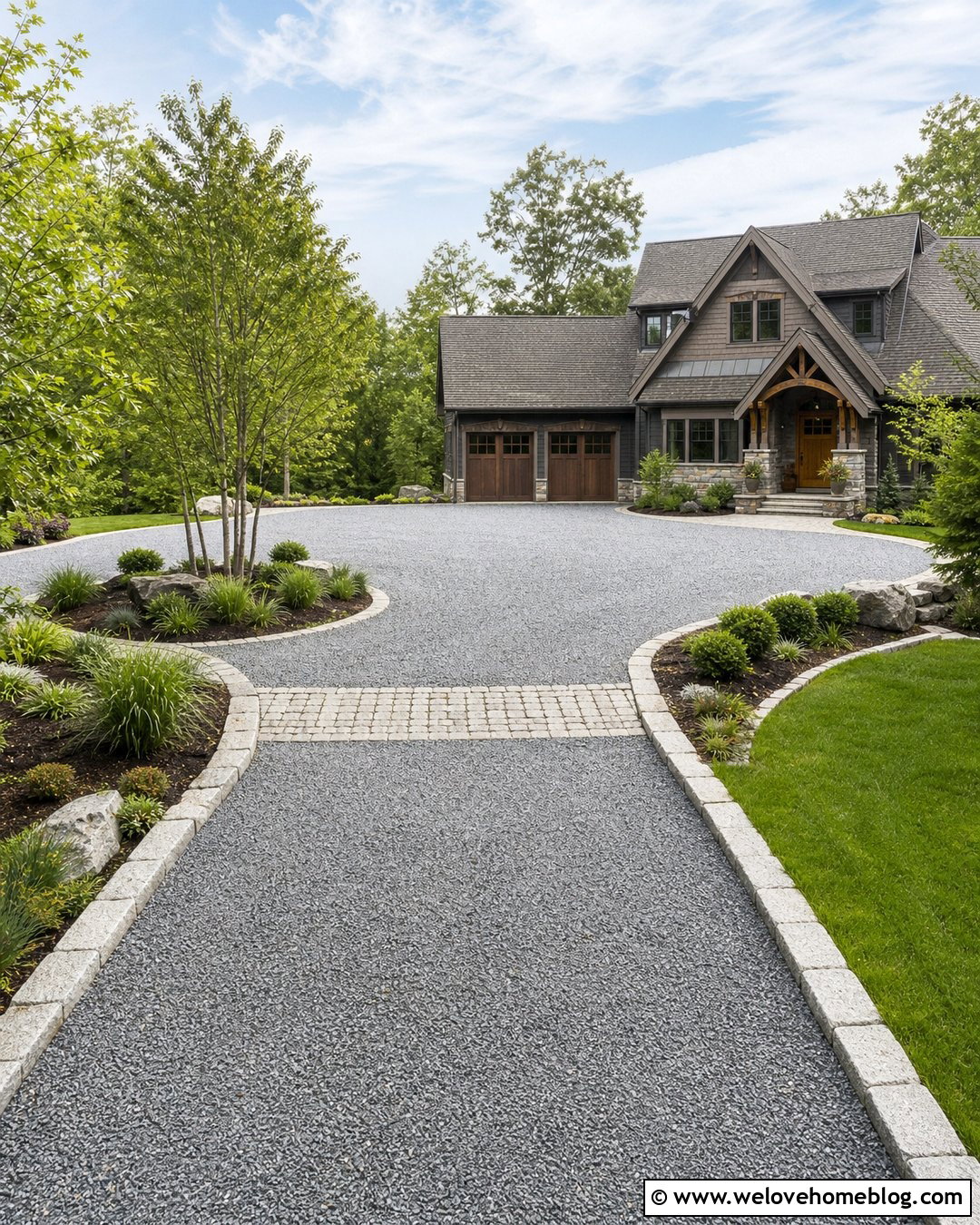
A gravel parking court provides flexible space for turning and guest parking without covering the entire front yard in pavement. Use angular gray crushed stone throughout, but distinguish the main driveway from the court with a contrasting cobblestone ribbon. A straight entrance can open into a broad rectangular or fan-shaped area near the garage. Outline the perimeter with granite edging and add planted islands only where they will not interfere with vehicle movement. Multi-stem trees, low shrubs, and ornamental grasses can reduce the visual scale of the court while maintaining open sightlines. Connect the parking area to the front door with a wide paved walkway, making the pedestrian route immediately clear. Careful grading, a compacted structural base, and well-defined boundaries help the larger gravel surface remain orderly and practical over time.
Conclusion:
The most successful gravel driveway is designed as a complete part of the front yard. Rock type, driveway shape, edging, drainage, planting, and entrance details should support one another instead of feeling like separate decisions. Angular crushed materials are generally useful for compacted driving surfaces, while grids and strong borders can make smaller rounded gravel easier to manage. Consider vehicle turning needs, local weather, slope, maintenance, and the architecture of your home before choosing a final layout. From cottage-inspired pea gravel to modern black basalt and spacious crushed-stone parking courts, these **20 Gravel Rock Driveway Ideas** offer adaptable starting points for creating a durable approach with distinctive curb appeal.

Related posts:
Leave a Reply