
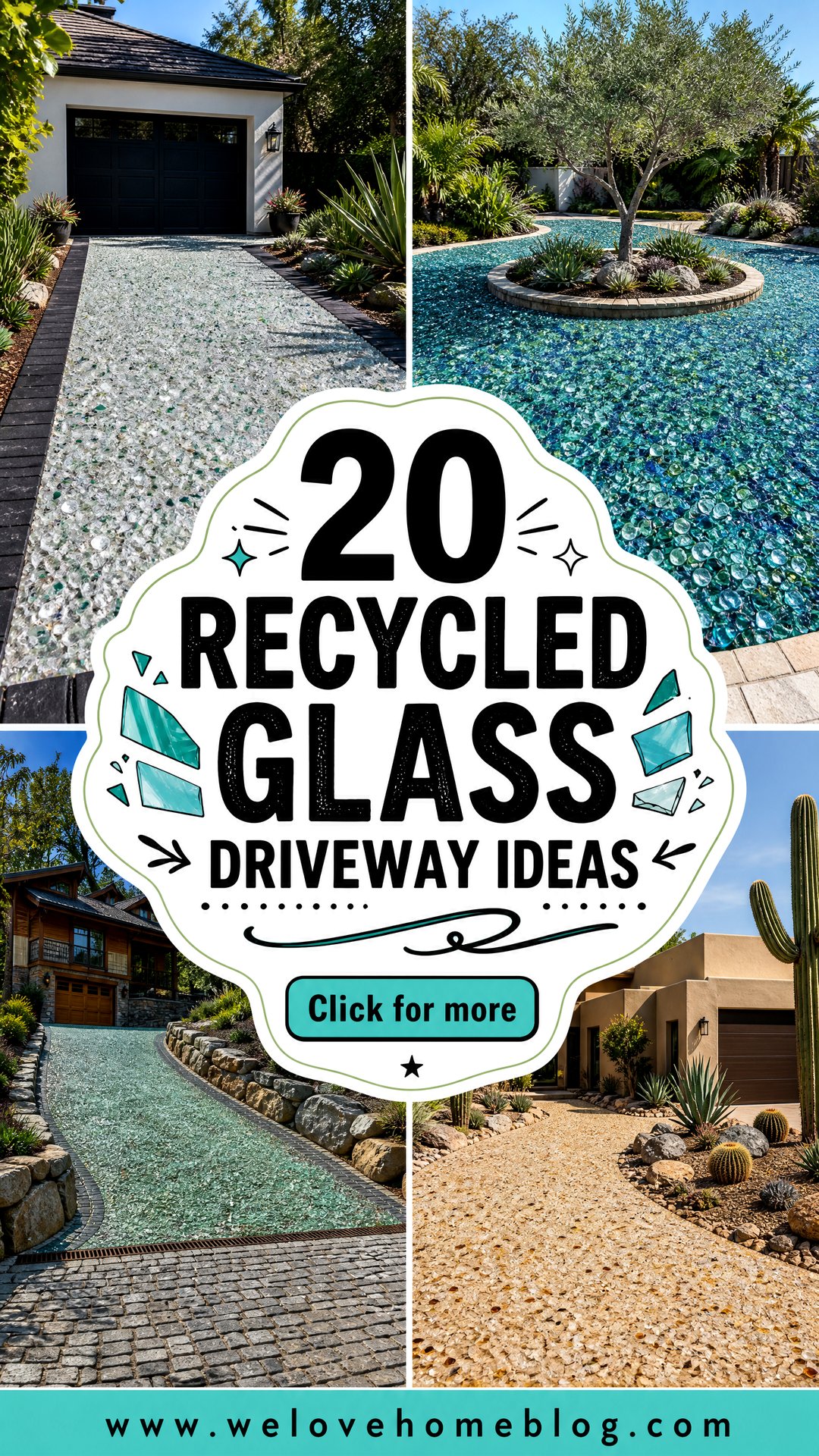
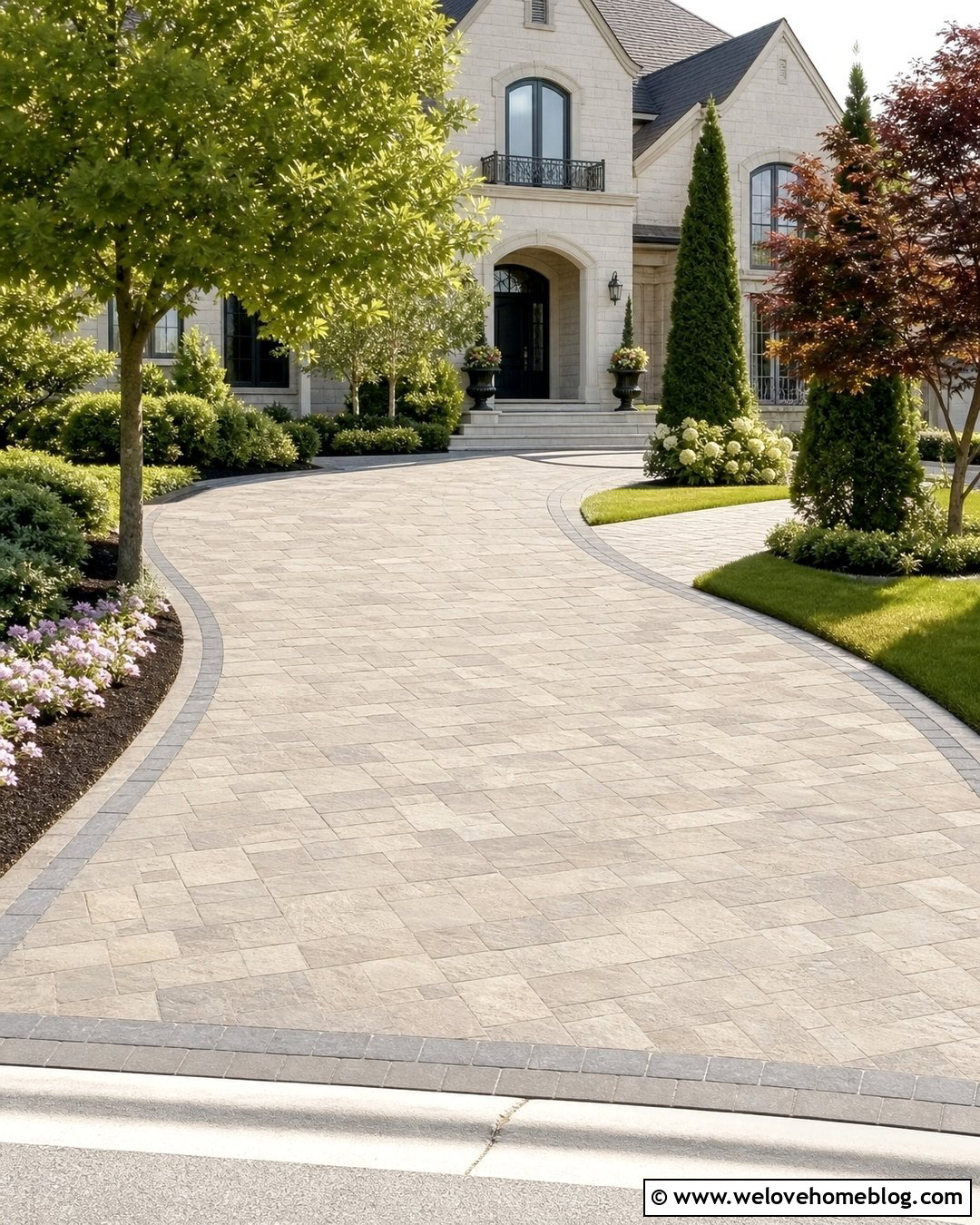
These **20 Recycled Glass Driveway Ideas** show how sustainable materials can create practical, polished curb appeal. Recycled glass can be blended with stone in resin-bound paving, exposed within concrete, or used as a colorful decorative accent. Properly processed aggregate has softened edges and controlled particle sizes, while a well-designed binder and subbase help support regular vehicle traffic. Some bound glass-and-stone surfaces can also be highly permeable, allowing rainwater to drain through the pavement rather than collect on top. () Color, layout, edging, and landscaping all influence whether the finished driveway feels modern, traditional, coastal, or rustic. Explore the complete driveway looks below to find an attractive combination for your house, climate, and property size in these **20 Recycled Glass Driveway Ideas**.
1. Blue Recycled Glass Driveway With Concrete Edging
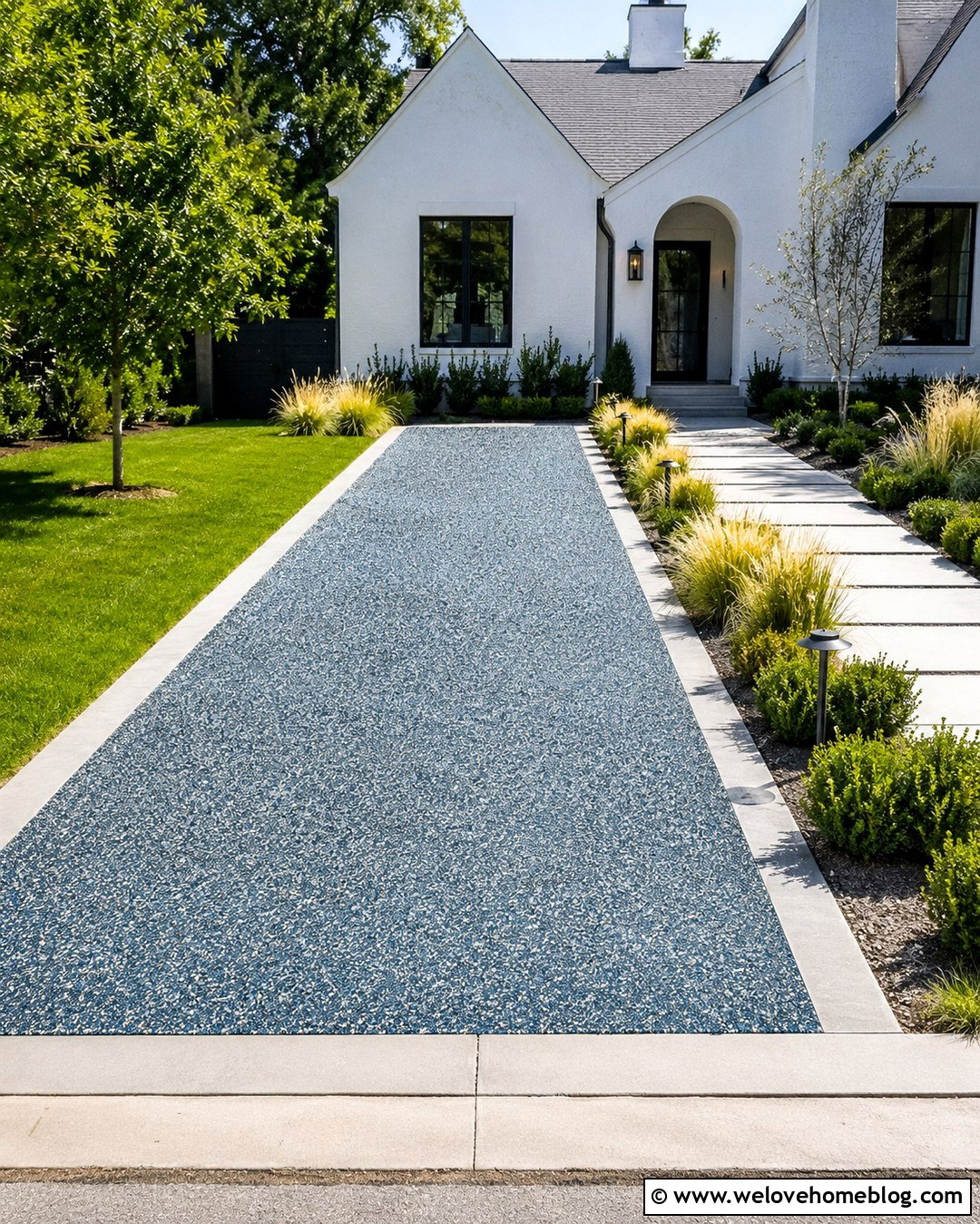
A blue recycled glass driveway can give a modern home a crisp, distinctive entrance without looking overly colorful. Choose tumbled blue glass mixed with light gray stone and a clear UV-stable resin. The stone softens the blue tone, while the glass creates subtle highlights in direct sunlight. A straight layout with smooth poured-concrete curbs keeps the aggregate contained and provides clean transitions to the sidewalk and garage. Frame the driveway with ornamental grasses, low evergreen shrubs, and rectangular planting beds. This combination works especially well with white stucco, light brick, or charcoal siding. Ask the installer to prepare a vehicle-rated base and test a sample panel first. The sample helps you judge the color in both bright sun and shade before committing.
2. Clear Recycled Glass Driveway With Black Paver Border
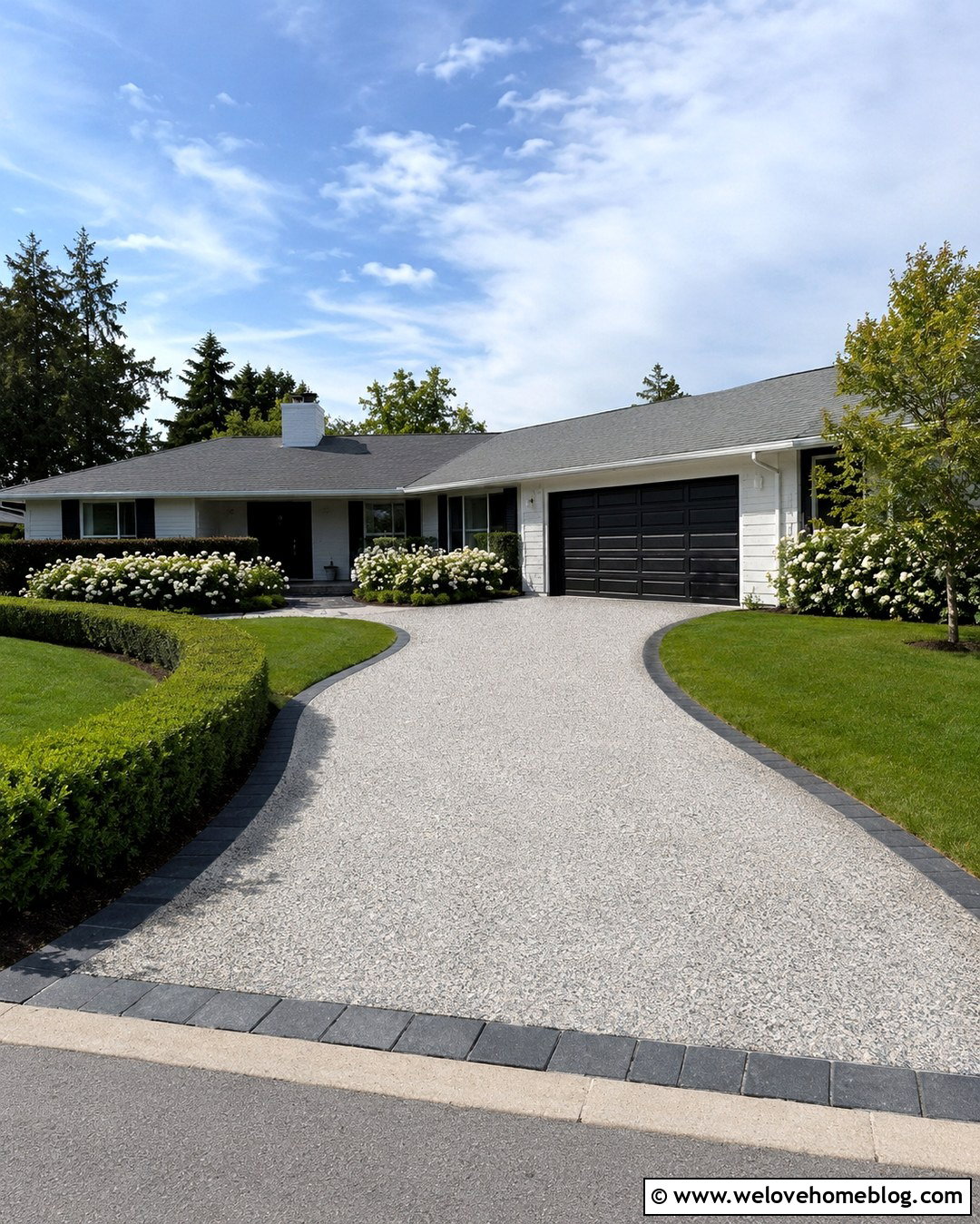
Clear recycled glass can produce a pale, almost frosted driveway surface when combined with white quartz and silver-gray stone. Surrounding that light mixture with a black concrete paver border creates strong definition and makes the driveway shape easier to see from the street. Use a gently curved layout to soften a wide ranch house or an angular contemporary facade. Repeat the black pavers at the garage threshold and sidewalk crossing for a coordinated finish. Simple lawn panels, clipped boxwood, and white flowering shrubs keep the landscape restrained. Because clear glass reflects nearby colors, examine the mixture beside the actual house materials before installation. A resin-bound application holds the processed aggregate in place, reduces migration, and creates a neater surface than loose decorative glass.
3. Amber Recycled Glass Driveway With Brick Edging
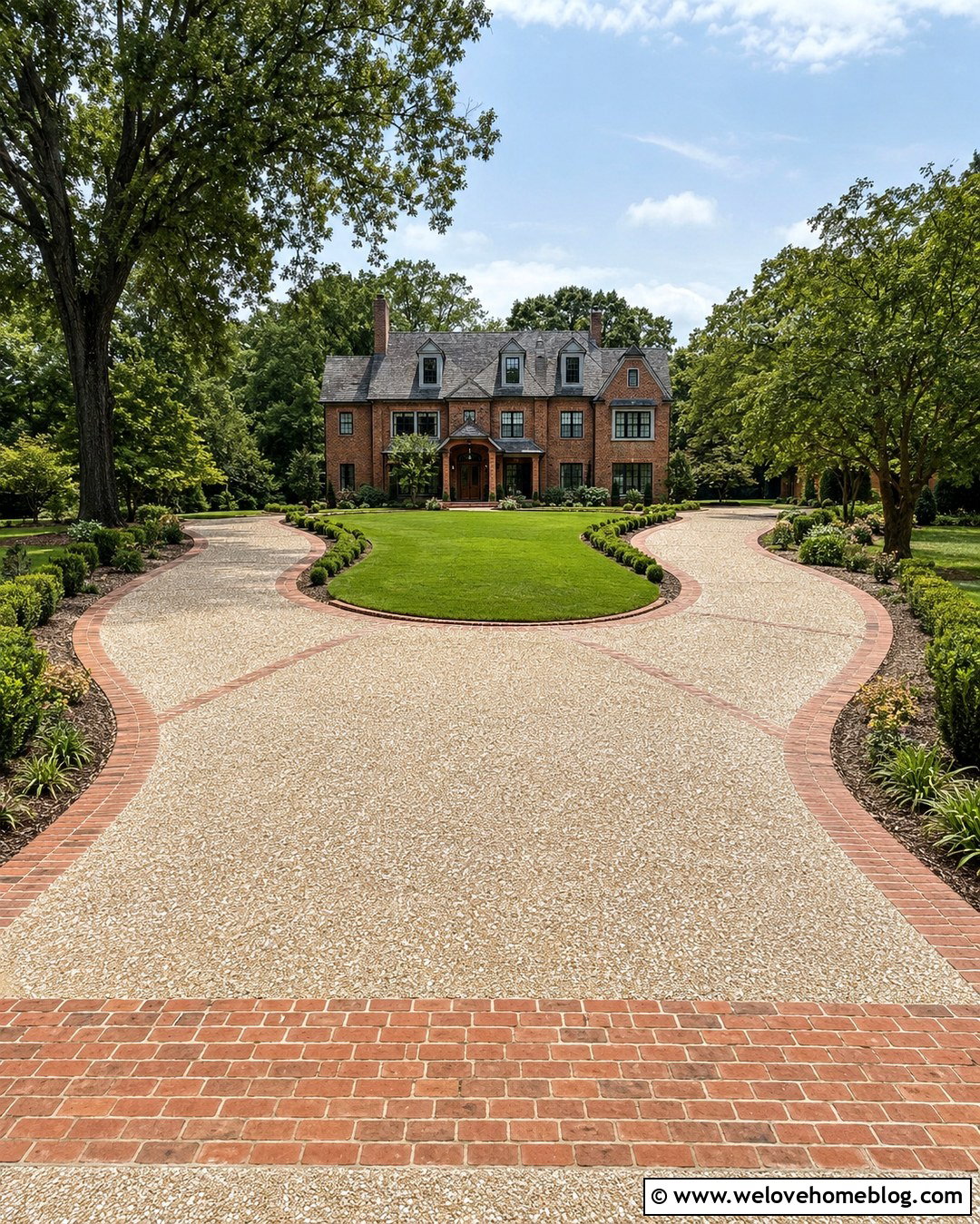
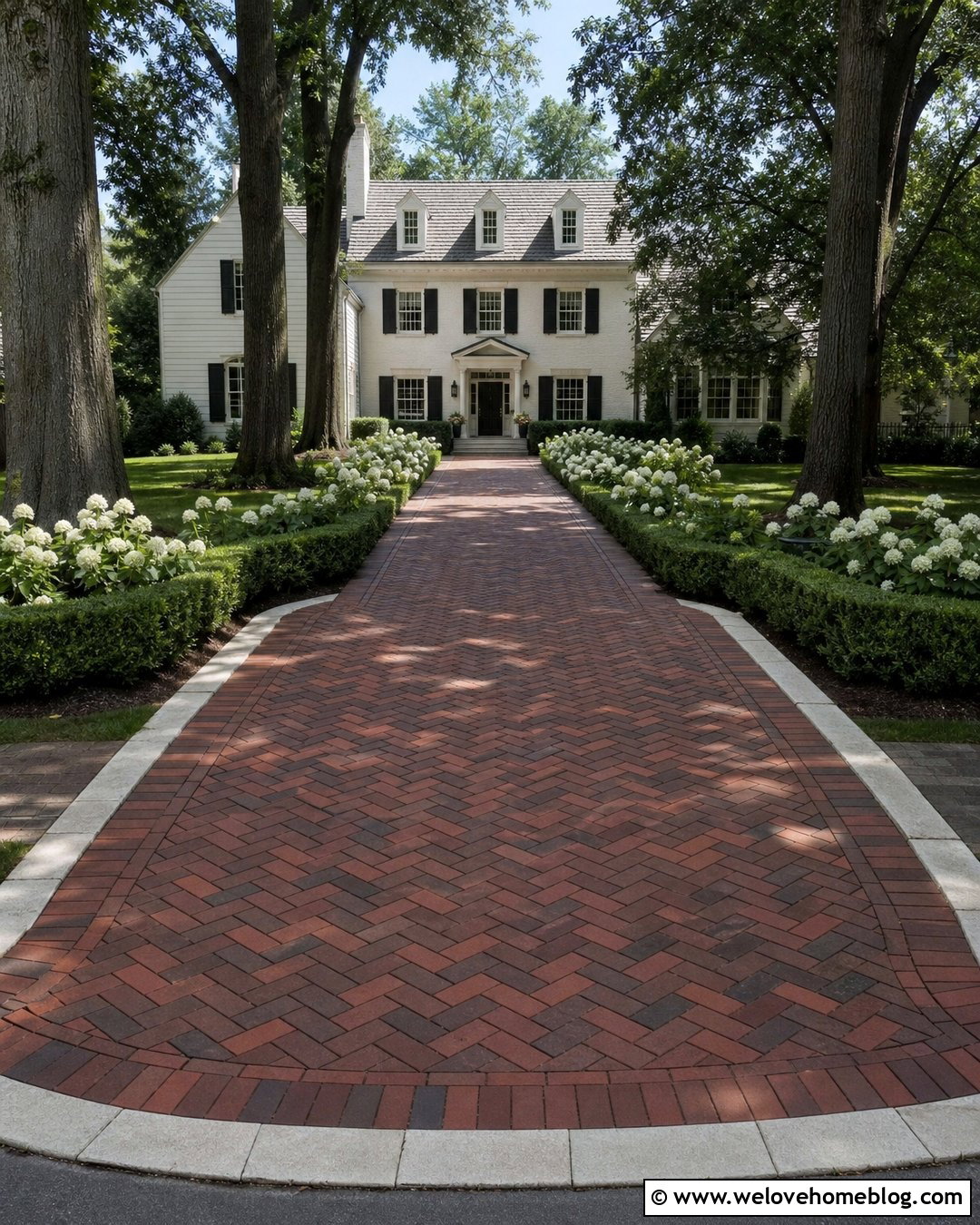
Warm amber recycled glass pairs naturally with red brick, beige stone, and cream siding. For a balanced driveway, blend a modest percentage of amber glass with honey-colored gravel and install it in a resin-bound surface. The resulting color feels warm rather than bright. A traditional brick soldier-course border can define both sides, strengthen the entrance visually, and connect the driveway with brick steps or porch columns. Choose a straight or softly flared layout leading to a colonial or traditional suburban house. Plant hydrangeas, compact hollies, and small ornamental trees beyond the edging so roots do not disturb the pavement. At the street, use a wider brick apron to create a finished transition. Keep the glass mixture consistent throughout instead of adding random concentrated patches that could look uneven.
4. Blue Green Recycled Glass Circular Driveway
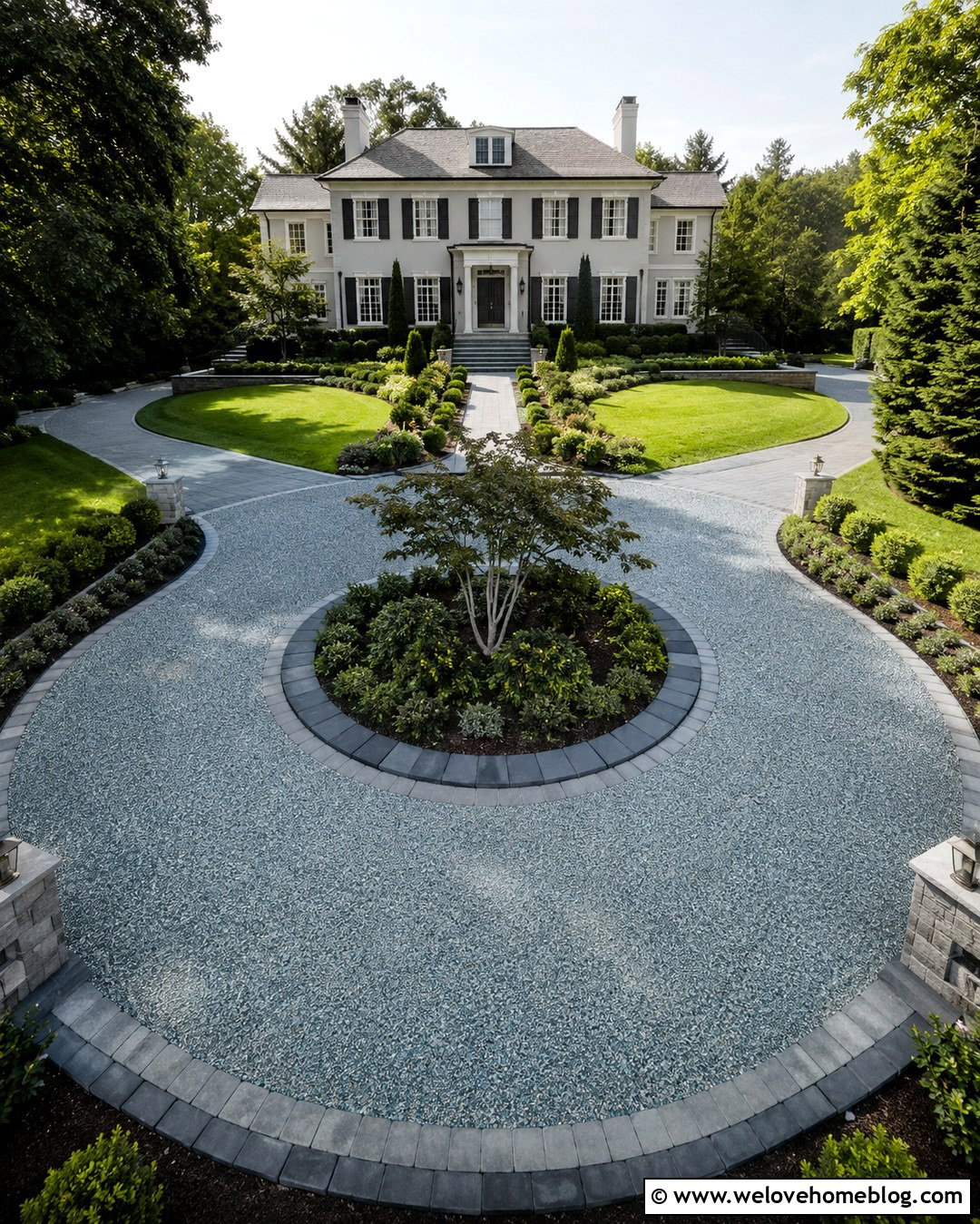
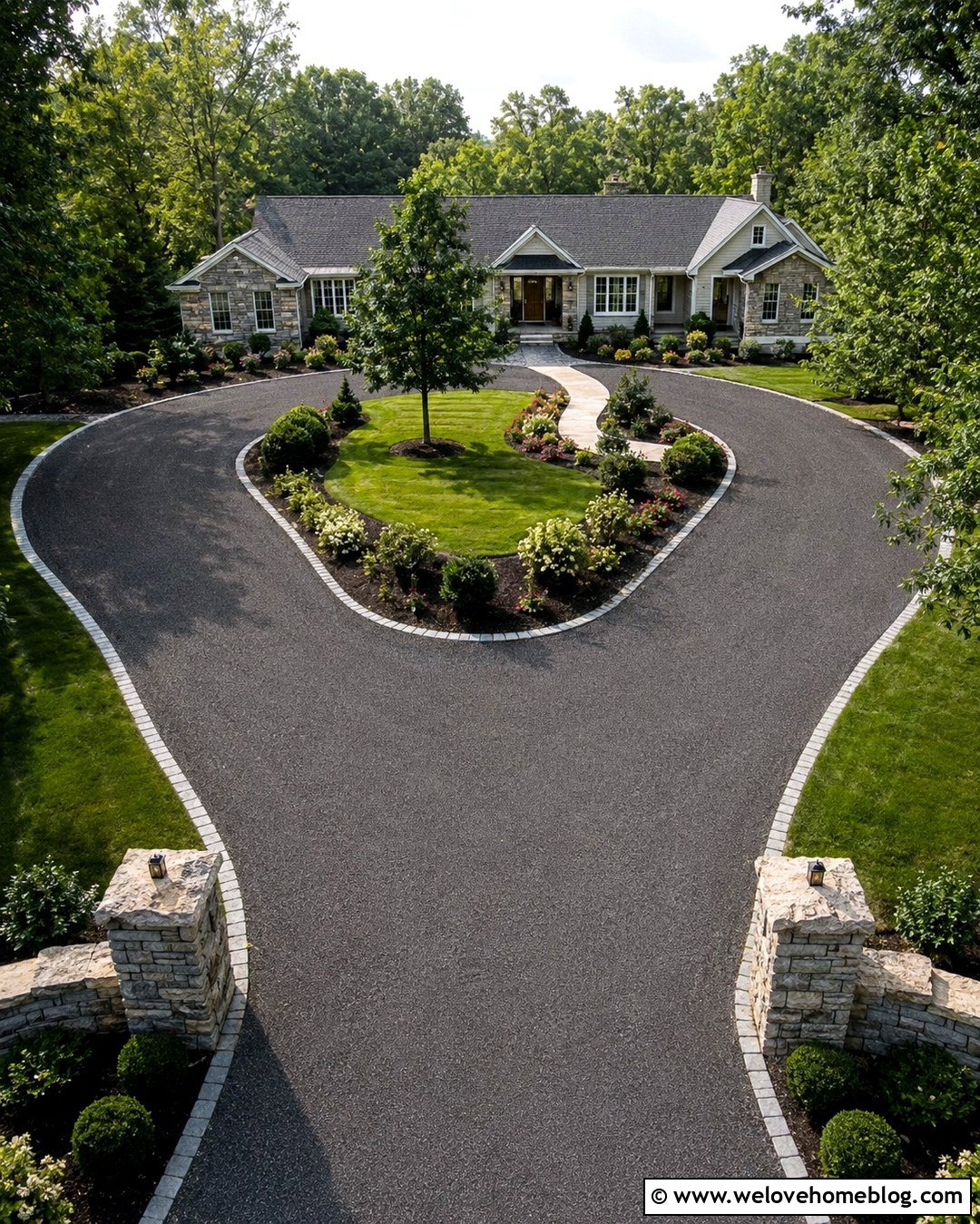
A circular recycled glass driveway needs a calm color palette because the layout already creates a strong visual feature. Mix muted blue and green processed glass with gray granite aggregate, then bind the materials in a permeable resin system. A broad circular curve can provide convenient vehicle movement while framing a planted center island. Edge the pavement with charcoal pavers to contain the surface and emphasize the circular shape. In the island, use one multi-stem tree, low shrubs, and ground cover that will not block views toward the street. Match the glass colors to small details on the house, such as shutters or the front door. The complete design feels especially suitable for a symmetrical colonial, Georgian, or large craftsman home with a centered entrance.
5. Exposed Recycled Glass Concrete Driveway
Exposed aggregate concrete offers a practical way to incorporate recycled glass without creating a fully glass-covered surface. Selected glass chips are added to the concrete and revealed through controlled surface finishing or polishing. A mixture of clear, pale green, and soft brown glass can resemble natural aggregate from a distance while adding more interest up close. Use wide rectangular concrete panels with narrow saw-cut joints for an organized layout. Dark stone borders can frame the driveway and reduce visual contrast with adjacent planting beds. This complete look suits a craftsman house with wood details, stone columns, and a deep front porch. Specify glass aggregate intended for concrete construction, and have the mixture professionally designed. Improvised broken glass should never be spread or mixed into a residential driveway. ()
6. Charcoal Recycled Glass Driveway With Steel Edging
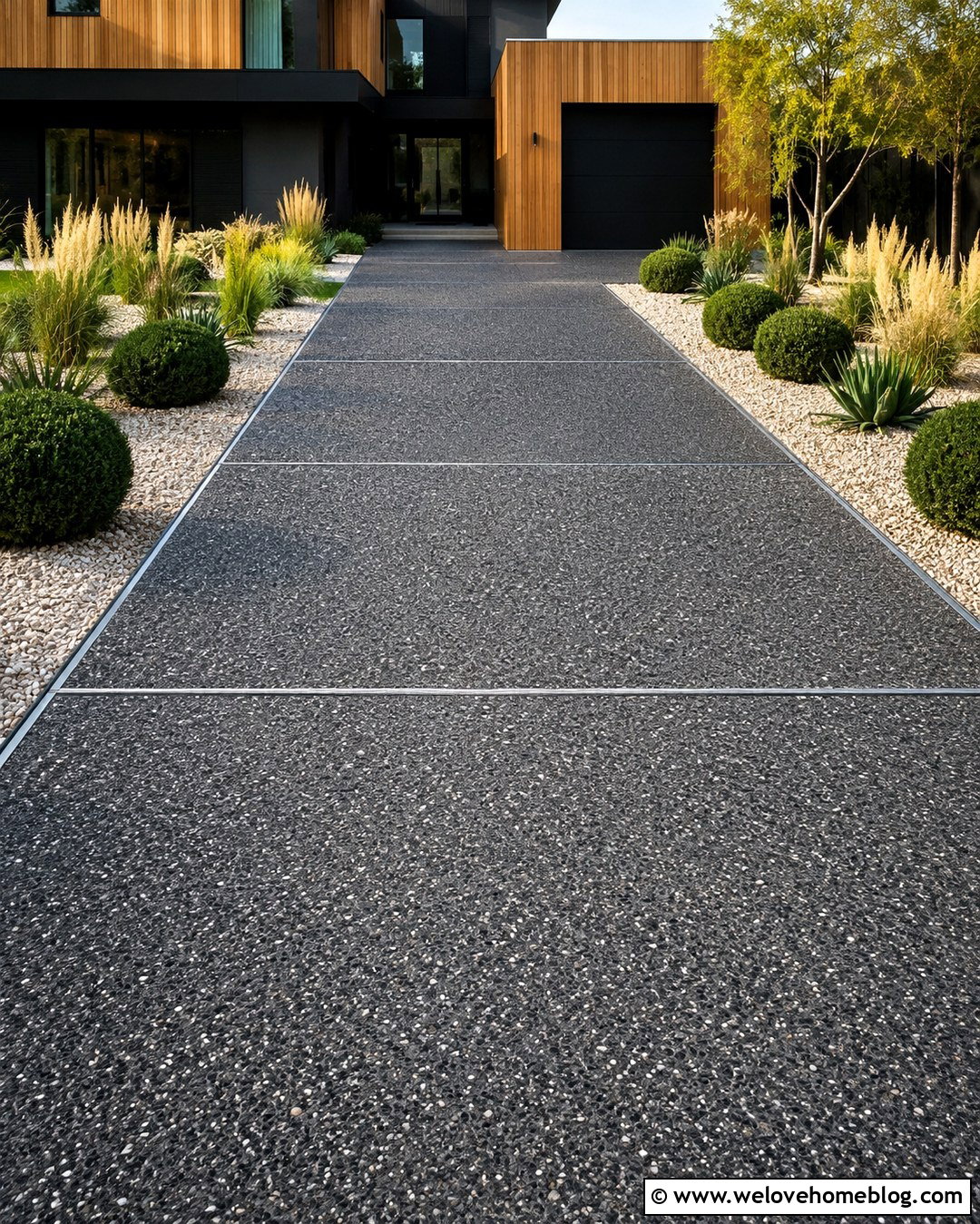
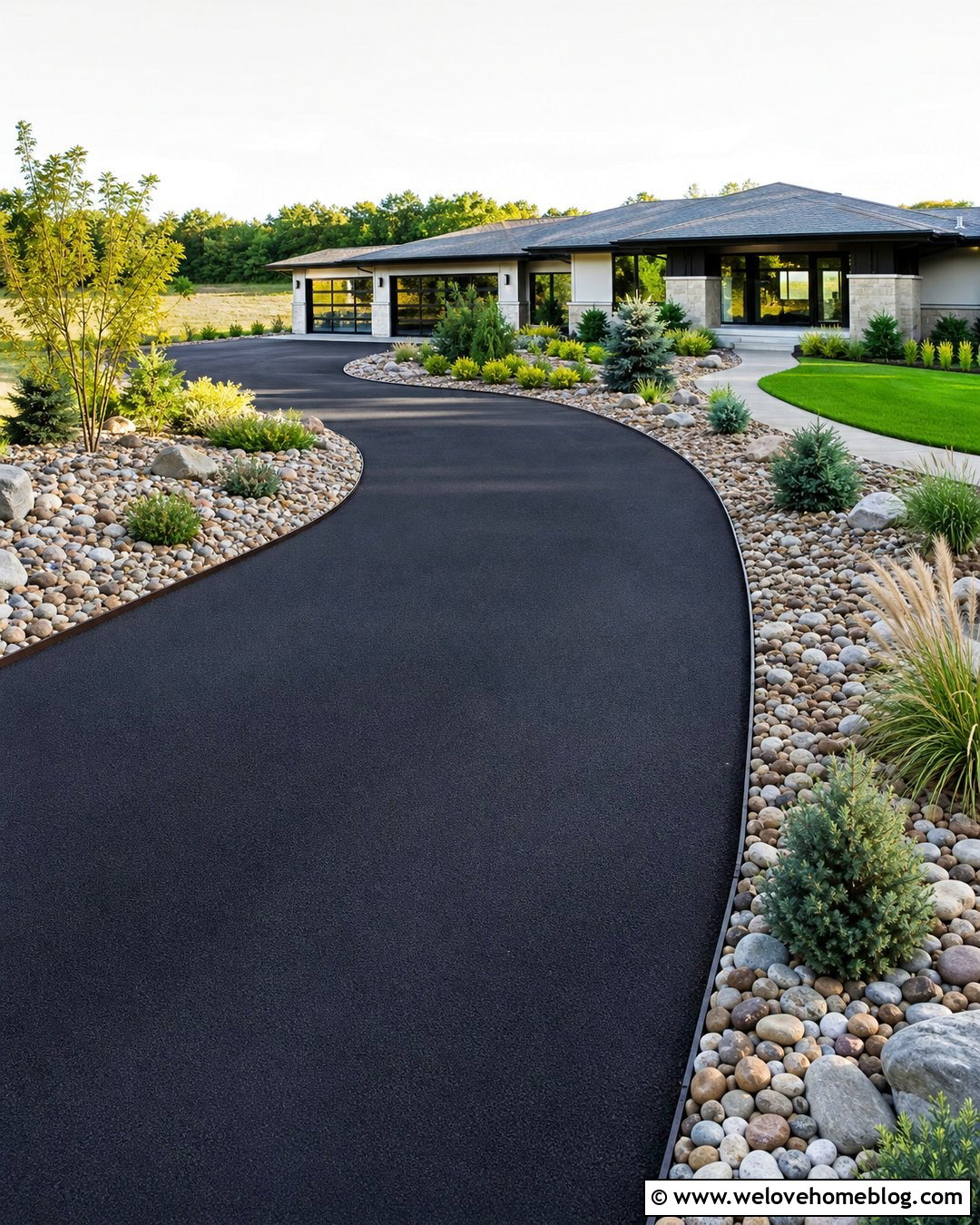
Dark recycled glass paving can give a modern house a smooth entrance that feels softer than solid black asphalt. Combine charcoal stone with small pieces of black, clear, and smoke-colored recycled glass in a resin-bound finish. Use a straight driveway divided into large visual zones by narrow stainless-steel or aluminum strips. Metal edging along the planting beds reinforces the clean geometry and keeps soil away from the paving. Add drought-tolerant grasses, rounded evergreen shrubs, and pale gravel mulch for contrast. This palette complements black window frames, natural wood siding, and light concrete walls. Include a lighter paver strip where the driveway meets the street so the entrance remains visible. The glass should create controlled texture and small reflective details rather than a glossy or mirror-like surface.
7. Recycled Glass Paver Driveway With Grass Joints
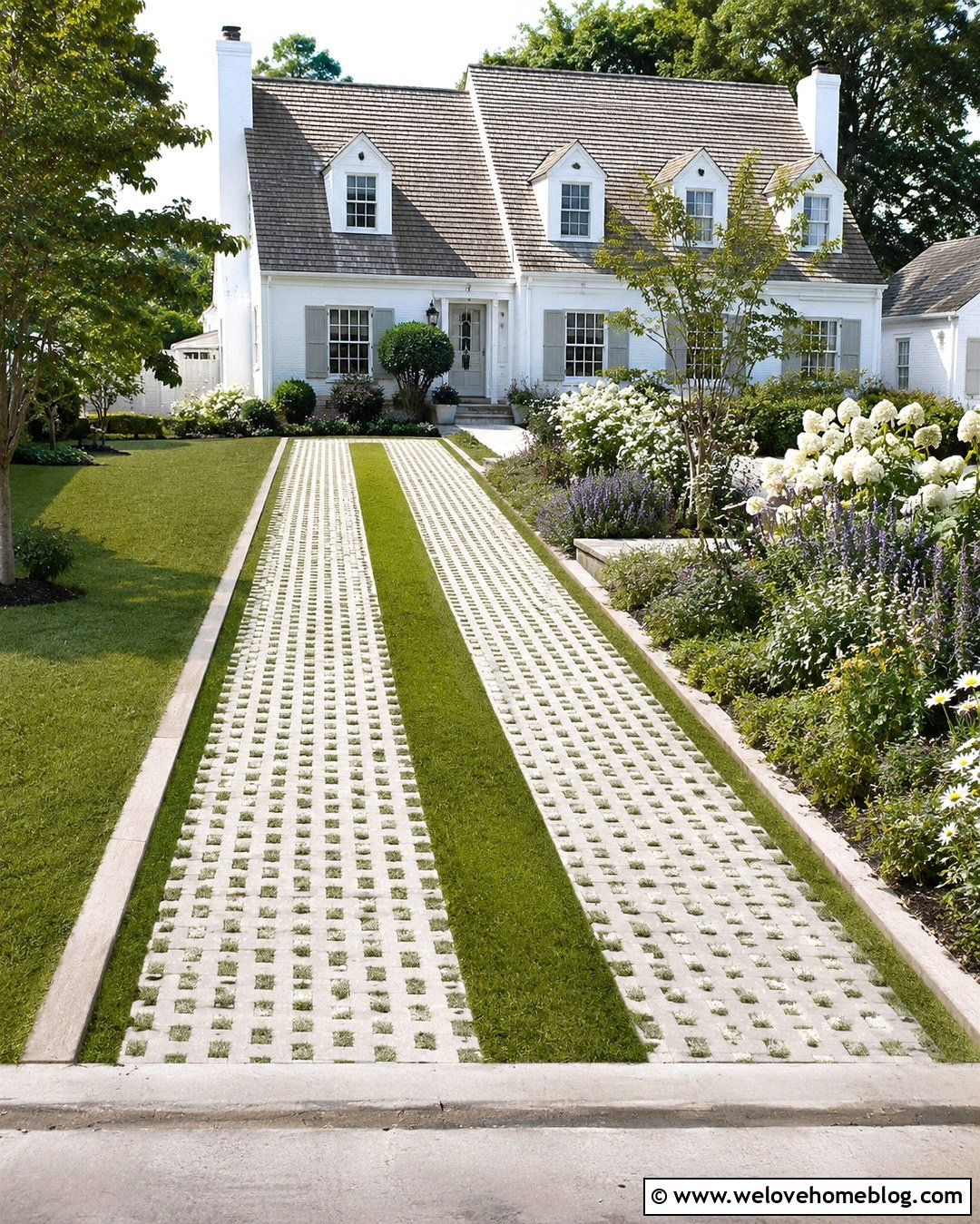
Recycled glass pavers can create a modular driveway with a lighter environmental appearance than one continuous paved area. Select vehicle-rated pavers manufactured with recycled glass content, rather than decorative garden tiles. Arrange large square or rectangular units in two defined wheel paths, with reinforced grass joints or low ground cover between them. Concrete curbs along the outer edges help prevent movement and create a stable frame. This layout looks attractive in front of a Cape Cod, cottage, or compact modern home. Continue the pavers into a matching walkway for a connected entrance. Where grass is difficult to maintain, fill the joints with dark permeable aggregate instead. The supporting base, joint width, and paver thickness must suit local soil, drainage, freeze-thaw conditions, and anticipated vehicle weight.
8. Recycled Glass Horseshoe Driveway With Brick Ribbons
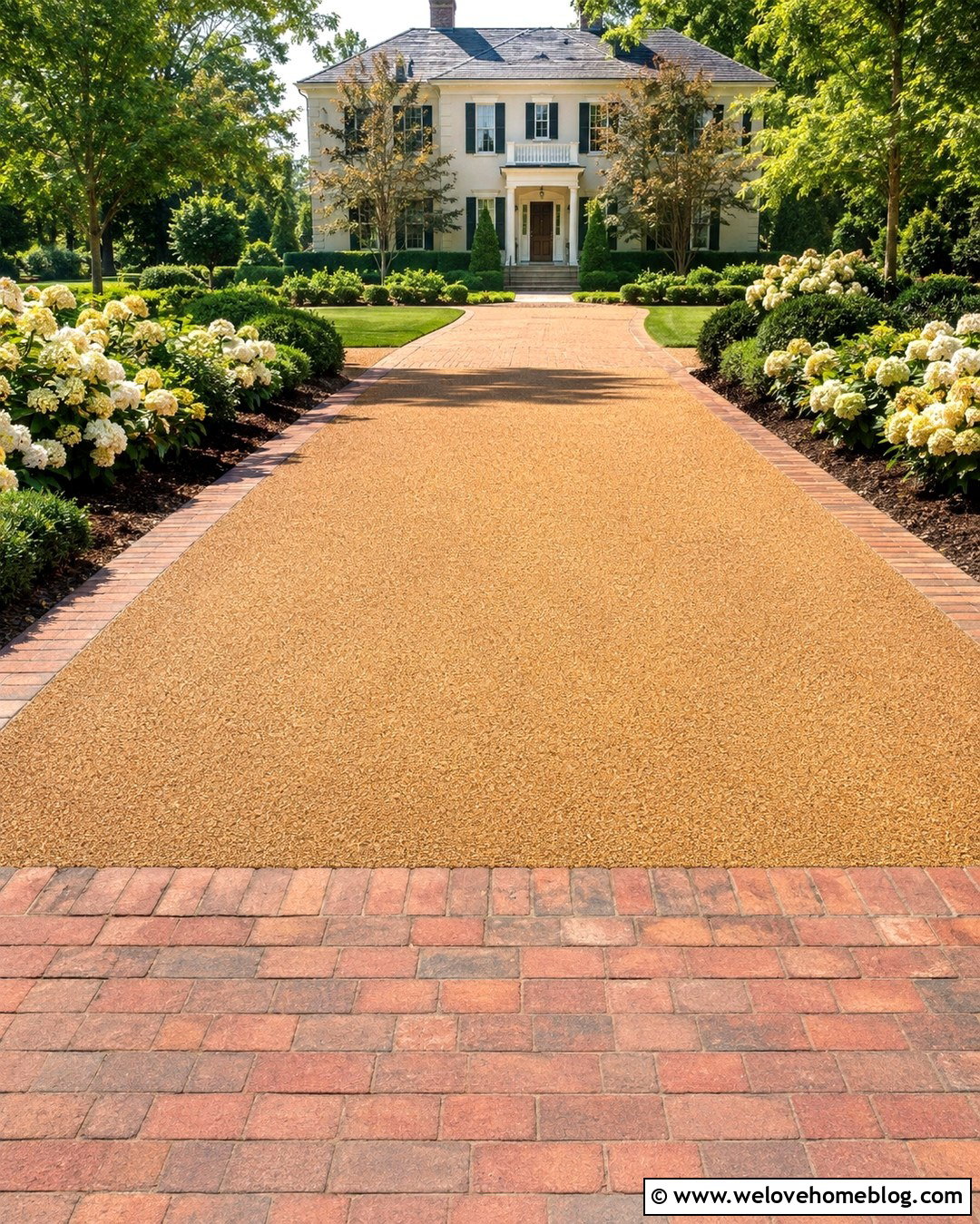
A horseshoe driveway becomes more visually organized when brick ribbons divide the broad recycled glass surface into clear sections. Use a warm resin-bound blend containing amber and clear processed glass, cream stone, and light brown aggregate. Install brick bands at both entrances, across the parking area, and around the central lawn. These repeated details connect the driveway with a brick farmhouse or traditional two-story home. Low hedges can follow the inside curve, while shade trees and layered planting beds soften the outer boundary. Leave open sightlines near the street for safer entry and exit. The horseshoe shape should feel spacious without consuming the entire front yard. Before selecting the blend, compare it with the brick in daylight, since red, orange, and brown masonry can change how amber glass appears.
9. Narrow Recycled Glass Driveway With Stone Border
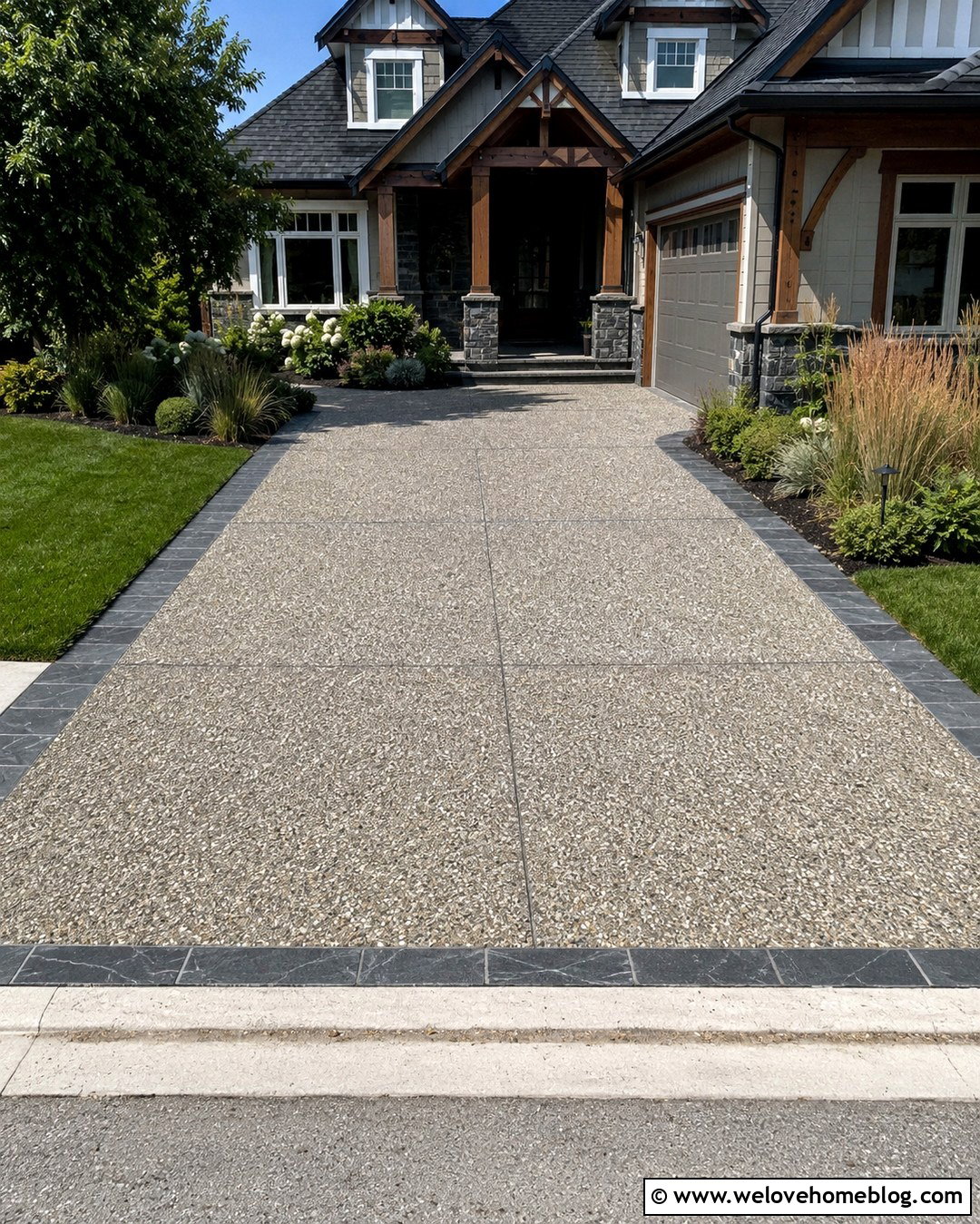
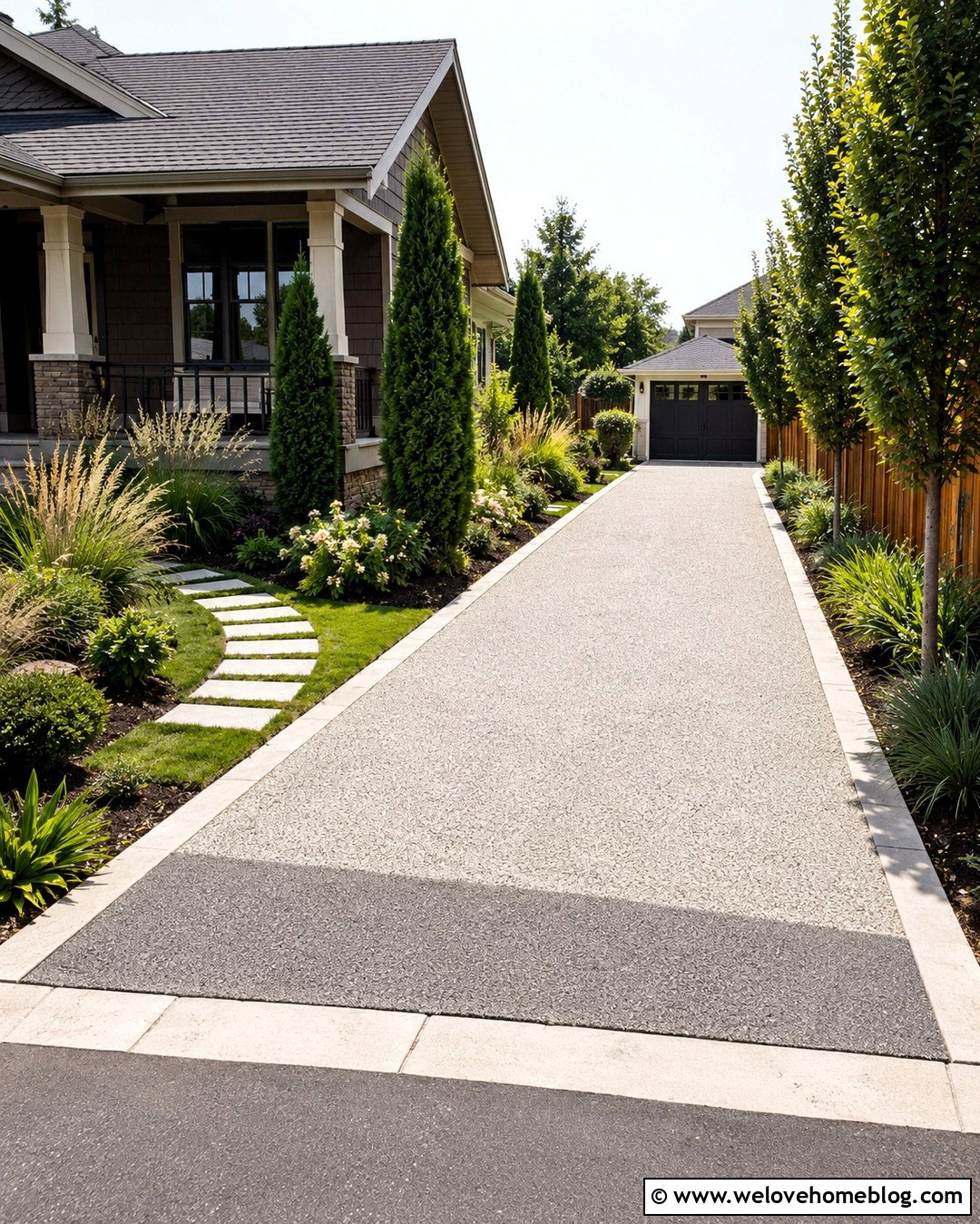
A narrow side driveway can feel wider when its surface is pale and its edges remain simple. Choose clear recycled glass blended with light gray granite in a smooth resin-bound finish. Run the driveway straight beside the house, using slim limestone or concrete borders rather than wide contrasting bands. A matching stepping-stone walkway can branch toward the front door without taking up additional parking space. Plant upright shrubs, compact grasses, and columnar trees where horizontal room is limited. Avoid dense landscaping beside vehicle doors and turning areas. For extra definition, place a darker apron at the sidewalk or garage entrance. This complete design suits small urban lots, bungalows, and narrow craftsman homes. Good grading is especially important because water should move away from the foundation, garage, and neighboring property.
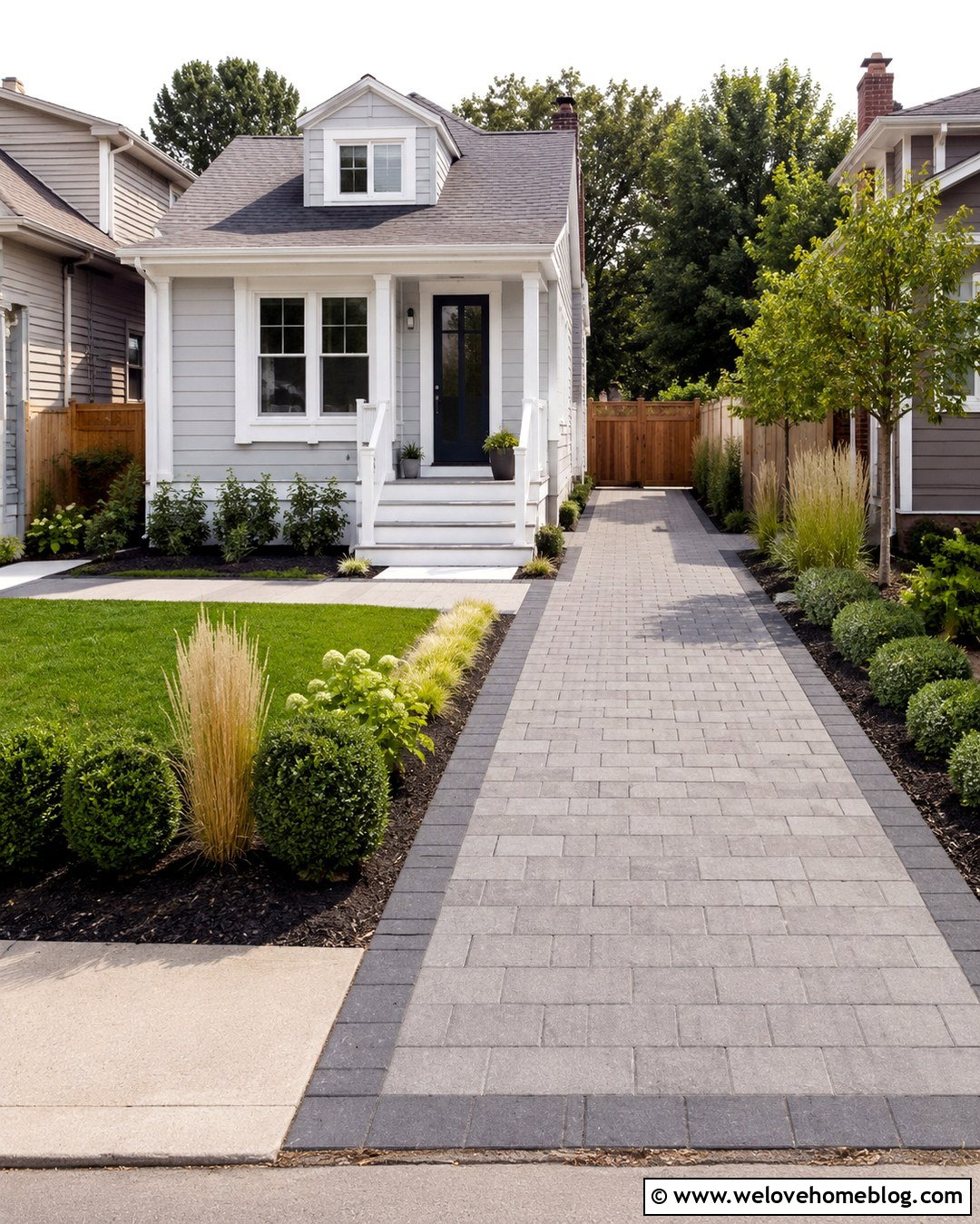
10. Sloped Recycled Glass Driveway With Cobblestone Apron
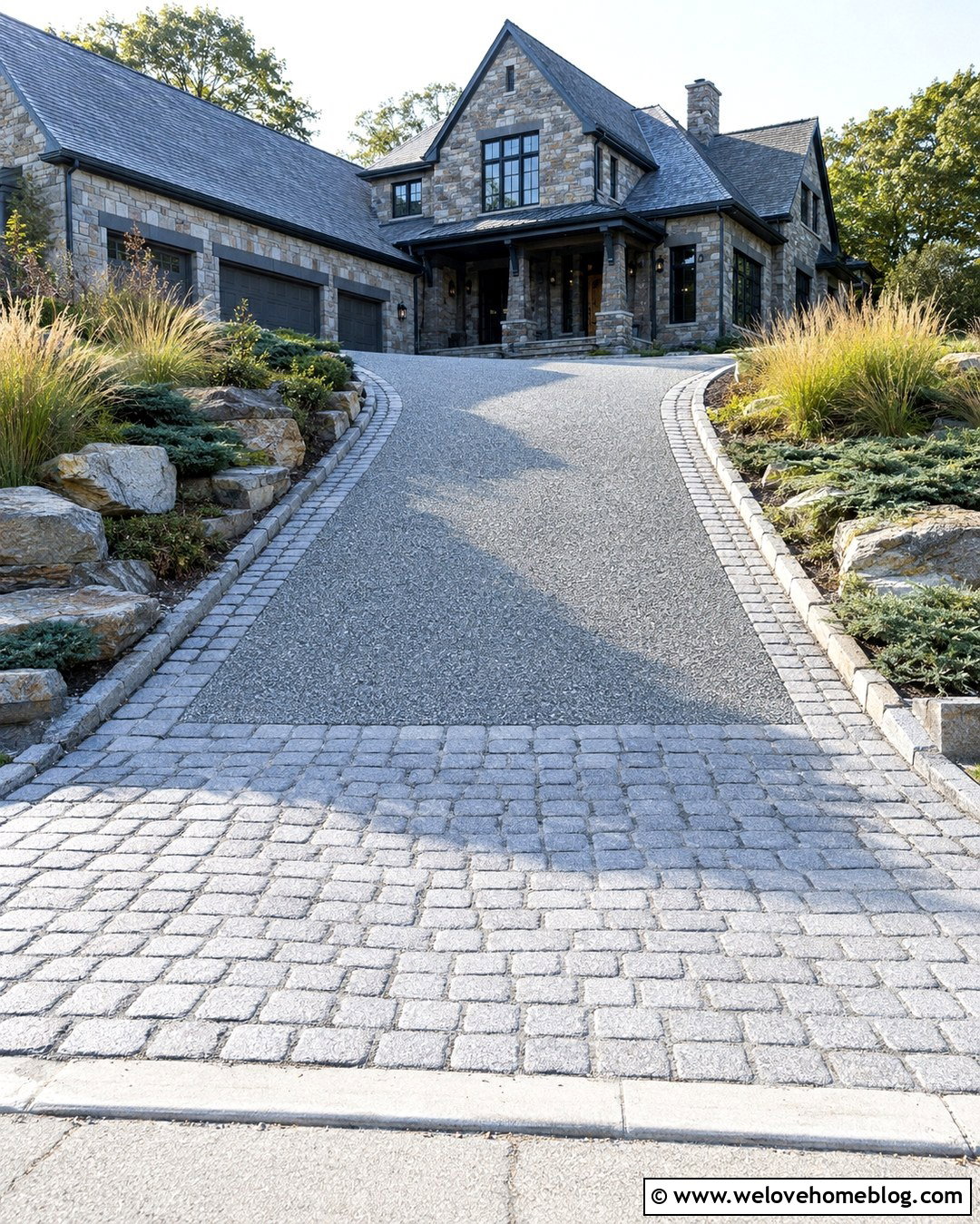
Sloped properties need a driveway design that looks attractive while managing water and providing reliable traction. A recycled glass and natural stone resin blend can work when the system, base, and surface texture are professionally specified for the grade. Choose a medium-gray mixture with restrained clear and green glass accents. Install a substantial cobblestone apron at the street, plus cobblestone drainage channels where runoff needs to be directed. Raised stone curbs can protect the planting beds and visually anchor the slope. Frame the approach with low junipers, ornamental grasses, and erosion-resistant ground covers instead of loose mulch. This rugged combination complements mountain homes, stone cottages, and craftsman houses. Avoid overly polished finishes, and confirm that the proposed material is suitable for local winter weather, snow removal, and driveway steepness.
11. Coastal Recycled Glass Driveway With White Pavers
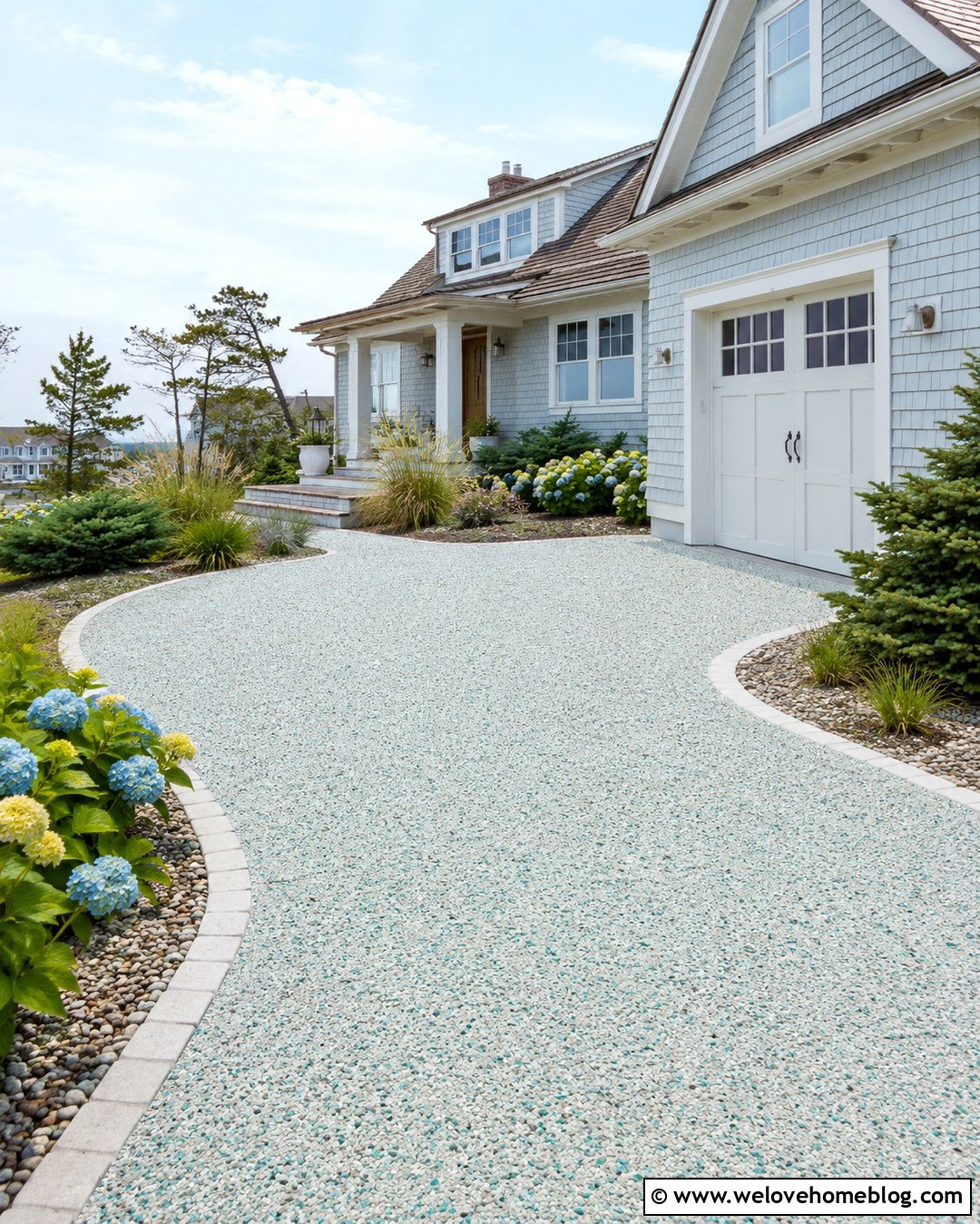
Soft aqua recycled glass can create a coastal driveway without relying on a bright, artificial blue. Mix pale aqua and clear glass with cream, oyster-gray, and sandy stone aggregate. A gently curved resin-bound driveway edged with white or light-gray pavers will feel clean and relaxed. Use the same pavers for the front walkway and a small garage threshold band. Surround the driveway with salt-tolerant grasses, hydrangeas, low evergreen shrubs, and natural stone mulch where appropriate for the region. This color combination works well with a shingle-style house, pale clapboard siding, or a coastal cottage facade. Keep the glass content subtle so the surface reads as textured paving rather than decorative glass. A professionally prepared sample will reveal whether the blend becomes too reflective under strong midday sunlight.
12. Tan Recycled Glass Driveway With Desert Landscaping
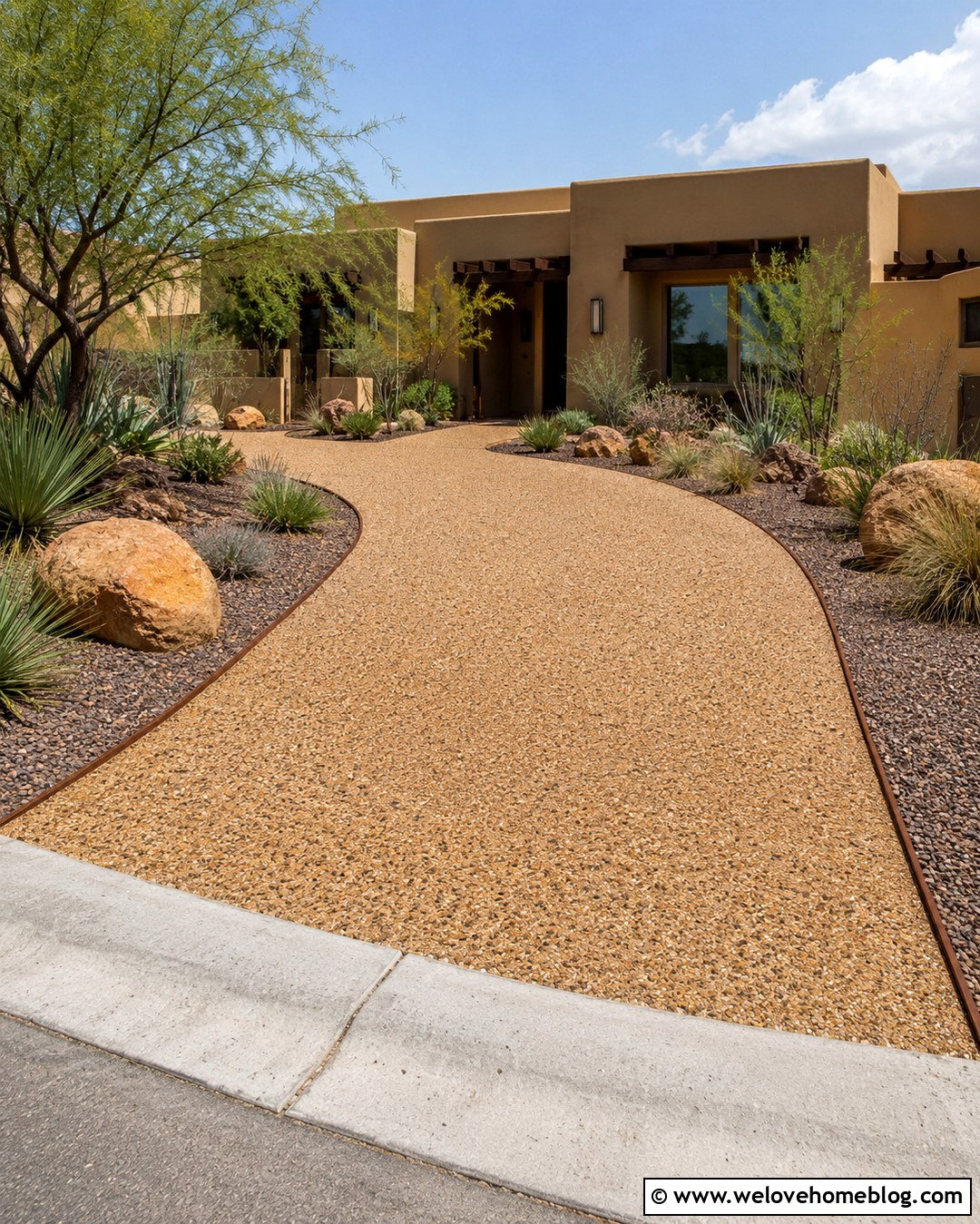
In a dry landscape, warm recycled glass aggregate can blend comfortably with desert colors and low-water planting. Use a resin-bound mixture of tan stone, amber glass, clear glass, and small rust-colored aggregate. Shape the driveway with a gentle curve that follows the natural grade instead of cutting straight across the yard. Corten steel or reddish concrete edging can contain the surface and echo the surrounding earth tones. Plant agave, yucca, desert spoon, ornamental grasses, and carefully placed boulders beyond the vehicle clearance zone. A decomposed-granite walkway can connect the parking area to a southwestern or modern stucco house. Keep decorative gravel in nearby beds slightly darker than the driveway, helping the driving surface remain visually clear. The finished entrance should look integrated with the landscape, not like a bright strip crossing it.
13. Recycled Glass Asphalt Driveway With Concrete Curbs
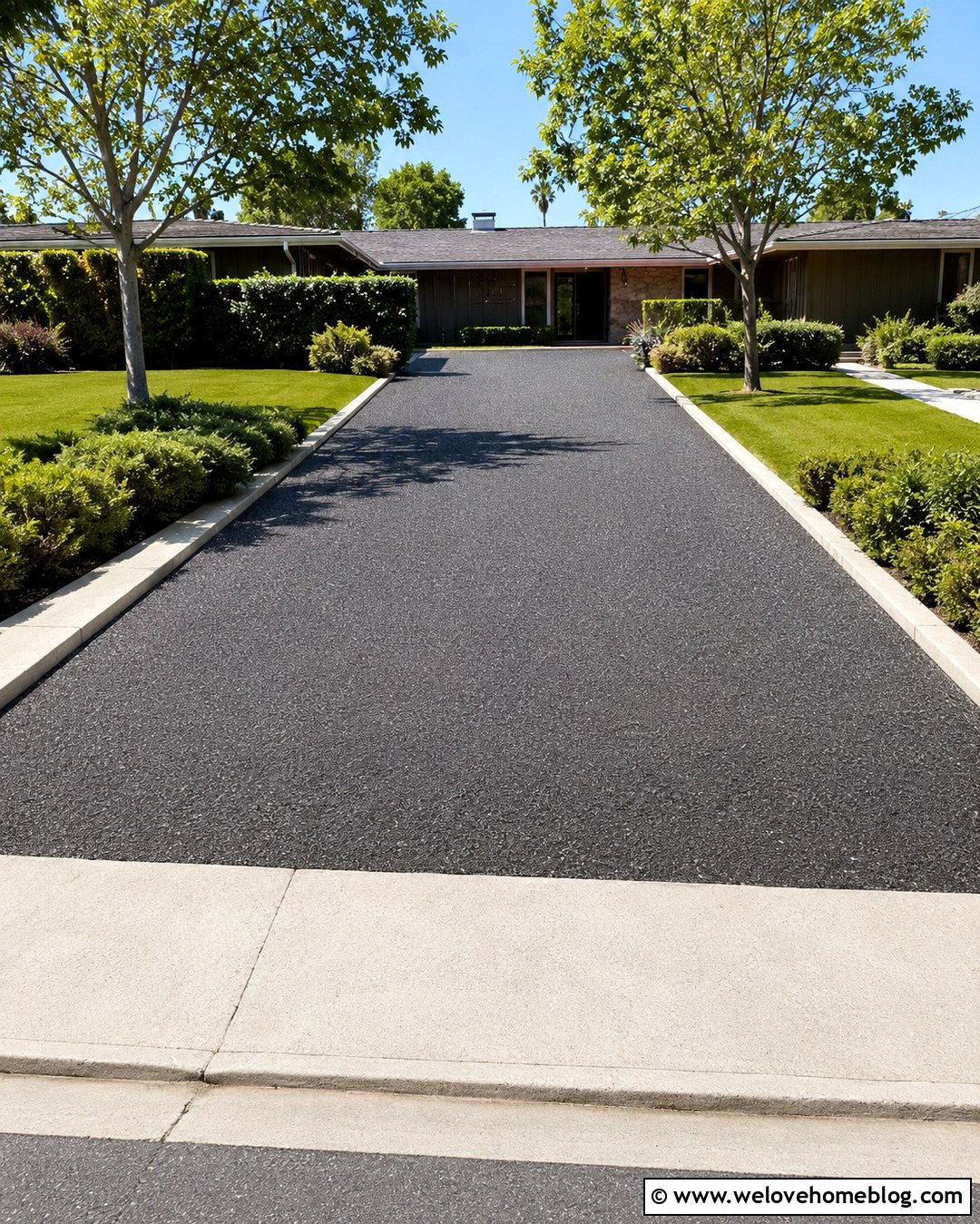
Recycled glass can also appear in asphalt mixtures commonly described as glass asphalt or glasphalt. For a residential look, use a professionally engineered dark asphalt surface containing properly processed glass aggregate. Pair it with pale poured-concrete curbs and a concrete apron for clear edge definition. A broad straight driveway works well with a midcentury ranch, split-level home, or simple contemporary facade. Add rectangular lawn areas, low shrubs, and evenly spaced trees to balance the dark paving. The glass should be part of a controlled paving mixture rather than scattered across the surface. Ask the contractor whether a suitable local mix is available and approved for residential vehicle use. Material specifications, glass particle size, and installation practices can vary, so this option requires an experienced asphalt producer rather than an improvised on-site blend.
14. Permeable Recycled Glass Driveway With Rain Garden
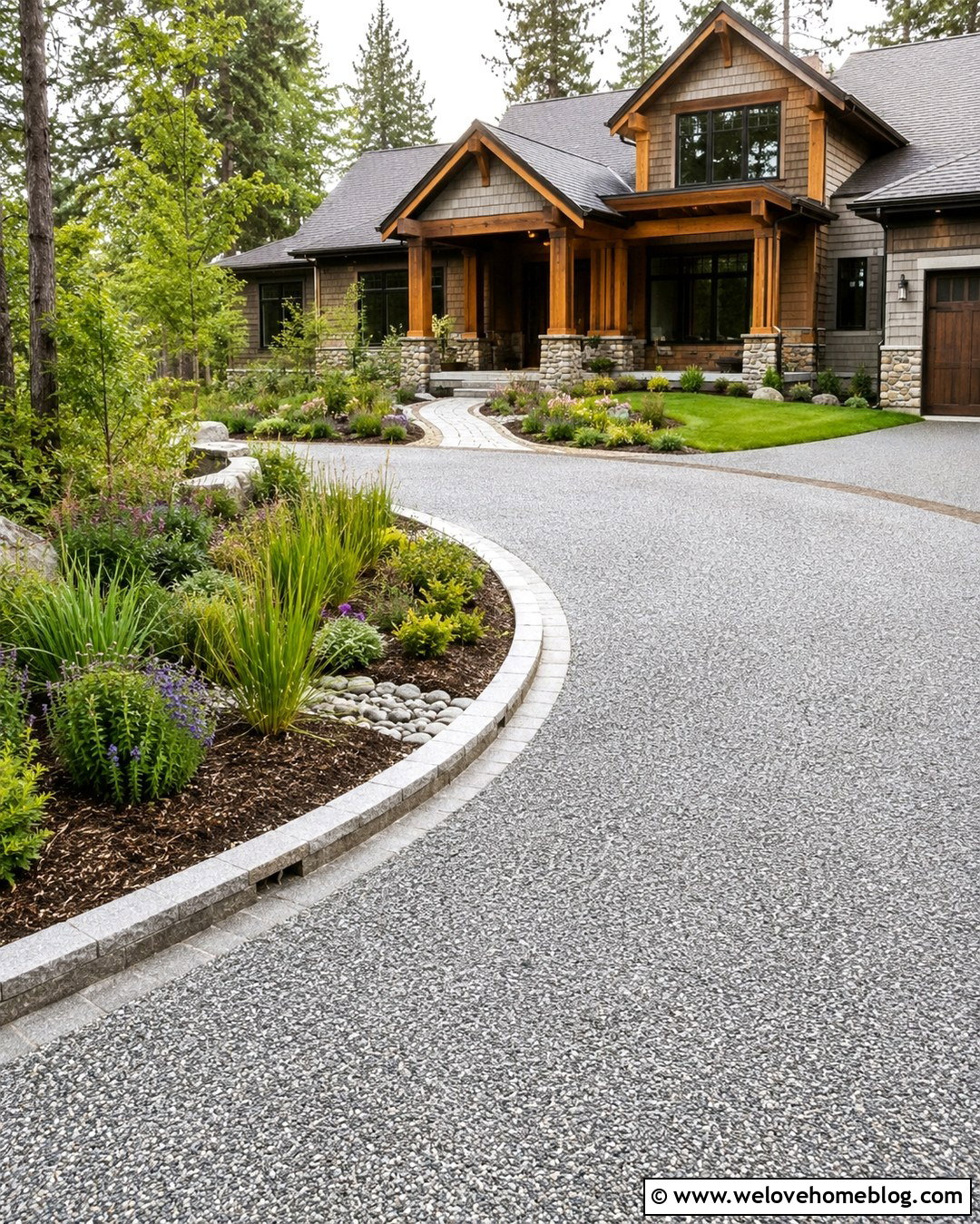
A permeable recycled glass driveway can become part of a larger stormwater-friendly landscape. Use processed glass blended with durable local stone and held in a porous resin-bound system over a correctly designed open-graded base. Direct excess water toward a shallow rain garden planted beside the lower edge of the driveway. Stone curbs with planned openings can allow water to enter the planted area without washing soil onto the pavement. Choose moisture-tolerant grasses, sedges, flowering perennials, and compact shrubs suited to local conditions. A curved driveway helps create enough space for the rain garden while maintaining a comfortable approach to the garage. Permeable paving allows water to pass through the surface, but performance still depends on subsoil, base construction, slope, and routine cleaning. ()
15. Recycled Glass Driveway With Grass Center Strip
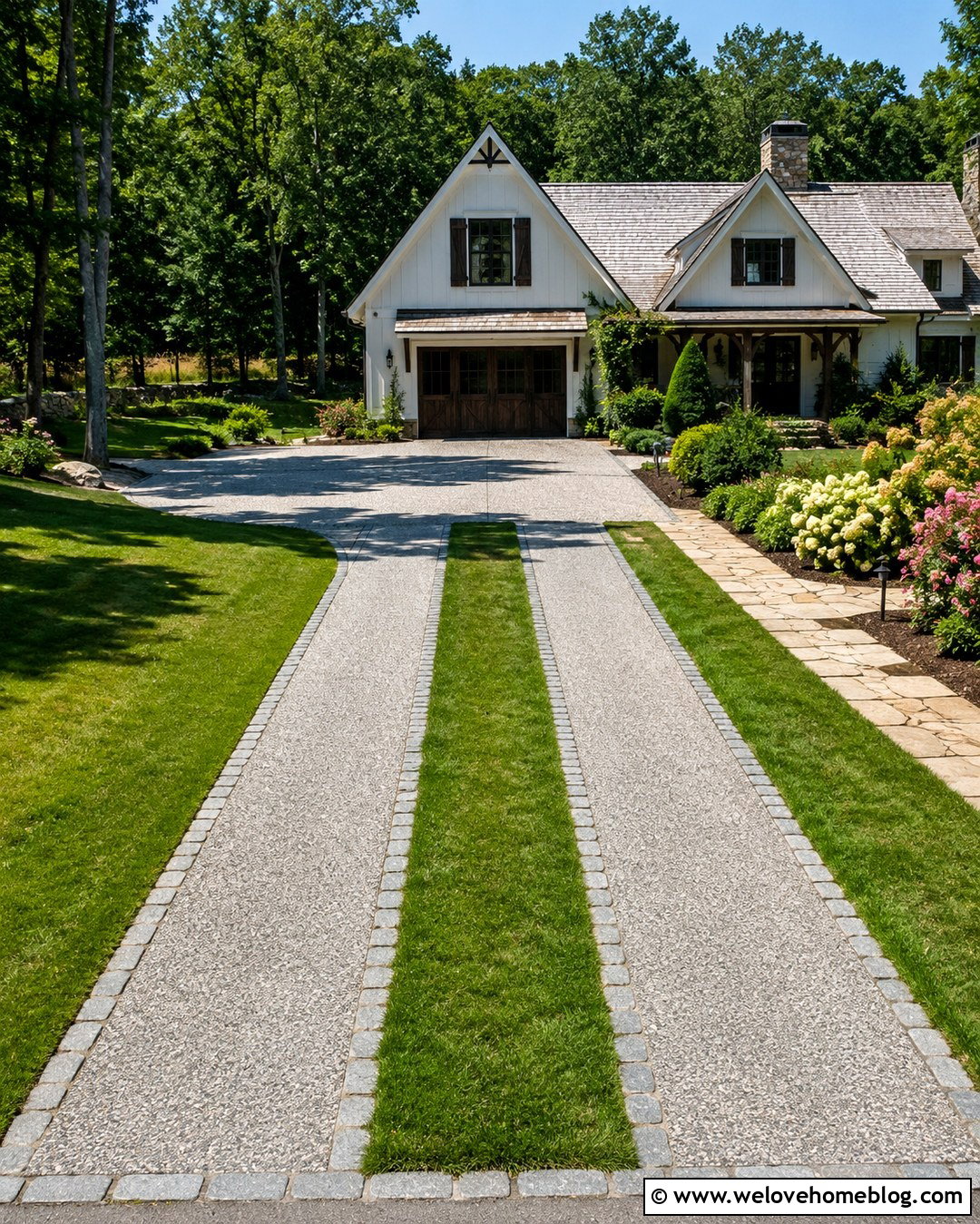
A grass center strip reduces the visual width of a driveway and gives recycled glass paving a softer residential character. Install two resin-bound wheel tracks using a blend of clear glass, pale green glass, and gray stone. Separate them with a reinforced lawn strip wide enough to create a deliberate design but narrow enough for comfortable driving. Frame the outside edges with concrete or granite setts to protect the landscape from tires. This layout looks natural beside a country cottage, farmhouse, or relaxed craftsman home. Continue the same glass mixture into a full-width parking pad near the garage, where turning and door access require more pavement. Select durable turf suited to local sun and rainfall. In dry climates, replace grass with creeping ground cover or a contrasting strip of permeable stone.
16. Recycled Glass Driveway With Geometric Bands
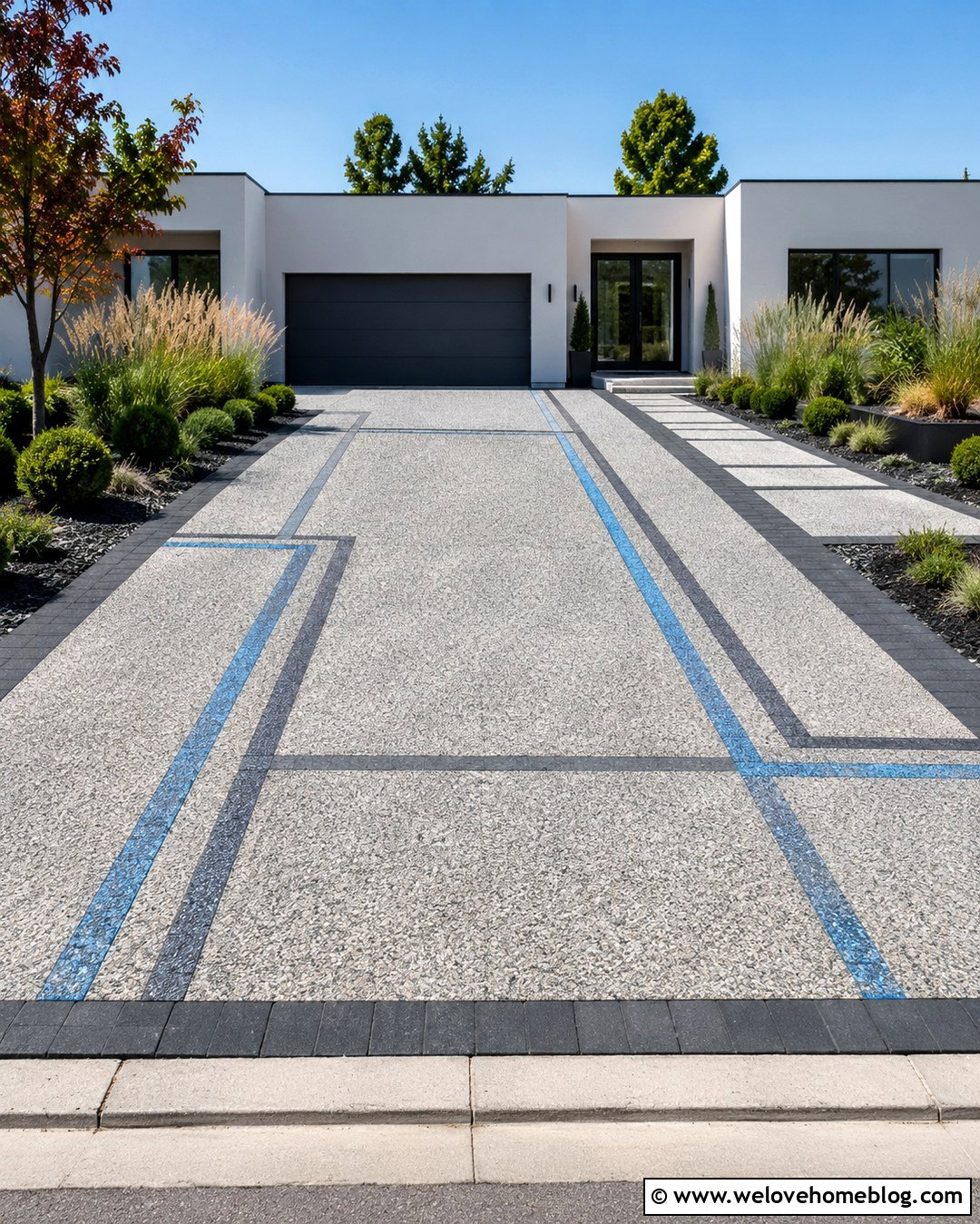
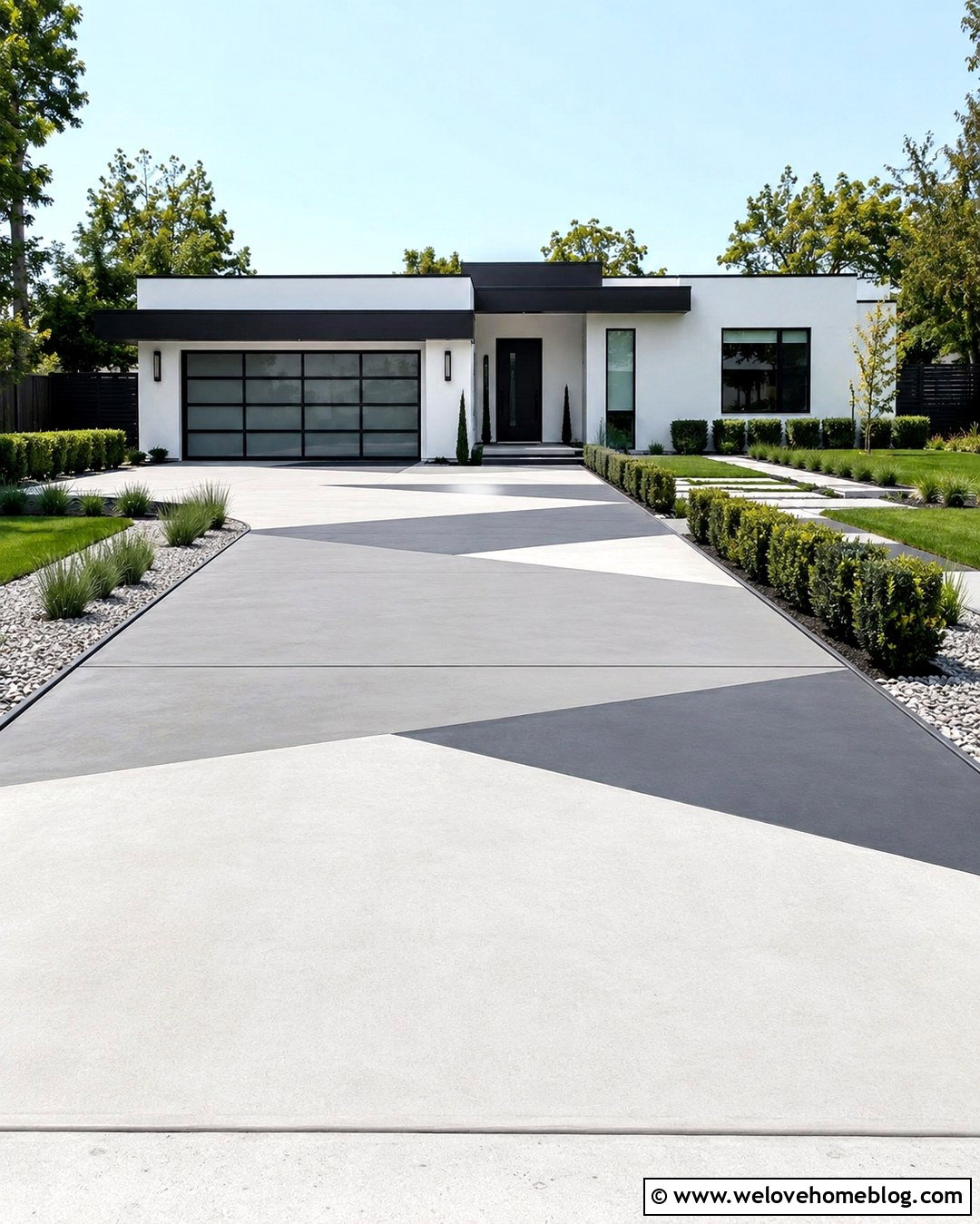
Geometric bands can organize a wide recycled glass driveway and connect it to contemporary architecture. Begin with a neutral resin-bound base made from clear recycled glass and light gray aggregate. Add narrow bands containing blue, charcoal, or green glass at measured intervals across the driveway. Keep the pattern simple, such as parallel lines or large rectangular frames, so it remains readable from the curb. Black paver edging and a matching walkway can strengthen the layout. Use clipped shrubs, architectural grasses, and rectangular planting beds around the pavement. This design works especially well with a flat-roofed modern home or a renovated ranch with strong horizontal lines. Ask for a full-scale pattern plan before installation. Bands that are too narrow, numerous, or brightly colored may make the surface appear busy and fragmented.
17. Green Recycled Glass Driveway With Tree Lined Entrance
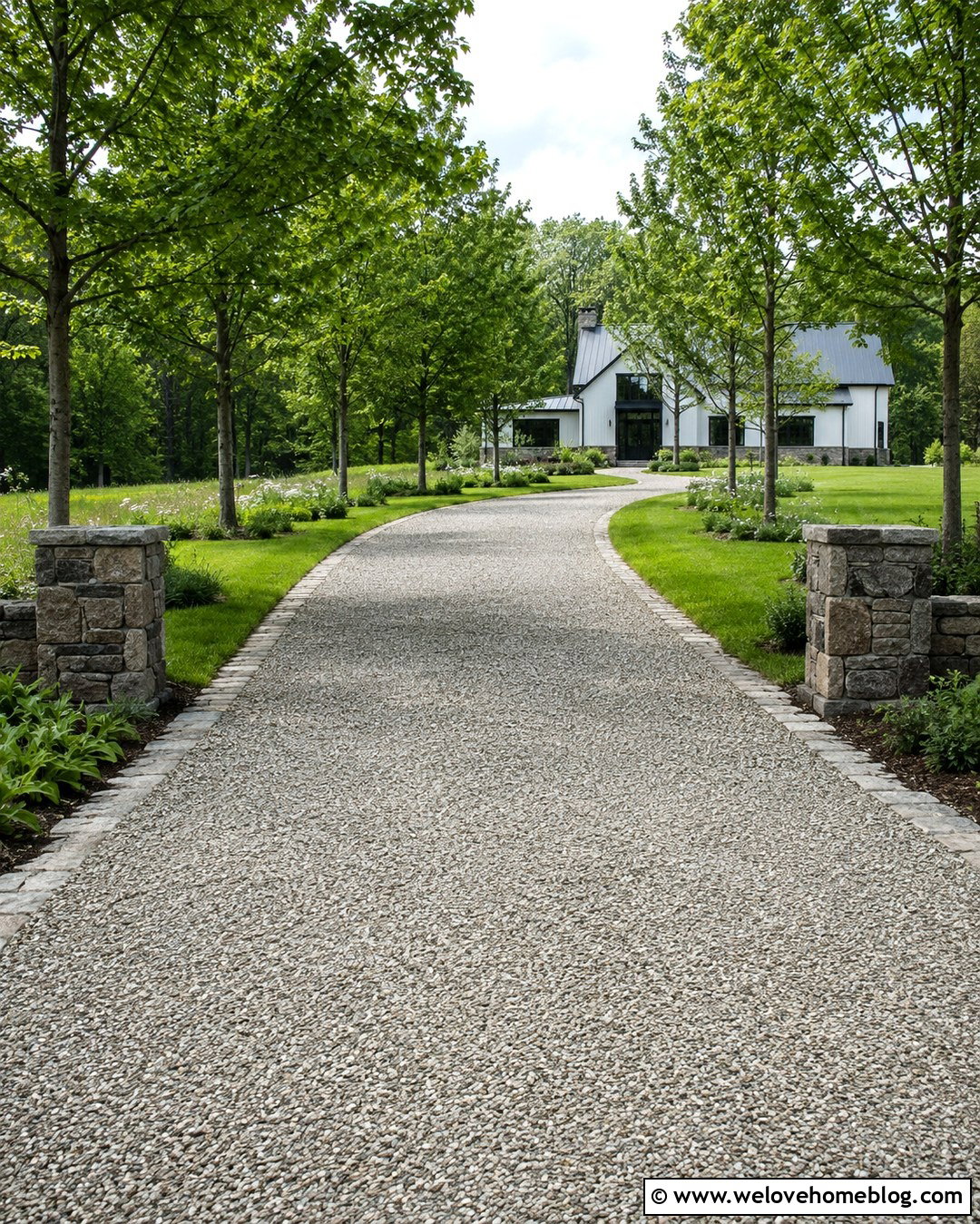
A long driveway can accommodate muted green recycled glass without overwhelming the house. Blend bottle-green and clear processed glass with gray-brown stone in a resin-bound mixture. Use a gently curving route that reveals the home gradually rather than creating one long, rigid line. Natural stone edging will contain the surface while supporting a wooded or country setting. Plant evenly spaced deciduous trees outside the root-protection and vehicle-clearance zones, then layer native shrubs and low ground cover beneath them. At the entrance, simple stone pillars can provide scale without creating a formal gated appearance. This combination works with modern farmhouses, country homes, and rustic contemporary facades. Choose a subdued green sample that complements foliage throughout the year, including seasons when surrounding trees are bare or changing color.
18. Small Recycled Glass Driveway With Matching Walkway
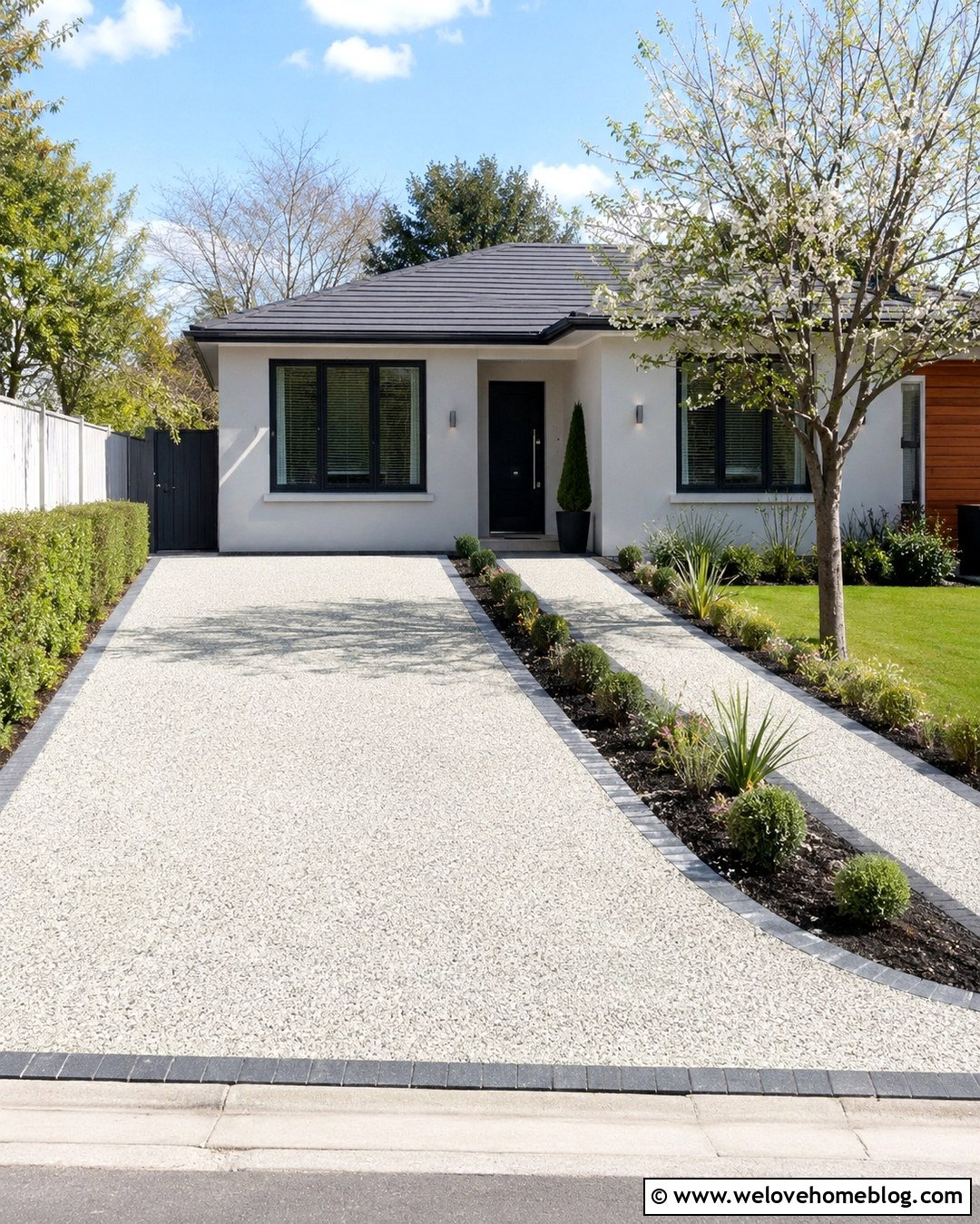
On a small front lot, using one coordinated material can make the driveway and entrance feel less crowded. Select a pale recycled glass and quartz resin-bound blend for a compact straight driveway. Extend the same material into a narrow walkway leading to the porch, but separate the two areas with a slim charcoal paver border. A slightly flared driveway entrance can make turning easier without paving the entire yard. Keep planting beds shallow and use compact shrubs, ornamental grasses, and one small flowering tree. This arrangement suits a bungalow, townhouse, cottage, or narrow modern home. Limit the glass palette to clear and one subtle accent color. Too many colors can reduce the calm, spacious effect. Good measurements are essential so the walkway remains visible without reducing the practical parking width.
19. Recycled Glass Driveway With Gate And Stone Pillars
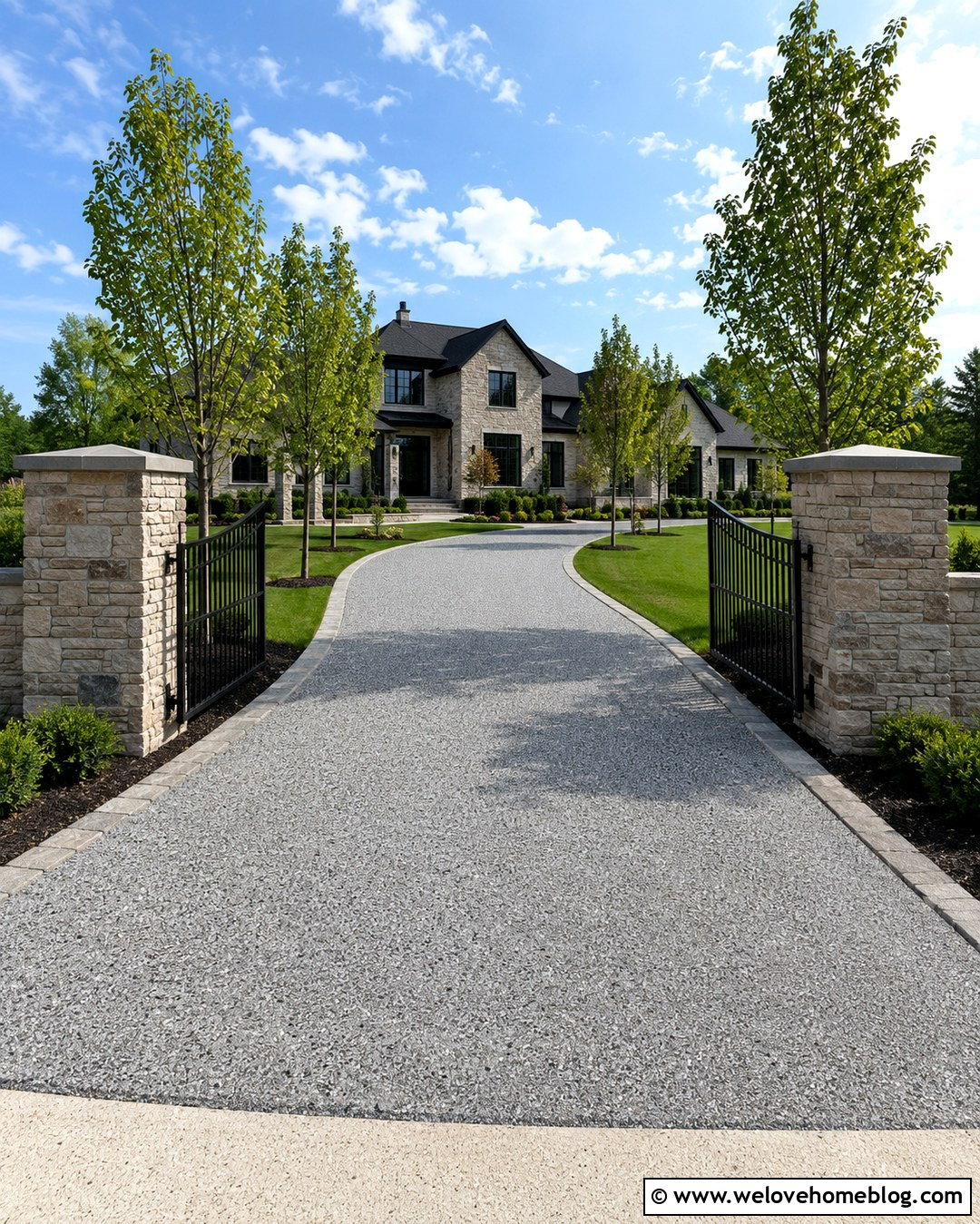
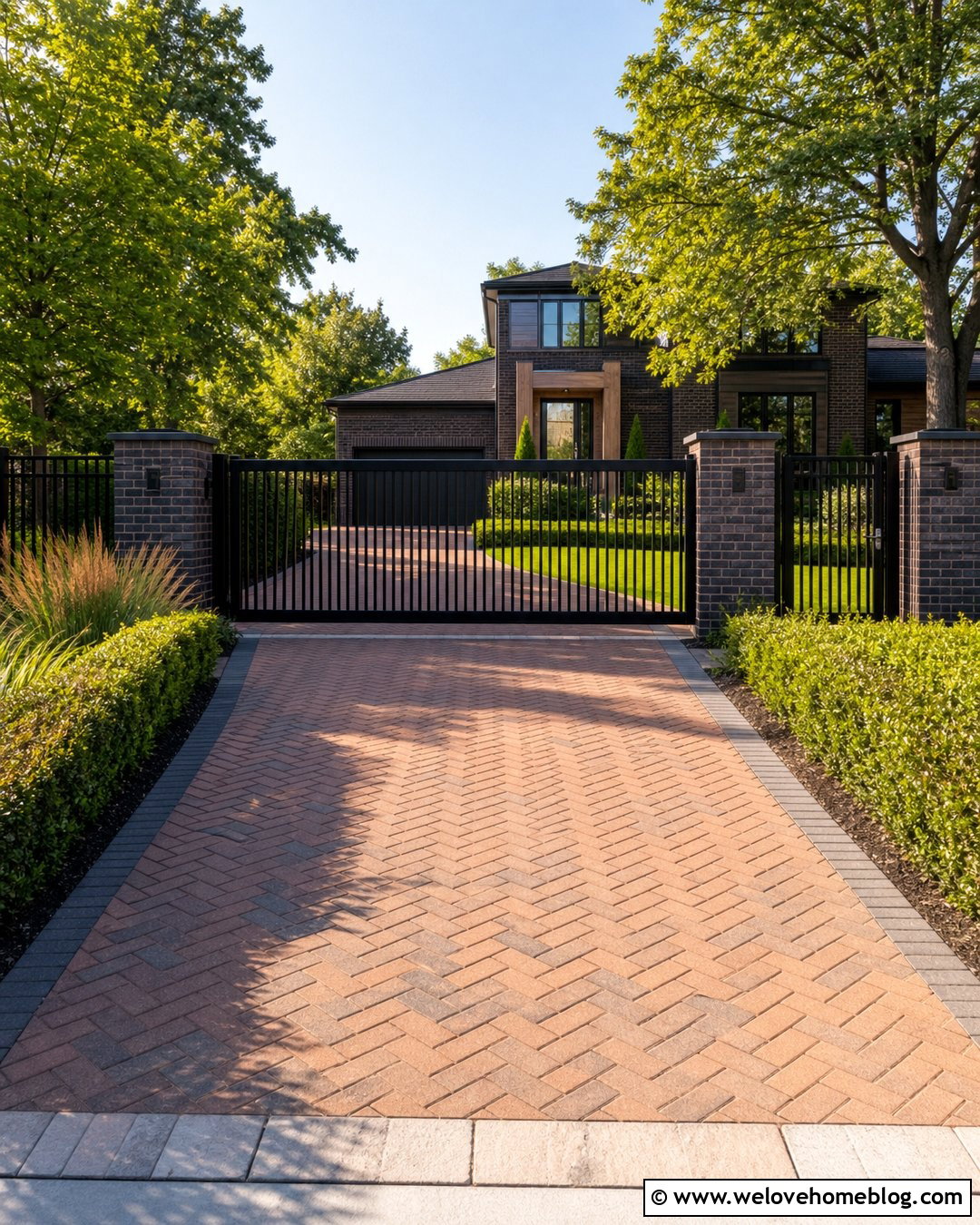
A gated recycled glass driveway should connect the entrance materials with the paving beyond it. Use a neutral gray resin-bound mixture containing clear and smoke-colored recycled glass. At the street, install substantial stone pillars with a simple black metal gate, then repeat the pillar stone as driveway curbing or low entrance walls. A wide, gently curved approach provides room for vehicles to pause without blocking the road. Beyond the gate, frame the driveway with lawn, clipped evergreen shrubs, and regularly spaced trees leading toward a traditional or contemporary country house. Keep access controls, lighting, and address details neatly integrated into the pillars. The gate should remain visually secondary to the complete entrance. Confirm required setbacks, sightlines, drainage, emergency access, and gate-opening space before finalizing the driveway layout.
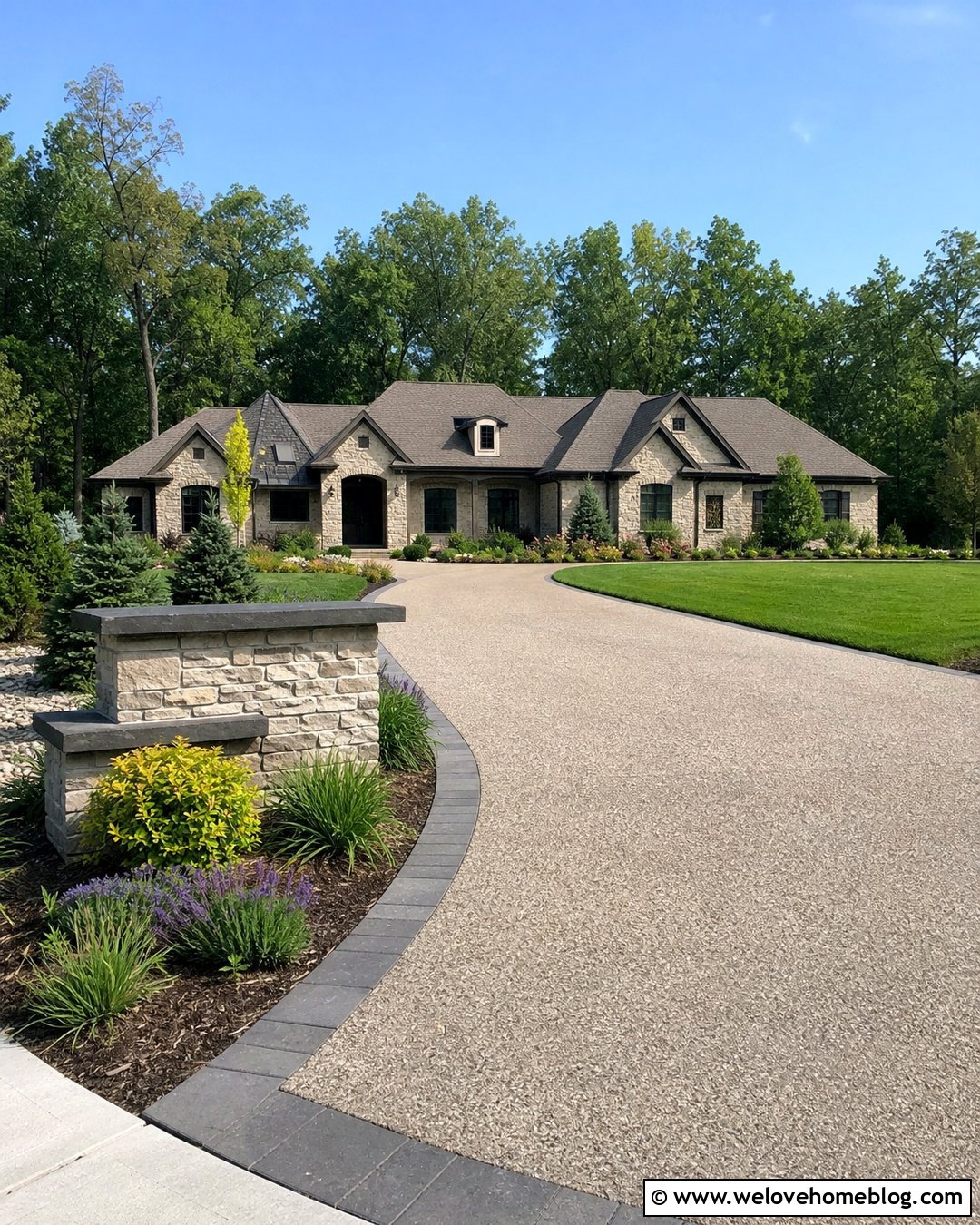
20. Recycled Glass Concrete Driveway With Matching Steps
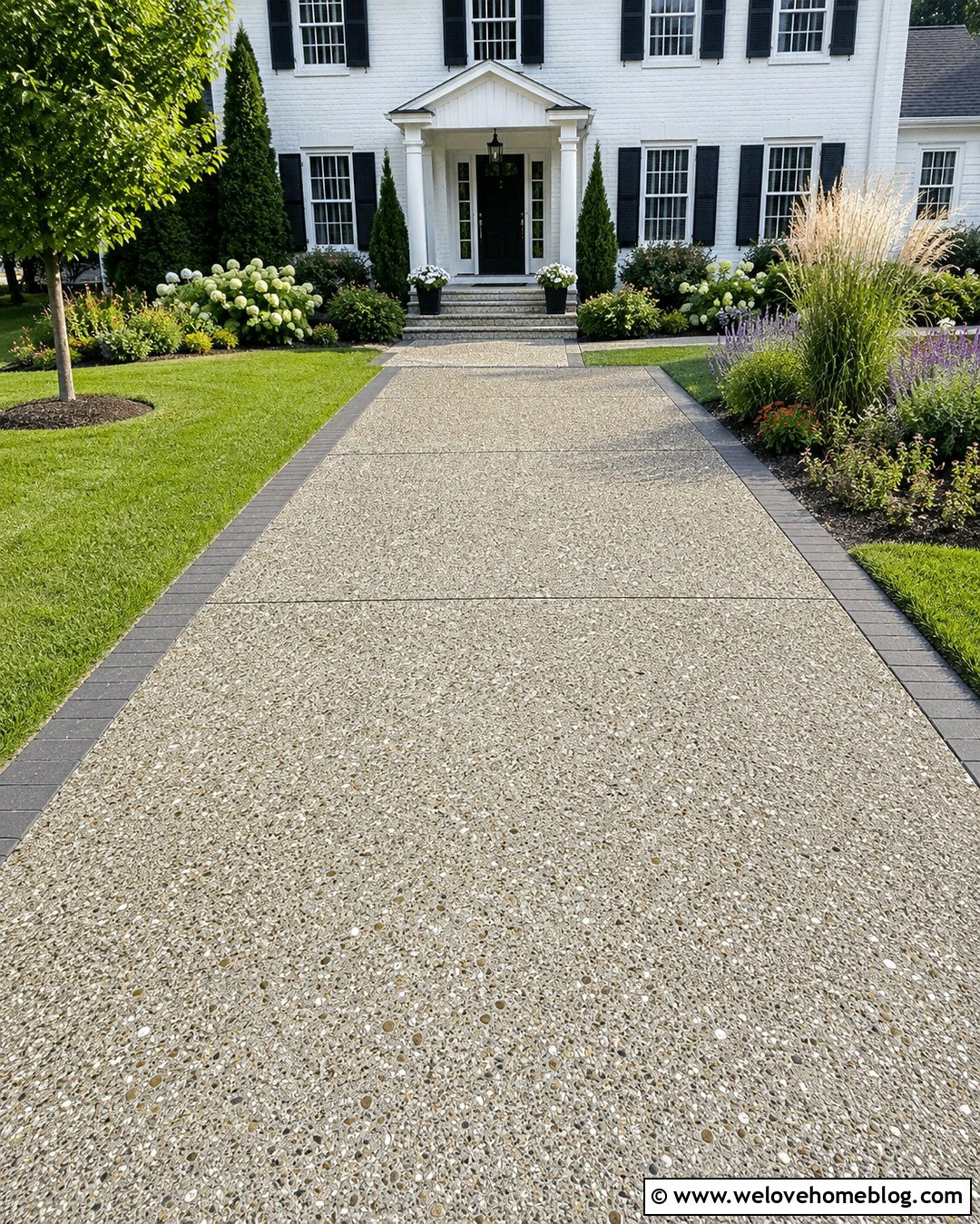
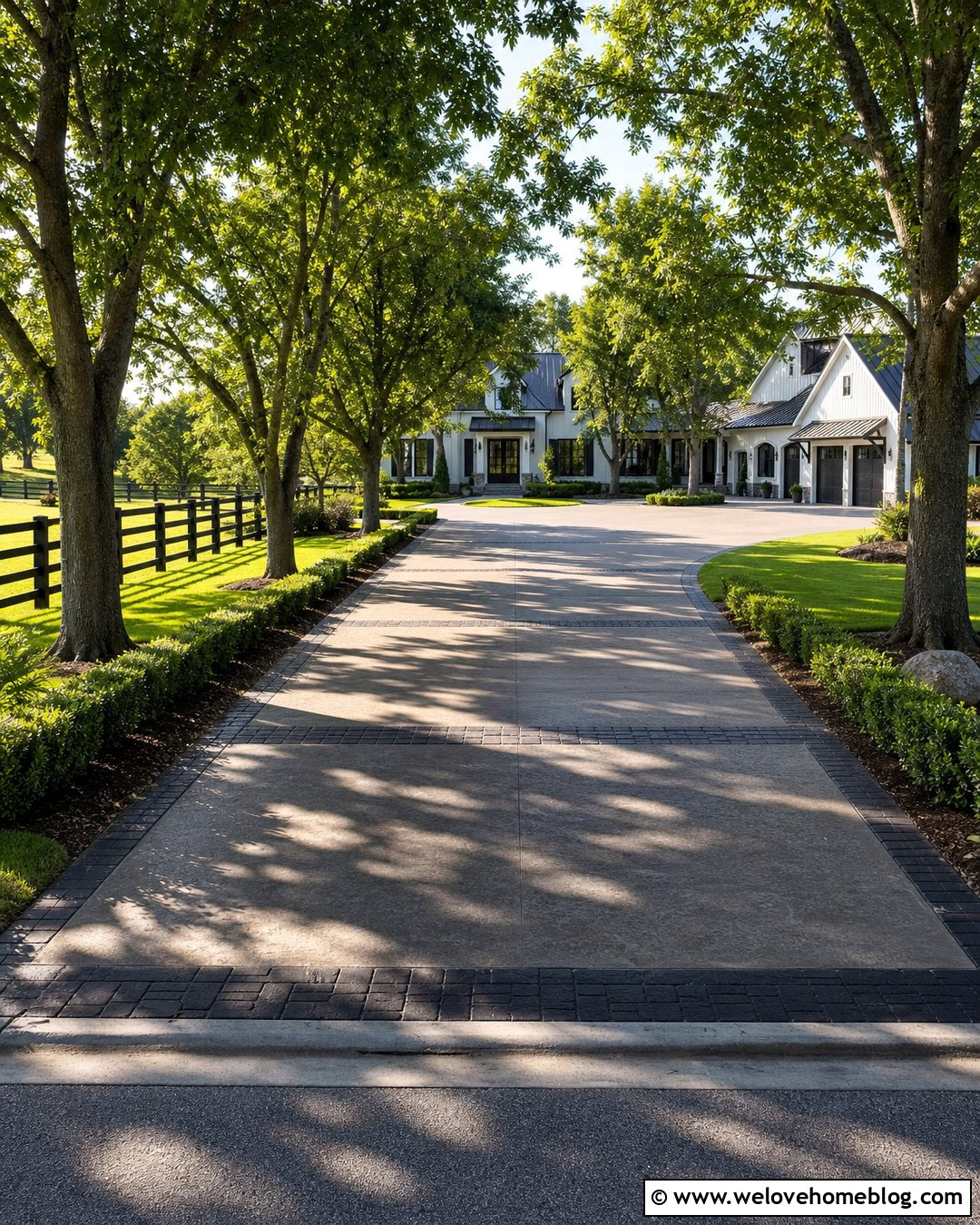
A recycled glass concrete driveway can feel fully integrated when the same aggregate appears in the walkway, porch steps, and landing. Choose warm gray concrete containing clear and pale amber recycled glass, then use an exposed aggregate finish that reveals color without becoming overly polished. Divide the straight driveway into large rectangular panels with clean control joints. Edge it with dark brick or charcoal pavers to create contrast against the lawn. Continue the concrete toward a modern craftsman or updated colonial house, adjusting the finish on steps for dependable outdoor traction. Layer foundation beds with evergreen shrubs, flowering perennials, and ornamental grasses. Repeating one material across the approach creates consistency, while the darker border prevents the design from looking flat. Have all exterior mixtures coordinated so color and aggregate exposure remain consistent.
Conclusion:
The best recycled glass driveway balances color, structure, drainage, safety, and the architecture of the house. Pale glass mixtures can brighten compact properties, while charcoal, amber, blue, or green blends create stronger curb appeal. Resin-bound paving offers a smooth way to secure processed glass and stone, while exposed aggregate concrete provides a more traditional alternative. Borders, curves, planting beds, entrance features, and matching walkways help the surface feel connected to the entire yard. Always use professionally processed aggregate and a vehicle-rated installation system rather than loose or improvised broken glass. Obtain samples, review local drainage requirements, and compare experienced installers before proceeding. Use these **20 Recycled Glass Driveway Ideas** to plan a distinctive entrance that remains practical for daily use.

Related posts:
Leave a Reply