
A well-planned driveway can improve curb appeal, guide visitors toward the entrance, and make daily parking easier. The best driveway paving ideas consider more than the surface alone. Material, pattern, shape, borders, drainage, landscaping, and the home’s architecture should all feel connected. Popular choices range from affordable asphalt and gravel to concrete, clay brick, natural stone, permeable pavers, and resin-bound gravel. Current driveway design also favors mixed materials, contrasting borders, geometric layouts, and planted areas that soften large paved spaces. () Before choosing a look, consider your climate, maintenance expectations, parking needs, and installation budget. The complete designs below offer 40 driveway paving ideas for modern, traditional, rustic, coastal, and compact residential properties.

1. Herringbone Brick Paver Driveway
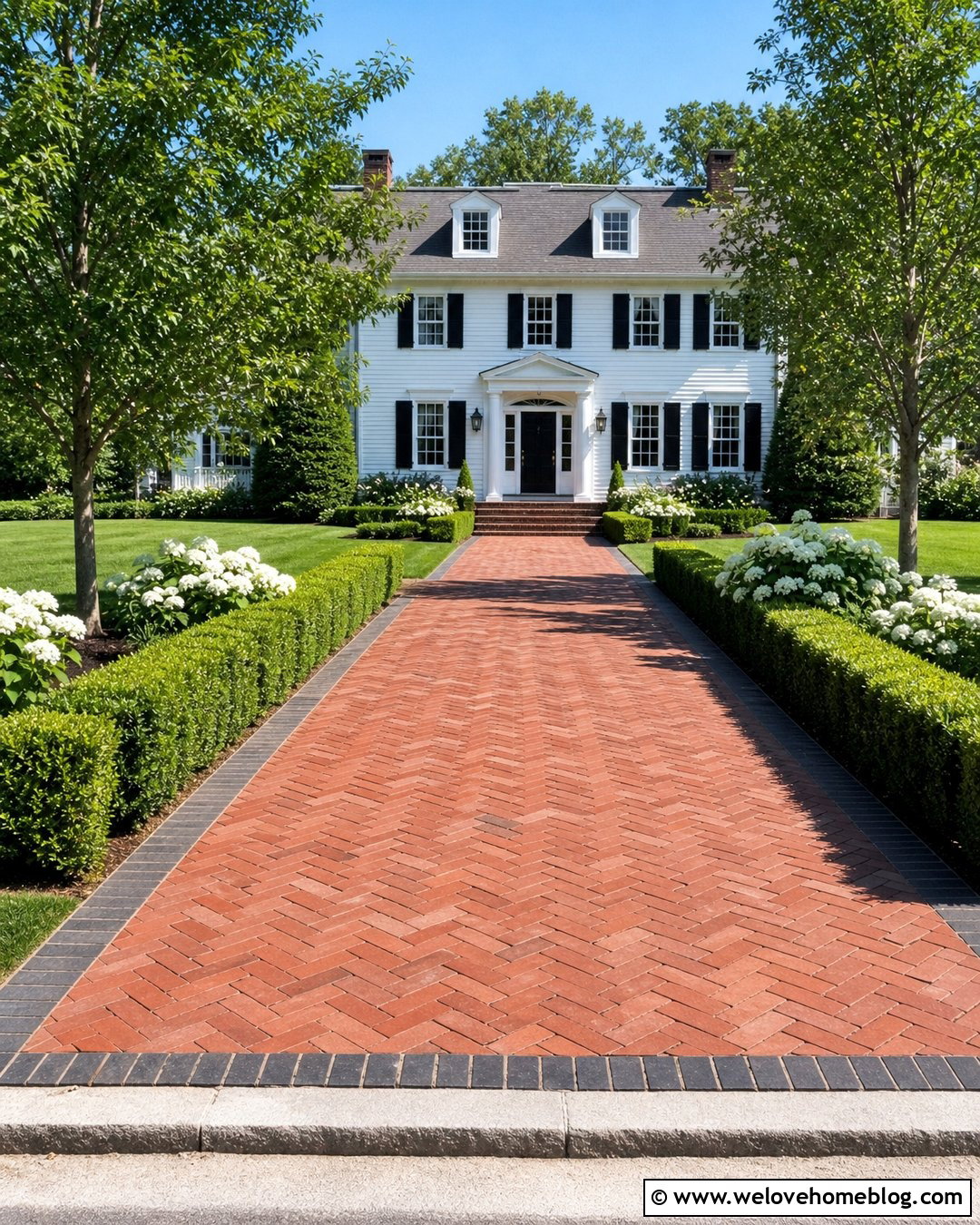
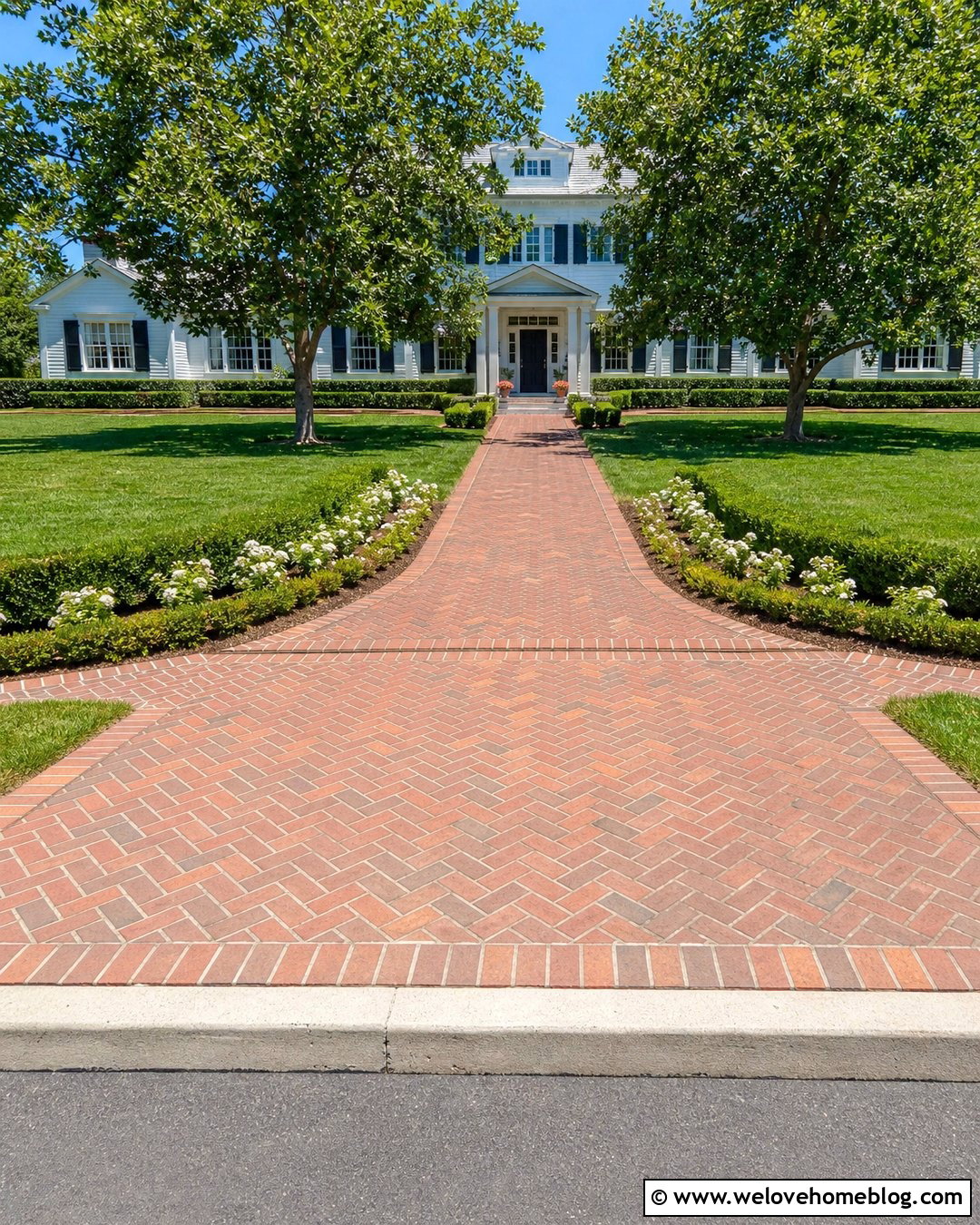
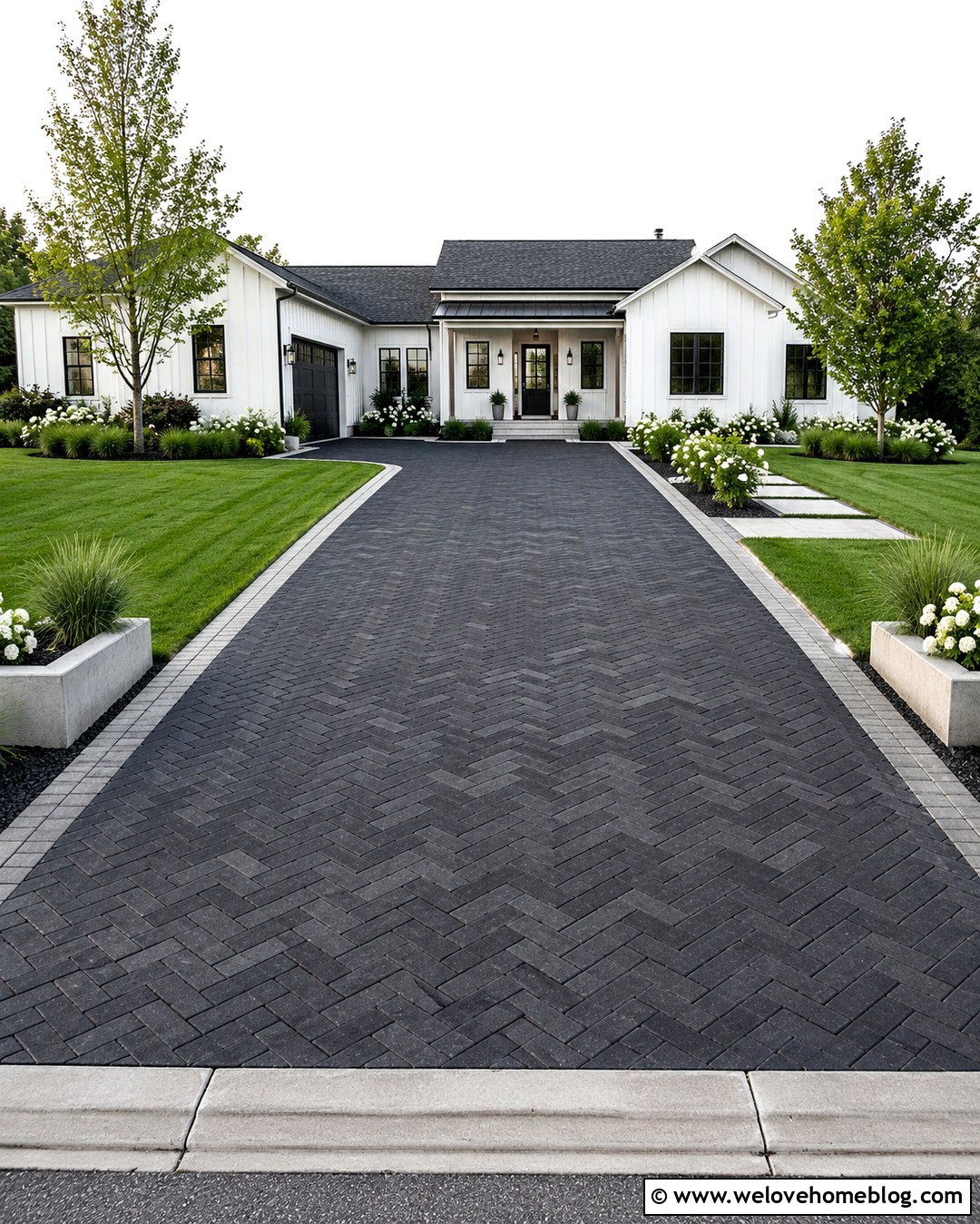
Clay brick pavers laid in a herringbone pattern give a driveway a structured, traditional appearance. Use warm red or muted brown bricks to complement a Colonial, Cape Cod, or Tudor-style home. A charcoal brick border can define the edges and create a clean transition into the lawn. For a complete look, continue the same border around the driveway apron and adjacent walkway. Low boxwood hedges, white hydrangeas, and a pair of small ornamental trees soften the strong paving pattern. Herringbone is especially effective on straight driveways because its diagonal lines add movement without making the design feel busy. Choose bricks manufactured for vehicular paving, and plan the base, edge restraints, grading, and drainage with a qualified installer.
2. Modern Concrete Paver Driveway
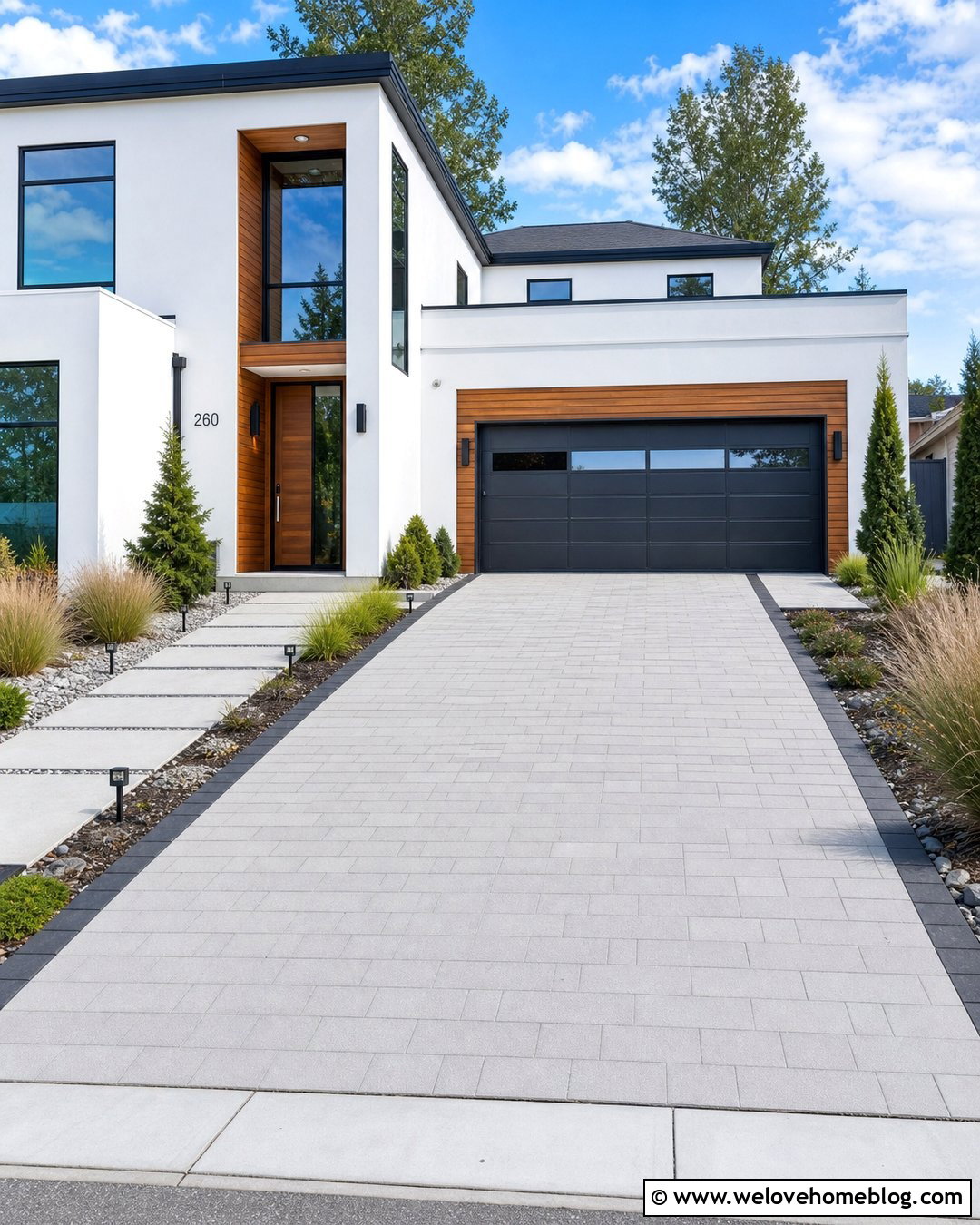
Large rectangular concrete pavers create a clean surface that works naturally with modern architecture. Choose light gray pavers with narrow charcoal joints, then install them in a running bond or linear grid. A straight driveway reinforces the home’s geometric lines, while dark concrete edging keeps the composition crisp. Along one side, add a wide planting bed filled with ornamental grasses, compact evergreens, and pale decorative stone. A simple concrete walkway can branch toward the front door without introducing another material. This restrained palette looks especially attractive beside white stucco, black siding, or warm wood cladding. Keep joint widths consistent and avoid too many paver colors. The driveway, planting beds, walkway, and facade should read as one balanced modern entrance.
3. Cobblestone Driveway With Granite Edging
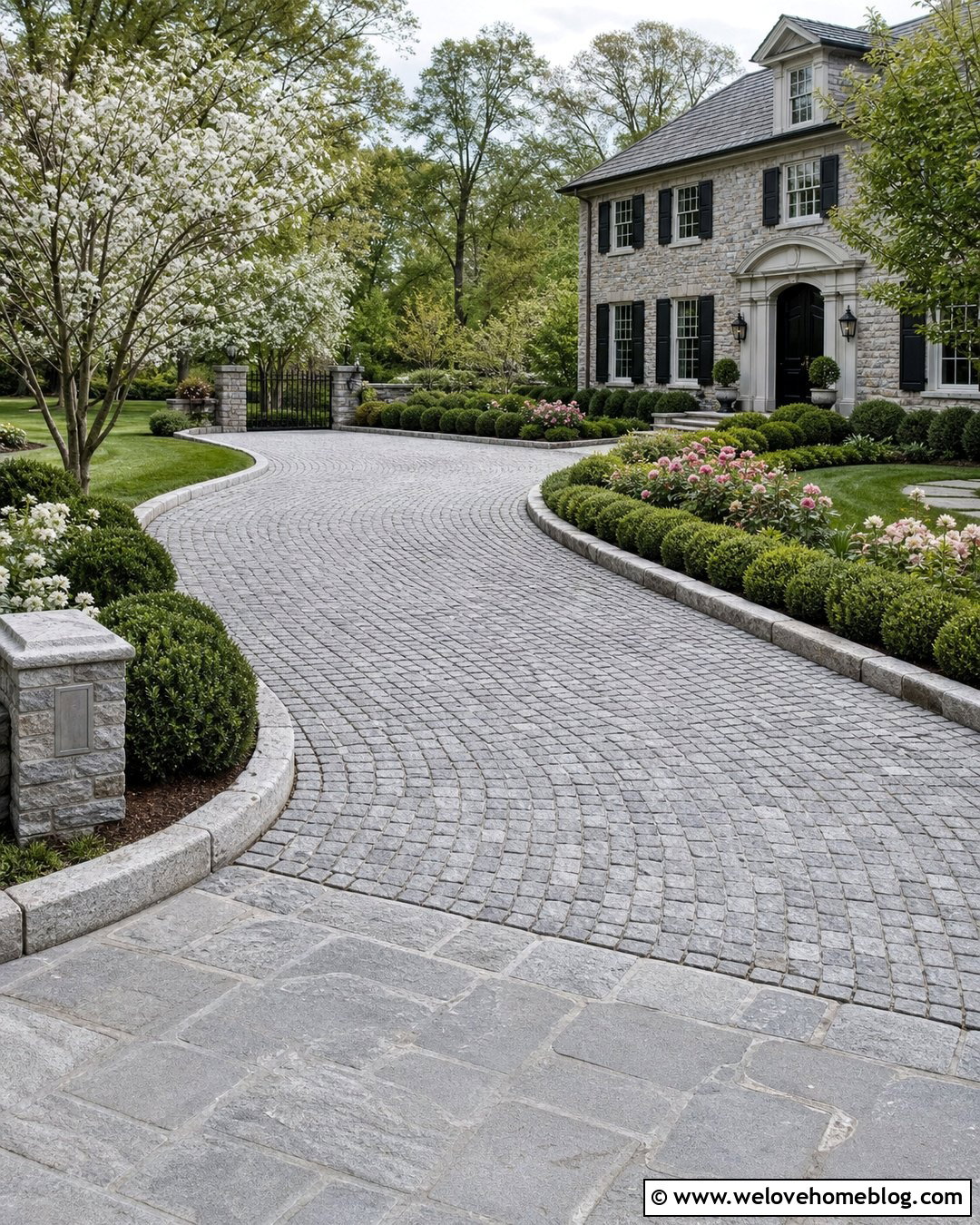
A full cobblestone driveway brings texture and an established character to country, European-inspired, and historic homes. Gray granite cobbles create a quieter look than strongly varied multicolor stone. Set them in gentle rows across a curved driveway, using larger granite blocks as a firm outer border. Deep planting beds filled with clipped shrubs, roses, and small flowering trees can frame the approach without hiding the stonework. Near the street, widen the cobblestone apron slightly to make the entrance feel more welcoming. Because natural cobbles have an irregular surface, careful installation is important for comfortable walking and smooth vehicle movement. Pair the driveway with a simple flagstone path and understated entry pillars so the rich paving remains the main visual feature.
4. Black Asphalt Driveway With Brick Border
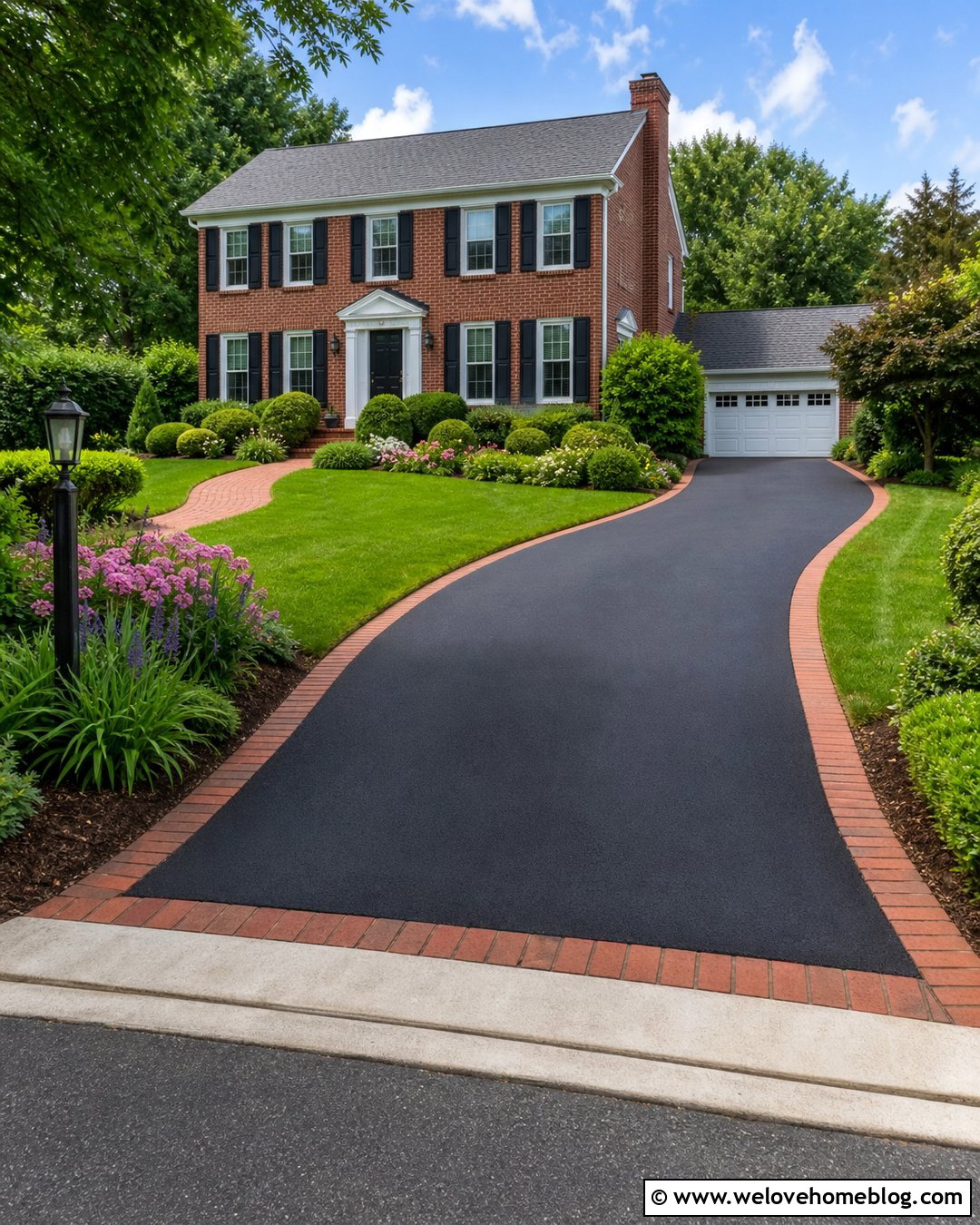
Black asphalt becomes more polished when it is framed by a contrasting brick border. This combination offers a smooth, visually simple driving surface while bringing traditional color to the edges. Choose red clay bricks for a classic ranch or Colonial home, or use charcoal brick for a more contemporary exterior. A gently curved driveway can reduce the plain appearance of a large asphalt area. Repeat the border around the apron and where the driveway meets the garage. On the landscape side, use lawn, rounded evergreen shrubs, and flowering perennials to soften the dark pavement. A matching brick walkway can connect the parking area to the porch. Keep the asphalt grading subtle and direct runoff toward an appropriate drainage area rather than nearby foundations or planting beds.
5. Exposed Aggregate Concrete Driveway
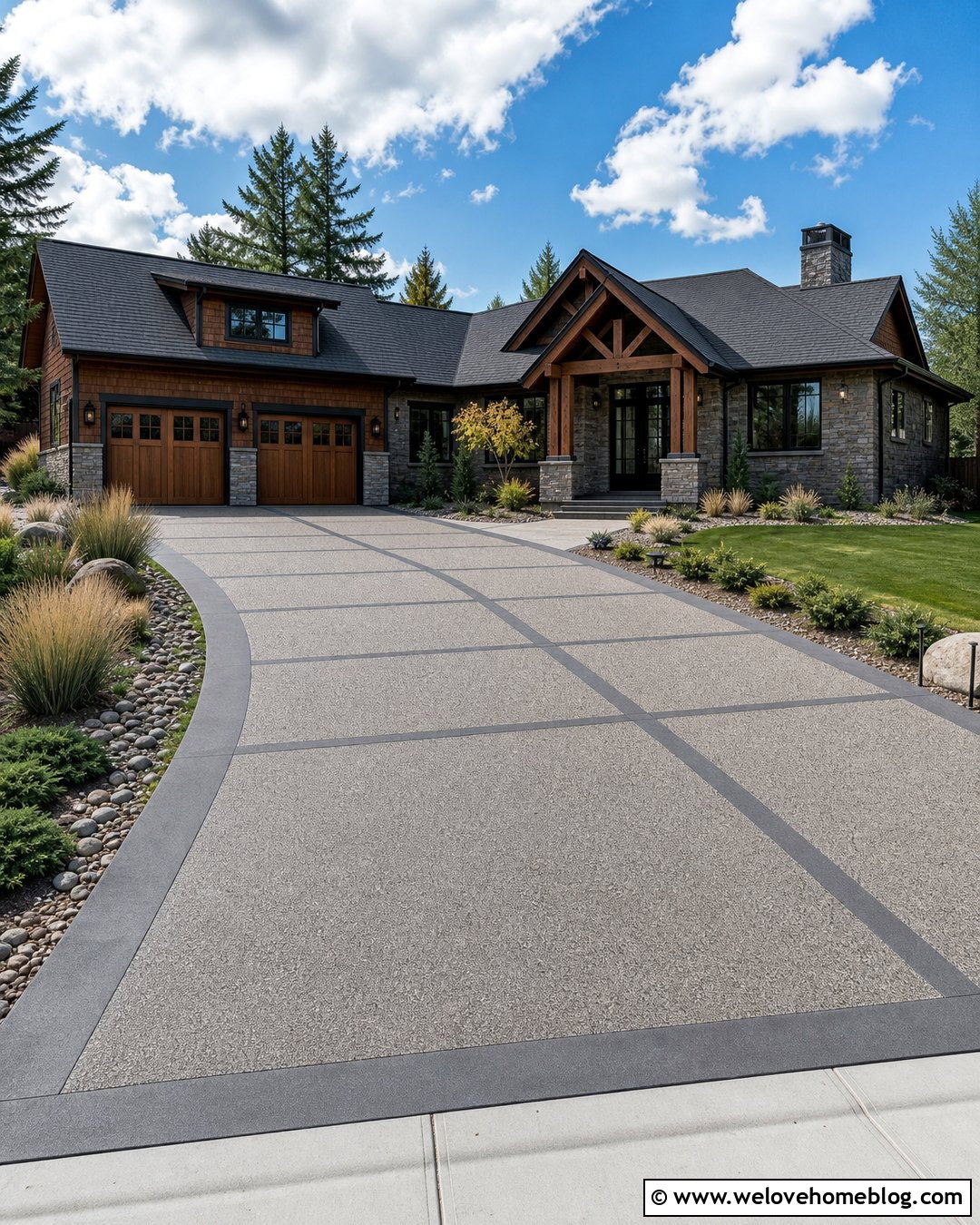
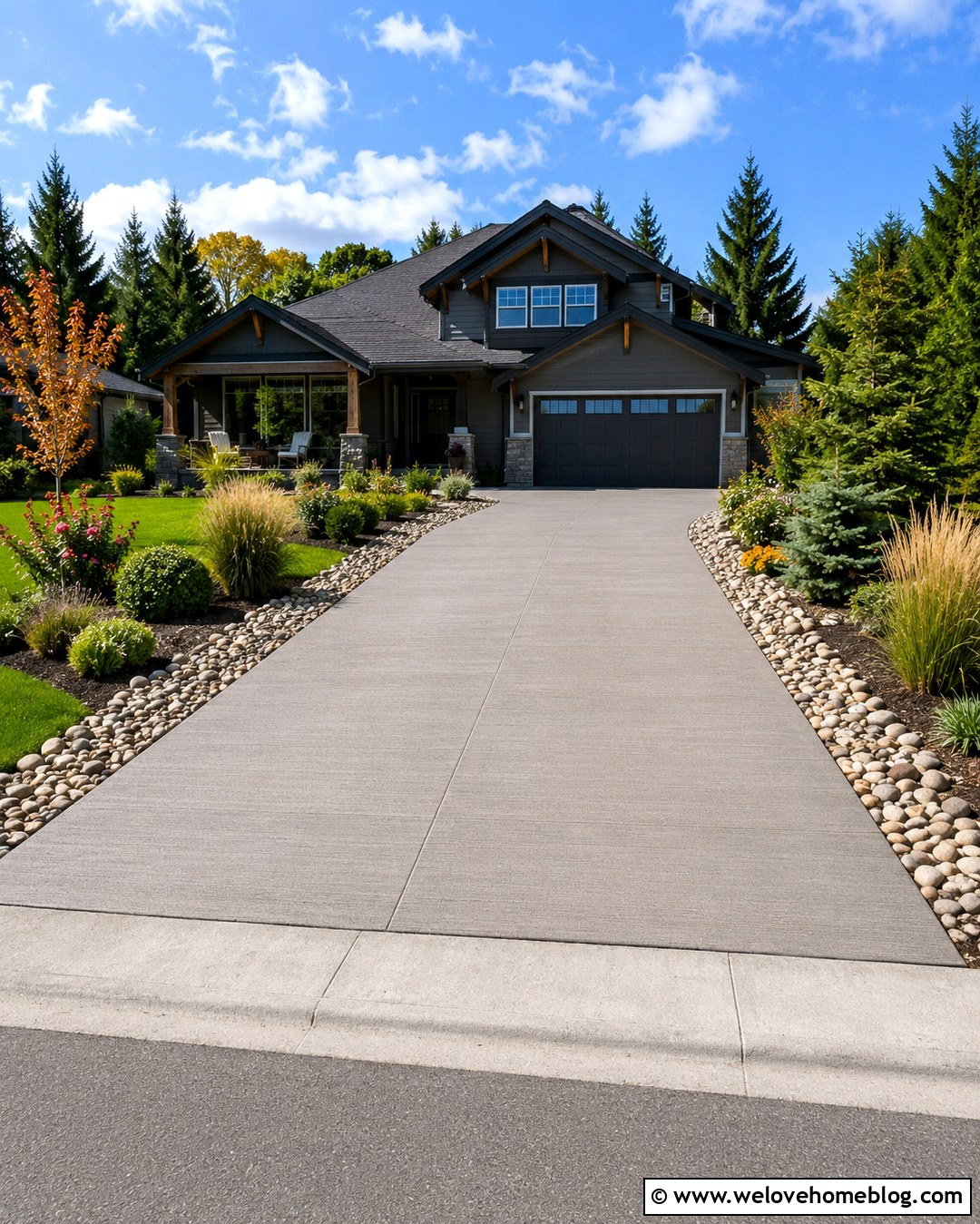
Exposed aggregate concrete provides a textured finish with visible stone in natural gray, tan, or warm brown tones. It works well on a broad straight driveway leading to a ranch, craftsman, or contemporary home. Divide the surface into generous rectangular panels with clean control joints, then frame it with smooth charcoal concrete bands. The contrast keeps the pebbled texture from looking overly rustic. Add drought-tolerant grasses, low junipers, and river rock along the sides for landscaping that echoes the aggregate. A wider paved area near the garage can accommodate turning without disrupting the front lawn. Select an aggregate blend that relates to the home’s stone veneer, roof, or siding. A professional finish and thoughtful joint placement will help the entire driveway look deliberate.
6. Permeable Paver Driveway With Grass Joints
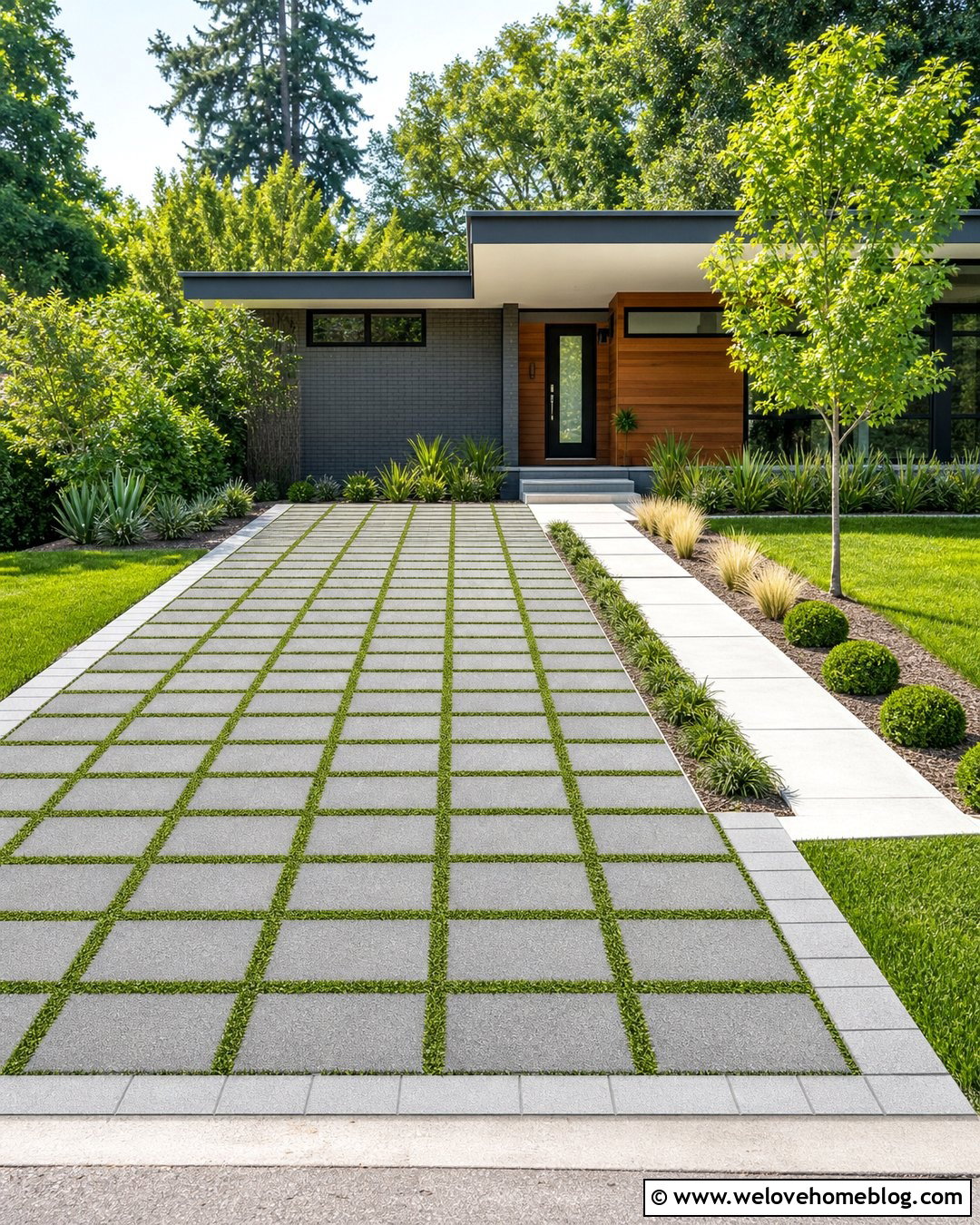
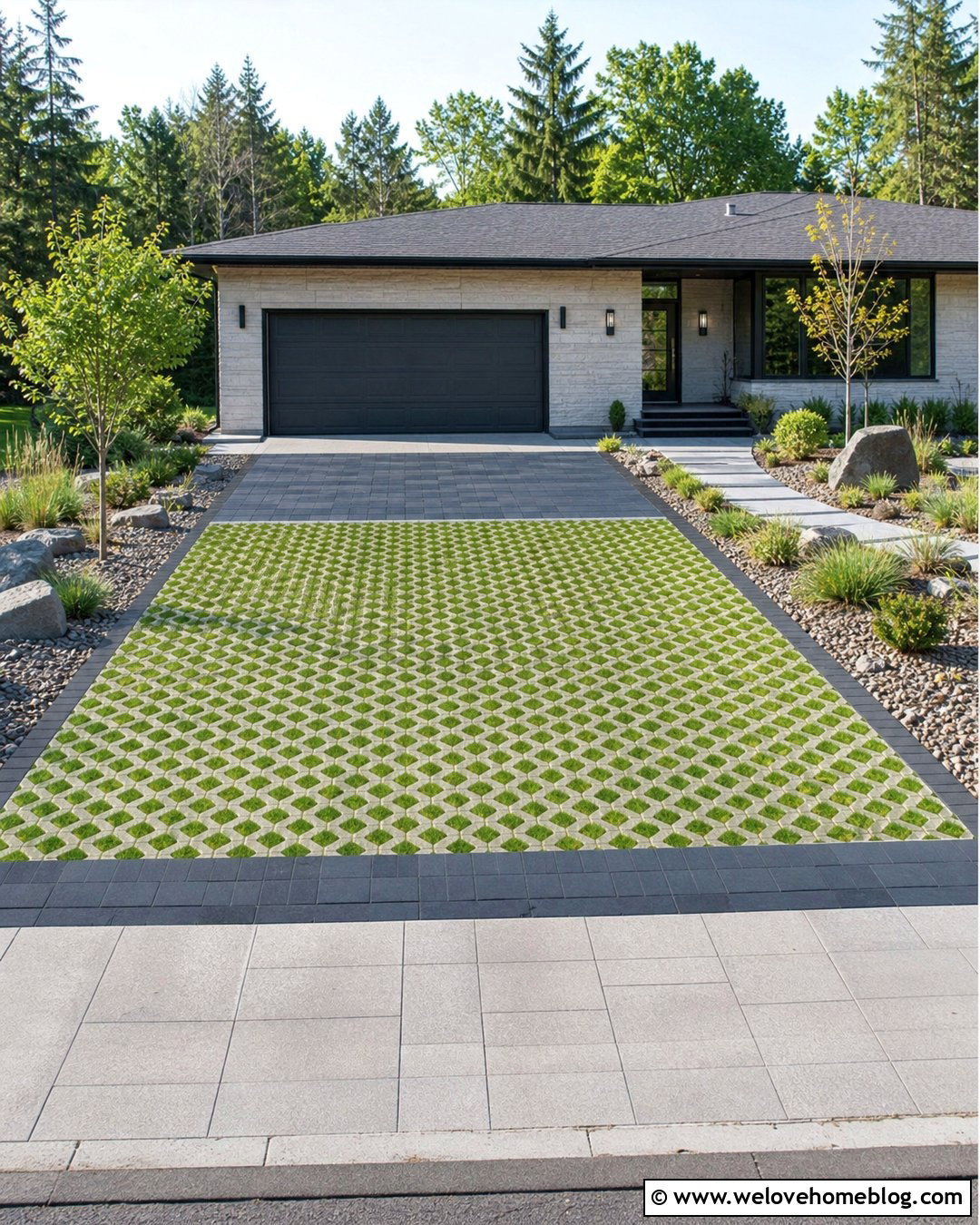
Permeable concrete pavers with planted joints can make a wide driveway feel greener and less visually dominant. Use medium-gray grid pavers or regularly spaced rectangular units, filling the open joints with suitable low-growing grass or aggregate. A straight layout complements modern and midcentury homes, especially when the paving aligns with garage doors and facade lines. Edge the driveway with solid concrete pavers to create a stable, finished boundary. Keep surrounding landscaping simple with sculptural shrubs, ornamental grasses, and one small shade tree. The planted joints should be selected and maintained for the local climate and expected vehicle use. Coordinate the full system, including excavation, base materials, drainage, and joint fill, because permeable paving depends on more than the visible surface.
7. Circular Paver Driveway With Center Garden
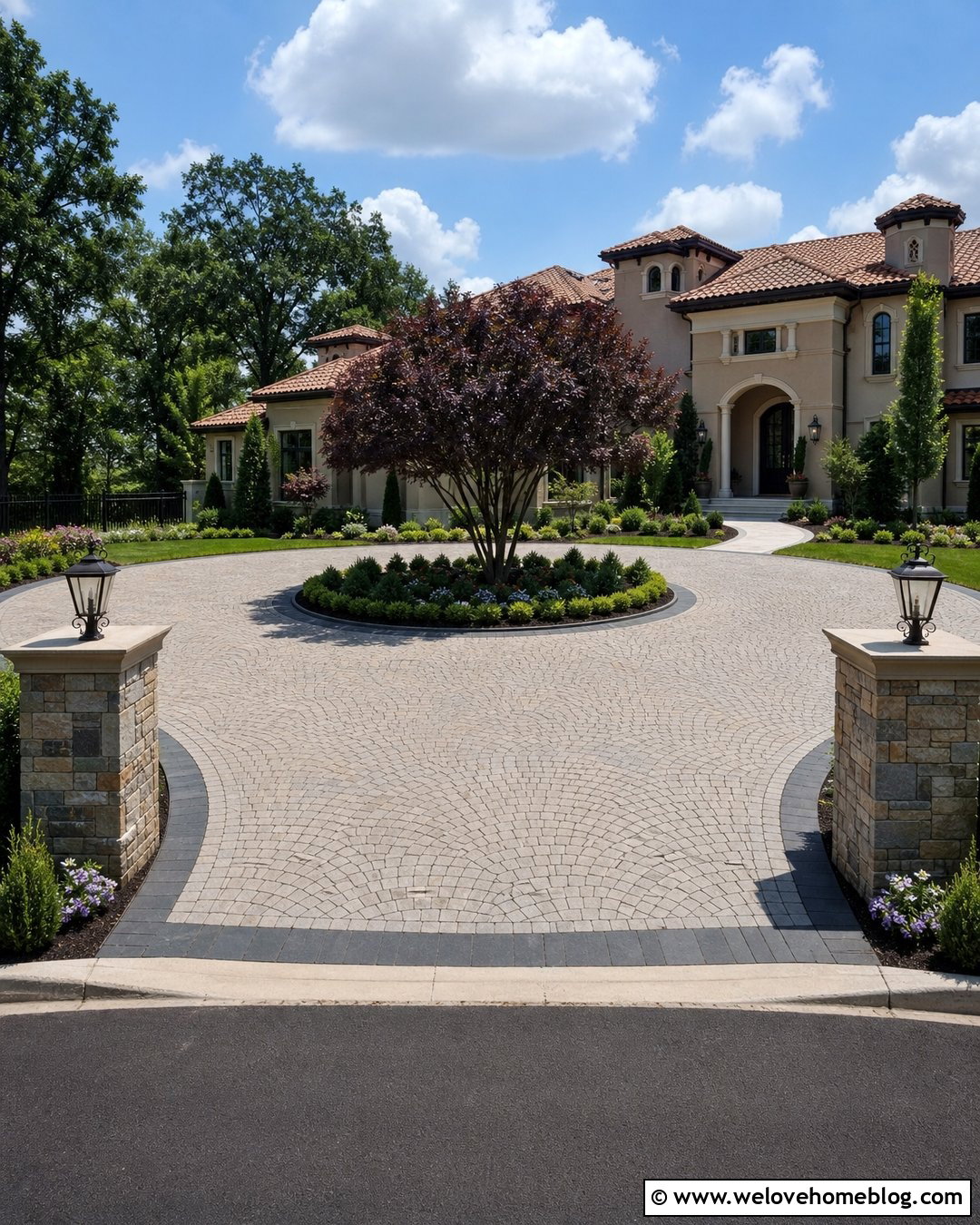
A circular paver driveway creates an elegant arrival sequence while making it easier for vehicles to enter and leave facing forward. Use blended tan and gray concrete pavers in a fan or running bond pattern around a generously sized center island. A dark soldier-course border can clearly outline both the outer edge and inner circle. Plant the island with a small ornamental tree, low evergreens, and seasonal flowers that remain below important sightlines. Matching entry pillars at each opening make the layout feel intentional without overwhelming the front yard. This design suits larger Colonial, Mediterranean, and traditional homes. Before installation, confirm that the circle offers comfortable turning space and that water will drain away from the island, house, and paved entrance.
8. Stamped Concrete Driveway With Stone Border
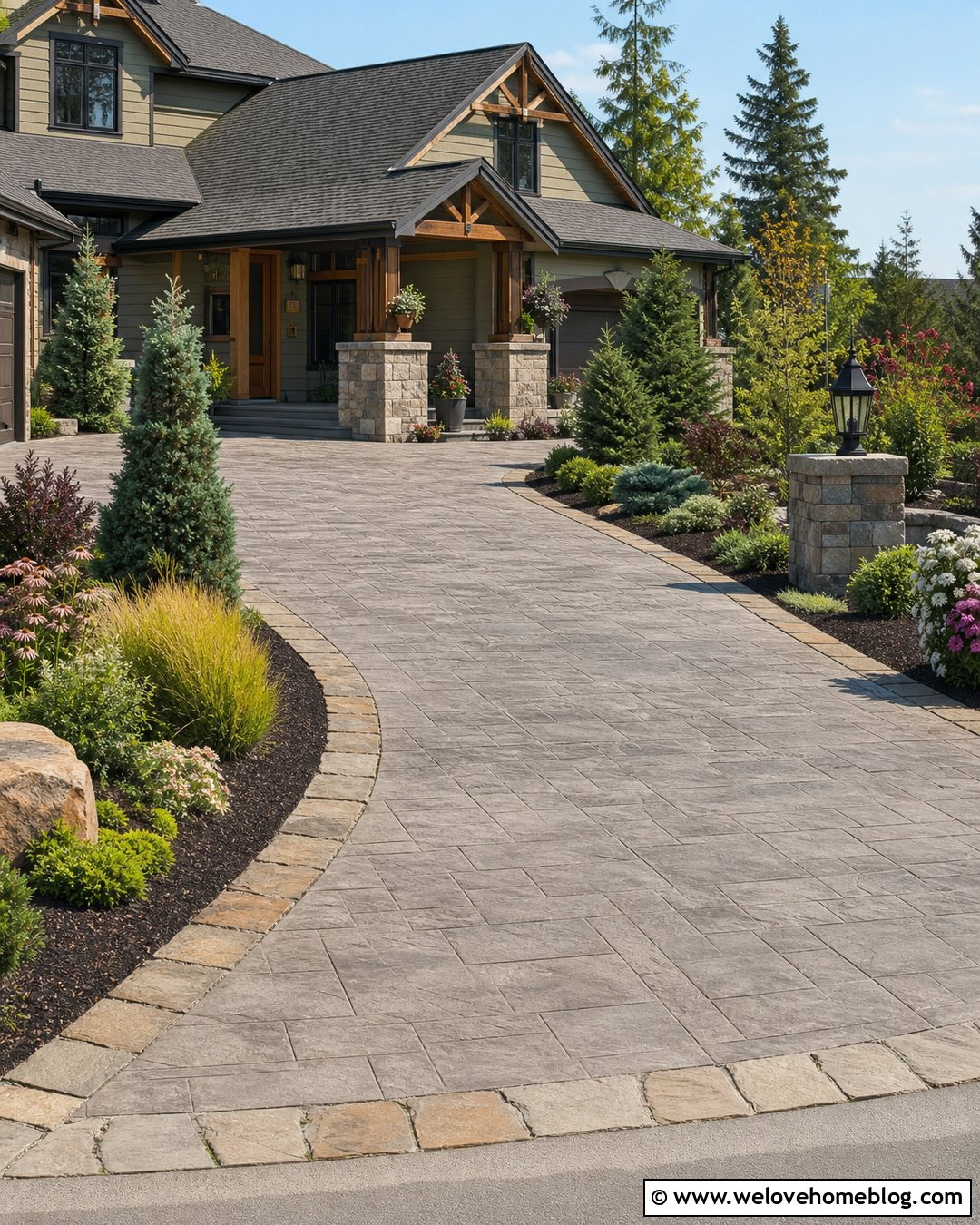
Stamped concrete can deliver the appearance of individual stone units while maintaining a continuous paved surface. Choose a restrained ashlar-slate pattern in warm gray rather than an overly dramatic texture. A real natural-stone border adds depth and makes the stamped field look more convincing. Use the material on a gently curved driveway leading toward a craftsman or traditional home. Along the outer curve, plant layered beds with evergreen shrubs, flowering perennials, and ornamental grasses. Repeat the border stone on the front steps or porch columns to connect the driveway with the architecture. Select colors after viewing full-size outdoor samples, since sunlight can change their appearance. Well-planned joints should follow the stamped pattern wherever possible instead of cutting awkwardly across prominent shapes.
9. Pea Gravel Driveway With Cobblestone Edging
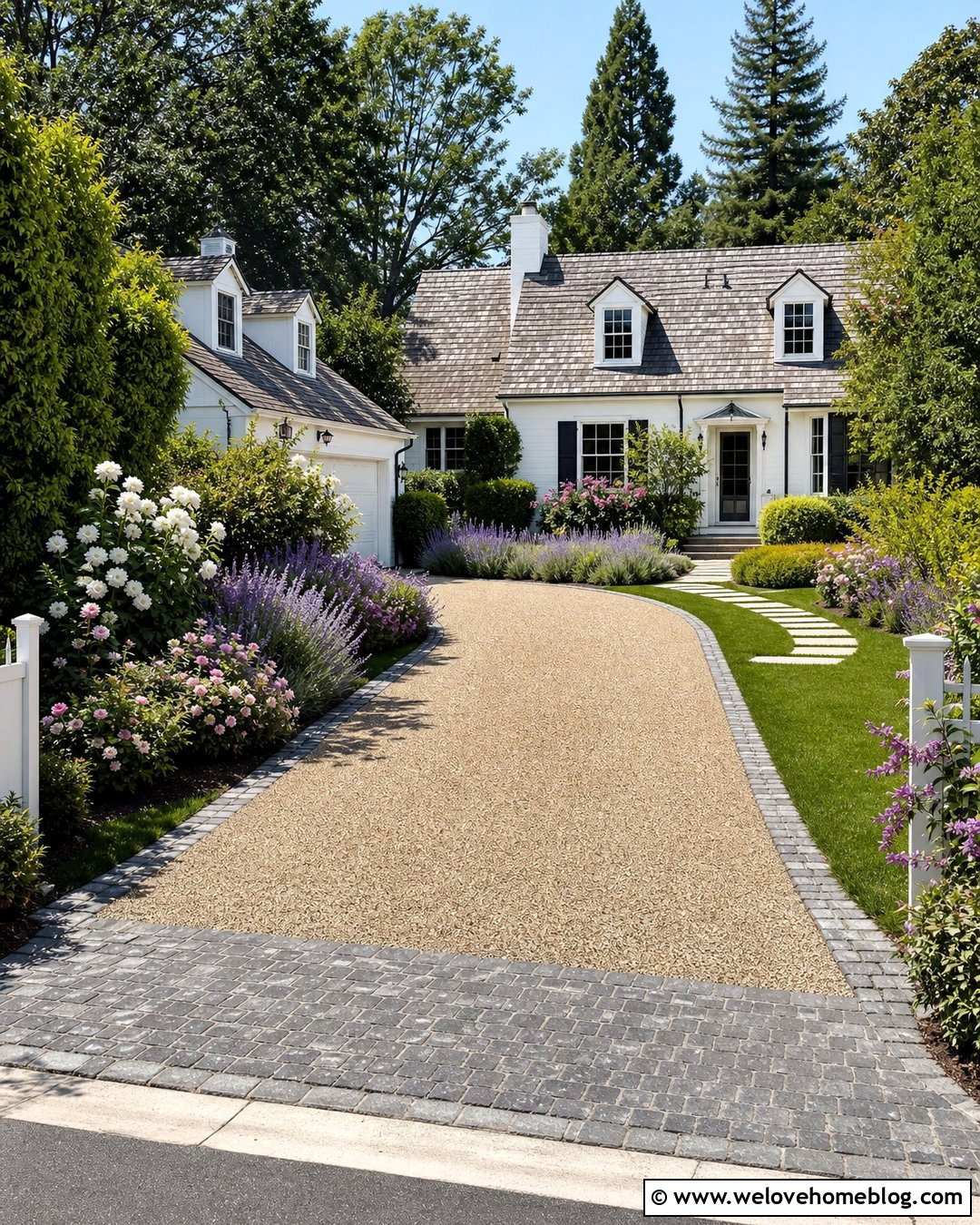
Warm pea gravel creates a relaxed driveway that feels appropriate beside cottages, farmhouses, and informal country homes. Give the loose material a strong framework with dark cobblestone edging installed along both sides and across the entrance apron. A softly curved layout adds character and prevents a long driveway from resembling a narrow runway. Plant lavender, catmint, compact roses, and low evergreen shrubs beyond the stone border. Their soft forms balance the gravel while keeping the driving area clearly defined. Include a matching stepping-stone path that leads from the parking area to the porch. Because rounded gravel can shift, use an appropriate compacted base and consider a stabilizing grid. The finished driveway should appear casual but remain organized, contained, and easy to navigate.
10. Concrete Driveway With Paver Ribbons
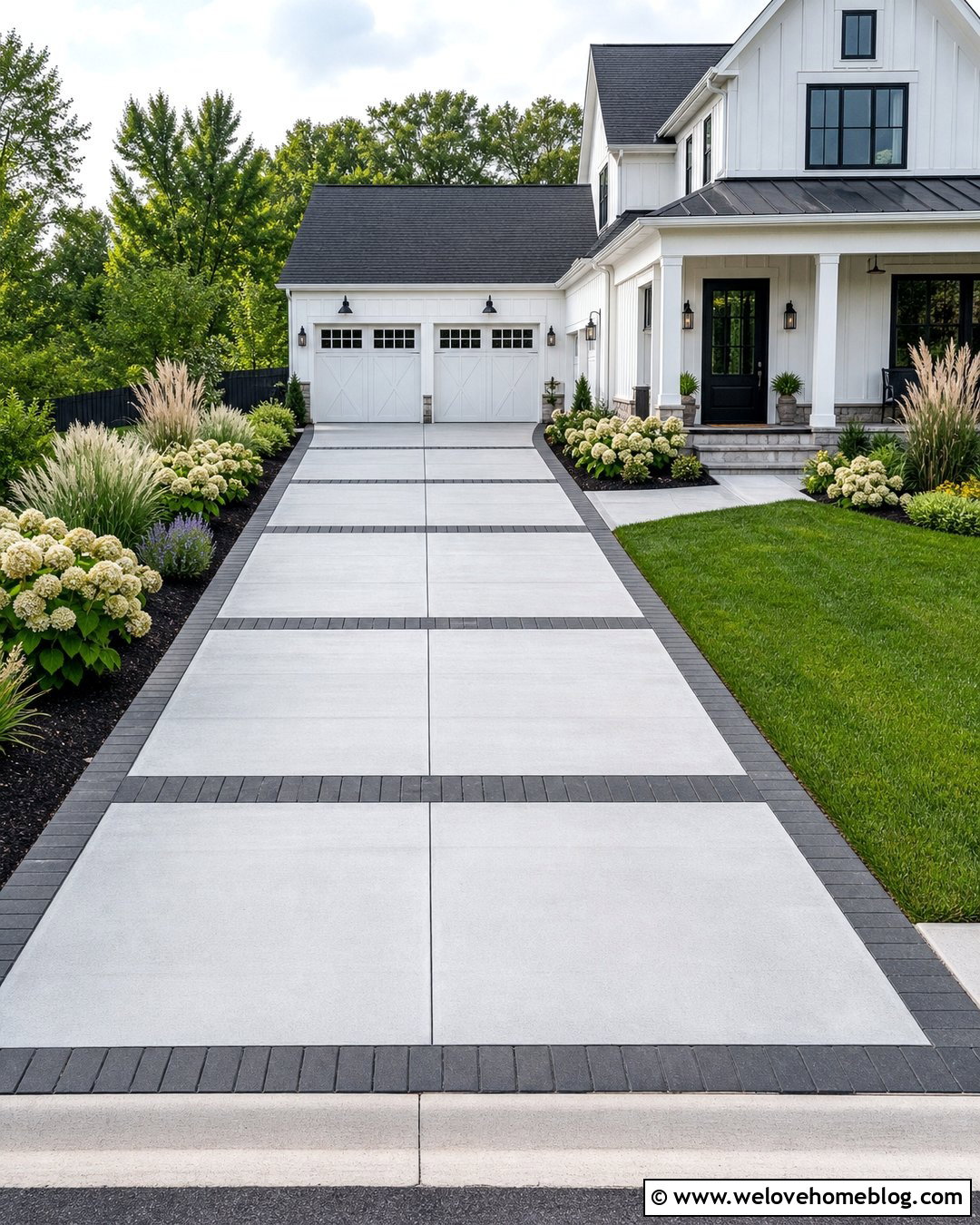
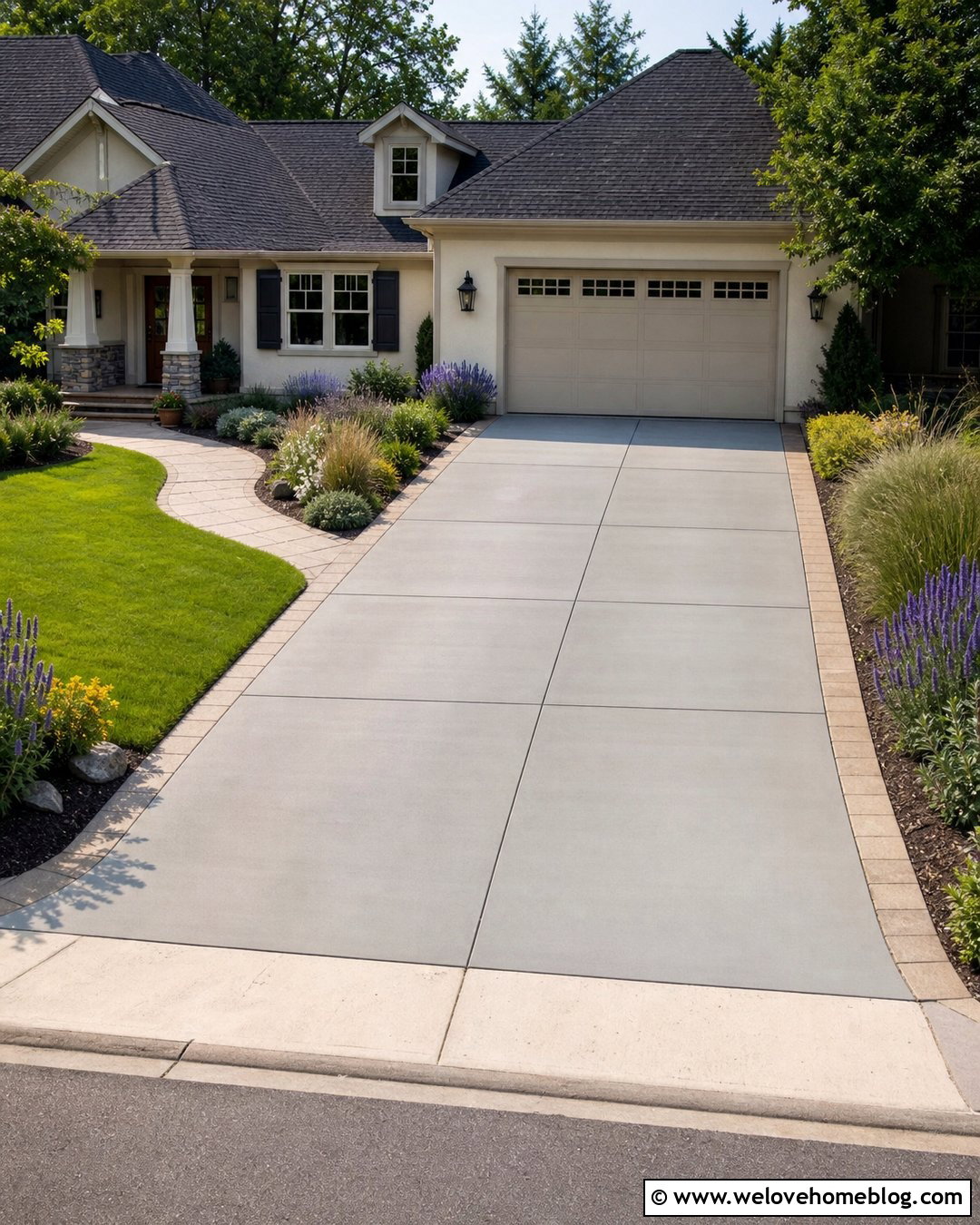
A poured concrete driveway gains definition from narrow paver ribbons placed across or along the surface. Use smooth light-gray concrete panels with charcoal concrete pavers forming regular crossbands. The bands visually break up a long driveway and can align with architectural details such as windows, columns, or garage doors. For a modern farmhouse, add black metal lighting, white siding, and simple rectangular planting beds filled with hydrangeas and grasses. A straight layout keeps the mixed-material design orderly. Continue one paver band into the walkway to make the entrance feel connected. Keep the accent pattern limited to a few purposeful lines, since too many bands can make parking areas look fragmented. Coordinate reinforcement, joints, borders, and material thicknesses before the concrete is placed.
11. Charcoal Paver Driveway With Light Border
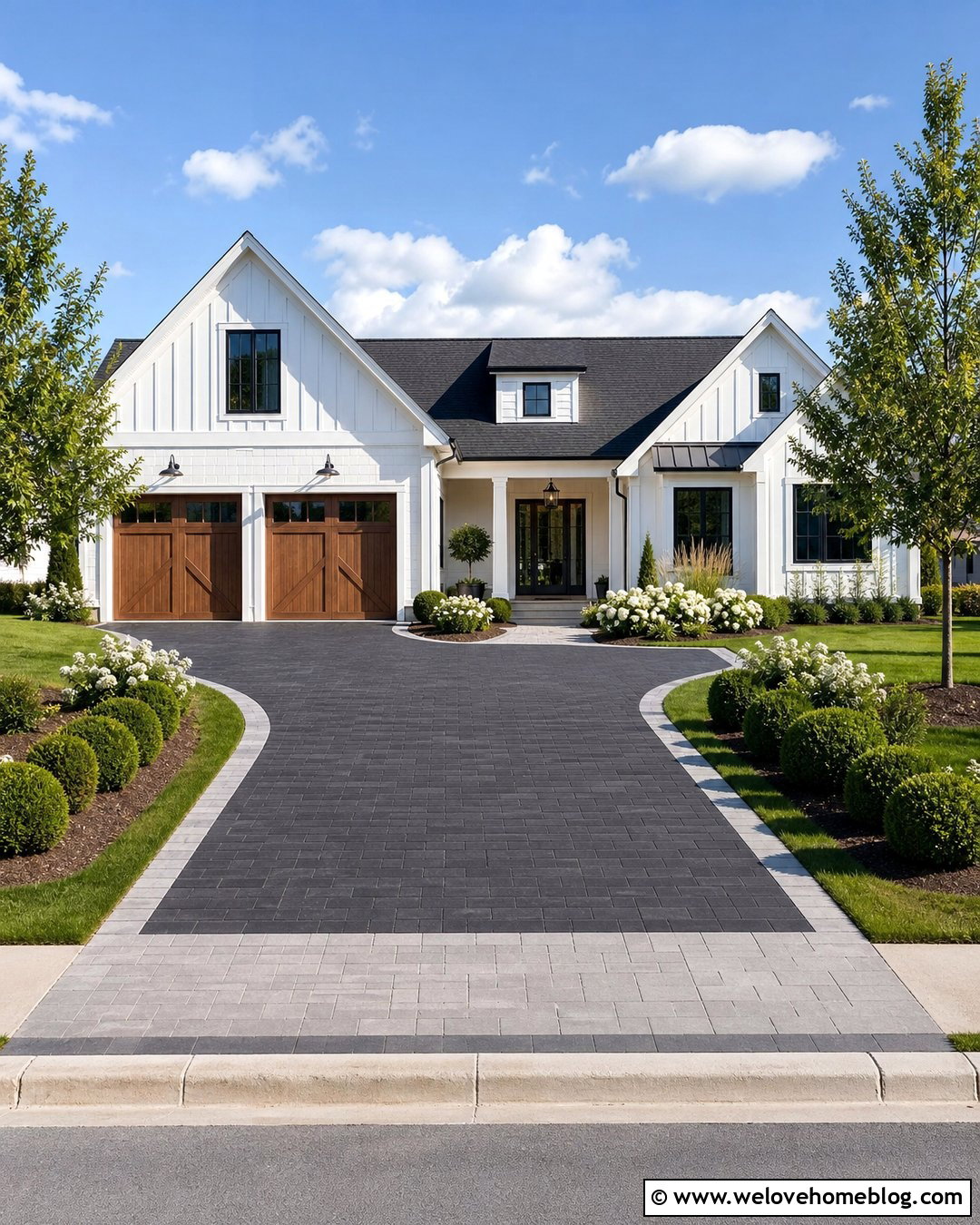
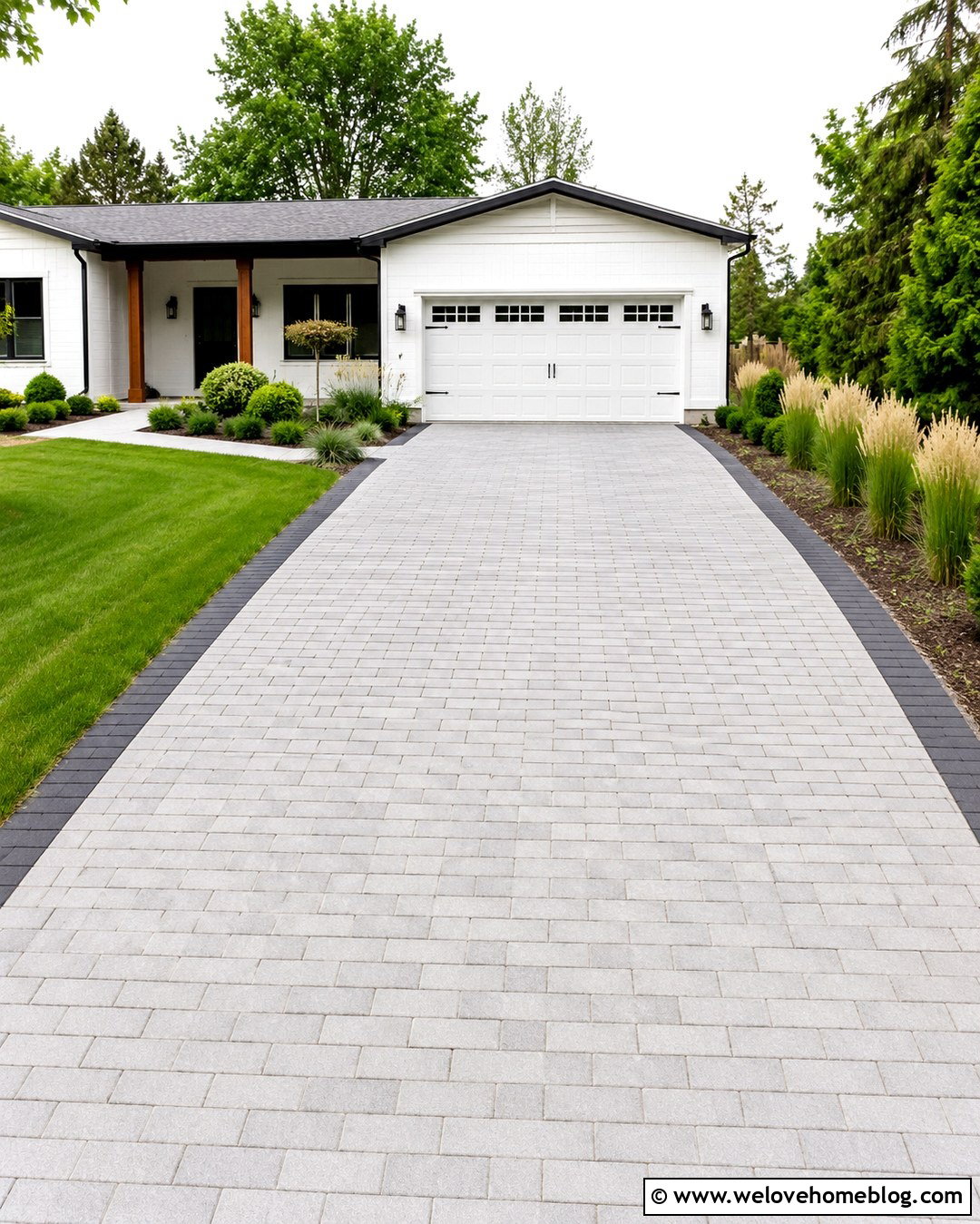
Dark charcoal pavers create a dramatic foreground for a white, cream, or pale wood house. To prevent the paving from feeling heavy, frame it with a wide light-gray border and generous green landscaping. Large rectangular concrete pavers laid in a running bond work well on a straight or slightly flared driveway. Repeat the light border around the garage threshold and front walkway. On both sides, use clipped shrubs, soft grasses, and a neatly maintained lawn to brighten the approach. Warm wood garage doors can keep the black-and-white palette from appearing cold. This design is especially effective for contemporary and modern farmhouse architecture. Test dark pavers in direct sun before committing, and choose finishes and colors suited to the property’s climate and maintenance requirements.
12. Travertine Paver Driveway With Palm Landscaping
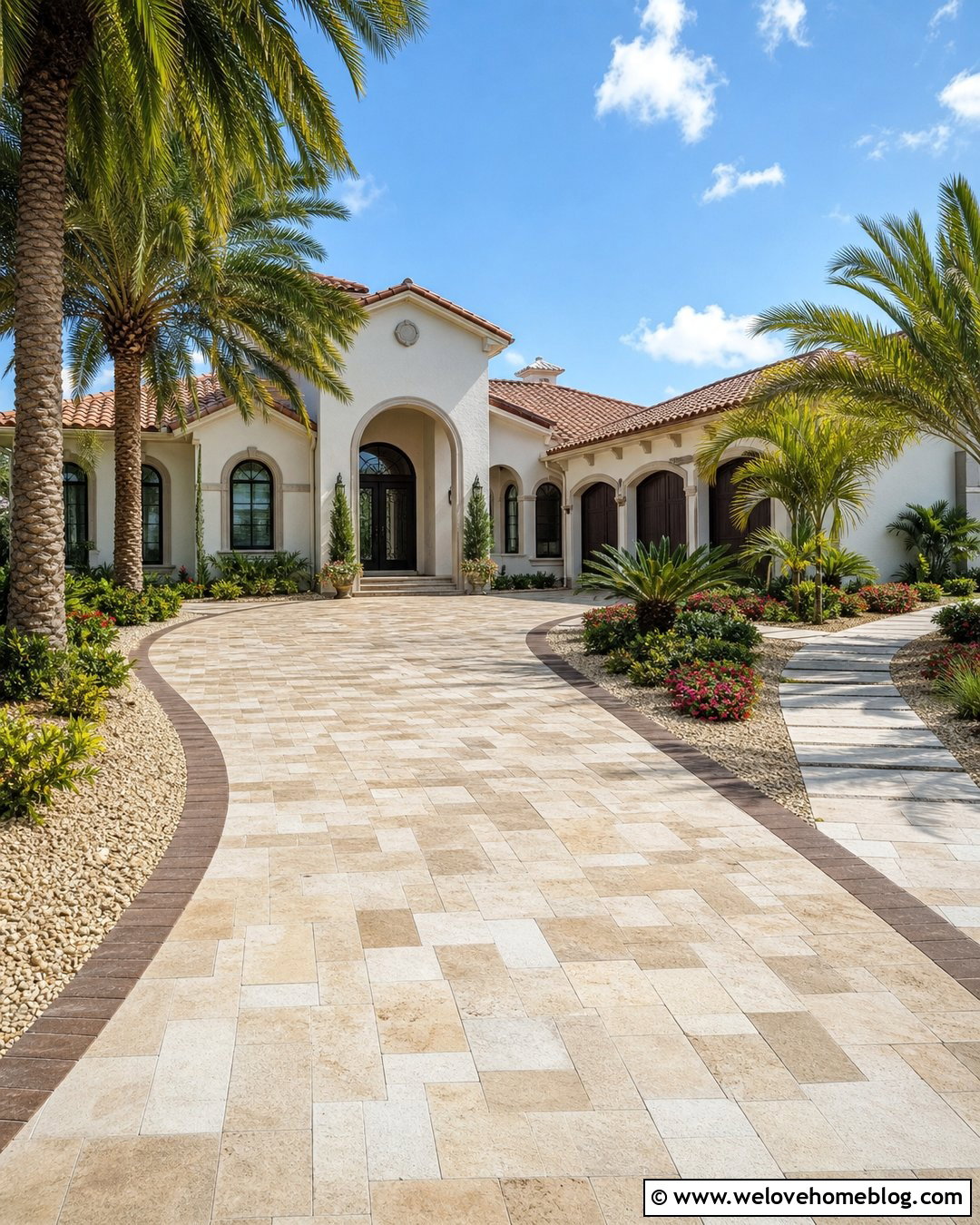
Cream and beige travertine pavers can create a bright driveway for Mediterranean, Spanish, and warm-climate homes. Select thick pavers rated for driveway use and arrange them in a varied ashlar pattern. A warm charcoal or brown border provides enough contrast to define the surface without competing with the stone. Use a broad curved layout framed by palms, cycads, flowering shrubs, and pale gravel mulch. Terracotta roof tiles, stucco walls, and dark wood garage doors complete the coordinated palette. Keep planting beds set back from turning zones so fronds and foliage do not narrow the driveway. Because natural stone can vary noticeably, review several pallets before installation and blend pieces across the project. The result should feel sunlit, refined, and connected to the home’s architecture.
13. Basalt Paver Driveway With Minimal Landscaping
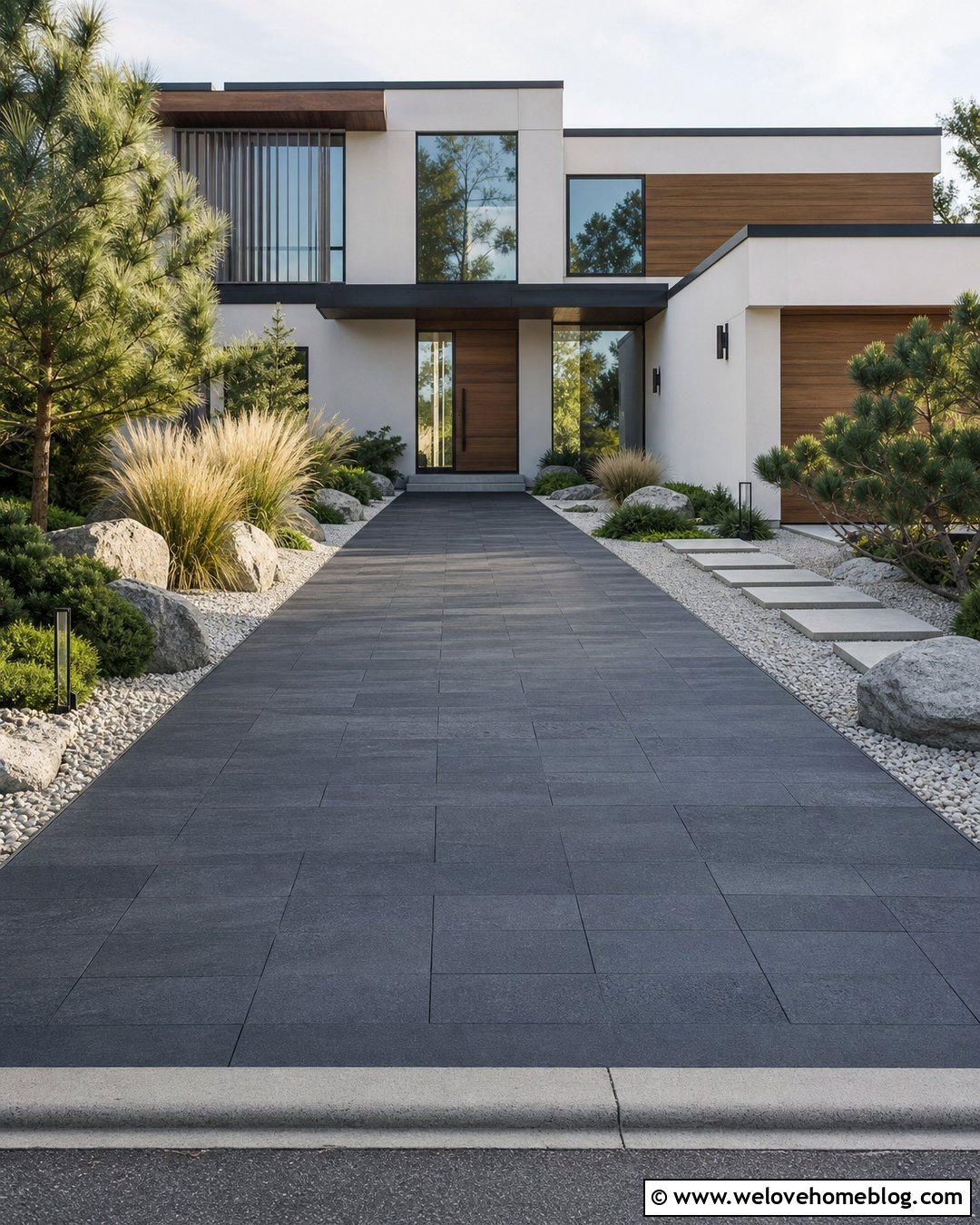
Dark basalt paving gives a driveway a sharp, architectural appearance. Large rectangular basalt units can be installed in a linear pattern that directs the eye toward a modern home. Use a flush steel or dark concrete edge so the border nearly disappears into the design. Beside the driveway, create narrow beds with pale gravel, feather reed grass, dwarf pines, and a few sculptural boulders. This restrained landscaping supplies contrast without weakening the paving’s clean geometry. A concrete walkway and stepping pads can introduce a lighter tone near the front door. Basalt’s rich color looks especially effective beside cedar, glass, and smooth white stucco. Specify a surface texture suitable for exterior vehicle and pedestrian areas, and make sure the finished paving follows a carefully planned drainage slope.
14. Concrete Slab Driveway With Grass Strips
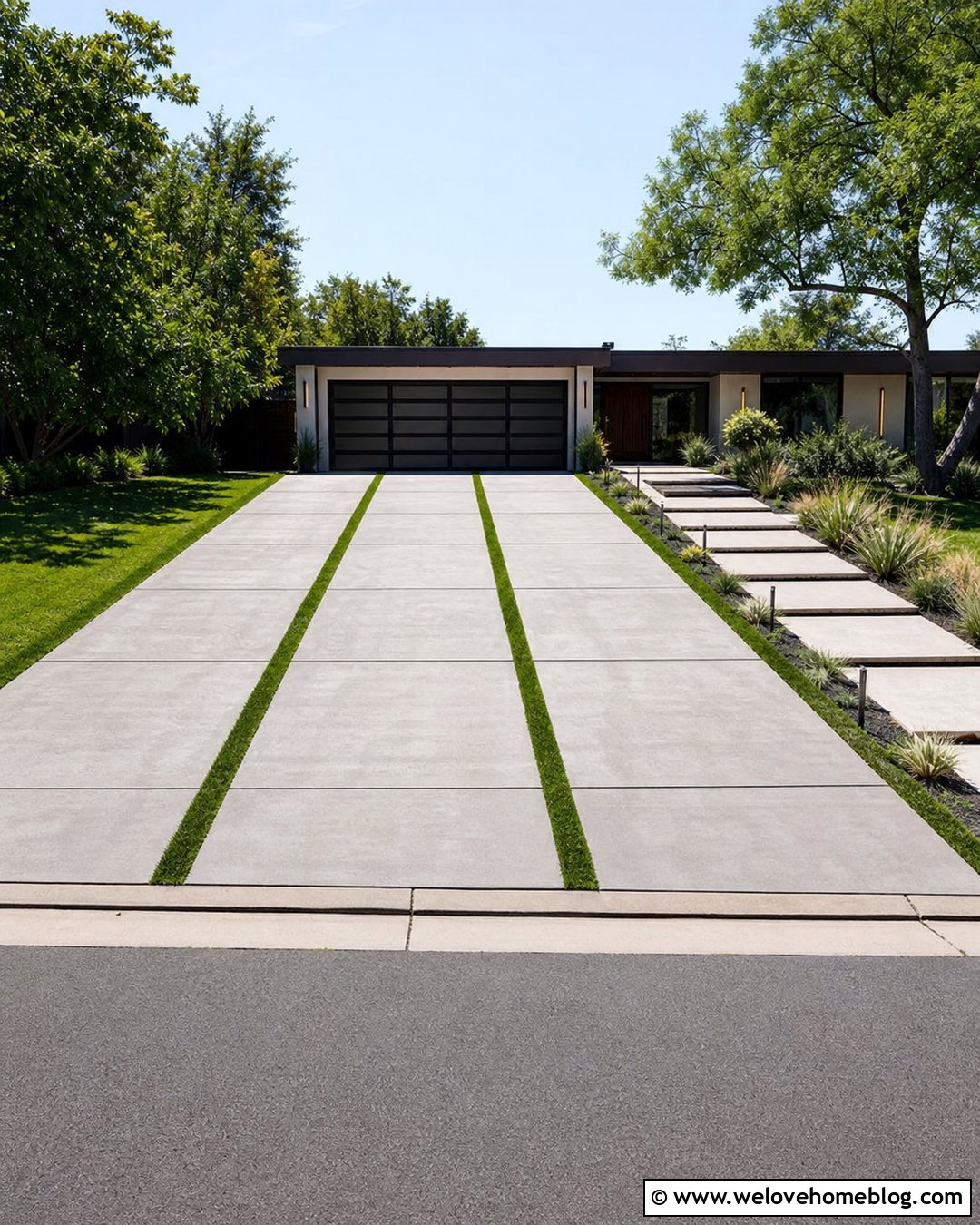
Wide concrete slabs separated by grass strips create a lighter alternative to one uninterrupted paved area. Use smooth gray poured concrete in two or three driving lanes, with narrow planted channels arranged between them. This layout suits a straight driveway leading to a modern, midcentury, or low-profile ranch home. Continue the geometric rhythm into the front walkway using concrete stepping slabs. Frame the sides with low ornamental grasses, compact shrubs, and broad areas of lawn. The planted strips should be positioned where vehicle tires will not repeatedly damage them. In dry regions, replace conventional lawn with a durable local ground cover or decorative aggregate. Crisp edging and consistent spacing are essential. Without those details, the design may look unfinished rather than intentionally minimal and green.
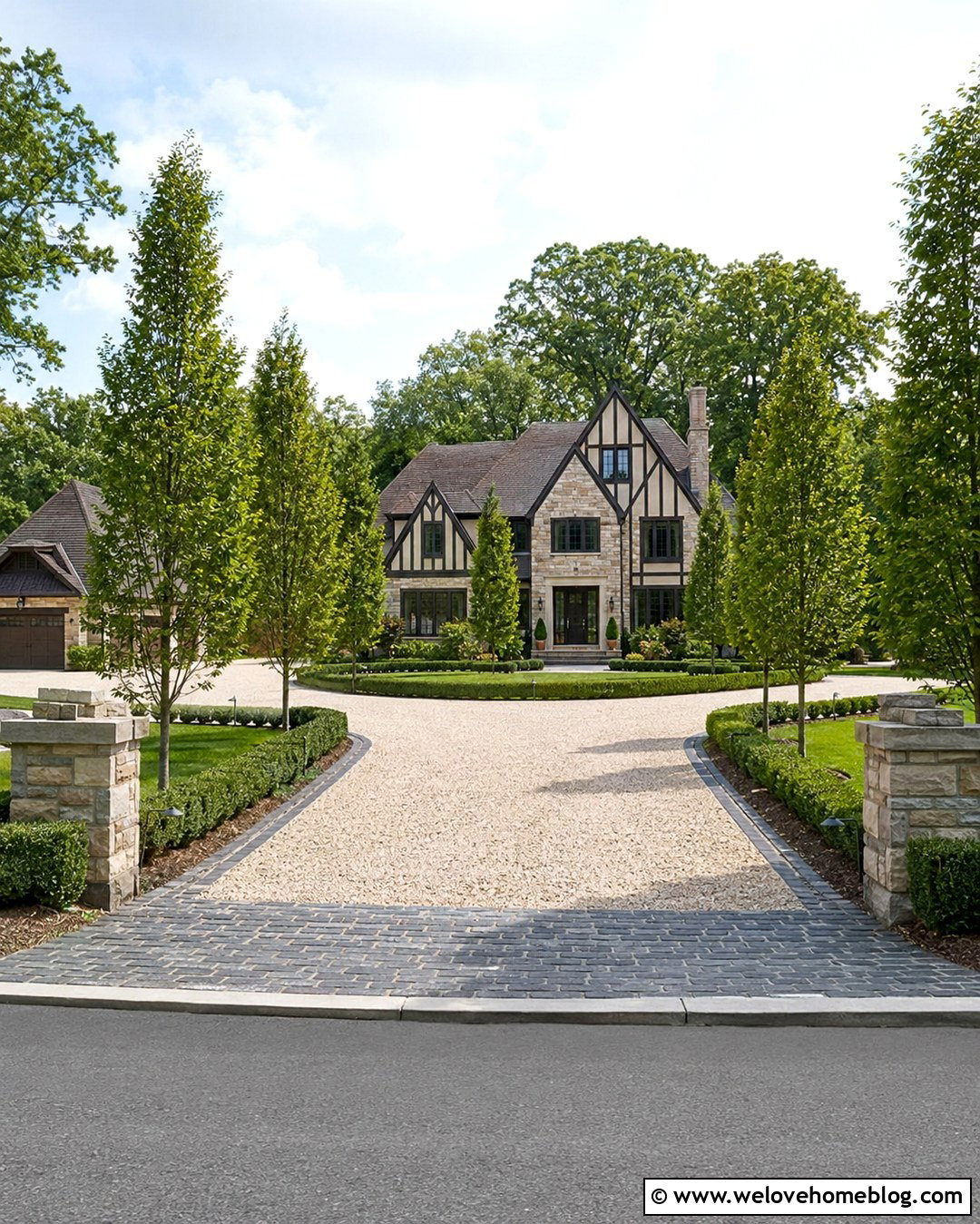
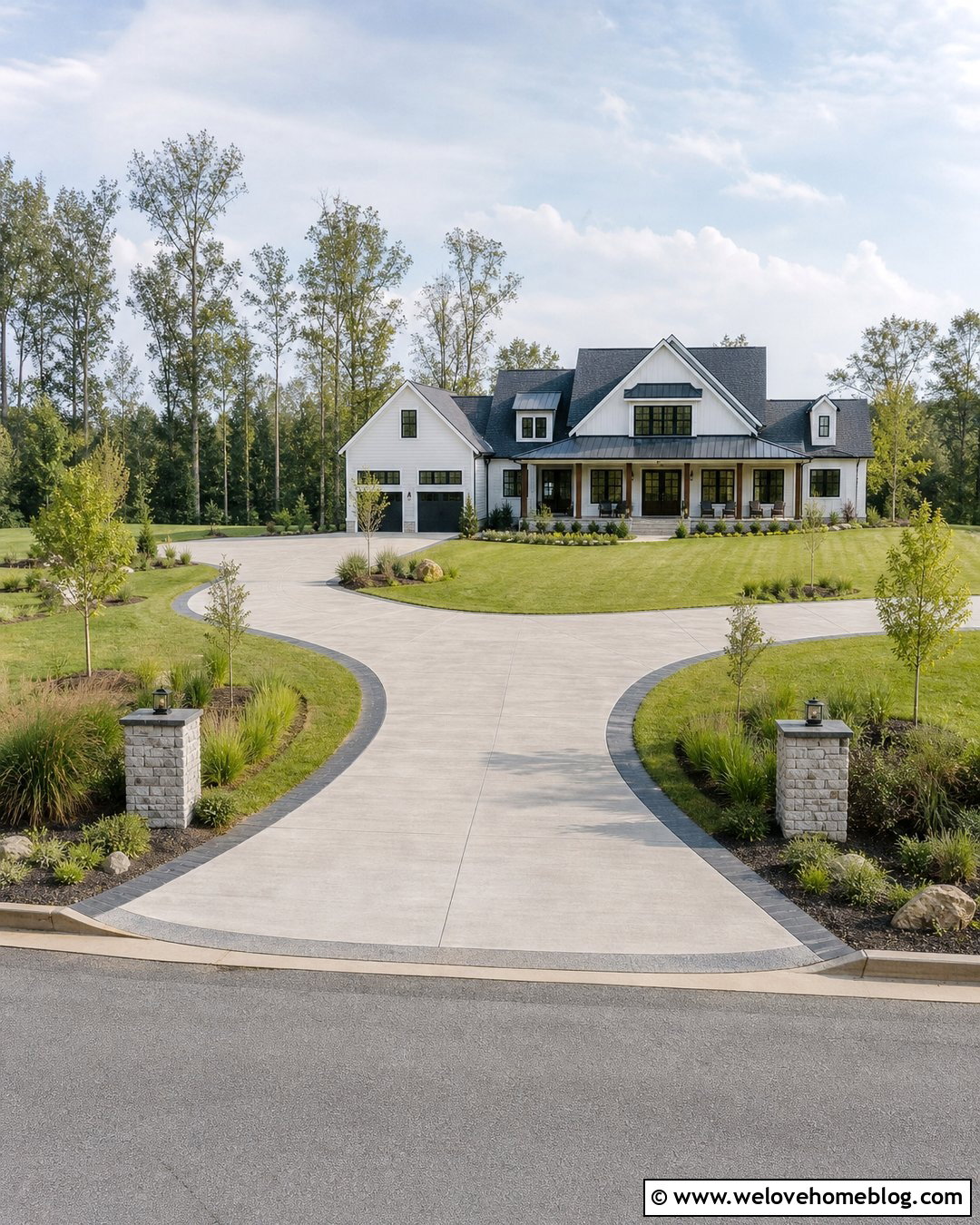
15. Fan Pattern Paver Driveway
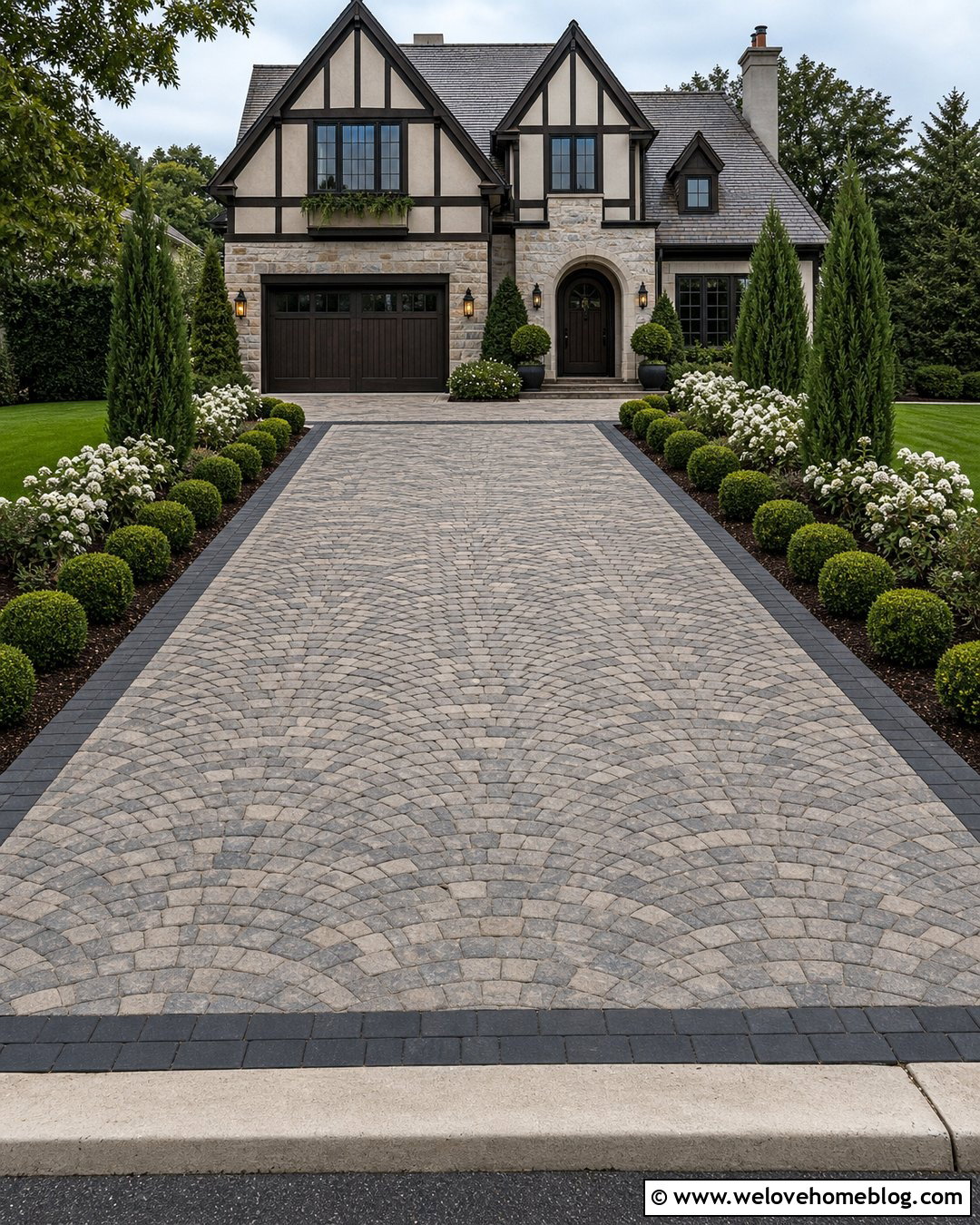
A fan pattern brings gentle curves and visual movement to a paved driveway. Small concrete or natural-stone pavers in blended gray and taupe tones work particularly well because they emphasize the repeating arcs. Use the pattern across a broad driveway leading to a Tudor, European-inspired, or traditional brick home. A single dark paver border should contain the detailed field without adding another complicated motif. Plant clipped boxwoods, white roses, and upright evergreens along the edges for an orderly landscape that balances the curved pattern. At the garage, use a straight border course to create a neat transition. Since fan layouts require many carefully fitted units, the pattern should be planned around the driveway’s width, curves, apron, and edges before installation begins.
16. Running Bond Paver Driveway
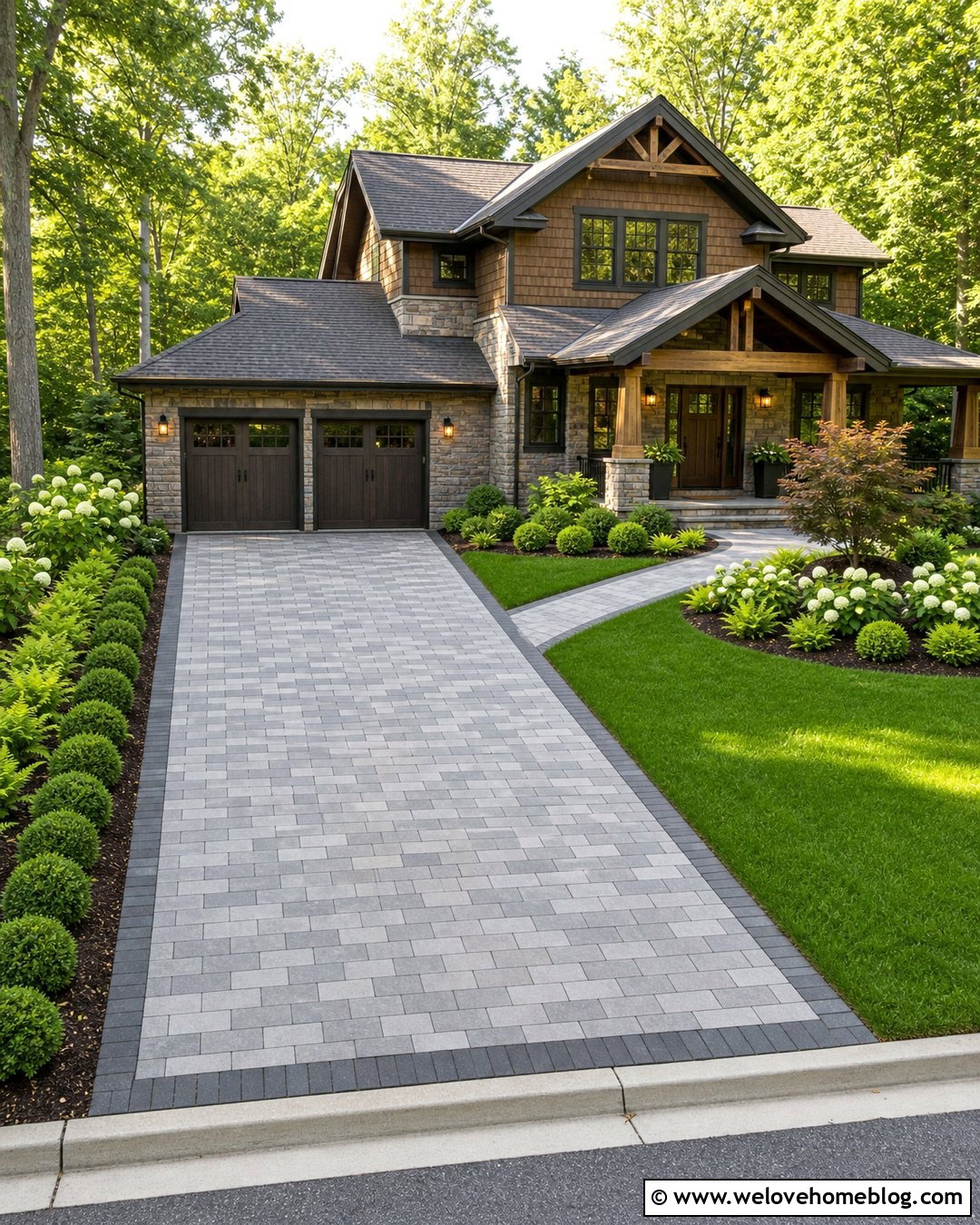
A running bond pattern is simple enough for large surfaces but still gives a driveway visible texture. Choose long rectangular concrete pavers in two closely related gray tones and orient the rows toward the garage. The linear direction can make a short driveway appear deeper and more organized. Add a contrasting soldier-course border in charcoal to create a strong outline. For a craftsman home, pair the paving with stone porch columns, warm wood details, and planting beds filled with ferns, hydrangeas, and rounded shrubs. A matching paver walkway can branch from one side without interrupting parking. Keep the color blend subtle so the pattern remains calm. Careful cuts along curved or flared edges will determine whether the finished surface feels polished or unnecessarily busy.
17. Basketweave Brick Driveway
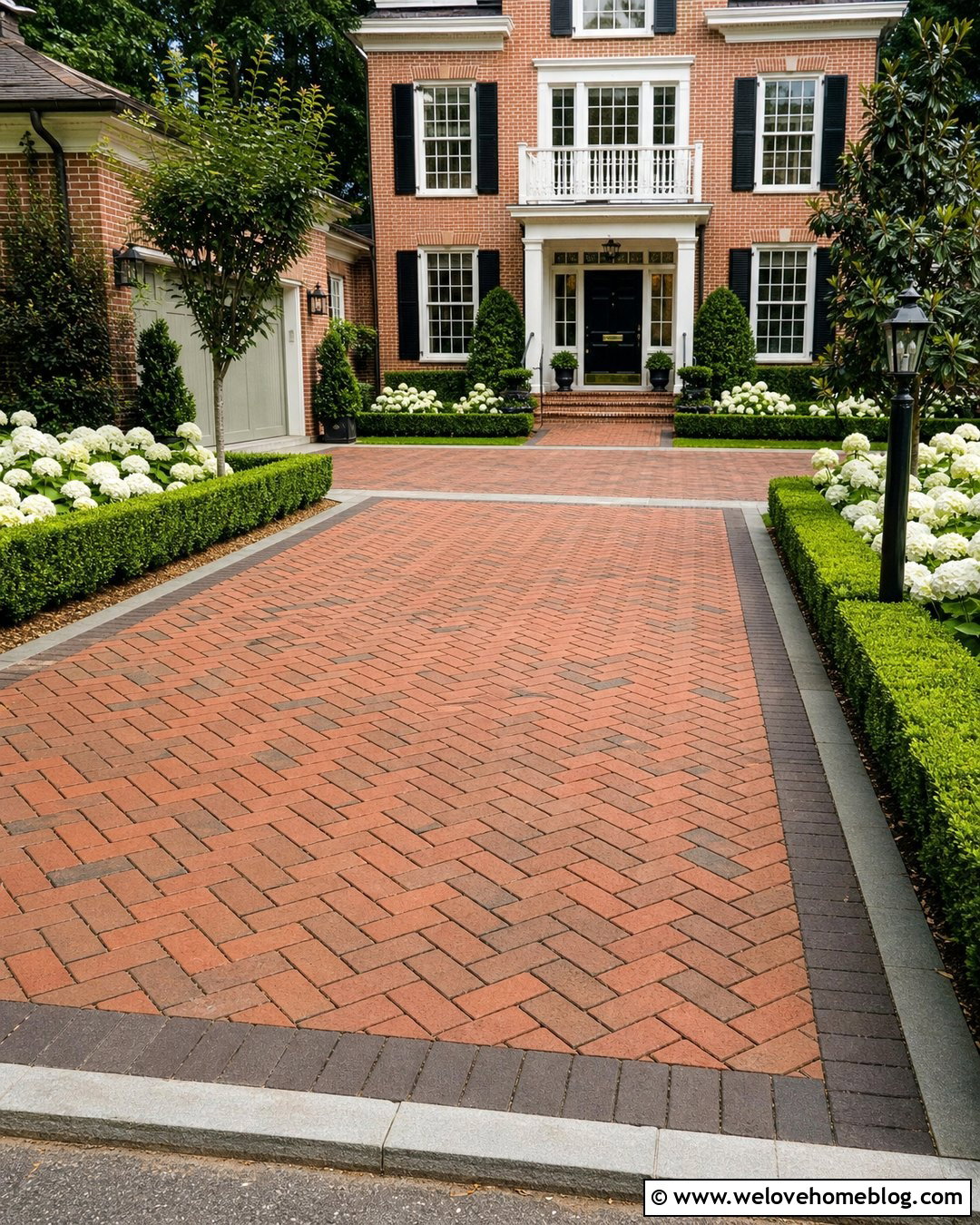
Basketweave brick paving creates a traditional surface with more visual detail than a basic running bond. Use red and brown clay brick pavers arranged in paired blocks, then surround the field with a darker brick border. A compact straight driveway is ideal because the repeating pattern remains easy to see from the curb. Pair it with a brick Colonial, Georgian, or cottage-style home, and repeat the material in the front walkway. Low boxwood hedges and white flowering plants provide a clean landscape frame without competing with the brickwork. At the street, install a clearly defined apron that handles the transition from public pavement to the patterned driveway. Use driveway-rated bricks and an installation system designed for local soil, weather, drainage, and vehicle loads.
18. Sandstone Paver Driveway With Cottage Garden
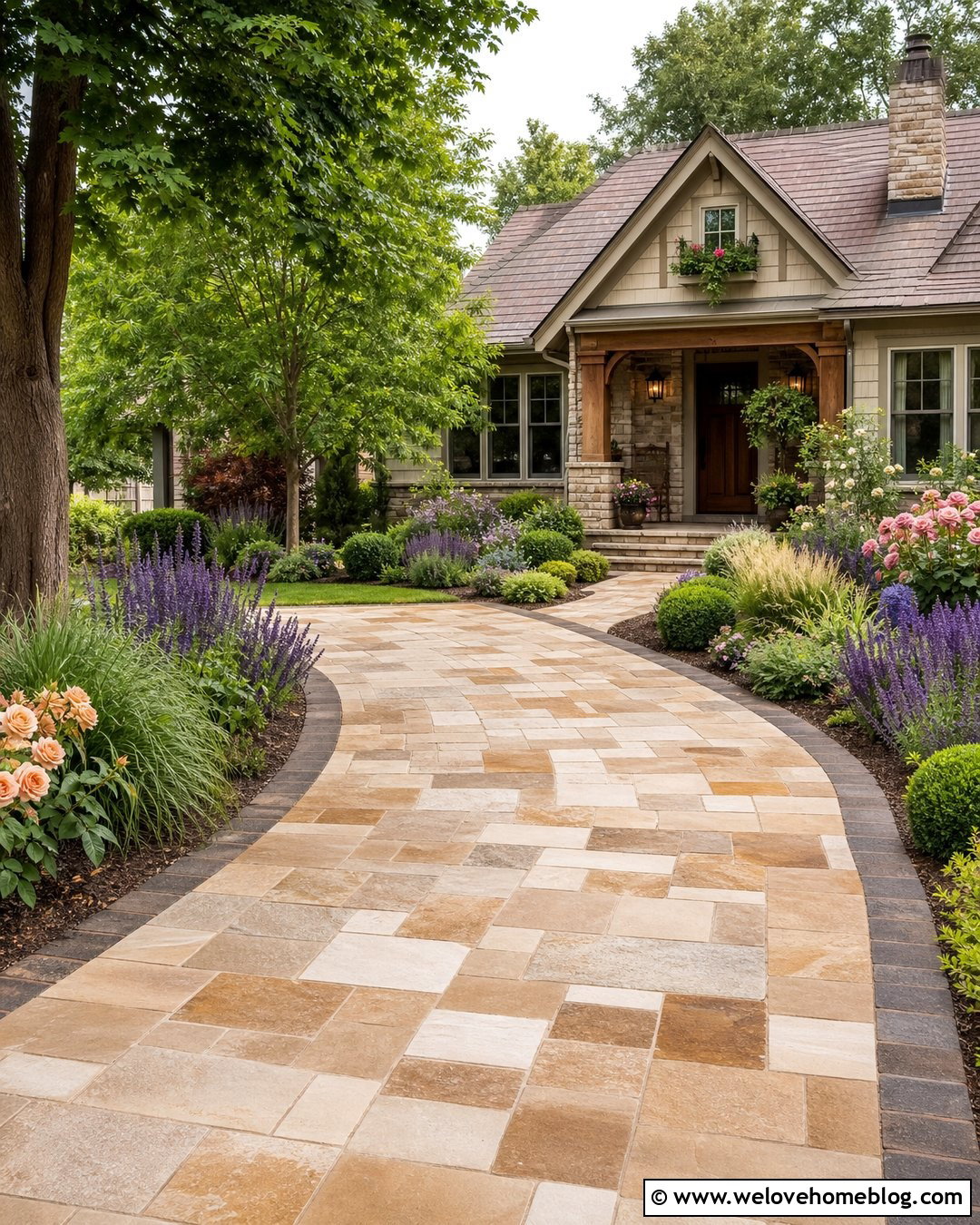
Natural sandstone pavers in cream, buff, and soft brown tones create a welcoming driveway beside a cottage or craftsman home. Arrange mixed rectangular pieces in an ashlar layout to showcase the color variation without creating a chaotic pattern. Define the edges with a narrow row of darker sandstone setts. Curved planting beds can follow the driveway and hold lavender, salvia, ornamental grasses, roses, and compact shrubs. Keep mature plant widths in mind so flowers do not spread into parking space. A matching sandstone path should lead naturally toward the porch, while lawn fills the remaining open areas. Blend the stone from multiple pallets during installation for an even distribution of tones. The complete setting should feel relaxed, established, and carefully connected to the garden.
19. Porcelain Paver Driveway With Modern Borders
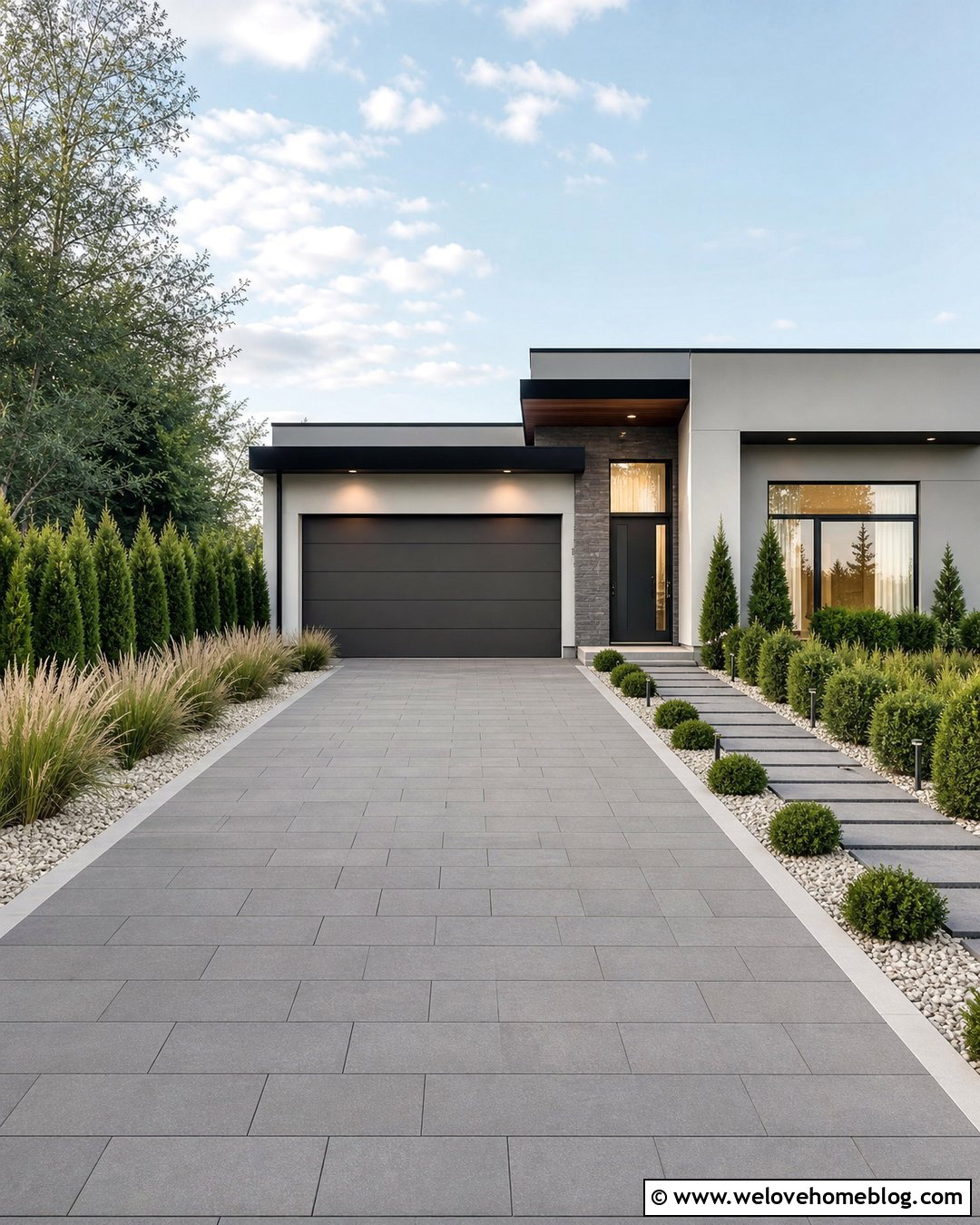
Driveway-rated outdoor porcelain pavers offer a precise appearance for contemporary properties. Choose large charcoal or warm-gray units with a subtle stone finish, then install them in a staggered linear pattern. A pale concrete border can outline the surface and improve its visibility beside dark planting beds. Use a straight driveway leading to a flat-roofed or box-shaped modern home with white stucco and wood accents. Narrow landscape beds filled with clipped evergreens, grasses, and light gravel reinforce the controlled design. Continue the same porcelain into a pedestrian route only where the layout remains visually clear. Porcelain products and installation methods vary, so confirm that every component is intended for vehicular use. Accurate cutting, base preparation, drainage, and edge support are essential to the finished result.
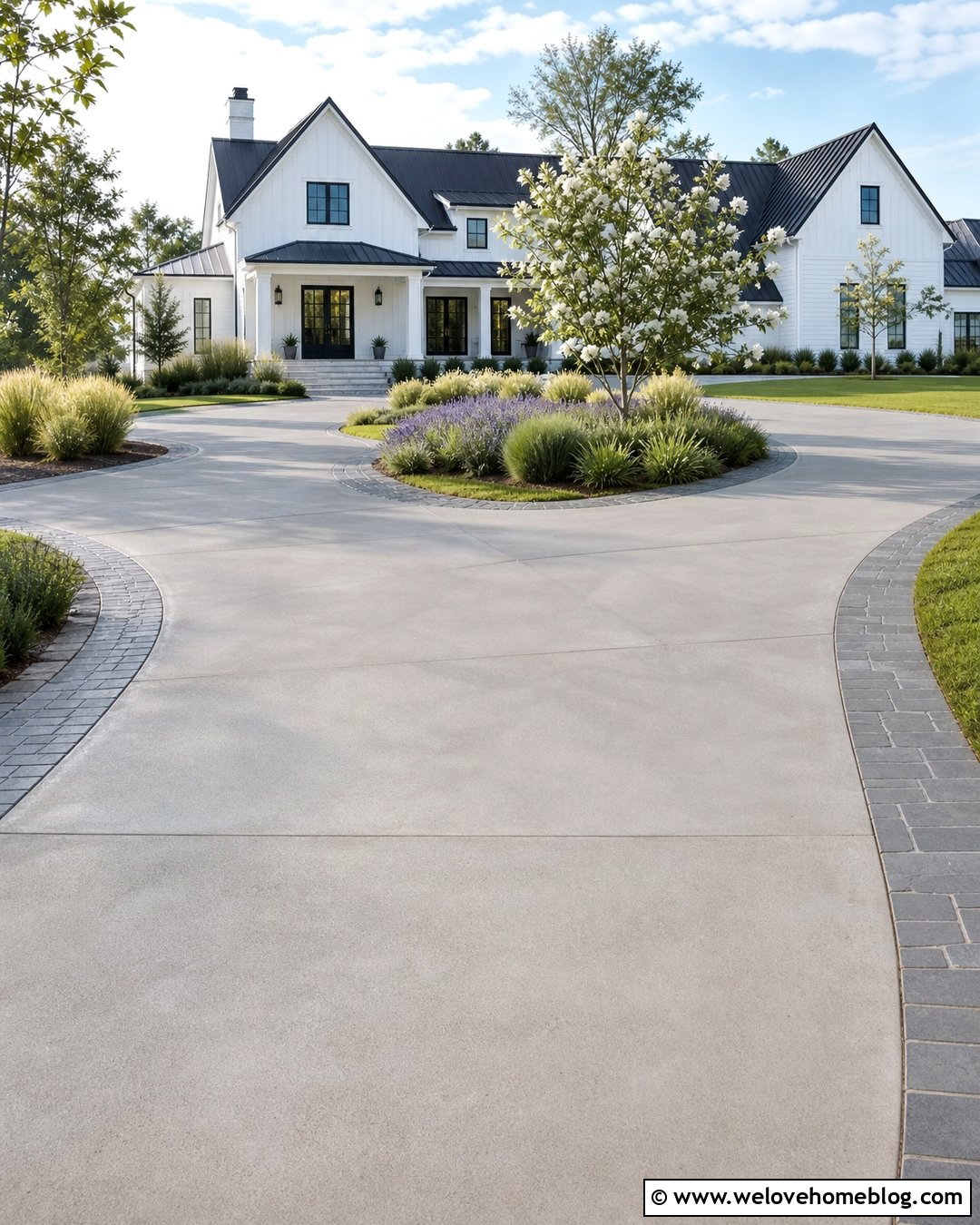
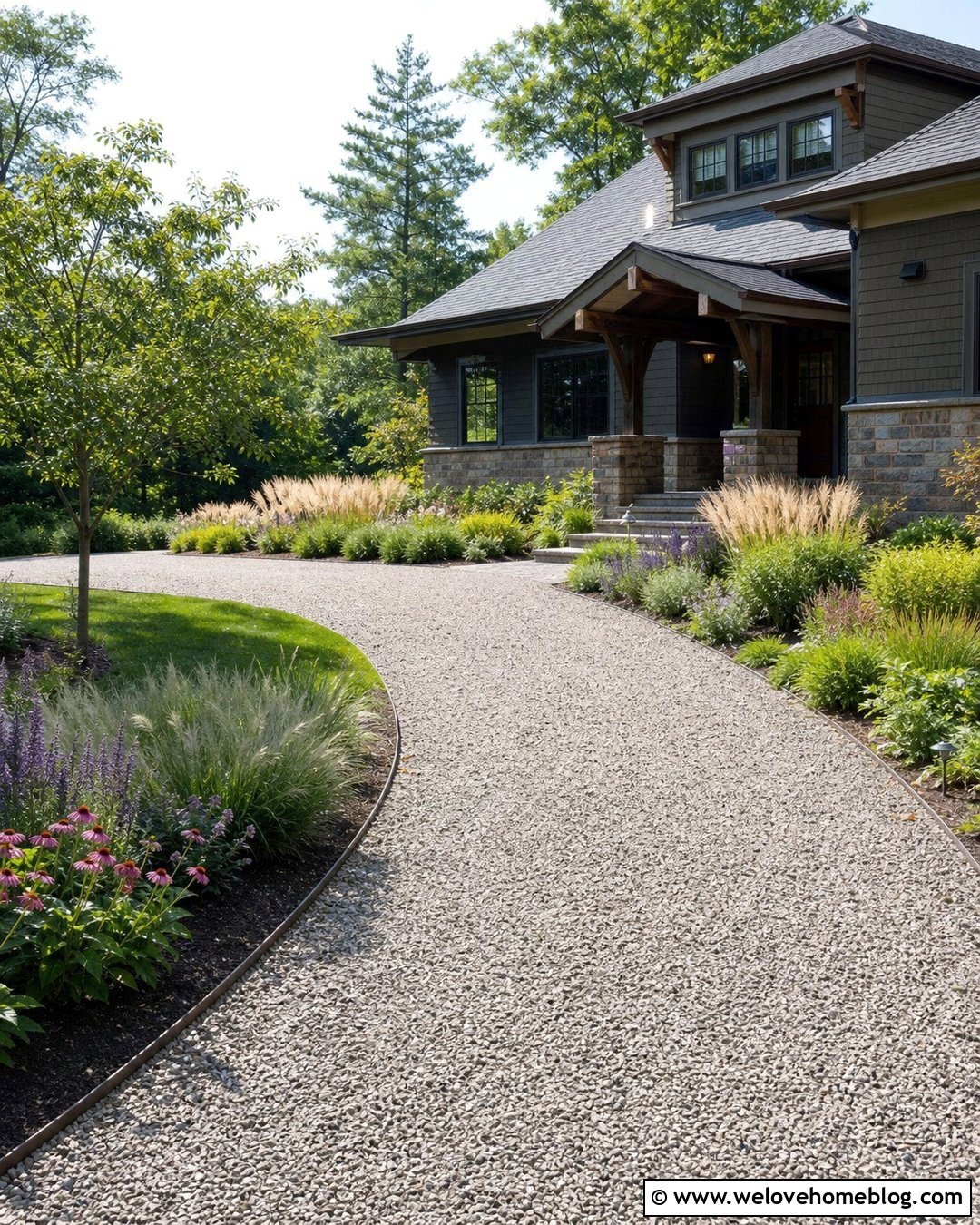
20. Bluestone Driveway With Brick House
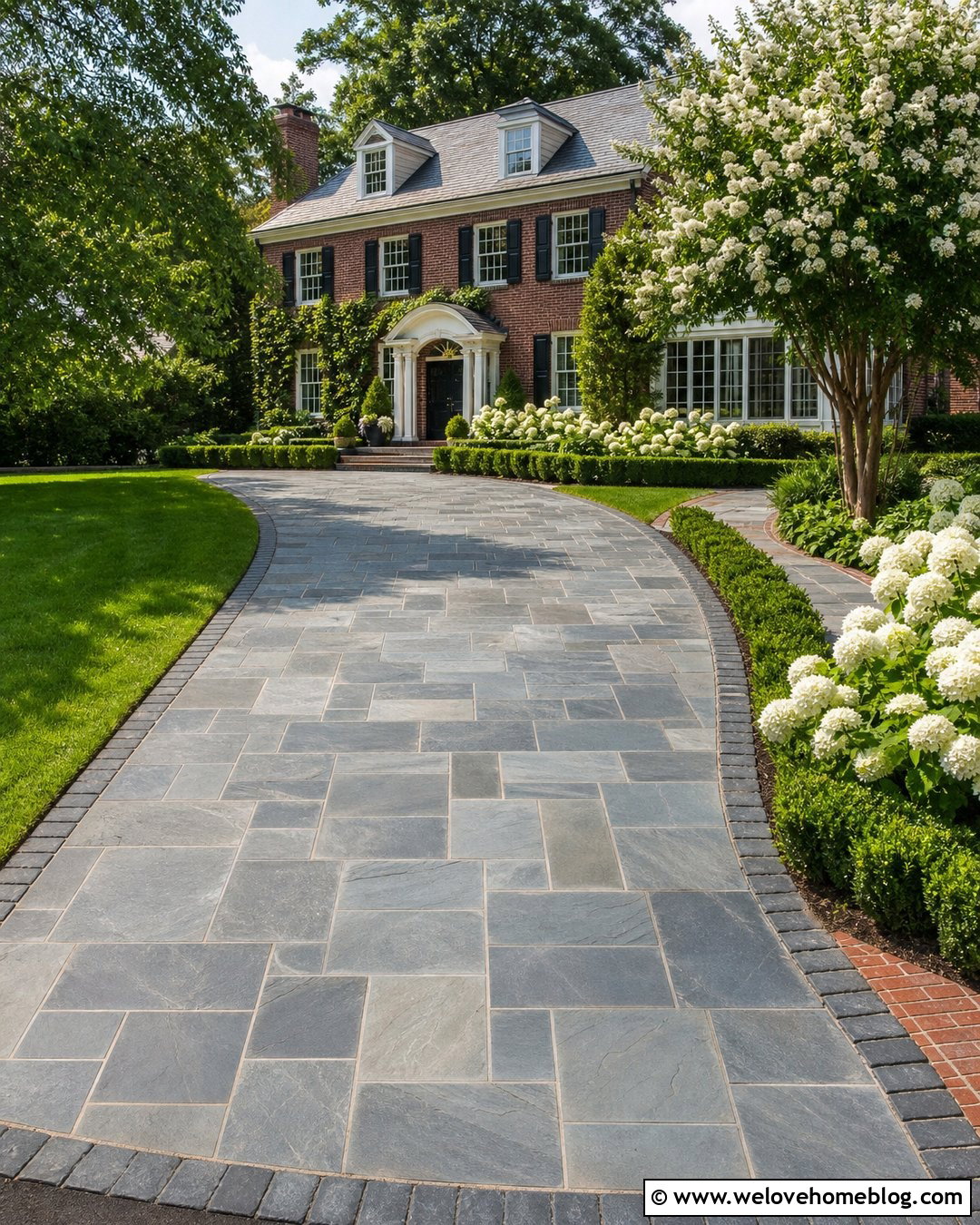
Blue-gray natural stone paving creates a refined connection to a traditional red brick house. Use thick bluestone pavers in a rectangular ashlar layout, mixing several sizes to avoid long, uninterrupted joints. A charcoal Belgian block border can define a curved driveway and echo the darker tones in the roof. Between the driveway and house, add deep beds containing boxwood, hydrangeas, and a small flowering tree. A bluestone walkway with brick edging can reverse the driveway’s material combination and create subtle continuity. Keep the color palette limited to brick red, blue-gray, green, and white. Because natural bluestone varies in texture and tone, review samples in outdoor light. Choose an exterior finish and structural installation appropriate for vehicles, freezing conditions, and the site’s drainage needs.
21. Limestone Paver Driveway With Formal Hedges
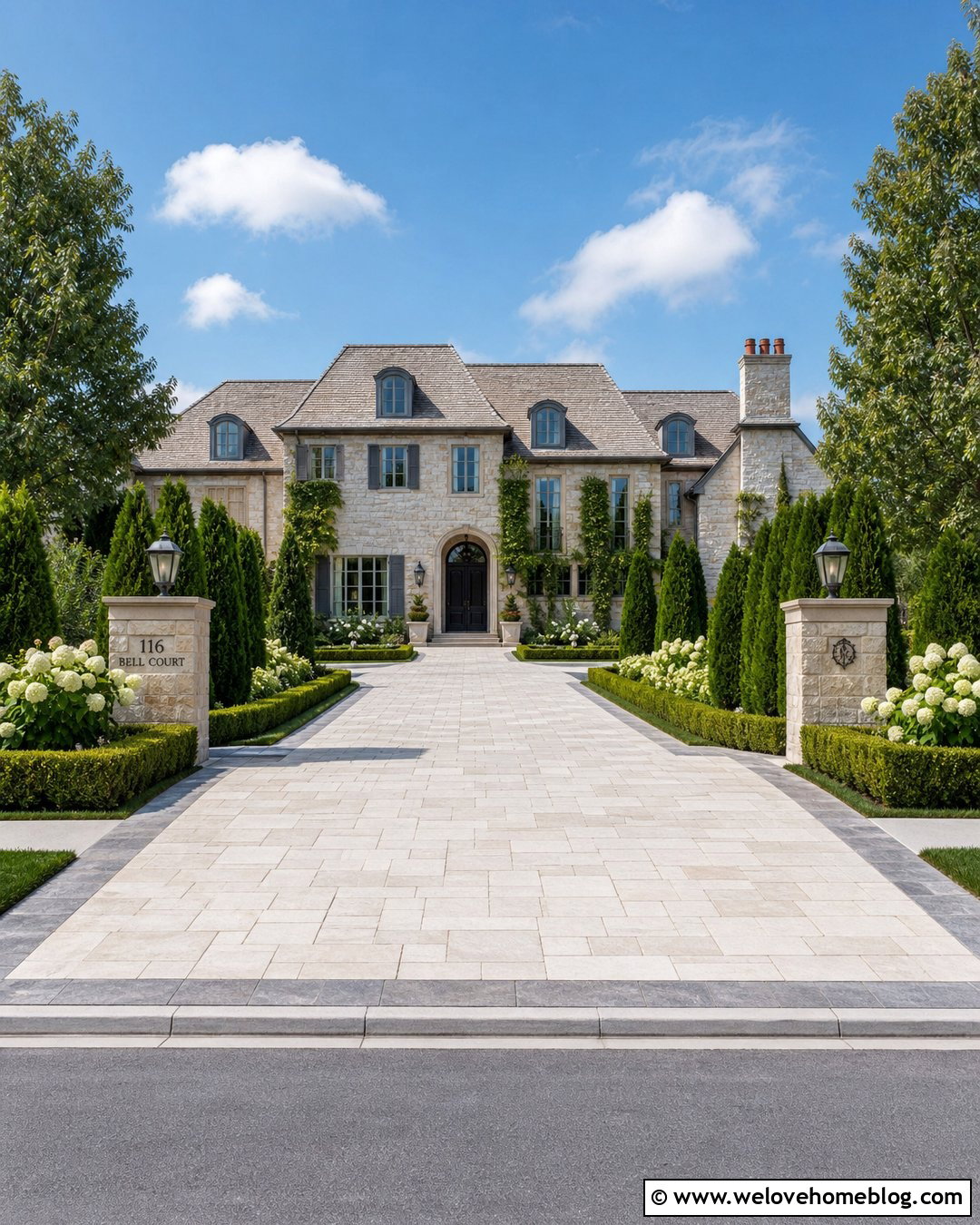
Pale limestone pavers make a large driveway feel bright and elegant, particularly beside French country, Mediterranean, or light-stone homes. Lay rectangular pavers in a varied ashlar pattern and use a darker limestone border to sharpen the outline. A symmetrical straight driveway works well with formal architecture and evenly spaced garage doors. On each side, plant low clipped hedges backed by white roses, hydrangeas, or columnar evergreens. Simple stone entry pillars can repeat the facade material without becoming oversized. Keep the landscape green and restrained so the limestone’s natural variation remains visible. Select dense stone intended for exterior paving and local weather conditions. The driveway should also be designed with suitable jointing, base support, slope, and drainage rather than chosen only for its color.
22. Concrete Driveway With Brick Apron
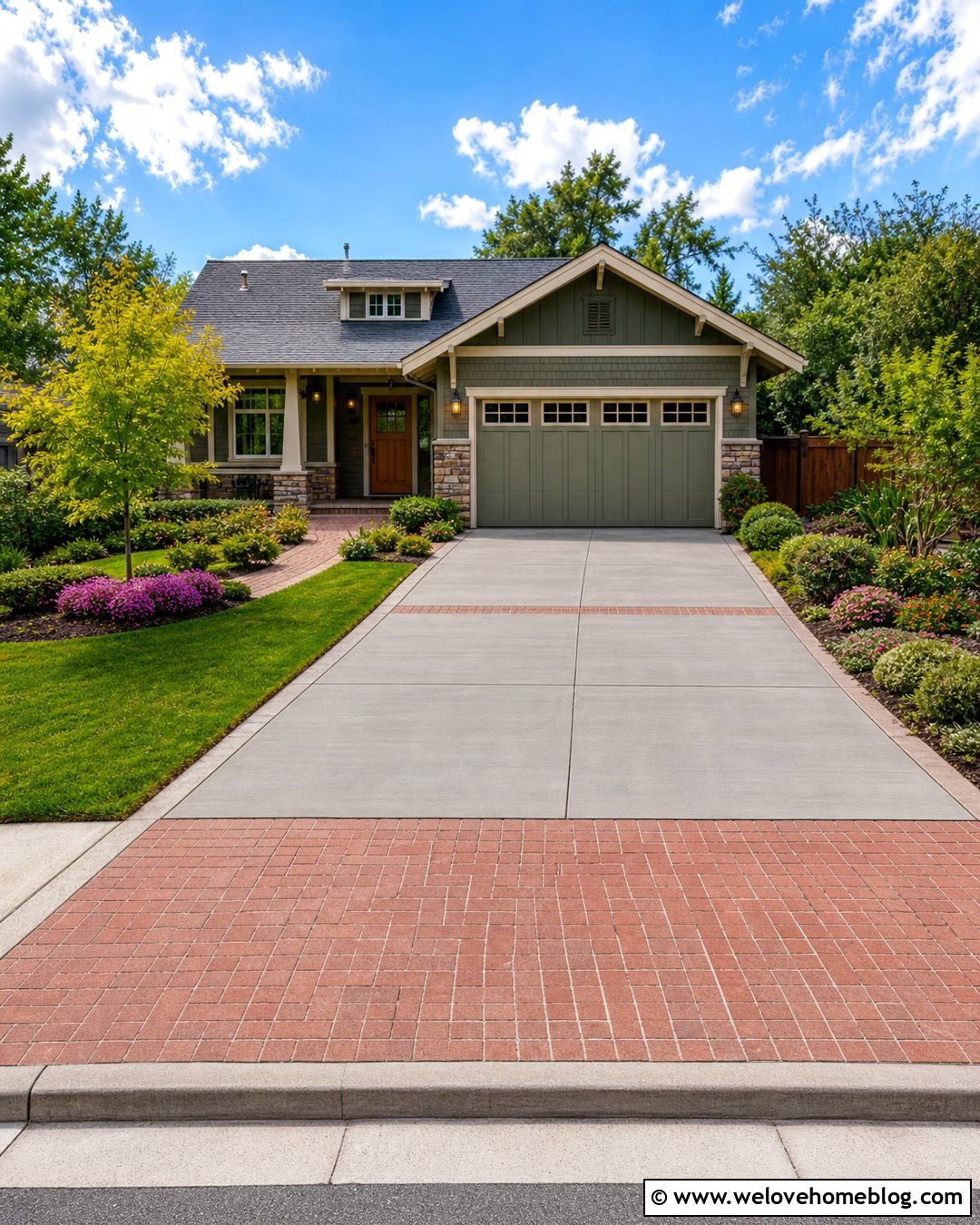
A brick apron can make a standard poured concrete driveway look more finished from the street. Use smooth medium-gray concrete for the main surface and install a four- to six-foot band of red or brown clay brick pavers at the entrance. Repeat a narrower brick band near the garage or front walkway for visual balance. This combination suits ranch, Colonial, and craftsman homes because it blends a practical field with traditional detail. Add lawn along one side and layered shrubs with seasonal flowers along the other. A slightly flared apron makes turning easier while giving the entrance more presence. Ensure the two materials meet at a clean, stable transition. Their bases, edges, joints, and elevations should be planned together to avoid an awkward change in height.
23. Asphalt Driveway With Cobblestone Apron
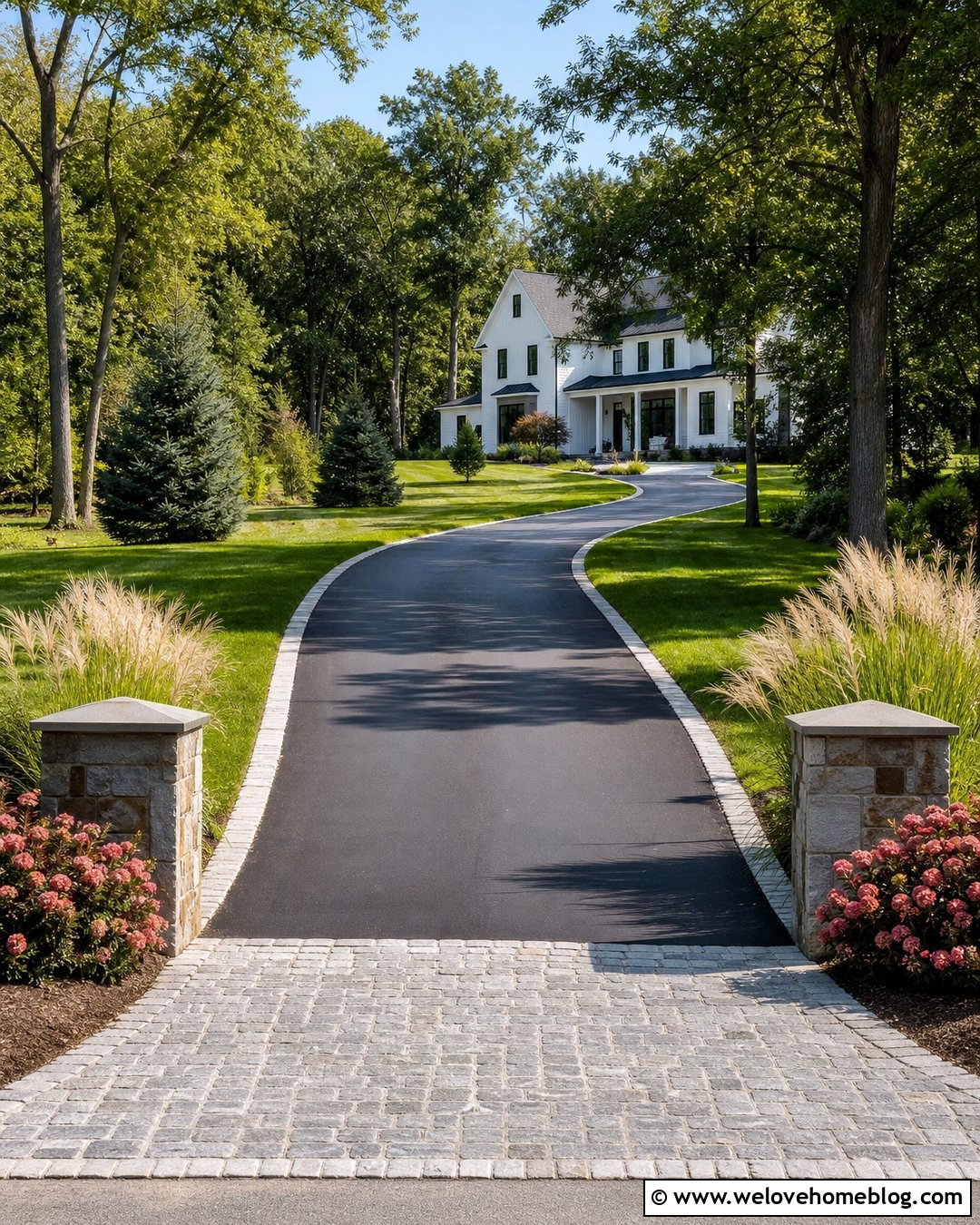
A cobblestone apron introduces texture and character to an otherwise simple asphalt driveway. Choose smooth black asphalt for the main driving area and gray granite cobbles for a broad entrance band. Continue a single line of granite blocks along both edges to tie the materials together. A long curved layout looks especially attractive at a farmhouse, country home, or wooded suburban property. Frame the approach with lawn, deciduous trees, and informal beds containing ornamental grasses and flowering shrubs. Low stone pillars can mark the entrance, but they should remain safely outside the turning path. The contrast between dark asphalt and varied gray stone feels practical yet established. Plan the apron depth and edge support carefully because this transition receives repeated vehicle movement and weather exposure.
24. Resin-Bound Gravel Driveway
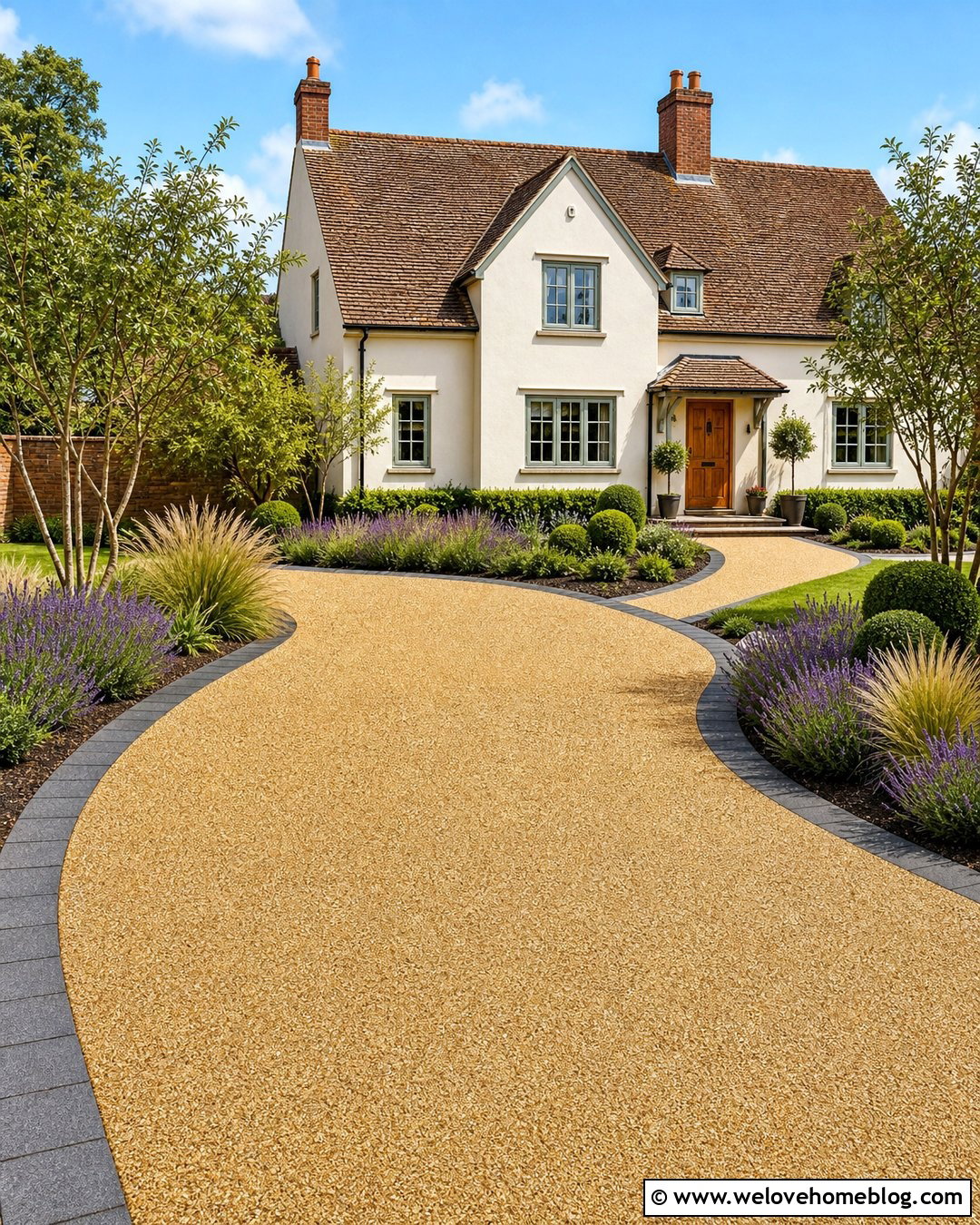
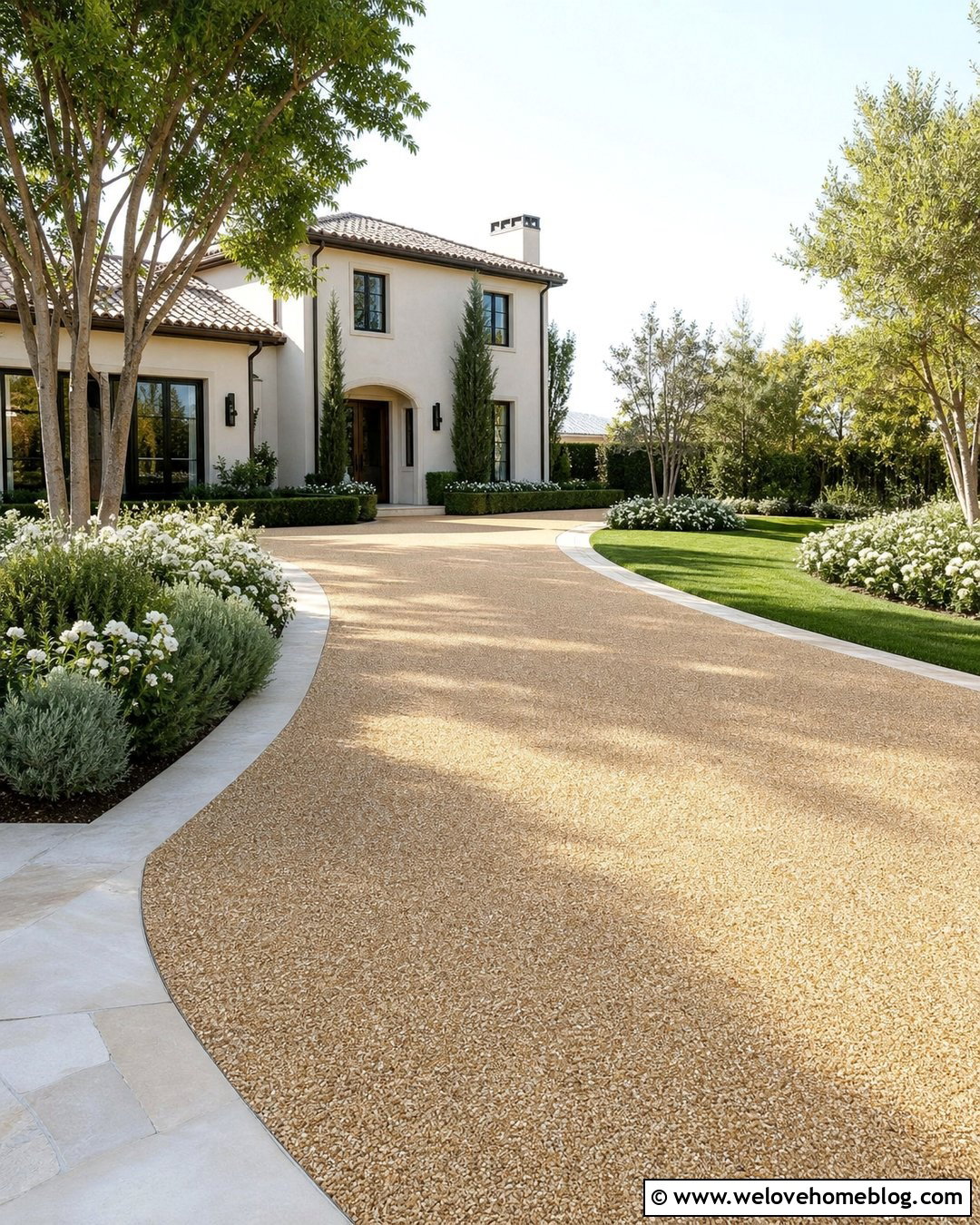
Resin-bound gravel creates a smooth-looking surface with the visual warmth of small natural stones. Choose a golden, beige, or light-gray aggregate blend for a gently curved driveway leading to a cottage, contemporary farmhouse, or traditional stucco home. Define the edges with charcoal concrete pavers and repeat them around the apron. Along the curves, add low lavender, clipped shrubs, grasses, and small multi-stem trees. A matching resin-bound walkway can connect the driveway to the front door while maintaining an uncluttered appearance. Keep decorative colors close to tones already present in the facade and roof. Product suitability, permeability, base construction, and installation conditions can differ, so work with an experienced specialist. The finished surface should look even, neatly contained, and integrated with the surrounding garden.
25. Gravel Grid Driveway With Stone Entrance
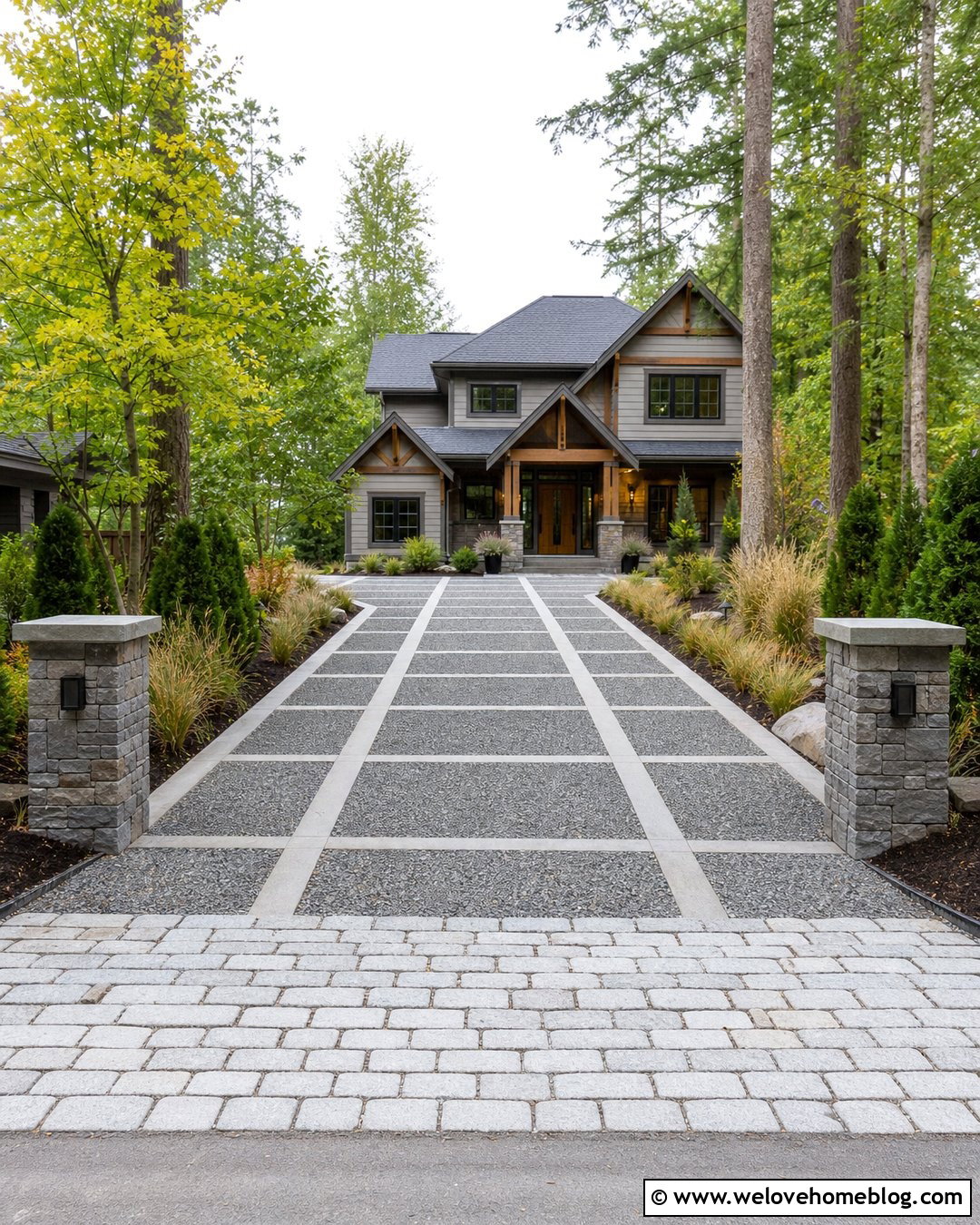
A gravel stabilization grid can help create a more organized surface while preserving the relaxed appearance of loose stone. Fill the grid with angular gray gravel and use it on a straight driveway leading to a modern farmhouse or wooded craftsman home. Mark the entrance with a wide band of granite setts and two modest stone pillars. Pressure-treated timber or steel edging can contain the gravel farther up the driveway without becoming visually prominent. Use native grasses, evergreen shrubs, and deciduous trees to blend the drive into the landscape. A solid paver walkway should provide a comfortable pedestrian route to the house. Choose compatible gravel and grid products for vehicle traffic, and coordinate excavation, base depth, drainage, edging, and surrounding grades before installation starts.
26. Interlocking Paver Driveway With Double Border
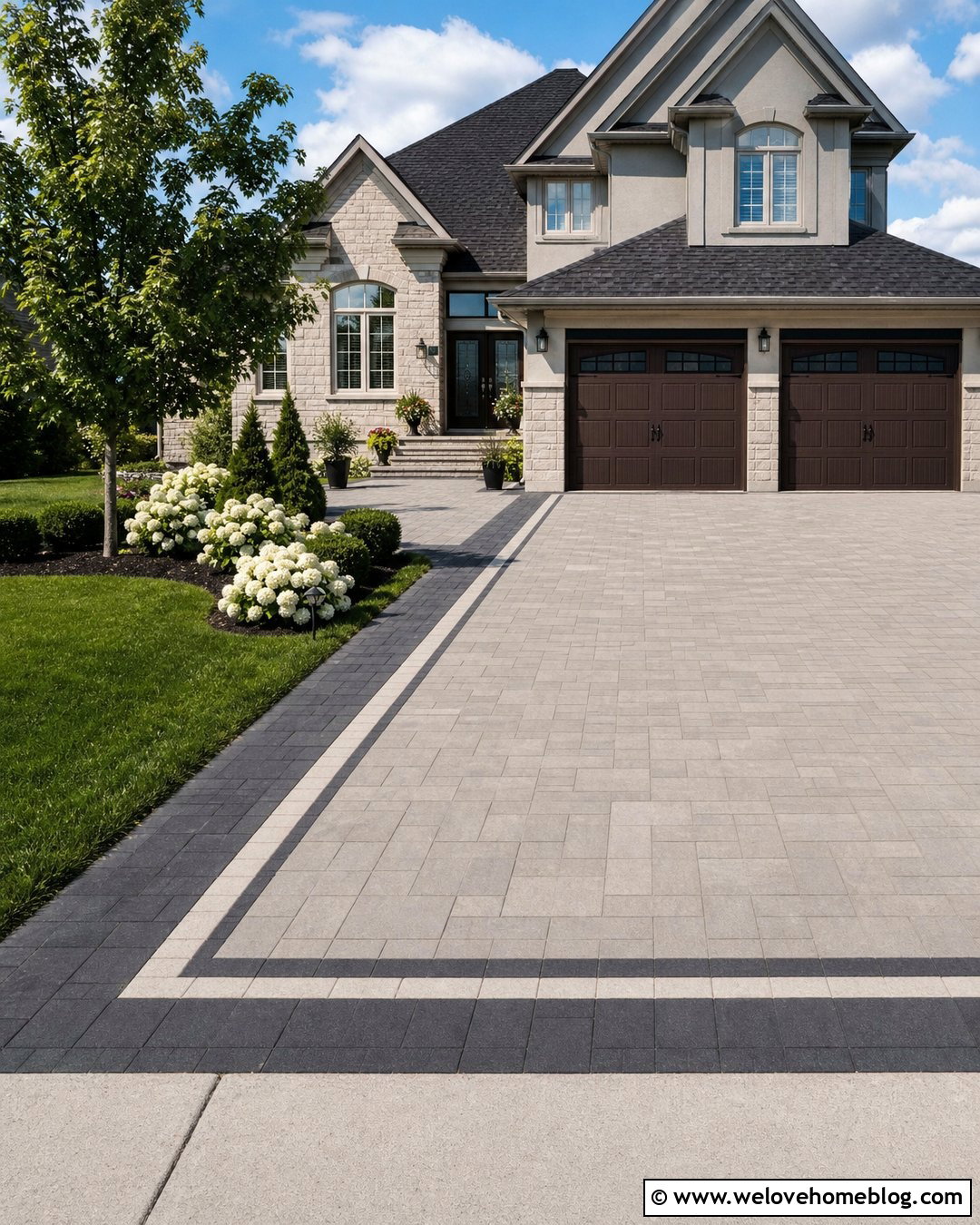
A double border gives an interlocking paver driveway a tailored, high-end appearance. Use warm-gray concrete pavers in the center, followed by a narrow cream band and a wider charcoal outer course. A straight driveway allows the layered frame to remain clean and symmetrical. This design works well with craftsman, transitional, and modern farmhouse homes because the three-tone palette can reference stone, siding, and roof colors. Keep nearby landscaping simple with lawn, white hydrangeas, evergreen shrubs, and one ornamental tree. Repeat only the cream accent on the front walkway to avoid overusing the full border combination. The border widths should suit the driveway’s scale; narrow parking areas need slimmer bands. Proper restraint and accurate cuts will keep the parallel courses crisp around the apron and garage.
27. Checkerboard Paver Driveway With Grass
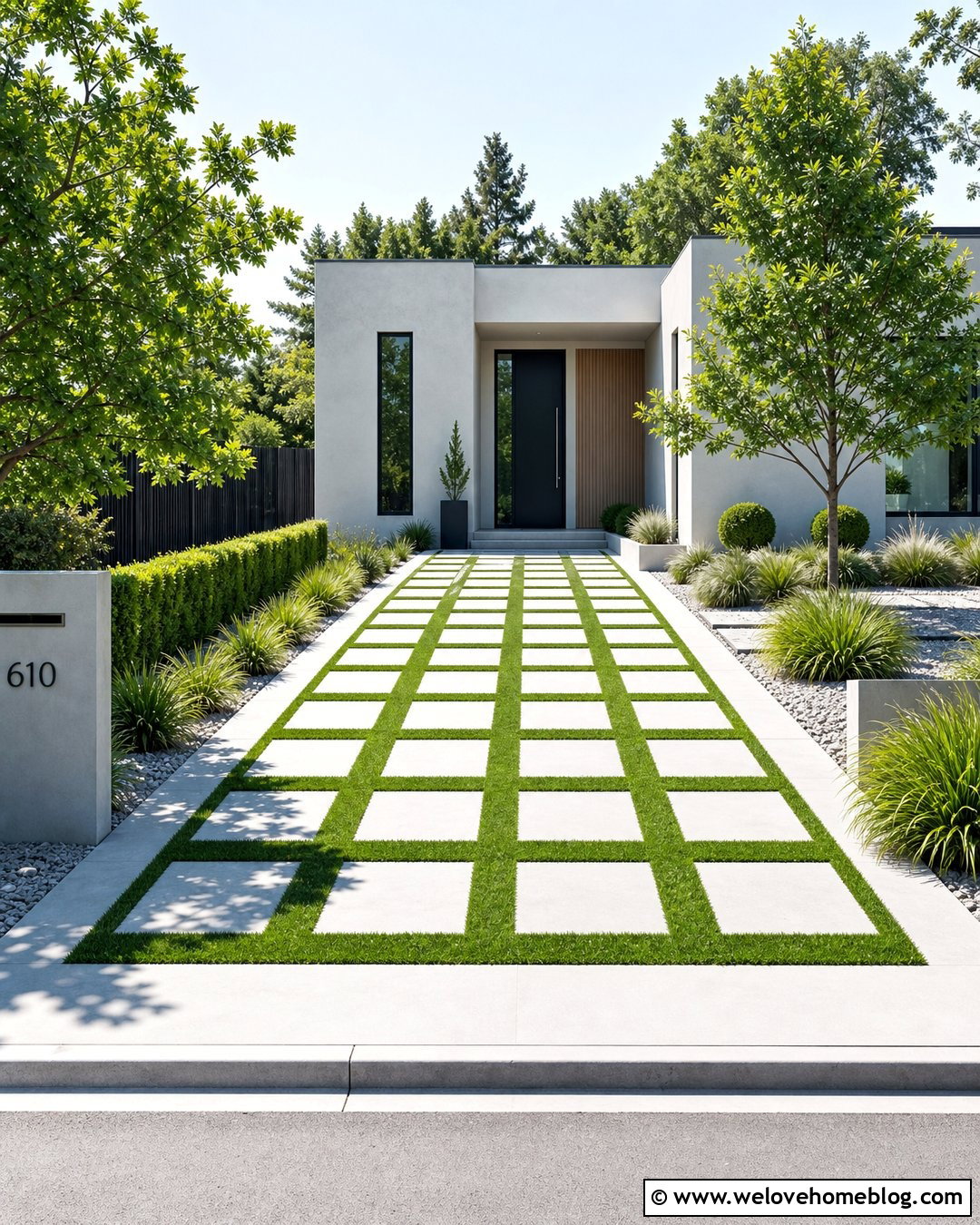
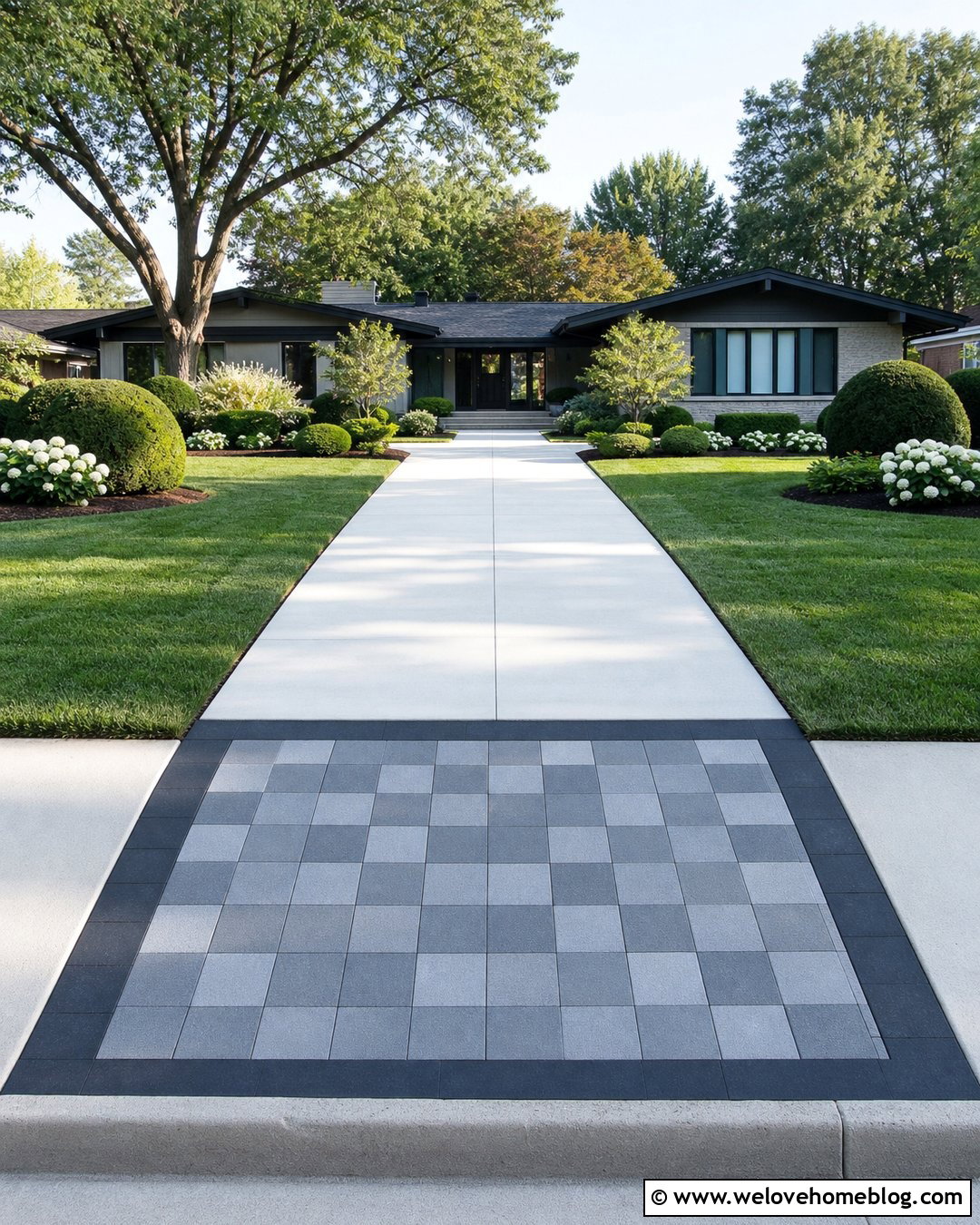
A checkerboard driveway combines solid paving with planted squares for a distinctive green layout. Use large light-gray concrete pavers set in a precise grid, leaving alternating openings for durable grass or a suitable low ground cover. This design works best on a level or gently sloped approach to a modern home. Frame the grid with a solid concrete border so the edges remain clear and stable. Continue the geometric theme with rectangular planting beds containing ornamental grasses, compact shrubs, and pale gravel. Keep a fully paved path between the driveway and front door for easier walking. The dimensions should match vehicle movement rather than decoration alone. Local climate, irrigation needs, maintenance, and expected traffic will determine whether grass, gravel, or another permeable joint treatment is most practical.
28. Driveway Pavers With Diamond Inlay
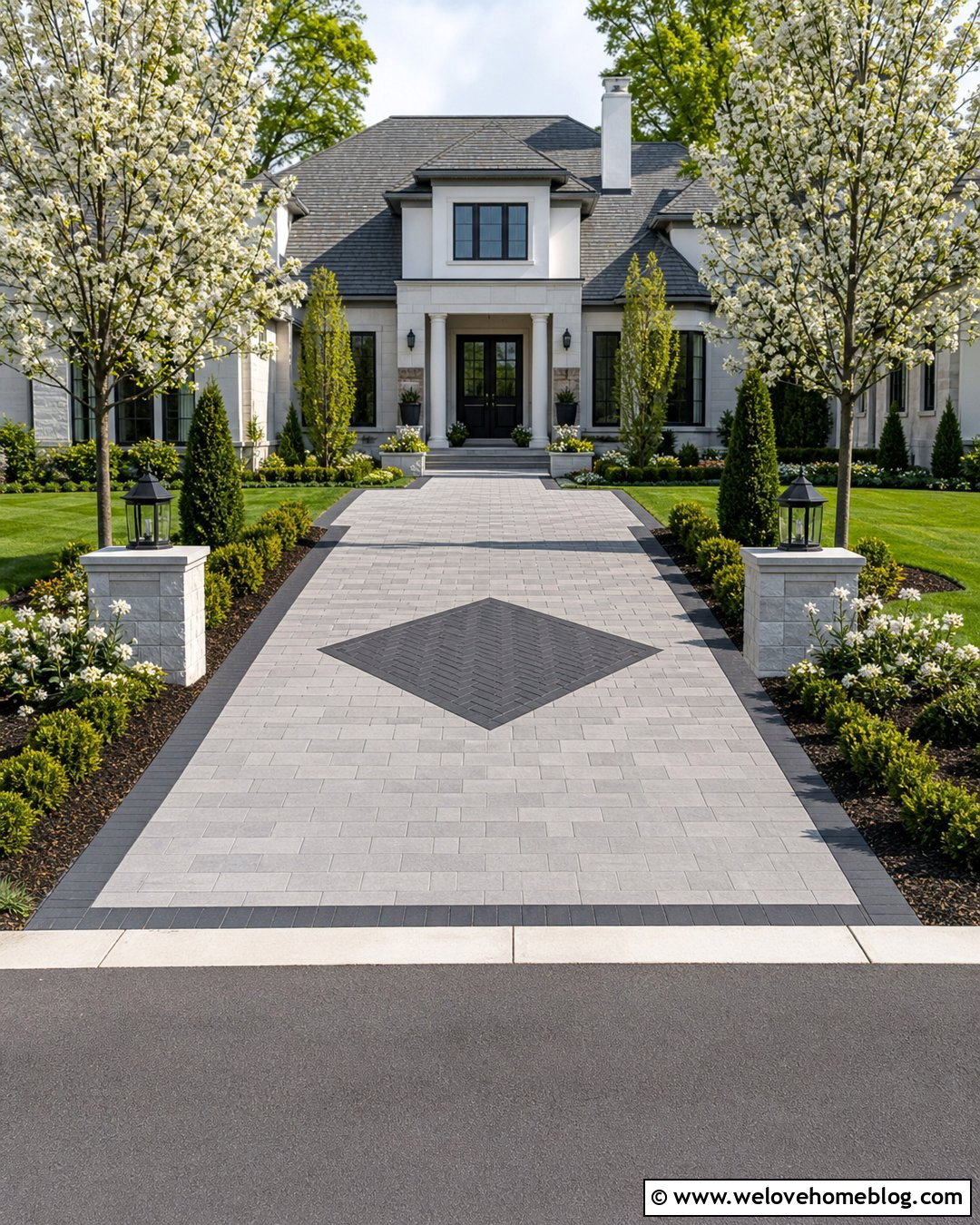
A diamond inlay creates a focal point without covering the entire driveway in a complex pattern. Use neutral gray concrete pavers in a running bond, then place a darker charcoal diamond at the center of a broad parking or turning area. A matching dark border will connect the inlay to the rest of the surface. This arrangement suits a transitional, Mediterranean, or large suburban home with a wide garage frontage. Balance the central detail with symmetrical planting beds, clipped shrubs, and small flowering trees. Avoid placing the motif where parked vehicles will permanently hide it. The inlay should be large enough to read from the curb but simple enough to avoid looking like an unrelated emblem. Precise alignment and clean cuts are important for a professional appearance.
29. Curved Concrete Paver Driveway
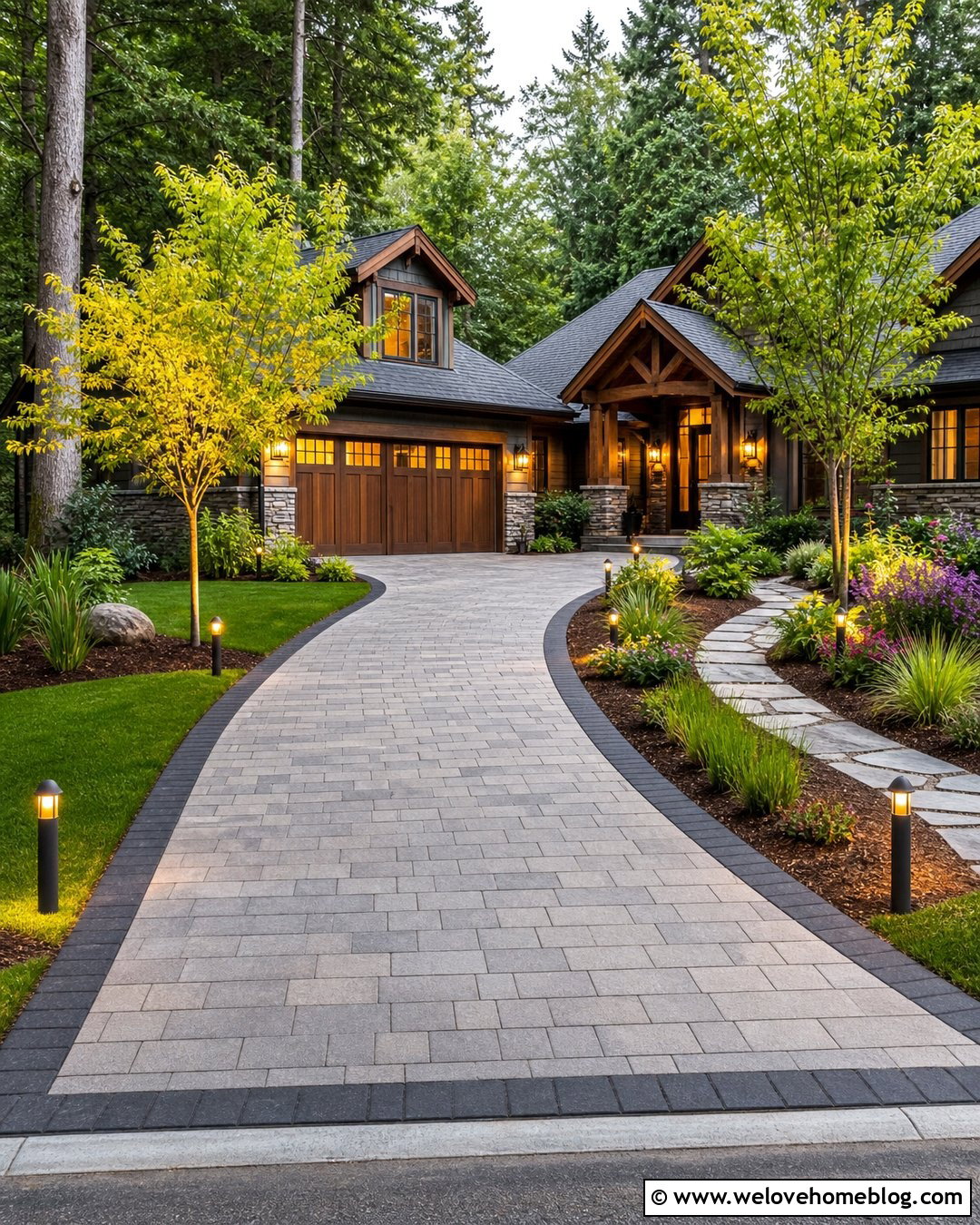
A curved driveway can make the journey toward the house feel softer and more natural. Use warm-gray rectangular concrete pavers in a flowing running bond that follows the curve without abrupt pattern changes. A darker paver border should trace both sides and clearly define the driving area. On the outer curve, plant small trees, low evergreens, grasses, and flowering perennials in layered beds. Keep the inner curve more open with lawn or low ground covers to preserve visibility. This complete look works well for craftsman, cottage, and wooded contemporary homes. Add low bollard lighting outside the edge restraint where it will not interfere with vehicles. Before finalizing the curve, test turning movements and confirm that the width remains comfortable at the entrance, bend, and garage approach.
30. Driveway Pavers With Central Grass Strip
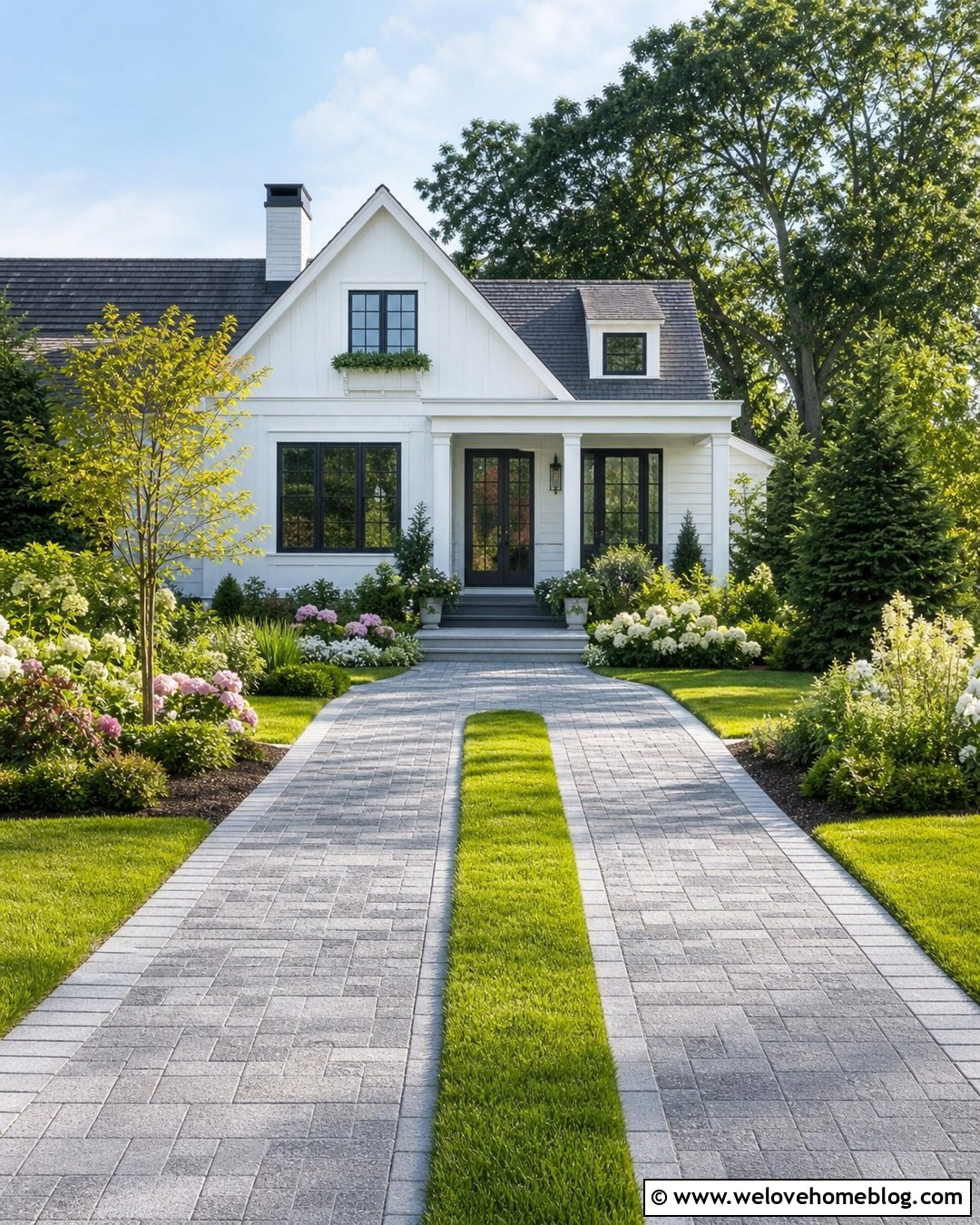
A central grass strip reduces the visual weight of paving while retaining two clear wheel paths. Use textured gray concrete pavers for the driving lanes and a broad planted strip running toward the house. Solid paver borders should frame the grass and prevent the two materials from blending together. This layout suits a straight driveway at a cottage, ranch, or modern farmhouse with modest parking needs. Repeat the grass-centered design only where regular vehicle paths are predictable. Surround the driveway with informal flowering borders, compact shrubs, and a simple paved walkway to the porch. In dry climates, replace grass with creeping ground cover or decorative gravel. Plan maintenance access carefully, since the central strip must remain neat to preserve the design’s deliberate appearance.
31. Red Brick Driveway With Granite Bands
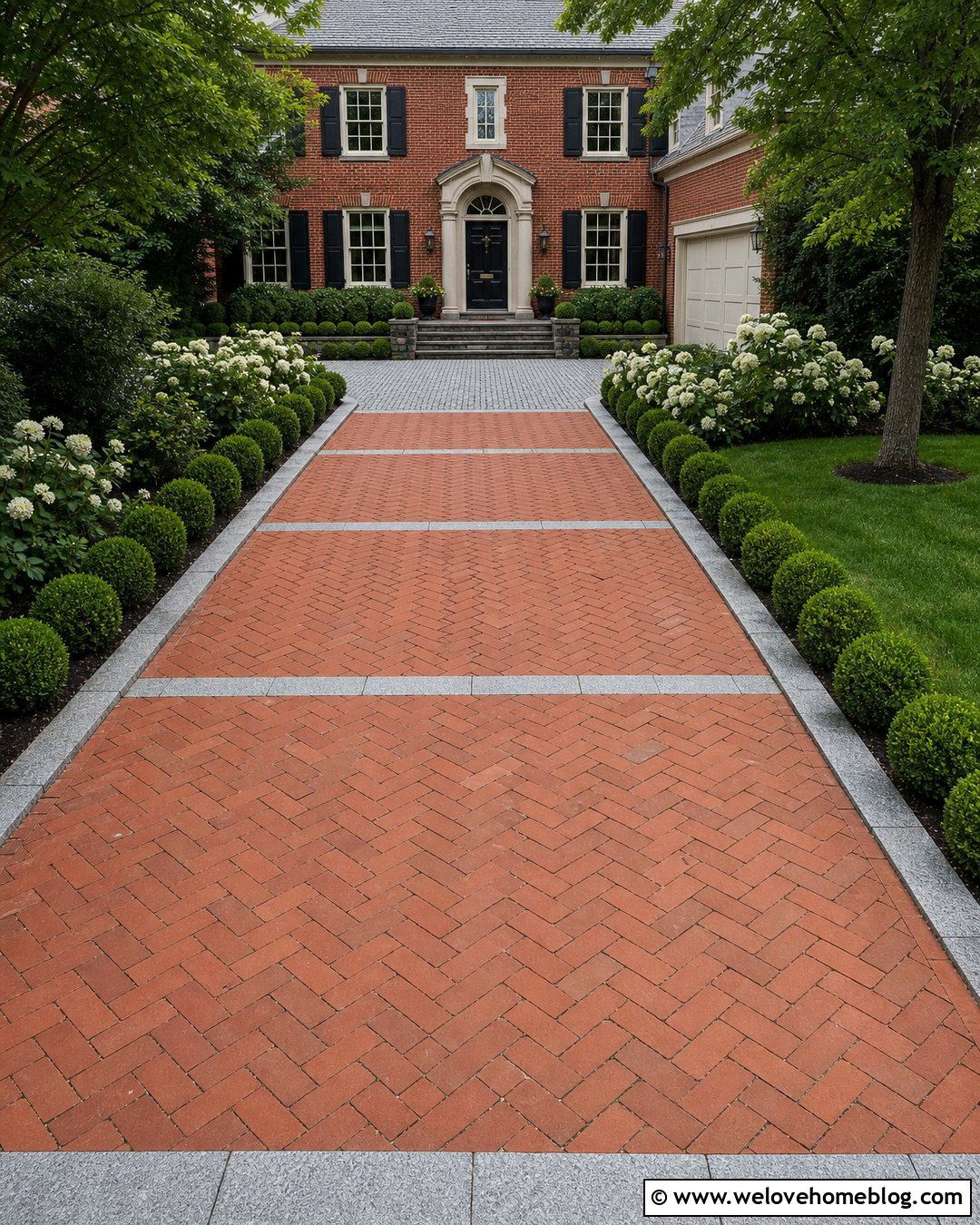
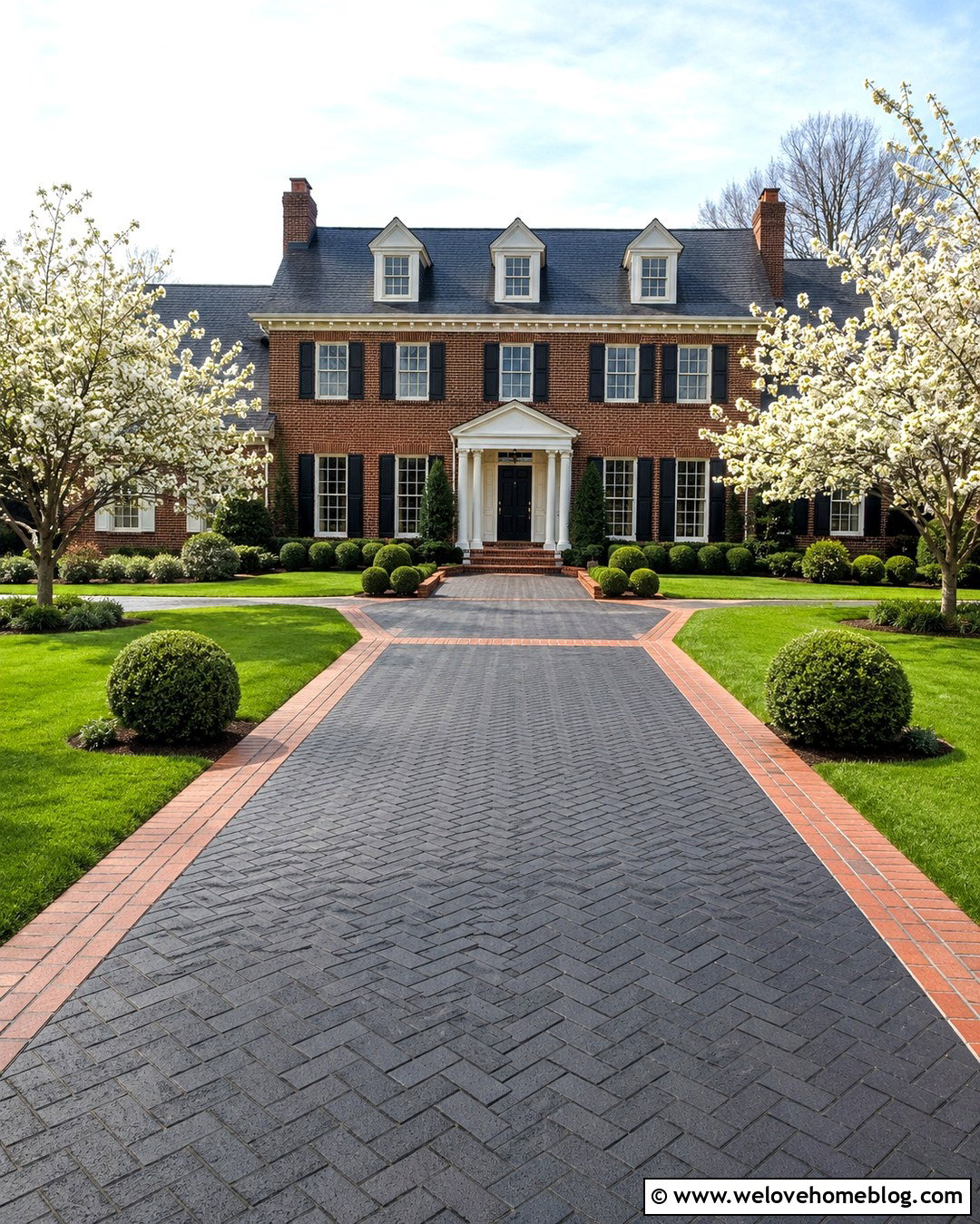
Red brick paving gains structure from cool gray granite bands. Lay clay brick pavers in a herringbone field, then add granite strips across the driveway at regular intervals. The contrasting bands break up a long approach and can help connect the paving to stone steps, walls, or porch details. A straight driveway leading to a Georgian, Colonial, or traditional brick home creates the most orderly composition. Use deep green boxwood, white flowering shrubs, and lawn as a simple landscape frame. At the garage, finish with a full granite band for a clean transition. Keep the band spacing consistent and align it with visible architectural features whenever possible. This mixed-material surface is detailed, so avoid adding additional paving colors or complicated borders elsewhere in the front yard.
32. Gray Paver Driveway With White House
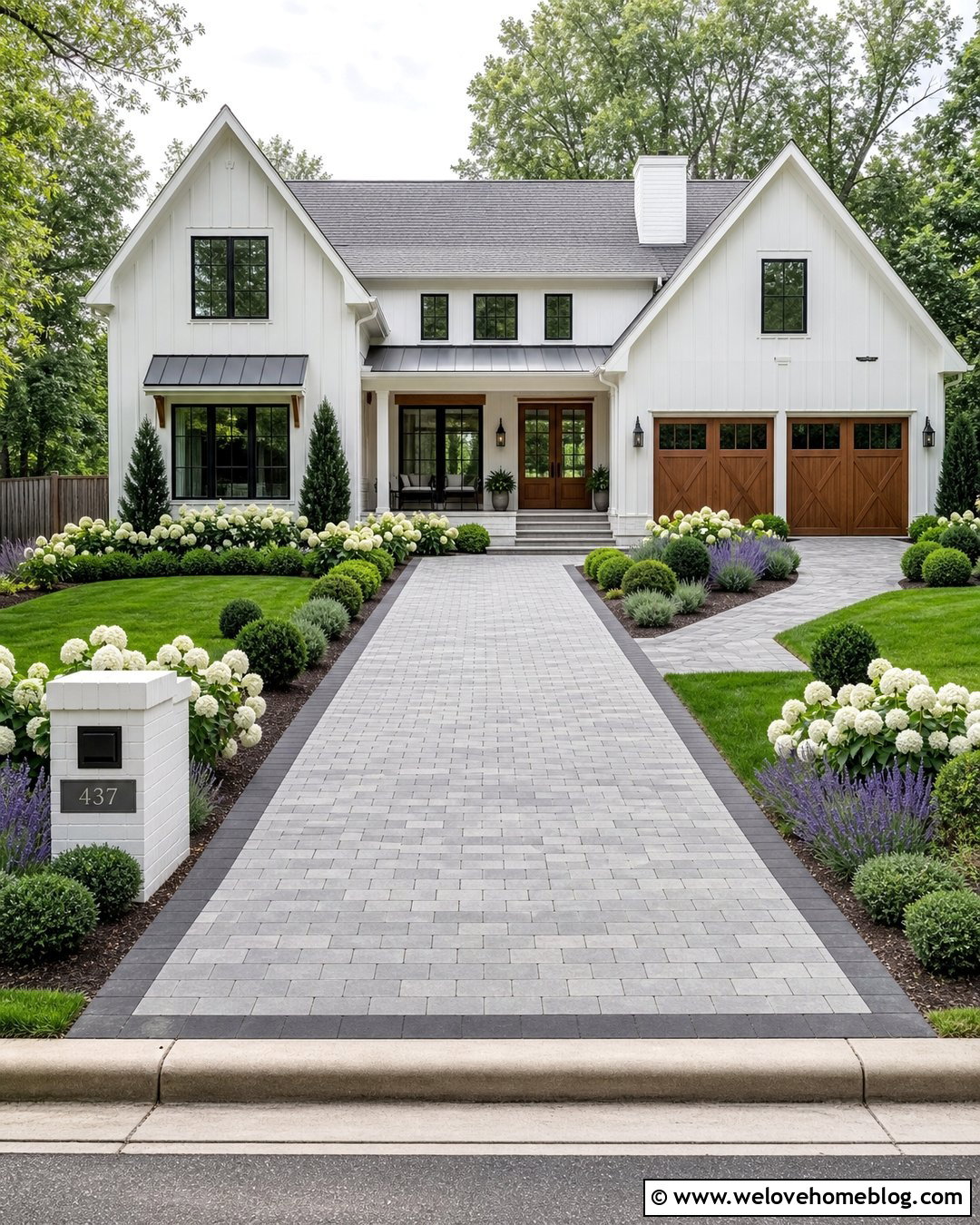
A medium-gray paver driveway provides a calm foundation for a bright white house. Choose rectangular concrete pavers with gentle tonal variation and install them in a straightforward running bond. Define the surface with a dark charcoal border that connects visually to black windows, exterior lights, or the garage door. A straight layout works for modern farmhouse, transitional, and updated Colonial homes. Soften the gray paving with green lawn, white hydrangeas, lavender, and several rounded evergreen shrubs. Warm wood planters or a natural timber front door can prevent the palette from feeling too stark. Continue the main paver into a walkway, but change its laying direction to mark the pedestrian route. The overall design should remain simple, crisp, and easy to understand from the street.
33. Tan Paver Driveway With Desert Landscaping
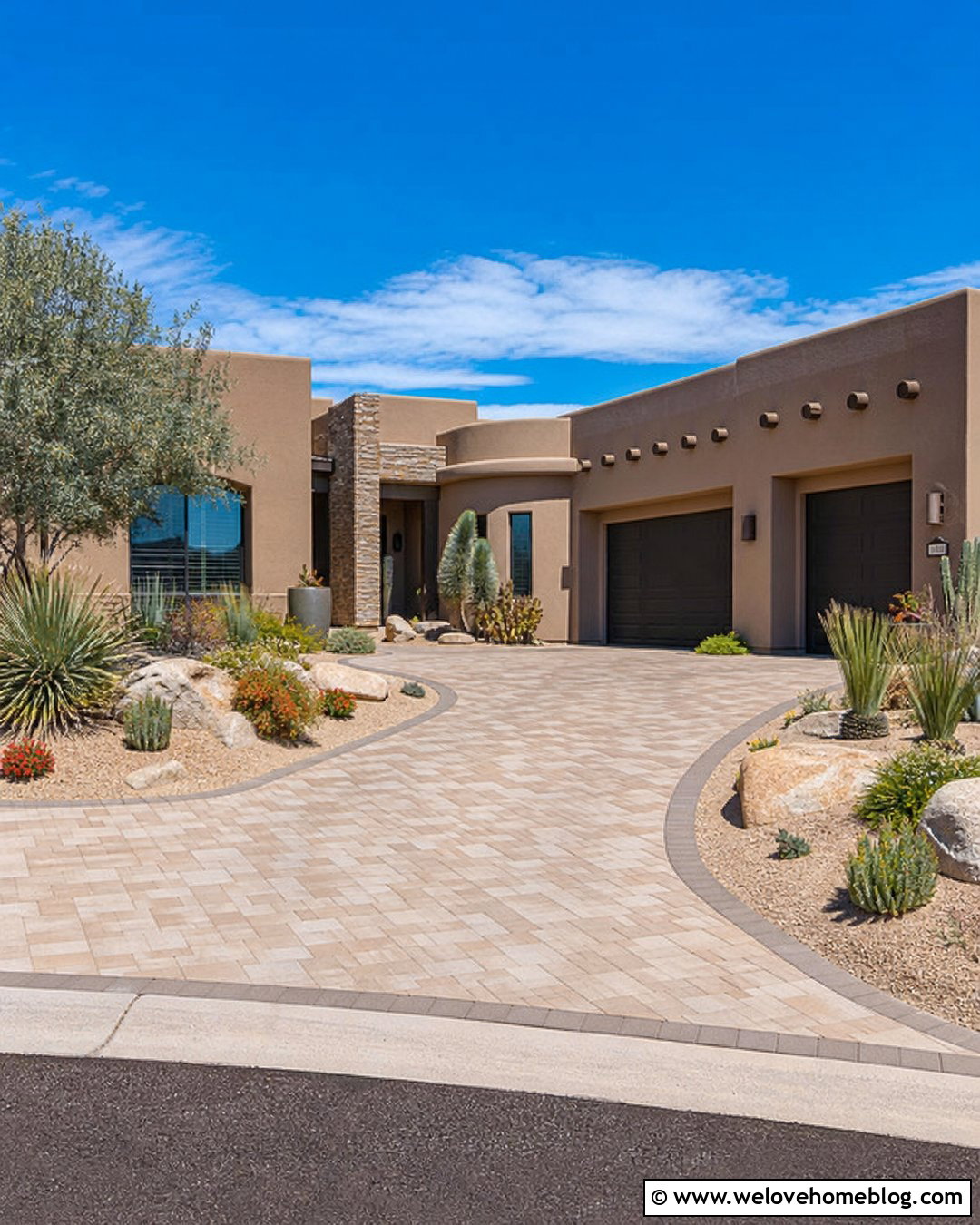
Tan concrete pavers blend naturally with desert and Southwestern landscapes. Use a mixed-size ashlar pattern in sand, beige, and muted brown, bordered by a darker earth-toned paver. A gently curved driveway can follow the site while leading toward a stucco, adobe-inspired, or contemporary desert home. Create broad planting beds with agave, yucca, desert spoon, ornamental grasses, and regionally suitable flowering plants. Decomposed granite mulch and a few large boulders complete the low-water setting. Keep sharp or spreading plants safely away from car doors, walkways, and turning areas. Repeat the driveway border around a direct path to the entrance. Selecting paving colors close to the surrounding soil creates a cohesive view while darker edging prevents the driveway from disappearing into the landscape.
34. White Concrete Driveway With Black Paver Border
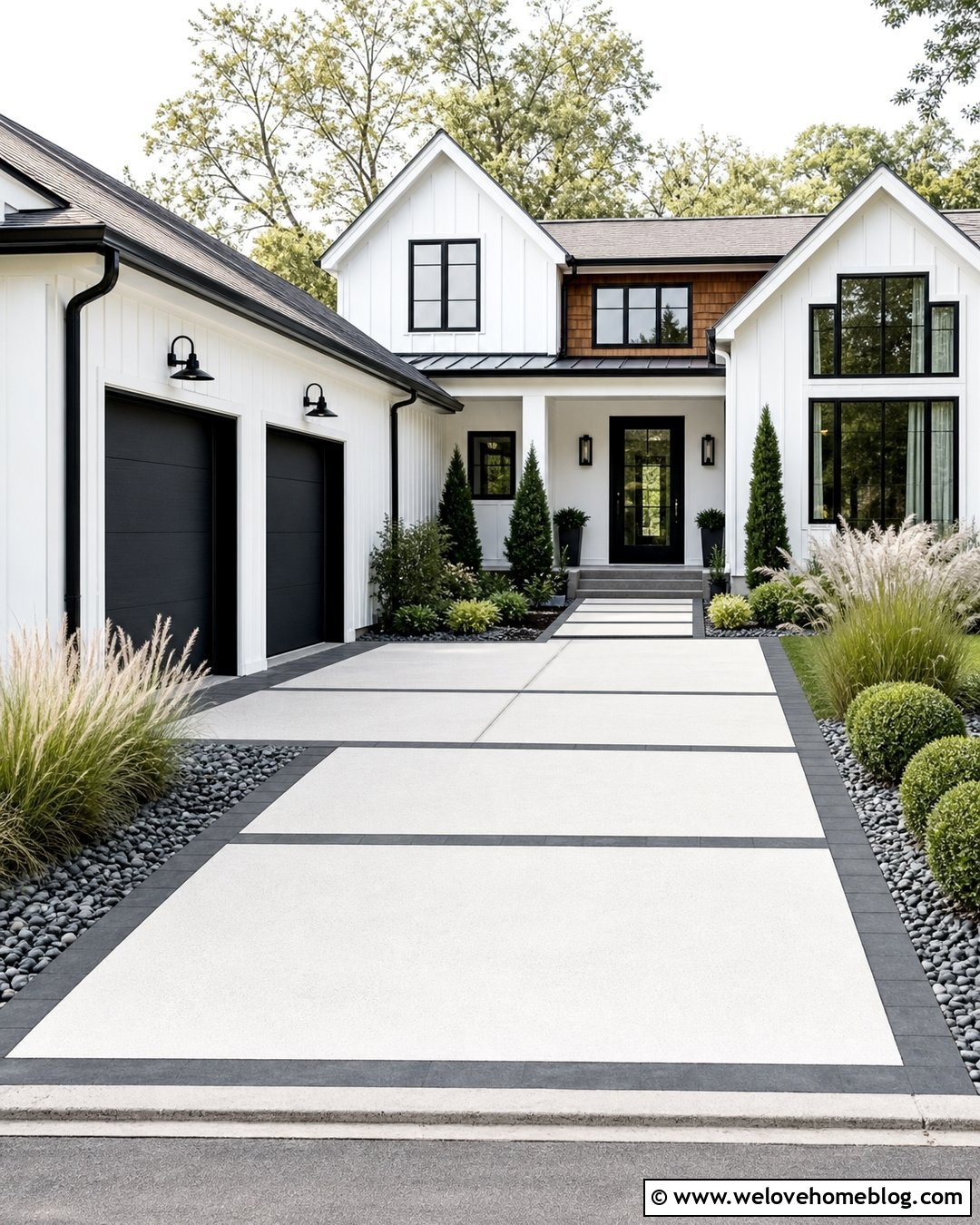
A pale concrete driveway framed by black pavers creates bold contrast for contemporary architecture. Use lightly textured off-white or very light gray poured concrete divided into large rectangular panels. Install slim charcoal concrete pavers around the perimeter and between selected panels to emphasize the geometric layout. Pair the driveway with a modern home featuring white stucco, black-framed windows, and warm wood siding. Narrow beds of ornamental grass, clipped shrubs, and gray decorative stone reinforce the clean palette. Keep the driveway straight and align each paving band with the garage and facade. Because very light paving can display stains and tire marks, consider maintenance before choosing the final shade. The surrounding borders and planting should add definition without making the entrance look harsh or overly graphic.
35. Reclaimed Brick Driveway
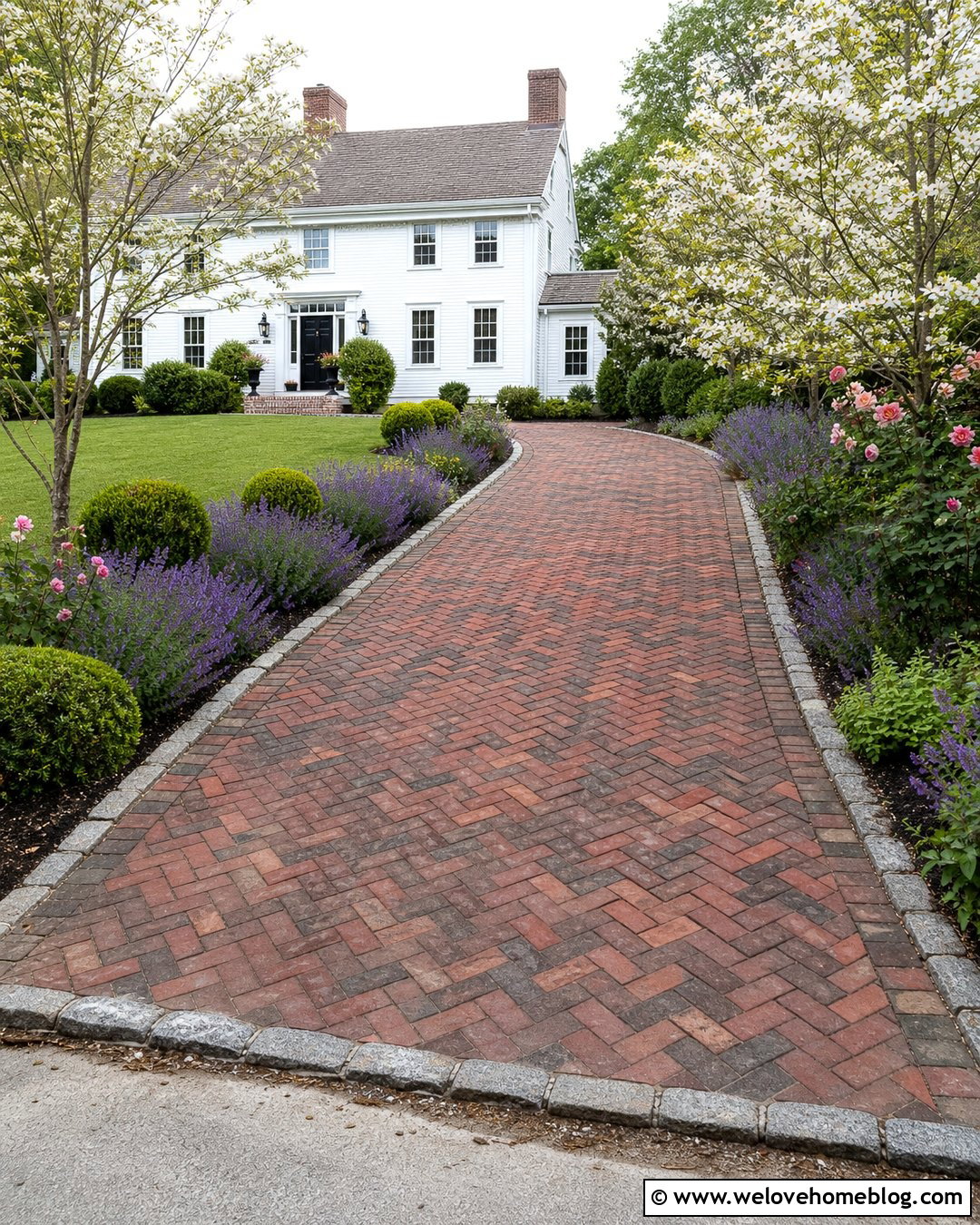
Reclaimed brick can give a driveway an aged, informal appearance that feels naturally connected to an older home. Use a blend of muted red, brown, and charcoal bricks in a herringbone or running bond pattern. Edge the surface with granite setts to provide a clear frame and a durable-looking transition into the landscape. A softly curved driveway suits a historic cottage, farmhouse, or traditional craftsman exterior. Plant lavender, roses, boxwood, and small flowering trees along generous borders. Allow the bricks’ variation to provide character, but sort and blend them so one color does not dominate a single area. Reclaimed units should be evaluated for condition and intended use. The driveway’s structural performance will still depend on proper materials, base preparation, drainage, restraints, and professional installation.
36. Driveway Pavers With Drainage Channel
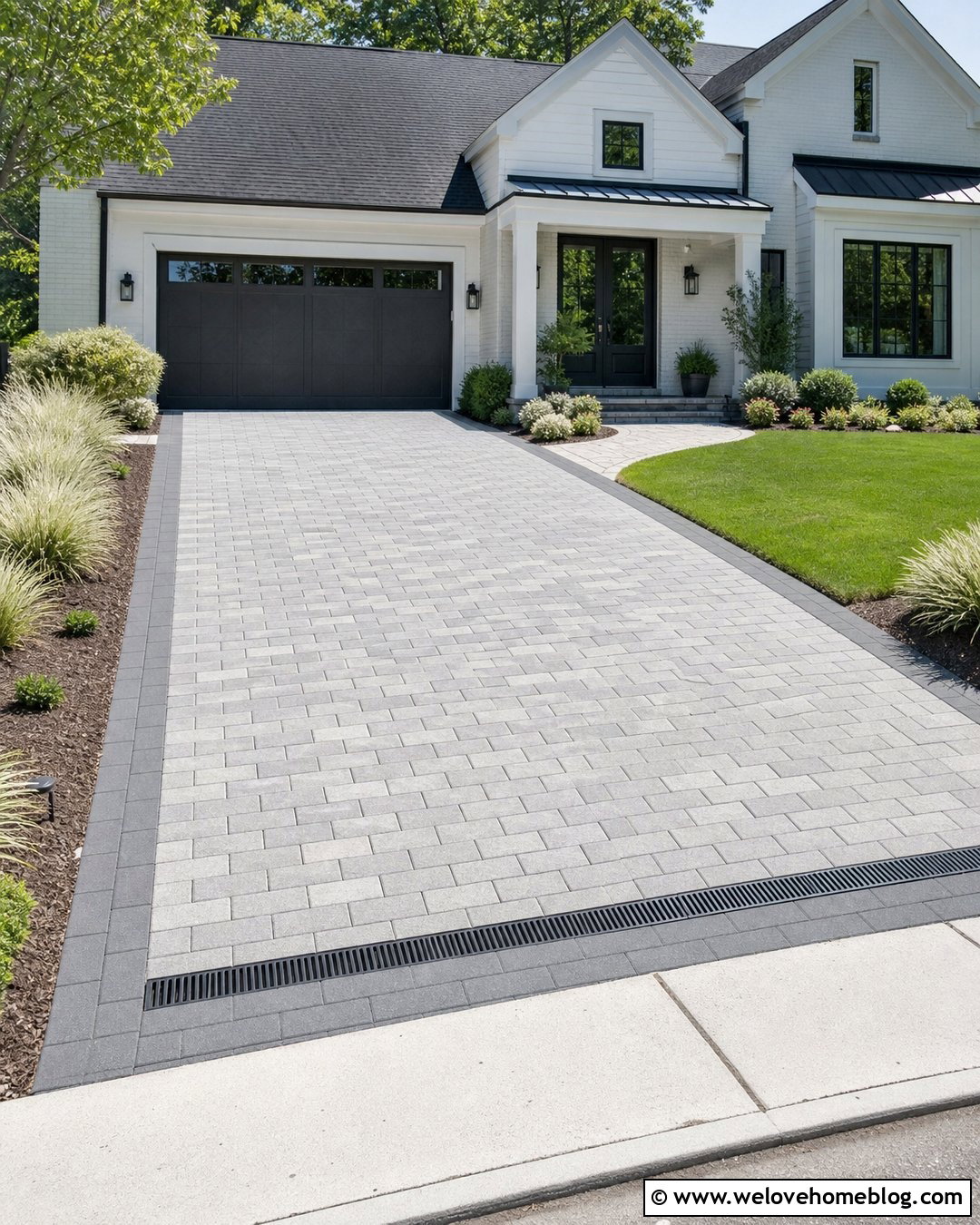
A drainage channel can become an intentional part of the driveway rather than an awkward afterthought. Use medium-gray concrete pavers in a running bond and place a slim linear channel across the surface where the site design requires water collection. Frame the channel with charcoal paver bands so it aligns with the overall pattern. This approach looks especially clean on a sloped driveway leading to a modern or transitional home. Add low planting beds, ornamental grasses, and a paved walkway along one side while keeping the opposite side open for drainage access. Match grates to nearby metal finishes whenever practical. Drainage requirements vary significantly by property, so grading and water management should be designed by an appropriate professional. Attractive paving cannot compensate for poorly controlled runoff.
37. Driveway Pavers With Matching Walkway
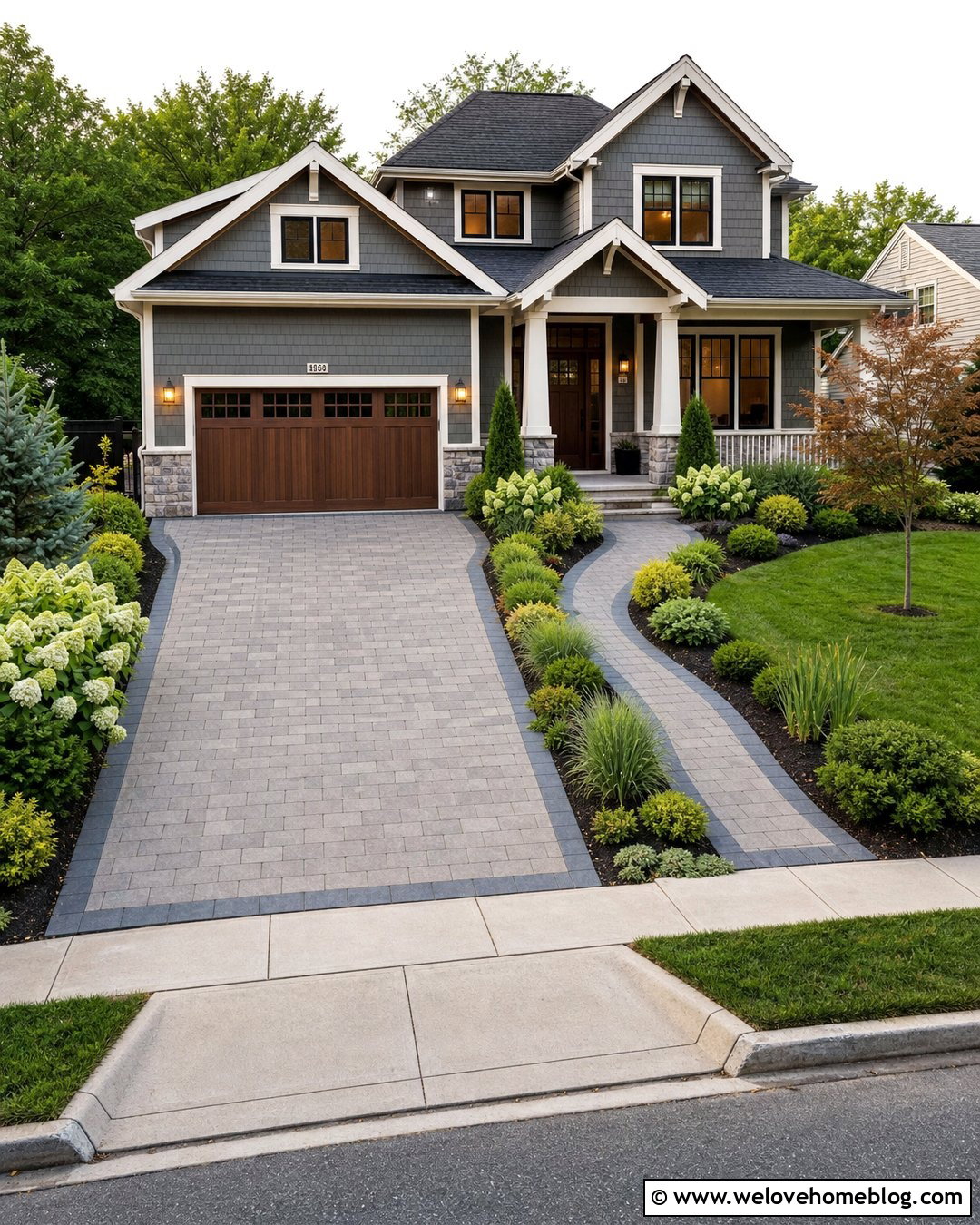
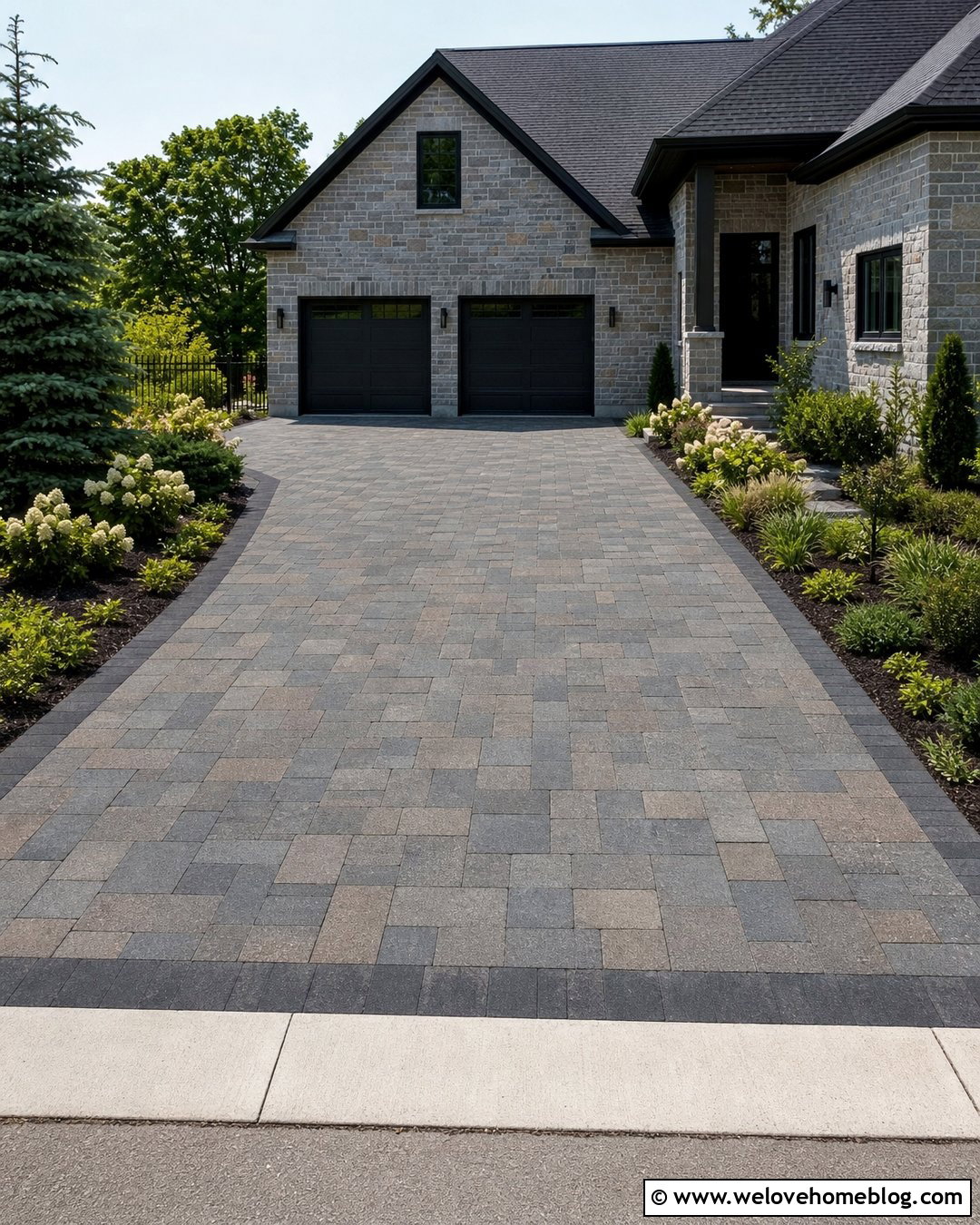
Using the same paver family for the driveway and front walkway creates a connected entrance. Choose warm-gray concrete pavers for a broad running-bond driveway, then use the same material in a smaller format for the path. A charcoal border can outline both surfaces while clearly showing where pedestrians should walk. Curve the walkway through a planting bed rather than directing visitors beside parked cars. Hydrangeas, evergreen shrubs, ornamental grasses, and a small tree can fill the area between the driveway and porch. This complete design works with craftsman, ranch, and transitional homes. Change the paver direction or scale at the walkway so the two areas feel related but not identical. Keep slopes, steps, lighting, and transitions comfortable and visually easy to follow.
38. Small Paver Driveway With Simple Border
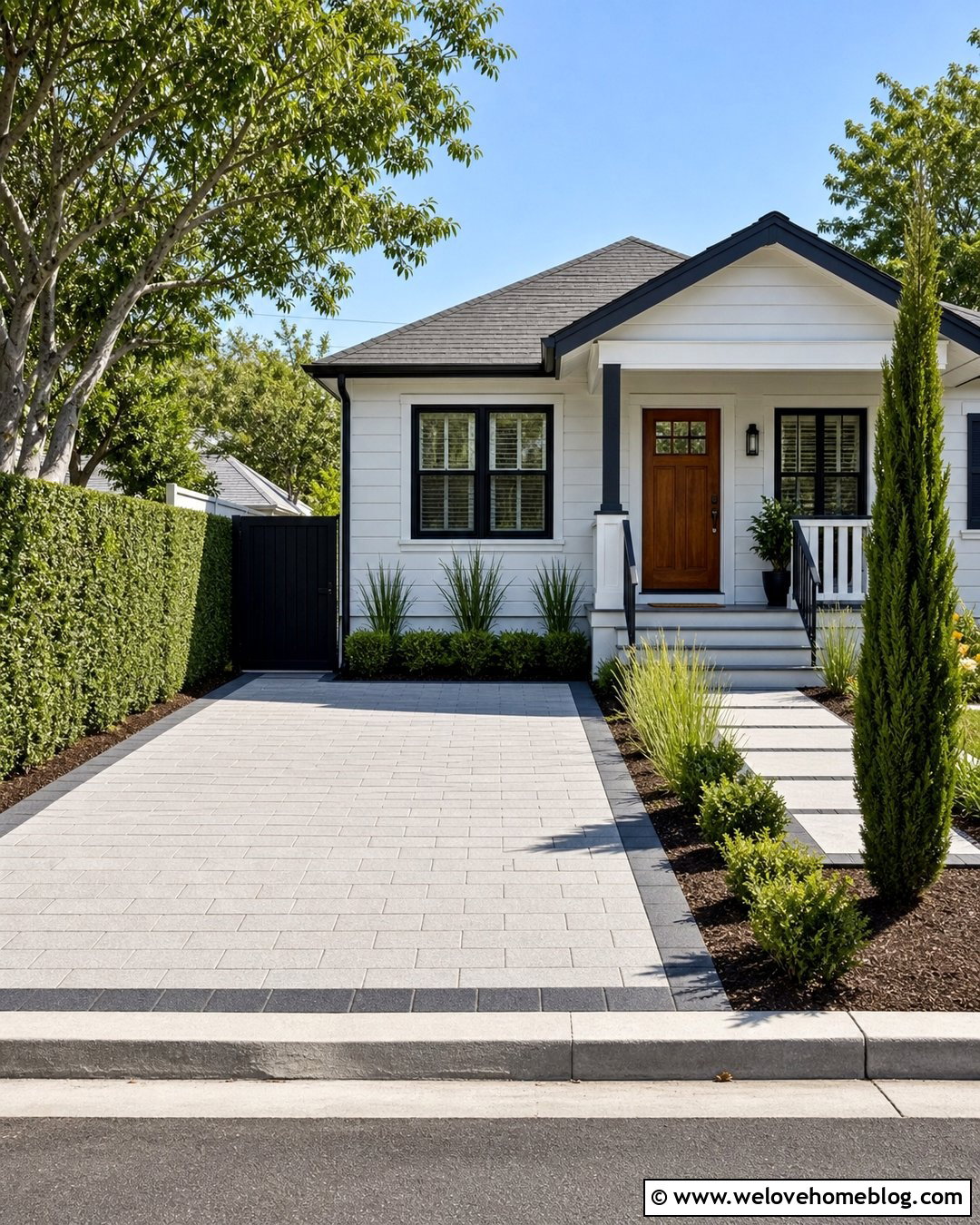
A compact driveway benefits from a limited material palette and an uncomplicated pattern. Use light-gray rectangular concrete pavers in a running bond, framed by one narrow charcoal border. A straight layout makes the available parking area easy to understand and avoids losing space to unnecessary curves. Beside the driveway, install a slim planting bed with upright grasses, compact shrubs, and one columnar tree. A flush paver walkway can connect to the porch without reducing the usable driveway width. This arrangement suits townhomes, bungalows, and small suburban lots. Avoid oversized inlays or multiple borders, which can make the surface feel crowded. Coordinating the paver color with the house foundation or roof helps the driveway belong to the property rather than dominate the limited front yard.
39. Driveway Pavers With Stone Pillars
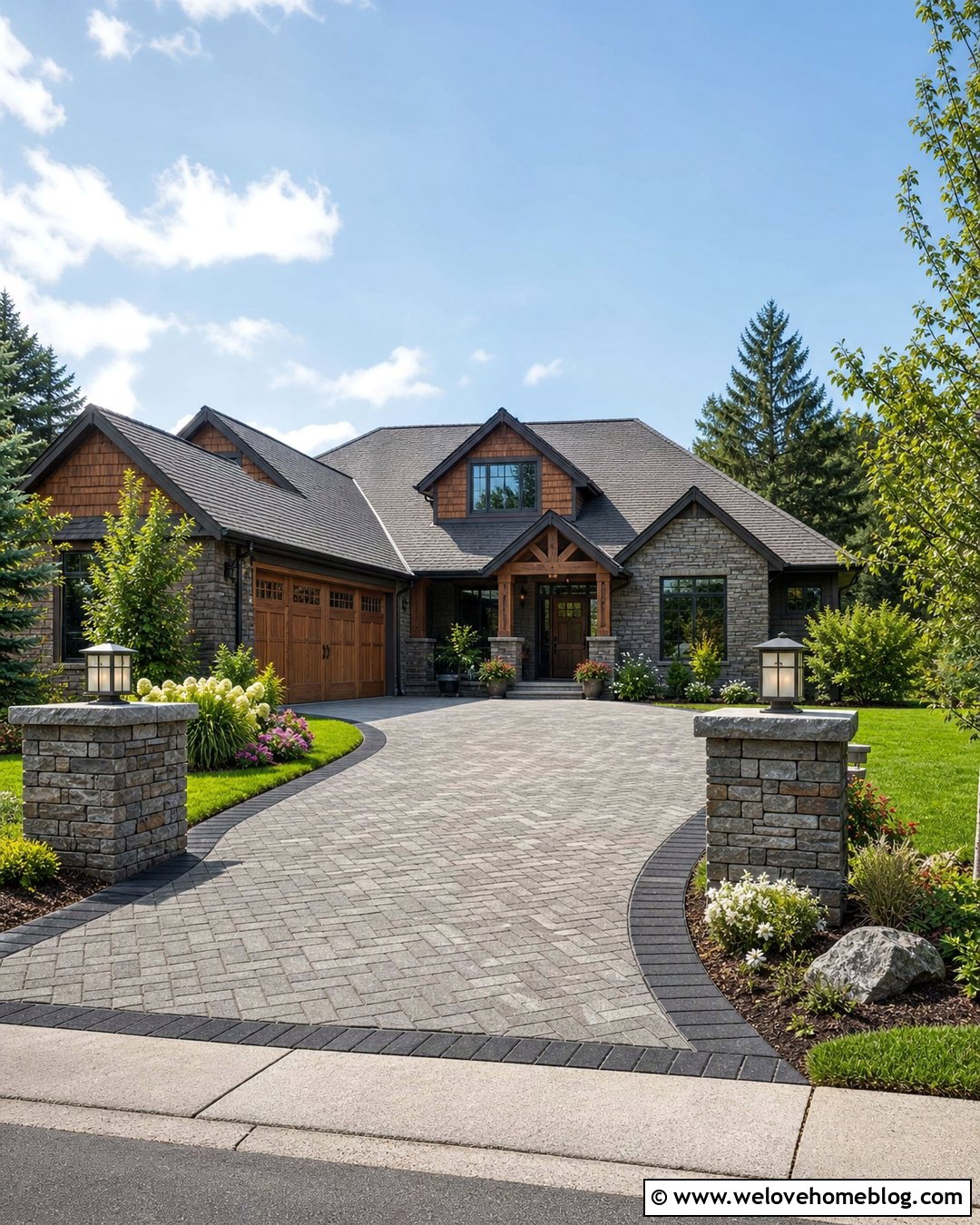
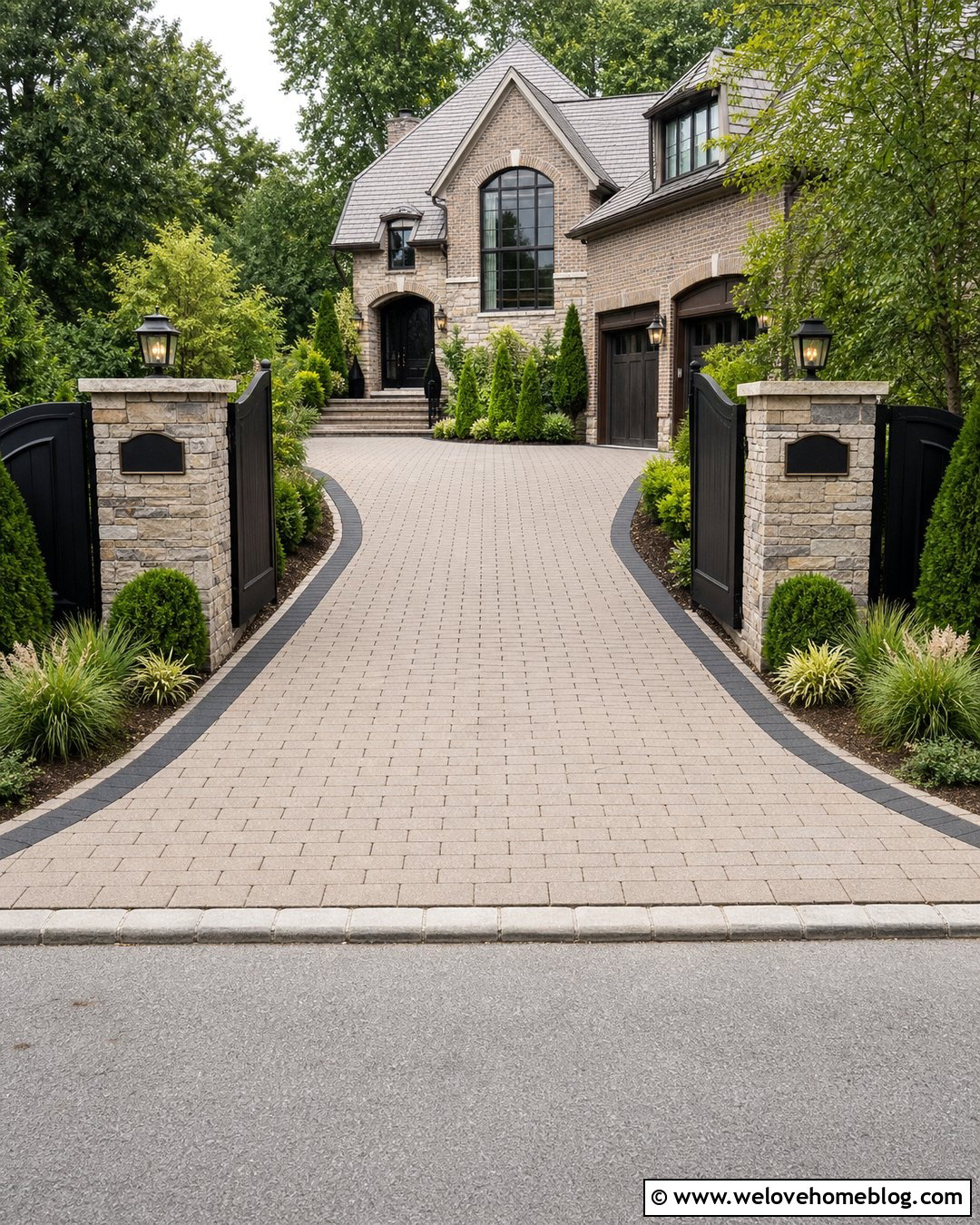
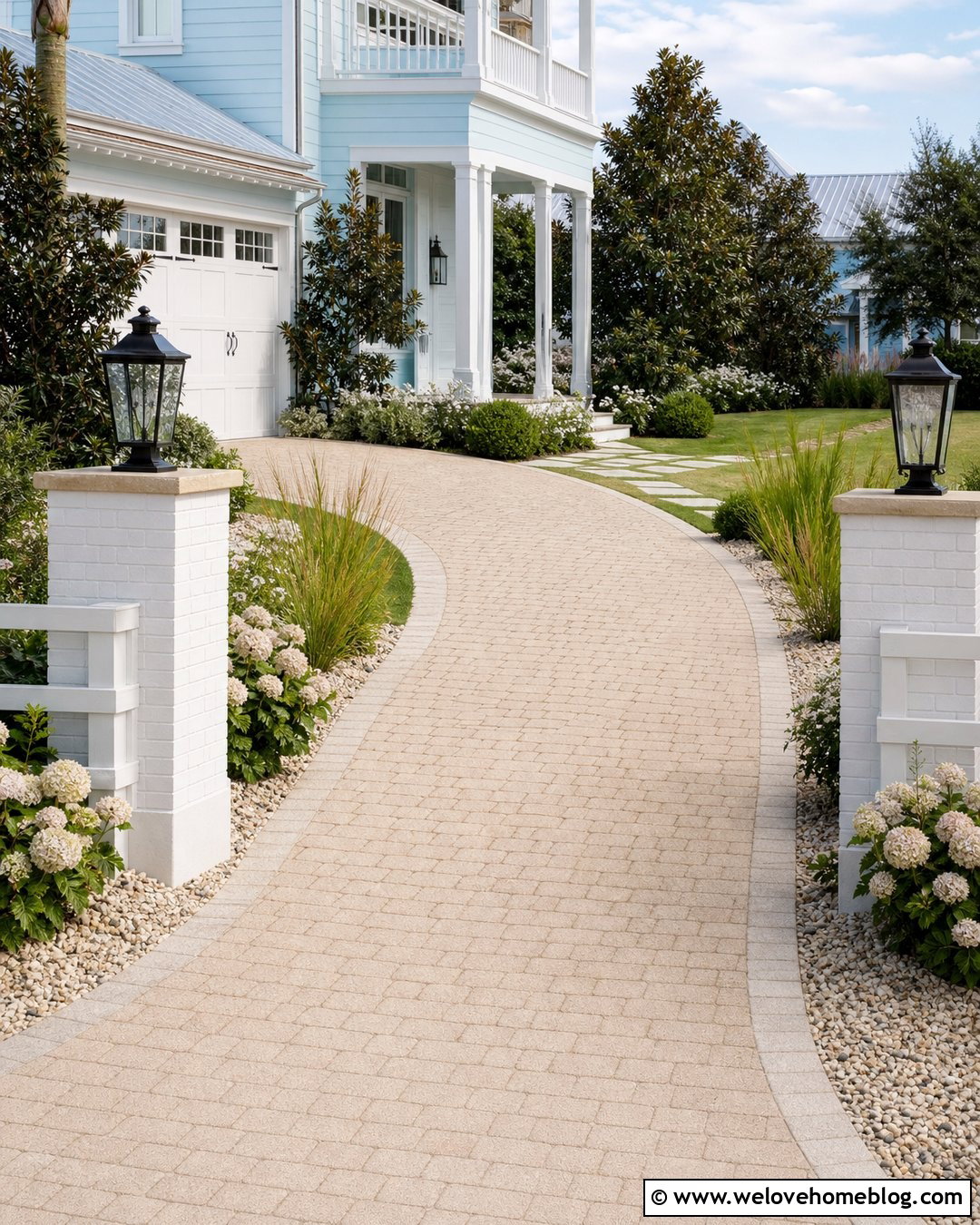
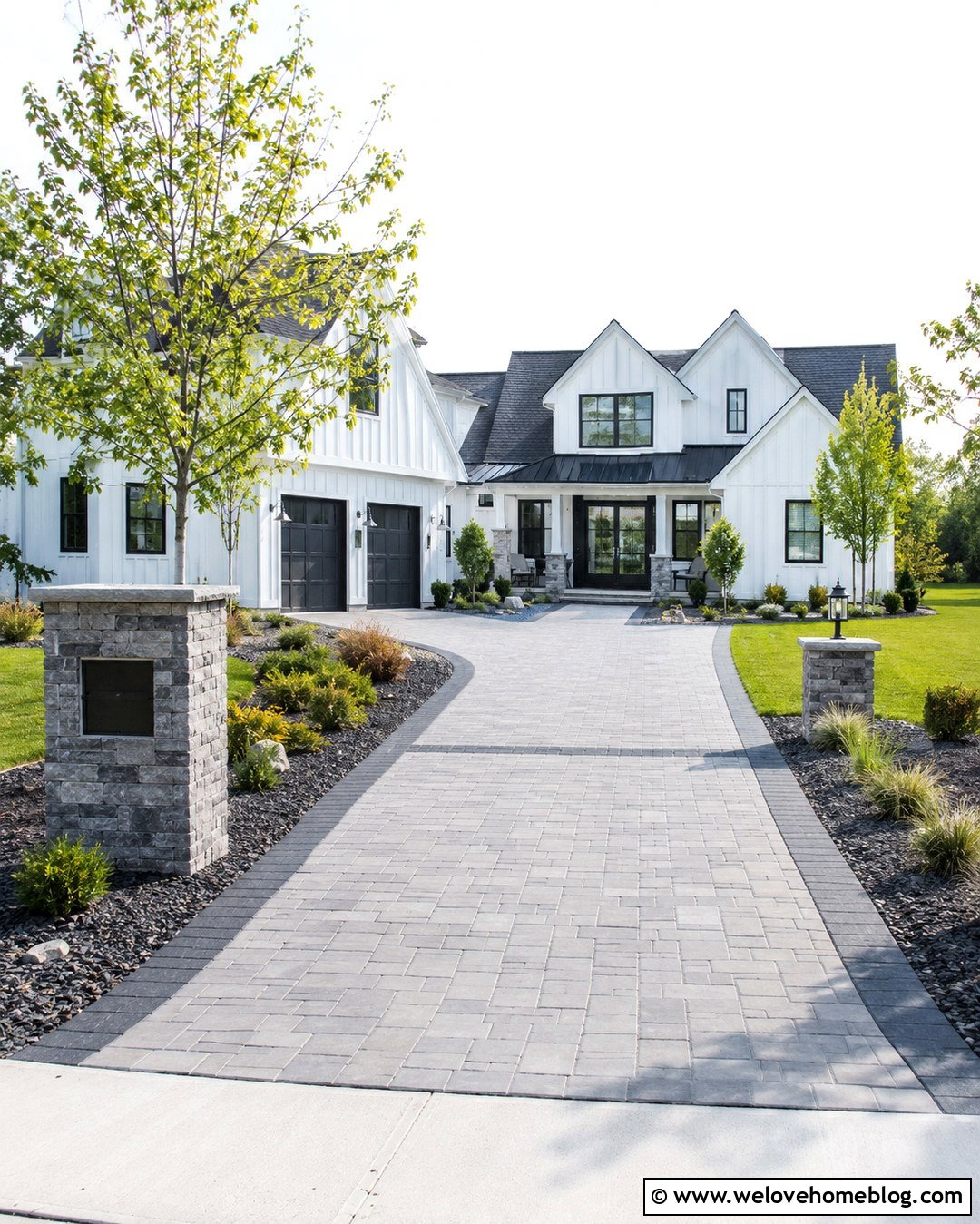
Stone pillars can frame a paver driveway and make the entrance visible without requiring a gate. Use blended gray concrete pavers in a herringbone pattern for a gently curved drive. Finish the edges with charcoal setts and build modest pillars from stone that matches the home’s facade or porch columns. Place the pillars beyond required vehicle clearances and preserve open sightlines toward the road. Low evergreen shrubs, ornamental grasses, and flowering perennials can soften their bases. Continue the paving through the apron so the entrance reads as one complete composition. This look works well with craftsman, country, and substantial suburban homes. Keep pillar caps, lighting, and masonry details simple. Oversized structures can overwhelm the driveway and make an average front yard feel unnecessarily enclosed.
40. Mixed Material Driveway With Pavers And Gravel
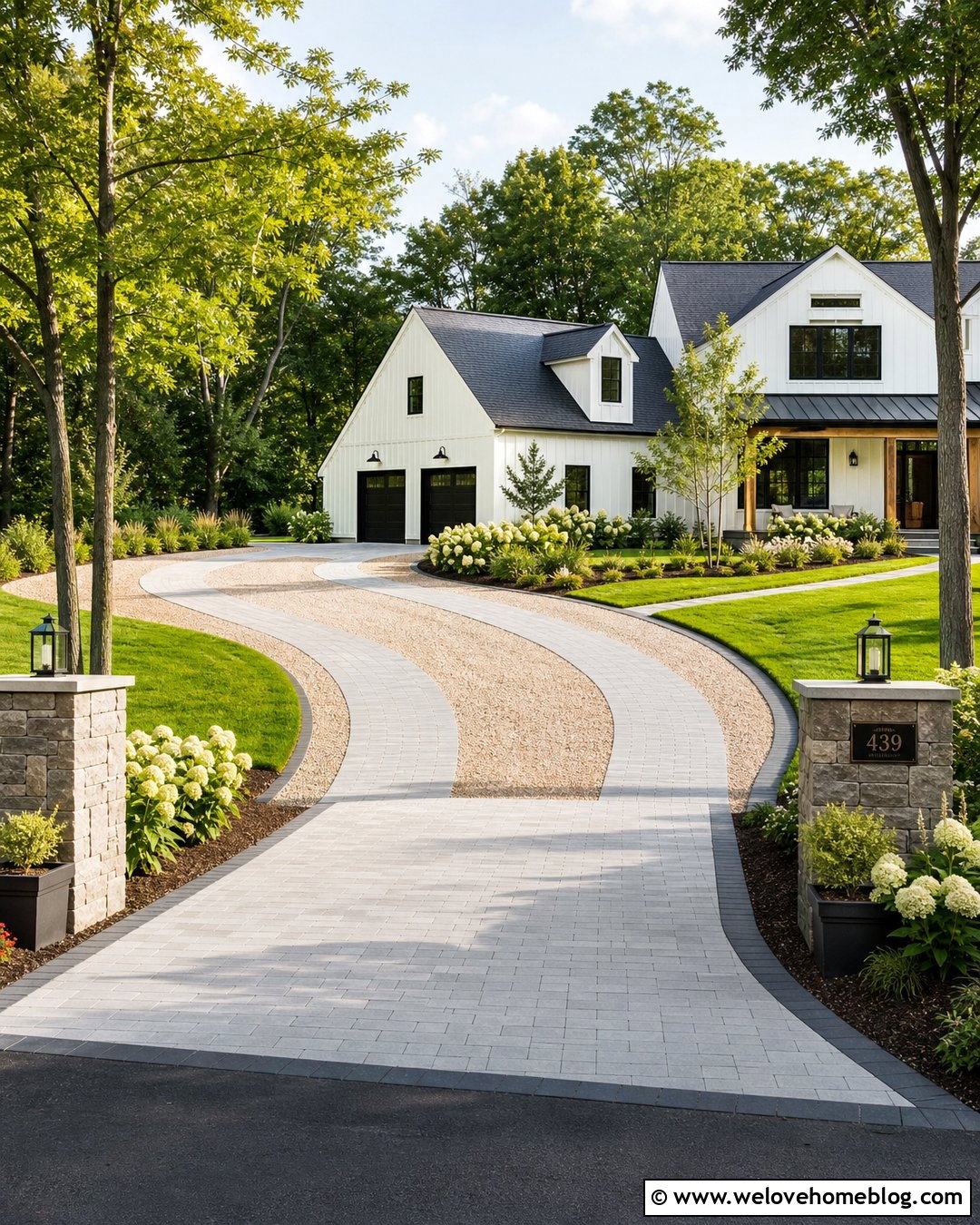
Combining pavers and gravel can reduce the visual scale of a large driveway while creating clear functional zones. Use gray concrete pavers for the main wheel paths, garage threshold, and entrance apron. Fill the surrounding parking or turning area with angular beige gravel held by sturdy edging and a stabilization system. A curved layout suits a modern farmhouse or country home with a generous front yard. Add a charcoal paver border around the entire composition to unify the materials. Native grasses, hydrangeas, lawn, and scattered deciduous trees can soften the broad surface. Keep gravel away from the public road and pedestrian route by using solid paved transitions. Carefully coordinate elevations so the two surfaces meet cleanly and support comfortable vehicle movement.
Conclusion:
The most effective driveway paving ideas combine dependable construction with a design that belongs to the house and landscape. Start by choosing a surface suited to your climate, vehicle use, maintenance preferences, and budget. Then consider the driveway’s shape, paving pattern, border, walkway, planting, lighting, and drainage as connected parts of one entrance. Brick and natural stone create traditional character, while large concrete pavers and geometric bands suit modern homes. Asphalt, gravel, and poured concrete can also look polished when paired with thoughtful edging and landscaping. Before construction, review material samples outdoors and obtain professional guidance on grading, base preparation, drainage, and local requirements. These steps turn an attractive concept into a practical, lasting driveway.

Related posts:
Leave a Reply