
A concrete driveway does not have to look like one large, plain slab. Adding paver details can introduce color, pattern, and architectural character while keeping concrete as the main driving surface. These 20 Concrete Driveway With Paver Inlay Ideas explore complete designs for modern, traditional, farmhouse, and suburban homes. You will find brick borders, geometric bands, decorative medallions, contrasting aprons, and practical parking dividers. Thoughtful paver placement can also define driveway edges, connect walkways, and visually break up broad paved areas. Current driveway designs increasingly coordinate patterns, borders, landscaping, and home architecture as one cohesive exterior plan. () Use the following 20 Concrete Driveway With Paver Inlay Ideas to plan a distinctive and welcoming entrance.

1. Concrete Driveway With Brick Paver Border
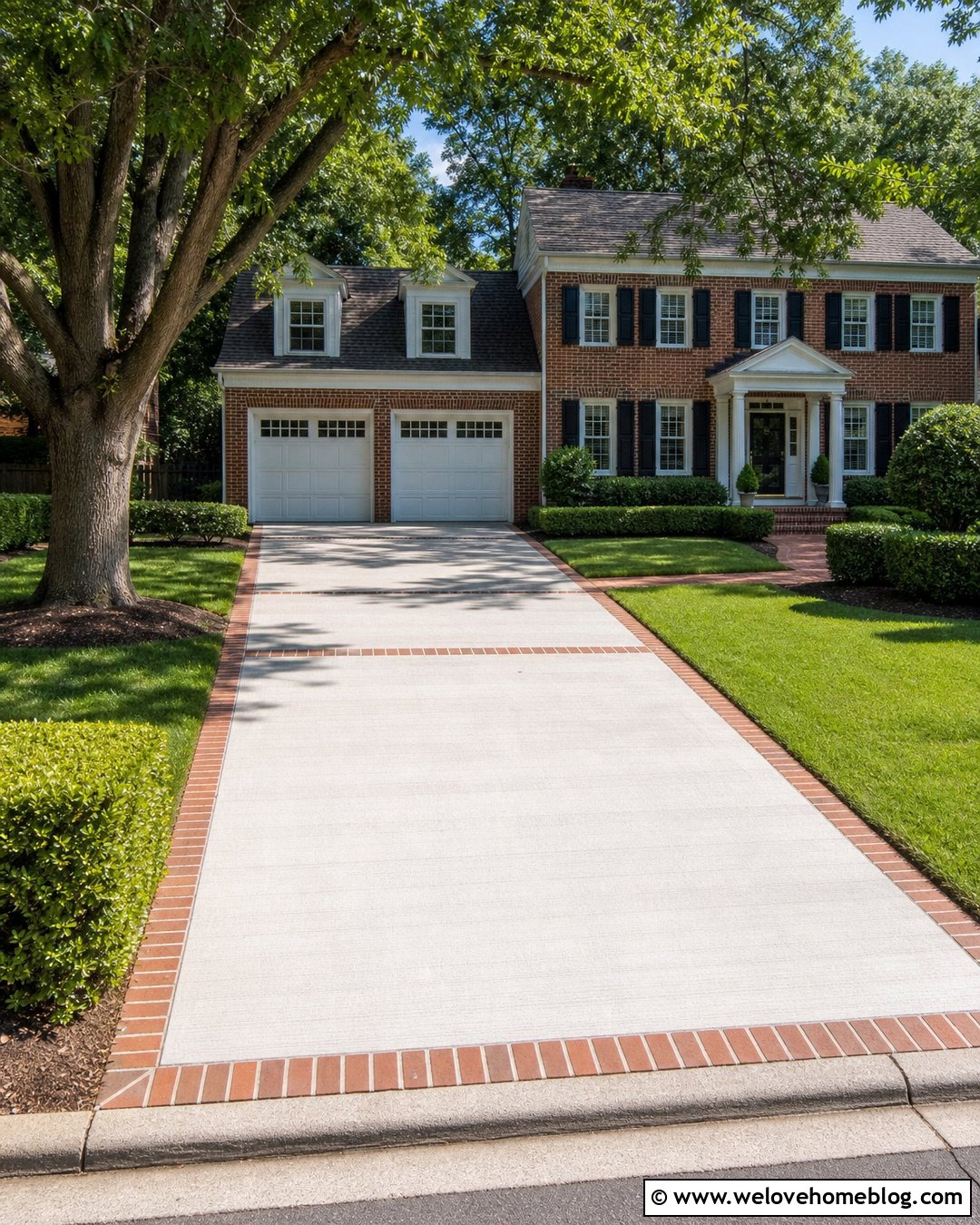
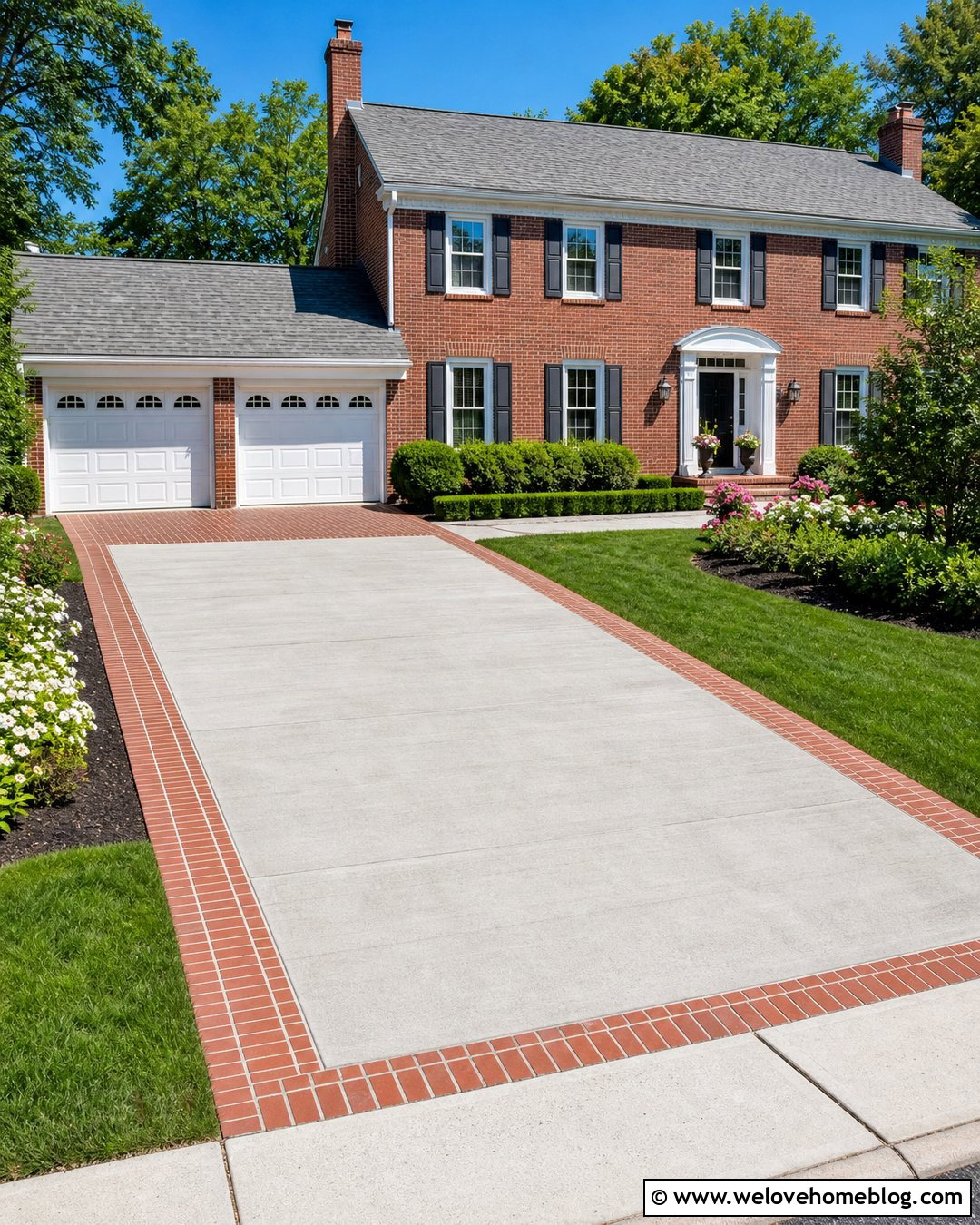
A warm brick border gives a light-gray concrete driveway a more finished and traditional appearance. Install red or brown clay brick pavers in a soldier-course pattern along both sides, then repeat the same material across the garage threshold. The continuous frame makes the driveway shape easy to read from the street. It also connects naturally with brick steps, porch columns, or a matching walkway. For balanced curb appeal, surround the border with neatly trimmed lawn and simple foundation shrubs. A straight layout works especially well with colonial, Cape Cod, and traditional suburban homes. Select brick colors already present in the house facade instead of introducing an unrelated tone. Contrasting paver borders are commonly used to define hardscape surfaces and strengthen visual continuity. ()
2. Concrete Driveway With Herringbone Center Strip
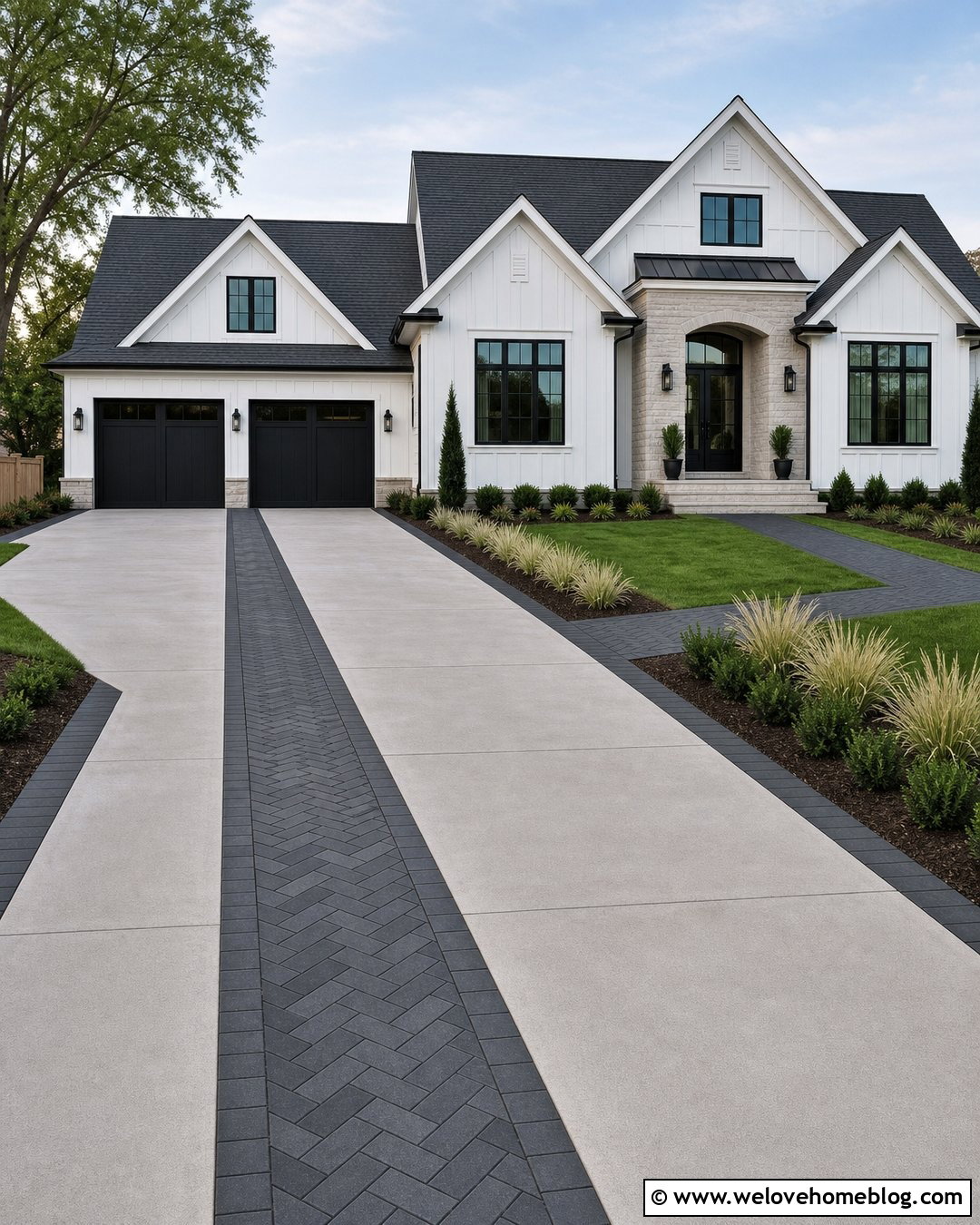
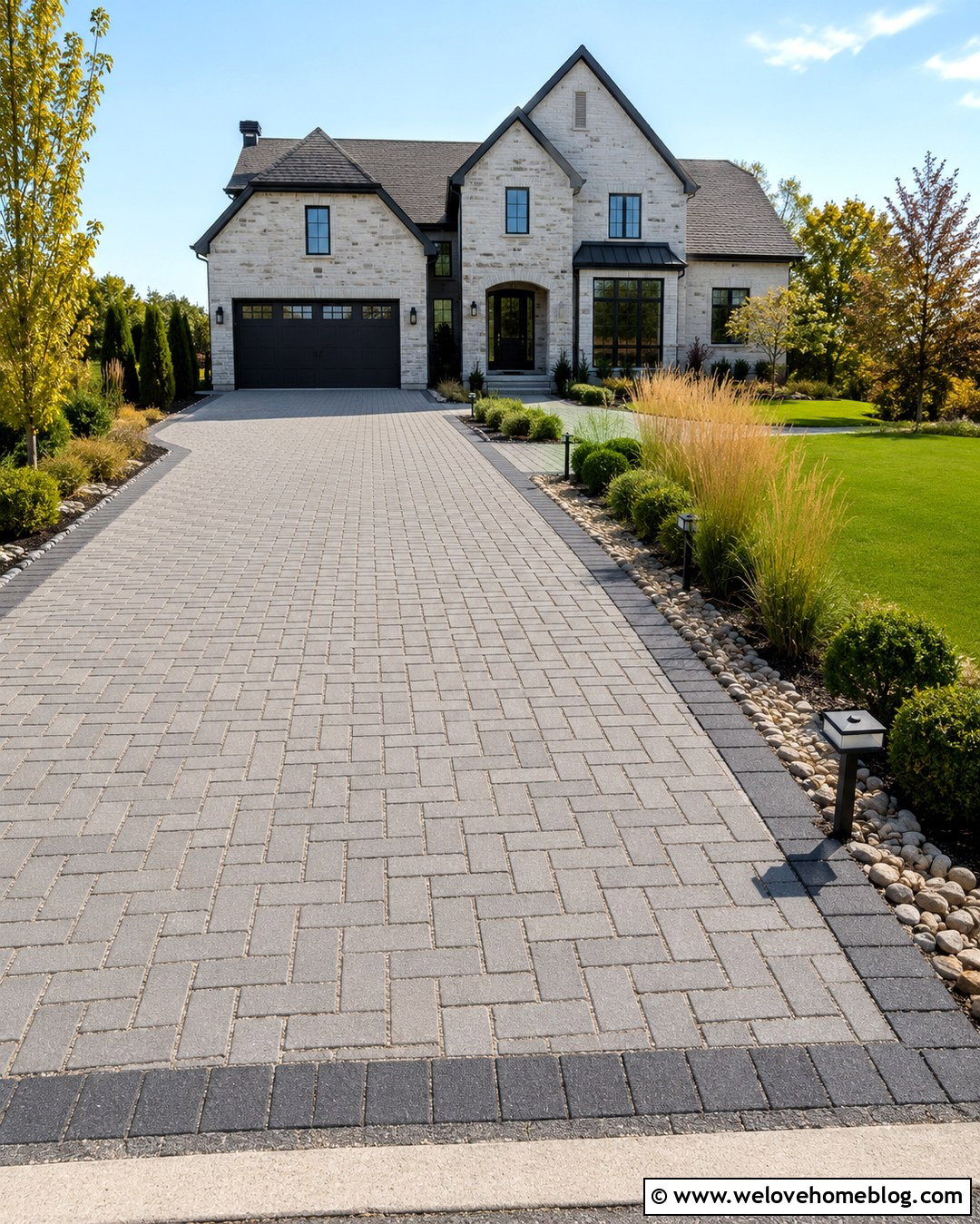
A herringbone paver strip running through the middle can turn a basic driveway into a strong architectural feature. Start with smooth, pale concrete panels and install a wide center inlay using charcoal concrete pavers. Continue the strip from the street apron toward the garage so it creates a clear visual axis. A narrow paver border on each side of the driveway helps the center detail feel intentional rather than isolated. Frame the approach with ornamental grasses, low evergreen shrubs, and a walkway made from matching pavers. This complete look suits modern and transitional homes with symmetrical facades. Herringbone patterns also create dense visual texture, making them useful when you want a relatively small inlay to stand out against broad concrete sections. Choose pavers specifically rated for vehicular surfaces. ()
3. Concrete Driveway With Double Paver Bands
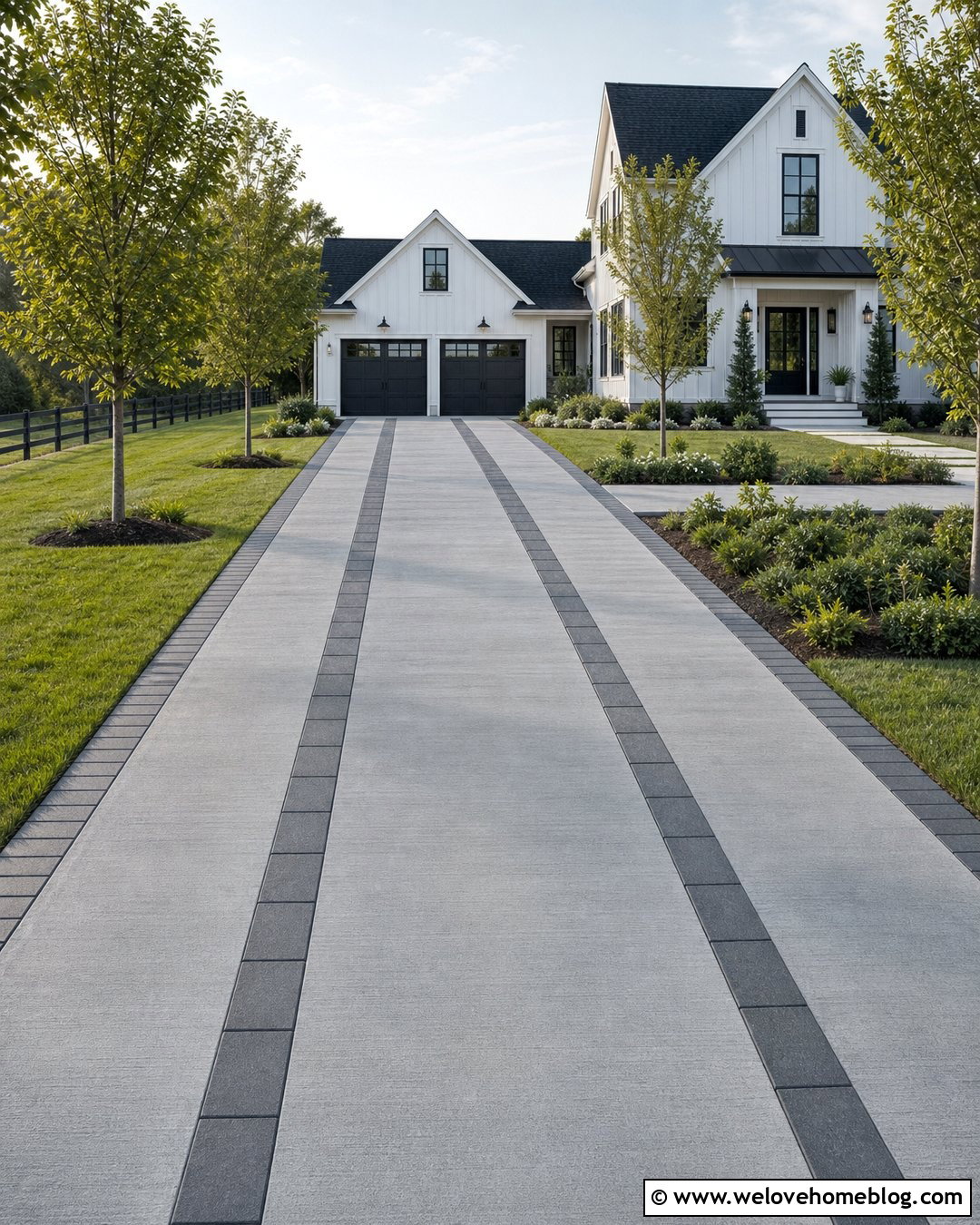
Two parallel paver bands offer a clean way to decorate a long concrete driveway without making the surface look busy. Position the bands where vehicle tires normally travel, using dark-gray rectangular concrete pavers against medium-gray poured concrete. The repeated lines draw attention toward the house and visually shorten an extended approach. Add matching charcoal edging to create a coordinated frame around the entire driveway. Along the sides, use broad lawn panels, evenly spaced trees, and low planting beds that preserve the strong linear view. This arrangement complements contemporary ranch homes, modern farmhouses, and minimalist two-story houses. Keep each paver band consistent in width and alignment. Long uninterrupted joints should be reviewed by the installer because vehicular paver patterns need appropriate interlock, base preparation, edge support, and drainage planning. ()
4. Concrete Driveway With Paver Apron
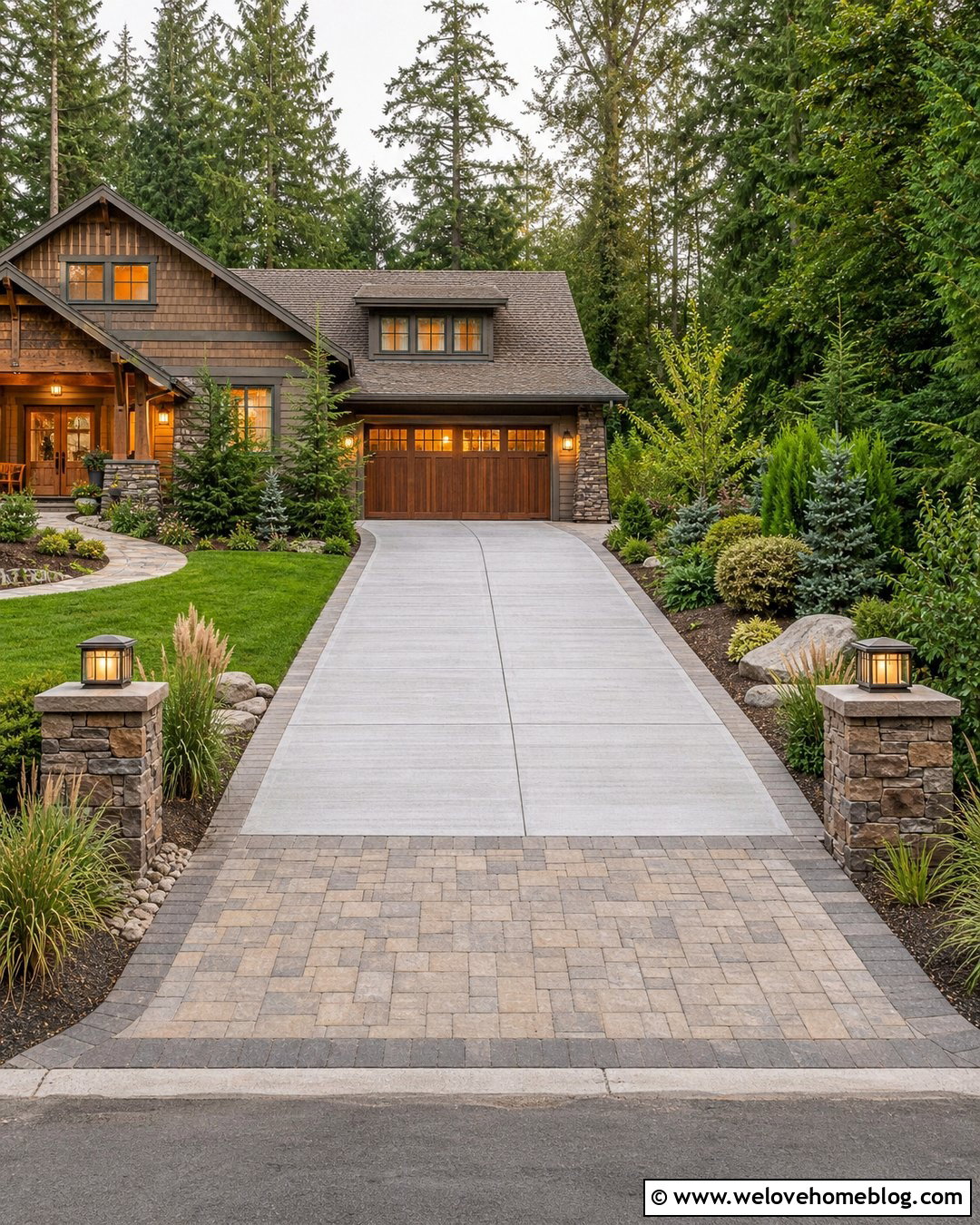
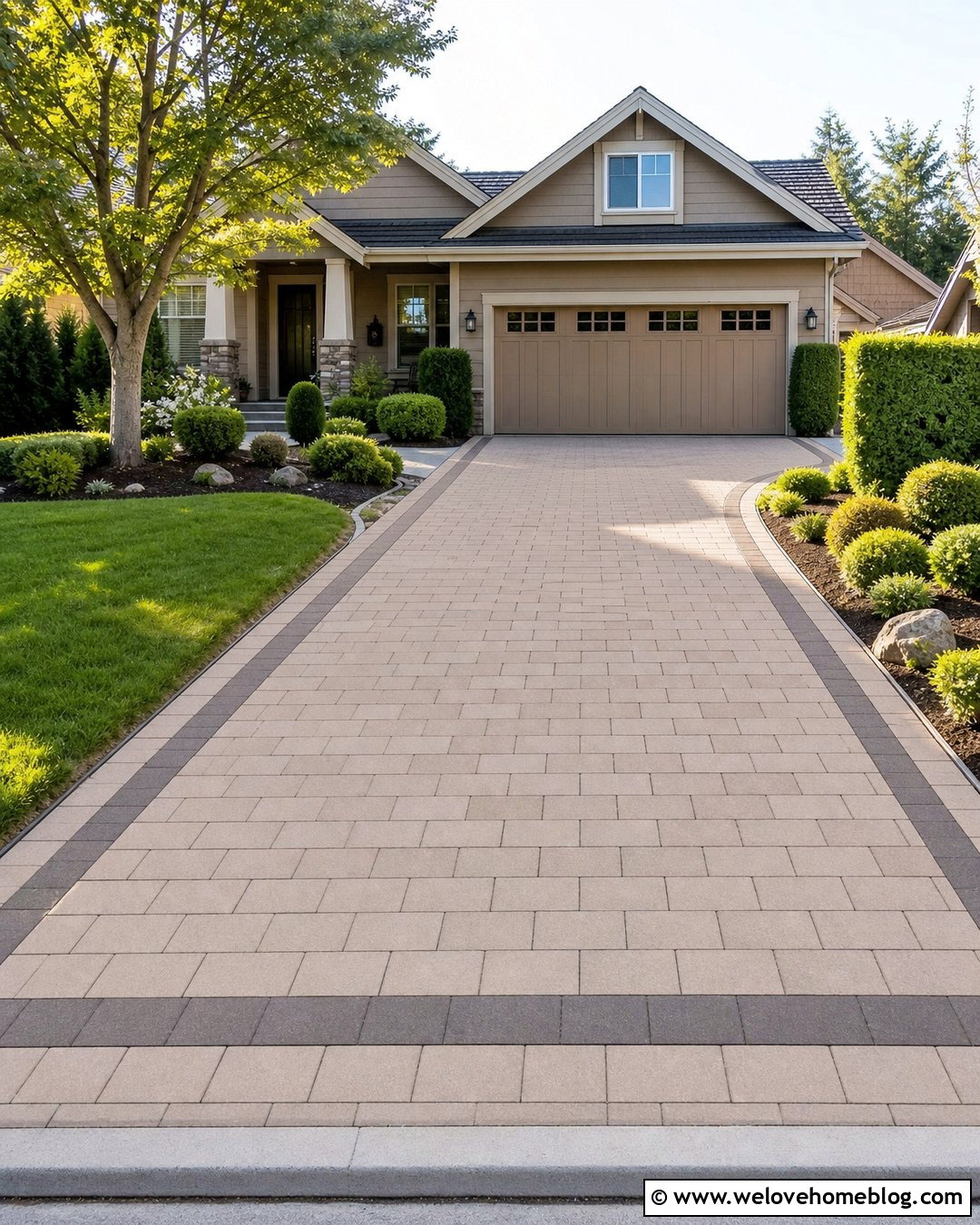
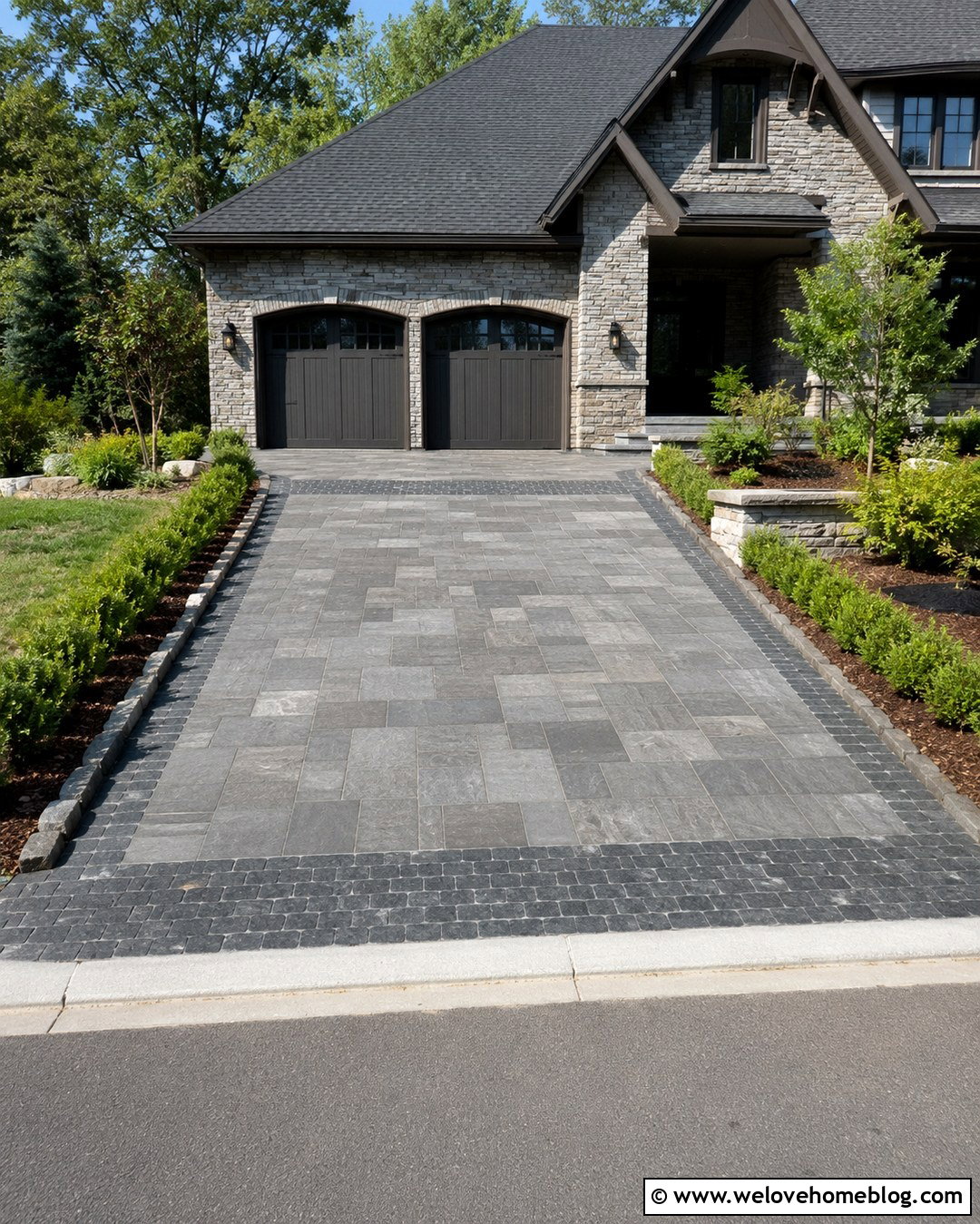
A paver apron creates an attractive transition between the street and the main concrete driveway. Use tumbled concrete pavers in blended tan and charcoal tones across the first six to ten feet of the entrance. Continue a narrow row of the same pavers along the driveway edges so the apron feels connected to the overall design. Light broom-finished concrete keeps the central surface practical and allows the darker entrance to become the focal point. Stone pillars, a low address wall, and layered shrubs can strengthen the sense of arrival. This look works especially well for craftsman and traditional homes with warm exterior materials. Ask the installer to coordinate the paver elevation, concrete joints, edge restraints, and street connection carefully. A clean transition reduces visual clutter and helps the two materials read as one surface.
5. Concrete Driveway With Diamond Paver Inlay
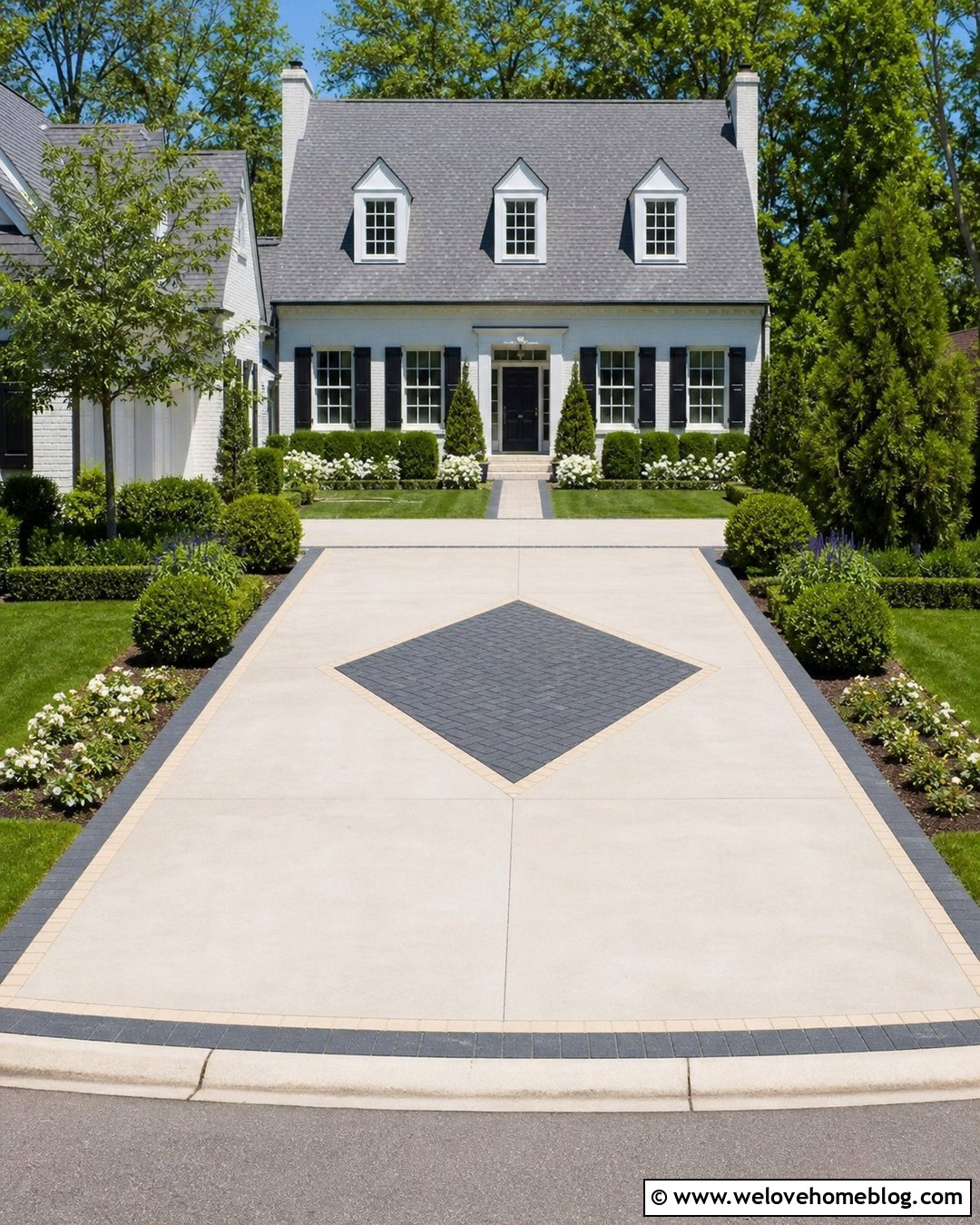
A diamond-shaped paver inlay introduces a decorative centerpiece without covering the entire driveway. Place one large diamond in the wider parking area near the garage, where it remains visible from the curb. Charcoal concrete pavers laid in a running bond can contrast with pale, smooth-finished concrete. Outline the diamond with a thin buff paver border to sharpen its geometry and connect it with beige stone on the house. Repeat the charcoal pavers along the driveway perimeter for a balanced composition. Keep surrounding landscaping simple, using rounded boxwoods, flowering perennials, and an uncluttered lawn. This formal layout suits symmetrical homes and wide two-car driveways. Detailed inlays require careful measuring and paver cutting, so experienced installation becomes particularly important when corners, borders, and concrete joints must align precisely. ()
6. Concrete Driveway With Circular Paver Medallion
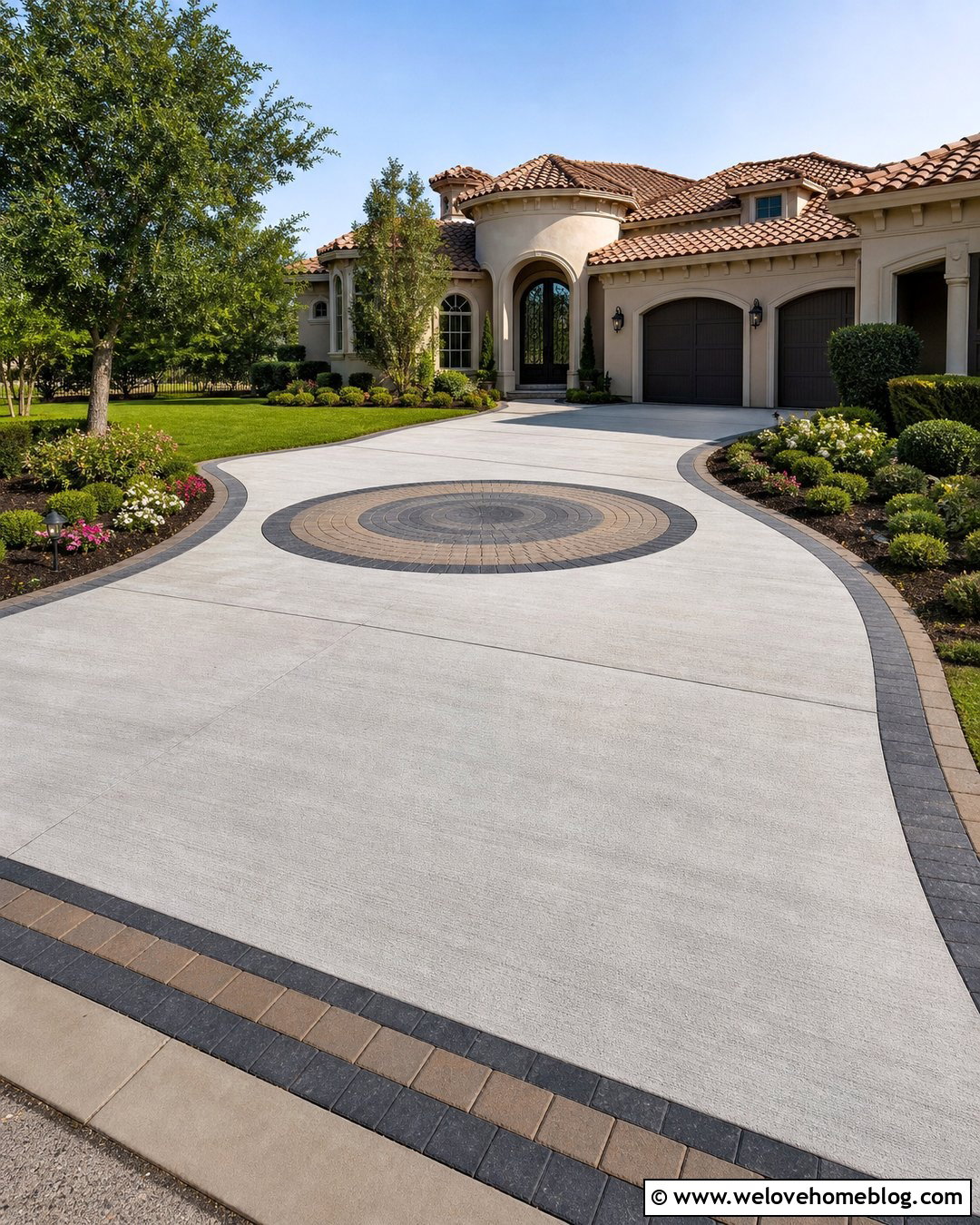
A circular paver medallion can become the centerpiece of a broad concrete driveway or front parking court. Build the circle from charcoal, gray, and warm-tan concrete pavers arranged in concentric rings. Surround it with large broom-finished concrete panels and use a matching paver border around the driveway perimeter. The medallion should sit on the main sightline from the street, ideally centered with the front door or garage. Curved planting beds filled with low shrubs and seasonal flowers can echo its shape. This design is particularly effective beside a traditional brick home, Mediterranean residence, or large craftsman house. Coordinate the circle diameter with the driveway scale; a small medallion may disappear in a large court. Manufacturers offer coordinating circle systems that can simplify radial layouts and reduce awkward cuts. ()
7. Concrete Driveway With Basketweave Paver Grid
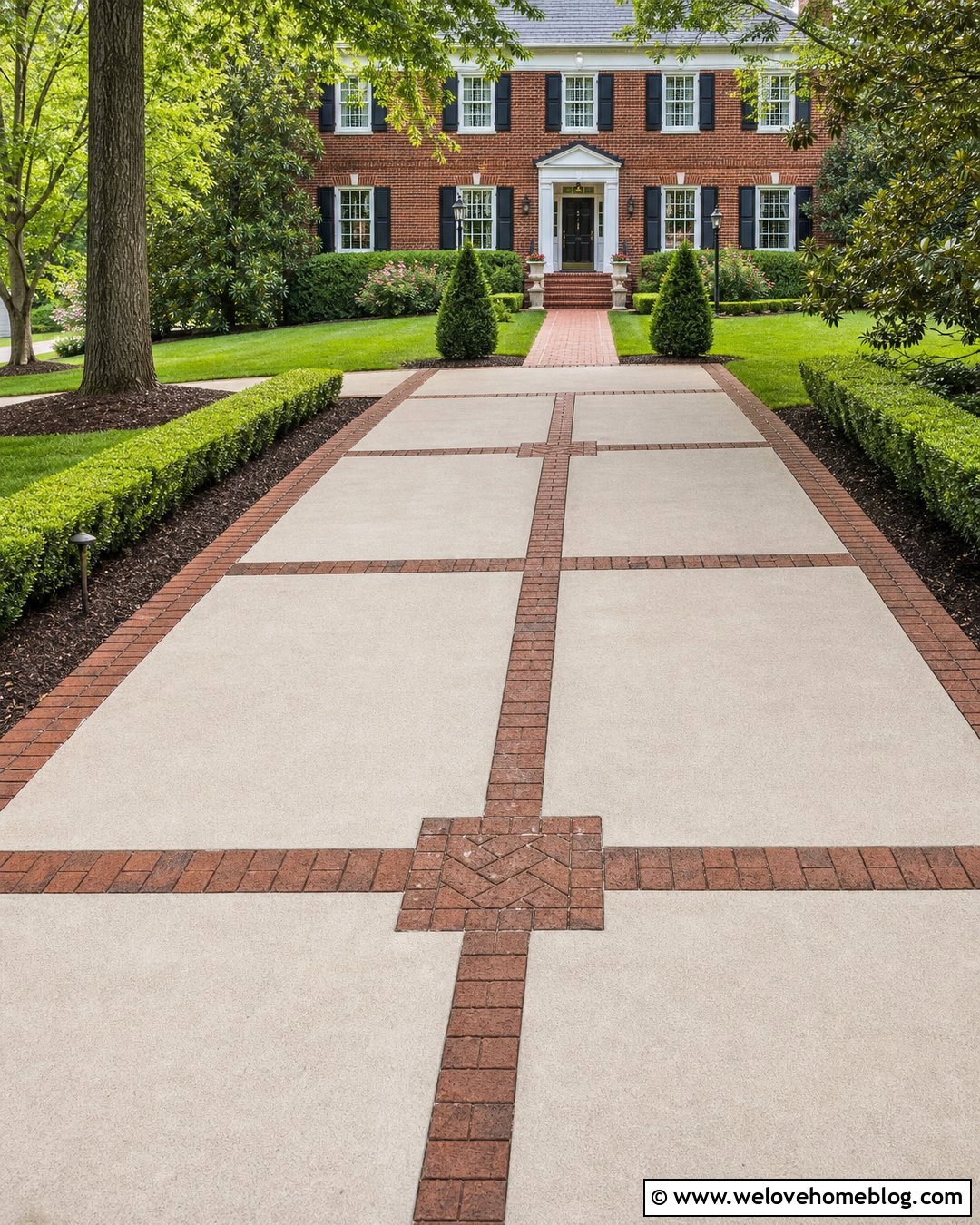
A basketweave paver grid brings classic brick character to an otherwise simple concrete surface. Divide a wide driveway into large rectangular concrete panels, then separate them with red-brown brick paver bands. At selected intersections, enlarge the paver areas into basketweave squares. This repeated grid looks especially appropriate with colonial, Georgian, and brick ranch homes. Use warm-gray concrete rather than bright white so the contrast remains comfortable and established. Along the driveway, add clipped hedges, mature shade trees, and a brick walkway leading toward the entrance. Match the paver grid with architectural lines such as garage doors, windows, or porch columns. Careful spacing is essential because uneven bands can make the entire driveway appear misaligned. Incorporate planned concrete control joints into the grid wherever the engineering and layout allow.
8. Concrete Driveway With Charcoal Linear Paver Inlay
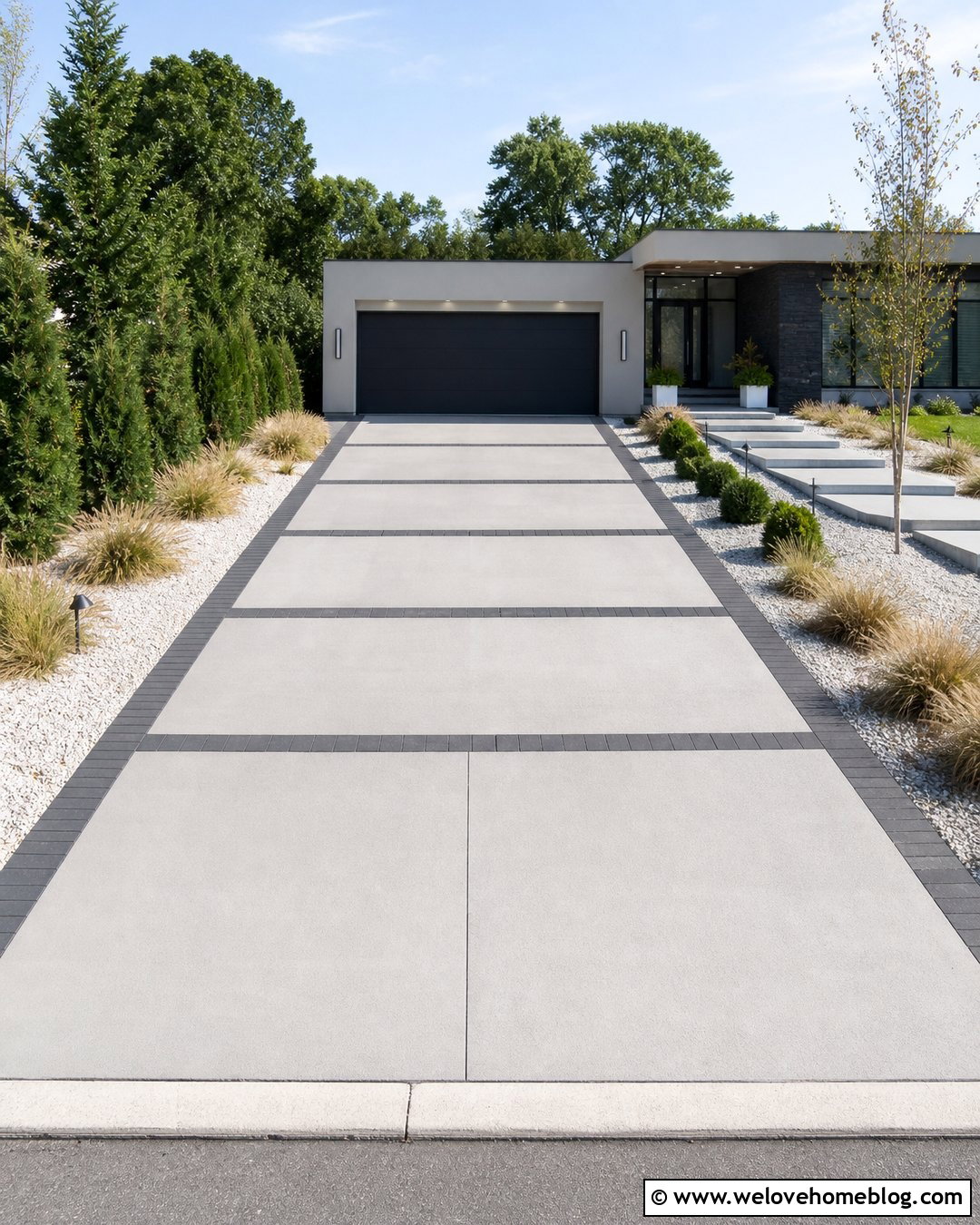
Thin charcoal paver lines create a crisp modern driveway without requiring a complicated pattern. Use large rectangular concrete panels with a smooth light-gray finish, separated by narrow bands of dark concrete pavers. Run several bands across the driveway at measured intervals, aligning them with garage doors, facade sections, or walkway edges. Add a charcoal soldier-course border around the outer perimeter to repeat the accent color. Sleek planting beds with ornamental grasses, compact evergreens, and light decorative gravel reinforce the modern look. This approach works well with flat-roof homes, modern ranch houses, and contemporary stucco exteriors. Keep the palette limited to two or three tones. Modern linear pavers can also be arranged to emphasize symmetry and direct the eye toward the house, especially when combined with coordinated landscape lighting. ()
9. Concrete Driveway With Cobblestone Paver Ribbons
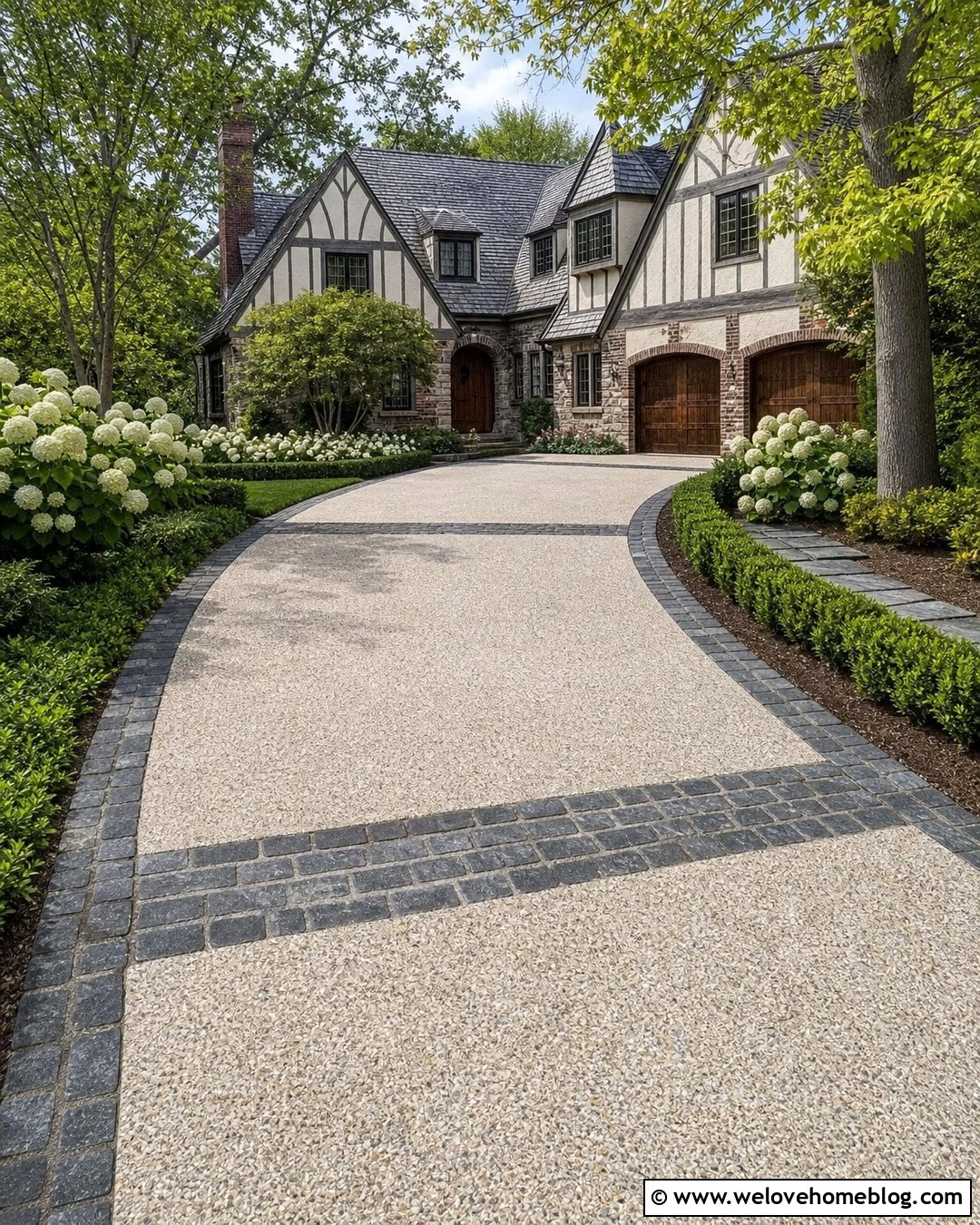
Cobblestone-style paver ribbons soften a concrete driveway and add an established, European-influenced character. Run one curved ribbon across the entrance and another near the garage, creating visual pauses along the concrete surface. Use dark charcoal or weathered-gray concrete cobbles with lightly exposed aggregate concrete for gentle texture. A matching cobblestone border can follow both sides of the driveway, even when the layout bends toward the house. Frame the approach with hydrangeas, low hedges, and mature deciduous trees. This complete design pairs beautifully with Tudor, French country, and cottage-style homes. Avoid adding too many competing materials; the cobblestone texture should remain the primary detail. At curved sections, smaller paver units generally produce smoother-looking arcs and reduce the number of visibly awkward wedge-shaped cuts.
10. Concrete Driveway With Curved Paver Bands
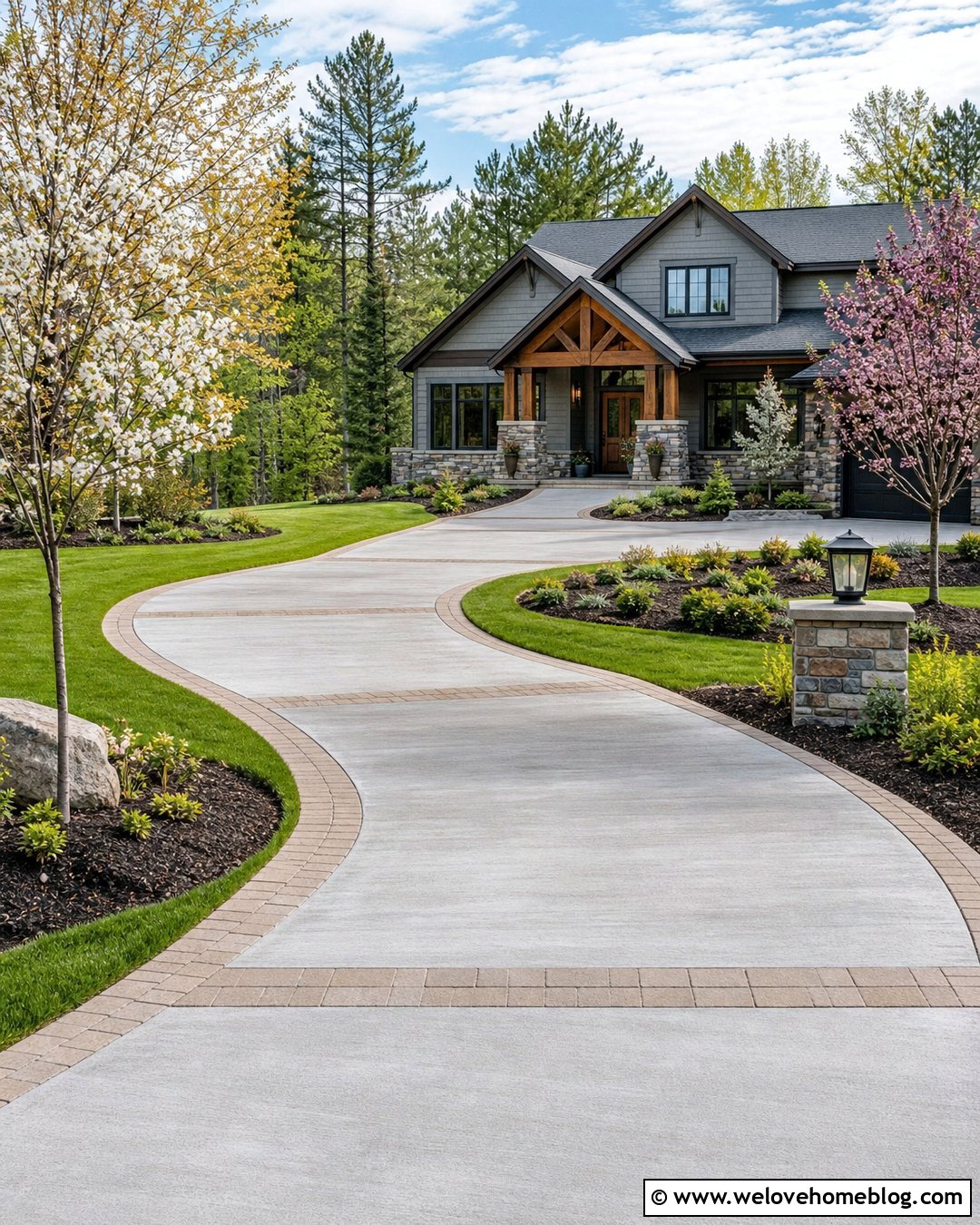
Curved paver bands help a sweeping driveway feel connected to the shape of the landscape. Install light-gray broom-finished concrete as the main surface, then add broad bands of warm-tan concrete pavers that gently cross the driveway. Position the bands near natural transition points, such as the entrance, a walkway connection, or the final turn toward the garage. Edge the driveway with the same pavers to create a continuous outline. On the outer curve, plant layered shrubs and small flowering trees. Keep the inner curve open with lawn or a low ground-cover bed to maintain visibility. This layout works well for craftsman, country, and large suburban homes. Mark every curve before construction so concrete forms, joints, paver cuts, drainage slopes, and landscape borders follow the same flowing geometry.
11. Concrete Driveway With Large Square Paver Panels
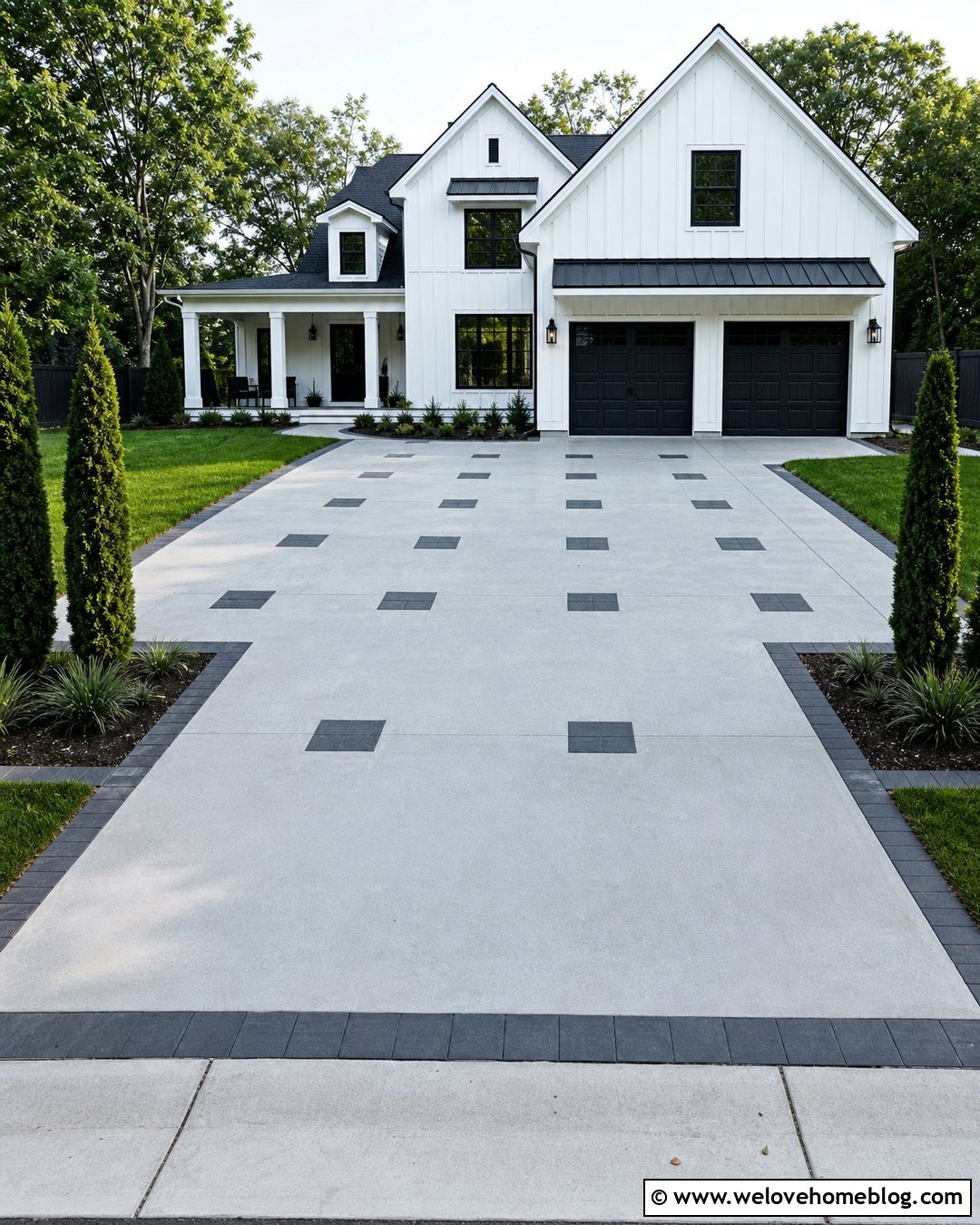
Large paver panels can make a wide concrete driveway feel structured and intentional. Create several square inlays using modular charcoal concrete pavers, spacing them evenly within broad areas of pale-gray concrete. Position the squares between vehicle paths or within a large turnaround area where the pattern can be viewed clearly. Outline the entire driveway with a narrow charcoal border to connect the individual panels. A modern farmhouse with white siding, dark windows, and stone accents provides an ideal background. Use simple lawn edges, upright evergreens, and rectangular planting beds to reinforce the geometry. Match the size of each panel to the driveway proportions. Large areas can support bigger patterns, while smaller driveways usually benefit from reduced-scale accents that do not overwhelm the available surface. ()
12. Concrete Driveway With Paver Parking Bay Divider
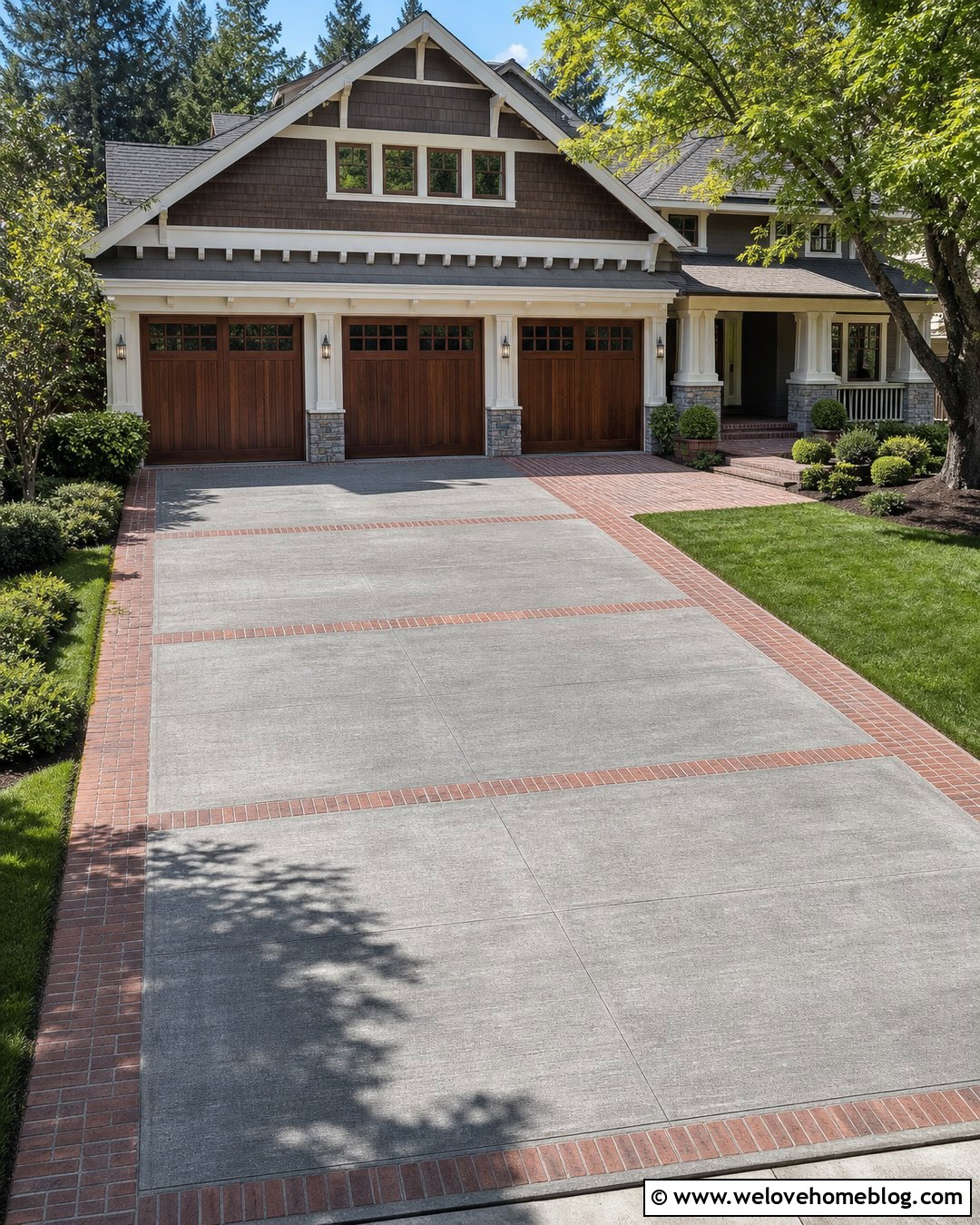
A paver inlay can divide parking spaces while contributing to the driveway’s overall design. Use medium-gray concrete for the main surface and install wide red-brick bands between each garage bay. Extend the bands from the garage doors to the street-facing edge of the parking area. Continue them into a matching brick border and front walkway for visual consistency. This practical layout helps organize a three-car driveway without painted lines or separate concrete colors. Pair it with a traditional home, brick facade, or craftsman exterior featuring warm wood details. Plant low shrubs beside the garage so they do not obstruct doors or mirrors. Before setting the exact bands, confirm typical parking paths and turning movements. Decorative divisions should guide the layout without creating inconvenient narrow sections or distracting from safe access.
13. Concrete Driveway With Red Brick Crossbands
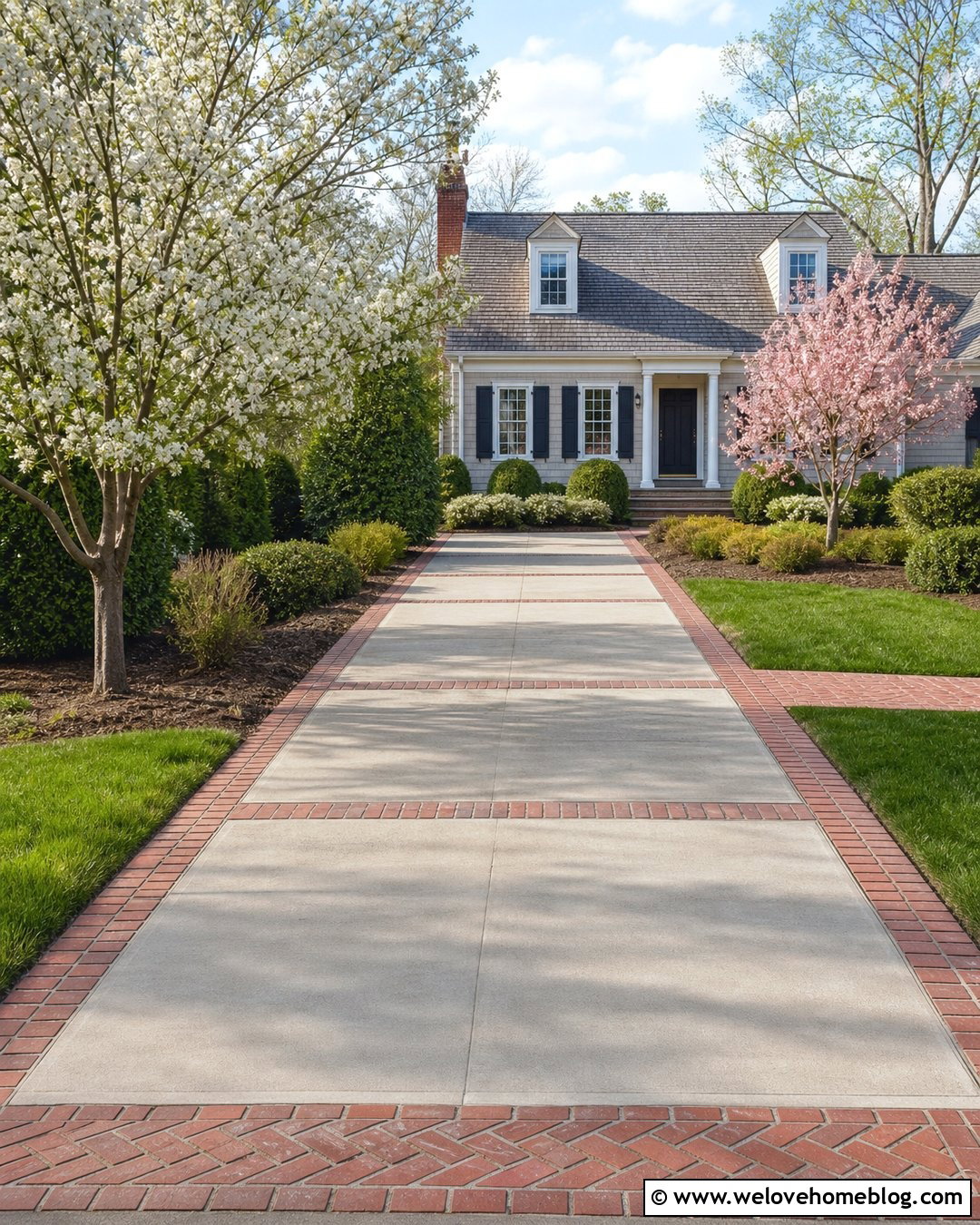
Red brick crossbands add warmth and rhythm to a long poured-concrete driveway. Place full-width brick inlays every twelve to twenty feet, adjusting the spacing to match the property scale. Use a herringbone or basketweave pattern inside each band and finish the driveway edges with a simple brick soldier course. Warm-gray concrete provides softer contrast than stark white concrete. The repeated crossbands can coordinate with a brick house, chimney, porch floor, or garden wall. For landscaping, use traditional foundation shrubs, flowering trees, and a clean lawn border. This design suits colonial, Cape Cod, and classic suburban architecture. Align at least one crossband with the front walkway so the two features feel related. Have the installer detail transitions carefully to keep paver and concrete surfaces even and comfortable for walking, driving, and snow removal.
14. Concrete Driveway With Permeable Paver Drainage Strip
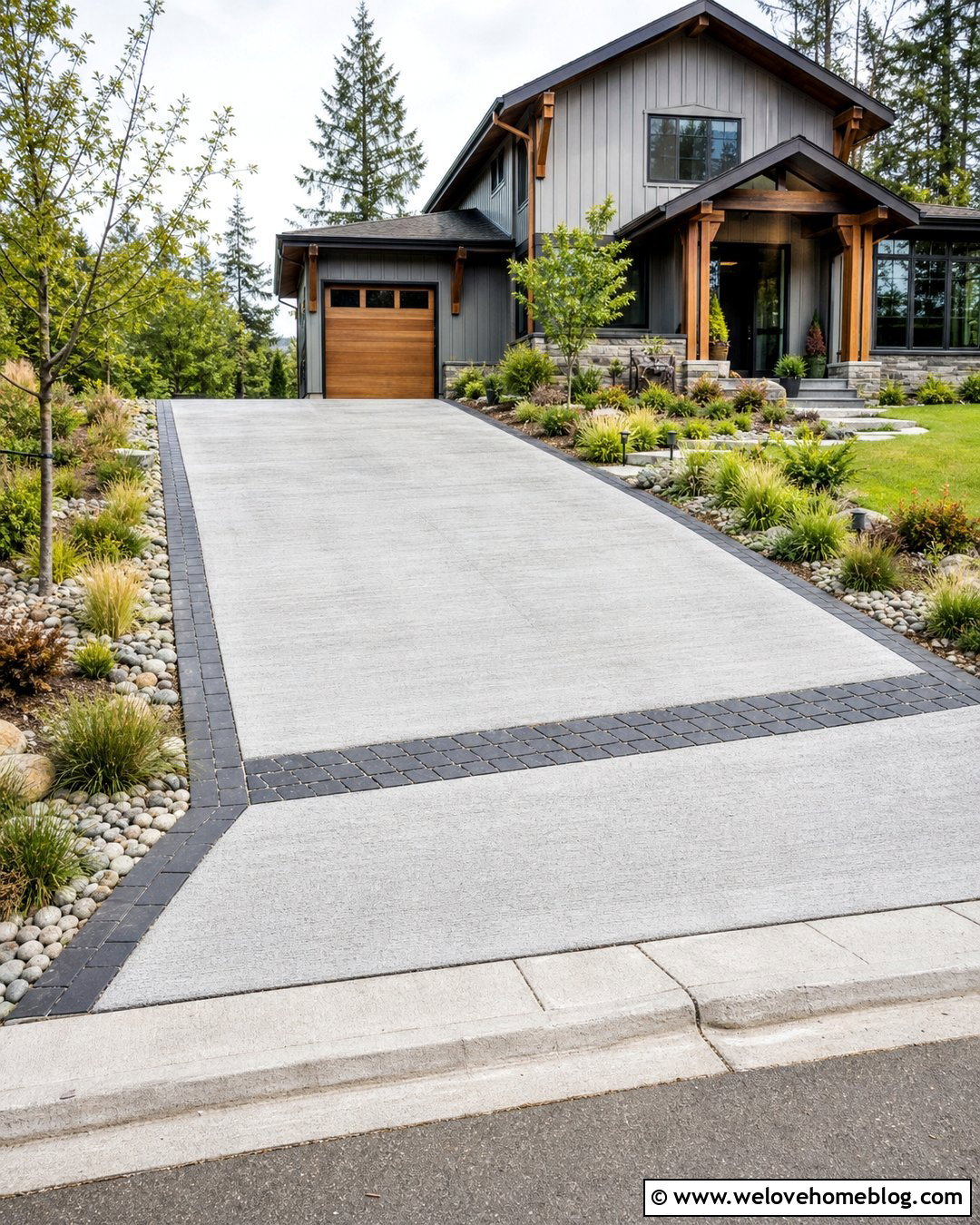
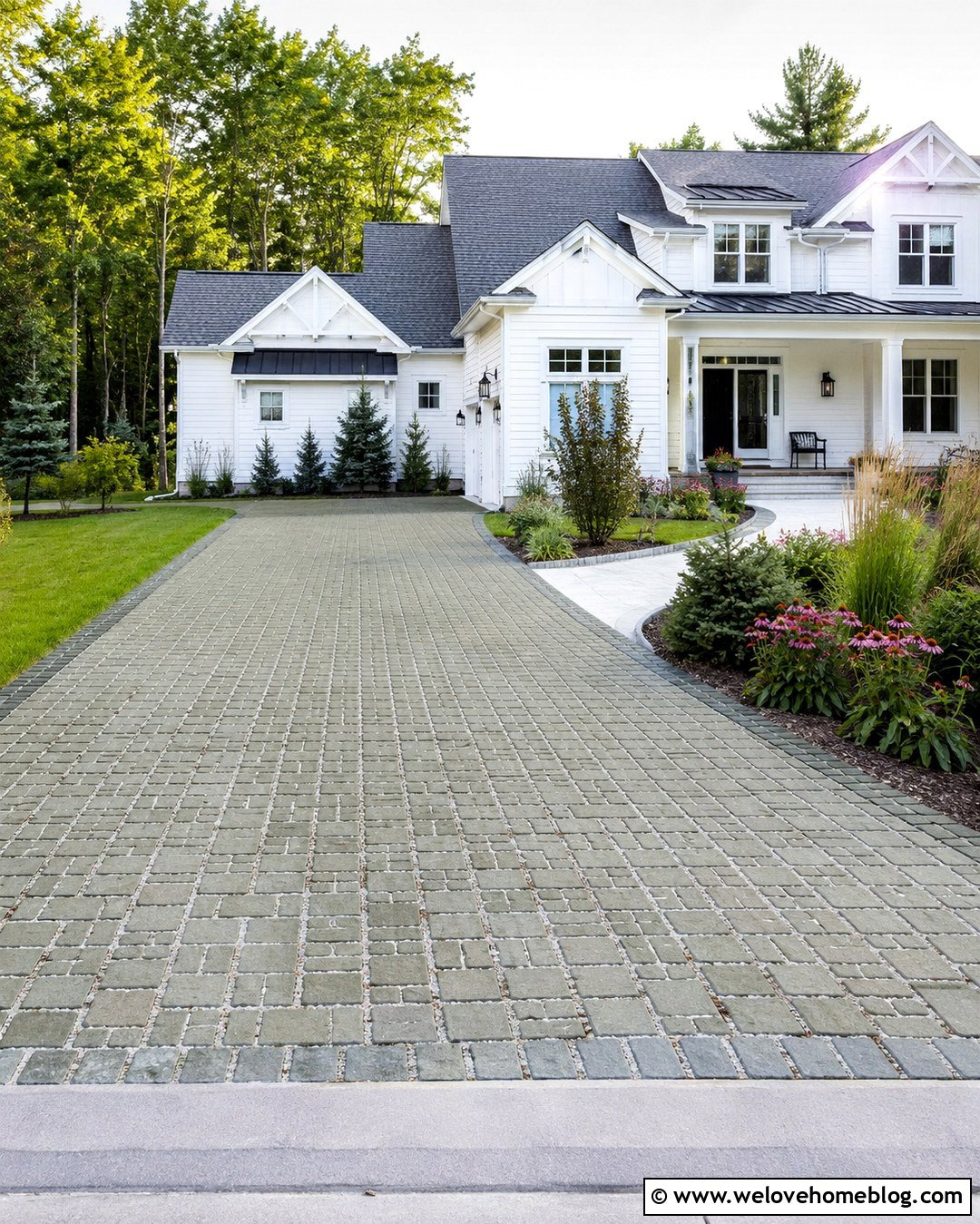
A permeable paver strip can become an attractive visual feature while contributing to a broader drainage plan. Place a wide band of permeable concrete pavers across the lower portion of a sloped driveway, using charcoal units with small aggregate-filled joints. Surround the strip with light broom-finished concrete and repeat the charcoal tone in a narrow perimeter border. Rain gardens, moisture-tolerant grasses, and river stone can frame the lower side of the driveway. This coordinated look works with contemporary, craftsman, and eco-conscious homes. Permeable systems are designed so water can filter through openings into prepared aggregate layers below, but their performance depends on correct engineering and site conditions. () Consult local professionals to evaluate soil, runoff, slope, frost conditions, underground utilities, and municipal drainage requirements before installation.
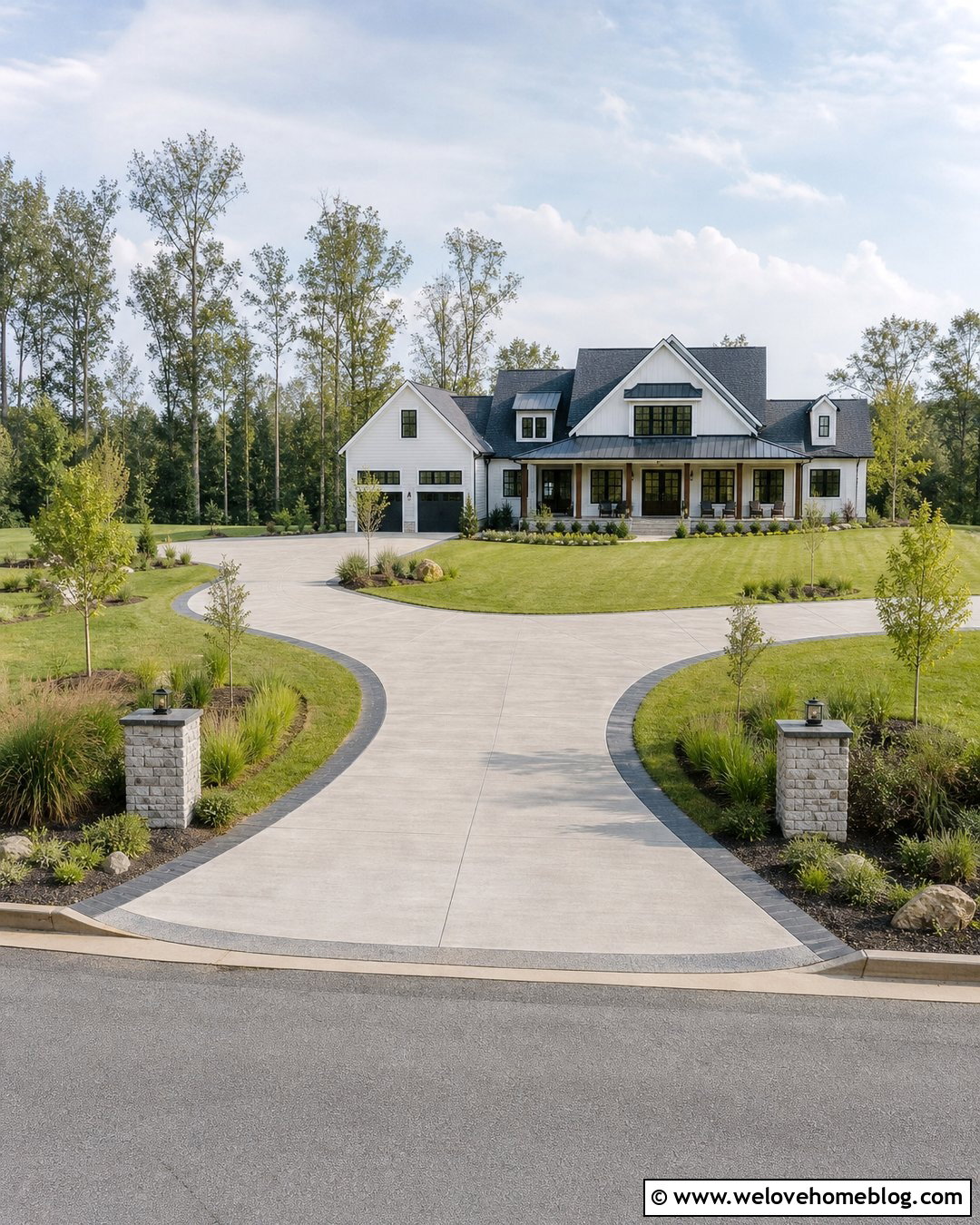
15. Concrete Driveway With Paver Walkway Connection
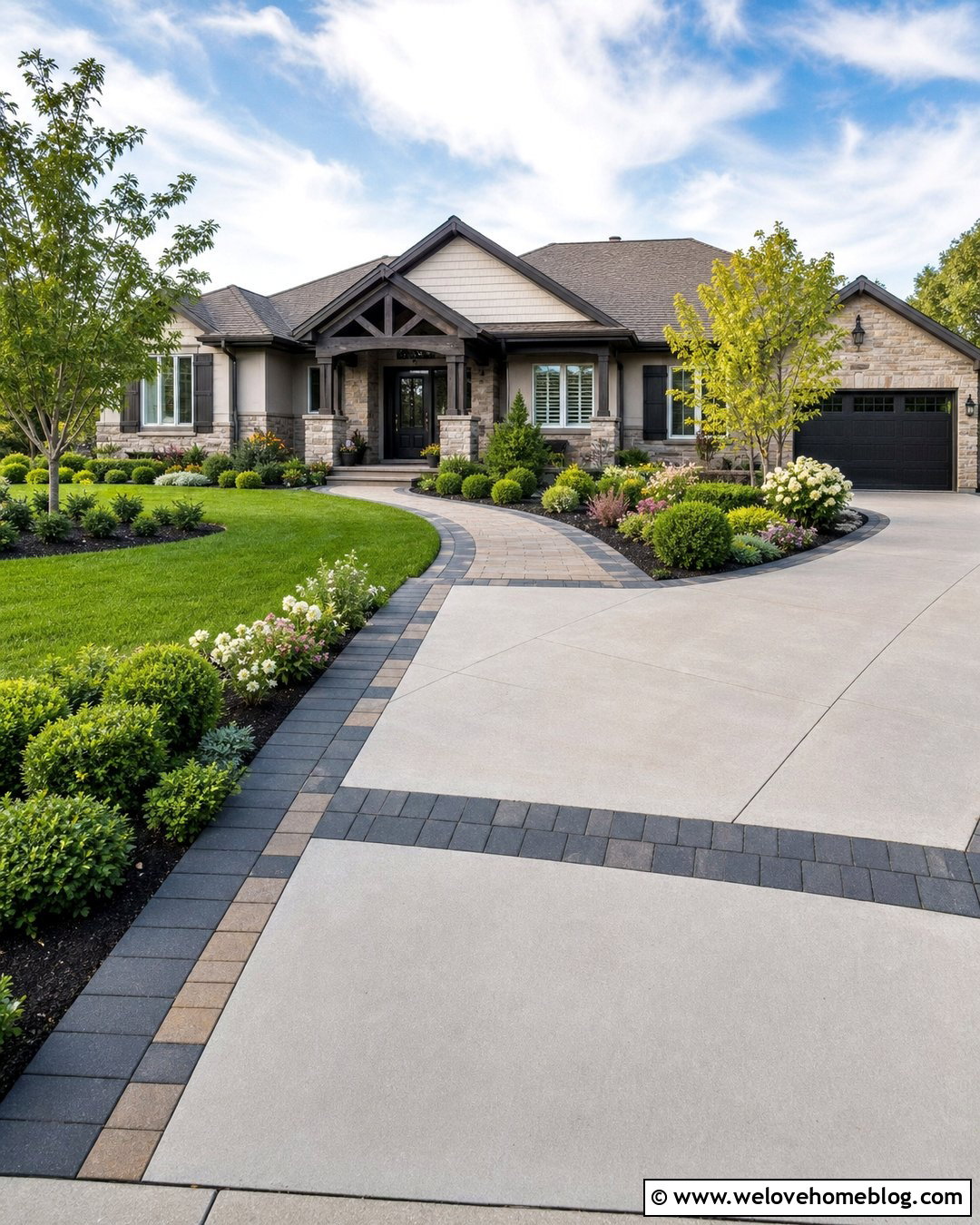
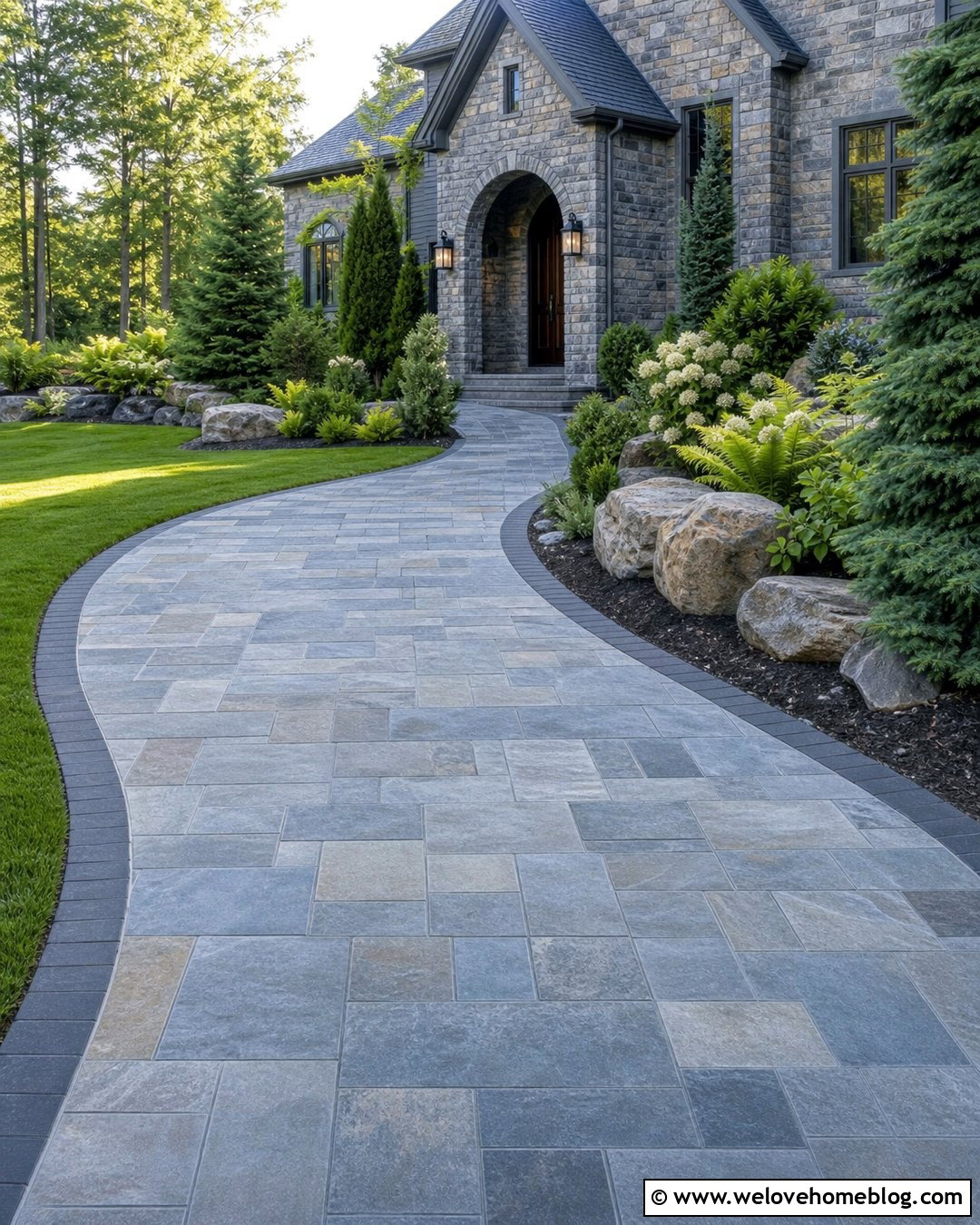
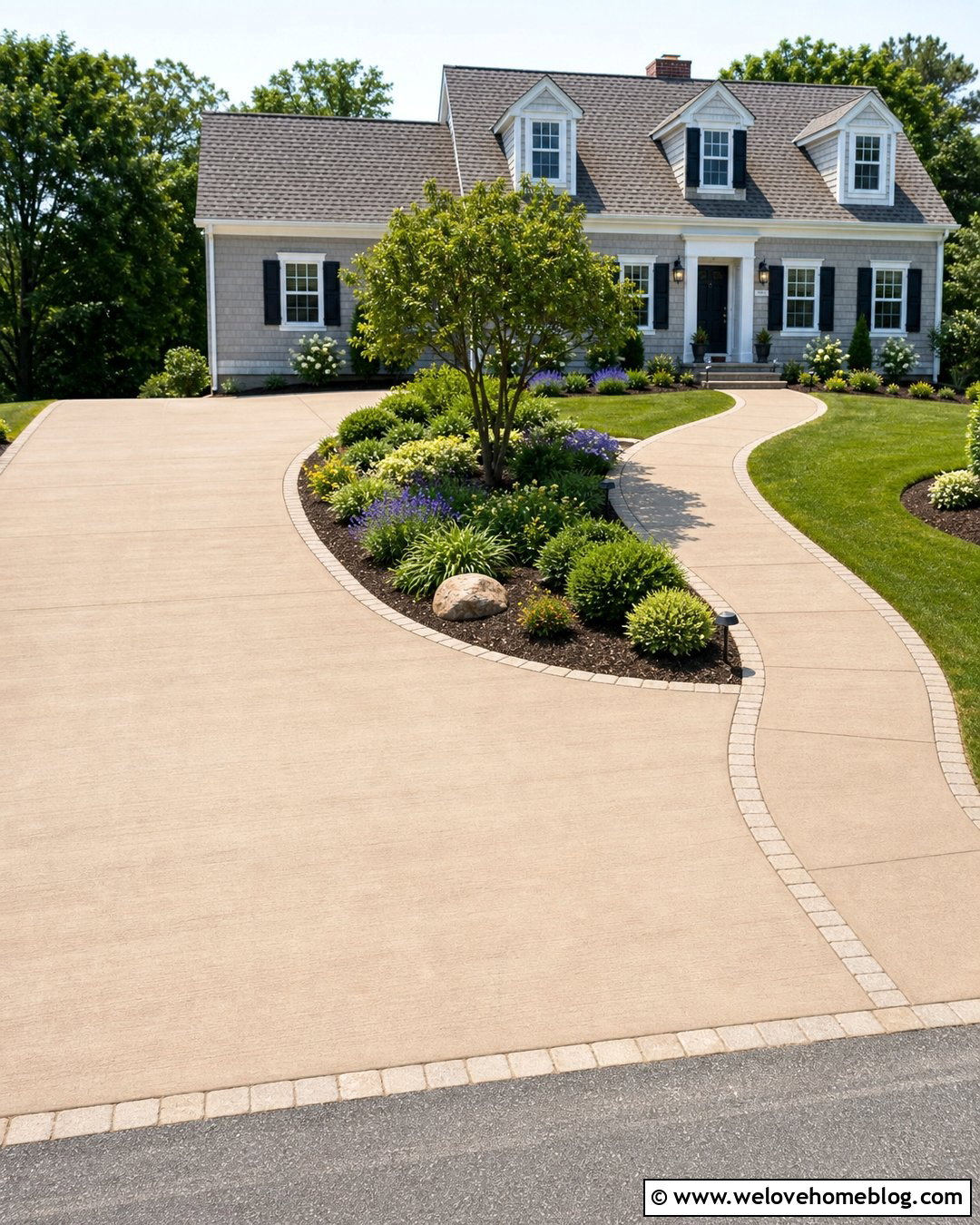
Connecting the driveway and front walkway with one continuous paver inlay creates an easy, welcoming route to the door. Use light-gray concrete for the driveway and install a broad band of tan-and-charcoal pavers from one edge toward the entrance walkway. Turn the paver band at a right angle or gentle curve, depending on the home’s architecture. Repeat the material around the driveway border and porch landing. Layered planting beds with boxwoods, perennials, and small ornamental trees can frame the route without hiding it. This layout fits craftsman, ranch, and transitional homes particularly well. Make the paver connection wide enough to read as a walkway rather than a decorative stripe. Smooth transitions, appropriate slopes, and clear separation from parking areas make the design more practical for everyday visitors.
16. Concrete Driveway With Geometric Paver Inlay
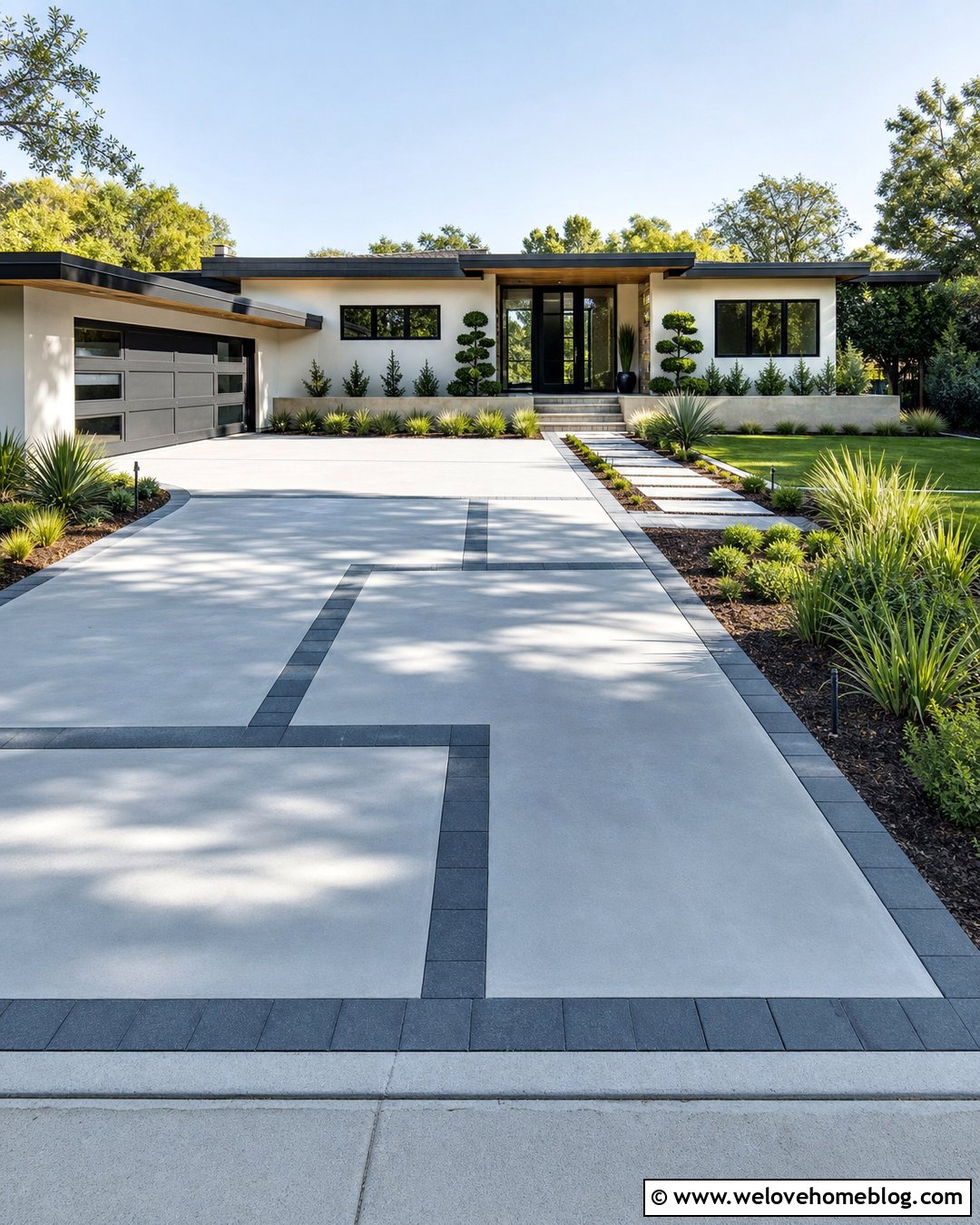
An angular paver inlay gives a concrete driveway a contemporary custom appearance. Create interlocking rectangles or offset L-shaped bands using dark-gray concrete pavers against a smooth, pale-gray concrete field. Keep the pattern concentrated near the garage or front parking court, where its geometry can be viewed as one complete composition. Add a simple paver frame around the driveway and align key lines with windows, garage doors, and the entry walkway. Rectangular planting beds, sculptural shrubs, and ornamental grasses will support the crisp layout. This look complements modern, mid-century, and minimalist homes. Limit the design to one repeated shape and a restrained color palette. Highly intricate patterns typically demand more cutting and skilled installation, so prepare an accurate scaled plan before placing forms or ordering materials. ()
17. Concrete Driveway With Two-Tone Paver Frame
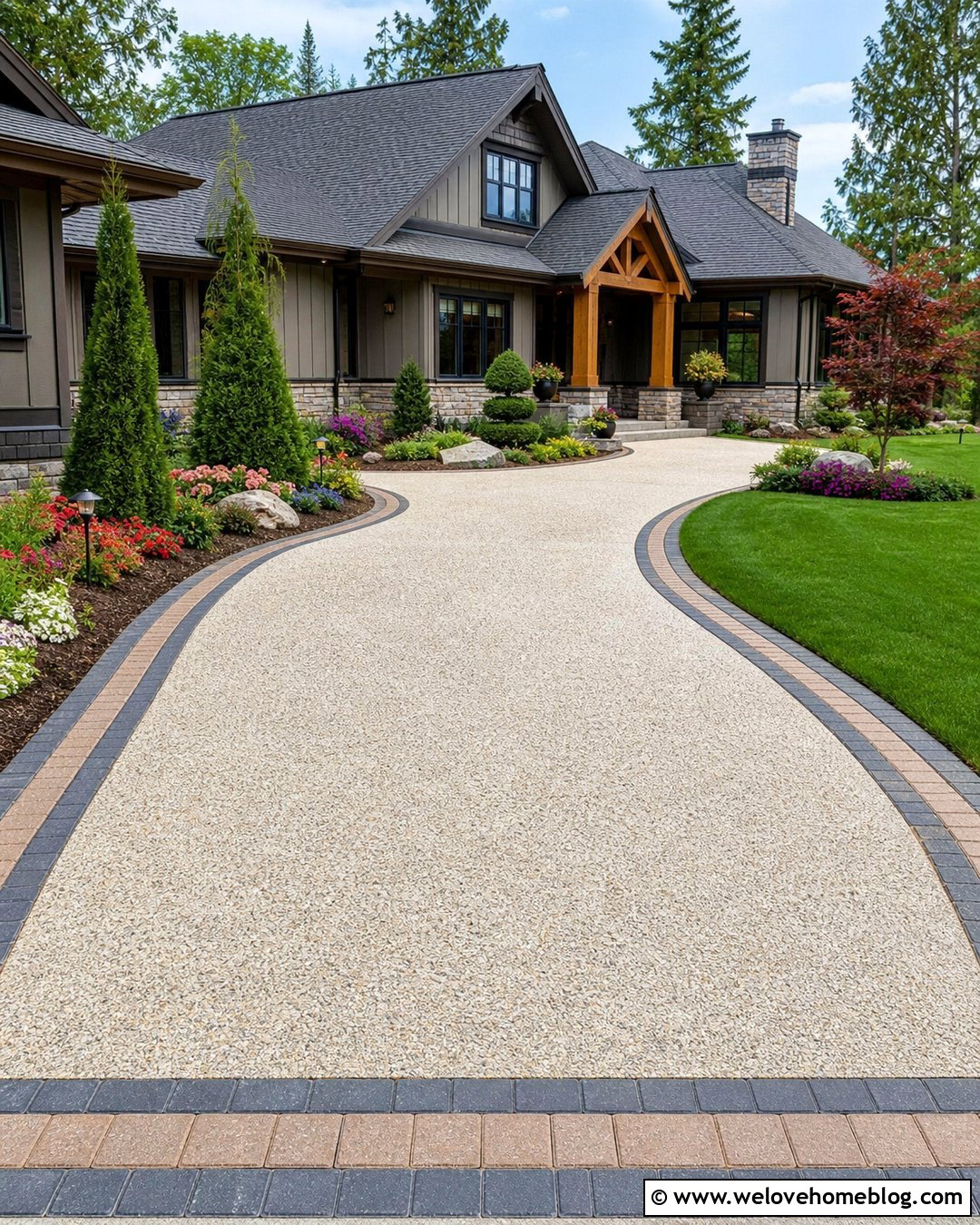
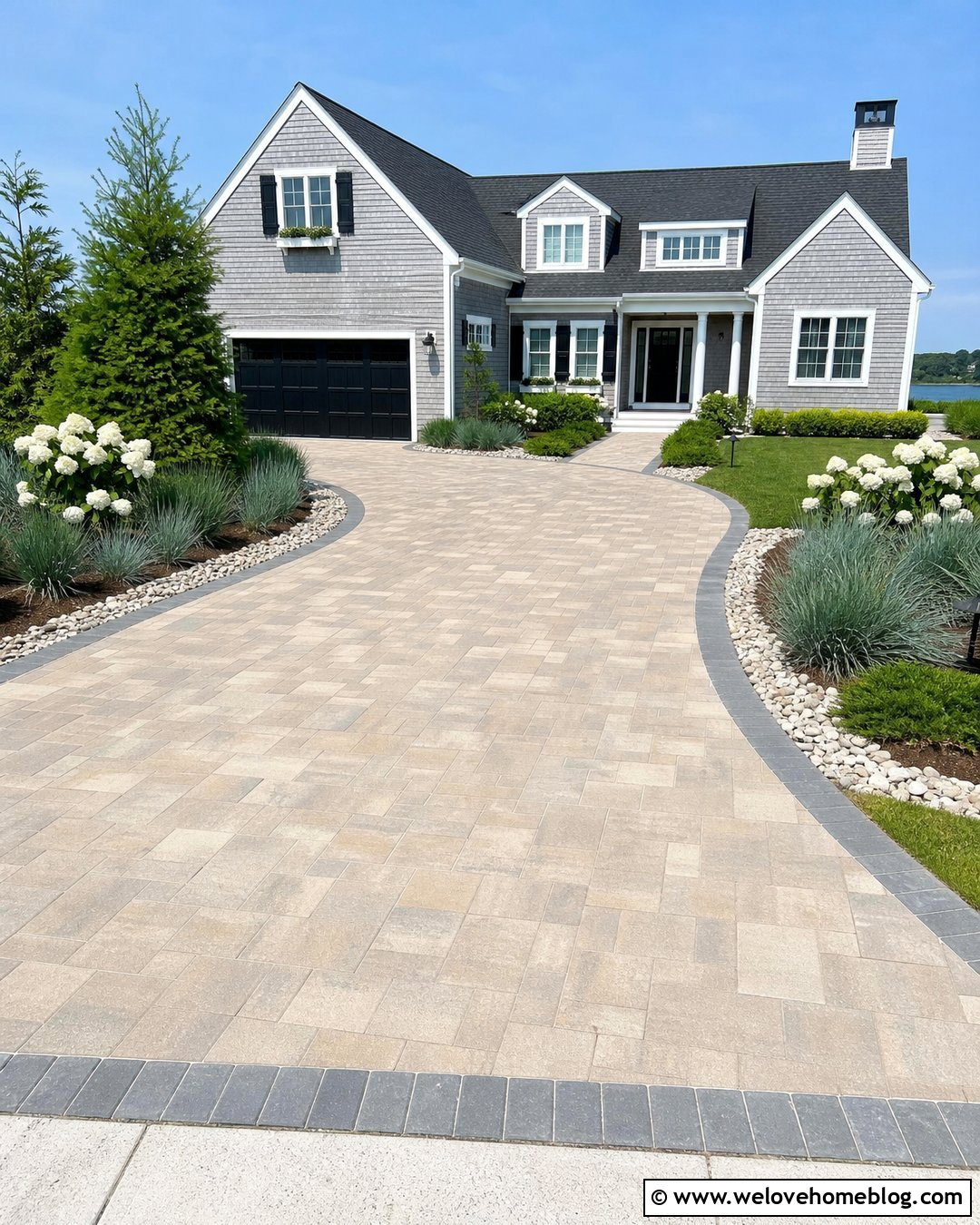
A two-tone paver frame brings depth to the edges of a broad concrete driveway. Install an inner row of warm-tan pavers and an outer row of charcoal pavers, forming a double border around light exposed-aggregate concrete. Carry the frame across the driveway apron and along the garage threshold for an uninterrupted appearance. The tan layer can coordinate with stone veneer, while the charcoal layer repeats dark roofing, shutters, or window frames. Use gently curved planting beds filled with compact evergreens and flowering perennials outside the border. This complete design works with craftsman, transitional, and upscale ranch homes. To prevent the double frame from feeling heavy, keep the central concrete surface simple. Select paver colors in natural contrast and compare full-size samples outdoors before finalizing the combination.
18. Concrete Driveway With Farmhouse Brick Paver Inlay
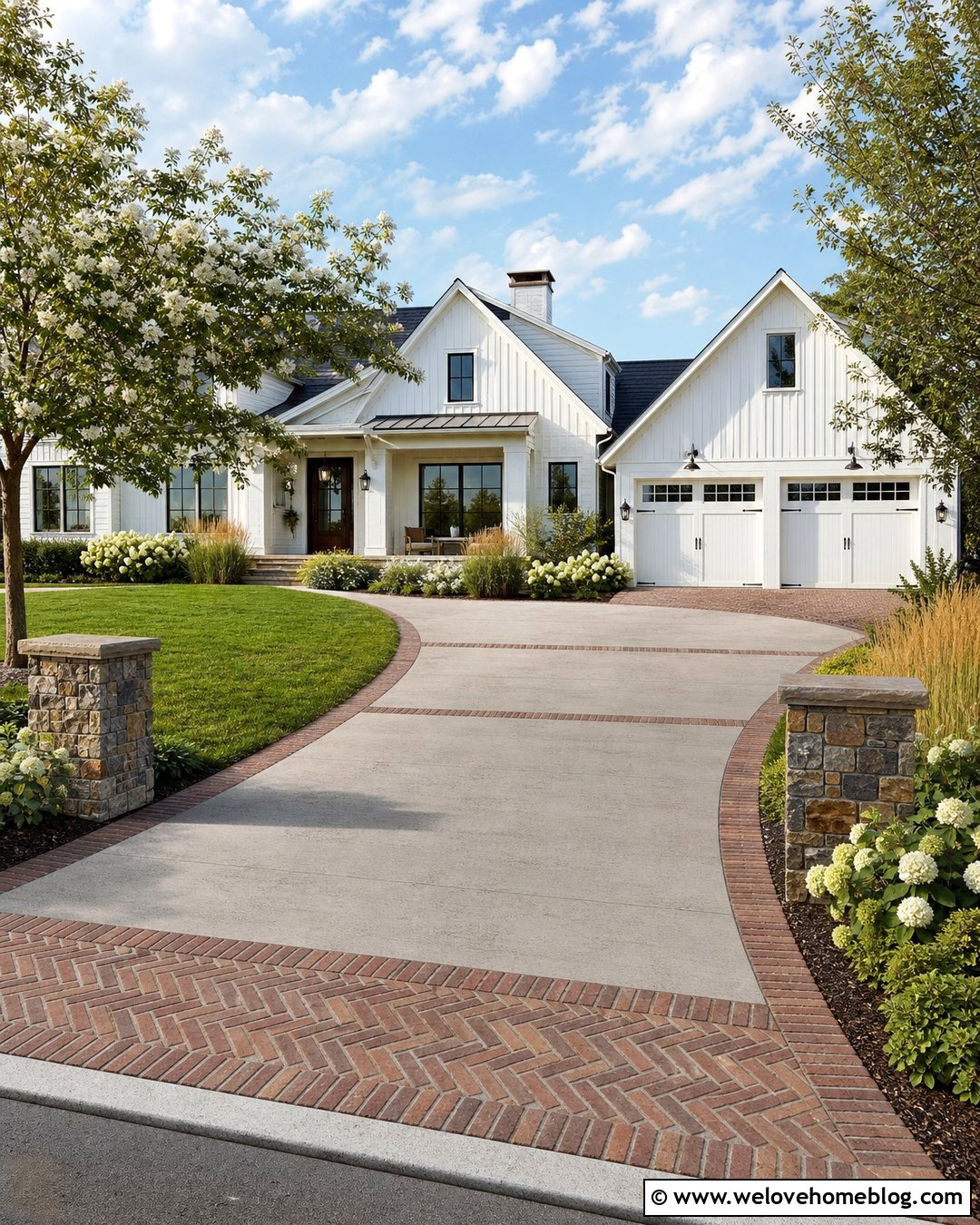
A farmhouse driveway feels more welcoming when clean concrete is paired with weathered brick details. Use warm-gray broom-finished concrete with red-brown clay brick crossbands, a matching perimeter border, and a generous brick apron near the garage. A gently curved layout can lead toward a white modern farmhouse with dark windows and a covered porch. Plant hydrangeas, native grasses, and small flowering trees along soft-edged beds. Simple stone entrance pillars can repeat the warm colors without making the approach too formal. Keep the brick pattern straightforward, such as running bond or herringbone, to support the farmhouse character. Connect the driveway to a brick front walkway so every hardscape area feels coordinated. Choose durable, driveway-suitable pavers rather than units intended only for patios or pedestrian garden paths.
19. Concrete Driveway With Modern Paver Accent Lines
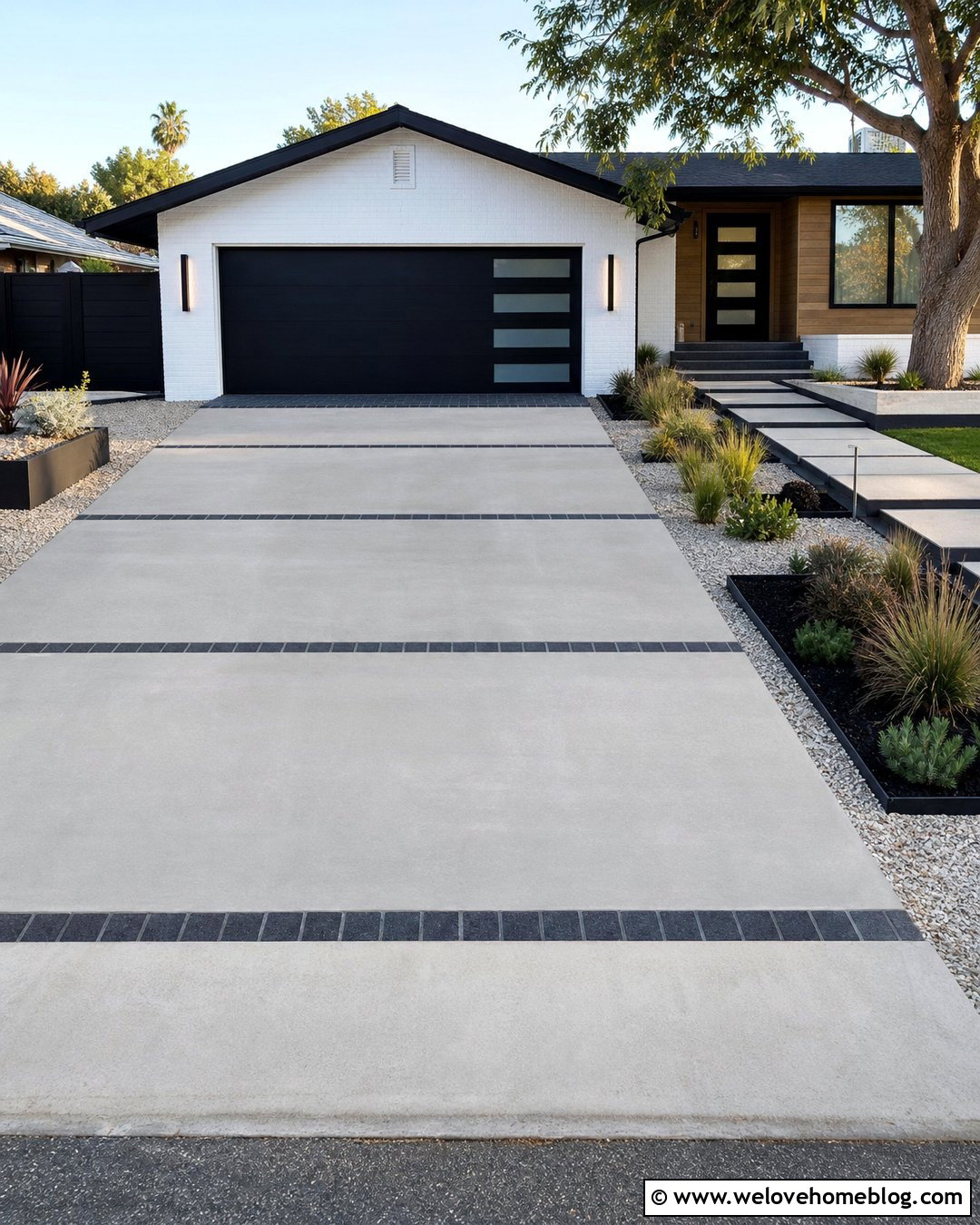
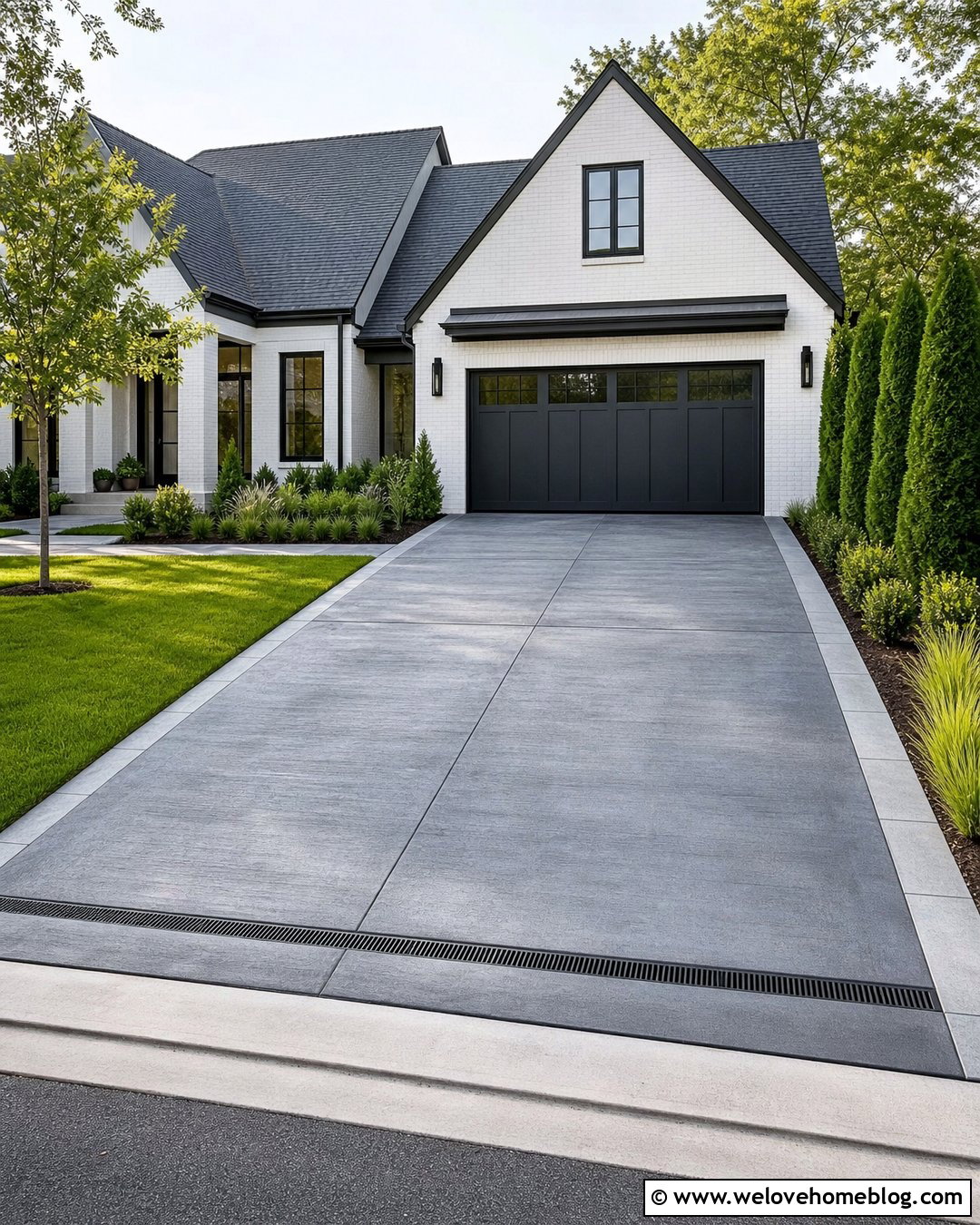
Narrow paver accent lines can give a small driveway a modern identity without reducing its visual width. Start with large smooth-finished concrete slabs in a light silver-gray tone. Add two or three slim black concrete paver bands across the surface, aligning them with architectural features on the house. Continue one band into the front walkway and use another at the garage threshold. Black metal edging, linear planting beds, pale gravel mulch, and compact grasses create a coordinated setting. This design suits narrow urban lots, modern townhomes, and updated ranch houses. Keep joints straight and the surrounding landscape uncluttered. Lighter palettes and clean lines can help compact driveway spaces appear more open, while controlled contrast provides enough definition to make the design visible from the curb. ()
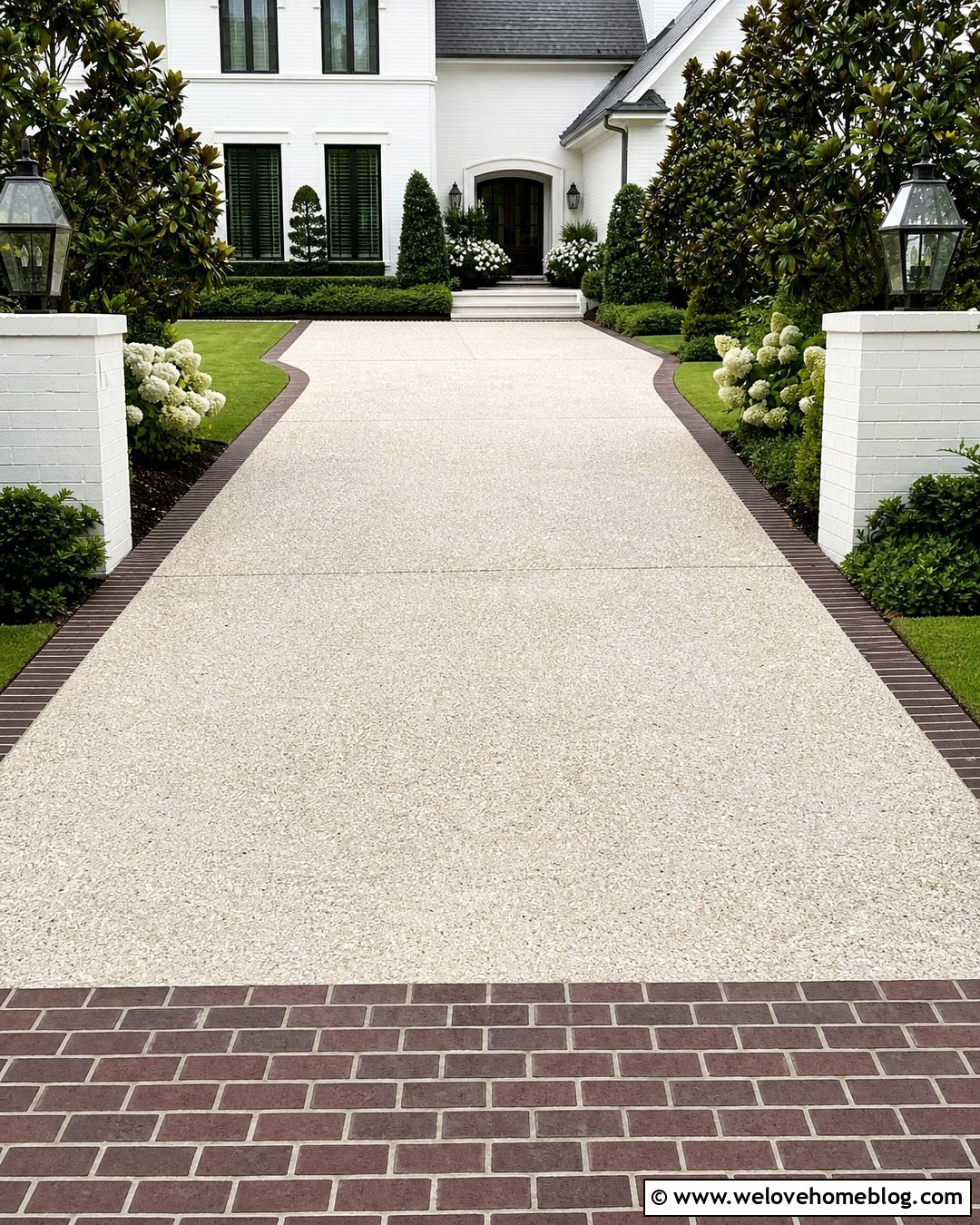
20. Circular Concrete Driveway With Paver Inlay
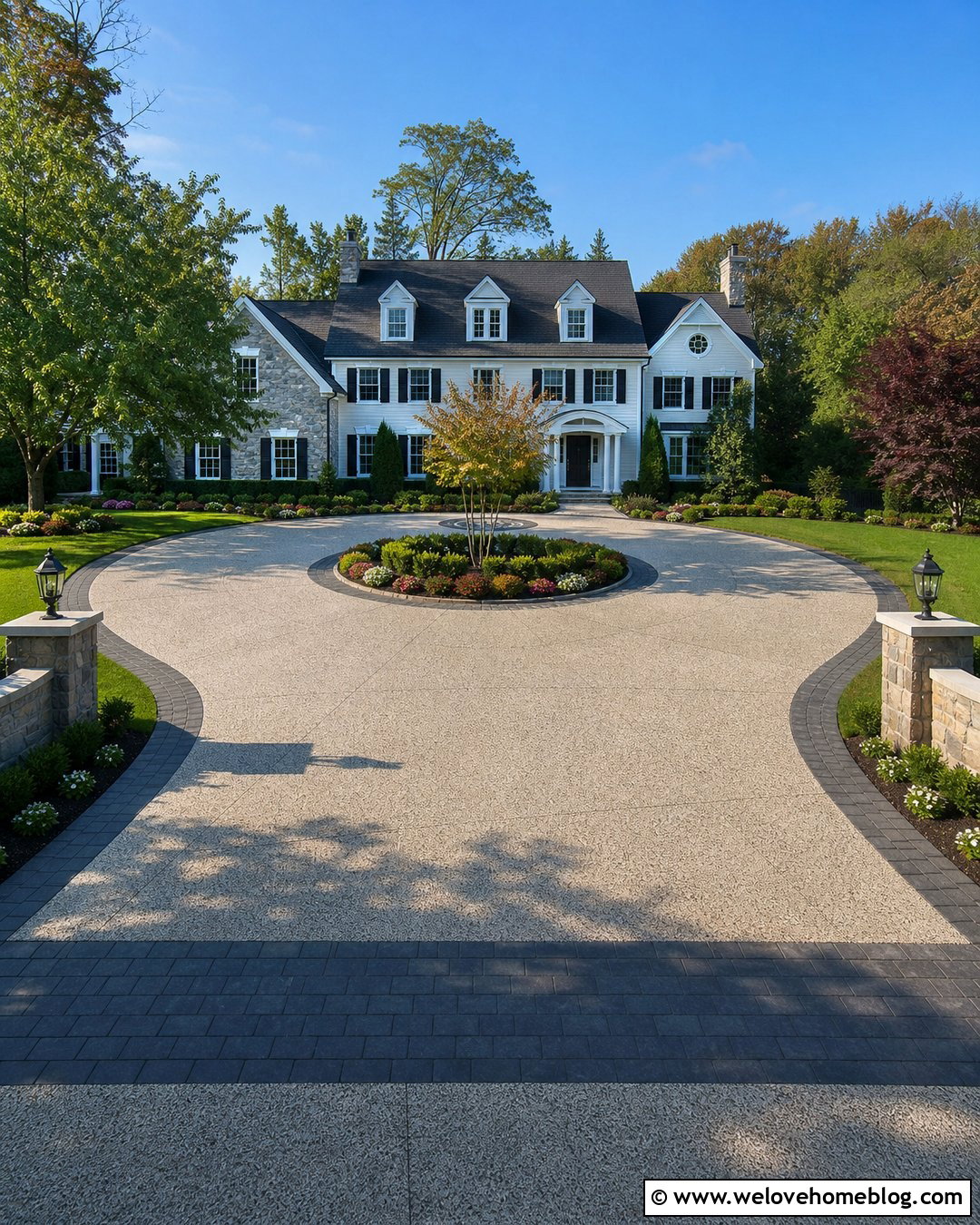
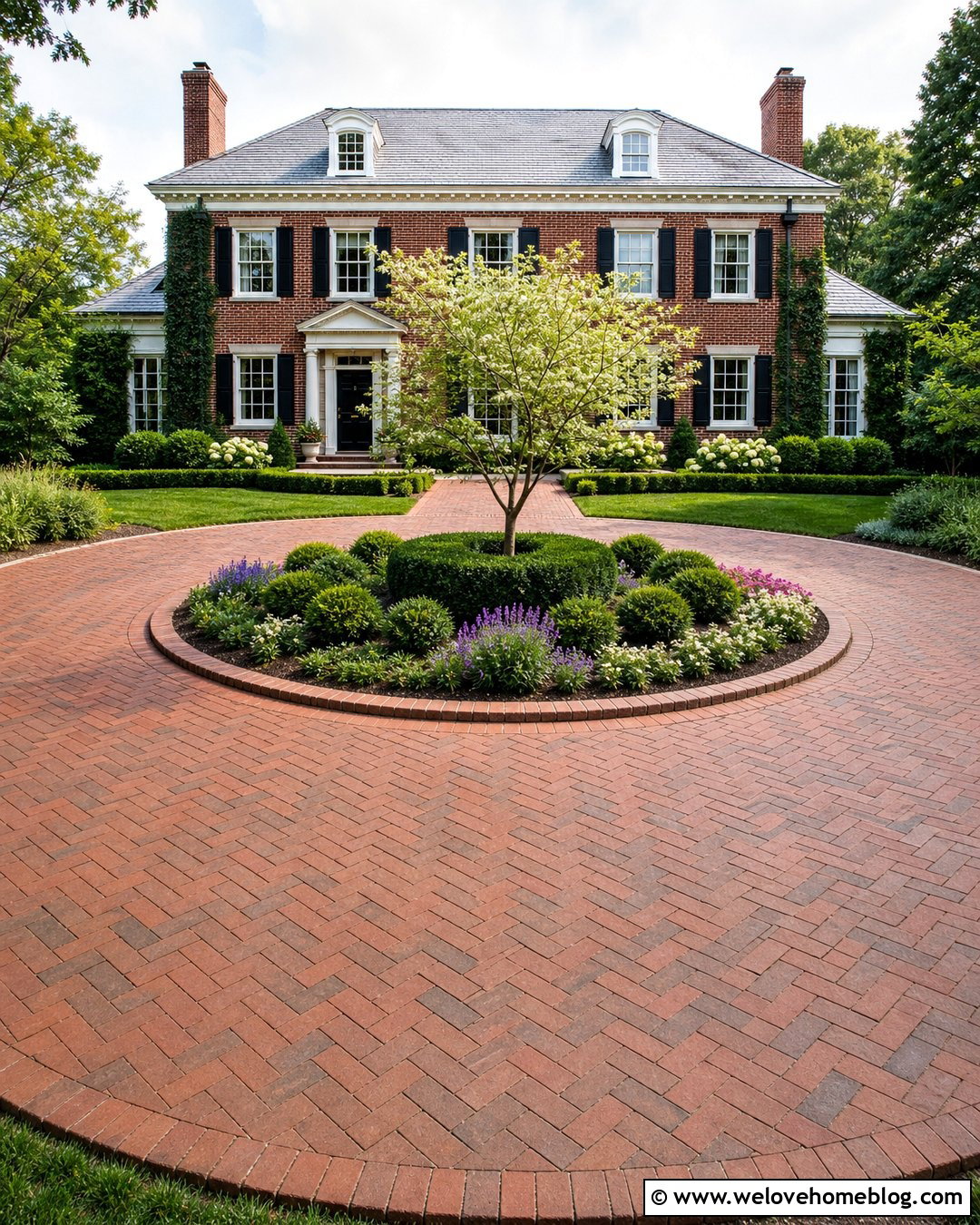
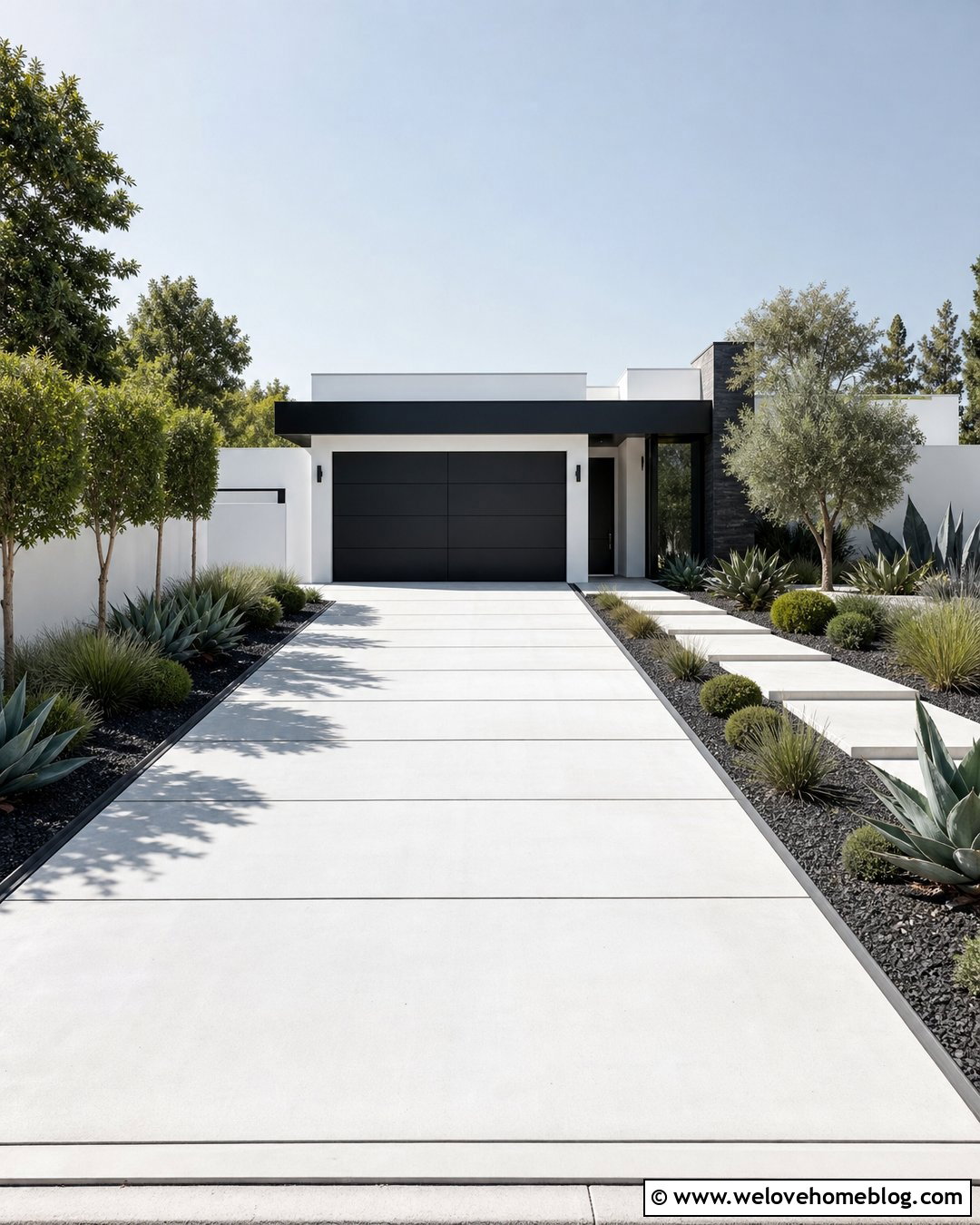
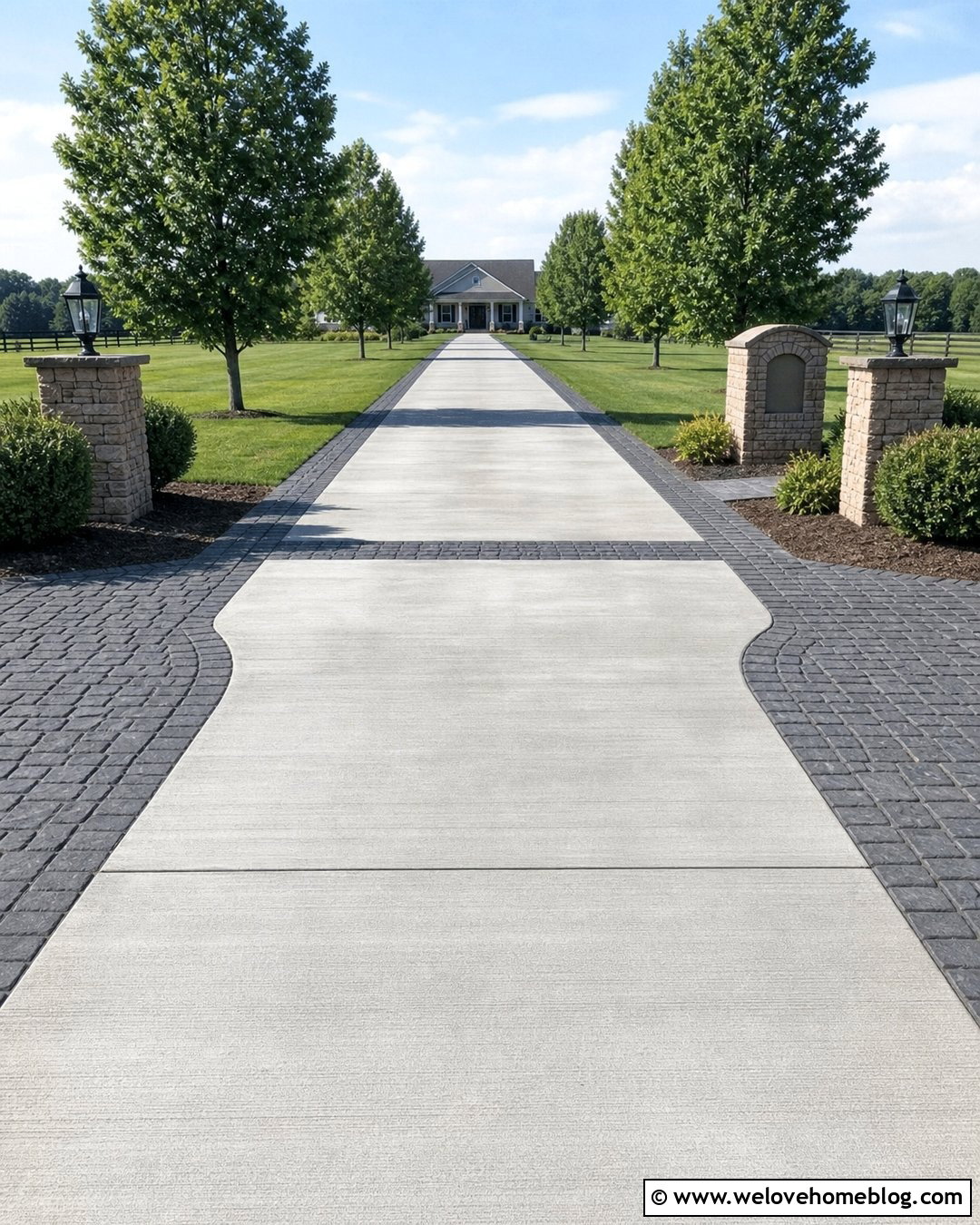
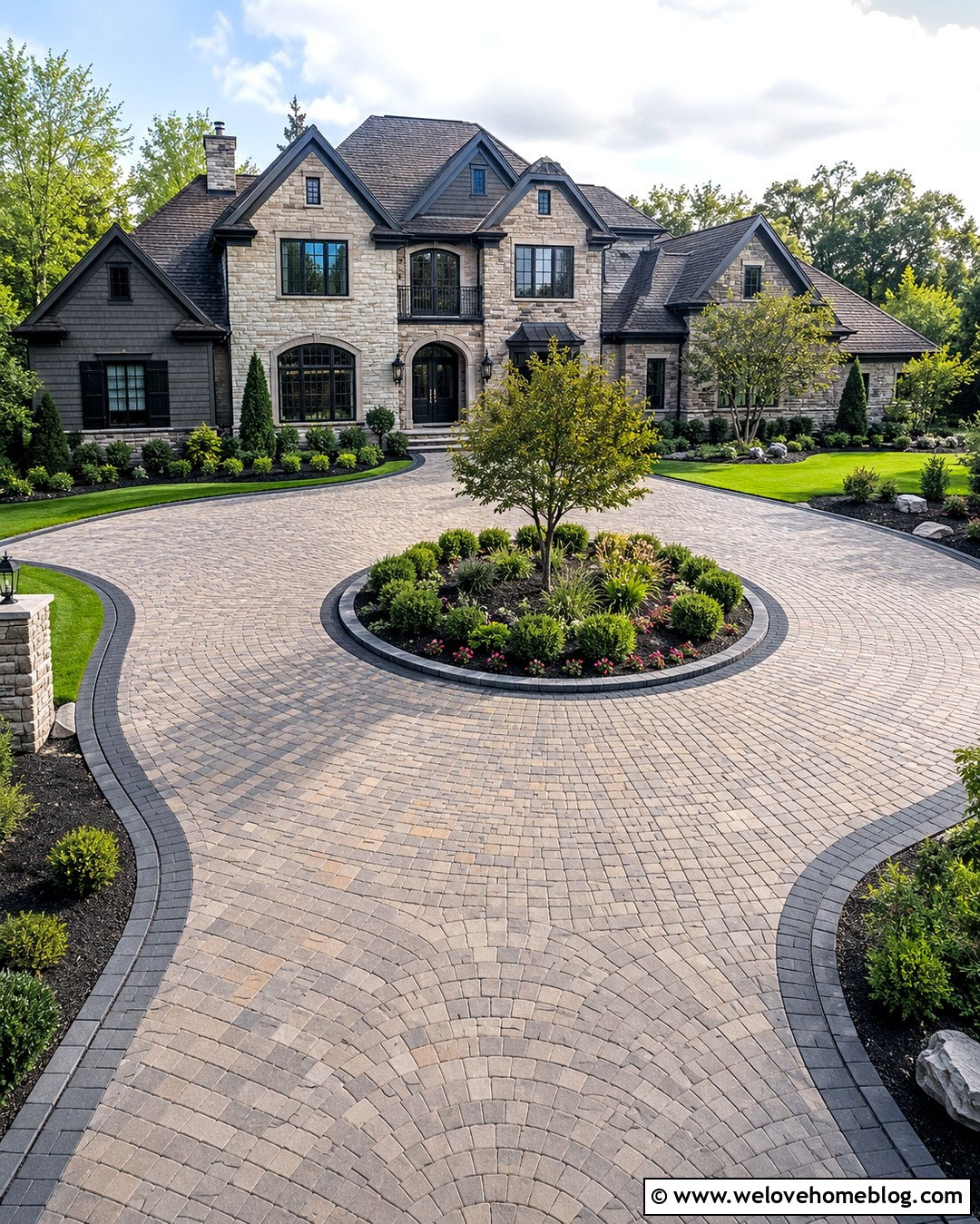
A circular concrete driveway offers several opportunities for coordinated paver details. Use pale exposed-aggregate concrete for the main loop, then install charcoal pavers around both the outer edge and the central landscape island. Add wide paver bands at each street entrance to mark the arrival and departure points. A matching circular medallion near the front door can reinforce the curved layout. Fill the island with a specimen tree, low evergreen shrubs, and seasonal flowers that preserve sightlines. This grand design complements colonial, Mediterranean, and large traditional homes. Circular driveways can improve vehicle flow while providing space for landscaped focal points, decorative bands, and lighting. () Confirm turning dimensions, street setbacks, drainage, permits, utility locations, and emergency access requirements before finalizing the plan.
Conclusion:
The best concrete-and-paver combinations feel intentional from the street to the garage. Borders can define the driveway, while crossbands, center strips, aprons, and medallions add character to open concrete areas. Choose paver colors that repeat the home’s brick, stone, roof, or trim. Then coordinate the driveway shape with walkways, planting beds, lawn edges, and entrance features. Proper base construction, drainage, edge restraint, material selection, and skilled cutting are just as important as appearance. Before construction, compare samples outdoors and request a scaled layout from an experienced contractor. These 20 Concrete Driveway With Paver Inlay Ideas provide a practical starting point for creating a distinctive entrance that suits your house and property.

Related posts:
Leave a Reply