
A driveway should improve curb appeal without adding another demanding chore to your weekend. The best **20 low maintenance driveway ideas** combine a durable surface with a stable base, effective drainage, strong edging, and simple landscaping. Material matters, but installation quality matters just as much. Concrete, asphalt, permeable pavers, resin-bound aggregate, and stabilized gravel can all reduce routine work when matched to the property and local climate. Permeable surfaces can also help manage runoff by allowing water to enter the stone base below. () From compact suburban driveways to long country entrances, each design below treats the surface, shape, borders, and yard as one complete look. Explore these **20 low maintenance driveway ideas** to find a practical design for your home.

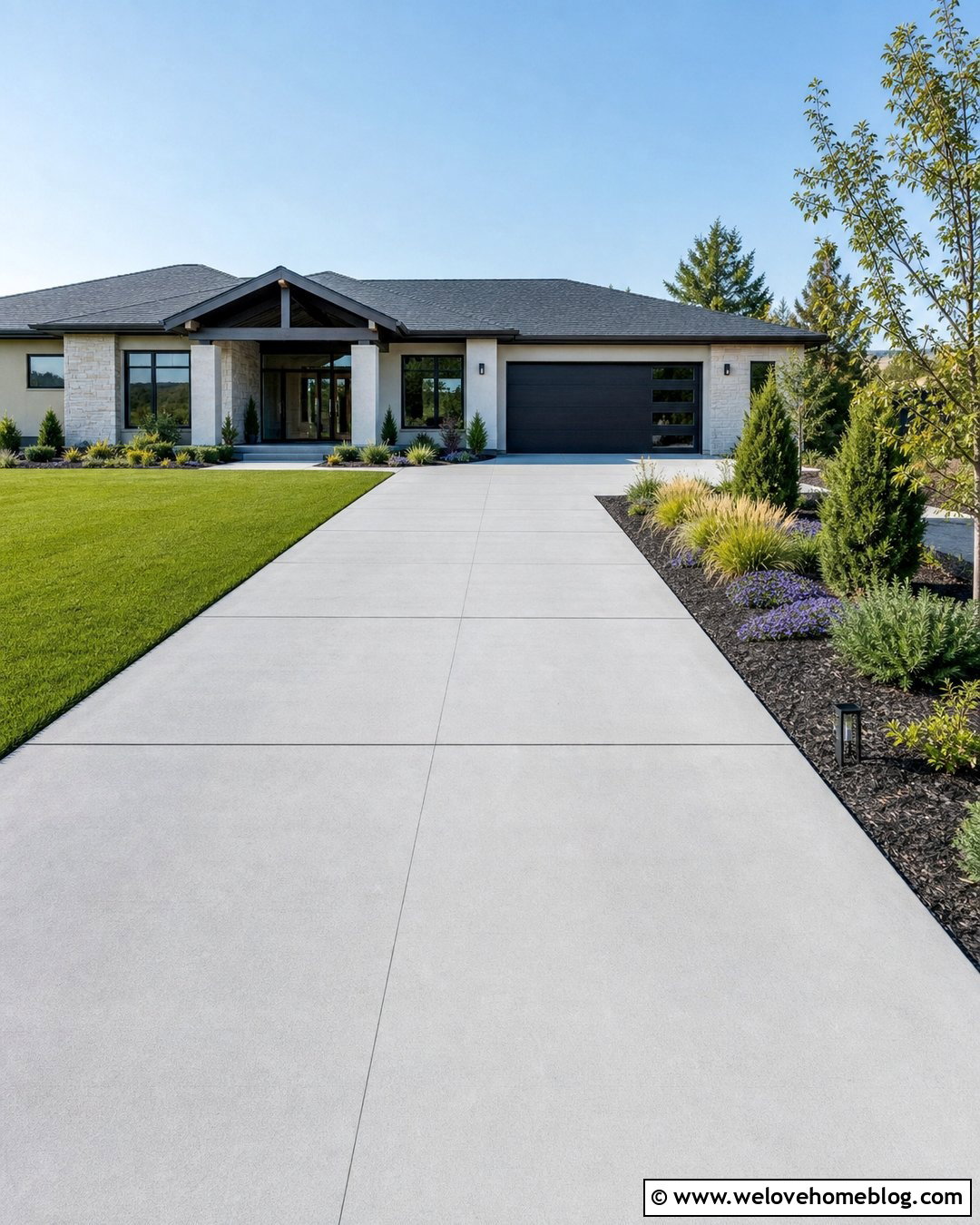
1. Broom-Finished Concrete Driveway With Stone Borders
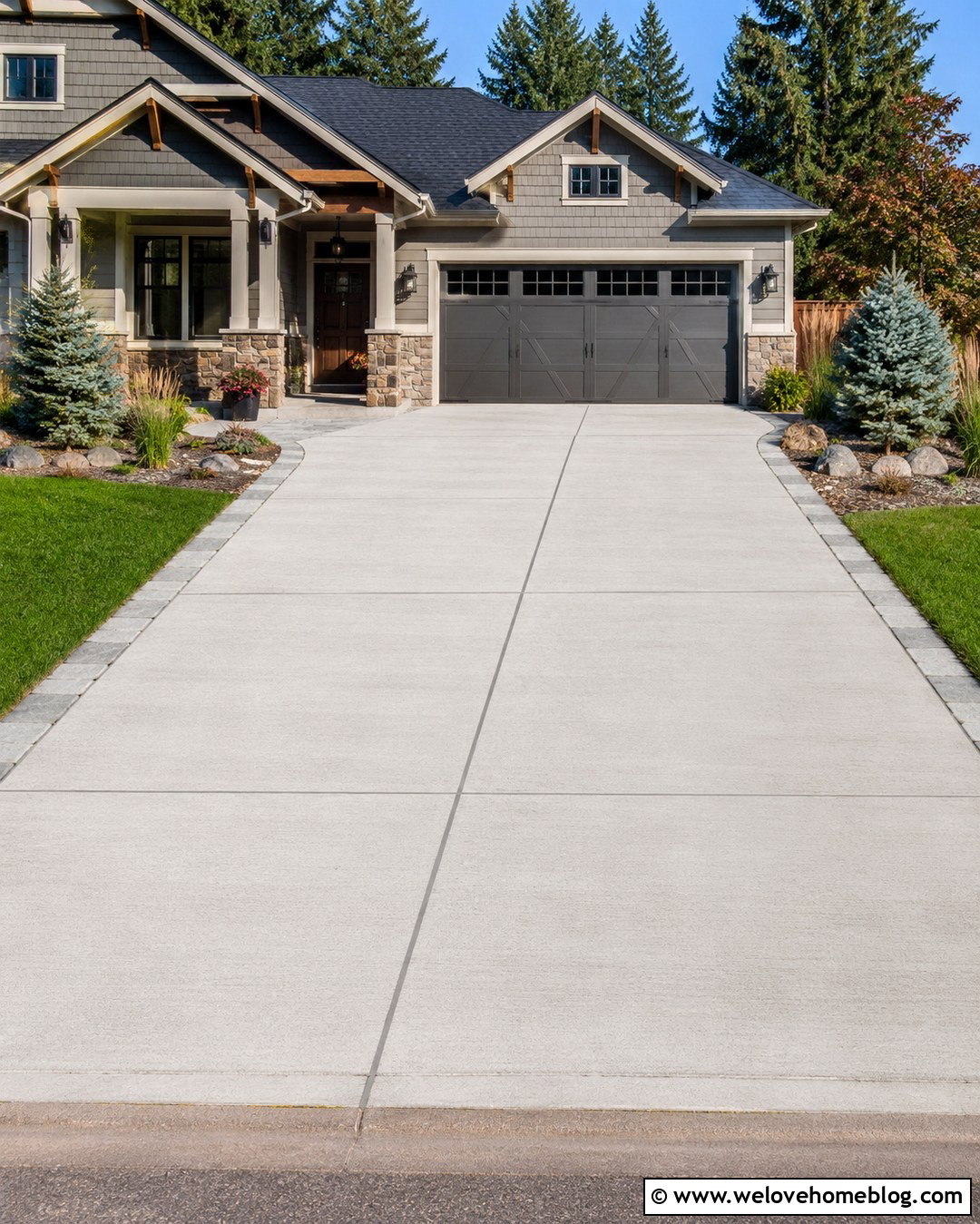
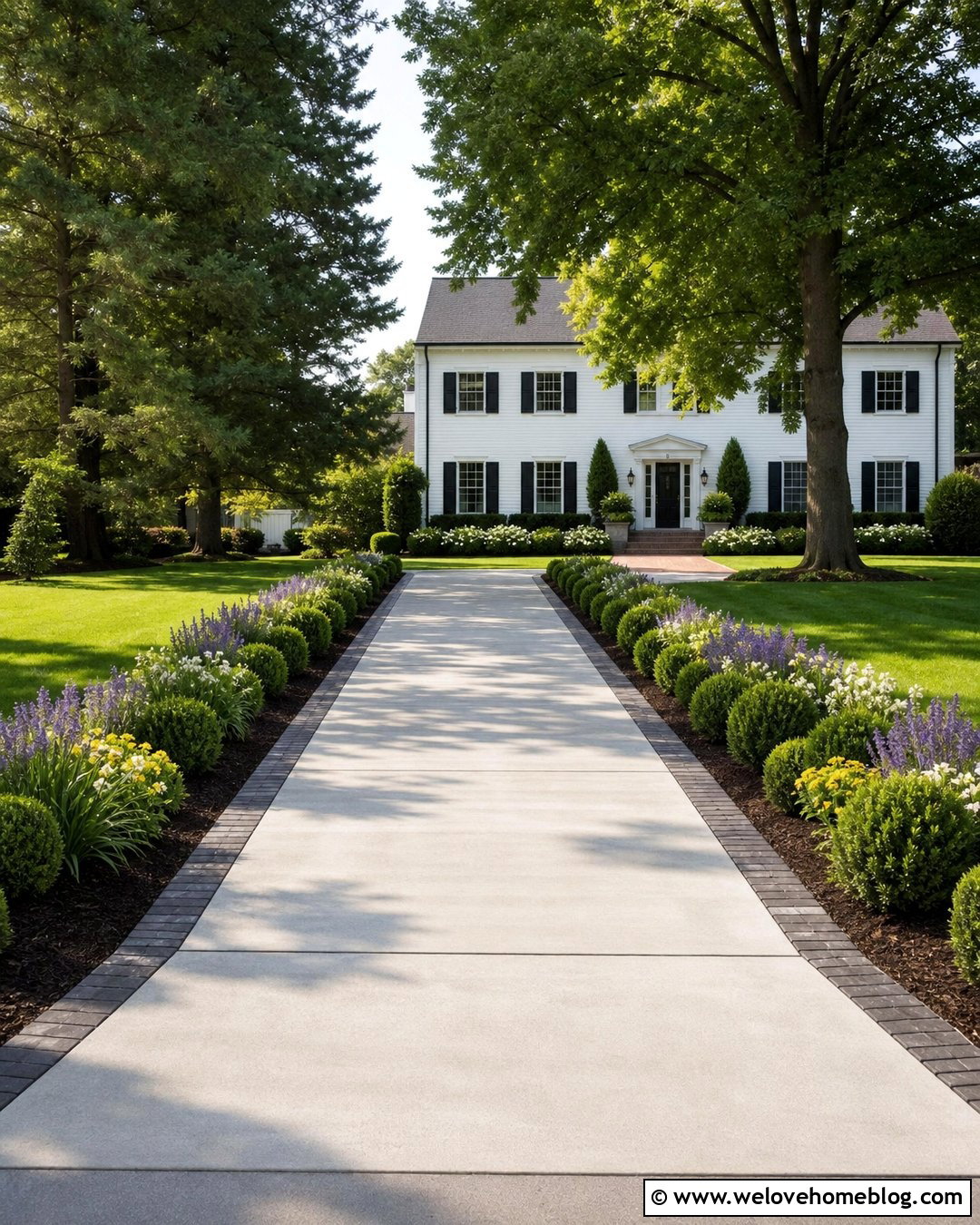
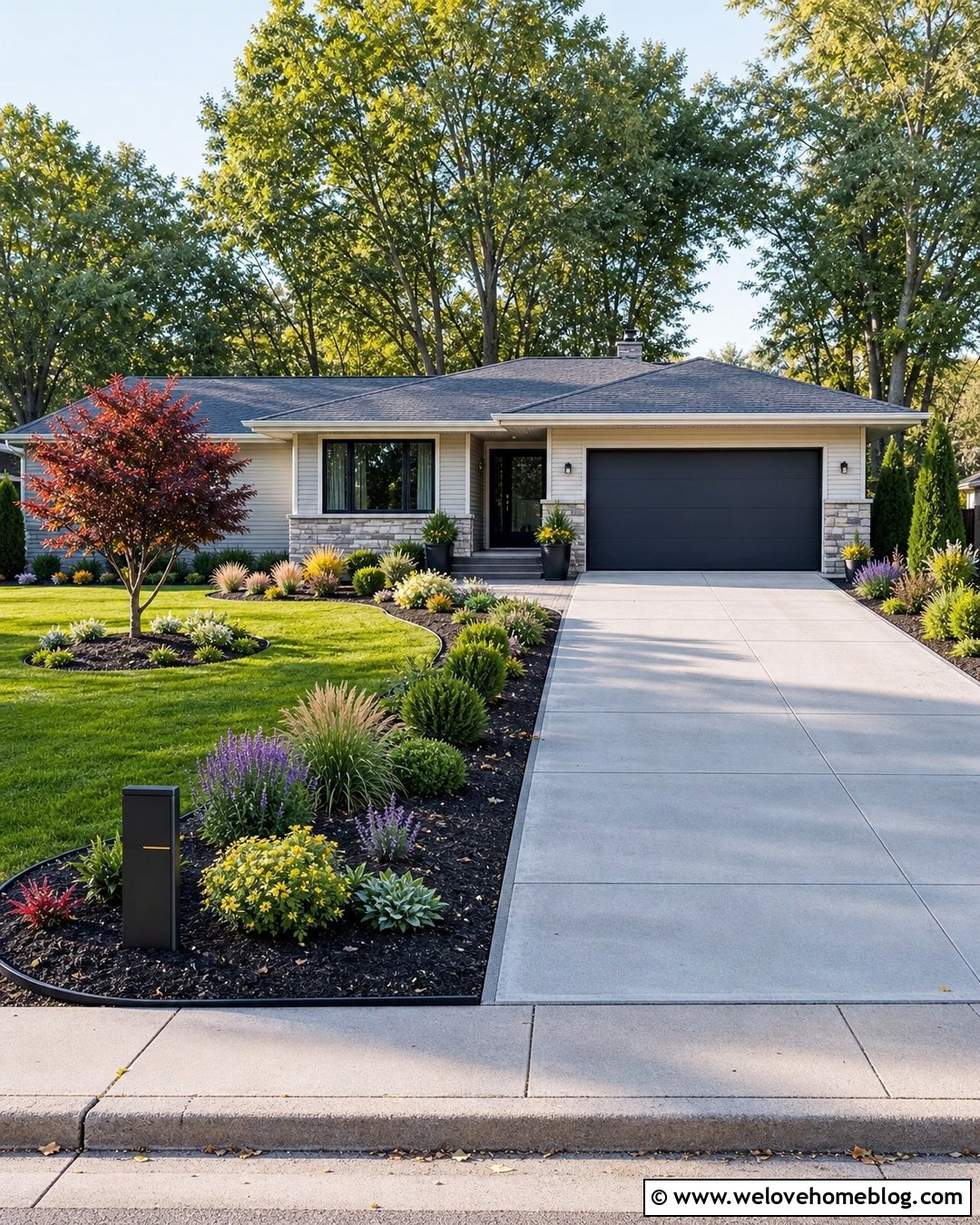
A straight broom-finished concrete driveway creates a clean surface that works especially well with ranch, Cape Cod, and craftsman homes. The lightly textured finish improves traction while hiding minor dirt better than highly polished concrete. Add wide control joints in an orderly grid so natural movement occurs along planned lines. Low stone curbs can protect the driveway edges from crumbling and keep mulch out of the driving area. Complete the design with evergreen shrubs, ornamental grasses, and a simple concrete walkway to the front door. Most routine care involves sweeping, occasional washing, and addressing small stains before they settle. Proper site grading and a compacted base are essential because drainage and ground preparation strongly affect long-term performance. ()
2. Exposed Aggregate Driveway With Curved Landscaping
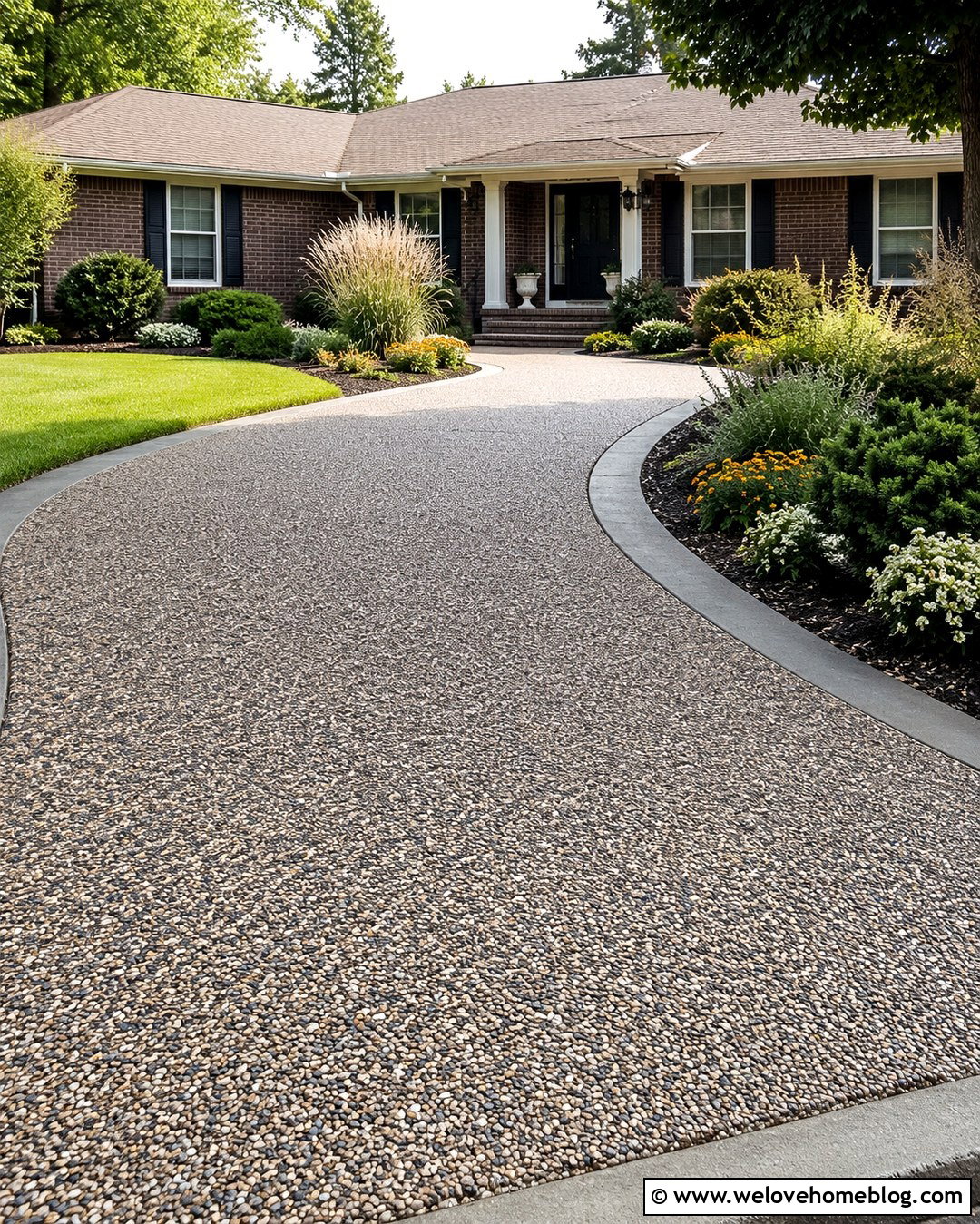
Could a practical concrete driveway still feel warm and decorative? Exposed aggregate provides a textured surface filled with visible stones, giving a curved driveway more natural character than standard gray concrete. Choose tan, cream, and charcoal aggregate to complement brick, stone, or warm siding. A smooth concrete border along both sides creates a finished edge and prevents lawn from creeping across the surface. Follow the driveway curve with broad planting beds containing compact juniper, dwarf fountain grass, and low flowering shrubs. These plants soften the hardscape without dropping large amounts of debris. Keep trees far enough away to reduce root pressure and leaf buildup. The resulting driveway feels landscaped and inviting while remaining easy to sweep, rinse, and visually inspect.
3. Stamped Concrete Driveway With Simple Planting Beds
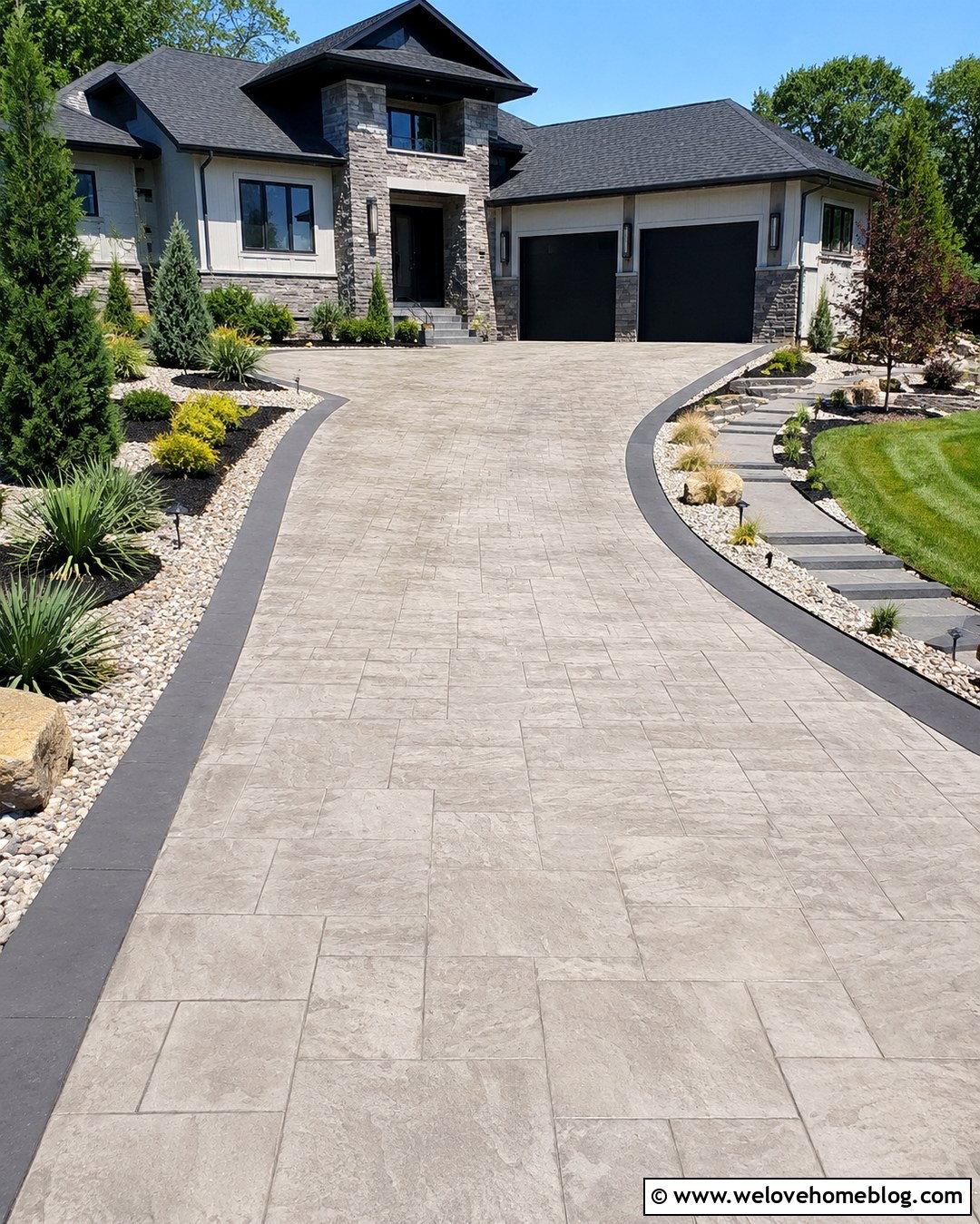
Stamped concrete can create the appearance of individual stone or brick without filling the driveway with numerous sand-filled joints. For a low-maintenance look, select a large ashlar slate pattern in a medium gray or warm greige color. A gently curved layout makes the repeated pattern feel less rigid and leads the eye naturally toward the garage. Use a darker smooth-concrete band around the perimeter to frame the design and protect the patterned edges. Beside it, install wide beds of river rock with sculptural evergreens, yucca, or tidy ornamental grasses. This limits mowing and prevents mud from washing onto the driveway. Avoid highly detailed patterns that may disguise minor damage but make future repairs harder to blend. Planned joints and professional sealing help preserve the finished appearance.
4. Concrete Ribbon Driveway With Gravel Center
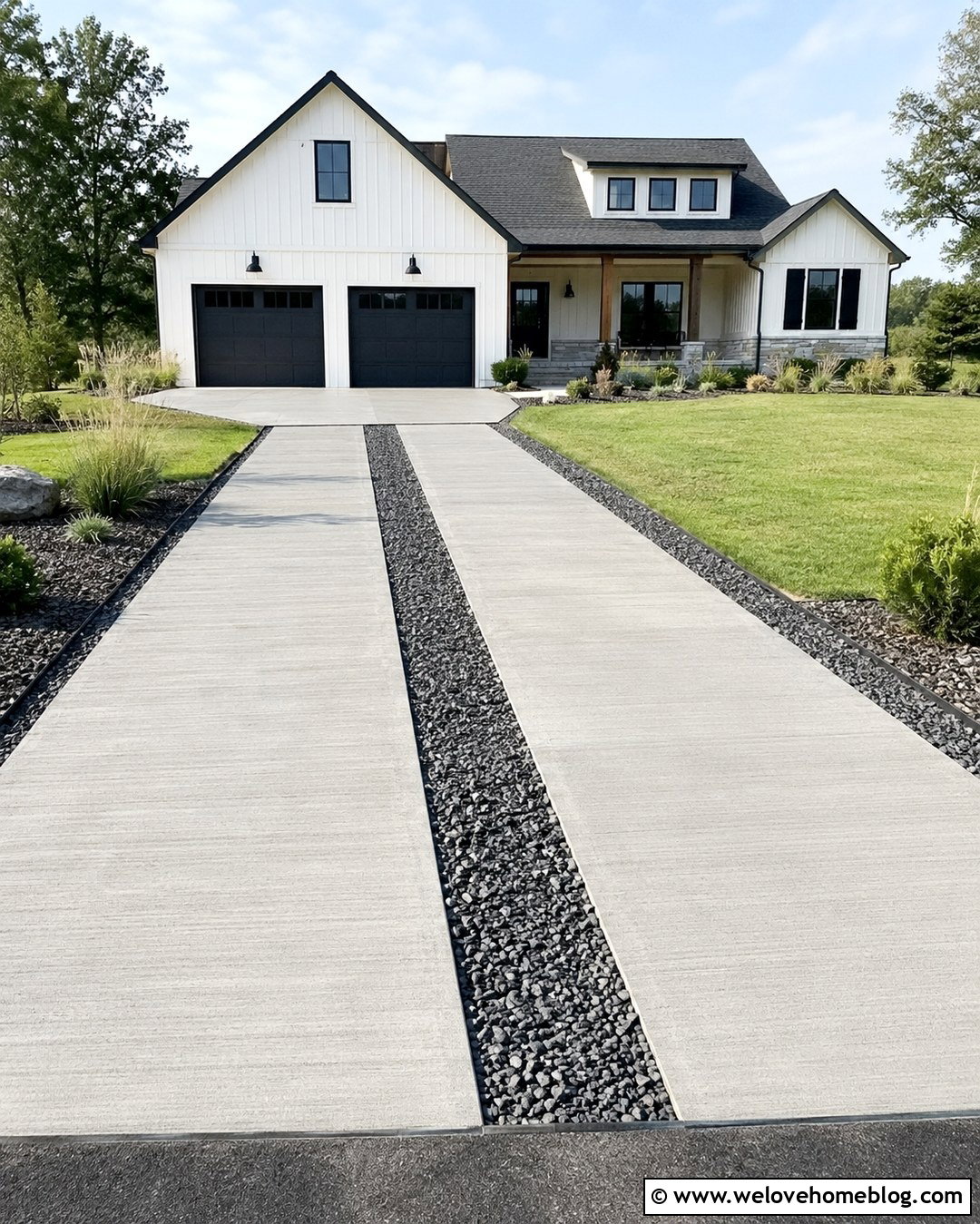
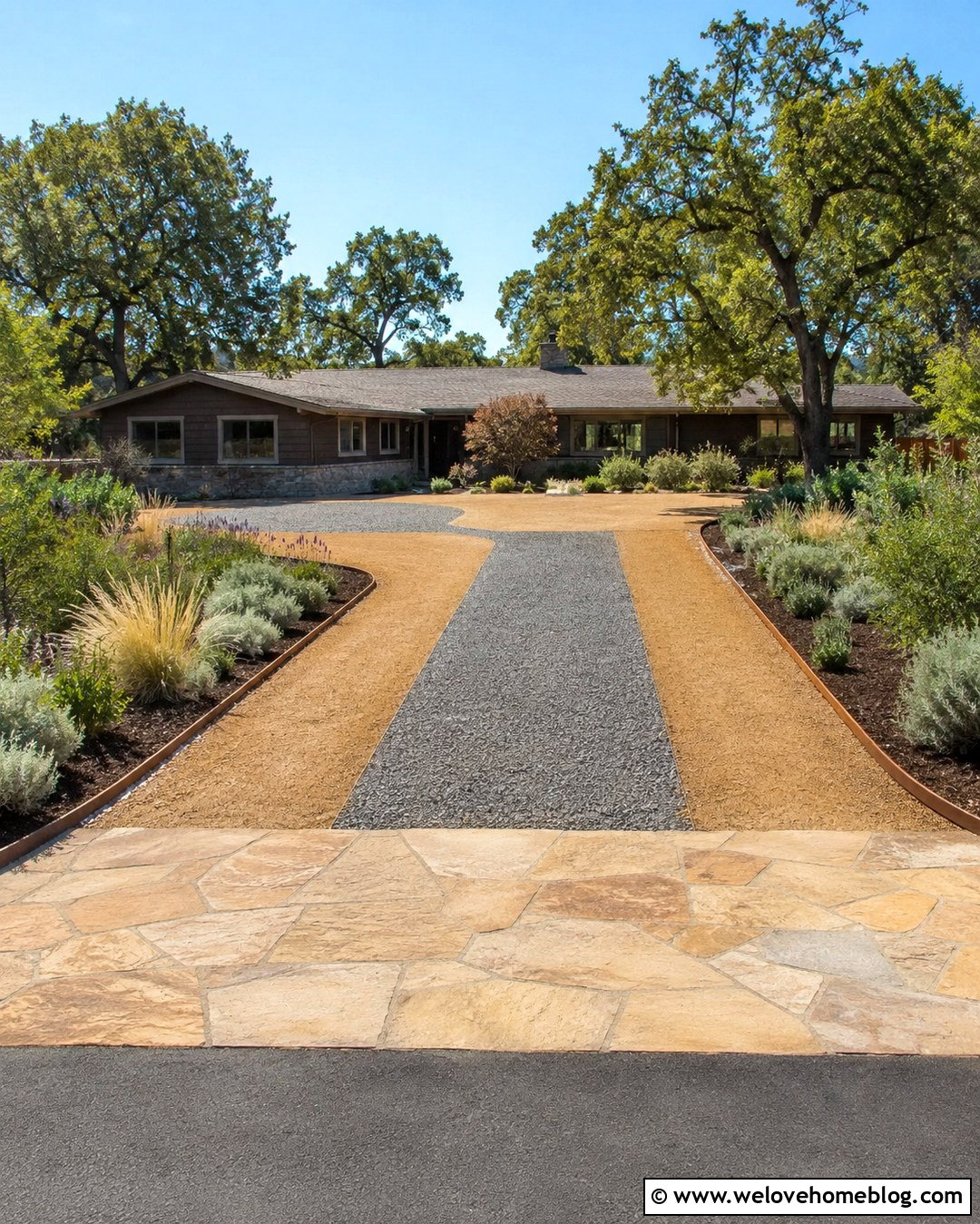
A concrete ribbon driveway uses two durable wheel tracks instead of covering the entire approach with a solid slab. Fill the center and outside strips with compacted angular gravel rather than lawn if minimal mowing is the priority. The concrete tracks should be properly spaced for everyday vehicles and widened near the street and garage for easier turning. Metal or concrete edging holds the gravel in place and creates crisp transitions. This layout looks particularly natural beside a modern farmhouse, country cottage, or renovated ranch home. Frame the entrance with low native grasses and broad stone mulch beds. Because the paved area is reduced, the driveway can feel softer and less dominant. A well-built base beneath both materials helps prevent settlement and uneven wheel paths.
5. Asphalt Driveway With Concrete Curb Edging
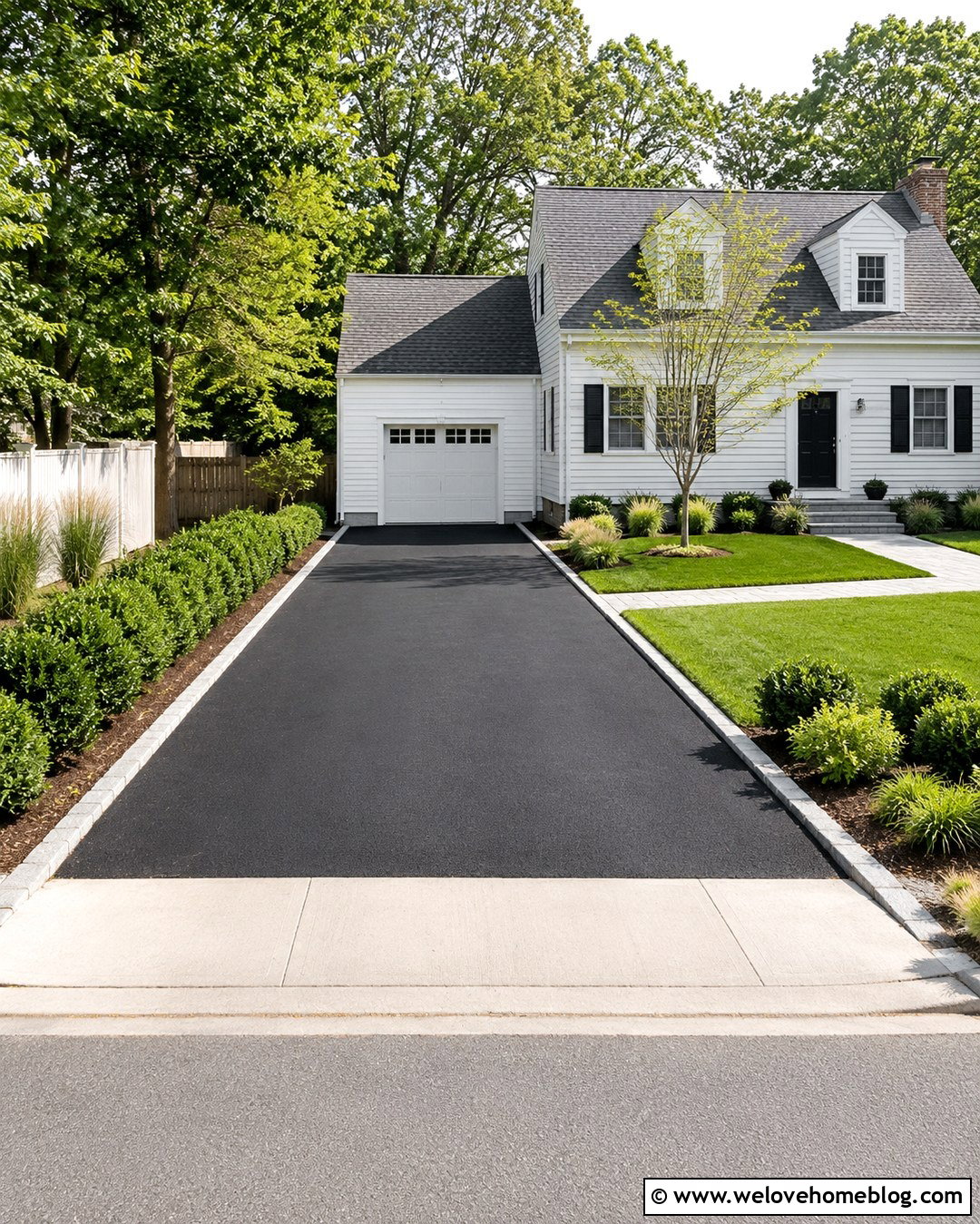
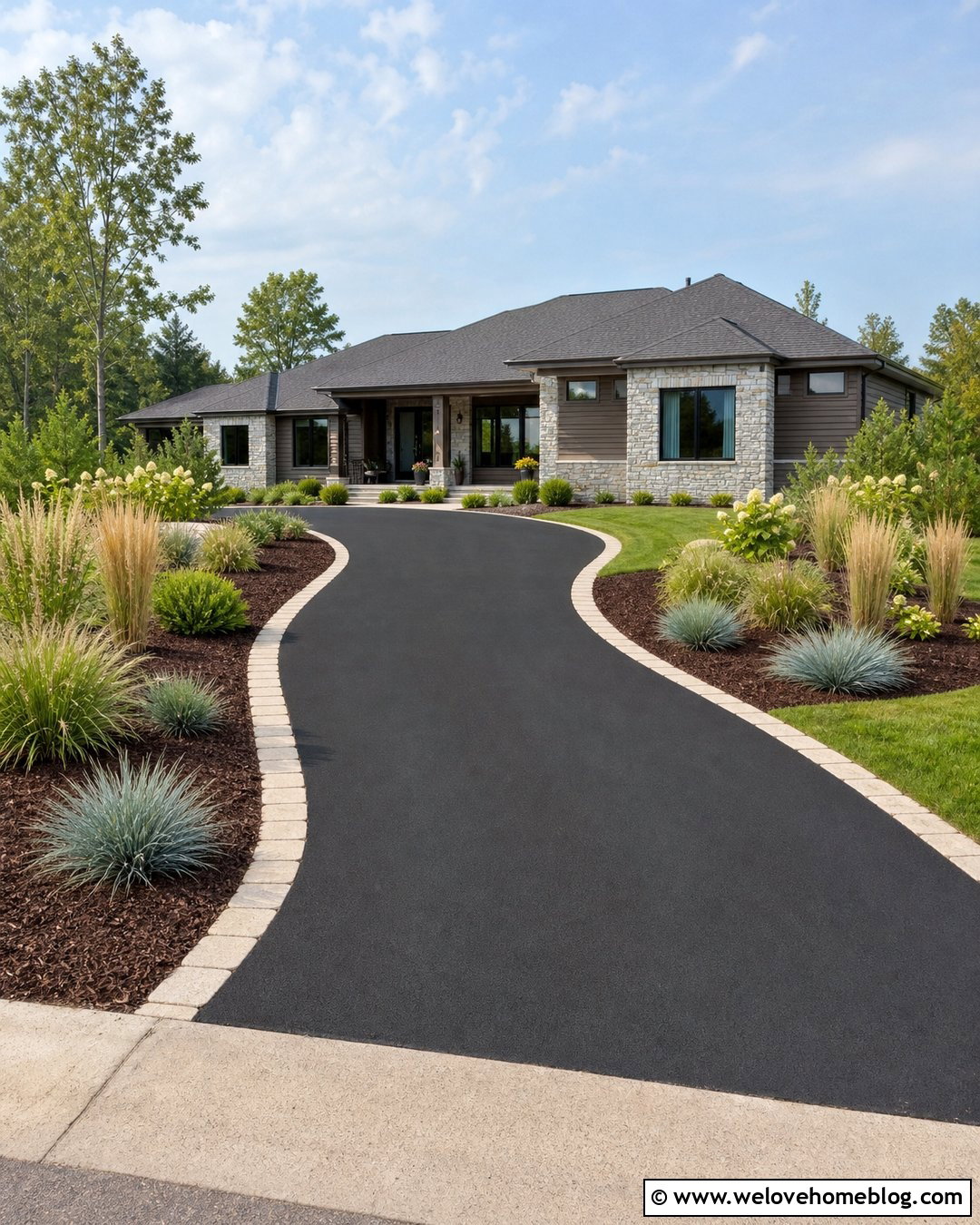
Fresh black asphalt creates a smooth, understated driveway that allows the house and landscaping to receive more attention. Pair a straight or softly curved asphalt surface with poured concrete curbs along the sides. The rigid borders protect vulnerable asphalt edges and prevent gravel, soil, and turf from spreading onto the pavement. Near the street, add a concrete apron that creates a tidy transition from the curb. Simple beds of boxwood, inkberry, or low ornamental grass can follow the driveway without narrowing the usable width. An asphalt driveway still requires periodic attention, so repair small cracks before water can enlarge them and follow local professional guidance on seal coating. With restrained landscaping and defined edges, the entire approach looks organized rather than purely utilitarian.
6. Porous Asphalt Driveway With Native Grass Borders
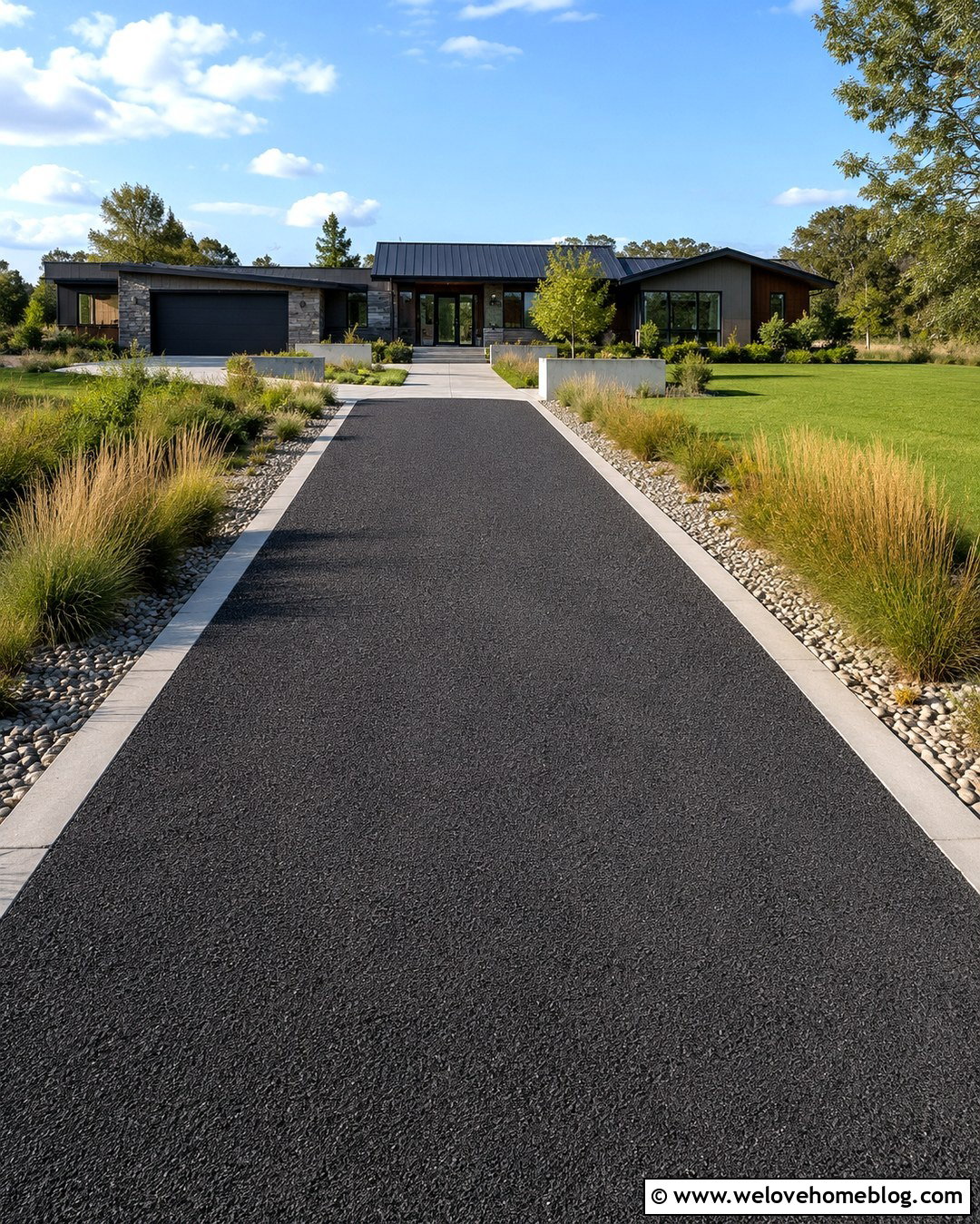
Porous asphalt offers the familiar appearance of black pavement while allowing water to move through the surface into an open-graded stone base. Permeable pavement systems can help reduce surface runoff, but their performance depends on soil conditions, correct engineering, and keeping the openings from becoming clogged. () Use a simple straight layout with flush concrete curbs that do not block intended drainage. Along both sides, plant deep-rooted native grasses and compact shrubs in broad beds designed to receive additional water safely. Avoid loose mulch near the pavement because it can wash onto the porous surface. A modern ranch or contemporary home suits this minimal design. Routine sweeping or professional vacuum cleaning may be needed to maintain permeability, especially beneath overhanging trees.
7. Resin-Bound Gravel Driveway With Brick Edging
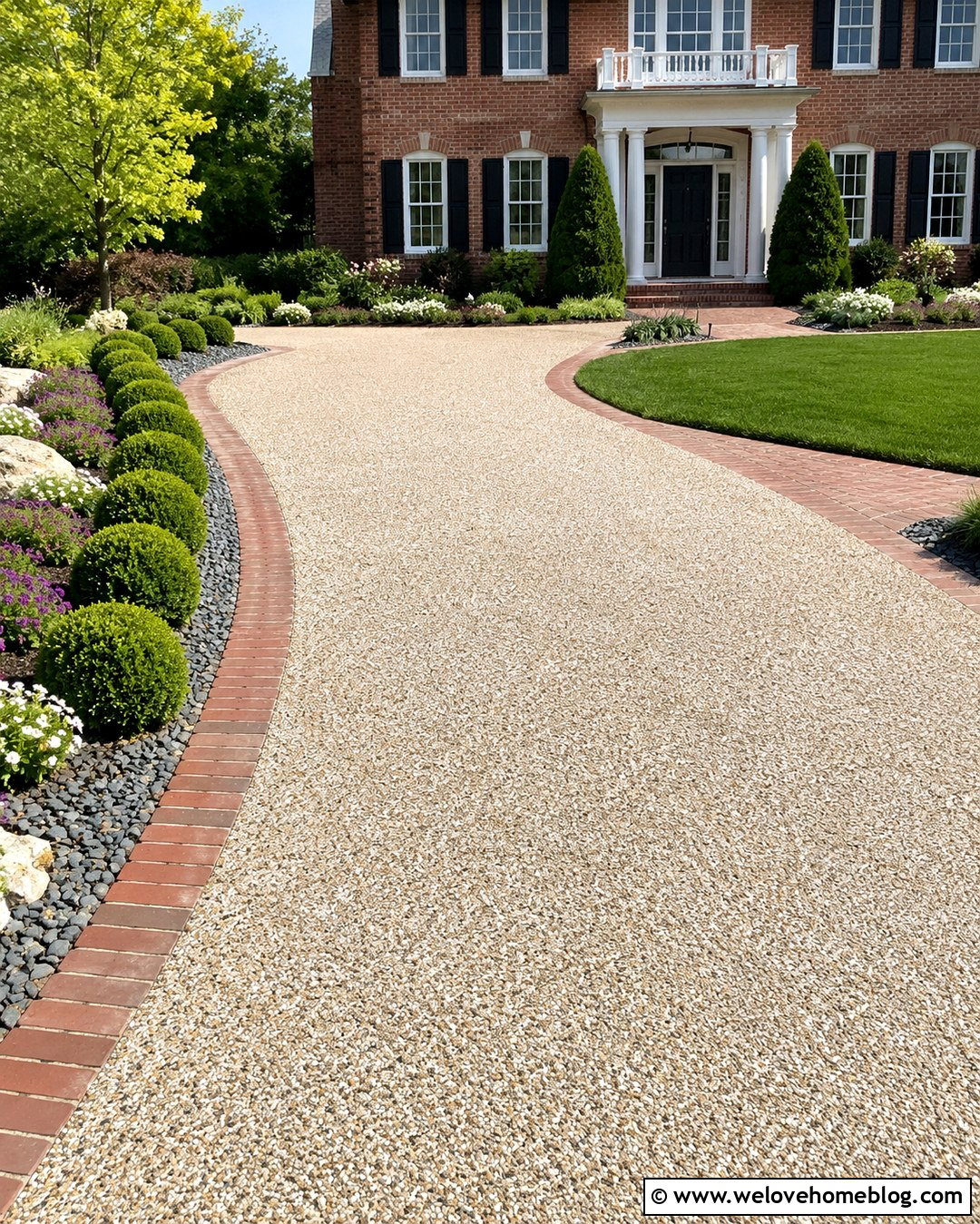
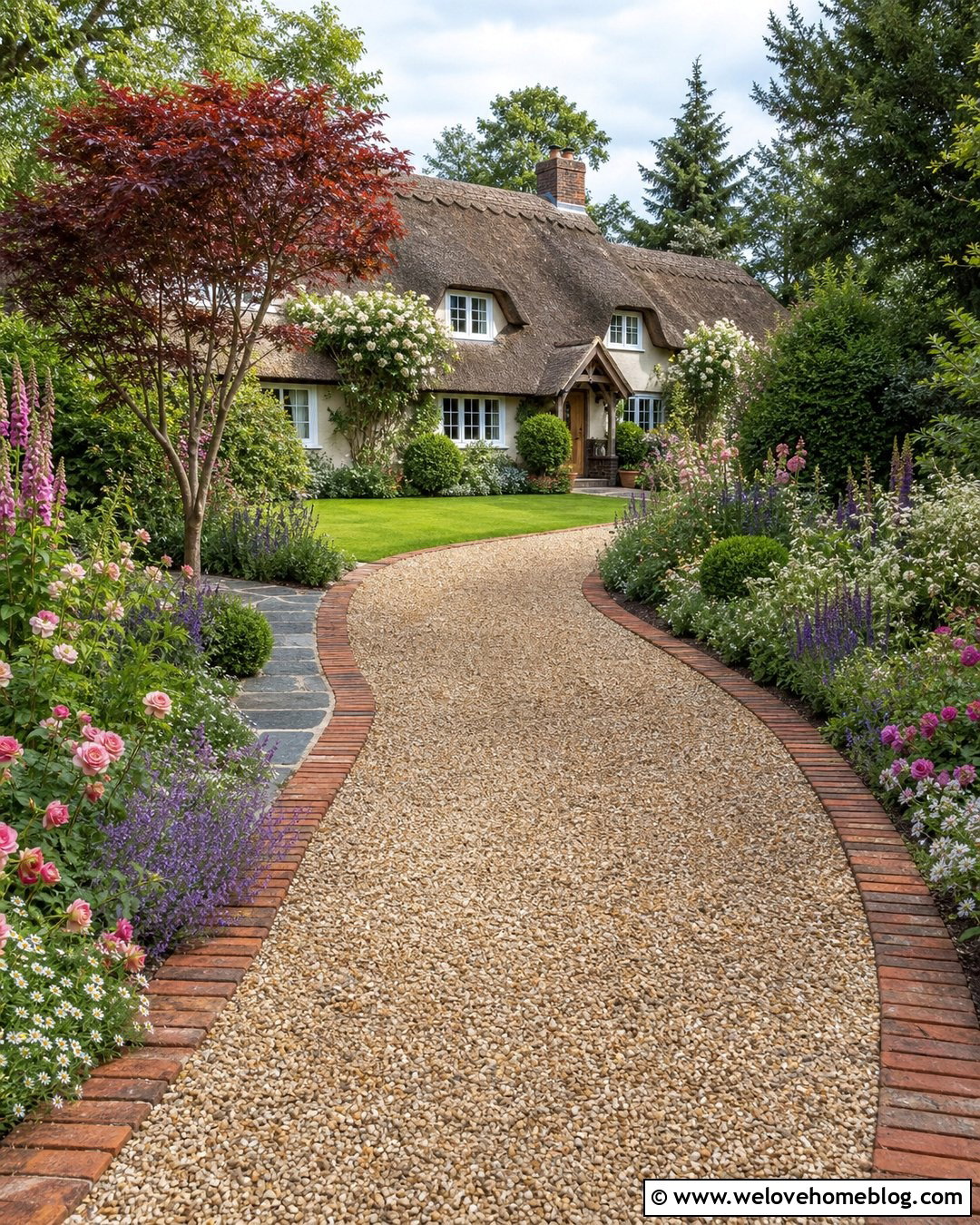
Resin-bound gravel combines small decorative aggregate with a binder to create a smooth, visually continuous surface. Unlike loose gravel, the stones remain fixed, which reduces migration onto the sidewalk, lawn, and garage floor. Choose a warm blend of beige, cream, and light gray aggregate for a welcoming suburban entrance. A dark red clay brick border provides definition and connects the driveway to a brick house or matching walkway. Shape the driveway with a gentle curve and surround it with clipped evergreens, lavender-like perennials suited to the local climate, and stone mulch. Resin-bound systems can be permeable when designed with the correct base, although products and installation methods vary. () Keep the surface clean and hire an experienced installer for dependable curing and drainage.
8. Permeable Paver Driveway With Gravel Joints
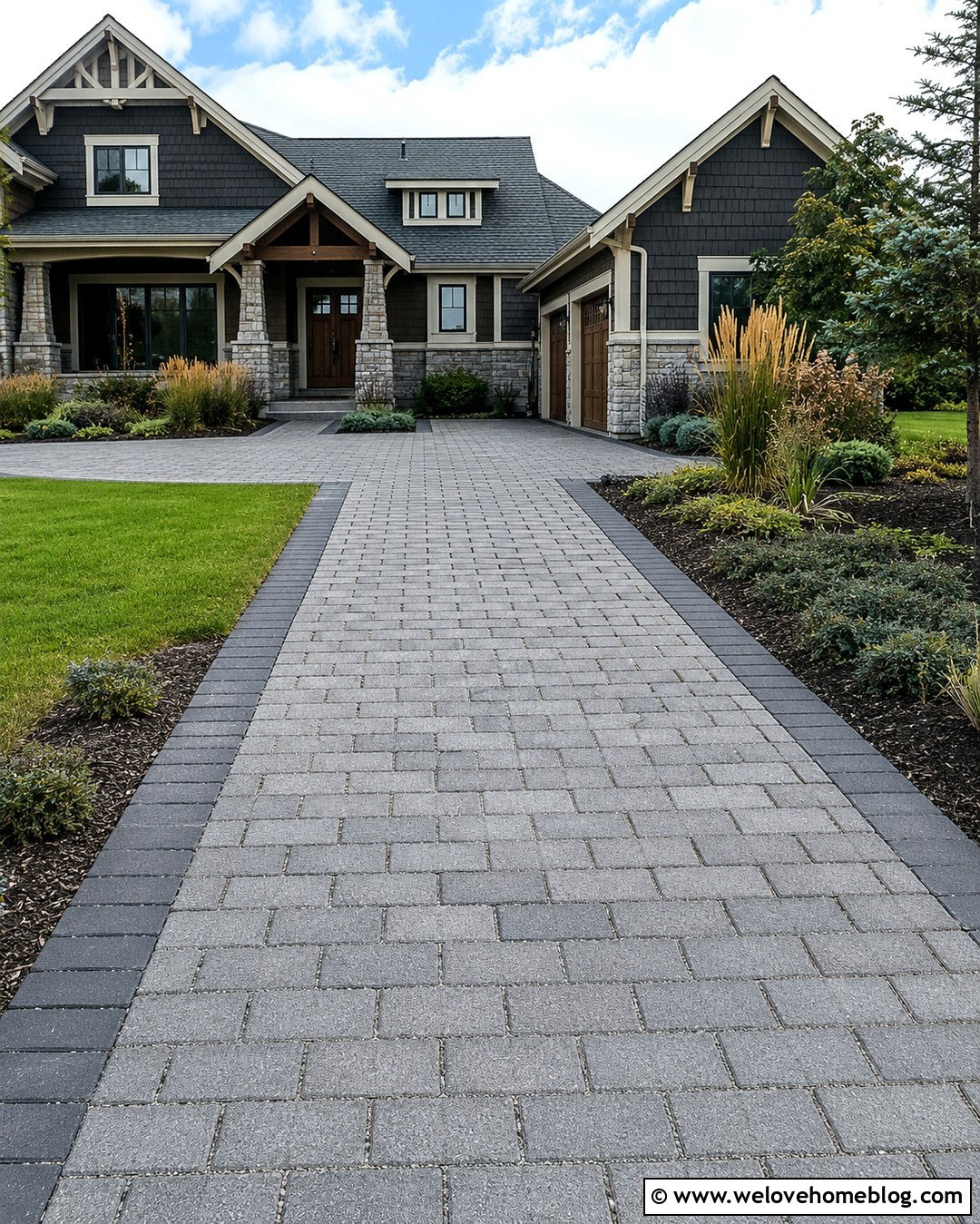
Permeable interlocking concrete pavers create an organized driveway with joints designed to receive clean, open-graded aggregate. Water can pass through those openings and enter the stone reservoir below, making the base and installation method central to the system’s performance. () Choose rectangular charcoal and light gray pavers in a simple running-bond pattern for a modern craftsman home. A straight driveway with a slightly wider parking pad keeps the layout practical. Edge restraints should be strong enough to prevent the outside rows from shifting. Frame the surface with evergreen ground cover, upright grasses, and a paved walkway using the same paver color. Periodic sweeping and joint-stone replenishment are more manageable when messy flower beds and overhanging trees are kept away from the driveway.
9. Large Concrete Paver Driveway With Rock Landscaping
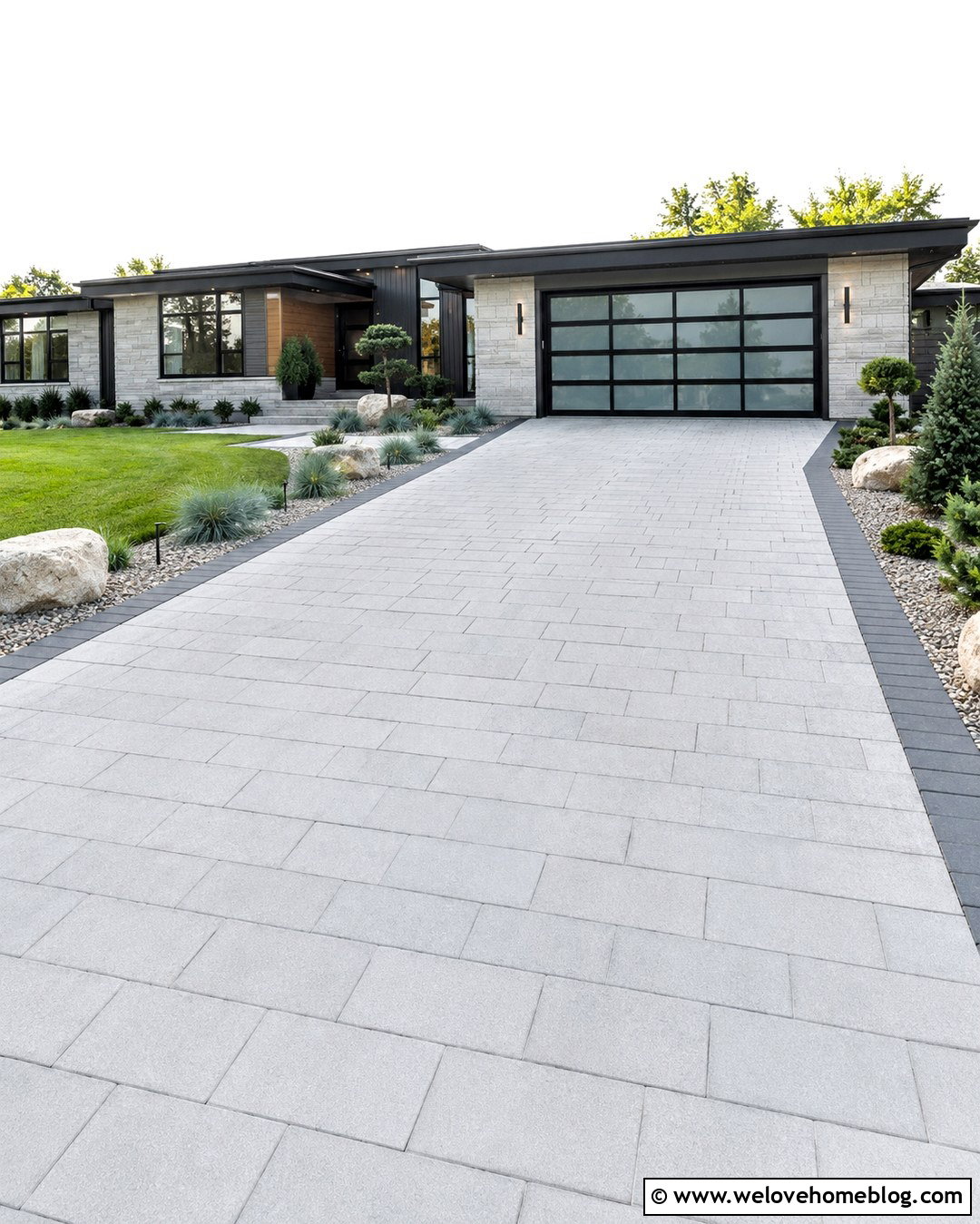
Large-format concrete pavers make a short driveway appear wider and less visually busy. Choose thick, vehicle-rated pavers in a light gray tone and arrange them in a staggered pattern with narrow joints. Dark charcoal border pavers can define the edges and create contrast without adding complicated ornament. For the surrounding yard, replace thin strips of difficult-to-mow grass with beds of washed river rock, dwarf conifers, blue-green ornamental grasses, and a few architectural boulders. This complete look works beautifully with contemporary and midcentury homes. Individual pavers may be lifted and replaced if a localized problem develops, provided the base remains sound. () Ask the installer about joint stabilization, edge restraints, load ratings, and drainage before selecting a product based only on its appearance.
10. Herringbone Brick Driveway With Evergreen Borders
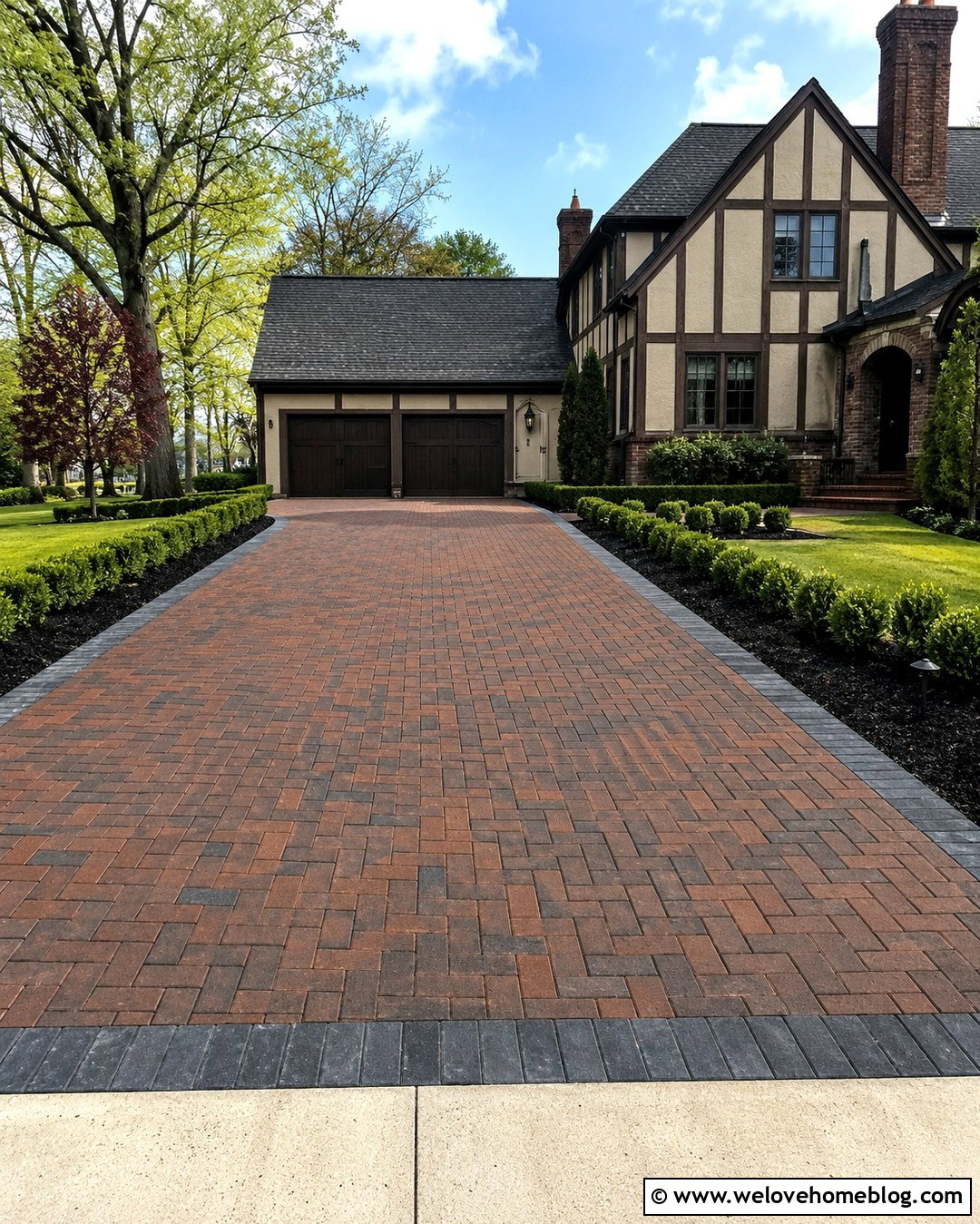
Clay brick pavers laid in a herringbone pattern create a traditional driveway that pairs naturally with colonial, Tudor, and cottage homes. The interlocking pattern handles turning movement better than long uninterrupted rows and gives the full surface a finished appearance. Select darker, dense paving brick rather than ordinary wall brick, and use charcoal pavers around the perimeter as a contrasting soldier-course border. Keep the planting restrained with compact hollies, low boxwood alternatives, and broad areas of dark mulch set slightly below the edging. A straight driveway with a rectangular parking court highlights the geometry of the pattern. Joint maintenance can be reduced through proper base preparation, firm edge restraints, and suitable joint material. Avoid nearby plants with aggressive roots or heavy seasonal fruit that could stain the brick.
11. Asphalt Driveway With Cobblestone Entrance Apron
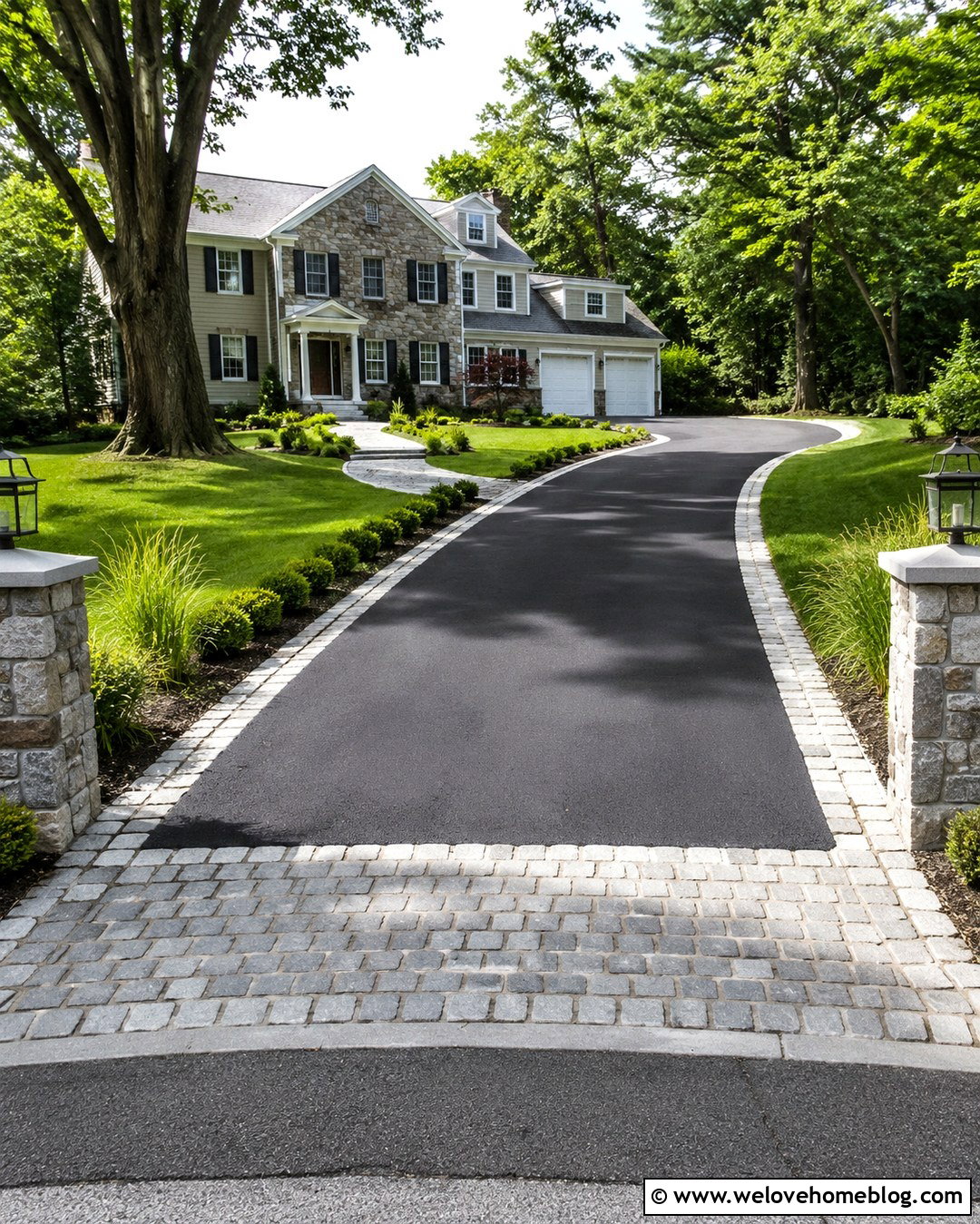
You do not need to pave an entire driveway in premium stone to create a distinguished entrance. Use smooth black asphalt for the main straight or curved approach, then install a granite cobblestone apron where the driveway meets the street. Continue a narrow cobblestone border along both sides to protect the asphalt edges and visually connect the materials. The textured apron can also make the property entrance easier to recognize from the road. Frame it with two simple stone columns, low evergreen shrubs, and neatly maintained ornamental grasses that preserve clear sightlines. This mixed-material driveway suits colonial, craftsman, and country houses. Because most of the surface remains asphalt, repairs are relatively straightforward. The smaller cobblestone area delivers character without creating an entire driveway filled with joints.
12. Stabilized Gravel Driveway With Paver Edging
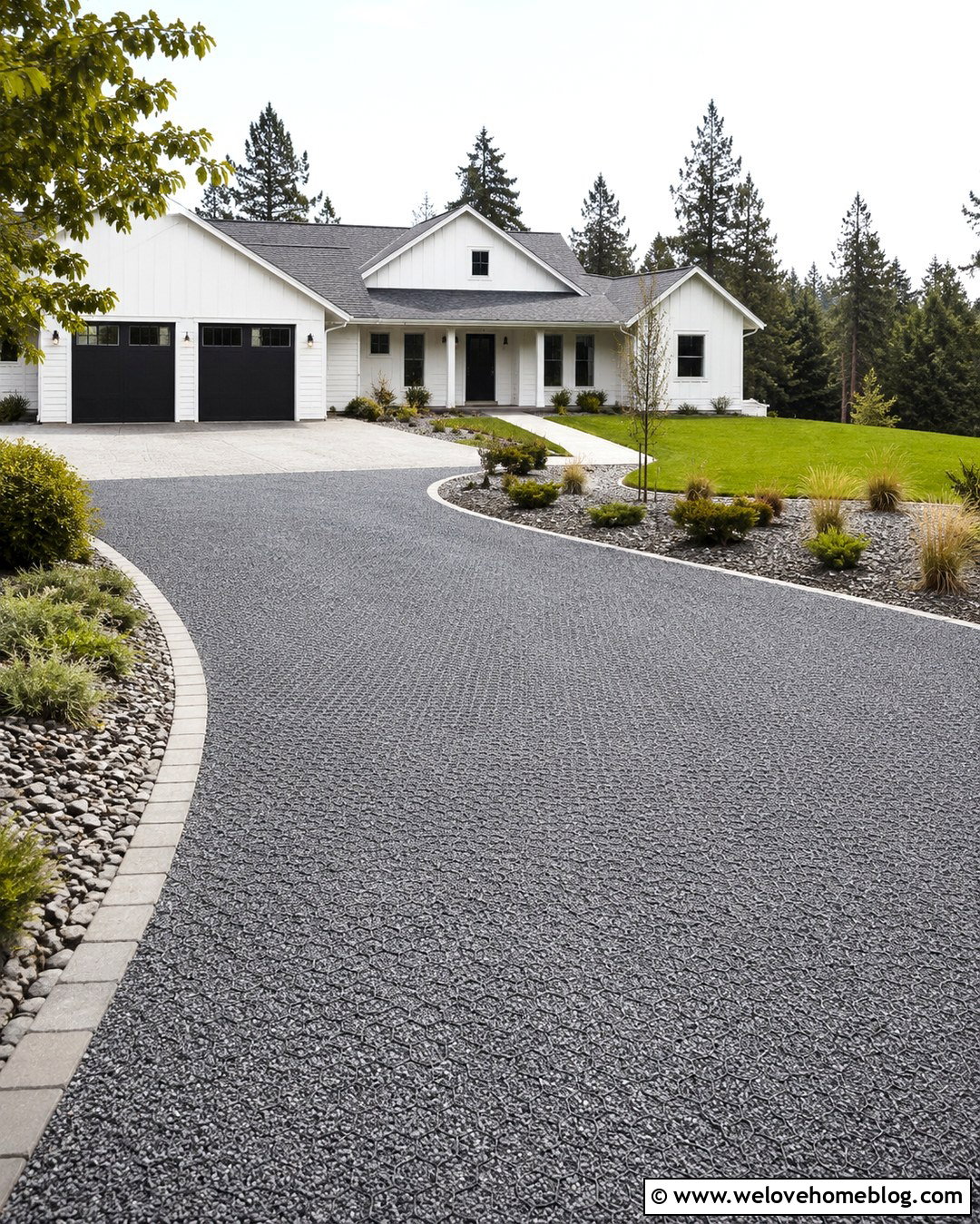
Loose gravel becomes easier to manage when installed over a cellular stabilization grid that helps hold the aggregate in place. Choose angular gray gravel rather than rounded pea gravel for stronger interlock, especially on gently sloped approaches. A broad driveway with a soft curve can be bordered by flush concrete pavers, which contain the stone and provide a clear mowing edge. Install a larger paver apron near the garage to reduce loose material tracking indoors. Landscape the sides with tough evergreen shrubs, native grasses, and stone mulch instead of fussy flower borders. Gravel driveways still need occasional raking and replenishment, but a compacted base, underlayment selected for site conditions, grid stabilization, and firm edging can reduce migration and rutting. ()
13. Crushed Stone Driveway With Steel Edging
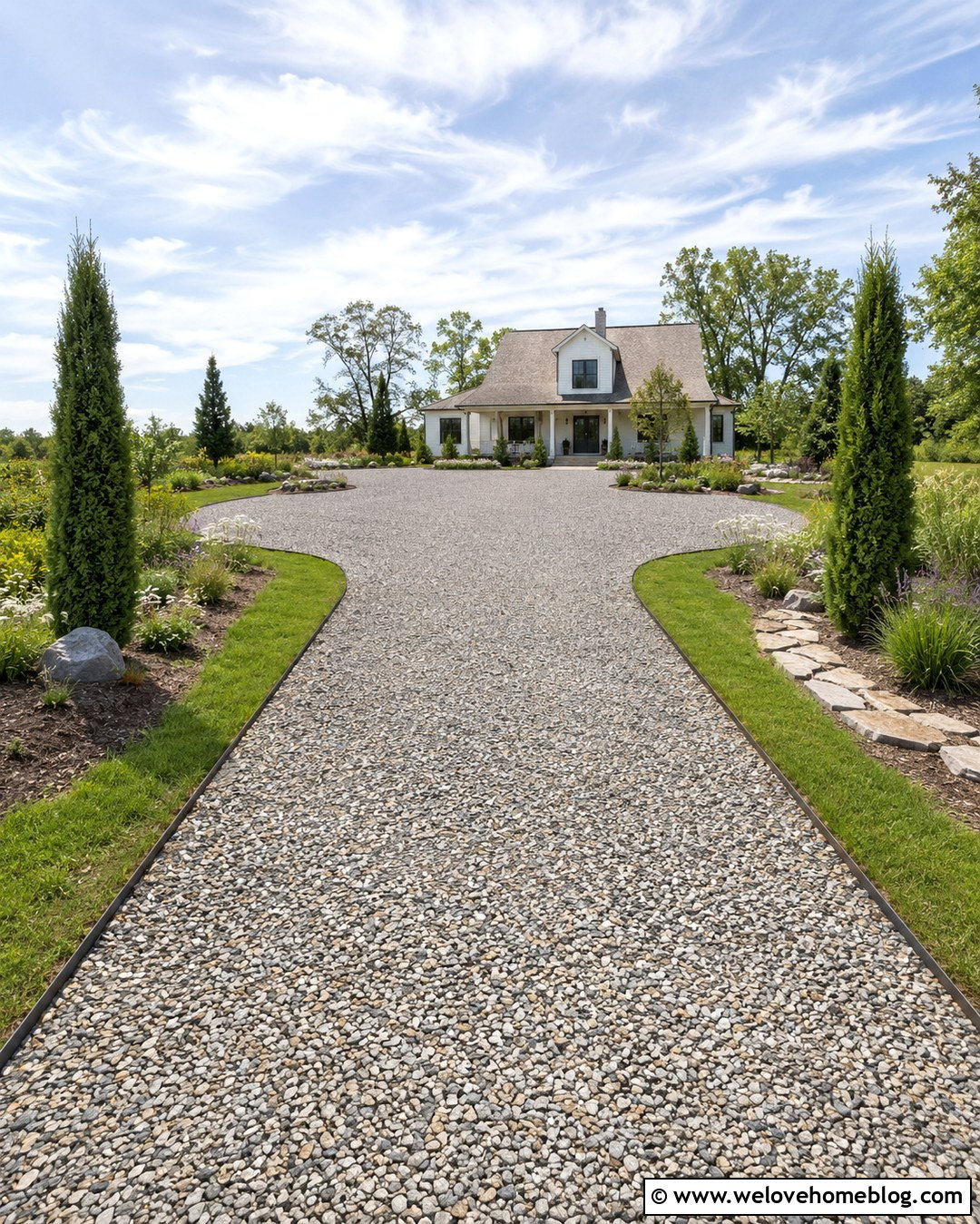
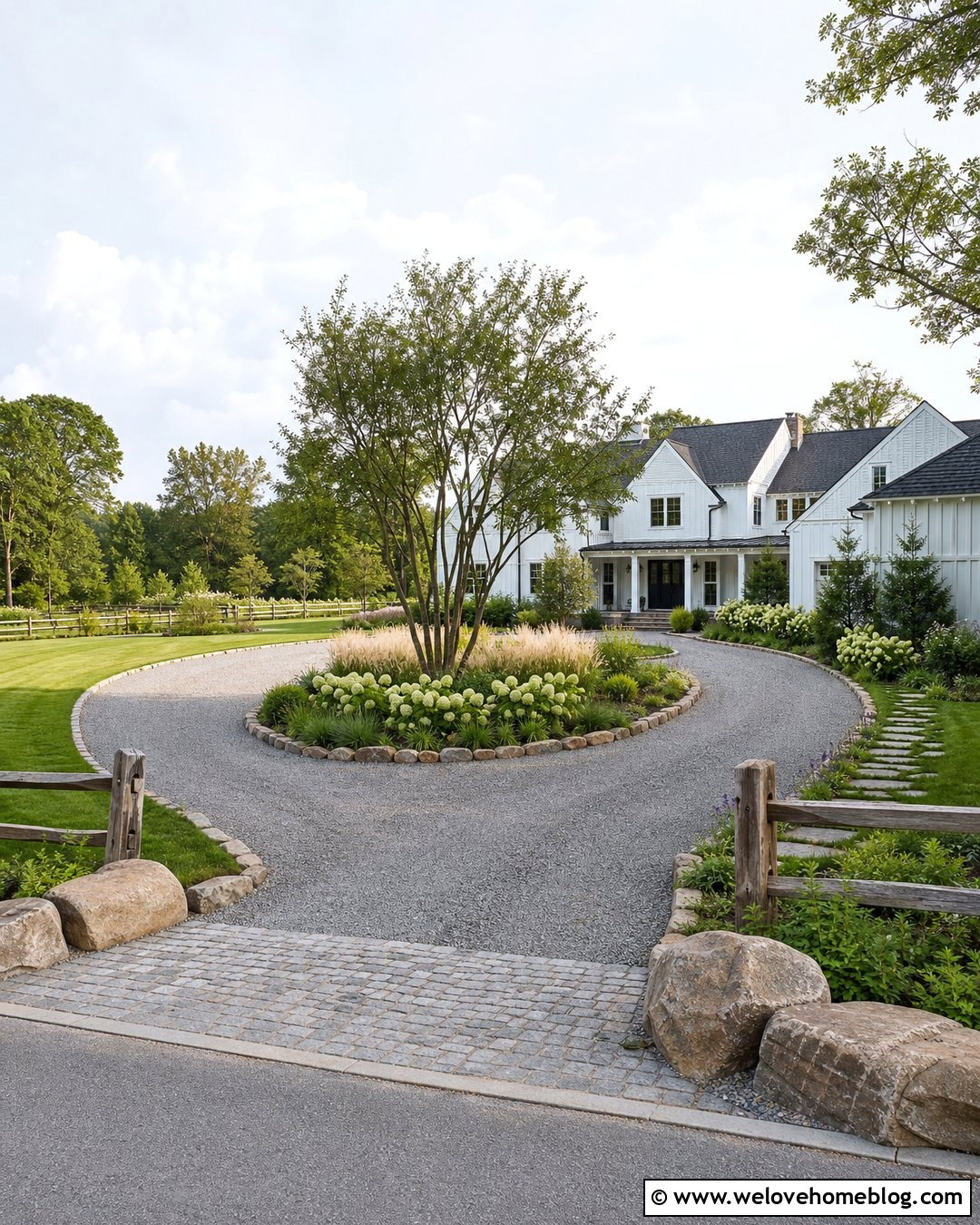
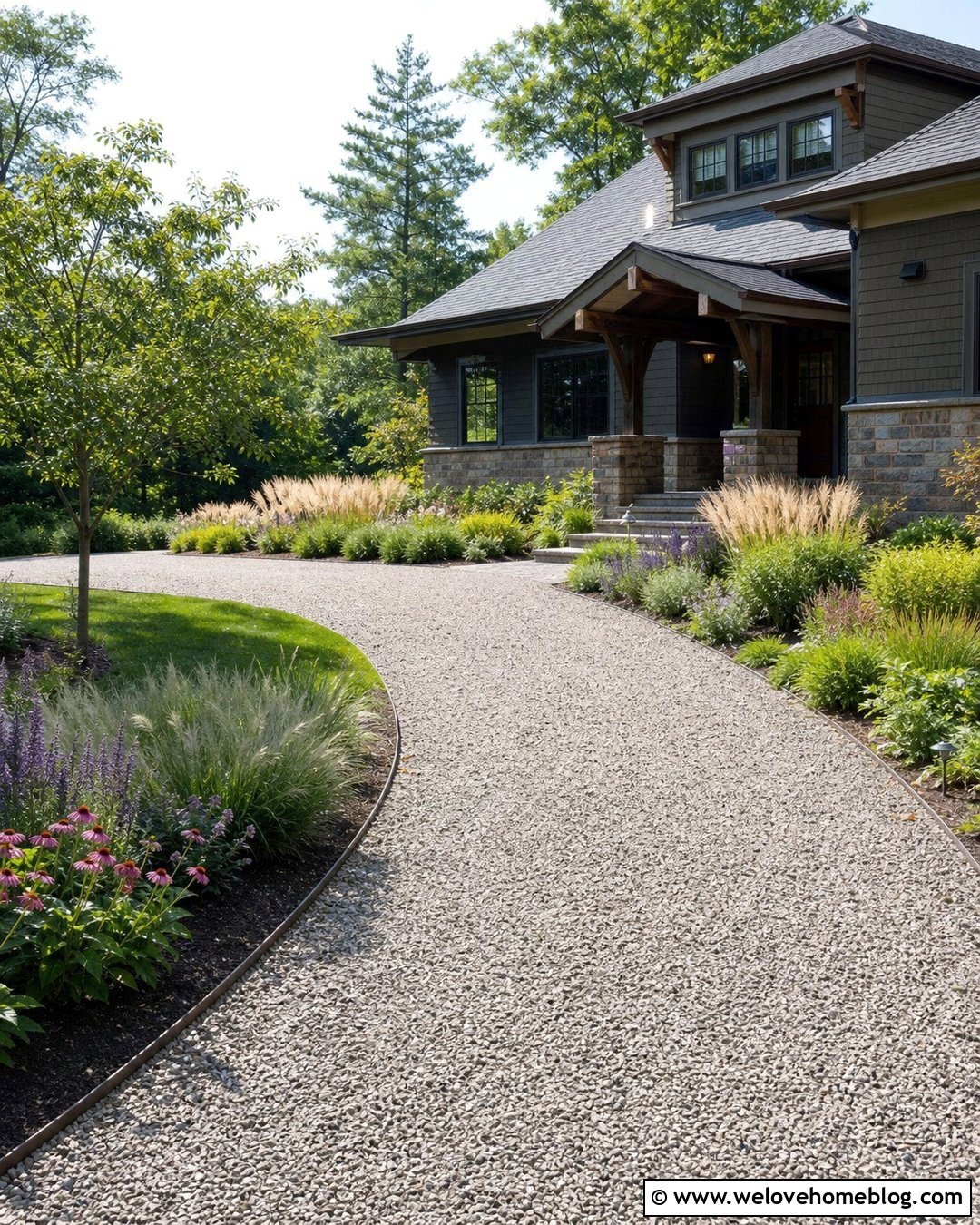
The crunch of crushed stone creates a relaxed country entrance without requiring an elaborate decorative surface. Use compactable angular stone in a blend of medium gray and warm beige so dust and minor discoloration remain less noticeable. Install dark steel edging along a straight driveway to hold the stone securely and create a crisp boundary against the yard. A wider turnaround near the house improves usability and reduces repeated backing over the landscaped edges. Plant rows of columnar evergreens or small native trees beyond simple grass shoulders, leaving enough clearance for branches and roots. A geotextile or appropriate separation layer may help keep the stone base from mixing with soft soil, depending on site conditions. Periodic grading remains necessary, but proper crowning and drainage reduce puddles and washed-out areas.
14. Chip Seal Driveway With Natural Stone Borders
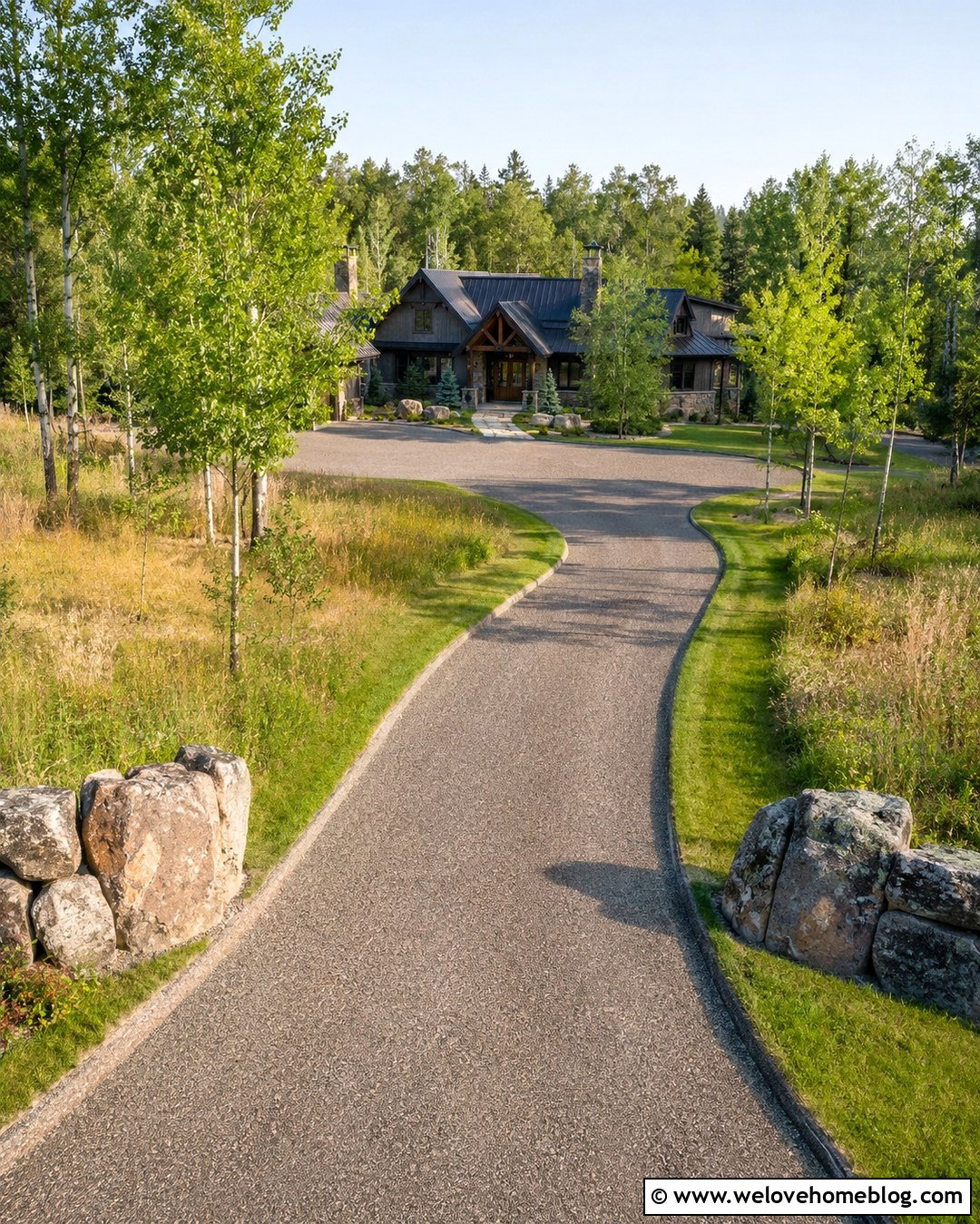
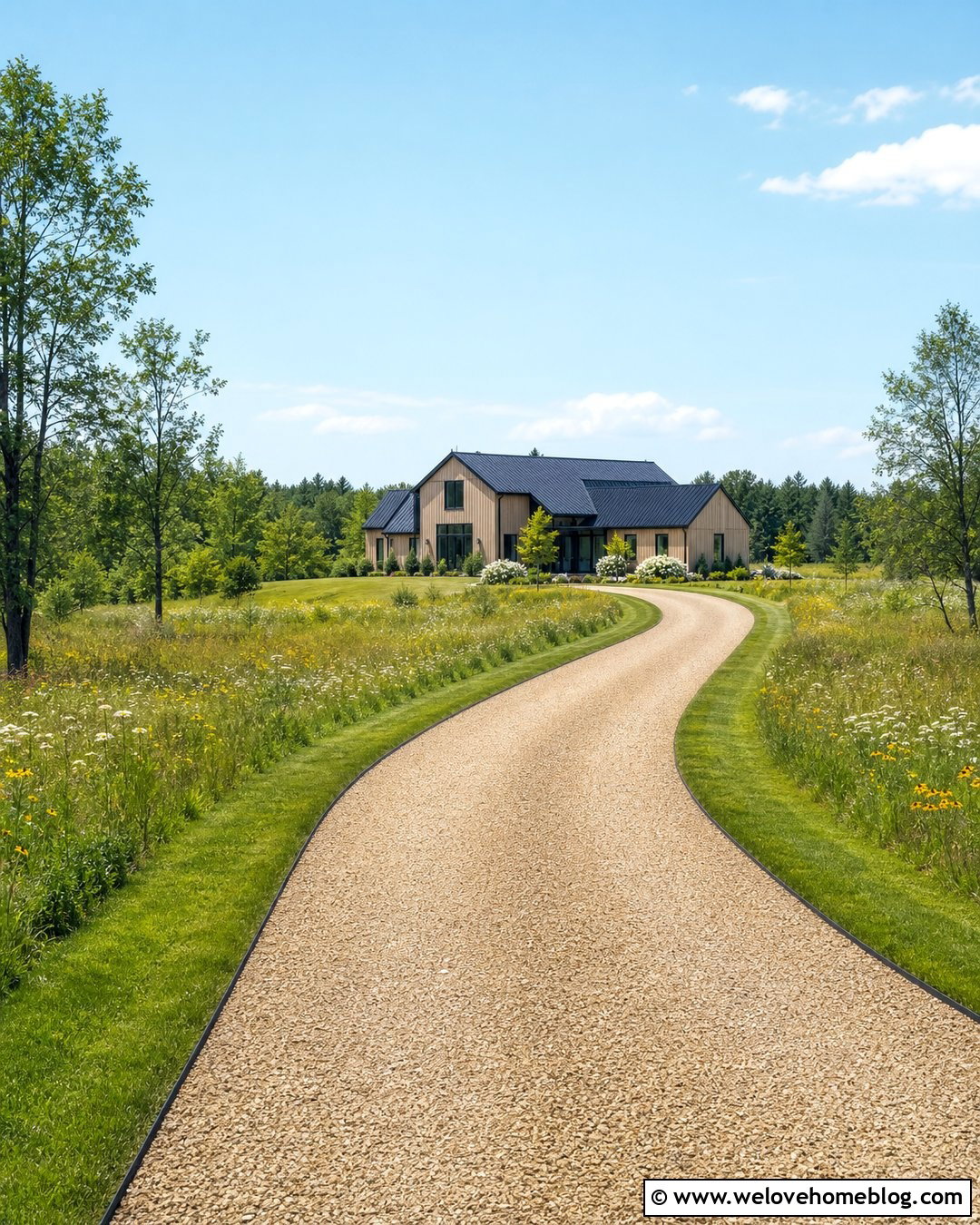
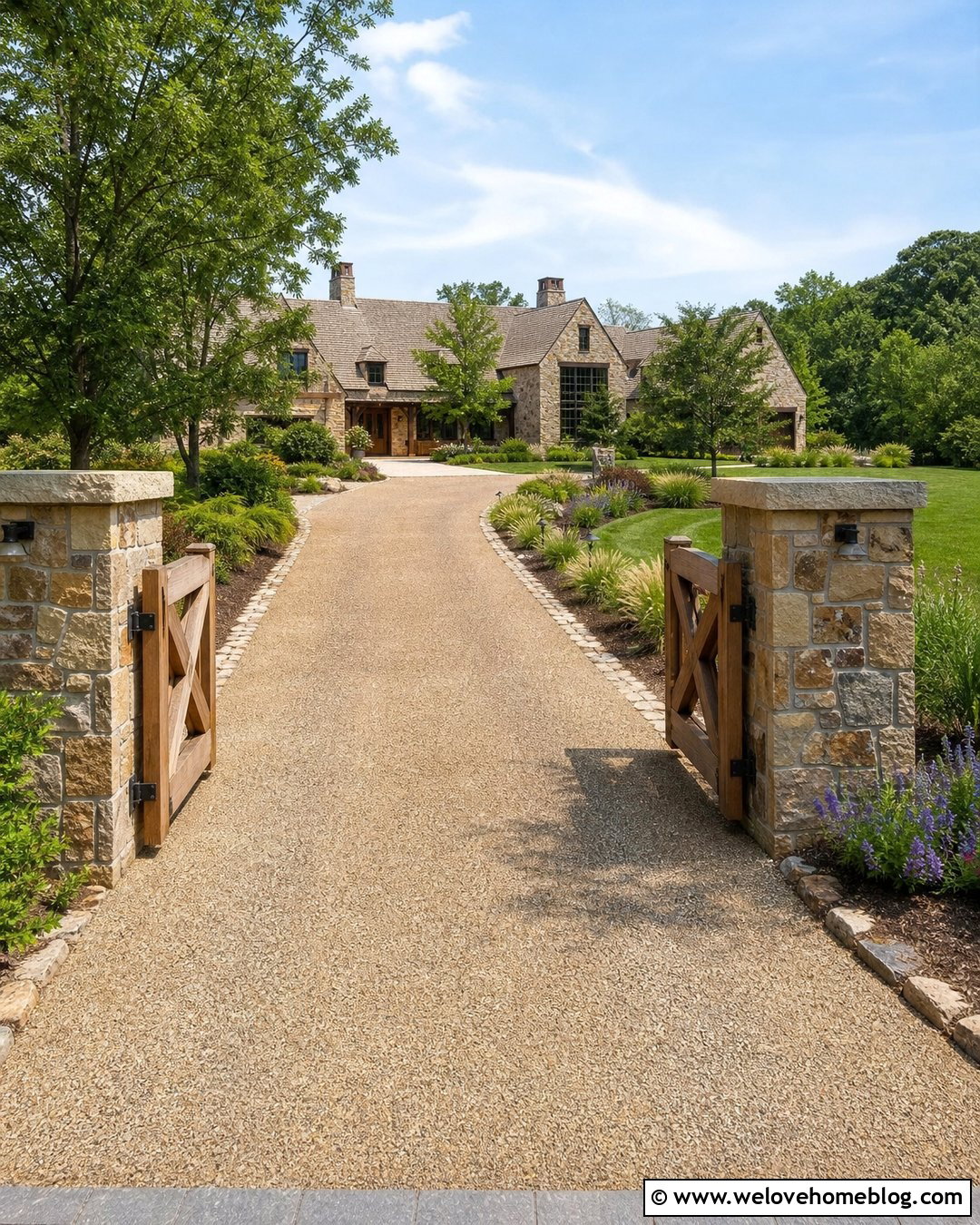
Chip seal produces a textured country-road appearance by combining a bituminous layer with embedded stone aggregate. It can be a practical choice for a long rural driveway where decorative pavers or full concrete installation would cover an extensive area. Select brown, tan, or gray stone chips that coordinate with the surrounding landscape. Follow the driveway’s gentle curve with low natural-stone borders near the entrance and unedged grass shoulders farther back for a less formal transition. Plant native trees in loose groups rather than continuous beds that demand constant trimming. Near the house, create a wider parking court with a defined stone curb and a matching walkway. Ask local paving contractors whether chip seal suits your climate, slope, traffic, and existing base, since availability and installation practices vary significantly by region.
15. Recycled Asphalt Driveway With Timber Borders
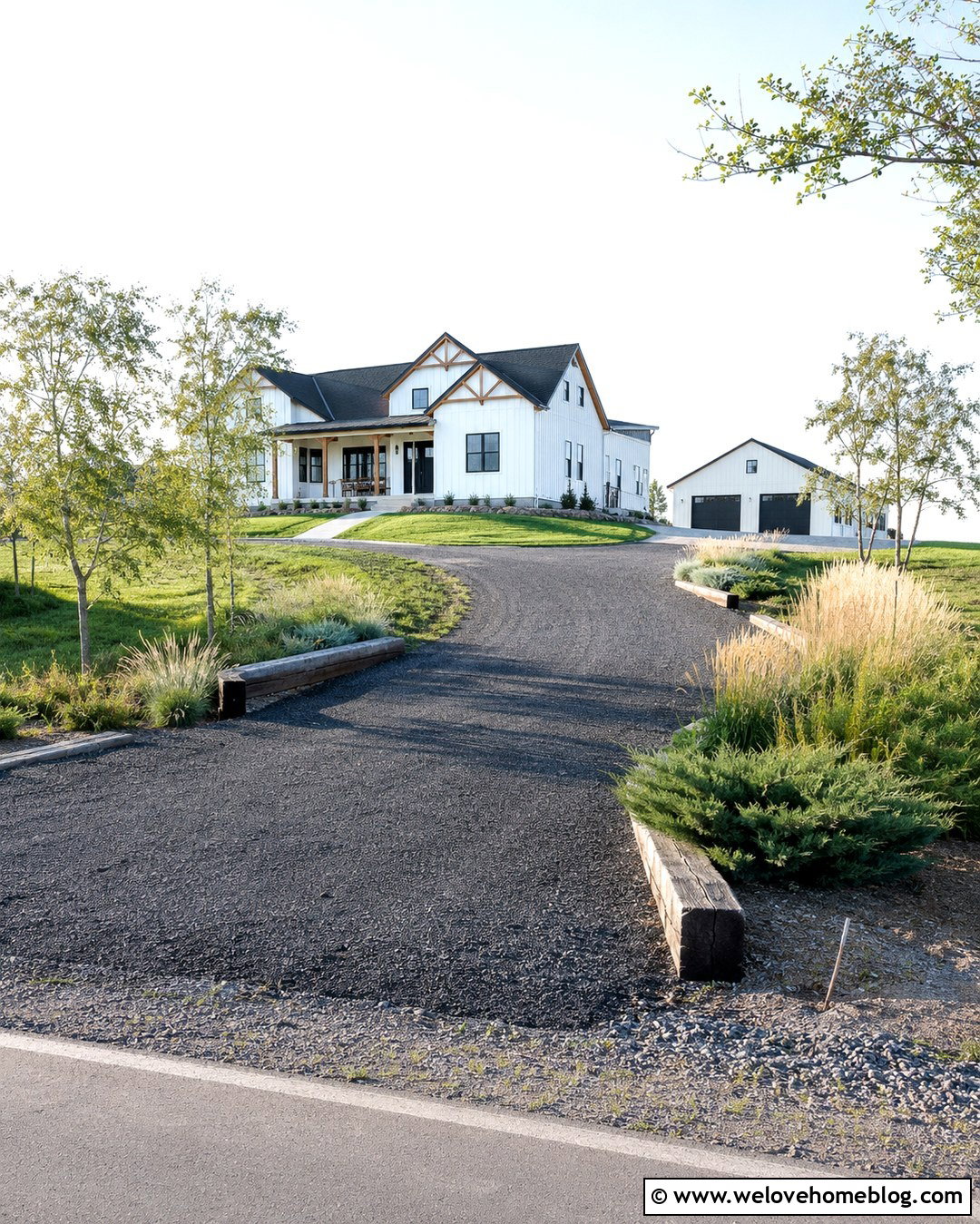
Recycled asphalt millings can create a firm, dark driveway with a more informal texture than freshly paved asphalt. This material is especially suitable for long farmhouse, workshop, and rural residential approaches where an economical full-width surface is important. Shape the driveway with a subtle curve and compact the millings over a professionally prepared aggregate base. Use heavy timber edging only along landscaped sections and near the parking area, keeping it away from locations where trapped moisture may accelerate deterioration. Native grasses, low junipers, and occasional shade trees can frame the route without creating a manicured garden. Add a concrete or paver apron at the garage to limit tracked particles. Material quality varies, so obtain locally approved millings and discuss compaction, drainage, dust, and resurfacing expectations with an experienced installer.
16. Pervious Concrete Driveway With Rain Garden
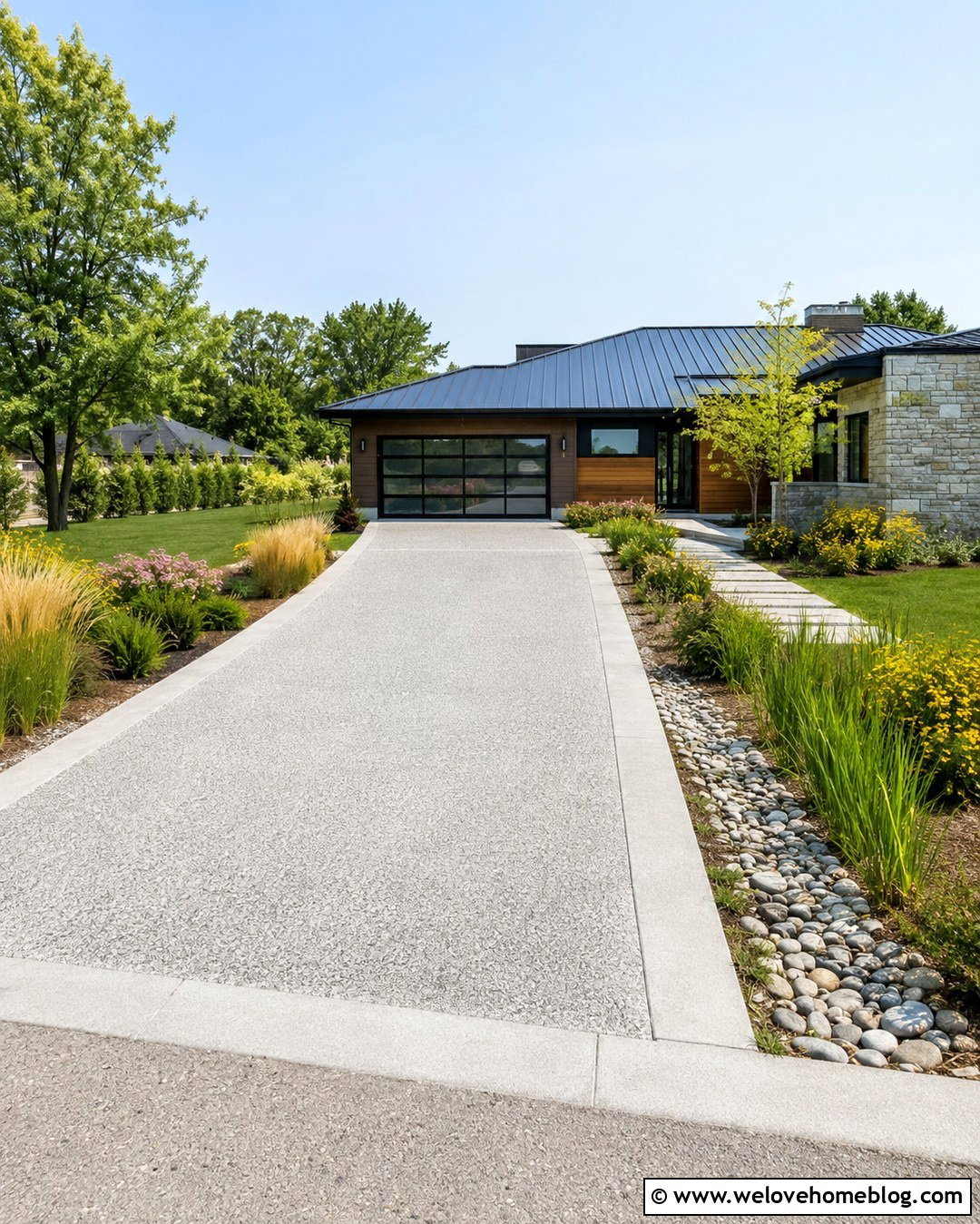
Pervious concrete has a coarse, open texture designed to let water pass through the pavement rather than flow entirely across the surface. Create a straight driveway in a light natural-gray finish and border it with flush bands of standard concrete that protect the edges without interfering with the drainage plan. On the lower side, build a shallow rain garden filled with regionally appropriate grasses, sedges, and compact flowering shrubs. A stone overflow channel can guide excess water safely during heavier storms. This driveway suits a modern or contemporary home with simple lines and minimal planting. Pervious concrete requires specialized design, mixing, placement, and base preparation; permeability and strength must be balanced for the project. () Keep sediment, soil, and loose mulch away from the open surface.
17. Grass Grid Driveway With Concrete Wheel Strips
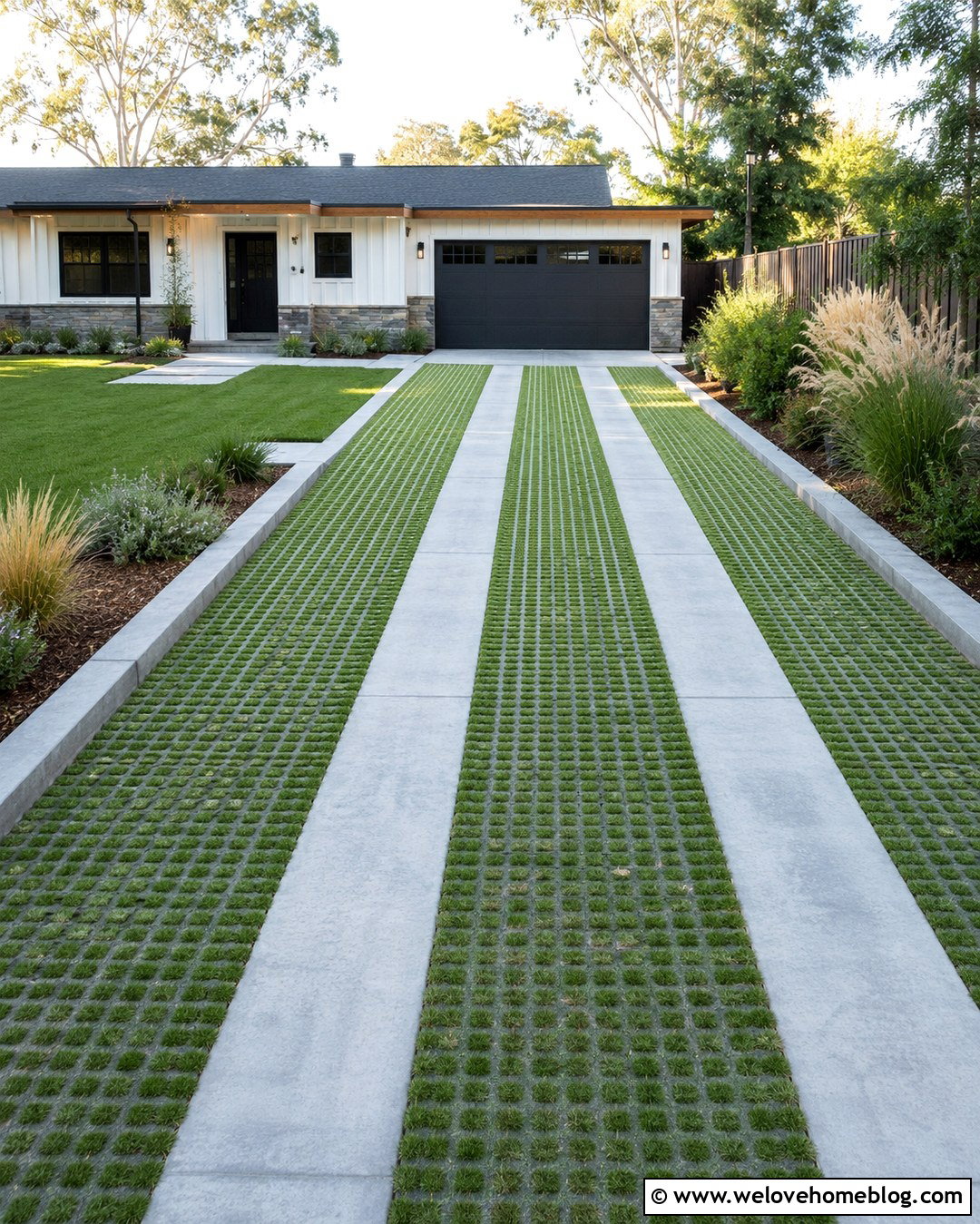
A grass grid driveway softens the appearance of front-yard parking while reinforcing the soil beneath vehicle tires. For easier upkeep, combine concrete wheel strips with open-cell grid panels planted in a durable turf variety recommended for the local climate. The concrete provides reliable driving lines, while the reinforced green center reduces the amount of solid pavement. Keep the layout straight and simple so mowing equipment can pass easily across it. Concrete curbs along the outer edges prevent the grid from spreading and separate the driveway from low native planting beds. This design works best where sunlight, drainage, usage, and seasonal conditions support healthy turf. It is less suitable for heavily shaded or constantly occupied parking areas. An irrigation-free ground cover may be possible in some climates after professional evaluation.
18. Circular Paver Driveway With Low Evergreen Landscaping
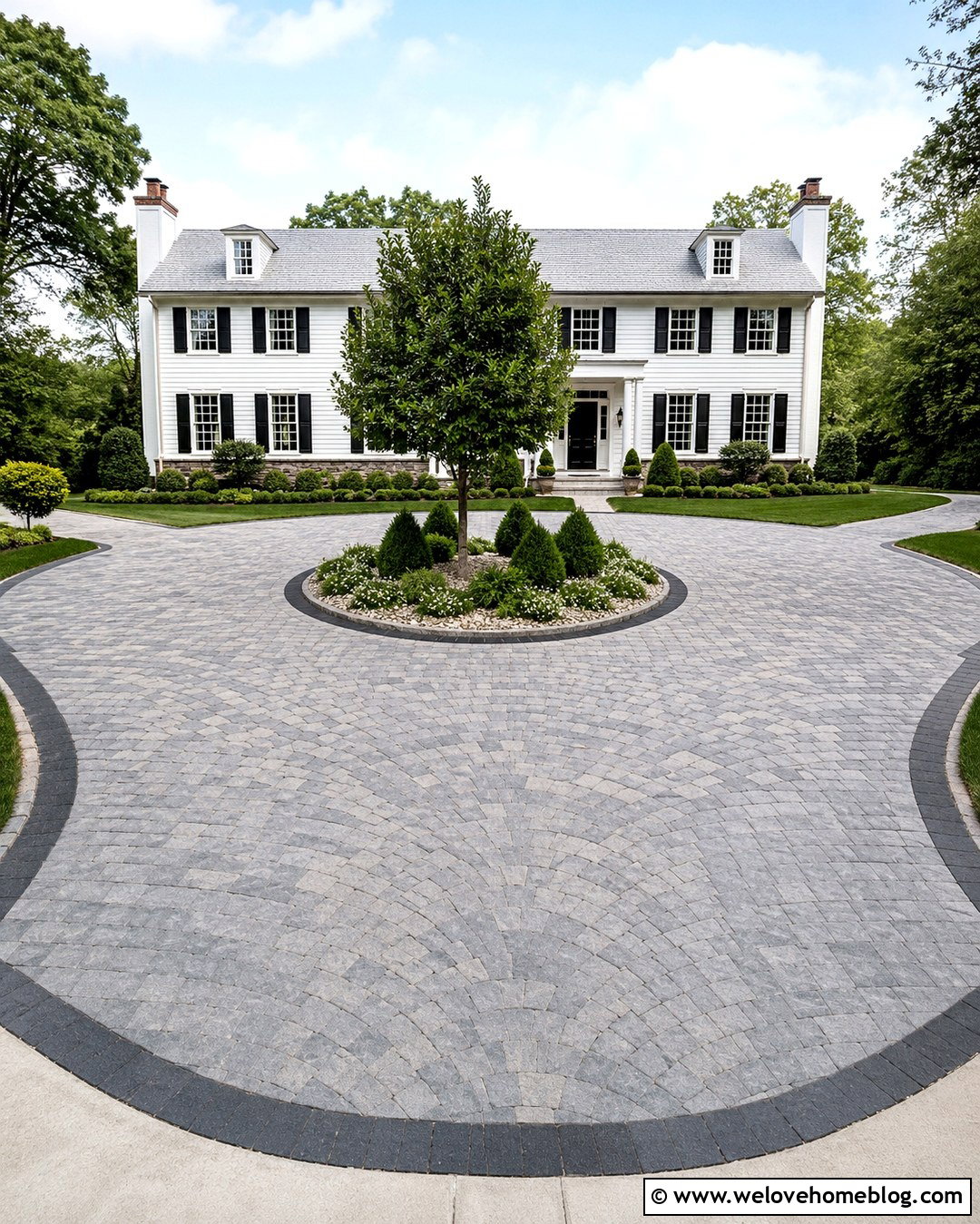
A circular driveway can remain easy to care for when the layout uses durable interlocking concrete pavers and restrained planting. Choose medium-gray pavers in a simple fan or running-bond pattern, then define the inner island with a dark charcoal soldier-course border. Instead of filling the center with delicate flowers, use one small ornamental tree surrounded by compact evergreens, tough ground cover, and stone mulch. Keep plants low near both street openings to maintain clear visibility. A matching paver walkway can branch from the circle toward a colonial or traditional front porch. Strong edge restraints are especially important around curves, where outside pavers may otherwise loosen. Provide sufficient turning width from the beginning so vehicles do not repeatedly cross the edging or damage the landscaped island.
19. Mixed Asphalt And Paver Driveway With Wide Borders
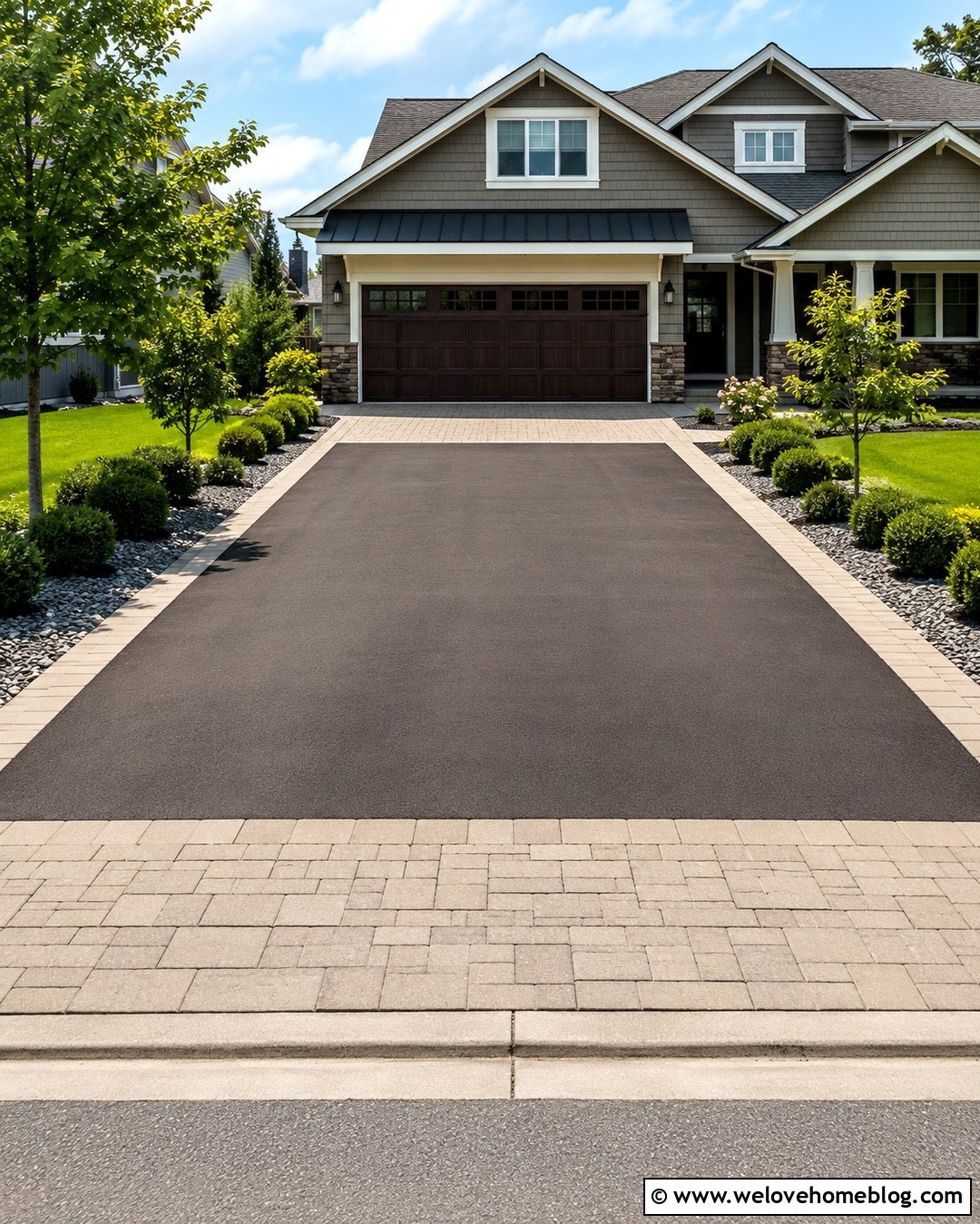
Combining black asphalt with concrete paver borders provides a polished look without covering the full driveway in individual units. Use asphalt through the main driving area and install wide greige paver bands along both sides. Add a matching paver apron near the garage and a crossband at the street entrance to make the design feel intentional. The bands strengthen the visual edges while connecting the driveway to the front walkway. Keep nearby landscaping simple with clipped shrubs, small ornamental trees, and low-maintenance ground cover placed behind a narrow gravel buffer. This complete look fits many suburban homes, from craftsman to contemporary. Carefully plan the transition between materials so settlement does not create uneven edges. Matching future asphalt repairs is usually less noticeable within the strong paver frame.
20. Compact Concrete Driveway With Xeriscape Landscaping
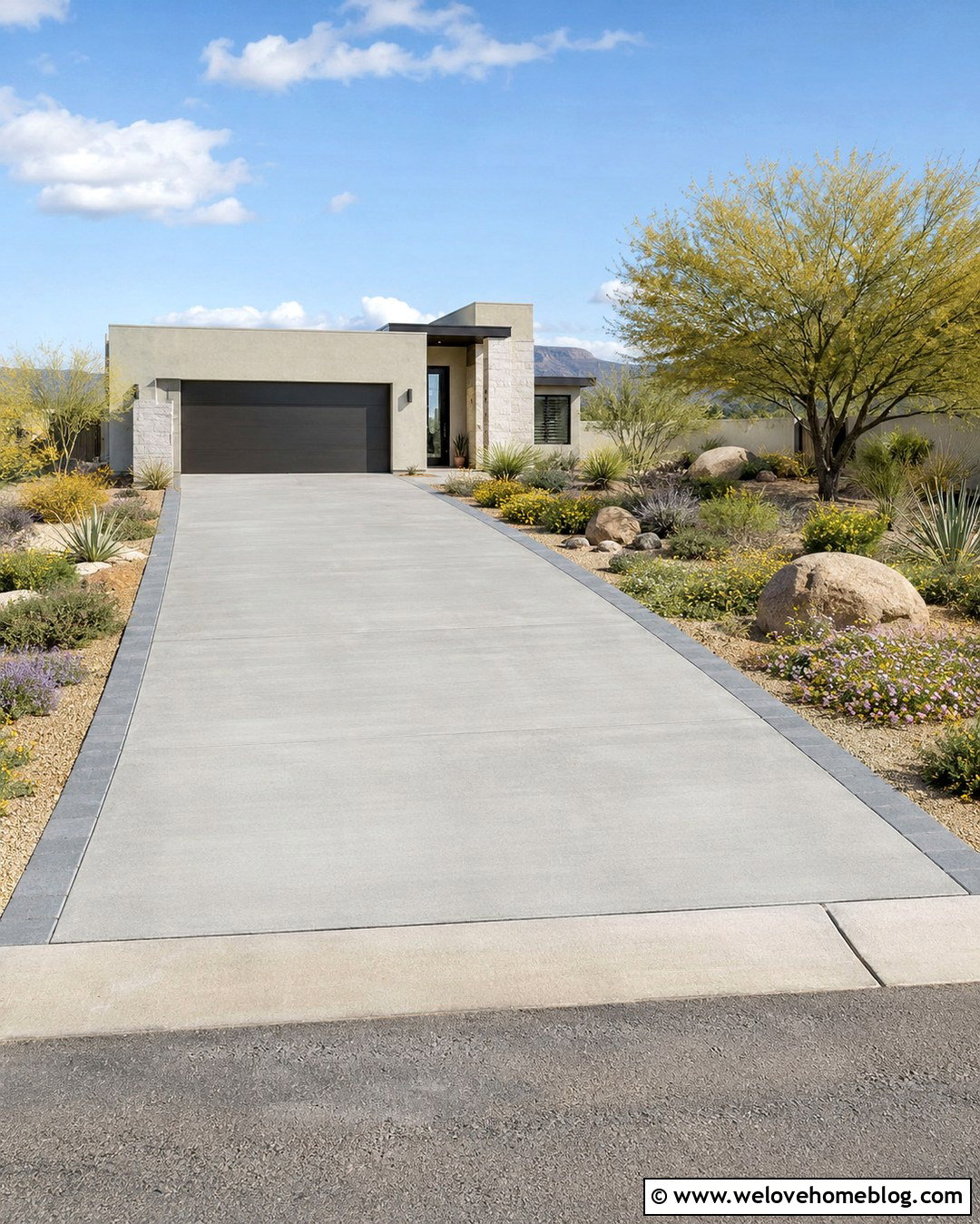
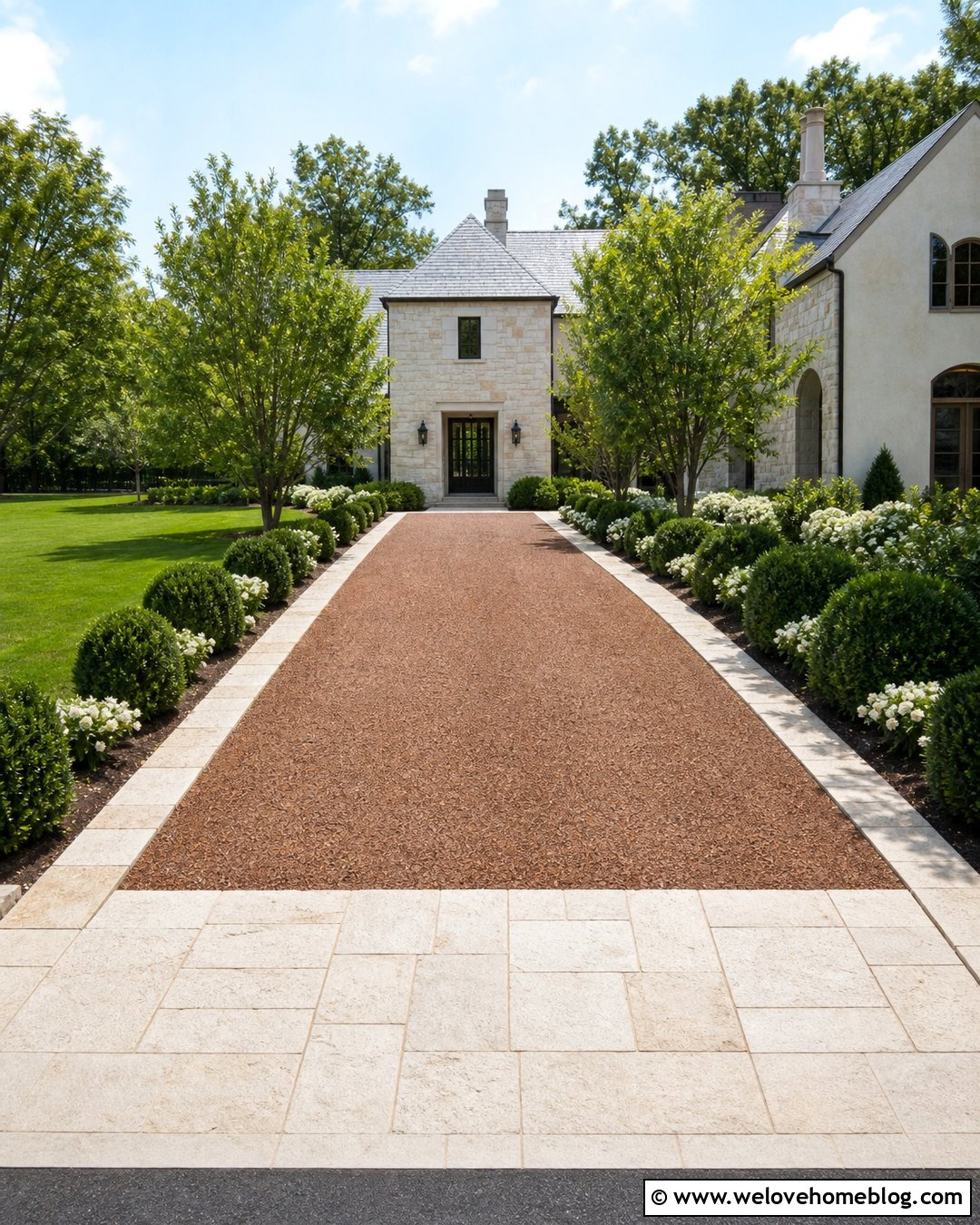
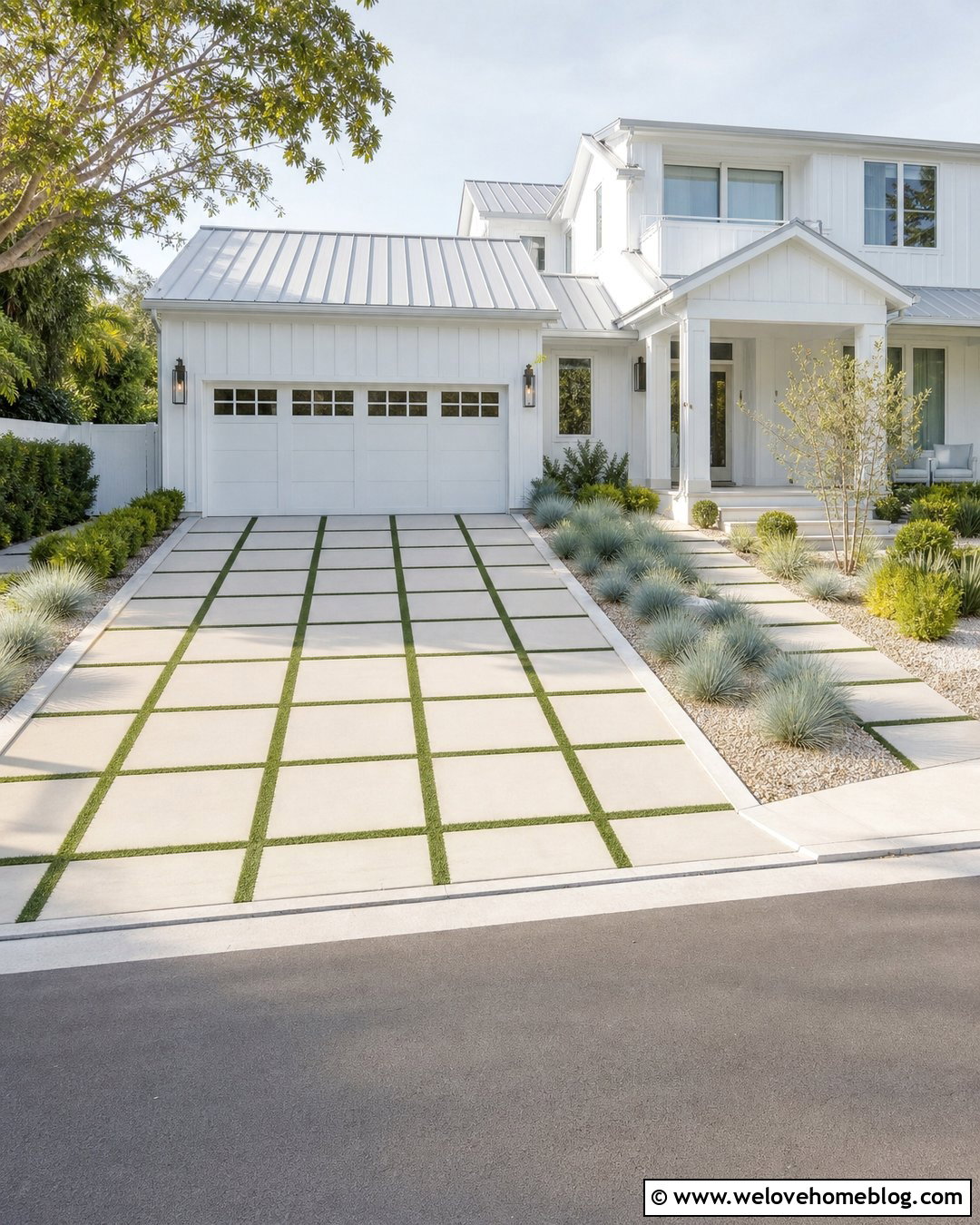
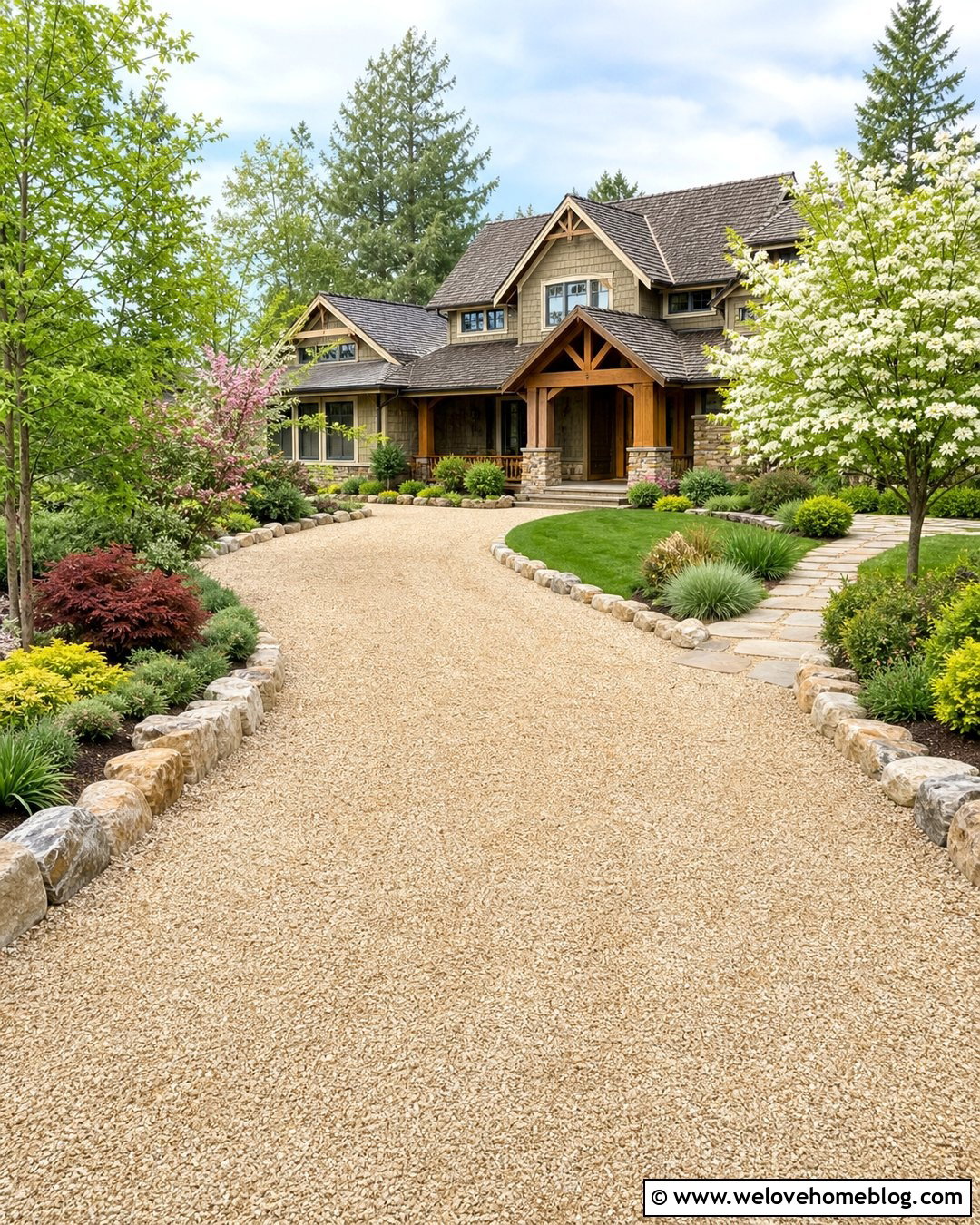
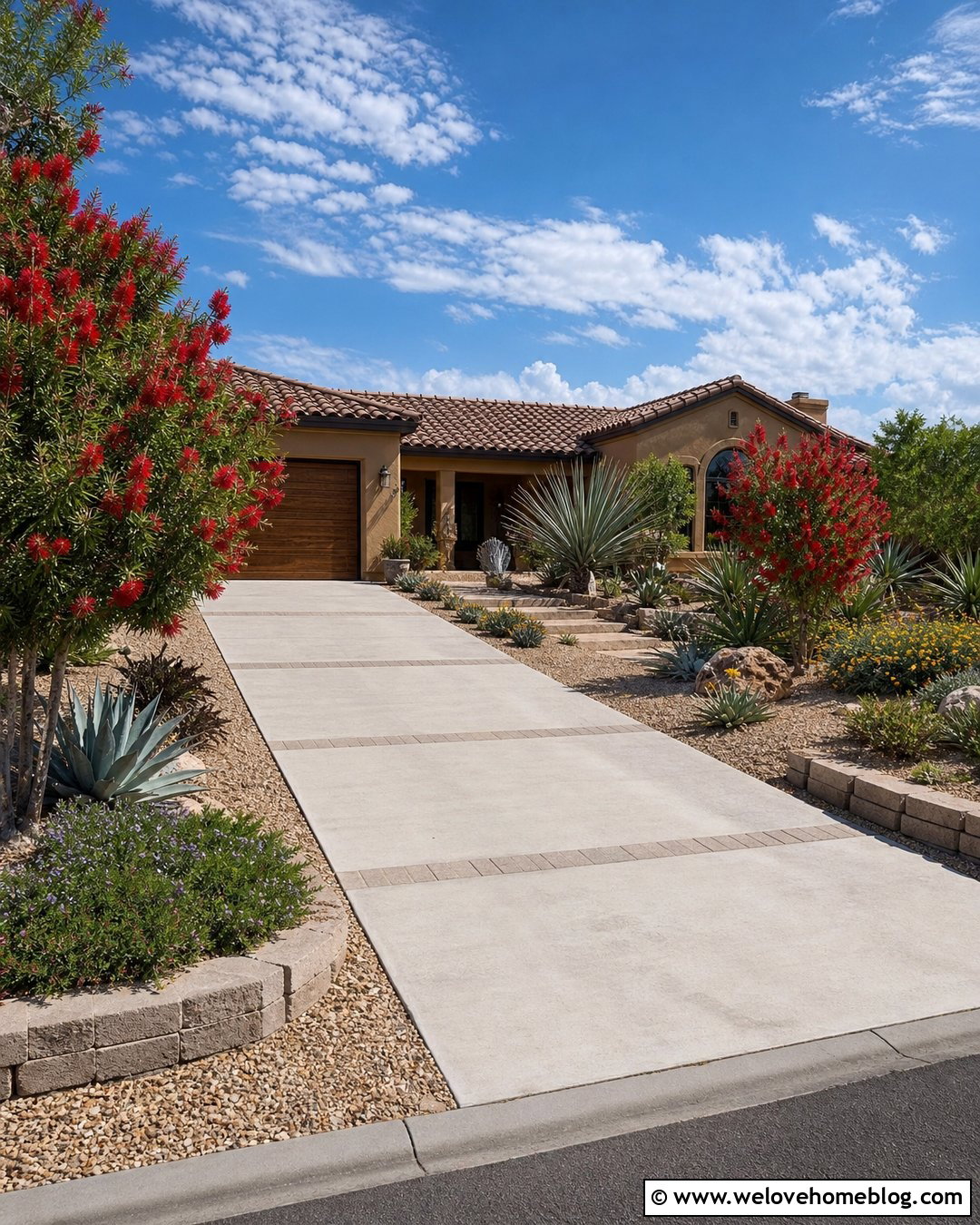
Small front yards benefit from a driveway design that reduces visual clutter and eliminates awkward patches of grass. Install a compact poured-concrete driveway with a light broom finish and a narrow charcoal paver border. A straight shape makes parking easy and leaves more usable room for landscaping. On both sides, create xeriscape beds using gravel mulch, sculptural boulders, drought-tolerant grasses, compact evergreen shrubs, and flowering plants suited to the local region. Connect the driveway to the front door with a direct concrete walkway rather than stepping-stones that require trimming. Include a drainage strip or shallow planted swale where runoff needs to be collected. This streamlined layout requires little mowing and keeps soil away from the pavement. Choose plants based on mature size so they will not obstruct doors or mirrors.
Conclusion:
The most successful **20 low maintenance driveway ideas** are not based on surface material alone. A stable subgrade, compacted base, effective drainage, durable edge restraints, and sensibly placed plants all reduce future work. Concrete and asphalt create familiar solid surfaces, while resin-bound aggregate and permeable pavers offer refined alternatives. Stabilized gravel, recycled asphalt, and chip seal can suit longer or more informal approaches. Before committing, compare installation costs, climate performance, local drainage rules, repair options, and the routine care each system still requires. Then coordinate the driveway color and shape with the house, walkway, borders, and landscaping. Thoughtful planning creates an entrance that looks complete and remains manageable for years.

Related posts:
Leave a Reply