
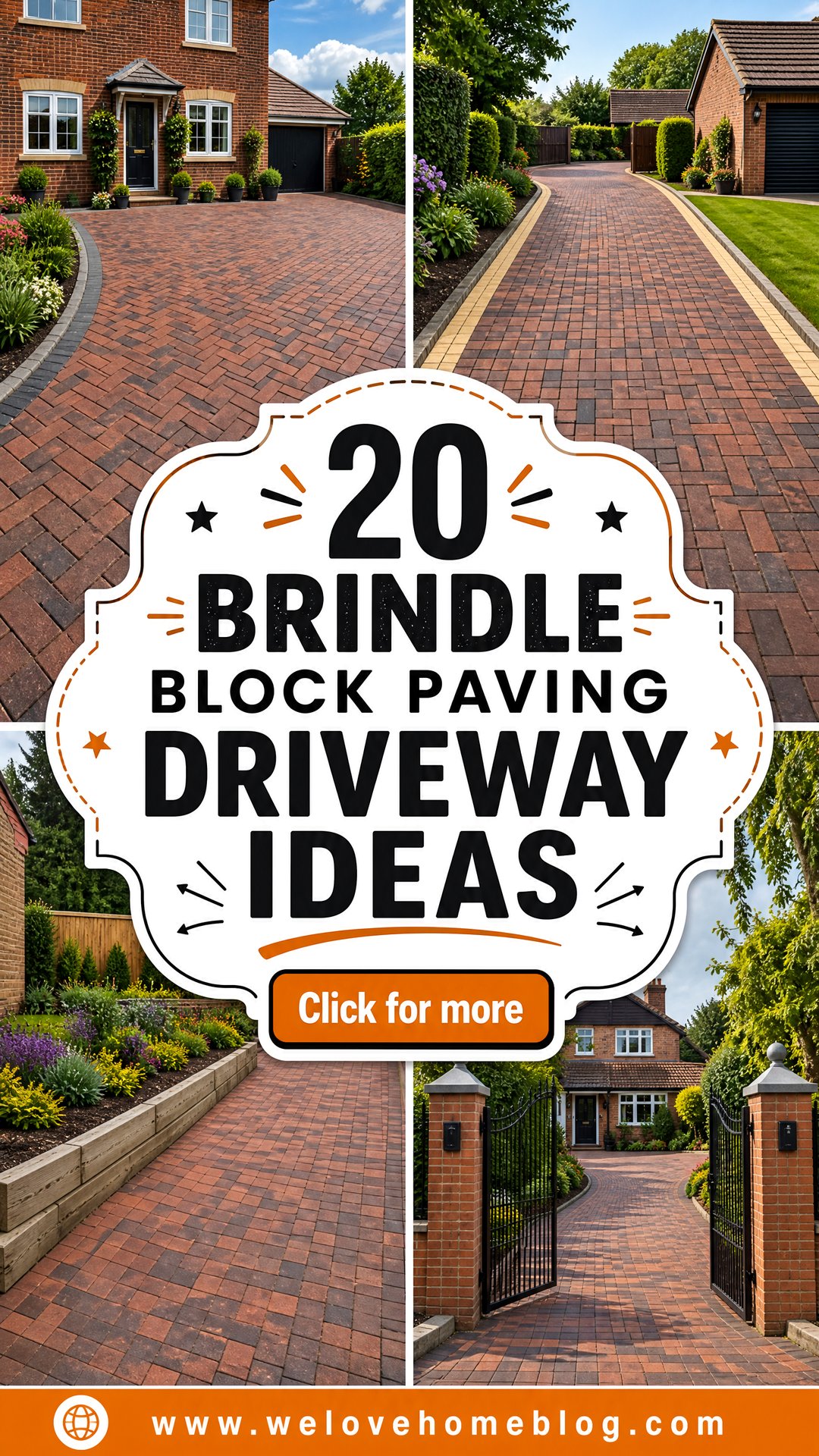
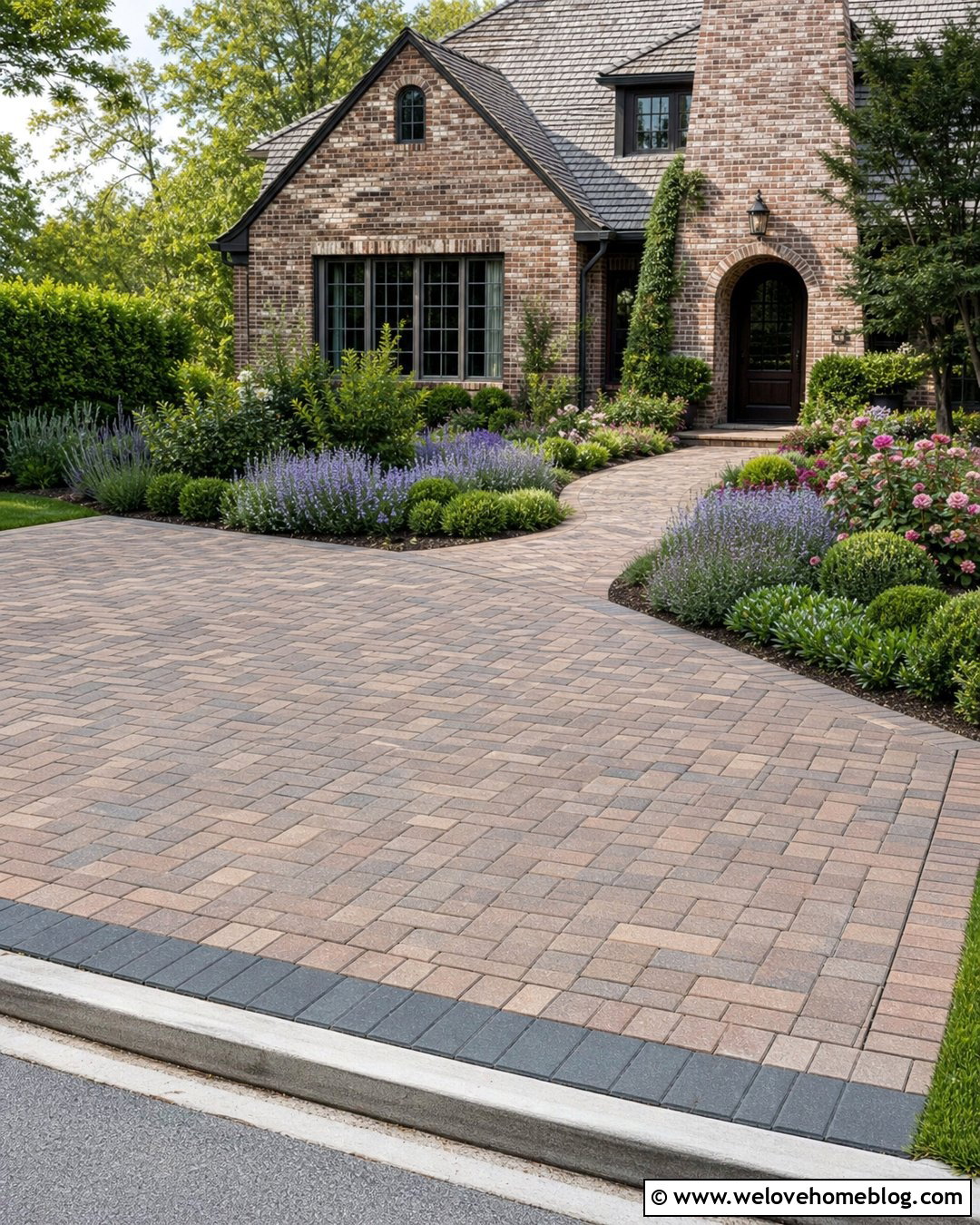
Brindle block paving blends warm brick red, brown, charcoal, and occasional buff tones into a practical surface with plenty of visual depth. The mixed coloring can soften large paved areas, complement traditional brickwork, and disguise everyday marks better than many single-color finishes. () The right pattern, border, shape, and landscaping will determine whether the finished driveway feels classic, rustic, or surprisingly modern. You can use crisp charcoal edging for definition, softer buff blocks for a lighter frame, or matching brindle borders for a seamless appearance. Curves, planted islands, drainage channels, and coordinated walkways add function without making the frontage look busy. The complete looks below offer practical inspiration for planning 20 Brindle Block Paving Driveway Ideas.
1. Brindle Block Paving Driveway With Charcoal Border
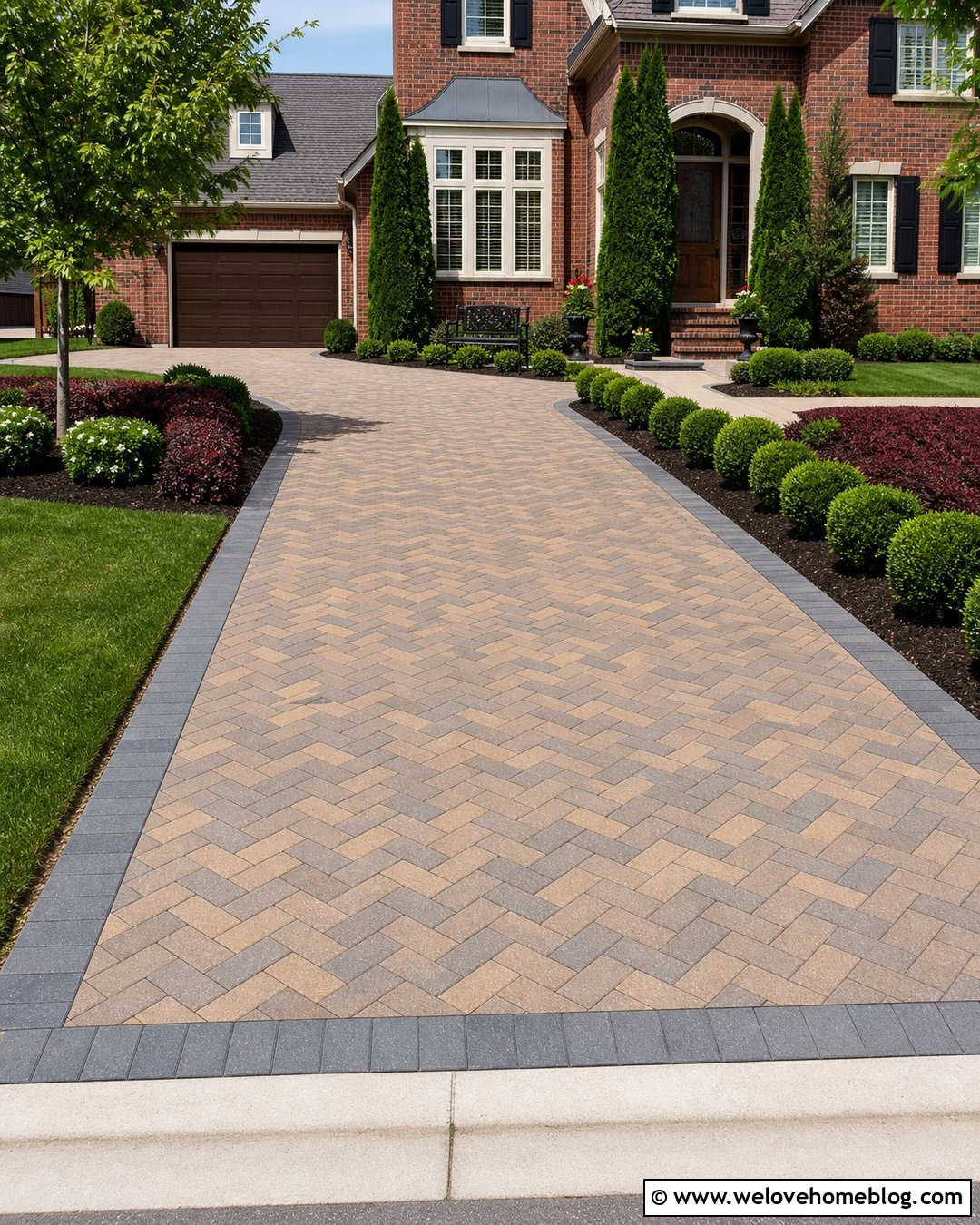
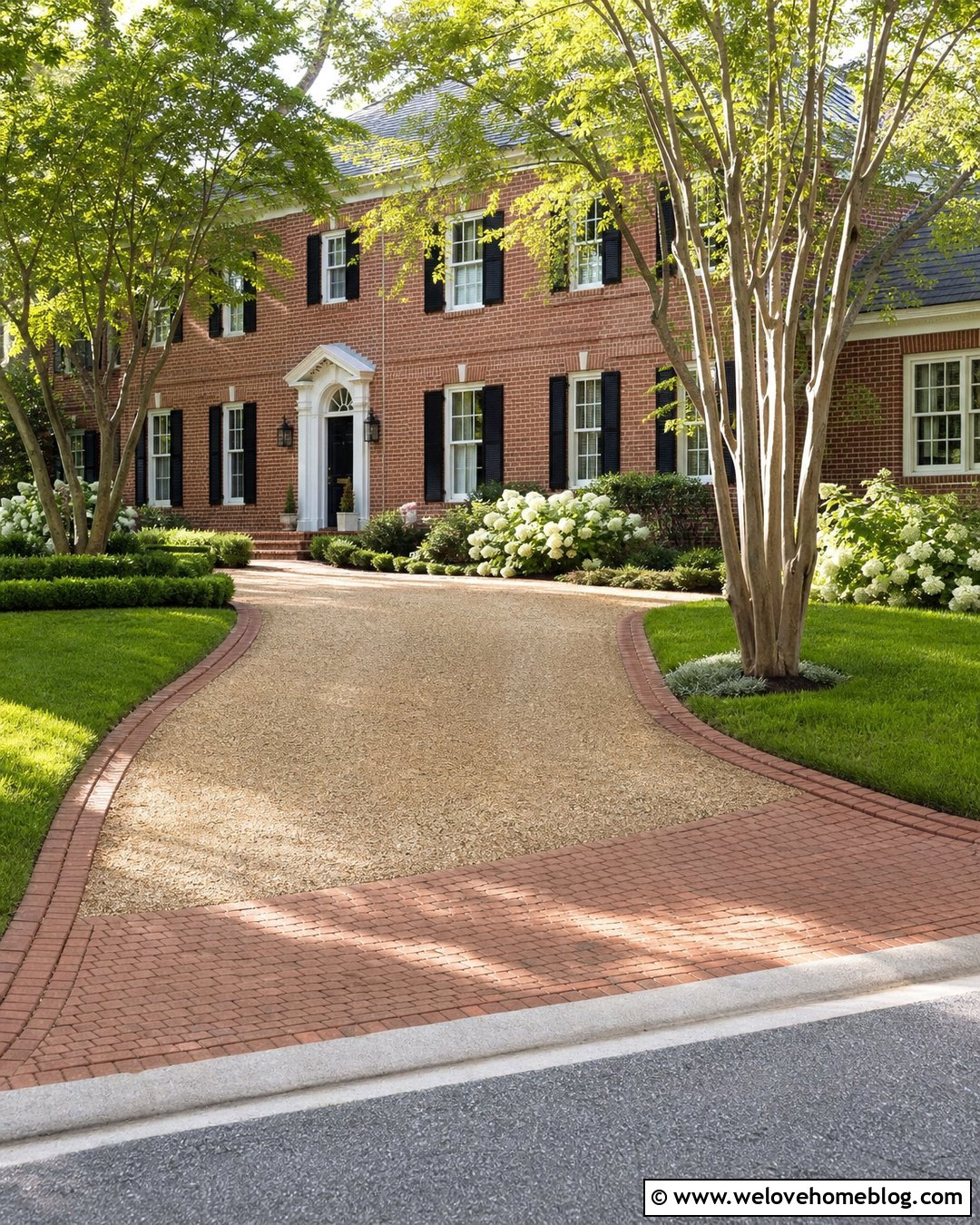
A charcoal border is one of the clearest ways to frame the changing red and brown tones of brindle paving. Lay the main driveway in a 45-degree herringbone pattern, then surround it with a single charcoal soldier course. This combination creates strong definition and helps the paved area look neat against lawns, flower beds, and sidewalks. It is also a proven traditional pairing for residential driveways. () Use charcoal kerbs around any raised planting beds to maintain a coordinated finish. Low evergreen shrubs and burgundy foliage will connect the border with the darker colors in the blocks. This complete look works especially well beside red brick homes, where the paving feels connected to the facade without matching it too closely.
2. Brindle Block Paving Driveway With Double Border
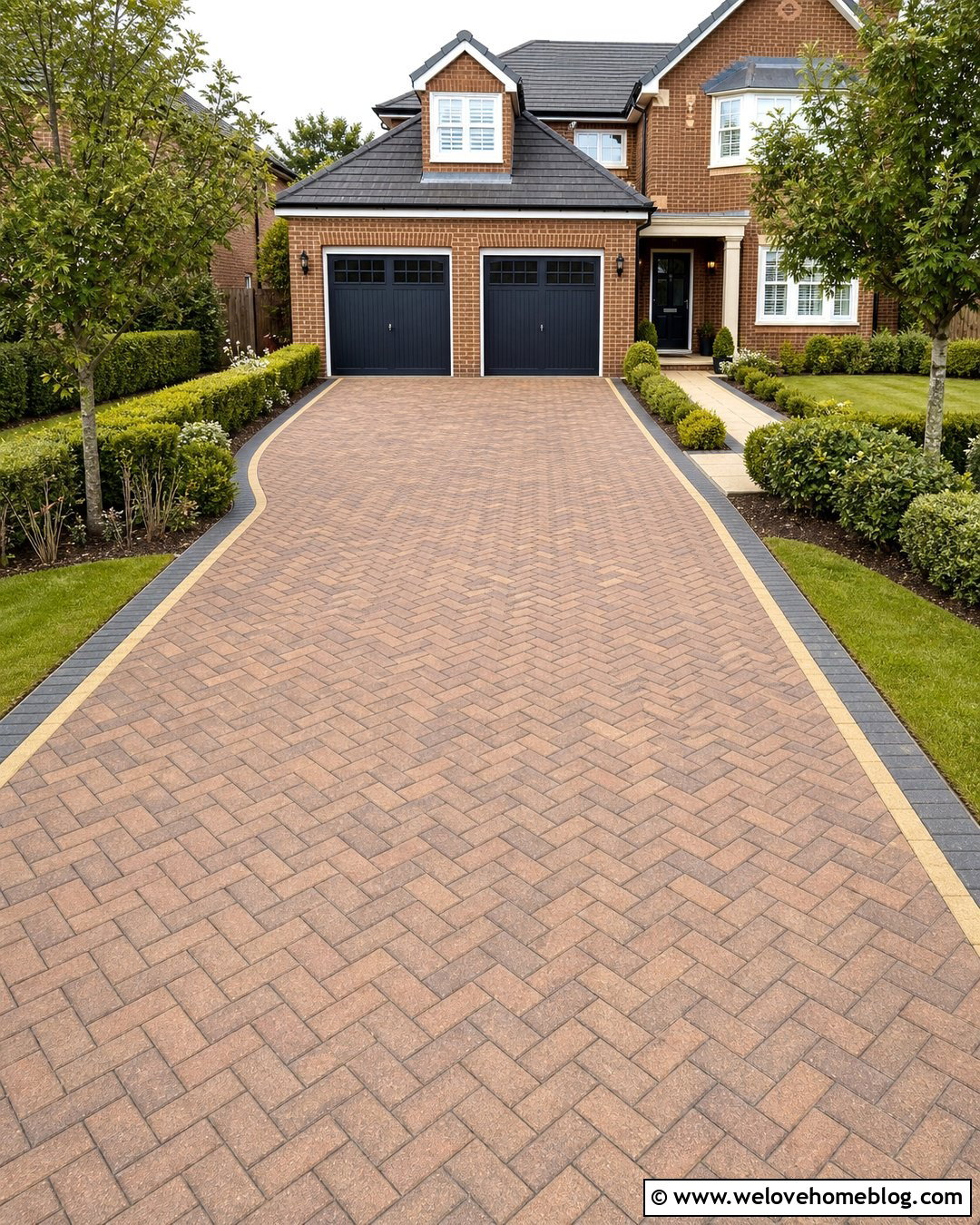
A double border gives a wide brindle driveway stronger proportions and a more carefully finished appearance. Start with brindle concrete blocks in a 45-degree herringbone layout. Add a narrow buff stretcher course around the surface, followed by an outer charcoal soldier course. The buff line separates the dark edging from the warm paving and prevents the frame from looking too heavy. This combination is most effective on double-width driveways or broad approaches leading to multiple garage doors. Keep the surrounding landscaping simple, using clipped hedges, tidy lawn panels, and balanced foundation planting. Repeat both border colors in the front walkway or doorstep detailing. The layered edge creates a polished transition while allowing the rich brindle surface to remain the main feature.
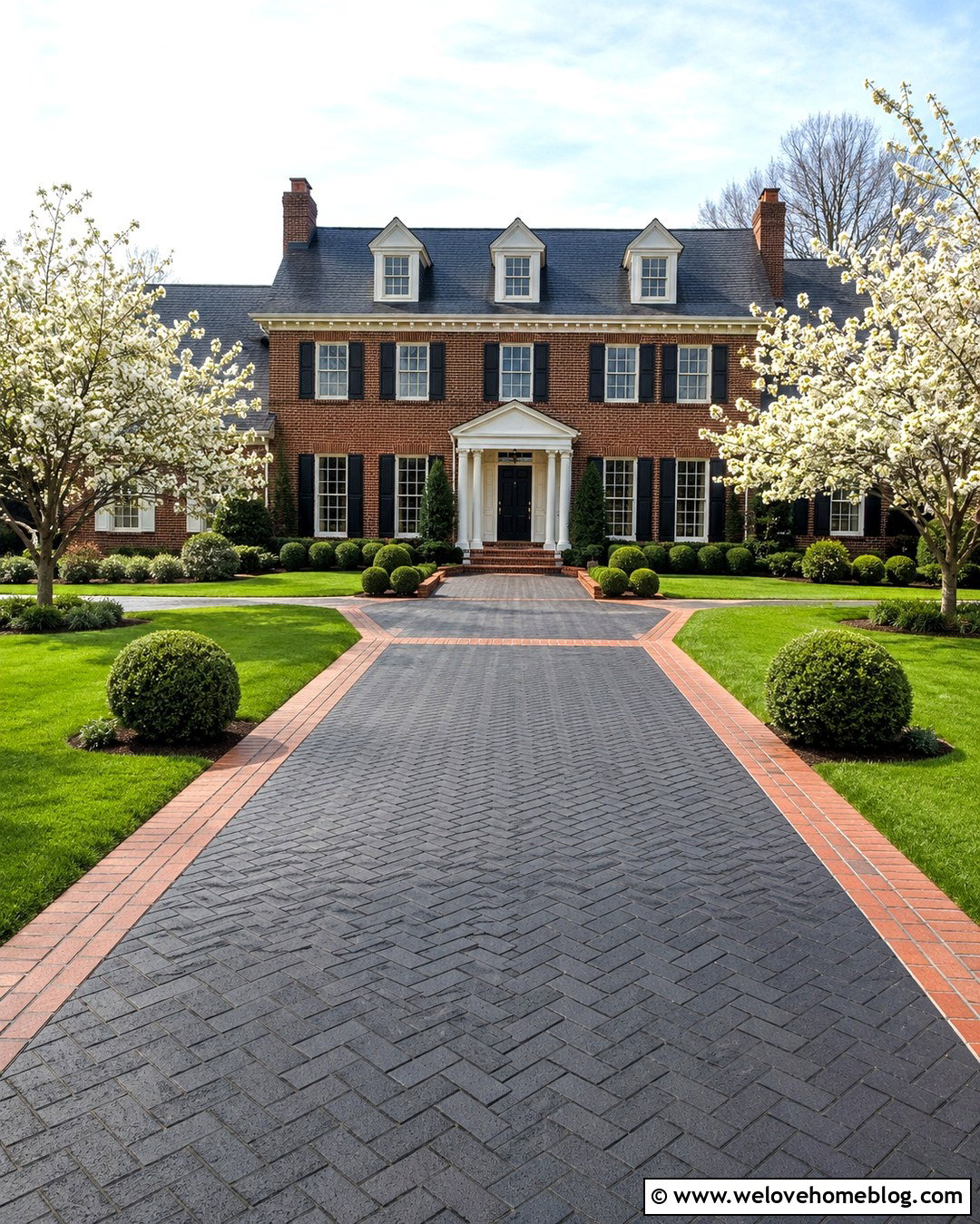
3. Brindle Herringbone Driveway With Brick House
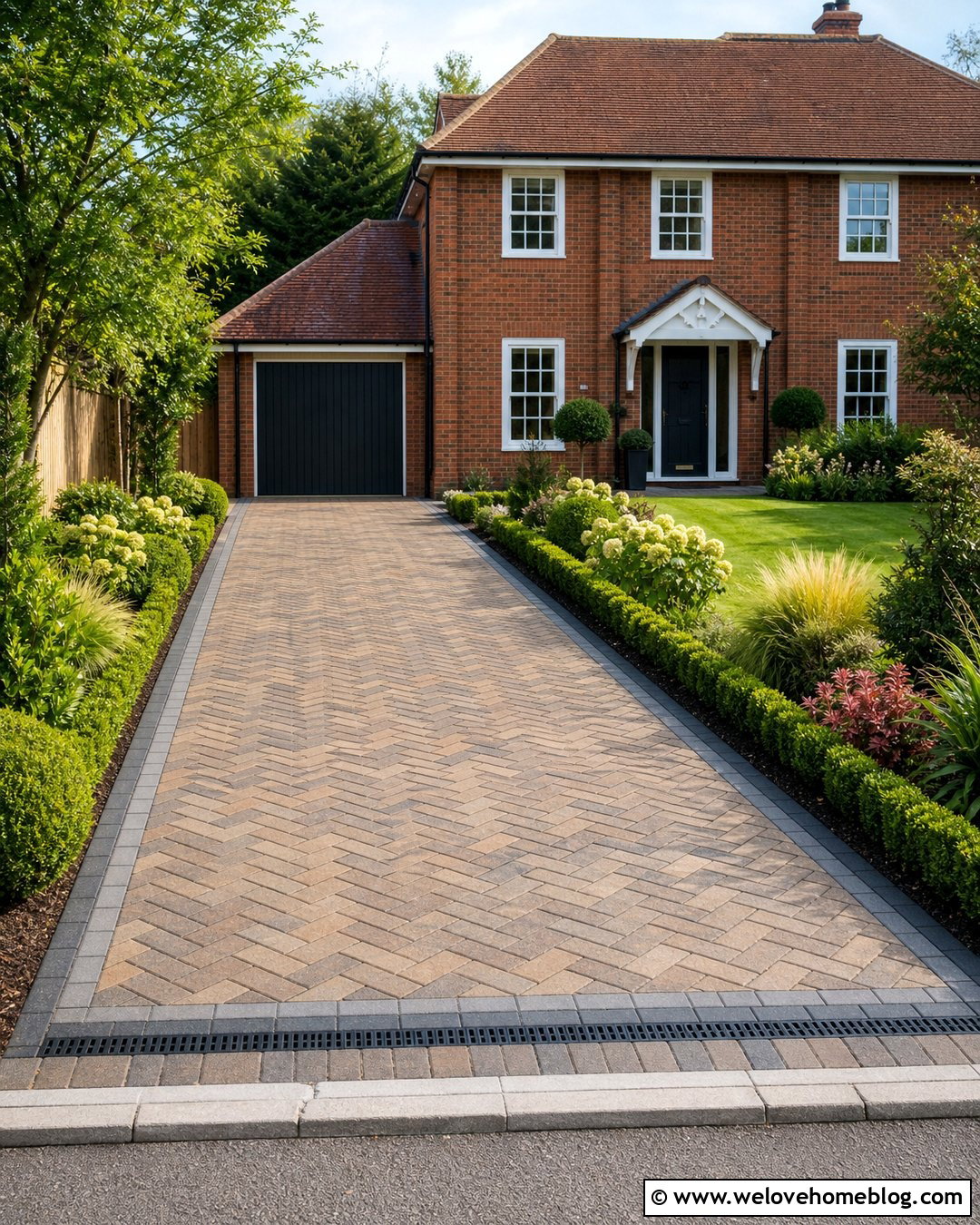
The energetic lines of herringbone paving can bring order and movement to the front of a traditional brick home. Use standard brindle concrete block pavers at a 45-degree angle so the pattern directs attention toward the entrance and garage. A charcoal soldier border will contain the design, while a matching charcoal drainage channel can create a discreet transition near the sidewalk. Leave planting beds along both sides rather than paving the entire front yard. Boxwood, hydrangeas, ornamental grasses, and seasonal flowers will soften the blockwork. Choose blocks containing red tones that relate to the house bricks, but avoid an exact color match. Slight variation creates depth and keeps the exterior from appearing overly uniform. This design feels established, practical, and welcoming throughout the year.
4. Brindle Block Paving Driveway With Buff Edging
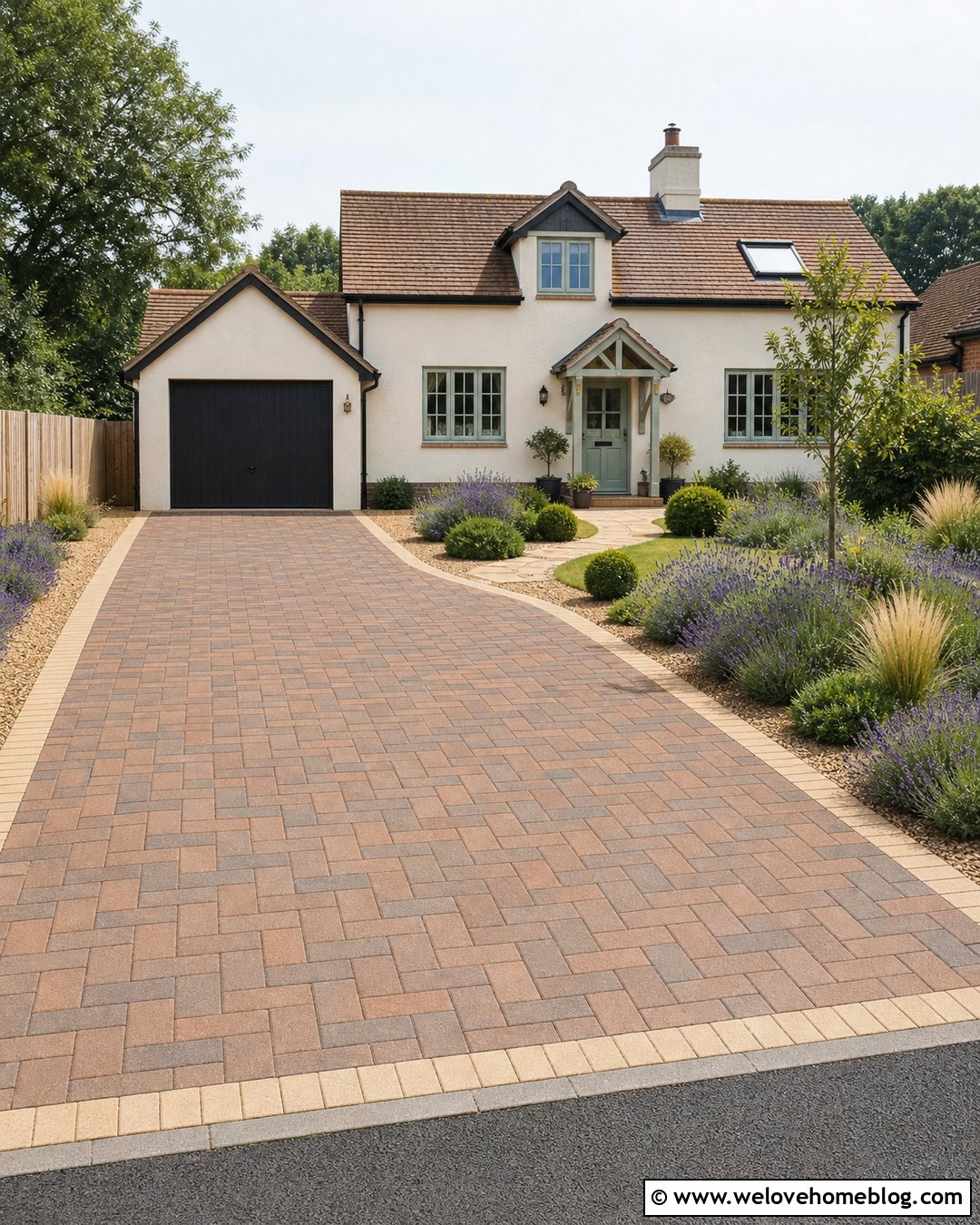
Buff edging creates a softer, brighter frame than charcoal and can help brindle paving coordinate with cream render, pale stone, or light-colored brickwork. Lay the driveway in a 90-degree herringbone pattern to create an orderly surface that suits a straight approach. Use buff blocks in a single soldier course around the perimeter, continuing the same border around adjacent planting beds. Warm gravel can fill narrow spaces beside walls where planting would be difficult. Add lavender, pale ornamental grasses, and evergreen shrubs to repeat the softer tones of the edge. The contrasting border should be noticeable without becoming wider than the driveway can visually support. This complete arrangement brightens a shaded frontage and gives traditional brindle blocks a relaxed look that works particularly well with cottages and light stucco homes.
5. Small Brindle Block Paving Driveway
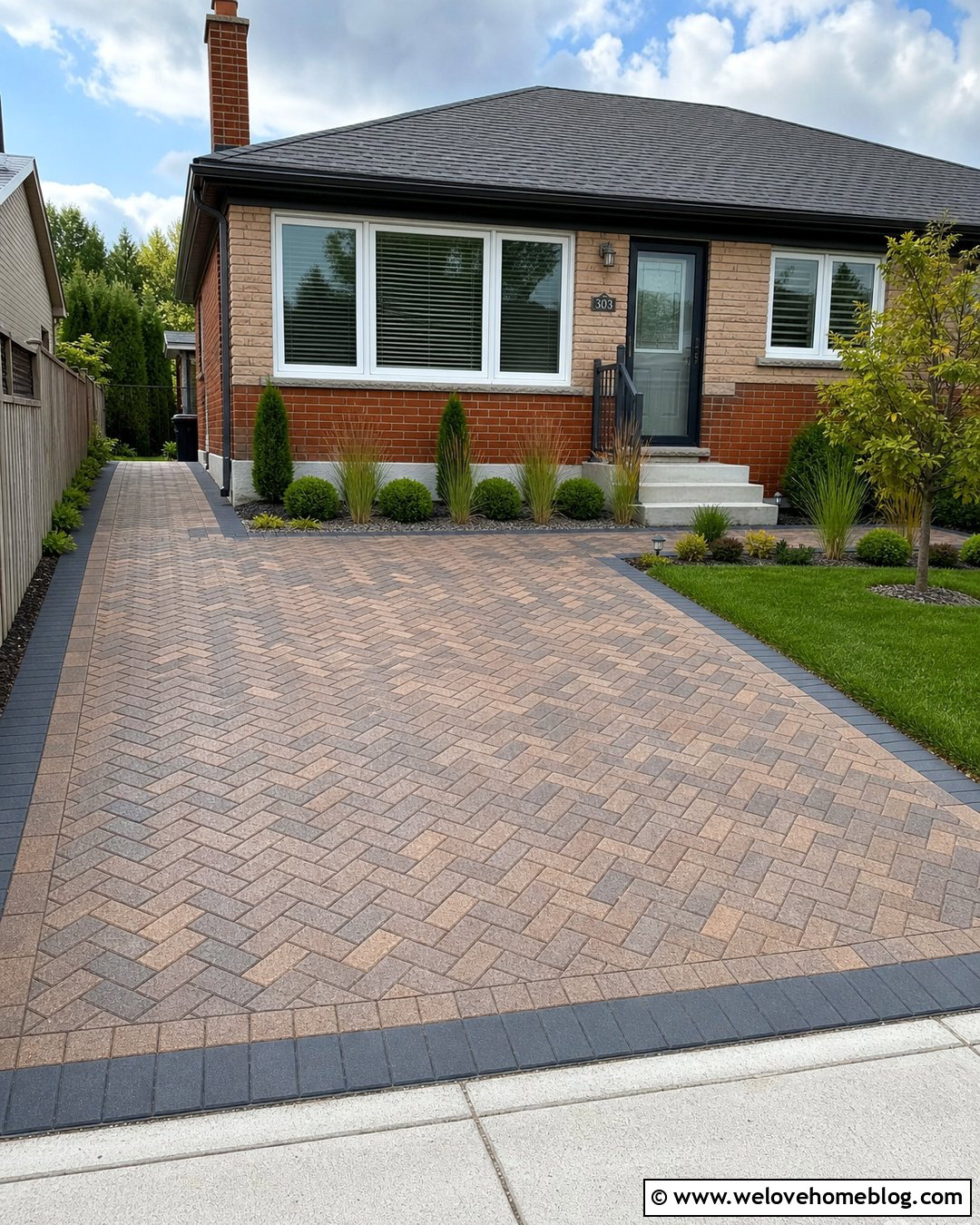
A compact driveway benefits from a simple pattern, clearly defined edges, and landscaping that does not reduce usable parking space. Lay slim brindle concrete blocks in a 45-degree herringbone pattern to make the surface feel wider and more dynamic. Frame the area with one narrow charcoal soldier course rather than a bulky double border. Place a slender planting bed along the house, using upright grasses, dwarf shrubs, and one compact ornamental tree. A coordinated paved walkway can branch from the driveway without interrupting the main pattern. Keep utility covers recessed and filled with matching blocks for a cleaner result. Good lighting also matters in a small space, so install low-profile fixtures beside the walkway. This layout makes limited frontage feel organized, warm, and visually complete.
6. Curved Brindle Block Paving Driveway
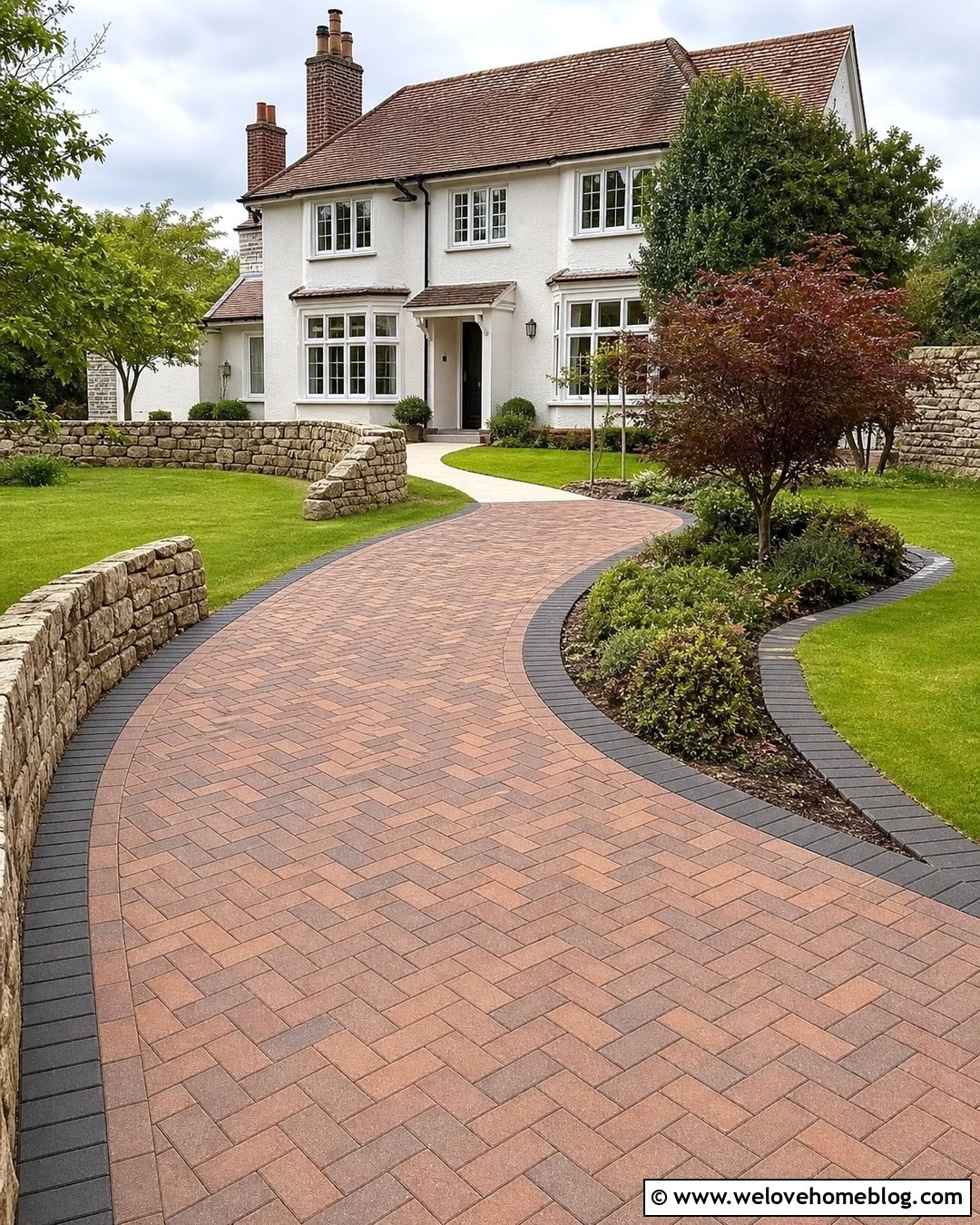
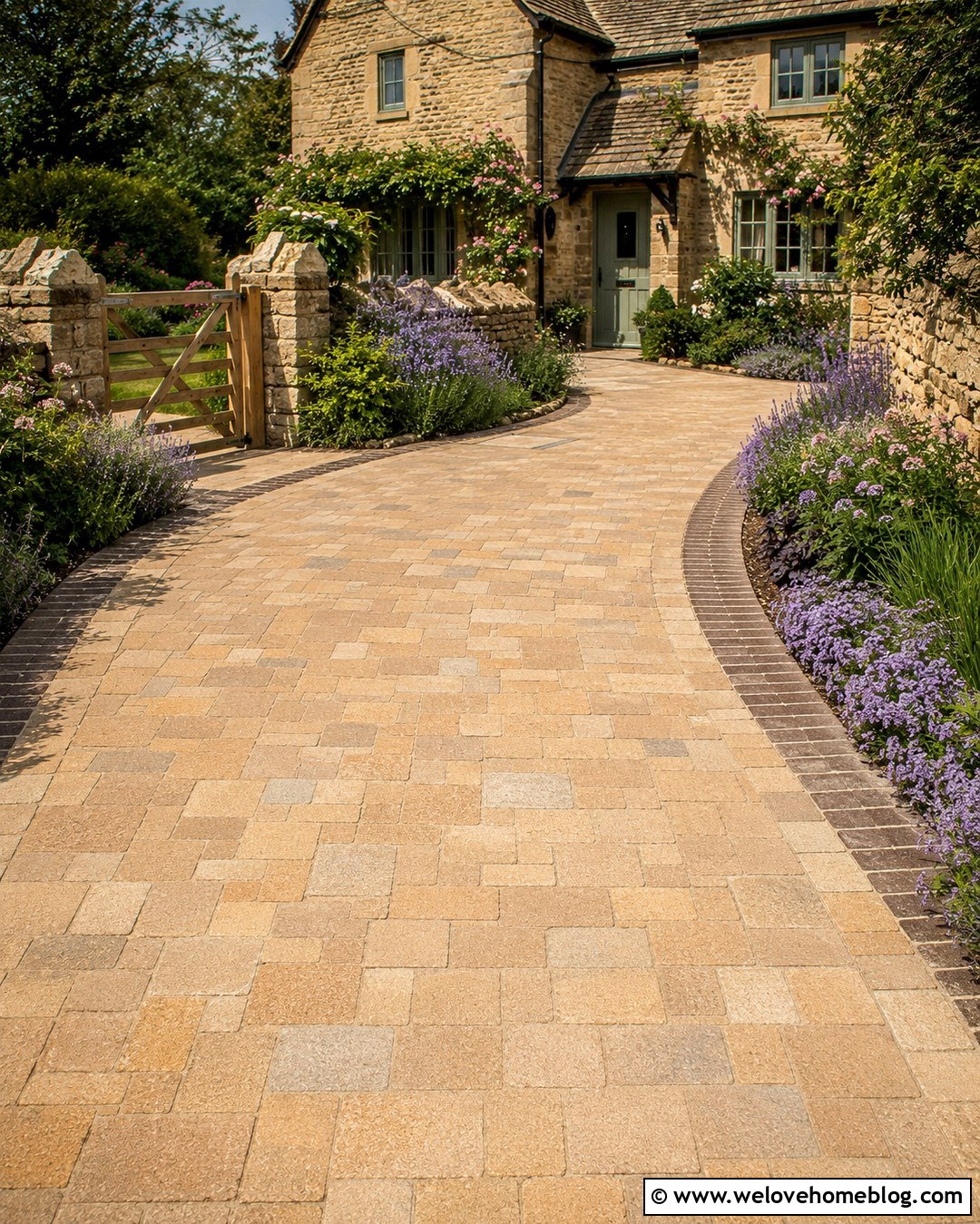
A gentle curve can make the approach to a detached home feel more natural while reducing the visual effect of a long paved strip. Use brindle concrete block pavers in a flowing herringbone layout, with accurately cut blocks following the outer edge. A dark charcoal soldier course will emphasize the curve and separate the paving from lawn and planting beds. Position a small ornamental tree or rounded shrub bed on the inside of the bend to give the layout a clear purpose. Repeat curved lines in the walkway and garden borders for consistency. Avoid adding too many decorative paving bands, since the shape already provides strong visual interest. The warm brindle mixture looks especially attractive beside mature greenery, natural stone walls, and homes with traditional brick or rendered facades.
7. Circular Brindle Block Paving Driveway
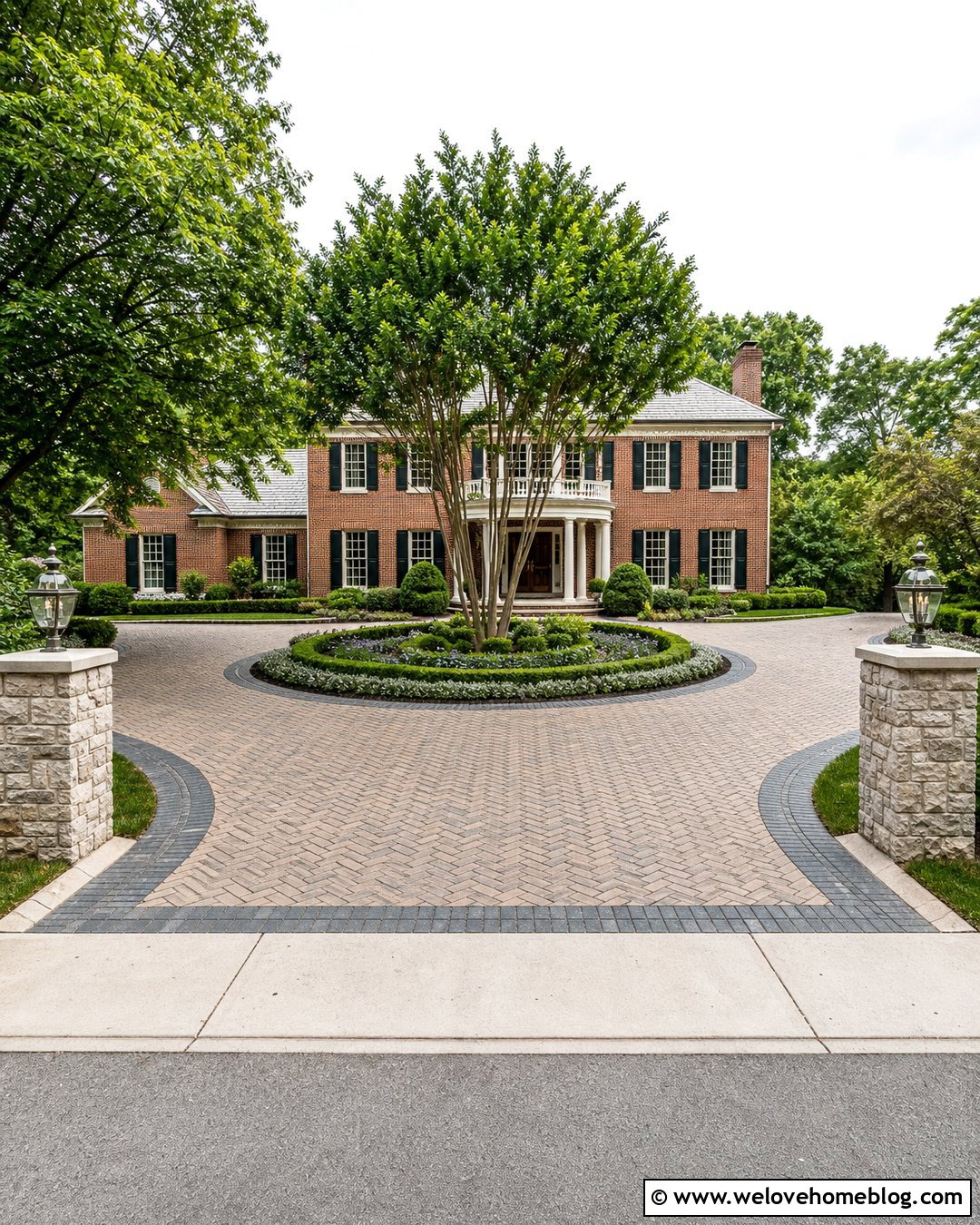
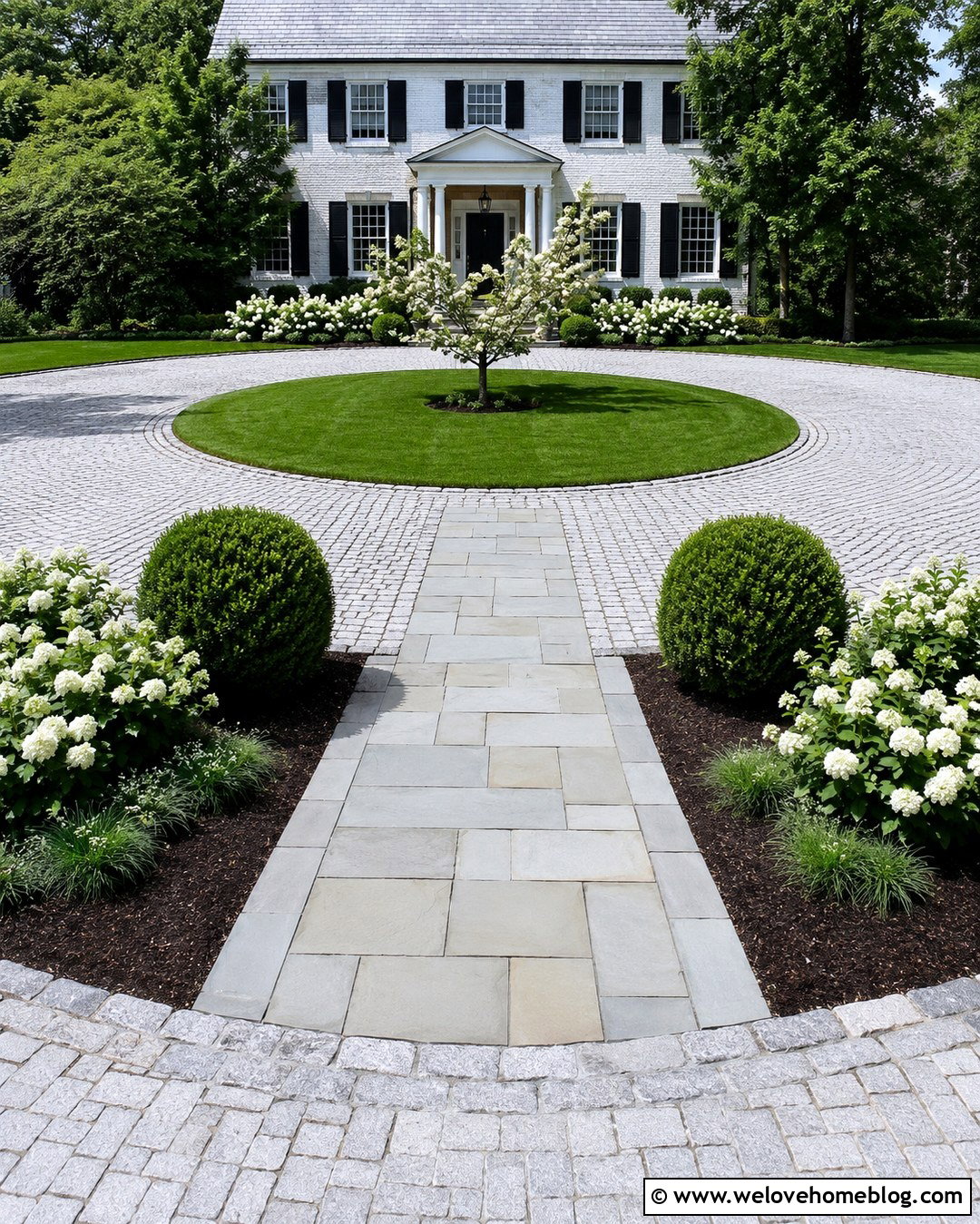
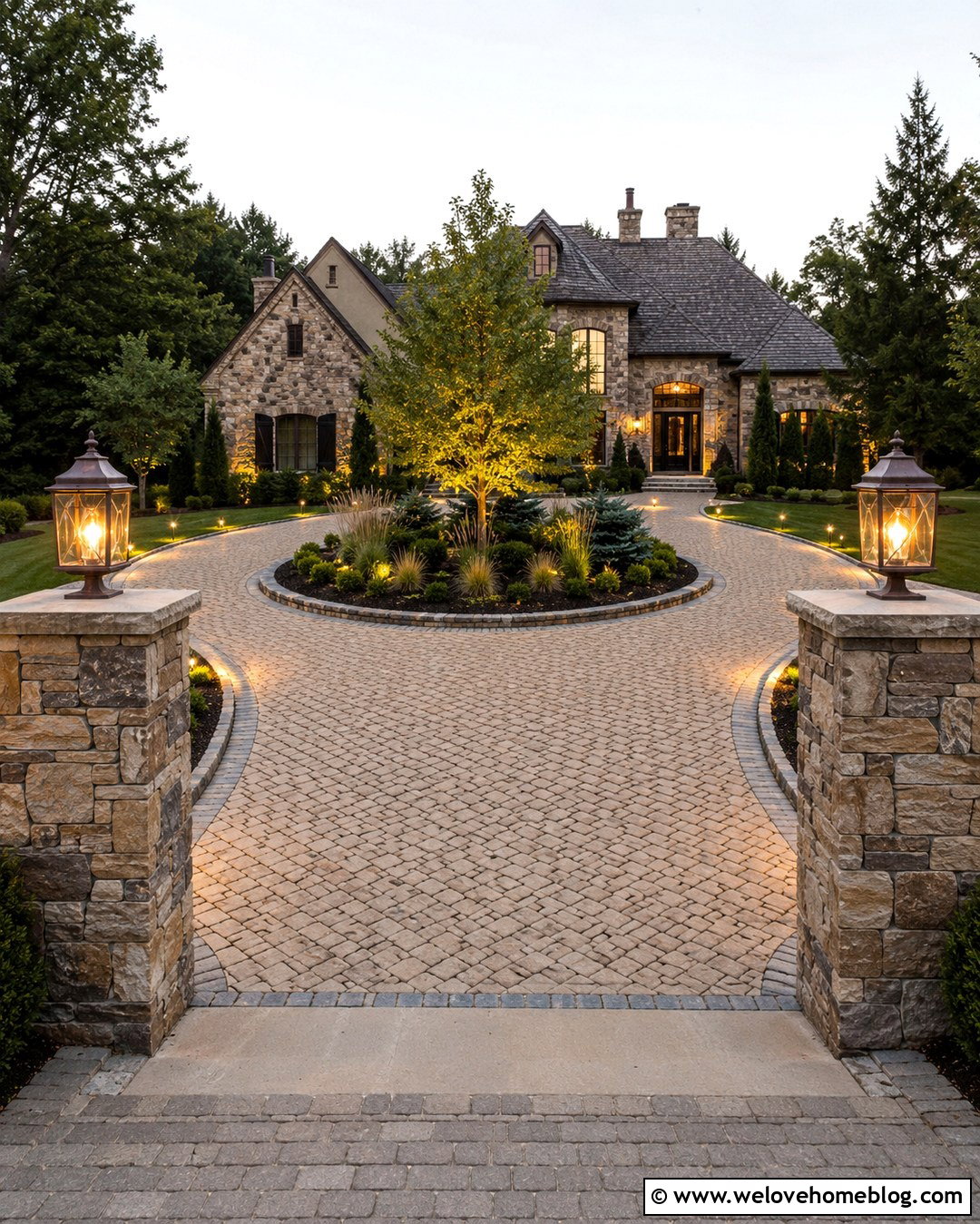
A circular driveway needs a strong central feature so the paving looks intentional rather than excessively open. Install brindle concrete blocks in sweeping herringbone sections around a landscaped island, using charcoal blocks to outline both the inner and outer curves. Fill the central island with a small multi-stem tree, rounded evergreen shrubs, and low ground cover that will not obstruct sightlines. Matching entrance pillars can mark the two driveway openings and create a balanced arrival. Where the drive meets the road, use wider block aprons to make turning easier and visually anchor each entrance. Brindle’s varied tones help break up the large surface, while the dark borders organize its shape. This layout best suits generous front yards with enough room for comfortable vehicle movement.
8. Brindle Basketweave Driveway With Cottage Garden
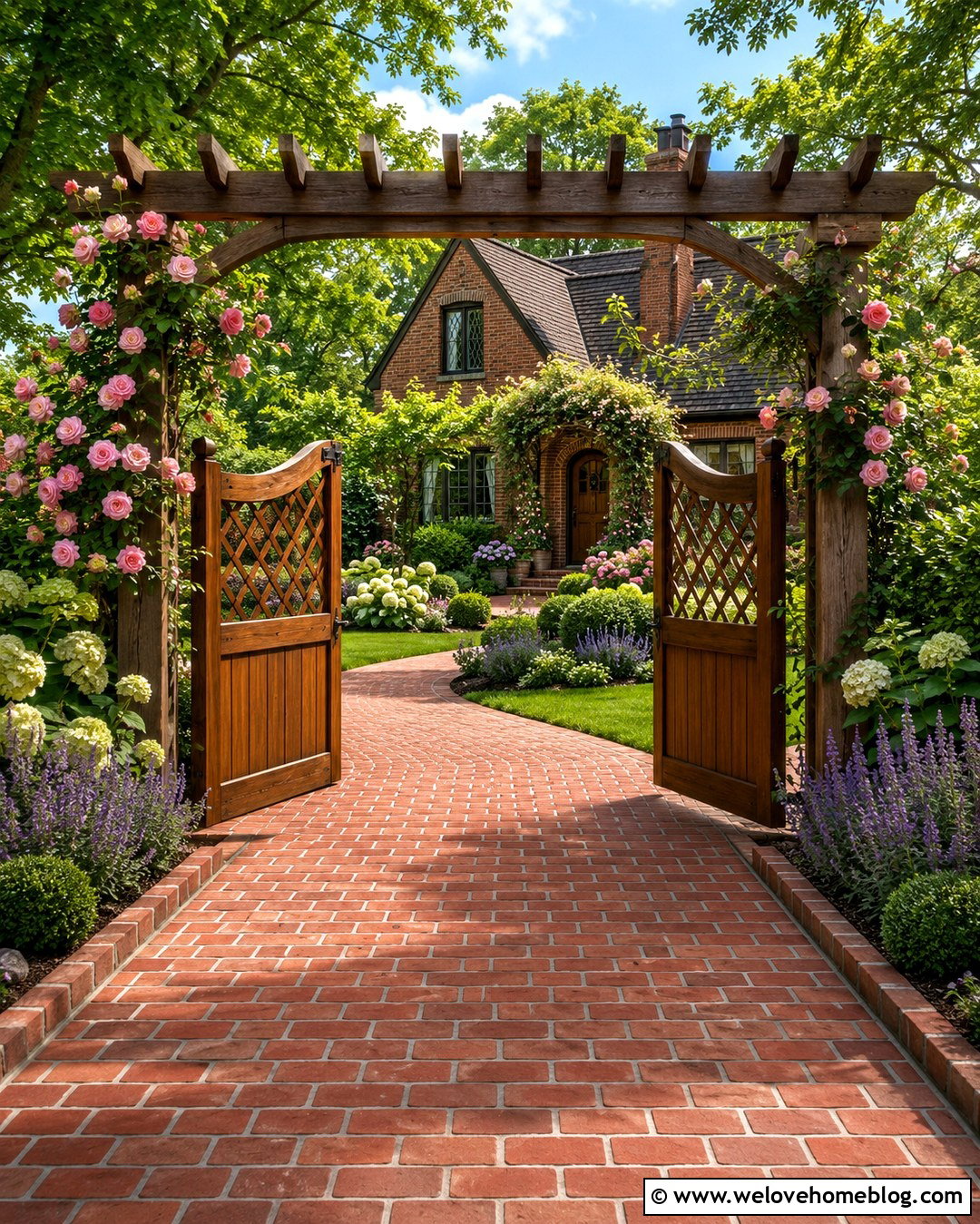
Basketweave paving gives brindle blocks a traditional appearance that feels appropriate beside cottages, older homes, and informal gardens. Arrange pairs of rectangular brindle concrete pavers in alternating directions, then frame the driveway with matching brindle soldier blocks for a quiet edge. Add a narrow charcoal strip only at the entrance to create definition from the street. Cottage-style planting should soften the sides without spilling across the driving area. Lavender, catmint, compact roses, and clipped evergreen mounds will provide texture and color. A curved brick walkway can connect the driveway to the front door, using the same basketweave pattern on a smaller scale. The final design should feel relaxed but not untidy, with warm paving, abundant planting, and clearly maintained boundaries working together.
9. Brindle Stretcher Bond Driveway With Modern House
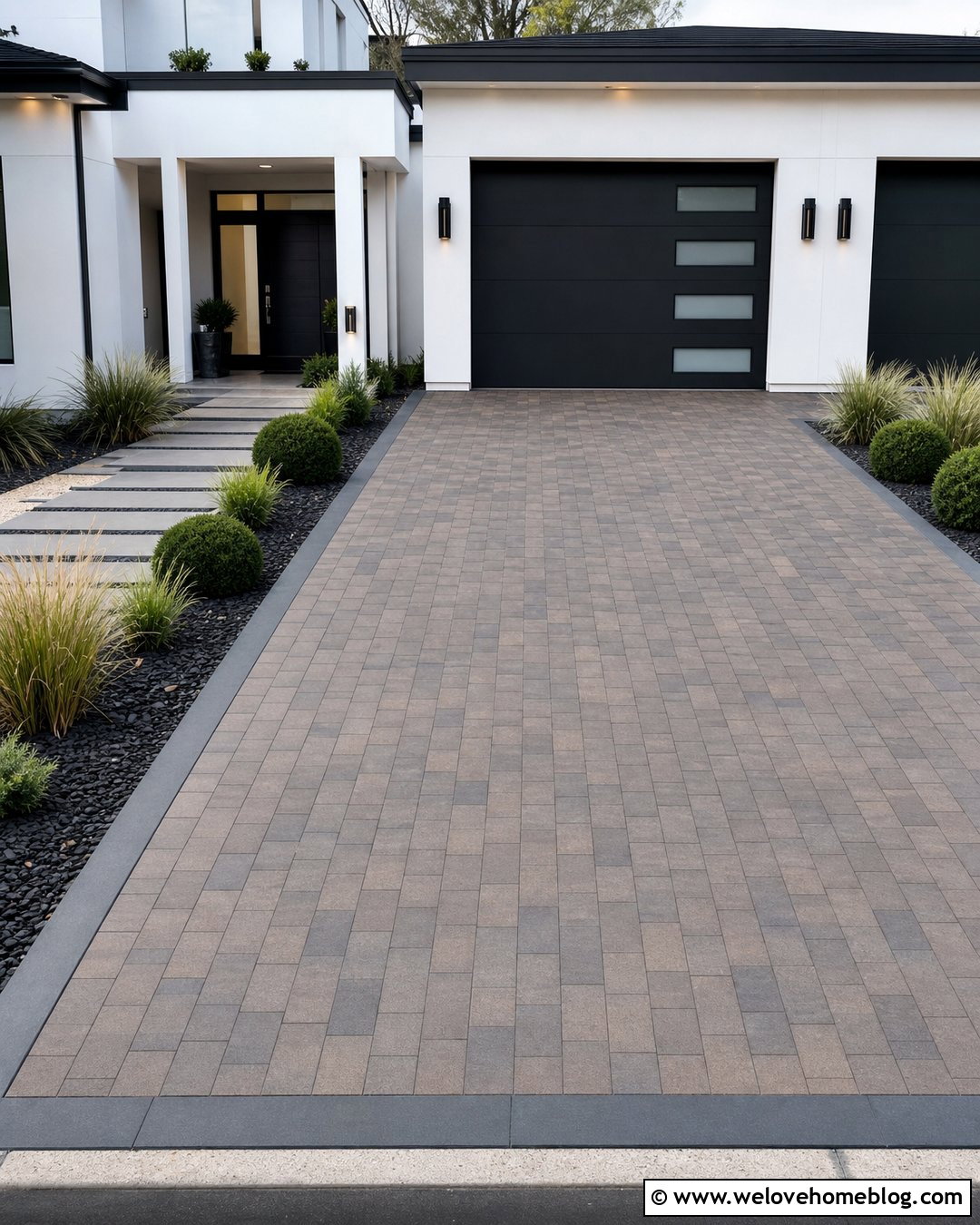
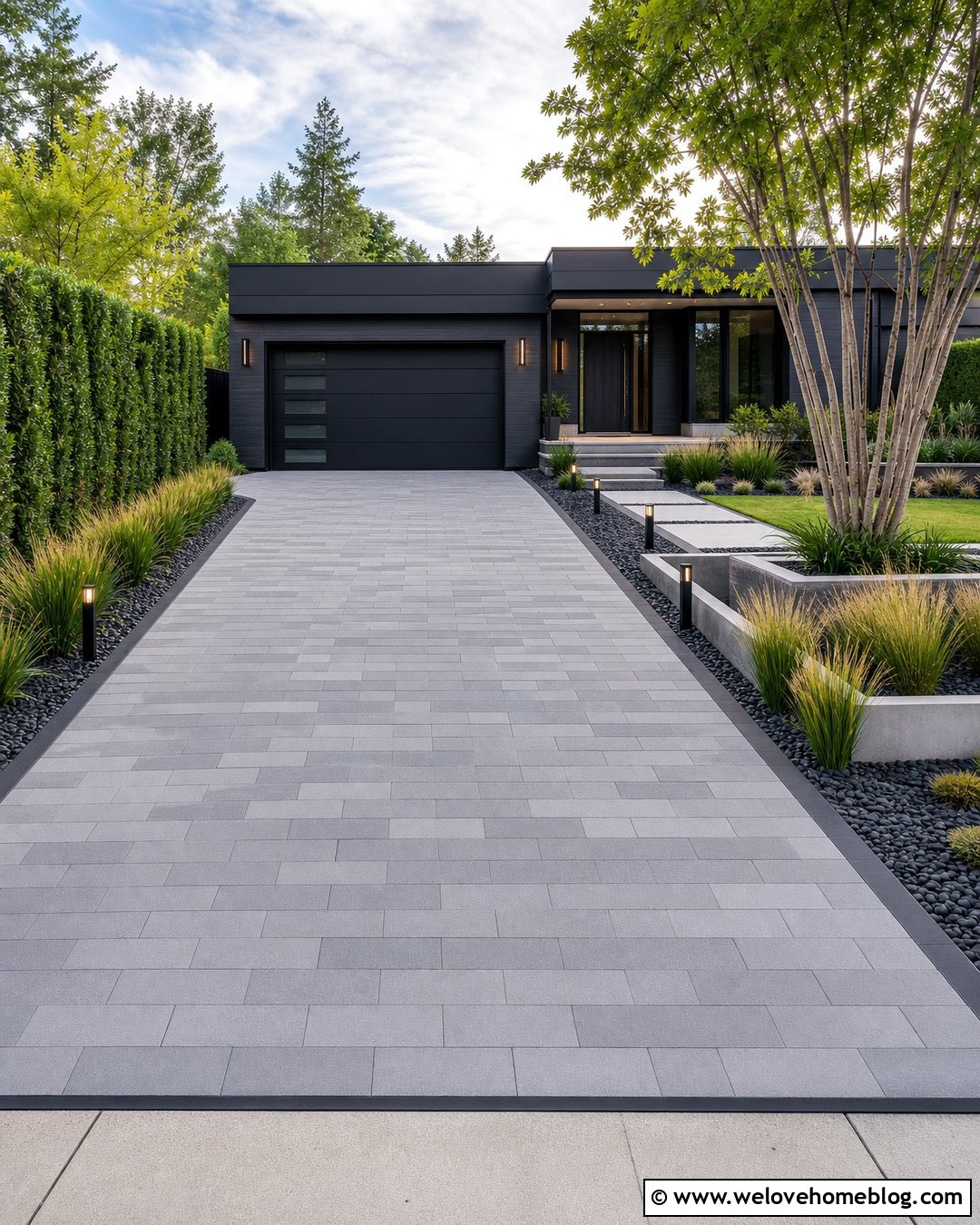
Brindle paving can suit a contemporary home when the layout is simple and the surrounding details are restrained. Use long-format brindle concrete blocks in a straight stretcher bond pattern aligned with the direction of travel. Select a muted blend dominated by brown and charcoal rather than vivid orange-red tones. Edge the driveway with flat charcoal blocks and narrow beds filled with architectural grasses, clipped shrubs, and dark decorative stone. Large rectangular stepping stones can form the walkway beside the drive without introducing another busy pattern. Black exterior lights, dark garage doors, and simple metal planters will reinforce the modern palette. The linear arrangement calms the natural color variation of brindle blocks, creating a clean surface that still feels warmer and more welcoming than plain gray paving.
10. Permeable Brindle Block Paving Driveway
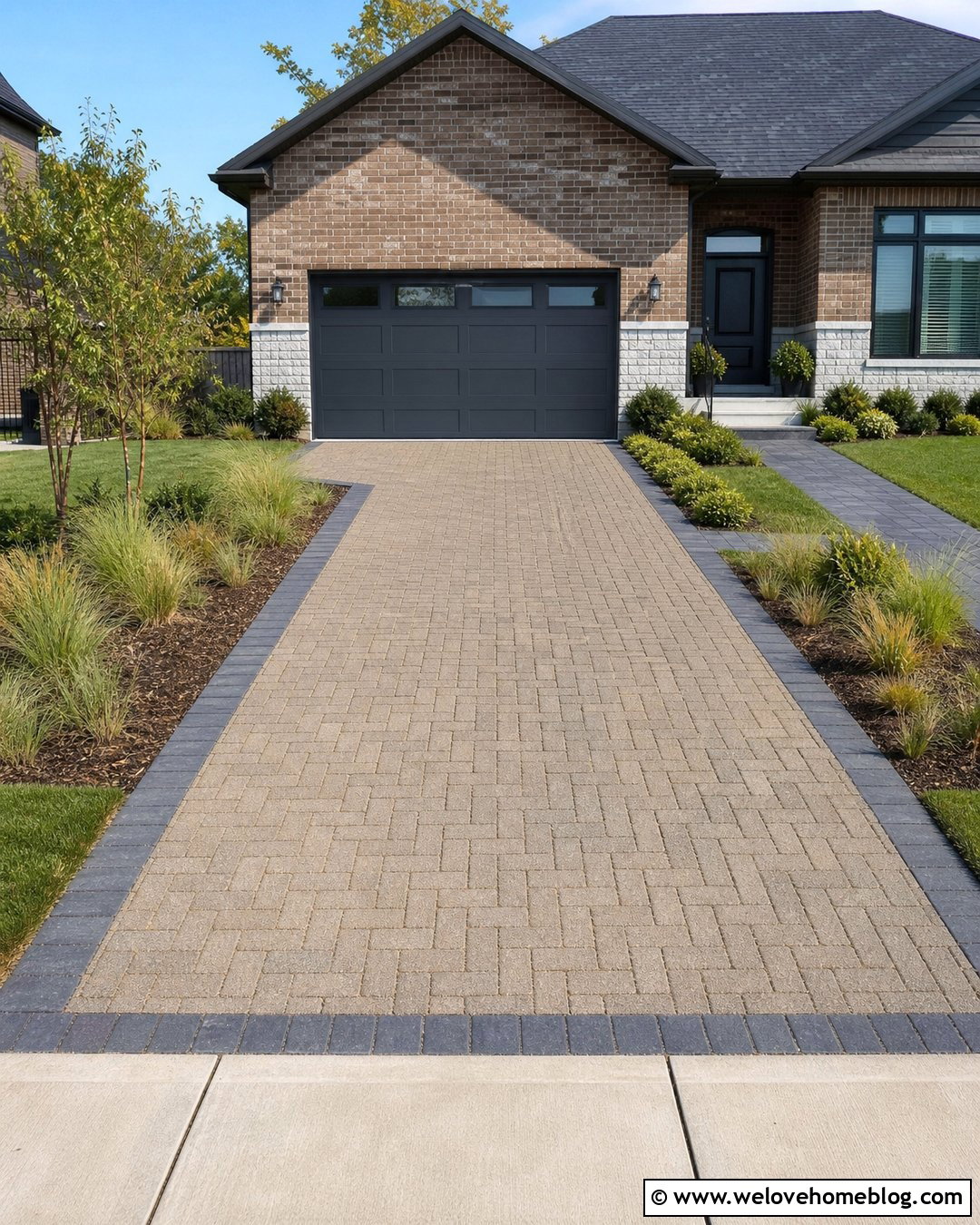
Permeable brindle block paving provides the familiar multicolored appearance of standard blocks while allowing water to pass through wider, aggregate-filled joints into a correctly prepared sub-base. () Choose purpose-made permeable brindle concrete pavers rather than assuming ordinary blocks will provide the same drainage performance. A straight herringbone layout with charcoal permeable edging creates a practical surface for a suburban home. Add shallow rain gardens beside the lower edge, planted with moisture-tolerant grasses and compact shrubs. The driveway should slope and drain according to the selected paving system and local requirements. Keep soil, mulch, and loose landscaping materials away from permeable joints because they can affect drainage. This complete look combines warm curb appeal with a more thoughtful approach to surface water management.
11. Brindle Block Paving Driveway With Raised Planters
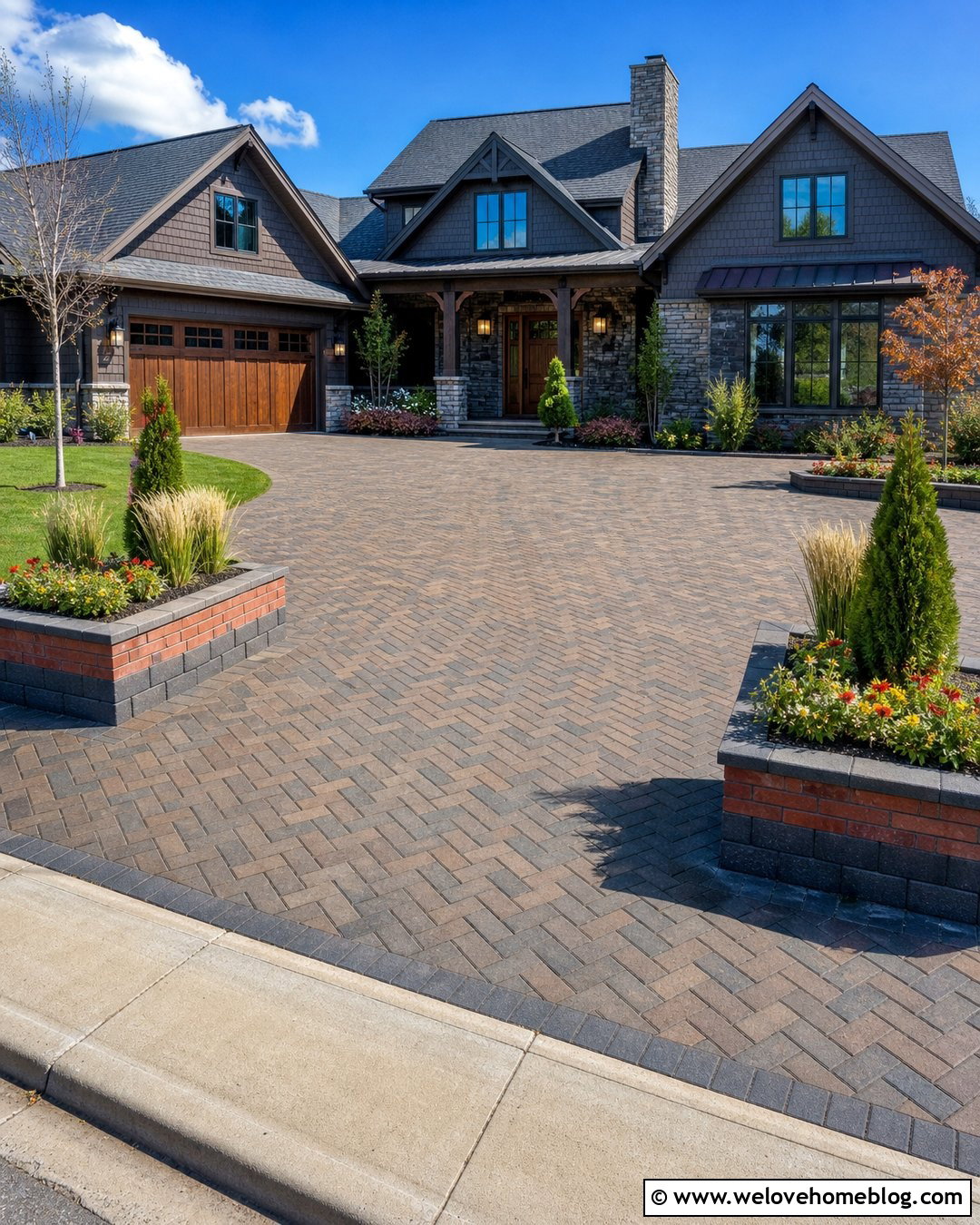
Raised planters can divide a broad paved frontage into more comfortable sections while adding greenery near the house. Lay brindle concrete blocks in a 45-degree herringbone pattern, surrounded by a charcoal border that continues around each planter. Build the planters from matching red brick or neutral stone, keeping them low enough to preserve visibility across the driveway. Use compact evergreens, ornamental grasses, and seasonal flowering plants that will not grow into parking areas. A central planter can separate two parking spaces, while narrow side beds soften fences and boundary walls. Include sufficient turning and door-opening room before deciding on planter dimensions. By repeating the paving border around the masonry, the planting features become part of the driveway structure instead of looking like unrelated garden additions.
12. Brindle Block Paving Driveway With Timber Sleepers
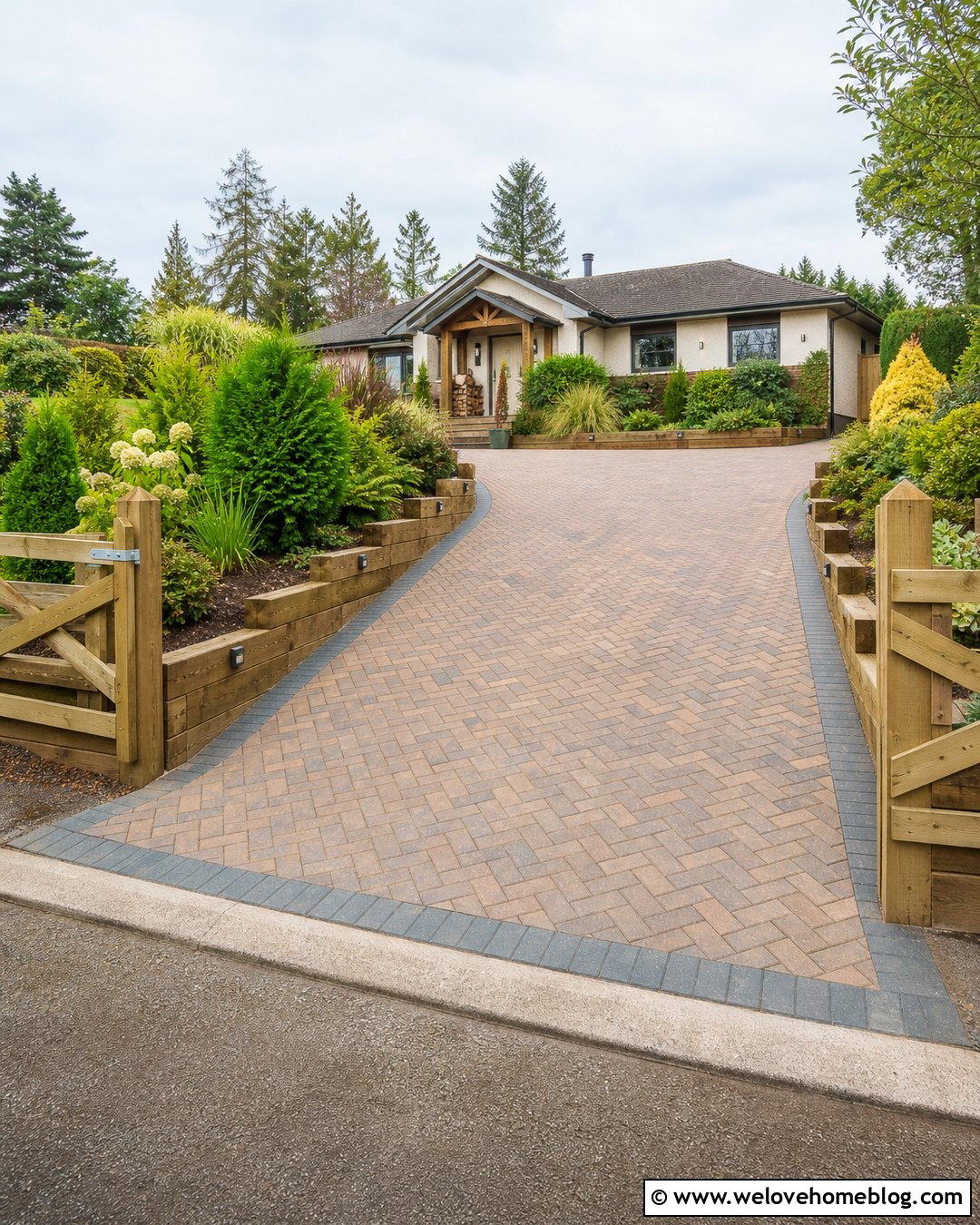
Timber sleepers bring a warmer, more rustic boundary to brindle paving and are especially useful where the lawn or garden sits above driveway level. Install the brindle concrete blocks in a 45-degree herringbone layout with a matching brindle edge beside the timber. The paving and sleeper colors will naturally relate, while a narrow charcoal entrance border can add sharper definition near the street. Use pressure-treated or appropriately durable sleepers installed as a secure retaining feature. Behind them, plant layered evergreens, ferns, grasses, and small flowering shrubs. A simple timber gate or horizontal fence can continue the same material palette along the property line. This design suits country homes, bungalows, and informal suburban yards where hard landscaping needs to feel practical without becoming overly formal.
13. Brindle Block Paving Driveway With Stone Wall
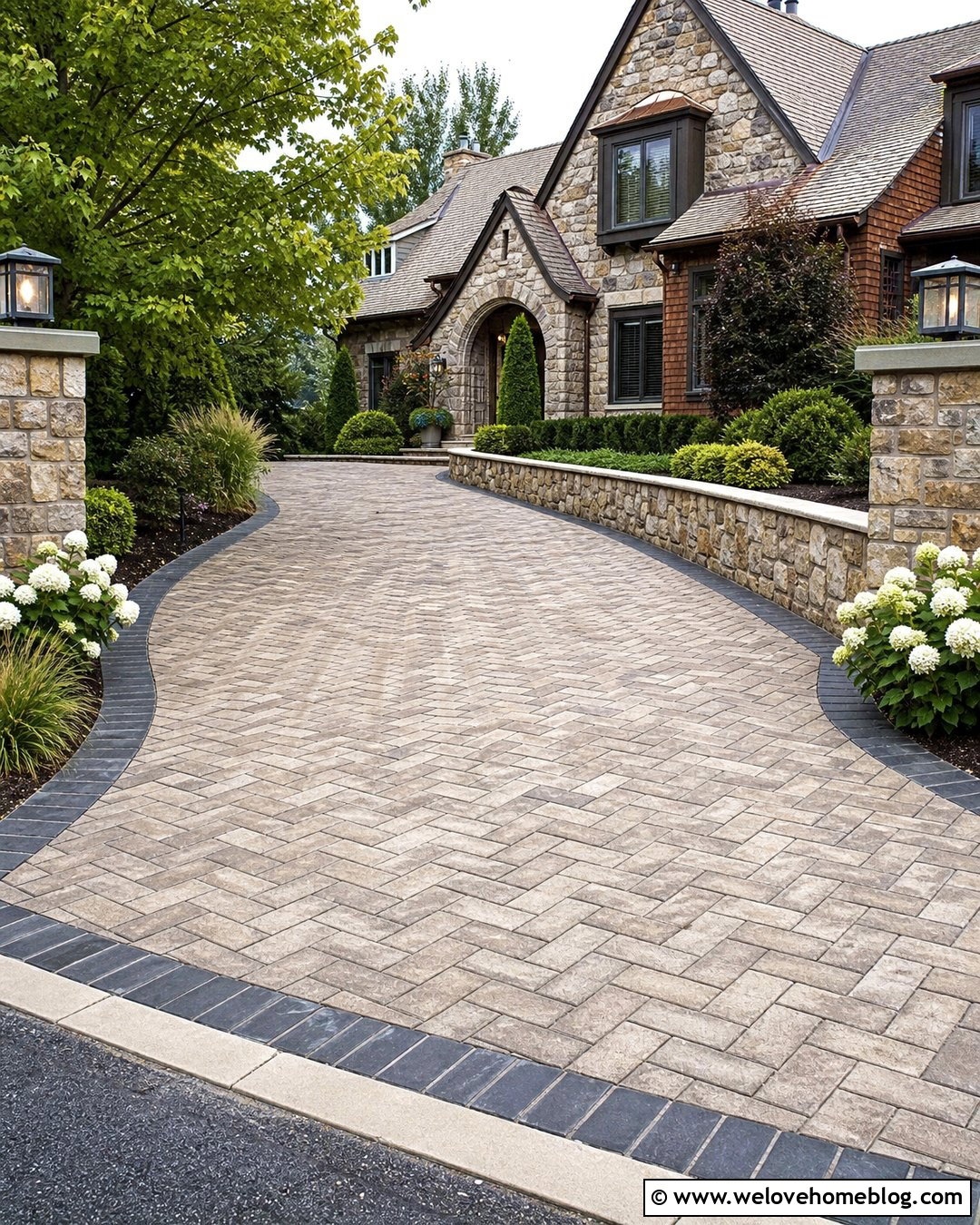
A low natural stone wall gives a brindle driveway a substantial edge and creates a strong transition between parking and planting areas. Choose tumbled brindle concrete block pavers in a 90-degree herringbone pattern to complement the weathered texture of the masonry. Use charcoal blocks as a slim interior border so the red-brown paving does not visually merge with the wall. Cap the stonework with smooth coping and allow openings for a walkway, drainage, and planting access. Behind the wall, combine evergreen shrubs with white flowers and soft ornamental grasses. Stone entrance pillars can repeat the wall material without requiring an elaborate gate. The varied paving and natural stone should share earthy undertones, creating a layered but coordinated frontage suited to cottages, ranch homes, and renovated traditional properties.
14. Brindle Block Paving Driveway With Grass Strips
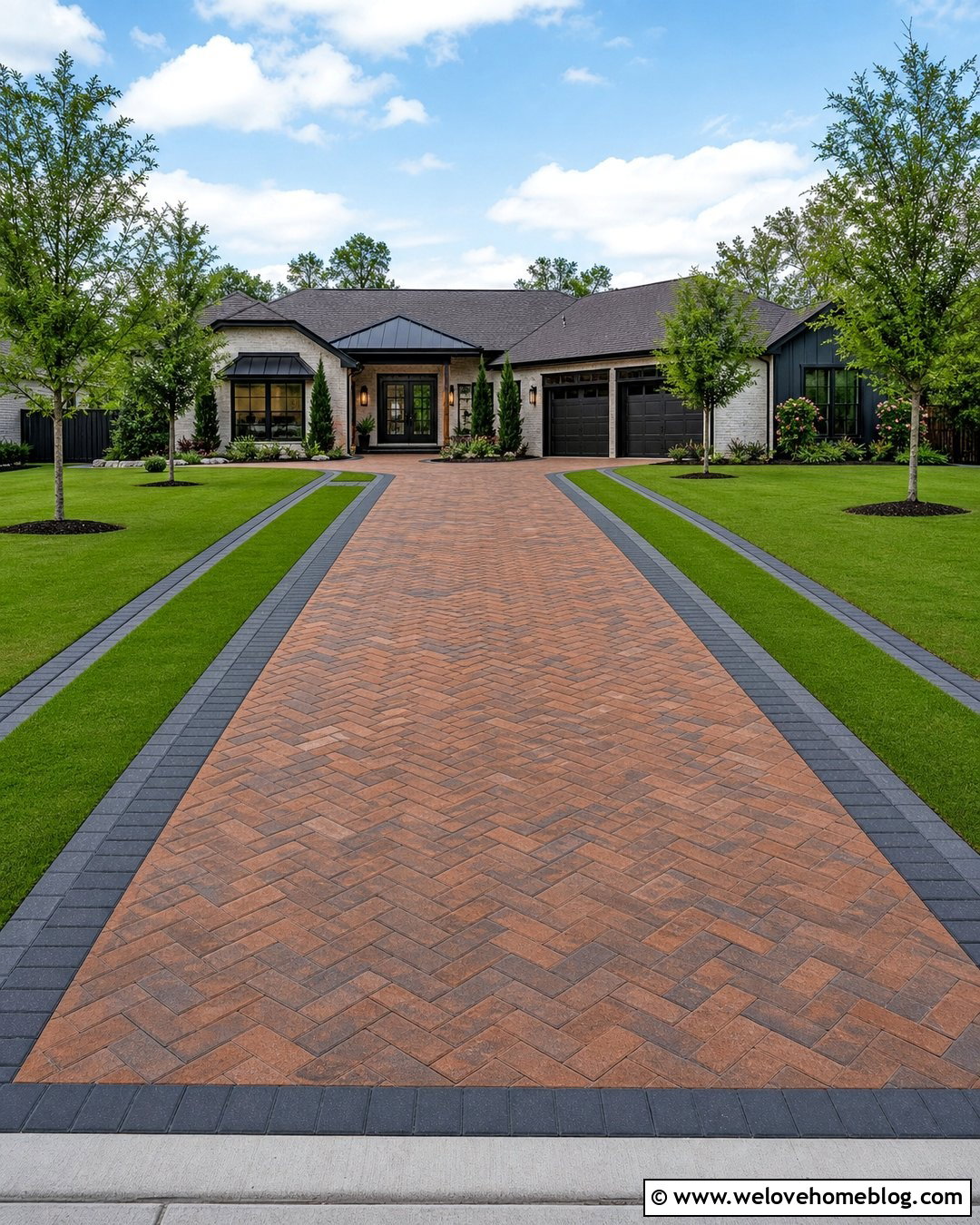
Narrow grass strips can reduce the visual weight of a large brindle driveway and help separate parking bays without adding more paving colors. Use brindle concrete blocks in a herringbone layout, divided by straight reinforced lawn panels positioned away from the main tire paths. Frame the grass with charcoal block edging to produce a crisp line and protect the surrounding paving. Continue the green theme with lawn at the sides, simple foundation shrubs, and one or two evenly spaced trees. This treatment works best on wide, level driveways where the planting strips will not interfere with turning or regular maintenance. If natural grass is unsuitable, low ground cover or properly installed artificial turf can create a similar effect. The result feels greener, lighter, and more structured.
15. Brindle Block Paving Driveway With Central Circle
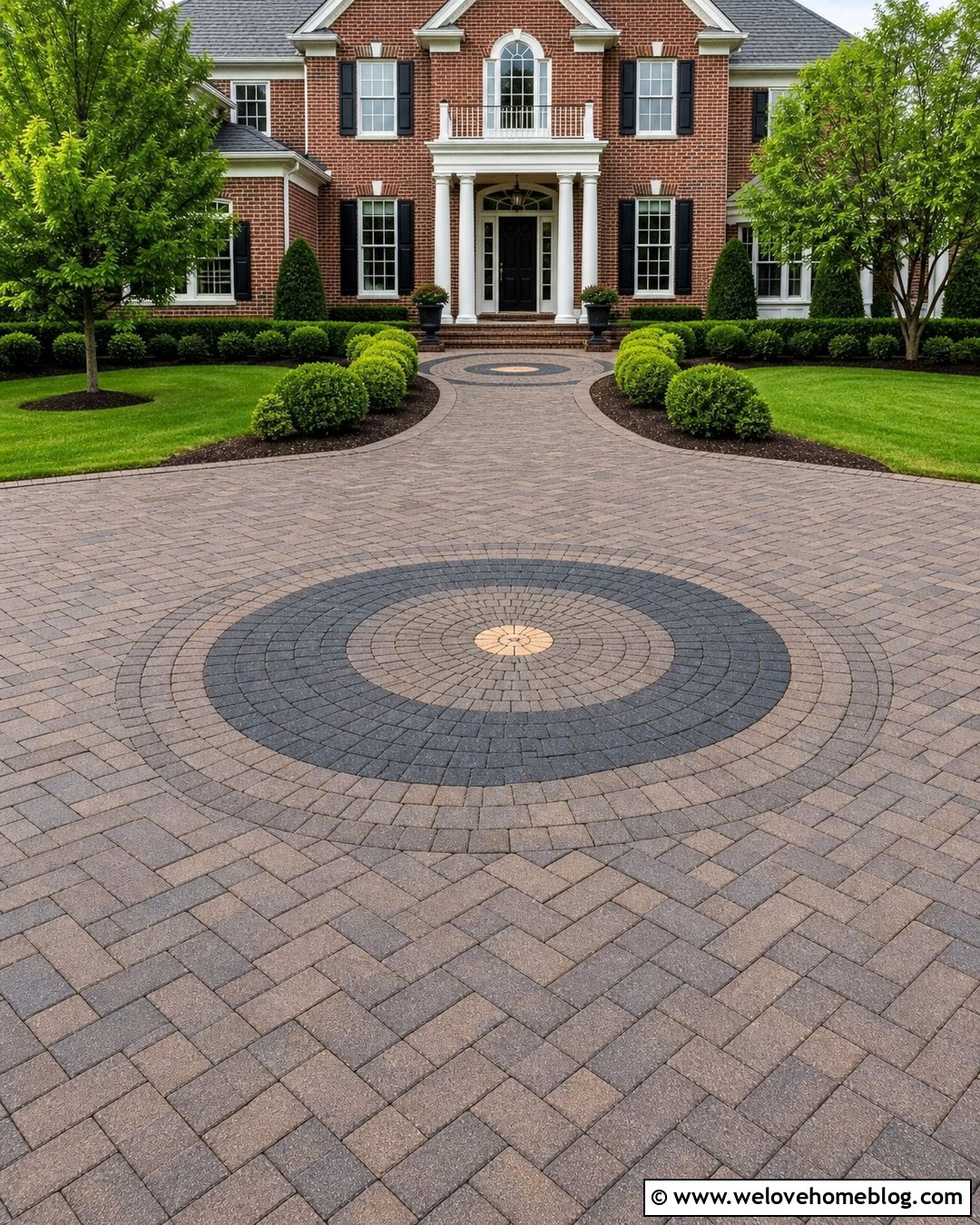
A circular paving feature can create a memorable focal point without requiring the space of a full circular driveway. Lay the main brindle concrete block surface in a 45-degree herringbone pattern, then insert a large central circle formed from brindle and charcoal blocks. Keep the motif broad and simple so it remains visible from the curb. A charcoal ring will clearly separate the circle from the surrounding paving, while a small buff center can add a subtle highlight. Echo the circular shape with rounded planting beds, clipped shrubs, or a curved front walkway. This feature works particularly well on square or double-width driveways that might otherwise appear plain. Accurate cutting and balanced placement are essential because poorly aligned circles can make the entire surface look uneven.
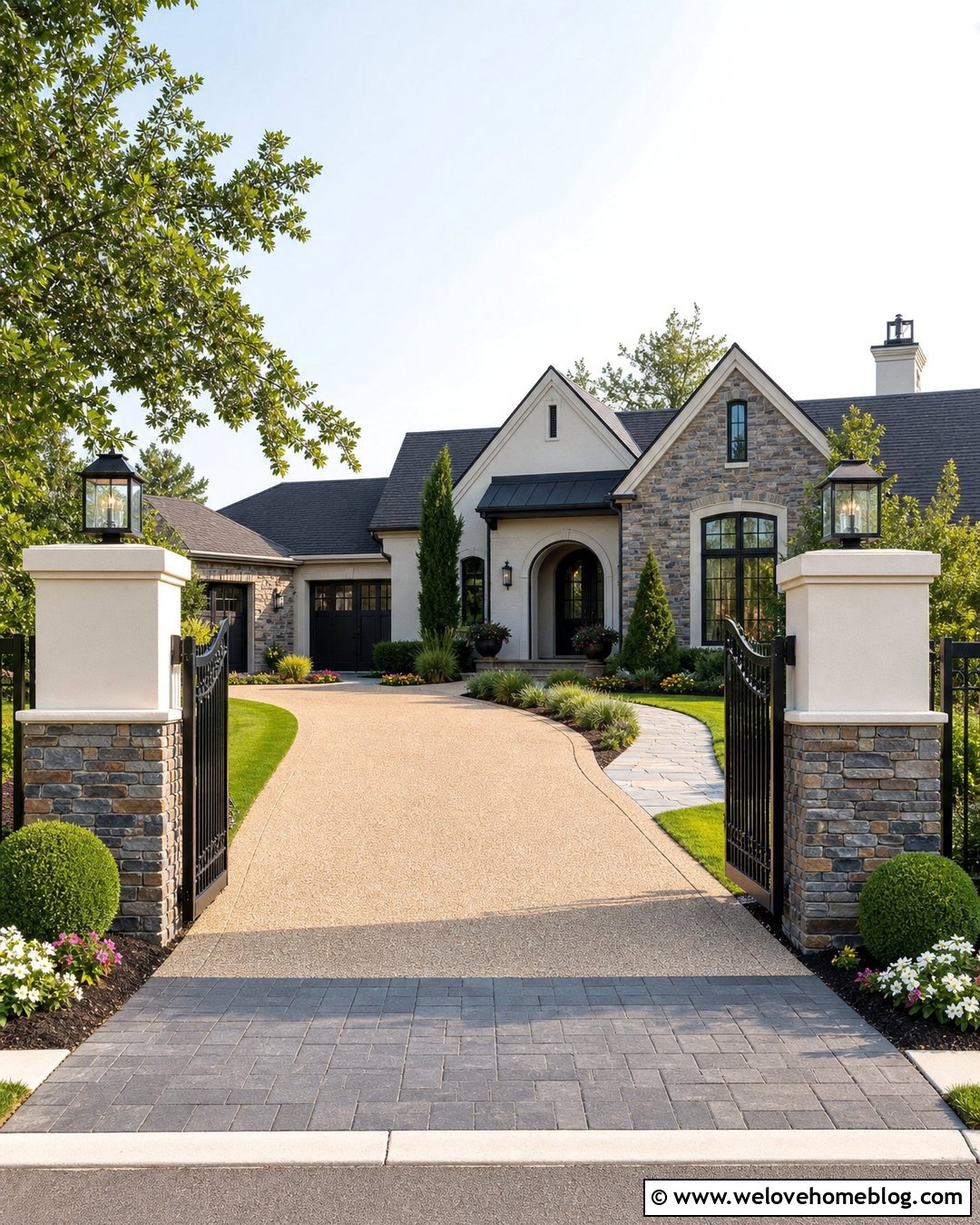
16. Brindle Block Paving Driveway With Gate And Pillars
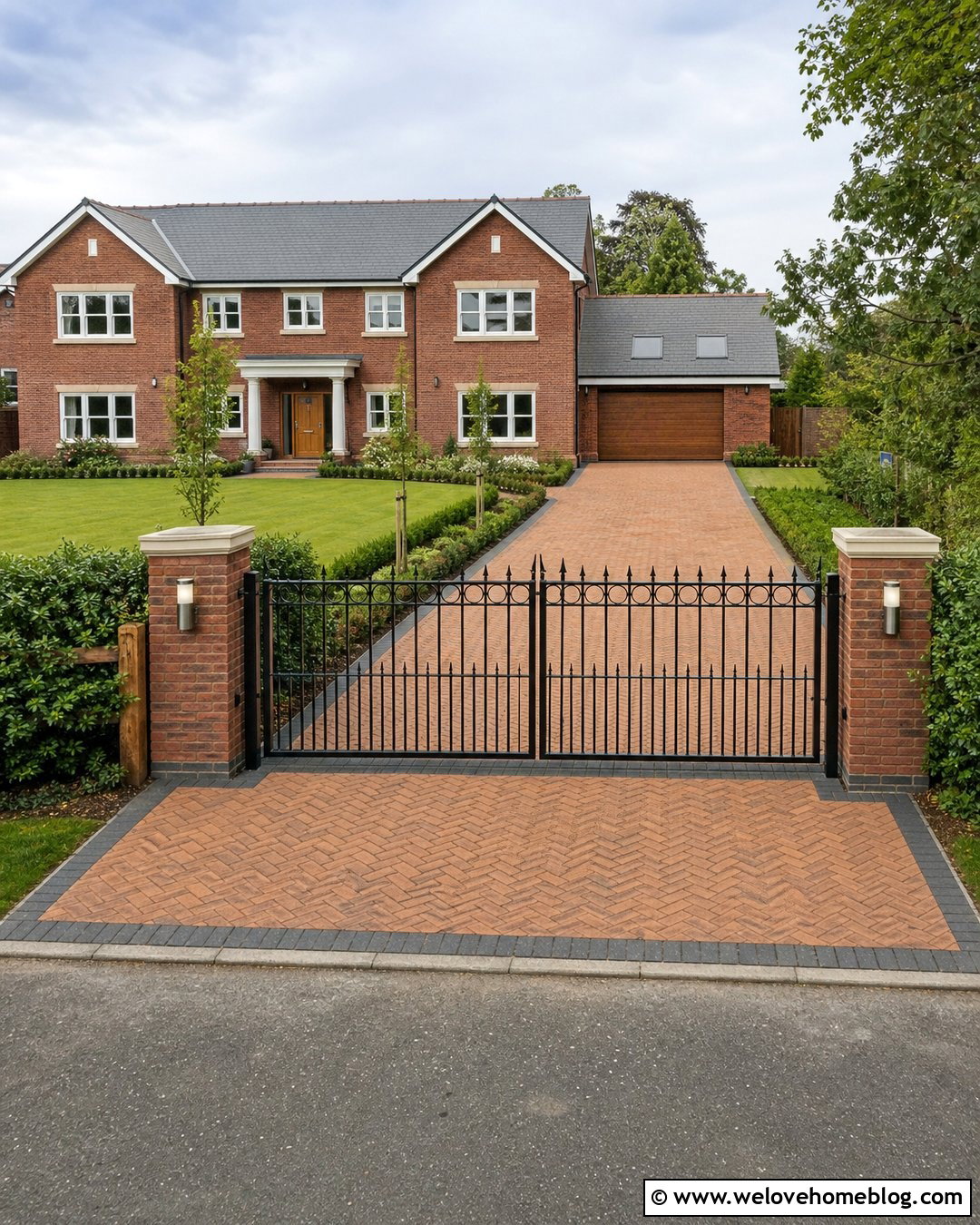
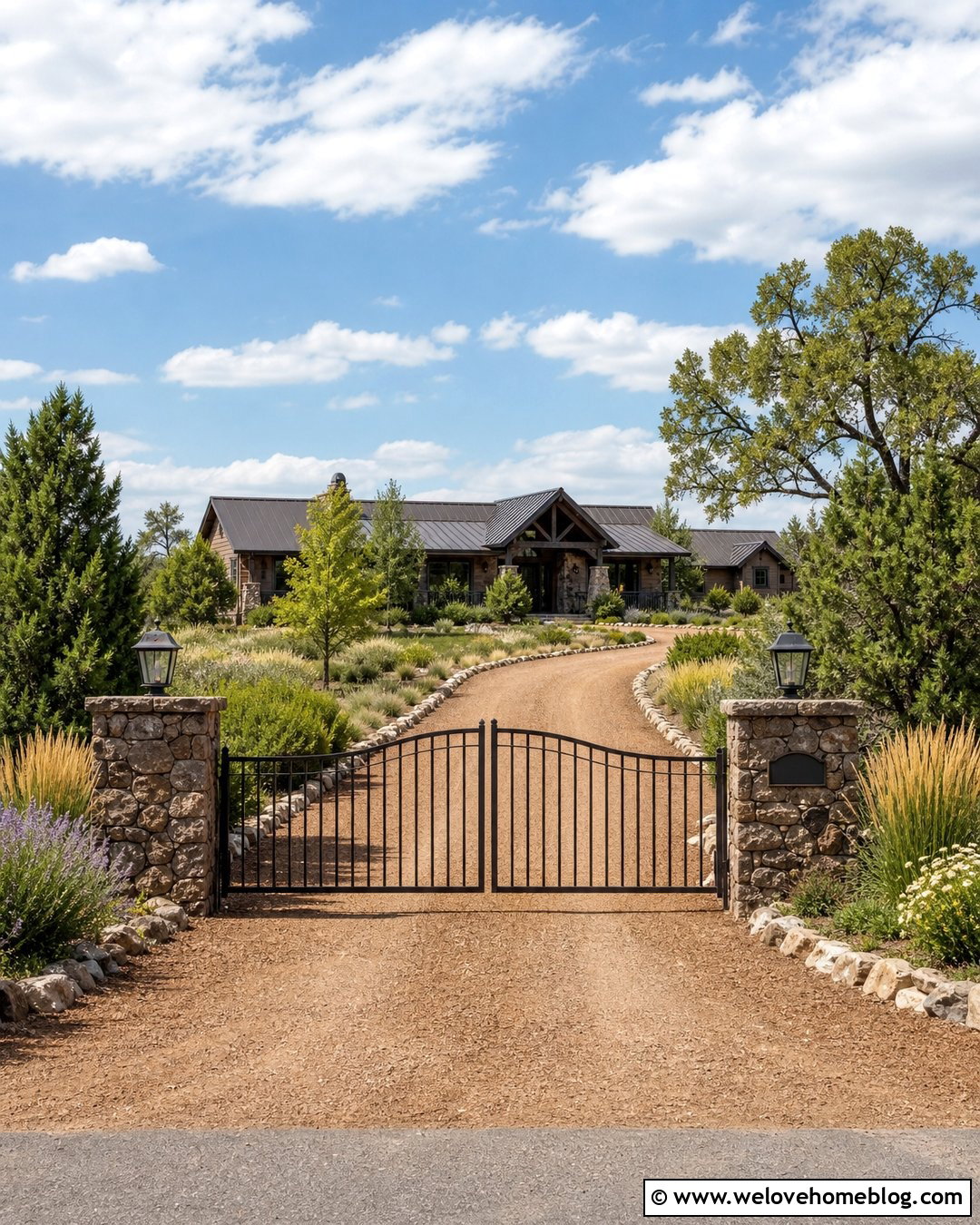
A coordinated gate entrance can make a long brindle driveway feel secure and visually connected to the house. Install standard brindle concrete pavers in a 45-degree herringbone pattern, with a charcoal soldier border running from the road to the garage. Build brick pillars using colors that relate to both the paving and the home’s facade. A simple black metal gate will provide contrast without competing with the multicolored surface. Widen the paving around the entrance to form a comfortable apron, and keep shrubs low near the gate for clear visibility. Continue the charcoal edge around nearby beds and pedestrian access. Matching wall lights, discreet gate controls, and a simple address plaque can complete the entrance while preserving the warm, traditional character of the overall driveway.
17. Brindle Block Paving Driveway With Garage Apron
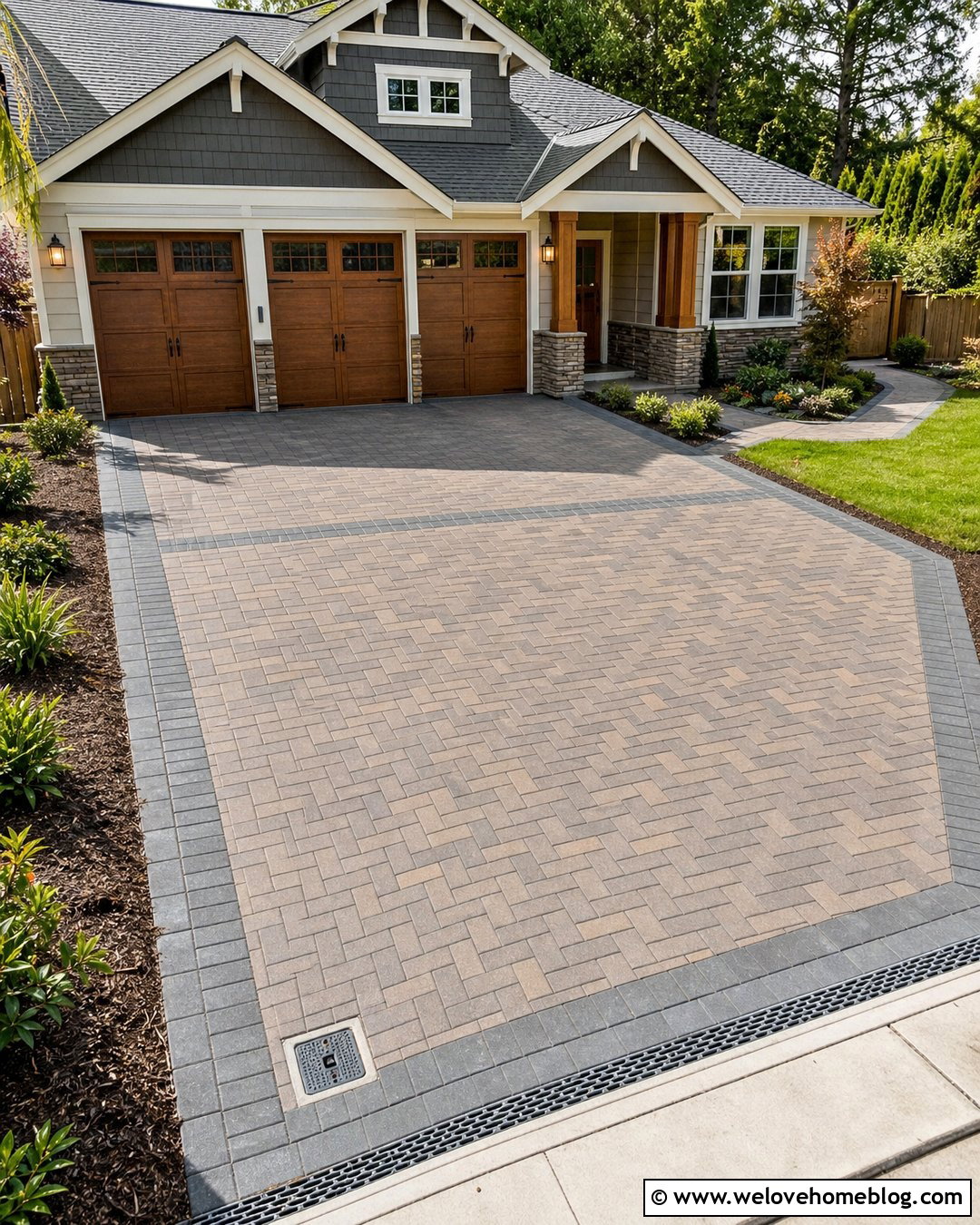
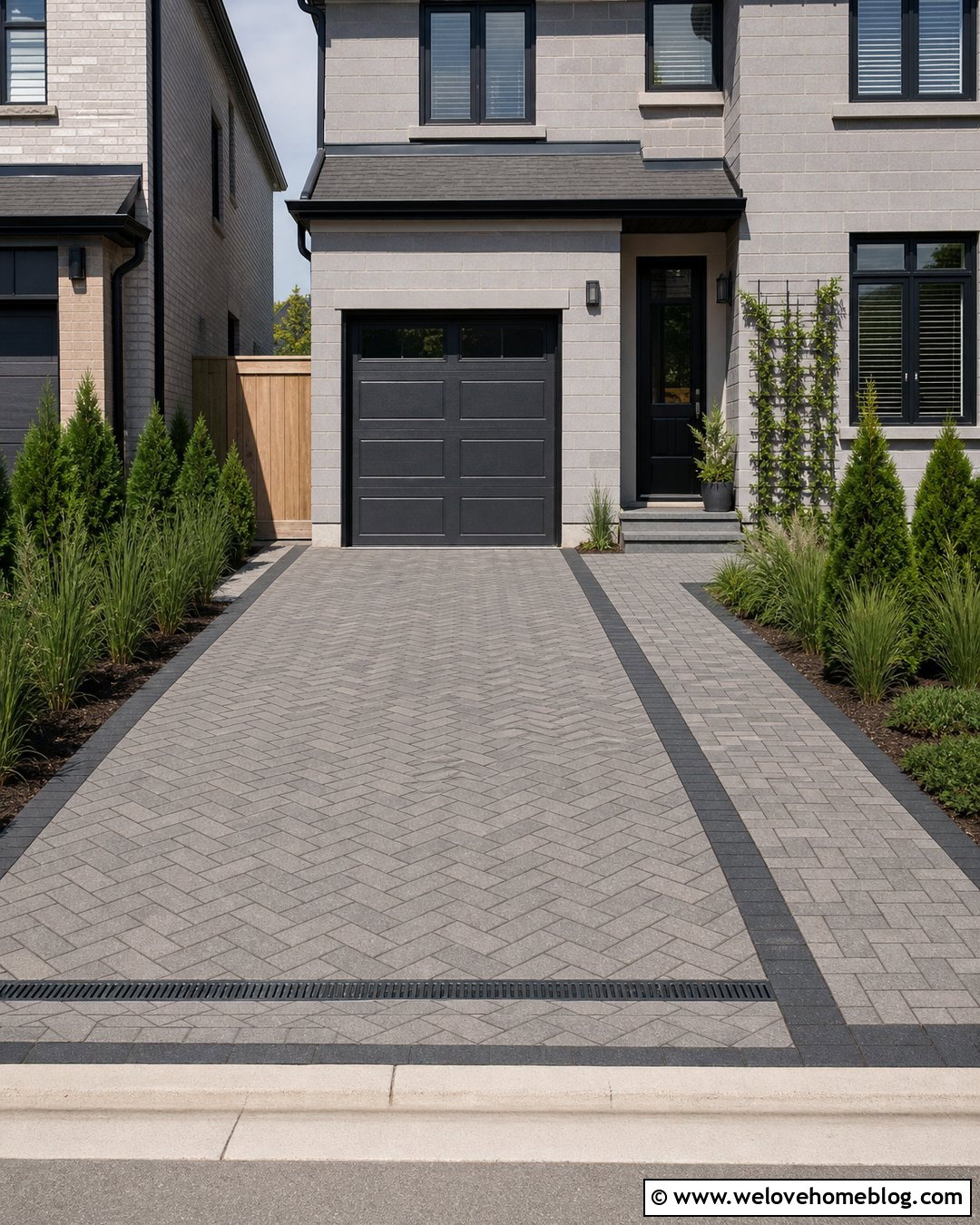
The area in front of a garage needs to feel integrated with the driveway while managing changes in level and surface drainage. Use brindle concrete blocks in a 90-degree herringbone pattern across the main drive and garage apron. Frame the full surface with charcoal blocks, then add a matching charcoal band across the garage doors to create a clean stopping line. Position a slim channel drain within or beside this band where the site requires water collection. Keep the apron wide and uncluttered, using planting beds farther toward the property boundaries. A matching paved walkway can run beside the garage and connect to the backyard. Recessed inspection covers and carefully cut blocks will preserve the continuous pattern. This arrangement creates a tidy, hardworking frontage with clear visual structure.
18. Wide Brindle Block Paving Driveway With Planting Island
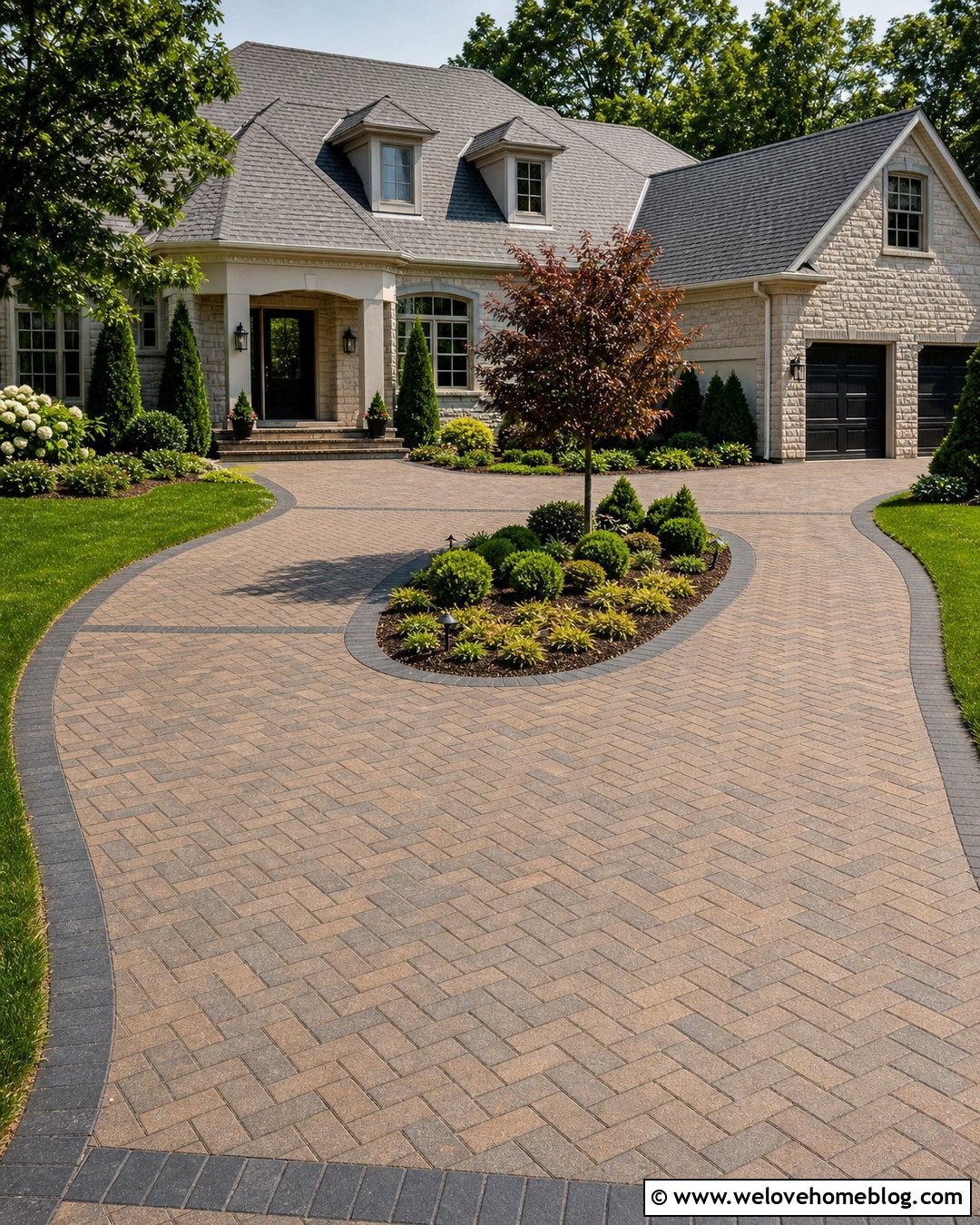
A planting island can keep an expansive brindle driveway from appearing like one uninterrupted parking lot. Lay the main surface in a 45-degree herringbone pattern and use charcoal soldier blocks to frame the perimeter. Place an oval or rectangular island off-center so vehicles still have a practical route toward the garage. Surround the island with a raised brindle or charcoal kerb, then plant a small ornamental tree, compact shrubs, and low ground cover. Repeat the same plants along the outer boundaries to connect the island with the rest of the yard. A second paving band can define parking spaces without painted lines. Brindle’s mottled coloring naturally adds movement across the wide area, while the planted center introduces height, shade, and a welcome patch of greenery.
19. Tumbled Brindle Block Paving Driveway
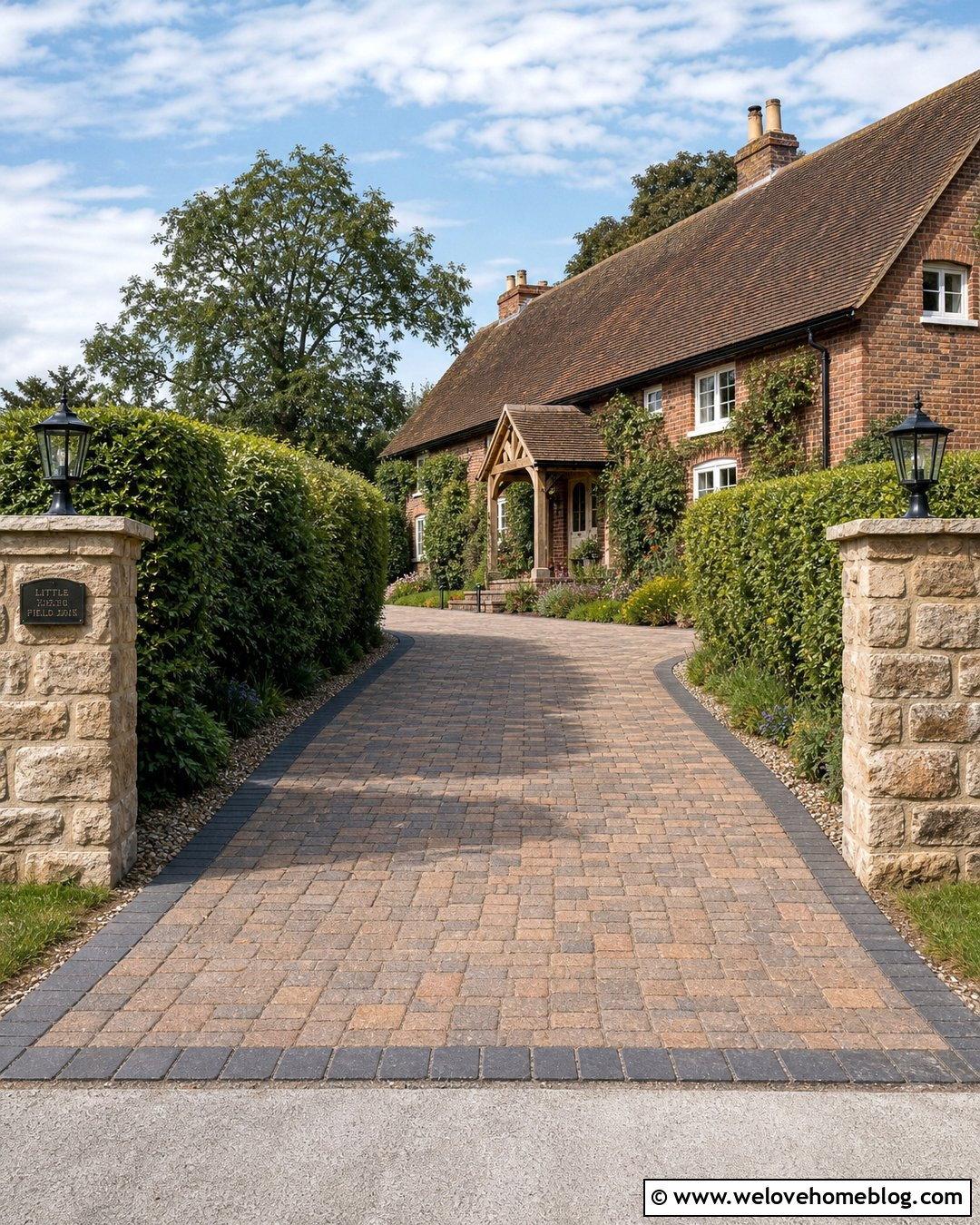
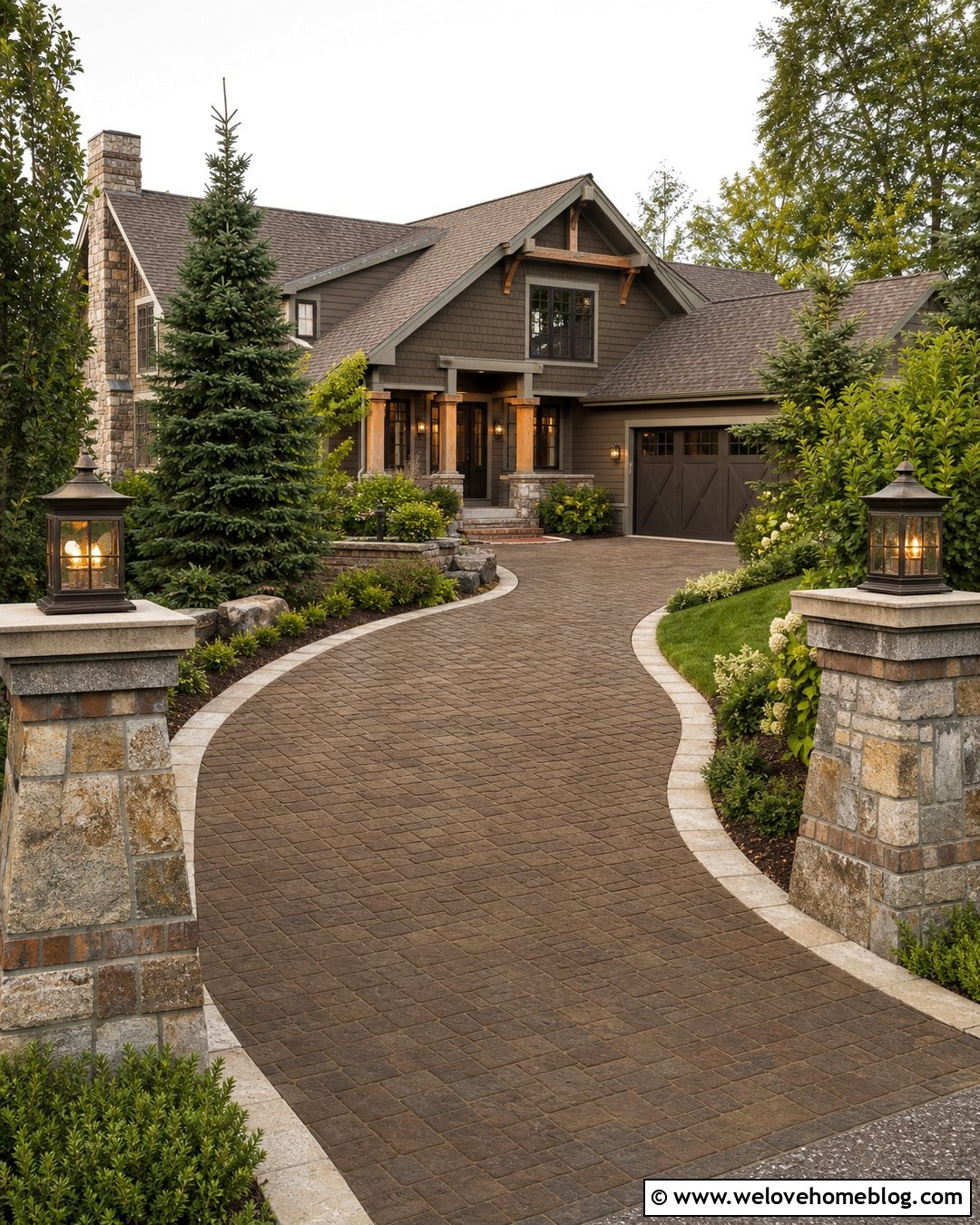
Tumbled brindle blocks have softened edges and a weathered texture that can give a new driveway the character of an older surface. () Lay tumbled brindle concrete pavers in a relaxed basketweave or 90-degree herringbone pattern, then add a dark tumbled block border for definition. Natural stone entrance pillars, informal hedging, and deep planting beds will reinforce the traditional appearance. Avoid combining this finish with overly sleek edging or highly polished decorative features. Instead, use gravel-filled drainage strips, weathered brick steps, and simple black lantern-style fixtures. The paving should still have a stable, properly constructed base despite its aged appearance. This complete design is particularly effective beside period-inspired homes, country cottages, and properties with reclaimed brick or stone details.
20. Brindle Block Paving Driveway With Matching Walkway
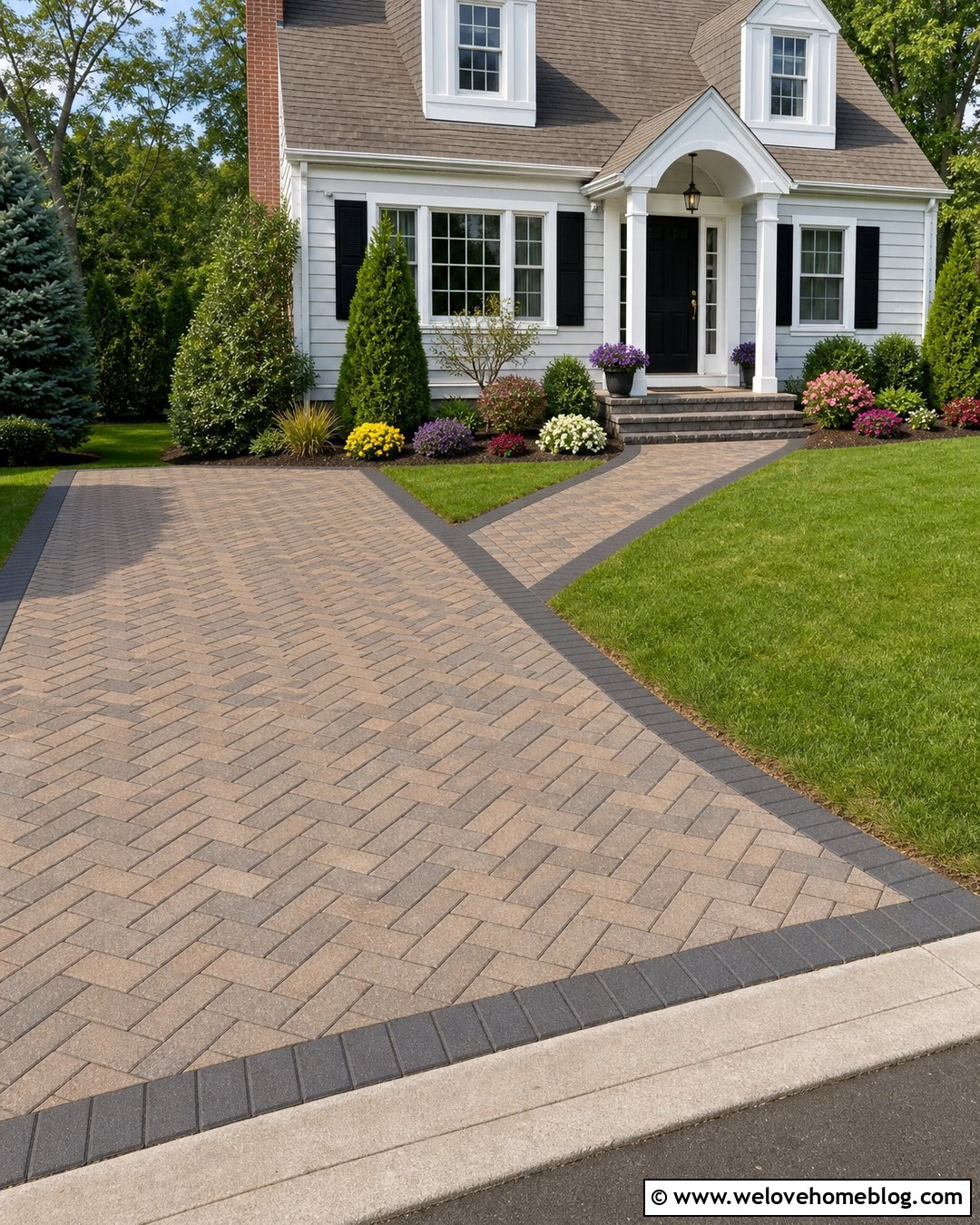
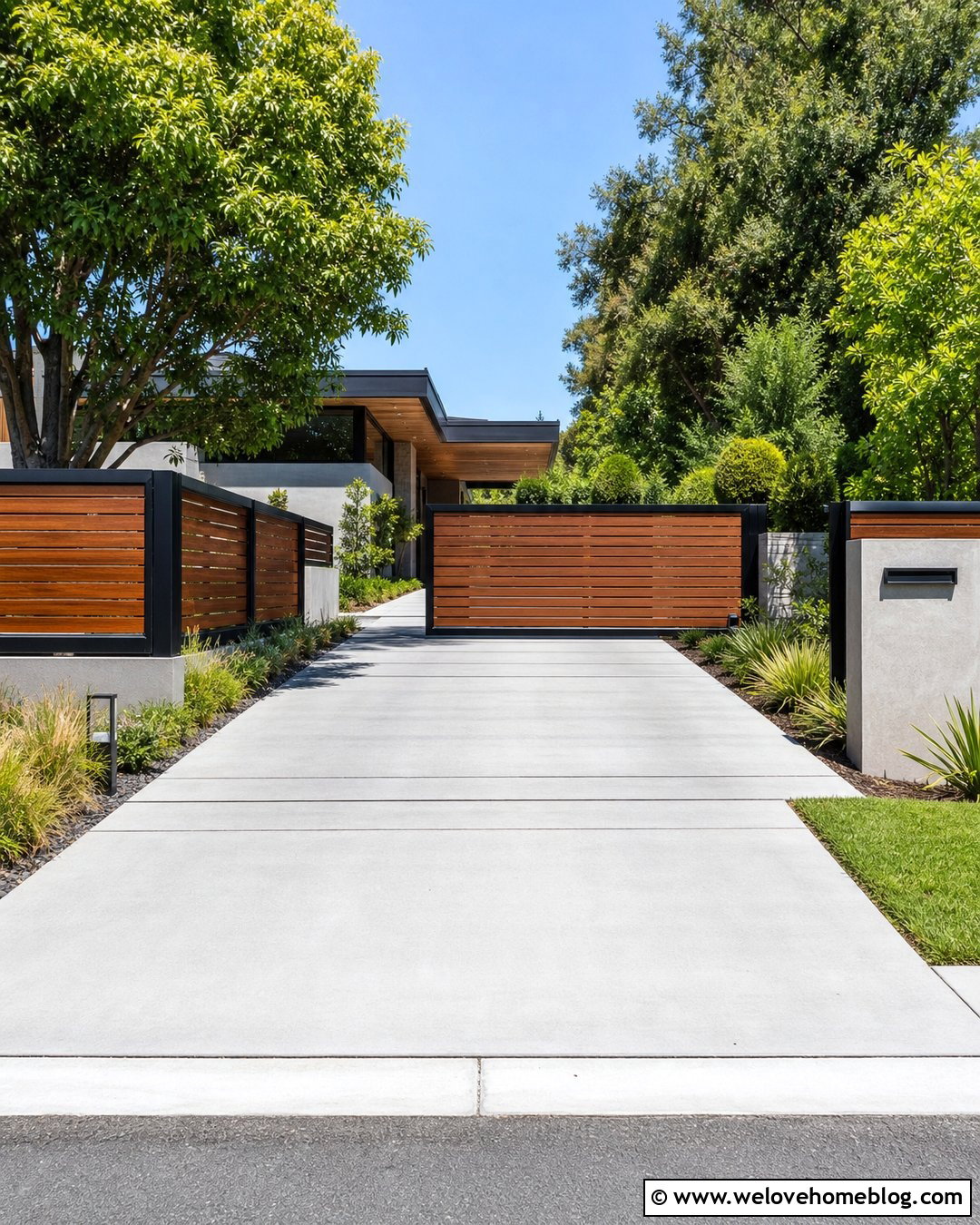
Connecting the driveway and front walkway with the same brindle paving creates a unified entrance, but the two areas should remain easy to distinguish. Lay the driveway in a durable 45-degree herringbone pattern and use a charcoal soldier course around its perimeter. Branch the walkway toward the front door in a simpler stretcher bond, framing it with the same charcoal blocks. This pattern change identifies the pedestrian route without introducing another material. Add planting beds between the walkway and driveway where space allows, using evergreen shrubs and seasonal color to soften the hard surfaces. Continue the border around the front step for a deliberate finish. Coordinated paving is especially useful on compact frontages because it reduces visual clutter while making the approach feel wider, cleaner, and carefully organized.
Conclusion:
These 20 Brindle Block Paving Driveway Ideas show how one versatile paving color can support many different home styles and layouts. Charcoal edging creates bold definition, while buff borders, stone walls, timber sleepers, and generous planting produce softer transitions. The paving pattern matters too. Herringbone offers a strong, practical appearance, basketweave feels more traditional, and stretcher bond provides cleaner contemporary lines. Before installation, plan parking dimensions, turning space, drainage, levels, borders, and pedestrian access as one complete design. Choose blocks and edging that complement the house rather than competing with it. With thoughtful groundwork and coordinated landscaping, a brindle block driveway can provide lasting function, warm color, and noticeably stronger curb appeal.

Related posts:
Leave a Reply