
The best **20 bridge over creek driveway ideas** combine safe vehicle access with a design that feels naturally connected to the property. A residential bridge can use timber decking, reinforced concrete, steel framing, stone details, or a mix of materials. Its appearance should complement the driveway surface, creek banks, landscaping, and house beyond it. Practical planning matters just as much as curb appeal. Creek width, flood levels, soil conditions, drainage, vehicle loads, emergency access, and local permits can influence the final structure. A qualified engineer should evaluate these conditions before construction because a driveway bridge must safely distribute substantial loads across an adequate span. () The complete looks below offer inspiration for different settings, budgets, and homes through **20 bridge over creek driveway ideas**.

1. Wood Driveway Bridge With Gravel Approach
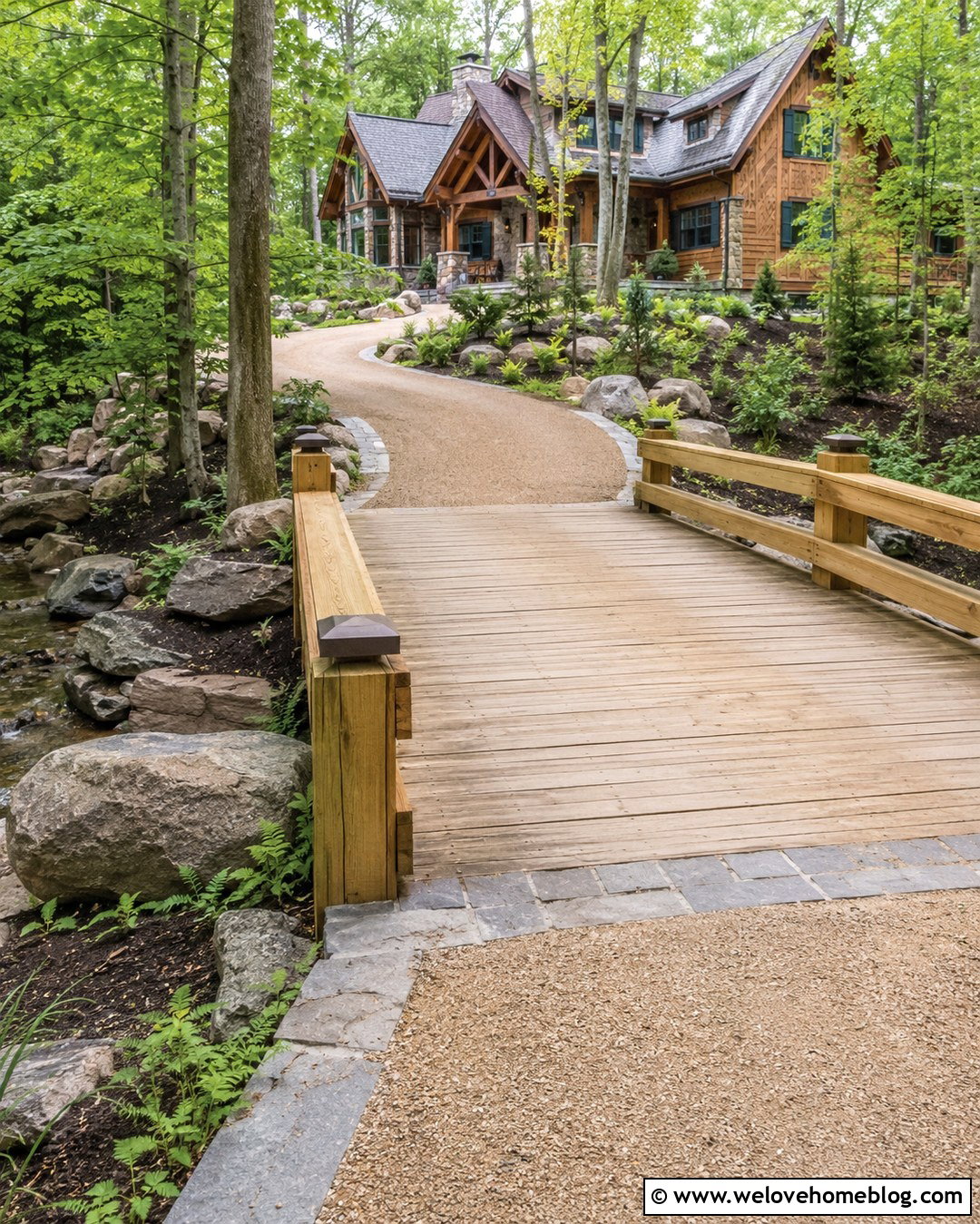
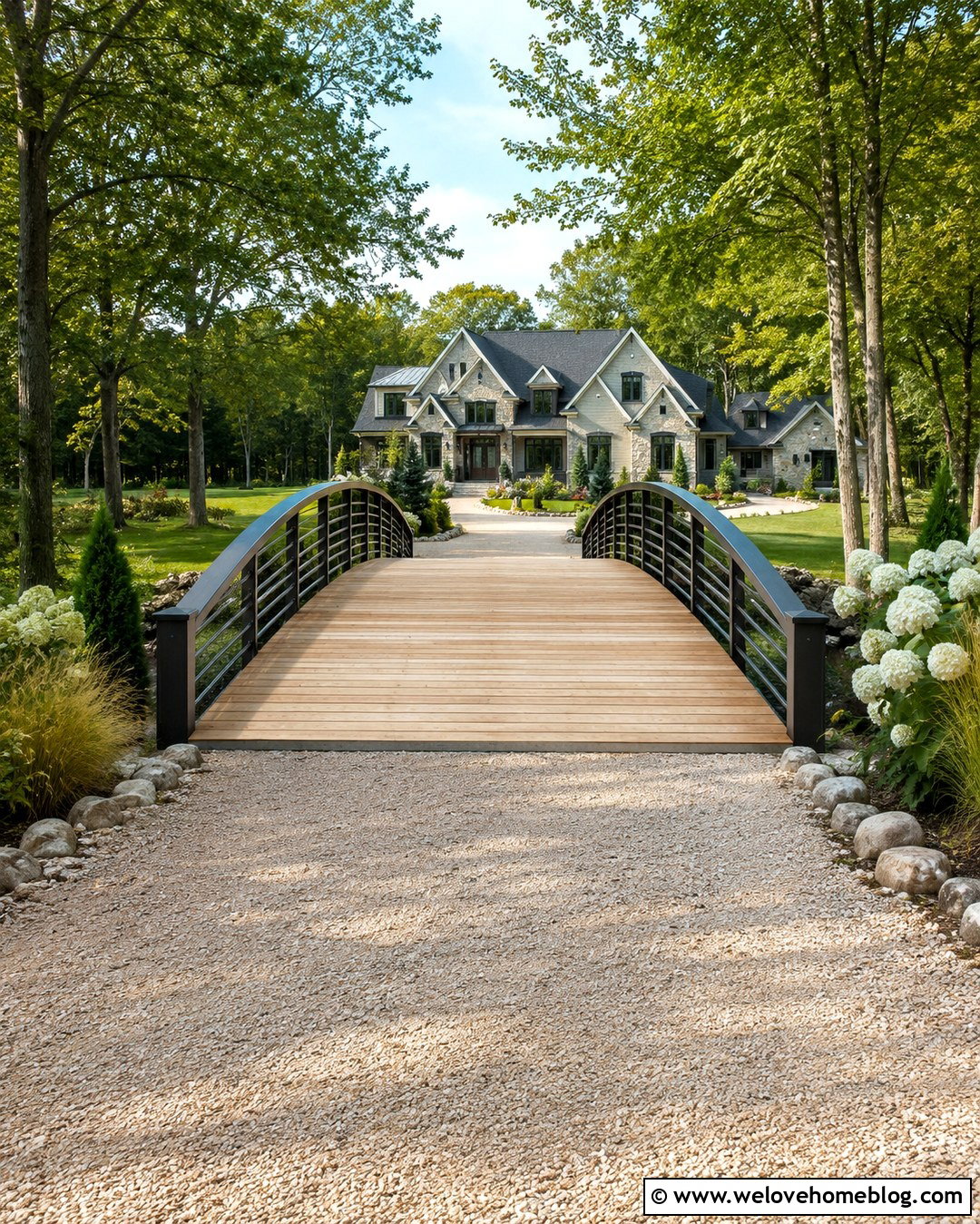
A wood driveway bridge feels right at home on a wooded or rural property. Pair pressure-treated timber decking with a gently curved tan gravel driveway for a relaxed, natural approach. Substantial timber guardrails can define the crossing without making it look overly formal. At each end, transition the loose gravel to compacted stone or a stabilized surface that helps keep material from scattering onto the bridge. Large native boulders and erosion-resistant grasses can soften the abutments while visually connecting the structure to the creek banks. This complete look works especially well with a cabin, rustic ranch, or craftsman house. Choose wood tones that complement the home’s siding, and keep vegetation trimmed so drivers have clear visibility when entering and leaving the bridge.
2. Concrete Driveway Bridge With Stone Veneer
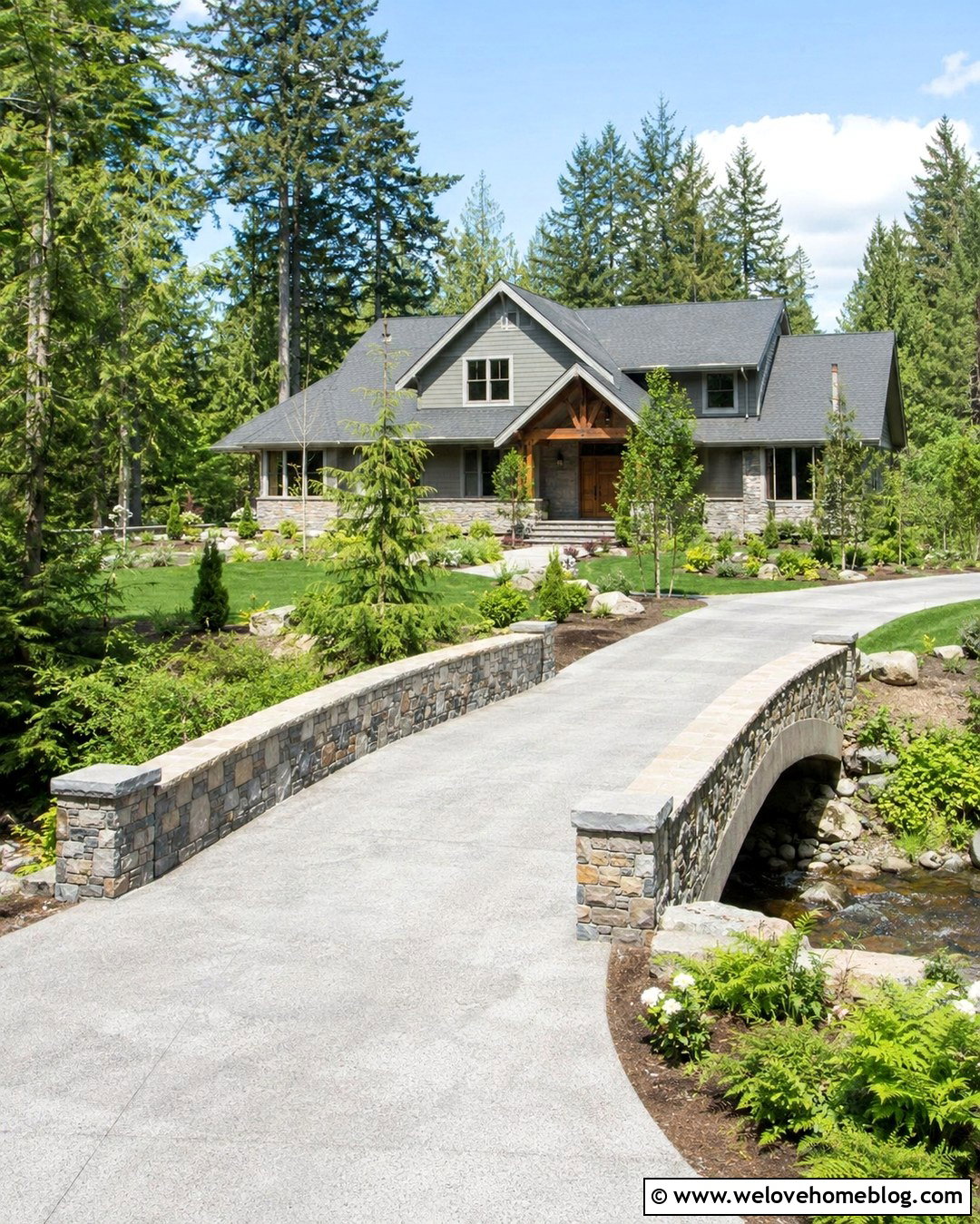
For a substantial, finished appearance, consider a reinforced concrete driveway bridge accented with natural stone veneer. Continue a light-gray poured concrete driveway across the deck so the approach feels smooth and uninterrupted. Low concrete sidewalls faced with irregular fieldstone can create the character of an old masonry crossing while hiding the modern structure underneath. Match the stone to retaining walls, porch columns, or foundation details on the house. Curved planting beds filled with evergreen shrubs, ferns, and native ground covers can frame both bridge entrances. This design suits a traditional, craftsman, or mountain-style home. A slightly widened approach makes alignment easier, while a contrasting paver band at each end provides a subtle transition without distracting from the creek and stonework.
3. Steel Driveway Bridge With Timber Decking
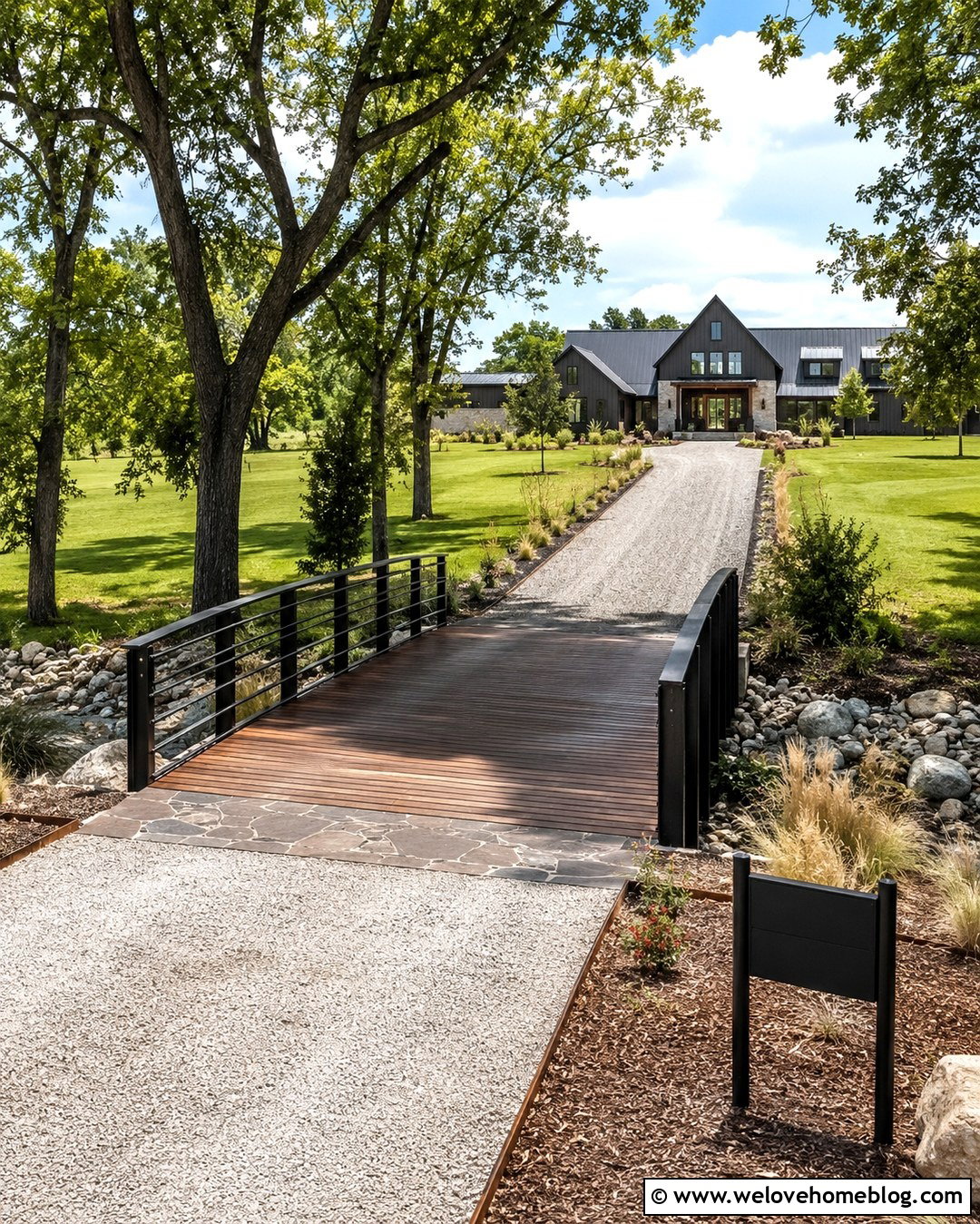
A steel driveway bridge with timber decking combines visible strength with a warm, rural finish. Dark powder-coated steel beams and railings can span the creek, while thick wood deck boards soften the industrial framework. Lead into the bridge with a straight gray gravel driveway bordered by steel edging and low native grasses. The clean contrast between black metal, brown timber, and green creekside planting works well near a modern farmhouse or updated barn-style home. Simple horizontal railings keep the view open, helping the creek remain part of the arrival experience. Repeat the dark steel on an address sign, mailbox, or entrance gate. For visual continuity, use the same gravel color on both sides and create generous stone aprons where the driveway meets the bridge deck.
4. Arched Driveway Bridge With Stone Railings
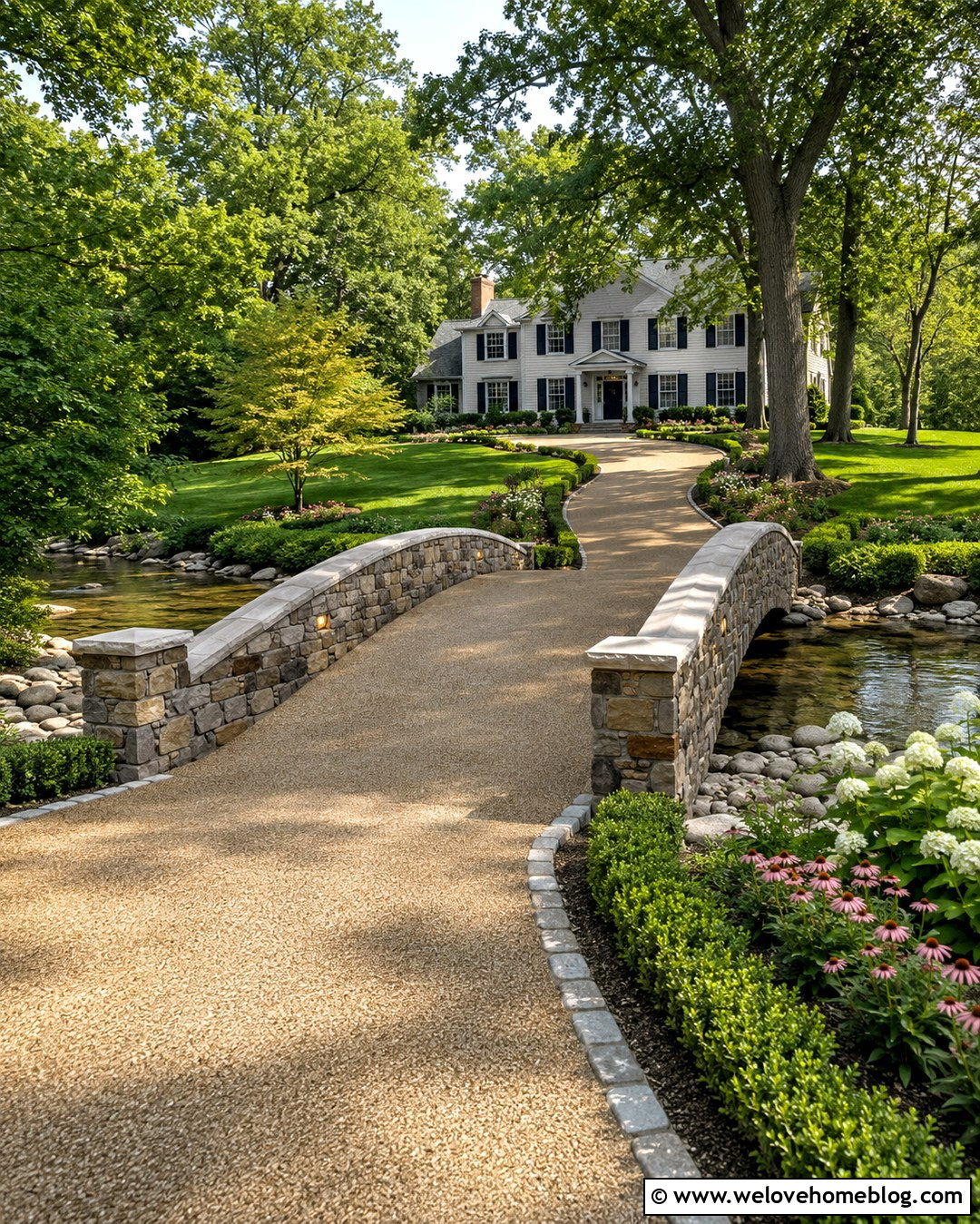
An arched driveway bridge creates a graceful focal point when the creek is clearly visible from the road. Use a textured concrete or masonry deck with a gentle rise rather than an exaggerated curve that could reduce vehicle clearance or visibility. Stone-faced sidewalls and capped railings give the crossing a traditional appearance. A warm exposed-aggregate driveway can approach the bridge in a soft curve, bordered by low boxwoods, flowering perennials, and natural creek rocks. This complete design complements a colonial, European-inspired, or country estate home. Keep taller plants away from the bridge entrances so drivers can see the deck edges. Landscape lighting can be recessed into the sidewalls or placed along nearby beds, maintaining a clean daytime appearance while improving nighttime guidance.
5. Modern Driveway Bridge With Cable Railings
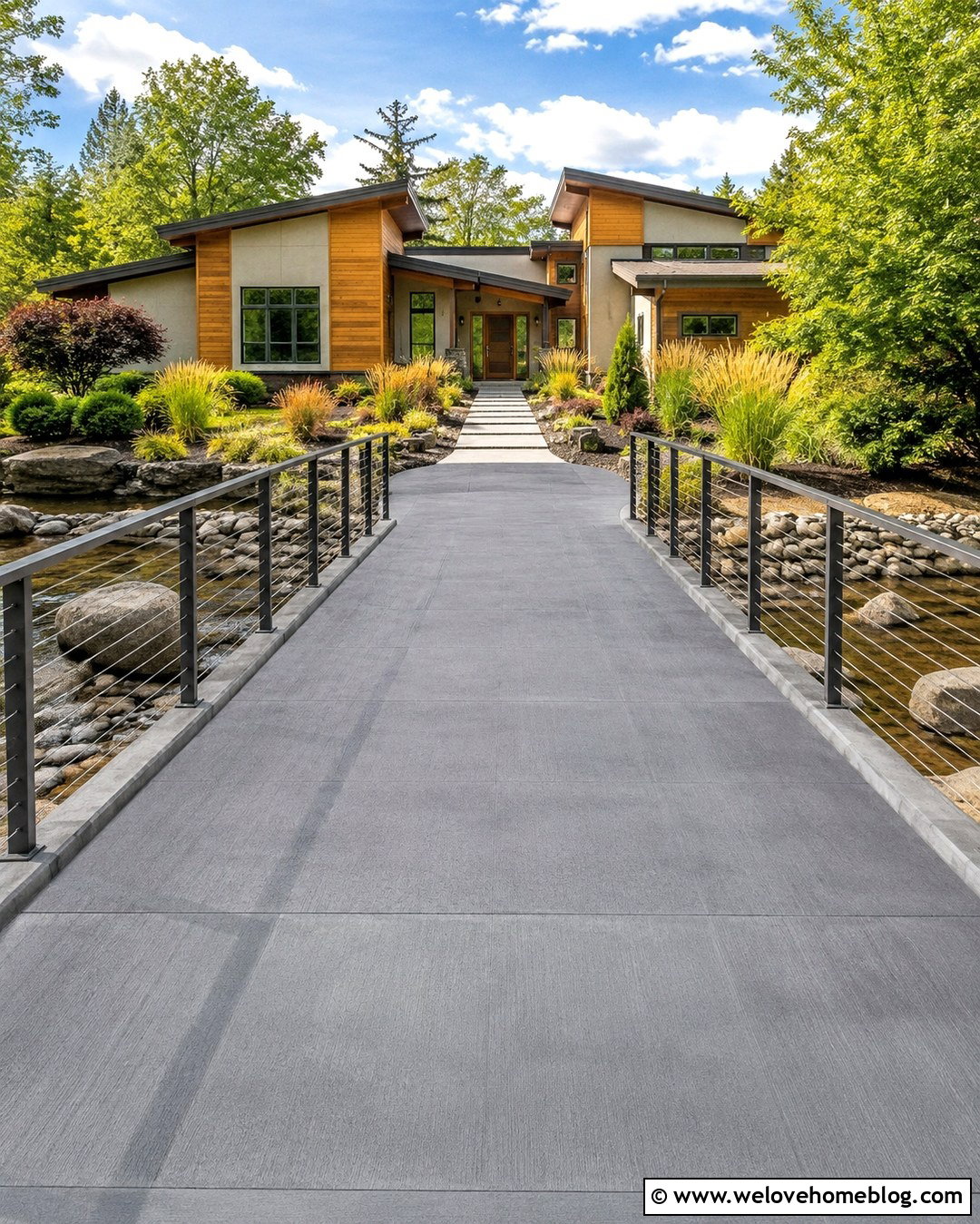
Clean lines can make a creek crossing feel like part of a contemporary landscape rather than a separate utility structure. Start with a smooth charcoal concrete driveway leading straight across a flat reinforced bridge deck. Add slim black steel posts with horizontal stainless-steel cable railings to preserve open views of the water and surrounding plants. Rectangular concrete abutments, neat river-rock beds, and masses of ornamental grasses reinforce the modern geometry. This design pairs naturally with a modern house featuring large windows, dark siding, or mixed wood-and-stucco walls. A narrow concrete walkway can run beside the driveway if the engineered width allows it, creating safer pedestrian access. Keep the material palette restrained so the bridge, driveway, landscaping, and architecture read as one coordinated entrance.
6. Rustic Driveway Bridge With Log Railings
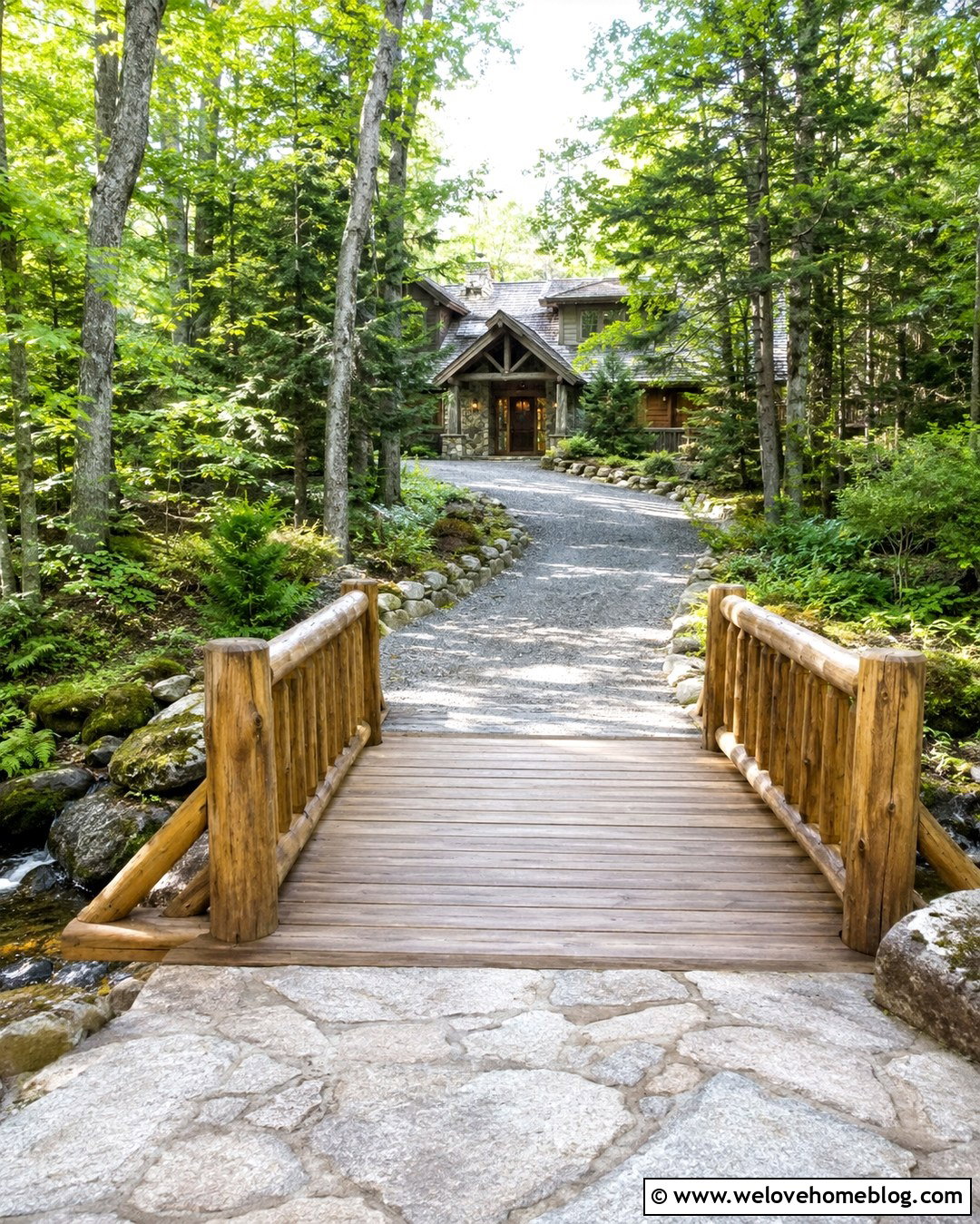
A rustic log-railing bridge can create a memorable entrance to a cabin, lodge, or wooded country home. Use a structurally engineered bridge with a brown timber deck and sturdy log-look railings secured outside the required vehicle clearance. A crushed-stone driveway can curve through mature trees before crossing the creek, making the approach feel scenic and private. Native ferns, woodland sedges, mossy boulders, and shade-tolerant shrubs help the bridge settle into its surroundings. Instead of highly polished details, choose natural textures and muted earth tones. Stone transition pads at both ends can reduce loose gravel on the deck. The railings may look handcrafted, but their dimensions and connections still need professional design so the rustic appearance does not compromise dependable vehicle protection.
7. Black Asphalt Driveway Bridge With Metal Rails
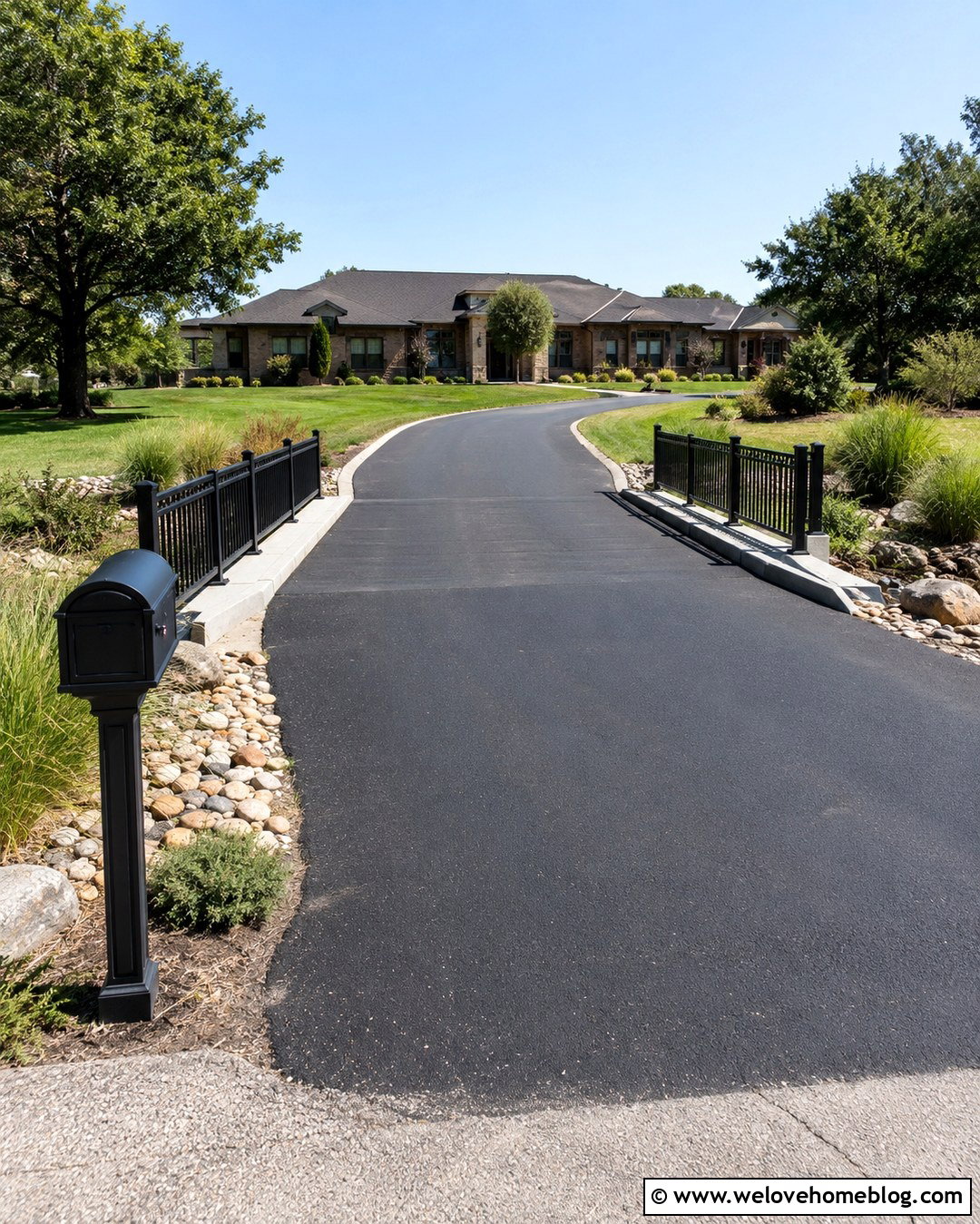
A black asphalt driveway can continue across a creek bridge for a practical, visually consistent surface. The dark pavement works especially well with galvanized or black powder-coated metal guardrails and a straight approach. Use light-gray concrete curbs or stone edging to make the bridge boundaries easy to recognize. On the creek banks, plant low native shrubs and deep-rooted grasses that soften the engineered structure without blocking sightlines. This straightforward design suits suburban ranch houses, country homes, and properties with longer driveways. A flared asphalt entrance at each end can help vehicles align before crossing. For a more polished appearance, repeat the rail color on the house trim, mailbox, and nearby fence while keeping the surrounding landscape simple, open, and easy to maintain.
8. Brick Paver Driveway Bridge With Stone Columns
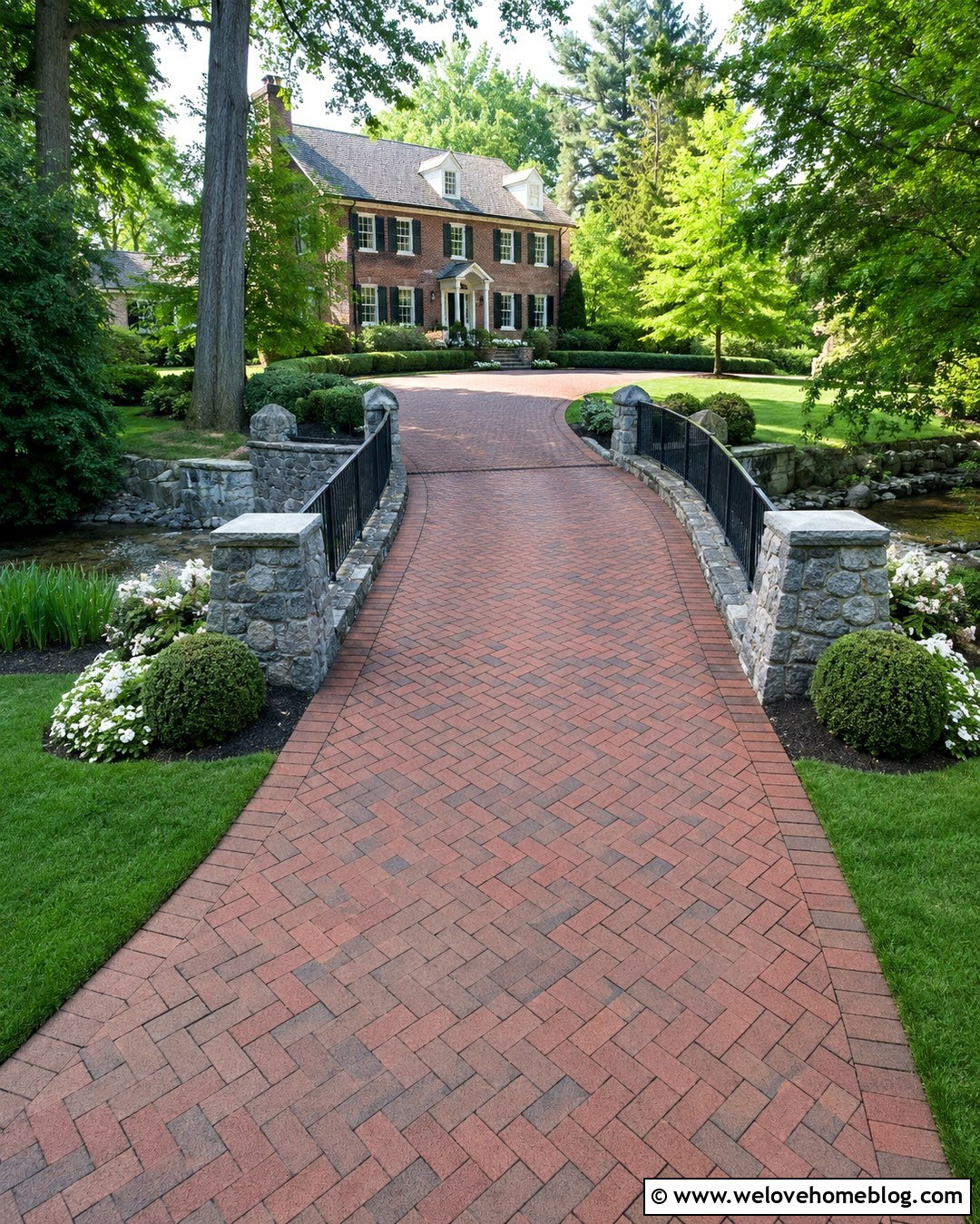
Brick pavers can turn a small driveway bridge into a formal entrance feature. Install clay brick pavers in a herringbone pattern over an appropriately engineered bridge deck, then continue the pattern into short approach aprons. Low stone columns at the four corners can mark the crossing and support simple metal railings. A curved driveway surfaced with matching brick or coordinating concrete pavers creates a unified path toward a colonial or traditional brick house. Frame the bridge with clipped shrubs, white flowering plants, and a tidy lawn, leaving the creek channel open and visible. A soldier-course border can define the driving area and strengthen the visual edges. Choose brick colors that coordinate with the home while providing enough contrast to show the bridge’s limits clearly.
9. Cobblestone Driveway Bridge With Low Walls
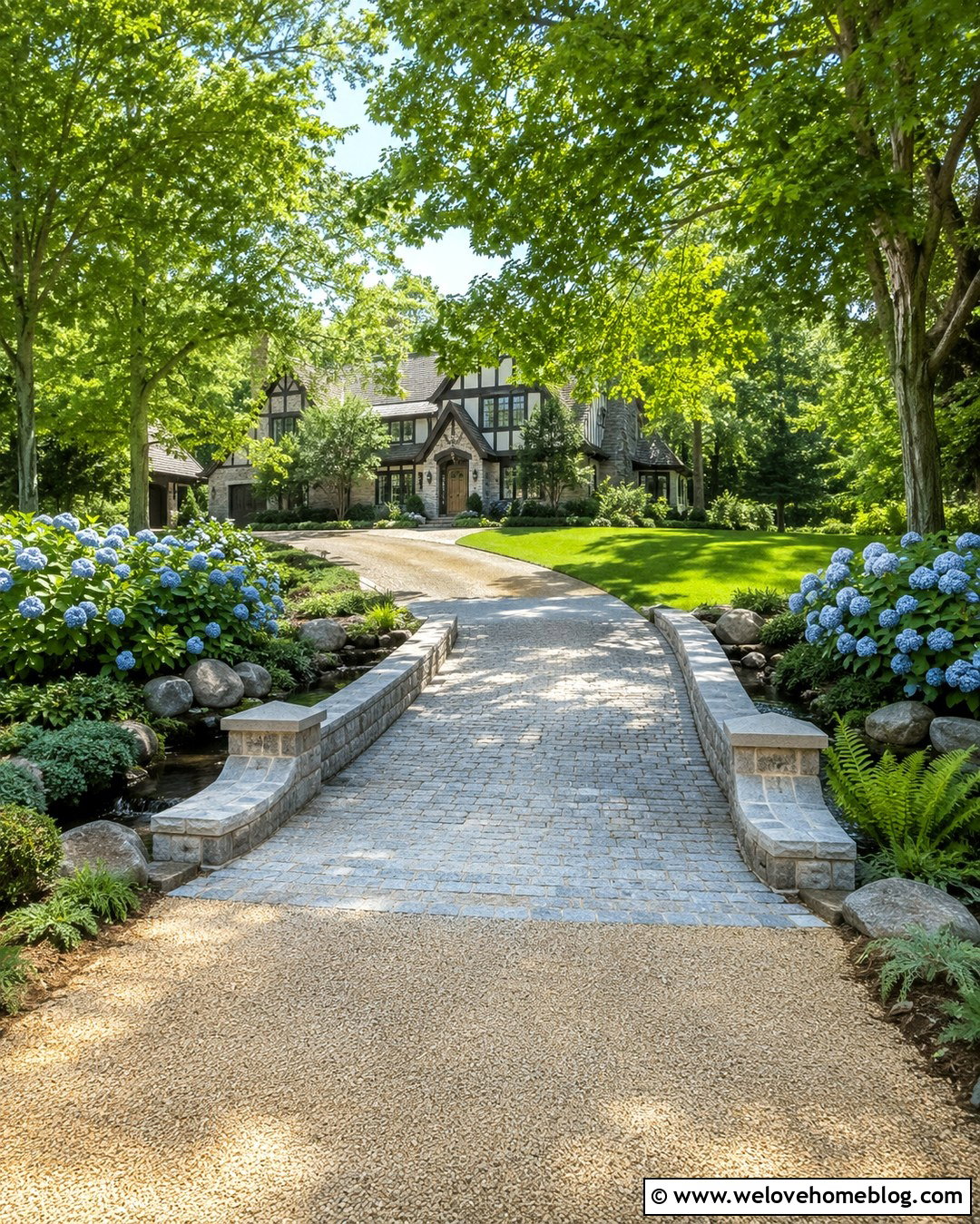
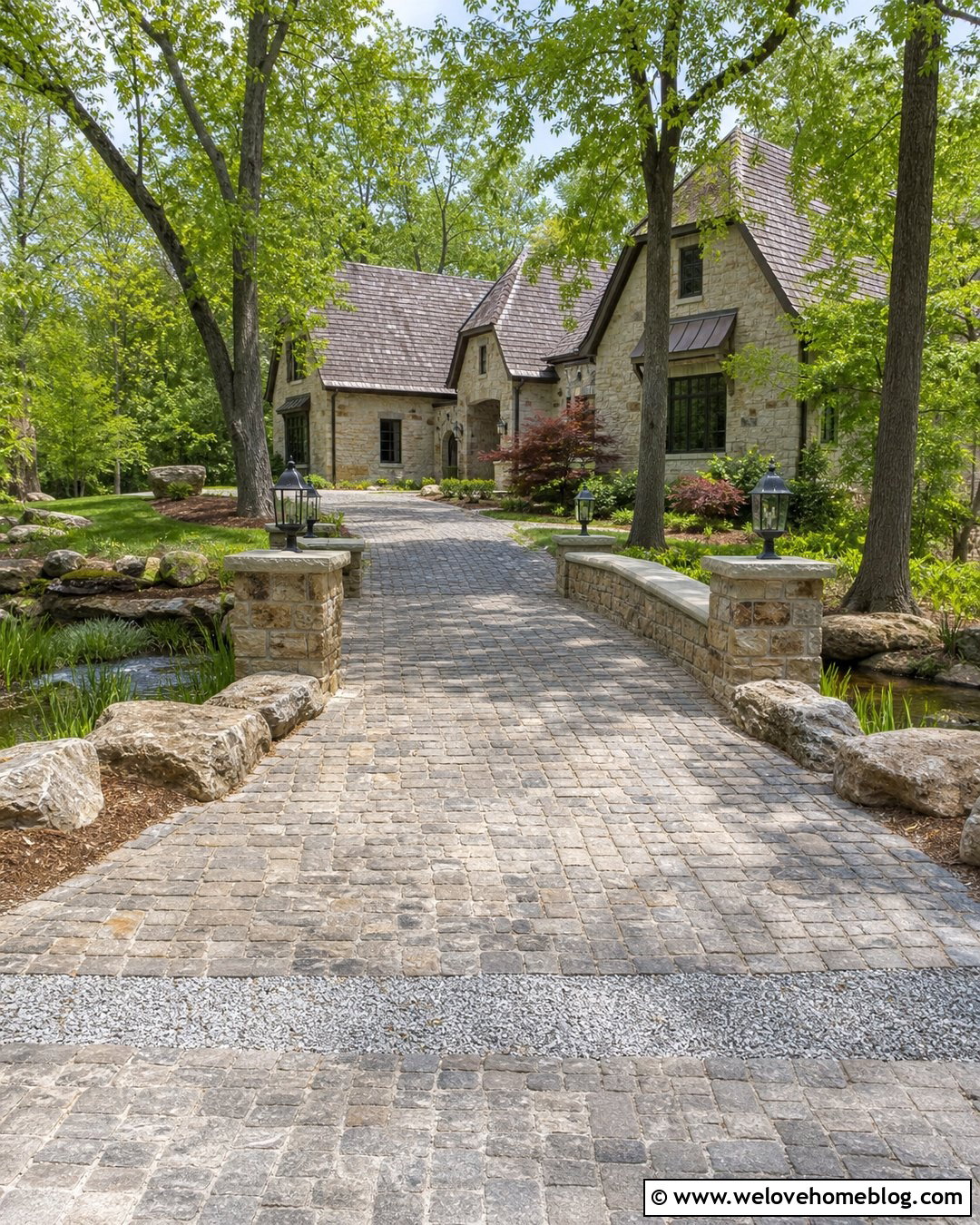
Cobblestone gives a driveway bridge an old-world appearance that feels established within the landscape. Use gray granite cobblestones or split stone setts across a gently curved deck, supported by a professionally designed structure beneath. Low masonry walls can follow the bridge edges and widen slightly at the entrances, creating a welcoming transition from the driveway. Continue the cobblestone for a short distance before changing to gravel or asphalt, which keeps the feature distinctive without overwhelming the property. Informal hydrangeas, ferns, and ground-cover plants can soften the stone near the creek. This complete look complements Tudor, cottage, and European-inspired homes. Keep the stone surface even enough for comfortable driving, and use subtle drainage detailing so water does not collect between the approach and bridge.
10. Concrete Driveway Bridge With Wood Railings
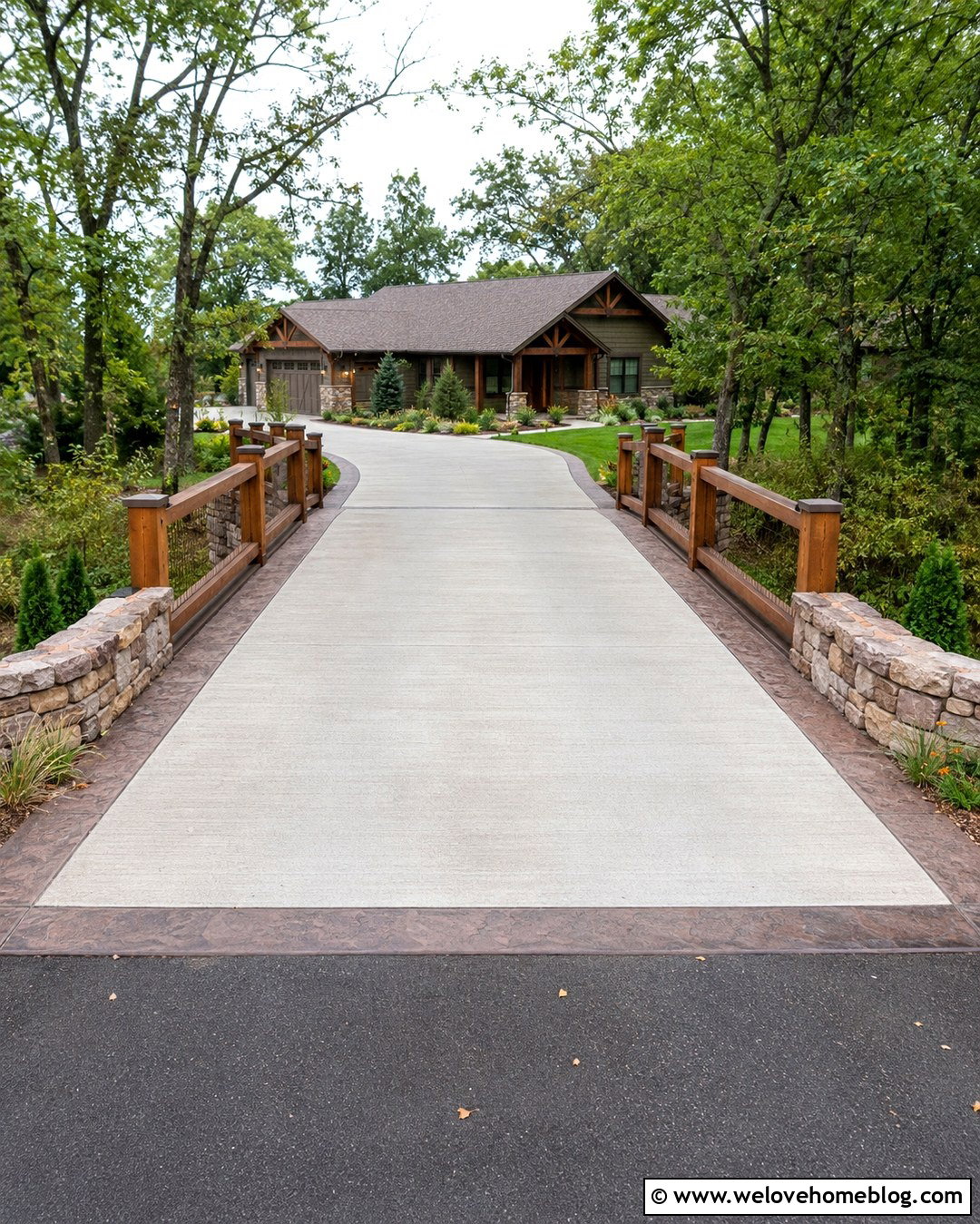
Mixing a concrete deck with wood railings offers durability under the tires and warmth at eye level. A light broom-finished concrete driveway can run directly over the creek, bordered by substantial cedar or stained timber railings. The clean deck surface works well for a straight bridge, while the wood details connect it to surrounding trees and a craftsman or ranch-style house. Use natural stone around the abutments, then fill nearby beds with evergreen shrubs, native grasses, and low seasonal flowers. A narrow stamped border along the concrete can echo the railing color. This combination is especially useful when homeowners want a bridge that looks residential rather than industrial. Keep the wood detailing simple, allowing the creek, stone banks, and mature planting to supply most of the character.
11. White Farmhouse Driveway Bridge With Cross Railings
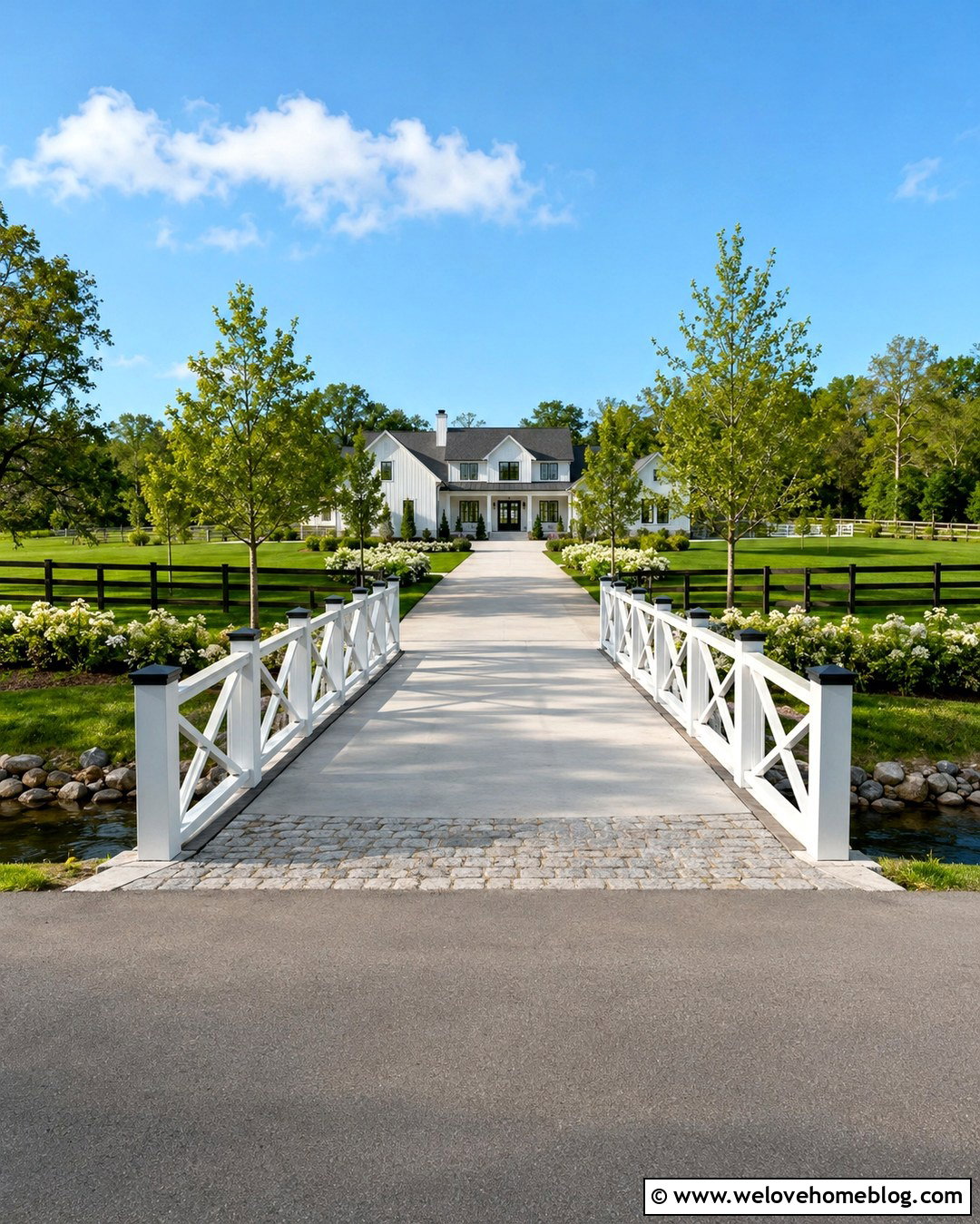
A white bridge can become a charming feature on a modern farmhouse property when its details remain simple and properly scaled. Pair a pale-gray concrete driveway with white cross-pattern railings mounted along a flat bridge deck. Use black post caps or discreet metal hardware to connect the bridge visually with farmhouse windows, lighting, and entrance fixtures. Broad grass shoulders, split-rail fencing, and drifts of white flowers can frame the approach without making it feel overly decorative. A straight layout provides a clear view toward the house, while compact stone aprons protect the transitions near the creek. For easier upkeep, the visible white railing may be powder-coated metal or durable composite rather than painted wood. The result feels bright, welcoming, and coordinated from the public road to the front porch.
12. Country Driveway Bridge With Fieldstone Walls
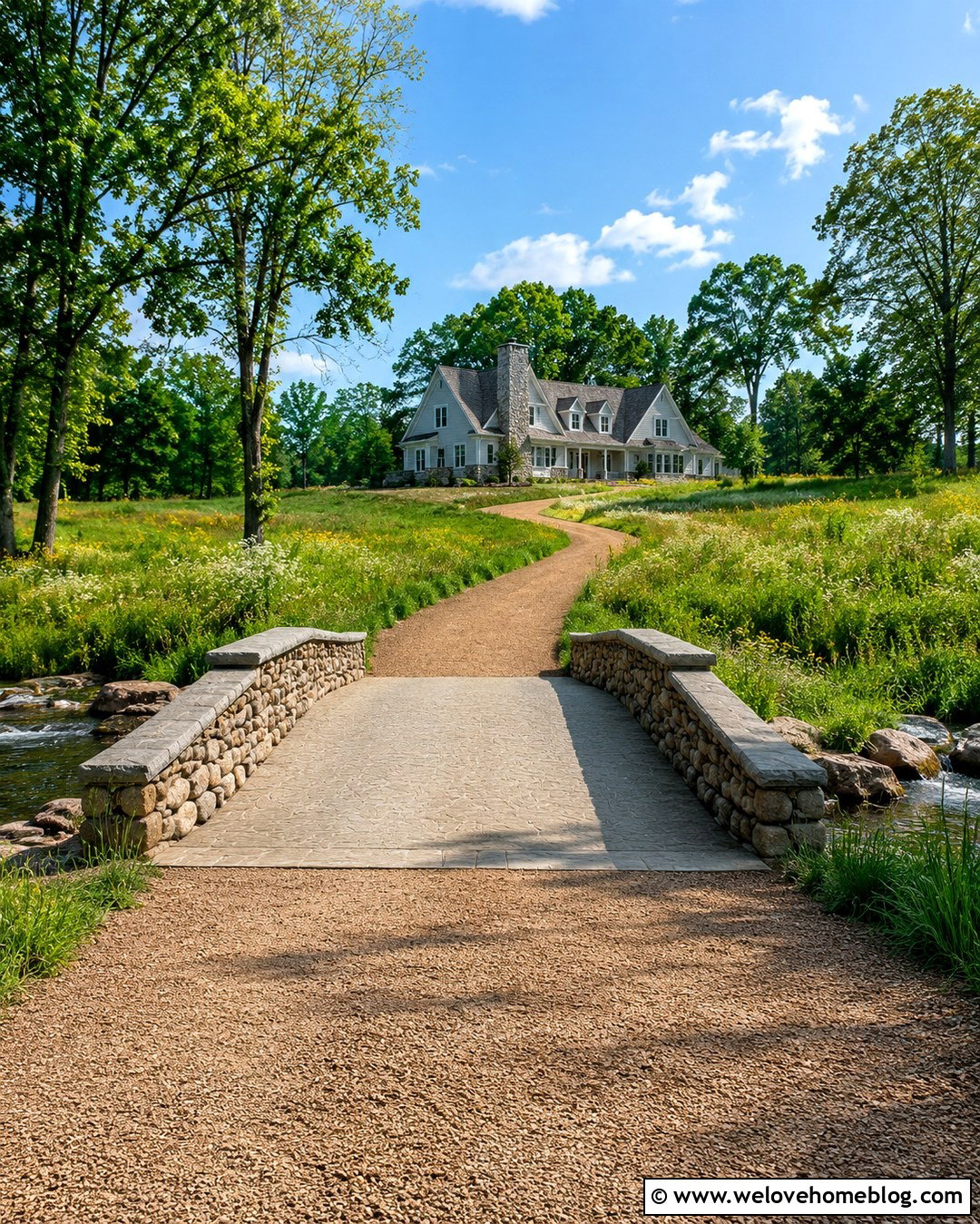
Fieldstone walls can make a driveway bridge appear as though it has always belonged to the land. Begin with a compacted brown gravel driveway that curves toward a flat bridge surfaced with textured concrete or stabilized gravel over a structural deck. Build low stone-faced parapets using mixed local-looking colors, with larger stones visually anchoring the four corners. Beyond the walls, allow meadow grasses, native wildflowers, and mature deciduous trees to frame the creek. This relaxed composition suits a country farmhouse, Cape Cod, or renovated rural cottage. The bridge should remain wide and visually open enough for comfortable vehicle movement. Repeat the fieldstone in nearby retaining walls or house foundation accents. Avoid overly uniform masonry, since varied stone shapes create the natural, time-worn character that defines this complete look.
13. Minimalist Driveway Bridge With Concrete Walls
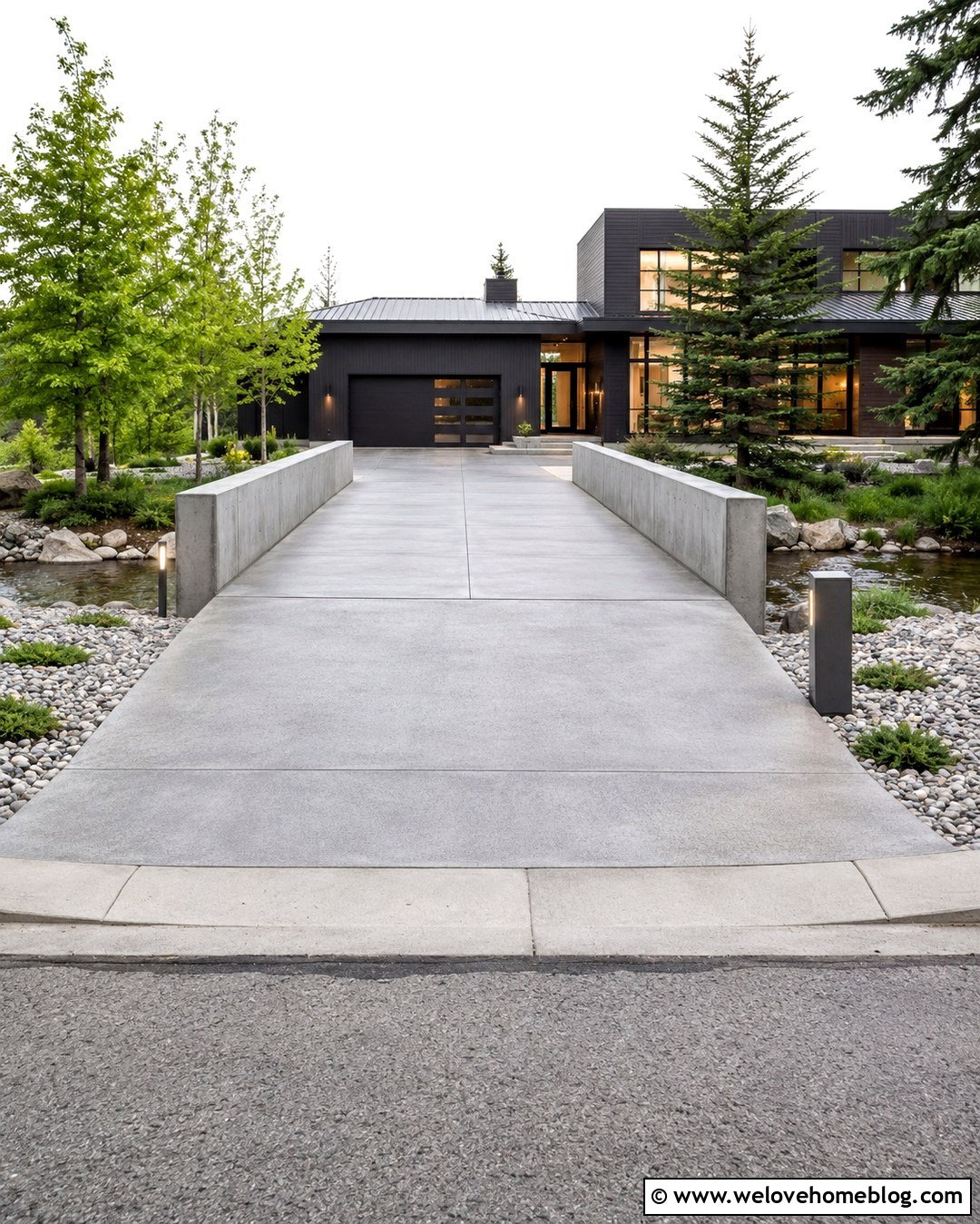
When the house has strong modern architecture, a minimalist bridge can extend those lines across the landscape. Use medium-gray poured concrete for the driveway and bridge deck, creating one continuous straight plane over the creek. Low smooth concrete walls provide clean boundaries without introducing decorative patterns. Surround the crossing with pale river rock, clipped ground covers, and carefully spaced ornamental trees. Black linear lighting or a slim address marker can provide contrast near the entrance. This design works best when joints, transitions, and drainage are carefully planned because every detail remains visible in a simplified setting. Keep creekside planting restrained but environmentally appropriate. The result should feel calm and precise, with the bridge acting as an understated connection between the road, structured front yard, and contemporary home.
14. Timber Driveway Bridge With Stone Approaches
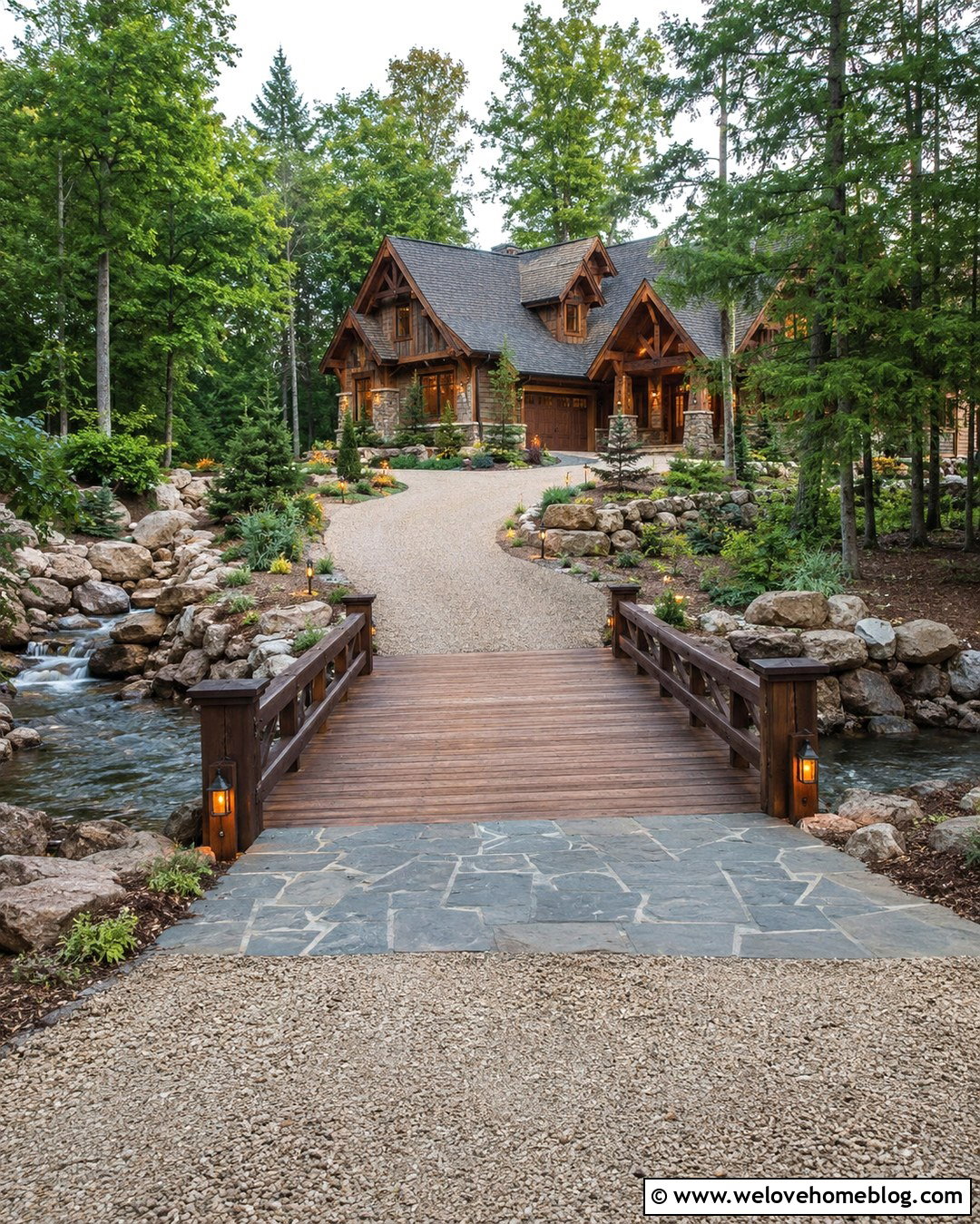
Stone approach pads can make a timber bridge feel more permanent while protecting the points where different surfaces meet. Use a warm brown timber deck across the creek, then place broad gray flagstone or textured concrete aprons at both ends. A tan gravel driveway can continue toward a rustic craftsman or mountain home. Dark timber guardrails, native boulders, and layers of evergreen planting complete the natural palette. The stone transitions should be smooth and level enough for vehicles, with no abrupt lip where the driveway meets the bridge. Add low lighting beside the approach rather than on tall posts that compete with the wooded setting. By balancing timber, stone, gravel, and creekside vegetation, this design creates an inviting crossing that feels rugged but carefully planned.

15. Wide Driveway Bridge With Pedestrian Walkway
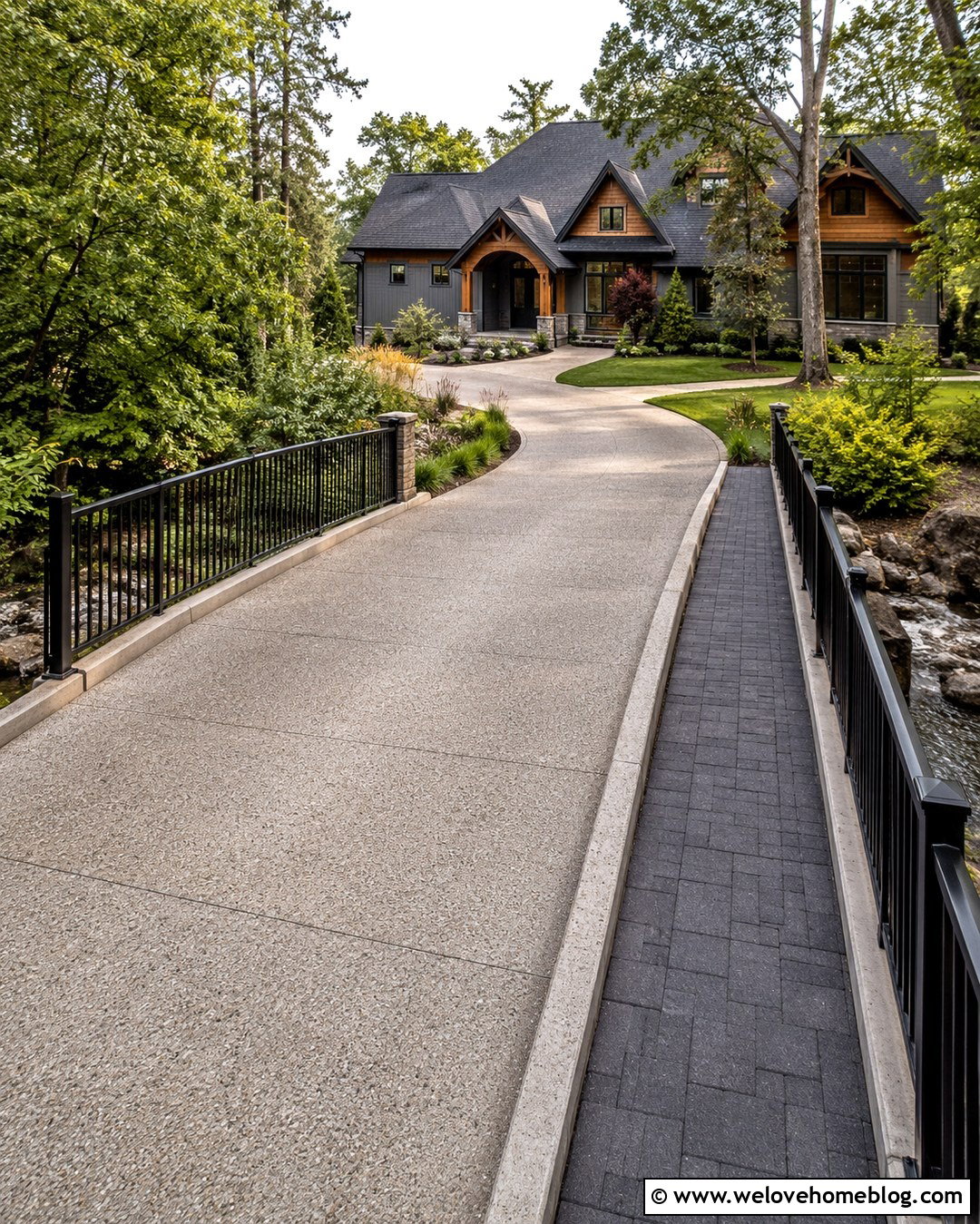
A separate walkway can make a frequently used bridge more comfortable for residents and guests. Design a wide reinforced concrete bridge with a light exposed-aggregate vehicle lane and a narrow contrasting paver walkway along one side. Black metal railings can protect both outer edges, while a low curb visually separates the pedestrian area from vehicle traffic. Continue the driveway in a gentle curve toward a large craftsman or suburban home. Connect the walkway to a garden path leading to the front entrance. Plant ornamental grasses, compact shrubs, and shade trees near the creek while preserving open views at each approach. The bridge should be engineered as one complete system, including the added walkway width and railing loads. This arrangement creates an organized, upscale entrance without requiring a separate footbridge.
16. Curved Driveway Bridge With Natural Landscaping
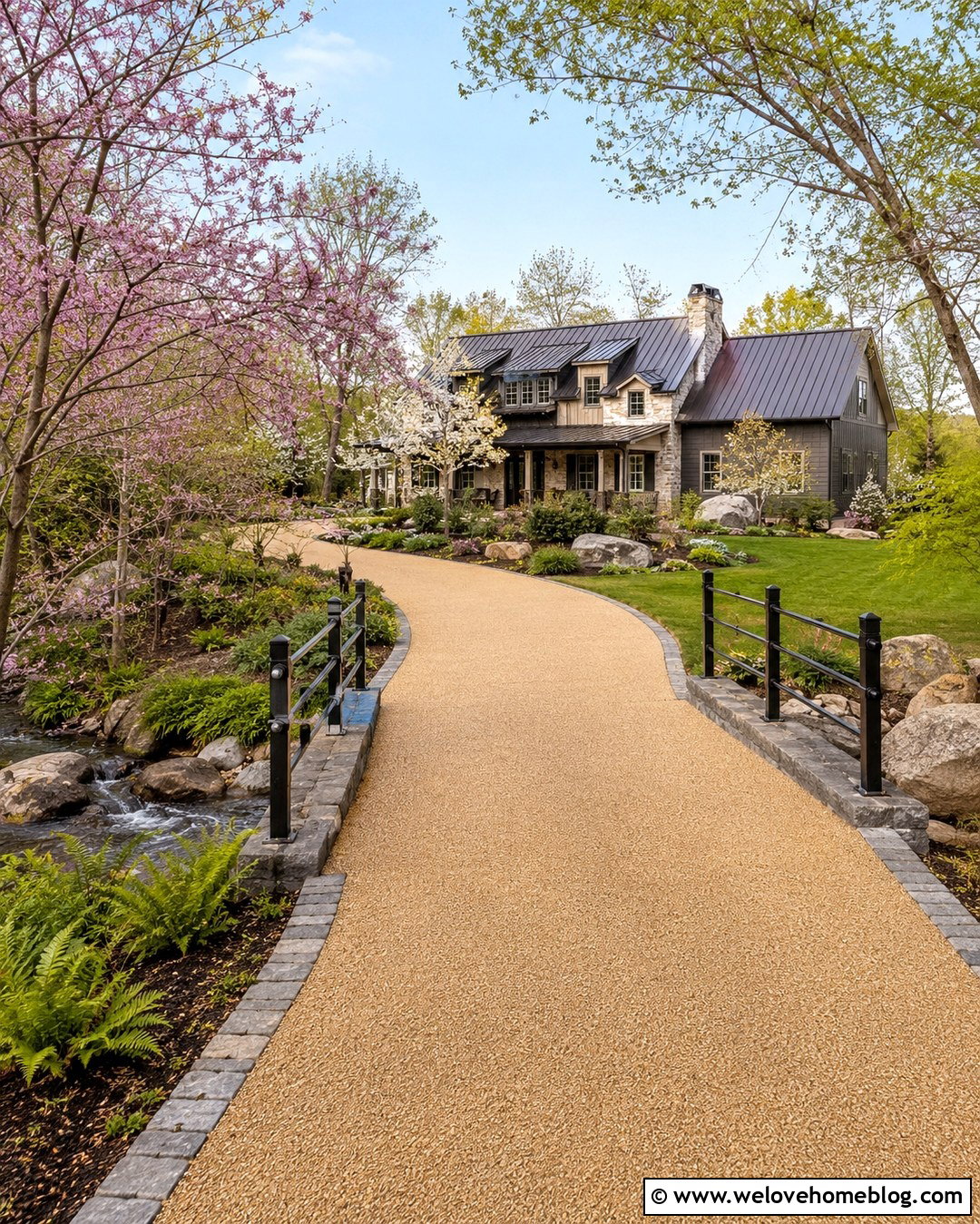
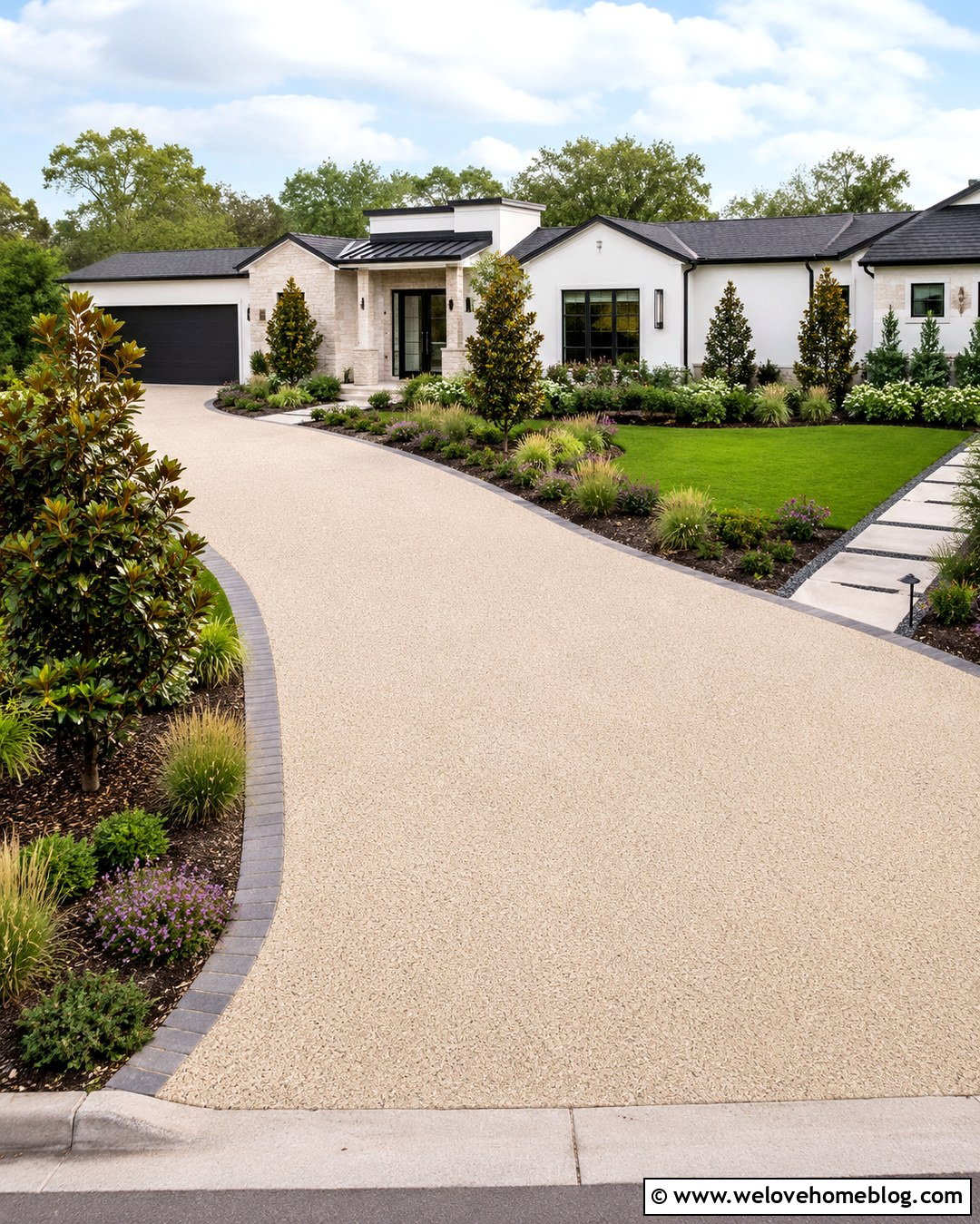
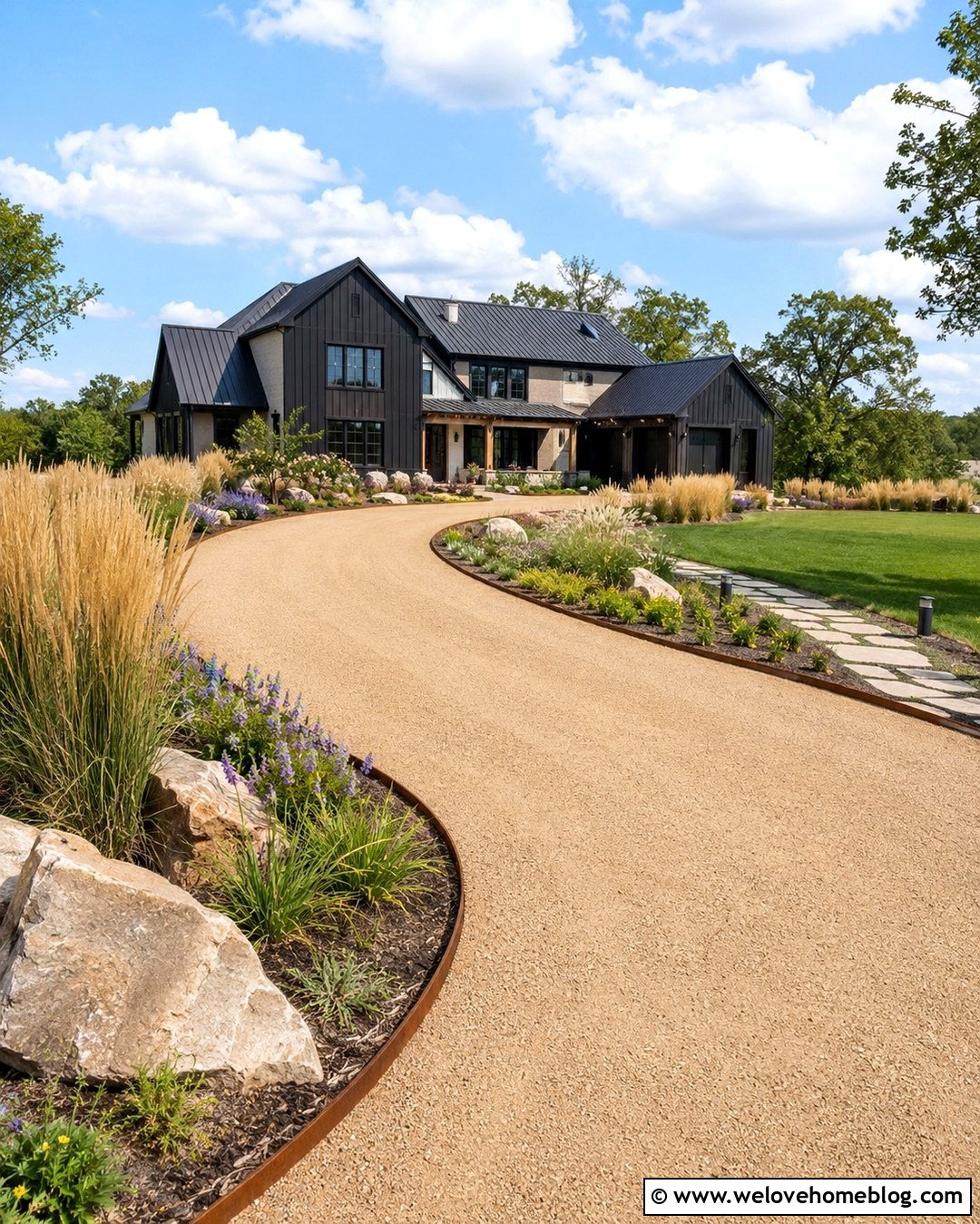
A curved driveway can reveal the creek gradually, creating a more scenic arrival than a direct straight approach. Use buff-colored resin-bound gravel on the driveway and bridge deck for a smooth, unified appearance. Follow the gentle curve with low dark metal railings and a border of natural stone setts. On the outside of the bend, plant layered native shrubs and small flowering trees. Keep the inside of the curve lower and more open to maintain driver visibility. This design works beautifully with a cottage, craftsman, or contemporary country house set beyond the creek. Repeat the stone border along nearby planting beds to connect the bridge with the wider landscape. The restrained railings and seamless surface allow the curving layout, moving water, and varied planting to become the main visual features.
17. Driveway Bridge With Gabion Side Walls
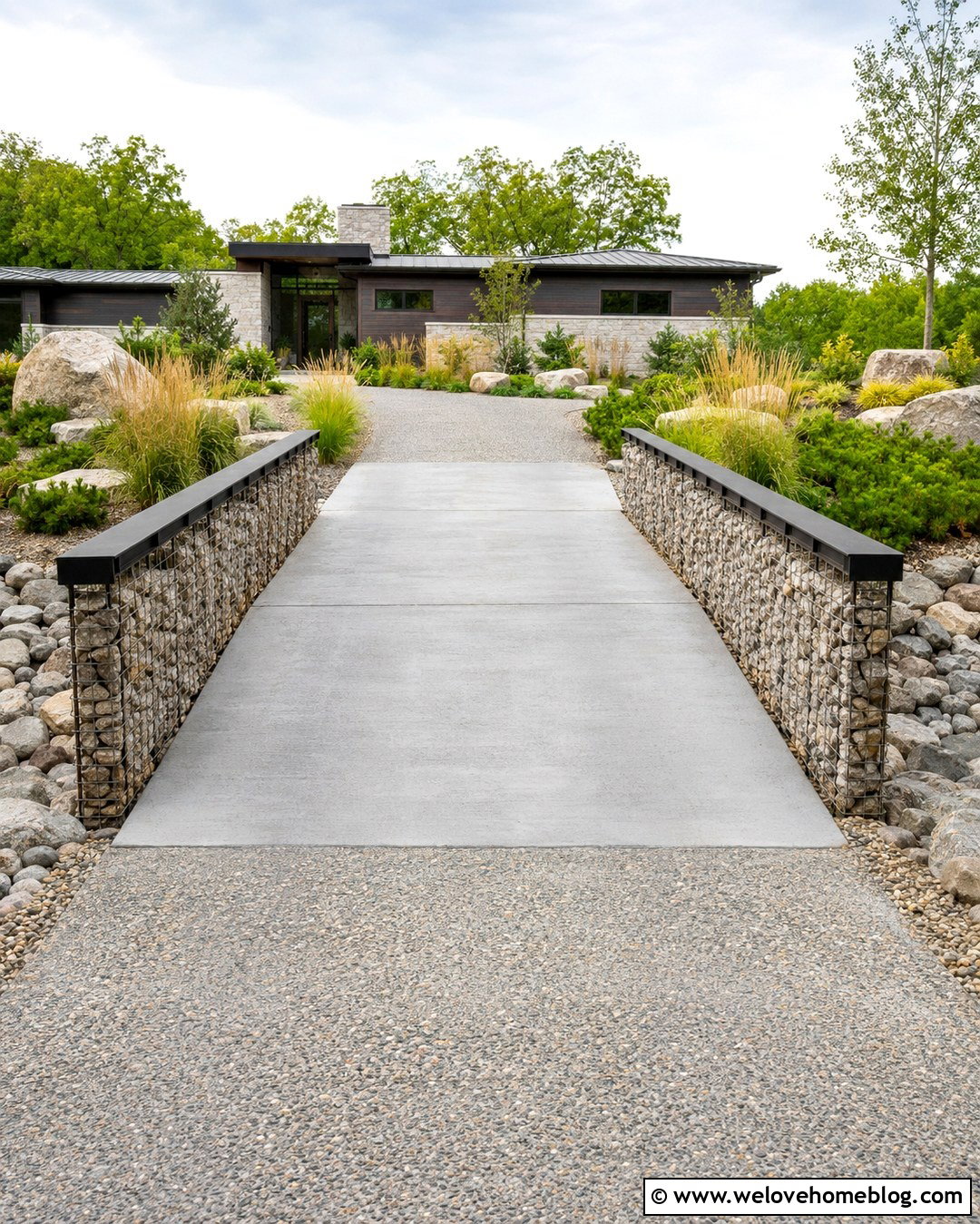
Gabion walls bring texture and a modern-rustic character to a creek crossing. Pair a gray poured concrete bridge deck with low wire cages filled with angular local stone along the sides. Continue the driveway in exposed aggregate so its varied texture complements the rocks without looking identical. At the approaches, use large boulders, switchgrass, sedges, and low evergreen shrubs to soften the gabion edges. This complete look suits an industrial farmhouse, contemporary ranch, or modern mountain house. Dark metal top rails can provide a comfortable finished edge while coordinating with window frames and exterior lights. Keep the stone fill consistent in color and scale for an intentional appearance. Properly designed creek-bank protection can visually blend with the gabions, making the bridge feel integrated rather than placed on top of the landscape.
18. Small Creek Driveway Bridge With Open Railings
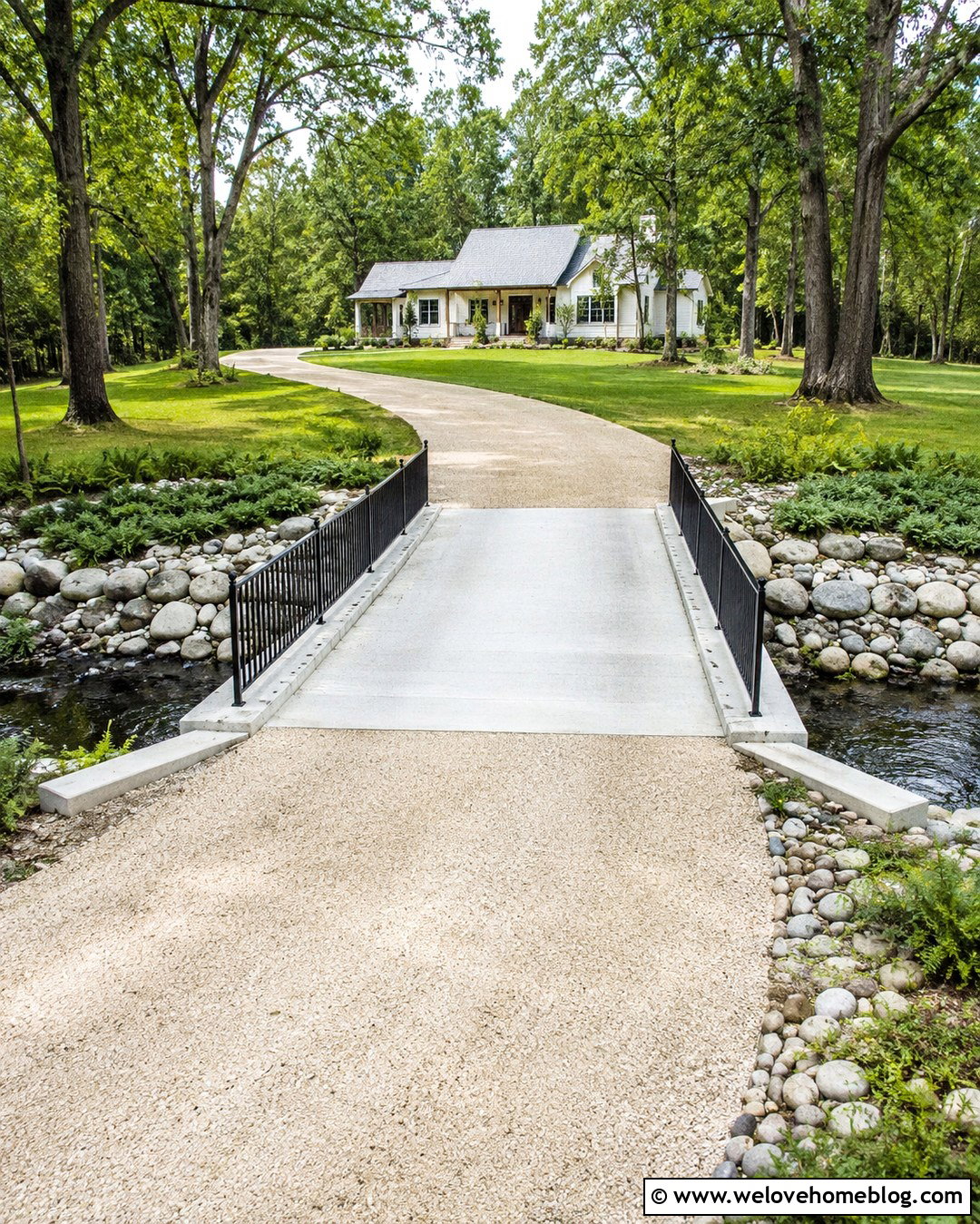
A narrow creek does not always need a visually heavy crossing. A compact steel-and-concrete driveway bridge with open vertical railings can provide a light, unobtrusive appearance. Continue a beige chip-seal or fine gravel driveway toward the bridge, then use a textured concrete surface across the deck for a stable transition. Slim dark railings preserve views of the water and make the crossing feel wider. Low ground covers, ferns, and rounded creek stones can conceal harsh edges around the abutments. This design fits a modest ranch, cottage, or small country home where an oversized bridge would dominate the yard. Slightly flared approach edges can make alignment easier. Keep decorative elements limited, allowing the compact scale, open railing pattern, and natural creekside planting to define the look.
19. Driveway Bridge With Entrance Pillars And Gate
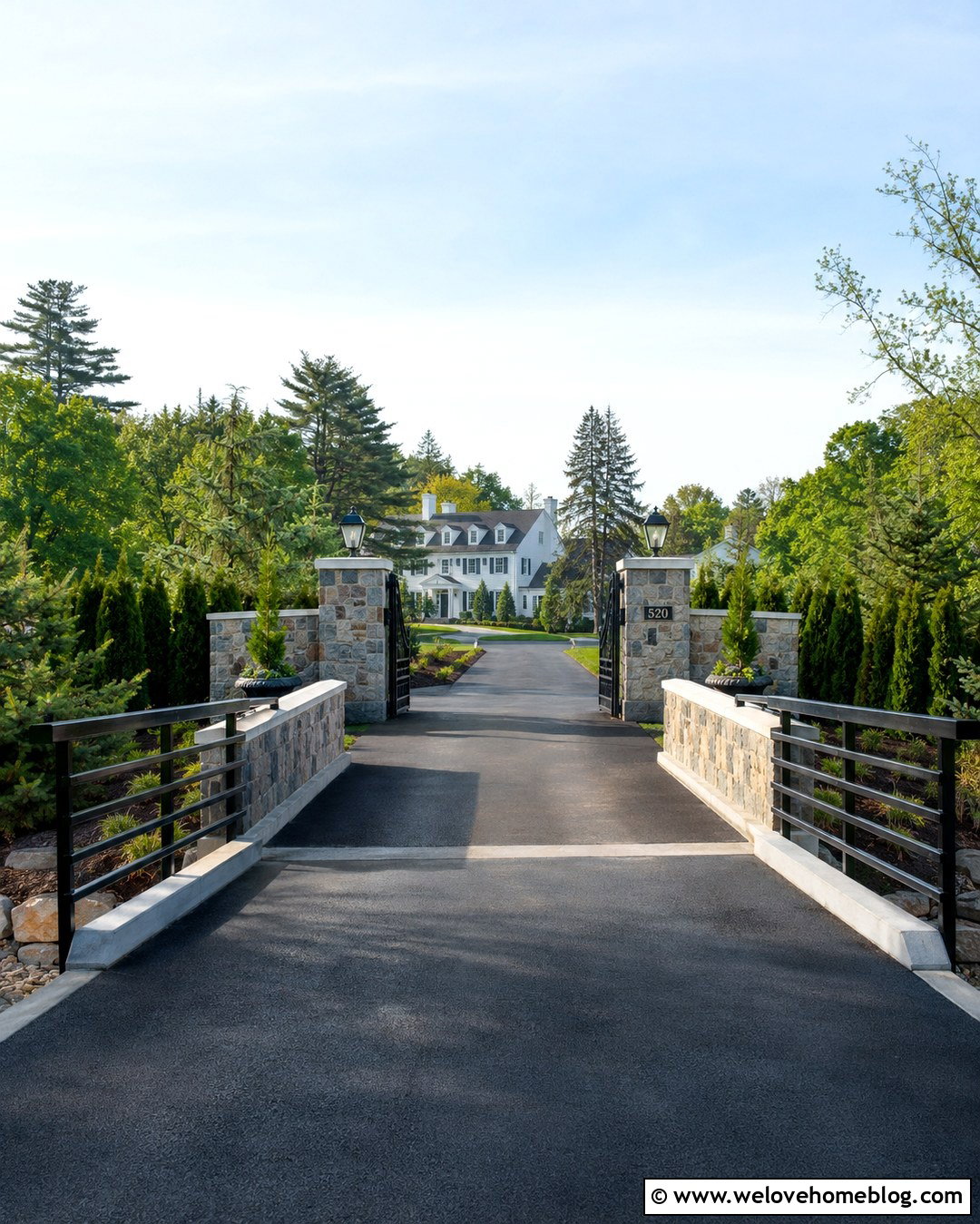
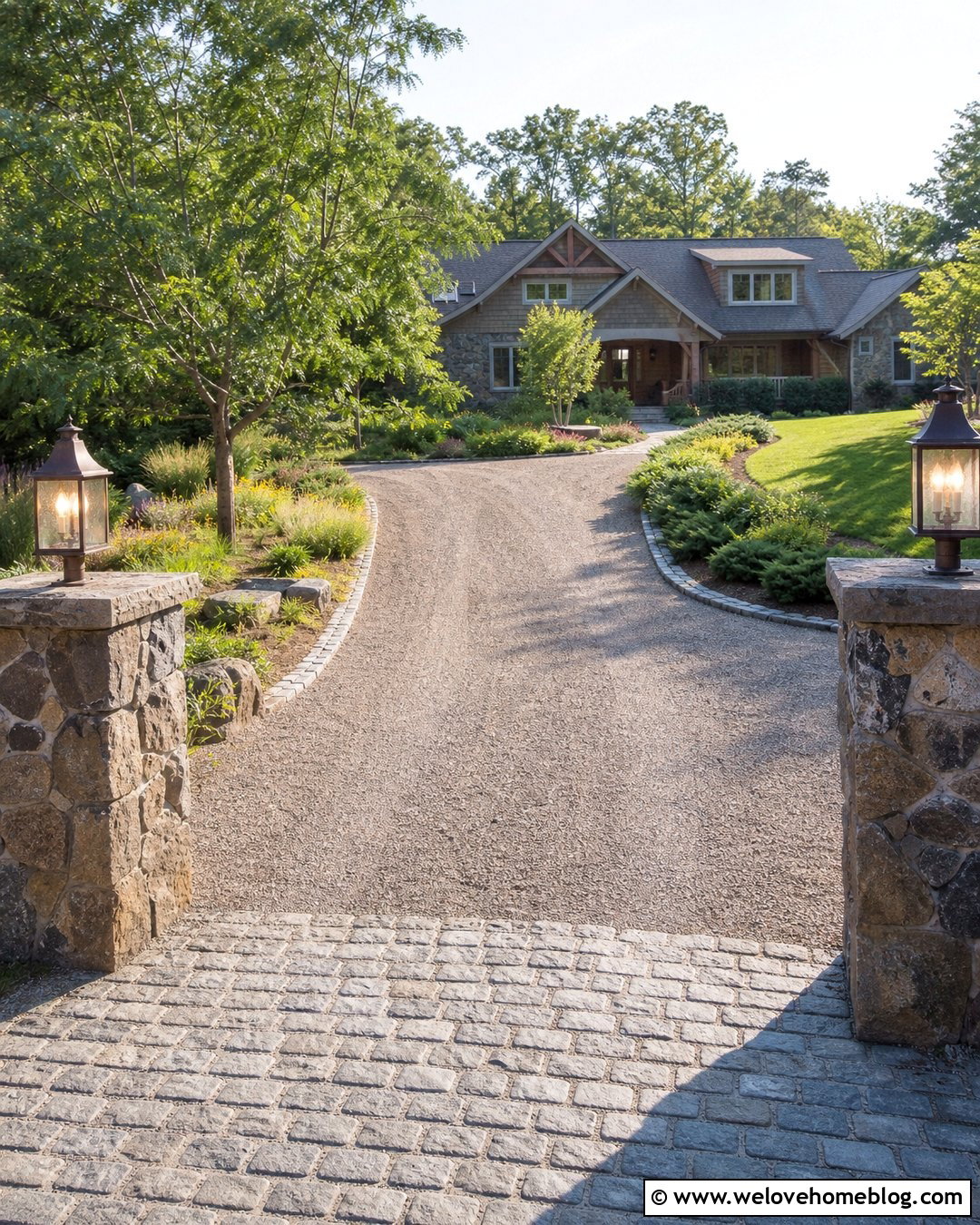
A bridge can become part of a controlled property entrance when the gate and pillars are positioned with safe vehicle queuing in mind. Use a dark asphalt driveway crossing a reinforced concrete bridge with stone-faced sidewalls and black metal railings. Place matching stone pillars and a simple automatic gate beyond the creek, leaving enough level driveway space for vehicles to stop completely off the bridge. Add a coordinated address plaque and low landscape lighting near the gate. Evergreen hedges, native trees, and broad planting beds can frame the entrance while preserving clear views. This complete composition suits a large colonial, craftsman, or country estate. Repeating the same stone on the bridge walls, gate pillars, and house creates a polished entrance that feels planned as one continuous architectural feature.
20. Low-Maintenance Driveway Bridge With Native Plants
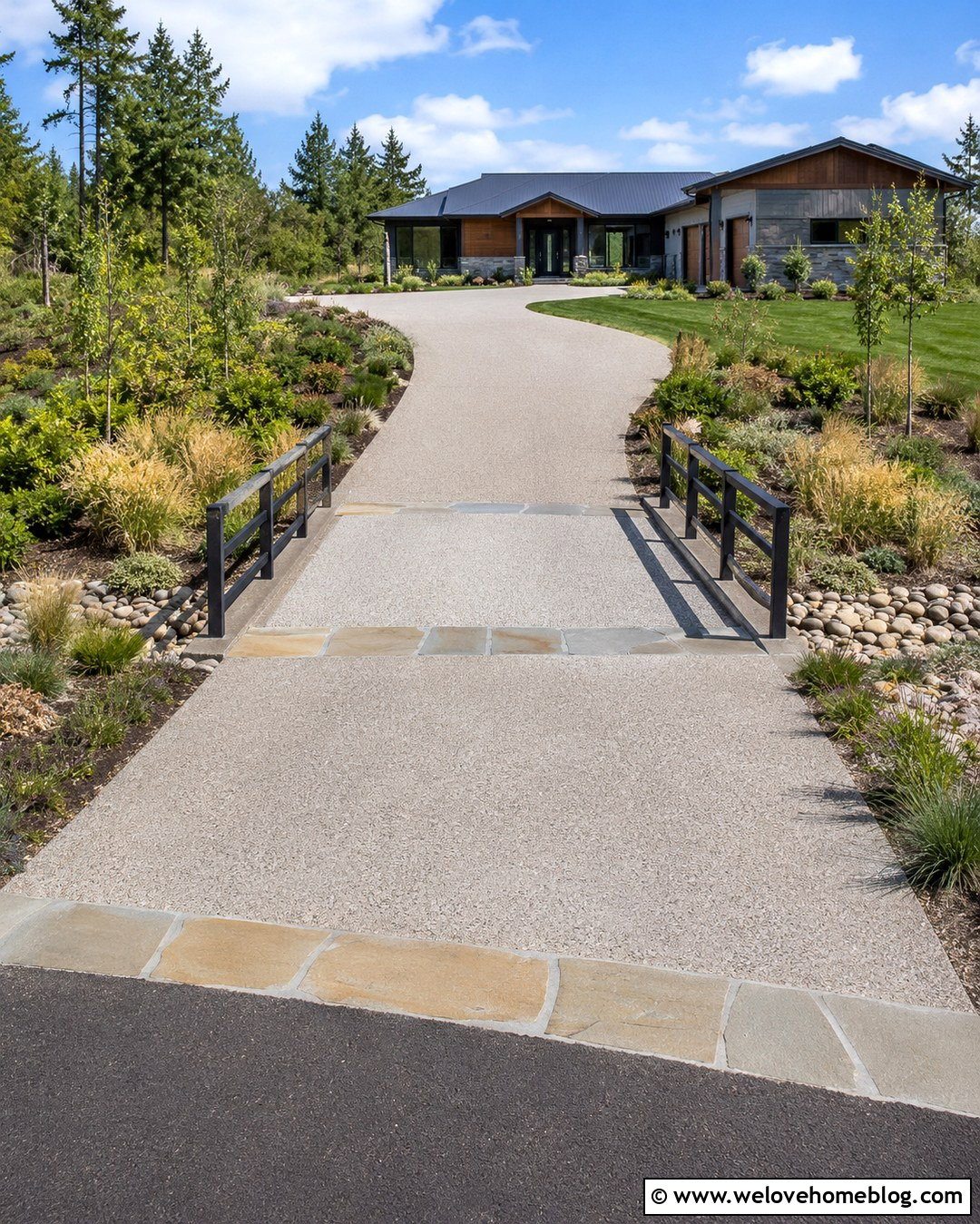
A low-maintenance bridge design begins with durable finishes and simple landscaping that can handle creekside conditions. Consider a reinforced concrete deck with an exposed-aggregate surface, weather-resistant metal railings, and broad stone transition strips. Continue the approach with matching concrete or stabilized gravel, depending on the home and budget. Use regional native grasses, sedges, low shrubs, and erosion-resistant ground covers around the creek banks instead of formal flower beds requiring frequent care. Leave access points where the bridge, drainage areas, and banks can be inspected without disturbing the landscape. Creek flow, flood elevation, soil stability, expected vehicle weight, and emergency access should guide the engineered design rather than appearance alone. () This practical approach complements ranch, contemporary, and rural homes while remaining neat throughout the seasons.
Conclusion:
These **20 bridge over creek driveway ideas** show how a necessary crossing can become one of the property’s most distinctive features. Timber creates warmth, concrete offers a clean and substantial appearance, and steel supports open contemporary designs. Stone walls, native landscaping, coordinated railings, smooth transitions, and well-planned approaches help the bridge relate naturally to the driveway and house. However, appearance should follow sound engineering. Every site has different creek conditions, soil, flood risk, access needs, and vehicle loads. Begin with professional site evaluation and local permit guidance, then choose materials and landscaping that support the approved structure. A carefully planned bridge can provide dependable access while making the entire arrival feel cohesive, welcoming, and connected to the landscape.

Related posts:
Leave a Reply