
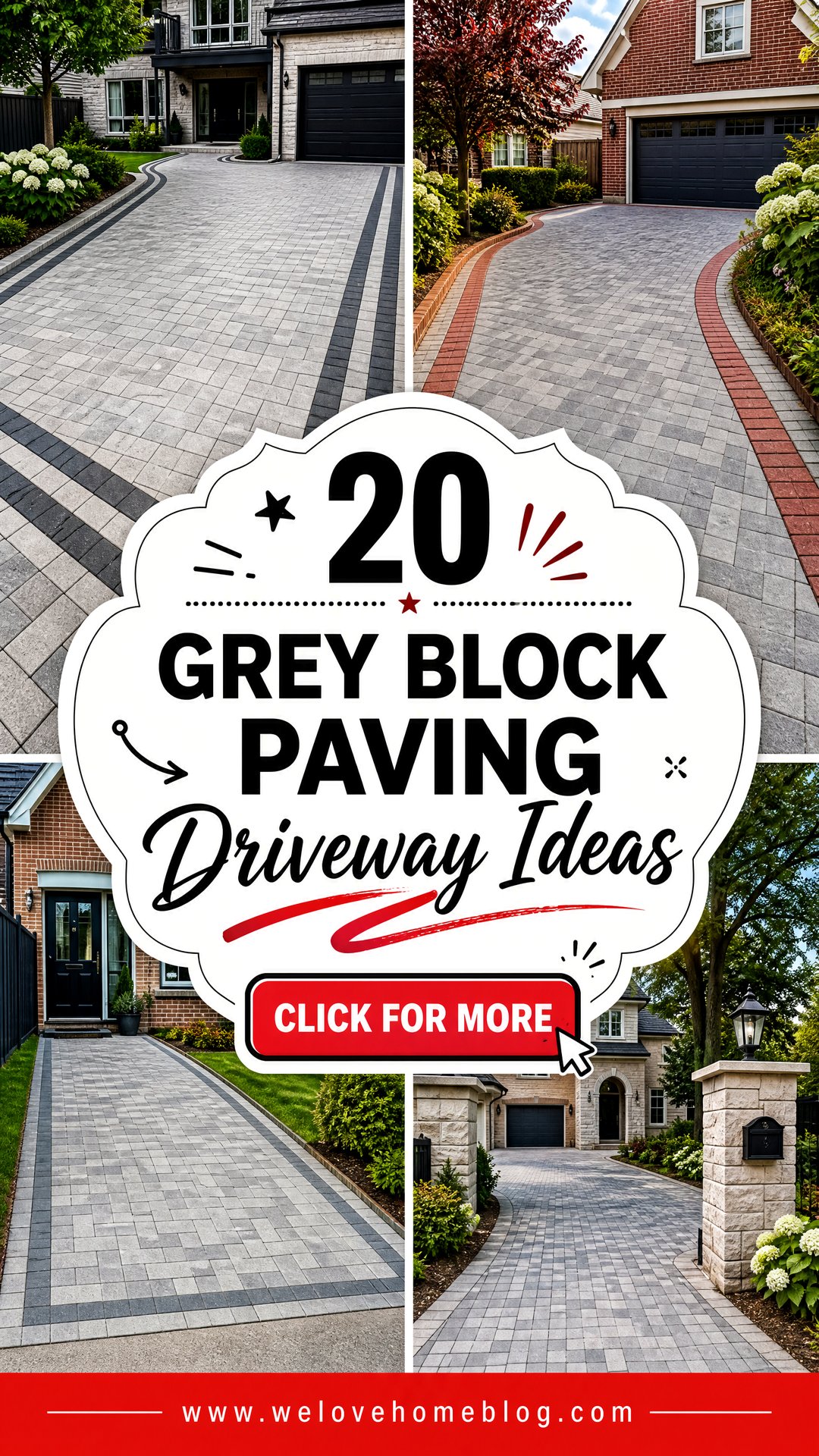
Grey paving offers a clean, versatile foundation that can suit everything from a traditional brick home to a sharp contemporary exterior. The best 20 Grey Block Paving Driveway Ideas go beyond choosing a block color. Pattern, scale, edging, drainage, planting, and the connection to the front walkway all shape the finished result. Pale silver blocks can brighten a compact frontage, while charcoal-grey paving creates a stronger architectural look. Borders can add contrast, guide vehicles, and define planting beds without making the design feel busy. You can also combine grey tones to disguise everyday marks and create more visual depth. Whether you are planning a small parking area or a sweeping entrance, the complete looks below offer practical and attractive 20 Grey Block Paving Driveway Ideas.
1. Grey Herringbone Driveway With Charcoal Border
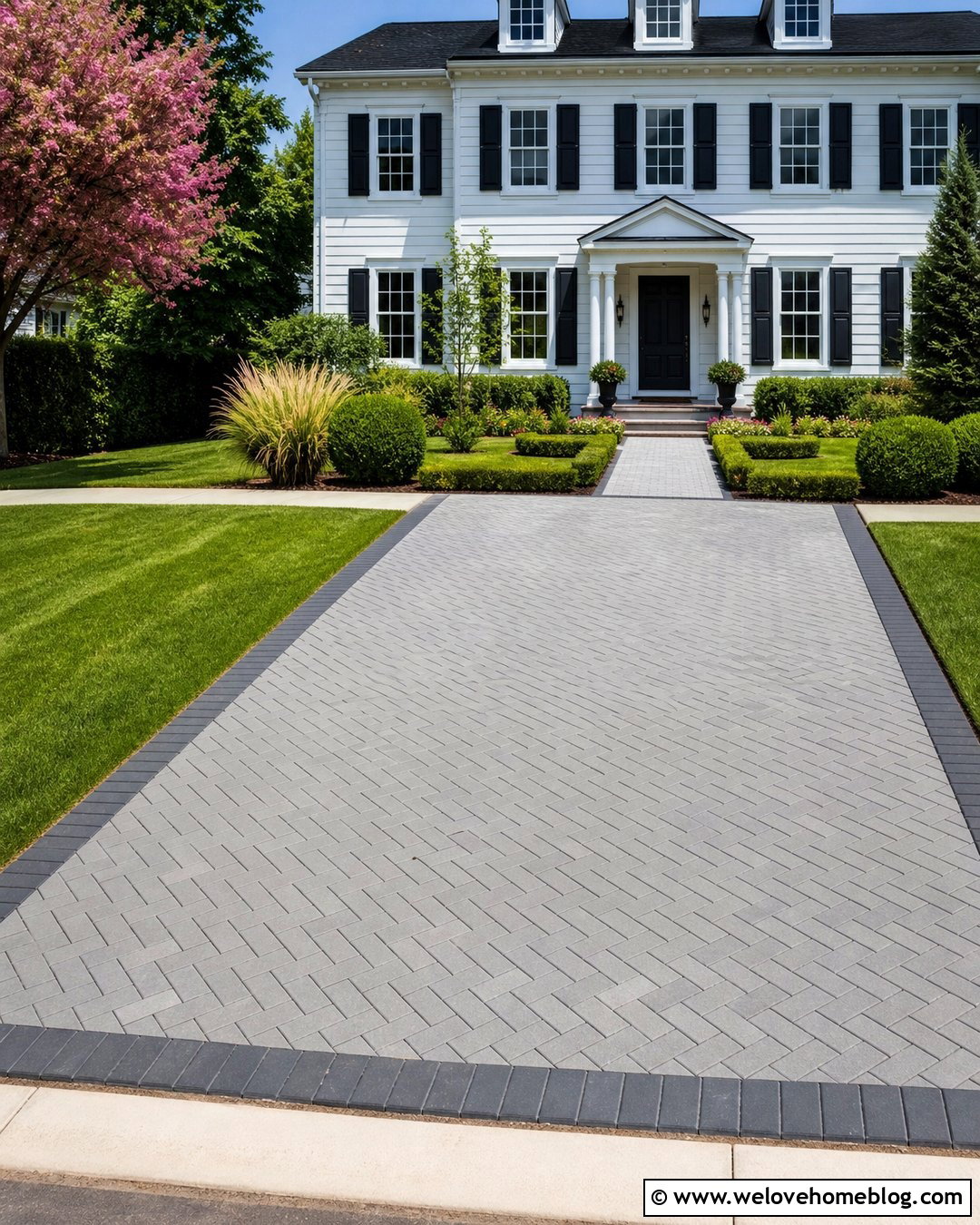
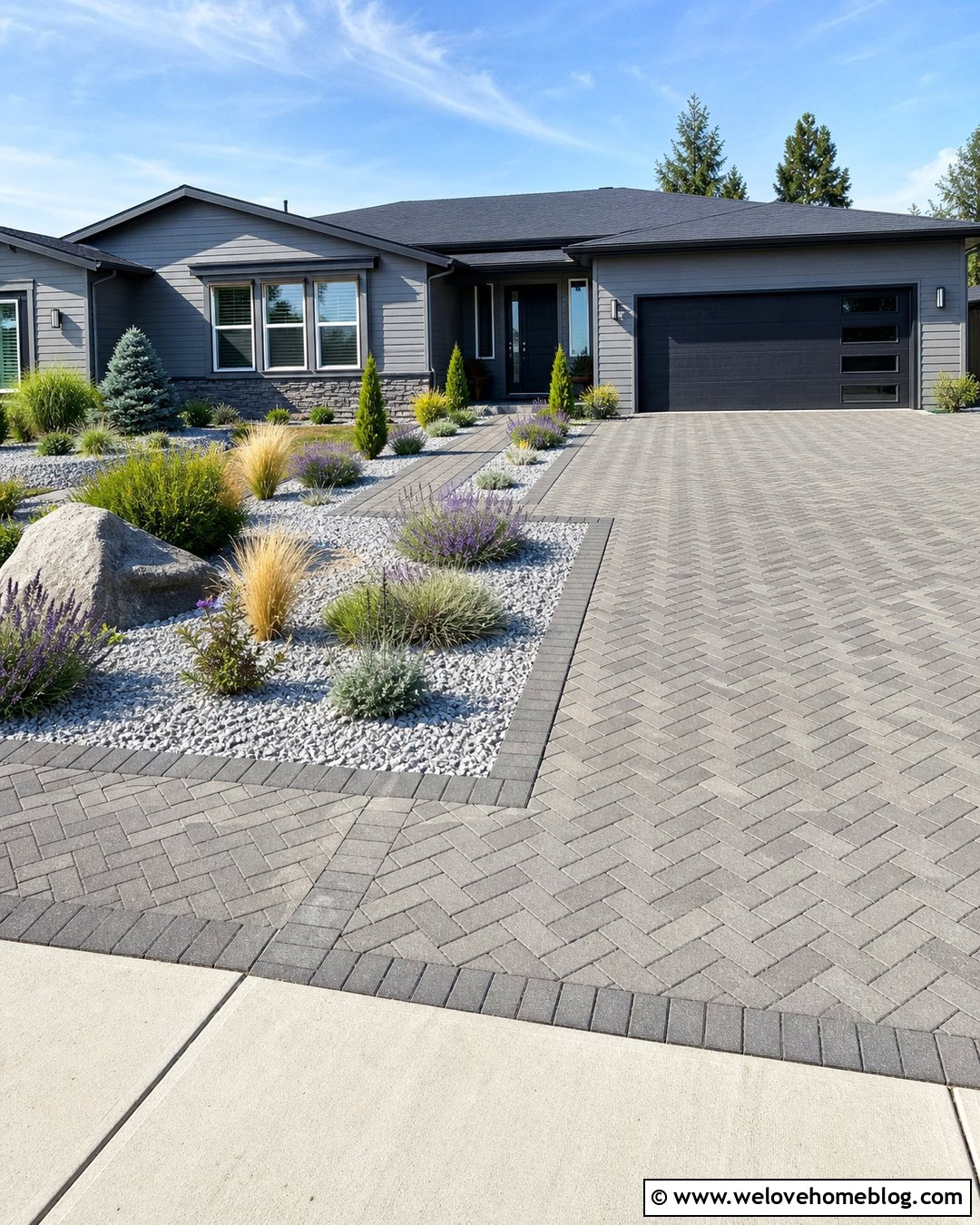
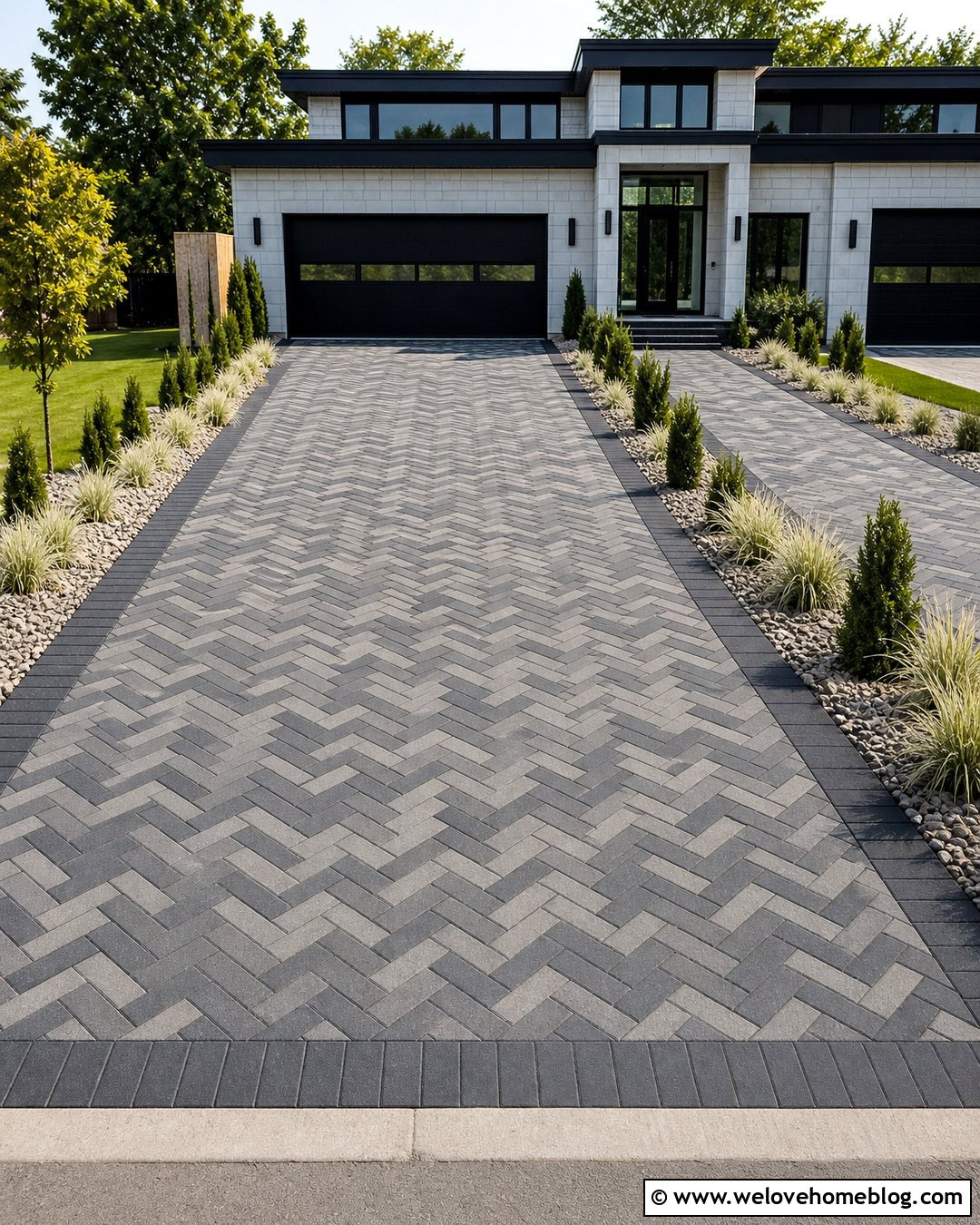
A 45-degree herringbone pattern gives a grey block paving driveway a crisp, structured appearance. Use medium-grey concrete blocks across the main parking area, then frame them with a single charcoal soldier-course border. The darker outline clearly defines the driveway against the lawn and planting beds. It also creates a neat transition where the paving meets the sidewalk. Keep the layout straight for a practical suburban home, and repeat the charcoal blocks around the front walkway for continuity. Low evergreen shrubs, ornamental grasses, and a small flowering tree can soften the strong geometry. This combination works especially well with white siding, pale brick, or rendered facades because the charcoal border connects visually with black windows, exterior lights, and garage doors.
2. Light Grey Block Driveway With Dark Double Border
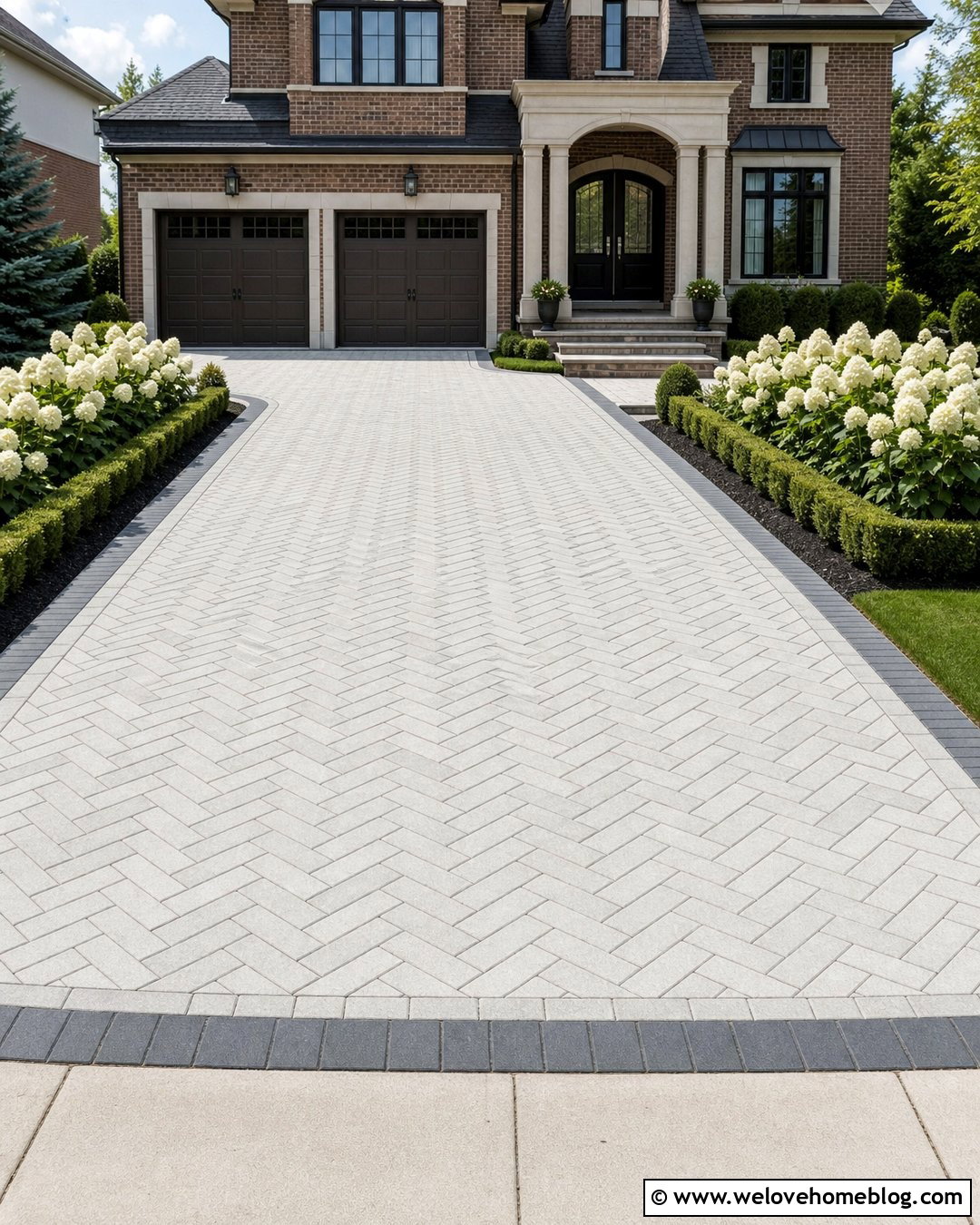
Double borders can make a wide driveway look more intentional without adding a complicated centerpiece. Start with light grey block pavers laid in a 90-degree herringbone pattern. Add a narrow mid-grey inner course and a charcoal outer course around the entire driveway. The layered edge produces a tailored finish and helps visually separate the parking surface from surrounding lawns and garden beds. On a large colonial or two-story suburban home, align the border with the garage openings and front steps. Balanced planting beds filled with boxwood, hydrangeas, and seasonal flowers will reinforce the formal layout. Avoid introducing too many additional paving colors. The pale field and two darker outlines already provide enough detail, especially when viewed from the curb or upper-story windows.
3. Charcoal Grey Driveway With Silver Border
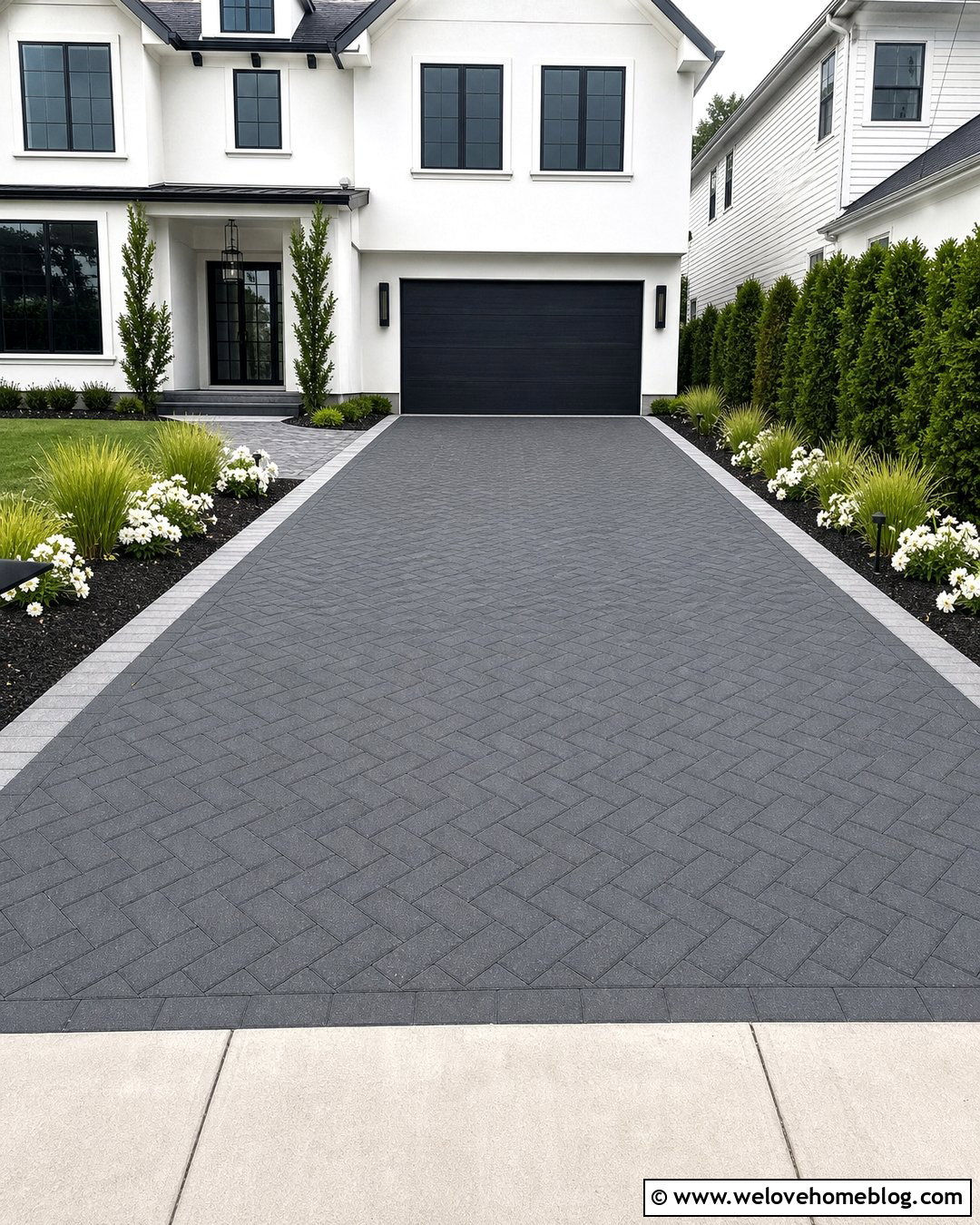
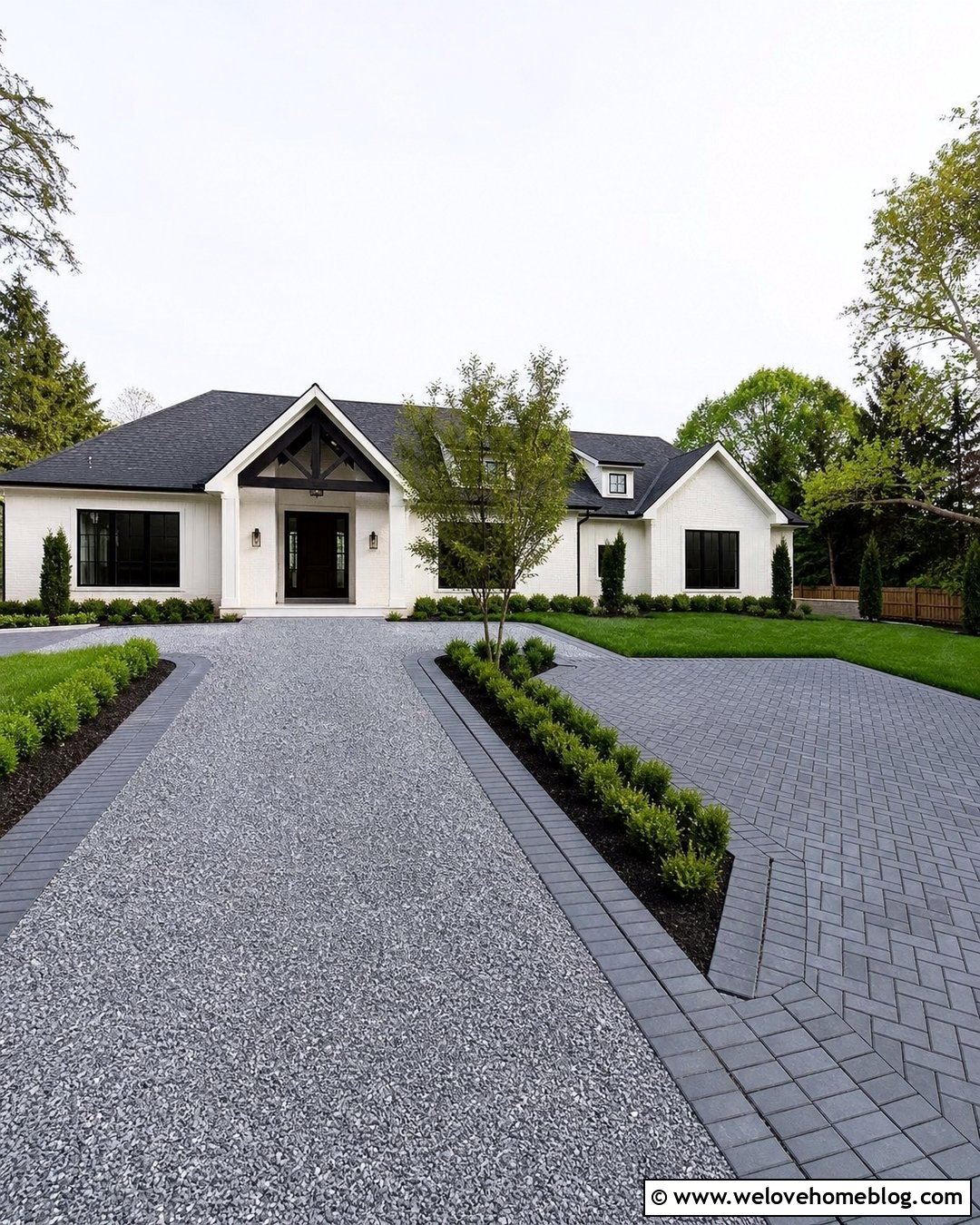
Deep charcoal paving creates a bold backdrop for a modern house, particularly when it is balanced by a slim silver-grey border. Lay rectangular charcoal-grey concrete block pavers in a 45-degree herringbone pattern across a straight driveway. Use pale silver blocks around the perimeter and entrance apron to sharpen the edges. A white or light-grey house keeps the overall scheme from feeling too dark. Add linear planting beds containing clipped evergreens, white flowering perennials, and upright grasses. These plants bring movement and brightness beside the strong paved surface. A matching silver-grey walkway can branch from the driveway toward the front door. This design looks especially cohesive when the garage doors, window frames, and address sign repeat the charcoal tone used in the main paving.
4. Mixed Grey Block Driveway With Ashlar Pattern
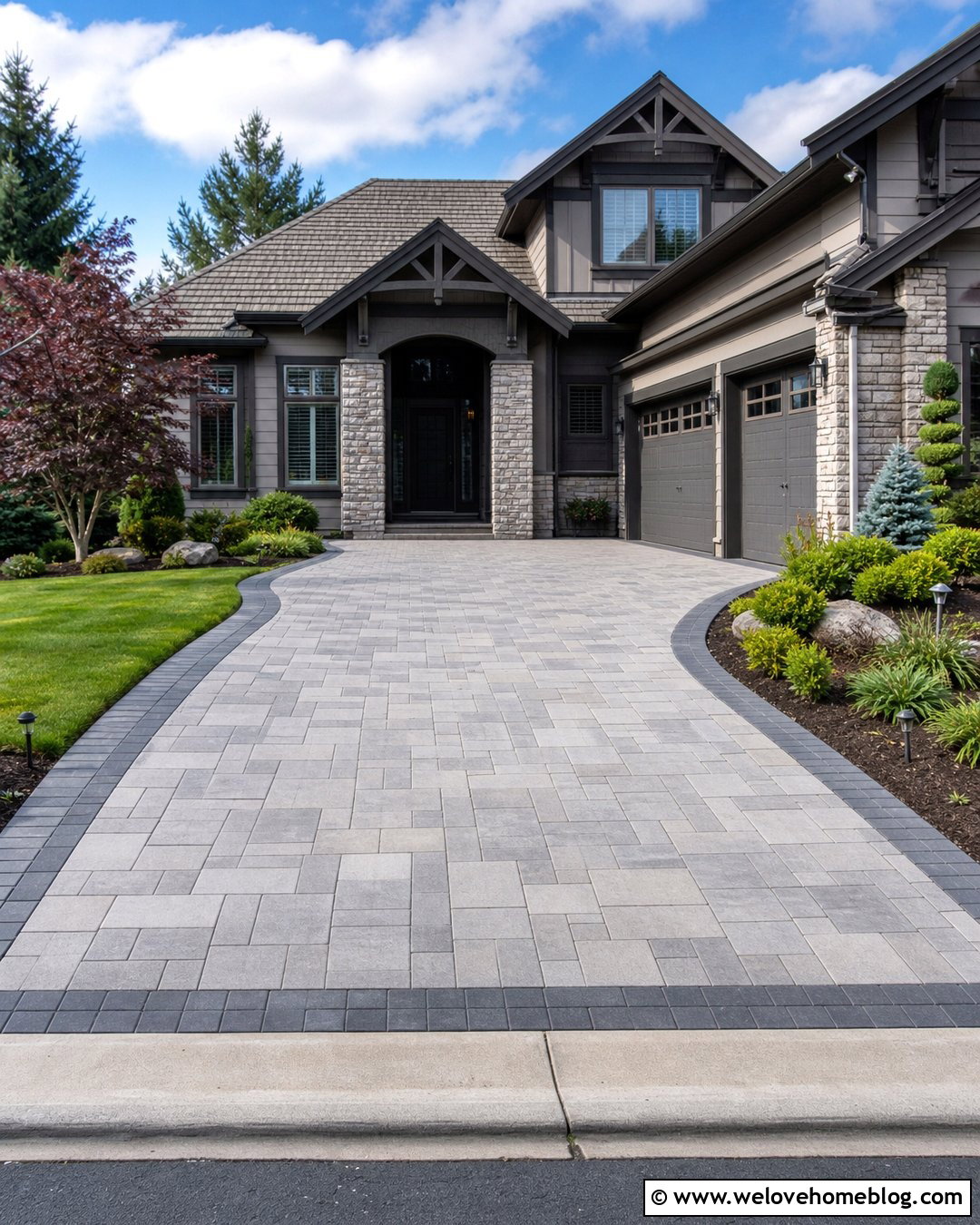
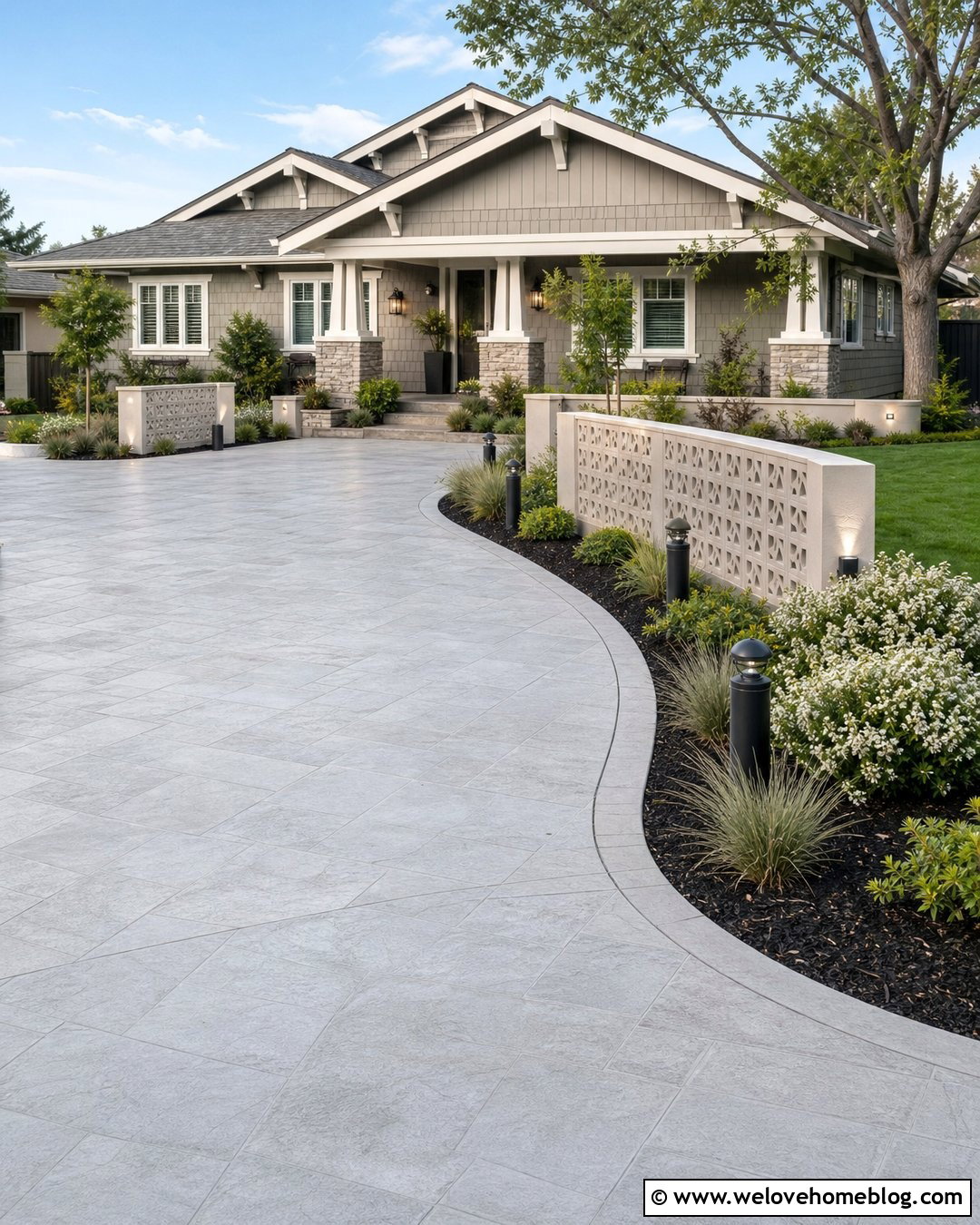
Would you prefer a driveway that feels varied but not overly decorative? Mixed-size block pavers laid in an ashlar pattern create subtle movement through changes in size and tone. Select rectangular and square concrete blocks in silver, slate, and medium grey. Blend them evenly rather than forming noticeable patches of one color. A simple charcoal perimeter keeps the varied surface organized. This treatment works beautifully on a broad craftsman driveway because the irregular layout complements stone columns and textured siding. Curved planting beds filled with compact shrubs can soften the rectangular blocks. Keep the entrance apron relatively open, and use the same mixed-grey paving for the walkway. The combination delivers texture and depth while remaining practical enough for a busy family parking area.
5. Grey Cobble Block Driveway With Curved Edging
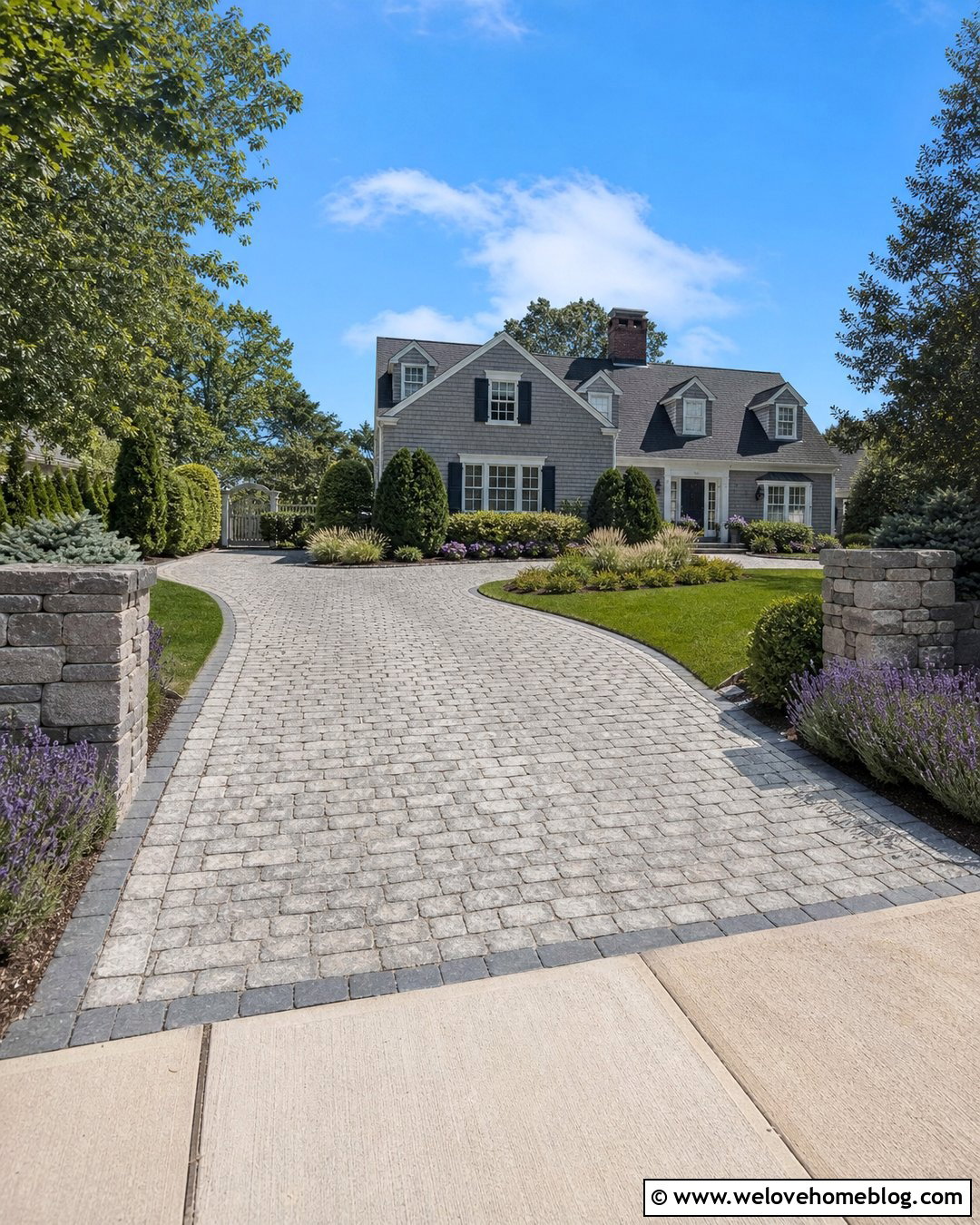
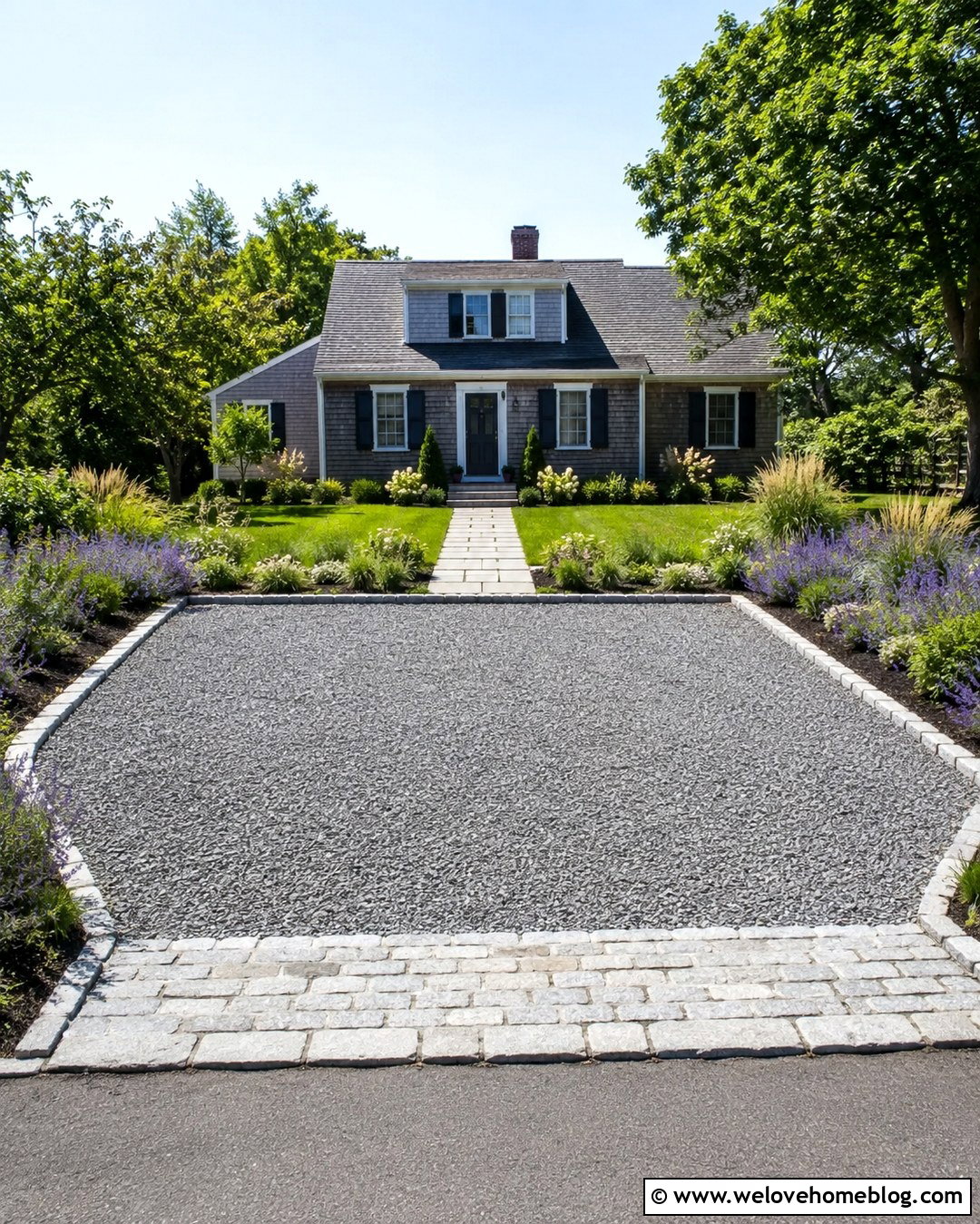
A gently curved layout can make tumbled grey cobble-style blocks feel naturally established. Choose small, textured concrete pavers in blended graphite and weathered grey tones. Lay them in flowing rows that follow the curve from the street to the garage. Frame the driveway with granite setts or darker tumbled blocks to hold the shape visually. Along the outer curve, create a generous planting bed with ornamental grasses, lavender, compact conifers, and ground cover. Keep the inside curve more open so drivers have enough turning space. This complete look suits a cottage, cape cod, or stone-faced home because the aged paving texture feels less formal than smooth blocks. A matching cobbled walkway can connect the parking area to a welcoming covered entry.
6. Grey Block Driveway With Red Brick Border
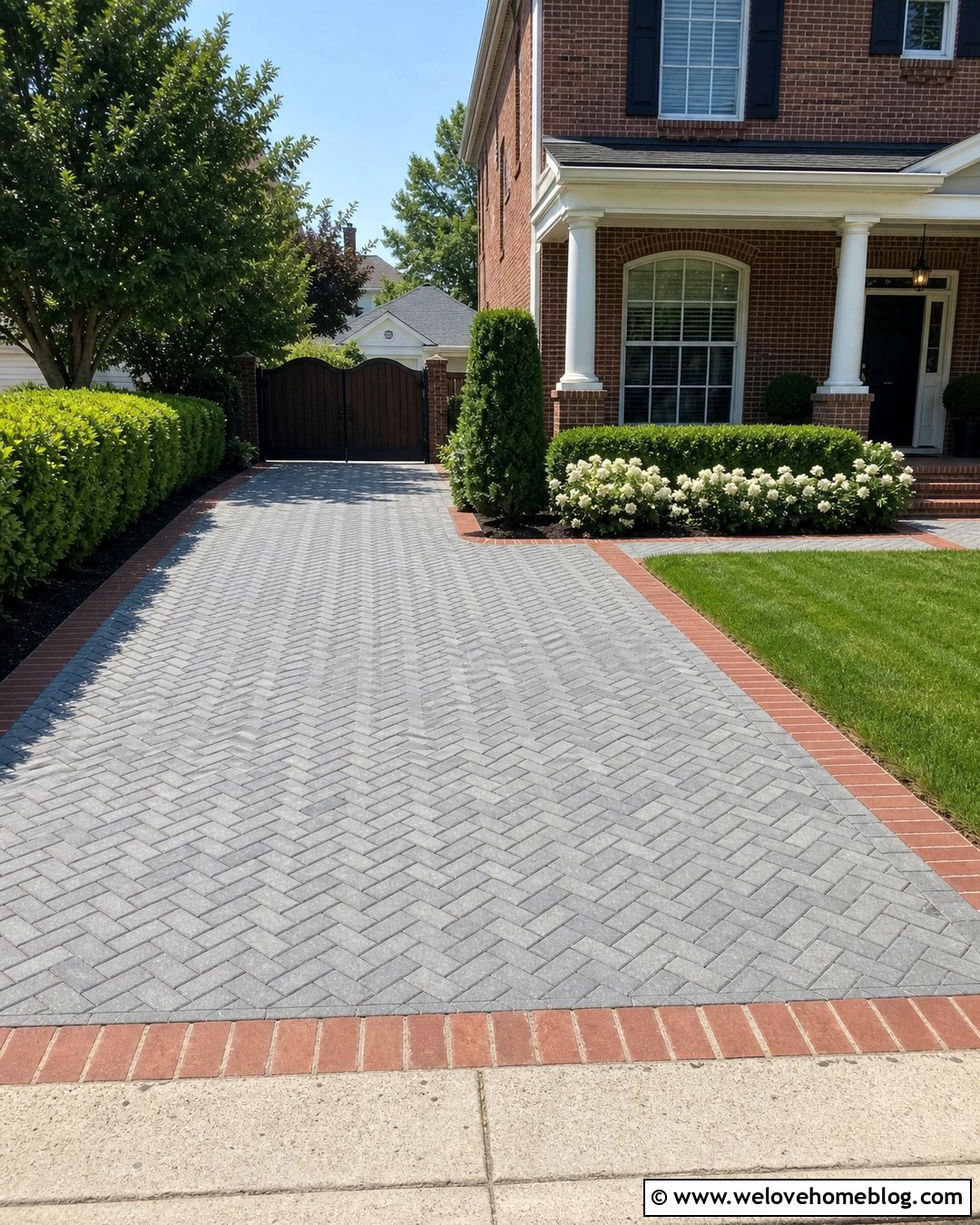
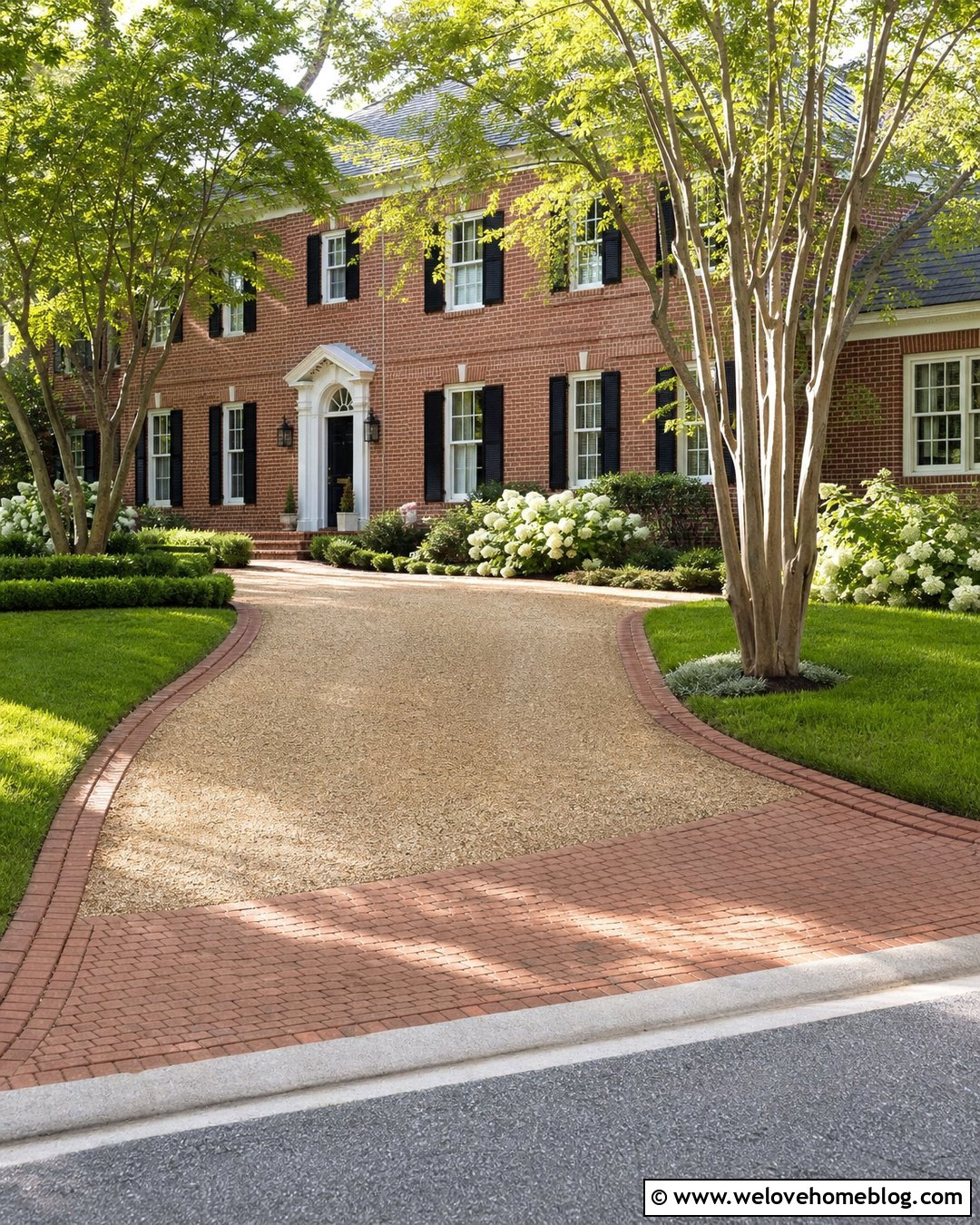
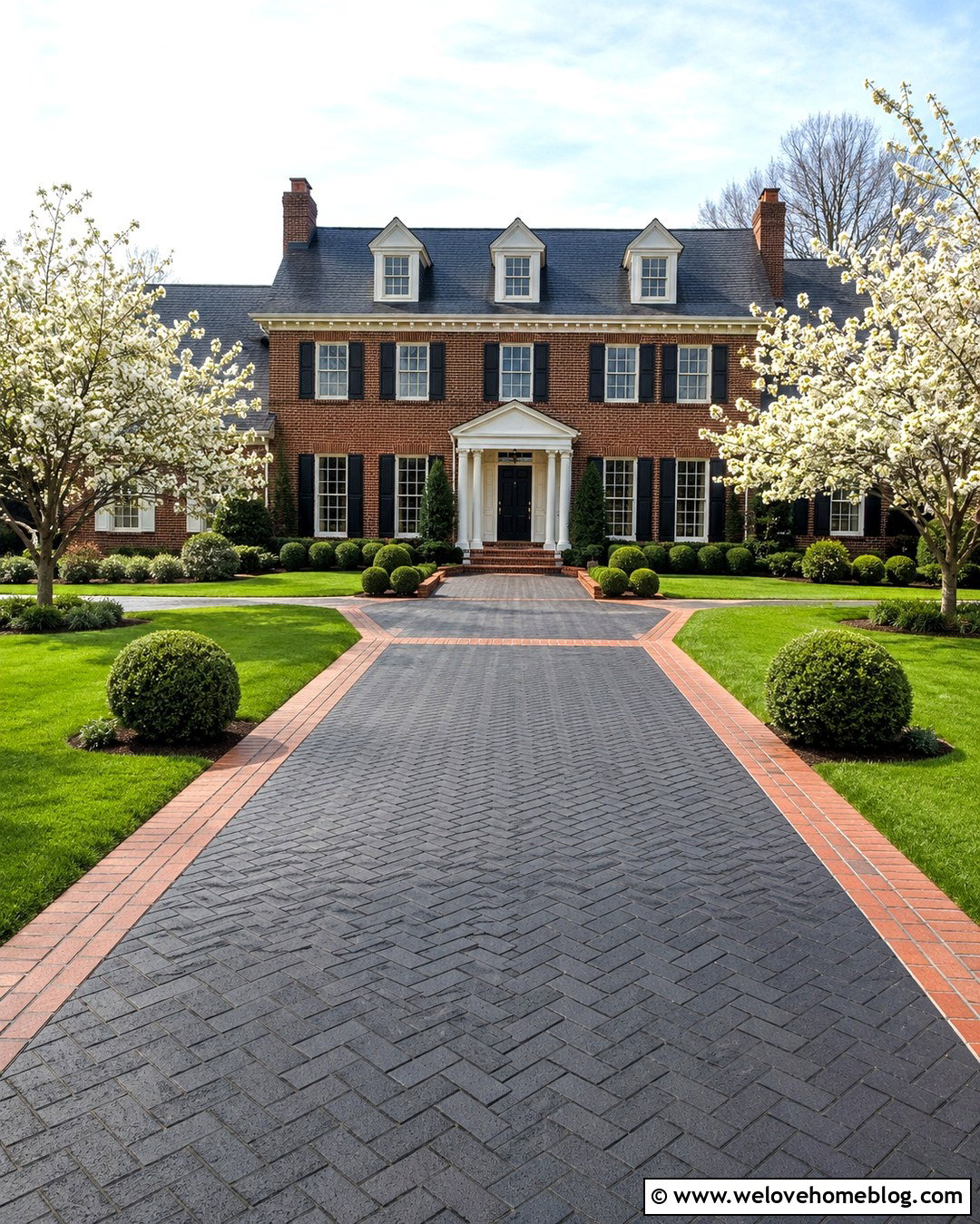
Grey paving does not have to produce a completely cool color palette. A red or brown clay-brick border can connect the driveway to a traditional brick house and add welcome warmth. Use medium-grey concrete block pavers in a straightforward 90-degree herringbone layout. Surround the field with one or two courses of clay brick laid as a soldier border. Repeat that brick around the front walkway and planting beds so the contrast appears deliberate. Green lawn, clipped hedges, and white flowering shrubs provide a fresh frame without competing with the masonry. This design is particularly effective when the home already has red-brick walls, chimney details, or brick porch columns. Choose muted, weathered border bricks rather than bright orange ones for a softer transition.
7. Grey Block Driveway With Granite Sett Border
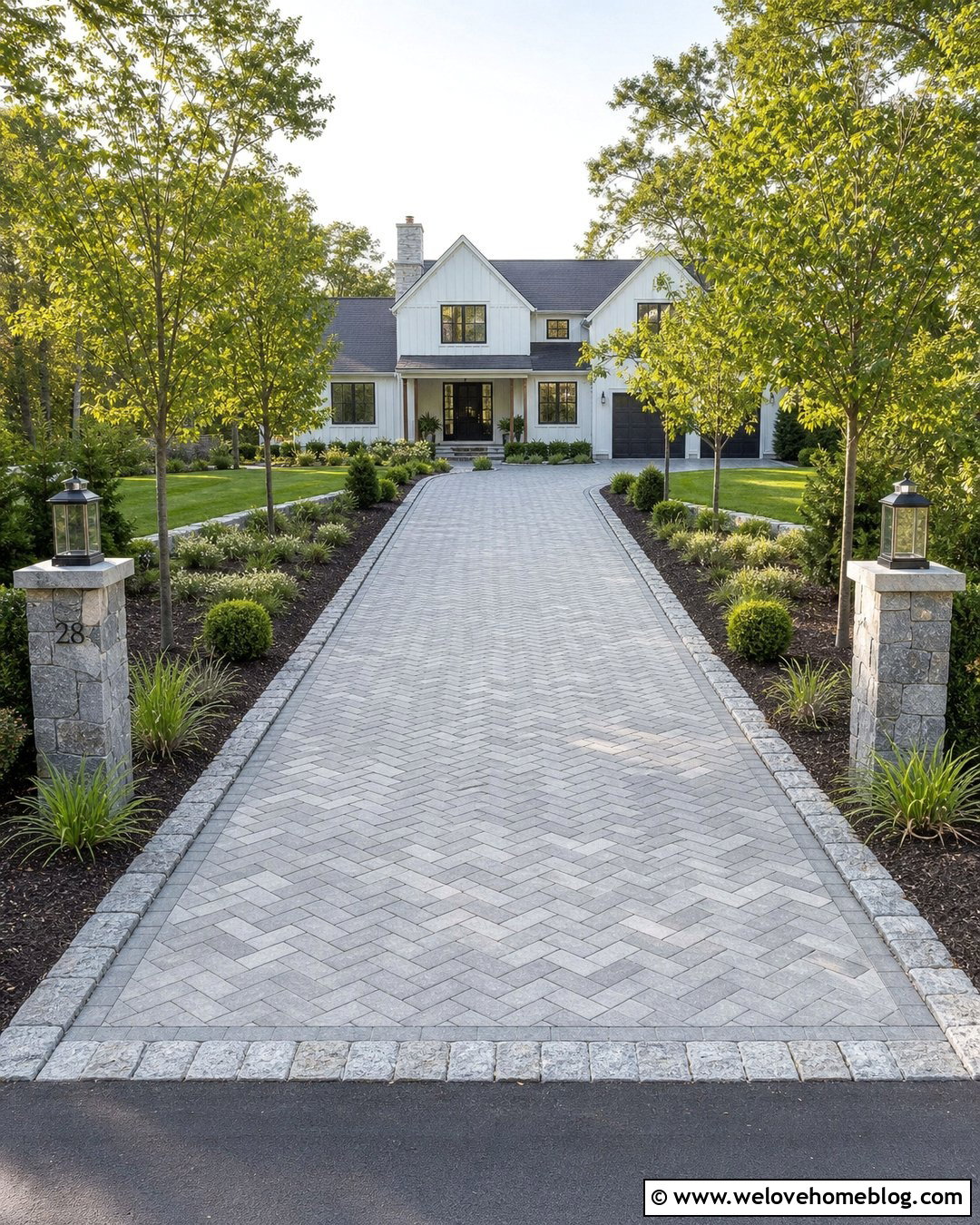
Natural granite setts can give standard grey block paving a more substantial and refined edge. Cover the main surface with smooth silver-grey concrete blocks laid in herringbone, then install chunky granite setts along the sides and entrance apron. Select granite containing several grey tones so it relates to the paving without matching it exactly. On a long driveway, the textured border naturally directs attention toward the house. Plant clipped evergreens, low grasses, and small multi-stem trees beyond the setts to frame the route. A narrow granite strip can also separate the driveway from the front walkway. This combination suits stone homes, modern farmhouses, and upscale suburban properties. The contrast comes primarily from texture, creating detail without introducing an unrelated paving color.
8. Grey Block Driveway With Circular Center Pattern
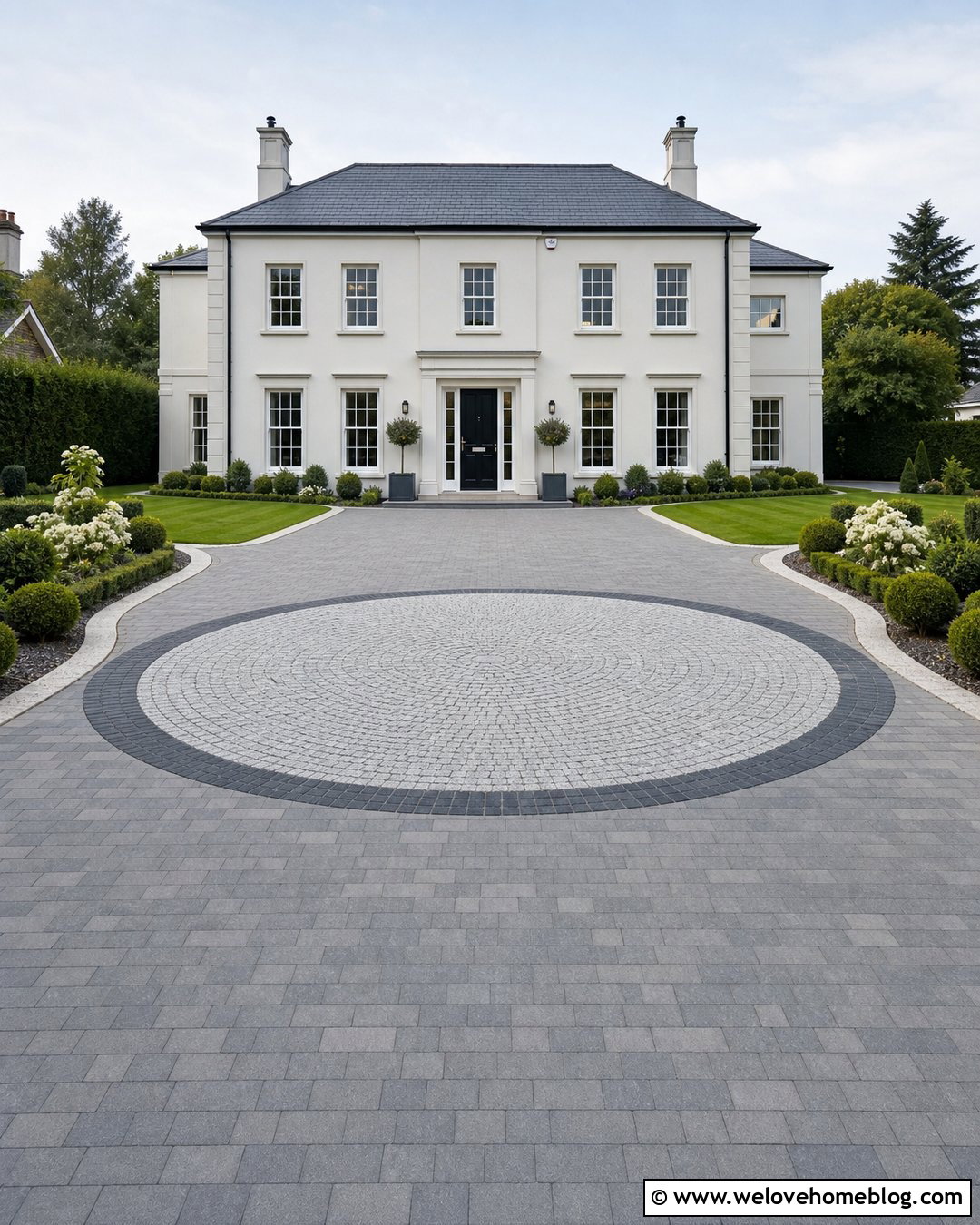
A circular paving feature can organize a large forecourt and break up an uninterrupted area of grey. Lay the main driveway in medium-grey rectangular block pavers, then form a central circle using darker charcoal blocks. Fill the middle with pale silver cobble-style pavers arranged in concentric rings. Position the feature where it remains visible rather than underneath normal parking spaces. A circular or horseshoe driveway layout is the natural choice, especially in front of a symmetrical colonial or Georgian-inspired house. Echo the round shape with curved planting beds, clipped shrubs, or a small central island if turning space permits. Keep the remaining borders simple. The circle should act as the main decorative element, while the restrained grey palette prevents the forecourt from appearing overly ornate.
9. Modern Grey Driveway With Linear Block Pattern
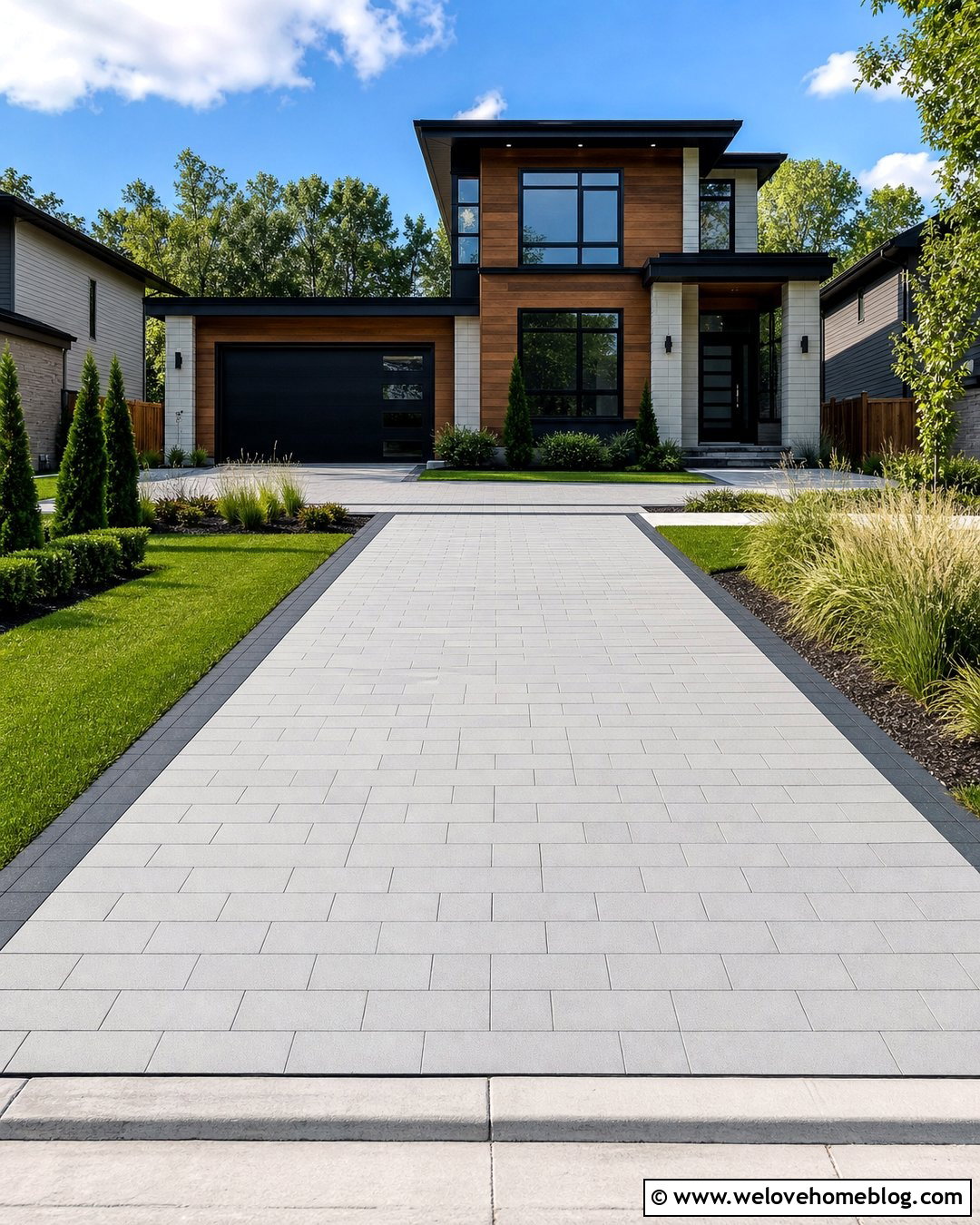
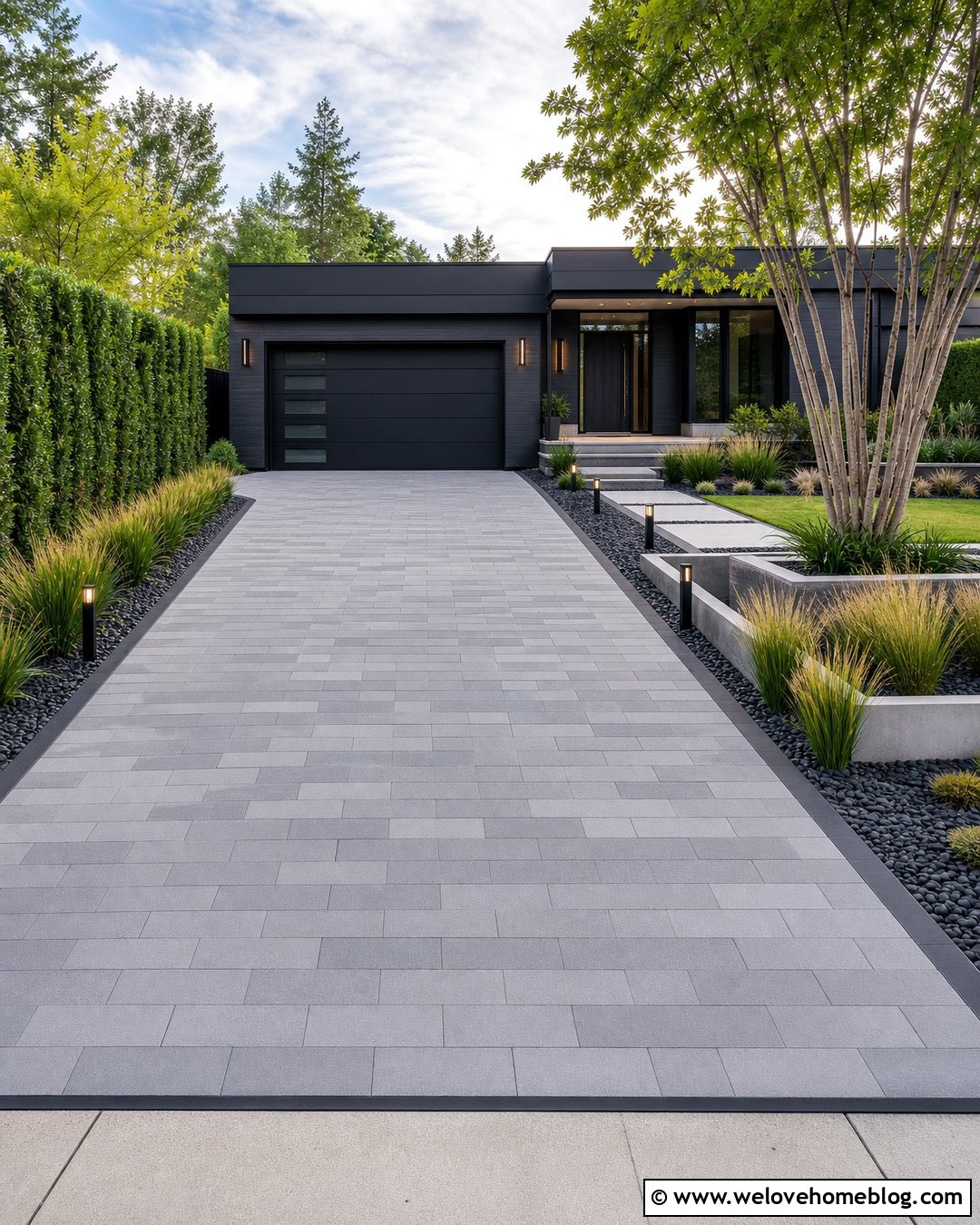
Long, narrow block pavers can emphasize the clean architecture of a contemporary house. Select smooth concrete paving blocks in pale grey and lay them in staggered linear rows running toward the garage. This direction visually lengthens the driveway and guides the eye toward the entrance. Install charcoal-grey blocks along each side as a narrow frame, keeping all corners straight and precise. Minimal planting works best with this layout. Consider broad grass strips, sculptural evergreen shrubs, and rectangular beds filled with uniform ornamental grasses. A large-format walkway can cross the driveway near the house to connect the garage and front door. Black-framed windows, flat rooflines, and natural wood siding will complement the paving. The finished driveway should feel streamlined, open, and carefully proportioned.
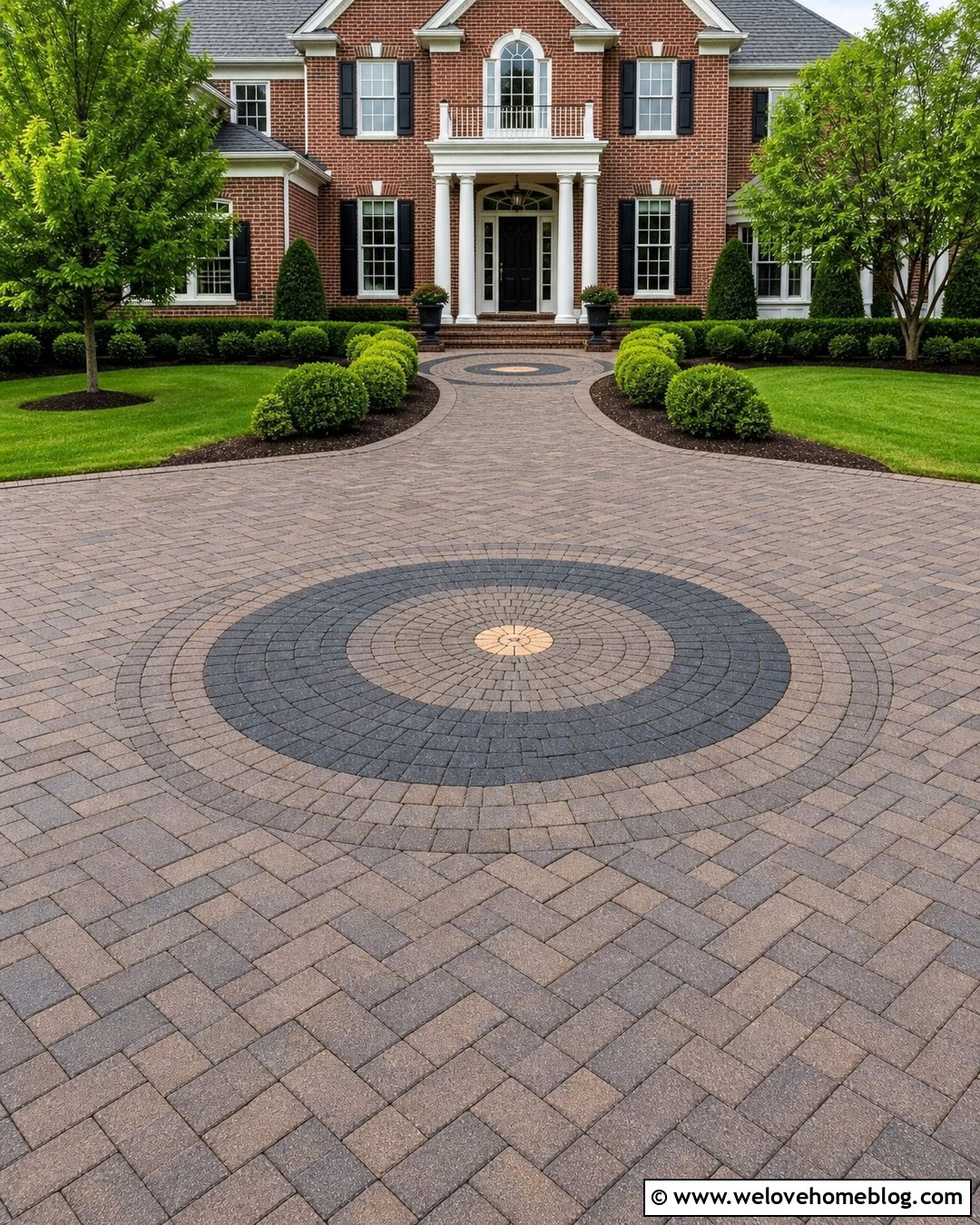
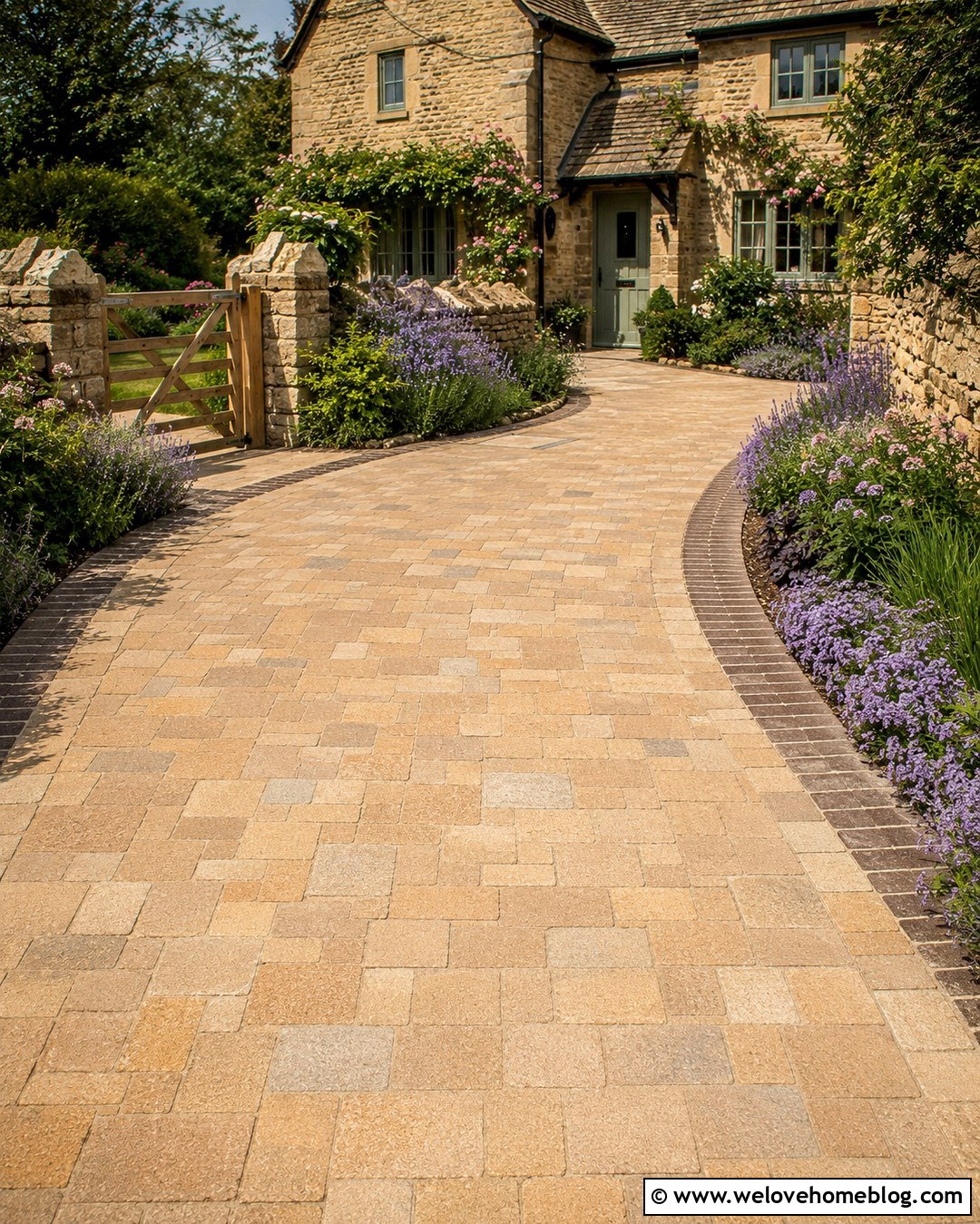
10. Grey Block Driveway With Grass Strips
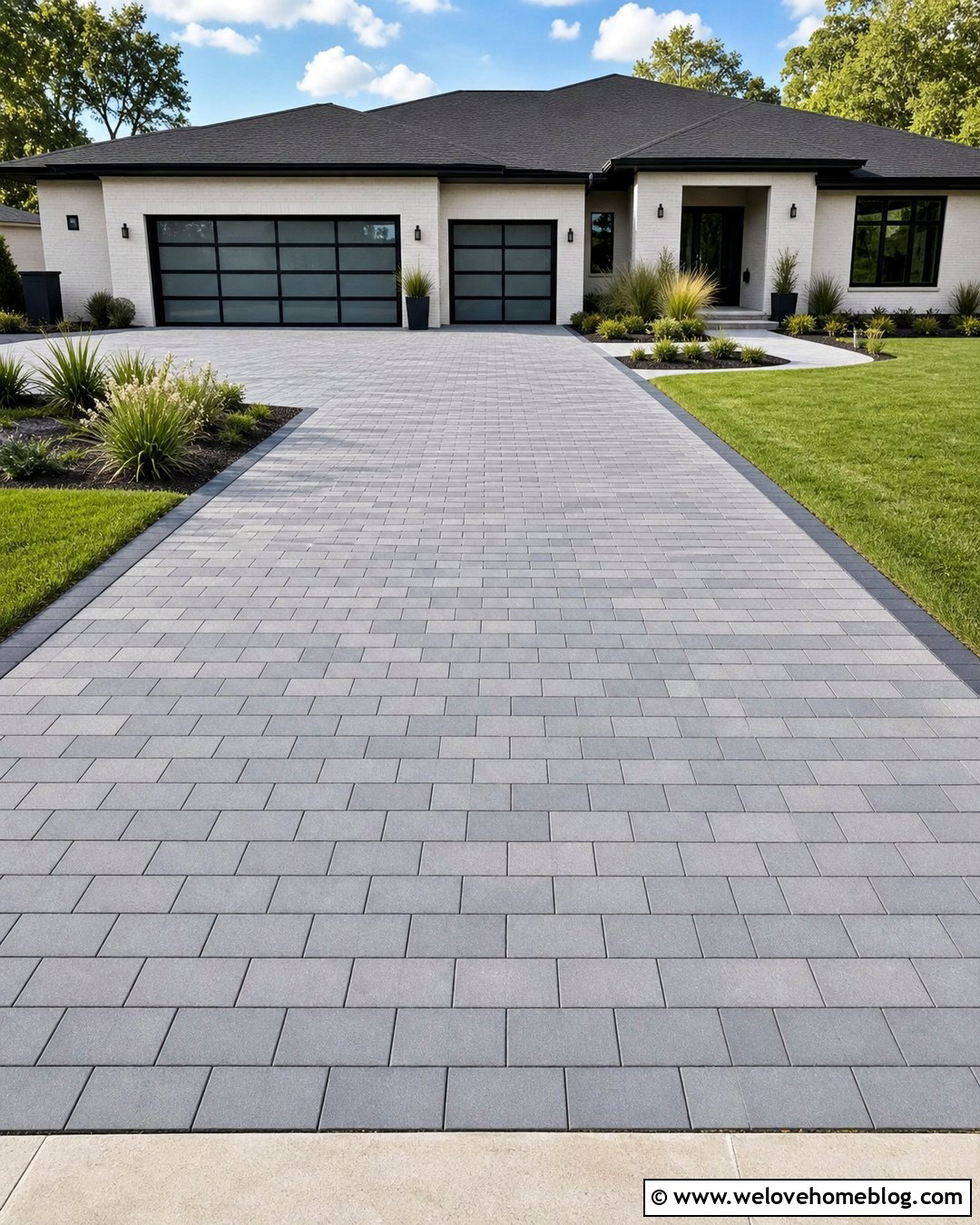
Green joints and planted strips can soften a large paved frontage while keeping grey block paving as the dominant surface. Create two or three narrow lawn bands that run beside the driveway rather than through the primary tire paths. Lay medium-grey concrete blocks in a simple stretcher bond or herringbone pattern, then define each grass strip with charcoal edging blocks. Use durable turf suited to local growing conditions and provide convenient irrigation access. Continue the greenery with low shrubs and airy ornamental grasses near the house. This design is ideal for a ranch home or modern farmhouse with a broad front yard. The grass visually divides the hardscape into smaller sections, while the consistent paving pattern maintains a practical connection between the street, garage, and entrance walkway.
11. Grey Block Driveway With Raised Planting Beds
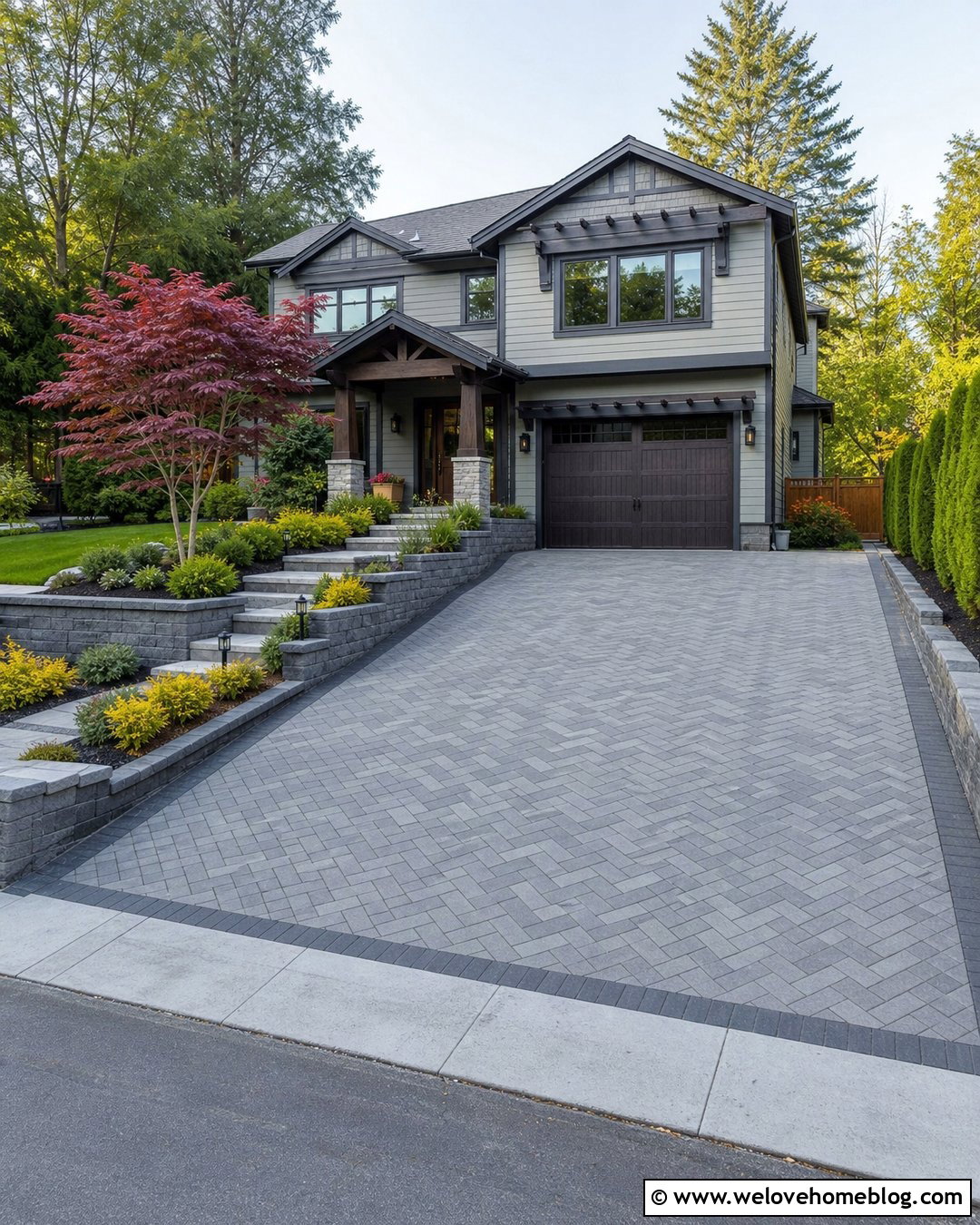
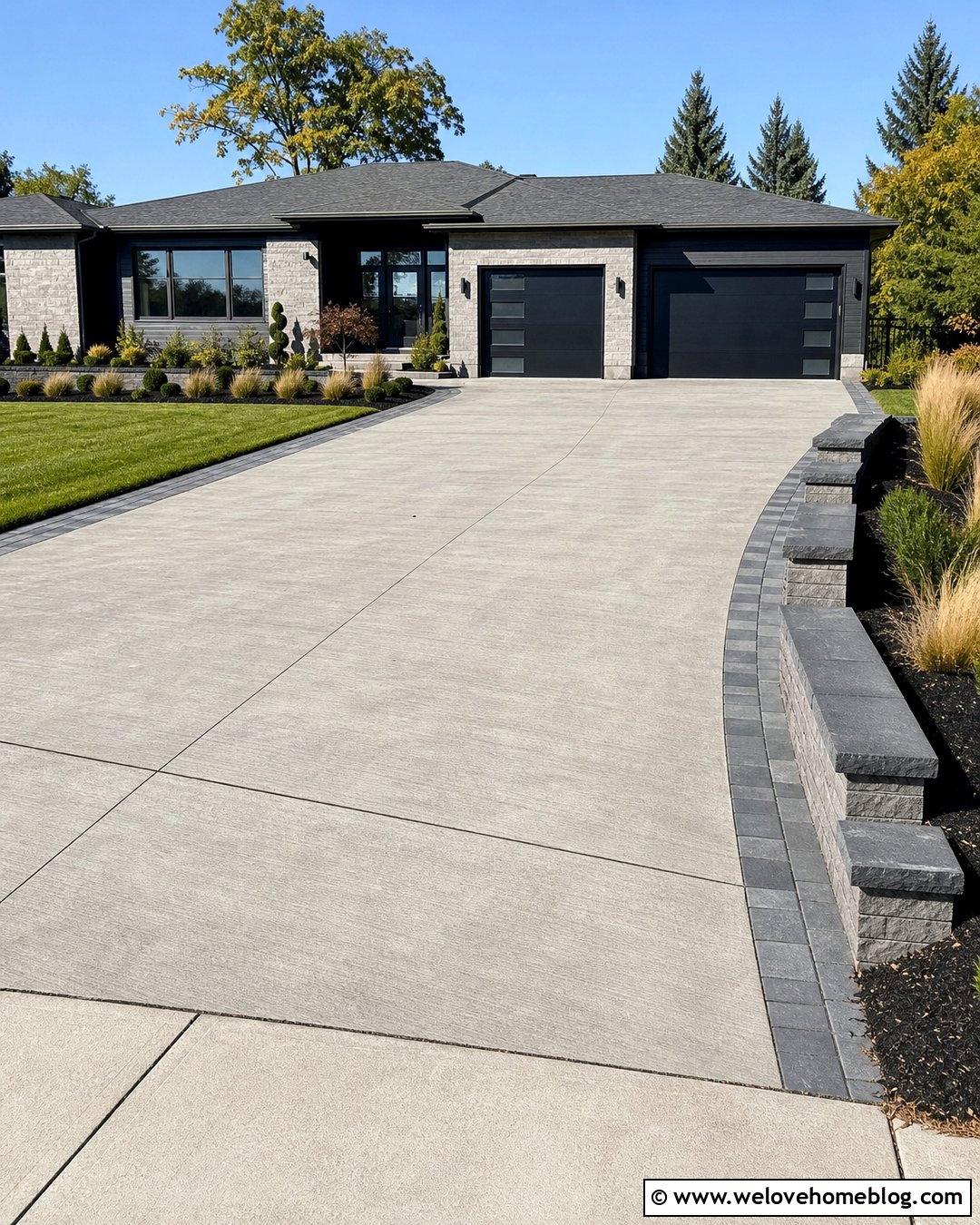
Raised beds can bring color and height to a grey driveway, especially when the front yard slopes or lacks planting space. Use slate-grey block pavers in a 45-degree herringbone pattern for the driveway and build low retaining beds along one or both sides. Facing the walls with matching grey masonry creates a coordinated appearance, while darker capstones provide a defined top edge. Fill the beds with layered planting, placing low ground cover near the driveway and taller shrubs toward the back. A small ornamental tree can mark the transition between the parking area and front door. Leave enough clearance beside the paving for doors and foot traffic. This complete arrangement suits craftsman and split-level homes because the raised landscaping helps visually connect different elevations.
12. Grey Block Driveway With Matching Front Walkway
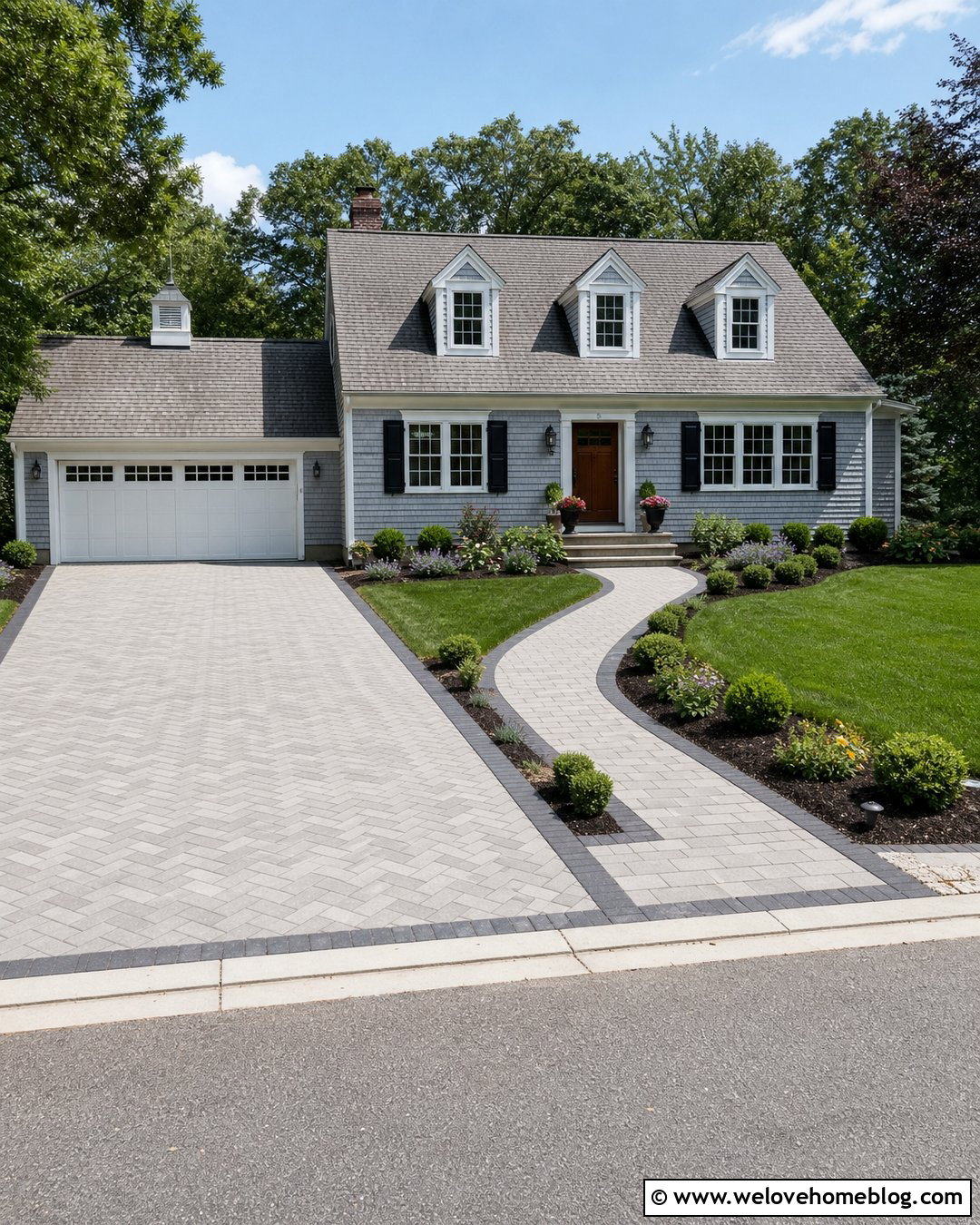
Connecting the driveway and entrance path with matching materials produces a unified front yard. Lay light grey concrete blocks in a 90-degree herringbone pattern across a straight driveway. Continue the same blocks toward the front door, but change the walkway to a running-bond pattern so it remains easy to distinguish. A charcoal border around both areas ties the separate patterns together. Where the path branches away, create a broad, gently curved corner instead of a tight angle. Frame the walkway with low flowering plants, compact shrubs, and mulch that contrasts with the paving. This approach works well for a cape cod or traditional suburban home with a central entrance. The consistent colors make a modest frontage appear larger, while the pattern change quietly identifies pedestrian and vehicle zones.
13. Grey Block Driveway With Permeable Paving
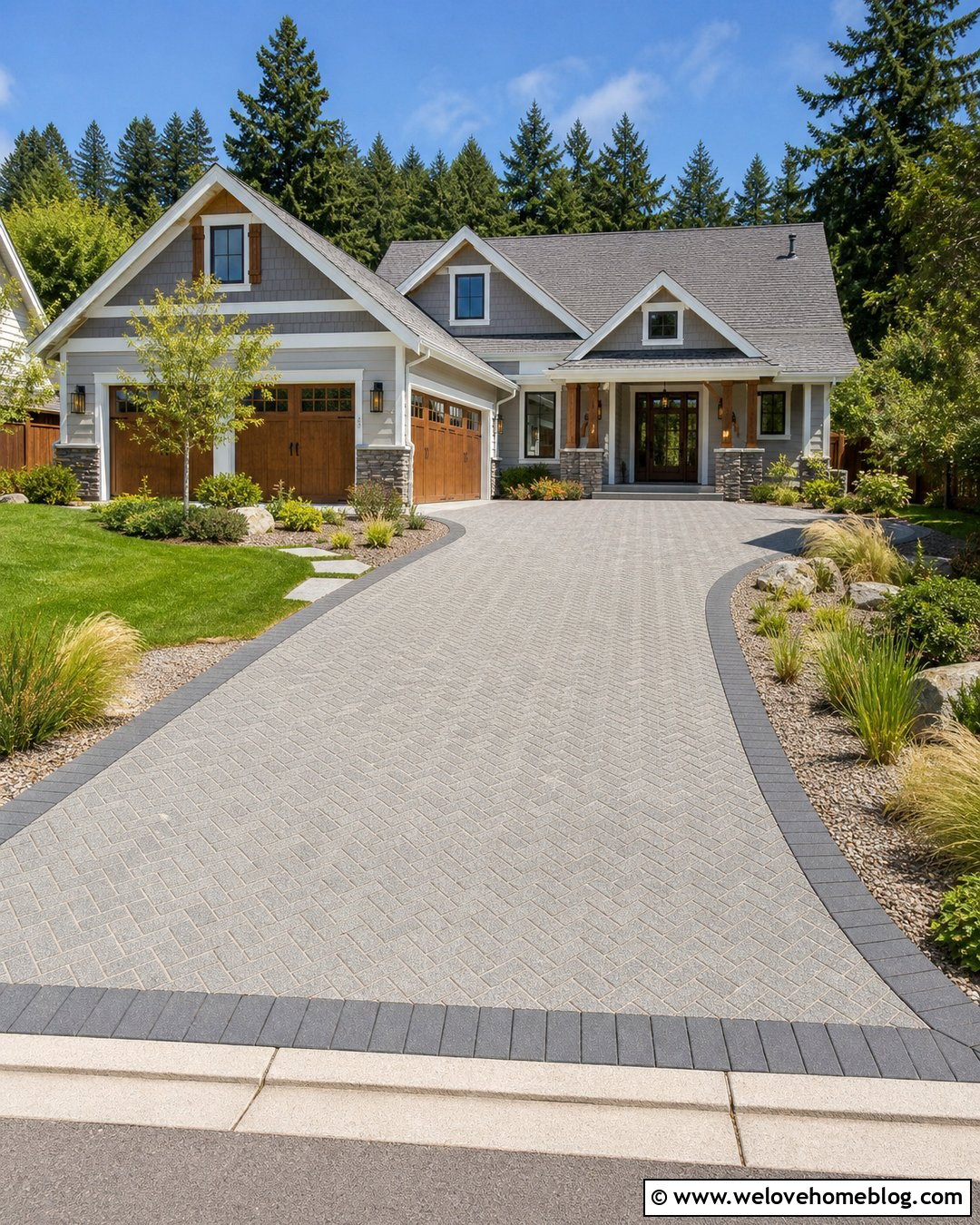
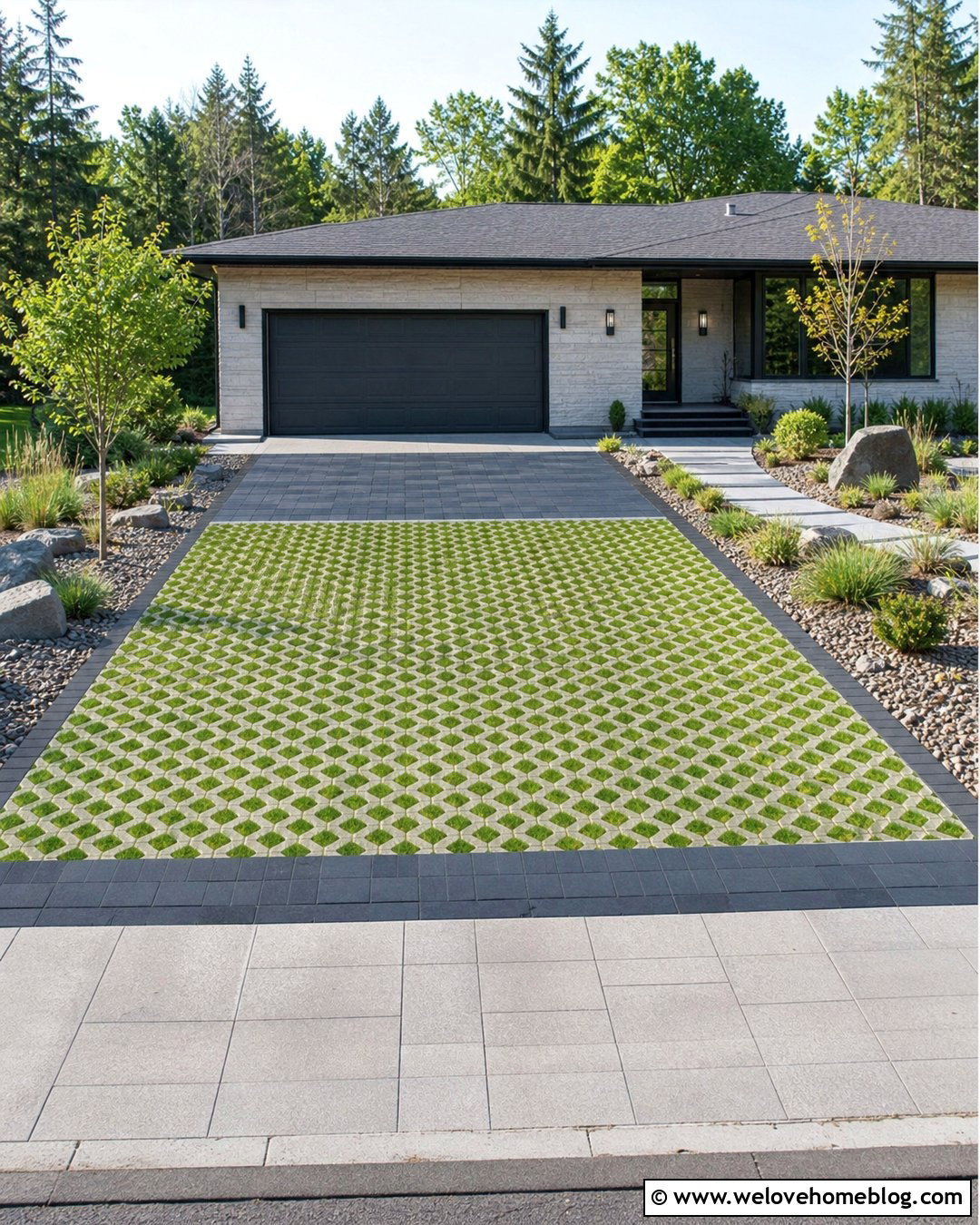
Permeable grey block paving can combine an orderly design with a more drainage-conscious surface. Choose concrete permeable pavers with wider joints designed for clean, angular aggregate. Use blended mid-grey blocks in a simple herringbone layout and fill the joints with pale grey stone rather than soil. A charcoal permeable border can frame the surface while maintaining the same visual language. Pair the driveway with rain-tolerant planting beds, ornamental grasses, and a shallow landscaped basin where appropriate for the site. The look works particularly well beside a contemporary craftsman or environmentally focused modern home. Because permeable systems depend on proper excavation, base materials, grading, and local soil conditions, have the complete assembly professionally specified instead of treating it like conventional block paving with wider gaps.
14. Grey Block Driveway With Drainage Channel
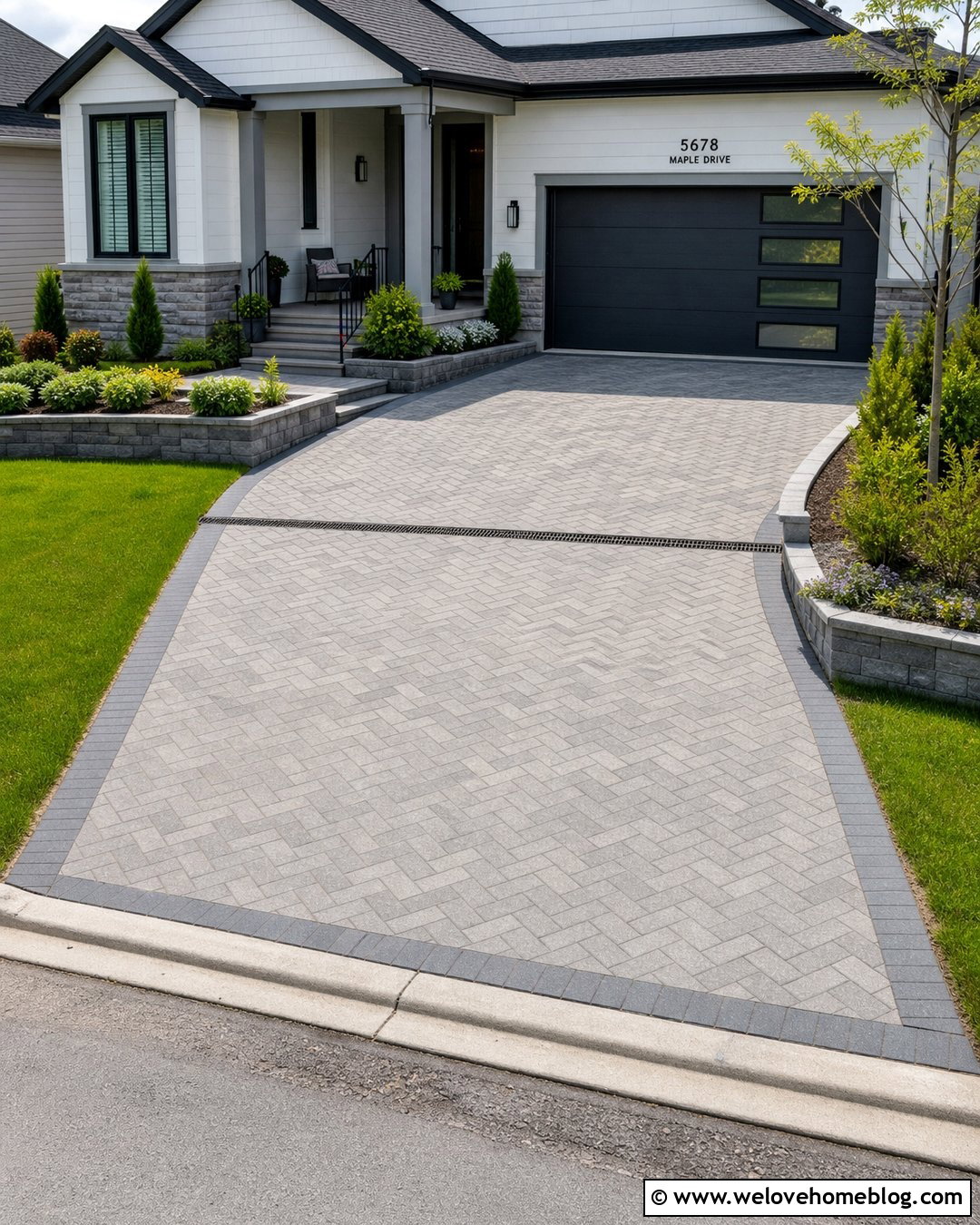
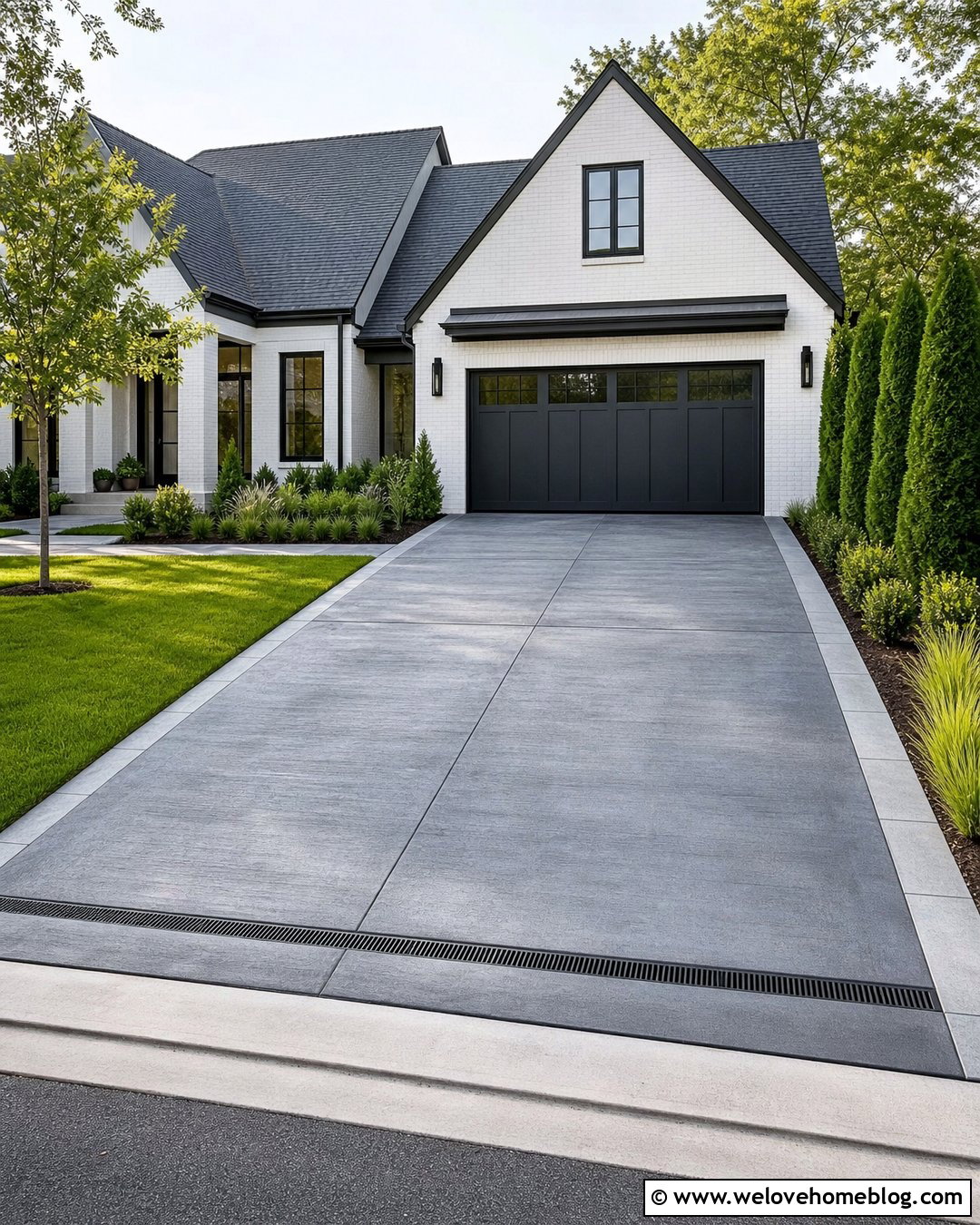
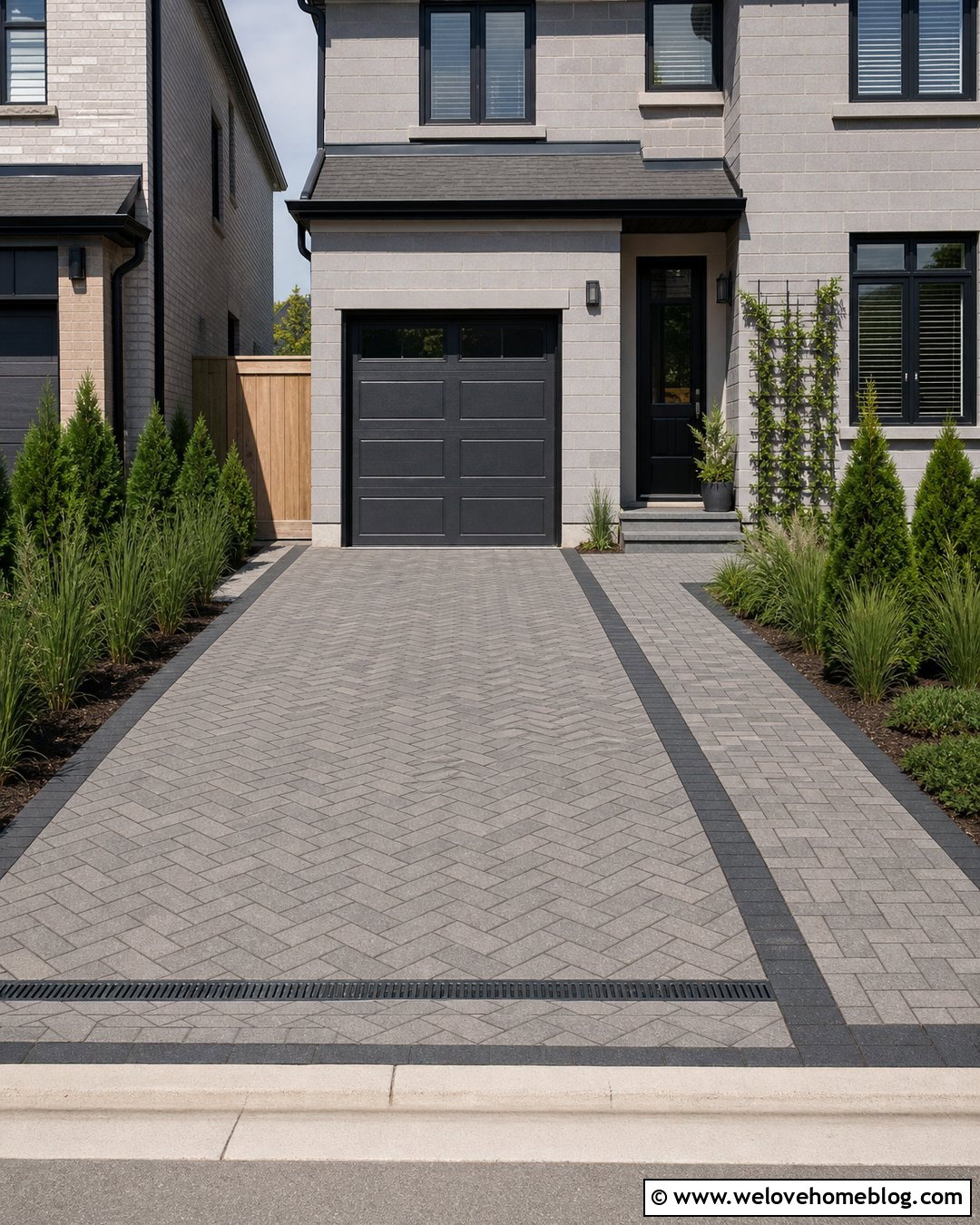
A visible drainage channel can look integrated rather than added as an afterthought. Lay medium-grey block pavers in herringbone and place a slim linear channel across the garage threshold or driveway entrance, depending on the required water flow. Select a galvanized steel, cast iron, or dark composite grate that coordinates with the charcoal perimeter blocks. Set the channel in a straight line and cut adjoining pavers carefully for a neat transition. Slightly raised planting beds can sit beyond the driveway edges, keeping loose soil away from the drainage route. This practical design suits a sloped driveway leading to a modern suburban house. The paving, border, and channel should be planned together so surface water moves toward the intended collection point rather than pooling near the garage or foundation.
15. Small Grey Block Driveway With Simple Border
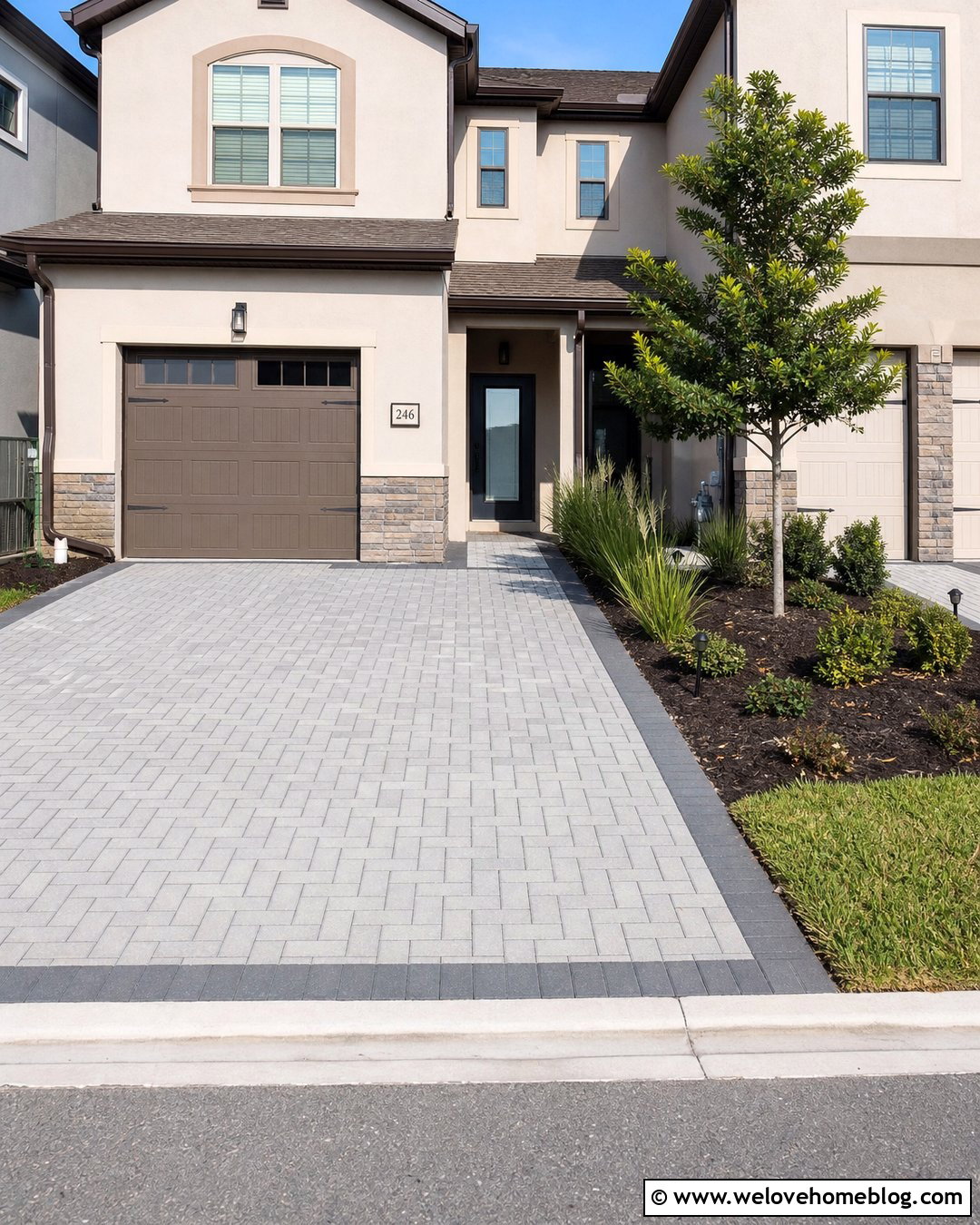
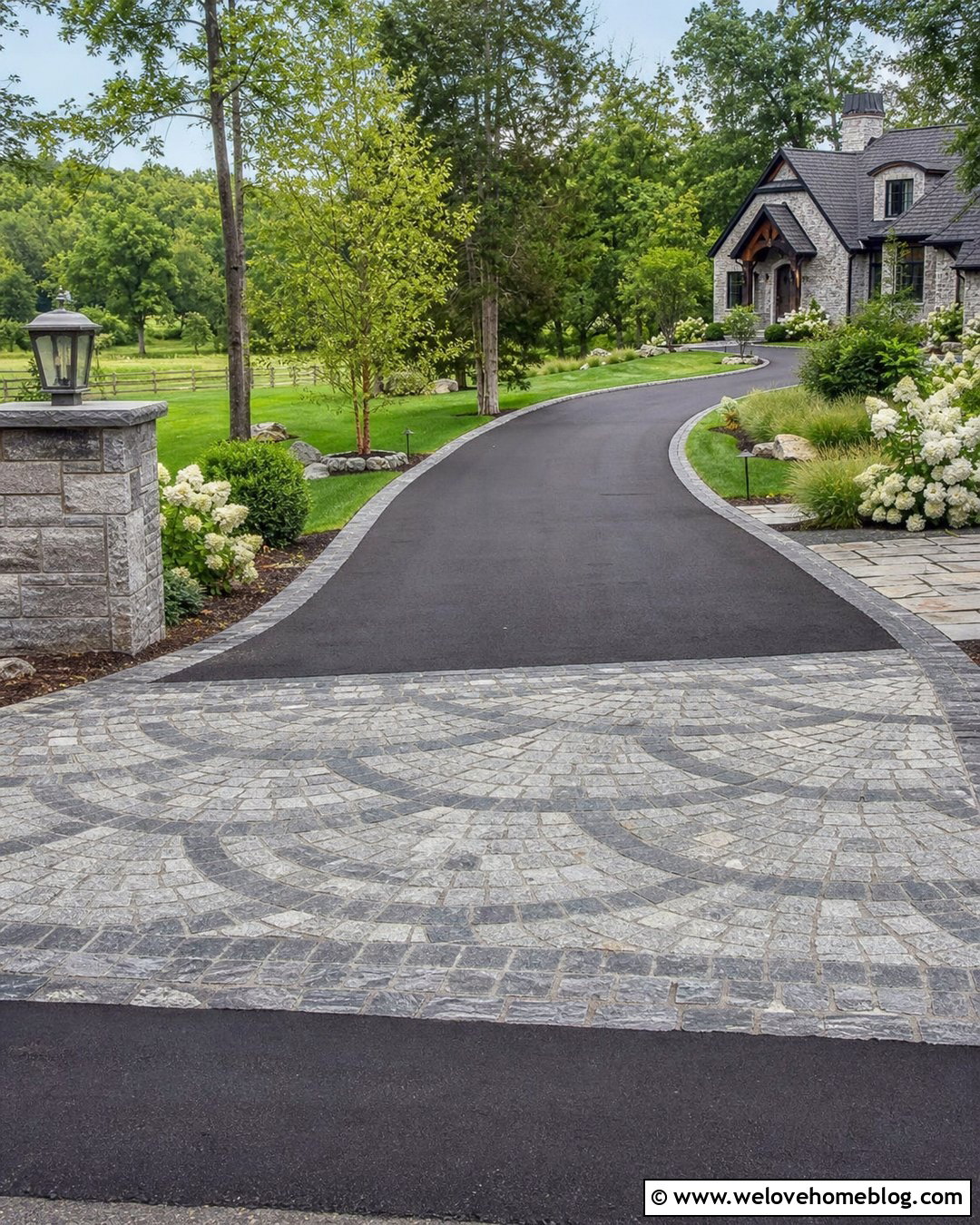
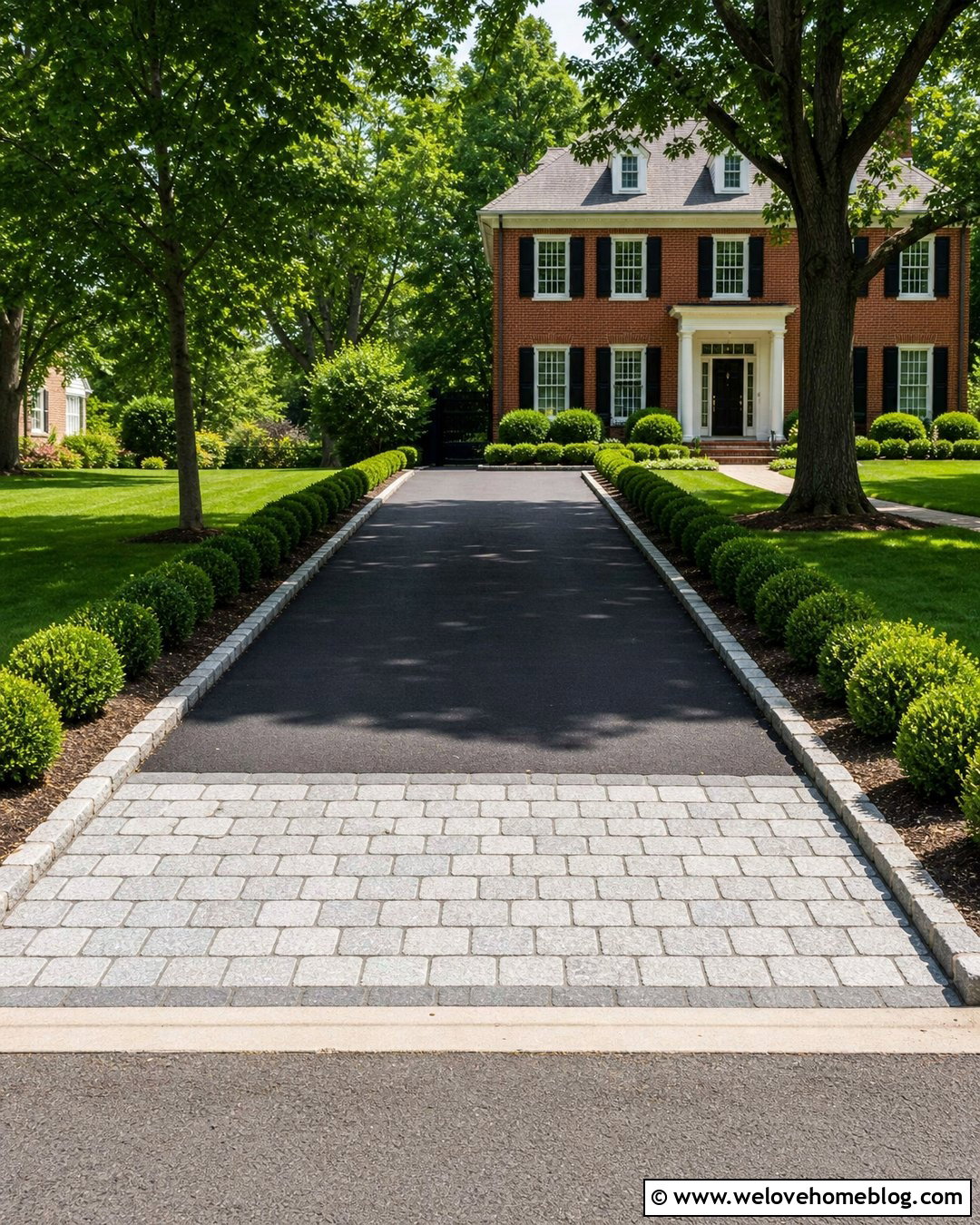
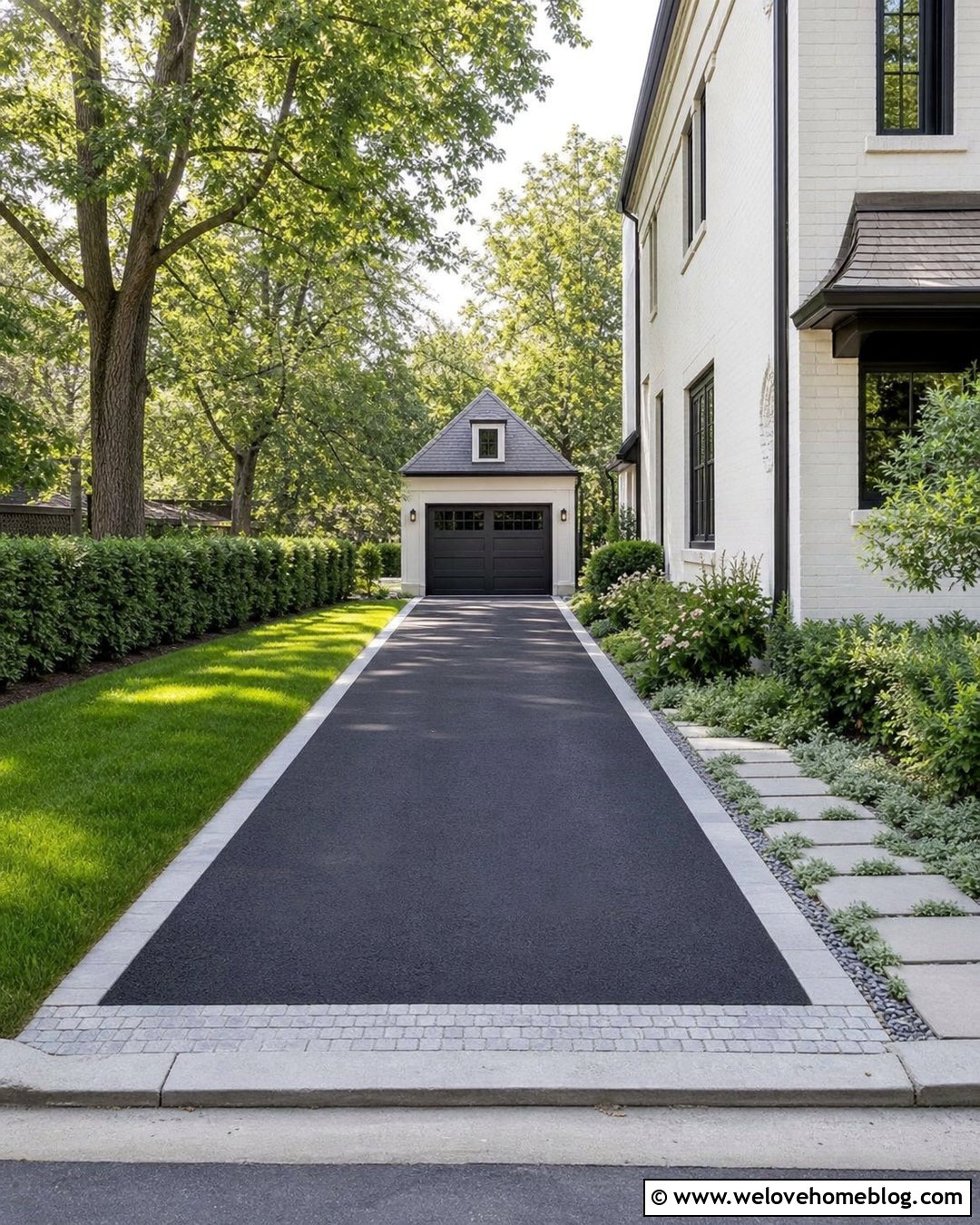
Compact driveways benefit from restraint. Cover the parking area with light-to-medium grey concrete block pavers in a 90-degree herringbone pattern, then use one narrow charcoal course around the perimeter. Limiting the palette to two tones keeps the frontage from looking fragmented. Align the blocks with the widest visual line of the property and avoid an oversized central motif. A slim planting bed along one side can hold upright grasses, dwarf shrubs, or a narrow ornamental tree. On the other side, integrate a matching pedestrian path to the front door. This arrangement works well for townhomes, duplexes, and smaller suburban houses. Clearly defined edges make the available area feel organized, while pale grey paving reflects more daylight and prevents the compact driveway from appearing visually heavy.
16. Wide Grey Driveway With Parking Bays
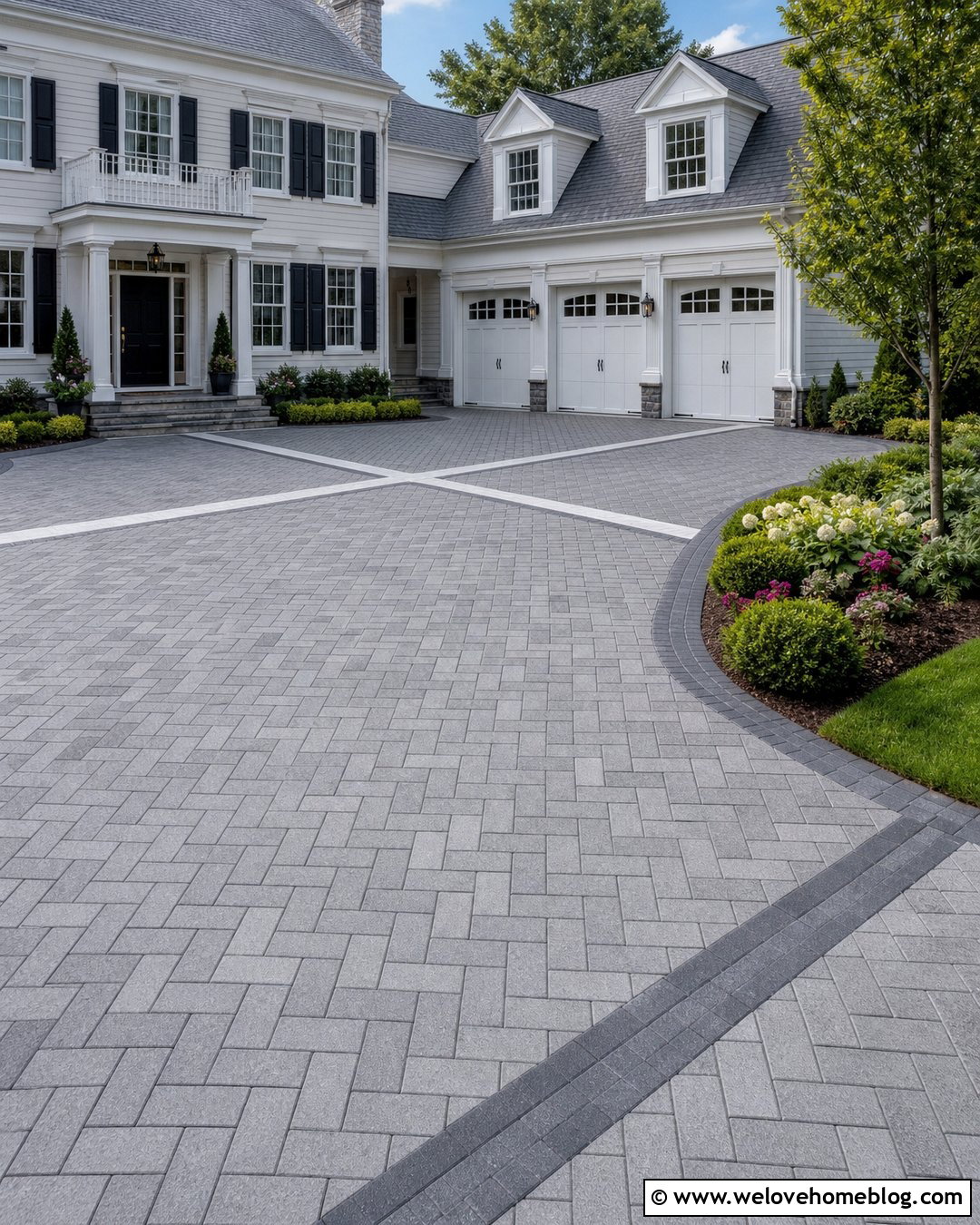
A broad frontage can be divided into practical parking bays without using painted markings. Lay blended grey block pavers across the main surface and outline each parking section with a single charcoal ribbon. The ribbons can run from the entrance toward separate garage doors, creating visual lanes while preserving one continuous driveway. Use a herringbone pattern within each bay for a consistent, durable-looking field. Near the house, introduce a pale-grey cross band that links the front walkway and garage entrances. Large planting beds at the outer corners can contain layered shrubs and small trees, reducing the amount of paving visible from the street. This organized design is well suited to a large ranch, colonial, or multi-garage home where the driveway must handle several vehicles without looking like a commercial parking lot.
17. Curved Grey Driveway With Soft Landscaping
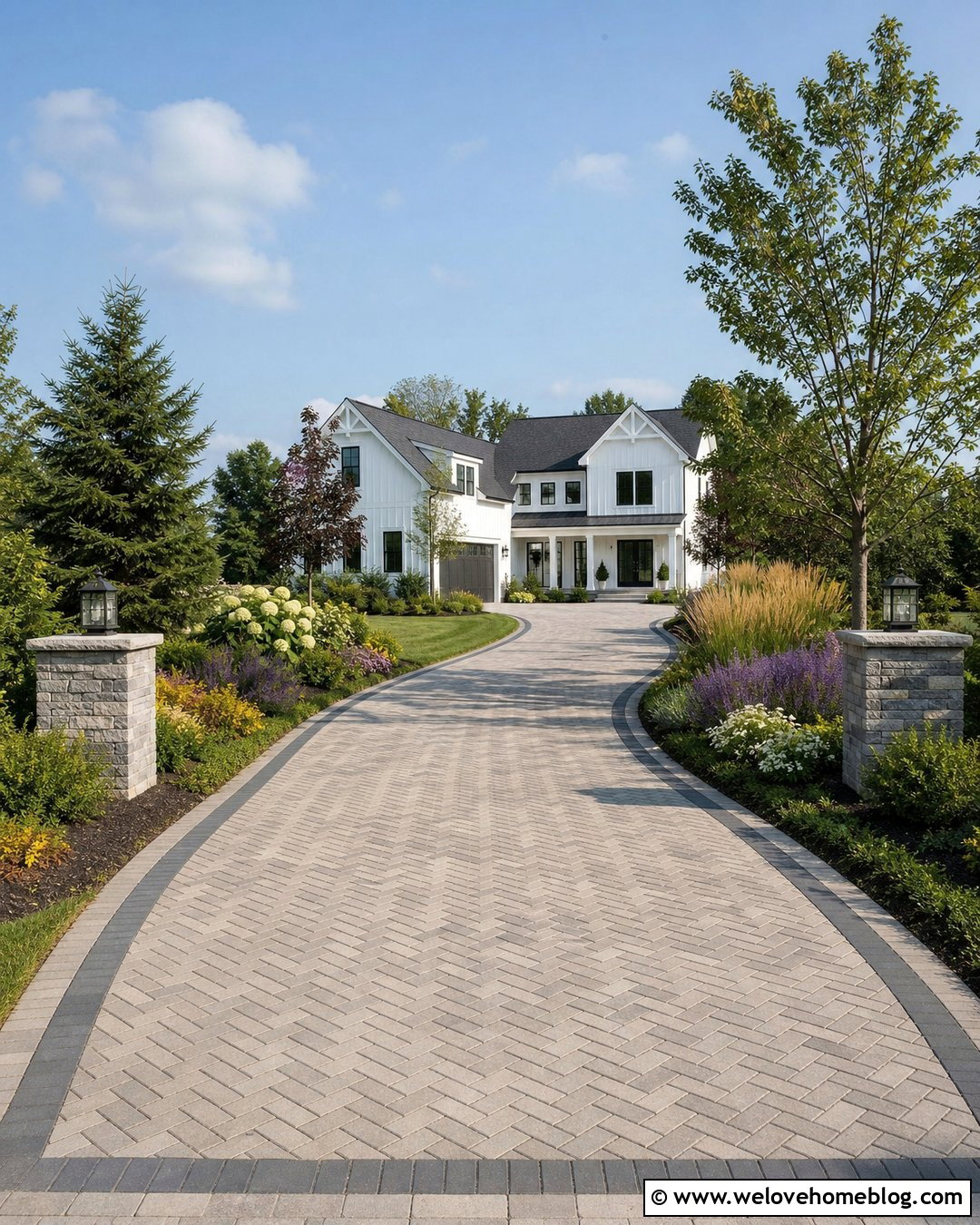
Soft planting can make a curved grey driveway feel welcoming and well settled into the yard. Use weathered grey block pavers in a sweeping herringbone layout, following the drive’s natural approach to the house. A single charcoal border will define the curves without making them appear rigid. Build broad beds along the outside edge with layered evergreens, hydrangeas, ornamental grasses, and flowering perennials. Keep plants lower near the street so the entrance remains visible. Taller shrubs and small trees can be positioned closer to the house, where they frame the facade. This look complements country homes, cottages, and modern farmhouses. Rather than filling every open area, include sections of lawn between planting groups to preserve clear views and give the curved paving enough visual breathing room.
18. Grey Block Driveway With Entrance Pillars
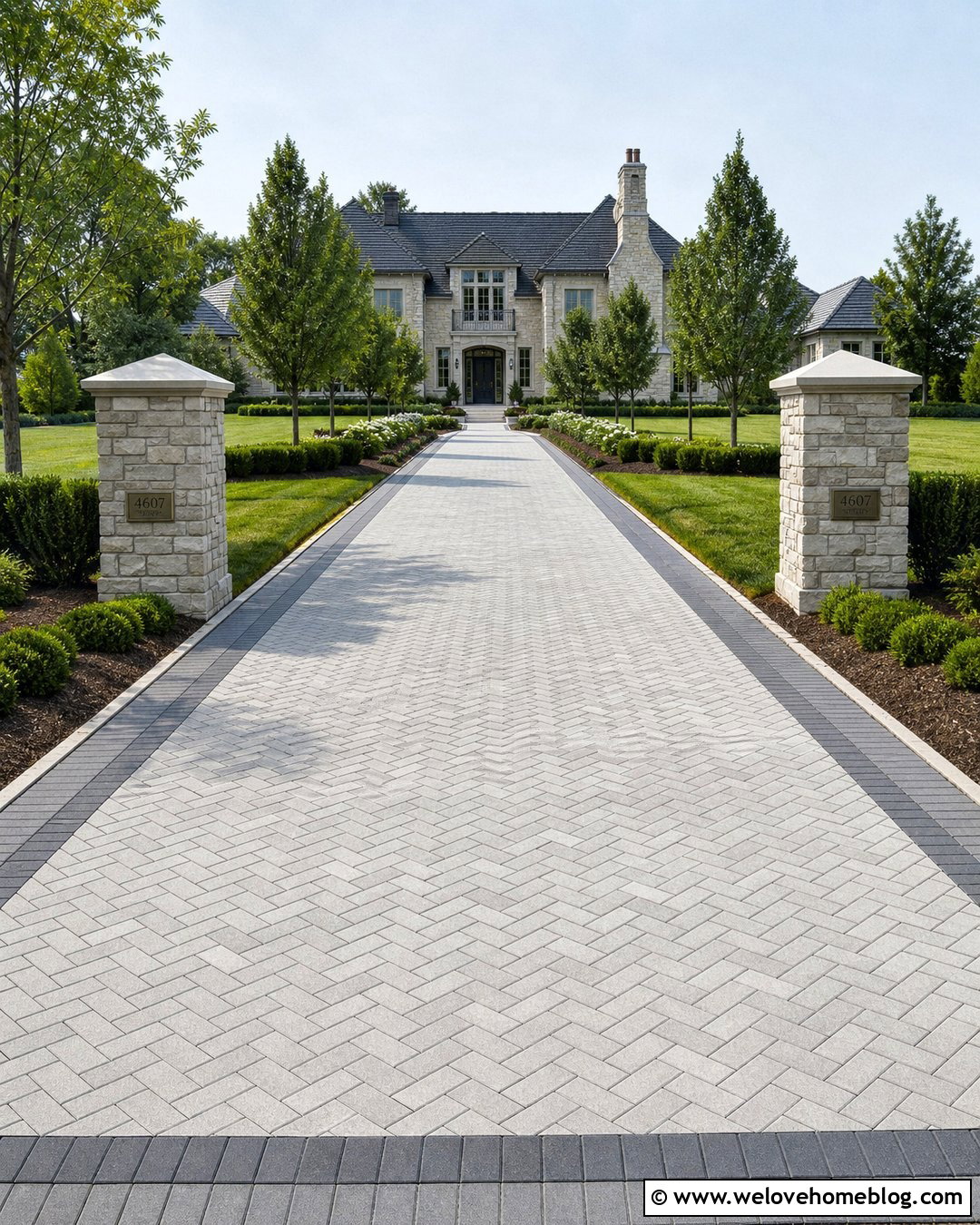
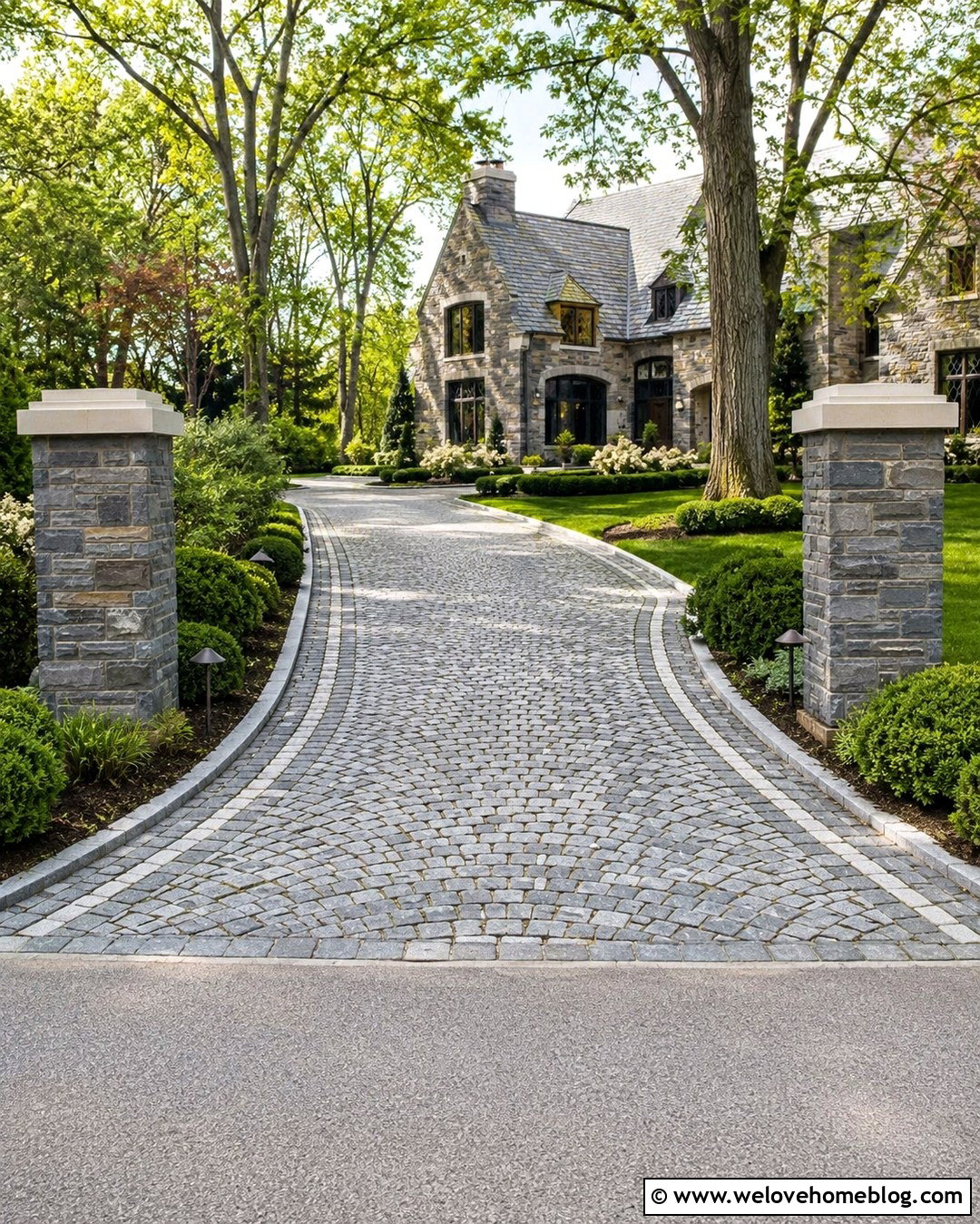
Entrance pillars create a clear arrival point for a long grey block driveway. Choose mid-grey concrete pavers in a 45-degree herringbone pattern and widen the paving slightly at the street to form a comfortable apron. Frame the entrance with charcoal blocks that continue along both sides toward the house. Build brick, stone, or rendered pillars that relate to the home’s facade, and add simple capstones for a finished silhouette. Low hedges and symmetrical planting beds can connect the pillars to the surrounding yard without restricting visibility. Farther along the drive, use small trees at generous intervals rather than creating a dense tunnel. This complete design suits colonial, country, and estate-style homes because it combines a formal entrance with an understated grey surface that does not overpower the architecture.
19. Grey Block Driveway With Integrated Lighting
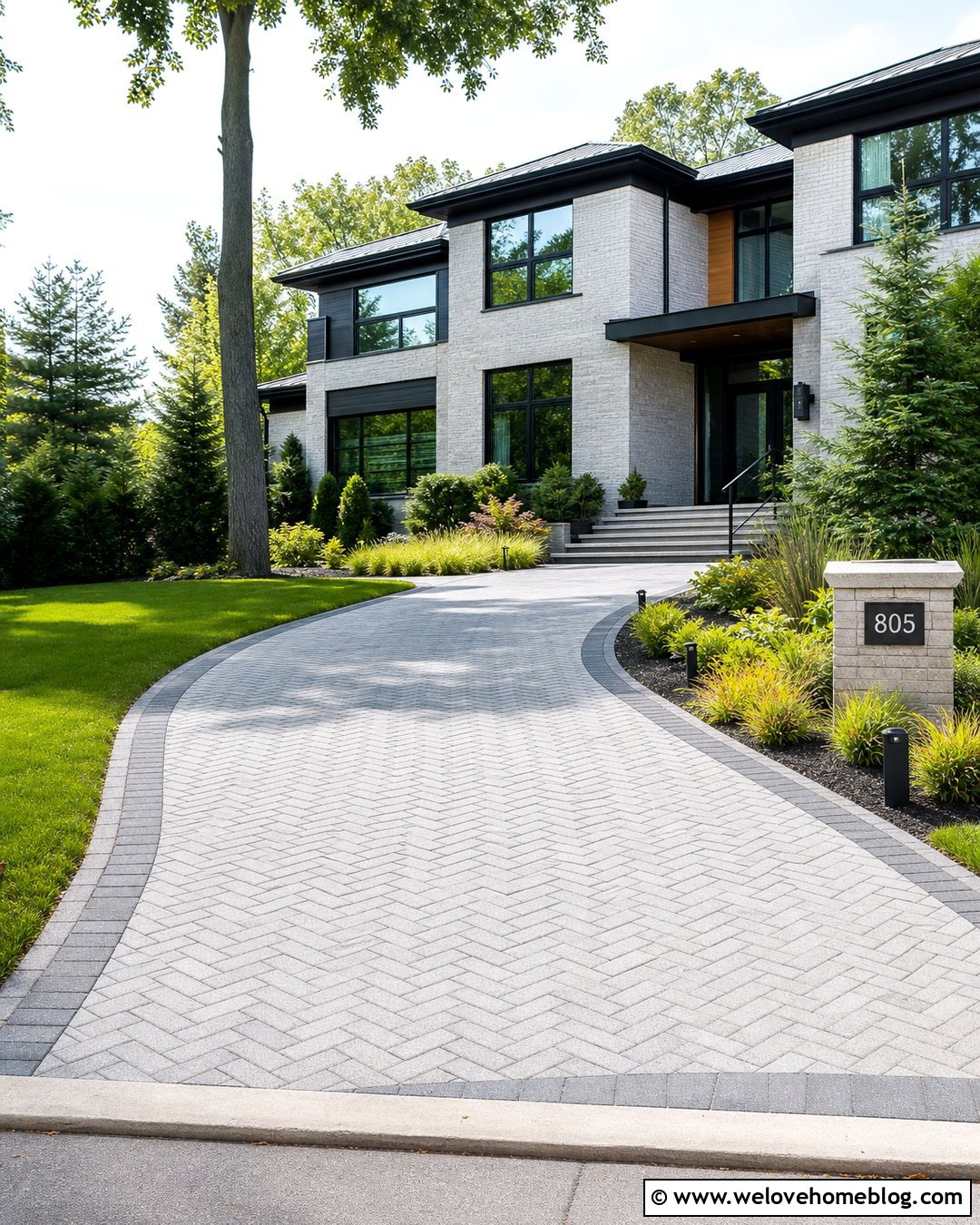
Thoughtfully placed lighting can be incorporated without turning the driveway into a runway. Start with smooth silver-grey concrete blocks laid in herringbone and a narrow charcoal edge. Position low, shielded fixtures within the landscaping rather than scattering lights across the main paving. At the entrance, place one fixture beside each address pillar or planting bed. Continue with a few evenly spaced lights along curves, changes in elevation, and the walkway connection. During daylight, the black or stainless-steel fixtures should appear as intentional landscape details. Use low shrubs and ornamental grasses to soften their bases. This design is especially effective for a contemporary house with black-framed windows. The bright grey paving remains the daytime focal point, while the lighting supports safer navigation after dark without cluttering the complete curb view.
20. Two Tone Grey Block Driveway
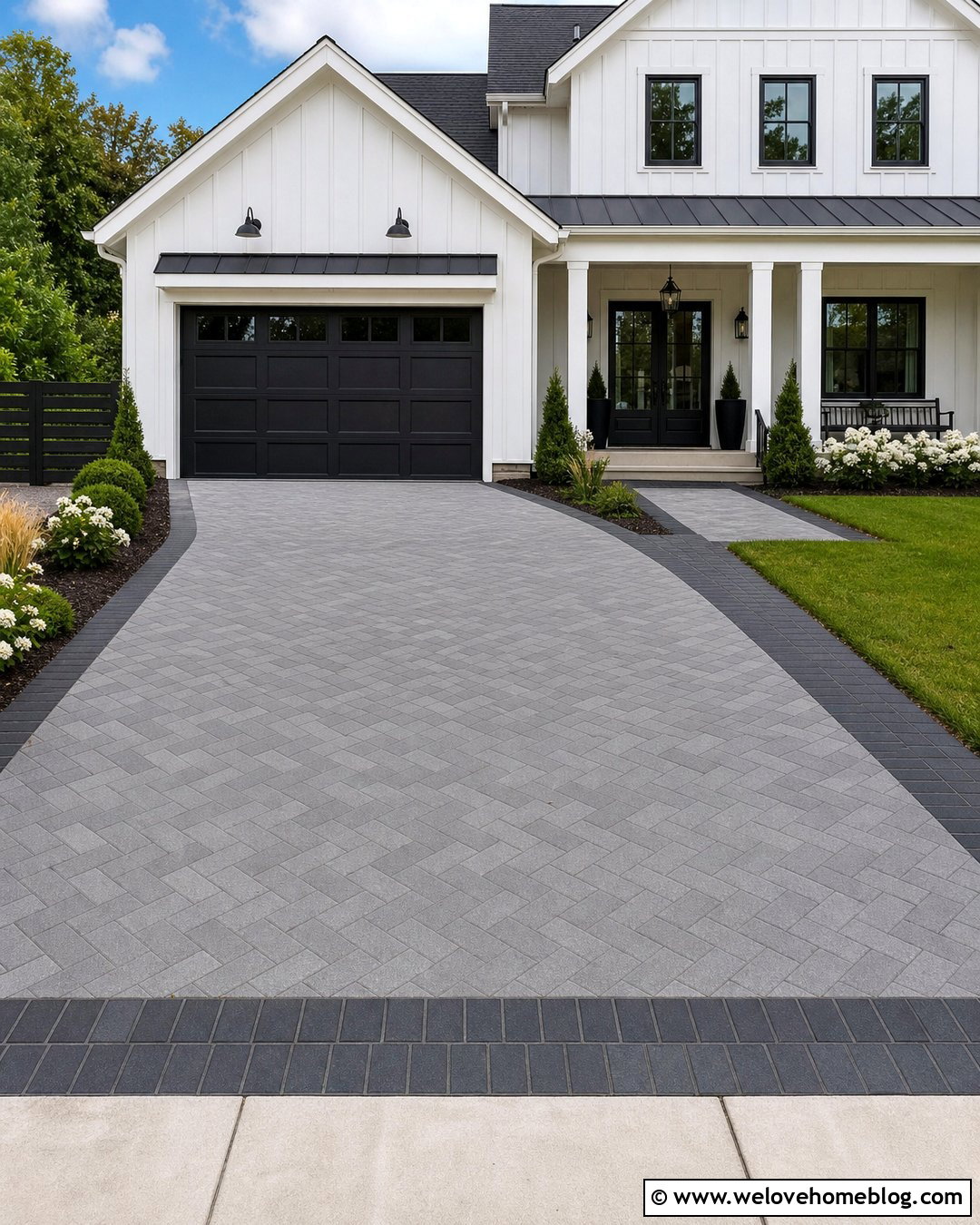
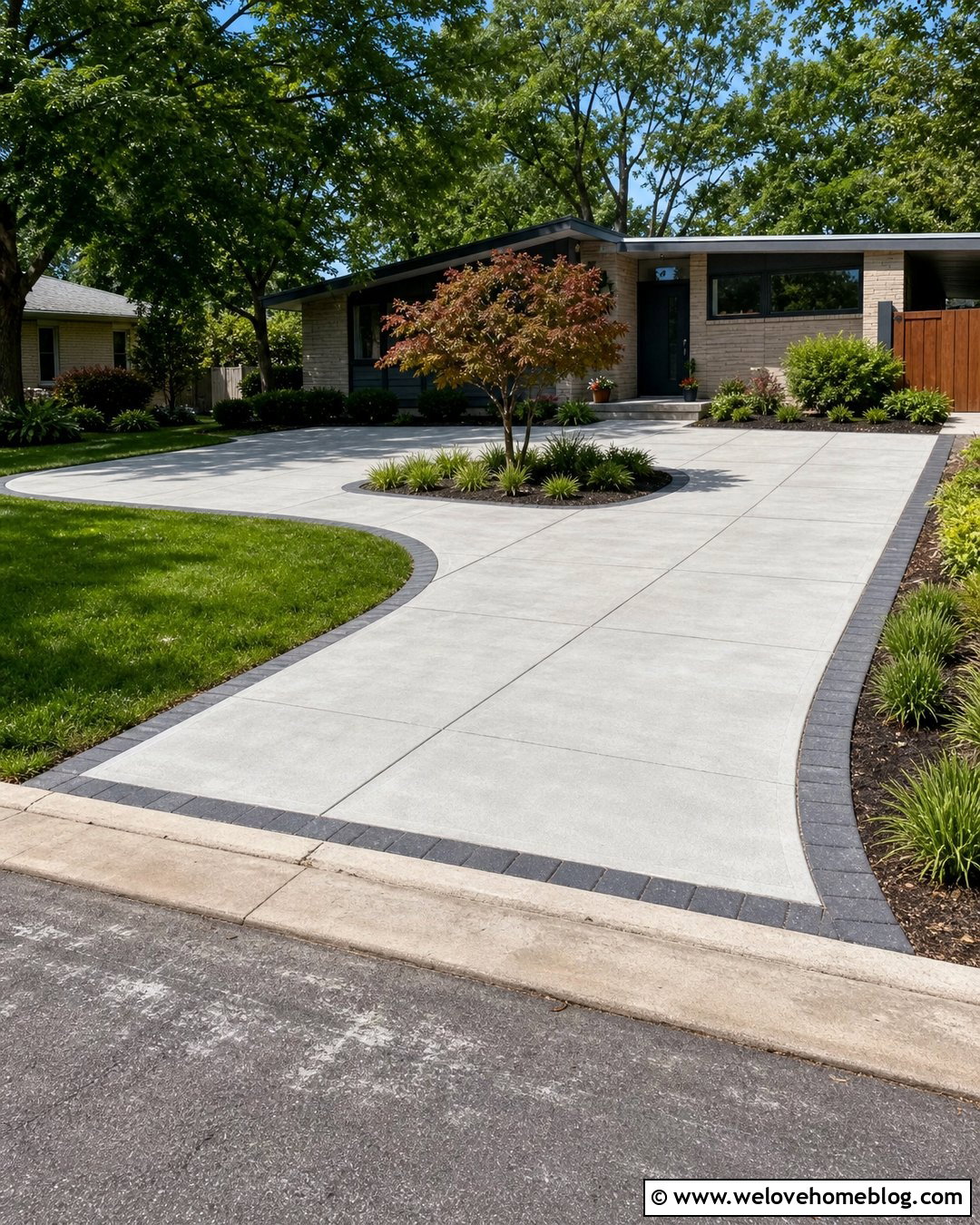
A two-tone layout offers more depth than a single grey surface while remaining easy to coordinate. Use medium-grey concrete block pavers across the main driveway and introduce darker graphite blocks in selected areas. The darker tone can form a broad entrance band, outline the garage threshold, and frame the front walkway. Keep both colors in the same block shape and finish so the result feels cohesive. A straight herringbone field with simple geometric accents works well for a modern farmhouse or updated suburban home. Add planting beds with white flowers, evergreen shrubs, and soft green grasses to balance the cool paving. Repeating the graphite tone on the garage doors, exterior lights, or window frames will connect the driveway to the house and make the color blocking appear carefully planned.
Conclusion:
The most successful 20 Grey Block Paving Driveway Ideas combine the paving surface with a clear layout, coordinated borders, useful drainage, and landscaping that fits the house. Herringbone patterns offer a traditional, structured look, while linear and mixed-size arrangements can feel more contemporary. Charcoal edges create sharp definition, whereas granite, brick, or planted borders introduce texture and warmth. Before choosing a final design, compare paving samples outdoors beside the home’s brick, siding, roof, and garage doors. Colors can appear different under full sun, shade, and wet conditions. Plan turning space, walking routes, edge support, and water management at the same time. This ensures the finished grey driveway looks cohesive and performs well as part of the entire front yard.

Related posts:
Leave a Reply