
Shrubs can turn a plain driveway into a polished landscape that feels connected to the house and front yard. The best 20 shrubs along driveway ideas combine practical surfaces, clear vehicle access, attractive borders, and plants that fit the local climate. Low evergreens create dependable structure, while flowering shrubs add seasonal color and soften large areas of concrete, asphalt, gravel, or pavers. Repeating one shrub creates a formal appearance. Layering several varieties produces a more relaxed garden border. Before planting, consider mature width, sunlight, drainage, winter road salt, snow storage, and the space needed for open car doors. Choosing plants suited to your hardiness zone will also reduce maintenance. () Here are complete and practical 20 shrubs along driveway ideas.

1. Boxwood Shrubs Along A Straight Concrete Driveway

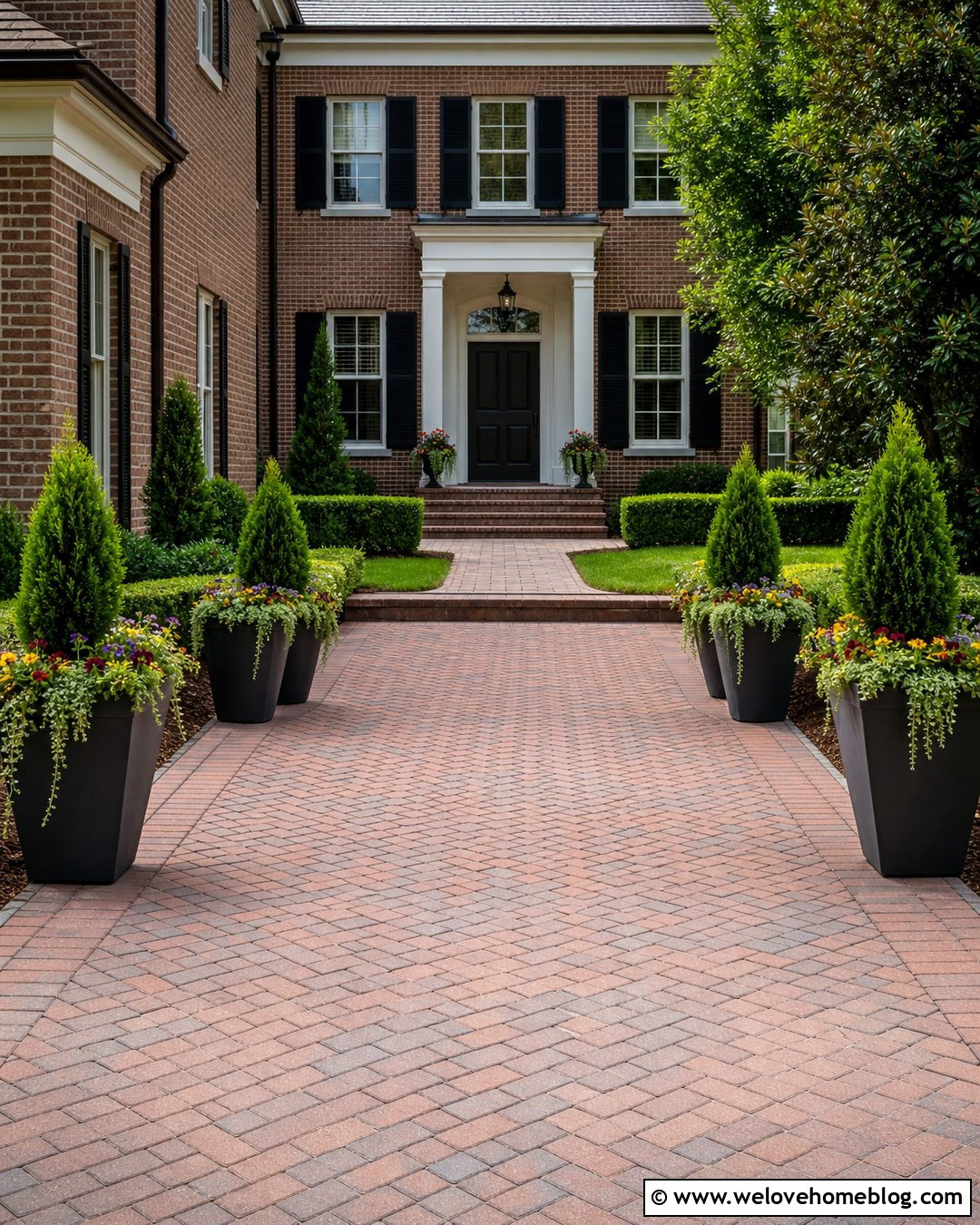
A straight concrete driveway gains a clean, formal appearance when low boxwood shrubs follow both sides. Use smooth light-gray poured concrete with a narrow charcoal paver border to strengthen the crisp layout. Plant compact boxwoods behind the edging, leaving enough room for their mature width so branches do not scrape vehicles. A dark mulch bed makes the green foliage stand out and simplifies mowing. Small ornamental trees near the house can add height without interrupting the orderly lines. This design suits Colonial, Georgian, and traditional brick homes especially well. Keep the hedge around knee height to preserve visibility when backing out. Matching shrubs on both sides create symmetry, guide attention toward the front door, and provide dependable structure during every season.
2. Hydrangea Shrubs Along A Curved Gravel Driveway
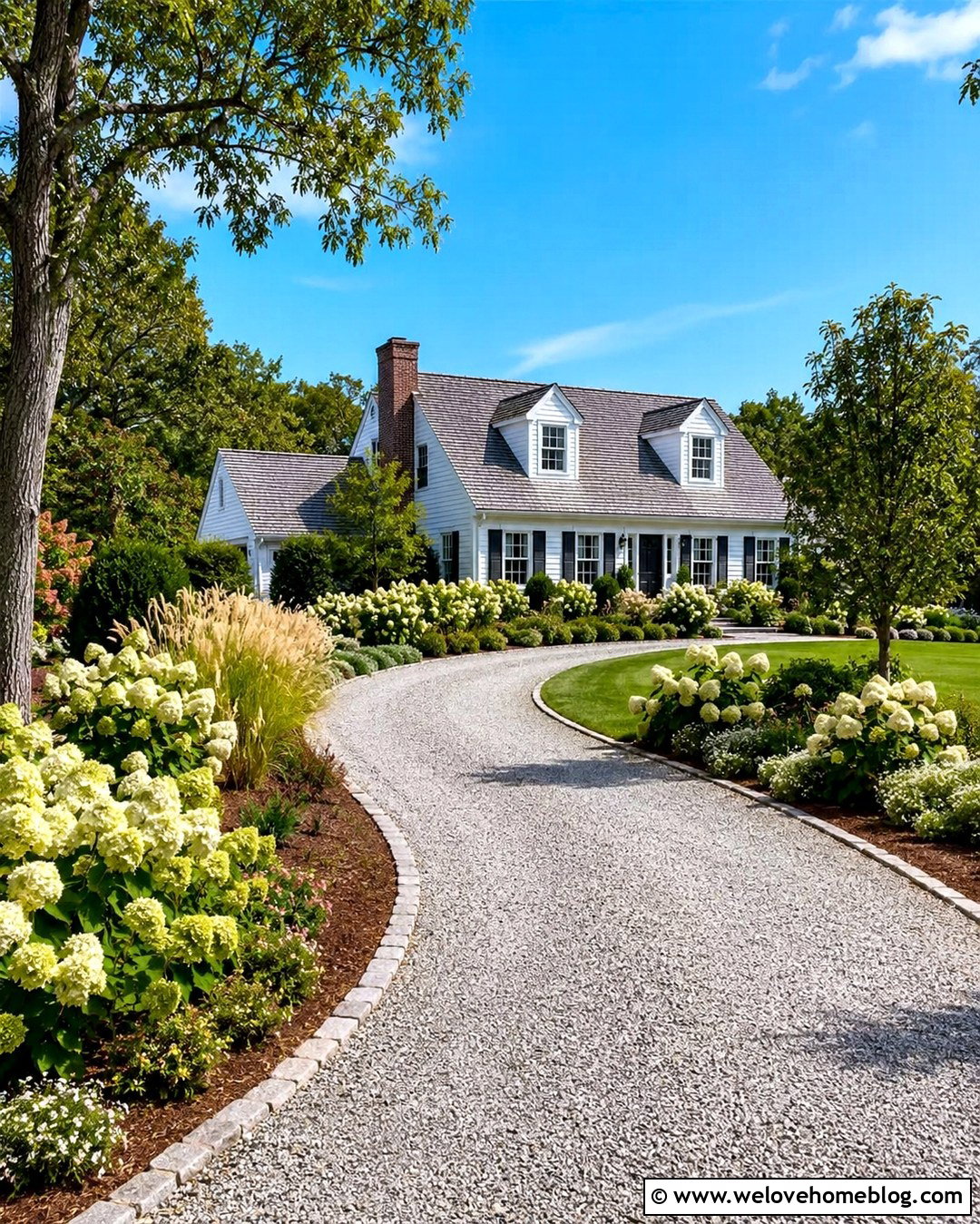
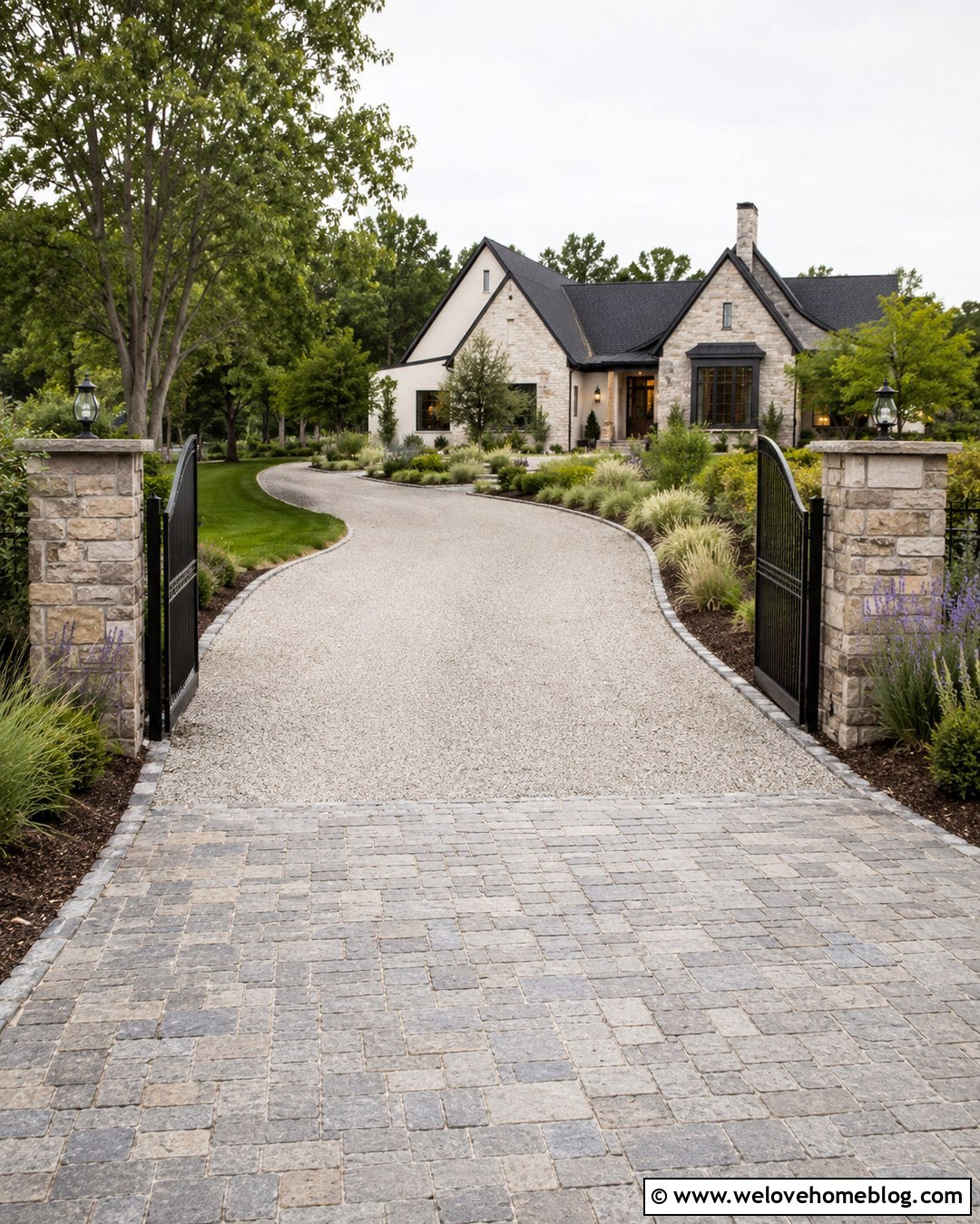
Large hydrangea flowers can soften the rustic surface of a gently curved gravel driveway. Choose compact panicle hydrangeas and arrange them in broad groups rather than one rigid line. Their rounded forms look natural beside pale gray crushed gravel, while a cobblestone edge keeps loose material out of the planting beds. Place the shrubs farther from the driving surface so mature flowers do not lean into passing vehicles. Add low ground cover along the front and taller ornamental grasses between occasional groups for movement and contrast. This complete look works beautifully with Cape Cod, cottage, and modern farmhouse homes. A sweeping lawn on the outer curve keeps the layout open, while the planted inner curve helps direct the eye toward the house and entry path.
3. Spirea Shrubs Along A Black Asphalt Driveway
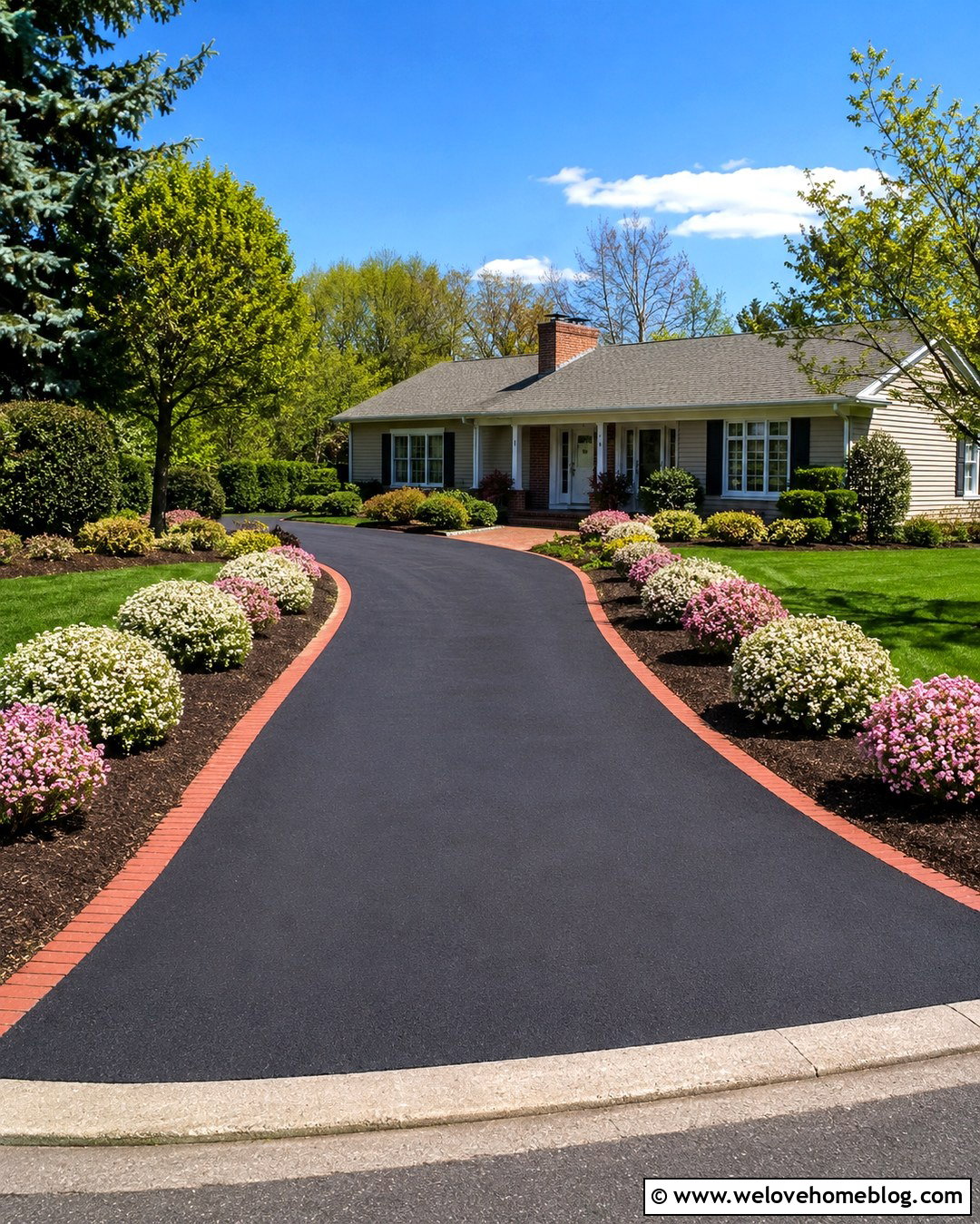
Bright spirea foliage creates a lively border against the deep color of black asphalt. A straight or slightly curved driveway can be edged with warm red brick, followed by repeated clusters of compact spirea in a dark brown mulch bed. Select one variety for a consistent mature height and cohesive bloom color. Instead of clipping every plant into a tight ball, allow the shrubs to maintain their naturally rounded shape. This creates a softer, more welcoming look and reduces the need for constant shaping. Use a simple lawn behind the planting bed and repeat the brick around the front walkway. The combination suits ranch, split-level, and traditional suburban houses. Keeping the shrubs low also protects sightlines near the street, garage, and pedestrian walkway.
4. Inkberry Holly Shrubs Along A Paver Driveway
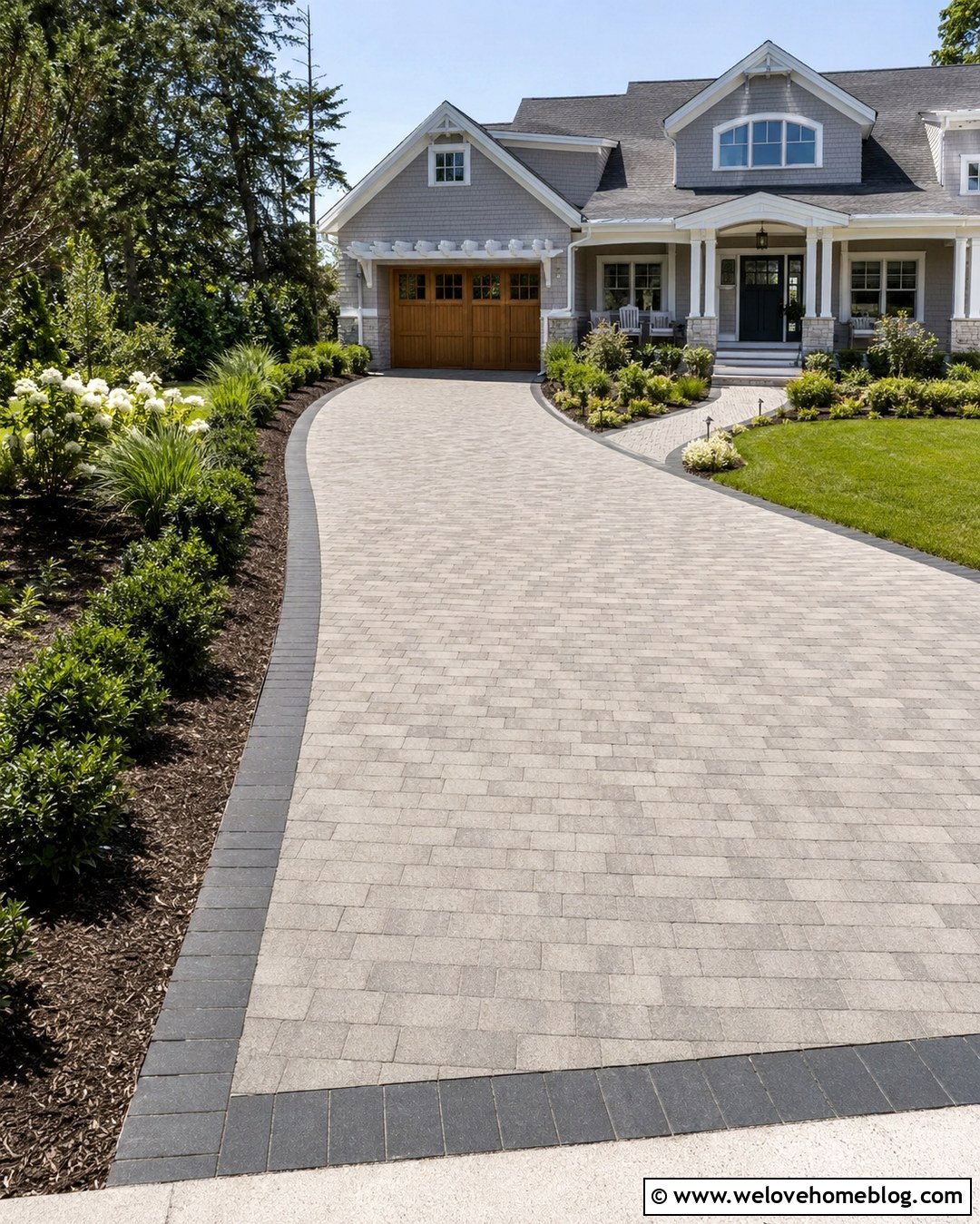
Inkberry holly can provide an evergreen border with a slightly looser texture than traditional boxwood. Pair compact inkberry shrubs with a straight driveway made from warm gray concrete pavers in a running-bond pattern. A darker paver soldier course defines the edges and separates the driveway from wide planting beds. Arrange the shrubs in an evenly spaced row, then fill gaps with low sedges or seasonal flowers. The dark green foliage works especially well against pale pavers and white or gray house siding. This design feels neat without appearing overly formal, making it suitable for Craftsman, coastal, and updated suburban homes. Allow generous setbacks near the garage doors and street entrance. Regular spacing will establish a visual rhythm that makes even a short driveway feel longer and more intentional.
5. Dwarf Yaupon Holly Shrubs Around A Circular Driveway
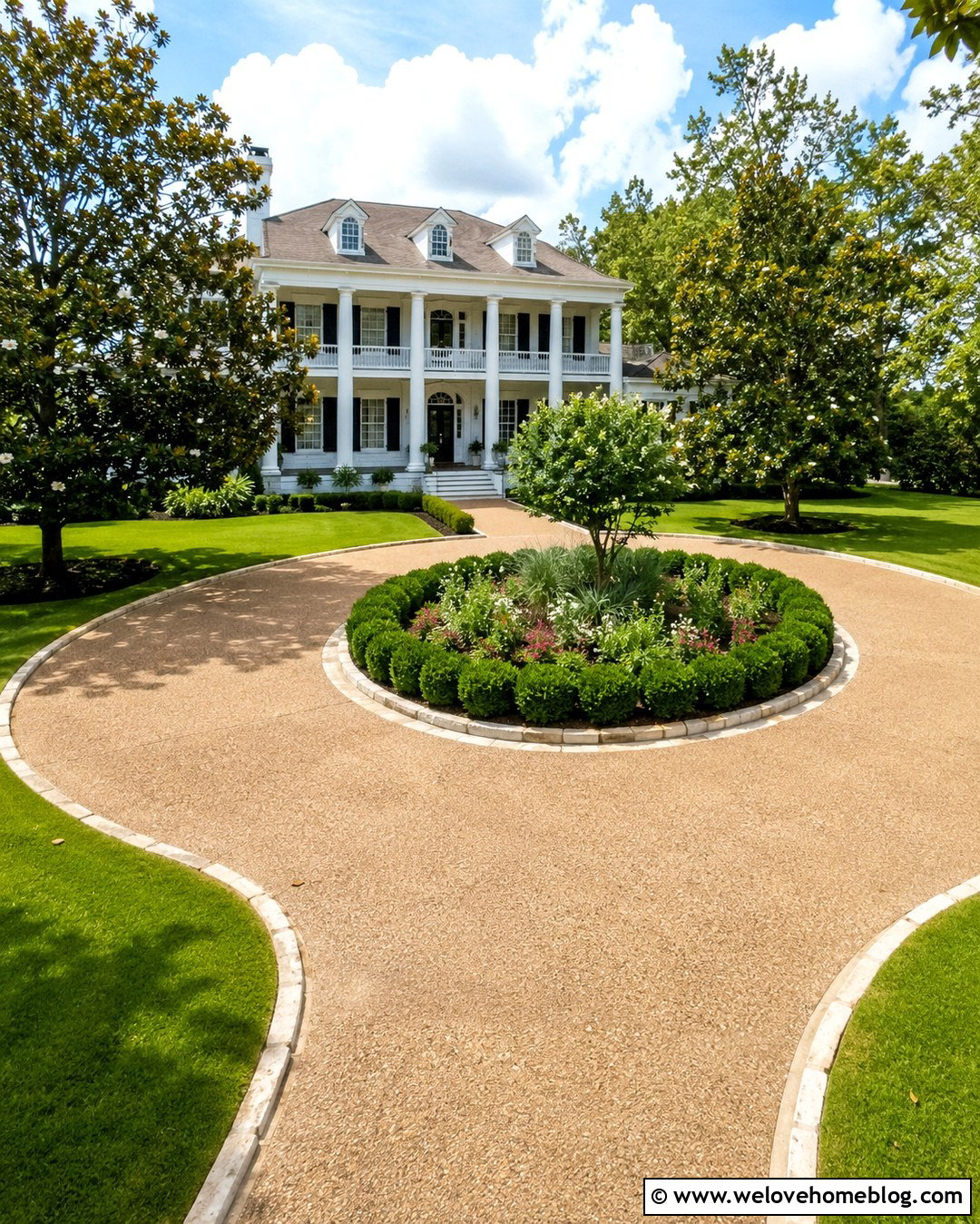
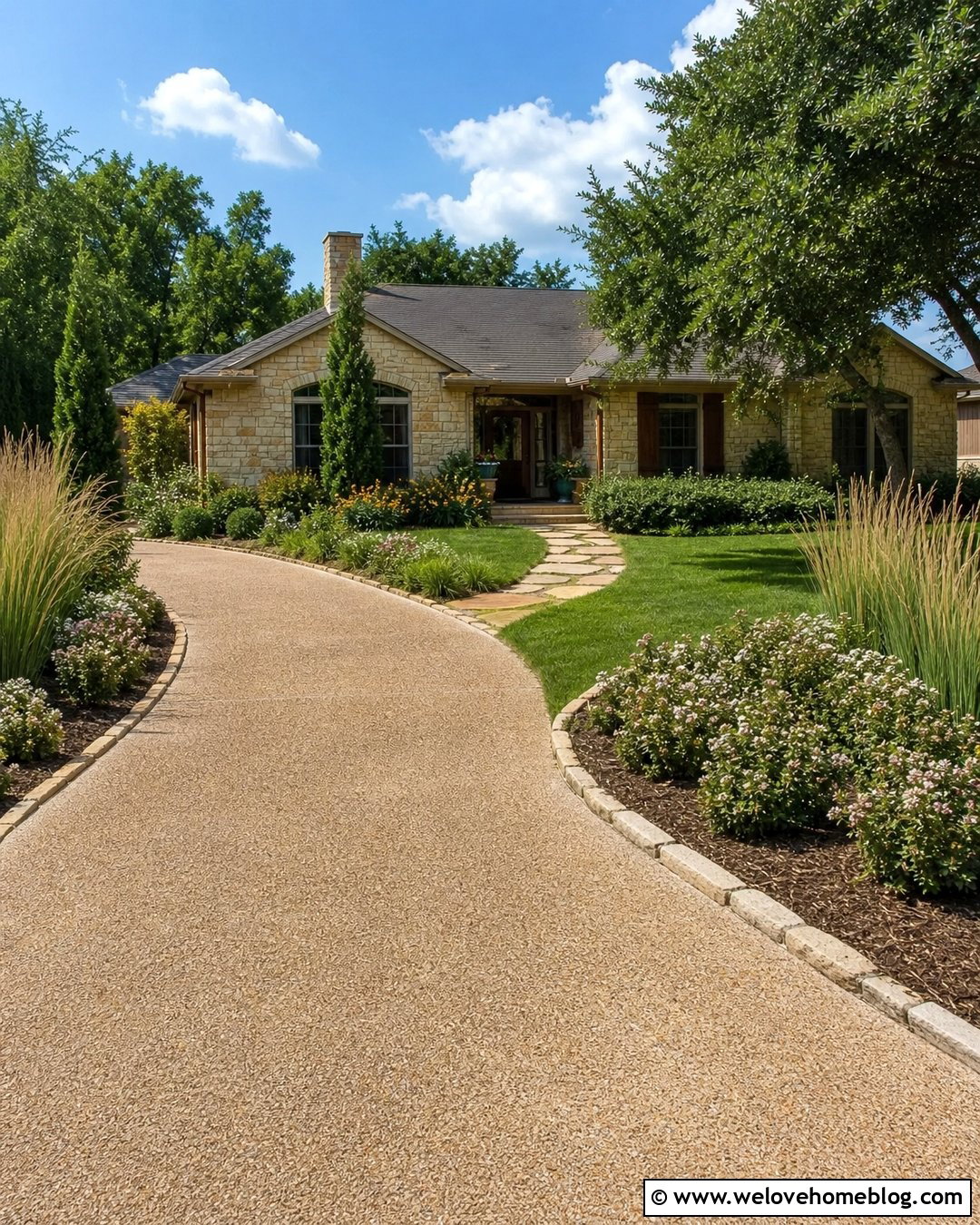
A circular driveway becomes more attractive when dwarf yaupon hollies organize the central island. Use buff-colored exposed aggregate for the driving surface and install a low limestone curb around the island. Place the hollies in a broad outer ring, leaving open space in the middle for a small ornamental tree, decorative grass, or simple lawn. Their naturally rounded growth can echo the circular shape without requiring a severe formal trim. Add a second row of low flowering perennials near the stone edge for seasonal color. This warm-climate design complements Southern Colonial, Spanish Revival, and low country homes. Keep all planting short near entry and exit points so approaching traffic remains visible. The result is an inviting turnaround that feels landscaped while still supporting easy vehicle movement.
6. Panicle Hydrangea Shrubs Along A Brick Driveway
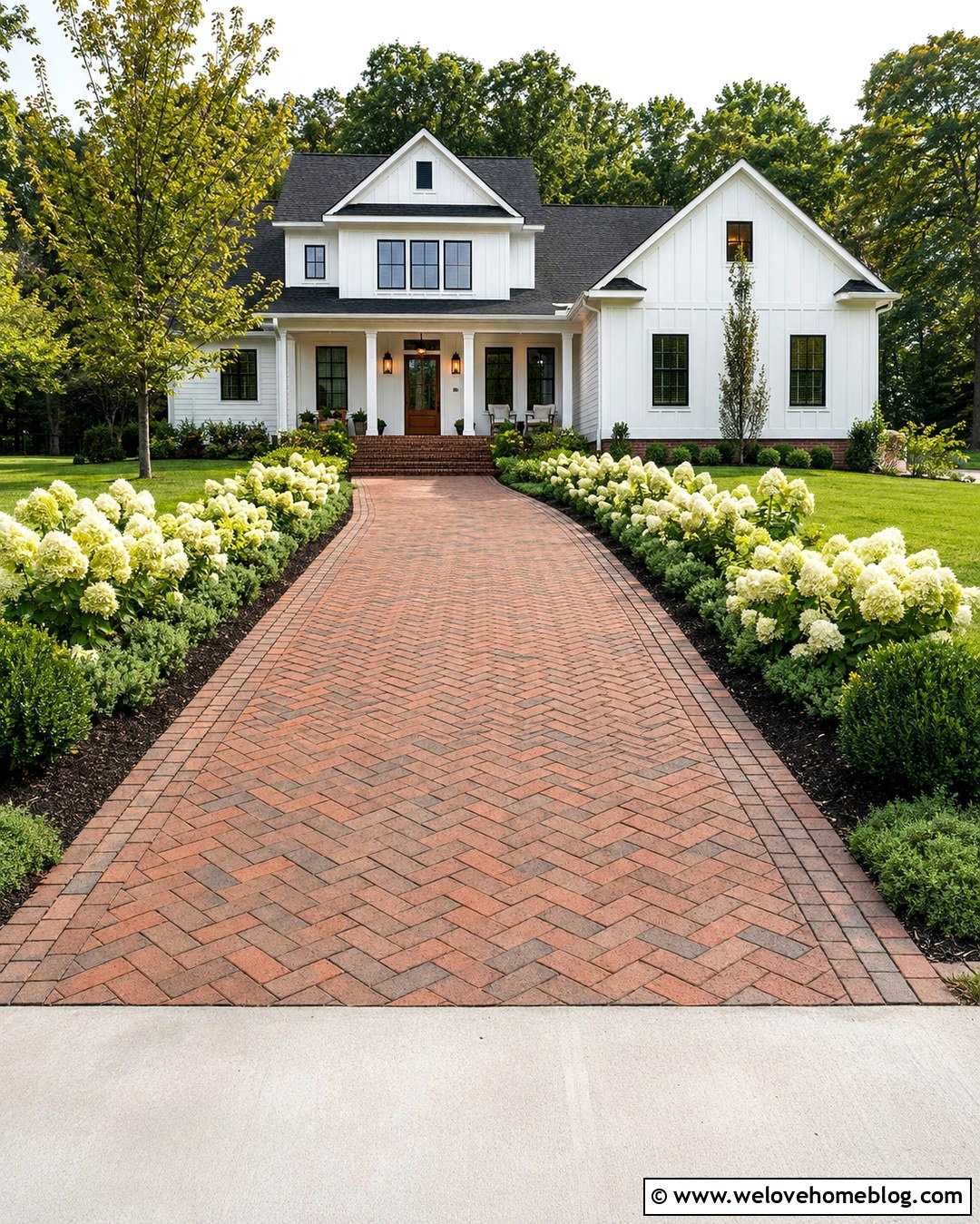
Creamy panicle hydrangeas bring softness and scale to a driveway built from clay brick pavers. A herringbone pattern gives the surface character, while a matching double-brick border keeps the edges visually strong. Plant the hydrangeas in generous mulched beds along one or both sides, depending on available yard space. Their upright flowers can create a striking summer sequence without making the driveway feel enclosed. Place low evergreen ground cover at the front of the bed and use taller shrubs only as the driveway approaches the house. This layered arrangement looks especially appropriate beside red brick Colonials, traditional cottages, and white farmhouses. Provide enough planting depth for air movement and mature growth. Repeating the brick in the walkway and porch steps connects the entire approach.
7. Blue Star Juniper Shrubs Along An Exposed Aggregate Driveway
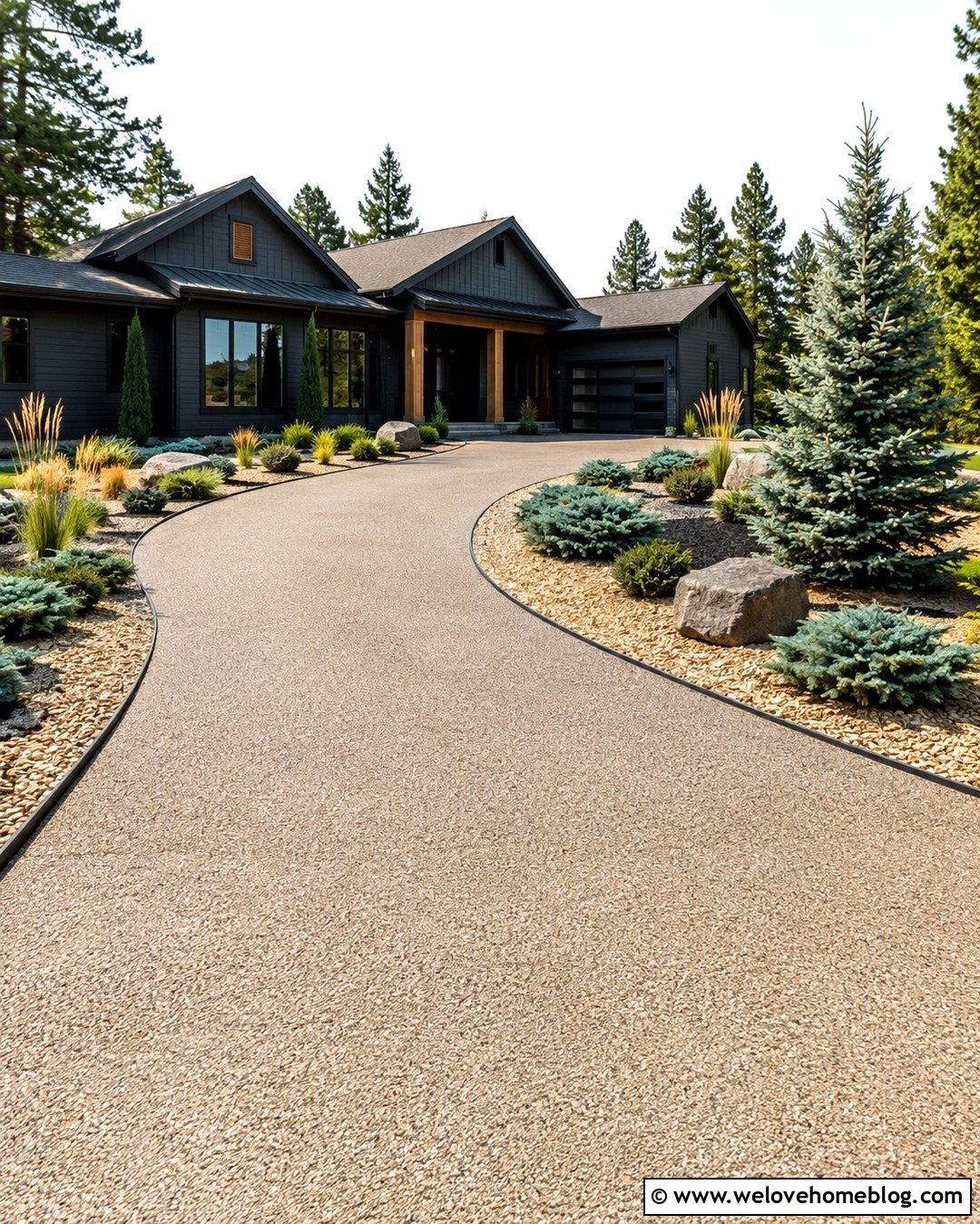
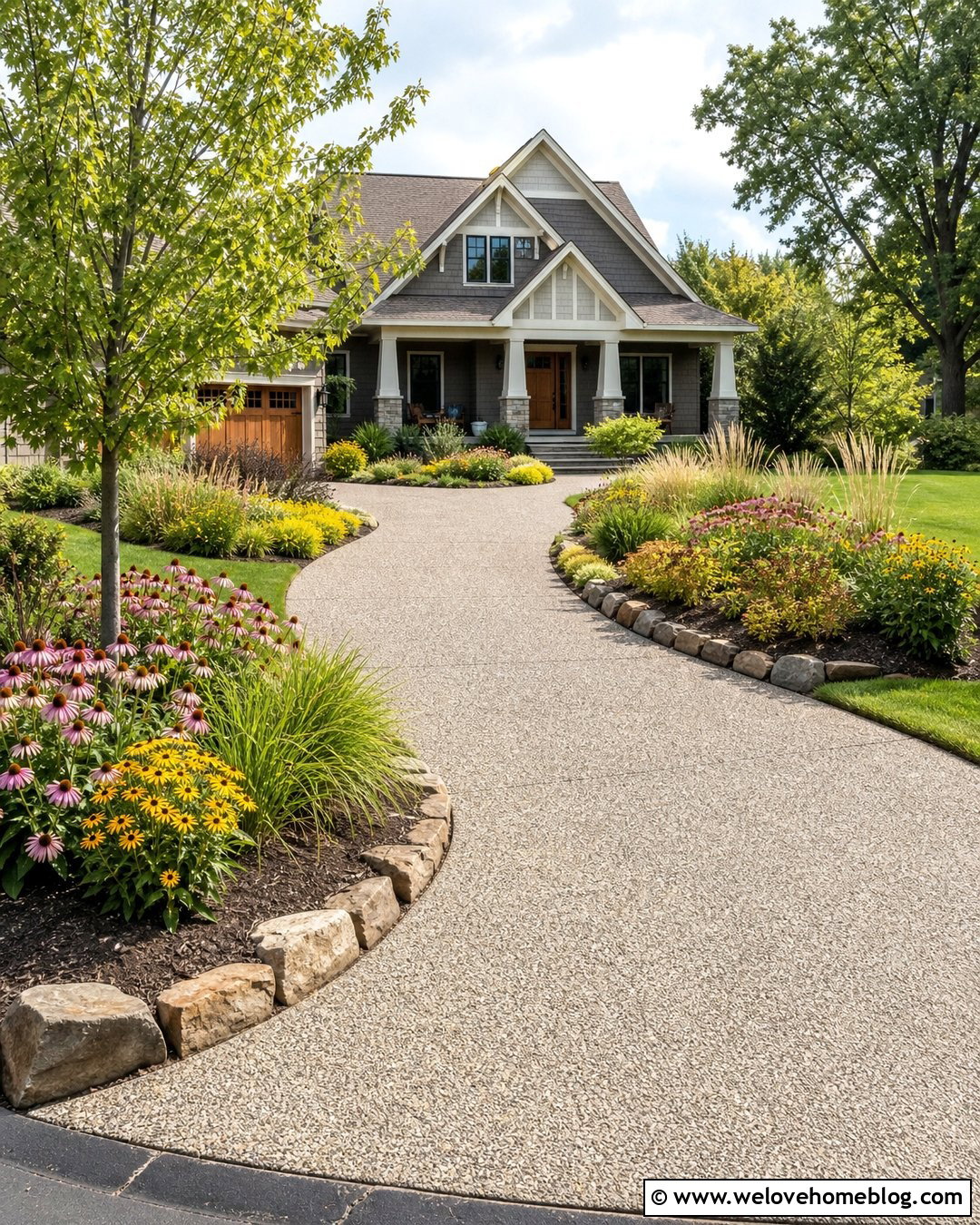
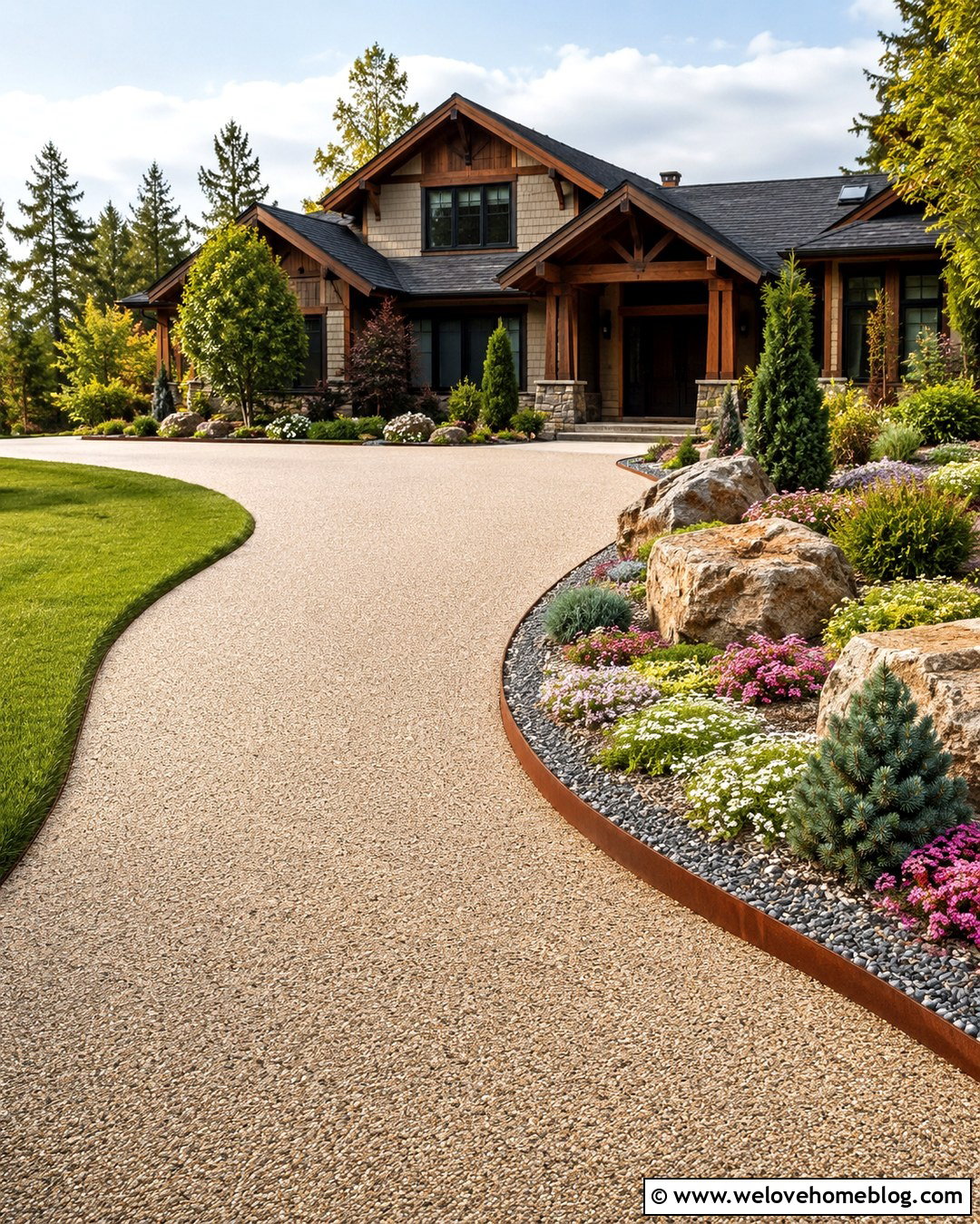
Blue Star juniper adds cool color and sculptural texture beside a warm exposed aggregate driveway. Use a gently curving layout with a flush steel or dark stone edge that prevents gravelly concrete transitions from looking untidy. Arrange the low junipers in irregular groups rather than a continuous hedge. Surround them with tan gravel mulch, larger accent rocks, and drought-tolerant ornamental grasses. This creates a practical border that feels open and does not block views across the yard. The silvery blue foliage pairs well with charcoal siding, natural wood, and modern desert-inspired architecture. Keep the shrubs beyond the area used for snow piling or frequent foot traffic. A wider planting bed at the curve can hold a specimen evergreen, creating a focal point that guides visitors toward the garage and entrance.
8. Abelia Shrubs Along A Resin-Bound Driveway
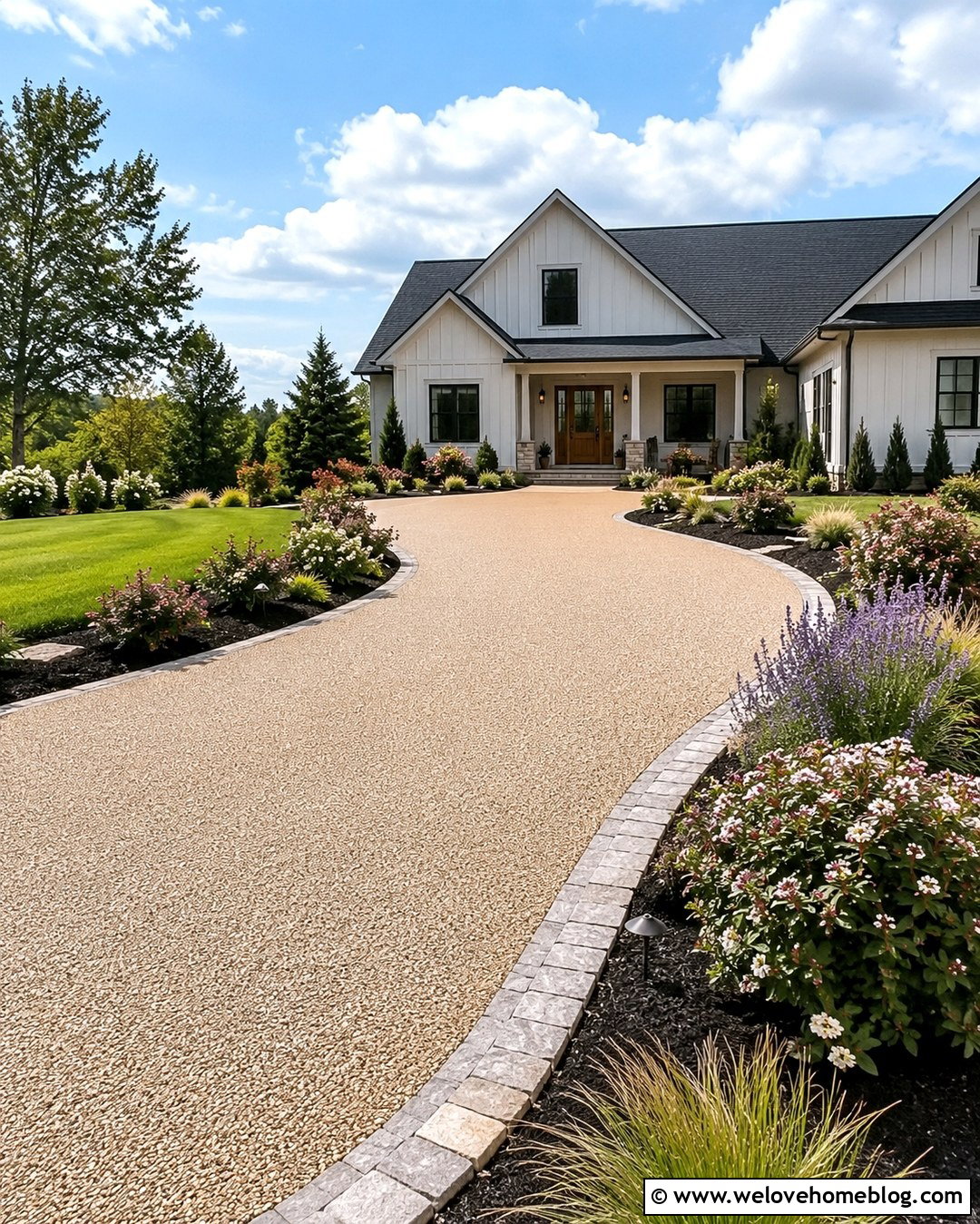
Glossy abelia shrubs can give a resin-bound driveway a graceful border that remains relaxed rather than rigid. Choose a warm beige resin-bound gravel surface with smooth curves and a narrow granite sett edge. Plant abelia in staggered groups, allowing the arching branches to overlap visually without reaching the driveway. Add lavender-colored perennials and compact grasses near the front of the bed to create layers. The soft planting contrasts nicely with the seamless, refined driveway finish. This combination suits contemporary cottages, transitional homes, and updated ranch houses. Low path lights can be placed between shrub groups instead of directly in front of every plant. The finished approach feels balanced during the day and remains easy to navigate after dark, while the broad planting beds help the driveway blend naturally into the surrounding lawn.
9. Ninebark Shrubs Along A Wide Asphalt Driveway
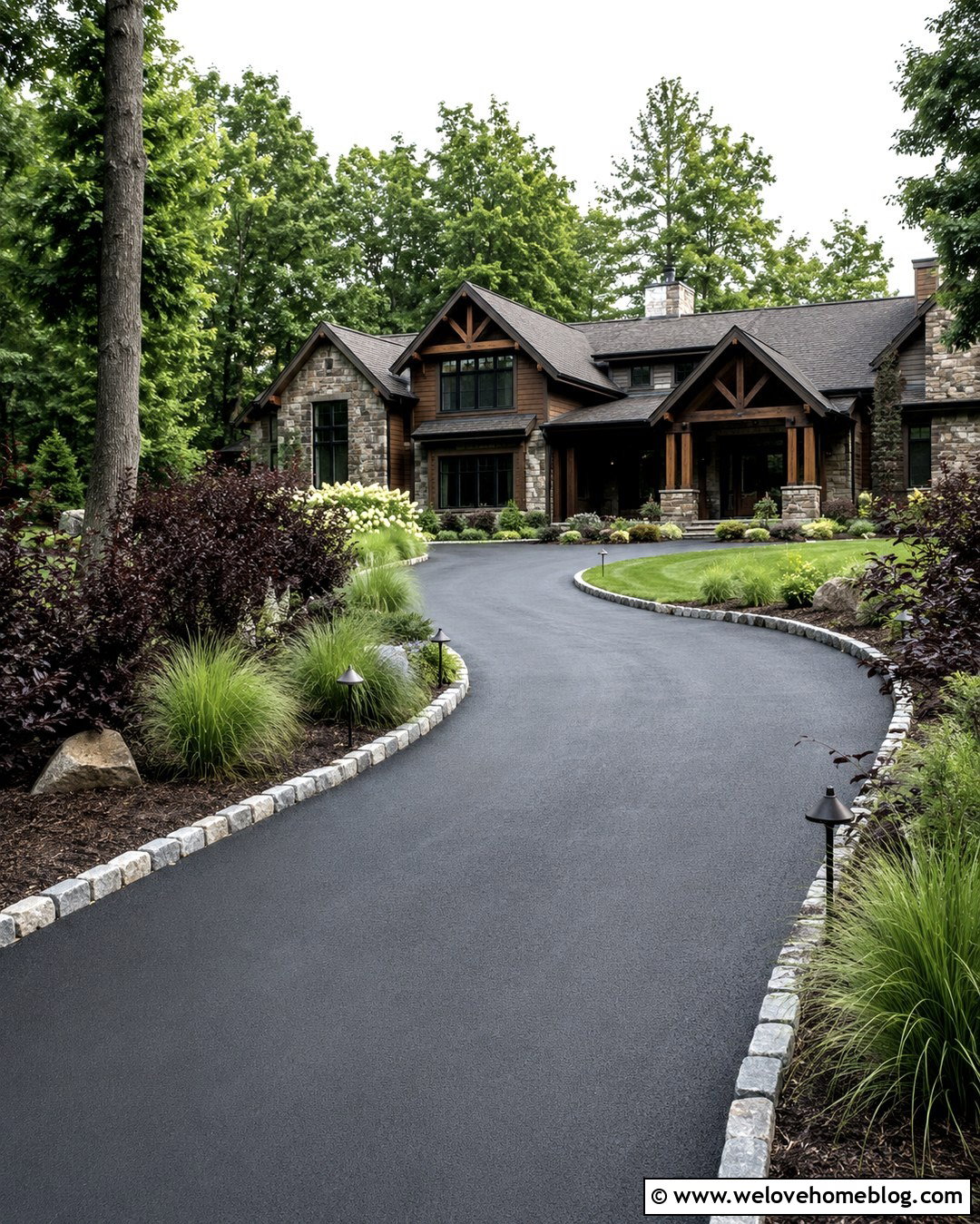
Dark-leaved ninebark can make a wide asphalt driveway feel less stark and more connected to the garden. Install a light-gray granite block border to create contrast against the black surface. Place compact ninebark cultivars in repeating groups, then combine them with pale flowering perennials and fresh green ornamental grasses. The contrasting foliage creates depth even when flowers are not present. This look works best where planting beds are wide enough to accommodate the shrubs without frequent hard pruning. A curved driveway or broad parking court gives the arrangement room to breathe. Pair it with a Craftsman, lodge-style, or contemporary home featuring stone and wood details. Leave clear areas beside parking spaces so doors can open easily. Mulched gaps between groups also provide practical locations for discreet driveway lighting.
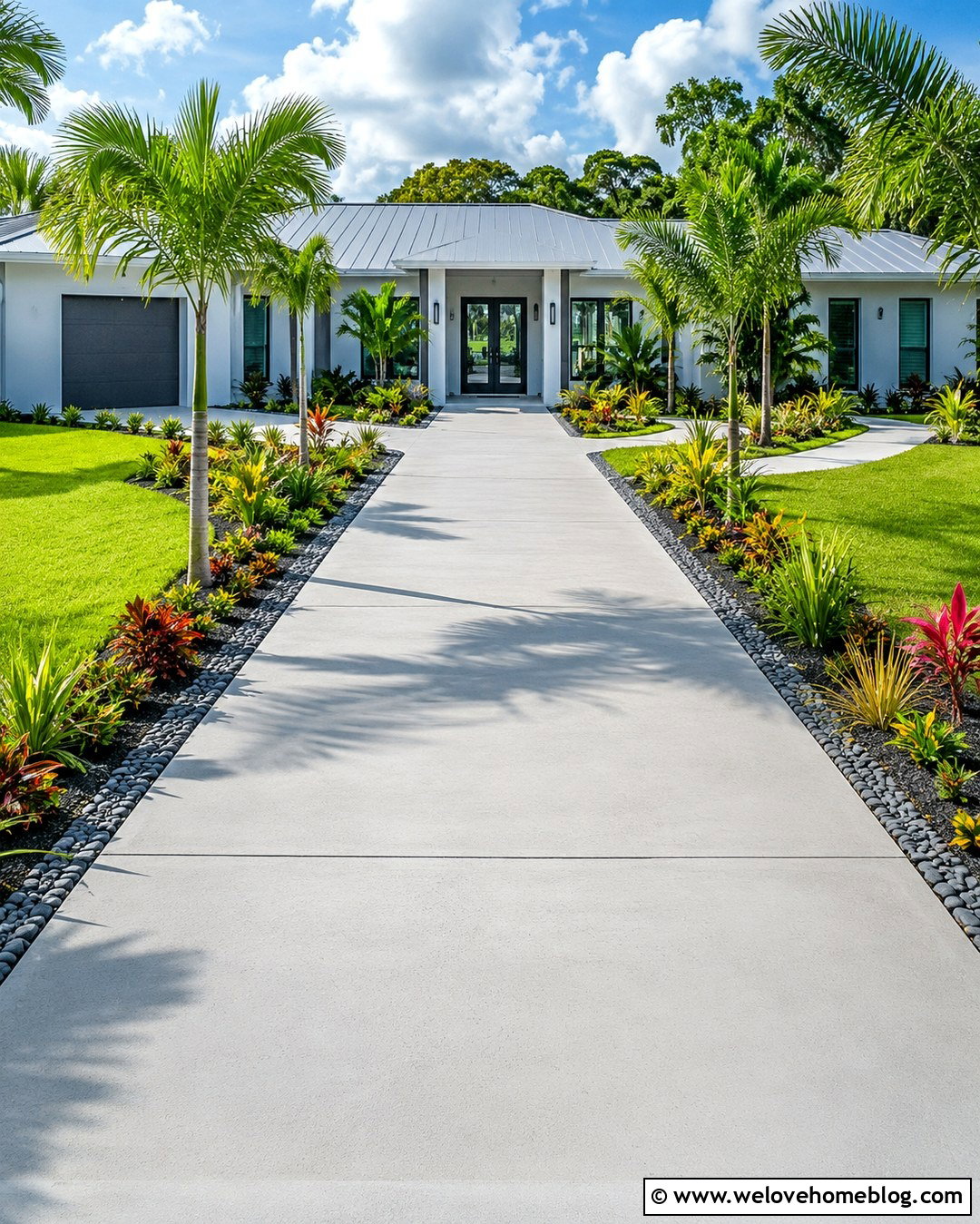
10. Dwarf Arborvitae Shrubs Along A Cobblestone Driveway
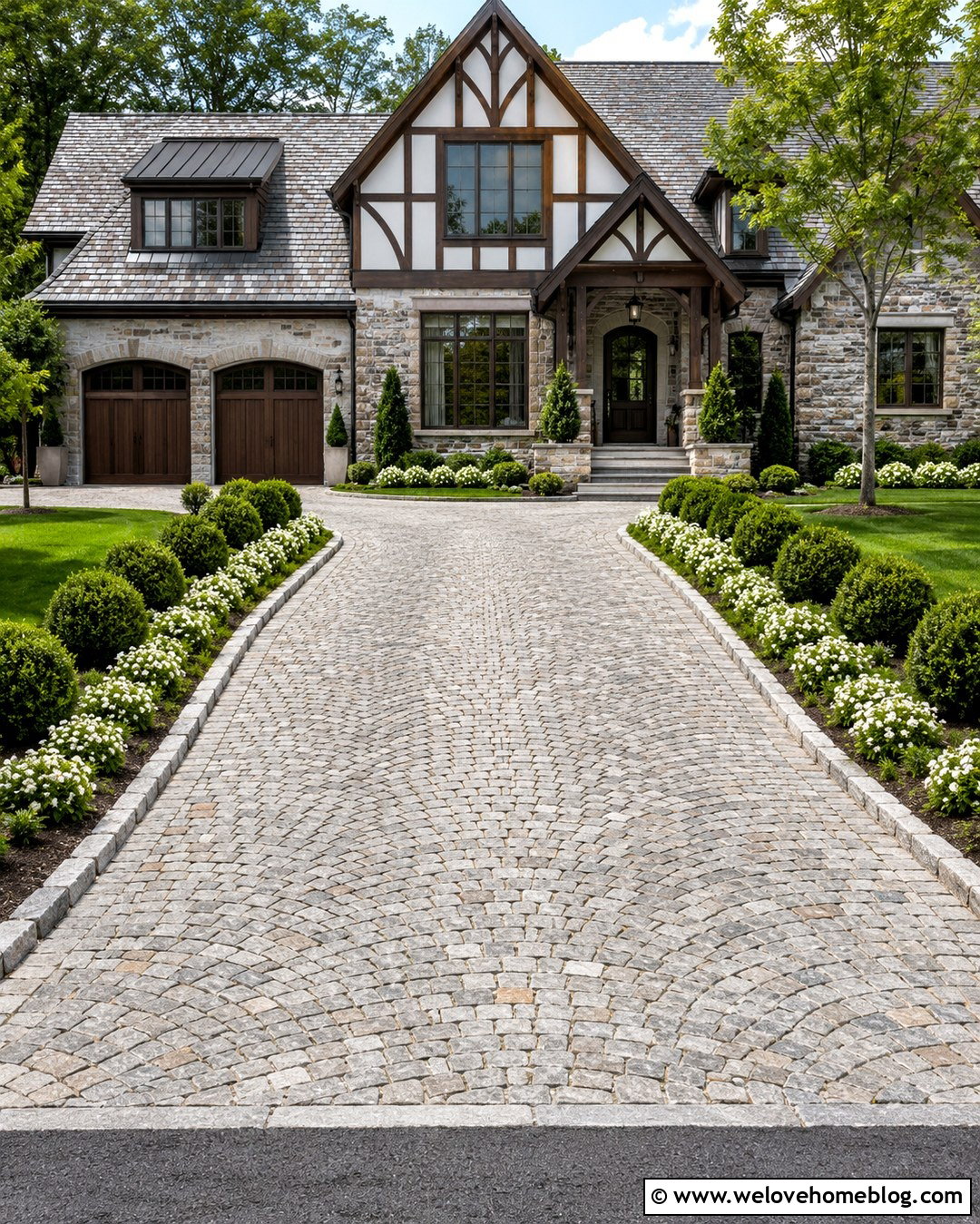
Rounded dwarf arborvitae can frame a cobblestone driveway while preserving a classic, substantial appearance. Use mixed gray cobblestones in a fan or running pattern, finished with a straight granite curb. Space globe-shaped arborvitae evenly along the main approach, but widen the spacing near the street and garage. A narrow ribbon of low white flowers can soften the transition between the stone and evergreen shrubs. Behind the planting, maintain a simple lawn or clipped hedge so the richly textured driveway remains the visual focus. This design is well suited to Tudor, European-inspired, and stately traditional homes. Avoid tall conical varieties where they could create a tunnel effect or obstruct visibility. Repeating the rounded shrubs around the front walkway helps unify the entire landscape without making it feel overly decorated.
11. Weigela Shrubs Along A Concrete Driveway With Paver Borders
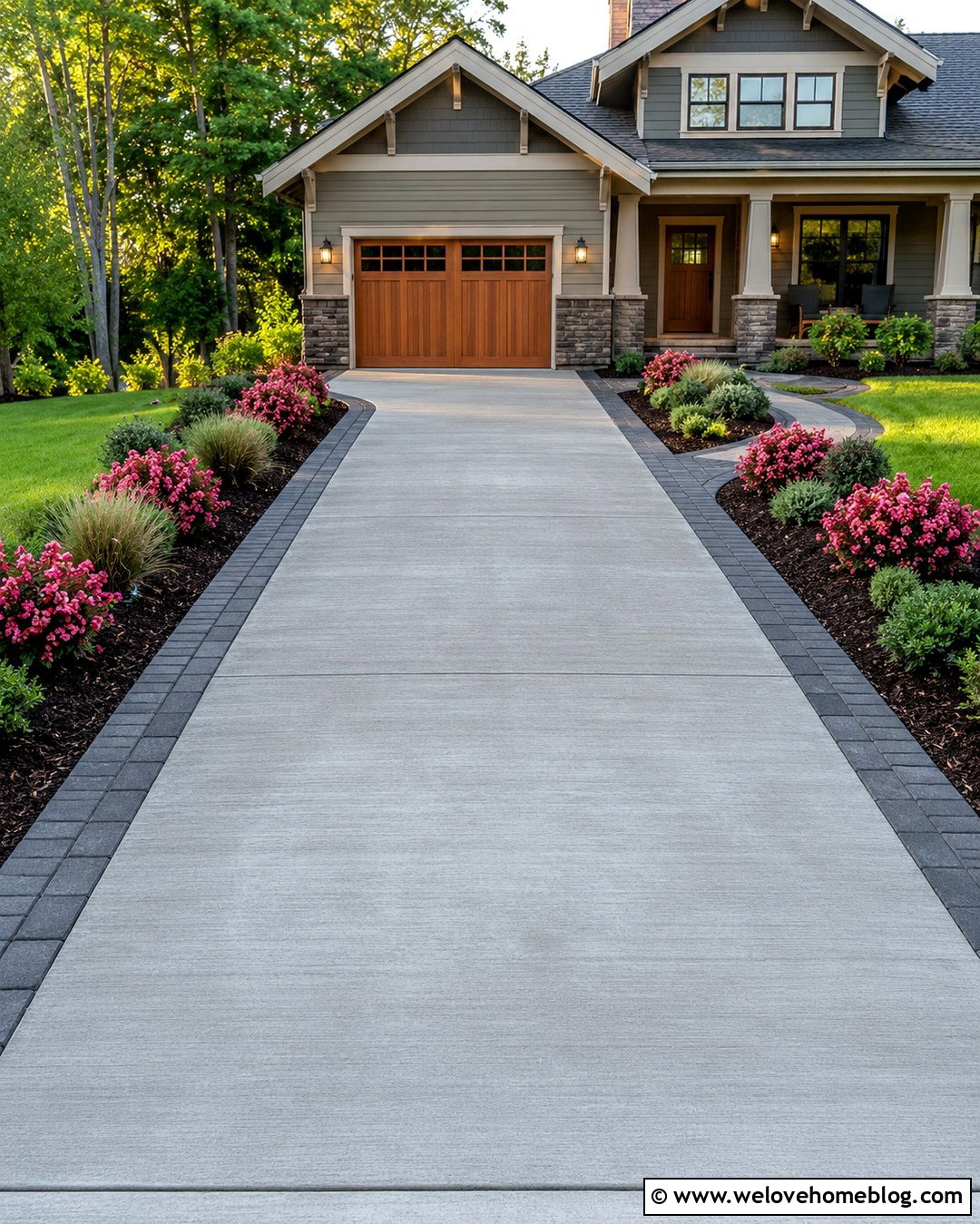
Flowering weigela offers a colorful alternative to a plain evergreen hedge. Begin with a medium-gray brushed concrete driveway and add a wide charcoal paver ribbon along each side. Behind the pavers, plant compact weigela in loose groups separated by ornamental grasses or low evergreens. The varied foliage and trumpet-shaped flowers can make the border feel full without requiring a complicated plant list. Use the same pavers for the walkway leading from the driveway to the porch. This repeated material creates a cohesive front-yard plan. The design complements ranch, Craftsman, and casual cottage homes. Set the shrubs back from parking areas and choose compact cultivars that fit the bed at maturity. A dark mulch layer provides a tidy background while reducing competition from weeds around the base of each shrub.
12. Oakleaf Hydrangea Shrubs Along A Shaded Driveway
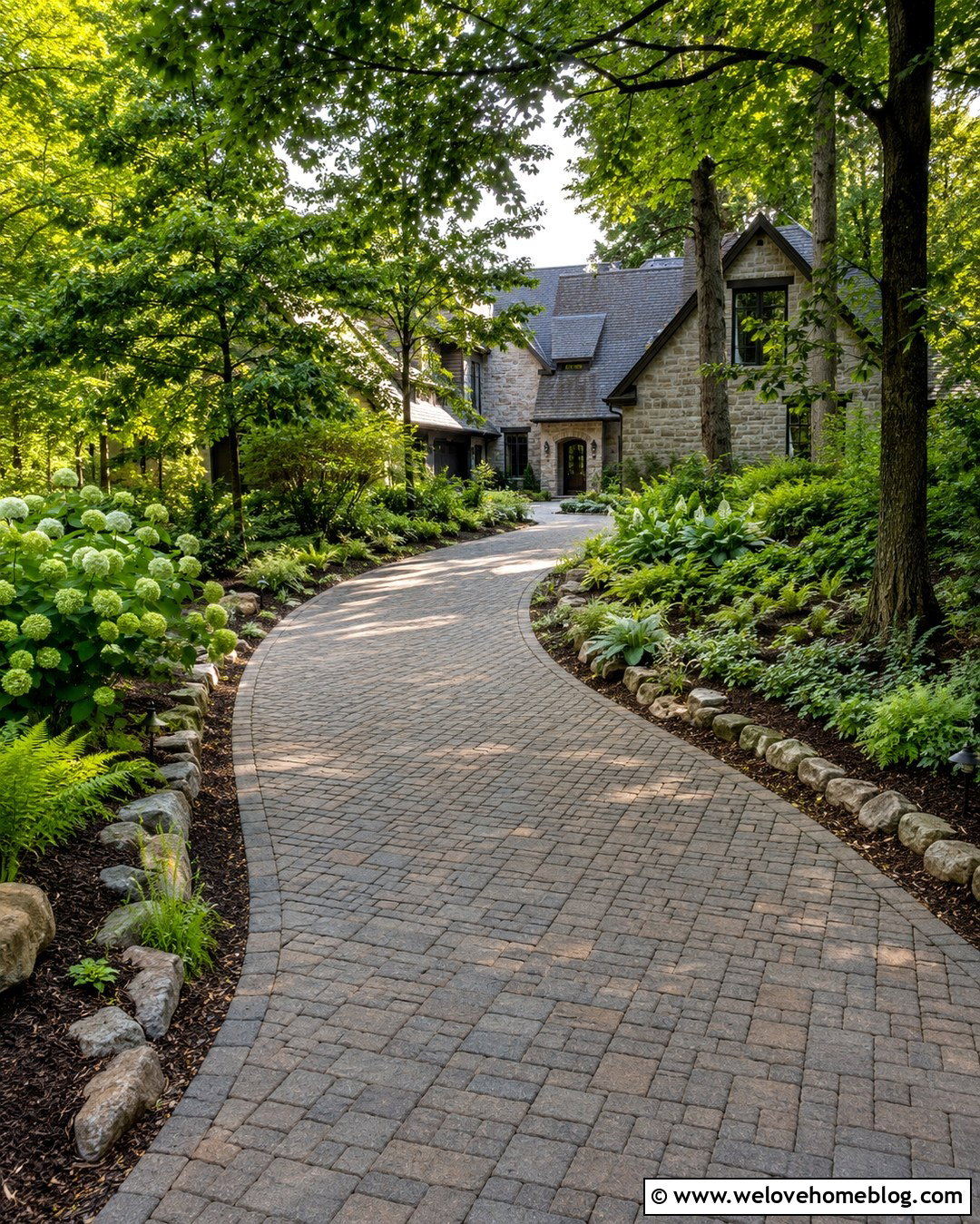
A driveway beneath mature trees needs shrubs that visually belong in a woodland setting. Oakleaf hydrangeas can form generous groups beside a shaded driveway made from brown and gray permeable pavers. Define the edge with natural fieldstone, then layer the shrubs behind ferns, sedges, and shade-tolerant ground covers. Rather than planting both sides identically, use larger groups on the wider side and smaller accents near the house. This asymmetry gives the approach a natural, established character. The broad foliage and seasonal color pair well with stone cottages, wooded Craftsman homes, and traditional houses with deep porches. Maintain a clear gravel or mulch strip beside the pavers so leaves and branches are easier to manage. Subtle path lights tucked into the beds improve visibility without overpowering the woodland atmosphere.
13. Potentilla Shrubs Along A Gravel Driveway
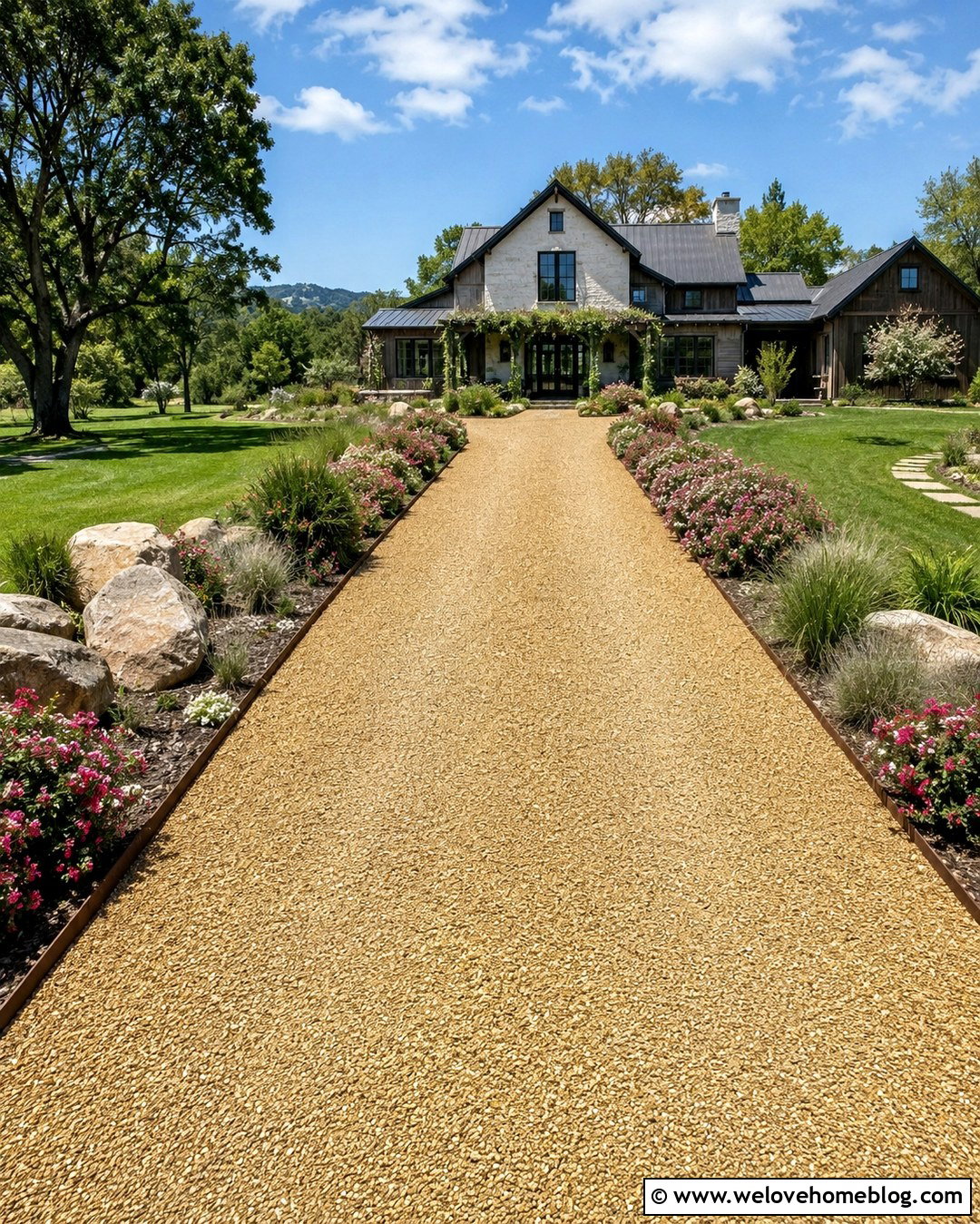
Potentilla shrubs can provide an informal flowering edge for a sunny gravel driveway. Use compacted golden gravel in a straight country-style layout with sturdy timber or weathered steel edging. Arrange the shrubs in repeating drifts, leaving small breaks that reveal decorative stones and low ground covers. Their compact size helps maintain open views across the driveway and lawn. Add a few upright grasses behind the shrubs for height, but avoid placing large plants close to the road entrance. This cheerful combination works well with cabins, rustic ranch homes, and modern farmhouses. The gravel color should relate to the house stone, porch, or walkway for a connected appearance. A simple stepping-stone path through the planting bed can link the driveway to a side entrance without interrupting the continuous landscaped border.
14. Dwarf Lilac Shrubs Along A Brick Paver Driveway
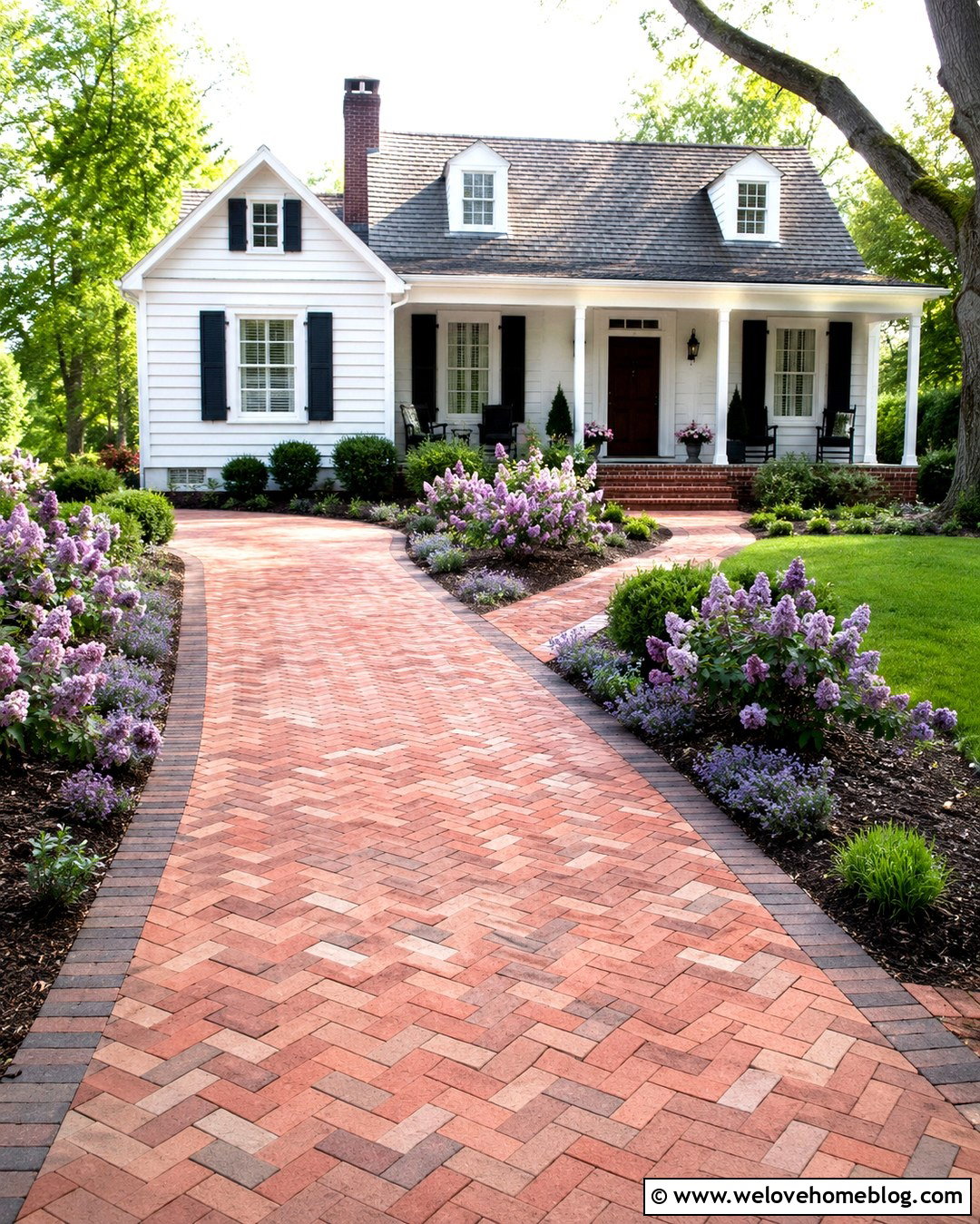
Imagine opening the windows in spring and seeing a driveway framed by blooming dwarf lilacs. Use red and brown clay brick pavers in a herringbone pattern, bordered with a darker brick soldier course. Plant compact lilacs in evenly spaced groups along the sunniest edge, with low catmint or ground cover filling the spaces between them. A narrow strip of mulch behind the brick border prevents stems from leaning directly over the driving surface. This romantic but practical look suits cottages, Cape Cod homes, and traditional houses with painted siding. Continue the flowering shrubs around a nearby mailbox bed or front walkway for visual consistency. Outside the bloom period, rounded foliage keeps the border attractive. Give every shrub enough room to mature naturally instead of relying on frequent trimming to control its size.
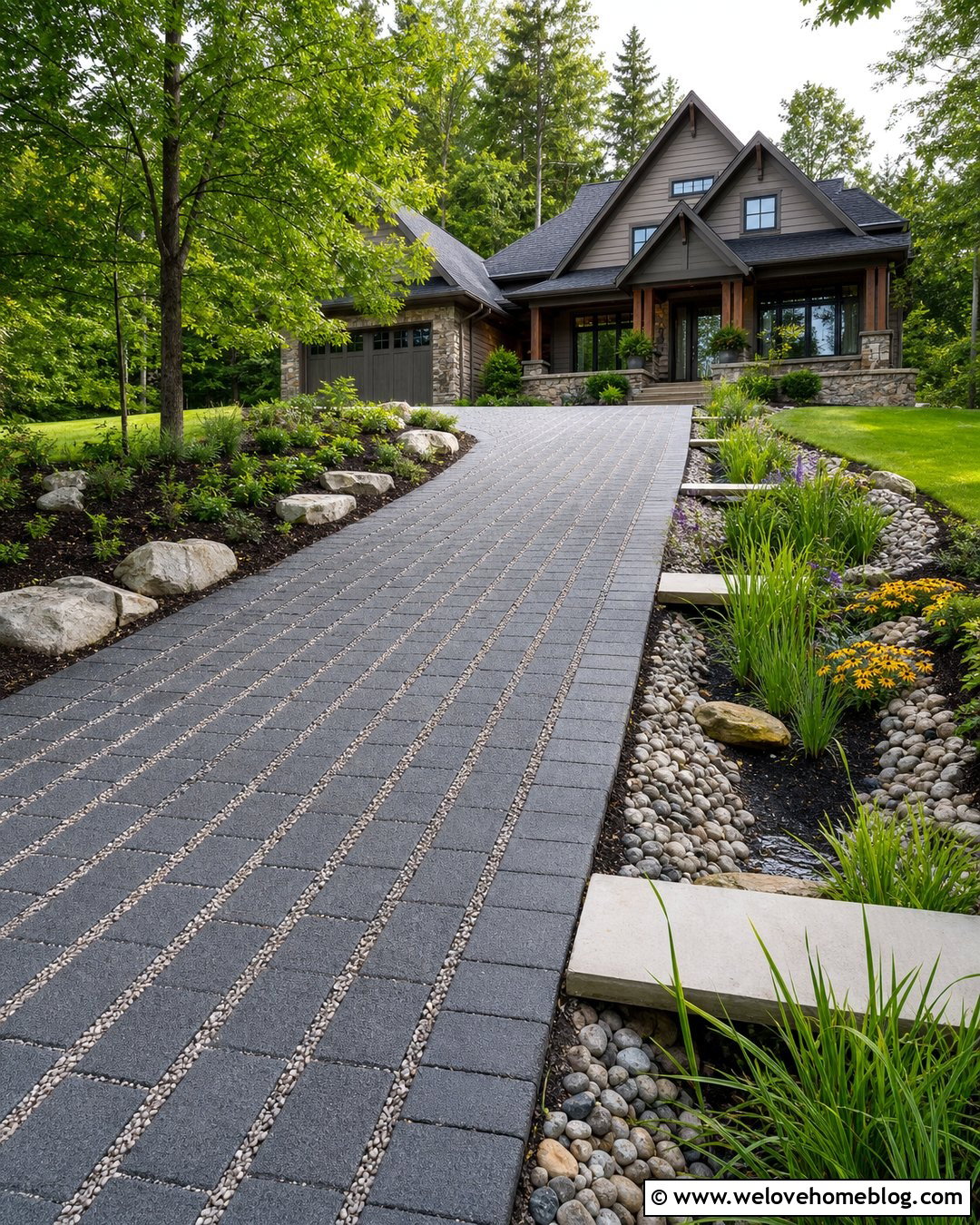
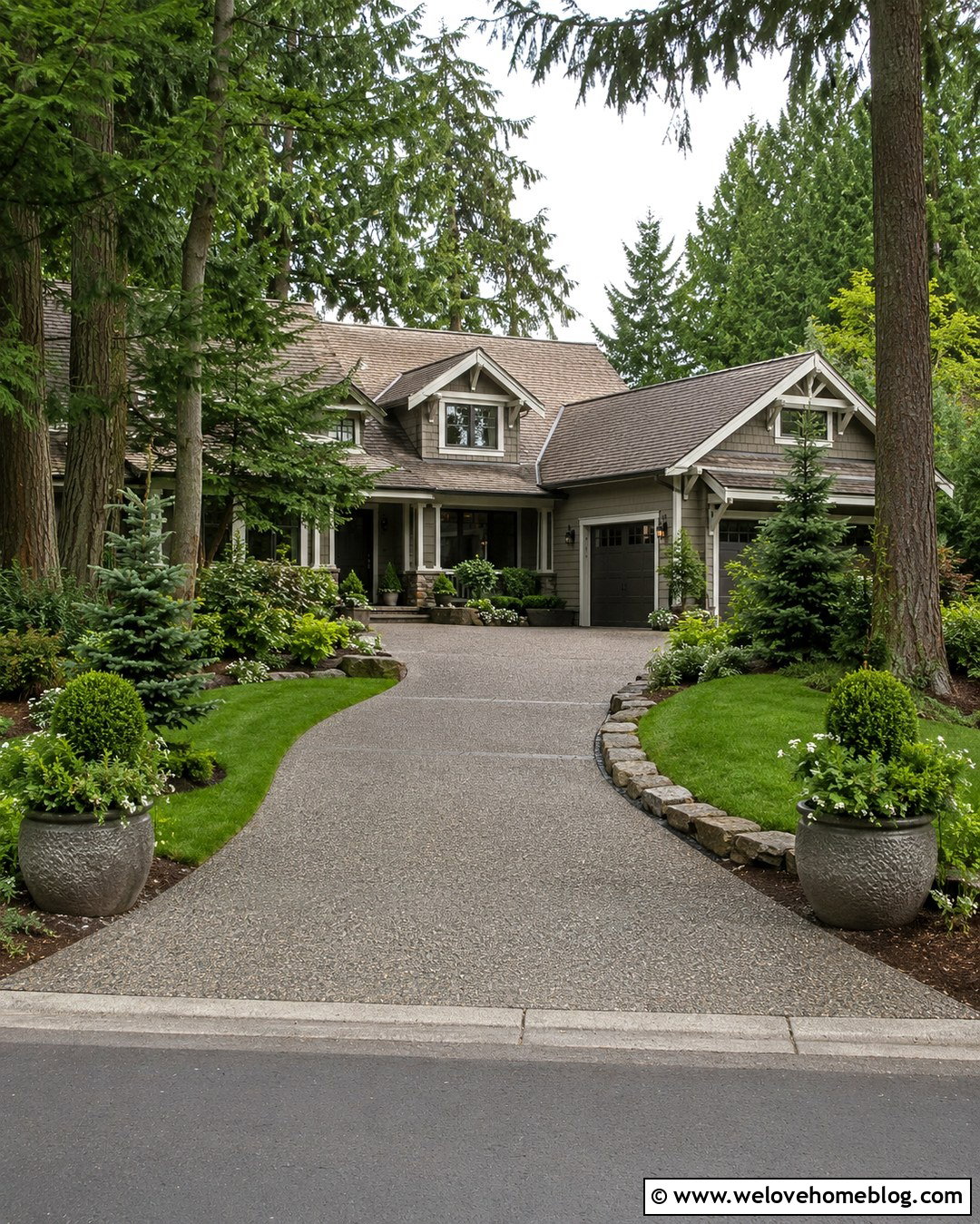
15. Beautyberry Shrubs Along A Country Gravel Driveway
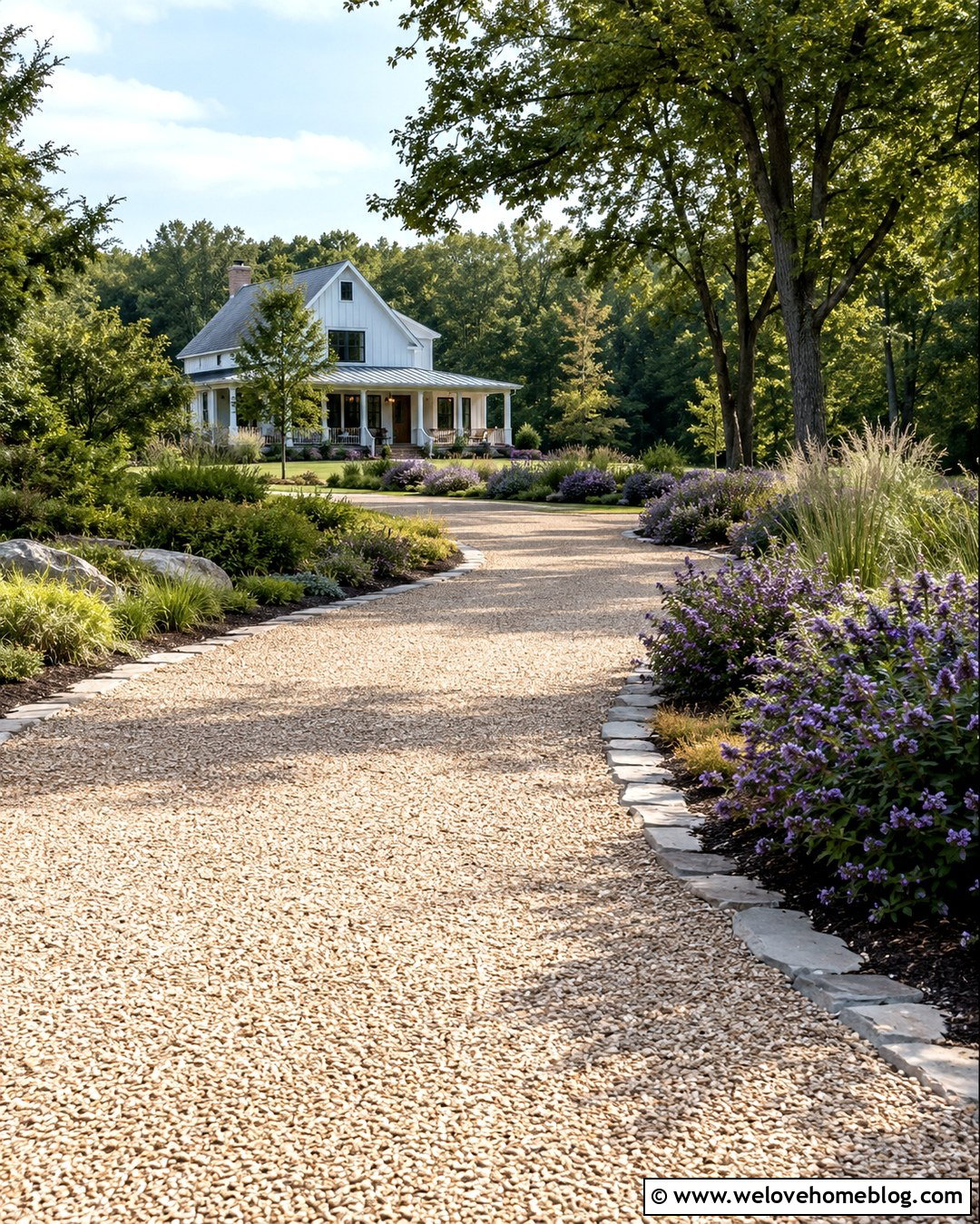
A long country driveway can support a more natural arrangement of beautyberry shrubs. Start with light brown crushed stone and define the curves using large fieldstones set nearly flush with the surface. Plant beautyberry in broad, irregular groups near woodland edges, mixing it with native grasses and lower evergreen shrubs. Leave occasional open sections so the landscape does not feel like a solid wall. The loose composition fits farmhouse, cabin, and country ranch settings particularly well. Wider shrub beds near the house can transition into more refined foundation landscaping. Along the distant portion of the drive, allow grasses and ground covers to create a meadow-like edge. Keep plants trimmed away from drainage ditches and sightlines. The finished design should feel natural, spacious, and coordinated with the surrounding land rather than heavily manicured.
16. Rosemary Shrubs Along A Mediterranean Concrete Driveway
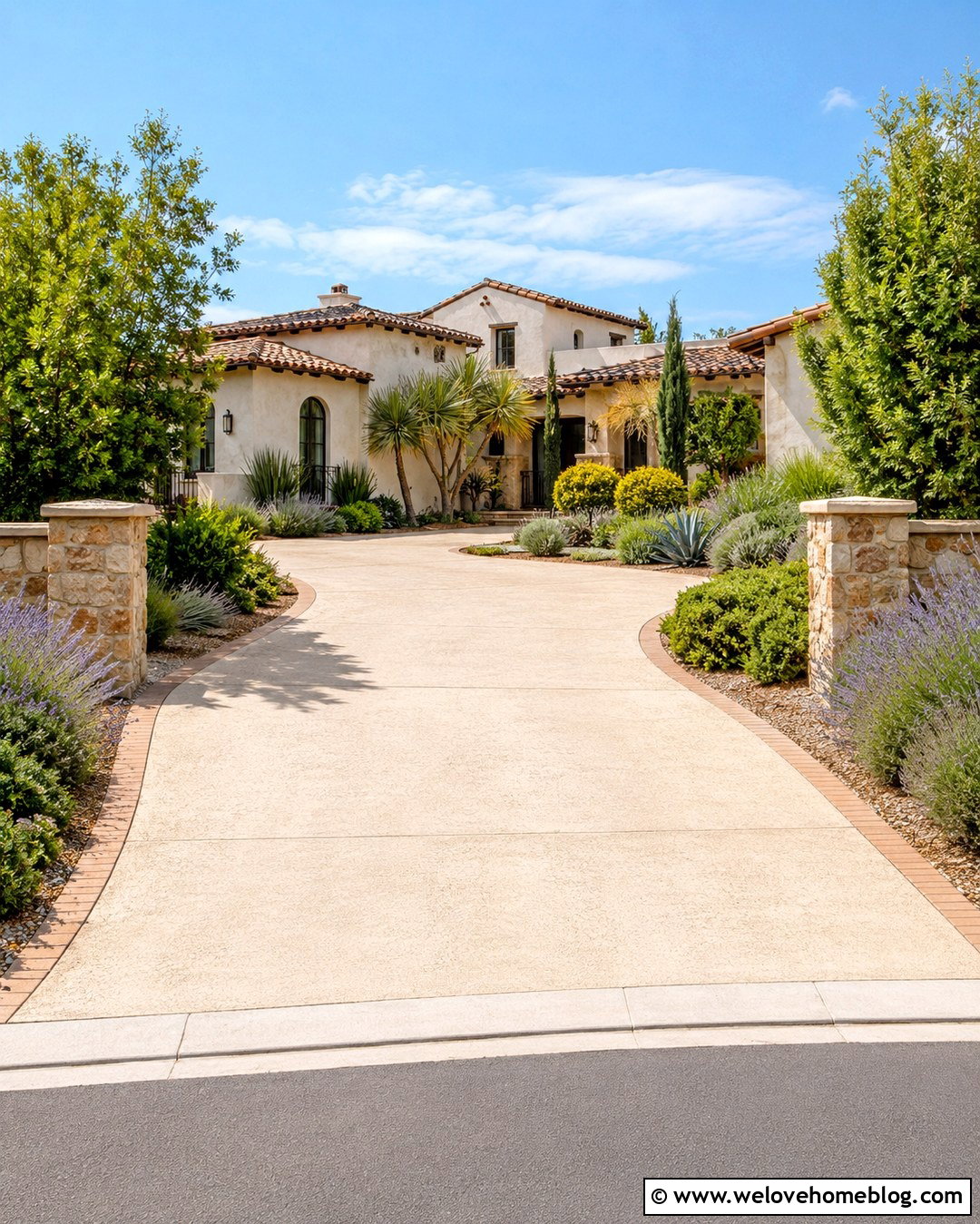
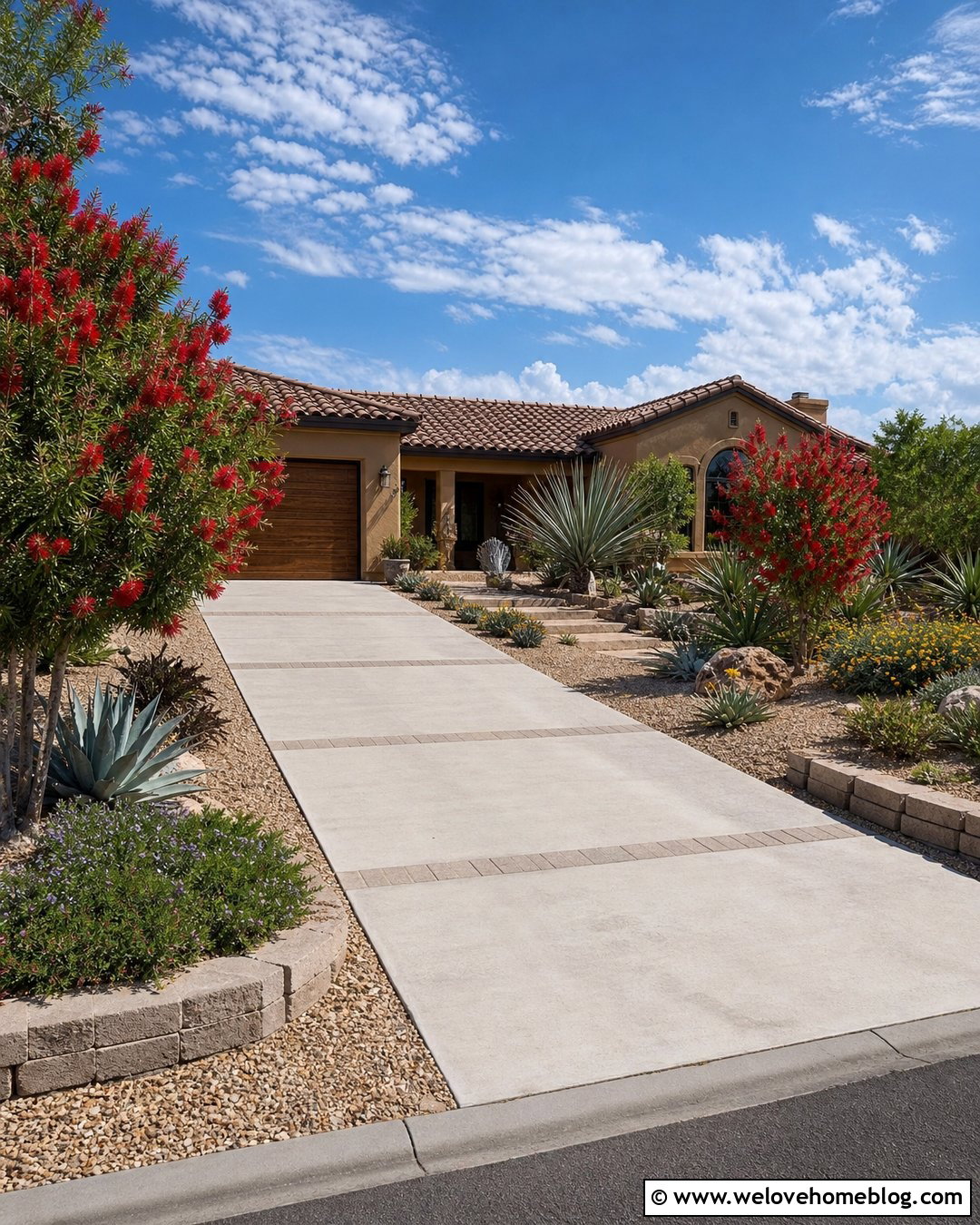
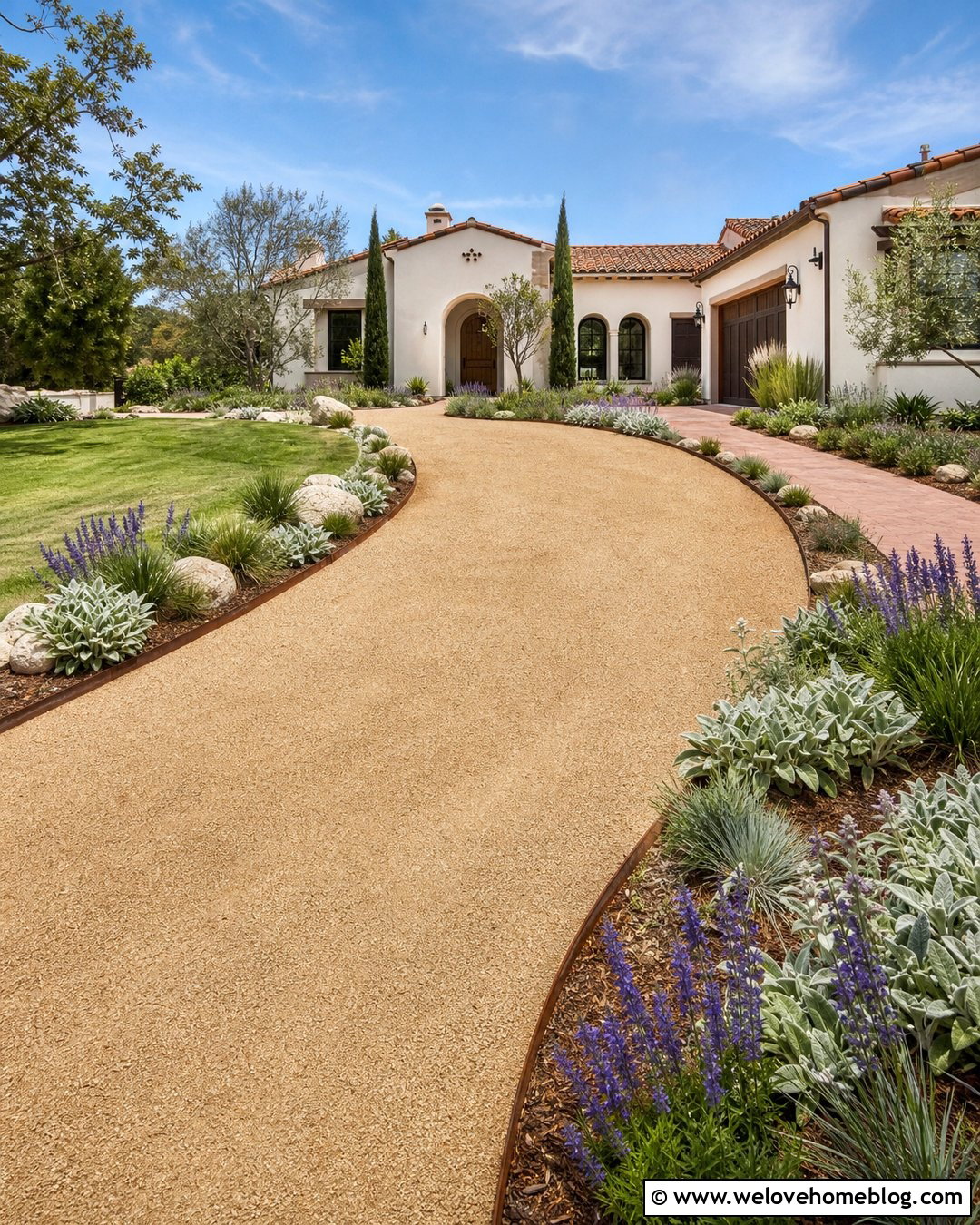
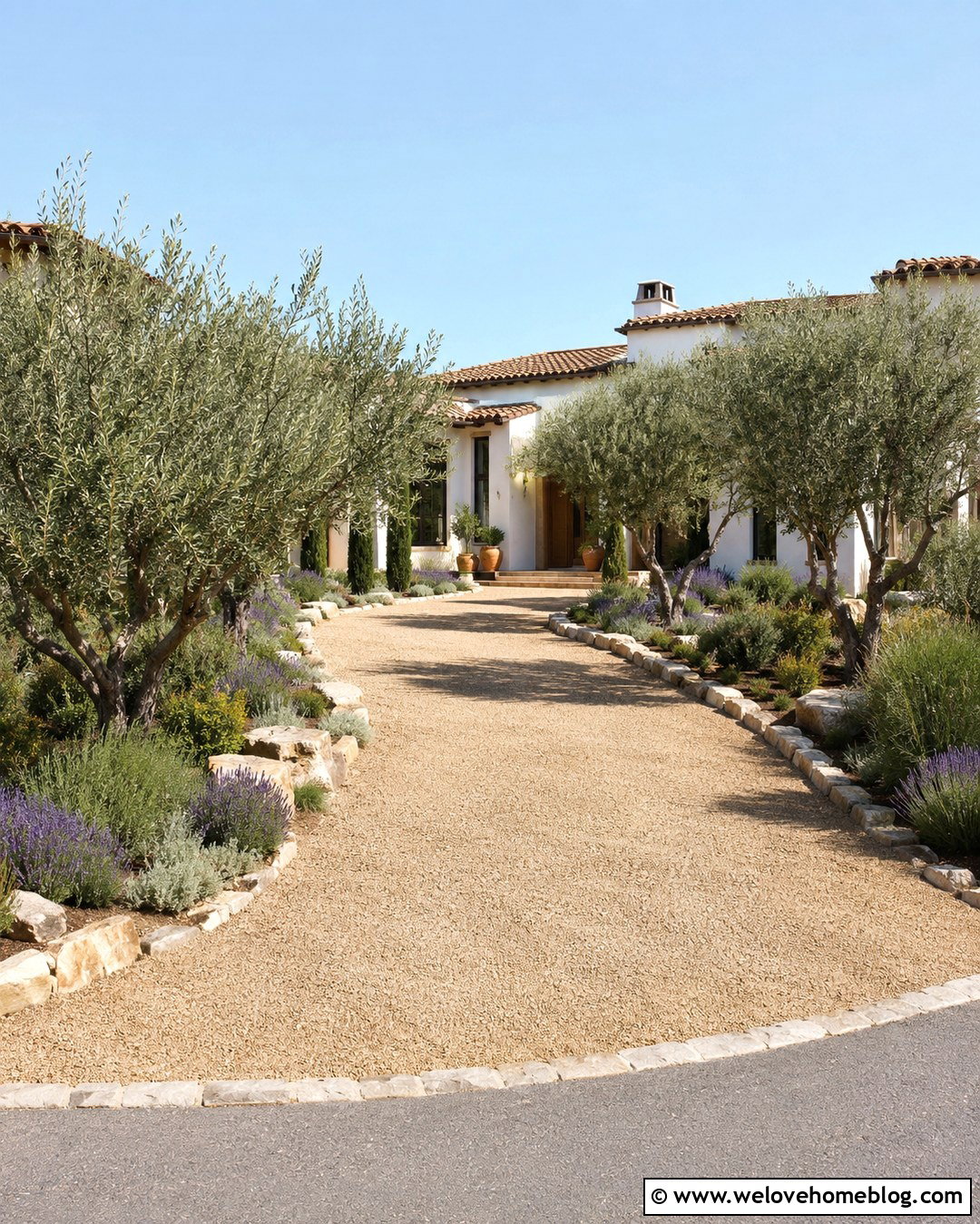
In a warm, dry landscape, rosemary shrubs can form an aromatic evergreen border with strong architectural appeal. Pair them with a pale sand-colored concrete driveway featuring a lightly textured finish and terracotta paver edging. Use a curved or gently flared layout that leads toward a stucco house with clay roof tiles. Space the rosemary in informal masses and combine it with gravel mulch, lavender, ornamental grasses, and a few sculptural accent plants. Keep the shrubs back from turning areas so their branches are not damaged by tires. Low stone walls or terracotta planters can mark the driveway entrance without blocking views. This design replaces water-hungry lawn with a coordinated dry garden. The repeated silver-green foliage also provides a cooling contrast against the warm concrete and house facade.
17. Bottlebrush Shrubs Along A Paver Driveway
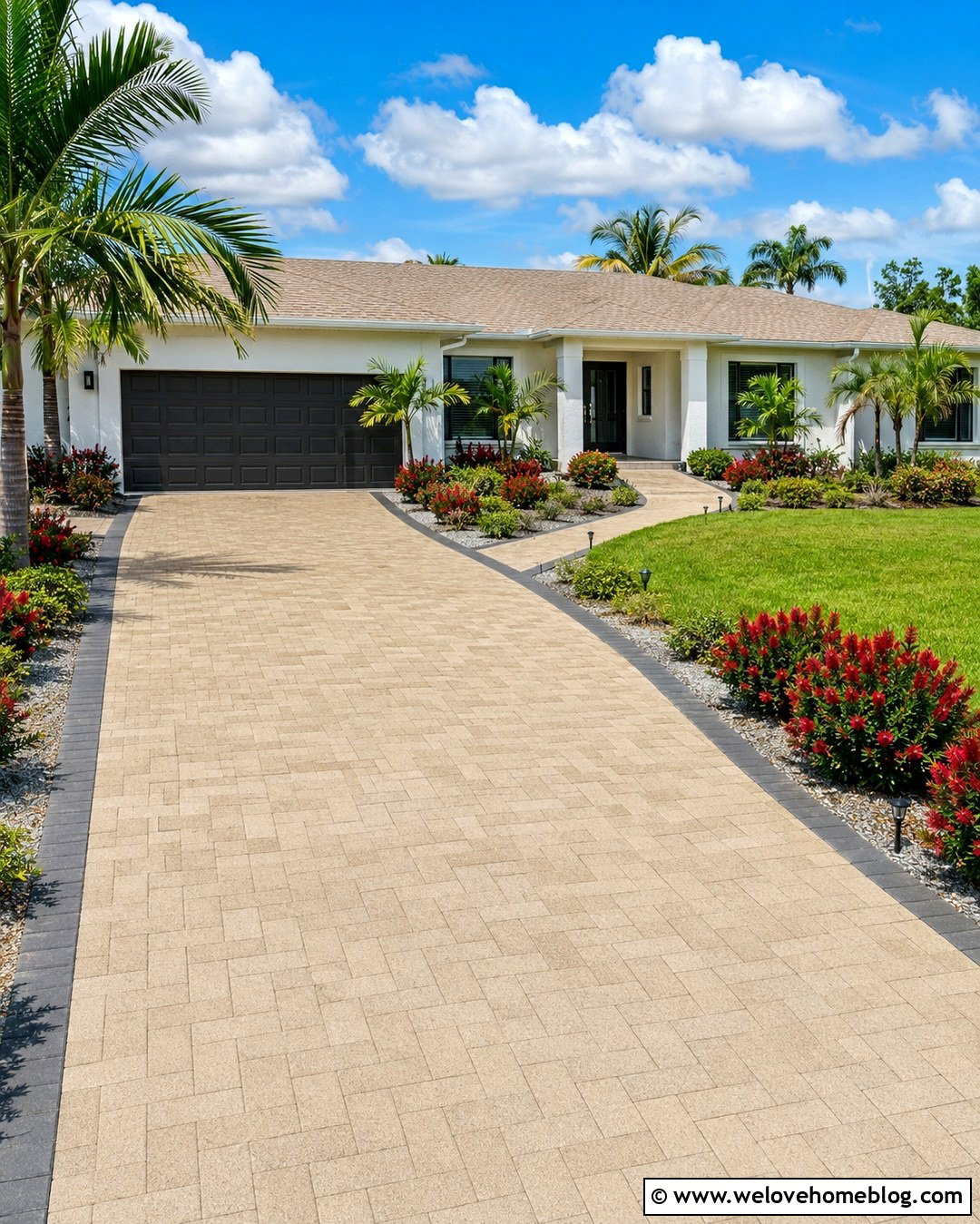
Bottlebrush shrubs can bring vivid color and movement to a warm-climate driveway. Choose light tan concrete pavers in a clean running-bond pattern, edged with charcoal pavers for definition. Use compact bottlebrush varieties in generous groups along one side, balanced by lawn or lower plantings on the other. This prevents the colorful border from making the approach feel narrow. Add decorative gravel, dwarf palms, and low evergreen ground cover to create a layered subtropical landscape. The combination works especially well with Florida ranch, coastal contemporary, and stucco homes. Place the largest shrubs near the house or at broad curves where there is room for their natural spread. Keep the street entrance lower and more open. A matching paver walkway through the planting bed can connect the driveway to the front porch.
18. Virginia Sweetspire Shrubs Along A Driveway Rain Garden
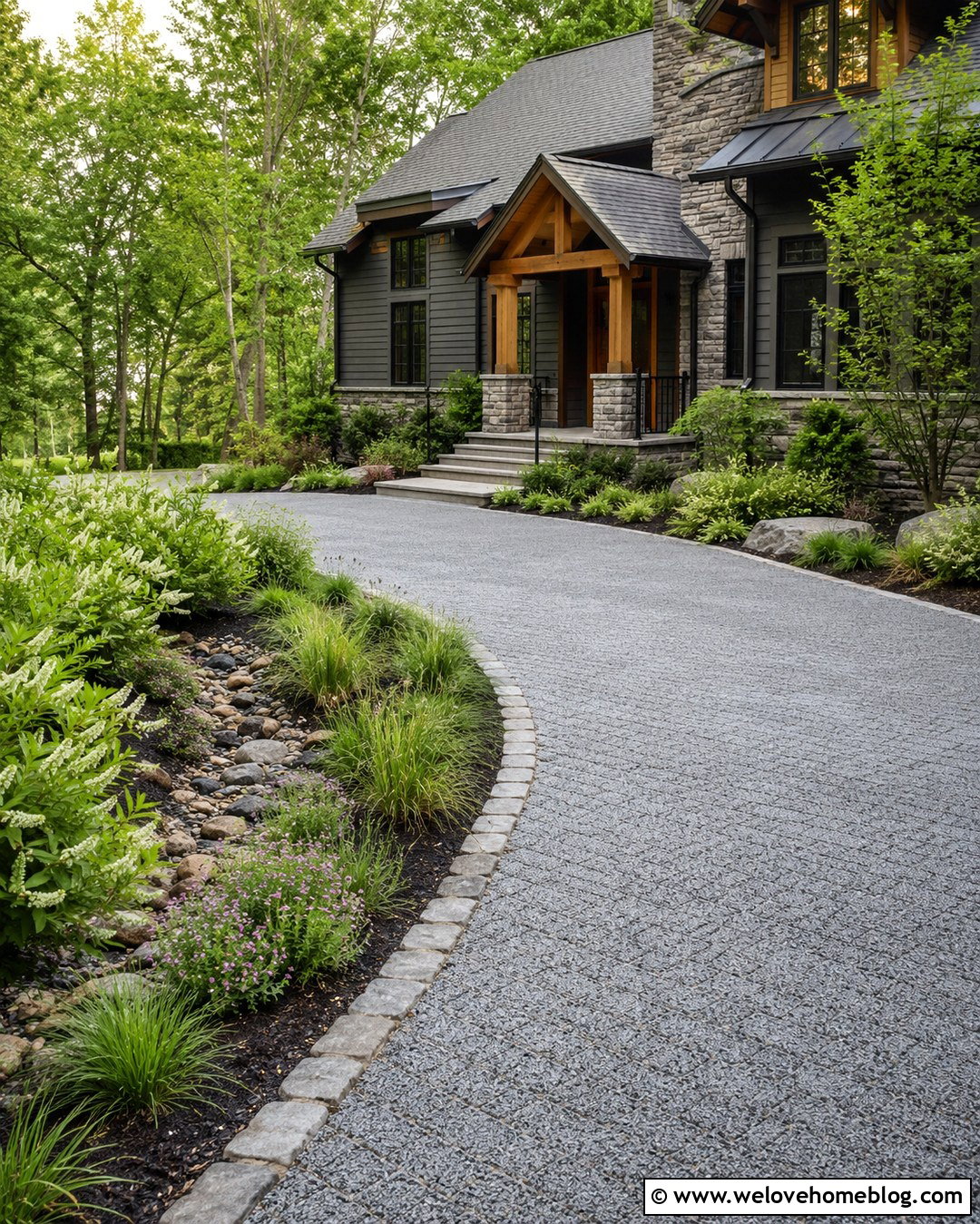
Driveway runoff can become part of the landscape instead of simply flowing toward the street. Build a shallow rain garden beside a permeable gray concrete paver driveway and plant Virginia sweetspire in repeated drifts. A flush cobblestone edge can direct water into the planted area while maintaining a clean transition for vehicles. Combine the shrubs with moisture-tolerant grasses, sedges, and low flowering plants. Shape the bed as a long, gentle curve that follows the driveway rather than a deep ditch. This naturalistic design complements Craftsman, contemporary, and wooded suburban homes. Keep the planting surface below the driveway edge and preserve a clear path to utility areas. Decorative stones at the inlet can slow water and create texture. The complete border feels lush, purposeful, and integrated with the drainage plan.
19. Mixed Evergreen And Flowering Shrubs Along A Long Driveway
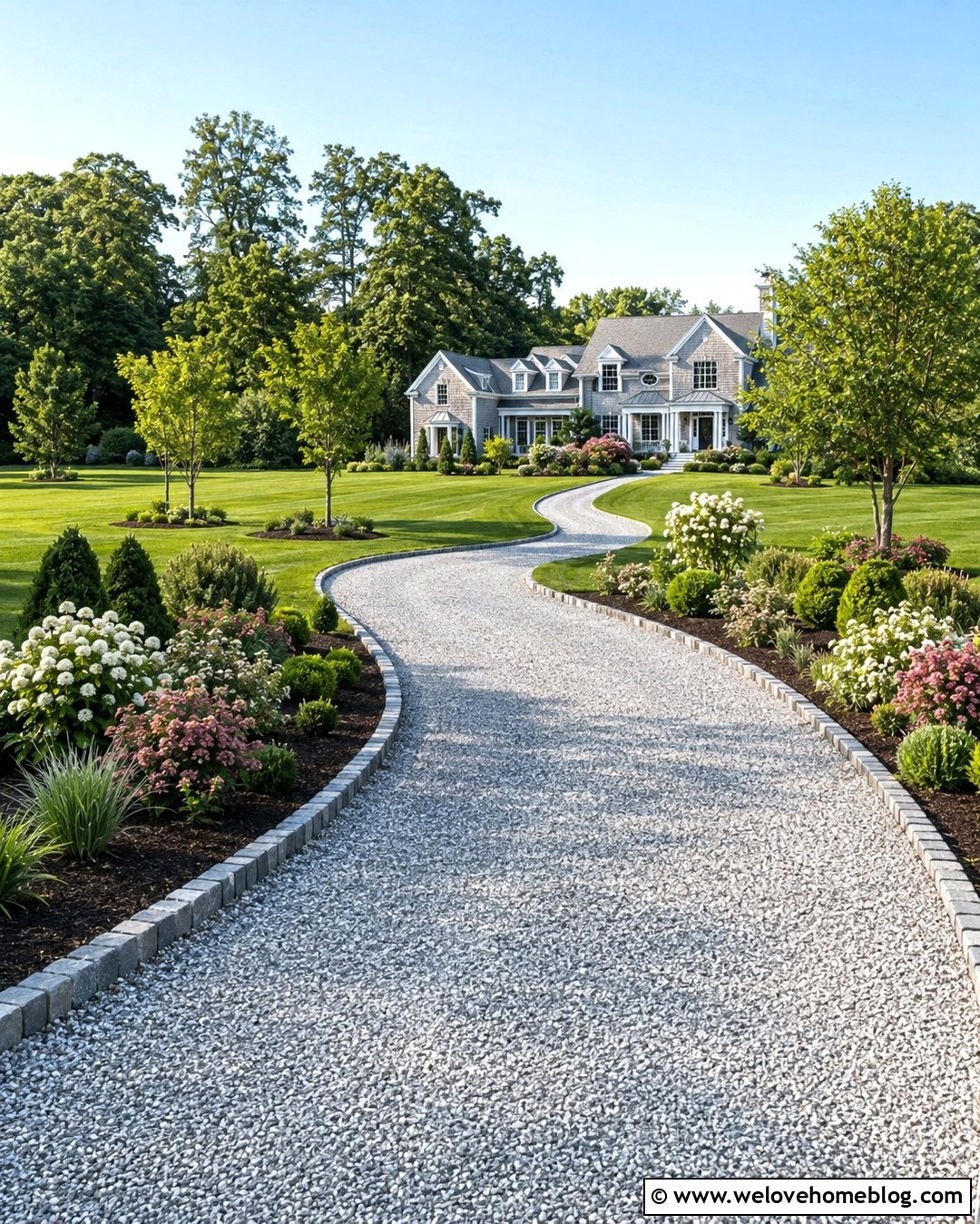
One repeated plant can feel monotonous along a very long driveway, so use a controlled mix of evergreen and flowering shrubs. Begin with a light-gray chip-seal or fine gravel surface bordered by dark granite blocks. Establish evergreen shrubs as the repeating foundation, then add flowering hydrangea, spirea, abelia, or regionally appropriate native shrubs in larger seasonal groups. Keep the same few varieties throughout the design to avoid a scattered appearance. Taller plants can frame distant sections, while compact shrubs should define the street entrance and parking areas. Add ornamental trees at generous intervals to create vertical rhythm. This layered look works with large suburban properties, farmhouses, and country estates. The plants, border materials, and driveway curves should repeat consistently from the road to the house for a unified arrival experience.

20. Native Shrubs Around A Driveway Entrance
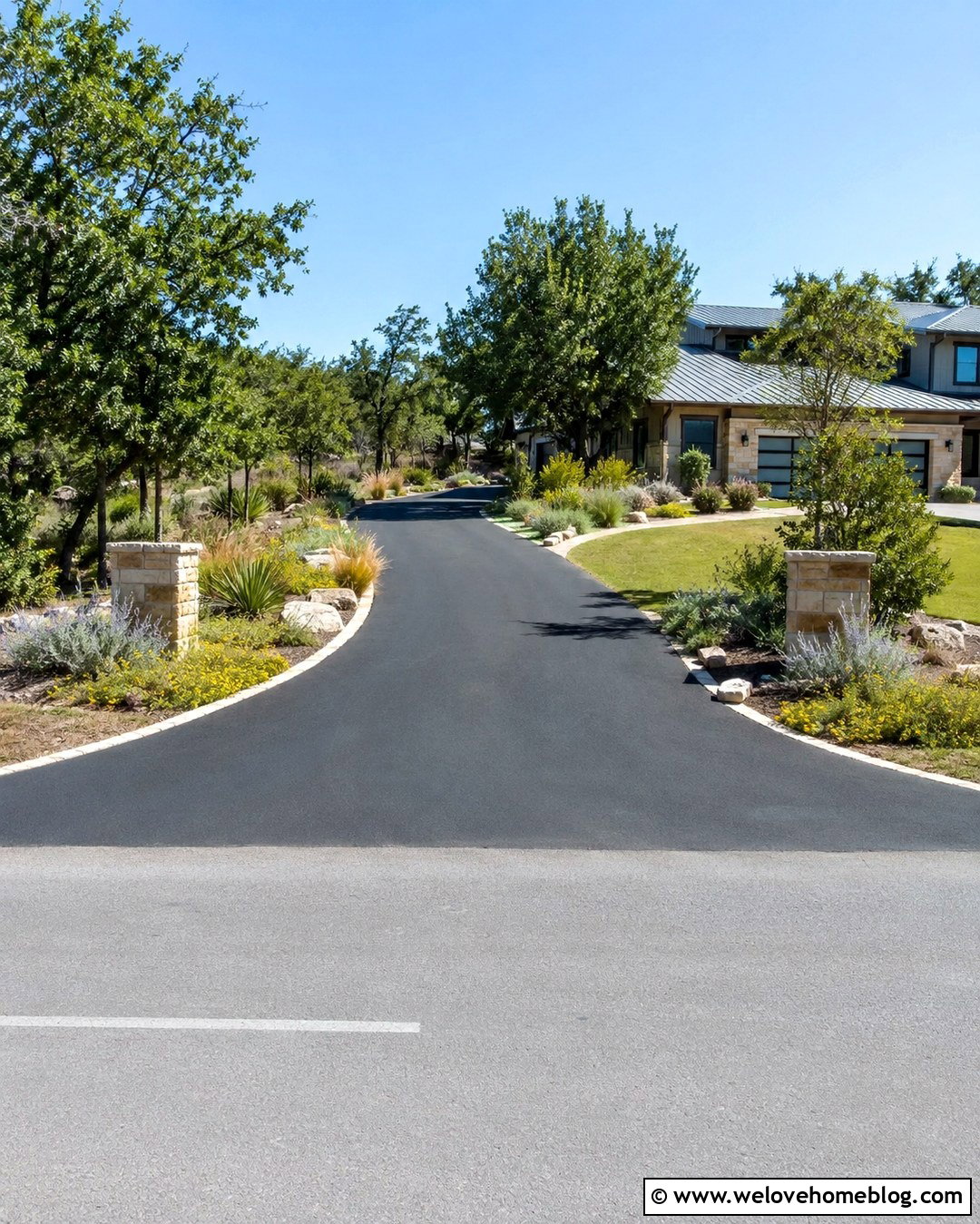
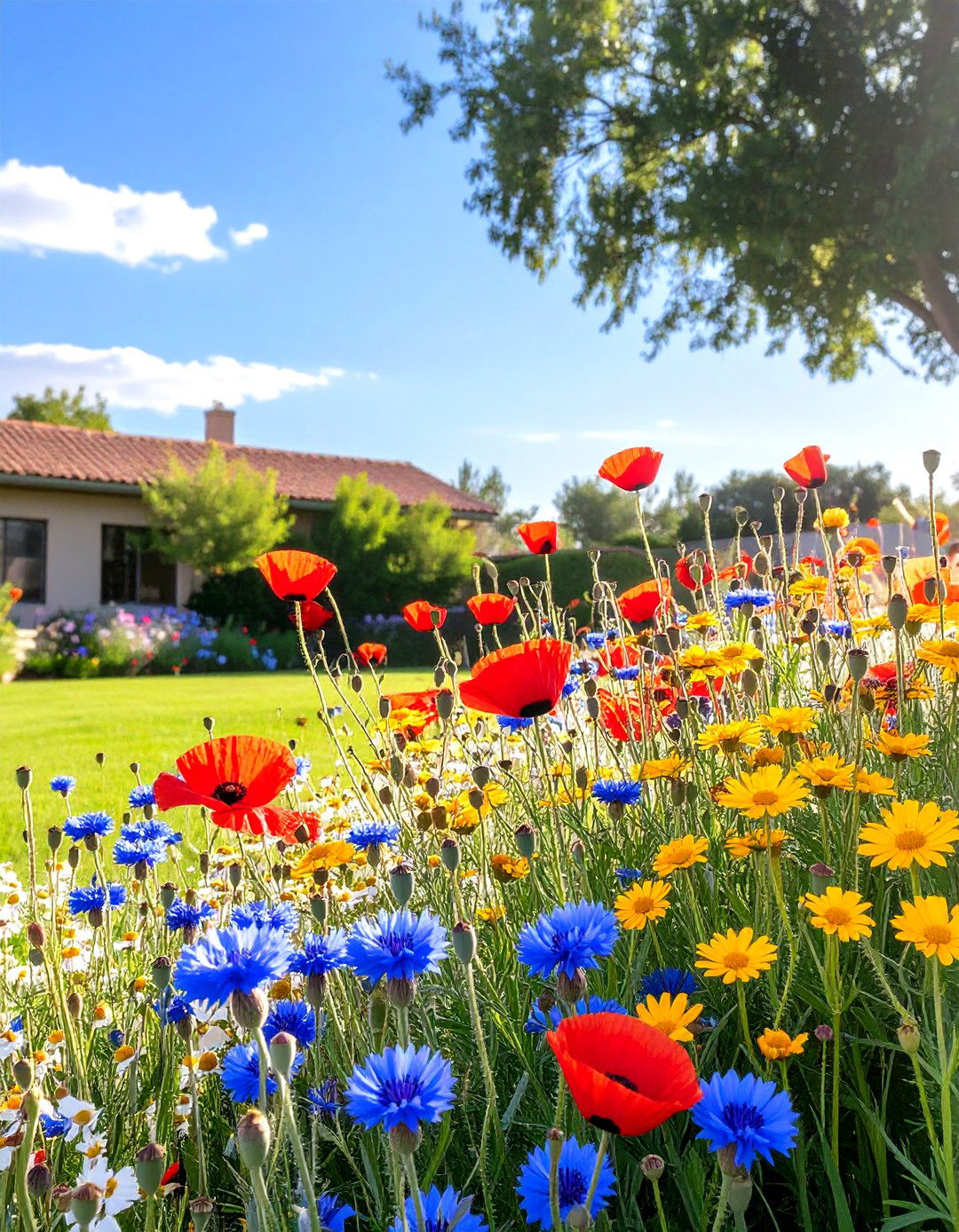
Native shrubs can create a driveway entrance that feels connected to the surrounding region. Use a dark asphalt driveway with a flared entrance and a border of locally sourced stone. Arrange compact native shrubs around simple stone pillars or a low address monument, keeping plants short enough to preserve clear views of traffic. Continue smaller groups down both sides of the driveway instead of limiting the landscaping to two isolated entrance beds. Add native grasses and ground covers for texture, seasonal color, and a gradual transition into the lawn. The specific plant choices should match local soil, rainfall, sunlight, and winter conditions. A balanced but not perfectly mirrored layout creates a welcoming, natural appearance. Low-voltage lighting beside the stonework can make the entrance easy to identify without placing fixtures in the vehicle path.
Conclusion:
Successful driveway planting depends on more than choosing attractive bushes. The driveway material, layout, edging, shrub size, house style, and surrounding yard should function as one design. Formal homes often look best with repeated evergreen rows, while cottages and country properties can support looser groups of flowering or native shrubs. Always check mature height and spread before planting, and leave extra clearance around curves, parking spaces, gates, sidewalks, and street sightlines. Consider sunlight, drainage, hardiness, irrigation, road salt, and snow storage as well. Mixing year-round structure with seasonal flowers creates lasting curb appeal without overwhelming the approach. Use these 20 shrubs along driveway ideas to build an entrance that is attractive, practical, and easier to maintain.

Related posts:
Leave a Reply