
An uphill driveway can feel difficult to design, but the right layout can turn a challenging slope into a safe and attractive approach. The best 25 Uphill Driveway Ideas combine a durable surface, reliable traction, controlled drainage, stable borders, and landscaping that protects exposed soil. Curves and switchbacks can soften a long climb, while textured concrete, asphalt, interlocking pavers, and stabilized gravel provide practical material options. Level transition zones also help vehicles enter the street or garage without scraping. Because slope limits, drainage rules, soil conditions, and emergency-access requirements vary by location, major grading work should be professionally designed and approved. () Explore these complete 25 Uphill Driveway Ideas to find a look that fits your home, climate, yard, and budget.
1. Straight Concrete Uphill Driveway With Trench Drain
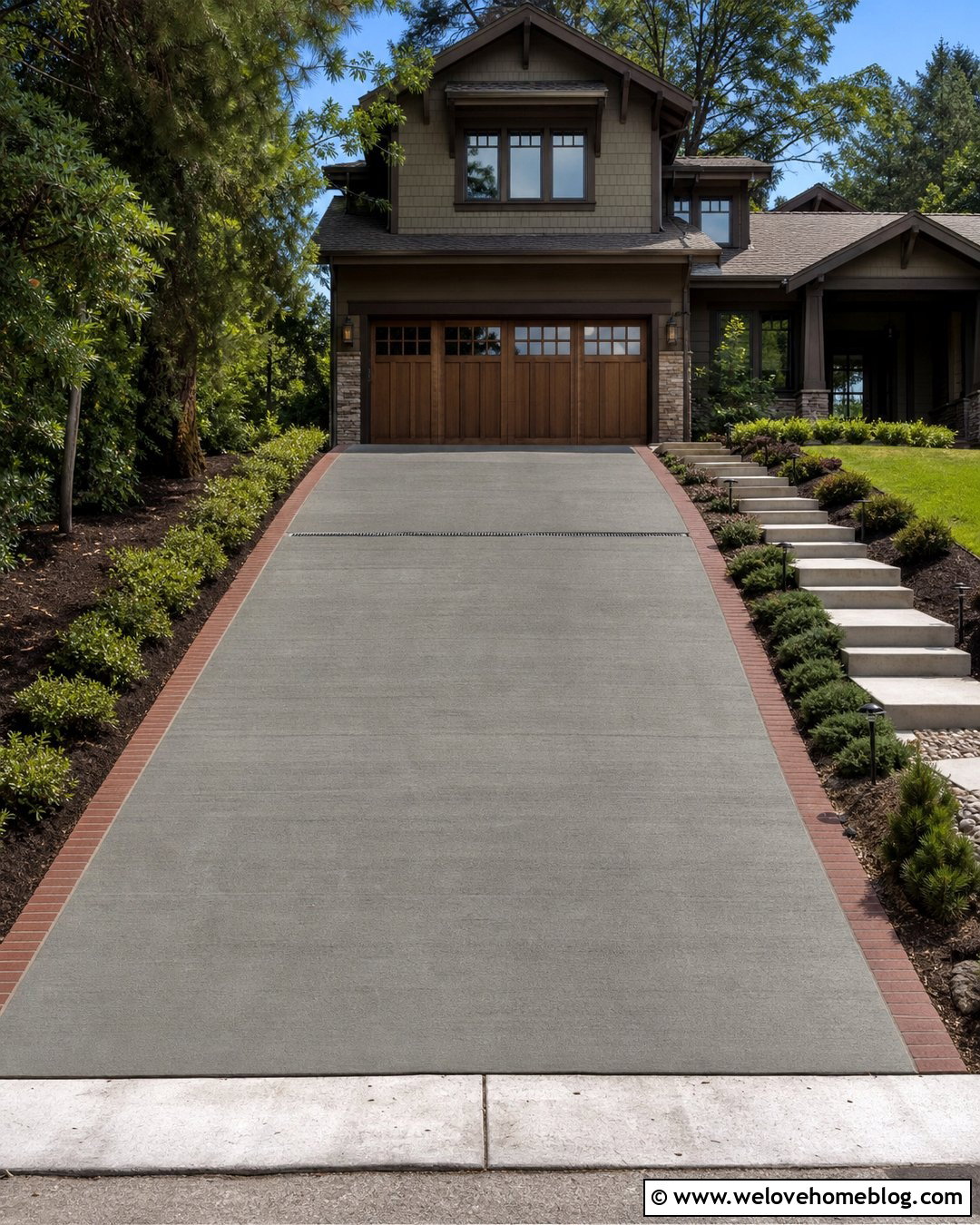
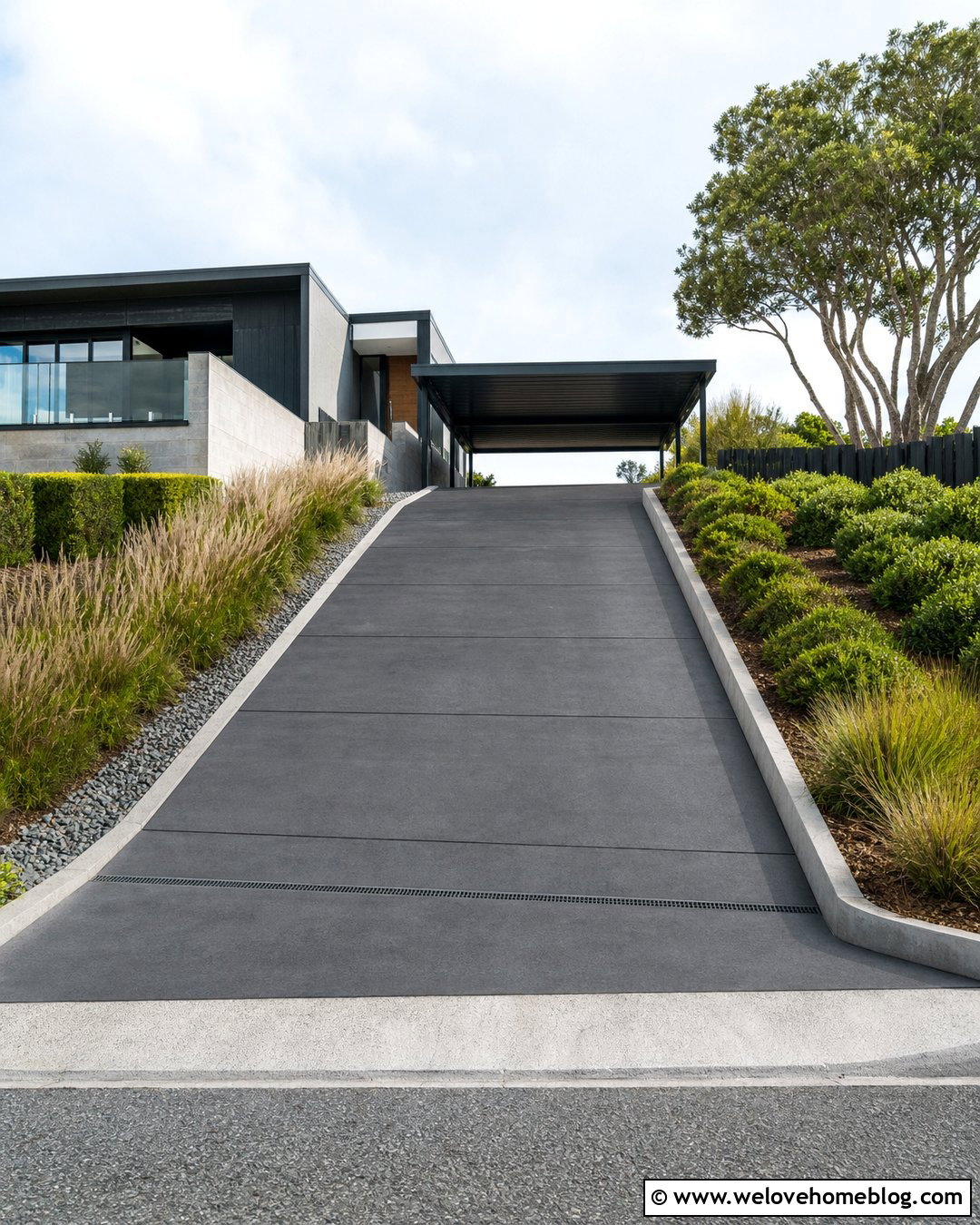
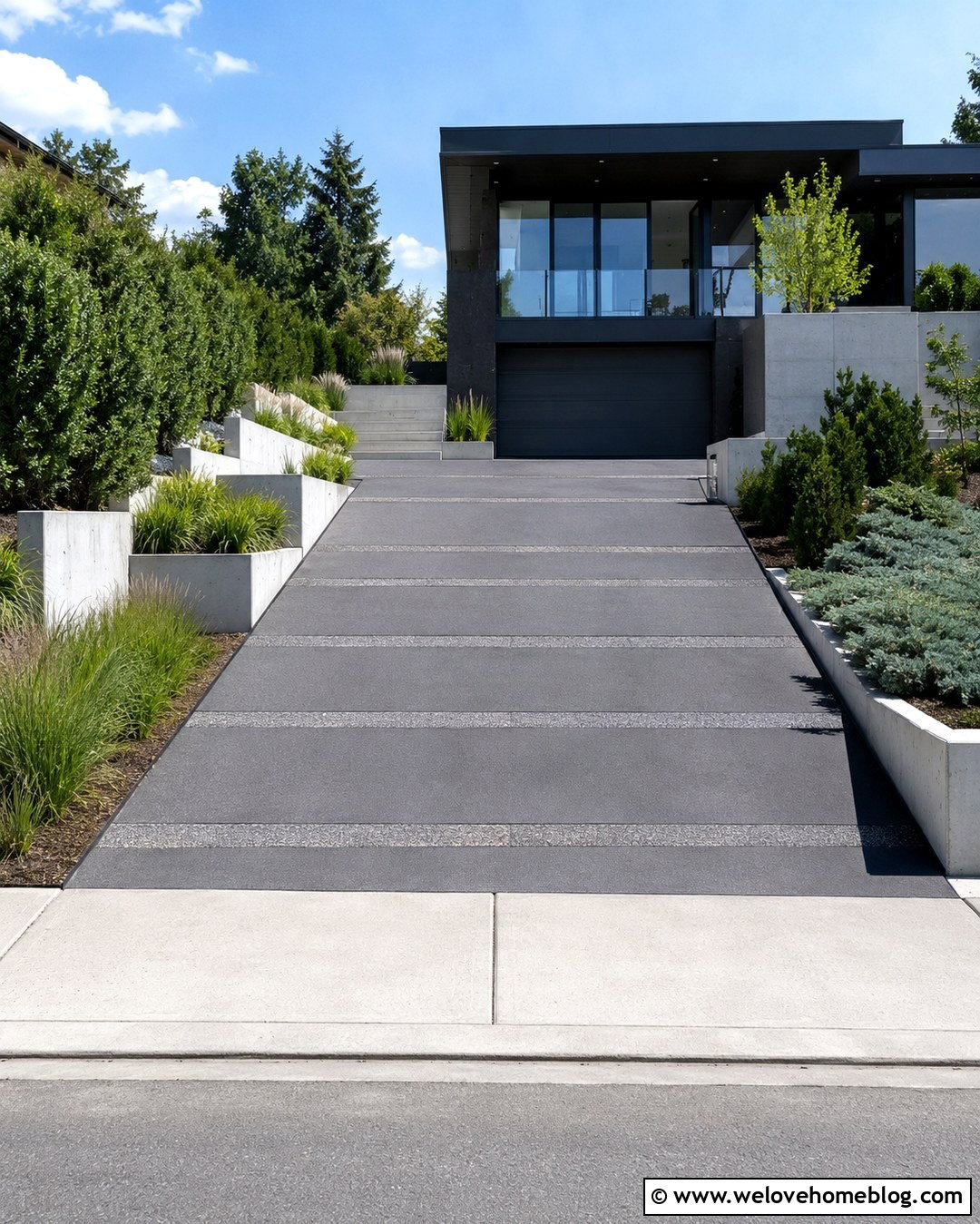
A straight concrete uphill driveway works well when the property has limited width and the slope is reasonably consistent. Choose broom-finished concrete rather than a smooth, polished surface. The fine texture adds grip while keeping the driveway easy to sweep and maintain. Install a grated trench drain near the garage to intercept runoff before it reaches the foundation. A second drain near the street may be helpful where water enters from above. Frame the concrete with dark brick borders and narrow planting beds filled with low shrubs and erosion-resistant groundcover. At the top, include a gently graded transition or level parking pad. This complete layout feels clean and traditional while addressing the practical problems created by fast-moving stormwater on a hill.
2. Asphalt Uphill Driveway With Brick Borders
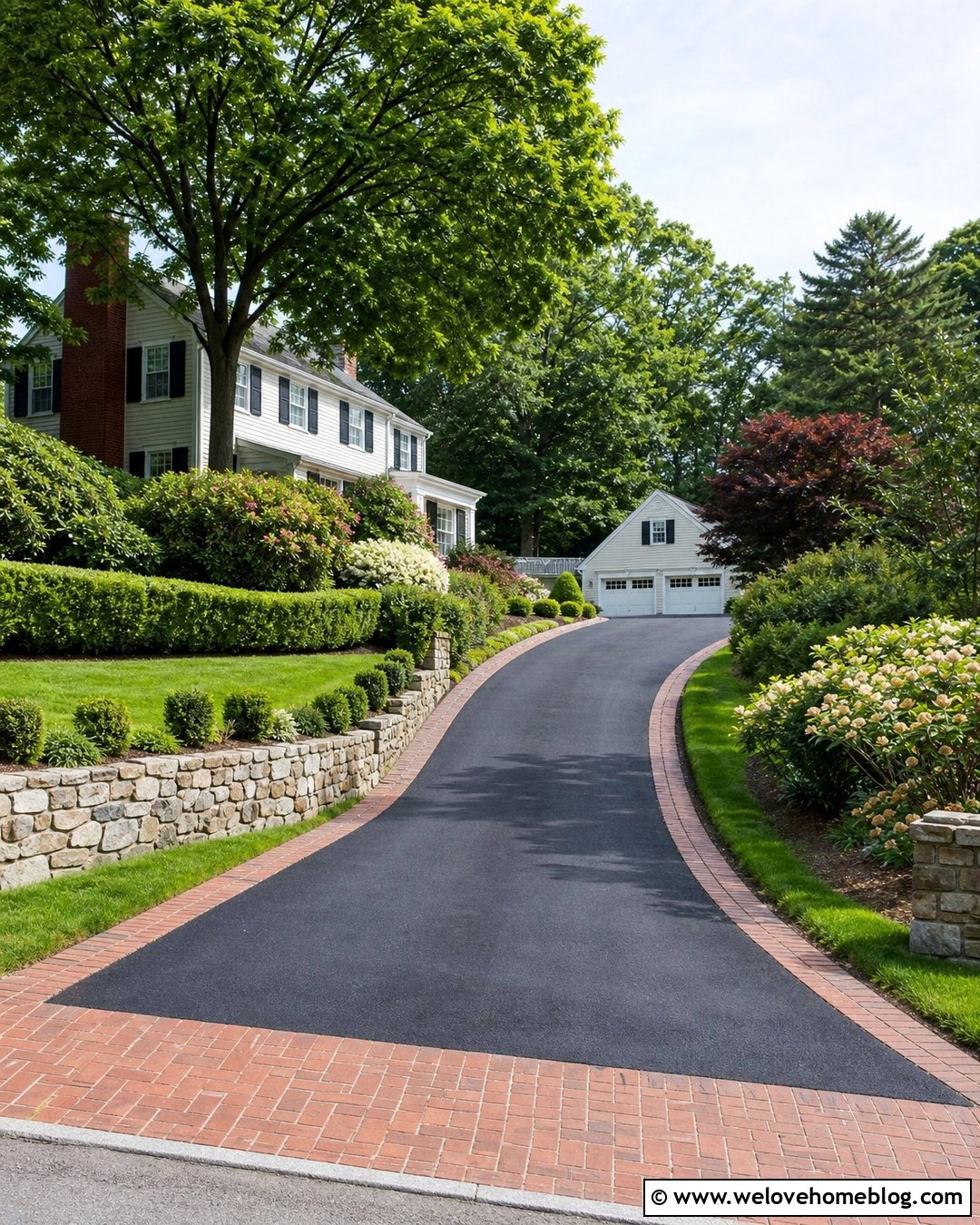
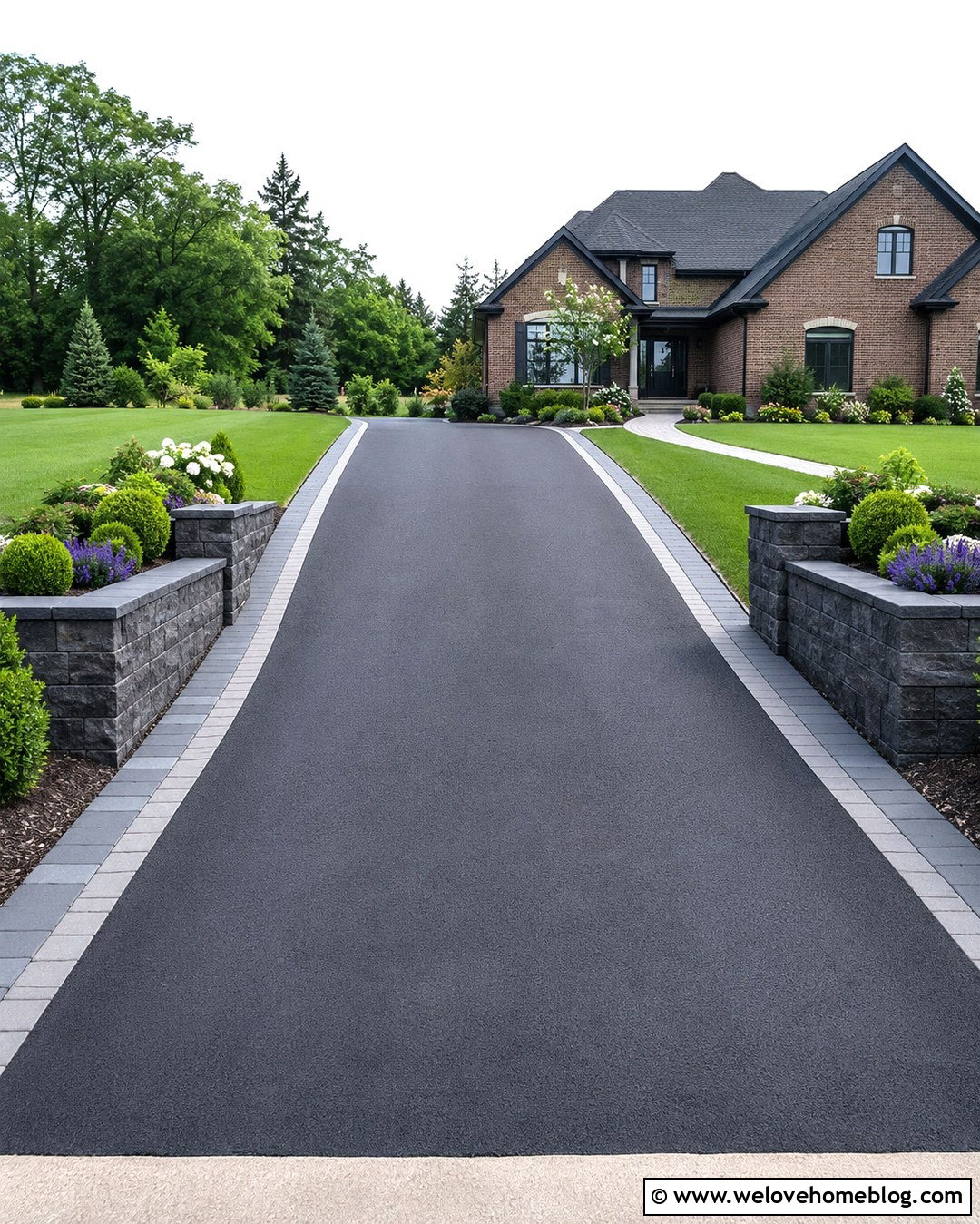
Fresh black asphalt creates a smooth, visually simple route up a sloping suburban yard. Its dark surface pairs especially well with red or charcoal brick borders, which reinforce the edges and add definition. Give the driveway a subtle curve if the available frontage allows it. The longer route can make the climb feel less abrupt and create room for layered landscaping. Use compact evergreen shrubs on one side and a low retaining wall on the other to manage uneven ground. A wide brick apron at the street provides a polished transition, while a level area in front of the garage makes parking easier. Asphalt naturally has a somewhat textured surface, but the base, drainage, and edge support remain critical on an incline. ()
3. Curved Paver Uphill Driveway With Stone Edging
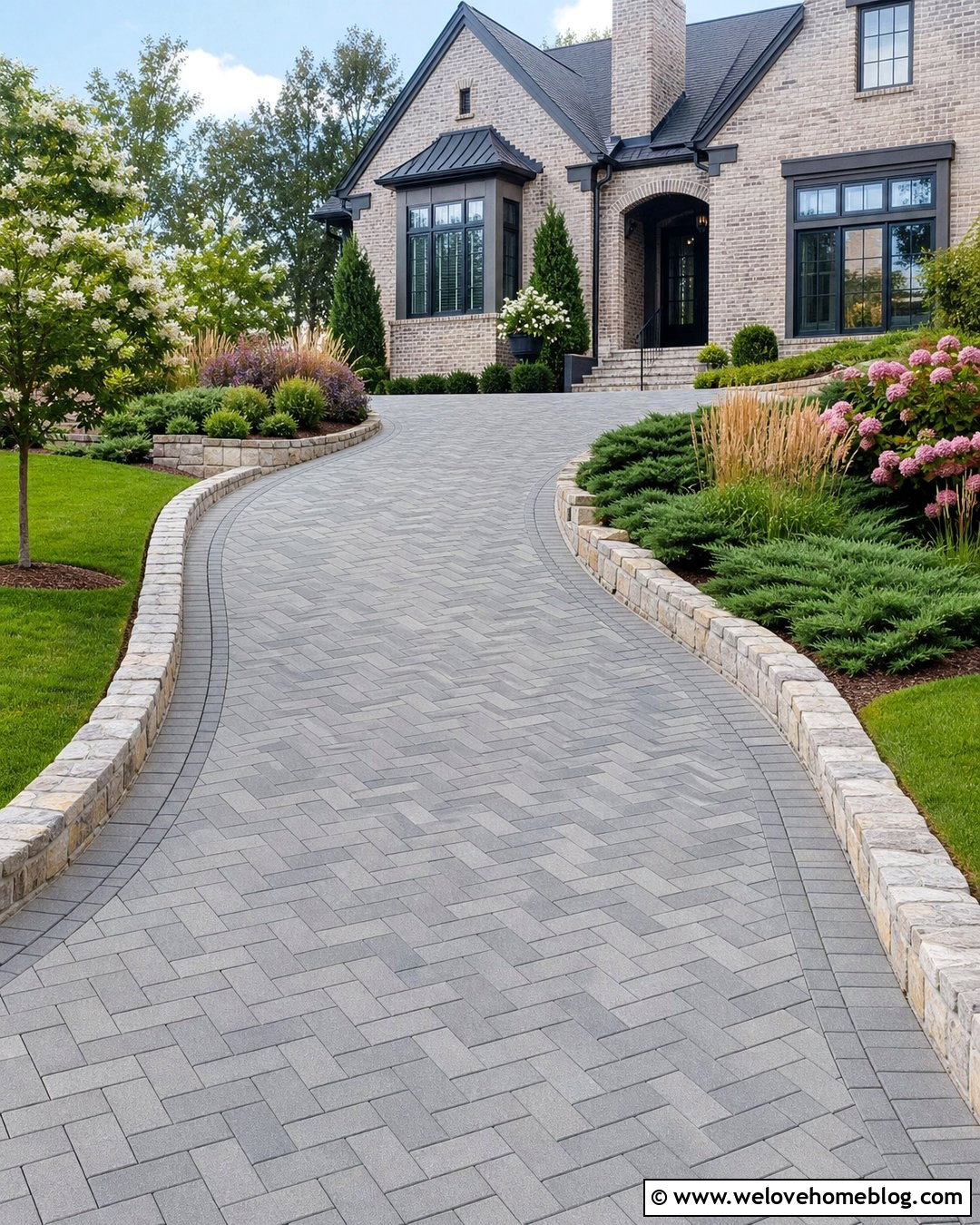
A broad curve can transform an exposed uphill driveway into a graceful part of the front landscape. Use interlocking concrete pavers with a lightly textured finish and a mixed gray color palette. Lay the field in a herringbone pattern so the driveway has a strong, visually interlocked appearance. Natural stone curbing can contain the edges and connect the paving to nearby retaining walls. On the inside of the curve, build a deep planting bed with ornamental grasses, spreading junipers, and compact flowering shrubs. Keep taller plants away from the street so drivers have a clear view. Add a nearly level arrival area beside the house for turning and unloading. Properly installed pavers also allow damaged sections to be lifted and repaired without replacing the entire surface.
4. Stabilized Gravel Uphill Driveway With Concrete Curbs
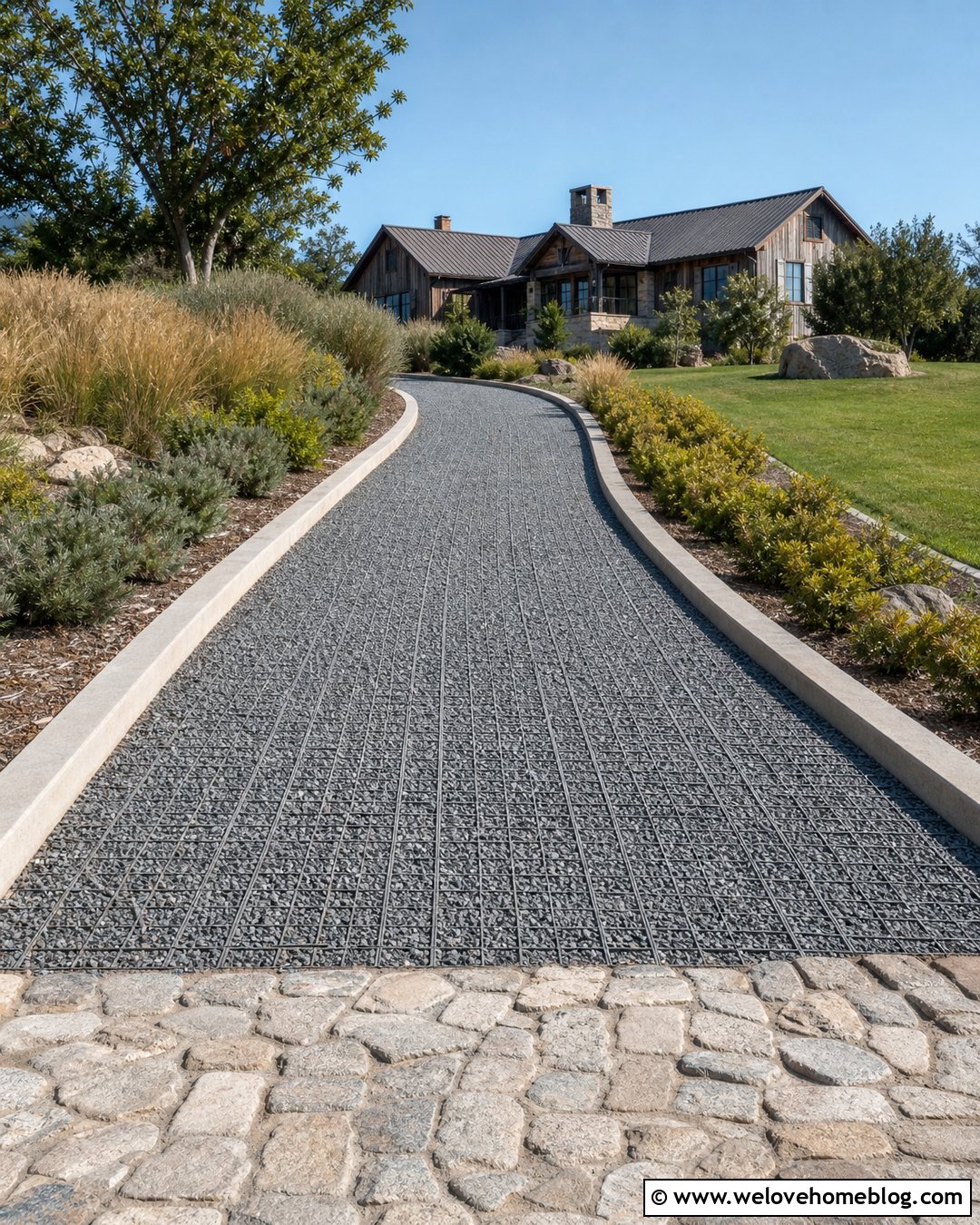
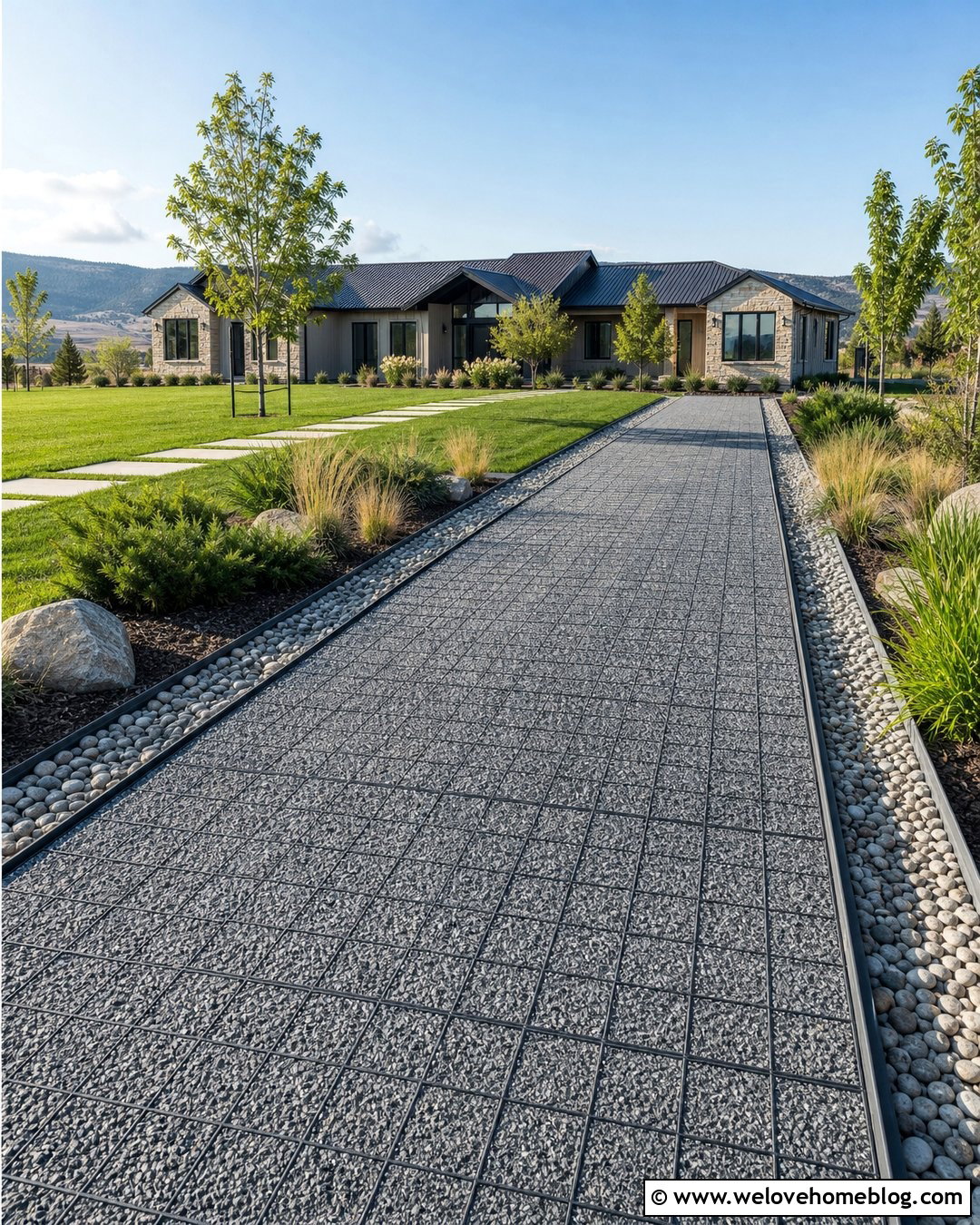
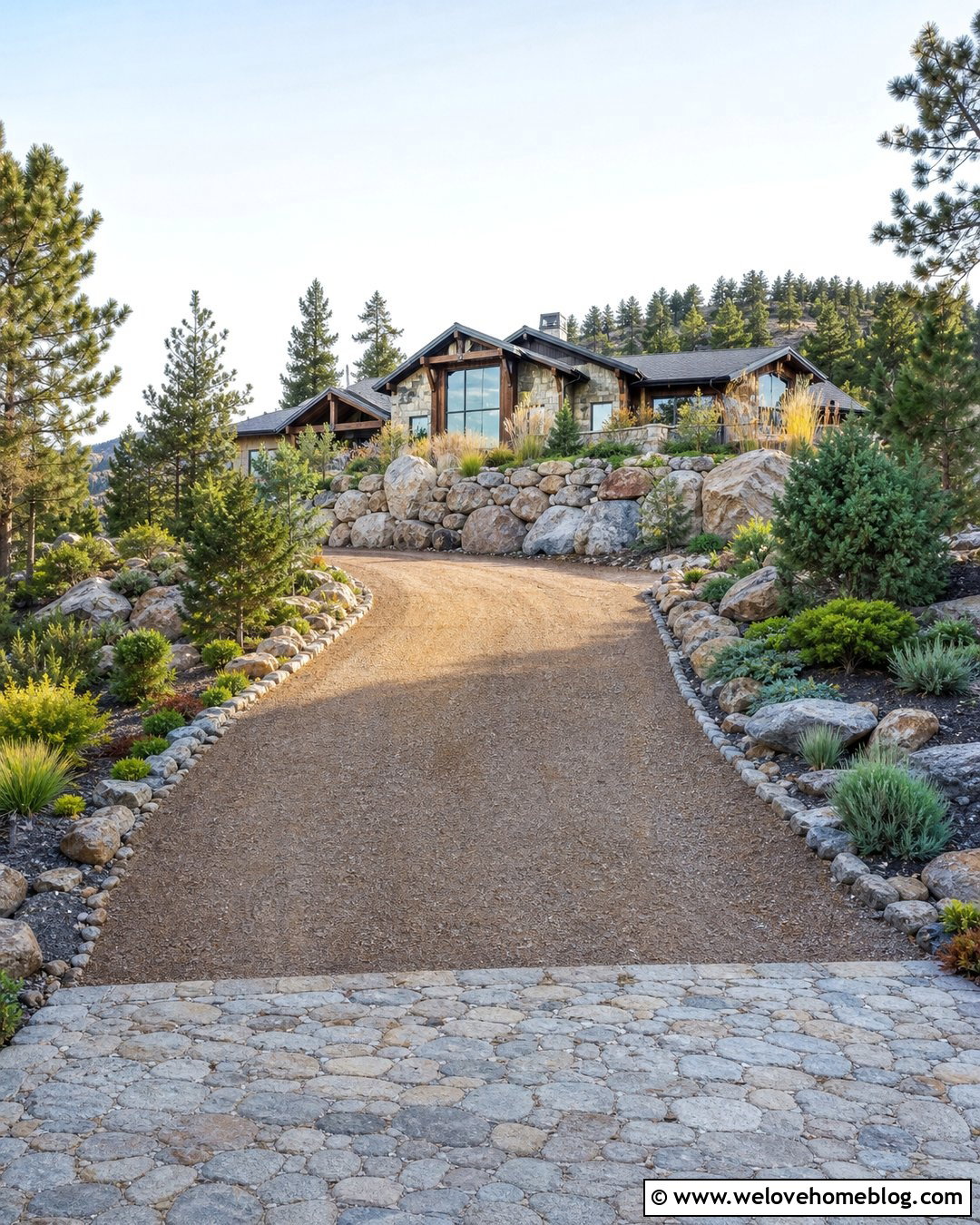
Do you like the relaxed appearance of gravel but worry about loose stones traveling downhill? A cellular stabilization grid can hold angular crushed gravel in separate pockets, creating a firmer driving surface with a natural look. Choose compacting gray or tan aggregate instead of rounded pea gravel, which is more likely to shift under tires. Strong concrete curbs along both sides help contain the material and protect the driveway base. Add a cobblestone apron at the bottom to keep gravel away from the street. Above the curbs, use low-growing groundcover and deep-rooted shrubs to cover bare soil. A gently curved route will feel less severe than a direct climb. Stabilized gravel systems can also reduce rutting when the base and drainage layers are correctly prepared. ()
5. Switchback Uphill Driveway With Retaining Walls
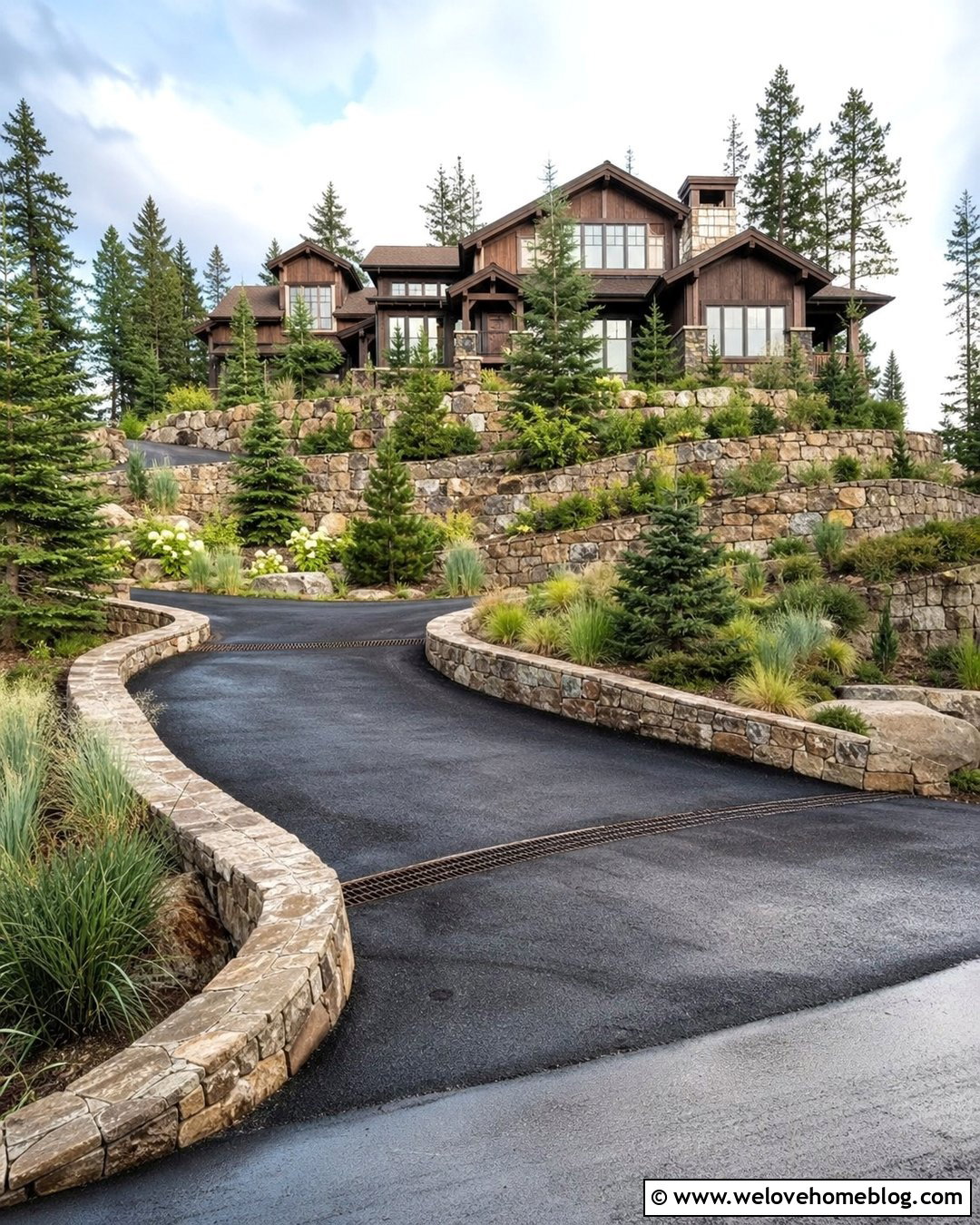
A switchback layout is one of the most practical solutions for a large property with significant elevation change. Instead of climbing directly toward the house, the driveway crosses the hillside, turns on a wide landing, and continues upward. This longer route reduces the effective grade and creates dramatic views of the home and landscape. Use textured asphalt for the driving surface and stone-faced retaining walls along the cut sections. The turning area must be generous enough for household, delivery, and emergency vehicles. Channel drains should capture water before it reaches the bend, where runoff can become concentrated. Plant the terraces with spreading evergreens, native grasses, and erosion-resistant shrubs. Because switchbacks involve complex grading, wall construction, drainage, and vehicle geometry, they require experienced engineering and careful local review. ()
6. S-Curve Concrete Uphill Driveway With Planted Slopes
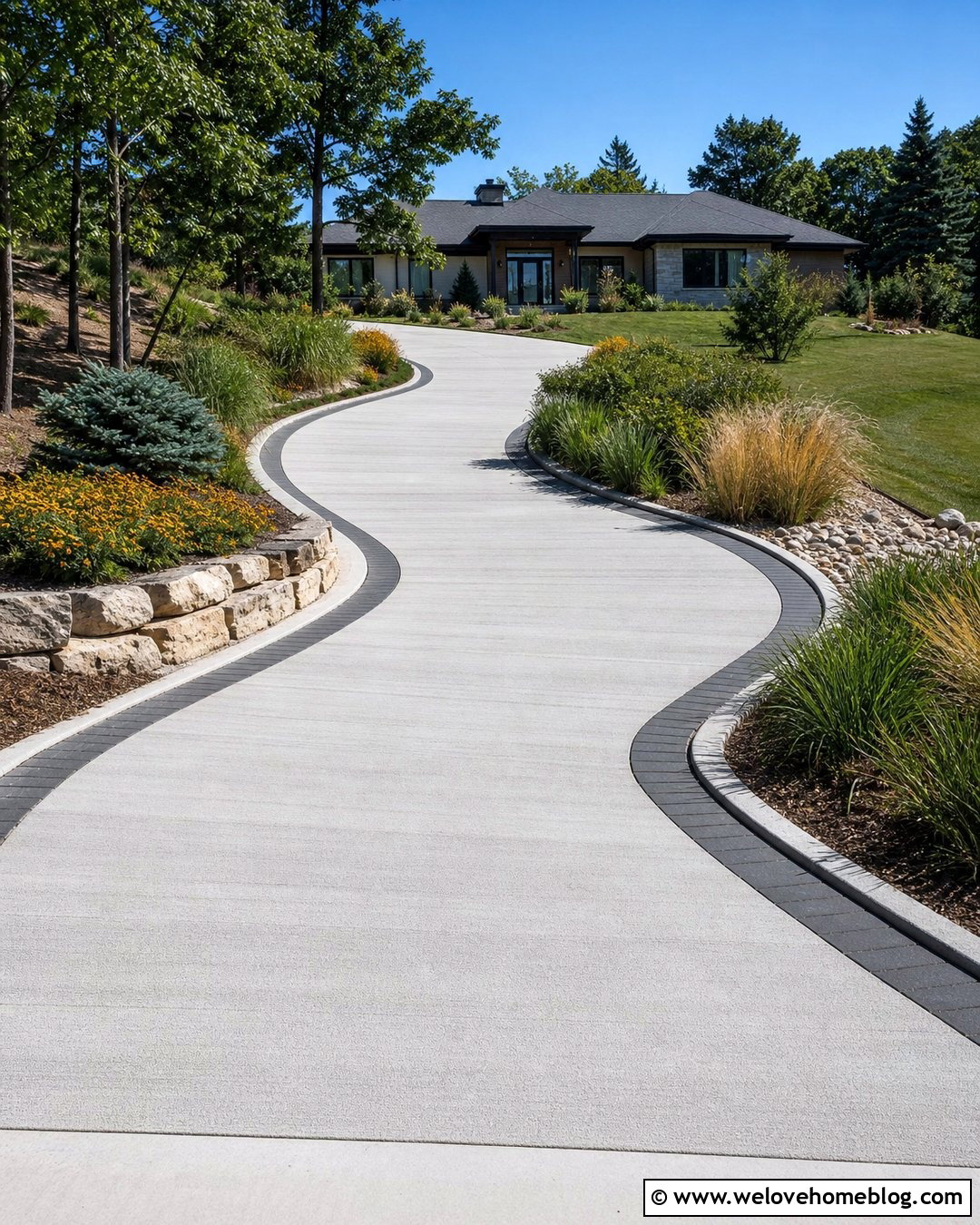
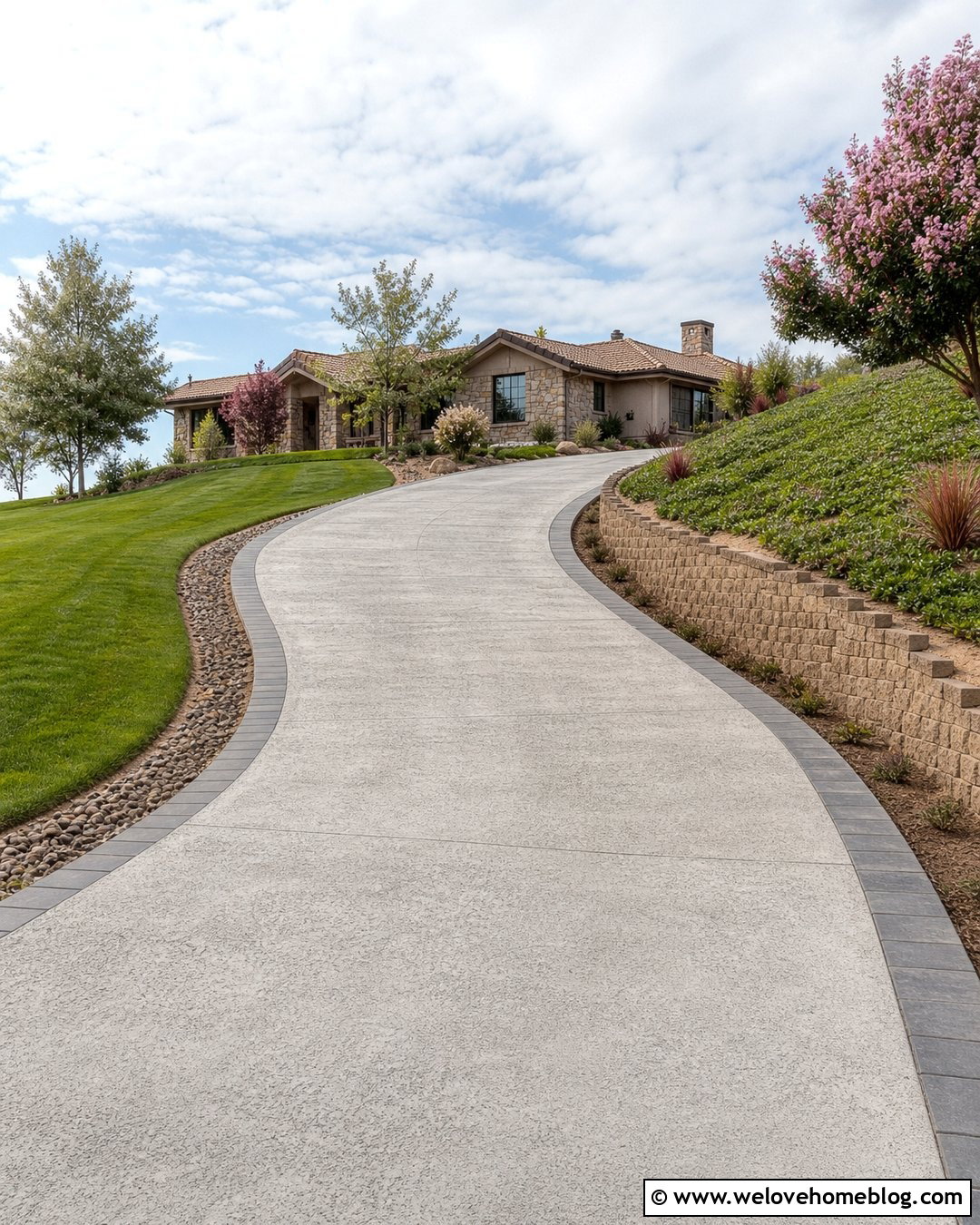
An S-curve gives a long uphill concrete driveway a softer, more natural path through the yard. It works especially well on a wide lot where the house sits high above the road. Use light gray, broom-finished concrete divided by clean control joints. Charcoal paver ribbons can trace both sides and emphasize the flowing shape. On the uphill bank, plant masses of low juniper, switchgrass, and hardy flowering shrubs to reduce exposed soil. The downhill edge can feature a low stone wall that follows the curves without blocking sightlines. Include discreet catch basins where water naturally collects along the inside bends. At the top, let the driveway widen into a level parking court. The result feels integrated with the terrain rather than forced directly against it.
7. Heated Concrete Uphill Driveway For Snowy Climates
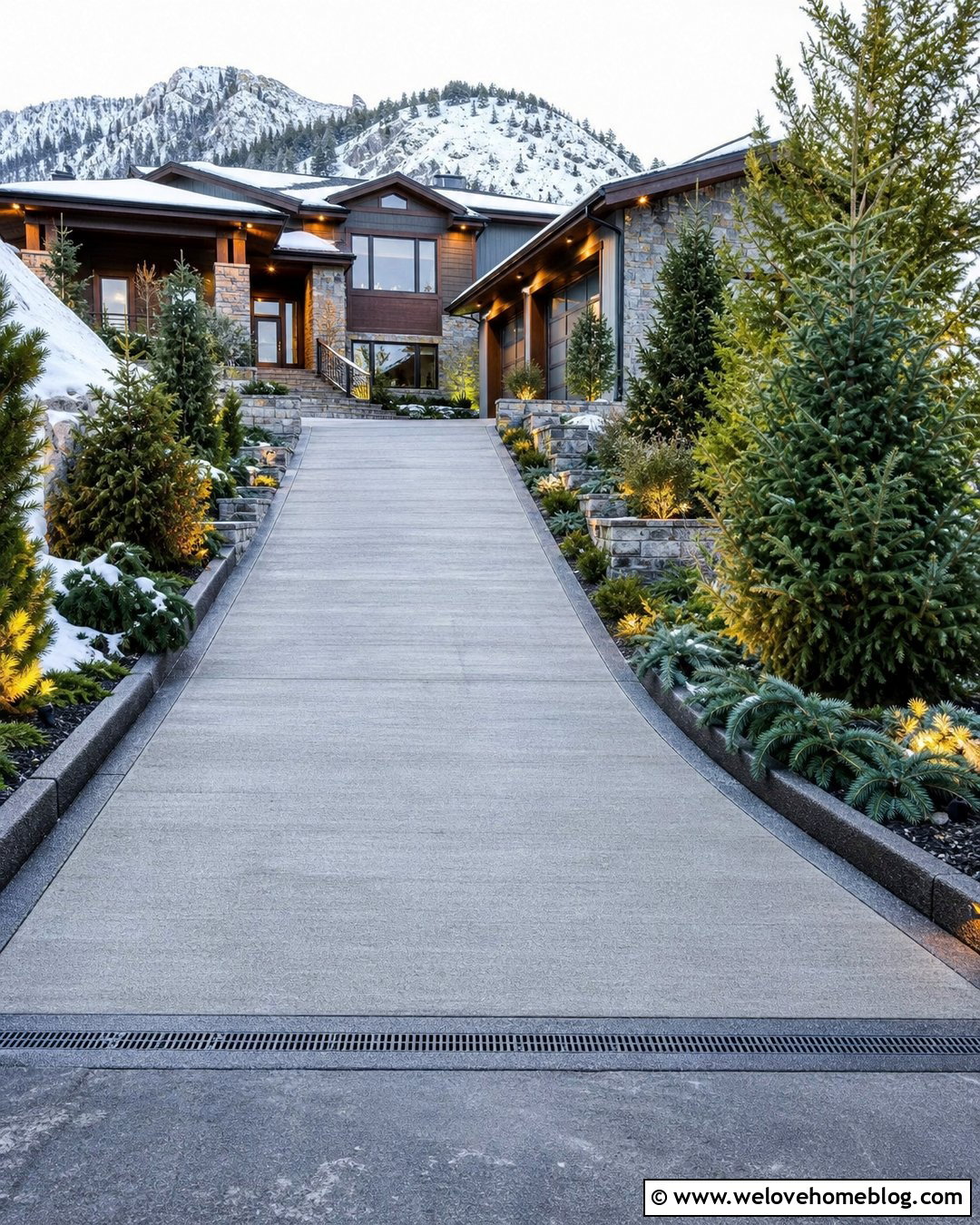
In a cold region, snow and ice can make a steep driveway difficult to use. A hydronic or electric snow-melting system beneath textured concrete can keep important driving areas clearer, especially near the street, at the steepest section, and in front of the garage. Use medium-gray broom-finished concrete with dark granite curbing for a crisp mountain-home appearance. A heated trench drain at the bottom can help manage meltwater, provided it connects to a suitable discharge system. Border the driveway with salt-tolerant evergreens and raised planting beds protected from plowed snow. The upper approach should flatten before reaching the garage so vehicles do not stop on the steepest grade. A heated system costs more initially, but targeted heating can be more practical than warming the entire driveway.
8. Exposed Aggregate Uphill Driveway With Stone Walls
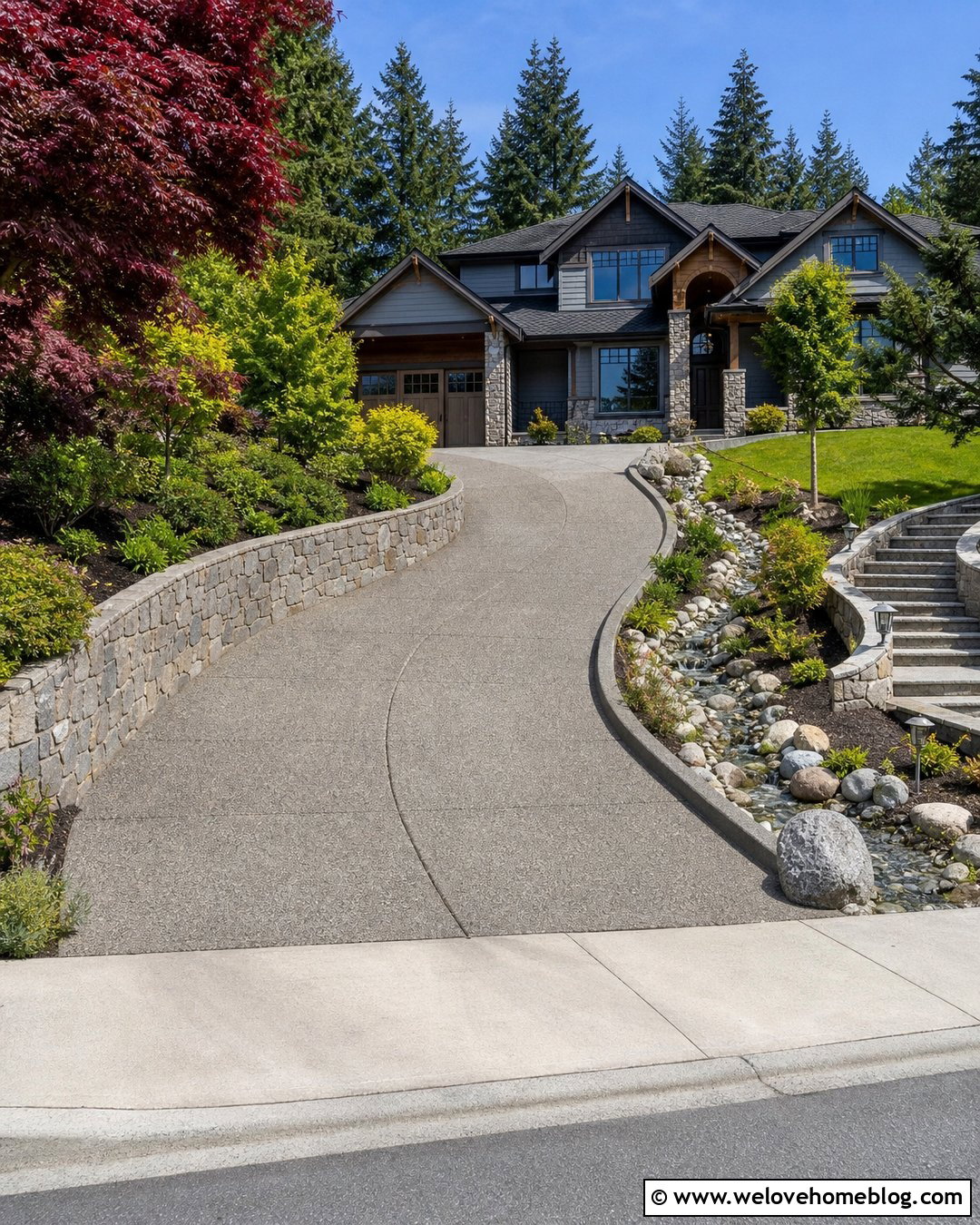
Exposed aggregate offers a textured surface and a naturally varied finish that suits an uphill driveway. Select a warm gray concrete mix containing small tan and charcoal stones. The visible aggregate adds visual grip and complements craftsman, ranch, and contemporary homes. Along the high side, build a mortared fieldstone retaining wall with proper drainage behind it. Keep the opposite edge open with a low curb, lawn, and a shallow landscaped swale. A curved staircase can run beside the driveway, giving pedestrians a more comfortable route to the front door. Finish the street entrance with a smooth concrete apron and a gradual grade transition. This design combines rugged materials with organized landscaping, creating a driveway that looks established without feeling overly formal or visually heavy.
9. Herringbone Paver Uphill Driveway With Dark Borders
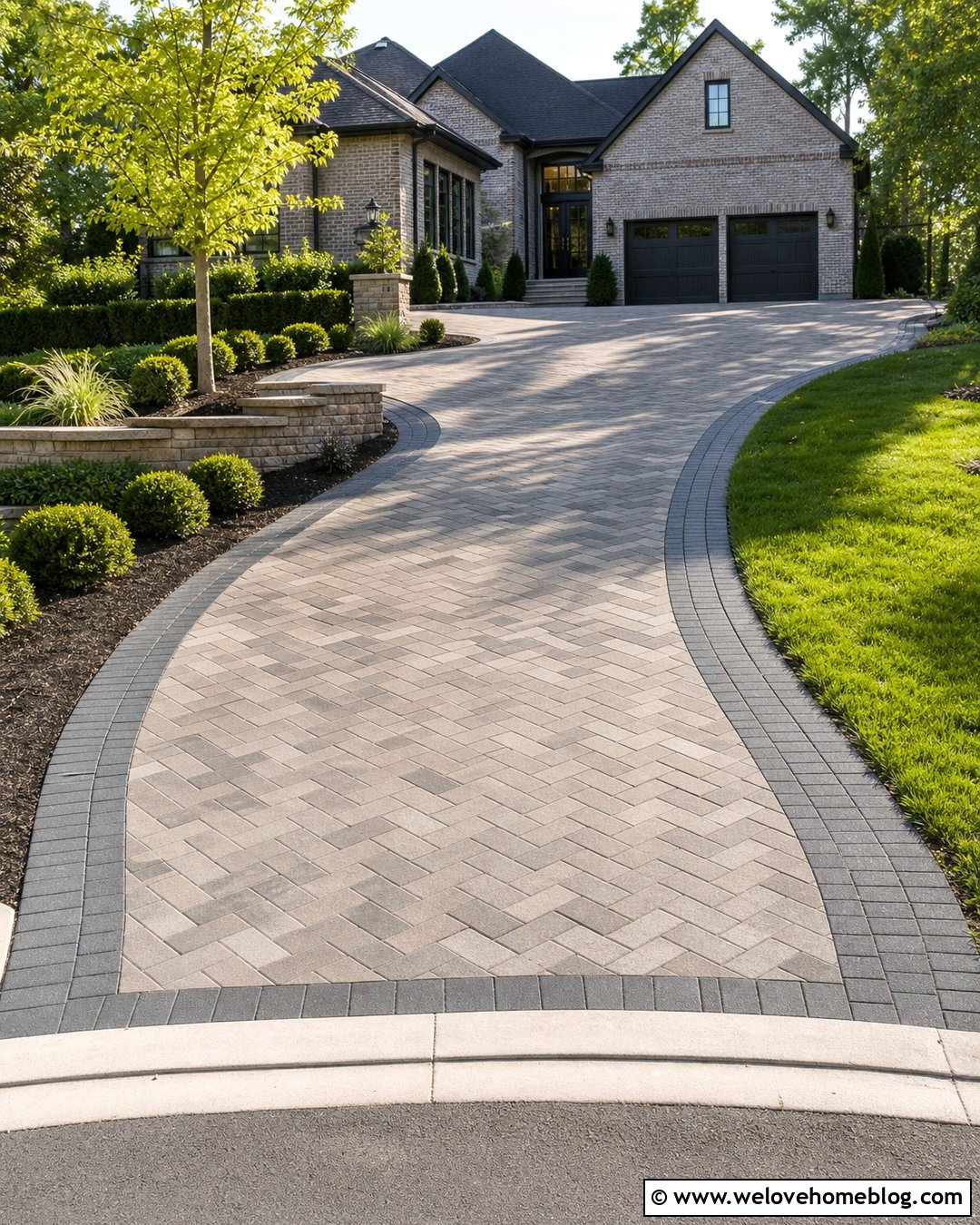
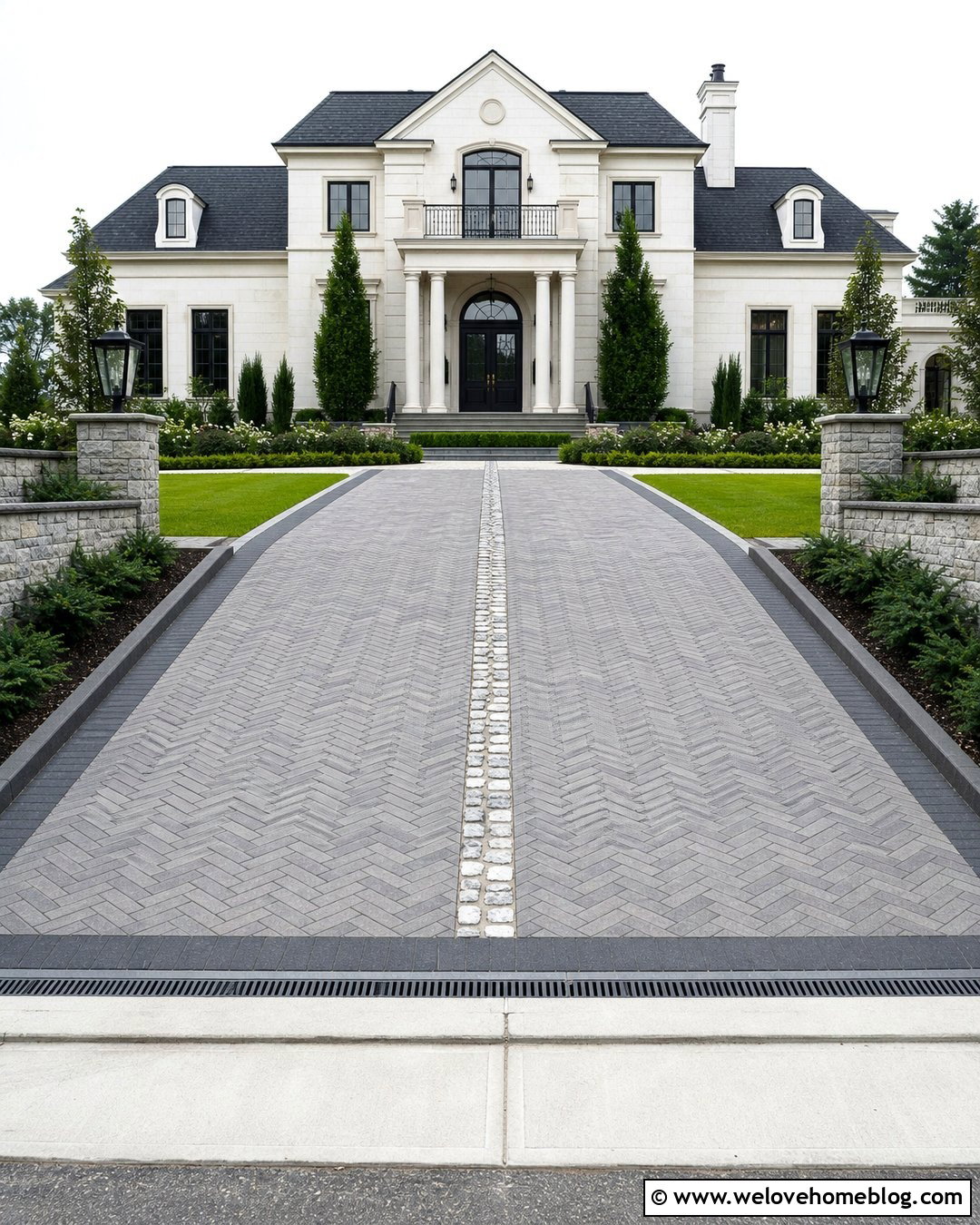
Herringbone pavers create a strong pattern that visually suits an active driving surface. Choose textured concrete pavers in blended taupe and gray, then surround them with a double charcoal soldier-course border. The contrast makes the edges easy to read while connecting the driveway to a modern brick or stone facade. A moderate curve can lead around a terraced planting bed before arriving at a level garage court. Use reinforced edge restraints and a professionally prepared base to keep the pavers stable. Permeable joints may help manage water where the soil and drainage design allow them to function correctly. Add compact boxwoods, ornamental grasses, and one small feature tree beside the curve. The complete look feels tailored, durable, and appropriate for an upscale suburban home. ()
10. Resin-Bound Uphill Driveway With Granite Setts
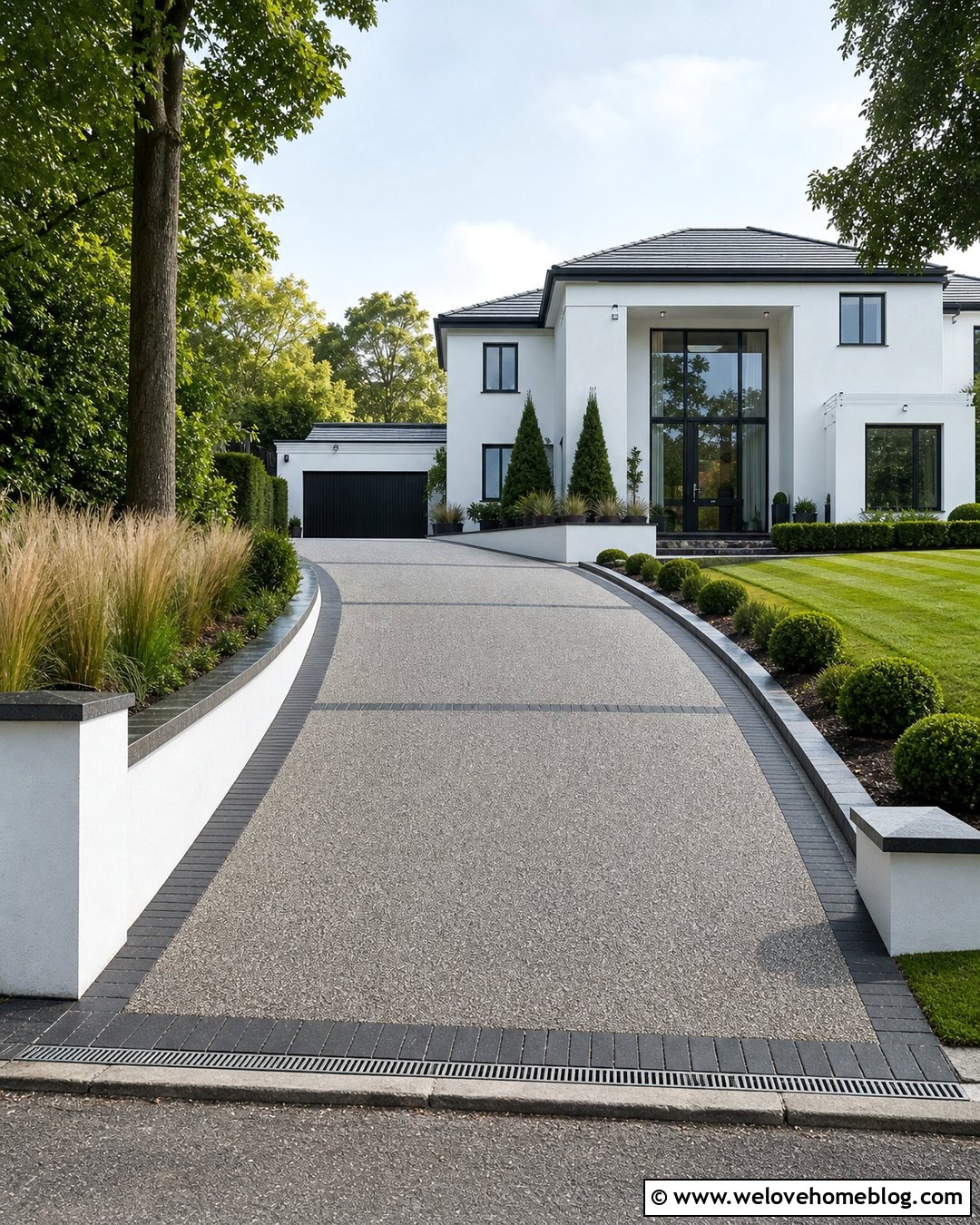
A resin-bound gravel surface gives an uphill driveway a smooth, contemporary appearance while retaining visible stone texture. Select a warm beige or silver-gray aggregate blend and specify an exterior system designed for vehicle traffic and sloping installations. Dark granite setts can form sturdy borders and decorative crossbands at key transition points. Shape the driveway into a gentle arc leading toward a modern stucco or brick home. On the high side, use a low rendered retaining wall with ornamental grasses above it. A channel drain near the garage can collect runoff before it reaches the building. Ask the installer about slip resistance, base compatibility, climate suitability, and maintenance. Resin systems vary considerably, so professional specification matters more than simply choosing the color from a sample.
11. Broom-Finished Concrete Uphill Driveway With Paver Ribbons
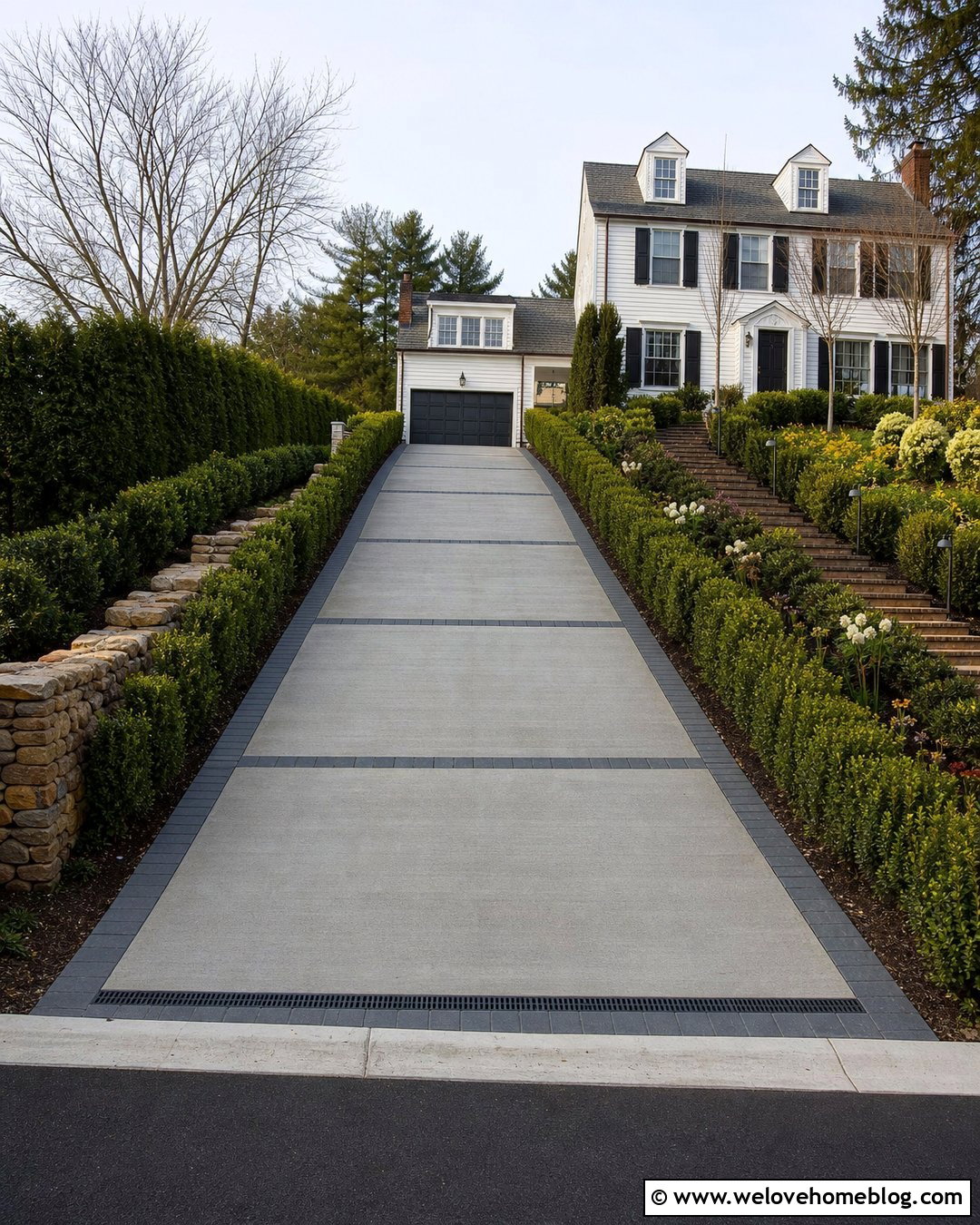
Simple materials can still create an attractive uphill approach. Start with durable broom-finished concrete in a medium gray tone. Add narrow clay brick or charcoal concrete paver ribbons along both edges and across the driveway at measured intervals. These bands visually divide a long slope, making the surface feel less like one uninterrupted slab. Pair the driveway with a straight layout, a gradual street transition, and a level apron in front of the garage. Low evergreen hedges can line one side, while a stepped walkway and terraced flower beds occupy the other. Install drainage channels where runoff needs to cross the driveway rather than allowing water to follow the paving uncontrolled. This practical combination suits colonial, craftsman, and traditional suburban homes without requiring an elaborate decorative finish.
12. Uphill Driveway With Level Garage Parking Pad
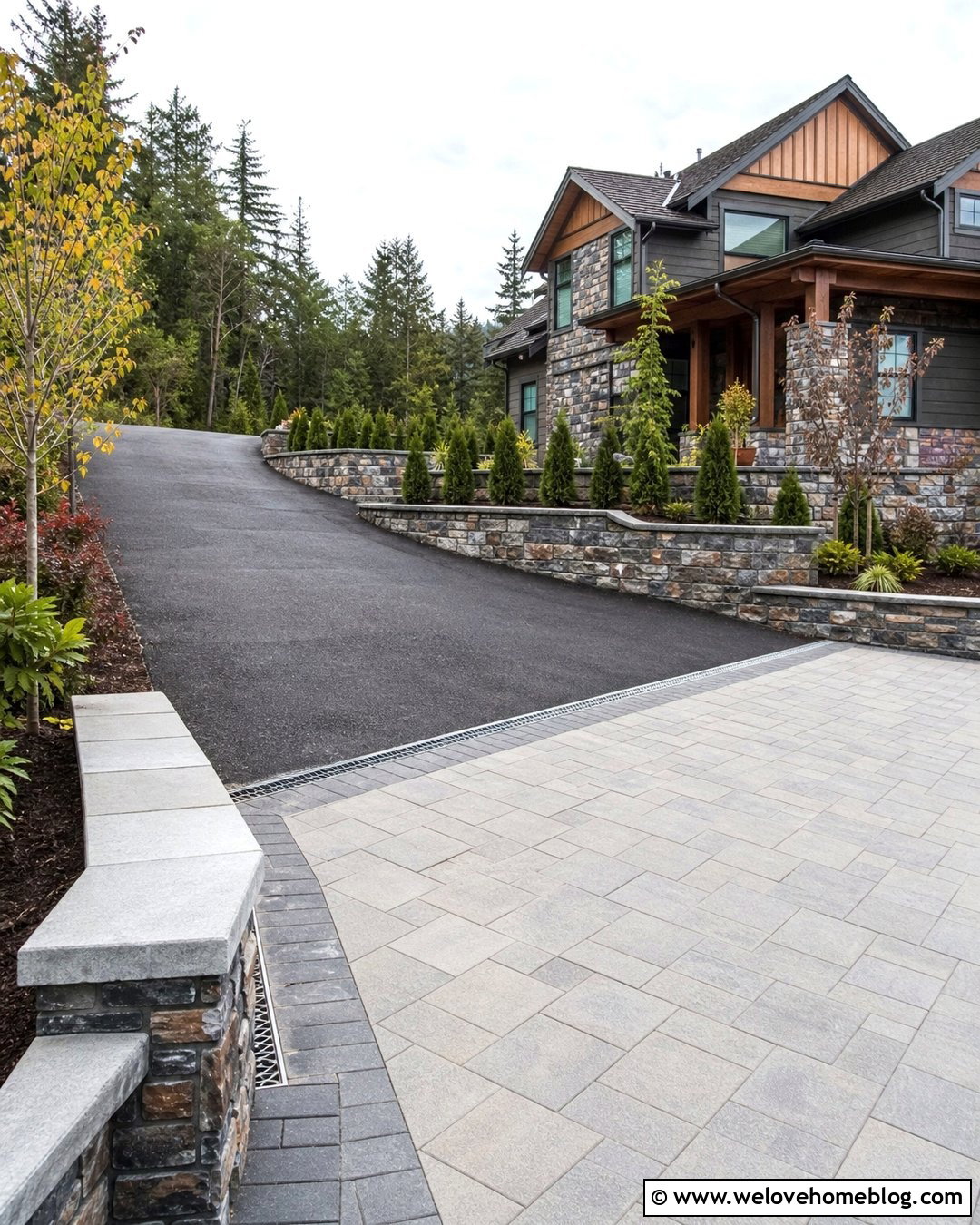
Parking on a continuous incline can be inconvenient, so a level or gently sloped pad near the garage is a valuable addition. Use black asphalt for the main uphill run and transition to large-format concrete pavers across the upper parking area. The change in material clearly marks the arrival zone and adds contrast near the house. Make the pad wide enough for turning, unloading, and reaching the walkway without standing on the steep section. A stone retaining wall may be needed along the uphill edge to create the flatter space. Finish the wall with broad capstones that coordinate with the house. Channel drainage should intercept water before it crosses the parking pad. Level landings can improve everyday usability, but their grading and drainage must be planned as part of the whole driveway. ()
13. Asphalt Uphill Driveway With Cobblestone Apron
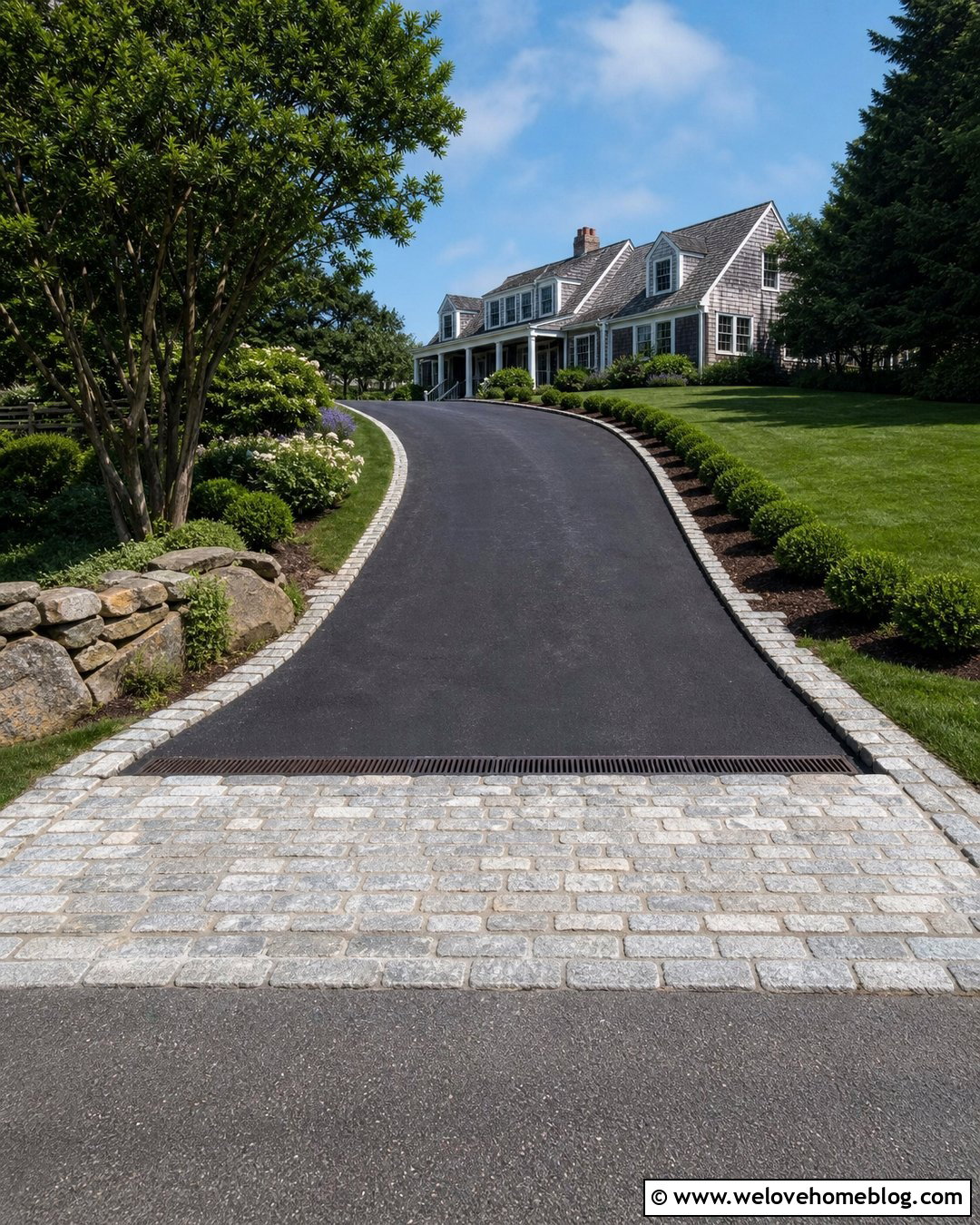
Cobblestone does not have to cover the entire slope to make an impact. Use textured black asphalt for the long uphill section, then install a broad granite cobblestone apron at the street. Repeat the cobblestone as narrow edge bands and as a transition near the garage. This approach delivers the character of natural stone without the expense or unevenness of a full cobblestone driveway. Shape the drive with one gradual bend and frame it with clipped shrubs, lawn, and a low fieldstone wall. At the bottom, keep pillars and planting low enough to preserve clear street visibility. A drain immediately above the cobblestone apron can intercept water before it enters the roadway. The combination feels traditional, sturdy, and especially suitable for a colonial or Cape Cod home.
14. Modern Concrete Uphill Driveway With Grass Strips
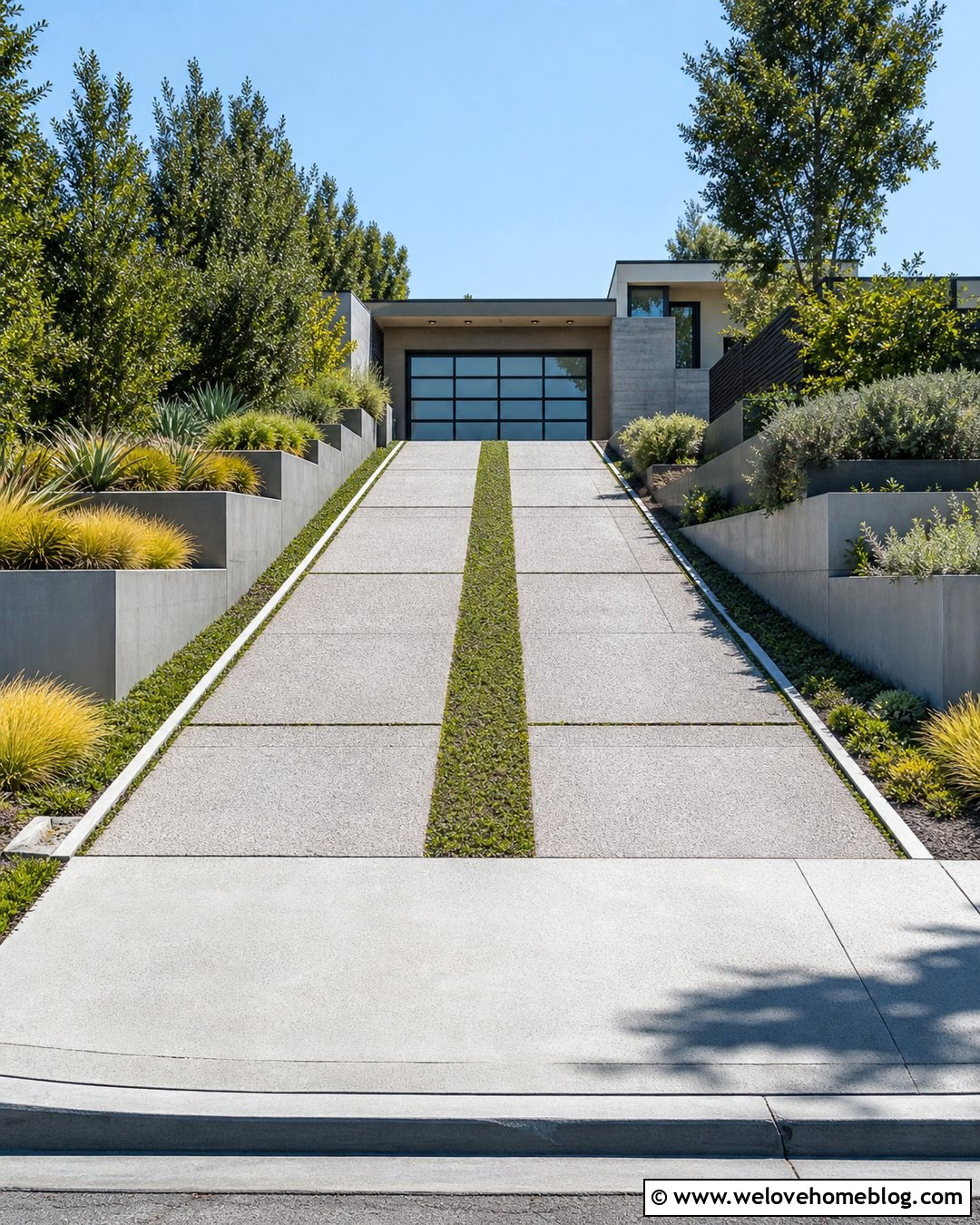
A wide uphill driveway can look lighter when divided into defined concrete driving lanes. Use pale gray, heavily textured concrete strips separated by narrow bands of reinforced groundcover or permeable planted cells. This design is most suitable for a moderate incline where the green divisions can be stabilized and maintained without creating erosion or wheel-drop hazards. Frame the outer edges with flush steel or concrete curbs. A straight approach will emphasize the clean geometry of a modern home, while terraced beds of ornamental grasses soften the slope. Add a full-width solid apron at the street and another at the garage for comfortable transitions. Drainage should be directed away from planted joints and foundations. The finished driveway feels contemporary, green, and less visually dominant than one large concrete surface.

15. Stamped Concrete Uphill Driveway With Textured Finish
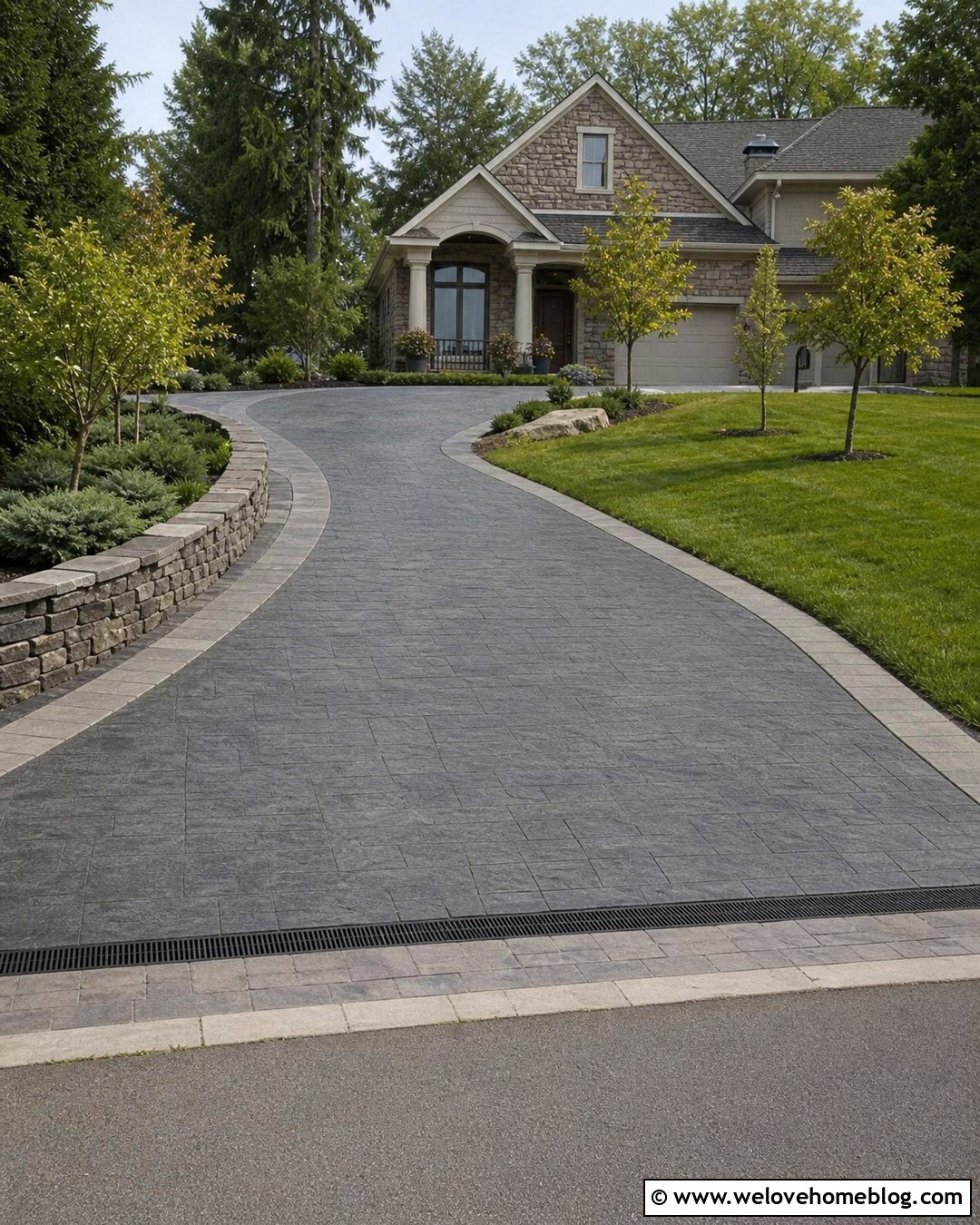
Stamped concrete can bring pattern to a hillside, but the finish should never become slick or overly glossy. Choose a subtle slate texture in a medium charcoal or warm gray color. A lightly contrasting border can follow the curved driveway and define the edges without making the design feel busy. Combine the surface with a stacked-stone retaining wall on the high side and a broad lawn on the low side. Small trees planted above the wall can frame the approach without dropping heavy debris directly onto it. Use a matte, slip-conscious sealer recommended for exterior sloped concrete. Include a grated drain before the garage and a gradual transition at the road. The final look has the character of natural stone while maintaining the visual continuity of a poured concrete driveway.
16. Brick Paver Uphill Driveway With Soldier Course Edging
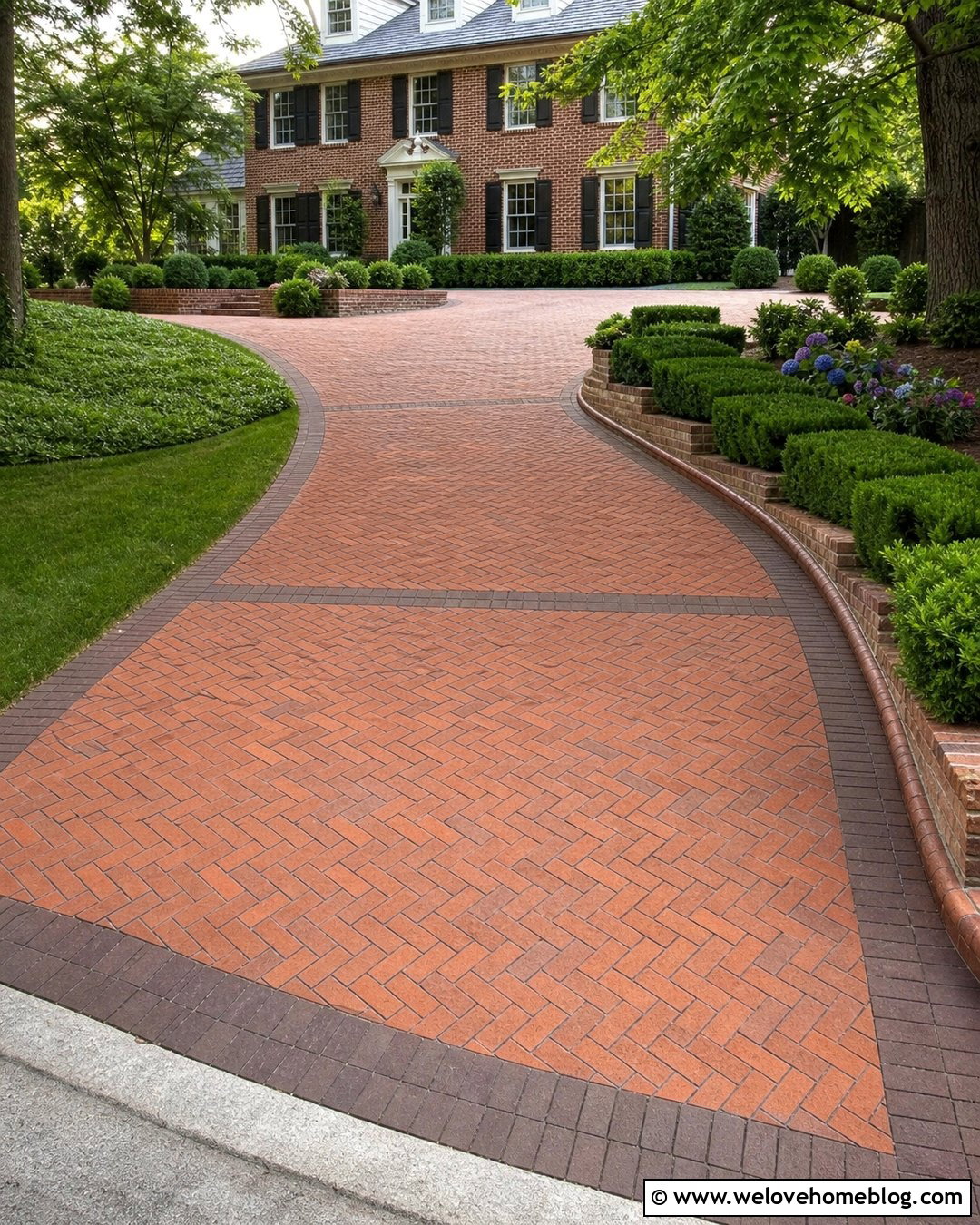
Warm clay brick pavers can make a sloping driveway feel connected to a traditional brick house. Lay the main field in a herringbone pattern and use a straight soldier course along both edges. Darker brick bands across the width can break up the long climb and mark drainage transitions. A shallow curve will soften the approach, while low brick retaining walls create raised beds on the high side. Fill those beds with boxwoods, spreading groundcover, and seasonal flowers used in restrained groups. At the top, widen the paving into a simple parking court beside the front walkway. Proper base preparation, edge restraint, and joint stabilization are essential because braking, runoff, and gravity place additional demands on paving installed along a slope.
17. Mountain Gravel Uphill Driveway With Boulder Walls
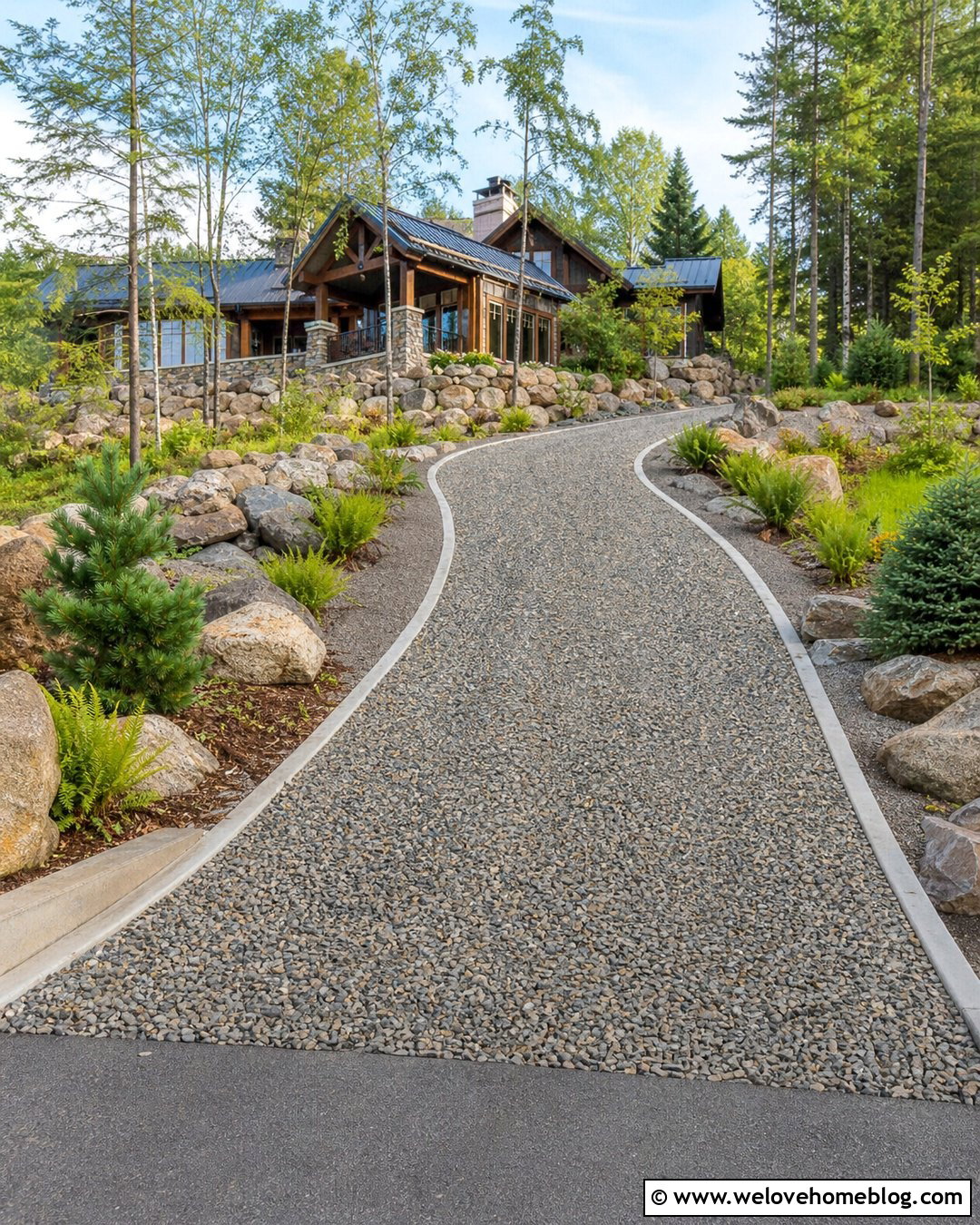
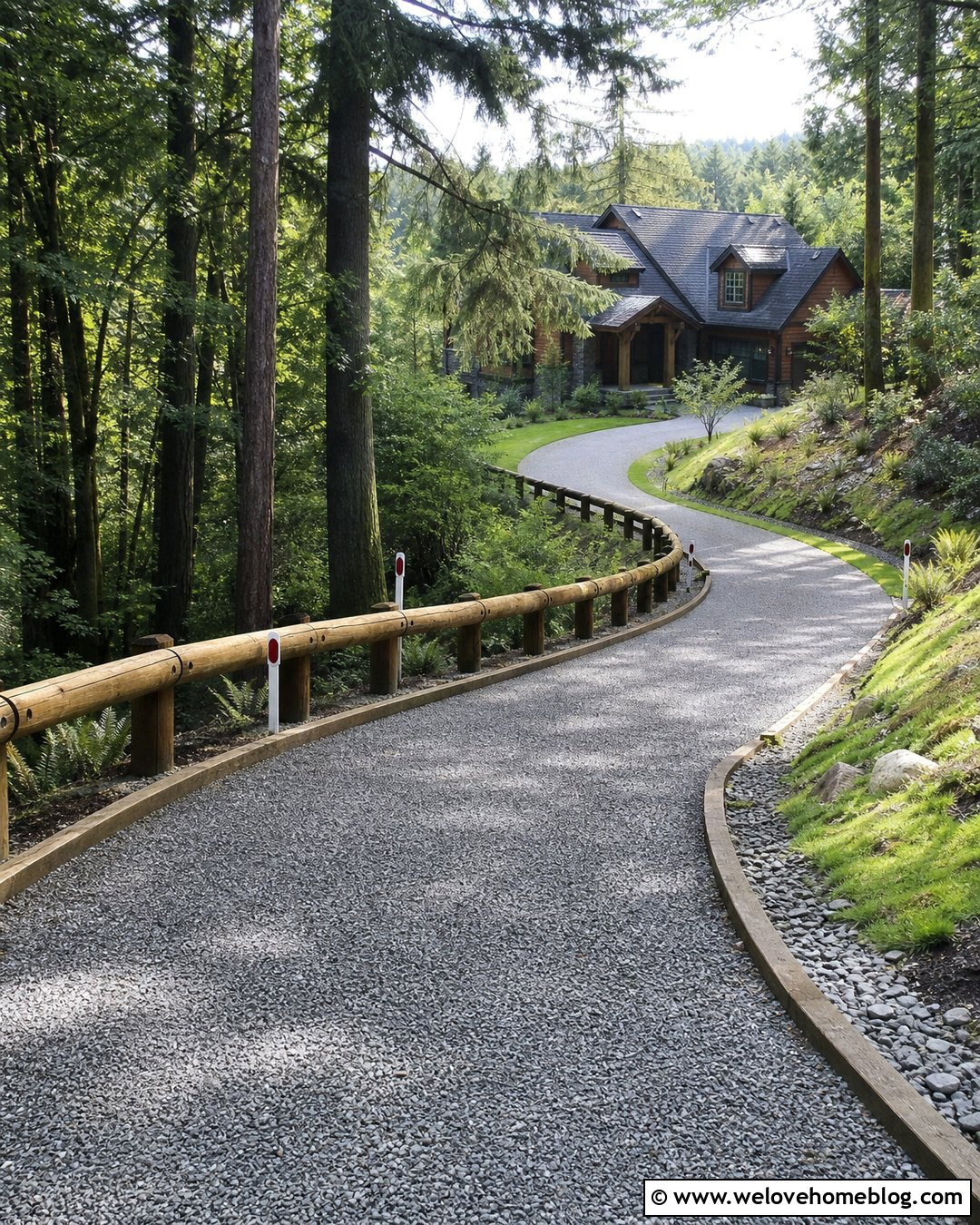
A wooded or mountain property often looks best with materials that blend into the surrounding land. Use compacted angular crushed stone in mixed gray and brown tones, reinforced with a gravel stabilization grid where needed. Let the driveway curve gradually through the slope instead of cutting straight toward the house. Large native boulders can form informal retaining walls along the uphill bank, while concrete curbing contains gravel on the exposed lower edge. Plant ferns, native grasses, low conifers, and spreading shrubs between the rocks. A paved apron at the road will reduce gravel tracking and create a cleaner entrance. Add drainage dips, culverts, or channels at professionally selected locations. The overall design should feel natural, but the base and water-control system still require careful construction.
18. Narrow Uphill Driveway With Retaining Wall
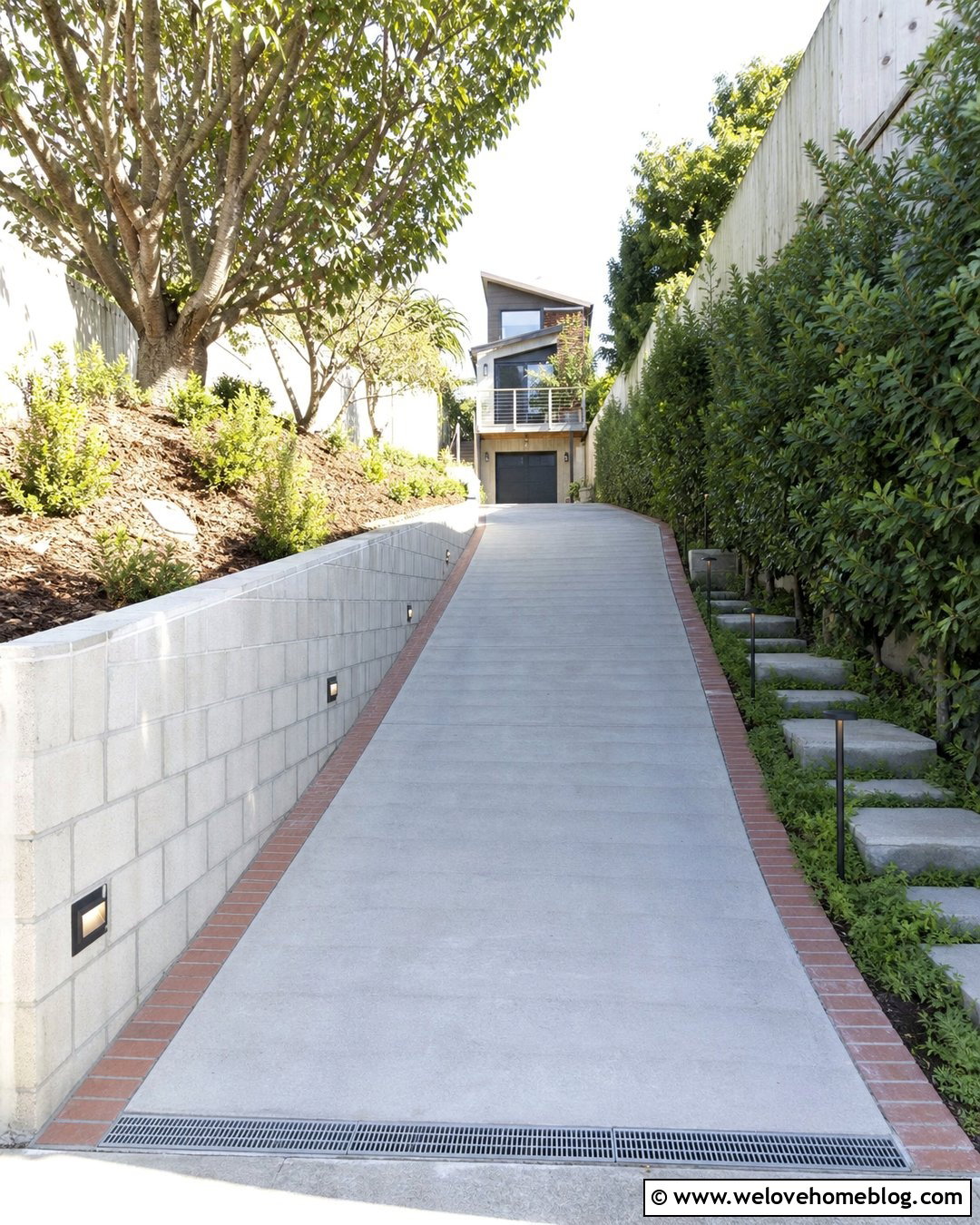
A narrow lot demands a clear, efficient layout. Use broom-finished concrete for a straight driveway running beside a segmental block retaining wall. Select a light stone-colored wall to prevent the corridor from feeling dark or enclosed. The opposite edge can have a slim brick border, a narrow drainage channel, and low groundcover rather than bulky shrubs. Install wall-mounted or recessed step lights to improve edge visibility without placing fixtures in the driving path. Near the top, widen the driveway slightly to create room for opening doors and reaching the front walkway. A gradual transition should connect the slope to the garage slab. Because retaining walls can affect soil pressure, drainage, and usable driveway width, avoid treating the wall as a decorative installation alone. It should be designed as part of the graded site.
19. Wide Uphill Driveway With Landscaped Center Strip
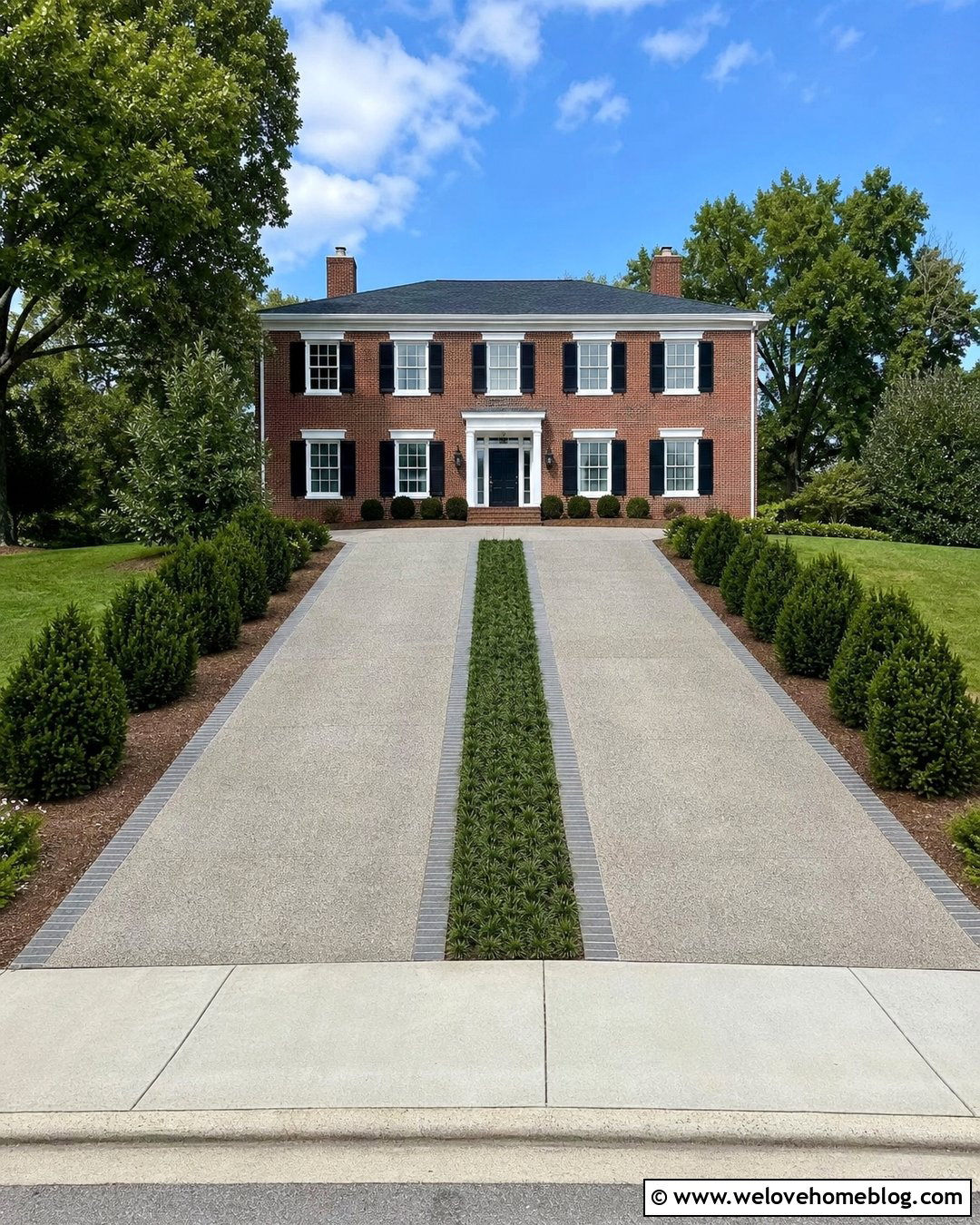
A wide driveway does not need to appear like a large paved ramp. On a moderate slope, two textured concrete driving lanes can frame a reinforced center strip filled with low groundcover or decorative permeable paving. Keep the central feature flush with the driving surface and wide enough to look intentional without limiting tire placement. Dark paver borders can define the outer edges, while symmetrical beds of compact evergreens frame the ascent. At the top, merge the two lanes into a full-width parking pad. At the bottom, use one continuous concrete apron to simplify street access. A center strip should not collect or channel uncontrolled runoff, so its drainage and planting system must be carefully detailed. This look works beautifully with symmetrical colonial, Georgian, and formal brick homes.
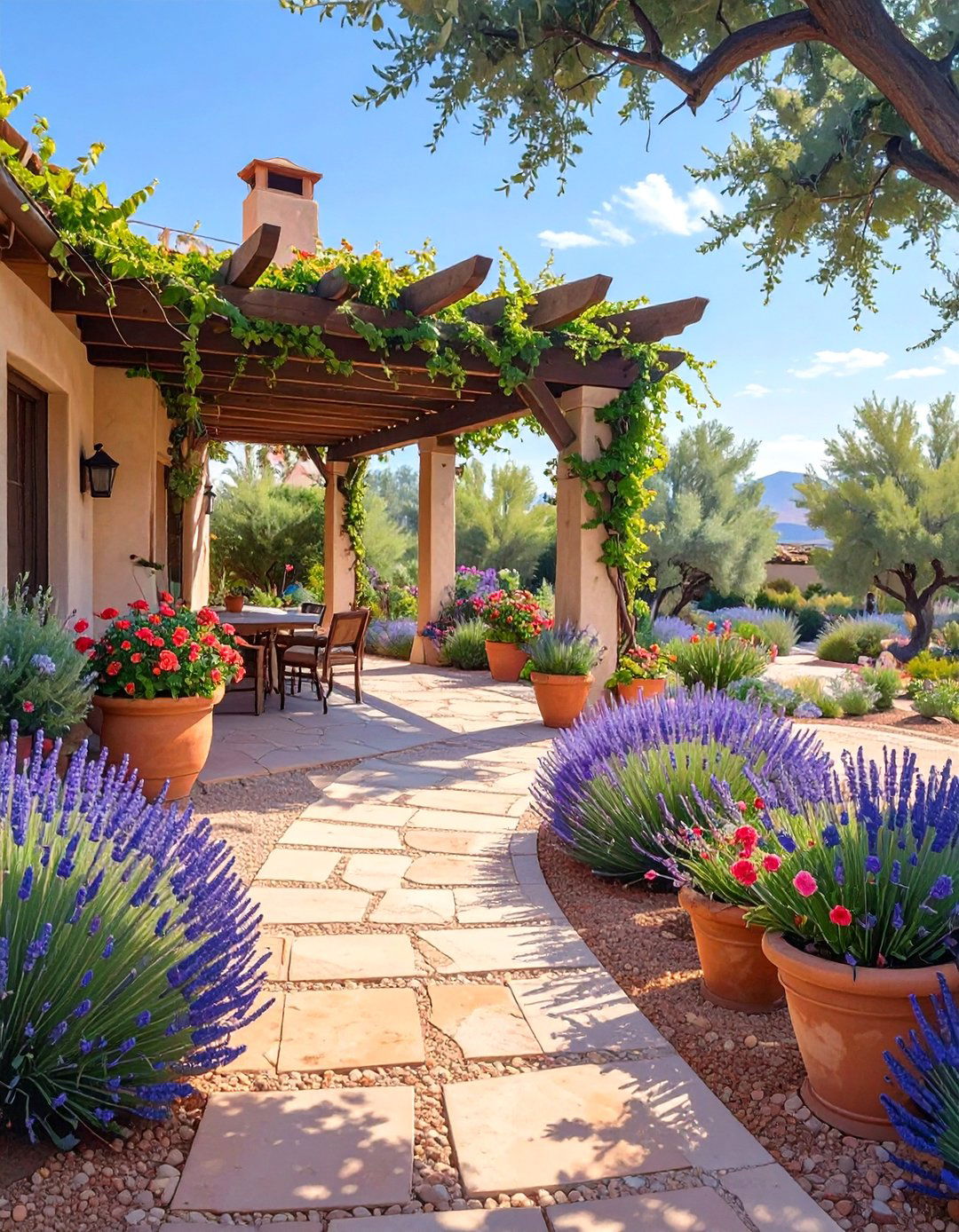

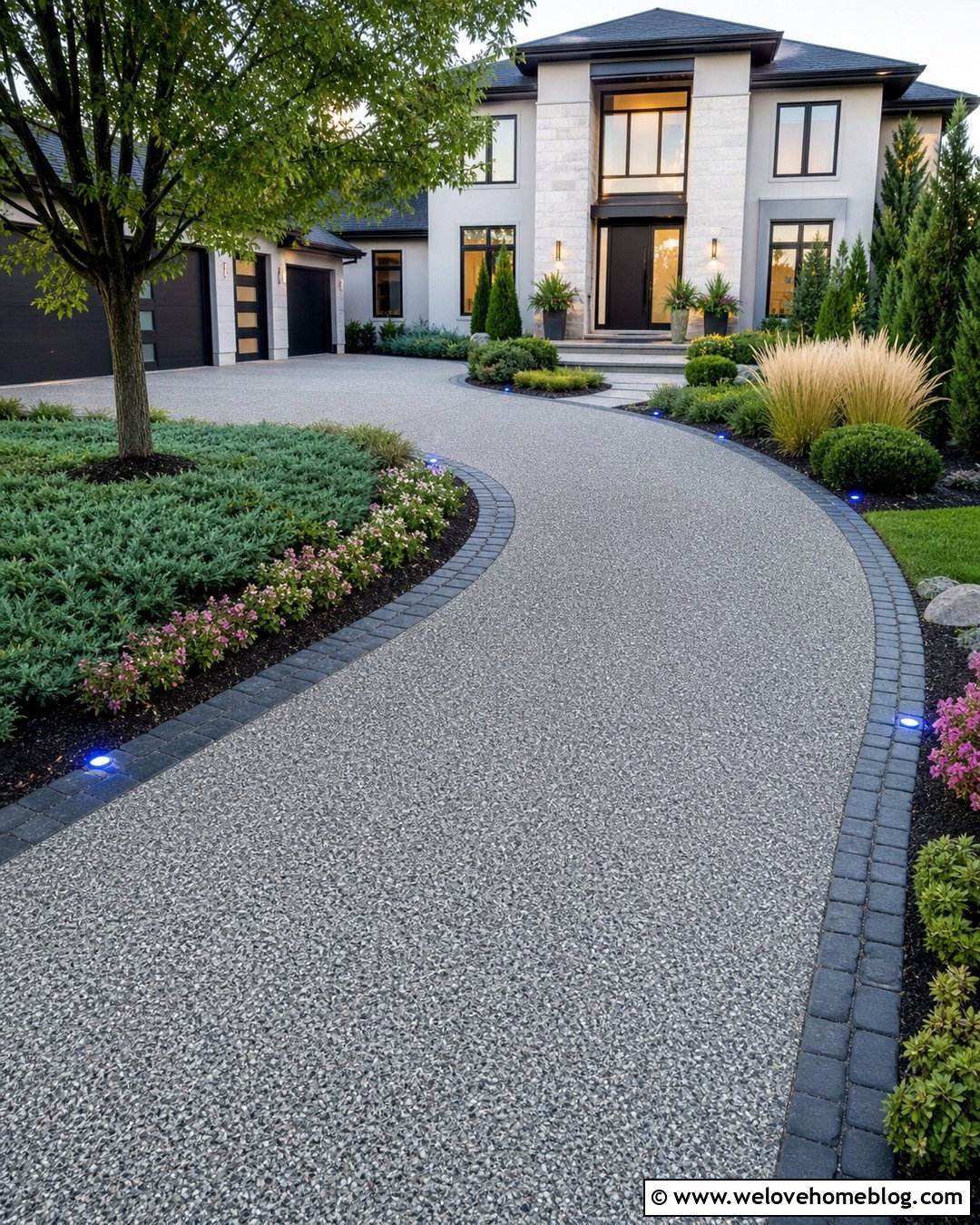
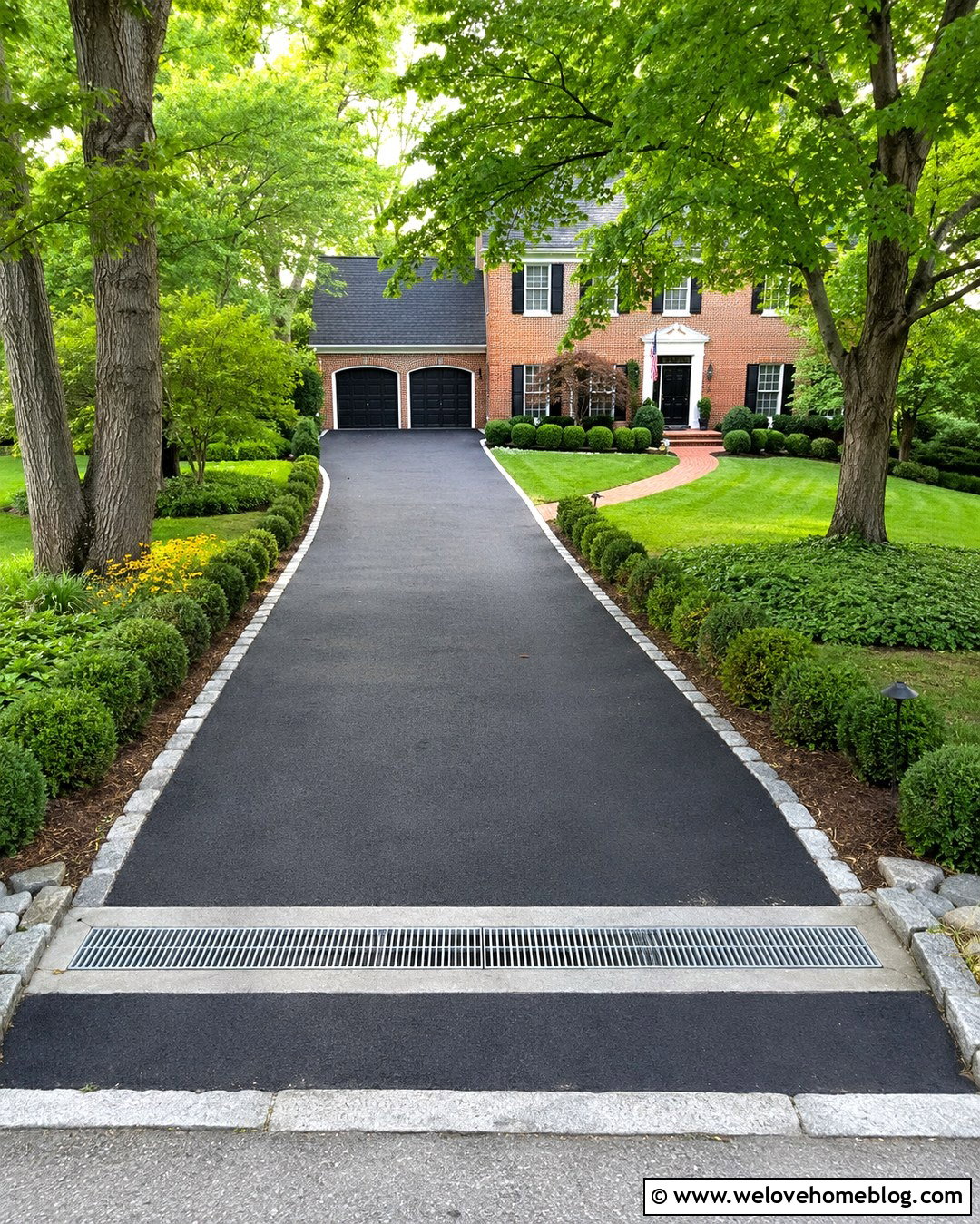
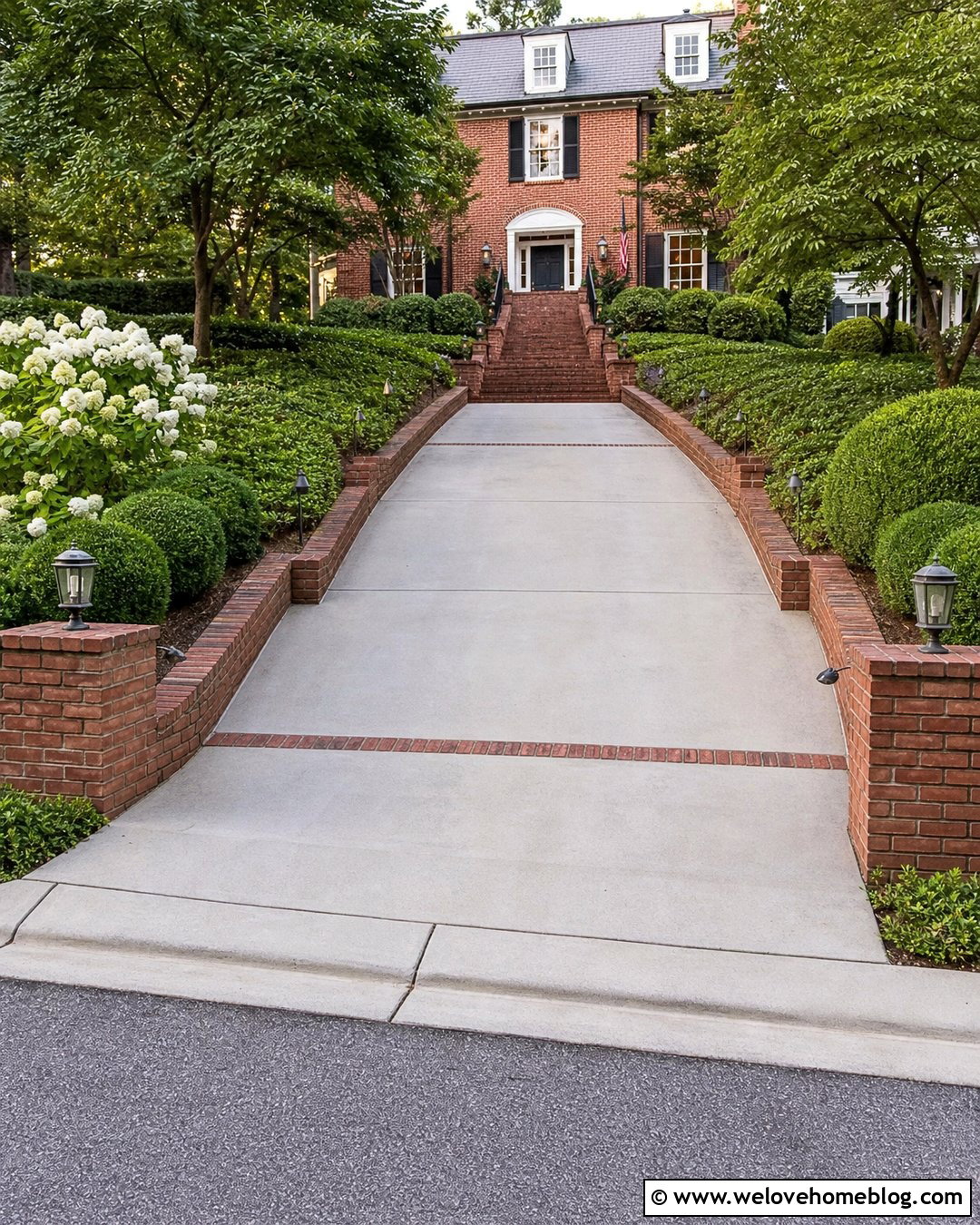
20. Curved Uphill Driveway With Terraced Landscaping
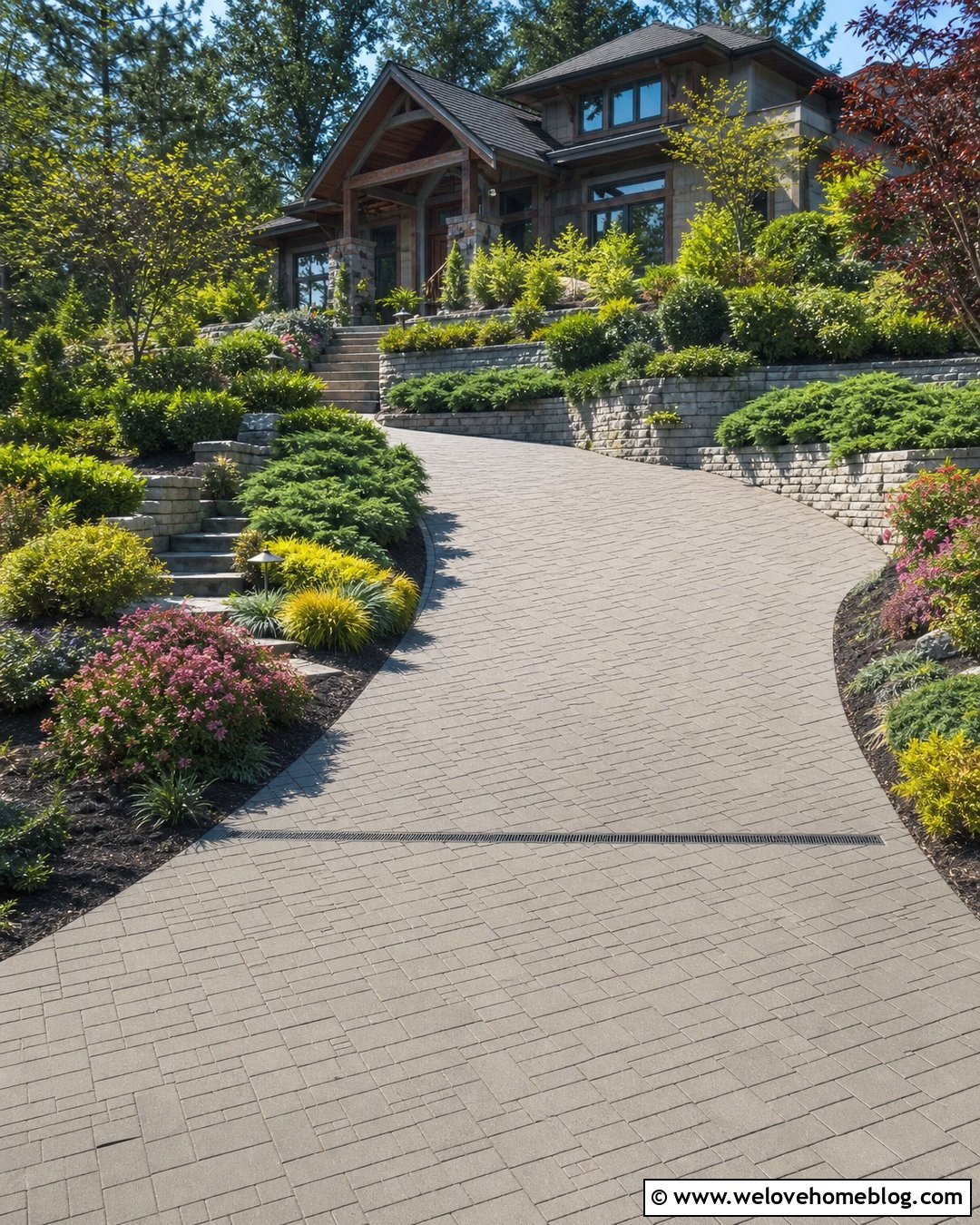
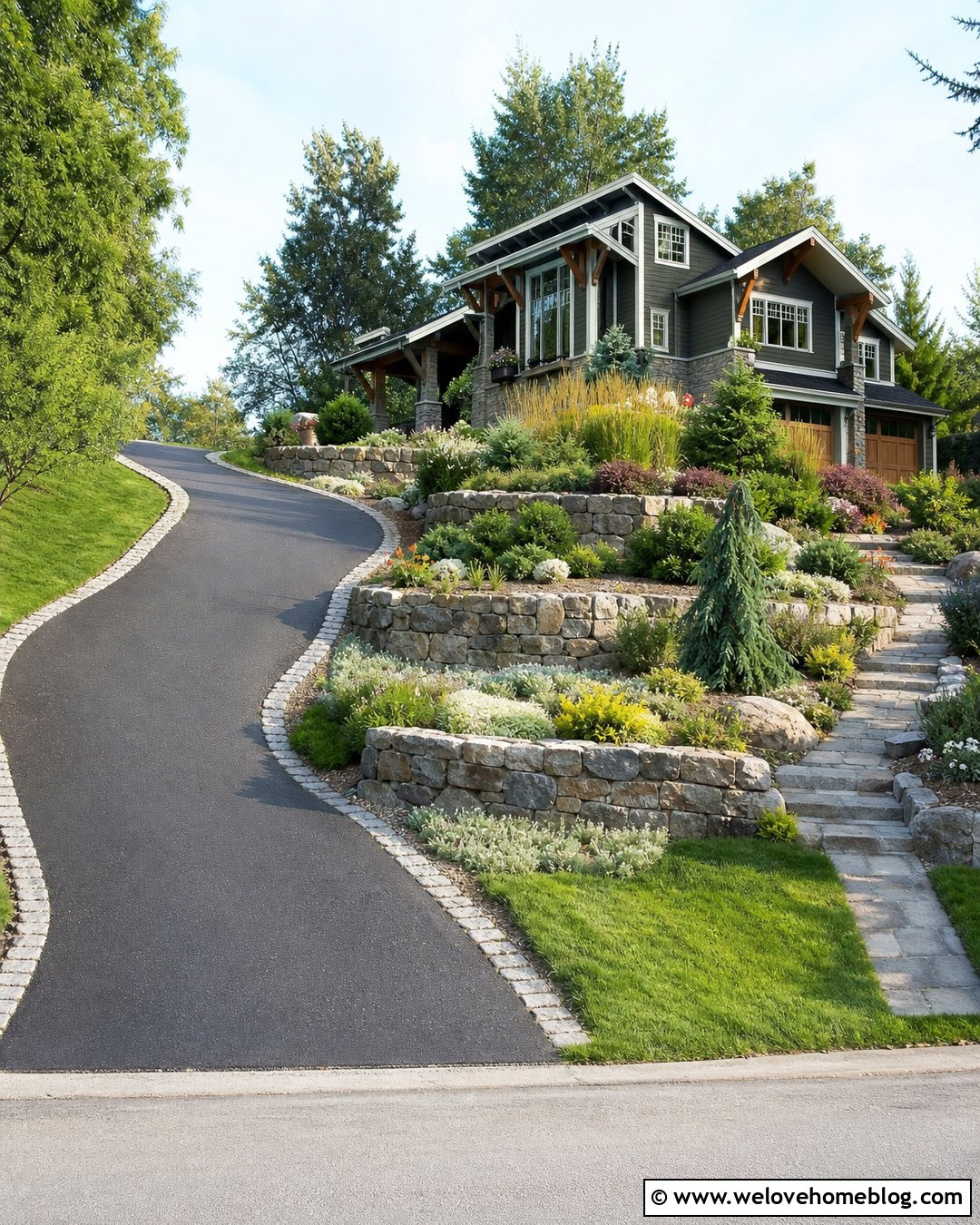
Terraced landscaping can make a tall, bare slope feel organized and welcoming. Use warm gray interlocking pavers for a curved driveway that climbs between two or three low retaining walls. Keep each wall relatively low where site engineering allows, and set the walls back to create generous planting terraces. Fill the layers with spreading junipers, flowering shrubs, ornamental grasses, and small trees selected for the local climate. Repeat the paver color in wall caps or garden steps to unify the design. Add channel drains at suitable cross-slope locations and drainage behind every structural wall. The curve creates changing views as visitors approach the house, while the terraces visually break down the elevation. This complete landscape is ideal for a prominent front yard where the driveway is a major architectural feature.
21. Gated Uphill Driveway With Level Entry Pad
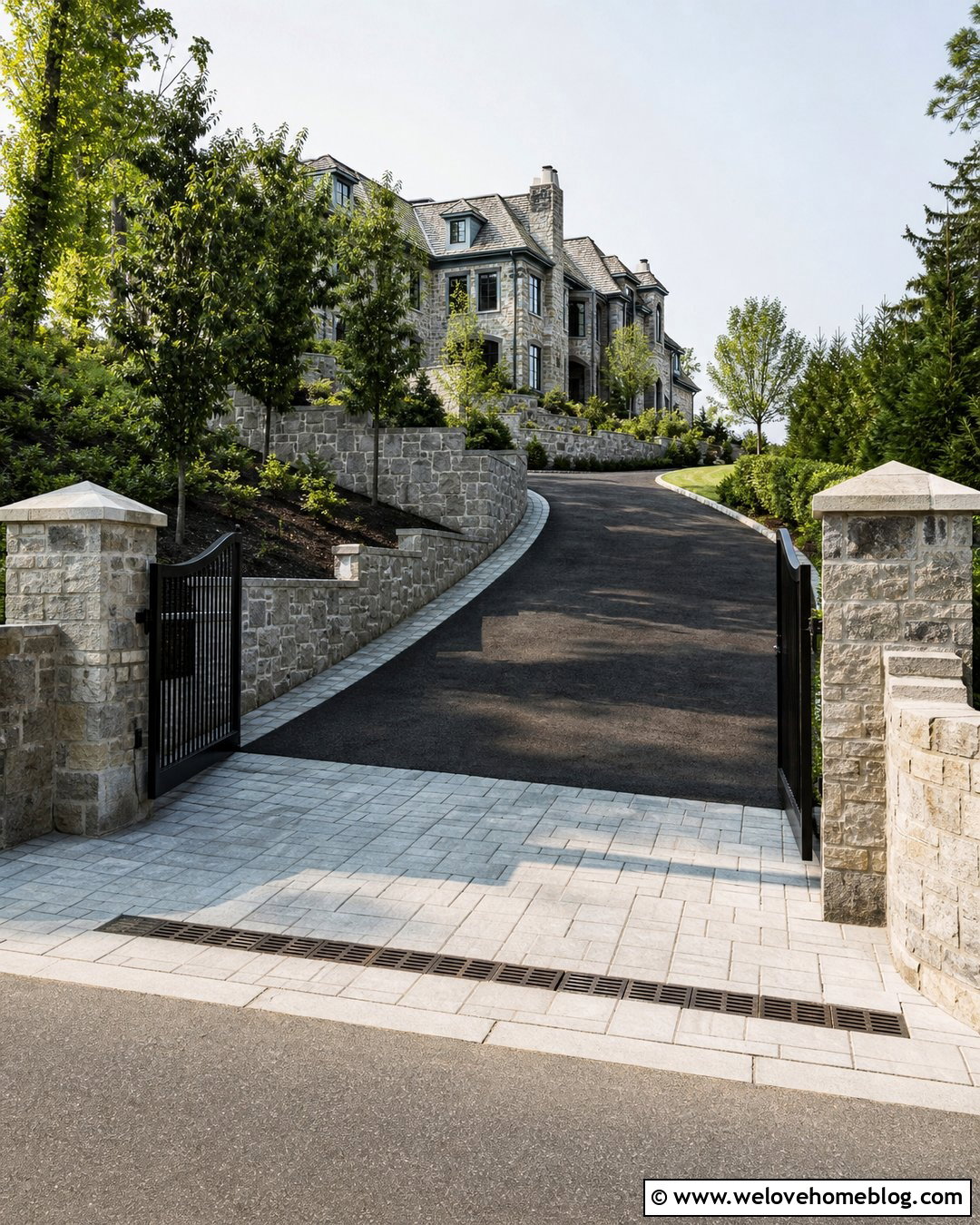
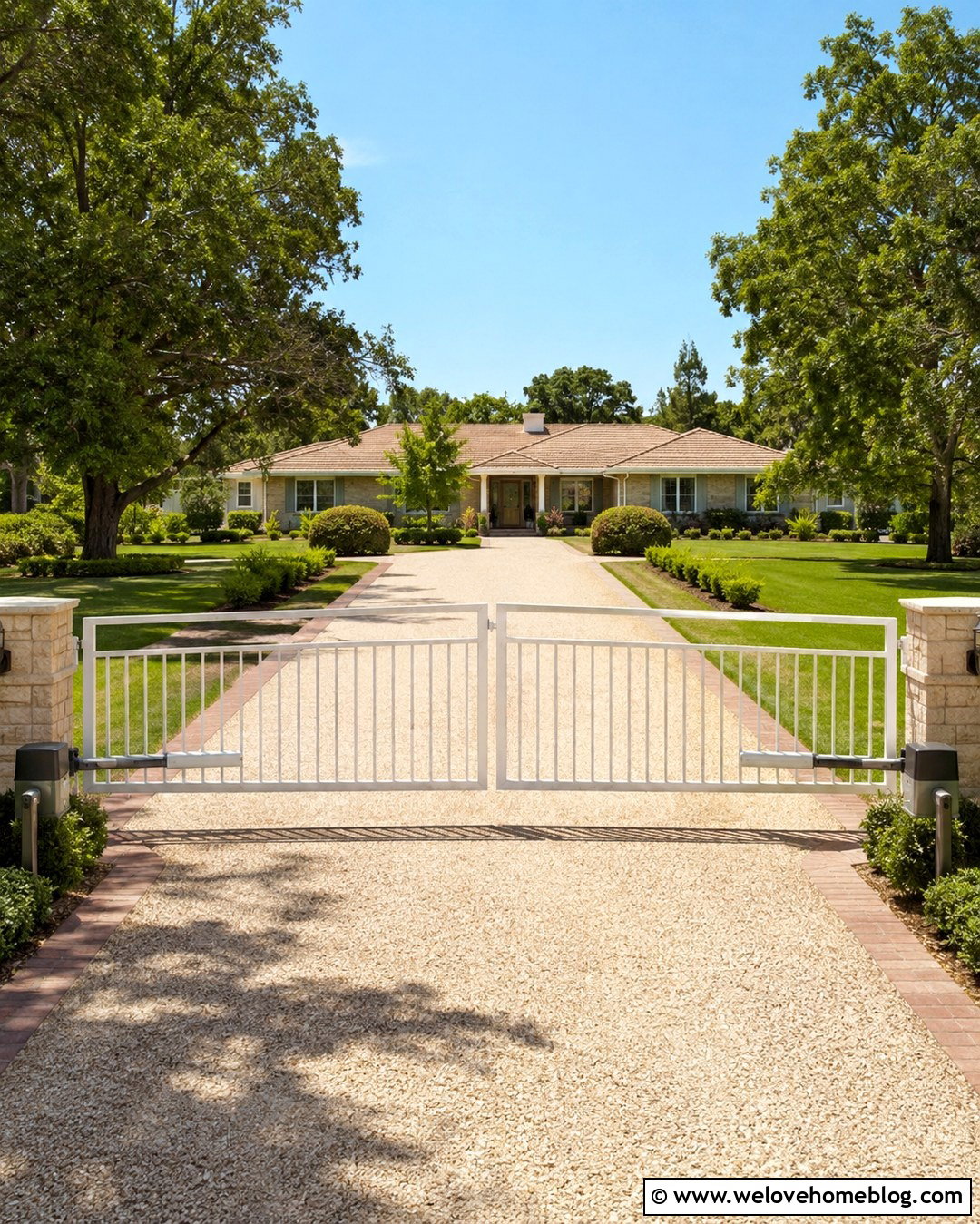
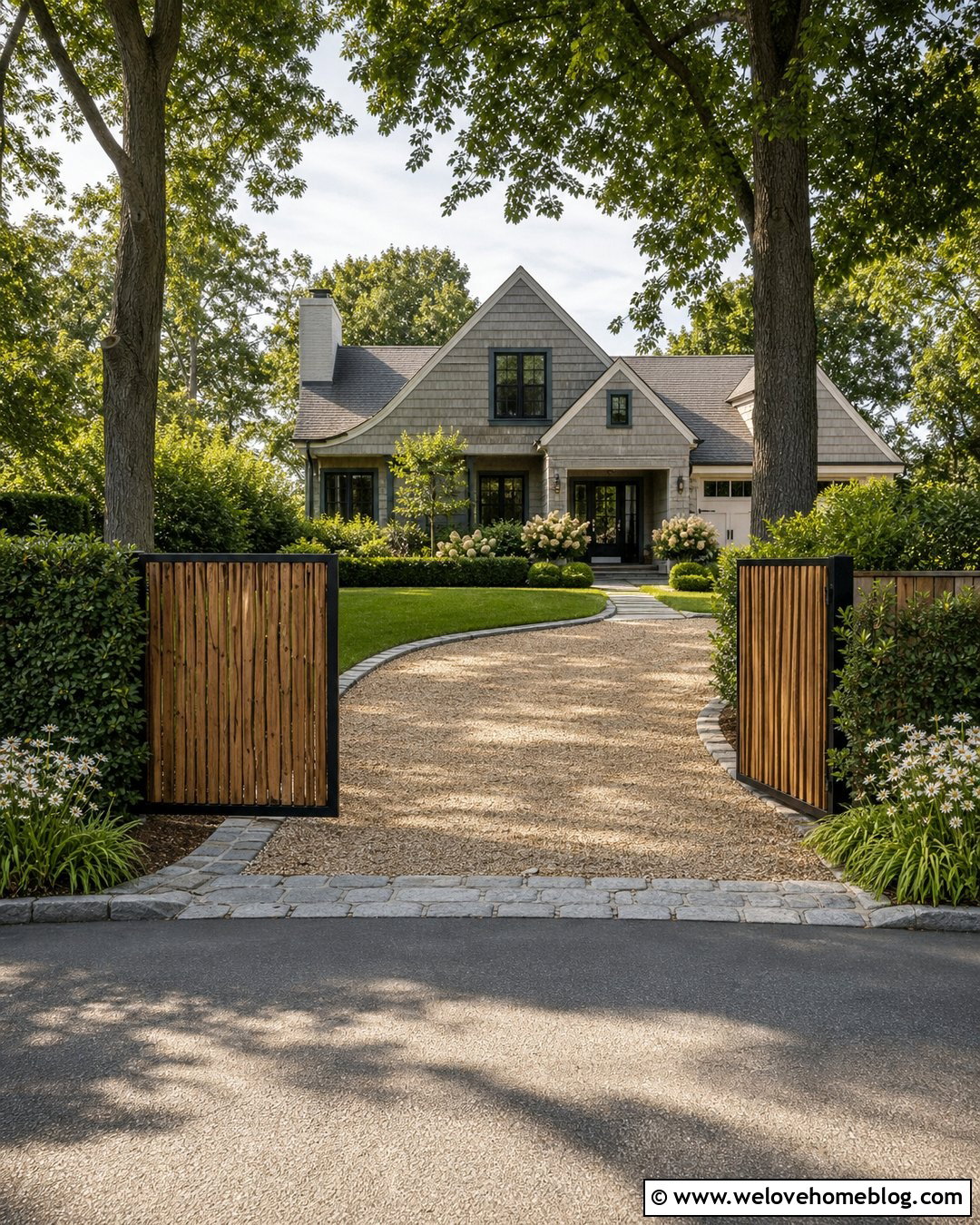
A gate placed directly on a steep incline can create an awkward stopping point. Instead, form a level or gently sloped entry pad inside the property line before the main climb begins. Use dark asphalt for the uphill drive and tumbled concrete pavers across the waiting area. Stone pillars can support a simple metal gate, while low hedges and matching wing walls frame the entrance. Provide enough space for a vehicle to wait fully off the street, subject to local setback and access rules. Beyond the gate, let the driveway curve toward the house with a low retaining wall along the inner bank. A drain at the uphill edge of the entry pad prevents runoff from pooling near the gate. The design looks substantial while keeping the entrance practical and clearly organized.
22. Lighted Uphill Driveway With Stone Edging
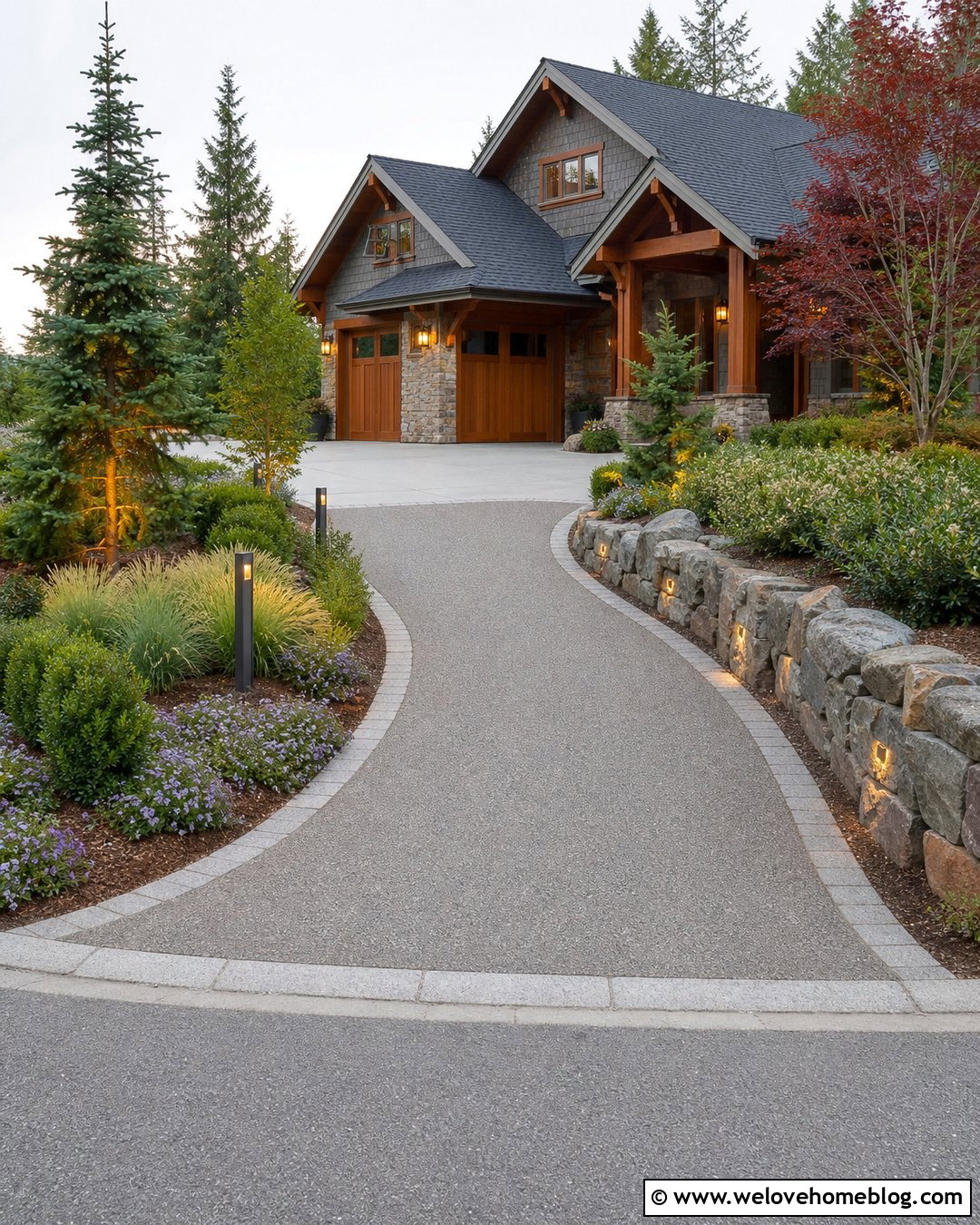
Lighting makes the boundaries of an uphill driveway easier to understand after sunset, but the fixtures should remain secondary during the day. Use exposed aggregate concrete with flush granite edging and a gentle curve toward a craftsman home. Place short, shielded bollard lights along the downhill edge and recessed wall lights beside the upper retaining wall. Stagger the fixtures to outline the route without producing the appearance of an airport runway. During daylight, layered beds of evergreen shrubs, grasses, and flowering groundcover soften the hardscape. Keep fixtures away from tire paths, snow-storage areas, and drainage channels. A broad light-colored apron near the garage marks the arrival point. The complete design provides strong curb appeal while maintaining a clean, uncluttered uphill approach.
23. Farmhouse Uphill Driveway With Chip Seal Surface
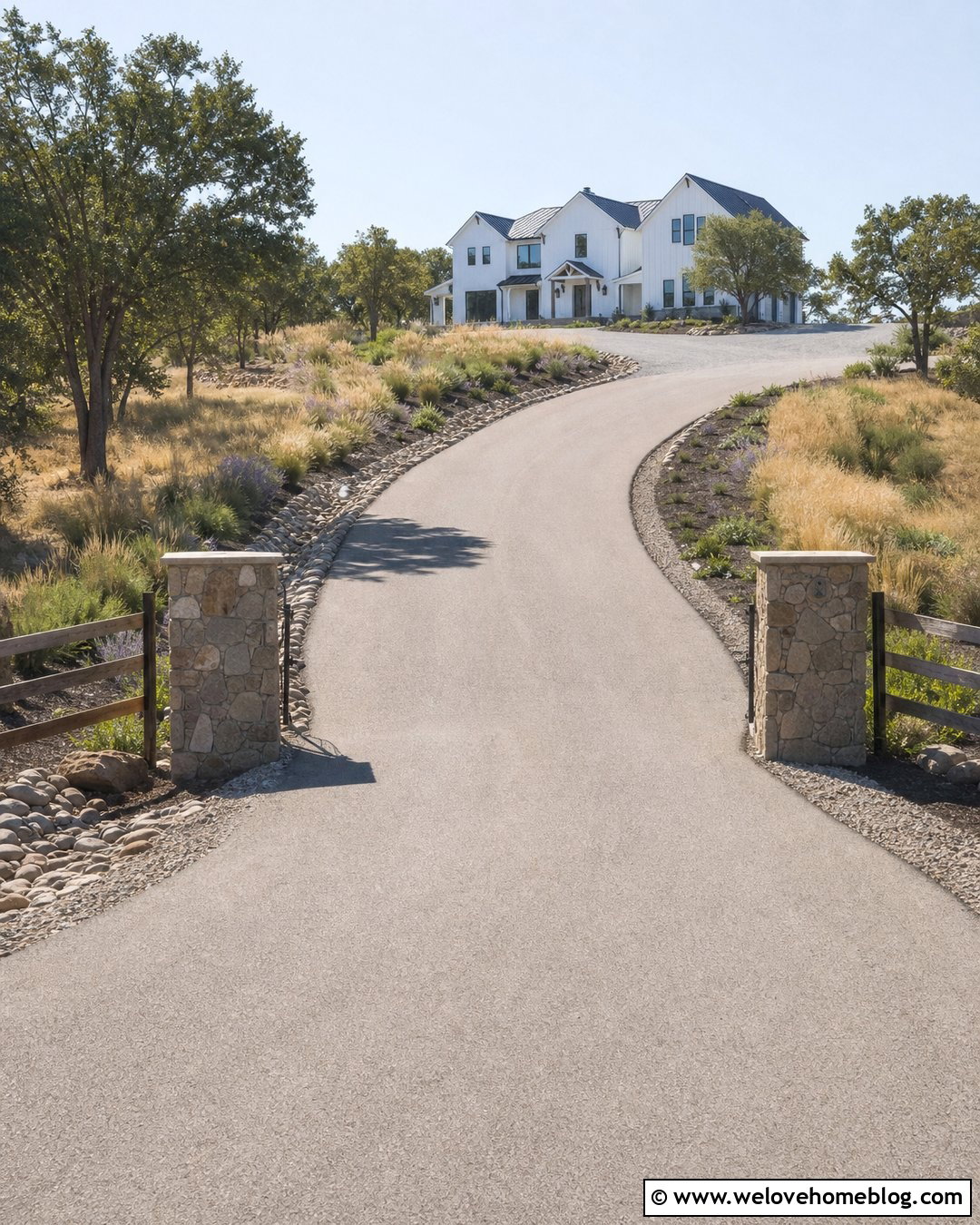
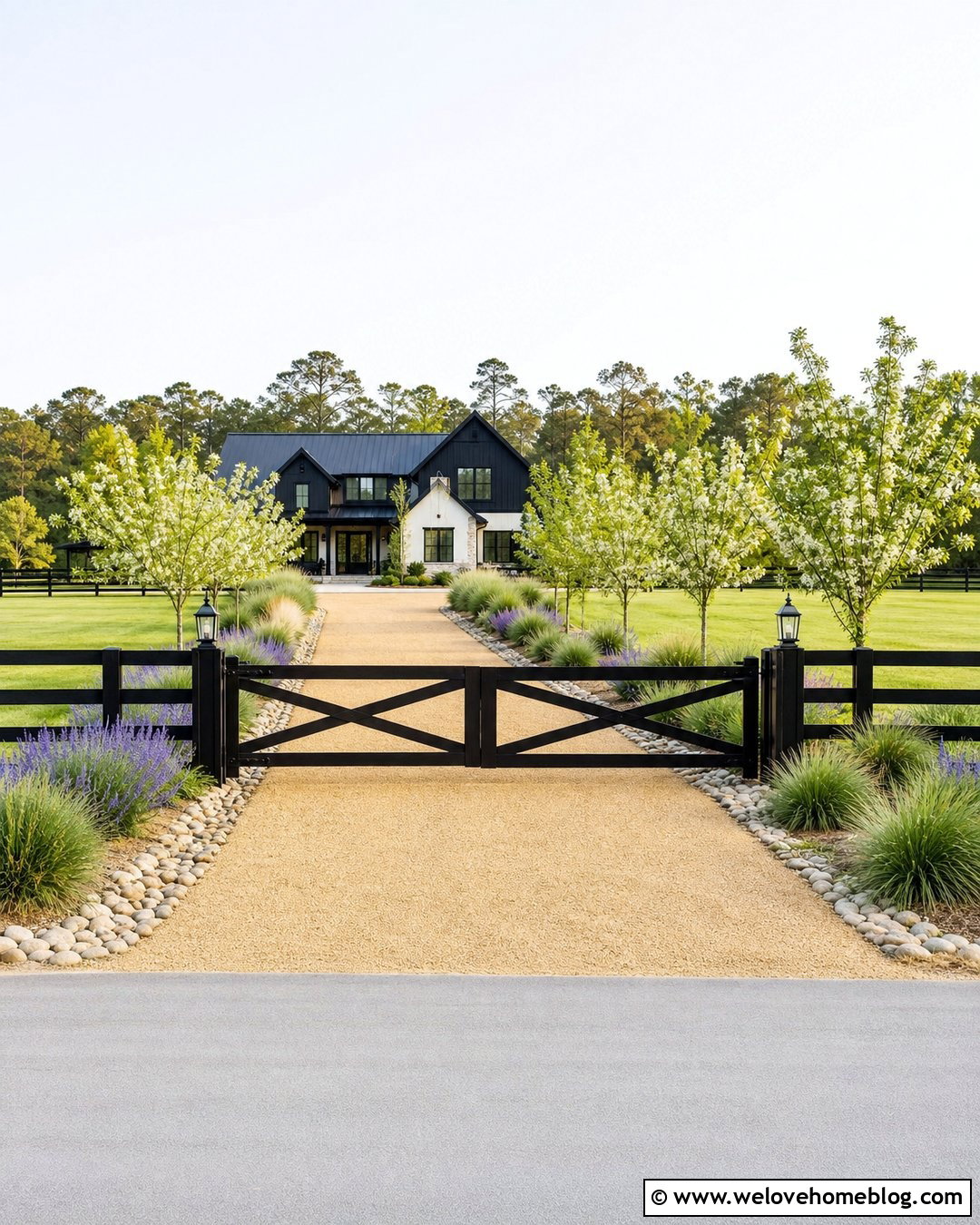
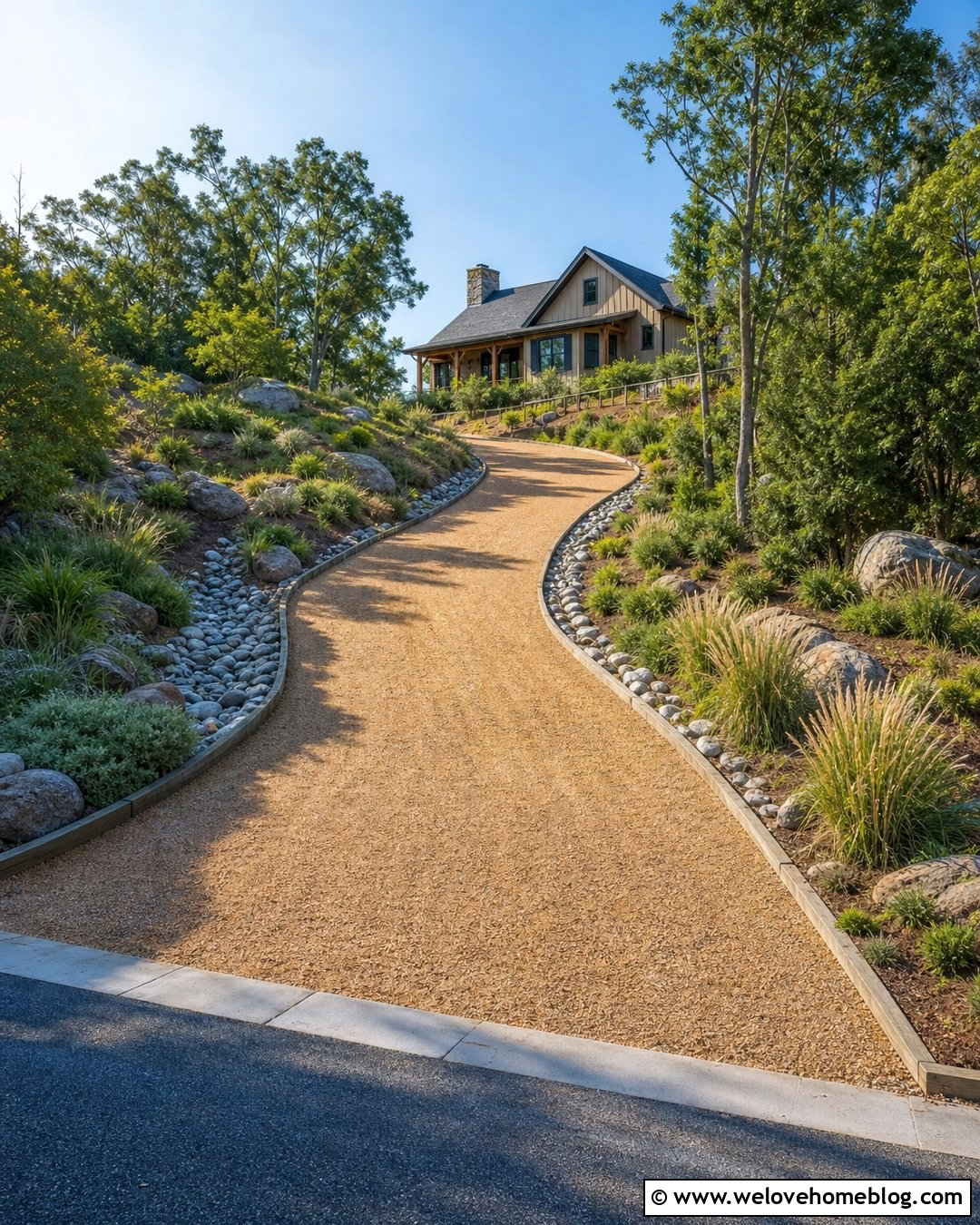
Chip seal can create a country-road appearance that complements a modern farmhouse or rural home. Select a tan or medium-gray aggregate surface with a firm, professionally prepared base. Shape the driveway into a long, sweeping curve bordered by compacted stone shoulders and simple timber or steel edging where appropriate. A stone-lined drainage swale can run along the uphill side, directing water toward a suitable outlet. Plant native grasses, flowering shrubs, and evenly spaced deciduous trees farther back from the driving edge. At the entrance, use stone pillars with a simple farm-style gate and a reinforced paved apron. Near the house, widen the driveway into a gravel-toned parking court. This restrained combination feels rural and relaxed while still appearing deliberate and well maintained.
24. Light Paver Uphill Driveway With Coastal Landscaping
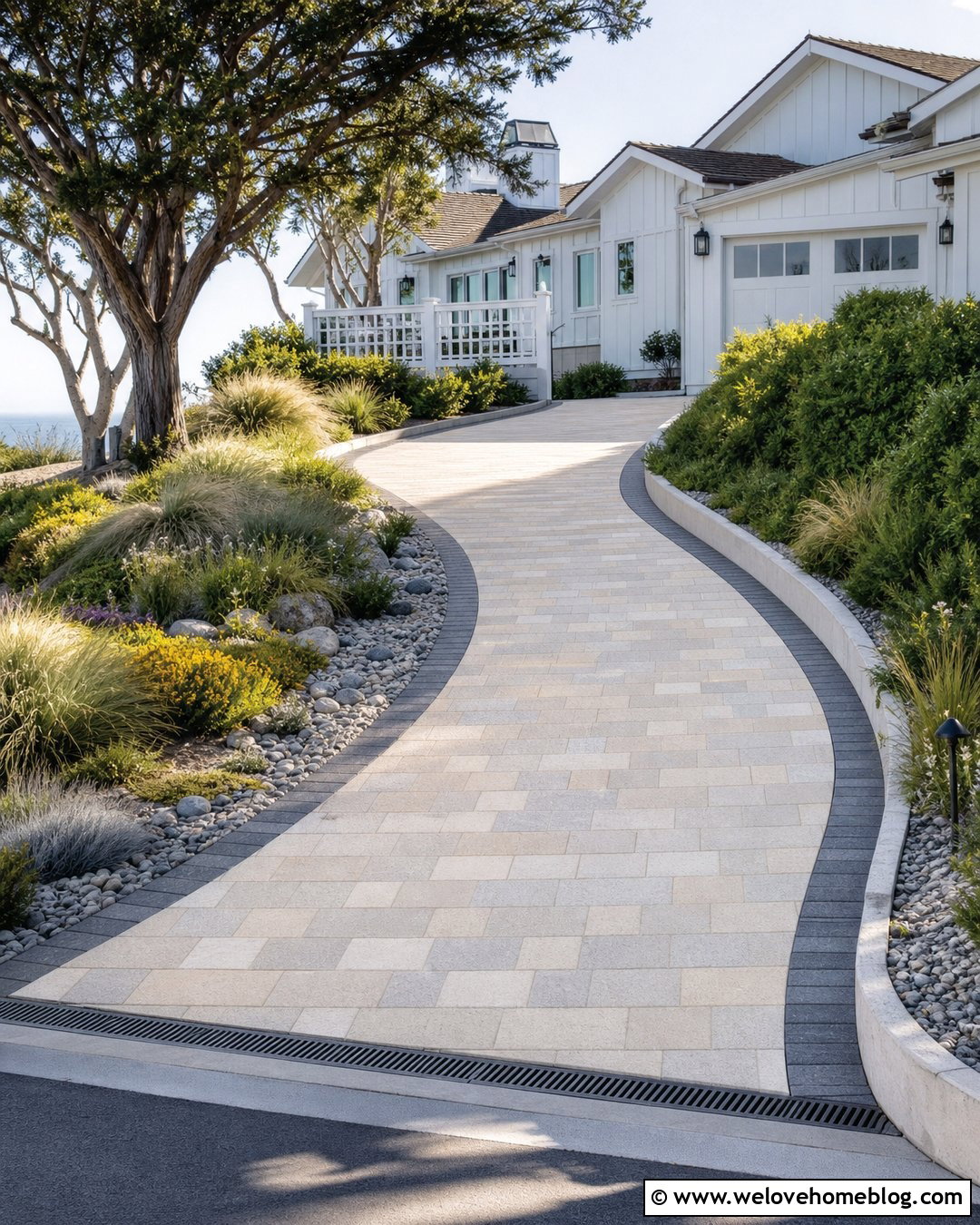
Pale paving can brighten an uphill driveway near a coastal or warm-climate home. Use textured concrete pavers in sand, cream, and soft gray tones, arranged in a simple running-bond pattern. A broad curve can guide the driveway around a dry landscape bed before reaching a white stucco or coastal cottage facade. Border the pavers with charcoal setts for crisp contrast and better edge definition. Plant wind-tolerant ornamental grasses, compact evergreen shrubs, and drought-conscious flowering plants in layered groups. Avoid loose decorative gravel where it could wash onto the driving surface. A linear drain near the garage and a stabilized swale along the lower edge help organize runoff. The finished approach feels open and airy while still providing the texture and visual structure needed on a slope.
25. Recycled Asphalt Uphill Driveway With Concrete Edging
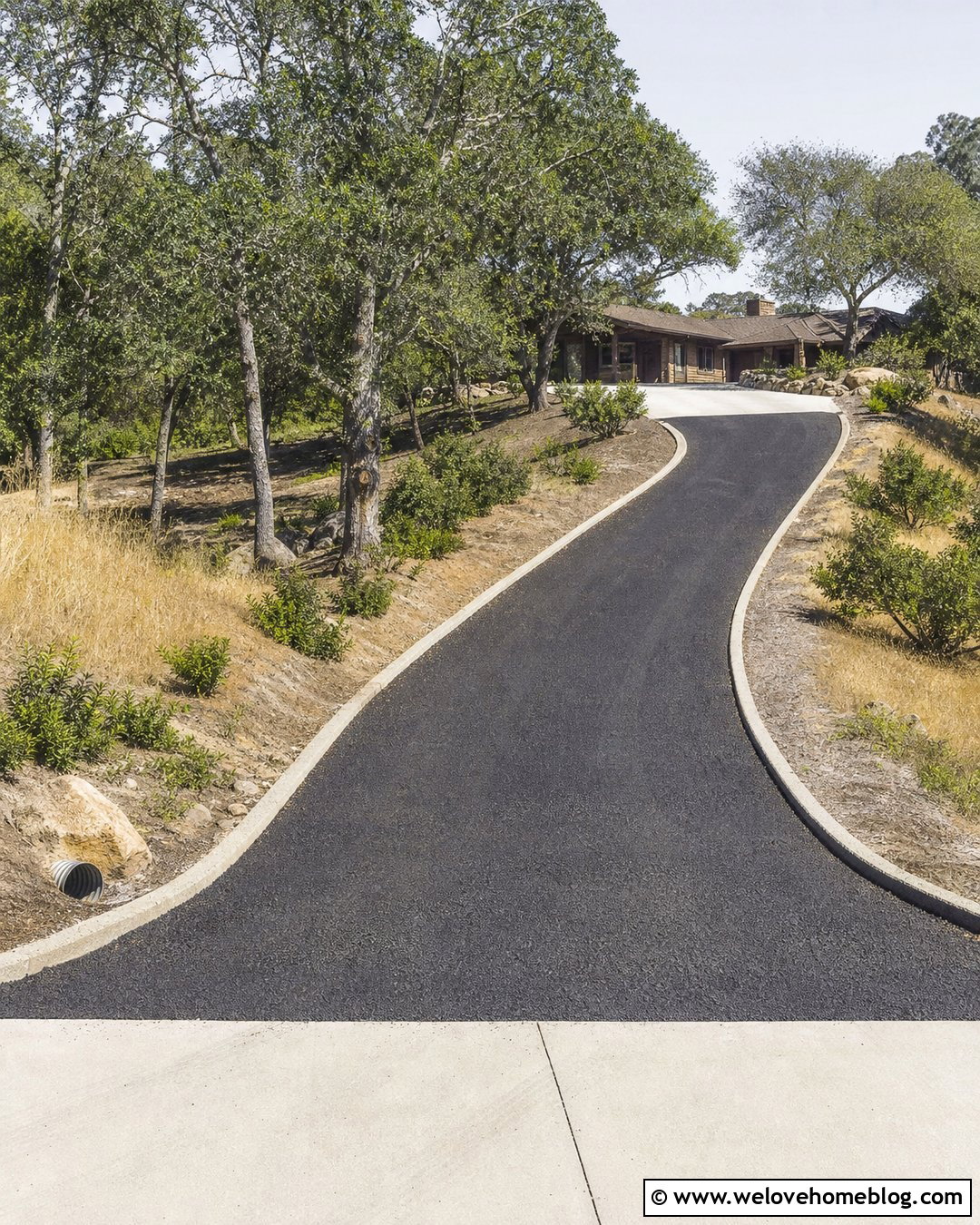
Recycled asphalt can be a budget-conscious choice for a long uphill driveway when it is properly graded, compacted, and contained. Its dark, granular appearance works especially well on rural, ranch, and wooded properties. Use a sweeping layout rather than a severe straight climb where the lot provides enough room. Continuous concrete curbs can keep the material from spreading into planting beds and help preserve clean edges. Add a full asphalt or concrete apron at the street to reduce loose material tracking. Along the slope, combine a shallow drainage ditch with native grasses and low shrubs that tolerate runoff. Near the house, transition to a finished concrete parking pad. Confirm local availability, installation requirements, and environmental rules before selecting reclaimed pavement materials for the project.
Conclusion:
The strongest 25 Uphill Driveway Ideas treat the slope, surface, drainage, borders, landscaping, and arrival area as one connected design. Textured concrete and asphalt provide straightforward durability, while pavers, exposed aggregate, resin-bound gravel, and stabilized stone offer distinctive finishes. Curves, switchbacks, terraces, and level pads can make challenging elevation changes more manageable when space allows. Retaining walls and drains should always be planned structurally rather than added as decoration. Before construction, have the grade, soil, runoff route, vehicle access, and local requirements evaluated by qualified professionals. With careful planning, an uphill driveway can become a secure, practical, and attractive entrance that complements both the house and the surrounding terrain.

Related posts:
Leave a Reply