
A shared driveway needs a clear boundary without becoming cramped, unfriendly, or difficult to navigate. These **20 Shared Driveway Divider Fence Ideas** combine practical separation with attractive curb appeal. You will find low fences for narrow spaces, privacy panels for exposed homes, planting-friendly designs, and durable options for busy driveways. Before installation, confirm the surveyed property line, review recorded driveway easements or agreements, and check local fence height and visibility rules. Requirements can vary by location, especially near sidewalks and street entrances. () Also consider drainage, snow removal, vehicle doors, garbage bins, and maintenance access. The best divider should guide vehicles while complementing both homes and leaving enough usable pavement. Explore the complete driveway looks below in these **20 Shared Driveway Divider Fence Ideas**.
1. Low Horizontal Wood Shared Driveway Fence
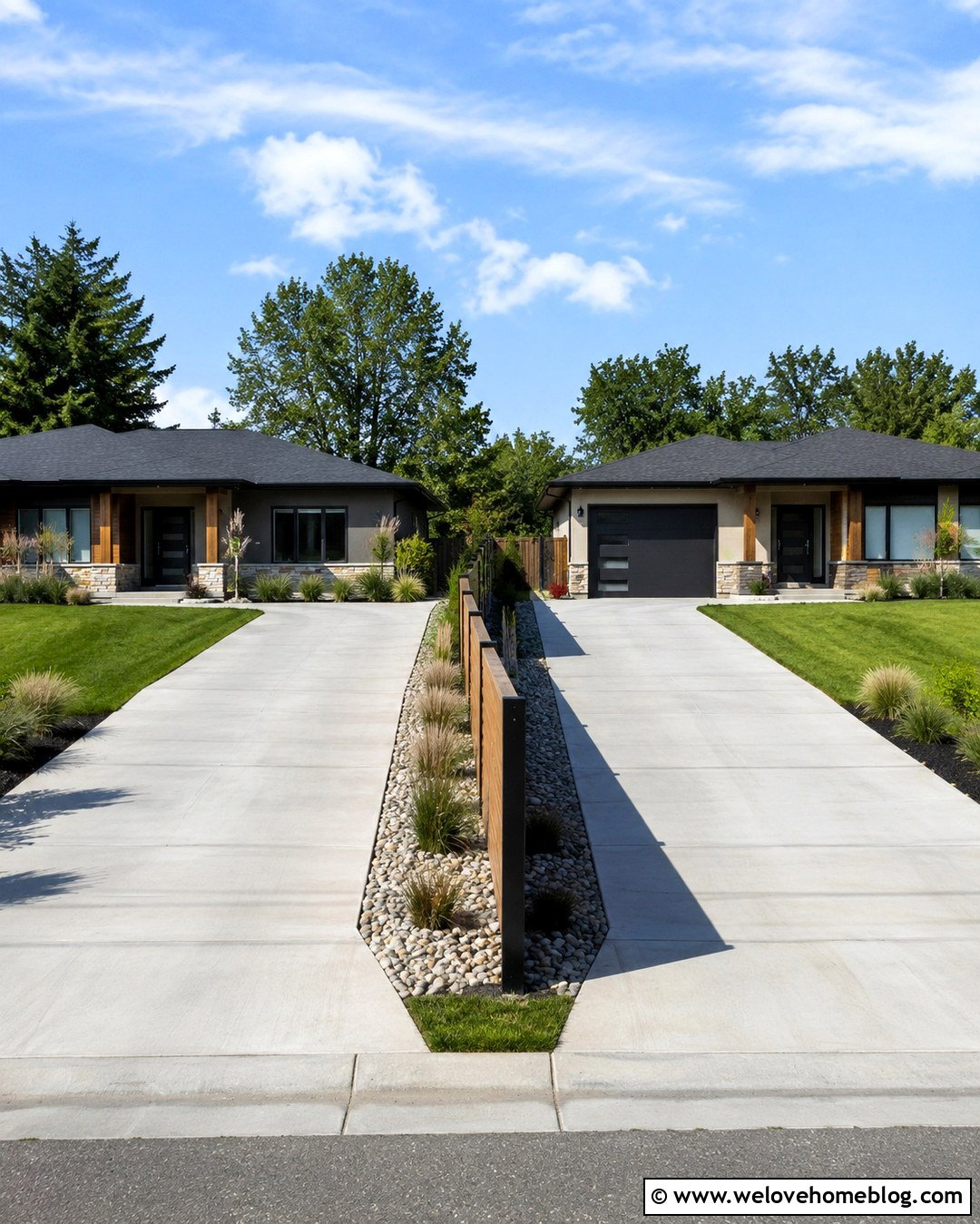
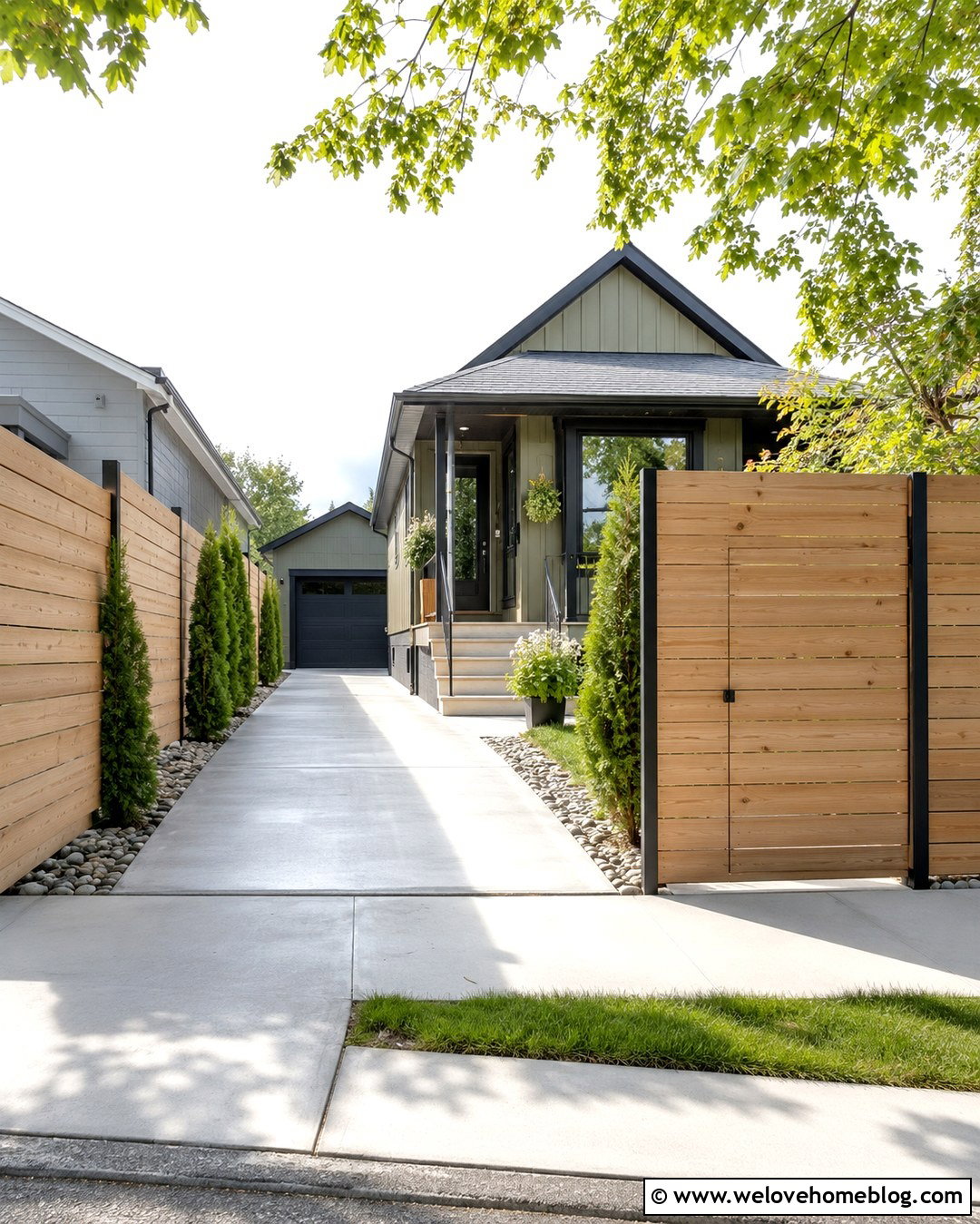
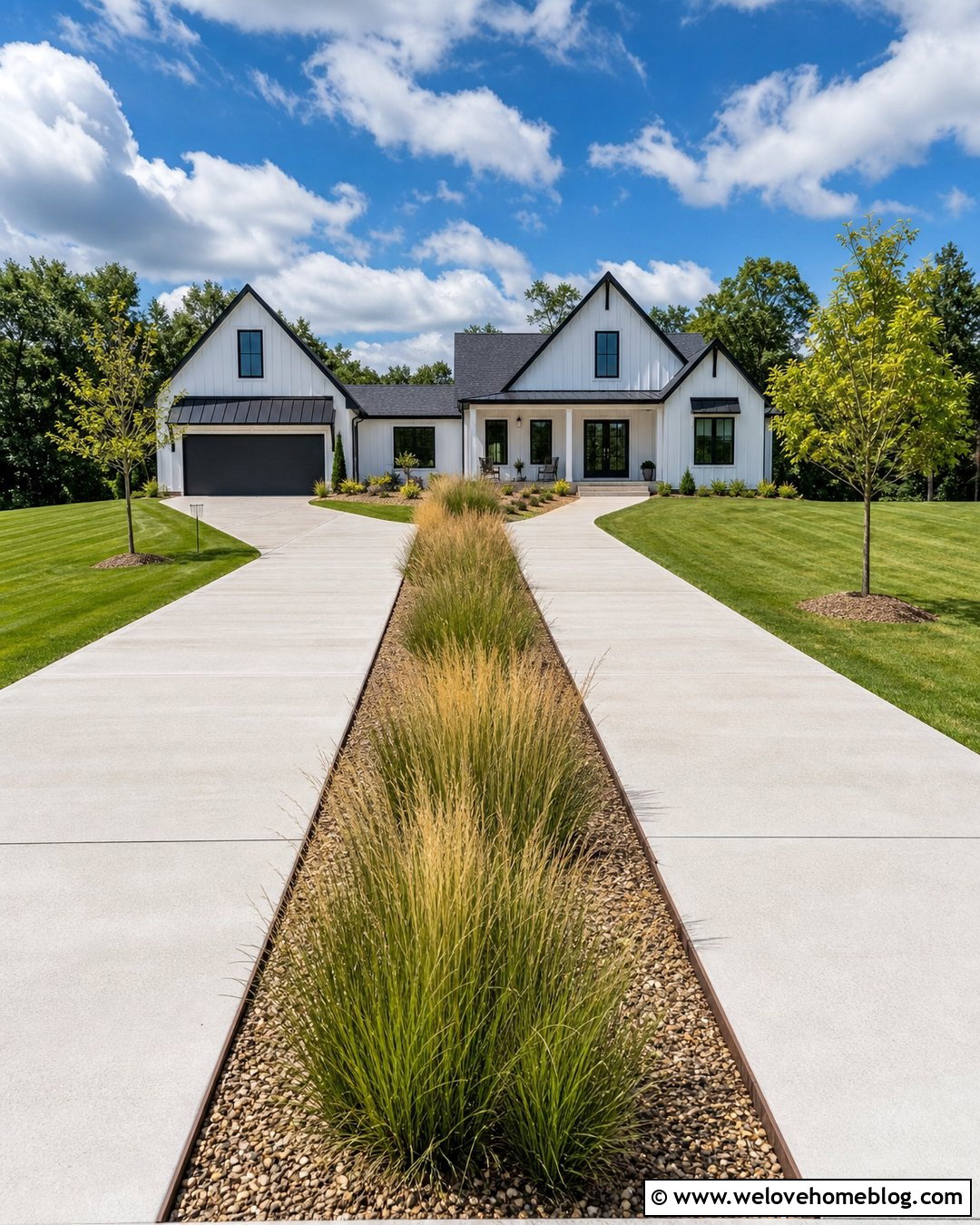
A low horizontal wood fence creates an obvious dividing line while keeping neighboring homes visually connected. Pair warm cedar boards with a straight gray poured concrete driveway divided by a narrow river-rock drainage strip. A fence around three feet high can feel less imposing than full privacy panels, especially near the street. Space the boards slightly apart to let light and air pass through. Black metal posts give the design a cleaner, more durable framework and coordinate well with modern house fixtures. Add compact ornamental grasses along one side, but keep plants away from the vehicle clearance zone. This complete look works particularly well between contemporary ranch homes where both owners want definition without blocking windows, porch views, or casual conversation.
2. White Vinyl Shared Driveway Privacy Fence
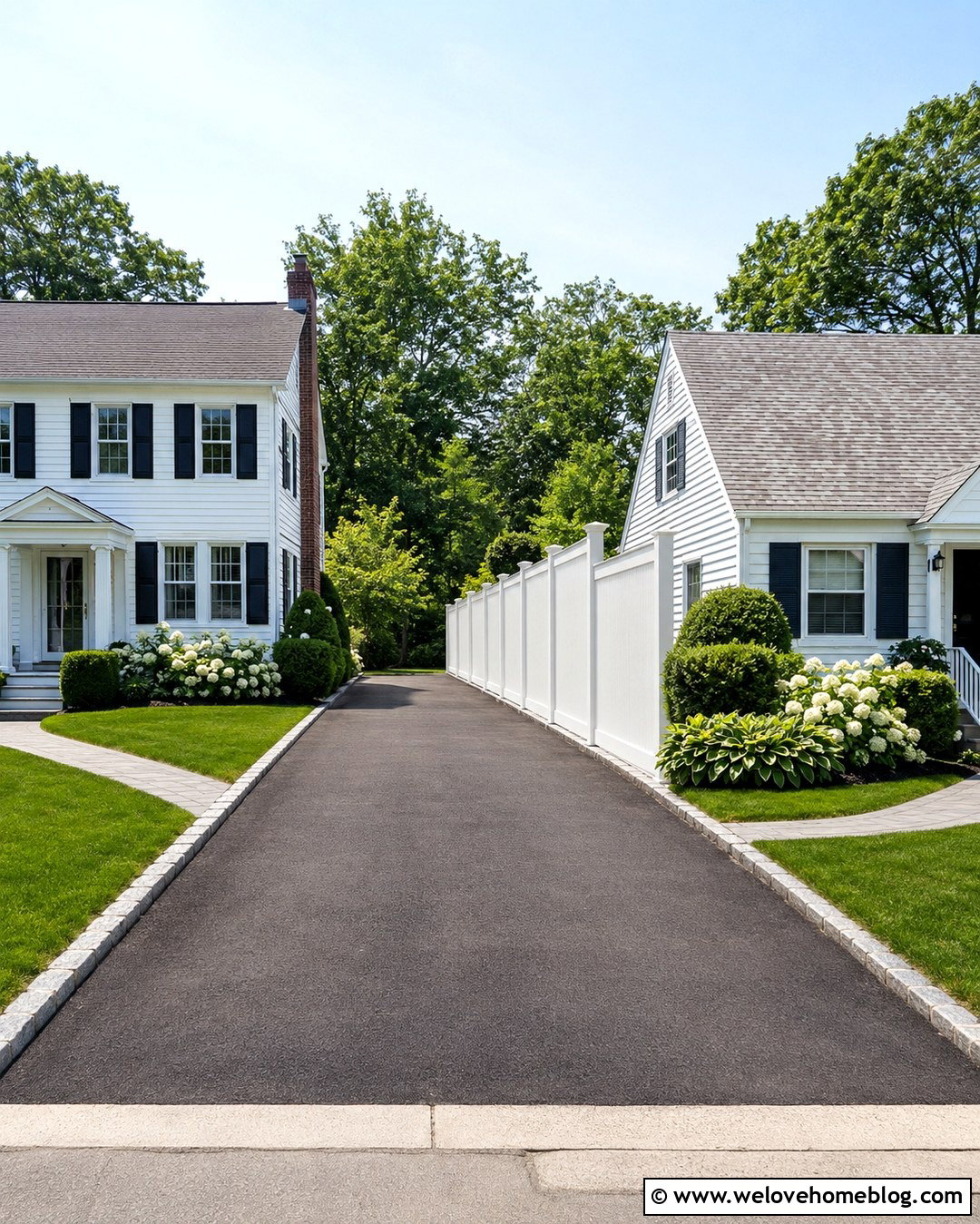
When neighboring windows directly face the driveway, a white vinyl privacy fence can create a brighter and more secluded setting. Use it beside a straight black asphalt driveway with light gray concrete curbs that protect the bottom panels from tires and maintenance equipment. A six-foot fence may work farther back between the homes, while a shorter stepped section near the sidewalk can preserve visibility. Choose simple tongue-and-groove panels rather than highly decorative tops for a neat appearance. Foundation beds filled with hydrangeas, hostas, and low evergreen shrubs soften the solid surface. This combination suits Colonial and Cape Cod homes because the white fence connects naturally with trim, porch columns, and shutters. It is also easy to clean when road dust collects.
3. Black Metal Shared Driveway Divider Fence
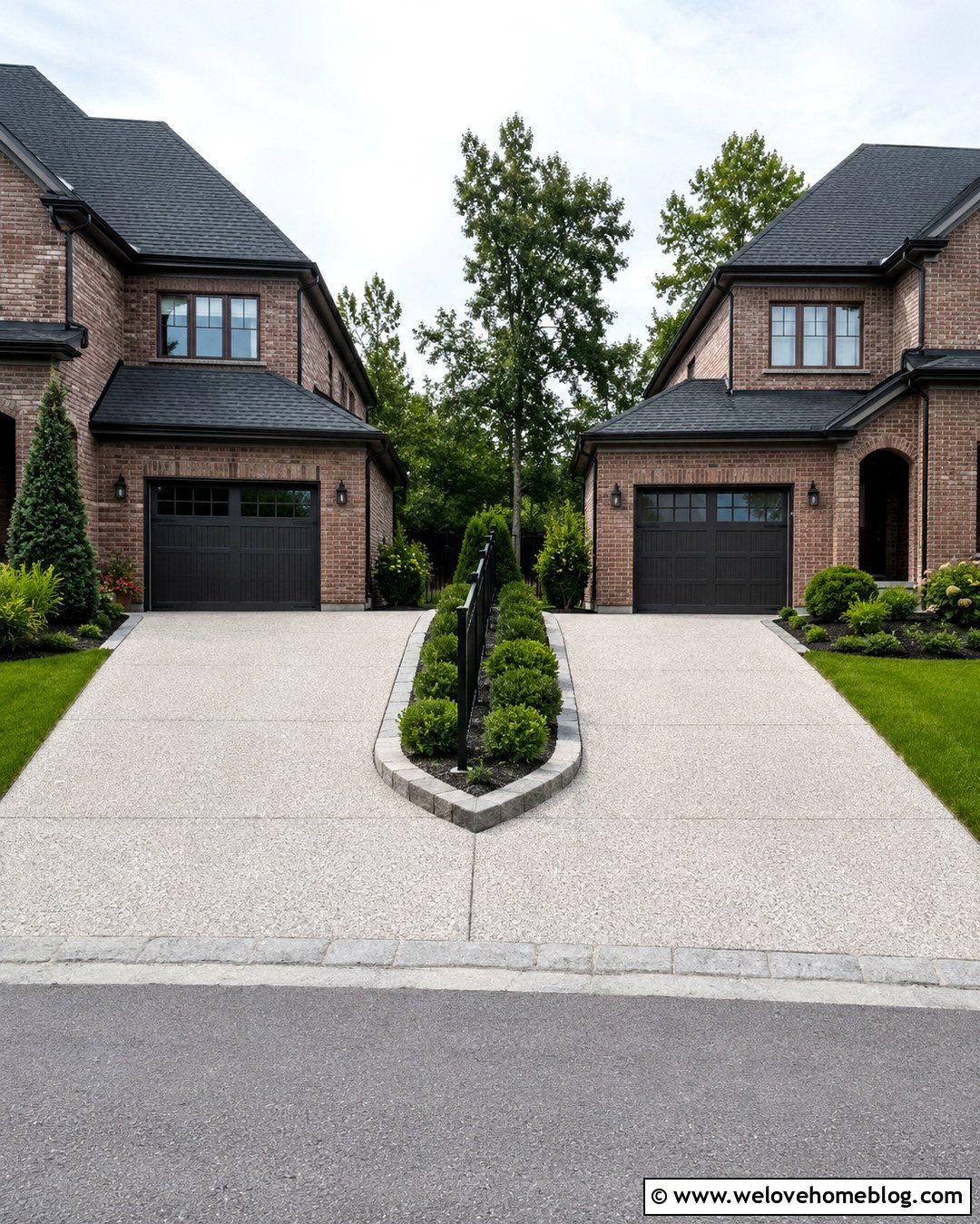
A slim black metal fence gives a shared driveway definition without making a narrow property line feel boxed in. Combine vertical aluminum pickets with a light exposed-aggregate concrete driveway that splits toward two detached garages. The open design maintains sightlines across the pavement and allows sunlight to reach nearby lawns and planting beds. Use flat-top panels for a contemporary result or subtle spear-top pickets for a more traditional home. A low stone curb beneath the fence can stop mulch from washing onto the driveway while protecting the posts from lawn equipment. Repeat the black finish on porch lights, mailboxes, and garage hardware. This balanced design works well between brick homes because the dark fence provides crisp contrast without competing with the warm masonry.
4. Cedar Shared Driveway Fence With Trellis Top
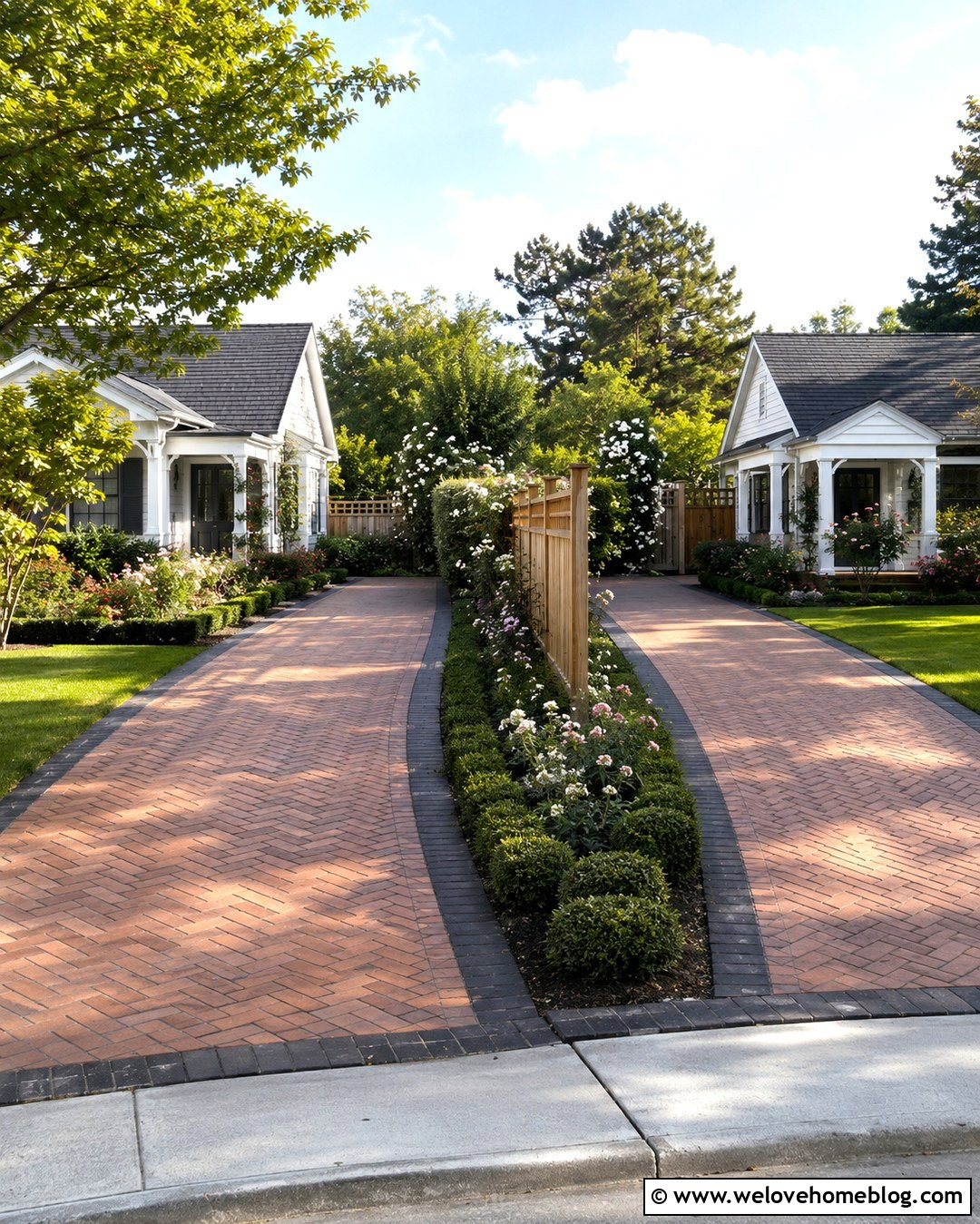
Do you need privacy without creating a long, heavy wall? A cedar fence with a trellis top offers solid screening at eye level while allowing light through the upper section. Place it between two straight clay brick paver driveways laid in herringbone patterns. Dark brick edging can separate the wheel areas from a narrow planting strip beneath the fence. Train star jasmine, clematis, or another locally suitable vine across selected trellis panels rather than covering the entire structure. This prevents the divider from becoming difficult to maintain. The cedar can weather naturally or receive a semitransparent stain that matches the homes. Paired with cottage-style landscaping and flowering shrubs, the design feels intentional, neighborly, and softer than a fully enclosed privacy fence.
5. Composite Shared Driveway Slat Fence
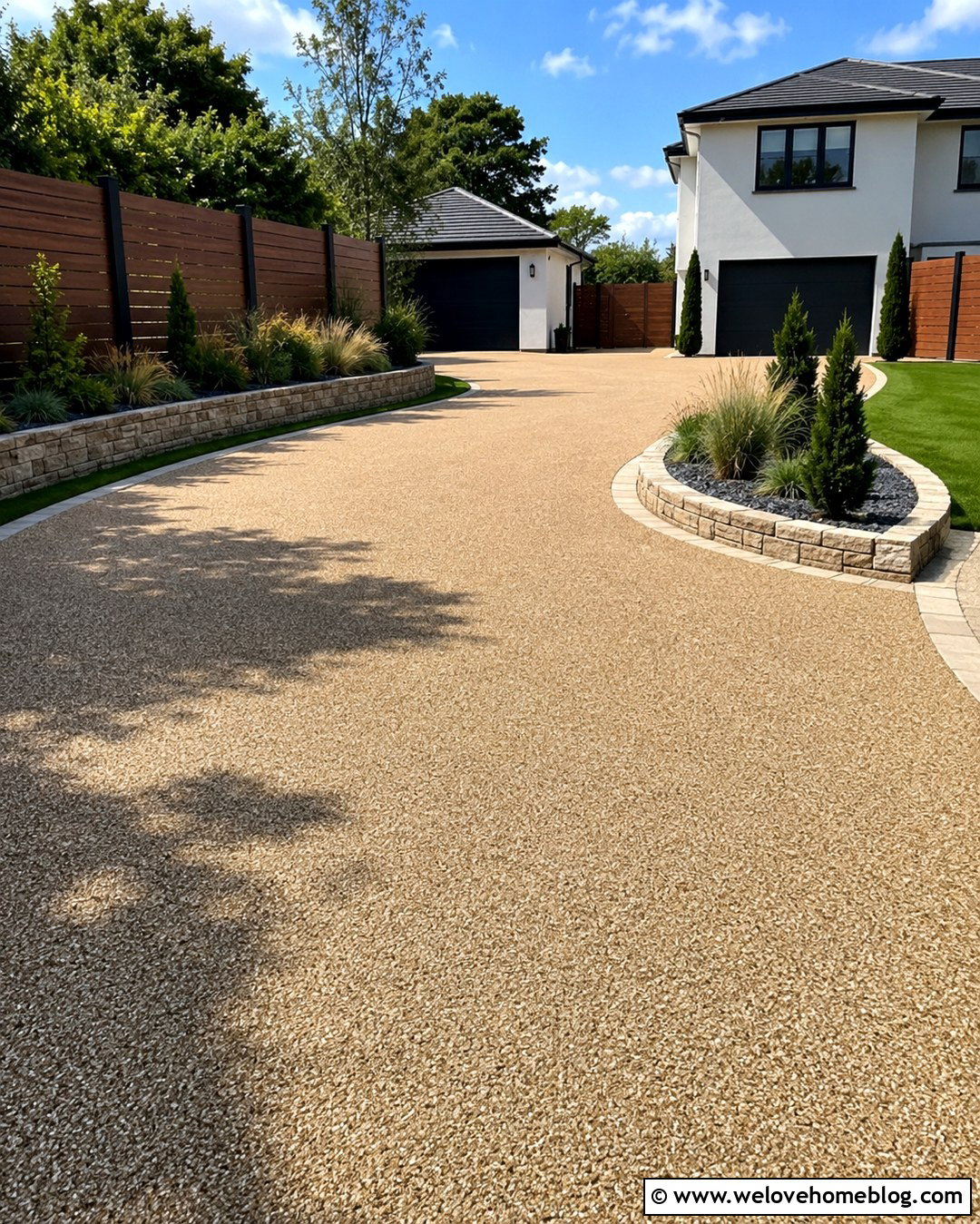
Composite slats are useful when you want the warmth of wood with a more uniform, contemporary finish. Run charcoal or walnut-colored horizontal boards beside a curved resin-bound gravel driveway in a warm beige tone. Narrow gaps between the slats provide partial privacy and keep the divider from appearing completely solid. Powder-coated steel posts add strength and create a sharp contrast with the boards. Build a raised stone planting bed on the yard side rather than placing soil directly against the fence. Sculptural grasses and compact evergreen shrubs will echo the clean lines without spreading into the driving area. This complete shared driveway fence design complements modern homes with mixed siding, large windows, and dark garage doors. Integrated post caps can provide a polished finishing detail.
6. Short Picket Shared Driveway Fence
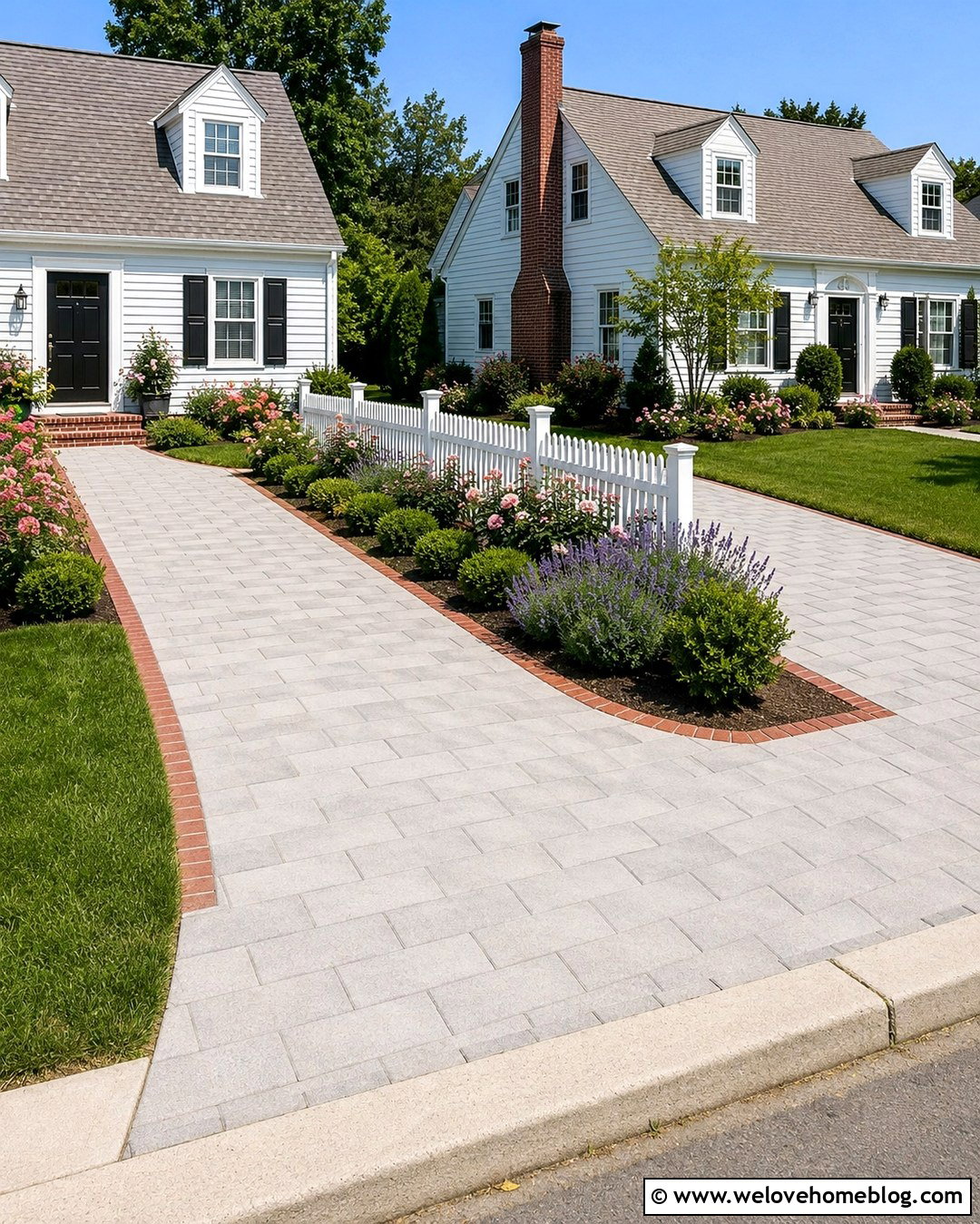
A short picket fence can separate two driveways while preserving the welcoming character of a traditional neighborhood. Pair a white-painted wood or low-maintenance vinyl fence with pale gray concrete pavers arranged in a running bond. Keep the pickets low near the sidewalk and continue them toward the houses beside a narrow flower border. Rounded picket tops feel casual, while square tops create a cleaner look. Use a brick mowing strip beneath the fence to reduce trimming and prevent grass from growing around individual posts. Roses, catmint, and compact boxwood can frame the divider without hiding it. This design is especially effective between small Craftsman or Cape Cod houses where a tall privacy fence could overpower the front yards and make the shared approach feel unnecessarily confined.
7. Board-On-Board Shared Driveway Fence
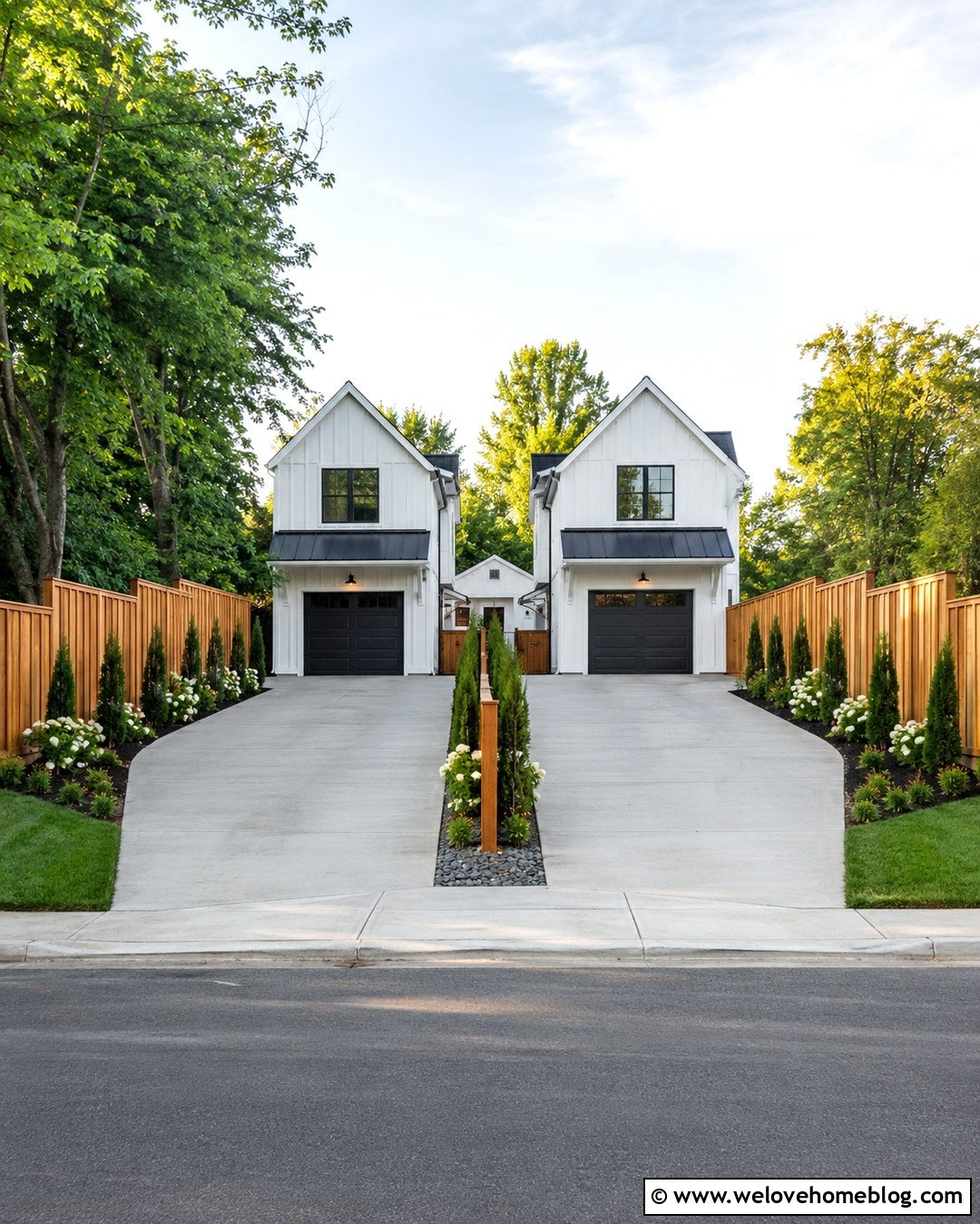
For stronger visual screening, a board-on-board fence creates an attractive finished surface with overlapping vertical boards. Use it along a straight broom-finished concrete driveway serving two neighboring farmhouse-style homes. Stain both sides in a medium brown that coordinates with wood porch details and garage doors. Steel posts concealed behind the boards can improve structural support without changing the traditional appearance. Start with a lower section near the curb, then step the panels upward as the fence approaches private side-yard spaces. A slim bed of upright evergreens and white flowering perennials can soften the yard-facing side. Leave enough pavement around the divider for turning, door clearance, drainage, and snow removal. The result is private and substantial without looking improvised or one-sided.
8. Mixed Wood And Metal Shared Driveway Fence
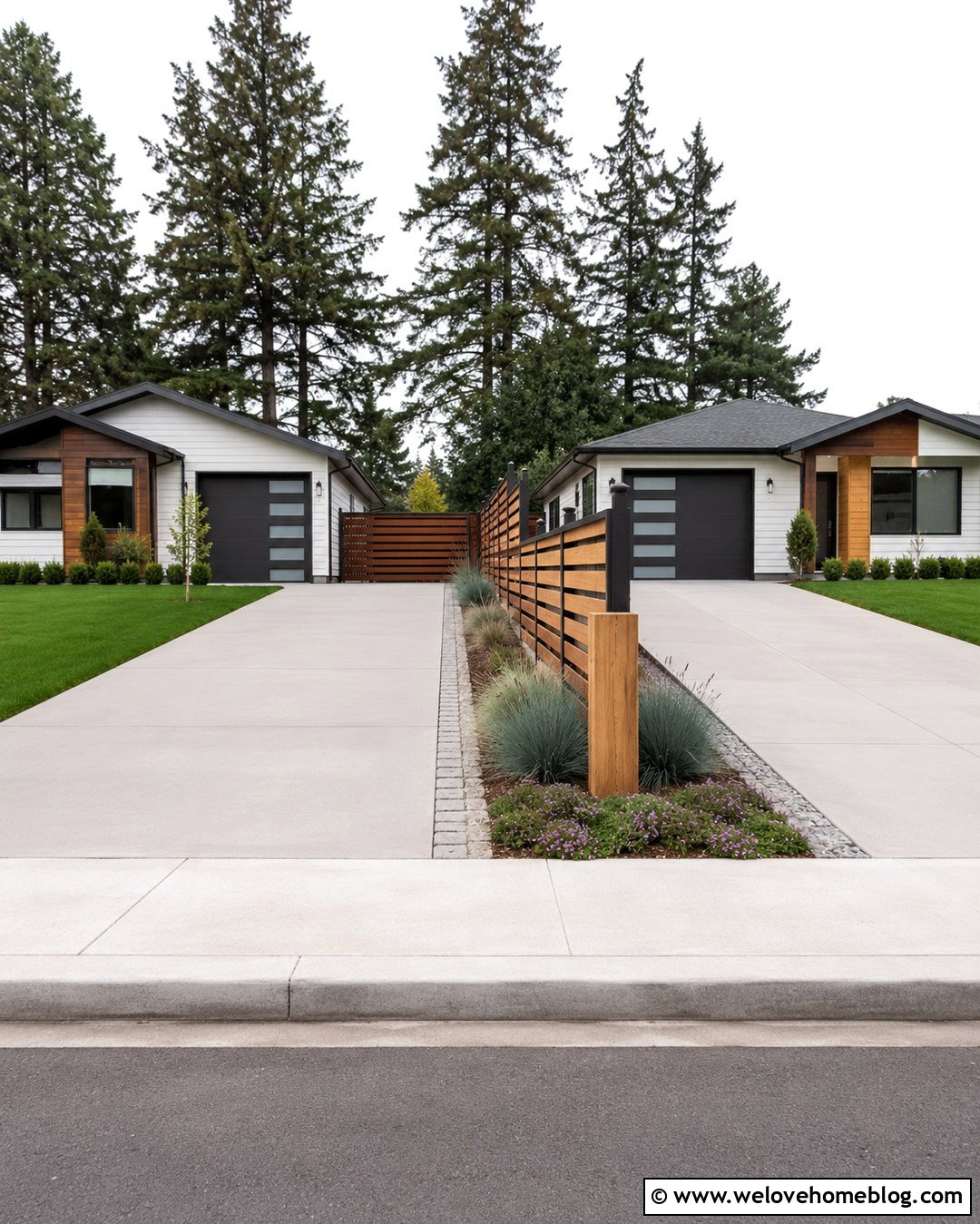
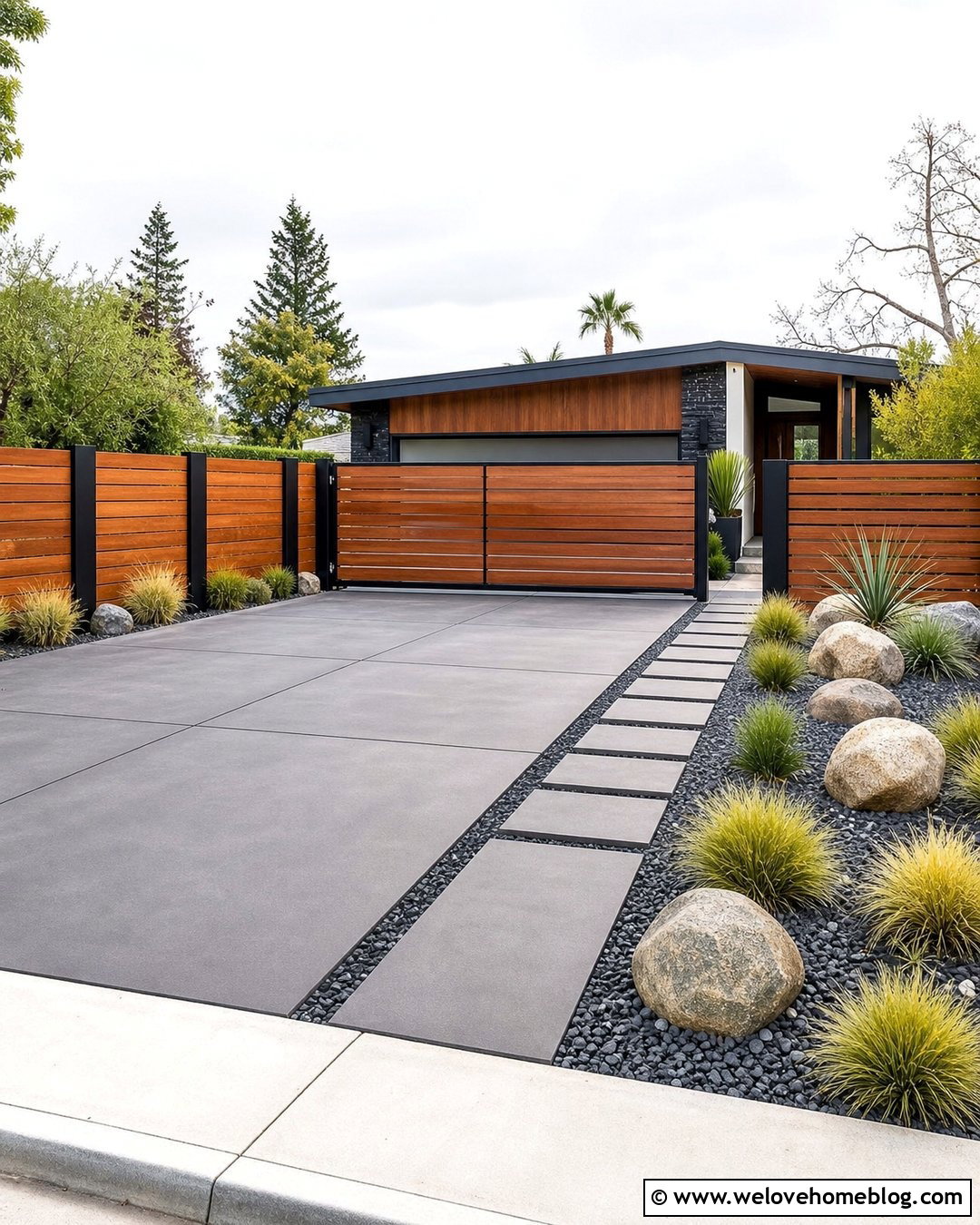
Combining wood boards with a dark metal frame creates a divider that feels warm, strong, and architecturally detailed. Position horizontal cedar inserts between black steel posts along two side-by-side gray concrete driveways. Separate the paving with a narrow cobblestone ribbon so the property division remains visible even where the fence ends near the street. Keep the panels partially open at the entrance and increase their height closer to the houses. This gradual transition supports visibility while providing more privacy where it matters. Repeat the cedar in address posts or front porch ceilings to connect the whole exterior. Low mounds of blue fescue and creeping thyme can fill the planting edge. The finished driveway look suits updated ranch houses, modern farmhouses, and urban infill homes.
9. Shared Driveway Fence With Evergreen Hedge
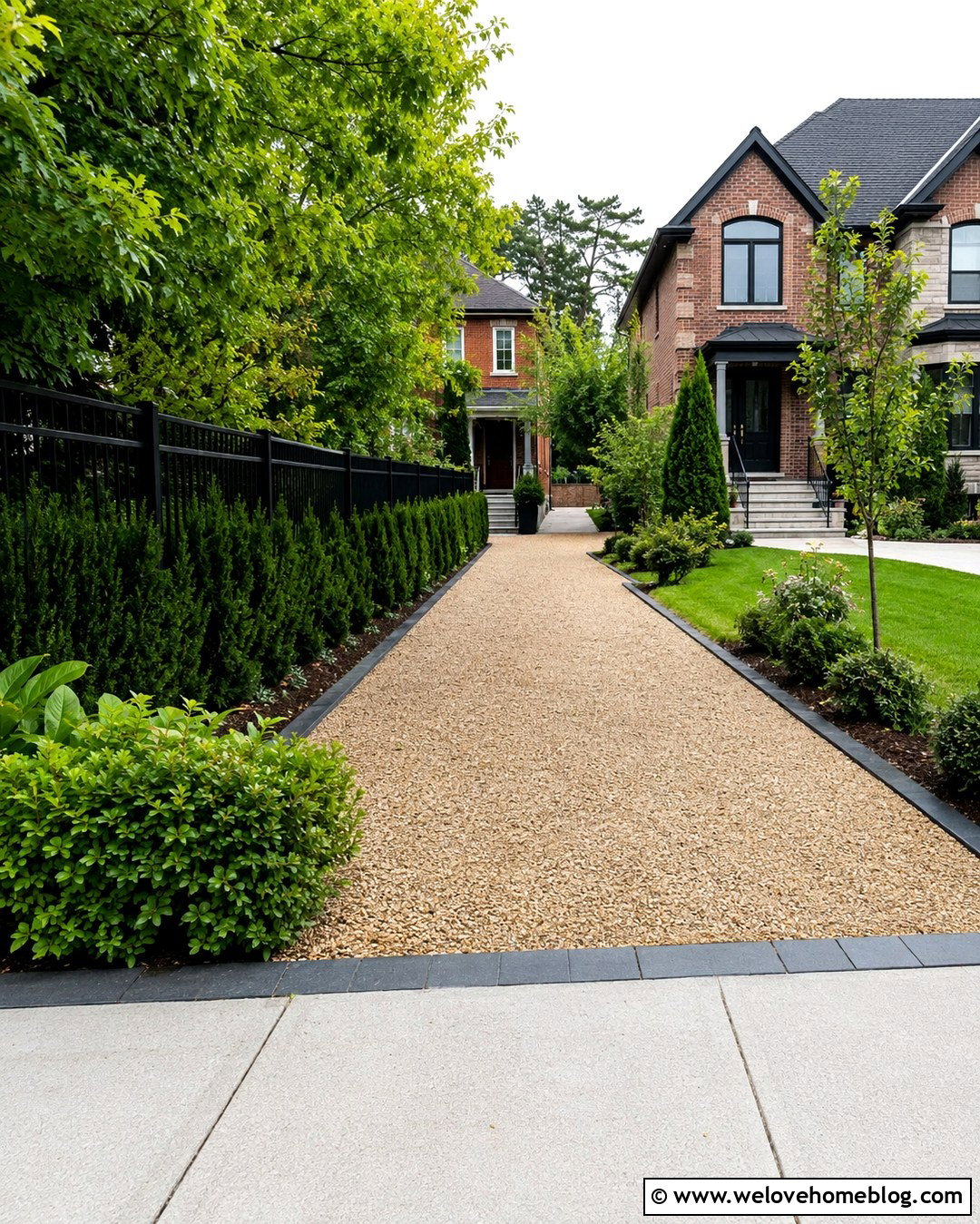
A fence and hedge combination can deliver immediate structure while creating a softer long-term screen. Install a simple black aluminum fence beside a straight tan gravel driveway, then plant a row of compact evergreen shrubs on the lawn side. Choose varieties suited to the local climate and available planting width, accounting for their mature size rather than nursery dimensions. A steel or stone edge should contain the gravel and keep it away from the root zone. The open metal fence maintains a clear boundary even if individual plants need replacing. Keep shrubs lower near the street and allow taller screening closer to windows and patios. This layered divider works well with country homes and traditional brick houses because it balances formal lines, greenery, and the relaxed texture of gravel.

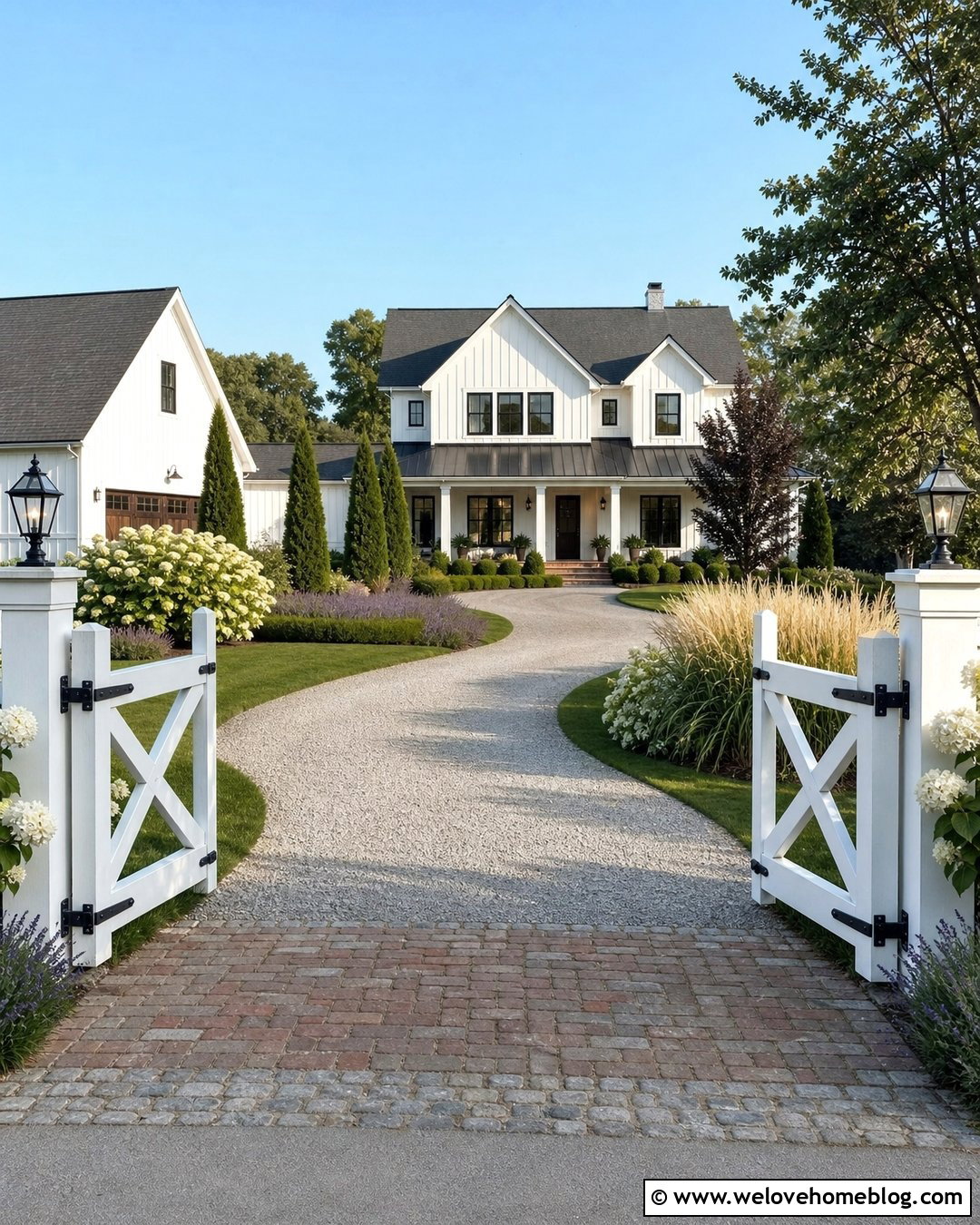
10. Shared Driveway Fence With Brick Pillars
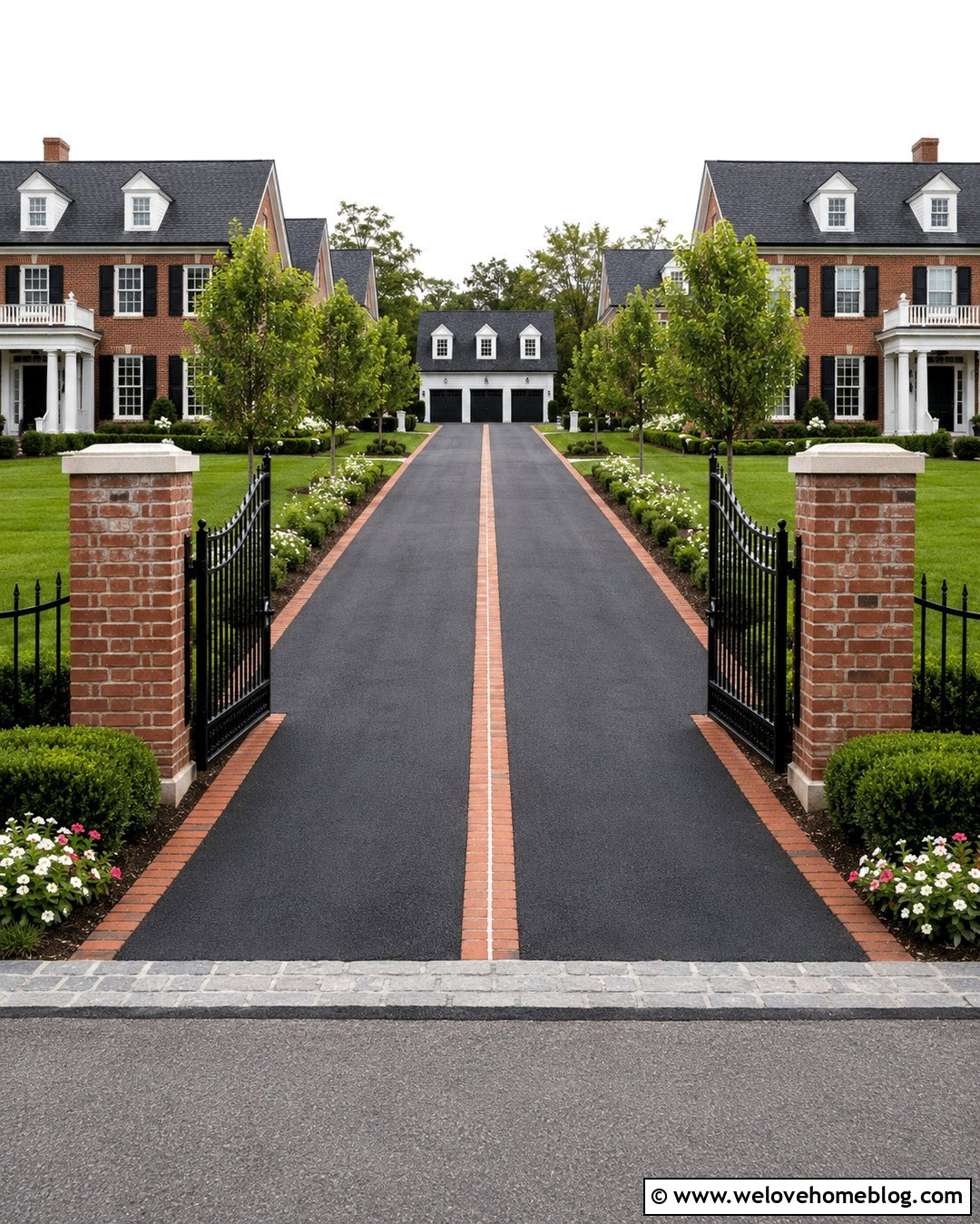
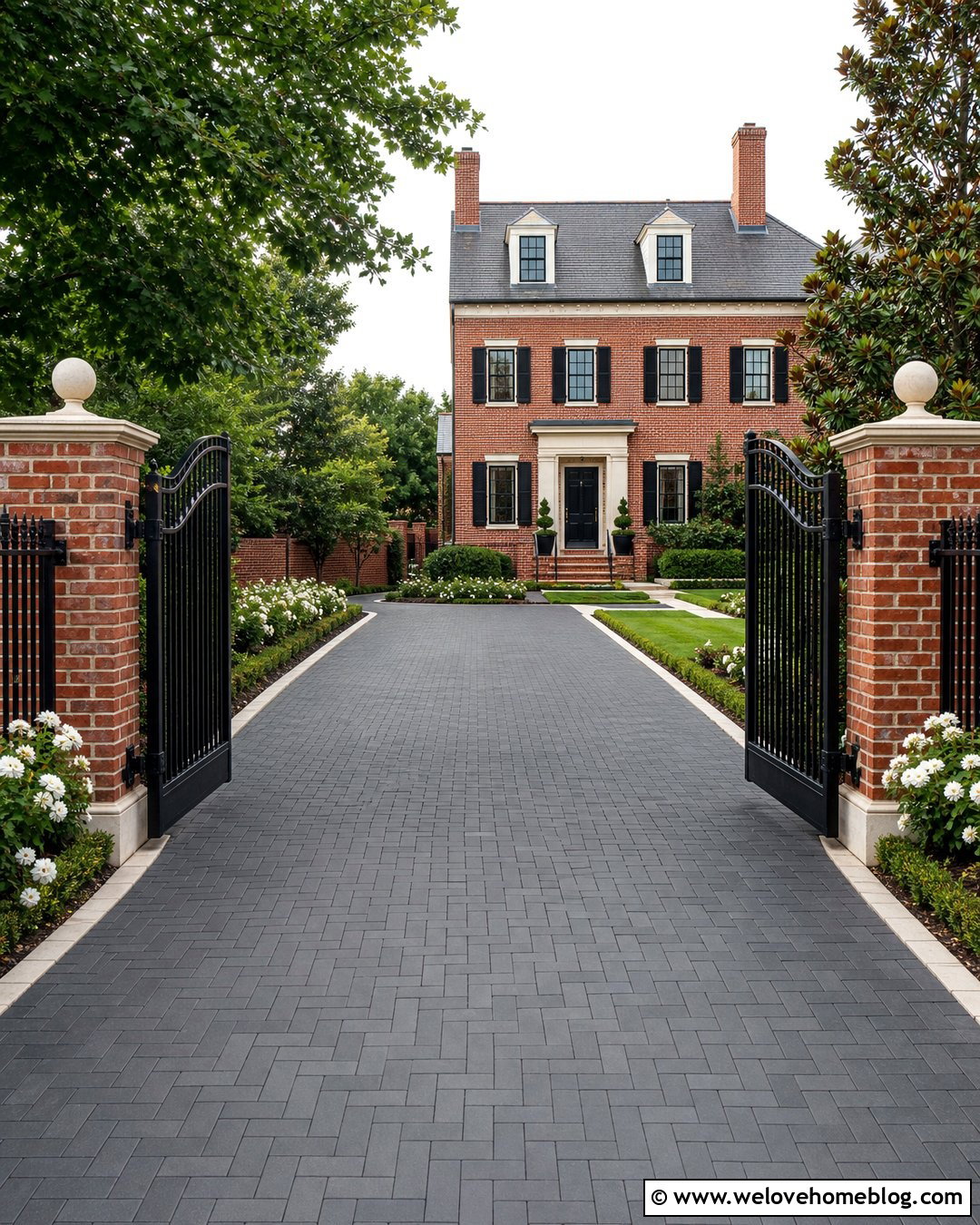
Brick pillars give a shared driveway divider a permanent, architectural presence. Space low pillars between black metal fence panels along an asphalt driveway with a centered red-brick ribbon. Match the pillar brick as closely as possible to the house facade, chimney, or front steps. Limestone or precast concrete caps protect the tops and create a finished appearance. Near the road, use only low pillars and open fencing so drivers can see pedestrians and approaching vehicles. Taller sections can begin farther into the property. Narrow beds of clipped boxwood and seasonal flowers will soften the masonry without hiding it. This design works especially well between Georgian, Colonial, and traditional suburban homes. The repeated brick details help the divider look like part of the original property plan.
11. Shared Driveway Fence With Stone Columns
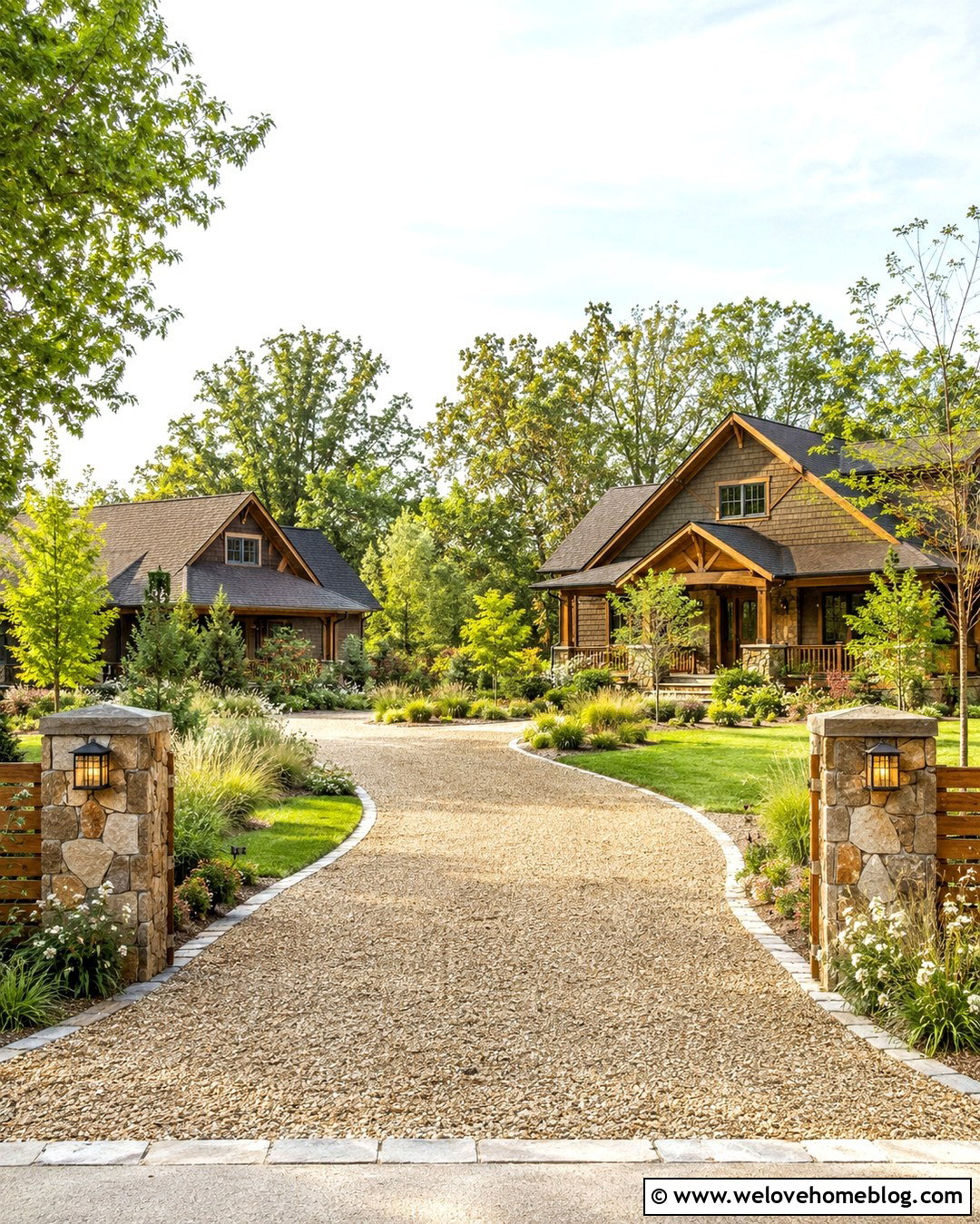
Natural stone columns can transform a simple divider into a substantial landscape feature. Pair irregular fieldstone columns with open cedar fencing between two curved pea gravel driveways. Use matching stone edging to contain the gravel and visually connect the columns with the driveway surface. The fence panels should remain relatively low and open near the entrance, then become more private beside the houses. Warm post lighting can be included, but the fixtures should point downward to reduce glare across neighboring windows. Plant native grasses, flowering shrubs, and a small ornamental tree on the wider lawn side. This complete look is ideal for Craftsman, lodge-inspired, and country properties. The stone adds weight, while wood and planting prevent the shared boundary from feeling overly formal.
12. Narrow Shared Driveway Fence With Planters
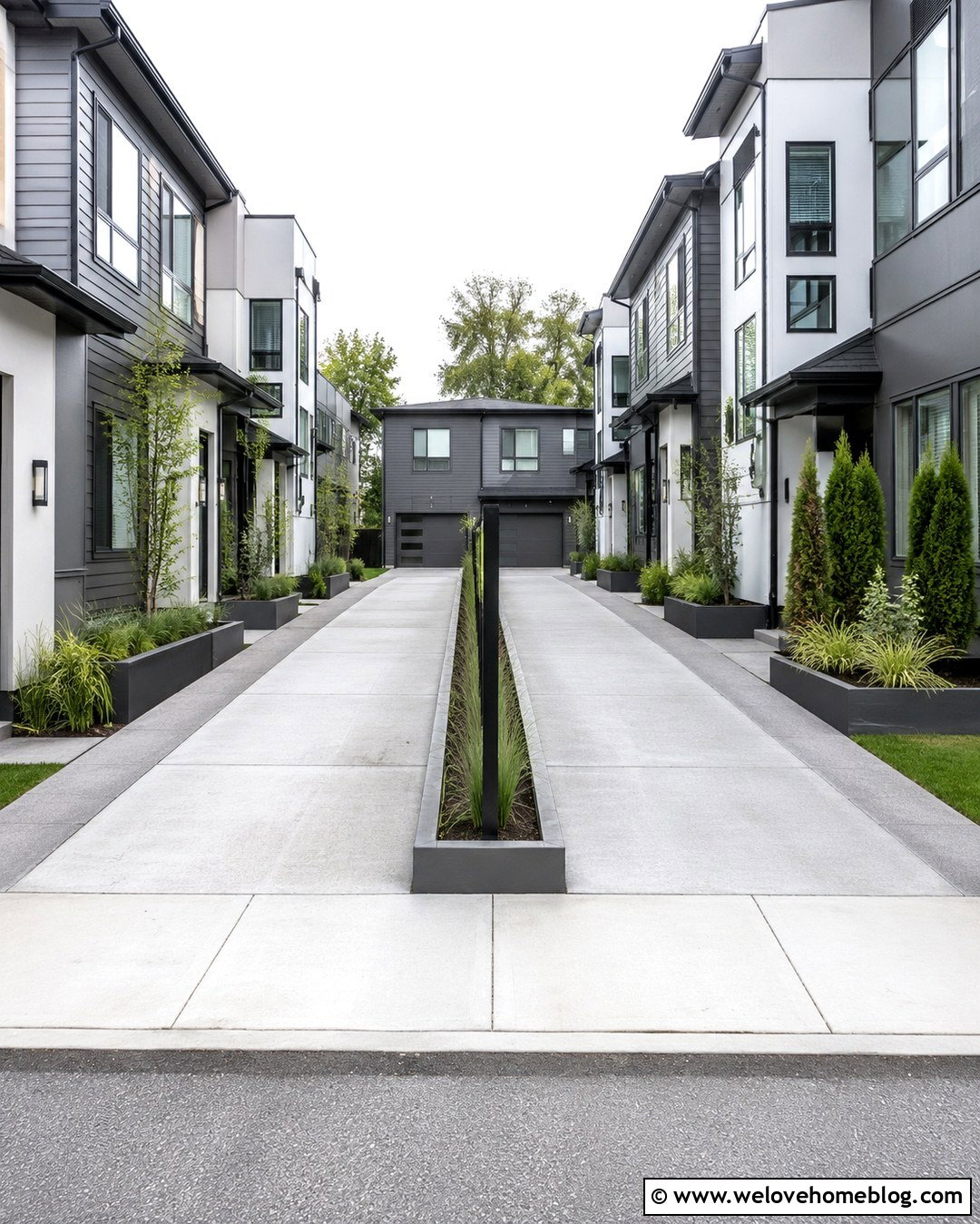
Very tight driveways require a divider that provides definition without consuming valuable vehicle space. Use a slender black steel fence mounted within a raised concrete curb between two straight concrete parking lanes. Instead of a continuous planting bed, place narrow rectangular planters at selected points where the driveway widens. Fill them with upright ornamental grasses or compact shrubs that will not spill across mirrors and doors. Match the planters to the home’s charcoal trim for a coordinated urban look. Open vertical bars keep the boundary visible while allowing light into both properties. This design is practical for townhouses, duplexes, and narrow city lots where thick hedges would become difficult to control. Clearly measured setbacks and protected posts are essential for preventing accidental vehicle contact.
13. Slatted Shared Driveway Fence With Lighting
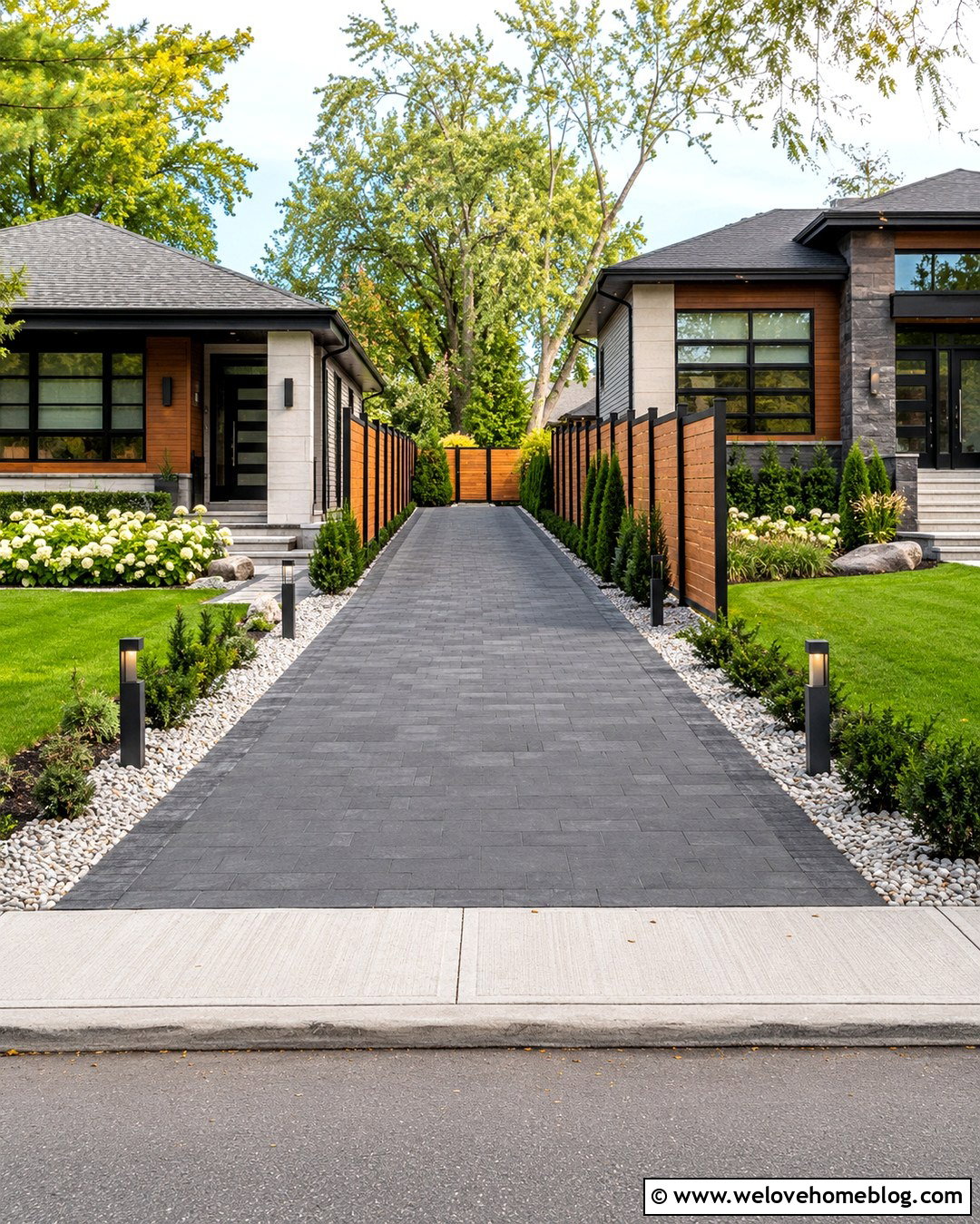
Integrated lighting makes a shared driveway divider easier to understand after sunset while improving the overall entrance. Install warm-toned wood slats within a black frame beside a charcoal concrete paver driveway. Recess small, shielded lights into selected posts rather than illuminating every panel. The fixtures should cast light downward across the pavement without shining into either home. A thin strip of pale decorative gravel beneath the fence creates drainage and reflects light around the base. Continue the same pavers into separate walkways leading toward each front door. Simple beds of evergreen shrubs and white flowers will keep the setting crisp during the day. This complete divider works beautifully with modern homes, especially when the fence stain coordinates with front doors, soffits, or garage accents.
14. Rustic Split Rail Shared Driveway Fence
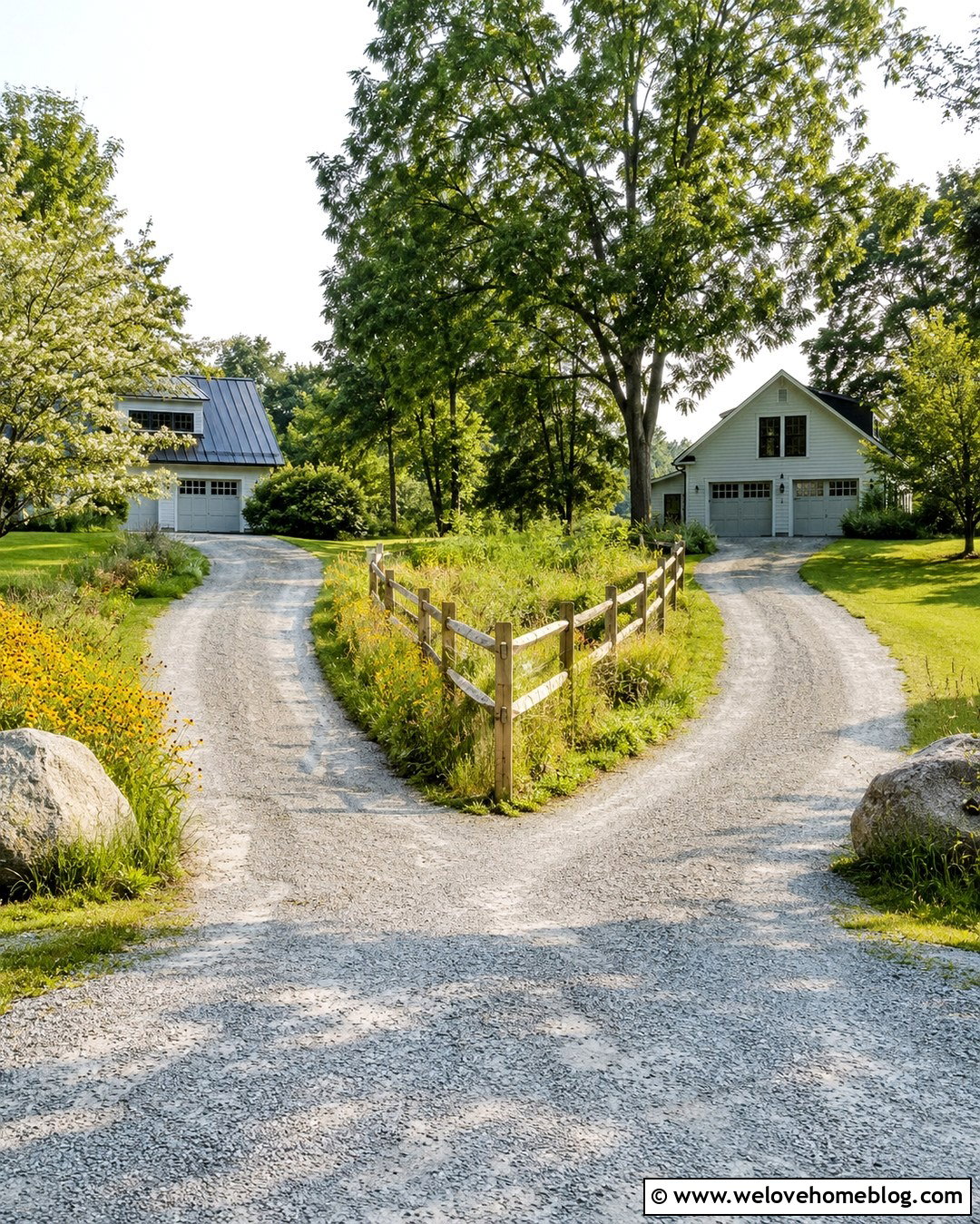
A split rail fence defines a shared country driveway while keeping the landscape broad and open. Run weathered cedar rails beside a gently curved crushed-limestone driveway that branches toward two farmhouse garages. Add dark steel wire mesh to the yard side only if pets need containment, keeping the mesh neat and visually secondary. Large fieldstones can mark the entrance and protect the first posts from turning vehicles. Use native grasses, black-eyed Susans, and small flowering trees to frame the fence without creating a formal hedge. The loose texture of limestone works naturally with rough timber and meadow-style planting. Because the fence is visually open, it separates the two properties without interrupting long views across lawns, fields, or mature shade trees.

15. Modern Concrete And Wood Shared Driveway Fence
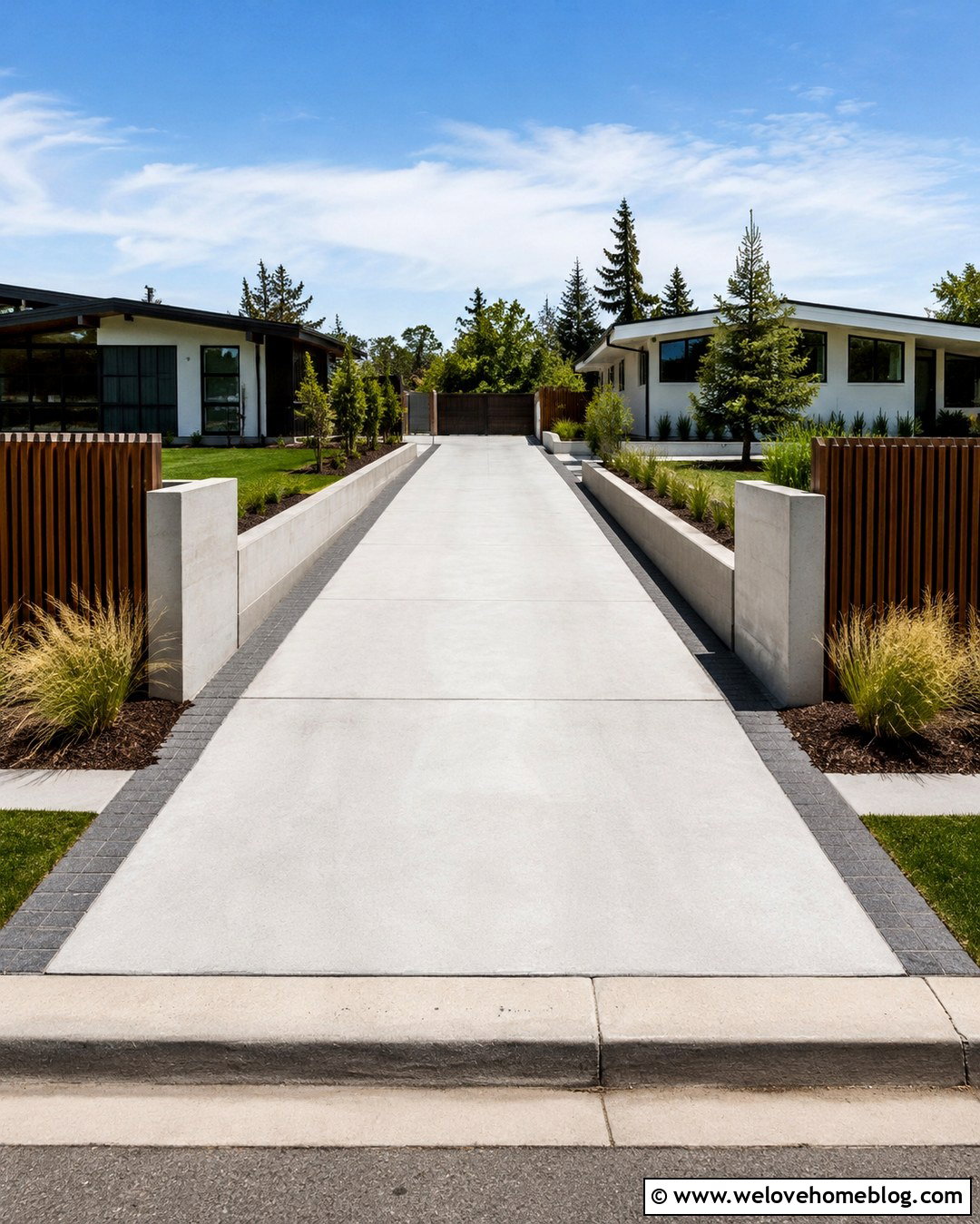
Concrete and wood create a clean divider with enough texture to avoid a cold, commercial appearance. Build low smooth-concrete sections between vertical cedar slat panels along a straight light gray poured concrete driveway. A darker saw-cut line or paver ribbon can trace the division through areas where a full fence would interfere with turning. Keep concrete walls low near the street and place taller wood screens closer to front windows or side patios. Narrow beds of architectural plants, such as feather reed grass and compact evergreens, soften the hard surfaces. This coordinated design suits a flat-roofed modern home or renovated midcentury ranch. Repeating the same concrete tone in walkways and entry steps makes the divider feel integrated rather than added after the driveway was completed.
16. Gabion Shared Driveway Divider Fence
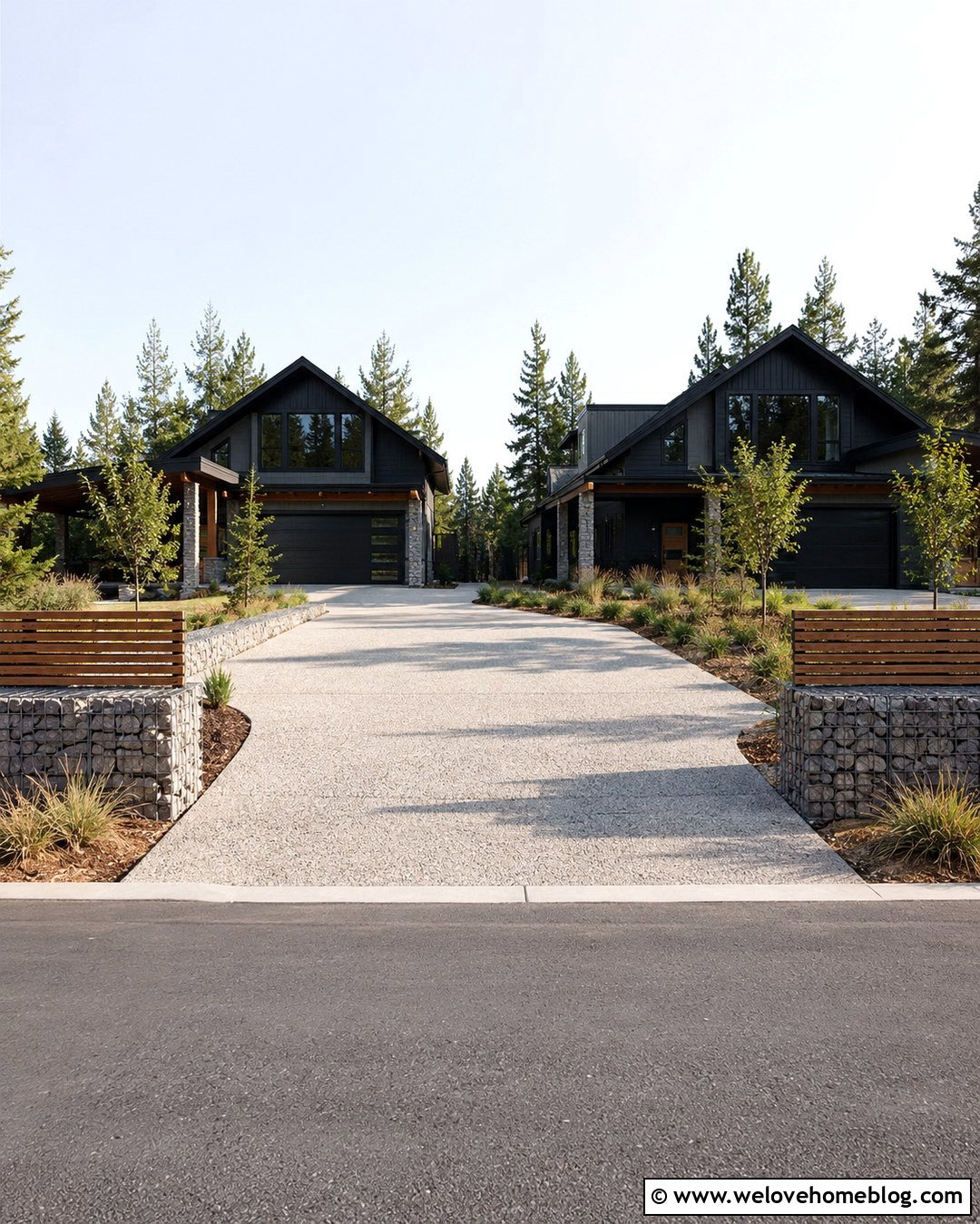
A gabion fence offers a textured divider that pairs naturally with contemporary landscaping. Use low wire baskets filled with clean, consistently sized gray stone beside a wide exposed-aggregate driveway. Add horizontal wood screens between selected gabion columns where extra privacy is needed. Keeping the stone walls low near the curb prevents the entrance from becoming visually heavy. A narrow strip of black metal edging can separate the divider from drought-tolerant beds filled with grasses, sedges, and groundcover. Choose stone colors that relate to the driveway aggregate and house facade. This shared driveway fence works particularly well with modern, desert-inspired, or mountain homes. Properly detailed baskets and restrained planting give the entire approach a structured appearance while maintaining enough openness for comfortable vehicle movement.
17. Lattice Shared Driveway Privacy Fence
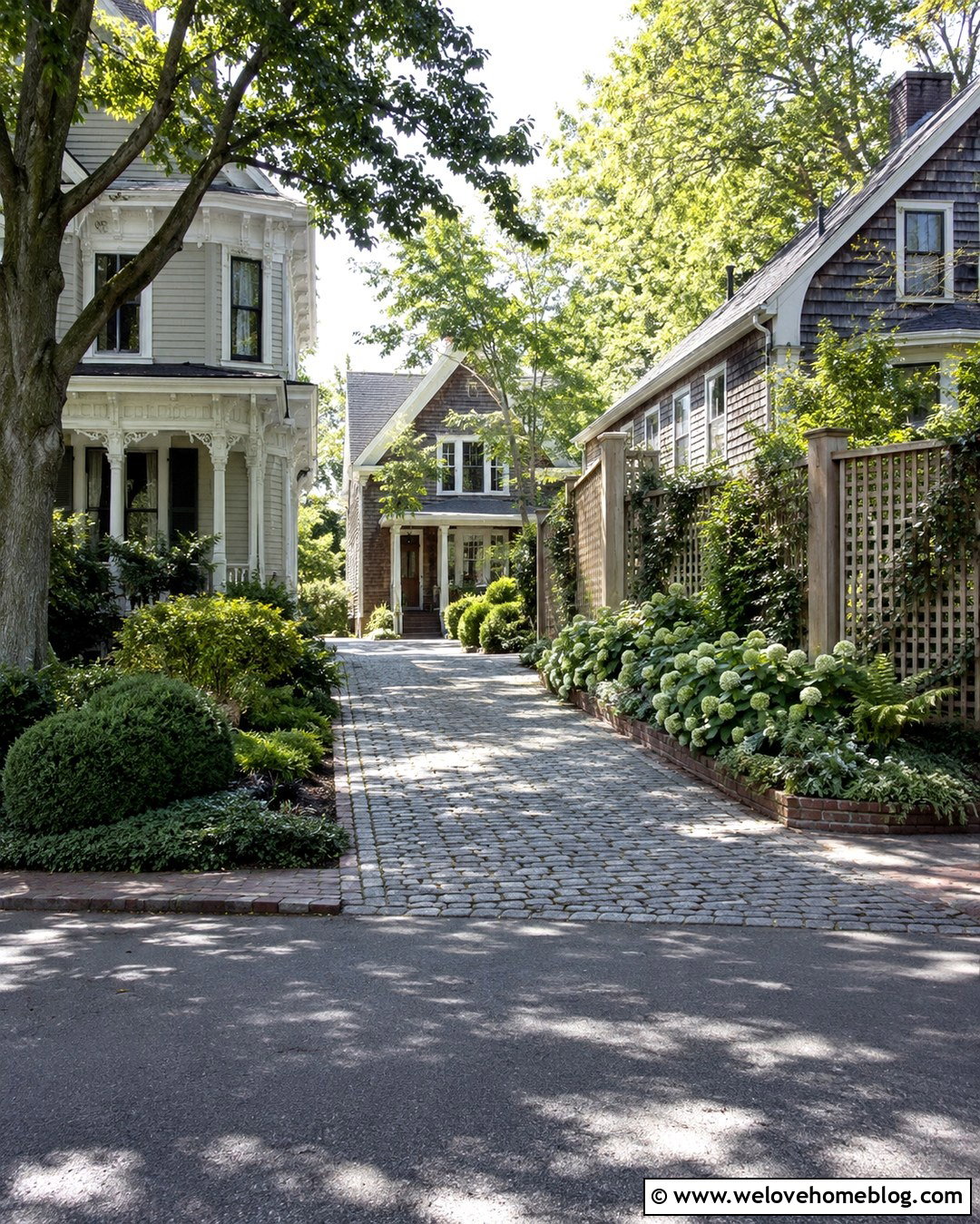
Lattice panels can screen an exposed shared driveway without blocking every view or breeze. Frame square wood lattice in solid cedar posts and place it beside a straight cobblestone driveway. A low brick curb beneath the panels protects the wood from soil and creates a clean transition between paving and planting. Use climbing plants sparingly, concentrating them near private windows instead of covering the whole fence. This keeps the structure visible and reduces the weight of mature vines. Finish the cedar in a muted brown or soft gray that complements the cobblestones and house siding. Hydrangeas, ferns, and shade-tolerant groundcovers can complete the border. The combination is especially attractive beside cottage, Victorian, and traditional homes with layered front-yard landscaping.
18. Corrugated Metal Shared Driveway Fence
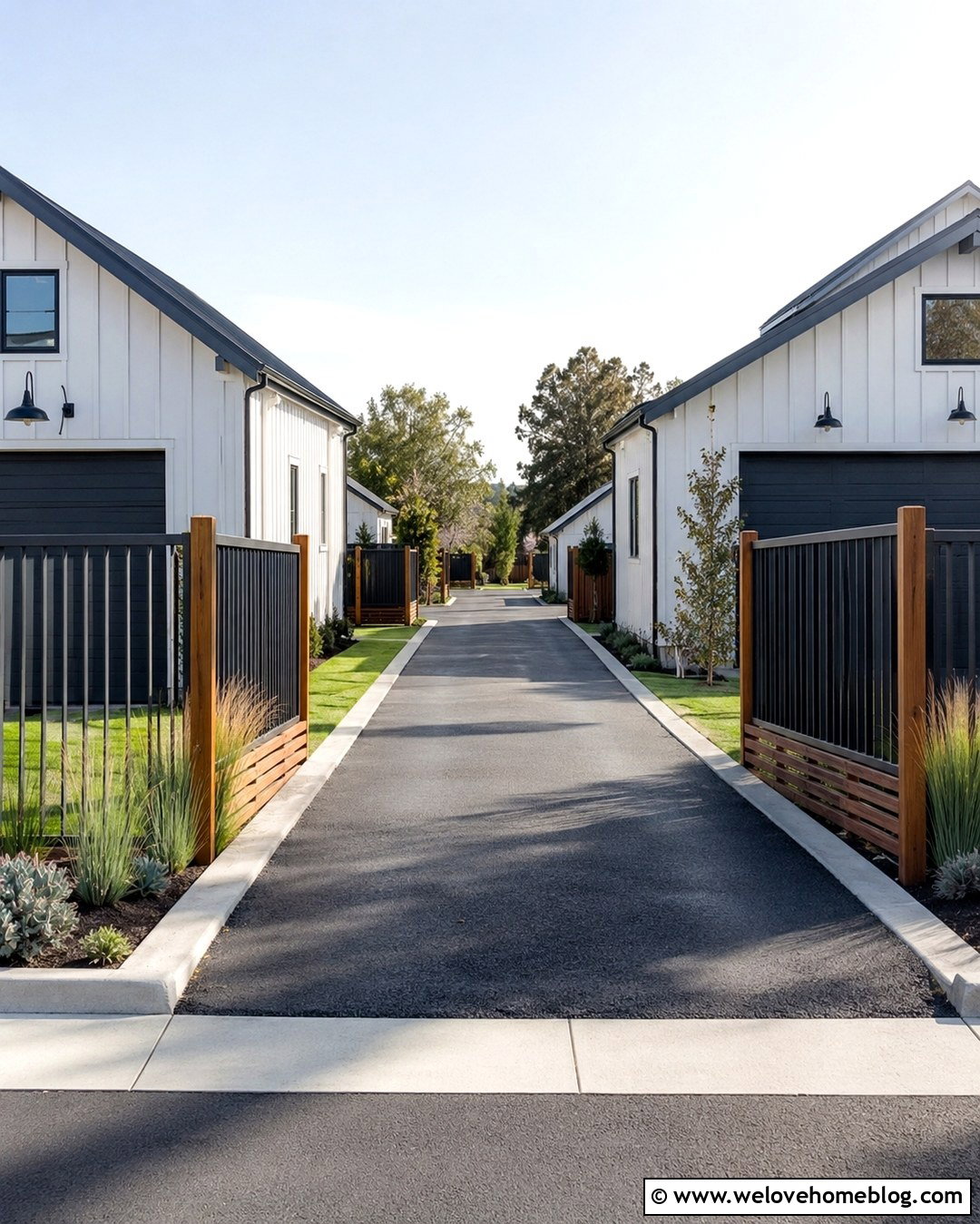
Corrugated metal can make a durable, space-efficient divider when it is balanced with warm wood and thoughtful planting. Install galvanized or charcoal corrugated panels inside cedar frames beside a black asphalt driveway with pale concrete edging. Position solid panels closer to the houses, where screening is useful, and switch to open wood slats near the street. The changing panel type keeps the entrance from feeling closed. A narrow bed of upright grasses and low succulents can soften the metal without requiring much width. Repeat the corrugated finish on a shed, garage detail, or planter for visual continuity. This shared driveway fence fits modern farmhouse and industrial-inspired homes, providing a practical boundary with more personality than a plain utility panel.
19. Shared Driveway Fence With Sliding Gates
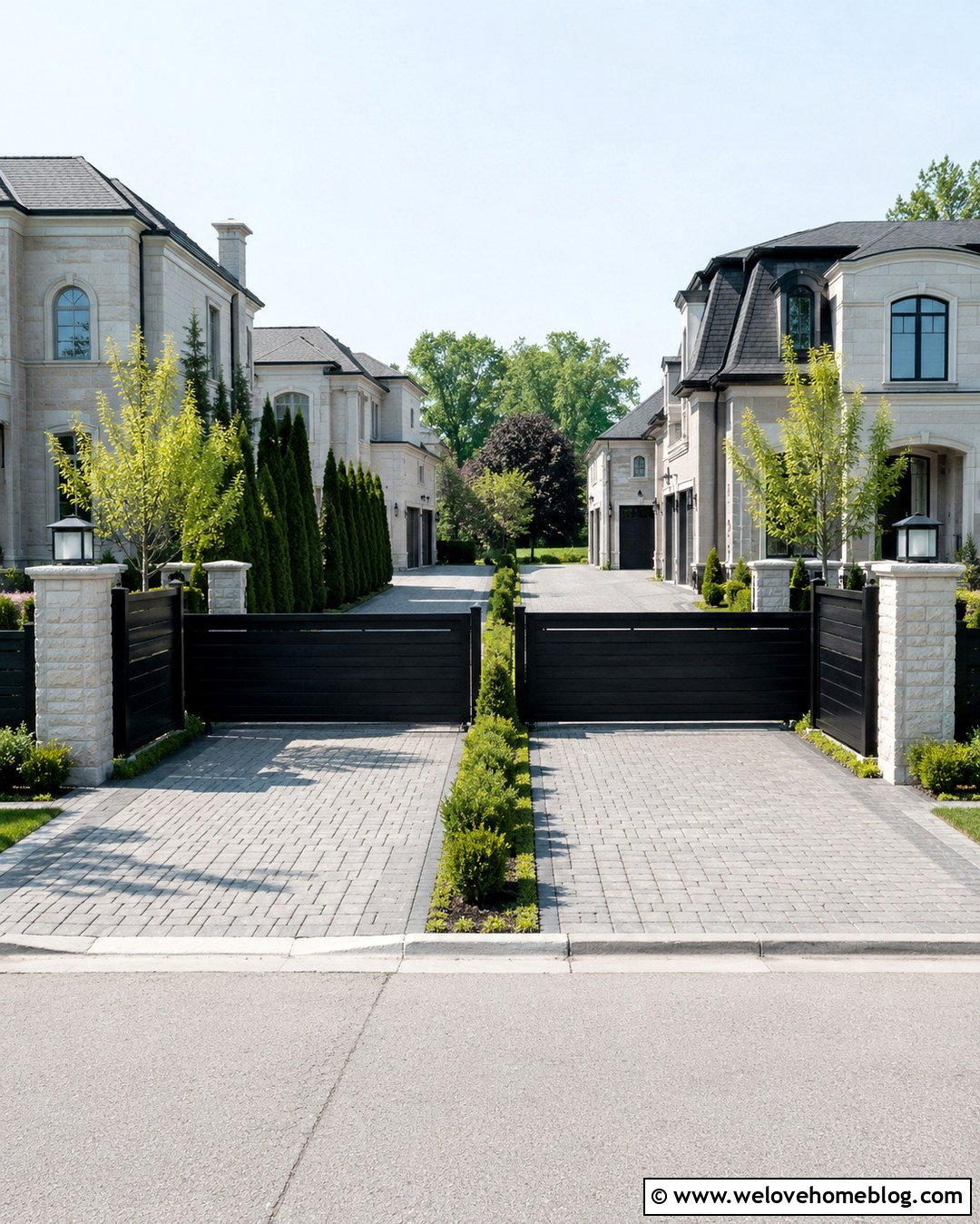
Separate sliding gates can provide security without requiring swinging clearance across a shared driveway. Use matching black aluminum gates connected to low open fencing between two straight concrete paver lanes. Each gate should move entirely within its own property area and avoid crossing the neighboring access route. Stone columns can anchor the design and support discreet house numbers, lighting, and gate equipment. Keep planting low around the entrance so controls, pedestrians, and approaching vehicles remain easy to see. Farther back, evergreen shrubs can add privacy between the garages and side yards. This formal arrangement works well for large suburban or estate-style homes. Careful professional planning is important because gate tracks, drainage, power, emergency access, and shared easement rights can affect the final configuration.


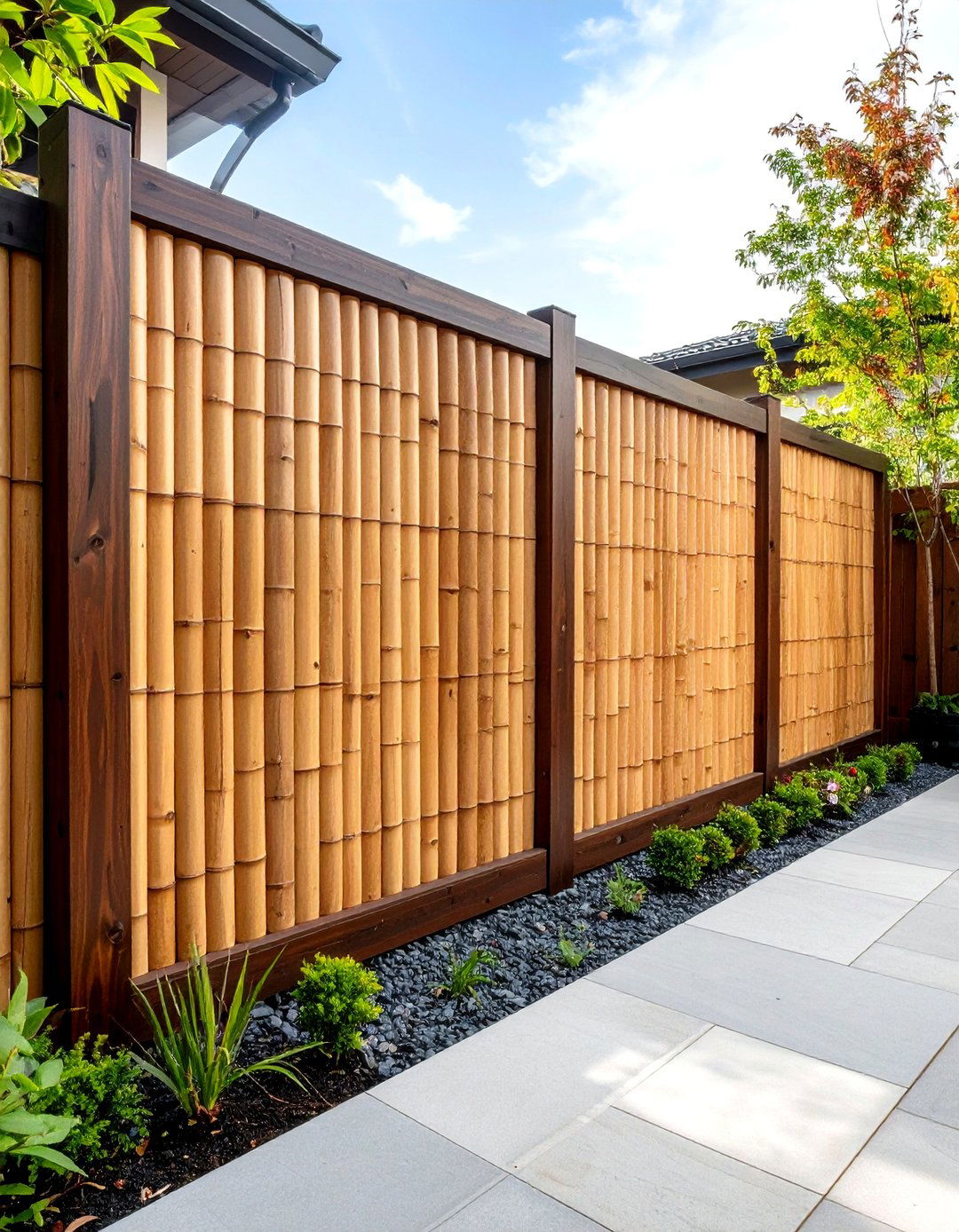
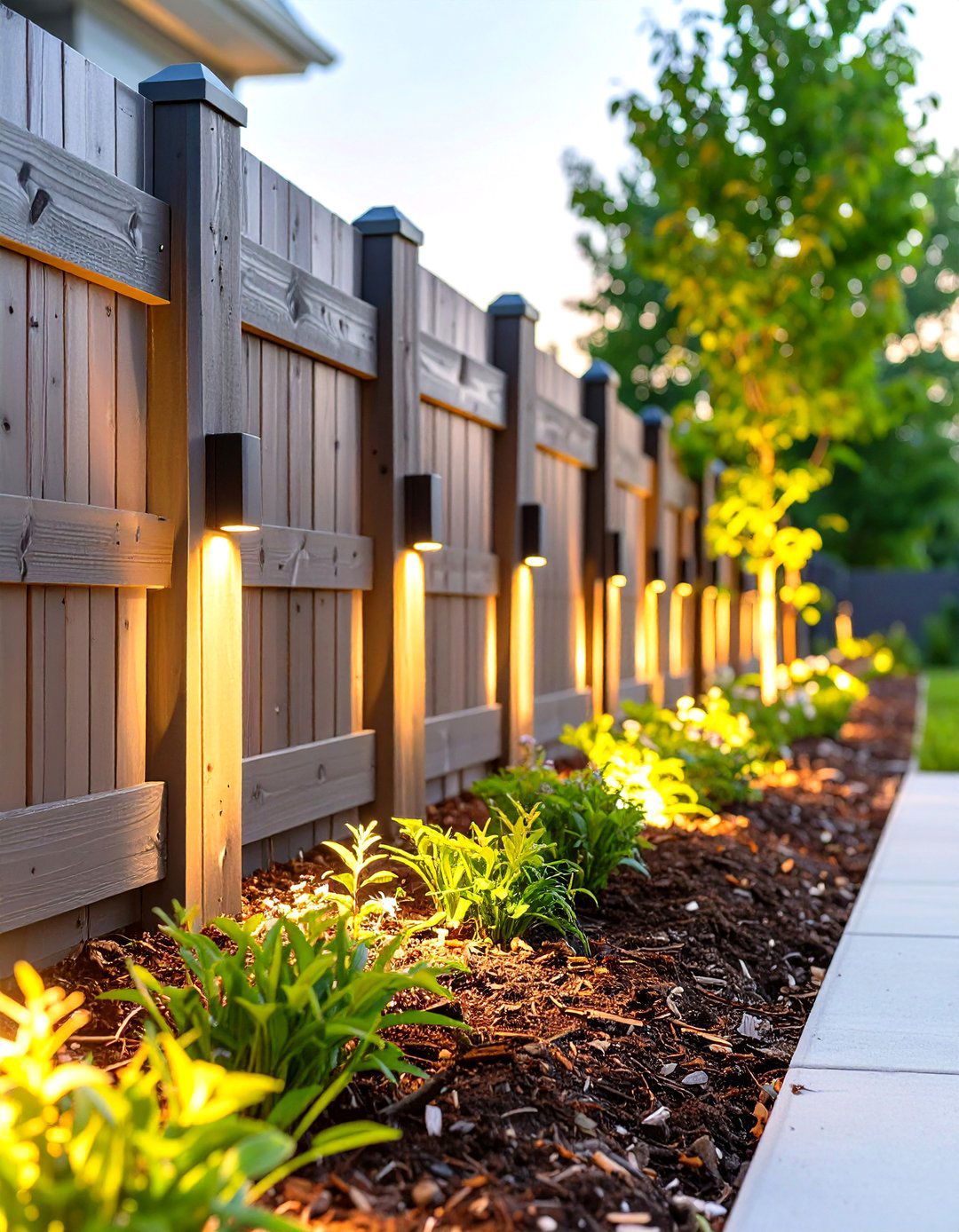
20. Stepped Shared Driveway Divider Fence
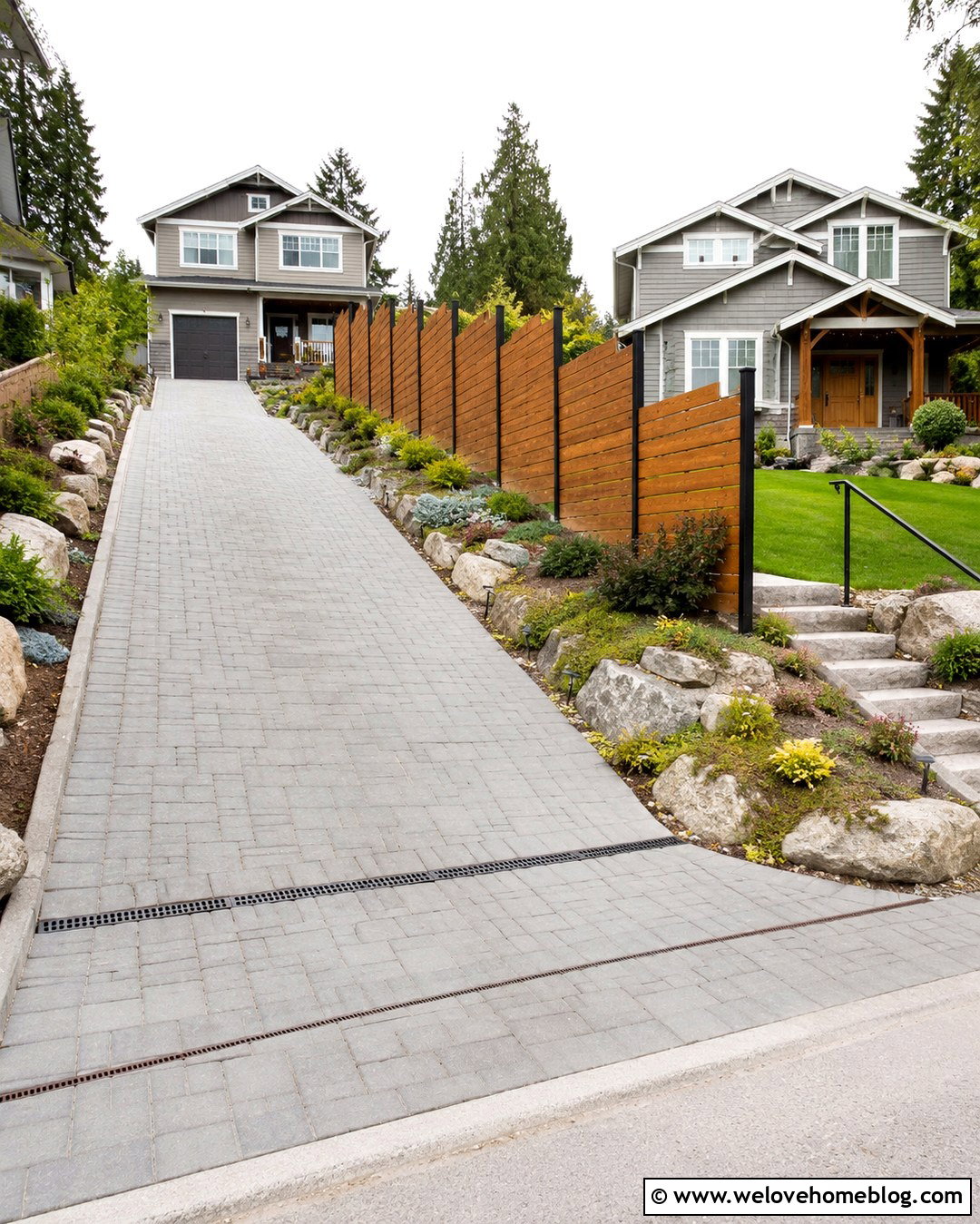
A stepped fence is a practical solution when a shared driveway slopes toward the houses. Follow the grade with individual cedar panels that rise in even increments beside a sloped gray interlocking concrete paver driveway. Dark metal posts can define each step and provide a consistent vertical rhythm. Use low panels near the bottom of the drive, then gradually increase the height where privacy becomes more important. A terraced stone border on the yard side will hold soil securely and create pockets for compact shrubs and spreading groundcovers. Keep drainage channels open so runoff does not collect against the fence or cross onto the neighboring lane. This complete design suits hillside ranch homes and Craftsman houses, turning a difficult elevation change into a neat, intentional property boundary.
Conclusion:
The most successful shared driveway divider feels like part of the entire property rather than a barrier placed between neighbors. Match the fence material to the driveway, home architecture, and surrounding landscape. Keep entrances open enough for safe visibility, and reserve taller screening for areas closer to windows, patios, and garages. Low metal panels suit narrow lots, while wood, composite, masonry, or planted combinations provide greater privacy. Before construction, confirm boundaries, access rights, utilities, drainage, and local requirements. It is also wise to discuss appearance and future maintenance with the adjoining owner. With careful planning, these **20 Shared Driveway Divider Fence Ideas** can provide clearer separation, better privacy, and attractive curb appeal for both properties.

Related posts:
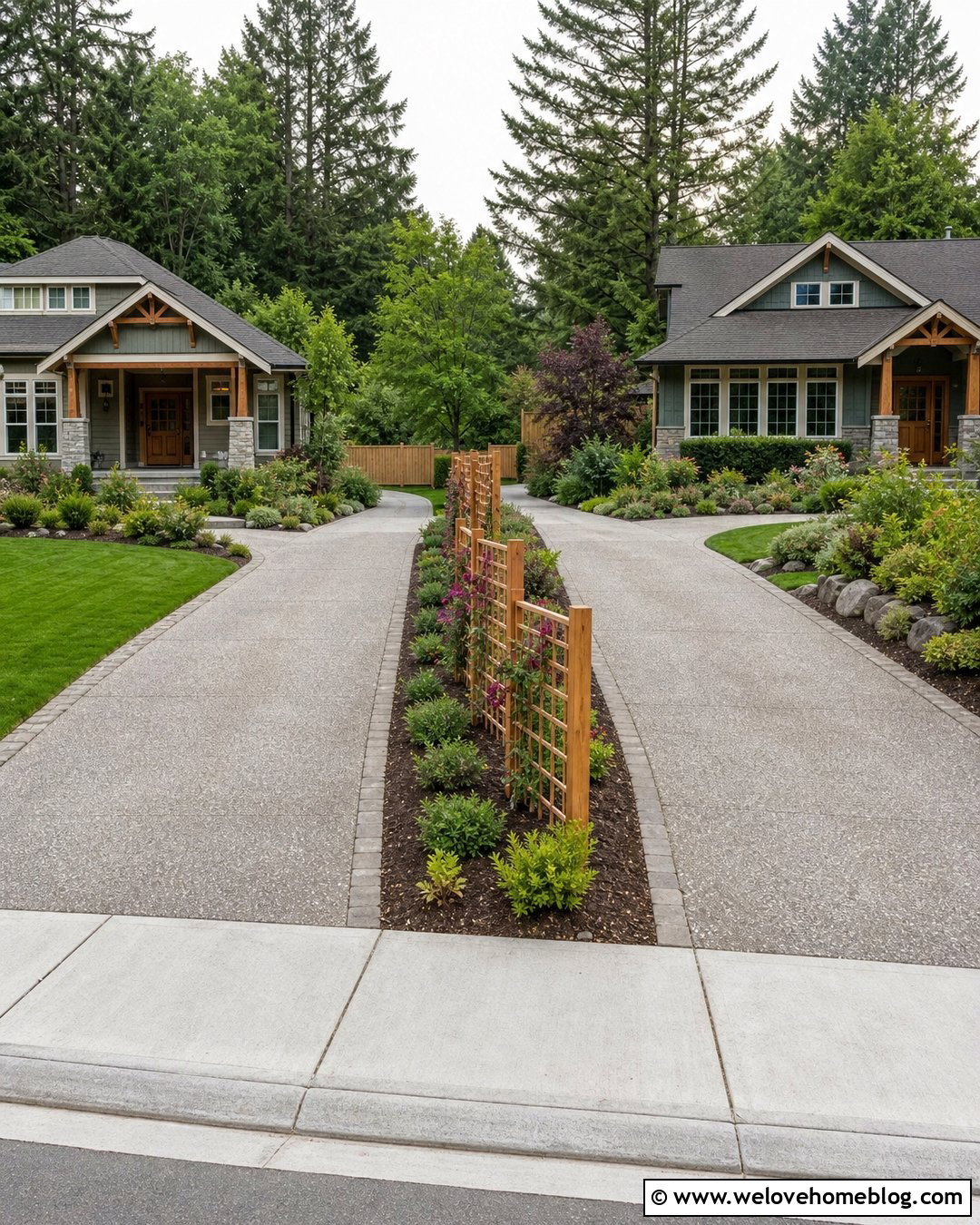


Leave a Reply