
Designing a shared bedroom requires a thoughtful balance of individual personality and harmonious design. Whether for siblings, roommates, or guests, creating a space that feels both personal and cohesive is key to a successful arrangement. The challenge lies in maximizing space, defining personal zones, and ensuring the room remains functional and uncluttered for everyone. From clever bed placements to smart storage solutions, there are numerous ways to craft a comfortable and stylish shared environment. This guide explores thirty practical and inspiring ideas to help you create a shared bedroom that everyone will love calling their own.
1. Shared Bedroom with Classic Bunk Beds
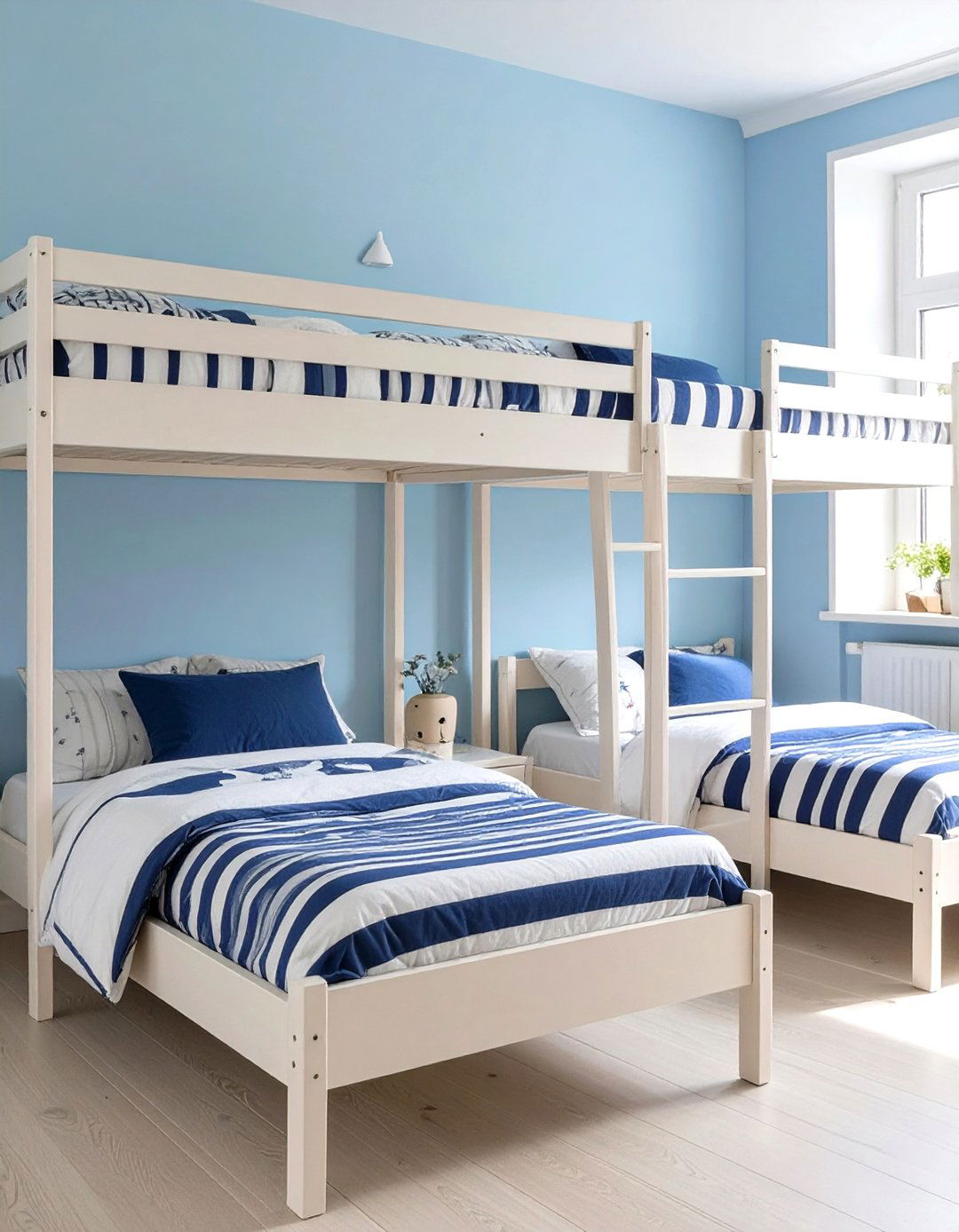
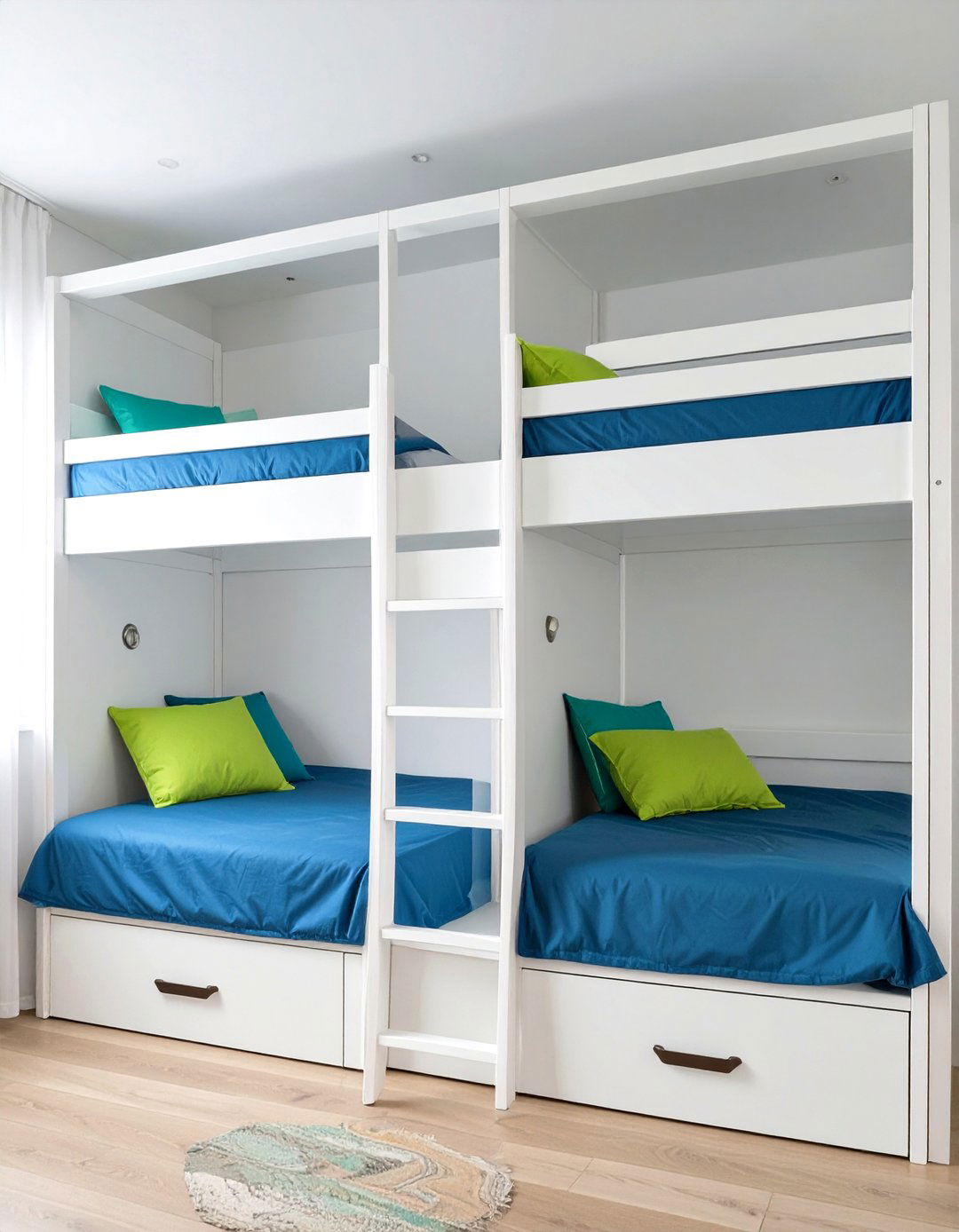
A timeless solution for saving floor space, classic bunk beds are a go-to for shared bedrooms, especially for children. This vertical arrangement frees up valuable room for play, study, or additional storage. Modern bunk beds come in various materials and styles, from simple wooden frames to industrial metal designs, ensuring a match for any decor. For added safety, look for models with sturdy guardrails and a securely attached ladder. This layout not only maximizes the available area but also creates a fun, fort-like environment that many kids enjoy, making bedtime a little more exciting and adventurous.
2. Shared Bedroom with Loft Beds and Desks Below
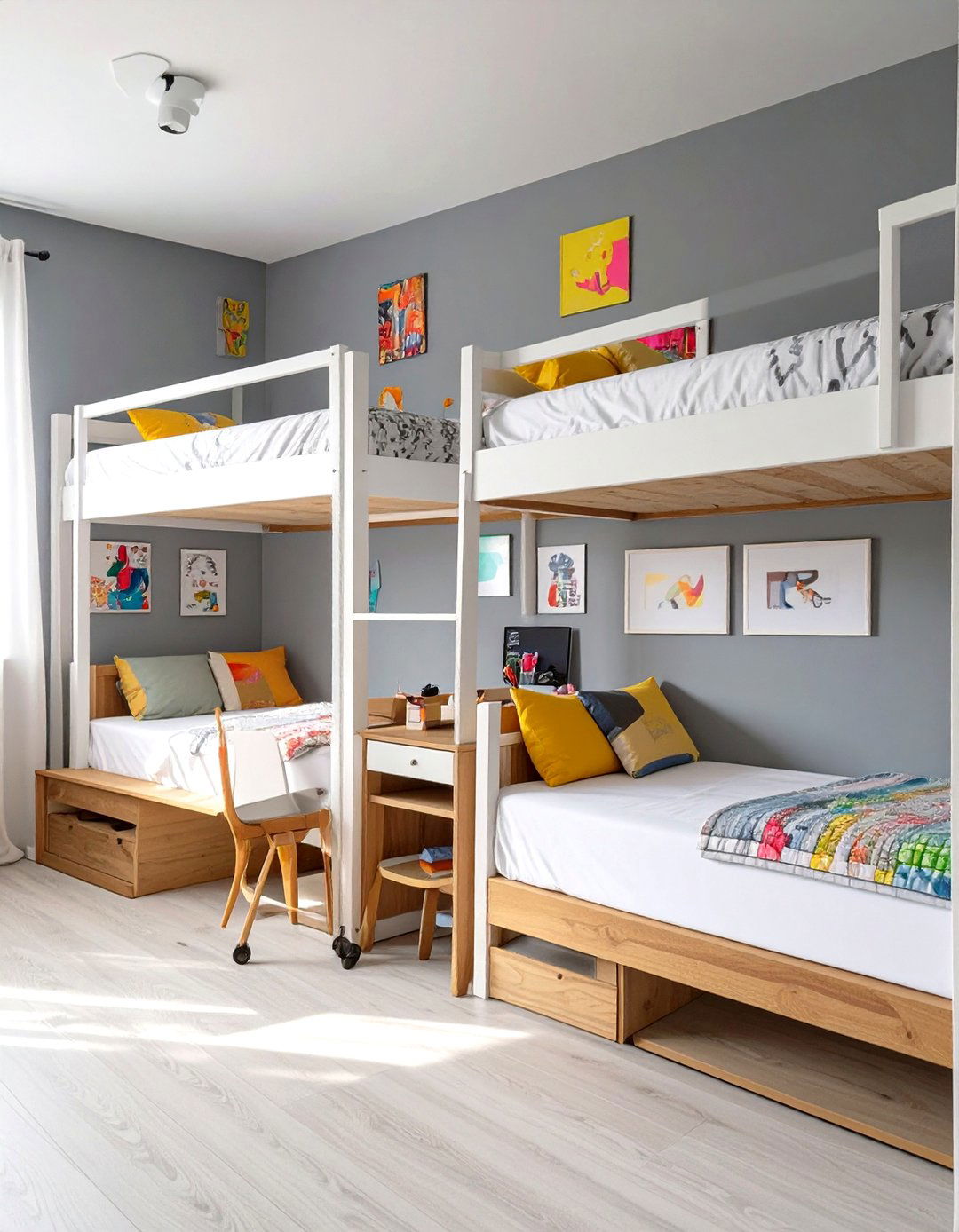
For older children or teens sharing a room, loft beds with integrated desks underneath offer a brilliant two-in-one solution. This setup provides each individual with a designated sleep area and a private study nook, fostering a sense of ownership and personal space. By lifting the bed off the floor, you create a functional zone below for homework, creative projects, or gaming. This arrangement is particularly effective in smaller rooms where accommodating two beds and two desks would otherwise be impossible. It promotes independence while still keeping the room’s layout open and organized, supporting both rest and productivity.
3. Shared Bedroom with Side-by-Side Twin Beds
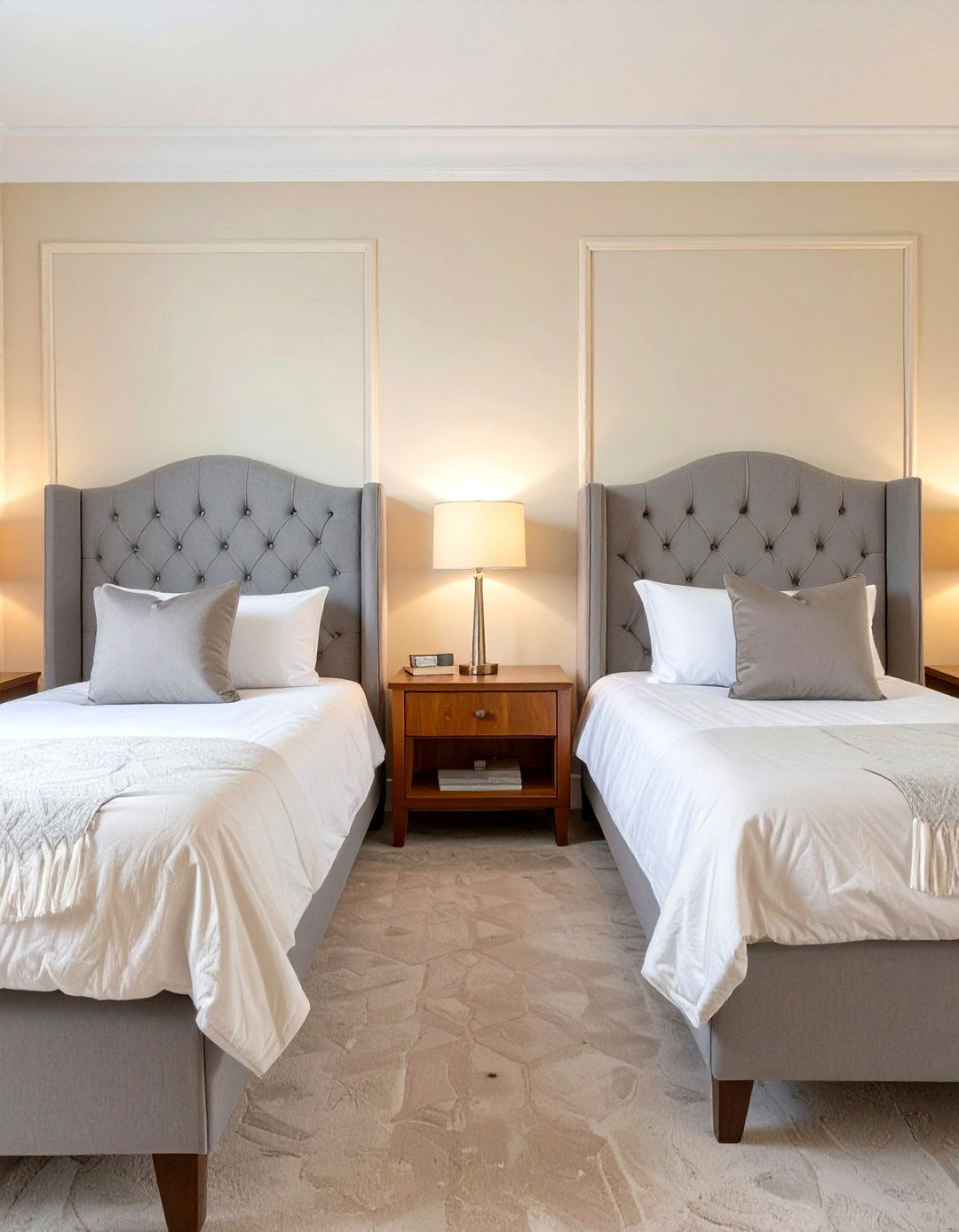
Placing two twin beds side-by-side against a single wall is a traditional and effective layout for a shared bedroom. This arrangement creates a sense of unity and symmetry, making the room feel balanced and orderly. It works well in larger rooms where floor space is not a major constraint. To enhance the design, use a shared, oversized headboard or create a visual connection with a single large piece of art placed above both beds. A shared nightstand between the beds can hold a lamp and essentials for both occupants, reinforcing the cohesive look while maintaining practicality and easy access.
4. Shared Bedroom with an L-Shaped Bed Arrangement
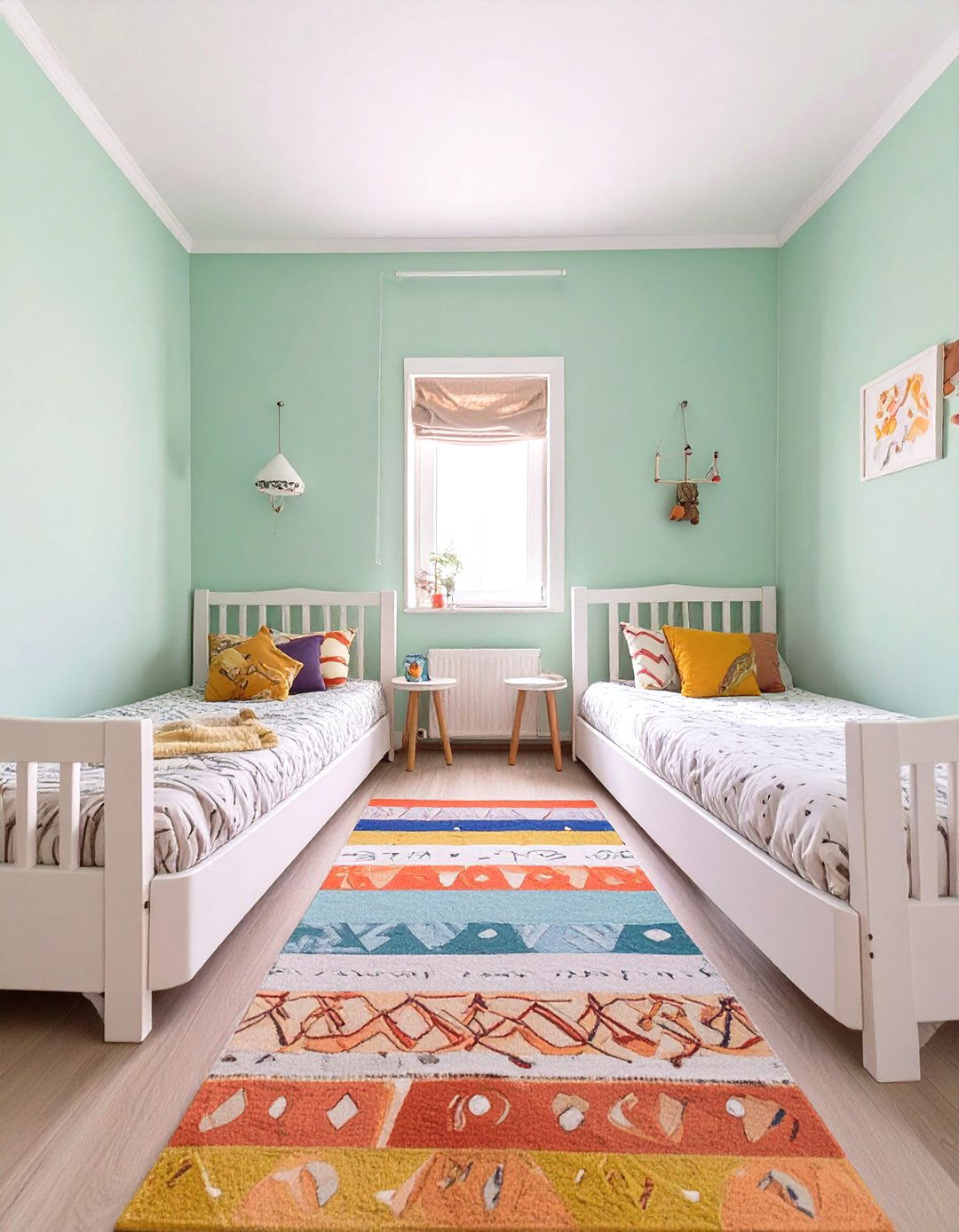
An L-shaped placement of two beds offers a dynamic alternative to the standard side-by-side layout. By positioning the beds along two adjacent walls, you create a more open central area in the room, perfect for a play mat or a small seating area. This configuration gives each occupant a bit more personal space and a distinct corner to call their own. It breaks up the visual monotony of a linear setup and can make a square-shaped room feel more spacious and interesting. A small table or corner shelf placed where the beds meet can serve as a convenient shared surface.

5. Shared Bedroom with Head-to-Head Bed Placement
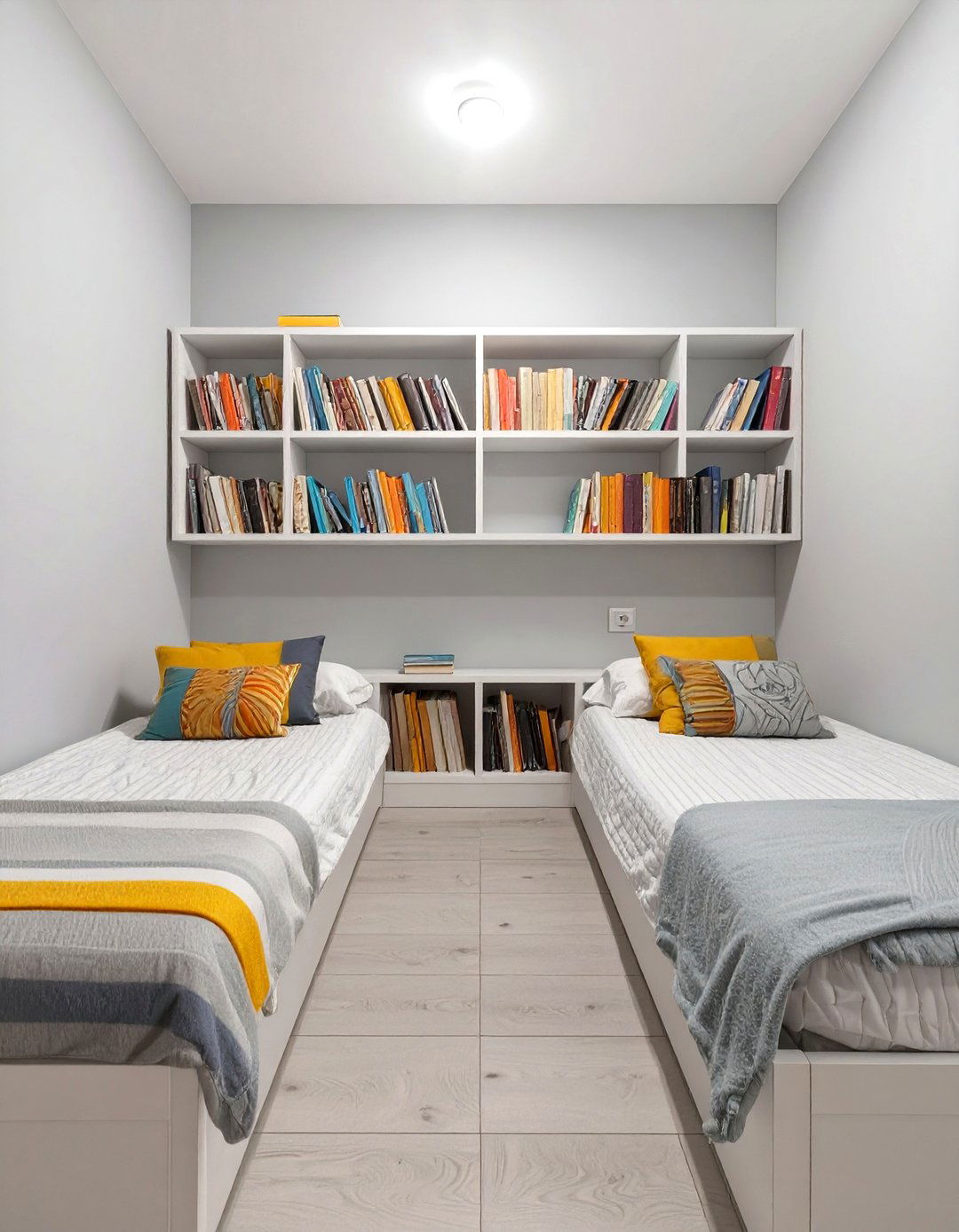
Consider placing two twin beds head-to-head along the longest wall for a unique and space-efficient shared bedroom layout. This arrangement fosters a sense of togetherness while still providing a clear demarcation of personal space. A low bookshelf, a decorative screen, or a shared, wide headboard can act as a subtle divider between the two sleep zones. This setup is ideal for long, narrow rooms as it utilizes the length of the wall effectively, leaving the opposite side of the room free for wardrobes, desks, or a play area, creating a clear pathway and an uncluttered feel.
6. Shared Bedroom with a Room Divider Curtain
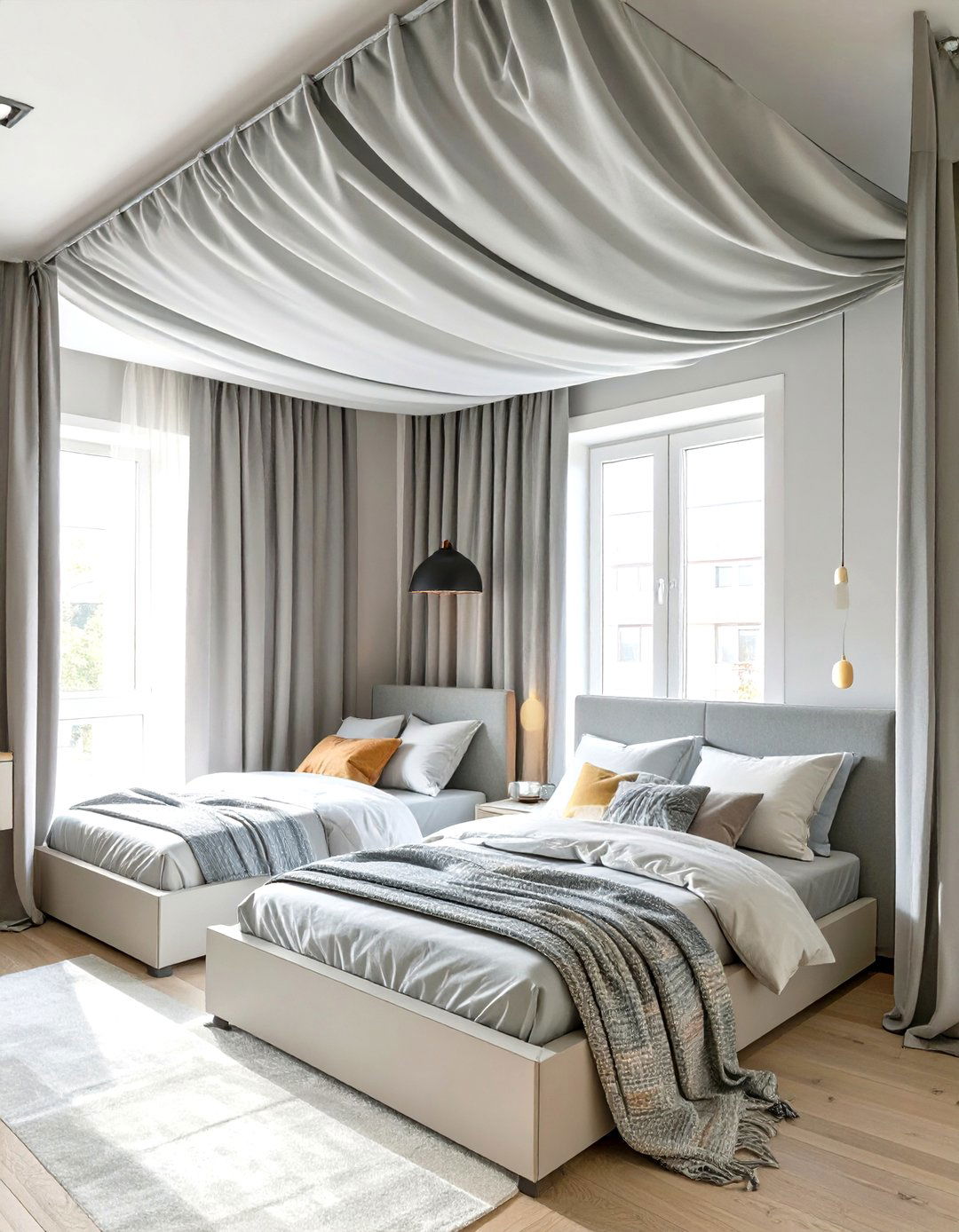
For an easy and flexible way to create privacy in a shared bedroom, install a ceiling-mounted curtain track. This allows you to draw a fabric divider to separate the sleeping areas whenever needed, giving each person a sense of their own private retreat. When not in use, the curtain can be pulled back to open up the space completely. Choose a fabric that complements the room's decor, whether it’s a light and airy sheer curtain or a heavy, blackout fabric for better light control. This solution is affordable, simple to install, and easily adaptable to changing needs.
7. Shared Bedroom Separated by a Bookshelf
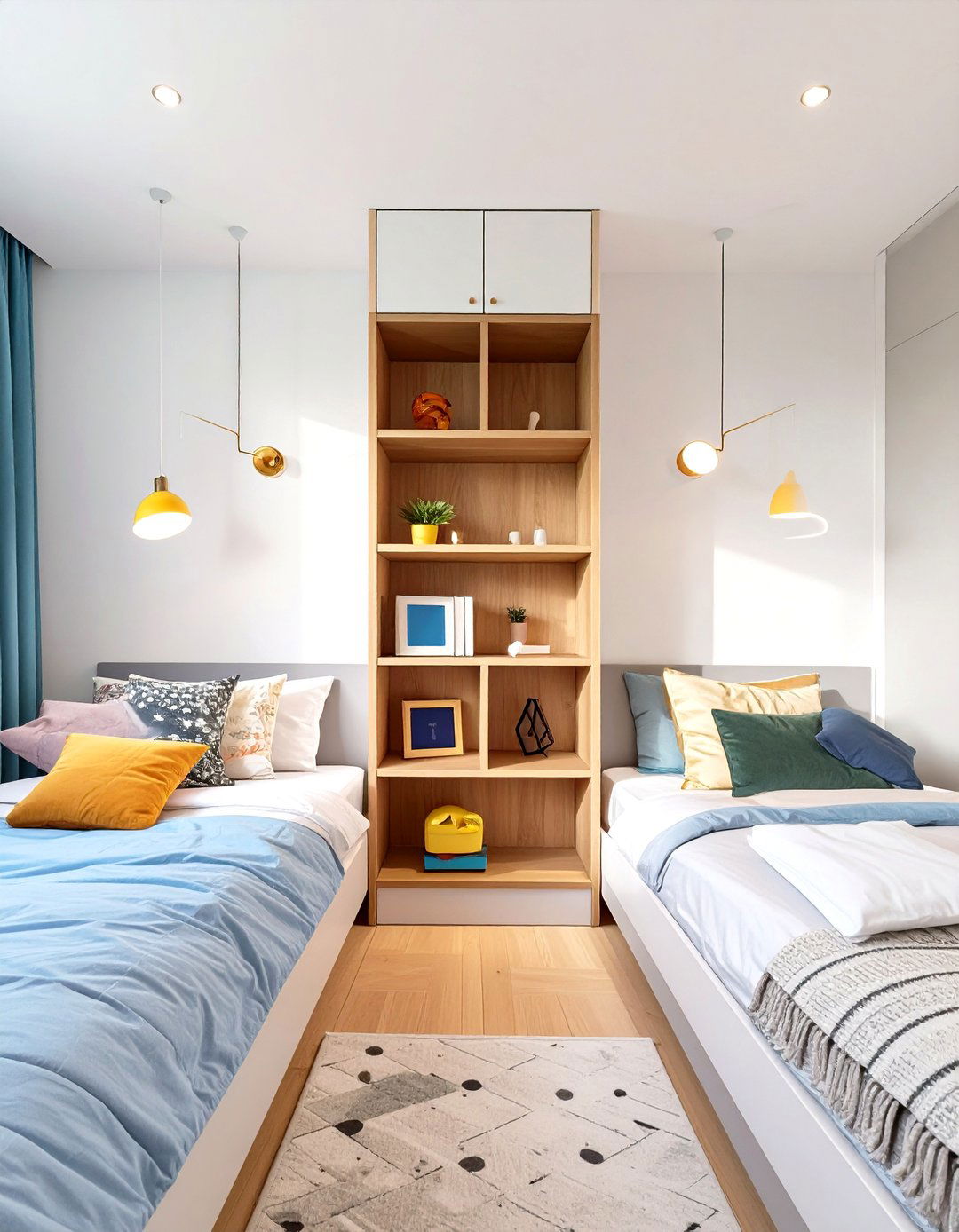
A bookshelf can serve as a stylish and functional room divider in a shared bedroom. By placing a tall, open-backed shelving unit between the beds, you create a visual separation while also providing valuable storage for both occupants. Each person can use their side of the bookshelf to display personal treasures, books, and decorative items, reinforcing their individual zones. This method adds architectural interest to the room and is a practical way to define personal space without building a permanent wall. It's an ideal solution for fostering organization and giving each person a dedicated spot for their belongings.
8. Shared Bedroom with a Trundle Bed
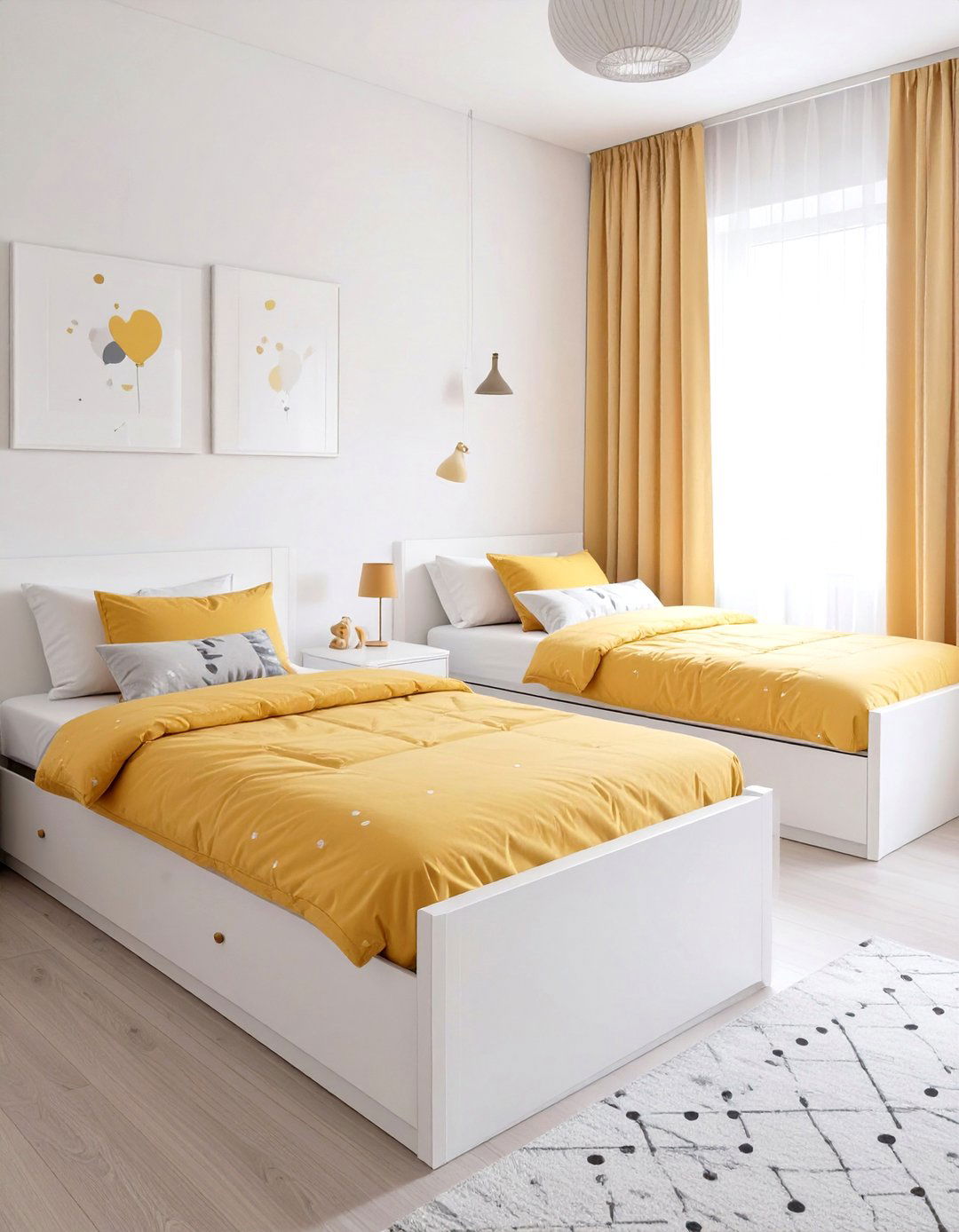
A trundle bed is a fantastic space-saving option for a shared bedroom, especially if one child is younger or the room is used for sleepovers. The main bed serves its purpose daily, while the lower bed on casters can be rolled out when needed and tucked away during the day. This frees up significant floor space for play and other activities. Many trundle beds also come with built-in drawers, offering an extra layer of storage for clothes, toys, or bedding. This clever design provides flexibility and functionality, making it a smart choice for rooms that need to adapt to different situations.
9. Shared Bedroom with Coordinated Bedding
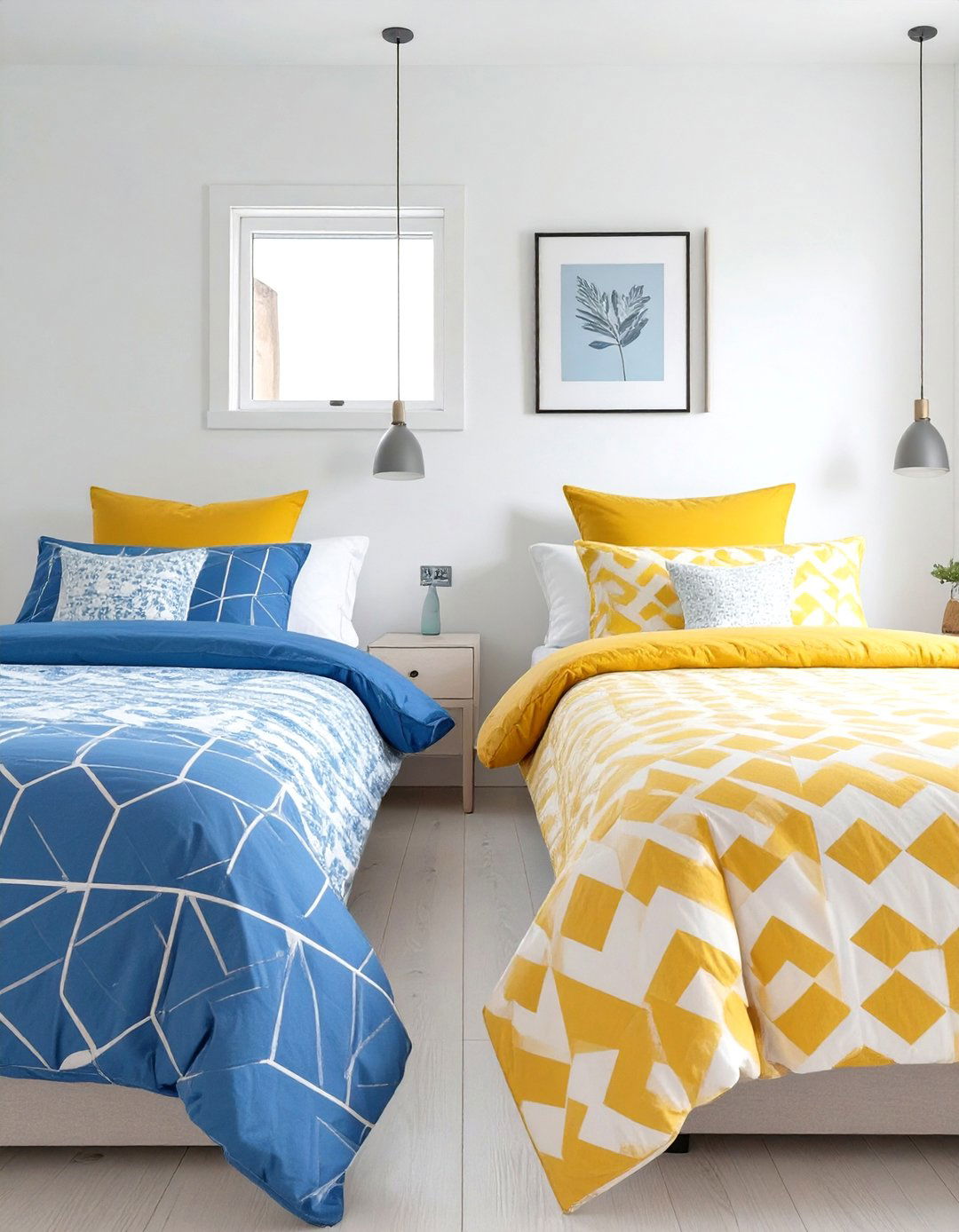
To create a unified and polished look in a shared bedroom, use coordinated bedding sets. This doesn't mean they have to be identical, but they should share a common element, such as a color palette, pattern, or theme. For example, you could use the same duvet cover but in two different complementary colors, or choose patterns from the same collection. This approach allows for a touch of individuality while ensuring the overall design feels cohesive and intentional. Coordinated bedding is a simple yet powerful tool for tying the room together and creating a visually pleasing and harmonious environment for both occupants.


10. Shared Bedroom with Distinct Color Zones
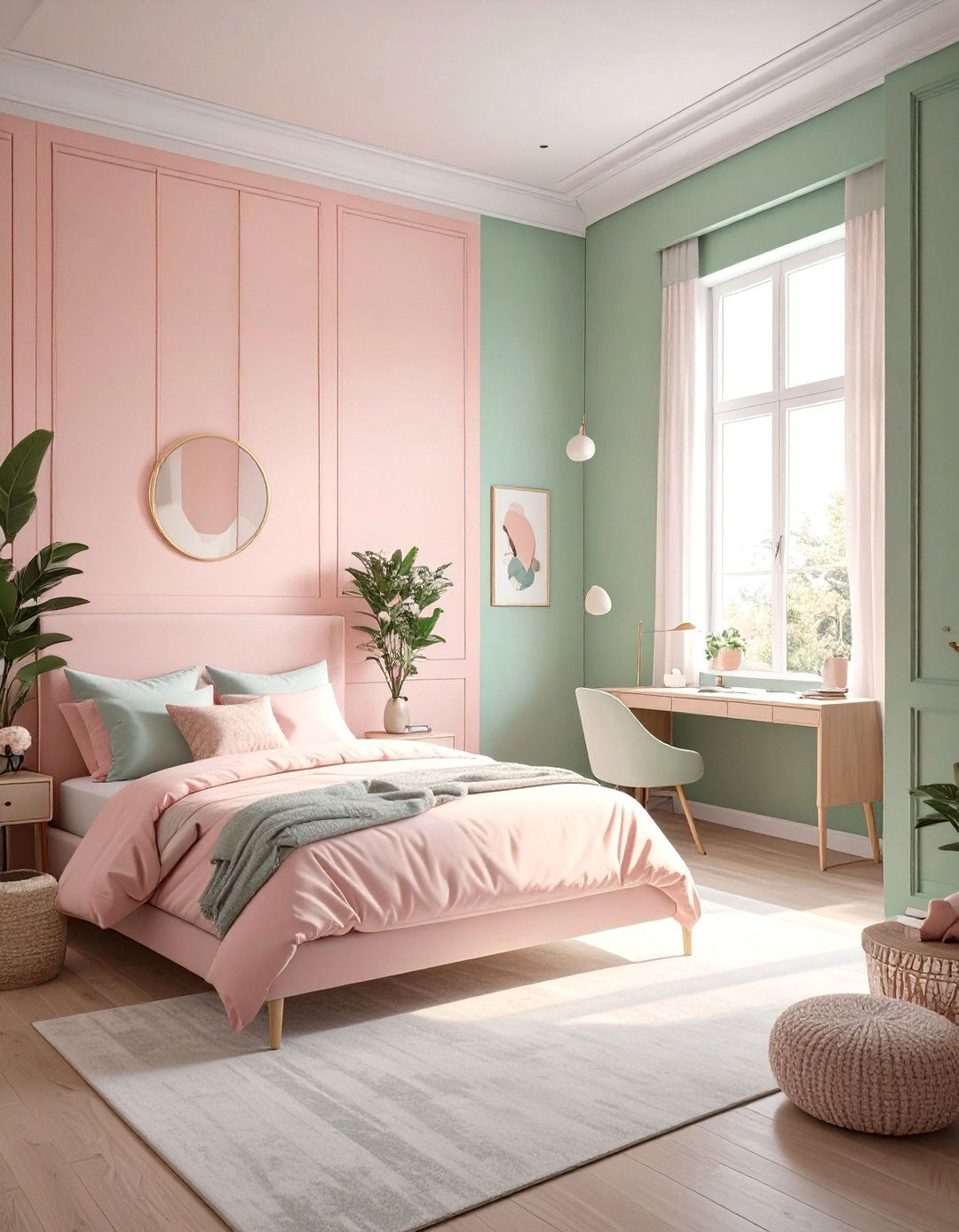
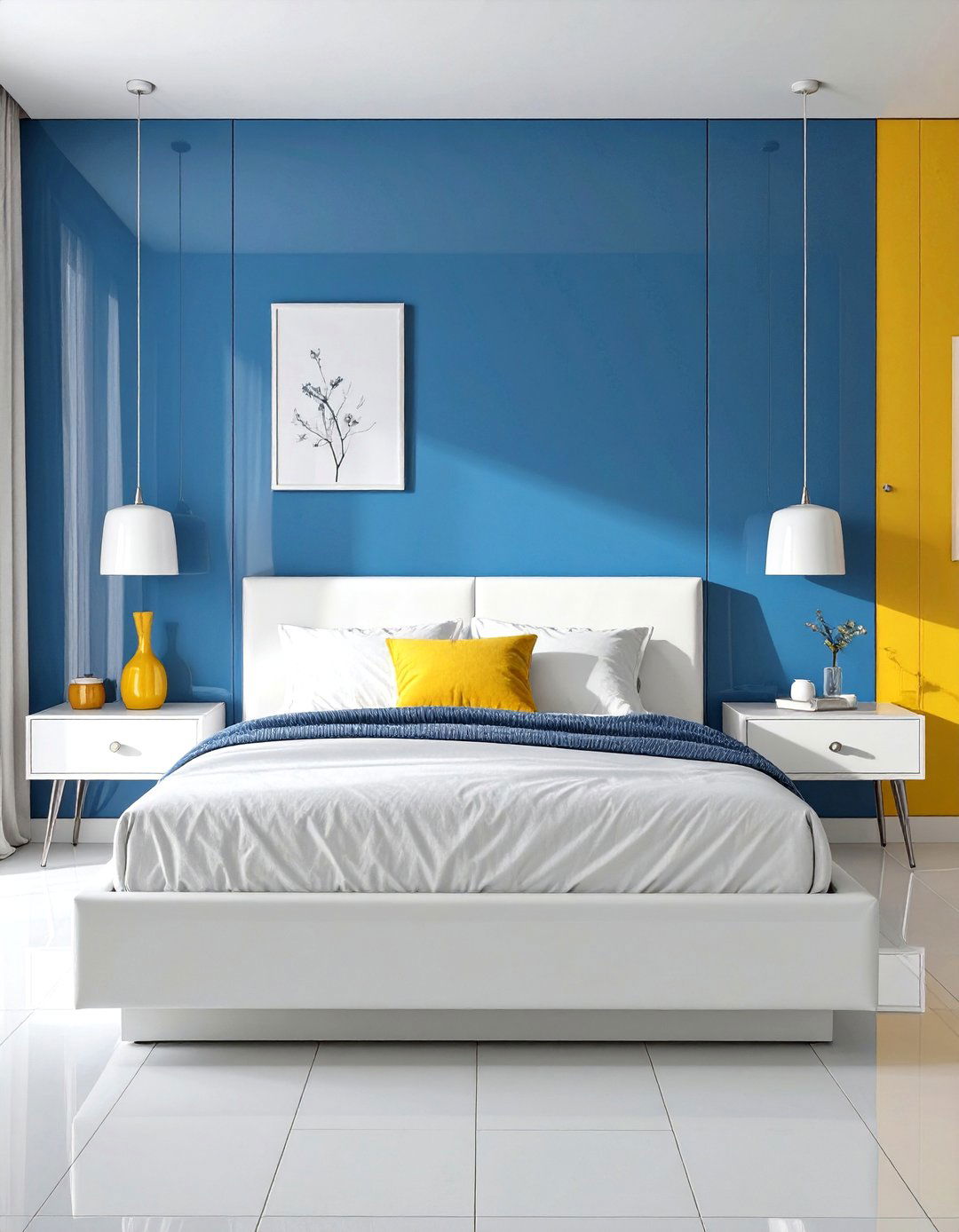
Define personal spaces in a shared bedroom by using two distinct but complementary color schemes. Paint the wall behind each bed a different color or use rugs and accessories in unique shades for each zone. This visual cue helps to establish individual territories within the same room, giving each person a sense of ownership. To maintain a cohesive feel, ensure the chosen colors work well together and share a neutral base color on the remaining walls. This strategy allows for personal expression and creates a dynamic, visually interesting room that celebrates the personalities of both occupants without feeling chaotic or disjointed.
11. Shared Bedroom Featuring Symmetrical Design
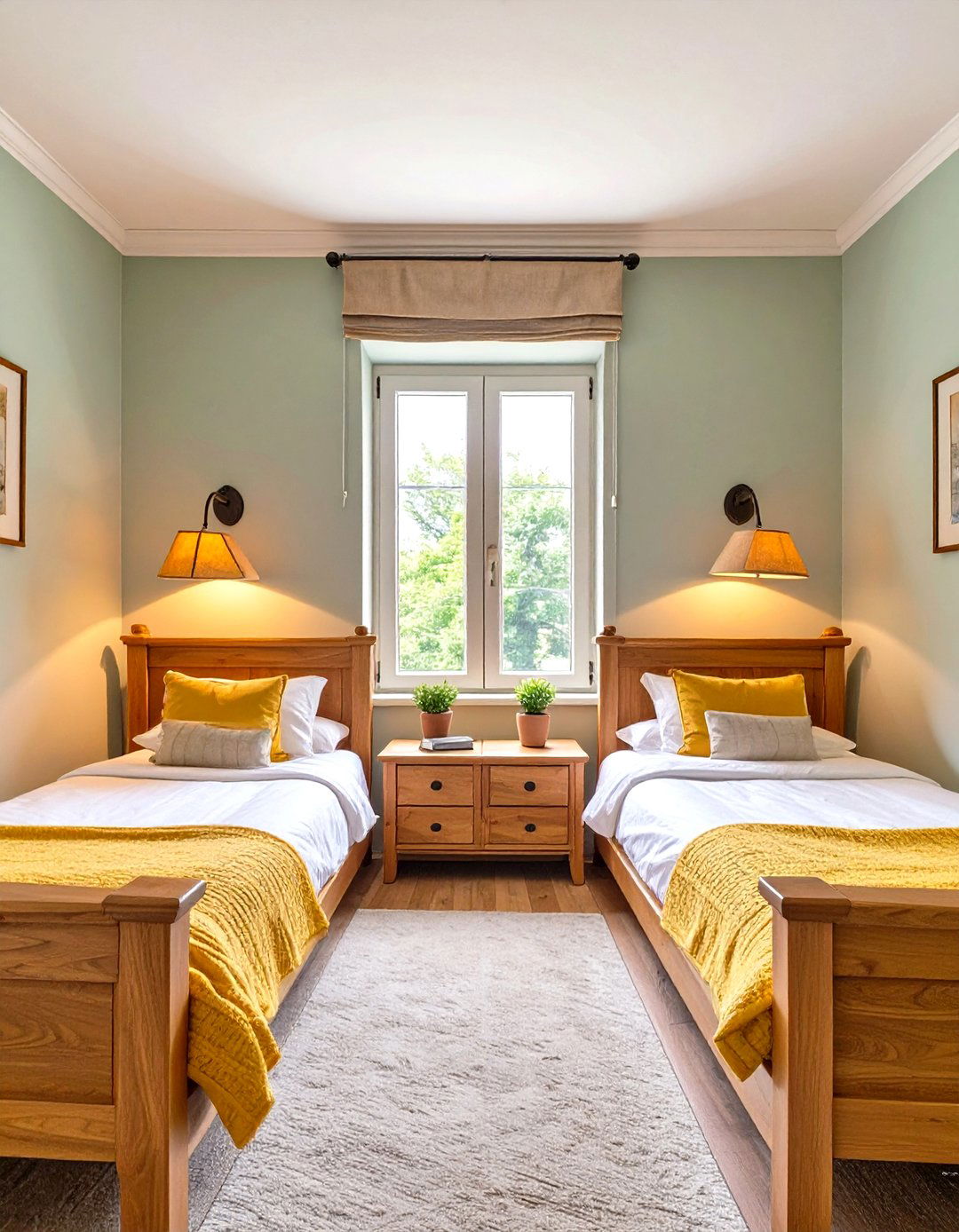
Achieving a sense of balance and calm in a shared bedroom is easy with a symmetrical layout. This classic design approach involves creating a mirror image on both sides of the room. Place two identical twin beds against a central wall, each with its own matching nightstand, lamp, and wall art. This creates a visually stable and orderly environment that is pleasing to the eye. Symmetrical design works exceptionally well in rooms of all sizes and provides a clear and equal division of space, which can help minimize disputes over territory and ensure fairness between the occupants.
12. Shared Bedroom with Personalized Wall Art
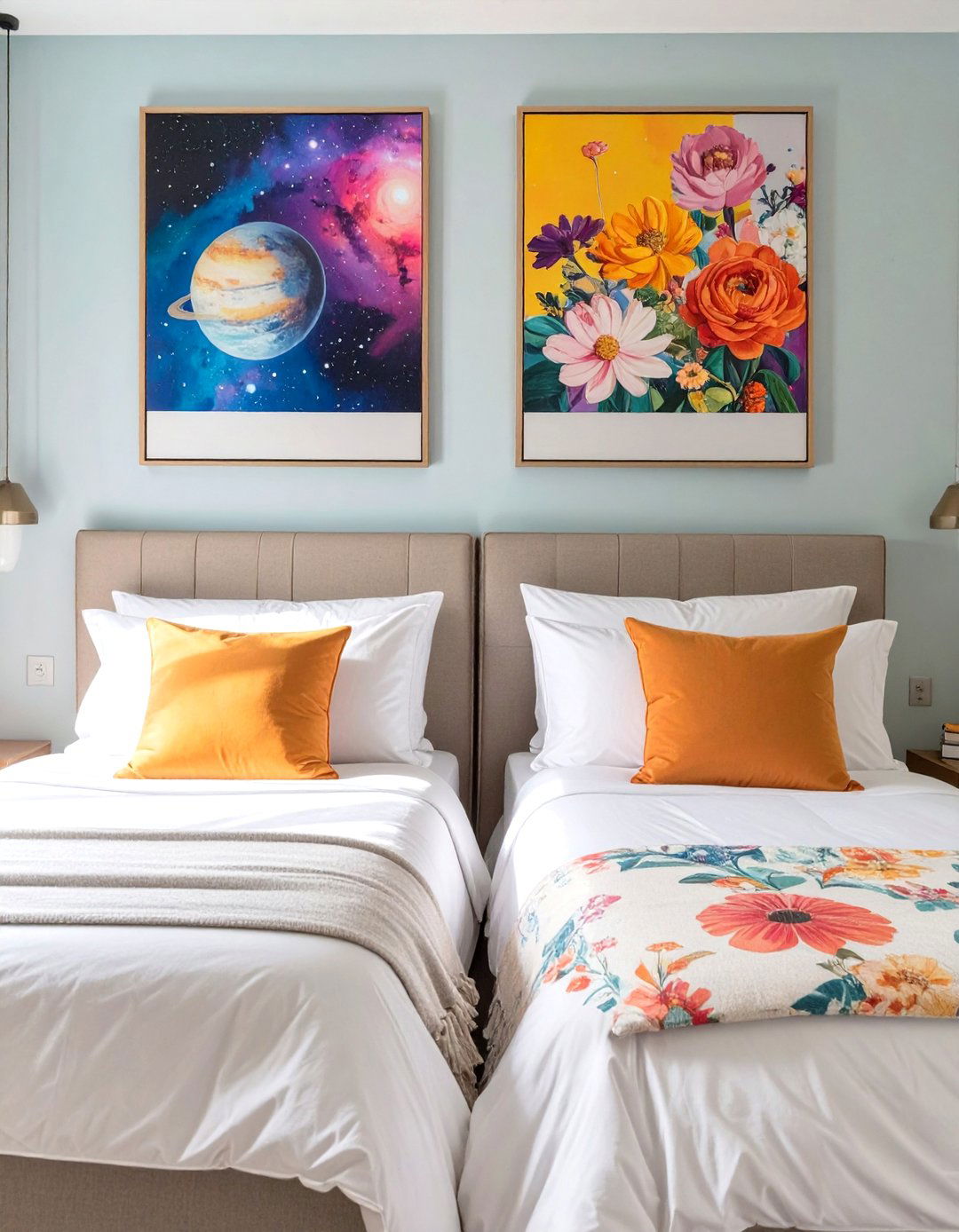
Allow each occupant to express their personality by dedicating wall space above their bed for personalized art and decor. This could be anything from framed posters of their favorite bands or movies to their own artwork, name signs, or a collection of photographs. This simple act gives each person a sense of identity and ownership over their small corner of the room. It’s an effective way to celebrate individuality within a shared space, making the room feel more like home for everyone. The rest of the room's decor can remain neutral or coordinated to tie everything together seamlessly.
13. Shared Bedroom Utilizing Under-Bed Storage
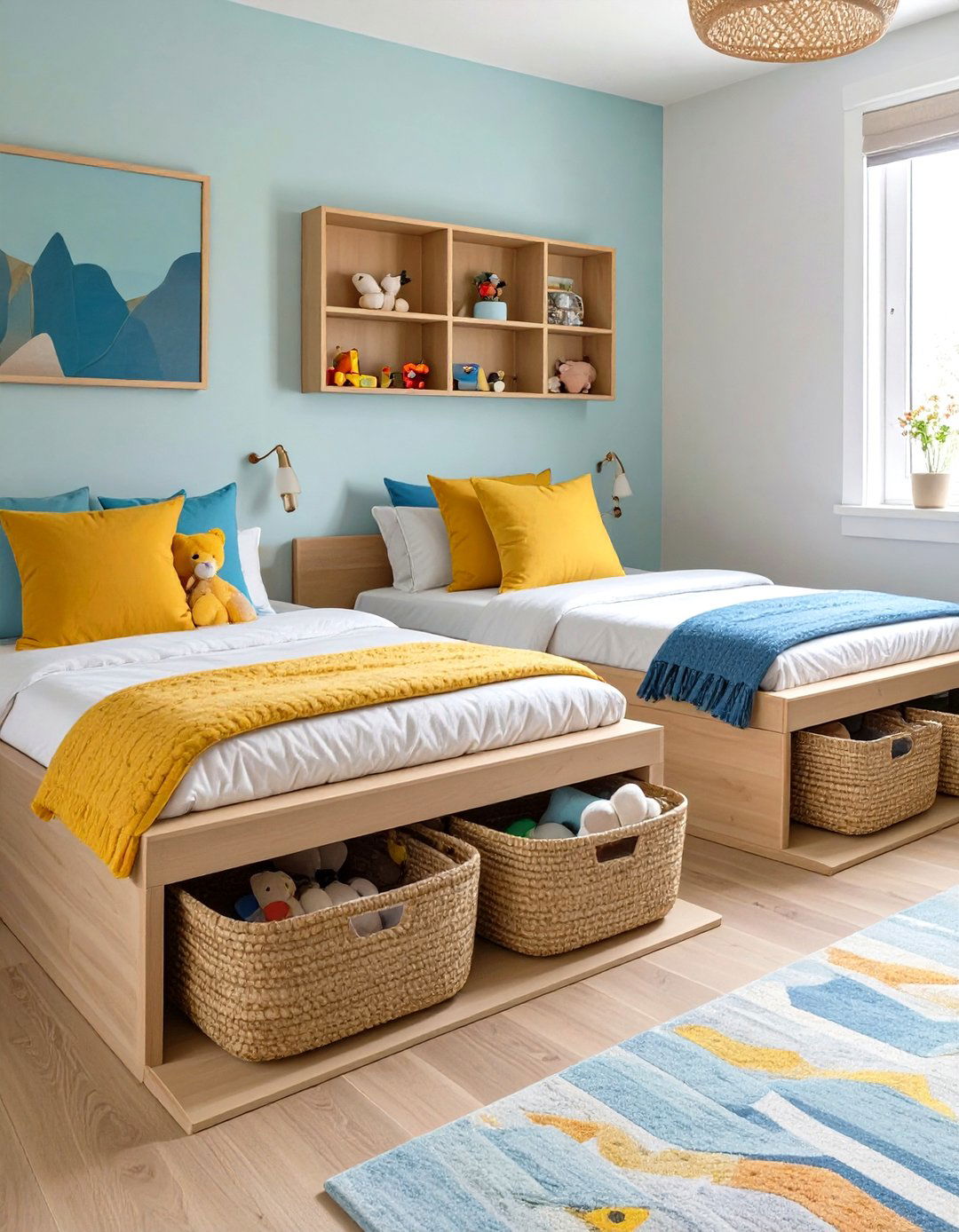
In any shared bedroom, maximizing storage is crucial for keeping the space tidy and functional. Beds with built-in drawers or ample clearance for storage bins underneath are invaluable. Use these hidden compartments to store extra bedding, seasonal clothing, toys, or shoes, keeping them out of sight but easily accessible. This approach frees up closet and floor space, preventing clutter from taking over the room. Under-bed storage is a smart, discreet solution that helps maintain an organized and spacious environment, which is especially important when two or more people are sharing the same living area.
14. Shared Bedroom with Vertical Wall Shelving
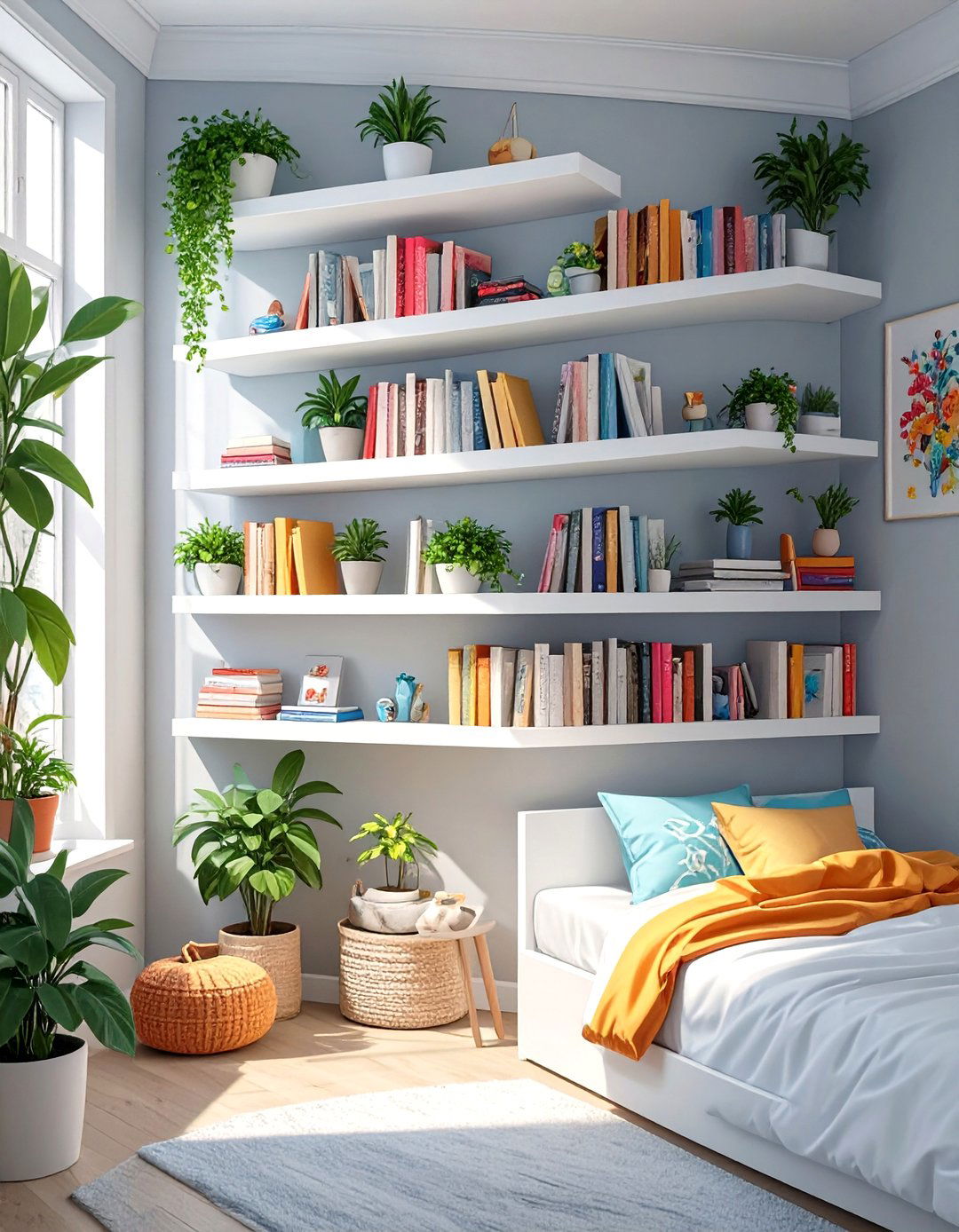
Take advantage of vertical space by installing wall-mounted shelves in a shared bedroom. Floating shelves are perfect for displaying books, trophies, and decorative items without taking up any floor space. You can assign specific shelves to each occupant or create a shared display. This draws the eye upward, making the room feel taller and more open. Vertical shelving is a practical storage solution that helps keep surfaces like desks and nightstands clear of clutter. It’s an easy and affordable way to add both personality and organization to the room, ensuring everything has its place.

15. Shared Bedroom with a Shared Central Nightstand
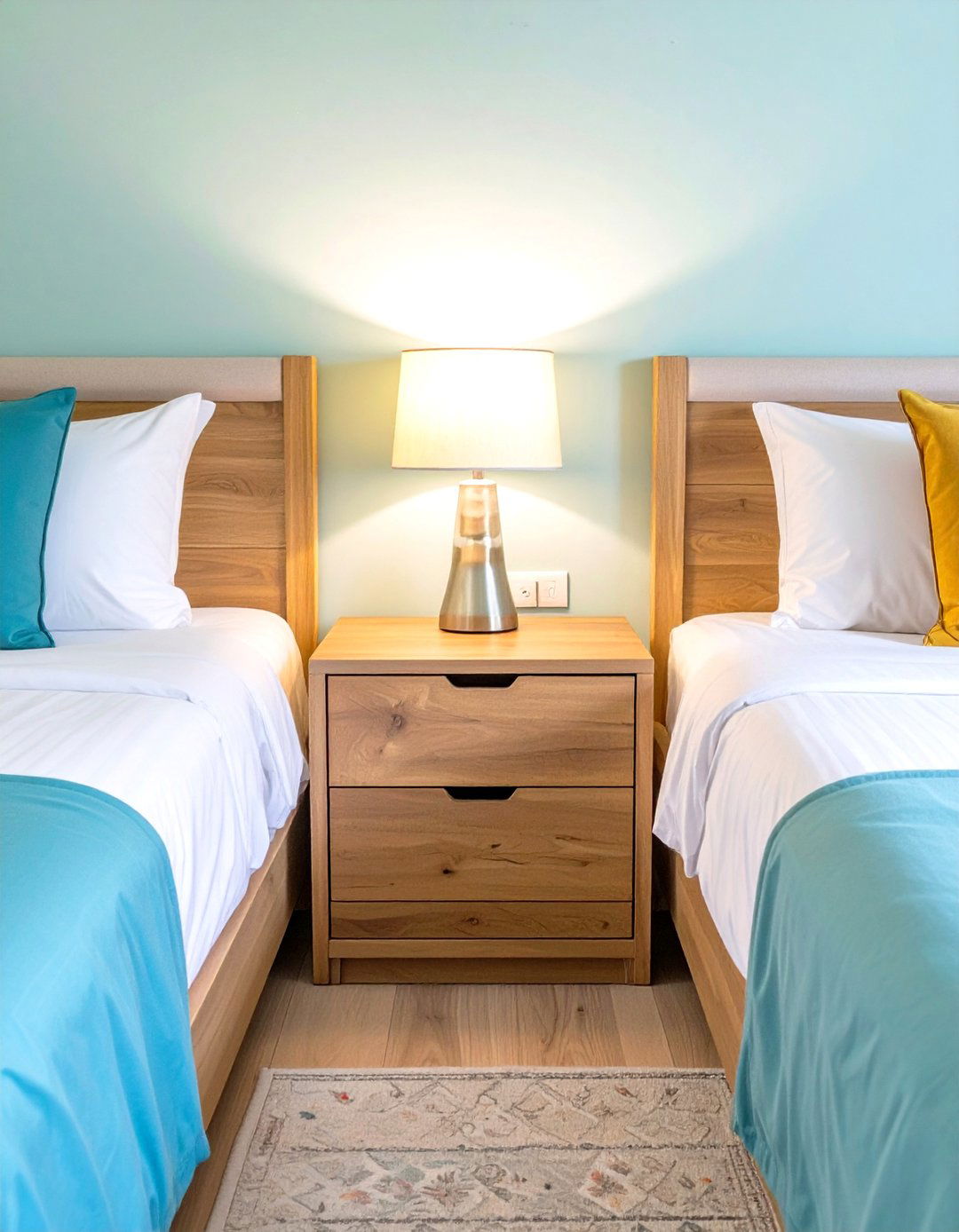
When space is tight, a single, larger nightstand placed between two side-by-side twin beds can be a smart and efficient solution. This shared piece of furniture provides a surface for a lamp that both occupants can use, as well as space for essentials like an alarm clock or a glass of water. Look for a nightstand with multiple drawers or shelves so each person can have their own designated storage spot within the unit. This arrangement promotes a sense of unity and saves valuable floor space, making the room feel less crowded and more streamlined.
16. Shared Bedroom with Individual Nightstands
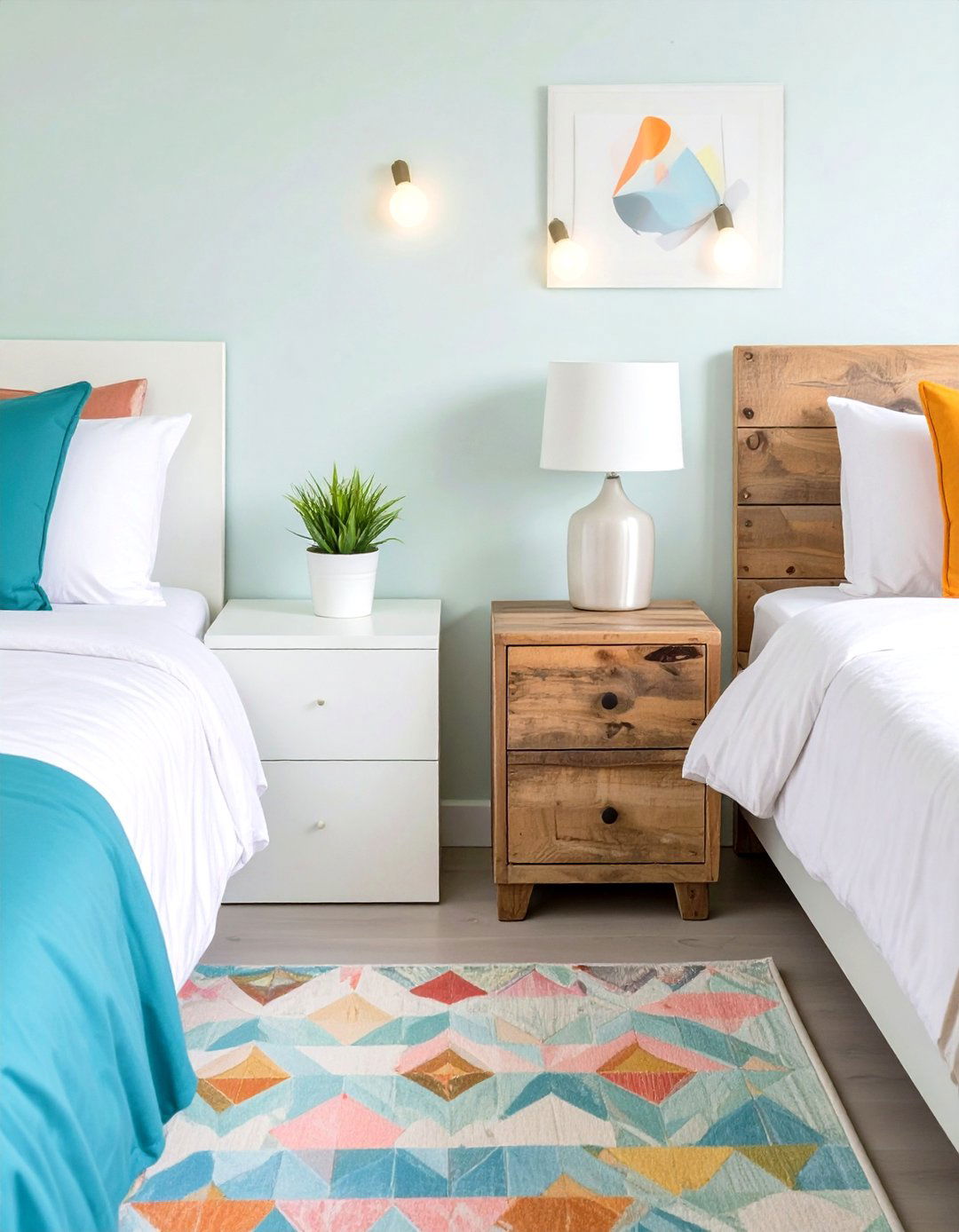
To foster a sense of independence and provide personal storage, give each occupant their own nightstand. This allows them to have their own lamp for late-night reading, a dedicated spot for their personal items, and a bit of private storage right by their bed. The nightstands don't have to be a perfect match; choosing slightly different styles or colors that reflect each person's taste can add character to the room while still looking cohesive. Providing individual nightstands is a simple gesture that acknowledges the need for personal space and convenience in a shared environment.
17. Shared Bedroom with a Combined Study Area
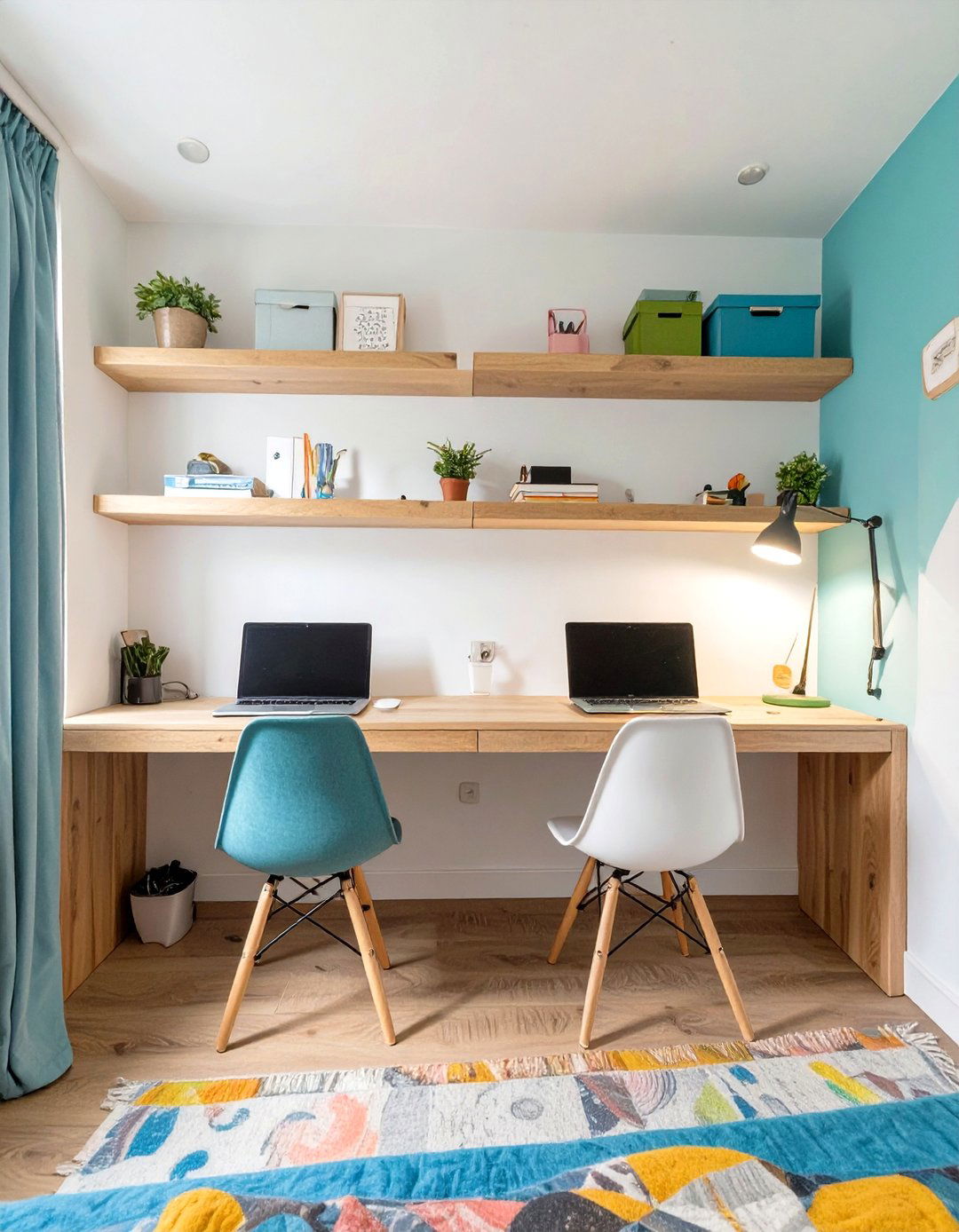
If the occupants are students, creating a shared study area can be a great way to consolidate space. A long desk placed against one wall can comfortably accommodate two chairs and provide enough workspace for both individuals. Install shelving above the desk for books and supplies, and consider using desk organizers to keep everything tidy. A shared study zone encourages collaboration and makes homework time more efficient. This setup centralizes the "work" part of the room, leaving other areas free for relaxation and sleep, creating a well-organized and multi-functional space.
18. Shared Bedroom with Separate Study Nooks
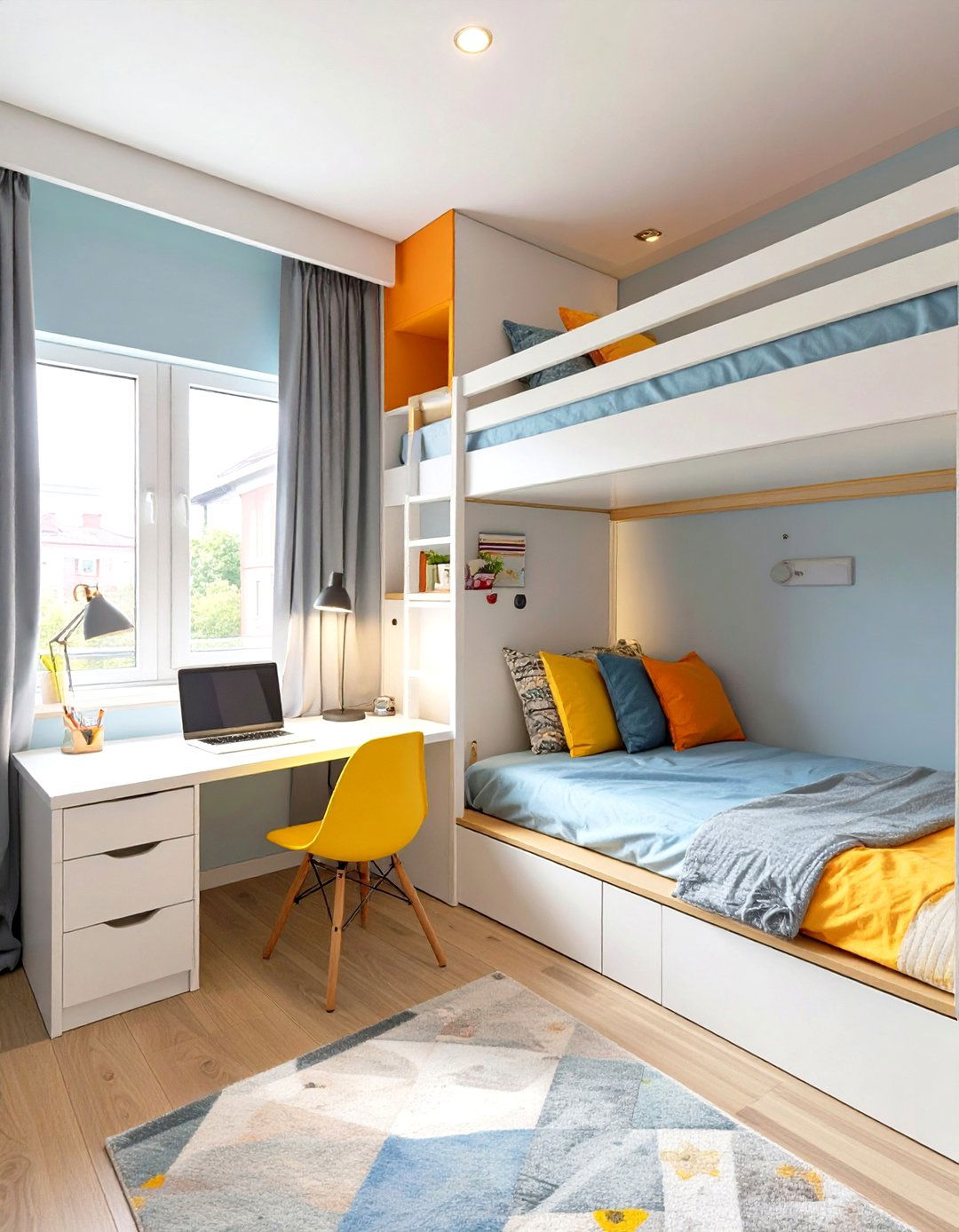
For those who need more focus and privacy for their work, creating separate study nooks is an ideal solution in a shared bedroom. This can be achieved by placing small desks in different corners of the room or by using loft beds with integrated desks underneath. Each person gets their own dedicated workspace, which can be personalized to their liking. This separation helps to minimize distractions and allows each individual to concentrate on their tasks without disturbing the other. It’s a practical approach that supports academic or professional needs while respecting personal boundaries within the shared space.
19. Shared Bedroom with a Central Play Zone
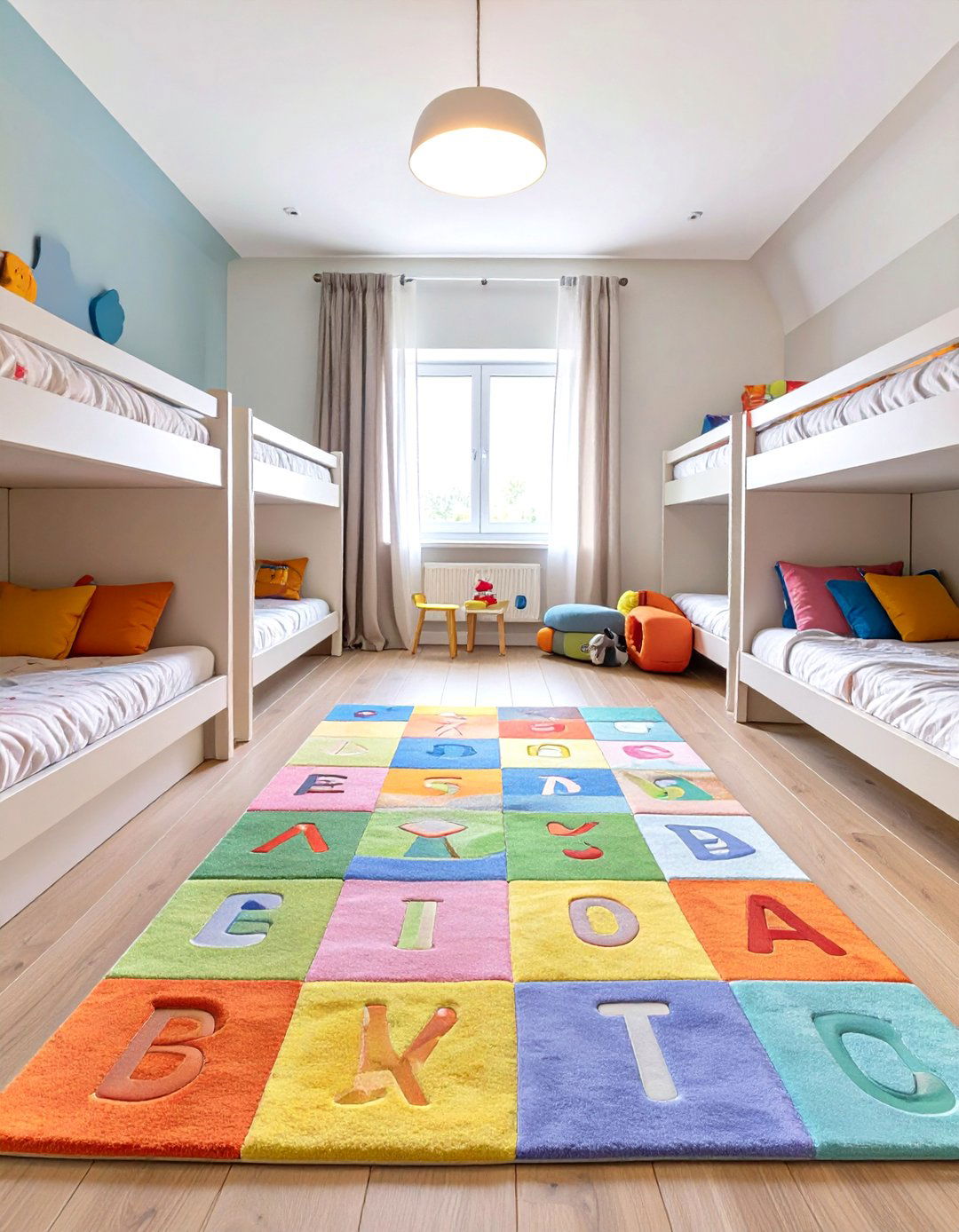
In a shared children's bedroom, dedicating the center of the room as a play zone can be highly effective. Arrange the beds and furniture along the walls to leave a large, open area in the middle. Lay down a soft, durable rug to define the space and make it comfortable for floor-based activities. Use storage bins or a toy chest that can be easily pushed aside to keep the area organized. This layout prioritizes playtime and ensures there is ample room for imagination and fun, creating a clear distinction between sleep areas and the shared activity space.
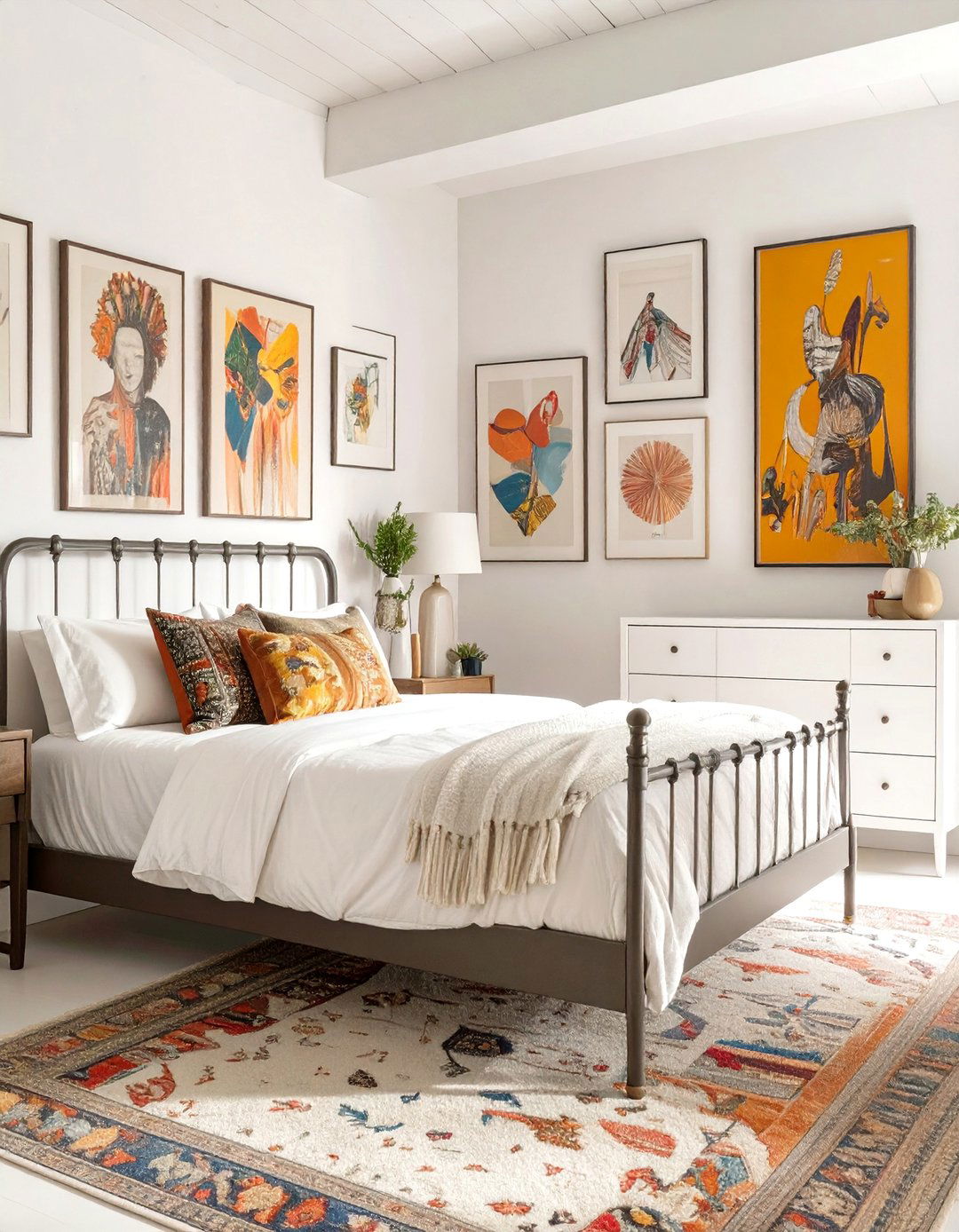
20. Shared Bedroom with Custom Built-In Beds
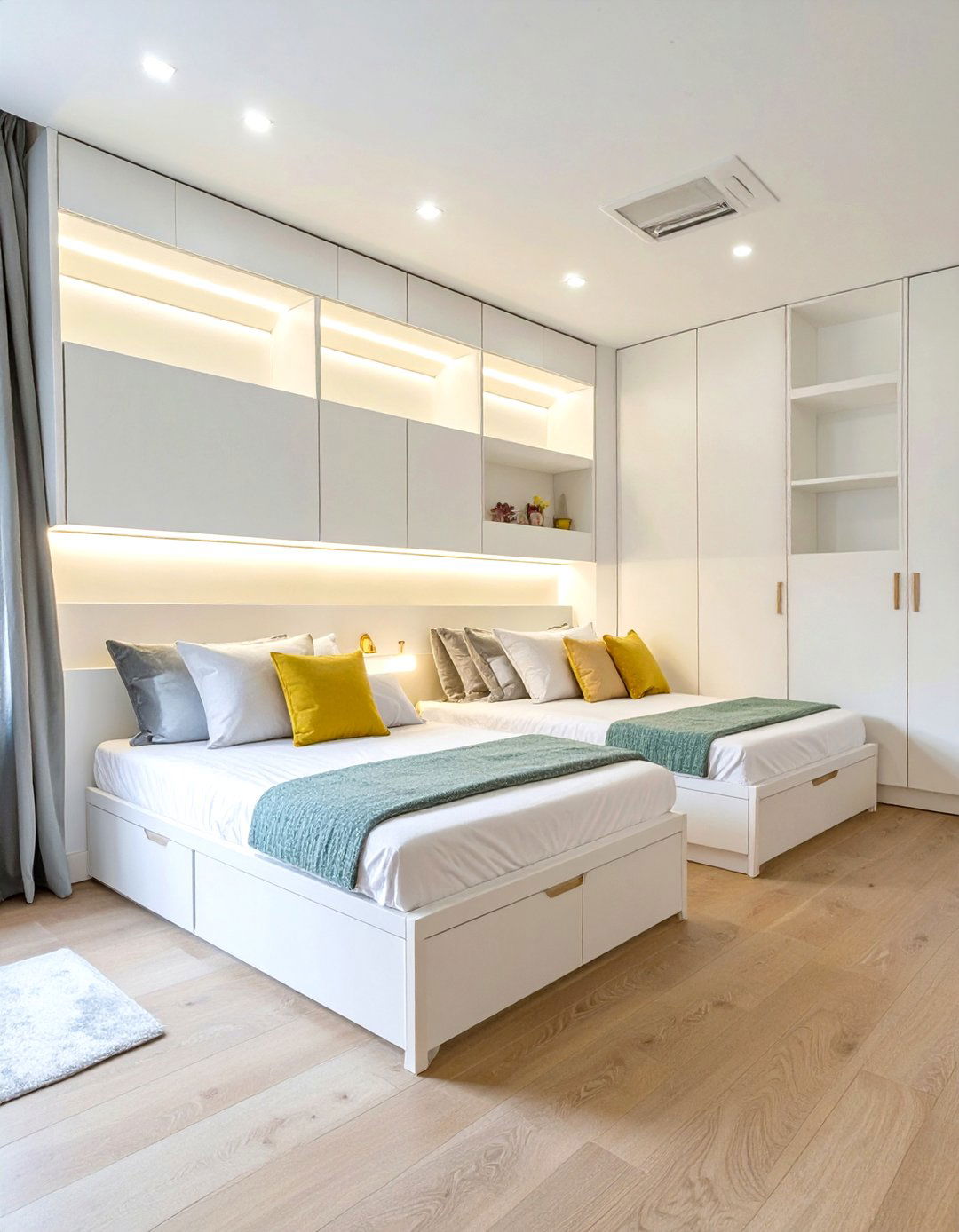
For a truly seamless and space-optimized design, consider custom built-in beds. These can be designed to fit the exact dimensions and layout of the room, maximizing every inch of space. Built-ins can incorporate beds, storage drawers, shelves, and even desks into a single, cohesive unit. This approach creates a clean, architectural look that can make a small room feel much larger and more organized. While it is a bigger investment, the result is a perfectly tailored solution that addresses the specific needs of the occupants and the unique challenges of the space.
21. Shared Bedroom with Privacy-Enhancing Canopy Beds
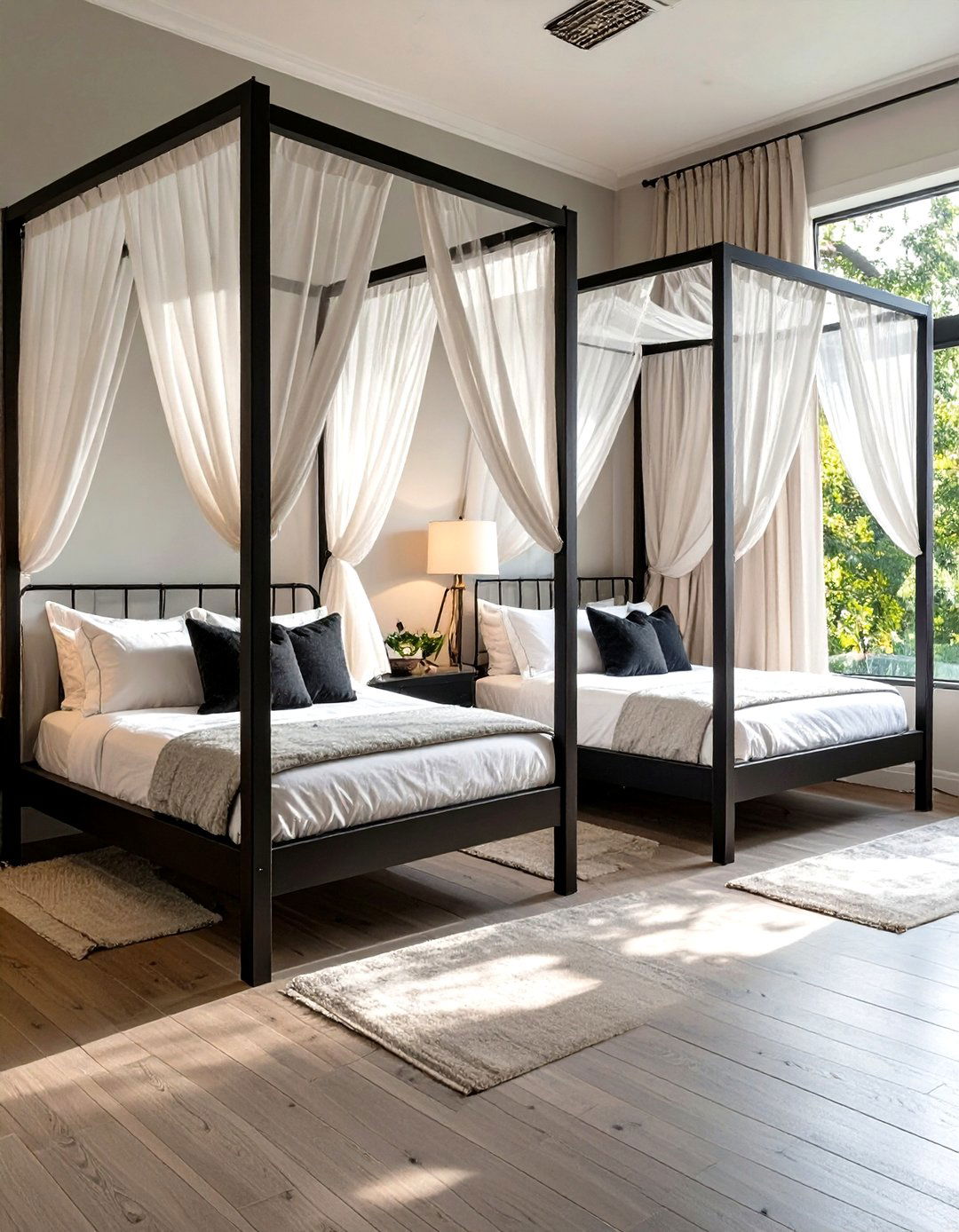
Canopy beds can add a touch of elegance and, more importantly, a sense of privacy to a shared bedroom. The curtains can be drawn to create a cozy, enclosed sleeping cocoon, offering a visual and psychological barrier from the rest of the room. This is particularly beneficial for light sleepers or individuals who crave a personal retreat. You can choose sheer, airy fabrics for a dreamy look or heavier materials for more effective light blocking. Canopy beds transform a simple sleeping spot into a personal sanctuary, making them a beautiful and functional choice for a shared space.
22. Shared Bedroom with Mirrored Wardrobe Doors
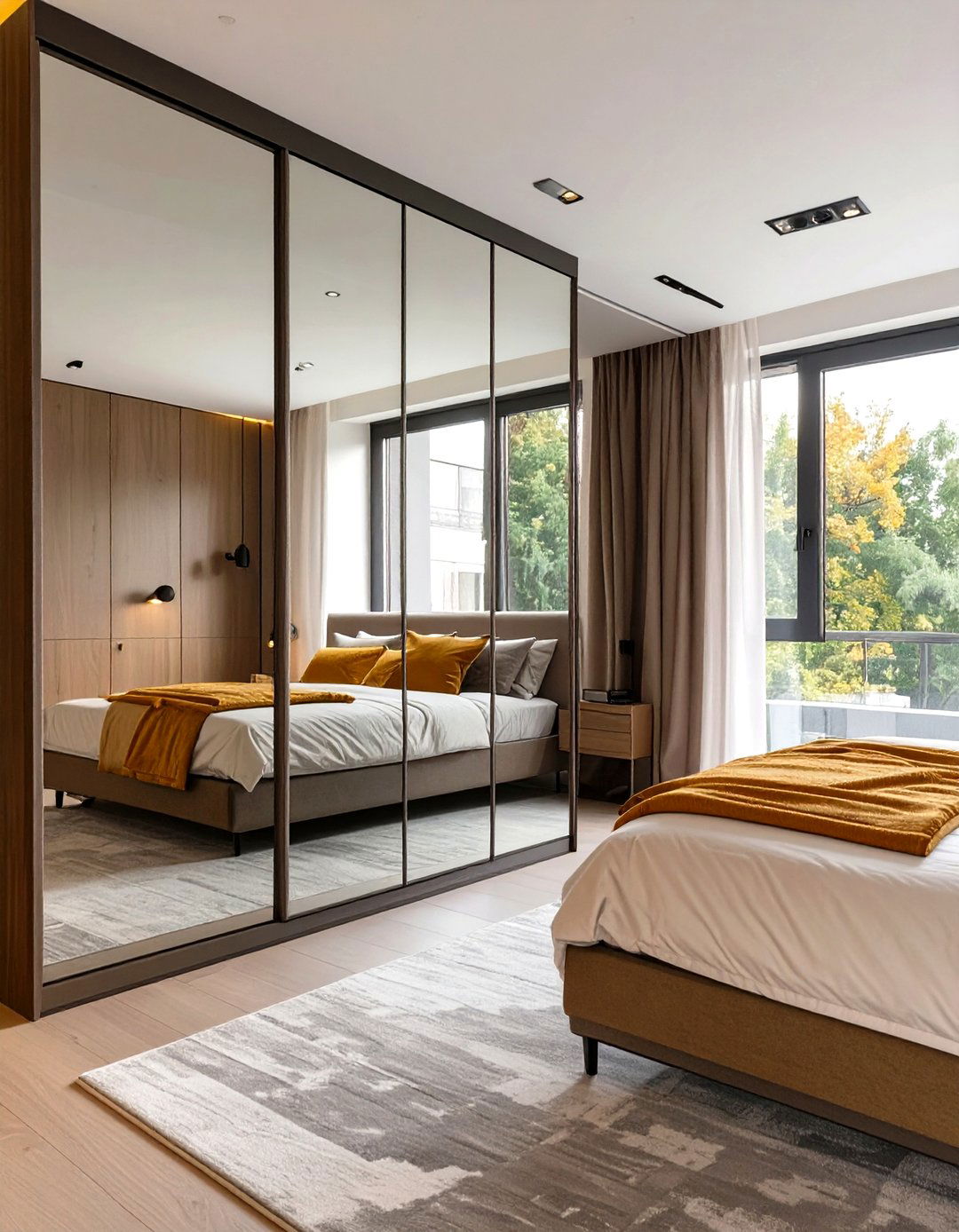
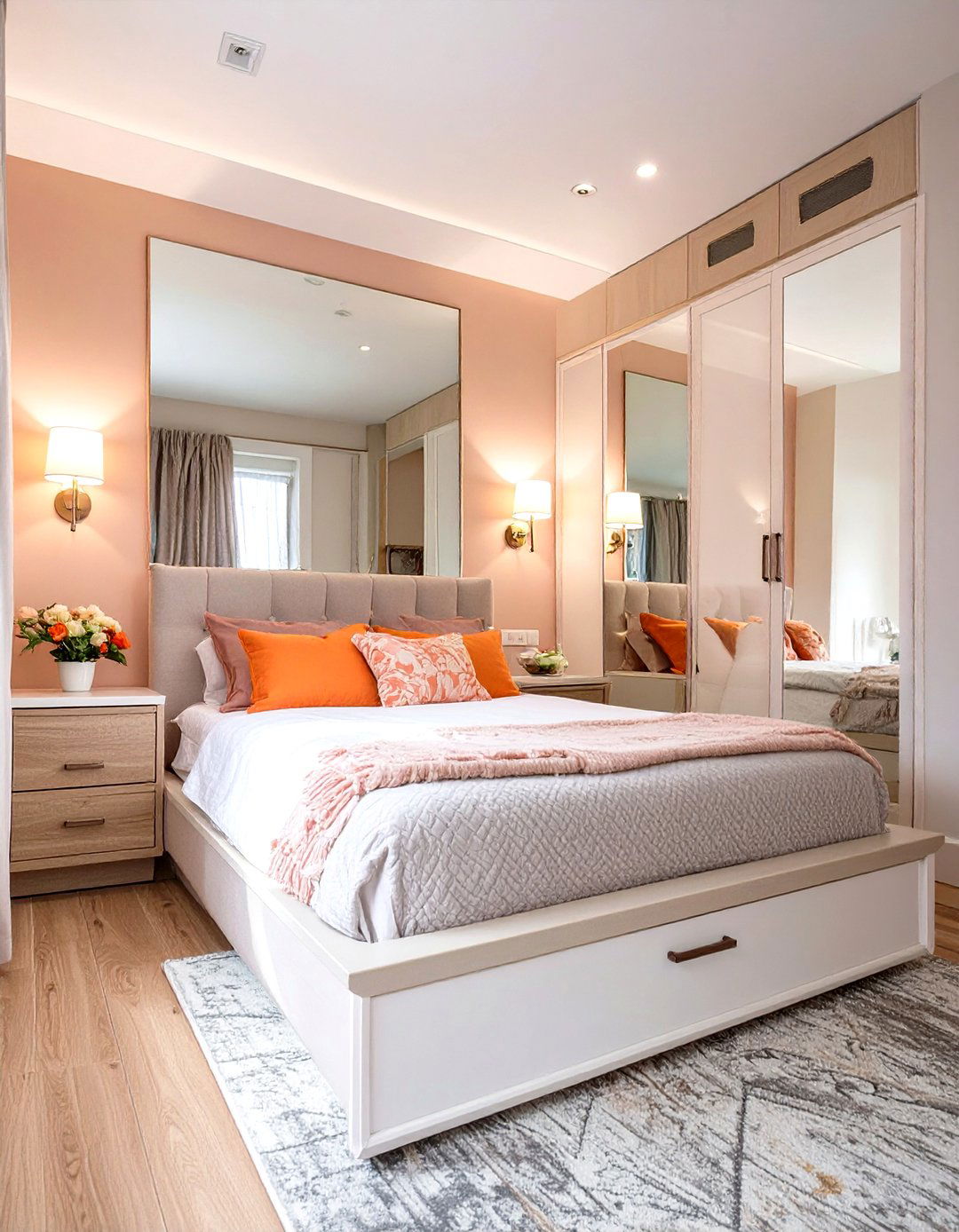
To make a shared bedroom feel larger and brighter, incorporate wardrobes with mirrored doors. Mirrors are excellent at reflecting light and creating an illusion of depth, which can visually expand a cramped space. They also serve a practical purpose, providing a full-length mirror for each occupant to use when getting ready. This two-in-one solution saves wall space that would otherwise be taken up by a separate mirror. Mirrored wardrobes are a sleek and modern addition that enhances both the functionality and the aesthetic appeal of the room, making it feel more open and airy.
23. Shared Bedroom with an Asymmetrical Layout
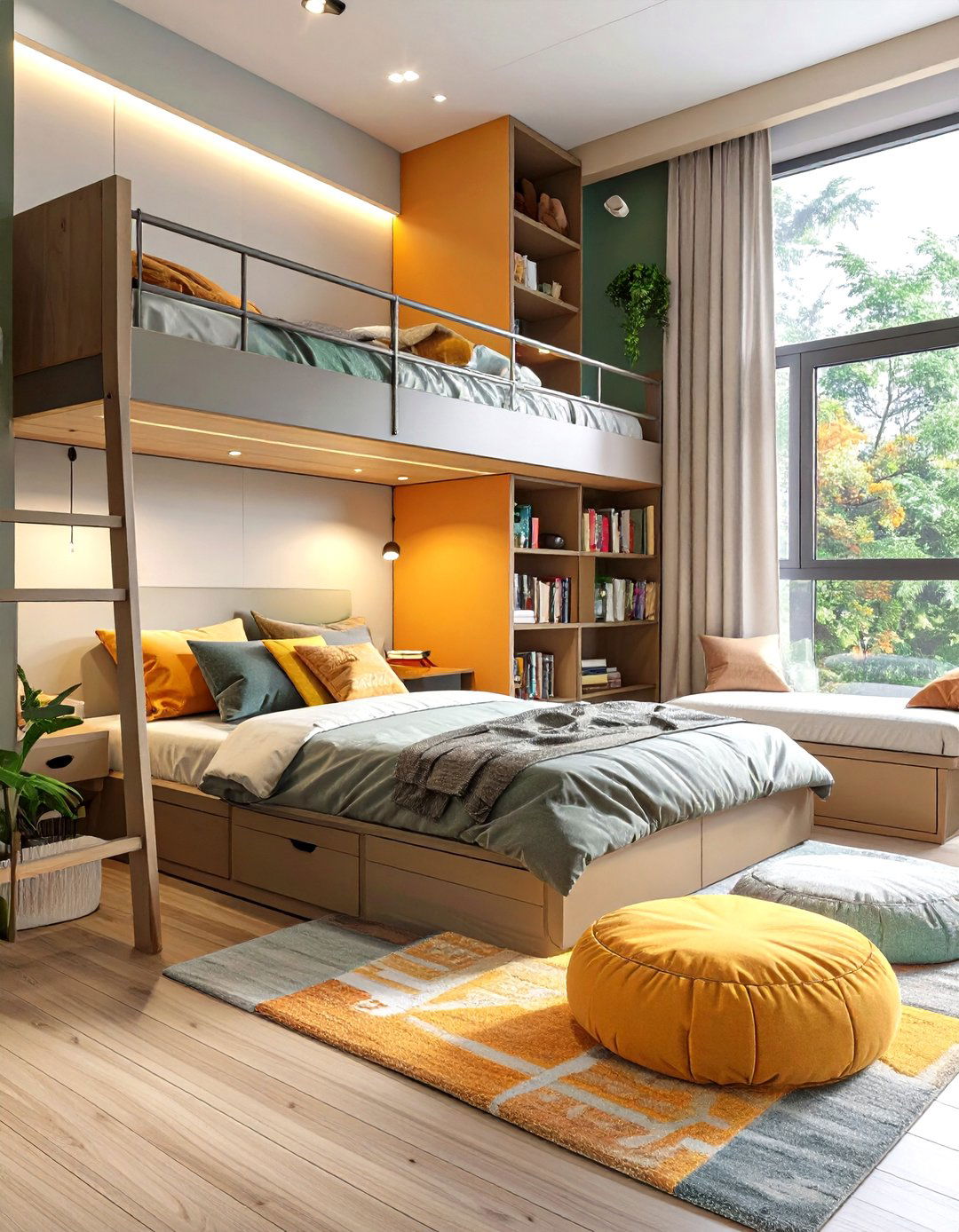
While symmetry creates balance, an asymmetrical layout can add visual interest and a dynamic feel to a shared bedroom. This approach involves arranging furniture and decor in a way that is not a mirror image but still feels balanced. For example, you could have a loft bed on one side of the room and a standard twin bed on the other, balanced by a tall bookshelf or a desk. Asymmetry allows for more flexibility in furniture placement and can be a great way to accommodate different needs and preferences, resulting in a unique and personalized space.
24. Shared Bedroom with a Nautical Theme
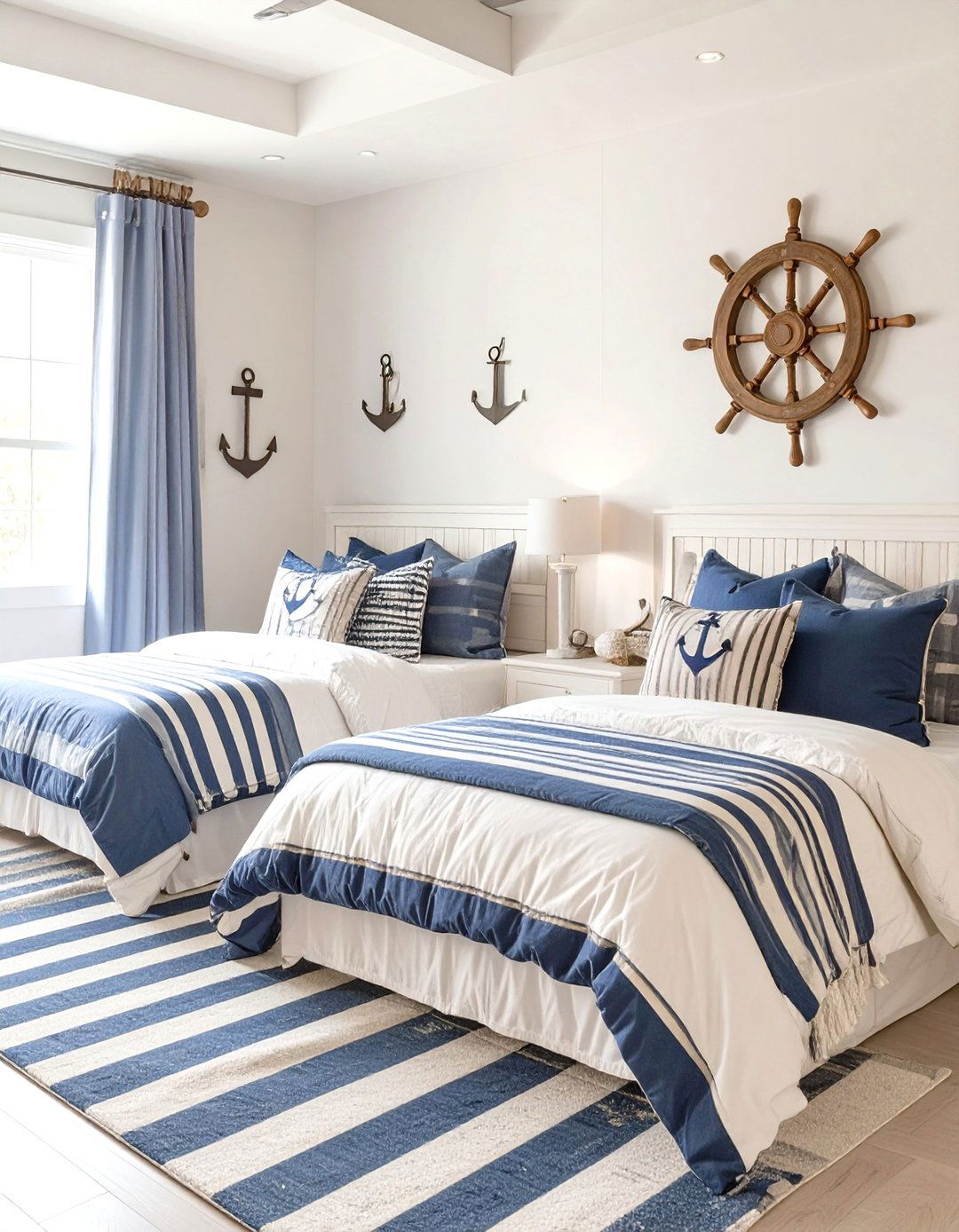
A nautical theme is a classic and versatile choice for a shared bedroom, appealing to a wide range of ages. Use a color palette of navy blue, white, and red, and incorporate elements like stripes, anchors, and ship wheels into the decor. Bedding with boat patterns, rope-wrapped lamps, and framed prints of sailboats can tie the look together. This theme creates a fresh, adventurous atmosphere that feels both fun and organized. It's a great way to create a cohesive design that provides a cheerful and inspiring backdrop for two occupants, making the room feel like a seaside escape.
25. Shared Bedroom Featuring Personalized Name Signs
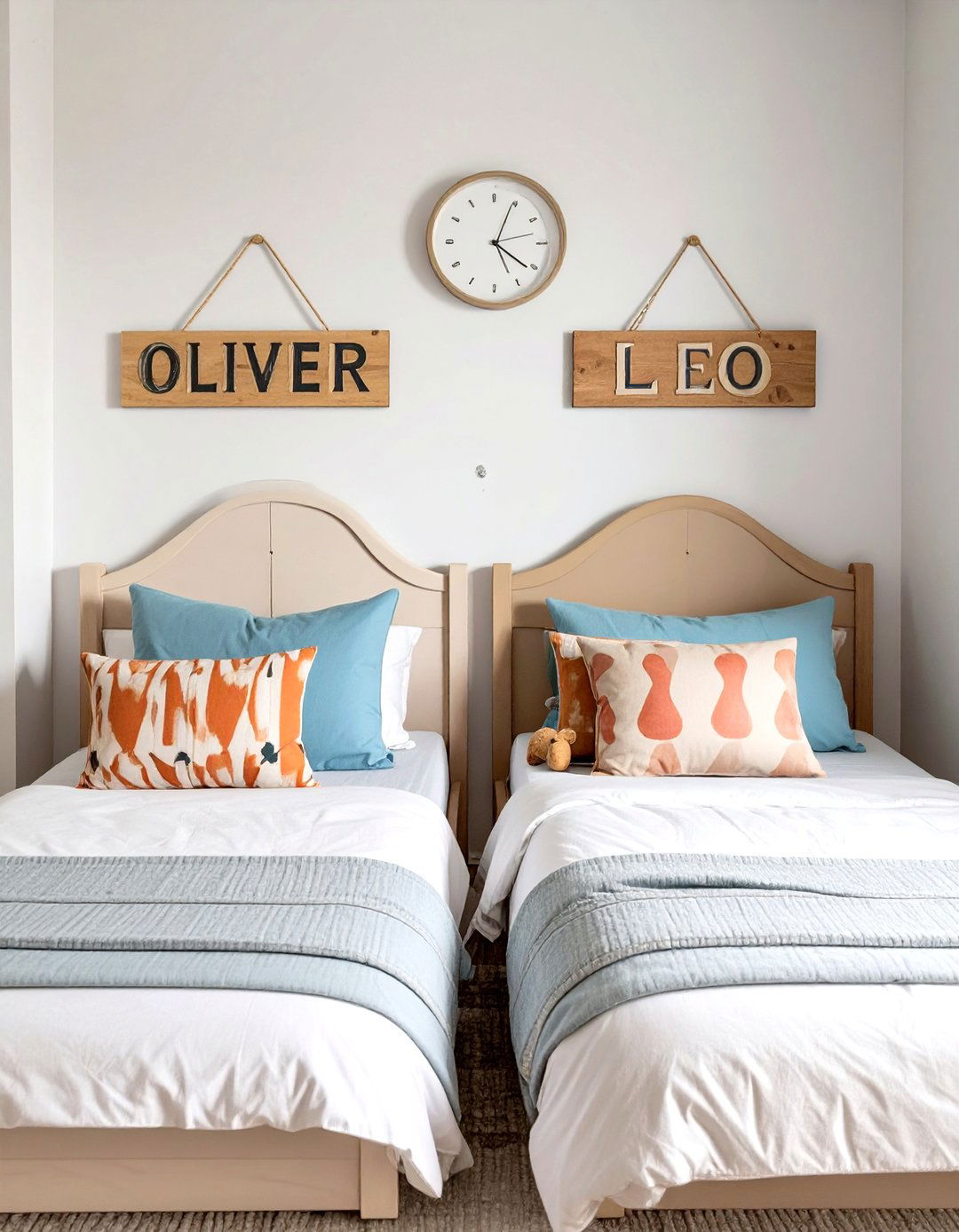
A simple yet highly effective way to define personal space in a shared bedroom is with personalized name signs. Place a wooden, metal, or painted sign above each person's bed or on their side of the room. This clearly marks their territory in a stylish and fun way, giving them a sense of ownership and identity. Name signs can be customized in various fonts, colors, and materials to match the individual's personality and the room's overall decor. It's a small detail that makes a big impact, helping to make each occupant feel recognized and special within the shared environment.
26. Shared Bedroom with Multi-Functional Furniture
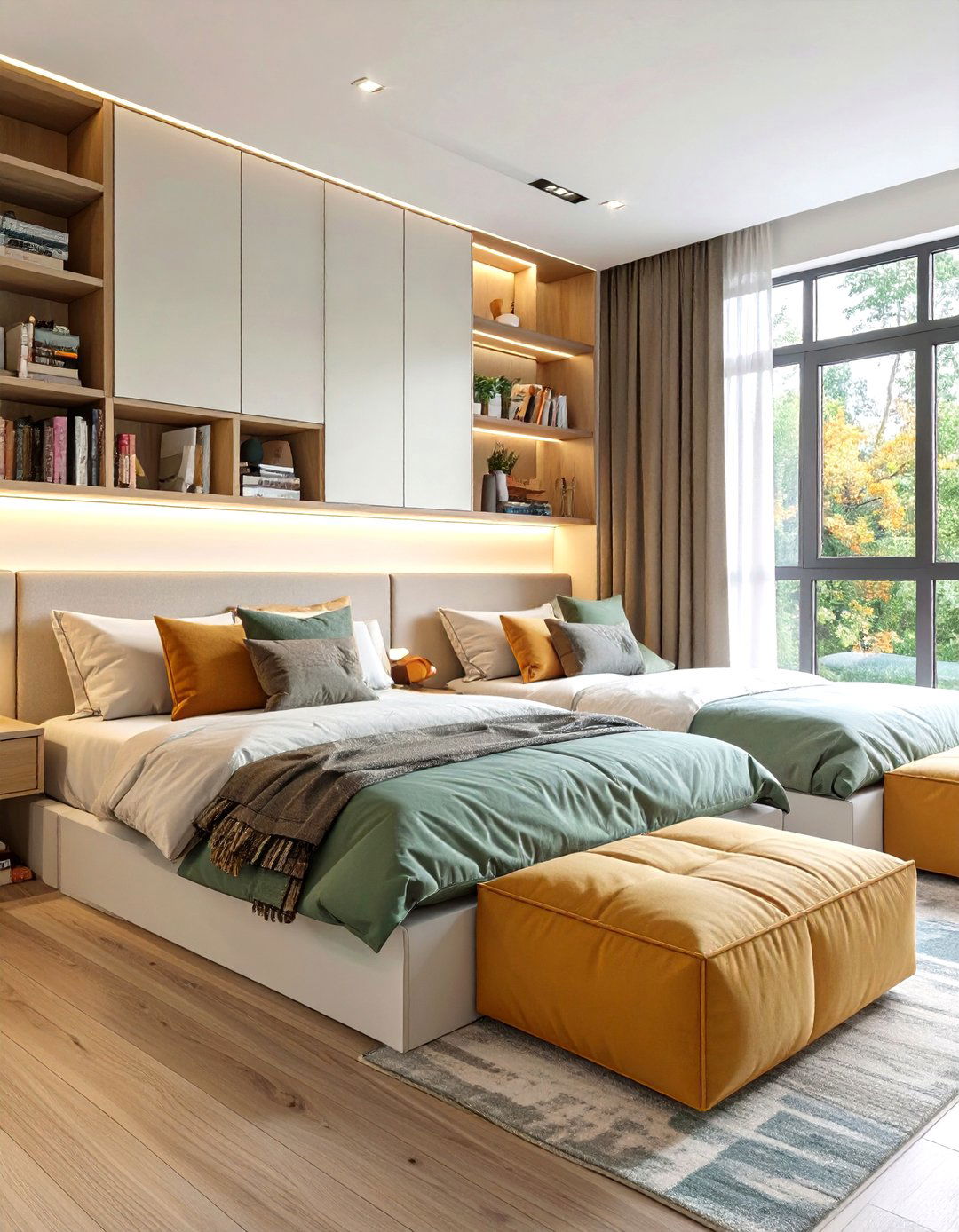
In a shared bedroom, every piece of furniture should work hard. Opt for multi-functional items that serve more than one purpose to save space and reduce clutter. Think of an ottoman that doubles as a storage chest, a headboard with built-in shelving, or a desk that can also function as a vanity. These smart pieces help you get the most out of a limited area, ensuring the room remains practical and organized. By choosing furniture that is both versatile and stylish, you can create a highly efficient space that meets the needs of both occupants without feeling crowded.
27. Shared Bedroom with Wall-Mounted Headboards
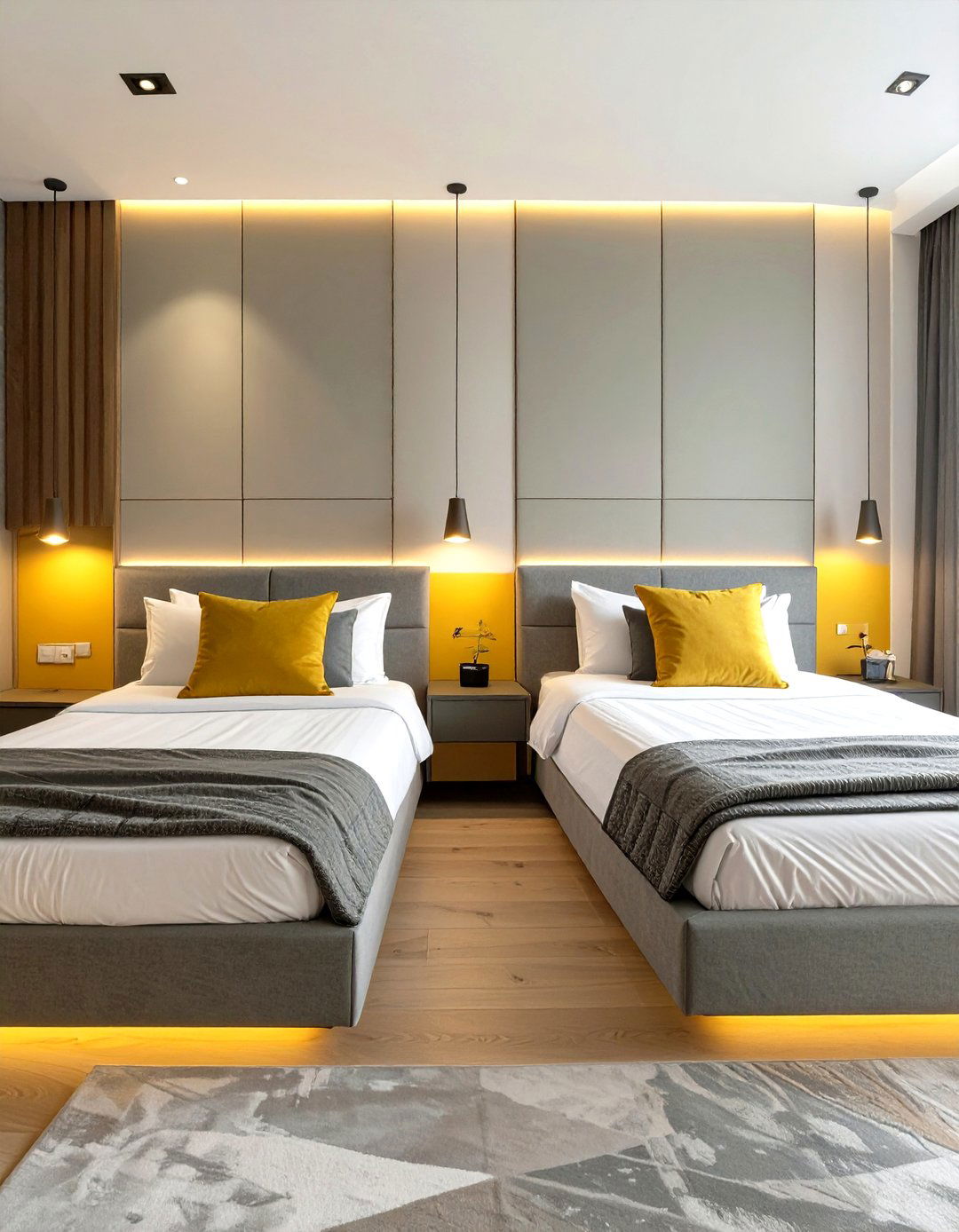
Save precious floor space and create a sleek, modern look with wall-mounted headboards. These can be upholstered panels, reclaimed wood planks, or even painted designs that are attached directly to the wall behind each bed. This eliminates the bulk of a traditional bed frame and frees up a few extra inches of room, which can make a big difference in a small space. Wall-mounted headboards also create a custom, built-in feel and can be a great way to introduce color, texture, and personality into the room’s design while maintaining a clean and uncluttered aesthetic.
28. Shared Bedroom with Coordinated Area Rugs
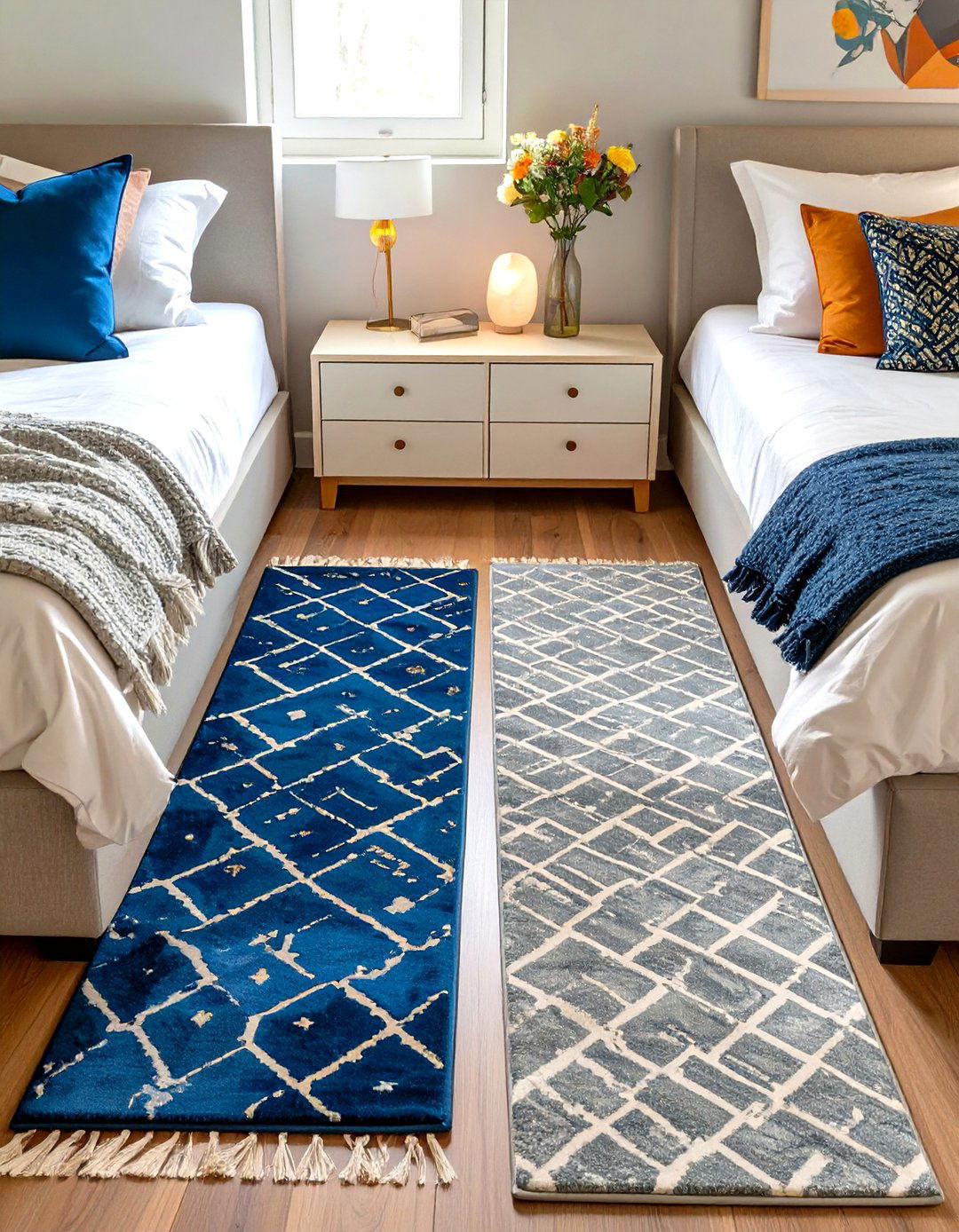
Use area rugs to define individual zones and add warmth and texture to a shared bedroom. Place a separate, smaller rug by each bed to create a distinct personal space for each occupant. The rugs can be identical for a symmetrical look or complementary in color and pattern to reflect individual tastes while still looking cohesive. Rugs also help to dampen sound, which is a bonus in a shared environment. This is a simple and effective way to visually separate the room, add a layer of comfort, and tie the overall design scheme together beautifully.
29. Shared Bedroom with a Neutral Foundation
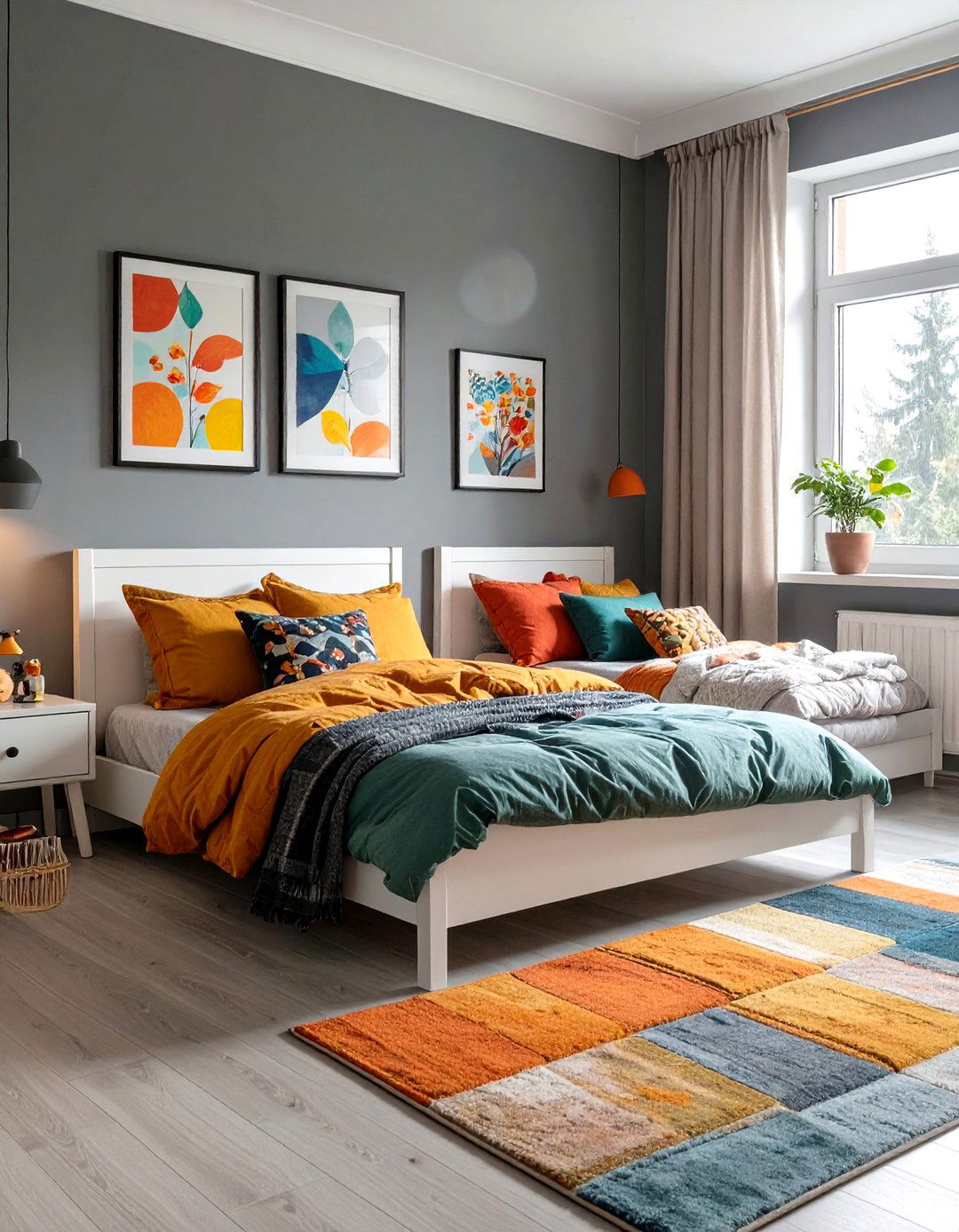
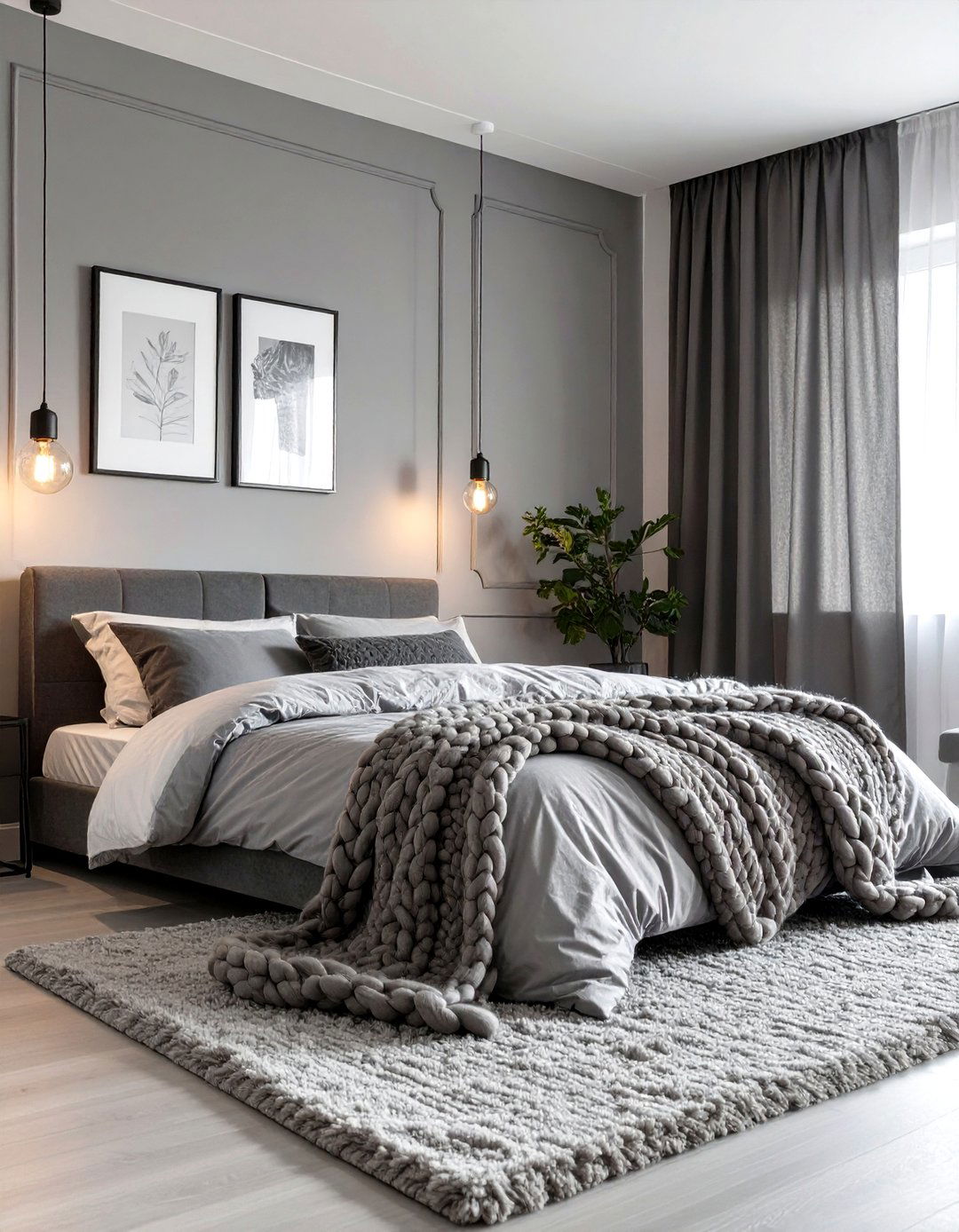
Creating a shared bedroom with a neutral foundation offers a versatile and timeless backdrop that can easily be adapted to suit changing tastes. Walls painted in soft grays, warm beiges, or classic whites provide a calm and serene atmosphere. This allows for personalization through more easily changeable items like bedding, pillows, artwork, and accessories. A neutral base is perfect for siblings of different genders or ages, as it avoids specific themes that one might outgrow. It creates a sophisticated and cohesive space that feels peaceful, organized, and welcoming to both individuals sharing the room.
30. Shared Bedroom Featuring a Reading Nook
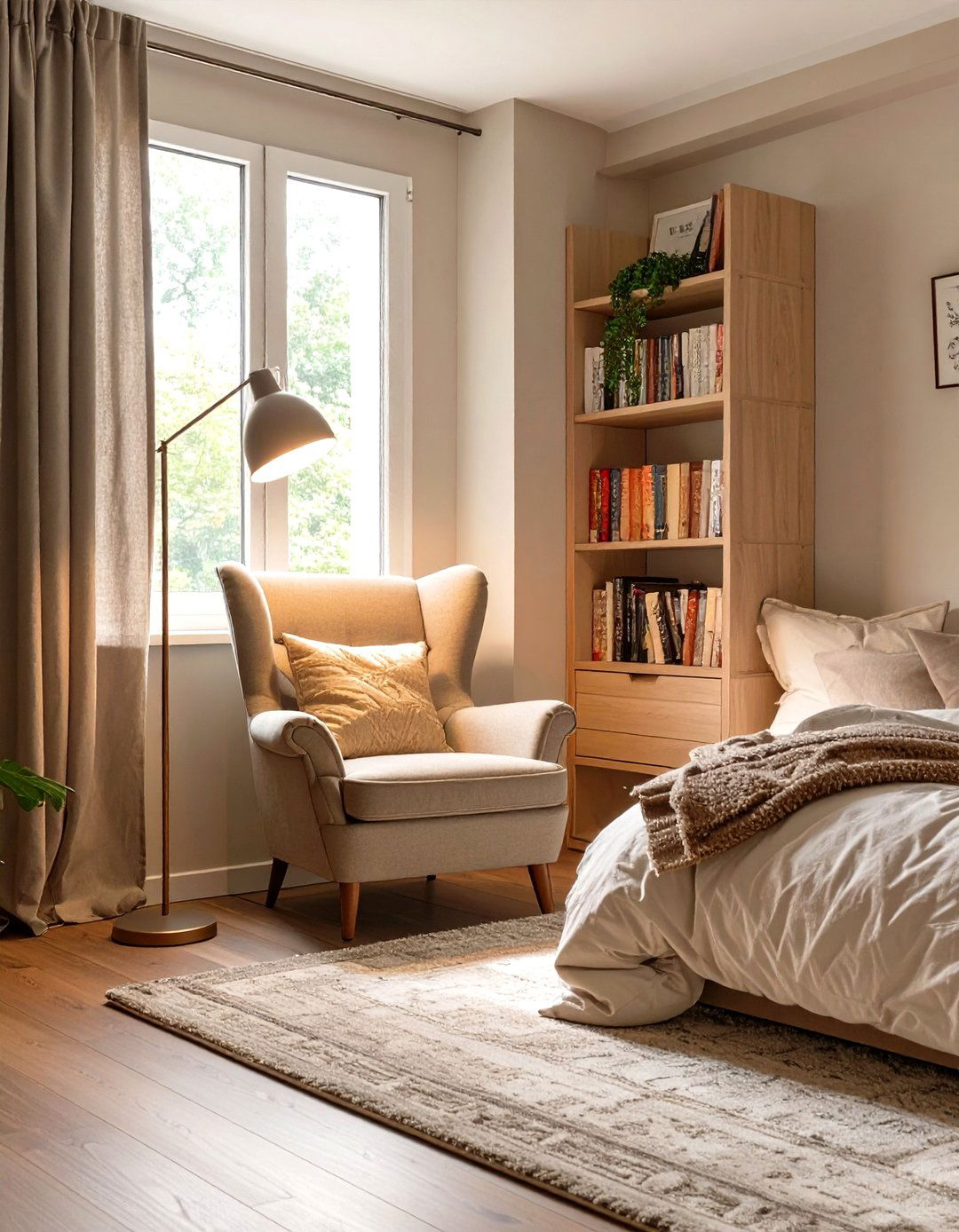
Encourage a love for books and provide a quiet retreat by creating a cozy reading nook in a shared bedroom. This can be as simple as a comfortable armchair or a pile of floor cushions tucked into a corner, paired with a small bookshelf and a good reading lamp. If space is limited, a window seat with built-in storage can be a perfect solution. A dedicated reading nook offers a peaceful escape within the room, allowing one person to read quietly while the other is sleeping or studying. It adds a charming and functional element to the space.
Conclusion:
Creating a successful shared bedroom hinges on balancing personal space with a cohesive design. The key is to implement smart solutions that maximize space, provide adequate storage, and define individual territories. Whether through vertical bed arrangements like bunks, clever room dividers, or coordinated decor, the goal is to foster harmony and functionality. By embracing ideas that cater to the unique needs and personalities of each occupant, you can transform any shared room into a comfortable, organized, and cherished personal haven for everyone involved.

Related posts:



Leave a Reply