
A driveway takes up a large part of the front yard, so its landscaping should feel intentional rather than added as an afterthought. The best landscaping driveway ideas combine the surface, layout, borders, plants, lighting, and walkway into one practical design. Sweeping beds can soften wide pavement, while strong edging keeps gravel and soil neatly separated. Trees add height, low shrubs preserve visibility, and repeated plants guide the eye toward the house. Your climate, available space, drainage, maintenance goals, and home style should shape every choice. Whether you have a short concrete pad or a long country lane, thoughtful landscaping can create a more welcoming arrival. Explore these complete and achievable landscaping driveway ideas for inspiration. ()

1. Curved Concrete Driveway With Layered Planting
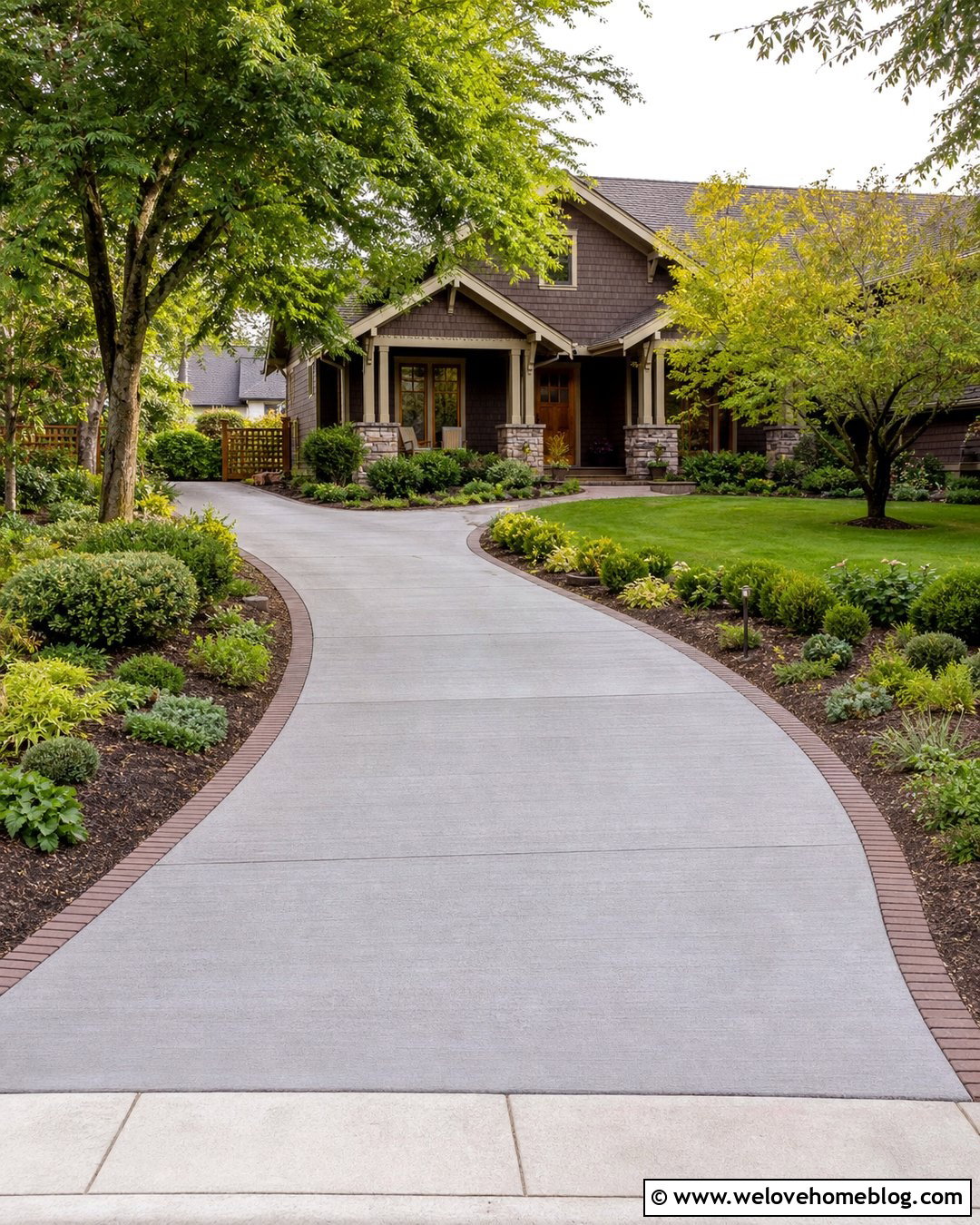
A curved concrete driveway looks more natural when broad planting beds follow its shape. Use a crisp brick or stone border to separate the pavement from the soil. Then arrange plants in layers, placing ground covers near the driveway, rounded shrubs behind them, and small ornamental trees farther into the yard. This keeps taller growth away from vehicle doors and important sightlines. Repeat a limited group of plants along the curve instead of adding many unrelated varieties. The repetition helps connect the driveway entrance, front walkway, and house. Leave enough open space beside the pavement for snow storage, drainage, and occasional vehicle overhang. Low landscape lights positioned within the beds can also make the curve easier to follow after dark. ()
2. Gravel Driveway With Stone Edging And Lavender
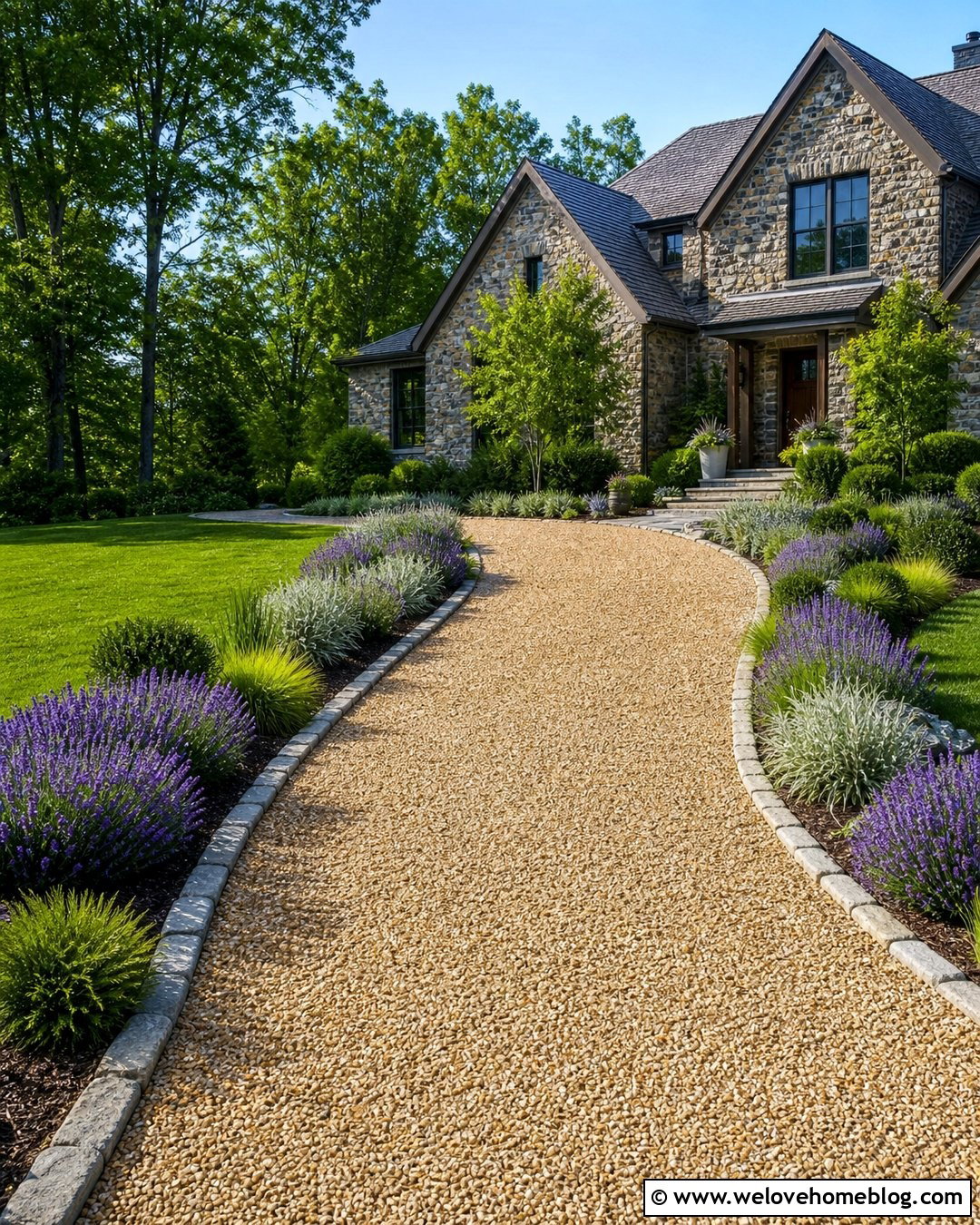
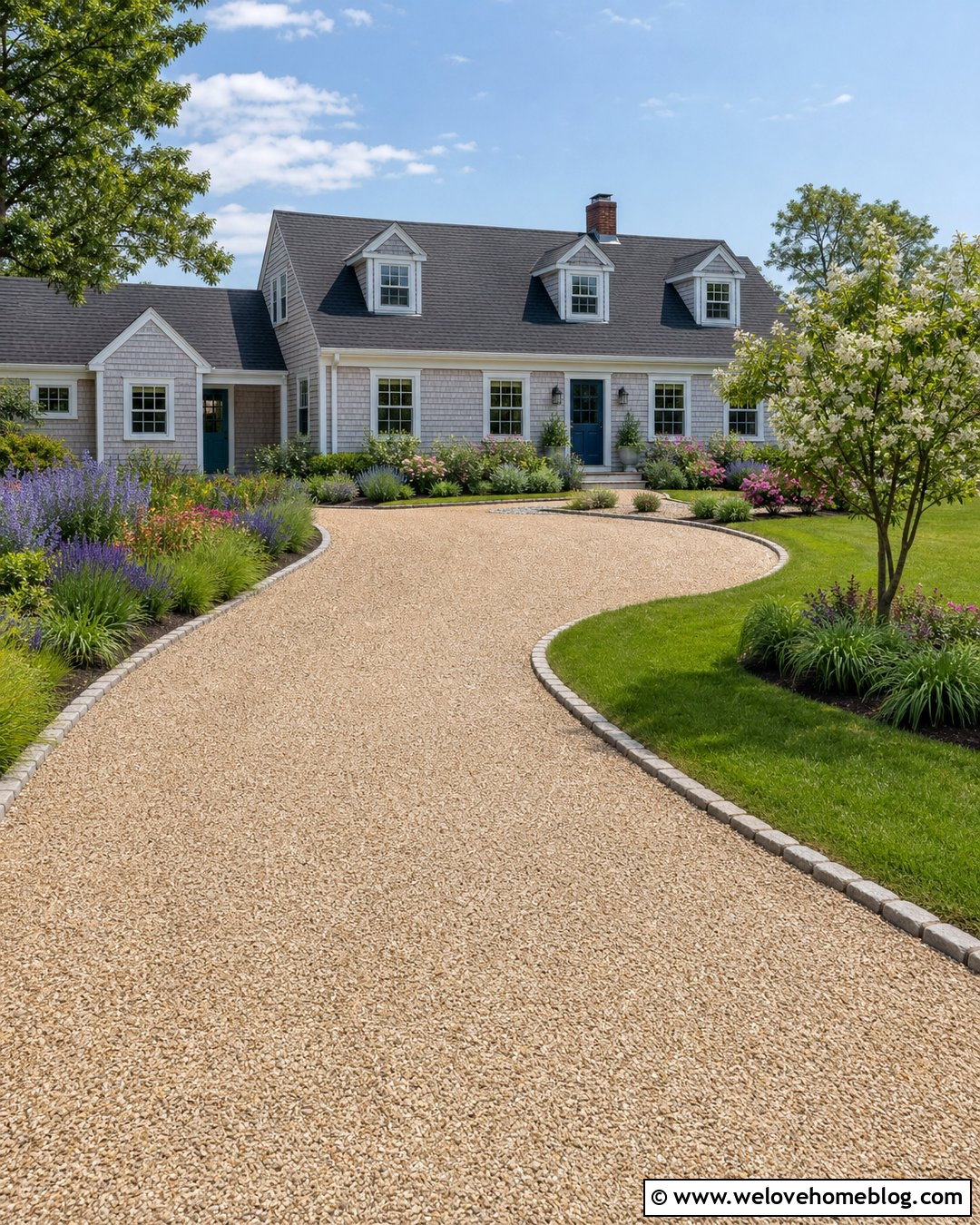
Loose gravel gains a polished appearance when it is contained by a sturdy stone border. Choose warm pea gravel or angular tan gravel, then frame the driveway with granite setts, cobblestones, or locally available fieldstone. Along the sunniest edge, create wide beds filled with lavender, compact ornamental grasses, and silver-leaved perennials suited to your climate. Their soft forms balance the rough texture of the gravel. A gently curved layout works especially well because the stone edging emphasizes every turn. Install a properly prepared base and a rigid border so gravel stays on the driveway instead of spreading into beds and lawn. Near the house, connect the drive to a matching stone walkway for a coordinated finish. ()
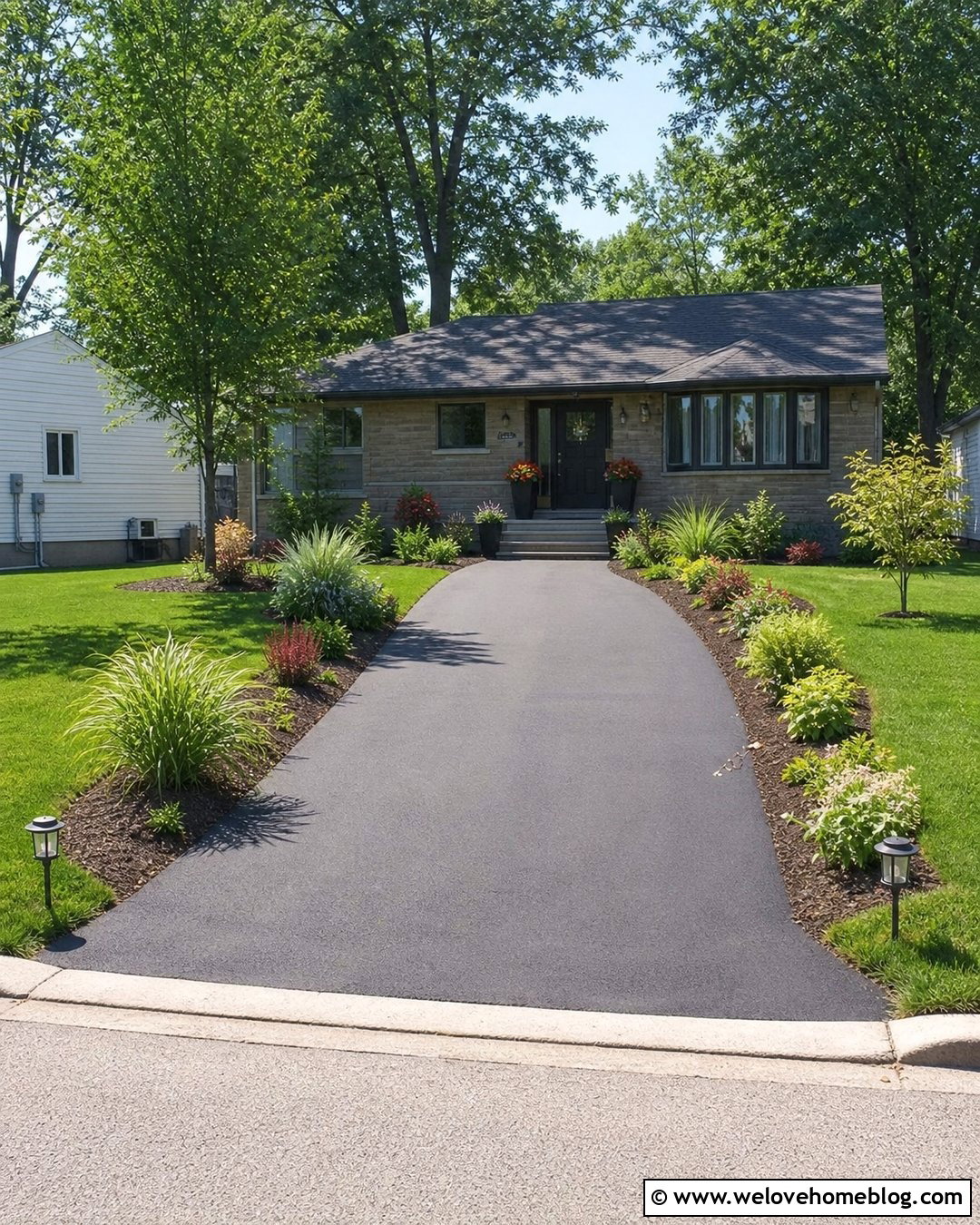
3. Asphalt Driveway With Brick Border And Foundation Beds
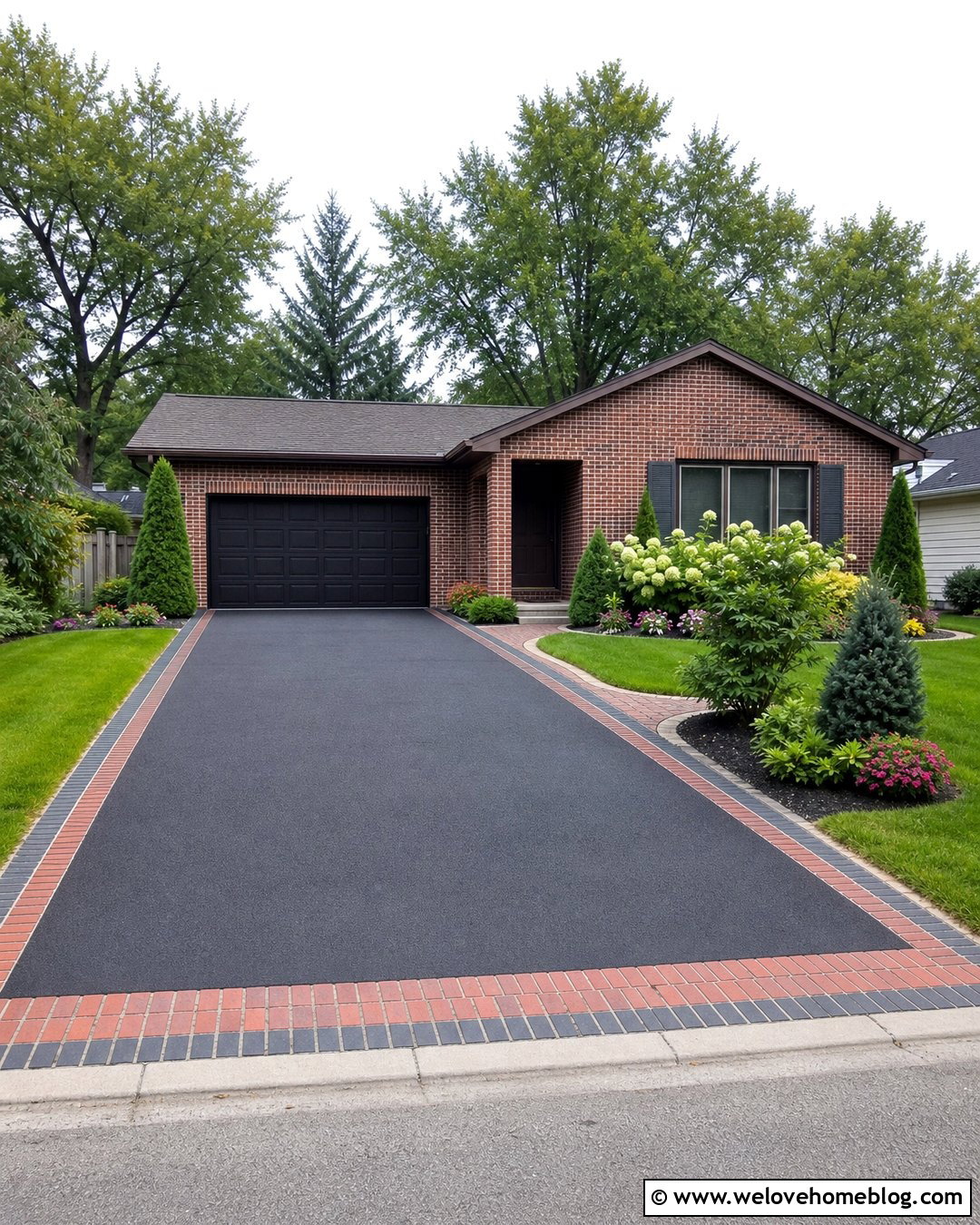
Black asphalt can look sharp and finished when a red or charcoal brick ribbon outlines both sides. The contrast creates definition while connecting the driveway to a brick home, chimney, porch, or front walkway. Add gently curved foundation beds where the drive approaches the garage. Use compact evergreens as the structural layer, then mix in flowering shrubs and easy-care perennials for seasonal color. Keep the beds wider near the house and narrower toward the street to make the entrance feel open. Plants closest to the asphalt should tolerate reflected heat and occasional road salt where winter conditions apply. A small matching brick apron at the curb can reinforce the border and make this affordable driveway surface feel more customized.
4. Paver Driveway With Grass Strips And Boxwood
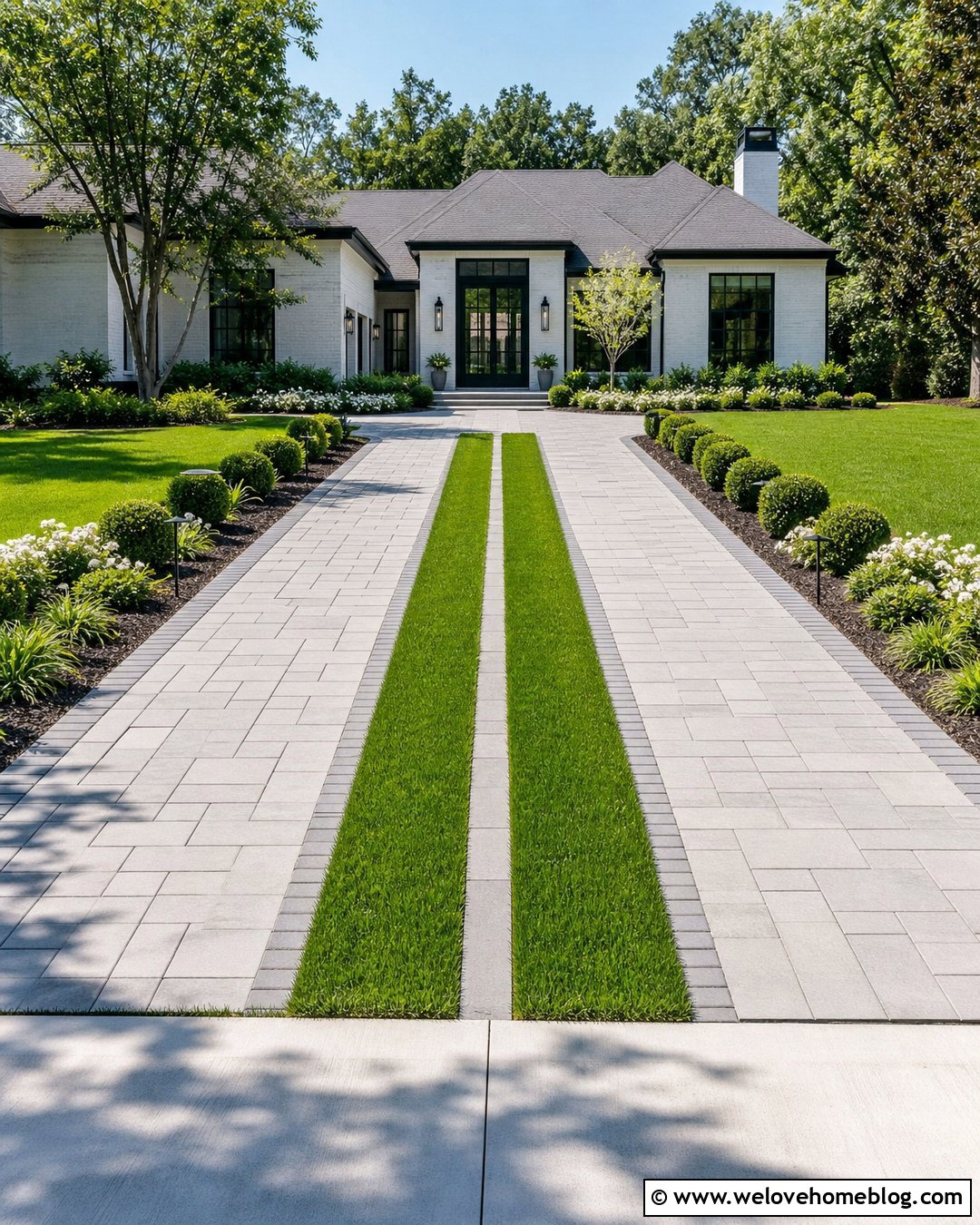
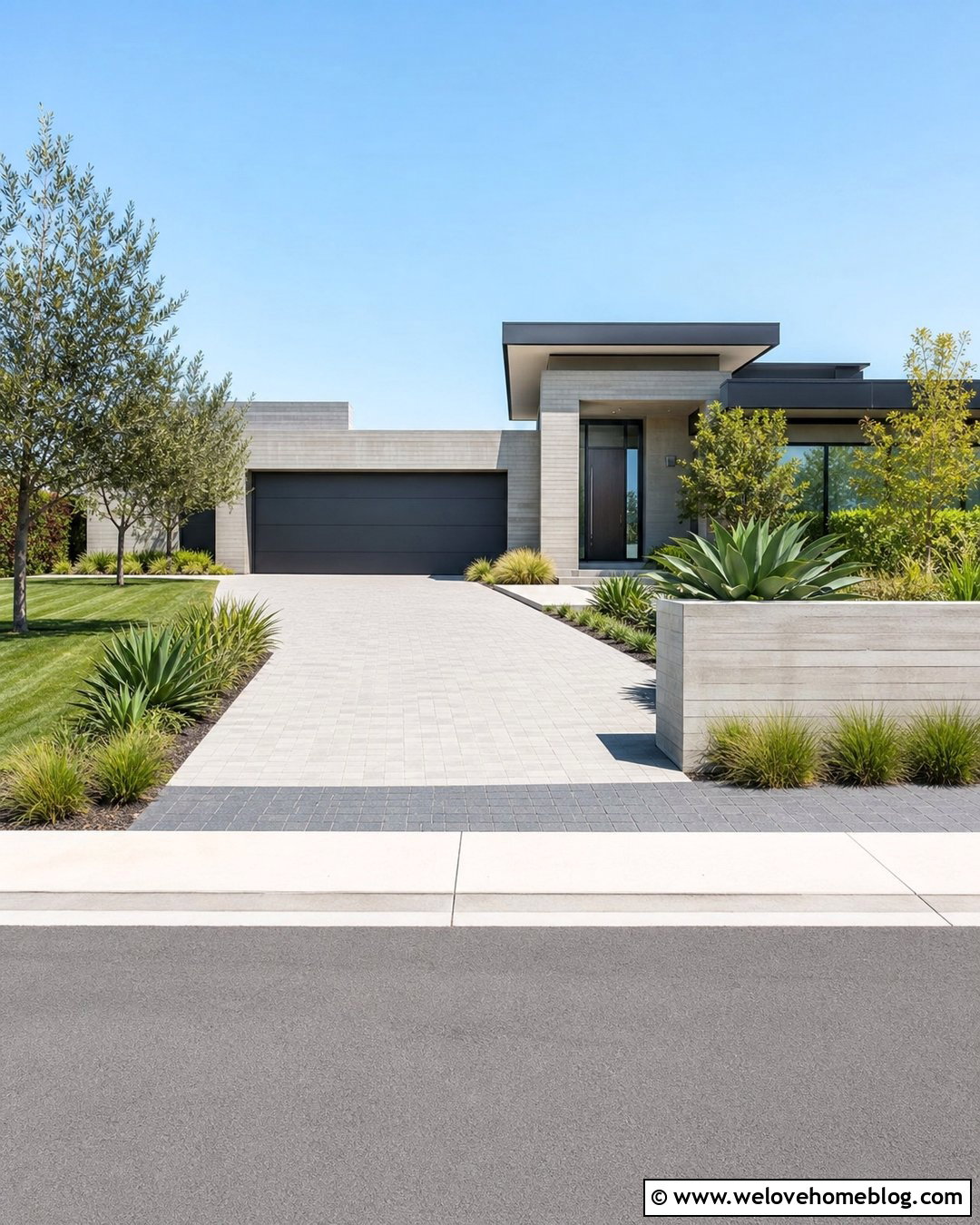
Concrete pavers arranged in two driving lanes can reduce the visual weight of a wide driveway. Fill the center and selected joints with reinforced turf or another traffic-tolerant ground cover appropriate for the site. Frame the layout with a soldier-course paver border that locks the design together. Low boxwood alternatives, compact native shrubs, or neatly clipped evergreens can repeat along the outer edges without crowding vehicles. This structured treatment complements modern, transitional, and traditional homes. Keep the planting palette restrained, especially if the paver pattern is detailed. A straight stone walkway leading from the driveway to the front door adds another clear line. Proper drainage and a professionally prepared base remain important for keeping the pavers level and stable. ()
5. Circular Driveway With Central Garden
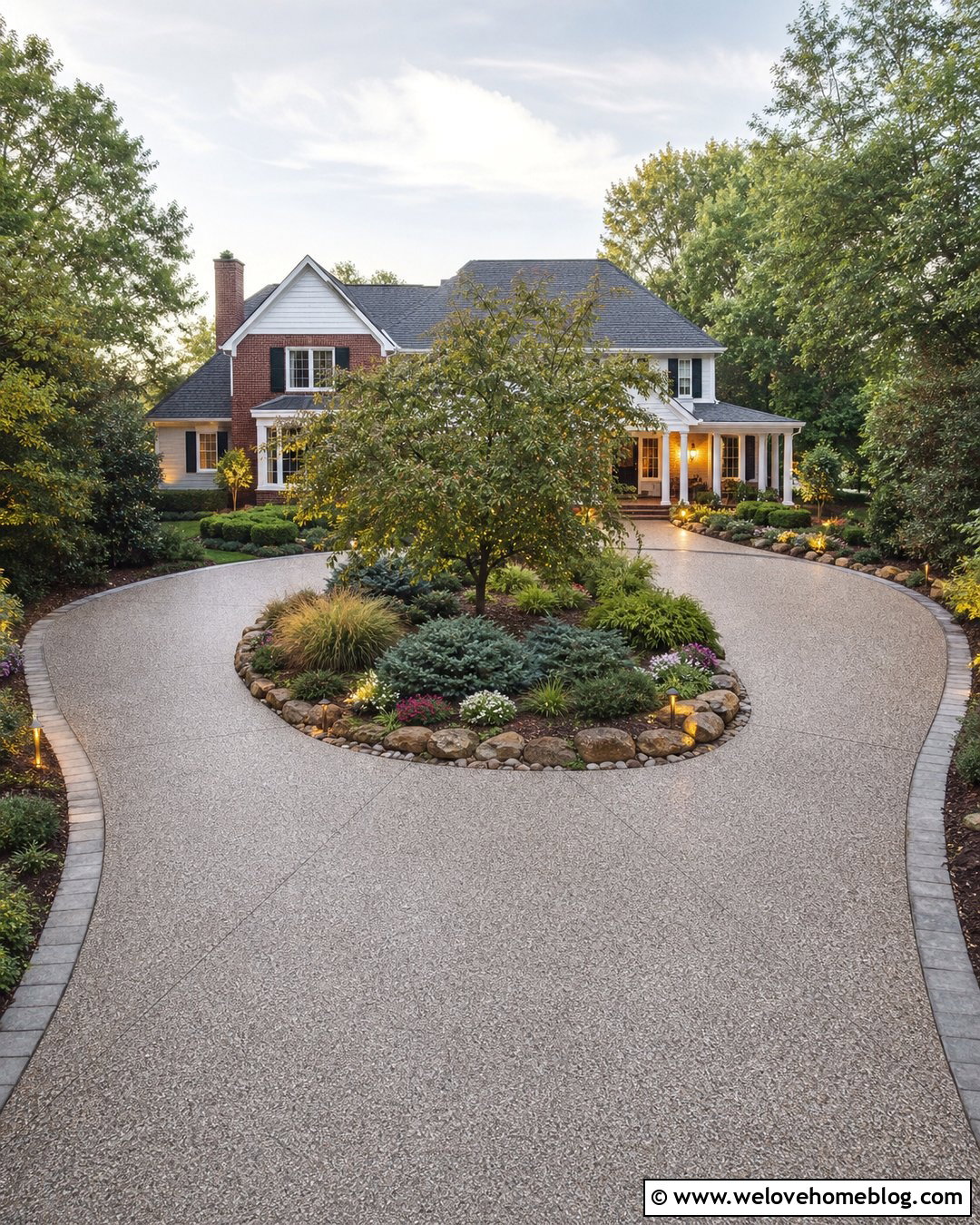
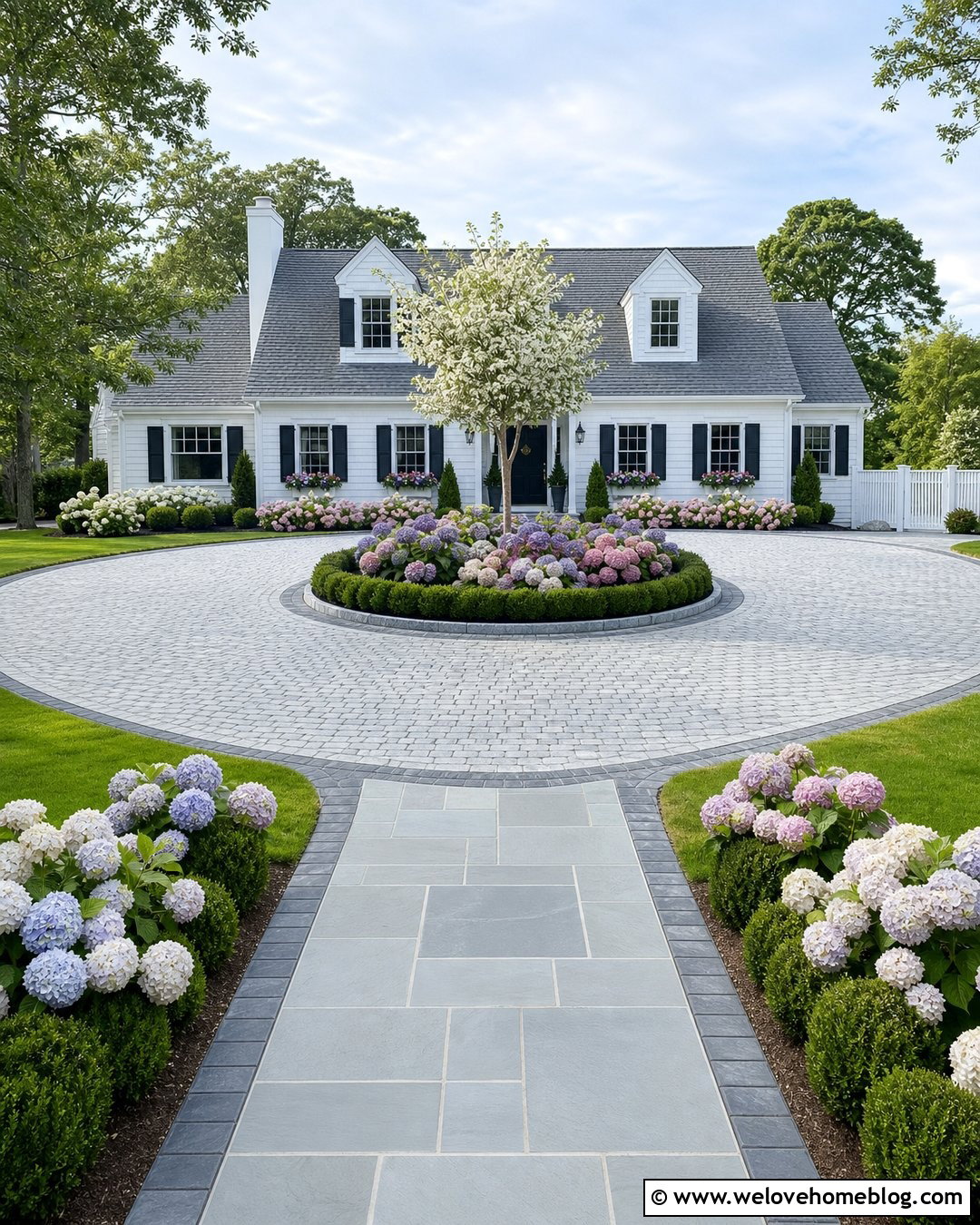
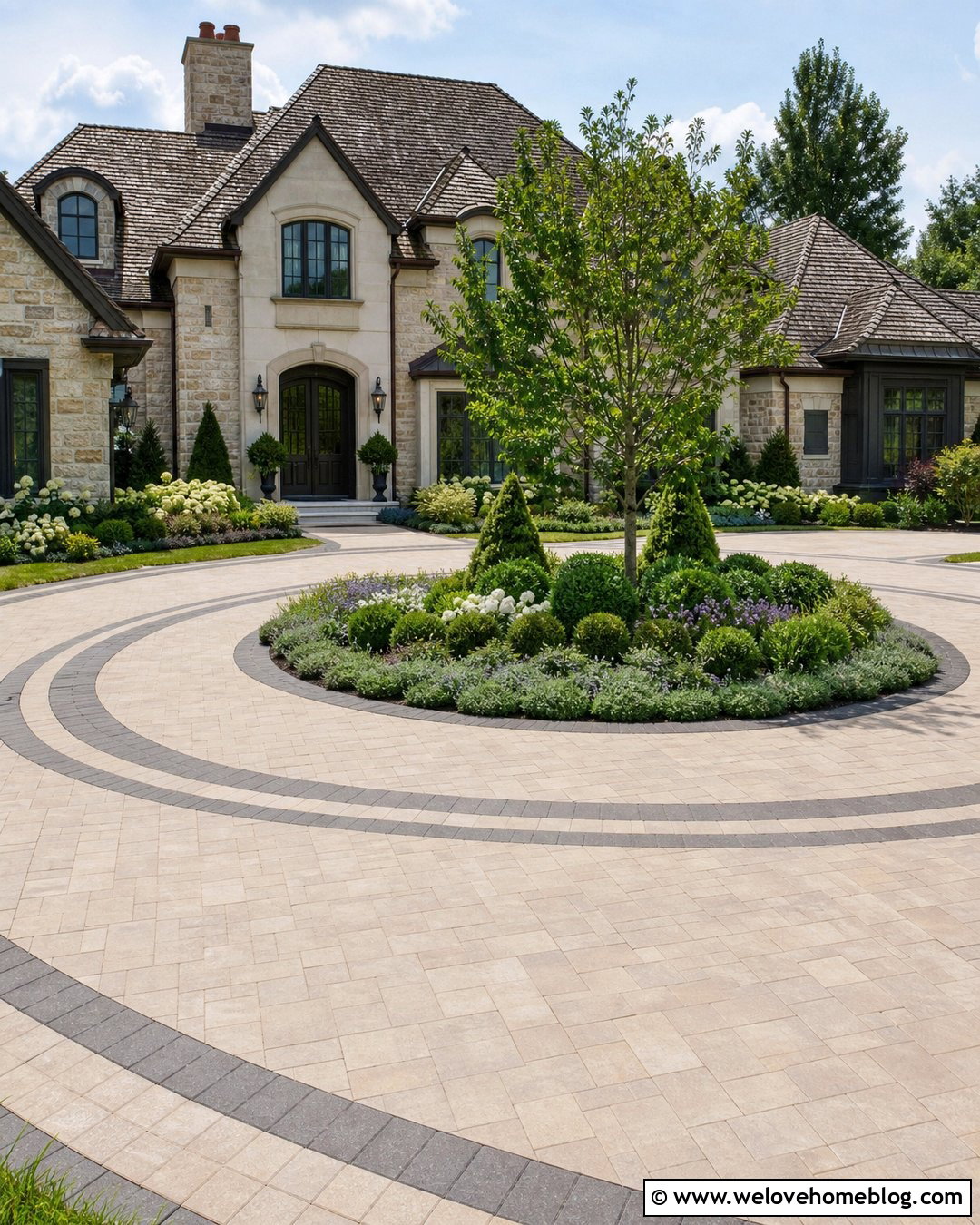
The center of a circular driveway offers enough room to create a true front-yard focal point. Start with one appropriately scaled ornamental tree, then surround it with layered shrubs, grasses, flowering perennials, and a defined stone edge. Avoid placing a large tree in a small island, where roots and branches may eventually interfere with vehicles. A broad island can support a more natural planting scheme, while a compact circle usually looks better with fewer species. Repeat one or two plants around the outer driveway edge to visually connect the island with the rest of the yard. A paver or exposed-aggregate surface gives the circle clear definition, and subtle lighting can highlight the tree without filling the island with visible fixtures. ()
6. Modern Concrete Driveway With Ornamental Grasses
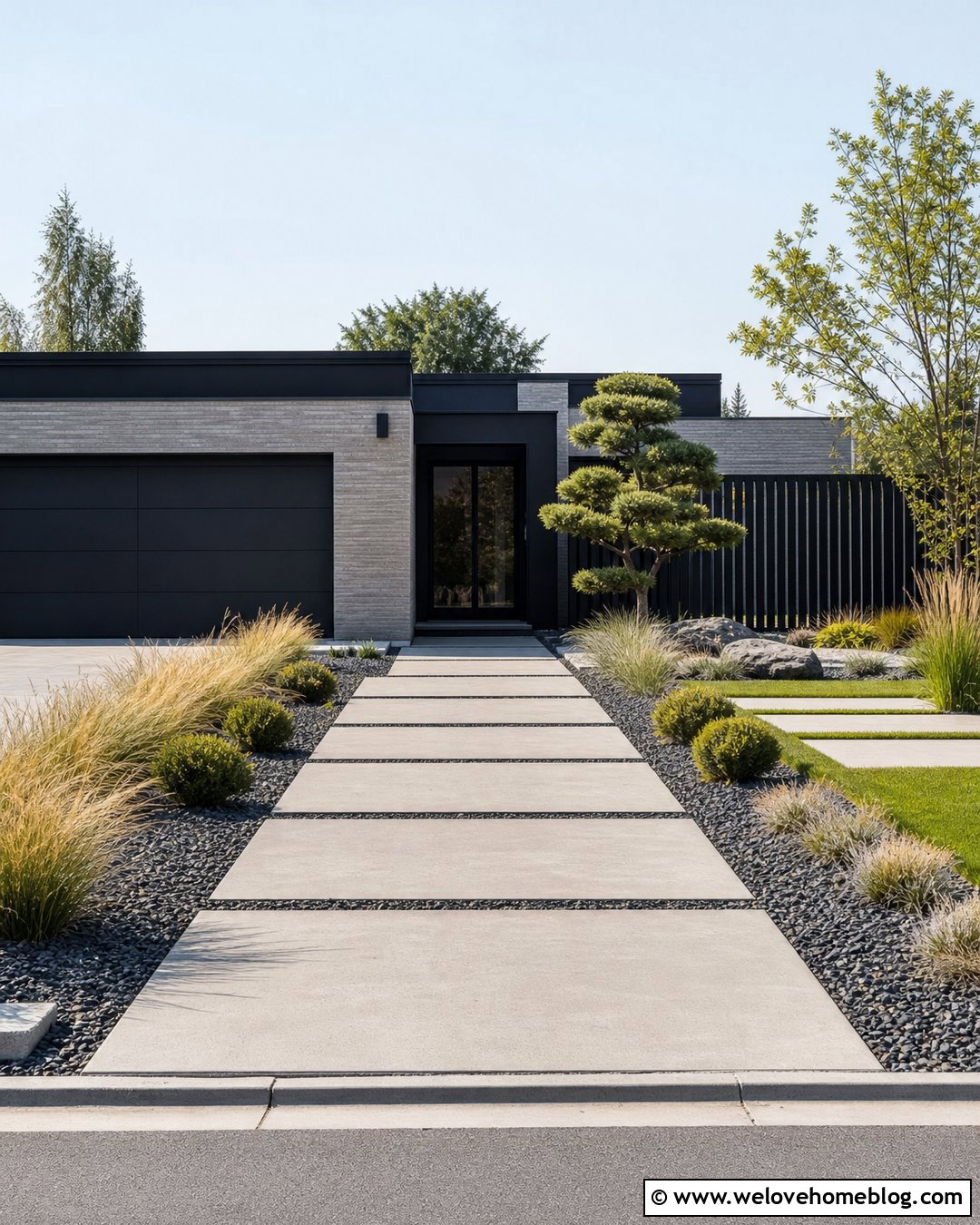
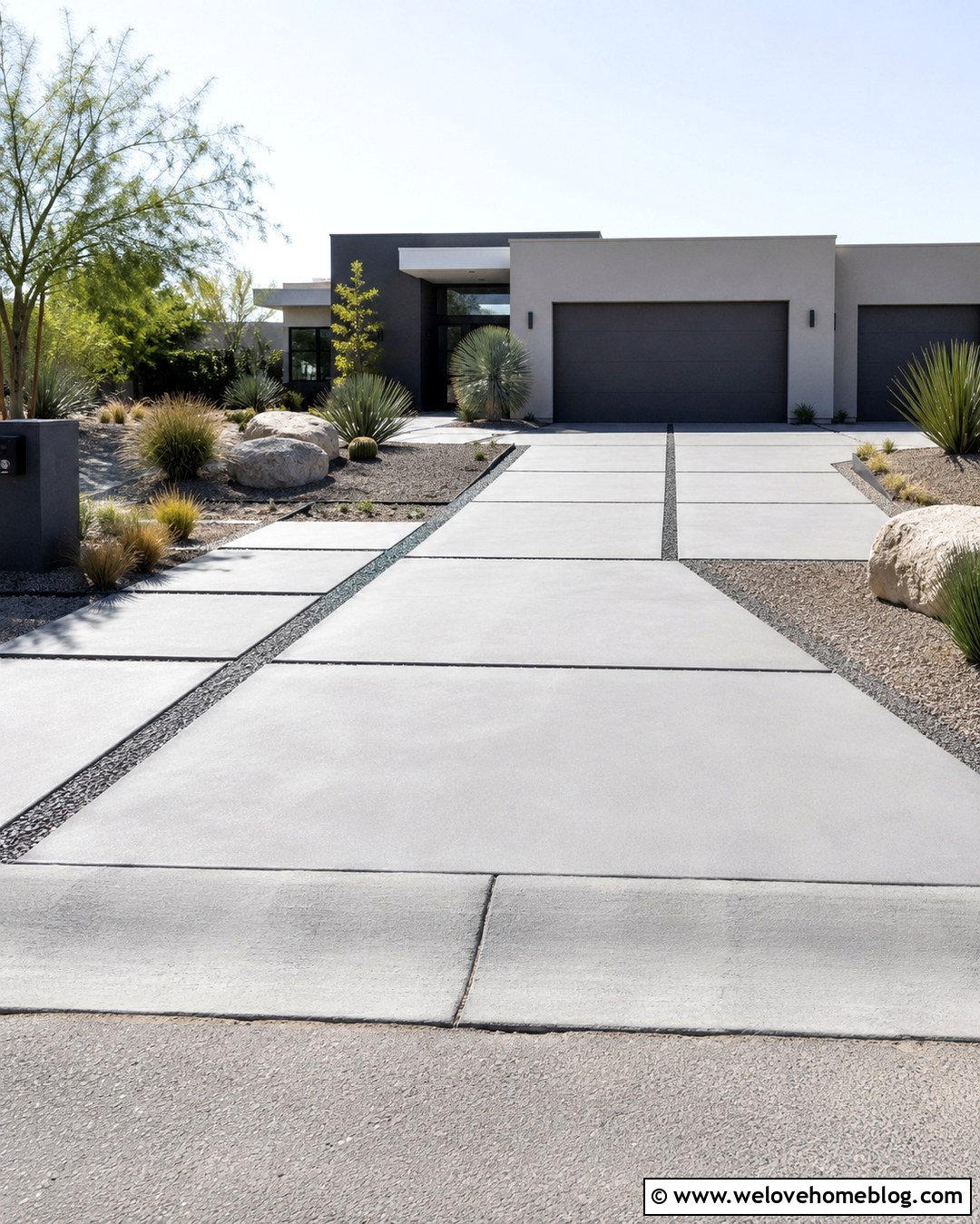
Large rectangular concrete slabs create a clean foundation for contemporary driveway landscaping. Use dark gravel joints or narrow grass strips to break up the surface, then continue those linear shapes into the surrounding beds. Plant ornamental grasses in repeated groups rather than scattering individual plants. Add low evergreen mounds, architectural succulents where the climate allows, and one sculptural tree near the house. Black steel edging provides a precise transition between decorative gravel, planting beds, and lawn. Keep the driveway’s entrance open and avoid tall plants near street corners. The strongest modern schemes use a small selection of colors and textures, allowing the concrete pattern and house architecture to remain visible. Recessed or low-profile lighting can reinforce the driveway’s straight geometry after sunset. ()
7. Long Gravel Driveway With Tree-Lined Entrance
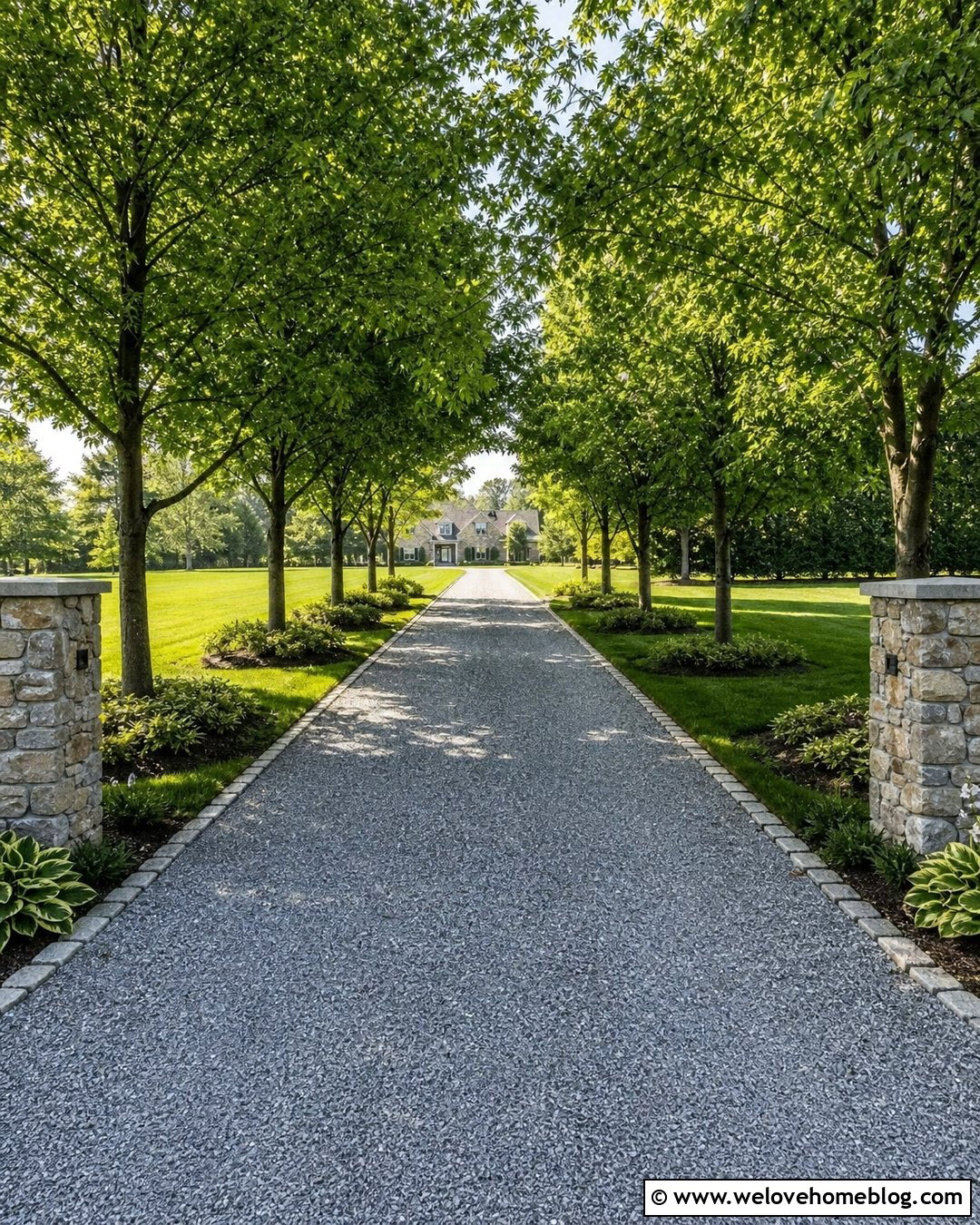
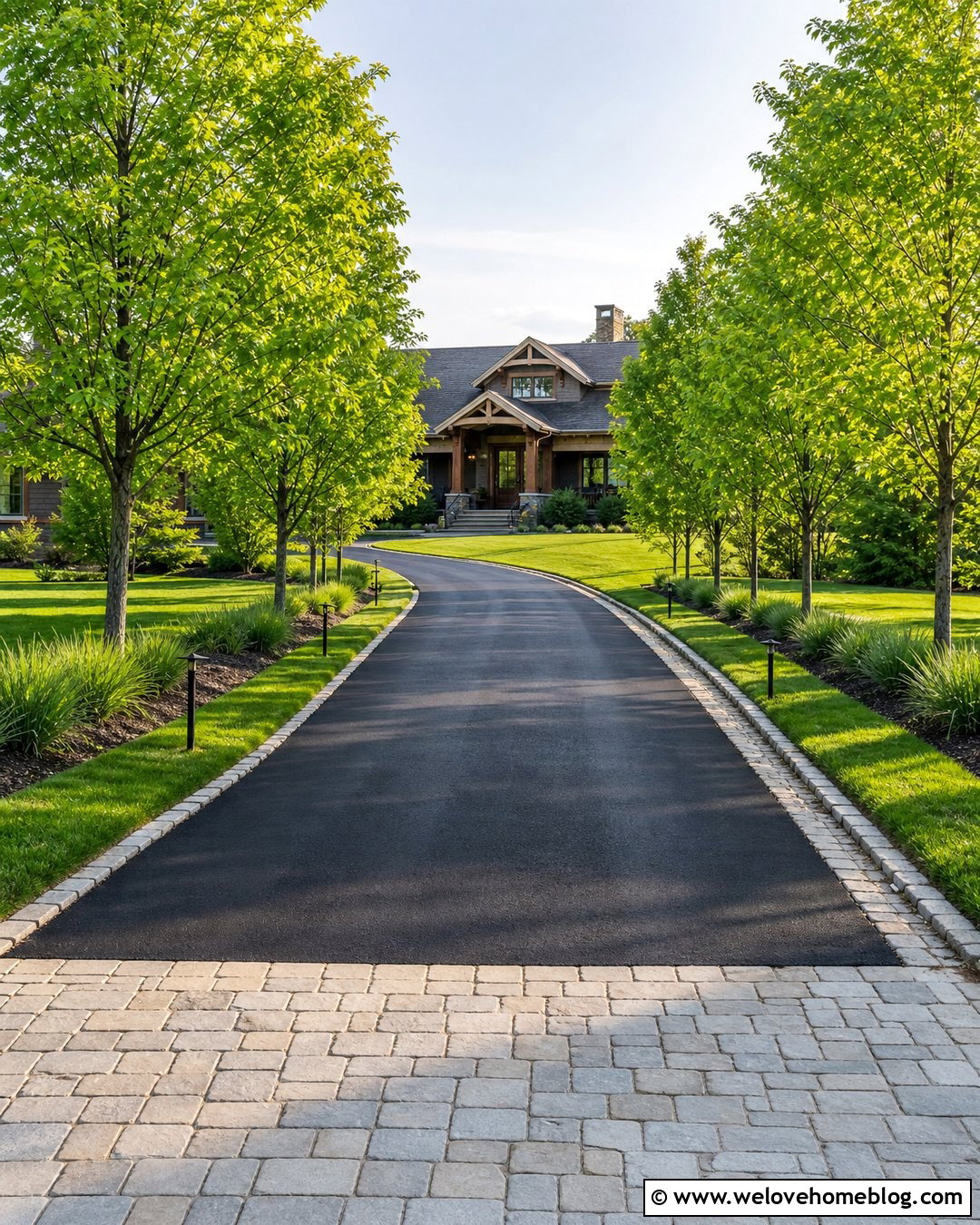
Nothing frames a long approach quite like evenly spaced trees extending toward the house. Pair a gray crushed-stone driveway with cobblestone edging and generous planting strips on both sides. Choose trees that fit the available width at maturity and will not create low branches over vehicles. Place them far enough from the driveway to protect the surface from large roots and provide comfortable door clearance. Beneath the trees, use a simple ground cover, mown grass, or broad sweeps of shade-tolerant perennials. Stone entrance pillars can mark the beginning without making the lane feel closed. For a relaxed country look, vary the lower planting slightly while maintaining consistent tree spacing. This creates rhythm and draws attention toward the home at the end of the drive. ()
8. Small Driveway With Narrow Planting Beds
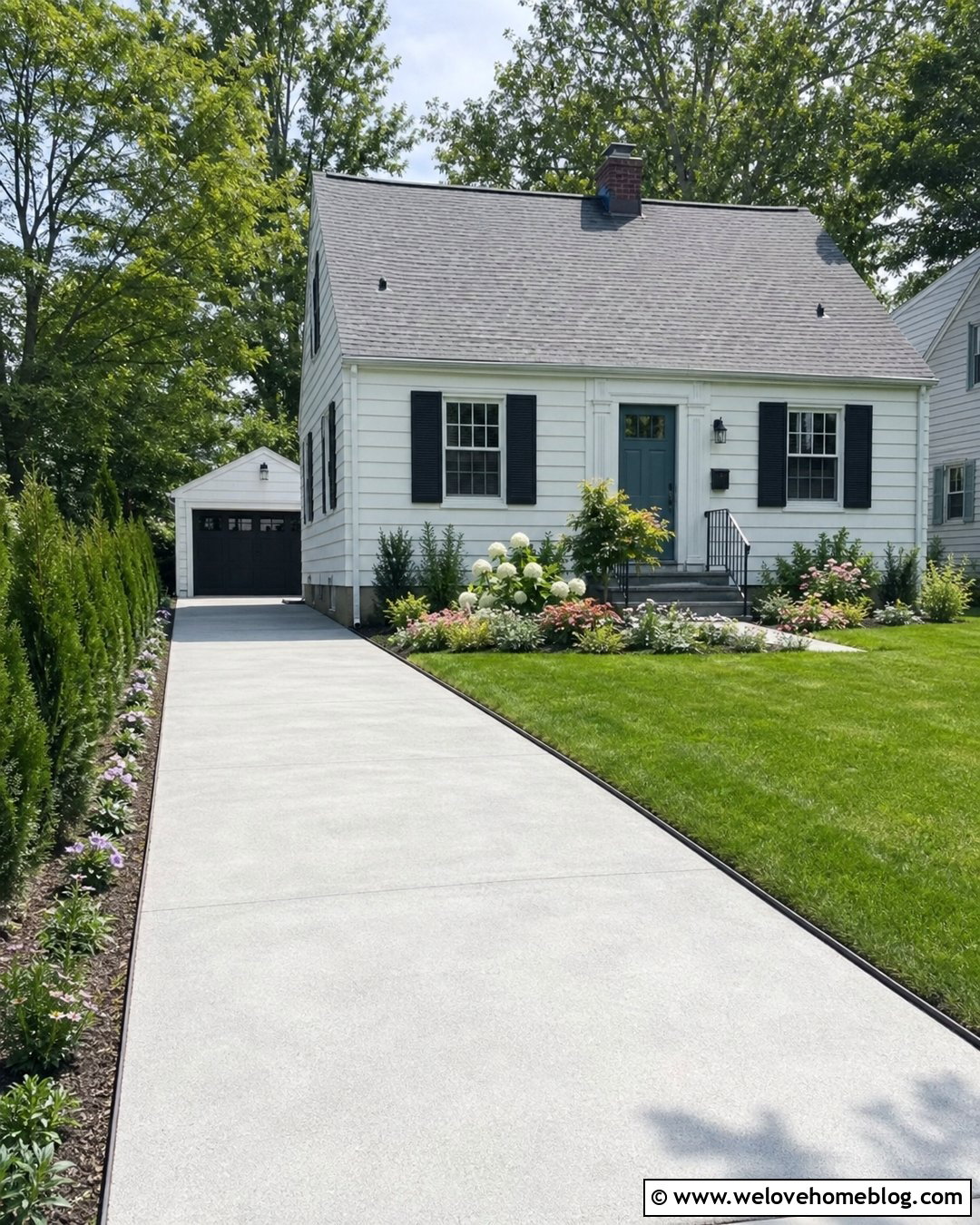
Limited frontage does not mean the driveway has to dominate the entire yard. A compact poured-concrete or paver driveway can be softened with narrow beds that widen near the front walkway. Use upright plants, compact shrubs, and low ground covers that remain inside their allotted space. Avoid thorny growth or floppy flowers beside vehicle doors. A flush brick or metal edge keeps the planting neat without reducing usable driveway width. If there is only room on one side, make that bed substantial enough to look intentional and connect it to the home’s foundation landscaping. The opposite side can feature a clean lawn edge or slim gravel strip. Wall-mounted garage lights and a few low path fixtures provide illumination without adding clutter to the small landscape. ()
9. Farmhouse Driveway With Split-Rail Fence And Wildflowers
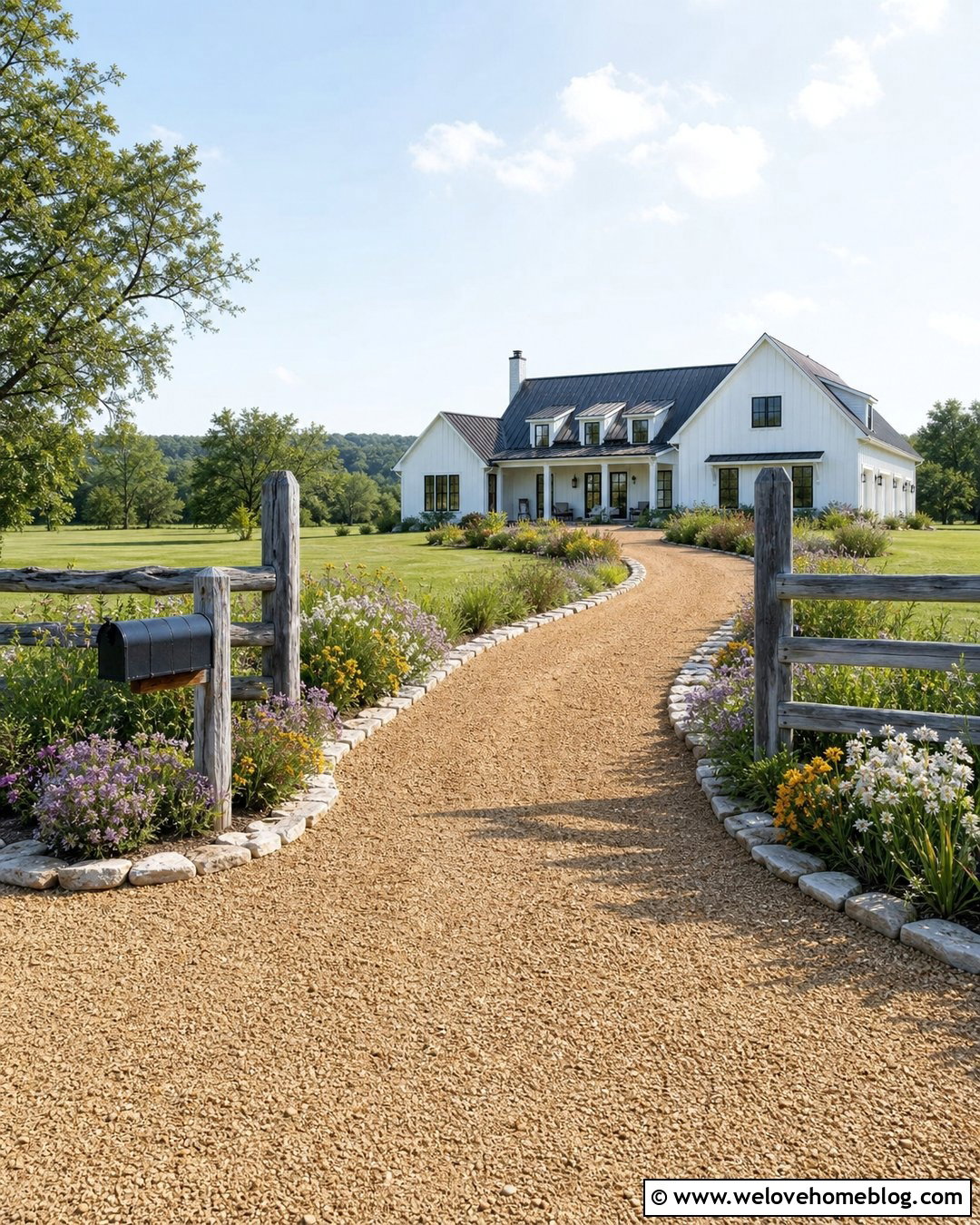
A farmhouse driveway feels welcoming when its practical materials blend with relaxed planting. Use warm tan gravel for the surface and add weathered timber or fieldstone edging where extra containment is needed. A split-rail fence can run along one side, leaving the other side open for a broad wildflower and grass border. Choose regionally appropriate plants and arrange them in repeating drifts so the result looks natural but not neglected. Near the entrance, add simple stone pillars, wooden posts, or a modest farm-style gate. Continue the same flowers around the mailbox and front walkway for continuity. Maintain a short, tidy strip beside the gravel to prevent plants from leaning into the driving area and to make routine edging easier.
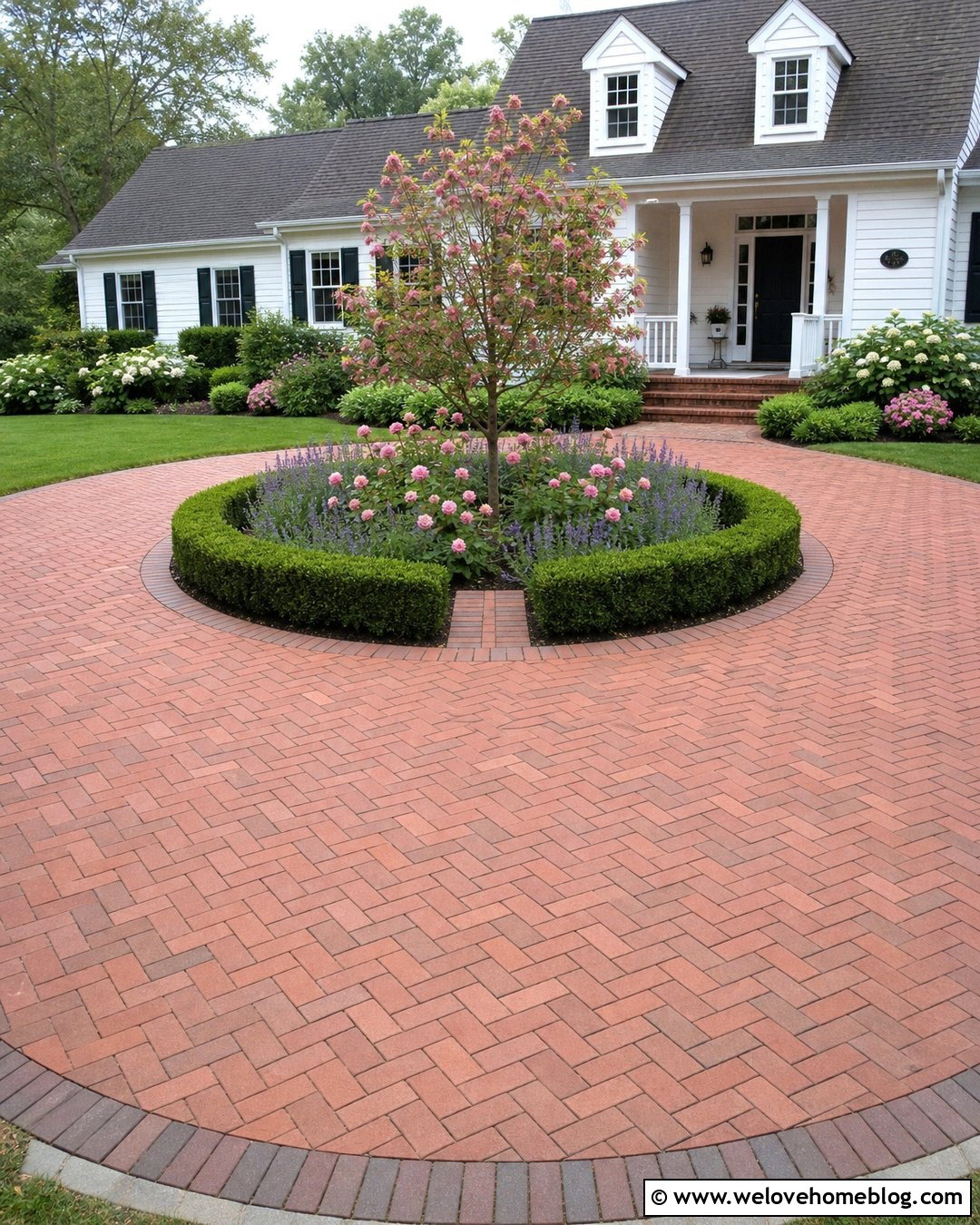
10. Colonial Brick Driveway With Symmetrical Shrubs
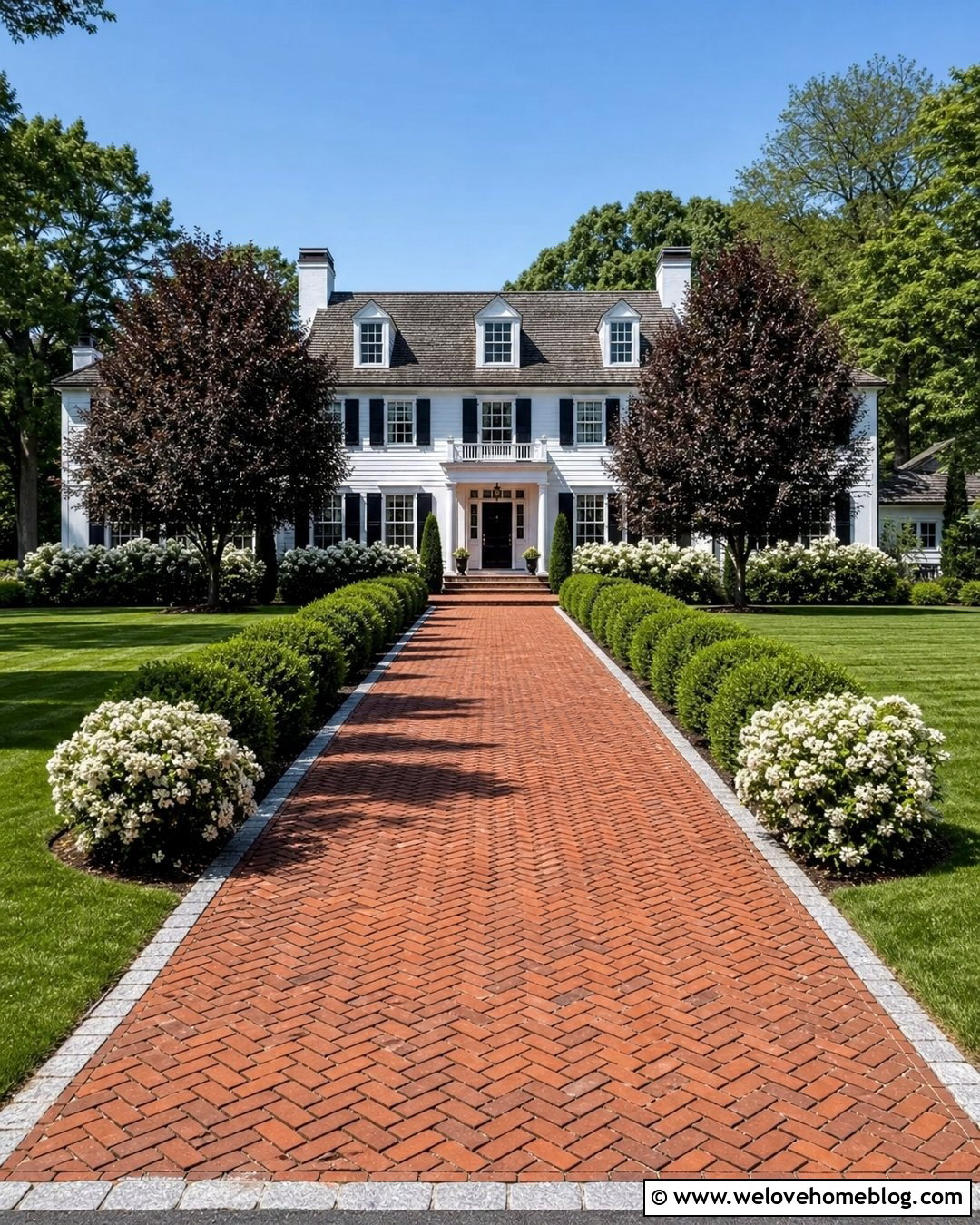
A traditional Colonial home benefits from a driveway landscape with clear balance and repetition. Clay brick pavers laid in a herringbone pattern create a rich surface, while straight rows of low evergreen shrubs emphasize the home’s formal architecture. Place matching ornamental trees or large planters near the driveway entrance, provided they do not restrict visibility. Closer to the house, widen the planting beds and add white flowering shrubs, seasonal perennials, and neatly shaped foundation plants. A straight brick walkway can connect the driveway to the centered front door. Keep the lawn edges sharp and repeat the same brick in the walkway and bed borders. Symmetry should guide the overall plan, but slight variation in flowering plants can prevent the landscape from feeling overly rigid.
11. Sloped Driveway With Retaining Wall Landscaping
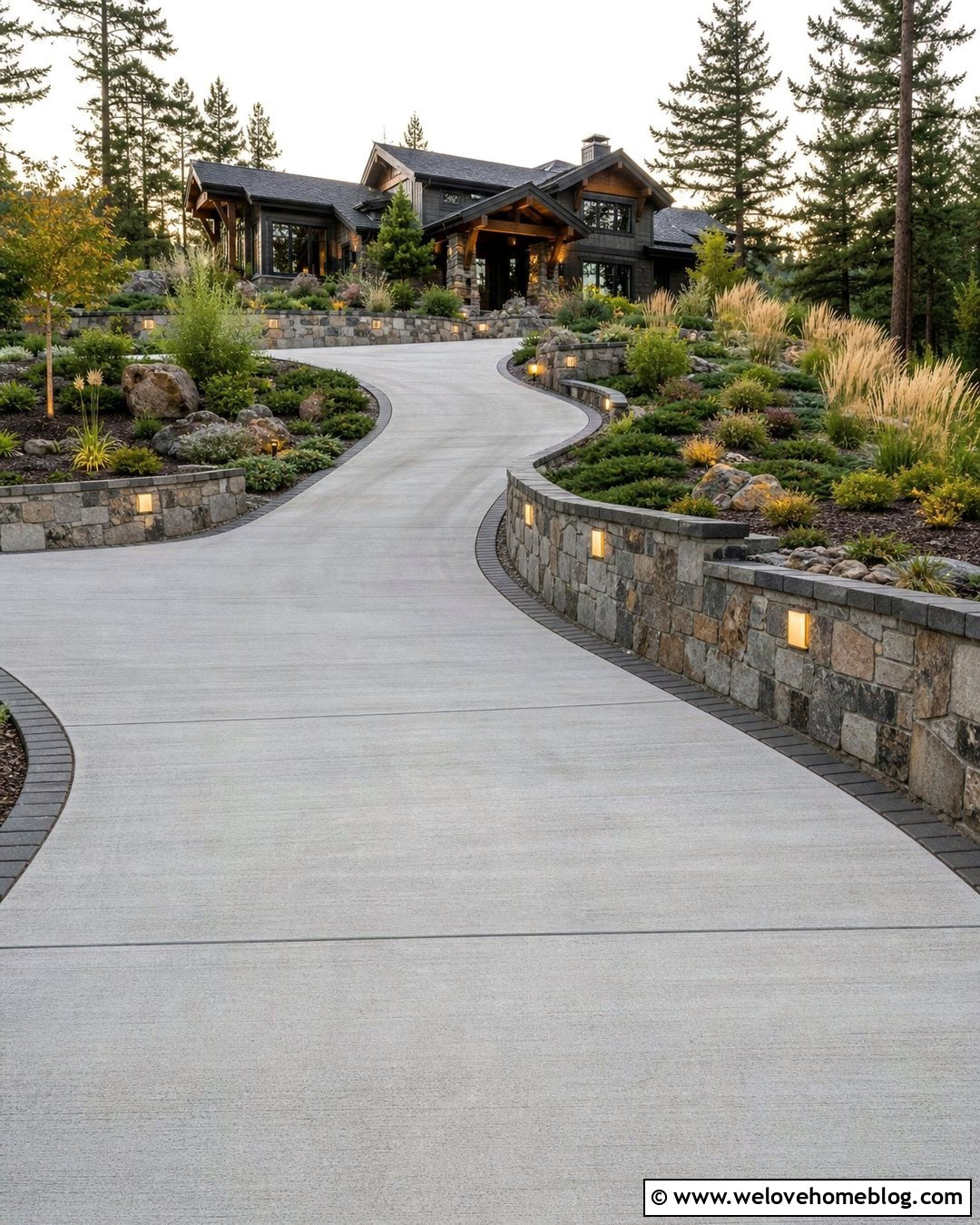
A steep driveway requires landscaping that manages elevation without making the route feel narrow. Pair a broom-finished concrete surface with low natural-stone retaining walls that follow the slope. Build planting terraces above the walls and fill them with spreading ground covers, compact shrubs, and deep-rooted plants suited to the site. Avoid oversized shrubs along the tightest driving sections. Their mature growth could reduce visibility and usable width. A contrasting paver strip along the pavement can clearly define the edge, while integrated wall lighting helps drivers read changes in elevation. Direct runoff toward an approved drainage area rather than allowing water to wash soil onto the driveway. Repeat the retaining-wall stone around the front steps or walkway to connect the sloped drive with the house. ()
12. Driveway Entrance With Stone Pillars And Mixed Beds
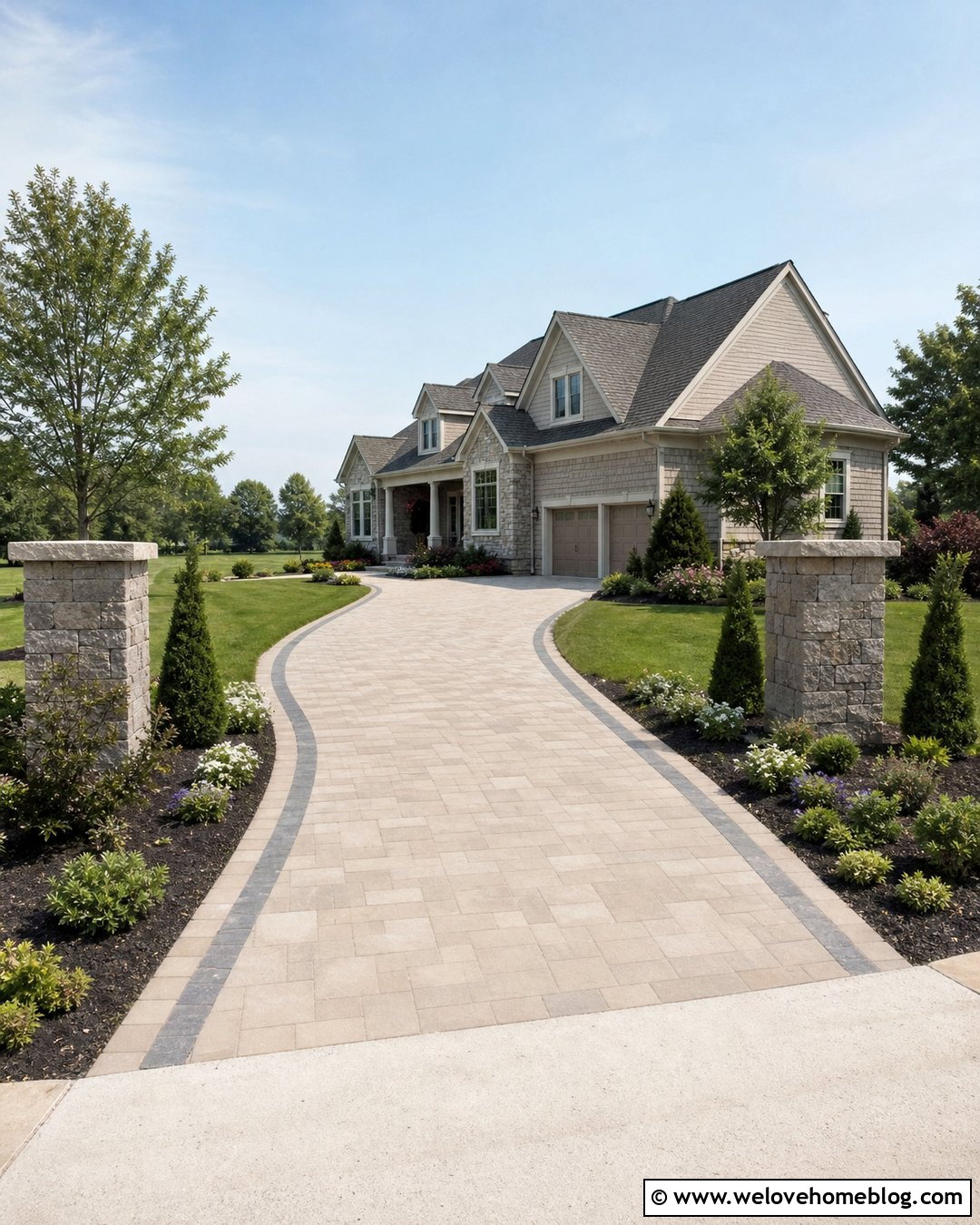
Stone pillars give a driveway entrance visual weight, but the landscaping around them determines whether the arrival feels welcoming. Set the pillars back from the street and driving path, then surround them with curved beds that gradually taper into the lawn. Use compact evergreens around the base, flowering shrubs behind them, and low perennials near the curb. Match the pillar stone to the home’s facade, retaining walls, or driveway border. A light-colored concrete or paver driveway will keep the entrance bright, while a darker border creates useful contrast. If a gate is included, allow enough open space for safe vehicle movement. The planting should frame the pillars without hiding address numbers, lighting, or the view between the street and driveway. ()
13. Permeable Driveway With Rain Garden
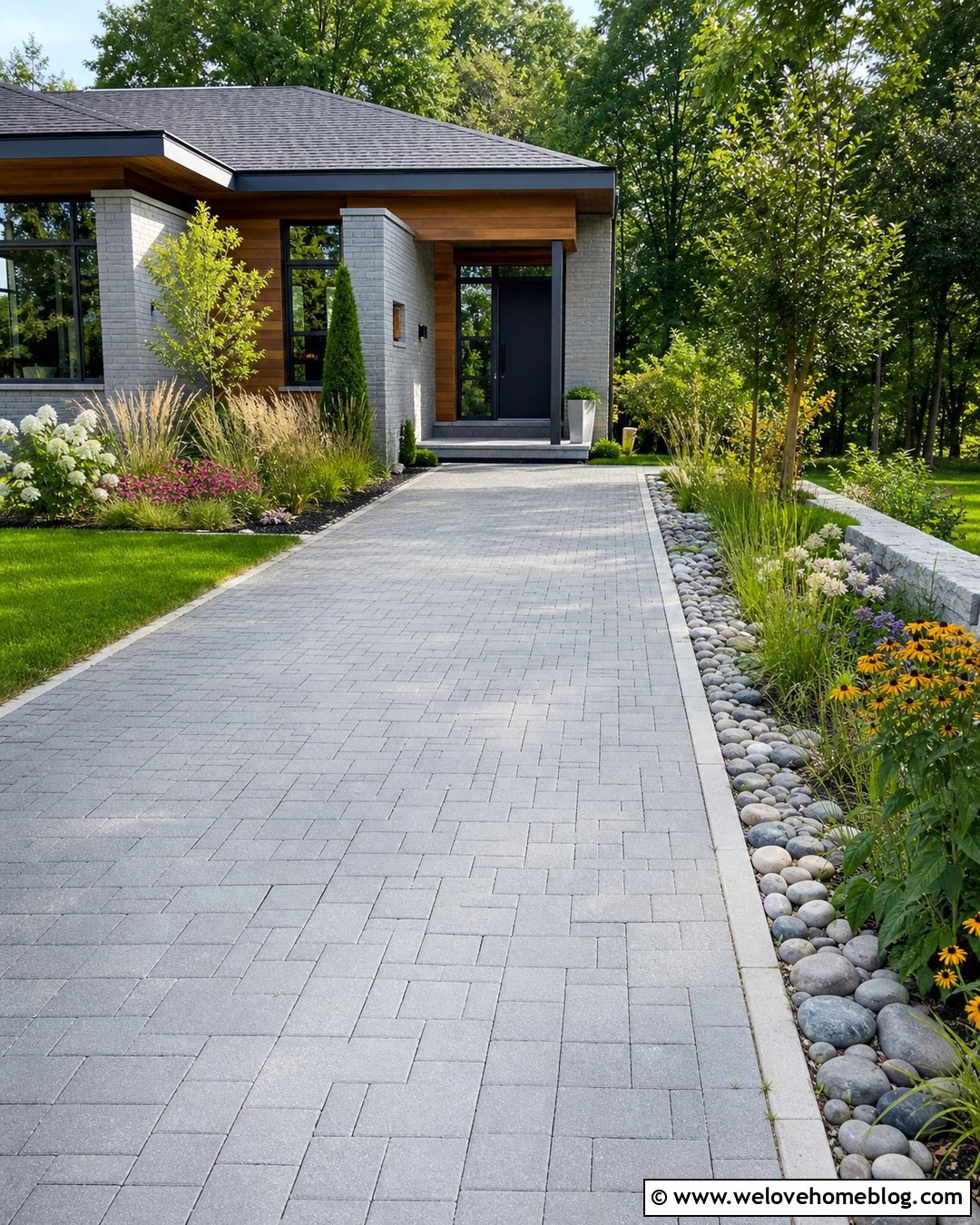
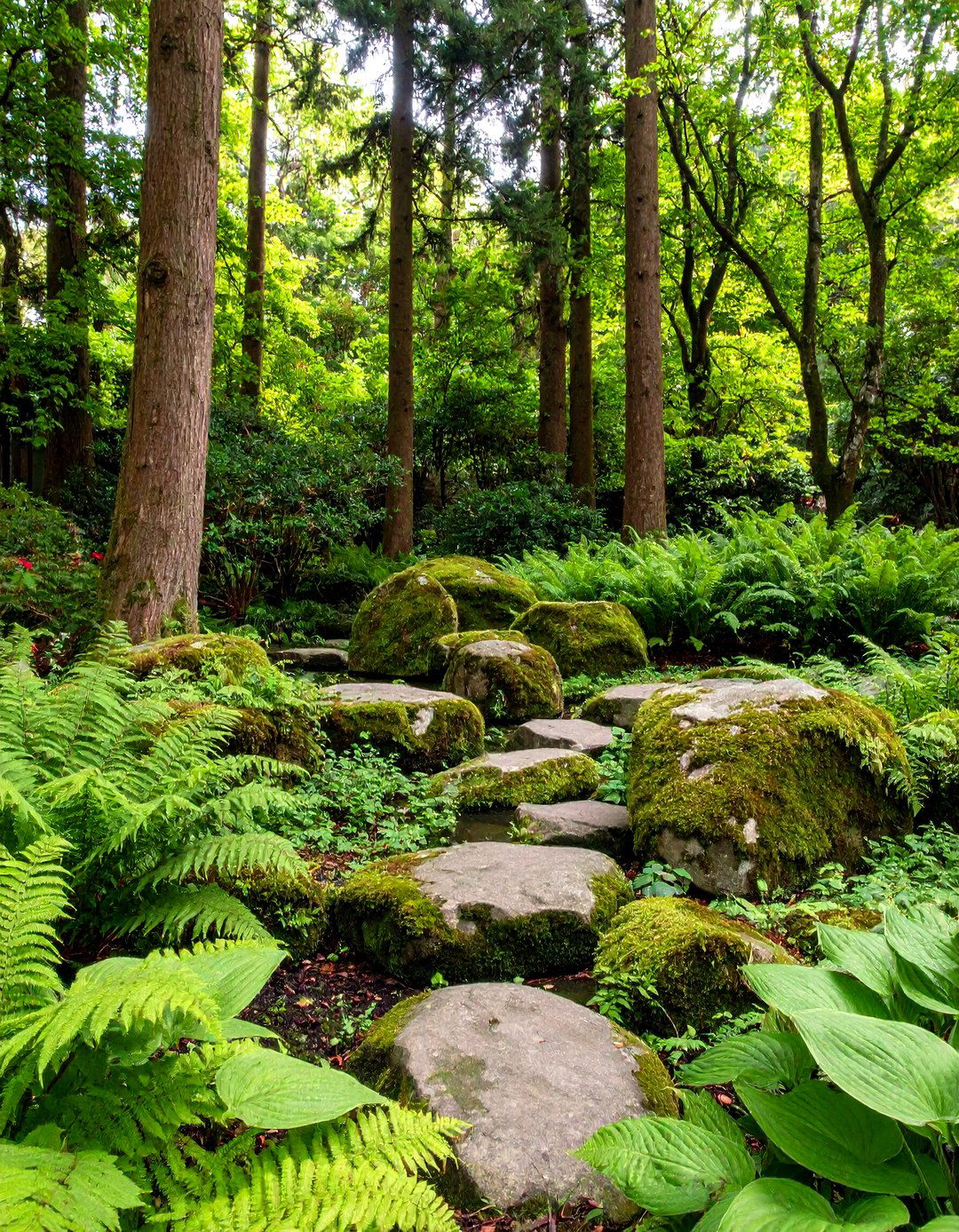
A rain garden can turn a low area beside the driveway into an attractive part of the landscape. Use permeable concrete pavers or open-grid pavers for the driving surface, then direct suitable runoff toward a shallow planted basin. Define the transition with river rock, stone edging, or a narrow gravel channel. Fill the rain garden with moisture-tolerant plants selected for local conditions, placing shorter varieties near the driveway and taller plants toward the center or rear. The bed should look connected to the front yard rather than like a drainage ditch. Repeat a few of the same grasses and flowering plants in nearby foundation beds. Before building, check local requirements and have the site evaluated so water moves away from buildings and neighboring properties.
14. Driveway With Low-Voltage Landscape Lighting
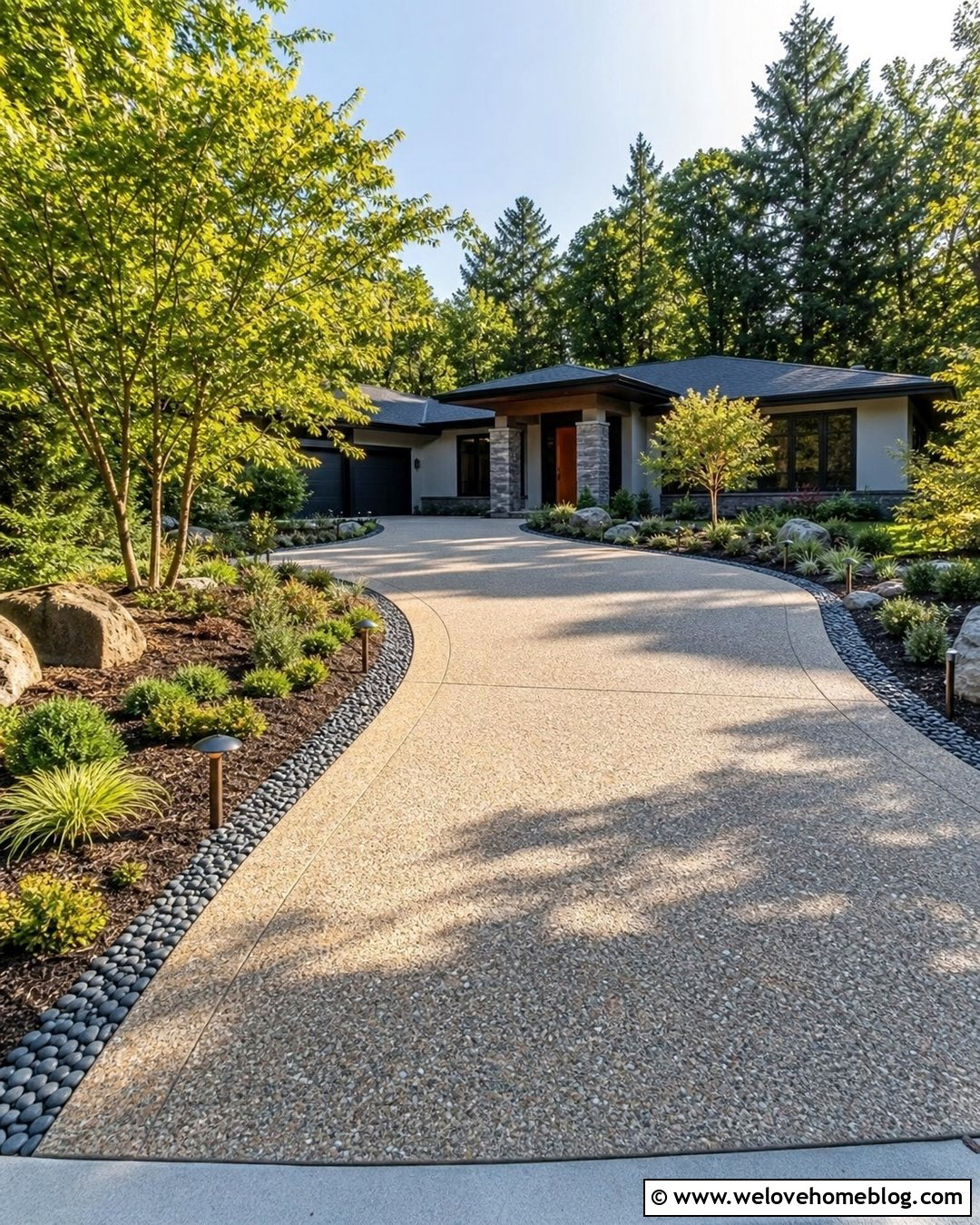
Lighting works best when it supports the entire driveway layout rather than appearing as a row of disconnected fixtures. Start with an exposed-aggregate or smooth concrete driveway bordered by low planting beds. Place shielded path lights at important curves, walkway intersections, and entrance points instead of spacing them too closely. Small uplights can emphasize ornamental trees, stone pillars, or textured walls. Keep fixtures within the beds so they are protected from tires, lawn equipment, and snow removal. The light should reveal pavement edges and changes in direction without shining toward drivers or neighboring windows. During the day, dark bronze or black fixtures disappear among shrubs and grasses. At night, the combination of edge lighting and softly illuminated planting creates a safer, more finished approach. ()

15. Cobblestone Driveway With Cottage Garden Borders
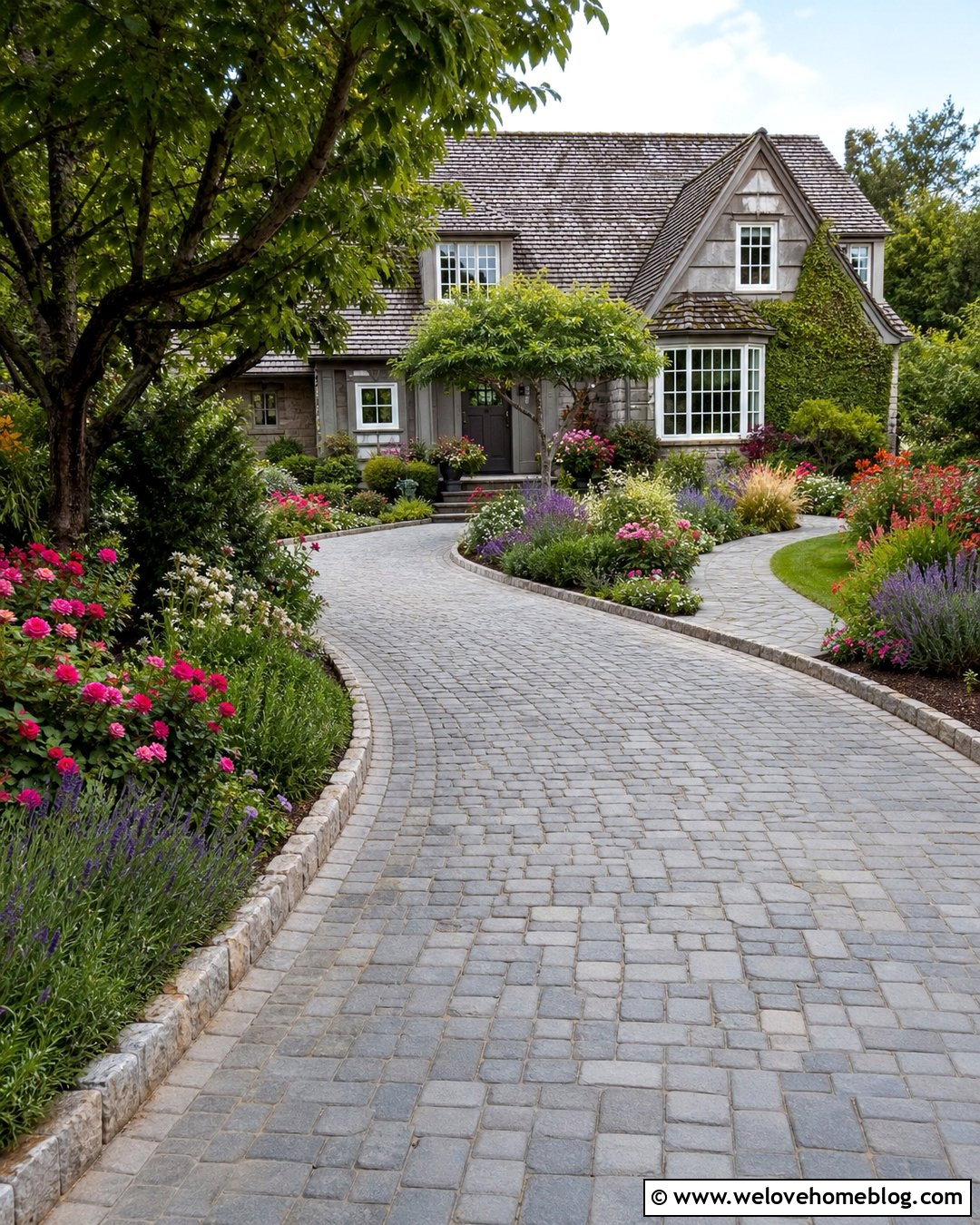
Cobblestone naturally suits a cottage-style landscape filled with layered flowers and informal shapes. Use gray or warm reclaimed-looking cobblestones across a gently curved driveway, then contain the surface with a slightly raised stone border. Wide garden beds can hold roses, flowering shrubs, herbs, ornamental grasses, and long-blooming perennials selected for the local climate. Let a few soft plants lean toward the edge, but preserve a clear buffer for tires and opening doors. A matching cobblestone walkway should branch from the driveway and meander toward the front porch. Near the street, keep planting lower to maintain an open view. The varied flower heights, textured stone, and curved route should work together, creating controlled softness rather than an overgrown or difficult-to-maintain entrance. ()
16. Resin-Bound Driveway With Evergreen Borders
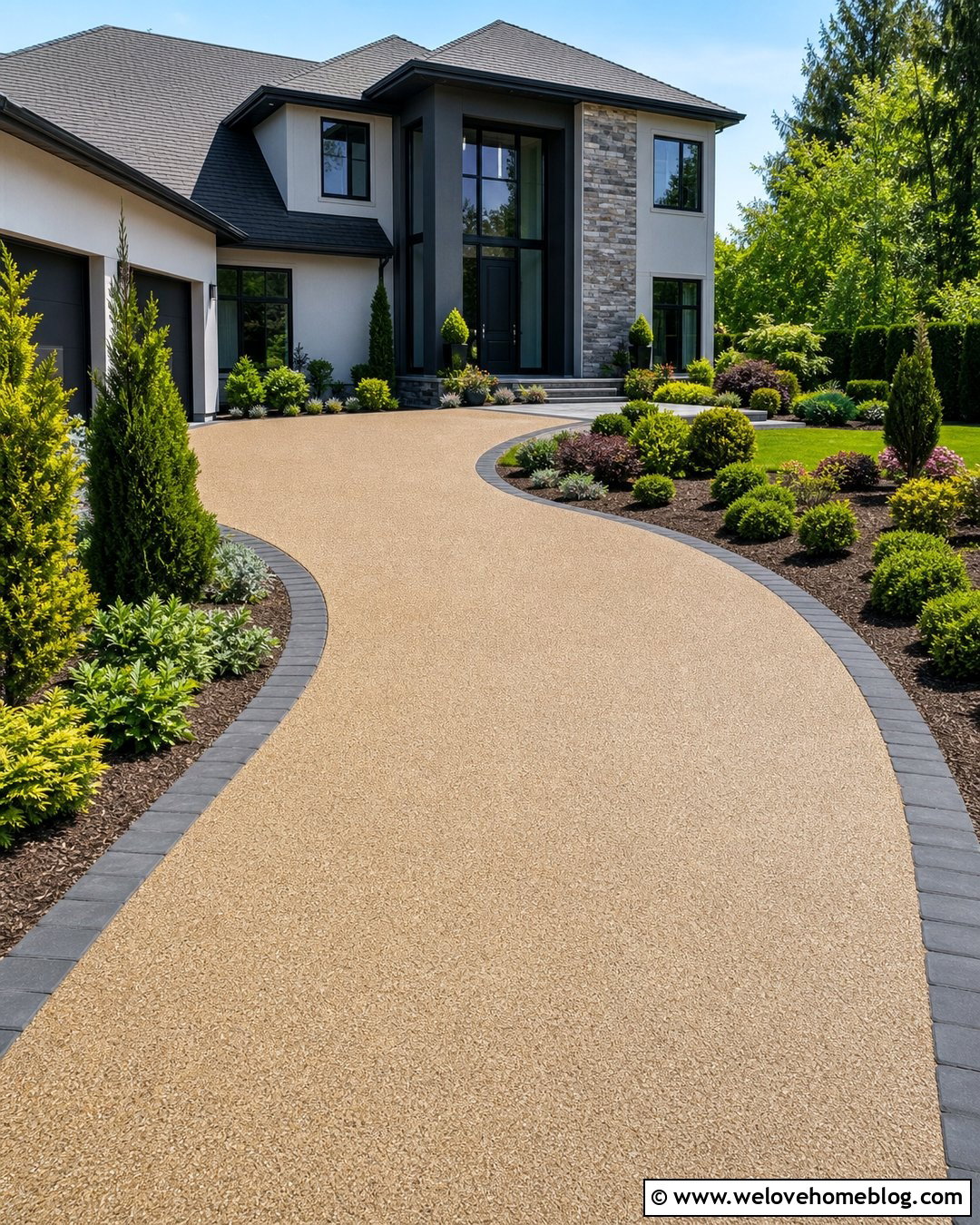
A resin-bound gravel driveway offers a smooth, contemporary-looking surface that pairs well with simple evergreen planting. Choose a warm beige or light gray aggregate blend and outline it with charcoal pavers. Run broad beds along both sides, using compact conifers, rounded shrubs, and low ground covers to provide year-round structure. Add a small number of flowering perennials for seasonal interest without disrupting the uncluttered design. A gently curved layout can soften a modern home, while a straight driveway reinforces strong architectural lines. Continue the charcoal border around the front walkway for a coordinated transition. Keep shrubs several inches back from the pavement and account for mature width. This prevents branches from trapping debris or reducing clearance beside parked vehicles. ()
17. Desert Driveway With Xeriscape Landscaping
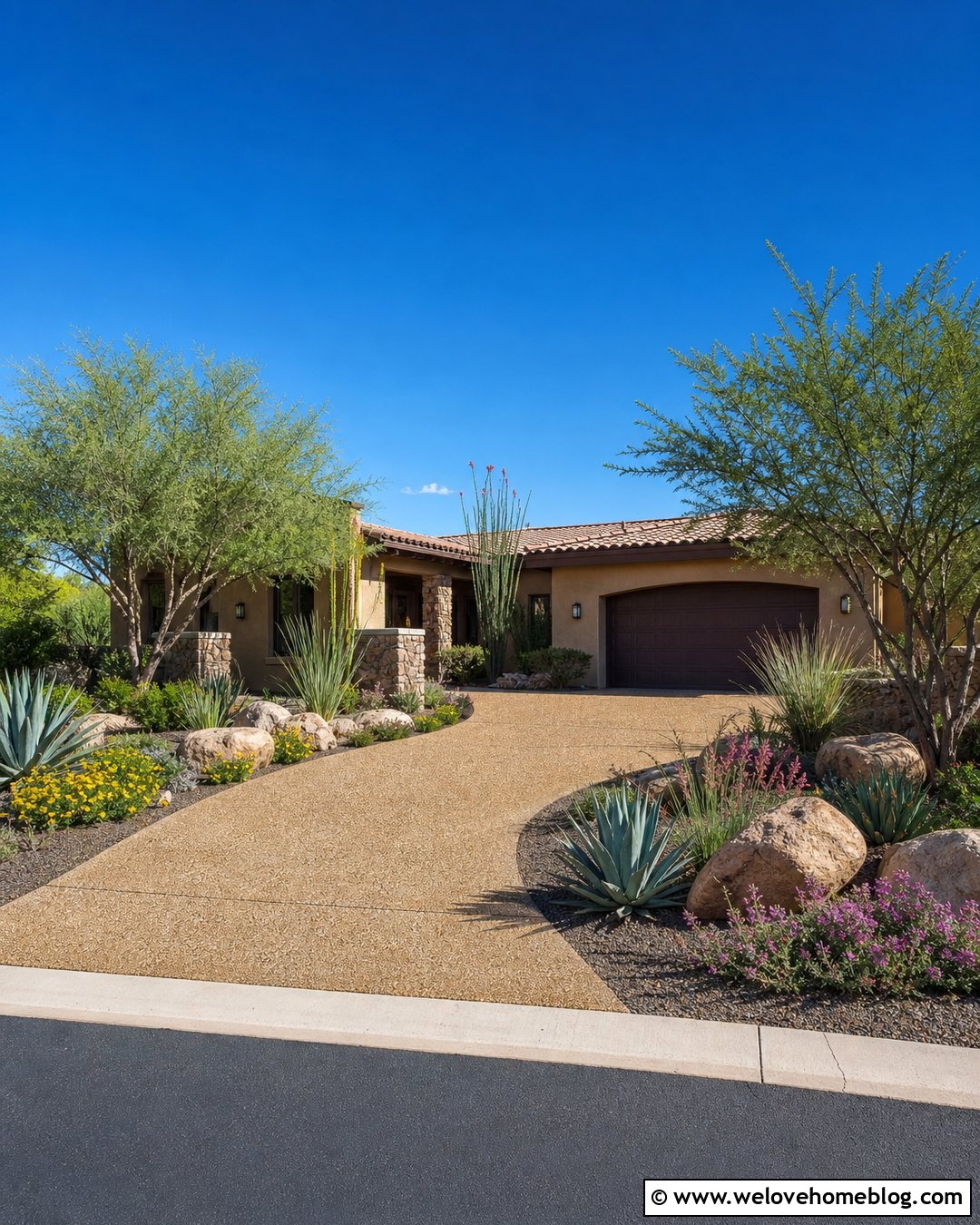
A desert driveway can feel lush and inviting without relying on a large lawn. Use warm exposed-aggregate concrete or stabilized decomposed granite for the surface, then frame it with steel edging and bands of decorative gravel. Build planting beds with varied rock sizes, sculptural succulents, flowering desert perennials, and ornamental grasses suited to the region. Space plants according to mature size so individual forms remain visible. A curved driveway can move naturally between the beds, while one or two small desert trees provide height and filtered shade. Keep spiny plants away from passenger doors, walkways, and mailbox areas. Repeating the same gravel color near the house and driveway entrance helps unite the landscape. Drip irrigation can deliver water directly to planted areas while keeping the hardscape clean.
18. Coastal Driveway With Crushed Shell And Dune Plants
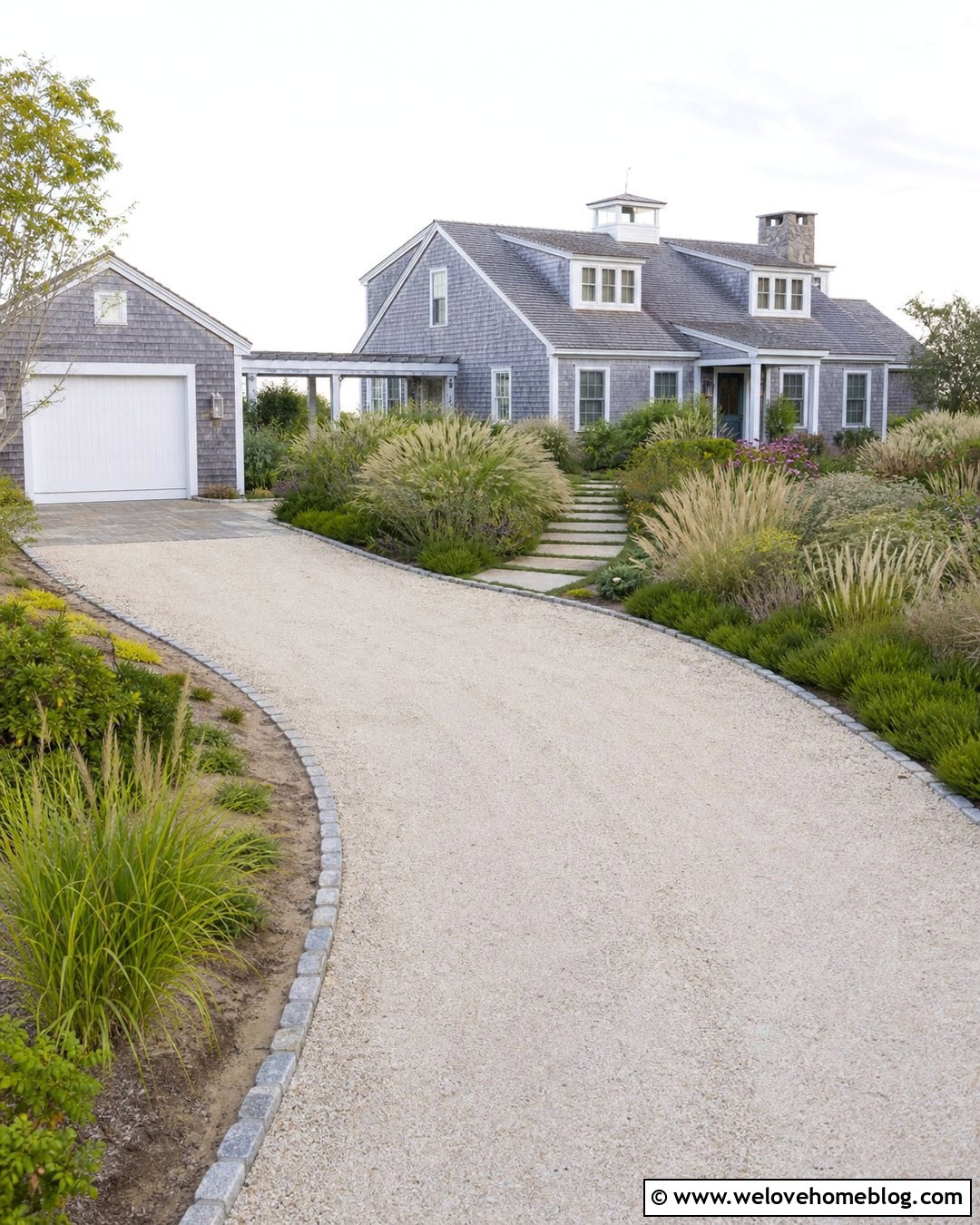
Pale crushed shell creates a bright, relaxed driveway that complements coastal cottages and weathered shingle homes. Give the drive a straight or softly curved layout and contain the loose surface with timber, granite cobbles, or a durable metal edge. Plant the sides with salt-tolerant grasses, low evergreen shrubs, and flowering perennials suited to the local coastal environment. Arrange grasses in broad drifts so they echo natural dunes without blocking the driveway. A stepping-stone walkway can cross the planting and lead toward the porch. Near the garage, add a small paved apron to create a stable transition. Keep the overall palette light and simple, using sandy tones, soft green foliage, and restrained flowers to connect the shell surface with the surrounding landscape.
19. Driveway Turnaround With Shade Tree Island
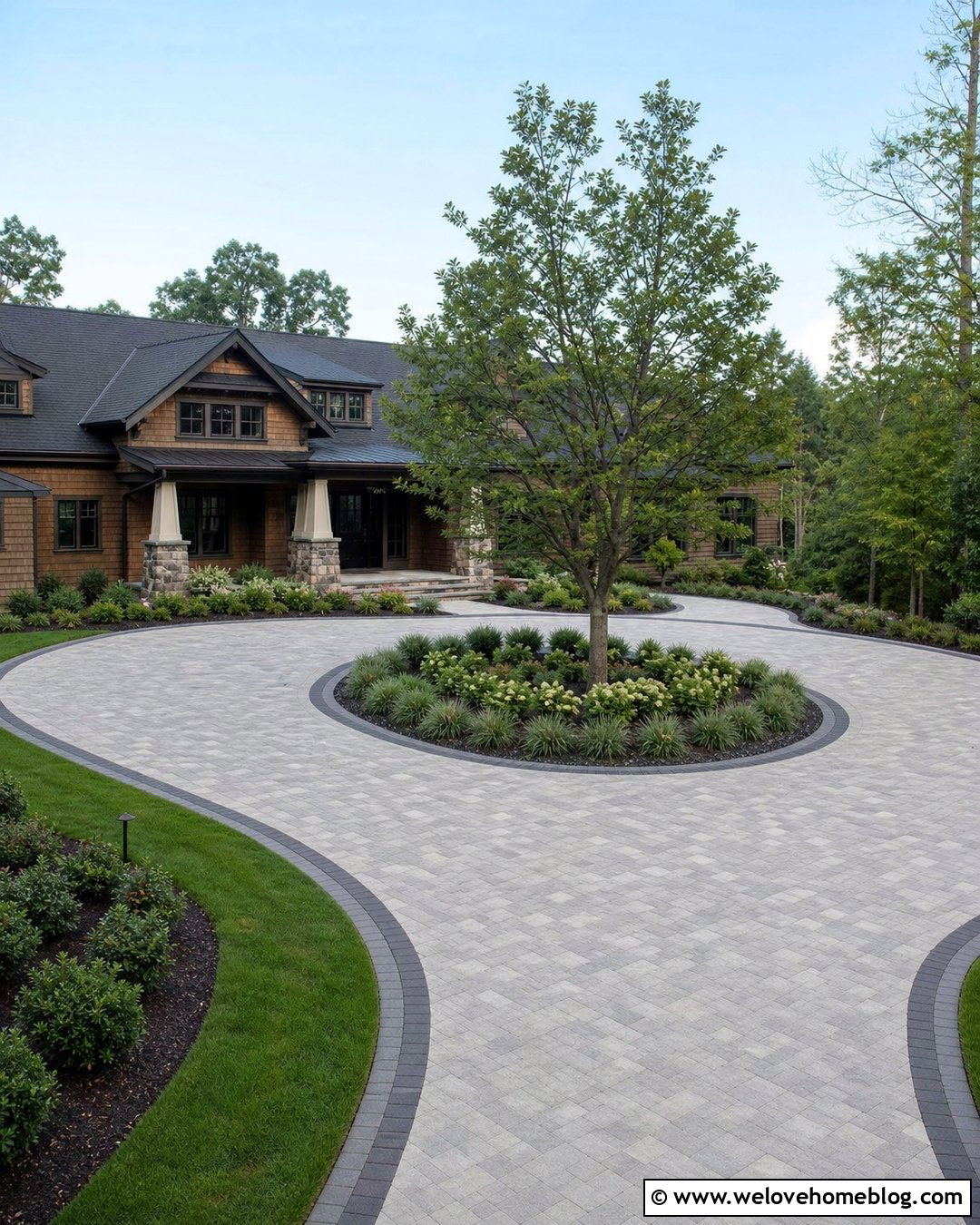
A turnaround area can become an attractive landscape feature rather than a plain expanse of pavement. Shape a paver or concrete driveway around a generous oval island and plant one shade tree that fits the available space at maturity. Underplant it with tough ground cover, ornamental grasses, or a simple mulch bed edged in matching pavers. Keep branches pruned high enough for clear movement and preserve adequate turning space around the island. Repeat the island’s border along the outer driveway edge to make the layout feel cohesive. If the area is large, add a bench or decorative boulder away from the vehicle path. The tree provides vertical scale, while the planted island breaks up hardscape and visually connects the turnaround to the front yard. ()


20. Budget Driveway With Mulch Beds And Simple Edging
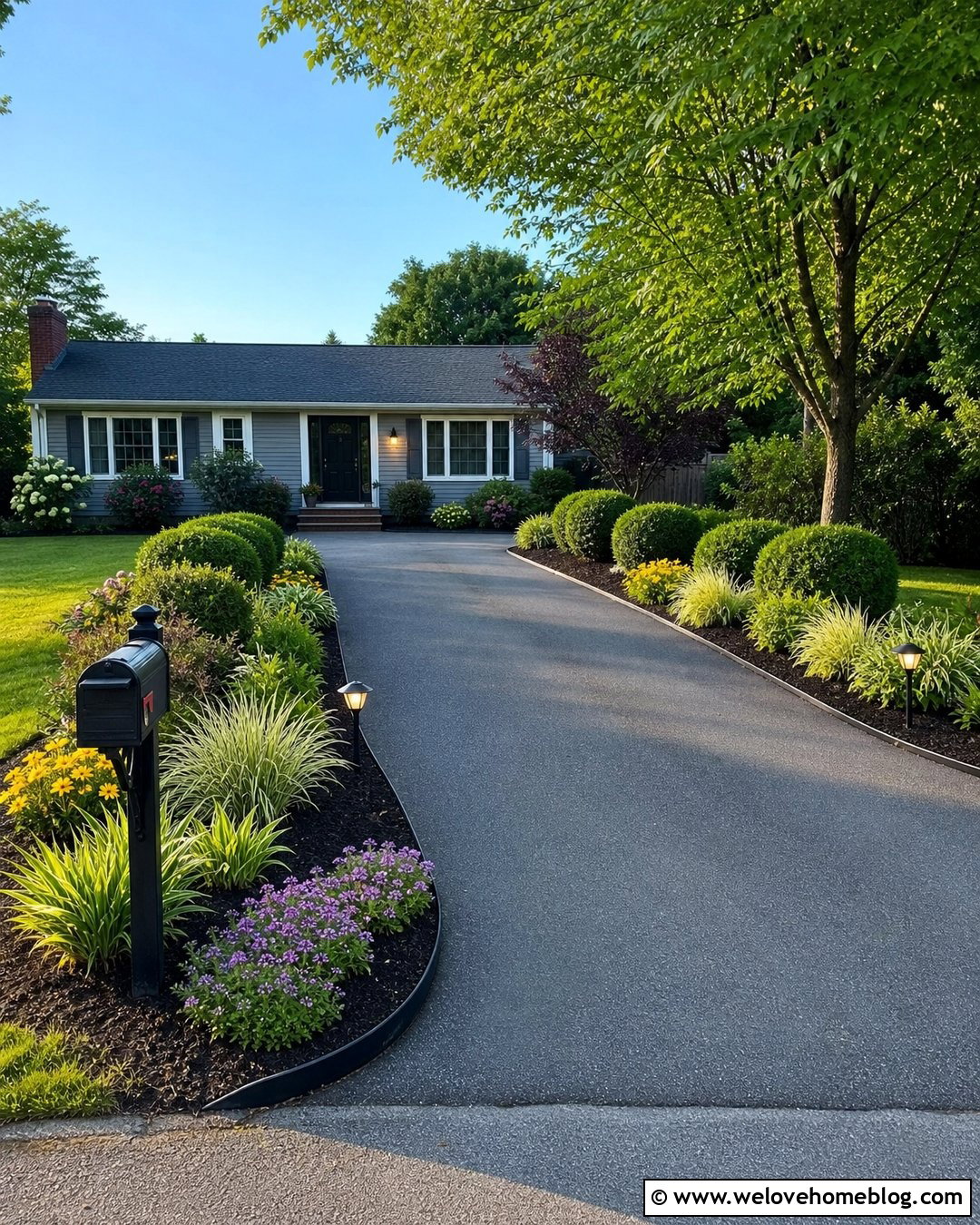
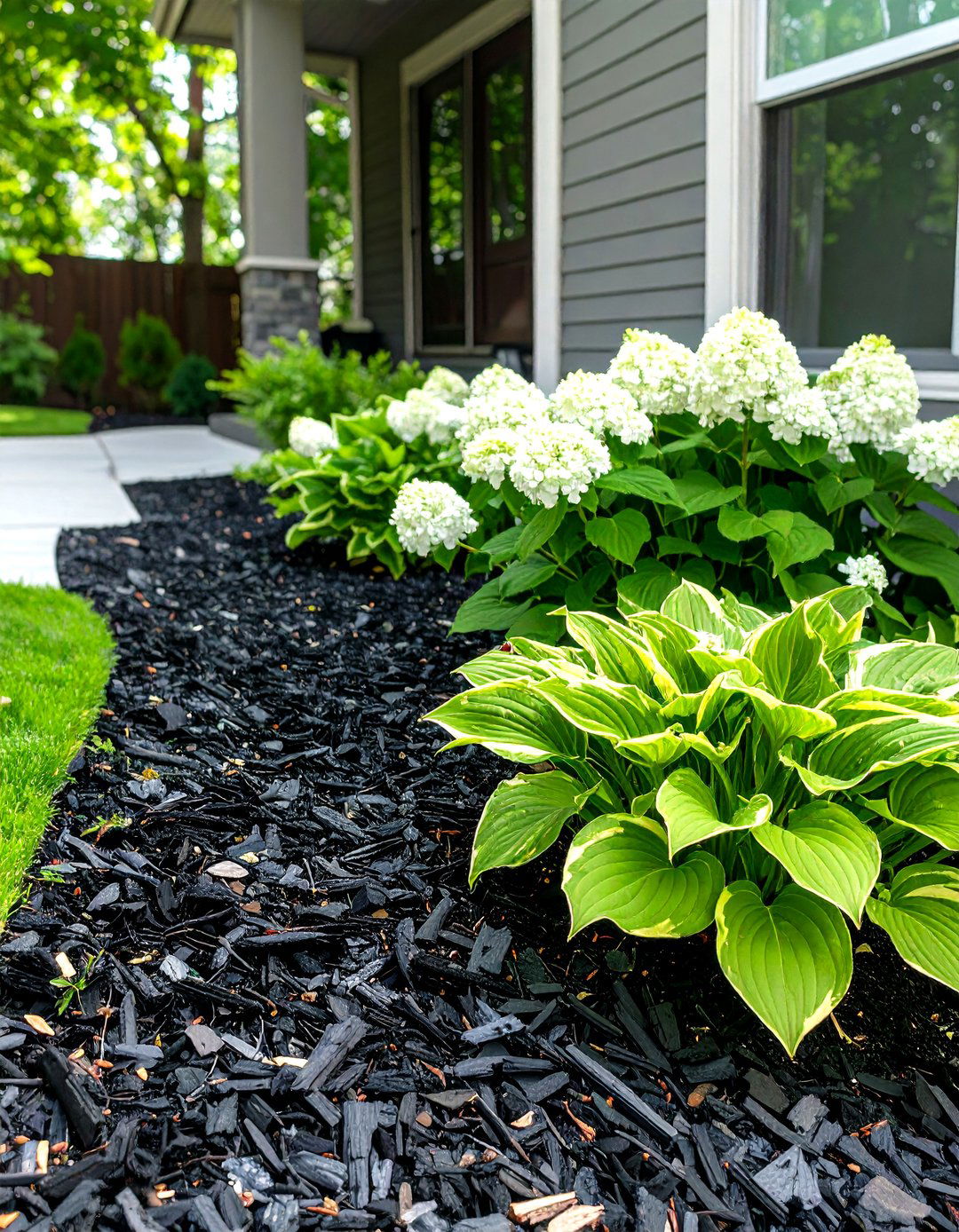
A basic driveway can gain substantial curb appeal without replacing the existing surface. Clean the concrete or asphalt first, repair minor damage, and create broad mulch beds along the most visible edge. Define them with a crisp spade-cut line, inexpensive steel edging, or affordable landscape bricks. Use a limited mix of compact shrubs, ornamental grasses, and dependable perennials rather than purchasing many single plants. Repetition makes a small planting budget look more intentional. Widen the bed near the front walkway or mailbox, then taper it toward the street. Fresh mulch provides an immediate finished appearance and reduces exposed soil. Add two or three simple solar or low-voltage lights at key transition points instead of lining the entire driveway with fixtures. ()
Conclusion:
Successful landscaping driveway ideas treat the driveway, borders, planting, lighting, and house as parts of one connected front-yard design. Begin with practical concerns such as drainage, vehicle clearance, visibility, climate, and maintenance. Then choose materials and plants that complement the home’s architecture. Curved beds soften hard pavement, defined borders create a cleaner finish, and repeated plants make even an affordable project feel organized. You do not need to install everything at once. Start with edging and bed shapes, add structural shrubs or trees, and fill remaining spaces over time. Whether your driveway is gravel, concrete, asphalt, brick, or pavers, thoughtful landscaping can transform the entire approach to your home.

Related posts:


Leave a Reply